Curbside Consult with Dr. Jayne 1/28/19

January 28, 2019 Dr. Jayne 1 Comment

I had a particularly gruesome Sunday in the urgent care trenches. Not with the expected cases of influenza, but with people behaving badly.

It has been years since I worked in the big-city emergency department, so I never dreamed I’d be searching for handgun-related ICD-10 codes at one of our sleepy suburban urgent care locations, but there I was today (in case you are curious, it’s the Y22 series of codes for handgun discharge, undetermined intent.)

These are the days you want to just head home, drink an adult beverage, and relax. But that’s hard to do when you are two hours past closing time and still seeing patients who waited until the last possible minute to be seen. Woman with the toddler that fell of the sofa and hit his head on the coffee table — no worries, we got this. Man who has been vomiting all day but waited until after a certain TV program was over before he came in — not so much. (Note for the future, we have large, flat-screen TVs in all our patient rooms and you could have been watching your show with some IV fluids and good drugs rather than vomiting into a trash can at home.)

I had several patients get mad that our independent urgent care is not part of the big health systems and doesn’t share data with them. It’s hard to explain to information blocking to patients, especially when it’s their much-loved hospital’s policy that we can only fax information to their practices and can’t send anything electronically. We can’t even get a directory of fax numbers for the owned practices or employed physicians, requiring us to call each office to track down a fax number if we don’t already have one in our file. If they won’t even receive our information, you can guarantee that they aren’t going to share theirs with us.

I experienced this acutely earlier in the weekend, when I had to refer a patient with a new cancer diagnosis and the potential need for an emergent surgery to the emergency department at one of those local powerhouses. I called six hours later and asked to be transferred to the nursing unit for patient X, only to be told “we don’t have her” by the switchboard. Apparently, that’s code for “she hasn’t been admitted to our facility” and the central patient directory service was unable to tell me if she was still in the emergency department.

It wouldn’t be unheard of to spend many hours in the ED during peak influenza season, so I asked to be transferred. There I was told that not only did they not show her as a patient, but they couldn’t tell me if she had ever even arrived because “we can only see patients in the system for up to two hours after discharge.”

I asked to speak with the charge nurse and summarized the situation back to her, saying, “Let me make sure I understand. She hasn’t been admitted and no one can tell me if she ever even showed up because the computer restricts access by ED personnel after two hours.” She confirmed that is what happens, which just floored me as a referring physician.

When I called the ED prior to the transfer to tell them about the patient, I had given the name of the patient’s surgeon. Since I know the surgeon well, I decided to call her to find out what was going on. It turns out they didn’t even call the patient’s attending surgeon, and you can bet that my colleague was livid when I called her to find out what was going on. Since she’s a faculty physician, she immediately accessed the EHR and I could almost hear the steam coming out her ears. Not only did they not call her, but they called a surgery resident to assess the patient in the ED. That resident in turn called the on-call surgeon (on-call for patients who don’t already have a surgeon, that is) rather than the patient’s surgeon. The on-call surgeon decided to send the patient home.

The patient had a couple of critical lab values and some ominous ultrasound findings, yet there was no consultation note from the surgical resident and no ED physician note in the chart to help anyone understand the thought process. We’re not sure what the patient understands about her care and what she thinks about being referred to a general GYN for follow-up care rather than the GYN-Oncologist she needs.

I’ve been trying to call the patient for two days. I’m sure she thinks her surgeon and I are either incompetent or clueless since we’re the ones that referred her to the hospital for potential admission and a possible procedure. She hasn’t returned my calls and I feel terrible. These kinds of episodes are becoming more and more common in our healthcare non-system.

At least in this case, I’m eternally grateful that my colleague was able to pull up the EHR chart (such as it was) on her phone while at her daughter’s sports practice so that we would at least know that the patient made it to the hospital and had some additional testing. Hopefully her office will have more luck reaching the patient than I have.

How different things would be if we had actual coordination of care and information sharing. I sent the patient to the ED with paper copies of all the tests we performed at our facility, along with a CD copy of her imaging studies. I wonder if the hospital even looked at what I sent (they certainly didn’t pay much attention to my referral report) or if they just started over? Our practice requires that the “business end” of each patient chart is complete prior to discharge – vital signs, exam, procedures, assessment, and plan. For patients referred to another facility or transferred by ambulance, we have to get the entire chart done and printed to go along with the patient. Even though the ED in question uses scribes, the note still wasn’t done more than two hours later. Despite every clinical employee having advanced communication devices on every shift, they still couldn’t make the right phone calls.

In this situation, I don’t even have anyone to complain to or share concerns with since I’m sure they don’t really care what a lowly urgent care doc at a competing facility thinks. All the technology in the world won’t help when you don’t have the right processes in place or the staffing isn’t optimized to support people doing the right thing. Unfortunately, the patient suffers. I’ve got seven more shifts before I head to HIMSS and I certainly hope they’re better than this one.

Have your own terrible tales of information blocking? Leave a comment or email me.

button

Email Dr. Jayne.

HIStalk Interviews Jason Krantz, CEO, Definitive Healthcare

January 28, 2019 Interviews Comments Off on HIStalk Interviews Jason Krantz, CEO, Definitive Healthcare

Jason Krantz, MBA is founder and CEO of Definitive Healthcare of  Framingham, MA.

SNAGHTML2675f9c3

Tell me about yourself and the company.

Definitive Healthcare was started in 2011. Our goal is to be the premier provider and the single source of truth for all data on healthcare providers. In the last seven or eight years, we’ve grown significantly. We have about 320 employees today. We offer detailed information and analytics on every single provider in the US and Canada.

Why did HIMSS sell its HIMSS Analytics business and how did Definitive Healthcare end up acquiring it?

HIMSS Analytics has tremendous data assets around technology, infrastructure, and contracts. The match with Definitive is about being a good shepherd of that data. By combining that information with all of the proprietary data that we have around affiliation, quality of care, and now our commercial claims database, we’re able to provide a complete picture for our clients that will give them a competitive edge.

Those clients include companies that are marketing into the healthcare provider market as well as providers themselves that are looking to expand their networks and understand where they can continue to grow their business through physician referral, analytics, and new affiliations. We offer a powerful solution to help advance the industry forward.

HIMSS is keeping the Adoption Model business and the consulting around that, right?

That’s correct. They’re going to continue to provide the EMRAM and the consulting around it. We will focus on the data business and the detailed provider information for both the vendor community and the provider community.

How have mergers, affiliations, and network agreements changed the demand for information as the market gets more complicated than just single hospitals and health systems?

“Complicated” is the operative word. As this industry continues to evolve and health systems become these extraordinarily complicated organizations that are big businesses in their own right, all the participants in this industry need to have access to data that can help them decipher what’s happening. Where are patients going for care? How do all these facilities interact with each other?

More and more, we’re helping our clients understand where there is patient overlap or leakage from one hospital to the next. Our clients are trying to solve that for providers, while the providers are trying to figure on their own how they can continue to protect their business and deal with new payment models. The complexity helps our business over time.

Will these larger corporate entities impose a corporate standard for systems such as EHRs and revenue cycle?

The speed at which mergers are taking place certainly makes that difficult from a technology standpoint. Health systems by and large have the strategy of moving to a corporate standard, but it takes time. Technologies that help these systems talk to each other become increasingly important.

The other important corporate standard is around decision-making for medical devices and pharmaceuticals. Health systems are trying to create standards across their entire organization. That’s good for healthcare. Standard therapies help patients overall and help understand new therapies that come to market. The move to control everything within their network continues, even though it is complex with the technology infrastructure.

Where will the three main inpatient EHR vendors look for opportunities now that the market is saturated?

They are doing some pretty interesting stuff, such as starting to work with insurance companies and different types of facilities such as treatment facilities. Epic is the largest EHR that works within the clinical trial space, which is an interesting way of growing for them. You’ve got all this rich patient data that needs to be collected in one fashion and Epic does well in that market. We’re rolling out a clinical trial product to address the needs of the pharmaceutical companies and medical device companies that we serve, but also the technology companies that want to get a piece of this robust market.

Even though they’re relatively saturated within the hospital and the health system market, these tangential areas are exciting growth areas for them. They open up a new opportunities in life sciences, insurance, and other areas.

Are drug and device manufacturers more interested in using the information that a typical hospital or practice would collect?

Absolutely. Data from EHRs has grown so much and become more standard over time. It’s a tremendous opportunity for improving the quality of care by analyzing that data, getting newly available information and at a larger scale across larger patient populations. There’s a massive interest in getting access to that data from the pharmaceutical side.

What kind of information could a mid-tier hospital software vendor get from you that would help them understand their potential market?

We have data on every single provider in the US — clinics, physician offices, imaging centers, hospitals, and IDNs — and the affiliation of all these facilities. It’s important to know whether they are owned by a health system or are standalone. We have the technology infrastructure data that allows understanding what each of those facilities are using. That data has become stronger through our acquisition of the HIMSS Analytics business. We also have information around the quality of care provided and the Medicare penalties or incentives that each of these facilities is achieving.

All of that is important for these organizations that want to elevate the conversation with their prospective clients. Rather than going in to talk about their product, they can go in and talk about what’s happening at the facility or the health system — the problems they’re seeing in their market and how that compares to other facilities they have. They can use that data to bring their product to life and show those prospective clients why their product can help meet the needs of that organization right now. Making your team smart and targeted to understand the business problems of the hospitals and facilities is an important value-add that we bring to our clients.

How do you see the company changing as it grows?

Our goal is to continue our product innovation. We have grown, mostly organically, over the last seven years at a rate of something like 175 to 200 percent per year. We continue to grow by selling more of what we have. We have a very good product of extremely high quality that covers the market really well.

We are also innovative in what we roll out to clients. In the last year, we’ve been more innovative than in the first six or seven years of our existence. We rolled out a commercial claims database that gives our clients access to data on about 210 million patient lives. We have over two billion claims. This allows our clients to understand diagnoses and procedure utilization rates by facility, provider, or physician. We’re rolling out a clinical trials database, and later this year, we’ll also be rolling out a database with specialty pharma data.

Our goal is to continue to stay on the forefront of new trends that are happening within the marketplace. Each time we do this, we open up a brand new market that we haven’t sold to before. Clinical trials opens up a multi-billion dollar industry for us. Commercial claims gives us access to all of these new markets we haven’t sold to before that need to understand what’s happening in the commercial market. All of this innovation helps us continue to grow.

Over time, we’ll continue to pull in more information, maybe from EHR systems as you mentioned, to help clients analyze that data. That’s potentially something down the road. We’ll start to get into more of health economics and outcomes research. That’s a great market for us. We see the runway as being extraordinarily long. We’re going to continue to grow at the pace that we’ve been used to over the last five to seven years.

Who are the prospects for the all-claims database and how can you correlate that information with your other databases to provide new insights?

Most of our client base is interested in the commercial claims data. Certainly some core markets are life sciences, providers, and tech firms. We take this data, where you can see this utilization by facility and physician, and make it extremely powerful by combining it with all of our proprietary data. Now you can start to do things like roll that data up at the IDN level. What does an IDN look like for knee replacements or other procedures or diagnoses? You can also combine it with things around the quality of care analytics that we provide.

Our clients take this claims data that’s valuable on its own, but we bring it to life and make it an actionable piece of information that they can use to define a new drug launch or develop their markets and create a go-to market strategy for whatever product they might have.

Do health systems use your information for competitive purposes?

We have lots of health systems as clients. They’re using our data to develop their networks, which of course is competitive to some extent. They are looking to develop new physician relationships based on referral patterns. They’re using our data to find merger and acquisition opportunities. We help analyze leakage outside of the system, Our clients are interested in understanding that. They can start to fill those gaps, because any time care is delivered outside of their system, it’s harder to provide the quality of care at the cost that they want to provide it.

How do you see the company’s future over the next five or 10 years?

It’s about continuing to expand our product offering. We have a big team of people that are being highly innovative in thinking through what the trends are within the industry. We can help our clients meet those trends head-on and stay in front of them. Access to our data and our analytics gives our clients a competitive edge. This market is moving fast. To be competitive, our clients need to stay ahead of the trends and we need to help them do that.

Over the next five to 10 years, we’re going to continue to evolve, add new product offerings, and potentially do more acquisitions as the market continues to expand so that we can provide the best data to our clients to meet their needs.

Do you have any final thoughts?

We’re a fast-growing company and there’s a lot of responsibility that goes along with that. We invest a tremendous amount from our company in terms of helping our employees grow as individuals and also to give back. We launched the Definitive Cares program about two years ago, where we have 100 percent of our employees doing a community service project throughout the year. They earn days off by being part of this program.

It’s an important part of our culture because healthcare is about helping people and servicing people. We want to bring that into the fabric of our culture. We help over 30 charities every year. We have a 100 percent volunteer rate within it. As a company, we gave over 3,000 individual service hours during the working day. All of that is important. My final thought is that continuing to give back is important to all corporations. We try to live that on our own.

Monday Morning Update 1/28/19

January 27, 2019 News 6 Comments

Top News

image

Sleep apnea equipment and connected health vendor ResMed turns in Q2 results: revenue up 8 percent, adjusted EPS $1.00 vs. $1.00, meeting earnings estimates but falling short on revenue, sending RMD shares down an alarming 19 percent on Friday for a market cap of $13.5 billion. They’re down 8 percent in the past year vs. the Dow’s 6 percent loss, but have more than doubled over the past five years.

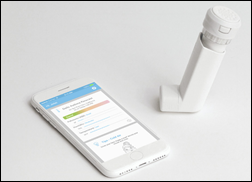
The company’s recent health IT acquisitions include Propeller Health, HealthcareFirst, MatrixCare, and Apacheta. It also acquired Brightree in 2016.

image

ResMed said in the earnings call that the Propeller Health acquisition gives it a big footprint in the management of high-cost lung disease and also ties in well with ResMed’s at-scale digital health for sleep.

The company will spend $7 million per quarter to fund its joint venture with Verily to identify and enroll sleep apnea patients.


Reader Comments

From Stat of the Onion: “Re: readership. My co-worker and I have a bet on the number of visitors you get on HIStalk.” It runs about 1.8 million unique visits per year, although my vanity requires me to say that I intentionally don’t publish in ways that would boost the numbers in a misleading measure of influence (more frequent posts, individual articles instead of one summary, etc.) I rarely look at the stats and thus am not tempted to use reader-unfriendly gimmicks to increase them.

From Blast Furnace: “Re: Facebook. What happened to your page? Did you change pages or just stop updating it? Can I only see your posts on your website now?” I was using Facebook and LinkedIn only as a cc: for tweets indicating that I’ve published something new, but my third-party tools that made it easy kept breaking because these vendors are always fighting against apps they fear will rob them of user screen time, so I only send updates using Twitter and email updates now. Plus I feel more virtuous not using Facebook and LinkedIn because I kind of hate them both, while I’m only indifferent to Twitter.

From Toxic Waist: “Re: HIMSS19 slogan of ‘Champions of Health Unite.’ What do you think about it?” My kneejerk reaction: (a) they are misunderstanding or misusing the word “champions;” (b) attendees are mostly interested in the profitable business of healthcare rather than the human state of health; and (c) “unite” suggests that HIMSS19 is the convener of every one of these champions when clearly it is not. It’s tough trying to come up with a slogan that attempts to describe the wildly varying healthcare interests of a diverse group, but even more to come up with something that doesn’t sound overwrought or downright stupid like 2011’s “Linking People, Potential, and Progress.” I’ll admit that “Getting You To Buy Stuff With Patient and Taxpayer Money,” “Shouldn’t We Be Disrupted By Now,” and “We Have Booth Swag, Parties, and Vendors Faking Respect So You’ll Feel Important” fall a bit short of lofty.


HIStalk Announcements and Requests

image

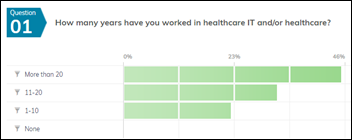
I worry about making decisions without adequate input, so please take a few minutes to complete my once-yearly reader survey. I will not only be happy, I will align our incentives by dropping your name into the Excel-powered randomization hat for a $50 Amazon gift card.

I sneaked a peek at the reader survey responses in which someone once again suggested that I review big announcements from the past to see how many panned out in historical context. I like the idea, but I don’t really know how to do that effectively (by date? by company?) Your thoughts are welcome. I was just thinking this week about IBM’s giant announcement from a few years ago that it was rolling out a ton of healthcare apps that I suspect either failed or were never actually finished.

image

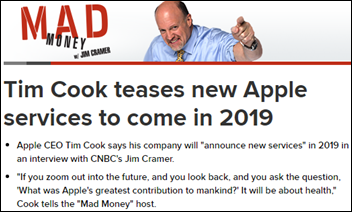
The most common recommendation that poll respondents have for Apple in terms of healthcare is to stay away, followed by continuing its present efforts to develop health sensors and data collection. The only other significantly chosen option was to display and integrate information from multiple systems and providers. Only 6 percent agree with stock picker Jim Cramer that Apple should buy Epic or Cerner, and even then I bet those were pot-stirrers who just want to see what would happen.

New poll to your right or here: what will you be doing during HIMSS19?

The story on hospitals running “wealth screening” reminds me of how confused I was in an early hospital job when I first heard about “the foundation.” Its well-paid SVP had a lot of fingers in the operational pie. He was always out in the community schmoozing movers and shakers using paid-for memberships in the best clubs, coordinating black-tie galas, and cozying up with vendors that we were trying to keep at arm’s length (“I’m not telling you to buy Siemens PACS, only that you tell me why not if you don’t,” he said right before jetting off with some of his hospital cronies to Germany for a junket that Siemens was paying for.) I was naive that hospitals are run pretty much like any big business, work community relationships to their advantage, play community doctors like a chess game, and plan endlessly on how to get bigger. My naiveté was also shattered the first time I saw how differently we delivered care to bigwigs in beds compared to mere mortals.

Listening: new from Long Beach, CA’s Rival Sons. Hard rock will eventually return to popularity and this band will be waiting.


Webinars

None scheduled soon. Previous webinars are on our YouTube channel. Contact Lorre for information.


Acquisitions, Funding, Business, and Stock

image

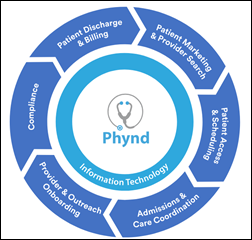
Phynd raises $8 million in a Series B funding round, with three of the four investors representing health systems. The company will invest the proceeds in increasing its its collaboration with Epic and other EHR vendors and to further develop its provider enrollment, management, search, and reporting platform.


Sales

  • MassHealth selects Waystar’s Whole Patient Insight risk scoring of social determinants of health risk.
  • Four agencies of Vermont Care Partners choose Netsmart’s full solution suite to support their work in mental health, substance use, and developmental disability.

Decisions

  • Phelps County Regional Medical Center (MO) will go live with American Well telemedicine in March 2019.
  • Hayes Green Beach Memorial Hospital (MI) switched from Meditech to Epic in December 2018.
  • Eureka Springs Hospital (AR) replaced Healthland (a CPSI Company) with Medhost in January 2019.
  • Bienville Medical Center (LA) switched from Healthland (a CPSI Company) to Medhost in December 2018.

These provider-reported updates are supplied by Definitive Healthcare, which offers a free trial of its powerful intelligence on hospitals, physicians, and healthcare providers.


Announcements and Implementations

Scotland Health Care System (NC) is implementing Epic.

A federal judge in Madison, WI rules that Epic’s mandatory employee arbitration clause is valid, denying the complaint brought by lawyers of current and former Epic employees that the US Supreme Court’s decision in favor of Epic was unconscionable.


Privacy and Security

An Iowa man is surprised that a hospital’s policy prevents him from viewing his 12-year-old daughter’s medical records without her consent. State law supersedes HIPAA and some leave it up to individual hospitals to decide the age at which the parent can’t view the child’s records without their permission, with the requirements intended to encourage adolescents to be honest in their conversations with providers about substance use and sexually transmitted disease. 


Other

image

GeekWire profiles Vyrty’s Sync.MD, which claims to empower patients by letting them take phone photos of their medical records (how they get those is breezily unstated), store them, and then selectively share them with providers to whom they provide a QR code. Doctors can print records to a virtual printer to add them to the patient’s file, which is a good idea. The CEO’s LinkedIn (which shows zero healthcare experience) says the company’s technology involves a smart card, so there’s probably a pivot in there somewhere. Unstated in the brochure-ware is that (a) patients don’t want to screw around collecting and managing their own records, as evidenced by both Google and Microsoft failing to impose their personal health record apps on the world; and (b) clinicians don’t trust patient-managed records because they can’t tell if they are complete and it’s easier to just start firing off orders for a barrage of revenue-enhancing tests and imaging studies. Technologists who have no healthcare experience always fail to understand that hospitals and practices don’t trust the records of their peers, rightly or wrongly, and fear the legal consequence of acting on them inappropriately. My personal experience is that dentists are a lot more interested in the records of new patients than doctors.

Four men sue Texas Children’s Hospital for age discrimination, alleging that the hospital fired them from their senior computer operations analyst IT jobs by requiring them to earn Microsoft or Cisco certifications that were unrelated to their job responsibilities, then replaced them with younger employees who didn’t hold those certifications. 

It’s pretty obvious why plastic surgeons are about the only happy medical specialists, but Daily Beast asked them directly:

  • Their surgeries are scheduled in advance and thus they can control their own schedule
  • They have a high percentage of private pay patients, leaving them mostly free of EHRs, insurance companies, and hospital bureaucrats
  • Their patients provide immediate positive reinforcement
  • Their work varies between cosmetic and reconstructive
  • They work more actively on wellness, including encouraging physical activity at their conferences beyond booth-to-booth hikes (this on seems like a stretch, no pun intended)
  • They make a crapload of cash

image

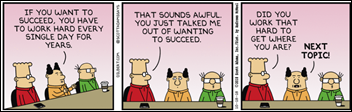
The New York Times notes the odd phenomenon in which Millennials – a generation that is perceived by many to be lazy and entitled — claim they can’t wait for Monday mornings and brag online about how long and hard they work in the “hustle culture” that glorifies ambition as a lifestyle. Experts note that most of the people beating that particular “work is life” drum are shareholding owners and managers, not the workers themselves, and they are insisting on harder, longer workweeks despite data showing that it doesn’t improve productivity or creativity (a la Elon Musk’s push for worker bees to put in a sustained 80-hour workweek peaking at 100 hours) is “grim and exploitative.” Allow me to say from vast experience as a wage slave and overseer of wage slaves – your employer cares only about executives and shareholders, not the breathing, interchangeable widgets that fill cubicles in a modern version of the dehumanizing assembly lines of the early Industrial Revolution. Your life is being wasted if it consists of working for someone else and spending your tiny bit of free time staring at your electronica and cocooning with Netflix. It’s an old but wise adage that nobody’s tombstone says, “I wish I had worked more” and you will see exactly how one-sided the value equation is when your beloved employer marches you out, demotes you, or reorganizes you. If you want to work that hard, make sure it’s your shingle, not a corporate one.

Amazon is using the shopping habits of its customers to target ads, allowing a physical therapy center to aim ads at nearby Amazon customers who had purchased knee braces and a credit card company to push ads at users of competing cards. As a result, experts say Amazon’s ad business is worth $125 billion, with much of the revenue coming from companies willing to pay to have their ads appear next to competing products found in customer searches. An investor calls it “insane scale” when companies can target new parents based on Amazon-stored baby registries or their exact car model entered in its “Garage” section. Amazon can also track user movement among non-Amazon sites to determine, for example, that a diet book customer is now reading CNN and might be profitably invited to buy protein bars. 

Eric Topol, MD critiques the 15 published papers covering the use of AI in medical prediction, saying that their lack of sound methodology means that “we’ve yet to see a validation study in a real-world clinical environment.”

image

Microsoft’s top healthcare executive, corporate VP and computer scientist Peter Lee, PhD, acknowledges that his employer along with Google have failed in their healthcare efforts, noting that when Satya Nadella asked him to take the job, he was doubtful: “The tech industry is littered with attempts by shiny CEOs to go after a piece of this massive healthcare pie. I think pretty consistently the tech industry has gone into it with a lot of naïveté, even some arrogance. So my knee-jerk assumption was ‘Here we go again.’’” He seems to be focusing on storing genetic data.

image

Federal agents arrest a California nurse for running an online pharmacy that sold 20,000 opioid pills. Carrie Markis, who earned a master’s degree in nursing science and healthcare leadership from UC Davis in 2013 (I found her in the school’s graduation video above), told customers in Dark Web chats that she buys drugs from people who resell their prescription meds for cash, eventually netting herself several hundred thousand dollars. On the bright side, reviews of her online store were nearly all five stars.

image

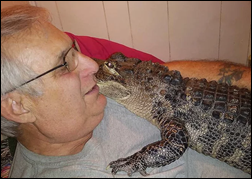
Pay someone to swap seats if you end up next to this guy on a plane. A Pennsylvania man suffering from depression registers his alligator Wally as an emotional support animal. His mood won’t be boosted much when Wally rips his arm off.

image image

image

image

image

image

image

image

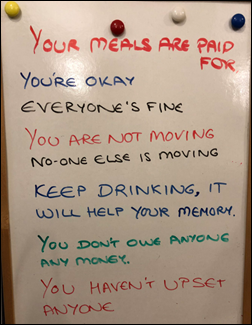
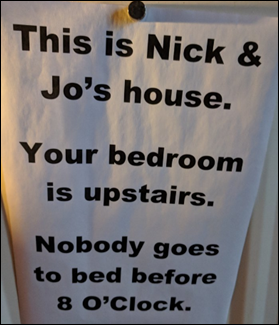
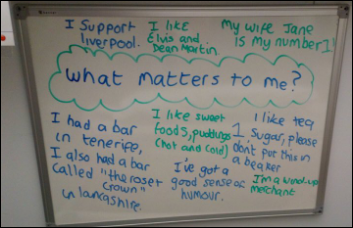
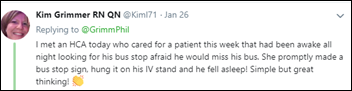
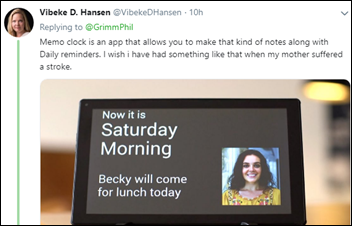
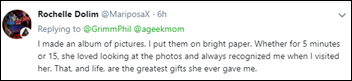
I love this – general practitioner Phil Grimmer, MBChB of Chippenham, Wilthsire, England tweets a photo left by a woman in the room of her mother who has dementia to reassure her about her surroundings. His tweet went viral with over 1 million views, encouraging others to post their own signs and stories for loved ones or patients under their care for cognitive impairment, either to give them comfort or to help caregivers address them in familiar ways and to treat them as people rather than patients.


Sponsor Updates

  • Lightbeam Health Solutions publishes a new e-book, “6 Strategies to Thrive in VBC.”
  • LiveProcess publishes a new e-book, “How Clinical Communication and Collaboration Technology Supports Value-Based Care Objectives.”
  • Mobile Heartbeat will exhibit at the San Diego ANIA Regional Conference 2019 February 1.
  • Netsmart will exhibit at the NY Coalition for Behavioral Health Annual Conference January 31 in New York City.
  • Clinical Computer Systems, developer of the Obix Perinatal Data System, will exhibit at the AWHONN South Carolina Section Conference January 30 in Columbia.
  • Experian Health will exhibit at HFMA MidSouth January 30-February 1 in Tunica, MS.
  • Sansoro Health releases a new podcast, “Putting Patient Portals into Practice.”
  • Wellsoft will partner with integration vendor Interface People to offer an ED solution for Meditech customers.

Blog Posts


button


Contacts

Mr. H, Lorre, Jenn, Dr. Jayne.
Get HIStalk updates. Send news or rumors.
Contact us.

125x125_2nd_Circle

Weekender 1/25/19

January 25, 2019 Weekender Comments Off on Weekender 1/25/19

weekender


Weekly News Recap

  • A New York Times report describes how hospitals use “wealth screening” analytics to target affluent inpatients to receive donation pitches
  • Rhode Island’s health department charges four ED doctors with medical misconduct after they voluntarily report imaging errors caused by EHR ordering setup
  • The US uninsured rate rises to a four-year high of nearly 14 percent
  • Nextech acquires SRS Health
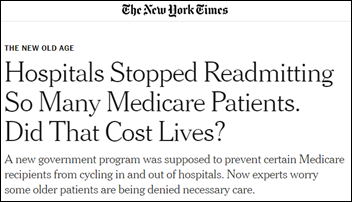
  • Researchers note that Medicare patient readmissions within 30 days dropped sharply after CMS started penalizing hospitals financially, but the death rate appears to have increased during the same period
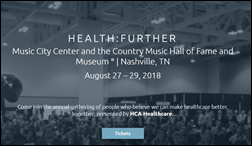
  • Health:Furthur cancels its annual Nashville health festivals after two years
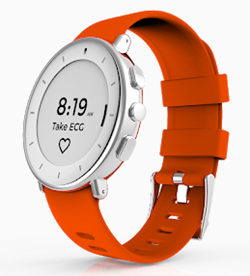
  • Alphabet’s Verily announces that its Study Watch has earned FDA clearance as a medical device for performing on-demand EKGs
  • The VA issues an RFI for a software testing contractor, with 80 percent of the job focusing on Cerner
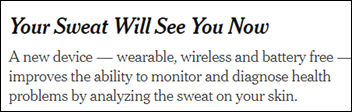
  • Researchers at Northwestern University develop a wireless, battery-free soft skin patch that analyzes sweat for PH and levels of chloride, glucose, and lactate

Best Reader Comments

I heard an interesting NPR interview with author A.J. Jacobs, who decided to thank every person involved in making his daily cup of coffee. The list is infinite. I think Atul Gawande will find the same. When tracking the costs, the list of cost centers can be daunting because there is a thread leading to more and more areas that are not obvious on the surface. It would be a good exercise nonetheless. (Julie McGovern)

As a young and still-motivated healthcare IT professional, I unfortunately find myself with a debilitating disease which renders me under the title of disabled and under the auspices of Medicare. With fewer and fewer acute care facilities accepting Medicare, I am forced to either go into significant debt by using an out-of-pocket decent facility or physicians or get worse and die relatively soon. Using out of pocket, I’d wreck my credit. Think of me as your sister or mother. Do you want this to happen to them? This madness must stop. After 30 years in the healthcare business, I never dreamed this situation would happen to me. (Recent Medicare Recipient)

For a tight-knit company that still has traumatic flashbacks to its last involuntary layoff of any size, a program like VSP seems like a kinder way to draw out the people who are thinking of retiring or leaving, anyway. A VSP gives you the chance to thank people, throw some going-away parties, and feel okay about offering a cushion for whatever the next stage of life is for people who have served the company for a long time. I know people who have left to care for sick family members, etc., not just retire. Seems like the people who leave were going to leave anyway; it just accelerates the process. (VSP)

Real creators hate the term influencer because it cheapens what they do and the influence is a means to an end, not the end itself. People who consider themselves influencers or promote that idea are generally the wannabes in the first place that ruin it for everyone else. (James Aita)

Apple could have had the long view to dedicate to enterprise healthcare long ago, but they were quarter over quarter focused. Epic had the long view and that has resulted in its current value. “Healthcare” and “health system delivery” are very different, in general interpretation of meaning. Epic dedicated to the system. Apple did not and can’t buy it. This entire week has taught me who the true students of the industry are, with  and the majority just riding the wave with very little true industry experience or foundational knowledge. (Annoyed)


Watercooler Talk Tidbits

image image

Readers funded the DonorsChoose teacher grant request of Ms. Y, who asked supplies for math and STEM projects for her elementary school class in Florida, which took a direct hit from Hurricane Irma. She reports, “My students need these supplies to make our STEAM classes successful. They love hands on steam projects and it takes lots of resources to really do the projects correctly. Because of the hurricane it has been hard to have the parents support our classroom with the resources we need for the projects, so these items will be very helpful. These items will be enough for many weeks worth of hands-on projects. We appreciate everything that you have done for us.”

We’ve seen this endless times – a big hospital haughtily defends sending a self-pay patient a ridiculous bill and threatening to turn it over to collections, then immediately caves by offering a huge discount once a newspaper highlights its callous behavior. The latest example is Zuckerberg San Francisco General Hospital, which refuses to participate in any private insurance networks for its ED because – as one of its executives explained directly when pressed by a reporter – it needs the excess fees to pay for the less-lucrative care it provides. The hospital slashed a bike patient’s ED bill from $20,000 to $200 once national news outlets ran with the story. Forget bringing a family member or friend as your patient advocate and bring a reporter instead. What’s really galling is that the hospital is still happily screwing over the 99.99 percent of patients who aren’t this guy, and in fact will now dig its hands deeper into patient pockets to cover what it magnanimously wrote off in this single case to buy its way out of the unflattering limelight.

A hospital in England deploys “bouncer” nurses to triage ED arrivals and send those patients who have only minor problems to the pharmacy or private practice to avoid clogging up wait times. The hospital added a smart twist – patients are never sent home, just to other providers.

This story says a lot. Washington, DC’s money-losing Newseum – which emphasizes the importance of the free press – will shut down and sell its building to Johns Hopkins University for $373 million, courtesy of additional  huge donations from Hopkins alumnus and former New York City mayor Michael Bloomberg. In related news, Bloomberg says it’s “ridiculous” that Hopkins doesn’t have its own police force in high-crime Baltimore, so the university is seeking approval to deploy its own armed force. Hopkins suggests that undergraduates budget $54,000 per year for attendance costs.

In Pennsylvania, a hospitalized man being guarded by state police following a high-speed DUI car chase adds an “open lewdness” charge to his long list –the guard notes in her report that “the mood struck him to masturbate in the hospital bed.”

SNAGHTML18361ac8

Several hundred University of New Mexico Hospital employees honor a 22-year-old organ donor who was killed in an avalanche, lining the hallways as he is taken for organ harvesting.

image

The New York Times describes “robosexuals” or “digisexuals,” necessarily newly coined terms for people who have fallen in love with AI-powered robots. One woman is engaged to a robot she built, while a  man’s formal wedding ceremony featured himself and his holographic bride (that’s the happy couple above, although someone must be a swinger since the shelf is full of other non-humans). Experts say that as in the case of porn, Internet dating, and Snapchat sexting, such relationships will become commonplace and then normal. A $12,000 female sex robot has swappable faces and an AI-powered brain that allows it to carry on conversations, with the inventor noting that lonely customers come home from work to converse with the robot, sometimes over romantic dinners. Lusty entrepreneurs are even opening robotic brothels. The non-creepy aspect of this is that many of the same qualities – conversational ability and even empathy – can be incorporated into robotic caregivers.


In Case You Missed It


Get Involved


button


125x125_2nd_Circle

EPtalk by Dr. Jayne 1/24/19

January 24, 2019 Dr. Jayne Comments Off on EPtalk by Dr. Jayne 1/24/19

I had a chance to sit in on a Medicare Chronic Care Management (CCM) webinar from Greenway Health while I was on site with a client today. It was nicely done, with a concise agenda and a strong presenter. The sales component was kept to a minimum, with the majority of time being spent educating attendees about chronic care management in general and only a small part was spent on the vendor’s solution. The webinar was also 30 minutes rather than the hour we sometimes see scheduled for these events, which made it easier for a busy practice to squeeze into their day. My client had a response to her follow up request within three hours of the end of the webinar, which was much appreciated.

While the US federal government shutdown rages on, there’s a bill pending in the Senate that would allow for importation of prescription drugs from Canada. When I first started in practice, we used to refer patients to an Ontario-based pharmacy to obtain a particular respiratory medication that had been proven effective around the world but wasn’t available in the US. For some, it’s not just about a potential cost savings, but about helping patients with access. It’s unlikely to get through the Senate, but it’s the thought that counts. Thanks to senators Chuck Grassley (R-IA) and Amy Klobuchar (D-MN) for giving it a bipartisan try.

The Food and Drug Administration is running out of money to fund reviews of new drugs, according to a Fortune piece online. During the shutdown, they’re not collecting user fees paid for drug and device reviews, so they’re trying to use leftover money from 2018 to keep the lights on. FDA Commissioner Scott Gottlieb plans to furlough more employees to keep things moving since drug reviewers aren’t allowed to work unpaid as they’re not considered “essential.” Gottlieb first caught my attention last month when he used Dr. Seuss-style poetic meter to warn against the hazards of eating raw cookie dough.

clip_image002

It’s barely more than two weeks until HIMSS and they’ve released the #HIMSS19 Hashtag Guide. There are more than 20 of them, which is about 19 more than I’m going to be able to keep track of unless they come as part of a snuggly quilt like this one. I’ve already had my quota of below-freezing days this year and there is no end in sight, so it’s definitely time to pile on the blankets.

It’s the last week to comment on ONC’s draft “Strategy on Reducing Regulatory and Administrative Burden Relating to the Use of Health IT and EHRs.” I hope they make the public comments available to all of us, because it will make for some excellent snow-day entertainment. You can comment through 11:59 p.m. on January 28. Get those creative juices flowing. Feel free to share any amusing entries with the rest of us while we wait for the full report.

I’m always excited to see startups or other vendors making it easier to diagnose and treat diseases, particularly ones that either (a) no one wants to talk about; or (b) those who want to talk about it only want to do so to make a political point. Nurx is best known as a telehealth company specializing in birth control pills for women, but now they’re moving into at-home testing for the Human Papilloma Virus (HPV). The test is limited to existing customers, but will be expanded to new customers in 2019. Commercial insurance provides good coverage, although there is a $15 shipping and processing fee. They also offer PrEp, a treatment that reduces the risk of acquiring HIV. These are areas where some of the more mainstream telehealth groups aren’t ready to tread, so hats off to them.

Speaking of telemedicine, the American Academy of Family Physicians (AAFP) blog “In the Trenches” says the Academy is “working to make sure telemedicine is real medicine.” There’s much greater insurance coverage for telehealth services of late, and most states require payment for certain services whether they’re delivered face-to-face or through telehealth technology. It sounds like their focus is on helping traditional family medicine practices to add telemedicine services rather than seeing how telehealth might fit into the broader scheme of things.

The blog author refers to solutions that compete with their ideal traditional practice as “leakage” and makes it clear that he thinks that patients using urgent cares, retail clinics, or direct-to-consumer telehealth services are part of the problem, specifically calling out vendor Teladoc and citing his own “Twitter rant” about its partnership with Aetna. He goes on to demonize telehealth providers as “Snapchat for antibiotics” and “basically Tinder for healthcare.” The gloves are off, apparently.

AAFP has a partnership with Zipnosis for telemedicine, but it is only available for “small, private practices with less than 20 physicians.” It doesn’t support billing when patients have telehealth coverage through insurance and doesn’t integrate with EHRs. They recommend physicians (or their administrative users) download a PDF of the visit (which is documented using a third-party platform) and update EHR medication and diagnosis lists manually. That’s not exactly revolutionary, and if AAFP is serious about having a great solution, I can recommend a physician informaticist who might be able to help.

Regardless of how much AAFP continues to preach about longitudinal relationships with primary care physicians, that scenario just isn’t the reality for many patients in the US. Insurance plans change, networks change, and then there’s the situation where people change jobs and get new insurance and have to switch physicians. Our culture has changed, and many patients don’t value that relationship with a physician because they’ve never experienced it or are turned off by the way that a lot of practices run. Convenience and accessibility trumps that relationship. People are willing to risk counterfeit products via online purchases rather than going to a brick-and-mortar store, and those kinds of sentiments spill over into other facets of our lives.

Not to mention that there are many physicians who have left traditional primary care practices because of lifestyle issues, relatively low compensation for long hours, and burnout. AAFP would do well to encourage physicians to explore practice situations outside the organization’s historical ideal in an effort to keep people working as physicians. As an urgent care physician, I’m part of their “problem,” but it’s gratifying to be the family physician (albeit temporary) for patients who can’t see their own. I’m starting to wish I hadn’t paid my dues for 2019, but I don’t think they give refunds. I haven’t seen that level of vitriol from professional organizations that represent pediatrics or internal medicine.

What do you think about the future of telehealth? Leave a comment or email me.

button

Email Dr. Jayne.

HIStalk Interviews Sean Carroll, CEO, Arcadia

January 23, 2019 Interviews Comments Off on HIStalk Interviews Sean Carroll, CEO, Arcadia

Sean Carroll is CEO of Arcadia of Burlington, MA.

image

Tell me about yourself and the company.

I am a 32-year veteran of healthcare IT over six companies, all focused on some aspect of healthcare data. Some of those companies were service-oriented businesses, some have been technology focused, and one or two have been a combination of both.

I’ve been on an explicit mission over my career to be part of tangible progress in the evolution of healthcare. I firmly believe that progress must be founded in healthcare data as at least as one of the major levers that has to be pulled. I’ve been at Arcadia for five and a half years. I’m glad to be here because Arcadia has the capabilities and positioning in the market to be an instrumental player in that necessary transformation of healthcare. We are seeing that with our customers.

The company is positioned as a population health management company, specializing in delivering population-level analytics in care management to enterprise-class customers. We serve enterprise provider organizations and nationally branded, recognized health plans. We also have a nice partnership business. Since we last talked in mid-2015, the company has experienced significant expansion and growth, elevating itself to 50 million patients and 50,000 providers in our platform. We have continued to maintain top rankings and positioning with all of the analysts who track this market since we emerged in the KLAS report in the end of 2016.

What changes have you seen since 2015 in population health management, value-based care, and the availability and harmonization of EHR data?

It has evolved a lot. One of the positive developments in the ultimate transformation of healthcare is that the commitment to value-based concepts has remained steadfast, even with all of the crosswinds that we all face every day politically and from other influential angles. That’s been a positive trend of staying in that direction.

The market has, without a doubt, matured in many ways in the last three to four years. Organizations that are pursuing technology or services that support value-based care transformation have probably been through one or two tries at implementing something. They have some battle scars and they’re smarter about what they want. Vendors who support them in this effort also have learned a lot about what it takes to be an excellent provider of technology or value-based care services to support these transformations. It’s hard work and the market has come to understand that.

A lot of companies and investors have jumped into population health management technology. What changes have you seen as companies have developed a good or bad performance track record?

The vendor landscape has changed the most in that time frame. Some organizations have fallen down or fallen out of the market. Investors and operators are learning that the economics of providing population health technology require substantial investment and substantial time for that business model to mature, all while simultaneously delivering a high-quality customer outcome. It takes a unique bond among investors, customers, and vendors to make it all work. We have seen that ourselves and with competitors who don’t have those elegant relationships and therefore have struggled or failed to be successful in the marketplace.

KLAS’s recent population health management report commends Arcadia and a couple of other vendors for being good at offering customers strategic guidance as well as technology. How does a health system move from the vague idea of becoming involved in population health management to then developing a strategy and looking at technology?

The organization first typically organizes, within themselves, the right core team to drive that agenda. It becomes a focused strategic element that is driven by a population health executive, title notwithstanding, who has a clear vision of what they’re trying to achieve.

Population health management has a number of entry points. Priorities can be set in a lot of ways. Sometimes we see an absence of priorities or clear priorities, but the organization has good leadership, good governance, and an understanding the foundational elements of successful population health implementation. That’s the starting recipe for how organizations come together. Where we come in on the strategic side is helping them, once they have or are implementing the right set of tools on the right data asset, determine how they might focus. These are very specific, on-the-ground efforts, given the outcomes we’re seeing through the data and the tools that we avail to them to explore that data. It’s a tactical strategy.

Are health systems and insurers interested in improving an individual’s long-term health beyond simply reducing their own short-term cost and risk?

That gets to the heart of what we believe is exemplary population health management. It starts with a clear economic mandate. We’ve shifted our business with all of our capabilities to focus on making our customers economically successful first, in terms of proper execution in their risk contracts, so that they have the opportunity to make other investments in population health management outside of that. We’ve learned in the past five or six years that there’s a lot of things to chase in population health for the good of population health, but sustained financial success is the bridge to sustained successful health management of a population.

Would an insurer approach population health management differently than a large health system?

I would say no at the highest level, but obviously they have different business mandates than providers. We’ve been able to foster the notion between health plans and provider organizations that a properly-positioned, highly-usable, high-quality data asset in the marketplace — where the population at large is visible in every sense of the word from a data perspective — serves all parties, both in their own strategic designs and in the broader design of what we all want for healthcare.

We talked last time about the number of provider organizations that either don’t have a data strategy or are knowingly or unknowingly using bad data to drive their decisions. Has that improved?

It definitely has improved. Everyone understands now that data is important. Not everyone has prioritized it at the top of the list of their value-based care strategy, which we would recommend be the case. We last talked that it was still, in many cases, a challenge to get some organizations to understand why clinical data was an enhancement for them in the context of a data asset. That really is no longer the case.

How do you position and differentiate the company?

A lot of the data work that we do demands a certain quality level that is informed by tenure. We have been working at data harmonization for longer than most organizations in the space, probably by an order of magnitude. Some of that shows up in KLAS reporting in terms of the types of enterprise customers who choose Arcadia. We hear a lot that that’s because of our experience. Outcomes, as in the tangible and referable results from the deployment of our technology over time — improvements in risk coding, reductions in total cost of care, dozens of other outcomes — we focus on seeing that our customers can not only deliver those for themselves, but are eager to talk to other customers about that. Referenceability is a crucial, crucial item for us.

From a market perspective, we’re the only vendor that serves both health plans and providers. That has continued for us since the beginning. That position in the market is important since we believe in this concept of density of market, where providers and health plans in given markets are working together to advance population health. We approach the market a little bit differently in that regard.

Do you have any final thoughts?

We are enthusiastic about where the market is. We feel fortunate to be in the category of leader in advancing progress in managing population health. We’re equally excited about the nature of the market, which has settled out with some really good companies trying to advance this important goal for healthcare.

As a company, we’re excited about our ability to deliver what we believe is the most important thing for the next phase of advancement in this marketplace, which is both speed to value and lasting value for customers. If companies like Arcadia can continue to deliver that to the pioneer organizations that are trying to advance healthcare by better population health management, then everyone will benefit. We’re excited to be in the top category of companies that are delivering against that.

News 1/23/19

January 22, 2019 News 5 Comments

Top News

image

Medicare patient readmissions within 30 days dropped sharply after CMS started penalizing hospitals financially, but the death rate appears to have increased during the same period. That raises questions over whether the lower readmission rate was created by hospitals turning away older patients with a legitimate medical need just to avoid paying penalties.

The 20-percent readmission rate turned sharply down within weeks of the penalty’s implementation (which raises eyebrows of how that happened so quickly), but a Health Affairs study attributes at least half the decline to Medicare’s simultaneous expansion of billing forms to include up to 25 diagnoses instead of the previous nine.

The corrected readmission rate reduction was 1.3 percent, about the same as reported by hospitals that were exempt from the penalties. More patients who had been admitted for heart failure and pneumonia died, however.


Reader Comments

image

From Associate CIO: “Re: Cerner’s voluntary separation program. Cerner still has many overpaid (by KC standards, anyway) associates it inherited with the Siemens acquisition, Brent Shafer has questioned why Cerner has over 400 VPs, and the company has a lot of topped-out associates who have become stagnant after 20-plus years and it needs some new blood to reignite investor interest.” Unverified. My only issue with VSPs is that they target older employees and the volunteers they attract are often the better-credentialed employees who know they can find jobs elsewhere – the lower-demand employees aren’t about to sign up. There’s also the nagging feeling that the executives are second-guessing their own decisions of who to hire and how much to pay, as layoffs are a management failure. Brent as the new guy may have more energy about correcting whatever undesirable situation exists, although I wonder if, as a first-time CEO, he’s worrying too much about impressing investors by applying the easily wielded but blunt headcount scalpel to give the share price a quick goose.

From Coach Ella: “Re: HIMSS. I notice quite a few bloggers are hitting the exhibit hall floor, participating in and promoting speaker sessions as paid by vendors. Is that allowed under conference rules?” Sure. I wouldn’t do it because it’s kind of a cheap sellout to take vendor money for participating in a booth-hosted “education” session of questionable quality, but I don’t begrudge those who do, even though their presence would give me as an attendee yet another reason to steer clear.

image

From Savoy Special: “Re: Health:Further. Shutting down after its two-year run of putting on a health ‘festival’ in Nashville. They are refocusing on providing advisory services to larger healthcare firms, odd since it was borne out of the Jumpstart Foundry. The format was unique in offering the opportunity to choose any track within a single large meeting room and for offering collaboration space in the middle of the conference room floor. With the growing competition for attendees from well-funded groups like HLTH, CES, and SXSW, which conference will be the next to fold up?” Health:Further (or maybe it’s now Health:NoFurther) announces that it has pulled the plug on its planned August 2019 event, spinning the news with a subhead of “from meeting to acting” in concluding that a once-a-year event can’t keep up with acquisitions and Silicon Valley’s healthcare interest, so it will pivot into an advisory business. It doesn’t make sense to me, especially since I see little evidence of the organization’s street cred for advising bigger and likely better organizations. My advice to attendees – stay home and do the work your employer is paying you to do and quit wasting company time and money screwing around at low-value conferences (which is most of them) looking for easy answers to your organization’s challenges. Imagine how un-innovative Amazon and Google would be if their executives just copied each other based on seeing what everyone else is doing via conference presentations and networking.

From Tip O’Spear: “Re: email newsletters. You should do an HIStalk one.” I’ll pass, for these reasons:

  • The “open rate” of emailed newsletters – even those that manage to bypass the invincible spam filters – is low. I’ve signed up for several of various kinds and rarely open any of them, having either lost interest or felt misled about the value I would receive.
  • Nobody needs to read industry news every single day. CNN baits you into raising your political blood pressure by making every minor story seem like breaking, relevant news that you need to follow, and other newsletters and sites mimic that reader-unfriendly practice.
  • Newsletters are usually just sterile links to online junk (mostly press releases) as “curated” by faceless, questionably credentialed writers who are willing to work cheap.
  • Newsletters suffer from the same misaligned incentives that exist with most sites – their measure of advertiser success is open rates and clicks (which encourages clickbait headlines), sensationalistic story selection, and articles that run  way too long, all intended to make you spend more time on their site than is necessary. Your time is their product.
  • When is the last time you learned something from a health IT newsletter that allowed you to perform your job better, gave you a career advantage, or led you to feel more fulfilled?

From Robert Lafsky, MD: “Re: NEJM piece on urgent care. A good look from the other side would be a piece by Atul Gawande, where he walks us through a typical day in his surgical practice, accounting for every dollar charged and every dollar collected for every action he takes. The big picture is too big and the problem is at the ground level.” RL references a NEJM piece that I’ll recap below, but in the mean time, this idea is brilliant. I would love to have Atul Gawande describe the downstream effects, especially the financial ones, that emanate like a boat’s wake from his part-time surgery practice. What’s the cost and price of the supplies and drugs that he uses without thinking? How much does he bill and what does insurance actually pay? What’s the hourly cost of running that fully staffed OR? What layers of management are involved in stocking it, cleaning it, scheduling it, and staffing it? How many of his patients experience financial hardship? What documentation is the by-product of a surgical case, how much of that does he input directly, and who benefits? What does he think of competing ambulatory surgery centers? Is he appalled that Partners HealthCare is such an aggressive market bully and pays its executives exorbitantly? (something that he might want to look into on behalf of his new employers).

image

From DisCerner: “Re: [CIO name omitted], formerly of [a merged health system]. Now the CIO of Banner Health.” Unverified, so I redacted the identifying information and will update if I get confirmation from my media inquiry. UPDATE: Banner Health confirms that Deanna Wise, former EVP/CIO of Dignity Health, has been hired as CIO. She was announced on December 4 as CIO of CommonSpirit Health, the 140-hospital, $30 billion Chicago system being formed by the merger of Dignity Health and Catholic Health Initiatives, but left immediately afterward.


HIStalk Announcements and Requests

image image

HIStalk readers are smarter and more motivated than industry slackers, so I would be remiss if I failed to take advantage of your expertise by asking you to take three minutes to fill out my once-yearly reader survey. You’ll not only be helping me decide how to spend my HIStalk time over the next year, you’ll be entering yourself into a drawing (which will require me to spend half a day stretching my minimal, rusty Excel skills into writing a randomization formula) for a $50 Amazon gift card.

I erroneously (or at least prematurely) predicted at HIMSS18 that voice assistant add-ons would be all the rage by now, as EHR vendors seemed anxious to trade paint in trying to become the first to voice-power their software Alexa style. I haven’t heard much since from the companies that seemed to be leading the charge – EClinicalWorks, Epic, and Nuance come to mind. I’m curious if anyone is actually using those assistants and what their experience has been. I see that Vanderbilt is presenting at HIMSS19 on its work to voice power Epic.

image

I’m annoyed at the overused, lame pun of “XXX will see you now,” in which “XXX” is a substitute for “the doctor.” When is the last time, other than on black-and-white TV shows, that someone actually said, “The doctor will see you now?” It reminds me of my early days in a small, rural hospital, in which the office nurses who rounded with our poorly skilled but arrogant community-based medical staff reverentially referred to their employer as “the doctor” as though no others existed. I even heard the wives of those mostly foreign-trained, exclusively male physicians – many of whom treated our nurses like lower-caste handmaidens — refer to hubby in social situations as “the doctor,” although maybe that’s a cultural thing. This particular for-profit hospital had a written policy that employees had to clear a path for incoming doctors in patient room hallways, specifically to hug the wall Parting-of-the-Red-Sea style so that the Doctor (administration capitalized it incorrectly to suck up hoping for more bonus-boosting admissions) could proceed unmolested to wreak patient harm more efficiently and then get back to the office to practice their specialty of defrauding Medicare. That sounds bitter and probably is, but our employees had to intervene nearly constantly to keep doctors from killing our patients through their obvious incompetence. Don’t serve on a hospital’s death committee if you want to preserve your healthcare innocence.

Listening: The Budos Band, a nine-piece instrumental Afro-Soul outfit from New York City that is horns-forward in a 1960s “Iron Butterfly meets Chicago and the Ventures somewhere in Africa” sort of way. I was despondent that I couldn’t get Shazam going in time to ID the song playing in the restaurant I was in, but luckily they were tracking just this band and I was able to get the artist on the next song. Their music would be edgier and more interesting than the usual tinkly piano solos for dinner music.


Webinars

None scheduled soon. Previous webinars are on our YouTube channel. Contact Lorre for information.


Acquisitions, Funding, Business, and Stock

NantHealth, whose shares have fallen to $0.70, receives a Nasdaq de-listing notice now that the stock has closed at under $1 for 30 consecutive trading days. Companies usually skirt that issue by announcing a reverse stock split, which accomplishes nothing other than to confirm their failure and to allow them to keep investors at the table as they hope for an unlikely miracle. 


Sales

  • Bergen New Bridge Medical Center (NJ) joins Collective Medical’s network to support opioid monitoring, real-time event notification, and care collaboration.

People

image

Quality benchmarking organization URAC hires Shawn Griffin, MD (Premier) as president and CEO.


Announcements and Implementations

image

Brilliant: a “high-density parking solutions” vendor opens Manhattan’s largest automated parking system for an unnamed hospital. The robotically operated system provides 119 spaces in a 30,000-square-foot, four-floored structure, squeezing in 30 percent more cars than garages that require space for drivers to maneuver. It looks like valet parking to visitors, but the valet just drops their car off at the automated system’s loading bay. The system is integrated with the hospital’s information system so that customers can summon their cars and pay from computer tablets, allowing them to hop in and leave from the valet desk. The company’s other projects allow human-free operation, where drivers retrieve their car by app. I hate navigating through dark, tight parking garages, nearly always getting stuck behind a clueless visitor who will wait forever for someone to vacate a low-level spot when everybody knows that the entire upper level is surely empty. Pro tip: drive up a couple of levels, then go back down on the other side since few will take the risk of not finding a freshly emptied space there. Pro tip 2: it’s better to park higher if that gets you closer to the elevator since you’ll be walking horizontally, not vertically.

Allscripts offers free genetic testing to its employees via its 2bPrecise subsidiary. Free or not, I wouldn’t want my employer – who likely provides my health insurance and makes cost-benefit decisions about each employee – potentially learning my genetic predispositions.

King’s Daughter’s Medical Center (MS) goes live on Meditech’s Expanse Point of Care.


Other

image

Brendan Reilly, MD pens a cynical yet insightful NEJM recap of his experience taking his wife to an urgent care center in “The Spy Who Came In with a Cold.” His observations, made while keeping mum that he’s a doctor:

  • Everybody wore the same scrubs, white coat, and stethoscope as a corporate standard, leading him to question whether everyone (or even anyone) really knows how to use the stethoscope.
  • He notes that while the clinic’s website boasts, “We’re on your side,” it fails to identify who the opposing “side” is.
  • He describes the eyes of the young doctor working as, “like she slept last night but not the night before. She looks alert but hurt, eager yet ambivalent, like she’s not sure she wants to be here but here we are, so let’s go.”
  • The doctor didn’t use the stethoscope or otoscope correctly and forgot to listen to his wife’s lungs, then diagnosed pneumonia after incorrectly interpreting an x-ray while waiting for a cross-town radiologist’s report.
  • He questions how doctor quality should be measured, noting the unreliability of direct observation and the difficulty in linking care quality to ever-increasing cost.

image

A Virginia woman is sentenced to 15 years in federal prison for scamming $5 million from 50 investors in her phony telemedicine company, spending the proceeds on luxury world travel. She erred in appearing at her sentencing carrying an $1,800 leather portfolio paid for by one of her investors (a special needs teacher and recent widow), with the angry judge ordering her to surrender it since “you’re not going to be able to take it with you to prison anyway.”

SNAGHTML78bbf58

Who’s signing up for this? It’s an award-winning solution (or will be when I announce the HISsies winners).


Sponsor Updates

  • Provider management platform vendor Phynd earns ISO 27001 certification for its information security standards.
  • Pivot Point Consulting enters into a managed services partnership with PDS.
  • Access publishes a new client spotlight, “Norman Regional Health System Takes Next Step on Paperless Journey.”
  • AdvancedMD publishes a new guide, “What NOT to do When Working with a VBC RCM Outsource Supplier.”
  • Aprima’s PRM, Version 18 earns ONC Health IT Certification from the Drummond Group.
  • CarePort publishes a new case study featuring St. Vincent’s Health, “Using Ad Hoc Reporting to Reduce Excess Days and Associated Operational Expenditures.”
  • Arizona HIMSS names CTG Client Partner Patricia Allvin treasurer and VP of finance.

Blog Posts


button

Contacts

Mr. H, Lorre, Jenn, Dr. Jayne.
Get HIStalk updates. Send news or rumors.
Contact us.

125x125_2nd_Circle

Curbside Consult with Dr. Jayne 1/21/19

January 21, 2019 Dr. Jayne 2 Comments

clip_image003 

Being a consultant who is also a physician, I sometimes have the opportunity to work on projects that might not happen if I didn’t wear both hats. This week I worked on a project that I never thought I’d be staffing – a comprehensive analysis of medical marijuana policy for a fairly large healthcare organization. I’m a year into an EHR consulting engagement with them as their independent “physician whisperer” to help physicians who are struggling with adoption, so I was surprised when they asked if I’d be interested in taking on another engagement on a different topic.

I’m pretty sure I was pulled in so that the project could be done somewhat off the books, allowing someone who isn’t a stakeholder to pull the facts together so that the actual stakeholders can have a focused discussion of their options. The organization has a policy that prohibits its employed physicians from participating in the state’s medical marijuana program, but the leadership is under pressure by a subset of physicians to change its position.

It’s similar work to what I did in the CMIO trenches and we wanted to research a new system or solution and determine what kinds of impact it would have on patients and providers. I had to dig into the people, process, and technology issues along with legal and regulatory ones. I am putting together pro/con documentation of the various risks and benefits along with cost modeling for implementation and support of this new service line.

I’ve also done some reference calls with other organizations to see how they are handling and documenting medical cannabis in their practices. It made for some fun voicemails. “Hey there, it’s Jayne. Hope you’re having a good New Year. I’d like to grab 15 minutes on your schedule to talk about marijuana.” Not exactly a sentence I ever thought I’d be saying, but it’s been an interesting project.

Since I’m mainly reaching out to informatics colleagues, they have ready access to data, which has been great. If their physicians participate, they can tell me how many recommendations, certifications, or referrals are being done over the course of a year and what conditions are most commonly being treated. It’s been great to get the objective data and not just talk about the policy piece.

Overall, it seems that a very small number of organizations allow their employed physicians to be part of state medical cannabis programs. Most of the folks I’ve spoken to that work in organizations that permit it have had to customize their EHRs to some degree to support the workflow, which makes sense given the different programs and requirements in the states that allow medicinal use.

One clinical informatics team is playing it both ways. The health system’s physicians aren’t allowed to refer for it, but the independent community physicians that are on the shared EHR platform have the autonomy to do what they want. That makes for some interesting permissions issues in the EHR.

My informatics connections noted that there have also been concerns from patients about privacy issues and whether information about marijuana recommendations become part of the record that is transmitted to other physicians. That can be a grey area. In many states, drug use is considered sensitive information, but if it’s considered a medical treatment, that might fall outside the realm of a sensitive authorization and might be sent without a patient having the ability to restrict such sharing.

Since I cast my research net pretty wide, I was surprised to learn that there is a robust niche for medical cannabis in the telehealth world. California, New York, and Nevada allow such visits to be done via telemedicine. One firm, PrestoDoctor, has conducted more than 50,000 appointments, with patients sending documentation from their local physician prior to an online consultation with one of its physicians. Pricing varies by state, from $49 in the Golden State to $139 in the Empire State. PrestoDoctor also sells various products and accessories on its website, including a bacon-flavored hemp extract for pets.

I also learned that there are cannabis-specific EHRs, along with specialized billing systems since many cannabis practices are cash-only. Other practices use traditional practice management systems and submit regular office visit codes to insurers.

There are plenty of specifics that have to be figured out. Since federal law still considers marijuana an illegal drug, states have developed mechanisms for physicians to “recommend” its use rather than prescribing it, or to “certify” a patient’s qualification under state law. Neither of those approaches fit nicely into the usual EHR’s selection of medication modules, durable medical equipment management, or referral / authorization workflows. States also have varying lists of qualifying conditions, and the small number of clients who might want cannabis content aren’t going to make it sensible for mainstream EHR vendors to support those workflows. I reached out to a couple of vendor friends to find out where medical cannabis might be on their EHR road maps, and the responses ranged from “what did you just say?” to outright hysterical laughter.

Now that the research is largely complete, I will be spending a fair amount of time creating documentation for the discussions and making sure that I have answers to the questions that stakeholders are likely to ask. I will also be putting together the cost modeling to determine whether it makes financial sense to add the service, along with recommendations for technology and workflow changes that might be needed to support an implementation.

I’d like to get permission to independently survey the physicians to determine what percentage would go through the process to be able to recommend medical marijuana, which would significantly impact the decision. I suspect that it’s a small vocal minority and that the majority of physicians aren’t at a place where they would want to do it, but the organization doesn’t want to get people agitated around the issue until it has more of a grasp on what it would entail. There’s clearly enough interest to engage a consultant and I’m not complaining about a bit of unexpected work during an unanticipated slow period.

Does your organization allow physicians to participate in medical cannabis programs, and if so what solutions have you had to employ? Leave a comment or email me.

button

Email Dr. Jayne.

HIStalk Interviews Eric Widen, CEO, HBI Solutions

January 21, 2019 Interviews Comments Off on HIStalk Interviews Eric Widen, CEO, HBI Solutions

Eric Widen is co-founder and CEO of HBI Solutions of Palo Alto, CA.

image

Tell me about yourself and the company.

I have a long background in healthcare, over 25 years now. I’ve worked and focused on solving problems in healthcare, typically using data. We started HBI Solutions with a more sophisticated bent on using data and data science techniques to solve problems in healthcare. That focus has been on predictive insights on patients and populations, so that population managers and even individuals can understand insights into their health that they wouldn’t know otherwise. We use data science methods to do that.

What are the implications of predicting the outcomes of patients who may not even know they have a problem, as you did in applying machine learning to EHR data to identify people likely to eventually have chronic kidney disease?

That’s the million-dollar question. The punch line is, what do you do once you know this information? Our clients are focused on low-hanging fruit from a risk standpoint. They’re working closely on readmission rates for acute settings.

We have two flavors of risk models. One is the acute setting, where our insights predict what could happen before and immediately after discharge. It’s typically an acute team or a post-discharge transition and care team that is focused on things like readmissions, and inside the hospital, sepsis and mortality.

The other models are population-based models. You want to predict what’s going to happen in the future to patients who are healthy at home. The chronic kidney disease, CKD, model that you referenced is one of those. But by and large, organizations are largely focused on utilization and cost as the starting risk models. They target patients that are at risk for ED visits, inpatient visits, or high costs, then proactively enroll them in care programs.

Our more savvy clients are starting to get into disease models. CKD is one of them. But more common use cases involve risk of mortality, which was the subject of a paper we published. We’ve had organizations looking at the risk of death for a patient in a future 12-month period and proactively teeing up discussions about end-of-life and palliative care. We have a heart clinic focusing on getting patients who are at elevated risk for a heart attack into the clinic more frequently than they would otherwise.

We said in our mid-2016 conversation that CMS’s excitement about preventing readmissions would probably end up being more tactical than strategic, not really changing outcomes as much as pushing costs around. What have we learned from trying to fix a problem with what might be a blunt instrument?

A key performance indicator that is put into place by regulatory agency that includes penalties and economic implications always tends to have unintended consequences. With a laser focus on something like readmission rates, you’re looking only at a 30-day window post-discharge. The health of those people continues forever after that.

It’s more appropriate to understand all the risk for an individual. Not only within that 30-day transition and care period, but also for the next year and multiple years after that. You get people into more of a comprehensive risk management program to bend the cost curve longitudinally over time and to take care of all the patient’s risks via care management, not just the 30-day readmission risk. Day 31 and after is as important more important than those 30-day windows.

CMS, Joint Commission, and others have come up with ideas that sound naturally good, but without having data behind them. How should those organizations use the same data science as your customers?

It’s not there yet, obviously. The other unintended consequence is the administrative burden that is bestowed upon clinicians and healthcare organizations to meet these quality markers. It’s a heavy burden and a heavy lift and it doesn’t always lead to high-quality care.

Our philosophy as a company is that we purposely didn’t start with regulatory measurement, or any of those, as a focus of the company. We do those things because organizations have to do them. But our philosophy is around two markers — are we reducing the cost to manage patients and are we getting patients healthier?

As the risk goes down for things like readmission rates, utilization of the ED, mortality, or for having a heart attack, patients are actually getting healthier and moving towards an improved outcome. We’ve had clients use our risk scores as a marker to graduate people from care programs. As their risk goes down, they’re getting healthier and they no longer need an aggressive care management approach. They are closer to self-managed care.

I don’t know how this will affect how a regulatory agency thinks about care, but we have progressive organizations thinking about care in that way. Keeping their eye on the ball on a couple of important markers that are really getting people healthier. As people get healthier, they use fewer resources over time. We’re starting to get into the measurement of the cost effectiveness of this approach.

In healthcare, however, spending money to improve someone’s health today might mean someone else gets the payoff decades letter when the patient has changed jobs or insurers.

There is that kick-the-can-down mentality a little bit in the commercial markets. However, Medicare is the largest payer and people consume the most of their costs and incur most of their diseases as they stay in those programs longer. With managed Medicare, Medicare Advantage, and Medicare HCO plans, you get more of a longitudinal outlook on patients. They stay in the same plan or program. We’re targeting those types of organizations, where those incentives are aligned, because it’s a better fit.

I have seen in the commercial space exactly what you’ve described, the “it’s not our problem” approach. They are more focused on short-term risks, more interested in what could happen in the next 6-12 months instead of the next 5-10 years for that patient.

What is your most impressive customer outcome?

It’s a mix. Organizations that have been with us the longest have shown good longitudinal outcomes in reducing ED visits and readmissions. That was their largest focus, and remains their focus, because they can put their arms around that and put in programs to bend those curves.

We can look to the future for graduating people from care programs, Then we can develop, for example, more mental health-based risks. Getting people to that point of self-help to lower their rate of suicide and opioid abuse. That’s the next wave for us, as the way people think about care becomes more sophisticated. We’re not there yet. That’s our future direction.

Beyond Medicare, the VA has the incentive to pay attention to long-term patient outcomes and to implement mental health programs. Have they expressed interest?

We’ve had several conversations with the VA through one of our partners, InterSystems, which has a long relationship with the VA. We have the ability to deploy into existing technologies as smart engines behind the scenes. We can work with any workflow platform. We plan to work with the VA in the future, but nothing is in place yet.

What data elements do you wish you could get but can’t?

Our approach is to give us whatever data you have and we’ll generate the best insights on your population or on you as an individual. As we look to the future, we’re starting to work with more partners. We’ll announce this as time goes on, but these partners have access to different types of datasets. We have worked with what’s generally available in the electronic medical record and in claims systems. We’ve added outside data sources that we can get from the federal government, like social determinants and things we can add in at the ZIP code and Census Tract level.

We’ve been pitching ourselves as a population health program, but as we look at the future and getting more towards the consumer, we’re starting to work with different datasets that would allow us to develop new diagnostic screening and/or risk tools. Developing tests that don’t exist today. We could, with a mass spectrometry partner, develop analysis of proteins, lipids, and metabolites within the blood itself. It’s new data that hasn’t been harnessed, other than in research settings at a very small population level of tens or hundreds of patients.

We’ve been analyzing millions of patients in a lot of our datasets. As we work with these new partners, they’re looking to secure large population samples in tandem with EHRs in the US, but more globally. Our metabolic makeup changes at a detailed level as we exercise or enter new nutrition programs. You can measure that on a day-to- day or week-to-week basis and pick up these signals. This is really new and interesting to us. It’s the same repeatable process around machine learning that we apply to other datasets. But getting into this, we can start developing new tests in the market.

An example is a newborn screening test, where researchers who work at HBI have, in the academic setting at least, identified for every pregnant woman their likelihood of pre-term. If you’re more likely to deliver pre-term, then you will enter a different care program. Any obstetrician or pregnant woman would want that test. We want to develop tens or hundreds of those types of tests.

Another example of high-throughput analysis of mass spectrometry is diabetics whose glucose and A1C markers are “normal.” We can find that 20, 30, or 40 percent of that “normal” population is actually at risk by measuring the proteins and the metabolites within the blood. This is a new direction for HBI. It doesn’t take away from our current direction, it’s just a new channel that we’re going after. It enhances population risk management, but individual risk markers will be a more meaningful focus for us.

How can we separate the real deal from the posers in the HIMSS19 exhibit hall, where every vendor will suddenly claim that their old products are now powered by machine learning, AI, and analytics?

We pride ourselves on being a no-BS company, rolling up our sleeves and working with clients to get them better technology to make the doctor’s job easier and to get patients healthier. We’ve always taken that as a focus. We can differentiate by giving you a list of physicians who are using our technology, pointing to research papers, and putting you in touch with care managers who are using our product daily to the health and outcomes of patients. A lot of vendors don’t have those three in place.

Do you have any final thoughts?

We have been focused on US problems and issues, which have their own government and regulatory components that drive how you think about entering the market here, But if you take a general view of how to use technology to get patients healthier at a lower cost, it’s relevant to US. There’s no shortage of studies on how upside-down the US is on outcomes and cost.

But it’s relevant across the globe as well. Other countries are getting richer and eating more poorly. People there with more disposable income want access to more types of healthcare. It’s a global problem as well. It’s important to think about how technology applies not only in the US, but globally. That’s our approach in developing solutions that are relevant to people.

Monday Morning Update 1/21/19

January 20, 2019 News 1 Comment

Top News

image

Alphabet’s Verily announces that its Study Watch has earned FDA clearance as a medical device for performing on-demand ECGs.

Verily’s offering, unlike the Apple Watch, requires a prescription, perhaps because it was developed to capture health data from clinical trials participants. 


Reader Comments

From Stock Picker: “Re: Jim Cramer. What does he know about healthcare?” First, let’s recognize Cramer’s undeniably impressive credentials – Harvard BA and JD, editor-in-chief of the Harvard Crimson, small-town newspaper reporter, successful hedge fund manager (for a short time during a boom market), and co-founder of a stock website, all before he was a TV host. However, it’s always amusing when cheap-seaters (including elected officials) pontificate based on their superficial knowledge. Everybody these days thinks they are an expert on everything they’ve read about from sketchy Internet sources, holding their ground even while emotionally spouting off to an actual expert for whom the topic represents their life’s work. This is a different form of a volume-to-value challenge where loud people talk over more informed ones.

image

From LinkedOut: “Re: sending an immediate boilerplate sales pitch after connecting on LinkedIn. What if I write a message specific to you and your org? Less annoying?” Only slightly, assuming you are still trying to sell me something. I didn’t join LinkedIn to be pitched, especially by people or companies I’ve never heard of. It also depends on whether you’ve paid any attention to what I actually do, which means that the LinkedIn sales messages I get for software engineering services, cybersecurity consulting, or webinars for non-health IT topics are going to bug me because my profile makes it clear those don’t apply to me. Overzealous Indian dudes in particular seem to love to invade my inbox. It’s like signing up for Match.com and having some weirdo immediately start blasting out full-frontal selfies.

From Deadlock Loser: “Re: Cerner. Did indeed announce another ‘voluntary separation plan’ right after Cliff Illig’s retirement and before the long holiday weekend. Unlike the previous two in 2015 and 2016, this one contained a threat that it would be ‘involuntary’ if certain financial goals aren’t met. Combine this with substandard benefits, readjustment in titles that led to up to 15 percent pay cuts, and blunt communications like this one that kill morale. Executives who are treated like royalty prefer to hire young, know-nothings from local Midwest colleges who are cheap and don’t know any better.” Unverified, but DL included what appears to be a copy of Cerner’s internal announcement from the company’s ironically titled chief people officer, which I’ll excerpt as follows:

Today, we are announcing to all US associates a voluntary offering created for a group of US associates who meet specific eligibility criteria … In 2019, we are expecting to meet a financial goal in order to fund important areas of investment to secure our future as a growth company. If we do not meet our corporate financial goal with the voluntary separation program, we may subsequently conduct an involuntary separation program … An associate may be eligible for the VSP if … the associate has at least 10 years of service and the associate’s combined age and years of service equals or exceeds 65.

From Minimal Shrinkage: “Re: healthcare influencers. When the conference circuit gets into high gear, their insulated conversations among themselves, event promotions, meet-ups, chats, etc. grow exponentially. For every smart, successful, succinct, and cogent healthcare person that contributes to the online discourse, there appear to be 30 others who hold almost no bona fides who produce an endless stream of meaningless, pointless, and self-aggrandized commentary. My grandfather used to tell me, ‘Don’t tell me what you’re going to do, show me what you’ve done.’ Those influencers have also reduced my interest in attending the conferences they infest — I’m not interested in seeing their regurgitated ‘takes’ on stage after not being excited to see them on Twitter and LinkedIn.” 


HIStalk Announcements and Requests

image

About half of provider IT decision-makers look at either KLAS or Black Book before buying software or services, according to last week’s poll. It’s not really a fair comparison since Black Book covers broad trends with big sample sizes while KLAS digs deep into a specific topic (like population health management technology) while interviewing a small number of actual clients, so they are used somewhat differently. I agree with Former Community CIO on the best way to use KLAS, with this being my experience:

  • KLAS is outstanding in describing a market and differentiating vendors within it in ways that vendors themselves would never do for fear of pigeonholing opportunities.
  • A given report tells you who the players are and how much market share they hold.
  • The overall rankings usually jibe with gut feel.
  • Few people would argue with the top- and bottom-ranked products, but KLAS doesn’t help much to distinguish those slugging it out in the middle.
  • Provider executives feel peer pressure to avoid choosing a product that isn’t #1 in KLAS as those peers fail to recognize that one size doesn’t fit all, KLAS isn’t always right, and even top vendors can stumble or get acquired by a crappy parent that ruins the magic.
  • The user comments provide the most interesting information, although they are few in number, you don’t know the commenter’s background and employer to discern relevance, and unknown factors could make them suspect (the client is behind on releases, their IT shop is in shambles, or they merged with someone and had the system foisted on them).
  • Clients who report to KLAS are like Yelp reviewers – they are self-selected with their own agenda, they may not be representative of the entire client base or similar to the reader’s health system demographic, their vendor may influence their participation or rating, and the individual respondent’s background in a particular product may be superficial.

New poll to your right or here: What would you tell Tim Cook if he asked you how Apple should be involved in healthcare?

I invite you to complete my once-yearly reader survey. I have limited ambition, time, and appetite for change just for change’s sake, but nearly everything I do differently today than I did years ago is because I got a spark from someone’s reader survey response. That reminds me that HIStalk will be 16 years old in June, which seems unreasonable given that the initially low readership and conflicting day-job demands should have been strong motivators for me to find another hobby.

I am, as a glass-half-empty curmudgeon, always annoyed by something. My peeve this week, caused by HIMSS19 spam, is people sending an “invite” rather than an “invitation.”Maybe it’s inevitable that verbing nouns (such as “friending,” seeing an Olympian “medal,” or “incentivizing” EHR purchases) will lead to nouning verbs (which along with sending “invites” includes HIMSS listing its federal government “asks.”) It reminds me of nerdy hospital tech guys who worked for me who described their job as “administrating” a system or people (sometimes me included) who say they are “vacationing” given that “vacation” is the noun form of “vacate, ” I say while explanationing.


Webinars

None scheduled in the coming weeks. Previous webinars are on our YouTube channel. Contact Lorre for information.


Acquisitions, Funding, Business, and Stock

image

Data analytics and population health technology vendor Innovaccer closes a $35 million Series B funding round, raising its total to $51 million.

Baxter International acquires True Process, whose platform performs medical device integration and analytics.


People

The soon-to-be-combined Beth Israel Lahey Health names BIDMC CIO John Halamka, MD, MS as executive director of its recently created health technology exploration center.


Announcements and Implementations

image

Researchers at Northwestern University develop a wireless, battery-free soft skin patch that analyzes sweat for PH and levels of chloride, glucose, and lactate. Possible applications include detecting dehydration (Gatorade is already on board), testing for cystic fibrosis, and potentially screening diabetics. Researchers are are working on sensors to monitor kidney function, assess post-stroke rehabilitation, and to monitor depression.

image

The latest twice-yearly health IT market review of Healthcare Growth Partners says that the market is full of noise, as private equity investors are anxiously looking for investments, health IT seems attractive, and the PE firms are using CRM and other digital marketing techniques to indiscriminately blast out messages trying to beat the others at finding deals. Venture capital and growth equity players say their health IT investment strategy meets expectations, while buyout companies are less satisfied. Primary deal-killers are poor business models, deal sourcing, competition from strategic investors, and valuation. Interesting respondent observations:

  • Many startups offer gimmicky solutions and are run by inexperienced entrepreneurs.
  • Some startups aren’t ready due to lack of a go-to-market plan, an immature product, or lack of pilot sites or customers.
  • Sellers are sometimes looking for a complete exit instead of a non-controlling equity investment.
  • Funding rounds are getting bigger and occurring earlier, such that even a Series A deal involves a company with no recurring revenue and product still in pilot or even pre-pilot.
  • Seed rounds have reasonable valuations, but those from Series A and beyond are overpriced compared to other sectors.
  • Top sectors are population health management, revenue cycle management, infrastructure, and payer services.
  • The most attractive customer segments are payers / employers and health systems, while the least-attractive is patients and families.

Government and Politics

The VA issues an RFI for a software testing contractor,  with 80 percent of the job focusing on Cerner.


Other

Two patients in Scotland’s Queen Elizabeth University Hospital die from cryptococcal fungal infections that authorities believe originated in the droppings of pigeons that were nesting in a machinery room.

image

Bizarre: in Scotland, a 28-year-old female hospital nurse is fired and sent to prison for impersonating a rich, male doctor by using photos of handsome men and a voice-changing machine to harass and stalk 10 women she connected with on dating sites.


Sponsor Updates

clip_image001

  • The Patientco team works with humanitarian aid organization MedShare to sort and pack medical supplies for hospitals in developing countries.
  • The Chartis Group publishes a new paper, “2019 Healthcare Outlook: Strategic Imperatives for the Year Ahead.”
  • NextGate will exhibit at the 2019 IHE North American Connectathon January 21-25 in Cleveland.
  • OmniSys will exhibit at the ASAP Annual Conference January 23-25 in Kiawah Island, SC.
  • OnPlan Health publishes “The Changing Landscape of Healthcare Payment Plans” report.
  • Experian Health will exhibit at the HFMA MidSouth meeting January 30-February 1 in Tunica, MS.
  • Flagship Medical becomes the first durable medical equipment provider to join Prepared Health’s EnTouch network.
  • Surescripts will exhibit at North Carolina Epic UGM 2019 January 22-23 in Greensboro, NC.

Blog Posts


button


Contacts

Mr. H, Lorre, Jenn, Dr. Jayne.
Get HIStalk updates. Send news or rumors.
Contact us.

125x125_2nd_Circle

Weekender 1/18/19

January 18, 2019 Weekender Comments Off on Weekender 1/18/19

weekender 


Weekly News Recap

  • Atul Gawande cancels his HIMSS19 keynote without explanation
  • 24 hospitals in Ontario invoke downtime procedures after a virus brings down their IT systems
  • TV stock pundit Jim Cramer urges Apple to acquire Epic to bolster its sagging business
  • Definitive Healthcare acquires HIMSS Analytics
  • PerfectServe acquires Telmediq
  • Cerner co-founder Cliff Illig retires from the company’s board, which along with Paul Gorup’s 2015 retirement and Neal Patterson’s 2017 death, leaves no founders involved
  • Walgreens signs a technology and software development agreement with Microsoft
  • The first chief digital officer of NHS England resigns to take a job with a vendor that provides telemedicine services to NHS
  • A study of 2018 hospital acquisitions finds that deals are larger, the selling hospitals are usually not experiencing financial distress, and the line between for-profit and not-for-profit health systems is blurring

Best Reader Comments

I love the people who call MUMPS old, but fail to acknowledge that macOS and iOS are based on UNIX, which is also ancient. Yet no one criticizes Apple for building an empire on dinosaur technology. (I know this, it’s a UNIX system!)

If any EHR company is going to be bought, chances are likely it would be Cerner, not Epic. Judy wouldn’t let that happen until she has moved on. On the other hand, now that all three founders of Cerner have moved on (God bless you NP), Cerner is ripe for acquisition, as it has been rumored for years. I would think Apple, Oracle, or Amazon would be the most likely candidates. Not to mention Cerner’s architecture is a bit more compatible, if you will, to those companies. If Epic were ever for sale, which again probably would never happen, would an Apple/Amazon want to purchase a system whose architecture is MUMPS based? (Associate CIO)

HIMSS doesn’t need any help in finding new ways to gouge vendors out of more money. For years now vendors have seen diminishing returns on their massive investments to attend. Having a booth has become fairly pointless as they attract typically current customers and not new. Decision makers do not circulate around the exhibit hall like they used to. It is important for attendees to remember that there is no HIMSS convention without the tens of millions invested by vendors. Do them a favor and visit their booths, otherwise, I see more and more vendors opting for other conferences. (GenesRFree)

There’s also zero evidence in any of the studies cited that government requirements are the factor contributing to burnout. You can speculate, but they just tied together a lot of disparate information in an attempt to sound knowledgeable about industry trends. They also ignore the conclusions in the same surveys which point out the benefits of EHRs. (Boring)

What has always amazed me is that HIMSS was quick to take your money, yet offered little or no help in how to get an ROI out of a very expensive ordeal. What they offered was was some pretty basic guidance (do’s and don’ts) that did not amount to much. What is needed is some in-depth advice on what to do before the show, during the show, and more importantly AFTER. Seems like maybe that could be another revenue avenue for them. They do like revenue, right? (Frank Poggio)

Life was more interesting with Neal at Cerner, Jonathan at Athena, Glen at Allscripts, and Rich at IDX. HIT has lost passionate and interesting leaders. We still have Judy. (xCerner xAllscripts xIDX)

Apple needs to carefully review the history of the healthcare initiatives of IBM, GE, NCR, Honeywell, Burroughs, Martin Marietta, Northrup Grumman, McDonnell Douglas, Siemens, Lockheed, Revlon (yes, the cosmetics company!), Microsoft, Google, American Express, First Data, American Hospital Supply, and about 10 insurance companies and 20 others. Good luck, Mr Cook. You’ll need it. (Frank Poggio)


Watercooler Talk Tidbits

image image

Reader donations funded the DonorsChoose teacher grant request of Ms. S in Los Angeles, who asked for an IPad to run Lego Mindstorms programmable robots in her after-school technology club. She reports, “The IPad helped us link to product videos, building challenges, downloads, and support pages for the kids. Having an additional IPad in the after-school technology club has helped more students access the curriculum for STEAM learning. We are always short on technology and this new additional piece of technology lets me divide the students into smaller groups and allows them to be independent learners and resourceful. I have now become more of the facilitator because the kids have taken on the responsibility of acquiring their own learning. So from the bottom of my heart, I sincerely want to thank you for your generosity.”

The nursing part of Pennsylvania’s PALS online licensing system goes down, leaving healthcare-related graduates unable to take jobs because employers can’t verify their credentials. The state says it has fixed the problem with legacy system EppiccNurse, which it will replace this year. The system was developed by the Pennsylvania State Board of Nursing to link schools with the Board to communicate pre-licensure activity.

image

A startup that charges older people $8,000 for a transfusion of young-person blood claims to be up and running in five cities and now takes PayPal for online payments. Experts are doubtful and clinical evidence is non-existent, but the company slides under the FDA radar by offering normal blood transfusions with off-label indications. Ambrosia Health Founder and CEO Jesse Karmazin earned an MD from Stanford, joining what seems like every Stanford medical school graduate in doing something sexier and more lucrative than actually seeing patients after taking up a class spot.

ABC says its upcoming documentary on Theranos called “The Dropout” will include footage of the courtroom depositions of founder Elizabeth Holmes.

image

An executive of White Plains Hospital (NY) dies in the hospital where he had worked for 40 years after collapsing while giving his retirement speech. Ossie Dahl was 64.

A case study in the Irish Medical Journal describes a man with a subcutaneous abscess whose “innovative” method of self-treating his chronic low back pain was to inject himself monthly with his own semen. I’ll admire my own restraint in letting it go at that.


In Case You Missed It


Get Involved


button


125x125_2nd_Circle

EPtalk by Dr. Jayne 1/17/19

January 17, 2019 Dr. Jayne Comments Off on EPtalk by Dr. Jayne 1/17/19

All is not quiet on the Congressional front, with the House Committee on Ways and Means sending a letter to CMS Administrator Seema Verma asking for greater transparency in the development of alternative payment models. The Committee notes that “significant policy changes made unilaterally by the executive branch without sufficient transparency could yield unintended negative consequences for beneficiaries and the healthcare community.”

The letter goes on to note that the Center for Medicare and Medicaid Innovation (CMMI) is tasked with consulting experts in medicine and healthcare management, yet the model development process doesn’t always follow the traditional rulemaking cycle that includes public comments. The letter requests that CMS provide a list of “models under active consideration by the agency,” including timelines, comment periods, etc. and gives the agency two weeks to deliver a response. I won’t be holding my breath to see what CMS says.

clip_image002

The US Government Accountability Office has also been busy, releasing a report this week regarding challenges for matching patient records across provider platforms. The 21st Century Cures Act required the GAO to review current matching practices and ways in which federal bodies might improve things. The report highlights work by the Pew Charitable Trusts to improve matching, including standardization of demographic data such as addresses and how EHRs use that data and exploring how biometrics might assist in matching.

It’s clear that we aren’t going to see a universal patient identifier anytime soon, which makes it incumbent for members of the patient care community (including EHR vendors, hospitals, providers, and payers) to come together and create solutions. Having worked with multiple EHRs, I can attest to the fact that some of them don’t even follow US Postal Service formatting standards for addresses, which boggles the mind since they’re readily available and used in many industries. I’ve seen multiple online retailers use the address formatting technology, so I’d think that my medical records should be at least as important as the breadmaking supplies I ordered recently.

The game is afoot for organizations ready to submit 2018 Merit-based Incentive Payment System (MIPS) data. Those eligible clinicians who participated have until April 2 to get the job done at the QPP website. There is a new system in place with a compound acronym – the HCQIS (Health Care Quality Information Systems) Authorization Roles and Profile (HARP) system will be used.

I’d recommend logging in early to make sure your credentials from the previous Enterprise Identity Management (EIDM) system were transitioned correctly and to register with HARP if needed. On a lark, I checked my participation status using the QPP Participation Status Tool and was surprised to see it list a location where I have never seen patients. I’ll be taking the penalty, so will leave it up to my practice administrator to sort it out.

CMS also announced that the new Medicare card mailing process is complete, and that nearly 60 percent of claims are being submitted with the new Medicare Beneficiary Identifier (MBI) numbers instead of Social Security numbers. The final wave of mailings includes Medicare beneficiaries who live in Canada and Mexico. While the final transitions are being worked out, patients can use their old cards through December 31, 2019, although I hope those transactions quickly become few and far between.

Walgreens is uniting with Microsoft to create so-called “digital health corners” for its retail stores. Walgreens plans to begin using the Microsoft cloud and data centers, which means no business for rival Amazon. Walgreens CEO Stefano Pessina is quoted in the article as saying, “Healthcare is too complicated, too big, and if I can say, a little too messy” thus the need to “team up with many, many different, practically all, the players in this industry.” I guess they consider cosmetics service Birchbox to be an industry player since they’ve signed a deal with it as well. The “digital health corners” will be piloted in a dozen stores and are intended to promote management of chronic diseases along with sales of health-related devices. The deal also includes Walgreens signing on for Microsoft 365 services.

In other retail news, Walmart is breaking with CVS after a squabble over prescription pricing. Patients with CVS Caremark pharmacy plans will have to find other places to pick up their medications, although I suspect other providers can’t possibly compete with the loss of the people-watching opportunities at Walmart. In a confusing twist, Walmart-owned Sam’s Club pharmacies remain in-network, so you can still pick up your bulk items at the same time as your pills.

I’m helping some practices make the move to telehealth and have been poring through the literature looking for data on outcomes from virtual care vs. traditional in-person visits. A recent news release from Massachusetts General Hospital caught my eye, as their work was published in the American Journal of Managed Care. The authors found that video visits maintained the same perceived quality of care and communication as in-person visits, while being found more convenient. Mass General has been doing telehealth for more than a decade, with video visits being offered for the last five years for patients requiring follow-up care. Additional key findings included:

  • 79 percent of patients found it easier to find a convenient time for a follow-up video visit compared to an in-person office visit
  • 21 percent of patients thought the overall quality of virtual visits was better
  • 68 percent of patients scored the video visit at 9 or 10 out of 10, and those ranking it low typically cited technical issues as the reason.

Several of my close friends have reached out about HIMSS preparation, especially wanting to know whether I’m in full party-planning mode yet. Although I’ve received a couple of advanced notices from people who want to be sure their event makes my must-attend list, I really haven’t seen much in the way of invitations yet.

One of my usual HIMSS BFFs is likely not going to attend HIMSS this year. The value just isn’t there and it’s time away from work and family that doesn’t seem very productive any more. I have to admit I’ve had second thoughts about attending due to the cost and the general hassle factor, especially since my practice is being very grumpy about allowing the time away in the middle of flu season and the opening of two new locations. I held my ground on the time off, however, since by not going I’d sorely miss the opportunity for those once-a-year catch-ups that I really enjoy.

button

Email Dr. Jayne.
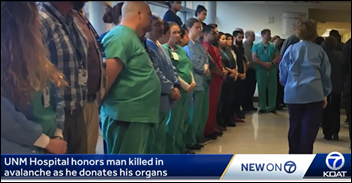
Definitive Healthcare Acquires HIMSS Analytics

January 16, 2019 News Comments Off on Definitive Healthcare Acquires HIMSS Analytics

image 

Definitive Healthcare announced this morning that it has acquired the data services business and assets of HIMSS Analytics.

image

Definitive Healthcare founder and CEO Jason Krantz said in the announcement, “HIMSS Analytics has developed an extraordinarily powerful dataset including technology install data and purchasing contracts among other leading intelligence that, when combined with Definitive Healthcare’s proprietary healthcare provider data, will create a truly best-in-class solution for our client base.”

Machine Learning Primer for Clinicians–Part 12

Alexander Scarlat, MD is a physician and data scientist, board-certified in anesthesiology with a degree in computer sciences. He has a keen interest in machine learning applications in healthcare. He welcomes feedback on this series at drscarlat@gmail.com.

image

Previous articles:

Identify Melanoma in Images

In this last article in the “ML Primer for Clinicians” series, we’ll train a ML model to diagnose melanoma in dermoscopic images.The original data is the HAM10k images dataset, Human Against Machine with 10,000 Training Images,  which is freely available.

The dermoscopic images in the HAM10k dataset have been curated and normalized in terms of luminosity, colors, resolution, etc. The actual diagnosis was validated by histopathology (a.k.a. source of truth) in more than 50 percent of the cases, which is twice more than the previously available skin lesion datasets. The rest of the lesions’ diagnosis was based on a consensus of dermatologists. The 10k images in this dataset belong to the following seven diagnostic categories:

Actinic Keratoses – 327 images solar keratoses, intraepithelial carcinoma, Bowen’s disease (akiec)

image

Basal Cell Carcinoma – 514 images (bcc)

image

Benign Keratosis – 1,099 images seborrheic keratoses, senile wart, solar lentigo, lichen-planus like keratosis (bkl)

image

Dermatofibroma – 115 images (df)

image

Melanocytic Nevus – 6,705 images (nv)

image

Melanoma – 1,113 images (mel)

image

Vascular Lesions – 142 images cherry angiomas, angiokeratomas, and pyogenic granulomas (vasc)

image

The dataset is imbalanced, as the number of images in each class varies from 115 (dermatofibroma)  to 6,705 (nevus):

image

Instead of trying to classify seven skin lesions with a highly imbalanced dataset, let’s simplify the task to the diagnosis of Melanoma vs. Not Melanoma. If we summarize the above categories into two groups, the result is still an imbalanced dataset with:

  • 1,113 Melanoma images
  • 8,902 Not Melanoma

We can apply data augmentation to the Melanoma group and bring the number of images to be similar to the Not Melanoma group. Data augmentation applies a random combination of image modifications — such as zoom, angle, shift, horizontal and vertical flips, etc. — and creates synthetic images.

image

Data augmentation allows the model to be exposed to various modifications of an image of melanoma. This in turn allows the model to learn and later generalize, for example, that a melanoma pointing to the left is still a melanoma if it points to the right. The previously imbalanced 10k images become a 17.8k balanced dataset after the data augmentation of the melanoma group:

  • 8,903 Melanoma images
  • 8,902 Not Melanoma images

With such a balanced dataset, the guessing accuracy should be 50 percent. This is the baseline sanity check before we measure a machine performance on this binary classification task.

Melanoma or Not Melanoma

  • Task: categorize a dermoscopic image as Melanoma or Not melanoma, a supervised binary classification challenge
  • Experience: the 17.8k dermoscopic images dataset detailed above
  • Performance: accuracy, precision, recall, F1 score, and ROC AUC

The newly created 17.8k images dataset is randomly split into three datasets:

  • Train 10,682 images (60 percent)
  • Validate 3,562 (20 percent)
  • Test 3,561 (20 percent)

This image analysis challenge is approached from three angles, as explained in the last article: 

  • Create a convolutional NN (convnet) from scratch
  • Use existing pre-trained models for feature extraction 
  • Fine tune existing pre-trained models

Common to all the following convolutional NN models:

  • Input layer that accepts an image as a tensor: image height (pixels) x width x color (RGB). The models tested accept images from 224x224x3 to 331x331x3.
  • Output layer that predicts a probability between 0 and 1 for the image being Melanoma vs. Not Melanoma. The decision cutoff point is 0.5.
  • In between the above two layers, various architectures of convolutional, pooling, dense, and normalization layers, with millions of trainable parameters (a.k.a. neurons)

Simple Convolutional NN

The Python code and the dataset for this part are publicly available.

This convnet, with 9.7M trainable parameters, achieves an accuracy of 93 percent on the test dataset of images the model has never seen. The learning curves for 100 training epochs of this model, while using dropout, regularizers, and batch normalization techniques:

image

image

Transfer Learning

Feature extraction and fine-tuning are two common methods of transfer learning. For the following transfer learning, I’ve cross-validated eight open source, pre-trained image analysis models: VGG16, VGG19, ResNet50, InceptionResNetV2, Xception, InceptionV3, DenseNet201, and NasNetLarge. All these computer vision models are freely available as part of Keras, the ML framework used for this image analysis project.

Feature Extraction

As explained in the last article, with feature extraction, we import one of the above models and freeze it so it won’t be modified during the training process and we add our own trainable layers on top of this pre-trained model. The lowest accuracy results: 86.3 percent with feature extraction on top of VGG16. The highest accuracy was achieved with a model extracting features from ResNet50, 94.5 percent. Note that after 50 epochs, this model was still underfitting on accuracy while perfectly fitting the loss function:

image

image

The Python notebook and the data for the feature extraction (ResNet50) are available.

Fine Tuning

Fine tuning is slightly different that feature extraction. While we still import a pre-trained model and freeze it, we unfreeze the model last block of layers so these block weights will be modified during training. Fine tuning is usually done with a slow learning rate since we do not want to modify the pre-learned weights of the model last block too abruptly, as this may destroy the units (a.k.a. neurons) pre-learned “knowledge.”

The worst performance with fine tuning a pre-trained model was 92 percent – NasNetLarge. The best overall performance on this dataset – 94.7 percent accuracy – was achieved by fine tuning ResNet50, the same pre-trained model introduced above. This time the model has 10.8M trainable parameters and it displays the following learning curves:

image

image

The Python notebook and the images dataset are available.

Model Performance Evaluation

As previously mentioned, there are other metrics besides accuracy that convey information on the relevance of the results: 

  • Confusion matrix (TP,TN, FP and FN)
  • Precision
  • Recall
  • F1 score 
  • ROC AUC

Considering only the best model in terms of accuracy, fine tuning on top of a pre-trained ResNet50:

image

This confusion matrix translates into:

  • TN:  1677
  • FP:  104
  • FN:  82
  • TP:  1698

Final metrics for the best ML model:

  • Accuracy: 94.8 percent
  • Recall: 95.4 percent
  • Precision: 94.2 percent
  • F1Score: 0.948
  • ROC AUC: 0.947

Performance Comparison on Similar Melanoma Identification Tasks

  • Dermatologist ROC AUC performance varies between 0.69 and 0.91.
  • Other ML models ROC AUC performance varies between 0.72 and 0.94.

Conclusions

  • Using freely available infrastructure, framework, Python libraries, and a single dataset, one can build a ML model that outperforms both dermatologists and other ML models in the detection of melanoma in dermoscopic images. 
  • By definition, a learning algorithm will improve its performance on a specific task with each and every new experience learned, so the above algorithm is expected to improve beyond 94.8 percent accuracy if it will be exposed to additional relevant images.
  • A fully operational ML model would have to predict in real time each new image it sees, whether it is melanoma or not, with the probability of the decision. Such a ML model will need to fine tune itself, on a daily or weekly basis, by being re-trained on newly labeled images, those with the ground truth reached by consensus or histopathology results. The periodical retraining of the ML model is analogous to the continued medical education of any healthcare professional.
  • A reportedly shortage of dermatologists in the US, combined with the introduction of full-body 3D photography that produces hundreds and thousands of images per patient, may hint towards the future of this type of ML models — not replacing dermatologists, but supporting them with the pre-screening process of the millions of images coming their way.

Epilogue

I hope that the “ML Primer for Clinicians” series has clarified the main terms and concepts in AI, demystified some buzzwords, and in the process, has left you with some wisdom and curiosity about ML. My intention is to use this series of articles as the backbone of my third book, so please feel free to contact me with any issues, concerns, requests to modify, etc. related to this future manuscript. As I am always curious about new ideas in AI/ML in healthcare, please let me know about your interesting ML challenges.

Many thanks to Mr. HIStalk, who was kind enough to offer me a podium for my musing during the last couple of months. Without his initial spark, this “ML Primer for Clinicians” would not exist.

News 1/16/19

January 15, 2019 News 7 Comments

Top News

image 

Cerner co-founder Cliff Illig retires from the company’s board “to focus on outside interests.”

You get to do that when you’ve sold dozens of millions of dollars of CERN shares in the past few months and still hold $550 million worth.

image

I feel like a kid watching Mom and Dad get divorced as companies start losing their colorful founders, making me reevaluate whether I still find them interesting.

Cerner even lost its president, so now it’s exclusively Brent Shafer’s show and I haven’t seen much Neal Patterson-like brilliance or spark from him after a year in his first CEO job.

CERN share price rose a tiny bit Tuesday,  but are down 23 percent in the past year vs. the Nasdaq’s 3 percent loss.


Reader Comments

From Beezer Gutler: “Re: Cleveland Clinic’s Empathy & Innovation Summit. HIMSS is now a ‘partner,’ whatever that means.” I can’t think of many organizations that are less qualified to than HIMSS to provide empathy advice to frontline providers, so I assume that its contribution will be to jam high-paying tech vendors into a program that should be about person-to-person interaction rather than gizmos. The June conference features odd speakers such as bigwigs from Aetna and the AMA (you have to be a pretty awful provider if you have to ask an insurance company how to be empathetic). The conference drew a couple of thousand people last year, although healthcare is notoriously full of people who love to hang around just about any conferences for which patients are indirectly paying via their inflated bills without much hope of ever seeing ROI. It’s fascinating how much money is made by running healthcare conferences – my favorite ironic example is the American Telemedicine Association’s annual conference, which suggests that they believe video is great for practicing medicine but not for watching talking heads.

From Avoiding Buyer’s Remorse: “Re: HIMSS19. What should we expect as first timers in a small booth?” You’ll get some visitors, but most will be just strollers-by looking for giveaways and taking your handouts just to be nice. You’ll feel energized and vital in being part of the “show,” but that high will go away on the plane ride home when you realize that spending the money won’t pan out in sales, and if you were an unknown before, you still are. Shooting your budgetary wad on a HIMSS exhibit as a full-year strategy makes no more sense than binge-eating for three days and assuming you won’t need food for another year. The problem isn’t HIMSS, it’s that exhibitors don’t set reasonable goals and plan well, so I suggest starting with my only partially cynical (which is quite a stretch for me) “Tips for HIMSS Exhibitors.” As holder of an expensive, questionably cost effective three-day lease on a 10×10 space myself, I wouldn’t get my hopes up – we get a lot of visitors just because readers drop by to say hello and that makes it worth it to me, but financially it doesn’t make a lot of sense to be there and you probably won’t get nearly as many folks stopping by.


Webinars

January 17 (Thursday) 1:00 ET. “Panel Discussion: Improving Clinician Satisfaction & Driving Outcomes.” Sponsor: Netsmart. Presenters: Denny Morrison, PhD, chief clinical advisor, Netsmart; Mary Gannon, RN, chief nursing officer, Netsmart; Sharon Boesl, deputy director, Sauk County Human Services; and Allen Pendell, SVP of IS and analytics, Lexington Health Network. This panel discussion will cover the state of clinician satisfaction across post-acute and human services communities, turnover trends, strategies that drive clinical engagement and satisfaction, and the use of technology that supports those strategies. Real-world examples will be provided.

Previous webinars are on our YouTube channel. Contact Lorre for information.


Acquisitions, Funding, Business, and Stock

image

EHR and technology services vendor Parallon Technology Solutions renames itself CereCore.

Walmart leaves CVS’s pharmacy network after failing to reach a price agreement with CVS’s huge Caremark pharmacy benefits management arm.

UnitedHealth Group beats Q4 earnings estimates as its full-year revenue grows to $226 billion and earnings to $17.3 billion. Its Optum services business brought in $8.2 billion in earnings on $101 billion in revenue. It’s good to be a healthcare middleman.


Sales

  • California largest non-profit health data network, Manifest MedEx, selects predictive analytics from HBI Solutions.
  • Lexington Regional Health Center (NE) chooses Cerner Millennium via CommunityWorks.
  • Premier Orthopaedics chooses Allscripts Professional EHR, PM, FollowMyHealth, and Payerpath for its 72-physician practice.

People

.

image

NHS England’s chief digital officer, Juliet Bauer, will leave the organization for a job with NHS-contracted telemedicine vendor Livi.


Announcements and Implementations

CareCloud successfully deploys Medicomp’s Quippe Clinical Documentation throughout its customer base.

DocuTAP launches an urgent care-focused analytics tool called Insight that provides real-time visibility into clinical, operational, and business data.

Northwestern Medical Center (VT) goes live on CommonWell interoperability, embedded in Meditech.

Walgreens signs a deal for its 380,000 employees to use Microsoft technology that includes Office 365, mobility and security tools, and the Azure public cloud. The companies will also work together on R&D for patient engagement and chronic disease management software.


Government and Politics

image

Sen. Jon Tester (D-MT), ranking member of the Senate’s Committee on Veterans Affairs, expresses his IT concerns to newly confirmed VA CIO James Gfrerer:

  • The White House’s proposed VA IT budget contains drastic cuts that don’t reflect new requirements and the VA’s history of “fumbling of IT solutions.”
  • The VA needs strong IT leadership since it “cannot continue to operate in a technology environment in which only the largest and latest crisis drives the agenda.”
  • While much of the Cerner implementation will be run by the Office of Electronic Health Record Management, the VA must go beyond just maintaining VistA and ensure that infrastructure is ready for the new system.
  • The VA must continue to invest resources in projects such as its benefits management system, disability rating system, and financial system.
  • Tester warns that CareT, a system being developed for caregiver assistance, may not support the expanded program and might require buying a commercial system, which would be “unacceptable.”
  • The Senator asked for a list of the VA’s IT projects, their priorities, and how those priorities were established. 

Other

image

Baylor St. Luke’s Medical Center fires its president, chief nursing officer, and COO following media reports of patient deaths caused by substandard care.

The National Center for Health Statistics says Americans are even fatter than previously thought, which it discovered after measuring people directly rather than relying on their self-reported numbers in which they often inflate height and under-report weight. As the old saying goes, I’m not fat, I’m just short for my weight.

image[20]

Those of us who roll our eyes at “influencers” (which is also HIMSS’s new term for “social medial ambassadors who may or not have actual industry influence) will be comforted by the news that they’re being replaced by “avastars,” as companies invest millions to further developer computer-generated, AI-powered synthetic celebrities who not only can generate loyal friends with merchandise-buying potential, but that live forever. Lil Miquela has 1.5 million Instagram followers, of which I would suspect few are significant contributors to society.


Sponsor Updates

  • KLAS recognizes Arcadia for its outcomes-producing, analytics-driven insights in its “Value Based Care Managed Services 2018 report.”
  • AssessURhealth Co-founder Mallory Taylor will present at the Synapse Summit January 23 in Tampa, FL.
  • Bluetree will exhibit at the NJHIMSS 2019 Winter Event January 22 in Monroe Township.
  • The Chicago Tribune profiles Burwood Group President Jim Hart.
  • CoverMyMeds will exhibit at the ASAP 2019 Annual Conference January 23-25 in Kiawah Island, SC.
  • Dimensional Insight publishes a customer spotlight on EvergreenHealth.

Blog Posts


button


Contacts

Mr. H, Lorre, Jenn, Dr. Jayne.
Get HIStalk updates. Send news or rumors.
Contact us.

125x125_2nd_Circle

Curbside Consult with Dr. Jayne 1/14/19

January 14, 2019 Dr. Jayne 2 Comments

I’ve always wanted to attend the Consumer Electronics Show, but have never been able to get my January schedule to cooperate. That puts me with the rest of the tech aficionados in perusing various blogs and write-ups to find the best new healthcare-related gadgets.

This year’s CES booked 25 percent more vendors with a health focus, which equated to nearly 15 percent more floor space for health tech offerings. I’ve been poring over reports and write-ups and there were quite a few offerings this year that generated a lot of attention. I thought I’d share some of my favorites:

  • Withings showed its Move ECG watch, which is kickily analog but still awaiting FDA clearance. As a physician, I’m not sure of the utility of real-time ECG monitoring for most patients, so it feels more gimmicky than anything else.
  • The Y-Brush toothbrush claims to clean your teeth in 10 seconds using precision nylon bristles positioned at an optimal 45-degree angle. The recommended two minutes for brushing isn’t really that long, however, and I’m not sure the mouth guard-looking device is going to get much consumer uptake.
  • The Hupnos sleep mask links with an app that listens to your snoring and triggers the mask to vibrate so that the wearer moves to a position that is less likely to result in snoring. The mask can also apply Expiratory Positive Air Pressure (EPAP) to help keep nasal passages open. I’ve been on a couple of flights lately where this device would have been a bonus.
  • The Opte Precision Wand from Procter & Gamble’s venture capital division uses blue LED lights to identify dark spots on the skin. Over 100 thermal inkjet nozzles then apply skincare serums, moisturizer, or makeup to even skin tone. They should also consider tattoo covering cosmetics for workers whose employees have restrictive grooming policies, which I’m seeing more and more often in healthcare.
  • Verde launched an electricity-generating treadmill that might let me generate enough juice to power the IPad that serves up enough Netflix to keep me sane on any treadmill-delivered workout.
  • The Chronolife vest aims to monitor vital signs and use machine learning to predict the possibility of an impending heart attack. It will be marketed to healthcare providers, researchers, and insurance companies. FDA approval is still pending.
  • Urgonight is a headset device that links with an app to track electroencephalogram (EEG) patterns to help train people how to generate sleep-enhancing brainwaves. Designers note that it takes three months of regular use to achieve results. It appeared on lists for both the coolest and weirdest devices at CES.
  • The Matrix PowerWatch 2 uses solar power and body-generated heat to power its heart rate sensors, GPS, and notifications while linking with both Apple HealthKit and Google Fit . Designers boast that the GPS will last long enough to run a marathon, but it doesn’t specify the pace. I’m betting my marathon time would be substantially longer than its capacity.
  • The EyeQue VisionCheck device hooks to a smartphone and provides data needed for vision-correcting eyeglasses. It skips the prescription, and at a price point near $30, it’s cheaper than a co-pay. For those of us who have uneven ears, it’s still worth the extra cost to have a real-life optical practice keep us seeing clearly.
  • DFree offers bladder size measurement technology which can help urology patients know when to go. It’s available for purchase at a hefty $500, but can be rented for a $40 monthly trial. DFree is code for “diaper free” and is marketed to help manage incontinence including notifications to both patients and caregivers.
  • Kohler’s smart toilet connects with Alexa along with an app-connected, spa-ready bathroom collection.
  • ReSound Linx Quattro is a smart hearing aid that uses artificial intelligence to learn the wearer’s preferences and to adjust sound profiles. It also allows music streaming through hearing aids via apps for Android and iPhone. The devices are more than twice the cost of typical hearing aids.
  • The Butterfly iQ is a personal ultrasound machine that uses an app to guide the user as he or she obtains images, which can be sent to the user’s healthcare provider. I’m sure physicians will be thrilled about that one.
  • Samsung’s Bot Care is a personal health care assistant that can monitor blood pressure and heart rate. Reports beyond that are slim, and the write-ups I saw made it look more like an alpha offering.
  • Other robots such as the ElliQ are designed to assist senior citizens while allowing family members to monitor from afar. It integrates a tablet to help seniors navigate social media, video calls, and texting, although it’s got a $1,500 price tag plus a monthly subscription.

Much like HIMSS, CES is full of demos and prototypes and the solutions aren’t always fully vetted or independently tested. It’s buyer beware with various startups and crowd-funding offerings. There were also some unusual products, including a Bluetooth diaper sensor to alert caregivers of recent deposits; a Sony outdoor speaker that includes integrated cup holders; a collapsible vintage cardboard camera; a robotic bread vending machine; a self-cleaning litterbox with text notifications; a bicycling safety vest with airbags; and a robot companion for dogs.

My favorite piece of non-health tech is the GoSun Fusion solar cooker, which can heat an oven to 550 degrees. It sports a Bluetooth thermometer to alert users when their food is done cooking and claims it can convert 80 percent of the sun’s light into heat while keeping the exterior cool. The company is also working on a solar-powered cooler unit, giving camping even more of a high-tech spin.

My thanks to CNET for the best coverage of CES and excellent links and photos. Maybe one of these years the scheduling stars will align and I’ll be able to request a press pass for CES. Las Vegas would be a lot more hospitable than the foot of snow I’m enjoying, so we’ll see what 2020 brings.

What was your favorite piece of news from the Consumer Electronics Show? Leave a comment or email me.

button

Email Dr. Jayne.
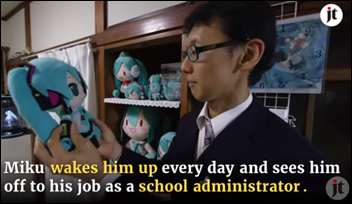
Monday Morning Update 1/14/19

January 13, 2019 News 4 Comments

Top News

image

The average acquired health system had annual revenue of $409 million in 2018, according to a new Kaufman Hall report on health system mega-mergers. Seven billion-plus dollar transactions skewed the average upward. 

Only 20 percent of the sellers were financially distressed, and 75 percent of the buyers were non-profit health systems that are anxious to grow. 

Kaufman Hall lists several reasons that health systems are expanding, all of them involving improving their own business rather than patient care. It notes that the line between for-profit and not-for-profit health systems is blurring, such as HCA’s acquisition of North Carolina-based Mission Health that also involves funding a local non-profit health trust.

The country’s largest health system, HCA, operates 178 hospitals with annual revenue of $43 billion. It is focusing on markets with increasing population and low unemployment.

Kaufman Hall recommends that health systems expand in markets with high growth or strong demographics, seek strong operational or clinical partners, and increase consumer engagement.


Reader Comments

image

From GuyFromMadna: “Re: Apple. More power to Tim Cook if he can somehow use Apple Watch to solve the crisis of $300 insulin vials or $3,000 out-of-network ED visits. It took me back to Joe Biden’s precision medicine initiative – whatever happened to it?” No technology company or technology itself can solve our mess of a healthcare system and globally underperforming public health. Cook is one of these: (a) naive, which is probable given that companies that have delved much deeper into healthcare than Apple have met their Vietnam after confidently proclaiming themselves disruptors; (b) confusing a narrowly defined view of health that pertains only to a few undiagnosed and often harmless maladies of IPhone-only users; or the most likely answer, (c) desperately trying to feint away from Apple’s rapidly slipping relevance as investors get wary. Claiming that Apple’s best is yet to come and that it involves an industry largely unexplored by Apple is, to me anyway, just silly. Meanwhile, former VP Biden just delivered the keynote address once again at StartUp Health Festival in San Francisco, railing against data silos and most likely thinking about his inevitable presidential run. I haven’t seen any news from his Biden Cancer Initiative, just like I’m still waiting for MD Anderson to justify that “making cancer history” business (no pun intended). At least you know there’s no good treatment for cancer if even rich people are still dying of it.

From AnonymousPlease: “Re: Mid Coast Hospital (ME). Had an extended computer or network outage recently, accordingly to a family member who was told by their lab tech that the computers were down. Sounds like there was an HVAC alarm in the data center that was ignored (reset). By the second time, many servers had overheated.” The hospital’s Twitter account is frozen in mid-2017 and their Facebook doesn’t mention an outage. It seems odd that someone would ignore a data center cooling warning, so I speculate that maybe they shut the alarm off while trying to mobilize an HVAC expert to investigate and then had the temperature get away from them. It would be a tough call to proactively start turning off servers in that situation and they may not have had enough time to activate whatever failover plan they have. Modern servers should be good to at least 110 degrees F, but their individual thermal safeguards can be programmed to take them down at a user-defined temperature. It is, of course, a nightmare trying to recover individual software systems that went down hard even after the server they run on has been brought back online, requiring the enlistment of individual system experts to look at potentially corrupted databases, run disk recovery, free up phantom user sessions, and assess what information was lost.

image

From Sticky Wicket: “Re: [publication name omitted.] How did they get ‘Bret’ Shafer in rewording another site’s story?” Misspelling Brent Shafer’s name and omitting his Chairman title is sloppy, but I won’t call the writer out since just a year ago she was finishing up college and working as an office assistant. That particular clickbait-heavy news aggregation site seems to hire from a single demographic of freshly-graduated, female journalism majors. It has an audience, so there’s not much else to say.

image

From Visual Acuity: “Re: National Federal of the Blind lawsuit against Epic. One of our residents is legally blind and can use Cerner using ZoomText, which we installed after trying the Cerner option that allows increasing some (but not all) font sizes. The resident has less flexibility since Zoomtext must be installed on individual machines and not through Citrix. I do think Cerner (and it sounds like Epic as well) could do a better job supporting accessibility even for physicians who aren’t legally blind, but who have reduced visual acuity.” Thanks for the tip on ZoomText. It offers a Windows-only screen magnifier, another version that includes reading screen contents and keypresses, and a super-product that provides those capabilities plus keyboard navigation, customization, and more expressive screen reading. It also sells a large-print keyboard with hotkeys that control its software. I agree that clinicians, especially those over 40 when presbyopia kicks in nearly universally, might find that their fatigue level, eye strain, and headaches from frequent computer use could benefit from a screen magnifier. I should also mention that Windows 10 has a screen magnifier built in – just press the Windows logo key plus the plus sign (or navigate through the Settings/Ease of Access menu options) – but I tried it and it seems laggy, although I haven’t tried ZoomText to compare. It’s hard to envision (no pun intended) how well a screen reader would work, however, so I don’t envy someone trying to navigate an EHR as the computer reads its screen contents aloud.

From Informed Consent: “Re: partnering with IBM. I have experience with a healthcare software vendor that entered a joint project with a large client of IBM. ‘Joint project’ means that IBM took full control with their leverage and contacts even though we were providing the core of the solution for which they had no alternative. IBM insisted on ‘handling the paper,’ which means they beat us down to a sub-share of the client revenue, then took 20 percent off the top of our portion for ‘taking the risk.’ They didn’t allow us to talk to the client (‘we have the relationship’). We got sucked into providing a reasonable quote for the work, then midway through, IBM said the client’s budget had changed and, ‘You need to cut your portion to $X for this deal to work.’ This happened three times in this one deal even though they wouldn’t tell us how much they were billing our customer. We were down to 40 percent of the original quote when the client cancelled. IBM’s motto is, ‘Our clients are our clients, and YOUR clients are our clients.’ Their salespeople kept wanting intros into our client base but wouldn’t provide the same. Our CEO was excited to get a call from the IBM sales team wanting a price call for a client with similar need. I warned that even though it was their lead and their paper, by the end of the call, they will demand that we give them a minimum revenue commitment, for which we will be on the hook for THEIR unvetted client. The CEO scoffed, but sure enough, my prediction came true in our first call.” I considered HAL – err, IBM — somewhat evil even before their current financial desperation and Watson missteps. I admire some of the technology developments, especially their inadvertent creation of the modern PC industry and Microsoft by botching the original IBM PC rollout by snapping together off-the-shelf components (the failed, proprietary MicroChannel architecture came after the horse had long departed from the barn). IBM eventually walked away from the now-commoditized business by selling the PC business to China-based Lenovo, which turned out to be a much better vendor.


HIStalk Announcements and Requests

image

A convincing 88 percent of poll respondents who self-identify as longstanding HIMSS members say their feelings about the organization are less positive now than five years ago.

image

Gerald says that at least HIMSS now acknowledges that the annual conference is a “trade show” (or a “boat show,” as Jonathan Bush always said, although at least boat show attendees are spending their own money instead of someone else’s) instead of claiming that its primary purpose is education. He says he hasn’t attended a provider’s educational session there in the past five conferences, which is about the same as my own record.

A reader asked via a poll question what’s wrong with HIMSS. My answer as a longstanding member, off the top of my head:

  1. They run their operation like a dues-funded vendor, maximizing revenue at every opportunity.
  2. In fact, they really are a vendor, having acquired for-profit companies, conferences, and publications while somehow remaining a non-profit.
  3. They wildly overpay their executives compared to similarly-sized, non-profit member organizations (I researched this thoroughly years ago when Steve Lieber first hit the million-dollar annual compensation milestone).
  4. They sell access to their provider members to their vendor members in the “ladies drink free” model.
  5. Its “vendor points” system rewards the big vendors that are most willing to send HIMSS huge checks, giving those vendors the dominant voice over those that can’t or won’t pay more.
  6. Like most other member organizations, they get involved in government programs that have profit potential for their vendor members.
  7. They pay lip service at best to patients since there’s no money to be made in supporting better public health, outcomes, or access (much like their provider members, in fairness).
  8. Their media operation studiously avoids running anything that looks like real news unless it cheerleads the industry, filling the remaining empty space with inexpertly written filler pitching products and services that are always predicted to improve healthcare but somehow never do.
  9. They aggressively demand to be the voice of the industry even though, as in the case of the American Medical Association, many of the people in that industry aren’t members and those who are may not agree with the positions HIMSS takes on behalf of its vendor members and itself.

New poll to your right or here, as suggested by a reader: for provider IT decision-makers: which service do you consult before buying software or services?


Webinars

January 17 (Thursday) 1:00 ET. “Panel Discussion: Improving Clinician Satisfaction & Driving Outcomes.” Sponsor: Netsmart. Presenters: Denny Morrison, PhD, chief clinical advisor, Netsmart; Mary Gannon, RN, chief nursing officer, Netsmart; Sharon Boesl, deputy director, Sauk County Human Services; and Allen Pendell, SVP of IS and analytics, Lexington Health Network. This panel discussion will cover the state of clinician satisfaction across post-acute and human services communities, turnover trends, strategies that drive clinical engagement and satisfaction, and the use of technology that supports those strategies. Real-world examples will be provided.

Previous webinars are on our YouTube channel. Contact Lorre for information.


Acquisitions, Funding, Business, and Stock

More JP Morgan Healthcare Conference nonsense: the entire hotel area is so packed that the moneyed minions are meeting in public parks, restrooms, and the furniture department of a nearby Macy’s, with one hotel charging $300 per hour for a table and four chairs with no service. I didn’t really need more depressing examples of what America has turned into, but this one’s at least kind of funny as long as you don’t think about who’s paying.


Sales

  • University Hospitals Cleveland Medical Center joins the global health research network of TriNetX.

Other

image

The conservative-learning National Affairs ponders “The Cost of Hospital Protectionism,” with the obviously brilliant Chris Pope (kudos, seriously – it’s a tough industry to understand and explain) making these points as he looks back on recent hospital industry history:

  • The government has done little to reduce healthcare costs other than to shift the responsibility for paying them while protecting hospitals and encouraging them to inflate costs.
  • Healthcare insurance is becoming increasingly unaffordable, with premiums tripling since 1999 and entitlements expect to consume 40 percent of the federal budget by 2047.
  • Hospital overcapacity encourages hospitals to offer tests and procedures whose per-unit cost is high due to small volumes, often with poorer outcomes.
  • The American Hospital Association promoted cost-based Blue Cross insurance during the Great Depression purely to fund the growth of the expenses of its members.
  • When Medicare Part A was rolled out in 1965, the instant 75 percent payment increase encouraged hospitals to spend more on buildings, staffing, and technology. Within five years, total hospital spending rose 37 percent even though only 7.5 percent of the population gained insurance.
  • Cost-based payment created a “medical arms race” in which hospitals built expensive facilities for expensive procedures, shifting themselves from “institutions of last resort” to all-purpose providers whose costs rose 345 percent in 10 years vs. the Consumer Price Index’s 89 percent rise. As one hospital CEO said, “You could be an idiot and make a fortune on Medicare reimbursement. Any mistake you made got reimbursed.” 
  • Hospitals didn’t worry about the introduction of Medicare DRGs in 1983 because those had a 14.5 percent profit margin built in and excluded capital expenditures, physician fees, and post-acute care services, all of which then started to rise.
  • Patients with good insurance don’t care about cost because they aren’t paying, choosing instead based on convenience and amenities.
  • Commercial insurers have cut into Blue Cross’s dominance by reducing costs, choosing providers based on quality, and introducing managed care that can exclude expensive providers from their network, require prior authorization for expensive procedures, and give doctors financial incentive to reduce the use of unnecessary services. That, along with the rise of ambulatory surgery centers, has slowed the arms race.
  • Hospitals use local political influence, community pride, and vast employment to protect their interests and to have favorable legislation enacted that restricts referral of lucrative patients to lower-cost specialty hospitals that often deliver better outcomes.
  • HMOs and heavy-handed employer cost-control efforts in the 1990s caused a consumer backlash that was fueled by lobbyists for hospitals and doctors, which triggered states to limit cost control practices.
  • Mergers have left 67 percent of hospitals as members of larger systems and often the owners of many more physician practices, but instead of reducing excess capacity, the now-larger health systems are using their clout to increase prices further.

image image

A doctor who received the above “notice” calls out the phony American Board of Cardiovascular Disease, which is hoping that inattentive medical office workers will send a renewal check to the Falls Church, VA edifice in which it conducts its scientific deliberations (photo above – it’s in the UPS Store, not the adjacent UBreak- IFix). It doesn’t even have a website. This would be hilarious if not for Googling, which reveals many cardiologist “diplomates” who actually advertise their fake credential. The Board’s executives apparently live communally in their tiny mailbox along with those of the equally bogus American Academy of Peripheral Vascular Disease, the American Council of Christian Physicians and Surgeons, the American Academy of Surgery, the American Board of Dental Surgery, the American Association of Ethical Physicians, the American Board of Oncology,  National Diabetes Institute, and the American Board of Urogenital Gynecologic Surgery. Being a Diplomate in Internet-Primary Sleuthing in Heath IT myself (no acronym, please), I tracked down the apparent owner of all these organizations – Keith Lasko, MD, DDiv, who had his own medical license yanked by three states in 1990, after which he started all these organizations and several more like them as retribution (or perhaps correctly identifying an underserved market in fake credentials by those entrusted with the public’s health). The reverend-doctor lives on the spectacularly porn-worthy named Vivid Violet Avenue in Las Vegas, although a lawsuit I ran across suggests that his house is being foreclosed upon by “allied infidels” who want to “throw him and his children into the street as unclean dogs,” referring to his “Mosque of the Golden Rule” religious organization, where he has commendably attained the rank of Imram. He also wrote a poorly-received 1980 book titled “The Great Billion-Dollar Medical Swindle.” My conclusion – the “diplomates” are the bad guys here since there’s no way they believe their bogus credentials are real, so their only intention in buying them must be to mislead patients. The Imran is simply meeting the demand.

image

The Hustle interviews the original voice of Siri, voice-over actress Susan Bennett, paid an hourly rate in the summer of 2005 to read seemingly meaningless sentences such as “Militia Oy Hallucinate Buckram Okra Ooze ”for ScanSoft (later acquired by Nuance). She found out only after hearing Siri for the first time that those meaningless syllables – which she had to read precisely as measured by an audio analyzer strapped to her throat – were then chopped up into fragments that could be reassembled to make new words and sentences. Here’s a health IT connection – some of my favorite interviews are with NVoq CEO and speech recognition pioneer Charles Corfield (April 2014, July 2017), who was an early investor in Nuance acquisition BeVocal, widely rumored to have contributed the basics of mobile device speech recognition that became Siri. He’s always amused when I amateurishly try to pin him down on his Siri contribution, chuckling and intoning in his mellifluous British accent, “I think I shall refer you to Nuance to comment on matters of Siri or otherwise.” Corfield also created the precursor to Adobe FrameMaker, the first desktop publishing program, while working on his astrophysics PhD at Columbia after graduating from Cambridge. He’s one of the most interesting people I’ve ever talked to, a lock for my HISsies vote for “industry figure with whom you’d most  like to have a few beers.” 


Sponsor Updates

clip_image001

  • The Nordic team continues its partnership with The River Food Pantry in Madison, WI.
  • Lightbeam Health Solutions publishes a new white paper, “Data-Driven Solutions Providers and Payers Need for Value-Based Care Alignment.)
  • MDlive publishes a case study featuring Cone Health (NC).
  • EClinicalWorks publishes a podcast titled “How Interoperability Fine-tunes a Neurology Network.”
  • Netsmart will exhibit at the North Carolina Providers Council Annual Conference January 14 in Greensboro, NC.
  • OnPlan Health and Patientco will exhibit at the HFMA Western Region Symposium January 13-16 in Las Vegas.
  • Experian Health and Change Healthcare partner to deliver identity management solutions.
  • PatientKeeper will exhibit at the HFMA MA-RI Annual Revenue Cycle Conference January 17-18 in Foxborough, MA.
  • TheFutureofThings.com includes PatientKeeper in its list of top healthcare apps.
  • Huron announces 20 senior-level positions.
  • ZeOmega publishes a new case study highlighting how Alliance Behavioral Health is using Jiva to manage care for North Carolinians experiencing mental health challenges, addiction issues, and intellectual disabilities.

Blog Posts


button


Contacts

Mr. H, Lorre, Jenn, Dr. Jayne.
Get HIStalk updates. Send news or rumors.
Contact us.

125x125_2nd_Circle

Text Ads


RECENT COMMENTS

  1. Challenger exploded on lift-off when the O-rings failed. Columbia disintegrated on reentry after one of the heat shield tiles were…

  2. RE the AI GLP1 company, Washington Post has an article today by someone who used one of those compounded products,…

Founding Sponsors


Platinum Sponsors


Gold Sponsors


RSS Webinars

  • An error has occurred, which probably means the feed is down. Try again later.