Recent Articles:

News 9/14/18

September 13, 2018 News 2 Comments

Top News

image

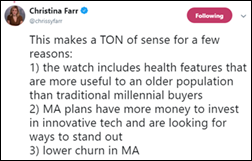
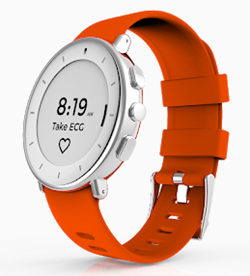
Apple’s latest product announcement regarding the new Watch’s ability to record ECGs and monitor heart rhythm for abnormalities leaves healthcare reporters salivating and clinical experts torn between guarded optimism and healthy skepticism. The device, which can also detect when a user has fallen and alert emergency services, will start at $400 when it debuts later this year.

image

Industry folks were quick to point out that the device could lead to over treatment, and that its FDA clearance states the new apps are “not intended to replace traditional methods of diagnosis or treatment.” FDA Commissioner Scott Gottlieb, MD also tweeted out amidst his Hurricane Florence PSAs that app clearance is “a significant step forward in FDA policy because we decoupled review of the app from review of the watch itself. The watch isn’t a medical device, just the apps that help consumers detect serious medical conditions.”


Webinars

September 26 (Wednesday) 12:30 ET. “How to Ensure Patient Records are Always Available.” Sponsor: Goliath Technologies. Presenter: Goliath Technologies engineering staff. This webinar will discuss how an early warning system can help your organization ensure your EHR systems and patient records are always available. You’ll also learn how to proactively anticipate, troubleshoot, prevent, and resolve end user experience issues before users or patients are impacted.

Previous webinars are on our YouTube channel. Contact Lorre for information.


Acquisitions, Funding, Business, and Stock

image

Cigna allocates $250 million for a new corporate venture fund that will target companies working in the areas of care delivery and management, digital health and retail, and insights and analytics. Cigna’s previous health IT investments include MDLive, Omada Health, and Cricket Health.

image

OneOncology launches with a $200 million investment from General Atlantic and health IT support from Flatiron Health. Created by a partnership between Tennessee Oncology, New York Cancer & Blood Specialists, and West Cancer Center (TN), the company aims to offer oncology patients access to providers, treatments, and clinical trials typically unavailable in smaller, community-based settings. Former CVS Health EVP Tracy Bahl will serve as president and CEO.

image

MediWare Information Systems rebrands to WellSky in an effort to better unify 30 brands across multiple companies in the US and abroad.

image

In the UK, Babylon Health will spend $100 million to double its workforce, aiming to hire 500 additional staff within the next nine months. The plan is part of the virtual consult company’s efforts to expand its chat bot symptom assessment technology to include chronic disease management for diabetes and depression. The company is perhaps best known for powering the NHS telemedicine app GP at Hand.

image

Nuance and ChartWise top the list of CDI vendors driving the most tangible financial outcomes, according to a new KLAS report, while Iodine Software surpasses both when it comes to enabling efficient workflows. Third-party CDI firms like Claro Healthcare, Navigant, PwC, and Huron all score similarly on value and satisfaction. 


People

image

Mark Amey (UC San Diego Health) joins Alameda Health System as CIO ahead of its $200 million Epic implementation.

image

Akiri, a health data network spun out of AMA’s Health2047 business development and commercialization arm, names David Watson (The SSI Group) CEO.

image

Caradigm co-founder Warren Ratliff joins Seattle Children’s Hospital analytics spin-off MDMetrix as CEO.

image

Kermit Randa (Waystar) joins Kaufman Hall as CEO of its Software Division.

image image

Access appoints Davin Marceau (Success Group) COO and promotes Cody Strate to the new role of VP of strategy and innovation.


Sales

  • Bristol Hospital (CT) selects ESO’s Health Data Exchange software for improved data-sharing between its ED and EMS agencies.
  • San Luis Valley Health Regional Medical Center (CO) will implement FormFast’s FastPrint Enterprise and ESignature bundle.

Announcements and Implementations

image

The North Carolina Health Information Exchange Authority rolls out subscription-based clinical event alerts to members of the NC HealthConnex HIE.

image

Marin General Hospital (CA) will install University of California San Francisco Health’s Epic software as part of a strategic alliance that includes co-branding and designating UCSF as its academic and teaching partner.

image

Regional West Health Services (NE) prepares to go live on Cerner Millenium this weekend.

Mercy Technology Services develops a cloud-based imaging solution that comprises Visage’s imaging software, workflow technology from Medicalis, and speech recognition and reporting capabilities from Nuance.


Other

image

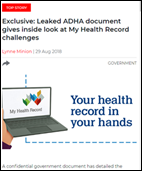
FHIR architect and interoperability consultant Grahame Grieve tells the Australian Senate an IT overhaul is needed to assure the success of the My Health Record initiative. The national digital records database, which he has been an advisor on, has come under fire over the last several months thanks to a questionable opt-out policy, and privacy and governance concerns. Grieve, an Australian native, told the Senate ahead of a September 17 inquiry into the program that, “The design of the system and the standards it is based on were state of the art in 2007. Although a more distributed design was initially planned, it is now, unfortunately, a centralised national database of static summary documents. This was an inevitable consequence of the technical standards used at the time, but now constrains the use, extensibility and therefore the value of the system.”

A survey of 109 providers finds that 68 percent have not yet developed a disaster preparedness plan, despite having experienced two such events within the last five years. All bets are off when it comes to securely communicating with hospitals during and after weather events: 25 percent of specialty providers have used unsecured text messaging to reach hospital staff, and 22 percent have used the same method to reach patients and their family members. Hospital-based respondents take secure messaging more seriously, perhaps because they already have resources in place: 44 percent believe secure messaging to be a key component of preparedness plans, surpassed only by the need for backup generators and extra supplies and medication.


Sponsor Updates

  • EClinicalWorks will exhibit at Health 2.0 September 16-19 in Santa Clara, CA.
  • Formativ Health partners with Lyft to help get patients to medical appointments.
  • Broadlawns Medical Center adds FormFast’s Go electronic document solution to its existing Capture software.
  • The HCI Group publishes a new white paper, “You’ve Signed a New EHR Contract: Now What?”
  • Loyale Healthcare explores healthcare CEOs and innovation in a new video, “Who Thrives? Who Survives?”
  • Politico features PatientPing in “Connecting your medical data could be the next big payoff.”
  • Consulting Magazine ranks Impact Advisors third on its list of best small firms to work for.
  • Hyland Healthcare collaborates with Change Healthcare to speed and simplify claim attachments for providers and payers.
  • InterSystems adds a mobile, touchscreen-enabled user interface to its TrakCare health information system.
  • Intelligent Medical Objects will exhibit at the 2018 OR Manager Conference September 17-19 in Nashville.
  • Kyruus will present at the 2018 Tri-State Conference September 19-21 in Wisconsin Dells, WI.
  • Join Meditech in signing the World Sepsis Declaration.
  • TransUnion Healthcare announces its support of nonprofit RIP Medical Debt.
  • Dimensional Insight publishes a new case study featuring Doctors Hospital in Puerto Rico.
  • Voalte’s annual Vue user conference, set to take place October 3-5 in in Sarasota, FL, sells out for the first time.
  • PatientKeeper and Medhost enter into a reseller agreement.
  • Hayes Management Consulting hires Mark Rivero (Athenahealth) as director of client experience.
  • EPSi partners with MPA Healthcare Solutions to offer customers risk-adjustment and clinical analytics.

Blog Posts


Contacts

Mr. H, Lorre, Jenn, Dr. Jayne.
Get HIStalk updates. Send news or rumors.
Contact us.

125x125_2nd_Circle

EPtalk by Dr. Jayne 9/13/18

September 13, 2018 Dr. Jayne Comments Off on EPtalk by Dr. Jayne 9/13/18

As we move into hurricane season, the American Academy of Family Physicians has released disaster preparedness resources for both practice and personal needs. I’m always amazed by the practices I visit that don’t have an EHR downtime strategy or business continuity plan. Even if they have plans, it’s rare that they have done drills or really discussed what would happen in a serious emergency. I’m not a serious doomsday prepper, but I do have some survival basics in my car including water, food, a first aid kit, and a survival blanket. There are plenty of organizations that end up having staff sleep at the hospital or medical office buildings in the event of major disasters, so it’s not a bad idea to keep some extra clothing and essentials like a toothbrush in your “go bag” because you never know where an emergency is going to happen.

Backup solution vendor Webair is offering complimentary offsite backups and disaster recovery services for business affected by Hurricane Florence. Clients can select backup replication sites on the West Coast or outside the continental US. I took a look at their offerings and was happy to see that they include up to 72 hours per month for disaster recovery testing. Far too few sites test their backups or disaster recovery strategy, so this is a plus.

HHS has declared a public health emergency in the Carolinas in preparation for Hurricane Florence. The public health emergency eases some restrictions for Medicare and Medicaid providers, and likely will lead to accommodations for various reporting requirements for 2018. I know all of us hope that the storm will not be as bad as predicted and are sending our prayers to the East Coast.

CMS is convening a Technical Expert Panel to look at the Merit-based Incentive Payment System, specifically the Improvement Activities (IA). This panel will give feedback and provide “direction and thoughtful input on the improvement activities during development and maintenance.” They’re looking for a dozen clinicians with expertise in the Improvement Areas, consumer/patient/family caregiving, healthcare disparities, performance measurement, and quality improvement. Nominations close at 5pm PT on September 22.

A wise man once told me to always spend a little time looking for my next career move, so I keep my eye out for interesting postings or opportunities. On Tuesday, I received a notice from ONC that they were looking for a medical professional in the Clinical Division. I have no desire to relocate to Washington, DC but was curious about the posting. Clicking the link embedded in the email took me to Indeed.com, where the header said the posting was no longer available on Indeed. It’s going to be difficult to recruit someone if you don’t keep the posting live, and the email from ONC made it sound like it would be open through September 19. It did cross-link me to a Medical Officer posting, which was interesting in that it was targeted to someone who is already employed by a governmental or academic institution that is willing to contract them out for a period of two years. Despite the requirement that the candidates be MD or DO physicians, the salary range is $114k to $164k, and there is no eligibility for federal benefits. I wonder if they will have candidates beating down the doors for this one given the cost of living in the DC area and the earnings potential for physicians in clinical practice.

image

It’s that time of year to start talking about flu season preparedness. This week brought a blip in reported flu cases, and I hope it’s not a predictor of an early or more severe flu season. Vaccinations arrived at my clinical office on Tuesday, and everyone rolled up their sleeves and got it done. After seeing the number of seriously ill patients we saw last season, no one wants to experience that personally. Please consider a flu vaccination to protect patients, your family, and the community.

LOINC is holding its annual Fall Conference next month in Salt Lake City. Workshop topics include Document Ontology, the use of the RELMA mapping assistant, Clinician Perspective, and FHIR. I’ve been doing LOINC mapping for clients for nearly a decade and appreciate the logic and deliberate construction of the framework. Sometimes the specificity of some of the tests seems complicated to those who haven’t worked in the depths, but when you’re looking for granularity with lab data it’s important to be as accurate as possible.

The Pew Charitable Trusts, the AMA, and MedStar Health have released a new report detailing recommendations for improving EHR usability and safety throughout the software life cycle. It also identifies what can be considered rigorous strategy testing and how to create testing scenarios based on currently-understood EHR safety issues. The report also addresses the culture of safety along with EHR user training as ways to improve patient safety. Other topics covered include EHR design and development, EHR implementation, configuration and customization by end users, and EHR upgrades.

image

This is National Suicide Prevention Week and gives us the opportunity to reflect on the lives lost each year due to suicide. I think often of my medical school classmate, the high-school student I taught, and a family member we lost to suicide. Our local high school’s Harvard-bound valedictorian went missing after graduation and committed suicide. It really is everywhere, and it can be prevented. TMF Quality Innovation Network is hosting a webinar titled “Suicide Prevention Tips for Physicians, Clinical Staff and Their Patients,” to be held September 18 at noon CT. It features Christine Moutier, MD, CMO of the American Foundation for Suicide Prevention, along with Leah Patterson, a survivor. They will offer practical tips for clinicians to address suicide risk for patients, peers, and themselves.

Email Dr. Jayne.

Comments Off on EPtalk by Dr. Jayne 9/13/18

Morning Headlines 9/13/18

September 12, 2018 Headlines 1 Comment

With OneOncology, Flatiron and Cancer Docs Aim to Boost Community Care

General Atlantic invests $200 million in new cancer care company OneOncology, which aims to bring the latest in oncology care to patients in community settings using technology from Flatiron Health.

Cigna Announces Cigna Ventures with $250 Million to Fund Transformative Innovation and Growth for Health Care

Cigna invests $250 million in a new corporate venture fund that will target companies working in the areas of care delivery and management, digital health and retail, and insights and analytics.

Apple Watch Series 4 can detect falls, take ECGs, and lead you through breathing exercises

Apple introduces the fourth iteration of the Apple Watch, featuring fall detection and heart monitoring features that include the ability to record ECGs.

Morning Headlines 9/12/18

September 11, 2018 Headlines Comments Off on Morning Headlines 9/12/18

FDA Designates AliveCor’s Bloodless Hyperkalemia Test a “Breakthrough Device.”

The FDA grants “breakthrough device” status to heart health technology company AliveCor for an algorithm it has developed that can detect high blood potassium levels through EKG analysis.

Former VA leader David Shulkin joins Sanford Health

Former VA Secretary David Shulkin, MD joins Sanford Health (SD) as chief innovation officer.

Nellis first base to use Tele-ICU

The Mike O’Callaghan Military Medical Center on Nevada’s Nellis Air Force Base becomes the first base to connect with the VA’s Tele-ICU center in Minneapolis.

Comments Off on Morning Headlines 9/12/18

News 9/12/18

September 11, 2018 News 1 Comment

Top News

image image

Cerner President Zane Burke announces he will leave the company November 2. John Peterzalek, EVP of worldwide client relationships, will assume Burke’s responsibilities and the title of chief client officer. Burke joined the company in 1996 and took on the title of president in 2013. Analysts have expressed little surprise at his impending departure, given that he had just about reached the pinnacle of the company’s corporate ladder.


Webinars

September 26 (Wednesday) 12:30 ET. “How to Ensure Patient Records are Always Available.” Sponsor: Goliath Technologies. Presenter: Goliath Technologies engineering staff. This webinar will discuss how an early warning system can help your organization ensure your EHR systems and patient records are always available. You’ll also learn how to proactively anticipate, troubleshoot, prevent, and resolve end user experience issues before users or patients are impacted.

Previous webinars are on our YouTube channel. Contact Lorre for information.


Acquisitions, Funding, Business, and Stock

image

Clarify Health Solutions raises $57 million in a Series B round led by KKR. The San Francisco-based company has developed analytics-based software to help providers better match and assist patients with tailored clinical services.

image

In the face of Verity Health’s bankruptcy filing, California legislators stress that owner Patrick Soon-Shiong, MD must uphold the original ownership agreement approved by the state attorney general, especially as it pertains to safety net care and the continued employment of 7,000 staff across six hospitals and affiliated facilities.

image

The FDA grants “breakthrough device” status to heart health technology company AliveCor for an algorithm it has developed that can detect high blood potassium levels through EKG analysis. Traditional detection methods require a blood sample. The Mayo Clinic-backed company’s products include an EKG smartphone attachment and app, and an Apple Watch band with similar capabilities. CEO Vic Gundotra expects it will take a year to bring the new technology to market.

image

Nostrum Laboratories hikes the price of an antibiotic for bladder infections from $474.75 to $2,392, a move CEO (and avowed Martin Shkreli supporter) Nirmal Mulye believes is in keeping with the “moral requirement to make money when you can … to sell the product for the highest price.” He adds that, “This is a capitalist economy and if you can’t make money you can’t stay in business.”


People

image

Former VA Secretary David Shulkin, MD joins Sanford Health (SD) as chief innovation officer.

image

LHC Group promotes EVP and Chief Innovation Officer Bruce Greenstein to the additional role of chief strategy officer.

image

Nanticoke Health Services (DE) promotes Steffan Williams to CIO.

image image

HCA President and COO Sam Hazen will succeed CEO Milton Johnson when he retires at the end of the year.

image image

The Value-Based Care Solutions Group names Bob Segert (Aspect Software) chairman and CEO, and has promoted Jon Zimmerman to president. Veritas Capital acquired the group from GE Healthcare in July, and intends to rebrand the company.


Announcements and Implementations

Q-Centrix adds natural language processing capabilities to its clinical data registry reporting software.


Sales

  • Unity Health (AR) will implement IntelliPass+ patient payment software from PatientMatters at its three hospitals.
  • Jamestown Regional Medical Center (TN) will go live on Evident’s Thrive EHR in December. JRMC has selected cloud-hosting and RCM services from Evident’s sister company, TruBridge. Both are subsidiaries of CPSI.

Government and Politics

A Kaiser Health News analysis of 1,406 comments on President Trump’s proposal to cut down the 340B hospital drug discount program finds that half were submitted anonymously and contained suspiciously similar wording, with two submitted hundreds of times containing the same grammatical error. Further digging by KHN also found that some patients can’t remember commenting, implying that they were unwittingly coerced into submitting them by practices affiliated with the Community Oncology Alliance, a nonprofit trade organization funded by drug manufacturers. CMS Administrator Seema Verma and Deputy Secretary Eric Hargan pointed to patient comments as a big part of their decision to cut annual 340B payments to hospitals by $1.6 billion.

image

The Mike O’Callaghan Military Medical Center on Nevada’s Nellis Air Force Base becomes the first base to connect with the VA’s Tele-ICU center in Minneapolis. Installed in five of the center’s rooms, the extra set of virtual “eyes” have especially helped in the prevention of ventilator-associated pneumonia, catheter-related bloodstream infections, and stress ulcers.


Other

image

The latest report from KLAS looks at the shrinking pool of release-of-information vendors and their ability to deliver consistently across customers. While Ciox Health continues to dominate thanks to the combined customer bases of its predecessors, IOD and HealthPort, it lags behind Verisma and MRO in customer satisfaction. While some Ciox customers seem prepared to leave over a lack of focus, culture, and personal touch, others are optimistic that the company’s new automated technology will close performance gaps. Customers give MRO high marks for high-quality customer service, especially in the areas of educational programs and training. Verisma, the smallest vendor, has experienced steady growth along with high levels of satisfaction for personal attention and access to the executive team – traits that may be hard to maintain as the company grows.


Sponsor Updates

  • AdvancedMD will exhibit at the Healthcare Business Management Association Conference September 12-14 in Charlotte, NC.
  • Agfa HealthCare embraces intelligence in its health IT and imaging solutions to enable Care You Can See at RSNA18.
  • Aprima recaps its ninth annual user conference.
  • The local business paper profiles Diameter Health co-founder Eric Rosow.
  • Greenway Health names AssessURHealth its Marketplace Rookie of the Year.
  • Arcadia will present at the EOCCO Clinician Summit September 20 in Hermiston, OR.
  • Redox will exhibit at HITRUST September 11-13 in Grapevine, TX.
  • The latest Black Book Market Research survey names Leidos Health the 2018 top health information technology consultant.
  • CarePort Health will exhibit at ACMA Illinois September 18 in Rosemont.
  • Dimensional Insight will exhibit at the MDM Analytics Summit 2018 September 18-20 in Denver.
  • University of Texas Medical Branch CEO Donna Sollenberger joins Nordic’s Board of Directors.
  • Health Catalyst creates a Patient Safety Organization to give customers an avenue through which to share best practices, plus other benefits.

Blog Posts


Contacts

Mr. H, Lorre, Jenn, Dr. Jayne.
Get HIStalk updates. Send news or rumors.
Contact us.

125x125_2nd_Circle

Morning Headlines 9/11/18

September 10, 2018 Headlines 1 Comment

Cerner President Zane Burke to Step Down

Cerner EVP of Worldwide Client Relationships John Peterzalek will assume the responsibilities of President Zane Burke when he steps down November 2.

Clarify Health Solutions Raises $57 Million in Series B Financing Round Led by KKR

Clarify Health Solutions raises $57 million to further develop and scale its analytics-based Care Journey software.

FDA awards $225M IT contract to track drug performance

The FDA awards Acumen, Dovel Technologies, and IQVIA Government Solutions $75 million apiece to develop data, tools, and infrastructure for its Biologics Effectiveness and Safety Initiative, which will ultimately include a network that can analyze large health data sets from sources like EHRs and claims.

Curbside Consult with Dr. Jayne 9/10/18

September 10, 2018 Dr. Jayne Comments Off on Curbside Consult with Dr. Jayne 9/10/18

image

There’s such a range of activities that CMIOs perform in their daily work – it’s one of the reasons I enjoy what I do when I’m outside the realm of direct patient care. I’ve been working as an interim CMIO for a mid-size provider organization, and one of my projects is to assist in standardizing patient education materials. Many healthcare organizations subscribe to commercially available patient education databases, such as Healthwise, which integrates with the EHR. This organization had previously moved from a sorting cubby full of handouts at each location to a PDF-based repository on a shared network drive. However, over time many of the handouts had become dated or overly-customized, leading to the need for a review project. The existing medical leadership was overwhelmed with the work of running the group including contract negotiation, quality management, and more, hence the need for a CMIO to tackle more informatics-oriented projects.

The practice had hired the daughter of one of the managing partners as a summer intern, and since she was pre-med she was eager to help with clinical projects. In no time, she had catalogued well over a thousand documents, tagging them with dates for origination and most recent update, as well as the names of any providers who seemed to “own” the various documents. She found numerous duplicates where providers had saved copies of documents with their own naming conventions so they could find them more quickly. There were also materials that not only lacked freshness but contained clinical information that was out of date. Without a solid policy and procedure behind the creation of the shared repository, and without someone to hold people accountable for its use, it had taken on a life of its own.

This project was the intern’s first brush with clinical informatics. I suspected that at the beginning she was a little bored, thinking it was more administrative than clinical. However, we had some great conversations around the value of public health and the role that patient information plays in successfully managing health conditions, and I could tell she was starting to understand how important the project was, especially since the providers used many of the documents regularly. She quickly became educated in the softer skills that CMIOs have to use – expectation management, consensus building, communication plans, and creation of governance. We had provider listening sessions, rapid design sessions for the new repository, and deep dives into review of the actual documents.

There was a lot of conversation around social determinants of health and the need to make sure that patient education materials meet the patients where they are – specific to language, reading level, amount of detail included, and more. Those factors were part of the genesis of the practice having its own library. They wanted their materials to be culturally appropriate to their patient population and, when it was initially created, they didn’t feel that any of the available content met their needs, so they created their own. During the standardization project, they didn’t want to lose that flavor or personal touch, but they wanted materials that were consistent across the provider base and easily maintainable.

I also identified a number of opportunities for addition to their document library. Although most of the chronic conditions were covered, as were preventive services, there were whole areas of patient education that weren’t addressed. One of these was general navigation of the healthcare system. I suggested that we work on a couple of documents that explained various processes that patients need to understand better when they seek care under our current system. This included topics such as reading an Explanation of Benefits document; understanding the differences between primary care and subspecialist providers; understanding different locations of care; and understanding the basics of healthcare financing including terms such as coinsurance, copay, deductible, maximums, etc. The providers were on board with these additions, along with information on managing complex medication regimens and modifying the home environment to support aging in place.

My intern did a fair amount of research on the topics, making recommendations on whether they should personalize an existing open-source document or whether they should write something new from scratch. I paired her up with a couple of providers to work with on new documents, along with a small committee to use as a sounding board for evaluating documents from various national organizations that we might be able to use as-is. We’ve got the library about 75-percent complete, and although she has gone back to school, she’s still helping a couple of hours each week as we work on the remaining documents. I think she has a greater appreciation for the so-called “non-medical” work that physician leaders sometimes have to do, along with an understanding of the technology needed to deliver resources to the patient in a way that is trackable and complies with payer requirements.

In working on the documents we created to help patients navigate the health system, she also gained a new understanding of health literacy in her community and what patients need to be able to successfully care for themselves at home and to receive the care they need from a variety of different provider organizations. Many premedical students don’t have any exposure to what happens outside the exam room, so I’m hoping the experience helps her form a better idea of what she hopes to be able to achieve through a career in medicine. She also learned to read governmental documents with a critical eye, appraising them for how well patients and providers might understand them. She sent me a link to this CMS blog on Health Savings Accounts with her thoughts on how she felt it didn’t meet the mark – too many acronyms, too many text blocks, etc.

She also posed some critical questions around why certain healthcare payment mechanisms work the way they do. For example, why can’t everyone open a Health Savings Account? Why shouldn’t it be available to all consumers of healthcare rather than just those with high-deductible plans? Why are Flexible Spending Accounts “use it or lose it?” It was surprising to her to learn that many of these options are linked to tax savings for individuals, and that incenting people to move towards these plans can negatively impact the federal budget. She had a lot of questions about how healthcare works in other industrialized nations and why our system is so complex. There aren’t any good answers for many of her questions, but I was able to recommend some good resources for further reading.

I’m hoping I inspired her to think about medicine in a different way, and to consider options if she doesn’t ultimately make it to medical school. I think we may just have a public health informaticist in the making. Or perhaps a policy expert or a legislator. I enjoy working with curious young people and getting them thinking about topics they didn’t even know existed.

Did you have any thought-provoking encounters with interns this summer? Leave a comment or email me.

Email Dr. Jayne.

Comments Off on Curbside Consult with Dr. Jayne 9/10/18

Morning Headlines 9/10/18

September 9, 2018 Headlines Comments Off on Morning Headlines 9/10/18

Notable Health Closes $13.5 Million Series A Financing to Expand Artificial Intelligence Powered Physician-Patient Interaction Platform

Notable Health raises $13.5 million to further develop its physician-patient interaction software delivered via Apple Watch.

Medical Records Co. Reaches $4.9M Deal To Resolve OT Suit

Optimum Healthcare IT settles a class-action lawsuit related to unpaid overtime filed last year by two employees for $4.9 million.

Top cancer researcher didn’t list corporate ties when he published studies

Memorial Sloan Kettering Cancer Center (NY) CMO José Baselga, MD comes under fire after media outlets report he failed to disclose his financial ties to research journals in which he was published.

Comments Off on Morning Headlines 9/10/18

Monday Morning Update 9/10/18

September 9, 2018 News Comments Off on Monday Morning Update 9/10/18

Top News

image

Memorial Sloan Kettering Cancer Center (NY) CMO José Baselga, MD comes under fire after media outlets report he failed to disclose his financial ties to research journals in which he was published. Baselga has served on the boards of and performed consulting work for dozens of pharma and healthcare companies, yet has systematically failed to report the millions of dollars in payments received when speaking or writing about sponsored clinical studies.

image

Adding insult to injury is the fact that Memorial Sloan Kettering has not yet censured Baselga in any way, other than to call for its staff to do a better job of disclosing their corporate relationships.

Baselga’s lapse highlights not only a lack of ethics on his part, but the slippery slope prestigious research publications like The Lancet and New England Journal of Medicine must walk when deciding to publish research. Most rely on an honor system, and for some, it’s simply a matter of not enough background-checking resources to go around. While publications like the American Association for Cancer Research have never barred an author from publishing, many are now reviewing their submission and review processes. 


Reader Comments

image

From Vaporware: “Re: VA CIO nominee’s remarks on speeding up the Cerner project timeline. Summary: ‘We can do this faster,’ says someone who has never implemented an EHR. ‘You’ll be held accountable,’ says someone who never held anyone accountable. ‘LOL. $10 meeeellion dollars!’ says Zane on his way to the bank.” VA CIO nominee James Gfrerer told a Senate hearing committee last week that getting the Cerner switch flipped in under 10 years is definitely on the table. Nominated by President Trump at the end of July, Gfrerer spent two decades in the Marine Corps before serving as a senior military advisor in the State Department and then moving to E&Y’s cybersecurity practice.


HIStalk Announcements and Requests

image

The majority of respondents would have no qualms about sharing their medical bills with media outlets in hopes of getting them reduced, though my use of the word “resort” implies that it would be a last-ditch effort after all other avenues have been exhausted. Greg points out that, “If the healthcare organization is not responsive or unwilling to work with me on the bill, the media is one outlet I’d consider reaching out to. Any business should expect what they say to their customers to end up in the news or on TV. With the laws in the US so skewed towards powerful interests, public shame in the media is one of the only options an average person has to fight with.” Lisa admits that it would “definitely not be my first choice, but as a last resort it’s better than bankruptcy. So far, I’ve been able to challenge and remove billing items that are clearly inappropriate, but what do you do if the billing folks refuse to clean up errors?” Mark says he’s “already used that approach and leveraged it effectively. Know your facts, prepare your facts, and share them with others so that all can benefit. When my wife had a hip replacement, without complications, and the net charges were 2x of the local competition, 2.5x what the facility accepts for a Medicare patient, put the the pen and paper (keyboard and email) to the task. Bottom line – fees reduced, perhaps humbled the facility, for a moment.”

New poll to your right or here: Would you purchase a “premium” genetics testing service from at-home kit companies like 23andMe?


Webinars

September 26 (Wednesday) 12:30 ET. “How to Ensure Patient Records are Always Available.” Sponsor: Goliath Technologies. Presenter: Goliath Technologies engineering staff. This webinar will discuss how an early warning system can help your organization ensure your EHR systems and patient records are always available. You’ll also learn how to proactively anticipate, troubleshoot, prevent, and resolve end user experience issues before users or patients are impacted.

Previous webinars are on our YouTube channel. Contact Lorre for information.


People

image

Lisa Johnson (Legacy Health) joins Bluetree’s executive leadership team.


Acquisitions, Funding, Business, and Stock

image

Quality Systems changes its name to NextGen Healthcare. Quality Systems created NextGen in 2001 through the merger of Clinitec and Micromed.

image

Notable Health raises $13.5 million to further develop its physician-patient interaction software delivered via Apple Watch.

Optimum Healthcare IT settles a class-action lawsuit related to unpaid overtime filed last year by two employees for $4.9 million plus $1.6 million in legal fees.

image

Healthcare Growth Partners recaps investment activity over the last year in RCM markets that include patient financial responsibility, complex claims from non-traditional payers, and coding and claims as they relate to connecting providers and payers.


Sales

  • University of Louisville Hospital and Physicians (KY) select Health Catalyst’s Data Operating System and outcomes improvement professional services.
  • Conway Regional Medical Center (AR) chooses post-discharge automated messaging software from CipherHealth.

Announcements and Implementations

image

Personalized cancer treatment company Driver develops an app that offers patients treatment options and follow-up care within its network of 30 cancer centers. The membership-based service includes medical record and tumor sample collection, appointment scheduling, and virtual consults.

OnlyBoth adds hospital performance to its line of consumer-friendly healthcare comparison websites.

image

Ciox Health announces GA of HealthSource, AI-powered software that locates, acquires, digitizes, and manages health data.

Nuance makes voice-enabled Dragon Medical workflows available through Epic’s mobile Rover documentation and barcode validation app.

image

Mobile Heartbeat develops a new user interface for its MH-Cure care team messaging software.

image

A new KLAS report on patient financial access finds that AccuReg ranks highest in customer satisfaction across categories, while Experian Health sees similar rankings from broad adopters. Recondo Technology leads the way in automated preauthorizations, but lags other vendors when it comes to customer perception of its positive impact on patients, staff, and billing. Experian Health’s customers, however, are the most likely to share patient access success stories. Change Healthcare wound up being the only vendor whose customers have all realized the benefit patient access solutions have on back-end billing.


Privacy and Security

image

British Airways suffers another privacy black eye after hackers breach its website and app, compromising personal and financial information tied to 380,000 passenger transactions. The airline came under fire in July when its social media team asked passengers with service complaints to post personally identifiable information on Twitter to help resolve their issues, claiming it was necessary to comply with GDPR. 

image

HITRUST introduces a Shared Responsibility Program to help organizations and their service providers clearly understand their roles regarding ownership and operation of security controls.


Other

image

CNBC survey-takers believe controlling costs to be the top reason companies like Apple and Facebook are bypassing third parties like Premise Health to set up on-site clinics for their employees.


Sponsor Updates

  • LiveProcess will exhibit at the SONAR Safety Healthcare Conference September 14 in North Platte, NE.
  • MDLive will present at the Healthcare Analytics Summit September 13 in Salt Lake City.
  • Waystar will exhibit at the Mediware Conference September 10-12 in San Antonio.
  • Clinical Computer Systems, developer of the Obix Perinatal Data System, will exhibit at the AWHONN Ohio Section Conference September 13-14 in Sandusky.
  • OmniSys will exhibit at the PDX Pharmacy Forum September 16-18 in Fort Worth, TX.
  • Experian Health will exhibit at AAHAM MD September 11-13 in Ocean City, MD.
  • Sunquest will exhibit at Precision Medicine for Hospital CEOs September 12-13 in Nashville.
  • Visage Imaging will exhibit at the SIIM Conference on Machine Intelligence and Medical Imaging September 9-10 in San Francisco.
  • Philips Wellcentive publishes a new white paper, “How rising risk impacts value-based care.”
  • Voalte will exhibit at the Texas Health Association 2018 Quality and Patient Safety Conference September 13-14 in Georgetown, TX.

Blog Posts


Contacts

Mr. H, Lorre, Jenn, Dr. Jayne.
Get HIStalk updates. Send news or rumors.
Contact us.

125x125_2nd_Circle

Comments Off on Monday Morning Update 9/10/18

Weekender 9/7/18

September 7, 2018 Weekender Comments Off on Weekender 9/7/18

weekender


Weekly News Recap

  • Athenahealth prepares to take second-round bids as inside sources report that Cerner and UnitedHealthcare have passed on buying the EHR vendor.
  • Theranos tells shareholders it will dissolve and will work to pay off its creditors with remaining cash on hand.
  • Atul Gawande, MD taps former Comcast digital health GM Jack Stoddard to be COO of the still unnamed joint healthcare venture of Amazon, Berkshire Hathaway, and JPMorgan.
  • Verity Health (CA) files for Chapter 11 in an effort to survive the health IT missteps of Patrick Soon-Shiong, MD who acquired the health system in July 2017.
  • Tabula Rasa Healthcare acquires EHR vendor Mediture and its third-party administrative services subsidiary EClusive for $22 million.

Best Reader Comments

Methinks the emperor has donned new clothes ~ Argonaut Project -> Da Vinci Project (Clarence)

The travesty of the new normal known as outpatient procedures begins when the patient shows up at the crack of dawn to begin the process and extends through the point where, barely awake from anesthesia, the patient is thrust from curbside wheelchair onto waiting vehicle having been expected to digest postop instructions just reviewed. . . . Reminds me of medical care in a third world hospital where family provides food, bedding and nursing. (Kevin)


Watercooler Talk Tidbits

image image

Readers funded the DonorsChoose teacher grant request of Ms. M in North Carolina, who asked for STEM craft materials related to the Winter Olympics and flexible floor seats. She says, "Students were excited when they opened the boxes and saw all the materials that our classroom received. They wanted to use the flexible seating right away. They also wanted to start on our Olympic projects right away and couldn’t wait until the next today to come to school. We have set up a rotation schedule for students to use the flexible seating. Our next step for using the materials is to create bobsleds that the students can race. We are always creating STEM projects in our classroom that connect to our math and science standards."

image

Nestle attempts to pivot from a peddler of sugary treats to the frontrunner in nutritional wellness with its Wellness Ambassador program. Initially rolled out in Japan, participants send pictures of their food via an app that then recommends special supplements and lifestyle adjustments. The program also offers a home DNA and blood testing kit to give users a more in-depth health and wellness workup. Campbell Soup made a similar move when it acquired Habit, a meal delivery service that combines DNA and blood profiles to make dietary recommendations.

image

Road warriors beware: Scientists determine that luggage trays at airport security checkpoints harbor more cold viruses than do any other areas within the facility, including toilets. It’s a timely observation given the spate of news this week pertaining to flights with sick passengers. A New York-bound flight from Dubai was quarantined after 100 people on board complained of feeling ill. Public health officials tested all 549 people on board for MERS; none tested positive for the syndrome, though nearly a dozen were sent to the hospital with flu-like symptoms.

CMS mistakenly sends Medicare termination letters to 38,000 Blue Cross and Blue Shield of Minnesota beneficiaries, blaming the mix up on bad data from the health plan.

image

IBM is developing a drone that, when paired with a companion app, could monitor a user’s health data to determine if they’d benefit from a cup of coffee, which it would then deliver.


In Case You Missed It


Get Involved


125x125_2nd_Circle

Comments Off on Weekender 9/7/18

Morning Headlines 9/7/18

September 6, 2018 Headlines 1 Comment

23andMe is gauging interest in a $749 ‘premium’ service that would offer deeper health data

Home DNA testing kit company 23andMe revisits the idea of rolling out a premium service for more in-depth genetic sequencing.

Cerner and UnitedHealth pass on athenahealth; shares down 1%

Athenahealth prepares to take second-round bids as inside sources report that Cerner and UnitedHealthcare have passed on buying the EHR vendor.

Da Vinci Project to Advance Value-based Care through the Use of HL7® Data-sharing Resources

Providers, payers, and vendors like Epic, Cerner, and Allscripts pledge their allegiance alongside HL7 to The Da Vinci Project, an initiative that will work to improve data sharing in value-based care using FHIR standards.

Meditation app Headspace bets on voice and AI with Alpine.AI acquisition

Headspace acquires digital voice assistant development company Alpine.AI to add more vocal interaction to its flagship meditation app.

News 9/7/18

September 6, 2018 News 3 Comments

Top News

image

Theranos investigative reporter John Carreyrou breaks the news that the scandal-ridden blood-testing company will dissolve. CEO David Taylor, who took over from founder Elizabeth Holmes after she resigned in June amid criminal allegations, told shareholders that time had run out to find a buyer for the company before it defaulted on a $100 million loan from Fortress Investment Group.

Fortress co-founder Wes Edens has a history of making counterintuitive investments that include $3 billion towards a private rail line in Florida, and stakes in struggling sports teams like the NBA’s Milwaukee Bucks and English football club Aston Villa. Fortress will likely walk away from the deal with a handful of presumably worthless Theranos patents – assuming it can help the company pay off the $60 million it owes to other creditors. The company has just $5 million cash in hand.


Webinars

September 26 (Wednesday) 12:30 ET. “How to Ensure Patient Records are Always Available.” Sponsor: Goliath Technologies. Presenter: Goliath Technologies engineering staff. This webinar will discuss how an early warning system can help your organization ensure your EHR systems and patient records are always available. You’ll also learn how to proactively anticipate, troubleshoot, prevent, and resolve end user experience issues before users or patients are impacted.

Previous webinars are on our YouTube channel. Contact Lorre for information.


Acquisitions, Funding, Business, and Stock

image

Home DNA testing kit company 23andMe revisits the idea of rolling out a premium service for more in-depth genetic sequencing. The company, which toyed with the idea in 2016, has hinted at a $750 price tag, putting it several hundred dollars below the offerings of whole genome sequencing competitors like Veritas Genetics.

image

Mount Sinai Health System spinoff Rx.Health raises $1.8 million. The New York-based startup has developed software that gives providers the ability to prescribe apps and other digital health tools from within their EHRs.

image

The US patent office awards Glytec two patents describing interactions between its insulin titration software and connected diabetes technologies related to blood glucose measurement, insulin delivery, and patient messaging.

image

Tech-enabled kidney care company Cricket Health raises $24 million in a Series A round led by Oak HC/FT.

image

Athenahealth prepares to take second-round bids as inside sources report that Cerner and UnitedHealthcare have passed on buying the EHR vendor. Elliott Management has teamed up with Bain Capital, which owns Waystar, to remain a contender. Ousted CEO and company co-founder Jonathan Bush stands to gain $4.8 million if the company is sold.

image

Headspace acquires digital voice assistant development company Alpine.AI to add more vocal interaction to its flagship meditation app.

image

Catholic Health Initiatives (CO), HCA Healthcare (TN), Intermountain Healthcare (UT), Mayo Clinic (MN), Providence St. Joseph Health (WA), SSM Health (MO), and Trinity Health (MI) band together to form a nonprofit generic drug company called Civica Rx. Led by former Amgen executive Martin VanTrieste, Civica will initially focus on the production of 14 generics that the founding health systems have committed to purchasing. VanTrieste has said he will forego a salary, and expects Civica’s first drugs to be on the market by 2019.

image

After being acquired by Midmark in 2016, Versus Technology officially rebrands to Midmark RTLS.


People

image

New Jersey Hospital Association SVP Sean Hopkins will lead the association’s new Center for Health Analytics, Research and Transformation.

image

Jesus Delgado joins the Community Foundation of Northwest Indiana, parent company of Community Healthcare System, as CIO and VP of IT.

image

Cambia Health Solutions hires Faraz Shafiq (Verizon) as chief artificial intelligence officer.


Sales

  • University Hospitals (OH) selects Jvion’s Cognitive Machine software to better prevent sepsis.
  • Western Connecticut Medical Group chooses patient engagement consulting services and technology from Formativ Health.
  • Pharmacy benefit management company EmpiRx Health selects ZeOmega’s Jiva 6.1 population health management technology.
  • Johns Hopkins Medicine (MD) will use Patient Flow Optimization software from MidMark RTLS at its Sidney Kimmel Comprehensive Cancer Center.
  • Hartford HealthCare (CT) will implement ESO’s Health Data Exchange technology for EDs across its six hospitals.

Announcements and Implementations

image

Vocera develops care team communication analytics in an effort to reduce alert fatigue and improve response times.

image

Hiawatha Community Hospital (KS) replaces McKesson’s Paragon with Athenahealth.


Government and Politics

Connecticut Governor Dannel Malloy announces the state will use a $12 million grant from CMS to launch an HIE early next year. The state’s first HIE sputtered out in 2014 after a $4 million investment and a four-year run at attempting to develop a reliable revenue stream.


Other

The Open Source Electronic Health Record Alliance will develop a global version of VistA compatible with different languages. The project, dubbed Plan VI, will also create a reference implementation guide.

image

This analysis finds that 53 percent of hospitals mark up the cost of prescription drugs for patients and payers by between 200 and 400 percent. One in six jack up prices by as much as 700 percent, while one in 12 feel justified raising prices by 1,000 percent.

Providers, payers, and vendors like Epic, Cerner, and Allscripts pledge their allegiance alongside HL7 to The Da Vinci Project, an initiative that will work to improve data sharing in value-based care using FHIR standards. Initial test cases will include workflows for 30-day medication reconciliation and coverage requirements discovery.

image

Scripps Research Translational Institute and WebMD develop the Healthy Pregnancy Research Program, an ongoing study leveraging ResearchKit data-capture capabilities within the WebMD pregnancy app. Researchers hope that the predominantly passive collection of pregnancy data will inform future studies geared towards reducing maternal death rates, give women a better understanding of their pregnancies, and arm them with more data to share with their providers.

image

In North Carolina, Broughton Hospital’s opening day is finally in sight. Construction on the $130 million facility began seven years ago, suffering numerous setbacks due to weather, ongoing litigation with the contractor, and bureaucratic mismanagement along the way. The hospital will be paper-based once it opens in March 2019, despite being billed as “state of the art.”

A survey of CMIOs on medication management initiatives finds that varying departmental workflows and a lack of process buy-in, compliance, and ownership are top areas of patient safety concern. Incomplete medication histories and the misinformed care team decisions that result are also top issues, as is a lack of pricing transparency that often results in patients forgoing medication.

A Healthgrades study shows that consumers are twice as likely to visit a doctor when they can access a physician search tool from within a prescription drug company’s website.


Sponsor Updates

  • Compression therapy product manufacturer Absolute Medical selects FormFast’s Connect digital forms solution.
  • Carilion Clinic (VA) renews its agreement with LogicStream Health for its clinical process improvement and control software.
  • NextGen Healthcare adds electronic prior authorization capabilities from CoverMyMeds to its cloud-based Office EHR.
  • Healthfinch will exhibit at the Healthcare Analytics Summit September 11-13 in Salt Lake City.
  • Imprivata will present at the Massachusetts Health Data Consortium’s meeting on September 12 in Waltham.
  • Influence Health CEO Rupen Patel speaks to the Metro Atlanta CEO about the company’s consumer experience platform.
  • Meditech dedicates September to sepsis awareness.

Blog Posts


Contacts

Mr. H, Lorre, Jenn, Dr. Jayne.
Get HIStalk updates. Send news or rumors.
Contact us.

125x125_2nd_Circle

EPtalk by Dr. Jayne 9/6/18

September 6, 2018 Dr. Jayne Comments Off on EPtalk by Dr. Jayne 9/6/18

Part of being a clinical informaticist is understanding how to lead organizations through change, especially complex and transformative change. Culture is a big piece of that, and I’m often amazed at the disparities in culture among organizations that feel they are high-performing. I see entirely too many people who are burned out from lack of work-life balance, and who feel that they need to be constantly connected in order to stay afloat at work. It used to be that the after-hours email crew was either trying to get ahead or using remote work strategies to accommodate a flexible work schedule, but now it seems to be the status quo. I see a lot of parents missing out on their children’s activities because, although they are physically present, their thoughts (and eyes) are turned to laptops and phones. I’m sympathetic to the parent who is camped out at a four-hour track meet to watch their child run a  10-minute race, but I’ve also seen parents spend an entire event working email, not seeing their child participate.

The New York Times ran a piece that covered the idea of employees working during their commutes. According to researchers, half of workers addressed work email or documents as they commuted. One researcher commented that those studied “didn’t see it as official work time, but something to make their lives easier.” The piece goes on to detail efforts in other countries, such as France and Norway, to either limit the length of the work week or to allow employees to count their commutes as working time due to being under the relative control of their employers during those hours. A recent court case in France addressed after-hours, on-call compensation. My observations from not only the healthcare provider side but also the vendor side are that many workers are required to be “on-call” nearly 24×7 without any additional pay. Since they’re classified as “exempt” employees, there is no overtime, and no limit to the work they can be expected to do. The only protections for those workers is for them to vote with their feet.

The comments on the piece are worth a read, with some making the point that workers are forced to be available at all hours and others pointing out the amount of time that workers spend surfing the Web and doing non-work tasks during the traditional work day. One commenter noted the number of people who are expected to be on conference calls while commuting, and I’ve definitely seen an uptick in that. People are trying to take calls from the train (sometimes in the quiet car) and even on planes, using VOIP to try to connect when they’re in the air. There were several negative comments directed towards those seeking work-life balance, one trying to make the point that working email isn’t “work” and insinuating that family leave or bereavement days are an indulgence. They do paint a compelling picture that many employees feel their workplace culture is broken – and although I see companies paying lip service to the idea of work-life balance, they don’t always make good on their stated intentions.

In many situations, rendering providers aren’t paid overtime – even when we do shift-work such as in the emergency department or as a hospitalist, we’re expected to spend whatever time is needed to wrap up patient care or complete documentation after our scheduled hours end. In my hospital career, I was never paid past my scheduled shift even though I spent many hours in the ED getting patients transferred to other units, writing incident reports, or handling other tasks that couldn’t be done while I was actually seeing patients. My current organization has wrestled with this for the last several years, and recently agreed to pay physicians for the hours actually worked, even though it’s not overtime per se. Physician Assistants and Nurse Practitioners were already paid for actual hours worked, but physicians were only paid based on their scheduled shifts. It’s not a perfect solution – the physician has to work at least half an hour past his or her scheduled end time before the extra payment provision goes into effect, and we’re only paid as long as patients are physically in the building, not for any resulting documentation or follow-up. Still, it’s gone a long way towards physician satisfaction, especially when you have patients walking in the door as the staff is trying to lock it.

image

When I’m wearing my clinician hat, I don’t ever have to worry about not hitting my daily step goal. As healthcare IT workers, though, we have known for a long time that our sedentary lifestyles place us at risk for unhealthy outcomes. Now the World Health Organization has issued a report showing that there has been little progress in getting people to be more active. WHO estimates that more than 25 percent of people worldwide don’t get enough activity on a daily basis. That’s approximately 1.4 billion people and the percentage hasn’t changed much in the 15 years where data was available. Not surprisingly, high-income countries were more sedentary. The UK and USA had inactivity percentages that increased from 32 to 37 percent, where low-income countries stayed steady at 16 percent. Inactivity was defined as less than 150 minutes of moderate exercise (or 75 minutes of vigorous exercise) weekly. The authors noted decreased exercise in women compared to men for most countries, which they attribute to cultural factors and family responsibilities (such as child care) that reduce the time available for exercise. Other factors impacting activity include sedentary jobs, use of motorized transportation, and sedentary hobbies.

I’ve made a conscious effort to try to be more active even when I work from home. I’ve got my printer on another floor of the house, which forces me to get up if I need to get documents, and I make a point of going to the kitchen when I need a drink rather than always keeping something on my desk. I intentionally park far from the door when I go shopping, and I’m hoping that those little factors add up. I also hit the treadmill when I’m on a listen-only conference call or attending an educational presentation, so that helps not only with cardiovascular fitness but with avoiding somnolence during certain presentations. I really logged the miles when I was listening to quarterly earnings calls and recordings of the ones I couldn’t attend in real time.

What’s your favorite strategy for increasing activity? Leave a comment or email me.

Email Dr. Jayne.

Comments Off on EPtalk by Dr. Jayne 9/6/18

Morning Headlines 9/6/18

September 5, 2018 Headlines Comments Off on Morning Headlines 9/6/18

Blood-Testing Firm Theranos to Dissolve

Theranos tells shareholders it will dissolve and will work to pay off its creditors with remaining cash on hand.

Cricket Health Announces $24 Million Series A Funding Round to Provide Personalized, Cost-Effective Kidney Care

Tech-enabled kidney care company Cricket Health raises $24 million.

Plan VI – OSEHRA Launching Internationalized Version of VistA

The Open Source Electronic Health Record Alliance will develop a global version of VistA compatible with different languages.

Comments Off on Morning Headlines 9/6/18

Morning Headlines 9/5/18

September 4, 2018 Headlines Comments Off on Morning Headlines 9/5/18

The Amazon-Berkshire-JPM health venture led by Atul Gawande has a COO: Jack Stoddard

Atul Gawande, MD taps former Comcast digital health GM Jack Stoddard to be COO of the still unnamed joint healthcare venture of Amazon, Berkshire Hathaway, and JPMorgan.

TRHC Acquires Mediture and eClusive

Medication risk management vendor Tabula Rasa Healthcare acquires EHR vendor Mediture and its third-party administrative services subsidiary EClusive for $22 million.

Persistent Systems Acquires Alum of 1st PULSE@MassChallenge Cohort Herald Health

Global technology services company Persistent Systems acquires Herald Health for $5.2 million.

Comments Off on Morning Headlines 9/5/18

News 9/5/18

September 4, 2018 News Comments Off on News 9/5/18

Top News

image

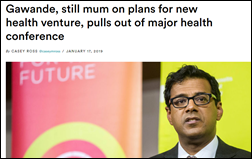
Atul Gawande, MD taps Jack Stoddard to be COO of the still unnamed joint healthcare venture of Amazon, Berkshire Hathaway, and JPMorgan. Stoddard was formerly general manager of digital health at Comcast, where he devoted some of his time to developing digital patient engagement and education tools for a (presumably defunct) program with Independence Blue Cross. Stoddard’s time in the healthcare trenches also includes stints at Comcast-backed Accolade and Optum.


Reader Comments

image

From Savoy Special: “Re: Medhost’s customer count. Down to 180 hospitals? That number cannot be correct since they still have their platform in most of the 119 CHS hospitals, plus a large number of LifePoint, Acadia, and Select hospitals. Plus they recently won a multi-entity deal at the end of last year. And then there is all of their EDIS business. The Curae bankruptcy was not unexpected. There was actually a lot of buzz about Medhost at Health:Further18.”


Webinars

None scheduled soon. Previous webinars are on our YouTube channel. Contact Lorre for information.


Acquisitions, Funding, Business, and Stock

image

Global technology services company Persistent Systems acquires Herald Health for $5.2 million. Herald’s software helps surface relevant EHR data in real time across hospital departments. The Boston-based startup came out of Brigham and Women’s Hospital (MA), which, through its Partners HealthCare network, tapped Persistent last year to develop a SMART on FHIR digital platform for sharing best clinical practices.

image

Redox raises $3 million, bringing its total raised to $18 million since launching in 2014.

image

Medication risk management vendor Tabula Rasa Healthcare acquires EHR vendor Mediture and its third-party administrative services subsidiary EClusive for $22 million. Both cater to Program of All-inclusive Care for the Elderly markets. The businesses will be incorporated into Tabula Rasa’s new PACE-focused CareVention HealthCare technology and services division.

image

Following in Apple’s footsteps, Amazon momentarily hits the $1 trillion mark during day trading, focusing analyst’s eyes even more eagerly on its push into healthcare. The Internet retailer went public in 1997 at $18 a share, a figure that has skyrocketed to $2,050 and made founder and CEO Jeff Bezos the world’s richest man with a net worth of $167 billion.


People

image

Patrick McGill (Community Health Network) will join primary care management company Primaria Health as CEO in December.


Announcements and Implementations

image

Greenville Health System (SC) goes live on Agfa Healthcare’s enterprise imaging system.

The Brooklyn Hospital Center (NY) implements Epic at its ambulatory sites.


Other

image

Following on-campus protests and obvious malcontent amongst its staff, Providence Hospital management fires the majority of its Board of Directors via email after tensions mount around parent organization Ascension’s decision to stop offering acute care services at the hospital by the end of year as part of its transition to a “health village.” (It announced it would close its obstetrics and behavioral health departments last August.) A former board member claims a vote on the acute-care decision was snuck in at the end of a regular meeting, after several other members had already left. Ascension claims the shuttering will better enable Providence to focus on “care coordination, telehealth/virtual care, primary and urgent care, home care, community-based behavioral healthcare, senior care, and more.”

In Australia, Victoria’s Dept. of Health and Human Services begins migrating 12,000 users from Lotus Notes to Office 365. Lotus Notes was first implemented in 1998, making the number of applications that have been spawned around it too numerous to die a quick death.

image

Researchers develop an iPhone app capable of measuring blood pressure with the press of a finger. Readings were found to be similar to those from traditional blood pressure cuffs.

image

The Cincinnati business paper profiles Cincinnati Children’s Hospital surgeon Victor Garcia, MD and the predictive analytics software he has developed with Israeli researchers to stave off shock in ICU patients.


Sponsor Updates

  • AdvancedMD publishes a new e-guide, “In or Out-Source: Your Value-Based Care (VBC) Revenue Cycle Management.”
  • Aprima will exhibit at the Patient-Centered Medical Home Congress September 14-15 in San Diego.
  • Gartner recognizes Arcadia as a representative vendor across five categories in its latest report, “Healthcare Payer CIOs, Leverage Vendor Partners to Succeed at Clinical Data Integration.”
  • The University of Wisconsin-Madison profiles Bluetree Network founder Ted Gurman’s work with the Madison Entrepreneur Resource, Learning, and Innovation Network.
  • Datica will present and exhibit at HITRUST 2018 September 11-13 in Grapevine, TX.
  • The Chicago Tribune profiles Burwood Group Senior Director of Sales and Marketing (and Renaissance man) Greg Bueltmann.
  • CarePort Health will exhibit at ACMA New York September 8 in New York City.
  • Carevive Systems will exhibit at the 2018 ACS Cancer Programs Annual Conference September 5-7 in Chicago.
  • Collective Medical partners with the Hospital Council of Northern and Central California.
  • CoverMyMeds will present at the CBI Hub and SPP Model Optimization event September 12-13 in San Diego.
  • CTG will present at the Patient-Centered Medical Home Congress September 14-15 in San Diego.
  • Cumberland Consulting Group will sponsor the HealthCare Executive Group Annual Forum September 12-14 in Minneapolis.
  • The Connecticut Technology Council and Marcum LLP include Diameter Health on their list of the fastest-growing technology companies in Connecticut.
  • Yuma Regional Medical Center (AZ) expands its use of Vocera technology to include its entire enterprise.
  • Long-time Meditech customer DCH Health System (AL) will implement the company’s Expanse EHR across select hospitals and clinics.

Blog Posts


Contacts

Mr. H, Lorre, Jenn, Dr. Jayne.
Get HIStalk updates. Send news or rumors.
Contact us.
125x125_2nd_Circle

Comments Off on News 9/5/18

Curbside Consult with Dr. Jayne 9/3/18

September 3, 2018 Dr. Jayne 5 Comments

image

I spent some time this week learning about the patient/family side of the changes that value-based care is bringing us. A close friend of mine had a hip replacement and got to experience the “new normal” in some dimensions of healthcare. He chose a surgeon at one of our local academic medical centers; since he is young (under 40) and otherwise healthy, he was offered the option of an outpatient procedure. As a physician who has been out of the primary care flow for a while, I wasn’t really aware that outpatient hip replacement was even an option. Of course, early ambulation is a good thing, but sending someone home the same day is relatively new.

It’s great to get people out of the hospital early – certainly not being in the hospital is a great protector against hospital-acquired infections. One can also think of the potential for higher-quality sleep at home, without having your vital signs checked or having IV pumps beeping at you. On the other hand, there may be children and pets at home, so quiet time is no guarantee. I’m sure one of the factors influencing a change to outpatient status for many procedures is the sheer cost of days in the hospital. As I learned more about my friend’s arrangements for his post-hospital care, one might begin to think twice about that cost equation. Certainly, there’s a smaller payment to the hospital, but there’s the reciprocal cost of having a spouse or family member take off work for a period of time because someone has to be home with the patient 24×7. Home health, home physical therapy, and other services may be substituted for the inpatient versions, and not having seen a bill for either of those services in a while, I’m not sure how much of a savings it truly is.

There’s also a psychological cost – for most of us used to western-style medicine, there may be comfort in knowing that if something “bad” happens, there are professionals close by. It’s easier to run laboratory tests if new symptoms or side effects develop; if the patient falls, there are trained staffers who know what to do and how to help. At home, there’s that shade of uncertainty about what might happen if things don’t go as planned, such as if the patient begins to run a fever or is having pain that isn’t controlled by the medications available at home. At an academic center there’s typically a “house officer” resident physician who can assess a patient if the nursing staff identifies a potential risk or worsening condition. At home, you have your telephone, and your own ability (or inability) to describe what is going on.

My friend is taking his recovery in stride, although figuratively rather than literally. He quickly figured out how to lash his portable, deep venous thrombosis compression pump to his walker so it didn’t strangle him when he was trying to make his way around the room, and shared his expanded knowledge of Netflix with the rest of us. Can’t Pay? We’ll Take It Away! is an interesting look at rather genteel British repo men and their work. I’m sure we’ll have some laughs when the surgery and home care bills start rolling in – we’ll see how long it takes to get everything paid and reconciled. Depending on how that goes, it might be the most frightening part of the entire procedure. Until then, he’ll have to be entertained by a parade of friends dropping by to sit with him so his family can leave the house, and endless card games playing Uno.

Labor Day Weekend is a fairly low readership environment, so I’ll keep this Curbside Consult brief. Whether you’re barbecuing, visiting with friends, packing away your white shoes, or using the long weekend to catch up, take a minute to remember what Labor Day is all about. It’s been a federal holiday in the US since 1894, and is also celebrated in Canada. Spend a few minutes thinking about the work people do and how much we all need each other to keep things going, especially the folks that are outside the C-suite. Be sure to thank the people in facilities engineering, sterile processing, dietary, custodial, and so many other departments that keep our healthcare world turning.

Email Dr. Jayne.

Text Ads


RECENT COMMENTS

  1. Re: Dr. Craig Joseph's piece on "physical robots, not chatbots, may hold the key to effective emotional and behavioral support…

  2. All fair points - I think the core issue I’m trying to articulate is really about how markets behave over…

  3. Interesting argument, but I'm not entirely convinced. Customers losing money, that they can in any way blame on an EHR…

  4. That’s fair — and to be equally fair, I’m not arguing that Epic is about to be unseated by some…

Founding Sponsors


Platinum Sponsors


Gold Sponsors


RSS Webinars

  • An error has occurred, which probably means the feed is down. Try again later.