We look at CVS Health’s rash of recent clinical affiliations and dig into the nuts and bolts of sharing patient data to improve access and cut costs. By @JennHIStalk
The concept of retail healthcare has been in the news of late, thanks to a Rand study published in Health Affairs connecting retail clinic visits to an additional $14 per person per year in spending. Multiply that $14 by the more than 6 million patients these clinics care for annually and the costs really begin to add up.
The uptick seems to derive from the easier access to care. Patients who may have otherwise delayed care or suffered in silence are now taking advantage of less-expensive retail clinics around the corner, resulting in an increase in the total number of patient visits and thus spending.
The study also found that nearly 60 percent of retail clinic visits were made by first-time customers, a statistic that negates the much-hoped for idea that savvy healthcare consumers would turn to lower-cost retail clinics for common ailments in lieu of paying higher prices at primary care offices or the ED.
The number of nationwide retail clinics hovers around 2,000 and is expected to reach 2,800 by 2017. CVS Health MinuteClinics account for over half of this figure, meaning that the company has a big part to play in increasing access to care within and outside the four walls of its clinics – not to mention lowering that $14 figure.
Focusing on Family Medicine
Headquartered in Woonsocket, RI, CVS Health seems to be well aware of the part it can play in impacting access and costs. The company has made strides in its efforts to establish care coordination between its clinics and local PCPs. Last fall, it partnered with the “Health Is Primary” campaign to help patients understand how different parts of the healthcare system work in their “medical neighborhood” and to better enable to them to access those services – including finding a PCP – when appropriate.
“We know that patient health and outcomes improve when patients utilize the resources available to them throughout the medical neighborhood and when providers across the healthcare system are working together,” CVS Health EVP and Associate CMO Andrew Sussman, MD said in a release last fall. “By partnering with primary care and family medicine, we will continue to improve provider collaboration and help ensure all patients have access to primary care within a coordinated medical neighborhood.”
Looking for Larger Affiliates
CVS Health has not focused its care coordination efforts solely on family medicine. It has established over 70 clinical affiliations with major health systems and providers across the country, including relationships announced last year with St. Luke’s University Health Network (PA), TriHealth (OH), Tucson Medical Center (AZ), and Rush University Medical Center (IL). More recent affiliations include John Muir Health (CA), University of Chicago Medical Center (IL), Novant Health (NC), and University of Michigan Health System.
“We have been working with these leading healthcare organizations to establish clinical collaborations that improve access to care and overall community health, which ultimately also help to reduce healthcare costs,” says CVS Health Corporate Marketing Manager Christina Beckerman. “Now that the agreements are in place, we are pleased to begin working with our affiliates to improve chronic disease management and pharmacy care in the communities served by these healthcare organizations.”
The health system affiliations focus on an umbrella of care coordination, under which fall sharing patient health data between participant EHRs, improving medication adherence via collaboration with CVS pharmacists, ensuring that MinuteClinic patients follow up with their PCPs when needed, and planning strategies around chronic care and wellness.
“Now that the agreements with these organizations are complete, we are establishing timelines with each healthcare organization and working together to implement our plans,” says Beckerman. “In the near-term,” she adds, “our focus is working towards streamlining communication between our secured EHR systems. Over the long term, we believe that through this collaboration, our patients will have access to better pharmacy care and to coordinated, primary care support to help them on their path to better health.”
The Epic-ness Of It All
Froedtert & the Medical College of Wisconsin health network joined the CVS Health affiliate family last month. The regional organization is a partnership between Froedtert Health and MCW, both of which are based in Wauwatosa, about 90 minutes away from Epic headquarters in Verona. The network includes Froedtert Hospital, Community Memorial Hospital, and St. Joseph’s Hospital, plus 25 primary and specialty care clinics.
F&MCW’s decision to affiliate with CVS Health was based on the need to “meet people where they are,” according to Jonathon Truwit, MD, enterprise CMO at F&MCW. “Increasingly, people are getting healthcare services in places other than healthcare systems, from retail systems to shopping malls. We want to assure our patient care is coordinated no matter where they seek care because that’s best for our patients. By entering into this affiliation, we make healthcare more accessible, timely, and effective. CVS is a leader in retail healthcare and a natural partner for us.”
The IT nuts and bolts of such an affiliation seem straightforward, given that both CVS Health and F&MCW use Epic, as do all of the aforementioned affiliates. “The affiliation uses existing EHRs and is limited to certain portions that are securely integrated,” he explains. “When our systems are integrated, the secure data sharing between the F&MCW network and CVS MinuteClinics will enable a collaboration that will extend our approach to team care. The goal of this clinical affiliation is to assure care is coordinated and patients receive the right care at the right time, no matter where they are. It is likely our early work will involve efforts to help patients manage chronic conditions such as high blood pressure and diabetes.”
Measuring Success
It’s early days yet for the affiliation between CVS Health and its provider partners to have a significantly quantifiable impact on patient access and care costs. Truly giant strides in care coordination seem inevitable if and when CVS Health chooses to affiliate itself with organizations outside of Epic’s client cluster, though some would argue it’s a moot point given the provider community’s currently headline-heavy preference for Epic systems.
Perhaps such partnerships will ultimately nudge that previously mentioned $14 down as a result of more educated patients, better care coordination, and fewer reasons to seek care thanks to improved outcomes. As Truwit reiterates, “[T]he intent of this affiliation is to enhance coordination of care for our patients.” A decrease in costs would seem like a natural – and welcome – result.
The Senate’s HELP committee passes S.1101, the Medical Electronic Data Technology Enhancement for Consumers Health Act (MEDTECH), which exempts several types of software from the FDA’s oversight as medical devices. The bill would prohibit the FDA from regulating EHRs, provider administrative systems, lifestyle apps, clinical lab testing software, and clinical decision support systems that don’t involve medical images or physiologic monitors.
Reader Comments
From Blue Cheer: “Re: the PR firm’s case study on producing the HIMSS presentation of Jonathan Bush and John Halamka. The link you posted doesn’t work.” It appears the PR company pulled down the self-congratulatory article, but you can read “HIMSS 2016: The Power of a Well-Crafted Keynote” here via Google’s cache. It seems like glossy over-preparation using expensive PR people and the Athenahealth communications team, but at least J&J must have been well prepared.
From ac360: “Re: Community Health Systems. The newly promoted SVP/CIO appears to have been fired from EMC in 2002 for falsifying sales to earn bonuses and billing EMC work from a company he himself owned and not turning the money over to EMC. CHS must not have done much of a background check.” I’ll decline to comment since I don’t know anything other than what the 2002 WSJ article says. Firing someone – like filing a lawsuit that is later dropped — carries a minimal burden of proof and deprives interested parties of the chance to hear both sides of the story.
From Roy G. Biv: “Re: QuadraMed layoff. It was a barely double-digit RIF in R&D. Still, the company is losing customers and losing ground, so you might assume that a lower R&D priority signals a lack of aspiration to market relevance.”
From Long-Suffering Epic Director: “Re: Epic support problems. Epic 2015 is not live yet and we’re spending more time supporting it than Production. We have to drop everything because someone broke something, frequently when we loaded an urgent patch that would fix something. Frontline support wasn’t lacking in initiative 10 years ago. The people Judy and Carl have delegated to us in recent years seem more arrogant and less knowledgeable. We don’t get discussion about the problem and what can be done to fix it – we get speculation of what might be possible in a future release and a mélange of thoughts about what’s available in Model, what Kaiser does, and why can’t we be more like Model. What really sucks is that’s there is no real option. We’re dealing with a monopoly in this industry and the monopoly knows it.”
HIStalk Announcements and Requests
It’s a toss-up whether employers get their money’s worth in sending people to the HIMSS conference. New poll to your right or here: what kind of keynote speaker would you most like to see at the conference? Vote and then click the poll’s Comments link to suggest specific people or to add a category that I missed.
From another poll I ran, two-thirds of respondents say their companies didn’t make any sales in the past year as a result of exhibiting at HIMSS15. I used to cross-reference the current year’s list of exhibitors with the one from the previous conference to identity the exhibitors that didn’t think it was worth it, that went out of business, or that were acquired and no longer exist under their previous name.
Welcome to new HIStalk Platinum Sponsor TelmedIQ. The Seattle-based company offers a secure healthcare communications hub that brings together physicians, nurses, care administrators, and clinical technologies to improve patient care coordination. TelmedIQ simplifies clinician workflow through real-time messaging, quick access to contacts and groups, and the ability to set up workflows so that messages automatically go to the right person at the right time. It integrates with EHRs, on-call scheduling systems, and other systems to make clinical information available with just a swipe and a tap. Customers can replace “page and pray” pagers by turning any Android or iOS device into a secure, two-way mobile pager that can handle image files, audio, and video messages to individual users or to groups. Practices can take also advantage of a cloud-based medical answering service for after-hours coverage. The company offers a white paper on best practices for mobile secure text messaging. Thanks to TelmedIQ for supporting HIStalk.
Only 75 folks signed my petition asking HIMSS to adopt an anti-harassment policy for HIMSS17, so I’ll accept that as an endorsement of the status quo of self-policing. I’m surprised, given the significant number of attendees and poll respondents who expressed discomfort at the actions of others at HIMSS16, but I will defer to the majority.
A bunch of people have emailed me to say that their entire teams were sick after the HIMSS conference, usually complaining of sore throat, congestion, cough, and fatigue. Conferences offer the double whammy of breathing recycled airplane air and being squeezed in for a week with glad-handing strangers. It’s like putting your kid in a new daycare, where the herd carries less-defended bugs. All large conferences have this problem, although Las Vegas is probably the worst offender since attendees are forced to mingle with endless casino patrons just to get to and from conference events. There’s no solution other than washing your hands often, carrying and using hand sanitizer, and drinking a lot more water than you probably did there (especially given what the concession vendors charge for it). The “fist bump instead of a handshake” thing from the swine flu outbreak a few years ago was a good idea from a microbial standpoint, but didn’t catch on because it looks like a carefully groomed hipness affectation.
Monday is not just the usual Pi Day of March 14 (3.14) – it’s also correct to five digits at 3.14.16, although maybe that’s not as impressive as March 14, 2015 at 9:26:53.
I get a bit annoyed when I’m looking up someone’s LinkedIn profile to get a photo or previous employment for something I’m writing and they use LinkedIn’s messaging function to email me, “I saw that you looked at my profile. Can I help you?” like they caught me sitting on the hood of their car or something. If that bugs you, too, go to LinkedIn’s Manage Privacy & Settings, click the link labeled “Select what others see when you’ve viewed their profile,” and click the last option to go into complete private mode.
People are griping that Hollywood Presbyterian Medical Center was wrong to pay ransomware hackers $17,000 because that will encourage more such activity, but I disagree. It’s exactly like settling a nuisance lawsuit, which hospitals do all the time – if you can walk away unscathed for 1/100 of the cost of taking the risk that you can prove yourself right, that could be a good business decision, especially since patients were being affected. Some thoughts:
The hospital’s systems had been down for more than a week, making it obvious that it couldn’t simply restore backups. Plus, the clock was ticking — ransomware usually sets a short time limit to pay up before the data is permanently destroyed and the amount increases every day until then. It’s a brilliant way to immediately monetize cyberhacking in a way that can scale infinitely.
The hospital’s lack of a technical defense was moot by then – no amount of 20-20 hindsight was going to get their systems back. They had only one option. It’s like losing a storage system and then finding that your backups can’t be restored, except in this case, the backups were available, but just not for free.
I doubt that the ransomware specifically targets hospitals, although I would be interested in how the software determines how much ransom to charge – maybe it’s based on the number of servers it finds on the network or something like that. No individual PC user would pay $17,000, so either the malware auto-detects the extent of infrastructure or the hacker manually steps in to determine the required toll.
The hospital is also darned lucky that the anonymous hackers didn’t just take their money and walk away without restoring its systems.
If the hospital didn’t completely rebuild its systems and networks, the hackers probably left themselves a back door by which to turn their one-time extortion license into a recurring revenue stream.
For every public report of ransom demands being paid, at least 100 companies keep it quiet since it’s bad PR and maybe even illegal to be paying cybercriminals. The only reason the handful of high-profile examples came out was because the affected organizations had to explain to their public customers why their physical services were limited. We would never know if a hospital was hit by ransomware and simply paid up quickly and moved on, just like we don’t know how many of them routinely pay off frivolous nuisance lawsuits.
Law enforcement isn’t going to be much help. They won’t be able to identify the hackers who are likely outside of US jurisdiction anyway and the amount of money demanded is too low to excite them.
Cybercriminals are getting smarter in distributing their malicious email attachments and Office macros in emails that include the personal details of the recipient, often getting even cautious users to open attachments that claim to be a Fedex shipping receipt or an invoice that includes their name or address in the email body. When the payout is as high as the $17,000 that Hollywood Presbyterian paid, it is economically feasible for hackers to target specific hospital employees, Google their personal details, and email them directly with convincing emails. It’s no longer safe to assume that malware-containing emails will be laughably poorly composed with misspellings, fractured English, and obvious scam themes involving Nigerian princes or big inheritances. Ransomware could conceivably kill conventional email in which anyone who knows an email address can send anything they want to the recipient.
Antivirus software vendors seem to struggle to keep up with malware variants. I was thinking that an enterprise solution might be to move all attachment-containing emails from untrusted senders (as defined by users) to a quarantine. Otherwise, once the email hits someone’s inbox, it’s probably going to be opened. A big challenge, though, is that anyone checking their personal email at work via a browser is bypassing much of the IT protective infrastructure. Ransomware can also be spread in from just visiting an infected website, perhaps leading us back to those early Internet days when IT departments used Websense or other filtering tools to block unapproved sites by default.
Health systems should be huddling together right now to develop best industry practices for combatting ransomware, including ways to make sure that backups and mirrored data copies aren’t infected. We’re going to see a lot of ransomware attacks in 2016.
More members of the Greatest Musical Generation have left us, with the fifth Beatle George Martin and the amazing Keith Emerson of The Nice and Emerson, Lake, and Palmer passing away last week.
Mr. Lincheck sent photos of the robotics makerspace he created in the library using the Lego Mindstorms kit we provided in funding his DonorsChoose grant request. He held a box-unpacking ceremony when it arrived, adding that the students “sqealed and oooed” with every flap that was opened and have since built several robotics items and “do not want to stop.”
Also checking in was Ms. Norman from Utah, who is using the monitor and wall mount we provided to present students with information about graduation requirements, health screenings, and grades in multiple languages so she can “communicate to those otherwise that might have felt unappreciated or ignored.”
Last Week’s Most Interesting News
McKesson sells its ambulatory PM/EHR products to E-MDs.
Aetna lays off a significant percentage of employees working on iTriage and merges that business unit with its WellMatch business.
A study finds that doctors spend 785 hours per year on quality measure reporting.
Ambry Genetics makes the de-identified genetic data of 10,000 cancer patients available to researchers and decries the data-hoarding practices of its genetic testing competitors.
The VA says it is reassessing its previous decision to stick with its self-developed VistA system, saying previous IT management failed to develop a sound strategic plan.
A study finds that telemonitoring of discharged CHF patients didn’t reduce readmissions.
Webinars
March 16 (Wednesday) noon ET. “Looking at the Big Picture for Strategic Communications at Children’s Hospital Colorado.” Sponsored by Spok. Presenters: Andrew Blackmon, CTO, Children’s Hospital Colorado; Hemant Goel, president, Spok. Children’s Hospital Colorado enhanced its care delivery by moving patient requests, critical code communications, on-call scheduling, and secure texting to a single mobile device platform. The hospital’s CTO will describe the results, the lessons learned in creating a big-picture communication strategy that improves workflows, and its plans for the future.
March 16 (Wednesday) noon ET. “The Physiology of Electronic Fetal Monitoring.” Sponsored by PeriGen. Presenter: Emily Hamilton, MDCM, SVP of clinical research, PeriGen. This webinar will review the physiology of EFM – the essentials of how the fetal heart reacts to labor. The intended audience is clinicians looking to understand the underlying principles of EFM to enhance interpretation of fetal heart rate tracings.
March 22 (Tuesday) 2:00 ET. “Six Communication Best Practices for Reducing Readmissions and Capturing TCM Revenue.” Sponsored by West Healthcare Practice. Presenters: Chuck Hayes, VP of product management, West; Fonda Narke, senior director of healthcare product integration, West Healthcare Practice. Medicare payments for Transition Care Management (TCM) can not only reduce your exposure to hospital readmission penalties and improve patient outcomes, but also provide an important source of revenue in an era of shrinking reimbursements. Attendees will learn about the impacts of readmission penalties on the bottom line, how to estimate potential TCM revenue, as well as discover strategies for balancing automated patient communications with the clinical human touch to optimize clinical, financial, and operational outcomes. Don’t be caught on the sidelines as others close gaps in their 30-day post discharge programs.
Cleveland’s Global Center for Health Innovation, a taxpayer-funded project intended to to boost tourism in which HIMSS is the major tenant, hires an outside firm to try to fill the 15 percent of its space that is vacant. The new plan calls for the money-losing building to be used as collaboration space between providers and vendors. The Center’s upcoming events schedule lists only two short lectures.
UnitedHealthcare launches a startup health insurance company called Harken Health, which focuses on individual coverage with unlimited, no-co-pay visits to PCPs who practice in the health centers it owns. Harken Health offers its policies on Healthcare.gov to residents of Atlanta and Chicago and plans to expand. It offers health coaching and classes and says healthcare needs fixed because “For far too long, the healthcare system has valued efficiency over empathy.” It sort of feels like McDonald’s opening a farm-to-table fine dining restaurant in a carefully crafted marketing ploy intended to steal business back from nimbler and more creative competitors, but we’ll see where it goes.
Government and Politics
Reuters names its top global innovators in government, with HHS taking fourth place overall and earning the top spot among the six US winners because of the contributions of its research arms (NIH, CDC, FDA, and the Public Health Service). The VA was #12.
Oracle sues HHS, demanding that it investigate the failed Cover Oregon insurance exchange, which Oracle sued for unpaid bills and by whom it was sued in turn for creating a flawed exchange. The company says the state’s actions are politically motivated.
Privacy and Security
Four PCs at Canada’s Ottawa Hospital are infected by what sounds like ransomware. The hospital was apparently successfully in simply reformatting the hard drives of the infected devices.
Doctors treating the Germanwings co-pilot who intentionally crashed a passenger jet in the French Alps thought he was potentially dangerous due to his long history of psychiatric illness, but decided they could get in trouble for reporting him under Germany’s strict privacy laws. Doctors in general blame their reluctance to alert authorities on lack of a formal definition of “imminent danger” and “threat to public safety.”
Other
The folks from our nearby HIMSS conference booth neighbors Access sent over a photo of themselves temporarily kidnapping my standee for a photo op. Lorre says a lot of people dropped by our micro-booth to pose for selfies with the smoking doctor cutout, which amuses me in thinking of otherwise responsible adults beaming with their arms around cardboard.
A physician’s op-ed piece in the New York Times describes the feeling of reading the obituaries of patients who got so little of her time as a busy hospital resident, allowing her to see them as the people they were before they became patients. It made me wonder if one of the many standard intake and history forms shouldn’t ask more questions about the person filling them out – their accomplishments, aspirations, relationships, and values. The trouble would be that providers aren’t paid to read them, so they probably wouldn’t.
I’ll predict that we will hear a great deal this year about self-assessment health surveys. Consider the SF-36 health survey form, which asks people questions about their perceived level of health in covering areas such as their activity level, pain, and emotional issues. Insurers and providers need a non-encounter based early warning system for problems in patients whose health they are financially rewarded for maintaining. They could learn a great deal by asking these questions 2-4 times per year. Smartphone apps — instead of obsessing with conveniently measurable but nearly medically worthless data points such as steps walked — could administer an SF-36 type quiz at predetermined intervals to establish a baseline, then alert the user and their provider that their self-perceived health is slipping. Maybe the user automatically gets a coupon for a free Starbucks coffee or something like that for taking the time to give their provider an update. Creating such an app would be very easy, with little R&D required and no FDA issues to address. Patients know their health better than any EHR or provider, so it’s ridiculous to ignore their perceptions or to expect them to articulate them in a rushed office visit. This information would be a lot more useful than patient satisfaction surveys that end up being gripe sessions about parking lots, receptionist personality, and waiting rooms.
Sponsor Updates
TierPoint hosts a March Madness event March 18 in Charlotte, NC.
Valence Health offers the business and technology roadmap it presented for provider-led health plan startups at the Provider-Led Health Plan Forum.
Verisk Health will exhibit at Employee Healthcare Conference West March 16-18 in San Diego.
Huron Consulting Group will exhibit and speak at the 2016 ACHE Congress on Healthcare Leadership March 14-17 in Chicago.
WeiserMazars CEO Victor Wahba offers advice for young professionals.
As reported here as a reader rumor on Tuesday, McKesson sells its ambulatory PM/EHR products to E-MDs, including Practice Choice, Medisoft, Medisoft Clinical, Lytec, Lytec MD, and Practice Partner. Marlin Equity Partners, which acquired E-MDs in March 2015 and AdvancedMD in August 2015, says the newly acquired products will provide economy of scale that will allow the company to extend its brand.
McKesson acquired Lytec and Medisoft in its 2006 acquisition of Per-Se, the same year it acquired RelayHealth. It acquired Practice Partner in 2007. McKesson has been rumored to be shopping its Enterprise Information Solutions business, which includes Paragon, to potential buyers.
Reader Comments
From Busted Flush: “Re: HIMSS. I’m curious if you’ve heard from your readers that they contracted a cold or flu after the conference. I have a nasty cold that’s now in Day 3 and at least 3-4 people have told me they’re sick, too. Hundreds of handshakes, close proximity, and exchanging money at the concession stands may have exposed a significant number of attendees.” I’ve been annoyingly sick since the conference ended, with congestion, achy fatigue, a slightly sore throat, and frequent coughing and sneezing. Anybody else?
From Coolio: “Re: HIMSS rumors. Biggest one I heard was that IBM offered $65 billion to acquire Cerner.” That seems highly unlikely given that Cerner’s market cap is only $18 billion. On the other hand, IBM seems willing to overpay for anything that makes Watson look real.
From Pickle Loaf: “Re: EHR vendors signing an interoperability pledge at the HIMSS conference. Why didn’t you report that?” They signed a pledge, not a contract. The same vendors would also have signed a statement that they already aren’t practicing information blocking. It’s a little late to be seeking voluntary compliance after the horse carrying the HITECH billions has already left the taxpayer barn.
From Brandon: “Re: TrakCare. I just heard that a rehab facility in Saudi Arabia achieved EMRAM Stage 6. I haven’t run across this product in 15 years as a CIO and wondered if anyone knows about it?” InterSystems Trakcare is used in several countries, the US not being among them. InterSystems acquired Australia-based TrakHealth in 2007. It recently won Best in KLAS for non-US EHRs.
From Flaming Dirigible: “Re: HIMSS keynotes. If HIMSS decided to ever truly think out of the box and invite an interesting speaker like Mike Rowe (the ‘Dirty Jobs’ guy) to do one of their keynotes, I might actually attend. I’ve been going to HIMSS for nearly 15 years and just don’t care about seeing yet another CEO or politician drone on and on.”
From Four Toppled Pillars: “Re: QuadraMed. A large reduction in force happened today.” Unverified. Googling “QuadraMed + layoff” returns 2,570 hits, however, so it wouldn’t be particularly shocking. I doubt sales of QCPR, standalone scheduling systems, Affinity Revenue Cycle, or even its EMPI have been brisk.
Sexual Harassment at the HIMSS Conference
Results of my poll asking whether HIMSS conference attendees experienced unwanted sexual overtures or comments that made them uncomfortable were as follows, with 274 responses:
14 percent of male respondents said yes.
42 percent of female respondents said yes.
Overall, 22 percent of respondents say they were made uncomfortable at the conference.
I received several comments about the poll from female attendees. One says she was appalled at the “rampant misogyny” on display. I heard stories of (married) male executives aggressively pursuing female attendees, another offering to send nude photos of himself, and another who complained that he can’t stand listening to female presenters.
Obviously the conference has a problem with making all of its attendees feel welcome and safe in a professional environment. It also seems that the majority of complaints involve vendor executives.
What, if anything, should HIMSS do about it? My suggestions, assuming that HIMSS either hasn’t done any of the following or hasn’t done a good job of promoting its efforts:
Publish a zero-tolerance Code of Conduct anti-harassment policy for HIMSS conference participants that includes not just gender, but sexual orientation, appearance, age, race, religion, and disability. This policy should cover all official venues – the convention center, hotels, and all sanctioned events. You agree to the policy when you register to attend or exhibit.
Define the activities that are not permissible – verbal comments relating to the above, making suggestive remarks, and showing unwanted sexual attention, for example.
Prohibit exhibitors from using sexually related images or suggestive attire as part of the exhibitor policy.
Allow attendees to report incidents anonymously, naming names, and have someone available to investigate their reports promptly.
Warn those for whom sufficient evidence exists that they have violated the Code of Conduct, then expel them on the second verified report.
Record complaints in a permanent database to identify repeat offenders.
Allow attendees who feel unsafe or uncomfortable to easily request help from HIMSS, conference security, or hotel security. We’re healthcare IT people – surely there’s an app out there that can offers one-click requests for help.
Offer easy access to safe rides and physical escorts when indicated.
It’s been said that the people who roll their eyes at policies like these probably aren’t the ones who make them necessary. Hundreds of conferences have addressed the issue directly despite hesitation about potential legal issues, so surely there’s a wealth of resources for HIMSS to use in ensuring a conference environment where everyone is comfortable. Just setting expectations would be a great start.
If you agree with these ideas, sign and promote my petition to HIMSS. I didn’t include Joyce Lofstrom’s email address since it’s not really fair to swamp her inbox every time someone signs the petition, but I’ll make sure the results are known. I’ll also report back if HIMSS has had something already in the works, which is entirely possible since they’re pretty sharp.
HIStalk Announcements and Requests
Ms. Yoder from Texas reports that her kindergartners are “the most excited they have ever been since receiving our DonorsChoose package … The Read and Solve Word Problem center has been the most effective. I use it when I pull small groups during M.A.T.H for my students who are struggling with addition and subtraction. The students being able to have a hands-on center to work on this concept has increased their understanding and allowed them to master it. The Unlock It center has been very popular as well. The resources being donated to our class has given my students a real world view of how generous people can be.”
Epic Reader donated $100 to my DonorsChoose project, which with matching funds provided math manipulatives for the Canton, TX first graders of Mrs. Boggs.
I went to the county health department today to get travel immunizations. It took two hours in what could have been done in maybe 45 minutes, most of it because the employees were baffled by their new EClinicalWorks system. Checkout took 30 minutes even though nobody else was present, so I can imagine the line if they were actually busy. They had put up a sign warning that they will close 45-60 minutes early if they’ve been busy because they have to catch up in the system before going home. I suspect they didn’t train their people well, and not to perpetuate stereotypes, they were mostly older folks who said they were using their first EHR after converting from paper. The nurse apologized for staring at the screen to type instead of looking at me, but she did OK.
This week on HIStalk Practice: Morehouse School of Medicine taps Dominic Mack, MD to lead its National Center for Primary Care. IOC selects GE Healthcare health IT for 2016 Rio Games. Summit Medical Group rolls out MModal’s new outpatient CDI tools. Allscripts integrates AssistRx’s e-prescribing software into its ambulatory offerings. Florida Orthopaedic Institute Business Director Larry Bronikowski offers best practices for health IT adoption. Physicians and IT professionals take top salary spots in annual Glassdoor list. Telemedicine expansion bill heads to Indiana governor’s desk. Health2047 CEO Doug Given, MD describes the AMA-backed organization’s plans to tackle physician pain points with technology.
Webinars
March 16 (Wednesday) noon ET. “Looking at the Big Picture for Strategic Communications at Children’s Hospital Colorado.” Sponsored by Spok. Presenters: Andrew Blackmon, CTO, Children’s Hospital Colorado; Hemant Goel, president, Spok. Children’s Hospital Colorado enhanced its care delivery by moving patient requests, critical code communications, on-call scheduling, and secure texting to a single mobile device platform. The hospital’s CTO will describe the results, the lessons learned in creating a big-picture communication strategy that improves workflows, and its plans for the future.
March 16 (Wednesday) noon ET. “The Physiology of Electronic Fetal Monitoring.” Sponsored by PeriGen. Presenter: Emily Hamilton, MDCM, SVP of clinical research, PeriGen. This webinar will review the physiology of EFM – the essentials of how the fetal heart reacts to labor. The intended audience is clinicians looking to understand the underlying principles of EFM to enhance interpretation of fetal heart rate tracings.
March 22 (Tuesday) 2:00 ET. “Six Communication Best Practices for Reducing Readmissions and Capturing TCM Revenue.” Sponsored by West Healthcare Practice. Presenters: Chuck Hayes, VP of product management, West; Fonda Narke, senior director of healthcare product integration, West Healthcare Practice. Medicare payments for Transition Care Management (TCM) can not only reduce your exposure to hospital readmission penalties and improve patient outcomes, but also provide an important source of revenue in an era of shrinking reimbursements. Attendees will learn about the impacts of readmission penalties on the bottom line, how to estimate potential TCM revenue, as well as discover strategies for balancing automated patient communications with the clinical human touch to optimize clinical, financial, and operational outcomes. Don’t be caught on the sidelines as others close gaps in their 30-day post discharge programs.
New York’s Care Transitions program will use Netsmart’s CareManager for care coordination and care management.
People
GE Healthcare IT names Charles Koontz (CSRA) as president and CEO. He will also serve as GE Healthcare’s chief digital officer. Predecessor Jan De Witte will leave the company.
LifeImage names Frank Brilliant (Wolters Kluwer) as SVP of sales and partnerships.
Microsoft Kinect-powered tele-rehabilitation software vendor Reflexion Health promotes interim CEO Joseph Smith, MD, PhD to the permanent role.
Announcements and Implementations
GE Healthcare’s Centricity Practice Solution is chosen as the official EHR of the Rio 2016 Olympic Games.
Memorial Sloan Kettering’s surgery center goes live with Versus RTLS to monitor patient flow through 12 ORs via Glance-and-Go whiteboards with bi-directional Epic OpTime integration.
Ochsner Baptist Medical Center (LA) goes live with PeriGen’s PeriCALM clinical decision support system.
Government and Politics
The VA awards 21 IT infrastructure upgrade contracts totaling $22.3 billion.
Technology
A Cambridge, MA startup begins shipping a $200 seizure-warning wristband containing sensors for body heat, movement, and skin conductivity following a IndieGoGo fundraising campaign last year that raised $780,000. The wristband, which buzzes to warn the wearer of an impending seizure, can also measure stress. A researcher-only version offers real-time patient monitoring. The MIT scientist who co-founded the company also co-founded a startup that detects emotion by reading a person’s facial expressions via their smartphone.
Other
Doctors at Australia’s Port Augusta Hospital write a letter to its CEO demanding that its $315 million EPAS system (provided by Allscripts) be scrapped because it is endangering patients. They cite a case in which employees failed to notice that a woman who had just given birth was bleeding because they were “preoccupied with data entry.” The doctors also claim that log-in takes up to seven minutes, nurses mark meds as given but they still show up as due, and long-discharged patients still display as being in the waiting room. The doctors conclude that while their previous complaints were dismissed as “resisting change,’ nearly all of them use EHRs in their private practices 100 percent of the time and would like EPAS replaced “with something much better.” Doctors at Repatriation General Hospital complained last year that EPAS cut their productivity by 50 percent. SA Health says rollouts will continue, including at the new Royal Adelaide Hospital, due to open in November.
Nordic made a short video of HIStalkapalooza that will probably take you back a few days. Looks like our Elvis had some dance moves, although as in his 1957 Ed Sullivan appearance, he’s shown only from the waist up.
A study finds that American workers rank dead last of 18 industrial nations in using technology to solve problems, with 80 percent of us unable to figure out an error caused by transferring two-column spreadsheet data to a bar graph. Experts note that the United States is the only country where people aren’t embarrassed to say they’re not good at math.
HIMSS sent a link to its HIMSS16 conference evaluation, which was really more like an on-screen focus group given that it contained 10 pages packed with questions. I’d like to see the metric of how many people clicked the link to start the survey but who then bailed out before completing it (I can say with confidence there was at least one).
HIMSS provides a touching story of homeless US Navy veteran Kevin Phillips (center, above), sponsored to attend the HIMSS conference by the Gateway chapter. A local group helped him buy clothes appropriate for a professional conference, but an unexpected airline change on the second leg of his flight placed him on a 2 a.m. connection that required a $25 checked bag fee that he didn’t have (he had only $11 in his pocket, just enough for the hotel shuttle). He couldn’t get help, so he started walking from Chicago back home to Fort Wayne, IN. Members of the Chicago Police Department picked him up, chipped in to pay his baggage fee, and gave him a ride back to the airport. He made it to the conference and is getting career coaching through HIMSS Veterans Career Services.
Sponsor Updates
YourCareUniverse publishes a new whitepaper, “Closing the Loop Between Chronically Ill Patients and Providers to Reduce Readmissions.”
Ingenious Med will exhibit at South by Southwest March 11-14 in Austin, TX.
The local business paper profiles Leidos Health’s work with the VA in light of its merger with Lockheed Martin.
LifeImage posts video interviews from the HIMSS show floor.
Navicure will exhibit at the MA/RI MGMA – Westborough Meeting Payer Day March 17 in West Borough, MA.
Netsmart will exhibit at the National Association of Psychiatric Health Systems March 14 in Washington, DC.
NTT Data will exhibit at the IT Summit – Blue Cross and Blue Shield of North Carolina March 17 in Durham, NH.
A study finds that physician practices spend 785 hours per doctor on the “unnecessarily costly” reporting of quality measures, totaling $15.4 billion annually.
Reader Comments
From Spiffy Shades: “Re: McKesson’s ambulatory EHR/PM products. They are selling all of them to E-MDs.” McKesson will apparently exit the physician practice business by selling Medisoft, Lytec, Practice Partner, and Practice Choice to E-MDs. Marlin Equity Partners bought E-MDs in March 2015 and AdvancedMD in August 2015 to add to its MDeverywhere holding. It seems to have some synergistic plan for the hodgepodge of EHR/PM products of McKesson, which I speculate is slowly but surely divesting its way out of healthcare IT except maybe for RelayHealth.
From Robert Lafsky, MD: “Re: article on EHR free-text notes. One colleague wryly laments that a lot of doctors just use the EMR as a word processor and this is a good example. The inability to deal with structured fields seems endemic. Are we just doomed to wander the desert for 40 years until a new generation has replaced us?” A study of 26,000 electronic prescriptions that were sent to community pharmacies by community-based prescribers finds that in two-thirds of them, the prescriber placed information in the free-text field that should have instead been entered as discrete data. Nearly one in five of the prescriptions had free-text instructions that didn’t match what the prescriber actually entered. Another 10 percent of prescriptions were actually cancellation requests, sent either because the EHR vendor doesn’t support the standard cancellation message or the prescriber didn’t know how to use that function. More than half of the inappropriate free-text messages involved insurance benefits or dispensing quantities. The authors conclude that EHR and e-prescribing vendors need to improve product design and usability testing, apparently holding prescribers harmless for using their software incorrectly.
From Dingo: “Re: HIMSS conference app. You should create one so that readers can connect with each other, see a sponsor event schedule, and find social events.” HIMSS had its own app, but I didn’t try it. I assume it focused on the educational session schedule. If you used that app, what did you like and dislike about it? If not, what kind of app would you use?
From Bill Earry: “Re: consulting companies. I’m a physician informaticist interested in exploring whether consulting is right for me. What are the qualities of a great consulting company employer? Do people bypass working for consulting companies and consult directly with health systems?” I’ve never been a consultant, so I’ll ask those who are to weigh in, especially physician consultants.
From I.C. O’Jay: “Re: innovation. It’s pointless talking to a health system CIO about innovative products. They have no interest or insight.” IT executive management is very much like public health. You’re trying to do the most good with the biggest impact given a limited budget and headcount. Do I vaccinate 1,000 children or launch a nutrition education program? Do I keep a marginal but inexpensive department system and use the money to fund a revenue cycle technology project? How should I prioritize the need to apply endless system upgrades and infrastructure projects to keep the lights on against some startup’s cool but unproven app? The hardest part about running an IT organization is enlightening departments, end users, and vendors about the constant constraints under which the organization operates – enterprise IT isn’t like buying an Office Depot computer or installing an iPhone app and it never will be. Part of the job involves watching well-meaning but naive users storm off in a huff because their shallowly-researched bright idea is not feasible given the organization’s budget, tolerance for risk, competing projects, and strategic focus. You say “no” a lot, and rightfully so. In fact, I might speculate that CIO success is predicated more on what projects they don’t undertake rather than the ones they do.
From NextGen Customer: “Re: the former hospital systems business sold to QuadraMed. During a recent conference call, a comment was made that QuadraMed bought NextGen for the customers and will not be making any enhancements. One individual said we will have to move to the other product. I contacted another NextGen customer and they said they had already been approached.” Unverified.
From Court Watcher: “Re: Epic v. Tata. There’s a new order on a motion for summary judgment. The court said there’s compelling evidence of unauthorized access by Tata’s employees over an extended period of time. The court found Tata guilty of violating the computer fraud laws and the Wisconsin computer crimes act. They also apparently violated their contracts.” I’ve written about this case a few times. Epic says Tata’s India-based employees claimed to be working for Kaiser Permanente in trying to slip into Verona-based classes and to download everything in the consultant portion of Epic’s UserWeb system for enhancement ideas for its Med Mantra hospital information system. Most of the legalese is over my head, but the Tata people seem to be real scumbags. People claim Epic is paranoid about protecting its intellectual property, but more than one example exists of people in a foreign company trying to steal Epic’s information to create a competing product.
From HIT Banker: “Re: HIMSS conference. For the last two years, one of our female junior staffers has been solicited by various male executives to join the guy in his hotel room. I wonder how much debauchery is going down behind the scenes at HIMSS? I would like to see a poll on this, although I doubt you would get honest responses. I might simply ask, ‘Did you do anything at HIMSS that you would not tell your significant other?’” What HIMSS attendees do as consenting adults is their own business, but I will modify your curiosity into this poll: did you experience unwanted sexual overtures or comments during the conference that made you uncomfortable?
HIStalk Announcements and Requests
Welcome to new HIStalk Platinum Sponsor PatientMatters. The Orlando-based company helps health systems transform the hospital patient’s financial experience with tools, training, and expertise to increase cash and lower debt as self-pay balances increase. The company focuses on seven specific areas of cash leakage: pre-registration and scheduling, ED, POS collection, patient advocacy, early-out, payment plans, and bad debt in transforming patients into educated consumers who can engage effectively. Specific tools include address verification, identity verification, eligibility, patient payment estimation, pay select, patient loans, statements, and a patient portal. One customer increased ED POS collections by 71 percent in three months, increased patient cash payments by 20 percent in six months, and decreased bad debt by 54 percent. Thanks to PatientMatters for supporting HIStalk.
I found this PatientMatters intro video on YouTube.
We fulfilled the DonorsChoose grant request of Ms. Jones from Georgia in providing her first grade class with an iPad, case, and headphones. She reports, “My students are excited about learning when they are handed an iPad, as if it was a treat or reward. Their little eyes light up and they become engaged in their learning and complete more tasks with a higher rate of success … when they are allowed to use the iPad, their confidence and self-esteem increases and more work is completed in a timely manner. This is mainly due to the immediate feedback after completing each assignment. This gives them a great sense of accomplishment.”
Also checking in was Ms. K from Tennessee, whose second graders are “having fun while learning” in using the seven math games we provided.
Listening: The Struts, Brit rockers that sound to me like a stew of Queen, Slade, and Quiet Riot. Then it’s off to some harder stuff from the amazing Avenged Sevenfold, to which I’ll be desk-drumming for the next several hours (especially since that particular song was dedicated to drummer The Rev, who died of a drug overdose in 2009 at 28).
Webinars
March 16 (Wednesday) noon ET. “Looking at the Big Picture for Strategic Communications at Children’s Hospital Colorado.” Sponsored by Spok. Presenters: Andrew Blackmon, CTO, Children’s Hospital Colorado; Hemant Goel, president, Spok. Children’s Hospital Colorado enhanced its care delivery by moving patient requests, critical code communications, on-call scheduling, and secure texting to a single mobile device platform. The hospital’s CTO will describe the results, the lessons learned in creating a big-picture communication strategy that improves workflows, and its plans for the future.
March 16 (Wednesday) noon ET. “The Physiology of Electronic Fetal Monitoring.” Sponsored by PeriGen. Presenter: Emily Hamilton, MDCM, SVP of clinical research, PeriGen. This webinar will review the physiology of EFM – the essentials of how the fetal heart reacts to labor. The intended audience is clinicians looking to understand the underlying principles of EFM to enhance interpretation of fetal heart rate tracings.
March 22 (Tuesday) 2:00 ET. “Six Communication Best Practices for Reducing Readmissions and Capturing TCM Revenue.” Sponsored by West Healthcare Practice. Presenters: Chuck Hayes, VP of product management, West; Fonda Narke, senior director of healthcare product integration, West Healthcare Practice. Medicare payments for Transition Care Management (TCM) can not only reduce your exposure to hospital readmission penalties and improve patient outcomes, but also provide an important source of revenue in an era of shrinking reimbursements. Attendees will learn about the impacts of readmission penalties on the bottom line, how to estimate potential TCM revenue, as well as discover strategies for balancing automated patient communications with the clinical human touch to optimize clinical, financial, and operational outcomes. Don’t be caught on the sidelines as others close gaps in their 30-day post discharge programs.
The CEO of genetic testing company Ambry Genetics makes the de-identified data of 10,000 breast and ovarian patients available to researchers, bucking the trend of biotech companies that believe they compete on data rather than testing. CEO Charlie Dunlop is blunt about his motivations: “I have stage 4 cancer myself. I don’t care what goes down. This is what we’re doing at Ambry Genetics. We’re here to try to save the world, period." The AmbryShare website defines itself as, “It’s a chance to help stop data hoarding and unlock the promise of the human genome project.”
Cerner announces a $300 million share buy-back program. Above is the one-year share price of CERN (blue, down 23 percent) vs. the Nasdaq (red, down 4 percent). Shares have dropped to July 2014 prices.
MedCity News confirms the rumors I ran here this weekend indicating that Aetna has laid off dozens of people working on its iTriage app. Aetna confirms the layoffs without providing numbers, adding that it plans to combine iTriage with its WellMatch price transparency app.
Scotland-based Craneware’s first-half profits rose 17 percent after strong sales and recurring revenue growth.
Sales
UC Irvine Health (CA) chooses Phynd to unify, manage, and share the data of its 25,000 providers across multiple IT systems.
People
Culbert Healthcare Solutions promotes Brad Boyd to president. Founder Rob Culbert relinquishes that role but remains CEO.
Nordic promotes Nicole Meidinger to VP of business development.
Announcements and Implementations
University of Texas M.D. Anderson Cancer Center (TX) goes live on Epic.
KPMG’s auditing practice will use IBM Watson to analyze customer resource allocation.
Experian Health adds its Patient Estimates solution to Athenahealth’s marketplace.
Government and Politics
ONC releases the Million Hearts EHR Optimization Guides, showing providers who use Allscripts, Cerner, or NextGen how to use their EHRs to manage aspirin therapy, blood pressure, cholesterol, and smoking cessation. ONC calls for other EHR vendors to develop guides for their products.
A Texas anesthesiologist and hospital owner is convicted of billing $10 million for supervising CRNAs when he wasn’t actually present. The government provided evidence that at the times he was supposedly working in the OR, he was actually (a) undergoing surgery himself; (b) flying on his private jet; and (c) traveling out of state. He also signed medical records attesting to the services he provided before the surgeries even started.
Wired profiles big data entrepreneur John Mininno, who has built a business around analyzing CMS-released claims data to find likely Medicare fraud, then finding an employee of the organization willing to file a whistleblower lawsuit in return for sharing any settlement. His programmers look for unusual patterns, such as providers who file a normal claim volume on a snowy day when they probably weren’t running at full capacity.
Privacy and Security
Philips launches the Netherlands-based Philips Blockchain Lab, which will explore the use of the cryptographic technology in healthcare.
An interesting article explains the motivation of shady people who post idiotic Facebook puzzles, pet photos, and emotional stories that beg users to “like them” or share them in some way. “Like-farming” attempts to rack up a ton of exposure, after which the original post is changed to either spam or malware links that pollute your own Facebook news feed as well as those of your friends in some cases. New South Wales police warned people last week of the phony contest above (posted under a fake Qantas Air account) in which Facebookers were urged to click “like” for a chance to win free travel.
A study of Android diabetes app privacy policies finds that 81 percent have no privacy policy at all and only 4 percent of them say they will ask users before sharing their data. Most apps shared insulin and blood glucose levels, and of those that offer a privacy policy, 40 percent don’t disclose that they share data.
A stolen, unencrypted laptop belonging to physician practice Premier Healthcare (IN) exposes the information of 200,000 people.
Other
Marketing firm Cramer brags about being hired by Athenahealth to create the HIMSS16 data sharing presentation of Jonathan Bush and John Halamka, developing the “relatable, human storyline,” creating a PowerPoint to “wow the audience,” and coaching the presenters through a “table read” and “two simulated on-stage rehearsals.”
A six-hospital study finds that monitoring discharged heart failure patients with telemonitoring, telephone calls, and health coaching had no effect on 180-day readmissions.
An ED doctor in England faces a disciplinary hearing after tweeting out tirades that include a proposed fine against “ambulatory neurotics with a few aches and pains” who call an “ambulance for a broken nail, an earache, period pain, not being able to sleep …” and who are “crippling the NHS.” He also tweeted, ““I’m sure ADHD is merely a polite term for a child who is just a little sh**”
Sponsor Updates
Besler Consulting releases a new podcast, “The Relationship Between Physician Coding and Compliance.”
Burwood Group becomes a Citrix Platinum Solution Advisor.
Chilmark Research names Caradigm a top vendor among care management vendors.
Premier is named to the “World’s Most Ethical Company” list for the ninth straight year.
Spok will convert its Connect 16 annual healthcare communications conference to a series of one-day events held in six cities starting March 24.
CitiusTech posts a new video profiling its partnership with IBM.
CompuGroup Medical will exhibit at the National Association of Community Health Centers P&I Forum March 16-19 in Washington, DC.
CoverMyMeds crosses the 500,000 provider account threshold, and is now integrated with over 500 EHRs.
The VA is reassessing whether VistA has a long-term place as its EHR and has halted some of its VistA modernization steps following a business case analysis ordered by new VA leadership. The VA says it requested $40 million less in 2017 VistA modernization money because it will focus instead on making its existing systems interoperable.
According to Assistant Secretary for Information and Technology LaVerne Council (photo above), “We want to take a step back and look at what we really need an EHR and a healthcare system to do. There are multiple needs that are different than in 2014 around the area of women’s health, the Internet of Things, and how we manage private sector care.”
House Appropriations Chair Hal Rogers (R-KY) wasn’t happy with the VA’s testimony to the committee, saying, “We’ve been at this for 10 years and we’ve given you billions of dollars. I’m hearing muckety-muck here. I don’t know what you’re saying. Apparently, you’ve not made your mind up yet about whether you’re going to replace VistA with something off the shelf. Is that right or wrong? Yes or no?”
Council replied that the VA hasn’t decided yet, blaming her VA predecessors for not developing a sound plan but extolling the virtues of the VA-DoD Joint Legacy Viewer. She joined the VA in July 2015 after retiring as corporate VP/CIO of Johnson & Johnson.
Council also says that a visual overlay to the VA’s 30-year-old patient scheduling system may eliminate the need for its planned $690 million replacement depending on how the VA-wide rollout in April is received.
Reader Comments
From Vegas Blues: “Re: healthy health conventions. Is it a foregone conclusion that we can’t eat healthy at a Las Vegas conference venue?” Plenty of sugary snacks, fatty sandwiches, and coffee were available, but I didn’t see much fruit or unprocessed food. It’s a fine line between providing what attendees want vs. what’s good for them, however. The H in HIMSS stands for healthcare, not health. It’s like McDonald’s, which offers a lot of healthy food that nobody orders, earning it scorn for the choices its customers make.
From Jardin: “Re: delegating computer tasks to non-physicians. The Senate unanimously passed this because, according to the committee chair, ‘hospitals and providers dread EHRs’ and “MD documentation is burdensome.’ After a year-long review that included HIMSS and physician lobbyists, Congress proposes a solution that adds costs, introduces errors, and eliminates many EHR benefits. After spending billions on health IT, we’re regressing back to the e-secretary model, pushing the burdens of the same EHRs to scribes or RNs. Nurses continue to be invisible in the law. Why isn’t there an industry outcry to actually fix the problem instead of just passing it off?”
From Flaming Introvert: “Re: HIMSS conclusions. As a near-entry level vendor employee, this is my second HIMSS and I’m not sure if I love it or hate it. It’s upbeat and our customers provided positive feedback about our changes and their needs. It’s refreshing to connect with patient advocates, even if most conversations end with the defeatist consensus of, ‘It really sucks, but what can we do about it?” Low point was getting to HIStalkapalooza too late for the shoe judging – I don’t normally parade around in six-inch heels without potential ROI. Maybe that same sentiment applies to HIMSS overall – it continues to yield enough return to induce me to participate, but I’m always glad to get home.”
From Bonus Room: “Re: iTriage. Just laid off 33 employees and CTO Patrick Leonard is leaving.” Unverified. I haven’t seen any official announcements from the medical question and doctor finding app vendor that’s owned by Aetna. However, the report came from a non-anonymous iTriage employee.
From Love American Style: “Re: Epic’s 2015 release. I’m a project director for an Epic customer. We are still in the testing phases and the severity and number of patches at this point in the release cycle has been unprecedented. Patient safety problems, patches that break workflows, performance problems all abound. Things I would have expected Epic in prior years to have nipped in the bud long before now.” Unverified.
From Delled: “Re: Michael Dell at HIMSS. He’s my hero, but I was stuck in the overflow room for his keynote. The moderator was so bad that people left in droves like the session was over. At one point Dell had to remind the moderator that he was supposed to ask a specific question. Finally I worked my way to the front against the crowd streaming for the exits, and at the end when he was leaving the stage, I asked to shake his hand (photo attached). He ignored me.” Michael Dell would have been an awful choice to keynote even if he wasn’t trying to sell out Dell’s pitiful healthcare offerings so he can finance his $67 billion passion for computer storage in acquiring EMC. EMC owns VMware, which has watched its shares drop 40 percent and has laid off 800 people since Dell came sniffing. Other than funding Dell Medical School, his healthcare accomplishments are zero or less, hoping desperately to sell Perot Systems for the same price he paid in 2009, backpedaling on the the idea that the future is in services rather than hardware.
Here’s my formula for becoming a highly-paid, well-received HIMSS keynote speaker, not inspired by Michael Dell since I didn’t attend any HIMSS keynotes:
Be famous for any reason. Healthcare relevance is unnecessary and even detrimental – the goal is to raise the spirits of attendees by making them think they are as cool, rich, good-looking, or smart as the celebrity podium-gripper.
Negotiate a speaking fee of several hundred thousand dollars, making sure to insert contractual clauses requiring approval of the introduction and the freedom to sell whatever product or service the speaker offers on the side.
Arrange travel to minimize the time hanging out with the insufferably fawning organization people who hired you and who therefore think they’re entitled to face time or the privilege of escorting you through the exhibit hall that makes you glaze over.
Announce to the worshipful masses how utterly delighted you are to be in their midst, carefully omitting the fact that you could have attended any time you wanted in previous years if your delight didn’t carry a price tag.
Begrudgingly allow a high-ranking executive of the group running the conference to (a) hug you before or after your speech; (b) ask carefully scripted softball questions after the stage is reset into a fireside chat type configuration; and (c) annoy the audience by prattling on instead of letting you talk as you’re being paid to do. At least moderator verbosity prevents audience members from asking their own pointed questions that might result in an unfortunate, life-ruining off-the-cuff answer. After the friendly chat, allow the executive to magnanimously present your foundation with a big check above and beyond your personal speaking fee.
Have your hired copywriter modify the harmless, standard speech you’ve given dozens of times to conventions ranging from car dealers too the Bowling Proprietors’ Association of America, penciling in four seemingly insightful anecdotes as provided by the people writing the check that are sure to make the audience feel that you understand them even though you have no idea what they actually do. You don’t have to review the scripted comments in advance – they will be right there in front of you on the Teleprompter per your contractual requirement.
Include a handful of humorous, self-deprecating, name-dropping insider anecdotes to allow geeky non-profit IT people to live your celebrity life vicariously and to brag afterward that they briefly shared your aura.
Be vaguely motivating in a boilerplate-type way that won’t require actually thinking up something new, extolling the generic virtues of teamwork, leadership, doing what you love, and being true to oneself.
Close with over-the-top accolades that defer glorification to whatever the audience members do for a living, telling them that they are the real heroes even though (a) they’re paying to see you and not vice versa, and (b) you just made more money in 60 minutes than they make in a year.
Go straight offstage to a limo with the engine running to minimize unpaid downtime before the next cookie-cutter speaking gig.
HIStalk Announcements and Requests
A little more than half of poll respondents doubt that Athenahealth and eClinicalWorks will become major inpatient systems vendors. Skeptical says that if eCW’s entry into inpatient is like its interoperability solutions, “we should expect major-league hype and minor-league results.” Vote Early and Often says eCW employees stuffed the ballot box and the company can’t service enterprise customers that expect project discipline and management maturity. Frank Poggio says it’s too late – the market has been sewn up by Cerner and Epic with Meditech, the only small-hospital vendor, losing ground. It’s All Good says there’s a long history of companies aspiring to be what they aren’t (Allscripts) and that eCW should stick to ambulatory.
New poll to your right or here: HIMSS attendees, will the hard-dollar benefit of your attendance cover your employer’s cost to send you within one year? Click the Comments link after voting to explain.
Here’s an extra, reader-requested poll for HIMSS15 exhibitors: in the year that has elapsed since, did you make a sale that you wouldn’t have made had you not exhibited?
Ms. Livingston says her New Mexico elementary school students “have the idea that they don’t deserve what the schools that have more money enjoy having” and therefore are having great fun with math story books we provided in funding her DonorsChoose grant request.
Also checking in was Mrs. Jochum from Nebraska, who sent photos of her students using the Osmo learning systems we provided.
Webinars
March 16 (Wednesday) noon ET. “Looking at the Big Picture for Strategic Communications at Children’s Hospital Colorado.” Sponsored by Spok. Presenters: Andrew Blackmon, CTO, Children’s Hospital Colorado; Hemant Goel, president, Spok. Children’s Hospital Colorado enhanced its care delivery by moving patient requests, critical code communications, on-call scheduling, and secure texting to a single mobile device platform. The hospital’s CTO will describe the results, the lessons learned in creating a big-picture communication strategy that improves workflows, and its plans for the future.
March 22 (Tuesday) 2:00 ET. “Six Communication Best Practices for Reducing Readmissions and Capturing TCM Revenue.” Sponsored by West Healthcare Practice. Presenters: Chuck Hayes, VP of product management, West; Fonda Narke, senior director of healthcare product integration, West Healthcare Practice. Medicare payments for Transition Care Management (TCM) can not only reduce your exposure to hospital readmission penalties and improve patient outcomes, but also provide an important source of revenue in an era of shrinking reimbursements. Attendees will learn about the impacts of readmission penalties on the bottom line, how to estimate potential TCM revenue, as well as discover strategies for balancing automated patient communications with the clinical human touch to optimize clinical, financial, and operational outcomes. Don’t be caught on the sidelines as others close gaps in their 30-day post discharge programs.
Sixty-nine bed Madison Memorial Hospital (ID) will implement Cerner at a cost of $6 million upfront and $86,000 per month in maintenance fees. They chose Cerner over Epic and their incumbent vendor Meditech.
Virtua Health System (NJ) chooses Epic, which apparently beat Cerner in offering a replacement for Siemens Soarian.
Steward Health System chooses Imprivata Cortext for provider communication across its nine hospitals.
Aurora Health Care (WI) chooses Strata’s StrataJazz as its full financial analytics and performance platform.
People
Healthgrades hires C.J. Singh (Backcountry.com) as CIO.
Ross Martin, MD assembled video good wishes for Deloitte’s Chris Brancato, who is recovering from unfortunately eventful spine surgery that has left him hospitalized and therefore unable to attend the HIMSS conference. Some of the greetings were recorded at HIStalkapalooza.
Announcements and Implementations
CPSI announces a program by which its revenue cycle customers can apply their additional revenue toward buying its Evident Thrive EHR with no upfront costs. CPSI shares have rallied a bit in the last few months, beating the Nasdaq slightly by increasing 3 percent in the past year.
Health Catalyst arranges its product roadmap around nine subject areas.
Intelligent Medical Objects will work with Northwestern University’s medical school to support pharmacogenomics clinical decision support through creation of terminology to support concepts such as “ultra-rapid metabolizer of clopidogrel.” IMO will make the results available to members of the federally funded eMERGE consortium at no cost.
Vital Images launches an ACO imaging analytics solution and announces a personalized HIE/EMR viewing platform.
Privacy and Security
The personal information of all employees of Main Line Health System (PA) is exposed when one of them replies to a spear phishing email.
Innovation and Research
Mass General’s “Ambulatory Practice of the Future” calls for undergraduate and graduate engineering students to compete for $400,000 in prizes for creating innovations in primary care (technology, instrumentation devices, etc.) Pre-proposals are due April 18, 2016. Ten finalist teams will be awarded $10,000 and the top three winners will receive $150,000, $100,000, and $50,000. Last year’s winner was Hemechip, a point-of-care diagnosis device for sickle cell disease.
Other
The HIMSS16 final attendance count was 41,885, down 3 percent from last year’s 43,129. This is the first time I can recall attendance going down year over year unless maybe it was in 2000 due to the Y2K scare. Possible reasons I came up with:
Industry hangover from MU and ICD-10.
Fatigue with the novelty of having the federal government drive so much of the conference agenda.
Lame keynote choices.
Election year uncertainty.
A move to immediately valuable vendor user group meetings instead of a massively broad conference that is more useful to providers who are shopping products.
A cutback in travel funds from vendors anticipating a market slowdown.
Questionable return on investment for both providers and vendors.
An increasingly less-useful education track that favors just pushing attendees into the exhibit hall nonstop.
A reader sent a link to the Sands Expo’s brochure describing its “green “ practices conference planning tool that should relieve HIMSS attendees worried about the lack of obvious recycling efforts. Interesting facts from it:
The Sands Expo facility earned LEED Gold certification for existing buildings.
Meeting rooms are equipped with sensors that control energy-efficient lighting.
Onsite solar panels address some of the energy requirements.
The convention center recycling rate is 80 percent, with waste sorted at both on-site and off-site recycling stations.
Leftover food is made available in the employee dining room with the unused amount composted and sent to a local pig farm.
Carry-out and concession serviceware is compostable.
The entire property is smoke free except for the casino and 6 percent of guest rooms.
The facility offers volunteer opportunities to conferences exhibiting that include helping with soap and shampoo recycling, creating Clean the World hygiene kits from recycled materials for locals in need, helping sort donated products for the local food bank, packaging nutrition bags for senior citizens in poverty, packing food in backpacks for local children, boxing meals for after-school programs, and volunteering with Opportunity Village to support those with severe intellectual disabilities.
HIMSS barely missed what would have been a huge PR scoop as the Denver Broncos announce that Peyton Manning will retire, just two days after his HIMSS conference keynote.
An 86-year-old woman accidentally strangles herself to death when her medical alert bracelet, which did not have a breakaway clasp, gets tangled in her walker.
Weird News Andy advises people to “Don’t Worry, Don’t Be Happy.” A study finds that joy – along with anger, grief, and fear – can cause emotional stress that contributes to takotsubo (aka broken heart) syndrome.
Sponsor Updates
Huron Consulting Group and Strata Decision Technology announce a partnership to create a value-based care transition solution.
NextGen Healthcare integrates CareSync CCM into NextGen Ambulatory EHR and will offer the product to its customers who want to perform and bill chronic care management services.
Aventura chooses HealthCast as its single sign-on partner.
Catalyze will add support for Microsoft Azure to its HIPAA compliance platform as a service.
The Advisory Board Company offers case studies from four health systems that saved $4 million using its Crimson performance analytics program.
Nordic will offer its customers visual analytics from Qlik Sense.
NextGen Health integrates inMediata’s inBanking payment reconciliation solution with its practice management system, allowing payments to be electronically reconciled against banking deposits.
VMware integrates Imprivata’s user credentialing and messaging products into its Workspace One provider digital workspace.
I was able to sleep a bit later this morning – no breakfast meetings or client calls. Trying to determine which sessions I want to catch has been an exercise in frustration. It feels like most of the ones I’m interested in all occur at the same time.
While I was looking at the short list of possibilities for today and eyeballing what I missed, it struck me that some submitters were much better at creating eye-catching titles than others. Some of my favorites:
Patient Engagement: No Diamond Ring Required
Five States, 700 Physicians, and Four Best Practices for HIEs
Just Press Print: Challenges in Producing EHRs in Litigation
Patient Identification: Biometric or Botched
How to Avoid Getting Sued by Your Cyber Risk Insurer
Rise of the Medical Scribe Industry – Risk to EHR Advancement
Hard Truth about a Soft Go Live
A couple of the sessions I was particularly interested in happen to occur on Friday, so I’m looking forward to finding them online. I’m also looking forward to reviewing “What Do You Do When Your Improvement Project Fails” because it’s near and dear to my heart. When I went for my Lean Six Sigma certification, my first project was a complete and total bust. It ended up being a good thing, however, since it led to the creation of an upgrade methodology that I still use today, but it was definitely painful at the time, not to mention embarrassing.
I had mentioned yesterday about the lack of recycling (or discussion of single stream management) and a reader commented that there were signs near the waste receptacles. I made a more concerted effort to notice today and still didn’t find any more than I had already seen. The conference center did have divided bins (waste vs. cans/bottles) that I saw previously and failed to acknowledge, but most of the bins I saw in the exhibit area were unmarked.
My hotel had no mention of recycling whatsoever. They did mention on the express check-out card that they don’t issue paper bills for environmental reasons. Still, I needed a paper copy for reasons of my own and the desk clerk actually scolded me, saying I’d receive it via email by the end of day. It’s midnight in my world and I still haven’t seen it, but I guess in Vegas time they have a couple more hours.
I noticed some bachelorette-appearing ladies coming out of Treasure Island in what appeared to be last night’s clothes. They were sporting some adult-themed balloon hats and I’m just sorry I wasn’t fast enough to get a picture. It’s a good thing that what happens in Vegas stays in Vegas because they were looking pretty rough. Perhaps they were headed up the street to White Castle for some hangover therapy. I didn’t remember seeing it on the strip last time I was here, but the strip can be overwhelming and things are easily missed.
I did a last-minute swing through the exhibit hall and heard quite a few comments about people getting ready to head out. I do wish I had more time to see more products and attend more sessions, but staying through Friday wasn’t an option. I’m not thrilled about the schedule shift that occurs when HIMSS is in Las Vegas and it seems like others aren’t so thrilled either. Next year we’re back in Orlando, which is challenging for its own reasons. I wish HIMSS would reconsider other options for the meeting.
The show floor was still fairly busy although nothing like opening day. I had equal numbers of reps who were smiling and trying to engage people walking by as compared to those who were looking pretty bored. I popped down to Hall G to see a couple of specific vendors and ended up running into someone I hadn’t seen in ages and chatting took up most of my remaining time.
It takes a lot of discipline to try to see everything and do everything at HIMSS. I’d like to blame my broken toe for slowing me down, but I think the whole event is almost too much. Thanks again to Edifecs and their #WhatIrun for literally making it possible for me to limp my way through the week in comfort.
I was fortunate again this year to have a vendor executive offer to share his car to the airport, allowing me to bypass the taxi queue craziness and providing a nice chat on the way. I enjoyed getting his thoughts on the industry and the move to value-based care. The airport was surprisingly low key and I made it through security in record time, for which I was grateful.
During my flight, I was able to catch up on the unbelievable amount of email that had come in during the week. One was from a PR firm correcting me for not using their client’s full name in my mention. Although I appreciate their position and their diligence to the brand, I hope they understand that (a) HIStalk is not my full-time job; (b) sometimes we write quickly and on the fly; and (c) during HIMSS, I usually end up writing at 1-2 a.m. after hitting the show all day and at least three or four vendor events each night. An email from a different vendor used the analogy of “a tree falling in a vast, cold, poison-ivy infested forest” gets my compliments for best prose of the day.
Weird News Andy wins the award for best fashion advice in the “What Not to Wear” category, sharing a piece explaining the perils of wearing shoes with gun-shaped heels and bullet-shaped accents.
I also received a note from a vendor exec apologizing for missing HIStalkapalooza. Apparently there was an EHRA dinner and awards ceremony that overlapped and they couldn’t make it to Mandalay Bay before the doors were closed. Another physician reader who did attend asked if I had any photos of her team and John Halamka doing the limbo at HIStalkapalooza. I am very sad to say that I do not, but if anyone does, please share.
My last day at HIMSS … how I already miss seeing friendly faces around every corner, the fantastic free food in the press room, readers stopping by the HIStalk booth to tell me why they love (or hate) some of the things we do. I’m already looking forward to Orlando, and can’t say goodbye quickly enough to Pacific Time. But I’m getting ahead of myself.
My last morning got off to a nice start. I found that chivalry is indeed not dead, as several gentleman helped me cart my luggage between the HIMSS shuttle and conference entrance. I wasted no time in grabbing coffee from the press room before meeting with Lauren Douglass, brand manager for Medhost’s YouCareUniverse. She brought me up to speed on several nuggets of news, including the fact that the company’s YourCareEverywhere mobile app has recently been certified for Meaningful Use – the first of its kind to attain certification, to the best of her knowledge. The company, like many others at the conference, is joining the interoperability conversation in a big way via a project with an unnamed EHR vendor.
Encore Health CEO Dana Sellers joined me afterwards to chat about the show. (I love talking with smart folks that have been in the industry as long as she has; it’s a great way to absorb just a tiny bit of their wisdom.) We talked about everything from The 5 Love Languages to value-based care. She pointed out that, while a theme usually emerges by this point in the conference, she just couldn’t put her finger on one this time around. She equated it to post-Y2K, when the industry settled into a six month lull to catch its breath. “We’re in that same lull,” she explained, adding that her customers are taking a step back to recover from Meaningful Use and ICD-10. Sellers predicts that once they’ve taken a breather, providers will move full speed ahead with figuring out how to derive value from their healthcare IT.
Her comments regarding lack of a theme hit a nerve. HIMSS conference news cycles in years past have been driven by industry-wide EHR adoption, then ACOs, then Big Data (as its history of HISsies attests), and I was fully prepared for yet another buzzword to rear its ugly head. While population health management, analytics, cybersecurity, and value-based care have been tossed around, I haven’t gotten a sense that one is more important than the rest to providers walking the exhibit halls. Yes, everyone is talking about interoperability, but as BIDMC CIO John Halamka smartly said in his session with Jonathan Bush, “Interoperability is a bit like porn. I can’t define it, but I know it when I see it.” I haven’t even heard much mention made of precision medicine, aside from HHS reps talking it up in various sessions. Perhaps readers will offer a different perspective.
After coffee talk, I walked just a few yards to the HX360 Pavilion, which turned out to be a really nice, open space for its exhibitors, including Matter and Startup Health. I’m not sure how it compared to pavilions past, but it was nice to enter into an exhibit space not filled to the gills with humanity.
I caught the #HITsm panel featuring illustrious thought leaders like Drex DeFord, a longtime friend of HIStalk and participant in our HIMSS16 CIO luncheon. Host @HealthStandards kept the live and virtual discussion high level by focusing on innovation in HIT. A number of themes emerged, including the consumerization of healthcare and technologies poised to have the biggest impact. My vote goes to any type of tech – high or low – that can alleviate the costs associated with aging in place, long-term care, and palliative care. A big chunk of healthcare dollars goes towards caring for the elderly in these categories, and so it stands to reason that technology that addresses these areas might make some waves (if it’s not already doing so) in terms of cost and outcomes.
Standards were also mentioned, at which point everybody groaned.
I spent the rest of my time walking through the exhibit hall one last time. Traffic was light in some areas and heavy in others, as this picture of HL7 International’s booth can attest. Folks were lined up two to three deep to hear Massachusetts EHealth Collaborative President and CEO Micky Tripathi talk about the Argonaut project.
The #FHIRSelfie photo op just around the corner from where he spoke looked like a lot of fun.
Healthfinch co-founder and CEO Lyle Berkowitz, MD (and associate CMO of Innovation at Northwestern Memorial HealthCare (IL)) was gracious enough to stop and snap a selfie with me, even though I initially mistook him for Cedars-Sinai CIO Darren Dworkin.
My last official “drive by” of the day was to say one final thank you to the Xerox team for the lovely dinner the night before. Chief Innovation Officer of Commercial Healthcare Tamara StClaire and I chatted about the fabulous food and conversation (creamed corn = amazing / value-based care = struggle), and Xerox’s new population health management solution, which I’ll cover in HIStalk Practice’s Population Health Management Weekly Wrap Up on Sunday. I threw her a curveball in asking for her thoughts on HealthSpot’s stealthy departure/implosion. She equated Xerox’s partnership with HealthSpot as a learning lesson – one that has left the company now fully committed to remaining in the telemedicine space with an eye towards offering virtual queuing and payment processing. She wouldn’t name names, but did say that the company is in talks with several telemedicine vendors to prop up their IT infrastructure in the coming months.
I shuffled through tweets as I queued for a taxi to the airport (the line was not that bad), and had to share this one because it is apropos no matter which HIMSS conference.
As is this chart tweeted by @MandiBPro and @drNic1. The expo’s WiFi actually ended up being pretty reliable, which isn’t always the case at HIMSS.
My flight home has thus far been fun. The terminal was filled with familiar faces and longtime friends and I’m about to crack open one of the books I splurged on at the airport bookstore. I’m hoping humor – and healthcare IT – will get me through the long flight. Safe travels everyone!
From Idiosyncratic Reaction: “Re: change. Thought you would like this.” It’s perfect.
From Civil Discourse: “Re: HIStalkapalooza. I realize that some people like loud music, but I would rather see a provider-only get-together that facilitates making contacts and having more in-depth conversations with peers.” The tug-of-war between “it’s a party” and “it’s a networking event” started in the event’s second year in 2009, but since then, HIStalkapalooza has evolved more into a party and attendees are self-selecting knowing that’s the case. Maybe there should be a two-hour, provider-only networking event before the regular HIStalkapalooza starts, or even a separate event entirely. The downside is that just putting on HIStalkapalooza consumes lots of time for weeks beforehand and I’ve assumed that the conference provides ample networking opportunities already. I’m open to ideas.
From Mutually Assured Destruction: “Re: HIMSS16 observations. See if these resonate.” Here’s what MAD submitted:
Best new addition to HIMSS Annual Conference. HIMSS Living Room.We attend the annual conference for the networking and it’s such a pleasure to be able to connect in a comfortable space with food for sale and a nice mix of comfortable seating, mini conference tables, etc. I had more ad hoc face-to-face meetings in two days than in months of scheduled meetings, and the hallways weren’t lined with floor-sitters trying to rest their weary feet. Well done, HIMSS!
Most interesting tone change. I’ve noticed throughout my HIMSS lifetime that each year, a different villain was blamed for problems with health IT. One year it’s physicians who wouldn’t accept change. Next year it was health system administrators who wouldn’t budget more than 3 percent of spending on HIT. Then the government for issuing unworkable mandates. Then health IT vendors whose EHRs weren’t user friendly enough. It was very refreshing to hear Karen DeSalvo say, (paraphrasing) “Let’s stop the blame and shame and look for solutions.”
Biggest irony. That a conference focused on developing solutions for improving the nation’s health is hosted in a location where daily exposure to second-hand smoke is unavoidable. Anyone with even the mildest asthma condition spent the week wheezing and coughing. I know there are only so many venues that can handle the HIMSS annual conference, but if we never return to the Vegas Strip it will be soon enough for me.
Biggest stressor/biggest regret. Being a no-show at HIStalkapalooza because of a last-minute work command performance conflict, knowing I’ll be blacklisted next year.
From High Pitch: “Re: HIMSS session on cognitive computing. It was a pure Watson vendor pitch. Don’t they have a customer who is willing to speak on behalf of the success they’ve had?”
Four hospitals in Israel were infected with ransomware in the past month alone.
Lots of folks were wheeling suitcases through the casino this morning and packing up their exhibits this afternoon, foretelling the usual poor attendance at Friday’s sessions. It will be cold where a lot of people are going, with these highs Friday: New York 39, Boston 36, DC 43, Atlanta 59, and Chicago 38. Las Vegas will be sunny and 80 degrees.
Overheard: “I’m a hospital business analyst. I stopped by the booth of Borda RFID to get product information. The rep didn’t want to let me in the booth. I tried to get some collateral and she told me I couldn’t have anything because it was for CIOs who were coming by later. She made me put it down. I pointed out my CIO across the aisle and said, ‘Notice that his bag is empty while mine is full. Guess who initiates product investigation at my hospital?”
I spent the morning wandering downstairs Hall G, walking slowly and offering eye contact at each booth to see which vendors were paying attention:
I had great coffee and a brownie at BridgeHead.
CaptureProof explained their secure patient-provider photo, video, and comments exchange.
Doc IT Solutions is a first-time exhibitor. They offer document management and said they’ve done great this week.
Oblong Mezzanine is a telepresence-like visual collaboration conference room setup that is realistic and allows impressive image manipulation via a wand, almost like in “Minority Report.” It’s being used by Mercy Virtual. Their full-scale mock conference room was nicely done. They say it’s being used by tumor boards and other groups that need a lifelike virtual meeting setup. This was the coolest thing I saw today.
Stibo Systems is a master data management vendor that serves 34 of the top 50 retailers in the world. They said MDM is not yet widely known in healthcare, but interest is growing.
IMAT Solutions offers tools to normalize and aggregate data in real time for reporting.
DataMotion Health equips providers with the ability to let their patients download their data.
I ran across this booth in the Hall G maze. Pretty cool.
I checked out FormFast, which had an iPad-powered self demo. They offer electronic forms, barcoding, and data collection, including online consents.
The folks at Netskope were giving away this book, which is actually very good. Netskope’s tools allow companies to find situations where PHI or other sensitive information is being sent to unauthorized cloud services, which its studies have shown happens in 21 percent of healthcare organizations. The average healthcare organization uses 1,017 cloud apps. The company’s technology allows creating policies for each risky activity. They offer a free cloud risk assessment.
That’s all I have for the moment. I left mid-afternoon today because I’m super tired (probably like everyone else). I’ll wrap up anything I have left to say about HIMSS16 this weekend. Safe travels home, everybody.
My third day at HIMSS started bright and early thanks to the paper-thin walls of my hotel room and the 4:45 am wake-up call for the room next door. Given that I was still on East Coast time, I gave in and got up. I cabbed over to HIMSS, thinking it would be quicker than using the shuttle. My hotel is not that far from the Sands Expo, and yet it still took about 20 minutes for my cabbie to navigate the traffic. He’s not a fan of the very narrow taxi drop-off area. I think I’ll try the shuttle tomorrow morning and see if that’s any quicker. At least it will be free.
After grabbing a quick coffee in the press room, I hunkered down at the HIMSS Spot to watch the passers by and catch up on email and tweets. The WiFi was surprisingly bearable today, which meant I was able to get work done on the go rather than attempting to cram it all in before bed. After watching the masses zip past, I headed over to our booth to relieve Lorre, who left to play hostess for a few hours at HIStalk’s CIO luncheon. The highlight of my morning was sashing Ross Martin, program director at CRISP; a member of the HIStalkapalooza alumni; and president, founder, and fellow of the American College of Medical Informatimusicology. After singing a few notes, I too became a member of ACMIMIMI. It was a very productive morning.
I also had the chance to chat with Robert Donnell, MD interim CMIO at the Medical College of Wisconsin, and Shiv Rao, MD a cardiologist at University of Pittsburgh Medical Center. My favorite game to play at HIMSS thus far has been to ask folks how they define population health management. It’s amusing because no two answers have thus far been the same. Rao believes PHM is a state of mind, not necessarily a solution, with domain experts making the difference. Donnell told me that, while PHM is talked about everywhere he goes, there’s no standard definition. He thinks of it as community health, a kind of “warranty service” that ideally will one day be fueled by IoT. We didn’t get into the security or privacy implications of that notion.
The very dapper Steve Whitehurst, CEO of Health Fidelity (above, top), stopped by to say hello; as did Nuance Director of Corporate Communications Ann Joyal and Director of Cloud and Mobile Marketing Jonathan Dreyer cruised by to tell me a bit about the company’s new Dragon Medical One platform. I wish I could remember the fun statistic they shared equating a tower of Bibles to physician notes.
The ARC Devices team also stopped by to demo their wireless smart thermometer, coming soon to a peds hospital near you in versions with your favorite comic book characters. It may be low-tech, but this is the kind of product that’s already helping to improve nursing workflows.
The Drchrono team also stopped by to give me a live demo of the company’s new medical billing app, which was pretty slick in that the physician doesn’t have to actually type anything in. No clicks, just taps and drags. I took a picture of the demo, but instead opted to run the one above of company co-founder and COO Daniel Kivatinos petting President Obama’s dogs while in town for the Precision Medicine Summit. Drchrono is one of a handful of vendors that have agreed to support the initiative via a commitment to deploying the applications required for consumers to donate their health data directly to the PMI cohort. Kivatinos tells me he had aspirations of having his picture taken with the president, but the dogs had less security.
HC1 CEO Brad Bostic and Chief Marketing Advisor Ali Roach stopped by to follow up on an after-hours invite they sent last week, and we ended up chatting about healthcare CRM. HC1, which offers healthcare relationship management software, seems like it might face some competition from Salesforce. Bostic assured me that it’s nearly the opposite – a rising tide lifts all boats, and Salesforce’s entry into the market actually validates what his company has been offering for some time.
After Lorre returned, I finally had the opportunity to take a turn around the exhibit floor. The CenterX booth caught my eye because of its vibrant pink and oddly angular shape.
The Leafsprout booth had a very welcoming alien, which made me think they must have had a balloon artist lurking around somewhere.
DSS Inc. promoted its EHR solutions via a full-on screen-printing press. I suppose the ceilings are so high that ventilation wasn’t an issue.
The folks at Hyland did their best to entice me with a beer. Their booth’s permanent bar was definitely hopping.
Dimension Insight’s booth compelled me to stop zipping around and stare at its digital fish. It’s the most relaxing booth display I’ve seen thus far. I might have to return tomorrow for a few minutes of Zen-like stillness in between appointments.
I finally had the chance to meet PerfectServe CEO Terry Edwards in person. This is the company’s third HIMSS – his tenth – and the best so far in terms of attendee interest in PerfectServe’s secure messaging (and much more) solution.
I’m not a car aficionado, so I can’t even tell you what this type of care is. I do know, however, that it’s cool (so does the guy stepping up to have his picture taken with it.) Maybe a Formula One model?
Thanks to the folks at Aventura who sent me off with these cute plush owls and a coloring book. They ran out of owls last year, and have already started rationing them. I may spend today with my eyes peeled for crayons or colored pencils. Coloring during the flight home may be good stress relief.
I ended the day at Xerox’s dinner at Envy Steakhouse, where I got to enjoy good food (my only real meal of the day, in fact), great conversation, and even better company. Xerox Healthcare CIO of Commercial Healthcare Tamara StClaire did a great job of keeping us talking about value-based care and population health management. My favorite tangent had to do with healthcare IT’s love of buzzwords, often used as a way to either jump on some sort of product-buzz bandwagon. Given that I read dozens of press releases every day, I can attest to the fact that today’s marketing teams tend to use buzzwords and acronyms as a crutch, enabling their messaging to limp along without putting full weight on the underlying end-user problem their solution solves. I mentioned a rising tide earlier, and there’s nothing like sitting amidst a group of brilliant people to make you want to really bring you’re A-game expertise. Thanks to Xerox for having me.
My last night in Vegas ended at a decent hour. A good night’s sleep will set me right to visit a few more booths and attend one or two more sessions tomorrow before heading home. The #HIMSSanity is almost over!
From Bonus Question: “Re: HIStalk. How big is your team? How many events people do you have? Where is your headquarters?” I always have to laugh when someone thinks I have an HIStalk team, like it’s a real business instead of just doing what I love doing. Jenn and I write, Lorre handles sponsor stuff and webinars. That’s the whole team. We don’t have events people – Lorre spends a lot of time arranging HIStalkapalooza. Our headquarters location is our computer screens.
From Cereal Killer: “Re: CMIO lunch. Why didn’t you have one this year?” I’ve only had one of those lunches, which was at least year’s conference since McCormick Place had a HIMSS Bistro setup near the show floor that’s not available in Las Vegas. I should have realized that the Venetian and Palazzo have lots of restaurants I could have booked, but I always forget that while HIMSS controls every hotel and conference room for miles during conference week, it doesn’t insist on managing restaurant space (yet).
From Sirius: “Re: HIMSS booth dress and food fest. One may be more appropriate versus appealing.” I’ve noticed that booth food is a lot less available than in years past, but Iron Mountain has put out some impressive spreads, including the chocolate-dipped fruit I saw today.
From Digital Probe: “Re: Hall G exhibitors. They could sponsor HIStalk for a year and get tons more exposure than a three-day booth setup that nobody sees.” I feel sorry for companies that paid dearly to exhibit in the downstairs Hall G without understanding how little traffic it gets and how crammed in the tiny booths of unknown companies are. As I overhead from one attendee, Hall G attracts companies whose business model avoids competing with Epic and Cerner (he claims there are 30 companies down there demonstrating instant messaging), but of which 40 percent will be defunct within a year.
From Cherry Pie: “Re: booth eye candy. Your news item had a photo of attractive dancers and you’re complaining about booth babe eye candy? Please!“ This comment made me angry. I had included a photo that Party on the Moon took from their stage that showed the male singer and four females that included singer Kelsey Chandler in costume, captured during one of their amazing numbers and posted by the band to their Facebook. Cherry Pie apparently is happy to insult Kelsey by suggesting that her primary contribution is her appearance, which is absurd if you had heard her singing Monday evening. CP’s smug opinion doesn’t help the cause of talented women who are free to look, dress, and behave however they like. I know CP probably fancies himself a progressive man, but he’s not doing women any favors by insinuating that attractive ones must have been chosen just for their looks – that’s just as maddeningly sexist as actually hiring subjectively attractive women over more qualified but subjectively less-attractive ones. You’re either gender blind or you aren’t and I doubt Kelsey needs your approval of her choice of dress, showmanship, or vocal talent.
Looks like from the preliminary HIMSS estimates that conference attendance down quite a bit from last year. I hope that’s true – I’d like to see HIMSS worry about it enough to eliminate some of the practices that might be turning people off. I’m happy to provide my own list.
Stop by our Booth # 5069 Thursday at 11, when we’ll have your HIStalkapalooza hosts Barry Wightman and Jennifer Lyle on hand to say hello. Barry is director of marketing at Forward Health Group, where he deals with software-assisted outcomes, but he’s also a published book author, voiceover talent, fiction editor, and rock musician. Jennifer is founder and CEO of Software Testing Solutions, which helps health IT software vendors accelerate end-user delivery (and therefore revenue recognition) via automated testing, whether it’s for interoperability interfaces, middleware, outreach software, or LIS applications, cutting testing time from weeks to days. They would be ecstatic to see some HIStalkapalooza attendees drop by.
I’d like to give a shout-out to the folks who are minding the store while the rest of us are screwing around at the HIMSS conference worrying about which party to attend. My conclusion is this: the folks here can’t be all that important if their organizations run seamlessly in their absence. People who don’t travel much think it’s glamorous and fun, so those here can score points by emailing back to work and thanking the people who stayed behind.
I really appreciate the vendors and CIOs who participated in my CIO lunch on Wednesday. Lorre reports that everyone seemed to enjoy themselves, the food and Maggiano’s were great (I paid for lunch, just in case someone thinks it came out of the money donated), and Dana Moore says he’ll write a description of what each sponsor talked about for me to run later. I funded a lot of projects from the proceeds, with every dollar donated going directly to helping a lot of classrooms, teachers, and students that needed some financial assistance. A vendor executive who is setting up a family charitable foundation told me he had DonorsChoose vetted and they passed with flying colors, which isn’t surprising given their near-perfect Charity Navigator scores. The CEO, a former teacher, takes a very low salary.
Speaking of DonorsChoose, Epic QA donated $50, to which I applied matching funds as well as some personal money to purchase a library of 25 biographies for Mrs. Hale’s third grade class in Indianapolis, IN. She responded almost immediately, “From the bottom of my big, third grade teacher heart, THANK YOU! Thank you so much for taking the time to help get my students biographies that are kid friendly and engaging. They will be so excited to read about people from the present and past. I can’t wait to see their faces when I tell them we have so many new biographies to choose from.”
Ross Martin, MD, MHA was too busy changing jobs and houses to perform at HIStalkapalooza like we originally planned. However, I had a sash made for him, which he picked up in our booth today. He made a great Elvis here at our 2012 event.
Nordic’s Aaron Mann dispels the notion that HIStalkapalooza is just a party, explaining that a chance encounter is actually pretty likely when you have a room full of the industry’s coolest people.
DrFirst filmed Jonathan Bush doing his Donald Trump imitation at HIStalkapalooza.
Here’s an HIStalkapalooza flashback video from the 2012 Las Vegas event, hosted by the amazing ESD. I watch this every few months since I really like the music and the atmosphere it captured. For trivia buffs, we held this one at the since-closed First Food & Bar restaurant in the Palazzo. Let’s hear your memories and comparisons if you were there.
DrFirst captured John Halamka accepting his HIStalk Lifetime Achievement Award on stage. He won several awards Monday evening. I’m a big fan.
I will never like this product name, formed by leaving out the “t” in “quantum.”
Chris Miller of the DoD led a discussion about their EHR project. He said military users demanded an integrated system and that DoD is happy making configuration decisions instead of leading technical design sessions for self-development.
A CEO suggested that I take a look at Novarad’s VNA. That’s not my strongest area of expertise, but it was simple to understand and their services agreement covers maintenance and disaster recovery. The zero-footprint viewer running on Google Chrome was cool. Users can upload any document from a network-attached drive and store it in designated patient folders in the VNA.
Is it just me or is it bizarre that in this day and age, Las Vegas apparently doesn’t recycle? I didn’t see any blue trash cans.
I watched a kiosk demonstration at the Fujitsu booth and pondered this question about biometric security since they offer palm vein scanning ID systems. People have rightfully observed that if biometric credentials are stolen, there’s little recourse since users can change passwords but not their fingerprints or palm vein patterns. Here’s my idea. In both cases, all that’s stored by the scanning system is a set of mathematical inferences from the image, not the image itself. Why not allow each vendor to develop their own ID matrix from the hundreds of available data points? Maybe Vendor A takes the mathematical representation of the palm vein scan and uses 25 data points of their choosing to construct a verifiable user ID, while perhaps Vendor B uses a different 52 data points to string together their own ID characteristics. That form of “encryption” allows each vendor to positively ID patients using characteristics that are meaningless outside their own environment, making it pointless to steal the entire biometric database because it doesn’t work on other systems. Even if Vendor A gets breached, they can simply choose a new algorithm and convert existing profiles, immediately locking their own systems back down while preserving the ability to keep using biometrics without noticeable patient impact. Interoperability of biometric ID is unnecessary – it’s perfectly fine for individual IT systems to positively ID patients from their individual, proprietary subset of the entire biometric scan.
A reader told me about this 2013 TEDMED video by ZDoggMD on testicular self-examination, set to the crotch-grabbing music of Michael Jackson. It’s brilliant. “I’m checking out my nads in the mirror.” He was on stage at HIStalkapalooza with Jonathan Bush.
HIMSS Media was doing a live radio show from the exhibit hall. I can’t imagine that anyone was actually listening.
CareTech had their “mission control” display out. Pretty cool.
Allscripts had quite a few people in their booth today.
The coolest product I saw was from EchoPixel, which is exhibiting “blended reality” in the HP booth. It’s a fuzzy monitor image above because it’s 3D, but putting on the 3D glasses makes it shockingly real for clinicians to look at diagnostic images spatially, practice their procedures, and interactively pick up and move objects like implantables to plan surgeries. Not only was it super cool, the friendly lady showing it was Janet, who has a biomedical engineering PhD from Cal Berkeley (she was shyly embarrassed a little when I noticed the credentials on her business card and starting gushing like a star-struck fan). It was an outstanding product demonstrated by a really cool engineer. You should see it before the exhibit hall closes Thursday.
Epic’s booth sign claims that moving from Cerner or Allscripts increases profitability.
Cerner strikes back in pointing out that Banner bought University of Arizona Health Network and promptly announced plans to replace Epic with Banner’s Cerner systems. UA had made a bit of a mess of it, with project budget overruns being one of several reasons it had to sell out to Banner.
Hall G is a lot of tiny booths of mostly unknown companies. I’m sure there’s some good stuff down there, but it was sort of depressing down there in the basement, especially knowing that companies paid dearly for a low-traffic location.
Legacy Data Access made their point with a dinosaur. Pretty cool.
I asked NTT Data about Bob the amazing magician they have in their booth. Apparently he’s about to retire, but they’re hoping to lure him back next year. I commented that I saw him doing absolutely unreal things in talking about the deceased relatives of some HIMSS attendees watching his performance – they said that in the demonstration shows he did for their employees, several left the room crying after his apparent contact with their family members who have passed on. I wouldn’t have believed it myself, but I strongly recommend that you see him Thursday and decide for yourself. I thought I was going to have to physically support my fellow HIMSS attendee whose deceased grandmother Bob described in amazingly precise detail despite knowing nothing more than her name.
Thanks, LifeImage, for the cool backup battery for electronics.
Our booth neighbors Stericycle Communications have been tolerant of our never-ending parade of visitors. Stop by and have your picture made with Elvis – it will make their day. They’re nice people.
I don’t understand how either of these neighboring companies are still in business.
I heard the hall-filling sound of singing and found Anthelio’s Sinatra imitator cranking up his backing music to very high levels. You could hear him 20 rows over. I’m sure neighbors complained given the strict HIMSS rules on sounds or activities that detract from other exhibitors, so I’m certain they had to turn it down. He was OK.
I saw quite a few vendor people eating lunch in their booths out in the public areas. Bad idea. Attendees are either going to feel they’re intruding or they’re going to get hungry. You’re on stage when you’re in your booth on the time clock, so act like it.
Every year I’m amazed at how customer-indifferent the people working the Microsoft booth are. I stopped by today as the only person in front of four Microsoft employees standing in in front of some notebooks and Surface Pro devices. Two immediately walked away chatting together as I stood there trying to make eye contact, while the remaining two talked among themselves in studiously avoiding eye contact until I finally left. They really are self-important geeks who shouldn’t be allowed within 100 yards of prospects or customers, yet every year I experience the exact same treatment in their booth.
Medecision’s mentalist was sporting a cool suit.
I was happy not to see the distractions of previous HIMSS conferences like people pretending to be statues, dozens of booths baking cookies, and golf simulators. Here’s the odd thing, though: nearly every vendor was giving away pens, but I couldn’t find a single one offering anything to write on. I really needed a notepad.
I found myself pondering why low-level vendor employees have to wear company shirts while on HIMSS booth duty, while their richly compensated bosses don suits instead. Shouldn’t the company’s highest-paid person be proudest to work there?
The HIMSS “Ask Me” people are really friendly and helpful. Kudos to them.
Overheard: “Todd Park left Athenahealth with $40 million in shares to go to work as HHS CTO. Federal service requires liquidating such holdings, but since the government then recognizes the proceeds as tax free, Todd avoided paying the many millions of taxes that would have otherwise been due on the $40 million stock sale. I’m not saying he took the job for just that reason, but the man knows how to work a spreadsheet to his advantage.”
Cerner’s booth had an open feel, complete with a journey through various healthcare settings.
The DoD EHR project got some podium and booth time.
Epic claims to not have a marketing department, but someone there is doing a pretty good job of stating the company’s case.
Oh, how naïve I was to think that I could sleep past 4:30 am Vegas time … The early start was actually a good thing, giving me plenty of time to get my bearings, enjoy the eventually beautiful sunrise, and prepare for the day’s events.
My first stop was the HIMSS16 Media Breakfast, during which panelists from HIMSS, including HIMSS North America Executive Vice President Carla Smith, Divurgent Vice President of Clinical Information Dana Alexander, and Metro Health (OH) Vice President and CIO Don Reichert took members of the press through results of the association’s 27th annual leadership survey. The two big takeaways seem to be that more and more providers are including a clinical IT executive in their C-suites – a trend that is having a “notable impact on the organization’s orientation toward health IT.”
The other is the association’s long overdue focus on the gender-based wage gap, and the larger conversation that opens up about diversity. Survey findings indicate that women lag behind men by about $25,000 in compensation for C-suite roles. Kudos to Smith for taking the lead on bringing these statistics to light. She and her team are hopeful that the findings will lead to additional research that will in turn evolve into HIMSS resources and programs focused on engendering diversity in organizations that have historically been led by white males. Reichert held up Metro Health as an example of an organization that has made a conscientious effort to focus on diversity in its hiring practices via new programs. Perhaps that’s the kind of case-study session HIMSS needs to think about offering next year in Orlando.
I headed over to the HIMSS Spot shortly after the breakfast, where I caught up with ONC CNO Rebecca Freeman, RN University Hospitals Health System Interim CIO Sue Schade, and Encore Health CEO Dana Sellers at the #healthITchicks meetup. All three had great advice to share on balancing work and life, especially when caring for young children and aging parents; working in a male-dominated field; and encouraging young women to learn more about STEM.
My favorite session of the day by far was the lunchtime “View from the Top” featuring Beth Israel Deaconess CIO John Halamka and Athenahealth CEO Jonathan Bush. The duo tag teamed a talk about how far we’ve come in health IT, how far we have to go, and the opportunities that are staring us right in the face. Their talk was a bit toned down compared to their on-stage antics at HIStalkapalooza the night before. I had no idea Halamka was such a great speaker, or that he is the nation’s leading expert on poisonous mushrooms and plants. Apparently he does a brisk business in telemedicine visits with parents of children who’ve eaten mushrooms (the garden-variety kind and the psychedelic kind) , and adult nature lovers who are convinced the wild variety they find in the woods will go great in homemade stroganoff.
What was perhaps most interesting to me was the juxtaposition of Halamka’s humorous (the Chairman Mao-Meaningful Use analogy was hilarious) yet critical eye towards government regulations with Bush’s obvious ability to make money off of those burdensome, click-inducing regulations. Yes, the top vendors can get together at posh resorts and commit to sharing data with one another (as the picture above shows them doing at the recent KLAS summit.) Yes, they can publicize their pledge to HHS that they will help consumers access and share their health data, preclude information blocking, and implement government-friendly interoperability standards … but what will that look like in practical terms and how long will it take? As CMS Acting Administrator Andy Slavitt mentioned during a media briefing later in the afternoon, we’ve really got to push vendors to do the things they say they’re going to do. There’s no letting up if the journey towards interoperability is ever going to progress.
Things lightened up once I headed over to the HIStalk booth. (If you’re looking to find us in the 5000 row, wind your way through or around Epic then head straight back. We’re near the fun folks at MedData and next to Stericycle, which has a fun array of gummy candies to nosh on. I had the chance to chat with “HIStalk Celebrity Lawyer” David Schoolcraft, who I hope will swing back by and keep me company at some point. I also got to pick the brain of passers by including Michael Paul Gimness, MD (above) of Family Medical Specialists of Florida and Mike Narumiya, director of data and information systems at North Central Texas Trauma.
Gimness, whose practice runs Allscripts and Caresync for CCM was roaming the aisles in search of additional population health tools to help him make the move towards value-based care. Given that I had just spent come out of a media briefing with Andy Slavitt, I asked Gimness about his thoughts as an independent doc on MACRA. “I feel MACRA’s coming, and it’s going to stay. They can say they’re getting away from MU, but they still have to have a carrot and a stick when moving towards population health and value-based care. I don’t like docs getting penalized, but it’s the government’s money and they can do what they want with it. I can’t opt out of Medicare or Medicaid. My staff is not going to take a pay cut.”
Narumiya, meanwhile, was on the hunt for security tools, which were easy to find given that, in his opinion, at least a third of the booths had products related to privacy and security. (Thus far both he and Dr. Paul have validated my initial predictions of cybersecurity and population health management being big items of interest at HIMSS. Validation feels good.) He has shied away from looking into products from the big vendors, opting instead to focus on smaller companies and startups. He also mentioned that his organization has been happy with encryption tools from DataLocker.
The fun folks at Mobile Heartbeat trekked across the aisle to introduce themselves to us. Their booth seemed to have consistently busy traffic. Providers must still have a strong interest in migrating from pagers to mobile clinical communications (or making a vendor switch).
I didn’t spend much time wandering around the exhibit hall today. I’m pretty sure Mr. H and Dr. Jayne will cover that part of the conference in their typically excellent fashion. I did make a point to stop by the Georgia HIMSS reception to say hi to friends. On the way I just had to snap a pic of the ScienceLogic trio above. I wonder if they’ll give me a shirt if I talk nerdy to them?
The reception was buzzing, as was the Intermountain Healthcare bus. I wonder if I could sneak on board and use what I’m sure is far more reliable WiFi than the tenuous exhibit hall connection provides. Intermountain CIO Marc Probst – who was coincidentally up for a HISsie – seemed very excited about the bus when I interviewed him a few weeks ago. He mentioned that he too will be looking for security solutions during the conference.
My last session of the day featured a fireside chat with National Coordinator Karen DeSalvo and Andy Slavitt. The two seemed completely at ease with each other – joking about their tendencies to be positive (DeSalvo) and negative (Slavitt). Slavitt humorously pointed out that of course DeSalvo’s positive – she spends her time with technology and vendors. He, on the other hand, has been spending a lot of time lately with grumpy physicians. The two took a good hour to cover the evolution of Meaningful Use and hopes for MACRA, highlighting the aforementioned pledge from healthcare stakeholders to make EHRs work better for patients and providers, and the just-announced “FHIR Cloud” – a new FHIR app ecosystem that will incorporate app challenges and resources to help providers and consumers take advantage of innovative tools based on open APIs.
My favorite part of the presentation came when Slavitt started getting into the nitty gritty of his recent physician focus groups. The comment above is just one of hundreds he’s been listening to throughout the course of eight meetings with providers. A telling comment: “To order aspirin takes eight clicks on the computer. To order full-strength aspirin, 16. That’s not patient care. It’s clicks.”
My evening ended at the HIMSS Women in Health IT Reception at Madame Tussaud’s – a unique venue if ever there was one. I spotted DeSalvo mixing and mingling. I wonder if she thought the figurines were slightly creepy like I did. I did end up taking a pic with Andre Agassi, just to show my tennis team. All in all, my second day at HIMSS proved to be fun – great sessions, tremendous networking, and beautiful weather. Now if I could just manage to sleep a little later …
From Organized Thyme: “Re: leap day. We were impacted by a large documentation management system vendor that would not allow us to scan in yesterday. Rumor has it that every one of their customers in the US were impacted. Can you believe that in 2016 a medical software vendor could not program to handle leap year day? Their workaround was to have us hold all documents from 2/29/16 and scan them on 3/1/16.” That is indeed hard to believe. Luckily (or not), we’ll all be dust by 2100, when the usual leap year logic is skipped on the “every 100 years” exception schedule.
From Thrill Me: “Re: HIMSS. One of my pet peeves is when companies hire female eye candy for booths.” The only way to pick them out is to engage them in product conversation since being attractive and talented certainly aren’t mutually exclusive, but I honestly saw only one person in the exhibit hall today who even looked as though they might be a booth babe. I think those days are happily gone. I’m also thrilled that companies aren’t even shy about putting obviously valuable geeks out on public display, like guys with long, gray ponytails or technologists who can’t look someone in the eye. However, I wish clueless vendors would stop putting non-clinicians in scrubs and white coats – that’s an insult to their target audience, obviously one of the stupidest things you could do in trying to move product.
From Pshaw Y’all: “Re: HIMSS. A gentleman with a HIMSS badge was walking through the Mirage lobby with a shuffled, stuttered walk. A woman stopped him, noticed his eyes, and realized he was having a stroke. She dropped her bags, ran to the front to get paramedic help, and returned to be with him. Several others had noticed, including myself, and from behind assumed it was a disability. It took a special person to stop, look at his eyes, and help.” It’s likely that few of the big-bucks people at the conference would have any idea what to do if faced with a patient in distress, or even if they did know, whether they would actually deign to render aid. Kudos to whomever that person was. You want a clinician and not a bureaucrat when you have a medical need. I had a funny HIStalkapalooza sash made for Jonathan Bush that read, “I CPR’ed some random guy,” but let’s face it – when that homeless guy went down on the San Francisco sidewalk, it was former Army medic and New Orleans paramedic JB who pushed the gawking suits out of the way and resuscitated the guy. Strokes are scary, so let’s hope our fellow conference-goer had a good outcome.
HIStalkapalooza
Lorre had at least 1,000 email exchanges with people wanting individual attention for HIStalkapalooza in the last few days – wanting to bring a guest, wanting to come even though they didn’t sign up, wanting to bring a colleague who wasn’t invited. She was literally sitting in the green room 15 minutes before the event started still furiously trying to keep up with event-related emails. Today started the in-person versions, of which this one was unfortunately typical in the “how exactly do I answer this?” manner:
(Some guy who ran up to Lorre in the hall): “You ruined my HIMSS conference. You didn’t invite me to HIStalkapalooza.”
(Lorre): “Did you sign up?”
(Guy): “I didn’t know I had to. I got all this crap from HIMSS and didn’t see an invitation.”
(Lorre): “Do you think we invite every HIMSS attendee? Do you even read HIStalk? The invitation process hasn’t changed in eight years and we explained it every day for weeks starting in early January.”
(Guy, indignantly): “I read every post carefully.”
The no-show rate was high as usual, but Eventbrite check-in allows us to give those folks lower priority if I decide to do an event next year.
Thanks once again to our HIStalkapalooza sponsors that made the event possible:
Athenahealth Clinical Path Consulting Elsevier Experian Health Forward Health Group Fujifilm Healthwise NEC NextGen Healthcare PatientSafe Solutions Sagacious Consultants Validic Wellcentive
Also deserving special recognition is Ashley Burkhead of Santa Rosa Consulting, who jumped energetically into the fray when our registration sponsor fell through. She and her team organized the entire process staffed the check-in area. We’ve had bad experiences with companies whose people weren’t well prepared or who couldn’t understand that nobody gets in without an invitation, causing long lines and an uncertain headcount, but the Santa Rosa people handled it perfectly. She earned Lorre’s seldom-won admiration. One guy who hadn’t signed up to attend actually emailed Lorre to praise the fact that Ashley’s team refused to let him in even though he tried to bribe them with $200 in cash.
I appreciate our hosts Barry Wightman of Forward Health Group and Jennifer Lyle of Software Testing Solutions. All the nerve-wracking details are easier to work through knowing that I have two experienced and skilled people running the stage show.
I’ll be getting more photos and videos through the week and will share them then.
Party on the Moon posted some photos on Facebook that they took from the stage. Dennis the band leader and guitarist says they love playing for the HIStalkapalooza crowd. They fill the dance floor with their first notes and never slow down until that final song where the big horn section kicks in one last time.
The super helpful and fun folks at PatientSafe Solutions not only provided an HIStalkapalooza photographer, they burned the midnight oil to turn them into this cool video.
Here’s a couple of band shots from Nordic.
Validic sent over this photo of the evening’s big HISsies winner, John Halamka, spending time in their HIStalkacabana. John said on stage that winning the Lifetime Achievement Award can only mean that he’s done and has nothing to look forward to.
A newsy item: Mayo Clinic’s financial report indicates that it plans to spend $1 billion over five years to implement Epic.
I compared Uber vs. a taxi covering the same Las Vegas route of a handful of miles. Uber was half the price, plus they don’t insult passengers by charging a flat $3 per credit card swipe. That’s almost as obnoxious as the mandatory Las Vegas resort fees that can almost double the cost of a cheap room. I also noticed that Uber is smart enough to give you a choice of which hotel entrance you’d like for pickup.
Walking through the convention center this morning was dangerous, as attendees got their HIMSS legs. People were stopping short to stare at their phones in wonderment, veering across people walking straight ahead, slowing everyone down in trying to drink coffee while afoot, and hitting the brakes in high-traffic areas to glad-hand suddenly spied old friends. If the halls were highways and attendees drove like they walk, the death toll would be massive.
Caradigm provided really nice backpacks this time around. A significant portion of them might actually be packed back home instead of filling up hotel trash cans. Nice job.
I feel like I’ve accidentally wandered into a restricted area when I go down to the lower level restrooms, which requires navigating uncarpeted, battleship gray stairs under harsh fluorescent lights.
The most brilliant conference giveaway in history: Lifepoint Informatics was handing out those little 5-Hour Energy bottles.
DrFirst is filming a HIMSS interview series. Above is one of the series of videos, to which more will be added in the coming days.
HIMSS Conference Random Observations and Photos
The first booth I checked out was Oneview Healthcare, which offers an interactive patient system. They’re booth is close to that of GetWellNetwork, oddly enough, so you can compare their systems easily.
Athenahealth’s escalator ad is clever.
MedData wasn’t allowed to bake scones in the hall this year, but they have retro candy and craft beer. I had a Lemonhead and an IPA, although not simultaneously.
How quickly imitative trends die: I saw maybe two Farzad-style bowties the entire day as his former legion of fawning fanboys apparently moved on to other forms of unoriginal behavior.
The YourCareUniverse people gave me an overview of their product, which offers a consumer health site, a patient portal, and a personal health record.
The VGo Robot people say they’re bringing out a stethoscope that can capture and send data.
I’m always surprised to see these guys coming back since I’ve still never heard of them selling anything in the US after years of trying.
Epic’s outside booth signs were based on fun song titles. Bravo to the Monty Python reference.
The most interesting product I saw today was West’s patient engagement platform that can provided outreach for routine care, transitional care, or chronic care. It’s a nice UI in which organizations can define pathways with timed actions such as sending a survey, doing medication reconciliation, or sending an appointment reminder. The provider can bulk review performance and exceptions. Patient contact can be by phone, mobile or IVR. It’s purely technical tool that should work great for automating ongoing patient contact to make it easier to identify outliers.
Jama Software has nothing to do with the medical journal, offering requirements tracking and collaboration for critical development projects such as working on FDA-regulated software.
Arcadia was showing a Data Quality Scorecard Analysis that plows through data looking for incorrect data assumptions, rule patterns, and database composition.
Summit Healthcare was showing its Enterprise Downtime Viewer.
My iPhone takes crappy pictures, especially if it’s steamed up in my sweaty pants pocket, but this sign indicates that Access was generous in offering to provide latte to its fellow exhibitors, with the only restriction being that its booth guests get served first. I really like these people – we always talk barbeque (some of their folks are on competition teams), they got where they are by self-bootstrapping and hard work, and they have fun. Check out their display case showing manual methods of document delivery vs. their electronic imaging – the crashed drone with (fake) human hair attached made me laugh out loud.
Merge Healthcare was demonstrating its cardiology system database analyzed by its new owner, IBM Watson. A cardboard sign attached under the monitor said “Work in Progress.” I imagine quite a few more of those signs could probably have been deployed throughout the exhibit hall.
Sunquest had its new logo in place. I sat through a session by Rob Atlas on Sunquest Diagnostic Communities and its precision medicine applicability. It connects to EHRs, collects all patient lab orders in a Clean Orders Hub, and checks for duplicates or other problems before filing them away in a repository.
It’s easy to miss the downstairs Hall G and its mishmash of small vendors, educational institutions, and special interest groups, but there’s a DeLorean down there in the CrossChx booth.
Hyland had a replacement magician, which crushed my HIMSS spirit until I saw the astonishing one at NTT Data’s booth. He was snarky in doing the usual eye-popping tricks, but then delved into telling people things there’s no way he should be able to know about their deceased relatives. He was amazing and NTT’s Larry Kaiser was the perfect deadpan foil. This is a must-see – email if you take the time to see him and aren’t impressed.
Park Place International features its new name, CloudWave.
Practice Fusion’s booth was dead. The reps were huddled in a circle, looking inward for strength as the out-of-runway company goes down in flames around them.
Meditech had more reps on the phone as a percentage than any booth I had seen by mid-morning, but the other vendors caught up quickly. I tweeted a joking observation that some booths looked like they were demoing cell phones rather than software.
The food both lines were long by mid-day, sending me fleeing downstairs to Hall G seeking sustenance. Which I found: there’s a food court type setup with no lines and plenty of seats. I scored three spicy chicken tacos, black beans, Spanish rice, and a great salsa bar with homemade pico gallo for $12. It was surprisingly good, although my first bite of chicken was so surprisingly zesty that I gulped down half of my $3.25 can of Diet Coke.
NantHealth’s booth was pretty dead. About all they had to show was a big-picture video about the cancer moonshot.
MedCPU’s booth was a lot bigger and the company is riding the wave of its fresh investment and implementation by UPMC. They’re one to watch since UPMC had tried to develop similar text-mining technology years ago (the MARS system) and should have expertise as well as cash to offer.
I watched an interesting presentation from a Mass General molecular pathologist on managing genomics data, presented by InterSystems. They’re using Cache to store 300 TB of genomics data collected from just a few thousand patients over three years. They’re planning to build decision support tools around the data since it’s too hard for an oncologist to digest at the point of care. InterSystems is one of the most quietly brilliant (and quietly but massively successful) healthcare IT companies.
Greenway’s booth was quiet, but they had a nice happy hour late in the afternoon.
The hot booth furnishing this year: carpet that looks exactly like a hardwood floor. I also noticed that the multi-year transition to light green as the favored branding color is apparently nearing completion.
Forward Health Group had HealthLinc CEO Beth Wrobel speaking in their booth. I interviewed her a few months back. She says her FQHC wants to “put a face on the denominator.” She says anyone can run FHG’s systems and the only decision to be made is how to integrate it into workflows. She says commercial insurers are their worst payer by far and hopes to use FHG’s data to convince them it’s in everybody’s best interest for them to provide more funding.
Also in the FHG booth was industry long-timer John Holton (Atwork, Scheduling.com, SCI Solutions). He’s doing some HIT investing and advising these days.
HCI Group was talking about their Securonix system, which offers security behavior profiling, a policy engine, and a risk engine.
I was about to joke to the lady pouring Black Box wine that its vintage must be Friday when I noticed that the company was more clever than I – its name is Black Box Network (no relation).
I was really surprised to not be overwhelmed by vendor buzzwords like analytics, big data, population health management, and patient engagement. Those concepts were mostly just worked into product value propositions instead of being shouted from the rooftops. That leaves me without an obvious HIMSS16 theme so fare.
Overheard Conversations
“Of course former US CTO Aneesh Chopra is stumping for interoperability. He now works for vendor Hunch Analytics, which makes money ‘unleashing data sets’ that it can’t get unless other vendors share them.”
“No vendor does population health management well. Nobody even knows what it means yet.”
“Epic is killing the standalone lab system business.”
“EClinicalWorks is the least interoperable vendor. The rumor is that CMS is looking into its data-sharing practices.”
“Meditech is really as much of a real estate company as an HIT vendor. They are the second-largest commercial real estate owner in Massachusetts.”
“Karen DeSalvo doesn’t care about doctors or EHRs. She’s just using them as a steppingstone to being elected to Congress.”
“I only come to HIMSS because of HIStalkapalooza.” (Jonathan Bush)
Oh Las Vegas …. Where else do I get the chance to see multiple Michael Jackson impersonators crossing the street, a cabbie (mine) get into a cursing match with a pedestrian, and Jonathan Bush pull out his best Donald Trump impersonation? I’ve been here less than 24 hours and my first day at HIMSS has already been memorable.
The day started off as many of my HIMSS seem to – catching up with the Patientco crew at the airport. Marketing Director Josh Byrd brought me up to speed on the impact the company’s new Payments Hub is having in the revenue cycle space. It’s already making waves in hospitals, and seems poised to have a big play with RCM vendors, too. The flight was full of the usual suspects. I recognized vendor shirts from Greenway and Modernizing Medicine, and overheard countless HIMSS-related conversations. (I wonder how much money HIMSS could make if they started chartering flights out of major hubs for vendors and attendees?)
I had the good fortune to sit next to Stuart Post, regional vice president at LogicStream Health, who gave me a rundown on the company’s quality improvement and revenue management tools. The four-year-old firm is exhibiting for the first time this year, and so I need to make a point to show ‘em some love and swing by their booth for a twitpic or two. Post, who’s been around the health IT block in various positions at McKesson, Harris, and Microsoft, is firmly convinced that smaller (and presumably more nimble) firms have greater influence than they once did. “The industry is really speeding up,” he explained. “It’s all about small companies with big ideas, whereas 10 years ago it was about a handful of big companies dominating the market.” I’ll have to keep that sentiment in mind as I stroll the exhibit hall over the coming days.
Post also asked me for my “HIMSS hot topics,” and, based on recent headlines, I predicted that cybersecurity, population health management, and chronic care management will be exhibit-hall buzzwords. (Population health made waves earlier this evening as a contender for the HISsie award for most overused HIT buzzword. It lost to big data, which I believe has won three years in a row.) My prediction was affirmed by chatter at the HIMSS #HITMC meetup, where the topic of choice was what defines an uncertain HIT marketplace. I’d cast my vote for the uncertainty vendors seem to feel around population health versus population health management. Some use the terms interchangeably; some have adopted the phrases in what seem like desperate moves to cash in on their buzz-worthiness. Marketers, messaging is important; so is clarity.
My time at the conference today was short – just shy of an hour spent getting my badge and attending the aforementioned meetup. I was surprised at the amount of people already roaming the halls, although I hear tomorrow will be the peak day, with 40,000-plus expected. I feel like I’ve spent most of the day in various modes of transportation, bouncing between the airport, my hotel, the Sands Expo, and the House of Blues. I don’t know that Uber would have been any better, especially since one HIStalk reader’s Uber got pulled over on their way to HIStalkapalooza. If that’s not a good reason for being late, I don’t know what is.
I’m ashamed to admit that I left HIStalkapalooza early. The East Coast time caught up with me and I headed back to my hotel room with enough energy left to write today’s recap and to review tomorrow’s jam-packed itinerary. (The 10 events I have on my schedule pale in comparison to the to-the-minute schedules of more seasoned HIMSS-goers.) I had a nice time entertaining our sponsors during our pre-party meet and greet, and a fantastic time listening to my secret crush – Eric Quinones, MD national director, healthcare, Slalom Consulting – recite poetry to me from the House of Blues stage. Never did I think healthcare IT buzzwords could sound so lyrical. Until tomorrow …
I shouldn’t really title this post “From HIMSS” since I’ve done nothing conference-related today and have no plans to. Finally I’ve cracked the code that has eluded me so long on how to enjoy HIMSS – stay away from the fray as much as possible.
I mentioned that I rented a large, luxurious house for $200 per day and filled it with family and friends (all female) helping out with HIStalkapalooza tonight. Two of them are in their 20s and another is in her teens, so they’ve had a blast hanging out in the pool and hot tub, playing music and giggling. They weren’t impressed with the Strip, so last night we took them to the real Las Vegas – downtown around Fremont Street.
I can’t remember the last time I had so much fun. I chose for us the old-school $9.99 prime rib dinner at the California Hotel, which was just fine and even included a great salad bar. One of the girls decided to treat us to a bottle of wine and the barely English-speaking cocktail waitress brought back an alarming 1.5 liter bottle of Cabernet (equivalent to two normal bottles). I tactfully offered to pay since I was afraid it might be an unexpected $120 budget-buster for our young friend, but it was actually only $38.
Then we spent a couple of hours at the Fremont Street Experience enjoying the cover bands on stage (one Beatles, one rock), watching the zip line riders flying overhead, and drinking beer in the street. The girls had a ball posing for pictures with street performers. The neon alone is worth the trip. The top-rated Las Vegas restaurant on Tripadvisor is Andiamo Steakhouse in the the D hotel and Hugo’s Cellar in the Four Queens isn’t far behind – both are in that area. The Strip is like a sterile mall whose every feature is designed to extract cash elegantly from wallets, while downtown is a formerly decrepit but now quirky business district that has roared back to life.
Tonight the girls get to dress up in their Rent the Runway dresses and help out with HIStalkapalooza. They have been excited for days.
This morning everybody except me headed over to the convention center to pass out the booth signs I had made for sponsors who wanted to display them. Then they’ll head over to House of Blues to make sure they are ready for tonight’s HIStalkapalooza. I ate leftover pizza for breakfast and hit the hot tub. I just noticed that my cheap Timex watch didn’t recognize that it’s Leap Day, so I almost dated this post as 3/1/16.
I’ll catch up on a few news item to lighten my load tomorrow since I’ll be tired after being out late tonight.
Divurgent hires Bert Reese (Sentara) as VP of portfolio management and innovation.
Epic signs an agreement to give its users access to Tableau Software-powered analytics dashboards and workbooks.
Healthwise integrates its patient education content and tools with Salesforce Health Cloud.
UPMC takes a majority position in MedCPU, will lead a new $35 million funding round, and will become a MedCPU customer.
EClinicalWorks will implement inpatient software systems in up to 300 hospitals in India. I didn’t realize that its main business there is inpatient software, which might explain the company’s recently announced plans to develop inpatient software for the US market.
Health Catalyst raises another $70 million in a Series E funding round co-led by Norwest Venture Partners and UPMC, increasing its total to $222 million.
Hello from Las Vegas. I always skip the usual HIStalk format during the HIMSS conference, focusing on what I see or hear directly for the most part. I’m holding off mentioning all but the most significant vendor announcements until next week because I don’t have the time or interest to wade through the glut of press releases that companies unwisely held until this week while everyone is too busy to care.
The weather continues to be great in Lost Wages, so folks coming to the conference from cooler climes are going to love it. The trees and grass are green, the sky is blue, and the restaurant patios are perfect for a leisurely lunch. Until Tuesday, that is, when the area is overrun with pasty-skinned, tote bag-slinging HIMSS attendees determined to glad-hand their way out of winter and get in your way at every opportunity.
Here’s a tip if you need to drive to the Sands Expo for exhibit setup or some other reason – use the Palazzo parking garage and self park (don’t valet unless you want to wait to retrieve your car), which has a very busy entrance on Las Vegas Blvd. and less-busy one off Sands. It’s the best parking garage in Las Vegas with 4,000 spots, it’s free, and the escalator will take you right to the casino, from which it’s a short walk to the hall. Also, Uber finally beat the Las Vegas taxi lobby, so there’s that.
Here’s another tip. Just a few hundred yards down the street from the convention center across from the Wynn is Fashion Show Mall, which doesn’t look big, but has 250 stores and restaurants. If you rip your pants or realize you forgot your socks, there’s a Macy’s as well as a lot of higher-end stores right there (even an Apple Store). Good chain restaurant choices there that I can vouch for are Maggiano’s, Kona Grill, and RA Sushi.
I snapped this photo in the conference center hall. It looks as though HIMSS has just over 60 corporate supporters, of which I note that at least 15 are also HIStalk sponsors (my iPhone picture isn’t quite clear enough to read every logo).
I’m impressed every year that HIMSS sells ads on nearly every square inch of available convention center real estate – walls, escalators, tabletops, and even on the floors. Here’s my business model for the only space they missed in the Sands (above): I propose to replace that ho-hum artwork above the urinals with vendor ads. In addition, I will hire someone just to stay in the restroom all day, and once a HIMSS attendee has settled in at his chosen spot, my lackey will sidle up behind him and announce in his ear, “Hi, I’d like to just say a couple of words about your restroom sponsor ABC Tech, which is in Booth #9999. Don’t stop what you’re doing – I’m just going to slip their business card into your pocket. Excuse me if we don’t shake hands.” When he’s not busy, my man will also slip printed collateral under the door of occupied stalls. Talk about your captive audience. It reminds me of the HIMSS conference a few years ago when a vendor brilliantly placed ad-imprinted drain screens in all the urinals, at least until they got busted by HIMSS.
I look forward to only two things about the HIMSS conference: the Hyland magician and MedData’s scones. I had heard previously that the latter might be threatened by Sands Expo rules prohibiting baking in booths (can you imagine?) I was horrified to see actual evidence of this – the MedData booth contains no scone-baking apparatus. If the magician is a no-show, I’m going home.
All of us exhibitors were doing setup today, with the exhibit hall acres covered with palletized equipment, plastic-covered carpet, yet-to-be installed signs and furniture, a few blue-jeaned vendor employees, and leisurely Freeman people with drills and ladders. We carted in our mighty HIStalk exhibit today, which involves two roll-up signs, a tablecloth, and a banner, weighing maybe 20 pounds total. It all fits into a single duffel bag. We have little to give away, nothing to sell, and no real reason to even be back in Booth #5069 by the freight door other than to give our fellow outcasts a place to call home among the multi-storied, fluorescent sterility.
I always ponder as I walk through the Las Vegas hotel equivalent of a mall food court littered with cookie-cutter restaurants bearing celebrity chef names: have those big-name cooks ever actually set foot in the place? My suspicion is that they just license their name out to some dull restaurant chain operator, take their cash, and move on to their next venture. I picture the Venetian having one giant commissary kitchen that makes all the food for every individually branded restaurant using corporate-approved formulas and quality control, with the “chefs” given about as much creative freedom as they would have packaging airline meals or prison food. That’s one more way Las Vegas seems like Orlando to me other than they’re the only two cities hosting HIMSS conferences in the future – unsophisticated visitors can’t wait to try all the chain restaurants they don’t have back home.
Bands coming to town this week that I wouldn’t mind seeing are Iron Maiden, Metric, and Gin Blossoms.
We’re giving away these first aid kits from Arcadia Healthcare Solutions in our booth. If the HIMSS conference gives you a headache, heartburn, foot blisters, or sticky hands (how could it not?), you’ll want one. Arcadia will have them in their booth, too. I snagged a couple of them last year and they’re very handy both during and after the conference.
From Former Bruin: “Re: City of Hope Medical Center (CA). Specializing in oncology treatment. Switching from Allscripts to Epic.” Unverified.
From The Oracle of Alpharetta: “Re: McKesson. All signs point to McKesson EIS to be in Stage 1 Shutdown Mode. Customers continue to leave for other vendors. Horizon conversions to Paragon are at a trickle. InSight users group attendance was abysmal. Customers are angry. EIS senior management have no healthcare experience, but they do have expertise in valuation and slimming down businesses prior to dissolving them. Large RIF likely coming in March. Development and QA rapidly shifting to third-party, offshore workers to reduce headcount and severance and bonus liabilities. Constant reorgs in Alpharetta, Charlotte, and Westminster. MCK will focus on its roots: pharma and med/surg distribution. HIT was fun while it lasted.” Unverified.
Ireland-based Oneview Health plans to go public on the Australian stock market, valuing the company at $200 million.
Next up: HIStalkapalooza. I’ll probably post a brief recap and some pictures Monday night. Safe travels.
From the transcript of President Obama’s remarks Thursday about the White House’s Precision Medicine Initiative:
Part of the problem with have right now is that every patient’s data is siloed — it’s in a hospital here, a hospital there, a doctor here, a lab there. The goal here is if we can pool and create a common database of ultimately a million people that’s diverse so that they have a lot of genetic variation, we can now take a disease that may be relatively rare, but because we have a pretty large sample size and start seeing patterns that we might not have seen before. But a couple things that requires — it requires, first of all, us understanding who owns the data. I would like to think that if somebody does a test on me or my genes, that that’s mine, but that’s not always how we define these issues …
In terms of the model that we use for health records that hopefully will be digitized more and more, companies help hospitals keep and collect that data. They should get paid for that. They’re building software. They’re building an infrastructure. On the other hand, we don’t want that data just trapped. So if I am sick and voluntarily I want to join with other people who have a similar disease to mine and donate our data to help accelerate cures, I’ve got to be able to work with the electronic health record companies to make sure that I can do that easily. There may be some commercial resistance to that that we have to talk about — although we’re seeing some terrific participation now, and that’s part of what we’re announcing, of those companies in terms of helping that happen.
There’s privacy issues. We’ve got to figure out how do we make sure that if I donate my data to this big pool that it’s not going to be misused, that it’s not going to be commercialized in some way that I don’t know about. We’ve got to set up a series of structures that make me confident that if I’m making that contribution to science that I’m not going to end up getting a bunch of spam targeting people who have a particular disease I may have.
Reader Comments
From Sitz Bath: “Re: your Epic report. How many people downloaded it?” About 1,200 that I know of, but the Politico people messed me up by publishing a direct link that avoided the sign-up page I had created to keep count. You can download it here.
From CMIOmaha: “Re: your Epic report. Much appreciate the amazing summary on Epic. The most objective and down to earth summary I’ve ever seen. I downloaded it this morning and shared with all our C-level with an immediate and incredible feedback! I wish you’d do the same with Cerner.” Maybe it would be interesting to ask the same questions to the executives of Cerner users. Peer60 did all the heavy lifting via their market feedback platform, so it wouldn’t take much of my time.
From HIMSS PR: “Re: Greenway Health. Second staff reduction in the past six weeks. Sales leadership and enterprise sales team taken out. Not the best PR heading into HIMSS.” Unverified.
HIStalk Announcements and Requests
I’m writing this Saturday from Las Vegas, where it’s sunny and warm. I rented a huge, luxurious house five minutes off the Strip for $200 per night and it’s filled with friends and family (all female, I just realized) who are helping with HIStalkapalooza. We have a heated pool and hot tub in our outdoor oasis, so last night it was pizza and this afternoon I’m grilling hamburgers and hot dogs poolside. I fell asleep last night to the gurgling of the hot tub’s waterfall outside after catching up on emails on the 25-megabit Wi-Fi (take that, crappy hotel Internet made worse by guests streaming Netflix and porn). It’s nice to be able to relax before the madness starts Monday, not to mention that I’m saving a fortune in hotel and restaurant bills. I should hang the HIStalk booth banner over the garage door.
I’m not sure when I’ll post over the next couple of days. Certainly Monday night after HIStalkapalooza (which means I won’t sleep much before a long Tuesday), but maybe Sunday if anything interesting happens.
Here’s your Las Vegas weather forecast. Trust me, it’s probably nicer here than wherever you’re coming from.
I was amused that the marketing manager of a vendor I highlighted as misspelling HIMSS on their site emailed me to accuse me of Photoshopping the screen shot, saying they had spelled it correctly. However, the sneaky alterations were on their end – they took down the page with the misspelling and posted a new one, perhaps not realizing that I could simply email them a link to Google’s cached image of the original page to prove my point. Doh!
The results of the reader-requested poll of health systems allowing the use of test patients in production systems are as follows:
15 percent say they never allow it
46 percent they allow it under strict conditions
30 percent they allow it as needed within reason
9 percent say they allow it without restriction
Concerns listed by respondents include the possibility of dropping real charges, the downstream effects on interfaced systems, and inadvertent printing of documents (I’ve seen all of these).
Two-thirds of poll respondents say IBM Watson Health is just hype. MEHIS Expert says it’s just an IBM ploy to increase consulting revenue, while HackerDoc questions whether IBM has the right medical informatics physicians with computer science backgrounds involved. Hype provided thoughtful analysis:
It’s beyond hype. They have now officially taken what was a brilliant branding strategy (personifying the intangible and making it both relatable and revolutionary sounding) and turned it into pure silliness. The Phytel acquisition last year was when my red flags were raised being that pop health is still just a buzzword, vapor and yet to be proven, but this addition just confirms that IBM is just trying to over-PR their revenue shell game. What is funny is that Truven began as the mixed bag business unit of Thomson Reuters after they went on a silly publishing buying binge while the publishing world was crashing (PDR, Micromedex, etc.). Thomson couldn’t find a way to blend those brands well into their financial and media strategies and spun them off, which resulted in Truven. How IBM is going to find a better fit for these brands that were too out-of-date for an old publishing co company is beyond my logical understanding. It makes me speculate that IBM may want to closely observe what is currently happening to Xerox. Bottom line, I no longer view Watson with the shock-and- awe wonderment that I once did.
New poll to your right or here: will EClinicalWorks and Athenahealth become major inpatient system vendors?
Here’s where Lorre will be spending the week – Booth #5069, with those other companies around us hopefully being OK with the significant traffic of interesting people we bring to an otherwise undistinguished location right next to an area labeled “Chain Link Fence – Storage.” I’m not sure I really get $5,000 worth of value from a 10×10 booth, but I’ll feel better about spending the money if everybody at least drops by to say hello.
Welcome to new HIStalk Gold sponsor Ellis & Adams. The Austin-based research and consulting firm offers IT strategic planning, project management, Lean workflow design, cost analysis, and data science services. Co-founder Don Ellis, MBA, MPH has a long industry history working for both providers and vendors; co-founder Jeff Adams, MBA spent a lot of time as a healthcare CTO; and partner Bill Blewitt has spent his whole career in healthcare IT. The company just published a description of its EHR optimization work with Dameron Hospital (CA). Thanks to Ellis & Adams for supporting HIStalk.
Healthcare IT Leaders donated $1,000 to DonorsChoose to attend my CIO lunch this week, which I used (along with third-party matching money) to fully fund these teacher grant requests while sitting by the pool:
Programmable robots for the media center of Ms. Becote’s elementary school in Florence, SC.
Physics learning kits for Ms. Stuckeman’s middle school science and math club in Fort Worth, TX.
Math games for Mrs. Wolfe’s fifth grade class in Little River, SC.
Programmable robots for Mrs. Marinin’s elementary school classes in Green Bay, WI (she is targeting females, hoping to expose them to careers in to computer science).
A maker space (programmable robots, invention kits, kinetic sand, and a duct tape creation kit) for the library of Ms. Harrison’s elementary school in San Juan, TX.
Six Amazon Fire tablets for the gifted elementary school classes of Mrs. Evans in Orlando, FL.
Mrs. Newman reports on the STEM activity kits we gave her Indiana second graders by funding her DonorsChoose grant request: “Thanks to you, my students are benefiting more from discovery learning as opposed to teacher led instruction. With team work, they are working collaboratively building roller coasters to learn more about gravity. They are also reading instructions on how to incorporate levers and pulleys into their creations. It is so exciting to watch them in action! Your help in providing these amazing STEM materials has been appreciated by my students, parents, and myself. Thank you very much!”
Also checking in is special education teacher Mrs. Allen from South Carolina, who reports, “My students were so excited when they came back from Christmas break to new headphones! They actually want to use the computers now … They have begun taking pride in our computer center and want the computers to look neat … I had no idea that something as simple as headphones could make such a difference in the attitudes of my students.”
Last Week’s Most Interesting News
The White House announces commitments from vendors and providers to support its Precision Medicine Initiative, most of them involving patient-contributed research data, patient access to their own data, and interoperability.
HIMSS announces the retirement of two EVPs, John Hoyt and Norris Orms.
ResMed announces that it will acquire Brightree for $800 million.
EClinical Works announces plans to develop an inpatient EHR.
England’s Royal Berkshire Hospital cancels surgeries when its Windows XP pathology systems are taken down by malware.
Webinars
None scheduled soon. Contact Lorre for webinar services. Past webinars are on our HIStalk webinars YouTube channel.
We’re running a HIMSS special on webinars. Contact Lorre or see her at our booth #5069 (don’t blink or you’ll miss it).
Here’s the recording of Thursday’s webinar, “Analytics For Population Health: Straddling Two Worlds.”
People
XG Health Solutions promotes Mike Bertrand to CTO.
Cerner reassigns John Glaser to SVP of population health. I’m not a fan of the title since “population health” is not at all the same as “population health management,” which in turn is not at all the same as “population health management software.” Despite his new title, John isn’t responsible for the health of any population other than his own.
Sponsor Updates
Whirl Magazine features TeleTracking’s volunteer activities in its March issue.
Validic publishes a new white paper, “The Unprecedented Convergence of Healthcare and Technology.”
The local news covers the opening of Versus Technology client University of Minnesota’s Health Clinic and Surgery Center.
Voalte publishes a case study featuring Frisbie Memorial Hospital (NH).
Leadership Excellence recognizes PerfectServe Vice President of Human Capital as a Top Corporate Leader in the over 35 category.
PeriGen releases a new eBook, “A Vision of the Future of Obstetrics.”
The White House announces several commitments to its Precision Medicine Initiative call to action, including:
The Advisory Board Company will create APIs for up to five pilot sites interested in building FHIR-based applications.
Allscripts, Athenahealth, Drchrono, Epic, and McKesson will pilot open APIs that will allow patients to contribute their EHR data to research in “Sync for Science” pilot projects.
The CRISP HIE will enable consumer “data donation” to support research.
Get My Data will initiate a “virtual march” of consumers via pop culture events, social media, and media campaigns.
Hackensack University Medical Center will adopt FHIR and open APIs for patient access.
Intermountain Healthcare will create a patient portal for cancer genomic data.
Ochsner Health System will expand its wearables data pilots.
PicnicHealth will publish a guide explaining how consumers can get access to their data and will create a Web-based portal for requesting data from the country’s 500 largest health systems.
PCORnet will help patients get access to their EHR data and contribute it for research.
Sage Bionetworks will create a way for study patients to contribute data for research.
St. Joseph Health will make data from Allscripts and Meditech available through an API and allow patients to see, edit, and contribute their own data.
Surescripts will give patients participating in the first precision medicine cohort the ability to contribute their medication and health information.
University of California Health System will give patients tools to download their information from all five of its medical centers and to share the information with providers and researchers. It will also develop a Blue and Gold Button, working with Cisco on a standards-based interoperability platform.
Validic will give users an opt-in form that will allow them to donate their patient-generated data to researchers.
Yale New Haven health will give patients access to their full medical record and allow them to share or donate their information.
New York Genome Center will use IBM Watson to generate cancer insights.
Inova Health System will create a $100 million precision medicine venture fund.
UPMC will make its legacy EHR data available to applications and services via a FHIR API.
University of Arizona Health Sciences will spend $22 million to expand its open-source analytic methods for disease-associated gene expression changes.
Reader Comments
From Sage on the Stage: “Re: same old HIT problems. Usability, interoperability, and security require addressing socio-technical challenges that start-ups and politicians are reluctant to admit, much less address. For those going to the HIMSS conference, ask vendors the hard questions.” Here’s the list from SOTS:
Do your system designers observe real clinician users in their busy clinical setting, recording how many errors they make, the problems they have finding data, or workarounds used in providing care to someone’s mother? If you have conducted those observations, what are you doing to correct the problems? If not, do you have any free tee shirts?
How does your EHR identify patients from disparate organizations, reconcile clinical terminologies, and normalize the clinical and administrative data before importing it and integrating it into your EHR and displaying it to clinicians? If so, can you connect me with a customer using those features? If not, do you have any free golf balls?
Does your product use two-factor authentication for remote access? How do you ensure that clients have implemented all the appropriate security precautions and most recent application and OS updates? Do you perform announced penetration tests on your clients’ networks and databases?
From Boy Wonder: “Re: HIMSS conference. Today in our company-wide prep meeting we reviewed your ‘booth rules for vendors’ rant from a few years ago … such good content. Hopefully our team members will learn from it and not screw up!” It was a culmination of my life’s work a couple of years ago to capture the fleeting image of every single employee in one vendor’s booth simultaneously tuning out passers-by while obsessing over their phones. I can’t top that, but I will be on the prowl for inhospitable booth behavior that disrespects attendees and robs employers. I would offer to mystery shop for companies interested in my blunt, objective opinion, but I fear I would be overwhelmed with requests.
From Blown Cover: “Re: HIMSS spelling. It’s crazy after decades that people in the industry don’t know the difference between HIMSS and HIMMS. Come on, people – get it together!” Googling “HIMSS16” gives 5,410 results, while searching for just “HIMMS” returns 577,000 results. Even hashtag “#HIMMS16# “ turns up usage by tweeters like CHCF Innovations, Carestream, GetMyHealthData, CSC Health, and Cylance. You might find this startling lack of attention to detail is concerning given that, by definition, it involves companies offering patient-impacting technology products.
From Gone Guy: “Re: HIMSS and SIIM. Last time I checked they dealt in the digital world.” The stock photography doctor not only is peering intently at a now-antiquated film, she’s got a giant, turquoise syringe handy should she feel the need to inject something unsterile into someone. I can only imagine how often the HIMSS-SIIM Enterprise Imaging Workgroup’s name will be mangled into HIMMS-SIMM.
HIStalk Announcements and Requests
We provided an Osmo learning system in funding the DonorsChoose grant request from Ms. Murphy in Wisconsin, who emailed, “As you look around the room when students are using these materials, you can see the excitement on their faces, how highly engaged they are in the math, and the social skills that are being developed. You can hear mathematics vocabulary being used in their discussions and how they work together to solve problems, whether they are academic or social.”
We also provided math picture books for Ms. Schmidt’s Indiana kindergarten class, which she says are so popular that the kids are reading them outside of their math workshop sessions.
This week on HIStalk Practice: The US Oncology Network and McKesson Specialty Health help oncologists move to value-based payment models. Family Health Care of Siouxland sees success in depression screening with new check-in tablets. : Andy Slavitt addresses physician burden, MACRA next steps at AMA conference. MBS/Net merges with Medsphere. KP Northwest enters the standalone – and telemedicine-friendly – clinic market in Portland. Georgia rolls out HIV telemedicine program at its public health clinics.
This week on HIStalk Connect: Fitbit shares fall 20 percent on low Q1 earnings and revenue guidance. Insurance startup Oscar Health raises a $400 million private equity round to expand its geographical footprint. Crisis Text Line releases a dataset containing more than 13 million de-identified text messages between its crisis counselors and teens that use the service. Opternative raises $6 million to ramp up its online eye exam business.
Welcome to new HIStalk Platinum Sponsor Ability Network. The Minneapolis-based company has for 20 years been helping providers and payers simplify the administrative and clinical complexities of healthcare through innovative applications and data analytics. It has helped hundreds of health IT vendors connect to Medicare and commercial payers, giving easy EDI payer access and embedding eligibility and claims management directly into the vendor’s software. Hospitals can take advantage of platforms for Medicare billing management, FISS/DDE connectivity, all-payer eligibility and claims, and Medicare claims submission and remittance advice. The company has grown tremendously, fueled by over $500 million in capital investment and several notable acquisitions, the most recent being Thursday’s acquisition of RCM and analytics services vendor G4 Health Systems. Industry long-timer, pharmacist, and former McKesson President and CEO Mark Pulido is Ability’s CEO and board chair. Thanks to Ability Network for supporting HIStalk.
The folks at Peer60 helped me survey C-level executives from Epic-using organizations to create a free report, “Epic: the cold hard facts.” I came up with questions I always wanted to ask Epic sites. Are provider executives willing to speak up if they find Epic-related issues that could impact patient safety? Does Epic provide competitive advantage? Do Epic-using CIOs prefer Epic sites when looking for a new job? Did Epic go in on budget and do CFOs think it’s worth the cost? Are customers happy with Epic’s interoperability? It’s a free download – the form asks for basic information just for my use in understanding who is reading it, but you can enter dummy data if you aren’t comfortable sharing with me. It’s been crazy trying to get this finished during all the HIMSS hoopla and I’ve already noticed that I made a couple of aggravating minor typos, so forgive me for those. Free really is free: there’s no advertising, no charging vendors for copies, and no behind-the-scenes selling of data. Thanks to the provider executives who participated.
I’m heading to Las Vegas early this weekend, just to get settled in before the wave of HIT immigrants overwhelms the baggage carousels, taxi lines, and check-in desks. Nothing really happens until Monday, so I’m hoping to finally take a breath and get into HIMSS mode after a way too busy February.
Webinars
None scheduled soon. Contact Lorre for webinar services. Past webinars are on our HIStalk webinars YouTube channel.
We’re running a HIMSS special on webinars – 25 percent off produced and two-for-one on promoted. Contact Lorre or see her at our booth next week.
Here’s this week’s webinar, sponsored by LifeImage, titled, “Completing Your EMR with a Medical Image Sharing Strategy.”
Acquisitions, Funding, Business, and Stock
Google’s DeepMind Technologies forms DeepMind Health, offering two apps it acquired. Streams, for acute kidney injury detection, was developed by Royal Free Hospital London, while clinical task management and communication app Hark was created by an Imperial College London team. Neither app uses DeepMind’s machine learning or artificial intelligence capabilities – these are apparently simple, hospital-built apps that don’t do a whole lot despite the Tweeters wetting their pants in anticipation of Google mounting an undeclared challenge to IBM Watson.
E-prescribing and electronic prior authorization network vendor CenterX raises $3.3 million in funding.
UPMC makes an unspecified investment in Vivify Health and will implement its care management and patient engagement technology. UPMC’s investment completes a round that was started in November 2014, increasing the company’s total to $23.4 million.
Meditech solutions provider Park Place International will rename itself CloudWave.
Minneapolis-based employee health benefits management technology startup Gravie lays off 21 employees – 25 percent of its workforce, with CEO Abir Sen explaining, “It’s a bad market out there and we need to invest in growth.” Crunchbase reports that the company has raised $25.6 million, with its last round of $12.5 million being completed in April 2015.
VitalWare receives an unspecified growth investment from F-Prime Capital Partners, which gets two board seats.
Medsphere merges with EHR implementation consulting firm MBS/Net.
Sales
The State of Oklahoma chooses Orion Health’s Healthier Populations Solutions Suite for Health-e Oklahoma.
Mission Health (NC) selects PeraHealth’s clinical surveillance solution.
Maine Medical Center (ME) chooses Lexmark’s accounts payable automation, which includes Perceptive Intelligent Capture and Perceptive Content.
University of Kansas Hospital (KS) selects Cerner’s HealthIntent population health management system. I was distracted by the press release’s use of two pompous substitutions (“leverage” and “utilize”) for the perfectly serviceable “use,” but I’ll give them a bye for whipping out “proactive” a couple of times, which is two too many.
Intermountain Healthcare will use Ayasdi’s clinical variation management software.
Orion Health prometes Wayne Oxenham to president of its North America operations.
Huron Consulting Group hires LaDonna Sweeten (Leidos Health) as managing director.
PatientSafe Solutions promotes co-founder Si Luo to president and CEO.
HIMSS announces pre-conference organizational changes: HIMSS Analytics EVP John Hoyt retires, Blain Newton is promoted to replace Hoyt, and HIMSS EVP/COO R. Norris Orms announces his retirement.
Announcements and Implementations
Catalyze announces Stratum, a compliance layer for healthcare infrastructure.
Aprima adds Chronic Care Management functionality to its EHR.
American Well releases a software development kit that allows providers to embed the company’s online doctor visit technology into their mobile apps.
LogicStream Health adds an executive overview area to its clinical process measurement platform, allowing leaders to monitor care activity at levels ranging from specific conditions (such as CAUTI or VTE) to overall quality.
CHIME announces a “unique partnership” with OpenNotes, with the press release babbling endlessly without actually saying what the partnership involves until Paragraph 7, which finally gets to the point in explaining that CHIME’s task is to “bring greater awareness.”
First Databank announces its OrderSpace CPOE medication ordering content system, with McKesson Paragon being the first inpatient system to make it available to users.
Geisinger spinoff xG Health Solutions will use Cerner’s HealtheIntent population health management platform, while Cerner will use xG’s clinical content in its HealtheCare and HealtheAnalytics solutions.
The Partnership for Health IT Patient Safety releases Toolkit for the Safe Use of Copy and Paste.
Elsevier lists its activities at the HIMSS conference, including serving as the red carpet sponsor of HIStalkapalooza. I’ve worn the sunglasses they provided last year in Chicago countless times while running, sunning, or doing yard work — I call them my Elsevier safety glasses.
Government and Politics
ONC announces its Interoperability Proving Ground, a community for sharing information about interoperability projects.
The National Institutes of Health says during Thursday’s White House summit on precision medicine that it hopes to be gathering data on 1 million people by 2019, also announcing that it will fund a Vanderbilt University study involving Verily (the former Google Life Sciences) to determine how to attract those volunteers.
Army veteran Dennis Magnasco spent two days trying to schedule an appointment with the VA clinic in Bedford, MA, but could never get through the phone tree to reach an actual human. He works for Rep. Seth Moulton (D-MA), who filmed Magnasco’s attempt and posted it to Facebook, where it received more than 2 million views. The outcry motivated the Bedford clinic to fix its PBX and earned Moulton several new sponsors for his Faster Care for Veterans bill that would require the VA to run an 18-month pilot project in which veterans can self-schedule using a smartphone app. Moulton criticized the VA’s plan: “They were planning to spend $623 million developing their own app. This is available today. God knows how long it would take them to spend that.” He says the VA just likes building its own proprietary systems, adding, “They gave a variety of silly excuses.”
Privacy and Security
A law professor’s USA Today op-ed piece that appears to be satirical proposes going back to paper to thwart hackers, explaining:
The truth is, paper records are inherently more secure. To steal 10 million electronic user records from a government agency, all you might need is a cracked password and a thumb drive. To steal that many records on paper, you’d need a fleet of trucks and an uninterrupted month. And ransomware wouldn’t work on paper records. What would you do – put a padlock on the file cabinets and demand ransom for the key? And often, putting things on computers is a crock anyway. Electronic medical records, touted as saving money and streamlining care, are a major cause of physician burnout. It’s gotten so bad that some hospitals actually advertise the lack of electronic medical record systems as a selling point in recruiting doctors. If I were running an intelligence agency, I’d have all my important stuff done in handwriting or on mechanical typewriters and distributed in sealed envelopes. If I were setting up a voting system, I’d use paper ballots. And if I were running a hospital, I’d seriously consider doing everything on paper. There’s a place for computer records, of course. But for things that really matter and that need to be genuinely secure, we should try a more advanced technology: Paper and ink. Take that, hackers.
A Venafi survey finds that CIOs are not properly managing security keys and certificates. You will no doubt be shocked to learn that Venafi sells tools to secure keys and certificates. The survey suggests that more hackers are attacking using untrusted keys and certificates that can be bought on the black market for around $1,000 to encrypt their evil-doing traffic.
Pro football player Jason Pierre-Paul sues ESPN and one of its reporters for violating his privacy in running a photo of a surgery schedule proving that he had blown off a finger playing with fireworks on July 4, 2015. Jackson Memorial Hospital (FL) fired a nurse and a secretary earlier this month for sending the information to ESPN. JPP is suing under a Florida health professions regulation, which seems to hold little chance for legal victory since, like HIPAA, it covers providers but not sports networks running celebrity news.
Technology
Apple sold 11.6 million Watches in 2015, placing it in wearables third place behind Fitbit and Xiaomi. I knew little about China-based Xiaomi, but learned that its $15 Band Plus Pulse (pictured above) added a heart monitor to its existing step counting, sleep analysis, incoming call alert, and integration with the iOS Health app.
NHS England Nursing Technology Fund provides Princess Alexandra Hospital with $1.4 million to purchase Nervecentre’s mobile clinical platform software for iPad-based documentation.
Other
An analysis of LinkedIn’s share free-fall says the company’s problems are fundamental to its business model as somewhere between business card holder and spam delivery service: its only content is generated by self-promoting but sporadic users (often only when they’re looking for work) who are then pestered endlessly by recruiters. The article says LinkedIn should stop rewarding bad user behavior, allow users to block unwanted communications, and integrate better with email.
A Pennsylvania VA nurse is charged with assisting in an emergency surgery while drunk. The nurse, who says he forgot he was on call, drove recklessly from a casino bar and was caught on hospital security video stumbling into the facility. He then had problems logging in to the OR computer and documenting the procedure.
Sponsor Updates
The Atlanta Business Chronicle interviews Liaison Technologies President and CEO Bob Renner.
Allscripts announces that its APIs have been used to exchange data one billion times in three years.
HCI Group partners with Securonix to enhance its security offerings.
Extension Healthcare will add AirStrip’s mobility platform to its Engage Mobile, providing event notifications and waveforms



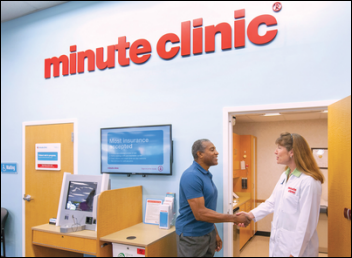

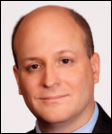

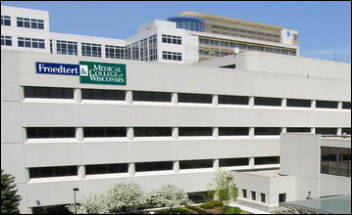

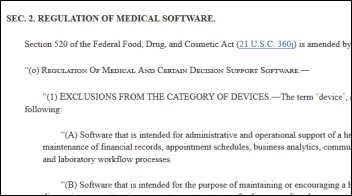
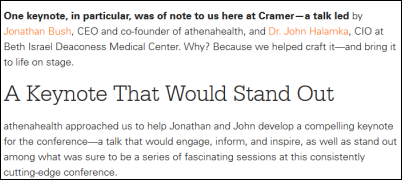
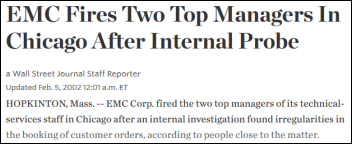
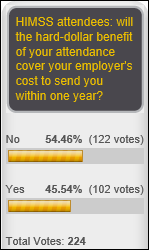



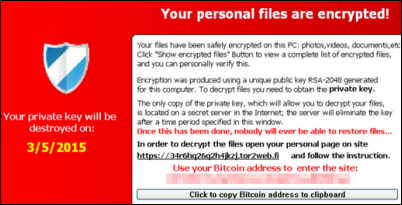


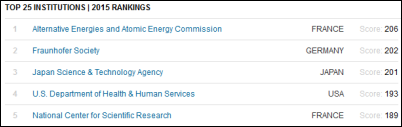
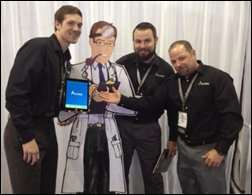
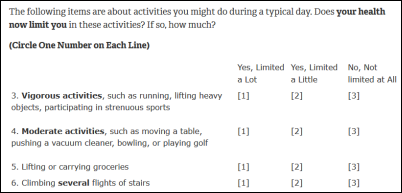



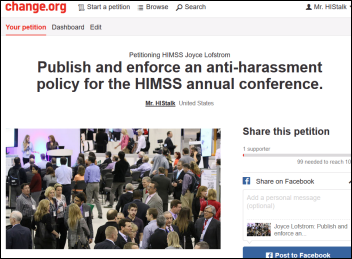
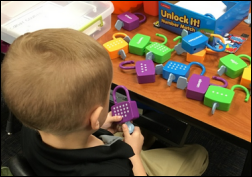
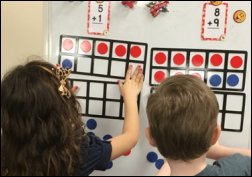



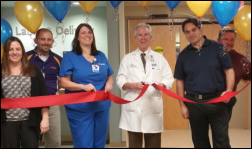
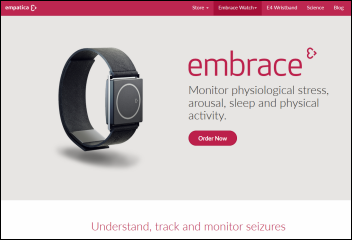
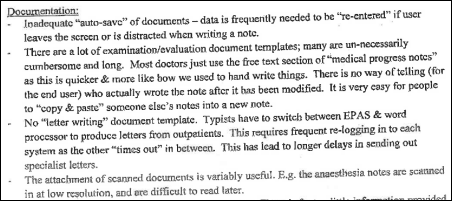
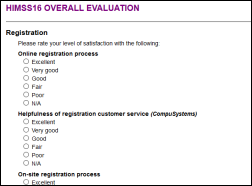
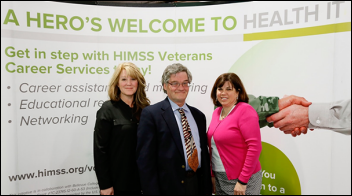


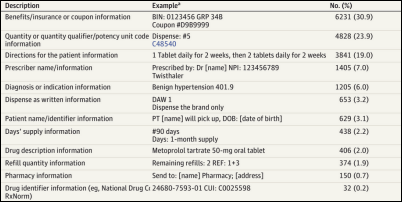
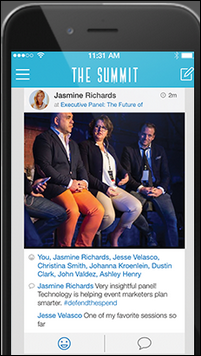

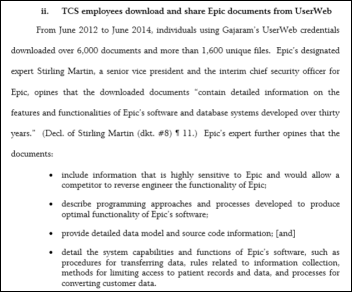
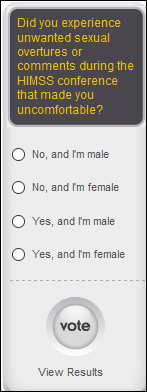



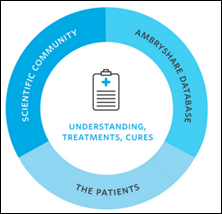
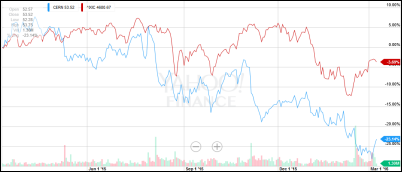
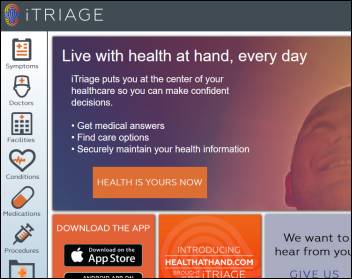
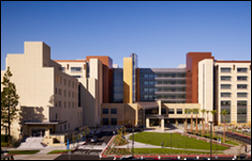

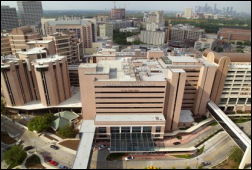
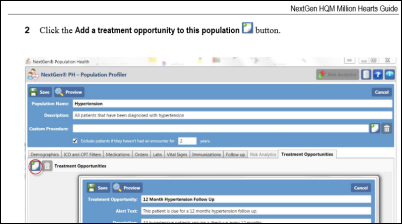
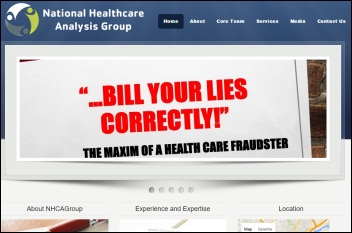
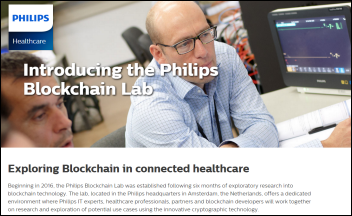
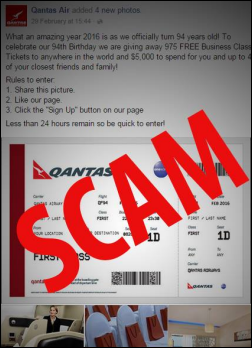

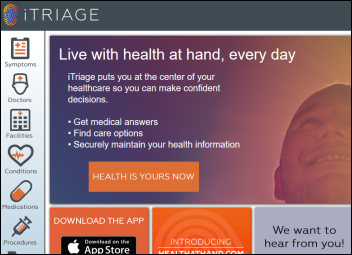
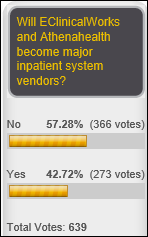
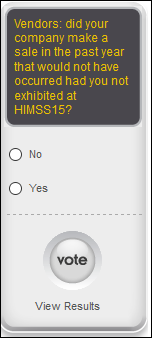
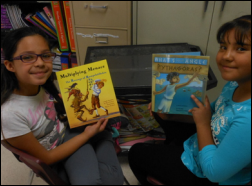
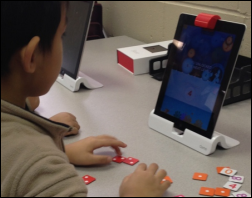


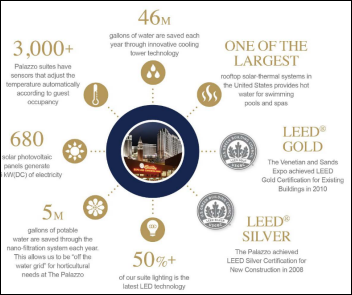
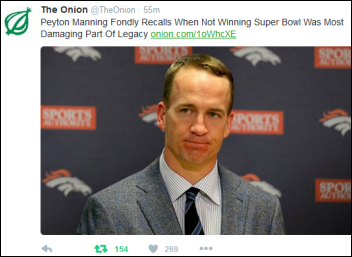
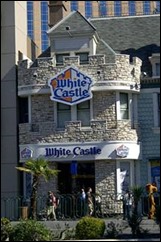


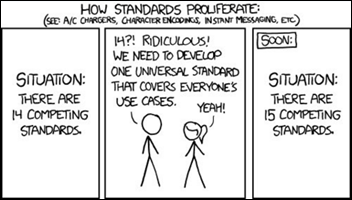

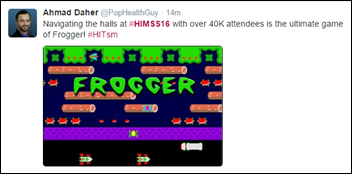
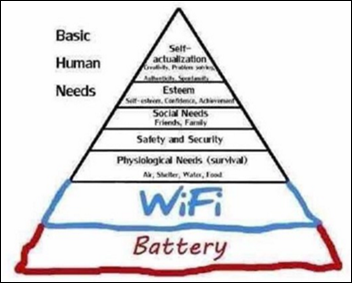


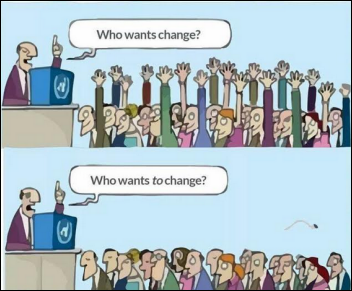

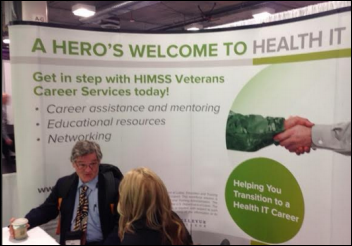
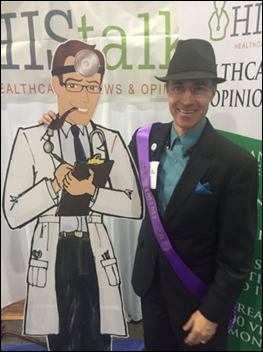




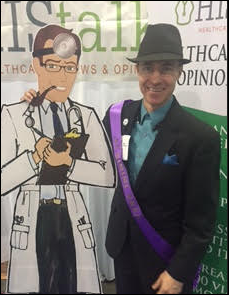

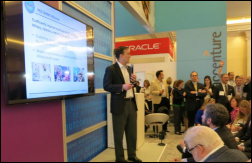
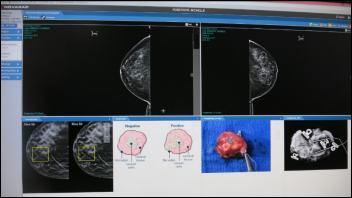
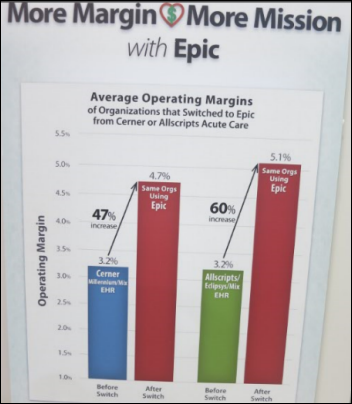
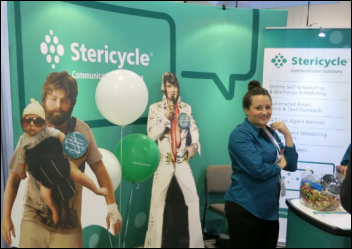
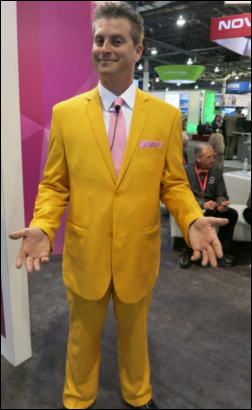
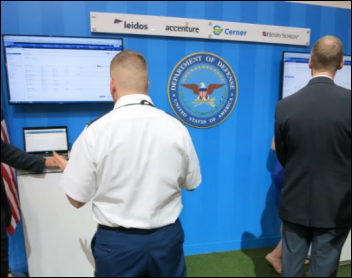
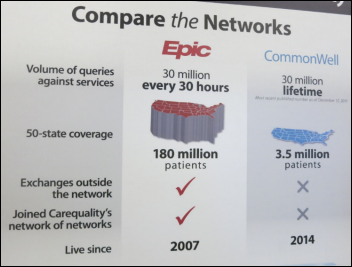
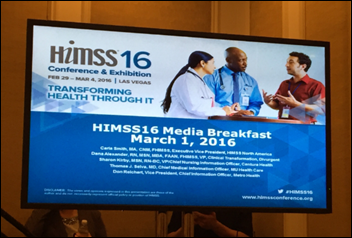
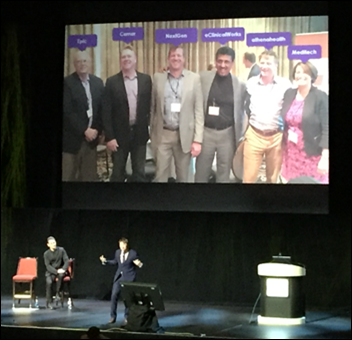
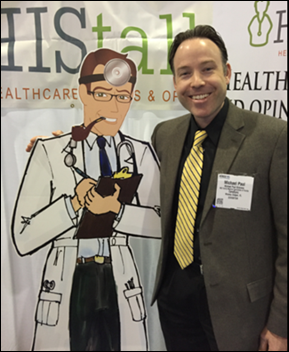
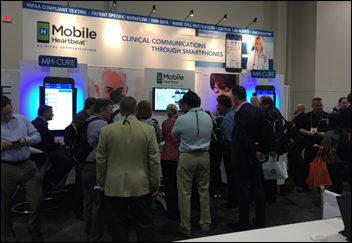
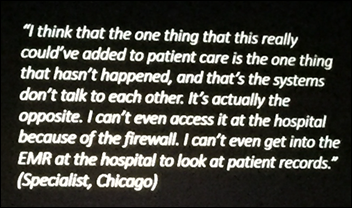
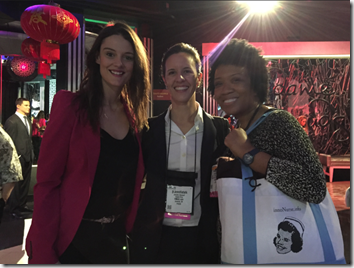
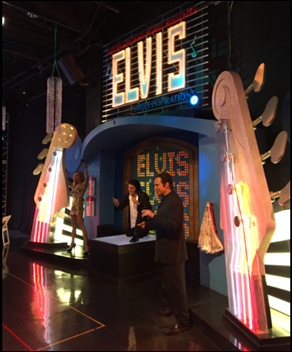


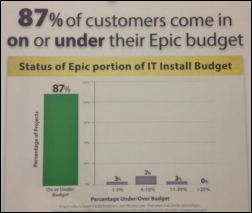
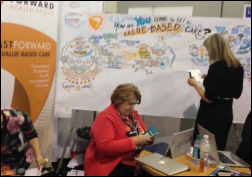


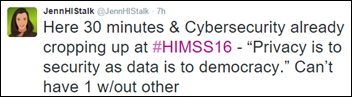
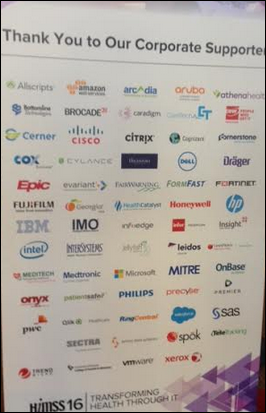

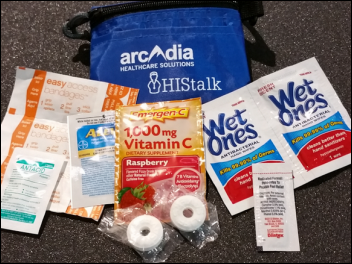
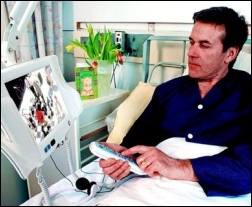
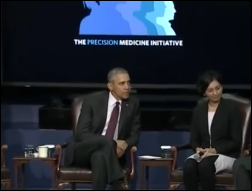

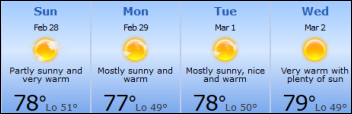
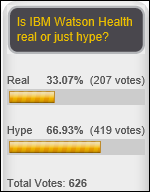




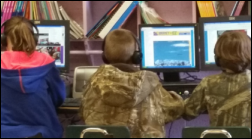



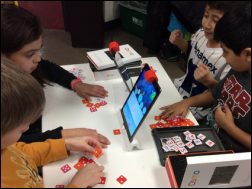



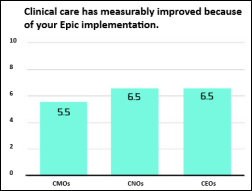
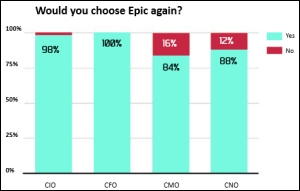
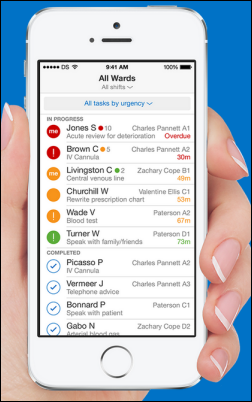

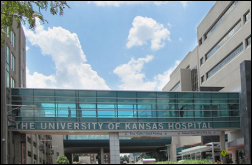




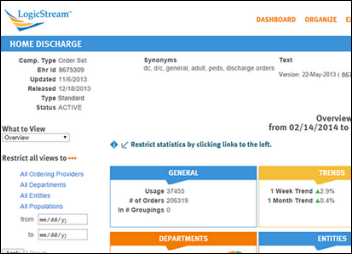

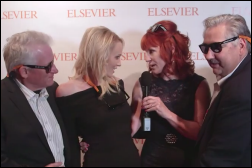
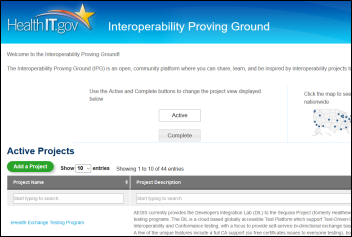
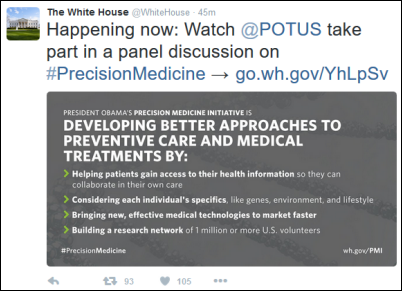
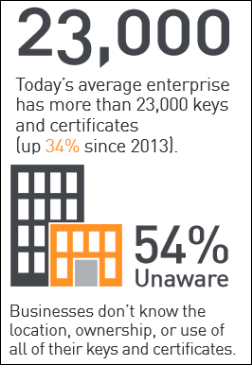
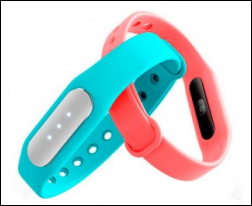

Thank you for the mention, Dr. Jayne — we appreciate the callout, the kind words and learning more about the…