HHS publishes the final MACRA rule (2,204 pages, although much of it is draft comments with responses) with a 24-page executive summary (provided the executive in question understands a lot of jargon in sentences such as, “We are finalizing the method to calculate and disburse the lump-sum APM Incentive Payments to QPs, and we are finalizing a specific approach for calculating the APM Incentive Payment when a QP also receives non-fee-for-service payments or has received payment adjustments through the Medicare EHR Incentive Program, PQRS, VM, or MIPS during the prior period used for determining the APM Incentive Payment”) and a website explaining it.
CMS Acting Administrator Andy Slavitt summarizes the rule:
Other than a 0.5 percent fee schedule update in 2017 and 2018, there are very few changes when the program first begins in 2017. If you already participate in an Advanced APM, your participation stays the same. If you aren’t in an Advanced APM, but are interested, more options are becoming available. If you participate in the standard Medicare quality reporting and Electronic Health Records (EHR) incentive programs, you will find MIPS simpler. And, if you see Medicare patients, but have never participated in a Medicare quality program, there are paths to choose from to get started. The first couple of years are aimed at getting physicians gradually more experienced with the program and vendors more capable of supporting physicians. We have finalized this policy with a comment period so that we can continue to improve the program based on your feedback.
Like every other notable EHR-related legislation, the final rule came out on a Friday. Industry groups seemed mostly happy with it.
Reader Comments
From The Hurricane: “Re: [vendor name omitted]. Laying off half its employees and being folded into of the parent corporation’s entities.” Unverified. I’ll keep my eye out.
HIStalk Announcements and Requests
Nearly 60 percent of poll respondents spend little to no time in their workday talking about patients and their needs. New poll to your right or here: How much work is your organization doing to prepare for Medicare’s 2019 issuance of new ID numbers to replace SSN?
Last Week’s Most Interesting News
The Department of Defense moves back its first Project Genesis Cerner go-live from December 2016 to February 2017 and says it will involve only one Washington hospital rather than the originally planned two, although the project’s 2022 completion date remains unchanged.
A hedge fund operator and $100 million Theranos investor sues the company for securities fraud.
A court orders Parkview Hospital (IN) to release its chargemaster prices and insurance company discounts after an uninsured patient says his bill, which the hospital sent off to collections, is unreasonable because insurers don’t pay the full price he’s being sued over.
Webinars
October 25 (Tuesday) 1:30 ET. “Data Privacy/Insider Threat Mitigation: What Hospitals Can Learn From Other Industries.” Sponsored by HIStalk. Presenters: Robert Kuller, chief commercial officer, Haystack Informatics; Mitchell Parker, CISSP, executive director of information security and compliance, Indiana University Health. Cybersecurity insurers believe that hospitals are too focused on perimeter threats, ransomware, and the threat of OCR audits instead of insider threats, which are far more common but less likely to earn media attention. Attendees will learn how behavior analytics is being used to profile insiders and detect unusual behaviors proactively and to place privacy/insider risk within the risk management matrix.
November 8 (Tuesday) 1:00 ET. “A CMIO’s Perspective on the Successful 25 Hospital Rollout of Electronic Physician Documentation.” Sponsored by Crossings Healthcare. Presenter: Ori Lotan, MD, CMIO, Universal Health Services. UHS rolled out Cerner Millennium’s electronic physician documentation to its 6,000 active medical staff members — 95 percent of them independent practitioners who also work in competitor facilities — across 25 acute care hospitals. UHS’s clinical informatics team used Cerner’s MPage development toolkit to improve the usability, efficiency, communications capability, and quality metric performance of Dynamic Documentation, embedding clinical decision support and also using Nuance’s cloud-based speech recognition product for the narrative bookends of physician notes. This CMIO-led webinar will describe how UHS achieved 70 percent voluntary physician adoption within one month of go-live, saved $3 million in annual transcription expense, and raised EHR satisfaction to 75 percent. It will include a short demonstration of the software that UHS developed to optimize the physician experience.
November 9 (Wednesday) 1:00 ET. “How to Create Healthcare Apps That Get Used and Maybe Even Loved.” Sponsored by MedData. Presenter: Jeff Harper, founder and CEO, Duet Health. Patients, clinicians, and hospital employees are also consumers who manage many aspects of their non-medical lives on their mobile devices. Don’t crush their high technology expectations with poorly designed, seldom used apps that tarnish your carefully protected image. Your app represents your brand and carries high expectations on both sides. This webinar will describe how to build a mobile healthcare app that puts the user first, meets their needs (which are often different from their wants), creates “stickiness,” and delivers the expected benefits to everyone involved.
Contact Lorre for webinar services. View previous webinars on our HIStalk webinars YouTube channel.
Decisions
Southwest General Hospital (TX) will switch from McKesson to Cerner in July 2017.
Central Peninsula General Hospital (AK) went live with an Infor Lawson human resources system in October 2016 and will follow with time and attendance and payroll go-lives in November.
Fisherman’s Hospital (FL) will go live with a Paycom Human Resources System in October 2016.
These provider-reported updates are provided by Definitive Healthcare, which offers powerful intelligence on hospitals, physicians, and healthcare provider
Government and Politics
A military-focused reporter’s article on the delay in the initial rollout of MHS Project Genesis at Fairchild Air Force Base (WA) says the DoD’s new Cerner system will be interfaced to legacy systems that include AHLTA, the ancillary department systems of CHCS, and CliniComp’s Essentris. It doesn’t indicate how or when those systems will be phased out by Cerner.
Intuit and CMS release Benefit Assist, open source software that determines eligibility for income-based government benefits.
The Russians that hacked into the Democratic National Convention servers used a phony Gmail security update message that lured users to reset their passwords, then sent them to a phony log-on page that stole their credentials.
The Vermont Health Connect insurance marketplace exposes the information of 700 users due to a payment contractor’s mistake.
Vermont’s attorney general reaches a settlement with software vendor Entrinsik to provide more explicit instructions for its business intelligence tool, which when users run reports from their browsers, sometimes creates temporary files that are not automatically erased and fails to warn users of their existence.
Innovation and Research
CB Insights publishes a list of digital hospital technology vendors.
A UK psychiatric hospital pilots Oxehealth, which analyzes streaming video to monitor vital signs with no attached sensors and alerts staff if a patient appears to be at risk.
Other
Surgeons at St. Vincent Hospital (MA) remove the healthy rather than the cancerous kidney of a patient after a mix-up with another patient’s CT results. Investigators also found several problems with patient ID bracelets, with a patient’s son receiving his father’s bracelet and another observed being taken to X-ray without any bracelet at all. They also noted that one patient had been registered with another patient’s name and was assigned two medical record numbers.
Texas authorities free the convicted murderer of a four-year-old boy because the county can’t afford to pay his medical bills. The inmate spent 967 days in incarceration in running up $19,000 in medical expenses, nearly 20 percent of the prison’s total annual medical budget. A local resident weighs in with the opinion that he should be just allowed to die untreated in jail as a cost for committing a crime.
The Department of Defense announces that the first go-live of its MHS Genesis implementation of Cerner is scheduled for February 2017 at Fairchild Air Force Base (WA), moved back from the originally planned December 2016 date that involved two test sites. Three other Washington military hospitals will follow no earlier than June 2017.
The DoD says it pushed the schedule back to give it more time to develop interfaces to legacy systems and for system testing, as well as to allow implementing speech recognition and transfusion management. The project’s budget and planned completion date of 2022 have not changed.
Reader Comments
From Redacted: “Re: Epic certification. Users are now required to complete proctored exams every five years for each application they’re certified in. As a consultant, it’s not the worst thing in the world for them to remove other certified people from the pond, but I have 10 certs and their time estimate is 6-8 hours for each (doubled between the assessment and booster training). Seems like a huge pain.” Unverified, although the forwarded document above appears genuine.
From Boy Blunder: “Re: Epic‘s 2016 release. My TS contact says there was a two-month period in early 2016 where the entire development division pivoted to fixing issues with the 2015 release, delaying 2016 projects. She tells me we should not upgrade to 2016 for a while because the key features won’t be added until months after the initial release, delaying the discovery and fixing of the kinks we usually find.” Unverified.
From Booster: “Re: Epic’s Boost program. It’s an attempt by Epic to provide consulting services to customers deploying new functionality or optimizing their systems. The concept has been around for years, but was only recently formalized. Boosters tend to be less available and are rarely around for more than a short engagement, with most of them on their way out of the company and working somewhere other than Madison (less than one year). It’s good in theory, but cannot get off the ground because Epic employees have such short half-lives and aren’t compensated competitively to retain them.” Unverified.
From Little David: “Re: Hillary Clinton’s HIMSS14 speech. Did we get $225K of value?” It appears that the Secretary’s rack rate was $225K per speech, so HIMSS paid the same as everybody else. On the question of value, I’ll side with readers who observe that while we claim we want to hear selfless keynotes from patients, the size of the HIMSS crowd is always directly proportional to the fame of the presenter and Hillary (and Bill the year before) packed the house. I didn’t attend her presentation since I was tired of being at the conference before her Wednesday keynote slot, but I summarized it back then as:
I didn’t hear much about Hillary’s Wednesday keynote other than (a) it was extremely short; (b) like any skilled politician, she didn’t really say anything other than predictably lauding the work of the crowd that brought her there and kissing up to HIMSS. I would have been mad about waiting an hour or two to squeeze into the huge room for her talk given its lack of substance. Hillary’s rumored minimum speaking fee is $200K plus expenses, so she took home a big paycheck in addition to potentially impressing would-be Presidential voters who were apparently happy just to bask in her celebrity.
HIStalk Announcements and Requests
Welcome to new HIStalk Platinum Sponsor Healthlink Advisors. The St. Petersburg, FL-based consulting firm was founded by industry long-timer and former SVP/CIO Lindsey Jarrell, who hand-picks the people he (and the company’s client base) wants to work with based on their experience, passion, integrity, accountability, and commitment to social responsibility. Areas of practice include IT operations performance acceleration (leadership coaching, interim management, contract negotiation, application and technology rationalization, roadmaps); engagement (IT governance, system selection, program management, product and sales strategy development); and transformation (future state definition, consumer and digital engagement). I’m fascinated that one of the company’s core values that employees make healthy choices, which it supports by offering healthy foods at meetings, holding meetings while walking, requiring mandatory vacation time away from work, and insisting that no emails being sent after 10 p.m. or while the employee is on vacation. I also liked this insightful nugget in its “have fun” core value – “people leave managers, they don’t leave companies.” Thanks to Healthlink Advisors for supporting HIStalk.
This week on HIStalk Practice: Chinese Community Health Care Association moves forward with enterprise master patient index tech. Telemedicine companies offer free consults to victims of Hurricane Matthew. NextGen’s Cherie Holmes-Henry and Charles Kaplan offer advice on “Readying the Revenue Cycle for MACRA.” GMed develops patient check-in software for gastroenterologists. AmeriGroup partners with LiveHealth Online for telemedicine services in New Jersey. Health Fidelity co-founder Anand Shroff helps physicians understand the implications of risk adjustment. Zoom+ launches chat-based telemedicine app. Encompass Medical Partners gets into the IT maintenance and security game.
This week on HIStalk Connect: Pager raises $5.2 million. Proposal deadlines loom for the Stanford Medicine X | Withings Precision Research Challenge. Eccrine Systems closes $5.5 million in Series A financing. Bill Evans joins Rock Health. Charlie Rose focuses on artificial intelligence.
Webinars
October 25 (Tuesday) 1:30 ET. “Data Privacy/Insider Threat Mitigation: What Hospitals Can Learn From Other Industries.” Sponsored by HIStalk. Presenters: Robert Kuller, chief commercial officer, Haystack Informatics; Mitchell Parker, CISSP, executive director of information security and compliance, Indiana University Health. Cybersecurity insurers believe that hospitals are too focused on perimeter threats, ransomware, and the threat of OCR audits instead of insider threats, which are far more common but less likely to earn media attention. Attendees will learn how behavior analytics is being used to profile insiders and detect unusual behaviors proactively and to place privacy/insider risk within the risk management matrix.
November 8 (Tuesday) 1:00 ET. “A CMIO’s Perspective on the Successful 25 Hospital Rollout of Electronic Physician Documentation.” Sponsored by Crossings Healthcare. Presenter: Ori Lotan, MD, CMIO, Universal Health Services. UHS rolled out Cerner Millennium’s electronic physician documentation to its 6,000 active medical staff members — 95 percent of them independent practitioners who also work in competitor facilities — across 25 acute care hospitals. UHS’s clinical informatics team used Cerner’s MPage development toolkit to improve the usability, efficiency, communications capability, and quality metric performance of Dynamic Documentation, embedding clinical decision support and also using Nuance’s cloud-based speech recognition product for the narrative bookends of physician notes. This CMIO-led webinar will describe how UHS achieved 70 percent voluntary physician adoption within one month of go-live, saved $3 million in annual transcription expense, and raised EHR satisfaction to 75 percent. It will include a short demonstration of the software that UHS developed to optimize the physician experience.
November 9 (Wednesday) 1:00 ET. “How to Create Healthcare Apps That Get Used and Maybe Even Loved.” Sponsored by MedData. Presenter: Jeff Harper, founder and CEO, Duet Health. Patients, clinicians, and hospital employees are also consumers who manage many aspects of their non-medical lives on their mobile devices. Don’t crush their high technology expectations with poorly designed, seldom used apps that tarnish your carefully protected image. Your app represents your brand and carries high expectations on both sides. This webinar will describe how to build a mobile healthcare app that puts the user first, meets their needs (which are often different from their wants), creates “stickiness,” and delivers the expected benefits to everyone involved.
Contact Lorre for webinar services. View previous webinars on our HIStalk webinars YouTube channel.
Acquisitions, Funding, Business, and Stock
Axial Healthcare, which mines a database of 100 million patient cases to give insurers insight into risky pain care practices, raises $16.5 million in a Series B funding round, increasing its total to $26 million.
Nordic completes a minority recapitalization and announces plans to offer equity participation to all employees starting in 2017.
Sales
Providence Health & Services chooses LogicStream Health’s Clinical Process Measurement.
Meditech customer Hays Medical Center (KS) will implement the company’s Web EHR.
Cerner customer Olathe Health System (KS) will add Millennium Revenue Cycle and the RxStation automated drug dispensing system.
Insurer Highmark will implement Welltok’s CafeWell Rewards program for its Medicare Advantage policyholders.
People
Family medicine practitioner Doug Spotts, MD takes a full-time role as chief health information officer at Evangelical Community Hospital (PA).
Ascension SVP Mike Schatzlein, MD will resign effective December 31, 2016 to focus on his role as chair for the Nashville-based Center for Medical Interoperability. The non-profit was formed in 2015 with a $10 million grant from the Gary and Mary West Foundation, with membership focused on hospitals.
Population health management technology vendor Altruista Health hires Munish Khaneja, MD, MPH (EmblemHealth) as chief medical officer.
Zillion hires Cheryl Morrison Deutsch (Kronos) as chief experience officer.
Announcements and Implementations
T-System announces EVolvED, a low-cost, quickly implemented ED documentation system that combines T-Sheets paper documentation with a best-of-breed technology solution.
Adventist Health System goes live on Imprivata’s PatientSecure palm vein biometric identification system.
InstaMed achieves PCI SSC Point-to-Point Encryption Standard version 2.0 validation for protecting credit card payment data, the first company in healthcare to earn that recognition.
Portland, OR-based clinic model insurer Zoom+ launches a free medical chat service for its members that provides advice, diagnosis, treatment, prescriptions, and visit scheduling, with the chat transcript being added automatically to the EHR. I’m not sure if the apparently missing “with” in the “chat our doctors for free” page above is a mistake or intentional hipster wit.
National Decision Support Company will debut its CareSelect Imaging decision support solution at RSNA, offering expanded Appropriate Use Criteria.
Government and Politics
ONC and HHS OCR update their HIPAA Security Risk Assessment tool.
CMS will review MACRA-required documentation and hold regional meetings with practices in trying to reduce the clinician administrative burdens involved.
Privacy and Security
Canada-based online medical advice startup Ask The Doctor becomes the first healthcare company to accept Bitcoin, providing users with extra privacy over charging services on their credit card. I can’t find any mention of how much the company charges to answer questions.
Innovation and Research
Women who avoid having sex on the days a physicist’s temperature tracking app says they are fertile avoid pregnancy 99.5 percent of the time, offering the same reliability rate as oral contraceptives and condoms and much better than the 75 percent success rate of the rhythm method alone. The company is in Sweden, which is probably a good thing since its claims might otherwise interest the FDA and the lawyers of unexpectedly pregnant women.
Other
A study of mobile health apps finds a crowded market in which downloads are limited and declining, users aren’t willing to pay, newcomers have saturated the market, and 78 percent of publishers make less than $100,000 per year from their entire healthcare app business. Most app-related revenue comes from sales of sensors or other required hardware. Features seen as easiest to implement that have the highest user impact are personalized messages, dashboards, and the delivery of educational content. Publishers see their best hope of success as addressing users with chronic illnesses, but insurance companies haven’t shown much interest in getting them involved. Still, it’s a growing market even if it’s more competitive and selective.
In England, St. George’s University Hospitals NHS Foundation Trust freezes all software rollouts following a June 6 infrastructure failure in which its Cerner-provided downtime system didn’t work. The trust is out of storage capacity, can’t perform backups, runs Windows XP on 2,000 PCs, and has network stability problems.
An American Hospital Association report finds that hospitals spent nearly 40 percent more on drugs for each inpatient inpatient in 2015 than they did in 2013 due to higher drug prices rather than increased volume, saying that the price jumps “appear to be random, inconsistent, and unpredictable.” Prices increased from 52 percent to 3,263 percent for the 10 drugs on which hospitals spent the most money, with even the journeyman drug acetaminophen recording a 135 percent price increase from 2013 to 2015. It’s interesting to me that a couple of decades ago, the field of pharmacoeconomics was created to make sure drugs delivered outcomes commensurate with their cost, which turned on a light bulb over the heads of drug companies that realized they could price based on those same outcomes rather than simply defend a markup based on their research and manufacturing costs. These top 10 drugs are all old, work inarguably well for mostly specific uses, and have little competition. The pharmacoeconomics model then supports high prices and thus high drug company profits.
The local paper covers the November 1 Epic go-live at Vernon Memorial Healthcare (WI), which is working with Gundersen Health System (just writing that even with a different spelling makes me think of the police chief in “Fargo” or The Swede in “Hell on Wheels,” yah).
I ran across an article that mentioned Twine Health, which I’ve written about a couple of times. The company’s team-based coaching and primary care app offers shared action planning among patients, coaches, and clinicians; secure messaging; real-time population monitoring; and analytics. Practices can use its system for $1 per patient per month for up to 1,000 patients. The company has raised $6.75 million in a single December 2015 funding round. The founders are serial entrepreneur and former MIT professor Frank Moss, PhD and John Moore, MD, PhD.
A UCSF hospital medicine professor makes his case for “clinician data scientists” to analyze complex and sometimes inconsistently entered EHR patient information. He suggests training in clinical systems, data extraction, report writing, and statistical methods.
Cerner can honestly say that the company sits at the intersection of “Health Care” and “Information Technology” as it names the streets of its new campus. Other avenues are named after medical scientists and computing pioneers.
Eighty volunteers from HCA’s IT division participated in a 36-hour “Hack the Community” hackathon in Nashville this week, supporting local non-profits with limited technology resources.
Sponsor Updates
Florida State University recognizes Vyne CEO Lindy Benton with its 2016 Distinguished Alumni Award.
Forward Health Group COO Subbu Ravi will serve on panel discussing Wisconsin state health IT initiatives at a Wisconsin Technology Council innovation lunch in Madison on October 18.
Iatric Systems will exhibit at the Hospital & Healthcare IT Fall Reverse Expo October 19-21 in Chicago.
Momentum Partners includes ID Experts in its list of top 10 private cybersecurity companies to watch in Q3 2016.
Impact Advisors will exhibit at the Scottsdale Institute CIO Summit October 13-14 in Scottsdale, AZ.
Optimum Healthcare IT posts a white paper titled “The Problem (and Solution) With Data Governance.”
Kyruus will exhibit at the HMA Fall Forums October 19-22 in Laguna Beach, CA.
MedData will exhibit at the ACEP Scientific Assembly 2016 October 16-19 in Las Vegas.
Meditech Senior Manager Corinne Proctor Boudreau will speak at the Western Pennsylvania Healthcare Summit October 14 in Pittsburgh.
Nordic will sponsor Piedmont Healthcare’s Southeast User Group Meeting October 18 in Atlanta.
NTT Data announces its return to Chip Ganassi Racing Teams.
Obix Perinatal Data System will exhibit at the ACOG Annual District II Meeting October 21 in New York City.
Recondo Technology will present at the Michigan HFMA Fall Conference October 17 in Plymouth.
Experian Health will present at NEHAM October 17-18 in Providence, RI.
Red Hat accepts speaking proposals for Red Hat Summit 2017 through December 2.
The SSI Group will exhibit at the AHCA/NCAL Annual Convention & Expo October 16-19 in Nashville.
Sunquest Information Systems will exhibit at ASHG 2016 October 18-22 in Vancouver.
Sutherland Healthcare Solutions VP and Global Health of RCMS Healthcare Tina Eller will speak at the Region 2 HFMA Fall Institute Conference October 20 in Verona, NY.
An emergency physician describes an event in which an intern using a CPOE system they were unfamiliar with ordered a CT scan of the abdomen and pelvis with contrast, and then separately ordered oral contrast, the combination of which resulted in contrast nephropathy.
Epic responds to a recent Jonathan Bush interview during which he suggests that achieving interoperability with Epic sites was difficult until recently.
Hedge fund operator Partner Fund Management sues Theranos for securities fraud, saying Theranos and CEO Elizabeth Holmes told “a series of lies” about its lab testing capabilities and prospects in soliciting a $100 million investment.
Above is Holmes holding the company’s remaining credibility.
Reader Comments
From Ken Bone: “Re: Athenahealth. JB got Trumped.” Epic posts a fact check for a recent interview with Athenahealth’s Jonathan Bush. Thankfully, JB’s brother Billy was not available to facilitate an uncomfortable Judy-JB hug.
From Looming Presence: “Re: HIStalkapalooza. Here’s video of Jonathan Bush doing his Donald Trump imitation at HIStalkapalooza earlier this year.” I had forgotten about that. JB, the most politically connected person in health IT, has said that he can’t support his Republican party’s nominee in calling him “a clinical narcissist” and “a wack job,” but says he’ll vote Libertarian instead of Democratic, explaining, “Why going for the nut on the right or the nut on the left when you can have the Johnson?” Bush downplayed his own political aspirations a few weeks ago by saying, “We need another Bush like I need a hole in my head,” although technically speaking, all of us need a hole in our head, just not another one that isn’t a mouth, nose, eyes, or ears (or in cases of emergency, a surgical trepanation).
From PitViper: “Re: blockchain conference in Nashville last week. Humana’s CIO gave the keynote and his team participated in many of the breakout sessions. Nothing is production-ready and vendors themselves admit the technology is immature, but the ideas are interesting and if there’s truly a common trusted data layer in our future, it will address a lot of the issues we face.”
HIStalk Announcements and Requests
Welcome to new HIStalk Platinum Sponsor Agfa HealthCare. The company, which provides eHealth and digital imaging solutions to half the world’s hospitals, offers Care You Can See, an enterprise-wide approach to medical imaging that provides a single patient record within a single EHR view. Its product line includes enterprise imaging (VNA, universal viewer, ECM, image exchange, patient portal, scheduling, business intelligence and clinical apps); integrated care (data aggregation for multiple sites, patient engagement); and digital radiography. The company focuses its radiology commitment to maximize the value of medical images within an interoperable ecosystem to support collaboration and the availability of image to all caregivers under value-based care. Its Engage suite provides a first step toward an integrated care model, offering patient-centric views and actions, native mobile functionality, support for clinical networks, and integration with third-party systems. The company is the #1-recommended image sharing vendor in a recent Peer60 report. Thanks to Agfa HealthCare for supporting HIStalk.
Here’s an Agfa HealthCare intro video I found on YouTube.
Webinars
October 13 (Thursday) 2:00 ET. “Glycemic Control During Therapeutic Hypothermia.” Sponsored by Monarch Medical Technologies. Presenter: Tracey Melhuish, RN, MSN, clinical practice specialist, Holy Cross Hospital (FL). Using therapeutic hypothermia (TH) as a method of care can present risks of hyperglycemia, hypoglycemia, and blood glucose variability. Maintaining safe glucose levels during the cooling and rewarming phases of TH reduces the risks of adverse events. Tracey Melhuish, author of “Linking Hypothermia and Hyperglycemia,” will share best practices for optimal glucose control during TH and the success Holy Cross Hospital sees while using a computerized glucose management software.
October 25 (Tuesday) 1:30 ET. “Data Privacy/Insider Threat Mitigation: What Hospitals Can Learn From Other Industries.” Sponsored by HIStalk. Presenters: Robert Kuller, chief commercial officer, Haystack Informatics; Mitchell Parker, CISSP, executive director of information security and compliance, Indiana University Health. Cybersecurity insurers believe that hospitals are too focused on perimeter threats, ransomware, and the threat of OCR audits instead of insider threats, which are far more common but less likely to earn media attention. Attendees will learn how behavior analytics is being used to profile insiders and detect unusual behaviors proactively and to place privacy/insider risk within the risk management matrix.
November 8 (Tuesday) 1:00 ET. “A CMIO’s Perspective on the Successful 25 Hospital Rollout of Electronic Physician Documentation.” Sponsored by Crossings Healthcare. Presenter: Ori Lotan, MD, CMIO, Universal Health Services. UHS rolled out Cerner Millennium’s electronic physician documentation to its 6,000 active medical staff members — 95 percent of them independent practitioners who also work in competitor facilities — across 25 acute care hospitals. UHS’s clinical informatics team used Cerner’s MPage development toolkit to improve the usability, efficiency, communications capability, and quality metric performance of Dynamic Documentation, embedding clinical decision support and also using Nuance’s cloud-based speech recognition product for the narrative bookends of physician notes. This CMIO-led webinar will describe how UHS achieved 70 percent voluntary physician adoption within one month of go-live, saved $3 million in annual transcription expense, and raised EHR satisfaction to 75 percent. It will include a short demonstration of the software that UHS developed to optimize the physician experience.
November 9 (Wednesday) 1:00 ET. “How to Create Healthcare Apps That Get Used and Maybe Even Loved.” Sponsored by MedData. Presenter: Jeff Harper, founder and CEO, Duet Health. Patients, clinicians, and hospital employees are also consumers who manage many aspects of their non-medical lives on their mobile devices. Don’t crush their high technology expectations with poorly designed, seldom used apps that tarnish your carefully protected image. Your app represents your brand and carries high expectations on both sides. This webinar will describe how to build a mobile healthcare app that puts the user first, meets their needs (which are often different from their wants), creates "stickiness," and delivers the expected benefits to everyone involved.
Contact Lorre for webinar services. View previous webinars on our HIStalk webinars YouTube channel.
Acquisitions, Funding, Business, and Stock
Siemens Healthineers will resell IBM Watson Health’s population health management solutions. The companies will also work together to create new solutions in a five-year strategic alliance.
3M Health Information Systems and Verily Life Sciences will work together to analyze population-level datasets into usable quality measures for complications, readmissions and mortality, and cost.
Pharmacy software vendors Rx30 and Computer-Rx announce their merger.
People
AMN Healthcare-owned contingent workforce management systems vendor ShiftWise names Steven Rodriguez (Asure Software) as president.
Outpatient rehabilitation therapy technology vendor Clinicient hires T. Kent Rowe (ZirMed) as CEO.
CTG promotes Rick Sullivan to VP of strategic staffing services.
Announcements and Implementations
HIMSS Europe is conducting a “Women in Health IT” survey whose results it will use to tailor future female-focused offerings.
Privacy and Security
In India, Chennai city police have filed 43 cases against people they say have spread rumors about the health of the chief minister of Tamil Nadu, who has been hospitalized since September 22. The latest two arrests are of a website manager who published audio claiming to be from an Apollo Hospitals employee and an IT engineer who they said posted false information on Facebook. They’re charged under a law prohibiting statements intended to cause public panic.
The incarcerated human rights activist who coordinated an Anonymous-led denial-of-service attack against Boston Children’s Hospital in April 2014 to protest the involuntary commitment of a teenager stages a hunger strike to protest behavior modification programs for non-adults.
Technology
China-based search engine Baidu launches Melody, a smartphone chatbot app that asks consumers AI-generated questions in performing basic triage before sending the information to a doctor to take over. The company says it’s talking to US healthcare companies as a potential market.
London-based, Google-owned DeepMind has doubled its team to 40 employees since its February 2016 launch, hiring experts in artificial intelligence and from the NHS to help develop its products.
Other
The Wall Street Journal says apps that help migraine sufferers predict their attacks or identify their triggering factors hold promise, but they struggle to distinguish triggers (causation) from warning signs (correlation).
CMS Acting Administrator Andy Slavitt is one of my favorite tweeters, with refreshing recent examples above.
Family physician, CMIO, and AAFP board member Carl Olden, MD says that EHRs provide important benefits despite the extra work they require of doctors. He suggests that documentation responsibilities be spread to non-physician care team members and that payment reform “get us off the E/M treadmill.”
An emergency medicine professor blames CPOE for an error in which an intern ordered “CT Abdomen and Pelvis with contrast” and somehow thought she would need to order oral contrast separately, which she did in sending the patient into contrast nephropathy when both agents were administered. I disagree with blaming CPOE for these reasons:
The intern ordered an item without understanding it.
The same error would likely have occurred with paper-based ordering, especially if the hospital was equally sloppy in how it phrased the orderable’s description on paper.
All the other doctors appeared to have understood and used this orderable without problems.
Receiving a non-paper, non-verbal order does not eliminate the responsibility of the employees acting on it to review it for mistakes, electronic or otherwise.
It’s hard to understand how an undertrained intern’s one-off mistake – without the author’s seeing even basic evidence, such as how the hospital built the pick list in question — provides sufficient rationale to throw CPOE under the bus.
I agree with only one point of the article – system administrators should monitor cancelled or replaced orders to help them understand where there system setup might be confusing users.
Kaiser Permanente CEO Bernard Tyson says in a conference presentation that 52 percent of KP’s 2015 physician-member interactions were conducted via technology rather than face-to-face visits. The article’s author calls those encounters “virtual visits,” but I would bet that the huge number is mostly portal text messages, refill requests, and lab test communication. KP has turned in those big numbers going back to at least 2014, so this is really not news.
Canada-based drugmaker Valeant, known for acquiring old drugs and then jacking up their price, does it again with a drug for lead poisoning it bought in 2013, raising its price from $950 to $27,000. The company’s excuses (short shelf life, low sales volume) don’t hold much water since they haven’t changed since the previous owner was presumably making a nice profit at $950.
An expert criticizes vendor-operated company wellness programs, saying that data from the program that was recently chosen as the industry’s best suggests that employees were actually harmed rather than helped. He also cites the 2015 winner McKesson, who claimed savings despite no change in employee biometric risk factors.
In India, illegible doctor handwriting forces medical examiners to switch to computer-completed autopsy forms that police and juries can more easily read.
The Atlantic profiles Tristan Harris, a former Google employee who created an advocacy group called Time Well Spent that is trying to convince app developers to take a Hippocratic Oath that they won’t turn their users into slot machine-like tech addicts by exploiting their psychological vulnerabilities. He says app developers are like junk food vendors in introducing the digital version of sugar, salt, and fat into their apps to profitably satisfy user craving in earning “likes” and impressive LinkedIn connections via pointless yet hypnotic auto-play videos and clickbait stories. He’s thinking about developing an app to measure app usage vs. user-reported benefit in calling out apps that create addiction without satisfaction. Harris responds to the magazine’s reporter who expresses anxiety at trying not to check his cell phone during their interview:
Our generation relies on our phones for our moment-to-moment choices about who we’re hanging out with, what we should be thinking about, who we owe a response to, and what’s important in our lives. If that’s the thing that you’ll outsource your thoughts to, forget the brain implant. That is the brain implant. You refer to it all the time.
Sponsor Updates
AHIMA will add Meditech’s EHR to its Virtual Lab for HIM student training.
Haystack Informatics publishes a white paper on insider data breaches.
Aprima will exhibit at the Texas Association of Community Health Centers meeting October 17-18 in Dallas.
Arcadia Healthcare Solutions CMO Rich Park, MD will present at the inaugural meeting of the American Association of Strategic Regional Organizations October 17 in Philadelphia.
Bernoulli will exhibit at AARC16 October 15-18 in San Antonio.
MedScape includes E-MDs as a leading vendor for usability and customer satisfaction in its latest EHR report.
Elsevier Clinical Solutions features predictions from Geeta Nayyar, MD in its celebration of 100 years of medical clinics.
EClinicalWorks will exhibit at the AOAO Annual Meeting October 13-15 in Washington, DC.
HCS will exhibit at the NASL annual meeting October 16-18 in Nashville.Healthgrades will exhibit at the Built in Colorado Fall Startup Showcase October 13 in Denver.
Parkview Hospital (IN) has been ordered to release its chargemaster prices and insurance discounts after an uninsured patient that was charged $625,000 for his care sues the hospital, arguing that the bill is inflated and unreasonable since insured patients receive the same care at a significant discount.
In Australia, Health Minister Sussan Ley apologizes at the annual conference of the Royal Australian College of General Physicians after the health department inadvertently published confidential data from three million patients.
A pilot study finds that EMS documentation improves significantly if body-worn cameras are used so that EMS staff can review events after care is delivered.
The legal effort by Parkview Hospital (IN) to keep its chargemaster prices and insurance discounts secret fails, forcing it to provide the information demanded by an uninsured patient who sued the hospital after receiving a bill for $625,000 for a three-month stay after a car accident. The patient says the bill isn’t reasonable since the hospital discounts its services to insurance companies while charging uninsured patients list price. The state’s Hospital Lien Act allows patients to negotiate bills when a hospital files a collection lien against them.
The hospital’s attorney argues that insurers are given discounts because of the patient volume they provide and that the patient’s guardian signed a an admission agreement that included a 35-word “agreement to pay” paragraph. “We don’t think a person who is not a member of the club should get the benefits of the club,” he said. Other healthcare lawyers say hospitals don’t have a choice in offering discounts because insurers won’t sign a contract with them otherwise.
Legal experts say that if their debt collection practices are questioned by a ruling for the plaintiff in this case, hospitals will probably switch tactics to instead use breach of contract lawsuits, which have favorable legal precedents in Indiana.
A billing expert hired by the patient concludes that the reasonable value of the services he received was $247,000, which would represent a 60 percent discount to billed amount.
Reader Comments
From Stick and Rudder Man: “Re: Epic. Does its Boost program even exist? Our experience from making requests is that no one is ever available. Recent networking with other clients suggests that our experience is not unique.” I’m not familiar with that program and found no references to it on Epic’s site, so I’ll ask knowledgeable readers to comment.
From Golan Heights: “Re: MedCPU. Looks like leadership change.” I didn’t see an announcement, but comparing old vs. new versions of the company’s executive page calls out the removal of the company’s two co-founders, promotion of the CFO to the CEO position, and the departure of two other executives. MedCPU has raised $51 million, $35 million of it in May 2016.
From Block and Tackle: “Re: HIStalk. It’s being blocked in the Middle East countries, which I experienced when traveling to Bahrain and Dubai over the past two weeks. Not sure if you care much about getting traffic from there, although given the level of IT activities and the global nature of your sponsorship base, it could be an expansion opportunity. Not getting our weekly dose of HIStalk news causes a lot of anguish!” I’ve heard that before, although reports were inconsistent.
HIStalk Announcements and Requests
Attention speakers and Webinar presenters: people hate it when you: (a) read from your slides; (b) place your pitch ahead of the educational needs of your attendees; (c) cram too much material on your slides; and (d) talk too much about yourself and your employer. I’ll side with the majority: PowerPoint, when used by unskilled presenters as a Teleprompter instead of as a visual aid to complement their enthusiastic and not overly rehearsed verbal narrative, is pure evil.
New poll to your right or here: how much of your work day involves talking about patients and their needs?
Thanks to the following sponsors, new and renewing, that recently supported HIStalk, HIStalk Practice, and HIStalk Connect. Click a logo for more information.
Thanks to the IT department of Centura Health (CO), which raised $1,500 for my DonorsChoose project, doubling last year’s total. I applied matching funds in fulfilling these STEM-related grant requests Friday and have already received grateful emails from all of the teachers. Classroom photos will follow once the students begin using their new materials.
Genetics kits (plant lights and seeds) for Ms. T’s high school class in Juneau, WI
A document camera and wireless keyboard for Ms. N’s third grade class in Lugoff, SC
Math games for Ms. L’s kindergarten class in Chicago, IL
A math gaming system for Mrs. S’s second grade class in Virginia Beach, VA
A media studio for producing a daily school news show for Ms. C’s middle school class in Citrus Heights, CA
Multimedia teaching technology for Ms. C’s high school class in Philadelphia, PA
Math manipulatives for Ms. R’s elementary school class in New York, NY
Six tablets for Mrs. P’s kindergarten class in Dry Ridge, KY
I also received a donation from Mark and Tammy, which provided programmable robots for Mrs. E’s elementary school class in Greenwood, SC.
Welcome to new HIStalk Platinum Sponsor Black Book. The Tampa, FL-based company offers unbiased, transparently collected, survey-powered research services such as Black Book Rankings, vendor comparisons, customer satisfaction, and market and competitive intelligence. It measures image, attitudes, opinions, awareness, and market share. Users are invited to participate in its user satisfaction and loyalty surveys via its app, with their responses validated using sophisticated data quality tools to ensure accurate, authentic results. Kudos to the company for recently fine-tuning its methodology after noticing and fixing questionable results caused by hospitals completing surveys on behalf of their EHR affiliates, which it likened to a salesperson rating their own merchandise. Here’s the best part: nobody at Black Book has a financial interest in a vendor; the company doesn’t allow companies to pay to participate; and vendors don’t get to review the results until they’re published for the whole world to see. Thanks to Black Book for supporting HIStalk.
I’ve worked in hospitals affected by hurricanes. I would be interested in hearing about your experience with Hurricane Matthew. People might forget that while they’re being urged to evacuate or stay home, hospitals are being staffed by people who are protecting someone else’s family instead of their own.
Last Week’s Most Interesting News
Theranos exits the laboratory business, laying off 40 percent of its staff to focus on commercializing its MiniLab testing machine.
A single Brigham and Women’s researcher gets a $75 million, five-year grant to analyze study participant data, including that generated by wearables, hoping to find early predictors of heart disease.
Warburg Pincus Private Equity files FTC documents indicating that it will acquire Intelligent Medical Objects.
Evolent Health completes its acquisition of Valence Health for $219 million.
Cerner tells the local newspaper that it will aggressively expand its revenue cycle business.
Webinars
October 13 (Thursday) 2:00 ET. “Glycemic Control During Therapeutic Hypothermia.” Sponsored by Monarch Medical Technologies. Presenter: Tracey Melhuish, RN, MSN, clinical practice specialist, Holy Cross Hospital (FL). Using therapeutic hypothermia (TH) as a method of care can present risks of hyperglycemia, hypoglycemia, and blood glucose variability. Maintaining safe glucose levels during the cooling and rewarming phases of TH reduces the risks of adverse events. Tracey Melhuish, author of “Linking Hypothermia and Hyperglycemia,” will share best practices for optimal glucose control during TH and the success Holy Cross Hospital sees while using a computerized glucose management software.
October 25 (Tuesday) 1:30 ET. “Data Privacy/Insider Threat Mitigation: What Hospitals Can Learn From Other Industries.” Sponsored by HIStalk. Presenters: Robert Kuller, chief commercial officer, Haystack Informatics; Mitchell Parker, CISSP, executive director of information security and compliance, Indiana University Health. Cybersecurity insurers believe that hospitals are too focused on perimeter threats, ransomware, and the threat of OCR audits instead of insider threats, which are far more common but less likely to earn media attention. Attendees will learn how behavior analytics is being used to profile insiders and detect unusual behaviors proactively and to place privacy/insider risk within the risk management matrix.
November 9 (Wednesday) 1:00 ET. “How to Create Healthcare Apps That Get Used and Maybe Even Loved.” Sponsored by MedData. Presenter: Jeff Harper, founder and CEO, Duet Health. Patients, clinicians, and hospital employees are also consumers who manage many aspects of their non-medical lives on their mobile devices. Don’t crush their high technology expectations with poorly designed, seldom used apps that tarnish your carefully protected image. Your app represents your brand and carries high expectations on both sides. This webinar will describe how to build a mobile healthcare app that puts the user first, meets their needs (which are often different from their wants), creates "stickiness," and delivers the expected benefits to everyone involved.
Contact Lorre for webinar services. View previous webinars on our HIStalk webinars YouTube channel.
Decisions
Logan County Hospital (KS) will go live on Athenahealth’s RCM system in January 2017.
Bayhealth (DE) switched from McKesson Horizon to Epic in August 2016.
Franciscan Missionaries of Our Lady Health System (LA) will replace Cerner with Epic.
These provider-reported updates are provided by Definitive Healthcare, which offers powerful intelligence on hospitals, physicians, and healthcare providers.
People
Kyruus hires John Downey (McKesson Health Solutions) as SVP of sales.
Announcements and Implementations
Peer60 publishes “The Physician’s Take on EHR Suppliers 2016,” which surveyed around 1,000 doctors (75 percent of them in ambulatory practice) about EHRs. Adoption was 85 percent, with the most common systems being those from Epic, Cerner, and Allscripts. Most respondents say they aren’t planning to replace their current systems. Top-ranked Epic joined its competitors in scoring low in Net Promoter Score, but few of Epic’s users reported specific problems or plans to replace it. Usability topped the list of user concerns for all systems, while first-time adopters say cost is what’s holding them back. As Peer60 points out, the market seems to violate Economics 101 in that users are nearly universally unsatisfied with their systems, but don’t see more attractive alternatives.
Privacy and Security
The health minister of Australia apologizes to doctors for publishing a file of de-identified claims data covering 10 percent of the country’s population that was quickly re-identified by researchers who matched the records with other publicly available datasets.
Technology
A small study finds that paramedic documentation improves significantly when they are equipped with body-work video cameras that allow them to review their work afterward.
Other
The Green Beret brother of Maggie Stack, who played the lead role in the Epic UGM production of “Alice in Wonderland” two weeks ago, was killed by an IED while on patrol in Afghanistan last week. Staff Sgt. Adam S. Thomas of the 10th Special Forces Group (Airborne), 31, had earned several Army medals in deployments to Iraq and Afghanistan. ISIS has claimed responsibility for his death.
Vince and Elise close out their “Rating the Ratings” series with ideas on a “do it yourself” rating.
Sponsor Updates
Nordic is recognized in “Best Places to Work in Healthcare” for the third straight year.
T-System and Wellsoft will exhibit at ACEP16 Scientific Assembly October 15-18 in Las Vegas.
TierPoint completes a $12 million TekPark data center expansion.
Valence Health will exhibit at TAHP Annual Conference October 14-16 in Dallas.
Huron offices across the country donate over 4,000 backpacks to local nonprofit organizations.
ZeOmega will exhibit at Washington State Hospital Association’s annual meeting October 12-14 in Seattle.
Zynx Health will exhibit at the 2016 Meditech Physician and CIO Forum October 20-21 in Foxborough, MA.
Theranos CEO Elizabeth Holmes announces that the company will close all its clinical labs and wellness centers and lay off nearly half of its employees to focus exclusively on trying to commercialize its MiniLab testing platform.
Theranos investors continue their high level of cluelessness by inexplicably keeping Holmes as CEO, although at this point her train wreck behavior is about all that remains interesting about the former high flyer.
My bet: Theranos will bleed out all its remaining investor cash before it can get its machine through the FDA to market, and even if the company is successful, nobody’s going to buy a MiniLab given the company’s historical lack of transparency and shady business practices (would you really want to buy diagnostic equipment from someone who is federally banned from all lab involvement?)
Reader Comments
From Tripp the Lite Fantastic: “Re: Drummond Group. A shakeup after it was sold – President Kyle Meadors has left.” Unverified. He’s still showing on the certification company’s executive page (which lists only two people), but his LinkedIn profile shows that he left the company in July. He took the job in November 2015 after the two co-founders stepped aside. I don’t recall that I knew (or cared) that the company was acquired. Drummond and CCHIT were named by ONC as the first authorized testing bodies for EHRs in 2010.
From Nasty Parts: “Re: NextGen. There’s a sales book on the street, according to contact there. The only insiders who will benefit are the Cardinal hires brought over by CEO Rusty Frantz, such as the new CFO whose package included 75,000 restricted stock units.” Unverified.
HIStalk Announcements and Requests
Sixteen companies have joined my little HIStalk sponsor family in the past handful of weeks, motivated in part by the fall new sponsor special offer that throws in the rest of 2016 free for a full-year 2017 sponsorship. Contact Lorre to join them.
Welcome to new HIStalk Platinum Sponsor Learn on Demand Systems. The company’s OneLearn training management system allows organizations of all sizes to deliver experience-based training, software demos, and performance-based assessments in managing programs, instructors, classrooms, schedules, and metrics. Its OneLearn lab-on-demand platform automates the delivery of hands-on labs and product demonstrations, using the hospital’s custom EMR instance (a mirror image, not a simulation) to deliver an Interactive Digital Lab with testing to identify those departments that are (or aren’t) ready for an implementation or upgrade go-live. Everybody gets a sandbox to play in whenever their schedule allows – no more marathon classroom sessions. You can try a live preview of a training lab – I did and it’s very cool (scroll down on the page to launch a sample environment with no sign-up required). The company has reached users in 145 countries, launched 10 million labs, and trained 5 million students for customers that include Google, Microsoft, Citrix, and Caradigm. Thanks to Learn on Demand Systems for supporting HIStalk.
Here’s a screenshot of my playing around with a live preview of Learn on Demand Systems. It presented an exam on the right with links to resources such as a network diagram while in the middle of the screen was a virtual live session of Windows NT (browser based, no setup required), allowing the student to work on a live server while completing a test on how to configure user e-mail accounts.
We provided math games for the third-grade class of Ms. Burkett in Missouri in funding her DonorsChoose grant request. She says her students get excited about math every day because the activities are fun and allow them to work together to solve problems.
The industry’s most talked-about HIMSS party is on. Would your company like to help me pay for it since I’m otherwise personally on the hook for the rather shocking price tag in entertaining 800 or so industry notables? Contact Lorre for sponsorship options that can range from small to blow-out.
This week on HIStalk Practice: Central Virginia Coalition of Healthcare Providers selects CCM software from Smartlink. CityMD partners with Par80 for referral management. Survey shows patients want pricing up front, but providers aren’t prepared to comply. Internet icon advocates for an "NIH for Cybersecurity." AMA unveils new MACRA tools for physician prep. MTBC acquires MediGain and Millenium Practice Management. NHHIO ED Jeff Loughlin helps New Hampshire providers set up a centralized data repository now that they’ve gotten over the EHR implementation hump.
Webinars
October 13 (Thursday) 2:00 ET. “Glycemic Control During Therapeutic Hypothermia.” Sponsored by Monarch Medical Technologies. Presenter: Tracey Melhuish, RN, MSN, clinical practice specialist, Holy Cross Hospital (FL). Using therapeutic hypothermia (TH) as a method of care can present risks of hyperglycemia, hypoglycemia, and blood glucose variability. Maintaining safe glucose levels during the cooling and rewarming phases of TH reduces the risks of adverse events. Tracey Melhuish, author of “Linking Hypothermia and Hyperglycemia,” will share best practices for optimal glucose control during TH and the success Holy Cross Hospital sees while using a computerized glucose management software.
October 25 (Tuesday) 1:30 ET. “Data Privacy/Insider Threat Mitigation: What Hospitals Can Learn From Other Industries.” Sponsored by HIStalk. Presenters: Robert Kuller, chief commercial officer, Haystack Informatics; Mitchell Parker, CISSP, executive director of information security and compliance, Indiana University Health. Cybersecurity insurers believe that hospitals are too focused on perimeter threats, ransomware, and the threat of OCR audits instead of insider threats, which are far more common but less likely to earn media attention. Attendees will learn how behavior analytics is being used to profile insiders and detect unusual behaviors proactively and to place privacy/insider risk within the risk management matrix.
November 9 (Wednesday) 1:00 ET. “How to Create Healthcare Apps That Get Used and Maybe Even Loved.” Sponsored by MedData. Presenter: Jeff Harper, founder and CEO, Duet Health. Patients, clinicians, and hospital employees are also consumers who manage many aspects of their non-medical lives on their mobile devices. Don’t crush their high technology expectations with poorly designed, seldom used apps that tarnish your carefully protected image. Your app represents your brand and carries high expectations on both sides. This webinar will describe how to build a mobile healthcare app that puts the user first, meets their needs (which are often different from their wants), creates "stickiness," and delivers the expected benefits to everyone involved.
Contact Lorre for webinar services. View previous webinars on our HIStalk webinars YouTube channel.
Acquisitions, Funding, Business, and Stock
ICU surveillance monitoring technology vendor Sotera Wireless, which offers the ViSi Mobile wireless sensor, files for Chapter 11 bankruptcy. The company had raised $84 million in nine funding rounds, but none since early 2014.
Consumer wellness software vendor Welltok raises $33.7 million in a Series E funding round, increasing its total to $164 million.
In an unpleasant health IT flashback special, Vista Equity Partners will take England-based Misys public again on the London Stock Exchange, valuing the company at $7 billion in England’s largest IPO of 2016. Vista bought the company for $1.6 billion in 2012, five years after the banking software company sold off its Sunquest and CPR product lines as well as its majority stake in Allscripts in its hasty exit from the healthcare market (they’ve since added “financial software” to their logo to remind themselves of their unsuccessful sector unfaithfulness). I remain amused even now that two British banking software vendors – Misys and Sage – nearly simultaneously made a major mess in their pathetic and fortunately short-lived attempts to milk a US healthcare IT market that they clearly didn’t understand.
Evolent Health completes its acquisition of Valence Health, paying $219 million rather than the originally announced $145 million since the sale price was tied to Evolent’s share price. Evolent says Valence will generate revenue of around $85 million this year.
UPMC Enterprises makes an unspecified investment in RxAnte, a UPMC vendor that uses analytics to predict medication adherence. The company reports $4.6 million in fundraising, all of it in 2012.
Xerox, preparing to split itself into two publicly traded companies, names its business process services segment (which includes healthcare) Conduent. You’ll either be inspired or appalled by the lengthy, marketing-heavy explanation of what every aspect of the made-up word and logo signifies other than that they let creative types run expensively amok (“A bold typeface conveys stability and complements the symbol while acknowledging a 30-year history supporting the critical operations of businesses and governments. A connection between the ‘N’ and the ‘T’ in the typeface of ‘Conduent’ reinforces that the constituent is at the core of the company’s business model. The connected letters also draw the reader’s eye to this unique pronunciation of the coined name.”) Apparently the most important factor in the new company’s eventual success is allowing those last two letters to touch.
Sales
Harrison Memorial Hospital (KY) chooses Santa Rosa Consulting’s InfoPartners subsidiary as its Meditech 6.1 Ready implementation partner.
In England, Chelsea and Westminster Hospital NHS Foundation Trust selects Cerner, sharing its implementation with Imperial College Healthcare NHS Trust.
In Canada, William Osler Health System will implement Extension Engage for unified clinical communications and collaboration.
Choosing Wellsoft’s EDIS are Angleton ER (TX) and the third freestanding emergency center of Cypress Creek ER (TX).
People
Harry Greenspun, MD (Deloitte) joins Korn Ferry as chief medical officer and managing director of its KF Health Solutions business.
PM/EHR vendor InSync Healthcare Solutions promotes Roland Therriault to president, replacing Tom Wilson.
Gregg Waldon (RedBrick Health) joins Kareo as CFO.
Government and Politics
CMS discloses that it (meaning we taxpayers) paid over $1 billion per year for the past five years buying Mylan’s EpiPens for Medicare and Medicaid patients. The government also claims that Mylan misclassified the allergy injection as a generic drug –which earns CMS only a 13 percent rebate– instead of a brand name product for which CMS would have received at least a 23 percent discount. CMS indignantly tells the press that it has repeatedly warned Mylan that they were mischaracterizing the drug, but doesn’t explain why it kept paying the inflated price anyway.
CMS Acting Administrator Andy Slavitt describes the state of healthcare insurance marketplaces in a Wednesday speech:
We’ve chosen to address the need to transform in most traditional American way possible– through the private sector. Which means we’re relying on innovation and competition to serve consumers best … If anyone’s premise was that by passing one law, we would fix the affordability of health care all at once, that’s just not how it works. We’re here because the law sets a path in motion … Particularly if you see churn in your book– as people move in and out of jobs and struggle with affordability, how do you build loyalty? Are you building on-boarding processes, monthly touch points, and other initiatives that create “stickiness?” Remember, consumers don’t like churning any more than you do … do you have your first tier hospitals contracted to manage aggressive ER utilization so people can get care in the right setting? Have you set up telemedicine, nurse lines, and other convenient forms of both coaching and steerage? Is there free primary care and other incentives to detect health concerns early?
CMS opens a search for a replacement for former CIO David Nelson, who was brought on to save Healthcare.gov before moving to the Nuclear Regulatory Commission in August.
CMS adds hospice payment information to its publicly available datasets.
Privacy and Security
In England, an NHS security official provides a specific example of how far hackers will go to penetrate a hospital. They targeted an employee, looked up his background on LinkedIn to find that he played college rugby, spoofed an email account using the name of the team captain he played with, and included an attachment claiming to be an old team photo of the two of them together. The victim clicked on the attachment, clicked OK to allow it to open, and in doing so permitted the installation of Trojan spyware that probed the network for two weeks until it was discovered. NHS’s particular problem is that 15 percent of its PCs still run the insecure Windows XP either because old apps and devices require it or that money is too tight to upgrade everything.
Innovation and Research
The American Heart Association, Verily Life Sciences (Google), and drugmaker AstraZeneca award a $75 million, five-year grant to Calum MacRae, MD, PhD, chief of cardiovascular medicine at Brigham and Women’s Hospital (MA), for a big data-powered study in which he will apply engineering, computing, and genomics expertise to the data of heart study participants to look for early markers for heart disease. His team will use data from wearables and patient-reported information in attempting to answer the question of why so many patients get heart disease despite having none of the currently known risk factors.
Technology
The RWJF-funded project The Mood Challenge names the finalists of its competition to use Apple’s ResearchKit to assess mood and its relationship to PTSD. BiAffect tracks and predicts mood episodes by the speed and accuracy of the user’s typing, while Aware Study administers weekly surveys and two daily tasks.
Other
In Australia, doctors at Cairns Hospital request an independent review of its Cerner rollout after learning that 48 mislabeled blood specimens have been identified this year vs. nine in all of 2013. Employees say the specimen collection workflow is convoluted and that printing tube labels for multiple patients on a single printer has caused mixed-ups.
The AMA publishes new MACRA tools for doctors: a calculator to predict the impact of payment changes on a given practice, new MACRA tools for its STEPS Forward practice redesign program, and a podcast series.
Internet pioneer and venture capitalist Marc Andreessen says in an interview that rising-cost sectors (mostly healthcare and education) are dragging down the economy in canceling out the benefits and lower prices created by technology, leading to stagnant incomes, loss of jobs, and a bigger chunk of personal income spent on those sectors:
You have the sectors in which prices are rapidly rising: healthcare, education, construction, prescription drugs, elder care, and child care. Here there’s very little technological innovation. Those are sectors with insufficient productivity growth, innovation, and disruption. You’ve got monopolies, oligopolies, cartels, government-run markets, price-fixing — all the dysfunctional behaviors that lead to rapid increase in prices. The government injects more subsidies into those markets, but because those are inelastic markets, the subsidies just cause prices to go up further … The problem is insufficient technological adoption, innovation, and disruption in these high-escalating price sectors of the economy. My thesis is that we’re not in a tech bubble — we’re in a tech bust. Our problem isn’t too much technology or people being too excited about technology. The problem is we don’t have nearly enough technology. These cartel-like legacy industries are way too hard to disrupt.
Odd: a closed Ohio bridal shop sues a Texas Health Resources hospital for $1 million, saying it lost hundreds of thousands of dollars after one of the two THR nurses who contracted Ebola in 2014 tried on dresses there before she knew she was infected, after which the stigma of being known as “the Ebola store” caused the store’s failure.
I would say drug pricing and profits are way too complicated when I can’t even understand a dumbed-down graphic of where prescription money goes. I do understand, however, that despite the title that suggests middlemen are raking it in, the last line shows that the brand-name manufacturer still keeps 75 percent of whatever made-up price they choose (thus encouraging them to price accordingly).
A writer whose 34-year-old wife died in CHA Cambridge Hospital (MA) pens a moving letter to the ICU employees who cared for her:
When I needed to use a computer for an emergency email, you made it happen. When I smuggled in a very special visitor, our tuxedo cat, Cola, for one final lick of Laura’s face, you “didn’t see a thing.” And one special evening you gave me full control to usher into the ICU more than 50 people in Laura’s life, from friends to co-workers to college alums to family members. It was an outpouring of love that included guitar playing and opera singing and dancing and new revelations to me about just how deeply my wife touched people. It was the last great night of our marriage together, for both of us, and it wouldn’t have happened without your support.
Sponsor Updates
VMware shares its vision for intelligent analytics from VMware AirWatch.
Impact Advisors volunteers with SCARCE DuPage as part of its annual Operations Team meeting.
Catalyst’s HITRUST CSF certification is extended to customers using Microsoft Azure.
HCI Group will exhibit at the Ministry of Health & HIMSS Middle East conference in Riyadh, Saudi Arabia next week.
Glytec is named an innovation award finalist for its diabetes management solution.
John Yurkschatt of Direct Conulting Associates is named to “2016 Millennials in Staffing.”
MedData will exhibit at the ACEP Scientific Assembly October 16-19 in Las Vegas.
A Spok survey finds that most hospitals are formalizing their mobile strategy, often with the help of outside experts, but are challenged by deficiencies in Wi-Fi and cellular coverage.
Meditech celebrates October’s health literacy heroes.
Wellsoft will exhibit at ACEP October 16-18 in Las Vegas.
Medicity President of HDMS Analytics Patrice Wolfe will keynote the New Jersey & Metro Philly HFMA Annual Institute taking place this week in Atlantic City.
Obix Perinatal Data System will exhibit at the Tennessee State AWHONN Conference October 7-8 in Memphis.
Experian Health will exhibit at the HFMA SoCal/Imperial Chapters Fall Conference October 9-11 in Newport Beach.
Red Hat will host its North America Partner Technical Exchange October 10 in Chicago.
Private equity firm Warburg Pincus will acquire Intelligent Medical Objects, according to an FTC pre-merger filing.
Reader Comments
From The Truth: “Re: lying on contracts. I know a major EMR vendor who does it.” Only one? However, allow me to take the other side of the argument: a client who rightly insists on a properly detailed set of terms and conditions with appropriate non-performance penalties makes vendor lying pointless. My experience is that while salespeople might on occasion embellish the truth, skate to where the puck is going in describing offerings that technically might not actually exist, and sometimes speak in soothing but non-binding generalities, wise customers include everything they expect in their contracts. Hospital people are often so exhausted by their product selection process and so loath to restart it that they subconsciously align themselves with their vendor in treating the contract as a relief-inducing ceremonial formality than what it really is – the only tangible manifestation of all that prep work and the sole protection against an undesirable future state. Don’t be that football player who spikes the ball and commences a showily choreographed celebratory dance before the ball has actually crossed the plane of the goal line.
From In the Know: “Re: eClinical Works. Has lost two huge customers in their own back yard that are switching to Epic – the physician networks of Boston Children’s Hospital and Mount Auburn Hospital.” Unverified.
From Twice Bitten: “Re: Streamline Health. Laid off half its financial management and scheduling team (the 13 year in a row KLAS winner).” Unverified. Streamline Health acquired patient scheduling system vendor Unibased Systems Architecture in early 2014. USA’s product has always ranked high in KLAS but is pretty low profile, both in terms of existing customers and in STRM’s promotional material.
From Freddie Kroger: “Re: [publication name omitted]. They just gave a big splash to their EHR satisfaction results. Note the small print: they received only 340 responses.” That didn’t stop them from running a bunch of brashly written articles that tried to sound authoritative but were embarrassing given the complete lack of statistically defensible methodology. They got even fewer responses than the 400 last year that fueled a ridiculous salvo of pointless articles and overly cute graphics. The survey also seems to confuse inpatient and ambulatory EHRs and fails to distinguish among multiple EHRs offered by a single vendor. It’s a worthless survey other than for fueling clickbait. I ended my critique of last year’s version by listing factors to ponder in deciding whether to trust a survey’s results:
How did you choose your pool of potential survey respondents? Was random sampling of a known population used?
How did you invite participation?
What was your survey’s sample size and response rate?
What were the characteristics of your survey’s non-respondents?
What is the motivation of those who responded? (unsatisfied people are more likely to respond in most cases).
What were the demographics of your respondents?
How did you prevent ballot box stuffing?
What did your survey instrument look like? Were your questions clear, unbiased, and appropriate for those surveyed? Did the sponsoring organization create bias (unintentional or otherwise) in the choice and wording of questions?
Does your survey report include raw data that prove its conclusions? What type of statistical methods did you apply in analyzing the responses?
Do your conclusions overreach the underlying data in trying to gain publicity with catchy headlines and graphics that aren’t supported? Do your published results state the limitations of the survey?
HIStalk Announcements and Requests
Thanks to Jenn for covering for me as I took a few days off. I’m happy nobody missed me so I could enjoy my little vacation without feeling too guilty. I love traveling with my Chromebook for instant-on connections with a fantastic keyboard instead of an on-screen one. It has fully replaced my tablet and laptop for traveling, other than using the tablet as a Kindle reader on planes.
I was unfortunately imprecise in last week’s poll question, where I was interested in learning how providers view the resumes of salespeople, but my poor wording suggested I was also cultivating the opinions of those in a sales hiring role. Nonetheless, I’ll go with the most important salesperson attributes as voted: (a) a lifetime career in health IT; (b) a healthcare professional degree; and (c) consulting experience. Since earning a non-healthcare graduate degree ranked low, nothing important on my list is easily undertaken by someone already in sales who wants to make a better LinkedIn first impression, which means that professionalism, honesty, and interpersonal skills rule the day. I’m an outlier in that military service ranks #1 on my list, especially if the person either graduated from one of the service academies, served as an officer, or deployed overseas.
New poll to your right or here: what speaker tendency annoys you the most when attending a conference session or webinar? Early returns suggest the same problems that we vigorously coach against when we help people make their planned webinar better.
Welcome to new HIStalk Platinum Sponsor Dimensional Insight. The Burlington, MA-based data analytics and business intelligence solutions vendor offers the award-winning (Best in KLAS in BI/Analytics for five years) Diver Platform, an end-to-end enterprise reporting and analytics system that provides actionable, role-based business intelligence. Capabilities include diabetes management, MU compliance, quality reporting, population health, payroll analysis, product line analysis, reimbursement management, asset utilization, EHR reporting, staffing requirements forecasting, and strategic planning. Specific solutions include Physician Performance Advisor, which brings all KPIs into a single application; Surgery Advisor for OR management; Meaningful Use Advisor that allows measuring, analyzing, and attesting from a single app; and GL Advisor for allowing finance departments to answer their own questions using data integrated from multiple systems such as accounting, payroll, and time and attendance. See the case studies. Thanks to Dimensional Insight for supporting HIStalk.
I found this just-published Dimensional Insight customer testimonial from Henry Mayo Hospital (CA) on YouTube.
Welcome to new HIStalk Gold Sponsor Kyruus. I like the company’s description of what it does as “precise demand-supply matching,” which advocates that as an alternative to standardizing medical practices into a one-size-fits-all model, we should instead “understand, measure, and embrace the heterogeneity” in identifying patient outliers and matching them with doctors who are best at managing their condition. I had marginally fond, acetone-fumed memories of organic chemistry classes in reading the origins of the company’s name, which is derived from the word “chiral” and features two U’s to represent using big data to unleash physician potential. The company’s ProviderMatch helps access centers and networks (and even patients themselves) connect patients with the right doctor, taking into account doctor expertise, insurance acceptance, locations, availability, demographics, and business rules to enable real-time provider search, scheduling, and referral instead of the creaky and nearly worthless “doctor finder” webpages offered by most hospitals. The company’s executive roster boasts folks with impressive backgrounds. Customers include Beaumont, Keck Medicine of USC, MedStar Health, MercyHealth, Partners HealthCare, Providence and Swedish. Thanks to Kyruus for not only supporting HIStalk, but for putting up an interesting and passionate website.
I found this Kyruus video called “The Patient Access Journey” on YouTube.
Listening: new from Metallica, which sounds just like Metallica. They aren’t the most musically amazing group and aren’t likely to extend their loyal fan base with this offering, but they stick to their Flying-V knitting nicely and remain intense on stage.
Webinars
October 13 (Thursday) 2:00 ET. “Glycemic Control During Therapeutic Hypothermia.” Sponsored by Monarch Medical Technologies. Presenter: Tracey Melhuish, RN, MSN, clinical practice specialist, Holy Cross Hospital (FL). Using therapeutic hypothermia (TH) as a method of care can present risks of hyperglycemia, hypoglycemia, and blood glucose variability. Maintaining safe glucose levels during the cooling and rewarming phases of TH reduces the risks of adverse events. Tracey Melhuish, author of “Linking Hypothermia and Hyperglycemia,” will share best practices for optimal glucose control during TH and the success Holy Cross Hospital sees while using a computerized glucose management software.
October 25 (Tuesday) 1:30 ET. “Data Privacy/Insider Threat Mitigation: What Hospitals Can Learn From Other Industries.” Sponsored by HIStalk. Presenters: Robert Kuller, chief commercial officer, Haystack Informatics; Mitchell Parker, CISSP, executive director of information security and compliance, Indiana University Health. Cybersecurity insurers believe that hospitals are too focused on perimeter threats, ransomware, and the threat of OCR audits instead of insider threats, which are far more common but less likely to earn media attention. Attendees will learn how behavior analytics is being used to profile insiders and detect unusual behaviors proactively and to place privacy/insider risk within the risk management matrix.
October 26 (Wednesday) 1:00 ET. “How to Create Healthcare Apps That Get Used and Maybe Even Loved.” Sponsored by MedData. Presenter: Jeff Harper, Founder and CEO, Duet Health. Patients, clinicians, and hospital employees are also consumers who manage many aspects of their non-medical lives on their mobile devices. Don’t crush their high technology expectations with poorly designed, seldom used apps that tarnish your carefully protected image. Your app represents your brand and carries high expectations on both sides. This webinar will describe how to build a mobile healthcare app that puts the user first, meets their needs (which are often different from their wants), creates "stickiness," and delivers the expected benefits to everyone involved.
Contact Lorre for webinar services. View previous webinars on our HIStalk webinars YouTube channel.
Acquisitions, Funding, Business, and Stock
Infor systems integrator Avaap acquires Falcon Consulting, which offers Epic consulting services that are ranked #1 in KLAS.
Consumer health site Sharecare, founded by TV huckster Dr. Oz, acquires BioLucid, which offers the You 3D human body simulator. The product might even accurately depict that portion of Dr. Oz’s anatomy from which his medical claims originate (it’s conveniently located right next to his wallet).
Wolters Kluwer will acquire patient engagement systems vendor Emmi Solutions for $170 million.
The innovations group of the ProMedica health system (OH) partners with app development technology vendor Kaonsoft to form Kapios health, which will apparently commercialize apps developed by ProMedica.
Cerner tells the Kansas City business paper that it will expand its revenue cycle management business “aggressively.”
Decisions
Cooperstown Medical Center (ND) will go live on Epic on November 2016 under the Community Connect program of Altru Health System.
Keefe Memorial Hospital (CO) went live on CPSI’s EHR and revenue cycle systems in June 2016, replacing systems from CPSI-acquired Healthland.
University Medical Center of Southern Nevada will replace McKesson Horizon with Epic in 2017.
These provider-reported updates are provided by Definitive Healthcare, which offers powerful intelligence on hospitals, physicians, and healthcare providers.
Spok hires Andrew Mellin, MD, MBA (RedBrick Health) as chief medical officer.
Announcements and Implementations
In Africa, the World Health Organization is completing development of a phone-based app that will help non-specialists manage pregnancies, hoping to reduce child and maternal death by applying the knowledge gleaned from the hospital records of 10,000 pregnant women in a “patients like me” model.
Varian Medical Systems releases its 360 Oncology care management platform that supports virtual tumor board meetings, care coordination, trials management, and patient engagement.
Providence Hospital North Houston (TX) goes live on Wellsoft’s EHR. It’s a micro-hospital, a small facility that offers full services but with only a handful of inpatient beds intended for short stay, often built by a large health system that can’t justify developing a full-sized hospital in an otherwise attractive geographic area. Advisory Board has a nice overview of the concept, which is pretty fascinating. That handful of beds might be enough even for larger areas if hospitals can ever be financially convinced to manage the health of the populations they claim to serve instead of feeding their never-ending edifice complex.
FormFast launches Connect, which guides patients through their healthcare experience by making sure they read and complete forms and checklists before and after each care event, such as for pre-admissions or post care follow up.
VMware adds smart glasses management features to AirWatch, the first unified endpoint management solution to extend into wearables.
Carevive Systems will offer a CME/CNE-accredited symposium on applying the IOM care management plan to patients with non-small cell lung cancer on October 26 in Philadelphia.
Government and Politics
Non-profit Maryland insurer Evergreen Health switches to a for-profit company as it brings in private equity investors to avoid its imminent shutdown, leaving intact only five of the 23 non-profit insurance co-ops funded by the Affordable Care Act. The insurer blames ACA’s risk adjustment program, which resulted in the company’s receiving a $23 million bill for not having as many expensive patients as other insurance companies. Its website (and perhaps its mission) might need an update since it continues to declare that, “for far too long, health insurance carriers have put profits ahead of people.”
Former President and would-be First Gentleman Bill Clinton, stumping on behalf of his wife, calls the Affordable Care Act “the craziest thing in the world” that has provided insurance for 25 million more people, but with premiums doubled and coverage halved because those individuals have no leverage with insurers since they aren’t part of a big risk pool. He advocates Hillary Clinton’s proposal to allow middle-class consumers who aren’t eligible for federal insurance subsidies to buy into Medicare and Medicaid.
Meanwhile, UnitedHealth Group’s startup Harken Health, which offered relationship-based, lower-cost ACA insurance plans and healthcare services, pulls all of its offerings from the marketplace and fires its founding CEO, citing huge losses due to – like even the less-hip insurance companies — unexpectedly older and sicker enrollees.
The DEA will require opiate drug manufacturers to decrease production by 25 percent next year, with the federal government trying yet again to impose a war on drugs by limiting the supply instead of the demand. The main result will be to drive up the street price and shift more addicts to impure street products that will in many cases kill them.
The US Surgeon General warns the 6,600 medical professionals of the Public Health Service that their information has been accessed by hackers.
An illegally operating medical marijuana dispensary in Canada exposes the identities of 500 of its customers when a now-fired employee uses CC: instead of BCC: in sending them a mass email.
Johnson & Johnson warns users of its Animas OneTouch Ping insulin pump, which the user controls via a Wi-Fi remote control, is susceptible to hacking, assuming the would-be hacker can get within 25 feet of it.
Innovation and Research
A UK-based project is studying 100,000 people in matching their brain imaging results to their demographic and medical history to identify early markers of age-related brain problems
Other
A fifth Texas man pleads guilty for his involvement in a scam in which the co-conspirators created a company called Cerner LLC and sold Summit Medical Center (OK) a new MRI machine. You might wonder how a surgery center’s due diligence could be insufficient to the point of not being aware that Cerner doesn’t sell MRI machines.
The mainstream press is amused that a hospital charged a father $39.95 to hold his newborn. They should be outraged that if he was a cash-paying customer, he would have been stuck with a $13,000 bill since he wouldn’t get the $5,600 discount extended to his insurance company.
In case you didn’t know, non-profit healthcare is a pretty big business.
Here’s some nicely dry wit from Acting CMS Administrator Andy Slavitt.
Medicomp Systems is hosting a sold-out training program in Bangkok, Thailand this week in which customers will learn how to integrate the company’s Quippe documentation tools into their EHRs.
Healthegy names Health Catalyst as its Digital Healthcare Innovator of the Year.
Optimum Healthcare IT launches a new website and branding.
Aprima will exhibit at the Patient-Centered Medical Home Congress October 7 in Chicago.
Audacious Inquiry releases a new video on “How to Reduce Hospital Readmissions.”
CompuGroup Medical releases a newly rewritten version of its Labdaq Teleios laboratory information system that includes best practices rules, an interactive performance dashboard, and an interface monitoring tool.
Bernoulli will exhibit at the American Association for Respiratory Care Congress 2016 October 15-18 in San Antonio.
Besler Consulting releases a new podcast, “Revenue recovery opportunities from class action settlements.”
CapsuleTech will exhibit at HIMSS Middle East October 12-13 in Riyadh, Saudi Arabia.
CTG’s Angela Rivera is featured in the San Diego Business Journal.
Cumberland Consulting Group Principal Taylor Ramsey speaks at the South Carolina HFMA Women’s Leadership Conference.
EClinicalWorks will exhibit at IPHCA’s 2016 Leadership Conference October 5-7 in St. Louis.
The Connecticut Technology Council and Marcum name Evariant to the Marcum Tech Top 40 list.
Two locations of Sutherland Healthcare Solutions earn URAC Credentials Verification Organization Accreditation, recognizing the company’s commitment to quality and best practices in the areas of credentialing, provider data management, claims administration, and population health solutions.
GE Healthcare creates a Centricity Partner Program.
A Journal of Diabetes Science and Technology study demonstrates Glytec’s superiority in meeting ADA guidelines.
HCS will exhibit at the NJ HFMA Annual Institute October 5-7 in Atlantic City.
Healthwise will exhibit at AdvancedMD Evo16 October 11-12 in Salt Lake City.
Former and current National Coordinators Karen DeSalvo, MD and Vindell Washington, MD take to Health Affairs to detail the “health IT transformation” seen across the country since the HITECH Act was passed in 2009. A few stats:
96 percent of hospitals and 78 percent of physicians use certified EHRs.
84 percent of academic literature review studies showed that certified EHRs had a positive or mixed-positive effect on care quality, safety, and efficiency.
80 percent of hospitals electronically exchanged lab results, radiology reports, clinical care summaries, or medication lists with providers outside their organization in 2015.
84 percent of providers reported in 2015 that their EHR met or exceeded their expectations.
90 percent of hospitals had digital health data they needed from outside sources or providers available at the point of care – double the national average.
The duo, who both have fond memories of caring for patients in Louisiana, emphasize that continued transformation will require federally recognized standards, combating data blocking, and creating an ROI around interoperability.
Last Week’s Most Interesting News
Aetna announces plans to offer an Apple Watch subsidy through large employers and select individual customers to ramp up its wellness and care management programs.
InstaMed announces a $50 million investment from Carrick Capital Partners.
Former Tuomey Healthcare (SC) CEO Ralph Cox will personally pay a $1 million fine to settle Stark Law allegations that he illegally compensated doctors in exchange for unnecessary patient referrals to the hospital.
The FDA approves Medtronic’s artificial pancreas that automatically monitors a patient’s blood sugar levels and then administers the appropriate insulin dose.
Hilary Clinton outlines in NEJM her plans for improving healthcare, which includes improving ACA, working to “integrate our fragmented healthcare delivery systems,” and helping to increase research and innovation.
Webinars
October 13 (Thursday) 2:00 ET. “Glycemic Control During Therapeutic Hypothermia.” Sponsored by Monarch Medical Technologies. Presenter: Tracey Melhuish, RN, MSN, clinical practice specialist, Holy Cross Hospital (FL). Using therapeutic hypothermia (TH) as a method of care can present risks of hyperglycemia, hypoglycemia, and blood glucose variability. Maintaining safe glucose levels during the cooling and rewarming phases of TH reduces the risks of adverse events. Tracey Melhuish, author of “Linking Hypothermia and Hyperglycemia,” will share best practices for optimal glucose control during TH and the success Holy Cross Hospital sees while using a computerized glucose management software.
Contact Lorre for webinar services. View previous webinars on our HIStalk webinars YouTube channel.
Acquisitions, Funding, Business, and Stock
Safety Net Connect and private equity firm Gary Comer Inc. acquire Chicago-based patient engagement and care coordination technology company VCareConnect for an undisclosed sum.
Senior care services provider US CareNet forms a new company, HC360 Technologies, after purchasing the chronic care and transitional care management technology used in its NavCare care management division.
Announcements and Implementations
Miami Children’s Health System adds ambulatory business office services including RCM to its existing Millenium EHR partnership with Cerner.
Cohen Veterans Network (CT) selects Netsmart’s MyEvolv CareRecord to help it provide free mental healthcare to veterans and their families. The network, which launched in April, have opened five Steven A. Cohen Military Family Clinics across the country and plans to open 20 more over the next five years.
Community Health Partnership (CO) will implement ClientTrack case management software from Eccovia Solutions to better assist its membership of 25 organizations coordinate medical and behavioral healthcare.
Technology
Drchrono develops a “native” iPad and iPhone app for e-prescribing of controlled substances.
Government and Politics
The Dallas Morning News spotlights the refusal of the Texas Department of State Health Services to release data related to pregnancy and maternal death rates to reporters and other organizations looking to gain a better understanding of why the state’s death rates doubled between 2011 and 2012. The department has even refused – without explanation – to release a data record layout, akin to a table of contents that shows what data it collected and how it’s stored. “It’s ridiculous,” says Texas-based lawyer and open records expert Joe Larsen. “We have a clear public health problem, and the people really need to know what in the world is going on here, and they’re stymied by this," he said. "A record layout is not software. It’s not code. It’s not source code. Period. I liken it to the key of a map. It’s actually public information itself.”
Marin Medical Practices Concepts notifies 5,000 patients that their medical records were lost during a recovery process stemming from a ransomware attack in July. After patient files were held for 10 days, the California-based billing and EHR company decided to pay an undisclosed ransom amount, which successfully unlocked the files. MMPC attributes the lost files to a faulty backup, adding that the recovery was done during a system upgrade.
Urgent Care Clinic of Oxford (MS) notifies patients seen before August 2 of a likely ransomware attack initiated in early July, noting in their letter that, “The hackers held the server for ransom before turning control back over to the Urgent Care staff.” The clinic shut down their server’s remote access shortly thereafter, implying that the hackers (thought to be of the Russian variety) snuck in via remote desktop access.
Martin Army Community Hospital (GA) alerts patients of a possible HIPAA breach that took place at Fort Benning between January 2011 and December 2013. The breach stems from “criminal activity involving identity theft by an employee in the laboratory shipping section.” The employee, who was tried for the crime and is now serving time, apparently used information from discarded lab specimen labels to file fraudulent tax returns.
Other
Ochsner Health System (LA) SVP David Carmouche highlights EHRs, registries, and new compensation models as integral to its population health activities and overall move away from fee-for-service:
“We’re leveraging electronic health records, which connect all of our systems. We have created some 20 registries identifying groups of patients with certain diseases and conditions, and we’re reaching out to them proactively, to make sure they’re getting the care they need, when they need it. We’re realigning physician compensation for Ochsner-employed physicians, moving away from fee-for-service payment to higher payment for high-value, high-quality care. We’re looking at physician preference items, trying to consolidate down to one or two knee implants, or one or two cardiovascular implants, so that we can get better pricing from manufacturers. The best way to keep costs down will be to provide high quality care, so patients can go home quickly and recover fully.”
The system went live on Epic in 2011, and three years later became the first provider to integrate Epic with Apple’s HealthKit.
Scientific American takes a long-form look at the ways in which the FDA (and, increasingly, other federal agencies) manipulates the media, denying access and offering not-so-true findings to some news organizations, while enforcing restrictive rules like the “close-hold embargo” on others. “By using close-hold embargoes and other methods, the FDA, like other sources of scientific information, are gaining control of journalists who are supposed to keep an eye on those institutions,” writes Charles Seife. “The watchdogs are being turned into lapdogs.”
Sponsor Updates
Forward Health Group CEO Michael Barbouche is featured in a Wisconsin State Journal article on Wisconsin healthcare technology.
The HCI Group launches a new “Monday Morning Podcast” series.
There has been a lot of chatter in the physician lounge recently about the “Pick your Pace” options for Medicare-related quality reporting next year. Of course, most of the chatter has been either from hospital administrators or from physician leaders of larger groups, since many smaller and independent physician groups may not even be aware of what is about to happen. I was part of a lively exchange this week around the fact that the program has to be budget neutral. To recap, the four options are: 1) Test the quality payment program (no penalty); 2) Report for part of the calendar year (small incentive); 3) Participate for the full year (modest incentive); and 4) Participate in an Advanced Alternative Payment Model (5-percent incentive). The devil may be in the details since it’s unclear how no penalty and small incentives can balance out to be budget neutral. Where is the incentive money going to come from?
It’s also not clear what the actual “test” process in option 1 is going to entail. Unless you’re just starting on your EHR journey, most organizations should be able to report for at least part of the year without significant difficulty. The data may not be of great quality, depending on how well you’re using your EHR, but you can still report it out. We’ll have to wait for the final rule, however, to see what the reporting requirements end up looking like. The partial-year option is going to be attractive to a great number of providers whose EHRs may not be ready for full-year reporting, so I expect to see the most questions on that option.
For providers that are in the thick of trying to comply with all the federal requirements, the 2015 Annual Quality Resource and Utilization Reports (QRURs) were released this week. The QRURs show what a provider’s payment adjustment will be for 2017 based on analysis of quality and cost domains. I attended the Medicare Learning Network call on the topic today. If I didn’t already know a considerable amount about the Value Modifier payment adjustment and the PQRS payment adjustment, I might be more confused after attending the call. The call began with a presenter essentially reading slides to the audience. There were constant references to the appendix, and fortunately the slides were available for download at the beginning of the call so that attendees could follow along.
I’m still mystified by the fact that it takes 21 months to analyze and release the data. We’re talking about using data from 2015 to determine how providers are paid in 2017. Although there was a Mid-Year QRUR that was released in the summer, it didn’t fully illustrate how payment adjustments might be applied. Regardless, the Mid-Year QRUR has little utility to encourage providers to modify their behavior in order to avoid adjustments, since it’s a look-back document. When trying to modify behavior, it’s most useful to provide real-time or at least fairly immediate feedback. Under the CMS construct, the feedback loop is delayed. Does it really take 21 months to aggregate and interpret the data? Or maybe the delay is intentional, as providers move deeper and deeper into a state of learned helplessness.
After about 15 minutes on the call, I felt my brain going numb as the presenter reviewed all the steps needed to access the QRUR. Providers or their designees have to go through the process of requesting an Enterprise Identity Management (EIDM) account which has multiple steps and sub-steps. The acronym soup became less savory as we learned about Provider Transaction Access Numbers (PTAN), which have to be obtained from the Medicare Administrative Contractor (MAC). Once you go through all the related steps and click your heels a couple of times, you can either view or download the presentation.
The presenter tagged-out to a second presenter who went through a table explaining the different sections of a “hypothetical” QRUR. Again, it was basically someone reading a slide to the audience – actually showing the various exhibits and sections while talking about them would have been useful. They did eventually go through some of the specifics, but I wonder how many attendees were following especially if this was the first time they were seeing this material. As the talk moved into discussion of the various quality and cost composite scores, and the need for a statistically significant deviation from the mean to be categorized as more (or less) than average, I wondered how many people attending the webinar understood those statistical terms.
Having spent my final two years at Big Medical Center working on a provider attribution project, I was eagerly awaiting the discussion of how Medicare beneficiaries were assigned to their respective Taxpayer Identification Numbers (TIN). This attribution drives the cost composite score found in the QRUR. Not only is CMS looking at spending per beneficiary, they are also looking at per capita costs for beneficiaries with various chronic conditions including diabetes, chronic obstructive pulmonary disease, coronary artery disease, and heart failure. They didn’t go into anywhere near the detail I expected for a provider to actually understand how the attribution was done. There are detailed elements involving whether a given TIN provided the majority of primary care services during the year, whether primary care services were received from subspecialists in the TIN, and more. None of that was covered.
Heading into the discussion of the “Informal Review Process” that providers can use to disagree with Value Modifier calculated for their TIN, the presenter became flustered due to a missing slide and rather than vamping her way through it, actually paused the presentation while they tried to sort it out. When she restarted, she actually re-read some scripted comments. I felt bad for her – we’ve all been on the downside of presentations that don’t go as planned. She then went into a discussion of various tables in the appendix, which again weren’t on the screen. Apparently, providers can download them in Excel and use them to analyze their own data, even de-identifying it by removing specific columns. It would have been good to see a screenshot of the data format to go along with the discussion.
Once she finally made it to the discussion of the review process, things were back on track. The review period began September 26 and is open for 60 days. The review has to be requested using the EIDM system and the process includes a Multi-Factor Authentication (MFA) step. Users have to remember to use the same MFA device type that they selected to use when they first created their accounts. Depending on how long ago one’s account was created, this may be a challenge. Users can then request the review, which leads to an additional three steps that weren’t shown in the webinar. Users can download a quick reference guide from the CMS website for more information on the reviews, although the link wasn’t shown in the webinar. As a side note, there were a couple of times at the beginning of the webinar where the speaker gave Web addresses verbally but with no link or text shown. Especially with a webinar platform, is there any reason why a link shouldn’t be shown on the screen and provided in the deck that was given to attendees? Another unusual statement (given by two different speakers) was that users should disable their popup blockers and should not connect wirelessly or via VPN but should connect via a wired connection. In this day of mobility and multi-platform device use, it felt like CMS is out of touch with how people use devices to receive information.
They opened the call to Questions and Answers and the first one seemed to challenge them, about whether the adjustment would be provided on a claim-by-claim basis or at the end of the year. Eventually they arrived at the per-claim answer. They answered the second question (about beneficiary attribution) by referring users to yet another website. I finally figured out why they wanted popup blockers disabled when a poll popped up asking how many people were viewing the session with me. There were also polling questions on whether I had difficulty accessing the webinar and whether I was satisfied with the webinar platform used. The questions continued, including one from a group who had discrepancies in the data from their QRUR. She was instructed to submit informal review for both QRUR and PQRS, and the latter has to be done through a different process that the group had difficulty explaining. They had to pause while they conferred, agreeing to look it up and provide it later.
That only served to underscore how complicated these programs are and how challenging it will be for provider groups of all sizes to try to keep up. Staying current with software and enforcing end-user behavior is hard enough, but this adds an entirely different layer of challenges for practice operations and management teams. I had to duck out for another call but am looking forward to seeing the rest of the Q&A in the transcript.
How is your organization coping with the QRUR? Email me.
Aetna announces plans to offer an Apple Watch subsidy through large employers and select individual customers to ramp up its wellness and care management programs, and will provide its own 50,000 employees Apple Watches free of charge.
HIStalk Announcements and Requests
This week on HIStalk Practice: Dr. Gregg pontificates on the proper way for vendors to apologize for unexpected downtime. Enjoin VP James Fee, MD describes how physician engagement efforts can improve clinical documentation. Malvern Family Medical Clinic Owner Shawn Purifoy, MD offers insight into the benefits of joining an ACO and the struggle to remain independent. Medecision William Gillespie, MD lists three population health must-haves for primary care. Midwest Nephrology Associates Owner Gary Singer, MD digs into the benefits of Carequality’s Interoperability Framework.
This week on HIStalk Connect: Sirono Chief Revenue Officer Peter Longo discusses the problem with hospital billing and keys to successful patient payments.
Webinars
October 13 (Thursday) 2:00 ET. “Glycemic Control During Therapeutic Hypothermia.” Sponsored by Monarch Medical Technologies. Presenter: Tracey Melhuish, RN, MSN, clinical practice specialist, Holy Cross Hospital (FL). Using therapeutic hypothermia (TH) as a method of care can present risks of hyperglycemia, hypoglycemia, and blood glucose variability. Maintaining safe glucose levels during the cooling and rewarming phases of TH reduces the risks of adverse events. Tracey Melhuish, author of “Linking Hypothermia and Hyperglycemia,” will share best practices for optimal glucose control during TH and the success Holy Cross Hospital sees while using a computerized glucose management software.
Contact Lorre for webinar services. View previous webinars on our HIStalk webinars YouTube channel.
Announcements and Implementations
Vidyo launches a clinical design service to help providers integrate telemedicine into their workflows.
PatientPing and Vermont Information Technology Leaders deem their care coordination technology collaboration a success at the six-month mark. Since going live, 400 provider locations in New England have been “pinged,” letting them know that their patients have been seen at local hospitals. PatientPing has recorded 62,000 notifications on 12,000 Vermont citizens.
UAB Medicine will replace its connectivity software with Orion Health’s Rhapsody Integration Engine – a project that will include rewriting 300 interfaces.
Cypress Creek ER (TX) selects Wellsoft’s EDIS for its third freestanding ER, set to open mid-October. Angleton ER (TX) will go live with Wellsoft technology when it opens in December.
NewCrop adds specialty medication prescribing software from AssistRx to its e-prescribing software.
Acquisitions, Funding, Business, and Stock
Former Tuomey Healthcare (SC) CEO Ralph Cox will personally pay a $1 million fine to settle Stark Law allegations that he illegally compensated doctors in exchange for unnecessary patient referrals to the hospital.
MedWand Digital Health secures a “major investment” from sensor technology-focused Maxim Ventures, which the Las Vegas-based startup will use to work towards anticipated 2017 FDA approval of its diagnostic device for virtual consults.
People
Wendy Deibert (The VirtualEngine) joins Vidyo as VP of clinical services.
Teladoc adds the new role of COO to CFO Mark Hirschhorn’s responsibilities.
Greg Alexander (Evolent Health) joins Lumeris as national VP of market operations.
The Chartis Group promotes Michael Topchik to head of the new Chartis Center for Rural Health.
Michael Bain, MD (Qualified Emergency Specialists) will head Cincinnati-based TriHealth’s new clinical informatics department as CMIO.
Technology
Dr. Oz lends his gravitas to San Francisco-based wearables startup IBeat, becoming an investor, partner, and advisor to the company as it launches its heart-monitoring smartwatch via an Indiegogo campaign. For a mere $5,000, buyers can purchase the “Meet Dr. Oz Special,” which includes VIP access to this show, a two-night hotel stay in New York City, two watches and monitoring services, plus a signed book and scrubs. Oz was not involved in last month’s seed funding round of $1.5 million.
Government and Politics
HHS and AARP announce the winners of their “A Bill You Can Understand” contest. Designs from Los Angeles-based RadNet, which won in the easiest-to-understand category, and San Francisco-based Sequence, which won in the overall approach category, will be tested or implemented in six healthcare facilities – including Cambia Health Solutions – across the country. (Jenn talked with CHS President and CEO Mark Ganz about the challenge as part of “The Hypocrisy of a Simpler Patient Bill.”)
Hillary Clinton takes to the New England Journal of Medicine to outline her vision for universal, quality, affordable healthcare. Her short op-ed hints at healthcare IT among her four goals: “I am also committed to expanding access to high-quality data on cost, care quality, and health delivery system performance to help patients and doctors make informed choices, and entrepreneurs build new products and services.” Donald Trump has thus far declined the same editorial opportunity.
ONC awards seven organizations $1.5 million to improve the flow of health data for patients and providers, particularly data related to medication management, laboratory data, and care coordination. The funding comes via the office’s High Impact Pilot and Standards Exploration Award programs.
HIMSS presents Acting Assistant Secretary for Health and former national coordinator Karen DeSalvo, MD with the Federal Health IT Leadership Award during its National Health IT Week festivities.
Privacy and Security
HITRUST connects and begins bi-directional sharing of cyber threat indicators with the Department of Homeland Security’s Automated Indicator Sharing Program. The information exchange corresponds with HITRUST’s new CyberAid program, which helps smaller organizations select security solutions and contribute to the exchange.
The New Jersey Spine Center notifies patients of a July 27 ransomware attack that resulted in the provider paying an unspecified dollar amount to unlock all of its digital patient records. Files were reinstated on August 1.
Royal Cornwall Hospitals Trust in England suffers multiple ransomware attacks over the past year.
Australia Health Minister Sussan Ley apologizes to physicians for the accidental leaking of Medicare data, discovered after University of Melbourne researchers attempted to decrypt some of the data, thus inadvertently revealing sensitive information.
Research and Innovation
The FDA approves Medtronic’s artificial pancreas that automatically monitors a patient’s blood sugar levels and then administers the appropriate insulin dose.
An American Telemedicine Association/Wego Health survey of 429 patients finds that just 22 percent have taken advantage of video visits in the last year, with the average patient engaging in between one and four virtual consults. Of that percentage, as many patients requested telemedicine services as their providers initially offered it. I’m not sure that “strong demand,” as tweeted above, is warranted with these results.
Other
Seems like #HIMSSanity has already begun.
British researchers have created a 3D-printed replica of the human body to help train surgeons, particularly when it comes to making that initial slice.
Sponsor Updates
Fortified Health Solutions will exhibit at the HIMSS Southern California Annual Privacy & Security Forum September 30 in Newport Beach.
Frost & Sullivan recognizes Orion Health with the 2016 European Frost & Sullivan Award for Product Leadership.
September 28, 2016NewsComments Off on Safeguarding Smartphones in an Era of Escalating Vulnerabilities
HIPAA-related security concerns mount as smartphones become more ubiquitous across enterprise healthcare environments. By @JennHIStalk
Ransomware headlines seem to reign supreme in healthcare news, and yet industry insiders know that the greater potential for cyberattack and financial loss resides in just about every person’s pocket (or pocketbook). Catholic Health Care Services of the Archdiocese of Philadelphia’s $650,000 settlement with OCR for HIPAA violations this summer is a prime example of the vulnerability of mobile smart devices. The settlement stemmed from the theft of a smartphone containing the PHI of 412 nursing home residents. Acting as a business associate, CHCS provided IT and management services to six SNFs, and was thus responsible for protecting resident PHI under HIPAA. OCR found that, in addition to a lack of encryption and password protection, CHCS also neglected to develop a risk analysis and accompanying plan for risk management.
While the organization’s lack of cyber safeguards and subsequent fine made headlines, it’s probably a safe bet to assume that other similar entities are operating without the appropriate security safety nets.
Getting on the MDM Hamster Wheel
Smartphone security “is a moving target,” says Alex Brown, director of strategy at healthcare communications company Voalte. “Today, there seems to be two layers of what people are looking into when it comes to smartphone security – applications on the device and the content of those applications. If your application has PHI sitting in it all the time, than you have a much higher risk than with an app that has PHI on it only when it’s connected to a server.
“Not every healthcare organization has the expertise to deploy security,” he adds, “which is why providers rely so much on vendors to make sure that they’re really keeping up to date with best practices around mobile device management.”
Brown finds that in today’s world of escalating cybersecurity concerns, constant dialogue with hospital customers about the importance of up-to-date MDM is a must. Hospitals are now faced with managing almost daily updates from Apple and Google, he explains, which, for many, has taken some getting used to.
“It’s an important piece that not a lot of sites think about,” Brown says. “It’s constantly moving. I like to refer to the smartphone space as a hamster wheel of updates. It can be a little daunting to get on it, and once you’re on it, you really have to keep up. If you don’t, that’s where you can introduce risk. The CHCS settlement was a gut check for other providers in the sense that they hopefully are now asking themselves, ‘Are we checking all the boxes constantly? Are there new boxes that we can now check?’”
Great Vendor Expectations
Parkview Medical Center (CO) CIO and Vice President of IT Steve Shirley has seen his fair share of cybersecurity practices, having spent 30 years in banking IT and nearly eight in healthcare. “In banking, we were mandated and audited on our vendor management programs. I routinely went onsite at vendor locations to audit their data centers, review their SaaS70 reports, and determine the overall security posture of the firm. We looked at their financials and did a significant amount of work to ensure the vendor was not only financially strong and stable, but secure, and that our data was safe.”
Shirley adds that security in the financial industry is at a higher level of maturation than in healthcare for obvious reasons. “They have to protect identities and money,” he explains. “Now that health data is under attack, we need to raise security to a higher standard. At Parkview, we’re heavy users of smartphones. The challenge is that in the BYOD world, other than our MDM strategy and provisioning, we don’t have a lot of control over what devices come in the door. And so we expect the highest level of security from our vendors. We include vendor management in our RFPs and require BA agreements for any vendor dialing into our system in any way. This is in addition to the standard requirement when the vendor has access to our data for things like analytical activity.
“When we implement new solutions,” he adds, “we collaborate with them to plan and design for security, whether at the mobile device level or system level. When we partnered with PatientSafe Solutions to roll out PatientTouch on the iPhone for services ranging from bedside medication verification to care team texting and communications, we brought in all of the vendors involved to develop a system that was not only reliable and functional, but also secure across all connections and access points. Six companies were involved: PatientSafe, their wireless vendor, our IT team and wireless vendor, Cisco, and Apple all participated in ensuring the system worked seamlessly and securely.”
Sticks Will Get the Cybersecurity Job Done
With regard to the CHCS breach, Shirley isn’t shy about sharing his opinion. “In the banking industry, I learned that we all mean to do good, but the movement of the day is so fast and furious that things tend to fall by the wayside,” he says. “And so the government stepped in with punitive measures for not meeting security or other standards. Y2K was a great example. The FDIC threatened to close banks if they didn’t have an appropriate Y2K strategy. I pray every day my hospital doesn’t get attacked and a breach occurs. As regretful and tough as the fine is, it’s a necessity because it creates an industry wakeup call for those who haven’t realized healthcare is under attack.
“It seems that while people understand that systems like servers, desktops, laptops, etc. are highly susceptible to attack if not properly protected, there’s a perception that smartphones are different,” he explains. “We, both industry and our consumers, need to get serious about understanding that a smartphone is a device that has access through the Internet and is thus vulnerable.”
Grace Hua, director of product management, clinical communications at PatientSafe, is of a like mind in her belief that hospitals should demand that vendors provide technology support and safeguards for clinician end users. “This should be a wakeup call not only for BAs, but for the industry as a whole,” she says in reference to the CHCS news. “BAs need to fully understand the importance of the data they are potentially putting at risk, and the implications of theft or security breach, as that data now has a dollar value tied to it. Hacking is now just as profitable in healthcare as other industries.”
Increasing Staff Awareness
When it comes to safeguarding smartphones and patient PHI, Shirley and his team are taking proactive measures to keep CHCS-type incidents at bay. Higher-level efforts include membership in security organizations like the SANS Institute and making sure that new technology deployments include a project milestone for evaluating and understanding potential security risks, and then developing a plan to mitigate them.
“This seems so intuitive,” he says, “but I think it is sometimes not the highest priority in the deployment of healthcare systems. Examples of this include installation of modalities for radiology that have communications facilities onboard, or even simple things like network printers.”
Shirley is especially excited about boots-on-the-ground efforts at Parkview. “We have a network security engineer who, in addition to his technical role, is responsible for security education. He regularly visits units during their daily huddles to give security tips like how to create strong passwords or how to validate that the person on the phone is authorized to receive information. Throughout the hospital, we use our digital wallboards to deliver security messages to everyone onsite. Our employee and physician newsletters have standing articles about safety. We’re also putting together a security video that will be required viewing for all employees. The effort has been huge in the last year to increase staff awareness.”
A Rising Tide Lifts All Cybersecurity Practices
Shirley is happy to report that his colleagues at neighboring institutions are paying just as much attention to securing mobile devices. “Two years ago, I would have said healthcare organizations are not paying enough attention to cybersecurity protection,” he says. “Now, I’m seeing new and extreme efforts every single day. Recently, a competitor healthcare system went to two-factor authentication for external access, and I think that’s awesome. At Parkview, we’ve implemented MDM for all of our devices. We don’t store data on laptops or mobile devices, and we don’t deploy any mobile hardware that hasn’t been encrypted. I think the industry understands healthcare is under threat and there are many points of potential vulnerability we need to address. It’s absolutely becoming more of a focus.”
InstaMed secures a $50 million investment from Carrick Capital Partners, bringing its total funding to nearly $126 million since launching in 2004. (CCP’s only other foray into healthcare IT seems to be a 2014 majority equity investment in post-acute software vendor Procura.) The Philadelphia-based company will use this latest round to further develop its healthcare payments technology and go-to-market strategy. CCP Managing Director Jim Madden will join InstaMed’s board, while colleague Chris Wenner will become a board observer.
Webinars
October 13 (Thursday) 2:00 ET. “Glycemic Control During Therapeutic Hypothermia.” Sponsored by Monarch Medical Technologies. Presenter: Tracey Melhuish, RN, MSN, clinical practice specialist, Holy Cross Hospital (FL). Using therapeutic hypothermia (TH) as a method of care can present risks of hyperglycemia, hypoglycemia, and blood glucose variability. Maintaining safe glucose levels during the cooling and rewarming phases of TH reduces the risks of adverse events. Tracey Melhuish, author of “Linking Hypothermia and Hyperglycemia,” will share best practices for optimal glucose control during TH and the success Holy Cross Hospital sees while using a computerized glucose management software.
Waycross, GA-based Salus Telehealth and Chicago-based VideoMedicine merge under the Salus brand name to offer telemedicine hardware and software, including a direct-to-consumer app. Salus CEO Paula Guy will remain in that role over the newly combined company. VideoMedicine founder and CEO Charles Butler, MD seems enthusiastic about the merger, though his role moving forward remains unclear. Fun fact: He competed at the age of 18 in the 1998 Nagano Winter Olympic Games in the sport of ice dancing.
PeriGen confirms the acquisition of Hill-Rom’s WatchChild Fetal Monitoring System. The newly combined team will be led by PeriGen CEO Matthew Sappern, while the management team will include executives from both companies. WatchChild General Manager Brian Bishop will join PeriGen as chief product officer. PeriGen also closed a corresponding investment round led by Ambina Partners, giving AP founder Greg Share a spot on PeriGen’s board.
People
Sentry Data Systems promotes Tom Tran to CFO and COO.
Cerner President Zane Burke joins the board of Truman Medical Centers (MO), which signed on to a 10-year EHR deal with Cerner last fall.
Shelby Solomon (Connecture) joins Medecision as SVP, corporate development and strategy.
Announcements and Implementations
Sunnybrook Health Sciences Centre will implement patient registration technology from Harris QuadraMed across its three facilities in Toronto.
Cigna adds virtual consults from American Well to its telemedicine offerings for 2017 employer-sponsored and individual health plans. The payer rolled out a similar service from MDLive in 2013.
Standards development organization NCPDP works with Experian Health to develop a vendor-neutral universal patient ID management tool.
Several hospitals, including Boston Children’s Hospital and Mercy Health System (WI), and a Pennsylvania-based care program for the elderly, roll out Circulation’s medical transportation technology, which takes advantage of Uber’s API to help providers and patients schedule rides that cater to specific needs and preferences.
Indiana-based HMO MDWise – a joint venture between Eskenazi Health and Indiana University Health – taps Valence Health to process its medical claims beginning January 1.
San Mateo County Health System (CA) implements NextGate’s EMPI patient-matching technology across its 10 divisions and six EHRs.
Privacy and Security
The GAO releases a “scathing” report on cybersecurity preparedness in health information technology, recommending that HHS “update its guidance for protecting electronic health information to address key security elements, improve technical assistance it provides to covered entities, follow up on corrective actions, and establish metrics for gauging the effectiveness of its audit program.”
A former Alberta Hospital Edmonton employee inappropriately accesses the records of 1,300 patients over the course of 11 years, most likely out of “personal curiosity,” making it the Canadian province’s largest deliberate breach of health data.
Technology
SnapMD adds provider-to-provider consult capabilities to its telemedicine technology.
Varian Medical Systems develops new cancer care coordination software that aggregates EHR, IS, and portal data from the patient, PCP, radiation, medical and surgical oncology, and social services.
Memorial Healthcare System partners with American Well to offer a telemedicine app for members of its managed care or consumer health plans.
Casenet rolls out the latest release of its TruCare care administration and management software.
Government and Politics
President Obama gives his stamp of approval to National Health IT Week, reminding citizens of the “billions of dollars” spent to encourage the adoption of EHRs at 97 percent of the country’s hospitals, and his efforts to launch the Precision Medicine Initiative.
Coinciding with nationwide health IT marketing push, ONC releases its Health IT Playbook, a Web-based manual that updates the Patient Engagement Playbook for Providers, offering guidance on a wide variety of health IT products and topics. The playbook includes a guide to EHR selection and contracts.
Research and Innovation
Despite past “snake oil” commentary, an AMA survey of 1,300 physicians finds that a majority are optimistic about the potential of digital health tools to improve patient care. Enthusiasm seems to outweigh adoption: Physicians cite liability coverage, EHR workflow integration, and data privacy as must-haves for successful and consistent adoption.
Sponsor Updates
Forward Health Group Founder and CEO Michael Barbouche speaks at the Wisconsin BioHealth Summit September 27 in Madison.
Impact Advisors releases a new white paper, “Realizing Clinical Benefits from EHR Investments.”
September 26, 2016NewsComments Off on Curbside Consult with Dr. Jayne 9/26/16
National Health IT Week is underway. According to the press release, “This annual celebration is a time for all of us to reflect on the progress we have made and recommit ourselves to advancing the promise of health information technology.” The newest National Coordinator for Health IT, Vindell Washington, MD will host a Twitter chat on Tuesday starting at 11am ET using the hashtag #AskVindell. Topics include the current and future state of health IT as well as questions and answers. There are all kinds of National Health IT Week activities taking place across the country. I’m out with clients this week so I won’t make it to any of the festivities. Still, I wanted to take a chance to reflect on my own time in the Health IT trenches.
I was fortunate to attend a medical school that rotated its students through hospitals that embraced technology. Looking back, some of it was pretty primitive, but back in the day we thought we were cutting edge as we navigated through the lab system with light pens tethered to green-screen terminals. One hospital had started its own EMR. Even in the early days, it had most of the data needed to round on patients – laboratory data, vital signs, medication lists, and more. It was a luxury to prepare for rounds at a single workstation rather than having to round up paper charts and dig through them.
Surprisingly, the more advanced hospital was a community hospital rather than the primary academic hospital. Looking back, it may have been easier to pilot informatics platforms on the community side since the roster of admitting physicians was fairly stable. Although residents and students participated in patient care, it wasn’t at the same volume as the academic hospital. The community hospital was progressive in other ways, building the first hospitalist program in the city and serving as a pioneer in laparoscopic surgery.
My medical school class was the first one to have email accounts issued to everyone with the expectation that we’d actually use it, as opposed to it being optional. Granted, it was Lotus Notes, but it was high tech at the time. We still did our histology coursework looking at carousel after carousel of 35mm slides, however. We had a transcription service where someone took notes at every class and distributed them; without laptops, we took old-fashioned paper notes then typed them up later, printed them, and photocopied them. No one seemed to put two and two together that we could have been emailing them around. Today, my school augments its gross anatomy program with virtual anatomy – 3D computer simulations based on CT scans taken of live individuals. Very different than the cadaver cross sections that we worked with.
Health IT really started to boom while I was in my residency training, with increased nursing documentation being done electronically, although paper copies were still printed and added to the chart. There was a lot of fighting over PCs because the hospital hadn’t really thought through the computerization piece or what it would look like from a workflow standpoint. The residents thought we were cool because we could dictate our History and Physical documents and Admission notes using Dragon. It not only helped avoid the lengthy, handwritten note process but made sure the documents were on the chart quickly compared to the turn-around time required for “regular” transcription. No one at the time thought of outsourcing transcription services to 24×7 resources in another country, and certainly no one thought much about natural language processing.
I purchased my first handheld device as a Chief Resident. While others seemed to be leaning towards the Palm Pilot platform, I went with the Pocket PC. Although I legitimized my purchase by using it to take attendance at Grand Rounds and to use Excel to track various program requirements, I secretly thought the coolest feature was the fact that you could put music on it. The ultimate mix tape was now in your pocket at all times (or at least as long as the battery lasted). I found that Pocket PC in a drawer a few weeks ago and it fired right up. The data files were gone but the music was all still there, providing a much-appreciated blast from the past.
When I opened my solo practice, I was supposed to be on an EHR from day one, but there were implementation issues, forcing me to spend a year on paper charts in an office that wasn’t built to house paper charts. When we finally got our system, we learned a lot about vendor bait-and-switch, starting when the trainer first arrived and tried to train us on a system that was different than what we actually had installed. It went downhill from there and ultimately resulted in a de-installation. That experience, however, set the groundwork for my career in health IT, as hospital leadership realized I had been through the wringer but learned quite a bit, and could be an asset to their future EHR plans. I slowly crossed over into the technology side of things and never looked back.
People occasionally ask whether I think it was a waste of time to go to medical school. They often assume I don’t see patients anymore. Being a physician first was critical to me winding up in the wild and crazy world I work in today, and I wouldn’t trade it even with the hideous student loans and the long, torturous work hours. I learned health IT on the side and on the fly, while building a practice and settling in as a young physician. We’ve gone a long way past many of the things I used to struggle with early in my career – trying to access charts in the middle of the night, dealing with pharmacies that weren’t comfortable with electronic prescriptions, and bringing faxes directly into the EHR. Now we’re moving into an age where pharmacogenomics is a reality and we have the world’s library at the tips of our fingers at all times.
I remember doing an interview for the hospital newsletter early in my career. The CMO called to blast me for saying that having computers in the office allowed me to look things up during the patient visit. He felt that my statement implied that I was inexperienced and that patients would avoid me. Quite the opposite: Patients appreciated having a physician who was willing to look things up and show them the actual literature so that we could make decisions together. Having technology in the room transformed how I practiced in a positive way, and I know it made a particular difference for many of my patients. Sometimes, as we reflect on how we work with technology today, we tend to demonize it without putting into perspective what our daily lives would look like without it.
Even though it sometimes drives me crazy, I’m grateful for healthcare IT and what it has done for me personally. I’m hopeful for what the future holds, even despite the mandates and regulations. I can’t wait to look back in another five or 10 years and see where we’ve gone.
How has health IT impacted you, personally or professionally? Email me.
GE Healthcare launches Five.Eight, an accelerator (not to be confused with the Athens, GA rock band) for global healthcare startups aimed at improving outcomes for the estimated 5.8 billion people in the world who don’t have access to quality, affordable care. The accelerator hopes to enroll 10 companies in its first program, each of which will work with GE on developing scalable products for potential distribution or integration into GE’s portfolio. Seed funding of up to $5 million per startup may also be available.
India-based Tricog is the first member of the new accelerator. The startup has developed technology to help ED physicians diagnose heart attack patients within minutes, decreasing time between symptoms and treatment and increasing survival rates.
HIStalk Announcements and Requests
It’s Hillary Clinton in a landslide with heavy HIStalk reader turnout. Maybe I’ll run it again after the debates. New poll to your right or here: continuing last week’s poll, which health IT salesperson LinkedIn credential would most impress you?
Welcome to new HIStalk Platinum Sponsor Ivenix. The Amesbury, MA-based company has transformed IV infusion delivery from the decades-old technology of competitors to the connected world to improve patient safety, eliminate workflow inefficiencies, and protect the hospital’s bottom line by reducing adverse events. The Ivenix Infusion Management System measures and adjusts IV flow rate in real time and supports mobile viewing of infusion status and alarms, integrating with the EHR to auto-program and auto-document. Adaptive technology eliminates the need for ongoing calibration, while software and security updates along with drug library updates are delivered without removing devices from the floors. Ivenix addresses the challenges of increasingly complex dosing regimens, the demand for EHR integration, and infusion technology-related patient safety issues. Thanks to Ivenix for supporting HIStalk.
I found this video that describes the benefits of the Ivenix Infusion Management System, including eliminating nurse time spent manually documenting IV pump information in the EHR.
Last Week’s Most Interesting News
Epic announces a number of new offerings and initiatives at its annual user group meeting, which attracted 18,000 attendees.
The Chan Zuckerberg Initiative donates $3 billion to “cure, prevent, or manage all diseases by the end of the century.”
Private GPs in England offer third-party video visits as an alternative to long appointment wait times, with NHS footing the bill.
The entire board of Cairns Hospital in Australia resigns following an unpopular and over budget Cerner rollout.
Appalachian Regional Healthcare (KY and WV) brings the computer systems of its several hospitals, pharmacies, and clinics back online after nearly three weeks of downtime caused by a malware attack.
Webinars
September 27 (Tuesday) 1:00 ET. “Put MACRA in your Workflow – CDS and Evolving Payment Models.” Sponsored by Stanson Health. Presenters: Anne Wellington, chief product officer, Stanson Health; Scott Weingarten, MD, MPH, SVP and chief clinical transformation officer, Cedars-Sinai. Reimbursement models are rapidly changing, and as a result, health systems need to influence physicians to align with health system strategy. In this webinar, we will discuss how Stanson’s Clinical Decision Support can run in the background of every patient visit to help physicians execute with MACRA, CJR, et al.
October 13 (Thursday) 2:00 ET. “Glycemic Control During Therapeutic Hypothermia.” Sponsored by Monarch Medical Technologies. Presenter: Tracey Melhuish, RN, MSN, clinical practice specialist, Holy Cross Hospital (FL). Using therapeutic hypothermia (TH) as a method of care can present risks of hyperglycemia, hypoglycemia, and blood glucose variability. Maintaining safe glucose levels during the cooling and rewarming phases of TH reduces the risks of adverse events. Tracey Melhuish, author of “Linking Hypothermia and Hyperglycemia,” will share best practices for optimal glucose control during TH and the success Holy Cross Hospital sees while using a computerized glucose management software.
Blue Cross Blue Shield of Nebraska pulls out of the federal health insurance exchange, leaving Nebraskans with extremely limited purchasing options when open enrollment starts November 1.
TierPoint will spend $20 million to build the first phase of a 90,000 square-foot data center in Dallas.
Announcements and Implementations
Canopy Health, an accountable care network formed out of an affiliation between California-based UCSF Health and John Muir Health, selects financial risk management and population health services from Conifer Health.
Sydney-based Macquarie University’s MQ Health campus partners with Emory Healthcare (GA) to launch the country’s first remote intensive care unit monitoring program using technology from Philips.
Technology
MSN Healthcare Solutions incorporates SyTrue’s NLP OS operating system and AdvancedBI’s business intelligence tools into its new NLP-based analytics offering for radiologists.
VitreosHealth adds predictive risk models for identifying gaps in care, mental health conditions, and patient motivation to its population health management analytics engine. Models for palliative care will be rolled out towards the end of the year.
Research and Innovation
AHRQ looks for peer-reviewed, patient-centered outcomes research findings related to geriatric care shown to have improved patient outcomes for potential investment in broader dissemination and implementation.
I missed this a few weeks ago: The National Science Foundation awards Rice University mechanical engineer Marcia O’Malley a $1 million, three-year grant to develop a tool that will track the movement of a surgeon’s operating tool and emit a vibration if his or her technique is deemed too rough. (No details are given as to how “rough” will be determined.) O’Malley says the tool will combine virtual reality with real-time touch feedback that will hopefully make the process of learning how to perform delicate surgeries easier.
Privacy and Security
Care New England Health System pays a $400,000 HIPAA fine for neglecting to update its BA agreement with Woman & Infants Hospital (RI), for which it provides IT system technical support and information security. The lack of updated documents came to light when WIH reported the loss of unencrypted backup tapes containing the PHI-filled ultrasound studies of 14,000 patients. WIH ended up paying a $150,000 fine for its role in the breach.
Other
Iliuliuk Family and Health Services, the only clinic serving Alaska’s extremely remote Unalaska Island (which also happens to be one of the country’s busiest commercial fishing ports), launches virtual consults via satellite technology with Anchorage-based providers at Providence Alaska Medical Center. The local news reports that the service will connect mainland ED physicians with clinic staffers to treat injuries “among the Bering Sea crabbing fleet made famous by the Discovery Channel show ‘Deadliest Catch.’”
Sponsor Updates
Experian Health will host its Financial Performance Summit October 5-7 in Nashville, TN.
Patientco releases its annual State of the Industry Report.
PatientMatters will exhibit at the Arkansas Hospital Association Annual Meeting & Tradeshow October 5-7 in Little Rock.
PerfectServe will exhibit at ANCC 2016 October 5-7 in Orlando.
Lexmark Healthcare submits a formal pledge of commitment to interoperability.
Sagacious Consultants makes a charitable donation to Tri 4 Schools to help extend its Exercise to Achievement after-school program.
The SSI Group will exhibit at the AAHAM ANI 2016 conference October 5-7 in Las Vegas.
Facebook founder Mark Zuckerberg and his wife Priscilla Chan, MD will donate $3 billion to “cure, prevent, or manage all diseases by the end of the century.” Zuckerberg noted that we spend 50 times more on disease treatment than prevention and says the couple’s donation will bring scientists and engineers together to build research tools and technologies.
The first project funded by the donation will be the $600 million Chan Zuckerberg Biohub, which will bring together scientists and engineers from Stanford, UCSF, and Berkeley. Its first two efforts involve infectious disease (developing a universal diagnostic test, using gene editing tools to create new drugs and monoclonal antibodies, using machine learning to mine clinical trials data for vaccine development, and deploying a rapid response team during disease outbreaks) and mapping all human cells to create the Cell Atlas for research.
It’s an impressive donation, but still only one-tenth of what the NIH spends on research in a single year. It’s trendy for tech companies (IBM, Google, Microsoft, etc.) to arrogantly think they can “solve” disease. I’m a bigger fan of Michael Bloomberg’s donations that involve public health or those efforts that involve personal responsibility or uncontrolled healthcare costs rather than chasing elusive magic bullets. At least these first projects commendably blend technology with developing a baseline of intelligence than can be built upon over the years.
Reader Comments
From Considering Further Education: “Re: your observation that salespeople typically don’t have advanced degrees. As a salesperson, how much more credible would I be with an MBA or other advanced degree? I’m young and motivated, but wondering if it would pay off.” My observation was that salespeople (and thus CEOs promoted from sales roles, as is often the case) often have no degree at all or unrelated bachelor’s degrees from universities not on anyone’s top lists, with my assumption being that they were so confident in their career path that they didn’t expect to be competing for jobs on the basis of educational credentials. I would place zero value on a salesperson having an advanced degree, but I’ll ask experienced readers to weigh in, especially as it pertains to moving from sales to executive positions.
I should mention that every time I talk about advanced degrees, I get a bunch of emails from indignant folks who don’t have them describing their personal success in a world of less-competent, less-motivated degree holders in thusly assuming they hold no value for anyone. I suspect that everyone’s ideal credentials are their own, with any more education being worthless paper-hanging and any less education failing to clear the slippery educational slope (if you don’t need a master’s, do you need a bachelor’s? What about a high school diploma?) Degrees don’t matter if you work for yourself, start Facebook, or land a CEO position, but for most people, they will elicit some reaction and affect employment opportunities at least indirectly.
From Ascetic Acid: “Re: integration report. What do you make of this gaffe?” Looks like bad strategery.
HIStalk Announcements and Requests
Welcome to new HIStalk Platinum Sponsor Sutherland Healthcare Solutions. The Clifton, NJ-based company is a leading provider of consulting, BPO, ITO, and analytics services to providers, payers, government, and ACOs, with 5,000 employees working from 15 sites around the world. It offers claims administration and adjudication, coding, technology services, end-to-end RCM, analytics, patient experience consulting, and population and payment solutions. Health IT services include product development, maintenance, and support; testing as a service; implementation; integration; clinical help desk; and training. Among the company’s 100+ clients are six of the top 25 US hospitals and three of the five largest US health plans. CEO Graham Hughes, MD is an industry long-timer, having spent time at IDX and GE Healthcare. Thanks to Sutherland Healthcare Solutions for supporting HIStalk.
This week on HIStalk Practice: Doctor on Demand CEO Hill Ferguson discusses the intersection of fintech and health IT. Health Systems Informatics launches population health management consulting services. FDA, USDA announce app development competition, telemed funding as part of Prescription Opioid and Heroin Epidemic Awareness Week. Coordinated Care Oklahoma adds DrFirst tech. Kansas City Care Clinic goes with care coordination tools from BluePrint Healthcare IT. Community Health Center selects Safety Net Connect IT as part of school-based effort in New Mexico. AAFP elects new president. Physician morale takes a nosedive.
Webinars
September 27 (Tuesday) 1:00 ET. “Put MACRA in your Workflow – CDS and Evolving Payment Models.” Sponsored by Stanson Health. Presenters: Anne Wellington, chief product officer, Stanson Health; Scott Weingarten, MD, MPH, SVP and chief clinical transformation officer, Cedars-Sinai. Reimbursement models are rapidly changing, and as a result, health systems need to influence physicians to align with health system strategy. In this webinar, we will discuss how Stanson’s Clinical Decision Support can run in the background of every patient visit to help physicians execute with MACRA, CJR, et al.
October 13 (Thursday) 2:00 ET. “Glycemic Control During Therapeutic Hypothermia.” Sponsored by Monarch Medical Technologies. Presenter: Tracey Melhuish, RN, MSN, clinical practice specialist, Holy Cross Hospital (FL). Using therapeutic hypothermia (TH) as a method of care can present risks of hyperglycemia, hypoglycemia, and blood glucose variability. Maintaining safe glucose levels during the cooling and rewarming phases of TH reduces the risks of adverse events. Tracey Melhuish, author of “Linking Hypothermia and Hyperglycemia,” will share best practices for optimal glucose control during TH and the success Holy Cross Hospital sees while using a computerized glucose management software.
HIPAA-compliant hosting and EHR integration technology vendor Catalyze raises $6.5 million in a Series B funding round, increasing its total to $12.5 million.
Hill-Rom will sell its WatchChild fetal monitoring system business to advanced fetal monitoring and clinical decision support vendor PeriGen to focus on its core growth areas of falls prevention, patient satisfaction improvement, and infection prevention. The 18 CWS employees assigned to WatchChild will be offered positions with PeriGen. I described the company’s history in responding to a June 2012 reader rumor report that Hill-Rom was shopping WatchChild even then as:
The WatchChild OB monitoring system is owned by Hill-Rom, mostly known for selling expensive hospital beds and a few other marginally related product lines. WatchChild was supposed to be a natural extension of the company’s NaviCare nurse call system. HRC shares haven’t exactly shone lately, dropping from $48 in July 2011 to $30 now [note: they’ve rebounded to $61 since], so Hill-Rom may simply see the frenzy of M&A activity in healthcare IT as a good opportunity to sell some or all of its IT holdings to focus on core business. All of this is speculation since they’ve made no announcement that I’ve seen. Hill-Rom used to be known as Hillenbrand Industries, whose humorously complementary business was Batesville Casket Company. I’ve always wondered if they might put some of their nurse call technology in those caskets as an upgrade for those who fear being buried alive.
TransUnion acquires RTech, which offers post-service eligibility solutions to maximize hospital reimbursement, for $62 million.
Sales
CHI Franciscan Health (WA) chooses Glytec’s EGlycemic Management System for real-time insulin dosing in its eight hospitals, integrated with Epic.
Adventist Health chooses Oracle Applications Cloud for ERP, human capital management, analytics, and enterprise performance management.
Johns Hopkins Aramco Healthcare will deploy Epic and Hyland OnBase in its facilities in Saudi Arabia.
People
Clinical trials software vendor Cure Forward hires Frank Ingari (NaviNet) as CEO.
In England, NHS England chooses its just-appointed chief clinical officer Keith McNeil, MB to also head up its new Digital Delivery Board. McNeil resigned as CEO of Addenbrooke’s Hospital last year just before Cambridge University Hospitals NHS Foundation Trust (which includes Addenbrooke’s and The Rosie Hospital) was placed on “special measures” for a number of patient care problems; he was also CEO when the Regulator Monitor investigated the trust’s financial challenges following its $300 million Epic rollout.
Announcements and Implementations
Bakersfield Memorial Hospital (CA) rolls out a camera-equipped security robot that patrols the ED parking lot and offers visitors a button to call a security guard.
LiveProcess announces new mobile apps for patient care and transitions, discharge, staffing, transplant, and hospital operations.
St. Luke’s University Health Network (PA) goes live with Caradigm Care Management to support its Bundled Payments for Care Improvement program.
UPMC launches Curavi Health, which will offer telemedicine equipment and software to nursing homes and provide after-hours consults from University of Pittsburgh Physicians.
Engage, the IT services division of non-profit Inland Northwest Health Services (WA), offers a NetApp-powered cloud backup and recovery solution to the 40 hospitals whose Meditech systems it hosts.
Government and Politics
An HHS OIG audit finds that the state of Washington overpaid $9.2 million to 19 of the 20 hospitals that received Medicaid EHR incentive payments in 2011-2015.
Keck Medical Center of USC notifies patients that it experienced a ransomware attack on August 1, adding that it recovered its systems without paying.
Codman Square Health Center (MA) notifies nearly 4,000 patients that an unnamed number of its employees looked up patient information on the New England Healthcare Exchange Network without authorization, with those employees since either suspended or fired. The employees viewed information of non-Codman patients whose information was stored on NEHEN, which is an interesting twist on the usual “viewed without authorization” situation.
The forever-bungling Yahoo warns users that it has become the victim of what is apparently the biggest breach in history, with the information of 500 million accounts exposed in 2014 by “a state-sponsored actor” with the announcement coming right before the company closes the sale of its pathetic dregs to Verizon for next to nothing. An interesting reader comment to that item says it’s suspicious that breached companies always scapegoat unverified “state actors” instead of “some 16-year-old kid.” At least the overused “sophisticated attack” excuse is now rare. Expect the average consumer to become even more wary of signing up for health-related apps and portals.
The information of thousands of patients whose information was stored by a now-closed physical therapy EHR vendor is exposed in a “leaky bucket” of its incorrectly configured Amazon Web Services S3 (Simple Storage Service) account.
In light of the AWS breach, DataBreaches.net suggests reviewing business associate agreements using the checklist above.
Hackers take ransomware up another notch with Mamba, which instead of encrypting files, encrypts the entire hard drive and offers to sell the password required to boot up the PC. At least some Luddite hospital might have its first laptop encrypted, although not in a good way.
A survey finds that half of IT professionals don’t understand that emptying a PC’s Recycle Bin doesn’t permanently erase the files it contains.
Other
Google parent Alphabet kicks off its carefully controlled DeepMind Health public outreach meeting with an apology that the event was held at Google’s opulent London offices, suggesting that more accessible community spaces might be more appropriate going forward. The company, which has been criticized for its lack of transparency for rolling out clinical products without the required government approval, says it has been clear since it acquired DeepMind for $500 million that intends to build a business model from its use of patient data it gets for free with use of its hospital software, but suggests that it would like to get paid for clinical outcomes rather than the traditional software vendor activity. A prototype of a patient portal app was shown, although development has not started.
In Australia, the entire board of Cairns Hospital resigns following massive budget misses following its implementation of a Digital Hospital program in which it installed Cerner Millennium. Employee surveys following the go-live earlier this year – results of which the hospital has declined to release but they leaked out anyway — found that the system was not intuitive and user friendly, endangered patients with its specimen order and collection workflow, and was brought live without adequate testing and support coverage.
The local paper says McDonough District Hospital (IL) has been live on a new EHR, Cerner Safari, for three months. I’m not sure where they got that name.
A Madison TV station runs a UGM-inspired video profile of Epic’s 90-employee culinary team led by Chef Eric Rupert (not to be confused with Chef Eric Ripert), where everything — right down to the hot dog buns and ice cream — is made from scratch.
The Madison paper runs some highlights from Epic UGM:
The company is working to provide Syrian refugees with their health information on flash drives.
Epic will offer free licenses and maintenance to federally qualified health centers.
MyChart will be enhanced to allow patients to get an estimate of their care costs and to apply online for charity care.
Epic will integrating with state doctor-shopper databases and using predictive modeling to help manage opioid use in individual patients.
Video visit capability will be built into Epic.
The company says its Cosmos Research Network of big health systems will support better understanding and treatment of diseases.
Naveen Rao observes the hostile user response caused by United HealthCare’s recent app update, noting that the company even recycled an apparently rare positive user comment from an old press release touting a previous upgrade in the absence of any other positive user reaction. He questions how a company of UHG’s size with a technology and innovation budget of $3 billion could release an app that apparently won’t work for many people, why users should be expected to re-enter information from elsewhere, and why UHG seems indifferent to the feedback of its customers. My conclusion is that it’s not only tough to create a consumer app that’s easy to use, is thoroughly tested under an infinite number of scenarios, and gives immediate gratification, but it’s also true that app developers aren’t used to scaling their support services to meet the understandably high expectations of patient-customers who just want a human to respond to both their technical and medical needs.
Perhaps UHG should have read this fascinating article (thanks to Eric Topol, MD for tweeting it out) called “The Scientists Who Make Apps Addictive” that describes how the digital interface can be used to shape user decisions and how companies use complex psychology in their apps to get people to do their bidding. Expert B.J. Fogg gives Uber as an example of why companies should design for habits, where the experience is so positive that users won’t even consider alternatives. He also advocates that apps “make people feel successful,” as in Instagram’s photo options that make people feel like artists. The article notes Facebook’s use of psychology in playing to each user’s yearning for social approval via likes and invitations to connect, concluding that “whoever controls the menu controls the choices” in a digital world designed by a few 20-something men working for a handful of mega-app companies in San Francisco. The article compares apps to casinos, where slot machines are “Skinner boxes for people” and algorithms predict when a given player’s losses might encourage them to walk away, at which time the casino dispatches a “luck ambassador” to give them a free show ticket or a steak dinner to keep them losing money. The article brilliantly summarizes with insight that should interest app developers:
The casinos aim to maximize what they call “time-on-device.” The environment in which the machines sit is designed to keep people playing. Gamblers can order drinks and food from the screen. Lighting, decor, noise levels, even the way the machines smell – everything is meticulously calibrated … But it is the variation in rewards that is the key to time-on-device. The machines are programmed to create near misses: winning symbols appear just above or below the “payline” far more often than chance alone would dictate. The player’s losses are thus reframed as potential wins, motivating her to try again. Mathematicians design payout schedules to ensure that people keep playing while they steadily lose money. Las Vegas is a microcosm. “The world is turning into this giant Skinner box for the self,” Schüll told me. “The experience that is being designed for in banking or healthcare is the same as in Candy Crush. It’s about looping people into these flows of incentive and reward. Your coffee at Starbucks, your education software, your credit card, the meds you need for your diabetes. Every consumer interface is becoming like a slot machine.” These days, of course, we all carry slot machines in our pockets.
Sponsor Updates
Volunteers from Impact Advisors worked with an Illinois environmental education group to recycle crayons for children’s hospitals last week.
Iatric Systems, Meditech, and Santa Rosa Consulting will exhibit at InSight 2016 September 27-30 in San Antonio.
MedData will exhibit at the HFMA Fall Revenue Cycle September 28 in Bellaire, MI.
Black Book names Navicure #1 in end-to-end RCM technology solutions for hospitals under 100 beds.
Definitive Healthcare releases a new version of its app that provides access to its provider data from Salesforce.com.
NTT Data will sponsor Blue Cross Blue Shield’s Information Management Symposium September 25-28 in Detroit.
Obix Perinatal Data System will exhibit at the Nursing Perspectives Conference September 28-30 in Buford, GA.
NCQA awards PCMH 2014 pre-validation status to the analytics platform of Arcadia Health Solutions.
In England, private doctors are offering third-party video visits, such as those marketed by Babylon Health, as an alternative to long appointment wait times, with NHS footing the bill. The British Medical Association warns that it’s risky for patients to receive video advice from doctors who don’t have access to their NHS medical records.
Doctors in England can get paid as video visit providers as long as the patient is outside their geographic area, which critics have called a “slippery slope towards privatization.”
Reader Comments
From Spiffed Up: “Re: telemedicine visits. Have you ever had one?” I have not, counting myself among the 88 percent of respondents to my April 2016 poll who have not experienced a virtual visit of any kind. It would be fun to hear from doctors who have been involved in virtual visits, either as a provider or patient. I’m especially interested that despite the value we place on electronic medical records and continuity of care, we are OK with for-profit vendors of such services performing a kind of medical speed-dating (as mentioned in the news item above from England). On the other hand, Americans tend to undervalue those ongoing relationships in reducing the art of medicine to their 30-second description of their problem, preferably with the prescription-issuing process overlapping since that’s what they really want as an outcome. Patients will score doctors highly if they offer easy parking, don’t keep patients waiting, have good bedside manner, and crank out the meds. Only in medicine do we expect vendors (doctors) to exhibit ethical behavior in not selling people profitable things that are bad for them.
HIStalk Announcements and Requests
Eight companies have taken advantage of my New Sponsor Pledge Drive specials so far in September, earning bonus months added on to their new, year-long sponsorships. Contact Lorre to join them. Usually one of the first questions companies ask Lorre is, “Can we attend HIStalkapalooza?” (answer: yes, Platinum-level sponsors get two free tickets). Another is, “Can Mr. H interview our VP of sales about a new product we’re announcing?” (answer: no, I don’t do interviews that focus on company and product pitches and I only interview CEOs).
Speaking of HIStalkapalooza, I begrudgingly agreed to do it again despite the big personal check I’ll be writing if event sponsorships don’t cover the significant cost (the House of Blues bar tab analytics from previous years suggest that a good time was had by at least some). Contact Lorre for a sponsorship information packet. We’re even offering one and only one sponsorship for big spenders who want a bunch of invitations for clients and employees, CEO stage time, backstage access, and many other customized perks.
My latest industry observation: salespeople (and thus CEOs of companies that mostly promote salespeople) rarely have advanced degrees. it’s usually a state college or no-name bachelor’s at best.
Webinars
September 27 (Tuesday) 1:00 ET. “Put MACRA in your Workflow – CDS and Evolving Payment Models.” Sponsored by Stanson Health. Presenters: Anne Wellington, chief product officer, Stanson Health; Scott Weingarten, MD, MPH, SVP and chief clinical transformation officer, Cedars-Sinai. Reimbursement models are rapidly changing, and as a result, health systems need to influence physicians to align with health system strategy. In this webinar, we will discuss how Stanson’s Clinical Decision Support can run in the background of every patient visit to help physicians execute with MACRA, CJR, et al.
October 13 (Thursday) 2:00 ET. “Glycemic Control During Therapeutic Hypothermia.” Sponsored by Monarch Medical Technologies. Presenter: Tracey Melhuish, RN, MSN, clinical practice specialist, Holy Cross Hospital (FL). Using therapeutic hypothermia (TH) as a method of care can present risks of hyperglycemia, hypoglycemia, and blood glucose variability. Maintaining safe glucose levels during the cooling and rewarming phases of TH reduces the risks of adverse events. Tracey Melhuish, author of “Linking Hypothermia and Hyperglycemia,” will share best practices for optimal glucose control during TH and the success Holy Cross Hospital sees while using a computerized glucose management software.
Huntzinger Management Group acquires Next Wave Health Advisors.
WebMD parts ways with CEO David Schlanger by mutual agreement, replacing him with President Steven Zatz.
Morgan Stanley is reportedly facilitating discussions among Infor and buyout firms that are interested in investing in the business software company, whose value may exceed $9 billion.
Sales
McLeod Health (SC) chooses Cerner Millennium and HealtheIntent to replace its Invision and Soarian systems in seven hospitals.
Prime Healthcare chooses Santa Rosa Consulting for Epic go-live support at its 43 hospitals, with the first wave of activations scheduled for October 1.
People
Imprivata, fresh off the close of its acquisition by Thoma Bravo, names Gus Malezis (Tripwire) as president and CEO. He replaces Omar Hussain, whose plans were not announced.
Verscend Technologies (the former Verisk Health) hires Joe Morrissey (McKesson) as SVP of client services.
Video visit vendor HealthTap names Dan Edmonds-Waters (Edmonds Ventures) as VP of strategy and global sales operations.
Announcements and Implementations
McKesson announces Intelligence Hub, which connects its reimbursement solutions to third party solutions and to each other in providing API management, identity and access management, and application service orchestration.
ACOs using population health management solutions from Lightbeam Health Solutions delivered $84 million in savings to Medicare Shared Savings Program in 2015, the company announces.
Oneview Healthcare will hire 100 employees in 2016, half of them assigned to its headquarters in Dublin, Ireland and the rest to its offices in the US, Dubai, and Australia.
Craneware announces data transparency functionality to its chargemaster tools that allow organizations using integrated systems such as Epic and Cerner to view data in one place.
St. Louis-based Ascension will organize itself into two divisions, with the Healthcare Division covering its hospitals and clinics and its Solutions Division running its IT services, group purchasing, and investment activities that are in some cases marketed to other healthcare organizations. The company will also name its 141 hospitals consistently with “Ascension” first to emphasize its national footprint.
Surescripts will offer EHR vendors free access to its National Record Locator Service until 2019.
Coordinated Care Oklahoma will integrate DrFirst’s Backline communication and collaboration tool into its HIE.
Government and Politics
FDA announces the 2016 Naloxone App Competition, offering a $40,000 prize for an app that overdosing opioid users can use to connect with anyone nearby who is carrying the reversal drug naloxone. That’s both a creative technical solution and a sad commentary on America’s massive dependence on prescription and non-prescription narcotics.
A team from CMS’s Center for Clinical Standards and Quality wins the Federal Employee of the Year category in the annual Service to America (Sammies) awards.
The FDA, under pressure from well-organized and impassioned patient advocacy groups, approves a muscular dystrophy drug against the recommendation of experts who say there’s no evidence it works. Shares of Serapta Therapeutics — which offered as evidence only one poorly designed trial involving 12 patients — soared on the news, not surprisingly given that the new drug will cost $300,000 per year.
A New Zealand medical resident is fired for obtaining information from the local health boards on two members of his family, which he then used as evidence in a court case against them.
Four former New York nursing home aides are charged with felonies for taking iPhone pictures of residents in undignified positions and filming themselves verbally and physically tormenting a resident, with some of the images being posted to Facebook.
A cybersecurity firm’s brute force scan of Internet-connected FTP servers finds at least 800,000 that can be accessed without logging in.
The quarterly threats report from McAfee Labs notes that hackers are targeting hospitals with ransomware because their legacy systems have weak security, employees don’t have much awareness about security, workforces are fragmented, and hospitals value immediate access to information above everything else. Interestingly, it reports that many hackers consider hospital hacking as violating the unwritten hacker code of conduct, with others worry that the resulting publicity will result in a backlash against Bitcoin. A ransomware author and distributor provides Bitcoin account screenshots that apparently prove that he raked in $121 million in just six months.
A man protests that a Montana law requiring renters to get permission from their landlords before growing medical marijuana for their own use is a HIPAA violation since it forces him to reveal medical information to a third party. Like many under-informed people (some of them in healthcare), he is mistaken in thinking HIPAA broadly guarantees medical privacy rather than requiring only that covered entities practice it (providing a roof over his head doesn’t qualify his landlord as a “covered” entity).
Technology
MIT researchers develop the experimental EQ-Radio, which uses wireless,room-based heartbeat and breathing sensors to analyze an individual’s mood with 87 percent accuracy.
McKesson CIO/CTO Kathy McElligott says that analytics and blockchain are the rising trends that most interest the company.
Other
Microsoft says it is working to “solve” cancer by using technology to individualize cancer treatments and analyze tumor images.
Apple hires Mike Evans, MD, a Toronto family practitioner best known for his five-year series of YouTube health cartoons. He declines to provide specifics about his new job, but says it involves his ability to convey a message. He describes the future of healthcare as:
I think the way we engage people will totally change. What happens now is I see you. Let’s say you have high blood pressure. I prescribe you a pill for that. I see you two or three times a year. In the future, I’ll prescribe you an app. One of our whiteboards will drop in and explain what high blood pressure is. The phone will be bluetoothed to the cap of your pills. I’ll nudge you towards a low salt diet. All of these things will all happen in your phone. I see you two or three days a year. The phone sees you every day.
A federal labor judge awards $216,000 to two laid-off CSC employees turned whistleblowers who had complained in 2012 that the company’s occupational medicine EHR could not accurately track patient health risks. CSC went live with the system despite acknowledging the problem, after which the employees were suspended for colluding with one of CSC’s subcontractors. The judge called CSC’s arguments “an astonishing display of chutzpah” given that the company couldn’t say what information the employees were supposed to have shared, could not identify who suspended them, and withheld the special pay it promised the employees for the extra hours required to bring the EHR live.
In South Australia, the Allscripts Sunrise EPAS system is blamed for losing computer entries and thus not allowing a hospitalized dementia patient’s death to be reported to the coroner as the law requires. The health minister says the system is being urgently upgraded to highlight deaths that occur while undergoing treatment.
In England, Leeds Teaching Hospitals NHS Trust diverts patients after a computer problem leaves it unable to report pathology lab test results.
Drug companies that sell opioid painkillers have unleashed an army of lobbyists and donated millions of dollars to political campaigns in trying to protect their profits by defeating proposals that would restrict the prescribing of narcotics. The companies are funding non-profits, including the American Cancer Society’s Cancer Action Network, that advocate narcotics-friendly policies. Drug companies even strong-armed the passage of a Maine law that they themselves wrote that requires insurance companies to pay for their particular painkillers.
A rural hospital in Iowa complains that it can’t always reach its doctors by telephone and patients who call the hospital for appointments don’t always get through. The problem is caused by the patchwork system of telephone carriers required to deliver calls to rural America, with big telephone companies sometimes electing to simply drop a call rather than pay a rural carrier an amount that would leave it with no profit.
In Australia, NSW Health pledges to implement chemotherapy dosing guidelines in its systems following the under-dosing of at least 130 patients by a “fly-in, fly-out” oncologist who responded to a pharmacist’s questioning of doses with, “Tell them to mind their own business.” The doctor argues that oncology dosing guidelines are often outdated and says he used lower doses to reduce toxicity.
A Validic survey of drug companies finds that 60 percent have used digital health technologies in their clinical trials and 97 percent expect their use of such tools to increase.
Epic UGM is underway in Verona, WI this week, with attendees and others tweeting some photos.
Sponsor Updates
Forward Health Group is sponsoring the Best Practices for Value-Based Care conference September 21-22 in Dallas, TX.
Aprima will exhibit at the American Academy of Pain Management annual meeting September 22-24 in San Antonio. The company also completes its move to new headquarters in Richardson, TX.
Aventura will exhibit at Health 2.0 September 25-28 in Santa Clara, CA.
GE Healthcare will invest €150 million to establish a biopharmaceutical manufacturing campus and advanced manufacturing training center in Ireland.
TeleTracking President Michael Gallup testifies before the House Ways and Means Subcommittee on Health.
Clinical Computer Systems will integrate its Obix Perinatal Data System with Medhost.
Impact Advisors is named to Modern Healthcare’s Largest Revenue Cycle Management Firms.
Besler Consulting releases a new podcast, “What the end of the ICD10 grace period means for your hospital.”
CapsuleTech and FormFast will exhibit at the InSight McKesson User Group Conference September 27-28 in San Antonio.
CoverMyMeds sponsors the Columbus Women in Technology Conference.
Cumberland Consulting Group will exhibit at HFMA’s Revenue Cycle Conference September 25-27 in Phoenix.
ECG Management Consultants will exhibit at the West Coast ASC Seminar September 27 in Los Angeles.



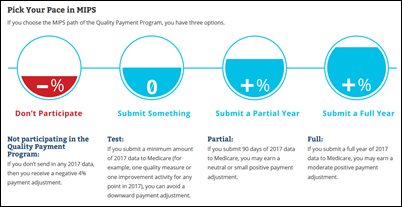
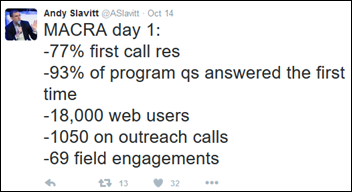

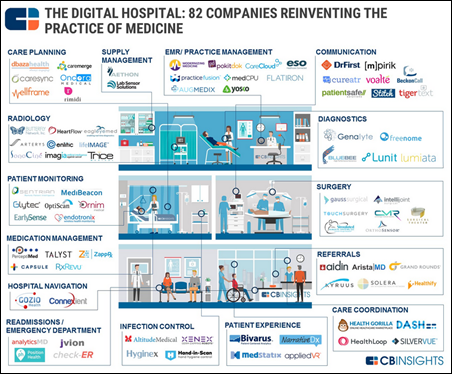


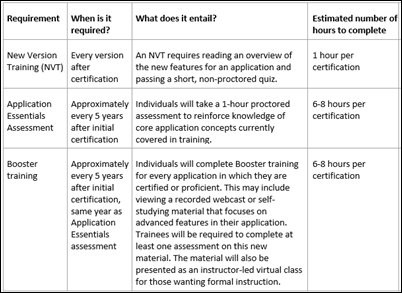
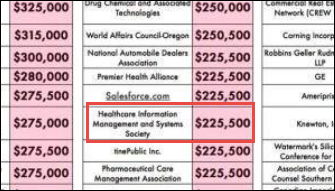

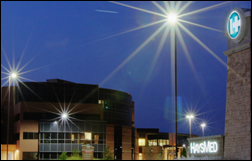
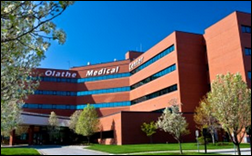




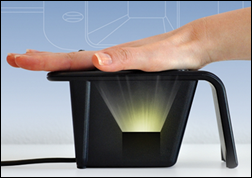
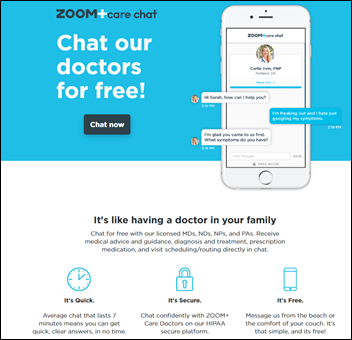
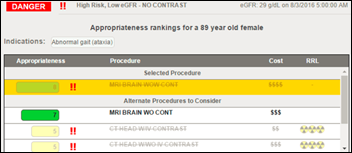
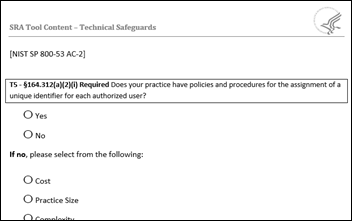
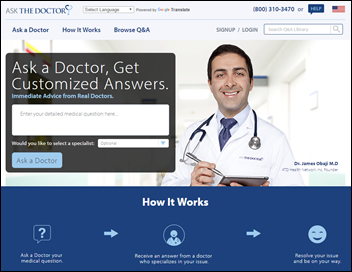
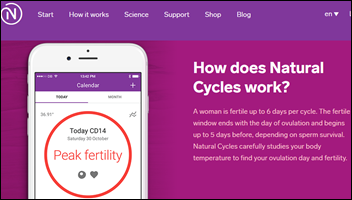
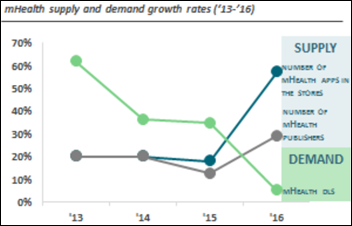
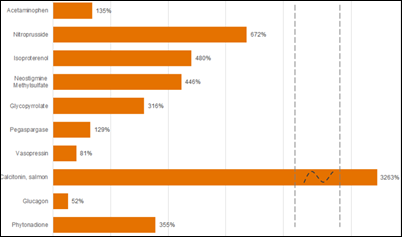
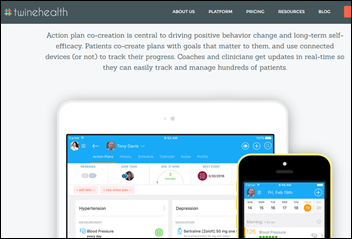


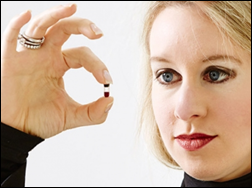
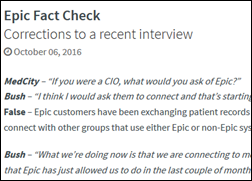


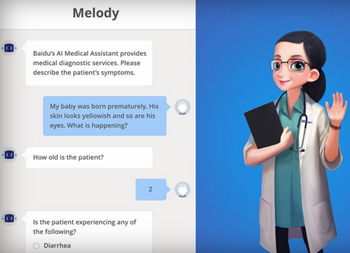
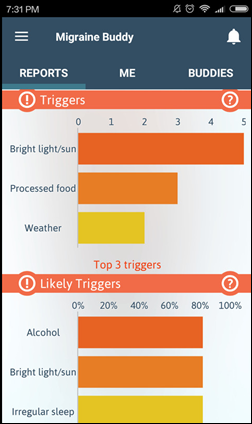
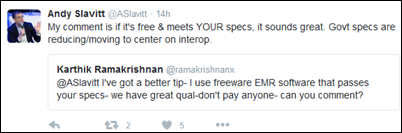
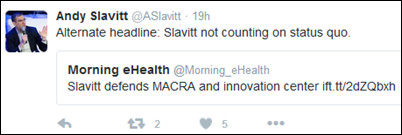


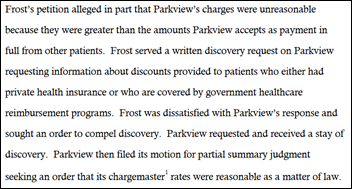
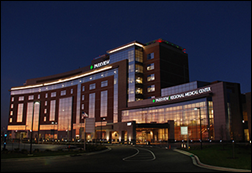
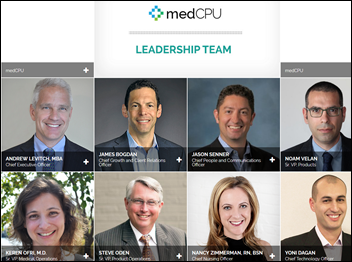















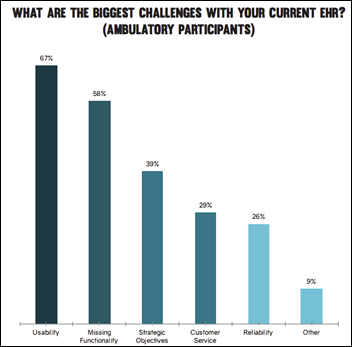
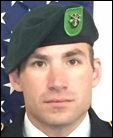
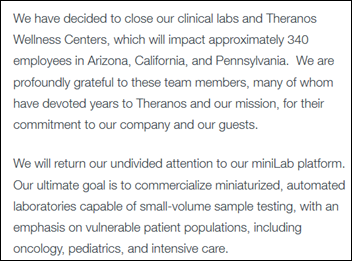




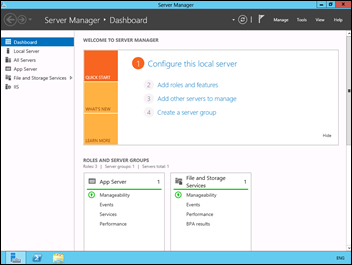


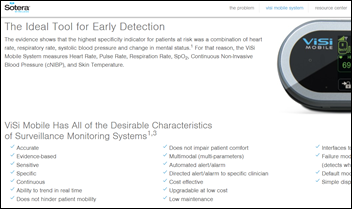



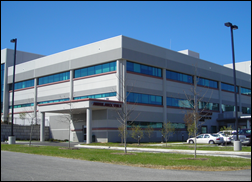
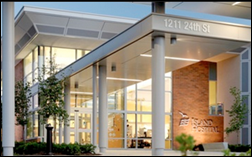




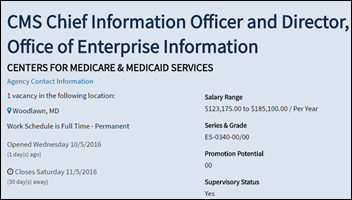
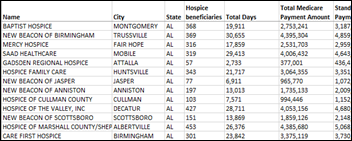
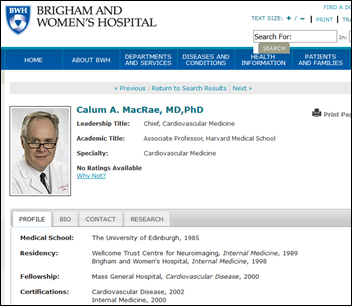
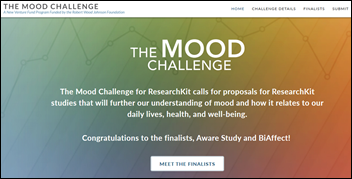

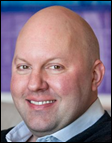
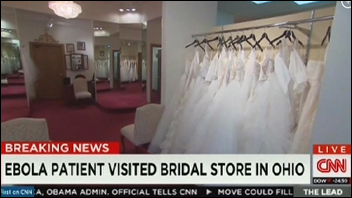
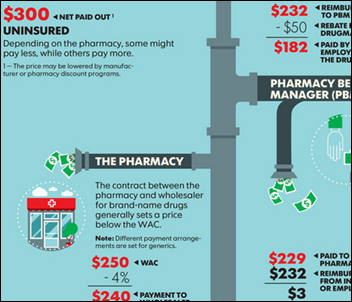
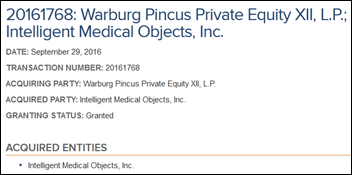

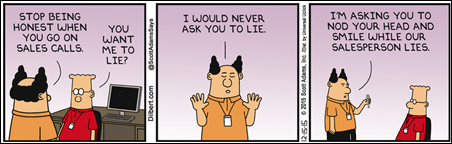
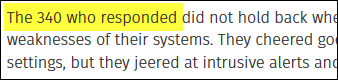








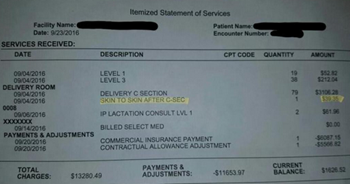

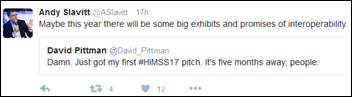


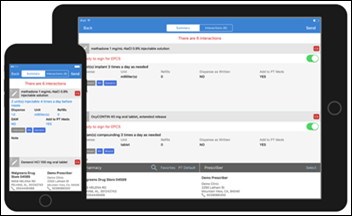
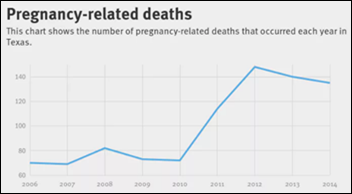

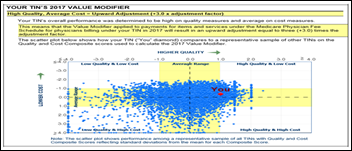


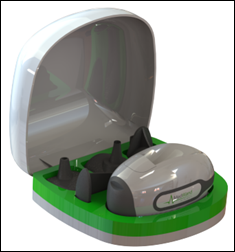


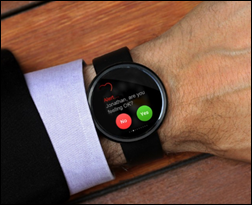

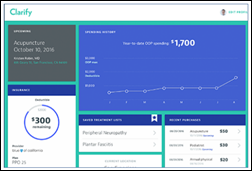


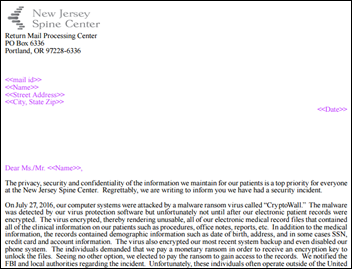
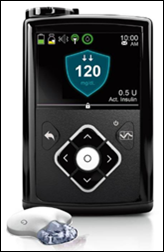



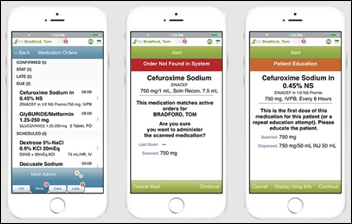








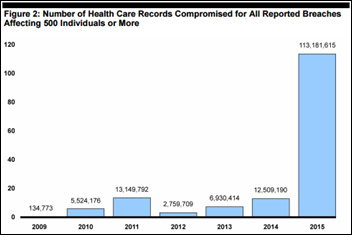

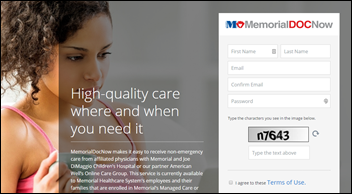
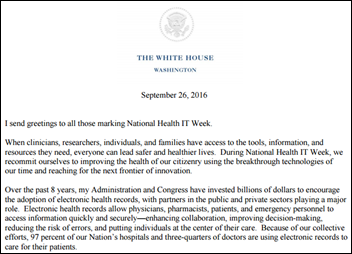

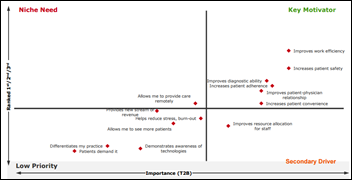

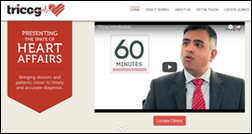
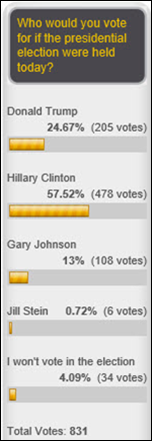



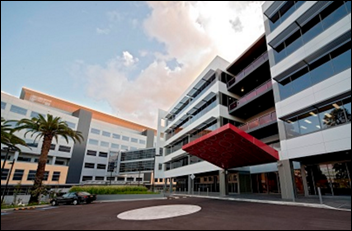

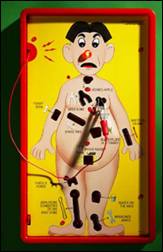

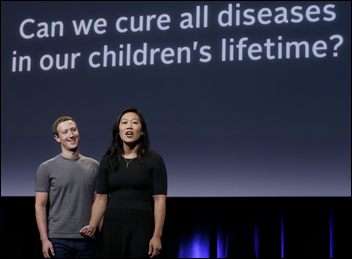







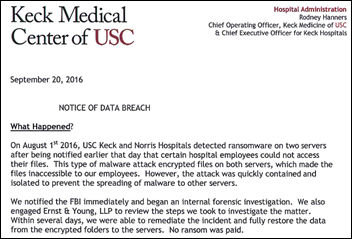
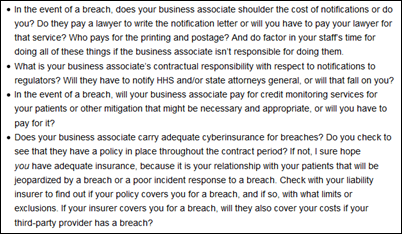


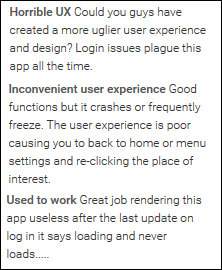
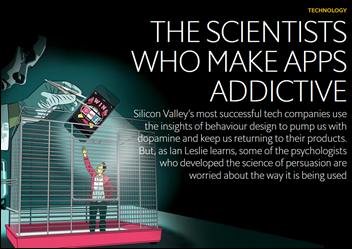







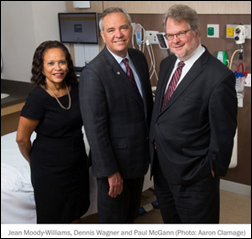
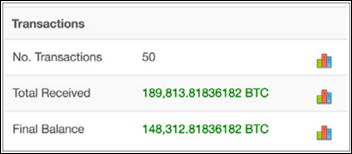

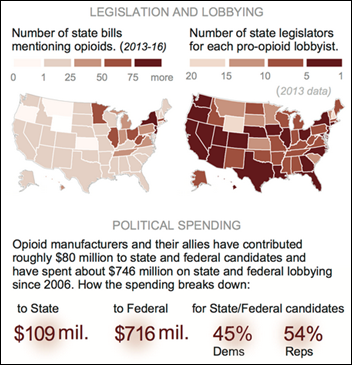





Thank you for the mention, Dr. Jayne — we appreciate the callout, the kind words and learning more about the…