Home » News » Recent Articles:

News 2/5/16

February 4, 2016 News Comments Off on News 2/5/16

Top News

image

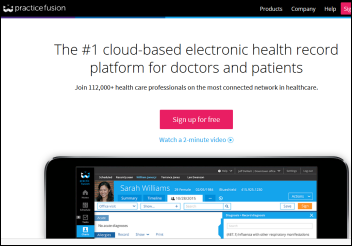
Free practice EHR vendor Practice Fusion lays off 74 employees – around 25 percent of its workforce – in the face of ongoing losses.


Reader Comments
image

From Bottled Lightning: “Re: Practice Fusion layoffs. Its IPO has been off the table since Ryan Howard left. I’m not sure why the press keeps propagating that fantasy when the company hasn’t been pitching IPO. They’ve been trying to find a buyer with no luck. Now they’re hunkering down and will try to survive with a much smaller team, filling functionality gaps in the product and trying to make it viable in a real market. You get what you pay for, and since most of its customers pay nothing, the product has some pretty deep gaps.” Unverified. Other readers have said the IPO story was floated as an excuse for dismissing founder and CEO Ryan Howard in August 2015. Investors have poured $155 million into the free EHR vendor in the past seven years. Companies yearning to IPO don’t usually fire the CEO, replace him with someone with no CEO experience, and conduct mass layoffs. It’s a tough time to be in the post-Meaningful Use EHR business.

From Boom Goes the Dynamite: “Re: Practice Fusion layoffs. The CEO is nice but unqualified – the board seems to think he can sell the company so they can get their $300 million (or more) back. Steve Filler quit his Oliver Wyman consulting job to become PF’s COO with much internal fanfare in November 2015 and he’s already gone. The CFO was let go and the chief marketing guy from Google didn’t take long to run away. The company’s 2015 revenue was $15 million, all of it from pharma, and its burn rate is $3 million per month. The board just forked over another $30 million to keep the lights on. Tom the new CEO predicts that they will become revenue positive by Q3 2017, but I don’t see a path to the top of that mountain.” Of the 13 executives listed on Practice Fusion’s website a year ago, only six are still there. If that $15 million annual revenue estimate is accurate, then Practice Fusion is a tiny, struggling company in a shrinking market segment in which it’s not among the top 10 companies (based on Meaningful Use attestation numbers). I don’t see even one attribute that would make me want to buy shares if indeed the company survives long enough to do a Hail Mary IPO.

image

From Karen Green: “Re: lack of technology vs. lack of adoption. We have plenty of technologies that have begun to interoperate – DSM and HIE messages from acute care partners to post-acute specialists. MU attestation? Check! Not so on the continuum of care, where we are getting care summaries 1-3 days after discharge, rendering them useless for transitions of care. Why? Because the discharge and admissions planners on the front line are still using phone calls and fax to refer the patient. We have to enable the ‘intoperators’ on the front line and within the clinical practice so they can be informed about their patients in a timely way. Gartner suggests that CIOs have to be ‘digital humanists’ to lead the design of systems and technology to ‘enable people to achieve things they never thought possible.’ We must provide solutions that make it easy to give up proven convention for something that goes beyond the automation of processes.” Karen is CIO at Brooks Rehabilitation (FL).

image

From Brass Ones: “Re: Mackenzie Health in Ontario. Going Epic.” Verified from their job postings. I don’t know of any other hospitals in Canada that run Epic inpatient.

image

From The PACS Designer: “Re: augmented reality in healthcare. There’s a new term that created a buzz at the recent Consumer Electronics Show and that’s augmented reality. AR works differently than virtual reality (VR) in that the viewing device can be worn while doing other activities like walking or at work.” The mock-up above is from Microsoft’s HoloLens, which will start shipping soon. The company offers a $3,000 developer edition.


HIStalk Announcements and Requests

image image

Ms. Johnson from Oklahoma says her students, many of whom begin school speaking only Spanish, are using the five MP3 players we provided via DonorsChoose to listen to the recordings of books she creates. Meanwhile, Ms. Johnson from Pennsylvania reports that her inner-city third graders are using their new Chromebook and accessories to access online reading and math interventions as well as to perform research – they previously had computer access in just one class three times per week.

This week on HIStalk Connect: Doctor on Demand announces that it will offer psychiatry sessions over its telehealth platform, expanding nationwide by mid-year. Pear Therapeutics raises $20 million in funding to roll out its substance abuse recovery support app. The University of Southern California announces eight strategic partners that will support its Virtual Care Clinic initiative.


HIStalkapalooza

HIStalkapalooza Featured Sponsor – NextGen Healthcare

image

Visit NextGen Healthcare at HIMSS16 Booth #4421. See for yourself how we help ambulatory organizations achieve real interoperability, improve population health, and transition to value-based care. By focusing less on IT and more on care, our clients are driving the changes you hear about in healthcare. Of course, we’re not all work and no play! We’ll also be taking professional headshot photos in the booth; not to mention Happy Hour the last hour of each day at our booth, #4421!  Stop by after a long day pounding the convention floor for a pick-me-up.


Webinars

None scheduled soon. Contact Lorre for webinar services. Past webinars are on our HIStalk webinars YouTube channel.


Acquisitions, Funding, Business, and Stock

image

Houston-based Decisio Health raises $2 million as it starts marketing its FDA-approved patient dashboard that uses technology licensed from University of Texas Health Science Center of Houston.

image

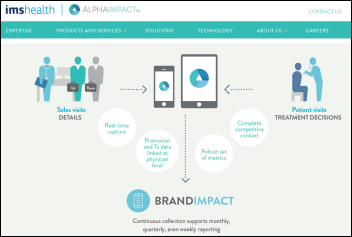
Health information vendor IMS Health acquires AlphaImpactRx, which apparently pays doctors to provide feedback about drug salespeople via a mobile app and then sells that information to drug companies. The company also surveys oncologists and pathologists about oncology molecular diagnostic testing, pitching itself to drug companies by, “It’s important to understand how testing is impacting the oncologist’s choice of brand.” I like that doctors want consumer drug advertising to stop, but I also wish they would stop giving or selling their own information to companies like IMS that help drug companies sell drugs that might not be the best option. Drug companies target those doctors using the information they themselves provided.

image

Athenahealth announces Q4 results: revenue up 21 percent, adjusted EPS $0.45 vs. $0.58, missing revenue estimates but beating on earnings. 


People

image

David Crutchfield (Maestro Strategies) joins Conway Medical Center (SC) in the newly created position of VP/CIO.

image

Don Soucy (Orion Health) joins Spok as EVP of global sales.

image

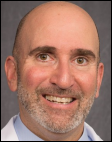
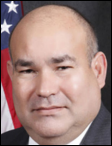
Leidos names Donald Kosiak, Jr., MD, MBA (Avera Health) as chief medical officer. I’m not sure if he’s trying appear edgy or to hide a bald spot with his head-cropping LinkedIn photo, but kudos for his 18 years of service in the Army National Guard with deployments to Iraq.

image

E-MDs names Derek Pickell (Convergent Healthcare) as CEO and board director. He replaces David Winn, who retired with the March 2015 announcement of the company’s acquisition by Marlin Equity Partners.

image

Vocera hires Kathy English, RN (Cisco) as VP of marketing.


Announcements and Implementations

Orchestrate Healthcare launches an information security practice.

KLAS announces members of its Interoperability Measurement Advisory Team. The press release’s headline mentions an inaugural meeting that someone forgot to include in the release itself. 

Philips will use Validic’s technology to integrate consumer health data with its HealthSuite connected health products.

CCSI Distributors, a subsidiary of Clinical Computer Systems, Inc., obtains exclusive US distribution rights to the OB-Tools TrueLabor Maternal Fetal Monitor.

VCU Health (VA) used its Spok communications technology to manage its medical coverage of the nine-day UCI Road World Cycling Championships, which attracted 1,000 cyclists and 640,000 spectators to Richmond, VA.

image

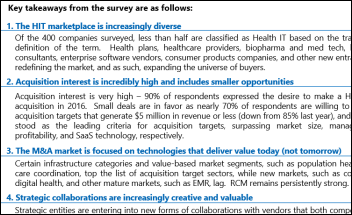
Healthcare Growth Partners publishes its “2015 Year-End Market Review.” HGP’s reports are brilliant and eloquent and I savor every one of them. Even folks who aren’t interested in business or investing will find them to be concise and insightful, with passages like this:

We urge innovators to approach the market pragmatically and not get carried away by idealism during this transitionary time of policy-based innovation. In health IT, disruption seems to come in increments versus all at once. We find that when health IT companies fail to achieve objectives (or founders get significantly diluted), it’s most often because the product or strategy arrives on the scene too early versus too late.


Government and Politics

image

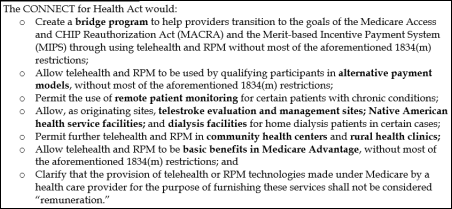
A group of senators and representatives introduces the CONNECT for Health Act, which would promote expanded use of telemedicine in Medicare by removing existing restrictions.

image

image

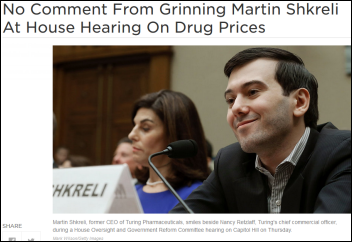
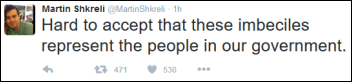
Pharma bad boy Martin Shkreli pleads the Fifth Amendment in refusing to answer questions posed to him during a House committee hearing on drug pricing.

image

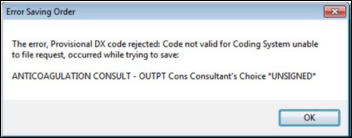
A VA care alert warns that its CPRS system rejected an large number of consult/procedure orders, which it discovered while reviewing the system after the October 1, 2015 ICD-10 switch. Clicking the warning’s OK button cancelled the order. The VA says it fixed the problem in a December 29 patch, adding that a few examples were found to have occurred before October 1.

Federal judges reverse the VA’s demotion of two executives who had schemed to force their subordinates to transfer jobs so they could take those lower-level jobs themselves while keeping their executive pay. The judges ruled that the pair’s bosses knew what they were doing and did nothing to stop them. The same two VA executives are being investigated for being reimbursed $400,000 for questionable moving expenses.

The head of California’s insurance marketplace says UnitedHealth Group is “driving me bonkers” for blaming the Affordable Care Act for its losses from selling individual policies. He says the company’s competitors participated and learned from the beginning while UHG initially stayed on the sidelines, then set its rates higher than everyone else and offered broad networks that attract sicker people to sign up.


Privacy and Security

image

A second former Tampa General Hospital (FL) employee is charged with stealing patient information used to file fraudulent tax forms.


Other

image

Melissa Memorial Hospital (CO) brings self-pay billing back in house and goes back to separate inpatient and ambulatory statements following problems with First Party Receivable Solutions and its “OK, but not stellar” NextGen billing system.

Glassdoor places Epic as #16 on its list of “Top 20 Employee Benefits & Perks,” scoring the company four spots ahead of Google for offering a paid four-week sabbatical after five years.

The Charlotte newspaper notes that Carolinas HealthCare paid its retiring CEO $6.6 million in 2015, with all of the health system’s top 10 executives earning more than $1 million in total compensation. Even the chief HR officer made $1.3 million.

image

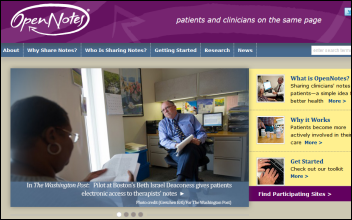
I like this graphic, available here. The only problem I see is that it seems to be aimed at providers who probably either won’t see it or will ignore what it says. A patient-focused version would be nice if there was a way to blast it to the masses.

image

OpenNotes sponsor Robert Wood Johnson Foundation lists its three-year goals for the project: (a) expand OpenNotes to 50 million people; (b) conduct pilot projects to see how clinical notes are being used to engage patients and families; and (c) measure the value of sharing notes.


Sponsor Updates

  • PharmaPoint incorporates the Surescripts Medication History for Panel Management solution into Xchange Point 5.0.
  • InterSystems is listed among the top 25 privately held companies in Massachusetts in the 2016 Boston Business Journal Book of Lists.
  • Premier awards Versus Technology a group purchasing agreement for its RTLS/RFID products.
  • Leidos Health will exhibit at McKesson Southeast February 10-11 in Charlotte, NC.
  • Outsourcing Gazette names MedData one of its Top 25 Most Promising Healthcare Services Providers of 2016.
  • Medicomp Systems will host Quipstar at HIMSS16.
  • Orion Health will present with CAL Index on March 1 at HIMSS16.
  • Sunquest announces UPMC, BSA Health Systems, and Carolinas HealthCare as winners of its client innovation awards.
  • PeriGen announces a new online training tool for its Patterns systems.
  • Red Hat releases a now viral employee rap video paying homage to its hometown of Raleigh, NC.
  • RelayHealth shares a video interview with VP Arien Malec.
  • The SSI Group opens registration for its 2016 user group events.
  • Streamline Health will exhibit at the 2016 Florida HFMA Regional – Space Coast event on February 5 in Titusville.

Blog Posts


Contacts

Mr. H, Lorre, Jennifer, Dr. Jayne, Lt. Dan.
More news: HIStalk Practice, HIStalk Connect.
Get HIStalk updates.
Send news or rumors.
Contact us.

125x125_2nd_Circle

News 2/3/16

February 2, 2016 News 1 Comment

Top News

image

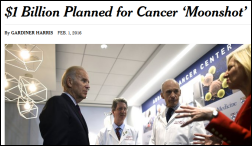
The White House will ask Congress to approve $1 billion for President Obama’s so-called “cancer moonshot.” Some of the areas to be funded within HHS are early detection via genomics, enhanced data sharing among institutions, and a virtual FDA Oncology Center of Excellence to review new combination products.


Reader Comments

image

From Judo Chop: “Re: Florida Hospital and Athenahealth. This is part of the December announcement by its parent company Adventist Health System selecting Athenahealth. Florida Hospital will replace a combination of Epic ambulatory EHR that’s used in a handful of clinics, Cerner ambulatory EHR, and Allscripts (the old Misys product) PM. Most of the rest of AHS is using NextGen’s EHR/PM.“ Adventist announced in December that it will be deploying Athenahealth’s PM/EHR to 1,600 employed physicians.

image

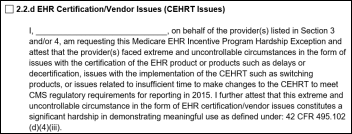
From Polecat: “Re: Meaningful Use hardship exception. The new form doesn’t even ask the EP or EH to submit documentation of their claimed reason.” Correct. I think we can assume that this wink-wink form means CMS will allow anyone to avoid EHR penalties. MU is an embarrassment to everyone involved at this point and even the government is trying to distance itself from it. Just check “EHR Certification/Vendor Issues” and you’re done.


HIStalk Announcements and Requests

image image

Mrs. Haley from Georgia couldn’t wait to send photos of her special education and gifted students using the three tablets we provided in funding her DonorsChoose grant request. She took these photos the day they arrived, where she had already installed reading and testing apps.

Also checking in was Mrs. B from North Carolina, who just got word that we had funded her request for science activity tubs. She says, “I couldn’t believe the email I received with information about my project … I yelled out loud and other staff members came to my classroom to see what was going on … I try to purchase what I can, but it seems as if my money is not going very far these days. Thank you very much from the bottom of my heart. You have made one teacher very happy … You will never know if a future mineralogist, petrologist, or geologist will be inspired by these kits!”

I was thinking today: has anyone actually ever heeded the warning to, “If this is a medical emergency, hang up and dial 911” after hearing those boring, time-wasting phone tree warnings when calling everyone from a dermatologist to a drugstore?


HIStalkapalooza

HIStalkapalooza Sponsor Profile – Fujifilm

image 
image

With 16 years of industry-leading experience, our TeraMedica division remains independently focused on advancing VNA technology and healthcare interoperability while now leveraging Fujifilm‘s clinical capabilities. As the centerpiece of Fujifilm’s comprehensive medical informatics portfolio, Synapse VNA provides the industry’s leading image management solution. Fujifilm is proud to sponsor HIStalkapalooza. Visit us during HIMSS16 for all your medical informatics requirements, Booth #1024.

HIStalkapalooza Sponsor Profile – PatientSafe Solutions

image

PatientSafe Solutions has mobilized clinicians and redefined clinical workflows for more than a decade. Meet our team in Booth #4257 to learn how our Clinical Communications platform improves patient care and satisfaction while decreasing costs. Meet us at HIMSS. Our team can’t wait for HIStalkapalooza this year. Look for us at the event to get your picture taken for the 2016 HIStalkapalooza video!


Webinars

None scheduled soon. Contact Lorre for webinar services. Past webinars are on our HIStalk webinars YouTube channel.


Acquisitions, Funding, Business, and Stock

image

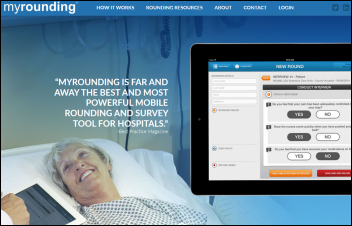
Huron Consulting Group acquires 25-employee, Denver-based MyRounding, which offers a mobile rounding and survey tool for hospitals.

image

Aetna announces that its profit jumped 38 percent in the most recent quarter, mostly due to its Medicare and Medicaid business, but says it lost money on its exchange-issued policies and warns that it has “serious concerns about the sustainability of the public exchanges.”

image

Alphabet, the recently formed parent company of Google, surpasses Apple as the world’s most valuable company after reporting impressive numbers in its first detailed report. Alphabet made $4.9 billion in profit on $21.3 billion in revenue for the quarter. Share price jumped 8 percent on the news, raising the company’s market capitalization to $559 billion.

image

Sunquest parent Roper Technologies reports Q4 results: revenue flat, EPS $1.82 vs. $1.85, missing estimates for both and issuing 2016 guidance below expectations. The CEO said in the earnings call, “We think we will have mid-single digit organic growth in Medical throughout 2016 and we think that will get stronger as the year goes on. Sunquest has a number of version changes and software release updates that are rolling out in the second half that will be quite beneficial. And then Strata, Data Innovations, and SoftWriters which are growing rapidly, will become organic in the second half. Verathon and Northern Digital are going to continue to grow at a relatively high rate in 2016. And then we closed on January 7 the CliniSys acquisition in the UK, which is a European hospital laboratory software provider, and it will add to our acquisition sales growth in 2016.”

image

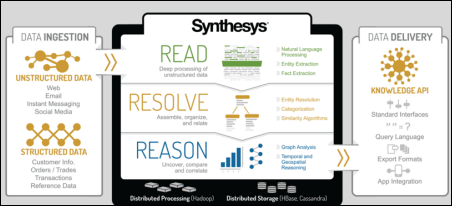
Machine learning vendor Digital Reasoning, which acquired Shareable on January 8 to create its healthcare business, raises $18.6 million, increasing its total to $53 million.

image

A New York Times article questions whether it was wise for the struggling Theranos to hire star litigator and company director David Boies as its legal representative, given that he would be representing Theranos management as a lawyer while his responsibility as a director is to the company’s shareholders. It concludes,

The potential for conflict is particularly great. What if Ms. Holmes resists changes that would be in the interest of shareholders? What if the board decides that it is time for her to go — and she stands her ground? The board could do little more than throw up its collective hands under the current governance structure. Mr. Boies and the other outside directors could resign in protest. But why would anyone, particularly Mr. Boies, be a director on a board that lacked the power to make fundamental changes? Indeed, what is Mr. Boies thinking? He may be paid lots of money for his roles, but for someone so successful and savvy to put himself in a position that is bound to be problematic is puzzling.

Meanwhile, Theranos finds another foot to shoot in indefinitely delaying its October promise to allow Cleveland Clinic to validate its technologies and insisting that it won’t publish anything about those technologies in peer-reviewed journals until it receives FDA approval for all 120 of its tests.


Sales

image

Joseph Brant Hospital (Ontario) chooses FDB MedsTracker MedRec for medication reconciliation.

Craneware signs a $7.5 million contract with an unnamed hospital operator.


People

image

Seattle Children’s Hospital (WA) names interim SVP/CIO Jeff Brown (Lawrence General Hospital) to the permanent role. He holds three master’s degrees in business administration, executive management, and health informatics.

image

Allscripts names Melinda Whittington (Kraft Foods Group) as CFO.

image image image

CareSync hires Russell Dumas (Napier HealthCare) as VP of clinical operations, David Antle (BobCAD-CAM) as VP of client services, and Teri Spencer (GTE Financial) as VP of human resources.

image

Cumberland Consulting Group hires Terrell Warnberg (QHR) as partner over its new performance improvement practice.

image image

The Health Information Trust Alliance (HITRUST) appoints Epic President Carl Dvorak to its board and names David Muntz (GetWellNetwork) as senior advisor of public policy.

image

Athenahealh hires Prakash Khot (Kaseya) as CTO.

image

Laura Momplet, RN (Dignity Health) joins CTG as chief operations officer and chief clinical officer.

Employee health platform vendor Healthcare Interactive names John Capobianco (KickStart Partners) as president and chief marketing officer.


Announcements and Implementations

image

Craneware will offer patient payment plan technology from VestaCare with its medical necessity and price estimation products.

image

Premier announces that it will conduct Innovator Research using Medicare data from CMS’s Virtual Research Data Center. Premier’s research division will analyze episodes of care to identify best clinical practices for care improvement and cost reduction.

image

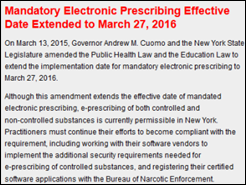
A Surescripts study of New York providers finds that 93 percent of pharmacies can receive electronic prescriptions for controlled substances while only 27 percent of prescribers have the technology to issue them. It also finds that 58 percent of prescribers are issuing electronic prescriptions in general. New York’s I-STOP law requires that all prescriptions be transmitted electronically by March 27, 2016, meaning a huge number of prescribers need to take action in the next seven weeks.


Government and Politics

image

New York Mayor Bill de Blasio hires a consulting firm to figure out what to do about the city’s 11-hospital Health + Hospitals Corporation, which despite extensive city support is expected to run a deficit of $2 billion within the next three years. The health system hopes to convince more patients with commercial insurance to use its facilities than those of its competitors, all of which have similar ambitions.


Privacy and Security

image

Australia’s Royal Melbourne Hospital says it hasn’t completely eradicated the Qbot malware that infected its Windows XP computers two weeks ago. The hospital says the virus mutated six times in a single day. The keystroke-capturing malware penetrated the hospital’s pathology computers via a Windows XP exploit, managing to evade detection by the hospital’s updated antivirus product.


Other

image

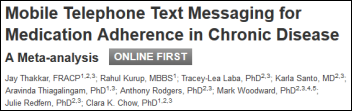
A study finds that mobile text messaging increases medication adherence rates in chronic disease patients from an assumed baseline of 50 percent to 68 percent, although the sites that are screaming this out as big news failed to note that:

  • It’s a meta-analysis, meaning that instead of doing new research it just combines information from previously published studies.
  • The studies it reviewed involved fewer than 3,000 patients combined.
  • Texting results were measured only for a short duration.
  • The studies relied on what patients said they did rather than measuring what they actually did.
  • The text messaging in each study was not consistent as to frequency and style.

This is not newsworthy other than the fact that it was published in JAMA Internal Medicine, where it will reach a wide audience. It’s also surprising that the journal misspelled the name of the Johns Hopkins Bloomberg School of Public Health in its author affiliation section.

image

Duke University Health System (NC) reports making a record profit of $355 million for 2015, explaining that, “For the three or four years leading up to this past year, we had made a series of investments in facilities and information systems that helped to relieve capacity constraints limiting growth … With our new IT capabilities, we are able to better manage care across the spectrum and become more efficient in that way.” The system said it made a lot of money by buying up oncology practices to increase inpatient volume.

image

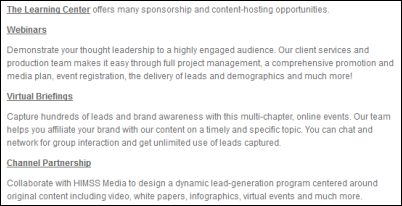
I received a survey link from HIMSS about its Learning Center, which sells thinly disguised advertising via its HIMSS Media business. Being a member of HIMSS means being inundated with its vendor-sponsored pitches, in this case disguised as “education,” where high-paying vendor members pay dearly to be hooked up with low-paying provider members in the “ladies drink free” business model. 

image

The Virginia Tech professor who led the study proving that the water in Flint, MI contains dangerous levels of lead says public science is broken as university faculty members are pressured to get funding and to become famous. He explains, “Where were we as academics for all this time before it became financially in our interest to help? … Science should be about pursuing the truth and helping people. If you’re doing it for any other reason, you really ought to question your motives … Everyone’s invested in just cranking out more crap papers … when you reach out to them, as I did with the Centers for Disease Control and Prevention, and they do not return your phone calls, they do not share data, they do not respond to FOIA … every single rock you turn over, something slimy comes out.”

SNAGHTML1755c0a3

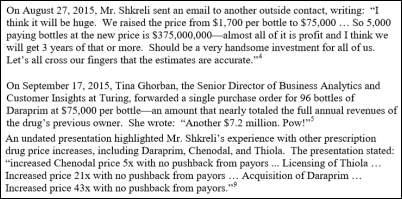
A Congressional investigation finds that despite the patient-focused claims of since-fired Turing Pharmaceuticals CEO Martin Shkreli, the company was gloating with delight at the profits it would make by jacking up the price of ancient drug Daraprim by 50-fold.

Weird News Andy titles this sad story “Out of the frying pan and into the fryer.” A patient with mental illness jumps out of a moving ambulance while being transported from a hospital and is struck and killed by a driver who then fled the scene.


Sponsor Updates

  • Catalyze co-founder and CEO Travis Good, MD will speak on “Excitement in Healthcare Regulation” at the 2016 Hosting Milestone Summit Series on February 4 in Las Vegas.
  • Divurgent will attend the South Carolina HIMSS Networking Reception & Dinner February 4 in Columbia.
  • FormFast gears up for HIMSS16.

Blog Posts


Contacts

Mr. H, Lorre, Jennifer, Dr. Jayne, Lt. Dan.
More news: HIStalk Practice, HIStalk Connect.
Get HIStalk updates.
Send news or rumors.
Contact us.

125x125_2nd_Circle

Monday Morning Update 2/1/16

January 31, 2016 News 9 Comments

Top News

image

CMS proposes a rule that would allow qualified entities – of which 13 have been approved so far — to provide or sell Medicare and private claims data to providers to support quality improvement. Only two of the qualified entities report provider performance nationally — Health Care Cost Institute and Amino. Physician practices (or employers paying for their services) would be able to review all-payer data for their patients.


Reader Comments

image

From Eddie T. Head: “Re: CHIME’s patient identifier challenge. A 100 percent match is unrealistic. Even in countries with a national medical identifier the accuracy is about 95 percent. The 100 percent goal will get in the way of creating a real solution nationwide.”

image

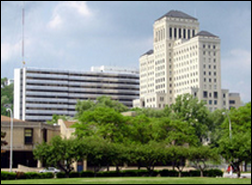
From AthenaAscending: “Re: Florida Hospital. Is replacing Epic’s PM/EHR with Athenahealth.” Unverified.

image

From Unintended Consequences: “Re: AGH in Pittsburgh. Its Epic acute go-live has created medical care havoc in peripheral LTAC and SNF facilities that had relied on Allscripts Sunrise for order entry and results retrieval. They are not on Epic and have resorted to a 1980s paper requisition and lab retrieval system. Doctors cannot see a list of their patients. AGH’s command team has informed doctors that stat orders must be called in and cases ordered as consultations won’t appear on the consultant’s patient list.” Unverified. 


HIStalk Announcements and Requests

image

A reader asked me to post a single summary of my unsuccessful quest to obtain an electronic copy of my hospital stay information, which I’ve done here.

image

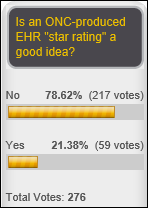
A surprising 80 percent of poll respondents aren’t fans of the idea of the ONC-published EHR star rating that Congress is considering. Jacob Reider commented that it’s a terrible idea and is outside of the government’s role. Ross Koppel says summarizing complex systems with a single star rating is simplistic. Barbara Hillock thinks such ratings would be misleading since they would be driven by the expectations of customers who don’t always follow the vendor’s implementation recommendations. Meltoots commented that ONC and CMS need to stop getting in the way of patient care with new programs.

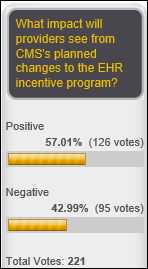
New poll to your right or here: how have recent statements from CMS affected your perception of HHS/CMS/ONC?

Thanks to the following sponsors, new and renewing, that recently support HIStalk, HIStalk Practice, and HIStalk Connect. Click a logo for more information.

image
image
image
image
image
image
image
image
image
image
image
image
image

image image

Mrs. Johnson from Illinois sent photos of her kindergarten class using the math tools we providing in funding her DonorsChoose grant request. She says, “It was so generous of you to help us succeed in getting some of the tools we need to make learning math engaging and fun! The look in these kids’ eyes when I tell them we have something new that will help us learn is motivation for me. I couldn’t have provided these materials on my own and appreciate the support you have given.”

image

Epic consulting firm BlueTree Network donated $1,000 to secure a spot at my CIO lunch at the HIMSS conference, which allowed me to fully fund these DonorsChoose teacher grant requests with the help of matching funds:

  • Science activity tubs for Mrs. B’s first grade class in Richfield, NC.
  • Three iPad Minis, cases, and a document camera for the second grade class of Mrs. Mann of West Newton, PA.
  • Electricity and magnetism activity tubs for Ms. Anderson’s fourth grade class in Phoenix, AZ.
  • Two Osmo gaming systems for Mrs. Boyd’s elementary school class in Chocowinity, NC.
  • Three programmable robots and engineering components for the new middle school robotics club started by Mr. Rector in Beebe, AR.
  • STEM challenge kits and for Mrs. May’s special education classes in Edgewater, FL.

HIStalkapalooza

image

I have received over 1,200 requests to attend HIStalkapalooza, so I’m closing signups Monday. Sign up now or never. I’ll be able to invite most of the people who signed up. We’ll be handling invitations, RSVPs, reminders, and electronic check-in through Eventbrite this time and I expect the invitation emails will go out this week. This is where the annoying part of throwing a free party begins as it does every year when I vow that this year’s event will be the last because of the time and energy it requires:

  • People will email me asking if they can bring a guest. If you didn’t sign up your guest like the form clearly states, then they can’t come – it’s like going to an Adele concert or traveling on American Airlines –everybody needs a ticket, with the only difference being that HIStalkapalooza tickets are free.
  • I’ll hear from folks who claim to be the most loyal and careful readers who swear they mysteriously missed the dozens of times I’ve provided signup instructions and wanted to be added after the fact. Sorry, no, it’s only a party and your life won’t be ruined if you miss it because you couldn’t follow the rules everybody else figured out.
  • Vendor administrative assistants who don’t read HIStalk and who signed up bunches of their executives (who rarely actually show up) will start bugging us about why they haven’t received invitations. That’s actually already happened as the admin of one company keeps asking why her 23 executives haven’t been invited yet. This isn’t a company outing and we have more important things to do than swap party-related emails, so I’m hitting “delete” on those.

Last Week’s Most Interesting News

  • CMS warns Theranos that its California lab practices are dangerous to patients and that it has 10 days to fix the problems or face suspension from Medicare.
  • Leidos announces that it will acquire the IT business of Lockheed Martin for $5 billion.
  • Cerner Chairman and CEO Neal Patterson notifies shareholders that he is being treated for soft tissue cancer.
  • A Texas hospital regains access to its EHR after being locked out for more than a week by ransomware.
  • Flint, MI-based Hurley Medical Center says it was hit by a cyberattack by hacker group Anonymous, which is protesting the city’s water crisis.
  • Big Bucks Equals Big Interest in CHIME’s National Patient ID Challenge.
  • McKesson’s Paragon Dilemma.

Webinars

None scheduled soon. Contact Lorre for webinar services. Past webinars are on our HIStalk webinars YouTube channel.


Acquisitions, Funding, Business, and Stock

image

Capital BlueCross orders Theranos to stop performing blood draws in Capital’s storefront in Hampden Township, PA following a CMS investigation that found deficiencies in the California lab of Theranos that “pose immediate jeopardy to patient health and safety.”

image

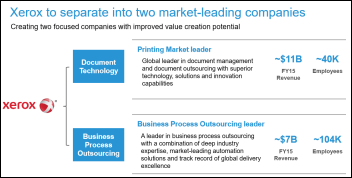
Xerox will split itself into two companies, responding to pressure from activist investor Carl Icahn to separate its $11 billion document imaging business from its $7 billion business process outsourcing. Xerox, which acquired Affiliated Computer Services for $5.6 billion in 2010 and will now basically spin it back off, has 104,000 employees who will be part of the new BPO company. Xerox announced Q4 results with the announcement: revenue down 8 percent (its 15th consecutive quarter of declining sales), adjusted EPS $0.32 vs. $0.31, beating earnings expectations.

image

WeiserMazars acquires Lion & Company CPAs, which includes healthcare consulting among its offerings.

image

Quality Systems (NextGen) announces Q3 results: revenue down 1.7 percent, EPS $0.16 vs. $0.16, missing on revenue but beating on earnings. Shares dropped nearly 20 percent Friday on the news. Above is the one-year share price of QSII (blue, down 20.7 percent) vs. the Nasdaq (red, down 1.34 percent). Five-year performance looks a lot worse, as Quality Systems shares dropped 67 percent as the Nasdaq gained 67 percent.

image

The HCI Group acquires Houston-based Expert Technical Advisors.

image

Philadelphia-based orthopedic practice The Rothman Institute and the University of Virginia Health System participate in a $4 million funding round for Locus Health, a remote care management company of which both organizations are customers.

image

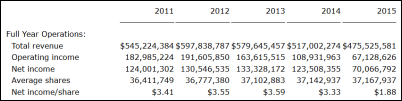
Meditech publishes its FY2015 annual report. Revenue was down 8 percent for the year (“primarily due to lower product bookings”) and net income dropped from $124 million to $70 million. Neil Pappalardo owns about $450 million worth of shares.  


Announcements and Implementations

Recondo Technology launches MySurePayHealth, which allows patients to estimate their out-of-pocket cost for a given procedure.

image

An emerging technology site profiles Valdic co-founder and CTO Drew Schiller as part of its “Today’s Entrepreneur” series, in which he lists his top three lessons learned:  (a) if someone isn’t interested in paying for your product, ask them what they would pay for; (b) reputations follow you, so treat everyone well; and (c) we are so fortunate to be living in an era where it is this easy to start a new company and iterate on ideas.


Government and Politics

image

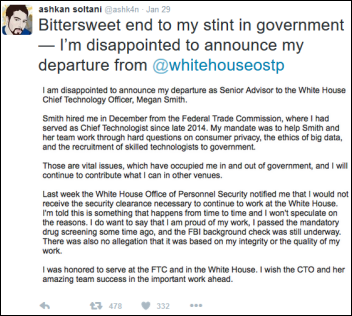
Ashkan Soltani, senior advisor to White House CTO Megan Smith on loan from the Federal Trade Commission, announces that he has effectively been fired after just six weeks on the job when the Office of Personnel Security denies his security clearance. Soltani, whose White House assignment involved privacy, data ethics, and recruiting technologists for government service, previously won a Pulitzer prize as part of the Washington Post investigative team that revealed the extent to which the National Security Agency spies on American citizens.

image

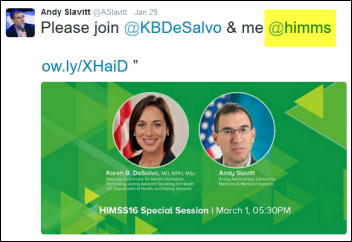
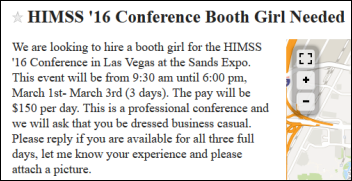
This might be the highest-profile bungling of the HIMSS acronym. Pedantic grammarians such as myself smugly note that HIMSS and HIPAA are “acronyms” as opposed to “initialisms” (acronyms are sounded out as words, while initialisms are pronounced as their individual letters, as in “CIA” or “IBM”).


Privacy and Security

image

Scientific American’s “How Data Brokers Make Money Off Your Medical Records” contains no new information, but gives the public a glimpse at how companies are buying and selling their de-identified medical information. It mentions IMS Health, which takes in $2.6 billion per year by combining and repackaging information on 500 million people worldwide and then selling insights to drug companies and other to help them target sales. It repeats the now-obvious concept that it’s not hard to re-identify people by linking multiple databases. Drug company Pfizer spends $12 million per year to buy health data, but even its own analytics director says patients own their data, should be told how it’s being used, and should be given the ability to opt out of data that’s being collected for purely commercial purposes.


Technology

A Fast Company article describes the use of robots in long-term care, giving as an example Luvozo’s SAM “robotic concierge” that uses remote care staff. 


Other

image

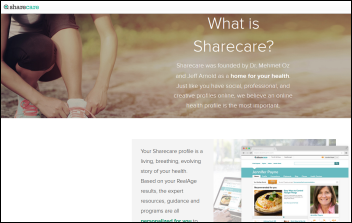
A good interview with WebMD’s dethroned founder Jeff Arnold, now CEO of Atlanta-based Sharecare, describes how the company uses individual results from its acquired RealAge health questionnaire to push content to users. Sharecare also offers personal health consultations via its AskMD app and publishes a voice-analyzing app to detect stress. On the downside, the company’s co-founder is the pseudo-medical huckster Dr. Oz.

image

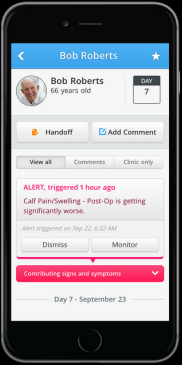
Kaiser Health News describes the enthusiasm patients of Newport Orthopedic Institute are expressing for the empathetic, automated post-surgery daily emails they receive from the practice’s HealthLoop system. The article provides an example of a knee surgery patient who responded to a system-generated, emailed question about calf pain, which triggered his doctor to see him immediately and diagnosis his dangerous blood clot.

image

image

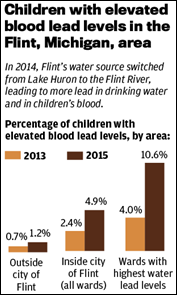
The Hurley Medical Center pediatrician who uncovered the human effects of the Flint, MI water crisis credits the hospital’s Epic system and EHRs in general for allowing her to quickly discover the increasing number of children with high levels of lead in their bloodstream. “If we did not have Epic, if we did not have (electronic medical records), if we were still on paper, it would have taken forever to get these results,” says Mona Hanna-Attisha, MD, MPH. She cross-referenced the abnormal blood levels to home addresses using geographic information system software to prove what was happening despite the denials of state officials. She is also adding an Epic flag to allow doctors to track those children for lead poisoning symptoms that can take years to emerge. Note once again the key involvement of a doctor trained in public health when discovering and responding to a regional crisis.

image

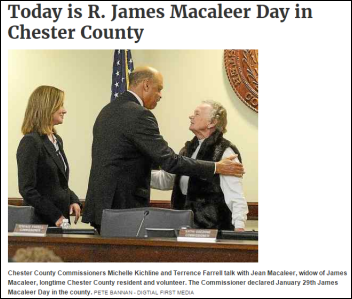
Chester County, PA commissioners proclaim January 29 as R. James Macaleer Day, honoring the recently deceased local charitable benefactor and founder of Shared Medical Systems on his birthday.

image

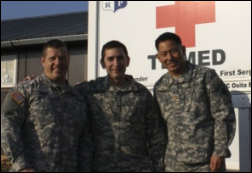
The US Army Reserve highlights the actions of three members of the 345th Combat Support Hospital of Jacksonville, FL who are deployed to Kosovo and who saved the life of a motorcycle accident victim while on leave in Greece. Those involved were Major David Whaley, who is a doctor of pharmacy; Colonel Edward Perez-Conde, brigade surgeon; and Major Kirk Shimamoto, a doctor of dental surgery. Perez-Conde says he considered using a pocketknife and ball point pen to relieve the victim’s pneumothorax, but, “we didn’t know how the police would react to a medical procedure using a pocketknife and we certainly didn’t want to go to jail.”

image

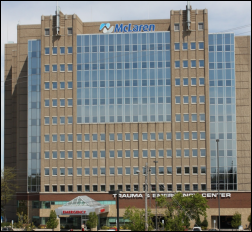
Flint-based McLaren Health Care (MI) will centralize its 13 billing and collections offices, saying it lags in standardizing its revenue cycle processes but hopes it can increase revenue by $30 million by reducing denials and increasing collections. The health system also says it is working on integrating Cerner’s EHR and patient billing systems.

image

An article describing how ad-supported publishers are “freaking out” over their readers using ad-blocking software provides an example in Modern Healthcare. The Interactive Advertising Bureau calls AdBlock Plus, which has been downloaded 500 million times, “unethical” and “immoral,” declining to note that publishers are producing content that few people are willing to pay for in any form, including by the viewing of ads.

A New Hampshire jury awards $32 million to a former Walmart pharmacist who claims she suffered gender discrimination in being wrongfully terminated for notifying the state’s board of pharmacy about the large number of errors the pharmacy was making, some of which the store manager inappropriately blamed on her. Mauren McPadden, who had worked for the company for 18 years, also says Walmart violated her HIPAA rights by accessing her PHI and telling co-workers that she had suffered a nervous breakdown. Walmart claims it fired her because she lost her pharmacy keys.


Sponsor Updates

  • T-System offers free tool to providers for documentation and diagnosis of influenza patients.
  • Valence Health will exhibit at the HFMA First Illinois Managed Care Meeting February 4 in Chicago.
  • Huron Consulting Group releases a new clinical research management briefing.
  • ZirMed will exhibit at the AAPAN Annual Forum February 1-2 in Laguna Niguel, CA.
  • Aprima launches its redesigned website. 
  • Caradigm completes the ConCert by HIMSS interoperability testing and certification program.
  • Sandlot Solutions will exhibit at the Louisiana Hospital Association’s Winter Leadership Symposium February 2-3 in Baton Rouge.
  • Surescripts will exhibit at the EHealth Initiative 2016 Annual Conference February 3-4 in Washington, DC.

Blog Posts


Contacts

Mr. H, Lorre, Jennifer, Dr. Jayne, Lt. Dan.
More news: HIStalk Practice, HIStalk Connect.
Get HIStalk updates.
Send news or rumors.
Contact us.

125x125_2nd_Circle

Why I Still Don’t Have an Electronic Copy of My Medical Records Six Months After Asking

January 30, 2016 News 13 Comments

I decided in June 2015 to go through the exercise of requesting an electronic copy of my medical records. They’re from an Epic-using, Most Wired-winning, EMRAM Stage 7 academic medical center at which my only encounter was an unplanned, uneventful one-night stay while traveling. I wanted to see how the records request process might work for the average patient.

image

I also tried using the hospital’s MyChart portal to look up my own records as a second experiment. That’s a different process managed by the hospital’s MyChart support team. I was not successful since my visit was not listed and the polite but baffled technician couldn’t figure out why. The technician did not offer to research the problem further.

Day 1

The records request page on the hospital’s website offers two options: dropping by personally to the hospital’s health information management department (which they clearly prefer) or downloading, completing, and faxing a form. Scanning and emailing the signed form was not possible, they said – it has to be faxed. Requests for images must be made separately by calling a different telephone number.

image

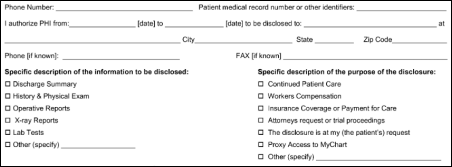
The form is complicated since it was primarily designed for patients who want to give someone else access to their records, such as for a workers compensation claim. The hospital really should create separate forms to avoid awkward references to “the patient” when it’s the patient making the request. It also asked for “patient medical record number or other identifiers” which hospitals frustratingly and somewhat arrogantly expect patients to learn and remember.

I completed the paper form as best I could, but it was not easy to figure out what they were looking for. Then I had to scan the signed form and find an online fax service to send it to the HIM department’s release of information fax machine.

The paper form did not provide an option for how I wanted to receive the information, stating flatly that paper copies would be mailed and that an unstated per-page fee would be charged by its contracted release of information vendor (it’s scary to agree to pay the fee upfront without knowing how many pages are involved or what the per-page charge is). It didn’t ask how I preferred to be contacted (not that it mattered since they never contacted me), but it did ask for a telephone number and physical address, again oddly worded since the multi-purpose form isn’t intended for patients only, with fields such as, “Phone (if known)” as though the patient might not know their own telephone number.

Day 11

I called the hospital’s HIM department since I hadn’t heard back from my request. They said they hadn’t taken any action because I hadn’t provided dates of service for my one and only encounter with the health system (since I couldn’t remember the date – it was more than a year before). They looked it up and said they would mail the records. I told them I wanted them in electronic form.

The HIM person said they don’t provide electronic information to patients, only to physicians. I said they were obligated to give me an electronic copy if I wanted it. She said she would get back with me after she talked to her supervisor.

Day 13

I hadn’t heard back from HIM, so I called them again. The supervisor repeated that they are not obligated to give patients electronic copies of their records and would provide only mailed paper copies. I repeated that they are indeed obligated to provide electronic copies. I said I would file a Office for Civil Rights complaint if they refused. Which they did, again.

I filed the OCR complaint. It was an easy online form to complete and I received quick email confirmation that it had been received.

Day 39

A letter-sized envelope arrived in the mail from the hospital. My name and address were scrawled nearly illegibly on the front with no indication of what was inside. I opened it up and there was my visit summary, contained on two pages front and back as printed off from the hospital’s Epic system. The hospital didn’t include a greeting or explanation or anything to indicate why they had sent the copies – it was just two Epic-generated pages that I finally figured out. I can’t imagine the average patient receiving the same document and making sense of it. At least they didn’t charge me for the two pages.

Day 211

I received a letter from the Office for Civil Rights informing me that my complaint was being closed without formal investigation. Instead, OCR said it had decided to “resolve this matter informally through the provision of technical assistance to the hospital.”

I haven’t heard from the hospital. I still don’t have an electronic copy of my records. My visit still doesn’t display in MyChart.

I invite readers to try this same process with their hospital or physician practice and let me know how it goes.

News 1/29/16

January 28, 2016 News 2 Comments

Top News

image

CMS warns lab company Theranos that its December inspection of the company’s California laboratory found deficient practices that “pose immediate jeopardy to patient health and safety.” CMS has given the company 10 days to prove that it has corrected the problems, threatening to revoke its Medicare certification otherwise. Theranos respondes that 90 percent of its lab work is done in its Arizona facility and says it has already fixed some of its California lab problems, including hiring a qualified lab director.

Walgreens, which seems anxious to wangle out of its deal with Theranos, has told Theranos it doesn’t want its samples processed in the California lab and has closed its Theranos Wellness Center in Palo Alto, CA. Walgreens admits only that it is “currently in discussions about the next phase of our relationship.”


Reader Comments

image

From The PACS Designer: “Re: better cancer detection. Researchers at the University of Tokyo Graduate School of Engineering have developed haptic gloves that can more easily detect potential types of breast cancer lumps through a new type of bendable sensor. The gloves cling more tightly to your fingers, thus improving the feel aspect of detection.”

From Pale Imitator: “Re: KLAS report on Soarian. You didn’t mention how Soarian is seen as an orphan product.” KLAS has stopped sending me anything about their reports, so I don’t mention them since I don’t even have a summary to review like other sites apparently get. For example, I noticed KLAS’s tweet that talked up Medicity’s “most improved vendor” performance in its year-end awards and clicked the link, but goes to a sign-up page that doesn’t even mention Medicity’s award, so I’m left with nothing. Back to your original comment, Soarian is an orphan product, of course, with only the timeline in question.


HIStalk Announcements and Requests

image

FlexPrint donated $1,000 to attend my CIO lunch at HIMSS, which funded these DonorsChoose teacher grant requests:

  • A programmable robot for Mr. Fess’s elementary school class in Port St. Lucie, FL.
  • A programmable robot for Mr. Jewell’s  sixth grade engineering class in Beebe, AR.
  • Headphones for Ms. Garris’s elementary school class in Fayetteville, NC.
  • Math tools for Ms. Reynolds’s elementary school class in Springfield, MO.
  • Electronic circuitry kits for Mr. Shawver’s career pathways high school class in Taos, NM, in a project led by sophomore Zack, who wants to earn a Harvard doctorate in math and engineering.
  • Math games for Mrs. Dlouhy’s elementary school class in Las Vegas, NV.
  • STEM activities for Mrs. Newman’s second grade class in Indianapolis, IN.
  • A document camera and wireless printer for Mrs. Garcia’s elementary school class in New Haven, CT.
  • Dry erase boards and markers for Ms. Hughes’s elementary school class in Marietta, SC.

image

QPID Health also donated $1,000, which funded these requests:

  • A Chromebook, mouse, and case for Mrs. Williamson’s English language learner class in Rentz, GA.
  • Science reading books for Mr. Beeler’s high school class in Houston, TX.
  • Two trumpets for the area’s first band program led by Ms. A in Dallas, TX.
  • Science learning centers for the kindergarten class of Ms. Estes in Franklin, TN.

This week on HIStalk Practice: Mississippi taps Teladoc for virtual firefighter care. Emerge Urgent Care opens as the "first telemedicine-based urgent care center in the US." Amazing Charts President John Squire lays out his vision for the problem-oriented medical record. RetraceHealth raises $500,000. AMA convenes disgruntled physicians for a town hall vent session in Seattle. PCPSs in Arkansas, South Dakota, and Iowa have it made – unless they’re female. Riverside Medical Group opts for an "always-open" model.

This week on HIStalk Connect: In England, the NHS partners with IBM, GE, Phillips, Google, and others to roll out several digital health pilot projects designed to objectively evaluate the benefit of introducing new technologies to care delivery. CMS sends a public letter to Theranos after discovering deficiencies during a routine lab inspection that could put patient safety in "immediate jeopardy." Texas Medical Center welcomes 13 startups to its TMCx accelerator program. Neurotrack raises a $6.5 million Series B to roll out an Alzheimer’s disease diagnostic tool that can detect cognitive impairment six years before symptoms present.


HIStalkapalooza

HIStalkapalooza Sponsor Profile – Clinical Path Consulting

image
Clinical Path Consulting is dedicated to optimizing the benefits of digital healthcare. Our team of industry experts help healthcare providers take advantage of technology to make operations more efficient, meet regulatory requirements, and improve the overall quality of patient care. Our professionals have extensive experience with, and an in-depth understanding of, healthcare business processes and industry technologies. Our services range from EMR implementation, optimization, upgrades, and training to specialized services, including our Healthcare Reporting Lab and our Clinical Concierge Program.


Webinars

None scheduled soon. Contact Lorre for webinar services. Past webinars are on our HIStalk webinars YouTube channel.


Acquisitions, Funding, Business, and Stock
image
McKesson reports Q3 results: revenue up 3 percent, EPS $2.71 vs. $2.04, missing revenue expectations but beating on earnings. Revenue in its Technology Solutions business dropped 8 percent on the sale of its nurse triage service and “anticipated revenue softness” in Horizon Clinicals. From the earnings call, John Hammergren says he’s pleased with the operating margin trends in the Technology Solutions business, citing the company’s focus on peer solutions, transactional offerings, imaging, and revenue cycle management. The transcript makes it seem that stock analysts tremble in Hammergren’s telephonic presence since they can’t seem to string together coherent sentences without Tourette’s-like verbal crutches. The Morgan Stanley analyst said “kind of like” a record 16 times in just three questions, such as, “It’s kind of like up 7 percent in the last kind of like 18 months, we’ve seen this growth in kind of like low to mid and even high teens,” while the ISI Group’s analyst, not to be outdone, used “sort of like” five times in his two questions.

image

HCA announces Q4 results: revenue up 6.4 percent, EPS $1.40 vs. $1.19. The hospital operator made over $2 billion in profit in FY15.

image

Anthem announces Q4 results: revenue up 7 percent, EPS $0.68 vs. $1.80, missing earnings expectations. The company says its insurance exchange policy volume ran 30 percent lower than it planned.

image

CPSI announces Q4 results: revenue down 4.5 percent, EPS $0.30 vs. $0.60, falling short of expectations for both. 

image

Telemedicine technology vendor SnapMD raises $5.3 million in Series A funding.


Sales

image

The Ohio Department of Mental Health and Addiction Services expands its use of Netsmart’s clinical and financial systems across its six psychiatric hospitals.

Orion Health signs two pilot project contracts with the French Ministry of Health.

image

MidMichigan Health chooses Epic in a $55 million project that it says will pay for itself within six years. They went live on Cerner in early 2011 and choose Allscripts for ambulatory that same year. The change was most likely due to its 2013 affiliation with University of Michigan Health System, which invested in the Midland-based system with plans to undertake joint projects in telemedicine, clinical data analysis, and IT.

The Cal INDEX HIE selects Wolters Kluwer’s Health Language for terminology management.

image

Steward Health Care Network (MA) expands its use of behavioral health access technology from Quartet Health, which has former US Representative Patrick Kennedy on its board.


People

image

Joshua Lee, MD (Keck Medical Center) joins Loyola University Health System (IL) as VP/chief health information officer.


Announcements and Implementations

SNAGHTML4de63f45

Oracle announces Oracle Healthcare Precision Medicine, which it says connects genetic testing information to EHRs “for seamless clinical workflow and adoption.”

image

Continuous wearable vital signs monitoring technology vendor Sotera Wireless’s database of de-identified monitoring data reaches 1 million hours, supporting evidence-based alarm management.

University of Michigan launches MS and PhD degrees in Health Infrastructures and Learning Systems, which will focus on IT-driven innovation and continuous improvement.

DrFirst releases a new version of its Rcopia system for e-prescribing, controlled substance e-prescribing, electronic prior authorization, medication history, and medication adherence.


Government and Politics

image

ONC has a proposed rule in front of the White House that is described only as, “ONC Health IT Certification Program: Enhanced Oversight and Accountability.”


Privacy and Security

image

NCH Healthcare System (FL) notifies employees that two of its servers hosted at Cerner’s data center have been breached, exposing employee and medical staff credentialing information. 

Fitbit will add security measures to its fitness trackers after hackers brag openly about stealing user account information that they use to scam the company. The hackers sell Fitbit login credentials online for between 50 cents and $5, explaining to buyers how to convince Fitbit support reps to send them a replacement for a claimed defective device they never actually bought using a Photoshopped Amazon receipt as proof of purchase. They then sell the devices.

image

A short report by cloud security vendor Bitglass reminds us that one in three Americans were affected by a healthcare breach in 2015, with hacking and IT incidents making up 98 percent of the total. The big problem last year was loss of employee devices, but that was before the huge Anthem and Premera insurance company breaches that represented 80 percent of the affected individuals.


Other

image

A doctor in Canada warns the public of physician rating site RateMD, claiming the company’s salespeople offered him extra-cost options to hide up to three suspicious reviews and display his banner on the pages of other doctors. To be fair, the company is straightforward about that (and its business in general) on its FAQ page. The real challenge for ratings sites is that the small number of self-selected people who post have had either a great or terrible experience that may not be representative. That plus the fact that anonymous posts can’t be verified, allowing anyone to post a review.

image

KLAS announces its Best in KLAS winners for 2015/16. Epic won best Overall Software Suite, Impact Advisors won Overall IT Services Firm, and Medicity earned most-improved recognition. Some notable category winners:

  • Acute care EMR: Epic
  • Ambulatory EMR small practice: CureMD
  • Ambulatory EMR medium practice: Athenahealth
  • Ambulatory EMR large practice: Epic
  • Business intelligence/analytics: Dimensional Insight
  • Community EHR: Cerner
  • Community HIS: Meditech
  • ED: Wellsoft
  • HIE: Epic
  • Laboratory: McKesson
  • Patient accounting/patient management: Epic
  • Patient portal: Epic
  • Population health: IBM (Phytel)
  • Surgery management: Epic

image

Dear Healthcare IT News: your ad-filled junk email pitches for HIMSS16 are using a “from” email of “Destination HIMSS15.” Thank you in advance for your prompt attention in this matter.

image

The crack investigative team of a Louisiana AM radio station smugly discloses photographic evidence that doctors are wasting time using computers with an “absurd number of diagnoses and codes that total more than 18,000,” adding expert editorial comment opining that, “Remember that our tax dollars are going to buildings filled with bureaucrats who spend their days making rules and regulations that run our lives!” My question is this: does AM radio still exist?

A survey of doctors in Canada finds that 73 percent use office-based EHRs vs. 23 percent in 2006.

image

The Orlando paper notes the swelling but untaxed annual profits of Florida Hospital ($330 million) and Orlando Health ($247 million) as “the hospital chains gobbled up what were once taxpaying businesses and property and brought them into the non-profit, tax-exempt fold.” The systems would have paid $50 million in property taxes alone if they weren’t non-profits. Both organizations not only avoid state income tax, federal income tax, and sales tax, but they also receive taxpayer money in the form of taxing districts in three counties. The article notes that Florida Hospital parent Adventist Health System “trades $4.5 billion in securities, mostly through bonds, hedge funds, and money market funds.”

Hospitals in China require non-emergent patients take next-number type tickets, providing a lucrative market for ticket scalpers. A woman who complained on state TV about offers to sell places in the hospital line for $700 says she was harassed afterward by the scalpers and is afraid to take her mother back to the hospital. Her summary would work equally well here even in the absence of scalpers: “My God, for average people to see a doctor takes so much money, so much energy.” 


Sponsor Updates

  • Ingenious Med’s Scott Pierce describes the company’s new consulting practice.
  • NTT Data is sponsoring the Northern California Chapter of HIMSS reception at HIMSS16 on March 1.
  • Iatric Systems takes the Best in KLAS top spot for patient privacy monitoring.
  • MedData will exhibit at the American Society for Anesthesiologists Practice Management Meeting January 29-31 in San Diego.
  • Premier recognizes Inova (VA) with its 2016 Premier Excellence Award.
  • InterSystems TrakCare wins Best in KLAS for Global (Non-US) Acute Care EMR.

Best in KLAS 2015/2016 Winners

Segment Leaders: Software
Cardiology: Merge
Claims and Clearinghouse: ZirMed
Emergency Department: Wellsoft
Global (Non-US) Acute Care EMR: InterSystems
Patient Access: Experian Health
Radiology: Merge
VNA/Image Archive: Merge

Segment Leaders: Professional Services
HIT Implementation Support & Staffing: Galen Healthcare
IT Advisory Services: Impact Advisors
Technical Services: Galen Healthcare
Value-Based Care Advisory Services: Premier

Category Leaders: Software
Cardiology Hemodynamics: Merge
Charge Master Management: Craneware
Clinical Decision Support – Care Plans: Zynx Health
Clinical Decision Support – Order Sets: Zynx Health
Clinical Decision Support – Surveillance: Wolters Kluwer
Decision Support – Business: Strata Decision
Enterprise Scheduling: Streamline Health
Labor and Delivery: Clinical Computer Systems/Obix
Medical Device Integration Systems: Capsule
Patient Flow: TeleTracking
Patient Privacy Monitoring: Iatric Systems
Quality Management: Nuance
Secure Messaging: Imprivata
Single Sign-On: Imprivata
Staff/Nurse Scheduling: GE Healthcare

Category Leaders: Services
Business Solutions Implementation Services: Xerox

Blog Posts


Contacts

Mr. H, Lorre, Jennifer, Dr. Jayne, Lt. Dan.
More news: HIStalk Practice, HIStalk Connect.
Get HIStalk updates.
Send news or rumors.
Contact us.

125x125_2nd_Circle

Big Bucks Equals Big Interest in CHIME’s National Patient ID Challenge

January 28, 2016 News 1 Comment

A $1 million CHIME prize attempts to position the industry for patient identification success.
By @JennHIStalk

image

A perfect storm of healthcare concerns around near-ubiquitous EHR adoption, a resultant need for interoperability, patient safety and privacy, and federal stonewalling have swirled into an industry-wide conversation around the need for a national patient identifier.

Such an ID would, in theory, offer all providers a safe, accurate, and private way to identify patients no matter where they receive care. Correctly matching the right patient record to the right patient across care locations has the potential to save the US healthcare system money and lives.

The Implications

image

Intermountain Healthcare CIO Marc Probst estimates that his Salt Lake City-based organization spends as much as $5 million each year on administrative and technology costs related to accurately matching patients with all of their medical records. Minnesota-based Mayo Clinic has faced similar financial fallout, paying out up to $1,200 per misidentification, according to a 2014 ONC report.

Probst puts Intermountain’s patient-matching accuracy at 95 percent, above the industry norm of 85 percent. Similar rates show up at Kaiser Permanente, though that number falls to the mid-50s when records are shared between its regions and outside of its Epic system. Some estimates put identity errors in medical records at 14 percent, accruing to an annual estimated spend of almost $9 billion.

But wait, there’s more. A 2012 CHIME survey found that nearly 20 percent of its members could attribute at least one adverse medical event to incorrect patient matching.

That’s where the rubber hits the road. Adverse medical events equate to administering the wrong medication to the wrong patient, performing unnecessary procedures on misidentified patients, and burdening incorrectly identified patients with the hospital bills of someone else. Access to another patient’s health data is also of concern, as the steady stream of healthcare hacks over the last few years shows no signs of slowing down.

The Backstory

While the 2012 CHIME data might be dated, the statistic strongly shouts that the healthcare industry has a moral obligation to roll out an accurate national patient ID. While such an ID has never been developed, it’s not for lack of trying. There was talk of a federal patient identifier initiative when Congress passed HIPAA in 1996, but that was ultimately shot down by the industry’s privacy contingent, resulting in a 1999 law prohibiting federal funding to create the identifier.

What’s an industry in dire need of a solution to do? While there’s talk of removing the federal prohibition within the next year or two, industry stakeholders have taken the matter into their own hands and turned to the private sector for a solution – one fueled by cold, hard cash.

The CHIME Challenge

The CHIME National Patient ID Challenge, originally announced last fall, made its formal debut earlier this month, exciting just about everyone who has ever taken part in the national patient ID debate. The association, which has partnered with crowdsourcing company HeroX, is looking for innovators from around the world to develop a patient ID solution that:

  • Easily and quickly identifies patients.
  • Achieves 100 percent accuracy in patient identification.
  • Protects patient privacy.
  • Protects patient identity.
  • Achieves adoption by the vast majority of patients, providers, insurers, and other stakeholders.
  • Scales to handle all patients in the US.

ONC, National Patient Safety Foundation, AHIMA, and the AMA have endorsed the contest, which will award the winning solution $1 million. Over 80 entrants in seven countries have already signed up. With submissions due April 8, the clock is ticking for entrepreneurs and established companies to finalize their ID innovations. The winner will be announced February 19, 2017 at the CHIME/HIMSS CIO Forum in Orlando.

“We recognized that this is a real challenge,” says Intermountain’s Probst, who is also chair of the CHIME Board of Trustees. “We can’t identify people as well as we’d like to and there’s security issues around that. We’ve become well aware of this over the years, and talked significantly about it for probably the last five.”

Probst attributes the timing of the competition to learning about HeroX. “We discovered there was this creative way of looking at a problem – a much broader strategy than the healthcare industry has traditionally employed. When we heard from HeroX and XPrize founder Peter Diamandis and got aligned with the HeroX team, we thought this is something we could create a challenge around, and CHIME could really get behind.”

“We’ve come to understand that it’s more difficult to model a challenge like this than any of us realized,” he adds, “and I don’t think that’s necessarily unique to patient identifiers. You’re going to throw a million dollars on the table, so you hope that the winning solution is going to be really effective.”

The $1 million prize has obviously set a fire under the healthcare community. Some wonder where the winnings will come from. “CHIME will be looking for people to partner with to help fund this – organizations that would like to have their name associated with it,” Probst explains. “That’s actively going on. The CHIME board will make sure it gets funded one way or another.”

Competition Heats Up

With so many entrants — from credit bureaus to startups to clinicians to big business — committing to the contest in just over a week, competition will surely be stiff once submissions are reviewed and the chosen few move on to the “Concept Blitz” round in May.

image

image

“We’ve been working on this since 1995,” says Barry Hieb, chief scientist at not-for-profit Global Patient Identifiers. “There’s been a long pause on this issue, but now there is renewed focus due to the race for interoperability. There’s a desperate need to identify patients correctly. Between 100,000 and 400,000 people die each year due to medical misidentification. That’s what keeps me awake at night. That’s not acceptable.”

Hieb, who anticipates signing GPI up for the challenge, envisions rolling out the winning solution at several pilot sites for a year or two, and then making it publicly available. “It could be a card, an app, a USB drive … the key is determining what information is accessible,” he says, adding that his other big concern is management of the solution once its 15 minutes of fame have worn off. “We’ll need to sit down with CHIME and other stakeholders to determine who is trustworthy enough to run this capability in perpetuity.”

image

image

Michael Trader, CEO of biometric patient ID platform vendor and contestant RightPatient, echoes many of Hieb’s concerns. “Meaningful Use has been a big impetus for this. Now we’re at a stage where the next goal is interoperability. Combine that with the new influx of covered consumers and you’ve got to help providers avoid sharing dirty data.”

“We feel strongly that our current technology is the ultimate solution for this problem,” he adds. “The winning solution will be strong on the technical side, but will be practical, too. Providers will ultimately drive the adoption, which will in turn drive patient adoption. When all’s said and done, it’s got to be scalable and focus on multiple touch points.”

May the Best – Most Accurate – Solution Win

Probst seems confident that this competition will bring a viable solution to market. “We need these participants to figure this out,” he says. “I don’t know that it will be an algorithm. It could be a biometric, or a combination. Whatever it ends up being, we’d like to get 100 percent accurate identification. It has to be something that makes economic sense and can be reasonably introduced into the industry and afforded. All those are aspects of the challenge.”

“To the patient, this solution will enable your provider to access your medical records when you walk up to the registration desk. You won’t have to clarify. They’ll know it’s you when they create a bill or record or test or referral. We’re going to get it right.”

News 1/27/16

January 26, 2016 News 5 Comments

Top News

image

image

Leidos Holdings will acquire Lockheed Martin’s Information Systems & Global Solutions business — which includes its health IT offerings — for $5 billion, confirming earlier rumors.

Lockheed Martin is known in health IT circles as having created the first CPOE system in the early 1970s when the company was operating as Lockheed (it merged with Martin Marietta in 1995 and changed its name to Lockheed Martin) but the company sold the product to Technicon in 1971, when it was named TDS. Lockheed Martin recently won the VA’s appointment scheduling system contract, bidding Epic through its recently acquired Systems Made Simple subsidiary.

image

With the acquisition, Leidos will become the #1 government IT contractor by revenue, with annual sales of more than $10 billion.


Reader Comments

image

From Smartfood99: “Re: Frisbie Memorial Hospital (NH). Cerner couldn’t flip a MedSeries4 hospital – they are going with Meditech 6.1.” Frisbie’s CEO says they wanted a system that would work for their 112-bed hospital sold by “a vendor we could trust.”

From Eddie T. Head: “Re: integration with Epic’s hosted systems. I would be surprised if Epic ever agrees to host third-party products. As far as I know they have always maintained that they will host the Epic infrastructure of servers, but they will not take on the role of a customer’s IT department for anything else. If the server-to-server integration comment is correct, then it sounds like sabotage (either by malice, or by incompetence) on the part of McKesson.”


RxNorm Follow-Up

image

A reader asked us to find out what’s going on with RxNorm updates and code changes, which they say is causing quality measures to fail because CMS has not updated its eCQM value sets with the new codes. Jenn asked the NIH/National Library of Medicine what happens with VSAC and quality measures when RxNorm is updated:

The short answer is, nothing. But it really has nothing to do with RxNorm or any other code system. ONC/CMS (back in 2012) statically bound all of the CQM value sets to their respective code systems, so the content of those value sets is legally locked to whatever versions of code systems specified by an update. So for example, the last CQM update back in 2015 used Feb 2015 RxNorm I believe. Thus, the problem for implementers who want to use the newer, better content (Lovenox as injectable heparin) to meet the treatment criteria for a measure, but are bound to use an earlier version of RxNorm. This has been a known problem for years. The real issue is providers vs. implementers. Providers, of course, want the new content as it benefits them meeting the care goals. Implementers see too much risk in updating/floating value sets dynamically, especially those that are authored as list (extensional) to begin with rather than as rules (intentional).

Julia Skapik, MD at the eCQI Resource Center adds:

This topic is known to CMS and ONC—the use of a static value set associated with each measure means that dynamic code system changes post-publication will not be reflected in the value set. To this date, we have provided the guidance that it is permissible to map where appropriate to a similar code. Where there are no similar codes, however, there will be a gap in the measure. Rob McClure, cc’d above, has been working on a proposal with CMS to provide an interim update to the value sets in the middle of the measurement period with additions only that will fill out dynamic code changes (and potentially correct errors) that affect real-world value set and measure performance.

In response to the reader’s example of CMS not updating the code sets for Lovenox as an injectable heparin that causes the VTE measure for anticoagulant therapy to fail, ONC/NLM consultant Robert McClure, MD responded:

Her defining example is confusing. Enoxaparin (Lovenox) has been included in the VTE measure anticoagulant value sets, such as "Anticoagulant Therapy" OID: 2.16.840.1.113883.3.117.1.7.1.200 and "Low Molecular Weight Heparin" OID: 2.16.840.1.113883.3.117.1.7.1.219 (and there others), from the very first release in October 2012. So if this is a good example of what ever her concern is, I’m afraid I don’t get the problem. 

If I was to wildly guess (a dangerous thing to do with you playing man-in-the-middle) perhaps she is not familiar with the expectation that data submitted in support of meeting an eCQM may at times require mapping, say from a code representing a branded drug (like Lovenox) to the “general form” (Enoxaparin) using RxNorm as the submitted code system. Or some entity that she’s relying upon is not getting this job done well.

There is the possibility that Sanofi (they make Lovenox) has come out with a brand new formulation of enoxaparin that did not get into the value set. If that is the problem, then this is exactly the sort of thing we are working to determine a better solution for implementers then simply “mapping to something close that is in the value set." If she is aware of such things then I encourage her to provide very specific evidence of this so we can design solutions that really work. She should do this by participating, like thousands of her colleagues have done, in the CMS/ONC eCQM JIRA site (http://jira.oncprojectracking.org) and report the specific issues so we can get to specifics.


HIStalk Announcements and Requests

image

The HCI Group donated $1,000 to participate in my CIO lunch at the HIMSS conference, with which I funded these DonorsChoose grant requests:

  • A document camera, speakers, and dry erase lapboards for Ms. Hardy’s elementary school class in Upper Darby, PA
  • A document camera for Mr. Martinez’s high school math class in Delano, CA
  • Three tablets for Mrs. Haley’s elementary school class in Waycross, GA
  • Model rockets for Mrs. Elliott’s sixth grade class in Indianapolis, IN
  • Electronic circuit kits for Ms. Mills fifth grade science classes in Spring, TX
  • An iPad and gaming system for Mrs. Swords’ fourth grade class in Douglas, GA
  • Machining tools for the robotics team of Mr. R’s high school class in West Covina, CA

image

Ms. Osborne says her South Carolina elementary school class is using the math games and materials we provided in their math centers.

I was excited about Black Sabbath’s final tour, but video from their “The End” tour stop in Chicago shows Ozzie singing so wildly off key that he ruins all the songs they otherwise played excellently. I think they’re making the right decision to hang up their inverted crosses after nearly 50 years.


HIStalkapalooza

HIStalkapalooza Sponsor Profile – Healthwise

image

Amplify the impact of your patient touch points with Healthwise health education, technology, and services. Easily integrated into episodic care, care coordination, automated programs, and patient portals, Healthwise solutions give you the ability to deliver tailored, meaningful experiences. Since 1975, Healthwise has been driven by our non-profit mission to help people make better health decisions. Visit us on the HIMSS show floor in booth #3617 and at our kiosk in the Population Health Knowledge Center. To find out more about Healthwise or to schedule a one-on-one meeting, visit www.healthwise.org/himss16.


Webinars

None scheduled soon. Contact Lorre for webinar services. Past webinars are on our HIStalk webinars YouTube channel.


Acquisitions, Funding, Business, and Stock

image

CMS inspectors have found problems at the Northern California laboratory of Theranos, according to unnamed insiders. Meanwhile, a Wall Street Journal investigation finds that not only is Theranos using its fingerstick technology for just one test, it’s also sending some of its samples out to reference labs instead of running the tests itself, apparently losing money on each (Theranos sells patients a test for $7 while paying UCSF $300 to run it). The article also reports that Walgreens has met with the company several times since October to discuss concerns about the Theranos stations in its California and Arizona drugstores and isn’t satisfied by the company’s responses. The since-fired CFO of Walgreens approved a loan of $50 million to Theranos without involving the drug company’s senior clinical executives and signed an agreement that Walgreens can’t easily escape from, although a negative CMS report might give them reason.

image

Specialty EHR vendor Nextech acquires SupraMed, which offers a PM/EHR for plastic surgeons.

image

Medical image exchange platform vendor LifeImage acquires its mammography-specific competitor Mammosphere.

image

Enterprise integration vendor Jitterbit, which offers a platform for developers to build and expose APIs, raises $20 million in a Series B funding round. It lists among its customers Dignity Health, Eisenhower Medical Center, and ZirMed. Prices range from $2,000 to $6,000 per month.

image

Kaiser Permanente will open an 800-employee customer service center and a 900-employee IT center in metro Atlanta.

image

The Milwaukee paper profiles Epic with a potpourri of recycled facts:

  • The company has 9,500 employees, up from fewer than 400 in 2000.
  • The Verona campus has cost $1 billion and construction continues.
  • The article claims that Epic departments don’t have budgets, there’s little hierarchy and few middle managers, and use of job titles is minimized.
  • The company won 127 contracts in 2014 vs. 19 for Cerner.
  • The article says the company is poorly equipped to deal with the criticism that goes hand in hand with its success, noting that its in-house communications team consists of one person and the company is run by limelight-shunning CEO Judy Faulkner, who has asked reporters not to run photos of her for fear that people will bug her at her favorite Madison ice cream shop.

Sales

image

Pikeville Medical Center (KY) chooses Medsphere’s OpenVista EHR.

image

Trinity Mother Frances Hospitals and Clinics (TX) chooses Stanson Health’s point-of-care recommendation system for appropriate use of medications, imaging, and lab tests.

Phynd Technologies announces sales of its provider management system to Premier Health (OH), Duke University Health System (NC), and Children’s Health (TX).

University of Iowa Health Care selects Oneview Healthcare’s interactive patient care system.


People

image

Cerner Chairman and CEO Neal Patterson notifies shareholders via an SEC filing that he was just diagnosed with a “treatable and curable” soft tissue cancer and will therefore be traveling less and attending fewer meetings as he undergoes treatment.

image

For-profit hospital operator Capella Healthcare promotes Vishal Bhatia, MD, MBA to SVP/CMIO.

image

Nashville healthcare entrepreneur R. Clayton McWhorter, who served as CEO of HCA in the 1980s, died Saturday at 82.


Announcements and Implementations

image

The California HealthCare Foundation will cease publishing its iHealthBeat daily technology news digest as of February 1 because “its exclusive focus on health IT no longer aligns with the programmatic focus of our work.” The newsletter was managed by The Advisory Board Company under contract to CHCF. I’m surprised that HIMSS didn’t buy it and fold it into its vendor-friendly publishing arm.

image

EHealth Ireland announces that available funding will allow it to increase its 288 FTE headcount by 47.

image

Vermont’s Depart of Labor notifies former and present employees of the South Burlington, VT office of Allscripts that they are eligible to apply for re-employment services if laid off.

Liaison Technologies launches its bone marrow transplant registry that includes one-click CIBMTR reporting.

CareSync joins Athenahealth’s More Disruption Please program, offering CMS Chronic Care Management program support services to providers.

Research software vendor Pulse Infoframe will use InterSystems HealthShare for interoperability.


Government and Politics

image

CMS encourages development in state Medicaid claims processing systems by permanently extending a 90 percent federal funding match for those systems. CMS is spending $5 billion per year on state Medicaid IT and estimates that 30 states are redesigning their Medicaid eligibility or claims processing systems. Cedars-Sinai CIO Darren Dworkin tweets that it’s a much bigger vendor opportunity than any population health app although it’s likely open only to large government contractors.

image

Blue Cross Blue Shield of Vermont calls for an independent review of the state’s Vermont Health Connect insurance exchange as errors force it to once again turn off the ability to enter “change of circumstance” situations. The state blames original contractor CGI and a consulting firm it hired that has since gone out of business. BCBS says exchange problems have prevented some of its customers from renewing their policies and doesn’t allow the company to reconcile its customer accounts. The exchange cost over $200 million to develop, nearly all of that paid by federal taxpayers.

A New York Times article describes the security-required modifications that are required before government officials (including the President) can bring mobile devices into the White House. A general who bought one of the first iPads in 2010 says DARPA technicians removed the device’s cameras, wireless chips, location sensors, microphones, and on-board storage capabilities, leaving him with “a pretty dumb iPad.” The article recounts a 2013 interview in which former VP Dick Cheney revealed that when his replacement defibrillator was implanted in 2007, his cardiologist insisted on disabling its wireless capability for fear someone might use it to assassinate him.

A Congressional Budget Office report finds that the federal government spend $936 billion last year on Medicare, Medicaid, and ACA subsidies vs. $882 billion on Social Security. The report warns about increased spending on mandatory programs and predicts that the federal deficit will increase.

image

CMS posts its 2017 Medicare EHR Incentive hardship exception application, due March 15 if EPs are involved or April 1 for just eligible hospitals, with these allowable reasons:

  • Lack of Internet access.
  • An EHR destroyed by natural disaster.
  • Practice or hospital closure or bankruptcy.
  • Problems with EHR vendor certification delays, decertification, or other vendor-caused delays.
  • Lack of control over locations that fall short of 50 percent of patient encounters.
  • For EPs, a practice that does not offer face-to-face interaction.

Privacy and Security

Insurance company Centene announces that it can’t find six hard drives containing the information of 950,000 members.

image

NIST invites companies to provide products and technical expertise to help develop use cases for IV pump security.

image

Titus Regional Medical Center (TX) finally regains access to its EHR more than a week after its servers were locked by ransomware. The hospital says it did not pay the money demanded and that the FBI is investigating. The Dallas Area Rapid Transit Authority was also recently infected with ransomware that demanded payment of $63,000 to restore access to encrypted files. DART declined to pay and was able to recover most files from backup copies, but some information was lost and some online services remain unavailable. The FBI stated a few weeks ago that it might make sense for some businesses to pay the ransom demanded, which was the case with at least one police department and a sheriff’s office that have paid to get their files back. The hackers behind the CryptoWall ransomware creation tool recently upgraded their product with a redesign of the ransom note.

Two organizations — New Jersey Cybersecurity and Communications Integration and Cell and National Health Information sharing and Analysis Center — create a third-party reporting and notification system in which the state’s hospitals can share cyberattack information anonymously.


Other

image

Apparently the unnamed health IT vendor who ran this ad in the Las Vegas Craigslist values its customers about as much as it does women in seeking a “booth girl” whose primary attribute is appearance.

The inquiring mind of Weird News Andy wonders whether a drug that can cure fear will work in cases of pharmacophobia, iatrophobia, and phagophobia.


Sponsor Updates

  • Burwood Group packs 100 winter coats, hats, and gloves for the Boys & Girls Club of America during its annual company retreat.
  • The local paper features CareSync in its roundup of local entrepreneurial ventures.
  • The local paper features Healthfinch in its feature on “Madison startups to watch in 2016.”
  • Qpid Health’s quality reporting solution achieves ONC HIT 2014 Edition Modular Ambulatory EHR Certification.
  • Huntzinger Management Group hires Jay Boylan and Bill Ehrman as regional sales directors.
  • EClinicalWorks is recognized as having the highest market share among cloud-based EHR vendors.
  • Versus creates a dedicated clinical solutions department of RNs. 
  • Stella Technology is supporting ConCert by HIMSS and conducting demos of the Interoperability Test Tool (ITT) at the IHE NA Connectathon this week in Cleveland, OH.
  • Elsevier Clinical Solutions will host the New England HIMSS Social March 1 at HIMSS16.
  • Frost & Sullivan recognizes the EClinicalWorks cloud-based EHR for highest market share.
  • FormFast will sponsor the HIMSS Midwest Gateway Chapter networking event January 28 in St. Louis.

Blog Posts


Contacts

Mr. H, Lorre, Jennifer, Dr. Jayne, Lt. Dan.
More news: HIStalk Practice, HIStalk Connect.
Get HIStalk updates.
Send news or rumors.
Contact us.
125x125_2nd_Circle

Morning Headlines 1/26/16

January 25, 2016 News Comments Off on Morning Headlines 1/26/16

Deficiencies Found at Theranos Lab

The Wall Street Journal reports that a damaging inspection report on Theranos’ California lab testing facility will be made public soon. The article says that investigators found “serious deficiencies” that could compromise its standing with Medicare and existing corporate clients.

Cerner CEO Neal Patterson being treated for cancer

Cerner CEO Neal Patterson files an SEC update announcing that he has been diagnosed with a “treatable and curable” soft tissue cancer. He reports that he will reduce his travel and work schedule while he receives treatment, but notes that “it will not be a big change compared to how we run Cerner day to day already.”

Kaiser Permanente says website woes, now on third day, weren’t caused by cyber attack

Kaiser Permanente’s website, including its patient portal, went down last week due to server issues. Kaiser has confirmed that the outage was not the result of a cyberattack, and has confirmed that all systems are back up.

McKesson’s Paragon Dilemma

January 25, 2016 News 3 Comments

The bumpy road McKesson and its users have found themselves on in the transition from Horizon to Paragon.
By @JennHIStalk

image

It’s been four years since Atlanta-based McKesson announced its decision to shift resources away from its Horizon Clinicals product line — known for serving several hundred large facilities of 300 beds and up — and to make Paragon its centerpiece hospital IT system.

The move — part of the company’s broader Better Health 2020 initiative of increased investment, research, and development of Paragon — was seen by the industry as an attempt to streamline McKesson’s technology solutions to better serve a customer base that was becoming increasingly vocal in its need for an integrated offering.

image

McKesson has faced an uphill battle in its attempts to convert Horizon customers to Paragon. Changes in leadership, rumored employee discontent, and user push-back have all played their part in McKesson’s attempt to remain competitive with scalable technology that can keep up with federal regulations, evolving payment models, and a customer base that seems to be jumping ship to Cerner and Epic in numbers the company didn’t anticipate.

The Evolution of Industry Reaction

image

Initial reactions to McKesson’s decision were tempered, with analysts and industry insiders coupling their wait-and-see attitudes with a healthy dose of skepticism regarding the company’s financial stakes. “On one hand, I laud MPT for coming clean on the challenges it has had with the development and support of the Horizon product,” Aspen Advisors (now part of The Chartis Group) Founder and Managing Principal Dan Herman said in a 2011 year-end assessment. “However, it appears that [McKesson’]s go-forward strategy is ‘déjà vu’ – a poorly thought-out approach to integrate disparate platforms, enhance a product that has experienced success in a focused marketplace (Paragon), and promise to customers that [McKesson] is committed to delivering a ‘fully integrated core clinical and revenue cycle IT system.’”

The situation wasn’t as positive after a few years and a few Horizon to Paragon migrations, both from an end user and company perspective. “As a customer, we have noticed that support and services have steadily declined since the Better Health 2020 announcement …. The average tenure of support employees supporting us has dropped severely with resignations,” noted one HIStalk reader and McKesson Horizon customer in 2013. “We have to run a gauntlet of triage and bottom-tier support before most of our issues are escalated to a rare senior resource. They are exerting pressure for us to migrate to Paragon while failing in their commitment to support us on Horizon. Actions speak louder than words and customers have been left to deal with the fallout.”

Fewer than one-fourth of respondents to an HIStalk reader poll in December 2011 said they had a positive reaction to McKesson’s Better Health 2020 plan. Three-quarters of respondents to a September 2012 reader poll said McKesson’s healthcare IT position had worsened in the past year, with one respondent commenting that the plan to move Horizon users to Paragon was, “Nothing more than puff-piece marketing. There was no tangible follow-up with their closest clients to show them concrete plans. The traditional, ‘Trust us because we’ve worked so hard together all these years’ and the implications of ‘we are too big to fail’ just do not hold water.”

image

The corporate side of the story correlated with user frustration, as McKesson leadership shuffled and Horizon employees were urged to take jobs at RelayHealth, which expanded to over 1,000 employees in 2013. McKesson’s February 2015 earnings call offered a slightly rosier picture of the company’s migration attempts. Chairman, President, and CEO John Hammergren mentioned that the Technology Solutions division’s seven percent drop in revenue was in line with expectations of lower Horizon Clinicals revenue, and that the company was “in [the] middle of the game” in trying to migrate customers.

He added that, “As you think out two or three years, the EMR space and the transition away from Horizon will be more complete or complete, and we’ll see more results, we think, in terms of this pay-for-performance priority.”

Fast forward almost a year. Hammergren’s prediction of a transition away from Horizon seems to be coming true, though not necessarily with the outcome he had hoped.

image

“The move from Horizon to Paragon has actually been pretty painful for McKesson and for their customers,” says Coray Tate, vice president of clinical research at KLAS Enterprises. “That’s not a secret. It’s a little bit of a perfect storm that Paragon got caught up in.”

Paragon, Tate explains, has suffered not only from a Horizon customer base that was unenthusiastic about switching systems and wary of Paragon’s ability to scale to larger facilities, but also from bad timing. The leader in KLAS customer satisfaction rankings for small community hospitals was caught up in the rollout of Meaningful Use and the prospect of a switch to ICD-10. Toss in high-level leadership changes and the “perennial leader” found itself falling behind.

“They took a product that had really struggled,” says Tate. “They reset expectations and have actually done a really good job of developing on that. But now you’ve got all these external pressures that they haven’t been able to meet. Meaningful Use made EHRs become a physician tool, and so that part has been the biggest gap and they are having a hard time getting to the point where physicians are happy with it. That’s not unique to Paragon, but that is definitely one of Paragon’s struggles and one of the reasons why you’ve seen their scores drop in the small market.”

End-User Fallout

image

image

Tate’s insight into market forces have been playing out in Horizon facilities. Mike Jefferies, a former McKesson technical advisor who is now vice president of IS at McKesson customer Longmont United Hospital (CO), agrees with the Better Health 2020 strategy. However, he questions whether big Horizon customers are comfortable with the idea of migrating to Paragon.

“You’ve seen a huge consolidation in healthcare,” Jefferies explained in a February 2015 HIStalk interview. “That consolidation has favored EHRs that handle a larger scale, which in our market means Cerner or Epic. What a larger organization consolidates smaller hospitals and organizations, they certainly aren’t going to uptake that smaller community EHR.”

image

Vanderbilt University Medical Center (TN) is one such customer. It announced its move from Horizon – much of which it had self-developed as WizOrder and then licensed to McKesson in 2001 to create Horizon Expert Orders — to Epic in December 2015, with an anticipated go-live in 2017.

image

VUMC Chief Informatics Officer Kevin Johnson, MD, MS, who is spearheading the effort, says that its decision was certainly strategic, though the IT team was understandably disappointed to hear the Horizon/Paragon news. “We realized that McKesson was focusing on a different segment of the healthcare market with the Paragon system,” he explains. “Therefore, we had begun surveying the landscape to be proactive about the move at the same time that McKesson sent us the announcement.”

“We have enjoyed a long history with Epic as one of their first revenue cycle clients, dating back to 1995,“ Johnson adds. “We had made a decision to upgrade our revenue cycle and billing system to a more recent Epic version for inpatient and outpatient billing. We also have Cerner’s lab system. Our decision, therefore, was to migrate our revenue cycle/clinical/lab environment to Epic/Epic/Cerner or Epic/Cerner/Cerner. Paragon is a system constructed with a different size and complexity health system in mind. Both Cerner and Epic were good choices for us, and after a thorough evaluation, we chose Epic for our clinical system.”

The Consultant’s Perspective

image

Mike Lucey, founder and president of Paragon consulting firm Community Hospital Advisors, paints a more intimate picture of Horizon end user reaction. ”I work with the IT folks and the doctors, nurses, therapists, and revenue cycle folks that actually use the product. They take it personally. This is their product,” he explains. “It’s very hard for the users to get around the idea that McKesson is taking something away that they like and works for them and giving them something that for years and years has been pitched as not good enough for their needs. They feel like they had the rug pulled out from under them.”

In Lucey’s best estimation, between 50 and 60 Horizon customers are still evaluating their options and  “a couple hundred” are on Paragon, with half of those being migrations.

“It’s important to remember that frustration has a half-life,” he says. “People get frustrated, they get angry, they stomp their feet. They run around and they put out RFPs and they get their responses back. Then the reality of money sets in. I think that’s where we are now. How many phases are there to grief? You know, you have denial. They kind of get stuck on anger for a while. Then somewhere along the way there’s acceptance. I think that’s the phase this market has gotten to. Folks are recognizing that they need to make a rational decision with good information.”

The Positives of Paragon

It’s not all doom and gloom, as Lucey’s current Paragon customer estimates attest. He is quick to emphasize that Paragon works, though the definition of “works” is, as with all IT systems, at the discretion of the implementing organization.

“The underlying technology and the functionality of Paragon is effective. It can get the job done for hospitals and multi-facility organizations, but it has to be put in well. It’s an issue of accountability. You can find many instances of Paragon implementations where the product is working very, very effectively. The difference between where it’s effective and ineffective is ownership. If the hospital owns it, it works well. If they don’t, it usually stinks.”

Paragon’s Success Hinges on McKesson’s Commitment

Both Lucey and Tate believe that product development and overall quality will make or break Paragon. “They’re going to have to be able to get code out to increase the physician experience,” Tate explains. “The code quality of the releases has got to get better. There have been reports of things being buggy as releases have come out. Overall, it’s going to have to mature to more of a clinical solution, meaning that it’s easier and faster for physicians to use.”

Lucey agrees that McKesson needs to show its commitment to Paragon by improving code quality within a few months. He adds that the company will have to deal with employee challenges. “A lot of them are the same people that were previously doing that for Horizon. A lot of them are still upset. Can they change uniforms from Horizon to Paragon, pick up the mantle, and advocate for it? Make it better, support it well, and sell it effectively? I don’t think a lot of them can, quite frankly.”

Lucey’s insight into McKesson’s internal struggles is shored up by several HIStalk reader reports that McKesson has turned to offshore resources to tackle Paragon’s development and that the company has begun pitching its technology division to venture capitalist firms, reported privately to HIStalk by someone who claimed to have been present in one of the meetings. McKesson President Nimesh Shah was unavailable for comment due to the company’s pre-earnings quiet period through April 1.

McKesson’s commitment to Paragon will determine whether it will continue to meet user needs, remain competitive, and capture a significant share of the Horizon customer base that is being forced to seek an alternative from McKesson or its competitors.

Monday Morning Update 1/25/16

January 24, 2016 News 14 Comments

Top News

image

The hacker group Anonymous is presumed to be behind a cyberattack against Flint, MI-based Hurley Medical Center, with the group apparently following through on its threats from the previous day to take action against those involved in the city’s water crisis. The hospital says its IT team detected the attack and reports no impact on operations.

Meanwhile, Flint-based McLaren Regional Medical Center says the city’s contaminated water probably contributed to a January 2014 Legionnaires’ disease outbreak that occurred right after the city started drawing water from the Flint River. The hospital president says health agencies didn’t inform the public about the outbreak until just a few weeks ago, adding, “It’s a public health issue. There were people in the city of Flint seeing brown water. It would seem logical that there would have been public reporting or public awareness about the Legionella situation.”


Reader Comments

From Caveat Emptor: “Re: Epic hosting. We’re one of the first, scheduled to go live in a few months. The IT department tells us we may not be able to scan documents into Epic due to poor integration with our McKesson document management system. There is some very serious anger at Epic right now. They seem to have been caught flat-footed, which raises questions about what other third-party vendors Epic-hosted solutions can’t accommodate.” Unverified.

From Mark: “Re: CenTrak. Heard it was acquired this week.” I’ve seen no news about the RTLS vendor so far.

From InBetweener: “Re: CHIME. They will award $1 million to anyone that technically solves the national patient identifier problem (underwritten by a vendor contribution, of course). Here we have a classic political failure that needs to be solved by technology. Healthcare is full of these ‘insane’ situations and we wonder why systems overly complex, don’t work as planned, have errors, and cost a bundle? The simple albeit political solution is to allow a opt-in/out NPI, just like TSA does for trusted fliers. Works for TSA, no privacy uproar. Why not for CMS? Why isn’t HIMSS/CHIME spending a million to lobby for that solution?”


HIStalk Announcements and Requests

image

A slight majority of poll respondents expect CMS’s changes to the Meaningful Use program to be positive. New poll to your right or here: is an ONC-produced EHR "star rating" a good idea?

Four firms donated $1,000 each to DonorsChoose to attend my HIMSS lunch with 10 or so CIOs. I won’t recite the individual projects I funded as a result since it’s a long list, but I’ll run photos and updates from the teachers when I get them (most of them emailed me their thanks over the snowy weekend). Nearly everything I funded was STEM related – iPad Minis, programmable robots, Chromebooks, math manipulatives, headphones, and science activity kits. Thanks to these companies for helping teachers and students in need.

image

Consulting firm Optimum Healthcare IT made a second $1,000 donation following its first one last week.

image

Serra Health Consulting donated $1,000.

image

Electronic forms and workflow vendor FormFast provided $1,000, which funded six great projects.

image

Nordic, which always steps up to support HIStalk, donated $1,000 to fund projects that include two I chose specifically from teachers in their home state of Wisconsin.

image

Our budget-minded HIMSS Booth #5069 will by necessity be microscopic, remote, and amateurishly furnished. However, it always overflows with more enthusiastic, fun visitors than those block-spanning monolithic monuments to executive egos. Contact Lorre if you are an industry celebrity (loosely defined) and want to hang out for an hour with her saying hello to readers. I’m hoping she can get Martin Shkreli to sign up. 

We give out “secret crush” beauty queen sashes on stage each year at HIStalkapalooza for whoever submits the most convincing reason they deserve one. I’ve ordered ones indicating Mr. H, Jenn, Lorre, and Dr. Jayne if you want to send your entry to me. My main lesson learned from years of planning the event – other than that people vastly prefer an open bar to drink tickets — is that nearly everyone likes wearing a beauty queen sash.

image

Mrs. Twigg from Missouri says the document camera we provided in funding her DonorsChoose grant request has changed her classroom’s dynamic since students can now see everything up close and are able to demonstrate their own work to the class. She says, “There are a few students who are soft-spoken and a little uncomfortable speaking in front of their peers. The document camera has been especially beneficial for these students because the focus is more towards their work, and less on them individually … I have noticed that the document camera has greatly enhanced their oral communication skills …It’s nearly impossible to imagine our classroom without the document camera because it has created endless opportunities for each student and their learning experience as a fourth grader. On behalf of every fourth grader who walks through room 205, thank you.” That’s a really impressive result from our donation of just $100 (I applied matching funds from the Ewing Marion Kauffman Foundation).

image

Also checking in is Mrs. C, who says her Texas second graders love using the iPad Mini keyboards and styli we provided.

Here’s an old but funny video of a sketch from Britcom “That Mitchell and Web Look” called “Homeopathic A&E” that amused me when I ran across it this week.

image image

I’m fascinated by the war that’s heating up between ad-serving websites and their readers. Internet users started it by using ad-blocking software that threatens the sole revenue stream of most online publishers in squelching their increasingly intrusive expanding banner ads, pop-up banners, and obnoxious auto-play video commercials. Some of those sites in turn starting blocking access unless the ad-blockers are turned off. Google gets most of its revenue from displaying ads and thus is obviously not a fan of ad blockers (and in fact prevents Android users from installing them), but just announced that it suppresses some of the more annoying or misleading ads, apparently hoping to convince people they don’t need ad-blocking software that it can’t control. One ad-blocker vendor just accused a big competitor of accepting company bribes to let their ads through its filter, while Firefox creator Mozilla just released a new browser (Brave) that blocks publisher ads but instead inserts its own. I’ve noticed that quite a few sites won’t even load on my tablet due to the mess of advertising junk that’s trying to load in the background or pop up intrusively in ways that don’t work on tablets.

Here’s when hospitals will see the impact of this weekend’s blizzard: early November, in their L&D departments.


HIStalkapalooza

HIStalkapalooza Sponsor Profile – Forward Health Group

image

Forward Health Group to unBooth at HIMSS16! A visual extravaganza is rolling into booth #2477. FHG, a leader in value-based population health management solutions, zigs when everyone else zags. The fast-growing company will feature prodigious, on-the-fly artistic talents, generating marvelously whimsical graphic population health management collaborations with HIMSS visitors. Producing giant eight-foot, hand-drawn murals each day, recording booth visitors’ visions of their value-based population health futures, FHG will also provide demonstrations of five new PopulationManager products, including innovative pre-packaged FastForward PopulationManager solutions for chronic care, acute episodes, behavioral health, bundled payments, and national standards reporting. Fresh oranges, too. A splendid time is guaranteed for all.


Last Week’s Most Interesting News

  • Titus Regional Medical Center (TX) remains without its EHR several days after its servers are hit with ransomware.
  • The Senate’s HELP committee releases draft legislation that it will consider on February 9 that includes streamlining government EHR requirements, charging ONC with publishing an EHR star rating system, increasing interoperability efforts, and creating an ONC-led committee to drive creation of a national health IT infrastructure that includes accurate patient identification.
  • An investigative report finds that Practice Fusion originally expected to go public next year with a valuation of $1.5 billion, but plans and expectations have changed with the decline in the stock market.
  • Leidos is rumored to be close to taking over Lockheed Martin’s IT and services businesses.
  • UnitedHealth Group announces that it lost $720 million selling insurance plans on the exchanges in the fiscal year and expects losses to continue, but reports stellar performance from its Optum services business.
  • OCR clarifies the provider requirements for giving patients copies of their medical information, suggesting that it will step up its enforcement efforts.

Webinars

None scheduled soon. Contact Lorre for webinar services. Past webinars are on our HIStalk webinars YouTube channel.


Acquisitions, Funding, Business, and Stock

Cloud and managed services vendor TierPoint acquires Midwest competitor Cosentry, expanding its operations to 38 data centers.

image

Pre-launch digital medicine vendor Akili raises $30.5 million to continue development of its video game-like cognitive disorder diagnosis and treatment apps.


People

image

Hearst Health promotes Kevin Daly to president of its Zynx Health business.


Announcements and Implementations

image

Athenahealth customer University of Toledo Medical Center (OH) will help the company develop inpatient capabilities based on its acquired RazorInsights and WebOMR systems, which will be retooled to create an AthenaNet cloud-based hospital system. I’m not certain which systems UTMC uses, but I think it’s McKesson for both ambulatory (HAC) and inpatient (the ancient McKesson Star).


Government and Politics

image

I finally heard back from the Office for Civil Rights about the complaint I filed in July 2015 against a large, Epic-using, EMRAM Stage 7 academic medical center that refused to give me an electronic copy of my medical records (they told me, “We only do that for doctors.”) The letter acknowledges the hospital’s responsibility to give me what I requested, but concludes with, “We have determined to resolve this matter informally through the provision of technical assistance to the hospital,” thus closing my complaint. I still don’t have an electronic copy of my information seven months after requesting it and the hospital will apparently see no repercussions for refusing to provide it. OCR’s insistence last week that it will zealously protect patient rights to receive their own medical information seems to be bureaucratic chest-thumping rather than a commitment to actually meting out punishment for intentional non-compliance, at least from this N of one.


Privacy and Security

A patient of an Indianapolis hospital complains about receiving calls demanding that she make payments on her pacemaker, apparently originating from a con artist spoofing the hospital’s caller ID.

A Utah women is arrested for entering narcotics prescriptions for herself by logging as a doctor into an old computer at the Intermountain clinic where she previously worked as an administrative assistant. She wrote 260 prescriptions for 62,000 doses for which insurance paid $26,000. At an average of nearly 250 pills per prescription, you would think the pharmacy might have become suspicious.


Other

A Scripps Translational Science Institute study finds that smartphone-powered biosensor monitoring did not improve outcomes for patients with hypertension, diabetes, or arrhythmias. The study’s methodology was decent although it used data from 2012.

Nabil El Sanadi, MD, president and CEO of Broward Health (FL), commits suicide. 

image

A 54-bed hospital in rural Georgia that hired a local car dealer as its turnaround CEO faces closure again after paying big money to the CEO and experts he brought in. The CEO was paid $480,000 per year on contract (quadruple the pay of his predecessor) with checks made out directly to his Ford dealership. He paid millions to bring in employees and contractors with connections to Duke University, where he had studied, including a reported $458,000 over five years for the CIO. Employees claim his hired gun experts were driven by data rather than patient needs. The hospital faces closure if the locals don’t approve a tax increase.

image

An editorial in NEJM warns of “research parasites” who “use another group’s data for their own ends” and who might not understand the differences in multiple datasets that they combine. It recommends that researchers start with an original idea rather than a me-too concept and then find collaborators with whom to share data, work together to create new hypotheses, and jointly publish their findings. I can’t decide if this is sound thinking or egotistical data-hoarding by academics more interested in furthering their careers than making patient-contributed datasets available for the public good.

Weird News Andy says this doctor was uber-rude. A fourth-year neurology resident at Jackson Health System (FL) is suspended pending an investigation after a video of her attacking an Uber driver goes viral with several million views. The apparently intoxicated doctor hopped into an Uber car that someone else had called, refused to get out, beat the driver, and threw all of his belongings into the street while cursing at him. Police responded but filed no charges after she told them (while crying) that she would lose her medical license if arrested.


Sponsor Updates

  • T-System and VitalWare will exhibit at the HFMA Region 11 Healthcare Symposium January 24-29 in San Diego.
  • Wolters Kluwer Health publishes an e-book titled Integrated Clinical Decision Support: Accelerating Adoption of Evidence-Based Care for Optimal Outcomes.
  • Valence Health will exhibit at the HFMA Tri-State Institute January 27-29 in Memphis, TN.
  • ZeOmega will exhibit at the Strategic Analytics for Population Health event January 25-26 in Orlando.

Blog Posts


Contacts

Mr. H, Lorre, Jennifer, Dr. Jayne, Lt. Dan.
More news: HIStalk Practice, HIStalk Connect.
Get HIStalk updates.
Send news or rumors.
Contact us.
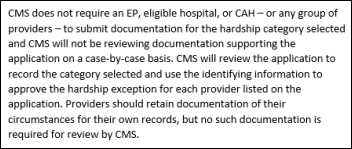
125x125_2nd_Circle

News 1/22/16

January 21, 2016 News Comments Off on News 1/22/16

Top News

image

The Senate’s HELP Committee will not vote on the House-passed 21st Century Cures act in its entirety, but instead will review it as seven separate bills. The committee will vote on an EHR bill on February 9 that covers unnecessary physician documentation, patient records access, information blocking, and EHR certification standards. In the draft legislation that was just published:

  • HHS will establish goals to reduce EHR regulatory and administrative burdens.
  • ONC will create voluntary EHR certification criteria for specialties, including pediatrics.
  • ONC will make materials submitted by software vendors to earn certification publicly available.
  • Vendors of certified software will be required to attest that they do not practice information blocking.
  • ONC will publish an EHR star rating system that includes security, usability, interoperability, and testing  results. One-star vendors will be required to follow a corrective action plan and can be fined or decertified if they don’t improve their rating. The government will reimburse users for the cost of decertified products.
  • HHS OIG will be empowered to investigate claims of information blocking by vendors or providers, with vendors subject to fines and providers liable for an unspecified “sufficient deterrent.”
  • ONC will convene groups to create a trusted exchange framework for interoperability.
  • HHS will publish a provider digital contact information index.
  • ONC will create a 25-member HIT Advisory Committee to develop standards and to set the agenda for a national health IT infrastructure, including privacy, accurate patient identification (an effort that will be overseen by the GAO), and de-identification.
  • HHS will define a common data set for public health reporting.
  • ONC will certify software using patient usability criteria, including giving patients access to their information in a single longitudinal format and giving them the ability to add to their information and share it as desired.

Reader Comments

image

From Company Contact: “Re: HIMSS Analytics. The revised version looks like a search engine, returning information in a tightly nested and unreadable spreadsheet. For the fees companies pay, it’s a shame that some engineer got into their heads to change the format. “


HIStalk Announcements and Requests

image

Ms. Aguiar made a passionate plea for tablets and electronic flash card software for her Florida third graders, saying, “I truly believe they can and will succeed despite what society, prejudice, or others might think about them … my students don’t have have access to technology, which automatically puts them behind their high-income peers.” We funded her DonorsChoose grant request, about which she reports, “You have made a tremendous impact on our classroom and our success. Because of you, we now have access to technology in our room and now have the ability to access websites, games, and books online. We can now say that we are competing against our peers in a fair way.”

My fundraising lunch will be Wednesday of HIMSS week from 11 to 1. Vendors who donate $1,000 to DonorsChoose get to make a short pitch to the assembled CIOs and enjoy a social lunch following. CIOs from John Muir Health, Contra Costa Health Services, University of Colorado Health, Centura, UC Irvine, and several other health systems are donating their time to raise money for a worthy cause. Contact Lorre for donation instructions (the money is paid directly to DonorsChoose) and a seat at the table. I’ll mention the donations here as well.

image

Thanks to consulting firm Optimum Healthcare IT for joining my CIO lunch. Their $1,000 donation funded these DonorsChoose teacher requests with matching funds from third-party foundations:

  • A programmable robot kit for Ms. Stokes’ elementary school gifted class in Charlotte, NC
  • Three iPad Minis and cases for Mr. DePhillips’ elementary school class in Herminie, PA
  • A programmable robot, vehicle building kit, iPad Mini, and case for Mrs. Bierhals’ elementary school class in Ruffs Dale, PA
  • STEM manipulatives for Mrs. Lee’s kindergarten class in Tucson, AZ
  • A wireless whiteboard, two iPad Minis, cases, and four science books for Mrs. Petrisko’s elementary school class in Herminie, PA
  • A 26-book library for Ms. Stitt’s elementary school class in Charlotte, NC
  • A listening center and 48 math skills books for Mrs. Gadsden’s kindergarten class in Durham, NC

This week on HIStalk Practice: Physiotherapy Associates rolls out the Athletic Trainer System EHR. University of Pennsylvania physicians find that fitness trackers aren’t all they’re cracked up to be. AllMeds rebrands and expands RCM offerings. De-identified health data means big bucks for business and a lack of confidence for consumers. CareCloud CEO Ken Comée recaps Practice Profitability Index findings. The American Academy of Sleep Medicine officially launches its telemedicine service. CMS tightens up on Healthcare.gov’s special enrollment periods. Panorama Orthopedics & Spine Center COO Lance Goudzwaard shares the benefits of virtual scribe technology.

This week on HIStalk Connect: The FDA publishes guidelines outlining postmarket cybersecurity requirements for medical device manufacturers. Scripps Translational Science Institute publishes results from one of the largest clinical trials measuring the effectiveness of remote patient monitoring conducted to date, finding no improvement to outcomes, overall service utilization, or cost of care. Patrick Soon-Shiong announces his own "Cancer Moonshot 2020" in conjunction with the President’s SOTU cancer moonshot announcement. Researchers from the University of Illinois unveil a new implantable brain sensor that monitors pressure and temperature, but that is made entirely of materials that break down naturally in the body over time, eliminating the need to remove implants.


HIStalkapalooza

image image

Last call: if you want to come to HIStalkapalooza, fill out the request form. I will almost certainly be able to invite everyone who asks, which hasn’t been the case in most years. Remember that I’m sticking with Monday night even with the screwy Las Vegas HIMSS schedule that is driven by casino greed, so you can make Michael Dell’s 5:00 p.m. keynote (if you care enough to bother, which I can’t say I do) but not the opening reception that runs the odd hours of 7:00 to 8:30 p.m. I guarantee that my event will be much more fun and memorable.

HIStalkapalooza Sponsor Profile – Wellcentive

image

The business case for quality has never been stronger. Incentives, penalties, risk, and market competition is at an all-time high. Is your organization positioned for success relational to quality, revenue, and transformation? Since 2005, Wellcentive has partnered with organizations to ensure successful transitions to value-based care. Our solutions are consistently ranked as a top performers by KLAS, IDC Health Insights, Chilmark, and Black Book. Stop by booth #468 and network with professionals leading some of the most complex transformations being witnessed today. Lastly, in the spirit of care, for every minute you spend with us, Wellcentive will donate $1 to impact the 20 million (or one in five) Americans living with an autoimmune disease. As a Histalkapalooza sponsor, join us and last year’s HIStalk King Wellcentive’s Gabe O for the party of the conference


Webinars

None scheduled soon. Contact Lorre for webinar services. Past webinars are on our HIStalk webinars YouTube channel.


Acquisitions, Funding, Business, and Stock

image

Free EHR vendor Practice Fusion hired investment bankers to explore a 2017 IPO last year, but its plans may have changed due to poor stock market conditions, according to the New York Times. JPMorgan originally estimated that the IPO would value the company at $1.5 billion based on revenue growth assumptions that the company later reduced. Practice Fusion, which has raised $149 million, expected to lose $26 million on revenue of $46 million in 2015. Found Ryan Howard was replaced as CEO in November 2015 by the promoted Tom Langan, who has no CEO experience.

image

Agfa Healthcare buys a 27 percent equity position in My Personal Health Record Express, which offers the Minerva data aggregation platform.

image

Reuters reports that Leidos is finalizing a $5 billion deal to acquire Lockheed Martin’s government IT business.


Sales

Tuba City Regional Health Care (AZ) chooses Allscripts Sunrise and Care Director for its 73-bed hospital and clinics.

Neighbors Emergency Center, which operates 12 freestanding emergency departments, chooses T-System’s EDIS.

image

Centegra Health System (IL) expands its use of FormFast electronic forms to Centegra Hospital-Huntley.

Easter Seals Southern California chooses Netsmart’s EHR for providing services to 6,000 children and adults with intellectual and developmental disabilities.

The Military Health System selects McKesson’s InterQual for utilization management.


People

image

Pamplona Capital Management names Joel Hackney, Jr. (Avintiv) as CEO of the new company created by the merger of its holdings, MedAssets and Precyse.

image image

Identity resolution vendor CrossChx hires former HHS CTO Bryan Sivak and former ONC chief medical officer Jacob Reider, MD for part-time, unstated roles.

image

WEDI names Charles Stellar (AHIP) as interim president and CEO.


Announcements and Implementations

image

Ireland-based patient engagement and clinical workflow technology vendor Oneview appoints two new board members following its $13 million capital raise in December.

image

Wolters Kluwer announces that it gained 113 customers for its procedure documentation system ProVation MD in 2015 and signed agreements with 86 healthcare facilities to replace the retired EndoWorks by Olympus, which named ProVation MD as its preferred replacement.

Experian Health announces its largest-ever Q3 results with 66 newly signed contracts and additional product selection by 192 customers.

Athenahealth, eClinicalWorks, Epic, NextGen Healthcare, and Surescripts are named as the initial implementers of the Carequality Interoperability Framework that was released in December 2015.


Government and Politics

CMS tightens up Healthcare.gov’s special enrollment period policies to eliminate “unintended loopholes,” such as people switching or dropping plans mid-year for purely financial reasons. CMS will reduce the number of those periods, clarify that a consumer’s relocation must be permanent to be eligible for move-related plan changes, and warns that it will audit consumer-entered information for accuracy. CMS helpfully clarifies that “special enrollment periods are not allowed for people who choose to remain uninsured and then decide they need health insurance when they get sick.”

image

Veterans Affairs Secretary Robert McDonald testifies to the Senate Committee on Veterans Affairs, outlining plans to transform the VA as the #1 customer service agency in government. Among his goals is to transform the VA from “sick care” to “healthcare.” He also wants to “bring our information technology infrastructure into the 21st century” and listed the IT-related goals above.

ONC announces that Franciscan Missionaries of Our Lady Health System VP/CIO Vindell Washington, MD will join the organization as principal deputy national coordinator.


Privacy and Security

image

Titus Regional Medical Center (TX) loses access to its EHR for several days when its database servers are hit with ransomware, which demands payment to restore access to the information. The hospital doesn’t know when it will get its systems back following the January 15 incident, explaining, “It’s just like in the 1970s, before electronic medical records. Everything is on paper and people are serving as runners. There’s no automation.”

The malware that took down the pathology department of Australia’s Royal Melbourne Hospital has been identified as a new variant of the Qbot worm. The department is still running Windows XP PCs and its laboratory information system runs on Windows Server 2003. Both products have been retired and are no longer supported by Microsoft. Qbot had a moment of fame in 2014 when security experts found that it had compromised 500,000 computers after being distributed from infected web pages, with its apparently Russian authors having stolen login credentials for up to 800,000 bank accounts.


Other

Two-thirds of hospitals don’t expect precision medicine to have much of an impact on their organizations in the next five years, according to a fairly small survey by Health Catalyst that also finds that few providers are adding genomic capabilities to their EHRs.

image

A NEJM opinion piece by Ken Mandl and Zak Kohane of Harvard and the SMART program observes that providers have mostly ignored their requirement under HIPAA to give patients copies of their medical records, often because they are protecting their competitive position. It adds that document exchange via C-CDA failed because it wasn’t standardized and Blue Button hasn’t matured. It urges IT purchasers to demand a patient-controlled solution powered by open APIs.

A study in JAMA Internal Medicine finds that people who spend less on healthcare after switching to high-deductible medical insurance aren’t shopping for care more wisely – they just use less of it because it costs them more. That throws water on the theory that people who are paying out of their own pocket seek lower-cost providers.

image

The International Committee of Medical Journal Editors proposes that its member journals (Annals of Internal Medicine, NEJM, JAMA, and others) require authors to share the de-identified patient data from clinical trials they used.

image

A San Franciso startup whose app allows women to easily obtain birth control seems to be crossing a telemedicine line it may not realize exists. Women fill out an online form that includes the brand name of product they want, a doctor reviews their information and issues a prescription, and the birth control product arrives within two days and is refilled automatically going forward. The patient never actually interacts with the doctor.


Sponsor Updates

  • InterSystems will exhibit at the IHE North America Connectathon 2016 January 25-29 in Cleveland.
  • Leidos Health will exhibit at the CHIME Spring Forum January 28-29 in Las Vegas.
  • KLAS recognizes LifeImage as the market leader in image exchange.
  • MedData will exhibit at the Texas Hospital Association Annual Conference January 21-22 in Dallas.
  • Direct Consulting Associates will exhibit at the IHE North American Connectathon 2016 January 25-29 in Cleveland.
  • EClinicalWorks releases a new podcast on the benefits of RCM at HCA.
  • Healthgrades announces the 2016 Distinguished Hospital Award for Clinical Excellence recipients.
  • Patientco will exhibit at HFMA’s Annual Revenue Cycle on January 22 in Foxborough, MA.
  • Porter Research helps to develop the Institute of Health Information Technology’s annual HIT workforce report, and Navicure’s latest ICD-10 survey.
  • Red Hat is recognized as a leader in two Forrester research reports ranking private cloud software suites and hybrid cloud management solutions.
  • Sagacious Consultants releases the latest edition of its Sagacious Pulse newsletter.
  • The SSI Group and Streamline Health will exhibit at the HFMA Region 11 Healthcare Symposium January 24-27 in San Diego.
  • Summit Healthcare will participate in the IHE North American Connectathon January 25-29 in Cleveland.

Blog Posts


Contacts

Mr. H, Lorre, Jennifer, Dr. Jayne, Lt. Dan.
More news: HIStalk Practice, HIStalk Connect.
Get HIStalk updates.
Send news or rumors.
Contact us.

125x125_2nd_Circle

Morning Headlines 1/21/16

January 20, 2016 News Comments Off on Morning Headlines 1/21/16

Postmarket Management of Cybersecurity in Medical Devices

The FDA publishes cybersecurity guidelines for medical devices, outlining requirements for manufacturers to conduct postmarket risk analysis, and conduct timely corrective and preventative action.

Senate won’t take up House’s 21st Century Cures Act

The Senate will not move the 21st Century Cures Act forward, citing disagreements over how to pay for the bill.

Oscar Health Raising Giant Funding Round led by Fidelity

Fortune reports that insurance startup Oscar Health is in the process of raising another massive funding round led by Fidelity, with $150 million already committed. Oscar Health has already raised $325 million in the two years since its launch.

A prospective randomized trial examining health care utilization in individuals using multiple smartphone-enabled biosensors

Scripps Translational Health Institute publishes findings from a six-month control trial designed to measure cost savings and quality improvements associated with the use remote patient monitoring technologies. Researchers found no difference in cost of care, resource utilization, or clinical outcomes.

Morning Headlines 1/20/16

January 19, 2016 News Comments Off on Morning Headlines 1/20/16

EHR Incentive Programs: Where We Go Next

CMS Acting Administrator Andy Slavitt and National Coordinator Karen DeSalvo, MD publish a blog post outlining the planned future of the EHR Incentive Program, noting that the transition to MACRA will change the focus from rewarding the meaningful use of EHR systems to “rewarding providers for the outcomes technology helps them achieve.”

Despite exchanges, UnitedHealth Group beats Q4 earnings estimates

UnitedHealth Group reports Q4 results: revenue of $43.6 billion beat analysts estimates and topped the insurers $33.4 billion revenue from the same period last year. UnitedHealth’s insurance exchange plans accounted for $720 million in losses between 2015 and 2016.

Digital Reasoning Acquires Health Tech Provider Shareable, Launches Health Care Business

Digital Reasoning, a cognitive computing vendor, acquires Nashville-based Shareable for an undisclosed sum. Shareable’s mobile clinical documentation apps, clinical systems integration engine, and cloud-based middleware platform will be integrated into Digital Reasoning’s existing data analytics platform.

Health service to begin electronic patient referrals

In Ireland, a nationwide electronic referral program will go live in March resulting in 95 percent of practices and all hospitals being able to exchange referrals electronically. Additionally, nearly all hospitals will be able to exchange diagnostic and and scanned images.

News 1/20/16

January 19, 2016 News 4 Comments

Top News

image

A CMS blog post by Administrator Andy Slavitt and National Coordinator Karen DeSalvo, MD says the administration has been “working side by side with physician organizations” to change the EHR incentive program. They will propose MACRA-based regulations that will:

  • Reward providers for patient outcomes
  • Allow providers to use IT in the way that works best for them
  • Promote open APIs
  • Focus on real-world interoperability goals while not tolerating data blocking.

Slavitt and DeSalvo warn that, despite their seemingly inadequately planned and oddly timed exuberant comments:

  • Existing standards are still in effect as required by law
  • MACRA covers only Medicare Eligible Providers and not hospitals or the Medicaid program
  • MU Stage 3 remains in effect

Reader Comments

From See Me CMIO: “Re: NEJM article on intrusive, standardized patient visit requirements and EHR checklists. Cerner with Dynamic Documentation returns us to the old-school way and away from the tyranny of physician documentation templates. Our go-live of Cerner Ambulatory created angst by physicians using template- and list-driven EHRs from NextGen and eClinicalWorks (especially younger ones who never knew pre-EHR documentation) who were uneasy with a system that instead presented them with basically a blank sheet of paper. Dyn Doc allows the open-ended interview style described in the article, with the need for reminders accomplished on the health maintenance section, the best of both worlds. However, template-driven systems may work better for specialists such as colorectal surgeons and orthopedists who would be slowed down by an open-ended interview.” 

image

From EMR Expert: “Re: Cerner. Bid $23 million for the EMR tender of 1,095-bed King Fahad Medical City in Saudi Arabia vs. Epic’s $126 million. Only Epic’s price was similar to what it would have bid in the US. Why is Cerner overcharging its US customers compared to oil-rich Saudi Arabia?” “Oil rich” is an oxymoron these days as the barrel is almost worth more than the oil it contains, but I don’t know why Cerner would so significantly undercut Epic’s apparently predictable bid in a two-horse race. Going back to the petroleum theme, it’s like my local gas station whose price is 20 cents per gallon less than everyone else’s – why not go only five cents lower in undercutting competitors while still pocketing the difference?

image

From Not from Monterey: “Re: Centra Health of Central Virginia. A good source tells me they’ve chosen Cerner, ditching McKesson if my memory serves me correctly.” Unverified. They are a Horizon and Pathways shop going back many years.

image

From NantWatch: “Re: NantHealth. Patrick Soon-Shiong says he intends to ‘merge’ NantOmics and NantMobile (the recently rebranded NantMobileHealth) into NantHeath the first half of this year as a part of the ‘Moonshot 2020’ initiative, though he has a tendency to change his mind on a whim, so who knows if this will happen. Predictable internal power struggles have begun.” Unverified.


HIStalk Announcements and Requests

image

We funded the DonorsChoose grant request of Mrs. Nelson, who asked for science kits for her Alabama elementary school class (her “highest poverty” school has only old, outdated books). She reports, “When they heard the news that we were getting funded, they all cheered in excitement! They were counting down the days until they could see our science kits come in by mail. When they finally arrived to our classroom, my students chimed in perfect sync, YESSSSSS! We opened them immediately to see all of the contents inside. As I read the descriptions of the science kits and showed them the parts, they smiled, cheered, and gleamed with anticipation!” The students are using the electrical activity tub to study and build circuits and next week they will use that knowledge to begin studying renewable and non-renewable energy sources.

An anonymous reader sent $50 for my DonorsChoose project. I couldn’t find any projects that amount would fully cover even with matching funds, so instead I completed the donations already received for Mrs. Azorr’s elementary school class request for dry erase markers, pockets, and earbuds for math practice and, in a second project, printing supplies for Mrs. P’s class in Roanoke, VA.

Listening: new from The Strumbellas, a six-piece band from Canada whose music is somewhere between spare, catchy alternative and pop bluegrass. It didn’t seem promising, but I ended up liking it. I’ll note the untimely passing of Glenn Frey (even though I’d take a root canal over listening to the Eagles any day) as well as the death of another 60-something musician, glam band Mott the Hoople drummer Dale Griffin. It was all Nektar for me at the gym today and those guys are in their late 60s as well. One might argue that 1970s-era musicians were our Greatest Musical Generation and we’re losing them way too fast.  


Webinars

None scheduled soon. Contact Lorre for webinar services. Past webinars are on our HIStalk webinars YouTube channel.


Acquisitions, Funding, Business, and Stock

image

Digital Reasoning acquires mobile clinical documentation vendor Shareable (formerly known as Shareable Ink). Digital Reasoning vaguely describes its work as “cognitive computing,” of which I could learn no more since its horribly designed website takes several minutes to load, vastly exceeding the limits of my curiosity.

image

UnitedHealth Group beats Wall Street expectations for Q4 revenue and earnings despite losing $720 million in the fiscal year selling insurance on federal and state exchanges, a much bigger loss than it originally expected. The company warns again that it may stop selling policies on the exchanges next year. Meanwhile, UHG’s Optum business generated earnings that were up 50 percent.

image

Three-month-old Malaysia-based doctor appointment booking startup BookDoc takes an unspecified investment from the royal family of Brunei. The company says it has “the highest pre-seed and seed funding valuations ever in the technology start-up history of Asia.”

image

Public relations firm Weber Shandwick acquires Nashville-based healthcare marketing firm ReviveHealth.

image

Johnson & Johnson will eliminate 3,000 positions in its medical device business, an action it optimistically euphemizes as, “to strengthen its go-to-market model, accelerate the pace of innovation, further prioritize key platforms and geographies, and streamline operations while maintaining high quality standards.” In other words, the little people it will fire are the problem, not the still-employed executives who hired them in the first place and then apparently mismanaged them to the point that the company is better off with 3,000 empty chairs.

image

In Spain, NTT Data will work with Everis Health and local hospitals to develop a new medical analytics service technology that will apply knowledge to ICU patient data streams.

image

Sentry Data Systems will acquire Agilum Healthcare Intelligence. Both companies offer data analytics solutions.


Announcements and Implementations

Divurgent and General Dynamics partner to offer security solutions to healthcare providers.

Ireland’s Health Service Executive announces that within a few months all of the country’s hospitals will be able to receive electronic referrals, 95 percent of physician practices will be able to send them, most hospitals will be capable of sharing x-rays electronically, all 19 maternity units will run a single computer system, and all of Ireland’s 43 medical labs will share information via an electronic network.

AdvancedMD launches AdvancedEPCS for electronic prescribing of controlled substances.

image

CHIME launches the year-long, $1 million prize National Patient ID Challenge to develop some kind of technology workaround to the lack of a national patient identifier. I have a lot of questions: (a) where did CHIME get $1 million to spend on an R&D project? (b) can any algorithm truly hit 100 percent accuracy without requiring patients to sign up for something new? and (c) if the best submission still isn’t commercially feasible with 100 percent accuracy, does the submitter get the million dollars anyway? Not to mention (d) who has the deep pockets to fund a possible solution with only the hope of earning a winner-take-all prize? (actually there’s a $30,000 prize after the second round, but still …) Perhaps CHIME is actually hoping that someone will launch a third-party registration service since a national health ID isn’t illegal – it just can’t be funded using federal money. I admire the initiative, but I would be somewhere between surprised and shocked if the winner’s solution earns broad adoption.


Government and Politics

image

The VA pays the director of its Danville, IL system $86,000 to resign and keep quiet after he complains to the Merit Systems Protection Board about being charged with threatening to fire a co-worker who reported him for doing little work, having sex with a female VA employee, and then bragging about his conquest to the female employee’s daughter, who also works for the VA. The daughter complained that she didn’t want to hear details about her mother, after which the director sent her a letter that said, “Would you like to live the rest of your life without a mom to be there for you and (redacted word) or would you prefer to have (her) available and happy in my company?’

New Jersey Governor Chris Christie kills a bill that would have required the state’s non-profit hospitals to pay city fees to help cover the cost of municipal services. Oddly enough, the New Jersey Hospital Association collaborated on the bill, hoping to avoid individual lawsuits brought against its member hospitals from cities demanding they pay their fair share. Or as the association’s CEO phrased it while comically avoiding saying the word “tax” in the same sentence as “hospital,” “for hospitals to support their host municipalities with added community contributions.”


Technology

image

The Rite Aid drug chain rolls out proximity beacons to its 4,500 stores in the largest such implementation in a retail setting. The app sends advertisements and offers (“contextual experiences”)  to the smartphones of in-store shoppers. I bet HIMSS will have it running by next year’s conference.


Other

image

I’m not sure what the British reporter (its political editor, of all things) who wrote a newspaper story titled “Strike all you like, doctors – technology will soon take away your power” expected, but he seems to be whining that doctors disagreed with his highly questionable conclusions, including his belief that people running around wearing Fitbits (which he spelled wrong) will upend “a profession reluctant to give up its position as the keepers of knowledge.”

image

Former Allscripts CEO Glen Tullman provides an interesting career bio to the Chicago Tribune. I wasn’t as interested to read about his investments in vendors of shoes, tea, and solar roofs as I was his recap of  his Allscripts days:

Then I went to a company called Enterprise Systems, which was in the healthcare business. Privately held. They asked me to come in as CEO. I took it public a year after arriving, and then a year later we sold it to the medical information company HBOC at a wonderful valuation … after we sold, I went to a company called Allscripts. Allscripts got to Series J financing [that is, the 10th round], which very few living people ever do. You have a lot of enemies, and you’ve burned through a lot of cash, and that’s when I arrived. We bought just over 60 percent of the company for $6 million … Then we went to work creating the first electronic business that prescribed at scale. We became the leading electronic health record provider in the country on the ambulatory side. Two years later, I took the company public at a $2 billion valuation.

image

In Australia, the pathology department of Royal Melbourne Hospital goes to manual processing when malware infects its computers running Windows XP, whose support and security updates ended on April 8, 2014. Given the infected location, I would bet that those PCs were running software that is regulated as a medical device and therefore can’t be upgraded without the software vendor’s approval.

image

A Health Affairs study identifies the 50 US hospitals with the highest markups, of which 49 are for-profit and 20 are in Florida. Their list prices averaged 10 times their reported costs, meaning out-of-network or cash-paying patients get stuck trying to cobble together enough money to pay bills inflated with a 90 percent profit margin. The authors suggest policy changes that could include: (a) requiring hospitals to publicly post their charge-to-cost ratio; (b) forcing hospitals to apply the same markup to all services rather than selectively jacking up areas like anesthesiology; (c) setting a maximum allowed markup for a given patient; (d) requiring hospitals to offer their lowest negotiated rate to everyone; or (e) requiring insurers to use the same payment method (such as DRGs) but allow the actual payment to vary by insurer based on negotiated rates. 

image

A BMJ blog post from a palliative care doctor and David Bowie fan thanks the late musician for leaving an allegory-laden final album, for dying with dignity at home instead of in a hospital, and for inspiring patients to strive for a good death as the end of a good life.

I was thinking about NASA’s use of telemedicine for space station astronauts, which I assume must not involve Houston-based Johnson Space Center since the Texas Medical Board would otherwise find a way to shut it down.


Sponsor Updates

  • PeriGen publishes a white paper titled “The Future of Electronic Fetal Monitoring.”
  • Health Facilities Management publishes a Field Report detailing how Trinitas Regional Medical Center reduced the severity of injuries due to assault with Versus Staff Assist.
  • Bottomline Technologies will sponsor Leadership Seacoast, a nonprofit that educates and informs future community leaders. Vice President of Services and Operations Jill McFarland will participate in the organization’s 2016 class.
  • ZeOmega’s Jiva PHR earns ONC HIT 2014 Edition Modular EHR certification.
  • Capsule Tech will participate in the IHE Connectathon January 25-29 in Cleveland.
  • The local business paper features CareSync in an article on venture capital funding.

Blog Posts


Contacts

Mr. H, Lorre, Jennifer, Dr. Jayne, Lt. Dan.
More news: HIStalk Practice, HIStalk Connect.
Get HIStalk updates.
Send news or rumors.
Contact us.

125x125_2nd_Circle

Monday Morning Update 1/18/16

January 17, 2016 News 1 Comment

Top News

image

The New York Times takes public the recent OCR clarification for providers whose patients request copies of their medical records. An American Hospital Association SVP says the guidelines are “a helpful reminder,” the need for which she didn’t mention – that most of AHA’s members do everything they can, including citing non-existing policies or legal requirements, to avoid giving patients copies of their own information.

The statement was welcome, but areas of concern might be:

  • The law was already in effect and was being widely ignored by doctors and hospitals, with no announcements of any resulting fines or enforcement actions.
  • Patients will need to understand their rights and how to complain to OCR, which 99.99 percent do not.
  • The effort required to file a complaint – and the potential for disrupting the provider relationship for doing so — will discourage most people from notifying OCR even if they know how.
  • Providers still have a ridiculous amount of time to provide records that are most likely stored electronically.
  • Many hospitals use release-of-information companies to handle patient records requests, allowing those companies to bill high per-page charges. It’s not clear to me whether that practice will be abolished since OCR’s requirements affect providers, not third parties.
  • It would be nice if insurance companies, which have a lot more clout with providers than patients, would accept and manage records requests of their insured patients.
  • OCR will have to respond to an increasing volume of complaints, which given their lack of response to a complaint I filed in July 2015 for exactly this situation from either the hospital or OCR, seems unlikely.
  • OCR hasn’t done much to stop HIPAA violations, rarely using its power to levy fines.
  • The only positive outcome for a patient who files an OCR complaint is finally getting the records, probably after a long delay in which their clinical value has been greatly reduced.

Reader Comments

From MU Later: “Re: your comment that CMS might be disappointed by how ONC has run Meaningful Use. ONC does not manage the program – that is solely done by CMS. ONC provides certification parameters and feedback to CMS, which is free to do whatever it wants.” I admit that I incorrectly think of ONC as being in charge of Meaningful Use since I’m not all that knowledgeable about the inner workings of ONC, CMS, and HHS or how much of ONC’s effort involves MU. Reading about the initial implosion of Healthcare.gov and the political differences between federal “agencies” and “offices” with their sometimes dueling fiefdoms and competing CIOs made me glaze over.

image

From Pustular Exudate: “Re: CareCloud. Of the 10 leadership positions listed on their website, nine are held by men. The one female is the head of HR.” CareCloud’s executive team is therefore 90 percent male, compared to Cerner (80 percent), McKesson (78 percent), Allscripts (92 percent), Athenahealth (90 percent), Meditech (62 percent), and Nordic (54 percent), just to list a few companies that I chose randomly.

image

From Gettin’ Jiggy: “Re: Becker’s Hospital Review. I wondered who is doing those clicky, empty stories. New grads, that’s who. Checked their LinkedIn employee list.” Reviews on Glassdoor say things like, “This is not journalism … editors suggested that writers rerun quotes and portions of old features and cobble them together to create new content” and “recapping real reporters’ healthcare news to spit out on our sites … working on a feature story with some sort of catchy, click-friendly title like ‘7 Ways to Make More Money.’” They are the industry’s Buzzfeed, cranking out click-baiting headlines and mindless lists from content reported better elsewhere, read by folks who can’t resist the temptation of journalistic junk food. I can’t fault it – it apparently has quite a few readers and its employees say it makes a fortune for the owner.


HIStalk Announcements and Requests

image

Two-thirds of poll respondents aren’t interested in company funding announcements. New poll to your right or here: what impact will providers see from CMS’s planned changes to the EHR incentive program?

image

Mrs. Perez is a new teacher in the gifted program of her Florida school and reports that her students are using the portfolios we provided via her DonorsChoose grant request to organize and present their materials when they attend their gifted class. She isn’t allowed to send photos that include student faces, but was nonetheless creative in having them pose with their “thank you” signs attached to their brand new portfolios.

image image

Ms. B checked in from her Illinois kindergarten class, for which our grant provided STEM exploration kits. She provides some background: “Thank you for providing my little scholars with the opportunity to experience the STEM activities from this proposal. You may say, ‘why linking monkeys?’ Well, just look at the joy on my students faces when they’re using the linking monkeys to learn the standard of number representation… What about the classifying chart? My scholars love to size up the various pictures and debate on who has it correct. Is a bus larger or smaller than a ball?”

image

Recruitment and consulting firm Healthcare IT Leaders donated $1,000 to DonorsChoose to secure a presenter spot at my CIO lunch at HIMSS (contact Lorre if you would like to do the same or to volunteer as a CIO attendee). I’ve exhausted the matching funds from my anonymous vendor executive, but I was still able to use dollar-for-dollar matching funds from third-party foundations to fund these teacher grant requests from their donation:

  • Five tablets and three headsets for Ms. Johnston’s elementary school class in Aurora, CO
  • Math manipulatives for Ms. Krieg’s fourth grade class in Round Lake, IL
  • Math center games for Ms. Yoder’s first grade class in Jacksonville, TX
  • A library of 13  literacy and numeracy DVDs for Ms. White’s kindergarten class in Phoenix, AZ
  • Two Osmo gaming systems for Mrs. Jochum’s elementary school class in Norfolk, NE
  • Math games for Ms. Medel’s fifth and sixth grade classes in Indianapolis, IN

My new dentist offers a $400 per year plan for patients without dental insurance that includes two cleanings, a whitening treatment, annual exam with x-rays, and a 30 percent discount on other services. I was running the numbers to decide whether I’d be better off dropping dental insurance and paying him directly when I realized that the most valuable contribution of insurance companies is to negotiate pricing in their contracts. His list price for a filling is something like $240 vs. the insurance-negotiated price of just over $100, so his 30 percent member discount would leave me paying $168 ($240 x 0.7) vs. $40 with insurance ($100 x 0.4 since insurance covers 60 percent of the negotiated price). I’m back to my never-ending question – why do providers charge so much more for cash-paying patients as a “cash surcharge” rather than a “cash discount?” Maybe it’s naive to think that they should offer the same rate to everyone, but that’s how it seems to me. It’s easy to understand why ever-expanding big health systems are increasing prices through pricing power rather than decreasing them through efficiency – because they can.


HIStalkapalooza

image

About 900 folks have signed up to attend HIStalkapalooza, so the window will soon close on your opportunity if you aren’t one of them. Barry and Jennifer will host again, the red carpet is set, and at least three HISsies winners will appear on stage. The good news is that unless I get swamped with additional requests, I’ll be able to invite everyone who signs up, same as last year. 

If you haven’t attended previous HIStalkapaloozas and are wondering why so many people rave about the band, here’s a video of Party on the Moon, who fills the dance floor literally from their first note to their last. As a music snob, I’ve never seen anything like them, which is why I keep bringing them back. They love the HIStalkapalooza crowd and are rewarded with reciprocation.


Last Week’s Most Interesting News

  • A House committee review finds that the VA’s self-developed claims processing system is being used only as a document repository despite a budget that is running double the original estimate of $580 million.
  • CMS Administrator Andy Slavitt announces the end of the Meaningful Use program in its current form in favor of “something better” in remarks delivered at the JP Morgan Health Care Conference, where he also warns that “data blocking will not be tolerated.”
  • The National Center for Policy Analysis criticizes the Texas Medical Board’s “protectionist” restrictions on telehealth, noting that the state is worst in the country in providing access to care.
  • The American Medical Association gets into the for-profit incubator business by spending $15 million to launch Health2047.
  • OCR clarifies provider responsibilities in giving patients copies of their medical records, noting that they can’t require patients to physically visit their premises, can’t refer them to an online portal, and must provide electronic copies if patients want their records in that form.

Webinars

None scheduled soon. Contact Lorre for webinar services. Past webinars are on our HIStalk webinars YouTube channel.


Sales

image

Duke University Health System chooses Phynd’s Unified Provider Management platform.


Announcements and Implementations

TierPoint appoints four former executives of its acquired Windstream Hosted Solutions to key leadership roles. The company offers cloud, co-location, and managed services.


Privacy and Security

image

In Canada, Alberta Health Services drops disciplinary action against 24 of the 48 employees it had accused of inappropriately accessing patient records in a high-profile case, including rehiring the one employee it had fired and paying any missed wages that resulted for all of them. The nurse and public employee unions successfully argued that hospital’s policies weren’t clear.

Montana health plan New West Health services says a stolen, unencrypted laptop full of PHI covering 25,000 people has inspired it to install “additional security on all company laptops.”


Other

I just noticed that Epic has been running job ads for Epic Hosting as “we enter the realm of multi-tenant hosting and create a data center with a cloud-based approach.” The way it describes the employer as “Epic Hosting” suggests that it’s a separate company.

image

In England, a doctor shortage is blamed for delays in returning patient calls to the non-emergency 111 service that’s run by a private company, with patients waiting up to 12 hours to hear back. Employees say they were told to falsify records to make the service appear more efficient.


Sponsor Updates

  • The Salt Lake City television station features Health Catalyst in a report on the cost of healthcare.
  •  T-System, VitalWare, and ZirMed will exhibit at the HFMA Region 11 Healthcare Symposium January 24-26 in San Diego.
  • Valence Health will exhibit at the South Dakota HFMA Winter Meeting January 21-22 in Chamberlain.
  • Verisk Health’s Sam Stearns and Jon Edwards pen a guest column on on-site clinics for Employee Benefit News.
  • Versus real-time location solutions receive Novation’s Innovative Technology designation.
  • Huron Consulting Group President and CEO James Roth shares his 2016 predictions with Consulting Magazine.
  • The local business paper profiles WeiserMazars Digital Marketing Manager Gabrielle Chwazik-Gee.
  • YourCareUniverse releases the latest edition of The Navigator newsletter.

Blog Posts


Contacts

Mr. H, Lorre, Jennifer, Dr. Jayne, Lt. Dan.
More news: HIStalk Practice, HIStalk Connect.
Get HIStalk updates.
Send news or rumors.
Contact us.

125x125_2nd_Circle

News 1/15/16

January 14, 2016 News 5 Comments

Top News

image

WebMD shares rise on the rumor that the company is up for sale, with Walgreens and UnitedHealth Group named as possible acquirers. The share price dropped back to previous levels when the company denied the rumors.


Reader Comments

image

From Lax It Is: “Re: CareCloud. Missed 2015 revenue numbers wildly and its strategic partnerships have fallen apart. Sales execs are being axed and a high-level executive is being let go although the company is trying to keep it under the radar.” Unverified. I reached out to the company but haven’t heard back.

image

From Darned Kids: “Re: Cerner. I’m CIO at a health system implementing Cerner. We’re having trouble with resources, mostly leadership. A Department of Defense halo effect that I am battling with.”

From Beautiful Loser: “Re: Quality Systems/NextGen. Following its purchase of Health Fusion, the company is ceasing development of its next-generation ambulatory product and is laying off the entire Austin office. Everyone is seeking jobs at Mirth and other QSI divisions. What a waste of time and money to scrap the new system after three years of work.” Unverified. The company has so far not responded to my offer to comment.

image

From Pushing Daisies: “Re: Leidos Health. They are definitely recruiting for Epic people.”

From CMIOHio: “Re: CMIO lunch at HIMSS. Are you having another one this year?” I’m not opposed to the idea, but it won’t be as easy since the Bistro HIMSS lunch service program right on the exhibit floor isn’t offered in Las Vegas. I’m open to suggestions.

From NantWatch: “Re: NantHealth. The head of sales and business development has abruptly quit.” Unverified. His LinkedIn profile remains unchanged and there’s no executive page to check on NantHealth’s site since the only person listed has always been founder Patrick Soon-Shiong, not that he has a outsized ego or anything.

image

From Justa CIO: “Re: Denver Health. How many CIOs will have their careers either tarnished or blown up due to Epic? The body count continues and adds credence to the not-so-funny joke of how many CIOs does it take to do Epic? Three: (a) the one who was there when it was picked; (b) the one who implements it; and (c) the one who comes in after the financially driven bloodshed after the install. What is the cause of this effect? I would love to see thoughts other than my own.” I’ll hopefully be able to provide a bit more insight shortly as I’ve been working on a report with the Peer60 folks about Epic sites, in which we surveyed a bunch of CIOs, CEOs, CFOs, chief medical officers, and chief nursing officers to get their candid assessment of their Epic projects. I asked some blunt questions and got some great answers that I’ll make available for free once we’ve written everything up.

image

Here’s what one health system CEO said in my Epic customer survey: “Epic has increased our operating cost at a time when we had no ability to absorb that cost. The Epic EHR, at least until now, has not added an strategic advantage or underlying improved operations.” In contrast, a CIO said, “Epic has been a great vendor and partner of ours for over 10 years. I continue to get more impressed with them in most things through time and have yet to find another vendor (for any application) that is even close to matching up with them in quality, support, and future viability.” By the way, thanks to the many folks – including around 100 Epic-using CIOs — who responded to the survey.


Reader Gripes

  • New CIOs who come into a hospital IT department that has had relative success for many years and the first new package they want to install is employee productivity software. Or worse yet, manual logging of time spent on every activity. How much good ever comes from this morale-busting practice?
  • The VA system. The latest news of the Phoenix employees surfacing elsewhere in the system is just BEYOND outrage but wait, it’s the government—screwing the people that laid down their lives to keep us free.

You can sound off about your gripe or you can even say something positive if you’d rather.


HIStalk Announcements and Requests

Thanks to Nordic, Xenergy Healthcare, BlueTree Network, XL Health Partners, and Dak Systems Consulting, all of which offered to run the check-in table at HIStalkapalooza. It’s gratifying to mention a need and have so many people volunteer. Santa Rosa Consulting offered quickly and is taking charge admirably, even reviewing the possibility of using electronic invitations and barcode-powered check-in to shorten the line, something I’ve always wanted to do.

image

I’m declining to comment on the President’s so-called “cancer moon shot” because I think that concept is well-intentioned but naive, this perception that cancer is a single, curable disease that can be defeated by throwing money at research, having technology geeks lovingly stroke their Watson or NantHealth computers, or encouraging people to run around while wearing pink in October. Americans in general and non-scientist politicians in particular love the idea that bold innovation and taxpayer money can fix specific problems, but what we really need in US healthcare isn’t diagnostic supercomputers, gene editing, and yet another data-spewing wearable that benefit a small percentage of the population at best. We need to embrace the public health approach to improve the health of the most people, which involves far less sexy work such as:

  • Focusing on the 80 percent of health that has nothing to do with impressive buildings containing people wearing scrubs. “Healthcare services delivery” is a small subset and a not necessarily major determinant of “health” despite its budget-busting cost.
  • Making healthcare services affordable and accessible to everyone since we’re going to pay collectively for the consequences.
  • Reducing the prescription and non-prescription drug epidemic that has a big chunk of the population stumbling around in a mind-altered haze, pocketing cash for fueling it, or being expensively supported by taxpayers while incarcerated because of their role in it.
  • Turning healthcare into something other than profit center for drug and device companies, supposedly non-profit hospitals, insurance companies, and procedure-cranking specialists.
  • Addressing obesity and physical inactivity as the only exercise more and more Americans get is lifting their forks and their phones to their faces.
  • Dealing with mental health problems that cause expensive overreliance on EDs and community organizations.
  • Increasing patient engagement responsibly, allowing patients an equal say in how their health is managed  while committing to education to stop their irresponsible requests for narcotics, antibiotics, and over-advertised prescription drugs.

image

We funded the DonorsChoose grant request of Ms. Carbo in Georgia in purchasing an iPad Mini and programmable robot to teach programming to her first graders and to allow them to participate in the Hour of Code. She sent some photos, including the one above.

This week on HIStalk Practice: Dr. Gregg thinks HIT might benefit from a little rock-n-rollness. GE Healthcare relocates to the US. Teladoc reports record revenue and visits, while American Well touts its top-app ranking. CMS releases its latest round of MU EP payment figures. Fitbits become one university’s link to student fitness and academic performance. Lyft gets into healthcare.

This week on HIStalk Connect: Flatiron Health raises a massive $175 million Series C to further develop its oncology EHR and clinical decision support platform. Researchers from multiple labs are working to change the way cancer screenings are conducted. Higi raises $40 million to expand its health and wellness platform. AiCure, backed by $7 million in NIH grants and a fresh $12 million Series A, works to solve medication non-adherence with an artificial intelligence platform.

image

It’s odd that Andy Slavitt from CMS moved so quickly from MU Stage 3 cheerleading to distancing himself from it in proudly announcing that it will be going away via Twitter this week. Maybe HHS is unhappy about how ONC has managed the program, or it could be that the endless whining of provider organizations about it was wearing thin, or perhaps it relates to the upcoming elections. Surely John Halamka’s call for its demise must have rattled the federal folks given his long and constructive involvement with the federal programs. I asked John what he thinks and he expanded on his Thursday blog post:

image

This is a general consensus among healthcare systems in the US that prescriptive regulations will not work. My feeling from speaking with many stakeholders in industry and government is that MACRA will offer incentives (not penalties) for achieving an outcome without mandating a workflow or requiring certified technology. Instead of “reconcile medication lists 80 percent of the time for transactions sent 50 percent of the time and incorporated 40 percent of the time,” the outcome might be, “Improve patient compliance with medications.” If you do that with Apple Watches and a patient-facing medication administration app, great. If you send high school students with a clipboard to inventory a patient medicine cabinets (with their consent), that’s OK too.


HIStalkapalooza

image

Signups are still open for HIStalkapalooza, which promises to spice up the otherwise mundane Monday (the equivalent of Sunday in non-Las Vegas HIMSS days). The HIMSS conference opening reception won’t have the fabulous Party on the Moon band, stage show, and the HISsies.

Sponsors of HIStalkapalooza 2016 are:

image
image
image
image
image
image
image
image
image
image
image

HIStalkapalooza Sponsor Spotlight

image

Validic provides the industry’s leading digital health platform connecting providers, pharmaceutical companies, payers, wellness companies, and healthcare IT vendors to health data gathered from hundreds of in-home clinical devices, wearables, and consumer healthcare applications. Validic was named to Gartner’s “Cool Vendors” list, received Frost & Sullivan’s “Best Practices and Best Value in Healthcare Information Interoperability” and was recently featured as a “Top 10 Healthcare Innovating Disruptor” in Forbes. Its scalable, cloud-based solution offers one connection to a continuously-expanding ecosystem of consumer and clinical health data, and reaches more than 223 million lives in 47 countries. Check them out at validic.com, on Twitter @Validic, or at their HIStalkapalooza Cabana on the House of Blues dance floor.

image

The CIO lunch to raise money for DonorsChoose will be Wednesday, March 2 from 11:00 a.m. until 1:00 p.m. at Maggiano’s Little Italy, just down the street from the convention center. A $1,000, tax-deductible vendor donation will provide admission to one person who will provide a company overview and then socialize with volunteer CIOs such as Dana Moore (Centura), Ed Marx (NYC Health + Hospitals), Drex DeFord (freelance consultant), Ari Entin (Natividad Medical Center), Chuck Podesta (UC Irvine Health), Steve Hess (UCHealth), and others helping out for a good cause. I’m paying for lunch, so all the money goes to DonorsChoose. Contact Lorre to sign up, either as a CIO or donating company. I’ll announce everyone who is involved.


Webinars

None scheduled soon. Contact Lorre for webinar services. Past webinars are on our HIStalk webinars YouTube channel.


Acquisitions, Funding, Business, and Stock

image

GE will move its global headquarters from Connecticut to Boston to avoid high Connecticut taxes and to gain access to technology organizations and talent. Boston and Massachusetts are providing up to $150 million in incentives.

Practice Fusion says its 2015 revenue grew 70 percent.

CVS Health announces affiliations with John Muir Health, University of Chicago Medical Center, Novant Health, and University of Michigan Health System in which it will exchange EHR information and offer services from its MinuteClinic locations. All of the organizations, including CVS, use Epic.


Sales

image

Parkland Health & Hospital System (TX) expands its use of Kaufman Hall’s products to include cost accounting and capital planning software.

In Australia, St. George Hospital chooses Spok for radiology result notification to smartphones.


People

image

WEDI President and CEO Devin Jopp, EdD resigns to start a consulting firm.

image

Tim Kuebelbeck (NantHealth) joins LogicStream Health as EVP of sales.

image

Stuard Hammond (SCI Solutions) joins Forward Health Group as VP of sales.


Announcements and Implementations

HIMSS Analytics launches Logic, a more personalized, dashboard-driven version of its HIMSS Analytics Database. It will offer demos, not surprisingly, at the HIMSS conference.

Health plan MDwise will extend its use of ZeOmega’s Jiva population health management solution to monitor medication adherence and safety.


Government and Politics

image

The House Committee on Veterans Affairs reviews the VA’s “over budget and underachieving” self-developed claims processing system system, the cost of which is running double the original $580 million estimate at $1.3 billion and counting. Committee Chairman Congressman Jeff Miller (R-FL) says the Veterans Benefits Management System (VBMS) was supposed to fully support disability claims and pension applications but is only being used as a document repository for appeals. Testimony from the GAO says the system was designed only to serve as that document repository and delayed timelines are due to scope creep in extending its capabilities. GAO also concludes that the VA’s agile development methodology has prevented it from setting firm completion estimates, timelines, and deliverables.

image

In England, the NHS posts a job opening for the newly created position of CIO/CTO.

image

Florida eliminates decades-old quality standards for pediatric heart surgery following big political donations from for-profit hospital operator Tenet, which owns a hospital that had earned widespread media coverage for its poor outcomes. Death rates for pediatric heart surgery at Tenet’s St. Mary’s Medical Center were triple the national average while performing only 27 cases per year, information CNN had to obtain through Freedom of Information Act requests since the hospital refused to publish the data publicly and tried to block CNN’s investigation. CNN’s report aired in June 2015 and the state dropped the standards in July, claiming that the Department of Health didn’t the Legislature’s approval to implement them in  1977. The hospital closed the program and the CEO resigned in August.


Technology

image

Oral Roberts University will track the physical activity of all of its incoming students, who will be required to purchase Fitbits. The university had previously required all students to log their exercise in a fitness journal as part of its Whole Person Education program.

image

TechCrunch profiles Medal, which claims its software can be installed on a doctor’s computer in 60 seconds and can then move EHR information around to other providers. “We’re hoping to create true interoperability for the first time in this country,” says the founder. 


Other

image

Athenahealth CEO and former emergency medical technician Jonathan Bush elbows observers aside outside the JP Morgan Healthcare Conference to perform CPR on a man who had collapsed on the sidewalk. Bush did mouth-to-mouth as another good Samaritan handled compressions. Bush describes, “It was like the US healthcare system. Everybody was standing there, nobody was helping.” It’s a public relations bonanza for Athenahealth, which just happened to have a camera on hand to snap an action photo.

An opinion piece in NEJM decries the forced, efficiency-driven “one best way” standardization of the physician-patient encounter that is causing dissatisfaction and burnout as patients find themselves answering EHR-driven checklist questions instead of being allowed to speak freely. It adds,

Encounters have been restructured around the demands of the EHR: specific questions must be asked, and answer boxes filled in, to demonstrate to payers the “value” of care. Open-ended interviews, vital for obtaining accurate clinical information and understanding patients’ mindsets, have become almost impossible, given the limited time allotted for visits — often only 15 to 20 minutes. Instead, patients are frequently given checklists in an effort to streamline the interaction and save precious minutes. The EHR was supposed to save time, but surveys of nurses and doctors show that it has increased the clinical workload and, more important, taken time and attention away from patients.

image

In South Australia, technology vendor Global Health wins the EHR business of Adelaide Primary Health Network despite the company’s ongoing legal battle with the South Australia government, which refuses to stop using a 1980s Global Health application that the company insists has been sunsetted.

image

An Oregon health news site reports that PeaceHealth’s former president was fired in 2014 because of declining profit margins and problems with its implementation of Epic.

Bizarre: drug companies are chasing underage hemophilia patients like colleges pursue star high school athletes — hiring their relatives, taking them to dinner, infiltrating disease support groups, and paying recruiters (often patients themselves) a percentage of drug sales in hoping to convince the patients and their families to use drugs that cost up to $1 million per year (paid by insurance companies and taxpayers, of course, not the patient or families being courted).

image

Weird News Andy says that a good cleaning was apparently “out of scope” as a Senate investigation determines Olympus knew that the design of its duodenoscopes made them hard to clean, which caused at least 141 patients to become infected while undergoing procedures. WNA concludes that, “Clarence Darrow would not monkey around, he’d just win this trial.”


Sponsor Updates

  • Leidos Health will exhibit at the Meditech Executive Institute January 17-19 in San Diego.
  • Medecision CMO Ellen Donahue-Dalton discusses the consumer healthcare experience at the Atlanta CMO Breakfast series.
  • Nordic representatives will attend the HIMSS Dallas/Fort Worth Chapter event January 22 in Arlington, TX.
  • Recondo recaps 2015 and offers 2016 RCM predictions.
  • PeriGen CNO Becky Cypher, RN contributes to a study on the effect of elective induction on C-section delivery rates published in Obstetrics & Gynecology.
  • Summit Healthcare will exhibit at Meditech’s MUSE Executive Institute January 17-19 in San Diego.

Blog Posts


Contacts

Mr. H, Lorre, Jennifer, Dr. Jayne, Lt. Dan.
More news: HIStalk Practice, HIStalk Connect.
Get HIStalk updates.
Send news or rumors.
Contact us.

125x125_2nd_Circle

Morning Headlines 1/14/16

January 13, 2016 News 2 Comments

Lawmakers Blast $1.3 Billion Price Tag For VA’s ‘Agile’ Paperless Claims System

Lawmakers are questioning the cost projections of the VA’s new paperless claims system as its total cost approaches $1.3 billion, more than double its $579 million budget. The VA is using agile development methodologies on the project and requests funding for new functionality annually. The system is credited with shrinking the disability claims backlog to 80,000, the lowest in the VA’s history.

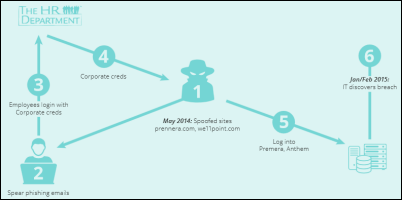
Digital health firms, say goodbye to easy venture capital

Analysts at the JP Morgan Healthcare Conference forecasted a contraction in digital health investments in 2016 due to poor healthcare IT stock performance. GE Ventures director Ruchita Sinha says, “There will be a correction. There’s a strong sense of realism coming back into the market.”

Devin Jopp Resigns as President and CEO of WEDI

WEDI president and CEO Devin Jopp resigns and is now the CEO at Future Focus Health, a health IT consulting agency. The WEDI Board of Directors has formed a search committee to identify a replacement.

Text Ads


RECENT COMMENTS

  1. Isn't that actually present perfect indicative?

Founding Sponsors


Platinum Sponsors


Gold Sponsors


RSS Webinars

  • An error has occurred, which probably means the feed is down. Try again later.