Quality Systems announces that President and CEO Steven T. Plochocki will retire from the Company, effective June 30, 2015. He will be replaced by Rusty Frantz, former Carefusion SVP/GM.
John Halamka, MD and CIO at Beth Israel Deaconess Medical Center, calls for the end of the Meaningful Use program, proposing instead that Congress hold providers accountable for outcomes and let the free market dictate which technologies will work best to pursue those goals.
The Washington Post covers the impact patient satisfaction scores are having on clinical economics and the various efforts being undertaken by hospitals and practices to monitor and improve their online reputations.
Former Facebook CFO David Ebersman launches a new business, backed by a seed investment from Venrock, focused on improving population health efforts in the behavioral health space.
Quality Systems (NextGen) announces the retirement of President and CEO Steven Plochoki. He will be replaced by Carefusion SVP/GM Rusty Frantz. QSII share price dropped 14.5 percent in Plochoki’s seven-year tenure vs. the Nasdaq’s 111 percent gain.
Reader Comments
From LearnHealthTech: “Re: Florida Governor Rick Scott. Thanks for the new article on the stunningly corrupt and hypocritical governor. After defrauding taxpayers as a hospital CEO, he wants to go after non-profit hospitals for turning a profit.” Both for-profit and non-profit hospitals have plenty to be ashamed about, but Columbia/HCA’s felony fraud guilty pleas and $2 billion in settlement costs top the list. I suppose I shouldn’t be so critical because: (a) our healthcare system rewards aggressive business tactics, as evidenced by the stock market success of for-profit hospital operators and big healthcare-focused companies like McKesson and any number of insurers; (b) CMS’s “pay and chase” payment methods encourage health systems and companies to interpret its rules favorably in asking forgiveness rather than permission, no different than companies dealing with the IRS; and (c) Scott is right about the non-profit hospitals that still manage to have hundreds of millions of dollars in “excess revenue” that never seems to result in their overpaid CEOs offering to return the money, which usually means they just spend it on outcomes-indifferent activities such as buying up physician practices or erecting fancier buildings.
From Marshall: “Re: Connecticut hospital CEO salaries. Boosted handsomely.” Ten non-profit hospital executives made between $1 million to $3.52 million, with one CEO’s compensation increased 133 percent from $1 million to $2.3 million in just one year, while a second CEO saw his pay bumped by 85 percent to $3.1 million in the same year. The health systems didn’t provide a response to the newspaper’s inquiries, but it’s always the same anyway: (a) we have to pay that to keep him and we’re lucky he hasn’t left for greener pastures; (b) it’s not our fault that the market commands such high salaries and it’s a really hard job; or (c) we’re not really paying that much – it just looks that way because of one-time benefits such as payout of accrued retirement or severance benefits.
HIStalk Announcements and Requests
Thanks to the following sponsors, new and renewing, that recently supported HIStalk, HIStalk Practice, and HIStalk Connect. Click a logo for more information.
This week on HIStalk Connect: Dallas-based telehealth provider Teladoc enjoys its first victory in its antitrust lawsuit against the Texas Medical Board. The National Cancer Institute announces the start of a multi-arm cancer research project that will attempt to match cancer drugs with cancer-related genetic mutations. Google’s artificial intelligence research team is working on an app that will calculate the total calories in a plate of food by analyzing a picture of it. Rockwood City, CA-based digital health startup BaseHealth launches a genome API that will enable developers to integrate personalized care plans and risk reports into wellness applications.
This week on HIStalk Practice: Persivia CEO Mansoor Khan gives Jenn the scoop on starting up a new population health management company. Northwestern Counseling & Support Services connects to the Vermont HIE. Dr. Gregg describes the “bastardization” of HIT. CVS Health partners with HHS. Hughston Clinic rolls out TrainerRx software. TMA PracticeEdge COO Dave Spalding lays out the vision for ACOs in Texas. CMS opens up data for further research and development, and gives physicians an easy way to rat out information blockers. Solutions Recovery Center goes with ZenCharts. Gastro Health launches virtual support community.
I was thinking about the plethora (and increasing number) of proprietary body sensors tied to specific apps or services. That sensor-app connection is mandatory at the moment, particularly with FDA-approved systems, but at some point the sensor overlap and need for economy of scale would seem to make it desirable for a single universal sensor that all health and fitness apps can talk to. It seems inefficient for every app vendor to develop and maintain yet another heart rate or calories-burned gadget, especially when consumers need or want information that requires more than one of them.
Webinars
June 9 (Tuesday) 11:30 ET. “Successful HIEs DO Exist: Best Practices for Care Coordination.” Sponsored by Medicity. Presenters: Dan Paoletti, CEO, Ohio Health Information Partnership; Brian Ahier, director of standards and government affairs, Medicity. Not all HIEs are dead – some, like Ohio’s CliniSync HIE, are evolving and forging a new path to successful care coordination. Brian Ahier will explain how HIEs can help providers move to value-based care models, emphasizing Meaningful Use Stage 3 and FHIR. Dan Paoletti will provide best practices in describing CliniSync’s journey to success in serving 6,000 primary care physicians, 141 hospitals, and and 290 long-term and post-acute care facilities. Attendees will learn how to use a phased approach, establish client champions, help providers meet MU Stage 2, create a provider email directory, deliver care coordination tools, and drive continued ROI.
Acquisitions, Funding, Business, and Stock
Genstar, owner of behavioral EHR vendor Netsmart, has reportedly retained an investment bank to either take the company public or sell it, with a potential price of $750 million. Also on the block, according to insiders, are health IT firms Precyse Solutions, Mediware, Edifecs, Caradigm, and Altegra Health.
Telemedicine provider Carena receives $13.3 million in funding from Cambia Health Solutions and McKesson Ventures to continue development of its virtual clinic solutions, which it says can be brought live 90 days after signing as a branded virtual clinic.
GE is rumored to be shopping its GE Capital Healthcare Financial Services unit for up to $11 billion as it dismantles GE Capital.
Shares of value-based care consulting firm Evolent Health begin trading on the New York Stock Exchange Friday at $17, which values the company — formed in 2011 by UPMC Health Plan and The Advisory Board Company — at $800 million.
Sales
East Jefferson General Hospital (LA) signs up for MedCPU’s clinical decision support system. I interviewed EJGH CMIO Beau Raymond, MD a couple of weeks ago.
Penn State Hershey Medical Center chooses PeraHealth’s clinical surveillance system.
People
Patient engagement solutions vendor TeleHealth Services names Gary Kolbeck (GK Consulting Services) as VP of business development.
Ted Reynolds (CTG Health Solutions) joins Impact Advisors as VP.
Announcements and Implementations
Provide Medical Park (WA) goes live on the Advantages RTLS patient flow system from Versus Technology, which allows patients to skip the waiting room and proceed directly to an available exam room.
CitiusTech launches CQ-IQ, a cloud-hosted quality analytics platform for CQM reporting that includes 250 pre-built quality measures across several care settings. I interviewed CEO Rizwan Koita in January.
Former Facebook CFO David Ebersman launches Lyra Health, which offers behavioral health screening tools and care coordination. His co-founder and chief medical officer is Dena Bravata, MD, who left Castlight Health in December 2014 after five years as chief medical officer and head of products.
Two public relations firms, one of which focuses on sensitive federal government issues, form ATDigitalHealth, which will promote interoperability and telehealth services to lawmakers.
Government and Politics
The opening of the Topeka, KS VA hospital’s ED – closed for almost a year and a half due to staffing shortages — is delayed for at least six more weeks as the VA’s central office requires it to upgrade its EDIS.
Privacy and Security
A report by cyberdefense vendor TrapX finds that most healthcare organizations are vulnerable to Medjack (medical device hijack), where hackers locate unpatched, Internet-connected medical devices and use them as a back door to penetrate the health system’s network. The attacks, which are made easier by FDA restrictions on keeping devices it has approved updated, are hard to detect since security teams can’t view a device console and can’t just disconnect them for maintenance.
Plans by the Federal Employees Health Benefits Program to launch a claims database of federal employees for third-party cost analysis are criticized by privacy advocates, unions, and consumer groups who question the potential privacy exposure.
Technology
A Harvard-developed blood test that costs as little as $25 can detect nearly every virus to which a person has been exposed, potentially allowing epidemiologists to track diseases and to determine optimal vaccination ages.
Other
East Texas Medical Center sues Blue Cross, Aetna, and Cigna for excluding the hospital from their PPO networks in what it says is a violation of Texas insurance code.
I’m not surprised by Will Weider’s tweet. What we think patients want, as often is the case, isn’t what they really want. It’s smug paternalism to presume either way without actually asking them or letting their actions speak for themselves.
Clint Eastwood will direct a movie version of US Air pilot Sully Sullenberger’s biography, most likely dramatizing the “Miracle on the Hudson” story of his saving his own life (and in doing so, the lives of his passengers) rather than his later, less-dramatic safety efforts.
A Washington Post article says hospitals struggle to meet unrealistic consumer expectations as they try to manage their social media reputations, with patients rating doctors and nurses on bedside manner and convenience while providers are focused instead on delivering clinical outcomes. It mentions HealthLoop’s tailored follow-up messages and responses that help doctors know when to intervene after an encounter, citing an unnamed hospital whose satisfaction scores jumped 11 percent after implementing HealthLoop.
BIDMC CIO John Halamka, MD says the Meaningful Use program should be shut down and replaced with outcomes-based CMS incentives, with ONC refocusing its work to create a national provider messaging directory, encourage the use of a voluntary national patient identifier, work to streamline state-specific privacy laws, coordinate federal health IT priorities, and support private sector initiatives. He says interoperability demands have changed in a value-based care world and that the private sector is best equipped to meet market needs, urging that the industry “help providers do their job and improve satisfaction to the point that Congress no longer wants to legislate the solution to the problem.”
Several high-profile health IT bloggers who are patients of One Medical Group call out the supposedly tech-savvy concierge medicine company on Twitter for not providing online bill payments and for being unable to give patients digital copies of their records.
British Medical Journal reorganizes its software development teams as it moves from publisher to a vendor of point-of-care clinical guidance.
An anesthesiologist says it’s not just OR personnel who are distracted by screwing around with their phones instead of doing their jobs. He provides a first-hand example of a teen struck by a car and awaiting surgery who was taking selfies from his hospital bed while one parent was texting and the other was posting to Facebook, all of them scolding the anesthesiologist for interrupting them as he tried to take a pre-op history. He urges health professionals to educate the public about addiction to texting and social media.
Sponsor Updates
Patientco CFO Kurt Lovell is recognized by the Atlanta Business Chronicle as a CFO of the Year finalist.
Impact Advisors is named to Crain’s Chicago “Fast 50 List” as the #21 fastest-growing Chicago company.
Healthloop is featured in an Economist article titled “Small data from patients at home will mean big cost savings.”
Nordic profiles practice director and cheese carver Joey Vosters, who says he’ll carve the company’s logo for the next work party if Nordic will get him a 45-pound block of cheese.
Patientkeeper offers “About Nurses, Patience, and EHRs.”
Iatric Systems announces successful integration of Welch Allyn and Nihon Kohden medical devices with the EHR of Halifax Regional Medical Center (NC) using its Accelero Connect solution.
MedData will exhibit at the Coastal Emergency Medicine Conference June 5-6 in Kiawah Island, SC.
Navicure offers “Setting Goals to Improve Patient Collections and Total RCM.”
Nordic hosts a meetup for Houston-area consultants and candidates on June 5.
Oneview Healthcare Head of Solutions Niall O’Neill talks to NewJobRadio.
Orion Health offers “Why you should be an engaged patient.”
Passport Health will hold a Northeast User Group Meeting June 11-12.
PatientSafe Solutions offers “Patient Centered Care: Is It Really That New?”
PDS publishes “Technology and the Group Purchasing Organization Business Model.”
Phynd Technologies offers “My Time at the More Disruption Please Hill Day.”
New York eHealth Collaborative will exhibit at NYHIMA’s 2015 Annual Conference June 7-10 in Syracuse, NY.
PMD posts “Purpose Build: EHR Mobile Apps vs. PMD Charge Capture.”
Qpid Health offers “’Human-Digestible’ Documentation Tops AMIA EHR 2020 Task Force Recommendations.”
Extension Healthcare offers “Bridging the Gap Between Clinical Users and Health Tech Managers.”
Galen Healthcare Solutions recaps its experience at the 2015 MUSE conference.
Beth Israel Deaconess Medical Center CIO John Halamka, MD contributes to the debut of Hayes Management Consulting’s new Healthcare Leaders series.
HDS posts “The High Price of Health IT Security Breaches: $6B.”
The Atlanta Journal-Constitution profiles entrepreneur Greg Foster’s battle with brain cancer while starting Brightwhistle, which was recently acquired by Influence Health.
InstaMed publishes a new white paper entitled, “New Expectations: The Payment Experience Members Want from US Health Plans.”
Intellect Resources offers “Healthcare IT Jobs: Carpe Diem.”
Partners HealthCare (MA) goes live on Epic at a cost of $1.2 billion, double its original $600 million estimate, making the project the single largest investment the health system has ever made. The Boston Globe article quotes a Tufts professor and Health Policy Commission member as saying, “We will ultimately all pay for it. Will we get dividends back in terms of better care and greater efficiencies? We don’t know yet.”
Reader Comments
From Around St. Louis: “Re: SLU Hospital. The university is buying their hospital back and conjoining with SSM to run it. SLU Hospital was the only Tenet hospital with Epic – all others are on Cerner.” The 356-bed hospital wasn’t happy that buyer Tenet, which paid $300 million for the hospital, failed to establish a regional network. The city will lose $6 million in annual tax revenue that for-profit Tenet was paying that SSM won’t, although the mayor’s office say it’s happy with the hospital providing “quality healthcare, jobs, and expansion,” thus neatly illustrating that it’s tough to control healthcare costs when everybody likes the huge employment it creates at public expense.
HIStalk Announcements and Requests
Mr. K sent a photo of students with the Bluetooth speaker we provided to his Wisconsin PE class via DonorsChoose, which apparently was a great student motivator for our $178 donation. Mrs. F’s Ohio first graders are using their STEM kits in summer school sessions where they learn “while they think they are playing,” she reports. Meanwhile, companies donating $1,000 or more to our DonorsChoose project get mentioned and double their impact via matching funds provided by an anonymous HIT vendor executive – contact me.
I was thinking about complaints that providers don’t make EHR data available to patients vs. the tiny percentage of patients who actually request it. Someone should perform a study to determine the level of demand and the reasons people aren’t requesting their information. I haven’t seen anything to suggest that providers are denying those requests, so targeting them as the villain doesn’t make sense. Proponents should be taking their case to the public, not to providers and EHR vendors. I’ve never requested my own information or changed providers just because I couldn’t get it easily – have you?
I was also thinking that among all the unrealistic expectations placed on health IT to improve health, a big one is caused by consumers who think a huge problem is misdiagnosis. That’s a minor issue compared to lack of consistent, evidence-based treatment of easily diagnosed conditions in which the patient accepts full responsibility for their outcome. Improving outcomes and cost for obvious conditions such as COPD, diabetes, and heart disease unfortunately isn’t as sexy as uncovering a gene for an obscure disease or using Watson to suggest treatments. The transition to a public health mindset is slow and patients don’t like hearing that the answer to their problems is willpower, moderation, and acceptance rather than a decisive, inconvenience-free prescription or procedure.
Webinars
June 9 (Tuesday) 11:30 ET. “Successful HIEs DO Exist: Best Practices for Care Coordination.” Sponsored by Medicity. Presenters: Dan Paoletti, CEO, Ohio Health Information Partnership; Brian Ahier, director of standards and government affairs, Medicity. Not all HIEs are dead – some, like Ohio’s CliniSync HIE, are evolving and forging a new path to successful care coordination. Brian Ahier will explain how HIEs can help providers move to value-based care models, emphasizing Meaningful Use Stage 3 and FHIR. Dan Paoletti will provide best practices in describing CliniSync’s journey to success in serving 6,000 primary care physicians, 141 hospitals, and and 290 long-term and post-acute care facilities. Attendees will learn how to use a phased approach, establish client champions, help providers meet MU Stage 2, create a provider email directory, deliver care coordination tools, and drive continued ROI.
Acquisitions, Funding, Business, and Stock
Post-hospital care coordination systems vendor Careport Health closes $3.8 million in financing.
McKesson sells its Care Management business, which offers case and disease management services to payers, to investors who will rename it AxisPoint Health.
Premier acquires CommunityFocus, a community health needs assessment management solution jointly developed by UNC-Charlotte and Premier that will be incorporated into PremierConnect.
Sales
Kingsbrook Jewish Medical Center (NY) will use CipherHealth’s Echo to provide secure, online audio recordings of verbal discharge instructions to visually impaired patients.
Kentucky Medical Services Foundation chooses MedAptus Enroll for managing provider credentialing.
People
Payor platform vendor Healthx names Sean Downs (Enclarity) as CEO.
Government and Politics
Vermont Governor Peter Shumlin says a successful software upgrade to the state’s troubled health insurance exchange system this week will reduce the time required for “change in circumstance” updates, but adds that consumers will still need personal staff help until more changes are made in the fall and that warns that it will take time to catch up on the 10,000 changes that have been backlogged. Optum met the May 31 deadline for applying the update but must clear the backlog by October 1 to keep the state from considering shutting down the exchange and moving to Healthcare.gov.
Privacy and Security
Cottage Healthcare System’s (CA) cybersecurity insurer demands that the hospital repay $4.1 million it provided in settlement costs following a 32,500-patient data breach in 2013, saying the health system lied on its application in saying that it was applying patches, performing annual audits, and verifying the security capabilities of its outsourcers. The hospital failed to update the default FTP settings of servers, allowing patient information to display on Google searches.
Other
County-operated 439-bed Riverside County Regional Medical Center (CA) requests $53 million to convert to Loma Linda University Health’s Epic system, which I believe would replace Siemens Soarian for inpatient and NextGen for ambulatory.
A Northwestern University study finds that 84 percent of teens have looked up health information online (mostly by Googling a topic and clicking on the first link presented) and 21 percent have download health-related mobile apps, although two-thirds of them say they didn’t change their behaviors based on health information or tools. Three-fourths of teens were at least moderately satisfied with the information they found, but a significant percentage also ran across negative information such as how to manufacture drugs, play drinking games, or create eating disorders. Only seven percent had ever used a fitness tracker.
A New York Times analysis finds that hospitals are jacking up their list prices (paid only by uninsured and out-of-network patients) at double the rate of inflation, while their Medicare payments remain flat.
A study finds that 8.2 percent of ED patients returned within three days, with a third of them choosing a different ED and the second visit often costing a lot more than the first. The highest revisit rate involved skin infections that probably shouldn’t have required an ED visit in the first place, but of course most doctors in private practice work banker’s hours in rarely being available without an appointment and nearly never between 5 p.m. and 8 a.m., leaving the ED as the only medical “open now” sign on for well more than half the day unless you count urgent care clinics that actually expect patients to pay upfront instead of if and when they get around to it.
Your cutting edge, contemporary, and fresh HIMSS16 presentation proposal is due June 15, a mere 8.5 months before you’ll actually present it.
AOL founder Steve Case, now an investor, says healthcare is one of the big economic sectors that will be disrupted by startups, for which he advises perseverance, partnerships, and policy. On the other hand, Steve’s one hit was dumping AOL on the clueless and Internet-terrified Time Warner in a disastrous and scandal-driven 2001 dot-bomb merger, with his follow-up Revolution Health sinking without a trace and his current healthcare IT investments being companies I’ve never heard of. He spoke at HIMSS08 back when it still looked like he might disrupt healthcare.
Weird News Andy flipped over this story that he titles “spatuvula.” A woman tries to clear her allergy-swollen throat using a foot-long kitchen spatula handle, removal of which (and part of her esophagus)required emergency surgery. WNA loves the bonus story at the end that describes a doctor removing a fish from a boy’s throat on camera, leading WNA to question whether he was paid scale.
Sponsor Updates
Valence Health is named as one of Chicago’s fastest-growing companies with its 50 percent annual growth rate and 800 employees.
Cumberland Consulting Group’s Annamarie Lee will present “Navigate Complexities of Contracting and Government Compliance” at CBI’s Medicaid and Government Pricing Congress this week in Orlando.
Health Catalyst is named as one of the best places for millennials to work.
Forward Health Group CEO Michael Barbouche is interviewed by a Madison newspaper.
A judge approves an injunction requested by Dallas-based telemedicine provider Teladoc against the Texas Medical Board for its new rule that requires doctors to conduct a face-to-face patient visit before issuing a prescription.
Reader Comments
From Talking About BS: “Re: Athenahealth. Has spent almost $1 million on lobbying so far in 2014-15 and VP Dan Haley is listed in OpenSecrets.org as a ‘revolving door’ lobbyist, described as federal employees turned lobbyists and vice versa. Athena’s cloud vapor simply isn’t selling to real customers and instead is being sold to Wall Street and Congress. Einhorn has this company pegged.”
From Travlinman: “Re: Epic. Guarantees ongoing interoperability with TeleTracking. Are they going to start playing nice with other vendors?”
HIStalk Announcements and Requests
More than half of poll respondents think Cerner is the HIT stock to buy. New poll to your right or here: who is most to blame for lack of patient data sharing among providers? Vote and then click the poll’s comments link to make your case.
I have no idea what a Rekenrek is, but Ms. S says her Indiana first graders are using the ones we bought via our DonorsChoose project daily for Math Warm-Up, adding that, “We had been using Rekenreks that we made on our own that are falling apart, so to see professionally made ones is wonderful!”
I seem to be especially cranky about grammar these days, so add these to my already long list: (a) starting sentences with the word “So” like a drunken bar patron launching into a long, dull anecdote; (b) sloppy use of geographic terms such as “a German doctor” that could mean a doctor from Germany, a doctor in Germany, or both; (c) using “less” rather than “fewer” in describing a collection of individual items, as in erroneously stating, “The event had less people than before”; (d) confusing “I” with “me” as in incorrectly proclaiming, “My brother came to visit Mary and I.” There, now I feel better.
I’m also annoyed by the expression “EHR mandates.” Nobody requires doctors to use EHRs except perhaps their employers – they just pay them extra if they do.
Last Week’s Most Interesting News
HHS names Susannah Fox as its new CTO.
Two entrepreneurs who sold DiagnosisOne to Alere in 2012 buy back the business – now known as Alere Analyics – to form Persivia.
Athenahealth VP of Government and Regulatory Affairs Dan Haley said in a New York Times article titled “Tech Rivalries Impede Digital Medical Record Sharing” that customers typically pay EHR vendors $1 million upfront, $500,000 per year, and $2 per patient record to exchange information with other systems.
Forbes names Epic CEO Judy Faulkner as the wealthiest women in all of technology with an estimated $2.6 billion net worth.
Cerner told shareholders that it recorded $4.25 billion in sales for 2014.
Webinars
June 9 (Tuesday) 11:30 ET. “Successful HIEs DO Exist: Best Practices for Care Coordination.” Sponsored by Medicity. Presenters: Dan Paoletti, CEO, Ohio Health Information Partnership; Brian Ahier, director of standards and government affairs, Medicity. Not all HIEs are dead – some, like Ohio’s CliniSync HIE, are evolving and forging a new path to successful care coordination. Brian Ahier will explain how HIEs can help providers move to value-based care models, emphasizing Meaningful Use Stage 3 and FHIR. Dan Paoletti will provide best practices in describing CliniSync’s journey to success in serving 6,000 primary care physicians, 141 hospitals, and and 290 long-term and post-acute care facilities. Attendees will learn how to use a phased approach, establish client champions, help providers meet MU Stage 2, create a provider email directory, deliver care coordination tools, and drive continued ROI.
People
Tim Theriault, global CIO of Walgreens Boots Alliance (the former Walgreen), resigns for personal reasons. He will be replaced by Anthony Roberts, SVP/international CIO. Roberts came on board with the December 2014 Boots acquisition.
Former Meriter CIO Peter Strombom died May 18 at his home in Costa Rica. He was 75.
Jeremy Delinsky, chief product officer at Athenahealth, resigns after five months in the position to take a CTO position with an online furniture company. ATHN shares dropped more than 5 percent Friday following the announcement. His interim replacement will be VP Kyle Armbrester. ATHN shares are down 20 percent so far in 2015.
Announcements and Implementations
Athenahealth offers athenaCommunicator Enterprise to new customers who participate in an ACO for a flat 10 percent of their MSSP shared savings payouts.
Government and Politics
Florida Governor Rick Scott, former CEO of for-profit and fraud-admitting Columbia/HCA, wants to hold the state’s non-profit hospitals more accountable for their huge profits, topped by Lee Memorial Health System’s $230 million.
Technology
Ashish Jha of Harvard tweeted out rave comments about Doc Stats, an app that shows the approximate number of procedures a doctor performs as derived from CMS data.
A Bay Area recycling firm is looking for a woman who dropped off garage junk following her husband’s death that included an Apple I computer, one of only 200 that were hand built by Steve Jobs and Steve Wozniak in 1976. The company wants to give the woman $100,000, her half of the amount a private collector paid to buy it from them.
Other
AMIA’s EHR 2020 task force publishes its recommendations. Many of them are observations of the current state or non-specific ideas about long-term changes that I didn’t find especially compelling or novel, but a few actionable items are:
Use natural language processing to convert free text notes to discrete data and reduce reliance on documentation templates.
Spend government money to study data entry methods and encourage the use of those that improve provider efficiency.
Slow down or freeze the Meaningful Use and certification requirements.
Eliminate requirements for providers to enter EHR information that isn’t used for direct patient benefit.
Eliminate E&M codes and checkbox-driven data entry that fails to capture the patient’s voice.
Allow vendors to meet MU certification with less-prescriptive methods and require them to post video recordings of their system so that EHR purchasers can see how they work.
Create the national Health IT Safety Center.
Require vendors to offer APIs to earn certification.
The board of Erlanger Health System (TN) approves its $91 million Epic contract, which will also require $97 million in maintenance costs over the next 10 years. The CFO says Epic beat Cerner on price and the selection committee preferred Epic 28 votes to two.
The Indianapolis business paper profiles ICUcare, which puzzling offers both a smartcard-based PHR (the company owner says he spent $25 million to develop it) and a telemedicine platform. The owner says the company has 12 employees and $3.5 million in revenue, some of which should probably be directed to updating the website, whish announces plans to release new technology in June 2010 and that lists Windows Vista as the required operating system (those are just the tip of the “ice-burg,” it says).
A Florida hospital tests the Internet lag time in performing telesurgery using the da Vinci surgical robot, finding that surgeons can’t tell the difference whether they are a few feet or a few states away from the patient.
Influential healthcare IT expert Jess Jacobs of Aetna’s Innovation Labs recounts her recent and current experiences (with photos) as an inpatient of a hospital that can’t do anything right – a bathroom sink clogged for three days with her roommate’s bloody vomit, having to use her own cellphone to coordinate the work of several attending doctors who hadn’t talked to each other, mixing up mouthwash with handwash, a nurse call system that didn’t work, the nursing staff’s disregard of her roommates sickle cell crisis pain, and the barring of her patient advocate (who is a medical student at the same organization) from participating in her care. She complained to hospital administration after an earlier visit and received a halfhearted apology blaming her being housed in a treatment room as due to unplanned admissions, an acknowledgment that it was “unfortunate” that the hospital didn’t allow her friend to serve as her patient advocate (without offering an explanation as to why), and defense of her roommate’s pain management as being appropriate based on medical evidence. She’s back in as an inpatient for intractable vomiting and says nothing has improved – the hospital missed her abnormal lab results, security guards confiscated her prescribed drugs and supplies and threatened to arrest her for objecting, and the hospital assigned a “sitter” who sleeps, talks loudly in the hall, and eats bacon in her room. The scary thing about her story is that it’s not unusual from my experience – everybody who lives through an inpatient stay can relate equally horrifying stories about the incompetence and indifference they encountered.
A good article in IEEE Spectrum describes how BIDMC CIO (and gentleman farmer) John Halamka, MD helped develop early big data platforms I2B2 and SHRINE that later may have saved his wife’s life as he researched the best treatment options for her newly diagnosed cancer based on historical outcomes. He adds in describing future innovation, “All these big companies are fine, but do we really think the next cool innovation is going to come out of an 8,000-person company? No. It’s probably a two-person garage operation.”
Another interesting IEEE Spectrum article addresses the healthcare uses of IBM’s Watson, which it concludes isn’t ready for prime time and may not be for some time because: (a) it not only has to find existing answers in existing content but also has be trained to think like a doctor; (b) journal articles Watson uses as source material aren’t always current or based on actual medical practice; (c) EHR databases are full of errors and focus more on billing rather than clinical usefulness. The article mentions other companies working on medical artificial intelligence such as QPID, DXplain, and CancerLinQ.
A small study of Facebook users finds that those with low self-esteem post often about their romantic partners, while those who brag about diet, exercise, and achievements are often narcissists who crave “likes” and positive comments from annoyed “friends” just trying to be nice.
MedData will exhibit at the Coastal Emergency Medicine Conference June 5-6 in South Carolina.
First Databank customer Joshua Schmees, PharmD of Hospital Sisters Health System describes the organization’s success in reducing alert fatigue by using FDB’s AlertSpace.
Quest Diagnostics employees raise over $11,000 in the American Cancer Society’s Relay for Life.
WeiserMazars posts pictures from its nationwide community service day.
NTT Data offers “Predictive Intelligence Brings Increased Value to Data.”
Versus Technology will exhibit at AAMI 2015 June 5-8 in Denver.
Truven Health Analytics posts “Understanding Your Exchange Population: Are You Asking the Right Questions?”
Microsoft summarizes the origins of Oneview Healthcare as part of its Customer Stories series.
Patientco offers “Out-of-Pocket Costs are Increasing Faster Than Expected.”
PatientPay Founder and CEO Tom Furr asks “What Would Steve Jobs Say?”
ZirMed posts “Leveraging Data Analytics, Keeping Up with Value-Based Care, and Rev Cycle Success at Stanford Children’s Health.”
PMD offers “Reusing Code to Improve Care Coordination.”
Wide River will host an educational event, Health IT: Compliance & Innovation, June 4 in Lincoln, NE.
Sagacious Consultants posts “What You Don’t Know Can Hurt You: the Importance of Measuring Productivity.”
Huron Consulting will sponsor the 2015 Aria Health Golf Classic June 1 in support of Philadelphia-based Aria Health’s ICU renovations.
The Nashville Business Journal features Shareable Ink CEO Hal Andrews in its “The Boss” video series.
Streamline Health will exhibit at the 2015 CHIA Convention & Exhibit June 8-10 in Palm Springs, CA.
T-System will exhibit at NYHIMA’s 2015 Annual Conference June 7-10 in Syracuse, NY.
TeleTracking offers “Making Interoperability a Commonplace.”
Valence Health Project Manager Jacob Krive will present a session on big data and population health at the University of Illinois College of Medicine Chicago June 3.
Patient advocate Susannah Fox (Pew Research Center) is named CTO of HHS. She replaces Bryan Sivak, who stepped down last month.
Reader Comments
From Publius: “Re: DoD EHR bid. Consulting firms are already contacting Epic consultants in regards to the IBM/Epic DHMSM bid. The communication is that the decision is anticipated to be made August 1, 2015, and consulting firms want to have a list of consultant resources ready to present as soon as the decision is made.” Unverified, but logical. The DoD project could be the equivalent of HITECH in spurring consultant demand, at least for those chosen to work on the project.
From Frank Poggio: “Re: Mr. H’s observation that patients aren’t Meaningful Users. That’s an idea for a new CMS program since it looks like ONC is struggling to find its next life! Everyone says that patient participation is a key to controlling healthcare costs, so ONC should develop a book of Meaningful Use criteria that is tied to a patient’s insurance premiums. If they don’t hit all criteria each year, their premiums double (or triple?), but if they hit them all, their premiums are cut in half. Since ONC would have to deal with some 100 million participants, they should easily be able to justify massive department budget increases.” I like it. When it comes to health, the customer definitely isn’t always right.
From Freddie Paris: “Re: New York Times article on interoperability. Wonder if Dan Haley would respond to a truth challenge to come up with any references to his assertion?” Athenahealth VP of Government and Regulatory Affairs Dan Haley was quoted in “Tech Rivalries Impede Digital Medical Record Sharing” as saying that IT vendors have business models that impede data sharing, a typical arrangement that he says costs customers $1 million to connect to another system, $500,000 per year to maintain the connection, and $2 each to send records to another system. Dan sent this response to my inquiry, which still doesn’t provide the $1 million vendor and client details the reader seeks:
The information I shared with Mr. Pear came from conversations with our clients and prospects who’ve told us firsthand and on countless occasions over the years about the exorbitant costs imposed by market-dominant vendors for out-of-platform information sharing. These costs are imposed in a number of ways: via one-time interface fees that can total more than a million of dollars for even a medium-sized health system; via annual interface maintenance charges that extend and compound that initial cost; and via per-transaction fees of the kind that one major vendor recently resolved to stop charging under pressure from Congress and others. The specific amounts vary, but are all large. The point is that any significant imposed cost for out-of-platform communication effectively discourages true interoperation and impedes progress toward the bipartisan societal goal of information fluidity in healthcare. As many in the industry know, vendor contracts are usually protected like the crown jewels, but they are sometimes obtainable via Freedom of Information Act requests directed at institutions that benefit from significant federal contracts. Enterprising reporters interested in this issue to should check for themselves. Clearly ONC gathered ample evidence of these business practices when preparing their recent information-blocking report. We are glad that both ONC and Congress are taking action.
From Carrollton Outsider: “Re: Lightbeam Health Solutions. Acquired by Greenway to be their population health solution.” Not true, said CEO Pat Cline when I asked him about the rumor, and he’s not talking to any entity about selling the company, either. Lightbeam announced a non-exclusive partnership with Greenway last year, one of several such agreements it has with EHR vendors to provide a PHM platform, but that’s it. I interviewed Pat a year ago if you want to know more about the company.
HIStalk Announcements and Requests
Welcome to new HIStalk Platinum Sponsor Boston Software Systems. The company revolutionizes how healthcare works by providing error-free automation for any application or purpose – EHR migration, streamlined business processes, and improved productivity. Its automation products are the most sophisticated available, giving customers the peace of mind that their critical data is 100 percent error free as it bridges the gap between their technologies. BSS’s reputation for ease of use and customer support is stellar. Check out the interviews with customers CVSHealth (onboarding new MinuteClinics), Unity Health System (improving discharge workflow), Methodist Houston (validating Medicare accounts), Fauquier Hospital (mass Meditech updates following a hospital acquisition), and CIO Kent Henriksen describing how his health system used BSS to migrate millions of clinical records to Epic. Thanks to Boston Software Systems for supporting HIStalk.
My latest grammar pet peeve is when people say something like, “If you have questions, please don’t hesitate to call,” the latter part of which can be equally clearly stated by just saying “call.” How many people would ever use the word “hesitate” except in this awkward form, and why can’t I hesitate if I want to? Peeve #2: a phrase such as “20 different physicians,” where nobody really needs the “different” part to understand that it’s not 20 of the same physician.
I was having odd, persistent “waiting on …” browser site loading messages that I fixed by reinstalling a solution I’ve used previously: OpenDNS. It’s a free, 30-second network connection change that bypasses slow, unreliable DNS lookups in replacing them with its own. It improved site load times quite a bit.
This week on HIStalk Practice: HHS awards $112 million to help primary care practices optimize EHR utilization to improve cardiac health outcomes. Morrow Family Medicine launches NeighborAide app for elderly patients and caregivers. Minnesota will no longer force solo docs to implement EHRs. The Illinois Gastroenterology Group rolls out new technology for Crohn’s patients. Physician practices show cloud-based EHRs some love, but still have reservations about data security. American Well CEO Roy Schoenberg, MD explains why the future of telemedicine is already in physician pockets.
DonorsChoose Project Updates
Ms. N from California shared photos of her disabled high school seniors using the Chromebook we provided as a DonorsChoose grant to type their essays, complete college applications, and apply for jobs. The second graders in Ms. A’s class in Texas are using the math games we bought to learn to count money, write fractions, measure objects, and tell time, and she adds that they are so popular that the kids make a beeline for them during indoor recess.
The $10,000 Challenge
A vendor executive who shall remain nameless was so moved by the participation and classroom reports that I’ve mentioned here that he/she is putting up $10,000 to match new DonorsChoose donations. If your company donates $1,000 or more (I’ll set up a credit card payment), I’ll feature it here and also apply matching funds from our anonymous benefactor, which will provide double bang for the buck (actually quadruple bang for the buck potentially, since I often find requests that will be matched by charitable groups such as the Bill & Melinda Gates Foundation). DonorsChoose is a stellar charity that spends 94 percent of its income on projects rather than overhead, paying its CEO and genius founder only $240K (and that’s New York city money, a rounding error in the salaries of health system CEOs there). Centura SVP/CIO Dana Moore, who conceived this HIStalk project in the first place and donated his time at HIMSS to encourage donations, has ideas to keep it going as well.
Webinars
June 9 (Tuesday) 11:30 ET. “Successful HIEs DO Exist: Best Practices for Care Coordination.” Sponsored by Medicity. Presenters: Dan Paoletti, CEO, Ohio Health Information Partnership; Brian Ahier, director of standards and government affairs, Medicity. Not all HIEs are dead – some, like Ohio’s CliniSync HIE, are evolving and forging a new path to successful care coordination. Brian Ahier will explain how HIEs can help providers move to value-based care models, emphasizing Meaningful Use Stage 3 and FHIR. Dan Paoletti will provide best practices in describing CliniSync’s journey to success in serving 6,000 primary care physicians, 141 hospitals, and and 290 long-term and post-acute care facilities. Attendees will learn how to use a phased approach, establish client champions, help providers meet MU Stage 2, create a provider email directory, deliver care coordination tools, and drive continued ROI.
Acquisitions, Funding, Business, and Stock
Cloud computing services vendor ClearData closes a $25 million Series C funding round.
Medical image exchange platform provider LifeImage closes a $17.5 million investment round led by non-profit insurance and health solutions company Cambia Health Solutions, which owns several healthcare technology vendors.
A construction company confirms that Allscripts will move its 1,000 Raleigh, NC employees into a new 12-story office tower that will open in the spring of 2017.
Forbes names Epic CEO Judy Faullkner as the wealthiest female in all of technology. The assets of the top 11 women combined ($10.6 billion) is 3 percent of the wealth of the top 11 men.
Sales
Community Hospital of the Monterey Peninsula (CA) and University of New Mexico Health Sciences Center choose revenue cycle management products from Experian Health/Passport.
Lakeland Health (MI) chooses ProVation Order Sets for clinical content management.
Announcements and Implementations
Nuance announces PowerScribe 360 Reporting v3.0, which allows radiologists to create higher quality reports using real-time, evidenced-based guidance developed by the American College of Radiology.
ToSense’s CoVa body-worn sensor (thoracic impedance, heart rate, heart rate variability, respiration rate, skin temperature, and posture) earns FDA 510(k) clearance. Elderly patients wear the necklace-type device in their homes for a few minutes each day to allow remote monitoring for heart failure.
CompuGroup Medical US and rehab services company Weston Group will partner to develop rehab modules for CGM’s webEHR.
Privacy and Security
Ohio’s medical board reprimands a radiologist for violating HIPAA by looking up the electronic medical records of a colleague for unstated reasons.
Other
Weird News Andy would enjoy captioning this photo of a virtual butt being used for medical student prostate exam training. In slightly related news, a Florida college will stop requiring female sonography students to perform vaginal probes on each other for ultrasound training and will instead move to simulators.
Bizarre: a father and son in their 70s are married after 52 years together, with the “bizarre” part being that in order to game the system in a state that doesn’t recognize domestic partnerships, one had adopted the other in 2000, a parental status the court agreed to vacate prior to their nuptials.
Sponsor Updates
First Databank President Chuck Tuchinda, MD provides advice for career success in a San Francisco TV interview.
Nordic posts a video of its Community Giveback Day activities on May 22. Check out the 1:00 mark when the guy recording Nordic employees working on a Habitat for Humanity house asks one of them, “What do you think your KLAS rankings for hammering upside down would be?”
VMware posts “New Research Highlights Clinical Benefits of Virtual Desktops.”
Healthfinch asks “How does a 21.7 hour work day sound to you?”
Impact Advisors posts “The Good, the Bad and the Ugly of Meaningful Use Stage 3: Objective 2 – ePrescribing.”
E-MDs will exhibit at the Texas Medical Society event June 1 in Austin.
Healthwise will exhibit at the AHIP Institute 2015 June 3-5 in Nashville.
InstaMed will present a session at the AHIP Institute 2015 on June 4 entitled, “Positive Member Payment Experience is Critical – See How Health Plans are Delivering.”
The two entrepreneurs who sold DiagnosisOne to Alere in 2012 buy back their former business, now known as Alere Analytics, to form Persivia. Alere bailed out of healthcare in the fall of 2014 by selling Alere Health to Optum for $600 million in an attempt to pay down company debt, with several of Alere Health’s products reverting back to their original owners. Alere is doing better after sticking with its diagnostics business – shares are up 43 percent in the past year after a price run-up that started in early January.
Reader Comments
From Stay KLASsy: “Re: Epic. The company has been abuzz in recent years about a downward trend in KLAS ratings. KLAS identified a distinct trend among Epic clients who have gone live in the past three years, who as a group are unhappy compared to customers that have been live longer. KLAS made the point in a presentation in Deep Space that was emphasized much more heavily in private meetings with Epic leadership. KLAS says Epic customers need Sherpas to help them up the mountain. Many of those recent go-live customers will be executing a ‘Sherpa Plan’ to make it all better. Let the flailing begin.” I’m always amazed that Epic’s high-paying customers happily accept full responsibility for helping the company solve its problems. Software is an ongoing relationship business – nobody who spends $200 million to implement software expects to just walk away with their purchase since they, too benefit from product improvements, but Epic excels at convincing passionate and heavily invested users to spend even more of their time to help it improve its products and services. Even Apple doesn’t have its own 11,400-seat underground auditorium.
From Truven Watcher: “Re: Truven’s Q1 results. Earnings are good, but increases in revenue were due solely to 2014 acquisitions. Debt has risen from $800 million at launch to $971 million today and lines of credit are decreasing from use with nearly zero free cash flow to invest in the business. No wonder Veritas Capital is looking to do an IPO – with lack of investor return, nobody would pay a premium to the $1.3 billion Veritas paid to buy the company from Thomson Reuters.” The great thing about IPOs in general (if you’re selling rather than buying, anyway) is that the army of calculator-fingering analysts who will later shred the company for missing revenue expectations by a tiny percentage are noticeably absent in critiquing whether the IPO price is fundamentally worth it – buyers are simply rolling the dice that the company’s story will be good enough to sell shares profitably to a greater fool down the road. The other great thing about being an IPO seller – other than making fistfuls of money – is that you as an expert insider know far more about what you’re selling than your buyer does, allowing you to set the price at which you’re willing to give up your shares to a seller who doesn’t have a clue. Veritas Capital paid $1.25 billion for what is now Truven in 2012 is rumored to be planning a $3 billion IPO, which would be a heck of a return after just three years of seemingly modest performance.
From Solemn Observer: “Re: Welltok’s acquisition of Predilytics. Welltok CEO Jeff Margolis was on the board of Predilytics, which has high-profile investors who may have seen Welltok as a higher-profile company with a better path to liquidity and value. All of these patient/consumer engagement companies are looking for an analytics angle.”
From Jerry Aldini: “Re: Ontario eHealth program. Still dealing with the fallout after years of controversy.” Scandal-ridden eHealth Ontario and CGI go to arbitration over their dueling lawsuits related to CGI’s firing in 2012, as the parties blame each other for missed deadlines and deliverables on the $37 million diabetes registry contract.
From F.Y. Cannibal: “Re: Meaningful Use. The Society for Participatory Medicine has complained to HHS about the proposed change from 5 percent of patients to just a single patient who must view, download, or transmit their information to meet the MU threshold.” I support the ability of patients to access their own information electronically, but I don’t agree with the need to protest the proposed MU changes, for the following reasons:
Doctors can’t control what their patients do. The unintended consequence of requiring them to view their information electronically is that patients will be tricked or forced into doing so, which seems to run counter to the demand that patients be willing and empowered participants in their health.
Providers already can’t hit the minimal 5 percent of patients threshold, indicating a clear lack of patient interest that isn’t the practice’s problem.
The purpose of Meaningful Use (other than interfering with the EHR free market using taxpayer dollars to fund a clash-for-clunkers program) was to encourage provider EHR adoption, not to force patients to change their behaviors against their will. The proposed “one patient” standard proves that the provider offers the capability and that should be threshold enough. Patients aren’t Meaningful Users.
Patient advocates should be marketing V/D/T to patients to create demand, not holding doctors accountable for the lack of it.
Lack of a randomly chosen V/D/T Meaningful Use threshold isn’t a vote against patient access or patient portals. It just means consumers need to demand it, use it, and be willing to change providers if they don’t get it. There’s inherently nothing pro- or anti-patient engagement in letting the market determine how widely offered and used patient engagement tools are. Just because something seems inherently desirable doesn’t mean the government needs to get involved to ensure that it happens.
From Sassy Lassie: “Re: Washington HIMSS board elections. All candidates appear to be vendors.” I’ve served on a HIMSS state chapter board and disproportionate vendor representation is their biggest problem. Health system people don’t have the time or motivation to participate, so vendor employees who are anxious for resume-building activities and networking opportunities dominate leadership positions, presenter slots, and meeting attendance. I won’t attend any event where vendor presenters outnumber provider ones – my assessment (as unintentionally insulting as it may be to vendor people) is that I’m not willing to spend my time and money to hear a vendor employee speak. I don’t question their competence or experience, just their ability to deliver an objective and interesting message after being subject to subtle, non-stop employer brainwashing and implicit muzzling. Chapter-level presentations aren’t usually very good in my experience anyway – chapters have to settle for whoever they can get and most of those folks are begrudging slot-fillers rather than brilliant, inspiring presenters who will take the time to craft a compelling message. My lessons learned as a chapter officer planning conferences are: (1) allow a ton of networking time; (2) schedule the day to end early since locals are more likely to sign up if they can get home by their normal quitting time; and (3) put most of your time and energy into feeding them.
HIStalk Announcements and Requests
My latest pet peeve: needy people who post dramatic Facebook non-sequiturs such as “I hate people” or “my life sucks,” desperately hoping one of their “friends” will urge them to elaborate so they can share an outburst of grammatically-challenged emotion in search of shallow empathy from people who aren’t interested enough to actually drop by or pick up the phone.
Hopefully it wasn’t lost in all the fun Memorial Day activities that the holiday is intended not for cookouts and car races, but rather to honor those who died while serving in the military.
Mrs. B sent over photos of her California first graders with severe disabilities using the sand and water table provided via our DonorsChoose project, saying they love the sensory learning time that also improves their social skills. Ms. T says the excitement and reading participation her Oklahoma sixth grade class has been “astounding” as they use the three iPad Minis we bought them for reading programs and to record themselves delivering presentations. I defy you to look at those faces and convince me that the money wasn’t well invested.
I was thinking about how expectations that patient portals be de-siloed are unique to healthcare. Nobody would expect competing online retailers to happily contribute their proprietary customer information into a single, unaffiliated website no matter how beneficial and convenient it might be for customers. I am constantly reminded of the healthcare relevance of my favorite quote from the magnificent football movie “North Dallas Forty” that also describes the incompatible business and social missions of healthcare: “Every time I call it a game, you call it a business. And every time I call it a business, you call it a game.”
A term I don’t like is “revenue leakage,” describing the ambitious desire of supposedly non-profit health systems to keep their patients from seeking care where they want it, an entitlement expectation that wouldn’t even be spoken aloud by any other business (does the CFO of Chili’s have an intervention plan to address the revenue leakage caused by my desire to go to Chipotle once in a while?) The term also reminds of the olestra-cooked, fat-free potato chip (Lay’s WOW) craze of the late 1990s, of which customers became scarce after being warned of chip-induced “anal oil leakage.”
Listening: envelope-pushing, technically flawless inspirational Christian thrash-metalcore from Pennsylvania-based August Burns Red, whose lyrics are as profound as they are unintelligible. Also: new 1980s-sounding hard rock from the trio of metal virtuosos in LA’s Winery Dogs, which has me desk-drumming along with former Dream Theater drummer Mike Portnoy since I’m hopped up on iced tea and diet cherry cola.
Webinars
May 27 (Wednesday) 1:00 ET. “Introducing Health Catalyst Academy: An Innovative Approach for Accelerating Outcomes Improvement.” Sponsored by Health Catalyst. Presenters: Tommy Prewitt, MD, director, Healthcare Delivery Institute at Horne LLP; Bryan Oshiro, MD, SVP and chief medical officer, Health Catalyst. The presenters, who are graduates of Intermountain’s Advanced Training Program, will introduce the Health Catalyst Academy’s Accelerated Practices program, a unique learning experience that provides the tools and knowledge for participants to improve quality, lower cost, accelerate improvement, and sustain gains.
June 9 (Tuesday) 11:30 ET. “Successful HIEs DO Exist: Best Practices for Care Coordination.” Sponsored by Medicity. Presenters: Dan Paoletti, CEO, Ohio Health Information Partnership; Brian Ahier, director of standards and government affairs, Medicity. Not all HIEs are dead – some, like Ohio’s CliniSync HIE, are evolving and forging a new path to successful care coordination. Brian Ahier will explain how HIEs can help providers move to value-based care models, emphasizing Meaningful Use Stage 3 and FHIR. Dan Paoletti will provide best practices in describing CliniSync’s journey to success in serving 6,000 primary care physicians, 141 hospitals, and and 290 long-term and post-acute care facilities. Attendees will learn how to use a phased approach, establish client champions, help providers meet MU Stage 2, create a provider email directory, deliver care coordination tools, and drive continued ROI.
Acquisitions, Funding, Business, and Stock
Varian Medical Systems, Flatiron Health, and UPMC will build an oncology EHR with analytics and decision support. One of the uncritical rags portrayed their motivation as the noble-sounding “fighting cancer” rather than the more closely aligned “hoping to make big profits” in which cancer is their widget of choice.
New Zealand-based Orion Health files its first financial update following its November IPO on the NZX, reporting a one-year loss of $44 million despite a 7 percent increase in revenue. The company’s North America business dragged down its numbers as the company blamed (as companies often do) the move to a recurring, subscription-based revenue model.
Penny stock sleep apnea and infrared thermometer technology vendor Sanomedics acquires addiction treatment EHR vendor ZenCharts, which it characterizes as “developmental stage.” Hopefully the price was right for the bizarre acquisition given that the most recent Sanomedics quarterly income was less than $200,000 vs. losses of $500,000 and its overall financial position is laid out in its most recent quarterly report as, “The Company currently has a working capital deficiency, limited revenue, and is experiencing recurring losses which have caused an accumulated deficit of $20,937,278 and a working capital deficit of $4,618,649 as of March 31, 2015. These factors raise substantial doubt about its ability to continue as a going concern. Management has financed the Company’s operations principally through the issuance of convertible debt instruments and loans from an affiliate of a former officer of the Company and a principal shareholder.” Imagine how desperate ZenCharts must have been if this was their best potential buyer.
Sales
Two UK trusts sign up for Allscripts PAS, which the announcement questionably fails to explain is the company’s UK-specific Patient Administration System.
Cedars-Sinai Health System chooses Bottomline Technologies for privacy and security technology.
I missed this UCSF article from last month that describes technologies used at UCSF Medical Center at Mission Bay, which includes the interactive patient care system of Oneview Healthcare and employee communications provided by Voalte.
Health Catalyst announces its Health Catalyst Academy educational program for clinical quality and efficiency.
Government and Politics
Part of the proposed 21st Century Cures legislation calls for FDA to capture and consider patient feedback as it reviews medical devices for approval.
Senator Joe Manchin (D-WV), stung by reports that 200 million doses of hydrocodone and oxycodone were shipped to the state’s 1.85 million residents over six years (that’s 18 doses of “hillbilly heroin” per year per person) demands that drug wholesalers to provide lists of where the drugs were sent so the state can look for “pill mills” (hint: look for the long but fast-moving lines). The large number of doses doesn’t include those bought from the country’s largest wholesaler, McKesson, since that company as well as second-largest Cardinal Health have declined to provide their numbers.
The VA says the 13 malware-infected medical devices it reported in January is down to four, but it still has problems with equipment that requires Windows XP and by technicians who scan for vulnerabilities using laptops that were also used for Web surfing.
Technology
Apple and IBM announce Apple Watch support for their Hospital RN app that I assume nobody is actually using yet.
A group of Kansas City high school and college students develops a wayfinding app for Children’s Mercy Hospital that brilliantly works around the lack of GPS signal penetration in hospitals by calculating routes based on the user’s manually entered “what do you see around you” visible landmarks, such as a room number or department name.
Other
An interesting Modern Healthcare analysis finds that 23 percent of doctors who prescribed at least $1 million worth of a given drug to Medicare patients were paid directly by the manufacturers of those drugs via consulting fees. For example, a since-indicted neurologist who directed $6.4 million in taxpayer spending for a pain relief drug was paid $56,000 by the drug’s manufacturer for various non-research services. It’s easy to determine which doctors hold an unhealthy appreciation for a given drug despite lack of evidence of its superiority, although much harder to peg their motivations to personal benefit.
USA Today profiles patient advocate Regina Holliday.
The FDA approves the marketing of InvisionHeart’s mobile, cloud-based ECG solution.
The Houston newspaper covers the practice of suing patients by Memorial Hermann’s Texas Medical Center. An uninsured oncology nurse patient who didn’t get a bill from the hospital found a lawsuit notice taped on her home’s front door but even then couldn’t get an itemized bill because the hospital’s two-year-old records had been archived. She finally found out that she had been charged $32,000 for two nights of observation, which the hospital wanted paid along with legal fees and interest. An attorney who represents the patients the hospital sues (it files more patient lawsuits than all other area hospitals) says nobody told them about charity care while they were in the hospital and the lawsuit documents always have the itemized medical charges redacted.
Former Beth Israel Deaconess Medical Center CEO Paul Levy names names in saying that the noble Triple Aim has been hijacked by big hospitals to suit their own ambitions, such as ACOs that are usually formed by economically inefficient health systems that wrest patient control from physician practices that might otherwise help them choose a hospital based on outcomes and costs, sticking consumers with the resulting loss of choice and higher costs. The places he calls out but also warns that it’s not just them by any means:
Places like Mayo Clinic, investing $180 million in a proton beam facility when there are similar facilities within easy traveling distance for those very few families who can benefit clinically from them. Places like North Shore-Long Island Jewish, belying its stated strategic objectives ("to realize cost efficiencies and ensure patient safety through adherence to best practices") by providing space, support, and publicity for a prominent doctor who affirmatively advocates overuse of diagnostic tools. Places like the University of Illinois-Chicago, the University of California, and dozens of others who gladly accept "walking around money" for themselves and their surgeons from a medical equipment supplier to invest in market-share-growing robotic surgery.
Levy explains from one of his previous posts:
It’s not that the doctors and nurses are any less caring or dedicated, but rather that the leaders of these centers have become calcified with regard to their social mission. They focus instead on expanding market share, growing margins, and attracting philanthropists to contribute to unnecessary and flamboyant edifices. They have no real interest in reducing costs, but rather in obtaining and securing revenue streams to cover ever-increasing costs. Most importantly, they neglect the harm they cause to patients in their facilities, preferring to assert that they deliver high quality care without being willing to be transparent with regard to actual clinical outcomes.
Weird News Andy calls this story “worst nurse cursed.” A London hospital nurse gets a life sentence for overdosing 21 hospital patients with insulin, killing two of them, by injecting it into stock IV bags and allowing other nurses to earn undeserved guilt by unwittingly administering them.
Sponsor Updates
VBP Monitor publishes “Exchange and Narrow Network Dominance: Market Implications for Healthcare Providers” by Valence Health Co-Founder/COO Todd Stockard.
Divurgent will host a cybersecurity dinner discussion with John Gomez of Sensato May 28 in New York City.
MEA/NEA CEO Lindy Benton publishes an article announcing that CMS records show that the company has exchanged 425,000 unique medical records via esMD (electronic submission of medical documentation), more than any other vendor.
PatientKeeper will showcase its physician workflow software at the 2015 International MUSE Conference that started Tuesday in Nashville.
AirStrip offers “Keeping Up with (and Getting Ahead of) an Every-Changing Healthcare Model.”
Caradigm offers “Rethinking the Business of Healthcare.”
Inc. takes a look at the ways in which CommVault keeps its employees happy and healthy.
CoverMyMeds will exhibit at AMIA’s iHealth 2015 Conference May 28-29 in Boston.
Cerner tops its 2013 $3.8 billion new contract sales record with $4.25 billion in new sales in 2014, according to figures released during the company’s annual shareholders meeting. The company expects $1 billion in 2015 revenue to come from its Siemens acquisition. Cerner saw new business growth with state, specialty, regional, and community hospitals, and record contract sales in the physician market. CEO Neal Patterson focused on the need to look beyond EHRs to keep the company’s fiscal success going: "It’s up to us as leaders to continue the growth. You couldn’t find an intersection that has got more potential than what we’re at.”
HIStalk Announcements and Requests
Check out Jenn’s weekly wrap up of population health management news.
Last Week’s Most Interesting News
Allscripts lays off 250 employees across its service, support, solutions management, sales, and G&A departments as part of a wider “rebalancing” effort.
The House Energy and Commerce Committee unanimously approves the 21st Century Cures Act, sending the legislation to the House floor for a vote.
Lahey Health (MA) lays off 130 people due to the unusually brutal winter in New England this year and its $160 million Epic implementation, which together resulted in a $21 million operating loss for the first six months of 2015.
CareFirst BlueCross BlueShield announces a June 2014 data breach affecting 1.1 million members in Maryland and Washington, D.C.
The battle of the ICD-10 bills heats up: Rep. Diane Black (R-TN) introduces the ICD-TEN Act, a bill that would introduce an 18-month period during which providers could submit claims in either ICD-9 or ICD-10 format, while the AHA proclaims its support for Rep. Ted Poe’s (R-TX) Cutting Costly Codes Act of 2015, which would cancel the migration to ICD-10 completely.
Webinars
May 27 (Wednesday) 1:00 ET. “Introducing Health Catalyst Academy: An Innovative Approach for Accelerating Outcomes Improvement.” Sponsored by Health Catalyst. Presenters: Tommy Prewitt, MD, director, Healthcare Delivery Institute at Horne LLP; Bryan Oshiro, MD, SVP and chief medical officer, Health Catalyst. The presenters, who are graduates of Intermountain’s Advanced Training Program, will introduce the Health Catalyst Academy’s Accelerated Practices program, a unique learning experience that provides the tools and knowledge for participants to improve quality, lower cost, accelerate improvement, and sustain gains.
Announcements and Implementations
The Colorado Dept. of Health Care Policy and Financing selects nonprofit population health management technology company eQHealth Solutions to manage its ColoradoPAR utilization management program for Medicaid patients.
Visage Imaging receives FDA clearance for the use of its Visage Ease Pro app, part of its enterprise imaging platform, for mobile diagnostic interpretation of all imaging studies except mammography.
Government and Politics
Rep. Glenn Thompson (R-PA) and Rep. Charles Rangel (D-NY) introduce H.R. 2516, the Veterans E-Health and Telemedicine Support Act of 2015. The bipartisan legislation would enable VA health professionals to practice telemedicine across state lines if they are qualified, and practice within the scope of their authorized federal duties. It would also enable veterans to receive telemedicine treatment from anywhere, including their home or a community center, rather than solely at a federally owned facility.
The Connecticut Senate passes a bill that includes provision for a new state HIE. This would mark the second time the state has attempted to stand up a HIE. The first one, HITE-CT, was shuttered last July after burning through $4.3 millions in four years with no discernible progress made. (Former HITE-CT Board Member Ellen Andrews paints a pretty scathing picture of the ineptitudes that led to the HIE’s failure.) Legislators intend to put out out a RFP to contract with an existing system or come up with an alternative plan.
Agriculture Secretary Tom Vilsack announces that the USDA is accepting applications for its Distance Learning and Telemedicine grant program, which provides increased access to education, training, and healthcare resources in rural areas.
Sales
Auburn Community Hospital (NY) selects revenue cycle software solutions from Mediscribes venture ezDI, including clinical documentation improvement and compliance auditing modules, analytics tools and dashboards, and computer-assisted coding.
Technology
Oculus Health launches a chronic care management and coordination platform with remote monitoring capabilities.
People
Ram Udupa (QIM Analytics) joins Paragon Development Systems (PDS) as vice president of product management.
Saint Francis Medical Center (MO) promotes Gene Magnus to director of IS.
Other
Forbes profilesGaumard Scientific, a family business that has developed and manufactured robotic patients for over 60 years. Patriarch and founder George Baine, a physician with the British army during World War II, founded the company in 1946 and now counts Cedars-Sinai Medical Center, John Hopkins Hospital, and George Washington University Medical School among the clients that helps it generate more than $60 million in revenue annually.
Vancouver high school student Raymond Wang wins $75,000 in the Intel International Science and Engineering Fair for his design of an air inlet system for planes that can reduce disease transmission by up to 55 times, and improve fresh airflow by almost 200 percent. The system can be installed in a plane in just one night for the price of a single passenger’s airline ticket. Wang is pursuing a patent for his design.
Sponsor Updates
Navicure asks, “Are You on a ‘Need to Know’ Basis with Value-Based Reimbursement?” in a new blog.
The Netsmart Technologies men’s volleyball team wins bronze at the Kansas City Corporate Challenge.
The New York eHealth Collaborative will exhibit at the d.health summit May 29 in New York City.
Nordic offers the latest edition of its HIT Breakdown video series, focusing on engagement in population health.
Orion Health offers a new blog entitled, “The IT Inclusion Paradox.”
PDS offers a new blog entitled, “Software-Defined Data Center: A Long and Winding Road.”
PMD offers a new blog entitled, “Health Exchange Video: The Art of Narration.”
Sagacious Consultants offers a new blog entitled, “5 Things that Might not be Working in Your IT Department.
SCI Solutions offers a new blog entitled, “Five Top Revenue Generation Strategies for CFOs.”
The SSI Group will exhibit at the South Carolina HFMA Annual Institute 2015 May 26-29 in Myrtle Beach.
TeleTracking announces that Scott Halford will keynote its user conference October 25-28 in Las Vegas.
Truven Health Analytics will exhibit at the American Society of Clinical Oncology annual meeting May 29 in Chicago.
Valence Health opens registration for its Further 2015 client conference September 30-October 2 in Chicago.
Versus Technology offers a new blog recapping client Community Hospital’s presentation at HIMSS15 on technology’s role in containing MERS.
Voalte offers a new blog entitled, “Off the Cuff.”
Huron Consulting will sponsor Father of the Year Awards May 27 in Riverside, CA in support of the American Diabetes Association and the Father’s Day Council.
ZirMed is honored by Louisville Central Community Centers Inc. with its 2014 Corporate Community Service Award.
The House Energy and Commerce Committee approved the 21st Century Cures Act with a unanimous 51-0 vote, sending the legislation to the House floor for a vote. The new law would require EHR vendors to meet yet to be defined interoperability standards by 2018 or risk being decertified.
Regina Holiday and a group of fellow patient advocates held a “paint-in” protest in front of HHS to protest the decision to reduce the MU2 view/download/transmit requirement from from five percent of discharged patients to just a single patient, calling the deprioritization a “slap in the face to patient rights.”
Lahey Health (MA) announces that it has laid off 130 people, or one percent of its workforce due to both the unusually brutal winter in New England this year, and also the $160 million Epic implementation, which together resulted in a $21 million operating loss for the first six months of 2015.
CareFirst BlueCross BlueShield, which provides insurance to residents in Maryland and Washington DC, becomes the latest victim of a targeted cyberattack. Carried out in June 2014, the attack was discovered during a system-wide security audit. Hackers gained access to a total of 1.1 million patient records. While Social Security numbers, medical claims, and financial information were not compromised, hackers did gain access to member names, birth dates, email addresses, and subscriber identification numbers.
Reader Comments
From: Clinic Maven: “Re: Greenway’s Walgreens business is about to shut down.” Greenway’s relationship with Walgreens began in 2010 when it deployed its PrimeSUITE EHR at subsidiary Take Care Health Employer Solutions pharmacies and clinics. The company has worked with Walgreens over the last several years to finish up a pharmacy-wide roll out of the WellHealth EHR, built on the Greenway platform. Greenway Health CMO Robin Hackney responded to my request for verification: “As you know, Walgreens has announced a strategic and financial review of all of its operations, so even if we did have any insight into its plans we couldn’t share them. Speaking on behalf of Greenway Health, however, we remain extremely excited about the future of retail health as part of the nation’s health ecosystem and our opportunity to serve American healthcare consumers in new, innovative, and cost-effective ways.”
From: Bubble Guy: “Re: Welltok acquisition of Predilytics. It was just an "acquihire.” The investors in the last round did not make money. They just invested nine months ago. There was little cash and just stock in Welltok given. This is the dark side of analytics and digital health. Many companies won’t make it and if one doesn’t know that all acquisitions are not the same, then it may appear this acquisition was actually good news. I suppose it’s good if the alternative was winding down at Predilytics.
HIStalk Announcements and Requests
This week on HIStalk Connect: Stanford University researchers unveil a promising new gene therapy technique that can reprogram retinal cells to behave like rods and cones, potentially restoring vision to a subset of blind patients. MindBody files its SEC forms in preparation of a $100 million IPO. Stride Health, a private health insurance exchange startup, raises a $13 million Series A to expand its platform nationally.
This Week on HIStalk Practice: Aledade opens for ACO business in Florida. AMA President Robert Wah, MD discusses the need to move beyond the EHR as the ERP of healthcare. Modernizing Medicine partners with MLS on new specialty EHR. SpineZone founder looks to posture sensors for better outcomes. Updox secures $3.5 million in credit. Reno Sparks Tribal Health Center opts to consolidate multiple systems into one NextGen platform. New CareCloud CEO shares his vision. Brad Boyd offers strategies from The Consultant’s Corner to integrate patient access and physician compensation initiatives. Thanks for reading.
Webinars
May 27 (Wednesday) 1:00 ET. “Introducing Health Catalyst Academy: An Innovative Approach for Accelerating Outcomes Improvement.” Sponsored by Health Catalyst. Presenters: Tommy Prewitt, MD, director, Healthcare Delivery Institute at Horne LLP; Bryan Oshiro, MD, SVP and chief medical officer, Health Catalyst. The presenters, who are graduates of Intermountain’s Advanced Training Program, will introduce the Health Catalyst Academy’s Accelerated Practices program, a unique learning experience that provides the tools and knowledge for participants to improve quality, lower cost, accelerate improvement, and sustain gains.
Announcements and Implementations
Three Metro Care Connection school-based clinics in Cedar Rapids, IA, go live on Mercy Medical Center’s Epic EHR. Clinic staff are especially excited about the transition from paper to digital, given that the schools lost paper student medical records during a 2008 flood.
The Autism Center at Hospital for Special Care (CT) becomes the first organization to receive the Patient Centered Specialty Practice recognition for Autism from the National Committee for Quality Assurance. The center attributes the recognition to its Allscripts Sunrise Ambulatory Care solution.
Graham Hospital (IL), a Meditech shop, achieves Stage 6 of the HIMSS Analytics EMR Adoption Model.
SSM St. Mary’s Hospital and Medical Group (MO), both part of SSM Health, will launch Epic across their facilities early next month.
Acquisitions, Funding, Business, and Stock
Lahey Health (MA) plans to lay off 130 employees, with seniors executives taking a voluntary 10-percent pay cut for the rest of the year. Lahey Hospital & Medical Center CEO Joanne Conroy, MD cited the system’s $160 million EHR implementation as a contributing factor to the system’s financial difficulties. It signed an agreement with Epic in 2013, noting that it would create 100 new jobs to handle the roll out.
Government and Politics
The House Energy and Commerce Committee unanimously approves the 21st Century Cures bill in a 51-0 vote. Premier was quick to chime in with kudos for the bill’s supporters: “We … wish to thank Committee members Joe Pitts (R-PA), Frank Pallone (D-NJ), Gene Green (D- TX), Michael Burgess (R-TX) and Doris Matsui (D-CA) for their support of interoperability standards in the legislation, and for their efforts to ensure that the technology systems of the future will be built using open source codes that enable applications to seamlessly exchange data/information across disparate systems in healthcare.” Given the speed with which it has flown through committee, it will likely pass in the full House and land in the Senate sometime this fall.
ONC announces that it will sunset the Health IT Standards Committee’s permanent workgroups, replacing them with a series of time-limited task forces that will study and make recommendations on specific issues. The intent is to create a more agile HITSC and to increase public engagement by offering an opportunity to participate in smaller, less time-intensive projects.
Technology
Virtru launches the Virtru Pro HIPAA-compliant email service.
Time profiles the launch of startup AnalyticsMD’s Web-based efficiency index, which offers consumers an easy way to look up and compare hospital strengths and weaknesses in the areas of ER, patient satisfaction, and cost. The California-based company hopes the index will also offer hospital administrators an easy way to benchmark and compare their efficiencies with peer facilities.
People
Richard Gibson, MD (Providence Health & Services) joins PeraHealth as physician executive.
Evangelical Community Hospital (PA) promotes Kendra Aucker to CEO.
Other
Regina Holliday, members of The Walking Gallery, and a reporter or two gather outside of the HHS building in Washington, D.C. to paint and protest the agency’s step back from patient engagement in Meaningful Use criteria. (Check out Jenn’s interview with Regina for the full story behind her advocacy efforts.) KP MD and spectator/supporter Ted Eytan shares a few interesting details of the “brutalistic” building’s history in his blog about the event: “In other wackiness in the 1970s, by the way, plans for a gym in the building were scrapped as executives were told they ‘would be expected to get their exercise by running upstairs and chasing welfare fathers.’
Winners of Canada-based William Osler Health System’s student app contest develop the Osler Outpatient app, which the health system will roll out next week. The Android-based app aims to help patients at Brampton Civic Hospital and Etobicoke General Hospital better manage their care after discharge.
Sponsor Updates
The Atlanta Journal-Constitution talks with Greenway Health’s Paula Kepes, vice president of talent, about the company’s hiring plans at its locations in Atlanta and Carrollton.
PerfectServe hosts its annual Customer Advisory Panel gathering today at the Grand Hyatt Hotel in Dallas.
Extension Healthcare offers a new blog entitled, “The Skeptical Biomedical Manager – Is Alarm Middleware Necessary?”
Galen Healthcare Solutions posts a new blog entitled, “The Viral Workflow: The Bug That Spreads Within Your Organization’s EHR.”
Greythorn previews its participation at the upcoming eHealth 2015 conference in a new blog.
Hayes Management Consulting offers a new blog entitled, “Budgeting for EHR Go-Live: Everything You Wanted to Know but Were Afraid to Ask.”
HCS team members compete in the New Jersey Family Mud Run in support of client Specialty Hospital of Central New Jersey.
The HCI Group offers a new white paper entitled, “Protecting ePHI: 5 Tenets of an Effective Cyber Defense System.”
Utah Business magazine names Health Catalyst Executive Vice President and Chief Clinical Officer Holly Rimmasch one of Utah’s top woman executives..
Healthfinch offers a new blog entitled, “Supercharge Your Delegation Model.”
Impact Advisors COO Todd Hollowell is named to Consulting Magazine’s “Top 25 Consultants” List.
I received a large number of comments and emails in response to my post about Windows 8. Except for one, all were supportive or empathetic with several offering specific suggestions to improve my user experience. The one that I found most thought-provoking, however, was the response blaming the user:
From Cynical: “This post is indicative of the larger problem in the Health IT space. Users are reluctant to embrace change – why not try peeking your head out from underneath a rock once or twice a decade and change won’t be so hard. I won’t say that Windows 8.1 isn’t without flaws, but the majority of the whining in this post is likely attributable to user error or someone who’s 50+ who is terrified of technology. In an age where I can SMS my coffee maker in the morning to start brewing, start my car from my smart phone and adjust the climate control in my home from half a world away we’re at a point where the internet of things is here, and here to stay. “You can’t do anything without being online” isn’t a new concept and it’s not a bad concept either, but maybe that’s the view in healthcare where there are still attitudes that connectedness and sharing information may blow someone’s competitive advantage. Posts like these remind me why it seems like a losing battle to try and advance tech in the healthcare space. Users who have no desire or aptitude to learn and embrace new tools, a generation of technology leaders who think innovation is implementing Epic. A leading HIT blog like HIStalk should be embarrassed to post this.”
Reading through this, I wondered if my former CIO was stalking me. It was actually pretty funny to read, having been on the bleeding edge of healthcare IT during my time as a CMIO and doing extensive change management work to help a large health system do EHR well before everyone else was doing it (and successfully so). Let’s talk about some of the themes:
Users are reluctant to embrace change. Yes, they are. Most health IT users are concerned about the patient in front of them and the care they need to deliver. If they’re not, then they should be. When technology interrupts that, serious patient harm can result. The point of the piece was illustrating the challenges faced by someone who is reasonably tech savvy (and decidedly younger than 50) but still can’t “get it” and runs into problems executing what should be simple workflows. Having studied change management and usability for a long time, one can attribute user resistance to several things including fear, inadequate training, poor system design, and more.
Over the last several years, I’ve become more aware of the role of learning styles in regards to stalled change processes. Although we hope that systems are intuitive, sometimes they’re just not. Sometimes vendors fail to hire actual healthcare usability experts. Sometimes they hire no usability experts. Sometimes users do not have the capability to learn on their own or intuit how something is supposed to work. Learners process information in many different ways and for us as IT professionals, we need to recognize that and offer solutions that meet their needs. As more people enter the workforce with documented learning disabilities and that may require accommodation under the Americans with Disabilities Act, we’re going to need to adapt. These weren’t diagnosed as often 20 years ago and they’re changing the demographic of the workforce. We also have traditional learners with their own needs, as well as an aging workforce with specific physical requirements (increased contrast, larger fonts, etc.).
I’ve seen the assumption that everyone is keeping up with the relentless push of technology turn into a fatal flaw for multiple implementations. If valuable (but non-tech savvy) staff are to be retained, it might require sending an intern to teach them solitaire so they can develop mouse skills. It might require longer periods of elbow support. It might require a user psychology intervention. We can’t just throw away workers because they can’t pick up the latest and greatest on their own. And we need to understand that people learn differently. Webinars are highly distracting for some, who may do much better in a classroom setting. Some people need 1:1 training. Others need multiple solutions and methodologies to be successful.
Users choose not to keep with the times. Cynical’s premise is that failure to embrace new technology is a result of intentional isolation or resistance. In my situation, I’ve spent the last decade leading a major organization with a specific technology portfolio. While working a full-time CMIO job and a part-time clinical job (as well as writing for HIStalk), I didn’t have the free time to explore new pieces of technology that came out unless they directly impacted my livelihood in one way or another. Although my work situation is unique in that I choose to work multiple jobs, it’s representative of most of my workforce. The majority of our clinical end users are running on the treadmill of life faster than they ever have. In addition to increased work demands, they’re trying to be parents, children of adults that need care, spouses, little league coaches, and volunteers. Some are indeed working multiple jobs due to the part-time-ization of work. Sometimes things have to be prioritized and I can completely understand how someone winds up “under a rock” because they’re just trying to get by every day. Whether my post is agreed with or not, blaming users isn’t a strong position and it’s up to us as IT people to help them through when they’ve gotten behind.
You can’t do anything without being online. Although the Internet of Things is here to stay, it’s not everywhere. Right now, I’m working a locum tenens assignment in a community that does not have universal access to broadband. Yes, you heard me right. No high speed Internet. In 2015. The hospital is connected and a couple of businesses offer free wi-fi, but the community is rural and people can’t afford satellite service or it’s not a priority for them. Non-smart phones abound. I find it hard to criticize hard working people because they don’t message their appliances or tweak their thermostat from afar. There are people out there who use healthcare technology all day, every day, who may never leave the state where they were born. I agree the world is increasingly global, but that’s the reality here.
There’s also the reality of downtime. I’d like to be able to use my computer when I’m on a plane without wi-fi, or somewhere with a poor signal, or when the sewer company cuts Verizon’s line while doing a repair. Although being online is great (as I celebrated with my online shopping), sometimes it’s not available. We’re also in a destabilized world where we don’t just have to worry about natural disasters or weather events. Civil unrest is a real consideration and many organizations can’t afford the redundancy solutions needed for business continuity. That doesn’t make it right, but it’s a reality.
The view in healthcare is that connectedness and sharing information may blow someone’s competitive advantage. I agree this attitude is out there but there are equal numbers of us fighting to open the doors. I stood up the first HIE in my state (although it was a private one – we were tired of waiting for the state to catch up with us) and worked to lobby for legislation protecting physicians from liability around data sharing when it was done for the right reasons. Given the recent breach culture however, more patients are becoming concerned about privacy and security and want to minimize online exposure and sharing. They want to control who receives their data and when. I support that is a key tenet of patient autonomy, but it certainly makes my job as a physician harder when I don’t have all the pieces of the puzzle.
Additionally, our friends in government have solidified some of the problems around competitive advantage. A mere five to seven years ago, I had the autonomy to refer to whoever I wanted to and to whoever I thought would give the best care to the patient in front of me based on their unique situation. Now, thanks to narrow networks and ACOs, I’m forced to refer to a subset of providers who are cost-effective rather than to those that are the best for my patients. As a physician, I know that’s not necessarily the right thing to do for patients but most patients can’t afford to go out of network. The healthcare free-market economy is over and done with, at least until we get payers and government out of the business of dictating clinical care. I could write a month’s worth of blogs on those topics but I have to start rounding on real live patients in a few minutes.
Users don’t have the aptitude to learn and embrace new tools. My thinking as a CMIO is that if my users (who are often smart, college-degreed or highly experienced workers) can’t learn a new tool that maybe there is something wrong with the tool rather than with the user. Assuming that a tool is one size fits all is another fatal mistake. Tools are not always scalable and don’t always fit the user culture and workplace. Following the crowd and selecting a system because everyone else seems to be doing it may not be the right decision for your customers, and I agree with Cynical that the sometimes unthinking adoption of Epic is a problem.
Tools can also be frankly broken (like the sticky “I” key on my keyboard). I’m sure I would have had an entirely different experience getting used to Windows 8 if the keyboard worked. But instead, that particular hardware failure marred the entire experience. Imagine if you were an end user who didn’t understand the statistics (that if you buy 2,000 PCs for your staff, there’s odds that a certain percentage will malfunction) and that faulty one was your PC and you had no recourse. And there we get to the entire point of the post:
Everyone experiences technology changes differently. We all come from different experiences and different places of knowledge. Some of us are just trying to get through the day and others are more contemplative about the big picture. In my case, I researched for months and selected the device I thought would most meet my needs. Money was not a constraint. I’m an experienced IT person who has personally trained hundreds of end users and supervised the training of thousands more. I’m an early adopter for the most part and I understand the psychology about adoption. I understand the risks and benefits of the change and the limitations of my old technology and the benefits of the new. I was ready to make a change, excited about the change, and had a plan to embrace it slowly and in a non-threatening way, yet it still slapped me in the face. I literally had to put the technology aside because I physically could not do my job with it.
The story is indicative of what our end users face every day and I wasn’t embarrassed to share it. I’ve learned in the CMIO trenches that empathy and humility go a long way towards making things better.
Allscripts layoffs, which HIStalk readers have been reporting for the last several weeks, finally happen, with 250 indeed being the magic number. Several readers chimed in with their opinions just as the company made the cuts. Allscripts Peon pointed out that Allscripts “continues to lie to employees and cut staffing levels. Last month, 250-300 employees were cut so leadership could ‘right size’ the company. At that time, senior leaders told remaining employees that further cuts were not anticipated or being contemplated. Last Friday (5/15), another 250 or more employees got the axe as executives again said they were ‘right sizing’ the company. Apparently Paul Black and his team have no clue what the right size is for Allscripts.” Broadway Joe added that layoffs affected DBMotion, too. In terms of “right sizing,” the layoffs represent 3.5 percent of the company’s global workforce. Spokeswoman Concetta DiFranco explained that, “As a normal course of business, we are rebalancing our teams to ensure we have the right resources allocated to the right projects." I’m wondering how “right” those 250 folks feel right about now.
Webinars
Here’s the video from Tuesday’s webinar with Imprivata, which featured tips on how to prevent phishing attacks at healthcare facilities, as well as lessons learned from Yale New Have Health System.
May 20 (Wednesday) 1:00 ET. “Principles and Priorities of Accountable Care Transformation.” Sponsored by Health Catalyst. Presenter: Marie Dunn, director of analytics, Health Catalyst. Healthcare systems must build the competencies needed to succeed under value-based payment models while remaining financially viable in the fee-for-service landscape. This webinar will outline key near-term priorities for building competency at successfully managing at-risk contracts, with a particular focus on the importance of leveraging data to drive effective decision making
May 27 (Wednesday) 1:00 ET. “Introducing Health Catalyst Academy: An Innovative Approach for Accelerating Outcomes Improvement.” Sponsored by Health Catalyst. Presenters: Tommy Prewitt, MD, director, Healthcare Delivery Institute at Horne LLP; Bryan Oshiro, MD, SVP and chief medical officer, Health Catalyst. The presenters, who are graduates of Intermountain’s Advanced Training Program, will introduce the Health Catalyst Academy’s Accelerated Practices program, a unique learning experience that provides the tools and knowledge for participants to improve quality, lower cost, accelerate improvement, and sustain gains.
Acquisitions, Funding, Business, and Stock
Welltok acquires predictive analytics company Predilytics for an undisclosed sum. The timing is interesting, given that Predilytics secured a $10 million Series C round last December. Welltok will likely incorporate the new company’s tools into its CaféWell health optimization platform.
Announcements and Implementations
ADP AdvancedMD launches patient and administrative kiosk apps, plus corresponding electronic check-in and consent forms.
Surescripts announces the processing of 6.5 billion health data transactions last year, surpassing transaction heavyweights American Express and PayPal.
The Hilo Medical Center’s Hawaii Pacific Oncology Center implements Meditech Oncology 6.0x, making it the ninth and final clinic in the HMC network to migrate from paper to the EHR. The five-year, system-wide project also included implementation of secure patient bill pay through the East Hawaii Regional Patient Portal.
Arkansas Heart Hospital and Arkansas Urology implement Pingmd’s secure text messaging solution across 35 facilities. The app has been in use at each organization’s main facility in Little Rock for over a year.
Stoltenberg Consulting partners with Qlik to offer the visual analytics vendor’s data solutions to its clients.
HealthCare Synergy becomes the first home health EHR vendor to partner with Great Lakes Health Connect, a Michigan-based HIE that connects over 80 percent of hospital beds and 10,000 providers throughout the state.
Government and Politics
An OIG report finds the Coast Guard sorely lacking when it comes to protecting personnel medical records, citing a lack of instruction and process to periodically review health data security measures. The report also found no evidence of meetings between the Coast Guard’s privacy and HIPAA officers, and noted a lack of leadership as the main barrier to be overcome. The copious amounts of paper files pictured in the report (along with one black-and-white photo of a flooded records room) are also cause for concern.
Privacy and Security
The IEEE Cybersecurity Initiative releases “Building Code for Medical Device Software Security,” a 23-page set of guidelines that aims to help companies “establish a secure baseline for software development and production practices of medical devices.”
Innovation and Research
New York-Presbyterian Hospital launches InnovateNYP, a 10-week technology competition in which contestants will develop working prototypes that improve patient engagement or provider collaboration. Entries are due July 24, with a top prize of $15,000.
A study of over 300,000 free-text machine-readable documents in the Stanford Health Care EHR finds that text-mining tools can be used to detect unplanned care episodes documented in clinician notes or in coded encounter data. Researchers believe their methods could be used for quality improvement efforts in which “events of interest occur outside of a network that allows for patient data sharing.”
MD Anderson Cancer Center at Cooper (NJ) and behavioral health technology company Polaris Health Directions will launch a breast cancer behavioral health pilot project incorporating the Apple Watch. Wearable data on treatment side effects, sleep patterns, activity levels, and mood will be combined with patient EHR and population health data from within the Cooper health system to provide researchers with greater insight into engagement, feedback, and intervention.
Technology
Flatiron Health will incorporate National Comprehensive Cancer Network Chemotherapy Order Templates into its OncoEMR, beginning with breast, colon, and non-small cell lung cancers. The EHR will also link to NCCN’s website to provide oncologists with additional resources.
Fruit Street Health taps Validic to integrate wearable devices and applications into its telehealth software, PHR, and video-conferencing platform.
Proxsys partners with mobile technology developer Catavolt to create a bedside discharge delivery app for tablets. The new app will be deployed throughout the Proxsys Rx Integrated Outpatient Pharmacy Provider network.
People
Jonathan Scholl (Texas Health Resources) joins Leidos as health and engineering sector president.
Hai Tran (BioScrip) joins Specialists on Call as CFO.
Recondo Technology appoints Eldon Richards (PatientPoint) CTO and Perry Sweet (Allscripts) as chief client officer.
Mark Reed, MD (Seattle Children’s Hospital) joins JWA Consulting, a part of Truven Health Analytics, as medical director.
Other
This article highlights the decade-long collaboration between physicians at the Uganda Cancer Institute and Fred Hutchinson Cancer Research Center (Seattle). The two organizations are preparing to open a new research, training, and outpatient facility in Uganda. It will be the first comprehensive cancer center jointly built by U.S. and African cancer institutions in sub-Saharan Africa.
HIMSS issues a call for members of its new Health Business Solutions Technology Task Force. The group will facilitate discussion between health IT vendors and end-users, review legislative and administrative initiatives, and educate policymakers on aligning regulatory requirements with business needs.
Sponsor Updates
ADP AdvancedMD explains “What the Meaningful Use deadline means for your practice” in a new blog.
The San Antonio Express-News covers AirStrip’s expansion into home health.
AirWatch recaps its first annual employee hackathon in a new blog.
AtHoc recaps its annual user conference in its latest blog.
Besler Consulting explains “The Role of Discharge Disposition in Preventing Hospital Readmissions” in a new blog.
CapsuleTech offers a new blog entitled, “Are you aware that your patient’s ventilator has just disconnected?”
Caradigm outlines “How Population Health Enriches the Patient Record” in a new blog.
CareTech Solutions offers a new video explaining the benefits of cloud services in today’s healthcare environment.
Clinical Architecture recaps its HIMSS15 fundraising efforts for the Music Empowers Foundation, Illinois Tornado Relief Effort, and St. Joseph the Worker School
CommVault adds several new cloud solutions to its line of enterprise products.
CoverMyMeds Vice President of Customer Relations Michelle Brown discusses how to scale up a company’s culture during a Startup Week event in Columbus, OH.
Culbert Healthcare Solutions offers a new blog on “Improving Population Health using Epic’s Healthy Planet.”
Divurgent offers a new white paper entitled, “Population Health: Laying the Foundation of Healthcare’s Next Generation of Care.”
Medecision offers a new blog entitled, “From Patients to People: Leveraging Analytics to Improve Population Health.”
Burwood Group posts a new blog entitled, “ED Caregivers, Tech – Let’s Get Together.”
Practice Unite offers a new blog entitled, “[Checklist] Evaluating Mobile Patient Engagement Apps.”
SyTrue offers a new visual blog focusing on industry response to its Radiology NLP offering.
Microsoft blogs about its experience demonstrating nVoq’s SayIt speech-recognition solution on Surface Pro 3 tablets at HIMSS.
Dr. Jayne Adapts to New IT (and Lives to Tell the Tale)
Sometimes it’s important for those of us in healthcare IT to eat our own proverbial dog food. This week was one of those times, when I decided to buy a new laptop before heading out on a locum tenens gig. Although I did plenty of research and thought about it for several months before I took the plunge, I had some unexpected surprises. Much like EHRs, it had plenty of “undocumented functionality” to keep me guessing.
At my previous employer, we had three choices for end-user devices: standardized desktop PC, standardized laptop, or standardized convertible tablet PC. Regardless of which you selected, the desktop images were pretty much the same. I’ve always opted for the latter because it worked well for me in clinical settings. I liked to use it basically as a touch-screen laptop, so I could free text easily while navigating through EHR screens. Our hardware refresh cycle was typically 4+ years, so it had been a while since I had anything new. Additionally, we were still using Windows 7 and I had not yet had the adventure that is Windows 8.
While shopping for my new hardware, I worried that I had become out of touch with consumer electronics because I had been insulated in the IT silo of Big Health System. That became a reality when it finally arrived on Friday afternoon. I have to say, Dell does a snazzy job with their packaging. The new laptop came in a glossy box with full-color photographic images on it. I was worried that my new device was heavier than anticipated, but discovered that a good chunk of the weight was the decorator-quality box. The real shock, though, came when I tried to start setting it up.
First, I guess you can’t do anything anymore without being online. Despite having purchased full versions of several applications along with the PC, it wanted me to go online to download updates before I could do anything. I had heard a lot about the Windows 8 interface so I was prepared to not have my familiar landmarks. I was not prepared, though for how clicky it is just to navigate to items that previously lived in the start menu. Rumor has it that Microsoft is bringing back the start menu with Windows 10, and I daresay I’ll probably be looking forward to it.
I spent a good hour downloading non-Internet Explorer browsers and configuring links and bookmarks just the way I like them, not to mention the general appearance and settings items. The new keyboard has a totally different feel than what I am used to and I knew there would be a learning curve, so I decided to start slowly with some online shopping. Running skirts on sale, y’all. Get ‘em while they’re hot! I placed my order and felt I was doing well getting used to the new touchpad when I had a big surprise – apparently this model is now touch screen! When I originally researched it a few months ago, they offered it in two versions – with and without. Now, apparently, they only offer it with the touch screen and I didn’t notice when I bought it since it was the same price as what I had researched before.
Although cool, it made me wonder whether the privacy filter I purchased would work with it. Especially now that I travel a fair amount, I don’t need people reading my work on the plane. I wanted to get things organized before I had to leave town, so I left that as a project for another day. I started moving files over from my old machine. I was feeling pretty good on the new keyboard and only typing gibberish now and then, so decided to do some real work. I’ve been working on a textbook chapter for a couple of months and emailing back and forth with a collaborator. We’ve had some bad experiences with Google Docs (which everyone and their cousin seems to use for collaboration), so we do our revisions old-school, emailing them back and forth after each update. I couldn’t open the most recent document from my partner and the laptop threw some ridiculous out of memory error at me despite the fact that Chrome was the only thing running.
I ended up having to download the document on another laptop and move it via USB, so I was already aggravated and distracted. Then, while I was trying to write, I kept getting emails from Gmail alerting me that my various accounts had been signed into from new IP addresses and new browsers. I plowed through some edits then got ready to save. Unfortunately, it stuck my draft not in the good old Documents folder as I had specified, but in some AppData/Roaming folder, which apparently is a hidden folder in file explorer. Not cool.
The last straw was when I got the email from Dropbox announcing that it had somehow (and seemingly without my permission) mated with Microsoft Office Online. Seriously? By this point I was ready to go online to my local school district and start looking for community education courses to help me navigate this mess. I’m really a pretty basic user at home – word processing, email, Internet, accounting software, spreadsheets, Twitter, and the occasional Facebook. I don’t do any multimedia or gaming and don’t like storing data in the cloud unless I really have to, hence the Dropbox account. (Yes, I’m a bit of a curmudgeon that way.)
But here I was with my applications melding in a way I didn’t understand or know how to control without doing a bunch of research or calling the teenager across the street. I decided to give up on the textbook and start writing Curbside Consult. Mind you, I’ve had this computer less than 72 hours and have barely used it. I was looking forward to some straightforward word processing and what happens next? The “I” key decides to stick. The screen instantly fills with the letter I and I’m prying it up with my fingernails to get it to stop. I tried for a good 15 minutes to get it to work right and no luck. Apparently the key has three modes: stick and type a thousand letters, stick and type nothing, or depress and type nothing.
By this point I was ready to throw in the towel and returned to my lowly HP with 2 GB of RAM that I bought in 2009. It’s slow and cantankerous, but has all its vowels and consonants in fine order. As for the new one, it’ll have to wait until I get back in town and am ready to deal with it. If nothing else though, I have a new appreciation for what physicians feel like when we throw new hardware or a new operating system at them without adequate orientation and training.
The AMA writes a letter to Rep. Ted Poe to support his bill that would delay ICD-10. The AMA says ICD-10 should be skipped in favor of ICD-11, the first draft of which isn’t due until 2017, explaining that EHR implementation work and introduction of new payment models make 2015 a bad time (hint: it’s never a good time). Failing getting ICD-10 overturned, incoming President Steven Stack says providers should be “held harmless,” presumably meaning getting paid by Medicare no matter what they’ve done in failing to prepare themselves despite years of advance notice. Doctors are vendors and I can’t imagine any other vendor angrily telling its customer how it demands to be paid. That’s like telling your employer it’s their problem to pay you correctly even if you refuse to turn in your timesheet or fill it out incorrectly. Or, me calling up the IRS and making snooty demands about my refund check. On the other hand, CMS and both state and federal governments have proven themselves to be predictably inept at health IT and claims payment rollouts, so I’d be worried too. I’m surprised an insurance company hasn’t offered ICD-10 interruption insurance to practices, although that might indicate that the risk is too high for underwriting.
Reader Comments
From Faraway: “Re: Allscripts layoffs. Two since the first of the year. On May 15, they started tapping people on the shoulder, with 40 well-seasoned support analysts terminated from the US help desk. The heck with quality service to the thousands of customers who pay software maintenance every month – they will have to fend for themselves and deal with the language barriers that come with offshore support. Many employees feel other departments will be hit Monday morning.” Several folks have emailed about Allscripts layoffs last week, with the number most often mentioned being 250 people. Regular Reader says it was mostly Touchworks people but also some working on Sunrise. The writing was on the wall given last week’s executive comments during the quarterly earnings call, in which professional services revenue was announced as down and not expected to fully recover anytime soon, the company sold only two new Sunrise accounts and those were 50-bed hospitals, and stock analysts were told that the $6 million in Q1 severance payments won’t end there. You made a big mistake if you bought MDRX shares five years ago – they’ve dropped 27 percent while the Nasdaq was jumping 127 percent. A $10,000 investment in MDRX shares in May 2010 would be worth $7,342 today while the same money spent on Cerner shares would have yielded $32,173.
From Make: “Re: Weird News Andy’s snippets. Am I the only one who wonders whether Andy has a real job or how he finds time to track down these crazy nuggets? Keep ‘em coming, Andy — the news links and your color commentary always make my day!!” WNA’s stories and pithy commentary are a highlight for me, too. He’s been sending them in for years without recognition or reward of any kind. Every year I suggest that he take a bow at HIStalkapalooza and he always declines.
HIStalk Announcements and Requests
Quite a few provider readers work for employers who don’t impress them too much with their service delivery, with half of poll respondents giving them an A or B and the rest going with lower grades. At least there weren’t too many F scores given. New poll to your right or here: which company’s shares would you buy?
We had all better be interested in population health management, so that being the case, check out Jenn’s weekly wrap-up that runs every Friday. You’ll be up to speed in just a handful of minutes each week.
April 2015 appears to have been the busiest HIStalk month ever because of the HIMSS conference, with 220,000 page views from around 30,000 unique readers in 42,000 unique visits. I don’t check numbers often, but I’m always happy to see that I’m not just talking to myself like I was in those first HIStalk days of June 2003.
Here’s DrFirst’s video of HIStalkapalooza. They got a lot of good crowd shots, so you might see yourself if you were there.
Our DonorsChoose project bought a Surface Pro for math practice by deaf middle schoolers in Washington. Mrs. Burns sent over a photo, adding that our contribution as an “anonymous donor” gave the students new vocabulary words to review as they “get to imagine our mysterious benefactor.” Every time I get photos like these I remember my early education in a very poor school and wonder which of these kids will, 30 years from now, still remember the excitement of opening that box or using a new tool that got them engaged in a subject that lit the path to their adult lives. I guarantee it will happen.
Last Week’s Most Interesting News
Publicly traded medical group Mednax acquires radiology services vendor Virtual Radiologic for $500 million.
McKesson’s Technology Services business reports lower hospital sales, declining revenue, and the upcoming divestiture of an unspecified product line.
Cerner says in its earnings call that its acquired Siemens Health Services business had minimal sales and lower revenue than expected for the quarter, adding that Cerner has set aside $35 million for Q2 voluntary separations that involve 2 percent of its workforce.
Allscripts attributed its lackluster quarterly performance to lower professional services revenue, a trend it expects to continue, and says it expects to make additional severance payments in Q2.
Webinars
May 19 (Tuesday) 2:00 ET. “Lock the Windows, Not Just the Door: Why Most Healthcare Breaches Involve Phishing Attacks and How to Prevent Them.” Sponsored by Imprivata. Presenters: Glynn Stanton, CISSP, information security manager, Yale New Haven Health System; David Ting, CTO, Imprivata. Nearly half of healthcare organizations will be successfully cyberhacked in 2015, many of them by hackers who thwart perimeter defenses by using social engineering instead. The entire network is exposed if even one employee is fooled by what looks like a security warning or Office update prompt and enters their login credentials. This webinar will provide real-world strategies for protecting against these attacks.
May 20 (Wednesday) 1:00 ET. “Principles and Priorities of Accountable Care Transformation.” Sponsored by Health Catalyst. Presenter: Marie Dunn, director of analytics, Health Catalyst. Healthcare systems must build the competencies needed to succeed under value-based payment models while remaining financially viable in the fee-for-service landscape. This webinar will outline key near-term priorities for building competency at successfully managing at-risk contracts, with a particular focus on the importance of leveraging data to drive effective decision making
May 27 (Wednesday) 1:00 ET. “Introducing Health Catalyst Academy: An Innovative Approach for Accelerating Outcomes Improvement.” Sponsored by Health Catalyst. Presenters: Tommy Prewitt, MD, director, Healthcare Delivery Institute at Horne LLP; Bryan Oshiro, MD, SVP and chief medical officer, Health Catalyst. The presenters, who are graduates of Intermountain’s Advanced Training Program, will introduce the Health Catalyst Academy’s Accelerated Practices program, a unique learning experience that provides the tools and knowledge for participants to improve quality, lower cost, accelerate improvement, and sustain gains.
Acquisitions, Funding, Business, and Stock
Paragon Development Systems (PDS) will consolidate two offices into a newly named headquarters location in Brookfield, WI. Its offices in Madison, WI; Minneapolis, MN; and Wichita, KS won’t be affected.
Optum, which in 2013 rescued Healthcare.gov from the mess CMS created with the help of contractor CGI, won’t bid to continue the $40 million per year contract. The company says its job is done and that the experience it gained will “leverage our ability to develop and operate large transactional systems that advance healthcare.”
Shareable Ink raises $3 million and plans to bring in another $1 million in funding.
Private equity investor Thoma Bravo will sell Mediware Information Systems, according to a financial report that says the company has engaged William Blair to seek a buyer. The author tossed out a rough price of $400 million. Thoma Bravo’s other healthcare IT-related holdings are Hyland Software and SRSsoft.
Government and Politics
Hillary Clinton’s financial disclosure forms filed Friday show that she was paid $225,500 to deliver her HIMSS14 speech. Quite a few healthcare and drug companies retained her pricey oratorical services as well, with the Clintons banking $30 million in just over a year in total income from speeches and books.
Connecticut legislators express interest in developing a state HIE that would replace the work of HITE-CT, which burned through $4.3 million in federal money before it was put out of its misery in 2014 having accomplished basically nothing.
Hawaii state officials say speculation that its $205 million health insurance exchange will shut down in the next few months is premature, although they admit having to make “hard choices” since the site is losing money, CMS audit problems the found IT and sustainability problems have restricted its federal grant money and state lawmakers gave it only $2 million of the $10 million it requested. Like other states that stubbornly built their own insurance exchanges that have since failed, Hawaii is considering shutting down Hawaii Health Connector and instead piggybacking on Healthcare.gov.
Technology
It’s a shameless marketing gimmick that is delivering the obligatory YouTube viral response in pitching a questionably cost-effective healthcare product, but this video of a da Vinci surgical robot suturing the skin back onto a grape while chipper music plays in the background is pretty cute.
Other
Doctors in India question why medical school education doesn’t cover telemedicine even as the country sets up telemedicine centers for rural medicine. A medical school physician says it’s tough to remove the inertia and create telemedicine champions when students haven’t been exposed to it, while a private physician says, “We have an ethnographer who observes doctors and the way they deal with patients in terms of technologies and otherwise. Sometimes, even after training for two weeks, it is so hard to sensitize doctors and make them get used to technologies.”
Newly released tax documents reveal that UPMC paid CEO Jeffrey Romoff $6.4 million in 2013, one of 31 UPMC executives who made more than $1 million. CIO Dan Drawnbaugh, who left in September 2014, made $1.6 million.
I bet Weird News Andy would make a pun about “piece of mind.” A patient sues Norton Cancer Institute (KY), claiming that a surgeon extracted tissue from his brain for an experimental cancer treatment but then lost it.
Sponsor Updates
Verisk Health takes a cue from HIStalkapalooza and holds a pie-in-the-face event, giving employees the chance to throw pies at their managers.
Huron Consulting partners with 60 charitable and nonprofit organizations during its fourth Annual Day of Service.
Patientco offers “Thoughts on PwC’s Patient Payments Report.”
TeleTracking client Royal Wolverhampton Hospitals NHS Trust reports that monitoring of hand hygiene increased by 1,000 percent in a single month.
Qpid Health offers “Clinical Registries Still the ‘Wild West.’”
Oneview Healthcare outlines the “Eight Principles of Patient-Centered Care.”
The SSI Group will exhibit at the HFMA Region 1 Annual Conference May 20-21 in Uncasville, CT.
NVoq offers a new blog focusing on industry response to its new SayIt Code Fast service.
Sandlot Solutions outlines its support for the Institute of Medicine’s proposed streamlined set of standardized measures and recommendations for their application.
Clinical support expert Deon Melton, RN shares how he got into healthcare in the latest T-System blog.
Valence Health introduces the results of its pediatric care reimbursement model survey.
Mednax, a publicly traded provider of specialty physician services including maternal and anesthesia, will acquire outsourced radiology service vendor Virtual Radiologic (vRad) for $500 million. Mednax CEO Roger Medel, MD says teleradiology is “an economic and clinical necessity for customers” and that it can cross-sell to its customers and improve care using vRad’s IT and analytics technology. Mednax shares, which have increased in price by around 20 percent in the past year, value the company at $6.7 billion, with the aforementioned CEO holding $82 million worth.
HIStalk Announcements and Requests
Ms. Mundy sent over photos of her South Carolina K-5 class of profoundly mentally disabled students, for which our DonorsChoose project bought hand sanitizer and tissues that they use throughout the day. Also, Ms. Ensor reports that her Maryland third graders were so excited to hear that they would be receiving math manipulatives that they wanted to write thank you cards right away, and three days later when the box arrived, she immediately used the fraction pieces with students who needed some extra help with equivalent fractions.
Listening: new from Melanie Fiona, smooth and sultry rhythm and blues from the Canada-born 31-year-old Grammy nominee who somehow still flies a bit under the radar.
I had my annual physical yesterday and noticed that in the year since my last visit, the glassed-in check-in area at the family practice office now has a huge, echoey expanse of rust-squared carpet and nothing else. I asked the rep why she was sitting in what looked like an empty hotel ballroom and she said implementing Epic had allowed them to remove the sea of file cabinets that formerly took up most of the space. I commented that it sounded like a good thing, which earned me an eye-roll and laughing comment something to the effect of, “Well, I guess if you look at it that way.” My PCP used Epic brilliantly – he walked me through what’s on the as we sat side by side, Epic recommended a couple of new items to discuss, and it caught a near-miss in suggesting he reconsider giving me a vaccine he was touting because of a conflict with another med. It also allowed him to look at trends in my vitals and labs in assuring me that I’m just fine, which is comforting knowing he had the full, historical picture in front of him and not just the one-visit snapshot. My blood pressure prescription refill was shot off electronically, he handed over a printed visit summary, and I was set. He’s a very good doctor, and using the EHR optimally left me with the feeling that I actively participated in my care and that we jointly validated the electronic information used to do it. The thing is, he did pretty much the same thing when the practice was using an undeniably crappy EHR, leading me to repeat my mantra that an EHR amplifies a provider’s skill and empathy regardless of whether it’s good or bad. It’s like giving a singer a robust PA system – it’s easier to tell whether they’re good or not.
I keep getting a Twitter ad from some hipster company that refers to social media (which in itself is a pretty annoying term) as “sosh.” That’s as gratingly obnoxious as people who try to make up cool SoHo type names for every wannabe part of their fly-over burg hoping for trendy restaurants and bars to open in abandoned storefronts, like strenuously coining NoSewPla for “north of the sewage plant.”
This week on HIStalk Practice: CareWell Urgent Care CEO Shaun Ginter discusses EHR transitions. Grove Medical Associates wins HIMSS award. Physician preparedness for ICD-10 leaves one guest author uneasy. MinuteClinic passes the 25 million patient mark. Delaware Health Net signs on for new technology to help its FQHCs with MU. Physicians show Twitter savvy when it comes to cancer. California’s Open Data Portal preps for a hack with the best of intentions.
This week on HIStalk Connect: Fitbit files for a $100 million IPO and in doing so discloses its impressive financial history. IBM signs 14 new customers for its Watson-based cancer treatment analytics platform. Healthbox unveils its next class, which will occupy its new Miami campus.
Webinars
May 19 (Tuesday) 2:00 ET. “Lock the Windows, Not Just the Door: Why Most Healthcare Breaches Involve Phishing Attacks and How to Prevent Them.” Sponsored by Imprivata. Presenters: Glynn Stanton, CISSP, information security manager, Yale New Haven Health System; David Ting, CTO, Imprivata. Nearly half of healthcare organizations will be successfully cyberhacked in 2015, many of them by hackers who thwart perimeter defenses by using social engineering instead. The entire network is exposed if even one employee is fooled by what looks like a security warning or Office update prompt and enters their login credentials. This webinar will provide real-world strategies for protecting against these attacks.
May 20 (Wednesday) 1:00 ET. “Principles and Priorities of Accountable Care Transformation.” Sponsored by Health Catalyst. Presenter: Marie Dunn, director of analytics, Health Catalyst. Healthcare systems must build the competencies needed to succeed under value-based payment models while remaining financially viable in the fee-for-service landscape. This webinar will outline key near-term priorities for building competency at successfully managing at-risk contracts, with a particular focus on the importance of leveraging data to drive effective decision making
May 27 (Wednesday) 1:00 ET. “Introducing Health Catalyst Academy: An Innovative Approach for Accelerating Outcomes Improvement.” Sponsored by Health Catalyst. Presenters: Tommy Prewitt, MD, director, Healthcare Delivery Institute at Horne LLP; Bryan Oshiro, MD, SVP and chief medical officer, Health Catalyst. The presenters, who are graduates of Intermountain’s Advanced Training Program, will introduce the Health Catalyst Academy’s Accelerated Practices program, a unique learning experience that provides the tools and knowledge for participants to improve quality, lower cost, accelerate improvement, and sustain gains.
Acquisitions, Funding, Business, and Stock
Fuji Medical Systems USA acquires Milwaukee-based vendor neutral archive vendor TeraMedica. I interviewed TeraMedica CEO Jim Prekop a year ago.
Cave Consulting Group, which recently won a patent infringement lawsuit against OptumInsight, requests a permanent federal injunction to prevent OptumInsight from continuing to sell its Impact Intelligence physician efficiency scoring product.
Mediware acquires behaviorial and mental health software vendor AlphaCM. The announcement didn’t mention whether the website’s stock photo model will continue in her role.
McKesson Chairman and CEO John Hammergren said in the earnings call that Technology Solutions revenue and profit dropped 8 percent for the year on lower hospital software sales, a trend he expects to continue but that will be partially offset by contributions from RelayHealth and Payer Solutions. He also mentioned “pending sale of another business line.” He amplified on that by saying that MCK is constantly tweaking its Technology Solutions portfolio as “an aggregation of many companies” and that’s why revenue dropped. Hammergren said McKesson’s only opportunity with CommonWell is that it uses services from RelayHealth as one of an eventual many service providers, adding that, “I’m more excited about what it’s going to do for healthcare in this country than I am necessarily for the revenues of Relay, which will follow over the years.” It seemed that the only positive talking point about Technology Solutions is always RelayHealth, which is obviously a business Hammergren likes a lot, so that seems to send a signal that the rarely mentioned rest of the lineup is less strategic.
Informatics Corporation of America reduces headcount, with reports stating that 20 employees (20 percent of its workforce) have been let go.
Sales
Catholic Medical Center (NH) chooses Voalte for caregiver communication, including Voalte Me for personal smartphones.
Announcements and Implementations
Skywriter MD launches an on-demand virtual scribe service in which doctors wear a microphone and share their EHR screen with a remotely located scribe who navigates the EHR and enters information into it. Founder/CEO Tracy Rue previously worked for Sandlot Solutions and CORHIO.
Scripps Health and Sharp HealthCare will join the San Diego Health Connect HIE, which must be a relief given that their absence made its premise otherwise questionable.
Government and Politics
A old but unsettled Vermont lawsuit questions whether states can require self-insured companies to send them their claims data. Vermont wants Liberty Mutual and its third-party administrator to submit its claims data for its all-payer claims database, but federal law gives states no authority over employer-sponsored plans. The national implication is that employer-sponsored plans are growing, especially among young and healthy people, and restricting states from overseeing them limits their ability to monitor healthcare costs for payment reform.
A North Carolina auditor’s report finds that the state’s Medicaid IT group, which oversees the troubled NCTracks claim processing system, “wasted” $1.7 million in payroll costs when the former director hired 11 family members and six members of her church, of which at least six were deemed unqualified for their jobs and seven were overpaid based on their credentials. The director also received thousands of hours of unauthorized comp time.
Rep. Diane Black (R-TN) introduces HR2247, which would require HHS to test the ICD-10 transition and to support a phase-in period.
Privacy and Security
In Ghana, a journalist, two musicians, and a hospital’s records officer are charged with trying to blackmail the CEO of the fantastically named Peace and Love Hospital (I’m picturing tie-dyed doctors flashing each other peace signs and holding love-ins in the chapel), having stolen patient records to bolster their claim that the hospital is operating fraudulently.
IBM’s X-Force Exchange allows companies to anonymously share cyberthreat information and to research IBM’s hacking attempt database.
Innovation and Research
An non-governmental organization run by two doctors from South Africa develops Mobile Triage, an ED app that replaces the paper version of the South Africa Triage Scale. The group also offers apps for Doctors Without Borders Guidance, HIV management, and TB diagnosis and management.
Technology
A Fast Company article describes a Louisville, KY air quality monitoring program that combines data generated by Propeller Health’s smart asthma inhalers with EPA’s air sensors to determine the impact of pollution and other environmental factors on asthmatics.
Other
A New Jersey couple pleads guilty for paying doctors up to $2,000 per month — several million dollars in total — to refer patients to their 10 imaging centers for tests that weren’t always medically necessary. Rehan Zuberi had already settled a 1998 Medicaid fraud charge in which he allegedly paid $300,000 in kickbacks to generate $8 million worth of business.
UK’s NHS will implement the US-Canada program Choosing Wisely that tries to get doctors to stop performing unnecessary and unproven interventions, including those involving duplicate tests and procedures. It cites statistics suggesting that physicians have “health illiteracy” in misapplying statistics to practice, such as the one-third of gynecologists who thought a 25 percent risk reduction in mammography means that 25 percent fewer screened women will die of breast cancer when the real number is less than one in 2,000, which also doesn’t take into account risks of the mammography itself. Despite the potential benefits of the program, surveys indicate that few US doctors are aware of it.
NPR Shots profiles benefits consulting firm ELAP Services, which tells its employer clients to refuse to pay ridiculous employee hospital bills and instead offer to pay what’s reasonable based on an analysis of the specific hospital’s in-depth financials. A car dealership CFO customer says, “This is the best form of true healthcare reform that I’ve come across.” A hospital billed the dealership $600,000 for a three-day back surgery stay, ELAP calculated the hospital’s actual cost plus a small profit and told the company to pay only $28,900, and the hospital took the money without complaint.
Strange: a new website offers fake, customizable doctor notes for taking unwarranted sick days, including a phony phone number with a doctor-sounding voicemail. You get a refund if someone pegs them as fake, although that probably won’t offset the sting of getting fired for lying to your employer. The site features testimonials if you’re gullible enough to believe kudos from a site whose mission is abetting liars and whose disclaimer says its products are “meant to be used as novelty items and not for any illegal purpose.” Among the notes offered: a hospital release form that includes barcodes, an oncology note that suggests something serious, an English-Spanish pregnancy note that the company helpfully suggests is “usable by most women between the ages of 18 and 50,” and a urology excuse with a target audience of “if you take frequent bathroom breaks, this note will work fantastic for you.” I haven’t worked for an employer who provided a fixed number of sick days each year for a long time since most have moved to the PTO system, but I remember one who changed to PTO after reviewing the significant number of employees who took the maximum number of sick days and not one day more unpaid, making their lack of well-being questionable.
A patient who was surprised to find that her hospital’s outpatient surgery center billed her insurance company $39,000 for a one-hour eyelift surgery that had been estimated at $3,500 is even more surprised when Blue Cross Blue Shield of Minnesota pays the entire allowable amount of $29,000. She complained to both the hospital and the insurance company that the charges were absurd, but neither seemed too interested.
Weird News Andy says he couldn’t find an ICD-10 code for this story, in which an Oklahoma man kills his stepfather with an “atomic wedgie” during a drinking binge, suffocating him by pulling the elastic band of his underwear over his head. That sounds like the kind of unfortunate demise that is, like being crushed under a truckload of ice cream bars or trampled to death by a bestialic partner, best tersely glossed over in the obituary as “a brief illness.”
Sponsor Updates
Logicworks offers “5 Ways to Monitor and Control AWS Cloud Costs.”
Visage Imaging will exhibit its Visage 7 Enterprise Imaging Platform at the upcoming ACR and SIIM conferences in the Washington, DC area.
Galen Healthcare Solutions offers “10 Tips and Tricks to Make Mirth Connect Work for You.”
Ingenious Med reports that 93 percent of clinicians submitting registry-based data through its One by Ingenious Med patient encounter platform reached the PQRS reporting threshold.
HDS will exhibit at the Amerinet Member Conference May 17-20 in Orlando.
Healthwise will exhibit at the TriZetto Annual Healthcare Conference May 17-20 in Orlando.
Iatric Solutions will exhibit at the iHT2 Health IT Summit May 19-20 in Boston.
InterSystems offers the second part of its series on “The Patient Education Chasm.”
Impact Advisors COO Todd Hollowell is named one of “Top 25 Consultants” in the “Excellence in Healthcare” category of Consulting Magazine.
Liaison Technologies offers “How to Enable Shadow IT Through a Data-Centric Approach to Integration.”
LifeImage posts “Fast, Efficient Medical Image Exchange Within ‘The Golden Hour.’”
Healthfinch offers “Back to the Future: A 2008 Presentation is Still Super Relevant.”
Health information management vendors HealthPort and IOD will merge, creating a company with $450 million in annual revenue that offers release-of-information services, audit management, coding and abstracting, and document conversion.
Reader Comments
From Robert Lafsky, MD: “Re: typo. You could use this. I’ll take plaque instead of plague, I think.” You would need to choose dental, dermal, or arterial, of which Door #1 is the obvious preference.
From Spaulding Smails: “Re: news items back story. Newsletters sometimes include a ‘why this is interesting’ explanation that your readers might find useful.” I did that in the snarky, weekly HIStalk Brev+IT email newsletter that I wrote 100 or so years ago. Above is a sample from those innocent, pre-HITECH days of early 2008 just in case you weren’t one of the eight people reading it back then. I added some history, perspective, and smart-alecky editorial comments to each news item. I don’t think I’d want to do that for every item I include in HIStalk (which is far more than the three items I ran in each Brev+IT), but I’m open to suggestions if anyone wants to see that commentary added. Some headlines I noticed as I reviewed them for the first time in seven years: “Is That Your iPhone In Your Pocket Or Are You Just Glad To See Me, Doctor?,” “Looking Up Britney’s Dress Was Free, But 13 Pay Dearly For Ogling Her EMR,” “Allscripts and Misys Consummate Desperate Lust: Shareholders Hose Them Down,” and “Survey: Old People Don’t Want to Pay for Health IT or Any Damned Thing Else.” Those newsletters were a lot of fun to write even though I had the equivalent of about three full-time jobs at the time.
HIStalk Announcements and Requests
Elsevier put together this video of their sponsorship of HIStalkapalooza.
It’s the annual post-HIMSS lull where I can finally catch my breath. I’m always on the lookout for brilliant guest writers and interview subjects who work for providers rather than vendors and who want to share their expertise and opinions with the industry. Let me know if that describes you.
Webinars
May 19 (Tuesday) 2:00 ET. “Lock the Windows, Not Just the Door: Why Most Healthcare Breaches Involve Phishing Attacks and How to Prevent Them.” Sponsored by Imprivata. Presenters: Glynn Stanton, CISSP, information security manager, Yale New Haven Health System; David Ting, CTO, Imprivata. Nearly half of healthcare organizations will be successfully cyberhacked in 2015, many of them by hackers who thwart perimeter defenses by using social engineering instead. The entire network is exposed if even one employee is fooled by what looks like a security warning or Office update prompt and enters their login credentials. This webinar will provide real-world strategies for protecting against these attacks.
May 20 (Wednesday) 1:00 ET. “Principles and Priorities of Accountable Care Transformation.” Sponsored by Health Catalyst. Presenter: Marie Dunn, director of analytics, Health Catalyst. Healthcare systems must build the competencies needed to succeed under value-based payment models while remaining financially viable in the fee-for-service landscape. This webinar will outline key near-term priorities for building competency at successfully managing at-risk contracts, with a particular focus on the importance of leveraging data to drive effective decision making
Here’s the video from Tuesday’s interview with Regina Holliday, which is really mostly just audio but still a good introduction to what she does and is doing.
Acquisitions, Funding, Business, and Stock
Practo, which offers a doctor-finding website for Asia, will double its India-based headcount to 2,000 in 2015 following a $30 million investment earlier this year. The gray-on-white website theme made me think I was losing my eyesight.
Premier announces Q3 results: revenue up 16 percent, adjusted EPS $0.38 vs. $0.34, beating expectations for both and raising guidance for the year. The company announced in the earnings call that Catholic Health Initiatives has purchased PremierConnect Enterprise. President and CEO Susan DeVore says “acquisitions play an important role in our future” and adds that IBM’s acquisition of Premier population health management partner Phytel won’t change the existing relationship with either company. The CFO says the recent TheraDoc and Aperek acquisitions are on track to meet the $20 million in annual revenue contribution that was expected. PINC shares are up 35 percent on the year and are 24 percent higher than at the September 2013 IPO. The company’s market capitalization is $1.4 billion, with Susan DeVore holding shares worth $8 million.
PerfectServe opens an office in Knoxville, TN to handle the 50 percent headcount growth the company has experienced in the past 10 months. The new space adheres to the open floor concept and provides sit/stand desks, collaboration rooms, and a health food micro-market. The hospital I worked for had a temporary open office concept when they were ripping up carpet and had to take down the IT area’s cube walls, which I initially hated but liked at least a little bit as I got used to having everybody inadvertently making eye contact and quickly looking away from the shame of sitting in what looked like a 1950s secretarial pool. The entertainment factor was reduced as employees had to leave the area to make personal phone calls instead of being comforted by the illusion of privacy from the thin cube walls, through which everybody could clearly overhear symptomatic details of their need to schedule a doctor’s appointment and the sometimes shocking manner in which they spoke to their family members.
McKesson announces Q4 results: revenue up 19 percent, adjusted EPS $2.94 vs. $2.71, beating expectations for both.
Sales
UC Irvine Health (CA) chooses Strata Decision’s StrataJazz for decision support, cost accounting, contract analytics, budgeting, and management reporting.
National Institutes of Health selects Connexient’s MediNav smartphone wayfinding product for its Bethesda, MD campus.
People
The Hospital for Sick Children (Toronto, CA) names Sarah Muttitt, MD, MBA (Alberta Health Services) as VP/CIO.
CTG announces the resignation of SVP Ted Reynolds, who took over the company’s healthcare business and earned the SVP title six months ago.
TriHealth (OH) promotes John Ward to CIO. He had held the job as interim.
Announcements and Implementations
NVoq announces GA of its Code Fast service that offers real-time conversion of spoken narratives to standards such as ICD-9, ICD-10, SNOMED, and LOINC in a partnership with SyTrue.
Lexmark launches Perceptive Checklist Capture, which automates the gathering of data and documents from PCs, mobile devices, and multi-function devices into a project or case folder.
Greencastle Associates Consulting receives its fourth Pro Patria Award from the Pennsylvania Employer Support of the Guard and Reserve for supporting reservists and National Guardsmen who are called to service. Veteran-owned Greencastle, which has veterans as 96 percent of its employees, has also earned Patriotic Employer, Above and Beyond, and Seven Seals awards. The company’s management team is Senior Partner Celwyn Evans (retired US Army Ranger), Director Joe Crandall (US Naval Academy graduate and former naval special warfare officer), and Director Will Woldenberg (former Army communications officer deployed to Iraq).
Privacy and Security
A California woman claims she was fired for uninstalling an employer-required iPhone app that tracked her location 24 hours a day. Her lawsuit claims her boss bragged to co-workers that he was monitoring her GPS location, driving speed, and time spent everywhere she went.
Innovation and Research
A Washington Post report reviews FDA-approved, software-powered, personalized anesthesia machines that may at some point replace anesthesiologists, who lobbied hard to prevent their introduction. Anesthesiologist fees for a colonoscopy sedation run up to $2,000 while the machine costs less than $200, while faster sedation and recovery allow more procedures to be performed in the same suite.
A small Cincinnati Children’s Hospital Medical Center (OH) study finds that analyzing free-text clinical notes and discharge medication lists using machine language and natural language processing can increase accuracy with less work than manual medication reconciliation.
ONC names six winners of its HHS Competes challenge that will receive $50,000 each to fund pilot projects that begin in August:
ClinicalBox (Lowell General Hospital), care coordination critical task visualization.
CreateIT Healthcare Solutions (MHP Salud), patient engagement and messaging by SMS, email, and voice.
Gecko Health Innovations (Boston Children’s Hospital), respiratory disease management with medication sensors, reminders, and symptom tracking.
Optima Integrated Health (UCSF), real-time blood pressure monitoring.
PhysIQ (Henry Ford Health System), biosensors and analytical tools to monitor CHF and COPD patients.
Vital Care Telehealth Services (Dominican Sisters Family Health Service), telehealth care coordination.
Technology
A clinical review of 46 insulin dosage calculators finds that only one was free of problems such as lack of edits for missing or clearly incorrect information. Two-thirds of the apps were poorly designed to the point that they gave recommendations that violated clinical assumptions, did not use their stated formulas correctly, or didn’t update properly when users changed information. I can say from experience that hospitals know you can’t let programmers develop stuff like this without a lot of oversight, including design and testing, because they just don’t see the big picture and fail to appreciate the risk of missing a corner case. App developers don’t have that level of oversight and attempt to reduce complex medical rules into a simple algorithm just because they can.
I went to a restaurant this week that uses the NoWait iPad-powered wait list and seating tool for restaurants that don’t want to go the OpenTable route since they don’t take reservations. The hostess took my name and phone number and said I’d get a text message when the table was ready. The message also included a link to download the app, which when connected via just my phone number, showed me my place on the wait list, and gave me the option to cancel or change the size of my party. It seems something like this could be used for healthcare purposes since the patient wouldn’t have to do anything in advance. The worst waiting rooms I’ve been in were LabCorp or Quest (even worse than EDs) and most folks there are cranky walk-ins who have fasted for hours, so I’d definitely sign up to avoid being overdosed on unemployment TV while waiting for an hour to get my 60-second blood draw.
Other
The local paper highlights the use of Nuance’s Dragon Medical speech recognition by St. Joseph Warren Hospital (OH) in a pilot project of 70 users. Doctors say Dragon is easy to use, saves them a lot of time, and “is a great way to get our true voice heard and down on paper, so to speak” (I assume the pun was unintentional).
The HIEs of Dallas and San Antonio, TX will merge.
A KQED Science article covers patients accessing their own data, the MUS3 dial-back of view / download / transmit requirements, the cost of obtaining copies of medical information, and the lack of provider incentive to provide it. Patient advocate Regina Holliday is featured prominently.
A survey of clinicians who participate in the Meaningful Use program and who work for practices that have earned patient-centered medical home status finds that only half of them receive timely notification of hospital discharges, a capability they believe is “very important.” One-fourth of the respondents actually worked for hospital-owned practices, so the percentage of independent practices that receive hospital discharge alerts for their patients is pretty abysmal.
The New York Post features Brooklyn’s Brookdale Hospital as one of the worst in the country, one of only 20 US hospitals to fail Leapfrog Group’s hospital safety analysis. It recently received $68 million in taxpayer money to allow it to remain open as a safety net hospital despite the fact that locals would be better off hopping into a taxi to ambulate the few blocks to a safer hospital. The paper says that an “unholy alliance of unions, trade associations, and government officials” make excuses for dangerous hospitals like Brookdale in claiming that care is too complex to measure (note that it’s never the good hospitals that say that). We might create a better healthcare system by focusing on inter-facility transportation (instead of turfing that function off to ridiculously overpriced taxis posing as ambulance services) and moving patients to the facility best equipped to give them a good outcome rather than sticking them with whatever hospital they were closest to at their initial time of need.
I’m wary of polls that ask people what they “would” do instead of what they “actually” do or have done recently. A HIMSS Analytics nurse survey finds that 71 percent say they wouldn’t go back to paper-based medical records. My question would have been: if your employer decided to go back to paper, what hourly salary increase would keep you from leaving your job? (with “$0” being a poll choice that would have been chosen often, no doubt). The question as submitted reflects the poll sponsor’s bias, which respondents are quick to pick up on in choosing the most virtuous-sounding answer. Consumer polls always find that Americans want digital health records, smartphone access, and all kinds of nifty-sounding features they don’t really understand, but when asked if they would change doctors or pay extra to get them, they almost always say “no,” meaning their original answer was a shallow attempt to sound nobler. It’s nearly always a mistake to judge people by what they say they’ll do instead of what they’ve actually done.
Apparently salaries are discussed more openly in India than here. An “elated official” of a state-owned technical school proudly announces that two of the college’s seniors have received “plum job offers” that are the highest-paying placement packages in the school’s history, $105K annually from Epic.
Weird News Andy calls this “#2 with a Bullet.” A New Jersey criminal frequent flyer whose bathroom urges raised the suspicion of arresting officers pulls a stolen, loaded .25 caliber pistol from “between his butt cheeks” during the resulting strip search, which WNA says “is a pretty crappy holster if you ask me.”
Sponsor Updates
The HCI Group is named a finalist in the Entrepreneur of the Year award in the healthcare category.
CareSync posts a new blog about its preparations for AARP’s Life@50+ event May 14-16 in Miami.
ADP AdvancedMD offers a sneak peek of its solution for any browser.
AirWatch will exhibit at the Gartner Digital Workplace Summit May 18-19 in Orlando.
Impact Advisors VP Lydon Neumann will serve on the panel of “Evidence-Based Approaches and Practical Tools for the Never Ending Implementation Journey”at the AHIMA iHealth Conference May 28-29 in Boston.
Cumberland Consulting Group recaps its HIMSS15 experience in an interview excerpt.
XG Health Solutions features an interview with Janet Tomcavage, RN, SVP of Geisinger Health Plan.
Aventura will exhibit at the iHT2 Health IT Summit May 19-20 in Boston.
Besler Consulting asks, “Is it too early to prepare for Modifier -59 Billing Changes?”
Capsule Tech offers “Not All Superheroes Wear Capes.”
Medecision offers “For Population Health Tech to Work, You Need Data.”
CoverMyMeds offers “Electronic Prior Authorization: Sustainable Solutions and the Road Ahead.”
Cerner shares fell 4.5 percent Friday after the company reported lower-than-expected revenue for the quarter and also warned of slightly reduced revenue expectations for full-year 2015. From the earnings call, the acquired Siemens Health Services business contributed $176 million in the quarter of the company’s overall revenue, about 18 percent of the total, with “minimal bookings contribution from Health Services” and minimal sales expected for the year. HS is now on track for $1 billion in annual revenue vs. the originally expected $1.1 billion, but Cerner wants to stop talking about that business separately since it now isn’t.
Cerner has set aside $35 million in Q2 for a voluntary separation program that will affect 2 percent of the workforce, which works out to around 400-500 people from both the Cerner and Siemens sides. Cerner also called out its Business Office Services for physician practices, which the company says can display an unnamed cloud-based competitor (presumably Athenahealth) because Cerner’s lower staffing requirements cost 20 percent less and “many of these larger and more sophisticated clients are facing several challenges with our competitor’s solution, such as having 50 to 60 percent of the claims requiring manual intervention because they don’t fit the cloud configuration.” Cerner says three former Siemens clients committed to Millennium in Q1, although it admits that those decisions had probably already been made before the acquisition announcement just sped them up.
Speaking of the Cerner earnings call, a Morgan Stanley stock analyst set a world record by sprinkling the maddeningly meaningless “kind of like” liberally throughout questions that were buried somewhere under an avalanche of verbal crutchery:
You talk about the contract with Intermountain and really kind of like a new way of doing business , so when you think about kind of like other health system that are similar in size, can you just kind of like share with us how kind of like that pipeline is looking and do you need to kind of like first implement all the 22 hospitals of Intermountain or should we expect to see a deal, kind of like that looks at that type of intelligent systems before that? … When we look at kind of like your new contracts, what percent of your new contracts have kind of like a Population Health feature to them? And how should we think about kind of like what is an average Population Health deal in terms of revenue contribution?
Reader Comments
From Interesting: “Re: John Hammergren. He gets a lot of negative press, but this story (which doesn’t identify Kayla Hammergren as his daughter) gives a different perspective on the family life of America’s highest-paid CEO.” A Boston College newspaper article notes the meeting of senior Kayla Hammergren with the four-year-old boy to whom she donated bone marrow in 2013 after she signed up for a donor registry at a campus recruitment drive. Her donation of bone marrow (and later blood) led to the boy’s being declared free of leukemia a year later.
From Greg Marmalard: “Re: Castlight Health. Our company just rolled it out to employees this week. I searched on a common surgery for glaucoma and it came up empty. Then I searched just on glaucoma and got information on eyeglass exams, low back pain, acne surgery, culture bacteria, and vaccines. A teammate looked up follow-up visit costs for PCPs in his area (including his own) and there was some range shown although it wasn’t large. Then he checked out hip replacement surgery and it came back with over 50 hospitals and surgical centers in a 25-mile radius showing the same cost for all of them. It asked for my email address so they can send me endless emails, so I unsubscribed.”
From Barb Dwyer: “Re: MyChart on Apple Watch. Photos attached.”
HIStalk Announcements and Requests
Forty percent of poll respondents say a medical bill has caused them financial hardship within the past two years. Two readers (one Canadian, one on Medicare) said no, while two others said that high-deductible plans put them much more at risk than before. New poll to your right or here, for those who work for a health system: how would you grade your most recent encounter with your employer’s service offerings? I would, of course, love to get more details if you’d leave a comment after voting.
Listening: new from Mikal Cronin, summery but sometimes growly power pop on the trustworthy Merge Records label. Also: addictive melodic ballads from James Blunt, a former British Army captain and current Doctors Without Borders supporter who cranks out pretty amazing music. One more from a reader: jangly, tied-dyed psychedelic prog from Temples, young English guys who sound like like old English guys did in 1972.
I was thinking about how consumers created a huge but questionable market for herbal and vitamin products whose manufacturers make medical claims without FDA oversight. That happened largely because doctors ignored the demand and refused to educate themselves and their patients about those products, so consumers sensed that traditional medicine was stonewalling them and bypassed the medical system entirely in favor of “alternative medicine” (some of which actually works) and created a great business for chiropractors and other non-physicians who jumped all over the new income source. The same thing happened with weight loss, sexually related products, acupuncture, etc. My conclusion: clinicians need to educate themselves on wearables and health apps because consumers will just sidestep them if they don’t. Unfortunately, short and brusque PCP encounters don’t leave much time for discussions about general health and doctors are often ill prepared to participate in those discussions anyway since their focus is often myopic, standardized, and focused on symptom alleviation via drugs or procedures. For me at least, the ideal team would be a generalist health coach (whose knowledge is broad but not necessarily deep) who is supported when needed by a physician. Many patients don’t believe doctors have the time, objectivity, or economic incentive to serve as their ongoing health partner.
Last Week’s Most Interesting News
Cerner and Allscripts turn in unimpressive quarterly results.
President Obama nominates National Coordinator Karen DeSalvo, MD to the post of HHS assistant secretary for health, in which she has served in an interim capacity for several months.
Harris Corporation restructuring suggests that the company may be planning to divest its healthcare business.
Cognizant reports impressive quarterly financial results that were significantly driven by the former TriZetto business it acquired in November 2014 for $2.7 billion.
Webinars
May 12 (Tuesday) 1:00 ET. “HIStalk Interviews Regina Holliday.” Catch up with Regina Holliday and her recent patient advocacy efforts as she chats with HIStalk’s Lorre and Jenn about the HIMSS conference, The Walking Gallery, her upcoming advocacy events, and her new book. Regina will talk about how providers and vendors are working to make the patient voice heard.
May 19 (Tuesday) 2:00 ET. “Lock the Windows, Not Just the Door: Why Most Healthcare Breaches Involve Phishing Attacks and How to Prevent Them.” Sponsored by Imprivata. Presenters: Glynn Stanton, CISSP, information security manager, Yale New Haven Health System; David Ting, CTO, Imprivata. Nearly half of healthcare organizations will be successfully cyberhacked in 2015, many of them by hackers who thwart perimeter defenses by using social engineering instead. The entire network is exposed if even one employee is fooled by what looks like a security warning or Office update prompt and enters their login credentials. This webinar will provide real-world strategies for protecting against these attacks.
May 20 (Wednesday) 1:00 ET. “Principles and Priorities of Accountable Care Transformation.” Sponsored by Health Catalyst. Presenter: Marie Dunn, director of analytics, Health Catalyst. Healthcare systems must build the competencies needed to succeed under value-based payment models while remaining financially viable in the fee-for-service landscape. This webinar will outline key near-term priorities for building competency at successfully managing at-risk contracts, with a particular focus on the importance of leveraging data to drive effective decision making
The company added 200 clients even as revenue declined due to lower professional services sales, a trend the company expects to continue given the lack of new government mandates.
Gross margin was “disappointing” because of the decline in client services margin, some of that due to the one-year delay in New York’s mandatory e-prescribing program.
The company sold two new Sunrise clients: 51-bed Palo Verde Hospital (CA) and 53-bed Grand Lake Health System (OH).
No new international sales were made in the quarter.
The company reported severance payments of $6 million during the quarter and told analysts to expect more severance payouts in Q2.
The company hopes to have one or two referenceable clients running the full suite of Allscripts products, including Sunrise Financial Manager, by the end of the year.
On the possibility of acquiring population health management companies, CFO Richard Poulton said, “That’s definitely an area that is high on our list of areas to invest in. Whether it’s purely an acquisition, though, is a different question. I don’t have to tell you that some of the companies that are out there, fairly immature companies, are with advertised capabilities are trading at crazy valuations. We’ve looked at a bunch and we’ll continue to look at a bunch, but right now, we have a pretty good plan that is not heavily dependent on acquisitions.”
People
Vince Roach, founder of Technology Management, Inc. and later an executive with Daou Systems, died May 8 in Indianapolis. He was 71.
Announcements and Implementations
A Web petition at GetMyHealthData.org urges politicians, providers, and insurance companies to ensure that patients have access to their own health data.
Innovation and Research
India-based Tata Memorial Hospital works with a for-profit company to offer free, evidence-based online second opinions for cancer treatments. Patients submit their medical records online and receive expert opinions within a few days. Commercial partner Navya offers a patented “analysis engine” that reviews best practices, expert opinion, and patient preferences to provide treatment options. Navya co-founder Naresh Ramarajan, MD has a Harvard undergrad, Stanford MD with community health emphasis, and is completing a critical care and pulmonology fellowship at UCLA along with a PhD in medical informatics.
Technology
An in-depth Washington Post piece says wearables have become big business, but questions the value of the data they create, especially by “life loggers” who obsessively try to quantify their every move in a quest for “self-perfectability” in the “narcissism of the technological age.” A professor says it’s a lot easier to collect information than to do something useful with it, while the article also points out possible privacy concerns, such as in 2011 when Fitbit users realized that their publicly shared data made it easy to determine the frequency, duration, and vigor of their sexual activity. My most recent pet peeve is people who have their fitness apps set to proudly tweet out their latest run or bike ride, which I can personally guarantee no fellow earthling cares about.
An Esquire writer who tried the Apple Watch says it “seems to be designed to be a thing you can’t get overly excited about” and is mostly useful for ignoring unimportant text messages and for the all-important fanboy bragging rights, adding that the watch itself has decent battery life but it sucks the iPhone battery dry quickly since it’s conversing via Bluetooth. It will, he says in stating the obvious, become obsolete quickly and will require buying it all over again, also stating the obvious that Apple zealots never seem to mind.
Other
Half the ophthalmologists working for Indiana University School of Medicine have quit since construction of a $30 million eye institute began in 2008, with key issues apparently being a forced practice integration, disputes over their share of the $12 million the eye clinical brings in each year, and aggressive fundraising in which doctors were sent lists of their upcoming appointments by the fundraising director (who is also the wife of the department chair) who flagged high net worth people so they could be given extra attention and hit up for donations. One of the doctors filed a HIPAA complaint over that practice, which the medical school says it has since fixed.
Idiotic lawsuit: a Raleigh, NC police officer who spilled his coffee in his lap is suing Starbucks for the maximum allowed $750,000, saying the emotional damage aggravated his Crohn’s disease and that he was served a large cup without an insulating sleeve as required by the chain’s policy. He told the jury that he really should get $10 million. He didn’t even pay for the coffee since officers in uniform aren’t charged, a benefit he had taken advantage of 50 times in two months. The officer admitted under questioning that after the spill, he went back to the police station to get his truck, drove home, had his wife take pictures of his burn, and finally sought medical attention 2.5 hours later. He says, “I knew it was hot, but not that hot,” indicating his prime candidacy for a Frappucino.
Weird News Andy calls this story “Doctors Acting Badly.” In England, an OB-GYN and his RN wife are charged with slavery after a Nigerian man claims the couple hired him 24 years ago at age 12, but then altered his passport so he couldn’t leave and then forced him to be their unpaid and beaten babysitter and butler.
Sponsor Updates
Medicity’s Brian Ahier contributes “5 things we have to do to make health IT work.”
Nordic focuses on pharmacy in the sixth installment of its “Making the Cut” video series on Epic conversion planning.
New York eHealth Collaborative’s Anuj Desai and David Jacobowitz contribute to the third edition of “Medical Informatics: An Executive Primer” from HIMSS.
Orion Health offers “The Importance of Chronic Care Management (CCM).”
PeriGen offers an interactive history of labor and delivery nursing in honor of National Nurses Week.
QPID Health offers “3 Key Insights From Dr. Robert Wachter, Author of ‘The Digital Doctor.”
Sandlot Solutions will exhibit at the SoCal HIMSS 7th Annual Clinical Informatics Summit May 15 in Irvine, CA.
Shareable Ink and The SSI Group will exhibit at the Ambulatory Surgery Center Association Annual Meeting May 13-16 in Orlando.
TeleTracking offers a new blog on “National Nurses Week 2015.”
TransUnion hosts Philippine President Benigno Aquino III at its corporate headquarters.
President Obama nominates National Coordinator Karen DeSalvo, MD to become HHS assistant secretary for health, a role she has held as interim (in addition to her ONC duties) since last year. The appointed position, which involves Senate confirmation and a four-year term, is the nation’s highest-ranking public health officer. Howard Koh, MD, the previous assistant secretary, resigned in July 2014 to rejoin the Harvard School of Public Health. DeSalvo will leave ONC if confirmed, which is nearly certain since both she and her HHS boss Sylvia Burwell have widespread political support that crosses party lines. Her nomination was entirely predictable from the moment she was named as interim.
Reader Comments
From Code Jockey: “Re: Siemens. As a Siemens/Cerner HS employee I’d like to gauge the community’s thoughts. Unofficially, 200-300 people took the voluntary separation package, so where does that leave the rest? Should they look elsewhere given the probably layoffs or stick it out?” I’ll open the floor, but if it were me, I’d stick it out. Layoffs are certain but strategic, so the first wave will be in areas of obvious generic corporate redundancy such as marketing, finance, sales, and HR. Second-worst is if you work on a clearly doomed product line but even then someone has to keep the lights on until customers are prodded to move elsewhere. Otherwise, the need for technical experts for existing Siemens products isn’t just going to go away overnight. You’re working for a much more successful and US-based, healthcare-focused company now, and while I would always be keeping my ear to the ground for new opportunities as a general policy, I wouldn’t assume the worst. Speaking of Siemens, I hadn’t checked lately, but our November 2014 webinar, “Cerner Takeover of Siemens: Are You Ready?” with Vince Ciotti and Frank Poggio has been viewed over 4,000 times on YouTube.
From Ex-McK: “Re: layoffs. Heard more layoffs at McKesson and RelayHealth. How many employees are left on the technology side? Someone told me as many as 500 were let go last week. It’s definitely not the company when Pam was running the company.” Unverified. Another reader reported hearing that 300 were laid off, but I haven’t heard from any of them directly.
From Rumor Mill: “Re: MUS2 attestation date. I’m hearing it may be moved to January 2017. Any idea if this is true?”
HIStalk Announcements and Requests
This week on HIStalk Connect: Apple, in collaboration with UCSF and Mount Sinai, will update ResearchKit to support genome data collection, storage, and sharing. American Well launches a new telehealth app designed to let practices offer remote consultations to their patients. Stanford University researchers have improved on recently developed retinal implant technology and are developing a new prototype that should provide some blind patients with 20/250 restored sight. Online glasses retailer Warby Parker raises a $100 million Series D to expand its physical footprint and to develop an online eye exam that its ophthalmologists can use to prescribe lenses.
This week on HIStalk Practice: Harrington Family Health Center goes live on Athenahealth. AHRQ recommends several areas where pediatric EHRs can improve. HHS announces $101 million in funding for health centers, and prepares for artists and health data activists to converge at its headquarters. CareMore Medical Group goes with Allscripts, while Tandigm Health opts for NaviNet referral tool. Harbin Clinic welcomes a new CIO. Apple Watch users bring new meaning to the phrase "lonely hearts club." Calypso, cowbell, and Jonathan Bush converge. Dr. Gregg shares the HIT challenges of being independent (i.e., non-Borgian).
A reader asks if I listen to any Icelandic music. I do sometimes: Sigur Ros, Of Monsters and Men, and of course Bjork. The reader likes indie pop band Seabear, and having checked them out, so do I. A lot of good music comes out of a country whose population is just 300,000.
It occurred to me that just about everybody who’s salivating at the prospect of never-ending streams of real-time, sensor-powered patient data are businesspeople and technologists rather than hands-on doctors and nurses. The diagnostic value of the information is questionable, the cost of follow-up is significant, and the effect on outcomes and cost is unknown. You often can’t even get an appointment when calling in with an acute condition, so who’s going to jump on an unusual iPhone heart rate sensor value? It makes me uneasy to see the further polarization of healthcare haves and have-nots since it’s already easy to find previously undiagnosed and untreated people without using apps – it’s just that their demographics make them unprofitable and our healthcare delivery system doesn’t get excited about unprofitable public health.
DonorsChoose Project Update
I fully funded these DonorsChoose projects from the generous donations of Cerner and Epic, which I’m listing here so those companies (and Centura SVP/CIO Dana Moore since it was his idea and effort) know where their money went:
Books and math flash cards for fourth grade classes in Indianapolis, IN.
An iPad Mini for literacy and math stations for an elementary school class in Baltimore, MD.
A Common Core math manipulatives set for grades 3-5 in Baltimore, MD.
A laptop computer for programming Lego EV3 robots for grades 6-8 in Hartford, KY.
Two programmable rover robots for a fifth grade class in Clarendon, TX.
Six Makey Makey computer invention kits for K-5 classes in Hull, GA.
A Lego EV3 programmable robot and reference books for a middle school robotics competition team in New York, NY.
A STEM bundle, three STEM kits, and four engineering centers for first grade recess learning at a bilingual learning school in Columbus, OH.
A portable air conditioner for an elementary school classroom in Paterson, NJ.
Two iPad Minis for a third grade technology workstation in Tulsa, OK.
A math manipulatives library for grades 3-5 in King City, CA.
Two Kindle Fires for technology learning for a kindergarten class in Indianapolis, IN.
25 scientific calculators and clipboards for a high school chemistry class in Indianapolis, IN.
An iPad Air for reading and math practice for an elementary school in Henderson, NV.
Summer school supplies for an elementary school in Norfolk, VA.
Educational computer games for a class of pre-K through second grade students with autism in Indianapolis, IN.
A library of math books for an elementary school class in Indianapolis, IN.
A STEM bundle for grades 4-5 at an elementary school in Fairfield, CA.
Two STEM bundles for an elementary school class in Tulsa, OK.
An iPad Mini, case, and earphones for a kindergarten class in Aloha, OR.
A set of Rekenreks math learning tools for an elementary school class in Indianapolis, IN.
Interactive math tools for an elementary school class in Wilder, ID.
Math games for first graders at a Spanish immersion school in Minneapolis, MN.
Macbook accessories for programming courses at a college prep school in Chicago, IL.
Four Kindle Fires for a grade 5-6 math classroom in New York, NY
A STEM bundle for a second grade class in Fort Walton Beach, FL.
A listening center for grades 3-5 at a Bureau of Indian Affairs school in Hayward, WI.
A Bluetooth speaker to play music during gym class at a middle school in Milwaukee, WI.
A Samsung tablet and case for reading work at an elementary school in Middleton, WI.
Scientific calculators and learning supplies for an at-risk middle school class in Cottage Grove, WI.
20 STEM professional resource books and an iPad Mini for an elementary school teacher in Green Bay, WI
Mrs. Anderson from Colorado sent over photos of the TV and flash drive paid for by our donations. She placed it in the library as the first thing students see when entering or leaving as it runs new book advertisements and school announcements. She reports that students gave it a lot of “oohs and ahhhs” and checked out three new books the first day by 10:30 a.m. even though the books had been sitting untouched on the new book display for the three weeks before the TV went up. Meanwhile, Mrs. McDermott of Brooklyn sent a note about the four Kindle Fires for her math class: “Thank you so much for your incredibly generous donation. I can’t even believe it! I’m currently on Spring Break, and I woke up thinking of all the things I need to do in order to prepare for when the kids come back, and then I see this wonderful email! I appreciate it from the bottom of my heart! Thank you, thank you, thank you! These Kindles are going to be so helpful in my classroom, and the kids are going to be so excited to have some technology JUST for math class. You are an AMAZING human being!” (it’s actually amazing companies donating, so I’ll accept on their behalf).
Webinars
May 12 (Tuesday) 1:00 ET. “HIStalk Interviews Regina Holliday.” Catch up with Regina Holliday and her recent patient advocacy efforts as she chats with HIStalk’s Lorre and Jenn about the HIMSS conference, The Walking Gallery, her upcoming advocacy events, and her new book. Regina will talk about how providers and vendors are working to make the patient voice heard.
May 19 (Tuesday) 2:00 ET. “Lock the Windows, Not Just the Door: Why Most Healthcare Breaches Involve Phishing Attacks and How to Prevent Them.” Sponsored by Imprivata. Presenters: Glynn Stanton, CISSP, information security manager, Yale New Haven Health System; David Ting, CTO, Imprivata. Nearly half of healthcare organizations will be successfully cyberhacked in 2015, many of them by hackers who thwart perimeter defenses by using social engineering instead. The entire network is exposed if even one employee is fooled by what looks like a security warning or Office update prompt and enters their login credentials. This webinar will provide real-world strategies for protecting against these attacks.
May 20 (Wednesday) 1:00 ET. “Principles and Priorities of Accountable Care Transformation.” Sponsored by Health Catalyst. Presenter: Marie Dunn, director of analytics, Health Catalyst. Healthcare systems must build the competencies needed to succeed under value-based payment models while remaining financially viable in the fee-for-service landscape. This webinar will outline key near-term priorities for building competency at successfully managing at-risk contracts, with a particular focus on the importance of leveraging data to drive effective decision making.
Acquisitions, Funding, Business, and Stock
Harris Corp. eliminates the headquarters function of its Herndon, VA-based Integrated Network Solutions business, which includes Healthcare Solutions, as it plans for the integration of defense contractor Excelis, which Harris is acquiring for $4.5 billion. SEC filings suggest that the company may be considering divesting the INS businesses, which in addition to healthcare, include IT services and telecommunications. Harris Healthcare Solutions offers the FusionFX care collaboration suite, FusionIQ analytics, and FusionOS middleware, acquired with its $155 million acquisition of Carefx in 2011.
IMS Health acquires England-based Dataline Software, which offers healthcare cost analytics and develops custom hospital software.
Castlight Heath reports Q1 results: revenue up 90 percent, adjusted EPS –$0.17 vs. –$0.72, beating expectations for both. Shares jumped on the news but are still down 31 percent on the year, valuing the company at $739 million.
The Advisory Board Company announces Q4 results: revenue up 30 percent, adjusted EPS $0.31 vs. $0.34, missing expectations for both. ABCO acquired educational enrollment vendor Royall & Company for $850 million in December 2014 and most of the analyst questions in the earnings call involved that topic.
Cerner reports Q1 results: revenue up 27 percent, adjusted EPS $0.45 vs. $0.37, falling short of revenue expectations due to “a combination of lower-than-expected revenue from the recently closed acquisition of Siemens Health Services and lower revenue in our existing business.” It’s a rare and somewhat shocking miss for CERN.
Allscripts announces Q1 results: revenue down 2 percent, adjusted EPS $0.08 vs. $0.07, falling short of expectations for both by quite a bit.
Fitbit earns $142 million profit on $745 million in revenue in 2014 and announces plans to IPO after raising $100 million, having valued itself previously at $1.2 billion. The company also disclosed that its product recall in response to consumer complaints about band-induced rashes cost it $107 million plus settlements for lawsuits both settled and open. Fitbit says less than half of the total devices it has sold are being actively used.
Private equity firm ABRY Partners will acquire pharmacy 340B systems vendor Sentry Data Systems, with an unannounced price that one banker says is more than $200 million.
Population health management vendor Evolent Health files for a $100 million IPO.
Sales
England-based urgent care provider Coordinate My care selects InterSystems for care coordination.
People
Andrew Rhinehart, MD (Johnston Memorial Center for Comprehensive Wound Care) joins Glytec as chief medical officer.
Harbin Clinic (GA) names Andrew Goodwin (Georgia Hospital Association) as CIO.
Announcements and Implementations
Zynx Health announces the annual Clinical Improvement Through Evidence (CITE) Award for nurses leading a clinical decision support team. Nominations are due June 15.
The Indiana Rural Health Association announces that the tobacco referral application by Holon Solutions is being used by 11 clinics and three hospitals, replacing faxed referrals with one-click electronic access.
Government and Politics
The fired head of the Phoenix VA hospital that falsified wait times sues to get her job back, saying she was a scapegoat. In response, Rep. Kyrsten Sinema (D-AZ, above), annoyed that the VA pays terminated employees for months to years of appeals and that it lied about the number of employees it fired related to the scandal, has introduced legislation to hold the VA and its employees more accountable, explaining, “It’s now been over a year and these two are on paid administrative leave. That’s ridiculous. They’ve been sitting at home eating bonbons getting paid and they’ve done jack. Every time I talk to the secretary, I’m like, ‘Why have you not fired more people?’ And the secretary says, ‘Well, the process is very long and there’s due process, there’s all these steps, blah, blah, blah’… This is precisely the type of situation that makes the average citizen lose faith in their government.” The Congresswoman’s bio is fascinating.
Privacy and Security
A Ponemon Institute report (which you ironically can’t read without divulging private information) finds that the number one cause of healthcare data breaches is now criminal attacks, with a 125 percent uptick over five years.
Two unnamed hospitals will test PowerGuard, a medical device malware detection system that looks for unusual power consumption without touching the underlying FDA-regulated hardware and software. The PhDs that started the company found that they could recognize when a computer accessed a particularly website by analyzing its power frequency footprints.
Innovation and Research
Brigham and Women’s Hospital (MA) will validate the offerings of startups in which Rock Health invests.
A UC Berkeley engineering team develops CellScope, a smartphone video blood microscope that can diagnose parasitic worm diseases that are common in Africa. Their work was funded by the Bill and Melinda Gates Foundation.
Other
Here’s a reader-sent photo of folks representing most of the lab middleware vendors (including Liaison Healthcare Informatics, Lifepoint, CareEvolve, and Atlas Healthcare) taken at a recent conference. They talked about issues of mutual concern, including how to get more value from conferences and trade shows.
An employee of the Broward County, FL sheriff’s office faces 15 years in prison for attempting to extort $7,000 from a doctor she met on “married but dating” site AshleyMadison.com.
Weird News Andy titles this, “Not Exactly Wearable.” University students design seat-based airplane heart rate sensors that could allow flight attendants to identify passengers who are anxious or ill.
Report from the American Telemedicine Association Conference By Bill Rieger, CIO, Flagler Hospital
The ATA conference, held this week in Los Angeles, was the largest in the 20-year history of the association. What is the ATA? American Telemedicine Association, of course. Did you know that association existed? Sadly, until last year, I wasn’t aware of it. Historically, unless you were dealing with the challenges of rural healthcare, you may not have had the desire or need to think about telemedicine. A couple of industry dynamics are changing that.
First, some definitions for those of you like me who are just awakening to the world of telemedicine. Telemedicine refers to the use of video or telephone technology used to reach those who would not normally have easy access to healthcare. Telehealth, a newer term that is more personal, is the use of technology to deliver healthcare. This can be wearables, remote monitoring, or even going to Dr. Oz’s website to get health tips that can impact your life. The terms are not really interchangeable, although they are commonly used that way. The conference was full of education and vendor booths that supported both concepts.
I went this year because we are trying to leverage both telehealth and telemedicine within the construct of our ACO. We have plans to use telemedicine to both reduce readmission rates and provide additional benefits to employers as we look to contract directly with them in our community. This is now common in most cities as the use of clinically integrated networks grows . In addition to ACOs driving use of telemedicine, the change in technology itself makes a case for increased use. Remote monitoring of patients in the least-expensive setting of care is just plain smart. Monitoring at home was a huge focus at the conference and the technology used to do this is exploding.
There were two main issues discussed in the keynote panel discussion and they were both excellent topics. The first one was interoperability. That’s right, that $10 word thrown around at HIMSS for the last few years. Well, that word did not even make it to the showroom floor at ATA. When I walked around and talked to vendors, their technology was great, but the data resided in their individual cloud servers that could only be accessed through their proprietary Web-based or mobile application. Ugh!
Frustration filtered through me as I walked around and heard this repeatedly. Some of them mumbled something about HL7, but it clearly wasn’t a focus or priority. This is problematic for the industry as we look to consolidate data through the increasing use of private and public HIE strategies. It will be left to the health systems leveraging these technologies to assimilate the data into their EMR and HIE systems.
The other issue debated was standards of care. I was happy to hear about the new partnership between the ATA and the AMA. The AMA is starting to understand the potential of telemedicine and has determined that they needed to partner with this rapidly growing initiative and ensure there is a focus on patient safety, quality, and coordination of care. I look forward to seeing this relationship grow.
Eventually, I anticipate Joint Commission-like standards being put in place for the use of telemedicine. That will have to be done for the physician office and the hospital. Sprinkle some MU-like regulations for vendors that focus on interoperability and you will have just what we need — more innovation stifled by bureaucracy. Personal feelings aside, it seems too loose and Wild West right now, especially in the telehealth arena. Maybe I have been a part of the establishment too long to recognize the strength in loosely managed innovation. At the end of the day, a patient is involved, so no matter how cool or innovative, patient safety, quality, and coordinated care has to be addressed in some fashion.
The trip was well worth it. The conference was well run, although there were some minor hotel issues. There were minimal booth babes there, mostly telemedicine techno geeks that loved to talk. I learned a lot about telemedicine and telehealth and how different organizations are leveraging these technologies across the globe to improve access of care. I definitely recommend attending next year in Minnesota.
Sponsor Updates
DocuSign will exhibit at Microsoft Ignite through May 8 in Chicago.
Extension Healthcare celebrates National Nurses week with a #NursesRock Twitter contest.
ZirMed’s ZUG 15 user conference will be held August 17-18 in Chicago.
Galen Healthcare offers “eRX Refills – Just Click the Button, Right?”
Hayes Management Consulting offers five things to know after EHR implementation.
SyTrue CEO Kyle Silvestro is quoted in an article titled “Unlocking Unstructured, Qualitative Data Is Key to Analytics.”
HealthMEDX will host its user group meeting May 12-14 in St. Louis.
Healthwise offers “Apps and APIs: A Positive Step for Patients.”
Access customer Hilo Medical Center says the company’s electronic patient signature helped it attain HIMSS EMRAM Stage 7 and saved it $200,000 annually on consent forms.
Holon Solutions will exhibit at the New England Regional MGMA Meeting May 13-15 in Rockport, ME.
Impact Advisors offers “Revenue Cycle Management – What Does it Encompass?”
Aspen Advisors publishes “Transforming Care Delivery: The Power of Clinical Variation Management.”
Ivenix offers a new white paper entitled, “Improving Intravenous Therapy: Opportunities for Designing the Next Generation Infusion System, Part 1: Supporting Medication Safety.”
Logicworks publishes “Managing Hybrid Clouds: What Team Do IT Leaders Need?”
Medecision’s Aerial InCircle mobile application is named a finalist for Dorland Health’s 6th Annual Case in Point Platinum Awards in the patient engagement category.


















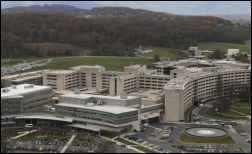

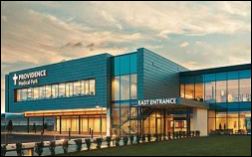





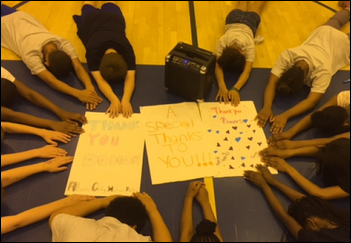






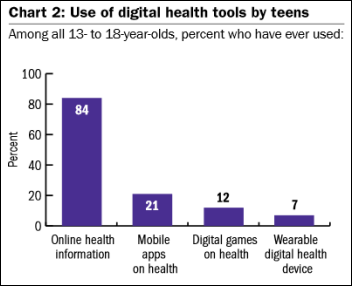

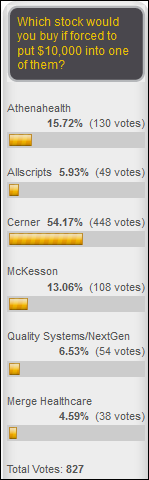

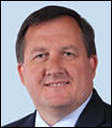



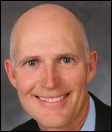
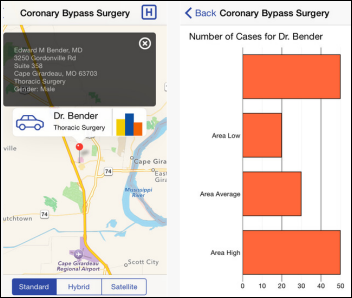













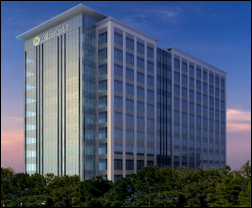

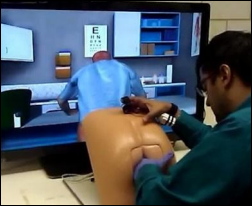








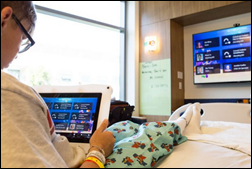
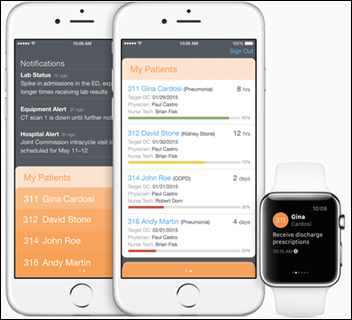
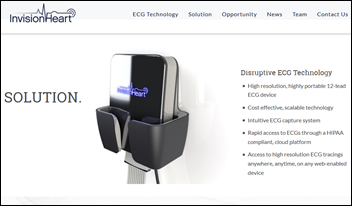




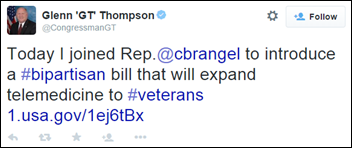
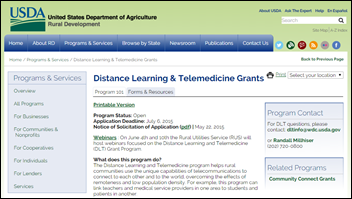
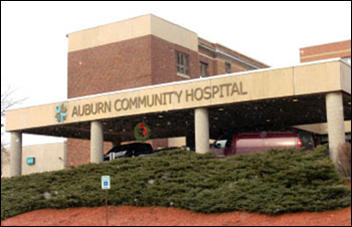


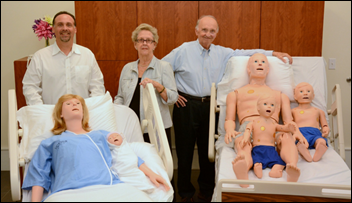

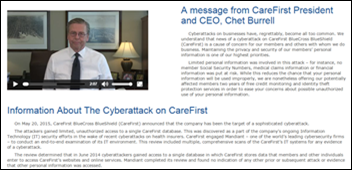




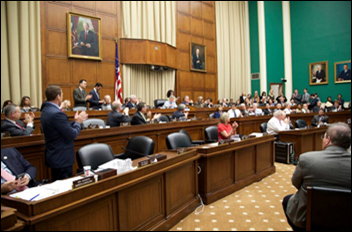
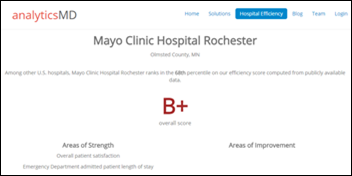





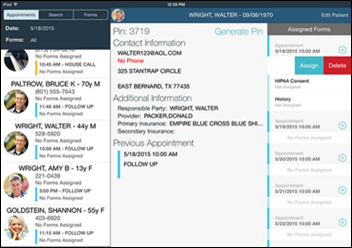




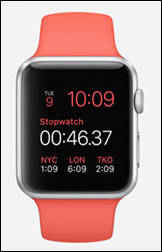



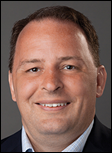




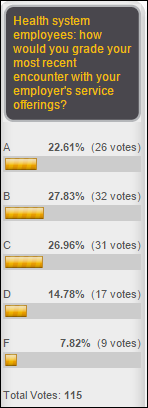



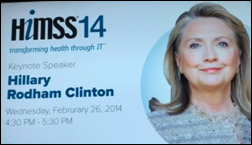










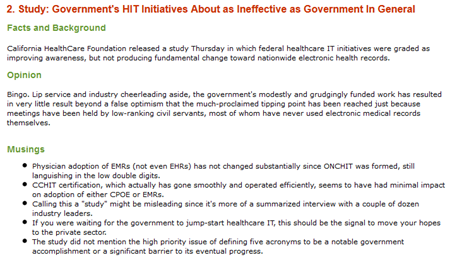




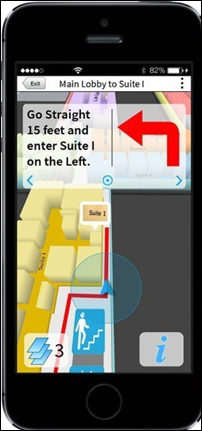



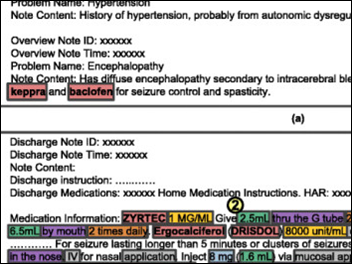
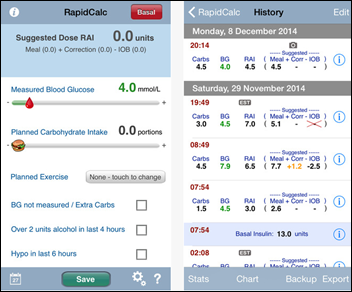
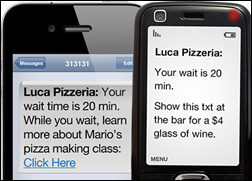
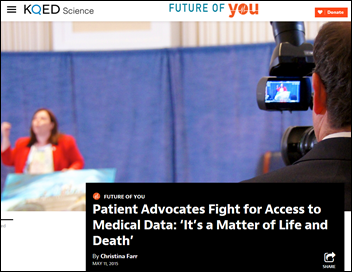
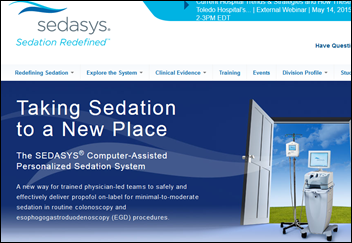
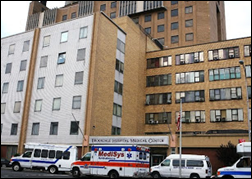

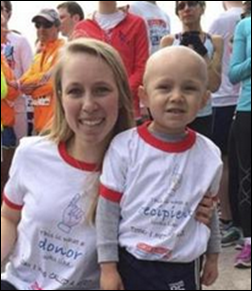

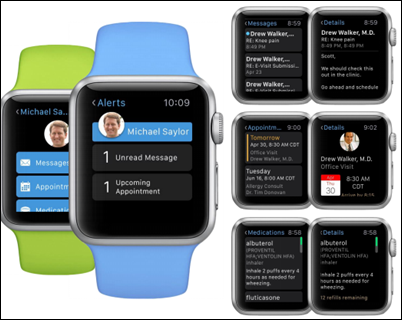



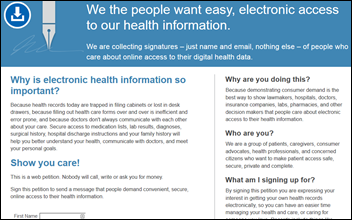



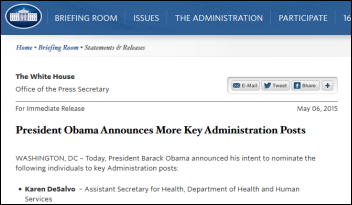














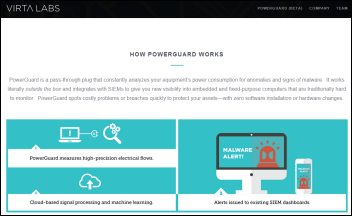


The New Yorker cartoon of Readers Write articles.