Home » News » Recent Articles:

Monday Morning Update 4/12/10

April 10, 2010 News 13 Comments

From Thad: “Re: Allscripts. Word is that an inside e-mail leaked out to a wider audience of employees than planned. It mentioned the pending merger of Allscripts with Eclipsys.” Inga tried to chase this rumor down, but of course nobody’s saying anything to confirm or deny. Several people have told us Microsoft will make a move on Eclipsys very soon, but I’m always skeptical about Eclipsys rumors because they come up every year or so. But if you asked me if either event is possible, I’d say yes, even though I don’t see the value in either scenario. ECLP announces results on May 4, which may or may not be relevant.

From J-Hi: “Re: meaningful use. Does anyone know a source that lists the 25 objectives and the comments submitted to CMS for each?”

From Tangelo: “Re: AFCEA military HIT conference. Between the speakers from HHS, VA, and DOD and the large government contractors lining up to suck on the HITECH teats, it’s embarrassing to see how disconnected they all are on the real issues of implementing HIT (meaningful use and HIE) at the community level.”

pattieclay

From PortlyChap: “Re: QuadraMed. Quadramed lost the last of its Affinity clients in Kentucky recently. Pattie A. Clay Regional Medical Center in Richmond recently signed a contract with Meditech. The only other Kentucky Quadramed Affinity client signed a contract with Meditech in December 2009.” Unverified.

spheris

Transcription provider Transcend bids $78 million for the bankrupt Spheris, slightly upping the $75 million offer on the table from CBay and Nuance. And in another interesting development, Oracle CEO Larry Ellison is apparently protesting the potential sale of Spheris to that second group because Oracle is a Spheris bankruptcy creditor and he doesn’t want its software transferred to the new owners. The auction for Spheris starts today (Monday).

I’ve almost finished getting the new search engine running. There’s a new “Search This Site” box to your upper right if you want to try it. It indexes all HIStalk-related sites in one search (HIStalk, HIStalk Practice, HIStech Report, and HIStalk Mobile).

I did a survey two years ago in which I asked readers who work for hospitals to tell me their position and where they work, just to give me a feel for who’s out there. I shared the list of hospitals here. It’s time for an update! If you work for a hospital or health system, please complete my survey that asks only three anonymous questions: your job title, your employer’s name, and the city/state it’s in. Thank you.
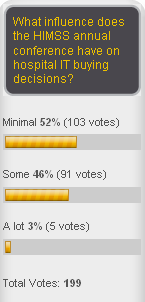
poll041010

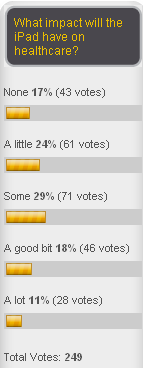
Opinion is mixed on the likely impact of the iPad on healthcare, which is still pretty good considering it’s primarily a consumer device. New poll to your right: which of the big hospital systems vendors is the most innovative?

Clarian Health Partners (IN) chooses MedVentive for its Clarian Quality Partners clinically integrated network, where its product will be used to analyze patient data for quality analysis and care improvement opportunities. Clarian Health Ventures will also invest in MedVentive, jumping into an oversubscribed $10 million Series C funding round that raises the company’s total to $18 million.
jackson

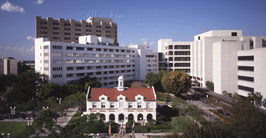
Not much has gone right lately at Miami’s Jackson Health System, so maybe this was inevitable. Its Lawson payroll conversion causes most of its employee paychecks to be incorrect, although by minor amounts. Lawson says the problem was in the system it replaced and its amounts are correct; the hospital says the new checks underpaid employees for working overtime.

Some of the rags got irrationally exuberant over the marginal news that McKesson will sell its Asia-Pacific subsidiary to Medibank. The editors should have known better – all that subsidiary does is run healthcare-related telephone hotlines and call centers in Australia and New Zealand. Impact in the US or to McKesson’s bottom line: pretty much zero.

I notice that Cerner shares are on a solid rise lately, including a 2.4% jump Friday. You could have doubled your money if you’d bought in exactly one year ago. Neal’s stake is worth right at a half billion dollars.

Misys turned in pretty good Q3 numbers Thursday, with its Allscripts ownership stake offsetting a soft market for its banking software.

A small but interesting study in Australia finds that informed consent delivered interactively via computer with illustrations and quiz questions improves patient understanding and turns the usual “sign here” paper process into a valuable educational too.

I really enjoyed the discussion about which systems a 200-bed hospital should consider. Here’s the next reader question that would benefit from your feedback: when hospitals are rolling out systems to physician practices, will they offer a menu of a la carte system and implementation options, or will the hospital offer only a standard enterprise model of software and devices? E-mail me your thoughts and I’ll compiled them as a follow-up.

St. Francis Hospital (OH) implements the Priority Consult patient navigation system for its breast care patients. The company, which I hadn’t heard of, has software to support patient-focused nurse navigation models for spine centers and breast care, facilitating intake, triage, and care coordination.

pardee

Pardee Hospital (NC) replaces its two forms management solutions with Access Enterprise Forms Management when it finds the original systems couldn’t product a patient wristband barcode small enough for newborns.

Justen Deal follows Canadian HIT more than I do, so he caught this story that I would have missed. Quebec’s opposition party says its EHR project is dead last in all of Canada. The pilot, due to be completed in 2008, “still isn’t working” even though all of Quebec was supposed to be live this year. It appears that 75% of the original $563 million budget has already been spent, critics say it’s going to cost at least $1 billion, and everybody who originally supported it is trying to distance themselves from it. Justen always cites my 2007 Universal Rules for Big EMR Rollouts, saying they should have read them up there, so I’ll repurpose below just in case anyone missed them the first time around.

baobab

Speaking of which, I love this Toronto Star article, Malawi’s $1 Million eHealth Miracle. It points out that while Ontario was spending $1 billion on eHealth with “almost zip” results, dirt-poor Malawi has the records of 1.1 million patients accessible in 10 locations throughout the country, thanks to a computer network put together by a non-profit created by a Canadian aid worker and his wife for a total cost of $1 million from their office above a 7/11. He bought obsolete computers from eBay, converted them to touch screens, and developed the patient registration app, which uses “health passports” that cut the hours-long lines. “It’s hot, dusty and hydro is intermittent. Health clinics are in the open air with no doors. We needed a computer system that would work in those conditions and be used by people who don’t have computer skills. The system works on the premise that if you can work a mobile phone, you can use a touch-screen computer.”

A Harvard research team finds that electronic medical records haven’t had much impact in improving care or reducing costs. The authors seem to begrudgingly acknowledge that there’s no turning back now that the government is throwing endless money at EMRs, acknowledging that meaningful use requirements will at least encourage them to be used and not just purchased.

centralwashington

Central Washington Hospital gets a local newspaper writeup for its Cerner go-live. I’ve been there – nice place, lots of apples at the right time of year.

E-mail me.

Mr. HIStalk’s Universal Rules for Big EMR Rollouts (From 2007)

1. Your hospital will pledge to make major process changes, vowing to “do it right” unlike all those rube hospitals that preceded you, but the executive-driven urgency to recoup the massive costs means the noble goals will change to just bringing the damn thing up fast, hopefully without killing patients in the process.

2. The project and/or system must be anointed with an incredibly dopey and user-embarrassing name, preferably chosen from user submissions and with the offer of crappy vendor paraphernalia or lame IT junk as a prize, and also preferably made up of a far-fetched phrase whose contrived acronym spells out a medically related word or female name. Instead of inspiring the expected collegial chumminess among users, it will serve as a bitter reminder of the innocent, naive days between RFP and go-live before it got ugly.

3. Doctors won’t use it like you think, if at all, because hospitals are one of few organizations left that doctors can say ‘no’ to.

4. You’ll spend a fortune on mobile devices and carts that will sit parked in a corral due to the short life of their $100 battery and a dysfunctional but not yet fully depreciated wireless network, the keystone arches to the entire project.

5. All the executives who promised undying support to firmly hold the tiller through the inevitable choppy waters and who overrode all the clinician preferences in a frenzy of inflated self esteem will vanish without a trace at the first sign of trouble, like when scarce nurses or pharmacists threaten to leave or when the extent of the vendor’s exaggeration first sees the harsh light of day in some analyst’s cubicle.

6. It will take three times as long and twice the cost of your worst-case estimate.

7. You’ll pay a vendor millions for a software package consisting of standardized business rules, then argue bitterly that all of them need to be rewritten because your hospital is extra-special and has figured out the secrets that have eluded the vendor’s 100 similar customers. The end result, if the vendor capitulates, will be a system that looks exactly like the one you kicked out to buy theirs.

8. You’ll loudly demand that the vendor ship regular software upgrades to fix all the bug issues you submit, but then you’ll refused to apply them because you’re scared of screwing something up with the skeleton maintenance staff you can afford, given that millions were spent on systems with nothing left for additional IT support staff or training.

9. All those metrics you planned to collect to show how quickly the EMR would pay for itself instead show the situation unchanged or getting worse, so factors beyond your control will be blamed (like a ridiculously long implementation time that changed all the assumptions and external conditions) and ROI will not be brought up again in polite company.

10. No matter how unimpressive the final result toward patient care or cost, the EMR will be lauded far and wide as wonderful since the vitality of the HIT industry (vendors, CIOs, consultants, magazines, HIMSS, bloggers) requires an unwavering belief that IT spending alone will directly influence quality, even when nothing else changes.

News 4/9/10

April 8, 2010 News 8 Comments

From Iommi: “Re: Advance for Health Information Executives. Have you heard that it’s shutting down?” A couple of readers, at least one of whom should know, told me it’s going down the tubes. It’s not a great time to be in the print publication business.

 mita

From RadioGuy: “Re: meaningful use and images. Can you comment on this article?” The Medical Imaging and Technology Alliance lobbies to have EMR integration of medical images included as a criterion for meaningful use, starting in 2013. Its white paper is here (warning: PDF). I can’t say I have strong feelings about the issue, so here are my off-the-cuff reactions: (a) MITA is a medical imaging vendor trade group, so that obviously influences their point of view since getting on the list would boost sales (although that’s arguably no more biased that having EMR vendor groups involved); (b) meaningful use was intended to increase EMR adoption, but I would think imaging doesn’t require that kind of incentive; (c) both doctors and patients clearly benefit from image availability, a case not so clearly made from EMRs, so misaligned incentives aren’t in play like they are for EMRs. Bottom line for me — it’s just trade group noise, albeit with some good underlying points.

From Kalispell: “Re: 200-bed hospital. Nobody mentioned Eclipsys because it’s not possible to use them for all solutions. I worked until recently in an Eclipsys hospital and pharmacy, radiology, and ambulatory are very weak. It’s not integrated like Epic or Cerner, say from radiology to SCM. Eclipsys doesn’t see billing as a primary role, so ancillaries will run into billing issues.” Unverified. I’d still rank it #1 for CPOE and clin doc, though. Another reader says Eclipsys doesn’t price Sunrise cheap enough for a 200-bed hospital.

From Arclight: “Re: you scooped the Miami Herald. An article popped up on the Miami Herald’s breaking news page 20 minutes ago about the death of PC inventor Ed Roberts. Breaking news? Really? Three days after it was posted on HIStalk? I have no idea how you manage to track and tabulate the freakish amount of data you condense for your loyal readers, but please keep up the good work. Your site should be required reading for anyone remotely connected to the HIS industry.” Thanks. I’m glad Ed didn’t go unnoticed. He may not have profited from the industry like Bill Gates, but he made it possible. 

From Diego: “Re: meaningful use final rule. Any idea when it will be final?” The comment period ended three weeks ago, but I don’t know how long it takes to review and incorporate those recommendations. Someone out there probably does and can share.

 cdr

From Mark Moffitt: “Re: CDR/HIE model.” Image above – funny! Just in case the parody isn’t clear, it makes fun of reposing a local copy of patient data that’s already available at other locations, the equivalent of Google’s actually storing Web content rather than simply pointing to it.

Larry Nathanson MD, a BIDMC ED informatics doc, reviews the iPad for clinical app use, saying it lives up to high expectations and makes the iPhone seem “slow and inadequate.” He says it renders browser pages as fast as a laptop, supports easy typing, and hits close to the claimed 10-hour battery life. His only concern for ED use is durability. A commenter also reminds that Citrix Receiver and LogMeIn are both available for the iPad, allowing it to be used as a remote PC with full capability. Their ED app is Forerun EDIS, co-developed by BIDMC.

The usual reminders: put your e-mail in the Subscribe to Updates box to your right to get instant notification when something new is posted here (some of the 5,450 subscribers are probably your most feared competitors and you don’t want them to know first, do you?) There’s a search box over there too (and a new one coming – I bought a new search engine and am finishing up the installation). Your news, rumors, and opinions are always welcome (and will stay anonymous if you want). Make sure to read the interesting comments posted after each article and feel free to add your own. You can post your industry events to my calendar, catch up with mobile healthcare computing on HIStalk Mobile, and help me out by perusing the sponsor ads to your left and click those of interest. I genuinely appreciate your taking the time to read HIStalk.

NHS scales back its contract with BT, limiting the number of London trusts that can get Cerner and RiO. Scrapped: an ambulance solution and the previously acclaimed Map of Medicine visual care planning tool.

healthaffairs

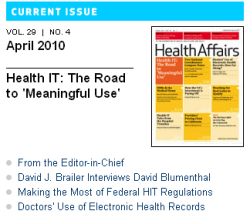
A reader sent a link to the full text version of the Health Affairs article in which David Brailer interviews David Blumenthal (ONCHIT-1 and ONCHIT-3, respectively). I notice Brailer’s bio omits his main credential that got him the ONCHIT job in the first place – starting up the Santa Barbara Project, a failed RHIO that started the whole interoperability craze, but died an ugly death without having ever exchanged even a single byte of information. Anyway, the article is definitely worth a read. Some snips:

  • A good Blumenthal quote: “The purpose of health information technology is to support health reform, and it is part of that larger puzzle. It is not a stand-alone goal or an end in itself.”
  • Interesting trivia: Blumenthal says it was Congress, not his office, that coined the term “meaningful use".
  • Blumenthal says his office is working with other countries to begin discussions about international standards for sharing healthcare information.
  • Brailer asks about lessons to be learned from NHS projects in England and gets an excellent and insightful answer. “One thing that is quite clear to me as I sit in the Hubert H. Humphrey Building in Washington is that no country — none of our Western peers — has attempted to create electronic health information for a country as large, diverse, complicated, wealthy, and dynamic as the United States.We are trying to create a nationwide, interoperable, private, and secure health information system for a country that extends from the Bering Straits to Key West, with more than 300 million people who by history and tradition and culture value local autonomy and need autonomy in order to manage their diverse local situations. And so that’s the tradition we inherit, that’s the method that we have to use, and we are working within those constraints.”

People mistakenly think the VA’s VistA was cheap to create since internal programmers did some of the work. It wasn’t, but it provided good ROI: a study by the Center for IT Leadership says VistA cost $4 billion over 10 years, but returned savings of $7 billion. The conclusion is that the VA spent more than a similar private sector organization would have, but got higher adoption and better care as a result (and low cost isn’t much consolation if you can’t get those things, of course). Nearly all the cost savings came from a reduction in duplicate tests and medical errors. And the good news, of course, is that your hospital can get that $4 billion system for $0 from Medsphere or some of the other companies that offer it license-free.

Listening: Metric,female-fronted indie from Canada, reader recommended. It’s so cool that readers suggest something I like about 80% of the time, which is saying a lot since I dislike 90% of what’s out there. Metric is a keeper. Try Satellite Mind on the player.

stfrancis

Catholic Health Services of Long Island files a certificate of need to spend $144 million on Epic for its five hospitals. It hopes to save $40 million a year in addition to the HITECH incentives, expecting length of stay to drop by a half-day.

The CIO of CMS says that companies that ask to link to its systems have such primitive IT security that it’s “almost embarrassing” and those systems are loaded with “basic amateur problems.” She says these are big-name companies, not mom-and-pops.

E-mail me.

HERtalk by Inga

From Cherry Blossom: “Re: Apple OS4. If you thought iPhone and iPad was big in healthcare, just wait until this summer. We haven’t dug into the guts of OS4, but if they can deliver on half of they have promised, the chains have been removed from developers and we are going to see some AMAZING apps.”  Well, I hope you are right in terms of improvements for app developers. In terms of simple end-users like me, I was glad to see that OS4 will support multi-tasking. The addition of unified e-mail is also a plus and something I’ll find handy as I float between my Inga World and Real Life. Bummer that Flash still is not an option, though.

HCA is preparing to file for  IPO that could yield $2.5 to $3 billion. About three years, ago HCA went private in a $33 billion leveraged buyout; an IPO would allow HCA pay off some of its ginormous $25.7 billion debt.

allscripts1

Allscripts releases its third quarter numbers: revenue of $179.9 million versus last year’s $160.7 million, which beats analyst estimates of $175 million. Profit came in at $18.5 million versus last year’s $13.3 million. Bookings grew 25% to $105.5 million.

I chatted with Allscripts CEO Glen Tullman a few days before the earnings’ announcement and he shared some thoughts on the Allscripts-Misys merger, one year later. He also provided his impressions on a few competitors (he believes Epic is “anti-innovation”), on industry consolidation (he sees “substantial” consolidation ahead). and Regional Extension Centers (he’s a fan).

MedQuist continues to lobby the Washington crowd to ensure that transcription is an acceptable method for getting information into EHRs.

john suender

Speaking of transcription, a reader sent over a newsletter by John Suender, who our reader claims is “THE guru of medical transcription M&A.” Suender speculates on what will happen with Spheris, which is in the midst of seeking bidders for a bankruptcy sale. His prediction: the most likely bidders are MedQuist, Nuance, and Transcend. He also estimates the new owner will pay around $125 million.

RelayHealth earns certification for its Payor Connectivity Services from the CAQH Committee on Operating Rules for Information Exchange (CORE) Phase II. The CORE certification means that RelayHealth’s provider customers can securely process electronic queries within 20 seconds and receive consistent patient administrative information.

Streamline Health Solutions announces Q4 net income of $1.59 million compared to the previous year’s net loss of $145k. Revenues came in at $6.28 million vs. $3.38 million.

Streamline Health also shares news of a new contract with East Orange General Hospital (NJ), which will implement Streamline’s health document workflow solution integrated with the hospital’s GE Centricity system.

Quality Systems makes Forbes annual list of America’s 25 Fastest-Growing Tech Companies, coming in at #23. I noticed that Red Hat also made the list at #19. To qualify, companies must have at least $25 million in sales, plus sales growth of at least 10% over the latest 12 months.

doctors hospital renaissance

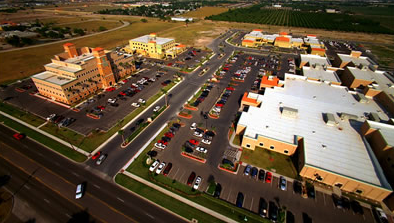
Doctors Hospital at Renaissance (TX) selects Encore Health Resources to provide project management, consulting, and advisory services for its implementation of Cerner clinicals.

HEALTHeLINK, the Western New York Clinical Information Exchange, selects Anakam Identity Suite to provide its authentication and identity management solution.

QuadraMed announces the general availability of its ICD-10 Simulator, developed to help coders prepare for the transition to ICD-10. Quantim ICD-10 Coding Simulator duplicates the ICD-10 coding environment to facilitate training. (Someone will need to explain what “Quantim” means.)

central washington hospital

Central Washington Hospital goes live on its $22 million Cerner EHR.

Congrats to TELUS, parent company of HIStalk sponsor TELUS Health, for winning the 2010 Freeman Philanthropic Services Award for being the top philanthropic organization in the world.

Hennepin Healthcare System (MN) licenses Mediware’s Insight performance management software solution for its 900-bed hospital and clinic system.

inga

E-mail Inga.

News 4/7/10

April 6, 2010 News 8 Comments

ipad1

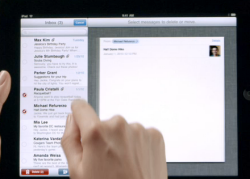
From Dirt Farmer: “Re: iPad in healthcare. Since it’s a closed system, some non-Apple proprietary CPOE, EMR, and imaging apps may not run on it. Therefore, its use might be limited. Flash doesn’t work on any Apple device, but an Adobe rep tells me the company hopes to announce a relationship in 2011.”

From Jerry: “Re: system for a 200-bed hospital. No mention of Eclipsys. Is there a reason?” I don’t know much about their capabilities outside of their obvious strengths in CPOE and nursing documentation — the hospital was looking for a soup-to-nuts solution that covered everything from billing to ancillaries. None of the respondents mentioned them, either. If you work in a hospital of that size and are running an all-Eclipsys lineup, why not send me a little writeup of what you’re doing and how it’s working? I’m interested.

From Werner: “Re: system for a 200-bed hospital. Why didn’t Eclipsys show up? A very nice solution especially if looking ahead to meaningful use AND they have a remote hosted solution. What about OpenVista, a proven solution for smaller facilities and no major license cost (of course , except for ISM & extensions)?” Eclipsys, see above. I had OpenVista on my list originally, but couldn’t decide if it made sense for a hospital that needs a full set of applications and potentially a lot of hand-holding for implementation and maintenance, even if OpenVista would have minimal licensing costs. I could be persuaded, though.

From Midwest CIO: “Re: system for a 200-bed hospital. The way you phrased it, their only option is Paragon. It’s all Microsoft, so it’s easy to find resources to support it and it has a long life in front of it. I would put Keane on par with Paragon with respect to clinical functionality.”

auburn

The local newspaper writes up the Paragon go-live of Auburn Memorial Hospital (NY).

University of Medicine & Dentistry of New Jersey’s behavioral care organization chooses DSS to implement its vxVistA, an open source variant of the VA’s VistA.

A Harvard doctor creates an iPad application that allows him to monitor patient breathing via an ultrasound sensor he invented. He sees potential for using it to check asthmatic patients in their homes and to monitor sleeping infants.

 mc4

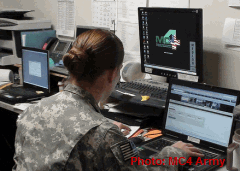
The Army’s MC4 group is piloting a new version of the Theater Medical Data Store (TMDS) in Afghanistan that can also display the service member’s pre-deployment medical history from AHLTA.

Former RelayHealth VP Bob Katter joins First DataBank as VP of sales and marketing.

Lee Memorial Hospital (FL), expecting ARRA money to cover up to $40 million of its $70 million Epic implementation cost, finds that it isn’t eligible for up to $10 million of that taxpayer-funded windfall because it shares a Medicare provider number with its physician group. Congressman Connie Mack IV, who opposed the stimulus bill and yet is appalled that LMH might get less of it, says the hospital “shouldn’t be penalized for CMS’ interpretation of the definition of a hospital.”

cinchildrens

HHS secretary Kathleen Sebelius visits Cincinnati Children’s Hospital Medical Center, admiring its $47 million Epic system and its patient portal.

Which reminds me: whatever happened to White House healthcare reform director and former Cerner board member Nancy Ann-DeParle? Healthcare reform was a hot topic, but I don’t recall seeing her name even once in the past several months (and a Google search backs me up on that).

Jobs: Epic Inpatient EMR Manager, Cerner Orders Consultant, EMR Implementation Specialist.

Health Affairs devotes its entire April issue to healthcare IT topics, although only subscribers can see most of it. It didn’t sound all that interesting, although I would have read David Brailer’s interviewed with his eventual ONCHIT replacement David Blumenthal (although I doubt anything controversial was said).

Odd medical problem: a man orders his favorite restaurant sandwich, the five-meat, three-cheese Wicked, except with double meat to celebrate his son’s performance in a talent show. His mouth locks up trying to take the first bite, at which time he begins punching his own jaw trying to loosen it up. He required surgical repair of double dislocation of the mandible.

E-mail me.

HERtalk by Inga

From Marge Schott: “Re: Streamline Health. In an SEC filing, the company said it won’t be renewing its contract with its sales SVP Scott Boyden. Probably a cost cutting move since Streamline continues to lose money.”

centegra

Centegra Health System (IL) says its Kronos workforce management software has saved the system over $1.6 million in labor costs. Centegra uses time and attendance and employee scheduling solutions, which have helped eliminate agency use and reduce overtime by 30%.

Blessing Hospital (IL) and University Health System of San Antonio earn Magnet Recognition by the American Nurses Credentialing Center for excellence in nursing and for providing high quality patient care at all levels of the hospital. Both facilities use Eclipsys.

methodist houston

Speaking of Eclipsys, the company is selected  by The Methodist Hospital of Houston to provide its HealthXchange product. HealthXchange, which is powered by Medicity, will connect Methodist’s acute care EHR with a network of disparate EHRs used by affiliated physicians. 

Picis extends its Microsoft Gold Certified Partner status with specialized competencies in business intelligence and data management solutions.

MedQuist partners with Artificial Medical Intelligence to provide computer-assisted coding within the MedQuist CodeRunner coding workflow platform.

HealthPort announces a money-back guarantee that its EHR software will meet certification requirements for Meaningful Use. Nothing against HealthPort, but I am done mentioning any of these money-back guarantees. I’ll quit worrying that there are still naive providers out there who believe that just because their software is “guaranteed” that they will be “guaranteed” stimulus money.

Thumbs up to Virginia, which becomes the 12th state to require health insurers to cover telemedicine services provided through interactive audio, video, or other media.

Auditors for LSU’s charity-run hospital system finds that its clinic overpaid an outside patient billing firm almost $350,000, while about $8.2 million in patient services were never billed. On top of that, LSU Interim Public Hospital has lost track of movable property originally worth $3.8 million. The overpayment occurred in 2007 when billing firm Healthcare Financial Services double-billed an invoice, both of which Medical Center of LA-NO paid. Less than half the money was recouped two years later. Of the $8.2 million never billed, about $1 million is still recoverable. Not surprisingly, leaders say new checks are being put in place.

AnMed Health (SC) picks Allscripts EHR for its 60 employed physicians and 40 affiliated physicians. AnMed currently provides Allscripts Tiger PM in a hosted model for the physicians and will offer the EHR through a similar setup.

mercy health

Mercy Health Systems (PA) plans to implement NextGen EHR for its 70 providers across 31 locations. Later in 2010, Mercy will also deploy NextGen Health Information Exchange. The providers have used NextGen Practice Management for almost four years.

John Muir Health (CA) notifies almost 5,500 patients of a potential data breach following the theft of two laptops from a physician office. The hospital says the laptops were in a locked and guarded building and were password protected,  but did not have data encryption. Encryption software is now being installed on all the health system’s laptops.

Evolvent Technologies awards Harris Corporation an 10-month follow-on contract for ongoing enhancements to the DoD’s Healthcare Artifact and Image Management Solution (HAIMS) system.

unity medical

Unity Medical says it will pilot its new Medical Video jLog for the Apple iPad at Florida Hospital for Children at Walt Disney Pavilion and St. Luke’s Health System (ID). The company provides short interactive videos that provide patients with an explanation of common procedures and treatments.

Passport Health Communications launches eCare Patient Access Suite, designed to help hospitals improve workflow and increase revenues.

inga

E-mail Inga.

Monday Morning Update 4/5/10

April 3, 2010 News 11 Comments

ONCHIT announces $60 million in new grants (sounds like chicken feed in these stimulus-happy days, doesn’t it?) University of Illinois at Urbana-Champaign will look at security, Universe of Texas Health Science Center will study patient-centered cognitive support, Harvard takes on application and network architectures, and Mayo will review secondary use of EHR data while maintaining security and privacy. The last one sounds the most interesting to me.

Merge Healthcare sells $42 million of stock in a private placement to help pay for its proposed acquisition of Amicas.

Former QuadraMed VP Chris Callahan joins Sunquest as VP of product management.

edroberts

Bill Gates composes a fascinating remembrance of Ed Roberts, inventor of the Altair computer and therefore the father of the PC, who died last week at 68. Of course, Bill and Paul Allen kind of screwed Ed legally to get the rights to sell BASIC to other companies even though they had sold Ed an exclusive license, but I guess Bill’s being sentimental now that he’s earned billions from it. I knew but maybe you didn’t that Ed was a country doctor in Georgia, having gone to med school at 41 and finishing first in his class after selling out his computer business in 1977.

Next, on a very special episode of Weird News Andy: two North Carolina doctors are reprimanded for performing a C-section on a woman who wasn’t pregnant. A resident misdiagnosed her “false pregnancy”, the docs tried for two days to induce labor without success, and they finally opened her up only to find no baby. Nobody had bothered to verify that she was indeed pregnant. In their defense, the resident supervision was complicated and false pregnancies are apparently quite believable without diagnostic verification.

poll040310

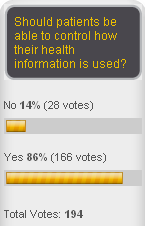
Most of us agree that patients should control the use of their health information, although the question of “to what degree” would likely be more contentious. New poll to your right: what impact will the iPad have in healthcare?

CMS auditors conclude that “alarm fatigue” caused by incessant monitor beeping contributed to a patient’s death at Mass General in January. They also found that the patient’s bedside crisis alarm had been turned off. In response, the hospital has disabled the “off” buttons, put more speakers in nursing stations, and assigned nurses to watch monitors full time. While they were there, the Medicare inspectors also wrote up privacy violations, including having patient names on whiteboards and positioning in-room video monitors so that they were visible to visitors.

A two-year-old dies from a heparin overdose at Nebraska Medical Center. The hospital implements the usual after-the-fact changes that sound good, but really aren’t sustainable even for high-alert drugs like heparin: requiring a second nurse to verify the dose, having pharmacy observe the initiation of the bag, and turn on a hard stop on the infusion pumps.

ddipad

Nuance announces availability of Dragon Dictation for iPad, available for free from the Apple App Store. It supports dictation and sending e-mails by voice.

E-mail me.

Recommended System for a 200-Bed Hospital with Minimal IT Resources

A reader asked me about which systems I would recommend for a 200-bed community hospital with minimal IT resources. Specifically mentioned were McKesson Paragon, Meditech 6.0, and Cerner Millennium. I assume the hospital wants a broad set of applications ranging from revenue cycle to CPOE. My answer, in essence, was this:

  • I would definitely choose Paragon over Cerner, especially if there’s no legacy billing system that will be retained (Cerner ProFit is still problematic, I think). McKesson has done a good job in bringing Paragon back from its near-death experience and the field reports, while limited, are good. I think Cerner would be overkill for a 200-bed hospital.
  • However, if billing isn’t important, then Cerner’s remote hosted product should at least be considered, even though it’s probably far more complex and than a 200-bed hospital would need. Cerner is notorious for coming well down from list price when pressed since they aren’t selling many new customers, so I wouldn’t pay much of a premium for it. It would also offer a lot capability for the future.
  • Meditech 6.0 is a bit of an unknown since it’s new, but if CPOE is a criterion (as it probably should be), that’s the Meditech version they would want. Company performance has slipped a bit, but they are still eminently solid.
  • I mentioned that CPSI is strong in that bed range, but that I don’t really know too much about their products.
  • I suggested that for a different perspective, the hospital might want to take a look at IntraNexus Sapphire, which offers something a bit fresher than those obvious choices even though it’s not a big company like the others.

So I would rank them Paragon, Meditech 6.0, and remotely hosted Cerner. I didn’t rank Sapphire, but I would still give it a look.

I got 25 reader responses, summarized as follows.

  • Most respondents, especially the CIOs, suggested Meditech.
  • One comment said that Meditech is straightforward and easy to manage, with 6.0 getting good reviews. That reader also asked me about CPOE adoption. The HIMSS Analytics presentation at HIMSS showed a definite improvement in physician adoption under 6.0 vs. Magic. I think CPOE is important even though Meaningful Use so far requires only 10% penetration, so I don’t know if choosing Magic would make sense.
  • A hospital CFO recommended Meditech without hesitation based on personal experience in three hospitals of under 300 beds, where Meditech replaced Siemens, McKesson, and Cerner. He said that Meditech beats Siemens and McKesson on functionality and cost (he didn’t name the specific McKesson product line, which could be Paragon, Series, or Star).
  • A consultant also recommended Meditech, saying it’s generic, easy to install, requires minimal training, and requires low maintenance.
  • A CIO said it’s Meditech hands down, “not the most advanced, but it will keep you out of trouble.” That’s a solid point – nobody fails with Meditech, so they get an implicit cost advantage due to reduced risk.
  • An IT person from a 100-bed hospital provided an informative comment about Meditech C/S, to which the hospital had migrated two years ago from best-of-breed systems. They are very happy to have traded interfaces for integration. Putting in Meditech increased the IT staff from five to 10 employees.
  • A CIO recommended Meditech, but said it won’t be cheap and 6.0 may still have kinks. He says Paragon’s functionality is a step up from Meditech, but that CPOE may not have been released yet. He also made a good point: Meditech is so widely deployed that it’s much easier to find independent implementation people.
  • A consultant recommended CPSI, Healthland, and Meditech on the basis of integrating administrative, financial, and clinical applications without a lot of IT overhead. However, she also cautioned that prospects should push hard to get Meaningful Use criteria in the contract. She observed, correctly I think, that it’s amazing that big vendors can’t seem to figure out how to scale their pricing and delivery to serve this large market of small hospitals, although lower price points may have cooled their interest.
  • A CIO had this interesting comment: “An affiliate relationship with an existing Epic customer. You get all the benefits of Epic without having to host.”
  • A hospital IT director suggested the resource issue should put the hosted Cerner suite at the top of the list.
  • One reader suggested two systems that I hadn’t thought too much about: CPSI and Siemens MedSeries4. I always forget that MS4 is still around, although I would certainly find out about CPOE usage.
  • A reader suggested Paragon, noting that it’s being installed in larger hospitals and doing well.
  • I liked this perspective from an IT director in a hospital of similar size and IT capabilities. She said they realized that their functionality requirements weren’t much different from those of bigger hospitals and the smaller vendors backed out for that reason, so they are looking at Millennium or Siemens Soarian and options for a quick build, remote hosting, and possibly outsourcing some of the application support to the vendor.
  • A hospital IT project director suggested QuadraMed QCPR, saying it hasn’t been well marketed but noting that it has lots of functionality for both inpatient and outpatient clinicals as well as ancillary departments. She also noted its track record in big hospitals, its recent award in Saudi Arabia, and its configurability and rules engine.
  • A consultant says his company usually recommends Meditech and Paragon and can host either. He does not recommend Siemens because the contracts are too restrictive.
  • A hospital analyst suggested Cerner.One reader ranked them as Paragon, Meditech, and CPSI.
  • A consultant said his choices in order would be CPSI, Paragon, and as a low third choice, Meditech.
  • One reader gave his picks as MedSeries4, Meditech, and Paragon, all from larger companies with a better chance of survival.

Thanks very much to everyone who took the time to respond. This is excellent information for the reader (and for me). We ought to do this more often.

News 4/2/10

April 1, 2010 News 6 Comments

From The PACS Designer: “Re: Wall Street Journal iPad review. TPD has always admired Walt Mossberg’s technology reviews and he’s done another good one on the Apple iPad. The iPad is thinner than a netbook and weighs only 1.5 pounds. Walt was able to get eleven and a half hours on the battery before needing a recharge! If you want to be the first to have one, get in line early as supplies are limited due to production being offshore.”

epic41

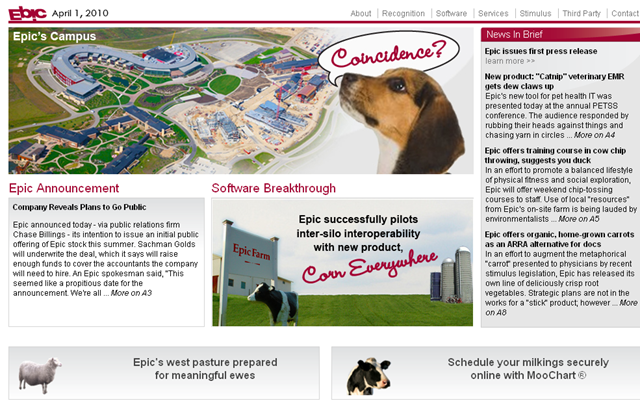
From anesoptime: “Re: Epic. Go to epic.com today, April 1st. I’ve worked with many of the big EMR vendors and many niche vendors. This is one of the many reasons I will only work on Epic projects and for Epic clients. They have a sense of humor and they do everything first class or at least put their best foot forward.” Lots of folks e-mailed me about Epic’s brilliant home page replacement, full of phony April Fool’s news (click the image above to enlarge it if you missed it). More than one person was fooled by the “Company Reveals Plans to Go Public” headline, I’m told. Also on the page: Epic Issues First Press Release; Epic Offers Training Course in Cow Chip Throwing, Suggests You Duck; and Epic Offers Organic, Home-Grown Carrots as an ARRA Alternative for Docs. Truly inspired, irreverent, and right in character. They are the Google of HIT. Apparently the employees didn’t even know about it.

From zaphod bebblebox: “Re: CSC. Ouch! CSC and iSoft again miss a go-live date at critical first major activation site amidst comments of failed data loads and in excess of 100 software errors. CSC have been told by NHS that they will not receive expected substantial cash payments associated with this milestone and their hoped for contract reset will not be signed.  Both CSC and iSoft had previously told analysts that they were expecting these payments for their end of quarter results and that they would meet this milestone. More importantly, Morecambe Bay Trust have decided NOT to go-live on the software at any forseeable date.”

I just ran an interview I did Wednesday night with Gary Cohen, executive chairman and CEO of iSOFT. I asked him about the critical Morecambe Bay go-live. That’s important because it was announced today that the NHS-mandated deadline has been missed, meaning that primary contractor CSC will not be eligible to get a renegotiated deal and, in fact, may be in danger of being replaced (although in the UK, “with whom” is always a good question since all the usual contractors have already bailed). Judging from the rhetoric, I’d say it’s an NHS bluff, especially considering that the trust itself has some responsibility for its own state of readiness. Still, it puts the heat on CSC contactor iSOFT and its Lorenzo system, also discussed at length in my interview.

I got a surprising number of well thought out comments about which hospital system would be a good choice for a 200-bed hospital with limited IT resources. If you want to chime in, e-mail me. I’ll share those suggestions in the Monday Morning Update, along with the advice I originally gave.

phcyone

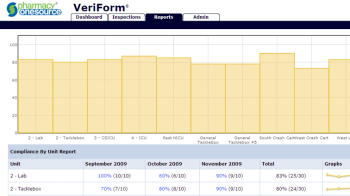
Pharmacy OneSource rolls out VeriForm, a Web-based hospital checklist system for reminders and documentation.

A reader tells me that CSC Healthcare is losing executives, including its retiring president.

March was a record month for HIStalk, with 94,834 visits and 128,894 page views. Thanks for reading.

Jobs: Project Manager, Implementations; Senior Healthcare Informatics Analyst; Meditech LSS Consultants.

Monica Arrowsmith, formerly chief quality officer and attorney with Clarian Arnett Health (IN), joins the ARRA-funded Indiana Health Information Technology Extension Center as director. It starts up this month.

janetd

Former Siemens Medical Solutions CEO Janet Dillione turns up after a hasty post-HIMSS resignation. She has been named as EVP/GM of the healthcare business of Nuance. In the Know actually tipped me off early Wednesday morning.

stbarnabas

Odd lawsuit: a doctors’ union is suing St. Barnabas Hospital (NY) for planning to spend stimulus money to replace a parking lot with a deck, claiming that 20 parking attendant jobs will be eliminated as a result. The hospital says the union is just causing trouble because it’s trying to unionize the residents.

Phoenix Children’s Hospital (AZ) chooses MedAptus Enterprise edition for professional, facility, and infusion pump charge capture.

Hayes Management Consulting announces its assistance services for ARRA-funded regional extension centers.

Paul Peck, a 30-year veteran of healthcare strategy and executive management, has joined Culbert Healthcare Solutions as VP of consulting services, where he will manage the physician practice service lines and launch new acute market services.

Listening: Michael McDermott, reader-recommended Irish-American folk/pop music. I like it.

A University Medical Center (NV) employee says the $155 per hour contracted IT director was spying for the hospital CEO, now on trial giving no-bid contracts to acquaintances. One of them was the IT guy.

Picis gets two new VA contracts for anesthesia systems.

Wentworth-Douglass Hospital (NH) sues its two former pathologists under the Computer Fraud and Abuse Act, who it claims deleted computer records when their pathology group was replaced. The hospital claims the docs brought in external hard drives, downloaded hospital information to them, and then used a drive scrubbing program to delete the hospital’s data. The hospital became suspicious when they found a DriveScrubber 3 CD in the laptop’s CD tray.

An Illinois eye surgeon files suit against Microsoft, claiming he invented and patented technology that would allow Zune music player users to buy songs they hear on FM radio. He offered the technology to Microsoft in 2006, says he never heard back, and it popped up in the Zune two years later.

ketchum

HHS spends $26 million of HITECH money to hire a PR company to try to convince consumers that their privacy concerns involving electronic medical records are unwarranted. The company hired was the same one who sent out a fake video news story awhile back, including an actor posing as a reporter, that was found to have violated a federal ban on propaganda.

Kleiner Perkins, which you may recall started a $100 million fund in 2008 to invest in iPhone applications, chips in another $100 million and expands the fund to include iPad applications.

Nepal will implement a telemedicine program connecting 25 remote hospitals in the Himalayas to specialists in the capital of Kathmandu via satellite.

Former MinuteClinic CEO Michael Howe is named board chair of NHIN/HIE vendor MEDNET.

The Mississippi Coastal Health Information Exchange starts Phase II of its Medicity-powered project, which will add four new health systems, a community outreach training program, and further integration with EHRs.

Enovate, maker of mobile and wall-mounted computer workstations, is named to “Michigan 50 Companies to Watch”.

E-mail me.


News 3/31/10

March 30, 2010 News 15 Comments

From Stifler’s Mom: “Re: Medicare. Doctors to take a pay cut. Tricare’s getting cut too.” AMA’s president decries the 21% Medicare pay cut that will hit doctors on April 1. It’s a Catch-22 situation: more patients will be insured under healthcare reform, which will eliminate the need to use hospital EDs for basic care, but the scarcity of primary care docs coupled with reduced payments means those patients will wind right back up in the ED because they won’t be able to get appointments otherwise. As long as Medicare richly rewards procedure docs while stiffing PCPs, there will by the law of supply and demand be way too few PCPs. Just giving everybody an insurance card isn’t going to solve that problem. Let’s hope Don Berwick can blast through the bureaucracy, not only at CMS, but throughout the federal government. If anyone can, I’d say it’s him. Personally, I can’t believe he took the job and I’m sure he didn’t do it to fulfill a long-held hope of becoming a bureaucrat.

ipad

From The PACS Designer: “Re: Apple’s iPad release. The wait is over. Saturday will usher in the iPad era for Apple. There will be many reviewers to tell us what they think of their new business and play tool. One of our own, the esteemed Dalai, will give us an early indication of its usefulness when he gets his iPad via a shipper from China and starts to play!” I got Mrs. HIStalk a netbook for traveling and I kind of like that, too. It will fit into a mid-sized purse, weighs next to nothing, has a battery life of over 10 hours, and hops onto a wireless network easily. It’s running Win 7 Starter, is fast, has all the hard drive you’d ever need, and sports the usual array of external ports. The keyboard feels pretty good and the display is just fine. It comes with Microsoft Works, which can read and write Word files, but I’ll hook her up with Google Docs. It’s pretty cool for less than $300.

The Charleston, SC business paper writes up Carolina eHealth Alliance’s project, in which 11 hospital EDs are exchanging information using technology from TELUS Health.

gbmc

Tressa Springman, CIO of Greater Baltimore Medical Center, writes an article called Improving Clinician Communication that describes that organization’s rollout of the TeamNotes clinical documentation system from Salar, which they integrated with their incumbent EMR. “Too often, hospitals are forced to implement technologies to meet an externally mandated deadline. These are the situations where teams are faced with short-changing the required thoughtfulness of the good design, resulting in a bad system that needs to be reworked. In contrast, I feel very good about our implementation of Salar’s clinical documentation at GBMC, because I feel that we are doing it for the right reasons, at the right pace and in a quality manner driven by a high degree of physician engagement.”

Walt Disney Pavilion at Florida Hospital for Children rolls out GetWell Town from GetWellNetwork, offering patient education, entertainment, and Internet access. The company will announce an agreement tomorrow with Child Health Corporation of America that will make GetWell Town available to its 40 leading children’s hospitals.

East Orange General Hospital announces that it will implement GE Centricity Enterprise. This is an interesting quote: “East Orange General Hospital, under EOGH President Kevin Slavin, started community meetings regularly. In one of the meetings, a GE representative happened to be there and they helped introduce the system to the hospital.” Nice work by the salesperson who “happened” to show up and pitch product at a community meeting. They earned that big commission.

A reader asked me which full hospital information systems a 200-bed hospital with light IT resources should look at. I gave my answer, but I’m curious: what would yours have been? E-mail me your thoughts and I’ll compile them here and share what I said.

A doctor who made $1.5 million writing over 100,000 prescriptions for online “patients” he hadn’t examined gets five years in prison.

A good idea from HHS’s Adoption/Certification Workgroup: put feedback buttons on EHR screens so clinicians can report problems. It’s not a new idea and some systems have them, but they all should if you ask me.

E-mail me.

HERtalk by Inga

From Bad Blake: “Re: Scott Freeman. The former territory vice president at McKesson Physician Practice Solutions, has accepted the role as head of business development for Zynx Health out of Los Angeles.” I see that Scott lists the new job title in LinkedIn, even though someone else is credited with the BD title on Zynx’s website.

From Clareece Jones: “Re: Berwick over CMS. Great news for patient safety.”

saudi health affairs

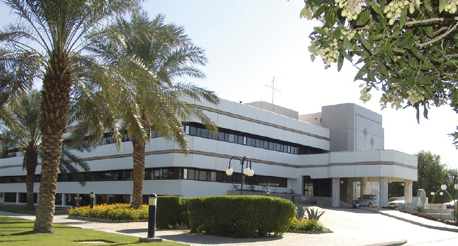
Saudi Arabia National Guard Health Affairs wins the Excellence in Electronic Health Records Award for its use of QuadraMed CPR. The award, which was presented at the Arab Health Exhibition and Congress, is given to the healthcare providing making the most innovative use of EHR to reduce error and increase safety and efficiency.

A Connecticut radiologist who was terminated from his physician group accesses a hospital’s computer system and looks at images and personal data for 957 patients. The doctor then allegedly contacted some of those patients and encouraged them to seek service at a different hospital. Apparently after the doctor left the staff at the original hospital, he hacked into the DPAC system using other radiologists’ passwords. The state attorney general is investigating. If I were investigating, the first thing I’d ask is how the heck did the doctor have access to all those passwords.

patient condition tracker

Eclipsys partners with Rothman Healthcare Research to build Rothman’s Patient Condition Tracker Solution software on the Helios by Eclipsys open architecture platform. The integration will give Eclipsys hospital clients the option to use Rothman’s application in an integrated environment without needing to develop an additional interface.

CPSI’s CPOE, E-Mar, and pharmacy applications achieve “approvable” status from the Ohio Board of Pharmacy. The designation means the software can be installed in Ohio hospitals without further inspection from the Board of Pharmacy.

You can find the list of Thomson Reuters 100 Top Hospitals here. The ratings are based on public information and assess hospitals’ performance in 10 different areas. Thomson Reuters claims that more than 98,000 additional patients would survive each year if those patients received the same level of care as ones treated in Top 100 facilities.

fredrick memorial

Frederick Memorial (MD) expands its relationship with MEDSEEK to develop a comprehensive eHealth ecoSystem. I believe that is a fancy way of saying that Frederick will be combining its existing MEDSEEK physician portal with a consumer-facing Web site.

eClinicalworks says it has implemented 2,000 providers across 400 independent practices in New York City over the last two and half years. Another 600 providers and 100 practices are in the implementation process.

And in the Midwest, physician network Advocate Physician Partners partners with eClinicalWorks and will recommend eCW’s PM/EMR to its 2,600 independent physicians.

North Florida Surgeons selects Allscripts EHR/PM solution for its 34-provider practice. The practice’s CEO says that a key reason they selected Allscripts was the availability of Allscripts Patient Payment Assurance module to to calculate patient responsible amounts and secure payment authorization prior to surgery. I mentioned this in HIStalk Practice yesterday and the Allscripts folks told me that this particular module, which is offered in partnership with mPay Gateway, is proving to be a big competitive advantage.  I suppose that serves as a good reminder that clinical software is not the only thing providers are worried about these days.

Speaking of Allscripts, the former Healthmatics division president David Bond and ISTA CEO Kernie Brashier join Navicure as VP of sales and CTO, respectively. Less that a year ago Mr. H mentioned that Bond had started a social networking site for teen athletes, which I guess wasn’t as fun as the RCM biz.

n hi community hospital

The North Hawaii Health Information Exchange (NHHIE) is leveraging Wellogic technology to connect the North Hawaii Community Hospital, the Hawaii IPA, and independent physicians, as well as labs, pharmacies, and other care providers.

The chairman and CEO of MMR Information Systems tells an HIT investment forum that the company expects that by year end, over one million people will use MyMedicalRecords PRH and MyESafeDepositBox services. I just wonder who all these people are, since I don’t know anyone who actually maintains a PHR.

The trustees for St. John’s Medical Center (WY) approve a $1.2 million software purchase to expand the hospital’s EMR system. I believe that St. John’s currently uses McKesson’s Paragon. The local paper was a bit short on specifics, but it sounds like St. John’s plans to add e-MAR functionality.

choco bunny

Mr. H is graciously allowing me to take Thursday off. Best wishes if you are celebrating Passover or Easter this week. I’ll be feasting on malted eggs, and if I’m lucky, a dark chocolate bunny.

inga

E-mail Inga.

Healthcare IT from the Investor’s Chair 3/28/10

March 28, 2010 News 3 Comments

March 2010 HIMSS Health IT Venture Fair, a View from the Room

Now that the dust from HIMSS2010 has settled, all the follow-up e-mails sent, and the trinkets and swag carefully filed away, I wanted to delivery my (sorry) overdue thoughts on the Venture Fair that was held on the Sunday before the full festivities got underway. Truthfully, I think Mr. H’s primer on common mistakes was outstanding, but he asked me to share my thoughts from the room and the day in general.

Overall, I think the event was both well done and well organized (though how there turned out not to be enough books which listed the companies and their business summaries was an annoying mystery). I’ll first note that the Venture Fair is primarily sponsored by companies looking to service the attendees, and that’s also how the panels were developed. That’s not necessarily a bad thing, as the would-be entrepreneurs could well benefit from hearing the views of practiced attorneys, bankers or recruiters who can provide critical advice and services to companies of all stages.

A key challenge of the day, however, is that there are really two customers/stakeholders in attendance — entrepreneurs and sources of capital. For the former, I’m sure the three panels were invaluable and I hope they paid close attention to them. For the latter, let’s just say I saw a lot of wandering eyes and smart phones being none-too-surreptitiously used. Financial sponsors were there to see potential investments, and many likely could have been on the panels themselves.

I thought the most interesting and helpful panel was the one that combined entrepreneurs with bankers and lawyers to talk through issues such as types of financing, sources of capital, and how valuations are typically determined. The candor of both the agents (Healthcare Growth Partners) on why or why not to engage them and the entrepreneurs on mistakes they’d made (MEDecision) were thoughtful and sometimes things that can only be learned the hard way (i.e., consider where a potential investor is in their fund’s lifecycle).

A panel discussing legal issues around intellectual property and risk management trended towards the arcane to me (HIPAA galore), but many audience members seemed to find it more relevant. The lunch discussion on how early stage companies can work with the Office of the National Coordinator was also likely helpful for companies interested in dipping their toes into the taxpayer trough for funding.

Bottom line, much of the morning could have been called “An Introduction to Venture Financing 101”, and for most early stage companies, this fairly quick and easy way to gain knowledge about sources of funds, types of investors, use of an agent, and the highly critical difference between terms and valuation (plus the ability to ask questions), was time well spent. I’d encourage entrepreneurs seeking knowledge in these areas to consider attending in the future.

After lunch, with a rousing “Play Ball”, the pitches began. Each company was given the podium and the PowerPoint projector to provide a 15-minute or so introduction to and overview of their business and prospects. Each investor, incidentally, was given a blue dot sticker for their name badges to facilitate the speed dating. After the presentation, the investor left the stage and the room, and in many cases, the swarms of funders followed for outside conversations. I’m sure it was a tough call – “If I follow this guy to impress him and potentially have a call option on funding, do I miss something even better?” I confess I missed a few presentations myself for sidebar chats with friends and colleagues in attendance.

Overall, I have to say the caliber was mixed, as is often the case for events such as this. Rather than comment on all 21, let me hit a few high points directly, a few lower points more obliquely:

  • Projections – Show Some Realism. With very few exceptions, the projections were overly aggressive, in some cases approaching absurdity. Yes, I know you’re a growth company, I know investors like to see a “hockey stick” income statement, but in my experience, a bit of realism goes a long way towards establishing credibility. I hope I’m wrong, but I just can’t see the company that projected over $120 million in Year 5 revenues hitting their forecast. Other noteworthy five-year forecasts ranged from $36 million (with 83% EBITDA margins), $42 million, and a company with a product still in alpha reaching $47 million in three years. As Grace said on LA Law, “Goes to credibility your honor”. That said, I actually liked that particular company’s concept and management team.
  • · Exit – Be Thoughtful. As a good friend of mine who’s an active banker in the space says, “Where there’s outside capital, there’s a need for liquidity”, and that’s always something both investors and entrepreneurs should bear in mind. This, too, goes to credibility: for example, saying “An investor in [XXX] can expect to see a return of 10 times their investment in three to five years.” Well, maybe they can, depending on the value and terms, but I was surprised to see that very sentence on a page that (as each page did) listed the two sponsoring law firms. Similarly, one company predicted the exit would be via sale to a Fortune 500 HCIT Company. I’ll personally go out on a limb here and say I don’t think McKesson will bite (but again, hope I’m wrong).

Broad Categories – Investors are Careful. Apologies if I sound jaded or am fighting the last war, but I’m sure I’m Little Mr. Sunshine compared to many in the venture community. Here are a few of my views and biases:

  • I think the office-based physician market ship has sailed and I’d be loathe to fund a start-up with simply a better mousetrap. I’d want to see significant sales before investing, so friends and family or Angels might be the best road to pursue. Exit will be a challenge. While I maintain EMRs have destroyed more venture dollars than anyone will admit, I confess I’ve been wrong here before (but was right more often).
  • I think the RIS/PACS software area is even more difficult. Most of the larger players filled their dance cards during the days when Merge, Amicas, and Emageon were high flyers instead of one small-cap company.
  • Maybe I’m missing something, but I’ve yet to see a PHR with a remotely compelling business model. More scarily and interestingly, I’ve yet to meet more than one person who actually uses one. If any readers who use and maintain a PHR for themselves or their family would indicate in the comments section below, I’d be grateful. Incidentally, the concept of sample bias suggests if the readers here don’t, not many random people/patients will.

A Few Stand-Outs. If I had a checkbook, I’d likely want to have a conversation with a few companies. Before naming them, I want to remind readers that: (a) I might have been out of the room chatting with someone or attending to imperatives like coffee, so might have missed the best in show, please don’t be offended if it was you; (b) ST Advisors, LLC has not done business with any of the companies mentioned, but that could change (old banking habits die hard); (c) I’m just a guy with an opinion. I have a space limit of only five so, without further ado and in alphabetical order:

  • EDMIS. Despite an absurdly sized booth at HIMSS for a company of its size and focus, I think the ED is an area that needs fixing more than most and point solutions can work particularly well in that environment.
  • Logical Images. A unique idea that brings visual diagnostic decision support for clinicians with a subscription model. Projections that appear realistic suggest thoughtful management. Sadly, the company appears to be only seeking strategic investors. I’d pay extra attention to exit, however.
  • MedCPU, Inc. Appealing model that “rides on top of existing hospital systems to bring real-time decision support and brings evidence-based medicine to the point-of-care. “ Also a team with a track record, which is always a huge plus in my experience.
  • YourNurseIsOn.com. Despite a name that, frankly, reeks of 1999 and projections that I’d dial down, I like businesses that solve a real and difficult problem like the nursing shortage. I saw the company at Health2.0 (where it was also one of the standouts), and like how the story evolves. My primary concern would be around entry barriers (i.e., what’s proprietary about its offering?)
  • Prodigo Solutions and Sentient Health. I missed part of their presentations, but I continue to find supply chain and related areas interesting as well. Lots of money floating around, not enough attention being paid, multiple buyers for an exit, and a tendency towards high recurring revenue models all appeal to me.

As ever, thank you for your attention and comments, please drop me a note if there’s a topic you’d like me to address or have questions for Ask the Chair.

Ben Rooks
The Chair

Ben Rooks is the founder of ST Advisors, a strategic consultancy offering long-term and project-relationships to companies and financial sponsors. He earned an MBA in healthcare management from The Wharton School of the University of Pennsylvania, has done healthcare IT equity research, and has worked as an investment banker in over 25 successfully closed healthcare and medical technology transactions valued from $40 to $365 million.

Monday Morning Update 3/29/10

March 27, 2010 News 6 Comments

From Lazlo Hollyfeld: “Re: MedPlexus bought by GE. Now granted they likely had a pretty small install base (my bet is 300-350 providers max) but what is going to happen to practices on these ambulatory EMR systems that are inevitably scooped up by larger vendors or more likely left on their own when the tide of HIT stimulus funding inevitably reverse itself in another 18-24 months?”

docusys

From In the Cheap Seats: “Re: DocuSys. I hear its was purchased by Merge Healthcare who also bought Eko, a competitive Anesthesia EMR vendor last year. They just finished acquiring Amicas as well.” Not yet announced, but sources tell me the deal for Merge to acquire the Atlanta-based anesthesia systems vendor was signed this weekend. Maybe its tagline was a hint.

From patientsmatter: “Re: Yale-New Haven Health System. I had dinner with an executive clinical leader there last week, where it was said that today the system has three different EMRs in place, but there is a 90% chance they are scrapping them all and choosing Epic.” From my previous reports, it’s almost a done deal if the health system can work out the financial issues.

stlukes

From Anodyne: “Re: Iowa Health. After more than five years of slogging through a statewide implementation of Allscripts, Iowa Health is changing vendors to the darling, Epic.” Unverified. They were already Epic on the inpatient side, right?

From Consuela: “Re: QuadraMed. Laid of 32 yesterday, mainly accounting and compliance.  Makes sense due to being private and not needing the Sarbanes and SEC stuff and basic accounting functions can be handled by the VC company.” Unverified, but you are right — that would off some relief from the overhead of being a publicly traded company that wouldn’t affect customers anyway.

HDM

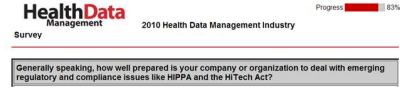
From Dos Equis: “Re: HIPPA. You have to love that after almost 15 years, Health Data Management misspelled it that way in the survey they sent to readers today.” Not to be overly persnickety, but they also misspelled HITECH right next to it, going lower case for some reason even though it’s an acronym. But it’s probably not the editorial people who created the survey, so I don’t read too much into it.

From UDontKnowme: “Re: Epic’s turnover. The 5% estimate is conservative. Turnover rate, specifically within implementation is well above 5% and is in more to the tune of 15-20%. The average tenure for implementation is about two years. Also, the plan for hiring 500 over the summer is in fact, lower than previous years’ summer hiring plans.”  

From JoseMama: “Re: Peel’s WSJ editorial. It’s valid to critique whether we’re doing enough from a privacy standpoint, but her point of view lacked context. Are your medical records safe on a physical shelf? Or being shuttled around in a truck from facility to facility? And at least when UCLA Medical Center workers looked at Octomom’s medical record, they could track who did it and fire them.”

From Matics: “Re: informatics. You had a post by Indra Neil Sarkar, director of biomedical informatics at the University of Vermont, that ‘There are only about 2,000 to 5,000 of us who are formally certified informaticians.’ Formally certified? Certification in medical informatics does not yet exist. Perhaps he meant postdoctoral trained and/or MS/doctoral degreed?”

DeborahPeel  

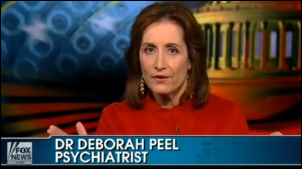
Deborah Peel, MD from Patient Privacy Rights was on Fox News Friday, talking about her Do Not Disclose campaign to give individuals the right to specify how their healthcare data can be used.

iSoft misses its NHS deadline to bring Morecambe Bay University Hospitals NHS Trust live.

Picis CEO Todd Cozzens writes an unusually frank criticism of healthcare reform, nearly all of which I find myself agreeing with:

Most of us who live and work in the healthcare world know that something had to be done about the uninsured, the pre-existing condition denial and other key inequalities in our system. What many of us are upset about is that bill that was cobbled together in order to get rushed through ahead of the next election, is not a cohesive, logical plan where increases in care and coverage are met with responsible funding and cost containment. The sum of these parts is an incongruous amalgamation of special interests, one-off provisions, unbridled future costs and somewhere buried deep inside are some good things for patients.

There’s a wealth of information on mobile health over at HIStalk Mobile, where David Brooks is cranking out good information on apps, hardware, and clinical usage. And if you are interested in Regional Extension Centers, find out from several vendor and consultant executives on HIStalk Practice how they expect RECs to change their business and the industry.

poll032710 

Somehow the results above don’t match the cost of exhibiting at HIMSS. New poll to your right, tying into : should patients be able to control how their health information is used? Note that the poll accepts comments if you’d care to argue your position.

Jobs: Sr. Applications Analyst – CPOE, Senior Manager ARRA Planning & Services, Cerner SurgiNet Consultant, Senior Systems Analyst/NextGen.

dberwick

The New York Times reports that Don Berwick, president of the Institute for Healthcare Improvement, will be nominated by the President to run CMS, filling the administrator role that has been vacant since Mark McClellan quit in 2006.

Masonicare Healthcare (CT) chooses the InteGreat EHR.

E-mail me.

News 3/26/10

March 25, 2010 News 23 Comments

sentillion

From Soft Sales: “Re: Microsoft Amalga. Robert Seliger, former CEO of Sentillion, will take over sales. This was announced internally on 3/15.” Not exactly, but close. Per my Microsoft contact, former Sentillion president Paul Roscoe will lead the sales organization of Microsoft Health Solutions Group, integrating the sales teams of HSG and its recent Sentillion acquisition. Steve Shihadeh will report to Paul. This is quite interesting — obviously Microsoft had a lot more respect for Sentillion than just buying its single sign-on and context management technologies. Putting someone with healthcare sales experience in charge is a good move if you ask me — we’re not talking shrink-wrapped retail sales here.

From UKnowMe: “Re: CSC. Is it putting itself up for sale? Or at least its healthcare biz?”

nist

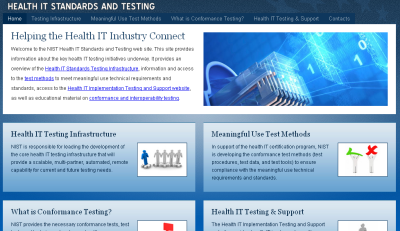
From All Hat No Cattle: “Re: NIST. Looks like they are still disregarding system usability.” NIST’s Health IT Standards and Testing page outlines its testing programs, none of which appear to involve usability. Of course, there’s already a measure of that: low adoption.

From OhWell: “Re: Epic installs. UKnowMe is right, Epic is selling like mad. Rumor has it that Epic is looking to hire 500+ people by the end of the summer. So much for experienced implementers or even experienced advisors with the time to focus on each install.” People have been saying for years that Epic, like Cerner and everyone else before it, will eventually hit a wall. It hasn’t happened yet, but competitors are hoping they’ll run out of steam. Of course, they aren’t really doing much to give Epic a run for their money, either.

From Mark Moffitt: “Re: HISsies award for service oriented architecture as the most overrated technology. I’m a big advocate of web services, aka SOA, as a catalyst for change in HCIT. That being said, I have to agree with the award above. Vendors may be embracing SOA under the hood, but very few vendors expose services so customers can take advantage of the technology. As a result, the impact has been muted from a customer perspective. Until vendors make services available to customers and other vendors, like: get_data(patient, med_list) or: go_do_something(patient, order, md), the HCIT public will continue to view SOA as an ‘overrated technology.’ I continue to plead with vendors to expose services. Unfortunately, I  get the response, ‘When customers start demanding it, we will provide it.’ Well, I’m demanding it. How many more have demanded it and gotten the same response? Or they offer it but not to customers, only partners that don’t provide a competing product. The push back I hear from vendors is ‘we don’t want to be held liable.’ Really? If I repair my car and install brakes incorrectly, have an accident and crash into another vehicle, is the victim going to sue Ford, or Toyota, or GMC and win? I don’t think so. A simple release agreement that relieves a vendor of liability is all it takes. I’d like to hear from vendors on this topic.”

Inga’s been busy again, as you’ll see tomorrow when she posts our latest executive Q&A series entry. A dozen or so industry executives answered this question: “Now that the ONC has announced the initial grants for Regional Extension Centers, what will be the effect on EHR selection and implementation for both the industry and your company in particular?”

Listening: Luscious Jackson, reader-recommended, all-female pop with hip-hop influences. Defunct for a few years, but I’m pretty crazy about them.

ucsf

UCSF names Elazar Harel as vice chancellor for IT and CIO, which includes dotted line responsibility for the CIO of UCSF Medical Center, fresh off a failed Centricity implementation.

Dave Garets and Mike Davis, the two top guys at HIMSS Analytics, start their new gigs with The Advisory Board Company on Monday. HIMSS says it will replace them.

Richard Ferrans MD, CMIO of Memorial Hospital of Gulfport (MS) will talk about the Mississippi Coastal HIE in a Medicity Webinar on Wednesday, April 14.

DEA publishes an Interim Final Rule on e-prescribing of controlled drugs (warning: it’s a 334-page PDF). There’s the usual 60-day comment period. I haven’t studied it yet, but if anyone wants to summarize whatever is interesting in all those pages, feel free to send me your thoughts.

Researchers in France begin a project to identify patients at risk for hospital-acquired infections by scanning electronic medical records with a Xerox text mining tool called FactSpotter.

Sisters of Charity Health System (OH) names Robin Stursa to the newly created position of VP/CIO. She was previously at Saint Vincent Health System (PA).

donotdisclose

An opinion piece by Deborah Peel, MD of Patient Privacy Rights called Your Medical Records Aren’t Secure runs in the Wall Street Journal.

There is no need to choose between the benefits of technology and our rights to health privacy. Technologies already exist that enable each person to choose what information he is willing to share and what must remain private. Consent must be built into electronic systems up front so we can each choose the levels of privacy and sharing we prefer. My organization, Patient Privacy Rights, is starting a Do Not Disclose petition so Americans can inform Congress and the president they want to control who can see and use their medical records. We believe Congress should pass a law to build an online registry where individuals can express their preferences for sharing their health information or keeping it private. Such a registry, plus safety technologies for online records, will mean Americans can trust electronic health systems.

Bonnie Siegel, formerly of Dorenfest and Hersher Associates, joins HIT executive search firm Sanford Rose Associates.

UC Irvine researchers are developing Telios, a Web-based telepresence system that will offer videoconferencing and remote patient monitoring tools.

Ironic beneficiaries of healthcare reform: offshore business process outsourcers, which are even more attractive when administrative cost-cutting gets serious.

A tidbit from the trial of the former CEO of University Medical Center (NV), accused of squandering $11 million on no-bid contracts: one contractor got $850K for producing a 30-minute PowerPoint describing an IT system the hospital already owned.

Red Hat announces Q4 numbers: revenue up 18%, EPS $0.12 vs. $0.08.

E-mail me.

HERtalk by Inga

Earlier this week, Mr. H mentioned that The Kansas City University of Medicine and Biosciences and its former president are suing one another. A local paper points out that former president Karen Pletz is now better known than she was before the firing. That’s because there are plenty of people (like me) who are drawn to the salacious aspects of the story. On the one hand, we have the medical school, which claims Pletz abused her expense account, racking up $2.3 million in food and travel charges.Then we have Pletz, who counters that she’s a victim of conspiracy, aimed at making her the scapegoat for a board that was paying her a huge salary ($1.2 million a year) and approving hefty entertainment expenses. Someone’s hiding something and it all makes for a juicy trial.

st. elizabeths

Another not-for-profit hospital system agrees to be acquired and transformed to a for-profit entity. Caritas Christi Health Care says that private equity firm Cerberus Capital Management is buying the six-hospital system for $830 million, which includes $430 million to pay off debt and $400 million on major improvements, such as upgrades to IT systems.

Masonicare Healthcare Center (CT) agrees to deploy MED3OOO’s InteGreat EHR for the physicians serving its facility.

seemyradiology

Vanderbilt University Medical Center selects Accelarad’s SeeMyRadiology.com service, giving orthopedic surgeons the ability to exchange medical images in real-time via the Web or a mobile device.

Allocade, a developer of patient flow software, closes a $5 million round of VC financing led by VantagePoint Venture. Allocade intends to use the money to expand operations to meet the increased demand for its On-Cue solution.

The ONC appoints Aaron McKethan and Craig Brammer as the new program director and deputy director of its Beacon communities project. The project will award about 15 grants to non-profit organizations or government bodies to help them achieve meaningful use of their EHRs. McKethan is a research director at the Brookings Institution’s Engelber Center for Health Reform and Brammer is a project director at Cincinnati’s Aligning Forces for Quality.

CareTech Solutions and ForeSee Results announce they’ve formed a strategic partnership to provide CareTech’s hospital clients with an online customer satisfaction measurement and monitoring tool.

john tempecso

ICA vice president John Tempesco is named a Fellow of the American College of Healthcare Executives.

athena sermo

Sermo and athenahealth release results from a Physician Sentiment Index that indicates doctors aren’t too happy with the business of medicine. A couple of the more disturbing findings: 59% of physicians think the quality of medicine will decline in the next five years and 64% agree their clinical decisions are being based more on what payors are willing to cover than what they think is best for their patients. Sermo CEO Dr. Daniel Palestrant explains the results in more detail in this CNBC interview.

March 25th is National Medical Biller’s Day, according to the American Medical Billing Association. Thank you, billers, for keeping the money flowing!

ben taub

Sixteen Harris County Hospital District employees who were fired for HIPAA violations in November get their jobs back. Hospital district administrators reassessed the intent of the violation and reinstated the workers’ jobs, though no back wages will be paid. The firings occurred after one of hospital’s medical residents was shot in a grocery store parking and became a patient at the hospital. The medical resident survived.

GE acquires MedPlexus, an EMR PM vendor that targets the 1-10 physician practice market. My first thought was why would GE make this purchase given that they already have the Centricity product? However, if I recall my ambulatory EMR history correctly, Centricity EMR is not truly integrated with a practice management product, but interfaces with either the Centricity Practice Solution (the old Millbrook product) or Centricity Enterprise (the old IDX software). MedPlexus, however, appears to be a fully integrated PM / EMR / patient portal solution. It’s also a hosted product, which is possibly a more attractive and affordable solution than GE’s traditional client/server options. And, Centricity EMR has not had stellar KLAS ratings in the last couple of years, so perhaps GE needed a fresh option.

CentraState Healthcare System (NJ) contracts with Design Clinicals to implement MedsTracker patient medication management. CentraState went live December 7th and says they’ve cut medication reconciliation time from about three minutes to one minute 38 seconds.

Dell unveils its Medical Archiving Solution, which is based on its upcoming Dell DX Object Storage Platform. Dell hopes the new technology will appeal to hospitals needing to increase storage for growing EMR and digital imaging systems.

Huntsville Hospital (AL) selects MedAssets’ RCM solutions for claims management and claims audit and resolution.

inga

E-mail Inga.

News 3/24/10

March 23, 2010 News 9 Comments

marshfield

From Lee H: “Re: Marshfield Clinic. Bob Carlson is out of the CIO role after just a year. The previous CIO is back for the interim.” Unverified. Bob’s still listed as CIO on the clinic page, but not on his LinkedIn profile. The former CIO was Carl Christensen, moved to CTO last April.

firsthistalk

From T. Corolla: “Re: HIStalk. I started reading you the day the blog hit the center column of the WSJ. There are a lot of blogs and there is a lot of criticism of the healthcare industry flung about. I’ve been in it for 35 years and I don’t have time for people who bleat just for the attention. The WSJ article gave you credibility. So I’ve been reading and recommending HIStalk ever since. It has been the single most helpful glimpse into this world. I get sick of the self-gratifying vendor claims and the paid endorsements. I want to know if a product is useful, if the people behind it are honest, capable and knowledgeable, and where it has been deployed. I want to know if promise didn’t pan out. When it is a success, I’d like to know what made it successful. I want to know about what other organisations are doing. I want to be told a straight story. A little humour helps because this is a crazy world and we all need a laugh. You and Inga do that well. What you both do is valuable to me. Thank you for doing it. And thank you for doing it so well.” And thank you for those extremely kind words, which I hesitate to run because it appears immodest, but I conveniently justify it with the rationalization that I’d run them even if they were critical. Since I’m feeling nostalgic, above is my very first HIStalk post from June 30, 2003.

win7

From The PACS Designer: “Re: Windows 7 sales soaring. As we move toward the middle of this year, it looks like Windows 7 is going to be a huge success. The increased sales are from desktop users who want the latest and greatest from Microsoft.” I’m actually running the beta of Office 2010 and it’s pretty good, at least for the minimal uses I have for it. Ever notice that each Microsoft software release goes toward more muted colors? I like that since, taking a cue from car makers (maybe not the best source of inspiration) it makes the old model look gaudy and cheap by comparison. I also noticed that WinXP support ends on July 13, meaning you’d better either be planning to go with Win 7 or to install XP Service Pack 3.

From UKnowMe: “Re: Epic. It seems just about every week I hear about another organization that has selected Epic. How in the world are all of these implementations going to be staffed with experience people? Consulting firms and hospitals are already killing themselves trying to keep up. What will the market look like 3-6 months from now?” Probably about the same — experienced people pitching engagements, newbies actually running them.  

Listening: Brendan Benson, pretty good power pop if you’re in the mood for something peppy. I’m kind of not, so I’ve moved to Nightwish, dark Finnish operatic metal.

The Kansas City University of Medicine and Biosciences and the former president it fired in December exchange lawsuits. They allege fraud; she claims wrongful termination; the lawyers squeal with delight.

Trinity Health (MI) chooses workforce management solutions from Kronos for its 46,000 employees.

knife

It’s Weird News Andy’s moment in the sun, about, as he calls it, “not the sharpest knife in the drawer.” A teenager working in an Internet cafe is assaulted by gang members who accuse him of cheating in a video game. He ends up with a 10-inch kitchen knife shoved completely through his skull, sticking out of both sides of his head. He strolls into the local hospital, where employees thinks it’s a teenage prank with one of those Halloween knives until he collapses. Luckily (or maybe not, depending on your perspective) it didn’t hit anything important and he’s fine. And in a rare double header, WNA says of a boy with a record 31 fingers and toes who’s having some of them removed, “Inigo Montoya must really hate this kid.” I just saw Princess Bride again last week, so I got it right away. Incontheivable!

mass

The State of Massachusetts, drooling at the prospect of federally fueled HIT dollars, will hold the Governors National Health IT Conference on April 29-30 in Boston featuring Governor Deval Patrick, Kathleen Sebelius, David Blumenthal, John Halamka, Marc Overhage, Paul Tang, and Micky Tripathi. Registration runs $350 for non-profit employees and $500 for for-profit. Unfortunately, I expect the HIT benefits listed in the headline above are in order of importance.

The New England chapter of HIMSS will hold its annual public policy forum next Wednesday in Norwood, MA.

iMDsoft gets its first sale in Denmark, with Gentofte University Hospital choosing MetaVision clinical information system for its brand new ICU. The company also announces that Dominion, an IT solutions provider in Spain, will distribute MetaVision in that country.

The fired CEO of University Medical Center (NV) goes on trial, facing charges of giving no-bid contracts worth $10 million to acquaintances. One consulting company had no other clients and was housed in the garage of the owner’s mother. The CEO blamed the computer system for his need to stop providing monthly financial reports, after which the hospital was found to have lost $50 million in the previous two years.

iphonetheme

I installed a cool iPhone theme on HIStalk Practice just to make Inga happy, so if you read it on a smart phone, it’s going to be fast and cool. I’ll put it on HIStalk when I get some time. 

BusinessWeek speculates that if Google or Microsoft makes a bid for Nuance as has been rumored, the healthcare operation, which makes up 44% of sales and includes Dragon Medical and eScription, could be split off and sold to an acquirer such as Cerner, HP, or IBM.

A university in Switzerland is examining bodies using a virtual autopsy robot based on MRI technology and topography software, which also makes a copy that can be studied later.

A man is arrested in Australia for posing as an female nurse in suicide chat rooms and persuading at least five people to kill themselves in front of a webcam while he watched.

In the UK, The Guardian claims that the $20 billion NPfiT project is closed to going down in flames, besieged by missed deadlines and flagging support. iSoft’s Lorenzo was supposed to be live this month under threat of replacement.

E-mail me.

HERtalk by Inga

TriZetto Group signs an agreement with 3M Health Information Systems giving TriZetto the right to include the 3M ICD-10 Code Translation tool with several new services for payers under its TriZetto Advantage 10 Services family. Initially TriZetto will integrate the 3M technology in a provider contract modeling service and ICD-10 translation mapping service.

Consulting firms Deloitte, ACS, and CSC hold the largest share of clinical implementation engagements, according to a new KLAS report. When acting as the lead on clinical engagements, ACS, CTG, and Deloitte earned the overall highest performance ratings, winning higher rankings than past leaders like IBM and CSC. In addition to full service firms, companies like maxIT Healthcare and Vitalize were noted for their experience and solid team of skilled consultants.

Newark Beth Israel Medical Center launches an enhanced version of EDIMS EHR in its emergency department. The latest release includes an RCM module, CPOE, and improved physician and nursing documentation tools.

vitality

Vitality will rely on the AT&T wireless network for its Vitality GlowCaps product, intelligent pill caps that fit on standard prescription bottles and use light and sound reminders to remind patients to take medications. If patients don’t comply, they’ll receive a phone call or text message reminder.

Lake Region Healthcare (MN) selects Allscripts EHR and PM solution for the 50 affiliated providers at Fergus Falls Medical Group.

The Mayo Clinic enters into a collaboration with VitalHealth Software to develop an EMR specifically for primary care physicians. The technology platform, which will launch later this year as a SaaS offering, is based on several years of development and implementation design within Mayo’s primary care practices. VitalHealth is a joint venture between the Mayo Clinic and the Netherlands-based Noaber Foundation

alaska native

The Alaska Native Medical Center selects Cerner’s HIS solutions, including registration, scheduling, and CPOE. An October 2011 go-live is planned.

Hudson Headwaters Health Network (NY) adds  athenaClinicals for its 100 providers. Its 12 health centers already use athenahealth’s RCM service.

Psychiatric facility Silver Hill Hospital successfully implements Medsphere’s OpenVista EHR.

Chamberlin Edmonds and Associates introduce PinPoint, a Web-based patient eligibility screening application for hospitals.

East Carolina University’s Family Medicine residency program selects Retasure for retinal risk assessments.

Excellus BCBS awards 48 New York hospitals over $22 million in quality improvement incentive payments. The program targets improvements in clinical outcomes, patient safety, patient perception of care and patient satisfaction, and efficiency.

Disturbing: two armed gunman in Maryland storm a medical office training class and rob 15 students. Tuition was due that day, so each student was carrying $440. Despite the arrival of police and SWAT teams, the robbers got away.

northbay

NorthBay Healthcare (CA) implements 250 ZynxOrder evidence-based order sets within its Cerner Millenium CPOE.

Medical ID theft is definitely not funny, but I found a bit of humor in this story. A patient discovers a $12,000 charge on her healthcare credit card for a a liposuction procedure. She never had the procedure, though someone else did using her identity. After contacting the medical practice and police, she waited at the clinic for the impersonator to show up for the next appointment. Do you think she was able to identify the thief by her svelte thighs?

inga

E-mail Inga.

HIStalk 2010 Reader Survey Results

March 22, 2010 News 6 Comments

I’m heads-down most of the year trying to keep up with my day job and HIStalk. Once a year right after HIMSS, though, I like to run a reader survey and study the results so that I don’t lose the big picture. The time it takes for readers to fill out the survey is well spent since Inga and I plan the whole next year based on what readers tell us.

In the interest of transparency, I like to share what readers have told me. Here are some tidbits from the 2010 survey.

  • The most common age range for readers is 41-50, followed by 51-60. Those groups summed up to 63% of readers. That might surprise some folks who think that only newbies read blogs.
  • HIStalk’s readership has a lot of industry experience, with 41% having at 20 or more years and 74% having at least 10.
  • Provider employees with IT purchasing influence make up 36% of readers.
  • Readers are on the site often, with 38% saying they read whenever the e-mail comes, 23% daily or more often, and 98% more often than weekly. A full 92% said the frequency of new posts is about right, although a few suggested more frequent postings.
  • While 63% of respondents get the e-mail blast when I write something new, 37% don’t. I’m a little surprised that folks read without getting the blast since that’s a sure way to be the first to know.
  • For the question of the degree to which HIStalk influences reader perception of companies and products, 64% said some and 30% said a lot. Six percent said none at all.
  • The most valued HIStalk features are (in order) news, rumors, Inga, and humor. Several respondents volunteered they liked my music recommendations, which I didn’t think to list separately.
  • I asked whether readers have a higher interest in companies mentioned in HIStalk. An amazing 85% said yes.
  • When asked whether readers were more interested in companies that sponsor HIStalk, 38% said yes.
  • I asked about HIStalk’s influence on the industry. 12% said not much, 52% said some, 32% said a good bit, and 4% said a lot. If I were a vendor, I’d spin this to say that 88% of readers say HIStalk influences the industry.
  • This is my favorite stat every year: when asked whether HIStalk helps you perform your job better, 82% of readers said yes. I could throw out all the other results and be happy with just this one, especially since it was at 65% a couple of surveys ago and I was pleased enough with that.

I asked what topics I should be covering more of. Some of the themes:

  • Usability
  • Niche vendors and emerging companies
  • Implementation stories and case studies. Some suggested covering these by individual vendors to help others who are making selections.
  • Index comments by vendor and/or hospital. I really like that idea. Maybe I should hire someone just to parse out the individual mentions and put them into a database or something.
  • Write more about how individual hospitals expect to benefit under ARRA (or how they won’t).
  • Get product reviews from real users, verify the submitter’s identity, but then run it anonymously. I really like that idea too.

I asked what one thing I should change. Some comments that represent major themes:

  • Readers Write seem like PR pieces. Sometimes they do indeed. Please feel free to post comments saying so since that’s the best method I know to discourage self-puffery under the guise of sharing information. Someone had a good idea – require them to contain at least one negative point about whatever topic they are about.
  • Ads take a long time to load on mobile device. Hint: add /PRINT/ to the link and you’ll get the text-only view that should work great on a smart phone.
  • Fewer flashing ads. I don’t limit those (yet), but sponsors who want to score points with readers might want to eliminate the animation. This is the most common plea for change.
  • Nothing. I like your format – some of the articles are more applicable to me than others, but other readers would pick the opposite. I can sort. Thanks for that. It’s hard to pick out the stories that have the broadest interest.
  • More Inga but everyone probably says the same. They do indeed.
  • Consistent organization and outlining of the post so I can find the parts I care about faster. That’s hard to do within a single posting given the breadth of topics.
  • Open up the waiting list for your HIMSS reception so more can get in! It gets booked up so fast that I always wonder how many people would come if we didn’t have to cut it off. In the mean time, it’s fun to have it be a hot ticket.
  • Can’t think of a thing. HIStalk is the best! Thank you.
  • I love HIStalk — don’t change! Thank you.
  • Shorter reader writes. I keep telling authors to keep it to 500 words if they want to hold reader attention. It’s hard for them to edit their own stuff, I guess, but it would take me a lot of time to do it for them. But prospective authors take the hint – less is more.
  • Take a day off! Good idea – I did!
  • Several readers said to publish more rumors no matter how wild and unlikely, while others said don’t publish unconfirmed rumors.
  • When I first started reading, you walked a line between irreverence and curiosity. Now it seems more like cynicism and disdain. More than anything I’d love to see that curiosity come back. You might be right there. I will work on that.
  • Have Monday morning update come out on MONDAY. Great idea, other than my employer would like me to actually do stuff for them on Monday. I usually write it and send it Saturday evening or Sunday since there’s no chance of interesting Sunday news anyway. I could hold the e-mail blast until Monday morning, but readers starting e-mailing me Saturday evening if they don’t get it (which I think is cute, especially when they are worried about me).
  • Have something completely new 5 days a week. Long-time readers may remember that I experimented with that in 2005, writing Monday through Friday. It took a lot of time, but even more importantly, one reader was dead on when he told me that HIStalk wasn’t “special” when it hit his inbox every day.
  • The world needs more Inga! It really does.
  • No more warning about PDF links. That’s certainly easier for me, although if I were reading on a mobile device, I wouldn’t want to click a blind link to some 10-megabyte PDF.
  • I would either adapt, add to, or begin an alternative, which includes more weight from the sustainment side. Includes honest opinions, real stories, the truth, about vendors and consultants. I keep coming back to this as an excellent idea.

I then opened it up for any general comments. Here are a few representative ones:

  • Keep up the great work! I have no idea how you keep up with everything and then tag it with a great opinion. You make my job easier and and my life more fun! PS: keep Inga around forever!!!
  • You do good work and you are very widely read in our industry. I appreciate that you don’t take yourself too seriously. I appreciate that you don’t take rumors too seriously, at least not until there is something to back them up.
  • I respect and admire what you’ve been able to accomplish in this industry. Often, I get the news I read on HIStalk 2-3 days before I get it in any other forum! I also appreciate the way you wait to confirm some of the "iffy" news! Thanks and keep at it!
  • Not additional thoughts just keep up the fair, honest and direct communication flowing.
  • It rocks. Keep it up. At times I get more direct (speak: non-marketing) info than any of the paid research services I use.
  • HIStalk has become my lunch reading. You do a great job with it – thank you.
  • Good format – its easy to scan and read while listening in on that boring meeting or phone call. Good info overall. As a vendor, I like to see how my software, and my competitor’s, are viewed by the providers and buyers. What are the challenges, the risks they face, what influences how well a product is received and reviewed. For all of us NOT associated with Epic, we are hungry for any insight and help with decoding the provider’s and CTO’s mind.
  • Don’t stop doing it – I know it’s a second job for you. HIStalk is the one fact check site I trust to winnow thru the vendor-based marketing crap out there and the big iron IT company’s PR spin. It’s almost as good as a free KLAS analysis.
  • I’ve been a follower for a few years now. Stopping by is part of my daily routine, and when it comes to my doing research, HIStalk is on the short list of Internet stoops I hit immediately. I appreciate insight, attitude and opinion free of the general bullshit that tarnishes so many blogs. Keep on doing what you’re doing. I really appreciate it. Seriously.
  • Straight forward, no nonsense, sometimes funny, usually very well written, brainy (and probably pretty) female accomplice. What else is there?
  • Maybe I shouldn’t admit this, but HIStalk is the only such newsletter I read. I’m in Univ/Hosp research IT (very different from clinical IT), so I don’t relate to a lot of the pure hosp news items – nevertheless, I never miss my daily HIStalk. I think the attraction is partly news, but also that readers can respond anonymously or not – and that you don’t bow and scrape to anyone, esp. sponsors – and I almost always learn something new.
  • Nice job as usual … the blog seemingly gets better over time. Great content with professional and humorous delivery … Keep up the great work.
  • Keep up the good work. I know how widely it is read. Is there some way to direct writings or advice or commentary specifically to "the workers"? the in the trench folks who I think see all this news and commentary as flying by over their heads far removed from them.
  • Love it, thank you for all of the hard work!
  • Great blog. I really appreciate the great reporting and knowledge. You’re appropriately suspicious of rumors, and you seem to have a great understanding of what news would be interesting to report. I’m a huge fan and recommend that everyone I know read. (Of course, they all already read you, so I can’t claim to be much of an additive evangelist.) It’s just really, really good. One of two blogs I read regularly (and the other one is a Michigan football blog).
  • HIStalk is a great source for breaking information and juicy rumors that come out eventually in the traditional trade rags.
  • I am constantly amazed at the breadth of information that jumps out of these pages. I learn more about the industry and movement within it from HIStalk than all the other subscriptions I have. Heck, you have published information about changes within my own company before we were informed of them. The recent articles on EMR allowed me to view the effort through the eyes of various leaders, which was enlightening. I look forward to finding 5-10 minutes to browse the information every day — one of my routines now.
  • Just that this is my favorite blog, but I must confess the other blogs I routinely look at are the MTV Jersey Shore and The Real Housewives from Bravo tv.
  • To the extent you can bring on more people to write (e.g. more Inga’s and HIStalk Mobile types) – that would be outstanding (and know you’re pursuing this).. and find some way of provoking more CIOs to weigh in… and encourage people to divulge product differentiators and pricing… Thanks again – you’re the highlight of my day and have helped me a better HIT professional by 10x.

Thanks to everyone who took the time to respond.

Monday Morning Update 3/22/10

March 20, 2010 News 3 Comments

dmc

From kITty: “Re: Detroit Medical Center. Sold to Vanguard Health Systems.” DMC signs a letter of intent to sell out to the for-profit Nashville chain, with the hospital’s CEO saying, “The nonprofit hospital model is killing health care in the city of Detroit.” It will be interesting to see how a for-profit operator can improve a situation in which the local economy is wrecked and the hospital is burdened with charity care. I assume from my long-ago, not fondly remembered experience in working for a for-profit hospital chain that the bean counters will run wild trying to cut costs and manipulate the patient mix for maximal profit, which is of course what for-profit companies do to benefit their shareholders, hopefully not at the expense of their customers (patients).

ancc

From mrsoul: “Re: today is Certified Nurses Day. Unlike CPHIMS, you actually have to verify education and experience BEFORE you can take the board exam. Re-certification does take effort and diligence. I am a CPHIMS too; but, I can tell you the RN-BC from ANCC testifies far more effort and experience to my peers. Happy vernal equinox!” Friday, March 19 was the day to recognize certified nurses, including those holding ANCC’s informatics nursing credential. If you are a board-certified RN, a belated happy Certified Nurses Day to you.

Trident Medical System (SC) goes live in the ED with Oacis HIE in a Carolina eHealth Alliance-sponsored program that connects 11 EDs. Trident is Columbia HCA’s hospital group and Oacis HIE connects their Meditech systems with each other and those of MUSC.

John McConnell, who made a couple of kings’ ransoms in selling out Medic Computer System and A4 and then bought golf courses, gets back in the software business. He’s buying a golf club management software vendor. Allscripts probably won’t be buying this one from him.

parrish

Parrish Medical Center (FL) claims a 31% reduction in mortality and a 77% drop in non-ICU code blue calls as it uses Clinical Xpert CareFocus from Thomson Reuters in a Six Sigma project involving its rapid response team. The software identifies patients at risk through an ongoing review of meds, results, vitals, orders, and other clinical data.

A few housekeeping reminders: drop your e-mail in the Subscribe to Updates box to your right to be among the first to know when I post something new. The Search box plows effortlessly through the nearly seven years’ of HIStalk to find mentions products, companies, and people. Click the ugly green Rumor Report button to send anonymous news my way, including any attachments. Add your industry events free to the HIStalk Calendar. If you want to look back on previous articles, use the search box or the Archives page. Please remember to support the companies that sponsor HIStalk by poring over the ads to your left occasionally and clicking those that interest you (and the text ads to your right as well). If you want a cleaner, leaner view of a post for printing or mobile viewing, click the View/Print Text Only link at the bottom of it to get a nicely formatted, print-ready version of just the article itself.

poll032010

Readers generally agree that companies aren’t doing themselves any favors by holding their press releases until HIMSS week, along with everyone else. Make the announcement before the conference, 68% of you said. New poll to your right: what influence does the HIMSS annual conference have on hospital IT buying decisions?

I notice that the visitor count will hit 3 million before long, so I assume Inga is preparing for her usual celebratory pomp and circumstance. She loves watching that counter.

TPD has updated his excellent list of healthcare iPhone applications with many new apps.

The acquisition of QuadraMed by Francisco Partners has been completed.

ins

An interesting perspective from Indra Neil Sarkar, director of biomedical informatics at the University of Vermont College of Medicine, on the role of informatics related to EMRs:

AMIA is making very good headway in this community. There are only about 2,000 to 5,000 of us who are formally certified informaticians. Someone at a medium-sized hospital might have the title informatician, but they are really IT and not informatics. And if there is one term I have an issue with, it’s ‘health-IT,’ it’s the misnomer that we’re stuck with.

Informaticians need IT, but if you ask me to fix something on my computer, I am not a hardware guy. It’s a way of thinking. Many informaticians here fell into the field by accident. I grew up with computers and had strong ideas about the role of computers in microbiology. I am not a physician but I have a lot of interest in medicine. I had the notion I would spend most of my time in the lab using a computer on the side, but I have a dry lab, I don’t maintain a wet lab.

Creating data is not the problem; it’s understanding the data, and that is where AMIA fits in with its history. Its main meeting is more oriented toward electronic health records. This meeting is, ‘Let’s take EHRs and basic bioinformatics for granted. Now what can we do with the data?’

The Las Vegas newspaper reported on confidentiality breaches at University Medical Center a few months back, but this seems to stretching the point: an investigative piece reports that hospital managers don’t have good records of who has keys to the shred bins. The maximum fine for that egregious act: $400. Must have been a slow news day.

CHRISTUS Health engages MEDSEEK to develop its consumer portal and will eventually implement the company’s eHealth ecoSystem.

E-mail me.

News 3/19/10

March 18, 2010 News 5 Comments

From Ex-Cerner Guy: “Re: CPSI. I prospected heavily in Mid-Atlantic and Mid-West regions, and can vouch for the need for a CPSI or Intra-Nexus. Quite a few Meditech sites were looking around and they were only getting called back by the McK Paragon types. There is definitely a market and some pent-up demand.”

From Dan D: “Re: Tom Skelton. He has left MED3OOO for another opportunity.” Unverified.

From RJ McMurphy: “Re: putting HIMSS in perspective. Vendors representing half of the hospital HIS/EMR systems in America weren’t even present! If you look at the HIMSS Analytics report in Modern Healthcare for Jan. 2009, you’ll see Meditech with 26.7% market share, Cerner with 12.6, and Siemens with 9.5. That adds up to 48.7%. All three chose to opt out of HIMSS. Basically it’s become a hype circus — no buying influence really happens there. It was more important earlier in the market cycle when PowerPoint was the main operating system for EMR vendors. Now almost all buying is done by peer site reference and Internet data gathering. Organizations like HIMSS, KLAS, Gartner are trying to make themselves more relevant with lots of hype about trends, etc. The world has changed and I laud those three for opting out and saving their shareholders and stakeholders the cash!”

From Doug Dinsdale: “Re: Merge. Dr. Dalai challenges the CEO of Merge to explain why the purchase of Amicas isn’t going to ruin both companies.”

Cerner makes the S&P 500.

medwatch

A reader sends this picture of a billboard one of his patients asked him about.

Haemonetics extends its $60 million offer for GlobalMed Technologies to give that company time to settle a shareholder lawsuit seeking to block the acquisition.

tmh

Tallahassee Memorial HealthCare (FL) chooses Allscripts PM/EHR for its 106 providers and 33 family medicine residents.

Singapore General Hospital wins the Microsoft HUG 2010 Innovation Award for “Best Use of Clinical Records – Inpatient” for its use of Eclipsys Sunrise Patient Flow, which improved bed placement time and reduced overhead.

A Weird News Andy find: a former dentist is accused of using paper clips instead of stainless steel posts inside the teeth of root canal patients, about which WNA says, “Maybe it’s for all those people who use paper to floss.”

More information on the HIMSS EHRA position on meaningful use is here.

McKesson announces a hosted storage option for Horizon Cardiology CVIS, with Cooper University Hospital (NJ) as an early adopter.

Software developed by Boston Medical Center, Northeastern University, and MIT that reduced readmissions by 30% is licensed for commercialization to Engineered Care Inc.

iresus

A new iPhone app called iResus walks users through emergency resuscitation, providing a metronome for timing chest compressions.

Nurse scheduling software vendor StaffKnex changes its name to OnShift. They apparently like conjoined words quite a bit.

Everything about this story is sad. A four-month-old Down’s baby dies in the UK after being given a tenfold overdose of the diuretic furosemide. The computerized warning issued to the doctor’s office is overridden by the receptionist. The pharmacist hears the technician questioning the dose with the prescriber, but doesn’t follow up. The neighbors of the parents, convinced they killed their own child, trash their house and steal all the baby’s belongings. Weeks later, the father kills himself by drug overdose. The coroner’s report finally came out this week, four years later, finding that the doctor and pharmacist were at fault.

Revenue cycle vendor Emdeon will acquire management consulting firm Healthcare Technology Management Services for $11 million.

At least somebody likes the proposed meaningful use criteria: AARP and Consumers Union.

Lexi-Comp releases its ON-HAND medical software for the Palm Pre and Pixi.

A KLAS report finds that 20% of smart pump buyers wouldn’t choose their current pump again, although 99% of CareFusion Alaris said they would. Still, the highest rated pump was the B. Braun Outlook.

Meridian Health (NJ) chooses CareAlign from Informatics Corporation of America to deliver an integrated clinical record to five hospitals.

MedFusion licenses LIS, molecular diagnostics, and AP software from Sunquest.

E-mail me.

News 3/17/10

March 16, 2010 News Comments Off on News 3/17/10

From Harvey: “Re: CPSI. The small/rural hospital market has been dead money for years. However, the QSII/Opus deal may mark the start of a land grab there. Rumors are that Francisco will either IPO or sell Healthland this year, which tells you that there is demand for assets in this sector. My guess is that almost everything’s for sale in that space, including HMS and the indifferently-managed CPSI. Would love to see an interview with Francisco’s Ezra Perlman. He’s been a major mover and shaker, but rarely discusses HCIT publicly.” I agree (and I would be up for that interview). I overheard conversations at HIMSS about that largely untapped small-hospital market and some interesting players were named as being well positioned, such as IntraNexus.

From ZenSocrates: “Re: McKesson. Mike Myers, the McKesson executive responsible for the Clinical Documentation/Physician Order Entry product and a true pioneer of HIS, has announced his retirement for this July. The concern is that McKesson could not name a successor at the time of the announcement. As a customer, this concerns me greatly!!” Unverified.

jeremychandler

From MckHappy: “Re: McKesson. McKesson and Jeremy Chandler are finally implementing the changes they had promised within the Horizon team. Mike Myers has announced his retirement effective July 1. Jim Nemecek is no longer VP over ambulatory. Cem Tanyel from Unisys will be named as the new head of development. Gerry McCarthy will add ambulatory to the physician solution line. The internal release focused on integration and eliminating the politics — errr, I mean development silos. Rumor going around is that portal and ambulatory development will be centralized in Boulder. The ARRA-certified release was shipped on-time to the pilot site last week.” Unverified, but if true, I wasn’t the only one observing the development silos and lack of staff stability.

From William Tell: “Re: HIMSS. I guess from what Lieber says, HIMSS is all things to all people.” An article quotes Steve Lieber as wanting to push into life sciences and payer markets, medical banking, PHRs, and workforce. I can only imagine the confusion as everybody tries to sell something to everybody else at the conferences. And in related world domination news, HIMSS Analytics is now working in Europe.

From Dickie Smothers: “Re: HIPAA. Check out 42 USC 1320d-6, which defines ‘A person who knowingly and in violation of this part … obtains individually identifiable health information relating to an individual …’ The term “person” is defined (in the main part of 1320) as an individual, a trust or estate, a partnership, or a corporation. I’ve read that because the above section applies only for a ‘violation of this part’, it only applies to those otherwise covered by HIPAA (since anyone else couldn’t ‘violate’ the provision). However, the HITECH changes in Section 13409 of the Act seem to broaden the applicability. Don’t think it was effective, however, last Thanksgiving. Nevertheless, a bright federal prosecutor could make a conspiracy charge or bribery charge stick if he/she wanted to. Just my opinion.” This relates to the story I mentioned in which a gossip site supposedly made 6,000 calls to the hospital Tiger Woods was in, trying to wangle his medical records from anyone willing to spill the beans for cash.

jbehrtv

From Jack Flash: “Re: athenahealth. This is a very entertaining and insightful interview of a slightly buzzed Jonathan Bush at the HIStalk party. Greatest quote of the interview, on being asked about Healthcare Policy — ‘I love Obama’s package. He looks great.’” Definitely a fun watch.

From Radiology Ralph: “Re: DR systems debut of Unity CVIS. You mean DR Systems does something other than sue other radiology vendors for its ‘416 patent infringement? Go ‘Dominator!’” Just in case anyone doesn’t know the back story, DR Systems filed a slew of lawsuits in 2006 claiming patent infringement of a PACS reading station feature: eRad, NovaRad, Emageon, Fuji, GE, Philips, Siemens, Kodak, and others.

From Stifler’s Mom: “Re: Medicare. Good article on that 21% Medicare cut that happened, then got fixed, while we were partying in Atlanta. I don’t know how many doctors wandering the exhibits halls were leaving their wallets in their rooms, but I would have. Even with the ‘fix,’ if I were a doc, I’d be too nervous and reluctant to be spending any big bucks. No one at HIMSS was talking about a 21% pay cut in their already low Medicare reimbursement!”

From Meaningful Abuse: “Re: HIMSS attendance. If only 30% (~8,357) of the registrants came from healthcare provider setting, where did the other 70% (~19,500) come from? Isn’t this a healthcare setting information technology show? Only 11%(!) of the registrants were CIO/CTOs? Was that 11% of the healthcare provider attendees or 11% of the total registrants? Same question about CEOs… So, who do the vendors want to talk with? C-level decision-makers, not mid-level IT managers or staff. No wonder HIMSS vendors are chafed about the money they have to spend for their chunk o’ concrete.”

Several readers asked about the lyrics to Dr. HITECH’s Meaningful Yoose Rap. They are here and they are excellent.

Now that we’re over the HIMSS hump, I’m interested in doing some new interviews (with provider-siders especially encouraged). Or, your guest articles are welcome (more of those from providers would be especially welcome). I’m finally to the point that I can get to them.

The HIMSS EHR Association weighs in on meaningful use and incentives. That response wasn’t detailed, but it apparently urged simplification, reduced requirements for data collection, and allowing only one document standard.  

markle

Not to be outdone, Markle Foundation has its say on the same topic. Some of their ideas: (a) set explicit health goals; (b) make the quality measures list more focused; (c) add new measures for priority health goals; (d) get rid of the all-or-none approach to incentives to encourage improvement without requiring hitting 100% of the proposed requirements; (e) streamline some of the calculation-heavy functional measures; (f) make electronic reporting requirements simpler; (g) focus on easy measures that improve patient engagement; (h) clarify that a secure download of patient information is acceptable; (h) get feedback into doctors’ hands quicker; and (i) clarify how hospital-based physicians can participate. I think they did a great job with good consensus and I would expect HHS to seriously consider their recommendations since they are less vendor- and product-centric and focus more on patients and providers. Kudos to them.

VA CIO Roger Baker lays it on the line for his IT staff: he’s happy to kill projects that miss deadlines or run into snags. That’s semi-good news for taxpayers, but the shining star of that policy cost a bundle, a failed patient scheduling application that cost $150 million.

In the UK, NHS’s medical director and NPfIT defender resigns his additional role as a director of an NHS software supplier after an anonymous blog commenter brings up the perception of a conflict of interest.

Jobs: EHR Business Systems Analyst (WA), Clinical Exec Physician – Sales Support (GA), Epic Revenue Cycle Manager (FL), Client Training and Support Specialist (MA). Some pretty good jobs are up on Healthcare IT Jobs, so take a look.

agh

Akron General Health System signs an $11 million clinical systems upgrade contract with McKesson, including CPOE and Practice Partner.

A survey finds that 12% of employees knowingly violate IT department policies “in order to get their work done.” The survey appears to encourage outrage at irresponsible users, but IT policies that impede individual productivity in the never-ending quest for risk reduction should probably share some blame.

unani

McGill University Health Centre launches its PHR, Unani.ca.

E-mail me.


HERtalk by Inga

After placing its EHR project on hold for a year, Sutter Health announces plans to spend $400 million and accelerate its Epic implementation over the next five years. Sutter intends to take five of its affiliated hospitals live on its Epic EHR in 2011. The health system has already rolled out EHR to the majority of its physician offices, as well as its Mills-Peninsula Health Services facility.

himss numbers

Preliminary registration numbers from HIMSS10 indicate attendance was up across the board. Professional registration grew 9% over 2009, though the total registration number was only 2% higher than last year.

The deadline to file comments on the latest meaningful use and certification criteria is now past, but not before multiple organizations filed last minute comments. CHIME, MGMA, CCHIT, and the AMA were just some of the many groups to submit public comments before the March 15th deadline.

CCHIT, by the way, says it is suspending any initial or incremental modular testing until it has an accredited Stage 1 ARRA test script to use. A note on its Web site also indicates that CCHIT is “confident” about its prospects for becoming accredited. Meanwhile, Drummond Group reaffirms its desire to be certified as a authorized testing and certification body and is making internal preparations in order to be ready for EHR testing later this year.

Columbia Basin Hospital (WA) agrees to outsource its IT support to Phoenix Health Systems and implement Phoenix’s Total IT Solution service line. The offering includes the implementation of Medsphere’s OpenVista EHR.

jersey shore

Meridian Health (NJ) selects ICA’s CareAlign solution to connect its five hospitals and its affiliated healthcare companies.

After delaying the release its numbers, athenahealth posts a decline in profits and jump in revenue for Q4 and 2009. athenahealth restated its financials going back to 2005 as a result of an internal accounting policy review, initiated by the company, and related to the timing of amortization for deferred implementation revenue. For Q4, revenue grew 33% over 2008’s numbers to $54.4 million. For the year, revenue jumped 38% to $188.5 million. Reported GAAP net income, however, fell 84% to $4.3 million in Q4, compared to $26.8 million a year ago; annual net income fell from $31.5 million to $9.3 million. The $.17/share earnings were in line with analyst expectations.

UMass Memorial Health Care selects Picis CareSuite for its five hospitals.

Wayne State University Physician Group (MI) contracts with NextGen Healthcare to deploy NextGen Practice Solutions. The 540-physician group already uses NextGen EHR.

holland

Holland Hospital (MI) plans to implement the InterSystems Ensemble platform as its enterprise integration engine. The hospital plans to connect multiple systems across the facility and integrate its EMR with affiliated physician groups.

St. Joseph Medical Center (TX) implements Webmedx’s dictation and transcription platform, apparently within three days of a crash of its legacy systems.

Vitalize Consulting appoints Tim McMullen its executive VP of sales. McMullen most recently served as a VP at maxIT Healthcare and was a national VP and partner with First Consulting before that.

anson maxit

HIT consulting firm maxIT and the the medical device experts at Anson Group combine forces. The companies sign a partnership agreement aimed at providing vendors and providers expertise in the implementation of regulated medical devices connected to EMRs. Sounds like great timing, given the recent attention on EMRs and their possible regulation by the FDA.

CareTech Solutions signs a five-year infrastructure outsourcing agreement with Sibley Memorial Hospital (DC).

BCBS of Minnesota makes a bit of a mistake, accidentally publishing a customer’s personal medical information it a handbook for 95,000 members. The woman is now filing suit for the breach of privacy and violation of the Minnesota Health Records Act.  Her attorney calls it “one of the most blatant and egregious violations of medical privacy” that she’s ever heard of.

inga

E-mail a limerick to Inga.

HIMSS10: Party Like It’s 1999

March 15, 2010 News 20 Comments

By Mr. HIStalk

Inside Healthcare Computing has graciously agreed to make this editorial available from its newsletter.

Healthcare is different, everybody says, Well, it sure is when it comes to throwing the excessive bacchanal that is the HIMSS annual conference.

Most citizens are shell-shocked from economic devastation. Most industries are reeling. But at HIMSS, it was 1999 all over again.

Sprawling exhibitor booths are burning electricity like a third-world country! Bring on the big-name entertainment! Cocktail hour in the exhibit hall is just what stressed hospital executives need to make informed, responsible IT decisions!

The most common phrase I heard in the exhibit hall other than Meaningful Use was Ruth’s Chris.

It was a Las Vegas time warp in Atlanta. Everybody slept in expensive hotel rooms and wore pricy clothes and screwed around with party schedules on expensive smart phones and fretted over dinner reservations and wine lists at expensive restaurants. The neon and booth babes were out in force, everybody loaded up on overpriced Starbuck’s coffee, and hired cars and limos lined up to transport captains of the HIT industry and their minions to and from the convention center.

In the back of my mind, though, was my hospital’s ED. I was thinking of the people patiently waiting there, those using it as their primary care provider because they can’t afford insurance. If I randomly chose one of those patients and took them to HIMSS, what would they think of the free-wheeling technology funfest?

I worry that hospital executives have decided that they are far superior in every way to the average patient they supposedly serve. They have more education, make more money, and enjoy life benefits that the randomly chosen ED patient cannot comprehend. When they travel, they travel in style, and thus supposedly struggling community hospitals will reimburse executives for $250 hotel rooms. And when they go to HIMSS, self-sacrifice is hard to find. In fact, so is any mention of real, live patients, many of whom would probably cause the suit-wearing crowd to physically recoil because they don’t look or act like them.

The other irony is that the key element of discussion, the topic that packed the conference rooms, was getting hands on taxpayer money. All those highly paid and highly expense accounted people were getting together to talk about hitting those economically shell-shocked people and companies a little harder in the pocketbook, making the choice on their behalf that their personal income would be better used to fund EMRs through higher taxes.

Maybe the local TV stations should send video reporters to conferences like HIMSS, just to show the folks back home who make it all possible how their healthcare and tax dollars are being spent.

I could be naïve. Maybe the HIMSS spectacle is so over the top that everybody gets the irony. In fact, I bet they were discussing it at Ruth’s Chris.

This editorial is copyright-protected by Algonquin Professional Publishing, LLC., publishers of Inside Healthcare Computing. Please do not copy, forward, or reproduce this material without prior permission. To obtain permission or for more information about Inside Healthcare Computing’s reprint policy, please contact the Customer Service Department at 877-690-1871. Mr. HIStalk’s editorials appear in the subscribers-only version of Inside Healthcare Computing’s E-News Update.

Monday Morning Update 3/15/10

March 14, 2010 News 4 Comments

From McMessy: “Re: McKesson report. The author of the report states ‘this channel check is not inconsistent with other checks we have made on MCK and its HCIT products.’ The client in the report indicated that its HERM implementation process started more than a year ago and may take another 18 months to complete. The hospital also said they are currently at HIMSS Stage 6 but that there are about seven Stage 1 criteria that the hospital still does not meet. Ouch!! Another ringing endorsement for HIMSS Analytics! Don’t you need to meet all the Stage 1 criteria before you can get to Stage 2-7?” Not really surprising considering the science fair of wildly different products that share the Horizon Clinicals nameplate, running decentralized development shops for what should be a single product suite, and never-ending employee turnover. But, it works fine in some places and some of their competitors have similar problems.

From The PACS Designer: “Re: HealthVault. Microsoft’s HealthVault application is now ready so that we can create our own PHR along with one for other family members. TPD has posted previously about Microsoft’s Silverlight application which is now part of HealthVault. Also within HealthVault is their Sharepoint application. If you have a Windows Live ID or OpenID you can use either ID to sign up.”

poll031410

My FDA regulation poll drew quite a few responses, most of which expressed a belief that FDA will indeed step in to regulate healthcare IT in some form. New poll to your right: when a vendor has good news to announce in the weeks before HIMSS, should they announce it immediately, hold it until HIMSS week, or announce afterward? Most vendors hold their news until Monday of the conference, which I think is nuts, but you decide.

fdaletter

Speaking of FDA, it has set up a network of 350 hospitals and asked them to report problems with systems such as CPOE, EHRs, pharmacy systems, PACS, and others under its MedSun medical device safety network, according to a Huffington Post Investigative Fund article.

Inga already referenced Dr. HITECH’s Meaningful Yoose Rap, world premiered at the HIStalk reception at HIMSS, but I’ll embed the video again just in case you missed it. In case you didn’t notice, this was a flawless live performance by Ross Martin, MD, best known until now for his amazing Interoperetta.

And speaking of Inga, she did a marvelous job while I was R&Ring, don’t you think? I never thought I would find someone who could step right in, but we’ve been working together for three years now and she has blossomed wonderfully. I will apologize in advance for the likelihood that I will repeat something she has already mentioned since I’ve been out of touch for a week. Stats-wise, February barely missed setting an HIStalk record even though it was a short month, with 88,057 visits, 120,075 page views, and 5,346 e-mail subscribers. March is trending up. You contributed to those stats, so thanks for that.

As for me, I am rarin’ to go, batteries fully recharged and ecstatic to be back. And listening: Apples in Stereo, Denver-based power pop.

Inga mentioned that I was elated that former HBOC chair Charlie McCall is headed off to prison, which is true. Finally I can quit gritting my teeth when inserting “alleged” in in describing the massive fraud with which his train wreck of a company blighted the industry (although McKesson gets an assist for corporate stupidity in buying him out). It now looks like the decks have been cleared for McKesson to sue him for restitution, which would win them points in my book.

Community Health Solutions of America signs up for MEDai’s Risk Navigator, a predictive modeling suite that identifies high risk patients and tools to manage them.

InterSystems acquires its Italian healthcare implementation partner Prosa.

Former Shands CIO Bill Montgomery is named CIO of Hospital Sisters Health System.

healthcentral

Interesting: when Tiger Woods ended up in a Central Florida hospital, tabloid site TMZ made over 6,000 calls to the hospital within a few hours, dialing every possible number trying to find someone who would provide information. It even offered bribes to hourly workers hoping to get his medical records, the hospital said. It worked — the hospital fired several employees who accessed his records. I’m pretty sure nobody’s HIPAA policies could withstand that kind of attack. Nor am I sure why trying to get someone to violate HIPAA isn’t itself a punishable offense.

I don’t know where Weird News Andy finds this stuff: a Dutch nurses’ union launches a national campaign to remind the citizenry that its members do not routinely provide sexual services to patients. The “I Draw the Line Here” campaign was created after a female nurse observed co-workers offering gratification to a disabled male patient, who then tried to dismiss her because she would not do the same.

CTIA Wireless 2010, in Las Vegas next week, is running an Everywhere Healthcare 2010 track with some good sessions.

Hopefully everybody’s Daylight Saving Time switch went OK.

The Nashville Medical Trade Center, hoping to become a center for healthcare industry events, tried to use the HIMSS conference as a launching pad to get business tenants, but doesn’t seem to have had much immediate success according to this article.

DR Systems will debut its Unity cardiovascular information system this week at ACC.

The unSummit on point-of-care bar coding will be May 5-7 in Atlanta. 

Deborah Peel, MD is the subject of the cover story in Managed Healthcare Executive called Locking down privacy: where do we draw the line? “All 55,000 pharmacies in the United States are data-mined daily, and our identifiable prescription records have been sold for over 10 years. The theft of prescription information is why Congress was persuaded to include the ban on the sale of protected health information in the HITECH bill. I think that the industry is in denial because there is a huge, essentially unknown data-mining industry for health information."

accessbbq

The guys from the Access barbeque team sent over this picture, which has convinced me they should set up the smoker in the parking lot of the Orange County Convention Center at next year’s HIMSS conference. Give a prospect a plate of pulled pork and a beer and he will listed to what you have to say.

Meta Healthcare IT Solutions, formerly Meta Pharmacy Systems, has added CPOE, eMAR, and clinical documentation to its product lineup.

West Penn Allegheny Health System admits that a programming error caused incorrect prostate exam interpretations that affected 288 patients.

A former Texas social services administrator who championed a failed social services privatization effort starts a company that is given a no-bid software contract to help fix the mess.

E-mail me.

News 3/12/10

March 11, 2010 News 4 Comments

HERtalk by Inga

From: Scoopy Sales “Re: Janet Dillione’s resignation. I see HIStalk scooped everyone on this and the ‘news professionals’ are just now reporting the story.” Ha! Mr. H will like that comment. Thanks again to the reader who tipped us off last Friday about Dillione’s resignation as CEO of Sieman’s HIT division.

From: PACSMan “Re: Dillione. I know you had run this yesterday but this confirmation came across just now. The timing is beyond strange- she gives a press conference 3 weeks ago, speaks at HIMSS and even has the damn thing podcast and now eaves to ‘pursue other opportunities’ after 27 combined years at SMS and Siemens. Something gives here- and I bet it ain’t pretty a ’tall….”

From: Mrs. Kravitz “Re: McKesson report.The recent Leerink Swann HC equity research report reads badly for McKesson. After talking to a CIO at a large client base they are pessimistic on McKesson’s ability to get to Stage 1 meaningful use; HEMR and Horizon Clinicals v10.3 still not GA despite representation to the contrary.” I don’t have access to the report. If you have an opinion, chime in.

computerweekly

I noticed that ComputerWeekly also  picked up a reader-supplied rumor, this one about a recent director-level resignation at iSoft. ComputerWeekly actually quoted HIStalk, then added iSoft’s confirmation that Keith Kirtland left for “personal reasons.”

Five Alegent Health hospitals implement Design Clinicals’ MedsTracker for electronic medication reconciliation. The CMO claims that an impressive 100% of the hospitals’ admissions and discharges were reconciled electronically on day two of the go-live.

The ONC publishes its proposed rule establishing two certifications programs to test and certify EHRs. CCHIT will not be granted grandfather status for testing, though they will likely be one of only a few organizations ready and able to qualify under the new program. Organizations wanting to qualify as an “ONC-Authorized Certification Body” for the “temporary” program would be required to submit an application and demonstrate its competency to test and certify EHRs. The temporary program could make it possible for full EHRs and EHR modules to secure certification as early as this summer. The temporary program would expire the first quarter of 2012 and replaced with a permanent program run by an outside certifying organization.

Children’s National Medical Center (DC) plans to implement Streamline Health’s Audit Integrity Manager Solution.

St. John’s Hospital – Eureka (CA) deploys Order Optimizer’s web-based clinical platform, allowing physicians to use evidence-based protocols at the point of care.

keith belton

I see the folks at EHRtv have begun posting their vendor executive interviews from HIMSS. Dr. Eric Fishman poses some great questions to leaders from Nuance, M*Modal, Allscripts, Eclipsys, and NextGen in these face-paced and engaging spots.

The 17-physician Mountain Region Family Medicine (TN) completes its installation of Greenway’s Prime Patient EMR, with deployment assistance from BCTI and OnePartner.

Detroit Medical Center awards MedQuist a contract for transcription outsourcing services. Medquist will provide ED documentation at six of the health system’s facilities.

Rush University Medical Center (IL) agrees to pay more than $1.5 million to resolve a federal lawsuit. The suit alleges Rush violated the False Claims Act in connection with improperly designed leasing arrangements with several physicians.

dr hitech

DR HITECH live at Max Lagar’s in Atlanta, rapping about Meaningful Use. Doesn’t get better than this!

Weird News Andy sends over this story, which is actually more disconcerting than weird. The NHS, as it continues to create its national database of patient medical records, is suppose to give patients an opt out option before their information is added. Instead, doctors claim the government is rushing the project through and  patient information is being uploaded before  patients have a chance to object. Doctors also claim the government is not adequately educating patient on the database project, nor making the opt out option easy enough for patients to select.

The VA is busy working on Aviva, the next-generation version of its 20-year-old VistA EMR. Aviva is designed to be Web-enabled, modular in design, and capable of easy data exchange with other EMRs. Peter Levin, CTO for the VA, compares the project to “trying to replace a tin can on a string with a cell phone system.”

A former MedAssets contract employee, who used a fake identity to get her job, is accused of accessing the financial information of up to 2,400 patients. UTMB was a MedAssets billing service client at the time and Katina Rochelle Candrick is believed to have gathered social security numbers, dates of births, and credit card information on UTMB patients. Candrick has since been arrested.

hissie

In case you missed the actual HISsie Awards presentation, check out the presentation we ran at the reception last week. It’s loaded on SlideShare and apparently the transitions only work if you download it to your system. You’ll want to download it to fully experience the fun – as well as identify the winners and see the pie hit the face of a certain CEO. There is likely some way to post the slide show and have the transitions work correctly, but I am too lazy and too short on time to figure it out.

Provena Health (IL/IN) signs a seven year agreement with ARAMARK Healthcare. ARAMARK will provide clinical technology services for Provena’s six hospitals.

The folks at Surgical Information Systems asked me to let readers know they’ll be at the AORN meeting next week in Denver. If you’re attending, check out their session “Creating a Unified PeriAnesthesia Medical Record to Improve Clinical, Operational, and Financial Outcomes.”

inova

Inova Health System (VA) names Ryan Bosch, MD, FACP, MBA its first Chief Medical Information Officer. Before joining Inova, Bosch worked as Director of General Internal Medicine at George Washington University Medical Faculty Associates.

Stemp Systems earns Preferred IT Vendor status from eClinicalWorks.

The public continues to weigh in with opinions on the latest meaningful use definitions. CMS posted a few additional comments last week and folks are still concerned that the bar is set too high, especially in the early years. The note below questions the exclusion of CPOE in the ED when measuring the total percentage of electronic order entry in a hospital:

The current proposed definition of meaningful use seems to exclude the use of CPOE in the ED as a measure of determining the current percentage of electronic order entry within the hospital setting. That doesn’t make a lot of sense if the purpose of the graduating meaningful use criteria are intended to promote and reward a hospital’s progress in deploying CPOE. Many hospitals will start with the ED to deploy CPOE because of it’s complexity and workflow. The current proposed definition will not recognize those organizations who are making good progress with CPOE simply because they may have started in the Emergency Department. That seems counterintuitive and not within the original spirit of advancing CPOE deployment to 100% within several years. In other words, who cares where an organization starts its deployment as long as progress and total percentages are actually achieved.

Mr. H is back home sometime this weekend. As gratifying as it is to know that HIStalk can stay afloat a few days without him, no one will be happier than me to have him back in charge, especially since he makes HIT so much more fun.

inga

E-mail Inga.

Text Ads


RECENT COMMENTS

  1. Isn't that actually present perfect indicative?

Founding Sponsors


Platinum Sponsors


Gold Sponsors


RSS Webinars

  • An error has occurred, which probably means the feed is down. Try again later.