Home » News » Recent Articles:

Monday Morning Update 9/14/09

September 13, 2009 News 17 Comments

From Ex-Cerner Guy: “Re: Cerner. Not only does Cerner re-sell the data they collect, but it’s part of their Lighthouse agreement and the client gets to pay for the privilege of giving their data away. Look closely at the wording of the agreement — it’s in there. It’s good to read their contracts closely. It’s more fun to sit in on the negotiations and watch the squirming.”

From The PACS Designer: “Re: Govt 2.0 Summit. Tim O’Reilly, of Web 2.0 fame and founder of O’Reilly Media, had some interesting comments at the Gov 2.0 Summit about turning government into a platform to foster true innovation in the years to come.” Tim’s got some shopworn analogies about the iPhone and Twitter in case you haven’t had enough of those, making the point that third-party products should plug into the “government platform” to build citizen services, no different than the Interstate system and the Internet (oops, more analogies). All I could think of was the cool movie Startup.com that documented the quick ride up and equally quick ride down of Govworks.com, which was going to make the founders zillionaires by allowing people to pay parking tickets online. Where were you during the dot-com wars?

From Needs_Gas: “Re: Eclipsys. A recruiter says they have a new model and will be partnering with third-party firms to provide services.” Unverified.

From Luke O’Scyte: “Re: anonymization. There is no such thing as real anonymization any more due to the science of re-identification. You can uniquely identify 87% of Americans with only zip code, date of birth, and gender. Release of such information by companies like Cerner should not be allowed.” I’ve covered that topic before, but it’s worth another mention: all you need is a second database that state or federal governments sell cheap and you can re-identify most of the records in a “de-identified” set. Luke sent a link to a fun article describing a well-intentioned 1990s mandate from Massachusetts state government to release anonymized data covering state employee hospitalizations, which sounded great until a grad student mailed the medical history of the governor to his office. She had easily obtained his full record of his diagnoses and prescriptions by matching the anonymized employee data to a voter database she bought for $20. Only six people in Cambridge shared his birth date, only three were men, and only one (the governor) lived in his ZIP code. That grad student was Latanya Sweeney, now a noted Carnegie Mellon professor and privacy technology expert.

cayman

The Conficter worm shuts down takes down all hospital information systems in the Cayman Islands. What’s most interesting about the story, though, is that the article quotes new CIO Dale Sanders, who has been on the job less than a week and who, until recently, was CIO at Northwestern Medical Faculty Foundation. I’m interested in how he ended up there since that sounds like a fun move. I’ve been to the Caymans several times and my impressions are (a) it’s beautiful with stunning green-blue water great snorkeling; (b) it’s also horrendously expensive and has a bad exchange rate on the US-to-Cayman dollar, and (c) it’s an international haven for tax-dodging corporations and shady banks (was that redundant?) whose physical presence is a post office box. Oh, and it has a turtle farm and rum cakes.

Opinions about working at Epic are mixed on Job Vent, which is always entertaining as well as hardly reliable. General observations of those posting: (a) they hire only easily controlled new grads of any major; (b) job evaluations and promotions are based only on hours worked; (c) if you quit to work for a customer after the mandatory one-year waiting period specified in the contracts of customers, you are an untouchable who isn’t allowed to interact with current employees; (d) the money, benefits, and the non-cubicle environment is nice for new grads. Some of the posters claim a 1984-type environment where employee conversations and Web activity are monitored, warning of the “thought police.” One pro-Epic cheerleader claims, “We hire scary-smart people, so if they can’t cut it at Epic, they will still be a rock star somewhere else” which maybe means in a different industry since 22-year-old philosophy grads with zero work experience of any kind aren’t exactly in high demand in HIT. As a capitalist, though, I like the model: pay a little more than you have do, bring people to a location where they have few career alternatives, demand more than you should expect, proclaim cheap meals and snacks a benefit instead of a way to get extra hours out of employees who might actually leave for lunch otherwise, keep enough quirk on hand to fool wide-eyed noobs into thinking that wintry Wisconsin farmland is a hip Silicon Valley Midwest, and keep a big file of backup resumes to feed the churn. It’s working for Epic and, greenhorns or not, they innovate more than their competitors.

Cerner will hire 12,000 new employees by 2020, Neal Patterson says to the government of KCMO to soothe the civic feathers he ruffled by choosing the Kansas side of the border for his soccer and HIT complex.

kronos

Thanks to Kronos for becoming an HIStalk Platinum Sponsor. The Chelmsford, MA company offers a wide range of workforce management systems that optimize the cost of delivering quality care, minimize risk due to noncompliance with requirements, and maximize productivity. Some of its applications include timekeeping, human resources management, payroll, workforce analytics, employee scheduling, and absence management. They have several research and case study papers on their site. My thanks to Kronos for supporting HIStalk and its readers.

Results from my poll about vendors notifying customers when their software has patient-endangering problem: 37% said their vendors were bad about that, 39% said mediocre, 25% said good. New poll to your right: how much impact will Dell have on the healthcare IT market now that it will offer EMR hardware, software, and services?

I like this idea: an online debate on whether to implement CPOE vs. barcoded medication administration first. It features two highly regarded pharmacists with informatics expertise. 

I think I may have joked before that RHIOs might as well try for ARRA grants as regional extension centers since they often don’t have a business model otherwise. Apparently it’s no joke: the Harrisburg Health Information Exchange (PA) submits its grant request

Another reason to ignore stock analysts who cover industries they clearly know nothing about: this article covering Dell’s announcement about reselling EMRs is full of eye-rolling inaccuracies: (a) the headline says Dell will “make” electronic records; (b) it calls EMRs “the device”; and (c) it opines that Dell’s big competitors will be Google and Microsoft, apparently confusing PHRs with EMRs.

pandorum

An odd lineup on yesterday’s CBS News Sunday Morning: “Dennis Quaid discusses electronic medical records; the end of ‘Guiding Light’; poetry; upcoming fall films.” Dennis’s G.I. Joe did great until word got around, disappearing without a trace after three weeks. He’s up next in the sci-fi (or is it Syfy?) thriller Pandorum, which opens September 25. The trailer looks lame to me, but my taste varies considerably from the apparent mainstream.

Merge Health extends its agreement with Russian medical equipment vendor Rossyln Medical, which will integrate Merge’s PACS technologies into its custom solutions.

E-mail me.

News 9/11/09

September 10, 2009 News 1 Comment

From Chi Lover: “Re: Eclipsys. Eclipsys is having another round of layoffs today (9/10/09). How can they sustain their implementations with so few staff?” Unverified. Another rumor making the rounds is that Allscripts is thinking about buying Eclipsys, but I mention that purely for entertainment rather than business value since lots of signs point to the likely inaccuracy of that speculation.

From Bobby Orr: “Re: Cerner. I’m disappointed in your thoughts that Neal would do anything that is not motivated by money. Cerner would compile a massive database of patients that could de-identified and sold to the pharma companies for research, trending, etc. Go with the cynical version because it is great business idea that big pharma would be willing to pay big dollars for. The stock is not blowing everyone out of the water because Neal has bad business ideas.” You’re probably right, especially with all the non-proprietary ways the government could get surveillance data (I let my cynicism down for one moment and got busted!) One reader commented on the article, asking how Cerner would deduce H1N1 given that there’s no ICD-9 code for it; another replied that they would simply be looking at ED admissions in which the patient has a temperature that’s a certain amount above normal. If that’s all it does, then it’s worthless.

From Who Pays For EHRs? Patients: “Re: Cerner. People might have forgotten that Cerner already is selling patient data to pharma and there really isn’t any such thing as anonymized data. I guess no one is buying Cerner, so they need to do something.”

biosense

From Sr Health Integration Tech: “Re: Cerner’s H1N1 surveillance tool. I believe the CDC already has the capability, known as BioSense. It takes HL7 messages, which are made anonymous prior to transmission, and the aggregated data is analyzed for the region to determine if a ‘biological incident’ exists.” That brings back a memory that UPMC had developed a biosurveillance tool for the CDC or NIH years ago (I remember downloading it). I don’t know if it’s the same one.

From Cal Worthington: “Re: HIEs exchanging data. From what I’ve seen at many of the state-wide HIE conferences being put together to respond to the HITECH act, only the PhD/MDs are salivating over the HIE to HIE exchange because of the research they are doing. Most are professing my patient imperative, ‘the closer to the patient the faster the information is needed’ — which I believe cannot be done in a cost-effective way as you get farther and farther away from the patient’s home turf. However, I do believe that certain CMS, CDC, SSA, and research data could be exchanged in that manner, making reporting a behind-the-scenes activity to healthcare delivery. Once that happens, we’ll get better data without the administrative overhead. HIEs are effective collaboration tools in a community of healthcare providers with significant overlapping patient populations.”

roadid

From Mike Mills: “Re: iPhone emergency apps. I bike a lot, so I bought the Road ID, a wrist bracelet with my wife’s name and number and an 800 number and PIN. The system ‘talks’ to the EMT and tells them my name, blood type, any medical conditions, meds I am on, allergies, etc. That is much better and easier than a phone app, easier to find, and they make one version of the wrist band that is nice looking so you can wear it all the time.” Pretty cool for $9.99 a year. EMTs call the phone number or go to the Web page on the bracelet and a text-to-speech app reads off the information.

From Colorado Kid: “Re: Steve Hess. He left Christiana Care and joined the University of Colorado Hospital as CIO.” Thanks to the several readers who passed that info along. I feel like John Walsh for tracking him down publicly.

From The PACS Designer: “Re: wait times. As we digitize more health information, we start to see more innovations migrate to the Web. Middlesex Hospital (CT) is one institution that is going digital in their Emergency Department when it comes to posting wait times on the web for treatments which exclude real emergency situations.”

dbMotion, Allscripts, and Initiate Systems will host a Healthcare IT Executive Summit later this month in San Francisco. The topic is, of course, ARRA, which has dislodged every other topic from every HIT event (maybe HIMSS will be nothing but people talking about Meaningful Use and getting government money). It’s invitation-only, so if you didn’t get one, join the club.

Readers have added quite a few events to the HIStalk Calendar in the last few days, so check them out or add your own events for free (I keep saying “for free” since I don’t think everyone has caught on).

Listening: brand new from Phish, who shows they’re more than spaced-out live jammers. Lots of little 70s prog bits in there. Meanwhile, the music industry’s only possible savior is a group whose last album was recorded in primitive tape equipment nearly 40 years ago, the 50%-still-alive Beatles. Quality really does last, apparently.

Midwest Orthopaedics chooses SRS after taking its free EMR free trial.

dellecw

Dell gets into the PM/EMR business, offering a sponsored solution to hospital-affiliated doctor groups that can include hosting, HIE services, a monthly lease payment, onsite services such as practice and workflow assessments, and 24×7 hardware and software support. Tufts and Memorial Hermann were early adopters. Partners include eClinicalWorks and Perot. That’s bigger news than the Sam’s Club announcement, I think, since Dell is offering everything for one monthly payment and practices need a lot of support. We’ll have our interview with Bill Shickolovich, CIO at Tufts-New England Medical Center, posted shortly.

The Dell story made The New York Times, which dug deeper to see what other vendors are doing. GE will roll out a hosted version of its systems in a few months, eClinicalWorks has 10 data centers for hosting, athenahealth will announce a marketing drive and technical assistance program within the next three weeks, IBM is creating a cloud-based service for EMRs, and Verizon started a 500-employee healthcare unit that will offer hosting and data sharing.

ongoal 

Construction will start soon in Wyandotte County, KS on an 18,500-seat soccer stadium and a 4,000-employee Cerner office park with 600,00 square feet of office space. The $414 million project, funded by bond money, covers the two organizations that Neal Patterson and Cliff Illig own most of — Cerner and the pro soccer team there. Not shown: the pizza delivery man observation platform atop the giant ticking clock.

The CRIMSON Initiative, a physician profiling system sold oddly enough by The Advisory Board Company who bought the company last year, announces that it’s being used by over 200 hospitals. One hospital CEO is quoted strangely: “If I had the ear of President Obama, I would tell him that we need two things, a national fishing holiday and the CRIMSON application.” He also calls it “a diamond in the rough,” implying there’s something “rough” about it.

The Physicians’ Drug Reference (PDR) is merging with the Health Care Notification Network to form PDR Network, offering the online drug reference and FDA provider alerts. A reader reported in May that something was up with Medfusion and Medem, Medfusion bought Medem’s health services business in July, and former Medem CEO Ed Fotsch is now listed as CEO of the new PDR Network.

The cost to McKesson to provide security to John Hammergren: $402K per year, the fifth-highest cost in the Fortune 100, way more than the cost of protecting the CEOs of ExxonMobil and the car companies.

Rockingham Memorial Hospital (VA) chooses NextGen’s PM, EMR, imaging, and community health solutions.

I missed this: Medicity CEO Kipp Lassetter, MD spoke Wednesday at the Robert W. Baird Health Care Conference.

Who believes this? Delnor Hospital (IL) says it hasn’t had a medication error in 15 months. I guarantee I could snoop around for an hour and find several, although maybe they really meant medication-related sentinel events.

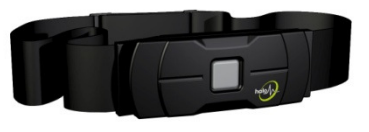
halo

Halo Monitoring announces that its home monitoring and personal alert system can send data to Microsoft’s HealthVault.

Informatics Corporation of America brings on three new regional sales directors for its ICA CareAlign data sharing and portal solution.

The State of Kentucky opens registration for its e-Health Summit, which is Wednesday at the Hyatt in Louisville. John Glaser is on the agenda (warning: PDF) representing ONCHIT.

GE Healthcare announces its plan to develop wireless monitoring systems it calls Body Sensor Networks, replacing hard-wired medical monitors with wireless versions that could be used anywhere in a hospital or at home. The company has also petitioned the FCC to create a dedicated frequency band for low-power, short-range monitoring systems. That sounds like a great alternative to moving patients around in the hospital just to get them to a monitor-covered location.

Insurance company WellPoint apparently has cleaned up its much-publicized software glitches that nearly drove the company out of business, receiving notice from CMS this week that it can resume selling its Medicare insurance plans.

Mediware announces Q4 numbers: revenue up 4.3%, EPS $0.07 vs. $0.04.

E-mail me.

HERtalk by Inga

Fall River Health Services (SD) alerts patients they are converting to Meditech Client Server EMR this week, a change that will allow them to connect with Rapid City Regional Hospital.

The DoD signs a contract with CliniComp to deploy its Essentris inpatient clinical documentation package at 36 additional military treatment facilities.

West Park Healthcare Centre (Toronto), Northeast Georgia Health Systems, and Hunterdon Medical Center (NJ) are awarded 2009 QuadraMed User Excellence in Software Technology awards. The award recognizes success in maximizing operational efficiencies and delivering high quality through QuadraMed technologies.

Weeks after MetroSouth Medical Center hosts a first year anniversary barbecue, the Blue Island, IL hospital lays off 120 employees. Just a month ago the Chicago Tribune reported things were looking up at the former St. Francis Hospital & Health Center. Now administrators are blaming the decline in patients for creating additional financial pressures.


E-mail Inga.


News 9/9/09

September 8, 2009 News 19 Comments

cernerh1n1  

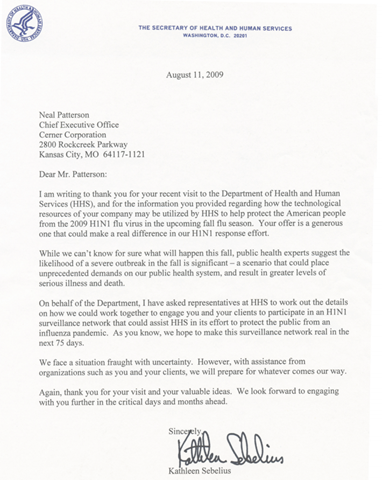
From Cynical CIO: “Re: Cerner. Interesting initiative. What’s in it for them?” Click the graphic above to see the letter from HHS Secretary Kathleen Sebelius to Cerner CEO Neal Patterson, taking him up on his offer to create an H1N1 surveillance network made up of Cerner clients. Attached to the letter was Cerner’s pitch to its customers, asking them to sign an agreement allowing Cerner to distribute HIPAA-compliant aggregated data from their facilities. It sounds kind of cool. Benefit to Cerner? Well, Cerner got face time with Sebelius, did her sort of a favor, and may get unspecified IT vendor benefit someday. Add that to having a former Cerner director as President Carter’s … err, President Obama’s healthcare reform czar and you’ve got friends in high places who are spraying great gouts of taxpayer dollars directly at healthcare IT. Still, I’d say Cerner’s intentions were more noble and focused primarily toward their clients and their patients, so I tend to believe their claims of sincerity.

From Michael: “Re: Texas Toast. A certain high profile technology / billing service company issued walking orders to 30 practice management billing employees at 2:00 PM Thursday. Word on the street is that physicians are ‘heated in Houston’. Silicon Valley VC types have learned that hand-to-hand combat the physician office billing trenches is a different kind of war. The VC types ‘donated’ $13.8 million to a lost cause in March of ‘08. I’m wondering about the physicians, their cash flows, and how many physician-initiated lawsuits are on the dockets.”

From Bells are Ringing: “Re: UPMC. From their site: ‘Alcatel-Lucent, a telecommunications industry powerhouse, has played an important role in delivering innovative communications platforms, including multimedia and data infrastructures, wireless and wireline broadband access, and full network optimization.’ Fact: so-called high tech telecom has been disruptive to care processes at the new Children’s Hospital since inhabitation in May. Shhhhh.” UPMC and Alcatel-Lucent are joint venture partners, so there’s no chance of discouraging words being heard.

From Fred: “Re: Meditech. Their latest technology first was known as Focus (internally), then C/S 6.0, and the latest is Advanced Technology. You wonder how long they spent thinking about this one.” That name makes me think of the IBM PC AT, which wasn’t advanced for very long. Interesting: did 6.0 sound too much like an easy upgrade when it wasn’t, or maybe was it a good marketing opportunity to rebadge a big technology change to impress the market? I have to say I like the strategy even though the name is kind of white bread. I’d have gone with Meditech Optimized FOcus , or MOFO for short. Quick, no peeking — which name do you remember, theirs or mine?

From Mike Mills: “Re: HIEs exchanging data. Maybe the people living in those regions could get stimulus funds for travelling to the other regions, where they could get sick, so that the providers could actually have a reason to view clinical data for someone who lives four hours away!” I tend to agree that the “unconscious in the ED while on vacation” is a stretch, but somehow people always assume that happens a lot. I figure it’s 0.005% of the healthcare that raises the interoperability cost by maybe 25,000 times over just connecting everybody in a single region, but everybody likes irrelevant analogies like those involving cell phone service or ATMs.

From Mick: “Re: Steve Hess at Christiana Care. What happened to him?” Nothing that I’ve heard. His name is still on some recent press releases and his LinkedIn profile says he’s still there.

Listening: relatively new music from David Byrne and Brian Eno, reader-suggested. I’m not a huge fan of either (maybe more of their former bands, Talking Heads and Roxy Music, respectively), but it sounds pretty good.

HealthHiway, an India-based HIE platform vendor that offers connectivity to doctors in India for as little as $200 per year, gets $4 million in funding from Greylock Partners.

I’ve been getting hammered lately by vendors and organizations wanting me to provide free advertising. For Webinars and conferences, you can add them to my events calendar yourself at no charge. I won’t link to your survey, run your press release if it doesn’t interest me, or give you space for your promotional article, sorry. Everybody would stop reading if I cluttered it up with all that stuff like lots of industry sites do.

Craneware announces FY09 results, with sales up 68%, revenue up 23%, and profit up 29%. I just now remembered that I was on the hospital IT steering committee that approved what must have been one of their first US sales going back at least eight years ago. They had a pretty good story even then.

Inga is turning into Weird News Inga, having sent me this: a 65-year-old man gives the finger at a healthcare rally — literally. Healthcare reform advocates and protesters in California get into the stereotypical heated discussion (likely armed with lots of emotion and minimal facts) when a pro-reformer allegedly confronts an anti-reformer. The anti-reformer, saying he “felt threatened”, punches the pro-reformer in the nose. They get into a full-on fight and the pro-reformer bites off the anti-reformer’s pinky. It’s nice to know that such an important issue is being debated with civility by well-informed citizenry. I’m beginning to think that 90% of Americans don’t have the intelligence or knowledge to debate laws, vote, or serve on a jury, being intellectually suited only to vote contestants off reality shows.

The US Patent Office grants TeraMedica a patent for its Evercore solution and its concept of Clinical Information Lifecycle Management. 

cmdconald

Regenstrief EMR pioneer, HL7 co-founder, LOINC developer, and IOM member Clem McDonald receives the President’s Medal for Excellence from Indiana University. He’s now director of The Lister Hill National Center for Biomedical Communications, a research organization that’s part of the National Library of Medicine.

A great PR gimmick: the MyMedicalRecords PHR people offer to reimburse subscribers up to $5,000 if they get H1N1. The relationship between the offer and the product is tenuous at best, but it’s kind of fresh.

Up to 11% of doctors aren’t offering immunizations because insurance pays less than the cost of the vaccine itself. Studies show doctors send patients to public health clinics instead, but parents don’t often follow up and kids aren’t being immunized. CDC is very interested, having observed that half of kids with measles were seeing doctors, but didn’t get the shot.

aap  

Which of these doesn’t belong with the others: Eclipsys, athenahealth, HIStalk Practice, and Sage. The answer: none — all of those organizations (and others) are sponsoring the AAP Pediatric Office of the Future exhibit at the American Academy of Pediatrics conference in Washington, DC October 17-20. This isn’t one of those lame “media sponsor” deals where all you do is run free ads. HIStalk Practice is a real, “I’m writing a check” sponsor in support of our regular contributor, Dr. Gregg Alexander. Now I doubt you’ll start making travel plans just because HIStalk Practice is involved, but if you’re going to the conference anyway, check it out and maybe find Gregg to say hi. There’s no booth or anything, just a PC running a presentation that I haven’t figured out yet.

jmooney

Norwalk Hospital (CT) CIO Jamie Mooney is named as a mentor for Columbia’s technology management program.

Former Eclipsys SVP Keith Figlioli is named SVP of the healthcare informatics division of Premier. He has no informatics background that I can discern.

From Weird News Andy: in Australia, Queensland Health has the answer to patient harm caused by overworked medical residents whose on-call shifts run up to 80 hours: drink six cups of coffee a day and eat more sugar. Maybe they should have added regular trips outside for a smoke or maybe a snort of cocaine.

aidswidget  

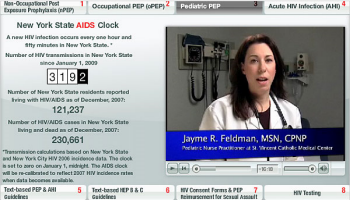
Doctors from St. Vincent’s Hospital in Manhattan develop an AIDS exposure treatment widget that will be available throughout New York State. They treat exposure “as a gunshot wound in terms of urgency”, saying that infection risk is reduced by 80% if treatment is started immediately.

The Social Security Administration gives a former IBM futurist his first job as CIO, putting him charge of a $1.3 billion IT budget. He’s a good blogger, so maybe that sealed the deal.

Just as I suspected: using Facebook is a good mental workout that keeps your mind sharp, while texting, reading Tweets, and watching YouTube make you stupid. Evidence abounds.

mc4

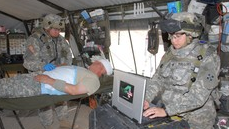
The Army’s MC4 battlefield EMR wins two government technology awards. 

Fidel Castro editorializes on healthcare in Cuba, railing against Philips for offering discounts on medical equipment for Cuba and Venezuela, but backing off when the British government started investigating the patented software and parts it was sending there. They’re buying instead from Siemens, which is hardly shocking.

Former 3M executive Alan Wittmer joins Mediware as SVP of corporate development.

Ambulance chasers increased their TV advertising by 1,400% in the past four years.

E-mail me.

HERtalk by Inga

The nation’s unemployment rate increases to 9.7% in August. Also up: the number of jobs in healthcare, with the industry adding 28,000 more last month. Since the recession began in December 2007, the sector has added 544,000 new jobs. The biggest growth areas are in ambulatory care, nursing, and residential care.

Given the current employment situation, it’s not too surprising that more college students are showing interest in healthcare informatics and information management. Colleges offer 270 accredited programs (53 at the bachelor’s level) and another 30 are expected to be certified by the end of the year.

Healthcare data analytics company Verisk Health acquires TierMed Systems. The acquisition will allow Verisk to offer TierMed’s HEDIS reporting solution.

icebeacon 
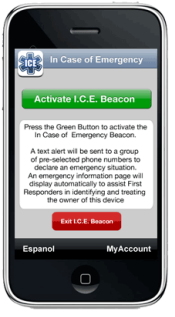
Here is a new iPhone app that sounds kinda cool, but I wonder if it will take off? For $2.99, you can buy ICEbeacon, which allows you to add family/physician contacts, allergies, medical conditions, and current meds. You also get a sticker to put on your phone, which alerts emergency personnel how to access the information. Personally, I don’t want to put a sticker on my phone. And do EMTs spend much time looking for patients’ phones?

The Department of Defense Military Health System extends its 16-year relationship with EDS, signing an $8.1 million, 12-month add-on contract. EDS will make technical enhancement to to DHIMS systems.

Christ Hospital (OH) implements EpicCare Ambulatory EMR at its 35-physician medical group and regional therapy centers. The hospital is also giving community physicians the opportunity to purchase the EMR and connect to the hospital’s system. When I went to the hospital’s Web site, I noticed they have end-user training roadmaps that can accessed (not sure if that is by design or mistake). The level of detail is pretty impressive.

The local newspaper discusses the recent Epic live at Carilion Franklin Memorial Hospital (VA) and its sounds as if all went smoothly. The hospital’s IT director is quoted as saying, “No one has cried, and that’s a good thing.” Yup.

I see the AMA has set up a Facebook page to communicate updates to physicians and patients. I guess I am not social media-savvy enough to appreciate using Facebook to get news from groups like AMA or HIMSS. I’d rather use Facebook to learn what my friends are up to (stuff like, “I washed the dog today,” and “My daughter had her first soccer game”). I also got yet another request in my Inga inbox to set up an account. I guess I could and then post things like, “Boy, was that CIO I interviewed today boring!” or take some inane quizzes like, “Which shoe are you?” Or not.

E-mail Inga.

News 9/04/09

September 3, 2009 News 4 Comments

Children’s Boston releases free iPhone infectious disease outbreak application
Rosemary Kennedy leaves Siemens Healthcare for National Quality Forum
Three HIEs are sharing data

From HomeCareMD: “Re: PDF Healthcare. Our small house call practice has been using PDF charts and CCRs for five years and love the convenience and universal applicability of Adobe files. However, it is still hard to direct-admit a patient to a hospital from a house call by sending the PDFs of images and chart elements in advance so the receiving hospitalist / institution has proof of the clinical state signed by the referring physician. All our regional hospitals use silo EMRs which block out any e-mails or attachments unless you pay to play on their medical staff and/or pay to create middleware. My understanding is that ONCHIT is about to break up this cartel-like behavior by requiring realistic ‘interoperability’ standards in such settings. Let’s hope they do. Even HIPAA has reduced requirements in urgent care situations.”

From RockStar: “Re: meaningful use. To Winchester: not sure about your angst. We find MU to be straightforward and have assured our CEO that we will be compliant with all 2015 objectives and measures. Can you be more specific about your concerns?” Personally, I think too many organizations are waiting for what is likely to be an unsurprising set of criteria only to find that they’re too late to get up and running in time.

From The PACS Designer: “Re: Web 2.0 popularity. While we haven’t seen  many Web 2.0 solutions in the healthcare space, there is much more being done elsewhere that has been bringing value back to the institutions that employed Web 2.0 concepts. McKinsey & Company recently polled almost 1,700 executives and found that most are benefiting from the Web 2.0 experience. Healthcare will be joining these early adopters in the coming years since collaboration can only bring more high quality digital solutions to healthcare practices!”

Listening: Nick Cave and the Bad Seeds, bleak but insightful theatrical dirges, one of my all-time favorites. 

  polimeno   np

I love the online photo celebration of Meditech’s 40th anniversary (check out the “dial up table” shot). I’m still hoping for that Neil Pappalardo interview one of these days. Also announced (albeit belatedly) is that some of the company’s execs met with David Blumenthal sometime before Vice President Biden’s grant announcements back in August at Mount Sinai Hospital in Chicago (a Meditech customer).

Speaking of interviews, I thought I had an inside connection that would get me one with Patrick Soon-Shiong, the billionaire who’s donating $1 billion for “the Bell Labs of healthcare,” but he shot me down.

Healthland partners with the Performance Management Institute to offer an executive information system for its small hospital customers, touting its ability to provide evidence of meaningful use.

Froedtert & The Medical College of Wisconsin credits its applications from Surgical Information Systems with reducing surgical late charges from 43% to 1.1%.

It’s a busy month for HIT meetings and Webinars according to my online calendar. You can add your event for free, you know, which will put it on every page of HIStalk.

Newcastle Hospitals NHS Foundation Trust is delaying its big-bang Cerner go-live via its vendor, UPMC. I just realized that it’s an odd, two-way street: UPMC is implementing HIT systems overseas, while Cerner, through its employee clinic, is delivering patient care.

August was a good month for HIStalk readership, especially since summers are always slow. It was the third-busiest month ever, in fact (barely missing the #2 spot), increased somewhere between 40 and 50% over August 2008. You never know with other sites copying what they see here. Luckily for me it’s harder than it looks, especially for someone who doesn’t have industry background or experience, so they aren’t putting a dent in readership. Thanks for reading. I don’t advertise, so if you want to help, e-mail your colleagues a link, possibly lying and telling them I ran an expose’ about them. That should get me one page view, anyway.

Ohio Pain Clinic creates a virtual clinic with free online patient tools such as videos, activity tracking, and a full electronic medical records system designed specifically for pain medicine. The $1 million EMR system was paid for by outside investors, which is probably an interesting story on its own.

 twitter

Weird News Andy notices that another hospital decided to Tweet a live surgery. The fact that the Tweeter was a hospital media relations specialist is a good indication that the motivation was right out of some hip marketing newsletter, but the patient’s family said it was nice for them, at least. Of course, if a marketing person sat through all surgeries, they could convene a private family conference call or something instead of using Twitter for the whole world to see, but that just wouldn’t be as cool to report back to the New Media people. Wonder what the plan was if the patient died on the table? And how do you top that — a Tweeted Code Blue?

iphoneh1n1

Children’s Boston develops a free iPhone application to show infectious disease outbreaks in real time, complete with alerts when the bugs are approaching. They call it “participatory epidemiology”. I guess you head for the uninfected hills when you get the beep.

The Pfizer whistleblower will be paid $52 million. Correction: he and his lawyers will be paid $52 million, which probably means he’ll end up owing money.

Richard Tayrien, DO is named chief health information officer of HCA, a newly created position overseeing EMR development and implementation that reports to CMO Jonathan Perlin. He’ll come over from Catholic Healthcare West, where he’s been VP of clinical information systems. Some of the sloppy fact-checking rags apparently don’t understand osteopathic medicine, taking the “Dr.” bait and titling him an MD (although the press release could have been more helpful and said so since “Dr.” covers a huge swath of non-specific ground, but it did say he graduated from a school of osteopathic medicine rather than an allopathic school).

An interesting snip from an interview with the CEO of the best-known medical tourism hospital in the world, Thailand’s Bumrungrad International Hospital (he also shot me down, or more precisely, ignored me completely when I e-mailed to suggest an interview a year or two ago). Anyway, “In 2007, Microsoft was looking to enter the health care arena … and it purchased the H2000 software from a company called Global Care Solutions and they renamed it Amalga HIS. As part of that transaction, we became a partner with Microsoft to develop some of the next generation of the software, which will be a totally digital version…. We’ve identified 37 modules that are the core of the offering and we’ve got various teams working on all of those and some of them have already migrated [to the new modules]. We have different releases coming out, about two a year, over the next to year so that we will be a totally digital hospital … But it requires doctors to type in these things and it’s not easy to get doctors to do that. It could also take something away from the doctor-patient interaction if the doctor has his head buried in a computer rather than looking at the patient and having a dialogue with the patient…. Hospitals, not just our hospital but I think hospitals everywhere, are facing this challenge.”

A laptop containing information on 40,000 patients from the Naval Hospital in Pensacola, FL is missing from the pharmacy department. It was beat up, so they’re thinking (praying) that maybe somebody had it destroyed but didn’t do the paperwork.


HERtalk by Inga

The American Dental Association and HL7 agree to develop joint HIT standards, which should be of great interest to EMR vendors. The goal would be to create consistent IT standards and enhance the coordination of care between medical and dental practices. Does this mean, perhaps, that ambulatory practice management systems might one day be suitable for dental offices?

boston public

denver health

The public healthcare IT programs for Boston and Denver are named winners of the 2009 Davies Award of Excellence in Public Health. Boston was recognized for its syndromic surveillance system that enables officials to track diseases seen in emergency rooms across the city. Denver was honored for its integrated health information system that includes a patient-accessible web portal for lab results.

Norton Healthcare (KY) hires MEDSEEK to rebuild its consumer website. The official press release says that Norton “partnered with MEDSEEK to accelerate its eHealth ecoSystem strategy”, which meant nothing to me. You kind of have to read a paragraph or two down to understand that Norton is really just building a better website. When did it get so hip to come up with confusing names?

rosemary kennedy

Rosemary Kennedy RN leaves her Siemens Healthcare job as chief nursing informatics officer to be named senior director of nursing and healthcare informatics for the National Quality Forum.

Here’s a shocker: the 30% of doctors who earn $250K or more and significantly more satisfied with their careers than those making less money. Overall, pediatricians represent the most satisfied specialty. Hopefully you (or your doctor) are not one of the 15% “very dissatisfied” with his/her career.

Three HIEs are now able to share data, which I think is pretty exciting stuff. HealthBridge from Cincinnati, Indiana HIE from Indianapolis, and HealthLINC from Bloomington are now able to send to one another data on their combined 12 million patients.

Spartanburg Regional System (SC) plans to deploy Concerro’s shift management system, a component of Premier health alliance’s LaborConnect program. 

Teleradiology company Franklin & Seidelmann Subspecialty Radiology raises $12.5 million to expand into new markets and add services.

Allscripts sends out a tweet that 83 people attended its EHR Stimulus tour stop in Las Vegas today. There seems like there should be some clever gambling joke in there somewhere, but it’s not coming to me.

This settles it. I am learning Spanish so I can spend a few of my early retirement years in Mexico. Thousands of Americans have already headed down there, lured by the flat $250 a year fee for a health care plan with no limits, courtesy of the Mexican Social Security Institute. The plan has no deductibles, free meds, free tests, eyeglasses, and dental work. The biggest question left to figure out is mountains or beach.

inga

E-mail Inga.

News 9/2/09

September 1, 2009 News 16 Comments

Medsphere gets $12 million in funding
AHIMA Foundatation gets $1.2 million HHS grant
Nurse develops iPod nursing reference

From Winchester: “Re: Meaningful Use. I’m surprised we’re not seeing more debate on Meaningful Use given the stakes involved. Readers, I hope you’ll chime in: (a) are you delaying given the vagueness of MU? (b) what do you most wish was clarified? (c) do you anticipate major changes by December? (d) are your vendors giving you all the right assurances? (e) is there a scary scenario where you’ll have to tell your CEO you’re not going to achieve MU after all?”

From CDiff: “Re: NHS. Gives another meaning to rationing.” UK researchers find that prisoners are fed better than hospital patients, even though hospitals spend more on food. A quote: “If you are using food as a treatment, it’s not working.”

From Nicole: “Re: EHRs. You did a series of short interviews with several EHR vendors. Can you tell me where to find that?” The interviews with 12 vendor executives ran on HIStalk Practice as a five-part series called EMR Vendor Executives on HITECH. They’re here: 1, 2, 3, 4, 5

From Back Pocket: “Re: Navin Haffty newsletter. The newsletter questions KLAS results. Aren’t KLAS results from clients? So, John Haffty is questioning Meditech client comments.” The Meditech consulting company principal complains that a particular magazine’s story about Meditech’s Version 6.0 is “more dramatic and pessimistic” than the KLAS report it cites, which he characterizes as contributing “to unnecessary and misleading negativity and one can only wonder whose purposes are being served.” I’m just happy than an HIT magazine didn’t cheerlead for the entire article, frankly. We know which self-serving interests are at stake: the magazine’s (to get and keep readers) and the consulting company’s (to get and keep Meditech customers). Meditech is at a crossroads with 6.0, which is a really difficult upgrade, readers have told me. It’s a natural time for customers to re-evaluate their options. I’m pretty sure they will not use a free magazine’s article as a key decision-making tool (nor a vendor’s free newsletter either, I would hope). I score the magazine criticism as Messenger 1, Would-Be Shooter 0.

camels

From Hank Kingsley: “Re: HIStalk logo. I don’t think the doctor should be smoking a pipe!” Man, healthcare IT people are so literal. It’s supposed to be ironic, OK? As I’ve explained before, I told the graphics person to give me something very 50s, with the reflector thingie, the square jaw, the old-school white coat, and the pipe with wispy smoke. Ward Cleaver, MD, you know?

From Beulah Balbricker: “Re: comments. Reader comments start off with ‘Re: some topic’. Are they initiating these remarks on their own or responding to specific news items?” Could be either. It’s like a letter to the editor that starts with their subject (which is whatever the Re: says) and a short comment, with all of that in quotation marks and in blue. Whatever follows is my reply. People usually e-mail about something I wrote in a recent HIStalk posting, but sometimes they just send something they want to say.

From Gary Numan: “Re: non-disclosures. A peer of mine was just asked to sign a non-disclosure to get trained in GA-released (not Beta) EMR software from Siemens, so it does exist.”

rosalie

From Gregg Alexander: “Re: Healthcare Crisis News with Rosalie Michaels. Debuts September 1. A Colbert-esque take on the ‘crisis’, though Rosalie is far more attractive than Mr. Colbert.” I think it proves that everything is fascinating and amusing when a former Mrs. Arizona reads it while smiling and wearing a deep-cleavage clingy black shirt. It’s sponsored by the No Insurance Club, which is really a prepaid doctor visit plan that costs $480 for 12 visits per year, but only has a handful of doctors across the country (I’d be suspicious of doctors willing to work that cheap) and does not cover emergency room, hospital, or specialist visits (so it’s really more of a selective uninsurance program that covers doctors but goes bare on hospitals).

From The PACS Designer: “Re: As the Software as a service (SaaS) marketplace evolves, we are going to see low cost solutions appear for consideration as a service. One that has appeared recently is a security service called the Egress Switch. The UK firm offering this service uses e-mail addresses to validate each member of a secure network, and then encrypts the messages to meet the needed security level for the application being used by the validated members of the group.”

Atlanta Women’s Specialists puts out a press release about its EMR capabilities and its ability to exchange information with other medical practices via the Medicity Novo Grid. It can post and flag abnormal test results within 24 hours and to send prenatal records directly to the hospital. The practice will deploy to smart phones as well.

TeraMedica will offer its Evercore medical imaging system to the healthcare customers of technology solutions vendor Logicalis.

Epic finally works out a deal to get the Epic.com domain from the company that owned it (epicsystems.com still works too). 

A MEDSEEK Webinar next Wednesday features an eHealth Director talking about whether your hospital needs one of those.

Atlantic General Hospital (MD) signs a deal for Keane Optimum Patcom and other apps. Another Keane client, 25-bed Montgomery County Memorial Hospital (IA), is mentioned in an article about IT investments in small hospitals.

bmcf

Baylor Medical Center at Frisco (TX) chooses Orchestrate Healthcare and Vitalize Consulting Solutions to roll out a new clinical and technical architecture.

The Columbus paper covers the diagnostic image sharing capability of some Columbus-area providers. A doc from the radiologist group complains that Ohio State isn’t one of them.

Jobs: McKesson Paragon Consultants, Clinical Business Analyst, Associate RIS Administrator.

Orion Health and Cisco announce a public health reporting and notification solution.

California can’t manage its fiscal crisis, but has time to legislate the speed with which managed care plans see patients. New regs require that routine PCP visits be scheduled within 10 business days, specialists 15 days, and urgent care appointments within two days. After-hours emergency calls must be returned within 10 minutes. Sounds good except physician payments keep going down and so does their number, both problems that can’t just be lawyered out of existence.

Another example of lawyers fixing everything: the attorney general of Kansas files suit against a non-profit hospital, its board, and its corporate parent. The charge: it’s going broke and will close. The AG is mad that the hospital hasn’t transferred its critical access designation to some other entity that otherwise couldn’t survive financially in Pawnee County.

nursetabs

A nursing professor and her husband develop Nursetabs, a pocket reference for the iPod Touch. They’re in Michigan, I found out after only 10 minutes of digging through the rube newspaper’s site to finally find something that mentioned which of the 50 states Livingston is in.

E-mail me.


HERtalk by Inga

saint barnabo

Saint Barnabas Health Care System (NJ) selects MedAssets to provide revenue cycle process re-engineering services.

Medsphere secures $12 million in a secondary round of VC funding, to be used for ongoing development and expansion efforts.

Greenway and RelayHeath introduce a new partnership that will leverage Relayhealth’s Virtual Information Exchange to provide Greenway clients access to lab results, radiology reports, and transcribed documents from their community health systems.

Speaking of Greenway, the company announces its 11th consecutive fiscal year of positive growth, ending its 2009 fiscal year with a 38% increase in sales over 2008 and 88% over 2007. Ever since I can remember, Greenway competitors have loved to discuss how the privately help Greenway wouldn’t be able to make it long term, that they would run out of money and never turn a profit. While higher sales do not necessarily equate to increased profits (or any profits, for that matter), you have to hand it to Greenway for its tenacity and continued growth. There are a lot of sunset companies out there that would have loved eleven years of positive growth.

eClinicalWork partners with Correctional Medical Services (CMS) to provide EMR solutions to correctional facilities affiliated with CMS. eCW already provides its EHR to Rikers Island in New York.

Jeffrey L. Sunshine is named VP and CMIO of University Hospitals (OH) after serving in these roles on an interim basis since November 2008.

athenahealth’s Maine Operation Center is named one of the 2009 Best Places to Work in Maine.

sanders

Sheila M. Sanders takes over as VP for information services and CIO for Wake Forest University Baptist Medical Center (NC.) Sanders most recently served in a similar capacity at the University of Alabama at Birmingham.

If you are feeling the need to get up to speed on the upcoming ICD-10 coding system, you can review the new fact sheet being offered by CMS. I assumed it was going to be dry and technical, but actually found it to be easy to understand, nicely laid out, and informative.

QuadraMed names Bonnie Cassidy VP of Health Information Management Consulting Services, to direct the expansion of QuadraMed’s HIM services business and lead the company’s consulting team. Cassidy is the president-elect of AHIMA and formerly worked for CCHIT in certification development and program delivery.

HHS awards the AHIMA Foundation a $1.2 million grant to continue its state-wide HIE consensus project project.

A study finds that the quality of care provided by retail clinics is on par with physicians’ offices and urgent care centers, yet treatment costs were significantly less, although the study covered only sore throats, ear infections, and UTIs. The cost of care was 30-40% less than in a doctor’s office and 80% lower than in an ER.

osu medical

Oklahoma State University Medical Center selects Lawson S3 Enterprise Financial Management and Supply Chain Management suites. The Medical Center, by the way, was recently purchased from Ardent Health Services by a City of Tulsa trust.

If you are reading HIStalk, you are likely already involved with HIT. Fortunately, the Bureau of Labor Statistics says it’s a good field to find a job in right now, with employment for medical records and HIT technicians expected to grow faster than average for all occupations with an 18% increase through 2016. Within the field, there are different 125 job titles in more than 40 settings, but expect the most opportunities to be in integration, programming, project management, and training.

Stephens Memorial Hospital (TX) plans to add a new EMR in time to qualify for stimulus incentives. The 44-bed hospital will pay CPSI $443,286 for the new technology.

Look for state and local governments to increase their spending on HIT over the next few years. INPUT forecasts that state and local government investment in HIT will grow at a compound annual growth rate of 4.6% between 2009 and 2014, from today’s 7.6 billion to $9.6 billion. Spending on EMRs will grow from $850 million in 2009 to $1.85 billion in 2014.

As of this week, Medina General Hospital (OH)  is officially affiliated with Cleveland Clinic hospital. Now known as Medina Hospital, the community hospital is receiving $40 million in capital investments from Cleveland Clinic and will implement MyChart within the next year to 18 months.

medminder

I am fascinated by this new “intelligent” pill organizer that beeps or calls / e-mails patients (or family members) to alert them to comply with treatment regimens. In addition to reminding patients when to take what medications, the MedMinder also produces weekly or monthly reports of missed medication. It’s being offered to consumers for $77 plus $30/month for support and wireless connection. Sort of pricey if you are on a fixed income, but kids of aging baby boomers might find it a worthy investment for their folks. However, I am sure that plenty of patients will find it annoying and will resent the intrusion.

inga

E-mail Inga.

Being John Glaser 8/31/09

August 31, 2009 News 8 Comments

If you had to answer the question below in one sentence, what would you say?

What is the fundamental contribution of information technology?

My answer — information technology enables complexity.

Our personal financial assets are much more complex that those of our grandparents; savings accounts have been replaced by retirement plans and mutual funds that can automatically shift assets based on a person’s risk tolerance. Handwritten flight manifests have been replaced by the ability of an individual to book air travel involving multiple stops and carriers. Weather forecasting based on seasonal expectations and reports from adjacent states has been replaced by sophisticated models. Complex activities such as sending a satellite to Jupiter, non-invasively observing metabolism in the brain, and simulating the interactions between proteins would not be possible without information technology.

These problems of healthcare cost, safety and quality are based in and exacerbated by the complexity of healthcare. The knowledge domain of medicine is vast and evolves rapidly. Patients with complex acute problems and multiple chronic diseases will be seen by many providers within a short period of time and undergo several parallel treatments. The delivery system is highly fragmented and dominated by small physician groups and hospitals. Standardized care processes have multiple varieties. Managed care contract provisions can fill volumes.

Information technology can be applied to enable the complexity in healthcare. Clinical decision support and clinical documentation applications can assist the provider in keeping up with medical evidence. Results management systems can highlight the patient data that deserves the most attention. Interoperable electronic health records can support the coordination of multiple providers taking care of an elderly patient. Telemedicine can assist patients and providers in joint management of chronic disease.

Maybe that’s the fundamental contribution of information technology in healthcare. It might enable the current complexity to actually work.

John Glaser is vice president and CIO at Partners HealthCare System. He describes himself as an "irregular regular contributor" to HIStalk.

Monday Morning Update 8/31/09

August 29, 2009 News 14 Comments

VA plans emerging technology research center
iSoft lays off in England
Children’s Pittsburgh leads peds hospitals in HIT

From Scott: “Re: Joint Commission and nondisclosure. Yesterday’s Sentinel Event Alert provides further support for providers’ rejection of vendor nondisclosure clauses that could limit the sharing of information on software problems that have patient safety implications. The Joint Commission’s previous Sentinel Alert, Safely implementing health information and converging technologies, is also worthwhile reading for providers who might rush to deploy EHR systems in response to federal incentives.” Joint Commission should be all over healthcare IT in the context of patient care. It would give customers a way to collectively pressure their vendors (with regard to design and disclosure, for example). For vendors, it’s still better than having the FDA in your shop. For patients, Joint Commission is the one group that looks out for their best interests as a package, not just how technology is deployed and managed in a vacuum. And unlike HIMSS and its spawn, they have no vested vendor interest.

stanfordcancercenter

From Billy Roentgen: “Re: Stanford. Stanford is going live on Epic September 1, replacing Siemens Invision. Palo Alto Medical Group is going live on Epic at about the same time, replacing IDX. Epic is EVERYWHERE, starting in the physician’s office and carrying through to the hospital.” It’s easy to see with 20-20-hindsight why Epic owns the markets they choose to play in: (a) they built new products that reflected that inpatient-outpatient continuum while their competitors kept bolting on marginally useful features and acquisitions onto old platforms that were clearly unsuited for them; (b) they created MyChart before anyone cared about sharing data and PHRs; (c) they didn’t get bogged down in a Viet Nam of unsuitable customers by selling indiscriminately to just anyone; and (d) they ran their implementations firmly and protected customers from their own success-sapping indecision. Nobody else is even close, handing over the entire upper-end market to Epic without much resistance. Cerner had a shot but doesn’t seem to be selling much new business, while the reps from GE, Siemens, and McKesson might as well carry a white flag when they visit hospitals of more than 400 beds. Eclipsys is strong in the traditional inpatient core of CPOE, pharmacy, and nursing, but won’t get a foothold with customers who want a broad application line that covers outpatient in a single database. Epic owes its success to weak competition as much as anything else. In a perfect world, someone would step up to offer an Cadillac alternative, but for now, Epic is running its own Cash for Clunkers program (they get the cash).

From Joce: “Re: Logi-D. Heard a rumor that Stanley InnerSpace might have entered into an agreement to acquire Logi-D. Any truth to this?” I’m probably the wrong guy to ask since I don’t follow either company. Stanley makes carts and cabinets, Logi-D is a Canadian logistics consulting company specializing in the OR.

From The Nuge: “Re: claims. The reader’s comment hit the nail on the head, but that’s only a small part. Look at what happened with Emdeon and Aetna a few years back when they went exclusive (how can that even be legal?) Misys couldn’t send electronic claims to them for months! And what when PCN bought Versyss, declared bankrupty (iirc), was picked up by Medical Manager for pennies, and sold zillions of ambulatory claim events to WebMD? Very well orchestrated.”

telligence

From Kwame Mojito: “Re: GE. The nurse call group (formerly Dukane) has been sold internally from GE Security to GE Healthcare under the clinical systems division. It will be interesting to see if they can tie this into their Centricity product in a useful manner. To my knowledge, this will make GE the only EMR vendor who also owns a nurse call system.” And a theme park.

From Curious George: “Re: OSHA. I hear that hospitals are definitely on their toes in case an OSHA inspector drops in for a chat. Do you have any information on how many physician clinics are being targeted by OSHA? Have you heard of anyone who has and what their top five non-compliant issues were?” I’ll take a lifeline. Anyone?

officepracticum

From Ditka: “Re: sales. Greenway, according to a sales rep, is having the best year of their lives. Office Practicum is a small peds EMR with rabid fans and their pendulum is swinging mightily up. I keep seeing eCW everywhere. I’ve run into a bunch of e-MDs sales.” I had not heard of Office Practicum – looks cool (although I’d get those old TEPR awards off the front page). None of the others you listed are surprises.

From Norberg: “Re: sales. What can I say? It’s slow. The problem is that most organizations are almost singularly focused on ARRA. And because of the ambiguity around meaningful use, they’re doing nothing. I would hazard a guess that imaging and all other ancillary (read: non-EMR) solutions are not being given any attention / considerations by providers these days. If it’s not related to ARRA, it’s not getting done. If you’re the incumbent vendor at a facility, it’s probably high cotton for you there. But you can’t even get a meeting at a facility where you’re not the incumbent HIS/CIS vendor. I have some friends in the indy EMR space and they say they’re doing pretty well. I guess there are enough independent practices who are buying that the top 3-5 vendors are making out OK. But the large , monolithic vendors are struggling.”

onion

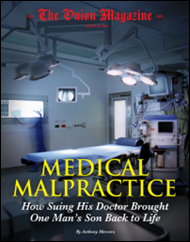
A funny phony magazine cover from The Onion. Some good headlines: Researchers Quietly Chuckling At Placebo Group, Congress Deadlocked Over How To Not Provide Health Care, U.S. Government Stages Fake Coup To Wipe Out National Debt.

childrenspittsburgh

Children’s Hospital of Pittsburgh, says KLAS, is the pediatric hospital IT leader, coming in at #1 of the top five. Of course, it’s only the pre-season poll.

HealthPartners (IN) saved $430K in one year with its implementation of Epic and Merge Healthcare, which the local business paper concludes “is providing some proof for health reform advocates who say that electronic medical records can save providers money.” With a payback period that spans generations, I’d say that particular proof isn’t compelling.

A reader tells me his hospital’s Epic contract has no nondisclosure terms. That’s hard to believe given Epic’s legal lock on everything from employment to implementations, but that led me to a sobering thought: what if Cerner is the only company demanding that language in its contracts? Could this medico-legal brouhaha be over just one overzealous vendor’s contracting practices? A Fan was right in the last issue, though — being legally allowed to talk about known patient-endangering software defects is not worth much if (a) the vendor doesn’t tell you about them until you find them, and (b) the customers who are aware of the problem have no incentive or platform to get the word out to other customers (assuming the vendor isn’t doing it). In fact, some of the IT departments I’ve worked in kept the lid on known errors in a manner little different than the vendor themselves and for the same reasons – vanity, lack of resources to address the issue, and condescension toward end users who shouldn’t bother their pretty little heads with computer topics (which is actually sort of true – if you e-mail any of the big clinical departments about a computer problem, they drive you nuts with repeated uninformed questions and a flood of wildly unrelated problem reports that they suddenly observe and decide are related to the one you mentioned).  

Intellect Resources is doing a three-question HIT hiring survey of recruiters and hiring managers if you are one of those and want to chime in .

Institute for Safe Medication Practices weighs in with ample expertise on the Ohio pharmacist’s error that killed a child. If you’ve done FMEA or other root cause analysis, it won’t surprise you that the Swiss cheese holes aligned once again. Contributing issues: (a) the pharmacy computer system was down, causing the pharmacist to be swamped; (b) pharmacy staffing was short that day; (c) they were too busy to take breaks or even eat; (d) the technician who made the IV was distracted; and (e) a nurse called to get the IV early even though she didn’t really need it, causing everyone to rush it out without following the usual cautious procedure. ISMP likens sending the pharmacist to jail to Whack-a-Mole: “Marx notes that this child’s game is a telling depiction of how we set unrealistic expectations of perfection for each other and then unjustly respond to our fellow human beings who inevitably make mistakes. We play the game at work by writing disciplinary policies that literally outlaw human error.” The bottom line: nobody’s child is any safer now than that two-year-old was then.

The board of Phelps County Regional Hospital (MO) approves a measure that mandates physician CPOE usage.

An excellent Wired Magazine article makes a point that companies that can turn out “cheap but good enough” alternatives to expensive products can thrive, giving fresh-thinking startups a big advantage over their Goliath competitors who “believe the myth of quality” and fail to see "the rubric of accessibility”.  One example is a Kaiser experiment to put high-tech offices in strip malls. “In 2007, Flanagin and her colleagues wondered what would happen if, instead of building a hospital in a new area, Kaiser just leased space in a strip mall, set up a high tech office, and hired two doctors to staff it. Thanks to the digitization of records, patients could go to this ‘microclinic’ for most of their needs and seamlessly transition to a hospital farther away when necessary. So Flanagin and her team began a series of trials to see what such an office could do. They cut everything they could out of the clinics: no pharmacy, no radiology. They even explored cutting the receptionist in favor of an ATM-like kiosk where patients would check in with their Kaiser card. What they found is that the system performed very well. Two doctors working out of a microclinic could meet 80 percent of a typical patient’s needs. With a hi-def video conferencing add-on, members could even link to a nearby hospital for a quick consult with a specialist.” Makes perfect sense to me. Wouldn’t electronic triage be a lot more efficient and convenient to all involved?

ucf

University of Central Florida launches its 20-month master’s in healthcare informatics degree.

This can’t be entirely good news: iSoft will lay off up to 100 technical employees in England, but brags it will offset that by hiring up to 50 salespeople.

Odd: PACS vendor UltraRAD gets an FDA warning for “failure to validate computer software for its intended use.” The software that drew the warning: Microsoft’s SharePoint portal and the HEAT help desk system.

The VP of human resources at St. Joseph’s Medical Center (CA) is indicted for paying no income taxes in the past 12 years, also charged with altering the hospital’s computer records to reduce her withholding.

My last poll found that the employer of 18% of respondents is using Skype for some business purpose. Pretty interesting, although now the obvious question is “for what?” New poll to your right for providers: how good are your vendors of clinical systems at notifying you of patient-endangering problems and getting them fixed fast?

The VA is soliciting proposals to build a San Diego-based Emerging Health Technologies Advancement Center. Projects to be conducted there involve identity verification, interoperability, and developing an interface for patient consent directives.

Raj Dharampuriya, one of the founders of eClinicalWorks, is interviewed by India Knowledge @ Wharton. He mentions that the company has opened a Mumbai support center to handle US customers that run 24 hours a day, such as a prison. The company will hire 500 people in the next two years, most of them in implementation and support, and will open an office next month in San Francisco. He credits the Indian culture of the founders in helping them focus on their goal of building a business and changing the delivery of healthcare. He still practices medicine part time and says he’s in the top 10% of performers according to BCBS.

E-mail me.

News 8/28/09

August 27, 2009 News 18 Comments

CEO donates $1 billion to create “Bell Labs of healthcare”
Investors seek HIT companies that improve provider cash flow
Organizations partner to create next-generation LIS

From Roger Murdock: “Can you figure out a way to shake the truth out of HIT vendors and consultants? It seems to me that sales and acquisitions of anything HIT have really stalled since the beginning of the year. What do you think? I know vendors are reluctant to say anything other than ‘Sales are through the roof!’, but I don’t think so.” I don’t think so either, in most cases. Some companies, especially those with big market share and some diversification, are doing OK. Most, I’m guessing, are limping along as meaningful use uncertainty and capital constraints keep customers on the sidelines, at least for now. I think you’ll see the rich and the best get richer, while those with mediocre leadership, uninspiring products, and a shrinking war chest will find it hard to keep the vampires away until daylight finally comes. Vendors, please leave a comment (anonymous is OK) about your experience – is it boom times, so-so, or bust?
musc

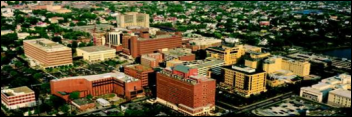
From Vilma Banky: “Re: MUSC. Funny, but I can remember community hospitals and vendor executives saying that they didn’t need anything that one of those big tertiary care or academic hospitals might need. MUSC provides care across a wide spectrum of patients in the Charleston area. I just can’t imagine them not needing everything for clinical documentation or medication administration. There are relatively standard charting requirement or needs (as well as medication administration needs).” I think Frank was saying that he doesn’t necessarily want it all from a single vendor. I’ve interviewed him twice and I really like him, by the way. I can never tell how someone comes across in the written interview transcript, but I can tell you that he impresses me as honest, sincere, and respectful.
eyeos

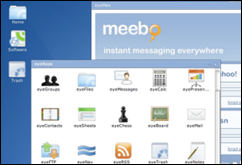
From The PACS Designer: “Re: another WebOS. WebOS platforms are gaining more popularity, and this month SourceForge has named eyeOS as project of the month. The eyeOS  application was created in Spain and is an open source Web desktop that would be good for testing potential cloud applications.”

From Seeking Truth: “Re: Cigna’s decision to stop receiving electronic claims via the Emdeon clearinghouse. The battle is presumably over the fees Emdeon charges payers to receive electronic claims. Cigna doesn’t want to pay and Emdeon doesn’t want to offer a lower price. Emdeon and Cigna may resolve this price battle, or alternatively, Emdeon may ‘reclassify’ the payer as ‘non-participating’ payer (similar to Medicare and Medicaid, which are prevented from paying clearinghouse fees). This reclassification may allow Emdeon to charge providers a higher per claim charge per their contract terms with the provider. The Cigna e-mail indicates other options available to providers, but those options require a vendor change, which may involve other costs to the provider community. Obviously, the healthcare industry is being hammered to ‘reduce costs’ and this may be a payer response to that pressure. As a publically traded company, Emdeon will try to preserve their revenue, though clearinghouse charges may be difficult to justify. Since the advent of HIPAA Title II – Transactions and Code Sets (TCS), clearinghouses have had growing difficulty justifying transaction charges incurred by both providers and payers (consider how many ownership changes for Emdeon, NDC Health, Per Se’ and other clearinghouse vendors since 2002). The upcoming ANSI 5010 conversion may also influence how payers and providers exchange transactions. Dare I say, ‘never a dull moment in healthcare EDI.’” 

waterbury

From Ex-Cerner Guy: “Re: Waterbury to Meditech. Waterbury hosts site visits and reference calls for Cerner and WH Clinicians are happy. Could be for Patient Financials / Rev Cycle, but even then, I doubt it.” Me too. A reader’s got a line on a source there who may give us the real scoop, which I’m betting is no scoop since I doubt they’re switching.

From A Fan: “Re: vendor disclosure. We’re coming at it from the wrong angle. The real issue here is not what your vendor is preventing you from disclosing, but rather what your vendor discloses to you (whether or not it came from another client). The other thing I wonder is, of the issues that are reported to someone like Dr. Koppel, how many make it to the vendor? There’s no question vendors gear development towards sales, but as we all know, health care has arguably as much bureaucracy as government and the feedback loop from real users to vendors is not great.” I know my vendor doesn’t seem to care much about issues we report, even those with patient safety implications. Their excuse always is: (a) it’s working like we designed it, as suckily as that might well be; (b) nobody else has reported it, so it can’t be much of a problem; (c) you’re doing weird stuff, so stop it; (d) we begrudgingly acknowledge that it’s a problem, but we plan to give you an unrealistic workaround and mark it as a future development project until you simply wear down; and (e) it will take at least a year to get a quick fix into your hands, so that automatically makes it unimportant since you’re stuck with it until then. I’ll also say that none of my vendors have ever been very good at proactively letting customers know about issues reported by others, meaning you go through a ton of testing and documentation to place the neatly tied package into their laps only to be told they already knew about the problem. If your vendor is better than mine, tell me.
 allchildrens

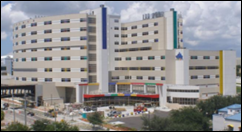
All Children’s Hospital (FL)will open its new building in December (a very cool set of daily construction pictures is here – check out the Time Lapse option) and will use the Pediatric Edition of the Patient Life System by GetWellNetwork.

SNOMED Terminology Solutions is offering a free course by teleconference, SNOMED Clinical Terms Basics. New courses offered: Introduction to Terminology and Classifications and Introduction to Mapping.

I’m guesting (is that a word?) at Inside Healthcare Computing with an editorial called Lessons from Shark Tank — Beware of Vendors Borrowing Money or Going Public, where I drew my inspiration from (what else?) a TV show. Here’s a snip: “It also makes me wonder how many dull, average companies got that way because they took someone’s cash, put the founders out to pasture, and set all the fun, smart ideas aside and turned themselves into a bad mutual fund run by second-tier MBA school graduates.” I also worked in a fun reference to, as I call him, Dead Billy Mays.

I guess a wheezing economy has led us to this TV news headline, which refers to temporary jobs at a McKesson H1N1 vaccine center: Swine Flu Brings Jobs to West Sacramento.

Sunquest, Mass General, and Partners will jointly develop a new generation of LIS that focuses on anatomic and clinical pathology. I’ve said for years that if you want to see inarguable success in getting benefits from IT, find yourself some lab people. It’s no accident that the first really useful and clinically-focused hospital systems were LISs, back in the day when “nursing systems” meant online requisitions (aka, “order communication”). The most advanced automation of its kind is in the big reference labs, where you see a lot of computers and not so many people handling pipettes and swabbing agar plates. Instead of complaining about automation, laboratorians embraced it, designed it, extended it (rules capability, standard interfaces, repositories, barcoding, digital imaging, FDA-regulated instrument interfaces, portable data collection, RFID), and are now on the cutting edge of genomics, clinical alerting, and data warehousing. Among all providers and ancillary departments in hospitals, labs are about the only ones that we don’t have to be embarrassed by when talking to people from other sectors that are decades ahead of healthcare. The MGH pathology informatics doc said that tomorrow’s labs will “utilize advanced diagnostic and information management technologies, such as digital pathology, molecular studies, business intelligence and service-oriented architectures to simplify and strengthen the informatics infrastructure.” That ball you saw going over the Green Monster was Sunquest smacking one out of the park in a blockbuster boost to the company.

You know when a press release says somebody “applauds” some government action, they’re smelling cash. The HIMSS Electronic Health Record Association “responded with enthusiasm” (salivation) to Uncle Sam’s decision to donate $1.2 billion in freshly printed and rapidly devaluing currency to pay for the software its members sell. According to the “About” section, membership is open only to HIMSS Corporate Members. Should a non-profit, advocacy-heavy member organization like HIMSS really be running a vendor trade group while claiming to be impartial and patient-centered? As a provider, should I be paying dues to an organization that sells my information to vendors (mailing lists, HIMSS Analytics survey results, conference information), organizes those vendors to influence government policy, and runs Webinars and sales pitches on their behalf that are aimed at getting us poor provider members to buy stuff from its far more lucrative vendor members? It’s Ladies’ Night – I’m getting cheap drinks, but only if I can stand being constantly groped by those paying full price for that privilege.

Peace Health expects to get $30 million from HITECH.

This is one of those times where I say that I’m a bit behind despite working absurd hours, so if you’ve e-mailed me about something lately, be patient – I read every e-mail and respond appropriately, but it might be a bit slow in coming (working two full-time jobs is sometimes challenging).

Another vendor heard from who does not put non-disclosure language in its contracts: Eclipsys. They join Meditech and Medsphere. So. what say you, Cerner, Epic, and McKesson? 

Inga connected with one of our old pals at Noteworthy Medical Systems (they used to be a sponsor pre-CompuGroup) since a reader asked about the Cleveland office. She says it’s alive and well and nobody has moved to Phoenix, although all locations have had some restructuring.

If you don’t read HIStalk Practice, you missed this excellent piece, DrLyle’s Meaningful Discussion about Meaningful Use. Put your e-mail address on that page if you want updates when we write something new on HIStalk Practice – it has its own e-mail list separate from the HIStalk one. We have some fine sponsors, guest writers, and interviews there – like HIStalk, but more oriented toward physician practices.

Sparrow Hospital (MI) kicks off its EMR project.

A sweet deal for Misys PLC CEO Mike Lawrie: his contract requires him to be paid in dollars, so the significant drop in pound against the dollar didn’t cost him loss of several hundred thousand dollars of buying power. With a projected US 10-year deficit now up to $9 trillion, I don’t think he’ll have that problem for long.

In India, Apollo Group of Hospitals has started on its IBM-led “Health Superhighway” connectivity project. It’s also working on a unique ID number project. I’m pretty sure I’ve mentioned both before, but it’s still pretty cool.

A WSJ blog on venture capital says investors are looking for opportunity at the intersection of healthcare and IT (that’s us). It credits athenahealth and its $1.3 billion market cap for increasing investor interest, also juiced by HITECH headlines. As we’ve said here before, though, investors want companies that can improve the cash flow of providers, not those trying to sell a nice-to-have product.

Dayton Children’s (OH) goes live with its $27 million Epic project.

soonshiong

So why isn’t this making headlines? A drug company billionaire CEO/MD is donating $1 billion of the $3 billion he made from the sale of his company “to create the Bell Labs of healthcare”. Some quotes from him: “The idea is to create a health grid that empowers the patient and the provider. This should be a public utility, basically what I call a U.S. public health grid … The idea is to actually go across the country and bring scientists, mathematicians, computer scientists, engineers, biologists, clinicians, surgeons, oncologists, pathologists, all together. And really integrate, truly integrate, information from the basic science to the bench to the clinic … So I’ve started funding and bringing together computer scientist to implement the grid, in an open architecture for the country … We have now the opportunity to jump-start health care, straight into molecular world. Or having the integrated, open-source software system that allows access to the 200-300 Legacy systems of software. So my great concern is, if we go ahead and implement a plan that just says, ‘OK, everybody just has an electronic medical record, with 200 proprietary systems, that don’t talk to each other by its nature.’” This is truly amazing, fascinating, and inspiring all at once. If anyone has a connection, I’d like to interview this guy (maybe sucking up a little in a quest to become Official Blogger of the Bell Labs of Healthcare at a significant salary).

Everyone thinks Cache’ is a healthcare-only MUMPS thing, but here’s proof that they’re wrong: a private bank for rich people selects it to run its Web-based banking system.

E-mail me.


HERtalk by Inga

christiana

Christiana Care Health System (DE) selects Patient Care Technology Systems’ Amelior Tracker system to automate the management and tracking of its hospital assets.

Five hundred doctors with Jefferson University Physicians  (PA) will soon be live on Allscripts EHR.

The newly public Emdeon signs a 15-lease for a new data center in Nashville. Emdeon, whose IPO raised $367 million, will rent  34,200 square feet for $39,500 a month, making the lease value more than $8 million.
cio rock star

Thanks to Mike and those crazy guys at Compuware for sending over their latest Youtube creation. This Rockstar CIO interview is definitely worth a 41-second diversion. And since I was amused enough to watch it over and over, I’ll give the company a little pitch for a survey of hospital clinical system users they’re doing that should take about 60 seconds or less of your time.

Covenant Medical Center (IA) agrees to pay $4.5 million to settle alleged violations to the Stark Law and submitting false Medicare claims. The federal lawsuit claimed the hospital paid the five specialists “above fair market value” for their services at rates that were “commercially unreasonable.”  The government claims the physicians, who referred patients to the hospital,  were among the highest paid hospital-employed physicians in the entire country. Records show the doctors were each paid between $633,000 and $2.1 million.

A couple of traditional ambulatory vendors announce they are now offering HIE functionality. Greenway Medical introduces PrimeEnterprise, which enables a community of Greenway customers to share select clinical and financial data. Also, Rabbit Healthcare Systems implements the first phase of its HIE solution, going live with data exchange between McKesson’s Lynx Mobile Inventory Management System, GenPath Reference Lab, and Docuda’s ERCard patient product (it doesn’t sound like an HIE, but that’s what they say).

stevens

The Stevens Institute of Technology (NJ) plans to use a $2.8 million grant from HHS to create an electronic system to boost the care of women of color with HIV/AIDS.

The Northwest Pennsylvania AIDS Alliance was also a recipient of grant money to support their IT projects. The HRSA awarded the alliance $45,188, which will allow it to create a new computer network and permit real time access to the Lab Tracker database.

More consolidation in the medical transcription world: Transcend Services will pay $16.2 million in cash and stock to acquire Medical Dictation Services.

The National Quality Forum endorses 18 standards for measuring quality and safety metrics for over-the-counter and prescription medications.
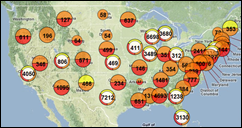
swine

A friend was diagnosed with the H1N1 swine flu, which got me surfing a bit, just to assess the likelihood that I, too, might end up being bedridden. Fortunately my friend is now fine and I seemingly dodged the bullet. Anyway, I found this cool flu-tracker map that allows you to see the the number of suspected and confirmed cases in your community. Or, perhaps to figure out what vacation spots to avoid.

Another ex-hospital worker is arrested for allegedly stealing personal information from patients. The former Our Lady of the Lake Regional Medical Center (LA) employee opened 46 debit cards and filed fraudulent income tax returns. He also received $20,000 from fraudulent claims.

Researchers now believe that women with stronger thighs might be better protected from knee pain. Surely my thigh abundance is related to strength. Thus, I’m no longer going to obsess about the size of my thighs; rather, I’ll now be thankful that they are helping to preserve my articulatio genu.

E-mail Inga.


News 8/26/09

August 25, 2009 News 14 Comments

From Limber Lob: “Re: VistA. The key thing about VistA is not that it’s open source, but that the VA developers and users were joined at the hip during VistA’s three-decade long evolution. I worry about today’s vendors who have ‘architects’ in California or Florida and developers in Poland, India or elsewhere who know little about the users of the software they develop. The VA’s process from the outset in the late 1970s was to have front-line users work closely with the system developers to tweak and tune the applications to meet the needs of the caregivers caring for the patients.” Excellent point. I’m not too interested in the definition of open source (beyond that it’s free), but VistA doesn’t seem to fit the model as I understand it. It was built by VA employees at a cost of billions in salaries and other costs and is free only because it’s in the public domain, not because a multi-national bunch of spare bedroom programmers decided to donate their time to a cool project. For that reason, it’s probably a mistake to tout VistA as a shining example of how open source development works. It’s also no coincidence that arguably the two best and most widely used clinical systems ever (VistaA and TDS) were created in exactly the same environment – techies on the ground working with clinicians for years at a time. Vendors don’t do that any more, shipping specs overseas and giving clinicians only limited involvement at the beginning and again at the end. Or, putting a bunch of coding kids together with a Foosball table and letting them talk to the salespeople about what will move on the market. Too bad.

From CrazyRumorMan: “Re: Waterbury. Waterbury Hospital is rumored close to signing with Meditech to replace Cerner. This despite the successful rollout of the majority of the Cerner Millennium suite in just the last 2 years. I would say the IT decision makers at WH may have a screw loose.” Unverified. That’s a lot of wasted money and effort if it’s true, so I’ll presume it isn’t (and if it is, I’d like to interview someone there and find out what led them to that decision).

From Scot Silverstein: “Re: NPfIT. A question I’d like to ask the new head of ONC, Dr. Blumenthal. With all the funds being steered to HIT. how will the US national program avoid the problems that occurred in the UK’s national IT program?” The ONCHIT head (see how I inadvertently mock its regrettably late realization of the phonetic implications of its acronym?) is welcome to respond here. It’s a good question since NPfIT seemingly did everything right (rigorous planning, aggressive bid terms that nearly bankrupted its ‘”successful” bidders, and supercharged project management). The federal government’s track record of big IT projects is pretty bad, especially since it keeps hiring the same underperforming big contractors whose core competency is working the good old boy system.

osu

Kathleen Sebelius visits Ohio State to check out its Epic system. Her father, John J. Gilligan, was governor of Ohio from 1971-75, making them the first father-daughter pair of governors (she from Kansas, of course).

From Weird News Andy: a UK man’s appendix ruptures three weeks after NHS surgeons claimed they removed it. WNA likes this quote: “A spokesman for Great Western Hospital . . . was unable to confirm what, if anything, was removed in the first operation.” The patient must have a black cloud over his head: not only did the rupture leave him with a serious infection, it also got him fired when his employer refused to believe that he needed time off to have his appendix removed a second time. Also from WNA: NHS is so desperate for off-hours doctors that it’s flying them in from all over Europe at hourly rates of up to $165. One of them, a Nigerian working on three hours of sleep, had two patients die on his very first shift – one after he gave the patient a tenfold overdose of morphine, the other who died of a heart attack after he declined to admit her.

Geisinger will implement the eICU program of Philips VISICU.

A Discovery Channel article mentions OpenMRS, an EMR for the developing world, and includes a couple of podcasts. I’ve mentioned it several times, such as the program in Rwanda to train developers for it and a college intern project to develop a touch screen interface for it.

rfid

Saint Vincent Hospital (MA) begins using the RFID-based surgical sponge detection system from RF Surgical Systems, which they say costs about $15 per case.

In what must be pretty big news for a vendor of software for chiropractors, Future Health issues a press release to announce that it has hired a former Eclipsys programmer.

New York hospitals line up in a “mad dash for digital cash”, as the headline says. Interesting factoids: (a) Montefiore has spent $200 million on its EMR; (b) the 180-bed New York Downtown Hospital can earn up to $8 million in federal incentive payments, as an example; (c) a Columbia doctor says he had to reduce his patient load by 60% when he first starting using an EMR and even now is only back up to 80% of what he could do on paper; and (d) experts say some doctors see EMRs as “a ploy to find out how much money doctors are making.”

The usual housekeeping reminders: your lifeline to breaking news and smirky humor is your e-mail address in the Subscribe to Updates box at the top right of the page (I don’t send anything except update notices to that list of 4,578 confirmed subscribers, even though companies ask me all the time). Please take a moment to peruse and possibly click the adverts (isn’t that very Continental-sounding?) of those brave sponsors who convince their financial guardians to send checks to an anonymous blogger’s PO box that could be forwarded to Lithuania for all they know. You will find a Search HIStalk box to your right that will invoke the power of Google to effortlessly search the 6.5 years and millions of words of HIStalk. Inga and I love rumors, news, guest articles, new sponsors, and shameless fawning , so you can click the hideous green Rumor Report box just below the search box or just e-mail me. And here’s the magic secret I keep forgetting to share on how to get a list of previous postings: just click the Archives link at the top of the page (I bet there are readers who think I purge all but the five most recent postings that make up the front page, so I’ll take the blame for that). Most importantly, thanks to the real stars: our commenters, guest writers, sponsors, and readers (that’s you). You have no idea how important you are.

Blessing Hospital (IL) signs with CareTech Solutions for its Web content management system and BoardNet board of trustees communications portal.

A Seattle public radio station’s investigation finds that 15 non-profit executives in the area made at least $1 million in 2007, seven of them from Swedish Medical Center.

Paging Dr. Halamka: VeriChip, smelling stimulus money, will try again to sell medical records-containing implantable RFID chips readable by an ED hand-held scanner. I see nothing to make me think that turkey will fly the second time around, especially given that they proudly state that only 500 people have signed up so far. Not that it’s a bad idea (pet chips are big business), but they didn’t market it well (or to the right audience). As an indication of just how committed to healthcare the company is, it also wants to invest in green energy.

creighton

Creighton University files a patent for “a novel, electronic program to coordinate patient health care.” It’s some kind of daily diary that’s monitored electronically by caregivers. They even made up a word for the people who meet with the patient monthly – an “ambulatist”.

An English teaching hospital is reviewing its ED system after discovering that someone altered patient records to make it appear that they were seen within government’s standard of four hours.

Odd malpractice award: a “rogue dentist” treating a 28-year-old woman’s cracked tooth removes all 16 of her upper dentia for some unstated reason. The jury awards her $2 million.

E-mail me.

HERtalk by Inga

A coding error leads the VA to mistakenly notify 1,200 veterans they have Lou Gehrig’s disease. Whoops. The panicked veterans were later informed of the error and assured they were not suffering from the generally fatal disease.

PatientKeeper announces that its user community has grown more than 60% in the last year. In addition, the company has increased staff 23% and is planning to add another 20-30% over the next six months.

phoenixch

Phoenix Children’s Hospital achieves 99% CPOE adoption with its Eclipsys Sunrise Acute Care system. The hospital’s CEO says that during their go-live, they reached a 95% adoption rate and are now placing an average of 3,250 orders electronically each day.

Another pediatric hospital is just getting started on its EHR project. Children’s Medical Center of Dallas is embarking on a $60 million project will eventually allow them to connect their Epic EHR to three other hospital systems in the Dallas area.

Next time you are depressed, you might consider sending an instant message to your therapist. Researchers conclude that “online cognitive behavioral therapy” (which sounds like a fancy way of saying you are IM’ing with your therapist) is an effective means of treating depression.

This might make you depressed: the cost of health insurance is skyrocketing. Between 2000 and 2009, the cost of a family premium provided by an employer increased 95.2%. And, plans today have higher deductibles and co-pays. Unfortunately, our incomes have only grown an average of 17.5% over the same period.

No less depressing: the White House and CBO project a $1.5 trillion budget deficit for 2009. That figure is 11.2% of the country’s GDP, making it the highest deficit since WWII. OMB director Peter Orszag says fixing health care costs is critical because “the federal government simply cannot be put on a fiscally sustainable path without slowing the rate of health care cost growth in the long run.”

Not feeling sorry for him if he’s depressed — Neal Patterson. The Cerner CEO cashes in on $320,600 worth of company stock. That’s on top of his $65,000 sale earlier this month. Stock is trading about $10/share higher than a year ago and closed at $64 on Tuesday.

st cloud surgical

St. Cloud Surgical Center selects Wolters Kluwer’s ProVation EHR for perioperative documentation and patient charting.

Ulrich Medical Concepts becomes the first Certified Integration Partner for ICA.

NaviNet offers its HIE solution at no charge to all state governments and US territories. More than 770,000 providers use NaviNet (formerly NaviMedix) for claims processing.

iabetic

A Princeton junior and his recently graduated brother are awarded a $100,000 grant to expand an iPhone application to monitor diabetes. Their iAbetes Web 2.0 Diabetes Management System allows patients to record food intake, blood sugar readings, and insulin injections. The application interacts with a Web site that can be accessed by patients and their providers. The only award I won as a college junior was runner-up in a fraternity’s Miss Toga contest.

The state of Ohio seems to think its healthcare workers are bigger bigots than the rest of the population. The state senate is considering legislation requiring nurses, doctors, and other healthcare professions to take cultural competency training. Other states apparently have similar laws on the book. Why target just health professionals?

The FTC finalizes its rules for reporting data breeches for personal health records. Beginning September 24th, PRH vendors and entities that offer third-party EHRs must notify consumers when the security of their PHR data is breached.

Advocate Health Care System (IL) implements CPM Marketing Group’s physician relationship management system. The application will help Advocate manage its physician relationships and provide analytics and reporting. 

tuality

Tuality Healthcare (OR) celebrates its first complete year live on Cerner’s EMR. The 167-bed hospital says the system has strengthened patient safety and improved the quality of interactions between patients and providers.

iMedX, a transcription provider and developer of TurboRecord and TurboScribe, purchases competitor Worldtech. The combined entity serves several thousand physicians in hospitals and medical clinics nationwide.

EMR vendor Noteworthy Medical Systems internally raises $4 million to smooth the transition after its partial acquisition by CompuGROUP. The company also moved its headquarters from Cleveland to Phoenix, which is apparently closer to the bulk of its clients.

Sparrow Health System (MI) officially announces the launch of its multi-million dollar EHR project. Last year JohnnyReb tipped us off that Epic was the vendor of choice over McKesson. Sparrow says its $10 million phase one will start with physician offices by early next year.

Physician adoption and achieving meaningful use requirements now dominate purchasing decisions for community hospitals, according to a new KLAS report. In the under-200 bed market, cost and infrastructure requirements are no longer the top priorities. Instead, executives are now considering more complex and expensive options. Though Meditech and McKesson dominate this market, community hospitals are now considering Cerner, Eclipsys, Epic and Siemens — all vendors that traditionally paid them little attention.

inga

Email Inga.
HITlaw 8/24/09

August 24, 2009 News 41 Comments

Non-Disclosure Agreements

I am weighing in on the recent flurry of activity on HIStalk regarding non-disclosure clauses in software agreements that preclude a customer from discussing or revealing problems with a vendor’s software.

Any worthwhile attorney reviewing agreements for a provider client should flag such an inclusion and require its deletion. Something like that should scream for attention to the savvy IT person, be it the CIO, the consultant, or the attorney.

Executives — when negotiating a contract, really think through the obligations. Where a clause requires education of your entire staff (such as telling them that they cannot disclose a serious software problem), just imagine giving that talk to your chief medical officer. If you find yourself not being able to defend or justify the offending term, you know what to do — get rid of it.

I cannot think of a more self-serving “requirement” in the paperwork that establishes the vendor-client relationship (some would say partnership). Imagine a high profile hospital negotiating with any vendor. The vendor is salivating, not just for the potential sale, but for the huge publicity it hopes to gain at some point by announcing that the high-profile hospital is running its software.

Certainly that vendor does not offer to keep secret the fact that the hospital runs its software in exchange for the hospital keeping errors or defects quiet. I personally find this offensive. I am not speaking for Meditech, but in speaking for myself, in the 20 years I spent negotiating tens of thousands of agreements for Meditech, I never once included such language in any agreement with any customer.

Imagine an ER physician who comes across a dangerous software malfunction. That physician may moonlight across town at another ER. Suppose that hospital has the same software vendor. Assuming the physician knows about the disclosure restriction (which is unlikely), you have placed the physician in a horrible situation. Should he or she abide by a software contract’s egregious terms and risk the health and safety of patients? Or, do what it is right (and required under the Hippocratic oath, I would say) and let the staff at the second hospital know about the software malfunction? In the more likely scenario, if the physician has no idea the restriction exists and divulges the existence of the problem, then the hospital is in breach of its agreement with the vendor.

Also consider the CIO, who you hopefully want collaborating with other CIOs on all things HIT related. You’re putting pressure on them as they sit at a table with other CIOs with the same software system, knowing this problem exists, but not being able (contractually) to divulge the information.

For a little perspective, let’s remember that the errors or malfunctions we are most concerned about are the ones directly involving patient care. A misaligned billing form does not rise to the level of concern as a bad dose amount. However, the non-disclosure terms do not differentiate, I am sure, in permitting disclosure of severe problems and restricting disclosure of minor ones. That makes no sense, which tends to enforce the assumption that the vendors using such restrictions wish to keep critical issues from the public because they fear the negative exposure that may result.

I say boo hoo. The vendor selected the market and designed the software. The vendor takes the profits. The vendor should stand behind its products, bad or good. The profit/loss reports do not differentiate. Neither should disclosures about software performance.

Just as a vendor should be proud of a good endorsement by any customer, so should the vendor permit free disclosure of serious problems. Not in a headline-grabbing, gossipy manner, but in a manner befitting this industry for the care of patients and avoidance of harm to those patients.

Providers should dust off their agreements and check to see if any such language is included. If so, call the vendor and demand an amendment deleting the provision. Better yet, vendors should be able to identify customers with such terms and do the right thing — provide the amendment without being asked.

William O’Toole is the founder of O’Toole Law Group of Duxbury, MA.

Monday Morning Update 8/24/09

August 22, 2009 News 10 Comments

Former VA CIO’s assistant named by OIG for paying unapproved bonuses
Cleveland Clinic wants a new technology-enabled revenue stream
Government’s “Connect” tool to be modified to allow Medicaid data exchange

sinai

From Brian Wagner: “Re: Mount Sinai Biden visit. They actually did hold a conference call for reporters and other interested members of the public just minutes after the meeting in Chicago wrapped up. Unfortunately, all the reporters wanted to ask about meaningful use and certification, not about the $1.2 billion in extraordinarily essential infrastructure funding that will be going to regional extension centers and state grants. Read the application materials for the government. The documents are actually really interesting in laying out their vision.” Good information – there’s a lot of detail there. I’m smelling opportunity – the average Regional Center grant will be $8.5 million, with a range of $1 to $30 million. You have to be a nonprofit, but that’s easy to set up (think HIMSS will get involved somehow?) If you’re a shaky vendor or struggling consulting firm, you could fill out the paperwork and see if you win the lottery. I might want to throw in with you. Brian’s with eHealth Initative, by the way.

From @hightechattorney: “Re: Lance Armstrong is getting on the health IT bandwagon. ‘While everyone’s trying to fix the healthcare system in the USA, let’s make all medical records electronic. It is nearly 2010 after all.’ Posted on Twitter today by Lance after finishing a stage at the tour of Ireland.” Did you ever notice that Twitter postings sound eerily like those SNL sketches in which Larry King blurts out stream-of-consciousness non-sequiturs? And since Lance is shining his considerable expertise on healthcare IT, I’ll reciprocate by providing my expert opinion on his field: let’s replace bicycles and people who are paid astronomical sums to ride them with modern technology like motorcycles or cars. It is nearly 2010, after all. See how easy it is to opine confidently about something you don’t understand?

From Mr. RIS: “Re: Sunquest radiology information system. It seems they’ve sunsetted it. They let go all the development, support, and the one final domain expert on Friday. Clock is on to see who picks up this business.” Unverified, but we’ll ask. I can see it both ways: I liked the product as a long-ago customer, but it’s a little outside their core business. UPDATE: Not true, according to Sunquest. “The Radiology Information System is, and will continue to be, an important part of Sunquest’s diagnostic information solution portfolio. No one was let go Friday, in fact, we are actively recruiting to fill open positions.”

Listening: Radio Paradise, live, human-hosted streaming radio recommended by a reader. Lots of bands I’ve recommended are on the playlist: Silversun Pickups, Tori Amos, Peter Gabriel, Heather Nova, Leonard Cohen, and The Pixies. Like college radio, it’s a bizarre segue of music that sounds like it was randomly chosen by a wasted DJ: just now, it was Henry Mancini’s Pink Panther Theme followed by Pink Floyd’s Time from Dark Side of the Moon (maybe the next song will be Get the Party Started by Pink, continuing the color theme).

Consulting firm and HIStalk Platinum Sponsor Virtelligence is in the ten-company hunt to be named National Minority Small Business Person of the Year by the Small Business Administration. It’s on the Healthcare Informatics Top 100 list as well.

Inga connected with the CEO of the HIE vendor that people are gossiping about. He said he’s anxious to be interviewed, so we sent some questions Monday, some of them probing (why do we keep getting an answering machine on the 24-hour support line, what’s up with the company’s credit reports, etc.) Nothing heard so far.

The nonprofit Digital Pathology Association announces its formation and its first meeting, September 13-15 in San Diego. I got the notice from Sunquest, a DPA founding sponsor. Personally, I’m sorry that HIMSS outgrew San Diego since it’s a great conference town.

UCSD signs an agreement with a technical school in India to build a 300-bed hospital there.

healthbuddy

WTAE in Pittsburgh covers the Health Buddy home monitoring system, which comes as a small appliance that sends information to a Web application. It has a long list of health management programs: CHF with various complications, anticoagulation, CHF, diabetes, etc. It has a USB and infrared connection to medical devices. A simulated demo is here. It’s by Bosch, the spark plug people.

sebelius

Observations from the video of the Sebelius “paperless hospital” Omaha visit: (a) the nurse educator showing her the tablet PC gets in a couple of unintentional plugs for the C5 computer and Pyxis (b) Sebelius looks kind of snotty to me, never smiling except when she uncorks a tiny one when talking directly to the camera at the end, even looking distinctly uncomfortable while pretending to comfort a patient during the photo op; and (c) I have to decide whether I’m annoyed that the guy talking about industrial engineers referred to “processEEZ” instead of “processESS”, which always makes me think that somebody’s “puttin’ on airs”, as Southerners say. I Googled to see what they are using at the hospital’s parent, Alegent, and it looks like Soarian and NextGen on the inpatient and ambulatory side, respectively. If Siemens wasn’t so darned cold and stodgy, they would be all over this. They should hire me to be their obnoxious yet anxious to please online presence since theirs is about as inviting as a Berlin winter.

The VA’s IT department is the weekend’s top story, and not in a good way: the OIG says the former executive assistant of former VA CIO Bob Howard “acted as if she was given a blank checkbook” in paying “unusual and often absurd” bonuses totalling $24 million over two years (including $60K to herself plus $140K in tuition benefits to family members and friends). The VA also paid $37,000 in travel costs for a woman that Howard admits having screwed around with. Howard, you may recall, was the Bush political appointee and former government contractor executive who demanded complete control over all of the VA’s $2 billion IT program and decided it should dump its acclaimed VistA software in favor of buying commercial applications. His two-year VA legacy will apparently be as uninspiring as most of the people Bush appointed, consisting of disastrous security breaches, floundering IT projects, ill-advised attempts to dump the most successful EMR in history, and cheating on his wife. That’s a shame for a two-tour Vietnam vet and retired major general who should have known and done better for the veterans he was hired to serve.

Philippine hospitals lag in EMR adoption because of the cost of software, but one medical center bucks the trend by using an open source system.

The State of Virginia finally names a CIO to replace the one it fired after he suggested not paying Northrop Grumman’s big privatization contract because it was doing a crappy job even while asking for more money than was agreed on. In what is surely a bad sign, Northrop Grumman praises the new guy.

Best Buy looks interested in getting into the wireless health device business with Microsoft (I missed the announcement, but this guy didn’t).

My most recent survey results: 90% of you think more EMR vendors will increase their promises of future EMR certification and/or Meaningful Use compliance. New poll to your right: is your employer using the Skype VoIP service for any official purpose?

I see the AHA’s for-profit shill AHA Solutions is still out there “endorsing” products and selling services to vendors. There ought to be a law: nonprofits should not be allowed to affiliate with for-profit organizations (hello, AMA?)

Speaking of for-profit nonprofits, UPMC is the frontrunner to get a taxpayer-and-GE funded $830 million vaccine factory. UPMC’s CEO, who made $4.5 million last year, has already gotten face time with Joe Biden, Kathleen Sebelius, and the free-spending Homeland Security people to make his case.

xanax

Like Microsoft’s Bing, Yahoo’s search engine is accused of violating federal and state laws by accepting advertising by illegal drug vendors posing as legitimate online pharmacies. Seems silly to me; they can’t possibly check the good character of everybody who wants to run a text ad. If that’s the expectation, say goodbye to Craigslist, which in the few times I’ve tried to use it, seems to be about 90% shady. In the mean time, I see that the DEA is taking out its own Google ads tied to drug keywords.

I’ve tried to use Facebook lately and it was mildly interesting to connect with people I went to high school with (most of whom I don’t even remember, to be honest), but it’s getting as annoying as Twitter. Reason: people keep wasting time with online crap like FarmVille, pointless online tests, and “Which WKRP Personality are You?” results that clutter up the page. Americans seem uniquely suited to taking potentially useful technology (TV, cell phones, the Internet) and dumbing it down to the lowest possible level of triteness. Most of the Twitter followers I’ve gotten lately are porn sites and companies urged by their marketing people to attempt hipness. I thought lame blogs (is that redundant?) were as low as we could go, but Twitter makes the typical cheese sandwich blog look like War and Peace.

I’m not a big David Brailer fan (I can’t put my finger on it, but he just seems kind of arrogant), but he’s good for sound bites that I agree with: “I’m still shocked that there is a business argument for electronic medical records because it kills the very thing that makes hospitals money. The way we pay for health care penalizes efficiency.” OK, I’m warming up to him.

Parkland Hospital starts eliminating 200 jobs, giving its EMR a bad name by crediting it for the cutbacks, “As we have rolled out more components of electronic medical records, more of those [clerical] functions have been replaced.”

The HIT Standards Committee recommends using either ICD-9 or SNOMED to meet 2011 EMR standards, but wants to incent providers to move to SNOMED by 2015.

An Epocrates survey of medical students has some interesting findings from tomorrow’s doctors. They like mobile devices, with 45% of them using an iPhone or Touch and 60% of the non-users saying they’ll buy one of those Apple products within a year. They give medical schools an A- (up from a B) exposing them to technology, with 84% saying they’ve had EMR exposure and 90% saying use of an EMR will influence their practice choice. Over 70% of them said the US healthcare system sucks and 90% say drug salespeople are scumbag liars (I’m paraphrasing, but accurately).

A former network administrator for a hospital in Australia pleads guilty to voyeurism, choosing the geek’s method of planting a video camera in hospital restroom.

We had a big go-live at my hospital recently, giving me a chance to ruminate (no pun intended) on the most important assignment: what’s on the war room food menu? My tips: (a) if you bring bagels, skip the stinky “everything” ones loaded with garlic since the room and the breath of the participants reek of it for hours; (b) don’t cheap out and make people buy their own drinks from the nearest soda machine and also buy about 10 to 1 diet since it always runs out fast; (c) nobody likes pasta salad because it’s oily and full of olives, so get potato salad or, even better, kettle chips; (d) pizza is the cheap and easy option because they deliver, but you don’t want a roomful of IT people stuffed with greasy cheese, pepperoni, and hot peppers to be stuck in an airless room for hours; and (e) you can never have too many kinds of cookies and candy, at least until the analysts freak out on a sugar high and then crash just as you need their full attention to fix some IT disaster. It’s an IT low point to be covering the night shift and subsisting on hardening bagels and weird sandwiches (vegetarian, bloody rare roast beef) that everybody has passed on throughout the day. Other war room disasters: setting up in an office building where the air conditioning shuts off automatically for the weekend, forgetting to bring a hub so everybody can plug their laptops in, and quickly running out of toilet tissue in the nearest restroom that usually goes unused over the weekend.

cc

Cleveland Clinic’s “Chief Emerging Business Officer” says they’ll develop a new revenue stream by selling eICU services and possibly home health telemedicine. As another of those nonprofits that seem anxious to make money, they had a $246 million profit on their latest federal forms, run a bunch of for-profit subsidiaries, and paid several multi-million dollar salaries.

ONCHIT (I know they keep trying to call themselves ONC because they don’t like the sounded-out version of the acronym they chose, but I don’t care) will modify its Connect software to allow states to share their Medicaid information over the Nationwide Health Information Network.

Sloppy physician handwriting is blamed in a Florida hospital lawsuit in which a pregnant inpatient was mistakenly given the abortion-inducing drug alprostadil instead of the labor-slowing drug that was intended, causing her to deliver her two-months-premature baby in her bedpan.

HIMSS tries to drum up member support for having people run around Washington to bug the aides of politicians about using taxpayer money for healthcare IT (haven’t they done enough?). Its Policy Summit kicks off with a “PREP Rally” with a reception “to discuss your future Hill strategy”, which I’m pretty sure the average dues-paying HIMSS member doesn’t have. I notice the HIMSS recap of recent news carefully omits those involving CCHIT’s ongoing marginalization.

E-mail me.

News 8/21/09

August 20, 2009 News 9 Comments

Obama people bring healthcare PR show to Chicago bearing taxpayer gifts
Research article: eICUs may or may not work, but we didn’t really have time to check that out
Medsphere gets a sale

capecod

From I.T. Guy: “Re: Cape Cod Hospital. Apparently they made the decision to pull the plug on Meditech after a long relationship and install McKesson.” Unverified.

From Jules Verne: “Re: Check out these earnings.” Ancillary systems vendor Aspyra (warning: their site has loud and gratuitous Yanni-type music to accompany an otherwise stark site) files a horrendous 10-Q: a loss of $1.6 million on revenue of $2.1 million. The company says it will have losses and negative cash flows for the foreseeable future, meaning it needs financing or to sell shares (not likely: 12 million shares are already out and trading at 19 cents, 66% off the year-ago price, valuing the whole shebang at just over $2 million). I might have to ask our new financial expert Ben Rooks to lay out what options the company has (beyond the obvious – sending everyone home).

From Dr. T: “Re: hospital in Taiwan using the PBX-to-Skype gateway. I had been to this hospital and seen this working. It is very effective and the carts are battery operated with standing space for the nurse to actually ride it. The cart accommodates a fixed touch screen along with MAR drugs.” I’m getting a brainstorm … nurse golf carts with a built-in Pyxis machine, a Skype headset, and maybe a drink holder and MP3 player. They can be like those golf course ladies who sell snacks to the people pretending to exercise by riding around on carts of their own and swinging a club occasionally between beers. Patients pop their “give me drugs” bedside button, the nurse gets a Skype message, the eMAR pops open the onboard Pyxis and pops out the med, and the nurse careens off to dispatch it to the patient. Actually, the Taiwan hospital does have a pretty good idea, although Segways would be cooler.

From Sylvester Stallione: “Re: boards. Are you an advisor or board member of any companies that you haven’t disclosed? I don’t see it mentioned on your About page.” I’m not. Nobody really is interested in me as me, only as Mr. HIStalk, and that’s not happening. Sometimes companies ask for advice, but in the rare cases where I have the time and interest to do it, it’s free (and of corresponding value).

biden

Vice President Joe Biden, HHS Secretary Kathleen Sebelius, and ONCHIT head David Blumenthal visit Mount Sinai Hospital in Chicago to talk up the administration’s healthcare reform programs and to announce $1.2 billion in ARRA grants for Health Information Technology Regional Extension Centers and state-level information sharing projects. The public wasn’t invited and the dignitaries wouldn’t take questions from reporters. Maybe I’m cynical (OK, I’m cynical for sure), but it mostly seemed like a PR visit to put some positive spin on the administration’s floundering healthcare reform program, sending the politicians with some Uncle Sam financial lollipops to hand out. The best quote came from an ED nurse at the financially dying hospital, which recently had less than two days’ cash in the bank: “We’re spit at. We’re swung at. We’re kicked. We have urinals thrown at us. We have bedpans thrown at us." That’s always the bad side of some of us paying for the care of others like we do for welfare and other entitlement programs: sometimes the recipients are nasty ingrates that make us wish we’d spent the money on someone who appreciates it.

calvert

Hospitals using electronic ICU systems like those sold by VISICU/Philips think they are improving safety and outcomes, but a 100-hospital study of those facilities shows no improvement, according to a Robert Wood Johnson Foundation study. But here’s the kicker: it appears that the methodology used was to just do a bunch of interviews about why hospitals bought the technology and ask their opinions about the benefits received. I didn’t see anything in the article suggesting that the authors actually looked at outcomes data of any sort. So, the conclusion isn not that eICUs don’t work, it’s that hospitals that use them think they do; therefore, they don’t see the need to do outcomes studies of their own (notice also that the article appears in Health Affairs, which is a health policy journal, not a clinical journal). Here are the takeaways: (a) nobody knows if widespread adoption of eICUs would save money, improve outcomes, or increase intensivist coverage (even after reading this article, which you might think would try to answer that question); (b) hospitals use eICUs to improve outcomes and utilization of specialists; (c) eICUs would work better if they were more interoperable with other clinical systems (gee, I wonder why clinical systems vendors aren’t more cooperative about interfacing to the product of a competitor like Philips?); (d) hospitals that don’t use them don’t believe they are worth the effort and cost (duh, and why even bother surveying those who don’t have them?); (e) here’s the money shot: “All ten respondents from eICU hospitals were enthusiastic about the technology’s impact on ICU performance, particularly on quality and safety. They all emphasized the benefits of redundant processes in the care of critically ill patients, whose clinical conditions can worsen rapidly.” So why in the world would the opinions of the non-adopters be relevant in any way? If you were considering buying a particular car, which would influence your decision: (a) asking 100 owners of that model if they like it and having every one of them say yes, or (b) asking 100 people who don’t even own a car at all why they haven’t bought one? The article doesn’t even answer the question that serves as its title: “Does telemonitoring of patients – the eICU – improve intensive care?” It seems like a pitch to have further eICU studies funded by government grants. The organizations with which the authors are affiliated get most of their income from grants. I suspect correlation, if not causality.

Informatics Corporation of America will add XML-based quality reporting capabilities from Mark Logic to its clinical portal.

NextGen gets several community health centers as new customers. ARRA will help a lot of them pay for new IT systems, so it’s a market that could be pretty hot.

HP, which bought EDS for almost $14 billion less than a year ago, is whacking the top-heavy salaries of the former EDS employees to be in line with what other HPers make, which is also a lot less since they cut salaries on the HP side in February. Some employees will take a hit of more than 30%.

adena

Adena Health System (OH) extends its contract with MEDSEEK to automate physician referrals and to let patients view estimated out-of-pocket expenses before tests or procedures are performed.

The just-finished and sold out e-MDs user conference in Austin provided CME credits to physician attendees, which was apparently well received.

Scot Silverstein had a great idea to follow up on my “should I disclose vendor non-disclosure terms”. His thoughts: I shouldn’t have to do that because vendors should, as he says eloquently, “in an atmosphere of transparency and in deference to patients safety and to hospital governance, should gladly and transparently do so if such language exists in their contracts.” Great idea. OK, here’s what I know: Medsphere says it does not put nondisclosure language in its contracts. A reliable Meditech source says they don’t either. So here’s the challenge to Cerner, Epic, Eclipsys, McKesson, and other vendors of clinical systems: tell me that your standard contracts don’t prohibit customers from freely talking about software defects that could have patient safety implications and I’ll proudly announce that on your behalf right here. Or if your contracts do include such language, tell me why. I still feel creepy that when I worked for a vendor long ago, we were instructed to lie to customers who were anxiously reporting patient-endangering bugs, resulting in some wildly over-the-top telephone histrionics by thespianically challenged support reps. A typical overheard conversation: “Oh, you’re kidding – you don’t get a warning when entering that order?” (meanwhile, the rep is giving adjoining cube mates a laughing nod and making an overtly suggestive up-and-down fist movement that indicates a serious lack of concern that somebody’s loved one may be at risk because we as the scumbag vendor didn’t want to admit defects that would get us sued or replaced).
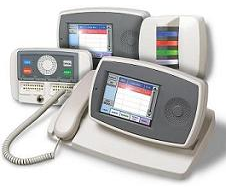
Medsphere gets a sale to 60-bed Beauregard Memorial Hospital (LA).

Weird News Andy found this article, which describes the previously illegal practice of hospitals paying doctors a cut of whatever cost savings their treatments generate. CMS is testing the practice in, as you might expect, graft and corruption rich New Jersey, where the concept of healthcare vig is well established in a less reputable way.

”Experts” in Australia say that too-rapid implementation of e-prescribing could compromise patient safety, citing a government study that found one hospital’s system doubled the rate of medication errors because it defaulted to the maximum dose and auto-refilled.

CMS is shopping for claims auto-denial software that will cut the $10 billion in improper payments it paid in 2007. These are the folks urging adoption of patient-critical computer systems, right?

OhioHealth goes live on a remotely hosted version of the EMPI of Initiate Systems, running on the interoperability platform of Accenx.

gardencity

Garden City Hospital (MI) contracts with CareTech Solutions to support new AMICAS radiology workflow modules.

The backup generator fails at Fletcher Allen Health Care, taking its Epic system offline.

Capital Health CIO Gene Grochala is intereviewed about its implementation of Keane’s clinical system, which he called “a diamond in the rough … a sleeper” that the hospital’s clinicians scored 93 on a 100-point scale.

Cardinal Health’s Q4 numbers: revenue up 10%, EPS $0.86 vs. $0.96, but meeting expectations. The sexy part of its business will be spun off on August 31 as Carefusion, leaving Cardinal as basically a warehouse and truck delivery operation for drugs.

Sometimes I wonder if doctors pay attention to pre-med economics: this one is proud to do his own network wiring and PC maintenance, thus turning his own valuable time into that of a $30 an hour technician. You can’t accumulate wealth if your time is spent doing low-value chores like computer programming or screwing around with PCs, which is really more of an expensive hobby than a frugal handyman gesture when the only thing you have to sell is your time.

Odd lawsuit: a patient given what appears to be a single dose of the very common sedative Ambien during a hospital sleep study sues the hospital, claiming the drug blinded and paralyzed him. Ambien is not known to cause either problem.

E-mail me.

Biden, Sebelius, Blumenthal to Announce HIT Grants in Chicago Today

August 20, 2009 News 3 Comments

sebelius

Vice President Joe Biden, HHS Secretary Kathleen Sebelius, and national coordinator David Blumenthal will meet today with doctors, nurses, and administrators at Chicago’s Mount Sinai Hospital, according to an announcement from the vice president’s office.

Grants of $1.2 billion will be announced, including $598 million to fund 70 Health Information Technology Regional Extension Centers and $564 million for states to develop practices on sharing information with the Nationwide Health Information Network. The grants will be funded under ARRA, with money available in 2010.

The panel discussion will include Peter Ingram, CIO of Sinai Health System, as well as clinicians from Mt. Sinai and Northwestern Memorial Hospital. The discussion is not open to the public. A second event will take place Friday in Ohio.

HHS also says it will e-mail everyone who has signed up for the administration’s healthcare updates with the benefits of using healthcare technology. Jeanne Lambrew, director of HHS’s Office of Health Reform, was quoted as saying “All that paperwork is more than just annoying. It wastes time, prevents quick and accurate diagnoses and makes our health care system less efficient. And it simply doesn’t make sense in today’s digital age.”

The government also released a video of Secretary Sebelius touring “first paperless hospital” 83-bed Lakeside Hospital in Omaha, NE in June.

News 8/19/09

August 18, 2009 News 3 Comments

From Just wondering: “Re: Eclipsys. More Professional Services leadership cuts at Eclipsys, VP Linda Lockwood and RVP Gaye Fright.” Unverified.

From Lucky13: “Re: Healthland. A letter from our account rep today – we are a Healthland (formerly Dairyland). Thanks! Love the blog … I have learned so much about our industry through it.” Healthland (the former Dairyland) announces that it has acquired small hospital HIS vendor American Healthnet. A snip from the letter: “Not only are we staying the course with Healthland solutions and our product roadmap, we expect to continue improvements across the board in how we support and service your hospital and staff. This includes launching new modules and enhancements you’ve been waiting for — like Emergency Department, Long-Term Care, Home Health, and others.” Thanks for sending it over.

From Kyle: “Re: conference. I’ve been a reader for a little bit now and found out about an event through my school. Loma Linda’s School of Public Health is hosting the Southern California Health Care Summit on October 29 at the Ontario Convention Center. The conference will be a chance to earn FACHE credits and learn about some the latest trends in HIT. They are billing it as the West Coast’s version of the World Health Care Congress.” Thanks.

Listening: Tindersticks, British and obscure, a lush mix of dark vocals, lounge music, and jazz. Kind of like Leonard Cohen or Nick Cave, rainy night music.

She’s not a doctor, but she plays one on TV: an Obama campaign volunteer admits that she claimed to be a doctor in praising Obama’s health reform plan at the town hall meeting of Congresswoman Sheila Jackson Lee of Texas.

vacbo

A Congressional Budget Office report (warning: PDF) gives the VA’s VistA good marks (above), although it cites conclusions from elsewhere that EHR adoption incentives should specifically require quality improvements.

Picis announces an enhanced ED PulseCheck: more clinical rules, alpha paging, and standard integration with bed management systems.

Former A4/Allscripts executive David Bond gets out of healthcare to develop a social networking site for teen athletes, earning kudos from former boss John McConnell (who did the same, now running his string of high-end golf courses).

El Camino Hospital goes live on the first phase of its Medicity-powered HIE. The Medicity Novo Grid is delivering real-time information to physicians, depositing ADT, insurance information, lab results, and transcribed reports into their EHR systems.

Mercy Medical Center (IA) will implement PatientKeeper’s Physician Practice Connector to give doctors a view of inpatient data, connecting the PatientKeeper Physician Information System with Sage Intergy EHR.

A couple of readers wisely suggested that I not consider running nondisclosure language from vendor contracts. Reasons: (a) it might identify the client since terms are often customized; (b) it might violate vendor privacy requirements and get a client or me in trouble; (c) clients might not want to share anyway since they may like the idea of being prohibited from sharing patient safety information. A couple of vendors e-mailed to say they don’t include such terms. I’d  be very surprised if Cerner and Epic don’t based on my limited history with them.

Jobs: QA Engineers, GE Centricity CPOE Project Manager, Strategic IT Consultant, Eclipsys SCM Systems Engineer.

vosky

A hospital in Taiwan implements a PBX-to-Skype gateway that allows free calling between nursing stations and its computers-on-wheels. Each COW has a USB handset tied into the hospital PBX so that employees can make and take Skype calls on regular phones. I Googled around and the four simultaneous calls version of the VoSKY appliance costs $1,500.

api

API Healthcare announces availability of its Business Analytics solution, which covers Staffing Solutions (staffing ratios and schedules) and Overtime Cost Control. MemorialCare (CA) is running it now.

va

The federal government rolls out a very Web 2.0-ish IT Dashboard that gives a quick green-yellow-red report like that of the VA above.

Chicago hospitals spent $32.4 million on advertising in 2008.

German HIT vendor CompuGROUP’s Q2 numbers (warning PDF): revenue up 61%, earnings up 19%.

In Australia, iSoft reports a 50% increase in revenue and 143% increase in profit, also predicting 10% sales growth for 2010.

Oracle’s Larry Ellison made $557 million in compensation in 2008, but was still #2 to the CEO of Blackstone Groups, who took home $702 million.

E-mail me.

Healthcare IT from the Investor’s Chair 8/17/09

August 17, 2009 News 17 Comments

“Tap-tap-tap, is this thing on?”

I’d like to thank the Academy, Mr. HIStalk, and Inga for allowing me the chance to post on a regular basis. Starting today, I’ll be writing a column sharing the Wall Street/investor perspective on HCIT, so I first thought I’d briefly share my background to give an idea of why Mr.HIStalk thought I’d be a good regular contributor.

I began my Street career on a crisp autumn day as a sell-side stock analyst (well, I was an associate analyst first) covering healthcare IT companies, most of which seem to have been acquired by HBO & Co. (now, of course, known as McKesson). Spending about a decade as a research analyst, I covered the stocks of around 25 companies such as Cerner, HBO, Sunquest, Eclipsys, etc. As the dotcom/e-health era arose, I covered those stocks as well, helping to take companies like Allscripts, Healthstream and others public.

After ten years, it was time for a change, so I went to what many called “the dark side” and became an investment banker. I spent six years doing both M&A and public offerings, primarily in the healthcare IT sector that we all know and love.

Wall Street has a few things to recommend it as a career, but the ability to speak truth isn’t always one of them. So, in March, I left the Street to become an independent strategic advisor to healthcare IT and other companies. So far, so good …

Yes, but just what does an analyst do and what’s the sell-side and how is it different from banking? For my first few posts, Mr. HIStalk and I thought a brief tutorial on the industry might be interesting to you, gentle readers. Let’s start with equity research.

There are two sides of Wall Street, the “buy-side” and the “sell-side”. Buy-side means the entities that actually purchase stocks (mutual funds, hedge funds, pensions, etc.). These institutional investors are what typically drive stock prices and through their commission dollars, sell-side behavior.

Sell-side analysts work for brokerage firms, aka investment banks. The other key difference is where buy-side analysts might cover hundreds of stocks or even the entire healthcare sector (from Merck to Mediumune and from McKesson to Medtronic), sell-side analysts typically focus on much smaller swaths of the economy such as biotech, big pharma, or healthcare IT and distribution, covering 15-25 stocks.

It’s the sell-side analysts’ job to know how the companies in their sector perform, what’s driving their growth, and to predict what their income statements will look like each quarter for the next few years. Why? Because it is viewed as axiomatic that earnings drive stock prices and so an analyst will model what they expect the company to earn and then try to determine if its stock price is appropriate. If it’s not, the analyst puts a coveted “buy” rating on it and proceeds to pitch the idea to the buy-side. If a buy-side client likes your idea, there’s the usually unspoken assumption that their fund will try to buy the stock through your firm and you get some credit for the commission dollar.

Earnings might drive stock prices, but I think John Maynard Keynes had a better assessment. He said, in effect, that picking stocks is like judging a beauty contest, but you are trying to figure out who the other judges would find the most attractive. This is why companies that care about their stock prices (and given that CEOs tend to own a lot of stock, most seem to care about this), care about the care and feeding of their sell-side analysts, trying always to paint the rosiest picture possible without (hopefully) crossing the line into fabrication or outright dishonesty.

I say “hopefully” because in my research days, I had countless CEOs telling me how their company was kicking competitive butt, taking market share, etc. All too often (especially early in my tenure), I’d then stand in front of my sales force and call clients to say, “we’re feeling very confident in HIStalkCo’s upcoming quarter”. Usually other analysts were saying the same thing (conformity is typically rewarded) and a “whisper number” began to circulate, meaning analysts are in print saying earnings will be $0.12 this quarter, but they’re all really expecting $0.15. This is why stocks would sometimes drop after hitting analysts’ consensus. This rosy feeling would often last until the company in question reported its quarter and, instead of the $0.12 – 0.15 expected, they reported $0.05 and the stock (of both the company and the analysts) fell.

I should note that it wasn’t always outright dishonesty. CEOs, by their nature, tend to be optimists and salespeople at heart, and the best salespeople, in my experience, believe their own stories.

A few questions might arise.

What does share price mean to me, the customer? In my view, often more than it should. Assuming your vendor has a decent amount of cash on their balance sheet and has a market capitalization high enough to remain somewhat relevant to investors (say, over a few hundred million), let investors and vendors obsess over share price and you can obsess over implementation and support issues.

Why the focus on quarterly results? When I was on the banking side, I had a client who was private and had just missed their internal quarterly budget numbers. The CFO, however, felt “great” about the year. Wanting to go public in the worst way, he asked me why they couldn’t just give annual guidance (like some companies were starting to). The answer is analysts are required by both their firms and their clients to develop quarterly estimates, which are then published. That means an expectation has been set, regardless of whether the company has endorsed it.

The company then achieves, exceeds, or disappoints on those expectations and, in my experience, its stock price reacts accordingly. Discussing what it would be like if this weren’t so is like discussing how pro baseball would be like if they switched to softballs. It might make an interesting conversation over a glass of cabernet or two, but it’s not terribly relevant to the real world. The fact is that quarterly results matter to stock prices here in America, at least in the short term. (incidentally, the company than proceeded to go public in the worst way, missing their forecasts within a few weeks of its IPO. The stock never again saw the IPO price and the management team didn’t get half the kicking around they deserved).

Should I chose a vendor that’s public or private? I’ve never selected a vendor, but IMO, you should choose the one that offers the best product for the best price (sorry to state the obvious). Recognize that there are certain incentives that drive public companies and this quarterly earnings game can impact the amount they spend on R&D, customer service, or other areas you care about. Recognize also, however, that this access to capital and currency allows them to invest in ways private companies often can’t and also is often a recruitment and retention tool (assuming the stock price goes up).

What else matters when dealing with public companies? There was an interesting Readers Write posting a few months ago where a customer complained that they were being ignored by a vendor for reasons having to do with their need to make quarterly numbers. Now as I mentioned, companies really care about their stock price and what investors are saying about them, perhaps more than they should.

Further, analysts (at least good ones) love to have any kind of proprietary morsel about the companies they cover. It’s always great to go to the buy-side and share special information — a key form of currency on Wall Street, and customer insights are always some of the best. It shows the analysts are doing some research away from the companies they follow.

Were I the ill-used client in question, I’d draft a lengthy e-mail detailing all these issues and send it to the vendor’s CFO saying, I’ll be forwarding this and similar views to one or two analysts that follow the company. I’ve not tried it, but it might improve your care and feeding as no company should want to have anything but a good reputation for customer service. Recall how the stock of Cerner fell after CEO Neal Patterson wrote his scathing “parking lot” e-mail and it surfaced on Yahoo! a few days later.

Thanks for your attention, I very much appreciate it. If interest warrants, we’re hoping to make this a regular column. Please let me know what topics you’d like to see discussed or just e-mail or leave a comment. Other areas Mr. HIStalk and I thought might be well received are:

A similar view of investment banking
How does an IPO work?
What exactly is private equity and what is it doing in healthcare IT?
An M&A watch – who’s buying whom, why, and does it make even a modicum of sense?

benrooks

Ben Rooks is the founder of ST Advisors, a strategic consultancy offering long-term and project-relationships to companies and financial sponsors. He earned an MBA in healthcare management from The Wharton School of the University of Pennsylvania, has done healthcare IT equity research, and has worked as an investment banker in over 25 successfully closed healthcare and medical technology transactions valued from $40 to $365 million.

NAHIT Shuts Down

August 17, 2009 News 2 Comments

The National Alliance for Health Information Technology announced this morning that it will cease operation on September 30. COO Jane Horowitz says NAHIT has accomplished its mission of moving HIT “front and center” to reinvent the US healthcare system.

The NAHIT announcement says the challenge of implementing and using technology can be better met by other organizations. It named those as the American Hospital Association and the College of Health Information Management Executives, both of which were NAHIT founding members.

NAHIT was founded in 2002 as a technical standards organization. CEO Scott Wallace resigned in early 2008 as the group explored “new strategies and tactics and a different operating structure.” According to federal records, NAHIT took in $3.5 million in 2007, but had net liabilities of over $600,000. Scott Wallace was paid $679,000 that year.

NAHIT, along with HIMSS and AHIMA, found CCHIT in 2004. It also funded a controversial project to define five common healthcare technology acronyms, paying BearingPoint $500,000 for the job. The organization had begun calling itself “The Alliance” in 2005.

The HIMSS Web site refers to NAHIT as one of its sister associations, along with AHIMA, AMIA, CHIME, and eHI.

Monday Morning Update 8/17/09

August 16, 2009 News 19 Comments

michigan

From Don Money: “Re: West Michigan HIE article.” Here’s the link, but you have to be a subscriber (the reader sent me a PDF). The Grand Rapids Business Journal covers an HIE created by three hospitals, all of which are using technology from the former Novo Innovations (now Medicity). Medicity’s Robert Connely: “It’s not designed to create the next generation of applications. It’s designed mostly to solve work and save tons of money, and that’s the reason they’re willing to pay for it.” The hospitals’ HIE is replacing the community-based model advocated by Alliance for Health, which found providers unwilling to pay third-party usage fees. Trinity Health will use the Medicity approach for all 45 of its hospitals, according to the article. Medicity says its technology and business models can be adapted to any connectivity scenario: a hospital-owned HIE servicing its doctors, a RHIO/HIE with third-party governance, and (as in this case) a RHIO/HIE without third-party governance.

From Stan Pacifica: “Re: PROMIS pain scale. This is an adaptive testing methodology that contains 120 items in the item bank, but far fewer than 120 are used to assess pain.” That makes sense, although the reporter specifically said “asks patients 120 pain-specific questions, as well as hundreds more that probe the physical and mental effects of pain.”  

Here’s the layoff letter from Philips Healthcare, citing lower profitability and “risk of further deterioration in several of our markets.” The usual “simpler, leaner, more flexible organization” mantra is recited, oddly enough by the same CEO who originally oversaw its regrettable transformation to more complex, fatter, and more rigid organization in the first place. He’s making $2.5 million a year for 20-20 business vision, which would value it at $5 million if it worked in foresight and not just in hindsight.

cert

It’s clear from Friday’s excellent recommendations to HHS by the Certification and Adoption Workgroup of the HIT Policy Committee that they want major changes made to EHR certification. Some of the high points:

  • HHS certification (notice they didn’t call it CCHIT certification) is not intended to be a seal of approval.
  • A new certification process should be developed that focuses on Meaningful Use rather than specific functionality points (that change will let specialty EMR vendors certify their products).
  • Certification should include all privacy and security policies that are in ARRA and HIPAA.
  • New highly detailed interoperability and data exchange specs should be created.
  • “Test harnesses” should be created so that providers can test their own software.
  • Multiple certification organizations should be allowed, with NIST accrediting them.
  • ONC should define certification criteria, not the organizations performing the certification testing.
  • Certification criteria will be updated no more frequently than once every two years and certification should be good for four years.
  • “Lock down” requirements should be eliminated to level the playing field for open source systems.
  • Since Meaningful Use definition is imminent, HHS should create a preliminary certification that would be valid through 2011.
  • Interesting quotes: “There has been criticism that CCHIT is too closely aligned with HIMSS or with vendors. While we did not see any evidence that vendors were exerting undue influence on CCHIT, we also understand that the appearance of a conflict is important to address … Most vendors advocated for a minimal approach to certification, complaining that CCHIT has ‘hijacked their development effort’ and that they are developing features/functions that nobody will use.”

The takeaway: if the recommendations are accepted, CCHIT’s role will be diminished and shared with other certification bodies, none of which will be allowed to create certification criteria; certification will move away from a detailed product design to focus instead of how EHR products are used; and CCHIT cannot shake its reputation for being controlled by a few big vendors and HIMSS. It’s pretty clear that CCHIT may well have an ongoing role in the government’s HIT policies, but not at the level of influence it has enjoyed until now. Finally, someone says no to HIMSS.

The Colorado Hospital Association and the Colorado Behavioral Healthcare Council select Qwest Communications to provide broadband services to create one of the largest health information networks in the country, connecting 400 providers and supporting telemedicine initiatives. The Colorado Telehealth Network will focus on rural areas, giving them 100-megabit connectivity via Qwest’s fiber-optic network.

Ross Koppel pointed out that hospitals probably can’t sign software vendor contracts containing non-disclosure language without running afoul of the Joint Commission’s accreditation requirements, which require hospitals and providers to share information about known patient safety risks. Here’s my challenge to you providers: send me a copy (scanned or copied and pasted) of the non-disclosure language in your contracts and the vendor involved. I’d like to run some of them here anonymously (nothing but the wording and the vendor) so new customers will recognize those terms and insist they be removed.

Recondo Technology announces EligibilityPlus, a SaaS insurance eligibility application. I mentioned the defunct (well, acquired by Sybase, which is pretty much the same thing) New Era of Networks the other day and, what do you know, founder Rick Adam is now chairman and CEO of Recondo. It’s a small world, this healthcare IT stuff.

A Florida medical magazine covers the history of EMR vendor DoctorsPartner, which says its PM offering was Best in KLAS 2007 and its EMR #2.

A London Times article compares US healthcare to the NHS, quoting a patient who moved from Britain to the US. “Every time you go for any treatment here, they want to see your insurance card and check every detail they have about you and that is wearisome. But I’ve had some terrific treatment. There are all sorts of things you have to be aware of: some treatments you part-pay for and you have to choose a doctor who is approved by your insurer. But it’s not all about money here. The doctors are doctors – they really want to help you.” Another insightful comment from a UK cancer patient who sought treatment here: “Most doctors in Britain, if they’ve worked overseas, will admit that somewhere like America has the best of the best. What it doesn’t have is the breadth of coverage. Ours is an equitable, morally cogent way of doing things. But looking at the amount and quality of research into my cancer, there was a clear difference between Britain and the United States.”

cropp

A pharmacist who didn’t catch a technician’s IV mixing mistake that killed a child at Rainbow Babies & Children’s Hospital (OH) is sentenced to six months in jail for involuntary manslaughter, to be followed by six months of house arrest, three years of probation, a $5,000 fine, and 400 hours of community service. His pharmacy license was also revoked. It appears from the newspaper’s description that the technician mixing the chemo IV used sodium chloride concentrate 23.4% instead of sodium chloride 0.9%, related to the fact that the hospital’s computer system had been down for some time. The tech was charged, but not indicted. I don’t know that putting healthcare providers in jail for making an honest mistake is a good idea, especially if you want to keep enough providers providing.

E-mail me.

Text Ads


RECENT COMMENTS

  1. Isn't that actually present perfect indicative?

Founding Sponsors


Platinum Sponsors


Gold Sponsors


RSS Webinars

  • An error has occurred, which probably means the feed is down. Try again later.