Home » News » Recent Articles:

News 9/24/10

September 23, 2010 News 11 Comments

From Clinical Wisdom: “Re: KLAS. A friend told me that Eclipsys paid KLAS $300K per year. Can KLAS accept mega-bucks from vendors they evaluate without being influenced by their cash? Imagine Consumer Reports taking money from car companies. I think they owe those who buy their reports a full accounting of what they earn from vendors and what those vendors are promised.” We’ve been around and around the KLAS business model over the years. Providers don’t usually pay KLAS for the reports; they get them free in return for providing data, so they would not be surprised to find that vendors pay big bucks (i.e., it’s the HIMSS “ladies drink free” model). I asked Adam Gale in my 2007 interview if the company would be willing to have its survey and ranking process audited by an outside expert. He said yes, but that hasn’t gone anywhere as far as I know. He offered this comment when I asked if being paid by vendors is a conflict of interest:

I would say we have one of the world’s strangest business models, where internally, if you ask anyone at KLAS who our customer is, they’d tell you it’s the provider. That sometimes irks the vendors because they pay a reasonable amount of money to have access to the subscriber data. One vendor, as a mistake, sent us an e-mail intended to be internal that said, “Doesn’t KLAS understand who the customer is based on how much money we spend?” We hold that up and cheer. The vendor is not our key customer. The provider is. We frame every vendor question in terms of, “Will it help providers make a better decision?”
9-23-2010 9-32-57 PM

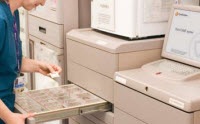
From Spell Czech: “Re: CareFusion Pyxis. Are they really struggling against Omnicell? I hadn’t heard that. Love the blog — been reading for a couple years now!” I’m sure Pyxis still holds most of the market, but it wasn’t long ago that they never lost customers. Both my current and previous hospital employers reconsidered whether Pyxis was worth keeping (clunky software, arrogance, bad support). In one case, we begrudgingly stuck with them because McKesson’s product wasn’t fully baked and Omnicell was struggling. In the other, we dumped Pyxis and never looked back. My conclusion is that, finally, Pyxis has some real competition from both of those now-acceptable alternatives and the market is reacting at least somewhat to that, even though those competitors share some of the same flaws (too many engineers making design decisions and worrying about moving parts instead of nurse-friendly software). I haven’t heard anything about Cerner’s entry into that business. Competition is good for everyone, especially the customer and patient.

From Mighty: “Re: ED denominator for Meaningful Use. CMS has finalized it, though I don’t see it mentioned in many places.” The CMS clarification says that only ED patients who are admitted as inpatients or who are treated as observation patients count toward the CPOE requirement and other parts of MU.  

9-23-2010 9-34-27 PM

From Computer Giant: “Re: UPMC. Can the EMRs not solve this problem?” That was tongue in cheek, in case you couldn’t tell. UPMC howls when a state report finds that flagship UPMC Presbyterian-Shadyside has a higher-than-expected mortality rate for CHF, septicemia, respiratory failure, and stroke. Their excuse is the standard: “our patients are sicker,” but when the state responded that everything was severity-adjusted, UPMC then commented that their younger patients throw off the stats. I’ve yet to see a hospital that took the news constructively that it’s underperforming. Be comforted: in their own minds, every hospital is above average.

From Peggy: “Re: Epic co-op. I love your site. I read it religiously! Our hospital is evaluating vendors to replace our clinical core and Epic is (of course) one of them. I’m interested in the consulting co-up you mentioned. Would you mind sharing more information?” I don’t have details, but I’m sure they will emerge publicly at some point.

From Slidell Computer: “Re: executive director of Physician Hospitals of America. She’s leaving. Rumors are circulating that changes will force physician-owned hospitals to sell out or close. Maybe she sees the writing on the wall.”

From Not Quite: “Re: GOP’s Pledge to America. It returns the country to the 2008 budget, ARRA stimulus money for EHR systems will end, and according to polls, the GOP will take over Congress. Shouldn’t all EHR purchases stop now since they won’t get their incentives?” I’ll stay out of the political debate since I distrust all politicians equally (except maybe Chuck Grassley and Ron Paul), but I would say that anyone buying an EHR solely because of Uncle Sam’s promised largesse should think twice even without the Pledge to America. CMS is like a devious cat owner waving a laser pointer around: they love to see providers jump around in reaction to ever-changing and mind-bendingly complex policies that address what initially seemed like simple, good ideas to make sure no payouts actually occur.

9-23-2010 9-36-14 PM

Wisailer, a reader attending Epic’s UGM, shared some of the interesting aspects from the meeting so far (his or her words, not mine):

  • According to Judy, one of Epic’s goals is "to improve health care for the world," based on their estimate that 30% of the US population is covered by an Epic EMR.
  • She says “do what Epic says" and your implementation will succeed.
  • Epic has spent 66,000 hours on Meaningful Use, which Carl Dvorak seemed to imply has slowed down their transition to Web-based applications.
  • The customer base is 224, up from 190 last year, and many of the sessions were oriented to new installations.
  • 200,000 physicians use Epic.
  • Vendor ally — boring. Lots of suites and pretty smiles. More consultants, fewer device and service providers.
  • Swag consisted of pre-washed, BPA-free water bottles with special refill funnels at water coolers.
  • The Haiku iPhone app will be extended to the Droid soon.
  • Canto, a new Epic iPad application, will be released in the near future. LOTS of buzz about this product.
  • Horse-drawn carriages are giving tours of the campus and bikes are available directly across from Epic Farms, thought by many to be the production source of Epic Kool-Aid.

The pic above of some of the Epic festivities, which looks like a more affluent, less crowded, and much colder (highs in the 60s this weekend) version of Woodstock, is from Dave Yost’s blog.

As Inga told me, we’ve been outed by Google. I set up HIStalkTV a few months back on a slow Sunday afternoon just to play around with posting HIT-related videos that I found amusing or useful. The site is suddenly popping up on search engines for some reason and readers are e-mailing us about it. It’s definitely beta and I haven’t really decided what to do with it if anything, but feel free to send me your thoughts. We even had one of our favorite PR people ask about sponsorship opportunities, which I appreciate even though I’ve given that zero thought.
9-23-2010 7-09-57 PM

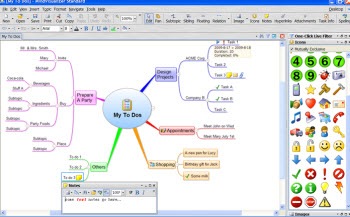
I was motivated by Ed’s CIO Unplugged post about his use of MindManager for mind mapping, list making, etc. (maybe because he featured HIStalk prominently in the picture). I tried some of those programs years ago and lost interest, but figured I would look again since I really like the concept for creativity. I lost interest in MindManager again when I saw that it has become Visio-ized (tons of overly complex functionality added for corporations and priced accordingly — $349), so I found a simpler alternative that seems to work great: MindVisualizer ($79). I’m running the free trial and will probably buy it because it’s pretty darned slick. I used it today to make a few plans for the HIStalk reception at HIMSS and the tool didn’t get in the way of my thought process, which is the most important criterion.

This seems remarkably open minded considering the source: on the HIMSS blog, the senior director of federal affairs (Tom Leary) asks for comments on the federal government’s role in ensuring the safety of HIT products. Supposedly the only reason the FDA doesn’t regulate HIT today is because of some fancy, long-ago behind-the-scenes political footwork by various groups and vendors, so maybe HIMSS is considering taking an official position. Why not chime in?
9-23-2010 7-29-56 PM

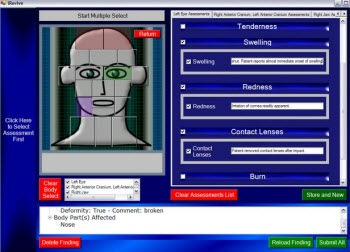
A fun Medgadget post: the National Space Biomedical Research Institute has developed an astronaut EMR that combines a mobile monitoring device with software. The EMR is iRevive from 10Blade, which was designed for EMS users (you mean astronauts don’t enjoy the benefits of a certified EHR?)

Continuing my rant on badly written press releases, this HIE one speaks for itself. For the love of God, doctor and press release writer, take a breath! In addition to the hopelessly dense text, it starts off with (1) a mini-editorial; (2) a snooze-inducing history lesson; (3) a ton of quotes, apparently all so equally significant that none could be omitted to make it readable; and (4) in the VERY LAST paragraph, one long sentence that contains the only real news in all that fluff. There is a reason that companies pay experts to craft their communication instead of doing it themselves.

Precyse Solutions will unveil its new Automated Clinical Documentation software and Computer Assisted Coding software engine at AHIMA in Orlando next week.

Weird News Andy entitles this as “Half a woman is better than none.” Doctors in Canada take a drastic step to save a 31-year-old woman with untreatable bone cancer: they cut her body in half by removing her leg, lower spine, and part of her pelvis, then do a “pogo stick rebuild” in fusing her remaining leg back to her body. I wish I had her positive outlook: “I have no problem getting around. If I need to, I’ll crawl (up stairs) or scooch like a kid.” The most bizarre aspect of the story in my mind, however, was how the doctors described the size of the tumor: they said it was the size of a calzone.
9-23-2010 8-06-15 PM

Welcome and thanks to brand new HIStalk Platinum Sponsor T-System of Dallas, TX, which created and sells what is surely one of the most effective, well-accepted, and ingenious paper documentation solutions ever devised: the famous T-Sheets, on which over 30 million ED visits are documented each year. The company offers other versions for ED nurses, order sets, urgent care, and primary care, but I’m sure they would also want you to know about T SystemEV, the company’s emergency department information system (with modules for patient tracking, status board, nurses, physicians, and CPOE) that’s used by 240 hospitals. It offers comprehensive physician and nurse documentation, clinical content, a short learning curve (often just one shift, they say), status board, prescription writing, discharge instructions, CPOE, lab integration, real-time coding capture, and patient satisfaction and reporting tools. All are important for Meaningful Use, of course. Former McKesson MPT President Sunny Sunyal recently joined T-System as CEO, so I’d say he did his due diligence and liked the company’s performance and potential. Thanks to T-System for supporting HIStalk — Inga and I appreciate it.

All adult hospitals in Milwaukee County, WI will use My Health Direct for ED referrals to community health centers, courtesy of an agreement signed with the Wisconsin HIE. I interviewed Jay Mason, the chairman and CEO of My Health Direct, in June.

I was checking up to see what’s happening with long-time HIStalk bestie Scott Shreeve MD, formerly of Medsphere and now building Crossover Health, a member-based medical practice that will provide individualized urgent, primary care, and online health services from clinics in California (Newport Beach, Foothill Ranch, and Aliso Viejo). I didn’t think I’d be interested in the construction video above, but it’s pretty fascinating to see how that company and others are taking a very different approach to healthcare delivery for those who can pay for it themselves.

Some unusually juicy jobs on the HIStalk Sponsor Job Page: Sales Director, VP of Solutions Marketing, McKesson Consultants, Head of Quality Systems, Sales Director. On Healthcare IT Jobs, Senior Account Executive for VA, Sales Professional – North Carolina, Clinical Systems Analyst III, Epic Project Managers, Eclipsys Documentation Consultant.
9-23-2010 9-02-24 PM

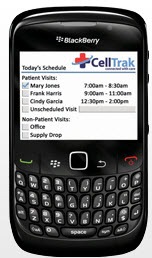
Home care mobile solutions provider CellTrak Technologies announces the latest version of its smart phone system, which includes Android capability. It’s also sold in Canada by TELUS Health.

The US Army awards a research grant to InterSystems to look at its HealthShare platform to exchange data between Madigan Healthcare System (WA) and South Sound HIE.

Medical College of Wisconsin spinoff Imaging Biometrics gets an $800K NIH grant to develop its software that helps clinicians distinguish tumors from healthy tissue.

Odd: a woman’s iPhone is stolen while she is hospitalized and in labor.

E-mail me.

HERtalk by Inga

From Hamlet: “Re: KLAS, Epic, etc. KLAS found that nearly 70% of new 2009 hospital EMR purchases were for an Epic or Cerner integrated solution. Reading HIStalk, you would think Epic cleaned everyone’s clock.” They cleaned a lot of the clocks that counted, i.e. the big, influential hospitals with lots of beds and big dollar volume.

From A-Rod: “Re: on the move. Long-time healthcare CIO Bob Kaplan has been appointed EVP and CIO of Audax Health Solutions in Washington, DC. Bob has been CIO of WebMD, NCQA, IFMC, National Preferred Provider Network, and PHP Healthcare Corp.”  According to the Audax Web site, the company is an early-stage startup developing products that “change how patients and providers interact.”

From Sunshiney: “Eclipsys wins. Mercy Memorial Hospital System in Michigan is replacing McKesson with Eclipsys and Sidra Medical and Research Center in Qatar picks Eclipsys’ inpatient EHR.” Both verified.

Capario promotes sales and marketing VP Jim Riley to president. He replaces Andrew Lawson, who will be moving to another company within Martin Equity Partners, the entity that owns Capario. Riley was previously VP of sales and marketing for Payerpath, where he also worked under Jim Brady, Capario’s executive chairman.

Saint Barnabas Health Care System (NJ) picks EDIMS and its EDIS software for its six-hospital system.
iscribe

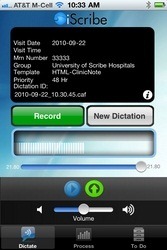
Scribe Healthcare Technologies introduces Scribe Mobile, a new dictation app for the iPhone, iTouch, and iPad.

Yet another entity announces its ICD-10 conversion strategy. Global IT service provider HCL Technologies will use Health Language’s Language Engine solution as part of its end-to-end ICD-10 conversion solution.

Central Jersey HIE Project selects Advanced Data Systems, Greenway Medical, and MDTablet as its recommended EHR vendors. Well, at least that is what I think was said in the HIE’s very rambling press release.

holy redeemer

Holy Redeemer Health System (PA) will implement MobileMD and its 4D HIE technology to provide connectivity among the hospital, community physicians, and other area care providers.

This week on HIStalk Practice: InfoGard provides an update on when they’ll begin EHR certification and testing. A medical office janitor lands in jail after selling patient charts to a recycling company for $40. Theories on why medical office hiring is up despite declining revenues. A new study reveals the top EHR/PM companies in the ambulatory world.

san juan college

A sign of the times: San Juan College (NM) says it will shut down its medical transcription program at the end of the school year. School administrators admit that computers are increasingly taking the place of traditional medical transcription, so the school will instead focus on modernizing its coding and HIT degrees.

The local press highlights Rapid City Regional Hospital and its migration to Meditech. The hospital has implemented bedside medication verification and is now moving to physician documentation. The transition is not without its opponents, including one neurologist who is apparently not a big fan of EHRs:

They are good for insurance companies and good for controlling data, but it’s not necessarily good for patient care. The travesty is, so far the systems are bad. You’re not talking to the patients. You’re talking to the computers. If the doctor has to type, they’re not going to add very much information. Either you input data or you take care of patients, but you can’t do both well.

KLAS finds that the oncology market has been mostly ignored by enterprise software vendors, with best-of-breed vendors dominating the market. Enterprise vendors are more focused on the medical, rather than radiation oncology market, and often vendors are less interested in functionality and more focused on integration with other systems. Epic is named the closest enterprise system to delivering an oncology solution. Cerner, Eclipsys, GE, Meditech, and Siemens offer varying functionality as well.

inga

E-mail Inga.


UnitedHealth Group To Acquire A-Life Medical

September 21, 2010 News 2 Comments

9-21-2010 6-57-31 PM

UnitedHealth Group announced after the market close Tuesday that it will acquire computer-assisted coding vendor A-Life Medical of San Diego, CA. Terms were not disclosed.

UnitedHealth Group will add A-Life Medical to its Ingenix Health Care Delivery business, extending a strategic alliance formed between the companies last year to develop advanced coding solutions.

A-Life Medical’s products include the LifeCode natural language processing solution, which analyzes clinical documentation to identify diagnoses and procedures and recommend ICD-9 and CPT-4 codes to coders. Its Actus computer-assisted coding product will allow Ingenix to market services to providers transitioning to ICD-10 by the mandatory October 1, 2013 date.

The acquisition is UnitedHealth’s fourth technology-related buy so far this year, having previously absorbed Picis (high acuity systems), Executive Health Resources (medical necessity and compliance), and Axolotol (health information exchange systems).

News 9/22/10

September 21, 2010 News 18 Comments

9-21-2010 8-00-41 PM

From Medicament: “Re: Epic UGM. Announced attendance is 5,500 vs. 3,800 last year. Surreal. This panorama is from the auditorium just after Judy’s keynote.” If you are there, send me a report of any newsworthy developments. Sorry the pic is small, but that’s the point: the meeting isn’t.

From Neils Bohr: “Re: Accenture. I heard they got the HHS contract for use case for the Standards and Interoperability Framework last Friday.”

From Epic CoOp: “Re: Epic consultants. Given the huge demand, 20 of them are forming a consulting co-op to keep the cut that temp agencies take.”

From Blue Danube: “Re: video. Even though it’s an ad for Centricity, it paints a pretty accurate picture of primary care and the need for EMRs.”

Listening: new (released just today) from John Legend and The Roots, a collaboration between the modern R&B/hip hop singer (John Legend) and the Philly funk band (The Roots), updating socially conscious soul songs from the 60s and 70s. I can’t describe just how awesome this album is, sounding as fresh and uncomplicated as Motown circa 1968. If you don’t like soul or hip hop music because it’s over-produced, non-melodic, and fixated with trite subjects like lust or fame, let this rekindle your hope for the genre. I usually condition my recommendations knowing they aren’t for everyone, but this one’s for everyone.

UnitedHealth Group makes another buy, announcing plans to acquire coding vendor A-Life Medical. I covered it in a news blast here. UnitedHealth Groups is obviously on an HIT tear, bagging four companies so far this year. That’s a good reminder to sign up for updates using the Subscribe to Updates box on the upper-right of this page and/or to Friend/Like us on Facebook since I usually post new stuff there too.

The San Diego office of the FBI announces that El Centro Regional Medical Center (CA) will pay $2.2 million plus interest to settle Medicare fraud allegations brought forward in a former employee’s whistleblower lawsuit.

Rothman Healthcare hires Richard Sommer as CEO. I hadn’t heard of the company, so I checked it out. It markets products based on The Rothman Index, an automated system that collects 26 observations and results for each patient every hour and graphs the score so caregivers can quickly see who’s crashing. The trial was at Sarasota Memorial (FL). The Rothman brothers found the company after their mother died after post-surgical complications that were subtle and therefore undetected in the hospital. According to the company’s site, nurses at its first hospital site identified a patient going bad within five minutes of bringing the system up in test mode, reacting to a patient whose pulse-ox had dropped from 98% to 85% over two days without alarming anyone.

Jewish General Hospital of Montreal, Quebec will use education and clinical image sharing tools from Aurora Interactive to create an online pathology education network.

9-21-2010 7-50-59 PM

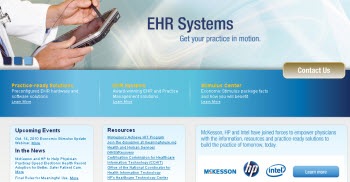
McKesson, HP, and Intel launch a site that mixes HITECH resources with preconfigured EHR hardware/software packages.

Transcend Services announces BeyondAlerts, which extracts clinical data from transcribed narrative to trigger provider alerts.

Panasonic will offer data encryption from Mobile Armor in its Toughbook notebooks and mobile clinical assistants. That includes self-encrypting Seagate drives, centralized management, pre-boot authentication, and auditing. Smart.

I made fun of a Brainware sales announcement a few weeks back because it didn’t name the customer (for contractual reasons, no doubt, but I still questioned the newsworthiness of an anonymous customer sale). They sent me their latest announcement this week, joking that this one names names, that being Gundersen Lutheran Health System (WI). Brainware and Ascend Software are providing the Brainware Distiller intelligent data capture tool along with business process automation for the health system’s Lawson accounts payable system. Brainware’s tools pull data out of unstructured sources such as invoices without templates or indexing. For AP, that means speeding up processing and providing a near real-time view into liabilities. It uses fuzzy search to assign GL codes and vendor numbers to non-PO invoices. Its Gateway product is a portal for vendors to check the status of their invoices online.

Since I shamed Brainware, let’s move on to the next poster child for bad press releases. Does this headline roll off your tongue? The Institute for Transfusion Medicine(SM) (ITxM)(SM) Deploying BIO-key(R) Fingerprint Search and Identification Solution for Donors and Patients. Marketing people can’t even introduce themselves without holding up little trademark and service mark signs. I guarantee that nobody could read this even 2-3 times and have the slightest clue what it’s about with all the unnecessary, lawyer-paranoid clutter.

Covisint, the portal vendor owned by Compuware, acquires DocSite of Raleigh, NC, which offers PQRI, registry, decision support, e-prescribing, progress notes, and integration tools. Roger Sterling tipped us off in the 9/1 HIStalk, although Inga couldn’t get Covisint to confirm.

9-21-2010 7-54-59 PM

Children’s Boston will use Allocade’s On-Cue Operations Management software in radiology. It pulls data from existing systems to create a rule-optimized patient itinerary and provides caregiver collaboration tools and business intelligence.

New Jersey’s HITREC contracts for physician practice consulting services from Nit Health. Being a hospital guy, I couldn’t help but think of small combs and Kwell shampoo.

Maimonides Medical Center (NY) goes live with InterSystems Ensemble for rapid integration and development, using it to develop new interfaces to/from Sunrise Clinical Manager.  

An interesting debate at the VA: should tech-savvy doctors be allowed to store limited patient information using cloud-based Web tools if they appear to be secure and if the VA’s systems can’t meet their needs otherwise?

9-21-2010 8-37-43 PM

A study finds that a heart attack risk calculator used by consumer health sites is not very accurate, misclassifying 15% of patients as needing medications when they really don’t (check out the screen shot I took above from the American Heart Association’s version of the calculator to see why that’s not too shocking). Epocrates is mentioned as offering physician treatment applications based on the flawed formula.

E-mail me.

HERtalk by Inga

From Heresay: “Re: certification pricing. I’ve heard CCHIT is charging $40-$60,000 for EHR certification compared to Drummond’s $20K.” If anyone thinks they have a solid handle on the pricing from the three ONC-ACTBs, please step forward. InfoGard has yet to publish any details, but here is how I am interpreting the pricing from CCHIT and Drummond:

  • Complete EHR Ambulatory: CCHIT $34,300; Drummond $19,500.
  • Compete EHR Inpatient: CCHIT $32,550; Drummond $19,500.
  • If you don’t need testing for the full EHR and just need individual modules tested, CCHIT has assigned a per-module fee for testing that ranges from $650 to $2,000, depending on the module’s complexity, plus a $7,000 base fee that includes the mandatory security criteria.
  • Drummond charges $11,500 for up to 19 modules, include the mandatory measures, or, $16,000 for 20 or more modules, including the mandatory items.

To summarize: Drummond is less expensive if you need complete EHR certification and testing. If you need module testing only, CCHIT could be less expensive. The CCHIT folks would probably add that their fee includes a comprehensive testing and certification toolkit for vendors, which they will sell to non-applicants for $1,000. Also, vendors with CCHIT 2011-certified products will not need to pay additional fees for the ONC-ATCB certification through CCHIT, though additional testing is required.

epic campfire

I happened upon this blog post by an Epic User Group Meeting attendee. He shares details of Sunday night’s round-the-campfire wienie roast, complete with s’mores, dogs, and employee-provided entertainment. Very cool. Epic is expecting over 5,300 customers to hit Verona this week for this year’s theme, “UGM: The Musical.” In addition to 300 educational sessions, the meeting will  feature Epic staff singing Broadway tunes, Les Feud game show, and a tug-of-war tournament.

KLAS finds that nearly 70% of new 2009 hospital EMR purchases were for an Epic or Cerner integrated solution. Overall EMR sales nearly doubled last year in the 200+ bed hospital market. Meditech and Siemens saw limited growth and McKesson’s Paragon product outsold McKesson’s Horizon solution.

RCM company NHPN appoints David Garber SVP of managed care. Garber has held leadership positions in a number of managed care organizations, including CompServices and Coventry Health Care.

A third of office-based providers are now e-prescribing, according to Surescripts. However, only 12% of all prescriptions were written electronically last year. The number of providers using electronic prescribing grew significantly from 2008 to 2009, from 74,000 to 200,000, while the total number of e-prescriptions jumped from 68 million to 190 million. Massachusetts had the highest e-prescribing rate at 57%, followed by Rhode Island and Delaware.

Corey Hall joins REACH Call as EVP of medical informatics, coming over from the College of American Pathologists.

Sponsor Updates

  • iMDsoft and Medical Web Technologies (MWT) partner to integrate their technologies. iMDsoft will offer MWT’s One Medical Passport pre-op workflow solution as part of its MetaVision AIMS product.
  • Greenway Medical Technologies introduces its Allergy Module for PrimeSuite EHR, which includes injection record tracking, allergen testing, serum development, and lot administration and reporting.
  • API Healthcare says that 35 provider and contingent staffing clients have gone live with its workforce management solutions this year.
  • NextGen Healthcare provides VHA members special pricing on its clinical and financial software.
  • Vanguard Health Systems deploys Medicity’s Novo Grid HIE technology to 850 physicians across four states.
  • Parkview Medical Center (CO) selects RelayHealth’s RevRunner to improve its revenue cycle performance.

inga

E-mail Inga.

Monday Morning Update 9/20/10

September 19, 2010 News 9 Comments

 9-18-2010 4-34-16 PM

From Tobias Funke: “Re: interesting billboard. This is from Avera Health in Sioux Falls, SD.” That’s pretty cool – the billboard has a smoke machine behind it to extend the smoke into the sky. It drew lots of attention, both from passers-by who checked out the site afterward and the local fire department, who shut it down.

From The PACS Designer: “Re: Windows 1E9 beta. Just like Mr. H, TPD loves Firefox and avoids Internet Explorer. Well, now we have the Windows IE9 beta release, but you won’t be able to use it for Windows XP! It looks like a move by Microsoft to push more of us XP users to upgrade to Windows 7.” I’m still holding Vista against them. The decades-old Windows pattern is obvious: one really OS good release alternating with a bad one that causes endless frustration. My preferred browsers, in order, are Chrome, Firefox, Opera, and then IE (I don’t use Safari, so I don’t know where it would fit). Windows 7 is a winner, though, which is still not great consolation given that I paid for Vista instead of jumping right from XP to the next good version. I don’t think anyone would complain about moving up to Windows 7 if it didn’t require starting over for XP users — you have to have wasted your money on Vista to do a simple upgrade, or at least that’s what I recall when I last considered it. I suspect I’m like the typical XP holdout — not cheap, just not finding a good reason to risk problems knowing that Microsoft offers no help (in other words, have lots of time and a second computer to Google your problem just in case the first one is trashed because you’re on your own).

9-18-2010 4-44-31 PM

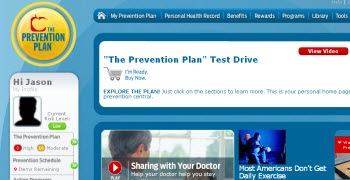
Former McKesson Provider Technology CFO Craig Niemiec is named EVP/CFO of US Preventive Medicine. I checked out that company’s prevention program and it sounds pretty cool: you pay $229 for the first year, complete an online health risk questionnaire, and then go to a local lab to have a panel of blood tests. The company sends your lab results to a PHR, you and your doctor get a custom prevention plan, you gain access to online dashboards and action programs, and a nurse advocate is available to help with health maintenance. Since it’s not tied to insurance or employment, nobody sees the information without your approval.

9-18-2010 3-53-58 PM 

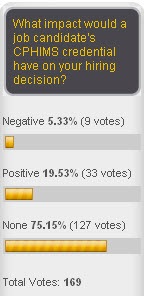
Job candidates with a CPHIMS credential would impress one out of five HIStalk readers if they were hiring. New poll to your right: would you use an free, ad-supported EMR?

Sonney Sapra is promoted to CIO of Tuality Healthcare (OR).

iOptimal announces the beta of iPad Hospital Toolkit, which it says requires no iOS programming and connects to standard databases to convert legacy apps to run on the iPad.

A third organization is approved by HHS to certify EHRs as an ONC-Authorized Testing and Certification Body: InfoGard Laboratories of San Luis Obispo, CA. They have many certifications and list extensive internal expertise (cryptography, security, systems architecture, etc.) that makes CCHIT’s credentials look a little anemic in comparison.

9-19-2010 9-21-26 PM

St. Edward Mercy Medical Center (AR) will go live on Epic September 26. The local paper’s article says Sisters of Mercy Health System, of which St. Edward is part, spent $450 million on Epic.

Siemens will make its IT Solutions and Services unit a separate company on October 1, having previously announced plans to cut 4,200 jobs there to set up a spinoff. That business covers a bunch of industries including healthcare, but I wasn’t familiar with the healthcare parts: content management, PACS data storage, identity management, and RFID. I assume this has nothing to do with Siemens Healthcare.

9-19-2010 9-20-05 PM

Cardinal Health sells its remaining shares in its CareFusion spinoff for $706 million. Some of the CareFusion medical device and technology brands include Pyxis, Alaris, AVEA, Jaeger, SensorMedics, V. Mueller, and MedMined.

England’s Connecting for Health wants NHS trusts to report their inventories of Microsoft licenses by October 1. Since CFH didn’t renew its Enterprise Agreement and their license count is fixed, that means trusts are own their own to budget and pay for their Microsoft licenses.

I’m not sure how this qualifies as defense funding, but Assistant Senate Majority Leader Dick Durbin brings home the Illinois bacon in getting $3.6 million in funding through the Senate Appropriations Committee for Children’s Memorial Hospital of Chicago to study regenerative genes. It’s great for wounded soldiers, so I guess you could squint a little at the tumescent federal budget and make it so. The Senate has to approve, but I think they are battle-weary themselves from approving endless federal handouts that, if you continue squinting, only slightly resemble a robust economy.

An interesting and cheap idea for practices interesting in reducing missed appointments: sign up for a Web-based virtual phone service and use it to send SMS reminders to patients.

9-19-2010 9-26-17 PM

Vecna Technologies signs a marketing deal with Cycom Canada to sell its QC PathFinder real-time hospital infection monitoring system to hospitals in Canada. The company, whose offices are in the DC area and Cambridge, MA, also offers a Web portal and patient self-service kiosks. Also, the medication delivery robot above. Their stuff looks pretty cool.

Former treasury secretary Paul O’Neill questions David Blumenthal after the latter’s EHR-love keynote speech at a patient safety meeting, asking him (I’m paraphrasing): if the government is so hot to spend billions on EMRs, then why not design a prototype and then refine it, creating a national standard? Blumenthal’s answer, also paraphrased: there’s a debate about whether the ideal approach is like the Internet, where competition took the basic structure of the Internet and turned it into something amazing, or should someone just set detailed standards centrally? He also touted certification. An interesting quote from the excellent Mass Device article, from Atul Gawande at an August meeting talking about reducing medical errors: “Ignorance remains, but we have a new kind of human failure that has emerged as important and that is what the philosophers call ‘ineptitude,’ meaning that the knowledge is there, but the individual or group of individuals fail to apply that knowledge correctly.”

A former Medco pharmacist nears the 80th day of his hunger strike protesting the mail order pharmacy’s requirement that pharmacists fill at least 50 prescriptions per hour, saying it causes medication errors.

The VA and DoD launch a fourth records-sharing pilot, this one involving the Spokane VA, Fairchild AFB, and Inland Northwest Health Services. The first three are in San Diego, Norfolk, and Indianapolis.

California Attorney General Jerry Brown wants to review the salaries of hospital executives, among several public positions that he thinks are overpaid. The healthcare example he gave was the CEO of Washington Hospital, who makes $847K. The hospital gave the stock answer about having to pay market salaries for the best hires, which always sounds lame to me. First, some of healthcare’s hires are clearly not the best people. Second, by that logic, you’d be paying teachers and ministers huge dollars if only they were lucky enough to have higher-paying alternatives. And third, I like the idea of offering less than market salary and seeing who really wants to help patients vs. themselves. If you can’t stand the idea of running a non-profit hospital for a paltry $500K, then don’t let the door hit you on your way out.

E-mail me.

Sponsor Updates

  • T-System announces the six winners of its 2010 Client Excellence Awards.
  • Medicity announces that Carolinas HealthCare has selected the company as its partner to build a multi-state HIE.
  • Nuance will be at AHIMA next week.
  • Baltimore-based clinical documentation vendor Salar is recruiting for a number of positions to support its growth: software engineer, RVP of sales, implementation specialist, marketing specialist, and others. I like these guys – their crew was having a blast at the HIStalk reception at HIMSS in Atlanta.
  • A good Facebook to follow – NPC Creative Services. I read a lot of Facebook posts and theirs is always on point about HIT.
  • HIS vendor IntraNexus will be at HISpro’s seminar for buyers in Dallas on October 13-14. That’s Vince Ciotti, who keeps the registration fees and hotel costs way down ($295 to register).
  • I don’t remember if I’ve mentioned this: Quest Diagnostics and Surescripts will work together to create a service that will make lab and prescription information readily available to physicians. Quest is the parent company of HIStalk sponsor MedPlus, which offers the Centergy data exchange, ChartMaxx document-based EHR, and Web-based Care360 EHR that is used in more than 70,000 practices.
  • Holon is offering downloable overviews of its offerings: central order entry pharmacy, results notification, workflow scheduling, pharmacy solutions, and others. The company offers the Holon Framework that includes solutions for data exchange, workflow, interoperability, and document management, all designed to enhance rather than replace existing systems.
  • International informatics and medical terminology vendor Apelon will be at AHIMA, where Kathy Giannangelo will present on the state of standardized terminologies. The company’s expertise is in terminology asset management, data interoperability and integration, and data warehouse content and consulting.
  • If you’re going to the Virginia MGMA fall conference in Virginia Beach next week, check out DIVURGENT’s presentation on tactical approaches to HITECH, delivered by partner Colin Konschak and client services VP Shane Danaher. The healthcare consulting firm will also be at the CHIME Fall Forum and VAHIMSS in October.
  • Stockell Healthcare Systems offers several success stories about its InsightCS solution for patient registration, ADT, and revenue cycle management.
  • Precyse Solutions will oversee transcription, medical records processing, coding, and storage for Benefits Health System (MT), taking over its 60 employees.
  • Rechargeable workstations from Enovate are highlighted on the Web page of Children’s Hospitals and Clinics of Minnesota, which shows the amenities and benefits of its patient rooms. Cool idea: each room has a caregiver window so that nurses can check on the patient and perform documentation from the hallway without barging in.
  • UC Irvine Medical Center gives credit to Surgical Information Systems for its best practices in patient handoff and communication that led to a successful Joint Commission survey.
  • Order Optimizer has added a very well laid out Web page on Meaningful Use. It says its SaaS-based CPOE can be live in nine weeks with no capital investment and no impact on legacy systems, making it feasible to meet Stage 1 incentives within 90 days.
  • MED3OOO offers free electronic newsletter subscriptions covering coding and compliance, clinical tools, and developing healthcare news.
  • SRSsoft publishes its online EMR Straight Talk, with the latest entry being EMR Purchase – Caveat Emptor.
  • Cumberland Consulting Group is growing and therefore looking for candidates at these levels: consultant, managing consultant, and executive consultant.
  • Regulatory compliance consulting firm The Anson Group will present at the 2010 RAPS Annual Conference in San Jose next month. The company also offers technology commercialization services that can include licensing, sale, and partnerships, particularly with regard to products involving FDA approval and the resulting regulatory risk.
  • I like the people at electronic forms management experts Access, being among the very few sponsor folks I’ve actually hung out with non-anonymously here and there. I’m still trying to get them to bring their award-winning Texas barbeque team to HIMSS in Orlando for your benefit as an attendee, since that part of the world struggles by with pathetic chain barbequed chicken of no particular regional specialty and therefore is generally unaware of the glories of Texas brisket and sausage (although I do like that of Cecil’s Barbeque on Orange Avenue even if they smoke it over hickory instead of post oak and/or mesquite). Anyway, Access has a blog here, which coincidentally gives HIStalk a shout-out in the latest entry.
  • Informatics Corporation of America is offering an October 21 Webinar entitled Sustaining HIEs Through Leveraged Infrastructure – A Multi-Community Approach.
  • Sunquest is at the pathology informatics conference in Boston this week and will head on over to CAP ‘10 in Chicago immediately after. Stop by and tell them you saw it on HIStalk.
  • API Healthcare launches its Client Connections site, providing easy access to support materials, manuals, and training materials. It also offers clients the ability to network with each other and with API’s experts on workforce management technology. Clients can search the support database, review and enter support tickets, and receive e-mail updates when the status of their ticket changes.
  • Enterprise workflow vendor FormFast offers a Webcast library covering EMR maturity and adoption, RAC audits, workflow applications, prescription printing, and others.
  • The Sentinel RCM application 340b drug pricing application from Sentry Data Systems will be integrated with Omnicell’s WorkflowRX 7.0 software.
  • EDIS vendor EDIMS will be at ACEP 2010 in Las Vegas next week. I’m sure they would appreciate a howdy from HIStalk readers also at the Mandalay Bay.
  • Culbert Healthcare Solutions just won a “fast growing” award, so it stands to reason that they might want to talk to you if you’re an ace consultant (Allscripts, Epic, GE, integration, revenue cycle, PM, etc.) Info here.
  • Interesting in outsourcing revenue collections? AdvancedBiller, a service of AdvancedMD, will match you with up to three AdvancedBiller partners, who will provide needs analysis and price quotes. Register here.
  • TELUS Health offers an online demo of Telus health space, its HealthVault-powered consumer platform for Canadians that is the first to achieve Canada Health Infoway pre-implementation certification.
  • SCI Solutions is making customer reviews of its access management services freely available online via Customer Lobby, including KLAS-like commentary and star ratings. I believe you can infer that they have little to hide about their ordering, patient scheduling, and revenue cycle applications. SCI was one of the first HIStalk sponsors and doesn’t really advertise much, so thanks to John Holton, Cindy Dullea, and Hans Morefield, some of the folks there that keep in touch regularly.
  • Wellsoft announces that CCHIT has certified its EDIS v11 emergency department EHR, making it one of the first.
  • EHR consulting experts Enterprise Software Deployment (Allscripts, Cerner, Epic, McKesson, Meditech, Siemens) brings on David Tucker as national sales VP. The company is growing like weeds and is on the lookout for both salaried and contract consultants – check out their job board.
  • Software Testing Solutions has posted fun photos from their creative booth activities at SUG 2010. You can sign up for a variety of demos and classes for their application testing solutions for Sunquest, Eclipsys/Allscripts, and Epic.

News 9/17/10

September 16, 2010 News 6 Comments

9-16-2010 7-20-50 PM

From Bama Birdie: “Re: HealthSouth. Trinity Medical Center will relocate to its unfinished hospital on US 280.” This was the endlessly touted digital hospital that was to serve as the flagship for the HealthSouth rehab chain, to have been built by HealthSouth and Oracle. It was called the “hospital of the future” when construction began in 2001, which turned out to be apropos since Richard Scrushy’s $2.7 billion fraud scandal left it permanently unfinished. It was vaporware anyway, said HealthSouth’s CEO last year: “It was a pipe dream and a figment of the imagination. It never had a chance.” You would have believed otherwise given the gushy coverage by the bootlicking healthcare rags back in the day, which were apparently unaware that Oracle had pretty much nothing to offer hospitals despite periodic, uninspired healthcare waters toe-dipping.

From RegularReader: “Re: Broadlane. MedAssets buys competing GPO/services company Broadlane for $850M Tuesday and the Street doesn’t exactly love it. Stock is down approximately 10% since the deal was announced. Only time will tell how many jobs the expected $20M in 2011 expense-based synergies represents.” MedAssets shares closed Thursday at $18.54, down from Tuesday’s peak of $21.50.

From Willie Maquitt: “Re: Adreima. Where do companies come up with these names? How do you pronounce it?” Advocacy for Reimbursement Matters, like George “T-Bone” Costanza in Seinfeld, decides to give itself a contrived nickname, Adreima, maybe to celebrate its acquisition this week of eligibility vendor Hospital Inpatient Services. I’d say it “addREEmah”, but I hate it when companies make up a name of their own free will, then insist on shortening it. Why not just pick a short one to start with?

From Human Error, Here: “Re: Pittsburgh. The executive, who spent $10 million of taxpayer money on an emergency dispatch system upgrade (downgrade) when the county and city can barely afford to patch potholes blames human error for care delays.” The new system was missing addresses and landmarks, so dispatchers got confused when multiple surrounding towns share the same street address. A dispatcher who sent police to a cell phone tower instead of a house to check out a break-in was suspended indefinitely. I’m not sure if that’s better or worse than in Detroit, where ambulances don’t have computers or GPSs, ambulance response times are long, and firefighters and police officers aren’t allowed to help a victim until the ambulance gets there.

From TexLAHawk: “Re: JPS Health Network, Texas. Word is that Jamey Pennington has resigned as CIO. So basically a county facility that has historically had terrible management and clinical outcomes now is set to buy the most expensive, resource-intensive EMR possible without a CIO at the helm. Glad to see our tax dollars are hard at work!” I’ll guess the CIO part is true since JPS IT director Joe Venturelli sent a Rumor Report to mention that the book he wrote, The Informed Patient, is available on iTunes (or at least it claimed to be him) and mentioned his role as interim CIO. They couldn’t force the CIO to stay if he wanted to leave, of course, and I’m sure that he’s as replaceable as any of us.

Inga and I get occasional personal invitations to attend conferences of various kinds. Even though we rarely do so because that means arranging vacation days from work and all that, we do appreciate the offers. Thanks for thinking of us.

9-16-2010 6-47-37 PM

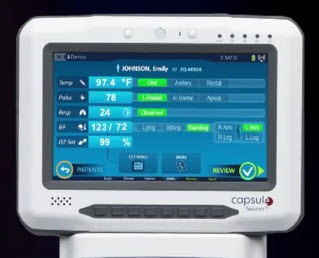
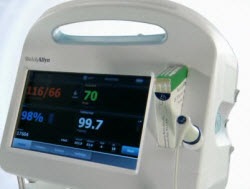
Capsule announces Mobile Vitals Plus, part of its Enterprise Device Connectivity solution. It’s a single, touch screen-powered, nurse-friendly device that captures vital signs and sends them to the patient’s electronic record. A video demo is here. Seems cool, but I’ll defer to the nurses (I’ll bet you rarely hear that from an IT person).

HIMSS 2010 Davies Awards winners, just announced: Sentara and Nemours, organizational; The Diabetes Center (MS) and Miramont Family Medicine (CO), ambulatory; Open Door Family Medical Center (NY), community health; and Wisconsin Division of Public Health’s Wisconsin Immunization Registry, public health.

Jobs: Clinical Systems Analyst III, EMR Implementation Specialist, Eclipsys Documentation Consultant, Allscripts Consultant.

I mentioned the Davies winners even though HIT awards are a waste of time if you ask me, so I might as well mention the hospitals just named to the InformationWeek 500: Banner Health (90), Caritas Christi (44), Children’s Omaha (184), Children’s Dallas (187), Cincinnati Children’s (13), CoxHealth (144), Geisinger (243), HCA (213), Heartland Health (118), Lifespan (74), Norton (157), OhioHealth (238), Parkland (143), Poudre Valley (224), Sparrow (22), University of Pennsylvania Health System (54), UPMC (5), and Wuesthoff (172).

The College of American Pathologists contributes to the first DICOM medical imaging exchange standard for pathology slides, a step along the way to full integration of imaging information with LIS information. 

At a meeting of the Health IT Policy Committee, Epic CEO Judy Faulkner says she is worried that the “government is going to get into the electronic health record design business,” apparently concerned that its future Meaningful Use requirements may be overly prescriptive. Members are also debating how HHS can give the industry a heads-up on the second-stage MU requirements given that they won’t have had time to understand how providers are faring with the first-stage ones by the due date.

9-16-2010 8-16-14 PM

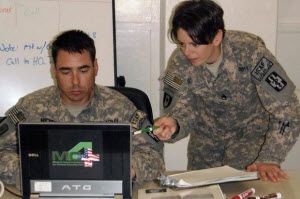
LTC Patricia Ten Haaf, commander of the Army’s 452nd Combat Support Hospital in Afghanistan, leads a Lean Six Sigma project to upgrade its MC4 battlefield EMR. ED charting was cut in half when electronic notes replaced paper and nurses created 22 templates that reduced paper forms from nine per patient to two and shaved more than 10% of an admission duration. In the US Army photo above: SGT John Michel, SSG Brooke Stauner.

9-16-2010 8-23-35 PM

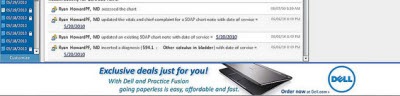
Free EMR vendor PracticeFusion had two revenue streams in its early business models: pushing ads and selling de-identified patient data. Above is how the first option looks — an ad running at the bottom of a PracticeFusion screen, courtesy of its announcement this week that it has hooked up with an ad company.

Munroe Regional Medical Center (FL) budgets $2 million to upgrade its McKesson Horizon Expert Orders system.

GE Healthcare announces that it’s working with Bassett Medical Center in a Smart Patient Room pilot to develop real-time monitoring of safety protocols such as hand-washing and falls.

Sentara chooses Omnicell for medication dispensing. I assume that means Pyxis was displaced, which is happening pretty often these days.

Teleradiology service provider Musculoskeletal Imaging Consultants introduces Virtual Viewbox, which presents multiple patient PACS records in a single display and allows side-by-side consultations (the company calls that “HITECH Teleradiology”). It runs on an iPad and is free, with a catch: the docs have to ask their imaging centers to use MSKIC for reading.

In England, the Morecambe Bay NHS Trust creates an ambitious improvement plan for its just-implemented iSoft Lorenzo system: “transact a day’s work in one working day.” There’s also a problem in that the system informs users that a patient is dead when in fact they are not.

E-mail me.

HERtalk by Inga

A Boston Medical Center insider confirms that the organization’s recent layoffs included a few IT staffers. However, they added that BMC sees its IT strategy as an integral component of the organization’s overall financial recovery. BMC is on track to implement a new GE revenue cycle system and is working towards qualifying for Meaningful Use incentives in 2011.

Wanted: 13 senior healthcare executives to work for free on CCHIT’s Board of Trustees and Board of Commissioners. Commission chair Karen Bell says CCHIT says participants will help in the development of new business strategies and programs. Application deadline is October 15th.

National Surgical Hospitals contracts  with Summit Healthcare to provide data normalization and clean up following its migration to the Meditech 6.0 platform.

This week on HIStalk Practice: Dell plans to integrate its Android-based Streak mobile device into its EMR technology bundle; providers may one day need EMRs to prove clinical competence when renewing their medical licenses; female physicians are slightly higher performing and producing better outcomes than their male counterparts; and, doctors are more likely to adopt EMR if their physician friends (and not just peers) do.

medwatcher

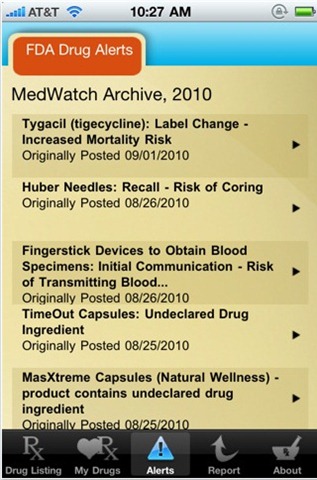
There’s now an iPhone app for real-time drug safety surveillance. MedWatcher tracks the latest drug safety updates based on FDA alerts, media, and other sources. The bi-directional app also allow users to report possible side effects.

google health1

Google unveils an upgraded version of Google Health that includes a cleaner interface and more focus on wellness. I took a five-minute spin, which was enough time for me to conclude that 1) there were lots of new options, nice graphics, and a handy dashboard, and 2) the iPhone app I have been using for tracking calories, exercise, and weight (My Fitness Pal) has more much built-in functionality and requires fewer keystrokes for data entry. Plus, it runs on my iPhone. Overall, Google Health is a more comprehensive tool and would be great for someone wanting to track chronic health conditions, but, I didn’t see enough there to make it worth my time.

Spalding Surgical Center of Beverly Hills installs the web-based MMRPro professional solution, allowing the center to digitize and upload medical records from treating physicians.

Claims clearinghouse vendor InstaMed raises $6 million in a new round of funding that includes both debit and equity capital. Investors have contributed $22 million to date.

Sponsor Updates

  • MEDSEEK secures an 18-month engagement to develop and deploy a new consumer Web site for ProMedica Health (OH).
  • Keane earns a #70 ranking on the InformationWeek 500 list of top technology innovators in the country.
  • CareTech Solutions makes available the recorded Webinars from its eHealth Innovation Series.
  • FormFast will demo its HIM workflow and document management tools at AHIMA in Orlando next week.
  • VHA, Inc. will offer PrimeSuite, Greenway’s EHR/PM solution, to its affiliated physician practices.
  • KronosWorks 2010, the Kronos user conference, will be held November 7-10 in Las Vegas, with former labor secretary Robert Reich as the keynote speaker. The $100 early registration discount ends October 1.
  • I see Wellsoft EDIS is heading to the ENA conference in San Antonio Sept. 23rd, as well as the ACEP Scientific Assembly Sept. 28th.
  • Voalté brings on five employees to support the success of its Voalté One smart phone system. The company has doubled its headcount so far this year.

inga

E-mail Inga.

News 9/15/10

September 14, 2010 News 9 Comments

From Across the Pond: “Re: Alert Online Healthcare, Portugal. Delays all over the place in their first Netherlands implementation of their flagship hospital. It seems they couldn’t deliver the Dutch-specific adjustments in their software on time. Testing was delayed, causing the testing squad of physicians, nurses, and administrative staff to be sent home. Needless to say, the atmosphere is less than sparkling and vibrant right now.” Unverified.

From Nasty Parts: “Re: Sage Healthcare. A new sales approach.” Sage seeks 40 to 50 more solution providers to sell Intergy and Medical Manager, adding to its direct-only channel because it doesn’t have the resources to meet demand.

From Peony: “Re: WellStar. The former cardiology practice of fired CEO Dr. Simone was recently purchased by WellStar for a lot of money. I wonder if this had anything to do with him being fired?” Unverified. I assume that practice is WellStar Cardiovascular Medicine, the 30-doc group he founded. Showing him the door will cost the hospital group $1.8 million, though, since his contract guarantees a paycheck for two years if he’s canned. Ditto for the also-fired general counsel, who will get an $856K parting gift. What the hell are boards thinking when they sign these contracts?

From Cable Cutter, Here: “Re: Verizon. Verizon workers severed a fiber optic cable near Pittsburgh Monday afternoon, affecting businesses and hospitals from Pittsburgh to Steubenville, Ohio and cutting all IT and phone service to thousands. Several call centers were out and emergency calls from hospitals went unanswered.” Unverified. Frontier in Illinois, which took over the old Verizon lines, had the same problem, with hospitals forced to use cell phones for several hours. 

9-14-2010 5-55-58 PM

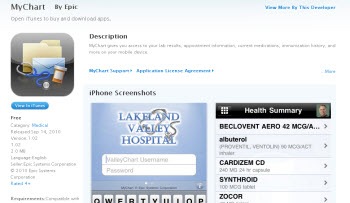
From Situation: “Re: MyChart. Now available on iTunes.” Here’s the link.

Related: Dean Clinic (WI) says it became the first hospital to offer Epic on the iPhone Tuesday. The lady in the pink top really chews the scenery with enthusiastic overacting.

From Cmon Man: “Re: FDA regulation of smart phone apps. Patient safety and innovation are intertwined. Usability and efficacy would be escalated by FDA regulation, contrary to the protests of the industry.” FDA is watching app stores for imaging-related smart phone software, saying that anything that sends images to a medical facility requires FDA approval. They also supposedly called out iStethoscope and Instant Heart Rate as apps that might pique their interest. They say they’ll be issuing guidance.

9-14-2010 7-00-55 PM

Cmon Man also weighs in on HHS’s spending taxpayer money to design a trademarked phrase and logo for Connecting America for Better Health, saying it’s cutesy, presumptuous, and expensive. He also finds it uncanny that “better health” is part of the name, making it reminiscent of the UK’s Connecting for Health flatlining boondoggle, or the “HIT Devolution” as he calls it. I guess I don’t agree about the cost since the pallets of stimulus cash being shoved out of the HHS plane make this a non-issue, although I agree with the assessment that government-run HIT projects that cost billions are almost always colossal failures. And if you’re going to spend all that money, you might as well give the project an identity.

From Pretty Kitty: “Re: CPHIMS. Tupelo Honey was right. I have come to believe the same and it’s apparent that even HIMSS isn’t investing much effort or support in it. Although I knew I had passed walking out of the testing center, it took two months to receive notification from HIMSS and a year to get notification to my company. Other than a hearty congratulations, the certification has meant nothing. I will not be renewing.” I think HIMSS does OK with CPHIMS, but the bottom line is that generalist certifications aren’t worth much to employers. You can be pretty dense and still pass if you’ve been around awhile and do well on multiple choice tests. But, feel free to weigh in on that survey to your right asking about the value of CPHIMS. It’s still more relevant than CHIME’s Certified Healthcare CIO program, which makes no sense at all (other than the “cents” the related revenue stream brings to CHIME and the anemic ego boost it gives CIOs sporting unimpressive educational backgrounds). If you can show me even one hospital CEO who will state in writing that they hired a CIO because the candidate waved a CHCIO paper in his or her face, I’ll say so publicly (and that would be a terrible reflection on that CEO). In fact, what’s next, a certified CEO?

Listening: new from Stone Sour, the Des Moines band with some Slipknot personnel overlap. And as an intermezzo sorbet, speed punk from Lazy Cowgirls.

Paging Dr. Pronovost: a survey-based study finds that about half of healthcare workers think it’s a good idea for patients to remind their caregivers to wash their hands, yet a third of those respondents say they would not personally appreciate such a reminder. A third also said they would refuse to wear a badge inviting patients to question their handwashing.

The New York Times agrees with my assessment of Hewlett-Packard’s board for firing CEO Mark Hurd on shaky grounds, then suing Oracle for snapping him up. Its conclusion: “The HP board can now lay claim, officially, to the title of Most Inept Board in America … The whole world will know Mr. Hurd walked away with $40 million of HP shareholders’ money, and joined a multibillion-dollar competitor with HP in its sights — and there wasn’t a thing HP could do to stop him. Confidence-inspiring, this ain’t.” It points out that California courts don’t buy the validity of non-compete agreements, which is what HP is suing Hurd over. McKesson CEO John Hammergren, formerly viewed as ept, is one of HP’s board members.

CapSite sent me a copy of their 2010 US Remote Radiology Study. The big players are Nighthawk and Virtual Radiologic, but their share is not very large. It’s still mostly a preliminary reads business, but remote radiology is chosen for other interesting reasons (cost savings, mostly, but also turnaround time). CapSite provides reports and services that help healthcare organizations make informed capital expenditure decisions.

9-14-2010 7-15-29 PM

Outpatient imaging center operator RadNet acquires Image Medical Corporation, which owns PACS vendor eRAD of Greenville, SC, for $10.75 million in cash and notes. The publicly traded RadNet, which has $500 million a year in revenue, is forming a software development team for its newly created radiology information technology division. They say they’ll save up to $20 million over ten years by owning their vendor, plus eRAD is bringing in $5 million a year in revenue.

Weird News Andy notes that the last person a surgeon would want to leave a sponge in would be a lawyer. Or a judge, as in this case in Florida, where a surgical sponge and its metal ID tag were repeatedly misidentified over five months as it became infected in the judge’s abdomen, measuring a foot long by a foot wide when doctors finally took it out. Neither the hospital or its owner, Tenet, responded to his questions about how they would prevent the same problem in the future. The judge settled with the hospital, but he’s suing the radiologists and surgeons.

Stuff you can do right here: (a) stick your e-mail address in that Subscribe to Updates box to your right so you’ll be the second to know hot news (after me, of course, since I have to write it); (b) use the Search All HIStalk sites to … well, search all HIStalk sites; (c) Like us on Facebook with that widget to your right or search us out (Tim Histalk and Inga Histalk) and Friend us to support our pathetic illusion of popularity and acceptance; (d) send me a scandalous rumor via the garishly green but soothingly secure Rumor Report box; (e) add your two cents’ worth by leaving a comment or writing a guest article. And indulge me as I profusely thank the companies that sponsor HIStalk, which I think you’ll agree even though you may complain about the number of ads, do perform a service in bravely supporting an anonymous, abrasive, and hard-working blogger who toils by night after sometimes crappy days in the hospital (not usually, fortunately) to bring you news and opinion you wouldn’t hear otherwise (at least until tomorrow when the next rag or blog passes it off as their own creation). Mostly, thank you for reading.

eHealth Ontario signs a $46 million contract with Canada-based CGI Group to develop and manage a diabetes management portal.

9-14-2010 7-46-53 PM

Modern Physician names Amazing Charts CEO Jonathan Bertman, MD as its Physician Entrepreneur of the Year. He says he got into the EMR business because of the money, buying Visual Basic for Dummies in 2001 to create a simple, easy-to-use EMR that costs $995 upfront and $500 a year for maintenance (he says, “I like having a car and a house, but I don’t think you need to extort money from colleagues just because you can.”) I’m not sure I’d want him as either a doctor or a vendor given his admission that “In between patients, I would literally run back to my office to write code”, but I assume he’s got people to do that now since the company is up to 30 employees and 3,500 customers and has won some awards. I like his marketing pitch: “Is Amazing Charts crap? Um. No. But don’t take it from us. Try it yourself. As we’ve repeated ad nauseam, you can try it now without any payment or even giving us your name.” In a sideline business, he’ll also sell you a Male Genitalia Guide for $12, which he notes makes a great stocking stuffer (the guide, not the genitalia). Bet you can’t get that from Allscripts or Epic.

Dubai is having an mHealth Conference and Expo this week. Not to be confused with the mHealth Summit in Washington, DC in late October, or the mHealth Ecosystem in Chicago in December, or the mHealth Summit in Washington, DC in early November. The last one is most notable in my opinion because (a) Bill Gates is speaking; (b) the Foundation for NIH is involved; and (c) I’ll be attending and reporting (anonymously and at my own expense and taking time off from work, just in case my mentioning of it is suspect). It’s got a global health emphasis, of which I’m a fan.

The New York State Department of Health funds $109 million worth of HIT grants for 11 organizations, hoping to build an IT infrastructure to support the patient-centered medical home model of care.

A Mayo bioinformatics researcher gets a $3.1 million NIH grant to develop an EMR that will tie drug response to genomic information.

Odd: a hospital in India buys an MRI machine, but shuts it down a month later when it fires the only doctor who knows how to use it. He was on contract from a private lab and was accused of sending patients there instead of doing the work at the hospital. The hospital can’t get radiologists for the “meagre salary” it offers.

E-mail me.


HERtalk by Inga

kadlec regional

Kadlec Regional Medical Center (WA) will deploy Wolter Kluwer Health’s Medi-Span for its Epic EMR.

Also integrating with Epic: Mediware and its HCLL blood transfusion management software.

HIE vendor Availity extends a multi-year contract with Prematics for e-prescribing services and the Prematics Care Communication messaging service.

3M Health Information Systems says its ICD-10 Code Translation Tool is now fully integrated with its medical vocabulary server, the 3M Healthcare Data Dictionary.

bendfis 

Benefis Health System (MT) outsources its HIT functions to Precyse. Sixty Benefis employees, including those in IT, transcription, coding, and medical records, will be offered jobs with Precyse.

Corepoint Health and IPeople partner to offer a bi-directional interfacing solution for Meditech hospitals.

Boston Medical Center will lay off 119 people, including 44 nurses and 30 managers. The hospital is attempting to reverse its projected loss of $175 million for the year. Dartmouth-Hitchcock (NH) will eliminate 300 jobs to stave off its $50 million deficit, but hopes to avoid layoffs.

I see Praxis EMR  is applying for HITECH certification through the Drummond Group. I can’t help but wonder if CCHIT is second-guessing its decision to wait until September 20th to announce its final certification and testing plans.

gown

HIT purists: move to the next item while I share healthcare fashion news with our more couture-conscious readers. I do wish HIT involved more fashion-related stories, but this is about as close as it gets. Cleveland Clinic premieres a new Diane von Furstenberg-designed hospital gown that features an elastic waistband (which I don’t think is particularly fashionable, though better than the Johnny gown), wrap-around closure, and a wide V-neck. There’s also a “signature” von Furstenberg element: a bold, graphic print that incorporates the clinic’s logo. Some male patients think it’s too girly-looking, but I bet the Voalte guys would wear it.

AHIMA comments on HHS’s proposed rule-making for HIPAA privacy, security, and enforcement. Key concerns/questions: allowing individuals to restrict the release of certain health information to health plans compromises data integrity and could affect reimbursement; it’s unclear how best to cover costs for the release of information within the context of privacy and security regulations; should consumers have the right to decide if their health information should be transferred to a new entity when the ownership of a health organization changes; and, further clarification is need regarding the definition of “agents” as it relates to covered entities and who should be covered.

The Reading Hospital and Medical Center selects TeleHealth Services and its TIGR interactive patient education and entertainment system.

Mr. H isn’t too big on surveys that include lots of percentages that are suppose to indicate certain things, probably because his analytical mind finds too many flaws in their methodologies. However, my simple mind spent years calculating things like my percent over quota or what my commission percentage would be when I closed the next big deal, so I have an affinity for percentages. That’s a long way of saying I liked reading that 62% of CHIME member respondents are optimistic they’ll qualify for Stage 1 HITECH stimulus funds. However, a bit of Mr. H has rubbed off on me because I question what that figure really tells us about anything. CHIME says 152 of its 1,400 members took part in the survey. Heck, if I knew I was nowhere close to qualifying, I would have ignored the survey too — that’s like salespeople not turning in their forecast when they know they won’t make their numbers. Also, CHIME members as a whole tend to be some of healthcare’s top-tier CIOs, so you would expect this bunch to be ahead of the curve compared to the rest of the industry. So my take on these results is that perhaps the survey provides insight into how CHIME members are positioned, but I don’t think you can extrapolate the results.

Sponsor Updates:

  • Hayes Management Consulting announces a new EMR Conversion and Migration Management service.
  • Sunquest Information Systems releases its Diagnostic Intelligence BI solution, which provides lab managers a dashboard view of their financial, clinical, and operational performance.
  • MEDecision makes the list of the 100 Best Places to Work in Healthcare by Modern Healthcare magazine.
  • Cass County Memorial Hospital (IA) begins implementing the e-MDs EHR/PM solutions across its 11-provider practice. e-MDs says an endorsement by Iowa’s HITREC helped seal the deal.
  • RelayHealth expands its portfolio of HIE options with the introduction of its Connected Orders solution. St. Luke’s Health System (MO) is live on the program, which allows physicians with or without EMRs to electronically order tests, meds, patient care, and referrals. 
  • Picis says it implemented its LYNX revenue management solution at 29 US healthcare facilities in the second quarter.
  • Orange Regional Medical Center (NY) hires Orchestrate Healthcare to provide implementation and migration services for its Epic EMR rollout.
  • EMR vendor SRS will offer its customers an integrated PACS solution from Medstrat, which specializes in orthopedic PACS.

Odd: Skyridge Medical Center (CO) briefly closes its ER after a patient knowingly brings in a radioactive rock. A hazardous materials team later it was determined the rock’s radioactivity was relatively low and posed no danger. No word on why the patient was carrying around a radioactive rock.

For some reason, images of dogs and fire hydrants came to mind when I read this story. A gynecologist uses a cauterizing tool to brand the patient’s name on her removed uterus. He says he “felt comfortable putting her name on the uterus” since the patient was a  “good friend.” The patient says she never met the doctor until the first consult and she’s suing. Her lawyer called the branding “inexcusably bizarre behavior.”

inga

E-mail Inga.

Monday Morning Update 9/13/10

September 12, 2010 News 11 Comments

9-12-2010 12-55-55 PM

From Slinky Nighty: “Re: JPS in Fort Worth. They have definitely chosen Epic. They attended the Epic Texas Collaborative meeting this past quarter and are moving forward and looking for assistance.” Thanks for both the info and the name imagery.

From Old IS Person: “Re: Siemens. They’ve started a second help desk for radiology and PACS products, so those of us with multiple products are supposed to use two different systems just to report problems.” Don’t get me started on vendor help desks. Like the one from one of our key vendors who brags on how fast we’ll hear from an analyst, but it takes days to weeks to get anything other than the automated e-mail response that says “I have your case and I’ll get to it when I get to it” (I’m paraphrasing slightly). Not that it really matters since 90% of the time, the answer is, “Oh, we know about that problem and it’s on development’s list,” which paraphrases into, “It’s kind of a pain for us to fix that, so we’ll just add it to an Excel worksheet that nobody ever looks at.” Do some of the issues vendors ignore in this way endanger patients? No question. I bet if they were forced to go public with their open issues list they’d be a lot more responsive.

From Tupelo Honey: “Re: CPHIMS. I got an e-mail from HIMSS asking them to send me a glowing letter about all that having CPHIMS has done for me, which is mostly nothing. I am guessing that not so many people are signing up or renewing.”

9-12-2010 1-12-51 PM

From The PACS Designer: “Re: OpenMRS. TPD has posted about the third world medical record system called OpenMRS and how it was being used in Uganda, where Brigid O’Gorman is presently trying to educate their countrymen. Now they have improved their Web site and expect to release a new version OpenMRS 1.7 soon.” I noticed they’re having their Implementers Group Meeting in Cape Town, South Africa this weekend (group pic above).

From EHR Geek: “Re: HISsies. PLEASE do those again! The ones you posted today are still relevant and hilarious! ROTFL!” Thanks. I’ll try to crank out some cynically funny stuff again since I miss doing that, although someone always complains if I write anything that isn’t just a bullet list of facts addressing only those precise news stories that interest them personally. Meanwhile, you can check out the 2006 HISsies recap or one of my phony news items, of which here are a couple for old times’ sake.

HIMSS Announces 2008 Conference to Be Held in Baghdad
(CHICAGO, IL) HIMSS has announced that its 2008 Annual Conference & Exhibition will be held in Baghdad, Iraq, following a successful 2007 stop in New Orleans. Steve Lieber, CEO of HIMSS says that HIMSS has learned that it can benefit disaster-stricken cities by flying in planeloads of attendees with large expense accounts, a concept first tested by bringing conventioneers to New Orleans shortly after it was virtually destroyed by Hurricane Katrina. "We’ve proven that we can all have a great time at a site mostly known for death, civil disorder, and senseless violence. We’re going to have a blast in Iraq, no pun intended," said Lieber. HIMSS sources indicate that the surprise speakers for the "View from the Top" session may be Saddam Hussein, Donald Rumsfeld, and Neal Patterson.

Hospital Trainer Collapses During Class
(DAYTONA BEACH, FL) Todd Cleaver, a 41-year-old computer trainer at Halifax Hospital, was stricken this morning with an apparent heart attack while leading a computer class for nurses. He is reported in stable condition and is expected to recover. Debbie Dallas, a registered nurse attending Cleaver’s electronic clinical documentation course, said he was working with her one-on-one when he collapsed. “He was starting to tell me how to make a flowsheet entry and I just reached over and did it correctly. Then, he was going into switching between Windows tasks and minimizing windows, and I showed him I could that, too. That’s when he went down.” Cynthia Roda-Tiller, education manager for Halifax, says she believes that Cleaver suffered a strong physiologic reaction upon seeing a nurse use a computer intuitively. “Usually they just stare at the screen like it landed from Mars or they start clicking everything in sight like it was Whack-A-Mole. You’re thinking, ‘they let you use medical equipment?’ I’d like to think I could have handled it myself, but it’s making me shake even now. I’m not sure I even believe she’s really a nurse, at least not one I’d want working my bedpan.”

Somebody must have gotten to the Forbes writer who wrote a generally negative article called Bribing Doctors To Go Electronic. Its implications: North Shore-LIJ and Allscripts are struggling with their $400 million to implement EHRs for 9,000 doctors, it’s taking doctors longer to get their work done, they’re pawns of the government, EHRs are a tough sell culturally, and community docs don’t like hospital-hosted EMRs because they don’t trust hospitals. Careful readers may have noted that he talked to a grand total of two docs (both recently implemented) in writing the lengthy piece. Now he’s backing off in a mea culpa that says he wasn’t trying to write a definitive article on the value of EMRs and that those complaining early adopters recognize their value because they volunteered. I guess the two pieces cancel each other out, other than the time it took to read both.

9-10-2010 8-43-34 PM

As New York, Nashville, and Cleveland race to book tenants for their medical trade center buildings, the Nashville group says it’s not worried despite not signing anyone except HIMSS for its 1.5 million square feet of space scheduled to open in 2013. Reason: it says HIMSS will bring 85 to 125 companies to lease space in their building, with a handful taking up to 15,000 square feet.

Hey, it’s only $20 million, which is a HITECH rounding error, but ONC throws more money at RECs, this time as a little extra to help critical access and rural hospitals.

Stanford’s Lucile Packard Children’s Hospital appeals the $250K fine levied by the state’s health department when the hospital waited 11 days before reporting a stolen PHI-containing laptop. They fired the employee who took it home against policy.

9-10-2010 7-41-20 PM

Ivo Nelson, chair of Encore Health Resources, joins the board of Health Care DataWorks. That’s the Ohio State spinoff whose CEO is former OSUMC CIO Herb Smaltz.

The Bethesda Hospitals’ Emergency Preparedness Partnership (Hopkins Suburban Hospital, National Naval Medical Center, and NIH) chooses Versus Advantages RTLS for patient tracking in emergency care areas during mass casualties. The Versus product met its requirement for 95% accuracy down to the room level and also links patient information to location for emergency responders.

9-10-2010 8-48-16 PM

Not many folks think that the average EMR will give providers enough information to manage population-based risk. New poll to your right: if you were filling a position, what impact would a candidate’s CPHIMS credential have on your decision? Tupelo Honey wants to know.

Ken Rardin, former CEO of Merge Healthcare, IMNET Systems, and a couple of non-healthcare companies is named CEO of telemedicine provider REACH Call of Augusta, GA.

This could make a an interesting novel: the former CFO of Danbury Hospital pleads not guilty to scamming the hospital by approving phony invoices for contract management software from a software company he ran from his house. He adds witness tampering and harassment to his list of charges after e-mailing the hospital president begging him to make the charges go away despite a hospital-requested court order to keep him away for fear he would go postal. He closed his plea with, “I got no place else to go (quote from An Officer and a Gentleman)” The judge nearly put him back in jail for that, but the man’s attorney made a convincing argument: “He would have to be a total idiot to do this again.” Ever the CFO, he showed up in court with a sports coat over his jail coveralls.

9-12-2010 1-04-02 PM

One of two winners of IBM’s SmartCamps start-up competition: CareCloud, a Miami company offering physician practices a $499 per-doc-per-month practice management system with social networking thrown in and revenue cycle services optional. I’ve mentioned the company a few times previously when they won an award and were pitching at the Health IT Venture Fair at HIMSS. Points off for their latest blog entry extolling the virtues of Twitter, which they summarize in a grammatically incorrect manner as, “… us enlightened folk know that the conversations on Twitter are insightful and illuminating.” They must be living in an alternate Twitterverse than the one I’ve seen, which combines the worst aspects of text messaging and Facebook but at least allows only 140 characters of time-wasting, stream-of-consciousness preening (if they would ration the number of tweets like they do the number of characters, they’d be on to something). Do we really need to hang on the every un-profound word of vapid celebrities, self-appointed pundits, and a guy having a heart attack?

Here’s another example that healthcare is different when you have money: a new startup called ExpertConsensus will take your tough medical problem to a group of big-name doctors who will teleconference and make their collective recommendations. The company’s minimum charge: $20,000. I hated that concept until I thought about it: they’re offering convenience for those willing and able to pay, but patients on a non-$20K shoestring could find these docs on their own and pay just a consultation fee to get the same opinions (or pay Cleveland Clinic a few hundred dollars for an electronic second opinion, which I can’t believe isn’t more popular than it seems to be). ExpertConsensus offers other services seemingly unrelated except for their common denominator of buck-making opportunity: research reports, care management, on-site clinic setup, physician referrals, wellness, and personal health records.

Louisiana doctors will have to pay back $17 million in Medicaid overpayments because the state’s Department of Health and Hospitals just now got their computers programmed to handle budget cuts that went into effect 13 months ago. Said one doc who says the cut will put him out of businesses, “We’ll gut it out and when it’s obvious that we aren’t making ends meet, we’ll all retire.” I need to give docs some PR advice for those situations where they’re complaining about making less money: don’t say “retire,” but instead say “find another line of work.” People hearing “retire” assume that means you’ve milked your medical practice to the point of not needing to work any more, which doesn’t exactly bolster the “we’re poor” argument.

9-12-2010 10-02-28 AM

Interesting: doctors at McGill University in Montreal administer anesthesia electronically for a surgery being done in Italy, a pilot project for “teleanesthesia”. They managed the patient using video cameras and remote dosing computers that make up what they call “an anesthesia cockpit.”

9-12-2010 10-18-39 AM

I’ve written before about the UK’s hospital radio stations, charities run by volunteers and featuring patients and family requests. London’s Radio Marsden, which runs 24 hours a day for patients in two cancer hospitals, will move its service to the Internet this month to allow patients, friends, and families to listen together. I’m listening to Bowie’s China Girl on it right now, followed by the Talking Heads doing Burning Down the House and an announcers’s suggestion that patients ask for hospital pens and paper to write letters home. Hot on their playlist based on patient requests and favorites: Lady GaGa, 30 Seconds to Mars, Alicia Keys, Kinks, Billy Ocean, The Clash, and The Saturdays, among others. It’s kind of addictive.

9-12-2010 12-40-48 PM

Former Sun CEO Jonathan Schwartz, who replaced Scott McNealy for a short time before selling the company to Oracle, gets involved with a healthcare-related startup, Picture of Health. He’s not saying what the company will do. 

A hospital ED patient is arrested for assaulting another patient and then pulling a knife on an ED nurse. The man’s occupation: minister.

E-mail me.


A Mr. H Book Review
Safe Patients, Smart Hospitals
By Peter Pronovost, MD, PhD and Eric Vohr

9-10-2010 8-55-22 PM

A reader asked me to review this book, so I bought a copy. I interviewed Peter a couple of years ago, before he won the Genius Grant. It’s still one of my favorite interviews, with this as my favorite quote from it:

That’s the tension that we have. How much evidence do I need to give up my autonomy? We’re still uncertain about that. As an industry, healthcare is grossly understandarized. Compare that to pilots who have to use checklists or they won’t be flying. Healthcare is still very much like the Wild West or like Chuck Yeager in The Right Stuff, where we have this cowboy mentality and we’re just beginning to accept that standardization is a key principal to making care safe.

That frames up the book nicely.

My first thought when seeing the book (published just this year) was, “Hey, I get it, providers need to make lists … why do I need to buy the book since I already know the ending?” There’s a lot more to it than just making lists, however. The book is really about translational medicine, rigorous measurement of healthcare quality, and the patient harm caused by the toxic culture of hospitals and physicians. Here are the takeaway points.

  • Doctors and hospitals harm patients because of poor communication, not following rules that are indisputably beneficial to patients, and not using proven research in their treatments.
  • Culture dictates that doctors and hospitals pretend that they don’t mistakes and to avoid admitting them when they do.
  • There is no wisdom of crowds in hospitals. Doctors are trained to be sole decision-makers and to lash out if anyone questions their decisions. Not to mention that Peter’s background is in academic medical centers, where the problem is tiny compared to community hospitals with their non-employed doctors who are always complaining to administration and trying to get employees fired for looking after the best interests of patients.
  • In terms of communications, even on his own rounding team, only 5% of residents and nurses could articulate the care goals for a patient who had just been the topic of a 15-minute team discussion. You wonder what they would have concluded without the team discussion and armed only with a paper or electronic medical record, given that academic medical centers are a small percentage of hospitals and others don’t do that kind of rounding at all.
  • Overworked doctors will break rules for a single patient if they think the greater good is served. Every doctor knows to wash their hands before and after seeing each patient, but only 30% actually do it because they’re busy or supplies aren’t available.
  • Communication in the OR is especially bad, where the nurses know everybody’s name but the surgeons see just a sea of scrubs and have no interest in names and roles. The pecking order is inviolable.
  • Some tasks or procedures can be summarized into a checklist of no more than 5-7 evidence-based items, no different than a pre-flight checklist. The list can be developed locally to encourage ownership.
  • Even though Peter’s work has saved thousands of lives and hundreds of millions of dollars, most of that came from just one checklist (central line placement) out of thousands upon thousands of medical procedures and tasks. That’s either a wide-open field or a depressing commentary on modern medicine, depending on your perspective.
  • Non-clinicians, like administrators and probably IT executives, aren’t usually comfortable getting out on the floors but can play a big role on offering a fresh perspective for problem-solving and in understanding how projects are financed, staffed, and run.
  • Doctors practice as they were originally taught in school using the “see one, do one, teach one” model that tells them to ignore everybody else’s opinion and go with their own. Good teamwork means a nurse doing what the doctor says. Doctors are not taught to communicate or to manage stress. They do not have time to keep up with the literature. There is no standardization, even within one organization. Residents make mistakes because they don’t want to look stupid by asking questions.
  • Checklists worked in aviation because the industry admitted that pilots make mistakes and took the attitude that every crash is preventable. That hasn’t happened in medicine, where hospitals and doctors refuse to admit that they are not infallible. Even Hopkins (arguably the best hospital in the country) defended its catheter infection rates (among the worst in the country), using the “our patients are sicker” argument. After using Peter’s methods, their infection rate dropped from 19% to near zero, saving an estimated eight lives and $2 million.
  • Quality requires central analysis of data. You don’t know what’s working without data. No other industry would tolerate healthcare’s sloppy data practices.
  • Making the list is easy. The hardest and most important parts, which hospitals always want to skip, are evaluating the culture, making sure every patient is treated using the list, and measuring the results.
  • State-wide projects don’t always work. They took shortcuts, made data reporting voluntary, and let turf wars (infection control docs vs. intensivists) compromise the plan. But in Michigan, their infection rate dropped from 2.7% to zero when they swallowed their pride and followed the plan.
  • Medical research gets all the funding, while patient safety research hasn’t. Part of healthcare reform is creation of the Office for Patient Safety Research.
  • The only profit to be made in patient safety is for insurance companies.

I extrapolated his thoughts into IT:

  • Peter said in my interview that errors will go up when CPOE is introduced because it’s a change, nothing is standardized, and CPOE is set up to look like the paper it’s replacing.
  • Decision support is the real value of CPOE, but it’s not usually added until afterward.
  • Every hospital has to develop its own clinical decision support rules, which is like each airport having to build its own air traffic control system.
  • IT systems can support enforcing the lists and reminding providers about them.
  • Use shared decision support rules to begin standardization and using best practices.
  • Look at data collection, reporting, and transparency. Peter found that virtually no hospitals have the right information in their databases to be able to know their infection rates.
  • Use these methods for IT project rollouts and maintenance to reduce mistakes and to remove vendor and IT pressure to do something harmful.
  • Find ways to get research into practice. Why is research a science, but the practice of medicine is an art?
  • For vendors, build support for lists and reminders into applications, where they can be cued by workflow.

It’s a bit disconcerting to see just how inconsistent healthcare delivery is. It’s based on science, but often is a long way from being delivered in a scientific way. The major point of the book is that nobody’s head is big enough to hold all the information about medicine and research findings, so practitioners often are endangering patients by what they don’t know or don’t practice.

Few would doubt that the book outlines incredible opportunity for improvement in every kind of patient care setting. We’re talking saved lives, not just saved dollars. The good news is that’s exactly what computers are good at. Giving providers access to lists, providing immediately usable reference material (how-to videos, audio instructions, etc.), linking to the evidence, and offering collaboration platforms could all be key elements in implementing the quality measures called for in the book.

This is an excellent book, although it will make providers question their core beliefs about the healthcare system they work in. It’s pretty screwed up, as we know, and getting worse. The goal isn’t perfection, it’s improvement, and that won’t be easy (if it were, everybody would already be doing it). Are there enough providers who can look beyond the knee-jerk reaction of just making a Pronovost list and claiming mission accomplished to actually improve healthcare quality? Maybe or maybe not, but if enough at least try to tackle their problems in a rigorous way, they’ll probably avoid killing a few patients.

News 9/10/10

September 9, 2010 News 23 Comments

9-9-2010 8-01-12 PM

From A. Nonnie Mouse: “Re: Kadlec Regional Medical Center (WA). Turfing McKesson inpatient and GE Centricity and moving to – surprise! – Epic. The number of Epic customers in Washington and Oregon make Epic CareEveryWhere something of a de facto HIE.” Unverified, but the hospital is running Epic recruitment ads, so your information may well be correct.

From FortWorthFan: “Re: JPS Health in Fort Worth, TX. I noticed they are hiring Epic Revenue Cycle analysts, but I don’t recall ever reading that they selected Epic as their replacement clinical system.” I’ll guess they’re going Epic since this position listing seeks Epic clinical analysts. From this job opening, it appears they are seeking a CIO as well.

From Tina LaBoeuf: “Re: HISsies. I miss your hilarious write-ups of the awards announcements that went away when you started the awards party :(” Tina’s comment sent me to the search function to find and relive those moments. I did find them amusing, especially since I mixed in actual winner quotes with my phony recap. You can read it here if you enjoy these snips from 2007, featuring as host my alter-ego, former HIT sales jock Billy “Biff” Jutjaw:

Imagination at Work? Must be talking about their Carecast guys porn-surfing at their desks! Zow! Rimshot! BA-DUM-PAH. GE guys … hey Jeff … we need one of your lightbulbs over here … yeah, a replacement for that faulty one that went off over your head when you bought IDX! Owwww! But I kid. What a great evening! What a constellation of industry stars! What a rack on that broad at Table 3! … Say, Chuck, let’s see who’s here. Hey, are we in the Ying or the Yang side of the house? Judy must have been having a Woodstock flashback when she laid this place out. Where did she get compost-powered PCs, anyway? That Kool-Aid they drink here must have been from Ken Kesey’s original recipe! … Yeah, it’s like a CHIME meeting – you can’t swing a golf club without hitting two CIOs and four sales VPs clinging to their underbellies like remoras on a shark. … Come on up here, Howard Messing. Nice suit! Must be nice to keep getting awards for doing nothing! But I kid, old friend. MEDITECH was an established company when some CEOs were still backdating options in Monopoly! Booyah! Boston community swimming pools always hate it when MEDITECH starts hiring because they take all their lifeguards! Kapow! You know the first thing a MEDITECH employee says after getting home from work? "Mom, is dinner ready?" BAD-DUM-PAH. I’m like butter, baby, I’m on a roll!

Listening: new from singer-songwriter Sara Bareilles, thoughtful pop-tinged heartbreak music if you’re in the mood for that sort of thing. Watching on Netflix streaming: Studio 60 on the Sunset Strip, a stupendous 2006 dramedy series about a Saturday Night Live-type program (think 30 Rock played mostly straight with an amazing cast).

9-9-2010 9-53-06 PM

An expert tells South Shore Hospital (MA) that 800,000 patient records that were on lost backup tapes of their Meditech system can’t be easily accessed, so they decide against sending out breach notices to individual patients. They’re just going to run newspaper ads, which given the state of American intellect and newspaper circulation these days, means about a hundred people will see them, especially if they ads don’t appear in the sports or entertainment sections. This is the incident where the hospital paid Iron Mountain to destroy the tapes, only to find out afterward that the company subbed the work out to another company and lost the tapes in shipping.

In England, the dismantling of NPfIT appears to be underway, as the government cuts its total cost by $2 billion to $17.5 billion and decentralizing the project. Said the co-director of the Royal College of Physicians Health Informatics Unit, “One of the dirty secrets of the NHS is the regrettable state of medical record keeping. Earlier reports have shown that this compromises patient safety and clinical care. If IT in the health service is going to regain the confidence of the medical profession, then more emphasis has to be placed by the Department of Health on making sure that the new systems accurately capture the dialogue between doctor and patient. Everything else flows from getting that right.”

Speaking of NPfIT, an NHS Foundation Trust invites bids for a new patient care and e-prescribing system, opting out of NPfIT’s iSoft Lorenzo option because of concerns it’s not ready for prime time.

The latest ISMP Medication Safety Alert (from Institute for Safe Medication Practices) has a fascinating article about why the CMS rule requiring hospitals to administer drugs within 30 minutes of their scheduled times endangers patients. ISMP only posts excerpts online, but it was truly revealing as real-life nurses (thousands of them, in fact) describe why it’s unreasonable to meet that goal. The IT-related gist: we’ve put in eMAR and bar-coding systems and written cool “overdue” functions for clinical documentation systems, but hospitals have done nothing to address the challenges of nurses trying to meet a staggering variety of patient needs without turning into medication-pushing robots. This is one of those areas where non-clinical IT people would struggle with the idea that it’s not just calculating a “med overdue” time and dinging the nurse on a report. Everybody in involved in any capacity with clinical systems should read the full text of this article – it is a tremendous eye-opener for folks who’ve never trodden the uncarpeted areas of the hospital where the real work gets done.

9-9-2010 9-54-33 PM

Athenahealth CEO Jonathan Bush tends to be a “love him or hate him” kind of guy, but he’s still eminently quotable either way. He was definitely wound up for The New York Times. On why the company was in the birthing center business in the early days: “You know, Bush family noblesse oblige. I wanted to take advantage of all this education and support I’ve had and do well by doing good, and health care seemed like a place that no one else in my family had been much. A new approach to health care seemed to me to be the oil fields of 1997.” On the company’s competitors: “We are the only cloud-based service in an industry segment full of sclerotic, enormous, personality-free corporations that have been in business making 90 percent margins doing nothing for decades and decades.” On the cost of healthcare reform: “Oh, it’s going to go through the roof! It’s widely accepted that this is not a cost-reform bill — it’s an access bill … Eventually, consumers will need to eat a big part of their health care cost, because health care will fundamentally consume the entire G.D.P. in the not-too-distant future.”

It’s interesting that WellStar Health (GA) apparently fired its CEO after it was fined for excessive Medicaid billing, but it named the CFO as the interim president. Wouldn’t the CFO be the person most accountable for billing mistakes? Mostly unnoticed: they fired their general counsel as well. And from an IT standpoint, the CEO blamed their billing system (McKesson Star, I think). Does it get the axe, too?

9-9-2010 9-57-51 PM

We like Encore Health Resources a lot since they threw one heck of an HIStalk bash in Atlanta this year (as many of you told Inga and me afterward and we saw first-hand ourselves – that’s Ross Martin in the pic). Dana and Ivo are fun at work too, apparently — the company is named as one of Modern Healthcare’s Best Places to work in Healthcare 2010. That’s pretty cool for a new, small consulting firm.

Jobs on the sponsor job page: Project Manager – Healthcare Implementation, Eclipsys Activation Consultants, Technology Account Executive. On Healthcare IT Jobs: Metadata Administrator, McKesson Horizon Consultants, IT Applications – VP. That reminds me to mention that I made a Google Gadget that you’ll see to your right that has tabs for the Events Calendar, Healthcare IT Jobs, news headlines, and posts from HIStalk Mobile. I did that for two reasons: first because the WordPress events widget wasn’t displaying the calendar entries correctly, and second because I was looking for an excuse to build something.

I always like to highlight badly written press releases, so it’s imperative that I recognize this gem from a home monitoring technology company, which leads off with: “Cytta Corp’s CEO Stephen Spalding is pleased to announce that, after a series of well received presentations and demonstrations, Cytta has been invited to provide its first major proposal to a major healthcare payor/provider to develop an individualized monitoring system.” It’s a penny stock, but the price would need to go up fivefold to actually reach a penny, closing today at $0.0018 for a market cap of $1.83 million, doubling in price since April.

The North Carolina sheriff’s association proposes that the state give its members access to its doctor shopper database of known drug seekers, saying they “can better go after those who are abusing the system.” Privacy advocates are less enthused by the idea.

9-9-2010 9-04-07 PM  

iMedicor launches its National Healthcare Communications Network, which offers practices secure messaging, peer collaboration, referrals, and CME. The company changed its name from Vemics last year, which seems like a good idea since that sounds like worm medicine. According to the site, it costs $24.95 per provider per month. It looks pretty cool to me. I can think of several business models that would work if they get enough subscribers.

Jim Bradley, former CEO of RXHub and Abaton.com, is named chairman of the board of e-health connectivity vendor VisionShare.

Let’s hope they aren’t big cloud computing or ASP users. Local hospitals (along with everybody else in four Tennessee counties) lose their Internet, cable TV, and telephone access for two days when some goober takes a shot at a bird sitting on the only cable line connecting that area to the rest of the world.

E-mail me.

HERtalk by Inga

Streamline Health Solutions releases its Q2 numbers: revenue of $4.7 million (15% better than last year) and a net loss of $76,000 (versus an $18,000 loss last year). The company attributes the higher loss to increased investments in marketing and hosting operations and the reinstatement of bonuses. Streamline also announced the promotion of Gary Winzenread from SVP of product development to COO.

c. martin harris deborah taylor tate

CIO C. Martin Harris, MD of the Cleveland Clinic and former FTC commissioner Deborah Taylor Tate join HealthStream’s board of directors.

Hard to believe, but registration for HIMSS11 is now open. If you are a HIMSS member and pay before December 7th, registration is only $695. Mr. H and I are already strategizing about all the fun HIStalk-related things we’ll be doing. If you have ideas, let us know.

hhs spanish

HHS unveils CuidadodeSalud.gov, a Spanish-language website to provide consumers with public and private health coverage options.

Mediware doubles its fiscal year profits to $3.24 million. Revenue for the year grew 17% to $47.6 million.

KLAS adds five new members to its advisory board, including HIStalk’s own Edward Marx, CIO at Texas Health Resources. Other new members include Alastair MacGregor, MD from Methodist Le Bonheur Healthcare, Kara Marx of Methodist Hospital of Southern California, Dan Morgan from Bay Medical Center, and HCA’s Noel Williams.

Forbes magazine profiles North Shore-Long Island Jewish Health System and its $400 million effort to help 9,000 employed and affiliated physicians move to Allscripts EHR. Though North Shore is taking advantage of relaxed Stark laws to subsidize up to 85% of system costs, so far only 175 of the system’s 7,500 community physicians have signed up. The health system’s chief executive admits there’s been resistance around “cultural stuff,” including concerns about North Shore’s hosting of the EMR data and discomfort with having to make work flow changes.

wayne state physician

Wayne State University Physician Group (MI) chooses Orion Health Rhapsody Integration Engine to help create patient data exchange between their offices and other providers and facilities.

McLeod Health (SC) contracts with Merge Healthcare to integrate Merge’s cardiology workflow solutions with McLeod’s existing radiology product.

picis perioperative staff

Perioperative employees at Southwestern Vermont Medical Center explain to the local press how their Picis system works, noting it “soothes some of that anxiety” felt by family members while loved ones are in the operating room.

Stamford Health System (NY) says its MedAssets Charge Capture Audit tool helped recapture $1.9 million in lost charges last year. It will also use group purchasing contracts, consulting services, and BI tools from MedAssets.

St. John’s Hospital (IL) selects Amelior Tracker from Patient Care Technology Systems for automated medical equipment tracking.

HHS awards a $980,000 grant to the University of Kansas Medical Center, University of Missouri, and University of Oklahoma to create the Heartland Telehealth Resource Center. The center will help physicians treat rural patients using telehealth technology. Almost 90% of the counties in those three states are considered rural with limited access to healthcare.

Sponsor Update:

  • The Massachusetts eHealth Institute (MeHI) REC releases a list of certified EHR vendors and Implementation and Optimization Organizations. EHR vendors include Allscripts, eClinicalWorks, eMDs, Greenway, MedPlus, NextGen, and Sage. Implementation organizations include Culbert Healthcare Solutions, eClinicalWorks, eMDs, and MedPlus.
  • San Juan Regional Medical Center (NM) will use the Universal Document Portal from Access to share information between its MetaVision ICU system and Meditech CIS. San Juan also uses the Access Portal to interface perinatal documents from its GE Centricity system into Meditech’s scanning and archiving product.
  • Bridgehead Software and Dell introduce an enterprise medical archiving solution that combines Dell hardware with Bridgehead’s healthcare data management software.
  • Nuance Communications introduces Dragon Medical Enterprise Network Edition for  large practices and hospitals. The new release includes a centralized management console and enhanced support for Citrix-based EHRs.

Medical office employees in Colorado smell a strong odor and discover the source is a dead animal stuffed into a filing cabinet. The clinic owner believes the incident was the result of a break-in, likely by a former employee. He does not indicate whether or not he suspects the prank was some sort of statement about the clinic’s need to move to an electronic filing system.

inga

E-mail Inga.


News 9/8/10

September 7, 2010 News 13 Comments

9-7-2010 9-20-30 PM

From HIT and Hockey Fan: “Re: Bobby Orr will enjoy this. Use meaningful useful EHRs (Epic in the office) to win a night at the UPMC Health Plan’s luxury box at the new Pittsburgh Penguins Arena. If successful in enticing the doctors to provide care as defined in the letter, UPMC Health Plan and UPMC will be paid a bonus from your tax dollars by CMS, which will more than cover the cost of the luxury box for the entire season.” I think I’ve mentioned before that I was UPMC’s box suite guest once at a Steelers opener at Heinz Field, which was somewhat wasted on me since I don’t get the point of watching someone else play sports (especially millionaires), but the atmosphere was interesting. There was lots of food, drinks, and nattily attired male UPMC executives talking shop and watching the game on the TV monitor while their carefully coiffed wives chatted harmlessly in the living room area. Just outside our hermetically sealed and climate controlled luxury digs were people (their patients, most likely) cheering, waving Terrible Towels, and actually paying attention to what was happening on the field. It was pretty enjoyable once I got over the irony of a non-profit hospital system spending money to support a billionaire’s sports team. 

From Ricardo: “Re: Napochi. I’m curious about your impressions. Someone sent me a link and they are new to me.” Never heard of them. They sell PM/EMR, but they don’t call them that exactly. The company has offices in Alabama and China (there’s an odd pairing). Their Web site isn’t ready for prime time if the number of placeholder pages is any indication. They claim 300 hospital and practice customers, but I bet most of them are in China (just guessing).

9-7-2010 6-43-27 PM

It defeats the purpose of a survey asking about compassion and spiritual beliefs when an atheist blog urges its readers to barge in and vote predictably, so take the above results with a truckload of salt. Before the ballot box stuffing commenced and real HIStalk readers were voting, it was running about 50-50. New poll to your right: is the typical practice-based EMR capable of collecting and presenting the information needed for practices to assume and manage population-based risk?

University of Mississippi Medical Center chooses Epic for a $36 million project. They expect Uncle Sam to pay $20 million of that in HITECH money.

A University of Rochester Medical Center doctor loses a flash drive containing the PHI of several hundred patients. In typical horse-left-barn fashion, the medical center vows to start using encryption. Maybe losing a drive is the best thing that ever happened when it comes to information security — embarrassing publicity apparently launches more encryption projects than any kind of thoughtful planning and it only takes one episode per hospital.

9-7-2010 7-17-38 PM

Healthcare Innovative Solutions (HIS) is supporting HIStalk as a Platinum Sponsor, I’m happy to announce. The Seville, OH company provides clinical systems implementation, process optimization, CPOE and EHR consulting, medication safety, order set, and clinical decision support services. They also do HIPAA security, strategic planning, selections, and HIE work. Here’s a white paper (warning: PDF) describing their CPOE work at Mercy Health Partners (OH). I ran across this profile and video about founder Daniela Mahoney, RN whose story is quite interesting and worth watching. Inga and I thank Healthcare Innovative Solutions for supporting HIStalk.

AMIA is offering prospective corporate members free attendance at its Industry Day, held during its annual conference in Washington, DC on November 15. They have a few spots left.

Misys shareholders won’t get their $1.2 billion in Allscripts stock proceeds immediately, as the IRS evaluates whether Misys is on the hook to pay $170 million for what may be interpreted as a material reorganization of its corporate structure.

Scotland-based charge master vendor Craneware, flush with cash after a good year, is on the hunt for acquisitions valued at up to $30 million. Nearly all of its business is in the US and the company is looking for a bigger piece of the healthcare reform pie.

9-7-2010 7-48-55 PM

mdHub launches the mobile version of The Little Blue Book, the physician directory formerly distributed on paper by WebMD. It also includes pharmacies, hospitals, and health plans. I don’t exactly understand the pricing model, which is based on regions, but I’m sure you can figure it out if you’re interested.

 9-7-2010 7-56-57 PM

Everybody’s getting into the physician recommendation business, apparently. A reader says Angie’s List (of which she’s not a member) has sent several solicitations about doctor ratings, some of which seemed curiously timed to her Google search activity. I can’t imagine paying for reviews, but apparently some do (and some complain about the result, Google tells me).

In Canada, Northeastern Ontario Network (NEON) adds six new hospitals to its Meditech hosting service, bringing the total to 19.

WellStar Health System (GA) fires its CEO following settled charges of Medicaid overbilling, which he had blamed on its billing systems.

New CMS head Don Berwick plans to start using his agency’s $10 billion innovation money to fund 100 to 300 sites testing new models of patient care, which I assume means accountable care organizations.

Google is looking for volunteers to translate chosen healthcare articles into Hindi, Arabic, and Swahili on local language versions of Wikipedia.

9-7-2010 8-28-52 PM

Big German healthcare software vendor CompuGROUP will purchase Visionary Healthcare Group, which includes Visionary Medical Systems, a Tampa, FL PM/EMR vendor. The company’s first US investment was majority ownership of Noteworthy Medical Systems 18 months ago. I think it’s safe to assume that more acquisitions will follow.

HP’s board fired CEO Mark Hurd even after finding that he violated no company policies, triggering a severance payout worth up to $40 million. Oracle hired him on Labor Day as co-president. Now HP is suing him, claiming he violated his confidentiality agreement by going to work for a competitor. HP doesn’t like Oracle now that it sells its own servers, courtesy of its acquisition of Sun last year.

A British study finds that pharmacists could reduce nursing home medication errors by over 90% if put in charge of the process. The study found that 70% of patients had at least one medication error on any given day.

New Zealand will pilot e-prescribing next year.

Thinix releases a touch-friendly, iPad-like user interface for Windows-based virtual desktops, providing as a press release example a nurse working both remotely and on the desktop.

The former president and CEO of Perceptive Software, acquired by Lexmark in May, explains why the $280 million, all-cash deal makes sense using a healthcare example. That’s not surprising since Perceptive always had a fairly strong healthcare presence with its ImageNow scanning and barcoding products. 

England-based Avia Health Informatics PLC announces executive changes to support its plan to enter the US market with its odd lot of products sold under the Plain Healthcare and Odyssey brands: ship telemedicine, patient symptom self-assessment, paramedic fall evaluation,  prison healthcare, and nurse triage.

Exciting, to me anyway: the sequel to Wall Street hits theaters September 24. No Bud Fox, but GG’s back 23 years after the original.

E-mail me.

HERtalk by Inga

mount kisco

Mount Kisco Medical Group executes an agreement to deploy NextGen’s EHR, PM, and Patient Portal for its 230-physician practice. Looks like they are replacing Misys Vision and EMR.

Nassau University Medical Center (NY) adds Streamline Health’s Enterprise Health Information Management suite to integrate with its existing Eclipsys Sunrise Clinical Manager. Nassau already utilizes Streamline’s accessANYware product.

ASC software vendor AmkaiSolutions completes a $3 million round of Class E equity financing. The company plans to pursue “a broader sales and marketing program.”

ctmc

Central Texas Medical Center (CTMC) goes live on CPOE. CTMC is part of Adventist Health System, so I assume it’s a Cerner install.

Data point: more than half of the 354 million doctor visits each year for acute medical care are not with a patient’s primary physician and more than a quarter are in hospital ERs.

Emdeon announces plans to acquire Chamberlin Edmonds, a provider of government program eligibility and enrollment services. The $260 million purchase expands Emdeon’s offerings for hospitals.

scribe

Medical scribe is one of the hot, up-and-coming healthcare jobs that has become especially popular with young medical and nursing students. The pay isn’t exceptional — $8 to $10/hour — but the job gives scribes the opportunity for up-close exposure to physicians providing patient care, particularly in the ER. Several enterprising companies are establishing offices close to major universities in order to attract ambitious pre-med and nursing students. The scribes receive basic training on medical terminology and coding before hitting the front lines.

University of Utah Medical Group selects Practical Data Solutions to migrate its data warehouse and analytical reporting to Epic. The academic health system goes live on Epic November 1st.

Carestream Health acquires Quantum Medical Imaging, an x-ray imaging provider with a strong base of community hospitals and smaller clinics.

Catholic Health Initiatives (CO) hires Sheryl Rose for the newly created position of Chief Information Security Officer.

A George Washington University ER physician initiates a study to see how accurately ER docs and PAs diagnose wounds from patient-generated cell phone images. Five months into the study, the data indicates a 90% accuracy rate. And, accuracy increases with better quality images.

Sponsor Updates

  • Carolinas HealthCare System selects Medicity to help build a multi-state HIE that encompasses the health system’s 32 facilities, plus community physicians and other caregivers.

mayo regional

  • Mayo Regional Hospital (ME) chooses Sage Intergy EHR of its eight physician practices.
  • Across the pond, King’s College Hospital goes live with iMDsoft’s MetaVision in its critical care unit.

inga

E-mail Inga.

News 9/3/10

September 2, 2010 News 19 Comments


From Bobby Orr: “Re: the new Allscripts. They rang the Nasdaq bell. Hopefully it’s not too late to have a real challenger to the mighty Epic.” Glen has rung that bell a few times, I found by Googling. Since I couldn’t find a picture from this week and their Web site seems to be down, the one above is from one of the several previous “new Allscripts”, this one from 2008. I’d like to think it’s not too late to compete with Epic either, but I think it is, at least if the goal is to match up head to head. The Eclipsys clinical apps are better in some ways, but prospects are eating up Epic’s “one record” pitch and looking that the avalanche of new Epic business compared to long, slow decline of the Eclipsys Sunrise customer base. On the other hand, those Eclipsys apps have never been in better management hands than they are today now that the acquisition is finished, so maybe Glen can turn it around. When I asked him about that, he was pretty confident that Epic is vulnerable, but then again, former Eclipsys SVP (now Allscripts president) John Gomez said the same thing right before a stunning string of Eclipsys showcase accounts announced plans to displace Sunrise with Epic.

Speaking of Allscripts, here’s an insightful comment from quadwatch on the Yahoo stock board: “We are seeing what drove this merger — Eclipsys’ inability to compete with a weak ambulatory product and Allscripts’ lack of a hospital system. Given MU requirements for hospitals (in particular, CPOE adoption) the reality is you have only three products with proven adoption rates that don’t make a new purchase a crap shoot for the CIO: Epic, Cerner, and Eclipsys. It becomes a Epic-Cerner race if the facility has employed MDs or is looking to establish a community model. This one of the most logical mergers that I have seen in this segment.”

9-2-2010 9-12-48 PM

And while I’m quoting from stock boards, here’s another excellent one from my favorite industry analyst, sonomaca, on Glen’s bell-ringing: “Not surprised he decided to go and ring the bell. This is his triumphant return to control of MDRX. He’s proven himself to be a master of the game, starting with the secondary offering back in 2000 which ultimately saved the company. You’ve got to marvel at how he took a near-bankrupt MDRX in 2002/2003 to the top of the heap in 2010. Amazing. My guess is that, in the end, ECLP will be integrated without too much trouble. In the next couple of years, US market share will be pretty well divvied up between Epic, Cerner, Allscripts, and some of the lumbering giants like McKesson. No doubt, GT is already thinking ahead. And, what’s ahead are myriad tuck-in acquisitions and, most importantly, overseas.” Above is the ten-year share price, peaking at something like $80 in 2000 and bottoming out at less than $2 just three years later, now back to $17. Glen was CEO that whole time and before. He’s got $19 million worth.

From Price Checker: “Re: UPMC. I love this creative, airline-like a la carte approach to paying for the EHR at this paperless hospital.” UPMC, like other hospitals, is charging patients a “facility fee” for being seen in a physician practice it owns, even though patients may not even know that UPMC is involved. The patient profiled in the article noted that the reception area bears a plaque thanking the donor who paid for it, making her wonder why she has to pay again. She had no choice since UPMC threatened to turn her account over to a collection agency, but she vows to steer clear of that doctor and building for her future medical needs.

9-2-2010 7-29-09 PM

From The PACS Designer: “Re: Apple TV. Apple has announced their latest Apple TV configuration containing a faster custom built processor called the ARM A4. With a hookup to an HDTV, could medical image viewing find a place in the home viewing schedule? Only time will tell if it catches on with practitioners! This iTV device also has an Ethernet port and 802.11B/G/N Wi-Fi for streaming.” I’ll say that my Roku box was a game-changer for me. I haven’t watched a minute of DirecTV or even DVRed stuff since I got it – everything else seems so primitive compared to free, on-demand Netflix streaming. I’ve discovered great TV shows and movies I would never have found otherwise. I think I saw there’s some kind of medical channel on there.

From Mya: “Re: weird medical news stories. Did you hear about this one?” Sad: a female doctor, apparently drunk, tries to break into her former boyfriend’s house while he is there. He leaves out the back door to avoid a big fight, but in the meantime, she climbs on his roof and tries to slide down his chimney. Three days later, someone checking on the man’s fish notices a smell coming from the fireplace and finds her dead a couple of feet up the chimney, where she had died of asphyxia.

From Irving R. Levine: “Re: EHR vendor. We’re converting from [vendor name omitted]. They don’t understand why an IT shop needs access to clinical data in the SQL tables, so we can’t access our clinical data on our servers on our network without using their UI. They also don’t understand why we want to do our own backups instead of using their service.” This kind of issue is going to pick up steam as people starting switching out EMRs. Small practice vendors don’t usually understand clients with real IT people on board, so they distrust their intentions in a rather parochial manner. Like Bill O’Toole said in his HITlaw, if it’s important to you, get it into the contract.

9-2-2010 6-39-30 PM

The proposed Healthcare IT site on Area 51 (geeks know what that means) needs reader commitment to move ahead, being 15% of the way there so far. If you’d like to see an place to have HIT-related questions answered by experts (or to answer questions if you’re the expert), then sign up.

Marty Larson is named executive director of the Greater Dayton (OH) HIE.

9-2-2010 8-27-56 PM

GetWellNetwork will announce that it has developed the first digital care plan for reducing admissions for pediatric asthma, including multimedia patient and family education covering triggers, medications, and equipment.

Jobs on the sponsor job page: Technology Account Executive, Epic Certified Consultants, Account Manager, Eclipsys Orders/Results Analyst. On Healthcare IT Jobs: Cerner SurgiNet and Power Orders PMs, McKesson HEO I-forms Consultants, Development Manager, Epic Report Writer/Programmer Analyst.

Listening: reader-recommended The Sensational Alex Harvey Band, 70s glam rockers from Scotland. The namesake died 28 years ago, but even though he hasn’t been reincarnated, the band has. He was quite a showman.

HIStalk stats for August: 102,047 visits, 145,694 page views, and 6,114 verified subscribers. All are new highs. Thank you for reading.

Metropolitan Health Networks and Senior Bridge start a year-long pilot project to evaluate the use of telephone-based telemedicine and specially trained staff to manage 100 Medicare Advantage patients who require frequent hospitalization. Each individual is assigned a nurse and a social worker to work with the patient’s physician to develop a care plan and to conduct in-home assessments for safety and patient evaluation.

9-2-2010 9-23-13 PM

This is ingenious: Kerry from Network Management Solutions of Garner, NC e-mailed to tell me he’s figured out a cool way to use his iPad. He downloaded the free Remote Desktop Lite app (which also works with the iPhone) and remotes into his home PC, meaning he can run all of his Windows apps on an iPad from anywhere. That sounds like it might have some possibilities for small-scale hospital or practice apps, as long as each iPad user has a dedicated PC to remote into (it’s like a poor man’s Citrix farm, although the non-poor man might run Citrix Receiver to run apps directly from a Citrix server). I bet the wheels are spinning in the heads of some readers even as we speak.

9-2-2010 8-43-56 PM

Why haven’t EHR vendors done this? A chiropractic software vendor partners with the creator of the Facebook Fan Page Generator to get its customers into social networking and promotion, or as the press release says, to create “an automatic new patient referral generating machine.”

The Community College of Allegheny County (PA) will offer free, non-credit HIT classes to qualified applicants, courtesy of $16 million of federal taxpayer money.

The presentation was from an Australian HIT executive, but the message is familiar when it comes to IT challenges in hospitals: IT gets heat to finish projects even with insufficient resources, they patch old systems together instead of buying new ones, and the IT people don’t have the clinical knowledge to run the systems used by clinicians. But it was an audience member who got big applause for describing health department IT procurement practices: “[It’s like] taking a 17-year-old and letting them buy any car they want, with any sized engine. We get clinicians to dream up what they want, then they go and buy it without even thinking about whether it will or won’t work. We have people who don’t know what should and shouldn’t be used, who have the power to make the decisions on buying".”

Odd lawsuit: a surfer hospitalized in Hawaii after a shark bite claims the hospital posted his picture of his leg wound on the Internet. He’s filed a suit alleging HIPAA violations and several more potentially lucrative charges.

More iSoft struggles: the company’s major shareholder says it will decide in April 2011 whether to unload its shares.

I haven’t quite decided whether to do a Monday Morning Update. If I don’t, or if you won’t be around to read it even if I do, have a wonderful end-of-summer holiday (just my US readers, I keep having to remind myself since that’s not all of them). I will be laboring on Labor Day in any case since I am extremely behind, so as Inga suggests below, you can always send us a Facebook or e-mail message if you are feeling lonely, unappreciated, or unfulfilled. 

E-mail me.

HERtalk by Inga

From KP Duty: “Re: Sutter’s iTriage app. Looks like a great tool for consumers, except for one thing (disclosure: I’m with Kaiser Permanente). When I clicked on the Find Emergency Department link to see the EDs closest to my house, is it a coincidence that the largest Kaiser Medical Center in Northern California is absent? I would have to drive by this large and well-established facility with its gigantic emergency department to get to the one listed. To be fair, I put in the address of one of the other Kaiser hospitals and it came up in the right order.” Is it a conspiracy or a bug? I’ll go with bug since I did a spot check on a couple addresses and KP sites definitely popped up prominently.

chartlogic 

In what may be the first of similar announcements, ChartLogic reports it has applied for EMR certification with Drummond Group. I reached out to ChartLogic and asked them why Drummond was selected over CCHIT. Here’s the reply from Eric Sorenson, ChartLogic’s VP of marketing:

Our choice for Drummond over CCHIT came down to timing. We believe we are ready to be certified today. CCHIT has indicated that they will launch their program on September 20, and begin receiving applications then. Additionally, they’ve previously indicated that they will give certification priority to their CCHIT 2011 and their “Preliminary ARRA” certified products. We believe this would push our testing date and certification to a date much later than desired. Conversely, Drummond has indicated that they are taking applications immediately, and can begin testing within a few weeks. They have no backlog. We believe this will give us the best opportunity to be certified immediately. CCHIT has a 5 year head start on marketing their products and services, so we weighed the value of a certification with CCHIT vs. Drummond and felt we could overcome any of possible difference in marketing value by being one of the first companies certified, if not THE FIRST. Additionally, Drummond has been certifying other software for a longer time than CCHIT, so we agree with ONC and don’t believe their lack of EHR certification experience is likely to cause us problems in the certification process.

Southwestern Vermont Medical Center says it spent $1 million on its Picis periop system.

Valley View Hospital (CO) goes live on Meditech 6.0.

michael j foxjohnathan bush 

Actor Michael J. Fox will provide a keynote at HIMSS11, sharing his experiences as a patient and telling healthcare IT experts how IT impacts healthcare. Sadly, he’s got the dreaded Thursday a.m. slot, which means only 200 people will be in the audience. What I want to know is whether Jonathan Bush will try to schedule a meet-and-greet with his look-alike.

Memorial Hermann (TX) selects FairWarning to monitor patient privacy.

Former Streamline Health and Misys VP Scott Boyden takes over as VP of new client sales at TSI Healthcare. Kermit Copley also joins the company as CFO.

hoag irvine

Hoag Hospital (CA) opens its new $84 million, 154-bed facility in Irvine. That’s $545,000 a bed if you are the calculating type.

HHS names its final two Beacon Communities: Greater Cincinnati HealthBridge and Southeastern Michigan Health Association. HealthBridge will focus on pediatric asthma and adult diabetic care, while Southeastern Michigan will concentrate on diabetes care and prevention.

UnitedHealth Group is loaning $10 million and donating another $1 million to help rural hospitals improve their HIT and add EHRs. Between this program and the recent Ingenix acquisitions, it sounds like UnitedHealth is trying to unload some cash.

This week on HIStalk Practice: Dr. Gregg Alexander shares the EHR-laced lyrics of some of his soon-to-be-hit tunes; Jonathan Bush tames an octopus; and an Iowa REC shares the cost of their consulting services (between $300 and $2,000 for two years’ worth.)

Stanford Hospital and Clinics commits to a seven-year agreement with Accenture to take over some  of Stanford’s IT functions. Accenture will manage applications and infrastructure and provide data centers, network, help desk, and device support. We said this was happening a couple of weeks ago, courtesy of a reader rumor from Scatman Crothers.

gulfport

Memorial Hospital at Gulfport (MS) lays off 47 workers, including 10 nurses. The staff reductions are part of cost-cutting measures to offset an $11 million budget shortfall.

The Massachusetts attorney general recommends that the board of Beth Israel Deaconess Medical Center do “some soul-searching” about CEO Paul Levy’s ability to lead the hospital.This follows her office’s conclusion that his long-time personal relationship with a female employee “clearly endangered the reputation of the institution and its management.” Board chair Stephen Kay responded by saying, “We are having a great year. We have more patients than we’ve ever had before. He’s made some wonderful alliances with some quality places. He has great credibility. He’s a national leader.” I’ll bite my tongue as it relates to this toxic topic.

Sponsor News

  • Enterprise Software Deployment (ESD) ranks #561 on Inc.’s list of the 5,000 fastest-growing companies. ESD, by the way, just hired former maxIT director David Tucker as its national VP of sales.
  • MetroSouth Medical Center (IL) goes live with iSirona’s medical device integration solution, transmitting data from over 100 GE Unity Network devices.

If you have a three-day weekend, I hope you are not in Earl’s way and are able to enjoy the fruits of your labor.  And if you are laboring, remember you can always sneak into Facebook and drop us a note.

inga

E-mail Inga.

HITlaw 9/1/10

September 1, 2010 News 2 Comments

Software Contracting with Meaningful Use in Mind

The final rule has been published, the incentive structure is in place, and hospitals and physician groups are investing in EHR technology. Here are some straightforward thoughts on contracting for the successful implementation of your chosen EHR.

Care must be taken by the provider customers. Some will be investing capital based solely on the prospects for reimbursement. Protection of their interests is important. This is by no means a complete list.

Certification

The best situation would be for the vendor to warrant that its EHR technology has been certified by the appropriate authority and is installed and live at more than XX (vendor to fill in the number) sites. The fallback position today would be a warranty that the product will be certified in the appropriate timeframe for full reimbursement eligibility.

Further, they must warrant that certification will be maintained throughout the reimbursement periods (note that the timelines for provider reimbursement differ for Medicare and Medicaid participants). It is technically possible for a provider to lose a year or more of reimbursement if the vendor’s EHR product was initially certified, but then misses certification during the reimbursement period. The year of ineligibility still “counts” for the provider, but they will not receive associated funding.

Be wary of “best efforts” clauses. Some vendors will take care and be uncomfortable warranting that a product will be certified, and for that they should be applauded. Others will take the “we have no choice” approach and provide the warranty. Their gamble is weighing a potential breach of warranty against lost business today when the customer selects an EHR vendor that provides the warranty. The customer has little practical choice. The warranty is essential.

Delivery and Live Status

The delivery date for certified EHR product, together with the implementation timeframe for the product, must result in the EHR in use in live environment so as to enable customer to achieve Meaningful Use. Keep in mind, though, that for long projects with work to be done on both sides, a vendor should not be expected to warrant that something will be live when considerable work must be done by the customer. That work which is completely out of the vendor’s control.

This one factor is greatly reduced as a consideration when dealing with an EHR provided in the SaaS model since time from delivery to live is in some cases negligible.

What you should look for is guaranteed timelines that, if all is accomplished on time by both vendor and customer, will allow for live use by a certain date. This is very reasonable.

Payment Terms

Assuming a certified product is delivered on time, payment should flow accordingly over the implementation timeline. That is fair.

However, some implementations will be quick and some will not. Delaying payments until reimbursement occurs would be outstanding for the small providers, if you can find a vendor that will take those terms.

Undoubtedly the primary concern for some providers is laying out capital on a project and counting on reimbursement when the possibility exists that reimbursement may not occur. If the circumstances are solely the fault of the vendor (failing to maintain certification, for example) then the customer should be protected and monies should be refunded. The requirement to make payments on a product that ultimately does not qualify the provider for reimbursement is patently unfair to the provider customer.

Some accommodation must be made for the hopefully never-to-occur failure of the project. Keep in mind that some of these contracts will be executed with the full intent and purpose of obtaining reimbursement, otherwise the investment would not be made at this time. That one major factor cannot be ignored.

Finally, Meaningful Use

The items above are tailored toward protection of the customer provider, while hopefully acknowledging the fairness factor to the vendor. Meaningful Use is another situation entirely.

In my opinion vendors cannot guarantee or warrant that any customer will achieve Meaningful Use. Vendors only provide the tools needed for that process. The customers are responsible for the work on their side, using the certified EHR tool acquired from the vendor in their operations necessary to achieve Meaningful Use.

The best I could do if writing the warranty for the vendor would be to warrant that the certified product, delivered in the appropriate timeframe, will enable the provider customer, through its efforts and implementation, to achieve Meaningful Use, but that the vendor cannot ultimately warrant that the customer shall achieve that goal. Achieving that goal is the responsibility of the customer providers that will receive the reimbursement if all goes well.
William O’Toole is the founder of O’Toole Law Group of Duxbury, MA.

News 9/1/10

August 31, 2010 News 6 Comments

image

From Redzenskyca: “Re: Allscripts/Eclipsys merger. New company name: Allscripts. New color: green.” The announcement is coming tomorrow, reliable sources tell us (nobody official, but people who should know). Green is my favorite color, though. Here I was criticizing the sea of orange at ACE and now it’s going to be a collector’s item or something (or sold on eBay just in time for hunting season). UPDATE: the Allscripts site has been updated with the logo above and a welcome to the merged companies.

UPDATE 2: The company’s leadership team is listed as Glen Tullman as CEO (Allscripts), Lee Shapiro as president (Allscripts), Bill Davis as CFO (Allscripts), Eileen McPartland as COO (Allscripts), John Gomez as president of product strategy and development (Eclipsys), Jeff Surges as president of sales (Allscripts), Diane Adams as EVP of culture and talent (Allscripts), Laurie McGraw as chief client officer (Allscripts), Dan Michelson as EVP and chief marketing officer (Allscripts), Kent Alexander as EVP and general counsel (Allscripts), and Joe Cary as chief of staff (Allscripts).

8-31-2010 8-38-20 PM

From Curious in Texas: “Re: MD Anderson in Houston. I’ve heard they will be installing Soarian Financials. This surprises me because I thought the UT hospitals were all converting to Epic. Can you verify this rumor?” Verified. MD Anderson hasn’t signed the contract yet, but they are planning to migrate from Invision to Soarian patient accounting, ADT, and scheduling. Their primary motivation is its service-oriented architecture.

8-31-2010 8-43-13 PM

From Boomer Later: “Re: Maine Medical Center. I heard its board will meet Wednesday on a proposal to migrate from Eclipsys to Epic on a 20-month timetable. Approval is expected. It’s a blow for Eclipsys since MMC is one of their most progressive and active customers and was customer #6 on the old TDS product.” Verified. They were already using Epic on the MaineHealth ambulatory side, so this will be the next step toward their “One Patient, One Record” philosophy. Epic Enterprise will be implemented in their six member facilities in addition to Maine Med.

From Lizard King: “Re: HITECH. AAOS average member salary: $$$$. GP in private practice: $. Meaningful use is the gateway to federal $$$ to pay for HIT that providers might not otherwise be able to justify as an ordinary practice investment. Generalizing, specialists have more profitable operations and seem to have much better ROIs on HIT than GPs, so it is no surprise that MU is headed this direction. Which seems about right to this taxpayer and consultant.”

If you’ve been following the current poll and comments on Ed Marx’s Blessing of the Hands post, you may wonder why the comments suddenly turned ugly. An atheist blogger linked to it and his followers dropped by to vote and opine. Since the point was to find out what industry people think, here’s the stat that counts: the poll was running 50-50 when it was just real readers voting.

8-31-2010 6-33-44 PM

Inga interviewed Chet Speed of AMGA about Accountable Care Organizations on HIStalk Practice. It’s a hot topic, so we’ll have more soon from the hospital point of view. Hats off to her for drawing readers to HIStalk Practice, with visits up 50% or so compared to a year ago.

A Member of Parliament in England wants to know if BT was paid hundreds of millions of pounds to persuade it to stick around with NPfIT instead of bailing out like other companies did.

In the News of the Obvious, a small study finds that Facebook is a big draw for narcissists prone to encouraging shallow relationships by carefully controlling their image, bragging on themselves in their Info section, and in the case of females, posting revealing and/or doctored photos (not that there’s anything wrong with that). The conclusion is somewhat profound: “As we abandon the fake avatars and cryptic usernames of years past and begin associating our online identities with our real-world lives, our online activities begin to have more relevance to our true personality traits.”

8-31-2010 8-54-32 PM

Mike Cannavo, the one and only PACSman, cranks up a blog: The PACSman Pontificates. He was darned funny, irreverent, abrasive, and always informative when he wrote for a rag-sponsored blog, but says he got tired of being forced to change his posts every time an advertiser complained. I can only imagine what he’ll say unmuzzled. Also in the PACS and radiology world, Mike’s occasional partner in crime Doctor Dalai celebrates 200,000 blog visits. I like those guys.

Newly named EHR certifying body Drummond Group releases testing guidelines and cost (warning: PDF): $19,500 for inpatient or ambulatory remote testing, $23,500 plus travel for on-site testing.

In Australia, iSoft CEO Gary Cohen will resign after the company posts a $383 million fiscal year loss and a 20% drop in revenue. Shares are down 83% year to date to around 12 cents. I interviewed Gary in April.

WellStar Health (GA) will pay $2.7 million to settle Medicaid fraud claims, admitting no wrongdoing and blaming its claims processing software.

Ambulatory EMR vendor iSALUS names (warning: PDF) Richard Noe as president and CEO. I don’t see any mention of previous healthcare-related employment. He says he’ll double headcount there.

Retired Army General Hugh Shelton, the former chair of the Joint Chiefs of Staff and a Special Forces veteran of the Vietnam War, is named chairman of the board of Red Hat.

Detroit Medical Center says its EMR saved it $5 million last year, $4.5 million of it coming from reduced length of stay related to pressure ulcers. That’s not a great ROI for a $50 million system, but it’s a good start.

8-31-2010 8-45-22 PM

I don’t look at LinkedIn often except to verify where someone works since it’s kind of junky looking and always trying to upsell additional features. Still, I was happy to hear from Dann that the HIStalk Fan Club he started there has 1,088 members, some of them spamming my hard-won audience with their own pitches, I notice, which seems kind of tacky but common for LinkedIn. Anyway, since I seldom mention LinkedIn, feel free to add Inga or me to your network (just search for HIStalk). I even added a spiffy new photo since they removed my old one. We’re more Facebookers these days (there’s that narcissism thing), so ditto: just search for HIStalk and you’ll see individual profiles for Inga and me plus our HIStalk page. I’m feeling loserly since I have only 89 friends (although I appreciate every one) vs. Inga’s 112.

The CEO of Naples Community Hospital (FL) writes an editorial bragging on the hospital’s use of its Cerner EMR. Actually he mostly seems to be bragging on the possibility of getting taxpayer money for using it, saying the hospital will be an “early applicant” for money and hopes to get nearly $12 million continuing to do what it was already doing. He says Cerner told him Naples is the second most MU-ready Cerner site.

Markle Foundation assembles (warning: PDF) 45 organizations who advocate that HIT vendors offer the “simple, but rarely offered” ability for people to download their own health records, the so-called Blue Button.

The SVP/CFO of Danbury Health Systems (CT) is charged with defrauding his employer of more than $140,000 by directing health systems payments to a software company he ran out of his house.

8-31-2010 8-50-20 PM

IBM and Dell chase the Chinese equivalent of HITECH money. Interesting: one hospital has more than 10,000 patient visits per day.

Bizarre: an auto accident patient says he awoke in Prince George’s Hospital (MD) and asked for food, only to be told by a nurse that he was NPO for cancer surgery, which was news to him. As he was being prepped, he noticed that another patient’s wristband had been placed on him. His wife helped him pack up with intentions of getting out fast AMA, but he claims two hospital security guards beat him and advised him that “Hell, no, he don’t come up in here and be telling us what the f*** to do.” He says a hospital manager acknowledged the incorrect wristband and invited him to have “any type of drug he wanted, just to name the painkiller.” He was diagnosed with broken ribs, a sprained shoulder, a ruptured spleen, and a concussion. He’s suing for $12 million.

E-mail me.

HERtalk by Inga

From Roger Sterling: “Re: DocSite. News has it that Covisint is buying DocSite. Covisint wants to add it to the AMA portal project being rolled out in Michigan.” Unverified. I have a message out to the Covisint folks.

HealthInfoNet, the HIE for Maine, partners with Health Language to provide clinical content integration.

EDIMS licenses First DataBank’s National Drug File Plus database to integrate into its emergency department EHR.

quincy valley medical

Quincy Valley Medical Center (WA) commits $200,000 for computer hardware in advance of selecting a an EMR application. Software finalists include Meditech 6.0 and CPSI.

Sisters of Mercy Health System launches a $60 million data center in Washington, Mo. The 42,500 square-foot center will host EHR and other applications for all of Mercy’s sites. The regional business journal also points out that the medical information is secure, as it relates to “HIPPA.”

The 16-hospital system IASIS Healthcare selects QuadraMed’s coding, compliance, and reporting tools in preparation for the transition to ICD-10 code sets.

st mary's medical

St. Mary’s Medical Center (WV) contracts with Wolters Kluwer Health for its ProVation Order Sets.

Matt Grill, Sunquest’s former manager of technical training and publications, takes over as VP of Global Client Support for MRI Software, a developer of real estate management software.

carenotes

Patient education material from Thomson Reuters and its Micromedex CareNotes system is available in 15 languages, including Arabic, Chinese, Russian, and Turkish.

On HIStalk Practice: an interview with 20-year-old Greg Waldstreicher, founder of DoseSpot. Everyone who was running a viable business at age 20 while going to school full time, please raise your hand.

Sutter Health (CA) activates iTriage, giving consumers the ability to check systems and find out detailed information about doctors, hospitals, clinics, and ERs via a free mobile application.

flower medical

The average American hospital barely breaks even, but some have operating margins of 25% or more, according to a Forbes survey of the country’s most profitable hospitals. HCA owns 11 of the top 25 hospitals; two of Mayo’s main facilities make the list as well. Flowers Medical Center (AL) topped the list with its 53% operating margin. Fifteen of the 25 hospitals were for-profit.

Baptist Medical Center (MS) lays off 186 workers, including 14 in management. Laid off workers are being offered a chance to apply for the 136 current openings.

Sponsor updates

  • Greenway Medical Technologies says four additional HIEs, IPAs, and regional medical centers have selected its PrimeSuite EHR/PM solution.
  • Cumberland Consulting Group has been named one of the 2010 Best Small Firms to Work For by Consulting magazine, having made their list every year since it was started.
  • For the second year in a row, the Central Penn Business Journal names MEDecision to its 100 Best Places to Work in Pennsylvania.
  • Sierra View District Hospital (CA) hires MEDSEEK to develop and deploy its Web site and clinical portal.
  • Access has a new Web site at accessefm.com.
  • MaxIT Healthcare makes the Inc. 5000 list, as well as being named #56 on the HCI 2010 Top 100. The company has over 430 consultants.

A baby in Italy suffers heart problems and possible brain damage after two doctors involved in his birth get into a fist fight in the operating room over the appropriateness of doing a C-section. The mother had to have her uterus removed. The region has a 60% C-section rate.

inga

E-mail Inga.

ONC-Authorized Testing and Certification Bodies Named

August 30, 2010 News 9 Comments

The Office of the National Coordinator for Health Information Technology has named two ONC-Authorized Testing and Certification Bodies (ATCBs). They are Certification Commission for Health Information Technology of Chicago, IL and Drummond Group, Inc. of Austin, TX.

Authorized by the National Coordinator, ONC-ATCBs are required to test and certify that certain types of EHR technology (Complete EHRs and EHR Modules) are compliant with the standards, implementation specifications, and certification criteria adopted by the HHS Secretary and meet the definition of “certified EHR technology.”

Monday Morning Update 8/30/10

August 28, 2010 News 16 Comments

8-28-2010 3-23-02 PM

From Packerbacker: “Re: Epic. Wins another one, selected VOC at Children’s Hospital of Wisconsin. The contract is not signed, but they have already started planning the implementation.” Unverified, but Epic doesn’t lose many deals in its home state.

From Winston Zeddemore: “Re: clinical data. I lost a lost of respect for Halamka with the whole ePatient Dave mess. As a doc, he should have known better than to inundate unsuspecting patients with a barrage of unchecked claims data in their PHR. Then, he has the audacity to state that the switch to ICD-10 would fix the problem, when ICD-10 has no code for metastasis of cancer to the skull, either. Recall, poor Dave was alarmed to see a diagnosis of mets to the brain, when he had really had mets to skull that had been successfully managed. Well, ICD-9-CM has no code for mets to the skull, so the coders used the closest thing, mets to the brain.”

From Telluride: “Re: HIStalk e-mail list. Since you started telling the numbers, it has grown each month. Do you allow unsubscribes?” Yes, and I get some of those. That’s why I look more at the ratio of new subscribers to unsubscribers. This month, for example, it has been 372:64. Some of those are e-mail address changes, of course. Like everybody else, I’d prefer readers who love me rather than hate me, but it’s indifference that I really hope to avoid.

From Eroica: “Re: Emdeon. I thought you’d like the highlighted reference below. You are now the source for Wall Street analysts!” A brokerage and investment firm’s update cites my Thursday posting about Emdeon and Blue Shield of California, although not by name (“a well read HCIT blog”). The announcement included the same confirmation I used from the reader’s rumor report (Blue Shield’s Web site) and listed the same three of 17 remaining clearinghouses that I did (which I did because those three are HIStalk sponsors and I figured it was nice to mention them, plus I hadn’t heard of most of the rest anyway). Emdeon responded to the firm’s inquiry by saying they may still negotiate a deal and their revenue from Blue Shield of California isn’t that important since “they can shift the cost per claim to providers or obtain rebates from other vendors.”

From Paul: “Re: tube system failure. Shameless plug by a robot vendor – I work for Aethon, a Pittsburgh-based company that makes TUGs, autonomous robots that deliver medications or supplies to any location. Think of it as a tubeless tube system with no fixed infrastructure that works 24/7. We also offer a Chain of Custody solution that uses biometrics and RFID to improve patient safety.” Since Paul made it clear it was a shameless plug, I’ll allow it. I’ve mentioned the company a few times, mostly when execs from other Pittsburgh-area HIT companies ended up there. Above is a video some guy made as he chased around one of the Aethon robots at El Camino Hospital. You’ll hear him say, “Puttin’ Americans out of work,” which may be true at El Camino since the hospital just announced a 140-employee layoff.

8-28-2010 2-59-58 PM

From C’mon Man: “Re: tube system at UPMC Shadyside. The workaround to avoid the >90 minute delay after CPOE deployment is marvelous!” CM sent a UPMC internal document describing a quality improvement project at Shadyside. Before Cerner was implemented, the ED stocked 95% of the meds they used in their automated dispensing cabinet and the other 5% were requested by tubing the paper order to pharmacy, resulting in a pretty good turnaround time of 28 minutes. With CPOE, the ED had no good way to alert pharmacy about those 5% of meds, so turnaround time shot up to over two hours. An ED nurse came up with a solution: tubing a yellow “Stat ED Med” card to pharmacy along with an index card listing the patient and med needed, dropping TAT back to six minutes. I was initially appalled at this solution since hand-transcribing an electronic order onto a tubed index card seems fraught with potential error, but pharmacy reviews the electronic order before sending the med and I assume nurses still verify the med electronically in the ED, hopefully with bar code checking. What puzzles me is why the original electronic order doesn’t go directly to pharmacy anyway — surely the pharmacy module should “know” that an order was entered for a non-Pyxis order and should send it to the pharmacist’s work queue for verification and delivery with no manual notification required. That’s what integrated systems are supposed to do.

All this tube system talk stirred up some old memories of a hospital I worked in years ago, where the information superhighway was a dumbwaiter system (“the dummy”, staff called it). It was actually darned useful since the hospital was built around it, so it connected the nursing units with the major departments they interacted with (lab, materials management, pharmacy, etc.) I once dared a small female co-worker to ride it up several floors, where she proceeded to scare the bejesus out of the nurse who opened its tiny door to see what had been sent. All of these “hospitals of the future” with their LCD TVs and room service should have reintroduced the dumbwaiter, an express elevator for stuff.

Listening: I’m still obsessed with the new Iron Maiden, but I took a break to listen to some catchy and refreshingly different alt rock-pop from The Last Goodnight.

Your mission, should you choose to accept it: (a) put your e-mail in the Subscribe to Updates box, just to make sure you don’t miss any news or juicy rumors; (b) speaking of news or juicy rumors, send me some by clicking the ugliest, greenest graphic on the page, to your right; (c) show HIStalk’s sponsors some appreciation by clicking on their ads to find out what’s new with them; (d) fritter away a slow afternoon at work by performing endless searches using the Search function to your right; and (e) Friend or Like Inga and me on Facebook so we can maintain our delusions of popularity. Thanks to readers for reading, sponsors for sponsing, and everyone who takes the time to leave a comment, send an e-mail, or submit something I can use on HIStalk, HIStalk Practice, or HIStalk Mobile.

8-28-2010 1-44-21 PM 

Epic wouldn’t be a good choice to replace the DoD’s AHLTA EMR system, two-thirds of HIStalk readers say. New poll to your right, since Ed Marx’s “Blessing of the Hands” piece stirred up some heated responses: should hospital IT people be expected to have a higher level of compassion and spiritual beliefs than their counterparts in banking or manufacturing?

A sad medication error at Cincinnati Children’s: a seven-month-old baby dies after heart surgery when a technician apparently infuses an alcohol solution instead of saline.

8-28-2010 2-10-10 PM

Welch Allyn announces its Connex vital signs documentation system, a single device that collects automatic instrument readings (heart rate, blood pressure, temperature, pulse oximetry) and manual entries (height, weight, pain level) and modifiers (body position, O2 settings). It also allows alarm management and on-screen documentation right from the device. It’s wireless to the bedside. The company says that an average 200-bed hospital wastes 8,000 hours per year documenting vitals and makes 10,000 mistakes in doing so. St. Joseph’s Hospital Health Center in Syracuse, NY, the beta site, reports a 50% drop in documentation time and 75% fewer errors.

Yale-New Haven Hospital’s new CIO will be Daniel Barchi, who will also serve as CIO for the Yale School of Medicine. I interviewed him a few weeks ago while he was SVP/CIO of Carilion Clinic of Roanoke, VA. YNHH will be cranking up its $250 million Epic project, so I’m sure his experience in implementing Epic at Carilion will be valuable. He’s a good guy, as was his now-retired YNHH CIO predecessor Mark Andersen. Both are fans of HIStalk and have been cordially forthright in responding when I’ve pestered them to verify reader rumors.

Also on Inc.’s list of 5000 fastest growing private companies: Vitalize Consulting Solutions, among the fewer than 10% of companies on the lists that have four-peated since the magazine started the list four years ago. I’d consider Vitalize CEO Bruce Cerullo to be a great friend of HIStalk, having known him for years and interviewed him in 2007 when he was running VCS’s predecessor company Lucida, but even I didn’t know the company had grown this much: 264 employees, $48 million in annual revenue, and three-year growth of 179%.

HIStalk reader and clinical informaticist Lincoln Farnum sent over his exclusive article, Common Knowledge: Clinical Decision Support in the Era of Meaningful Use, a CDS Toolkit. I’ve posted it on Drop.io, hopefully free of the sneaky and unwelcome Facebook tie-ins that keep biting me in the rear when I post files for download. It’s a good overview of CDS, the ethics involved in deploying it, the problems with trying to measure its impact on patient outcomes, usability issues, and best practices in CDS deployment. Give it a look.

I was annoyed by a press release from Brainware that announced a new healthcare customer without naming them (is a sales announcement really news when it omits the customer’s name?), but the company’s Distiller product still sounds kind of interesting. It’s an intelligent data capture platform that “learns” the data fields from scanned documents such as invoices and orders.

8-28-2010 4-15-38 PM

New from Japan, which seems obsessed with high-tech toilets: a network-enabled health monitor version that checks blood sugar, BP, BMI, and urinalysis, all stored for a year for a family of four. Plans for the next version of the $5,000 marvel include communicating the measurements directly to physicians. Maybe it can do its own health check and page a network engineer to bring a plunger.

Interesting: McKesson’s only obvious operation in Ireland produces software documentation (check the title page of your Horizon manuals), but McKesson books (no pun intended) $10 billion a year through its Irish subsidiaries. The reason: it routes drug sales revenues from Canada, Israel, and Mexico through Ireland to avoid the higher corporate income tax of other countries, like the one its $35-million-a-year CEO lives in. Blame the politicians, not the company — wasn’t that one of the many populist windmills that President Obama was going to joust at?

Two radiology department employees of St. Luke’s Hospital (FL) are arrested for stealing hospital computers and selling them on Craigslist. Funny that nobody at the hospital missed them until a tipster told them.

A review of computer records leads to a $5.3 million settlement between doctors and Central DuPage Hospital (IL) over a case of untreated clotting problems that may have caused a patient’s death. The radiologist said he never saw the patient’s MRI results, but the computer showed otherwise.

E-mail me.

News 8/27/10

August 26, 2010 News 5 Comments

8-26-2010 8-06-17 PM

From Sweet Thang: “Re: Blue Shield of California. Pulling out of Emdeon on November 1. It’s been mentioned nowhere, including on Emdeon’s site, but it’s on the Blue Shield site.” Seventeen claims vendors remain, among them Allscripts Payerpath, Navicure, and RelayHealth.

8-26-2010 8-23-37 PM

From The PACS Designer: “Re: Office 2010 Web Apps. If you haven’t purchased Microsoft Office 2010 yet, you can download a free trial copy of Office 2010 Web Apps to get an idea of what’s new in Microsoft’s business software offering to all of us HIStalkers.” 

From e-R Nurse: “Re: Pittsburgh. Congrats to fellow Pittsburgher Rich Goldberg, a tireless worker. And last week, 90-minute waits for meds at the UPMC Shadyside Hospital ED when the vacuum tube system got plugged for hours. It is used to facilitate efficiency between ED and Pharmacy with the CPOE system.” Not uncommon. Tube systems are in many hospitals and serve as the lifeline from far-flung patient areas to pharmacy and lab, not just for paper orders, but for meds (at least the non-hazardous and non-fragile ones that can be tubed). I can say from experience in multiple hospitals that a CPOE or pharmacy system downtime is nothing compared to a tube system outage, which requires finding people to act as couriers to run stuff back and forth constantly. If anyone ever makes the Star Trek transporter a reality, hospitals will be an instant market. And like CPOE systems, sometimes you find a lot of missing items that got waylaid in transit from Point A to Point B (the tube system is the ultimate interface).

From Katrina: “Re: kudos. Keep up the great work. I owe a lot of other people’s perceptions of my brilliance to HIStalk. ;-).” That’s a nice comment — thanks! Inga and I don’t get to look brilliant ourselves since we’re anonymous (and might well look a lot less brilliant if we weren’t), so we’re happy when readers say they benefit from reading. Our favorite stat is from our annual reader survey earlier this year, in which 82% of readers said reading HIStalk helps them do their jobs better. We console ourselves with that when someone insults us.

8-26-2010 10-07-40 PM

From Lisolette: “Re: VA’s VistA. A good blog article.” It a book review of sorts, covering the well known Best Care Anywhere. It makes some good points (VistA doesn’t get used enough because it doesn’t generate profits like proprietary EMRs) and some questionable ones (VistA is being adopted in other countries because the VA model works so well, not mentioning that many of them grab it because it’s free). Minor quibbles aside, it’s a pretty good read, especially the nice, simple overview of how MUMPS and Cache’ work. It’s also true that the VA care model is one that would be perfect other than providers are paid for procedures instead of improving health: lifetime patient care, a data-driven approach, and having incentives to improve health and not just healthcare.

Changes to the Health Information Act in Alberta, Canada bring up a question for debate: should chiropractors, dentists, and optometrists be allowed to access the full electronic health records of patients?

I’m awaiting the official announcement before naming names, but the Yale-New Haven CIO job has been filled. Readers who sent me the rumor were correct. I’d ordinarily just blast out the name since it’s confirmed, but I’m bending my own muckraker rules since it’s a friend of HIStalk and the announcement is immediately forthcoming anyway. It’s a great job for the new person and a great hire for the hospital. More to come.

8-26-2010 8-18-07 PM

A Florida medical news site profiles Sushoo (bless you!), which claims to be the first independent HIE. It was started by a Florida entrepreneur and his physician wife as a small side project, but now has 40 employees.

8-26-2010 8-21-31 PM 

Hilary Worthen, MD is promoted to CMIO of Cambridge Health Alliance (MA).

I didn’t scour the entire list of Inc. Magazine’s Top 5000 Fastest-Growing Companies, so here’s another HIStalk sponsors that made it: Culbert Healthcare Solutions, coming in at #988 in its first year of eligibility. Also: GetWellNetwork.

Keith Boone, “Standards Geek” for GE Healthcare, did some good sleuthing in noticing that the public health notification standards in Meaningful Use are incorrect. It uses standards intended for state reporting to the CDC, not for providers reporting to states. It’s also an obsolete version and describes only the message standards, not the content. Apparently his observation made its way to ONC, with John Halamka stating that ONC will issue a correction. Let’s hear it for the geeks (including both Keith and JH), the unsung heroes of HIT often deprecated among the Alpha Male sales jocks and cutthroat MBAs who climb their backs to reach the organizational pinnacle.

Inga and I pride ourselves on making all viewpoints available on HIStalk, not just ours. How that works: you are welcome to post article comments, send in a Readers Write piece, or suggest items we should cover or people we should interview. We’re always especially interested in hearing from provider-siders, who tend to be underrepresented simply because they don’t hire PR firms or have products to pitch.

Ingenix Consulting announces its Strategic Technology Solutions practice, which offers services related to IT strategy development, technology procurement, and implementation. 

Weird News Andy muses, “Does the C in C-section stand for ‘clean’?” A maternity ward in Sweden, short on help, tells a newly delivered mom being discharged to bag up her laundry and tidy up her room before leaving. Two midwives in the hospital confirm her story: “You can’t leave a mother while she’s giving birth. It’s true that we sometimes need to make use of the parents and that doesn’t feel good at all.”

BridgeHead Software releases a healthcare disaster recovery white paper.

8-26-2010 9-03-15 PM

Clay County, West Virginia pilots HealtheMountaineer, a PHR system modeled after the VA’s MyHealtheVet project and tying into the state’s open source systems (Medsphere’s OpenVista and the Resource and Patient Management System from the Indian Health Service). This is pretty impressive, especially if you’ve ever been to Clay County.

Sponsor jobs: Epic Certified Consultants, Account Manager. Jobs from Healthcare IT Jobs: Executive Director Epic Systems, Lab Systems Project Manager, Medical Information Officer Acute.

Businessweek sees competition between the deep pockets of UnitedHealth and McKesson to sell updated insurance company systems (enrollment, care management, and claims processing) and those moving to ICD-10. Here’s an interesting quote from a VC guy: “Every healthcare payer in the world needs an upgrade. You or I are talking about getting an iPad. They are still getting off mainframes.” Potential acquisitions mentioned are Click4Care and ZeOmega.

OakBend Medical Center (TX) chooses the Corepoint Integration Engine for its Paragon implementation.

8-26-2010 9-22-37 PM

I got a pop-up message in my Gmail account offering free calls for the rest of the year, which must mean that the very Skype-like Google Voice is live.

An two-year NHIN pilot project will test (warning: PDF) sharing of clinical information between the Indianapolis VA and the Indiana HIE.

Senator Max Baucus, a key player in writing the healthcare reform bill, admits that he hasn’t read all of it. He hasn’t said whether he knew about the unrelated tax change attached to it that will require businesses to send out 1099 forms to any supplier selling them more than $600 worth of goods or services.

Odd lawsuit: Marin General Hospital announces a lawsuit against Sutter Health, claiming Sutter siphoned off $120 million before turning control back over to the county this past June. Equally odd: a couple sues SeaWorld of Orlando for traumatizing their ten-year-old son by trying to resuscitate a trainer who was killed by a whale during a performance they attended.

E-mail me.

HERtalk by Inga

carefx

University HealthSystem Consortium (UHC) collaborates with Carefx to provide business intelligence dashboards and analytic tools for UHC’s Clinical Data Base (their spelling). UHC members include about 90% of the nation’s non-profit academic medical centers.

Passport Health Communications launches Payment Navigator to provide upfront financial triage when patients are admitted to hospitals.

covenant

The CNO of Covenant Hospital (TX), which is implementing Meditech, says it will advance Covenant’s “Design for Perfect Care” strategic initiative, with goals of “perfect care, sacred encounters, and healthiest communities.”

Epic takes top honors in yet another KLAS report. KLAS’s latest project looked at the EMR buying experience of 146 healthcare organizations and examined such elements as the true cost of ownership, scope, how well vendor kept promises, and getting one’s money’s worth. Epic was the only vendor with high ratings for money’s worth, contracting, and costs. Epic’s projects also had the largest scope of any vendor. Meditech fared OK, with clients saying they got what they expected in terms of contract, delivery, and post-live selling events. However, Meditech’s clients were disappointed in the company’s lack of proactive help in getting their money’s worth. GE earned lackluster ratings, with customers saying that GE has been on a downward trend since it bought IDX in terms of keeping commitments.

A new study finds that hospital EHR adoption in hospitals grew slightly from 2008 to 2009 (8.7% to 11.9%) and that only 2% of hospitals meet Meaningful Use criteria. In addition, small, public, and rural hospitals are less likely to have adopted EHRs compared to larger, private, and urban hospitals. Thirty-one hundred hospitals participated in the survey, which is more than half the country’s hospitals, and researchers claim their reporting methods were conservative. Even if these results significantly understate reality, it’s probably still safe to say that HIT adoption has a long way to go.

cayuga

Cayuga Medical Center (NY) contracts with Summit Healthcare for its Summit Apex integrated product suite, which will facilitate patient data exchange between Cayuga’s Meditech system and physician office EMRs.

Quality IT Partners says it’s leading the Meaningful Use analysis efforts for one of the largest multi-facility health systems in the country.

New this week on HIStalk Practice: a pretty darn funny video that pokes fun of a clueless CEO trying to set up an ACO; highlights of an MGMA letter to CMS, including e-rx recommendations; and, news on a couple of New York practices that each earned $100,000 leveraging data from their NextGen systems. Make sure you are signed up for e-mail updates so you don’t miss the upcoming interview with ACO expert Chet Speed of AMGA. It’s a good read, especially if you are an ACO newbie.

Premier healthcare alliance says 150 hospitals and healthcare systems saved over $120 million in labor and supply costs participating in Premier’s LaborConnect program. It tracks labor productivity, performance, and costs.

The AHA spent $4.2 million lobbying the federal government during the second quarter, up 20% from the same period last year. Most of the activity centered around Medicare fraud and health care reform.

Allscripts, eClinicalWorks, e-MDs, GE, NextGen, and Sage all donate EHR systems to the University of Texas at Austin’s HIT program. I noticed that a few students in UT’s program had a chance to spend two weeks this summer working at the Gulf Coast REC. One project involved spending a day in a non-profit clinic that relied completely on paper records. By the end of the day, students had created a new database system for tracking the health of diabetic patients.

inga

E-mail Inga.

News 8/25/10

August 24, 2010 News 8 Comments

From Teaberry: “Re: Verizon vs. Comcast. To provide the secure backbone for HIEs.” I keep hearing that Comcast will make some big healthcare moves soon, so we’ll see if that’s one of them.

From Eclipsys Observer: “Re: Allscripts and Eclipsys leaders. Under fire and intense scrutiny as the merger unfolds. The Newco has not identified a single product management leader, with John Gomez and Jon Zimmerman vying for power. Rumor is that Gomez is in the lead.” Unverified.

8-24-2010 5-58-15 PM

From DigiGuy: “Re: Roche/Ventana purchases BioImagene. You probably knew about it before it happened.” The Swiss drug maker will pay $100 million in cash to acquire the privately held California-based BioImagene, which sells a digital pathology system (slide scanner, biomarker analysis software, workflow, etc.) for tissue-based cancer diagnostics. The drug makers are struggling for some reason (prescription prices make that hard to believe) and are all over personalized medicine.

From WhatDoYa Know: “Re: Yale CIO job. [name omitted] is in line for it.” I left out the name while I wait to hear back from that person. Lack of response usually means confirmation. I’m waiting on that rumored Siemens surgery system vendor acquisition since John Glaser didn’t reply when I e-mailed.

From Toomer: “Re: Ingenix. I bet their next acquisition will be iSoft.” That wouldn’t surprise me, although I don’t know how interested they’d be in a company with minimal US presence.

From Wildcat Well: “Re: NJ’s HIE program. They held a conference call Friday for fielding questions from EMR vendors. The good Garden State showed themselves to be sometimes unyielding, under-informed, and at times down right combative with EMR vendor participants.” Unverified. I can’t decide if that’s necessarily a bad thing.

From Oregon Lab Guy: “Re: Portland weekly tabloid article about open source and HIT’s ‘gold rush.’ It suggests that we have ‘thousands’ of EHR experts roaming the streets of the Rose City – OHSU must have a big lecture hall!” The article says that Portland is the country’s open source capital even though the big companies took ideas and people from there and moved elsewhere. It bemoans the lack of follow-through with good ideas born there, mentioning that Portland’s techies have a reputation for wanting to head out at 5:00 each day (kudos to them). It’s a pretty good article, using the cynical mandatory EMR analogy that I thought I made up — requiring restaurants to use electronic order-taking and processing to improve their efficiency and reduce mistakes. Above is a July OSCON lecture on open source in HIT from Deborah Bryant of the OSU Open Source Lab.

Cumberland Consulting Group is named to Inc. magazine’s Top 5000 Fastest-Growing Private Companies for the second straight year, a nod to its 34% growth and its increase from 53 to 91 consultants in the past year.

Former Allscripts COO Ben Bulkley is named president and CEO of Fluidnet, an Amesbury, MA maker of what looks like a pretty sweet IV pump.

8-24-2010 5-51-21 PM

PerfectServe announces its Clinician iPhone application, which works with its system to allow doctors to make calls using the internal directory and manage their on-call schedules and notification preferences.

Ingenix completes its acquisition of Picis. That didn’t take long.

8-24-2010 6-05-11 PM

Industry longtimer Rich Goldberg, formerly of Misys and Confluence Medical Systems, joins TeleTracking as SVP of strategy and business development.

HITECH and MyEMRChoice.com are written up in the Philadelphia paper.

McKesson CEO John Hammergren is chairing the search committee of HP’s board that will choose a successor for ousted CEO Mark Hurd.

Dana-Farber Cancer Institute implements Informatica for data integration.

NIST’s approved testing procedures for temporary certification of EHRs are here.

Clairvia announces GA of mobile open shift alerts and scheduling for its physician scheduling system. The Durham, NC-based company, which sells resource management and scheduling systems, has executives from Atwork and Per-Se. It changed its name from AtStaff this past spring.

Northern Virginia RHIO will use GE Healthcare’s Global eHIE system to bring patient medication histories into Inova Alexandria Hospital’s Picis EDIS.

A PHI-containing and apparently encryption-free laptop is stolen from the University of Kentucky Medical Center.

E-mail me.

HERtalk by Inga

From KISS: “Re: (Company X). Is it me or do these guys have the worst elevator pitch ever?” I left out the vendor’s name, but I agree that it’s a pretty bad pitch when you can’t figure out what the company sells. It’s a shame that so many companies get caught up with using all these non-descriptive but trendy buzz words in an attempt to pitch their products. As Mr. H says, “they get too highfalutin’”. Note to marketing types: Keep It Simple Stupid for those of us who don’t want to read/hear your pitch more than once just to understand what you’re offering.

community hospital monterrey

Community Hospital of the Monterey Peninsula (CA) selects RelayHealth’s HIE solution to connect and exchange clinical data with physician practices. RelayHealth, by the way, just achieved full EHNAC accreditation for its e-prescribing services.

Sage North America adds its healthcare division products to Sage’s Partner Advantage program, meaning its EHR/PM/EDI are now available through resellers.

McKesson names Eisenhower Medical Center (CA) and HealthFirst Care Systems (MN) the winners of its 2010 Distinguished Achievement Award competition for outstanding use of McKesson’s HIT products.

intermountain

Intermountain Healthcare (UT) contracts with The Advisory Board Company for its OptiLink patient acuity solution.

BayCare Health System (FL) confirms news we reported over a month ago: Tim Thompson, most recently CIO at the Methodist Hospital System, is BaycCare’s new CIO.

Children’s National in Washington DC successfully implements the AuditACE compliance solution from Streamline Health Solutions.

CHRISTUS Health premiers a MEDSEEK-developed enterprise website that consolidates its 16 sites.

Mahaska County Hospital (IA) fires two employees for snooping in patient medical records for purely personal reasons. The violated patients included the ex-wife of a current boyfriend, an ex-husband, a husband, the mother of an adopted child, and a hospital volunteer. Ah…it is so tempting to ignore the law and common sense and just be nosy.

epic heaven

Epic moves into Heaven and the local papers have photos to prove it. The Madison and Verona papers provide updates on Epic System’s newest building (Heaven), which includes a curving, stainless steel slide that lets employees shoot from the first floor down to underground parking. With Campus 2 scheduled for completion next year, Epic is now contemplating a third campus. Judy — send me an invite because I really want to try out the slide.

Lenox Hill Radiology (NY) contracts with Professional Data Systems to manage Lenox Hill’s IT department.

The University of North Carolina Health Care System signs a contract to implement the Lawson Health Resource Management suite.

The North Texas REC selects WaveTwo, LLC as an official agent, tasked with helping physicians to implement EHRs and qualify for economic incentives.

erwait

I’m guessing that someone at Methodist Le Bonheur Healthcare (TN) has not signed the Oprah No Phone Zone pledge. The hospital says it will post updates on ER wait times every two minutes. The information can be accessed via Methodist’s Web site or by texting ERwait on a mobile phone. OK, I know they are not the only hospital offering this type service and I don’t mean to pick on them, but for some reason when I read their announcement, I envision a driver speeding down a highway while texting for wait times while looking in the rear view mirror to the back seat at a child holding his arm and screaming in agony. But really, I am sure it is a great service. So great that I see that MetroWest Medical Center (MA) is launching a similar program.

Canton-Potsdam Hospital (NY) names Jorge C. Grillo its new CIO. One of his priorities will be the implementation of a $2 million EHR system (Meditech, I believe.) He’s the former CIO of the Island of Bermuda’s Hospital System (sounds like a nice gig),

KLAS takes a look at RIS, awarding the top satisfaction rating to Epic Radiant in the 200+ bed hospital market. Avero interWorks and NovaRad tie for the number one spot in the community hospital market segment and FUJIFILM Synapse IS is the leader in the ambulatory market. The top four functionality items on providers’ wish lists include management reporting tools, flexible scheduling, rollout of mammography tools, and critical test results management functionality.

Modern Healthcare readers vote President Obama the most powerful person in healthcare. Lots of politicians and policy wonks fill out spots 2 through 100 on the magazine’s annual ranking of the 100 Most Powerful People in Healthcare. Rumor has it that Mr. H came in at #101.

inga

E-mail Inga.

Healthcare IT from the Investor’s Chair 8/23/10

August 23, 2010 News 10 Comments

clip_image002   =  clip_image004 clip_image006

clip_image008 clip_image010 ?

First, let me offer my apologies to all, especially Mr. H. and Inga, for the heinous length of time between posts. It won’t happen again.

It’s been an interesting time with multiple industry-shifting M&A transactions (but not much in the way of public equity activity). The big question on everyone’s minds these days is not “Who is Salt?” but rather, “What is Ingenix?” (a) a drunken sailor? (b) a whale at the HCIT casino? (c) just too darned wealthy? (d) a genius assembling parts in a way that has yet to become clear? I would submit it’s actually (e), all of the above.

Let’s take each in turn. Ingenix, as all likely know by now, is the wholly-owned IT subsidiary of UnitedHealth Group, one of the largest publicly traded managed care companies. Mr. HIStalk himself recently posted a list of its recent buys.

The first thing that’s noteworthy to me is its dramatic movement from only managed care-focused companies — such as Symmetry, Claredi, or AIM — towards first the hospital business office (CareMedic, Executive Health Resources) and then towards the clinical side of the healthcare system (Picis and, most recently, Axolotl).

When Ingenix tried to buy managed care claims system vendor TriZetto a few years ago, it was going to make the questionable bet that its competitors would purchase their core systems from them. A stretch, but one with precedent. Now it’s betting that hospitals and physicians will not only pay real money to the Great Satan of Managed Care, but that they’ll entrust their clinical data to it as well.
(A provider-focused HIE vendor I know was recently licking their virtual chops over the prospect of selling against a managed care company. Even consumers will likely start to wonder if they want UnitedHealthcare to have the moment-by-moment deep clinical data inherent in some of the recent purchases).

Let’s talk valuation for a moment. As a buyer, Ingenix is, in many ways, ideal for a number of reasons. First, recall that by SEC regulation, public companies have to disclose any material information to their shareholders. The definition of material, however, is open to some debate.

When you’re owned by a company with a $35.5 billion market capitalization that expects to generate $5 billion of cash this year, materiality is a blessedly high bar (by way of comparison, Cerner’s total market cap is $5.7 billion). What this means is that outside shareholders can’t second guess the prices paid. It is, in effect, like a transaction between private companies.

Let’s imagine for a moment that Eclipsys was a private company. Because of their relative sizes, Allscripts still would have had to disclose the purchase price. It would also have been held, at some level, accountable to its shareholders for what it paid, imposing an additional layer of market discipline. Ingenix/United, in contrast, doesn’t view any of its acquisitions in the space as financially material, which no doubt helps loosen the purse strings.

An even better attribute in a buyer than ability to remain silent is ability to pay. At the time of its last earnings release (Q2), Ingenix’s parent United raised its guidance for cash from operations by $200-600 million (or almost as much as CPSI’s enterprise value). I’m sure Bill Gates’ kids would concur — when your parent generates that kind of money, you can pretty much buy what you want if they’ll let you! So when your business generates cash of almost $14 million per day, money is just not a problem.

Now I wonder is this a casino whale or a drunken sailor? One smart HCIT company president opined to me that this characterization was offensive to drunken sailors everywhere, but perhaps he’d just been outbid. Personally, I’m leaning towards whale. Unlike Misys in the 90s, United clearly understands healthcare and Ingenix clearly understands HCIT. Even some of the prices paid, if scuttlebutt is to be believed, aren’t totally irrational (though they are unquestionably aggressive).

Let’s consider Picis as an example. The company was widely rumored to have sold for about 3x 2009 revenue or about 12x 2010 EBITDA. By way of comparison, Eclipsys is selling to Allscripts for 2.1x trailing revenues and 10.5x forward EBITDA. Who’s getting the better deal? Eclipsys has a much broader product offering, but Picis’ products have great depth in the few areas of the hospital in which it plays. Both companies are coming off difficult years with fairly robust growth forecasts. Both have a great ARRA/Meaningful Use story to tell, which pushes their multiples upward.

Bottom line, to me, it appears to be a very aggressive, but not totally absurd price. Now, on the pricier side, Executive Health Resources was purchased for over $1 billion, and I’ve heard Axolotl went for as much as 9x trailing 12-month revenues, which seems a different story.

Finally, there’s the matter of motivation, which I expect is multi-fold. I have no doubt that there’s a grand strategy at play here that will be likely be revealed by the company once the pieces are assembled. But in addition to that, each year the operational dollars that are deployed towards these IT solutions are almost certainly to be counted towards patient care (as opposed to other business purposes). This will have the effect of making the optics of its medical loss ratio appear more attractive to government regulators. Further, I believe there will ultimately be some actual patient care improvements in many cases.

Ordinarily I’d say time will tell if the prices paid are fair, appropriate, or even reasonable; but in this case absent a total implosion, lack of materiality will likely make it difficult ever to learn. I’m aware of a few assets that Ingenix is on the hunt for. I’m sure, to their current shareholders, that the price paid will quite material indeed.


Ben Rooks is the founder of ST Advisors, LLC, a consultancy which works with HCIT companies and their sponsors typically on issues around strategy, financing and outcomes/exit planning . He earned an MBA in healthcare management from The Wharton School of the University of Pennsylvania, was a leading healthcare IT equity research analyst and then worked as an investment banker in over 25 successfully closed healthcare and medical technology transactions valued from $40 to $365 million.

Text Ads


RECENT COMMENTS

  1. Isn't that actually present perfect indicative?

Founding Sponsors


Platinum Sponsors


Gold Sponsors


RSS Webinars

  • An error has occurred, which probably means the feed is down. Try again later.