Home » News » Recent Articles:

Monday Morning Update 7/13/09
July 11, 2009 News 21 Comments

renal

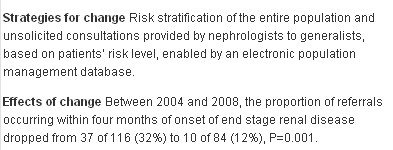
From afh15: “Re: EHR data. I’d love to read your thoughts on this study and the long-term uses of EHR data in preventive care.” I don’t have access to the full text of the article, but I truly believe that once the pain of getting EMRs running as data collection appliances is over (meaning we’ve got data collection clerks known as doctors and nurses in place, which is the “pain” part), the benefit will be incredible. This article apparently deals with having nephrologists automatically consulted when the EHR finds problems. There are other benefits. You could do society-improving medical research by just slicing and dicing data from millions of patients, at least the parts of it that aren’t just clinical-sounding billing events that are useless or even misleading. You could find candidates for research trials. Patients could be followed over many years, even as they move around and use the services of a variety of providers. And for individual patients, there could be great value in putting research findings into the hands of front line doctors. Not to mention giving patients a platform whereby they can participate in their own care and add non-episodic information related to lifestyle, personal health assessment, etc. Clinical systems will not save time, as clinicians know – they exist to create data whose value mostly accrues to someone else. My advice to providers: much of your future income may be based on the data you create and the ownership in it you retain. Don’t be like the Native Americans and let greedy outsiders buy your land for trinkets.

From Anonymous: “Re: Craneware. Interesting question to ponder: How did two young Scot lads, with no US healthcare knowledge, manage to visualize and create Craneware, the country’s first automated CDM software based on complex Medicare regulations? The designer of Craneware’s core CDM products is a US healthcare consultant and not a Scot. Nora McNeil (NJ) is Keith Neilson’s American mother-in-law. She co-founded Craneware with KN and his partner Gordon Craig and taught the Scots everything they needed to know about US healthcare policy and regulations. She was  also the sole marketing and salesperson of Craneware’s CDM products for the first two years of the company’s existence. So why have the duo not publicly acknowledged Nora’s existence as a founding partner and her primary role in creating a successful company?” The company’s documents say it was founded by Keith Neilson and Gordon Craig “following on from discussions with Nora McNeil.” I would guess there’s a family squabble somewhere in the mix. And when that happens, the lawyers are usually not far behind. I don’t have a horse in the race, so I’m neutral.

speechmagic

From Cracker: “Re: Nuance. Nuance’s domination of health care speech recognition gets more scary when you also consider the current M*Modal customers taking a serious look at Nuance. I know second hand of two current M*Modal customers looking at Nuance and will do some research to find some more.” Cracker references a news piece describing an anti-trust investigation of Nuance’s $96 million acquisition last year of Philips Speech Recognition systems (the old SpeechMagic). My assumption, reading between the lines, is that a competitor complained and the investigation is just making sure Nuance isn’t raising prices after knocking off Philips (not likely since Philips had minimal US presence). I don’t know much about M*Modal so I don’t know how they stack up to Nuance, but they and a few other vendors are facing a large, highly successful, and aggressive competitor whose name is nearly synonymous with speech recognition.

From Captain Hook: “Re: Valco rumor. We are a current client and since the announcement have spoken with a couple of our prior contacts at Valco (and they appear to still be working for the company). It is clear that some of them have been let go. Spoke to AJ Hyland as well. No indication that Valco technology will be sunsetted, at this point but it would make sense to do so. It is clear that Hyland bought the client base and entree into Meditech clients.” Valco sold portals, electronic forms, scanning solutions, and other healthcare tools.

From Commander Cody: “Re: Medical Center Odessa. They paid $6.2 million for CPOE, but their regional neighbor Midland Memorial paid only $7 million for their entire clinical transformation project. After five years, Odessa is just now doing McKesson CPOE, two years after Midland has fully implemented OpenVista hospital-wide. Taxpayers paying for high-priced proprietary EMR systems is a bad idea.”

Should CPOE be a requirement for demonstrating meaningful use of hospital-based EMRs? Yes, according to 69% of those who answered my poll. New poll to your right, inspired by the comment above: should hospital CIOs consider open source clinical systems?

McGill University Health Centre is working with Medical.MD to develop its MedforYou PHR.
banner

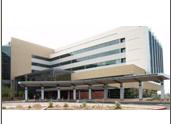
The local paper covers EMR implementations in two Arizona hospitals. Banner Health, the story says, will spend $30 million (hardware, software, and training) each at two of its hospitals: 430-bed Banner Boswell and 272-bed Del E. Webb. They’re Cerner, I believe. I hope that dollar figure is a misprint, but then again, Banner paid its CEO $2.7 million, the CFO $1.7 million,  and its CIO $600K in 2007, so maybe big numbers don’t bother them. Its 2007 profits … sorry, “surplus” …, was over $300 million. Since they’re not paying taxes, I guess the money has to go somewhere.

telus
Say hello to TELUS Health Solutions, supporting HIStalk as a Platinum sponsor. The company, which took a big jump up the HCI Top 100 this year from #33 to #20, offers a wide range of healthcare solutions (claims management, the new TELUS Health Space personal health platform, pharmacy management systems, telehealth, patient and resource scheduling, and the renowned Oacis Unified Patient Record). The open architecture Oacis, in fact, has been supercharged into an integration platform that offers an integration gateway, EMPI, CPOE, ED tracking, clinical documentation, Web-based Enterprise EMR, and data warehouse/BI portal, making it suitable for healthcare organizations and entire regions. I remember from talking to the folks there awhile back that Oacis has two big strengths: it can handle the interoperability requirements of regional deployments and for hospitals, it can be implemented without ripping and replacing (it also excels at being customizable, as I recall). OK, I’m prattling on because I was pretty charged up with Oacis when people started telling me about it years ago, but for now, let’s leave it at this: thanks to TELUS Health Solutions for supporting HIStalk.

Cerner moves up to the Nasdaq-100 Index, replacing the Oracle-acquired Sun Microsystems.

HIMSS is thinking more and more like a vendor. How do they improve (“reposition”) the perception of its CPHIMS certification credential? Hire a marketing company to develop a “correlating creative platform and 12-month integrated communications plan.” Because of the tsunami of federal HIT dollars, “the CPHIMS new brand positioning will be more essential than ever,” at least in the eyes of the marketing people (a knowing wink to fellow grammar zealots: “more essential” makes no more sense than “more pregnant”).
curlin

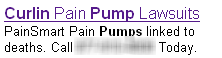
The California Nurses Association union files a complaint with the state’s Department of Public Health, alleging that UC Irvine Medical Center has overdosed at least five patients with narcotics by using malfunctioning Curlin infusion pumps that let patients control the flow of pain med IVs. The hospital disagrees, saying keystroke logs indicate that in at least three of the cases, nurses entered the wrong dosage. Meanwhile, an enterprising group of ambulance-chasing lawyers has bought Google search ads trolling for victims who have “sustained damage” after a Curlin pump recall, helpfully noting that companies have to pay out even if they weren’t negligent under current strict product liability laws. Maybe the lawyer proceeds of healthcare-related lawsuits should be taxed at some reasonable rate (90%?) to help fund healthcare reform since the former lawyers in Congress keep avoiding tort reform.

bobfetters

Industry long-timer Bob Fetters died Tuesday at 70 in Kennett Square, PA. He worked for over 20 years at SMS and had already RSVP’ed for Vince Ciotti’s November reunion. The memorial service was Saturday morning, but messages for the family can be left here. Condolences.

I like this fresh thinking: if we’re already paying double what most countries pay for healthcare, why should healthcare reform cost anything? I also like this answer: “We owe the insurance companies, pharma, etc. a severance package, payable into the future for some undisclosed period of time. Like the Hotel California, their lobbyists are making sure we can check out anytime we like, but in fact, we can never leave.”

Former Cernerite Anne Jamieson is named CEO of Portsmouth Regional Hospital (NH).

A hospital in Canada whose computer network was infected with the CoreFlood trojan horse sends warning letters to 11,500 patients, warning that the trojan was designed to capture information and send it to hackers and therefore may have done so. The virus was not detected by the hospital’s unnamed antivirus software (considering that Symantec has been protecting against it since 2002, maybe it’s time to check the updates, change vendors, or fire employees who disabled it on their PCs). CoreFlood was written by hackers in southern Russia to capture secure information such as passwords, e-mail contents, and bank records. It’s doing its job, collecting 500G of personal financial information in just six months, including details on thousands of banking and credit card accounts.
soarian

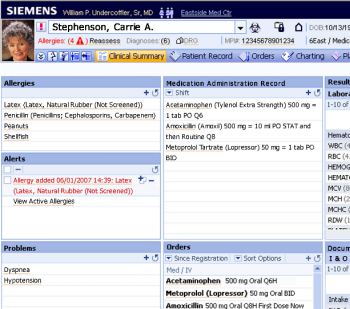
Siemens will provide Soarian to 37 hospitals and 300 clinics in South Africa as a subcontractor. That’s a huge and much-needed deal for Soarian, which was always loaded with unrealized promise.

The VA gets $3.3 billion to spend on IT in 2010, up 30% from 2009.

West Jefferson Medical Center (LA) gets a mention from the local TV station for its implementation of GetWellNetwork, explaining that it’s not for just patient entertainment, but also patient education. The article says patients can also find a hotel, check their bill, and send an instant message to hospital departments.

I like this opinion piece on Taj Mahospitals: “If your competitors have serious woodwork, you can’t get by with woodgrain Formica. If they have armies of PR people on staff, you need them, too. If they have billboards touting the No. 1 rating conferred on their pediatric nephrology team by a local magazine, you too need billboards. If they offer their patients such amenities as wireless Internet, on-demand video, room service-style dining and concierge service, you’d better follow suit. In fact, a recent study published by the National Bureau of Economic Research found that such amenities are three times as effective in increasing demand for a hospital’s services as improved clinical results are. (What? We don’t care if we get better as long as we can have YouTube and American Idol on tap?) The irony is that it’s all necessary, even though it’s a total waste in the sense that none of it improves anybody’s health one iota.”

Scary stats out of California, not like to improve now that the state is nearly bankrupt: the state’s nursing board takes an average of three years to investigate and discipline problematic nurses, gives probation to offenders but doesn’t crack down when they mess up repeatedly, and doesn’t have records to keep fired and disciplined nurses from moving on to the next hospital. One nurse kept his license for five years after hospital complaints that he had stolen and used drugs and fell asleep while performing CPR; he admits he was high at work.

Cleveland Clinic launches its health and wellness portal.

Dossia announces an API for its PHR platform, allowing programmers of new personal health tools to exchange  information with it. Documentation for it is here.

Insurance company UnitedHealth Group announces that it will spend tens of millions of dollars to build a national telehealth network based on Cisco’s Telepresence technology. It has hired former MinuteClinic CMO Jim Woodburn to run the program. More details will be announced on July 15.


E-mail me.

News 7/10/09

July 9, 2009 News 18 Comments

From John Q. Seriously: “Re: Eclipsys. In a morning blind-side, Eclipsys has released former MediNotes CEO Don Schoen and former Bond Technologies President Travis Bond. Bond created the EHR Bond Clinician, which was acquired by MediNotes in spring of 2008. It was subsequently acquired in the the acquisition of MediNotes by Eclipsys in the fall of 2008 and renamed Eclipsys PeakPractice. Schoen was co-founder of MediNotes, known for their Charting Plus and MediNotes EMR products.” Several readers e-mailed with the same rumor, saying that business unit had been merged into an existing Eclipsys one. I’ve offered Eclipsys the chance to respond and haven’t heard back yet. It’s unusual for entrepreneurs of acquired companies to stick around after an acquisition, but they usually leave under their own power.

That rumor follows news that Chris Perkins has been named CFO of Eclipsys, rejoining his former Per-Se colleague, CEO Phil Pead. He gets an immediate 22,222 ECLP shares ($362K worth) plus options for another 133,334 shares to “align Mr. Perkins’ interests with those of Eclipsys shareholders,” who are unaligned in the sense that they had to pay for their shares with their own money. He’s also getting $400K in salary and a targeted bonus of $200K with $100K guaranteed. Also announced are severance deals with Pead and Perkins: a year’s salary, 100% of target bonus, an extra year of vesting, and 18 months of health insurance.

From Ken Kashimoto: “Re: Valco. Heard through the grapevine that as a result of Hyland Software’s acquisition of Valco Data Systems last week, all Valco employees were let go last week.” Unverified. Valco’s headcount was around 35, I’ve heard.

chrome

From The PACS Designer: “Re: Google OS. Google has announced a new web operating system called The Google Chrome Operating System. The Google Blog states, ‘Speed, simplicity and security are the key aspects of Google Chrome OS. We’re designing the OS to be fast and lightweight, to start up and get you onto the web in a few seconds. The user interface is minimal to stay out of your way, and most of the user experience takes place on the web. And as we did for the Google Chrome browser, we are going back to the basics and completely redesigning the underlying security architecture of the OS so that users don\’t have to deal with viruses, malware and security updates. It should just work.’ It appears that Microsoft and other major operating system vendors have something to worry about when it comes to competition from open source web operating systems.” Don’t underestimate the benefit of having a change-resistant customer base. Chrome is already out there and not making much of a dent in IE. Linux, on which Chrome OS will be based, is also free but has taken only a tiny percentage of PC users. People don’t like change even more than they don’t like Windows. I like all the Web emphasis, but they better not make Microsoft’s Vista mistake and tell users that dysfunctional and outdated plug-and-play drivers aren’t the fault of the operating system. Google is smart to be going after Microsoft’s cash cows of Windows and Office, though. For Netbook users and those who really don’t need anything running locally on the desktop, Chrome OS will probably be just fine, but that’s not a big bunch of users so far.

From Rhythm n’ Blues: “Re: CareFusion. I’d be interested in your response to this unique marketing tactic. Hope they’re stopping in a city near you!” Cardinal Health’s planned technology business spinoff and IPO, CareFusion, will sponsor a jazz festival series that’s going to Newport, Chicago, Montery, Sydney, Paris, and NYC. They’re using a lame excuse for it, saying that “there is a clear connection between jazz and medicine.” Dear Saint Obama, while you are looking into ways to cut massive healthcare costs by throttling the incomes of the people who deliver care, please make sure not to forget to save a little of Uncle Sam’s well-intended meddling for those companies that make a fortune from patients in the form of Pyxis and Alaris patient care devices whose high prices and market penetration have allowed them to hoard enough healthcare cash to stage an international festival series for jazz music, which nobody likes anyway except pedantic posers not quite up to classical and secretaries who aren’t allowed to play real music on the office radio. Sincerely yours, the people paying for it.

I get e-mails every few days from people aren’t getting the update blasts any more. I’m still sending them, so if you aren’t getting yours, your e-mail server is rejecting them as spam. I can’t fix that on this end, but you can contact your e-mail administrator to ask to have my e-mail address added to the “white list” of known non-spam e-mailers. If you use Gmail or one of the other free accounts, you can probably set it up yourself. I send HIStalk e-mails at least three times a week and usually 4-5, plus HIStalk Practice is good for two at minimum and sometimes 3-4. if you aren’t getting them, that’s the problem. You can also use the Subscribe to Updates box to your right to add your home e-mail address in addition to your work one since it’s usually the work one that is overly aggressive about discarding suspected spam. I don’t want you to miss anything.

Readers have added several new events to the HIStalk Calendar, which is how they got them listed and linked on the main page of HIStalk (to your right). Notice the cool way the event listings include links, direct links to a location map and weather, options to download to your e-mail calendar, etc. You can submit your HIT-related event for free. Here’s a tip for those doing so: if you click “Check If Recurring,” you can enter the event once and choose the days it covers, which is a little bit easier than making separate entries for each day.

My guest editorial for Inside Healthcare Computing this week is titled A Day in the Life of IT-Visionary Hospital VPs: Laying Out CPOE Benefits to Luddite Doctors. See if you can detect the thinly disguised sarcasm: “One was late in responding because her top-of-the- line hospital laptop had failed after her teenaged son had used it for several consecutive hours of doing Internet research for a school project in his locked room, necessitating a call to the VP-only IT support hotline so that a technician could be dispatched to her house on a Friday evening.” The publisher tells me that 88% of readers like my stuff there, with 12% chiming  in with the person who wants them to get rid of me and my “clever cynicism.” I was hoping for at least a 40% disapproval rating as validation that I’m stirring people up enough.

Origin Healthcare Solutions adds patient payment collection tools to its Origin Manager practice management system. I couldn’t follow the references to Connecticut and SSIMED, but anyone interested in that news will probably know what it means.

Jobs: Business Systems Analyst-Pharmacist, Laboratory Requirements Analyst, Regional Sales Director.

royalberkshire

In the UK, the entire 26-member EHR team at Royal Berkshire NHS Foundation Trust has been let go as the hospital breaks away from NPfIT and implements Cerner via its vendor, UPMC (yes, a non-profit US hospital is also UK vendor, as confusing as that is). They can apply for one of 19 available one-year contracts. In the meantime, since Pittsburgh’s infrastructure is crumbling because of a billion dollars’ worth of debt, entrenched unions, a declining population (even smaller than what’s left of New Orleans, which is actually growing) and a plethora of big-income organizations that don’t pay taxes, the city is considering surcharges on its hospital admissions and college students, which would hit UPMC directly other than it will probably just pass it along in one form or another.

GetWellNetwork announces several new clients for its PatientLife System for patient engagement, including big names Florida Hospital East Orlando, Children’s National, Miami Children’s, and several Adventist facilities.

Don Miller, MD, founder of prenatal care system eNATAL, e-mailed to mention to tell me that the company has several iPhone applications for obstetrics in Apple’s App Store. The application itself is sold in an interesting ASP pricing model: OBs buy “tokens” that are good for one per pregnancy. Here’s what Don had to say about certification: “eNATAL is not CCHIT-certified, never will be, and highlights what is wrong with CCHIT certification. eNATAL is an affordable niche EMR that adds tremendous clinical value, improves patient safety, incorporates clinical decision support functionality that the ‘big boy’ EMRs only dream of, saves money for all healthcare stakeholders, and is used in a ‘meaningful’ way every day across the country. But our subscribers will not receive a nickel from Obama for its use.”

More on the government of the Philippines investigation of who spilled the beans on the rumored leaky breast implant repair of its president: the National Bureau of Investigation is interrogating employees of a hospital that it claims asked for government help to make sure its employees didn’t breach patient confidentiality.

Hospitals in New York State have readmission rates that are much worse than average. The local hospital association (trade group) blames poverty, but didn’t offer an explanation of why Harlem Hospital Center excels and IT-loaded and $3 million CEO-led Montefiore Medical Center lagged.(I noticed while snooping around Montefiore’s federal records that even its chairman of dentistry makes $1.7 million a year, which seems absurd).

odessa

Medical Center Hospital of Odessa, TX says implementing its $6.2 million McKesson CPOE system will be a “massive, difficult project,” but its seems eager to snag $5.4 million of that amount from us stimulating taxpayers. A good line from the CFO about the CIO: “I’m looking forward to the day when we have a meeting when Gary [Barnes] doesn’t speak.”

A Canadian medical malpractice jury awards more than $5 million to a man who suffered injuries from spinal tuberculosis after he ignored his radiologist’s urging to come back for more tests to investigate problems he’d spotted. The judge found the patient 30% liable as punishment for not cooperating, but made the excuse for him that he was probably to busy to follow the doctor’s advice. The hospital says it has since implemented software that will prevent misfiled records and miscommunication.

Florida-based Metropolitan Health Networks chooses eClinicalWorks for its nine internal medicine offices.

Microsoft tries to use an Obama-like pitch to get people to “join the movement” and sign up for HealthVault on its I am Enabled site. It’s loaded with the usual cliche Facebook, Twitter, and YouTube connections. Jerry Seinfeld isn’t mentioned.

Speaking of which, I think spammers are going to kill Twitter if it doesn’t die of natural causes before they can do it. It seems like most of the new followers are just the same old pests who nearly ruined e-mail.

E-mail me.

News 7/8/09

July 7, 2009 News 13 Comments

pre

From The PACS Designer: “Re: Palm Pre. Since the Palm Pre has employed its own Web operating system called the Palm webOS, TPD thought it would be good to give HIStalkers information on this new application. O’Reilly Media has posted the first chapter of a new book to the web on the Palm webOS covers some of the basics for this new system.”

lawsuit

From VSM: “Re: HITECH lawsuit. The supposed nurse (could not find evidence of license) who has filed a suit against Obama and HHS Secretary for HIPAA privacy violations due to HHS requiring EHRs has a history of legal issues. Her husband is a plaintiff’s attorney. See the court documents on their bankruptcy filing.” She’s licensed, according to the New Hampshire nursing database, and I don’t think her previous suits are relevant. It will be tough to prove her claim (warning: PDF) that HITECH is illegal because it forces disclosure of medical information from patients not on either Medicaid or Medicare. The suit’s claims wander all over the place, reading like a wacked out conspiracy theory rather than a serious challenge and making it less viable, I suspect.

From Joy: “Re: poll showing most readers don’t think providers are resisting IT to hide their profits. Isn’t this group of HIStalk readers already biased as medical and hospital informaticians?” Yes. But, we know the real reason hospitals aren’t adopting IT: they aren’t all that competent and confident about it. Still, when it comes to connecting to the outside world, I would guess that a fair number of practices and hospitals would be worried about outsiders seeing information like how much they charge and how much they make.

Listening: 10-year-old Britpop from The Charlatans.

Some calling himself or herself THR-IS Staffer left a scathing comment on Ferdinand Velasco’s interview that I deleted. It was curious for three reasons: (a) it was the only negative comment posted; (b) it was quite nasty and personal; and (c) the electronic footprints indicate that it actually came from someone inside arch-competitor Baylor Health. I like catching would-be scammers in the act, which I believe I just did.

SRSsoft bags another customer willing to drop their CCHIT-certified EMR in favor of the SRS hybrid EMR. Southeastern Orthopedic Center thought they were good to go with regard to HITECH, but says, “The CCHIT EMR we had purchased would have placed overwhelming demands on our physicians and resulted in a significant loss of productivity, even if we had overcome the initial implementation hurdles.”

A nurse poll finds that 50% would not want relatives receiving care at their workplace, 72% think staffing on their unit is inadequate, and 53% are considering leaving their jobs, most often because of staffing problems.

Emdeon, gearing up for its IPO, acquires claims processor eRX Network LLC.

sms phonelist

Vince Ciotti is arranging a November get-together of former SMS’ers to celebrate the 40th anniversary of the company’s founding. The shindig is aimed at those who worked in King of Prussia in the 1970s, but Vince says the Malvernians who don’t mind listening to “what I did in the big war” stories are invited as well. Full details, including some cool old customer newsletter scans, phone lists, etc.

Bill O’Toole will have to explain this healthcare-related lawsuit product to me since I don’t understand it even after reading the press release and the Web site (and unless “subrogration” is in your lexicon, you won’t understand it either). It seems to be related to insurance companies being able to find out which policyholders are planning to sue providers and to get their attorney contact information. I’m sure the people who might use it would understand the description, so this is my gift to all of those folks reading.

A study of VA data finds that abnormal CT findings are often recorded in the EMR a long time afterward, if at all.

Detroit Medical Center connects to an HIE whose bizarre, contrived, and entirely forgettable name could have only come from a committee of clueless marketing people: my1HIE(R). I’m including the provided italicization to make sure you see just how weird it looks in print. Maybe it’s the same perky, brand-obsessed bunch who decided that GE-owned The Sci Fi Channel would be much more of a hot property if it “relaunched” itself as Syfy. This quote from the Syfy (gag) president should really wow its entirely geeky audience: “We really do want to own the imagination space … It made us feel much cooler, much more cutting-edge, much more hip, which was kind of bang-on what we wanted to achieve communication-wise.” They’re even mimicking GE’s “healthymagination” assault on grammar, coming up with the radical variant “Imagine Greater”, which it says is “a call to action … an aspirational, optimistic message about enhancing people’s lives.” That’s asking a lot from ancient reruns of Battlestar Galactica and Mork and Mindy.

I don’t have the records to look it up, but I wonder if Barry Chaiken is the first HIMSS board chair who works on the vendor side of the fence instead for a non-profit hospital? I’m not sure how I feel about that.

Kaiser’s Health Care Innovation Center in the San Francisco area gets a mention in the Fort Wayne paper for some reason. I think someone invited me there once, so maybe I’ll check it out one of these days.

tweet

Another use of Twitter: selling “medicinal marijuana”, including home delivery (driver tips are appreciated).

In the UK, the conservative party says they would dump NHS’s Connecting for Health and replace it with HealthVault, Google Health, or other online services. “This is an agenda we are massively keen on. We’re thinking about how in government the architecture of technology needs to change, with people ‘owning’ their own data, including their health records.”

A reporter in the Philippines says the government there is monitoring his activities after he wrote a newspaper story last week claiming that the country’s female president had breast implant repair surgery.

Merge Healthcare announces preliminary Q2 numbers: revenue up 13%, net income less than $1 million vs. $2.8 million, all complicated by its pending offer to buy etrials and the sale of its equity interest in Eklin Medical Systems.

A former Red Hat VP launches the Axial Project, which will be some kind of open source clinical information delivery system. I’m not seeing any healthcare background among the principals, so we’ll see what they come up with.

Researchers from Carnegie Mellon University (misspelled in the article) have figured out how to guess the Social Security number of people born after 1988, sending their method to the Social Security people with the suggestion that maybe they ought to start randomizing the numbers. A Social Security guy pooh-poohed the findings, saying that the code-cracking suggestion is “a dramatic exaggeration,” but simultaneously admitting that  Social Security numbers will be randomly assigned starting next year.

Sunquest names Patrice Nedelec, previously with AMICAS, as VP of Quality and Regulatory Affairs.

A Canadian woman gets a $3 million jury award for a 1999 incident in which she sat on a hospital chair that collapsed under her, causing her no physical injury except claimed fibromyalgia, an ongoing pain whose diagnosis is entirely based on what the patient says they feel.

E-mail me.

Monday Morning Update 7/6/09

July 2, 2009 News 6 Comments

coye  

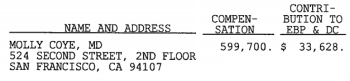
From Cliff Kirtland: “Re: Interesting use of funds in Health Technology Center’s federal filing forms. I thought you might be interested given Molly Coye’s next role as CalRHIO CEO. Can they afford her?” Non-profit technology research organization HealthTech took in nearly $4 million in 2007, lost $700K, and paid CEO Molly Coye $630K and the COO over $400K. CalRHIO’s records show that former CalRHIO CEO Don Holmquest (now in “a senior advisory role” with CalRHIO and not listed on its site) was paid $276K. Either Molly’s taking a huge pay cut or CalRHIO is upping the ante. She’s also board chair of CalRHIO. Whatever’s left of HealthTech is going to Public Health Institute, another research non-profit (it took in $88 million in 2007 and its CEO made $380K). I need to set up HIStalk as a non-profit so I can make some real money.

From Mike Quinto: “Re: big box medicine. Dr. Halamka blogged about a local hardware store. We should support the Green’s Hardwares of the world, avoiding the big box stores that have standardized the experience and limited the menu to keep costs down. It occurred to me: aren’t we working toward standardized medicine that will give every patient the same experience at every doctor, making medicine have that big box feeling to keep the costs down through standardization?” It’s probably the same: people will moan about losing local restaurants and stores that bring back fond memories, all while spending their money at chain restaurants and Wal-Mart. Still, the masses get to vote with their dollars and their feet, and if they don’t like cookbook medicine, they will seek alternatives that others will be financially encouraged to provide. Maybe what should have been done with stimulus billions is to find a better, cheaper, faster way to educate physicians, although with loose controls on how they are paid, they would all be lighting up the sky with profitable X-rays and raising the healthcare tab even higher instead of lowering it through increased provider supply.

From CogNwheel: “Re. insurance companies. You have got to comment on this PR piece from United. An HIT vendor telling everyone that if the government and companies would only buy more of their stuff, they would all save money and the American consumer would directly benefit.” UnitedHealth says healthcare could save $332 billion over 10 years if providers updated their technology to use something like its own, although it also estimates that commercial payors like itself would reap $100 billion of that benefit. They didn’t mention specifics, but they do own Ingenix, which offers technology to providers.

 eckes

Information Week profiles Chad Eckes, CIO of Cancer Treatment Centers of America. His proudest accomplishment, he says, was replacing 18 legacy applications with 25 Eclipsys modules. His most admired tech vendor CEO is (was?) departed Eclipsys CEO Andy Eckert.

The DEA is helping LAPD with its Michael Jackson investigation by analyzing the state’s controlled substance prescription database, trying to figure out who prescribed the propofol found in his house that may have killed him.

otoole 

Bill O’Toole got so many responses from readers about his HIT Moment With that he decided to become an HIStalk Platinum Sponsor (sounds odd, I know, but people interviewed here are always shocked at how many old and new acquaintances they hear from). So, welcome to O’Toole Law Group PC of Duxbury, MA, an HIT-only firm involved with acquisitions, licensing, intellectual property, and contract negotiation on both the provider and vendor sides. I don’t know of many HIT-only attorneys, so if you need one (and every vendor and provider does every now and then), get in touch with Bill.

A British doctor helping out Royal Free Hospital with its Cerner implementation says he saw doctors “almost in tears” with frustration over the project. I don’t exactly know what that means since you’re either crying or you’re not, but it sounds intentionally dramatic.

Rural health center operator HealthReach (ME) will get $1.3 million in stimulus money, most of which will be used to implement an EMR. Since I’m salary-fixated all of a sudden, I’ll report that its CEO made $50K last year according to its federal records, making it clear that actually delivering care isn’t as highly valued as talking about it. A lot of administrative overhead wears suits and sits in plush offices.

A former Cigna public relations VP testifies to Congress that the company’s underwriters intentionally pushed small businesses that had filed expensive claims to drop their Cigna policies by jacking up their premiums. He quit after Cigna waffled on paying for a teen’s liver transplant, then changed its mind right before the patient died. He warned that the insurance industry will kill meaningful healthcare reform, saying, “You cannot trust these guys … What we have is rationing by corporate executives who are beholden to Wall Street.”

Cumberland Consulting Group, new to the Healthcare Informatics 100, brings on Tom Hogenkamp as a partner.

ucern

Cerner will roll out uCern later this summer, a social networking site for customers that will also offer a customer-modifiable documentation wiki and screencasts.

An article by Christiana Care CIO Steve Hess credits its GetWellNetwork rollout with increasing patient education utilization by 127% and improving patient satisfaction related to having information explained by 23%. Patient education pathway items that are triggered in the EHR alert the patient on their in-room TV, reminding them to watch the educational material until they have done so.

Mount Sinai School of Medicine is seeking “the Holy Grail” mobile device for its doctors. It sounds like they believe the iPhone would be it if Cerner and Epic would develop clients for it. They’re also expecting good things for the Kindle e-book reader.

Maybe Cerner and Epic should follow the lead of Meditech in offering an iPhone client, lauded by Doylestown Hospital (PA) CIO Rick Lang as a key reason that its physicians have flocked to the iPhone and gained “major workflow improvement” as a result.

From Weird News Andy: a Tennessee boy is arrested after sheriff’s deputies find $5,000 worth of medical supplies, an oxygen machine, and a purse in a camper on his mother’s property. Paramedics reported that the items were stolen from their ambulance while they were treating the boy’s mother.

An internationally recognized informatics professor from Canada expresses frustration that his own healthcare providers don’t share information.

David Brailer says that the government’s lack of specificity about how stimulus money will be paid out to providers is hurting EMR adoption as potential customers wait and see. He also predicts that meaningful use criteria will be loose even if that dilutes the whole point of having them. “They’ll go for the big tent as opposed to a narrow solution. That’s not good policy, but that’s the politics of the matter." The CNN article mentions EMR licensing expense and the potential use of VistA, quoting Medsphere CEO Mike Doyle in comparing the $9 million the State of West Virginia paid it for eight hospitals vs. the $90 million West Virginia University (which he incorrectly called the University of West Virginia) paid Epic. “If Obama is serious about this, he won’t be able to do it $90 million at a time.”

Former Misys CTO/CIO and current Allscripts board member Cory Eaves joins private equity firm General Atlantic as SVP.

An overwhelming 81% of you don’t believe that healthcare providers are sandbagging on IT to keep the public from seeing how profitable healthcare delivery is, according to my most recent reader poll. New to your right: should hospitals have to use CPOE to meeting meaningful use criteria?

Seattle Children’s Hospital says healthcare applications vendors are foot-dragging on certifying and supporting their applications to run in virtualized mode.

University of Florida’s Doctor of Pharmacy program will require students to own either an iPhone or iPod Touch.

I would hope that by now healthcare providers have figured out that WEP security isn’t adequate for wireless networks, but in case any need convincing, here are step-by-step instructions on how how to crack WEP passwords.

A Seattle data center fire on Friday takes down a bunch of local IT systems, including those of Swedish Hospital.

Researchers at Carnegie Mellon University develop a $2,900 mobile kiosk whose six sensors check for problems and initiate e-mail contact with the patient’s doctor if needed. The sensors measure blood pressure, balance, hand grip, hearing, and visual acuity. It also creates a personal medical history and may eventually include medication reminders.

An employee at Saint Alphonsus Regional Medical Center (ID) couldn’t resist opening the attachment in Michael Jackson e-mail spam, launching a virus that crippled several hundred hospital computers. The hospital spokesperson said, “There is a variety of things happening — slow log-ins, programs shutting down, glitches … We have a whole team working on it. It’s a major headache for us but it hasn’t hurt patient care. We have stopped the spread, and we are in clean up mode now. It’s been a bear for the IT people.”

HERtalk by Inga

OnBase developer Hyland Software purchases Valco Data Systems, a provider of software, integration, and consulting services for hospitals. Valco is best known for providing paperless hospital solutions that integrate with MEDITECH software.

UMass Memorial Health Care and Bethesda Healthcare System each sign multi-year contracts for Soarian, Siemens Healthcare’s Web-based HIS. UMass is implementing Soarian Clinicals, Financials, and Quality Measures as part of their seven-year agreement. Bethesda’s nine-year contract is an extension of its 25-year relationship with Siemens and includes migration to  Soarian Clinicals, Critical Care, ED, and several other applications.

spectrum

Spectrum Health (MI) and Medicity announce they’ve successfully deployed a platform that enables the secure exchange of health information between hospitals and physicians. More than 75 physician offices are now receiving data electronically from Spectrum Health and 70 more are in the process of being connected.

Capital Regional Health Care (NH) contracts with McKesson for its Horizon Enterprise Revenue Management solution. The health care system already utilizes Horizon Clinicals.

GE Healthcare and InterComponentWare (ICW) sign a strategic agreement to integrate and co-develop their HIE solutions.

HIMSS announces four new officers and four new board members to its board of directors. Dr. Barry Chaiken of DocsNetwork Ltd. takes over as chair.

CalRHIO names Molly Joel Coye, MD, MPH as its new president and CEO. Coye was an original CalRHIO founder and has been chair of the board of directors since 2007. She was also founder and CEO of the research non-profit Health Technology Center.

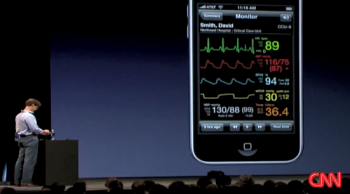
AirStrip Technologies and CliniComp agree to pair both companies’ product offerings at hospitals nationwide. AirStrip provides real-time remote access to labor and delivery and intensive care data via mobile devices. You may recall AirStrip was one of a few companies given the given the opportunity to demo their iPhone application at the Apple WWDC. CliniComp is a provider of documentation and EMR systems.

Good Samaritan Hospital (NE) completes implementation of Horizon Medical Imaging PACS.

A CHIME survey of 335 CIOs finds that almost 60% of their organizations use CPOE at some level. Physician adoption continues to be low, with 45% of the CIOs indicating their physicians are using CPOE for just 20% or fewer orders. A mere 16% claim physicians are entering orders 90% or more of the time. CHIIME members tend to come from more progressive institutions, which suggests their CPOE adoptions number are likely higher than everyone else’s. Any way you look at, full CPOE adoption has a long way to go.

I’m planning to take a couple of days R&R, leaving Mr. H to fend for himself (which he does perfectly well, but my ego requires that I maintain the illusion that I am indispensible). In between fireworks, family gatherings, and adult beverages, I hope you remembered to wish the country a happy 233rd birthday!

E-mail Inga.

News 7/1/09

June 30, 2009 News 12 Comments

From Dwarf: “Re: meaningful use. To all of the acronyms (HIMSS, etc.) who claim ‘meaningful USE’ definitions: you are defining meaningful FUNCTIONALITY, not USE. At least be honest about it. The biggest problem most EHR/EMRs have is their poor usability and this just makes it codified and worse!”

From Jack: “Re: Pittsburgh. Pervasive multi-system problems with a Cerner upgrade. The cover-up is on. Reporters will be punished to the fullest extent of medical staff by-laws and employment contracts.” This comes from a hospital I won’t name, especially since I have not verified the anonymous report.

From Carpluv: “Re: ARRA. LOL. Government , which comes up with ARRA, is going to pay doctors for EHRs. Then it does not tell them how they get reimbursed for it. This has stopped the buying cycle again. Morons.”

From The PACS Designer: “Re: CSA. The Cloud Security Alliance (CSA) has been formed by vendors to address Cloud and Internet security issues. The CSA mission statement is ‘To promote the use of best practices for providing security assurance within Cloud Computing, and provide education on the uses of Cloud Computing to help secure all other forms of computing.’ As we contemplate employing public and private clouds, it is good to consider CSA services that promote and educate everyone about security issues within cloud applications.”

Community Health Information Collaborative offers its health information exchange to providers in 18 Minnesota counties.

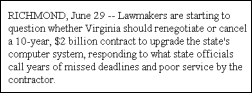
Virginia state officials admit that the recent hacking of the state’s doctor shopper database for drug abusers has caused doctors to prescribe fewer narcotics, sometimes to the detriment of patient care. Obama’s CTO, the former state technology secretary, put together the sexy $2 billion, 10-year cloud computing contract with Northrop Grumman that all the state’s applications are supposed to run on. At least one state delegate wants to kill the contract, saying nobody even knows whether the new contract will save money over the old one. Grumman is working hard to bag NHIN contracts, so you’d think keeping hackers out of an unexciting state patient database wouldn’t have been all that challenging. It’s still down, so doctors have to call in by telephone.

virginia

And in related (and belated) news, Lemuel Stewart, director of the Virginia agency that oversees the Grumman contract, is fired hours after he recommends not paying Grumman’s monthly invoice after a series of missed dates and what he claims were insufficiently documented invoices (not to mention that the agency is out of money). In the mean time, legislative hearings are underway as to why the state held closed door meetings to debate the massive Grumman contract. State employees give Grumman an “average at best” rating in terms of services provided. Even the interim CIO (also getting heat because he is also technology secretary and board member, all of which were supposed to be separate jobs) says Grumman’s “service levels in general are below expectations.” If anyone has an uplifting example of how a government partnership with big, publicly traded consulting firm has saved money or increased service, please send it my way since I can’t think of any.

The director of the Jefferson Regional Medical Center School of Nursing (AR) says its nursing students are benefiting from having Eclipsys Sunrise available for EMR training.

Finding it hard to get an Epic Systems job? There’s a spot for you if you are a talented cook.

 sis

Surgical information Systems (SIS) is a new HIStalk Platinum Sponsor, so welcome to them. The Alpharetta, GA company offers best-of-breed, integrated surgical solutions, exclusively focusing on the OR and perioperative systems. They’ve got a client testimonial video here and one on regulatory compliance here. I learned an important fact from the videos: I’ve been pronouncing the name wrong (I say “s-i-s” while customers say “siss”). No matter how you say it, thanks to SIS for supporting HIStalk (which, now that I think of it, has exactly the same pronunciation conundrum: is it H-I-S talk or hizz-talk?

 commandaware

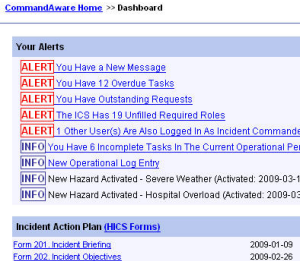
Concerro (the former BidShift) acquires the assets of the CommandAware hospital incident command business from PortBlue Corporation. The press release tries to make a case of why an incident command system has anything to do with shift-bidding, but I wasn’t sold. Still, it looks pretty cool as long as your incident doesn’t involve downtime.

My latest driving-to-work inspiration. Doctors don’t use EMRs willingly because the entire paradigm of PC use assumes that: (a) users are sitting down; (b) they should be navigating with a keyboard and mouse since those work great when you’re sitting down; and (c) PC use requires concentration since applications are loaded with drop-downs, unforgiving edits, and user-unfriendly navigation. Have you ever seen all the available people at an airline ticket counter huddled around one screen and scowling as they try to figure out something as simple as your boarding pass? Or, hotel front desk staff who don’t look at you because they’re struggling with navigation of your room reservation? The PC is a terrible tool for on-the-go use, yet application programmers picture people seated and focused like they are when designing programs for them to use. Doctors are rarely sitting and able to interact intently with a computer (or if they are, they are not very good doctors). I know I say it all the time, but doctors the only highly educated and expensive professionals who are expected to happily peck away on a keyboard all day. Accountants, lawyers, hospital leaders, insurance company bigshots, and EMR vendor executives hardly ever do their own PC work, instead hiring assistants to free their time up for something more strategic. I don’t blame doctors for failing to see benefit since the people who are trying to convince them apparently don’t eat their own dog food.

Sixteen Mississippi hospitals receive threatening state letters for failing to collect mandatory state trauma registry information from their EDs. Some of them say Digital Innovation’s Collector Trauma Registry software, which was designed to work with national trauma databases, isn’t working too well for hospitals, taking up to an hour to abstract a single chart. They prefer the previous product, TraumaOne from Lancet Technology.

Ambulances in Franklin County, PA get connected from their laptops to the hospital for a smoother patient handoff. Why I as a federal taxpayer had to help pay for this is beyond me since I doubt I’ll ever set foot there, but that kind of common sense is hopelessly unfashionable in these feel-good days of having the government being the largest employer, insurance company, and bank.

Ireland’s health services oversight body says patient ID numbers should be rolled out immediately to reduce medical errors and simplify EMRs.

Conflicting findings among Hong Kong’s doctors: 80% say there should be a territory-wide health information exchange, but 80% of them also say their IT knowledge is insufficient to use computers themselves in practice. Nearly that percentage are worried about privacy and security.

A Kaiser article notes complaints of e-prescribing doctors, including security log-outs, inability to prescribe Schedule II drugs, and patient histories that aren’t current. One of the 50 doctors involved in a Shared Health pilot in Tennessee went back to paper. Another practice reports a 20% failure rate of prescriptions sent electronically, meaning patients show up at the drugstore and their prescription isn’t there.

An interesting thought as we move toward Internet-delivered medical applications: news of Michael Jackson’s death took down Google News, CNN, the LA Times site, and Twitter.

uae

The CEO of a United Arab Emirates hospital credits Cerner with providing both access to patient information and management visibility that is helping them be more service-oriented. It’s a Hopkins affiliate, by the way.

RelayHealth, Medfusion, and Medem are mentioned in a Wall Street Journal article on virtual patient visits.

The pathetic soap opera that is Grady Hospital has a new episode. Two of its former CEOs are suing each other. The first CEO sued his replacement, who was head of the hospital authority that fired him, claiming she just wanted his $600K job. She just sued him for slander, claiming he told people she was sexually available and he could have had her if he wanted.

E-mail me.

HERtalk by Inga

Vitalize Consulting Services expands its existing consulting services to offerings for ambulatory care clinics. VCS is launching a new initiative that includes consulting services for Allscripts, ECW, GE Healthcare, and NextGen applications.

The privacy rights folks applaud the Supreme Court’s decision to let stand a New Hampshire law preventing prescriptions from being used to profile what each doctor prescribes. Two publishers of healthcare information argue against the NH law, claiming that data mining for commercial purposes is protected by free speech rights. Also, a federal appeals court refuses to block a Vermont law limiting the use of prescription drug data to profile the prescribing patterns of Vermont physicians. Look for more states to pass similar laws prohibiting data mining of prescription data.

New York-Presbyterian Hospital migrates a significant portion of its enterprise-wide IT server processing and storage infrastructure to Eclipsys’ Remote Hosting Services.

The Congressional Budget Office predicts that by 2082, health care will account for 99% of the nation’s gross domestic product at the rate we’re going. In 1960, healthcare spending was a mere 4.7%  of GDP. Last year we hit 16.6%. But why should we worry about that since most of us will be dead by then?

michelle obama

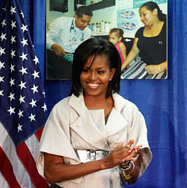
Michelle Obama announces the release of $851 million in community health center grants. The funds are part of the ARRA stimulus package and designated to address facility and equipment needs more than 1500 health centers. Over 650 facilities are expected to use funds to purchase new equipment or HIT systems and almost 400 will adopt or expand the use of EHR. Mrs. Obama made the announcement at Unity Health Care Clinic in DC, and apparently wore a light gray elbow-length jacket with a large silver high-waisted belt and dark gray pants. She accessorized with several silver bangle bracelets and diamond earrings. While I am sure the outfit was fabulous, I would have preferred this “news” article to leave out the fashion statement. That’s the kind of stuff we bloggers are suppose to discuss, right?

Tucson Medical Center markets “birth packages” to wealthy Mexican women coming to the US to give birth. Though the practice of Mexican women giving birth to children in the US is not new, the marketing efforts are. The marketing materials leave out the key draw: the newborn has US citizenship. Obviously, some folks aren’t too keen on the ploy.

Iowa Health Systems selects the Orion Health Rhapsody Integration Engine for message exchange from legacy systems and to make patient information accessible to physicians from the health systems EMR. Rhapsody replaces Sun Microsystems’ eGate integration software.

Siemens Healthcare appoints Michael Reitermann CEO of its US operations. Reitermann has served as CEO of Siemens Molecular Imaging since 2005 and was president of Siemens Nuclear Medicine before that. He will replace Dr. Heinrich Kolem, who becomes the global head of Siemens Angiography, Fluroscopy and X-ray business unit.

Physicians Medical Group of Santa Cruz County (CA), successfully demonstrates the exchange of health information within multiple communities.

CalRHIO announces its selection of RAND Corporation and USC to measure savings resulting from physicians’ electronic access to patient information via the CalRHIO HIE. The first phase will focus on emergency department savings.

Perot Systems’ Government Services Business unit wins a $119 million contract with the CDC to provide infrastructure and IT services support.

Participation in healthcare spending accounts has jumped 46% in the last year, a trend that is expected to continue at least through 2010.

inga

E-mail Inga.

Monday Morning Update 6/29/09

June 27, 2009 News 12 Comments

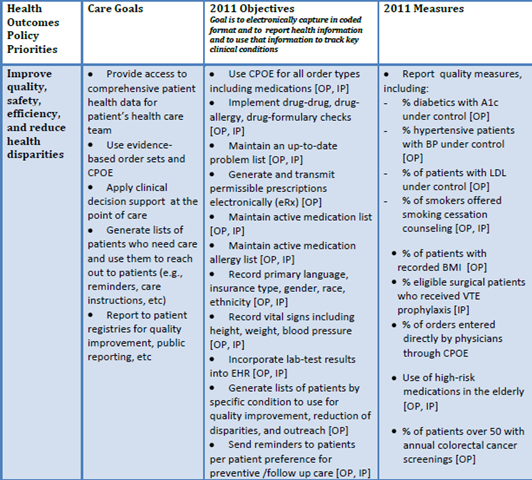
The Association of Medical Directors of Information Systems (AMDIS) files its response (warning: PDF) to ONCHIT’s proposal for the definition of “meaningful use.” Its recommendations:

  • Rewrite the standards from the point of view of patients
  • Clarify how ARRA payments will be determined
  • Focus on consistent use to capture problems, meds, allergies, histories, prescriptions, and vital signs, plus having that information coded so it can be shared
  • Defer quality reporting until 2013 to give doctors time to routinely collect the needed information
  • Take out anything that requires CPOE because it’s loaded with the possibility of unintended consequences
  • Hold technology vendors accountable for data exchange capability by making that part of certification.

Publicity-seeking missile Jesse Jackson, apparently fantasizing that he was there with Jackie, Tito, Jermaine, Marlon, and Michael as one of the Jackson 6, has insinuated himself into the limelight yet again, this time to dramatically repeat the obvious: the cardiologist who was in Michael Jackson’s house when he died needs to be found and interviewed (duh, Jesse). I’ve already made a bet at work that toxicology results will find at least one each of a narcotic, antidepressant, and stimulant, but the gossip sites say it will be more like a broader, Elvis-type blood-borne pharmacy since MJ was strongly rumored to have been a Demerol and Oxycontin addict in the past and, like a lot of celebs, had found himself some Dr. Nick-like docs willing to write anything he wanted even if it was likely to harm him (a Beverly Hills pharmacy sued him in 2007 for over $100K (!!) in unpaid prescription bills). Like former father-in-law, like son-in-law, sadly. Surely the tabloids are floating around offers to buy illegal copies of his medical records.

The final results of the HIStalk poll on HHS’s meaningful use draft: 20% think providers will achieve it too easily, 42% think the criteria are too hard, and 38% say they are about right. New poll to your right: do you think, as the technology journal article insinuated, that doctors and hospitals have intentionally resisted computerization to keep the public aware of how profitable their businesses are?

Also to your right, in Beta mode to see how many of you enjoy nerd humor like me: Dilbert. You can see the current strip, but also click the date link at the top to pop up a calendar and choose any date going back to 1989 or so (to the Phil, Prince of Insufficient Light days). My favorite is anything with Dogbert Consulting Company.

Justen Deal already told you this a couple of weeks back, but a new Canada Health Infoway report confirms: after eight years and $1.6 billion spent, EMRs contain information on only 17% of Canadians, far short of its 50% goal. Given its apparently failure to deliver what was promised, the organization’s response was: (a) we still might make it by the end of 2010, and (b) what the heck, it’s creating a bunch of HIT jobs, anyway. I guess our countries really are a lot alike. I was interested in the CEO’s educational background, but it’s never mentioned in his bio, which seems odd. 

Sentry Data Systems announces its new Claims Guardian application, which matches pharmacy procurement bills to charges for benchmarking, identifying missed billing opportunities, and documenting costs for submitted claims.

cern 

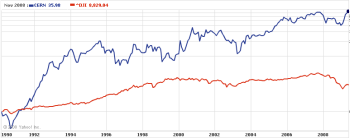
Cerner shares closed at $61.59 on Friday after hitting an all-time high, valuing the company at $5 billion and Neal Patterson’s shares at $344 million. Had you bought $10,000 worth of CERN in 1990, those shares would be worth $1.5 million today, for all us Neal-bashing losers (see stock chart above covering 1990 to now, with CERN in the blue and the Down in the red, no pun intended). Allscripts hit a yearly high Thursday and closed Friday at $14.74, but still way short of 2000 prices that were in the 80s. CEO Glen Tullman, predicting company growth, tells Jim Cramer, “we’re just getting started.” McKesson is in the 40s, way off its pre-HBOC prices in the 90s in 1998 despite paying massive CEO dollars.

qsii

But maybe your best HIT stock buy of all would have been NextGen parent Quality Systems. Your 1998 investment of $10,000 would be worth $627,000 today. The graph above shows the Dow (green), CERN (red), and QSII (blue). 

cdac

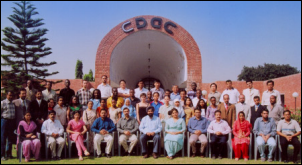
India’s national e-governance project will roll out Web-based telemedicine software called e-Sanjeevani, a .NET-based solution that’s claimed to be “the world-wide leading provider of connected medical devices or medical equipments, peripherals, and software used in telemedicine.” e-Sanjeevani was developed by CDAC Mohali, an ISO-9001:2000 certified R&D institute. I like its goals, which include “To provide multi specialty health care to the common man at the most affordable cost.” Maybe we should use it here to connect to specialists in India since our common man can’t afford it either. 

New York State Senator Pedro Espada owes the state and the IRS hundreds of thousands of dollars from the operations of his medical clinic/medical home, which gets funding from the state health department. The clinic paid the Senator $460K last year, but omitted that payment from its IRS filings. The clinic says it was promised $200K to convert to an EMR, but has received only half that amount. The Senator has been in hot water before, claiming a vacant apartment as his district residence and charged (but acquitted) of using clinic money to pay off his campaign debts.

China will restrict viewing of Internet-based medical research papers about sex starting next month, another step in a series of crackdowns that include requiring new PCs to have filtering software and requiring Google to block politically sensitive results from its searches. Medical information sites will be required to implement technology that will restrict sex-related medical research papers to medical professionals.

I’m torn: Microsoft is selling its Windows 7 Home Premium upgrade for $49.99 for a couple of weeks, temporarily discounted from its insane list price of $120 (Apple’s Snow Leopard will be only $29 and $49 for a five-license family pack, plus their stuff seems to be much less trouble–prone). Reasons against: (a) I have no unmet operating system needs since XP works fine for what I need, which is mostly to use Firefox to get to Google Apps and Gmail; (b) my Vista upgrade was a disaster, with all kinds of flaky behavior and lack of device support, (c) installing it requires a complete reinstallation of everything on the drive; and (d) I keep thinking of that Office 2007 ribbon bar, surely the stupidest and worst-designed software “feature” in recent memory, and wonder what similarly unpleasant surprises might have been tucked into Windows 7. I could load the release candidate version, but it’s just as risky in all those same ways except financially.

Speaking of Apple, I found its site for medicine and clinical practice. It’s a pretty short list of Mac-based EMRs, though, and I’d hope doctors wouldn’t choose a system just because it runs on a Mac. From the screenshots I’ve seen of some of those systems, they’re not much different from the hundreds of Windows-based apps out there.

Thieves in Canada who stole a truckload of computer monitors that a local hospital was donating to impoverished schools in Africa return them after finding out where they had been headed, attaching a note saying “sorry for the trouble, hope you forgive us, hope those kinds in Africa enjoy.”

Great news! Frugal politicians say they can try to fix healthcare for only $1 trillion. Let’s hope the government doesn’t run out of currency-printing green ink before it all turns to budget-busting red ink.

Jeff Amrein, who sold Advanced Imaging Concepts to Allscripts in 2003, moves on to his next venture: an online poker site called Hog Wild Poker Leagues. I thought the whole poker thing was as passe as swing music and pacifier-sucking teenagers, but maybe not.

Imaging vendor Merge Healthcare is added to the Russell 3000. Shares have been on a tear, jumping from around 40 cents in December to $4.30 now following major restructuring and a new private investment a year ago. Timing is everything, though: the share price was at nearly $30 in early 2006.

Odd hospital lawsuit: a heart surgery nurse sues her hospital employer, claiming she was demoted for complaining that a surgeon threw a 4-by-6 inch hunk of heart tissue at her during an operation and joked about it. His humorous line wasn’t mentioned, but I pictured him belting out Janis Joplin’s Piece of My Heart.

The surgeon general under the first President George Bush, who is now (but probably not for long) a VP of Florida Hospital in Orlando, pleads guilty of labor charges at her former New York health commissioner. She forced state employees to work overtime doing tasks such as having security guards move furnishings in her house and publicly chewing out state guards for mishandling her personal shopping bags. The inspector general’s report sand she added “new dimension to the definition of ‘arrogance’ and ‘chutzpah’." She’s also the sister-in-law of Father Guido Sarducci for you old school Saturday Night Live fans.

E-mail me.

News 6/26/09

June 25, 2009 News 8 Comments

From HIPAA Hound: “Re: interesting take on the resistance to electronic medical records. I have to say I agree with much of this reasoning, most especially where HC costs are increased by for-profit insurance companies looking to avoid paying claims by constantly moving the target for approved claims, thus sending admin costs for providers sky high, and the avoidance of any mechanism which might expose any of these practices to the general public. I am amazed that these practices have not been exposed already in our debate over HC reform.” Bet on it: whoever has the most lobbyists wins. This Technology Review (MIT) article is hardly complimentary: it says healthcare could have already gone digital if it wanted to, but resists to keep its lucrative business model out of the public eye. It also hints an another truism: it takes a lot of sick people to keep the big bucks flowing, so there’s not much incentive to lose customers by making them healthier.

From Bignurse: “Re: cheap technologies. I am using a free time clock software (Web-based) to keep track of time working on a part-time consulting job. Just click the timer while working and it records the minutes, later creates an invoice which can be e-mailed to the client. I can even put the timer on hold when the dogs need walking or to take dinner out of the oven. Love it.”

From Dr_Duped: “Re: HCNN. I signed up for a service at www.hcnn.net that promised an FDA targeted alert system based on my primary specialty. Sounded great. However, several FDA alerts did go out that would have been towards internal medicine and I did not receive a notification through HCNN. I called their listed number, and according to the gal that answered the phone, what I signed up for had nothing to do with the FDA. This company is trying to capitalize on the ‘Dear Healthcare’ letters we receive in the mail. The whole operation is deceptive and all my colleagues need to be aware. Those notifications go in the garbage for a reason – the medical community would prefer not to receive them by any communication method from Pharms companies.” I would hope the medical community pays attention, since those ‘Dear Doctor’ letters are related to patient safety, not drug company marketing (I think of them as anti-marketing). HCNN is non-profit and free, is clear about its separation from FDA, (it merely repackages paper FDA Dear Doctor letters into e-mail for faster delivery), does not share subscriber information, and has a ton of endorsements. I don’t know about the missed alerts and I’d keep an eye on them to make sure someone doesn’t try to cash in, but they seem on the up-and-up to me and a good service.

kohane  mandl

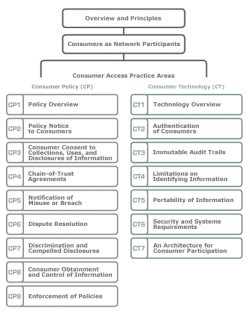
From The PACS Designer: “Re: iPhone. With the ever-increasing population of iPhones, it won’t be long before they are used in everyday hospital activities. The informatics program at Children’s Hospital Boston (CHIP) has embarked on a project to bring the iPhone application selection process into their everyday decision processes by mining their legacy databases to migrate the information to the web for iPhone access. They have listed ten features on their website for anyone to view that could lead to further information sharing in healthcare to improve patient care. Participants of their May workshop believe that an infrastructure based on ‘substitutable’ components is a highly promising way to drive down healthcare technology costs, allow flexibility, support standards evolution, accommodate differences in care workflow, foster competition in the market, and accelerate innovation. Thanks to John at Chilmark Research for the alert.” The NEJM article is here. I like the anti-certification jab in #10 of their platform principles, probably nurtured along by participant and EHR realist David Kibbe (click below to enlarge). Isaac Kohane and Kenneth Mandl (above) are the chief CHIP guys involved.

chip  

Misys announces its expectation of a 40% rise in sales for FY2009, although all but 3% of that came from the Allscripts merger and currency values. Allscripts says it expects to slightly beat full year revenue and earnings estimates after a strong Q4.

Farrah Fawcett and Michael Jackson die on the same day, ensuring that the rest of us who remember their 70s and 80s prime reflect on our own mortality. Apple CEO Steve Jobs lives on, meanwhile, although raising a lot of questions about how he was desperately ill enough to jump to the head of the Tennessee liver transplant line (and ahead of 16,000 Americans waiting for a transplant) yet the company disclosed nothing about his condition to shareholders to correct the fact that his claimed “hormonal imbalance” was actually “I’m in complete liver failure and will die shortly without a transplant.”

Some random thoughts as I endorsed the Declaration of Health Data Rights: (a) given the undecipherable nature of medical records to most laypeople, who’s going to explain them? Doctors won’t have time, so it’s a good business for a nurse to start. (b) It will be embarrassing how much misleading and plain wrong information they find there, kind of like when hospitals used to let patients see their error-filled charges and stopped because they couldn’t really explain them either; (c) Patients will be surprised at how much stuff is in there about them as a customer and not a patient (entries created entirely for billing purposes). (d) they may be surprised at the lack of continuity, especially with referrals and records sent from one provider to another.

From Weird News Andy: Reese’s Cups as health food? And, as he says, “a slide show for those not eating lunch” showing X-ray oddities.

I just remember that HIStalk is now six years old as of the beginning of the month. For the new folks, put your e-mail address in the Subscribe to Updates box to your upper right to get instant notification when I write something new (I don’t use that list for anything else, by the way, so it’s guaranteed spam-free). The Search HIStalk box invokes a Google site search to dig through those six years’ of stuff, looking for the name  of companies, people, or obscure rock bands. The sloppily designed Report a Rumor box in brilliant green asks nicely to be clicked when you’ve got something secretive to tell me (it’s secure, anonymous, and accepts attachments). Keep reading down the right column to see what’s on HIStalk Practice, to see what’s been posted to HIStalk Discussion or the Industry Events, and to see what comments have been recently posted.

markle

Markle Foundation says 56 organizations have endorsed its PHR framework.

Inga interviewed QuadraMed CMO Joe Bormel on HIStech Report, covering a lot of ground including translational medicine and taxonomies along with the usual industry-type questions. 

A study finds that the Phoenix area has a high rate of EMR adoption, but also a high rate of EMR deinstallation due to inadequate training, missing functionality, or lack of affordability.

Red Hat’s Q1 numbers buck the tech trend with EPS up 7%, beating estimates.

Two laptops stolen from Alberta Health Sciences (Canada) contain some patient information, but are password-protected. Apparently no medical institution in the world enforces a policy of storing data only on the network, not on the local device where it can be stolen or lost (nobody backs up PCs across the network, either, although users always have some vague confidence that IT magic is going on in the background).

HIMSS may be non-profit, but it’s looking for a sales jock “to generate sales and achieve revenue objectives for the Organizational Affiliate program,” prospecting hospitals for its all-you-can-eat plan of unlimited individual memberships for one institutional price. Required: to “aggressively solicit new customers,” “be alert to competitive organizations,” and “understand the process or art of selling.”

Speaking of HIMSS, the local paper mentions its office in Ann Arbor, MI. I assume that’s where MS-HUG lives, but I don’t really know.

TriZetto founder, chairman, and CEO Jeff Margolis receives the 2009 National Human Relations Award from the American Jewish Committee for his healthcare and community service work.

Jobs: Healthcare IT Project Managers, Account Executive – South Central, McKesson SQL Consultant.

If you’ve got $4,000 to spend and want to hang out with Goldie Hawn, David Blaine, and some big-name healthcare people, you could go to TEDMED2009 in October in San Diego. It was dead for four years (reason not given that I could find) and revived this year in what looks like a business rather than a love-in, but at least there will be only 400 attendees. I bet the bloggers are falling over each other trying to nab a press pass so they can tweet their brains out to a breathlessly waiting world.

The head of Siemens Healthcare, like all device and drug makers, tries to convince Congress that the company’s technology actually saves patients and insurance companies money, also making the case that most doctors who order diagnostic tests don’t personally profit from doing so (he’s probably right about that, but that still leaves scumbag malpractice lawyers as a key reason for overuse).

Fairview Health Services (MN) is defending itself against a lawsuit over patient information posted on a MySpace page. A woman being treated in a clinic for a sexually transmitted disease was spotted by an employee related to the woman’s husband, who when told another relative at the hospital, who then told the husband. Both employees were fired, but a Web page soon popped up with the woman’s medical information, her picture, and claims that she cheated on her husband and was addicted to plastic surgery. The woman sued the hospital and the employees, but I’m not interested enough to try to understand all the other legal wranglings detailed in the article. What I did find interesting was a claim by the defense: that HIPAA pre-empts state privacy laws and therefore precludes private lawsuits.

Another odd hospital lawsuit: a patient at Memorial Hermann Beaumont Hospital takes a swing at a hospital employee, misses, and instead hits another patient in face, breaking the other patient’s jaw and requiring him to undergo surgery when infection sets in. The broken jaw guy is suing the hospital (but not the non-deep pockets guy who decked him, of course). Oddest of all, his lawyer is a former Super Bowl starting cornerback for the Buffalo Bills.

HERtalk by Inga

Nuance Communications recognizes 20 healthcare organizations for saving one million dollars or more in transcription costs using the eScription platform. Brigham and Women’s Hospital (MA) tops the list, having accumulated $10 million in savings since installing the product. eScription also reports that eight new healthcare organizations have gone live on their platform since the beginning of the year.

sharp

Sharp Healthcare (CA) selects Anakam Identity Suite to provide patient access to Sharp’s patient portal.

Nyack Hospital  (NY) chooses McKesson’s Paragon community HIS solution for EHR and financial management.

Medicity and Eclipsys announce a partnership to provide a HIE to Eclipsys clients. Eclipsys will leverage Medicity’s Care Collaboration platform to deliver its new HeatlhXchange solution.

Stephen P. Wood, a senior VP for Ingenix Consulting, is named a Top 25 Consultant by Consulting Magazine in the “Excellence in Healthcare” category.

RCM vendor Capario names Charles Lambert CFO, making him the forth former Misys executive to join the company once known as MedAvant Healthcare Solutions.

HIS vendor Healthland partners with Sentillion to resell its SSO solution expreSSO.

Greenway introduces a new program to extend discounted pricing to physician groups within HIEs. Qualified organizations can purchase Greenway’s PrimeSuite 2008 for discounts of up to 25%.

The state of Vermont was recently recognized by Surescripts as the “most-improved” state in terms of sending prescriptions electronically. Surescripts also honored the nation’s top individual e-prescribing physicians, include three using standalone e-prescribing software and three using EMRs. Interestingly, 44% of Vermont’s e-prescriptions were generated by Allscripts users, as were three of the six top prescribers. A fourth provider uses Eclipsys Practice Solutions.

u of i

A University of Iowa official admits that despite spending $55 million on an Epic system, the UI Hospitals and Clinics will not be able to communicate seamlessly with other hospital systems. It’s unclear whether this is a surprise to the school’s Board of Regents or merely to the reporter covering the story in the local paper. The officials also indicated that users have been required to go through an “onerous” training process, which consisted of 12 hours over the last fall and spring. (just 12 hours?) The  medical school representatives also praised the system for its flexibility and wide variety of features.

Opus Healthcare Solutions becomes the second company to receive CCHIT ‘08 Inpatient EHR certification, after Epic.

Diagnostic Center of Medicine (NV) selects Allscripts EHR/PM for its 16-provider, three-location practice, replacing Misys practice management and adding an EMR.

NCQA releases a reporting highlighting the important role of small medical practices, which provide almost three quarters of ambulatory care in the US. The report points out that smaller practices are more likely to lack the resources to improve quality of care, implement EMRs, and serve an increasingly diverse population.

Perhaps Rep. Kathy Dahlkemper read the NCQA report. The chair of a House Small Business subcommittee on health care proposes a bill to create a new SBA loan program to help doctors in small or solo practices to buy and maintain EMRs. The program  would rely on private sector loans of up to $350,000 and $2 million for groups, be 90% backed by the SBA.

And, the AHRQ is considering developing an electronic toolkit to assist small and medium sized practices change their workflow when adopting HIT. The AHRQ issued an RFI to gather information on how clinics and physician groups redesign their workflow when adopting technology.

I must say this report depresses me. Common Cause calculates that so far this year, healthcare industry participants are spending an average of $1.4 million a day to lobby members of Congress. That means lobbyists are on track to spend half a billion dollars this year. Half of the spend comes from the pharmaceutical industry; hospitals, doctor groups, and suppliers of “healthcare products” (which I assume includes HIT items) make up the balance. The reports also shows the amount of campaign contributions received from the health industry to each senator and representative. Arlen Specter wins that contest in a landslide;  Mr. H’s man-crush Senator Grassley is way down on the list. Meanwhile I’m trying to calculate how much healthcare we could buy with $1.4 million a day.

inga

E-mail Inga.

News 6/24/09

June 23, 2009 News 10 Comments

From Don Duck: “Re: new CCHIT certifications. Does the EMR-S, which certifies home-grown, single-user EMRs, include groups that have developed an EMR and then sold or loaned it to other groups with common ownership or interest? It seems odd that some EMR companies might go out of business for lack of certification while homegrown versions could live on.”

cchit

Here are CCHIT’s slides (warning: PDF) on the topic. It sounds to me that EHR-S sites (which pay only $150-300 per licensed provider and are certified via a “virtual visit”) can be any provider group as long as their product meets requirements for federal standards, security, and meaningful use. The grid says even vendors of comprehensive EHRS with multiple customers can go the EHR-S route, although the per-provider cost would make that unattractive for all but the smallest vendors (although it would let them turf the whole certification issue off on their customers, assuming anyone would buy under those terms).

Microsoft signs with Sentillion to provide single sign-on and context management services for Amalga. Kudos to Microsoft for recognizing the value of offering that level of user experience integration early in the game. I interviewed Sentillion and co-founder Rob Seliger not too long ago (and my sixth question about vendors making their products CCOW compliant was especially relevant, if I do say so myself). My hospital has both SSO and context management in limited deployment, but has finally seen the light and is adding new apps. I’m pretty sure we will avoid some clinical mishaps my keeping the screen-fumbling to a minimum, not to mention improving clinician satisfaction. It’s a nice nod to Sentillion that Microsoft came knocking.

Healthcare Management Systems announces GA of what it says is its largest release, which contains functionality to meet figure CCHIT criteria and to qualify provider users under meaningful use.

A widely reported Cornell study finds that providers don’t tell patients about clinically significant lab and rad findings seven percent of the time. The study methodology isn’t the best, but it’s one of those “sure, it happens” issues in which results are lost in the shuffle or don’t raise the appropriate flags.

Sage Software India announces the launch of a couple of new products for hospitals in India. They have ERP in their name, but that must mean something other than Enterprise Resource Planning since the press release talks about bed assignments and physician notes. ERP sounds more like a product line, according to this page.

Listening: Eric Clapton and Steve Winwood, brand new on Live from Madison Square Garden and recommended by reader Bill. I’m not a fan (Cocaine and Wonderful Tonight are immediate dial-changers for me), but this one’s a keeper, a couple of guys in their 60s sounding better than they did in their 20s. Their cover of Hendrix’s Little Wing is about as good as music gets, with an old-school Hammond B3 keyboard and Clapton doing great stuff on the guitar instead of just noodling around.

keane  

Welcome to new HIStalk Platinum Sponsor Keane, more specifically, its Healthcare Solutions Division (HSD). The Boston-based company provides solutions to hospitals and long term care facilities all over the US, including Keane Optimum (hospital information suite), Patcom (patient management), and Keane NetSolutions (browser-based medication management). I’ll let them tell you more: “Keane’s solutions help U.S. healthcare facilities modernize their operations by using technology to prevent medical mistakes, provide better patient care, and implement the most effective treatments, while at the same time achieving cost-saving efficiencies and meaningful returns on health information technology investments. Keane Optimum is especially well suited to help healthcare facilities accelerate the adoption of EMRs in response to the Healthcare IT provisions in the recently approved American Recovery and Reinvestment Act. Specifically, Optimum allows providers to enhance quality, maintain privacy, support clinical decision making and begin to move to a more interoperable environment for improved health care delivery.” Thanks to Keane for supporting HIStalk and the people who read it.

Saint Vincent Health Center (PA) credits Sunrise Surgery (which I think is Surgical Information Systems when Eclipsys sells it) for its compliance with regulatory requirements and quality reporting.

pedsource

HIMSS gets a page devoted to it on the Citizen Media Law Project for sending a semi-threatening letter to two bloggers back in February, demanding they take down unflattering comments left by an anonymous poster (and also asking them to turn over information that would help it identify that individual). Both bloggers declined to comply but offered HIMSS equal time, which it didn’t take advantage of. I still think HIMSS believes the poster was a former or current employee given that the lawyers doing the pressuring (respectfully, I should add) are labor attorneys. You may also remember that the comments that got the HIMSS corporate panties in a bunch made some pointed (and sometimes bizarre) comments about what the poster perceived as HIMSS influence over CCHIT.

From Weird News Andy: a man sent home on Tylenol from an Australian hospital with what its ED diagnosed as a headache turned out to have a broken neck. The patient said he was told they couldn’t do an X-ray because the radiology department was closed for the night.

I like this article, which says budget-strapped CIOs are turning to “lite” corporate IT using free Web-based tools, open source applications, and software from little-known vendors to meet IT needs. The article cites this blog, which says the average person has more IT capability in their den than at their job: “The new expectations of corporate IT should also turn into an opportunity. If you and I can buy storage at 10c a GB, why are corporations paying hundred times as much? If at any given time, if millions of consumers are talking to each other around the world on Skype for free, why are mobile companies charging you exorbitant roaming fees? If any one can call the Geek Squad and get a one time PC repair visit, why is your desktop outsourcer not charging you on a per usage basis, rather than some monthly charge? Why is your software vendor UI still so 90s – and why do they deliver a truckload of user manuals and documentation? And why do they still need schoolbuses of consultants to help implement? Consumerization of technology should be a broad manifesto for change in corporate IT and enterprise vendors. Let’s face it – we are  slower, uglier, exorbitantly expensive, obsessed with security and compliance. Time for a makeover. An extreme one.”

So, with that article as inspiration: what interesting, lightweight, and cheap technologies are you using? I’m really curious. If you’re a provider, what are you experimenting with?

And in that vein, know any CIOs or CMIOs who are innovative and interesting? We’d like to interview them, so hook us up if you can.

grassley

I admit it: I have a man crush on Senator Charles Grassley and his fearless probing into how government money is spent (and misspent). His latest target: UCSF’s medical school, of which he is demanding more information to determine whether taxpayer dollars are being wasted on research projects and mismanagement.

The Senator would like this: the VA’s $3 million combat-related brain injuries lab in Texas hasn’t tested a single veteran in its three-year history.

I endorsed the Declaration of Health Data Rights here. What it says: you have a right to your medical information, each data element should be tagged with where it came from, whoever has your information should give you a copy for very little money (and in electronic form instead of paper if that’s how they have it), and you can share your data with anyone you want.

The New York Times covers the medical home concept, highlighting a Duke University project that assigns a primary care specialist to coordinate a patient’s care, also providing a patient portal for making appointments and checking lab results.

Heart failure patient readmissions at Sentara Virginia Beach General Hospital were reduced by 74% by using a heart failure care plan deployed via GetWellNetwork’s interactive patient care system.

apollobramwell

Apollo-Bramwell Hospital in Mauritius will be the first Indian Ocean hospital to go live on PACS.

E-mail me.

HERtalk by Inga

Right after Apple announced their new phone, I bemoaned the fact that I had JUST upgraded from the 2G to the 3G. Fast-forward (after lots of advice and  lots of time on hold with Apple and AT&T and never talking to anyone) to Sunday: I went to the Apple store and was told I was out of luck, there is no way to get the new phone without paying another $199. I suppose I could have argued the point further with some mensa (or whatever they call the managers), but I had no interest in standing in the 20-deep line just to attempt getting a new phone for a better price. If you purchased a 3G2, please tell me it really isn’t worth standing in line for two hours. I did upgrade to the 3.0 software and am SO happy to have search capabilities on my e-mail, cut and paste, and the ability to view email in landscape. I really am a low-maintenance kind of woman.

The Glacial Ridge Health System (MN) reduces its costs 50% by replacing its film-based PACS with 7 Medical’s on-demand PACS.

frisco

Baylor Medical Center at Frisco (TX)  selects Orchestrate Healthcare, in partnership with Vitalize Consulting Solutions, to perform a readiness assessment of their current systems, provide an analytical review, and present a roadmap for the strategic roll-out of clinical and technical architecture.

NextGen is now a CMS-qualified PQRI patient registry for 2009 and will help eligible physicians submit PQRI quality measures directly to CMS.

RelayHealth and LightHouse1 announce a new partnership to help providers automate payments for patients with healthcare spending accounts and consumer driven healthcare plans. RelayHealth will integrate its EasyCDH solution with Lighthouse1’s OnDemand  platform to create the SAS OneCard solution.

Medical tourism in Korea has grown 41% in the past year. Officials attribute the increase on new laws permitting aggressive marketing to attract overseas patients.

Massachusetts takes top honors at Surescripts’ Safe-Rx Awards, which recognize the top e-prescribing states. Massachusetts providers send 20% of prescriptions electronically, followed by Rhode Island at 17%. Vermont was named the most-improved state.

Sarasota Memorial Health Care System (FL) selects the Medicity Novo Grid solution to electronically exchange health information between the hospital and physician practices.

Contra Costa Regional Medical Center (CA) plans to replace its discontinued Mediware Information System with Unibased ForSite2020 periOperative Resource Management System.

Tufts Medical Center (MA) contracts with WaveMark to provide RTIM technology to track physician preference items in its Cath, EP, and interventional radiology departments.

KLAS churns out another report, this one entitled, "Infection Control: Improving Patient Care and Reimbursements.” The study highlights the leading infection control software vendors and their solutions. The featured products are the top-rated Cardinal Health MedMined, Premier SafetySurveillor, and TheraDoc Infection Control Assist.

More medical records are found dumped in the trash, this time finding their way to an Alabama landfill. It’s ironic how much attention is spent ensuring our electronic records are secure while paper medical charts continue to show up in public dumps and recycling centers.

The Trizetto Group introduces a free PHR available to qualified payer customers for providers.

E-mail Inga.

Monday Morning Update 6/22/09

June 20, 2009 News 5 Comments

From The PACS Designer: “Re: Ning. TPD was looking for a collaboration tool for a new project and came across Ning. While it is touted as a ‘New Social Network’, it still can be used as a collaboration network when participants are working from remote locations and need to remain part of a discussion process or work development activity that spans multiple locations. Even HIStalkers could form their own social networks based on HIStalk postings and topics!” I actually tried it awhile back and liked it.  

jobvent

From Custard’s Last Stand: “Re: ‘I hate my job’ blog. Perhaps this kind of info could be off to the side somewhere, like a sub-blog? I do think there is some value in learning about company cultures, trends, how they treat employees, etc. BEFORE you apply for a job.” I agree, although the happy employees aren’t usually as motivated to post as the unhappy ones, so every employer looks bad. You also can’t tell if anyone is who they say (management? competitor? psychopath?) JobVent is the big one, but I’m pretty sure I remember that companies have successfully threatened the site and forced them to remove negative postings, so it’s still caveat emptor. Just to give you an idea of the scores: Cerner (-1326), McKesson Provider Technologies (-24), Epic Systems (152), Meditech (-234), and Perot Systems (-545).

From Ralph Hinckley: “Re: Orion Health. I’m a former employee, laid off in January. They had another round this week, at least eight in the US and unknown in New Zealand.” Unverified.

Listening: Dengue Fever, an LA band whose music sounds like something out of Vietnam in 1969: Cambodian pop mixed with US psychedelia. I cheerfully acknowledge that maybe it’s not for everyone. Also: The Sword, Austin-based Sabbath soundalikes.

I was reading about medical fraud in which low-paid hospital clerks sell copies of the insurance or welfare cards of patients, which are then used to submit fraudulent bills (which, surprisingly, are usually paid). The article made an interesting point: welfare patients don’t get any kind of receipt that shows what has been paid on their behalf, so they couldn’t detect the fraudulent use of their credentials even if they wanted to. We’ve really made it too easy: someone else not only pays for the care, but the recipients never even see a bill.

Three Cleveland community health centers will get $2.7 million in stimulus money next month, with an EpicCare-compatible EMR on the list of projects to be funded.

Don’t forget the HIStalk Events Calendar, where you can post your HIT-related conference or Webinar for free. A couple of new conferences have been added.

Parkland goes live with its inpatient EMR (Epic, if I remember right and always a safe guess if the hospital is > 400 beds).

emanuel

The New York Review of Books covers Healthcare, Guaranteed: A Simple, Secure Solution for America, by Ezekiel Emanuel. A good quote: “To remain competitive, many not-for-profit hospitals promote their bottom line just like their for-profit counterparts, vigorously advertising their facilities and services to the public. No other health care system is as focused on generating income as ours, and in no other country is medical care marketed and advertised so aggressively, as if it were just another commodity in trade. This increases health costs, while hospitals concentrate on the delivery of profitable, rather than effective, services. It also favors those who can pay over those who need medical care but can’t afford it … In 1980, after medical organizations lost some costly antitrust trials, in which they were accused of such offenses as limiting doctor fees or denying staff privileges, the AMA changed its ethical guidelines, declaring medicine to be both a business and a profession. This lowered the AMA’s barriers to the commercialization of medical practice, allowing physicians to participate in any legal profit-making business arrangement that did not harm patients.” The answer he’s proposing sounds like the Mayo (and Kaiser, Marshfield, Geisinger, etc.) model, with multispecialty group practices made up of salaried doctors.

Mediware announces the price it paid for BI software vendor SciHealth: $2 million, plus potential incentive payments.

Sentry Data Systems announces that it has added wireless scanning to its Sentinel RCM hospital pharmacy management system (procurement, operational visibility, financial management, and department management). They’ve also created a site that covers the Deficit Reduction Act that mandates true NDC number reporting on Medicaid drug claims (a good reminder that despite good intentions, the government is clueless about how healthcare is actually delivered). Sentry’s DRA white paper is a great intro, including why it’s hard to comply.

Good thing I got the Mac and iPod Touch when I did: the lines at the Apple store are back, this time for the new iPhone 3G S (or maybe the $99 basic iPhone). And speaking of Apple, The Wall Street Journal says CEO Steve Jobs received a liver transplant two months ago in Tennessee, where wait times are short. Only two hospitals there do adult liver transplants and Vanderbilt denies it was them, but I wouldn’t bet on that.

Louisiana passes a bill that will set aside $5 million to provide EMR loans to providers (or more accurately, to give the state access to stimulus money).

Dennis Quaid and his wife settle the lawsuit of their heparin-overdosed children against Cedars Sinai for $500K.

Oracle buys drug industry manufacturing software vendor Conformia Software.

I admit I’m stupid: I don’t see how it’s possible for a company to buy its parent like WebMD did (and for stock instead of cash at that).

eClinicalWorks signs a partnership deal with Scantronix, which converts paper medical records into digital ones.

Texas billionaire Allan Stanford, whose Antigua bank is the primary shareholder of healthcare software vendor Health Systems Solutions, is in US custody and charged with a $7 billion Ponzi scheme that could put him away for 250 years. Antigua’s bank regulator has been charged with accepting bribes from the bank. His bigshot lawyer defended Enron bankers, cult leader David Koresh, and former House Majority Leader Tom DeLay.

E-mail me.

News 6/19/2009

June 18, 2009 News 12 Comments

From Chuck Ponozzo: “Re: latest EMR developments. I attended via phone and Webex both the HIT Policy Committee call and the CCHIT Town Call meetings over the past two days. First I was a little disappointed in the Policy Committee and ONC for not having some of the discussions hashed out prior to the meeting and that nothing was approved to move forward. ONC let the media hype up this meeting as the place where meaningful use is going to be defined, and yes we have some idea, but we are all left sitting on the edge of our seats for another month before anyone makes a decisions. Even more concerning to me, though, is the way CCHIT is going about their business without any regard for the fact that they haven’t been identified as a certifying body and the folks on the Certification / Adoption Workgroup didn’t seem like they were ready to anoint them.”

From Former Sunquester: “Re: reports. The fact that you are squashing reports from current and former Sunquesters is disgusting.” Someone claiming to work for a couple of vendors keeps sending anonymous hatergrams with unsubstantiated claims about employee discontent in various forms. Employee-employer squabbles, even real ones, are not interesting to anyone else, so I’m not likely to run them here. I complained bitterly and regularly when I was unhappily working for a vendor several years ago, fantasizing that an outraged world would rush to my side if I kept moaning about it. I finally grew up and realized that (a) people had their own problems and didn’t care about mine, and (b) I looked stupid for whining instead of doing something about it. If  it’s that bad, leave. If you can’t do better, be grateful they’re paying you when nobody else wants to. That’s the harsh lesson I had to learn.

From Lemmy: “Re: Harvard Vanguard. Anne Fitzgerald, co-chief of operations and former CIO, is leaving on July 15. From the e-mail announcement: ‘Under Anne’s leadership, we completed major upgrades to Epic, launched three other Atrius Health groups on Epic, designed and built CHAPS (Community Hospital And Physician Systems Initiative) which can identify our patients when they arrive at a community hospital’s emergency room, increased the visibility and support for our ancillary and specialty services with investments such as the Central Lab move, PACS selection, pain management service and others, began the Site Councils as a way of moving to more local decision-making, and undertook a major investment in improving job do-ability.” Sounds like a mutual admiration society, other than the fact that she’s leaving. Maybe she took my advice above.

Physician warning: someone is faxing practices claiming to be with Medicare (and sporting its logo) and asking to have account information faxed immediately to prevent payment delays. It’s a scam.

New poll to your right: are the meaningful use criteria contained in HHS’s preliminary matrix too easy, too hard, or juuuuusssst right?

Cerner shares hit a 52-week high today. I’m squinting at the historical chart and it looks like CERN share prices just missed hitting an all-time high.

HIMSS says hospitals will spend over $14 billion on IT systems in the next five years.

Meditech gets a 6.0 sale to a 700-bed hospital in England, with Perot part of the deal for implementation consulting.

CalPERS, Anthem Blue Cross, Medco Health Solutions, and Blue Shield of California launch a big e-prescribing project.

googleforms

Here’s something I bet you can use: Google Forms, called a SurveyMonkey killer by some, lets you create online forms that can collect Web-based responses by e-mail or in a Google Docs worksheet, making it perfect for doing polls or surveys. You just go to Google Docs and click New, then Form. I’ll be putting it to a couple of immediate uses, I expect.

Noteworthy Medical Systems announces the release of NetPay, a Web-based application interfaced to its practice management system that lets doctors collect patient payments as they leave the office.

An oncologist arrested on national TV’s “To Catch a Predator” for soliciting what he thought was a 13-year-old girl online says he should go free because alleged explicit chat room logs were lost when the hard drive of a Perverted Justice investigator failed. The prosecutor says it doesn’t matter since he has a saved copy, but the defense is arguing that there’s no chain of custody. The prosecutor counters with what sounds like a clincher: the doc showed up to have sex with a child and was caught on national TV, hard drive or not. Doh!

South Carolina, like other cash-strapped states, holds a health IT summit with the objective of getting federal money (EMR Welfare, I’m going to start calling it) and maybe even helping a patient or two in the process if the cards are right.

medaxis

A company called Clear Innova implies that it has launched a new radiology information system, but it appears to be a marketing company pitching Origin from Medaxis.

A former Army surgeon and assistant medical professor at Washington University in St. Louis is implicated by major newspapers as having been paid $800K by medical device maker Medtronic for fabricating a favorable study of one of its devices.

halifax

Halifax Health (FL) chooses Meru Networks as the wireless network provider for its new 500,000-square-foot building.

So whatever happened with the April DoD raid on Siemens in Malvern? You would think they would have announced something if they found it.

University of Iowa Hospitals will lay off 130 employees.

Jobs: Senior Developer, VP Sales – Healthcare Software, Cerner eMAR Project Manager, McKesson PACS Administrators.

The gossip site paying OctoMom to follow her around with cameras is charged with violating California labor laws, leading to its defense that it’s a “news-gathering organization” not subject to entertainment industry laws.

I told you a few days ago that hospital IT people see this depressingly regularly, but here’s a new example: an employee of a Florida hospital is arrested for using his work PC and printer to print child porn. I guess site-blocking software isn’t working or isn’t being implemented.

Unibased Systems Architecture opens a demo center in Chesterfield, MO.

PACS vendor AMICAS will join the Russell 3000 stock index.

Informatics Corporation of America markets its ICA CareAlign as a “green” solution that leaves legacy systems intact, reduces paper and duplicate work, and reuses patient information.

Michigan’s medical society, Microsoft, Covisint, and PBM company MedImpact Healthcare Systems announce a collaboration that will give users of the medical society’s portal access to the HealthVault information of patients.

Interesting lawsuit: two male nurses sue their former hospital employer claiming they were illegally discriminated against since only they, not their female colleagues, were called when patients got violent. They say they were fired for complaining and want money for medical expenses, injuries, and emotional pain.

E-mail me.


HERtalk by Inga

From No satisfaction: “Re: Healthcare reform and insurance for all. This op-ed piece in the WSJ is a ‘must-read,’ suggesting that our failing healthcare system is also the fault of bloated Medicaid, Medicare, and other public programs that have strained state and federal finances. In my opinion, it’s time to move towards a free market. This much government in the middle adds cost, and long term means more people with less or no coverage. In all of modern history, no central government has ever succeeded in controlling a nation’s economy or managing its industries. This noble experiment will be no different. Start getting rid of insurance and let people pay for their care out of pocket — that way, they can truly compare prices and quality. Adding more government to something the government is already running that isn’t working isn’t going to fix anything!”

From Winnie Ryder:Re: Hospital embezzlement. Thought you’d like this article.” Winnie forwarded a story that claims that women over the age of 45 are most likely to commit inter-office fraud and embezzlement in hospitals. Reasons include the need for money, revenge, and the the thrill of the challenge. My take: it’s best to take care of the mature women in your world.

And obviously hospitals in Czechoslovakia have figured that out. The nursing shortage there has led some institutions to offer creative perks to attract workers. Candidates seem particularly attracted to offers of free plastic surgery, including tummy tucks, remodeled breasts, and face lifts. I think I’d like to hang out with Nurse Petra, who’s quoted as saying, “I would rather have plastic surgery than a free car.” Heck, if the shortage is that bad, why not ask for both?

SCI Solutions announces the signing of 22 contracts during the first half of their fiscal year, ending on March 31.

scrushy

An Alabama judge orders HealthSouth founder Richard Scrushy to pay shareholders almost $3 billion in damages after being found guilty of liable in a shareholder lawsuit. He denies any knowledge of the fraud scheme that nearly bankrupted HealthSouth.

The state of California files suit against six Target stores, alleging the illegal of dumping hazardous waste, including medical waste, into landfills.

MGMA reports that the starting salaries for physicians in many specialties are on the rise. Neurologists saw the biggest gain, from $200,000 to $230,000 a year, up 15%. Those earning the highest specialty salaries were neurosurgeons ($605,000), while pediatricians started at $132,500.

GE Healthcare’s CTO is named leader of the company’s $6 billion health care initiative. The “healthyimagination” program focuses on improving healthcare for people at a reduced cost.

Congrats to eClinicalWorks CEO and co-founder Girish Kumar Navani for winning the E&Y Entrepreneur of the Year Award for New England in the healthcare technology category.

MedCentral Health System (OH) implements Siemens Soarian Quality Measures to automate chart abstraction and help expedite the submission of quality measures.

WebMD and HLTH Corp. resurrect their merger deal, with WebMD purchasing its parent company in a $2.31 billion, all-stock deal. The transaction is scheduled to close by the end of the year pending regulatory approval.

Ingenix introduces Ingenix Revenue Manager, a new suite of software applications to assist hospitals with RCM activities. The suite includes three separate modules that can be purchased separately or together: Denials Prevention, Appeals Automation, and Denials Analytics.

Hayes Management Consulting just published its summer 2009 issue of the Hayes Review Newsletter. Included in the issue: tips for interoperability design with Ensemble and details on Red Flag Rules.

best childrens

U.S. News Media Group releases its second annual rankings by specialty of America’s Best Children’s Hospitals. Rankings were based on  reputation, medical outcomes, and care-related indicators.

Heritage Valley Health System (PA) selects Allscripts Enterprise EHR for 150 of its employed physicians.

inga 

E-mail Inga.

News 6/17/09

June 16, 2009 News 19 Comments

From Scot Silverstein: “Re: your idea of ‘on a less contentious level, at least fully defining the extent of practice variation in real time and alerting physicians of areas for improvement.’ That was an approach suggested over 20 year ago: Perry L. Miller [Yale Center for Medical Informatics}, Expert Critiquing Systems, Springer-Verlag New York, Inc., Secaucus, NJ, 1986. Your ‘anon-a-doc social networking’ idea is interesting, but then how to differentiate advice from good docs and bad docs” I wasn’t necessarily picturing that the docs would be anonymous, so their advice could be evaluated in the same way as Amazon and Citysearch reviewers. And like those sites, I would assume that since good docs vastly outnumber bad ones that an aggregated set of opinions would lean heavily toward the best answer.

From Pharmacist H: “Re: Pittsburgh medication system problems. Whoever wrote about the electronic medication problems of an unnamed vendor is shouting fire in an inferno.”

From HITMan: “Re: physician variation. I am a non-clinican IT guy and CIO. I am constantly amazed by the quality care that my clinician colleagues deliver, but I also keep in mind the point that the most significant healthcare advances in the past 80 years have been driven not by physicians but by public health initiatives (think immunizations). I still think, however, that physicians think too highly of their own value and the quality of their EMR progress notes. Ask some nurses — they would probably have good insight about who really brings value to the health system equation.  Nonetheless, I stand by my comment that variation is the enemy of perfection and that by forcing physicians to deliver care in an evidence based-way (mon dieu!) and standardizing the care they deliver that we can improve the care that we deliver to our customers (I mean patients).” I agree with nearly everything you say, especially the primary role of public health (and not medical treatments) that have extended life expectancy. However, good doctors have told me this: evidence-based medicine works for 80% of the people, but it doesn’t allow physician discretion in identifying and managing the other 20%. Maybe docs ought to be able to justify and exclude those exceptions, which is what all of us would want if we were one of those patients. My working assumptions are (a) doctors don’t go to work each day with the intention of harming patients; (b) they will do the right thing if they know what it is; and (c) the view from the cheap seats is different (sometimes better, most often worse) than from the playing field. Evidence-based care is fine as long as it has been developed and vetted by practicing doctors, which isn’t always the case.

fletcherallen

From Mr. Pepperton: “Re: Fletcher Allen. They have gone live with Epic and the project was a huge success.”

Thanks to DrLyle for his HIStalk Practice writeup on the President’s speech to the AMA yesterday.

HHS publishes its meaningful use matrix (warning: PDF) with these priorities:

  • Improve quality, safety, efficiency, and reduce health disparities
  • Engage patients and families
  • Improve care coordination
  • Improve population and public health
  • Ensure adequate privacy and security protections for personal health information

My first impression: excellent. Some of the criteria will be a bit soft to measure and validate, but most of them are not only solidly thought out, they are objective and absolute. They are ratcheted in through 2015. What do you think? Better or worse than you expected? Inga weighs in below as well.

Nurse Deborah Leyva and a technology attorney (her husband, I think) have put together the HIPAA Survival Guide, which includes a section on HITECH.

McKesson says it won’t raise base salaries of its executive officers in 2010. It also claims it will raise the bar on executive bonuses. That may not have been a coincidental announcement: it hit the wires at about the same time as stories about CEO John Hammergren’s FY2009 compensation: $29.7 million, including a $12 million bonus. That’s damn generous considering the company’s stock dropped 33% over that same period, shafting those worker bees who invested their rather more modest proceeds in company stock. Doesn’t anyone in healthcare work for a reasonable wage any more, other than the few nuns left?

sarasota

Sarasota Memorial Hospital (FL) is using social media to communicate with the public, including Twittering its $49 heart disease checkup special.

GE has set aside $100 million to loan new customers  its EMR systems who don’t have the upfront cash to benefit from ARRA, rather like those used car dealers that offer to use your yet-unreceived tax refund as a down payment. Everybody rides!

vanderbilt

Vanderbilt clinicians and informatics professionals are testing what they say is the first real-time sepsis detection system, to be followed this year with decision support tools to guide its treatment. Their description of a “state-based decision engine” is interesting: “Essentially, this involved breaking down the guidelines into a series of independent processes that can take place sequentially or simultaneously. ‘This really captures the way doctors work. If we see low blood pressure, then we think of one set of treatments. If we see low blood sugar, then we think of another set. If we see the two together, then we consider a third set of possible measures we can take.’”

Sentara Healthcare (VA) works with Picis to integrate its LYNX Medical Systems ED revenue management system with Epic’s EDIS. Sentara says it has gained millions of dollars in revenue from the integration. Picis also announces LYNX C/Point, a revenue management system that reduces the risk of recovery audit contractor (RAC) penalties.

Nuance releases the results of its EHR Meaningful Use Physician Study, which found that more doctors (75%) want a better way to document care than with a mouse and keyboard than want stimulus money (69%).

The AMA adopts principles for EMR breaches: (1) tell the patient; (2) follow appropriate procedures for disclosure; (3) place the interest of the patient first; and (4) give the patient information to mitigate the consequences.

Orlando Portale, Chief Innovation Officer of Palomar Pomerado Health, and Jonathan Bush, CEO of athenahealth will speak at the Fortune tech Brainstorm 2009 next month in Pasadena, CA. Also on the dais: Barry Diller, Robert Iger, Ashton Kutcher, Mark Hurd, and bunch of other business luminaries. Registration costs $3,500 and the hotel is $260 a night. The conference offers press passes, so maybe I’ll show up.

hysteriahospital

New hospital software: Hysteria Hospital: Emergency Ward, a game for the Wii and Nintendo DS systems.

Followers of a saint-like woman named Amma who dispenses hugs and runs charitable hospitals says her methods will be replicated on a larger scale. Among her organization’s projects is healthcare IT. “Amritanandamayi’s volunteers have made significant contributions to various programs in India, including telemedicine and electronic medical records. Gottsegen helped develop a computerized record-keeping system that is now used in all of Amritanandamayi’s medical centers throughout India. He and a team of volunteer software engineers from India and California are adapting it for use in the U.S. health care system. If they can win a piece of the federal stimulus funding earmarked for electronic health records, they hope to compete with other top developers.”

Here’s an interesting quote: “It is no more practical to have ‘health insurance’ to pay for prescription drugs and routine doctor visits than it is to expect your auto insurance to pay for your oil changes and tire rotations … Health insurance does not insure your health, nor was it ever intended to. Health care insurance, formerly called ‘medical insurance,’ is merely an instrument of neutralizing risk … As a strictly financial planning endeavor, the issue never seemed to be discussed in terms of being ‘a right’ or in terms of ‘compassion.’ But ‘medical insurance’ as a component of financial planning has morphed into ‘health care’ as a right for everyone in the new political parlance.”

There’s a nasty brouhaha brewing over at AuntMinnie.com. Dr. Dalai tells me, involving an Ohio hospital group’s decision to replace its local radiology group with a national firm. I couldn’t follow it all on the forums, but it involves back room deals, accusations of shoddy work, tie-ins of the new company with Mass General and at least one executive of the American College of Radiology (to which the displaced rads pay dues), and clueless hospital administration. It’s not IT related, but if you want to witness the squabbling that happens when a healthcare provider’s income is threatened (both the hospital’s and the rad group’s, in this case) it’s worth a look as a picture of things to come.

luckies

Inga ran an old commercial in which doctors extolled the virtues of Camel cigarettes. Interesting: this article points out that JAMA accepted tobacco company advertising starting in the 1930s, although that has now replaced by the drug companies that fuel 20% of its budget. And this quote might be apropos about HIMSS and HIT vendors if you swap the words: “… the AMA has found that it can’t rely on membership dues to generate the kind of revenue that the AMA leadership is looking for. Instead, they’ve turned to corporate sponsorship—businesses with money to make by casting a veneer of medical respectability around their pursuit of profit find a relationship with the AMA to be useful.”

AMICAS pays off patent troll Acacia Research, which if I recall, claims a few generic patents it bought means it owns the concept of PACS.

Weird News Andy, an artist whose medium is obscure news stories, has been at it again:

  • A hospital nurse in London is fired for shutting off a baby’s heart alarm so she could continue chatting with another child’s parents.
  • Also in the UK, a nurse is fired for complying with the wishes of an elderly patient’s family to perform no aggressive measures on her.
  • A British female athlete dies in a private hospital when doctors bungle a surgery to reduce sweating of her hands and feet.
  • A Polish woman wakes up in a morgue body bag after being declared dead.
  • A new study says finds that men are 40% more likely to die of cancer than women because they refuse to see their doctor.

E-mail me.


HERtalk by Inga

matrix

Full disclosure: I did not sit in on the HIT Policy Committee meeting today, though I did read through the “meaningful use matrix” and other documents listed on the ONC website. I realize the document is still in draft mode and these are not the final definitions. However, I’m not understanding how some of the stated “policy priorities” match with the measurements and objectives. For example, one of the stated policy priorities is to improve quality and efficiency and to reduce health disparities. To prove “meaningful use” as it relates to this priority, a provider must generate quality reporting measurements (e.g, % of diabetics with A1c under control and % of hypertensive patients with blood pressure under control, etc.) For this same quality priority, the listed “objectives” for 2011 include maintaining current medication and problem lists and incorporating lab results into EHR. In other words, there is no clear tie-in between how meaningful use will be measured (by producing reports) and the policy priority (improving quality). The assumption is that if a provider maintains a current medication and problem list, care will improve. But does that correlation really exist? Admittedly the connection between some of the priorities and measurements seem more straightforward than this one. Regardless, if we are going to be handing out millions of dollars, I want to feel assured that my money makes a difference. Simply being able to create a report does not mean a doctor is necessarily providing better care.

Should you be looking for a job change, Computerworld just announced its Top 100 Best Places to Work in IT 2009. If you would prefer working for a health system, try Lehigh Valley, Cedars-Sinai, Texas Health Resource, HCA, VHA, Norton Healthcare, or Adventist. Lehigh Valley earned the highest spot (43), largely because of its strong commitment to employee feedback. Over 200 IT staff receive annual reviews that include personalized comments from a team director CIO Harry Lukens, plus an annual review meeting also attended by the CIO. Employees also have a chance to participate in a "Wild Idea Team” that is tasked with finding new technologies for the organization. The  best HIT vendor employer: Cerner. Perks at Cerner include work-out facilities, including an indoor pool, a Montessori school, and an on-site primary care center. Free pizza was not mentioned. Quest Diagnostic, Compuware, and Red Hat also made the list.

Virginia is the latest state to formally announce plans for a statewide HIE. Governor Timothy M. Kaine says the Virginia Health Exchange Network will connect health plans, health systems, and state agencies.

KLAS releases its annual rankings for best-performing medical equipment vendors. The research company assigned Best in KLAS honors to six companies across seven categories.

A judge sentences a former Cedars-Sinai Medical Center employee to four years in prison after he pleaded guilty to stealing patient information to defraud insurance companies of $354,000. The former billing department employee billed insurance companies $1.3 million for treatment never provided. He gas to repay the $354,000 plus $62,000 in back taxes and penalties.

QuadraMed’s Affinity Revenue Cycle Management M8 software is now available for general release. QuadraMed also just introduced its Quantim HIM Workflow solution.

New Island Hospital (NY) names Larry Maggiotto its new AVP and CIO. Interim CIO Chris Cody is promoted to assistant director of health information management.

Certify Data Systems closes a round of Series B funding led by Ziegler HeatlhVest Partners LP.

Geneva Medical Center (OH) launches its EHR June 30th. Geneva is the first University Hospital system facility to go live on the $100 million system.  

Newly live on EHR: Fletcher Allen HealthCare (VT). The hospital is in the midst of a $57 million project that includes automating its 750 affiliated medical practices.

PatientCompass, RelayHealth’s online business office solution, achieves Level 1 Service Provider Certification and has been validated as PCI DSS-compliant.

The CEO of the 15-bed Drumright Regional Hospital (OK) reports their Cerner-hosted EHR is fully operational and helping increase revenues.

As evidenced by the recent departure of Andy Eckert at Eclipsys, non-virtual organizations may be returning. Eckert chose not to leave California to live in Eclipsys’ Atlanta headquarters. Experts are now seeing more workers returning to traditional offices, particularly senior managers. I suppose if you have been working virtually for years and have to return a “real” office, at least you have a big shopping spree to look forward to.

pump phone

HIT Ladies: we are not alone. Researchers find that women are an increasingly important market for technology brands and that an estimated 45 million of us bought a digital product in the last six months. Sexy iPhones are just as much a fashion essential these days as the perfect shade of lipstick, and, of course, sexy pumps.

 inga

E-Inga.

McKesson Announces New Technology Solutions Head

June 16, 2009 News 9 Comments

blake

McKesson announced this morning that Patrick Blake, 45, has been promoted to executive vice president and group president of McKesson Technology Solutions, effective immediately. He replaces Pamela Pure, who left the company in March 2009, with responsibilities over McKesson Provider Technologies, McKesson Health Solutions, RelayHealth, and McKesson’s International Operations Group.

Blake was previously president of McKesson Specialty Care Solutions, its specialty drug distribution services division. He joined the company in 1996 and held previous roles in the company’s drug distribution businesses. He will report to CEO John Hammergren and serve on McKesson’s executive committee.

CIO Unplugged – 6/15/09

June 15, 2009 News Comments Off on CIO Unplugged – 6/15/09

The views and opinions expressed in this blog are mine personally, and are not necessarily representative of Texas Health Resources or its subsidiaries.

Meaningful Meaningful Use?
By Ed Marx

I ran a ‘night before vacation’ errand to Loews. As I completed the purchase, the store manager interrupted on the overhead, “employees and customers, head immediately to the break room. A tornado has been spotted and is headed our direction.” The tornado never materialized and we were cleared to leave. The rains were torrential, coming in successive waves, each one more violent than the previous. The storm died down but then kept returning. Over the next 24 hours, we had enough rain and lightning to shut down the airport for several hours, delaying our trip…which gave me time to create this post. We may have set a record for precipitation. I don’t believe we will need to water our lawn for the rest of the summer.

There is another type of watering that does not saturate but dilutes. We use concentrates that require adding water to dilute the mix, making it less powerful. Coffee is a good example. I like strong coffee, so I often add more grounds than required. Others like to pour half a cup and then fill with water. This dilutes the intent of the coffee, and as a card carrying Starbucks aficionado, I find the practice almost heretical.

The official definition of “meaningful use” will emerge this month. As a healthcare executive and tax payer, I will be offended if the clarified meaning waters down the intent of the original language. Indications are that, as a byproduct of our political process, the official definition will lack the intended punch that could truly advance the adoption of healthcare information technology to improve outcomes. In other words, it will be watered down. Given the incentive nature (increased payments) for meaningful use, it’s hard to understand why anyone would set the bar so low. If the goal is to accelerate change, we need to shake off the political pressures and do the right thing.

Contemplate the following. CPOE would not be required for a couple of years. Initially, a 50% order rate would be considered meaningful. Health Information Exchange is considered achieved if you are able to send and received scanned documents. Clinical decision support, arguably the “holy grail” when it comes to clinical benefit realization, may not be required until 2015. That’s 6 years away! Incentives should be a stretch goal, not something already achieved by a majority of hospitals today.

I recommend taking an activist approach and pushing for higher standards. Do we want change, or not? As healthcare executives, we can exert profound influence in our communities, professional societies, affinity groups, and government to ask for more meaningful meaningful use. Let’s push ourselves and our broken healthcare system to accelerate the adoption of healthcare information technology. Who drinks watered down coffee anyway?


Ed Marx is senior vice president and CIO at Texas Health Resources in Dallas-Fort Worth, TX. Ed encourages your interaction through this blog. (Use the “add a comment” function at the bottom of each post.) You can also connect with him directly through his profile pages on social networking sites LinkedIn and Facebook, and you can follow him via Twitter – User Name “marxists.”

Monday Morning Update 6/15/09

June 13, 2009 News 15 Comments

From HITMan: “Re: EMRs. Regarding the Wharton professor’s comment about the value (or lack thereof) of EMRs, is it possible that our entire industry is missing the point? I admit that in their early years EMRs were sold as differentiators, cost savers, and patient care improvers (is that a word?). Today, however, the benefit of EMRs that no one is discussing is the knothole effect. Essentially, if we pull all physicians and nurses through the same knothole and force them to operate in the same way, we have not improved patient care, but we have standardized care in a way that when the healthcare system makes an evidence-based medicine change, it improves the performance of all clinicians simultaneously. In the old world, modification one one physician’s behavior modified one physician’s behavior. In an EMR world, changes to physician processes force all EMR users to operate in the same way. Variation is the enemy of perfection.” I would agree, other than the fact that medicine as a science is far too primitive to prescribe the “one right way” (as I always say, we’re good at observing, correlating, and creating confident-sounding names for stuff, but tentative and inconsistent on being able to do anything with that information to improve outcomes). I like the idea of getting new research into the field, a problem that hasn’t been improved with EMRs, so I’ll agree that some form of central-oversight-by-EMRs could do that. Or, on a less contentious level, at least fully defining the extent of practice variation in real time and alerting physicians of areas for improvement. That would be a cool social networking app: have docs post cases (auto-populated and de-identified from the EHR) so that peers could weigh in as a mass consult.

From The PACS Designer: “Re: RFID. Coca Cola, one of the best-run companies in the world, has developed an RFID-enabled beverage dispensing machine for fast food outlets and restaurants. The system uses flavor cartridges similar to print cartridges to mix up to 100 drink combinations directly from the mixing mechanism in the dispensing machine. At the same time, it uses RFID to send information to Coca Cola about customer preferences each day for analysis. InformationWeek has an article in their most recent issue explaining how instant mixing for drinks was devised by copying the anesthesia treatment methods used to dispense precise amounts of drugs to patients.”

From Brian D: “Re: WWMR. IntrinsiQ LLC acquires consulting company WWMR out of San Mateo, CA.” IntrinsiQ is the company behind the online chemo dosing application IntelliDose. WWMR is a marketing research company that offers product assessment and economic forecasts to oncology drug companies. Sounds like the idea is to package up all the chemo ordering information collected by IntelliDose and sell it to drug companies. Did you ever get the feeling that the healthcare industry secretly lets the drug companies do whatever they want just to provide a potential purchaser of newly developed technologies and startup companies? Every HIT business plan somehow seems to revolve around getting money from either the government or the drug industry, both of which have the sometimes-abused power to print money.

A reader claiming to be a physician from a Pittsburgh hospital says a recent clinical systems upgrade is causing major problems with medication administration. He/she adds, “I bet you will not publish this because [vendor] is a platinum sponsor of your site”. The reader does indeed seem to be from a Pittsburgh hospital, but I’m not comfortable running the vendor’s name without verification (by the way, the vendor in question is not an HIStalk sponsor). More information is welcome from non-anonymous sources (I’ll leave your name off the posting, but I need to know who I’m quoting).

Miguel Perez III, former IT director at Driscoll Children’s Hospital (TX), is promoted to CIO of its health plan.

Grammatical gripe: “take a vitamin everyday” is wrong. Everyday as a single word is an adjective; otherwise, it’s “take a vitamin every day.” And, when you preface someone’s name with Dr., it is incorrect to put their credentials afterward, such as Dr. John Smith, MD (I call that “academic bookending). Thanks for listening to me vent.

slide

Andy, HIStalk’s official source of odd news, finds this gem: an 18-year-old science student self-diagnoses her Crohn’s disease, finding abnormalities in a slide of her own intestinal tissue that a pathologist had missed.

The Health Services Executive of Ireland gets an injunction against Keogh Software, a vendor of radiology and billing systems that is threatening to cut off support unless the organization pays what it claims are overdue maintenance fees.

White House health czar Nancy-Ann DeParle made $5.8 million in the past three years from big industry players like Cerner and Medco, renewing debate about whether having deep industry financial ties is a good thing (experience) vs. a bad one (bias). One thing about politicians: pretty much all of them got rich working the system, even democrats like DeParle.

Cleveland Clinic becomes yet another health system turned software vendor, collaborating with CareMedic to sell patient access management software.

Grocery store company Safeway says “market-based solutions” can slash healthcare costs by 40%, claiming it has held its own healthcare costs steady over the past four years vs. the average company increase of 38% over the same period. How they did it: they followed the car insurance model, where irresponsible drivers pay more instead of being subsidized by good drivers. Employees pay more if they are overweight, if they smoke, or if they have high blood pressure or cholesterol. The company complains that their performance would be even better if federal laws didn’t prohibit bigger discounts: they’re allowed to give non-smokers a rate reduction of only $312 even though smokers cost $1,400 more a year in insurance costs. Great idea, although given the number of folks who wouldn’t get discounts, it’s political dynamite unlikely to be embraced by politicians. The company is a member of Coalition to Advance Healthcare Reform, whose principles are here.

compuware

Inga didn’t mention some of the This Is Spinal Tap moments in Compuware’s Vantage 11 video. The video snap above says it all. I think I need to get involved with something like this since I like satire.

Most of the 97 readers participating in the poll to your right think Mark Leavitt and Steve Lieber should resign their CCHIT roles (75% to 25%). I should clarify my own position: the problem is the appearance of potential vendor influence, assuming HIMSS at least looks like a vendor trade group even though it says (usually) it isn’t. With billions of ARRA money on the line, the ties between the organizations should be cleaved even though CCHIT has done what seems to be a fine job, assuming you like the idea of certifying EMRs for something more than interoperability (which was all CCHIT was tasked to do, but now everyone wants them to become the Good Housekeeping Seal of Approval to make EMR implementations risk-free, which is impossible). Certification hasn’t made much of a dent in low EMR utilization, in case you didn’t notice.

I like the Lemon Law idea: draft a standard, government-approved warranty that requires EMR vendors to offer refunds for products that fail to perform as represented (including implementation services if they provide them). Or, given Obama’s propensity to directly tinker with how taxpayer-owned car manufacturers operate, perhaps he should fire up the currency printing presses and simply pay low-rated EMR companies not to sell software, like paying farmers not to raise certain crops.

New Jersey Assemblyman Herb Conaway, Jr. follows his “make non-CCHIT EMRs illegal” bill with one that would create a New Jersey Broadband and Electronic Health Information Network Authority, which would have the power to issue bonds (and levy taxes to pay for them) and exercise eminent domain to finance broadband infrastructure projects and oversee development of a state-wide electronic health information network. I’m thinking about working with him on a “Click It or Ticket” EMR project in which any doctor found using a pen instead of a mouse could be cited, the New Jersey version of “meaningful use”.

I admit I’m miffed after I think about this timeline. Conaway introduces his “make non-CCHIT EMRs illegal” bill on May 11. Reader Chip tipped me off, so I found the text of the proposed bill and wrote it up on June 5. Other sites and rags started reporting it as hard news on June 6, linking to the bill’s text with the same link I’d used. I think timing makes it obvious where they got their information, but a credit would have been nice. Finding stories is harder than it looks.

Pharmacy automation vendor Talyst, fresh off $8 million in new funding and finding entrenched competitors blocking expansion of its hospital market share, wants to expand into nursing homes and prisons. 

Revenue cycle and software development vendor Apollo Health Street says it has developed an ambulatory EMR for a client and had it certified by CCHIT. I don’t really understand the company’s origins, but it seems to be the BPO and IT arm of India-based Apollo Hospitals. 

I’m interested in PDF Healthcare and asked some folks who are involved to consider putting some kind of short overview together. They overachieved – Steven Waldren, MD, MS, director of the Center for Health IT for the American Academy of Family Physicians, did an 11-minute slide overview (complete with his own casual narration) just for HIStalk’s readers. If you ask me, that’s the perfect way to teach people, not one-hour platform speeches or boring white papers.

McKesson’s Community Days volunteer project will benefit Grady Health System (GA), which will receive 250 packages of blankets and toiletries for patients in its rehab and LTC facility.

Australia struggles with the decision of whether an e-prescribing network will be owned by the government or a private firm.

Striking doctors in India block public streets, annoying the locals.

Odd: a patient being seen in a doctor’s office walks out afterward with the doctor’s laptop. He beat the odds by finding a laptop-using practice in the first place.

I ran across the Institute for e-Health Policy, yet another political organization within HIMSS (actually, buried a layer deeper as part of the HIMSS Foundation). It was founded a year ago. Its stated goal: “To be the pre-eminent organization to provide e-health policy education, research and best use examples to key decision-makers, their staff, and other stakeholders within the Capitol Beltway.” I don’t see any accounting of salaries in the Foundation’s financials, so I’m not sure how it’s funded. It runs National Health IT Week, in which providers are somehow convinced to take time off from work to lean on their legislators to pass vendor-enriching laws.

Related: the PHI-containing laptop of an Oregon Health & Science University doctor is stolen from his car parked at home.It was password protected, at least.

The consultant who billed eHealth Ontario for tea and Choco Bites leaves instead of hiring on full time as she had planned. She got shafted if you ask me: her expenses followed policy and they were approved for payment. It’s hard to get excited about a couple of dollars worth of snacks in the grand scheme of what was going on there.

Interesting: a video game executive predicts that fitness games will integrate with EMRs. “The ultimate customization is a video game that you just turn on and it goes, ‘Hey, Ben, I noticed your doctor would like you to eat less trans-fatty-whatever. You go to your doctor’s office and your doctor has your EA Sports Active profile and says, ‘Hey, you’re doing really well.’”

Bayonne Medical Center (NJ) locks out union employees, which the online site calls “flaunting labor laws” (which means displaying them proudly) instead of “flouting labor laws” (meaning disregarding them). Sorry about the grammatical fixation.

Park Ridge Hospital (NC) upgrades its surgery and OB facilities, including adding flat screen TVs so patients can access the Internet and the hospital’s GetWellNetwork for education and communication with staff.

Maryland’s state medical society wants the AMA to convince the federal government to drop plans to penalize doctors for not adopting electronic medical records.

The wife of Senator Chris Dodd, one of the people leading the charge on healthcare reform, sits on the boards of three drug companies and a senior living center and received several hundred thousand dollars of benefit in the last year. His spokesperson says don’t worry about it, her career is separate from his. Named in the same article is Senator Jay Rockefeller, who reported capital gains on his wife’s stock sale of athenahealth and who serves on a board with several executives of healthcare-related organizations, and several other members of Congress who have a financial stake in drug, insurance, or for-profit hospital companies.

Odd legal maneuver: University of Pittsburgh Medical Center, being sued for the death of a woman who wandered from her room and died on the roof of one of its hospitals, defends itself by claiming that it doesn’t run hospitals or employee healthcare professionals. UPMC’s lawyers say it’s a holding company that isn’t responsible for the actions of its individual hospitals, which are separate corporations.

E-mail me.

News 6/12/09

June 11, 2009 News 5 Comments

From Whistler Ski Gal: “Re: Grady. Grady Hospital has not awarded the contract to Epic – they have only been selected. Negotiations have slowed down. Community leaders, politicians, and board members are challenging the total cost of ownership that was approved initially by the board. Apparently only a three-year cost for acquisition was provided, not a TCO over 5-7 years.” One of the rags ran a piece saying the contract had been signed, but maybe they messed up since that story was dated from when the initial announcement was made.

From BlueDogSpirit: “Re: CCHIT. I would like to see a poll regarding what you just commented on, whether CCHIT Chair Mark Leavitt and CCHIT Trustee Chair (and HIMSS CEO) H. Stephen Lieber should step down from their respective roles at CCHIT. Keep up the good work! I enjoy reading your column first thing in the morning with a cup of coffee. I only wish I had known about your column last year. I know have missed so much.” Enrobing your request with flattery is a solid strategy, so consider it done. New poll to your right.

From Needs_Gas: “Re: Noesis Health. It appears Santa Rosa Consulting has acquired them.” True. Inga found this June 9 announcement (warning: PDF) announcing the acquisition. Santa Rosa Consulting is run by mostly former Superior Consultant people (including former CEO Rich Helppie) and former FCG COO Tom Watford. Noesis did consulting and integration work.

From Someone: “Re: Merge Healthcare. Anything on laying off support staff in Toronto?” A stock message board posting says the whole group was laid off, but it’s hardly authoritative. Inga reached out to the Merge folks and received this message from the chief marketing officer: "Thank you for giving us the opportunity to clarify this information. Merge Healthcare opted to consolidate support functions for its Fusion product line to better serve those customers. As a part of this process, some job functions were moved from Toronto to Milwaukee. This is not a reduction in force for the company."

normanregional

Norman Regional Health System (OK) turns the IT function over to COO Greg Terell.

Philips is named the official medical equipment supplier of the New York Yankees, providing digital radiology for its players ($201 million a year worth, with 14 players making more than $5 million a year). People actually go into dumb stuff like teaching or medicine instead of playing games and charging those same teachers and doctors dearly to sit and watch them. I obviously don’t get pro sports.

HIMSS says 3,000 people registered for its Virtual Conference, which ended Wednesday.

Final count on the EMR lemon law poll: 53%, would support one, 47% wouldn’t.

OB software vendor and McKesson partner LMS Medical Systems (nameplated as Horizon Perinatal Care) files bankruptcy in Canada. I figure the company has one strong candidate to buy it.

sunyatsen

This CIO of a 2,000 bed hospital in China isn’t exactly a supercharged optimist, but maybe it sucks to be him: he has only 12 IT employees, few of them with any informatics experience. The hospital is looking for ERP and PACS systems, having ruled out self-development (good idea). Maybe we’re getting closer to Chinese-style communism: he, too,is hoping the government’s healthcare reform plan will include interoperability goals, along with government money to pay to meet them (their communist economy seems to be kicking sand in the face of ours, plus they’ve got the “you’ll do as we say” thing going for them, so they’re the safe bet). HIMSS will be in Beijing for AsiaPac ‘10 in case you’ve got travel money to burn.

A big vendor gets a Cerner implementation and joint venture deal in the UK. It’s UPMC, the Pittsburgh health system (and Cerner development and marketing partner) that knows no bounds when it comes to global reach and non-taxpaying status. Interesting: the trust approached Cerner, but Cerner didn’t want to sell direct, maybe to avoid competing with its customer/partner (man, those lines are really blurred).

Speaking of NHS, low pay and few training programs are causing a shortage of informatics professionals there.

Jobs: Nursing Systems Product Specialist, Statistical Analyst, SVP Professional Services, COO-Healthcare Software. Job blastage signup is here.

Speaking of jobs, I checked in with HIMSS Jobmine to see what was happening since I’ve not looked in months. I must have missed that they gutted the site and put in a “newly enhanced” system (a third party run one from JobTarget) that is really confusing. According to the Open Systems by Category, it’s got five jobs listed (hopefully that’s on the bug list, although it’s not far off: a search shows only 28 positions listed). There’s no longer an Executive category, just General Management. Candidates can now submit resumes that employers have to pay to see (“Pay-Per Prospect", the site says). I can’t say I’m a fan.

Medicity is offering a Webinar on HIE for Meditech customers on June 25, with CIO and CMO presenters from two Meditech hospitals.

airstrip

AirStrip Technologies got time on the center stage at the big Apple developer’s conference this past Monday, being one of eight companies invited to demo iPhone apps. Their product being tested is a real-time system for showing data from OB or ICU. A free demo is available on the App Store.

Speaking of Apple, the Mac and iPod Touch are pretty amazing, now that I’m one of those smug artsy types who’s been in the Apple store a couple of times this week with my newly Mac-packin’ family member (last time we were there, the rugged individualism was even more apparent: one 60-something employee with a gray ponytail and was wearing a camouflage kilt, which makes the usual Hawaiian Shirt Friday sartorial jollity of tech companies look lame in comparison). It looked like a crowd that would be equally comfortable passing around recreational drugs. I admit I like the whole Apple vibe, even though it involves a startlingly different (but not exclusive) demographic of creative types vs. the beige box geek crowd. I was so inspired that my editorial this week for Inside Healthcare Computing was WWJD: What Would (Steve) Jobs Do If He Worked in Healthcare IT Instead of Apple? in which I editorialize: “And, Steve Jobs in his jeans and turtleneck was one beret short of being a full-on artiste, while Microsoft gave us the hyper-annoying loudmouth Steve Ballmer as the cartoonish, kill-our-enemies capitalist pig who was ideally cast for the political climate of that time.”

Speaking of Microsoft, it’s teaming up with University of Miami to see if the health of a small sampling of diabetics (25 patients) improves if they use a portal to interact with doctors and nurses. Technologies include HealthVault and SharePoint (they seem to like those two-words-without-spaces trade names).

And speaking of Apple, biotech company Illumina  announces at the Consumer Genetics show (!!) that consumers can buy their own genetic information for $48,000, which includes an Apple computer loaded with their DNA sequence and software to read it (other companies sell genetic information cheaper, but they only offer a genotype, not the more complex genome).

Illumina is touting the health benefits of knowing your genome, so it will be interesting to see how EMR vendors whose products were not developed in the current millennium (which is nearly all of them) will handle that information (Cerner seems to be the leader, at least judging from earlier announcements of its intentions). And like EMR vendors, Illumina has an information page and special pricing related to customers chasing stimulus money.

Simba Technologies announces its release of a free ODBC driver that connects Excel and Access to HealthVault.

A Wharton professor says what I’ve been saying all along: “No one has done the careful research to indicate that if one health care system has information technology and the other doesn’t, then the care is different. There are no controlled trials. The best-case scenario is that information technology will improve quality but not lower costs. The worst case is that there’s no difference at all.” That’s not saying that IT is bad, only that mileage varies depending on who’s using it and how, like any other tool such as a hammer or a sculptor’s chisel. Many hospitals have spent lots of money on a vast array of IT tools and people, yet they don’t seem to have a lower cost profile than those that haven’t (in fact, the opposite is often true). Outcomes also don’t seem to be positively correlated either (not to mention proving actual cause and effect). My conclusion: it’s no different than giving an employee a PC — if you are a very good hospital, carefully deployed IT will usually make you a little bit better. Otherwise, don’t count on it (although you really are counting on it, as a taxpayer buying a lot of IT-inspired blind hope).

InformationWeek covers use of VMware’s end-user virtualization software at Norton Healthcare (KY) to run Meditech desktops on thin client PCs. Norton says Meditech didn’t work in Citrix.

A Massachusetts startup led by a BIDMC clinical pathologist develops Pubget, a search tool for life sciences literature that crawls sites like PubMed to link searches to full-text PDF articles (the search beta is here).

A US News & World Report piece called 7 Ways Health Reform Is Going to Affect You likes interoperability, worries about privacy, and seems uncertain about quality (“Standardized practice guidelines will be evident everywhere, even embedded into your doctor’s government-certified computer: As described in the Obama budget, computer pop-ups will appear to help your doctor make decisions. (And through the same systems, his or her choices can be monitored for consistency with the guidelines.) More uniform care will certainly improve weak performers, but many experts worry about intruding on the seasoned judgment of the good physician. It remains to be seen how government micromanaging—if not rationing—of care, driven by reasons other than patient well-being, will go down, particularly when that patient has a face.”)

Former Emageon CEO Chuck Jett joins pharmacy management services vendor Principle Pharmacy Group as CEO.

E-mail me.

HERtalk by Inga

Those wacky guys at Compuware sent me a link to their mockumentary featuring the release of the Vantage 11 product. The piece features "Simon," who seems pretty hip in an IT-nerd sort of way. There is a Michael Moore look-alike, who is the interviewer/producer. I have a pretty short attention span, but this amusing and clever video kept my attention for the full four minutes.

Atlanta-based mPacts becomes the latest reseller of the  Allscripts-Misys MyWay PM/EHR.

dbMotion and SNOMED Terminology Solutions (STS) announce a partnership to define a semantic HIE ontology based on SNOMED Clinical Terms. STS is a divsion of the College of American Pathologists.  Likely more revealed at a July 1st webinar hosted by dbMotion, STS, and UPMC entitled, "Semantics—Bringing ‘True’ Meaning to Health Information Exchange." Details here.

It’s official: the World Health Organization declares a swine flu pandemic, the first global flu epidemic in 41 years. Almost 30,000 people in 44 countries have been infected, with 144 reported deaths. WHO chief  Dr. Margaret Chan calls the virus "unstoppable."

In an unrelated porcine story, a Washington woman sues a restaurant after being bitten by the establishment’s potbellied pig. The restaurant apparently has its own pigpen (why?) and the diner was trying to feed the pigs. The complaint claims the woman has suffered "lasting injuries from the attack."

Streamline Health reports a small profit of $16,341 for its first quarter ending April 30th. This compares to an $814K loss for the same period last year. The document imaging and management software vendor also saw a less than 1% increase in revenues, to $3.8 million.

US Oncology launches the iKnowMed EHR to the open market. US Oncology bought the EHR in 2004 and has been tweaking the product ever since. The company is now marketing the software to community-based physicians.

EnovateIT releases its first internally designed, developed, and assembled medical computing cart. More details on the new made in the USA carts here.

More than 50 radiologists from London’s Royal Free Hospital are now live on Nuance Communications’ SpeechMagic system. The software is fully integrated with the hospital’s RIS and PACS systems.

RCM-provider Caprio secures a contract with University Health Alliance (HI) for claims and electronic remittance advice.

The 425 member Oakland Physician Network Services (OPNS) selects my1HIE to electronically connect its members. OPNS is the fifth Michigan provider organization to join the exchange, which is working with Covisint to develop its online patient health information network.

Less than 20% of hospitals have any sort of electronic surveillance system to detect and investigate potential healthcare-associated infections real-time. Budget constraints are partly to blame.

CollaborateMD partners with 3M Health Information Systems to integrate 3M’s medical necessity coding content into CollaborateMD’s billing software applications.

CCHIT names 265 volunteers to staff 19 different workgroups. Vendors were not allowed to count for more than one-third of the positions, but I saw just about every major vendor represented once or twice. Over 600 applicants vied for the spots.

Sage’s Healthcare division donates half a ton of food to America’s Second Harvest in Tampa Bay. Each year Sage supports a global effort to give back to the community and this year the focus was on donating food. Thumbs up.

First Mr. H encouraged readers to puruse Atul Gawande’s piece in the New Yorker. Next thing you know, President Obama makes it required reading for aides and calls them to the Oval Office to discuss. Clearly just about everyone looks to Mr. H for thought leadership.


E-mail Inga

News 06/10/09

June 9, 2009 News 12 Comments

From EMR BloodClot: “Re: eHealth Ontario. It has just been reported that Sarah Kramer, the CEO of eHealth Ontario, has been given her marching orders to ‘beat it’ as CEO. She has wasted millions and lost track of the big picture, which is patient safety and clinician satisfaction with the Pan-Canadian EMR. Why does eHealth Ontario continue to ignore us, the clinicians, who will be the end custodians of this poorly thought out EMR implementation?” Because that’s what IT executives do (no offense to those CIOs who really do give physicians a strong voice in decision-making). I’ve been on that IT side and the working assumptions where I’ve been were that doctors and nurses (a) don’t understand organizational strategy; (b) are too easily swayed by demo eye candy and insincere vendor promises; (c) understand only products themselves and not the big picture IT world of vendor stability, product positioning, and integration; and (d) don’t appreciate IT’s technology, support, and organizational challenges. I’ve worked in three places where users were invited to review and recommend clinical systems. In every one, the first choice of doctors and nurses wasn’t the one that was purchased because we IT folks (some of whom were held in very high regard, mostly by themselves and their easily influenced peers) were so much more knowledgeable that we had the right … no, the obligation … to override them to buy what we thought was the best system. Their resulting adoption was about what you would expect. CIOs are often fixated on buying whatever will cause them the fewest headaches or that carries the lowest organization risk.

With Kramer booted from eHealth Ontario, do Courtyard Group and Accenture get a free pass for getting business from her under questionable circumstances? Or, as has happened before with BearingPoint and others whose inside contact was outed and ousted, does she go to work for one of them? She’s getting $317K in severance for up to 10 months unless she finds another job. I wouldn’t be looking too hard.

googlemenu 

bingmenu

From The PACS Designer: “Re: Microsoft’s Bing. In a challenge to Google, Microsoft has released a new search engine called Bing. There’s Discover Bing Tour that Inga and others can use to shop for shoes, and at the same, time earn, some cash!” In a startling burst of originality, Microsoft swaps the order of Google’s six search options in creating its own unique user experience. Even the text ads look exactly the same. While I’m sure it works OK and maybe is even better than Google in some minor ways, it’s a shame that the best Microsoft can do these days is to follow paradigms created by competitors. I can’t see why I’d be interested even with zero switching costs since Google works fine for me.

From Richiebaby: “Re: ONCHIT. The comment period on funding for regional centers deadline is coming up … just so ya know. Here’s a link to the Fed Register: Notices May 28, 2009.”

A PR company e-mailed about my comment regarding InQuickER, which allows people to schedule ED visits online at participating hospitals (there aren’t many so far). My point: why are patients going to the ED if they aren’t sick enough to go through triage and wait? The PR company’s response (paraphrasing) is that it takes a long time to get a doctor’s appointment, so patients who need “ER care but are not experiencing an urgent situation” can wait for their arranged time comfortably from home and “help hospitals save money and become more efficient.” I don’t understand why towns of any size have an all-hours veterinary office/hospital that everybody else refers to, but in healthcare it’s only the ED working nights and weekends. You would think there’s business to gain.

dawgedata

It had to happen: a company develops Dawg-E-Data, a $30 dog-attached USB PHR (or maybe CHR – canine health record) that holds medical information and gives appointment reminders. It was an unplanned side trip on the way to developing a human PHR. I kind of like it since people are more likely to keep their pet’s medical information current than their own.

Listening: Hammers of Misfortune, obscure California prog metal, kind of like Kansas or The Flower Kings. And watching: Deadliest Catch, although I have no idea why.

The VA will spend $3.5 billion for IT this year, but a new auditor’s report triggered by perpetually late VA planning documents says it isn’t capable of managing and overseeing its investments. The unusually pointed report (warning: PDF) says the VA’s problems started in 2006 when then-CIO Robert McFarland insisted on creating a centralized management structure reporting to him, but didn’t follow through with governance. McFarland says the criticism is a “silly, untrue and uninformed statement.” Roger Madura sent the link and postulates that the VA’s attempt to move from the much-heralded VistA to commercial software like Cerner Millennium must not be going so well.

Keane finishes its Keane Optimum iMed (Web-enabled clinical applications) implementation at Capital Health (NJ).

Nortel gets a mention in the Dallas paper for its high tech prototype medical clinic. Actually, it’s high tech only in the sense that it uses what Nortel sells: wi-fi, cellular, IVR, and RFID. London and Dubai will get their own prototypes later this year.

Former Eclipsys CFO Bob Colletti is named CFO of e-learning vendor Learn.com.

A Canada Free Press article called Healthcare: What Americans have to look forward to recaps the eHealth Ontario debacle (humorously, I might add). “CEO Sarah Kramer was earning a salary of $380,000 a year. While only being on the job a short while (the agency has only been in existence for nine months) she was awarded a bonus of $140,000. If she accomplished anything other than handing out attractive, untendered contracts to her friends and associates who, while the gravy train lasted, never had to pay for their tea and muffins, no one is quite sure of what it is. But there’s more. Beleaguered Ontario Health Minister, David Caplan last week ordered a third party review of eHealth Ontario’s expenditures, centering on the amounts paid for consultants. The province hired the firm of PricewaterhouseCoopers to conduct an examination of the way eHealth Ontario conducted its affairs. A third party review; in other words the province of Ontario hired a consultant to determine whether too much money was being spent on consultants.”

Vietnam’s economy is suffering because American technology companies that rushed in during boom times are now rushing out, leaving the country with a shrinking GDP and rising unemployment. Students are bailing out of science and technology programs and going into marketing and PR (bad idea).

Some anonymous blog commenters (not here) are demanding that Mark Leavitt step down from his role as CCHIT chairman, claiming his history with HIMSS will always taint CCHIT. My thoughts: I agree. HIMSS wisely used its clout to create CCHIT in its image and nurture it through general acceptance to advance its own agenda, but the strings need to be cut now (including replacing Steve Lieber as CCHIT board chair). I predicted when CCHIT was created that it wouldn’t really change the industry because the interoperability changes CCHIT was supposed to certify (and nothing more) weren’t capabilities customers cared about anyway. That’s what has happened, at least from my cheap seat. Now that CCHIT indirectly affects billions in stimulus dollars, I’d rather see it run by people with no trade group or vendor connections. If it isn’t willing to do that, I’d say choose or form another group to run the certification program. Some of what CCHIT wants to measure, report, or certify (functionality, security, specialty capabilities) is going way beyond what the government should be mandating anyway, although this particular government seems to enjoy telling carmakers and banks how to run their affairs (kind of like letting the Mafia buy into your business). It’s funny that the industry has fought tooth and nail to avoid FDA oversight that it couldn’t control, but seems to like CCHIT because it removes some competitors and sends innovation to the back of the line.

Speaking of CCHIT’s role expansion from simple interoperability certification to keeper of the official “here are the good EMRs” list, the poll to your right asks whether a mandatory EMR “Lemon Law” would be a better way to increase EMR adoption. The Yes votes are at 55%, while 45% say No.

Oregon passes a health reform bill that includes putting doctors and hospitals into a data network and also create statewide registry for the end-of-life wishes of citizens.

lawton

IT systems at Lawton Indian Hospital (OK) go down after a wind storm knocks power out.

iSoft launches a PACS product, developed with an Israel-based developer. It will be offered standalone or as part of Lorenzo.

Media reports said that Australia’s government would store health records on Medicare cards, but the government denies it. They still want to create a centralized database of medical records, with patient participation voluntary.

Idiotic lawsuit (dismissed): a woman loses her four-year lawsuit against the makers of Cap’n Crunch with Crunchberries when the judge rules that she shouldn’t have been deceived by the company, as she had claimed, that the cereal contains a real fruit called the Crunchberry. Her lawyer’s firm had previously lost a similar case in which they sued the Froot Loops people for deceiving highly literate customers who thought it contains real Froot.

E-mail me.

HERtalk by Inga

From Job Seeker: “Re: new job. I think I may have just found a contracting role to purse after reading Monday’s blog. Going to call Canada’s government agency eHealth and see if I can’t get to the bottom of why Peter Cho is paid 12% less than Richard Chen for the same job. And then there’s Kirk Chan, who earns quite a bit more than either one of them. Must be an alphabetical last name thing. That investigation should be worth $212/hour and a few uptight moments!” It’s pretty juicy happenings over at eHealth. President and CEO Sarah Kramer is now stepping down and there are calls for chairman Dr. Alan Hudson to do the same. Meanwhile, more reports of excessive reimbursement have surfaced, including a $30,000 for 78 hours of work (that’s $384/hour).

The administrator of Bradley County Medical Center (AR) says lack of capital and high cost is keeping his hospital from making its initial EMR investment, observing that “there’s nobody in the hardware and software business out there that’s cutting me a deal because I’m a small hospital.”

blue mountain

Meanwhile, the 11-bed Blue Mountain Hospital (UT) plans to implement Medsphere’s OpenVista in only three months.

The Minnesota-based Buyers Health Care Action Group rolls out myHealthfolio, a web-based PHR that utilizes the HealthVault platform. Avenet Web Solutions designed the application that will be utilized by Buyers’ coalition of public and private employees.

RelayHealth wins Target Corporation’s 2008 Partner Award of Excellence for demonstrating “innovative leadership, superior business practices and commitment” to Target’s core strategies. The award was presented at the recent National Council on Prescription Drug Program’s annual conference.

Former GetWellNetwork exec Bruce Matter joins Peminic, a healthcare workflow and process management supplier, as EVP over company growth and client satisfaction.

The VA announces plans to allow researchers to use de-identified, aggregated data of veterans to pinpoint the most effective treatments for specific conditions, including post-traumatic stress disorder and antibiotic-resistant staph infection.

James Giordano, president and CEO of CareTech Solutions, is named a finalist in Ernst & Young’s 2009 Central Great Lakes region’s Entrepreneur of the Year award.

Axolotl Corp. and Initiate Systems announce a partnership to integrate Axolotl’s Elysium Exchange and Initiate’s patient identification solution.

revelationMD wins a contract to provide clinical integration for Genesis Physicians Group (TX). The 1,460 member IPA will invest over $100,000 for the exchange technology. 

The PPO Physicians’ Organization of the University Medical Center at Princeton selects iMedica as its recommended EHR/PM provider for its 500+ member physicians.

I upgraded from my old 2G iPhone to the new, hip, sleeker 3G model just two weeks ago. I am relishing in the fact that I was cutting edge – for exactly 14 days. I am now back in phone envy mode after Apple’s announcement of its new 3GS version.

Though 42% of CIOs in all industries cut their budgets by an average of 4.7% in Q1, healthcare CIOs reported an average increase of 2.2%.

And, according to HIMSS Analytics, US hospitals will spend $4.7 billion on IT this year and $6.8 billion by 2014. Providers will use an estimated 43% to 48% of their capital budgets on technology this year.

belize

Sanford Health (SD) announces plans to construct its first international children’s clinic in Belize City, Belize. I’m already working on plans to have Mr. H send me to the ribbon-cutting.

If you are a provider organization wanting analysis on how well different vendors are positioned to meet yet-to-be-defined “meaningful use” criteria, KLAS has a new report to sell you. For $980, you can get opinions on how well nine different EHRs are delivering on CPOE, nurse charting, etc.  Cerner and Epic received the highest rankings.  If you would like this “Meaningful Use Leading to Improved Outcomes” report and you are not with a provider organization, you can still purchase it for a mere $18,800.  (Did I mention that meaningful use is still not defined?)

Here is a sad sign of the times: retirees from Molson Brewery protest outside the St. Louis facility after the company announced a cut in their pension plans. The original pension package included six dozen beers per month, but, the company is now cutting this benefit down to one dozen monthly. Apparently, reception to the news fell flat.

E-mail Inga.

Monday Morning Update 6/8/09

June 6, 2009 News 6 Comments

From Bright Idea?: “Re: DC HIE. What would happen to regional HIEs if the government goes national with an HIE of its own?” That refers to this news: Washington, DC’s Medicaid agency chooses MedPlus for its Medicaid-focused health information exchange. The pilot will involve three hospitals and six clinics, with analytics that allow public health officials to track outcomes and look for care gaps.

Moffitt Cancer Center (FL) names Mark Hulse, formerly of North Shore Medical Center (MA), as CIO.

More on Canadian government agency eHealth Ontario: it paid a $300-an-hour consultant’s eight-hour invoice stating that she consulted herself. It was a typo, but the agency paid it without question. The consultant works for a company that got a $268,000 PR contract for the agency ($300 an hour for PR help? Seriously?) She also billed $7,000 for writing a speech for eHealth Ontario’s CEO. Her husband is the managing partner for Courtyard Group, which got $2 million worth of no-bid contracts. CBC throws another punch in its salvo: the 30% bonus paid to the CEO after four months on the job was double the 15% maximum allowed, which the CEO says was pre-negotiated because she left Cancer Care Ontario before earning her bonus there. eHealth Ontario let three highly paid consultants go Thursday after the unflattering articles appeared, one of them an executive assistant being paid $212 an hour.

Speaking of eHealth Ontario, it discloses all salaries of over $100K on this page (subtract 10% to convert Canadian to American dollars). It’s a long list and the salaries seem awfully generous for government-hired technical people

orchestrate

Orchestrate Healthcare is now a Platinum Sponsor of HIStalk. The Greenwood Village, CO offers healthcare integration and technical expertise (HIEs, transactions, service oriented architecture, and integration tools like eLink, Bridges, Cloverleaf, Ensemble, and DataGate). Consultant resumes are here. The company won Best in KLAS 2008 in the technical services category. I thank them for supporting HIStalk and the folks who read it.

I got a nice note from Natalie Hodge, the pediatrician I mentioned who started her own company to help doctors start pediatrics concierge practices. She’s looking forward to the iPhone 3.0 and doing some Web infrastructure setup to get things rolling, she says.

I bought the MacBook and wasn’t disappointed: the twenty-something young lady who sold it to me at the Apple Store had spiked hair, lots of tattoos, and a gruesomely fascinating piece of silver jewelry implanted squarely between her middle two top teeth. I was infused with hipness by just being there.

charm

A news site criticizes an Australian hospital for not yet implementing oncology software that was bought in November following 11 chemo overdoses, none of which cause patient harm. The Australian Medical Association is demanding that it be brought live, while the hospital says it’s still working on setup and training (note to the AMA: you don’t want to rush them). The software appears to be made by Australian vendor CharmHealth.

David Brailer and his Health Evolution Partners seem to have disappeared, so I thought I’d check their site to see if anything was happening. They just made an investment in Optimal Reading Services Group, an Alabama-based radiology reading service. It doesn’t sound all that innovative to me, but Brailer claims it is highly cost-effective, a good idea when the market wants imaging costs lowered. HEP has a lot of expensive talent, but I’m not seeing much in the way of results. You would think they would be buying up everything in sight at a big discount with the market down.

I’ve closed the poll on CCHIT, where 88% of 193 respondents said CCHIT is still under the influence of HIMSS. New poll to your right, featuring an idea from Evan Steele. CCHIT was formed to certify interoperability, not functionality or vendor stability. To encourage EMR adoption, would you support a mandatory EMR “lemon law” that would give purchasing providers their money back if they found the product they purchased unsuitable?

MD Anderson joins other big-name hospitals on the service-oriented architecture advisory group of clinical trials system vendor Velos.

Concord Hospital (NH) had systems down all this week when a SAN upgrade took down their network. Recently hired clinical users had no idea how to go back to paper, so they struggled and say they’ll have to develop policies and procedures. That happens in every hospital with new clinical systems, of course: the first big downtime causes newbies to struggle because they don’t know how the old paper processes worked.

The federal government will upgrade its Connect NHIN gateway later this year, adding a master person index, a policy engine, and a document management system.

A few years ago, the cheerleading health IT rags couldn’t write enough about HealthSouth’s “digital hospital.” Says HealthSouth’s CEO: “It was a pipe dream and a figment of the imagination,” saying the company would have had to stop all investments in its other 93 hospitals for at least two years to pay for it. Siemens was supposed to supply all the gadgetry, including Soarian.

E-mail me.

Text Ads


RECENT COMMENTS

  1. Isn't that actually present perfect indicative?

Founding Sponsors


Platinum Sponsors


Gold Sponsors


RSS Webinars

  • An error has occurred, which probably means the feed is down. Try again later.