Home » News » Recent Articles:

News 10/12/11

October 11, 2011 News 7 Comments

Top News

10-11-2011 7-33-59 PM

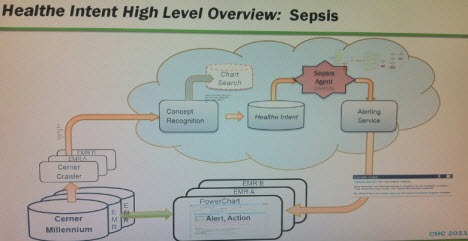
At this week’s Cerner Health Conference, Cerner CEO Neal Patterson tells 10,000 attendees that Meaningful Use is creating a “duopoly” in healthcare IT and that healthcare will fundamentally change over the next  decade. Patterson also unveiled plans for cloud technology that will coordinate clinical data from multiple systems and use Cerner search and analytics tools to evaluate and manage health.


Reader Comments

ingaFrom HomeBody “Re: Homecare technology. Homecare technology is definitely an up and coming topic of interest among healthcare today, especially on the hospital side. I see it only becoming a more and more important piece of this proposed continuum of care model.” Thanks for all the comments in favor of increased coverage on homecare, assisted living, and long term care IT. Mr. H and I will strategize a bit more. Meanwhile, if you happen to be an expert willing to share your expertise, let us know.

ingaFrom FastChange “Cerner Health Conference. Ughhh. Painful!  No breakfast, too crowded because facility is too small, making us  get scanned for every session- causing huge lines of course. No consistency in their Solutions Gallery- lots of vaporware from various groups competing with each other and they are still 1-2 years behind other vendors in things like mobile and ACO type software. Ten thousand people here but that includes Cerner staff, which appear to be every other person I meet. Haven’t met a happy Cerner client yet. But the keynote speaker, blogger and doctor Wendy Sue Swenson (Seattle Mama Doc) was great.” Other than that Mrs. Lincoln, how was the play? I should add that despite FastChange’s less than glowing report, I noted many very positive comments posted on Twitter (#CHC11).


HIStalk Announcements and Requests

ingaMr. H is on one of his well-deserved Internet-less get-aways, so it’s all me today.  Whenever Mr. H leaves me in charge, I feel Alexander Haigish, in that I’m-in-control-even-though-I’m-really-not kind of way. Mr. H will return to power soon.

10-11-2011 1-36-52 PM

Thank you to all my Facebook friends who sent over birthday greetings. If you would like the opportunity to make me feel special next year, it’s not too soon to Friend me (and Mr. H and Dr. Jayne) or like HIStalk on Facebook. We are also happy to connect with you on Linked In, should you would prefer to keep our relationship on a more professional level.


Acquisitions, Funding, Business, and Stock

VC funding in HIT more than tripled in the third quarter, compared to a year ago. Fifty different organizations invested $207 million for 17 deals, which included ZocDoc ($75 million) and Awarepoint ($27 million.) M&A transactions totaled $4.7 billion for acquisitions that included Emdeon ($3 billion), Sage Healthcare ($320 million), and M*Modal ($130 million.)


Sales

10-11-2011 8-08-14 PM

Surgical Care Affiliates chooses workforce management solutions from Kronos.

10-11-2011 8-07-23 PM

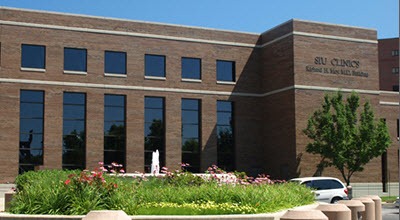
SIU HealthCare (IL), a network five hospitals and 43 clinics,  selects GE Healthcare’s Centricity Business to compliment its existing Centricity EHR.


People

10-11-2011 3-22-00 PM

Medsphere Systems hires John Bright as VP of sales and marketing. Bright previously led sales for Henry Schein Medical Systems.

Virtual Radiologic names Jim Tierney SVP of Operations for vRad Radiology Alliance. Tierney was formerly CEO for the 62-physician Suburban Radiologic Consultants.

10-11-2011 3-19-41 PM

Allscripts and IDX veteran Todd Young joins PureWellness as COO.


Announcements and Implementations

The Community Health Information Collaborative’s HIE Bridge connects to the VA to exchange veteran health data via the ApeniMED NHIN platform.

10-11-2011 8-10-26 PM

Kettering Health Network (OH) completes its four month, enterprise-wide transition to the InterSystems Ensemble platform.

10-11-2011 3-15-25 PM

Local boy scouts and other community members helped create a festive atmosphere during Chelsea Community Hospital’s (MI) $12 million transition to Genesis System EHR.

10-11-2011 8-11-35 PM

The local paper profiles Lakeland Regional Medical Center (FL) and its go-live on Cerner’s EHR. I was slightly amused that the hospital’s chaplain was the first person quoted about the transition, saying, “We’ve been circulating on our patient units and they’re feeling confident. It’s exciting.” I never realized that hospital chaplains were active participants in EHR implementations, but then again I have never worked in a hospital.

10-11-2011 8-13-27 PM

CPSI customer Morton County Health System (KS) becomes the first hospital in Kansas to receive payment from Medicare for its meaningful use of EMR.


Government and Politics

10-11-2011 8-18-14 PM

Illinois Governor Patrick Quinn announces that the state’s Office of Health Information Technology selected InterSystems to develop the infrastructure for the Illinois HIE.


Innovation and Research

10-11-2011 7-29-26 PM

In addition to the meta data cloud project, Cerner hints at future products that optimize iPhone and iPad technology, as well as software that incorporates voice commands.


Other

10-11-2011 8-39-47 PM

Florida Hospital places a newspaper advertisement in the Orlando paper notifying patients of improperly accessed patient information. The “Public Notice” informs patients that between January 1, 2010 and August 15, 2011, three employees, who have since been fired, were believed to have accessed patients’ demographic data. The employees targeted ER patients involved in car accidents and passed the information on to an attorney-referral service. The hospital is offering credit monitoring to patients that might have been affected.

Best news of the day: Swedish scientists find that eating chocolate – preferably dark – can reduce a woman’s risk of stroke by 20%. Other benefits include reduced blood pressure, lower insulin resistance, and less crabbiness (ok, that last one conclusion was based strictly on my own personal research.)


Sponsor Updates

  • Edge Solutions partners with BridgeHead Software to resell and deliver Bridgehead’s backup, recovery, and archiving solutions.
  • At this month’s MGMA meeting in Las Vegas, MED3OOO will showcase its newly released InteGreat EHR, which now includes end-to-end integration with the MEDCIN Engine.
  • T-System Inc. will highlight its products in a “virtual ED” at this week’s ACEP Scientific Assembly. T-System will also host the next Board Certification for Emergency Nursing meeting October 17-18 in its Dallas headquarters.
  • Greenville Hospital System University Medical Center goes live with Holon’s Pharmacy Workflow Manager at all 11 of its pharmacies.
  • Besler Consulting’s Vicente Farina shares insight into Direct Graduate Medical Education (GME) and Indirect Medical Education (IME) payments, two types of Medicare payments specifically for teaching hospitals.
  • EDIMS is exhibiting at this week’s ACEP 2011 Scientific Assembly in San Francisco.
  • Wellsoft announces its fall conference schedule, which includes the 2011 ACEP Scientific Assembly, the Emergency Department Administration Conference (EDAC), and HealthAchieve.
  • Surgical Information Systems (SIS) announces that SIS Anesthesia V5 has received ONC-ATCB certification by the Drummond Group.
  • Practice Fusion will simulcast its November 11th Connect 2011 meeting.
  • Imprivata earns a Strong Positive rating  in Gartner’s report, MarketScope for Enterprise Single Sign-on.
  • The local paper highlights Hasbro Children’s Hospital’s (RI)use of the GetWellNetwork.
  • Intelligent Medical Objects is participating in the Cerner 2011 Health Conference, AMIA, and NextGen’s User Group meeting.
  • Healthwise will participate in this month’s Patient Centered Primary Care Collaborative in Washington, DC.
  • Ignis Systems releases its EMR-Link Maintenance Training Webinar schedule.
  • Greenway’s PrimeSuite EHR achieves CCHIT certification in Women’s Health.

Contacts

Mr. H, Inga, Dr. Jayne, Dr. Gregg.

Monday Morning Update 10/10/11

October 7, 2011 News 6 Comments

10-7-2011 3-17-48 PM

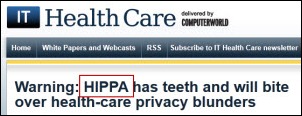
From Spell Chequer: “Re: HIPAA. I thought you’d appreciate this full-page ad, from an e-guide on HIPAA compliance.” We’re reaping what we sow as a society. It’s considered uncool to correct anyone’s spelling or grammar these days, and thus sloppy mistakes are the rule. Text message writers and tweeters have dumbed down the language the point that it’s barely understandable. What could be more cluelessly arrogant than the implied message, “I’m too important to take the time to spell and write well, so I expect you to translate for me?” As foreign students work endless hours to master English to ensure their future success, ours spend their time butchering it. But even near-illiterates shouldn’t misspell an acronym, especially one in which they claim renowned expertise.

From Major Payne Diaz: “Re: 5010 upgrades. You still need to feed the clearinghouse 5010 data, so the practice management software needs to be updated with vendor code to enact the changes. Then the facility needs to make their modifications – install the new 5010 sub-forms, modify table values, modify the loop/segment data sent for a particular payor. None of these can be performed by the scrubber or clearinghouse. Consider just one – Pay to Provider (rather important, don’t you think?) How would the clearinghouse know this information unless the source system / scrubber values it appropriately? Since when did the clearinghouses get crystal balls?”

From McMessy: “Re: McKesson. Both employees you mentioned left after they got word that Horizon Clinicals is going maintenance-only.” I’ve seen no announcement about Horizon, so if you have, please send something my way to confirm. That rumor keeps floating around (like the one suggesting that MPT is going to be sold,) but it’s all smoke and no fire so far.

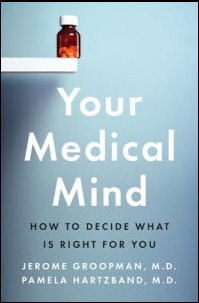
I was asked by a book publicist to consider writing about a new book called Your Medical Mind. I did, and it was a somewhat mixed review. It contains good if not occasionally obvious ideas about making medical decisions, but isn’t all that much fun to read, is a bit padded, doesn’t fully answer the question the subtitle asks, and either isn’t clear on its intended audience or fails to engage them on their level. I still like the concepts, though, even if I wouldn’t necessarily invest the time or money to buy the book. I’d like to see the authors (or someone else) turn it into a movement that would probably be more effective on a larger scale. It’s a good conversation-starter, at least.

My Time Capsule editorial this week from September 2006: Drug Rep Gifts Banned – What About IT Reps? A snip: “Having decision-making authority means vendor reps will try to soften you up like gangsters wooing supermodels — with flattery, rapt listening, and a shower of baubles.”

10-7-2011 2-59-48 PM

Most respondents to my poll said they follow their employer’s security policies all the time, but of course I didn’t really ask how stringent those policies are (especially those related to encryption of data on portable drives, accessing Web sites and online e-mail accounts from company devices, etc.) New poll to your right: what effect will ACO-type reimbursement models have on quality and cost?

St. Louis-based NextGen reseller KIG Healthcare Solutions is sold to another reseller, GBS Corporation of North Canton, OH.

10-8-2011 2-58-32 PM

A jury finds that Teva, Baxter, and McKesson must pay $20 million for selling the anesthetic Propofol in large vials that the plaintiffs say implied the vials could be used for multiple patients. Punitive damages of up to $600 million are being sought. The first two companies (not McKesson) were hit with a $500 million verdict previously in another case. Plaintiffs claimed the companies stopped making smaller vials of Propofol because the larger ones were more profitable; patients sued after contracting hepatitis from a Nevada colonoscopy clinic. The CDC said the infections came from the clinic’s use of Propofol vials for multiple patients, but the defense argued that the infection could have come from improperly sanitized instruments. The clinic’s former owner and some of his employees were indicted on criminal counts that included racketeering, insurance fraud, and patient neglect, but he was found incompetent to stand trial. Since McKesson is a distributor and not a manufacturer, you would expect their involvement to have been limited to filling the orders of its customers. Nearly 300 lawsuits have been filed against Teva, which says it will pay any damages levied against its distributors such as Baxter and McKesson.

10-7-2011 3-38-56 PM

Howard Hays, MD, MSPH, acting CIO of the Indian Health Service, testifies in a Senate hearing on that organization’s use of real-time videoconferencing, consultations, patient monitoring, and mobile health. They are providing services such as behavioral telehealth, home blood pressure monitoring for chronic disease management, tele-nutrition, and remote neurosurgical consultations from the University of New Mexico Regional Trauma center. Video of the hearing is here.

A Texas Tribune article covers practice groups in that state that are following new IT-enabled models. Examples: one practice performs all wellness exams in a single visit, answers patient e-mails 24×7, and logs diagnostic results immediately to their EMR. Another offers specialty storefronts, same-day appointments, and valet parking. Kelsey-Seybold Clinic in Houston has 373 physicians in 20 facilities, all with in-house lab and x-ray facilities, uses a single EMR (Epic), has offered an accountable care plan through Cigna for four years. They use the EMR to prevent duplicate tests or treatments and to provide best-practice alerts and preventive reminders. It’s a good reminder that a well-run practice can scale up without needing a hospital to buy it, although most practices are run as small businesses without a lot of business savvy (hint: if your business manager is the spouse of one of the doctors and the IT expert is one of their unemployed nephews, the chances are good that even notoriously inefficient hospitals could run it better).

Great Plains Health Alliance will use $5.2 million in federally guaranteed USDA loans to buy clinical software for 22 rural hospitals.

A Massachusetts state senator introduces legislation that would take away the power of the Massachusetts Historic Commission to restrict the use of land that isn’t listed in the state’s Register of Historic Places. That’s in response to Meditech’s announced plan to take its jobs elsewhere when the Commission insisted that a lengthy archaeological survey be performed before new offices could be built.

10-9-2011 12-13-58 PM

The widely decried “Coke and fries” program in Australia in which retail pharmacists would have received computerized reminders to push a particular company’s herbal remedies along with prescriptions has been shut down. The president of the pharmacy guild that came up with the idea is appalled that media coverage was negative. “The idea that community pharmacists would take part in commercial up-selling without regard to their professional standards is offensive to our profession and rejected by the guild.”

Hospital software vendor CPSI pays $102,000 to its employees after a Department of Labor compliance audit finds minor errors in some of its pay rules. CPSI was paying 1.5 times the hourly rate for overtime and a flat fee for being on call over the weekend. The issue involved employees who were already on overtime before the weekend started. The company thought (as did I) that on-call pay is discretionary and not subject to overtime regulations. Of its 1,000 employees, audits found 247 who were affected, with an average payout of $60. As CPSI CEO Boyd Douglas said, there would have been no discussion if CPSI simply shafted its employees like most companies and forced them to take call with no extra compensation.

10-9-2011 12-21-23 PM

Cleveland Clinic announces its Top 10 Medical Innovations for 2012, of which two involved healthcare IT: data analytics and mobile apps for physicians. Its just-ended Medical Innovation Summit was like a dream for right-winger capitalists rather than compassionate healthcare advocates, with keynotes by Dick Cheney, Jeff Immelt of GE, and the CEOs of drug and device companies looking for the next bottom line booster.

Oracle settles charges that it overcharged the federal government for software over a nine-year period by not offering Uncle Sam the same discounts that the company’s commercial customers receive. Oracle will pay $199.5 million under the False Claims Act, with the company’s former employee who filed the whistleblower lawsuit pocketing a cool $40 million. Oracle says it followed the rules, but the incidents are so old (1998 to 2006) that it can’t find reliable witnesses and would rather just move on.

Merge Healthcare chooses Dell as its preferred provider of cloud-based computing services, storage, and enterprise hardware. Meanwhile, Chicago Mayor Rahm Emanuel announces that Merge intends to grow its local workforce from 900 to 1,100 over the next two years and install 100 of its Vital Kisoks around the city.

10-9-2011 12-39-46 PM

Last month’s arrest of the 17 year-old Matthew Scheidt posing as a physician assistant in a Florida hospital marks the third time he attempted to practice medicine at local hospitals. The earliest documented attempt was in 2007, when the then 13 year-old Scheidt masqueraded as a nurse; he also twice claimed to be a sheriff’s deputy. The Orange-Osceola State Attorney’s Office announced that Scheidt will be procescuted as an adult on two felony counts of impersonating a physician assistant and four felony counts of practicing without a license.

10-9-2011 12-46-57 PM

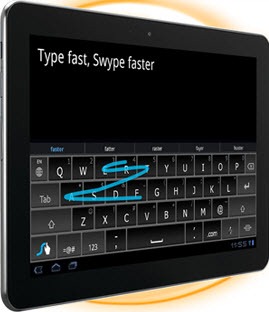
Nuance Communications discloses it has acquired Swype Inc. for $102.5 million. Swype is a provider of alternative keyboard input functions for mobile devices.


We were sent a fun resignation letter that made its way around. The author gave the OK to run it as long as his name and that of the company were removed (although he knows it won’t be hard to figure out which company he resigned from.) He was surprised that his vendor employer didn’t delete it off the e-mail server. Inga and I found him amusing in a Ricky Roma kind of way, so we’re trying to get him to write for us.

Let’s be honest. Resignation letters are usually brief, nice and boring. My goal is to make this none of those things. The only good ones are those accidentally sent out to the whole company where everyone tries to figure out why they got an e-mail about “Frank” who worked here for eight months as an IT consultant in Boise. Good ol’ Frank – he was solid from a technical standpoint, but not so solid at the TO: line of an e-mail.

I thought I might write this as a Top 10 list because that has never been done before … ever. I’m sorry, I have just been informed that I am only able to write this as a Top 7 list. If you want the full Top 10, you will need to wait for the next version – top10.1.1 or Service Pack 2.

And now, the thoughts of a man in a powder blue tuxedo.

10. Keep in touch. Keep in touch is the worst phrase ever. Let’s update that one: “Keep in touch on LinkedIn because I may need a recommendation soon.”

9. The Mothership. I am taking credit for giving the office this moniker, and it has now passed the test because I heard an “executive” use this phrase. I also like to put the word “executive” in quotes.

8. Casual attire. For those of you reading this outside of the Sanctuary walls (no, not that kind of sanctuary, that’s the name of our building), did you know that we can wear jeans every day? There are still some guidelines and I feel some of our IT friends need a little assistance. I have seen so many Canadian tuxedos in the last six months that I feel like I am backstage at a Rush concert.

7. Last season, our softball team was named the Crooked Numbers. It’s a softball term, I guess, but I also think it also describes the reason why we lost so many “executives” a few years ago.

6. Handing in your two-week notice. Other than my current haircut, this was my biggest mistake. I should have said that I am going to consult for all of our top competitors and am building an EHR in my garage so they would have kicked me out right away. Now I had to stay for two weeks to help “transition” someone into my “role” and “drag down morale” with my “shifty eyes” and “rugged good looks.”

5. (This item was not approved by legal, technical accounting, corporate, finance, and/or a gang of angry ninjas.)

4. I will miss many of you. Not all of you of course. But if I had to pick what I will miss most, it is you, free Diet Coke machine. Thank you for early morning wake-ups, late night keep-ups, and mid-day pick me ups. You are the epitome of ICARE.

I have worked here for nearly four years and there are some great people here. I thank them for everything.

Always up for a fried appetizer.


E-mail Mr. H.


Pediatric Office of the Future by Dr. Gregg

Tech Talk Theater–the “New Kid in Town”

Lots of folks are gearing up for (or just gearing down from) their pick of the onslaught of fall HIT and/or healthcare conferences. I know most of you HIStalk fans aren’t pediatric-oriented per se, but I’m guessing that most of you were, at one point or another, children. I’m further guessing that many, if not all, of you appreciate a little humor amidst your techno-serious daily chores.

With these guesses in mind, I asked Mr. H to share the following two video clips with you. They were 100% donated to the 100% non-profit, educationally-focused “Pediatric Office of the Future” (POF) exhibit which I am honored to direct at the upcoming American Academy of Pediatrics-National Conference & Exhibition, Oct. 15-18th, in Boston. These very fun clips were created specifically for our brand new “Tech Talk Theater” by the very good and amazingly-talented folks at Nuesoft. These were all done in house with family and friends, but you’ll swear they hired out!

I can 99.9% guarantee these short “sizzle reels” will bring a smile to your day! (The 0.1% accounts for those incorrigible curmudgeons out there or those who watch just after walking out of a hospital finance meeting.)

Please disregard the blatant “self”-promotion for the greatly expanded POF with our new focus upon all 3 offices where docs work: outpatient, inpatient, and mobile. Disregard, too: our 500% growth; our 31 fantastic sponsors; our brand new “Hospital of the Future” booth; that we’re helping a local free clinic; that we’re giving away low cal ice cream; that we’ve got robots, telemedicine, patient engagement & education tools, cool hospital tech, diagnostic wizardry, etc.; or that we’ve got our new Tech Talk Theater running 28 little 15-minute talks throughout the show with a diversity of speakers on “news, views, & current events from the world of pediatric healthcare technology.”

Did I hear someone say “Emmy”? We’re Tweeting about it at @PedsOfficeFutur.

gregg alexander

E-mail Dr. Gregg.

Book Review–Your Medical Mind

October 7, 2011 News 1 Comment

TLC Book Tours asked me to review Your Medical Mind: How to Decide What is Right For You by Jerome Groopman MD and Pamela Hartzband MD. No compensation was provided other than they sent a free copy. I agreed to review the book because I’m a fan of one of the author’s previous books, How Doctors Think.

10-2-2011 7-17-22 AM

This book asks a sobering question: can you trust clinicians to always recommend the best course of medical action given your particular personal beliefs and circumstances? Reading it can be uncomfortable. You are reminded that medicine is not quite the pure science that it sometimes seems and that most of us would like to believe. There are few silver bullets.

Physicians and patients each have their own value systems and motivations. They don’t always overlap. The authors urge patients to take control of their treatments, do their own research, and work with their doctors to individualize their treatment to their own satisfaction.

This paragraph from the introduction neatly encapsulates the entire book’s theme (to the point that I wouldn’t necessarily suggest buying the book if you already understand this concept):

Despite many scientific advances, the unsettling reality is that much of medicine still exists within a gray zone where there is no black and white answer about when to treat and how to treat. Often, there are several differing approaches to treatment, each with its own risks and benefits. The best choice for an individual may be anything but simple or obvious.

In other words, with apologies to the 1960s counterculture movement: Question (Medical) Authority, but in a constructive way.

Those of use who work in hospitals get this point since we see examples of it all the time. Doctors sometimes offer patients a single treatment option that they themselves admit they wouldn’t accept for their own family members. Professionals whose opinions differ don’t speak up, figuring it’s none of their business. The book will provide a service if it only gets that point across – nobody knows your body and mind better than you, so you need call your own shots when it comes to medical care.

The opening chapter, called “Where Am I in the Numbers?” urges patients to both understand any numbers presented to them (such as, “This drug causes side effects in x% of patients”). Also, to realize that “stories” from other patients may over-influence the perceptions of both physicians and patients since both tend to believe stories that echo what they already believe (or want to believe.)

The chapter called “But Is It Best for Me?” is slightly critical of evidence-based medicine, the idea that if you read enough scientific literature, every patient can be treated from a cookbook. Its key point is that even those guidelines are subject to bias, only this time that of the people who reviewed the literature to create the guidelines for treating “average” patients.

The book also examines the effect of coping mechanisms. An interesting example is the driven patient who, when faced with a new diagnosis, gets consumed with the idea of researching “the best of the best,” convinced that making the right provider choice can overcome the disease process. Conversely, providers and insurance companies have engaged their advertising agencies to use that belief to bring in new business with feel-good personal stories in ads that suggest everything will be fine if you just call up the particular organization with your insurance card handy.

Other patient decisions are addressed. How do you make end-of-life decisions, and are a patient’s “pull out all the stops” wishes good for the society that bears the economic cost? Do economic formulas such as quality of life indicators really mean anything? Should you choose a doctor who thinks like you, or one who doesn’t?

The authors bring forth critical medical issues, especially since it does so in an economically motivated environment where treatment decisions are often driven by the government, computers, and corporations. Most patients would be surprised to find that they have a voice in even routine treatments, and more importantly, that their voice is essential in achieving the outcomes most important to them as a human being. If everything could be distilled into a formula, restaurants wouldn’t need menus – you would just sit down and let the computer order for you the same meal that everybody else like you gets or that you’ve enjoyed in the past.

Your Medical Mind should start (or augment) a patient-centered movement. Medicine may be a science, but treatment is an art. As much as we’d like to see the body as a set of numbers that can be made to go up and down by drugs and surgery, it’s not that simple. Its message is that everybody (and every body) is different, and you can’t treat the body without the involvement of the mind. As wise doctors have said long before technology, you treat the patient, not the symptoms.

I would probably recommend this book, but with reservation. It’s not especially fun to read, especially if you’re like me and want to cut to the chase like the subtitle suggests (how to decide what is right for you.) The patient stories wear a bit thin, especially when they are broken out into sections separated by chunks of often unexciting citations of other works. It seems to me that the core idea was padded out considerably to justify the price of a full-sized hardcover book (it contains 308 pages, of which 90 are acknowledgments, notes, and the index; the stories sag under the weight of pointless detail). It could have done a better job in distilling all the stories into an action plan for various medical circumstances, such as what to ask before agreeing to surgery or starting on a new prescription. Its readability level is probably too high for the average patient to comprehend.

What I would really recommend, then, is that somebody take these and other patient-centered ideas and turn them into something the average patient can start using now. Most patients will never read the book, and many who read it won’t connect it to an immediate medical decision when the time comes to make one. If the idea is to education patients beyond just selling books (which  few people read these days,) then the message needs to be mobilized in the form of videos, checklists, or how-to pamphlets that can be handed out in medical practices. On the provider side, how about a set of guidelines on how to communicate (both ways) with patients about what’s best for them?

My final thought was this: we’re getting further away from what Your Medical Mind advocates, at least for the average patient seeing the average doctor. Insurance companies and hospital-owned practices don’t want to pay for exploring patient wishes. Doctors get paid for cranking out the encounters and following a corporately-developed, cost-effective treatment formulas. The country is already going broke over healthcare costs, so who’s going to pay for anything more than symptom Whac-a-Mole, where limiting an encounter to ten minutes, getting lab results into the “normal” range, and prescribing from standard treatment algorithms constitutes a medical job well done no matter what the patient thinks?

In that respect, Your Medical Mind is revolutionary. The idea “you’re not the (medical) boss of me” is threatening to the status quo. Doctors and patients have to stay on the good side of insurance companies and the government, where “having insurance” is equated to “having access to healthcare.” If there’s going to be a patient-centered revolution, it will need to be fought behind the closed doors of the examination room, where medicine still what it always was – respectful and honest conversations between doctors and their patients about what’s best for them.

Cerner To Acquire Clairvia

October 7, 2011 News Comments Off on Cerner To Acquire Clairvia

image

Cerner announced this morning that it will acquire Clairvia, a Durham, NC-based vendor of care coordination and workforce management solutions that are used by more than 400 organizations. Cerner will integrate Clairvia’s Care Value Management suite into its Healthe Intent and CareAware solutions as a comprehensive resource management offering.

”Health care worldwide is experiencing a resourcing deficit that is forecasted to grow dramatically in the next several years," said Jeff Townsend, Cerner executive vice president and chief of staff. "The fundamental supply of staff and other assets simply cannot meet rising patient demand. Clairvia’s predictive models driven by EHR data not only cut costs by aligning the right resource at the right time but, more importantly, optimize patient outcomes. With this acquisition, we are solidifying our commitment to the workforce management marketplace and interoperable cloud-based solutions that focus on providing positive clinical, operational and financial returns for our clients."

The acquisition is expected to close this month and is not expected to have a material impact on Cerner’s fiscal year results. Clairvia President and CEO Beth Pickard will join Cerner with the acquisition.

HIStalk interviewed Beth Pickard last December.

News 10/7/11

October 6, 2011 News 16 Comments

Top News

10-6-2011 6-29-17 PM

The Cerner Health Conference starts Saturday in Kansas City, with more than 10,000 attendees expected.


Reader Comments

mrh_small From Tired CIO: “Re: McKesson Paragon. A recent invite was sent to the Paragon user community for a Webinar that will discuss ‘product line updates’ from company executives. This is a first, as far as I know. Also sent was an e-mail blast informing the clients that the support line for Paragon will be re-routed to the HPF division on Friday so that all Paragon employees can attend an off-site meeting (also a first.) It’s looking like there may be something in the works for Paragon.” Unverifed, but that makes a couple of recent rumblings along those lines.

mrh_small From Joseph Prang: “Re: 5010 upgrades. Most of the 5010 work is being done by clearinghouses, but practice management system vendors are sending daily faxes and e-mails to their customers demanding that they upgrade to be 5010 compliant. Why would practices need to upgrade unless they are submitting directly to a payor or their clearinghouses are requiring 5010 claim input (which none are, as far as I know?) It should not matter. Practices are coughing up big bucks to get their upgrades in, but should be able to submit in Sanskrit if the clearinghouses do their job.” We talked to a couple of other in-the-know folks, who agreed.

mrh_small From Emmett Hunter: “Re: Cerner. Making an acquisition Friday. Cloud-related.” Unverified.

10-6-2011 8-34-31 AM

inga_small From Blue Devil: “Re: Todayskick.com. Were you consulted prior to launch?” Brilliant. A site dedicated to showing off your shoes and shopping for new ones. Nope, I wasn’t consulted, which is likely why there appears to be a dearth of sexy pumps. I might have to go through my closet this weekend and upload my Alexander McQueen / Stuart Weitzman / Christian Louboutin collections.

mrh_small From AtlantaHITGal: “Re: Jay Deady of Awarepoint has hired two employees away from McKesson in what looks like some sort of package deal since both resigned the same day this week. I know McKesson isn’t pleased, but I’m not sure they can do anything to stop the talent exodus that began two years ago.” I omitted the employee names since I didn’t verify their departure.

10-6-2011 7-04-28 PM

mrh_small From Gitane: “Re: Swedish Medical Center alliance with Providence Health Services. In a FAQ document for employees, Epic is mentioned briefly. Document attached.”


HIStalk Announcements and Requests

10-6-2011 12-07-35 PM

inga_small One more thing to ensure HIT well-roundedness: read HIStalk Practice. This week’s highlights include wine and acrobatics in the MGMA exhibit hall (look for the Medic and IDX booths in the video.) Private companies outshine public ones in the KLAS mid-year rankings of ambulatory EHRs. Navicure readies for ICD-10. Physicians believe that decision support tools and AI will prevent diagnostic errors. Rob Culbert advises on the the right way to subsidize employed physicians. Stay in the know by signing up for e-mail updates. Thanks for reading.

mrh_small Listening: The Killers, grandiose pop that sometimes sounds like U2, sometimes 80s Britpop, sometimes Muse. The Las Vegas band is hardly obscure: they’ve sold millions of albums, won a slew of awards, and on Independence Day last year, played in a salute to the military on the White House lawn at the President’s invitation.

mrh_small Inga thinks we should run more stuff about homecare, assisted living, and long term care IT. Neither of us knows too much about it. What do you think? Is there an audience for that and any experts who might help us out?

mrh_small Jobs on the Job Board: Regional Director of Enterprise Sales, Product Director – Acute Revenue Cycle Solutions, Implementation Project Manager. On Healthcare IT Jobs: Pharmacy Informatics Analyst, Solution Sales Executive – Microsoft HSG, HL7 Interface Analyst, Epic Consultant Manager.


Acquisitions, Funding, Business, and Stock

Navigant acquires Paragon Health, a practice management and consulting firm specializing in cardiovascular practices.

10-6-2011 10-11-06 AM

Practice management and billing software provider Kareo, Inc. closes a $10 million equity investment led by Greenspring Associates. Kareo, which has grown more than 100% per year for the past three years, will use the capital to expand its sales and marketing initiatives and to add at least 30 employees by the end of the year.

Wireless asset tracking vendor AeroScout acquires Sentient Health, which offers medical supply inventory management tools.


Sales

10-6-2011 9-57-33 AM

PeaceHealth signs agreement through GE Healthcare to upgrade to Streamline Health’s AccessAnyWare v5.1.

Advocate BroMenn Medical Center and Advocate Eureka Hospital (IL) select MediRevv to provide A/R management services.

10-6-2011 2-43-23 PM

Ventura County  (CA) enters into a $32 million contract with Cerner to provide EHR to the county’s hospitals.

Children’s of Alabama selects iSirona’s device connectivity solution to deliver data from medical devices to its Allscripts EMR.


People

10-6-2011 6-05-27 PM

Aegis Health Group hires William Walker (Medkinetics) as VP of IT services.

10-6-2011 6-06-41 PM

Dell names Andrew W. Litt, MD (Litt Healthcare Ventures, NYU Langone Medical Center) chief medical officer for the company’s Healthcare and Life Sciences Services division.


Announcements and Implementations

10-6-2011 2-45-49 PM

Merge Healthcare introduces Merge Honeycomb, a cloud-base medical imaging sharing network that is open for use by anyone at no charge.

Iatric Systems earns Surescripts e-prescribing certification for its discharge instructions function that allows prescription routing to retail pharmacies in all states.

Medical Specialists, an Indiana medical practice, uses Shareable Ink and its Allscripts EHR to, in its words, “merge technology and personalized healthcare.”

Verizon Connected Healthcare Solutions and Duke University will collaborate on projects for mobile health and consumer healthcare education, with Verizon providing the infrastructure and Duke contributing people and intellectual property.


Government and Politics

Meaningful Use by the numbers:

  • 88,399 physicians and hospitals had signed up for the Medicare program by the end of September; an additional 24,030 registered for the Medicaid program.
  • As of September 30, CMS had paid more than $850 million in EHR incentives ($357 million for Medicare and $493 million for Medicaid.)
  • Medicare incentive payments have been paid to 3,772 physicians and 158 hospitals.

10-6-2011 2-56-29 PM

The Medicare Payment Advisory Commission (MedPAC) votes to endorse a plan to repeal the sustainable growth rate (SGR) formula for Medicare physician pay and replace it with one that keeps rates steady for primary care physicians over the next decade and cuts other physician services 5.9% for three years, then freezes those rates for seven years.


Innovation and Research

10-6-2011 8-00-31 PM

A UTMB report looks at the use of telemedicine and the use of mobile and wireless technologies in healthcare. It’s brief, but interesting. The site of its Center for Telehealth Research and Policy has good resources.


Other

Computer Science Corporation (CSC) shareholders file a class action lawsuit against the company over its participation in the UK’s NPfIT project, alleging that CSC deliberately misled them with overly optimistic projections of its ability to deliver, its financial performance, and the viability of the Lorenzo software from subcontractor iSoft, claiming the company knew for years that it was “dysfunctional and undeliverable.”

10-6-2011 3-00-03 PM

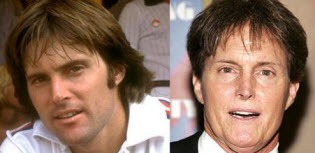
inga_small Plastic surgery for men is on the rise, with facelifts up 14%. Rhinoplasty is the procedure of choice for men, though otoplasty and liposuction are popular as well. Anyone want to venture a guess what surgical procedure remains the top pick for women?

inga_small I’ve read a bunch of Steve Jobs quotes in the last 24 hours. Here’s my favorite:

Remembering that you are going to die is the best way I know to avoid the trap of thinking you have something to lose. You are already naked. There is no reason not to follow your heart. Stay hungry. Stay foolish.

mrh_small I’ve enjoyed watching this excellent video of Steve Jobs delivering Stanford’s 2005 commencement address. It’s like Apple’s products: carefully designed, casually presented, and deceptively simple. The message of finding a job that matches what you love to do is powerful. On death: “I’ve looked in the mirror every morning and asked myself, ‘If today were the last day of my life, would I want to do what I am about to do today?’ Whenever the answer has been ‘no’ for too many days in a row, I know I need to change something. Remembering that I’ll be dead soon is the most important tool I’ve ever encountered to help me make the big choices in life.”

10-6-2011 7-02-20 PM

mrh_small Athenahealth Chairman and CEO Jonathan Bush writes a guest post for Forbes titled Hospitals Might Be Heading Into Trouble, where he likens the “buying binge” and excessive borrowing of hospitals acquiring physician practices to that of Fannie Mae in pushing people into houses they couldn’t afford. He predicts that (a) hospital systems will fail in numbers too big to be bailed out by investors or the government, or (b) hospitals will complete their vertically integrated monopolies and strong-arm higher patient volumes and prices. A snip:

In my ‘hospitals gobbling docs’ scenario, software is the bottleneck to profitability. The supposed enabler of the referrals that the above business model is predicated on, is not working to that end. Why would it be? Software is not a web-native connected system. It doesn’t update when the rules change. Software doesn’t even let you send patients from one hospitals to the next (unless one is owned by the other and using the same server – can you imagine? In this day and age?). In fact, outside of vertically integrated systems like Kaiser Permanente and Cleveland Clinic (and they are highly-specialized solutions) and a few others, you’d be hard-pressed to see any cases where software is greasing the referral wheels. In other words software is mucking up the model.

10-6-2011 7-06-01 PM

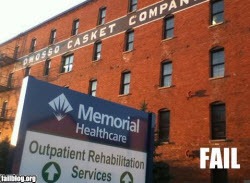
mrh_small Weird News Andy channels Buster Keaton in his wordless wry commentary. It’s pretty common to see cemeteries adjoining hospitals in the South, leading to the inevitable knee-slapping quip by one’s father driving the family car, “People are dying to get out of one and into the other.”

mrh_small A six-year-old boy is treated by a hospital ED for a broken wrist. Three months later, the boy suffers permanent brain damage after being beaten by his mother’s boyfriend, who walks away with two misdemeanor charges and probation. The boy’s father sues the boyfriend and the hospital, claiming the ED doctors should have suspected child abuse from the broken wrist, requiring them to contact authorities. The boyfriend ignores the suit and the hospital prevails in two courts, but another court reverses the decision. This time, the jury finds the hospital negligent and orders it to pay the family $25 million.


Sponsor Updates

10-6-2011 8-41-48 PM

  • Rockcastle Regional Hospital and Respiratory Care Center (KY) shares clinical data with the Kentucky HIE using the Healthcare Management Systems Connex interoperability platform.
  • Nuesoft Technology names Cornerstone University and Colorado College the Fall 2011 winners of its College Health Scholarship program. 
  • Merge Healthcare releases an eBook entitled Meaningful Use Guide for Radiology.
  • Metropolitan Medical Services partners with iMDsoft to offer the MetaVision Anesthesia Information Management System.
  • ZirMed and HEALTHCAREfirst announce a partnership to offer an RCM  solution to home health and hospice care agencies.
  • nVOQ and Health Language Inc. will collaborate to deliver the voice recognition solution Say It for Health Care.
  • HITEC-LA selects NextGen Healthcare as a preferred vendor.
  • Wellsoft receives the highest marks for EDIS solutions in the recent KLAS EDIS report.
  • JHIM highlights three hospitals using T-SystemEV to attain Meaningful Use  in the ED.
  • EDIMS will participate in the ACEP 2011 Scientific Assembly October 15-18 in San Francisco.
  • New Zealand-headquartered Orion Health celebrates the opening of its Paris office with an event at the New Zealand Ambassador’s residence in Paris.

EPtalk by Dr. Jayne

I’m waiting anxiously to hear what the Institute of Medicine has to say tomorrow regarding essential health benefits. As part of the Affordable Care Act, insurers will be required to cover these essential benefits across 10 categories that include professional services, drugs, hospital care, and laboratory services.

The Washington Post feature Wonkblog covered this in an easy-to-read article. I need to be more careful, though, because I was reading this piece while multitasking (aka “not paying attention”) during a Big Meeting and apparently had some facial leakage that might have been perceived as smirking.

My favorite quote is from Tekisha Dwan Everette, director of federal affairs for the American Diabetes Association: “You have to be cognizant that you can’t narrowly include every miniscule coverage option or the whole thing will implode on itself.” I love her use of “implode” and think it’s a perfect descriptor for what we’ll be seeing over the next few years. A close second from National Health Council Vice President Marc Boutin: “As we moved through some of the actuarial analysis, we found that covering everything really isn’t affordable.” Duh. Did they really need to ask an actuary about that, or just a middle school algebra student?

I wonder how many patients will lobby for coverage of the new gray hair prevention pill under development by cosmetic giant L’Oreal? Patients will have to start taking it daily at least 10 years before their hair starts turning gray and then continue taking it for life. I wish I had known about this before I crossed the line into IT administration. I hope they include a Magic 8-Ball to help predict when patients might go gray.

Although many states have already started issuing Meaningful Use checks, providers in the Beehive State can start applying for their piece of the pie starting Monday. For those of you who have forgotten those state nicknames you learned in fifth grade, let me Google that for you: Utah.

Quirky FDA approval: A gel called LeGoo has been approved to temporarily plug small blood vessels during bypass surgeries. It typically dissolves after about 15 minutes, but can be eliminated earlier with application of a cold pack. The FDA wisely warns physicians not to use it on vessels that deliver blood to the brain. Duh #2 of the day.

A new book The Web-Savvy Patient instructs patients facing a medical crisis how to best use the Internet to be an informed patient. Tips include how to tell the difference between good information and poor or vendor-sponsored information. It encourages readers to populate a Personal Health Record to centralize their health information.

clip_image003

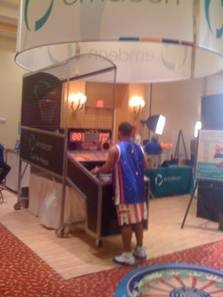
Inga scooped me earlier this week with photos from the eClinicalWorks National Users Conference. Although my contacts weren’t as fast with their smart phones, they did deliver the goods. According to my roving reporter, the highlight of the exhibit hall was the Harlem Globetrotters guy and the basketball setup at the Emdeon booth. I know some other meetings are coming up this fall – and I hope to see more submissions from readers. Extra consideration will be given to photos that feature excellent cocktails, costumes, celebrities, or general mayhem. Cerner, AMIA, and NextGen attendees, I’m counting on you!

Print


Contacts

Mr. H, Inga, Dr. Jayne, Dr. Gregg.

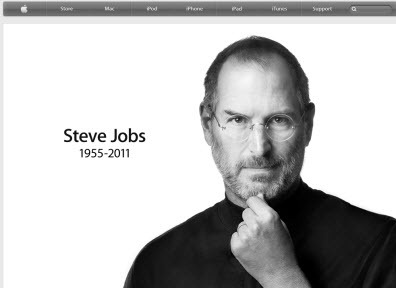
Steve Jobs Dies

October 5, 2011 News 16 Comments

Apple co-founder and visionary Steve Jobs has died, Apple announced this evening. He was 56.

10-5-2011 8-00-51 PM

News 10/5/11

October 4, 2011 News 6 Comments

Top News

10-4-2011 8-48-23 PM

A former patient files a $20 million class-action lawsuit against Stanford Hospital & Clinics on behalf of 20,000 fellow patients, seeking $1,000 each following a data breach in which patient records were posted on a commercial Web site for almost a year. Stanford has issued a statement blaming co-defendant Multi-Specialty Collection Services, which at the time of the breach was providing collection and billing services.


Reader Comments

10-4-2011 11-52-30 AM

inga_small From Boot Scootin’: “Re: eClinicalWorks National Users Conference. You should have been at the party. I think you would have enjoyed the dancing and noticed some good-looking cowboy boots.” Indeed, these folks look to be having some fun and the “skirts with boots” look is one of my all-time faves. eCW is entertaining a crowd of 2,700 this week in Scottsdale.

mrh_small From Rye Catcher: “Re: subcontractor payments. I’m a long-time reader and huge fan. I did EHR implementation work this summer as a subcontractor for one of your sponsors. I’ve done work for them previously and was always paid on time, but haven’t been paid for June and July hours and haven’t worked for them since July. The CEO gives me ever-changing reasons for the delay, telling me four times that the check was in the mail and giving me fake tracking numbers twice. I wonder if your readers have experienced this problem and can offer any tips? I’d rather not take the legal route, but my options are dwindling.” Please leave a comment on this post if you have ideas that can help RC (short of engaging a leg-breaker to get someone’s attention.)

10-4-2011 5-21-16 PM

mrh_small From The PACS Designer: “Re: Apple iPhone 4S instead of iPhone 5. CEO Tim Cook surprised his audience with the announcement that the new features for the iPhone family will be called iPhone 4S. Prices will be $199 with 16 GB of memory to $399 with 64 GB. It will come in a black or white case. A new feature called Assistant adds voice activation capabilities for apps. Transcribing with the iPhone 4S could be a future enhancement for healthcare users when the app becomes available.” A little more horsepower for graphics, GSM and Sprint capability, the Siri personal assistant, eight-hour talk time, and a better camera are the features, but the most significant change may be the lower price (not to mention that the previous models will be discounted as well). Sounds like a comparative disappointment, putting some wind in the Android sails (or sales). Apple shares closed down a tiny percentage. Somehow it all seemed kind of dull without Steve Jobs around, like watching a band play with a replacement lead singer.

mrh_small Here’s a demo of Apple’s Siri technology. They bought the company for a couple of hundred million last year. There’s a Nuance connection other than Siri uses Nuance speech recognition: the company that formed Siri out of a government research project (SRI International) incubated and IPO’d Nuance at the end of the 1990s.

mrh_small From Shanana: “Re: HCA. Do you know if they’ve made their decision on Epic or Cerner? Or when they will?” I haven’t heard, but I have readers from there who may provide an update.

10-4-2011 6-56-39 PM 10-4-2011 6-57-23 PM

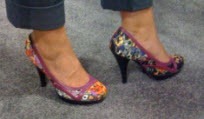
mrh_small From Inga’s BFF: “Re: AHIMA. Here are some shoe pictures!” I get two reactions when I run shoe pictures: the ladies gush and the men accuse me of pervdom. Like most men, though, I don’t know a flat from a pump, but I’ll take my chances in pandering to the women.

mrh_small From Pathos: “Re: Sunquest’s acquisition of PowerPath. Wonder what will happen to its CoPathPlus AP product?” According to the FAQ (which is marked confidential, but it’s out there on the Web), both products will be supported and enhanced going forward, giving Sunquest a 24% market share. All Elekta employees working on PowerPath will transition to Sunquest and there is an “absolute and clear ‘No Sunset’ policy.”

mrh_small From Denali: “Re: McKesson Paragon. Heard they’re going to start selling it as just a revenue cycle product. They will still support clinicals. Are they finally admitting that HERM will never be more than a slick PowerPoint?” Unverified. McKesson said they would provide a response from their PR folks, but I haven’t heard back for a couple of days.

mrh_small From Loop Froots: “Re: HIPAA. Our small healthcare information technology needs to speak with someone about making sure our storage of PHI is compliant with HIPAA and other regulations. We haven’t stored PHI so far, but may need to in the future.” I think Loop is looking for some consulting or advisory help if anyone is qualified and interested. E-mail me and I’ll pass your info along.

mrh_small From Bomp deBomp: “Re: [provider name omitted]. They’re using an outdated system to rip off the government stimulus money. The system does not allow scanning or viewing images, so they use pieced together applications that are dangerous to patient care. EKGs and x-rays are viewed by different systems and outside reports aren’t available until the patient is discharged. The system is tedious to use, so notes are scant and can’t be followed by other personnel, not to mention that ordering meds and labs is so time-consuming that most physicians do verbal and faxed-in orders. Critical results are hard to find. The lawyers are going to have a heyday, but their physicians will take the brunt of the settlements. Meaningful Use has never been so bastardized.” Unverified.

mrh_small From Been There: “Re: NPfIT. Having worked for several miserable months on the UK disaster at the very beginning, it was obvious that it would fail. The guy running it had zip, zero, nada experience in health care and didn’t see why that would matter. He was all about writing gotcha contracts with the vendors and ‘holding their feet to the fire.’ Don’t blame it on the docs, blame it on the idiots in charge.” I’ve made that observation previously and it’s a fascinating one: just about every vendor involved got pressured to sign unfavorable contracts, then bailed when it was clear they could be neither successful nor profitable. I don’t know of any precedent where vendors with multi-billion dollar contracts still wanted out and there weren’t really any others qualified to replace them.


HIStalk Announcements and Requests

inga_small Posted on Twitter: “#FF @histalk and @IngaHIStalk are great sources of HIT industry scuttlebutt, rumors, and inside knowledge. Also music & shoe ideas too.” What a great 140-character summary.

mrh_small My doctor’s office now has an electronic check-in kiosk. Very cool. You verify your appointment online, print out a one-page confirmation with a bar code, then when you get to the office, just skip around all the people waiting in line, wave your bar code under the scanner, and take a seat. It’s way easier to use than an airport kiosk and a great way to avoid all the coughing, bleeding, and wheezing folks (and their secretions and excretions) who would otherwise be ahead of you in line.


Acquisitions, Funding, Business, and Stock

10-4-2011 9-07-35 PM

Business integration and data management service provider Liaison Technologies closes $30 million in financing to accelerate its growth in the life sciences, healthcare, and HIE markets.


Sales

University Medical Center in Nevada contracts with Interpoint Partners for revenue cycle and clinical products, as well as Interpoint’s 835 denial management software.

The National Cancer Institute’s Center for Cancer Research awards Harris Corporation a $37 million re-compete contract to continue managing data for the center’s clinical research.

Capital Health System, Inc. selects Hayes Management Consulting’s MDaudit Hospital software for proactive risk mitigation.

10-4-2011 9-01-20 PM

Carson-Tahoe Regional Healthcare (NV) selects ProVation Order Sets, powered by UpToDate Decision Support, as its electronic order set solution.

Central Illinois Health Information Exchange finalizes a contract with ICA to implement the CareAlign HIE platform.


People

10-4-2011 7-49-05 PM

Keith Hagen, former COO of Aperio and CEO of QuadraMed, is named president and CEO of Quantros, which offers quality performance and risk management applications.

Connexall USA appoints Bob Kennedy (Kryptiq) as VP of sales.

10-4-2011 8-00-02 PM

Radiologist and former White House Fellow Pat Basu, MD joins Virtual Radiologic as chief medical officer.

10-4-2011 8-02-44 PM

The National Quality Forum hires Rosemary Kennedy, the former chief nursing informatics officer of Siemens Medical, as its VP of HIT.

10-4-2011 8-04-29 PM

AHIMA elects Kathleen Frawley, associate professor and chair of HIT at DeVry University, as the association’s president-elect for 2012. Other new members to AHIMA’s board include Ann Frischkorn Chenoweth (3M Health Information Systems), Dwayne M. Lewis (DML Consulting), and Melissa M. Martin (West Virginia University Hospitals.)

Ingenious Med names former A.D.A.M president and CEO Mark Adams as its CFO.

10-4-2011 7-13-57 PM

Jonathan Goldberg, VP/CIO of St. Peter’s Health Care Services (NY), will hold the same role with the newly formed St. Peter’s Health Partners, which brings together St. Peter’s, Albany Memorial, St. Mary’s, and Samaritan, all in the Albany area.


Announcements and Implementations

Anthelio enters a strategic partnership with MedQuist to implement MedQuist’s clinical documentation services at several of its facilities, also offering the company’s Front-End Speech Recognition and Natural Language Understanding solutions to its clients.

10-4-2011 9-03-45 PM

Connecticut Children’s Medical Center preps for its $20 million Epic implementation that will cover both the hospital and its 165 specialty physicians.

HHS, AHIMA, and North Shore Medical Labs (NY) announce a demonstration project to support broader use and adoption of EHRs by providers in underserved communities. AHIMA will provide free HIT training and North Shore will donate EHR software and services through Nortec Software. The project is part of AHIMA’s “HIM Jobs for America initiative,” which supports employment and training opportunities for HIT professionals.

10-4-2011 2-37-03 PM

inga_small Streamline Health, which has posted losses in recent quarters, announces a new brand identity (logo, Web site, and product names) intended to “represent the Company’s progress as it continues its transformation into an externally focused, high-growth healthcare technology company.” I wonder if my life would be any spicier if I refreshed by brand identity (hair color and new wardrobe) or if, in the end, it would just be a better-looking me with the same old life. Hmm.

The local paper reports that the cost for Kettering Health Network’s (OH) Epic implementation is $100 million. That’s double what network officials said when the project was announced two years ago.

Vocera announces the release of its B3000 Communication Badge, which offers enhanced durability, audio quality, and speech recognition.

Nuance Communications announces a new version of its eScription platform, which includes a streamlined documentation creation process and enhancements to the quality assurance workflow.

image

RelayHealth adds Blue Button capability to its network, allowing patients to download, print, and share their health information with a single click.


Government and Politics

10-4-2011 7-29-47 PM

ONC awards APP Design, Inc. a $1.2 million contract to design ways to help patients understand their choices about how their information is shared, including in an HIE environment. It will result in an e-consent pilot with Western New York’s HEALTHeLINK.


Technology

10-4-2011 2-38-05 PM

eClinicalWorks unveils four new products at its National Users Conference this week, including a patient app for Web-enabled devices; Project Scribe, which converts free text to structured data; Project Nimbus, which enables practices to view and update patient data during outages; and eClinicalWorks for the iPad. All will be out by next summer.

Security companies will host a free Medical Device Hacking Summit in Minneapolis next month.

10-4-2011 8-27-20 PM

mrh_small Rock Health opens up the application window to find its next round of startups to accelerate in San Francisco. Applications are due by November 14 and the next group of entrepreneurs moves into its office in January for five months. The above video has entrepreneurs explaining what Rock Health is. Below that are the folks who run it: Halle, Leslie, Clare, and Jess.


Other

10-4-2011 3-21-57 PM

inga_small From KLAS:  over 80% of providers will use emergency department information systems to help them attest for Stage 1 Meaningful Use, though many products lack required functionality such as medication reconciliation and CPOE. Half of Epic, Cerner and Medhost customers report being ready for MU, but 2/3 of those using McKesson, Meditech, and Picis mention one or more functionality gaps that need to be addressed.

mrh_small Cherie Lester, an old friend of HIStalk, has an interesting post on her EngageMeHIT blog on how to prepare for a Skype-based job interview. My favorite tip: no pets. If you’ve every been on a conference call with a working-from-home person who doesn’t know how to use the mute button and whose giant-sounding dog barks at every passing vehicle outside, you’ll understand.

A telehealth project in Canada diagnoses and treats dermatology conditions in Africa’s developing countries, expanding the Canada-only Consult Derm to an international philanthropic program called Telederm Outreach.

mrh_small Weird News Andy cleverly notices that in this case, the mouse really is connected to the computer. Scientists in Israel implant a computerized cerebellum into a brain-damaged mouse, allowing its brain to communicate with its body. If you’re wondering where the scientists happened to find a brain-damaged mouse, you probably don’t want to know more about how animal experiments are conducted.

mrh_small A hospital staff psychiatrist makes The New York Post for pulling down $516K in taxpayer-paid overtime in addition to his $174K salary, reporting an average of 110 hours per week that also include one four-day stretch of working around the clock.


Sponsor Updates

  • Mac McMillian, CEO of CynergisTek, participates as a panelist during the October 5 webcast Health Information Exchange Privacy and Security – Are you Ready?
  • SRSsoft partners with Omedix to provide SRS clients with a fully integrated patient portal.
  • Mike Smyly, chief business development officer for Inland Northwest Health Services, will co-present with Tim Cromwell from the VA in a National eHealth Collaborative Webinar on HIE leadership and sustainability Wednesday afternoon (October 5) at 1:00 p.m. Eastern.
  • Merge Healthcare announces the creation of a clinical advisory board, led by CMO Cheryl Whitaker.
  • AsquaredM offers an October 11 Webinar called Applying Value Stream Mapping to the Revenue Cycle.
  • Hayes Management Consulting releases a synopsis of the final CMS rule for RACs.
  • InHealth Clinical Documentation Solutions joins MD-IT as an MTSO Associate.
  • QMACs Inc partners with MED3OOO to offer its physician clients the company’s InteGreat EMR and PM products.
  • Brian Levy, MD, CMO and SVP of Health Language Inc., presented an education session on medical terminology and interoperability at this week’s AHIMA convention.
  • Medicity’s Kipp Lassetter and McKesson’s Emad Rizk, MD  earn nominations to Modern Healthcare’s and Modern Physician’s list of the 50 Most Influential Physician Executives in Healthcare.
  • NextGen Healthcare hosts an October 6 webinar entitled Providing Practices a View into What Matters Financially.
  • Concerro will preview its new ShiftPredict schedule modeling tool at the ANCC National Magnet Conference this week in Baltimore.
  • SourceHOV signs an agreement with 3M Health Information Systems to make  its outsourced coding resources available with 3M’s suite of ICD-10 products and services.
  • San Juan Regional Medical Center (NM) selects Access Universal Document Portal to move perinatal documents from GE Centricity into Meditech.  ‎

Contacts

Mr. H, Inga, Dr. Jayne, Dr. Gregg.

Sunquest Acquires PowerPath Pathology System

October 3, 2011 News 1 Comment

10-3-2011 6-54-12 AM

Sunquest Information Systems has acquired the PowerPath anatomic pathology information system from Sweden-based Elekta AB for $33 million USD, it was announced this morning in Europe.

Sunquest President and CEO Richard Atkin said of the acquisition, “Sunquest’s commitment to Anatomic Pathology and serving the pathologist has created a natural fit for PowerPath within the Sunquest solution suite. Together, we will have an increased critical mass and expertise to meet the needs of the pathologist in this important and growing market. I am excited to welcome the PowerPath customers into the Sunquest family.”

Elekta, which markets oncology solutions, acquired PowerPath along with IMPAC Medical Systems in 2005. The product was previously sold by IMPATH and Tamtron.

Elekta President and CEO Tomas Puusepp said, “PowerPath is clearly a leading brand in its sector with an impressive customer list of prestigious institutions. However, the synergies between PowerPath and Elekta have been limited and we expect that PowerPath will have good prospects with Sunquest, given their more complementary business"”

PowerPath is supported by 44 US-based employees. Elekta reports that it generates annual revenue of $12 million and is used by more than 450 facilities worldwide that offer surgical pathology, dermatopathology, cytology, and autopsy services.

Monday Morning Update 10/3/11

October 1, 2011 News 6 Comments
10-1-2011 8-52-06 AM

From Urban Legend: “Re: MediServe. Has acquired rehab scheduling and practice management vendor SpectraSoft.” Verified. MediServe, which offers rehab and respiratory therapy applications, has acquired SpectraSoft, an Arizona-based vendor of systems that include hospital and practice patient scheduling, physical therapy, appointment reminders, and billing.

10-1-2011 10-40-01 AM

From The PACS Designer: “Re: iPhone 5 launch. It’s official — Apple will hold its launch for the iPhone 5 on October 4. With this introduction, we’ll be seeing CEO Tim Cook give the presentation instead of Steve Jobs. It will be interesting to see how someone other than Steve does with the new feature presentation for the expected crowd.” Purportedly leaked photos are coming about, above which is one. Most interesting to me will be (a) how Tim Cook does, and (b) how long the fanboy lines are. I expect high demand, reinforcing the obvious – the country’s economic suffering is not universally shared as many folks stand in unemployment and food bank lines, while others clamor in similarly long lines to plunk down cash to replace their perfectly workable cell phones with cooler ones.

From Fed Up: “Re: anonymous comments. I’m disappointed that you gave a company my IP address. I now fear for my job.” I don’t divulge anything I receive to anyone, so it wasn’t me, but the comment you left may have contained enough specifics for the company to take an educated guess on its own. If any organization was pressuring me hard to give them information that wouldn’t be appropriate, the first thing I’d do is post the full details of their request on HIStalk and let the readers decide who’s being unreasonable (that’s a lot of bad PR if the company is out of line.) I will, however, always offer companies the space to rebut comments that are incorrect, and unlike newspapers who bury such comments, I’ll put them right in HIStalk if they keep it concise. Seems fair to me.

From IV Drip: “Re: Health 2.0. The on-stage production is well run by the company employed to do that and incorporates live demos and unscripted comments. The non-stage component is what most people complain about – there is a significant lack of organization in vendor relations and logistics. There’s also the point of reference for vendors – it’s not a bland, measured, vendor-subsidized event with a huge exhibit space where content is determined a year in advance. Attendees love drinking from a fire hose of innovation over a packed two days instead of being exhausted after four days of cattle drive-like trudging around mega-halls and a Las Vegas-like show floor. It’s about networking and meeting new people. They could do a better job with logistics, but if it turns into a vendor brown-nosing type show like HIMSS, I and many other won’t be there.” It’s always a tough trade-off – everybody wants a conference that’s information-driven, off the wall, and fun (and largely paid for by vendors), but with good logistics, decent food, and a comfortable setting. Like most parties, the host’s job is to invite the right people, make sure they are relaxed and happy, and stay out of the way. That’s why I like low-key HIMSS chapter events and user group meetings, but never liked TEPR and was indifferent to last year’s mHealth Summit (bad logistics and not all that fun overall.) I will say that with my ultra-limited event organizing experience (a handful of HIStalkapaloozas, with vendor-provided event planners doing most of the work) you don’t have to sell your soul to vendors to get them to participate. Those involved in my events have been almost insistent that their participation be downplayed even though it was costing them a bundle. I always suggest a little vendor fair area for the sponsor or maybe some giveaways or a short company pitch from the stage, but they’ve always declined. However, I guess when you’re charging as much as HIMSS for exhibiting and putting competitors elbow to elbow in Gladiator Hall, expectations are raised.

New HIS-tory from Vince Ciotti, covering AR/Mediquest. If you’ve been in HIT long enough to remember that company and if you’re going to HIMSS in Las Vegas, put your contact information here to get on Vince’s e-mail list for the get-together he’s arranging there for the pre-1980 HIT’ers.

Listening: new from all-girl Dum Dum Girls, kind of a jangly, upbeat, lo-fi version of The Pretenders with some GoGo’s and spaced out Mazzy Star thrown in.

My Time Capsule editorial from 2006 for this week: For Employees in Uncarpeted Areas, Hide Technology Complexity Like McDonald’s Does, in which I said, “Medical errors, including technology-induced ones, have gotten so bad that some hospitals are actually advising patients to bring along a friend to protect them from staff mistakes. I can’t imagine any other business throwing in the towel and admitting defeat to customers. I’d have just two words for a restaurant waiter who suggests that I watch the cook to make sure he doesn’t poison me: ‘Check, please.’”

Time for me to vent (sorry) about trite words and phrases that spread like the plague from the Internet to the parroting mouths and keyboards of the easily impressionable: “not so much,” “meh,” “totally,” “epic fail,” “it’s all good,“ “just sayin’” and anything in the form of “Best. ____. Ever.” I postulate that these are the same vocabulary-challenged people who pleased themselves to no end in the 90s by cleverly inserting random outbursts of “Not” and “Party on, Garth” at every conversational opportunity and are hopefully embarrassed about it to this day. The Internet, like TV before it, can make you smarter or stupider, depending on how you use it (and a survey of the offerings suggests that the smart money is betting on the latter.)

10-1-2011 6-59-16 AM

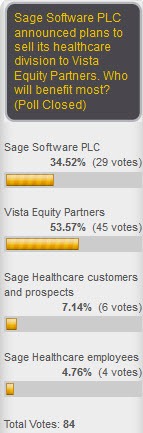
The majority of respondents think Vista Equity Partners got a good deal in acquiring Sage Healthcare, or at least that’s how I interpret it. New poll to your right, suggested by a reader: do you know and/or follow your employer’s policies regarding device encryption and handling of confidential information like PHI?

University of Texas System chooses CodeRyte for enterprise-wide computer-assisted inpatient and outpatient coding. They will also use the company’s DataScout data mining technology.

10-1-2011 7-14-30 AM

Welcome to new HIStalk Platinum Sponsor HealthStream. The Nashville-based company offers innovative learning solutions that enable the training and business objectives of healthcare organizations: patient safety, workforce development, regulatory training, and technology education. HealthStream’s customers include 50% of US hospitals. Its Authoring Center is an open platform that allows content creators to develop and distribute learning modules using the tool of their choice – PowerPoint and PDFs, for example. Competency Center is a competency and performance management solution that hospitals use to create customized performance appraisals and competency assessments. The SaaS-based Learning Center is a learning platform and courseware library that supports 2.4 million active healthcare workers, with 70,000 course completions and 100,000 student log-ins every day from healthcare users. Also offered is a turnkey nurse CE library. Hospitals call HealthStream when they need to improve patient safety, implement quality programs, develop nurse effectiveness, improve compliance, and ensure that clinicians are trained to use new technology and medical devices. Thanks to HealthStream for supporting HIStalk.

Amcom Software’s Messenger middleware earns FDA 510(k) clearance as a Class II medical device. It connects patient monitoring systems to smart phones and pagers, allowing rules-based alert messages to be sent to clinicians.

A Reuters article says that HIT stocks are priced high because of HITECH-spurred revenue growth, but are susceptible for a big fall if Congress gets serious about reining in the red ink and cuts some of the HITECH billions. Specifically named as trading at at a high multiple: Cerner. It’s a pretty shallow article that recites the obvious and, puzzlingly, claims at the end that open source is a big threat to vendors.

Practice Fusion CEO Ryan Howard is profiled in the San Francisco newspaper. He says the company was out of cash and had only 2,000 users at the end of 2008, but has since raised $36 million in financing and signed up 120,000 users tracking 20 million patients in its free EMR. He mentions some company goals: use its customer data for healthcare predictive modeling and create a birth-to-death patient record for patients. The above video, Cracking the Entrepreneur Code, is new and covers some of the same ground about the scrappy startup – he says the company was basically out of business until he got an insurance company check for injuries he received in an auto accident, which he used to make payroll instead of for getting himself fixed up. “When we got funded, I was four years behind on my taxes and needed two root canals. The lesson here: before you go too far down this road, ask yourself what you’re willing to give to pursue your dream.” The first 17 minutes of the video where he’s talking should be mandatory viewing for anyone involved in a startup. It’s fascinating to hear about how in the early days (himself plus three engineers) he did a zero-budget homebrew press campaign to get on the radar of investors.

Greenway Medical Technologies expects to add 400 new jobs and will undertake a $12 million expansion at its corporate headquarters in Carrollton, GA, according to state officials. The company filed for a $100 million IPO a few weeks ago.

10-1-2011 9-43-20 AM

10-1-2011 9-45-19 AM

MED3OOO (I can never figure out how to spell the name – sometimes they use zeroes like MED3000 and sometimes Os like MED3OOO) puts out a cool video showing their InteGreat EHR running on an iPad with Medicomp’s Quippe. They unfortunately didn’t post the video anywhere that allows me to embed it here, so you’ll have to click the link, but I promise it’s worth it if you want to see an entirely new way for doctors to document. Quippe is undeniably cool and the InteGreat demo is well done. It even contains a bonus in the last five seconds: an Inga quote. I asked if it’s really her on the video since it kind of looks like her in a shadowy way, but she swears it isn’t.

Chester River Hospital Center (MD) was scheduled to go live on Meditech Saturday, replacing QuadraMed Affinity.

10-1-2011 12-44-12 PM

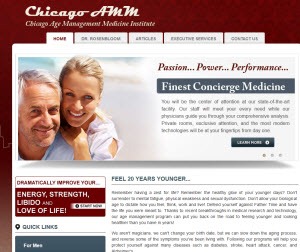
Mark Rosenbloom MD, the founder and CEO of electronic clinical reference vendor PEPID, starts an age management practice in Illinois, offering a $995 per month program of lab tests, vitamins, and training sessions.

10-1-2011 1-54-34 PM

Two small Long Island weekly newspapers are baffled when all available copies are quickly bought up from vending machines and newsstands, with at least two teams of people grabbing all available copies at or above the cover price. Based on the overlapping stories in both papers, the newspaper strongly suspects friends of a local doctor who was charged with Medicare fraud were trying to keep the story quiet. Jesse Stoff MD was arrested for giving kickbacks to patients after billing Medicare for unnecessary services. He billed Medicare more than $800,000 in one month, tipping the feds off to run a sting operation in which an undercover agent was paid $300 for five visits. The money was delivered in a “kickback room” with a Soviet-style poster warning patients not to talk about the scheme.

The Washington state chapter of the American College of Emergency Physicians sues the state over a new rule that limits Medicaid recipients to three ED visits per year for non-emergency conditions. They have a vested interest since ED docs often bill patients directly for their services. The state’s Medicaid medical director says he had to trim $35 million from his ED budget somehow and only about 3% of Medicaid ED patients are frequent flyers who will be affected, not to mention that up to half of the frequent ED visitors go there seeking drugs. The top Medicaid user in previous audits was a 27-year-old woman who visited EDs 172 times in one year (every other day) complaining of headaches.

E-mail Mr. H.

News 9/30/11

September 29, 2011 News 12 Comments

Top News

9-29-2011 8-24-53 PM

VA CIO Roger Baker says his organization will allow smart phones and tablets on its network starting Monday, with the first batch of 1,000 users swapping out their laptops or BlackBerries for devices running an unnamed OS (Apple). He also says he’d like the VA to develop an enterprise-wide apps store, with some of those apps coming from its recently announced open source EHR project.


Reader Comments

inga_small From Matt Holt: “Re: unsubstantiated. C’mon Inga, be nice, or at least reasonable. Keanu’s comment that Health 2.0 was super disorganized? I hear everything from my team — including the three people who didn’t like my write-up of their bios — and I never heard about an argument breaking out about an ad. No one wrote mentioned the fact that we’re the only health conference with more than 120 LIVE demos, that we had two big time health plan CEOs talking directly about technology, that we put the ONC head on stage with seven patients, or that we had 1500 people come – more than 50% up on 2011? Guess next time I’ll have to ask the 20-30 people telling me that Health 2.0 is the best conference they go to that they should e-mail you instead.” Thanks, Matt, for filling in the missing details, although we just ran what an attendee (and sponsor, apparently) sent us. Maybe I am just bummed I couldn’t have been there myself to experience it. Next year.
9-29-2011 3-49-17 PM

inga_small From High-Heeled: “Re: Error messages. In my role of helping physicians survive and thrive with EHR adoption, some are generally frustrated by the error messages their applications throw up. This is a new error message one of our doctors sent to me and told me it didn’t bother her at all!” Please tell your physician that wine makes me more tolerant as well.

mrh_small From Lou Reed: “Re: just good enough. Farzad Mostashari is urging the HIT Standards Committee to put out standards that are ‘good enough’ to get started on HIE. In my HIT experience, any link that is ‘just good enough’ handles the core data, but any data outside the norm (such as exceptions, outliers, etc.) gets trashed. Just look at what craziness the open text segments in HL7 cause. Providers will be spending thousands of man-hours trying to sort out this out as they trip over the myriad of exceptions that come up in health care cases. Although I am a firm believer in not letting the perfect be the enemy of the good, there are times when that approach does not fit. This is one. Would he take his child on a plane that is ‘just good enough’?”
9-29-2011 7-50-48 PM

mrh_small From Sorbino: “Re: EHR. Check this KLAS report. Ever heard of PCC – Physician’s Computer Company?” I’ve heard of them, but I was never quite sure what they did (some kind of reseller, I figured). The PCC EHR, which is pediatrics specific, puts up monster KLAS scores. They’re pretty new on the report, though, and there’s often a honeymoon period before the scores start to slip as the company grows, expectations are raised, and an increasing number of users are surveyed. Still, it’s an impressive accomplishment. There’s something to be said for focusing on a particular market segment and excelling in it.

9-29-2011 8-12-47 PM

9-29-2011 8-16-23 PM

mrh_small From Just Tennille: “Re: SRS user group meeting. I always feel that I’m among friends there and came home energized. “ I can see where the “energized” part came from – check out the Red Bull and coffee bean chocolates bar. All that’s missing is caffeine IV bags. The SRS developers, lined up for intros and appearing uncomfortable in their seldom-worn and/or borrowed suits, look like they would love to change into nerdwear, ravage the caffeine stash, and sling some code. That’s what you want in a developer, which is why the glad-handing and photogenic sales guys become physically uncomfortable in their presence. I’ve never had an energy drink, but I’ve noticed recently how expensive they are in bars and stores, probably making them even more profitable to their manufacturers than wine or liquor since they don’t have to pay high federal alcohol taxes (Red Bull’s founder is worth $3 billion). I bet they were a hit at the user group meeting.

mrh_small From Meaningful User: “Re: NY Times on the UK’s HIT fiasco. Blumie toots a different horn now that he’s back using these poorly usable systems.” It’s a fun read, calling NPfIT “a slow-motion train wreck” and asking three experts on whether a similar disaster could befall HITECH, which costs even more than the hugely expensive NPfIT boondoggle. Former National Coordinator #1 David Brailer says the UK ran NPfIT as a giant procurement program, running all over clinicians in the process. Richard Alvarez of Canada Health Infoway says both the US and Canada are taking a different path than Britain in setting standards and outcomes, but not doing the actual implementation. Former National Coordinator #3 David Blumenthal echoed Brailer in saying it has to be a collaborative effort with clinician involvement. You docs who aren’t sold on even subsidized EMRs may have more power than you imagine, or at least Brailer thinks so: “The experience in Britain is a warning to us. The thing that brought them to their knees was the confrontation with doctors.”
9-29-2011 8-46-56 PM

mrh_small From CDMer: “Re: stolen tapes. Another day, another breach.” SAIC says computer backup tapes were stolen from the car of one of its employees on September 14, potentially exposing the detailed health information of 4.9 million military beneficiaries who received care, lab tests, or prescriptions in San Antonio area facilities such as Brooke Army Medical Center.

mrh_small From Dolphins Fan: “Re: loss of Minnesota PHI. When something like this happens, everyone always points out that it was against company policy. Every healthcare company on the face of the earth has a PHI policy and most have an encryption policy. Unfortunately, for many companies the goal is to put a policy in place to make people happy, but then they fail to enforce it. Execution of a policy, versus simply having a policy, is where you really see how important PHI protection is to a company.”


HIStalk Announcements and Requests
9-26-2011 4-07-28 PM

inga_small In case you have been too busy following season-ending baseball drama, tracking the latest presidential polls, or watching Dancing with the Stars, here are a few highlights from HIStalk Practice over the last week: Dr. Gregg mulls over Abe Lincoln and HIT innovation. Electronic medical reminders improve care in elderly patients. Younger docs are not necessarily better at EHR than their older peers. MED3OOO serves up education, networking, and fun at its annual user conference. eClinicalWorks sells swag for charity at their national user conference this weekend in Phoenix.  If you have not been a HIStalk Practice regular in the past, I have good news: we are still accepting new subscribers. Thanks for reading.

9-29-2011 7-56-12 PM

mrh_small Welcome to Executive Search Recruiting, supporting HIStalk as a Platinum Sponsor. The Cornelius, NC-based ESR is a boutique search firm (no, they don’t find boutiques, they recruit executives and sales talent) that works with providers, payers, vendors, and consulting forms to bring on partners, principals, directors, sales executives, and consultants, to name a few of the positions they can help with. They’ve worked with companies ranging from startups to Fortune 500 companies, so there’s a 100% chance that they’ve helped an organization similarly sized to yours, offering customized fee structures that include flat fee per hire, retained searches, contract work, and an interesting (low) hourly fee share for billable consultants. The company’s employees average 15 years’ of healthcare experience in executive search, so they know where to find the really good people (hire a bad one on your own and the value proposition becomes clearer.) On the other side of the jobs table, if you’re a high performer looking for an opportunity, check out their current openings and get in touch with Don Calhoun. Thanks to Executive Search Recruiting for supporting HIStalk.

mrh_small Everybody likes big and/or round numbers, so here are some for HIStalk. E-mail subscribers: 7,546. Likes on Facebook: 1,595. Mr. H connections on LinkedIn: 920. Dann’s Fan Club members on LinkedIn: 1,857. Number of unique readers: 21,350. Number of visits since 2003: 4.56 million. You will make the small round number (zero) of HIStalk full-time employees happy by increasing those numbers where you can. Thanks.

mrh_small On the Jobs Board: Implementation Project Manager, Epic and Cerner Resources, Director – Product Demonstration Specialists. On Healthcare IT Jobs: HL7 Interface Analyst, Director, Clinical Applications, IT Technical / Product Support Specialist, Epic Consultant Manager.

mrh_small If you were toiling away in HIT prior to 1980 and want to reconnect with old pals at HIMSS, sign up so Vince can e-mail you details about a little get-together at the HIMSS conference. One reader is hoping for Neil Pappalardo or Octo Barnett from Meditech to attend, but even if they don’t, quite a few interesting folks have already said they’re planning to be there.


Acquisitions, Funding, Business, and Stock
9-29-2011 4-50-43 PM

Greenway Medical announces that it is acquiring certain technology assets of CySolutions, a provider of clinical management and EHR solutions for FQHCs and community health centers. Greenway did not disclose the purchase price or the exact technologies it’s buying, but does indicate that CySolutions CEO Bill Young and other development staff members will join the company.

Prognosis Health Information Systems completes its acquisition of Creative Healthcare Systems, a provider of financial management and patient accounting systems.


Sales

9-29-2011 4-43-01 PM

Jeff Davis Hospital (GA), a 25-bed Critical Access Hospital, selects Healthland’s Centriq EHR.
9-29-2011 4-44-25 PM

Meadowlands Hospital and Medical Center (NJ) chooses PatientPoint’s patient engagement platform for care coordination and revenue cycle management.
9-29-2011 4-45-18 PM

Allegiance Health (MI) signs a three-year contract with TrustHCS for its ICD-10 education services and DNFB Assurance program.

Atlantic General Hospital (MD) contracts for Sunrise Clinical Manager from Allscripts. The hospital already uses Allscripts on the ambulatory side.

Blue Cross Blue Shield of North Carolina will spend $15 million to subsidize the implementation of the Allscripts MyWay EHR for 750 North Carolina physicians, with 85% of the cost covered for eligible independent practices and 100% for free clinics, including training and support. BCBSNC will work with the NC Area Health Education Centers to help practices achieve Patient Centered Medical Home status and will also help providers connect to the North Carolina HIE. Allscripts will contribute an additional $8 million to the project.

St. Francis Hospital (CT) executes a three-year agreement with MED3OOO to provide RCM services for its 200 employed physicians.


People

Ryan A. Secan, MD, the former medical director of hospitalist programs at Lowell General Hospital Medical Group and Anna Jaques Hospital, joins MedAptus as chief medical officer.
9-29-2011 2-07-44 PM

T-System promotes Erin Estes from director of implementation services to VP and GM of performance solutions.


Announcements and Implementations

Cerner announces the Cerner Reference Lab Network, which requires one standard connection to communicate with all reference labs on the network.
9-29-2011 11-22-00 AM

Community Medical Centers (CA) goes live this week on Epic.
9-29-2011 7-36-25 PM 9-29-2011 7-37-25 PM

CareTech Solutions earns HDI Support Center Certification for its Service Desk IT help desk offering, which it says is the only hospital-specific help desk in the country. The company also just invested $1.5 million to reconfigure and remodel the operation. The press release casually mentions that it’s an “on-shore medical help desk,” meaning that when you call, you’re talking to someone in Troy, Michigan, United States of America.

Scottish charge master vendor Craneware announces financial tools designed for Critical Access Hospitals.


Government and Politics

HHS launches the Comprehensive Primary Care initiative, which will pay primary care practices $20 per beneficiary per month for providing better-coordinated care for Medicare patients. The program calls for participation from private and state insurance providers, requires providers to meet certain quality measures, and will eventually include a shared savings component for participants.

iSoft will provide its Enterprise Management hospital information system to create the Brunei Healthcare Information System, a government project with a goal of creating a single electronic record for every patient in Brunei.

Fujitsu prepares to sue the UK Department of Health for $1.1 billion, saying it’s owed that amount after pulling out of NPfIT in 2008.


Innovation and Research

9-29-2011 9-36-02 PM

A hospital in England explains its green IT efforts, which include moving to virtualized servers, replacing desktops with thin client devices, and implementing the NightWatchman power management solution that powers down idle PCs in non-critical areas.


Other

inga_small An Atlanta medical practice’s IT specialist pleads guilty in federal court to intentionally accessing the protected computer of a competing perinatal medical practice. Using his home computer, Eric McNeal accessed the system of a former employer, downloaded patient data, then deleted all the patient information from the practice’s computer. He used the patient data to run a direct mail marketing campaign to benefit his new employer. He faces up to five years in prison and a fine of up to $250,000.

mrh_small Weird News Andy elects not to steal second base in declaring, “I’m not touching this one.” A woman undergoing a swap-out of her breast implants wakes up after surgery to find herself with symmastia, also known as  “uniboob.” She said, “It looked like I had one big breast instead of two,” but the uniboob has since been successfully re-cleaved by another surgeon and the inevitable lawsuit has been settled.

inga_small National eHealth Collaborative seeks nominations for its board.

mrh_small Consumers in Australia complain about the pharmacy association’s plan to push a particular manufacturer’s nutritional supplements when patients pick up their prescriptions. The association’s computer system will remind the pharmacist to tell the patient that the supplements can help mitigate side effects of the prescribed drug. The association’s president is particularly proud of the computer reminders, calling them a “world first for IT-enabled, software-promoted pharmacy sector messages to facilitate targeted recommendations to patients.” The manufacturer’s CEO raised the most ire when she characterized the sales program as a “Coke and fries” upselling opportunity that will boost pharmacy profits. The president of the Australian Medical Association was unimpressed: “I think the evidence for Coke and fries is about the same as the evidence for these products.”

mrh_small A Denver-area agency ICU nurse is charged with identity theft and theft of medical records after Centura Health discovers he had accessed patient records inappropriately. The complaint against him says he used patient information to sign up for credit cards. His nursing license from another state had already been suspended in connection with a prescription fraud investigation.

9-29-2011 9-43-50 PM

mrh_small A St. Louis-based physician and geriatrician urges the US to emulate the healthcare system of France (#1 in the world vs. the US at #37) and its smart card system. which is really just a microchip ID card that contains no medical information and is required for every citizen over 16 years of age:

The most magnificent component of the French medical system is the "Carte Vitale." This looks like a credit card and is given to the physician by the patient. It is inserted into a computer allowing the physician to review the patient’s basic medical history and is also used for billing the patients visit to the government. The patient thus controls his or her own health records, maintaining privacy.

mrh_small A family practice physician in Canada, talking to a reporter about the loss of a PHI-containing memory stick from a local hospital, says patients of his own practice are not at risk. “My system is hard copy — paper, and it’s worked for me and many doctors in the city who still use it. It’s awfully hard to lose an entire filing cabinet.”
9-29-2011 9-55-10 PM

mrh_small Thomas Manning, the retiring head of Commonwealth Medicine (a consulting division of the University of Massachusetts Medical School,) will become the state’s highest paid retiree with an annual pension of $347,000 when he retires next year. The organization is under investigation for receiving no-bid Medicaid contracts from the state that cost $138 million per year, but says that’s not related to Manning’s retirement.


Sponsor Updates

  • Imprivata reports that the healthcare sector is the leading adopter of desktop virtualization technology, according to a recent cross-industry survey of 477 IT decision makers.
  • Wolters Kluwer Health announces that Children’s Healthcare of Atlanta (GA) has selected its ProVation MD software for its GI departments.
  • Surgical Information Systems (SIS) becomes an Industry Supporter of the American Society of Anesthesiologists (ASA).
  • TeleTracking Technologies announces a free webinar series addressing patient throughput, overcrowding, RTLS asset management, performance improvement, and inter-hospital transfers.
  • The executive director of medical operations for Pocono Raceway (PA) discusses how emergency responders are using technology from T-System and Shareable Ink.
  • MobileMD introduces its 4DX Connected Health Record, an EHR application for small and family physicians that should be ONC-ATCB 2012 certified in Q4.
  • Capsule announces record growth, including the addition of over 90 facilities over the last six months.
  • iMDSoft adds Metropolitan Medical Services as a reseller of its MetaVision Suite.
  • Billian Publishing launches HITR.com, a HIT benchmarking and social networking community for providers and vendors. The free tool includes customer satisfaction scores for nearly 40 IT systems and 300 vendors.
  • CapSite releases a study of the RIS market and finds that 22% of hospitals have plans to buy a new RIS. Sixty-one percent of installed RIS systems are at least five years old.
  • HIT consulting firm Care Communications collaborates with Elsevier/MC Strategies to incorporate Elsevier’s ICD-10 transition tools into its ICD-10 readiness and implementation offerings.
  • Frost & Sullivan awards Awarepoint its RFID and RTLS Healthcare Competitive Strategy Leadership award.
  • For the twelfth consecutive year, CMS extends its use of McKesson’s InterQual Criteria for decision management.

EPtalk by Dr. Jayne

clip_image002

Web sites like Groupon offer discounts on a variety of products and services. A recent article notes that such discounts may be illegal where health care services are concerned. Because part of a patient’s payment is kept by the site, it could be interpreted as violating anti-kickback laws. The American Medical Association hasn’t taken a stand, but two medical boards in Oregon (dental and chiropractic) have banned the practice.

The National Labor Relations Board affirms the right of a physician to terminate an employee for bad-mouthing the practice via social media. However, if multiple employees are collectively complaining regarding legitimate issues, employees may be protected. Timing, audience, and composition are key determinants of whether the speech is protected or not. Better dust off those policies and procedures and make sure social media use is addressed at your practice or hospital.

US District Judge Marcia Cooke has blocked enforcement of a Florida law that restricts physician questions about patient ownership of firearms. For those of you customizing EHR content and intake forms to remove these questions, you’re off the hook.

Accenture is chosen to head efforts to build a national Personal Health Record system in Australia. Orion Health and Oracle are also on the team. The system will include both patient and provider portals.

I maintain admitting privileges at a community hospital that is just now preparing to implement CPOE. I received a hilarious memo from them this week which contained so much worthless consultant-speak that I could have won a round of “Buzzword Bingo” without missing a beat. My favorite part was the discussion of a “cross-functional team dedicated to surveying spaces throughout the facility for process utilization.” I think this is fancy-talk for, “We have to figure out where we’re going to stick all these blasted workstations.” Broom closets, beware!

Sixteen organizations (including vendors, consultants, and advocacy groups) come together to form the Accountable Care Community of Practice. In their own words: “The overriding goal of the CoP is to help enable rapid, effective and efficient adoption and use of Health Information Technology (HIT) by providers implementing new care models in support of accountable care.” In addition to Webinars, they will hold regional forums in Minneapolis, Boston, New York, San Francisco, Seattle, and Austin.

PEPID announces the delivery of the National Drug Code (NDC) database to health IT systems. I’m not a fan of using NDC information for drugs, as it introduces a certain “clutter factor” depending on how vendors utilize it. Although highly specific, NDC codes for a given dose of a particular drug differ based on what kind of packaging holds the drug. As a front-line clinician, I personally don’t care if the pharmacy has 500-tablet stock bottles or 100-capsule stock bottles or which manufacturer it comes from. And don’t forget that generic drugs can have dozens of different NDC codes for the same medication.

clip_image003

I thought of Inga when I came across this business mentioned on a friend’s Facebook page. If it was in my home town, they would definitely get my business. It would also be an excellent name for a woman-owned software consulting firm. Now why didn’t I think of that? I could have probably expensed a number of sassy shoes as a business / advertising expense.

Print


Contacts

Mr. H, Inga, Dr. Jayne, Dr. Gregg.

News 9/28/11

September 27, 2011 News 4 Comments

Top News

mrh_small Two Minnesota hospitals start notifying 16,000 patients that their medical information was contained on a laptop that was stolen. The hospitals blame subcontractor Accretive Health, whose employee left the laptop in a locked car outside a restaurant. The company did not give a reason that its employee had PHI on a personal laptop that was, contrary to company policy, not encrypted.


Reader Comments

9-27-2011 3-24-51 PM

inga_small From Keanu “Re: Health 2.0 conference. It might be bigger this year, but so far it’s super disorganized (and has been during the lead-up.) I’ve spoken to multiple vendors and sponsors they’ve managed to upset (including us.) I just witnessed a big argument about an ad gone wrong. Signage is lacking and has misspellings. We’ll see how the actual show goes.” Keanu sent a follow-up email, saying the first full day of the show was “semi-organized anarchy,” though better than the initial setup day.

inga_small From Jackie Dan “Re: Health 2.0. It’s sort of an interesting meeting and a cross between a mini-HIMSS and a VC startup competition. Everyone is trying to prove they’ve got the next ‘disruptive business model.’ A couple of interesting trends here though, like the whole Dr Chrono/Practice Fusion freemium thing. An insider at Practice Fusion told me that their paying customers are pretty much negligible compared to their purported 100k+ users, although, he still seemed ‘confident’ that they would survive/make money on ad revenue.” I have my own theories on the freebie EMRs and suspect Practice Fusion’s Research Center makes a nice impact to the bottom line.

inga_small From Doctor Who “Re: HIStalk resilience. FYI, you guys have significant sway these days. My profile in the Health 2.0 program makes direct reference to a post I made after HIMSS. HIStalk seems to have staying power. BTW, in addition to tons of people vying for money, the Health 2.0 conference is inspiring with some really cool and smart ideas out there. And the reception even included an open bar with Inga-like drinks (coco-tinis, nikita margaritas.)” Glad for the vote of confidence on HIStalk, as I kind of like this gig. HIStalk is over eight years old, so it’s been around for awhile. Bummed I missed the drinks. Next year, Matt.

9-27-2011 7-31-31 PM

mrh_small From Fred Norris: “Re: HIMSS webinar. Got this in e-mail today. Doesn’t HIMSS charge hospitals a bunch to be members so they can benefit from their neutral, unbiased education services? Are they offering equal time to GE, Cerner, Epic, etc.? How can HIMSS claim to run a vendor-neutral annual conference (you have to swear that to be a presenter) and then run this marketing seminar? I’m sure they’re charging Siemens a fortune, so will they lower our annual dues proportionately, or are they just in it for the money like all vendors?” I raised a fuss when HIMSS started shilling its infomercials, but nobody seemed to share my indignation (or maybe they were just not surprised enough to care given the ever-blurring line between HIMSS and other vendors). Like a TV station during election season, HIMSS will indeed offer equal time to all other vendors – at an equal price. I do resent HIMSS passing sales pitches off as education, but that horse left the barn long ago and all you can do is try not to step in the part that’s left.

9-27-2011 9-35-06 PM

mrh_small From NeverEnuf: “Re: Jackson. I thought you’d like this article on executive pay not being sufficient!” The new CEO of financially desperate Jackson Health System (FL), himself a former banker and city manager, gets some heat from the local paper by hiring two $500K executives who also have no hospital administration experience, one an accountant and the other a former IBMer. The CEO says the whole management team is paid well below market rates, which is definitely the case since he himself makes “only” $590K for trying to turn around the ultra screwed up Miami public hospital. That sounds plenty fair for a county official, but you know how hospitals are.

mrh_small From Viggo: “Re: Thanks for looking over our Web page. I appreciate the favor.” I get quite a few requests for one thing or another: making an introduction, giving an opinion about a potential employer, offering thoughts on a vendor or product. I politely turn quite a few (maybe most) of those down since I don’t have much free time and it gets overwhelming at times (not to mention that much of the time, I’m just as clueless as the requestor and don’t want to just throw something out there implying otherwise.) My decision tree looks like this: (a) is the requestor a friend of HIStalk in some way – a sponsor, a guest article submitter, an interview subject? (b) if not, have I exchanged e-mails with them previously? (I save all my outbound e-mails, so I can tell); (c) is the requestor at least superficially supportive of HIStalk, like by being in the HIStalk Fan Club on LinkedIn or a friend in Facebook? I’ll do whatever I can to support people who support me, but I get more requests than I can handle as an after-work hobbyist (for example, I’m still writing after a crappy and long day at work that was followed by four hours of HIStalk work; my pager is going off; I won’t get to bed for another hour; and six hours later, I’ll the cycle start over again. If you’re waiting on e-mail from me, that’s why.)

mrh_small From DDLT-AAGL: “Re: Epic. Having Epic installed at all necessarily gives you full access to the server-side code (which is not much use without Epic’s internal-only set of tools for navigating it.) Client (Hyperspace) code is effectively a black box to customers except where APIs are specifically created for custom forms, etc. Numerous server-side programming points allow predefined access at various code entry points — usually this is limited to simple code such as customized text output for a field, etc. But you can do a lot in theory. They draw an absolute line at customers editing any Epic-released code. Pure custom code is (reluctantly) tolerated (as it cannot be prevented by virtue of how Cache works) but discouraged and unsupported.”


Acquisitions, Funding, Business, and Stock

9-27-2011 3-11-28 PM

PatientKeeper lands $1.5 million of a planned $3 million debt financing round from a group of nine backers.

9-27-2011 3-12-20 PM

CareCloud, a provider of cloud-based PM, EHR, and RCM solutions for physicians, raises $20 million in Series A funding, led by Intel Capital and Norwest Venture Partners.

greenway logo

Greenway Medical Technologies amends its $100 million IPO, noting that it intends to list its shares on the New York Stock Exchange using the symbol “GWAY.”

9-27-2011 3-15-09 PM

9-27-2011 3-17-13 PM

Telehealth provider Tunstall Healthcare Group will acquire American Medical Alert Corp, a provider of  remote health monitoring and communication services, for $82.3 million.


Sales

9-27-2011 3-18-54 PM

HHS awards SAIC a contract to provide full life-cycle operations, maintenance, and enhancement services for its HRSA Data Warehouse. The maximum contract value is $15 million over five years.

9-27-2011 3-22-07 PM

The Health Information Network of Arizona (HINAz) partners with  Axoloti Corp (OptumInsight) to create a statewide HIE.

The state of Alaska hires Cognosante to conduct evaluation, technical assistance, and consulting services for the state’s HIE system.

9-27-2011 9-37-33 PM

Health Partners of Philadelphia selects MyHealthDIRECT’s Web-based scheduling solution.

Select Data chooses Emdeon’s RCM solutions for its home health customers.

9-27-2011 9-40-16 PM

Allegiance Health (MI) chooses TrustHCS to provide ICD-10 training and coding services.

The VA awards HP Enterprise Services a $10.4 million contract to provide a WiFi based RTLS to the VA hospital in Ann Arbor, MI.


People

Kony Solutions appoints Sriram Ramanathan (IBM) as chief technology officer.


Announcements and Implementations

Three Illinois-based health systems and two physician clinics join forces to establish the Lincoln Land HIE, which will utilize Medicity’s exchange technology.

9-27-2011 2-52-51 PM

Onslow Memorial Hospital (NC) will activate the second phase of its Meditech implementation next month with the go-live of clinical documentation by  non-physician users. Physician online documentation will start in April 2012.

9-27-2011 2-52-10 PM

The hospital authority for Memorial Hospital (GA) approves the $747,125 purchase of an integrated PM/EHR system for physician practices.

9-27-2011 2-51-05 PM

Floyd Valley Hospital (IA) begins its $500,000 EMR conversion to Meditech’s Client/Server release.

The American Hospital Association extends its third consecutive, three-year exclusive endorsement of Hyland Software’s OnBase solution as the ECM solution of choice.

Transcend Services releases a front-end speech technology and transcription platform that incorporates template-based documentation tools from its newly acquired Salar division.

MidSouth eHealth Alliance goes live on ICA’s CareAlign 1.0 HIE platform at 16 facilities.

3M Health Information Systems announces the release of its 3M 360 Encompass System, which unites coding, documentation improvement, and performance monitoring by providing auto-suggested codes and real-time clinical documentation improvement prompts.

9-27-2011 7-56-30 PM

NoMoreClipboard.com announces cc:me, a new addition to its personal health record service that allows patients to send and receive medical information electronically via the Continuity of Care Document format. They’re most famous for concocting (along with Medical Informatics Engineering) the Extormity fake EMR vendor. A quote from that brilliant spoof:

Generating a return on an investment first requires an investment. The heftier the investment, the more substantial the return could potentially be if there is, in fact, a measurable return. The Extormity EMR Software Suite is built on a proprietary software model renowned for its complexity. This proprietary platform and all of its components must be procured and implemented as a complete package we call the Extormity Bundle (which describes both our comprehensive package and its associated cost) … Planning for this additional infrastructure can be provided by the Extormity Strategic Consulting unit, with implementation provided by the Extormity Solutions and Services Business Unit. These Extormity business units operate in silos, ensuring that you receive and pay for duplicated services.

9-27-2011 8-23-36 PM

mrh_small In Australia, Garner defends a report it prepared for Queensland Health in which health officials requested (and obtained) changes that critics say favored the selection of Cerner for a $180 million statewide EMR project. Gartner highlighted the fact that it considered Cerner the only vendor of a “Generation Three” product (on a five-generation scale, which QH’s ehealth program director wrote is equivalent to “a HIMMS scale of 5”) that is up and running in Australia. Both parties said the change was intended only to call out information already contained in the report, which provided Cerner with no advantage. It doesn’t seem the slightest bit fishy to me, but I’m not looking at it through political goggles like some of the torch-wavers down there.


Government and Politics

mrh_small In the UK, ministers are considering offering US-based NPfIT contractor CSC another chance (and more money) to get iSoft’s Lorenzo up and running even though individual hospital trusts aren’t all that interesting in trying to implement Lorenzo and NPfIT is being shut down. The newspaper article called CSC “one of the worst-performing IT contractors” for being paid billions of pounds for trying, generally unsuccessfully, to implement Lorenzo, which helped seal NPfIT’s fate. 


Technology

9-27-2011 12-51-50 PM

Health 2.0 and Walgreens name Team mHealthCoach the winner of the Walgreens Health GuideChallenge and award mHealthCoach a $25,000 cash prize. mHealthCoach developed a tablet-based application that that displays data retrieved from multiple health and social media sources.

9-27-2011 9-42-05 PM

An open source advocate whose medical condition required an implantable defibrillator wants vendors of similar devices to make the source code of their proprietary software available for third party inspection, citing occasional medical device recalls. She admits that even as a programmer she wouldn’t have a clue what she was looking at or wouldn’t have any option other than getting the device or not, but adds, “I don’t want to rely on Medtronics for something as essential as my heart.”


Other

More frequent physician-patient encounters may lead to quicker control of Type 2 diabetes measurements and improve outcomes, according to a study that reviewed the EMR of almost 30,000 patients.

9-27-2011 3-10-34 PM

inga_small I knew my Starbucks made me happy: an Archives in Internal Medicine report finds that depression risk in women decreases as caffeinated coffee consumption increases.

inga_small Most health organizations are underprepared to protect patient privacy and secure data, with over half of health organizations reporting at least one privacy and security issue over the past two years. The most frequently reported violations came from internal sources improperly using PHI.

mrh_small An interesting Slate article says the highest-paid doctors are the most likely to lose their cushy gigs to automation. Examples cited: technology allows faster reads of Pap smears and mammograms; technology can eliminate the need to get a second radiologist to check a mammogram; and surgical robots help surgeons work faster and allow them to work remotely. A fun quote:

By definition, specialists focus on narrow slices of medicine. They spend their days worrying over a single region of the body, and the most specialized doctors will dedicate themselves to just one or two types of procedures. Robots, too, are great specialists. They excel at doing one thing repeatedly, and when they focus, they can achieve near perfection. At some point—and probably faster than we expect—they won’t need any human supervision at all. There’s a message here for people far beyond medicine: If you do a single thing—and especially if there’s a lot of money in that single thing—you should put a Welcome, Robots! doormat outside your office. They’re coming for you.

Here’s Vince’s latest, Part II on IHC. Have I said I love reading these? You can add to the historical archive by e-mailing Vince.

9-27-2011 8-44-57 PM

Marty Gettman, a director at McKesson Provider Technologies in Atlanta working on the CareBridge Services Team, died September 15. He was 49. Condolences can be left here.

mrh_small A 23-year-old traveling nurse covering for striking and locked-out RNs at Alta Bates Summit Medical Center (CA) kills a cancer patient by accidentally running nutritional supplement through an IV line instead of a stomach tube. Another contract nurse says the 500 replacement RNs were “thrown in” amidst “complete chaos” with only a brief orientation, not that orientation is needed to avoid making a colossal mistake like this by overriding all the safety precautions (like tubing that doesn’t fit the wrong kind of port).  


Sponsor Updates

9-27-2011 8-09-44 PM

  • Merge Healthcare will incorporate Fovia Medical’s High Definition Volume Rendering (HDVR) across its entire PACS platform. Also announced by the company: speakers at its October 4-7 user group meeting in Chicago include Mayor Rahm Emanuel and HHS CTO Todd Park.
  • T-System Inc. honors Ashtabula County Medical Center (OH), Mason General Hospital (WA), Montrose Memorial Hospital (CO), Osceola Regional Medical Center (FL), and PeaceHealth St. Joseph Medical Center (WA) with National Awards for Emergency Department Excellence.
  • Iatric Systems’ Patient Discharge Instructions earns Surescripts certification.
  • Business Day with Terry Bradshaw will feature The Huntzinger Management Group on the Fox Business Network on October 1.
  • Ron Jones, an OptumInsight SVP, encourages CFOs to make the ICD-10 transition a priority in a guest blog post. The company also announces that 30 hospitals will implement its coding solution.
  • dbMotion’s Elizabeth S. Willett discusses whether providers should develop an internal connectivity platform or join an externally driven HIE.
  • Brad Hawkins, MEDSEEK’s VP of clinical experience, will participate  in this week’s North Carolina Healthcare Information & Communications Alliance Conference and Exhibition.
  • Physicians with Kiddie West Pediatric Center (OH) secure stimulus funds using MED3OOO’s InteGreat EHR.
  • PatientKeeper presents its Customer Innovation Award for 2011 to Clinical Practice Management Plan (NY) for its extensive and innovative use of PatientKeeper Charge Capture.
  • Vocera names William Zerella (Force10 Networks) as CFO and Linda Esperance (MarketTools) as the company’s first VP of human resources.
  • Orthopaedic Associates of Wausau (WI) will replace its existing EMR with SRS.
  • Memorial Hospital & Health System (IN) subscribes to the CapSite Hospital Purchasing Database.
  • McKesson Specialty Health introduces its Innovative Practice Services to help oncology practices improve their financial health through the use of business, technology, and clinical tools.

Contacts

Mr. H, Inga, Dr. Jayne, Dr. Gregg.

Monday Morning Update 9/26/11

September 24, 2011 News 13 Comments

9-23-2011 7-32-33 PM

From My Little Pony: “Re: Epic. They’re recruiting programmers from Hong Kong.” The job posting says Epic is looking for Hong Kong software developers, with paid relocation to Verona. Epic will have a recruiting team in Hong Kong in November. I found the list of solutions the noobs might be working on interesting: genomics and proteomics, telemedicine, creating software that adapts to the individual user, developing next-generation user interfaces, and adding gesture recognition. Epic always resists the idea of outsiders setting usability standards that vendors would be required to follow, but it sounds as though the company has something potentially big in the works. Another version of the same ad is aimed at developers from Singapore.

From Gluteus Max: “Re: Epic being perceived as ACO ready. Epic is good at storing and presenting data, but it’s not good at doing useful things with it. If the ‘Epic Octopus’ business model theory is correct, that’s very much by design. Analytics and data sharing are two of the most important features ACOs will need, so it’s difficult to believe Epic is ‘close to ACO-ready.’” Unverified.

From Verona Notes: “Re: Epic. Now has 266 customers, up from 224 last year and 190 two years ago. Future vision shows Epic is listening to usability criticism, such as software that understands the physician-patient conversation and readies documentation and orders. Unsurprising stock tip: IBM servers dominate competition in internal Epic tests. Amazing logistics for so many people, but starting late=disrespect.” Unverified. There’s that usability thing cropping up again.

From Bea Fragilis: “Re: Epic. To what extent are Epic-certified people allowed to make changes to local hospital code? My sense is that those changes must be minor, documented, and controlled from Verona.” I’ve heard that Epic will let responsible customers change source code and will even provide them with programming standards and documentation to help, although they don’t encourage everybody to start hacking around. I’m interested in that answer as well, not to mention how the customer gets access to the source code (or the extent to which application behavior can be controlled through external hooks).

From MT Hammer: “Re: front-end speech recognition. A new study finds that it results in 800% more errors in patient reports compared to transcribed dictation.” The study, published in the American Journal of Roentgenology, finds that 23% of reports created with front-end speech recognition (i.e., you dictate into a microphone and your words immediately appear on the computer screen) contained at least one major error vs. only 4% of those created from standard dictation and human transcription. Overall, the error rate with speech recognition was eight times higher than with human transcription. Interestingly, speaker accents didn’t make much difference, but imaging modality was a predictor of error rates. I don’t have access to the full text of the article, so I would be interested in radiologist’s analysis (such as the significance of issues defined as errors, why the radiologist didn’t catch the mistakes on the screen when using speech recognition, etc.) Also keep in mind that this compared only two transcription options, with the third being back-end speech recognition like that of the former eScription (now Nuance), which I believe has much higher accuracy since it can consider context and history rather than just pronunciation (similar to what transcriptionists do).

9-23-2011 7-49-45 PM

From The PACS Designer: “Re: Windows 8 tour. Microsoft has revealed aspects of its new Windows 8 platform for developers to peruse. Windows 8 will be tightly integrated with a new Internet Explorer 10 using a next generation internet platform called HTML5.”  The problem with pre-iPhone cell phones is that they worked like tiny, underpowered PCs with crappy keyboards. I’m not sure we need the opposite problem – PCs that work like huge iPhones – especially since touch screens are extremely rare in PC-land and the point is lost anyway since you’re either sitting in front of a desktop keyboard or a laptop. My understanding is that Win 8 will have two user interfaces, one for mobile use and one for desktop. MSFT had better make sure not to screw up the latter in trying to pander to those who yearn for an iPhone clone as their primary device.

From King Coal: “Re: HIStalkapalooza. Which night? Looking forward to it with bated breath.” Don’t count on it just yet. The potential sponsor had some venue contracting issues and won’t have enough space  to handle the historically large turnout (and waitlist.) I may end up cancelling it for Las Vegas, leaving you to read your HISsies winners online instead of seeing Jonathan Bush’s one-man show crafted around them (and that I really will miss).

My Time Capsule this week from 2006: The VA Outperforms Private Hospitals in IT Vision and Resolve. An aliquot: “Like a tailor-made suit, VistA was developed to meet the VA’s needs, not those of a vendor’s ‘average’ hospital customer. Just as hospitals talked themselves into buying instead of building (helped along by vendors and risk-averse CIOs,) the industry’s darling turns out to be a homebrew job.”

9-23-2011 6-24-37 PM

Reporters and TV stations have gone crazy with their lazy, press release-sourced coverage of the prospect of turning healthcare encounters over to the Jeopardy-winning IBM Watson (most common lame headline: “The computer will see you now”) but readers here weren’t equally impressed with its announced use by WellPoint, with most saying IBM and WellPoint will get the benefit instead of patients and providers. New poll to your right: now that Sage Software has announced plans to sell its healthcare division to Vista Equity Partners, who will benefit most from that transaction?

I’ve enjoyed Vince’s HIStory series immensely, to the point that I suggested that the pre-1980 industry pioneers get together at the HIMSS conference to reminisce (and knowing some of those folks, perhaps tipple a tad). Shelly Dorenfest, Bob Pagnotta, John DiPierro, and David Pomerance are a few of those who have said they’ll be there. If you know them, you should be there, too. Drop your e-mail info on this form and Vince will be in touch. Think of it as a 30+ year class reunion of the College of HIT Hard Knocks.

This week’s e-mail from Kaiser boss George Halvorson talks up the company’s newly won Davies Award win, also mentioning that Kaiser hospitals make up 35 of the 60 HIMSS EMRAM Stage 7 hospitals and that the remaining KP hospitals are all Stage 6. And despite early reports of HealthConnect availability problems, he says KP has won six awards from the Uptime Institute, the only healthcare organization to ever win (although as a counterpoint, that’s data center uptime, and plenty of ways exist to knock users off systems even though the server is chugging along). He also mentions some employee-recommended technology projects that have been funded by KP’s internal innovation fund: an automatic glycemic calculator, a hospital capacity prediction tool, and an SMS appointment reminder system.

Weird News Andy finds this story about hospital drug shortages and the resultant third-party profiteering scary. I’ll elaborate from experience to scare him more. Even if you ignore the possibility of obtaining counterfeit or impure drugs when forced to buy from secondary channels, the patient safety risks with drug shortages are considerable. Product packaging and sometimes concentrations differ from what nurses and doctors are used to, greatly increasing the chance of wrong drug / wrong dose errors. Sometimes the backup drug is therapeutically similar but chemically inequivalent, meaning doctors are forced to use a drug that wasn’t their first choice and one they may not be all that familiar with, making it more likely that something will go wrong. Shortages come and go all the time, so information systems can’t be kept current to steer prescribers to the one currently being used, sometimes requiring IT workarounds that neuter electronic protections such as dose and allergy checking. Those drugs may have similar active ingredients that are still different enough to trigger unexpected drug allergies and drug-drug interactions. My analogy is always this: suppose you’re about to have open heart surgery, but the drugs your surgeon always uses are on shortage, meaning the surgeon will have to compromise with a less-desirable drug that they’ve rarely or never used. You’d be mad at someone for letting that situation occur. The problem here is that everyone involved claims to be innocent and powerless.

On WNA’s slightly lighter side (it involves death, so it’s still not all that light), he captions this story as “Spinal Tap’s drummer?” Coroners in Ireland review the death of a man whose body was found burned in his sitting room, with no damage to the floor on which it rested, no evidence of foul play, and no signs of the source of the flame.  They conclude that he died of spontaneous combustion. A retired pathology professor ruled out divine intervention, saying, “I think if the heavens were striking in cases of spontaneous combustion, then there would be a lot more cases.”

9-25-2011 8-39-48 AM

A good article covers the high cost of children’s hospitals, with the Nemours Children’s Hospital (opening next year) in Orlando leading it off. The 95-bed hospital, being built in a city that already has two large and notable children’s hospitals, will cost $400 million ($4.2 million per bed) and was approved by the state only after the well-funded Nemours called in some political favors. Mentioned about high-profile children’s hospitals in general: lack of financial transparency, fast-rising costs accompanied by big executive paychecks and impressive construction projects, big financial war chests, and only tiny amounts of charity care provided. I can say from experience that those multi-million dollar children’s hospital CEOs have the ultimate weapon to keep the donor and political largesse flowing – feel-good happy ending stories of miraculous medical work accompanied by fuzzy-focus, intentionally heart-tugging pictures of adorable babies and toddlers. Your hospital will lose every time if your particular medical miracles involve less Hollywood-like episodic interventions on behalf of elderly patients, the chronically and incurably ill, psychiatric patients, and that particularly colorful stratum of society that shows up in the ED full of street drugs, hostile microbes, and intentionally inflicted wounds.

Don Berwick says CMS administrator is the best job he’s ever had, but he’ll lose it on December 31 unless the Senate confirms him by then. No confirmation hearings have been scheduled.

9-24-2011 9-17-00 PM

The New York Times covers telepsychiatry, where patients receive counseling sessions via Skype or specialized Web apps like Breakthrough.com. Says a psychologist, “In three years, this will take off like a rocket. Everyone will have real-time audiovisual availability. There will be a group of true believers who will think that being in a room with a client is special and you can’t replicate that by remote involvement. But a lot of people, especially younger clinicians, will feel there is no basis for thinking this.”

An OB-GYN subpoenas Bellevue Medical Center (NY), demanding a list of every person who accessed the Internet from the hospital on a particular day in 1999. The doctor is trying to find the person who posted defamatory comments about her on a physician review site, claiming she has reason to believe it came from a particular NYU doctor. The hospital says it keeps access logs for only 30 days, but the doctor’s legal team found a computer forensics expert who claims he knows a sophisticated (and undoubtedly expensive) way to bring back 12-year-old records.

E-mail Mr. H.

News 9/23/11

September 22, 2011 News 10 Comments

Top News

9-22-2011 8-54-10 PM

mrh_small The British government says it will “urgently dismantle” the failed $18 billion NPfIT project in favor of locally controlled initiatives after a series of gloomy reports from government auditors, with the final report released Thursday concluding, “There can be no confidence that the programme has delivered or can be delivered as originally conceived.” NHS will keep only the parts that work (e-mail, the appointment system, PACS, and the communications infrastructure). They also admit that the cost of getting out of various big-dollar contracts will probably exceed the cost of just paying out the rest of the money specified in the vendor contracts. The co-director of a patient advocacy group summarizes, “Thank goodness politicians have decided to stop money being poured into a huge bottomless pit. Now we must pray that they don’t sanction pouring it into endless incompatible regional pits.”


Reader Comments

9-22-2011 6-58-43 PM

mrh_small From Steve Stifler: “Re: Epic UGM. Judy’s dreams of world domination are beginning to seem credible. Carl Dvorak was very clear that he doesn’t want videos of the meeting showing up in HIStalk and nobody wants Judy mad at them.” That’s Judy in costume above. Several readers sent over photos and links to unlisted YouTube videos from the meeting. I’ll be nice to Carl and Judy and not run them here, especially since they wouldn’t be all that interesting to anyone without an Epic connection anyway.

9-22-2011 7-48-30 PM

mrh_small From Graying CIO: “Re: Epic UGM. This image says more to me than any other about the power and scope of Epic. Buses for the user group meeting attendees snake into the distance next to a two-acre hole in the ground that will be a future 10,000+ seat auditorium, replacing the 6,000-seat one that is too small. Others were struck by the image as well – I saw at least five people whip out their phones and take the same picture. The interesting thing about the executive overview (two hours of insight opened by Judy Faulkner and closed by Carl Dvorak about Epic, the healthcare IT environment, and Epic product development) is that it was positive and Epic is clearly on a growth tear, but that ICD-10 and Meaningful Use have drawn all of the focus and attention for the past few years and will continue to do so. Epic is responding well, but Carl was very clear that these topics have interfered with innovation both within Epic and by its customers.”

9-22-2011 8-56-39 PM

mrh_small From CommunityHIZ: “Re: HP firing its CEO. I think this whole HP thing is a ruse orchestrated by Hammergren. This is kind of like Alabama thanking God for Mississippi every night before bed. With HP in shambles, nobody will focus their attention on Hammergren’s self-created mess at McKesson. (For those who don’t know, Hammergren serves on HP’s board).” More below, including my slightly critical evaluation of HP’s board (“the most inept board in America”) when they hired the guy not even a year ago.

9-22-2011 7-24-30 PM

mrh_small From NoNeedHere: “Re: Accretive Health lawsuit. Juicy details in the legal documents.” A summary from the proceedings: revenue cycle management vendor Accretive Health hired an SVP over revenue cycle operations at four hospitals even though he had basically zero revenue cycle experience. He was fired and sued the company claiming sexually and racially discriminatory conduct by a mid-level supervisor, while the company said his work was substandard and hospitals were complaining about him. The district court found for the company and the US Court of Appeals affirmed the judgment in favor of Accretive on Wednesday. I’m blurring the names, although they’re in the public record if you really care.

mrh_small From Larry Leisure: “Re: Sage. Unloads healthcare division. What a mess over there. I’m running for athena as fast as I can.” Thanks to Larry for e-mailing me about the announcement this morning just a couple of minutes after it came out. He probably knows that I like scooping everybody, which I believe I did in getting out a quick news blast since I happened to be at my desk at the hospital at the time. I actually think the news is good for the healthcare group. Let’s be honest, Misys and Sage shared more than their British heritage, financial software focus, and US EMR company ownership – they were never really all that interested in the US healthcare market other than for its potential to boost their predictable but unsexy profits. You’ve got to be kidding me that Sage’s CEO is blaming HITECH and healthcare reform for messing up its PM/EMR cash cow, especially when the unit booked a not-too-shabby 13.5% profit margin in the latest financial report (maybe the healthcare management team could do OK if it weren’t for the transoceanic shackles.) I can only interpret his statement to mean that once customers got a taxpayer-funded incentive to increase their EMR investment, they took the opportunity to look elsewhere. If I were a Sage Healthcare employee or customer, I’d be clinking the champagne flutes that the Brits are turning tail and letting the historically successful Vista Equity Partners take over the franchise, even though it’s likely they’ll be doing some painful but necessary cost-cutting (you can do the math: they’re paying about 1.4 times revenue or 10x annual profit, so a margin boost is needed to justify the price.) Your thoughts (anonymous if you like) are welcome since I’m just a cheap-seater here. What’s good about this deal, what’s bad, and what should Vista do?

mrh_small From THB: “Re: McKesson vs. Epic. Are we back in court again for this? The issues the parties were asked to brief are: If separate entities each perform separate steps of a method claim, under what circumstances, if any, would either entity or any third party be liable for inducing infringement or for contributory infringement? See Fromson v. Advance Offset Plate, Inc., 720 F.2d 1565 (Fed. Cir. 1983).” This is the case in which McKesson sued Epic for infringing on its patent involving Web-based doctor-patient communication, such as for appointment and refill requests. The district court tossed that case out in April 2011, saying that McKesson couldn’t prove that Epic or any other single party performed all the steps in the claimed infringement by Epic’s MyChart.


HIStalk Announcements and Requests

9-22-2011 9-24-41 AM

inga_small The latest good stuff from HIStalk Practice: athenahealth and meridianEMR update their Meaningful Use dashboards. Mitochon Systems blasts fellow free EHR vendor Practice Fusion for its “over-reaching claims.” A whopping 90% of physicians say they use at least one social media site for personal use. Julie McGovern shares insights on software upgrades, compassion, and expectations.  Speaking of expectations, I expect you to sign up for HIStalk Practice e-mail updates when you take a peek at these stories. And thanks for reading.

mrh_small Inga’s away schmoozing around at some conference, so the little red squares will be in scarce supply today. She will be back by the time you read this.

mrh_small Listening: Opeth, genre-bending progressive metal from Sweden. Not for everybody, but I like it.

mrh_small We like readers signing up for our e-mail blasts, connecting with us on Facebook and LinkedIn, sending us rumors, and supporting our sponsors. Since you are smart, we will trust you to take that subtle hint.

mrh_small On Healthcare IT Jobs: Epic Applications Systems Analyst – Ambulatory, Data Warehouse Architect, Business Intelligence Developer, Epic Beacon Consultant.

9-22-2011 6-18-16 PM

mrh_small Welcome to new HIStalk Platinum Sponsor MedAssets of Alpharetta, GA. The company provides solutions for revenue cycle (patient access, charging coding, UM, billing, A/R management, etc.); supply chain management (contracting, sourcing, inventory management, distribution, A/P); resource management (decision support, performance analytics, process improvement, workforce solutions), and consulting services. Their elevator pitch is easy to understand – they will sustainably improve provider operating margins by 1.5% to 5%. Case studies on their site include Fletcher Allen Healthcare ($12 million in benefit from contract management improvements and  data-supported contract renegotiations), Cooper University Hospital (reduced A/R days from 60 to 37 and added $43 million to the bottom line), and Westchester Medical Center (identified $8.9 million in supply chain savings by using analytics to examine costs right down to the individual screws used in orthopedics). Note and appreciate their non-animated ad. Thanks to MedAssets for supporting the constantly clacking keyboards of HIStalk.


Acquisitions, Funding, Business, and Stock

mrh_small The bumbling HP board fires its equally bumbling CEO Leo Apotheker after 11 ugly months on the job, hiring former eBay CEO Meg Whitman to replace him. Apotheker, the third fired HP CEO in six years, gets a $25 million parting gift to go away. SAP canned him after only seven months before HP inexplicably brought him in on a golden throne, so he raked in dozens or maybe hundreds of millions in his total two-company CEO tenure total of 18 months. I said this when HP hired him in October 2010:

Speaking of SAP, HP and “The Most Inept Board in America” choose the former CEO of SAP to be HP’s next CEO. SAP fired the Germany-born Leo Apotheker after a disastrous seven months as CEO, although some say he was the scapegoat for a terrible company strategy that predated him. HP is paying him like he’s a star: $1.2 million in salary, incentives of 200-500% of that with $2.4 million guaranteed, $72 million in options, a $4 million signing bonus, and $4.6 million in moving expenses (that’s a lot of U-Hauls). I’ll go with the summary of Oracle CEO Larry Ellison: “I’m speechless. HP had several good internal candidates … but instead they pick a guy who was recently fired because he did such a bad job of running SAP.” Their pre-Hurd CEO pick was an ultra-expensive termination, too: HP’s value dropped in half after Carly Fiorina orchestrated the company’s merger with Compaq. She was let go in an ugly fight about the time the company admitted that it spied on the personal phone records of journalists and its own board members trying to find out who was leaking information about its strategy.


Sales

9-22-2011 2-53-57 PM

Ellenville Regional Hospital (NY) selects Craneware’s Chargemaster Toolkit-CAH solution to atuomate its charge master management process.

9-22-2011 2-52-00 PM

The University of Texas MD Anderson Cancer Center chooses MedQuist’s Speech Understanding and Natural Language Understanding platform from M*Modal for its ClinicStation EMR and RadStation radiology systems.

Swedish Medical Center (WA) signs for Microsoft Amalga for coordinating care and managing populations.


Announcements and Implementations

9-22-2011 2-03-53 PM

Biggs-Gridley Memorial Hospital (CA) will go live on the Prognosis ChartAccess EHR in January.

The Gorge Health Connect (OR) HIE creates a video that shows how it’s using the government’s Direct Project (via Medicity) to connect providers in a pilot project.

Vodafone signs a deal with NantWorks to develop mobile healthcare services. That’s the new name for the technology companies owned by Patrick Soon-Shiong, the physician and drug company founder whose $7 billion net worth earns him the #39 spot on the Forbes list of richest Americans.


Innovation and Research

A study published in Health Affairs finds that the Meaningful Use Stage 1 hospital CPOE threshold of 30% of orders probably won’t have much impact on heart-related Medicare deaths, but the proposed 60% Stage 2 threshold should be enough to move the outcomes needle.

David Bates will lead a team of researchers from Brigham and Women’s Hospital in using supercomputer-powered analysis of the hospital’s EMR data to look for complex correlations among patient characteristics, genetics, drug interactions, and outcomes of heart failure patients. They hope to create computer models that can help choose effective heart failure interventions.


Other

9-22-2011 2-16-51 PM

Beacon Partners’ ACO Readiness Study finds that only 15% of healthcare organization respondents are “very familiar” with ACOs and 61% say they are “somewhat familiar.”

9-22-2011 2-23-23 PM

Speaking of ACOs, providers view Cerner and Epic as the vendors that are most ACO ready. 

St. Rose Hospital (CA) is cutting 10% of its workforce due to problems that include “complications involving a new McKesson computer system that went live in late June, the recession’s impact on the hospital’s fragile bottom line, and managed care contracting snafus, including a two-week period in July when ‘we were not able to get bills out,’ [CEO] Mahoney said.”

mrh_small Former National Coordinator David Blumenthal, now back at Harvard, talks up EMRs at a Boston event. He talked about his own long-ago personal experience with EMRs, although I’m never clear what kind of practice he had or whose EMR he used. Some of the docs in audience apparently made negative comments about time required to use the EMR. One said, “The computer is really like that third person in the room, and a 2-year-old at that. It’s hard to manage” Blumenthal urged patience, saying, “The current crop of products is not the crop we will have in five years. However, we will be just as unhappy with the crop we have in five years because our imaginations will soar ahead of reality.”

University Medical Center (NV) lost $70 million last year, but the CEO says he thinks next year’s move to electronic medical records will save money in the form of reduced labor costs and errors.


Sponsor Updates

  • Indiana University Health Bloomington and Paoli Hospital go live on McKesson’s Horizon Patient Folder electronic document management system.
  • Greenway Medical Technologies announces that its PrimeSuite EHR client, Alpine Urology, is the first practice to connect to CORHIO’s HIE. 
  • The Pittsburgh Technology Council awards TeleTracking Technologies its Tech Titan MVP award.
  • TeleTracking’s user conference will be held next month in San Diego.
  • MEDSEEK announces GA release of Quick Response Codes to facilitate the patient marketing programs of hospitals. 
  • Anesthesia Business Consultants and iMDSoft announce their partnership to offer a complete AIMS and anesthesia billing solution.
  • Joan Coner of maxIT Healthcare is recognized in Strathmore’s Who’s Who Worldwide Edition for her 20+ years of contributions and achievements in healthcare consulting.
  • Orion Health announces receipt of ONC-ATCB 2011/2012 certification of its Clinical Portal V7.0.
  • Covisint releases a new whitepaper entitled Performance-Based Care for Accountable Care Organizations.
  • MediServe clarifies newly announced changes to Medicare Part C Advantage plans.
  • GE Healthcare will introduce an HIE in Australia. 
  • The Rothman Institute  (PA/NJ) selects the SRS EHR for its 100-provider, 14-location practice.
  • Michigan Health Information Network Shared Services engages OptumInsight for its HIE platform.
  • Central Penn Business Journal names MEDecision to its list of 100 Best Places to Work for the third straight year.
  • MD-IT announces the addition of Quality Transcription Services to its Medical Transcription Service Organization Associate program.

EPtalk by Dr. Jayne

Lots of folks are talking about the recent Department of Health and Human Services plan that would allow patients direct access to their laboratory test results. The proposed rule involves three HHS agencies: CMS, CDC, and the Office for Civil Rights.

Changes to the Clinical Laboratory Improvement Amendments (CLIA) are required to allow this. Patients would be able to receive copies of their lab reports on request. When faced with patients receiving lab results directly (as opposed to receiving them from their physician or another health professional), many physicians react negatively.

The consumerization of healthcare has had profound impacts on how care is delivered. Patients are better able to participate as a member of the healthcare team, which is good. However, the potential impacts of releasing lab (or any other diagnostic testing) data directly to patients should not be overlooked.

These are not uncharted waters. Many health systems already release data directly to patients, often after a delay of a day or two to allow the ordering physician to review the results and contact the patient. Others release results only after the ordering provider has signed off, again presumably to allow a conversation with the patient where needed.

Physicians worry that direct release of lab data to patients (particularly without annotation) will generate a flurry of phone calls. Before I used an EHR, I would mail each patient a copy of their lab results with my notes / comments / care plan written directly on the results. It was efficient and made for clear documentation in the chart. The occasional “abnormal” result of no significant consequence was simply marked “OK,” and 99% of patients did well with this approach. Of course, there was always the occasional patient who would call wondering if their low chloride level (one point below cutoff) was a health concern, despite the “OK.”

Radiology reports are a little trickier. Narrative reports are sometimes less clear and informative, particularly if you deal with (as I have lately) a radiology group that refuses to definitively address what they see and instead dictates a jumble of “might be” and “can’t rule out,” punctuated by the always-present “clinical correlation needed.”

My health system releases both lab and radiology reports to the patient through a secure portal, but only after a time delay. Depending on the nature of the test, the delay is shorter or longer. For example, blood tests such as cholesterol levels are released after a day or two, but CT and MRI scans are held for seven days. This gives us time to contact patients about their situation before they see the results.

Since we’ve been doing this, I’ve had several patients who had significant concerns about what they’ve seen on their reports. Many patients, even after they’ve heard from the team about their results or changes to the care plan, head straight to Google to find out what all those big words mean. What they see sometimes leads to panic and fear.

When patients in this situation call, my recommendation is to add them on to the schedule same-day or as soon as possible. Unfortunately, talking about it on the phone lacks the face-to-face reassurance that patients often need. If they come in, I can pull up the films and we can review them together along with any Internet articles they’ve been reading. The visit is reimbursable and provides an additional opportunity for health counseling or disease management education.

It will be interesting to see how lab vendors decide to handle this. Most will probably go with online patient portals, I’d guess. Depending on how often your insurance carrier or provider changes lab vendors, this could lead to multiple places where patients have to access their data over time, assuming they decide to provide the information in an ongoing fashion vs. a one-time release.

Do you work for a laboratory provider? How is your organization planning to address this? E-mail me.

Jayne125 


Contacts

Mr. H, Inga, Dr. Jayne, Dr. Gregg.

Sage Healthcare Sold to Vista Equity Partners

September 22, 2011 News 20 Comments

image

Sage Group PLC will sell its Sage Software Healthcare unit to private equity firm Vista Equity Partners for $320 million in cash, the British company announced this morning. The sale is expected to be completed in November.

Sage CEO Guy Berruyer said in a statement, “The sale of Sage Healthcare allows management in the North American region to focus on the considerable opportunities that exist within our core U.S. customer base.”

He was also quoted as saying, “When we bought this business, we could not have predicted that the Obama administration would change the market in the way it did. This business was contracting and it had moved away from our core strategy. Our North American business has been performing less well overall. Selling the healthcare business will allow our US team to concentrate on our business priorities again.”

Sage said it will take a loss of up to $108 million on the sale of the former Emdeon Practice Services, which it acquired for $565 million in August 2006. In the most recent six-month reporting period, the healthcare division earned profits of $15 million on revenue of $111 million.

News 9/21/11

September 20, 2011 News 4 Comments

Top News

9-20-2011 12-42-12 PM

Aetna, Humana, Kaiser Permanente, and UnitedHealthcare will pool five billion medical claims records in a data mining initiative to identify trends in cost, utilization, and intensity of care. Beginning in 2012, the not-for-profit Health Care Cost Institute will combine 11 years’ worth of records from the carriers, publish scorecards, and support analysis of aggregate trends to qualified researchers.


Reader Comments

mrh_small From Wilbur: “Re: Aventura. Did you already get this? You interviewed Howard Diamond for the HIStalk Innovator Showcase. Really neat company, people, and technology.” Denver-based Aventura HQ, which offers a clinician front end for EMRs and other systems, raises $13 million in its first round of institutional vendor funding. I profiled the company in late July. Wilbur isn’t a shill, by the way – he sent this non-anonymously and he has no vested interest in the company (nor do I.)

9-20-2011 10-27-25 PM

mrh_small From Elane Twofer: “Re: UPMC electronic medical records alteration. I’m puzzled why that is central to peer review. Mr. HIStalk, please provide some advice and your wonderful wisdom.” The trial begins in Pittsburgh of a lawsuit brought by a deceased patient’s family against UPMC Presbyterian (PA). The family claims that doctors caring for a 62-year-old inpatient failed to note in his electronic medical record that he would be difficult to intubate. He experienced respiratory distress, exacerbated by a nurse who inappropriately gave him a tranquilizer to calm him down, and doctors could not establish an airway. He died. The family’s attorney says UPMC’s EMR transaction records show that its head of quality assurance tried to add a red-letter “Dif Intub” warning to his EMR three days after he died. The hospital says the entry was for peer review purposes rather than to favorably falsify the records. I know this reader and I believe the hope is that I’ll expound against EMRs from this example, but I’ll take the opposite approach. I’ve been on various hospital committees (death, tissue and transfusion, etc.) and I’ve seen first hand paper charts that were falsified after the fact by doctors and nurses to cover their butts after making mistakes that harmed patients. It wasn’t hard to suspect they did it (the handwriting was clearly different, the change was present only on the original order and not the copy, etc.) but hard to prove. If the family is correct, UPMC’s own electronic records will provide the inarguable evidence. Score: EMR 1, paper 0. I’d like it even better if standards were in place that would physically protect all electronic documentation transactions from database-level changes, journaling every entry, change, and deletion as a permanent record that even IT uber geeks could not destroy.

mrh_small From Ludmila: “Re: NJ chapter of the American Academy of Pediatrics. Apparently there’s about to be a blowup over its PCORE (Pediatric Council on Research and Education) section accepting money related to referring practices for HITECH, which it isn’t allowed to do as a 501(c)(3) corporation.” Unverified. I e-mailed the organization and received no response.

mrh_small From Sepulchre: “Re: Meaningful Use. Frequent reader, first time I’m posting a question. No one has been able to answer this. In getting your ‘certified’ system and achieving MU, what happens if the user decides to change vendors? During that kind of transition, you would expect your reporting on objectives could be impacted and you might not meet them for the year. Do you incur penalties from Medicare during that time? Seems like a great setup for vendors. Once you use them and achieve MU, you must keep using them to avoid penalties.” Hopefully my really expert readers will weigh in.

9-20-2011 9-02-32 PM

mrh_small From Reluctant Epic User: “Re: McKesson ad. Do you think they’re struggling in the large hospital market because their marketing department thinks people are still running Pocket PCs?” I like the irony of the “Better Technology” headline right beside some old and not-so-good technology, but their problems are more related to Horizon than what it runs on.

9-20-2011 9-08-37 PM

mrh_small From Space Ghost: “Re: newsletter. Writing headlines must be a tough job.” The mistake is especially notable since it came from Government Health IT, whose parent company has HIMSS (or HIMMS, if you prefer) as a majority owner. The correct spelling is obviously the first word of the article, so someone went out of their way to screw it up.


Acquisitions, Funding, Business, and Stock

Practice Fusion announces that it has received over $6 million in additional funding from several new investors, including Western Technology Investment (an early Facebook investor) and Scott Banister (Idealab, IronPort.)

9-20-2011 8-55-52 PM

EMR vendor SuccessEHS acquires the MediaDent practice management, electronic dental record, and dental imaging solution from MMD Systems. SuccessEHS will offer the integrated solution to Community Health Centers, including the 190 that are already its customers. 

Transcription vendor MedQuist raises guidance and announces a $25 million stock repurchase program following its recent acquisitions of M*Modal, All Type Medical Transcription Services, and JLG Medical Transcription Services.

9-20-2011 9-58-01 PM

India-based technology vendor Wipro says it’s looking to acquire US-based health and life sciences companies, especially those with analytics and mobility products and companies involved in revenue cycle management. Wipro also says it will benefit from ICD-10 conversions as US work is offshored to India and the Philippines.

9-20-2011 10-50-55 PM

mrh_small The Advisory Board Company launches its new logo and Web site, which emphasize its research work plus newer offerings that focus on technology applications and healthcare support. An interesting history of its logo over the years says it started as a drawing of the townhouse owned by the founder’s mother (the company’s first headquarters, in 1979), followed by the Jefferson Memorial-related logo that was used for 20+years, then finally the new version that’s based on a revolving bookstand designed by Thomas Jefferson to allow him to check multiple references at once, a prototype of the database (which also happens to look like the letter A.)

9-20-2011 10-38-49 PM

mrh_small I keep forgetting that The Advisory Board Company is publicly traded, so here’s how shares have done over the past couple of years compared to the S&P 500 (green) and Nasdaq (red). An ABCO share bought for around $25 two years ago would be worth over $60 today.


People

Meditech announces that family physician Steven Jones, MD will join the company to act as lead its EHR development efforts. He has served on the company’s Physician Advisory Committee.

9-20-2011 7-05-16 PM

MedAssets reports in an SEC filing that Neil Hunn, president of revenue cycle technology, is leaving the company to pursue “other career opportunities.” He joined the company in 2001, was promoted to RCT president in January 2011, and leaves with $570,000 in separation pay. Meanwhile, Greg Strobel (above) moves from president of the revenue cycle services business to president of the MedAssets RCM segment.

9-20-2011 7-23-50 PM

Bayhealth Medical Center (DE) names Lynn Gold as senior director of information services and telecommunications. She was previously with GE Healthcare.


Announcements and Implementations

9-20-2011 11-49-35 AM

OSF St. Francis Hospital (IL) goes live on Epic, replacing its eight-year-old GE/IDX system.

mrh_small University of Iowa Hospitals and Clinics spent $6 million on a failed laboratory information system implementation, hospital officials reported to the state Tuesday. The hospital terminated the contract over performance issues with the unnamed vendor. I know its pathology department was replacing Cerner with SCC Soft Computer and was supposed to go live a few months ago, but I don’t know if that’s the system being de-installed.

Voalté will offer a mobile device management solution called Connect, which is based on the AirWatch enterprise-grade smartphone and mobile device security
and management platform.

mrh_small The local TV station covers the use of the PatientSecure palm vein scanning system for positive patient identification at Duke University Hospital (NC). The hospital enrolled 2,000 patients in the first six weeks and says patients who were antsy about having their fingerprints scanned (one can only imagine why) don’t mind the palm vein scan.

Ottawa Hospital, fresh off the deployment of 2,000 mobile devices including iPads, says the next step is to use business process modeling to understand the natural workflows of clinicians and to give them convenient information when and where they need it. A quote from SVP/CIO Dale Potter:

Mobility is here to stay. It’s tactical in a sense because it is a device that allows people to do their work differently. Physicians and other clinicians are falling back into workflows that are natural to the work they are doing. They were forced out of that workflow with the advent of technology 25 years ago when they would have to go somewhere to log on to a PC. They had almost forgotten that they used to do rounds at the bedside. Now it’s conceivable and practical for them to be able to do that. The patients feel a higher level of engagement because of the tools.

9-20-2011 9-25-42 PM

Ophthalmologists at a UK hospital work on OpenEyes, an open source ophthalmology EMR.


Government and Politics

HHS’s Text4Health Task Force issues recommendations to HHS regarding text messaging and mHealth apps: a) develop and host evidence-based health text message libraries and make them available to the general public; 2) develop further evidence on the effectiveness of health text messaging programs; and, 3) explore partnerships to create, implement, and disseminate health text messaging and mHealth programs. 

In Australia, Queensland Health is negotiating with Cerner for a $249 million (US) hospital clinical systems contract, with the opposing political party claiming that health officials changed an independent report to give Cerner an edge and that the technical information Cerner provided was inaccurate.

Senior executives and physicians from Ireland are visiting the VA this week to learn more about its VistA system.

mrh_small A newspaper article says patients are somewhere between surprised and offended at being asked for their ethnicity and race during physician visits, newly required by the Affordable Care Act. An ophthalmologist says many patients cross out the “race” question and one patient answered “the Boston Marathon.”


Innovation and Research

9-20-2011 9-40-50 PM

Researchers in Spain are working on a “garment-based patient biomonitoring platform,” or smart shirt, that will monitor vital signs and patient location.

9-20-2011 9-48-16 PM

mrh_small AHRQ offers guidelines for future and current EHR users on avoiding unintended consequences. Credit to Joe Conn of Modern Healthcare, whose article about this came up in an unrelated Google search I was doing.

9-20-2011 10-19-08 PM

Texas Heart Institute releases a free iPhone and Android app to train medical students in auscultation (listening to the heart). It was developed by James Wilson MD, director of cardiology education.


Technology

9-20-2011 8-42-23 PM

mrh_small I ran across this interesting (and free) tool. Chatter is like a private, secure, and hosted Facebook, a social network for businesses that allows co-workers to push out updates, share files, and solve problems. Signup for the hosted app requires only a company e-mail address, and the network is private to users within that domain. Clients are available for iPhone, iPad, BlackBerry, Android, and the desktop. It’s owned by Salesforce.com.

An article on MIT’s Technology Review profiles speech recognition software in healthcare, specifically Nuance’s Clinical Language Understanding.


Other

9-20-2011 9-35-54 AM

inga_small Posted on Twitter:  a picture of the opening session at Epic’s user group meeting. The poster notes, “This is a big auditorium!” Epic is expecting 11,500 attendees, including 6,500 customers, for the four-day event in Verona. Another tweet from a Stanford University physician: “35-45% US pop covered by Epic EMR, 2% of world pop covered, $92 billion in claims in 2010!”

9-20-2011 8-48-14 PM

9-20-2011 8-47-20 PM

9-20-2011 8-45-28 PM

mrh_small Here are more Epic UGM photos from a reader. Thanks for sending them over. Above is the lunch tent built for the conference. They’re offering horse carriage rides and bikes for exploring the back trails. The theme is “Once Upon a Time” and attendees were invited to attend Tuesday’s opening session in musical costume as Judy was to do (I’m thinking Ziggy Stardust drag or Insane Clown Posse makeup). Your updates and photos are encouraged.

9-20-2011 10-00-54 PM

The American Nurses Association signs on as partner in Care About Your Care, a healthcare wellness awareness initiative supported by the Robert Wood Johnson Foundation, AHRQ, and ONC.

9-20-2011 7-17-12 PM

inga_small In what are believed to be the harshest prison sentences ever for Medicare fraud, a federal judge orders 50-year and 35-year sentences to American Therapeutic co-owners Lawrence Duran and Marianella Valera. The company billed Medicare for over $205 million in claims over eight years for mental health services that were either not required or never provided to patients. They were ordered to pay $87.5 million in restitution.

mrh_small The Honolulu Police Department tries to figure out how to bring criminal charges against one of its officers for posting a hospital bed photo of a suspect on Facebook. The patient had been badly burned while trying to steal copper wire, giving the officer creative inspiration for the Facebook caption, “See when you like steal copper.”


Sponsor Updates

9-20-2011 8-29-39 PM

  • A 12-member GetWellNetwork triathlon team led by CEO and Founder Michael O’Neil raised $36,000 for The Leukemia & Lymphoma Society in The Nation’s Triathlon in Washington, DC on September 11, 2011. The team’s donations led all national participants as it honored the memory of Justin Thorton, who died of leukemia at 19 earlier this year.
  • 3M partners with Clinical Architecture to offer 3M Healthcare Data Architecture, a terminology-mapping interoperability and data standardization solution.
  • Iatric Systems adds a clinical quality measure component to its Meaningful Use Manager product and earns expanded ONC-ATCB certification.
  • CynergisTek and Diebold will partner to showcase their “Smart Hospital” security model at The Healthcare Facilities Symposium and Expo September 20-22.
  • Alan W. Portela, CEO of AirStrip Technologies Inc. will participate as a panelist at the AdvaMed 2011 MedTech Conference September 26-28.
  • API Healthcare partners with Role-Based Practice Solutions to track, manage, and develop professional role competencies.
  • Colette Weston of ADP AdvancedMD provides a 5010 transactions update based on progress by AdvancedMD and partner RelayHealth.
  • CaroMont Health (NC) selects RelayHealth to facilitate HIE among the hospital, employed physicians, and affiliated physicians.
  • Healthwise SVP Molly Mettler will moderate a panel discussing shared decision-making at the World Congress Leadership Summit September 22-23.
  • Highline Medical Center (WA) selects Wolters Kluwer Health’s ProVation Order Sets for its healthcare campuses and 20 clinics.
  • Prognosis HIS clients Parkview Hospital (TX), Stonewall Memorial Hospital (TX), and Throckmorton County Memorial Hospital (TX) qualify for MU incentive funds using the ChartAcess EHR.
  • Monongahela Valley Hospital signs a multi-year agreement to use Thomson Reuters Micromedex solutions for evidence-based clinical reference information.
  • EHR Scope reports that its free online service EMRConsultant.com has made over 5,000 referrals so far in 2011.
  • NYU Langone Medical Center establishes the Joan H. Tisch Center for Women’s Health, which will incorporate Epic’s EMR technology and palm scanning identification from PatientSecure.
  • Allscripts is named a finalist for the Chicago Innovation awards.

Contacts

Mr. H, Inga, Dr. Jayne, Dr. Gregg.

Monday Morning Update 9/19/11

September 17, 2011 News 5 Comments

From LongTimePharmacist: “Re: CPOE. A clever video done to YMCA. We all need some CPOE laughs now and then.” I like it. I always look for tiny glimpses of hospital reality: the nurse with charge stickers all over her top, the well-used Tabasco bottle on the table in the doctors’ lounge, and the drug shortage list taped to the pharmacy wall. The “everybody in the pool” finale is subtle and appropriate. They did a nice job.

9-17-2011 5-26-01 PM

From Cassie: “Re: hospital performance. The hospitals that have spent millions on EMRs and CPOE and have meaningfully mediocre outcomes to show for it.” A New York Times article contrasts hospitals on Joint Commission’s annual quality report (those who were 95% compliant with specific treatment standards) to reputation-based lists. Not even one of the hospitals listed on the US News & World Report Best Hospitals Honor Roll made the Joint Commission’s list, meaning tiny, no-name community hospitals and podunk VA hospitals beat Johns Hopkins, Cleveland Clinic, Mass General, and every hospital in New York City. That latter omission raised the ire of the president of the Greater New York Hospital Association, who said healthcare is complicated and any one list can’t be definitive. Which is correct, but it still illustrates the obvious: big academic medical centers excel in some areas (eye-popping architecture, richly compensated superior diagnostic and surgical talent, and excellent teaching and research capabilities) and lag in others (patient satisfaction, getting meds administered on time and rooms cleaned on schedule, and delivering solid outcomes cost effectively). I’ve worked in both small community hospitals and large academic medical centers and have concluded that for the latter, it’s tough to scare employees into rule-following when mediocre professors get jobs for life under the tenure system, service employees are paid market-excessive salaries to assuage organizational social guilt, and almost nobody gets fired or laid off even when they deserve it.

From Burnt Umber: “Re: new Epic hospitals. [Hospital A] and [Hospital B] are going with Epic.” I contacted the CIOs at the unrelated hospitals, who responded quickly and cordially that they are close to making a decision. They asked that I not run anything just yet since their final negotiations might be messed up as a result (as one of the CIOs said, “I am a dedicated reader and I know the impact that this could have.”) Both offered to talk to me afterward about who they chose and why, which will be a far more compelling read than me just quickly blurting out their rumored choice. I’ll have more in a few weeks.

From The PACS Designer: “Re: innovative IT solutions. TPD salutes Texas Health Resources for being recognized by InformationWeek for developing an innovative IT solution by integrating an automated risk-assessment tool with its electronic records system to cut down on blood clots, which are a leading cause of hospital deaths. Other healthcare IT solutions from Christiana Care Health System, Lehigh Valley Health Networks, and Kaiser Permanente were also recognized for using IT to innovate healthcare processes.“

My Time Capsule editorial from 2006 for this week: Few Threats to Healthcare IT’s Big Three. I named the Big Three inpatient vendors that were leaving competitors in the dust, which just wasn’t said in polite company back then.  A sample: “I don’t see anyone catching up to these Big Three, with the possible exception of dark horse McKesson. GE Healthcare, Siemens, Eclipsys, Misys, and others may get an occasional full-system sale, but they’re mostly fighting over crumbs.”

Vince’s HIStory this week covers Intermountain Healthcare (IHC), Part I of a two-parter. E-mail Vince if you can help him out with fun facts about upcoming historical HIT footnotes AR Mediquest and JS Data.

9-17-2011 3-24-42 PM

Most respondents don’t expect HHS to verify Meaningful Use attestation claims all that closely. New poll to your right: who will benefit most from WellPoint’s use of IBM Watson technology?

Dr. Travis covers the use of mHealth by pharmacies and health systems on HIStalk Mobile. 

9-17-2011 5-18-46 PM

An article in The Verona Press says that Epic’s user group meeting this week will draw 6,500 guests, with a total attendance of 11,500 counting the company’s 5,000+ employees. It must be like having Woodstock in your tiny farm town. Pictures and reports are welcome. The rain and mid-60s high should give way to sunnier and slightly warmer weather for the conference.

Ten transcriptionists at a Washington hospital, unhappy that their jobs have been outsourced to Webmedx on short notice, want the option to take severance with benefits instead of accepting what they say is a pay cut to to work for Webmedx. The hospital says its contract with Webmedx (the transcription company that was bought in July by Nuance and announced here in June) will save it up to $2 million over five years. The other gripes of the transcriptionists: the jobs they were offered involve sitting in front of a monitor at home waiting for assignments to pop up on the screen when the cheaper offshore transcriptionists aren’t available; they don’t all have broadband connections; some of the work involves editing the output of speech recognition systems instead of transcription (which pays less); and they will be required to transcribe for other hospitals whose doctors and accents are unfamiliar to them. Being squeezed by cheap offshore labor on one side and sophisticated speech recognition systems on the other is not exactly a position of power. That’s a national problem, of course – compared to the old labor-intensive and technology-unaffected factory jobs of yesteryear, we just don’t need as many employees as we have people who need a job.

Last week was the HIMSS Policy Summit, where HIMSS coaches its members to pester Congress to keep spending taxpayer dollars on healthcare technology (aka “advocacy”). Part of their pitch, predictably, was to not derail the HITECH gravy train. Members were also the Charlie McCarthy to the HIMSS Edgar Bergen in asking Congress to support a national patient identifier. You might think that Congress would have more important matters to deal with (a country rapidly circling the drain), as should providers (high costs and lackluster results that are helping cause the aforementioned drain-circling).

9-17-2011 5-48-14 PM

UAB Health System (AL) names Jorge Alsip MD as its first CMIO. He was a consultant with Cerner.

Hardly shocking: big organizations that profit from the sale of cancer drugs urge the Joint Committee on Deficit Reduction to reject a Medicare change recommended by the Congressional Budget Office that would save $3 billion (or from their dollar-sign viewpoint, would be a “$3 billion cut to cancer care” that would result in “weakening the nation’s cancer system.”) Like they always say about healthcare – one person’s excessive costs is another person’s livelihood, with every suggestion for eliminating excessive costs triggering cries of wounded anguish from the livelihood side of the same equation.

A British hospital moves a patient’s medical history to another hospital using Patients Know Best, a patient controlled health records system in which the patient uses a Facebook Friend-like function to add new doctors to the clinical team.

9-17-2011 6-16-06 PM

Piedmont Healthcare (GA) will spend $180 million on new IT systems that I assume includes Epic, reported here as an unconfirmed rumor in July but bolstered by the presence of a bunch of Piedmont job listings for inpatient Epic people. They’ve been an Eclipsys/Allscripts client for quite some time.

Nine Rite Aid drugstores in Michigan roll out OptumHealth’s NowClinic, which allows people to conduct a 10-minute IM or webcam-based chat with a doctor 24 hours a day for $45, the outcome of which can be a prescription filled by Rite Aid. 

A North Dakota clinic opts out of a Blue Cross Blue Shield medical home program called MedQHome, saying it violates the HIPAA rights of patients by sharing their information with MDdatacor, a third-party consultant, without their permission. BCBS North Dakota insists that patient permission is not required.

University of Michigan Medical School will start a Computational Medicine and Bioinformatics Department.

E-mail Mr. H.

News 9/16/11

September 15, 2011 News 9 Comments

Top News

9-15-2011 9-52-55 PM

HIMSS announces its acquisition of for-profit so2say communications, a German healthcare IT news distribution company whose European publications include HealthTech Wire and the recently acquired British Journal of Healthcare Computing.


Reader Comments

9-15-2011 8-31-18 PM

mrh_small From No Surprise: “Re: Presbyterian, NM. Epic is in, McKesson loses another account. E-mail went out to employees Wednesday. Also, Lee Marley started as CIO in August, coming from Stanford.” Posted here as a rumor on August 15, but a solid one since I noticed that Presbyterian had Epic inpatient jobs posted on its site. Lee Marley’s LinkedIn profile verifies that she became SVP/CIO at Presbyterian in August after a couple of years as associate CIO at Stanford.  

mrh_small From Redial: “Re: [company name omitted]. Another shakeup: just days ago, [name omitted] has suddenly left as VP of business development following the sudden departure of [name omitted] in August. Senior VP [name omitted] has been moved to the side following the discovery of his romantic relationship with a subordinate. There have been other significant departments of key management personnel over the past 12 months. Something is definitely wrong at the top.” Interesting, although I’m sure the company won’t confirm most of that except by catapulting litigious lawyers in my direction if I name names. At least I can feel smug knowing who it is.

9-15-2011 8-44-21 PM

mrh_small From Ask Sam: “Re: HIPAA. Obviously they don’t know how to spell it.” They clearly need a new headline writer considering that healthcare is also spelled incorrectly (the article itself spells both words right, so there’s little excuse).

mrh_small From WhoBuyz: “Re: acquisition. Who could this be? The $300-500 million range sounds very large to go unnoticed.” Sources say huge India-based software and consulting firm Infosys is in discussions about buying a US “public services and healthcare space” firm for $450-500 million, with the unnamed company booking annual revenue of $300-500 million. Infosys has extensive healthcare offerings that include payor analytics, disease management, supply chain, wellness management, Meaningful Use optimization, data warehousing, and infrastructure services. UPDATE: according to several sources, the acquisition will be the healthcare business of Thomson Reuters,  at a price of up to $750 million.


HIStalk Announcements and Requests

9-15-2011 10-05-06 PM

inga_small Recent tidbits from HIStalk Practice: the 2008 HISsie cartoon revisited. Telehealth saves money  in the treatment of chronically ill patients. US doctors earn more than physicians abroad. Dr. Gregg claims he is a Luddite and embraces his “onesy” status. Jonathan Bush rants about Meaningful Use attestation and his wish for his competitors’ “ethically-based suicide.” Doctors are down on AMA. World peace, a balanced budget, or better knowledge of the ambulatory HIT world are possible if you take 10 seconds to subscribe to HIStalk Practice’s e-mail updates.

mrh_small Listening: brand new from Wild Flag, all-female low-fi rockers from Portland, OR.

mrh_small Latest pet peeves: simplistic does not mean the same thing as simple (the former means recklessly oversimplifying complex concepts), nor does opportunistic mean taking advantage of opportunities (it means taking quick action that may be ethically questionable). Vendor CEOs misused both words recently in the national press, which would have cast a negative light on their companies except for the fact that their gaffe sailed right over the heads of the majority of people who didn’t know the difference.

Jobs on Healthcare IT Jobs: Expert MUMPS Developer, Epic MyChart Builder/Analyst, Senior Systems Analyst – Interfacing, Implementation and Account Manager.


Acquisitions, Funding, Business, and Stock

Medical billing and RIS software provider Zotec Partners merges with Medical Business Service, a provider of billing services for hospital-based practices.

Allscripts CEO Glen Tullman, commenting on a share price that is virtually unchanged from a year ago, says integration concerns with the former Eclipsys put MDRX in “the penalty box,” but growth is coming since the acquisition positioned the company well for the changes spurred by healthcare reform.

9-15-2011 9-34-22 PM

Shares in Merge Healthcare hit a 52-week high on Wednesday. Above is the one-year share price of MRGE (blue), the S&P 500 (green), and the Nasdaq (red). A year-ago investment would have earned a 151% profit ($2.77 vs. $6.95) if you sold Thursday.


People

 9-15-2011 6-37-47 PM

HIT services firm Gestalt Health appoints Charles Fazio, MD as CMIO. He was previously CMIO of Medica Health Plans.

 9-15-2011 6-15-47 PM

Availity names Kelly Heape Parsons CFO, SVP, and corporate secretary to replace retiring Margaret Gomez.

9-15-2011 1-51-00 PM 9-15-2011 1-50-20 PM

Billing service provider AdvantEdge Healthcare Solutions hires John A. Roberts (InfoLogix) as chief financial and administrative officer and Michael Youmans (Concerro, McKesson) as SVP of sales and marketing.


Announcements and Implementations

9-15-2011 7-01-23 PM

Medsphere announces general availability of its latest version of OpenVista EHR, which includes an option for users to customize their views, dashboards, and workflows.

In Maine, Time Warner Cable launches Healthcare Solutions to connect providers and support home health monitoring by offering VPN service, managed security, and web conferencing.

9-15-2011 7-59-08 PM

The AMIA 2011 Annual Symposium will be held October 22-26 at the Washington Hilton in Washington, DC. Keynotes include the director of NIH and Farzad Mostashari from ONC. AMIA is a lot more science-oriented than the HIMSS boat show – I looked through the list of sessions and didn’t see any duds, provided you’re of the informatics persuasion, anyway. Full registration is $835 for non-members if you sign up by October 6. Reports from there are welcome.

McKesson integrates its iKnowMed oncology EHR with its Lynx Mobile drug inventory management system, allowing meds to be prepared in advance of the patient’s visit.

9-15-2011 8-50-43 PM

Patient check-in company Phreesia announces an electronic Medicare Annual Wellness Visit Form that it claims saves providers 15 minutes per patient in complying with the new Medicare Part B entitlement.

West Texas RHIO wins an Outstanding Program Award from the Texas Rural Health Association. The four founding hospitals, all of them competitors, use the remotely hosted ChartAccess Comprehensive EHR from Prognosis Health Information Systems.

Dell Services Healthcare and Life Sciences wins a Project Management Office of the Year award for its 96% project success rate.

Smiths Medical announces its PharmGuard Anesthesia Software Service, which providers hospitals with a customized anesthesia drug library for their Medfusion 3500 syringe pumps.

Anthelio launches a 24×7 physician-staffed help desk to support hospital clinical systems rollouts. Other types of clinicians are also available to callers.

A CliniComp press release says that on September 11, 2001, its Essentris EMR used by Bellevue Hospital was the only inpatient one that kept running through the events of that day. I’m not sure: (a) if they’re talking about Bellevue only or all hospitals in Manhattan or New York; (b) how they know that; and (c) if using September 11 as a product pitch is in good taste. If you can get past those issues, the press release is a good read.

Athenahealth’s co-founders are mentioned as backers of startup Healthpoint Services, which offers “e-doctor clinics” in rural India. Athena COO Ed Park is a director. Villagers can get a telehealth consult in the office for 80 cents and diagnostic tests for $1, which the company says is affordable to the patients and break-even for it. Vital signs are taken in the office and sent to the physician and to the EMR. The company also offers a water service that gives families the ability to fill their jugs with clean water for $1.50 per month.


Other

inga_small Hospital employees and their family members incur healthcare costs that are 13% higher than that of the general population; are 22% more likely to visit the ER; and are more often  diagnosed with chronic medical conditions. Any theories why?

Cook Children’s Medical Center (TX) opens a 106-bed, $51 million NICU with all private rooms, the largest in the country. They cite research showing that babies do better when light and temperature can be individually controlled and when family members don’t have to leave.

9-15-2011 9-26-42 PM

SAP will release a tablet-based EMR front end app by the end of October, according to this article.


Sponsor Updates

9-15-2011 8-21-55 PM

  • Software Testing Solutions shared its booth with an animal rescue organization at the Sunquest Users Group meeting this summer, giving attendees a chance to pet three rescued puppies. All were adopted during the conference and STS matched attendee donations made to the rescue organization. This is the second year STS has promoted the organization in its booth, raising over $4,000 and placing 10 dogs in homes.
  • The Axolotl-powered Idaho Health Data Exchange adds St. Joseph Regional Medical Center and Pathologists’ Regional Laboratory to its network.
  • Practice Management Associates (VA) selects the ADP AdvancedMD PM for RCM services.
  • Citrus Valley Health Partners (CA) and MidMichigan Health (MI) select Allscripts Community Record, powered by dbMotion, and will underwrite and host Allscripts EHR for their affiliated physicians.
  • OptumInsight names Ray Ambay, MD (Tampa Institute for Plastic Surgery), James A. Haley, MD (Veterans Hospital, Tampa), David Rossman, MD (Mass General Imaging), and Susan Strate, MD (clinical and anatomic pathologist) to its physician advisory board.
  • DIVURGENT is participating in next week’s Epic UGM 2011 and is sponsoring a presentation by Bert Reese, CIO of Sentara Healthcare.
  • e-MDs and Delmarva Foundation of the District of Columbia offer free assistance to DC-area e-MDs users wanting to take advantage of PQRS incentives.
  • Allscripts, HP, Keane, and NCR are recognized by the InformationWeek 500 2011 list of top technology innovators.
  • Kony Solutions shares findings from its Mobile Marketing and Commerce Study, including the observation that 40% of organizations believe the biggest challenge to their mobile strategy is developing applications across multiple operating systems and devices.
  • Jersey Health Connect selects RelayHealth to provide HIE technology.
  • Imprivata and PhoneFactor announce a partnership to provide phone-based authentication services to caregivers.
  • GetWellNetwork’s Team in Training completed in the Nation’s Triathlon to Benefit the Leukemia & Lymphoma Society and raised $36,000.
  • CareTech Solutions is promoting its CareWorks CMS Plug-In modules at this week’s SHSMD in Phoenix.
  • MyHealthDIRECT CEO Jay Mason will speak at the Health IT Summit in New York September 20-21.
  • CynergisTek CEO Mac McMillan expresses criticism of the Federal Health IT Strategic Plan for 2011-2015 in an information security article.
  • MobileMD will participate in next week’s joint New Jersey and Delaware HIMSS Conference and Interoperability Demonstration in Atlantic City.

EPtalk by Dr. Jayne

I always enjoy hearing what readers have to say. I was double delighted to find that Daniela Mahoney’s piece on CPOE also included a recipe for profiteroles with coffee ice cream. Sounds like a good project for a quiet fall night (if fall ever arrives). She mentioned upcoming thoughts on adoption and organizational culture – I hope there are recipes included.

The Healthcare Billing and Management Association began its Fall Annual Conference yesterday. Due to horribly slashed budgets in clinical IT areas, which pretty much canceled my ability to attend any meetings this year, I have to live vicariously through colleagues and friends. In the first of these reports from the field, Bianca Biller reports:

HBMA Fall Conference in Vegas, baby. Held at the Bellagio, but actually the overflow accommodations are quite fine. Staying at your fave haunt Vdara Hotel & Spa, right in the midst of CItyCenter. Over 50 new members/attendees to the Fall Conference. Played Vendor Bingo for a chance at $1,425 jackpot tomorrow evening. Best giveaway was from Gateway EDI — decks of cards and gaming instructions. Quite creative for the Vegas venue.

Started the meeting with “Hot Topics in Compliance,” but only billing geeks/nerds would be excited about this session. Good reality check reviewing HIPAA + HITECH, 5010, ICD-10, 2012 Proposed Physician Fee Schedule cuts – all specialties. And let’s not forget the proposed SGR of 29.5% cuts for 2012 along with Medicare revalidation! Is anyone thinking about our patients in all of this? It’s a great day to be in the billing business!

P. S. Only 72 days until 5010!

Despite her feelings on compliance, I’m glad Bianca is my billing geek because she definitely gets the job done. And somehow, she succeeded in NOT getting her conference budget slashed. Maybe I need her to teach me the wicked ways.

MGMA reports that 70% of practices are looking into becoming Patient Centered Medical Homes and more than 20% are already accredited by a national organization. The top five challenges:

  • Care coordination agreements with referral physicians
  • Financing the transition
  • Care coordination for high-risk patients
  • Modifying or adopting an EHR to support PCMH
  • Projecting financial impact of transition to PCMH

9-15-2011 6-49-32 PM

Clinical note of the week: several studies, one of which was published in May’s Journal of Strength Conditioning Research, show that low-fat chocolate milk helps athletes recover from training, especially if you add an Oreo cookie (a favorite of billing software developers, from what I understand.) That’s data I can work with.

MSN has recommendations that should be required reading for many an e-mail user. I’ve seen some e-mail signatures lately that are doozies. For most tech industry players (Voalte excepted), hot pink isn’t a strong corporate branding strategy. Political quotes are definitely a no-no, as are annoying or flashing fonts. The next-to-last paragraph had me laughing:

At public relations group Outside media, Sammi Johnson says she and her colleagues put quotes from fictitious “Saturday Night Live” inspirational writer Jack Handy in their quotes. One employee’s signature is, “Contrary to what most people say the most dangerous animal in the world is not the lion or the tiger or even elephant. It’s a shark riding on an elephant’s back, just trampling and eating everything they see.”

At this point, I’m going to take my Oreo cookies and my glass of milk (alas, not chocolate) and run.

Jayne

“To me, clowns aren’t funny. In fact, they’re kind of scary. I’ve wondered where this started and I think it goes back to the time I went to the circus, and a clown killed my dad.”

Jayne125


Contacts

Mr. H, Inga, Dr. Jayne, Dr. Gregg.

Text Ads


RECENT COMMENTS

  1. Isn't that actually present perfect indicative?

Founding Sponsors


Platinum Sponsors


Gold Sponsors


RSS Webinars

  • An error has occurred, which probably means the feed is down. Try again later.