Home » News » Recent Articles:

News 1/6/12

January 5, 2012 News 13 Comments

Top News

HHS introduces streamlined rules governing electronic fund transfers from health plans to doctors, which it says will cut approximately $4.5 billion in administrative costs over the next 10 years. The new rules require remittances from health plans to include tracking numbers, making it easier for doctors to match payments with bills.


Reader Comments

inga_small From NoVegas: “Re: animated ad. When reading yesterday, I noticed that there are still some animated ads up. I thought they were going away?” A handful of well-intentioned sponsors missed the deadline to switch out their banners, but have assured us their new ads are forthcoming. Meanwhile, join me in a collective “thank you” to those who were happy to comply with readers’ requests to retire the flashing ads.

1-5-2012 7-06-28 PM

inga_small From Swami: “Re: MedPlus. An RFP posted by New Mexico HIC says they’re exiting the HIE market. Are you aware of their plans?” We asked the company, which provided this response:

MedPlus, the healthcare IT subsidiary of Quest Diagnostics, has made the decision that the company will no longer enhance or further develop the product known as the FirstGateways Clinical Portal or Centergy Clinical Portal. MedPlus continues to satisfy its support and contract obligations to each customer of this product. When all such support and contract obligations expire, however, the product will be permanently sun-setted.

mrh_small From Birdie Little: “Re: McKesson Provider Technologies. [executive’s name omitted], a 20-year veteran SVP of product management and marketing, is leaving, supposedly to take a small company CEO job. The Horizon fallout had influence.” Unverified, with the name omitted for that reason. Another person reported a similar rumor about the same person, but gave the new employer as HealthMEDX, which former McKesson EVP Pam Pure joined as CEO a few weeks ago.

1-5-2012 9-01-48 PM

mrh_small From The PACS Designer: “Re: Apple’s 2012 launches. The rumor mill from the Far East is heating up again, with info circulating that we may see the launch of Apple’s iPad 3 with the LTE communications upgrade. Since Steve Jobs’ birthday was February 24, the launch may happen then. Later this year, we’ll see the launch of Apple’s iTV, not to be confused with the current $99 Apple TV product.” February 24 would be a lousy date since vendors will be giving away bunches of iPad 2s that very week at the HIMSS conference, just in time for them to be rendered obsolete. That happened last year, as the iPad 2 was released on March 2, a week after the conference. As an alternative, how about the above as a giveaway to Apple fanboys (most of us, I suspect): a creepily lifelike 12” Steve Jobs action figure (that’s an actual photo of the doll above). The manufacturer provides free accessories: two pairs of glasses, a chair, two apples (one with a bite taken out of it), and a backdrop that says “One More Thing.” It goes on sale next month as long as Apple’s lawyers can’t figure out how to shut down a company operating in China.

1-5-2012 7-23-17 PM

mrh_small From Rumble:

“Re: Partners HealthCare. The earth shook in 1994 when MGH and Brigham and Women’s joined to form Partners. Rumor has it that they’re definitely going commercial for their clinical systems – the end of home-brewed. They spent $200M for Siemens ADT before Glaser became CEO of Siemens. Several sources, none official, are confident they’re going Epic. I feel the earth moving again.” Unverified, but I would be shocked if they decided otherwise.

1-5-2012 6-56-34 PM

mrh_small From Roots Fan: “Re: Burlington, VT. Men’s Health just listed it as the #1 Best City for Men, with emphasis on the local hospital’s implementing of Epic, especially MyChart.” The real objective is to sell magazines, and junk stories based on a numbered list (often presented via a lame slideshow) to bait intellectually lazy readers. They’re the literary equivalent of fast food restaurants, providing overly processed, nutrition-devoid fat calories (“The 15 Hottest Actresses You Will Never See Naked On Film” “10 Humor Sites to Make You LOL” … notice they always start with a number to make it clear that minimal mental effort is required to skim them.) I’m not sure having MyChart available is that big of an advantage and Burlington is hardly unique in that regard, but the magazine was mightily impressed, suggesting that doctors just needs your encouragement to implement Epic so you can play with MyChart on your iPhone:

“Our major medical center recently introduced electronic medical records, which will hopefully further boost rates of preventive care,” says Dr. Vecchio. Doctors will soon be able to program preventive-care reminders into patients’ e-records so they never miss screenings. Ask your M.D. about switching to digital records, and then download the MyChart app, which lets you use your smartphone to view your medical file and any screening reminders.

mrh_small From HIPAA Hound: “Re: doctor’s perspective on end-of-life care. Exactly what I’ve often thought, but never heard much like this, especially from a physician. Adherence to this treatment philosophy would surely save the country billions each year.” I’m glad you sent the link since I read and enjoyed the piece, but forgot where I’d seen it. The gist of the article is contained in a quote from it: “… Doctors die, too. And they don’t die like the rest of us. What’s unusual about them is not how much treatment they get compared to most Americans, but how little.” It argues that doctors are expected to recommend care that they themselves wouldn’t want, with procedures that are not only futile, but painful or degrading. It’s restrained in barely mentions the huge cost taxpayers bear as all the stops are pulled out for Medicare patients in their final days of life, with minimal benefit to anyone.


HIStalk Announcements and Requests

inga_small  One of our creative sponsors suggested a new and fun event for HIMSS this year: the HIStalk Booth Crawl. More details will be coming soon, but it’s likely that Crawl participants will have a better chance of winning an iPad 2 than they would hitting it big in the $1 slot machines. If you are a sponsor and have not received details on the Crawl, drop me a note ASAP. Potential players, stay tuned.

1-2-2012 5-03-35 PM

inga_small  After last week’s getaway in the part of the world Mr. H called “The Land Without Broadband,” I am back in full force. If by chance you failed to peruse HIStalk Practice over the last couple of weeks, here are a few gems you missed. Who to contact to appeal 2011 PQRS or e-prescribing payments. A family practice doctor’s use of social media includes posts entitled, “Are You Smarter Than a Medical Student?” My secret indulgence and 2012 predictions and resolutions. CareCloud adds a director of clinical technologies. Don Michaels offers excellent insight into EMR attestation in 2012 (it’s going to be crazy) and ACOs (the jury is still out.) Dr. Gregg and the percolating e-patient revolution. It just takes a few minutes to be enlightened on happenings in the HIT ambulatory world, so come join the fun.

1-5-2012 7-08-00 PM

mrh_small Over 500 people have signed up for HIStalkapalooza invitations in the first couple of days, so if you are contemplating attending, click here or on the graphic in the upper right column. We always get an interesting mix of executives, unsung in-the-trenches grunts, students, investment people, and semi-celebrities, and this year’s event was designed to encourage them to network (lots of conversation-friendly small spaces, for example, not to mention an open bar.) We’ll close down registration in a few days and e-mailed invitations will follow. It’s only a handful of weeks away, shockingly.

mrh_small I mentioned that I’m not a fan of year-end industry predictions, given that (a) many of the pundits don’t have the credentials and experience to be making them; (b) nobody wants to look stupid in print, so they predict the obvious; and (c) their predictions are often tediously defended with shallow and unconvincing reasons they believe themselves to be right. Not true of our own Travis on HIStalk Mobile, whose 2012 predictions are specific, bold, and concisely convincing. I like his attitude: “I’ve tried to be specific with some of them, not because I necessarily have any inside information, but because I’ll look good if I’m right and people will likely have forgotten if I’m wrong.”

mrh_small Listening: reader-recommend Arkells, Canadian semi-hard rockers with a blue-eyed soul sound and strong vocals (think Hall & Oates meets Kings of Leon meets Springsteen.) I’ve listened to the album a couple of times and it’s really good. Nice call by the reader. I’ll definitely be giving it several more listens.


Acquisitions, Funding, Business, and Stock

MedAssets announces that is has paid the $120.1 million deferred purchase consideration due to the former owners of the Broadlane Group as part of the acquisition completed in November.

1-5-2012 6-28-34 PM

Frontier Capital invests inHealthx, an Indianapolis-based vendor of health plan portals for patients, employees, and physicians.


Sales

Iowa e-Health selects ACS to implement and manage its HIE.

1-5-2012 3-34-47 PM

Summit Medical Group (TN) signs a three-year contract renewal with Zix Corporation for its e-mail encryption services.

The Illinois HIE awards InterSystems a $7.25 million contract to implement its HealthShare HIE technology platform.

1-5-2012 9-12-32 PM

North Shore LIJ Health System selects Wolters Kluwer Health’s ProVation Order Sets as its electronic order set solution.

Prognosis HIS announces new sales to Colorado-Fayette Medical Center (TX), Biggs-Gridley Memorial Hospital (CA), Plumas District Hospital (CA) and Shamrock General Hospital (TX).

1-5-2012 9-14-11 PM

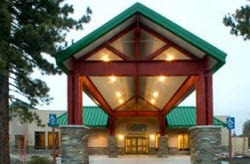
Mammoth Hospital (CA) will deploy Allscripts RCM services and EHR at its 11 outpatient clinics.

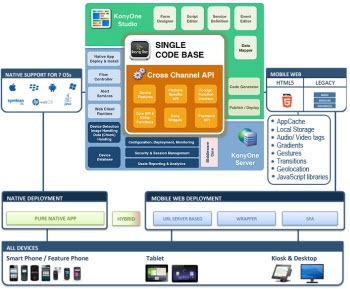
Independence Blue Cross (PA) selects Kony Solutions’ Write Once, Run Everywhere as its mobile application platform.

Mental Health Partners (CO) chooses Stockell Healthcare Systems’ InsightCS RCIM to integrate with the MindLinc behavioral EMR.

Pacific Eye Specialists (CA) selects SRS EHR for its 10 providers.

Doctor’s Medical Center (FL) signs up for Vitera Intergy Meaningful Use Edition for its 23-physician practice.


People

1-5-2012 12-24-50 PM

Olathe Health System (KS) hires George Dix as CIO. He was previously with Cape Fear Valley Health System (NC).

1-5-2012 2-46-32 PM

Andrew Ziskind MD, previously with Accenture, joins Huron Consulting Group as a managing director in the company’s healthcare practice.


Announcements and Implementations

1-5-2012 3-38-39 PM

St. Joseph’s Medical Center (CA) implements PerfectServe’s clinical communication and information delivery system.

Continua Health Alliance and some of its member companies will exhibit personal connected solutions at the International Consumer Electronics Show (CES) in Las Vegas next week. That show outdoes HIMSS in terms of celebrity sighting potential, with Dennis Rodman, Justin Bieber, Snooki, and 50 Cent among the glitterati collecting big corporate paychecks for serving as set dressing for booths.

athenahealth announces that it proactively sought and received a favorable Advisory Opinion from HHS’s Office of Inspector General relating to athenaCoordinator, a fee-based offering that would provide order transmission and coordination services to providers. The opinion clears the way for athenahealth to offer a per-transaction pricing model that charges fees to parties that are exchanging clinical data, but steering clear of anti-kickback statutes.


Government and Politics

1-5-2012 1-52-13 PM

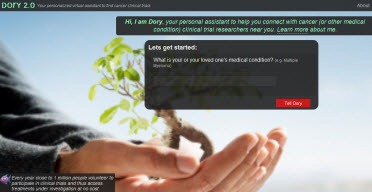
HHS announces two winners of its contest to create HIT applications using public data for cancer treatment and prevention. The ONC awarded $20,000 each to the developers of  Ask Dory!, submitted by Applied Informatics, and My Cancer Genome, submitted by Mia Levy PhD, MD of Vanderbilt University Medical Center.


Other

mrh_small Serbia’s health minister says the introduction of an electronic health card system has turned doctors into scribes, forcing them to fill out forms instead of taking care of patients. He offers a solution: “When a doctor finishes examination, he/she enters data into computer and then takes a health card and fills it in manually. I asked them why not printing the findings and attaching them to the health card. That would speed up the process.”

1-5-2012 9-15-38 PM

mrh_small University of Mississippi Medical Center lays off 115 employees and cuts 90 unfilled positions, saying it’s struggling with increased charity care and coming up with the $80 million it needs to implement Epic.

mrh_small An Iowa public policy analyst discussing the pre-caucus healthcare climate there says the governor accepted $7 million in federal HIE grants while calling it a government takeover of healthcare. “The practical side of that is that many don’t want the government telling them what to do, and the only way that can happen should this continue forward is by setting up your own exchange, otherwise the feds will set up their own.”


Sponsor Updates

  • Free EMR vendor Practice Fusion streamlines its e-prescribing workflow.
  • Greenway Medical Technologies and NextGen will join MedAllies at the HIMSS12 Interoperability Showcase to demonstrate MedAllies’ Direct HISP patient data exchange solution.
  • Computerworld includes Ugo Mattera, VP of information technology operations at McKesson Health Solutions, in its 2012 class of Premier 100 IT Leaders.
  • MED3OOO announces a free webinar regarding its PQRIwizard powered by CECity.
  • McKesson introduces its cloud-based supply chain solution to support supports multiple materials management information systems.
  • Southern Tier HealthLink (NY) expands its use of Lawson Cloverleaf Hosted HIE.

EPtalk by Dr. Jayne

An article in the Journal of the American Board of Family Medicine discusses barriers to use of formulary information by physicians who e-prescribe. It wasn’t a huge study and the authors claimed it looked at eight practices of varying size and specialty, but a closer look finds the practice size to range from one to four physicians, which I would generally consider to be small practices. Each was using a standalone eRx program. Information was gathered both through observation and through interviews.

Some interesting points. The study included the use of a standalone EHR program, which I bet that made it easier for providers to consider a paper-based workaround. I wonder if the results would have been different if the eRx solution were part of a reasonably robust EHR or if larger practices were reviewed. The researchers had backgrounds in medical anthropology and labor relations, which is certainly an interesting combination.

Although few users were using formulary and benefit references prior to the study, there was a central theme of provider distrust of the electronic resources due to inaccurate data. Providers continued to use paper-based workarounds to find information. Three key difficulties were noted: (a) health plans aren’t required to provide a full set of formulary information; (b) some software packages “normalize” the data, creating groups such as preferred, formulary, or off-formulary which really don’t mean anything; and (c) some payer information is group-level rather than plan-level, which can mean a huge difference in insurance coverage information.

In my market, only 70% or so of the patients have valid formulary information accessible through the EHR despite our attempts to make provision of formulary information a part of our contract renewal process with payers. I agree that the coverage groupings are confusing, but they were confusing in the paper world as well. Personally, I’d like to see some realistic ideas of coverage such as “covered and dirt cheap” vs. “covered but crazy expensive” or even “don’t even think about it.” That would certainly help me be a more Meaningful User.

In addition to immunization and disease surveillance registries, some states are offering registries for Advance Directives, with Virginia being the most recent to head online. I love the idea of patients being able to document what kind of healthcare they want in the event they are no longer able to make their own decisions, and putting it online is a lot more helpful than stashing it in a file cabinet at home or in a bank lockbox. State information exchanges may eventually allow physicians access.

Unfortunate things can happen when patients lose the capacity to indicate their wishes, especially if they haven’t communicated those wishes to family members. Whether you have an online registry in your state or not I, encourage everyone to talk to your loved ones about what you might or might not want done should the situation arise. Some nurses made fun of me when I arrived for an elective procedure (as a sassy 20-something patient) with my advance directive and healthcare power of attorney documents in hand, but I wanted to make sure that in the event of something horrible, it was clear how I wanted my care to proceed.

Speaking of cheery topics, the American College of Physicians recently released its update to its Ethics Manual. The sixth edition features new guidelines that address the issue of cost effectiveness and efficiency in care delivery. Other new or expanded sections include: confidentiality and EHRs; health system catastrophes, social media and online professionalism; pay for performance and professionalism; and patient centered medical home.

Websites like Groupon that offer daily deals are increasingly prone to offer health-care related services. Patients without coverage use the discounts to receive dental care, while others may take advantages of bargains on elective or non-covered services such as Botox or laser vision surgery.

Print


Contacts

Mr. H, Inga, Dr. Jayne, Dr. Gregg.

Acquisitions for Mediware, Cumberland Consulting, and TriZetto

January 5, 2012 News Comments Off on Acquisitions for Mediware, Cumberland Consulting, and TriZetto

image

Mediware has announced its acquisition of the assets of Transtem, which sells software for managing adult stem cell collection and transplantation. Mediware President and CEO Thomas Mann said in the announcement, “This is cutting-edge healthcare that is pursuing cures for such large patient population diseases as myocardial infarction (MI), critical limb ischemia (CLI), Parkinson’s disease, diabetes, cancer and many others. Importantly, there is a growing demand for a comprehensive software solution to effectively manage the collection and preparation of the therapeutic cell solutions as well as streamline donor, patient and treatment data management.”

image

Cumberland Consulting Group has been acquired by members of its management team and private equity firm Tailwind Capital, with participation by investor and former HCA Chairman R. Clayton McWhorter. Tailwind Managing Director Geoffrey Raker said in a statement, “This transaction represents a tremendous opportunity for Tailwind to invest in a proven platform that provides high quality services to a dynamic industry in the midst of an IT transformation. Cumberland has a very experienced management team and is well-positioned for future growth and expansion. We look forward to supporting Cumberland as it pursues future organic initiatives and acquisitions.”

image

TriZetto announced this morning that is has acquired Medical Data Express, which offers Medicaid and Medicare encounter management software. TriZetto Chairman and CEO Trace Devanny said in a statement, “By acquiring MDE, TriZetto is cementing its ability to offer customers a proven, comprehensive and reliable solution that helps payer organizations meet federal and state requirements for medical encounter data processing. We are committed to continuing to enhance our suite of solutions helping Medicare and Medicaid plans leverage the efficiencies they gain for strategic advantage while maintaining compliance.” 

2012 Mobile Clinician Voice Challenge 1/4/12

January 4, 2012 News Comments Off on 2012 Mobile Clinician Voice Challenge 1/4/12

1-4-2012 4-12-17 PM

Nuance, an HIStalk Founding Sponsor since July 2005, has made a significant contribution to Homes for our Troops in honor of HIStalk’s readers and in appreciation of HIStalk’s sharing of this information with them.

12-31-2011 10-12-22 AM


The Problem

Clinicians and their mobile devices are everywhere. Doctors, nurses, and other licensed professionals are interpreting clinical information and making clinical decisions right now using smart phones and tablets, often from locations outside the four walls of the hospital, clinic, or medical practice. They need better ways to interact with these systems beyond tiny keyboards.

The Solution

Give mobile clinicians a voice by speech-enabling your applications, both Web-based and mobile, with as few as two lines of code and in as little as a couple of hours. Free them from the limitations of poking at keyboards that are too small for normal fingertips –let them document on the go using their voice.

Link.

The Challenge

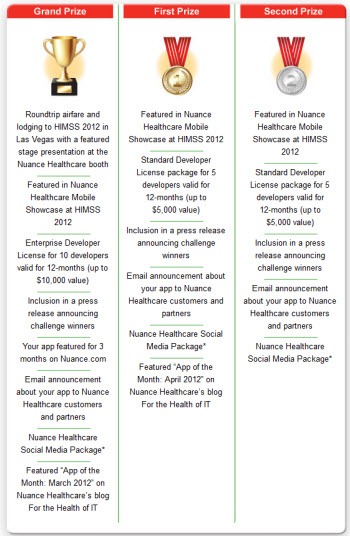
The 2012 Mobile Clinician Voice Challenge offers over $25,000 in prizes for most innovative, speech-enabled healthcare application (Web-based or mobile) developed using the HIPAA-secure, cloud-based Nuance Healthcare Development Platform. The contest runs through February 3, 2012, with winners to be announced at the HIMSS conference.

1-4-2012 4-08-58 PM

The Prizes

1-4-2012 4-10-25 PM

Full Details

Information is available on the contest page. See the text ad in the right column of HIStalk as well, which will run throughout the contest.

Not a Developer?

Tweet about the contest using @NUAN_Healthcare and #2012mobilechallenge and you’ll be entered in a daily giveaway for contest tee shirts and an iPad 2.


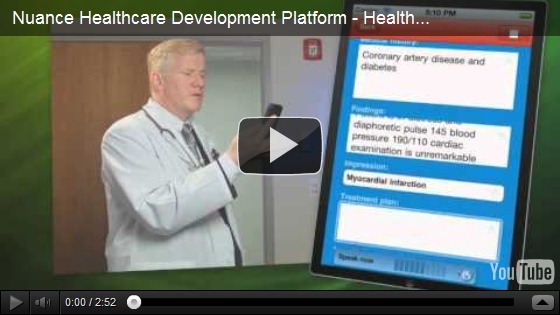
Contest Video

Link.


An interview with Jon Dreyer, senior manager of mobile solutions marketing, Nuance Communications, Healthcare Division


Describe Nuance’s philosophy about the mobile clinician.

The “mobile clinician” is quickly becoming synonymous with the modern clinician. In fact, physician smart phone adoption, which is currently at 72%, outpaces the general U.S. adult population by more than 50%.  And by the end of 2012, mobile device adoption among healthcare professionals is expected to reach 85%.

Whether racing from exam room to exam room or working remotely, mobile access to clinical information and mobile collaboration tools are essential for caregivers. This new breed of healthcare professional is in need of better experience-enhancing technologies, such as speech recognition that is available on any device at any time, in order to be completely untethered, yet still be fully plugged in to interact with and contribute to the care delivery process.


With voice-powered applications becoming common, especially on smart phones, do you see that as becoming a standard for systems designed for clinician use?

Absolutely. Voice will continue to grow as a primary form of input into mobile devices for consumer markets as well as within healthcare. Touchscreen devices with small onscreen or physical keyboards will never catch up to the speed of data entry on a desktop environment. Speech recognition overcomes the challenges associated with touch typing and bridges the gap to provide a ubiquitous experience for all users on all devices and platforms.

Keep in mind that speech recognition software designed specifically for healthcare professionals has been in use for more than a decade. On a daily basis, hundreds of thousands of clinical users across all healthcare specialties rely on the technology to reduce turnaround times, cut costs, and improve the overall delivery of patient care.

Given the dramatic rise in mobile device adoption over the past few years, and its projected growth, it’s only natural that the speech recognition experience clinicians have come to appreciate on their desktop is something that they will expect from their mobile and web-based apps as well.


Give me some cool ideas or apps you’ve seen that would be a good choice to speech enable just in case developers out there need some inspiration.

We have more than 100 partners in our evaluation program today. Healthcare app developers are rapidly embedding secure, cloud-based, medical speech recognition in point-of-care documentation/mobile EMRs, reference and content databases, disease management, clinical trial, pharma, and specialty-specific reporting tools. The applications run on a variety of devices and operating systems that are supported by the development platform, including iOS, Android, Web Browser (Internet Explorer, Safari, Firefox, Chrome), and native desktop applications.

Examples of clinical scenarios and apps that use speech recognition powered by Nuance Healthcare include:

  • Mobile EMR access. With speech recognition as part of the workflow, physicians can easily voice document findings and clinical notes without having to return to a workstation or office.
  • Interactive patient-side care. Specialists using mobile applications can now visit patients post-surgery and retrieve, as well as document using their voice, all relevant information on their mobile devices.
  • Trauma communication and coordination. With specialized, speech-enabled mobile apps, clinicians can capture in their own words the patient story without delay. In a trauma scenario where every minute matters, this streamlined mobile approach helps to speed communication across care teams while expediting prep time for surgery.
  • Diagnostic image view and reporting. Radiologists can now access patients’ diagnostic images via their mobile device and dictate reports from anywhere and at any time. The time in which patients receive feedback and care can be significantly shortened.


Do you have any words of encouragement for those who are thinking about entering the challenge?

Healthcare app developers should join the challenge because there’s really no reason not to participate.  Not only is it free to evaluate the Nuance Healthcare cloud-based medical speech recognition technology, but it’s also easy to integrate, deploy, and maintain. It requires minimal development effort (most evaluation partners have their integrations up and running within a few hours of registering) and clinical end users will benefit greatly from having access to medical speech recognition from their mobile and web-based apps.


Contest Notes

  • The contest is open to any developer who is a legal resident of the US.
  • You can submit multiple entries.
  • Apps do not need to be live and/or commercially available.
  • Apps do not need to be written specifically for the contest – it’s OK to integrate the speech service into an existing app.

Links

QuadraMed Acquires NCR Healthcare Solutions

January 4, 2012 News 3 Comments

image

QuadraMed announced this morning that it will acquire the healthcare solutions business of NCR Corporation, whose products include a patient access kiosk, patient and physician portals, and a payment solution. Terms were not disclosed.

NCR acquired the product portfolio when it bought Maitland, FL-based Galvanon in December 2005.

QuadraMed CEO Duncan James was quoted in the announcement as saying, “This addition to QuadraMed’s portfolio is a logical extension of our existing Access and Identity Management offerings. NCR’s healthcare solutions will improve our clients’ ability to meet the increasing demand for patients to control and self-direct their healthcare experience at hospitals, clinics and physician practices.”

NCR’s healthcare workforce in Lake Mary, FL and Hyderabad, India will become QuadraMed employees on January 5, 2012.

News 1/4/12

January 3, 2012 News 4 Comments

Top News

1-3-2012 8-30-48 PM

The District of Columbia, armed with $1.06 million in ARRA money, issues an RFP for an HIE technology platform. Bids for the one-year contract are due on January 13. The District decided to support the simpler Direct Project rather than a traditional HIE last year, putting the DC RHIO, which was expecting to get the grant money, out of business.


Reader Comments

1-3-2012 5-26-32 PM

inga_small From Sunshine: “Re: new hire. Mike Mieure from Sunquest and Misys is the director of IS for Vitera Healthcare.” Confirmed via LinkedIn.

inga_small  From Tipsy: “Re: tips for meeting with reporters. Joseph Goedert has some great advice for vendors scheduling meetings with the press. My personal favorite: don’t send your marketing manager to talk to the reporter.”  Mr. H does far more interviews than I do, but I am sure that if anyone attempted to give us a lesson on HITECH basics, we’d be making fun of them later. If you handle media relations for a vendor or PR firm, do yourself a favor and give Joe’s blog post a quick read.

mrh_small From AnotherDave: “Re: Dr. Jayne’s 1/2/12 post, What Gets Measured Gets Managed. To quote Nick D’Onofrio, ‘You can expect when you inspect.’” Dr. Jayne outdid herself with her post this week, which is getting tweeted and mentioned all over the place. It was informative while being fun to read. She enjoys using reader feedback for future posts, so if you have something you’d like her to write about or comment on, e-mail her.

mrh_small From Pyorrhea, IL: “Re: a second Judy Faulkner article. Does this include any new information, or is it just the same thing over again?” The first article seemed merely politically biased and sloppy with facts, but the second one by the same author ventures into pure nut-job territory, claiming “a de facto alliance between Epic and the Service Employees International Union” because some of Epic’s hospital customers employ SEIU-organized labor, which is hardly shocking given that Epic’s core customer base is academic medical centers in big cities. I have one positive comment about the article: it was short.


HIStalk Announcements and Requests

inga_small  Mr. H seems to have survived without my assistance last week. No surprise, of course, but I like saying it so he’ll take a moment to reflect on how much more fun it is to have me around pinging him with e-mails all day. In my absence, I have noticed almost all our sponsors have now replaced their animated ads, giving the site an almost Zen-like peacefulness (thank you, sponsors.) Now that I am back, Mr. H and I are heads down in our HIMSS planning and are excited about a couple of new fun projects in the works. In addition to the more serious stuff, we are addressing details for the annual Inga Loves My Shoes contest, as well as the crowning of the HIStalk King and Queen for the best-dressed HIStalkapalooza party-goers. I predict an exhaustingly good time will be had by all.

1-3-2012 5-42-18 PM

mrh_small It’s the New Year, so it’s time for HIStalkapalooza signups. Our amazingly gracious, creative, and fun event sponsor ESD has been working tirelessly for months in planning a memorable Las Vegas event for you. It’s at First Food & Bar in The Shoppes at the Palazzo (ESD bought the whole place out for the evening) on Tuesday, February 21 at 6:30 p.m. ESD is a consulting firm, so let’s go over the deliverables. Great food – check. An award-winning bar plus specialty drinks such as the IngaTini, the Mr. H Incognito, and the ESD Activation Sensation – check. Fun contests involving shoes and people dressing up – check. A special performance by Elvis – check. And of course, Jonathan Bush and the HISsies – check and mate. Click the graphic above, the button to your right, or here to request an invitation. If we get fewer requests than we have capacity, then beautiful – everybody who signs up will get an e-mailed invitation. If we’re overbooked (which has happened every year so far, and often quickly), we’ll invite the number of folks we can handle. HIStalkapalooza is held in honor of those involved with HIStalk, HIStalk Practice, and HIStalk Mobile in any way (reader, sponsor, contributor, etc.) and we gratefully acknowledge the support of ESD in making it possible. More to come once we get the signups finished.

1-3-2012 6-07-52 PM

Here’s some background about ESD (they didn’t ask me to talk them up, but it’s the least I can do considering they’re paying for HIStalkapalooza.) The Toledo, OH consulting firm provides expertise that includes clinical transformation, go-live support, legacy system maintenance, staff augmentation and training, system optimization, and help with ICD-10 and Meaningful Use projects. Clients often (always?) need healthcare experience and workflow expertise that’s way over the head of freshly minted vendor implementers. That’s where ESD’s expert clinical consultants can save the day, helping CIOs sleep at night by reinforcing their front lines to complete projects, generate ROI, and optimize processes. Founder and President Joe Torti started the company as a solo consultancy in 1990 and has grown it to over 400 clinical IT consultants (nurses, physicians, pharmacists, etc.) and 30 corporate employees. If you’ve been around awhile, you’ll no doubt recognize some of the management team names as I did: Joe Mason, David Tucker, and Dan Oberle, to name a few. ESD not only brings you HIStalkapalooza 2012, but is also a Platinum Sponsor of HIStalk. I greatly appreciate the ongoing support of ESD.


Acquisitions, Funding, Business, and Stock

mrh_small Chicago-based solar products company SoCore Energy LLC raises $3 million in an equity offering. Among its investors is an investment fund run by Michael Ferro (Merge Healthcare). The company’s chairman and co-founder is Allscripts CEO Glen Tullman. I Googled hoping to find that Epic’s mammoth solar installation used solar panels from SoCore, but nothing came up, dashing my hopes for perfect irony.


Sales

1-3-2012 2-21-37 PM

San Jacinto Memorial Hospital (TX) selects PerfectServe’s clinical communication and information delivery platform.

The Premier Healthcare Alliance awards a group purchasing agreement to Authentidate for its Electronic House Call Kiosk and Interactive Voice Response solutions.

Stanford Medical Center (CA), HealthEast (MN), Oakwood Healthcare, and McLaren Healthcare (MI) prepare for the ICD-10 deadline by utilizing OptumInsight’s A-Life Medical computer-assisted coding.

Albany Area Primary Health Care (GA) selects eClinicalWorks EHR suite for its 14 locations.


People

1-3-2012 7-25-40 PM

MedQuist hires Michael Raymer as SVP of solutions management. He was previously general manager of Microsoft’s Health Solutions Group.


Announcements and Implementations

Tuomey Healthcare System (SC) partners with Advanced ICU Care to deliver remote tele-ICU monitoring by intensivists and critical care specialists.

1-3-2012 11-55-50 AM

Regional Health Services of Howard County (IA) launches Cerner at its 25-bed acute care hospital.

Canton-Potsdam Hospital (NY) begins installation of MEDITECH 6.0.

AirStrip Technologies earns CE Mark certification for its FDA-approved mobile patient monitoring applications, allowing them to be sold in Europe and other areas.

Intelligent InSites integrates the TempSys Fetch real-time locating technology into its RTLS system. The InSites RTLS software solution works with several sensing systems, including active and passive RFID, ultrasound, WiFi, and ZigBee.

1-3-2012 7-18-57 PM

Pike County Memorial Hospital (MO) goes live on McKesson Paragon, earning the hospital a story in the local paper.

1-3-2012 8-25-17 PM

George C. Grape Community Hospital (IA) will hold a Virtual Ribbon Cutting next week to celebrate the completion of its EHR implementation and Meaningful Use attestation. The 25-bed hospital had to deal with Missouri River flooding through the summer as it accelerated its Meaningful Use timelines as a beta site for Healthland’s Centriq small-hospital EHR.


Government and Politics

Washington’s state prescription database goes live, but previously supportive doctors and pharmacists line up against it when the US Department of Justice tells the state not to expect to get federal money for the $530K annual operating costs. State health officials ask lawmakers to remove the portion of the law that bans charging providers for its use, which would entail yearly per-provider charges of $11 to $15.

In Canada, the leader of Ontario’s democratic party calls for a hospital CEO salary cap of $418K – double the premier’s salary — after hospitals release their compensation contracts following a ruling that they are covered by freedom of information laws.


Other

The US Patent and Trademark Office issues a patent to DR Systems for technology that tracks the resolution (or other parameter) for a displayed medical image.

Indiana University Health Physicians misses its 1,200-physician year-end employment target by 350, with some of the slowdown attributed to physician delays in committing to a common EMR and approving common treatment protocols.

1-3-2012 8-02-07 PM

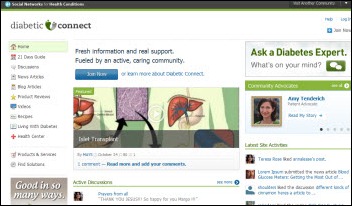
Joslin Diabetes Center (MA) partners with Alliance Health Networks to participate in that company’s Diabetic Connect social network.


Sponsor Updates

  • Phoenix Children’s Hospital shares how deployment of the Vocera wireless communications solution has improved communication in its NICU.
  • NextGate profiles Hartford Hospital (CT)and its use of  NextGate’s matching technology to identify patients in Connecticut’s HIE.
  • Besler Consulting announces the general availability of BVerified Transfer DRG and BVerified IME proprietary solutions.
  • Concerro adds VLOG, a video blog option, to its Concerro University client learning center.
  • Intellect Resources is holding Big Break New Orleans on January 21, a one-day audition for folks who want to help Ochsner Health System implement Epic as trainers.
  • Independence Blue Cross chooses Kony Solutions as its mobile application platform.

The Iowa Caucuses and the Stakes for Healthcare
By Donald Trigg

1-3-2012 7-32-38 PM

How should we feel about an anonymous force driving US policy? Does it serve our interests to have a beef-loving sovereign dictating our national conversation? Should a single player carry such outsized influence?

We are talking, of course, not about Mr. HIStalk, but the first-in-the-nation caucuses this evening (Tuesday) in Iowa. And in the less harried first days of the New Year, a moment offers itself for a primer on the quadrennial contest and a short exposition on how it might inform the health policy dialogue this fall.

Forty years ago, an obscure McGovernite orchestrated an early start date for the Iowa caucuses. Four years later, a peanut farmer named Jimmy Carter leveraged a “win” (finishing second to uncommitted) to vault to national prominence, a party nomination, and then the White House. Iowa’s outsized role in the nominating process has been set ever since.

The number of delegates at stake in Iowa toward the 1,143 needed for nomination is modest. GOP aspirants are looking, instead, for what George H.W. Bush in 1980 called the “Big Mo.” In our vernacular, Iowa is not a supplier of choice designation. It is a down select.

Indeed, since 1972, the eventual GOP nominee has finished in the top three in Iowa with only one exception. But unlike the definitively predictive South Carolina primary, Iowa does not decide the GOP nominee. It is the “winnower” of the field.

The mechanics of the caucus process are straightforward. Voters gather in roughly 800 locations, typically in a church basement or a high school gym. After electing a temporary chair and a secretary to record the proceedings, Republicans rise to speak on behalf of their preferred candidate. Then, votes are cast. The results are aggregated and a late evening winner is declared.

If the process is fairly unambiguous, the fate of the six candidates contesting Iowa is less clear-cut. Historically, the GOP has nominated by primogeniture — falling in lockstep behind the next person in line. The 2012 race has been marked from the outset by the absence of an overwhelming front-runner.

Instead, the so-called Exhibition Season has seen a series of volatile swings from candidate to candidate in an elusive search for an alternative to former Massachusetts Governor Mitt Romney. Michelle Bachman. Rick Perry. Herman Cain. Newt Gingrich. Now, we are seeing a late “Santorum Surge” that may put the former PA Senator within striking distance this evening.

It has been said that there are only three tickets out of Iowa. Romney, Paul, and Santorum appear to be clutching them, according to the final Des Moines Register poll. But with 41 percent indicating that they could still change their mind, the Register’s Kathie Obradovich rightly characterized the race as “a moving target.”

The stakes for healthcare are large. David Blumenthal wrote last month in the New England Journal of Medicine, “The 2012 election will be the most important in the history of the health care system.” For all the potential implications in 2013 and beyond, however, the topic has featured only modestly, even comically, thus far.

We had, to the chagrin of public health advocates, Herman Cain advisor Mark Block silently smoking into the camera –reminding us that a 20-something staffer, a video camera, and free time are the campaign equivalent of whiskey, car keys, and teenage boys. We had Romney’s Massachusetts bill, and its common features with the Accountable Care Act, as consistent debate fodder. And we had the criticism of Gingrich amid his Q4 rise for his paid advocacy through the Center for Health Transformation to his vocal backing of Part D in 2004. But neither deep policy substance nor deep debate has featured to date.

One reason, beyond the constraints of the modern campaign, is that the US economy looms so large. An NBC/Facebook poll of early state voters out Sunday put the economy at 59 percent as the top voter concern ,with the federal deficit at 19 percent and with healthcare a distant third at just 11 percent. There is little reason to think that mix will shift this autumn.

The impact of that framing for healthcare finance is that the “second phase” debate will be centered almost exclusively around cost and predominately within the context of the current FFS model. We are headed toward a moment akin to the 1997 Budget Act and it may come as soon as 113th Congress.

But first we will need a GOP standard-bearer. Iowa, “the purest of prairie states,” is an opening step in that drama. It is a good and decent place where Winenrenner properly wrote the politics are “clean and competitive” and, just like HIStalk, “the arena is fair and open.”

Donald Trigg is chief revenue officer for CodeRyte. He worked for then-Governor George W. Bush during the 2000 presidential cycle in Austin, TX. He has traveled to all 99 counties in Iowa, suffering chilly winds and an unsettling amount of chicken fried steak.


Contacts

Mr. H, Inga, Dr. Jayne, Dr. Gregg.

Monday Morning Update 1/2/12

December 31, 2011 News 2 Comments

Happy New Year!

Given the lame (and guardedly vague) healthcare IT predictions for 2012 that I’ve seen, written by reporters and other non-combatants, I’ll pass on giving my own. Some of the pearls of predictive wisdom: (a) companies may consolidate; (b) consumers will be engaged; (c) ACOs will be formed and will need analytics; and (d) social networks will be used to encourage good health.

My Time Capsule editorial from this same week of 2006: Can EMRs Sweeten their ROI by Moonlighting as Research Databases? A random sample: “Repurposing that existing information by making it available to those willing third-party customers, even when motivated purely by mission-supporting cash, is at least more beneficial to society than running a McDonald’s or building medical office buildings.”

Thanks to the following sponsors (new and renewing) that supported HIStalk, HIStalk Practice, and HIStalk Mobile in December. Click a logo for more information.

12-31-2011 3-01-32 PM
12-31-2011 2-59-50 PM
12-31-2011 2-52-54 PM
12-31-2011 3-04-33 PM
12-31-2011 3-03-42 PM
12-31-2011 2-56-14 PM
12-31-2011 3-22-03 PM
12-31-2011 3-20-57 PM
 
12-31-2011 2-52-03 PM
image
12-31-2011 2-55-19 PM
12-31-2011 3-00-45 PM

12-30-2011 9-57-58 PM

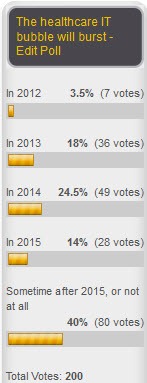
The HIT bubble is here to stay, most readers believe, which must mean it’s not really a bubble in their minds. New poll to your right: when a hospital says having its clinical systems offline for several hours resulted in no patient harm, do you believe them?

We’ll give the HISsies nominations just a few more days before moving on to the actual voting, so this is last call to get your candidates on the ballot. Some obvious choices haven’t been nominated, I should say.

Here’s Vince’s HIS-tory on outsourcing.

Geisinger Health System (PA) says it will not hire smokers starting in February, when job applicants will be required to take a nicotine test.

12-31-2011 8-00-19 AM

Reading Hospital (PA) retools its executive team to put clinicians in key roles. The new CEO and COO are nurses, while the new CMIO, chief medical officer, and VP of academic affairs are physicians. The CEO, COO, and CFO all came from the consulting company the hospital had engaged to review best practices. The hospital says it’s also implementing a management process that includes physicians in every decision. Also mentioned is the hospital’s $180 million decision to implement Epic, which the hospital’s board chair says “will explode the quality of care and increase patient satisfaction.”

Cleveland, OH health systems Cleveland Clinic and MetroHealth are sharing electronic patient records and Kaiser Permanente will join them shortly. They’re using Epic’s Care Everywhere rather than an HIE, meaning they can access the records of patients who have opted in from 300 hospitals and 4,000 clinics.

12-31-2011 9-20-39 AM

Stanford researchers develop an application that allows technicians to control MRI machines from HP’s TouchPad tablet, which was discontinued within two months of its launch and sold off for $99. The researchers liked it because HP helped them remove its metal parts, a requirement for operating near an MRI magnet.

A British physician advisory group proposes that NHS allow patients to review their own electronic medical records by 2015, including the ability to review physician notes and request prescription refills and appointments online. Expected roadblocks are patient confidentiality concerns, physicians who don’t want patients to see their documentation, and NHS’s potential inability to provide such a service.

A California hospital investigates one of its contracted employees who allegedly posted a photo of a patient’s medical record, including the patient’s name, on Facebook with the comment, “Funny, but this patient came in to cure her VD and get birth control.” Several people scolded the employee on Facebook for violating the patient’s privacy, to which he replied, “People, it’s just Facebook … Not reality. Hello? Again … It’s just a name out of millions and millions of names. If some people can’t appreciate my humor than tough. And if you don’t like it too bad because it’s my wall and I’ll post what I want to. Cheers!”

A man who rear-ended a parked fire truck and then sued the firefighter who saved his life gets nothing in the settlement of his lawsuit. The fire truck was parked in the opposite lane as firefighters were responding to an accident. The driver had a long record of traffic offenses, had been ordered by a court not to drive, was not carrying insurance, and was taking three judgment-altering drugs. He lost control while speeding on the rain-slicked road, crashed into the fire truck, and had to be flown out by medical helicopter. He wanted $300K to settle his suit that claimed the fire truck was parked in his lane, which the crash scene photo appears to show is not the case. The city paid $47,000, of which the man’s children will get $20,000 and lawyers $27,000, claiming it was cheaper to pay the money than the cost of a trial. Since the accident, the driver has been convicted of two additional crimes, one of them a felony that will likely send him to prison.

12-31-2011 9-16-08 AM

I’ll have full details on HIStalkapalooza mid-week, so watch for that if you’re interested. Readers always like to guess a company given a tiny section of their logo, so above is your challenge.


Also coming mid-week is information about an application development contest that we’re helping promote. Here’s the story.

One of our sponsors asked us if we had additional promotional opportunities available, i.e. they wanted to buy a featured post or access to the e-mail list. They were running a fun-sounding contest with some pretty cool prizes, right down the alley of HIStalk readers who have written medically related software (vendors or providers alike.) We said no, we don’t do that – all we offer is sponsorships, all sponsors get the same benefits, and we will never make the e-mail list available to anyone. We always turn down requests to provide more exposure for cash.

Inga and I were noodling around on how we might help in a non-commercial way that would benefit someone other than ourselves, so instead of just saying no, we told them, “Make a big donation to charity and we will help get the word out to our readers as long as we can do it our way.” They agreed. We suggested the charity and the dollar amount, to which the company also (surprisingly) agreed.

12-31-2011 9-41-10 AM

Receiving the company’s ample donation was Homes for our Troops, a top-rated charity (98.5% on Charity Navigator) that builds specially designed houses for severely injured and disabled veterans who receive them at no charge, with the assistance of donated labor and supplies. Our designated recipient is Marine Staff Sergeant Jack Pierce of Temple, TX, paralyzed from the chest down in his third deployment in Afghanistan when his vehicle drove over a 200-pound bomb, killing two other occupants and severely injuring six. The apartment in which he, his wife, and their young son live is not wheelchair accessible.

I’ll be sending the contest information out around Wednesday.

HIT Vendor Executives – Part Two of Two 12/30/11

December 30, 2011 News Comments Off on HIT Vendor Executives – Part Two of Two 12/30/11

We asked several HIT vendor executives the following question: Where do you plan to invest your research and development dollars over the next 1-2 years?

12-23-2011 12-40-30 PM

Tim Elliott, Founder and CEO, Access

We are focusing on three technologies that every hospital needs: electronic signature, a data bridge between clinical devices and systems and EHRs, and paperless, online e-forms.

The next generation of e-signature not only enables patients to quickly and securely authorize e-form registration packets and bedside consents, but also offers administrators the convenience of a server-based model. A clinical data bridge can capture and standardize output from devices (such as EKG traces and surgery images) and systems (perinatal documentation, COLD feeds, etc), and interface these directly into EHRs – with no paper or manual indexing.

Finally, we’re giving hospitals a way to transform slow, inefficient paper-based processes – such as onboarding, capital requests and physician referrals – into fast, collaborative, paperless ones. Users will be able to access electronic forms from their browser, add attachments, apply digital signatures and send through the proper channels, and to track each stage of the process. Upon completion, a copy of the form is archived in the ECM system and data posted to business and/or clinical systems. With healthcare facilities shooting for full EMRs, we’re doing our part to create technologies that fill the gaps, and are focusing our R&D on removing paper from as many processes as possible.


Ray dyer

Ray Dyer, CEO, Acusis

As a clinical documentation solution provider, we continue to look to our customers and healthcare IT market drivers. Given the many transformations underway, driven to a large degree by healthcare provider behavior, we are planning on investing our R&D funding in user intelligence tools including decision support and patient care analytics as well as mobile solutions development. We believe these areas will continue to be driven by customer need and demand, requiring data availability with strong privacy and security provisions. Acusis is poised and preparing to meet these challenges.


12-16-2011 8-36-03 AM

Dan Herman, Founder and Managing Principal, Aspen Advisors

Aspen Advisors’ investments will be focused on the expansion of our current services to address the needs of our clients:

  • Adoption of EMR technologies and clinical informatics;
  • Healthcare reform in support of “accountable care” delivery and financing models;
  • Operational integration of Business Intelligence and Data Warehousing solutions to enhance care delivery, improve quality, reduce costs; and
  • Improved reliability and cost effectiveness of technology infrastructure through the implementation of structured IT service management processes.

We will continue to invest in the development of structured, repeatable, yet flexible methodologies for planning and assessment, implementation management, and operational performance improvement.

We will also continue our investment in training programs for our consultants, so that our clients will continue to see the consistent application of expertise and delivery of service as our firm continues to grow.


Don Graham

Don Graham, General Manager, Billian’s HealthDATA

Our R&D investment will focus primarily on improving our data on outpatient care, and the better use of social media internally to communicate who we are and what we have.

With outpatient surgical visits now accounting for almost two-thirds of all surgical visits in the US, it is an area that our customers – healthcare vendors – are paying more and more attention to. We in turn must provide them with the data they need to best address this trend, which doesn’t show any sign of slowing down in my opinion.

As for social media, it’s proving to be the most effective way to distribute the news. That includes, of course, healthcare news. We realize that our customers and their provider customers are increasingly using social media as a means of communication and self-education, not to mention public relations and marketing. Patient referrals, good and bad, will have an ever-increasing influence on healthcare-related decisions made by the public, and the public’s migration to social media is obvious.

We, of course, want to be where our customers are, whether that be Twitter, LinkedIn, or blogs like HIStalk, so we’ll be ramping up our social media presence internally to make sure that staff are engaged and conversant in the healthcare discussions taking place online.


Stuart long

Stuart Long, President, Capsule

As the leaders in device integration, we’ve always been in the data business. Yet data needs are rapidly evolving. We are going well beyond the basic connectivity of data into information system(s). Basic connectivity is actually well understood as a necessity at this point; hospitals get that automating the vitals collection process is critical to recovering nursing hours, reducing charting hours and improving patient care. What they really need is better, more useful data to help improve decision making, to alert them to impending conditions faster and to improve the quality and safety of patient care overall.

We’ve reached a tipping point; hospitals are starting to scream “information overload.” Our customers are saying “we get so much data, from so many sources, that we need help sorting through it all; we need it presented in a meaningful way so we can act upon it faster.” We hear them loud and clear and will therefore be investing heavily on data; on how we increase the value of data so we can manage and disseminate the discrete data and communicate additional relevant context and meaning of that data to the right caregiver, at the right time, about the right patient. It’s a tall order and will take a lot of work with our EMR partners as well to make it a reality, but I think we are in the right place, at the right time to make it all happen.


Mac Mcmillan

Mac McMillan, CEO, CynergisTek

That’s easy — on the areas of privacy and security representing the greatest challenges for our customers.

We have always prided ourselves on staying out ahead and anticipating the needs of the industry and the needs of our customers in privacy and security. Five years ago, that meant attacking things like data leakage, encryption, and log management/auditing. Today it still involves finding better ways to monitor activity in the enterprise, but it also includes things like securing the cloud, defining managed security services for healthcare, managing the risk associated with the proliferation of mobile devices and medical devices that are not secure, and finding ways to better manage the security requirements with Business Associates.

Healthcare has enough complexity in its environment and more than enough on its plate with HIE, ACO, ICD-10, etc. It needs practical security strategies and solutions that work and are effective at stemming the tide of breaches like we have seen this year. We believe that in order for healthcare to win the battle with privacy and security, it’s going to take an investment in the right technologies and integration of Managed Security Services into compliance programs. We understand that technology alone is not the answer, and so the focus should be on implementation strategies and building the right processes around these technologies that enable them to be successful.


Michael o'neill

Michael O’Neil, CEO, GetWellNetwork

In recognition of the emerging reality that healthcare will be delivered anywhere and everywhere, no matter what the time, device or location, GetWellNetwork will sustain its investment in innovative Web-based, mobile phone and cable television technologies. When used properly, such technologies will support communication, education and even engagement throughout a patient’s care journey — from the home to the physician office, hospital, imaging center, or pharmacy and back to the home once again.

Platform-agnostic, technology-enabled patient engagement will be indispensable to providers, payers, and vendors as they work collaboratively to reduce hospital readmissions, promote self-care, boost patient and member satisfaction, and decrease cost per case. At GetWellNetwork, we are making significant investment in helping providers fulfill Stage 2 and 3 Meaningful Use requirements, and address the evolving challenges of medical home, accountable care and bundled payments.


12-18-2011 4-04-38 PM

Peter J. Butler, President and CEO, Hayes Management Consulting

At Hayes, we plan to invest R&D dollars in our hospital billing compliance software, MDaudit Hospital. It is designed to give auditors access to billing data to support revenue integrity, helping them to eliminate the errors for which CMS routinely recovers payments through its integrity programs such as RAC, MAC, and the efforts of the OIG.

However, we are finding that our clients are increasingly asking us about using this tool for other strategic projects such as ICD-10 documentation improvement, Meaningful Use, and data mining. Therefore, we are exploring related tools to use for these additional purposes. For example, via our recent integration with MediRegs clients can look up diagnosis and procedure codes and documentation requirements while in MDaudit. Additionally, some of our auditors are using MDaudit as a physician training tool on ICD-10 documentation.


tiffany crenshaw

Tiffany Crenshaw, President and CEO, Intellect Resources

Intellect Resources is investing in identifying and breeding new talent for the healthcare IT industry, with emphasis on training and go-lives.  In 2011 we debuted Big Break, a high-energy recruiting event designed to select an entire training and go-live teams in short period of time. Big Break is marketed towards individuals with no or minimal healthcare IT experience who have the right attitude, enthusiasm, and potential.  In an intensive one-day recruiting event, job applicants must complete a series of rigorous tests – one-on-one and panel interviews, extemporaneous public speaking, group work and classroom presentation skills – designed to identify only the best training and go-live talent.   

Once selected, Big Breakers complete an intensive course with classroom and hands-on learning, credentialing them in the appropriate EMR. As a result, a hospital system is able to select an entire training and go-live team in just a few days. Because Big Breakers do not typically have prior industry experience, they can often be secured at a fraction of the cost. As a result, hospital systems are able to breed and retain this new talent at a fraction of industry costs in a short amount of time.


doug burnman

Doug Burgum, President and CEO, Intelligent InSites

In our pursuit of improving care while lowering costs, we’ll be investing in three primary areas in the next 1-2 years.

First, one of Intelligent InSites’ most important objectives is to improve caregivers’ ability to spend more time at the patient bedside. To this end, we’ll be continuing our R&D investment in automating non-value-added manual tasks—including EHR data entry and finding available, clean equipment through easy-to-use applications—to give caregivers more time to spend with patients.

Second, as our solution utilizes RTLS and RFID technologies to know the location, status, condition, and interaction of all tracked equipment, patients, and staff throughout the hospital, we collect a massive quantity of operational data, every minute, every day, month after month, year after year. Through our Business Intelligence solution, we help our customers harness this “Big Data” to produce actionable insights critical to making sound and timely decisions, by utilizing flexible, high-impact, easy to create reports.

Third, because real-time data is generated from a wide variety of data sources, and because real-time intelligence can empower multiple healthcare IT systems, we’ll be continuing our investment in our partner ecosystem. We will continue to integrate with the expanding set of RTLS hardware vendors, and we’ll continue to expand our interfaces with EHR solutions, communications platforms, asset management applications, building management systems, and nurse call systems.

We are excited about investing in the future of RTLS, the “magic” of enterprise RTLS software, and helping our customers to truly improve the care they deliver, while simultaneously lowering their costs.


Tom Carson

Tom Carson, CEO and President, MD-IT

MD-IT has traditionally developed and delivered software functions that provide or support practical use of technology for physicians and patients, and that will continue to be our focus. Like most vendors, we will keep an eye on Meaningful Use requirements and other market developments, but identifying specific features beyond the near term is tough, as the HIT market is quite volatile at this point.

We expect to see evolving demands as the industry moves from what we think of as effectively an EMR version 1.0 environment to a more mature EMR version 2.0 environment that is more sensitive to the needs of physicians and patients as the primary users of these systems. Certainly near-term efforts will be directed to expansion of our popular mobile functionality that streamlines physician workflows, as well as continued broadening of our interoperability functions that link providers, patients, and payors.


12-18-2011 3-31-56 PM

Patrick Hampson, Chairman and CEO, MED3OOO

We are focusing our investments and resources in numerous areas. MED3OOO has committed to focus our knowledge, products and services with a MED360 view of healthcare delivery. We are not like most vendors just supplying systems. Our investments will continue to expand our current operational and technical capabilities and offerings. We will continue to integrate our proprietary systems, and continue our investments in capturing and using data of populations. We will continue to invest in tools that providing information across the entire spectrum of care focused on: efficiencies wherever we can find them, the patient and provider experience, the cost and most importantly the quality of care delivery. We want to be the best partner to providers that is in the industry.

Our investments in point-of-care capabilities will also create a great differentiation for the providers using our proprietary systems. As part of this, we are investing in the area of clinical decision support. “CDS” in an Electronic Health Record can take many forms. It is certainly more than providing guidelines to a provider. We want to focus on the user experience and want to spend a lot of effort with physicians reviewing workflows to determine how CDS can truly add value to the provider and patient when care is being delivered. Our addition of Quippe is just one example of these efforts. Quippe is the state-of-the-art documentation tool in the industry and is the basis of enhanced CDS within our InteGreat EHR offering.

These efforts are also critical to the physicians and hospitals we have partnerships with, but who are on older technologies or legacy systems even though they come from today’s brand vendors. Physicians already have investments in these systems. They too, need these higher level capabilities and they too need knowledge-based solutions. While these systems may be older and not web- based, MED3OOO, as their operating partners we work to provide solutions to improve on the capabilities these older systems just do not have. A system agnostic approach allows us to not just throw them out and waste physician’s precious capital. We try to maintain those systems and it is somewhat like the BASF commercials, “We don’t make things, we make things better.”

Lastly we will continue to expand our significant M3IQ data warehousing capabilities, capturing data from disparate systems, continuing our focus on the promise of combining financial claims and clinical data, and turning that data into actionable, predictable intelligence.


robert connelly

Robert Connely, Senior Vice President, Medicity

We are going through a period of enormous change in healthcare, and it’s clear that healthcare IT will play a critical role in that change. Medicity is focused on a strategy that will enable rapid adaptation to changing requirements while realizing a more cost-effective model that we believe will lead the next generation of information technologies.

Today, we’re building out the underlying IT infrastructure required for tomorrow’s healthcare, including integrating EHRs, building data exchanges, and standing up repositories. We are expanding our analytics capabilities and are involved with developing standards like ONC Direct. 

Many of our R&D efforts are targeted at integrating and improving our family of products. The strategy levers common technology platforms, modular apps, and cloud services. We believe that by porting much of our current functionality into apps designed to run on a platform like iNexx (Medicity’s individual network exchange), we can reduce time to market for new features, control development costs, and provide a greater opportunity to adapt to new needs quickly. 

We believe that technology is evolving to the point that it can adapt to people as opposed to people adapting to the technology.  Towards this end, we continue to invest in emerging technologies and markets.  For example, our efforts range from pioneering pervasive analytics that employ software agents to better analyze information at the source, to enabling consumer platforms to drive better health.  We are also focused on building solutions that leverage payer, provider, and consumer interactions to create more effective care.


peter kuhn

Peter Kuhn, CEO, MEDSEEK

MEDSEEK has always been ahead of the curve, developing strategic patient engagement and management solutions that help healthcare executives realize cost savings by improving care collaboration within existing workflows and find new revenue streams by finding and engaging patients. We were among the first to deploy our enterprise solutions to assist hospitals in finding, engaging, activating, and managing patient populations, and we’ll continue to invest in developing those solutions to allow hospitals to better prepare and position themselves in the rapidly changing world of healthcare reform.

Additionally, the strategic use of predictive analytics will ultimately become the market differentiator for hospitals, which is why we acquired Third Wave Research, Ltd, in 2011 and have been working on integrating their advanced predictive analytics expertise into our existing solutions. We will continue to invest in analytics technology that enables our clients to position for patient engagement, wellness and disease management. The rapid adoption of patient portals and the shift away from fee-for-service in favor of outcome- and quality-based reimbursement models will place more emphasis on finding new cost savings and revenue streams. To differentiate themselves from the competition, hospitals must find ways to personalize the patient experience and better manage the patient population. Effectively promoting profitable services to high-value patients and engaging them in wellness programs will influence healthy behaviors to positively impact outcomes.


Jay mason

Jay Mason, CEO, My Health DIRECT

It has been painfully obvious over the years that our solution was a bit ahead of it’s time. While very successful in directing patients to appropriate care settings in an ER, there wasn’t a pressing need to interact “outside of the walls” broadly or routinely. What we have seen in 2011 and see as our chief role moving forward is to serve as a health scheduling exchange. We will continue to invest our R&D in staying ahead of the curve. Today we can provide true Enterprise  Application Integration (EAI) with any willing trading partner via our own platform’s ability to leverage HL7, API, or CRM-based communication protocols.

So the next year will be more of the same for us — creating the integration tools, onboarding methodologies, and consumer engagement services that will allow our clients to redefine the way they interact and guide their patients and members.


Janet dillione1

Janet Dillione, Executive Vice President and General Manager, Nuance Healthcare

Going into 2012 the pressure is on for healthcare organizations to increase the quality of care delivered while reducing cost and complying with federal mandates. Nuance could not be better aligned to help healthcare organizations succeed in light of such pressures as Meaningful Use and ICD-10 and to ensure that clinical data is created in the most efficient way possible and is built from rich information that can be analyzed and intelligently used to drive broad healthcare enterprise change and improvement.

Over the next 1-2 years, we’ll continue to invest in areas that fundamentally improve the capture phase of clinical documentation, by which I mean empowering clinicians to document anytime, anywhere on any device in the most effective, natural way possible – via voice.  In 2011 we went to the cloud, offering SpeechAnywhere services to development teams across the industry.  Speech-powered clinical documentation is widely in demand and will continue to expand to encompass the complete healthcare enterprise and the mobile clinician workflow.

We’ll also continue to heavily invest and innovate in the area of language understanding and analytics technologies, which make it so clinical data can be extracted from unstructured documents and intelligently leveraged to drive better clinical and business decisions. Through work with 3M, IBM and UPMC, Nuance is making tremendous traction against its mission to transform patient stories into high-value information. Our speech-driven clinical understanding solutions will increase the quality of documentation, improve efficiency and drive better care – all while putting less burden on clinicians.


12-19-2011 5-07-28 PM

Todd Cozzens, CEO, Accountable Care Solutions, Optum

I heard someone say the other day that ACO = HMO 2.0 But With Data. It is indeed all about the data. I empathize with health system CEOs who, after spending anywhere from $100 million (average medium size IDN) up to the $3 billion Kaiser spent on installing EMRs in the last ten years that all they really achieved was computerizing paper records. Little has been achieved in actually doing something with the data. That’s what the next ten years is all about.

  • Population Analytics: EMRs and the early data warehouses being developed on top of them are good at managing a census – sick people that visit hospitals and doctors. Population Analytics manage entire patient populations across all of their interactions with the health system. EMRs rely mostly on clinical data and some financial data. Population Analytics incorporate claims data, clinical data, financial data and actuarial data across ambulatory, in-patient, post acute and home care. We are in the top of the first inning of the biggest wave of change in our healthcare system any of us will see in our lifetime. These tools are also in their 1.0 versions and will evolve. Optum was almost purpose-built to bring all of these capabilities together into one cloud-based, integrated solution.
  • End-to-End (E2E) Financial Efficiencies: Hospitals leak revenue more than any other business in any other industry – with the average health system collecting only 33% of what they actually bill under the current fee-for-service (FFS) system. And on top of this we’re now going to burden hospital finance departments by introducing new fee-for-value (FFV) payments starting with bundled payments and pay-for-performance measures right on up to full risk-bearing entities. In the forward-thinking health systems, we’re seeing the realization that they cannot do this all themselves. Many see FFV as the future so they want their current finance teams to be the experts in the new system. These same health systems are increasingly outsourcing their FFS financial systems to experts who know how to recover lost revenue, realize much higher collection rates and know how to drive cost takeout. We acquired Executive Health Resources to help hospitals drive revenue integrity for the big potential loss area of reimbursable admissions. The Lynx ED coding tool returns an average of $2.5 million lost revenue per medium size hospital. We combined those tools plus others around collections, billing, and Financial Health Record (FHR) to form our E2E solution set and we will invest more in these capabilities in 2012.
  • ICD-10: Health systems are so encumbered with Meaningful Use compliance, RAC compliance, and facing the coming huge cuts in Medicare/Medicaid that they have largely been in denial about the impending ICD-10 deadline. With the introduction of up to 155,000 new reimbursement codes and less than 10% of healthcare providers halfway to ICD-10 readiness, ICD-10 could be an insurmountable challenge. We made a large investment in what we believe to be the best technology available to meet this new challenge. Because of the time caregivers will spend hunting for the right code, ICD-10 will actually make the health system much less efficient unless groundbreaking new technologies emerge. The natural language processing technology that we acquired from A-Life is exactly what’s needed to automate this laborious process. We’ve seen tremendous traction for this solution in the last six months and expect that to continue. Our R&D investment has increased so we believe we will keep and extend our technology lead here.

    paul brient1

    Paul Brient, President and CEO, PatientKeeper Inc.

    PatientKeeper’s number one priority is to deliver healthcare applications that improve the physician workflow. This means that we save physicians time, we help them provide higher quality care, and we help them get paid for more of the services they deliver.  

    We are still spending heavily in R&D to round out our suite of 13 fully integrated applications. Our near-term focus is to continue to add features to our CPOE product, complete our Medication Reconciliation product, release a next-generation charge capture application, and give our tablet/iPad applications feature parity with our desktop applications. The emergence of the tablet as a “first class” device has been eagerly anticipated by the healthcare IT community for nearly a decade and is finally here.  In fact, we have a small but growing number of our 40,000 users who use their tablet/iPad as their only computing device.


    12-16-2011 1-30-45 PM

    Todd Johnson, President, Salar

    While we have always been focused on "the physicians experience," the merger between Transcend Services and Salar has intensified this focus. In the months ahead, we are going to be able to address a physician’s workflow in ways never before thought possible. Understanding all of the external pressures applied to physicians, how remarkable it will be to offer solutions that offer either zero impact on their day-to-day, or better yet, offer drastic improvements to their workflow that they didn’t even realize were achievable? Not only will we be able to satisfy a physician’s interests for time, speed, and efficiency, but we will also be able to free the physicians from those same external pressures. By offering to our hospital customers clinical documentation solutions that meet the needs of coding, compliance, quality, billing, RAC audit mitigation, communication, and patient safety while doing so in a zero impact methodology to the delivery of care, we truly meet the needs of all parties at the table.

    To realize the benefits of this "enhanced physician experience," we will be investing heavily in our web-based platform to complement our existing thick client solutions, natural language processing tools, front end speech solutions, ICD-9 and ICD 10 GEMS mapping solutions, front end computer-assisted coding features, and even an improved workflow for traditional transcription services. We will continue to deliver all of the above through our "have it your way approach," thereby meeting the needs of both our physician users and our hospital customers.

    It’s been a long-time objective of Salar to become the de facto clinical documentation module within a host of HIS systems. We are closer to realizing that objective than ever before. Through some new and unique customer engagements, we will be integrating our platform into industry-standard information systems and, in turn, reaching out to an even broader customer base. The marriage of these solutions and the seamless nature of their delivery are incredibly important to us. Our customers count clicks–and so do we. We will continue to work over the next 1 to 2 years to streamline usability across systems and, ultimately, enhance a physician’s day-to-day experience.


    12-23-2011 12-43-08 PM

    Stephen Hau, CEO, Shareable Ink

    Everyone wants innovation, but no one wants to change.

    It is well understood that the healthcare industry must become more electronic and data-driven. However, we also know that change is hard. Market data reveal that, while most clinicians enjoy the accessibility of patient information that EHRs deliver, the majority does not prefer the Windows 95-style “point and click and drop down list” style of documenting that the standard EHR user interface requires.

    We believe that there must be a better way to extract information from a physician’s head without forcing them to become typists, tap a screen or mouse 30 times to create a “cookie cutter” note, or hire prohibitively expensive scribes out of desperation.

    As such, we have begun to invest aggressively in machine learning and natural language processing. Our system does not require user training. Instead, it has begun to learn from clinicians’ handwriting, gestures, and other natural inputs. The ambitious goal is to deliver innovation without requiring clinicians to alter time-tested workflows.


    12-18-2011 3-23-08 PM

    Ed Daihl, CEO, Surgical Information Systems

    Our R&D focus supports improving the management of perioperative services, the area of the hospital that continues to drive the financial success of the hospital. A recent survey by SIS shows an increased focus on reducing perioperative costs, with 78% working on cost reduction efforts – a 34% increase since 2010. Additionally,  the survey indicated another shift from 2010 with cost reduction efforts being prioritized over reimbursement concerns. In 2010, 25% of hospitals cited maximizing reimbursements as their top financial concern. In 2011, that number dropped by 56%. We believe that perioperative specific analytics is a powerful tool to help hospitals control costs — their top concern — and will continue to work to improve this management tool.

    Additionally, we see the adoption of anesthesia information management systems as a growth area in the industry. Electronic anesthesia documentation streamlines this process and provides accurate and legible anesthesia records. This equates to significant benefits, such as more accurate charge capture, quality improvement, and allows for the anesthesiologist to spend more time with the patient and less time documenting.  The addition of clinical intelligence with anesthesia analytics provides even more value to hospitals and anesthesia providers by unlocking powerful decision making data to help improve both care quality and financial return.


    evan steele

    Evan Steele, CEO, SRS

    Over the next couple of years, SRSsoft will evolve to accommodate the acquisition and sharing of increasingly greater volumes of patient health information, as relevant to our specialist and primary care clients.

    We will remain focused on productivity (naturally!) as we evolve our data capture interfaces. This means that user interfaces will be implemented using techniques that are both ergonomic from a personal user perspective and accommodative of the actual workflow that takes place in the clinical office environment.

    We have put into place, and will continue to enhance, our own dedicated platform for data sharing and interoperability. Our Continuity of Care Exchange (CCX) platform manages connectivity and the physical transport of files, while our Discrete Data Exchange (DDX) components handle the import and export of discrete data to and from our system. We will continue to evolve CCX and DDX over the next couple of years to support increasingly higher levels of interoperability.


    12-18-2011 4-17-10 PM

    Rick Stockell, President, Stockell Healthcare Systems

    Over the next 1-2 years, Stockell Healthcare Systems will be devoting a significant amount of R&D to ongoing regulatory compliance.  In addition, we will continue our ongoing focus on client business process improvement through the development of advanced analytics and information management solutions.


    Richard atkin

    Richard Atkin, President and CEO, Sunquest

    Sunquest is increasing its investment in product development across the board. We now have over 35% of our total resources dedicated to product development and product quality. We will have a particular focus over the next 24 months on developing new functionality in the converging areas of molecular pathology, anatomic pathology, and digital pathology. As a founding Gold Sponsor of the Digital Pathology Association (DPS) and through our partnership with Massachusetts General Hospital, we will be building the next generation of pathology workflow solutions.

    The incorporation of digital images of all sorts into the pathology workflow will drive significant growth, change, and efficiencies throughout our clients’ operations. Sunquest will work closely with our clients to enable them to take advantage of the coming changes in science, medicine, and technology. The ongoing evolution of molecular testing is driving a convergence between anatomic and clinical pathology. As healthcare delivery evolves to a more integrated, regional model and incorporates more personalized data, Sunquest will provide the solutions required to thrive in a new age.


    sunny sayal

    Sunny Sanyal, CEO, T-System

    To meet clients’ current and evolving needs, T-System in the next 12-24 months will focus R&D investment on enhancing our emergency department information system, The T SystemEV. Our top three R&D priorities are as follows:

    • Support for regulatory mandates, including Meaningful Use and ICD-10. T-System will seek ONC-ATCB certification for Stage 2 Meaningful Use measures as soon as HHS finalizes the requirements. T SystemEV, already certified for 2011/2012 criteria for Stage 1 Meaningful Use requirements, will be compliant with ICD-10 in 2012, a year before the deadline. Our goal is to give clients maximum flexibility to address clinical, business and regulatory needs
    • Enhance interoperability. T-System will continue to invest and partner with other vendors to ensure that clients can seamlessly connect T SystemEV with disparate inpatient EHRs and other information systems outside the ED.
    • Continue to provide innovative and new functionality. As the care transition hub and starting point for a high volume of patient handoffs, the ED plays a critical role in ensuring the continuity of care. Supporting smooth patient transitions with efficient communication will become even more important as facilities and practices form accountable care organizations (ACOs). T-System will develop solutions and functionality that will help EDs lead the ACO model of healthcare delivery. Additional offerings will continue to improve clinical and financial outcomes that start in the ED and benefit the entire hospital and community.

News 12/30/11

December 29, 2011 News 12 Comments

Top News

12-29-2011 10-03-00 PM

CSC says it will have to write off almost the entire $1.5 billion it spent trying to install iSoft’s Lorenzo in the defunct NPfIT project in England. The government has apparently declined to give CSC the new scope of work the company had requested. CSC has also withdrawn its financial forecast and stepped up plans to replace its CEO. It posted a loss of almost $3 billion in its Q2 report filed September 30, mostly due to a write-down of goodwill. The company’s market cap is $3.7 billion. Shares are at $23.68, off more than half since the beginning of the year.


Reader Comments

12-29-2011 8-27-57 PM

From Zafirex: “Re: hardship exemption for e-prescribing. Looks like so many providers are claiming it that CMS is having difficulties. Wonder how many are truly hardships? I doubt CMS could ever verify since it looks like they’re having trouble even producing a list.” Exemption categories include a practice area with no broadband coverage or that has too few participating pharmacies, practices that applied for Meaningful Use before requesting an exemption, practices that prescribe mostly narcotics that are not eligible for e-prescribing, practices that don’t prescribe regularly, or practices that e-prescribe but not for qualifying visits.

From Search Boy: “Re: searching HIStalk. Thanks for the explanation to King Salmon. Is there a way for retrieved searches to be indexed chronologically rather than as a percentage of keyword match?” I haven’t figured out how to do that. Since the pages are stored in a database, I don’t think the search function can determine the original publish date even though it’s in the title.

From Lilies: “Re: Epic. They’re #17 on the list of 25 oddball job interview questions, with ‘You have a bouquet of flowers. All but two are roses, all but two are daisies, and all but two are tulips. How many flowers do you have?’ There are two distinct valid answers.” Three is the obvious answer (one of each flower) that took me about two seconds to get. I assume the second answer depends on the question not stating explicitly that there are no other kinds of flowers in the bouquet (i.e., you could have two Venus fly traps only, making two a correct answer.)

12-29-2011 10-05-51 PM

From Stats Fan: “Re: readership stats. You haven’t given your readership stats lately for me to track.” Good timing since I realized a couple of weeks ago that I’ve been undercounting all along. I had forgotten to add the hit-counting Javascript to the mobile display that you see on iPhones and iPads. That hit me a couple of weeks ago, so I dug around the code and figured out how to fix it, also noticing that a surprising 30-50% of readers use Safari, most of them presumably on iPhones and iPads, which is a lot more mobile readers than I would have guessed. So far for December, it’s 96,250 visits, 148,218 page views, and 22,029 unique people reading (but that’s lower than the real number since I didn’t make the change until the middle of the month.) January and February will be good indicators since the HIMSS conference really pegs the needle on readership. Inga pays a lot more attention to the numbers than I do, so I will await her analysis. Above is where the visitors are from, just in case you are interested. Among cities, it’s Madison, Stone Mountain, Atlanta, New York, and Chicago making up the top five, but the major metro area is Boston with 8.41% of visitors. It’s a 62% male audience, so ladies, tell your friends.

From HIMSS Envy: “Re: HIMSS points. Got me wondering – it would be nice of HIMSS published an annual report for public review. It might not change a thing, but transparency is a powerful motivator. Come to think about it, Mr. H, how about you, too?” I thought HIMSS did a report, but I couldn’t find one. You can get their Form 990 from GuideStar, which always has interesting factoids (like that HIMSS FY 2009 revenue was $44 million and CEO Steve Lieber’s total compensation was $711K). I don’t know what I’d put in an annual report that isn’t already on the About page or contained in the list of sponsors … other than my hospital job, I don’t have any ownership in anything, I have no other income, and I don’t shill stuff like speaking or consulting under the delusion that I have value beyond what you’re reading right here.

From Peds Envy: “Re: tired of writing only good things about Epic. Private practice peds are the worst type of users for Epic. No surprise there. Someone who knows Brown & Toland told me the reaction is 100% unanimous – they hate it.”

From Anonymous Epic Fan: “Re: tired of writing only good things about Epic. Here are a few issues with their implementation methodology and support that even the Kool-Aid drinkers would have a hard time disputing.” Here’s the list from AEF:

  • Epic’s implementation planning materials are weak. They have to be re-worked for each new application / scope mix, and after that is done, little to no effort is made by Epic to customize them based on organization specifics. If you want the project plan to be useful and to have sufficient detail, expect to spend a lot of time and effort re-working what gets initially delivered.
  • Epic suggests you go live on Model workflows as quick as possible. As painful as it may be, it is definitely better from a cost perspective. Then, you plan to do the bulk of the ‘real’ implementation after getting live. This can/may work if the bulk of the existing documentation / orders workflows are paper based and you are implementing all of Epic’s applications, but this approach is suicide if the existing system being replaced has been customized for the end-users and they are happy with them or if you have to rely on the timelines of other vendors to build/test/implement interfaces and data conversions.
  • The Epic Model does not work well for any hospital or outpatient units that are more complicated  then the most typical med/surg units and general practice specialties. Specifically, hospital outpatient departments that bridge the inpatient and outpatient void.
  • The Epic Model completely breaks down if you are not implementing all of Epic’s applications and workflows rely on interfaces to/from legacy systems.
  • With Epic’s implementation team constantly turning over, being spread across more and more customers, and the increasing pressure to implement faster, attention to detail is lacking. In my experience, they are over promising and under delivering more than they did years ago.
  • Time estimates are always low. Everything takes much longer than anyone anticipates. Medication build, consolidating charge masters, cleaning up supply/pick lists, mapping lab components, consolidating multiple sources of payor/plans, cleaning up the provider / credentialing information, getting physicians to agree and sign-off on order set/documentation template content, and working down duplicate patients in your EMPI or mapping data elements for conversions etc.
  • Epic implementation tools / deliverables are often shared just before an upcoming trip for when they are to be used. Though effort is made to customize them based on application mix/scope, they never really get updated to reflect the actual workflows discussed and validated early in the process – especially if they differ in any amount from the ‘model’ workflow. The delivered product if very inconsistent from application team to application team and integrated areas/workflows often get overlooked. So just like the implementation planning materials, expect to spend a lot of time re-working these deliverables to make them useful.
  • All application teams involved in the implementation are siloed, and in addition, the Epic implementation teams, technical support teams, and development teams are also siloed. This causes issues for organizations live on one set of applications, rolling out another set, and implementing a third set.
  • The silos mean that there are application experts, but very few Epic staff have cross-application experience / knowledge and if workflows are interface-dependent, very few have true integration experience.
  • Epic’s training only scratches the surface. The true training is the implementation process and go-live. The shorter the implementation timeline, the more unprepared the customer IT staff is to support the applications when they go live – thus the demand for lots of consultants.
  • The system documentation is very inconsistent and virtually impossible to search on the UserWeb. Unless you know where to find what you are looking for, you often have to e-mail Epic to ask if documentation exists. I is not uncommon to be sent an ‘unofficial’ document created by a frustrated Implementer not being able to rely on the system administration guides themselves. In fact, all of the implementation documentation / guides were historically written and maintained by implementers, but due to the inconsistency between applications and un-sustainability of keeping it up to date. no implementation documentation/guides exist today.
  • Epic’s end-user training materials are great if you are implementing all of Epic’s applications and you are using all Epic model workflows. If anything changes, these are not so great – expect to have to overhaul them.
  • Same goes for the testing scripts. An OK start, but definitely not something that can be used out of the box.

HIStalk Announcements and Requests

12-29-2011 6-44-44 PM

How Apple wins customers for life: I had a five-year-old, first-generation, 1 GB Nano that I only used for the gym. I heard Apple was recalling a few of them because of some explosion-prone batteries, so I put in the serial number on their Web page and darned if mine wasn’t on the list. They sent a postage-paid Fedex box to return it. Today I got back a brand new sixth-generation, 8 GB Nano, which now comes with a color display, gestures, FM radio with live pause, pedometer/accelerometer, and a bunch of other features, all in a package barely bigger than a watch face (in fact, you can buy a watchband that holds it, turning it into a watch.) It’s super cool, and so is Apple. You did good, Steve Jobs – RIP.

12-29-2011 10-21-30 PM

It’s time to wrap up the HISsies nominations soon, so contribute yours now to the blank slate that will be distilled into a handful of choices for the real voting that starts shortly. I’m particularly happy with one nomination for Smartest Vendor Action Taken: “HIStalk sponsors that replaced blinking ads before the deadline.” Well done, and a good observation. My sponsors really are the best – as much as I hated to spring the change on them since it requires work and expense on their end, they’ve been great about it. I’ve enjoyed the nominees for the Beer and Pie categories, as always, and there are some good nominees for the Lifetime Achievement Award.

Speaking of the HISsies, full details and signups will go up next week for HIStalkapalooza in Las Vegas. And also speaking of the HISsies, if you plan to vote (and I hope you do), sign up for the e-mail updates since I e-mail the voting link out to prevent ballot box stuffing that was as rampant as in a third-world dictatorship until I took that step. For that reason, if you aren’t on the list, you can’t vote.

Listening: new from The Roots, which even though I’ve only sampled it so far due to limited time, is just blowing me away. It’s extraordinarily music in the form of a concept album, making it impossible to label as rap, soul, or hip hop even though it includes strong elements of all of those. The accompanying short film is here. Their talent is mind-boggling. Down it goes to the new Nano, which contains only my latest favorites since I intentionally started from scratch: Genesis And Then There Were Three, two albums from Gooder, one from Metric, and Luminiferous Ether by the never-gets-old Zip Tang.

It’s just Dr. Jayne and me tonight as Inga is sojourning in the mythical Land Without Broadband. She will return soon. But in the mean time, Dr. Jayne is doing her usual fabulous job. I’m pretty darned lucky to have two smart, funny, hard-working, and undeniably cute ladies with whom to share the page, don’t you think? I will raise a glass in their honor for New Year’s (probably of Duvel beer since I got some for Christmas and I like it a lot.)

I’m not telling you Happy New Year yet because I’ll be posting a Monday Morning Update this weekend as usual, even if nobody’s around Monday to read it.


Acquisitions, Funding, Business, and Stock

Board members and executives of document management vendor Streamline Health Solutions will buy $400K worth of the company’s stock, news of which sent shares up 9% on Wednesday.

12-29-2011 10-23-11 PM

Healthcare alerting system vendor Extension, Inc. announces what it says is record quarterly growth, adding 17 new hospitals in the third quarter and quadrupling its headcount to 40 over the past two years. They might want to budget for a public relations or media person next since this is easily one of the worst-written press releases ever, starting off with a clumsy opening sentence that sounds as though someone whose native tongue was not English (or at least not good English) sweated over it until nothing interesting remained. It doesn’t get better as you read on.


Announcements and Implementations

12-29-2011 8-34-58 PM

Tampa General Hospital (FL) goes live on its $120 million Epic system, which works out to $118K per bed. The hospital says $40 million of that was for hardware and software, with the rest going for staffing and training.


Other

Weird News Andy sounds like a fortune cookie in summarizing this story as, “Foot in mouth results in mouth in foot.” A man shows up in the ED with a swollen, infected foot, claiming he stepped on a piece of glass on the beach a couple of weeks before. The beach and timeline part of his story were accurate, but not the glass part: doctors removed a tooth embedded between his toes, lodged there during a beach fight when he kicked his opponent in the jaw while wearing flip flops.

Several readers were interested in John Halamka’s post about his wife Kathy’s newly diagnosed breast cancer. The first of regular updates, posted Thursday, is here. Reading his thoughts and analysis of their situation makes you realize that HIT stuff aside, he’s probably a fine doctor as well, not to mention the kind of supportive partner we would all want if faced with a life-changing diagnosis and gearing up to fight it.

12-29-2011 9-26-38 PM

A big health-related software sale you probably didn’t hear about: General Cannabis, which operates the medical marijuana dispensary finder WeedMaps, acquires MMJMenu, whose software for marijuana growers and dispensaries tracks inventory “from seed to sale,” basically an ERP for pot growers. General Cannabis had revenue of $10.4 million in the first nine months of the year and paid $4.2 million last month to buy the Marijuana.com domain.

12-29-2011 9-34-07 PM

John Newman, MD PhD, a UCSF physician and legal scholar, worries that medical copyrights will threaten patient care, citing a recent case in which a company offering a licensed cognitive screening tool threatened legal action against a similar but free online tool. The implication is that tools based on published research, which could be anything from a pain scale to a hip fracture risk predictor, could be claimed as proprietary by a fast-moving company. The author speculates that without new forms of copyrights, “… as physicians walk down the hallway interviewing patients, they’re tallying up the licensing fees they need to pay for doing their day’s work, and hospitals are suing each other or making cross-licensing arrangements to manage each other’s intellectual property.”

12-29-2011 9-41-55 PM

A power surge caused by monthly back-up generator tests at Aspirus Wausau Hospital (WI) takes all communication and computer systems down for five hours, forcing the hospital to go on ambulance diversion. As is always the case, the hospital says patient safety was never at risk, which you might interpret as meaning that those systems contribute nothing to patient safety. They’re on Epic, I believe, not that the hospital’s Wisconsin location didn’t already make that fairly likely.

GE Healthcare agrees to pay $30 million to CMS to settle a False Claims Act charge that it encouraged hospital and cardiology laboratories to overbill Medicare for Myoview, its form of technetium 99 that shows areas of decreased blood flow in the heart.


Sponsor Updates

  • Rockford Orthopedic (IL) announces that 21 providers have successfully attested for Meaningful Use using eClinicalWorks EHR suite.
  • Baptist Health Line (KY) receives its third ICARE award from RelayHealth for work with Western Baptist Hospital’s transfer center.
  • Paul Rooke, CEO of Lexmark, discusses how the company’s acquisition of Perceptive Software and Pallas Athena puts them in a unique position in his interview with All Things D.
  • Health Choice Arizona, achieves a 44% improvement in its completion rate for preventive services pilot program using MyHealthDIRECT.
  • AmkaiSolutions will offer revenue cycle solutions from ZirMed to its outpatient surgery provider software customers.

EPtalk by Dr. Jayne

Where have all the drug reps gone? With significant cuts in the budgets for Big Pharma, many reps have been “made available to the workforce,” as they say. It seems hospitals and health systems are hiring former drug and device reps to sell their facilities to physicians. A recent article discusses how they’re using infection data and patient satisfaction scores to drive business rather than the drug pricing and formulary data of yore. In my book, this is just another thing that sucks up valuable time that we need to care for patients, not to mention sucking up budget dollars that could be better spent on those patients.

I wonder how many physicians who refuse to see drug reps also refuse to see these new “physician liaisons?” And how many health systems place rules around having these reps in the office? At some large integrated health systems, policies ban providers from seeing reps or liaisons from any facility or service provider that competes with a system-operated service line. This includes home health agencies, remote cardiac testing providers, reference labs, and the like. Other health systems restrict the hospital privileges of their employees (prohibiting credentialing at competitor hospitals,) so I’m not sure how big of a target pool these new reps have.

clip_image002

Weird News from one of my favorite places: South Carolina sports a giant mound of tires that can be seen from space. At least it’s not burning like the one in my favorite fictional town. But kudos to Lee Tire Company, Inc. of Jacksonville, Florida for waiving the usual fees to shred and recycle the tires in an attempt to clear the 50-acre mess.

Inga and I are well into our pre-HIMSS preparations. As you’re thinking about traveling to fabulous Las Vegas, consider this recent article that discusses continued concerns about backscatter scanners at the airport. Until I read this piece, I didn’t know they had been banned in Europe. As someone who has to wear a badge to track my exposure to radiation in the hospital, I do worry about frequent flyers. Many of my friends who work for vendors fly two to four times a week. There’s enough radiation from just being in a plane, let alone adding to it with scanners. I’d love to see the cumulative dose numbers for some of those flyers. Maybe frequent flyer programs should start issuing radiation monitoring badges with their airlines’ logos as a promotional item.

Each time I sit to write for HIStalk, I’m still amazed to be part of this team. It’s particularly amusing when I’m just reading through my “normal” e-mail and find a mention of us – most recently a blurb from MED3000 regarding Mr. H’s recent piece asking vendor leadership about the biggest HIT-related news items of 2011. I hope I don’t have facial leakage when I see these blurbs (yes, I have a bad habit of multitasking during meetings) because I know I feel like smiling.

Speaking of multitasking, one of my Facebook friends shared another article on docs multitasking during critical procedures. Medical schools are apparently having to actually instruct students to focus on the patient instead of the smart phone. Looking at some of the examples given in the article, it sounds like some IT teams need to revisit the websites they allow users to access. I can’t think of too many medically legitimate reasons to be on Facebook, Amazon, or eBay in the operating room or in the ICU.

clip_image004

I mentioned earlier this month about my inability to keep up with Inga where shoes are concerned. I think I win this round though – I seriously doubt that Santa left a glass slipper filled with Cosmopolitans at her house.

Have a question about managing pesky sales reps, maintaining the perfect poker face, or the best way to garnish a Cosmopolitan? E-mail me.

Print


Contacts

Mr. H, Inga, Dr. Jayne, Dr. Gregg.

News 12/28/11

December 27, 2011 News 17 Comments

Top News

12-27-2011 8-39-42 PM

UPMC’s Cerner systems go down for 14 hours at most campuses last Thursday and Friday, forcing them to go back to paper. The PR person blamed “a database bug,” which makes the above Oracle press release from this past summer a particularly fun read. Cerner and UPMC have an atypical vendor-customer relationship since they’ve invested big money together in innovation projects and UPMC runs a Cerner implementation business overseas.


Reader Comments

12-27-2011 7-59-30 PM

From King Salmon: “Re: search. Is here a way to search HIStalk by keyword?” You can use the search box that’s in the right column. It’s not visible on mobile devices, though, in which case you can do a Google search by keyword, then click the gears icon at the upper right of the results screen (that’s where Google has moved the advanced search options, which used to come up on the main search screen.) Then, qualify your search down to the specific HIStalk site as shown above.

12-27-2011 8-27-04 PM

From Booth Boy: “Re: MEDITECH and Cerner. As I predicted, see the attached Las Vegas floor plan. Since they lost their HIMSS points by sitting out a few years, they are way back in the corner by the freight doors. If it’s cold on setup day, they’re going to freeze their butts off because the doors never close.” Just about every year I run the link to the rules of how HIMSS awards its much-coveted Exhibitor Priority Points, which rewards vendors who spend a lot with HIMSS by allowing them to buy bigger and better located booth space. Points can also be earned by buying sponsorships, booking hotel space through their housing company, signing up for corporate membership and paying your dues early, and buying services from HIMSS Analytics. Because they didn’t exhibit, MEDITECH is way down the list in the #727 spot (behind mostly companies you’ve never heard of and even some universities) and Cerner is at #429 (two notches below University of Alabama at Birmingham.) Needless to say, prime exhibit real estate isn’t happening for them this year, so you’ll need to seek them out.  


HIStalk Announcements and Requests

Inga’s taking a short break, so it’s just me (Mr. H) this time around.


Sales

12-27-2011 9-56-43 PM

The board of 125-bed Powell Valley Healthcare (WY) approves the purchase of NextGen EHR to replace its “dysfunctional” and old Healthland system, saying the hospital is getting a bargain because the company offered to drop $400K from the $2.65 million cost if the hospital signed by December 31. The hospital plans to collect $1.5 million in Meaningful Use incentives, which it says it could not have done with Healthland because, according to the IT manager, “The system we have now is not good. It’s terrible. It crashes. I can’t imagine being a nurse or a physician and working with it every day.” The money-losing hospital says buying a new clinical system probably means that other projects, such as needed renovations in surgery and the ED, may not get done, but a board member says the new system is even more important. “This is a have-to. We have to do this. I remember going into the lab a few years ago, and the lab girls were crying, and it was over Healthland (the current system). It needs to be replaced,”


People

12-27-2011 8-10-04 PM

Saint Francis Care (CT) names Linda Shanley as VP/CIO. She was previously with Stony Brook University Hospital.


Announcements and Implementations

12-27-2011 10-12-43 PM

Pikeville Medical Center (KY) goes live on Wellsoft’s EDIS, which is integrated with its McKesson applications.


Innovation and Research

An Ohio ED doctor develops NARx Check, which calculates a drug abuse “credit score” using Ohio’s prescription monitoring program data and alerts ED staff of patients likely to be abusing drugs. The application has generated positive comments from the state pharmacy board and local hospital association.

West Wireless Health Institute says that less than 1% of hospitals have deployed fully functional tablets, mostly because clinical systems vendors haven’t developed iPad-native apps, but also because wireless connectivity is spotty, iPads don’t fit into the pockets of standard-issue lab coats, and typing on an iPad is a pain when PCs are always close by anyway.


Other

The western regional chapters of HIMSS are putting on the one-day Women in Healthcare Information Technology Conference in San Francisco on Friday, January 20.

An insurance company sues the former COO of Christus St. Vincent Regional Medical Center (NM), trying to recoup the $3 million it reimbursed the hospital for fraud losses. The COO allegedly funneled hospital IT payments through corporations that were run by a woman with whom he was having a relationship. He supposedly even paid a part-time student to impersonate an engineer with the phony company when the hospital got suspicious. The hospital fired the COO for cause in early 2008 and says it’s still waiting for authorities to charge him with a crime.

12-27-2011 10-06-44 PM

Jacob Goldman, the former chief scientist of Xerox who created the famous Palo Alto Research Center (PARC) in 1970, died last week at 90. Xerox was happy making money from copy machines and didn’t commercialize PARC’s research, but those discoveries, such as the graphical user interface and ethernet, created the personal computer industry when further developed by Apple, Microsoft, Cisco, Adobe, Sun, and other fledgling Silicon Valley companies.

A new KLAS report says that while only 10-15% of hospitals use real-time location systems, 95% of those that do say they increased operational efficiency.


Several readers sent over a link to this article, in which another conservative publication takes some unfocused political shots at Epic’s Judy Faulkner using healthcare IT as its weapon of choice (actually, they aren’t new shots, just the same old ones recycled yet again for a new audience.) Her oft-recited transgressions:

  • She donates to Democratic political candidates.
  • She represents vendors on the Health IT Policy Committee.
  • She’s anti-competition and anti-innovation, at least according to the unbiased opinion of Allscripts CEO Glen Tullman, an Epic competitor, quoted from an interview we did with him on HIStalk Practice (being a conservative publication, they had to be grasping to quote a long-time supporter and friend of President Obama who had a lot more influence than Judy Faulkner in getting billions in HITECH money included in the stimulus package.)
  • She could have benefitted from politician meddling in which a group urged the VA to buy instead of build systems, mentioning as their argument successful clients that happen to be all Epic users. That’s true, but perhaps a fact worthy of inclusion is that the VA ignored the unsolicited advice and is sticking with its original plan to develop an open source replacement for VistA, so the net benefit to Epic was zero.
  • Epic clients (Geisinger and Cleveland Clinic) were named by President Obama as being good technology users.
  • Epic clients, like those of all vendors, have had some unrelated IT incidents that were listed.

The article concludes, predictably and with no facts whatsoever to back it up, that Epic is preventing patients from getting good care because of “partisan politics” (meaning beliefs that differ from the ones held by the authors.) You would think instead of just Googling up some old articles they could have turned up an actual expert in a hospital somewhere instead of just quoting a competitor’s CEO and a reporter. I’m a conservative more or less (fiscally, anyway) but this is just lazy political editorializing pretending to be reporting, indiscriminately throwing out loads of unrelated mud in the hopes it will stick to someone of a different political persuasion.

Surely someone could build a better case against Epic, although it’s probably hard to write around the inconvenient facts (its customers are among the best hospitals, they are voluntarily buying Epic given the other available options, and Epic tops every industry statistic by a mile, such as big-hospital sales, KLAS rankings, and hospital customers that have been awarded HIMSS EMRAM Stage 7.) Or maybe they can’t. The anonymous anti-Epic comments I get are almost always long on emotion and opinions and short on facts and first-hand knowledge (and they often come from the same handful of posters using different names, which makes me suspect that they are unhappy former Epic employees, spurned job-seekers, or employees of struggling competitors.) I don’t know that I’ve ever seen a negative comment about Epic from someone who actually uses it in a provider role, and I don’t recall hearing remorse from any of those users about losing the systems that Epic replaced. I get tired of writing positive things about Epic and keep hoping someone who’s actually in the game and not on the sidelines will provide an intelligent and convincing counterpoint to why they aren’t as great as the Kool-Aid drinkers say. I’m still waiting.


Sponsor Updates

  • Weed Army Community Hospital (CA) chooses T-System for paper-based ED documentation.
  • Salar suggests three New Year’s resolution in a blog posting.
  • Nuance releases a case study on Emerson Hospital’s (MA) use of Nuance Transcription Services powered by eScription.
  • Digital Prospectors Corp., which offers embedded systems engineering and healthcare information systems consulting services, is featured in Bloomberg Businessweek.
  • Jeff Wasserman, VP of Culbert Healthcare Solutions, discusses physician employment opportunities, job culture, and interview skills in an American Medical News article.

Contacts

Mr. H, Inga, Dr. Jayne, Dr. Gregg.

Monday Morning Update 12/26/11

December 24, 2011 News 4 Comments

From Hospital IT Guy: “Re: HIStalk. I don’t know how you produce such insightful and well-written news and comment as a part-time gig. Your posts give me a reality check and enhance my position as an HIT expert charged with leading us into a very uncertain future. Thanks for the body of work you produced this past year and for the work you hopefully will continue to produce in the year to come.” Thanks for those nice comments – they made my day. I have the luxury of being subsidized by hospital day job, which allows me to do whatever I want without pandering for a buck. New Year’s Day is a good time to take stock of where you are, so if you have ideas of how I could provide a better service to the industry (especially providers and patients), send them my way. I’m constrained by time (not to mention by being rather lazy and risk-averse) but I’m fairly creative in getting help and other resources when I need them. I don’t want to be sadly reflecting back from a nursing home bed, “I could have done so much more” and having only my bank account to produce as evidence that I wasn’t a total waste.

12-24-2011 11-26-28 AM

One of the first to-dos of the yet-unnamed HIT spawn of Microsoft and GE Healthcare should be to communicate to a skeptical market audience, with only 12% of poll respondents finding the announcement positive. New poll to your right, inspired by John Gomez’s article: if there’s a healthcare IT bubble, when will it burst?

My Time Capsule editorial from five years ago: 2006 Product Rankings – Pay Some Attention, But Not Too Much. It inadvertently highlights just how much Epic has changed the industry with its lengthening roster of top-ranked applications: “The most discouraging point is that no vendor does everything well, if you believe the scores. If you look at KLAS’s 15 main general solutions categories, you’d find 13 top-ranked vendors. If you’re a best-of-breed shop, you’ll end up with a lot of interfaced systems if you chase the winners. If you’re a single-vendor organization, some of your departments are going to be stuck with systems far short of being the best. And of course, in the next survey, they may all shuffle around anyway. ”

Weird News Andy wonders how much the patient was charged for the tape. Two ICU nurses at Utah Valley Regional Medical Center (UT) are fired for telling a moaning patient to shut up, then taping her mouth and laughing about it.

Listening: new from Phoenix-based Gooder, a cross between the infectious power pop of Gin Blossoms with hard-driving guitar and drums (Rush? Van Halen?) They have a really big, well-produced sound for a three-piece. The reader who recommended them has a relative in the band and didn’t really talk them up much (“I’m obliged to like them”) but I really like their sound.

Here’s the latest from Vince, who takes a break from profiling long-gone companies (and sadly, sometimes long-gone people who worked for them) and addresses how HIT vendors throw down at holiday party time. I like Slide 3, in which Vince, one of his company buds, and their wives are dressed to the nines in their hideous 1960s party fashions ready for a big night on the town. If you’re a 20-something industry noob, you will in 20 years or so look back with an equal mix of nostalgia and a little tinge of sadness when faced with images from your long-gone youth, which involved fewer wrinkles and pounds and visually obvious humble surroundings, yet beaming with both delight and surprise to have found a place in productive society and brimming with optimism about the endless future that lies ahead. You’ll know you’ve done well if looking back now is just as satisfying as looking ahead was then.


12-24-2011 11-58-49 AM

BIDMC CIO John Halamka announces on his blog that his wife Kathy has been diagnosed with breast cancer. He’s approaching it as you would expect for someone who’s both an engineer and a physician: he is reviewing her medical information, he has assembled a team of renowned experts, and he will be documenting the process with a weekly blog post. I had two immediate reactions: (a) I was surprised that I was affected by the news since I don’t know either John or his wife. I used to assume he was a self-promoting gasbag since he kept popping up everywhere, but the couple of times I’ve met him for a few seconds (as myself, not Mr. H) and interviewed him, he seemed to be a nice guy without much ego. Hearing about his wife was a bit of a blow. (b) as much as I’m happy that he has limitless resources available to him as a Harvard physician with a vast industry network, I kept thinking – what if it was my wife or mother? Why does his wife get better odds because of where he works and where they live?

That’s not a criticism of him at all, but rather an observation about how US healthcare works – it unfortunately helps to go to renowned facilities, to have enough time and money to demand the best when nobody’s offering it to you, and to challenge physicians for the best, personalized answers since healthcare is a cottage industry that is primitive if not indifferent with regard to standardized processes, best practices, and outcomes. Those of us who work in the system know that, while the majority of Americans get their care in undistinguished hospitals from undistinguished doctors whose treatment choices are often anything but evidence-based. I say that having worked in small-town hospitals that had the most incompetent physicians you could possibly imagine with a handful of pretty good ones thrown in, but all of them running thriving practices with patients who lived and died never knowing the difference. To this day, if I were to keel over in the waiting room of a small-town, for-profit hospital, the only medical instrument I want touching me is an ambulance gurney that’s taking me somewhere else in a hurry.

Update: John replied to me Christmas morning. I don’t know if I was clear in my brief writeup above, but he’s been very cool in my brief dealings with him, never too busy despite a superhuman scheduled to drop a few words of encouragement or deflect credit for some HIT development to someone else, which I think is the ultimate mark of a leader – he’s more than happy to let someone else have the limelight. He took the time (as did his wife Kathy) to respond to my comments above. Think about what must be going through their minds if you think this is trivial. There’s never a good time to receive sobering medical news, but imagine having it delivered just a few days before Christmas, with the expectation of being cheery around friends and family.

John writes:

At the same time I’m focused on Kathy’s care, I’m also deeply committed to quality, safety, efficiency, and equity in healthcare across the country.  In the upcoming weeks, I’ll describe how the electronic records that coordinate Kathy’s treatment provide the same protocols to every BIDMC patient, regardless of insurance status, profession, or income. My goal is the "right care" – not too much nor too little – that follows best practices from evidence. Decision support driven "right care" is the only way we can hope to improve outcomes while bending the cost curve of healthcare spending that threatens the US economy. Universal healthcare supported by universal adoption of electronic  and personal health records must be our guiding vision.

Kathy writes:

My life with John has been entwined for 32 years, so to say "we have cancer" cannot be more completely and utterly correct. True that physically, only one of use has the obvious organic symptoms, but our close partnership has been irrevocably changed by the diagnosis. Whatever lies ahead, it is impossible to go back to that innocent moment before hearing the word cancer.

I am luckier than most – I have health insurance, and access to a major urban medical center that is also a teaching and research hospital. But, in encouraging John to follow our progress publicly in his blog, I am keeping the memory of a friend close to my heart. She did not have health insurance (as a part time adjunct instructor of art). With this financial barrier, she unwittingly waited until the cancer had spread before seeking medical care, and although she fought bravely, she lost her battle with breast cancer.

Throughout my life, I have not needed medical care beyond occasional primary care visits and the birth of one child.  My first weeks negotiating the barrage of new terminology, new tests, new doctors has been significantly eased by my access to a complete electronic medical record. Even more important to me, my doctors can work as a team with open access to all the same instant information to help me make the best decisions for my health. As I think about my lost friend, I also am thinking of all others with a breast cancer diagnosis, or other serious illnesses, and about how they manage to work toward their cure if they worry about health insurance, or have no access to an electronic medical record.


Health Information Partnership for Tennessee releases some well made HIE videos that anybody who needs to talk up the HIE concept can use. CEO Keith Cox sent over the link.

One more update about sponsor charity work. Iatric Systems can’t bring its dispersed workforce together for a company party, so it allows employees to payroll deduct charitable contributions that the company then percentage matches. More than $19,000 was donated this year to Save-a-Limb, Relay for Live Japan Earthquake, Alzheimer’s Association, and London Marathon (since they have UK employees.) |

12-24-2011 12-00-35 PM

The 21-year-old who posed as a surgeon while counseling patients in the public areas of two Oregon hospitals is sentenced three years in prison. He also claimed to be a Microsoft employee, porn producer, and credit counselor.

A point I’ve been pondering for years, fanned back to life by a reader’s comment. Hospitals enjoy quite modest (if not negative) revenue increases each year, almost wholly driven by what the federal government decides it’s willing to pay them. The country is insolvent and there’s no political will to fix that, so it’s a certainty that the government will be paying less. How, then, can hospitals afford to lock themselves into IT contracts, especially maintenance ones, whose percentage cost increase each year exceeds the revenue increase the hospital expects? That’s especially true of IT systems (most of them) that generate minimal return on investment. I guess that’s why someone had to invent the “IT is like plumbing” argument to justify buying technology without questioning return on investment, but I’m wondering how that rationalization will stand as the going gets tougher. IT departments have the same challenge – how do you justify a 10% IT budget increase when the organization is only expecting a 2% revenue increase, or why does IT keep growing when front-line employees are having their hours flexed or their jobs eliminated? The folks at the top who approve IT purchases and budgets often forget that there’s an ongoing cost to the systems they want to buy.

12-24-2011 12-05-57 PM

The pending absorption of Alamance Regional Medical Center (NC) by Cone Health raises IT questions: what will happen with Alamance’s Allscripts Sunrise system given that Cone and the other big systems nearby (Wake Forest Baptist, Novant) are on Epic? The respective CEOs say they’ll probably just try to connect the systems in some way since it’s too expensive to implement Epic at Alamance.


Both MEDITECH and Cerner announced that they will be returning as HIMSS conference exhibitors after an absence of several years. I asked both companies about that decision, with responses from Paul Berthiaume (public relations manager of MEDITECH) and Zane Burke (EVP of Cerner’s client organization.)

Cerner and MEDITECH stopped exhibiting at HIMSS at about the same time and announced their return at about the same time. Were the companies expecting competitors to follow their lead and are coming back now because they didn’t?

MEDITECH
MEDITECH’s decisions regarding HIMSS participation were and are influenced solely by our needs and the needs of our customers. We don’t concern ourselves with our competitors, and we’re not trying to set nor follow any "vendor trends." We’re doing what works for us. This year, we have a particularly compelling story to tell as a leading EHR vendor. We want to share our customers’ successes reaching Stages 6 and 7 as well as achieving Meaningful Use Attestation, and we want to congratulate another Baldrige Award winner. Best of all, we’re going to debut an exciting new Web-based ambulatory product.

Cerner
When we made the decision to not exhibit at HIMSS, we shifted to other strategies to engage with our clients and the marketplace. Since then, one consistent request across our client base was to have a presence at HIMSS for a more personal interaction with our executives, IT support staff, and other clients. Over the years, we continued our HIMSS engagement across the Interoperability Showcase, demos with our industry partners and by supporting the educational components of HIMSS. This year, we will participate in these activities again, and we are excited to be able to meet our clients’ request and have a presence on the exhibit floor.

What will the company’s exhibit hall presence be? Do you have enough HIMSS points for the big, prime location booth, or do you have to work your way back up?

MEDITECH
We’ll be unveiling a new 40×40 booth at HIMSS, which we are excited about, and we’ll have members of our physician team in the booth meeting with customers. We encourage everyone to visit us at Booth #774.

Cerner
We have confirmed a sizable amount of floor space. We’d be happy to share additional details closer to the event.


Both companies say their customers wanted the company to return to the exhibit hall. If that’s the case, was it a mistake to pull out in the first place? What influence did a tough, competitive market and the peaking of HITECH-related system decisions have?

MEDITECH
I believe you’re referring to an earlier interview I gave, where the emphasis of our return was placed on customer demand. The focus is truly more on the timing being right for us; it’s the right time for us to allocate these resources and dollars. Our customers did miss us, and we certainly paid attention to that. In particular, our return to HIMSS gives our customers an opportunity to see our new products and to meet our team of physicians.

Cerner
Cerner and our clients have made significant advancements over the last few years and we are looking forward to participating at HIMSS to showcase these advancements with our clients more broadly. Our decision to come back to the HIMSS tradeshow floor is driven by many factors, including what we all can acknowledge is a strong health care industry making huge strides to improve quality and reduce cost. The diverse HIMSS audience gives us a chance to reconnect with our current clients and showcase to the broader health care community some of the exciting advances we’ve made in recent years.


Merry Christmas, Happy Hanukkah, and a belated Happy Festivus to all. Thanks for everybody who reads, sponsors, or otherwise supports HIStalk. I hope your holidays are amazing and that 2012 is your best year ever.

E-mail Mr. H.

John Gomez 12/23/11

December 23, 2011 News 12 Comments

Since establishing JGo Labs, I have had the opportunity to speak with many of the key decision makers in the world of HIT. It has been a rather eye-opening experience, one that has created a new understanding and appreciation for the challenges this industry faces long term. My discussions have involved hospital leadership, physicians, nurses, employees, leaders of HIT companies, and industry analysts.

One of the consistent things I hear from everyone I speak to is, "You know John, we just aren’t sure about this market. When we talk to the vendors and industry analysts, they all paint this awesome picture of their companies with strong financial performance and huge upside. Yet when we talk to the clients and ask about their future plans, they don’t match up with the vendors’ and analysts’ views. What do you think?"

This polar view of HIT, specifically in the EMR sector, may seem typical of the client / vendor perspective. But when you dig deeper, you find that it is all but typical. Vendors will paint rosy pictures and clients are going to be cautious of vendor claims. That is normal.

What isn’t normal is that when you probe clients (IDN, academics, community and physician groups) you quickly learn that their hope is to get through Meaningful Use certification as fast as possible and then get back to what they know best. That often means not investing in EMR products.

Most clients I speak with state that the biggest issue they have with HIT products is that they don’t deliver on the promises. They may improve patient safety to some extent and help streamline some processes, but clients aren’t seeing those products as a means to cut their operating costs or improve their revenue. Why this is the case would make great content for another article, but what is important here is that there is a general feeling among clients that the EMR is a distraction, not something they want to continue evolving over time. Simply stated, they want to meet the guidelines and focus on the things in their business which drive real revenue and change.

In speaking with the vendor leadership side of the HIT world, what I typically find is a world of fear, with many leaders confidentially stating that, “I am not sure how we survive the long term.” Keep in mind that my discussions are with middle and senior managers, not the executives. My experience is that speaking to those on the ground gives you a much more realistic view of what is happening in a company than what you learn from executives, boards of directors, and financial filings.

The last area of input is the sector analysts. Although they typically focus on public companies in the HIT sector, many of them will evaluate all companies as means to gauge opportunity and test the claims of those companies in which they are considering investing. More and more analysts are finding that over the long term, the return on investment for HIT companies is not as promising as hoped. There are some shining stars and if you use diligent tactics you will make a return, but if you compare HIT ROI for public companies versus other industries, the return is not glowing.

As you can see, this doesn’t paint a really exciting picture of the market. Although I believe we are seeing a mini financial bubble, I do think there is hope, and I’ll address that shortly. Right now, I want to continue to flush out why a bubble may exist and provide some insight into the dynamics of this market and how it affects vendors, which ultimately affects healthcare institutions and their decisions.

Most healthcare vendors operate in a US market, or at least their portfolio is dominated by US clients. The US healthcare market, from an HIT perspective, does not grow each year as do other industry sectors. There are more patients every year, but unless the vendor’s licensing model increases their payment for each patient visit or transaction, the majority of HIT vendors don’t see this upside.  

The market size for the vendors is typically the number of beds in the US.  If we want to translate this to a math formula, it would be

Total US Hospital Beds – Already Committed Beds

That is your market. Committed beds are those where the institution has already selected an HIT vendor for that line of business offering.

Most hospitals have made a commitment to, say, an EMR vendor (with Epic and Meditech having the lion’s share) and are facing sheer difficulty in successfully implementing the systems. This is not a very transient market — clients will stick with their choices for years or decades. This makes vendor growth difficult and impedes new vendors from entering the market.  

Secondly, not many new hospitals are being added each year. Not only is it a limited market opportunity, it is also a limited market in terms of its organic expansion.

Those two points alone are cause for concern. We have companies struggling to make their way in a rather limited market. Just like in the real world, if you put a few predators in a pond that exhaust the food supply, they either turn on each other (merger) or they die off (stalled growth, no innovation, go on life support.) These foundational characteristics  establish the foundation for our bubble. Lots of excitement, sudden infusion of growth, tons of market hype, very limited market.

The next challenge is that many of the companies in HIT are experiencing extremely rapid growth. You might be thinking, “Wait, John. Isn’t rapid growth a good thing?” It is if the growth is balanced.  

If a company is growing its top side (new profitable sales) while slowly expanding its costs (people, infrastructure) then growth is great. But if you pay attention to the vendors in HIT, they are growing their costs at a rate that outpaces their top line.They are adding tons of people for services and support, yet you don’t see a tremendous number of net new sales. They are offering this expanded capacity as proof that they are in demand, but without net new sales, it is probably because they misjudged their products’ quality and capabilities, not because the company is gaining market share.

Secondly, if you aren’t seeing a company hire an incremental number of engineers and product people, then they aren’t adding new products to fuel the future. Healthy companies have a long-term focus, which is critical for surviving a bubble — growing and investing in their future products.

The concern here is that eventually, given a limited market (pond), vendors will eventually need to slash costs to continue operations ( the first pin prick in the bubble).

Slashing costs can be termed many different things: optimization, efficiencies, consolidation, synergy, and reorganization. Fancy terms aside, it is simply good old fashioned cost-cutting in hopes of making a financial plan  People lose their jobs and the company is in the first throes of trouble.  

As an industry, we have seen a few companies begin to take this tack and go into maintenance mode. Others will not cut costs so as not to signal the market that they are having challenges, but their margins will dwindle or their stocks will stagnate. No matter how you slice it, these are the outcomes of a limited market and companies with limited innovation.

So what does this mean to you? What should you be thinking or asking?

As a client, investor, or employee of an HIT vendor, you need to make long-term bets and evaluate whether a particular vendor is truly positioned for the long term. Now more then ever, you need to verify that your vendor is transparent about their finances, operating plans, and roadmaps.  

A vendor shouldn’t just talk about their history. It’s more important to know how they are financed and structured for the future. Be careful of fancy talk regarding reorganization, the use of external consultants, or restructuring. This is often the first sign that a company is in flux, either poorly positioned for growth or unable to understand their own market.

(Also, as important as cash reserves are to any company, if any company continues to point to their cash reserves as part of their long-term survival strategy, I would be concerned, but that’s just me.)

If the company is publicly traded, look at how Wall Street has rewarded their stock over several years. A stock that doesn’t have a history of long-term incremental and sustained growth reflects a company that hasn’t earned Wall Street confidence, but rather is a company that most analysts use to do short sales. This is not a company whose products you want to own for the next decade. 

Consider also that many companies put a lot of time and thought into their analyst calls — to the point of scripting them, hiring PR firms, and using other tactics to paint a glowing picture of poor performance. Don’t get fooled by fancy words and great presentations. Look at the long-term stock performance and discount what you hear on analysts calls. They are like first dates — everyone is on their best behavior and most analysts don’t ask hard questions. Your time is better spent elsewhere.

Simple math can give you clues to your vendor’s position for the future. Ask how many new new sales they have made in the past three years. 

I am defining net new sales as those that bring completely new clients to the table — clients with which the vendor has no preexisting relationship. Many vendors will classify a new sale as any new item bought by an existing client. If you listen to the analyst calls or sit in a vendor presentation, you might hear them say, “We had 50 new sales last year.” You think, “Wow, these guys and gals are on fire. Let me get some of that!” 

In actuality, they may not mean “net new sales,” they mean, “We sold stuff to the clients we already have.” This is important. You want existing clients to buy from their vendors. But if a vendor isn’t breaking out sales between net new clients and existing clients, it’s sleight of hand, often used to hide that the vendor isn’t expanding their market. That isn’t good.

Vendors love to talk about their sales pipeline and product roadmaps. This is good, but in a market with limited number of clients, a vendor needs to really talk in detail about their product pipeline. What products are they bringing to market? Who will buy them? If they are just offering the same products they have for the past several years or decades, be wary. If they are talking about new products in the pipeline but aren’t hiring tons of engineers and domain experts, be wary.

Look for details about when, how and why. Does their pipeline make sense? How much are they investing? Is it a committed investment? What do they need to do keep investing in the pipeline?  I bet it is linked to net new sales. If new sales stop rolling in, the company will either cut their costs or cut the product. Neither is good for you.

Why do cuts matter to you? If a vendor is cutting people, you may be in for a bumpy ride when it comes to service levels, which affect you the client directly. It also may mean that the vendor couldn’t predict accurately how to manage their business through the economic challenges of the industry.  

Look behind the marketing and get a clear understanding of why the vendor is cutting costs. Cost-cutting because of a new process may make sense. Adding robots to an assembly line would provide the same level of service with a need for less humans and less costs over time, but just cutting people or taking a quarterly write-off are not signs of a healthy company.

Listen closely to your vendor for signs of cannibalization. Be wary if they plan to grow their business by going after the business of stagnant companies that are closing, downsizing, or freezing their products. What the vendor is saying is, "Thank God those other guys screwed up, because without that, we would be in trouble."

Again, look for the totally net new sale. If clients are buying the vendor’s products without a sentient event — such as other companies going into maintenance mode — chances are the vendor is doing great. If a vendor is relying on the failure of others to keep growing, that’s a big warning signal.

Look over there and ignore the man behind the curtain. The industry relies on KLAS, Gartner, and others to evaluate vendor performance, client satisfaction, and overall product quality. I don’t believe any of these organizations is perfect. They should not be the ultimate voice of your decision. Still, when any vendor asks you to ignore these reports, you should have serious concerns.

No consumer or vendor reporting agency is perfect, but you can make it close to perfect. Take the report cards offered by these agencies and do your own analysis. Ask your vendor to answer the questions in the report. Randomly sample their client base, employees, and partners. It’s just like buying an appliance or car — if you bring the Consumer Reports article with you and ask about the report on your own, you will get better facts to help you make a decision.

So what’s the net?

I believe that we are in the early formation of a bubble. Whether it bursts or not, I don’t know. As an industry, we need to be wary and proactive. At the end of the day, the companies with strong product pipelines, net new clients being added to the roster, and growing conservatively will be the ones left standing. 

We will see consolidation, experimental business models, and some vendors fading away as the market settles and government funding levels. Don’t get taken in by mergers and consolidations. Most vendors don’t have the ability to successfully pull them off, although some have succeeded.

I have been wrong about more things in my life then right. I hope I am wrong about the future of HIT and the landscape of companies. There are real people that walk the halls of those companies, with families and dreams. My hope is that the leadership of those companies think long term, put aside vanity and ego, and do the right things to weather the storms.

Is there hope?

Yes. I don’t believe that this industry is doomed. I do believe there are going to be some serious growing pains, some flushing out of the industry (which has already started – Google, Microsoft, etc.) and unfortunately, many people losing their jobs as Meaningful Use levels out.

Once the industry works through that, I think we will be left with a really strong base of companies that are highly innovative, financially stable, nimble, and led by really smart professional leaders who truly understand the needs of the client and have a long-term focus. There is tremendous opportunity in this industry. We just need to separate fact from fiction.

John Gomez is CEO of JGo Labs.

News 12/23/11

December 22, 2011 News 2 Comments

Top News

It was announced Thursday evening that the 27% Medicare physician pay cut that was scheduled to take place January 1 will be delayed for at least two months.


HIStalk Announcements and Requests

12-22-2011 9-43-12 AM

inga_small Mr. H and I are already working on our HIMSS-related details, including our Must-See Vendor listing, our sponsors-only luncheon (where Mr. H, Dr. Jayne, and I will make personal but disguised appearances if we get brave,) our first-ever HIStalk Booth Crawl, and HIStalkapalooza. And then there is the charity shoe drive, which I hope results in hundreds of pairs of donated shoes. Mr. H says he also wants to schedule a HIStalk flash mob doing The Wobble, but who knows if he is serious. If you are a sponsor, look for my name in your inbox so you don’t miss any important details. And if you enjoy dressing to the nines and winning fabulous prizes, keep reading here for HIStalkapalooza details. In the mean time, shop those after-Christmas sales to find some hot new shoes and your party attire.

inga_small Looking for last minute gift ideas? You won’t find them on HIStalk Practice, but you will find plenty of other goodies to stimulate your mind as you nourish your body with fruitcake and other treats of the season. Some highlights: Canadian EMR Nightingale Informatix purchases US-based PM company Medrium. A troubling headline. A CIO seeks recommendations for EHRs suitable for surgery-based practice (send your recs my way.) ARHQ releases a guide for EHR implementations. Still on the naughty list? If you sign up for e-mail updates on HIStalk Practice, I promise to put in a good word for you with the jolly guy in red. Merry Christmas, Happy Hanukkah, or best wishes for whatever holiday you may be celebrating!

mrh_small You may have noticed considerably less visual assault when reading HIStalk lately, as sponsors are busily swapping out their animated ads by the January 1 target date. We appreciate their support of the new policy and hope you do as well.

mrh_small We need your HISsies nominations. It’s like a primary election: those with the most votes get on the final ballot to run for Most Influential, Most Effective, Worst Vendor, etc.

mrh_small On the Jobs Board: Clinical Systems Analyst, Cerner and Epic Resources. On Healthcare IT Jobs: Pharmacy Business System Analyst/SME, McKesson STAR Analyst / Consultant, Cerner PathNet Consultant.

mrh_small Online life is not a cabaret, old chum. What good is sitting alone in your room in front of an HIStalk keyboard if you can’t hear the music play, in the form of the pathetic metrics that Inga, Dr. Jayne, and I focus on in the absence of any other source of validation of our questionable societal worth? Right this way, your table’s waiting: (a) subscribe to the e-mail updates; (b) Friend and Like us in the appropriate places (on the Internet I mean, not our actual bodily places); (c) send us news and rumors; (d) give the Resource Center and Consulting RFI Blaster a look if you are in need of products or services; (e) admire and occasionally click the decreasingly animated sponsor ads to your left, marveling along with us that real companies with suit-wearing employees working in fancy offices support pajama-clad, crotch-scratching spare bedroom bloggers not only financially, but personally as we toil deep into the night after working hospital day jobs. We’re not naïve or full of ourselves , though – we fully understand that we’re just the convenient conduit for our desirable readership, so thanks for being included in that number.

mrh_small Listening: jangle rockers The Connells, which flamed brightly but briefly over the 1980s global skies from Raleigh, NC. Even less appreciated than the band is Bandwagon, the tune-filled 1996 movie they had a hand in. I strayed on it and loved it this week on Netflix. Its total gross was $22,000, so it’s a safe bet you haven’t seen it. 

mrh_small I will be working as usual this weekend, so there will indeed be a Monday Morning Update even though few folks will be reading it Monday. My handful of readers and I will be huddled like weary travelers making small talk in an out-of-the-way diner during a Christmas Day snowstorm. I don’t expect much news to report, but you never know. Regardless, Merry Christmas, Happy Hanukkah, or a joyous whatever it is you celebrate this weekend. If you’re out next week, Happy New Year as well (not to offend those who follow the Chinese calendar, who won’t be celebrating until January 23.)


Acquisitions, Funding, Business, and Stock

Citing challenging economic conditions, Thomas Reuters announces that it has changed its mind about selling its healthcare business.

Nuance Communications signs an agreement to acquire rival Vlingo, a Siri alternative for Android smart phones that offers better social networking capabilities. That company was found not guilty of infringing on a Nuance patent earlier this year and later sued Nuance for unfair business practices, alleging that Nuance’s CEO offered three Vlingo executives $5 million each to persuade their boards to approve an earlier acquisition offer. All pending lawsuits are now “stayed.”

12-22-2011 8-47-29 PM

PatientKeeper raises $6 million in growth capital from existing investors to support product development. Chip Hazard of Flybridge Capital Partners has been named chairman of the company’s board.

mrh_small The company behind MyMedicalRecords.com announced a $30 million sale of its patents last week, but the newly filed 8K indicates that the transaction is not quite that straightforward (not surprising given that the company’s market cap is only $16 million and its products don’t seem particularly innovative.) Expert interpretation welcome.


Sales

12-22-2011 8-49-00 PM

Biggs Gridley Memorial Hospital (CA) selects the Prognosis Health Information Systems ChartAccess EHR and HIE.

INTEGRIS Health (OK) selects MedVentive Population Manager and Risk Manager to manage risks and quality performance.


People

12-22-2011 1-58-03 PM

Charles Anastos, Jr. joins PwC US as a principal in PwC’s Health Industries Group and co-leader of the firm’s EHR/HIE practice.

12-22-2011 2-13-04 PM

The Indiana HIE appoints Josh Nelson, MD as CMO. He was a physician executive fellow at WellPoint.


Announcements and Implementations

Bayada Nurses completes implementation of Homecare Homebase across its 50 home health service offices.


Government and Politics

12-22-2011 2-22-12 PM

The VA announces that it has established Facebook pages for all 152 of its medical centers. It has also created 64 Twitter feeds, a YouTube channel, a Flickr page, and the VAntage Point blog.

CMS warns that its computer systems could crash under to a backlog of claims unless Congress stops the scheduled Medicare pay cut at the end of the year. The agency is advising contractors to hold physician claims for the first 10 business days of 2012.

ONC will build an online database to measure the effectiveness of grants given for a variety of HIT purposes, including those to individual physicians and hospitals, RECs, state HIEs, community colleges for HIT training, and vendors tracking HIT adoption.

The government project to develop a single EMR system for the VA and Department of Defense gets a $100 million appropriation even though the agencies’ request came in after the deadline. The VA gets $3.11 billion to spend for IT in FY2012, of which $580 million is for software development that includes a benefits management system ($107 million), veterans relationship management ($70 million), Virtual Lifetime Electronic Record ($50 million), and miscellaneous applications ($48 million.)

12-22-2011 8-04-51 PM

mrh_small FDA goes on record in suggesting that it’s not really a good idea to buy another mother’s breast milk for your baby, even though Web sites offer it and some mothers make up to $2,000 per month selling their excess supplies. Breast milk is theoretically healthier for babies, but only if it doesn’t come from HIV and hepatitis-infected crack addicts anxious to feed their habit by selling whatever body product commands street value. Hospitals get sued regularly for mixing up breast milk, to the point that several vendors offer bar code scanning solutions to match milk to baby.


Other

12-22-2011 5-57-25 PM

inga_small athenahealth’s Jonathan Bush takes some direct swings at Allscripts and CEO Glen Tullman, calling him a symbol of “atrophy” and likening Allscripts to an “Orwellian bureaucracy.” In an article in the online investor publication Minyanville, Bush positions athenahealth as nimble and cutting edge, compared to the behind-the-times Allscripts. I’d say it’s pretty safe to assume that Tullman will not be sending Bush a Christmas ham this year.

The local paper writes up the self-implementation of the VA’s VistA by Oroville Hospital (CA), which earned it a $2 million Meaningful Use payout. We wrote earlier about that project, citing Roger Maduro’s Open Health News, which said Oroville spent $10 million on the project (which included hardware, replacement lab and medical equipment, and iPads) and $500K to have VistA enhanced to meet its needs.

Lee Memorial Health System (FL) gets a story in its local paper for implementing Epic’s bedside barcoding.

12-22-2011 8-51-47 PM

A network switch outage at Upstate University Hospital (NY) forces a several-hour return to paper systems and hand-rung patient bells.

An article says Cleveland Clinic’s fifth-highest-paid employee made over $1 million in each of the last two years despite having left the organization under “cloudy circumstances” in 2009. The Clinic declined to answer questions about David Strand’s severance or whether he’s still on the payroll. He and his also-resigned wife founded patient satisfaction and quality consulting firm ExperiaHealth (sold to Vocera) and he’s now CEO of LifeNexus, which sells consumer PHR smart cards.

 12-22-2011 3-23-01 PM

KLAS says more providers are taking advantage of application hosting services to reduce capital expenditures and to tap into a higher level of technology. At the same time, more hosting providers are providing hosting services to applications other than their own.

All 69 IT workers in Louisiana’s Department of Health and Hospitals are notified they will lose their jobs early next year. The University of New Orleans and the University of Louisiana at Lafayette have been contracted to provide IT services for the state agency and may hire 50 of the displaced workers.

The sale of the Chicago Sun-Times to an investment group led my Merge Healthcare chairman Michael Ferro, Jr. has been completed.

A new non-profit, Patients for Fair Compensation, proposes a worker’s compensation-like system that would replace lawyer-enriching malpractice lawsuits with an administrative process by which patients would receive reasonable compensation quickly without turning most of the money over to attorneys.

mrh_small Weird News Andy says he had a friend with an experience similar to that of this story, in which a man partying hard with two hookers at a Knights Inn motel in Orlando takes an AK-47 round to the chest. Doctors treating his wound find a large mass, removing part of his lung but likely saving his life.

mrh_small WNA calls this story “Crack Cocaine.” Police car video records the back seat conversation of two handcuffed brothers as the older one implores the younger one to eat the one-ounce cocaine stash hidden in the older one’s rectum, telling him, “I can’t get no more strikes. Eat that sh*t so I can get out.” The younger brother eats the cocaine, tells the older brother he loves him, and dies of cocaine intoxication.

mrh_small A Chicago malpractice law firm, cheered by the recent article suggesting that doctors are screwing around on their smart phones during critical medical procedures, says anyone who suspects they were injured by “distracted doctoring” should give them a call (probably while driving.)


Sponsor Updates

  • Healthwise offers a white paper entitled Patient Response: Giving Voice to the Patients.
  • Tom Stephenson, president and CEO of HMS, discusses healthcare technology as a tool for better patient care in a blog post.
  • Passport Health Communications will participate in next month’s MEGA and HFMA MA-RI conferences.
  • eClinicalWorks and the American Society of Plastic Surgeons (ASPS) announce a three-year initiative to provide eCW’s products to ASPS members.
  • HealthStream and GE Healthcare announce a partnership to offer Centricity University, a subscription-based service for online and classroom training on Centricity products.
  • Microsoft will participate in the 2012 Military Health System Conference January 30 – February 2 in National Harbor, MD.
  • Brian Woods MD, chief medical officer of NorthStar Anesthesia, wins a magazine’s award for implementing Shareable Ink in the hospitals that his group serves. Prognosis CEO Ramsey Evans was also named for his work creating the Prognosis HIS.

EPtalk by Dr. Jayne

The hot news around the doctor’s lounge the past few days (other than the fountain soda machines that were recently purchased to feed the habits of those non-coffee drinkers on the medical staff) is the Medicare pay rate debacle. As most of you know, the House of Representatives rejected a Senate bill this week that would have avoided the pending 27% cut in Medicare rates. As a result, pay rates are in limbo and CMS responded by saying it would suspend claims processing for the first 10 business days in 2012 to avoid having to deal with retroactive reprocessing should Congress remedy the situation.

Make sure you don’t use it as an excuse to slack on your charges, though, because come January 17t, CMS will start processing those claims (at the reduced pay rate if Congress doesn’t act) on a first-come, first-served basis.

And for the curious, they installed both Coke and Pepsi dispensers, but my southern sensibilities are highly outraged by the lack of respect shown to my esteemed colleague, Dr. Pepper.

Interestingly, one of the stories I read that covered this issue was right next to an article titled Physicians Must Make Any Changes to Medicare Participation by December 31. That means if you’re tired of all the shenanigans, you have the opportunity to opt out of Medicare if you wish. The AMA offers a Medicare Participation Kit that offers more information on the various options.

I love it when Inga sends me snarky comments about stories she’s reading, and this week she didn’t disappoint with this one. To Get Meaningful Use Payments, Urologists Must Address Workflow. I wholly agree with her that the words “flow” and “urologist” should never go in the same headline.

Sending more happiness our way, CMS also released a proposal for rules around the Physician Payment Sunshine Act. The rules require that gifts, consulting fees, travel reimbursements, payments, grants, and pretty much anything worth more than $10 that is given to physicians or teaching hospitals be disclosed by manufacturers annually. For those of you who may not know, this is part of the Affordable Care Act, which really does seem to be the gift that keeps on giving. CMS also announced a comment period open through February 17, 2012, so be sure to weigh in. HIMSS has also released a fact sheet and plans to convene a working group to formally respond.

clip_image001

NCQA releases a “save the date” for the 2012 Health Quality Awards to be held March 27, 2012 at the National Building Museum in Washington, DC. Nothing on their website yet that I can find, but I did get a nice e-mail soliciting sponsors.

The Wall Street Journal runs a nice piece on researchers who are using “virtual patients” to leverage technology to test medical devices and procedures when real patient testing isn’t practical. Computerized modeling can help with estimates of radiation exposure to a fetus or with technologies which may perform differently in children (who aren’t typically the subjects of very many research protocols) as compared to adults.

Sometimes low-tech is best: Archives of Dermatology publishes a study that shows that maggots debride non-healing wounds “significantly faster” than traditional scalpel-based techniques. Additionally, there were no differences in pain or crawling sensations between the two treatment groups. Maggots have been approved for medical therapy since 2004, but availability of so-called “bagged larvae” varies. Out of curiosity, I checked with our pharmacy and am happy to report that yes, we’ve got maggots in our arsenal.

I’ve enjoyed seeing the pictures of holiday giving and charity activities submitted by our readers. I recently heard about WorldScopes, a philanthropic project of the AMA Foundation that distributes new and gently used stethoscopes to clinics and hospitals world-wide. If you donate more than 20, the AMA covers your shipping costs. My package is already on its way. If you decide to participate, put HIStalk on the shipping label since we’re a lot more fun than the other choices for identifying where you heard about the project.

That’s it for me tonight. I’m off to bake some holiday cookies with my main man. Have a question about automated patient recalls, why baking soda and baking powder aren’t interchangeable, or what those little silver metallic balls are on holiday cookies? E-mail me.

Print


Contacts

Mr. H, Inga, Dr. Jayne, Dr. Gregg.

HIT Vendor Executives – Part One of Two

December 21, 2011 News 4 Comments

We asked several HIT vendor executives the following question: What was the biggest HIT-related news or event in 2011 and why?

Ray dyer

Ray Dyer, CEO, Acusis

The industry has experienced continued mergers in 2011 (Allscripts/Eclipsys and Medquist/M*Modal, to mention a couple), the federal government has come to a ruling on how ACOs should work, MU payments were issued, and we have seen a rise in the use of and demand for mobile devices in healthcare, including new medical students being issued iPads.

I don’t think a singular event could be identified as the biggest moment in HIT in 2011. However if mapped across a timeline, we could certainly mark these as significant highlights during this past year.

12-16-2011 8-36-03 AM

Dan Herman, Founder and Managing Principal, Aspen Advisors

McKesson Provider Technology (MPT) division’s Better Health 2020 strategy announced on 12/9/11. MPT has publicly announced what has been rumored for some time – that it will curtail further development of its Horizon software product line and invest heavily in its Paragon product. This decision affects hundreds of hospitals throughout the country. Some long-term McKesson customers have already seen the writing on the wall and have made strategic and financially significant decisions to move away from McKesson’s non-integrated Horizon clinical platform. However, many other customers (medium-sized community hospitals and multi-entity integrated delivery networks) are faced with a critical decision: do we stay the course with McKesson or rethink our EMR strategy and pursue an alternative course?

Reading between the lines, this change in direction will have a huge financial impact on current McKesson Horizon customers, and it brings McKesson’s credibility in the EMR market into question. Although the market for EMR technologies has grown, the Horizon product line has experienced decline in market share, system development delays, poor product integration, and significant customer dissatisfaction.

On one hand, I laud MPT for coming clean on the challenges it has had with the development and support of the Horizon product. However, it appears that MPT’s go forward strategy is “déjà vu” – a poorly thought out approach to integrate disparate platforms, enhance a product that has experienced success in a focused market place (Paragon), and promise customers that MPT is committed to delivering “a fully integrated core clinical and revenue cycle IT system.”

Regardless of McKesson’s direction, healthcare providers need to evaluate their needs against the software available to support them and make decisions that are in their best interests.

1-3-2012 6-13-51 AM

Jay Deady, CEO, Awarepoint Corporation

The biggest HIT-related news of 2011 is that 1,211 eligible hospitals and 21,425 eligible professionals (EPs) have successfully attested and collected $1.84 billion from Medicare and Medicaid through the end of November for meeting Stage 1 meaningful use of electronic health records (EHRs).

The news, disclosed at the December 7, 2011 meeting of the Health IT Policy Committee, is significant for several reasons. First, it indicates the transformation of the health system and national commitment to improve access, quality, coordination, and efficiency of care through information technology have begun in earnest.

Second, it ensures providers adhere to baseline quality standards that can be measured and compared, including: using CPOE for medication orders, implementing decision support rules, exchanging key clinical information, and protecting electronic health information.

Third, attesting hospitals and EPs had to meet reporting requirements that some providers have characterized as challenging, onerous and time-consuming. Those that haven’t attested or plan to attest to Stage 1 in 2012 will benefit from lessons learned by early attesters.

Fourth, the payments demonstrate the meaningful use program is real, which will motivate providers to automate sooner rather than later in order to subsidize or recoup the cost of an EHR. As they automate, however, providers must remember that EHRs alone won’t address every problem afflicting healthcare. To accomplish that and aid throughput, they must complement EHRs with other technologies such as real-time location systems.


Don Graham

Don Graham, General Manager, Billian’s HealthDATA

I would have to say it’s been the extreme focus providers seem to be putting now on enterprise healthcare analytics and business intelligence, especially when coupled with the recent release of final ACO regulations. They realize that healthcare transformation requires more than the implementation of an EMR. As providers move more towards the coordinated care model (PCMH, ACOs and beyond), the challenge will be to meet the analytical needs to support this model. It will be critical to deliver an integrated view of clinical, financial and operational data not only across the enterprise, but across the community as well. Access to this data will enable providers to move into new areas of care.

In acknowledgement of the importance of analytics and its role in healthcare transformation, Billian’s HealthDATA and affiliate Porter Research have decided to focus one of our Provider Perception studies on Enterprise Analytics early next year. It’s something that our healthcare vendor customers are in turn paying more and more attention to, and appreciate the insight into.

Stuart long

Stuart Long, President, Capsule

I think the biggest HIT-related news this year is ARRA. It seems that all hospitals are just looking at how they are going to meet the criteria and qualify for the stimulus dollars. They are looking for any and all news on the topic. They are looking for help in sorting through and interpreting the legislation and what they specifically need to do to qualify. They are setting up cross-functional teams within the hospital to sort through it all. And they are looking to their vendor partners to prove how their technology and solutions fit within ARRA and therefore whether or not they will make it to the hospitals short list or not.

In fact, it’s one of the biggest areas we’ve been working on at Capsule and with our EMR partners — to help define where device integration fits within meaningful use and CPOE. I believe that ARRA and CPOE have hit all areas of the HIT space, from hospitals, to vendors, to system integrators, and to the publishing community at large – whether that be new publications, journals, trade shows, blogs, and even social media.

I just believe that the entire healthcare IT world has been turned upside down with ARRA. And of course it’s not over. We will all continue to be focused on it as Phases 2 and 3 roll out in the years to come. It might be a bumpy ride, but all we can do is hold on tight and keep on moving forward.


Mac Mcmillan

Mac McMillan, CEO, CynergisTek

I’m sure from an overall HIT perspective the answers will be quite different, but from a privacy and security perspective, it had to be one of two announcements from the federal government.

The first is OCR announcing it will finally initiate its regular audit program to conduct routine, random compliance audits of organizations accountable to HIPAA. The initiation of the audit program completed OCR’s menu of compliance and enforcement-related activities by adding to its existing practices: investigation of breaches and response to complaints. The OCR will likely disclose more information about these audits and their outcomes next year.

The second candidate for the biggest HIT-related event is the ONC announcing a delay in Meaningful Use Stage 2 in order to give organizations more time to meet Stage 1 requirements and to further support adoption of EHR technologies.

Both of these have a direct impact on the industry and its move to privacy and security readiness. We at CynergisTek are working with a lot of healthcare organizations to achieve compliance goals and improve their overall security posture. We’ve seen Meaningful Use increase attention to security and work to provide the support covered entities need to accomplish their risk analysis and implement the security features of their EHR/EMR effectively. This approach is consistent with OCR’s guidance on risk analysis and produces a step-by-step action plan that guides remediation efforts. In addition to that, we understand the partnership model desired in healthcare and we provide ongoing advice and assistance throughout the remediation process and beyond.

Michael o'neill

Michael O’Neil, CEO, GetWellNetwork

2011 was the year that the healthcare industry fully recognized patient engagement as a business imperative. Driven generally by the reality of a shift to a value-based US health system — and specifically by the requirements for patient engagement in Stage 2 Meaningful Use and the push by ONC to support consumer health IT adoption — leading providers moved aggressively to develop strategies, find partners, and adopt solutions to help.

Due to the confluence of regulatory, business, and technology transformation underway, patient engagement emerged as a core strategy for performance improvement for providers. Leveraging HIT, patient engagement solutions can take the form of Web-based portals and interactive patient care (IPC) education and communication solutions, or as simple as an online patient guide or patient bill of rights. It’s education. It’s entertainment. It’s empowerment. In fact, it’s all aspects of being involved in care.

One thing is sure: providers must work to ensure that the principle of patient engagement permeates clinical and business workflow and every aspect of care delivery. In 2012, there is no doubt that a focus on patient engagement will take greater hold throughout the continuum of care.


12-18-2011 4-04-38 PM

Peter J. Butler, President and CEO, Hayes Management Consulting

Attempting to identify the biggest HIT-related news item is difficult. However, based on research from the Ponemon Institute, which  conducted detailed interviews with executives at 72 healthcare organizations, the economic impact of information breaches can be far reaching and should be considered one of the top news items. Consider the following breach survey results:

  • On average, organizations surveyed have had four data breach incidents in the past two years, up from three in last year’s study.
  • The average number of lost or stolen records per breach is 2,575, up from 1,769 in the previous study.
  • The top three causes for a data breach are lost or stolen computing devices, third-party mistakes, and unintentional employee action.
  • Insufficient budgets and inadequate risk assessments are cited as the two greatest breach prevention weaknesses.
  • Some 81% of those surveyed use mobile devices to collect, store, or transmit patient information, but 49% say they’re doing nothing to protect these devices.

There hasn’t been a slow news day in healthcare this year, but the topic of breaches is the alarm bell for the industry. With the onslaught of new technology, the most important data – patient health information – is not safely secured. It reflects the cracks in the frantic attempt to catch up with all the unintended byproducts of the industry changes.

For example, just when the industry secured all its laptops, mobile technology took off. Now, smart phones, mobile carts, tablets, and thumb drives need to be monitored and secured. Not a day goes by where a laptop has been lost or stolen. HIPAA’s reporting policy means that the clock is ticking when the breach happens, organizations are responsible for business associates’ breaches, and the fines pale in comparison to the impact on reputation.

Healthcare organizations must put privacy and security at the top of their 2012 priority list. They must develop policies and procedures for reporting in a timely manner on breaches. Further assessments need to be conducted on a timely basis – annually at least.  This protocol must be understood by every employee and monitored to ensure compliance across the enterprise. Training and communication of HIPAA regulations need to incorporated within each healthcare organization and monitored. Micky Tripathi’s blog post on this topic gives a stunning insider view to what it’s like to have a breach happen in your organization. No one is immune – and it takes a village to rectify it.

tiffany crenshaw

Tiffany Crenshaw, President and CEO, Intellect Resources

Meaningful Use and ICD-10 are what everyone is talking about, but surprisingly, no one is talking about what Meaningful Use and ICD-10 mean from a human resources standpoint.  Incentive deadlines have created an industry-wide shortage of experienced healthcare IT professionals, specifically those with Epic experience. Think about it — everyone in the industry is working towards the exact same deadline!

Countless planning hours are put forth to ensure a successful go-live and meet incentive deadlines. Technology, equipment, infrastructure, training and other task related functions are all meticulously planned in advance with the intention of those tasks being carried out by future experienced healthcare IT hires. But what if you can’t find those future hires? What happens to your plan then?

Meaningful Use and ICD-10 have created a huge demand for experienced healthcare IT professionals and there simply aren’t enough experienced individuals to fill these much-needed positions. Now is the time to think creatively about hiring solutions and start planning.

doug burnman

Doug Burgum, President and CEO, Intelligent InSites

The biggest healthcare IT event in 2011 was the Department of Veterans Affairs’ decision to improve healthcare efficiency with a national investment in Real-Time Location Systems (RTLS.)

The VA has the nation’s largest integrated healthcare system: over 150 medical centers, almost 1,400 community outpatient clinics, and 53,000 independent licensed healthcare practitioners, serving more than 8.3 million Veterans every year. Eric K. Shinseki, Secretary of the VA, has identified 16 transformational initiatives for the VA. One of these initiatives, Health Care Efficiency, directly includes RTLS to improve care while lowering costs.

The Government Executive reports that the VA views a planned $550 million National RTLS implementation as a way to improve efficiency, track equipment, and properly sterilize medical instruments.

We are thrilled that our industry has the opportunity to contribute to this groundbreaking effort. Intelligent InSites’ customers have improved patient satisfaction and patient safety, while decreasing hard-dollar expenses, through their use of RTLS solutions for asset management and patient flow. They do this by automatically collecting real-time data from throughout the hospital, processing that data, then using actionable intelligence to make fundamental improvements to how they run their hospitals. By using RTLS, they can process the location and status of every critical piece of medical equipment, patient, and staff in a healthcare facility, then use this data and intelligent workflow automation to improve their healthcare processes.

The next few years are going to be amazing—not just the RTLS industry, but also for the transformational benefits to the delivery of care.


Mike Sweeney, President and CEO, maxIT Healthcare

image

This was such a busy year in the HIT industry, it would be difficult to name just one event, so I will limit myself to three.

First, Epic’s continued dominance in new account sales along with the recent trend of their customers’ rolling the Epic applications out to their affiliate networks (acute and ambulatory) has had a major impact this year. Second, McKesson’s announcement of their product direction with Horizon and Paragon will have a significant ripple effect in the market as we get into 2012. Finally, the government mandates and programs surrounding Meaningful Use, ICD-10 and ACOs are driving so much demand and activity in the market, those can’t be left out of top events for 2011.

It’s definitely an exciting time to be in our industry, and I can’t wait to see what’s in store next year.

Tom Carson

Tom Carson, CEO and President, MD-IT

The clear emergence of physician preferences for mobile applications to interface with their HIT systems has huge implications for systems criteria and future workflow demands. Most legacy HIT systems were developed with the idea that physicians would sit in front of desktop computers for their documentation and care-planning tasks. After years of physician reluctance to adapt to these defined work processes, the relatively rapid increase in popularity of applications for smart phones and tablets suggest that doctors are beginning to participate on their terms in EMR adoption and use, and that HIT vendors are due for a re-think in their approach to product solution design and delivery.

This is significant because it marks a maturing of the EMR industry in that products will have to be more customer-driven going forward, as opposed to regulatory-driven to succeed.

12-18-2011 3-31-56 PM

Patrick Hampson, Chairman and CEO, MED3OOO

The biggest news related event was just recently announced by the Kathleen Sebelius, the HHS secretary. By relaxing the time frame for meeting Meaningful Use Stage 2 requirements, physicians, EHR vendors, HIE projects, and most all operators of healthcare will all get more time to adapt to the rapid expansion of electronic health care delivery.

Changing healthcare to a more seamless, interconnected health system in the US is absolutely critical. Doing it right and not just doing it fast is even more critical. Why have providers go from a paper mess to an electronic mess? Why just add technologies without the strategy, knowledge, and planning needed and the provider level knowledge necessary to actually get a return on your investment? How about a return in care for your patient?

Physicians and hospitals were forced to scramble to adopt new work flows, new processes of care delivery, and at the same time, implement new technologies (EHR systems) and install patient portals to meet the requirements for Stage 1. If these same providers want to stay viable, they have to maintain productivity, fight competitive forces in their markets and pre-pay, for most of this while the government gives them an IOU. Throw in the current economic conditions of our depressed economy and it is all too much for providers. Great for vendors, not so great for providers.

Relaxation of the Stage 2 requirements deadline is less about not wanting to get somewhere, but it is more about getting there efficiently. A pet peeve of mine is why have financial penalties should you not do it fast? Why not financial incentives for doing it right?

Hopefully we will all take this delay as a continued opportunity to improve the designs of technology, not just to process a bill or serve as expensive transcription, but provide technology that can really support providers and the coordination of care across the populations they serve. While Accountable Care is touted as the next big step for many, MED3OOO as a healthcare management and technology company has provided technologies and operations for physicians and hospitals and communities are already accountable for care and for managing risk and been doing it successfully for more than 15 years.

For those that haven’t, the learning curve and the costs are steep. These organizations will require more than just production systems like accounting systems, practice management systems, and electronic health records. Organizations will require and we will provide strategies, systems, and operations economically. Organizations will need to have capabilities that include integration of disparate systems and disparate centers of data. Organizations will need the ability and systems to disseminate population data and then distribute that same data efficiently back to the point of care for its best use.

MED3OOO is uniquely position to partner with providers and provide our existing packages of system, software, and knowledge infrastructure to make this next journey a successful one for new Accountable Care providers. In doing this, we will continue our mission and make absolutely sure that the patient has a better outcome. We do believe that outcomes matter!

peter kuhn

Peter Kuhn, CEO, MEDSEEK

With Microsoft partnering with GE, Google exiting the PHR market, and more payers entering the provider market, the events of 2011 have significantly changed the healthcare industry. How patients respond to payers acquiring providers depends on whether they perceive an improvement in care coordination or feel that quality of care is mitigated by payers influencing physicians. With access to both risk models and clinical information, how well these acquisitions work also depends upon the ability to analyze that data to create effective business strategies.

Analytics, particularly predictive analytics, has been in the healthcare news this year. At MEDSEEK, we understand that analyzing data and creating actionable strategic plans will help our clients set themselves apart. That’s why we made the decision to acquire Third Wave Research, Ltd. We’ve subsequently integrated what we believe to be the most advanced predictive analytics technology into our strategic patient engagement and management solutions.  With the commoditization of patient portals and patient outcomes and wellness driving revenues, the major market differentiator will be how well hospitals engage new and existing patients, manage costs, and coordinate care.

Hospitals’ success will increasingly hinge on using predictive analytics to match high-value patients with appropriate, profitable services when and where they need them and make informed investment decisions based on population health propensities. Combined with factors such as demographic, financial, and insurance data, predictive analytics will play a larger role in executing cost-effective, personalized marketing campaigns that influence patient behavior and improve population health.


jeff sturges1

Jeff Surges, CEO, Merge Healthcare

With new federal policies to reduce reimbursement and foster information sharing, the question is not if, but when a healthcare system should implement an enterprise imaging strategy that focuses on providing electronic access to medical images. Hospital CEOs, CIOs and physicians can no longer ignore:

  • Patient safety issues around radiation exposure
  • Competition to attract and retain the best physicians
  • Compliance with Meaningful Use guidelines
  • Support for an ACO strategy
  • The push for interoperability in EHRs across healthcare systems and HIEs

These issues are driving the need for a new paradigm of image sharing and enterprise-wide imaging strategies.

An enterprise imaging strategy must focus on image storage, the ability to ingest images from outside of the enterprise, and provide accessibility to any type of medical image, anywhere across the continuum of care, anytime, by anyone. It should include three components:

  • Storage. A vendor-neutral archive (VNA) to create a patient-centric record of images across all sites and modalities.
  • Gateway. An intelligent DICOM gateway, capable of receiving and morphing studies from outside the enterprise.
  • Viewer. A universal viewer that can be used in any environment on any device and is accessed via the browser, thus requiring no software to be downloaded.

There really is no wrong way to proceed with an enterprise imaging strategy as long as decision-makers fully understand the capabilities of each technology component, relate the capabilities to meeting their top business challenges, and look at the enterprise imaging strategy as a solution that can grow and evolve over time.


Jay mason

Jay Mason, CEO, My Health DIRECT

I see the roll-out and clarification for Accountable Care Organizations this year as being a significant event or turning point. While there is yet to be much to determined in how they will play a role in reimbursement and delivery, it has forced organizations — both payers and providers — to rethink how they function and how they look at themselves. Infrastructure, resources, and relationships will be reshaped.

This means they must commit to new ways to work together as providers, as well as how they are engaging, informing, managing, and directing patients. The silos that have been built up over the past decades will soon come crashing down.


Janet Dillione, Executive Vice President and General Manager, Nuance Healthcare
Janet dillione1

ICD-10 came onto the scene in 2011 in a big way. It received enormous attention throughout the year and has even been compared to Y2K. In short, it’s a monumental shift from what is documented, coded, and billed against today in healthcare and what level of specificity will be expected to be documented, coded, and billed against come 2013.

As a result of this major transition in medical coding, the reimbursement process will get more complicated and will expand. At Nuance, we believe that ICD-10 success begins with the physician at the point of documentation. In turn, over the past year we’ve allocated resources to develop, in partnership with 3M, next generation ICD-10-ready clinical documentation and coding solutions. In 2012, we’ll bring to market Computer-Assisted Physician Documentation, a new category of solutions that will interact with physicians at the point of documentation to review and prompt for the level of specificity required to achieve reimbursement in correlation with ICD-10 standards. Simply put, it turns clinical language (doctor’s spoken words) into codable language.

By combining Nuance’s speech recognition and Clinical Language Understanding (CLU) capabilities with 3M’s experience in developing and implementing coding products and services around the world, we’re well positioned to deliver solutions that will substantially improve physician workflow and will facilitate more precise, complete coding, and more accurate claims.

12-19-2011 5-07-28 PM

Todd Cozzens, CEO, Accountable Care Solutions, Optum

This past year has been filled with game-changers – from Meaningful Use to ICD-10 – but the biggest milestone in healthcare IT had to be the CMS final rule on the Medicare Shared Savings Program, which I believe will be looked back at one day as the event that spawned a whole new generation of health information technology.

Notice that I’ve not include the “care” ending to health. This next generation of IT solutions will focus not just on patients currently seeing doctors and being admitted to hospitals. It will cover a much broader spectrum of wellness and prevention products to comprehensive management of patient populations. The final regs set the tone for the industry and made a statement: accountable care is here to stay.

When I talk about accountable care these days, I am quick to point out I’m talking about the general idea of healthcare providers taking on some form of risk – i.e. being responsible for the outcome AND the cost of that outcome. McKinsey thinks there will be around 750 MSSP ACOs within five years. That sounds about right. But when we at Optum talk about the broader concept of sustainable health communities, we believe that every health system in the country will adopt some form of risk taking – whether it be bundled payments or new risk-sharing health plans with payors, all the way up to fully capitated networks.

Healthcare reform was the catalyst that started the dialogue. The budget deficit, with its inevitable cuts in entitlements, created the sense of urgency. The Medicare MSSP program signaled that CMS is 100% behind the effort. We all know that when CMS coughs, the US healthcare industry has a cold, and that’s why this final rule is such a game changer.


paul brient1

Paul Brient, President and CEO, PatientKeeper Inc.

One of the biggest HIT-related news stories in 2011 was the extension in the effective date of Stage 2 Meaningful Use. At some levels, this was a non-event. ONC’s decision to push back the Stage 2 start date for Stage 1 “early attesters” by a year (to Oct. 1, 2013) corrected a flaw in the original plan that effectively penalized hospitals for being on the ball and attesting for Stage 1 early. Yet the move created a fair amount of confusion in the market and headlines in industry media, and paused some Meaningful Use activity.

That is largely behind us now. The Stage 2 proposed rule will be published in the next month or so, and many hospitals are beginning to focus on the challenge of getting widespread physician adoption of CPOE and documentation software that will be required by Stage 2 and 3 objectives.

12-16-2011 1-30-45 PM

Todd Johnson, President, Salar

In a conference this past summer with chief medical information officers and physician informaticists, a physician’s panel was convened to consider the next big challenge for their hospitals. Without question, the conversion to ICD-10 topped the list. As discussed in that conference in Ojai, California, and paraphrased here: “ICD-10 is entirely a physician documentation issue.” While this statement does not to suggest a minimized importance for consultative services, back-end billing systems, or payer reform, it does call to light the critical nature of a physician’s clinical note. All coding starts from the note. Indeed, the note itself justifies all other pieces in this puzzle.

Going into 2011, we believed (as did many others) that Meaningful Use would continue to dominate all discussions. In retrospect, we’ve been surprised to see how quickly ICD-10 has become a front-burner issue though so poorly addressed by the healthcare market. Both hospitals and the vendor community alike seem woefully ill-prepared to address this issue which simply fuels the anxiety and paranoia of this “great unknown.” Just as Meaningful Use taglines blanketed the banners at HIMSS this year and MS-DRG coding dominated the banners in years before, you won’t be able to walk 10 paces without seeing ICD-10 lingo at HIMSS 2012.


Stephen Hau, CEO, Shareable Ink

12-23-2011 4-23-27 PM

The growing acceptance of enterprise cloud computing in healthcare has been a persistent and recurring theme of 2011. We are excited by this development because it will help accelerate much needed innovation in healthcare IT.

Hugely successful IT projects in our industry are relatively rare. Some may feel that this reputation is unfair and not deserved. However, who can deny that the industry has a track record of protracted implementation projects, lengthy development / release cycles, and expensive hardware investments that can quickly become obsolete?

Enterprise cloud computing represents an approach that is compelling for small physician practices (with no in-house IT support), large health systems (that require scalability, minimal administrative burden, and stringent uptime commitments), and organizations in between. We have observed shorter deployments, transparent and non-disruptive updates, and removal of hardware obligations from the customer. A cloud-based distribution model allows software providers to respond to market demands more nimbly – and healthcare organizations to take advantage of rapid innovation.

Taken together, enterprise cloud computing has the power to provide a very positive IT experience, allowing healthcare organizations to focus on the benefits of technology and creating a better environment for innovation.


Ed Daihl, CEO, Surgical Information Systems
12-18-2011 3-23-08 PM

Hospitals and anesthesia providers are facing reimbursement changes, shifting payment models, increased regulatory reporting, and Meaningful Use. We believe that hospitals will continue to focus on achieving ARRA funding to help combat these challenges.

It is important to us at SIS to ensure that we help our clients respond and prepare for these changes. We were the first perioperative healthcare software provider to achieve ONC Meaningful Use certification in 2010, and more recently, our Anesthesia Information Management System (AIMS) achieved Meaningful Use certification as well.

evan steele

Evan Steele, CEO, SRS

One of the biggest HIT-related events was the recent announcement by HHS that it was postponing the implementation of Meaningful Use Stage 2. It was important, not because it will directly and significantly impact very many providers, but rather because of what it acknowledges and the positive message it sends.

All that the delay does is to reward early adopters by giving them access to three years’ of incentives under the easier rules of Stage 1 and to remove one of the reasons that might have discouraged some of them from attesting in 2011. Contrary to Secretary Sebelius’s contention, it can do nothing to speed adoption since the announcement came too late to impact any providers who have not already implemented—and been successfully using—a certified EHR.

What the delay does accomplish, however, is to send a heretofore unheard message—one of flexibility and of an acknowledgment of the significant challenges that Stage 1 is posing for many providers and vendors. By delaying the schedule for Stage 2, the government has let them know that the rules are not set in stone, that some things are negotiable, and that it is willing to work with providers and vendors in the interest of accelerating EHR adoption. If this same message is conveyed in the release of the actual rules for Stage 2, the likelihood of the program’s ultimate success will be greatly enhanced.


Rick Stockell, President, Stockell Healthcare Systems
12-18-2011 4-17-10 PM

As we have seen and experienced with our customers, the impact of prepping for and addressing Meaningful Use and ICD-10/5010 compliance on the healthcare industry was certainly significant in 2011, and it will continue to be a major factor into 2012 and beyond.

Richard atkin

Richard Atkin, President and CEO, Sunquest

Over the past several years, structured reporting of laboratory results has been promoted as a public health priority. Its inclusion as a Meaningful Use objective is helping to drive the accelerated adoption of EMRs.

This past January, Sunquest Information Systems became the first and only dedicated laboratory information system vendor to achieve 2011/2012 Meaningful Use compliance and certification as an EHR Module by the Certification Commission for Health Information Technology (CCHIT.)

Sunquest continues to lead the industry with regard to the HITECH Act and Meaningful Use regulations. Meeting with government officials and continuously monitoring client preparedness are just two of the ways that Sunquest helps its clients complete the three steps for earning incentives: adopt certified electronic health record (EHR) technologies, achieve Meaningful Use objectives, and apply for incentive payments.

In addition to meeting many of the Meaningful Use modules, Sunquest solutions provide the capability to improve the overall safety, quality, and efficiency of healthcare. Our comprehensive Meaningful Use plan includes expanding the use and management of LOINC and SNOMED-CT codes. This initiative is a critical priority for our clients as they plan their LOINC strategy.


Sunny Sanyal, CEO, T-System

sunny sayal

The recent decision by the US Department of Health and Human Services (HHS) to delay by one year the start date of Stage 2 Meaningful Use of certified electronic health records (EHRs) is by far the biggest HIT-related development of 2011.

By pushing the compliance deadline from Oct. 1, 2013 to Oct. 1, 2014, HHS recognized that the original timetable was too aggressive. Many hospitals planning to be ready for Stage 1 in 2011 or 2012 would have faced little lead time to prepare for Stage 2 requirements, which will not be finalized until July 2012. This deadline would have made it extremely difficult for both facilities and vendors to upgrade and install Stage 2-compliant EHRs by October 2013.

Prior to the delay announcement, we were beginning to hear rumblings from hospitals about potentially abandoning efforts to qualify for Meaningful Use incentives, instead waiting to attest until 2015 to avoid Medicare reimbursement cuts. The one-year grace period will enable providers who attest to Stage 1 Meaningful Use in 2011 to qualify for three payment years and those attesting in 2012 two payment years. It will give them and their EHR vendor partners additional time to develop a plan for Stage 2 compliance and design and implement optimal software. More importantly, it buys hospitals time to drive adoption of EHRs intended to improve the quality, safety and cost-effectiveness of care.


News 12/21/11

December 20, 2011 News 14 Comments

Top News

12-20-2011 8-55-21 PM

HHS names the 32 healthcare organizations selected to participate in the Pioneer Accountable Care Organization model. The Pioneer ACOs will test the effectiveness of several payment models to support better care and outcomes at a lower cost.


Reader Comments

inga_small From Unicorn Hunter: “Re: IT resources. I need people or a company who can extract, transform, and load data from popular ambulatory EMRs to EpicCare, with skill in Oracle programming and Epic Bridges.” We don’t usually get involved with recruiting, but leave a comment if you have suggestions.

inga_small From Curious Reader: “Re: Medicomp. Interesting interview with Dave Lareau. Which vendors are using Medicomp?” I checked with Dave, who unfortunately can’t help. “Because of the proliferation of patent trolls in the marketplace and their ‘bulk litigation’ approach, Medicomp does not publish its customer list.” But if you go to HIMSS, I bet he will tell you, and if it’s like last year, several vendors will be bragging on their use of MEDCIN and Quippe.

mrh_small From Music Man: “Re: your frenetic schedule. Know that your efforts are appreciated by me, my team, and many others. You’ve liberated us from the pay-for-play, outdated, and hopelessly out of touch hegemony of the publications put out by HIMSS and others.” Not only was that a nice comment from a sponsor, it uses a word not often heard. I had to check the pronunciation and definition: hee JEM uh nee, meaning dominance. I’m pretty sure the old guard is still dominant, but we’re happy heel-nippers.

mrh_small From Harold the Barrel: “Re: [vendor name omitted]. The head of its demo team resigned today. Also, rumor has it that [name omitted], a well-liked executive from before the acquisition, has resigned. Also, [name omitted], who was responsible for driving new acute care sales, has parted ways.” I’m leaving out specifics since I know from experience that the company doesn’t confirm personnel issues and I’m uncomfortable running the names of people without verification.

mrh_small From Big Sigh: “Re: Cleveland Clinic. Despite its health technology savviness, it still orders tests without regard to best evidence.” The top five tests ordered there are of questionable value, says this article.

12-20-2011 7-38-56 PM

mrh_small From The PACS Designer: “Re: Withings. Since it’s the holiday season, TPD thought it would be nice to highlight a potential gift for someone you know. If that recipient has health issues, the gift of Withings may help start the improvement process. Withings is Wi-Fi enabled, can monitor blood pressures and other body parameters, and also has a baby monitor application.”


HIStalk Announcements and Requests

12-20-2011 6-45-02 PM

mrh_small I keep mentioning the Resource Center and Consulting RFI functions, so I finally got around to having banners made that link to them (to your left, below the Founding Sponsor ads). I decided to make it confusing by calling the Resource Center “Vendor Catalog” (actually, even though it’s inconsistent, I thought that label was more immediately understandable.) The Resource Center lets you find HIStalk sponsors by category, which is pretty cool, or you can look them up by name or do a full-text search. The Consulting RFI Blaster lets you fill out a really simple form and send it with a click to one, some, or all HIStalk sponsors who offer consulting services. CIO readers came up with the idea for both of these functions, asking for a way to make it easy for them to give sponsors a chance to earn their business.

12-20-2011 7-42-29 PM

mrh_small It’s that time again: HISsies nominations are open. Name the best and worst vendors, choose the Industry Figure of the Year, and of course give thoughtful consideration of your nominee for Industry Figure in Whose Face You’d Most Like to Throw a Pie. The most-nominated winners advance to the final ballot in a couple of weeks, so don’t assume someone else will nominate your candidate. The winners (who, paradoxically, are losers in some categories) will be announced grandly at HIStalkapalooza in Lost Wages on Tuesday, February 21, amidst an embarrassment of jollity, eating, drinking, and edgy entertainment (by healthcare IT standards, anyway, where the 30-year-old third cousin of a former roadie for The Temptations with questionably legal rights to their name can cause near-pandemonium by covering their modest hits that charted decades before he was born). Even if you’re a button-down stiff who doesn’t find The Pie award funny, give some thought to the Lifetime Achievement and Industry Figure of the Year awards, which are serious. That’s athenahealth CEO Jonathan Bush above doing his one-man HISSies awards show at HIMSS 2011 in Orlando, decked out in the beauty queen sash we provided that read, “I’m In the Cloud.”


Acquisitions, Funding, Business, and Stock

12-20-2011 2-08-27 PM

VeriTeQ Acquisition Corp. signs a non-binding letter of intent to buy the non-core assets of PositiveID Corporation, including the company’s VeriChip and Health Link businesses that PositiveID has not marketed  for over two years.

12-20-2011 7-54-14 PM

Intel’s investment arm makes an investment in Pixeon, a Brazil-based PACS vendor.

12-20-2011 9-11-36 PM

Chicago healthcare technology accelerator Healthbox names its inaugural class of 10 startups that will receive seed capital, work space, and mentoring:


Sales

12-20-2011 2-09-33 PM

Silverton Health (OR) contracts with Summit Healthcare for interface and connection tools to facilitate its migration to the Meditech 6.0 platform.

12-20-2011 2-11-33 PM

Adena Health Systems (OH) awards a five year contract to Precyse for transcription services and various aspects of HIM administration.

Crescent City Beacon Community (LA) selects Mirth Corporation’s interoperability products.

The Delaware HIN chooses ABILITY Network’s DIRECT Messaging tool for the secure exchange of health information between providers.

12-20-2011 2-13-48 PM

Baystate Health (MA) selects ATLAS to provide outreach and connectivity services to manage Baystate’s lab, radiology, and other ancillary orders and results requirements.

East Tennessee Health Information Network will use the Axolotl HIE platform from OptumInsight to connect regional providers, hospitals, labs, and pharmacies.

12-20-2011 9-01-58 PM

St. Vincent’s HealthCare (FL) selects Orion Health HIE and Clinical Portal.

Shannon Health (TX) chooses the Rothman Index for patient surveillance.


People

12-20-2011 6-19-15 PM

Harrington HealthCare System (MA) names Harry Lemieux as CIO. He was previously with Morton Hospital and Medical Center.

12-20-2011 7-26-59 PM

Craig Joseph MD, is named CMIO of Agnesian HealthCare (WI). He was previously with Epic.

12-20-2011 7-30-14 PM

Jim Milligan, previously with Antek Healthware, has joined Baltimore-based PM/EMR vendor Software Unlimited, Inc. as CEO.  Readers voted him as “Best Non-CEO Executive” in the 2006 HISsies when he was with QuadraMed.  

12-20-2011 8-51-35 PM

New Zealand businessman Andrew Ferrier, formerly CEO of the country’s dairy co-operative, invests in Orion Health and takes a seat on the company’s board.


Announcements and Implementations

Hoboken University Medical Center (NJ) gets a Meaningful Use check for its use of Medsphere’s OpenVista.

12-20-2011 8-16-22 PM

Ohio-based HealthSpot will market its Care4 Station primary care telemedicine kiosk to military facilities. It includes software for scheduling appointments and managing health records.


Government and Politics

MGMA calls for HHS to immediately issue an expanded six-month contingency plan for the Version 5010 transaction standards. MGMA reports that less than a third of its members have completed all the upgrades and testing required for the 5010 transition and is encouraging HHS to allow physician practices to continue submitting Version 4010 transactions


Technology

Cedars-Sinai Samuel Oschin Comprehensive Cancer Institute will provide clinical expertise to WellPoint as the insurance company develops a commercial application using IBM’s Watson technology.


Other

12-20-2011 5-58-41 PM

The Apple App Store names AirStrip CARDIOLOGY the best US medical application for the iPhone.

mrh_small A just-published article in Annals of Internal Medicine finds that users of the VA’s My HealthVet are overwhelmingly interested in sharing their PHR information with family members or other providers. Another article finds that primary care providers are mixed about sharing electronic progress notes, with a significant number expressing concern that increased patient worry might outweigh the benefit of improved communication and education. An editorial discusses the two articles, but mostly just asks a lot of cautious questions about what patients might do with the information in their records. 

mrh_small Rumors say The Chicago Sun-Times will be sold to an investment group led by Michael Ferro, CEO of Merrick Ventures and chairman of Merge Healthcare.

mrh_small A hospital CEO alerts colleagues that his Facebook friend requests are actually coming from an imposter who set up a Facebook page using his name and photos. The scammer has friended several hospital employees, with at least one of the requests saying, “I love you.” The CEO e-mailed Facebook for help and got the usual prompt, personal service: they changed something so that he can’t see the fake profile, even though everybody else still can.

mrh_small The laptop of a terminally ill woman in Canada is stolen from her apartment, and along with it the only copies of the farewell message videos she had recorded for her five children under 18 to remember her by.

12-20-2011 6-59-49 PM

mrh_small The New York Times runs an article taken from Micky Tripathi’s HIStalk Practice post describing the experience of his Massachusetts eHealth Collaborative in dealing with a lost laptop. In his own blog, he mentions his annoyance that the paper didn’t credit HIStalk Practice (since corrected, and notice that he still had preemptively slipped it into the photo they asked him for), the article implied that an increasing number of breach reports must mean that more breaches are occurring, and it suggests that electronic records are more susceptible to inappropriate exposure. Most importantly:

Finally, I found it a little ironic, that while the NYT article itself is an important step toward educating the public about the real issues surrounding the loss of electronic patient information, it glossed over the steps we’ve taken to educate the industry – like writing the post that lead the Times to the story in the first place. I think it was a bit of a missed opportunity to encourage organizations that have similar experiences to follow the path of full disclosure that we did.

mrh_small Weird News Andy is doing his own end-of-year retrospective, targeting this “high-caliber story” from Italy. A man hit in the head by a bullet fired by a New Year’s reveler is lucky when it lodges in his nasal passage without causing serious damage. His luck got even better as he waited to see a doctor in the hospital: he sneezed the bullet out of his nostril, requiring only eye surgery before being discharged.


Sponsor Updates

12-20-2011 9-16-57 PM

  • Providence Holy Family Hospital (WA) uses the Access e-Forms Repository to standardize surgery documentation.
  • CBSMedTech joins MD-IT as a Medical Transcription Service Organization associate.
  • Practice Fusion releases an infographic to share its record growth and accomplishments for 2011.
  • API Healthcare offers a case study on MemorialCare Medical Centers’ (CA) successful integration of staffing, time and attendance, and payroll software.
  • Concerro hosts a free January 24 Webcast  on how to avoid burnout in the healthcare management workplace.
  • Vermont Information Technology Leaders partners with CapSite to assist its physician practices in adopting EHRs.
  • Joel French, CEO of SCI Solutions, discusses four proven methods to improve hospital revenue in 2012.
  • Gateway EDI releases a free webinar on how to effectively build a revenue management strategy.
  • T-System publishes a white paper on the advantages and disadvantages of ICD-10 and the effects on EDs and hospitals.
  • The American Hospital Association exclusively endorses Imprivata OneSign single sign-on.
  • Orthopaedic Center of Southern Illinois selects SRS EHR for its nine providers.
  • TeleTracking Technologies announces that its Capacity Management Suite is now iPad compatible.

Contacts

Mr. H, Inga, Dr. Jayne, Dr. Gregg.

Monday Morning Update 12/19/11

December 17, 2011 News 10 Comments

From EpicNews: “Re: HCA. Any rumors about HCA signing with Epic?” I’ve mentioned here several times that HCA is putting up an Epic pilot as they choose between that option and upgrading Meditech. I haven’t heard anything more than that, although a couple of less well-placed rumors seem to think Epic is the likely choice (I’m guessing that’s due to Epic’s track record rather than any real insider knowledge.)

From CIO Lookin’: “Re: company that has a contracts database. One of your sponsors offers a database of vendor contracts with full details about pricing and terms. I don’t remember the company’s name. Can you help?” It’s CapSite. Very useful. It’s cool looking at the actual scan of the contracts but also having all the numbers broken out into a worksheet for easier review.

12-17-2011 6-18-20 PM

Aetna reveals at an investor conference Thursday that it acquired mobile app developer Healthagen “about a month and a half ago.” Aetna says it will add cost estimation functions for patients to its iTriage app. Aetna’s chairman, president, and CEO also told investors that the company will make the software development kit for the Medicity iNexx platform available free so that anyone can write apps for it.

Micky Tripathi’s breach article on HIStalk Practice has raised the interest of The New York Times, which will apparently be running a story about his experience in Monday’s business section.

My Time Capsule editorial from 2006 for this week: Embrace FDA Oversight If You Want Clinical — not Clerical — Systems.  A snippet:

It’s like Lucy working on that candy assembly line – reams of often irrelevant information are unceremoniously dumped faster and faster into the laps of physicians and nurses, who are expected to manually figure out what’s useful and then “process” it, often by entering even more on-screen information. Eventually, the administrivia buries someone who ought to be making patient care decisions instead of romancing a keyboard.

TPD has updated his list of iPhone apps.

A reminder for McKesson folks whose jobs will be eliminated in February: check the comments left on the past few posts since I invited companies who might have jobs for you to leave their contact information.

12-17-2011 3-25-59 PM

Another newspaper picks up on Newt Gingrich’s dichotomy on stimulus money, which he called a “pork-laden bill” that should be stopped even as he cheered the $19 billion it contained to pay providers to use EHRs sold by clients of his consulting firm, Center for Health Transformation. It mentions his participation in 2009’s EHR Stimulus Tour, where his company helped its clients Microsoft and Allscripts encourage providers to use federal incentives to buy their products. Gingrich also pressed his former House colleagues to block efforts to dismantle Stage Children’s Health Insurance Program while being paid by drug companies and insurers that would have lost profits, as well as urging them to support the expansion of Medicare’s prescription drug benefit, which benefited his center’s $200K per year founding member, drug maker Novo Nordisk. Novo listed their payment as a lobbying expense, although Gingrich says that’s not the case.

12-17-2011 6-30-23 PM 

In related news, the former CEO and VP of the Center for Health Transformation and Gingrich Group join Leavitt Partners to create Health Intelligence Partners, a membership organization that will offer advice to healthcare executives. The founder and chairman of Leavitt Partners is Mike Leavitt, former HHS secretary and Utah governor. The president and CEO is his former HHS chief of staff and the managing director is Leavitt’s former HHS senior executive advisor.

Some readers are getting their HIStalk e-mail blasts long after I’ve sent them out. It’s a worsening problem, primarily affecting users of free e-mail services (Hotmail, Google, Yahoo) since those are apparently ramping up their inspection of incoming e-mails for spam. Those services are also slowing down my sending speed since my server has to wait on theirs and they have throttled back their connection rates. My web host has taken a couple of steps to hopefully reduce the scrutiny and therefore increase the delivery speed, but it’s somewhat out of my hands.

Here’s my latest pet peeve (I know you were anxiously awaiting it): publications that refer to doctorate holders as “Dr. John Smith.” It’s perfectly legitimate (but damned obnoxious) to introduce yourself socially as Dr. John Smith, but that form should not be used in a publication of any kind since it provides no clue to exactly what kind of doctorate is held (MD, non-research based EdD, mail order fake PhD, etc.) Honorary doctorate holders should never be addressed either as (a) Doctor, or (b) listing their unearned PhD. If you see a professional advertising their white-coated services as Dr. John Smith instead of stating their actual degree (it’s usually chiropractors who do that) or using bookended vanity titles on both ends of their names (such as Dr. John Smith, MD) run fast and far since at least in my experience, these folks are often seriously incompetent, insecure, ill-informed, or all of the above.

12-17-2011 3-48-14 PM

Welcome to new HIStalk Gold Sponsor Macadamian, a global firm headquartered in Quebec that provides user interface design and software innovation services for clients that include HP, Cisco, and Adobe. They help product management executives turn ideas into market-ready products, including working with mobile apps. The company offers design services, usability consulting and testing, and user services (focus groups, task analysis, and field research). Healthcare IT vendors they’ve worked with include Sage (updated Intergy’s encounter note function), Cardinal Health (designed a touch-screen interface for a bedside patient information system), and Elsevier (developed a fresh user interface for the online Mosby’s Nursing Consult). The company offers a one-day EHR Usability Workshop to help vendors understand the implications of NIST’s usability draft and to develop a usability plan. Thanks to Macadamian for supporting HIStalk.

I’m getting an increasing number of requests from companies and organizations that want to get me involved in their projects in some way (conferences, education, contests, etc.) I almost always turn those down, and just to save future time all around, here are my standards, which I don’t think I’ve explicitly stated until now:

  1. I have almost no time between work and HIStalk and I have no employees, so I will always turn down anything that would require much of my time.
  2. I won’t do anything to compromise my ethics (endorse products, further a hidden agenda, or write anything that I don’t believe.)
  3. The only item I offer is sponsorships. I don’t rent my e-mail list, run paid article placements, or shill my services for speaking or consulting (easy since I don’t do those things anyway).
  4. I don’t entrust HIStalk’s reputation to anyone else, so I don’t get involved with activities unless I’m offered control over them (HIStalkpalooza being a good example.)
  5. I’m not very motivated by money, so it’s easier to raise my interest for projects that will benefit HIStalk’s readers or that involve undeniably good deeds, education, industry enlightenment, or something offbeat and fun.

12-16-2011 9-09-32 PM

Only 22% of respondents reacted positively to Mckesson’s Better Health 2020 product realignment plan. New poll to your right: it’s the same as this one, only regarding Microsoft and GE forming a new HIT company.

Here are some products from HIStalk sponsors that topped out their respective category in the Best in KLAS report that just came out:

Ignis Systems releases EMR-Link ResultsAnywhere, which works with the company’s lab outreach solution to create patient-friendly lab results. It meets the new guidelines under which patients can access their own lab reports. Video here.

12-18-2011 1-34-31 PM

Weird News Andy says he has a nose for news with this article: Louisiana’s state health department warns consumers about the use of neti pots, a pitcher-like container (aka “nose bidet”) used to flush the sinuses with salty water to relieve nasal congestion. Two people have died from amoeba infection of the brain after apparently using tap water instead of the manufacturer-recommended distilled water. WNA also finds this Grinch-like story: a UK hospital cancels more than 80 surgeries, some of them involving cancer patients who had waited for months to get on the schedule, after the broad daylight theft of the copper cabling from the hospital’s backup electrical generator.

12-17-2011 6-34-59 PM

An interesting item came up at athenahealth’s stock analyst day this past Thursday. The company is trying to turn its athenaCoordinator product (from its acquisition of Proxsys in July 2011)  into a private HIE so that practices in a given geographic area can manage referrals through it, something that was hinted at in this request from an unnamed (but easily identified) vendor for an HHS ruling that was rendered on December 7. Athena would charge fees for use of its network, with a somewhat complex set of rules deciding which practice (referring or receiving) gets the bill. Athenahealth would reduce the monthly subscription cost of athenaClinicals, using the new referral transaction fees to offset its reduced revenue.

12-17-2011 6-05-00 PM

Meanwhile, it was a wild ride for ATHN shares this week, with guidance below expectations sending shares down 15%, but conflicting investment opinion pushing it partly back up (Leerink Swann and Oppenheimer upgraded, Piper Jaffray cut its price target, Morgan Stanley stuck with its Underweight rating.)  

12-16-2011 10-57-52 PM

Rep. Tom Price (R-GA), an orthopedic surgeon, says paper medical records are insane and practices should be using technology to communicate and to give patients access to their own records. He’s not a fan of HITECH, though:

Instead, what does the federal government do and think it’s getting high tech? It is defining every little thing, every box that the physician or nurse has to check every time you see a patient, in order to get an extra 1.5% of reimbursement from the government. Or, not getting dinged for an extra 1.5 or 2%. These are the Meaningful Use things.  Washington always has these great lines, right, these wonderful Meaningful Use standards. They’re neither meaningful nor useful and they’re so ridiculous that they actually incentivize pathologists to have to ask on every single patient that they care for how old they are, how many allergies they have, what medications they’re on, when was the last time they saw their primary care physician, on and on and on, including of a slide of a patient … the pathologist never actually sees that patient … or a corpse for an autopsy. This is no lie. The federal government wants the pathologist to determine whether or not a corpse has any allergies. How you feeling today, right? This is nonsense.

So what do you do with technology to make it so it actually works for healthcare? I think the proper role of government in the area of technology in healthcare is to say, OK, this is the platform we will use. This is the highway upon which we will ride. Everybody needs to have a system that allows it to speak to another system within these parameters. And not dictate what the docs are doing on a day-to-day basis for a given patient, because it doesn’t make any sense. It’s a waste of time. They can never, ever put in place the right standards for a bureaucrat to determine whether or not the doctor’s doing the right thing.

An MSNBC article says aides of former Massachusetts Governor Mitt Romney arranged to buy the hard drives of their office computers for $65 as his term ended, thus eliminating the only record of official e-mails and details about his health insurance mandate since they had also had the servers replaced. Romney says the hard drives might have contained personal information, such as medical records and job applications, but reporters noted that government officials could use that excuse to keep every paper record from the public eye by just writing their Social Security number on the bottom of every page.

Here’s the latest HIS-tory from Vince, which contains the answer to this trivia question: what hospital programmer started a one-person consulting practice that eventually grew into a company of over 1,400 employees?

Zach Mortensen of CareFusion picks up on Barry’s comment on HIStalk about a possible change in Epic’s sales strategy, speculating that Epic may be willing to sign ambulatory-only contracts because they’ve hit capacity, run out of new customers, or fear low-cost ambulatory competitors. I’m not convinced Epic is changing strategy at all just because a couple of unnamed consultants speculated as such (Epic has always sold ambulatory-only deals), but if they are, I’d infer the opposite. Epic has not hit the predicted wall on scalability, customers keep giving its products industry-leading KLAS scores, nobody is de-installing or grumbling about value, and prospects keep signing up in droves despite high project costs. Each time Epic sells an ambulatory-only deal, it (a) deprives a competitor of a new sale, and (b) plants a flag that has a decent percentage chance of yielding an easy inpatient sale down the road. If anything, I suspect Epic is gaining confidence given the near absence of significant competition and is willing to ramp up sales, which by definition means they will be selling to smaller hospitals and practices. The company’s favorite statistics involve not the number of hospital customers it has, but rather the percentage of physicians and patients using its systems. I think they want that number to keep rising for reasons beyond financial, and any change in strategy can be attributed to unchallenged dominance rather than newfound desperation.

Analysts speculate that Research in Motion (BlackBerry) may be on its last legs, with bad earnings, grim forecasts, delayed new products, and a continue share price slide (down 77% year to date).

12-17-2011 5-55-47 PM

Allina Hospitals & Clinics is involved in an unusual but minor patient privacy breach. It sends an e-mail blast to 250,000 patients promoting Epic’s MyChart, but eight of those e-mails bounce back as undeliverable. Its mail software then tries to re-send the message to those eight recipients, but mistakenly blasts it back out to the 250,000 original recipients, only this time including the name, employer, and e-mail address of the eight patients (whited out above).

A California patient opens up her medical records to an investigative reporting agency to show how medical upcoding happened at Shasta Regional Medical Center (CA), which claimed that almost 20% of its patients suffered from the mostly third-world nutritional disease kwashiorkor. A DRG coding firm analyzed the records, which mentioned nothing about nutritional issues, and found that the correct payment was $4,708. Adding the kwashiorkor diagnosis raised the payment for the same stay to $11,463. Irrelevant but interesting: the patient’s daughter reviewed her mother’s bill and noticed charges that included $273 for a cloth sling and $22 for a 4×4 gauze.

Texas Health Resources is holding a Nursing Informatics Boot Camp April 28-29 in Arlington, TX to prepare nurses to take the ANCC certification exam.

The Alaska State Medical Association is providing DocBookMD to all physicians in the state to allow them to share information, including referrals, using mobile devices.

A jazz singer unhappy with her new nose job creates a Web site criticizing the work and credentials of her plastic surgeon, files complaints with the state medical board, and posts negative reviews on several Web sites. The doctor says his practice went from $4.5 million to two patients a week. He files a defamation lawsuit against the patient and is awarded $12 million. That’s a lot of jazz.


Every year about this time (when we remember it, anyway) we like to get in the Christmas spirit by asking our sponsors what holiday and charitable activities they’re involved with, preferably with photos since the usual half-hearted hospital door decorating contest just doesn’t stir up much Christmas spirit.  Here are a few.

12-17-2011 3-40-28 PM

DIVURGENT sponsored a Winter Wonderland event at Children’s Medical Center at Legacy (TX) last week for children hospitalized there. Every child got a teddy bear, shown being delivered above.

12-17-2011 4-02-16 PM

Hayes Management Consulting donated $1,000 worth of toys to Toys for Tots and sent an equal amount of money to the Susan G. Komen Foundation.

12-17-2011 4-08-53 PM

Surgical Information Systems held its Coins for Kids fundraiser contest, where each of its departments decorated a piggy bank to collect money (the above entry from sales and marketing was branded as Miss Barbie-Q). It has raised $6,000 so far for The Giving Tree, EduNations, and the Westlake Estate Home for Girls. Employees also donated time and supplies to stuff 50 stockings for the troops and collecting DVDs for Children’s Hospital of Atlanta. Employees also held coat and winter weather drives and continued their support for Cool Girls, Inc.

12-17-2011 4-15-25 PM

12-17-2011 4-16-13 PM

maxIT sponsored the Beads of Courage Beads in Space Tour to honor Childhood Cancer Awareness Month. It’s a non-profit that works with children experiencing serious illnesses to use beads to tell the story of challenges they have overcome during their treatment, such as spending a night in the hospital or undergoing chemotherapy treatments. The organization took its program on the road, stopping at 10 hospitals to show a display of beads that few on the space shuttle, with one design from each being incorporated into a real bead and the top ten to be featured in a book.

12-17-2011 4-20-50 PM

Software Testing Solutions donated $10,000 to Heifer International, a non-profit that focuses on long-term sustainability and self-reliance by purchasing llamas, sheep, goats, chickens, and honeybees and providing agricultural education for poverty-stricken communities around the world.

12-17-2011 4-23-30 PM

12-17-2011 4-24-28 PM

The business development team of World Wide Technology volunteered at Kingdom House, a neighborhood community center in downtown St. Louis, where they repaired tables and chairs, cleaned the food pantry, and reorganized the thrift store.

12-17-2011 4-26-35 PM

Aspen Advisors held a fun walk/run at its annual all-associate retreat in Fort Lauderdale, FL and raised $1,500 for Broward Health.

12-17-2011 4-35-13 PM

12-17-2011 4-37-28 PM

Quality IT Partners supported Habitat for Humanity, the American Heart Association, Special Olympics, the Scott Hamilton CARES Initiative, the American Cancer Society, the American Association for the Study of Liver Diseases, and local schools and food banks.

12-17-2011 4-53-39 PM

Sunquest held its annual fundraising barbeque this month, this time supporting Tucson-based Aviva Children’s Services, which provides support services to children under the care of Child Protective Services after experiencing abuse, neglect, or poverty. Employees received lunch in return for their donations of toys, gift cards, and money, raising $3,500 for Aviva’s Christmas giving program.

12-17-2011 4-31-50 PM

Cynergis Tek supported OPERATION Hug-A-Hero and its Holiday Hugs program. It provides children with dolls that contain an image of their deployed service member parent or other relative, providing a tangible, comforting connection with their loved one.

E-mail Mr. H.

News 12/16/11

December 15, 2011 News 10 Comments

Top News

12-15-2011 10-19-15 PM

12-15-2011 9-47-52 AM

12-15-2011 9-49-22 AM

KLAS publishes its 2011 Best in KLAS Awards for software and professional services. A few highlights:

  • Epic is named the top overall software vendor and takes the #1 spot in seven categories, including acute care EMR and ambulatory EMR over 75 providers. Epic’s winning margins in these categories were significant. In acute care, Epic earned 90.3% satisfaction score compared to second place Cerner PowerChart at 78.5%. In the ambulatory EMR75+ provider segment, Epic scored 89.8% compared to eClinicalWorks’ 76.1%.
  • If you compete against Epic on inpatient core clinicals and ancillaries, you’ve got your work cut out for you. Epic tops every application category except lab, including EMR (orders, results, documentation), pharmacy, radiology, and surgery, not to mention that Epic also is #1 in patient accounting and patient management. And, all of those products run on a single database and are fully integrated. It’s not shocking, then, that vendors are trying to beat Epic on price since that’s about the only competitive point that’s up for grabs.
  • McKesson Paragon beat Cerner PowerChart by 10 percentage points in the community acute care EMR segment. Interestingly, Paragon was not ranked in the acute care segment because that’s not Paragon’s primary market (according to KLAS.) Paragon’s scores in the acute care segment would have been good enough for a fourth-place ranking, beating out Horizon and others.
  • It’s pretty impressive to have 100% of your users (those participating in the survey, anyway) say they would buy your product again. Among those achieving that distinction: Epic (multiple categories), SCI Solutions (enterprise scheduling), Sunquest (community laboratory), Allscripts (patient accounting/patient management), Nuance (speech recognition), iMDsoft (anesthesia), GetWellNetwork (interactive patient systems), athenahealth and SRSsoft (ambulatory EMR), athenahealth and OptumInsight (practice management), and ZirMed (clearinghouse services.) Interestingly (to us, anyway), all but two of these companies are HIStalk sponsors.
  • maxIT was ranked the top overall services firm, edging Hayes Management Consulting by 0.2 points.

Reader Comments

mrh_small From DtwlnLax: “Re: iPhone users. Check this out – 25 GB of free cloud storage for iPhone users.” Sign up for Microsoft SkyDrive and its yours.

mrh_small From Non Sequitur: “Re: holiday greetings! HIStalk provides a great service and somehow ties us all together into one common community in some way that I don’t entirely understand, but it works. You should enjoy knowing how common an occurrence it is around this setting (and in my former life as a vendor) to walk in on a conversation where someone is saying, ‘Did you read such and such in HIStalk this morning?’ or counters an argument in a meeting with, “There was an article on HIStalk recently where they addressed this, and the gist of it was…’ I really appreciate the news, the good articles, the inside story, and of course the delicious pithy comments! An e-mail from HIStalk or HIStalk Practice is like getting a little gift from my Secret Santa. Your industry insight amazes me and those of us in the trenches really, truly appreciate the effort and commitment! Happy Holidays to Mr. HIStalk, the long-suffering Mrs. H, and to the Intrepid Inga! My hero!” That was maybe the best e-mail anybody has ever sent us. Inga wanted me to run it unedited, but I argued that it was indeed great, but it seemed distastefully self-promoting to run it publicly instead of just basking in it privately. We compromised: I edited it to the version above to reduce the volume of the shameless tooting of our own horn (from 11 to 10, at least). Non Sequitur, who works for the hospital of one of the finest public universities in the country, made our day, needless to say. She’s sweet.

mrh_small From All Hat No Cattle!: “Re: Partners Healthcare. Sent an internal memo stating they have decided to buy a new EHR for their facilities. Wanna bet whether it will be Epic or Siemens?” Glaser connection or not, Siemens wouldn’t seem to be a great choice given Soarian’s limited (non-existent?) track record with facilities their size and complexity, although they’ll surely get lots of promises of extra-special hand-holding that might sway their opinion from the obvious choice.

12-15-2011 9-23-44 PM

mrh_small From Patti: “Re: ACO training in four hours. Check out this Craigslist ad for the Prognosis ACO. The ACO sales rep would get four hours of education on ACOs and ‘the sales pitch’ and would then be ready to recruit physicians to sign up, pushing their EHR as well. Reps get the equivalent of $30K per year plus $500 per enrolled doc, but their contract ends in March.” The big spiff for reps is that the company provides business cards. The Craigslist ad is here. There’s not much listed about who is behind the hard-selling ACO, but domain registrations seem to point to an Illinois oncologist.

mrh_small From Larry: “Re: McKesson. They wanted to get rid of Paragon years ago, but worried about the viability of old products like Series and HealthQuest with ICD-10 coming and let Jim Pesce talk them into Paragon as a clinical solution. About the same time, Michael Simpson, now running the GE-Microsoft thing, swore he could get HERM done if they let him take it offshore like he had with his previous employers (check out Unisys and Novell to see how well that worked out.) Paragon was to be the hedge bet, to be killed off if Simpson was successful. Obviously he wasn’t.”

12-15-2011 10-10-34 PM

12-15-2011 10-09-39 PM

mrh_small From Wet Willy: “Re: the new company of former Allscripts CTO John Gomez. I hear they are working on a search and analytics platform for healthcare, a hybrid of Google and Amalga done right with a huge emphasis on usability for outcomes-focused analytics. I also heard they are introducing an Allscripts-to-Epic migration tool and service that will allow a hospital to migrate Sunrise facilities, printer locations, patient records, medical history, formulary and other data and map it to Epic’s schema with 80% accuracy.” I asked John. His answer for #1: “It is true, we are working on that.” For #2: “We really can’t comment.” Above are his company’s guiding principles.


HIStalk Announcements and Requests

12-15-2011 4-26-06 PM

inga_small This week on HIStalk Practice: athenahealth’s Jonathan Bush calls for greater transparency and accountability in the Meaningful Use program. The White House says the government has recovered more than $2.9 billion in healthcare fraud this year. HHS issues an advisory opinion that concludes a vendor would not be violating anti-kickback statutes if it facilitated payments between providers for the exchange of EHR data in a patient referral situation. The Chicago and Maine RECs say they’ve met their enrollment targets. If you can’t send me a pair of Christian Louboutins for Christmas (size 8), then the next best thing would be to faithfully read HIStalk Practice and sign up for e-mail updates.

mrh_small A reader from a large hospital system in Shanghai, China is looking for a vendor to provide an outpatient PM/EMR/dental system that can then be expanded to the inpatient hospital. I don’t know of any US-based vendors that offer these capabilities with support for customers in China, but if yours can, I can forward your contact information. I was just happy to brag to Inga that one of our readers needed our help, and oh by the way, she’s in China.

12-15-2011 8-34-00 PM

mrh_small Say hello to new HIStalk Platinum Sponsor Ingenious Med of Atlanta, GA, whose company name is one of my favorites. The physician-founded company has been around for more than 10 years, offering workflow-intelligent physician solutions for charge and data capture, coding and documentation, quality, reporting, and inter-staff communication. “Physician-friendly” means “mobile” these days, and Ingenious Med just this week won its third consecutive Mobile Star Award. The company has 9,000 users in 800 facilities that include Emory Healthcare, WakeMed, Kaiser Permanente, Texas Health Resources, Sentara, Geisinger, BJC, and a bunch of other high-profile providers. So why would a hospital be interested in solutions like these? Simple: hospitals spend tons of money subsidizing the P&L of their docs, eating the loss with the hopes of offsetting it via increased hospital business, while the company’s tools soften the blow by increasing collections by $30-40K per doc per year just by capturing information accurately (they’ll put it in writing, and show you their 97% customer renewal rate). Hospitals also like reduced exposure to RAC audits and insight into whether individual physicians seem to be over- or under-coding based on industry standards. Thanks to Ingenious Med for supporting HIStalk.

mrh_small On Healthcare IT Jobs: McKesson STAR Analyst/Consultant, Cerner PathNet Consultant, EMR Application Specialist.


Acquisitions, Funding, Business, and Stock

athenahealth reaffirms its existing guidance for fiscal 2011, predicting earnings of $0.78 to 0.85 per share and revenue of $320-$325 million. Analysts had predicted $0.86 per share. The company also projected 2012 revenue of $410-430 million, in line with expectations, but non-GAAP net income of $0.85 to $0.97 per share vs. the Street’s anticipated $1.16 per share. The share price slipped over 15% Thursday to $49.04.

12-15-2011 4-31-33 PM

Spectrum Equity Investors and Trident Capital  take a majority position in HealthMEDX, LLC, a provider of long term and post-acute care technology. Former McKesson Technology Solutions President Pam Pure joins the company as CEO. Former Visicu SVP/CFO Vince Estrada was also named EVP of business development and CFO.


People

12-15-2011 4-32-29 PM

Orion Health appoints Andrew Ferrier, former CEO of Fonterra, to its board of directors.

12-15-2011 6-12-30 PM 12-15-2011 6-13-53 PM

CHIME elects Melinda Costin (VP, Baylor Health Care) and Randy McCleese (VP/CIO, St. Claire Regional Medical Center) as board trustees.

12-15-2011 4-37-33 PM

Diversinet Corp. names Hon Pak, MD as interim CEO, succeeding the retiring Albert Wahbe. Pak recently retired as CIO of the US Army Medical Department and had served as president of the American Telemedicine Association.

12-14-2011 3-39-43 PM

The New England chapter of HIMSS names Daniel J. Nigrin MD, MS as Clinician of the Year. He’s SVP/CIO and a pediatric endocrinologist at Children’s Hospital in Boston, not to mention a faithful HIStalk reader.

National eHealth Collaborative announces new officers: Kevin Hutchinson (My-Villages), Holt Anderson (NCHICA), Tom Fritz (Inland Northwest Health Services), Paul Uhrig (Surescripts), and Janet Corrigan (National Quality Forum).


Announcements and Implementations

Catholic Healthcare West’s north state division will deploy MobileMD to connect its hospitals to physician offices, clinics, and other hospitals.

12-15-2011 4-40-18 PM

St. Rita’s Medical Center (OH) goes live on Ohio’s statewide HIE with the transmission of clinical data to Greenway EHR customer Health Partners for Western Ohio.

Emerus Emergency Hospital (TX) goes live on the InsightCS revenue cycle solution of Stockell Healthcare Systems at six Texas locations.

Birmingham VA Medical Center (AL) implements GetWellNetwork’s interactive patient care solution in its tertiary care facility.


Government and Politics

mrh_small A healthcare blog post in The Hill observes that Republican presidential front-runner Newt Gingrich isn’t talking about electronic medical records like he used to, possibly because conservative voters weren’t thrilled with his support for spending taxpayer money on technology for private businesses (some of which were his consulting firm’s customers.)

mrh_small CMS will announce the first Medicare accountable care organizations on Monday, rumor has it.

mrh_small North Carolina legislators criticize the state’s Department of Health and Human Services for allowing cost overruns for building a new Medicaid claims system. The final tally for the state’s $265 million contract with CSC is now pegged at $495 million. It will also take 22 months longer to complete the system and will cost $91 million more to keep the old system running in the mean time. One state representative called the project a “money pit” and added that if it were a private sector project, heads would have rolled, but when the agency’s IT head was asked to give herself a grade, she said she deserves an A. CSC originally got the bid when a 2004 contract with ACS was cancelled, costing the state $10 million to settle the resulting ACS lawsuit. When the CSC contract was signed in 2009, the current DHHS secretary was a lobbyist for CSC.

mrh_small In the UK, vocal NPfIT critic MP Richard Bacon says BT and CSC are charging NHS trusts triple the market price for Cerner Millennium and iSoft Lorenzo.


Innovation and Research

Mount Sinai Medical Center (NY) will start a pilot project in January that will link the genomic sequence of patients to their electronic medical records, allowing physicians to incorporate the patient’s genetic characteristics when choosing drugs and dosages.

12-15-2011 10-14-40 PM

The safety institute of Johns Hopkins Medicine, led by Peter Pronovost MD, PhD, will collaborate with Lockheed Martin to create a new generation of hospital ICU. An example given of its potential work is a patient alarm prioritization system. According to Pronovost, “A hospital ICU contains 50 to 100 pieces of electronic equipment that may not communicate to one another nor work together effectively. When an airline needs a new plane, they don’t individually select the controls systems, seats and other components, and then try to build it themselves.”


Technology

Fujifilm Medical Systems announces the availability of Synapse Financials, a billing solution that integrates with Fujifilm’s Synapse RIS platform.

Axial’s Care Transition Suite wins first place in the "Ensuring Safe Transitions from Hospital to Home" initiative, sponsored by Health 2.0 and HHS’s Partnership for Patients Initiative.


Other

12-15-2011 6-20-53 PM

Wes Wright, CTO of Seattle Children’s Hospital (WA) says its deployment of 2,600 Wyse zero client devices for Citrix will save $400,000 per year in power consumption.

mrh_small MoneyWatch reports the top-compensated US CEOs for 2010, with McKesson’s John Hammergren in the #1 spot with $145 million (5,370 times the median US income.) Two other healthcare CEOs made the Top 10: Joel Gemunder of Omnicare ($98 million) and Ronald Williams of Aetna ($58 million.) Another site says Hammergren’s payday will get a lot bigger if McKesson changes ownership at some point — his contract calls for him to be paid $469 million.

mrh_small Making sure to place this item for maximal ironic effect, soon-to-be-displaced McKesson employees can check the comments left on my earlier post, where some vendors who are looking for Horizon or other talent have posted their contact information (I entered a few myself from information e-mailed to me).

mrh_small An interesting article in The New York Times ponders whether clinicians are becoming distracted by their growing arsenal of smart phones, tablets, and other gadgetry. It cites a research article that asked technicians who monitor heart bypass machines during surgery whether they used their electronic devices right in the OR, with 55% saying they had talked on their cell phone and 50% admitting they had texted. Funny: a Stanford doctor and author calls the attention-demanding screens “the iPatient,” and says the iPatient is getting wonderful care. In a sobering example, a patient was left partly paralyzed after surgery, with evidence presented in the ensuing malpractice lawsuit documenting that the neurosurgeon had made at least 10 personal calls from a wireless headset during the surgery.

mrh_small A Boston Globe article covering a visit by the head of HHS’s HIPAA enforcement organization, Office for Civil Rights (which it mislabels as Office of Civil Rights), cites Micky Tripathi’s breach article on HIStalk Practice. It’s also being reprinted in a Canadian information security journal after they requested his permission and he graciously deferred to us.


Sponsor Updates

  • Jeffrey DiLisi MD, associate VP of medical affairs at Virginia Hospital Center (VA), will discuss motivating physicians to improve documentation during The Advisory Board Company’s December 16 web conference.
  • MD-IT releases a case study on the ability of neurologist Gordon M. White, MD (TX) to maintain productivity while qualifying for the EMR incentive program.
  • Nuance joins 11 other organizations as a strategic partner with the Center for Connected Medicine.
  • Billian’s HealthDATA announces an alliance with  HealthLink Dimensions to add hospital-affiliated physician data to Billian’s existing offerings.
  • Nuance releases findings of a managing paper records in a medical practice.
  • Ignis Systems releases its EMR-Link Maintenance Training webinar schedule.
  • Greater Glasgow and Clyde Health Board (EU) announces that over 15,500 active patients have adopted its Orion Health clinical portal.
  • Practice Fusion shares its top seven healthcare IT predictions for 2012.
  • The Micromedex mobile drug information app from Thomson Reuters earns a spot on the WIRED App Guide to 400 Essential Apps.
  • Covisint works with Intermountain Healthcare (UT) to earn nearly $1 million in PQRS incentives.

EPtalk by Dr. Jayne

Medicare announces that starting in January, recovery audit contractors (the dreaded RAC auditors) will offer a new service to amuse and delight physicians: prepayment reviews. The audits will be piloted in states with a relatively high percentage of fraudulent and inaccurate submissions, as well as states with a high percentage of short hospital stays. Another demonstration project will require prepayment review for motorized wheelchairs and scooters, with a goal of requiring prior authorization within the next year.

It is unclear why Medicare chose to use the RACs to do this instead of the Medicare Administrative Contractors that actually process the claims. I do like the idea of looking at the process for payments covering powered mobility devices. A couple of vendors are entirely too pushy and work very hard to convince patients that every Medicare beneficiary deserves a scooter “at absolutely no out of pocket cost” because they’re not cheap and all of us are paying for them.

CMS plans to offer up to $1 billion in grants for healthcare innovations. The Health Care Innovation Challenge program targets public-private partnerships, multi-payer groups, and groups caring for patients with complex health care needs. Administered by the Center for Medicare and Medicaid Innovation (CMMI – ooh, a new acronym!), the grants stem from $10 billion in funding from recent health reform legislation. Proposed projects have to be rapidly deployable (less than six months) and able to be replicated, expanded, and sustained. I’m interested to hear from anyone who is considering an application. Letters of intent are due Monday and applications are due January 27, so if you want to wait until after the deadline so no one steals your ideas, I understand. The minimum award is $1 million, so get those keyboards moving.

Based on the content so far, I might as well make this the “all CMS, all the time” column this week. The House of Representatives passes a bill this week to postpone the scheduled 27% pay cut for Medicare physicians that is only a few days away. However, it is not expected that the Senate will follow, and even if they do, President Obama is expected to veto it.

clip_image001

HIMSS will open the process to solicit volunteers for its 2013-14 committees on January 2. Individual members and corporate members who are not already in HIMSS leadership positions are eligible as long as they have maintained membership for the past 12 consecutive months. Watch the Committees home page for more information.

We talked about flu vaccines recently, but right now there’s an outbreak of pertussis (whooping cough) in Chicago and surrounding counties. Vaccines are effective and are now recommended for adults as well as for children.

clip_image003

I mentioned last week that I had something big planned. Since our last get-together was at HIMSS11, I thought it was time that I paid my BFF Inga a visit. Although I frantically searched the racks at Nordstrom looking for something appropriate to wear, I suspected my efforts would be fruitless because I could never keep up with Inga. Seeing her walk through the door having paired these with jeans for a casual dinner, I knew I was right.

So what do the sassy ladies of HIStalk discuss over drinks? The enigma that is Mr. H, recent events at McKesson, who has the best date for HIStalkapalooza, and potential beauty queen sashes. We also discussed our no-longer-secret project. As Inga mentioned, you’ll want to make sure you include a pair of new or gently used shoes for our charity event when you make your packing list. (Sorry, no stiletto dash for those of you who suspected that’s what we were up to. I don’t want to be called upon to treat any orthopedic injuries while I’m enjoying the evening.)

It was nice to actually get together since we typically connect via e-mail and the occasional text message. I usually have at least one good physician war story for Inga, and this time she topped me with the writeup of a new book: Stuck Up! You’ll have to read for yourself what it’s about. Let me just say that it’s wackier than anything even Weird News Andy would send.

Print


Contacts

Mr. H, Inga, Dr. Jayne, Dr. Gregg.

News 12/14/11

December 13, 2011 News 16 Comments

Top News

Continuous vital signs monitoring vendor Sotera Wireless receives investment funds and a commercial agreement from Cerner as part of its just-completed $12.2 million Series D financing round.


Reader Comments

12-13-2011 6-18-17 PM

inga_small From Insider: “ONC appointment. The ONC names Baylor Health Care System CIO David Muntz as principal deputy.” Insider forwarded us an e-mail from Farzad Mostashari announcing Muntz’s new role, which includes the handling of ONC’s day-to-day operations, staff management, and the overseeing of four offices within the ONC (Programs and Policy; Operations; Economic Analysis, Evaluation, and Modeling; and Chief Scientist.) He’s presumably taking a admirably large pay cut from the $680K Baylor reported paying him in its most recent federal filings.

mrh_small From Jarritos: “Re: HIStalk. I got hooked a year ago after my VP suggested I read it. I work for a McKesson Horizon shop and read your items first thing last Friday morning and let my manager know. The CIO sent an update later saying we would be getting more information and you guys would be running an interview later that afternoon. I think it’s extremely impressive that in your spare time you’ve managed to get this kind of clout. I’m not aware of another interview anywhere else and I appreciate the information.” Thanks. It was a lost Friday evening as I rushed home from the hospital to do the interview, transcribe it, and post it. I knew readers were looking for answers and McKesson had contacted me to help get them out via the interview, so I didn’t want to dawdle. HIStalk received 13,718 visits from Friday through Monday, which is maybe 40% higher than the week before, so I assume the interview was the draw. I don’t really care about clout (if there’s such thing as anonymous clout), but having quite a few readers does give me some leverage to obtain information on their behalf. I appreciate McKesson and Dave Souerwine for reaching out.

With regard to the interviews, Mrs. HIStalk has gotten to the point that when I tell her I have to delay dinner to chat with a high-profile executive, she just rolls her eyes a little and buries herself in the newspaper as I head off upstairs with freshly dashed self-importance. Somehow I think I live a bit lower on the totem pole than the folks I interview, though, given that I took Mrs. H out Friday evening after I’d finished with Dave to the sit-down restaurant we frequent most often (Mexican) and spent considerably less than $20 for two entrees, a couple of margaritas, and a shared dessert. You can have Ruth’s Chris or expensive sushi places –  I love sitting under an inflated Corona palm tree, watching soccer on the TV, slathering the El Yucateco habanero hot sauce onto my favorite carnitas, and admiring the shy cuteness and solid work ethic of the non-English speaking waitresses. 

mrh_small From Ukelele: “Re: McKesson. The corporate web site still has done nothing to update itself with all the ‘news,’ Paragon’s page still reflects a ‘community hospital’ solution, and the HERM page still sits out there advertised as the be-all, end-all revenue management system. Another sign, perhaps, of the corporation’s complete lack of interest or confidence in this business? I was surprised so few readers commented on the interview, but perhaps that’s a sign that there’s few who care any more. It will be interesting to see how the board of InSight reacts to the news.”
mrh_small From DCHealth: “Re: EMRs. How many providers have adopted other than Kaiser and those docs getting help from the RECs? Has growth really increased after HITECH? Seems about the same to me.” The adoption numbers are going up slowly, but I’m interested to see what happens to the trend as HITECH realities hit. Will adoption keep climbing to 100% because EMRs are the new standard, or will they go back down the slope as providers give up and accept a little less money in order to keep their productivity?

12-13-2011 7-56-45 PM

mrh_small From Disappointed Techie: “RE: FDA recall.” Draeger Medical issues a Class I recall of its Infinity M540 system used to monitor vital signs, manage patient alarms, review diagnostic images, and access patient records. A bug in its drug calculation programming can cause it to suggest a tenfold overdose, with a conclusion that, “This product may cause serious adverse health consequences, including death.” The only good news is that the only customer was Rush University Medical Center (IL) and they used it for only three months.

mrh_small From Barry: “Re: Epic. A market research report suggests that Epic is backing off its push for inpatient installations and going with an ambulatory-only sales approach to plant the seed for future inpatient sales.” That was reported by two consultants quoted in the report, with an additional consultant saying that Epic is getting some pushback from customers who question whether they’re getting their money’s worth. Leave a comment with your thoughts.

mrh_small From Yolanda: “Re: commercial hospital IT databases used by HIT vendors. There are two, both expensive and swimming in self-reported hospital information, but so poorly designed that it’s a wonder customers don’t demand a refund. They are as unintuitive as EMR interfaces, both of them supported by product managers who will provide training and do user searches themselves for those who can’t figure it out. They are shockingly poor at how they deliver otherwise good information. A Seattle organization called DiscoverOrg has researchers who personally call IT organizations to understand their structure and contact information, but they cover only about 1,000 US hospitals.”

mrh_small From Post Toasty: “Re: hosted EHRs. A company with tools that map practice EHR data to create a limited data research set is running into problems with certain vendors. The company has signed business associate and data use agreements with its physician practices, but some vendors won’t allow the practices to access their own EHR data. My take: check your contract, but only an ultra-lame vendor (i.e. most of them) would get in the way.” If you have examples of a contract or company communication that prohibits a practice from getting at its own data, send it over so we can collectively appreciate it.

mrh_small From 143: “Re: Epic. Considering a full ban of cell phone use by employees who are driving while on the clock.” Unverified, but even making the practice illegal doesn’t seem to make much of a difference where idiots do everything from shaving to eating a plate of spaghetti while rocketing down the highway with minimal attentiveness. Banning would provide only one benefit that I can see given the difficulty in enforcement: if an Epic employee rear-ends someone while yakking on their cell phone, the company might avoid legal liability by whipping out the policy.


HIStalk Announcements and Requests

12-13-2011 3-02-39 PM

inga_small Dr. Jayne and I had a chance to share a cocktail recently. The conversation covered a wide variety of topics, including of course HIT, Mr. H, and shoes. I can’t share our insights on Mr. H, but I can say that we are hoping to sponsor a shoe-related charity event during HIMSS. If all works out as planned, you’ll want to leave room in your suitcase to bring a pair of gently used shoes to Vegas. Stay tuned.


Acquisitions, Funding, Business, and Stock

Telemonitoring IT provider MedAdherence secures a $150,000 pre-seed financing commitment from Connecticut Innovations, a quasi-public Connecticut state authority responsible for technology-based economic development.

12-13-2011 9-16-14 PM

Valant Medical Solutions, a Seattle-based startup that offers a web-based EMR for psychiatrists, raises $940K, increasing its total to almost $2 million. The company has 23 employees and 800 provider users.

Quality Systems announces that it has acquired EDI vendor ViaTrack, reported here on November 28.


Sales

Tidewell Hospice (FL) selects Allscripts Homecare and EPSi financial management solutions for its 8,000+ patients.

12-13-2011 9-44-17 PM

SA Health, the public health system of South Australia, will deploy Allscripts Sunrise Enterprise.


People

12-13-2011 8-21-54 PM

Brigham and Women’s Hospital (MA) CIO Sue Schade wins CIO of the Year honors from the New England chapter of HIMSS.


Announcements and Implementations

12-13-2011 3-20-01 PM

Dossia announces that six Fortune 500 employers have implemented its Dossia Health Management System.

12-13-2011 3-21-36 PM

Brookhaven Memorial Hospital Medical Center (NY) completes its integration of Micromedex CareNotes into its Siemens Soarian Clinicals platform.

12-13-2011 3-22-50 PM

St. Francis Hospital and Health Services in Maryville (MO) will go live on Epic on March 31, 2012.

Medicity launches its first iNexx payer app, Aetna Connect, for managing provider communications with Aetna.

HHS and Emdeon announce an initiative to donate EHR software and services to physicians in small practices in underserved communities in New Jersey. 

Eight New Jersey hospitals will go live on the Health-e-cITi-NJ HIE later this month, one of four HIEs in the state that received federal funding.

A private company, HIE Networks, announces the creation of the statewide Florida Health Data Network, with endorsements from the Florida Hospital Association and Florida Medical Association. The company was created after the involvement of its founders in developing the Big Bend RHIO.

An Ohio newspaper covers what local hospitals are spending on their clinical systems and/or how much HITECH money they hope to reap as a result. Summa spent $33 million and its Akron City and St. Thomas hospitals received $5.1 million in incentives. Akron General is spending $16.8 million and hoping to get $13-14 million. Aultman Hospital expects to receive $900,000.


Innovation and Research

Early results from a three-year, 6,200 patient study finds that telehealth monitoring reduced mortality rates 45%. The NHS-sponsored demonstration project also found that telehealth interventions reduced ER visits, admissions, and patient days.

12-13-2011 8-50-47 PM

A Florida doctor develops an iPad app that can program implanted cardiac devices, such as pacemakers and defibrillators, remotely and in real time, eliminating the need to have a manufacturer’s representative and a programmer on site.


Technology

12-13-2011 2-46-12 PM

inga_small CPSI announces that the CPSI System has migrated to a new system platform featuring a Linux operating system, an open source SQL-compliant database, Java, and a cross-platform user interface. The company also introduces a new logo that “is a reflection of both the continual advancement in system technology reflective of the CPSI EMR system and the Company’s broadened identity as a leading services provider to rural and community hospitals.” All that from a little logo.

mrh_small Analysts speculate that the next generation of Apple’s iPad will reach the market sometime between February and April, raising the likelihood that for the second year in a row, you could win one at HIMSS that’s obsolete almost before you get home with it.

12-13-2011 9-53-53 PM

Kony Solutions launches KonyOne, a mobile platform developer solution that can create native and mobile web applications for all seven smart phone operating systems, tablets, kiosks, and desktops from a single application definition.


Other

12-13-2011 6-23-58 PM

Open Health Tools partners with Georgia Institute of Technology on an initiative to accelerate the use of HIT to benefit benefits and providers. Former National Coordinator Robert Kolodner MD, chief informatics officer at Open Health Tools, will serve as senior strategic advisor.

BCBS of Rhode Island reports that in a three-year pilot program, the use of EHRs reduced health costs 17-33% and improved quality outcomes.

12-13-2011 2-29-00 PM

Revenue cycle vendor SPi Healthcare expands its Greensboro, NC facility and says it will create 75 new jobs in the region over the next two years.

inga_small The Ohio Health Information Partnership announces that Ohio is the first state in the nation to send and receive health information across state lines using the Direct system. Physicians in Lima, OH and Biloxi, MS  shared the data across CliniSync, Ohio’s statewide HIE. Not to be picky, but why does Ohio get bragging rights for being first and not Mississippi?

John Bardis, chairman, president, and CEO of MedAssets and founder of Hire Heroes USA, writes an editorial urging his fellow CEOS to develop hiring programs for veterans returning from Afghanistan and Iraq:

As a private sector CEO, I come from and owe my opportunities to two generations of Americans who served proudly; one as a naturalized citizen. They sacrificed greatly for the freedoms that we enjoy – as have so many service members – leaving me with the enduring belief that our veterans deserve to return home to fewer challenges than the ones they faced on the battlefield. As CEOs and corporate executives, it’s our responsibility to do all we can to support those brave men and women when they return home by helping them transition into jobs where they can support themselves and their families, enjoying this country’s freedoms like the rest of us.

Eight former executives of Siemens are charged by the US government with conspiring to bribe Argentine officials with $100 million to secure a $1 billion national identity card program that was later scrapped. One of those charged was a former member of the central executive committee of Munich-based Siemens AG, marking the first time a board member of a Fortune Global 50 company has been charged under the Foreign Corrupt Practices Act. The SEC also filed a civil case against seven of the defendants. Siemens previously paid $1.6 billion to resolve earlier bribery charges. 

mrh_small McKesson’s WARN act filing for its Horizon-related layoffs of 174 Alpharetta-based employees says the effective date for 158 employees is Friday, February 10, 2012. Jobs affected: software architect, business systems analyst, clinical healthcare content analyst, database administrator, project manager, QA analyst, software engineer, systems manager, and technical writer. I will temporarily waive my ban against leaving comments containing company information for those in a position to hire some of these folks, preferably located in the Atlanta area. Leave a comment with what kind of jobs you have and how they can get in touch.

A Boston Globe report finds that ventilator warning alarms have been responsible for 119 deaths nationally in both hospitals and patient homes since 2005, with patients dying because alarms were not functioning, unheard, or ignored.

Patients and friends of an Ohio doctor who still sees patients and makes house calls at age 100 celebrate his birthday in his “computer-free” office.

A CNN report covers the use by a California hospital of NICVIEW, a password-protected webcam system that lets parents see their NICU babies in real-time streaming from any desktop or mobile device.

The CEO of Mercy Health System of Janesville, WI defends his most recent annual compensation of $3.6 million, well off the $14.4 million the system paid him in 2002. “My salary isn’t going to affect your healthcare cost,” he told reporters.


Sponsor Updates

  • The Orthopaedic Group (AL) selects the SRS EHR for its 36 providers.
  • Ingenious Med wins its third straight Mobile Star Award in the healthcare category for outstanding mobile services and applications.
  • Wolters Kluwer Health announces that its UpToDate Mobile for iPhone clinical knowledge system is a finalist for the Software & Industry Information Association’s 2012 CODiE Awards for excellence in the software and digital content industries.
  • For the third consecutive year, MEDecision is named as one of the 100 Best Places to Work in Pennsylvania.
  • Passport Health Communications selects MagneSafe Security Architecture and MagnePrint to enhance its eCashiering patient processing solution.
  • e-MDs announces that two providers with Southwest Family Physicians are among the first to attest for Meaningful Use in Nebraska.
  • ICA Informatics announces plans to participate in the Direct Project’s December 2011 Virtual Connect-A-Thon. The company also  releases a white paper discussing how technology can enable transitions of care.
  • Navix and UltraLinq Healthcare Solutions partner to offer UtraLinq’s exam management solutions to clients using Navix lab services.
  • Derby NHS Foundation Trust (UK) selects the Carefx solution suite as its patient portal solution.
  • MedAssets assists the Texas Purchasing Coalition in generating $54 million in sustainable supply spend costs.
  • Aspen Advisors releases a case study covering the Cardiovascular Information System readiness assessment it performed for Children’s Hospital of Philadelphia.

Contacts

Mr. H, Inga, Dr. Jayne, Dr. Gregg.

Text Ads


RECENT COMMENTS

  1. Isn't that actually present perfect indicative?

Founding Sponsors


Platinum Sponsors


Gold Sponsors


RSS Webinars

  • An error has occurred, which probably means the feed is down. Try again later.