Home » News » Recent Articles:

News 11/9/11

November 8, 2011 News 15 Comments

Top News

mrh_small A remarkably frank Institute of Medicine report commissioned by ONC, Health IT and Patient Safety: Building Safer Systems for Better Care, urges significant government intervention with regard to the safety of healthcare IT systems. It takes shots at both HIT vendors and HITECH incentives, saying in the preface,

Stories of patient injuries and deaths associated with health information technologies (health IT) frequently appear in the news, juxtaposed with stories of how health professionals are being provided monetary incentives to adopt the very products that may be causing harm.

On the committee were researchers, academics, and practicing physicians. Vendors were not represented, although John Glaser of Siemens was a reviewer. These are the most interesting points from my quick read of the report.

  • The report recommends that ONC require all health IT vendors to publicly register their products with ONC, starting with certified EHRs.
  • It urges HHS to eliminate non-disclosure and limited liability clauses in vendor contracts that discourage users from sharing patient safety-related software concerns.
  • It suggests that reviews of software applications be published publicly.
  • It recommends that HHS form a council to develop criteria for the safe use of information technology.
  • It urges HHS to require software vendors to report IT-related patient safety harm or concerns to a central organization and also encourage users to voluntarily report to that organization as well.
  • Software-related problem reports would be reviewed by a new group that would be the HIT equivalent of the National Transportation Safety Board. The report says FDA is not up the task since it’s an oversight body, AHRQ is too research-focused, CMS is mostly good at threatening the income streams of providers, ONC doesn’t have the expertise, and Joint Commission and related organizations are so dependent on income from special interests that they can’t be objective.
  • It observes that “poor user interface design, poor workflow, and complex data interfaces are threats to patient safety” and “lack of system interoperability is a barrier to improving clinical decisions and patient safety” once you get beyond lab-related terminologies such as LOINC. Overall, it is quite critical of system usability and observes that vendors don’t have much incentive to make their products interoperable with those of their competitors.
  • The report says that the industry has done a poor job of regulating itself with regard to patient safety and suggests turning the whole thing over to the FDA to regulate if the foot-dragging continues: “These and other recommendations would comprise the first stage for action, greatly advancing current understanding of the threats to patient safety. However, because the private sector has not taken substantive action on its own, the committee further recommends that HHS monitor and publicly report on the progress of health IT safety annually, beginning in 2012. If progress is not sufficient, HHS should direct the Food and Drug Administration (FDA) to exercise its authority to regulate health IT.”

Reader Comments

mrh_small From Pachelbel: “Re: Vince’s article on Epic. Cache’ is not proprietary to Epic as it is owned by InterSystems. It can be an extremely fast database if implemented properly. Ask QuadraMed or any of the hundreds of other HIS vendors that use it. I suspect your gripe is with the way Cache’ was implemented. No database works well if the data structure or queries are malformed. Full disclosure: I’m a Cache programmer who has seen the good, bad, and plenty of ugly implementations of Cache’.” Cache’ is one of few technologies developed for healthcare that was adopted by the financial industry for mission-critical applications, with organizations such as Credit Suisse, Ameritrade, and a couple of stock exchanges using it.

mrh_small From SouperDooper: “Re: Vince’s article on Epic. I agree with the points made about the Epic way, rookie staff, and high costs. But to say that GE and McKesson have equal functionality is beyond ridiculous.”

mrh_small From Astrid: “Re: Vince’s article on Epic. This feels like ‘nobody ever got fired for buying IBM.’ I know a hospital where the VP had Epic where he came from and wanted Epic there, so it was a total rip-and-replace without a business analysis or needs analysis. I understand that a strict implementation keeps clients from shooting themselves in the foot, but that usually speaks to their lack of business sense, discipline, and management ability. Having an implementation guided by people without healthcare experience and knowledge seems to guarantee rework later.”

mrh_small From Lorenzo’s Oil: “Re: Catholic Healthcare West. Hear they’ve scrapped their dual Cerner/Meditech strategy and are moving forward with Cerner system-wide after Meditech problems, with Cerner picking up about 20 sites once they’re done. I also heard Epic tried to jump into the fray, but CHW didn’t like the exorbitant price tag.” Unverified.

mrh_small From Unbiased Consulting Firm: “Re: Epic. They clearly have a huge lead in implementations over the last 24 months, but the talent pool is not available to support those implementations, nor does the application support this market advance. Meditech, Cerner, and Allscripts … there is much to do with marketing and creating awareness. If you purchase Epic, you need to be able to support and implement it successfully. Each of these applications are market leaders – do not be taken by the media. Make your choice, but consider all the factors.”


Acquisitions, Funding, Business, and Stock

11-8-2011 3-20-04 PM

Grant Thornton, LLP acquires Computer Technology Health Associates’ Health Solutions division, including five military healthcare contracts and the staff supporting them.
11-8-2011 3-21-10 PM

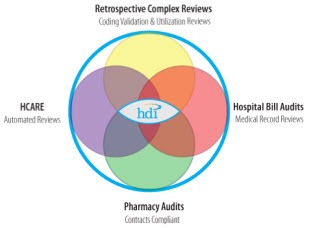
HMS Holdings Corp. announces plans to buy RAC contractor HealthDataInsights for about $400 million. HMS expects HDI to contribute $85 million in revenue next year.

Days after the SEC releases new guidance on the matter, HCA revises its accounting for the recognition of income from HITECH incentive payments. Last week the SEC indicated that the “gain contingency” accounting model was the appropriate income recognition model for payments. Under this model, HCA will “recognize HITECH income when its hospitals have demonstrated MU and the cost report information for the full cost report year that will determine the final calculation of the HITECH payment that is available.” HCA expects to recognize HITECH income of $100 million to $130 million in Q4 and $190 million to $220 million for the full year.

San Diego-based Perminova, which offers SaaS-based applications for managing cardiac electrophysiologic labs and cardiovascular surgery, gets $7 million in venture funding. Its software is used by UC Sand Diego and Mount Sinai in New York.


Sales
11-8-2011 3-22-46 PM

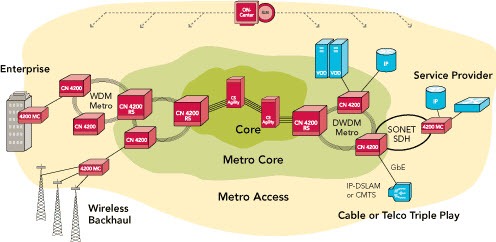
UC Health (OH) selects Ciena Corporation’s 4200 Advanced Services Platform to provide network connectivity across four hospital buildings and its data center facilities.

11-8-2011 3-26-17 PM

Iowa Health System chooses Jardogs’ FollowMy Health Universal Health Record to provide online access to its patients.

11-8-2011 3-27-49 PM

Conway Medical Center (SC) purchases PatientKeeper’s clinical suite of applications to automate physician workflow and drive physician adoption of HIT.

Kindred Healthcare signs for practice management and revenue cycle tools and services from MED3OOO.


People

11-8-2011 6-13-17 PM

IT service provider Systems Made Simple hires Viet Nguyen, MD as CMIO to advance technology initiatives to improve continuity of care and enhance patient safety. He was previously with KForce eGovernment Solutions and the VA Office of Information.

11-8-2011 6-14-46 PM

Optum’s Accountable Care Solutions team, led by Todd Cozzens, now includes over 700 cross-functional team members focused on aligning hospitals, physicians, and health plans for integrated care models.

11-8-2011 8-35-09 PM

Fast Company profiles Zynx Health Chief Nursing Officer Pat Button EdD, RN.


Announcements and Implementations
11-8-2011 9-33-01 PM

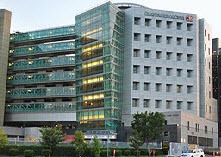
Cedars-Sinai Medical Center (CA) launches Voalte’s point-of-care communication solution following a year of research and testing.

11-8-2011 9-46-31 PM

Platte Valley Medical Center (CO) goes live on eCareNet, powered by Soarian Clinicals.

11-8-2011 9-48-20 PM

Rochester General Hospital (NY) and seven affiliated practices go live on Epic. They will spend $65 million over the next two years to convert the entire health system, which includes two hospitals and 40 practices.

11-8-2011 8-25-55 PM

Kronos announces its InTouch time clock that features a color touch screen, gives employees access to their accrual balances and schedules, and supports off-peak use of apps such as employee surveys or streaming of informational videos.


Technology

Panasonic expands its Toughbook line of ruggedized laptops, popular in hospitals, to the Android-powered Toughpad, initially available in 2012 in a 10-inch form factor ($1,299) with a 7-inch version to follow.


Other

CCHIT announces that AOD Software’s Answers EHR and HealthMEDX Vision are the first EHRs to earn its Long Term and Post Acute Care certification.

Home health agencies, by the way, will see a 2.3% decline in Medicare payments next year under a newly released regulation. Opponents claim the cuts will leave half of Medicare home-health agencies operating in the red in 2012.

Community hospitals are progressing with their EMR implementations, with 69% saying they have acquired the technology and 39% of those reporting that their EHR project will cost over $8 million. The same report finds that almost all community hospitals have begun the conversion to ICD-10, though only a quarter are currently undergoing remediation. Forty-three percent of the hospitals say they are participating in HIEs.
11-8-2011 3-28-54 PM

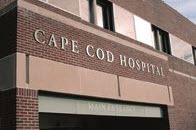
The local paper provides an update on Cape Code Healthcare’s (MA) $20 million HIT investment, which includes a replacement of Meditech Magic with Siemens Soarian. Mr. H. interviewed Cape Cod VP/CIO Sheryl Crowley last year.

11-8-2011 9-34-34 PM

The HIMSS EHR Association announces its support of iHealth Alliance’s EHRevent, an online system for reporting adverse events. It’s part of the PDR Network, whose CEO Edward Fotsch MD was interviewed on HIStalk a year ago.

Eighty-three percent of clinical informaticists participating in a Billian’s HealthDATA survey report an improvement in quality outcomes from using EMRs.

CMIOs, CNOs, and senior nursing executives believe their roles and responsibilities will continue to evolve as new technologies are developed, according to a research report by Capsule. CMIOs indicate their most basic job function is to bridge the gap between clinical needs and IT, while CNOs and senior nursing execs see their roles evolving to be more inclusive of departments outside of nursing.

11-8-2011 2-45-44 PM

The EHR/HIE Interoperability Workgroup issues technical specifications to standardize connections between providers, HIEs, and other data-sharing partners.

Rival health systems HealthPartners and Allina Hospitals and Clinics (MN) claim their collaboration allowed them to shave $6 million in medical costs for patients across two counties. The organizations are participating in a seven-year “learning lab” that involves the pooling of resources, sharing of EMRs, and mining of insurance claims data for about 26,700 people with private insurance.

11-8-2011 6-32-02 PM

Kevin Lasser, CEO of JEMS Technology, compares Ford’s smart phone app for owners of the Focus Electric to his company’s own telemedicine app in My Ford Magazine, distributed to 4.7 million recipients.

mrh_small I featured Aventura in one of my Innovation Showcases and at least two readers have told me they’ve gone to work for the company. CEO Howard Diamond writes a post for Boulder Startups urging entrepreneurs to jump into healthcare IT: “The software and other tools that are supposed to be building efficiencies, reducing errors, and building collaboration and trust across caregivers are actually having the opposite effect; they are creating barriers to efficient quality care.” I like the list of information sources he provides for those interested in the healthcare revolution: Clayton Christensen (the Harvard professor who wrote The Innovator’s Dilemma), Regina Herzlinger (the Harvard professor who wrote Who Killed Health Care?), HIMSS (which needs no introduction), and HIStalk (the non-Harvard, non-professor known mostly for goofy music recommendations and HIT rumor-mongering.) Howard’s just being nice since I profiled his company.

mrh_small I bet the Harvard people have more time after their day jobs to pursue their side ventures than I do, though. Mrs. HIStalk keenly observed this weekend that “whatever it is you do upstairs all the time won’t get done when you kick the bucket.” That’s the extent of her knowledge about HIStalk.

New York’s state controller nixes a proposed $22 million deal with Allscripts that would have created a call center for SUNY Downstate Medical Center. Allscripts had reserved the right to send work offshore, raising confidentiality concerns.

Practice Fusion is named top EMR for ePrescribing and helping practices achieve Meaningful Use by Brown-Wilson’s Black Book Rankings.

mrh_small I’m not an attorney, but this ruling by Colorado’s Supreme Court seems to uphold a previous verdict that a man suing Kaiser for malpractice can’t claim physician-patient privilege in denying Kaiser’s lawyers access to his electronic medical records. He had a heart attack while taking a treadmill stress test and is suing Kaiser and one of its doctors, but didn’t want the defense to be able to study his medical records. A footnote in the ruling sounds like a HealthConnect (Epic) commercial: “Kaiser’s integrated electronic medical record is instantaneously accessible by any and all Kaiser healthcare providers and is a hallmark of the services Kaiser provides.”

11-8-2011 8-43-01 PM

mrh_small Next month’s mHealth Summit has added as keynote speakers Surgeon General Regina Benjamin MD and HHS Secretary Kathleen Sebelius. HIStalk (in the form of HIStalk Mobile) is a media partner, so our own Travis Good, MD will be providing daily reports. He’s outstanding at understanding and explaining the business of mHealth, so he’ll provide both health and business perspectives. It’s December 5-7 at the Gaylord National Resort and Convention Center in the DC area. Full registration is $525, or $195 for federal government employees. I had a pretty good time there last year and the venue looks much better than last time, although I’d miss the proximity to the National Mall and all the fun sites and restaurants nearby.


Sponsor Updates

  • Mike Marvin of CareTech Solutions and Kara Wingerter of Blessing Health Systems (IL)  will present a case study on increasing revenue with online pre-orders and sales at this week’s Greystone.net Healthcare Internet Conference.
  • OptumInsight launches additional capabilities for its Netwerkes EDI service, including integration with Epic PM Systems claim administration and clinical information workflows.
  • GetWellNetwork appoints Wellford Dillard as CFO.
  • Facilities of Vitalité Health Network (Canada) will go live next week with a pharmacy medication order management system connected to its Meditech system and powered by Perceptive Software’s ImageNow enterprise content management system.
  • ICA releases a white paper entitled All Health Information Exchanges Are Not Created Equal.
  • Mac McMillan, CEO of CynergisTek and chair of the HIMSS Privacy and Security Policy Task Force, will serve a panelist for Clearwater Compliance’s HIPAA-HITECH Blue Ribbon Panel webinar How to Prepare for HIPAA Audits.
  • Tee Green, president and CEO of Greenway Medical, will host a November 15 webinar on future trends in healthcare.
  • Beacon Partners receives Epic’s “Community Connect” certification.
  • McKesson launches RelayHealth in Canada at the HealthAchieve 2011 Conference.
  • University Medical Center of Princeton at Plainsboro (NJ) selects ProVation MD for its GI department’s documentation and coding.
  • DST Health Solutions LLC announces an agreement with 3M Health Information Systems to integrate 3M’s ICD-10 Code Translation Tool with DST solutions.


Contacts

Mr. H, Inga, Dr. Jayne, Dr. Gregg.

Monday Morning Update 11/7/11

November 5, 2011 News 5 Comments

From The PACS Designer: “Re: iPad. A new, free iPad application called Line2 HD turns your iPad into a phone. This extended feature could increase the penetration of iPads into healthcare environments.” It’s very cool, but it should be noted that while the app is free and so is the service for a seven-day trial, the ongoing cost is $10-15 per month depending on the options chosen. That gets you a new or transferred number, voice mail, and conference calling, all over Wi-Fi or cell. A cool feature: if you’re not connected, it will forward incoming calls to up to six other numbers. This CNET review is positive.

11-5-2011 10-43-48 AM

From Lobstah: “Re: Meditech. New executives.” Meditech promotes Chris Anschuetz to SVP of technology and Scott Radner to VP of advanced technology. They’ve been with the company for 36 and 21 years, respectively. 

From Ralph Hinckley: “Re: NextGen. Drops MEDSEEK as a white-label enterprise portal, developing its own.” Unverified. Ralph sent over an e-mail saying that NextGen will release its own enterprise patient portal in 2012, integrated with its HIE platform and physician portal. The companies signed their agreement just three months ago.

Speaking of Meditech, the company releases its Q3 report. Revenue was up 19% to $141 million, EPS was unchanged with profit of $32 million for the quarter.

My Time Capsule editorial this week, gasping for air after being entombed journalistically for five years: Leapfrog’s Leap into Irrelevance. I looked back to Leapfrog Group’s founding: “Predictions were dire back then in the post dot-bomb nuclear winter. Hospitals would be wildly overbedded. Savvy baby boomers, emboldened by buying books and dog food online, would be calling the shots, making shrewd healthcare decisions and choosing providers based on stringent quality measures that would be plastered all over the Web. Unfocused, change-resistant hospitals, which included all the ones I’d ever worked for or heard of, would be road kill. ”

Listening: Frosting on the Beater, a 1993 album by The Posies, alt power pop from Washington with a big, radio-friendly guitar sound. You either found it a guilty pleasure on VH1 or missed it entirely.

11-5-2011 7-39-30 AM

Welcome to new HIStalk Platinum Sponsor Henry Elliott & Company of Wellesley, MA. The company operates in a fascinating, high-demand niche: providing certified experts in InterSystems Cache’, M/MUMPS, and Ensemble for almost 20 years. The company offers experts in those technologies (contract, temporary, remote, and direct placement.) Or, if you are skilled in those areas and are feeling under-appreciated, review the plethora of opportunities in case you’re in the job-changing frame of mind and want to connect with a company that understands and values your highly specialized talents. If you need or have Cache’ or MUMPS expertise, Henry Elliott & Company would love to hear from you. Thanks to those folks for supporting HIStalk.

11-5-2011 9-59-52 AM

Also supporting HIStalk is Acusis, a new Gold Sponsor. Pittsburgh-based Acusis offers clinical documentation solutions in the form of outsourced medical transcription. Customers choose whether they would prefer US or global CMT-certified transcriptionists. Their Six Sigma-driven processes include a separate Quality Control editing step, and medical language specialists are paired with the customer’s dictating clinicians to give consistently high quality and fast turnaround time. The company’s team of 50 software engineers created dictation options that include telephone, VoIP, digital recorders, and smart phones, also supporting rules-based report distribution (network printing, fax, e-mail), multiple electronic signatures, and integration with just about every HIT system. Back-end speech recognition is offered, providing customers with a lower-cost solution for their more consistent clinicians. An iPhone-based, Dragon-integrated front end speech dictation option was announced a few weeks ago.Customer testimonials are here. Thanks to Acusis for supporting HIStalk.

11-5-2011 9-42-44 AM

It’s a 60-40 split that today’s healthcare software cannot or can, respectively, support needed improvements in cost and quality. New poll to your right: a quick read on which vendor is “doing things right” more than the others, which you can define however you like (quality, vision, business, etc.)

11-5-2011 10-22-45 AM

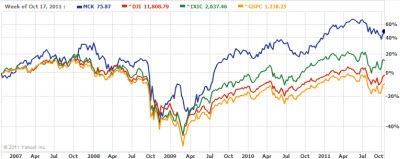
Financial performance solutions vendor MedAssets reports Q3 numbers: revenue up 50%, EPS –$0.02 vs. $0.14. Excluding integration costs from its Broadlane Group acquisition, earnings of $0.26 handily beat expectations of $0.16, sending shares flying on Friday to close up 16.7% as Nasdaq’s seventh biggest percentage gainer. I’m not much of a stock-picker and I own no shares in MDAS, but after a year of not-so-good performance (MDAS in blue, Nasdaq in green, and the Dow in red), it looks as though MDAS is moving up out of its trading range on increased volume, which is usually a good thing (duh). Market cap is $712 million.

Weird News Andy can’t decide whether this is a trick or a treat. A man walks into a hospital complaining of leg pain. Astute clinicians postulate that a potential etiology is the bullet lodged there from a Halloween shooting three days earlier. The patient said yes, he did recall that unfortunate eposide, but didn’t think it was a big deal.

11-5-2011 5-07-05 PM

New York-based Netsmart Technologies, run by former Cerner COO Mike Valentine, will relocate to Kansas City, creating 130 jobs with plans to hire up to 520 total employees. CEO Valentine never moved from Kansas City since he left Cerner in April 2011 and joined Netsmart in May 2011, so he gets to make all the employees move so he doesn’t have to (those handful willing to leave New York to go to Missouri, anyway, although the company will keep a New York office.) Netsmart sells solutions that include behavioral, public health, substance abuse, and social services.

Here’s Vince’s Part 2 HIS-tory of Computer Synergy.

Medicare’s pilot projects for commercially run disease management programs actually cost taxpayers more money and didn’t improve quality, a study finds. Five of the eight participating companies were losing so much money they paid an exit fee to drop out early. The conclusion is that just calling or visiting elderly patients occasionally doesn’t really accomplish much, and health coaches in such a program need to be given access to hospitals and practices and their patient information to coordinate care.

News I missed: Meditech co-founder and original president Mort Ruderman died October 12 at 75. A tribute video is here.

11-5-2011 2-31-36 PM

The DC RHIO is shut down when the city declines to continue funding it. The mayor apparently wants to take the federal grant money and start a new HIE.

11-5-2011 5-09-34 PM

The Louisiana Health Information Exchange launches after conducting pilots with Lafayette General Medical Center and Opelousas General Health System. They’re trying to recruit Ochsner, LSU, and Franciscan Ministries to sign up.  Orion Health is providing the technology. The HIE received $10.6 million in federal taxpayer dollars in March 2010.

11-5-2011 2-36-37 PM

UCLA Health System notifies 16,000 patients that their personal information was stored on a hard drive that was stolen in a burglary of the home of one of its doctors. The drive was encrypted, but the doctor had written the password on a slip of paper near the drive and that appears to have been taken as well.

Lawrence Memorial Hospital (KS) warns that patient billing and credit card information was exposed on the Internet for more than a month due to “failed security measures” by the Web host of the hospital’s online bill-pay vendor.

Blue Cross Blue Shield of Delaware offers to spend $30 million in charitable projects, including donating $1 million a year for the next five years to support the Delaware Health Information Network, in an attempt to convince regulators to allow it to merge with Pittsburgh-based insurer Highmark. The state’s attorney general says Delaware citizens have subsidized BCBS to the tune of $181 million and he wants at least $45 million set aside to benefit Delaware. 

Massachusetts plans to allow casinos to operate in the state, earmarking 23% of the hefty license fees involved, or around $50 million, toward encouraging the use of electronic medical records in hopes they will help control the state’s rising health costs.

E-mail Mr. H.

HIStalk Innovator Showcase–Caristix

November 4, 2011 News Comments Off on HIStalk Innovator Showcase–Caristix

11-4-2011 6-17-05 PM

Company Name: Caristix
Address: 1400 St-Jean-Baptiste Avenue, Suite 204, Quebec City, QC G2E 5B7
Web Address: www.caristix.com
Telephone: 877.872.0027
Year Founded: 2009
FTEs: 5


Elevator Pitch

The Caristix HL7 software suite helps healthcare IT vendors and hospitals reduce interface deployment from months of work to a few days.

Business and Product Summary

Caristix develops software for healthcare IT analysts and developers. With a focus on HL7 and data mining, Caristix streamlines the delivery of interfaces that support the flow of data in healthcare. If we look at innovation in this space, we took a leap forward about 15-20 years ago with the introduction of interface engines. The next leap forward is going to come from automating the manual scoping and configuration work involved in interfacing, leaving integration analysts free to add value on other more complex data integration topics.

With our software offering, we help vendors and providers scope HL7 interface requirements more quickly before coding, test more thoroughly before go-live, and troubleshoot over the interface lifecycle. Benefits to vendors and providers include lower interfacing costs, faster time to value, and reduced process waste and risk. We provide annual licenses that include support and maintenance releases. We also offer services, such as creating interface specifications for our customers, and getting them started on documentation and interfacing best practices.

Target Customer

HIT software and service providers, hospitals and IDNs, and HIEs.

Customer Problem Solved

The biggest bottleneck in HL7 interfacing isn’t coding or setting up the interface. With modern interface engines, that’s easy. What’s hard is figuring out what to code. In other words, which data should you handle and what does each piece look like in the real world (not on paper in the spec)? Our software figures out what to code automatically.

The way the industry solves this problem today isn’t going to work for much longer, especially with volume of data enabled through Meaningful Use. Right now, folks are essentially using trial and error. In other words, you set up an interface based on a site survey form and a broad product spec, connect up to a test system to get some data coming in, see what’s broken, then fix it. Rinse and repeat. If you’re lucky, you’ll make your schedule. If you’re not, you might be six months out. If you decide to go live anyway, the vendor and/or the hospital’s IT team will be facing one heck of a support backlog, which in turn, can tank adoption rates.

Trial and error is increasingly problematic with today’s interfacing volumes. It’s certainly going to get tougher to sustain once Meaningful Use forces real data integration, with multiple sources of clinical data coming into and going out of the EHR and other information systems. We’re seeing early-adopter vendors and hospitals moving away from trial and error. We think we’ve hit a sweet spot with our software. We’ve come up with a way to not only get proactive on scoping, but also keep scoping documentation up to date for future integration projects.

11-4-2011 8-15-02 PM

Competitors

Our competitors are niche tool vendors and a few of the interface engine vendors. However, that second category includes a little overlap: we also complement interface / integration engines and are working with two vendors in this space. But our biggest competitor is the status quo, folks just going along with business as usual.

Advantages Over Competitors

We integrate data mining so analysts can easily grasp their data and what it means. This can drive up interface quality while driving down project risk. The functionality we provide around HL7 data helps interface analysts to grasp sending and receiving system specifications easily. This enables analysts to identify gaps to be bridged by interfacing and integration early during a project. With complex interfacing and integration projects, project leaders can increase interface quality and confidence without jeopardizing timelines.


Fast Facts

  • KISS (Keep It Simple…) If our spouses let us, the founders would tattoo “KISS” on our respective foreheads. At Caristix, we really want to keep things simple for our customers.
  • We’re concentrating on HL7 for now. But keep an eye on us for other data standards over the next year.
  • We’re an experienced healthcare IT team and we have a shared work history. Some of us even go back 12 years, and our team brings over 50 years of combined experience, in both technical and business areas in healthcare IT.
  • The company has a product management focus. In other words, our products reflect market and user needs and where we think the market is going. As a startup, the last thing we’re interested in is the tech fantasy of “build it and they will come.”
  • Here is a customer quote: “This is the only tool that provides me with the filter functionality needed to successfully dissect thousands of transactions and find all of the deltas, without jeopardizing timelines.”

Pitch Video Created Specifically for this Showcase


Customer Interview (a system analyst for a large healthcare IT software vendor)

What problems have you solved using Caristix products and what impact has that had on your organization?

We are seeking ways to continuously improve our customer enablement process for our product. An activity in that process is understanding the customer environment. The Caristix Conformance product assist the SME knowledge of their environment and not to rely on outdated documentation and assumptions. Conformance gives us (and the customers) a great visual of their environment.

With this improved visibility, we reduced the rationalization logistic interactions – a lengthy Q/A process (i.e. what systems are involved in the project?  what data comes from that system? <<…implementation period…>> Are you sure? Well, we’re seeing this type of data and it does not agree with the initial statements. Are there any more surprises? etc.). This form of interaction occurs over weeks or months and creates much re-work as information becomes known. Knowing upfront the true reality not only mitigates loss time (and financial expenditures), but also improves customer satisfaction and overall product experience.

Caristix also has other products which we review:

  • Cloak, which de-identifies data – another great product in the making. One colleague commented, “… this is the simplest interface I’ve ever used…”
  • Pinpoint, which enables what I call “finding a needle in a haystack” simple. Pinpoint cut so much time out finding what’s occurring within the data flow, it’s amazing! One colleague said, “…I wish I had this product when dealing with customer ABC — it would have saved me days of work.”
  • Although we have not looked at their other products, based on the ones we did, I’m confident they pointedly address the intended concerns.

What alternatives or competing products did you consider and why did you choose Caristix?

We searched for products that address our specific concerns, but didn’t find any. Also, as we began to use the product, the company was open to our product improvement suggestions. And the most amazing thing occurred — they not only implemented the suggestions, but also saw the general benefits to other users as well. Their turnaround time to implement was truly Agile. We saw results in weeks, not months or worst, year(s). As Conformance continues to mature with new features, plus the incorporation of the suggestions, I foresee retiring some of our legacy tools.

How would you complete this sentence if speaking to a peer? "I would recommend that you take a look at Caristix under these circumstances:"

If you are looking for a company who really wants to work with you to solve the problems that their product set addresses, then certainly call Caristix. They truly try to understand the customer use cases, see how (and which product(s)) can meet those needs. And on the rare occasion when their isn’t a “match,” they are upfront to let you know, but still try to see if it’s possible within their reach.

Their response is impeccable, from showing you mock-up to real running code. They are willing to see how your suggestion can make their product better. The proof is when you see the implemented result! Now that’s amazing! Their Say:Do ratio is on par.

They have a good idea where the market is progressing and are making plans to be there as you review their product roadmap. I believe they are flexible enough to make the necessary course corrections as they occur.


An Interview with Stéphane Vigot, President, Caristix

11-4-2011 6-35-22 PM

HL7 interfacing sounds simple, at least on paper. Why do organizations need your products?

HL7 is called a standard, but it’s more of a framework. It’s extremely flexible. You’ve got some guidance regarding the way you could organize the data, but each and every hospital adapts the organization of the data to its clinical workflows.

For example, if you consider the admit status sex of a patient, you can have up to six different possibilities. There are very, very few systems that would use those six possibilities. Most of them will use three or four, and even when they pick only three or four, let’s say for a male and a female, one could say, “OK, a male is designated as an M and a female as an F,” or another will say, “In my organization, we’d rather use an 1 and a 2.” That’s a real example.

For any kind of field, you’ve got a type of flexibility. Even though two hospitals are using the very same ADT system, let’s say –  admission, discharge and transfer — and they use the very same vendor, the very same version of the system, the data will most likely be organized in a different way.

Thanks to our technology, instead of having an interface analyst looking and reading, literally, HL7 messages, we get the feed from the system that you have to connect. In a matter of a few minutes, we do some reverse engineering on the metadata and then we issue a document that will very precisely tell you how the data is organized within a system.

11-4-2011 8-13-17 PM

With interfaces, you often just play back a bunch of messages and try to figure out all the exceptions and rules, with an application expert on one side an an interface expert on the other. How would a hospital use your product to create their own interoperability?

They would get the software platform that we have. They would get HL7 logs, so basically several HL7 messages, and they can deal with tens of thousands of different messages. They would put that file into our platform, and then automatically the platform will do a reverse engineering process. It will read the data and issue a Word document that will tell you precisely how the data is organized.

Then the technician, either from their vendor side or from the hospital side, will know exactly how to configure the interface engine. They will know exactly what data is what and how it is organized — the length of the field and everything. That’s basically it. It’s a very straightforward application that saves hours and sometimes days or weeks of work for an interface analyst. We’ve got a customer testimonial where a task that usually took up to eight hours is done in three minutes, thanks to our platform.

Does the typical customer buy your product just for a specific interface problem they’re trying to solve, or is it in their tool chest of things that they end up using a lot?

They end up using it a lot, because an average hospital in the US will usually deal with more than 100 interfaces. Every single time there is an update to any of the systems they’re using, then the interface will need to be adapted to the update. We know hospitals that have up to five persons dedicated to managing the interfaces. That’s what they do all day long. That’s why our platform can be used on a daily basis.

11-4-2011 8-14-17 PM

How would a customer use your product to validate the integrity of an interface, either a new one or an existing one to make sure nothing has changed?

They will just get the logs, do  a reverse engineering on the new or existing system, and perform gap analysis between the current interface, or on the old interface if you will, and then the new interface that they want to build. There’s a built-in functionality within our platform that allows you to perform in a matter of a few minutes a gap analysis between two specifications.

You’re based in Canada. Do you see any particular challenges that you’ll face when working with the US?

It’s our target market. In fact, 80% of our customers are in the US. Historically, the team of Caristix worked for a major US vendor for a number of years. The genesis of Caristix was because of a reduction of forces — we had to let go several software developers that were working for that US vendor, so our expertise was really in the US.

Who is it you market to and how do you reach those people?

We market to two segments: hospital vendors and hospitals. We are currently working on a free application for hospitals that will allow the hospital’s IT teams to document the specification of the different systems, again, in a matter of a few minutes. 

We use a lot of white papers, we use a lot of reference, if you will. Since we’ve been working with US companies for years, we know a lot of them, so that’s how we reach out to them. We’re now getting more visibility and we’ve got some consultants — or I’d say gurus — in healthcare IT that are also talking a lot about us.

The nice thing about our platform is that once you see how it works, you automatically understand the benefits and you automatically understand the savings that as a vendor or even as a hospital you’re going to be able to make. I’d say it’s an easy sell. As soon as you talk to people who know and understand the complexity of HL7 Interfacing, it’s almost – and I hate to use this term – but it’s almost a walk in the park from a sales standpoint.

What do you hope to gain from the exposure on my site?

Any hospital is dealing with HL7. You’re extremely visible in the HIT world. I was at HIMSS this year – I’ve been attending for the past seven years – and a lot of people know Mr. HIStalk. You’ve got quite some followers there. I think that’s going to provide us a lot of visibility.

Most of the people who are dealing with HL7 interfacing will definitely take a look at our website. When they take a look, we’ve got a great response and they automatically understand what we do. The savings are very positive. That’s where we see a lot of potential, and thanks to your help, we see a lot of lead generation, thanks to the HIStalk blog. 

The feedback we’re getting from existing customers is that within their first interface project, the return on investment is immediate. You don’t have to be using our platform for months to get to see the benefits. It almost pays for itself with the first project.

Siemens To Acquire MobileMD

November 4, 2011 News Comments Off on Siemens To Acquire MobileMD

image

Siemens Healthcare announced this morning that it will acquire HIE solutions vendor MobileMD of Yardley, PA.

John Glaser PhD, CEO of the Health Services Business Unit of Siemens Healthcare, was quoted as saying:

The goals behind many of our country’s broad, health reform initiatives are intended to improve the quality of care by doing two basic things: increase utilization of electronic technology, for a variety of benefits, and improve the coordination of care among entities that had previously not shared data well. Patients come into the healthcare system expecting physicians to help them get well by coordinating their care. Patients generally should not need to be concerned with the logistics of how their care is coordinated – they should rightfully expect that it will be coordinated. Siemens was impressed with MobileMD’s capabilities to enable this level of data sharing while maintaining an impressive focus on customer satisfaction. MobileMD customers can expect to continue to experience this same level, or an improved level, of service, commitment and partnership.

MobileMD’s HIE service is used by 110 hospitals and 2,000 physician practices, according to the announcement.

HIStalk interviewed MobileMD CEO Todd Fisher this past January. He named Axolotl and Medicity as MobileMD’s main competitors, both of which had been recently acquired at that time.

Terms of the acquisition, which is expected to close promptly, were not disclosed.

News 11/4/11

November 3, 2011 News 8 Comments

Top News

11-3-2011 9-40-44 PM

Citing the need for more time, ONC announces it will delay the launch of the permanent program for EHR certification until mid-2012. The timeframe coincides with the anticipated final rule of Stage 2 of Meaningful Use and standards and certification criteria. ONC says it can’t make the original January 1 deadline to approve testing labs and authorize certifying bodies.


Reader Comments

mrh_small From Viking: “Re: doctors, texting, and HIPAA. This video on how to make a ‘pager scanner’ shows how easy it is for anyone to listen in and breach via texting.” Though I was distracted by the painful-looking lip piercing on the geek chick, I need to get someone to build me one of those. Go to about the 2:45 mark to see her computer screen filling up with pager messages. It’s definitely a target-rich environment at my hospital, although I expect the messages are amazingly dull.

mrh_small From Megan: “Re: HIStalk page loading improvement. Thank you! I’m new to the industry and like to stay on top of news, but that one little fix made this site so much more reader-friendly.” I’m embarrassed that it was a relatively simple change once Dave Dillehunt suggested it. I wish I’d done it sooner. I find myself pulling up the page several times a day just because I like watching it snap to attention on my command. The beauty of it is that everything still displays, sponsor ads and all, but just in a slightly different order. 

mrh_small From AnotherDave: “Re: HIStalk page loading improvement. I second, third, and fourth the shout-out to Dave Dillehunt. Instant access to HIStalk: priceless.” This may well be Dave’s finest hour. I mean, sure, he’s a CIO and everything, but how many times do strangers publicly sing his praises?

11-3-2011 5-17-41 PM

mrh_small From NoSleepTillEpic: “Re: Kadlec Regional Medical Center. Live with Epic inpatient, ambulatory went in August, One of Epic’s smallest customers, a PlaneTree hospital with a reputation for doing technology right. JCAHO showed up the week before go-live!” Nice.

mrh_small From Anon: “Re: ONC budget. Is this something to be concerned about?” I don’t know the source of the attached material and I don’t understand all of it, but it says ONC’s 2011 budget was $61 million and the President requested $78 million for 2012. The Senate Budget Committee recommended holding the budget to $61 million, but supposedly (and this would be the big news, if true) that figure would also include ONC’s HITECH allocation, which was $57 million in 2010 and was scheduled to increase to $499 million and $874 million in 2011 and 2012, respectively. A House subcommittee has proposed only $28 million. If you know more about this, please share since it sounds important if it’s true.

mrh_small Unrelated, but while Googling the subject, I came up with ONC’s 2012 budget justification, which has key indicators that include the percentage of practices and hospitals using EMRs and receiving Meaningful Use payments. ONC requested 189 FTEs for 2012 with an average cost per FTE of $148,000.


HIStalk Announcements and Requests

11-3-2011 1-56-09 PM

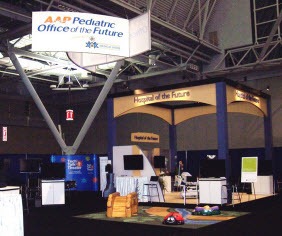
inga_small This week on HIStalk Practice: Dr. Gregg enlightens readers on the behind-the-scenes coordination for AAP’s Pediatric Office of the Future. A reader comments on providers who seem overwhelmed by Meaningful Use-fueled EHR purchases and rushed implementations. MGMA calls on CMS to establish a 5010 contingency plan in case practices and their trading partners can’t meet the looming deadline. Physicians believe EHRs are safer than paper, but patients disagree. CMS advises providers to report on all clinical measures in their EHR, even if the data is incomplete – and thus meaningless. Shuffle on over to HIStalk Practice, get your ambulatory HIT fix, and sign-up for e-mail updates. Thanks for reading.

11-3-2011 5-35-00 PM

mrh_small Welcome to new HIStalk Gold Sponsor New York eHealth Collaborative. The not-for-profit, formed in 2006, strives to improve healthcare for New Yorkers through the use of healthcare IT. It helps develop policies and standards to help providers move to electronic health records and coordinates connecting providers statewide. It runs a Regional Extension Center and the Statewide Health Information Network (SHIN-NY). They’re presenting the NYeC Digital Health Conference 2011 December 1-2 at Pier Sixty on the Chelsea Waterfront in NYC, with keynotes by HHS CTO Todd Park and journalist T. R. Reid. Registration is $395 general and only $195 for practicing physicians and government employees. I’m running a text ad for them over to your right just in case you want to check it out later. I would loved to have gone, but it was just too hard to get time off from the hospital, which left Mrs. H deprived of the opportunity to enjoy New York near Christmastime. Thanks to New York eHealth Collaborative for supporting HIStalk.

mrh_small On the Jobs Board: Java Developer, Senior Interactive Graphic Designer, Cerner and Epic Resources. On Healthcare IT Jobs: Research Informatics Analyst II, III, IV, Lab Information Systems Analyst, Regional Sales Executive, Senior Pharmacy Analyst.

mrh_small Suggestions on how to spend your extra minutes of free time each day now that HIStalk loads faster: (a) seek Inga, Dr. Jayne, and me on Facebook and LinkedIn and consummate our electronic union by Liking, Friending, and Connecting; (b) sign up for spam-free e-mail updates on HIStalk, HIStalk Practice, and HIStalk Mobile; (c) send me scandalous rumors, squelched news, and anything that would interest readers like yourself by clicking the atrocious-looking green Rumor Report box to your right that sends your secure message and an optional attachment right to my inbox; (d) peruse the friendlier-loading sponsor ads to your left and click those that seem fun, or check out the Resource Center to browser and search, pausing to marvel that polished and powerful executives command their underlings to mail a check to a PO box to support an anonymous hospital guy’s amateurish blog; and (e) look yourself in the mirror while giving yourself a little nod and a Bill Clinton finger-pointing recognition gesture to acknowledge your role in reading and doing all of the above, which keeps the vivacious and erudite Inga and Dr. Jayne smiling.


Acquisitions, Funding, Business, and Stock

11-3-2011 10-08-34 PM

HealthGrades signs a definitive agreement to merge with CPM Marketing Group, a provider of customer relationship-management services for hospitals.

11-3-2011 10-10-53 PM

Mediware announces Q1 numbers: revenue up 24% to $15.5 million and profits up 42% to $1.49 million or $0.18/share.

11-3-2011 8-48-38 PM

Medical practice documentation management software vendor Updox gets a $500K loan from the state of Ohio to develop a mobile version of its product, to integrate with more EHR products, and to promote its free secure messaging service.

11-3-2011 10-11-43 PM

Advisory Board Co. reports Q2 net income of $5.2 million ($0.30/share) compared to $4.9 million ($0.30/share) last year. Revenues grew 30.7% to $92.9 million.

mrh_small Allscripts reports Q3 numbers: revenue up 13%, EPS $0.11 vs. $0.01, beating expectations. The company raised guidance on both revenue and earnings. The earnings call transcript is here. Interesting snips from it: (a) CEO Glen Tullman says the new January 1 readmission rule in which hospitals eat the cost of patients readmitted for the same condition within 30 days is driving interest in care management and discharge management applications; (b) he says Allscripts beat Cerner and Epic at Flagler Hospital (FL) because the hospital wanted to connect to a variety of EMRs used by community-based physicians (c) several new hospitals signed up for the EPSi performance management system, among them UC-Davis and Stanford; (d) Glen sees big opportunity from ICD-10 (“you’re going to have to replace every practice management and revenue cycle management system out there”) and analytics; (e) he says Sunrise Clinical Manager is used by “all the best names out there,” saying it’s “open” and “not outdated” and “what the market wants, what physicians want, is one comprehensive patient view, not one database, because they realize you can’t do that”; (f) their most frequent ambulatory competitors are Greenway and eClinicalWorks.

11-3-2011 6-14-43 PM

UPMC Health Plan and The Advisory Board Company form Evolent Health, which will offer the Identifi population and health management software developed by the health plan and used by UPMC to manage the health of its 54,000 employees. Each organization capitalized the venture with $10 million. Its first customer will be MedStar Health. Former Advisory Board CEO Frank Williams will serve as CEO of Evolent Health.

11-3-2011 10-12-25 PM

Merge Healthcare reports Q3 results: revenue up 33%, EPS –$.01 vs. –$0.06, missing consensus estimates by a penny.


Sales

Health Care Authority for Baptist Health selects MEDSEEK for clinician and patient engagement tools.

11-3-2011 10-13-41 PM

Lompoc Valley Medical Center (CA) will deploy Allscripts’ Sunrise Clinical Manager EHR and offer the Sunrise Clinician Portal to it physicians. Also, DMC Children’s Hospital of Michigan selects Allscripts EHR for its employed and affiliated physicians.

Houston Healthcare (GA) selects Wolters Kluwer Health’s ProVation Order Sets for Houston Medical Center and Perry Hospital.

11-3-2011 10-16-53 PM

Wake Forest Baptist Medical Center chooses RelayHealth’s RelayCare for readmission management.

Intermountain Healthcare signs a five-year agreement with Accretive Health to manage its revenue cycle. The organizations say they will create a Salt Lake City-based revenue cycle Center of Excellence that will provide best practices, technology, and education.

Harris Corporation wins a $4.5 million VA contract to develop Web-based mental health self-documentation tools for the MyHealtheVet personal health record.


People

11-3-2011 4-04-36 PM

Apixio names Darren Schulte MD as chief medical officer. He was previously with Anvita Health.

11-3-2011 4-07-05 PM

Availity promotes Russ Thomas from COO to CEO, succeeding Julie Klapstein, who will remain on the board of managers.

11-3-2011 2-17-58 PM

Recombinant Data Corp. hires Jason D. Oliveira as managing director of health system consulting.  He previously led the healthcare BI practice at Kurt Salmon Associates.

11-3-2011 5-10-36 PM

AMIA President and CEO Ted Shortliffe MD, PhD announces that he’ll be leaving the job he’s held since mid-2009 to pursue other interests. The board will initiate a search for his replacement, expected to be in place by early 2012.

11-3-2011 6-28-45 PM

Main Line Health (PA) promotes Karen Thomas to SVP/CIO. She was previously VP/CIO.


Announcements and Implementations

11-3-2011 4-08-31 PM

Physician practice marketing and communications company Medley Health partners with athenahealth to integrate its physician-patient communications platform with athenahealth’s suite of offerings.

Guam launches the first phase of its HIE with the deployment of secure messaging and clinical document exchange using the ApeniMED HIE platform.

The Wichita HIE signs up its first two physician practices.

11-3-2011 2-52-02 PM

New Hanover Medical Group (NC) goes live on Epic, the first step in a system-wide, $53 million upgrade. The local TV station covers its rollout of MyChart.

Inland Northwest Health Services (INHS) announces that 12 client hospitals have successfully attested for Meaningful Use.

Trustwave introduces its Web application security offerings, including an enhanced version of Trustwave WebDefend.

Three rural Adventist Health hospitals in California will share a $1 million Blue Shield of California grant to implement electronic medical records.

11-3-2011 9-23-16 PM

Healthcare IT services provider Anthelio will add 200 jobs in Detroit and Flint, MI to support its area customers, which include Detroit Medical Center and McLaren Health Care Group.


Innovation and Research

11-3-2011 5-28-22 PM

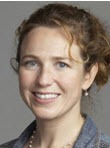
mrh_small Stanford’s Lucile Packard Children’s Hospital publishes a NEJM article describing its use of patient information from its electronic medical records system to choose drug therapy for a patient’s rare disease. The 13-year-old patient had lupus complications and was a candidate for anticoagulants, but cases are so rare that a literature search came up with nothing on the risk-benefit profile. Jennifer Frankovich MD (above) used a research tool to query de-identified EMR data and found the records of 98 patients over a five-year period who had similar conditions and determined that the risk of clots was high enough to justify starting anticoagulants right away. Their conclusion is that a physician probably couldn’t have figured it out otherwise since there were so few patients, recall is sometimes biased, and EMRs have so much information that it’s hard to pick out the important data elements. They also expect that aggregated patient information will be used during rounds to make treatment decisions in the not-too-distant future. I assume the EMR in question was Cerner, which Packard is supposedly having to give up despite publishing extensively about its patient safety benefits (parent Stanford Hospital uses Epic.)


Technology

11-3-2011 8-53-07 PM

Toyota announces that it will start selling mobility robots in 2013, one of them being Independent Walk Assist, a computer-controlled mechanical exoskeleton. It was developed at the University of California at Berkeley, where one of its students who is paralyzed was able to walk across the stage to receive his diploma with the help of the technology. Toyota is working on another version that will lift and move patients.

11-3-2011 9-00-53 PM

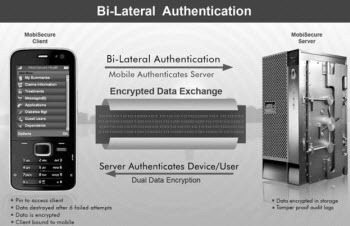
Mobile healthcare apps tools vendor Diversinet is awarded a patent for encryption technology that prevents data from being transferred from one mobile device to another.


Other

inga_small From KLAS: over the next five years, almost half of providers will replace their RCM system; 87% of those will make the switch in the next three years. Most providers are looking at a new RCM in terms of how it fits in with a single-source enterprise strategy, often driven by the clinical vendor. Epic and Siemens top the list of considerations for over-200 bed providers, while McKesson and Meditech were the most considered by community hospitals.

mrh_small A Richmond TV piece covers the use of AirStrip Cardiology at Bon Secours St. Francis Medical Center, in which one of the doctors sheepishly admits that the previous standard of practice for ED doctors to get cardiology consults was to send them an iPhone picture of the EKG.

mrh_small A Virginia psychiatrist avoids becoming the first physician to be prosecuted for HIPAA violations when the judge dismisses charges against him. Prosecutors claimed the doctor retaliated against a patient who had complained about him by telling her supervisors that she had been involuntarily committed. The doctor says “it could have collapsed the entire system” had he been convicted since doctors would become reluctant to provide such warnings.

11-3-2011 6-22-53 PM

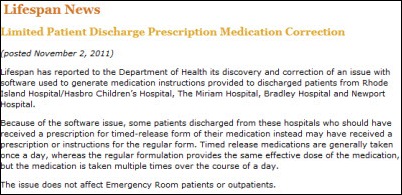
mrh_small The Rhode Island Department of Health investigates four Lifespan hospitals after getting reports they gave 2,000 discharged inpatients prescriptions for immediate-release drugs instead of the timed-release versions ordered by the physician. Lifespan blames “software used to generate medication instructions provided to discharged patients.” State Senator Jamie Doyle says he is “shocked” and wants a review of all Lifespan hospitals and the Rhode Island Department of Health.

mrh_small Weird News Andy is positively lyrical over this story, which he titles “Crystal Gayle, where are you?” A California doctor (and former entertainment lawyer) develops a laser procedure that can permanently turn brown eyes blue in 20 seconds. WNA provides the soundtrack: “Colored contacts, with you I’m through; That laser beam oh, it’s so brand new; Doctor Gregg now, let your aim be true; And don’t it make my brown eyes blue.”


Sponsor Updates

11-3-2011 1-22-18 PM

  • Medicomp Systems announces that Quippe, powered by the MEDCIN Engine, is now embedded into MED3OOO’s InteGreat EHR. Medicomp, by the way, exhibited at MGMA and trained seven people every hour on Quippe.
  • The latest newsletter from TELUS Health Solutions includes several articles on using data to drive transformational change in heath systems.
  • Virtelligence is participating in this month’s VA and Midwest HIMSS conferences.
  • Orion Health CEO Ian McCrae calls out his company’s continued success, calling Orion Health the leading healthcare IT software vendor in health information exchange.
  • MedAptus President Larry Hagerty discusses the company’s use of Internap’s cloud solution.
  • Carefx will participate in the Midwest HIMSS 2011 Fall Technology Conference in Indiana.
  • CareTech Solutions is recruiting 60+ people for installation and support of hospital IT systems.
  • Concerro opens registration for its November 29 Webinar entitled, “Achieving Compliance with the Joint Commission’s Staffing Effectiveness Requirements.”
  • CynergisTek CEO Mac McMillian is presenting “Data Security – Eliminating Imaging Informatics Risks” at the virtual AuntMinnie.com RAD Expo 2011 November 2-3. He will also  present a Health IT Capstone Course at the American College of Physician Executives Fall Institute 2011 November 8-9.
  • MyHealthDIRECT CEO and Founder Jay Mason will discuss the changing landscape for Medicaid health plans at the upcoming Medicaid Health Plans of America Annual Meeting in Washington, DC.

EPtalk by Dr. Jayne

This time of year as it starts to get a little chilly, I think fondly of places where sassy CMIOs can go for some fun in the sun. News from the sun belt: Cigna purchases HealthSpring, which runs the Medicare insurance plan for Miami-based Leon Medical Centers. The $3.8 billion dollar deal brings the plan’s 37,000 Medicare beneficiaries to Cigna and is seen as a major move into the Medicare Advantage market.

The AMA claims a win for helping to extend the deadline for providers to file for hardship exemptions to prevent penalties for not ePrescribing. Not a huge win in my book — the previous deadline was November 1 and it was very well publicized.

Mr. H usually reports on health IT vendor earnings calls and I rely on his summaries because I’m usually looking at pharmaceutical and other industry outlooks. Pfizer admits to its plan to work towards marketing an over the counter version of Lipitor. As the company’s best-selling drug goes off patent, they’re obviously trying to resuscitate their cash cow. The concept of bringing this class of drugs OTC comes up periodically – Merck asked the FDA three times over a seven-year period to allow them to take Mevacor OTC and was rejected every time.

clip_image001

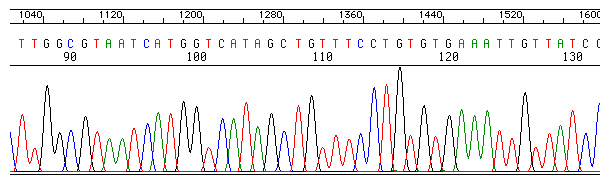
When most people think of healthcare IT, they think of hospital and ambulatory documentation software, revenue cycle, laboratory information systems, and the like. In my opinion, one of the more fascinating breakthroughs is the computing power that helps scientists sequence the genome of various organisms. The journal Nature reports success in sequencing the DNA of Yersinia pestis, the agent that caused Black Death in the mid-1300s. Researchers extracted the DNA from teeth of victims buried in 1348.

I hope the HIPAA compliance zombies don’t hear about this one. The Defense Advanced Research Projects Agency (DARPA) challenges techies to reconstruct handwritten documents that have been shredded. Screenshots of shredded documents are on the Shredder Challenge website. Get your decoder rings ready – winners will be announced on December 5. Should emerging technology make it easy to piece together these puzzles, I’m sure we’re all in for compensatory advances in document destruction technology.

In the weirdest research study of the week, Israeli researchers conclude that drinking cold water increases the resting energy expenditure of overweight children, helping them burn calories. The patients drank water cooled to 4 degrees Celsius while watching a movie lying down. Not exactly my idea of a good time, but just illustrates how desperately people are looking at the obesity problem. I’ve got an idea: how about asking the kids to do stretching exercises or even calisthenics while watching? Bet that would work too.

Bad news for social habits favored by the ladies of HIStalk: a study published in this week’s Journal of the American Medical Association documented a statistically significant increase in breast cancer risk among women who drank small to moderate amounts of alcohol – the equivalent of three to six drinks per week. The data comes from the Nurses’ Health Study, a prospective observational study of over 100,000 women which has produced a multitude of findings.

Print


Contacts

Mr. H, Inga, Dr. Jayne, Dr. Gregg.

News 11/2/11

November 1, 2011 News 9 Comments

Top News

11-1-2011 2-23-54 PM

Hospitals are becoming more optimistic about their Stage 1 Meaningful Use readiness compared to seven months ago. About 41% now say they are well positioned to meet Stage 1. The HIMSS Analytics report also finds higher adoption rates among academic medical centers and larger hospitals.


Reader Comments

11-1-2011 8-10-04 PM

inga_small From Marquis: “Re: Dr. Jerry Stonemetz. He’s a world-famous anesthesiologist, an expert in anesthesia information management systems, and head of anesthesia services at HCA. All told, he is a very cool dude. He writes a blog about AIMS, but recently incorporated his other passion (wine) into the blog. It’s not exactly HIT, but it is kind of fun. And our industry could use more fun.” I agree that HIT needs fun, as well as more wine. Dr. Stonemetz’s first post includes tips on how to create a wine cellar and is geared to those of us who lack the discipline to accumulate wine ahead of consumption.

11-1-2011 8-12-04 PM

mrh_small From Lee: “Re: new Siemens announcement about Soarian for small hospitals. Looks like the death knell for MedSeries 4. I’m sure they will deny it, otherwise they would be sending 200+ clients to the RFP mill.” One big lesson learned from reading the Steve Jobs biography and Vince’s HIS-tory of failed HIT vendors: companies should not offer products that overlap each other or confuse customers (not to mention products that force a company’s own salespeople to compete with each other).

mrh_small From LeBronze: “Re: Meaningful Use. Good thing CMS is there to answer our questions.” LeBronze forwarded the transcript of auto-generated responses he received in response to a question he posted on CMS’s EHR Information Center about criteria for maintaining a problem list. His question was filed on August 18. Nine auto-responses and escalations later, he still doesn’t have an answer after more than two months.

11-1-2011 7-57-05 PM

mrh_small From Flow: “Re: Endo Pharmaceuticals. It acquired Urochart recently, and now has acquired its major competitor in the urology EMR space, meridianEMR. Meridian had filed an infringement lawsuit against Urochart.” Verified, apparently. According to Endo’s earnings announcement last week, it has made “strategic investments in Intuitive Medical Software (IMS) and meridianEMR, Inc., two providers of electronic medical records for urologists. Together, IMS and meridianEMR provide access to approximately 1,800 urologists using data platforms that will enhance service offerings in urology practice management.” I always like to read the executive bios and found some fun facts about the folks who run meridianEMR: CEO and Chairman Michael Custode was the designer and architect of the Medic Vision PM product that Misys bought; CMO Herschel Jackson MD developed the ScriptLetter prescription writing system; CTO William Bartlett is a Certified Ethical Hacker; and Chief Software Architect G. Ralph Kuntz MD, MS wrote the link-editor and dynamic linker for the UNIX C compiler for Bell Labs.

mrh_small From Kaity: “Re: sales job. I’m an avid reader of yours and I LOVE your blog. I’m a software sales rep who likes listening to customers and understanding how the products I’m selling can make their lives better. If you were going to sell software to hospitals, what are your Top 3 target companies? (probably not EMR since that ship has sailed with everybody buying Epic).” I’ve spent almost my whole career working in non-profit hospitals, so I have only limited experience working for a vendor and none working in sales. Luckily, what I do have are smart readers who have my back – if you’re one, feel free to leave a comment giving Kaity some ideas. She put “love” in all upper case, so I figure I owe her.


HIStalk Announcements and Requests

11-1-2011 7-38-31 PM

Here’s a shout-out to Dave Dillehunt, CIO of FirstHealth of the Carolinas, who gave me a brilliant idea. He said nobody would mind how long it takes the main HIStalk page to load if there was a way to display the article itself first, with the sponsor ads and other sidebar content loading in the background. I didn’t think that was possible, but after some Googling and fun Javascript programming (not me – I hired it offshore) it’s magic – the article scrolls out almost immediately and everything else quickly follows. Sounds minor, but it’s much more satisfying to start reading so quickly. I may create a HISsies category just for Dave to win.


Acquisitions, Funding, Business, and Stock

11-1-2011 8-58-27 PM

Fortune profiles appointment-booking site ZocDoc, which is now available in 12 cities. The company, which has raised $95 million in funding, hints that it collects enough patient information that it could create an application that would allow them to self-register at practices and hospitals.


Sales

Orlando Health’s Physician and Professional Services Group expands its relationship with VisiQuate, a provider of enterprise performance management tools.

11-1-2011 9-00-30 PM

Spartanburg Regional Healthcare System (SC) contracts with Wellsoft for its EDIS, which it will integrate with its McKesson systems.

Brown & Toland Physicians (CA) selects the Allscripts Community Record, powered by dbMotion, for its 1,500 physicians.

Central Ohio Primary Care Physicians chooses eClinicalWorks for its 230 physicians.

11-1-2011 9-01-39 PM

Centracare Health System’s St. Cloud Hospital (MN) selects Merge Healthcare’s iConnect vendor neutral archive (VNA) and iConnect Share. Also, HealthPartners chooses iConnect VNA for its enterprise-wide imaging strategy.


People

11-1-2011 2-44-16 PM

MedHOK appoints Rahul Singal, MD as its chief medical officer. He’s a former president and CEO of WorldDoc and was VP and medical director of Southwest Medical Associates.


Announcements and Implementations

Oakland Physician Network Services (MI) extends Michigan Health Connect’s HIE solutions to its 425 physician members.

11-1-2011 3-16-50 PM

Healthland EMR client Glacial Ridge Health System (MN) becomes the first hospital in Minnesota to achieve Meaningful Use under Medicare’s EHR incentive program.

Cerner implements Oracle Enterprise Manager to support cloud-based services.

11-1-2011 3-17-41 PM

Children’s Hospital and Health System (WI) begins training users on its new Epic system in preparation for a go-live in late 2012 or early 2013. The project will cost $120 million over five years.

11-1-2011 3-19-04 PM

Convergent renames its RCM division Convergent Healthcare (formerly AHC) and introduces its Convergent CARE product line.

Ohio State University Medical Center goes live on iSirona’s device connectivity solution, connecting 700 wired monitors and wireless ventilators to Epic.

Iatric Systems launches EasyConnect Jaguar, an advanced healthcare interface engine.

Denver-based virtual clinician desktop vendor AventuraHQ hires 15 new employees, most of them in sales and marketing, following its first round of institutional venture funding.


Innovation and Research

The Robert Wood Johnson Foundation announces its Aligning Forces for Quality (AF4Q) $100,000 app challenge, designed to encourage the development of easy-to-use online tools that consumers  can use to find quality information on their local physicians and hospitals. The deadline for the competition’s first phase is December 31, 2011.


Technology

11-1-2011 12-05-57 PM

Penn Medicine adds a second pilot using its Penn Research Trial Advisory software, a homegrown application that flags candidates for clinical trials. It’s programmed to look for specific patient criteria that fit current clinical trails and delivers a pop-up alert when medical staff enter patient data into the hospital’s EMR.


Other

11-1-2011 3-21-31 PM

Peirce College (PA) will use software applications from QuadraMed and 3M in its new Health Information Administration bachelor’s degree program.

11-1-2011 1-43-03 PM

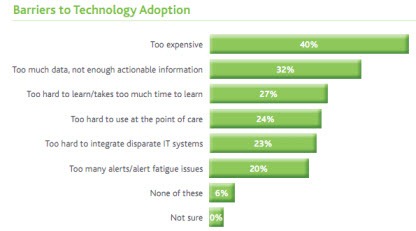
A Wolters Kluwer Health survey of physician finds that search engines like Google and Yahoo are second only to professional journals and colleagues as a source of information for diagnosing and treating patients. The same study lists physicians’ top barriers to technology adoption: too expensive, too much data and not enough actionable information, too hard to learn, and too hard to use at the point of care.

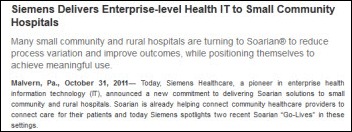
Siemens Healthcare announces its commitment to deliver its Soarian solution to small community and rural hospitals. Siemens recently implemented Soarian Clinicals at the 70-bed Platte Valley Medical Center (CO) and at the 202-bed Palisades Medical Center (NJ).

11-1-2011 7-21-32 PM

George Reynolds, VP/CIO and CMIO of Children’s Hospital and Medical Center of Omaha, tells me they’ve decided to go with Epic (displacing Allscripts on the inpatient side, I assume.) They were already using Epic ambulatory. Phase 1 will go live in early 2013 with inpatient, ED, pharmacy, and surgery. If you don’t know George, check out his credentials: he’s an MD, has a Master’s in Medical Management, was director of pediatric critical care at University of Nebraska Medical Center, and now is both CIO and CMIO at Children’s. Not to mention that he’s a funny guy. I need to interview him sometime.

What might have been: as Steve Jobs was near death, he was sketching plans for an iPad holder for hospital beds and designs for other hospital equipment.

Doctors  know that text messaging patient information from smart phones may violate HIPAA, but it’s so efficient that they do it anyway.

11-1-2011 1-33-42 PM

inga_small Researchers find that gastroenterologists who listen to Mozart during colonoscopies improve their precancerous polyp detection rates from 27% to 36%.  Other bodies of research has found that listening to Mozart’s music may result in significant short-term improvement in spatial temporal reasoning.

mrh_small Weird News Andy finds that this sad story sets the pace. A man living in a Chicago group home tells staff he’s having chest pains and asks them to call an ambulance while he waits in his room. Paramedics arrive, and noticing a puncture wound to his chest, think someone stabbed him. Someone did: the man himself, who cut open his own chest to try to remove his pacemaker. He died in the hospital.


Sponsor Updates

  • The Advisory Board Company will host a conference on transforming physician talent development on November 14 in Washington, DC.
  • Encore Health Resources will participate in this week’s Louisiana HIMSS 2011 Fall Conference.
  • DIVURGENT is attending the Virginia HIMSS 2011 Fall Conference and the Midwest HIMSS Fall Technology Conference.
  • API Healthcare will participate in the HealthcareSource User Conference in Las Vegas.
  • Florida Hospital Celebration Health implements the GetWellNetwork solution in its new patient care tower.
  • Cumberland Consulting Group promotes Lindsay Lopez to executive consultant.
  • Hayes Management Consulting announces its new inpatient consulting division, which will be led by Amitav Hajra, formerly of Epic Systems.
  • Stockell Healthcare Systems receives ONC-ATCB certification for its InsightCS Revenue Cycle Information System.
  • Eastland Memorial Hospital (TX) and Hamlin Memorial Hospital (TX) qualify for Meaningful Use money using the Prognosis ChartAccess Comprehensive EHR. Eastland signed their contract in February, went live in June, attested in September, and got their check in October.

Contacts

Mr. H, Inga, Dr. Jayne, Dr. Gregg.

Monday Morning Update 10/31/11

October 29, 2011 News 4 Comments

10-28-2011 10-43-08 PM

From What About Bob?: “Re: HIT Stack Exchange. Took a year to get enough people to commit, now we need the masses to ask and answer questions so the site can survive. Give us nerds some love.” HIT nerds or nerd-wannabes should take a look.

From Orlando Cepeda: “Re: Dr. HITECH’s Rainbow Button Initiative Rap. Lyrics are here.” Ross did great with these. Here’s a section where he lyrically explains the VA’s Blue Button medical record download:

I been to far-off lands, tryin’ to do what’s right, I had dreams and plans, when I got caught in a firefight.
Now back in the states, I’m a wounded warrior, all my doctors are great, but sometimes I ain’t sure,
Exactly how to keep it straight, or know just how to navigate, all my meds and lab results, and how they relate,
But now I push the Blue Button, and it’s all there to see, just a click of the mouse, and it all comes to me. 
And it’s not just for this vet, heck that ain’t nuttin’, just see what stuff *you* get, when you hit the Blue Button.

From Arcturus: “Re: exposure. You recently mentioned our company on HIStalk. We got several inquiries from companies wanting to be a VAR for us, several VCs inquired, and it caused some buzz. Very much appreciate your doing this.” My pleasure. If I’ve heard about something and it interests me, I’ll almost always mention it. It does get a bit tough when companies try to press me to write about them and (a) I don’t find their product or service all that interesting, or (b) I’m too busy. People sometimes forget that HIStalk is an after-work thing for me, meaning I can’t chat on the telephone during hospital working hours and I’m not usually willing to give up some of my handful of free hours each week to watch a demo or comment on a white paper, especially if it’s a company or person I’ve never heard of.

10-28-2011 9-10-48 PM

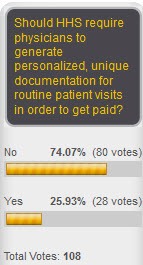
Three-quarters of respondents say it’s silly for docs to be required to crank out engaging, unique narrative for every repetitive patient encounter, but a fourth don’t want HHS paying for encounters described in boilerplate. New poll to your right: can healthcare reform’s needed improvements in cost and quality be realized with today’s IT systems?

My Time Capsule editorial from 2006: Misys Lesson: Mama, Don’t Let Your Vendors Grow Up to Be Conglomerates. I don’t like to show paternal favoritism toward my editorial offspring, but I admit this is one of my favorites, with hyper-caffeinated ramblings like, “Why did a British financial software company get into the US healthcare IT market in the first place? Well, let’s just say it wasn’t a noble desire to better humankind. From their Web site, ‘The main objectives were to reduce the Group’s exposure to a single market (insurance) and to increase its size in an already consolidating software sector.’ That’s about as unemotional as an accountant’s nimble calculator fingers determining the net present value of three dinners with Myra the secretary vs. the potential passion-filled payout.” 

Unrelated (mostly, anyway – it does involve exercise and personal motivation) but for a guaranteed Monday morning smile, check out this brilliant commercial for Contrex mineral water, which I can’t get out of my head. I know Inga will like it.

10-28-2011 9-56-20 PM

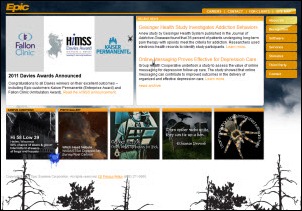
The merry pranksters at Epic put up a Halloween-inspired Web page that includes interactive spider-smashing. I’m sure it will be gone after Monday, so last call.

Encore Health Resources announces that Joe Boyd has replaced co-founder Ivo Nelson as board chair. Boyd has been advising the company for the past 18 months and has worked with Ivo and CEO Dana Sellers before at Healthlink, where Joe was board chair, Dana was president and COO, and Ivo was CEO until they sold the company to IBM in 2005. Encore has been quickly ramping up revenue and headcount and was named the #2 best HIT advisory firm by KLAS. Ivo will remain on the board.

Coincidentally, I’d been thinking for several days about something Ivo told me in my 2009 interview, reminded of it while reading the Steve Jobs biography:

This is nothing more than me doing what I love to do. If it leaves a legacy, I think that’s OK, but I’m not sure what you really get out of that. When I’m hopefully up in my 80s or 90s and I pass away, the people that are going to come to my funeral are going to be my family. It’s not going to be clients. It’s going to be people that are close to me personally in my personal life, my kids and my sisters and a handful of friends probably that I have. That’s a legacy. You say, "What kind of legacy would I want to leave?" and it would be a legacy that’s more related to being a good father to my children and being a good husband to my wife. That kind of stuff. Not anything I do professionally.

10-29-2011 6-29-00 PM

Inga encroaches on Weird News Andy air space in summarizing this story as, “I guess the guy wanted the doctor to give him a hand.” A homeless man with a history of mental problems rushes into a urologist’s office gushing blood, saying he had just accidentally chopped off his arm on a homemade guillotine. Nurses call 911 (probably the best course of action for a urology practice dealing with an amputation,) and when police check out his wooded camp, they find a huge guillotine built from scavenged timber, along with his recently severed arm. One world-weary police officer observed, “My goodness, a lot of thought went into this.” One can only imagine the intended purpose of his handiwork given that his self-amputation was accidental.

Vince’s HIS-tory covers a company I’m not familiar with: Computer Synergy. He says its product was so progressive that its still running in dozens of hospitals and its successor firm was just acquired a few months ago, with details coming next time.

10-28-2011 9-55-07 PM

Shareable Ink CEO Stephen Hau is named Innovator of the Year by the Nashville Technology Council. They haven’t posted pictures of the winners yet, so I’ll go with a company team lunch pic that I found on Facebook, with Stephen on the right.

10-28-2011 10-04-24 PM

CHIME Foundation gives Allscripts CEO Glen Tullman its 2011 Lifetime Achievement Award.

10-28-2011 10-14-25 PM

Omaha-based transplant systems vendor HKS Medical Information Systems is acquired by an investment group led by Argenta Partners LLP. Louis Halperin is named CEO and Paul Markham COO.

10-28-2011 10-29-28 PM

AventuraHQ names neurosurgeon and venture partner Teo Dagi MD as CMO. How about these educational credentials: Columbia undergrad, Hopkins MD/MPH, Harvard MTS, Wharton MBA, Queens University DMedSc. I profiled Aventura, which offers a virtual desktop for efficient clinician access, in July.

10-28-2011 10-37-28 PM

Small hospital systems vendor CPSI announces Q3 numbers: revenue up 2.8%, EPS $0.54 vs. $0.45, missing expectations by quite a bit and falling short of previous guidance. System sales were down, which is not exactly cheery news knowing that the HITECH effect is close to peaking. Shares were hammered, taking a 28.5% haircut at Friday’s close as the Nasdaq’s biggest percentage loser by far. Above is the one-year chart of CPSI (blue, straight vertical line on the right) compared to the Nasdaq (red) and S&P 500 (green). The stock had been climbing nicely, but tanked enough in a single day to barely put it above the indices for the year. Market cap is $564 million.

10-29-2011 8-34-08 AM

Speaking of stock, shares in MedAssets jumped 14% Friday, with an analyst attributing “weakness across the rest of the health IT group” that includes Cerner, Quality Systems, and CPSI. Michael Cherny of Deutsche Bank Securities says MedAssets “has no exposure to electronic health records” like those previously mentioned EHR vendors whose earnings reports this week were “disappointing” or “confusing.” That may just be a reaction, however, since after-hours trading shows MedAssets, which reports earnings Thursday, giving back the full amount of its Friday gains. And while MDAS shares had a nice Friday, the past 12 months haven’t been nearly as kind, with shares down 40%. The one-year share price graph shows compares MedAssets (blue), Cerner (green), and Quality Systems (red).

The Rockford, IL paper covers the HITECH status of local hospitals. OSF Saint Anthony uses Epic and has been paid $2.5 million in MU money. SwedishAmerican, with Meditech and Epic, has earned $7.5 million for the hospital and $4.5 million for physician practices. Rockford Health is installing Epic in its practices and hospital and will attest in 2012 and 2013, respectively.

For my techie brothers and sisters: Tom Munnecke (software architect, VistA) has an after-dinner chat with Ward Cunningham (inventor of the wiki) and Ralph Johnson (computer science professor and author) on the subject of “refactoring",” specifically with regard to VistA. Tom’s iPhone made a darned nice video with good audio. It’s kind of like Live from Daryl’s House for geeks. I got myself thinking about my techie sisters reference – nothing’s more attractive than a smart, cynical female programmer, of which there are sadly too few.

10-29-2011 8-19-21 AM

Meaningful Use and Beyond, a book by Fred Trotter (healthcare open source expert) and David Uhlman (CEO of open source EMR vendor ClearHealth), is published by O’Reilly.

The Federal Trade Commission will require the parent company of prescription data vendor IMS Health to sell two product lines of its acquisition target SDI Health to receive FTC’s approval for the sale to occur. SDI’s tools for promotional audits (estimates drug marketing costs) and medical audits (analyzes physician prescribing by condition) would give IMS Health a monopoly, according to the complaint by FTC, which must approve the buyer of the two product lines.

I feel like a Facebook stalker for posting this, but I will anyway. I noticed a “Like” for a recent post from Mark Work, IT director at ProMedica Health System in Toledo. Checked out his info, it linked to a site for Madison Avenue Band, a ten-piece cover band with horn section and no computers (thank goodness.) Check the video above – these guys (including Mark, I assume – looks like him on keyboard, but I’m not sure) are real-deal rockers. Check out this smokin’ version of “Vehicle” and here of “Wild Nights.” Not only do I love the music, Mark’s Facebook pics are a trove of cool 70s music history – Foghat, Uriah Heep, ELP, Queen, Foreigner, Heart, Styx, and Yes. Well worth my half hour to watch the videos and check out the pics. My arms are tired from air-drumming.

Cisco CEO John Chambers and the King of Jordan launch the Jordan ICT Task Force, which will promote Jordan’s HIT vendors.

GetWellNetwork is named Emerging Business of the Year by the Montgomery County (MD) Chamber of Commerce, which featured the company in a three-minute overview video.

A state-mandated Web site that allows Ohio consumers to compare hospital performance is apparently going down the tubes. The Ohio Hospital Association is supporting a bill that would eliminate the requirement that hospitals provide their data for the Ohio Hospital Compare site, saying they already send the same data to CMS’s Hospital Compare site that anyone can use.

Texas Health Resources runs an ad campaign around its use of AirStrip Cardiology that includes billboards (“Now Your EKG Gets Here Before You Do”) and TV commercials (above).

Merge Healthcare says 11 radiology practices have bought its RIS v7.0 to achieve Meaningful Use. One of its customers brings up the Complete vs. Modular HER issue, saying, “If you utilize a modular system, you as the provider, the onus is on you to find another product or combination of products that meet the remaining criteria before you can claim to be using a certified EHR and qualify for MU funds.”

Chiropractors are getting their HITECH payments, too.

Medtronic hires Symantec to assess the security of its insulin pumps after a McAfee team demonstrates how a hacker could control them from up to 300 feet away. 

10-29-2011 9-44-09 AM

In England, a terminally ill, mostly blind 14-year-old boy has his iPad stolen from his hospital bedside, which had been donated my Make-A-Wish Foundation so that he could enjoy it for the short time until he goes fully blind. All is well, however – a local supermarket was touched and bought him a replacement, with his reaction to it pictured above.

A new poll finds that only 34% of Americans like the Affordable Care Act, while 51% view it unfavorably, the worst numbers since it was introduced last spring.

A Massachusetts court dismisses a lawsuit against Tufts Medical Center, sued by a patient who claimed their faxing of her hysterectomy surgery records to her employer’s fax machine violated her privacy because co-workers read them. The patient had given the doctor instructions to send the records there, but still feels her lawsuit was justified.

E-mail Mr. H.

HIStalk Innovator Showcase–OptimizeHIT 10/28/11

October 28, 2011 News 6 Comments

 10-28-2011 8-37-25 PM

Company Name: ImplementHIT
Address: 4001 S. Decatur Blvd., Las Vegas, NV 89103
Wen Address: www.optimizehit.com
Telephone: 888.457.3332
Year Founded: 2009
FTEs: 20


Elevator Pitch

OptimizeHIT provides an innovative training platform that enables both pre- and post-implementation training to significantly drive clinical adoption via a more comprehensive, yet easy way for physicians to access the training curriculum.

Business and Product Summary

OptimizeHIT offers a sophisticated, physician-friendly, dynamic EHR training portal. OptimizeHIT’s staff, comprised of MD EHR experts and PhDs in education, have developed innovative, patent-pending learning technologies that integrate seamlessly with any practice setting or specialty. With proper EHR training significantly impacting the success or failure of any implementation, OptimizeHIT’s training suite delivers powerful and relevant training that is easy for physicians to access, significantly reducing the time they spend out of clinic to learn how to use the EHR.

With this technology, organizations are realizing higher rates of clinical adoption beyond Meaningful Use, with a bonus of significant cost savings via a reduction in trainer hours consumed during live training time and time physicians spend out of clinic for training. Management can view learner progress on training as well as their productivity in graphical form, using real-time implementation statistics, and objectively understand the status of each site’s implementation. The solution can also allow on-site support to customize each physician’s learning curriculum to their specific knowledge gaps, keeping their learning time focused on what is most needed for them to learn.

Our cost model is based on per month/per user charge, which can accommodate a small physician’s practice or clinic as well as large, multi-location hospitals. Furthermore, we recently introduced a new no-risk pricing model, where there is no cost per user till a user actually completes their basic EHR training. Once a user becomes an intermediate or advanced user, the EHR benefits to patient safety and ROI quickly climb in to the $1000s per provider.

10-28-2011 8-19-07 PM


Target Customer

Large academic hospitals all the way through two-physician practices use this solution successfully.

Customer Problem Solved

Clinical adoption. It is when physicians achieve intermediate- and advanced-level use of an EHR that the greatest patient safety benefits and cost savings are realized. Our portal is built specifically for health IT training, recognizing the unique challenges of training physicians and other healthcare professionals with very little spare time. We are not only getting physicians ready for Meaningful Use Stage 1, but later phases and beyond. Customers live with the portal can easily distribute system upgrade training, new best practices, and even ICD-10 training when the time is right.

Competitors

Other groups that provide standard EHR training with go-live being the end point, like most EHR vendors and a few specialized service consultant groups. However, no one else offers a solution that targets post-implementation training, and that is where you achieve the most efficient leaps in EHR use.

Advantages Over Competitors

We don’t recommend moving all pre-implementation training online, but through a hybrid approach that was featured at HIMSS this February in a presentation by one of our customers. We want to minimize the amount of time physicians must spend out of clinic to learn. Furthermore, we know that physicians learn more advanced features of the EHR a lot faster once they have had an opportunity to use an EHR, which is why our portal integrates the more comprehensive post-implementation training. By providing one integrated solution for pre- and post-implementation training, along with enabling implementation management to see learning and productivity progress in real time, we are much better than any competitor.

The system is also task-based, which means it is more relevant to the learner instead of talking about EHR modules that are abstract for beginner users. Furthermore, because it is task-based and since we deliver standard EHR tasks from beginner to advanced — including Meaningful Use for 10 specialties — the effort to customize the learning content down to the physician specialty is greatly reduced, which makes the content far more relevant and meaningful to the learner.


Pitch Video Created Specifically for this Showcase


Customer Interview (an applications trainer for a large orthopedic practice)

What problems have you solved using the OptimizeHIT technology and what has been the overall impact on the practice?

The first problem solved by using OptimizeHIT’s computer-based training (CBT) modules was improving our training model as we began to prepare our EHR rollout. We were looking at hours of preparation and actual classroom training time with users who were all over the map in terms of PC skills. It was a daunting project and would have required users to be out of clinic and coming in for Saturday training classes as well, which would have meant overtime for some employees. While we still had a few Saturday classes, it was held to a minimum. Our providers never had to take time out of clinic and the overtime was also kept to a minimum.

Anyway, then I was introduced to Andres by a friend, and as soon as I started talking with him, I knew we would work together. His company created customized CBT modules for us using our workflow and screens so that our users were learning how to use the EHR on screens that were our screens – it wasn’t a generic or canned version of training. They worked closely with us to make sure the training modules included great detail. We were able to put much of the responsibility for basic training on the users and they rose to the challenge. We did have to manage the process, checking to see that they were completing the CBTs and where they were weak so we could do focus training with them. But for the most part, our employees did a great job. For those who needed a bit of encouragement, they got “the e-mail” reminding them their CBTs were mandatory.

As far as the impact on the practice, I would say that our users, especially our medical assistants, were well prepared on their first day of live. By the end of the first week, they were fairly confident users. We intentionally designed the training process so that the medical assistants could act as a resource for their providers and they do just that.

If you were talking to a peer from another practice, what would you say about your experience with OptimizeHIT?

To be honest, I’d say don’t even try to train your users without really well designed CBTs, and that you can’t go wrong with OptimizeHIT. They are professional, efficient, epitomize customer service, and even more, they are kind and are comfortable with humor. It was just fun to work with this company and we ended up with an excellent product. I have said exactly that to other organizations.

For those of us who have been in this field for a few years, we have recognized for years that end user training/education is the great hole in the process of implementing healthcare software. Vendors have not, historically, educated the clients (there’s a difference between training and education) and in turn, the clients do not understand the importance of educating their users. With healthcare records, you want confident, accurate users and that means educating them to use the system, but to also think about their use of it critically. Andres and OptimizeHIT focus on exactly that – they are combining adult educational concepts with technology and offer it to sites. 

We call it the gift that keeps on giving. Besides training users for our rollouts, we now use the CBTs for new hire training, upgrade training, user review etc. We are also looking forward to using their new tool to create a post-implementation educational process as a continuing education requirement for our clinical staff and providers.

How would you complete this sentence in summarizing for them: "I would recommend that you take a look at OptimizeHIT under these circumstances:"

If you are a mid- to large-size organization and have a small EHR build/training team, you will simply not be able to meet the demand of build, workflow design, workflow validation, and training. And if you don’t have anyone on staff that has a background in adult education, then you need to consider using this company.

If you’re planning on taking your users through a set of screens and allowing them to do hands-on once or twice – you cannot really consider them educated, and it will show when you take the system live. They will have no confidence and won’t even know when they are making a mistake, so they won’t be able to report it. It could be months or longer until you see that your users are failing to use the system accurately or efficiently.


An interview with Andres Jimenez MD, CEO, ImplementHIT

10-28-2011 8-06-10 PM

What’s wrong with the way organizations train physicians to use technology?

There are several issues. Implementation is typically the endpoint of most training curriculums designed for health IT implementations. The challenge is that without the user ever using a system, it’s impossible to teach them everything they will need to know to become an advanced user. Maybe not impossible, but extremely difficult and inefficient.

The challenge with trying to move your training over time to extend it beyond implementation is having a vehicle or a platform like ours to deliver just-in-time training that’s convenient, relevant, and very powerful for end users and extends beyond implementation and builds upon the experiential knowledge that users gain after the first week or two of using an EHR, where learning more advanced features is far more efficient.

Tell me about the technology that you use. I know you have or are seeking a patent.

It runs on Google Web Toolkit, Google Apps Engine. It’s kind of like Gmail for training. It essentially is real-time, Web-based technology. We’ve structured it in a way where it provides real-time statistics to management. It allows us to plug into practice management systems so we can deliver to learners who may be physicians. We can deliver to them real-time productivity metrics, like how many patients are they seeing per day, how is their increase in learning affecting the number of patients they’ve seen per day, how they’re billing, their level of coding. We’re able to pull that data real time. That’s one of the ways that’s very, very unique.

Very often, training and on-site support are two different processes going on in an implementation. We try to combine them, because we feel on-site support is a great opportunity to further the user’s knowledge on the system. We’ve provided input so that the on-site support personnel can continue to assist learners and then they can fine-tune or focus their training curriculum. If the doctor has 10 minutes or an hour to log in to the training programs late at night, they can focus in just on their specific knowledge gaps instead of starting from scratch. That’s another thing that I think is very innovative about the program.

We really feel that it’s going to become the future of health IT training, where it’s task-based, it’s not necessarily module-based. We can assign specific task-based skills that are usually on the two- to three-minute timeframe or are using bite-size training clips. We can assign specific ones to learners based on their role, based on their specialty, and even within two specialties that are different sites. We can customize training at that level. That makes it very relevant, and that’s very important for adult learners.

I’m sure one of the things that you’ve experienced both as a physician and an entrepreneur is that physicians typically don’t like to sit in a classroom with other physicians. Either they get frustrated with the pace or they just don’t feel like they’re being treated individually enough. Is what you’re offering an alternative to that, or is classroom training still a part of their experience? How do you feel about how classroom training works with doctors?

You’re absolutely right. That is one of the challenges that we hear from other physicians. I think on-site training still has an important role. One of our customers at HIMSS this past February presented some results where they were able to reduce the amount of training time, to cut training time in half because they had a Web-based component and a live training component.

Another one of our customers was able to train their physicians without any time out of clinic before the implementation. Now that doesn’t mean that they didn’t do any on-site live training, but what it means is that they were able to move a significant component of the pre-implementation curriculum to a Web-based component through our platform. Then they were able to focus in the on-site session just what the learner needed to go live and do well those first two weeks. Then, since they have the platform, they can allow the users to progress in their use and start learning more advanced functions at their own pace.

So I agree, the traditional on-site training approach has its weaknesses. A curriculum that only relies on that is part of the reason that you see so many implementations failing, because you can’t get that customization. But even on other types of computer-based training, we’re not the only ones that deliver a training online, but our platform allows to do it in a way where it’s very easy to customize it.

One of the other challenges that we see is that many vendors offer e-learning that is just a number of clips by modules in the EHR that are geared towards one specialty. If you’re a cardiologist, the last thing you want is sit down and watch training – especially when you’re having a busy day – with the clinical context of a kid with an ear infection and how to take care of him with the EHR. We make it easy to inject that relevance in training with our platform, which is extremely important for adult learning to get their interest piqued and  their attention level is high. They really learn, and when you want them to perform, they’re able to recall that information.

How do you convince a prospective client who plans to do their own training or pay the vendor to do it to that they need you instead?

We partner with many vendors, so we never want to go necessarily head-to-head with the vendors. They certainly have their place in providing training, but the challenge for most vendors is that they’re scrambling right now just to acquire market share. They haven’t necessarily been able to provide the focus needed on a very specialized approach on training. Not just training that gets them to use the basics, but that drives to Meaningful Use and beyond, where you get the advanced features and the greatest safety benefits for your patients and the greatest return on investment.

We typically tell our customers that we’re providing a platform that is very innovative. It will help your users get to advanced clinical adoption faster with less of an impact on overall productivity. One of our customers was able to get their physicians to full productivity about a week after implementation. That had a huge impact for them. They’re an orthopedic group and some of their physicians see 60 patients per day. We combine our training with the phased rollout approach to make sure that they can return to full productivity. Those are the things that are very important to a lot of customers.

Obviously cost is a factor. We’ve been able to show, for instance at HIMSS this past February, a return on investment of $6 for every $1 invested in our training. 

It’s important for our customers that this platform stays around for awhile. While they may have a cost incurred on just the implementation training, they’re working with the vendors, etc. our platform can stay around. They can start with Meaningful Use functionality and the platform, but right around the corner, there are updates from the vendor, ICD-10, and many other initiatives. They can build into the platform additional training. That’s been very important to our customers. They can do that on their own.

What do you hope to gain from this exposure?

We really feel that our platform is going to be future of health IT training. The fact that not all computer-based training is created equal, that our training specifically drives adoption, gets folks to full productivity faster, and we have a number of customers that have really appreciated and seen the benefits of that. 

What I’m hoping to get from the exposure is actually people getting the chance to hear about us. We’re a small organization, so we don’t have the advertising budgets or the large-scale sales team that existing companies have. Because we’re a smaller group and very innovative, we’ve been able to produce a platform that’s very cutting edge. We’re hoping with this exposure that we can get the word out and more people come on to our site and learn. We’re happy to provide more demonstrations and happy to connect prospects with existing customers, because they’ve been our greatest sales force to date.

News 10/28/11

October 27, 2011 News 1 Comment

Top News

10-27-2011 6-57-07 PM

Cerner announces Q3 numbers: revenue up 24%, EPS $0.45 vs. $0.36. beating estimates excluding one-time items and raised guidance. The conference call transcript is here. Cerner says customers of an unnamed competitor (Epic) are concerned about their vendor’s ability to keep up with Meaningful Use requirements beyond Stage 1. It also says Epic’s customers are vulnerable to Cerner poaching because of Epic’s deficiencies in ACO readiness, lack of analytics capabilities, and poor total cost of ownership. Recently announced products were mentioned, as was the company’s acquisition of Clairvia and hints that other acquisitions may be forthcoming as “the clock is ticking” in acquisitions starting to look less attractive. It’s also implied that competitors (again, that would have to be Epic) may be getting bottlenecked in their ability to start implementations promptly.


HIStalk Announcements and Requests

10-27-2011 4-44-21 PM

inga_small This week on HIStalk Practice: daily reports from Las Vegas on MGMA’s annual conference. Mr. H declared I was “full of myself” (harrumph), but you will have to read the updates and make your own assessment. The posts include impressions on various speakers (Dr. Farzad Mostashari and Intel’s Eric Dishman were my favs); assessments of the hottest topics (connectivity, communication tools, and more); the exhibits (nice booths, annoying Elvises, a bit of technology, and the best giveaways); and, of course, hot shoes. Thanks for reading.

mrh_small Listening: The Black Keys, an Akron-based white nerd duo whose Brothers album sounds like bluesy soul from the early 1960s (but they really rock out on earlier stuff in no-frills ‘70s Ted Nugent fashion). Excellent. And “Not Listening” despite a reader’s calling it to my attention (“Holy Shatner,” he said): yet another hideous and uber-hammy William Shatner non-musical recitation, this time to the tune of Queen’s Bohemian Rhapsody, making his previous masterwork Lucy in the Sky with Diamonds sound like Beethoven by comparison. If you like Star Trek, Queen, music, or your sanity, you’ve been warned because it will bore into your skull like an earwig (entomologically incorrect, I know, but an apt metaphor.) I suppose we can all only dream of being as cornily popular and scorn-immune when we reach Bill’s age (80).

mrh_small Jobs on the sponsors-only Job Board: Project Specialist I, Account Manager, RVP Sales – Ohio Valley Territory. On Healthcare IT Jobs: Lab Information Systems Analyst, Regional Sales Executive, Epic Security Analyst, Network Administrator.


Acquisitions, Funding, Business, and Stock

Perceptive Software increases its Q3 revenues by about 15%, but less than parent company Lexmark says it expected when it acquired the company last year. Perceptive contributed $23 million of Lexmark’s $1.03 billion in quarterly revenues.

10-27-2011 9-45-11 PM

UPMC announces Q operating income of $155 million on operating revenue of $2.4 billion. A year ago, operating income was $93 million. The gain includes $36 million for demonstrating Stage 1 Meaningful Use.

McKesson’s earnings call transcript is here. There wasn’t much new about the technology division, other than profit was up 25% excluding an impairment charge. Analysts who asked questions were more interested in Lipitor and flu vaccine.

10-27-2011 8-45-49 PM

Healthcare billionaire Patrick Shoon-Shiong’s NantWorks acquires Ziosoft, a Japan-based vendor of supercomputing software that merges data from a variety of medical images (CT, MR, ultrasound) to allow 3D, 4D, and 5D analysis for diagnosis. The company will be renamed Qi Imaging everywhere except in Japan, where it has 2,000 of its imaging workstations installed.

10-27-2011 9-56-15 PM

NextGen parent Quality Systems Inc. reports Q2 numbers: revenue up 32%, EPS $0.35 vs. $0.23. A two-for-one share split took effect Thursday.


Sales

10-27-2011 1-29-23 PM

Meditech announces eight new clients.

The Virginia Department of Health awards Community Health Alliance a contract for the statewide HIE. CHA’s strategic and technology partners include MEDfx (IT services), MedVirginia (support services), Troutman Sanders (governance), and Verizon (HIE platform.)

The VA gives Harris Corporation a two-year, $5.3 million contract to transition its billing to ICD-10.

10-27-2011 9-47-00 PM

Tucson Medical Center selects MethodCare’s Charge Recovery application to improve coding compliance and identify missed charges.

Shamokin Community Area Hospital (PA) selects ProVation MD for gastroenterology documentation and coding.


People

10-27-2011 6-29-56 PM

BridgeHead Software appoints Jim Beagle CEO and president. Former CEO and founder Tony Cotterill will serve as executive chairman of the board and as EVP and chief products officer.

10-27-2011 6-31-11 PM

Allscripts appoints Catherine Burzik, president and CEO of Kinetic Concepts, to its board of directors.

10-27-2011 3-05-31 PM

MGMA and ACMPE name David Bowman, MD Physician Executive of the Year for outstanding leadership to achieve exceptional performance in healthcare delivery. He is executive director of IPC The Hospitalist Company.

10-27-2011 3-46-33 PM 10-27-2011 3-47-45 PM

HealthTech Holdings, the holding company that owns HMS, MEDHOST, and Sentry Healthcare Services, names Alan MacLamroc CTO and Geoff Roten CIO.


Announcements and Implementations

Houston Healthcare goes live on Meditech on October 31. CIO Robert Rhodes indicates the organization has invested about $6 million to implement the system.

10-27-2011 6-33-39 PM

Springfield Service Corporation and its subsidiary Laguna Medical Systems rebrand into a single organization named SPi Healthcare. The company specializes in RCM, health information management, and ASP hosting.

Piedmont Healthcare (GA) partners with TeleHealth Services to implement TeleHealth’s TIGR system for on-demand patient education and interactive communication.

Aetna President Mark T. Bertolini tells investors that its Medicity subsidiary has a $200 million contract revenue backlog and recently launched its iNexx application store. On supporting the ability of consumers to pay for medical services at the point of sale, “We also can now real-time auto-adjudicate a claim on a smart phone at the doctors office, by the consumer or the provider should they choose to do that, because we’ve now been able to create real-time auto-adjudication connection mobilely. The real issue, the ultimate issue here is whether or not people have the incentive to use it. And I think that’s where plan designs and the accountable care organizations and how they link to these platforms — that’s why we bought Medicity, will create people’s ease-of-use in using the system and using this technology to make decisions at the point-of-sale. And that’s ultimately where this needs to head.”

Olympic Medical Center (WA) signs on as an affiliate of Swedish Medical Center, with OMC’s CEO touting as a key benefit its access to Swedish’s Epic system. He said Epic is “the best” EMR and that 75% of Seattle-area hospitals will be running it.


Government and Politics

US Representative Tom Marino (R-PA) introduces legislation to create a system for reporting potential medical errors that occur when using EHRs. It would include protection that provider-supplied information could not be used as a legal admission of wrongdoing.

The VA announces plans to remove an inappropriate restriction on data sharing with the Department of Defense. The update would allow the VA to share information about treatment for drug abuse, alcoholism or alcohol abuse, HIV status, and sickle cell anemia.

CIO Roger Baker talks up the VA’s use of iPads, starting with access to VistA, but  potentially expanded to include tablet-based access to physiologic monitors, blood chemistry results, and full-motion video to support telehealth.


Innovation and Research

mrh_small The folks from Project HealthDesign (a project of the Pioneer Portfolio of the Robert Wood Johnson Foundation) sent over an “early findings” presentation on using patient-sourced data in treating chronic conditions. They’re testing apps to determine how to collect “observations of daily living” (ODLs) from patients and how clinicians can use that information to help them manage their health. The five projects involve a smart phone-based inhaler study, iPad tracking of Crohn’s disease ODLs, sensor-based tracking of senior citizen task completion, smart phone collection of ODLs related to high-risk infants and their caregivers, and an iPod Touch study of activity and exercise in obese teens. Caregiver challenges: clinician workflows need to be developed to use the incoming information and EMR limitations make it tough to store information there.


Technology

10-27-2011 4-05-00 PM

inga_small Finally, a legitimate HIT shoe story. GTX Corp and Aetrex Worldwide are designing an GPS-enabled shoe to keep track of Alzheimer’s patients. If a patient walks outside of a certain geographic region, a device automatically sends an alert to the patient’s caretaker. Hopefully by the time I am completely demented the shoes will be a little more stylish.


Other

inga_small Though shoes are my first love, I also have quite a fancy for lattes from Starbucks. Maybe so does Alvin Mingczech Yee, a California doctor who preferred to meet most of his patients in various Starbucks outlets. A federal grand jury just indicted him on 56 counts of prescribing drugs “outside the usual course of professional practice and without a legitimate medical purpose.” It turns out hat Yee’s patients preferred oxycodone and other addictive opiates over espresso drinks.

Less than 10% of providers believe they are over halfway prepared for ICD-10, with most still in the strategy and planning phases of preparation.

10-27-2011 4-30-46 PM

Kaiser Permanente takes the top spot on Computerworld’s list green IT organizations. It earned high marks for data center cooling and its “Keep IT Green” program for brainstorming energy-saving initiatives.

HP changes its mind and says it won’t sell its PC division after all, with new CEO Meg Whitman saying the plan of her predecessor, the fired Leo Apotheker, “makes no sense.”

mrh_small I ran my interview with Aetna’s Charles Kennedy the same day Emory Healthcare announced that it will operate a Patient-Centered Primary Care pilot with Aetna for its employees and some Medicare patients, which he described in general in the interview.  

mrh_small I ran a link to a Kirby Partners survey on job satisfaction a few weeks back, so they sent over some of the findings. More than two-thirds of hospital CIOs work more than 51 hours per week, but still grade their job satisfaction as 7.2 on a 10-point scale (managers and directors scored 6.8 and non-management staff 6.2.) An amazing 96% of IT employees said their working conditions are stressful, and 74% of the non-CIO respondents say they’ll be on the lookout for a new job in the next 12-18 months. Short-term departmental turnover, however, is expected to be only 0-3%.

mrh_small Weird News Andy concludes that there’s no good answer to this problem: an uninsured illegal alien who was paralyzed in a Texas workplace accident has been treated by UTMB for three months, but the hospital says it’s time for him to go back to Mexico since their only obligation was to stabilize him. They’ve offered him a free flight back, but he’s not leaving. A local aid group says Texas has the highest level of uninsured residents in the country, Galveston and UTMB are still reeling from 2008’s Hurricane Ike, and financially strapped state government has cut the hospital’s funding.

mrh_small Here’s a Disposable Film Festival submission involving puppets, the Rainbow Button Initiative, and music by our cult favorite (and puppetized) Dr. HITECH. It would have been better with on-stage microphones (or maybe some directional shotguns), but it gets easier to hear when the music starts. The idea is that in addition to the government’s Blue Button for one-click patient downloading of their health information, there should be a Red Button (lock your record as private), a Green Button (make your de-identified information available to researchers), and White Button (send your information in CCD format directly to a chosen provider).

mrh_small Yet another study finds few lives are saved when normal-risk women get a mammogram each year.

mrh_small An anecdotal article picked up by MSNBC concludes that the use of outsourced radiology services can cause miscommunication and patient harm. It cites the example of an ED patient in a small Pennsylvania hospital who had a contrast CT performed. The digital copy was sent to the hospital’s contracted radiology service in a city four hours’ away, but since they were closed, it auto-forwarded to a radiologist in Hong Kong. He found the problem and noted it in his report, but neither the ED doc nor the radiology service followed up. The patient was discharged, her brain abscess ruptured, and the ensuing 11 weeks in a coma left her brain damaged. The article lists several potential problems since nobody actually talks to each other while looking at films in a dark room these days: outsourced radiologists may just rubber stamp their reports, offshore companies may fraudulently sign reports without having them read by a licensed radiologist, and Indian companies offer cut-rate radiology reads of unverifiable quality for radiologists to pass off as their own when billing.

Google donates 100 Web-only Chromebooks to the American Red Cross, to be used by wounded military members being treated at Walter Reed.

mrh_small Hartford Hospital (CT) is elated to find its name used in the first iPhone 4S commercial, where a woman is shown asking its Siri personal assistant function, “What’s the fastest way to Hartford Hospital?” Says the hospital’s SVP of strategy on being asked early on by Apple to use its name, “We didn’t even know what the product was. We’d never even heard of Siri before. Knowing it was part of Apple, I knew it was going to be a quality commercial.”

mrh_small A Massachusetts man convinces his doctor and others to invest in his thriving software company, which he said was about to be acquired by IBM. The company was fake — he spent the money of his investors on a second home and a fleet of luxury cars, supplementing his fraud revenues by forging prescriptions for narcotics. He’s been indicted on a long list of charges. The man says he’s the real victim even though the doctor is out $3.5 million.


Sponsor Updates

  • Carefx and Tracline will showcase their technology partnership at EHI Live 2011.
  • Inland Northwest Health Services (INHS) goes live on its Spokane Connection project, enabling the exchange of information with the Social Security Administration. The initiative is part of the Electronic Disability Benefits Eligibility Determination pilot project and connects data through the Nationwide Health Information Network Exchange.
  • GE Healthcare, McKesson, NextGen, Practice Fusion, and Sage Healthcare will participate in a two-year Medical Economics EHR study to determine best practices for PCPs.
  • The Great Lakes HIE and University of Michigan Health System announce a partnership to share patient health information using the Axoloti HIE platform from OptumInsight. Also, Optum and Lifeline Hospital Group (Abu Dhabi) launch Optum Middle East LLC to improve RCM processes and performance.
  • Imprivata introduces its OneSign Virtual Desktop Access for Citrix XenDesktop at Citrix Synergy Barcelona.
  • St. Peters Health Care Services (NY) adds Thomson Reuters Pharmacy Xpert.
  • ZirMed introduces SimpleResponse to simplify payer rejection messages.
  • TeleTracking Technologies receives designation as a Support Staff Excellence Center by the Technology Services Industry Association.
  • Practice Fusion will host a “Doctors of the Future” photobooth during the Bay Area Science Festival.
  • eClinicalWorks says its 2011 National Users Conference set a new attendance records with over 3,000 participants.
  • Baylor Health Care System (TX) creates an enterprise HIE using AT&T’s Healthcare Community Online platform.
  • St. Peters Bone & Joint (MO) says it will save $30K annually by improving its Sage EHR workflow using EMR Optimization software and services from MD-IT, which added dictation solutions and an iPhone app.

EPtalk by Dr. Jayne

HIMSS submits comments in response to FDA’s draft guidance on Mobile Medical Applications. Its key point: lots of groups, including hospitals and health systems, are developing mobile apps while having no experience with the FDA’s regulatory processes. HIMSS calls on the FDA to help educate developers.

Health Services Research publishes an article about readiness for Patient Centered Medical Home initiatives, concluding that nearly half would qualify for NCQA recognition. It cites lack of infrastructure and notes that small practices will need assistance at achieving recognition.

CMS issued guidance last week clarifying attestation requirements for eligible hospitals. I’m not sure it told us anything we didn’t already know, but I give them full credit for trying to make sure that hospitals understand what’s involved in attestation. I continue to be surprised when I speak with colleagues who really have no idea what Meaningful Use is about or how it will impact them.

I’m a little behind in my reading, but a piece in the Journal of the American Medical Association caught my eye as I flipped through my ever-rising stack of paper. Automated Identification of Postoperative Complications Within an Electronic Medical Record Using Natural Language Processing compared coding-based identification of complications to data identified by natural language processing. The authors concluded that natural language processing analysis of electronic medical records at a VA hospital had higher sensitivity “compared with patient safety indicators based on discharge coding.” Contents of EHR notes were mapped to SNOMED for analysis. The authors propose that natural language processing could be used to better identify complications by analyzing documents while the patient is still hospitalized, as opposed to the coding approach, which typically occurs after the patient is discharged.

Weird health technology story of the week: a study in the American Journal of Cardiology suggests that pacemakers recycled from funeral homes could assist patients in the developing world. Although the study involved a small number of patients, 38 of 40 recipients improved after receiving a donated pacemaker. Since pacemakers are approved as single-use devices, researchers are seeking FDA approval to perform a more extensive study.

One of my organizational duties is to work with providers who are struggling with EHR adoption. Usually this involves a fairly painful session with a colleague who really wants nothing to do with the computer and who doesn’t see any benefit to learning. These visits showcase interesting behaviors — avoidance, denial, whining, begging, anger, and hostility. Today I had the privilege (and pleasure) of shadowing one of the most proficient EHR-using physicians I’ve ever seen. He seamlessly integrated the EHR into the patient experience and delivered care far more comprehensively than he could have done with a paper chart. An added bonus: his patients love having their charts in the EHR and are active participants in reviewing their records and assisting with updates. It gave me hope and was a nice recharge for my seriously depleted CMIO battieries.

clip_image001

Bedtime reading: The Final Rule for the Medicare Shared Savings Program, aka Accountable Care regs. Quite the page-turner, with nearly 700 pages of risk-sharing bliss, if you ask me. Changes include a rolling application process, reduced numbers of primary care providers who need to meet Meaningful Use requirements, and fewer required measures. Of course I’ll have to read the whole thing if I want to stay employed, but I’m interspersing sections of it with chapters from my newest chick lit find. I’m pretty sure the cover model is Inga, but it’s hard to know for sure without the shoes.

Print


Contacts

Mr. H, Inga, Dr. Jayne, Dr. Gregg.

News 10/26/11

October 25, 2011 News 29 Comments

Top News

10-25-2011 6-30-24 PM

ONC names Judy Murphy, RN, FACMI, FHIMSS as deputy national coordinator for programs and policy, the position Farzad Mostashari held until being named National Coordinator. She was previously VP of EHR applications at Aurora Health Care and has served on the boards of HIMSS and AMIA.


Reader Comments

mrh_small From Legal Beagle: “Re: MedAssets. Cook County, IL is suing them for a salesperson having a laptop containing PHI stolen from his car.” Unverified.

mrh_small From ShareBear: “Re: Continuity of Care Document. Does Canada use it as well? Just wondering if US patients could carry and delivery a CCD from their ONC-certified vendor.” I thought it was US-only, but experts can chime in.


HIStalk Announcements and Requests

10-25-2011 9-15-02 PM

mrh_small Inga is all full of herself running around at MGMA in Las Vegas (or “Vegas,” as the logo annoyingly states), trying hard not to compromise her stealthy Inga identity while composing her daily summaries for HIStalk Practice, so I’ve given her the HIStalk day off. I’ll still put my little blue icons here and there since I’d miss them otherwise. The red ones will be back Thursday.

10-25-2011 9-16-46 PM

mrh_small I’m a good way through the Steve Jobs biography (reading it on the iPad, not too ironically), so I’m sure I’ll have something to say about it by the weekend. My impression so far: he was an brilliant, rebellious, insensitive jackass who had amazing ideas and who didn’t hesitate to use his overpowering personality and caustic scorn to streamroll over anyone who stood in the way of seeing them realized, either by their intentions or their lack of equally shared enthusiasm. But it definitely worked for him and for Apple. I felt sorry for Steve Wozniak after reading how he was treated, but even Woz admits that there would be no Apple without Jobs. He should be the next to write a book (I have no doubt it’s coming, if for no other reason than for him to tell his side of the story.)

10-25-2011 9-20-14 PM

mrh_small Save the date for HIStalkapalooza 2012: Tuesday, February 21, 7:00 to 10:00 p.m., at the HIMSS conference in Las Vegas. I was losing interest since I had too little time to figure out the details, but a fun sponsor stepped forward to take the load off my shoulders. Actually, several companies volunteered to foot the bill and meet my attendee-centric requirements (which I really appreciate) and in the interest of fairness, I simply chose the first one that met my checklist. We’ve chosen the venue, menu, and entertainment, so now Inga and I have to work out the stage show (shoe awards, beauty queen sashes, HISsies, etc.) Remember that everything is a day behind in Las Vegas: Monday is the old Sunday (pre-conference workshops, opening reception) and Tuesday is the old Monday (opening session, exhibits open). We’ve always had HIStalkapalooza on Monday, so this year is no different except it will be Tuesday (that makes no sense, but neither does the HIMSS schedule.) We’ll get all the registration stuff together later, probably right after New Year’s. Ladies, start your fashion shopping engines.

10-25-2011 7-18-48 PM

Admire the animation-free ad of new HIStalk Platinum Sponsor Passport Health Communications of Franklin, TN. The company, founded in 1996, offers business operations and payment certainty solutions to hospitals and providers. It serves over 1,900 hospitals and 8,000 practices and processes 300 million transactions each year through its eCare revenue cycle solutions, making it one of the fastest-growing SaaS service companies in the country. Its eCare NEXT Patient Access Suite is a single solution that handles patient information verification, address checking, and payments, offering (as the animation-free ad says elegantly) Payment Certainty for Every Patient. The company just announced a big deal to provide 27-hospital Providence Health & Services with payer eligibility connectivity services. You can read case studies on its site from organizations such as Vanderbilt Medical Group, UNC Health Care, West Virginia University Hospitals, Meriter, and Advocate Health Care. Thanks to Passport Health Communications for supporting HIStalk.

Speaking of Passport Health Communications, this is a first. To celebrate their HIStalk sponsorship, they got together with their customer Quorum Health Resources and put together the video above, which is pretty darned funny (my favorite part was the last few seconds). As I watched, I was thinking that the guy who played the boarding pass taker was a good actor, then I saw at the end that it’s actually Passport CEO Scott MacKenzie. I’m impressed.


Acquisitions, Funding, Business, and Stock

10-25-2011 4-54-28 PM

Health business intelligence vendor Analytix On Demand acquires Integrated Revenue Management Inc. and changes its name to CentraMed, which will offer a BI platform and professional services.

10-25-2011 6-57-51 PM

McKesson announces Q2 numbers: revenue up 10%, EPS $1.63 vs. $1.25, beating analyst expectations by $0.24 (excluding a $118 million one-time contribution to litigation reserves related to the drug pricing lawsuits it faces). The company also beat revenue expectations and raised guidance. Technology Solutions had revenue of $825 million, up 7%. The conference call was this afternoon, but the transcript hasn’t been posted yet.

10-25-2011 7-03-48 PM

Long-time IBM CEO Sam Palmisano steps down, replaced by sales and marketing SVP Virginia Rometty. Palmisano will remain as chairman.

10-25-2011 8-02-16 PM

HealthStream announces Q3 numbers; revenue up 24%, EPS $0.08 vs. $0.04, beating expectations for both. The Nashville company, which offers healthcare learning and staff competency solutions, has a market cap of $317 million. Shares were just mentioned in a Forbes article called Fifteen Small Company Stocks To Buy Right Now

A Japanese company says it saved Italy-based pharmacy IV automation vendor Health Robotics from a hostile takeover by unnamed US companies by acquiring a minority stake in the company. Health Robotics and McKesson sued each other after their distribution agreement went sour.


Sales

Seton Healthcare (TX) selects dbMotion Collaborate as its interoperability platform to cover 11 counties.

Walsall Trust (UK) chooses TeleTracking Technology’s TransportTracking system to replace an existing patient transport system.

10-25-2011 9-22-38 PM

Scripps Health (CA) selects Allscripts Community Record powered by dbMotion for its 2,600 affiliated physicians and five hospitals.

Memorial Hermann Healthcare System (TX) selects the T-SystemsEV EDIS to automate physician documentation in its nine EDs, including integration with the EMR and computer-assisted coding solution.

St. Peters Healthcare Services (NY) chooses the Pharmacy Xpert clinical intelligence dashboard for pharmacists from Thomson Reuters.


People

Awarepoint Corporation hires Merrie Wallace, RN, BSN, MN (McKesson) as EVP of product solutions; Chris Cosgrove (McKesson) as senior VP of sales; Greg Arthur (Microsoft) as VP of client management; and Carla Gallegos (Cisco) as VP of national account sales.

Healthcare data exchange vendor Proficient Health of Greensboro, NC names Dennis Barry to its board. He is a pharmacist, CEO Emeritus of Cone Health (NC), and a former educator and administrator for the University of North Carolina at Chapel Hill.


Announcements and Implementations

image

RelayHealth wins the VA’s “Blue Button for All Americans” contest. Its one-click Blue Button download of a patient’s information was implemented on the required 25,000 physician sites. VA Secretary of Veterans Affairs Eric K. Shineski says, “We wanted to give Veterans and their families easy access to their health data with the Blue Button so they can have greater control over the health care they receive. RelayHealth’s contribution to this goal is more than commendable.” The company will donate its $50,000 prize to the Wounded Warrior Project.

10-25-2011 9-27-30 PM

Froedtert Hospital implements NCR Wayfinding to improve the patient experience.

El Centro Regional Medical Center (CA) implements the PatientSecure palm vein scanning patient ID system from HT Systems.

Kansas Health Information Network and eHealthAlign merge their two ICA CareAlign HIE contracts to increase efficiencies and reduced cost to providers.

Fujitsu and Osmosyz announce a scanning product suite that converts paper charts to interoperable documents that meet HL7 Clinical Document Architecture standards. They’re demoing the solution in the booth of partner Aprima at MGMA.

In India, Wipro announces a new version of its Hospital Information Management System that’s used by over 100 customers in India, the Middle East, and Africa.


Government and Politics

10-25-2011 5-58-13 PM

mrh_small Rep. Tim Huelskamp (R-KS), in an interview with reporters from The Heritage Foundation, is asked about Epic CEO Judy Faulkner’s role on the Health IT Policy Committee:

Reporter: Congressman, we at Heritage have done some reporting about, specifically, one member of the Health IT Policy Committee sort of controlling where these federal funds are being spent, who seems to be using her position — this is Judith Faulkner at Epic Systems — to advance her company’s interests, using $20 billion in stimulus funds. Have you looked into how the people who are directing this policy stand to gain from this potential conflict of interest, the sort of cronyism at play here?

Huelskamp: We discussed that in our office just yesterday, and saw an article this morning … I appreciate your work about exposing that. You know, you roll back a little bit of history to the Hillary Clinton era, and that’s helped kill that when that was being put together. Given the closed nature of the process … and I’ll tell you, for Congress to say it’s not transparent on that end, while down the street we’ve got 12 folks around a table dictating the entirety of policy, it rings hollow. 

But the point being, I think most Americans are saying, "Hey, wait a minute. That just doesn’t smell right." So I think that’s an angle to talk about and continue to push on that. We don’t have anything to add. You guys have done great research. We’re going to continue to push on that. We are looking for soft spots, and we just talked about that yesterday — where we can find those. Because there’s somebody in there, without a doubt. If I know Governor/Secretary Sebelius as well as I think I do, there’ll be plenty of other places. You follow the money, and you’ll find out where.

This is a multi-billion dollar initiative. I served on the information technology committee in the state legislature for about 10 years. They couldn’t put together a Medicaid system — am I right on that, Brian? I mean, it was millions and millions of dollars. It would fall apart every year, and then they’d start again and again. This is a cash cow, without a doubt. There’s only, in my understanding, two or three companies that could potentially pull that off and they’ve got connections to the administration.

And later in the interview:

Huelskamp: I’m just thinking about Judith Faulkner and her appointed group. They’re not for sure who appointed them? Yeah, surely you’re joking. We know it’s all political appointments, and that’s how it works, and we understand that.

Australia creates an oversight body to identify and manage patient safety risks related to its national electronic medical records rollout. The group will determine the severity of risks and provide guidance on how quickly to resolve them.


Innovation and Research

Graduate students at University of California Merced are developing an avatar-led virtual physical therapy software application to provide physical therapy services to the elderly.

mrh_small Partners Healthcare Center for Connected Health gets a $25,000 Verizon Foundation grant to develop a wireless pedometer (a sneaker chip) for teens and a text messaging program that sends them health and nutrition suggestions based on their activity. That’s a pretty brilliant idea and the execution looks good.


Other

A CapSite survey finds that 80% of hospitals either belong to an HIE or plan to join one and three-fourths of them plan to purchase HIE solutions. Most hospitals aren’t so sure about signing up for an ACO, however.

An American Medical News article covers the use of digital pens integrated with an EMR to avoid having physicians starting at a keyboard and screen instead of looking at their patients. It mentions Medical Specialists Centers of Indiana, which uses Shareable Ink for clinical documentation with up to 99% accuracy, according to the practice’s CEO.

10-25-2011 6-36-40 PM

mrh_small A private investor at an investment and advisory firm weighs in on the compensation of McKesson CEO John Hammergren in a Forbes guest column:

The one to triumph in this year’s tournament for the most rapacious pillage of shareholder property is John H. Hammergren, chairman and CEO of McKesson Pharmaceuticals. His “compensation” which is doesn’t really capture the essence of his remuneration, was a mind blowing $131.2 million U.S. dollars. This number is obscene. It is just shy of 11% of the total $1.2 billion in net income for the entire company … But defenders will say, McKesson’s stock is up 20% and Hammergren has created prodigious amounts of shareholder value. And my goodness, McKesson is the 15th largest company in America with deca-billions in revenue and they do all of these incredibly wonderful things and John is such a great leader and manager and family man, and charitable and a civic leader, and don’t go on because nausea has overcome me and I’ve already vomited. Deaf to it all I am.

It cannot be reiterated enough.  He’s a manager, nothing more nothing less. McKesson has been “a trusted supplier of medical goods and supplies” for more than 175 years. Hammergren joined the company in 1996. His CV on the company website attributes to him no inventions or holder of patents. He assumes no personal risk: Unlike an entrepreneur, he has no personal capital whatsoever on the line. MANAGER. He is surely an astute and capable one given his pay, but a manager nonetheless. Excuse makers remind me that the bulk of such CEO pay comes from the exercise of stock options. In Hammergren’s case, he exercised more than $100 million in options this year. But why was he given the stock options in the first place? Grant of these options is just one more wealth transfer from shareholders to one man, in our example John.

mrh_small In Louisiana, anesthesiologist William Preau III MD writes a letter of recommendation for Robert Berry MD, an anesthesiologist colleague who had been fired from their practice over concerns of substance abuse. At his new job, Berry puts a 31-year-old woman in a permanent vegetative state while administering anesthesia under the influence of unspecified drugs. The woman’s family settles their lawsuit, getting $1 million from Berry and $7.5 million from the hospital. The hospital then sues Preau and his practice for giving Berry a glowing recommendation after they had fired him for substance abuse. The practice got off the hook since their original response had been to simply acknowledge that Berry was a former employee, but Preau’s three sentences cost him $8.2 million in damages, which his malpractice carrier won’t cover since the case involved tortious misrepresentation, not bodily injury.


Sponsor Updates

10-25-2011 4-58-13 PM

  • Robert Hitchcock, CMIO of T-System is interviewed for a podcast on the survival of hospital EDs and the necessity of EHRs.
  • CareTech Solutions is recognized with “Outstanding Website Developer” and “Information Services Standard of Excellence” awards from the Web Marketing Association, while 13 of its clients win WebAwards of their own.
  • Modern Healthcare’s Best Places to Work in Healthcare names Aspen Advisors, Encore Health Resources, Hayes Management Consulting, Iatric Systems, Impact Advisors, maxIT Healthcare, and The Advisory Board Company among its top 100.
  • Cumberland Consulting Group promotes Jessa Sprenkle to executive consultant.
  • Orthopaedics of Steamboat Springs, PC (CO) selects the SRSsoft EHR.
  • ZirMed announces the release of its Patient Payment Developer Kit at MGMA.
  • ADP AdvancedMD announces cloud integration between its practice management system and Modernizing Medicine EMA-Ophthalmology EHR.
  • Carondelet Health and Ascension Health Information Services (KS) select eClinicalWorks PM/EHR and Electronic Health eXchange.
  • Coastal Medical (RI) announces that 47 providers have achieved MU using eClinicalWorks.
  • MedVentive Inc. closes a $12 million offering of Series D preferred shares.
  • Billian’s HealthDATA affiliate HITR.com launches a blog called Nurse Tech Talk – Bridging Nursing and IT.
  • Health Language Inc. launches its LEAP I-10 claims analytics module at the Workgroup for Electronic Data Interchange Fall 2011 Conference.
  • Greenway Medical releases an analysis of Medicare’s final ACO rule, authored by VP Justin Barnes, who also is co-chair of the national Accountable Care Community of Practice.
  • Intelligent InSites will present Getting the Most out of an RFID/RTLS Implementation at the Northeast Healthcare Technology Symposium in Groton, CT next week.

Contacts

Mr. H, Inga, Dr. Jayne, Dr. Gregg.
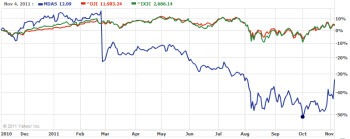
Thoughts on NIST’s EHR Usability Document 10/24/11

October 24, 2011 News 12 Comments

image

NIST’s EHR usability report, Technical Evaluation, Testing, and Validation of the Usability of Electronic Health Records, can be viewed here. It is in draft status and available for public comments. Comments can be sent to EHRUsability@nist.gov.

ONC has also pledged to review comments left HIStalk. Cllick the link at the end of this article to add yours.

My Disclosures

  • I’m not a usability expert, but I have attended usability workshops and possess some familiarity with how software usability is defined and measured.
  • I’ve used badly designed software.
  • I’ve had to tell clinical users to live with badly designed software and patient-endangering IT functionality because we as the customer had no capability to change it and our vendor wasn’t inclined to.
  • I’ve designed and programmed some of that badly designed software myself, choosing a quick and dirty problem fix rather than a more elegant and thoughtful approach.
  • My hospital job has involved reviewing reports of patient harm (potential and actual) that either resulted from poor software design or could have been prevented by better software design.
  • I’ve seen examples from hospitals I’ve worked in where patients died from mistakes that software either caused or could have prevented.


First Impressions

My first impression of the report is that it was developed by the right people – usability experts. Vendor people and well-intentioned but untrained system users were not involved. Both have a role in assessing the usability of a given application, but not in designing a usability review framework. That’s where you want experts in usability, whose domain is product-agnostic. 

My second impression of the report is that it is, in itself, usable. It’s an easy-to-read overview of what software usability is. It’s not an opinion piece, an academic literature review, or government boilerplate.

The document contains three sections:

  1. A discussion of usability as it relates to developing a new application.
  2. A review of how experts assess an application’s user interface usability after the fact.
  3. How to bring in qualified users to use the product under controlled conditions as a final test to analyze their interaction with the application and their opinions about how usable it is. This is where the user input comes in.

A Nod to the HIMSS Usability Task Force

I was pleased to see a Chapter 2 nod given to the HIMSS Usability Task Force, which did a good job in bringing the usability issue to light. They were especially bold to do this under the vendor-friendly HIMSS, which has traditionally steered a wide berth around issues that might make its big-paying vendor members look bad. I credit that task force for putting usability on the front burner.

In fact, the HIMSS Usability Task Force’s white paper is similar to the NIST document, just less detailed. I’ll punt and suggest reading both for some good background. I actually like the HIMSS one better as an introduction.

Usability Protocol

A key issue raised early in Chapter 3 (Proposed EHR Usability Protocol) is that it’s important to understand the physical environment in which the software will be used. This is perhaps the biggest deficiency of software intended for physician use.

User interfaces that work well for users who are seated in a quiet room in front of a desktop computer may be significantly less functional when used on laptops or other portable devices while walking down a hospital hallway, or on a laptop with only a built-in mouse. That’s a variable that programmers and even IT-centric clinicians who spend their days riding an office chair often forget. The iPad is forcing re-examination of how and where applications are actually used and how to optimize them for frontline use.

The document mentions that ONC’s SHARPC program is developing a quick evaluation tool that assess how well an application adheres to good design principles. Three experts will review 14 best practices to come up with what sounds like a final score. It will be interesting to see what’s done with that score, since it could clearly identify a given software product as either very good or very bad. In fact, the document lists “violations” that range from “advisory” to “catastrophic,” which implies some kind of government involvement with vendors. Publishing the results would certainly put usability at the forefront, but I would not expect that to happen.

The document points out that usability testing “does not question an innovative feature” that’s being introduced by a designer, but nonetheless can identify troublesome or unsafe implementation of the user interface for that feature.” That’s the beauty of usability testing. It can be used to test anything. It doesn’t know or care that what’s being testing is a worthless bell and whistle vs. a game-changing informatics development. It only cares whether the end result can be effectively used (and with regard to clinical software, that patients won’t be harmed as a result of confusion by the clinician user.)

Methods of Expert Review of User Interfaces

Chapter 5 covers expert review of user interfaces. When it talked about standardization and monitoring, I was thinking how valuable a central EHR problem reporting capability would be. Customers find problems that either aren’t reported to vendors or aren’t fixed by them, meaning patients in potentially hundreds of locations are put at risk because of what their caregivers don’t know about an IT problem.

If the objective of improving usability is to reduce patient risk, why not have a single organization receive and aggregate EHR problem reports? It could be FDA, Joint Commission, ONC, NIST, or a variety of government or non-profit organizations. Their job would be to serve as the impartial intermediary between users and vendors in identifying problems, identifying their risk and severity, alerting other users of the potential risk, and tracking the problem through to resolution.

The NIST document cites draft guidance from FDA on usability of medical devices. It could be passionately argued either way that clinical IT systems are or aren’t medical devices, but the usability issues of medical devices and clinical IT systems are virtually identical. Since FDA has mechanisms in place for collecting problem reports for drugs and devices, making sure vendors are aware of the issues, and tracking those problems through to resolution, it would make perfect sense that FDA also oversee problem reports with software designed for clinician use. This oversight would not necessarily need to involve regulation or certification, but could instead be more like FDA’s product registration and recall process.

The document highlighted some issues that I’ve had personal gripes about in using clinical software, such as applications that don’t follow Windows standards for keystrokes and menus and those that don’t support longstanding accessibility guidelines for the disabled.


Choosing Expert Reviewers and Conducting a Usability Review

Chapter 6 talks about the expert review and analysis of EHR usability. So who is the “expert” involved in this step? It’s not just any clinician willing to volunteer. The “expert” is defined as someone with a Master’s or higher in a human factors discipline and three years’ experience working with EHRs or other clinical systems.
 
The idea that clinicians are the best people to (a) design clinical software from inception to final product, or (b) assess software usability ignores the formal discipline of human factors.

Validation Testing

Chapter 7 describes validation testing. It explains upfront that this refers to “summative” user testing, meaning giving users software tasks to perform and measuring what happens. It’s strictly observational. “Formative” testing occurs in product development, where an expert interacts collaboratively with users to talk through specific design challenges.

Validation testers, the document says, must be actively practicing physicians, ARNPs, PAs, or RNs. Those who have moved to the IT dark side aren’t candidates, and neither are those who have education in computer science.

How many of these testers do you need? The document cites studies that found that 80% of software problems can be found with 10 testers, while moving to 20 testers increases the detection rate to 95%. FDA split the difference in proposing 15 testers per distinct user group (15 doctors, 15 nurses, etc.)

The paper notes that EHRs “are not intended to be walk-up-and-use applications.” Their users require training and experience to master complex clinical applications. The tester pool, then, might include (a) complete EHR newbies; (b) those who have experience with the specific product; and (c) users who have used a competing or otherwise different EHR.

Tester instructions should include the fact that in summative testing, nobody’s asking for their opinions or suggestions. They are lab rats. Their job is to complete the defined tasks under controlled conditions and observation and nothing more. They are welcome to use help text, manuals, or job aids that any other user would have available to complete the defined tasks.

The NIST report listed other government software usability programs, including those of the FAA, the Nuclear Regulatory Commission, the military, and FDA.

EHR Review Criteria

Appendix B is a meaty list of expert EHR review criteria. This is where the report gets really interesting in a healthcare-specific way. It’s just a list of example criteria, but if you’re a software-using clinician, you can immediately start to picture the extent of the usability issue by seeing how many of those criteria are not met by software you’re using today. Some of those that resonated with me are:

  • Does the system warn users when twins are admitted simultaneously or when active patients share similar names?
  • If the system allows copying and pasting, does it show the viewer from where that information was copied and pasted?
  • Does the system have a separate test environment that mirrors the production environment, or does it instead use a “test patient” in production that might cause inadvertent ordering of test orders on live patients?
  • Does a screen require pressing a refresh button after changing information to see that change fully reflected on the screen?
  • For orders, does the system warn users to read the order’s comments if they further define a discrete data field? (example: does a drug taper order flag the dose field to alert the user that the taper instructions are contained in the comments?)
  • When a provider leaves an unsigned note, are other providers alerted to its existence?
  • Do fields auto-fill only when the typed-in information entered matches only one choice?
  • Can critical information (like a significant lab result) be manually flagged by a user to never be purged?
  • Are commas automatically inserted when field values exceed 9999?
  • Are “undo” options provided for multiple levels of actions?
  • Is proper case text entry supported rather than uppercase-only?
  • Do numeric fields automatically right-justify and decimal-align?
  • Do error messages that relate to a data entry error automatically position the cursor to the field in error?
  • Do error messages explain to the user what they need to do to correct the error?
  • Do data entry fields indicate the maximum number of characters that can be entered?
  • Are mandatory entry fields visually flagged?

My Random Thoughts

Usability principles would ideally be incorporated in early product design. To retrofit usability to an existing application could require major rework, which may be why some vendors don’t measure usability – it would simply expose opportunities that the vendor is unwilling or unable to undertake. 

On the other hand, improving usability doesn’t require heavy duty programming or database changes. The main consideration would be, ironically, the need for users to be re-trained on the user interface (new documentation, new help text, etc.)

Usability can me measured, so does that mean there is “one best way” to do a given set of functions? Or, given that users are often forced to use a variety of competing CPOE and nurse documentation systems, is it really in the best interest of patients that each of those vendor systems has a totally different user interface?

Car models have their own design elements to distinguish them commercially, but it’s in the best interest of both the car industry and society in general that placement of the steering wheel and brake pedal is consistent. With PC software, this wasn’t the case until Windows forced standard conventions and the abandonment of bizarre keystroke combinations and menus.

I always feel for the community-based physician who covers two or more hospitals and possibly even multiple ambulatory practice settings, all of which have implemented different proprietary software applications that must be learned. This issue of “user interoperability” is rarely discussed, but will continue to increase along with EHR penetration.

From a purely patient safety perspective, we’d be better off with a single basic user interface for a given module like CPOE, or even a single system instead of competing ones (the benefits of the VA’s single VistA system spring immediately to mind.) It’s the IT equivalent of a best practice, Usability can be measured and compared, so that means if there are 10 CPOE systems on the market, patients of physicians-users of nine of them are being subjected to greater risk of harm or suboptimal care.

Usability testing does not require vendor participation or permission. Any expert can conduct formal usability testing with nothing more than access to the application. Any third party (government, private, or for-profit) could conduct objective and meaningful usability assessments and publish their results. It’s surprising that none have done so. They could make quite a splash and instantly change the dialogue from academic to near-hysterical by publicly listing the usability scores of competing products.

Conclusion

Read the report. It’s not too long, and much of it can really be skimmed unless you’re a hardcore usability fan. If nothing else, at least read the two-page executive summary. 

For the folks who express strong reaction to the word “usability” while clearly not really knowing what it means, the report should be comforting in its objective specificity.

Even though the document is open to public comment, there really isn’t much in it that’s contentious or bold. It’s just a nice summary of usability design principles, with no suggested actions or hints of what might future actions are being contemplated (if any.)

I’m sure comments will be filed, but unless they are written by usability experts, they will most likely be unrelated to the actual paper, but rather what role the government may eventually take with regard to medical software usability.

It should also be noted that no product would register a perfect usability score. And, that humans are infinitely adaptable and will learn to work around poor design without even thinking about it. In some respects, usability is less of an issue with experienced system users who have figured out a given system’s quirks and learned to work capably (even proudly) around them.

This document really just provides some well-researched background on usability. The real discussion will involve what’s to be done with it.

Let’s hear your thoughts. Leave a comment.

Monday Morning Update 10/24/11

October 22, 2011 News 25 Comments
10-22-2011 1-49-39 PM

From Mintonw: “Re: NorthCrest Medical Center (TN). It’s the first hospital to receive a Medicaid EHR incentive payment by just using ED patients and an EDIS, in their case Allscripts ED 7.0, the only EDIS certified as a Complete EHR.” The hospital’s press release is here. SVP/CIO Randy Davis says the 109-bed hospital was already in the high 90s percentile and didn’t need to change much. The hospital says it will meet Medicare’s MU requirements later this year.

From Tommy Tune: “Re: Jim Fitzgerald. Definitely no longer at Dell. My source says it was his choice.” Unverified.

10-22-2011 4-20-34 PM

From Rigoletto: “Re: GE Healthcare. Says Centricity Practice and EMR can’t generate accurate Meaningful Use reports. See link here to its letter to customers.” It sounds like basic technical stuff, made interesting only because the company admits that there could be problems for clients who have already attested – the corrected reports may show that they didn’t hit the required thresholds after all . GE says they will provide “further instruction on how to work with CMS related to any changes related to attestation.” The recommend changes in practice are: (a) choose specific race/ethnicity codes instead of free text and don’t choose “multi-racial,” “Hispanic,” or “other;” (b) use specific options for describing smoking status; and (c) us prescribing to measure patient medication education since issuing handouts that the EMR did not suggest doesn’t count toward Meaningful use. I don’t see any of this as a slam on GEHC other than they are awfully late in identifying the problems, which seem pretty obvious. Let’s hope the triggering event wasn’t an eligible provider getting in trouble with CMS.

10-22-2011 5-39-17 PM

From Dr. Nurse: “Re: McKesson CEO John Hammergen’s $131 million one-year compensation. Their products are a patchwork of jury-rigged acquired code which has never been upgraded and they clearly have no idea what a usability standard is (the joke is, ‘just keep scrolling down and to the right and you’ll eventually find the right checkbox.’) They perform paper-based billing for specialty practices (Fedexing boxes of paper forms to Pittsburgh – really?) and use antiquated reporting systems that cannot be altered (you can’t add columns due to system limitations). His compensation package is obscene considering McKesson’s ongoing loss of market share, discernible lack of innovation, and adherence to outdated methodologies and business practices. He’s not alone – the CEO salaries of third-party payers are off the grid, too.” Above is the five-year performance of MCK (blue), the Dow (red), the Nasdaq (green), and the S&P 500 (yellow). A big chunk ($112 million) of that compensation was from stock options that he won’t get to exercise every year. At least shareholders (including employees) got to make money along with him. Not to mention that IT isn’t the company’s bread-and-butter business, although that product line is still profitable.

From Por Favor: “Re: WNA. I totally love Weird News Andy, but as a Canadian, I’m appalled by the actions of the clinicians at the hospital. There once was a time where it didn’t matter how you came to be in the ER. I was in the ER several years ago when a young man of about 17 was brought in with a terrible leg break. He was from England on a rugby tour with his school. I remember him crying and trying to tell the doc he had insurance and hoped the doc would take care of him even though he couldn’t produce the documents right there. I’ll never forget what the doc said: ‘Son, I don’t care if you have insurance or not. I’m going to take care of you. Rest easy, try to relax, and do not worry. You’re in Canada and under my care.’ That demonstrates why doctors became doctors in the first place – to heal the sick. It is so sad that somewhere along the way, we have lost this. Please tell Andy to keep the weird news coming – it’s always fun!” The example was from Canada, but I’m certain we have at least as many such cases on this side of the border.

10-22-2011 5-43-14 PM

From Neil Louwrens, MD FACP: “Re: physician’s malpractice award as a patient at Northwestern. I’m vehemently opposed to the current tort system, but passionately for justified litigation, including substantial earnings to injured patients. I’m equally and passionately against trivial pestering from the legal profession, claiming wrongdoing and pain-and-suffering that runs up ridiculous tabs at this nation’s expense. The physician in this case is a patient and the case must rest on that. When we fight for tort reform, we are asking for some sense of sanity to be infused back into the system. Nowadays, even the best doctors doing the right thing are still sued. It’s a lottery mentality and the nation picks up the tab. Most physicians who have wronged someone are remorseful and wish they could compensate the patient for their wrongdoing, but to watch the lawyers walk away with 50-60% of the winnings is a travesty. Give patients their money back! Wall Street’s wrongdoings pale in comparison with what the Association of Trial Lawyers of America has managed to carve out for themselves in the current system, backed and perpetuated by the preponderance of lawyers in Congress. Tort reform will reform this inequity, but will not touch the earnings to the injured for their costs, such as justified pain and suffering. We need tort reform – not ‘we’ as physicians, but ‘we’ as patients.”

Thanks to Jacob Reider, ONC’s new usability guy, for taking the time to interview. A reader had tipped me off that he’d taken the job, I e-mailed him, and he asked me to hold off for a couple of days (the details weren’t quite finalized, I surmise.) He not only gave me the first interview, but didn’t tell anyone about his new job until I could get back from vacation so we could do the interview and have the scoop here. Above is another interview he did on usability before he took the ONC job. ONC is interested in reaction to NIST’s usability paper, which I’ll be providing once I’ve had a chance to read it over. Hopefully those readers who constantly gripe about poor EMR usability will channel some of their energies into reviewing the NIST document since it’s the best hope so far (short of some super-secret vendor development project that nobody’s seen yet) to improve the healthcare IT usability landscape.

Listening: reader-recommended Elizabeth Cook, who sounds a good bit like Dolly Parton. The youngest of 11 children, moonshiner dad in prison, took dual degrees in accounting and computer information systems, and worked as an auditor for PWC.  She writes most of the songs, which have brilliant lyrics and range from the good old boy rowdy (“Say Yes to Booty”, “Sometimes It Takes Balls to Be a Woman”) to the starkly moving (“Heroin Addict Sister”).  Modern country is one of my least-favorite genres because it’s been taken over by industry-groomed, overproduced pretty faces faking credibility in the pain and loss department while fronting pop music that has the absolute barest minimum of mandolin or steel guitar, but this is the real deal.

My Time Capsule editorial this week, squinting its eyes upon seeing its first daylight since October 2006: GM and Intel are Right: Healthcare Is Too Expensive, but Technology Alone Can’t Fix It. A taste: “Most US job growth since 2001 was in healthcare, and that’s not something to be proud of. We’re leaving an expensive mess for our children to clean up just as Baby Boomers suck the system dry with healthcare demands. If GM doesn’t like it today, they’ll hate it tomorrow, unless they’re watching from China or India.”

Good stuff on HIStalk Mobile, where Dr. Travis Good covers How to Make Money on Consumer Health Tools and Enterprise Provider Apps. He started out covering straight news, but now that he’s comfortable, he’s putting together some really good analysis and opinion posts that I appreciate since I’m learning from them. Sign up for the e-mail update over there if you like what you see. Thanks to our sponsors there, too: founding sponsors AT&T and Vocera and platinum sponsors Voalte, 3M, Thomson Reuters, Patientkeeper, Kony, and Access.

I’ve said before how much I like using speech recognition for certain tasks (composing e-mails and sometimes writing HIStalk, for example). I was about to upgrade my Dragon Naturally Speaking when I found about Windows Speech Recognition. Like DNS, it’s great for dictation and controlling Windows by voice. Advantages: its system performance seems to be better, its accuracy is almost as good (96% vs. 99%), and it’s included free in Windows 7 (you’ll find it in Control Panel.) Well worth experimenting with since everybody can talk faster than they can type and sometimes your fingers just get tired.

Here’s the latest HIS-tory from Vince, this time with Part II of JS/Data, with lots of info about its eventual (many-named) acquirer.

10-22-2011 1-52-54 PM

Most respondents (some of them with considerable skin in the game) think HITECH should pay providers for starting their EHR use even before HITECH started. New poll to your right: should HHS require doctors to generate personalized, unique documentation (i.e., no boilerplate or macros) in order to be paid?

Dr. Jayne brought up an interesting point in her latest post: the government seems to want everybody to be fooled into thinking that Medicaid is insurance rather than a social program that takes money away from taxpayers and gives it to non-taxpayers (all warm-and-cuddly positives aside, that’s what it is.) We’ve already taken the shame out of being on the dole courtesy of the ever-fewer working Americans (Social Security and Medicare being the big drains among many), so unless you have a lot more faith than I do that either politicians or voters will start exercising responsibility instead of acting in their own self-interest, keep an eye on what’s happening in Greece because we’re getting close to that point of non-sustainability. Politicians won’t stop handing out financial lollipops and the taxpayer/non-taxpayer ratio keeps shrinking, so something has to give regardless of the indignation and injustices involved. Our lavishly funded healthcare system isn’t exactly helping as it sucks up an ever-increasing chunk of GDP.

10-22-2011 2-53-57 PM

ProHealth Care (WI) finishes its implementation of Epic.

GE announces Q3 numbers: revenue flat, EPS $0.31 vs. $0.28, meeting expectations.

10-22-2011 5-46-17 PM

Interesting revelations from the Steve Jobs biography, hitting stores Monday: (a) he apparently lied about the extent of his medical problems; (b) he initially resisted having surgery for his pancreatic tumor, so he tried diets, acupuncture, a psychic, and remedies he found online, to his apparent eventual regret; (c) he claimed Google stole iPhone features in creating its Android phone, saying he would “spend every penny of Apple’s $40 billion in the bank to right this wrong.”; (d) his last ambitions, possibly involving Apple products yet to be released, involved developing an integrated TV and taking on the textbook monopoly. He also told President Obama that he was destined to be a one-termer because he is business-unfriendly; described Microsoft as “mostly irrelevant” and struggling like most other companies that put salespeople in charge; and said HP is being “dismembered and destroyed” by poor leadership. Nobody quoted him all that much while he was alive and he stayed out of the limelight for the most part, but now every scrap of writing and video is being assembled into the Gospel According to the Recently Canonized Steve (and I admit being just as fascinated by it as everybody else.)

Speaking of Apple, here’s the first commercial for the iPhone 4S and its Siri voice command system.

Kaiser needs to dig into its Epic database to evaluate this study from Canada. Overweight people (BMI of 25 to 29.9) were found to have the same risk of health problems as normal-weight patients. The study found that the big health problems start with a BMI of 35 (defined as “obese.”) Hopefully the study looked longitudinally at patients rather than just current weight. You can calculate your BMI here.

Washington Hospital Center (DC) and AT&T develop CodeHeart, a mobile collaboration app that provides real-time audio and video contact in critical care situations, such as for ambulances in transit.

A lawsuit against Abbott Northwestern by a kidney stone patient alleges that a drug-addicted nurse stole his ordered narcotics for herself, leaving him to suffer excruciating pain through the procedure. The patient says the nurse told him she couldn’t give him very much medication and that he should just “man up.” During the procedure, he says the nurse was unsteady and slurring her words as she coached him for his pain, telling him, “Go to your happy place, Larry. Go to your beach.”

E-mail Mr. H.

News 10/21/11

October 20, 2011 News 3 Comments

Top News

10-20-2011 9-56-08 PM

HHS announces its Accountable Care Organization rules (Medicare Shared Savings and the Advance Payment Model.) Some differences between the preliminary and final versions:

  • Quality measures reduced from 65 to 33
  • Use of an EHR is not a requirement to participate
  • Introduction of a savings-only track without financial risk during the initial contract period
  • CHCs and rural health clinics now have an option to lead ACOs
  • A longer phase-in for reporting and performance measures
  • Multiple start dates established
  • CMS will provide approved marketing guidelines and language (so ACOs don’t have to wait for CMS approval, as was stated in prelim)

Reader Comments

10-20-2011 2-36-39 PM

inga_small From EHR Geek: “Re: Joel Diamond. I love your posts so much that sometimes I feel like a stalker. With the current healthcare environment, it seems like you could make so much more money (just by dropping your malpractice alone) by doing standup comedy. Please?” Like EHR Geek, I love Dr. Diamond’s posts, which I find laugh-out-loud funny. This week, he discusses all that is good in healthcare. The topic only sounds benign.

mrh_small From WhatTheDell: “Re: resignation. Jim Fitzgerald recently resigned from Dell’s Meditech Solutions Group. Big loss given his role of all things Meditech.” Unverified. There is no change in his LinkedIn profile or on Dell’s “About Us” page.

10-20-2011 8-30-16 PM

mrh_small From Colorado Kid: “Re: University of Colorado Hospital. Went live on Epic in September, including physician documentation, CPOE, RN barcoding and charting, OR, anesthesia, inpatient pharmacy, labor and delivery, radiology, and ED. Outpatient clinics are 70% deployed, to be completed with Beacon oncology and Phoenix transplant by mid-2012.”

mrh_small From Lady Pharmacist: “Re: National Pharmacy Week, October 16-22. It’s time for the annual shout-out for pharmacists and pharmacy technicians. Healthcare informatics plays a vital role with and for these clinical and medication distribution folks who make medication usage safe in our institutions!” As I usually say, a hospital is a very clean hotel that offers only three interventions: surgery, treatments, and drugs. Pharmacists and techs manage that last set of interventions with extraordinary skill given the complexity involved (not to mention that most of the country is taking a plethora of pills – a new study found that 11% of Americans over the age of 12 take antidepressants, which is in itself depressing.) Congratulations to those folks behind the counters, down in the basement, and (increasingly) out on the floors.

mrh_small From MM: “Re: Dr. Jayne on cloned documentation. Did we really expect anything else? If you have been around medical reimbursement rules for any amount of time, you know that when the rules begin to be met by the majority of providers, the rules will change. It is really all about who gets to keep the money. We used to bill by diagnoses, then by time, now by documentation. All these rules were created by the insurers, and each time we achieve competence at following the billing rules, they change them.” I’ve said that for years. Payment is a shell game, where there isn’t enough money to stick under every shell. It is inevitable that when some individual or group starts winning too often, the dealer will move the shells around and change the rules, sometimes drastically altering the lifestyles of professionals along the way (nurse anesthetists and physical therapists come to mind if you look back 25 years or so). That’s really the problem with healthcare – providers flock to profitable services like bugs to a zapper, but patients don’t usually benefit. Expecting healthcare providers, even theoretically non-profit hospitals, to just keep doing the same work without regard to what they’ll get paid is just silly.


HIStalk Announcements and Requests

10-20-2011 9-54-51 AM

inga_small I am heading to MGMA in Las Vegas this weekend and will be posting updates on some of the action. If you are attending, be sure to take a look at HIStalk’s Must-See Vendors for MGMA 2011. The guide includes some tips on vendor giveaways (hint: you don’t want to miss a visit to Allscripts, MED3OOO, and Culbert Healthcare.) And if  you see one of these desktop signs in a vendor’s booth, please take a moment and thank them for supporting HIStalk, HIStalk Practice, and HIStalk Mobile.

mrh_small Listening: reader-recommended The Heard, rootsy Southern rockers from Reading, PA. Sounds kinds of Allmans-meet-R.E.M. to me. Also reader-recommended: BluesMotel, some guys from the Netherlands that play Chicago blues. I can almost smell the smoke and beer.

10-17-2011 1-51-53 PM

inga_small This week on HIStalk Practice: in addition to our MGMA guide and a post from Dr. Joel Diamond, athenahealth reports that pediatricians are under-reimbursed for certain vaccines almost half the time. CalOptima REC names its preferred EHR vendors. The Department of Pathology at the Medical City Dallas Hospital (TX) goes with McKesson for billing and RCM. Emdeon expands the capabilities of its Office Suite solution. Radiology Medical Group (CA) announces plans to outsource its billing and lay off 24 employees.  If you are interested in the ambulatory HIT world,  highlights from MGMA, shoe fashion, and/or Inga’s mental health, please sign up for e-mail updates while visiting HIStalk Practice. Thanks for reading.

10-20-2011 5-41-32 PM

mrh_small Thanks to NexJ Systems of Toronto, ON, now supporting HIStalk as a Platinum Sponsor. The company is all about eHealth, offering its Health Information Exchange solution that includes its Universal Health Connector (global messaging and controlled vocabularies and terminology) to facilitate interoperability among providers, ACOs, payors, and public health agencies. They also offer tools for chronic disease management, disease registry, electronic referrals, patient portal, provider credentialing, and a wellness platform. Other offerings include platforms for provider health, consumer health, and analytics. Click the image above to check out their October 28 Webinar on next-generation, open-architecture HIE technologies that are fast, flexible, and cost effective. Thanks to NexJ for supporting HIStalk and its readers. 

mrh_small Pardon me while I communicate in techo-gibberish with my fellow geeks (non-nerds, hands over ears, please). You may have noticed that HIStalk loads faster now. Reason: I replaced Apache with the Litespeed WebServer. It’s hard to picture a Web server that’s running *NIX without Apache, but you’re soaking in it. I also had the PHP handler changed from DSO to SUPHP to improve security and to fix some CHMOD problems. (end of nerdspeak)

10-20-2011 7-54-59 PM

mrh_small October is Breast Cancer Awareness Month, meaning it’s time to watch those cool Pink Glove Dance videos. My favorite so far is from Victoria Hospital – Prince Albert Parkland Health Region, Prince Albert, Saskatchewan (although they’ve disabled putting the video directly on HIStalk this time around, so you’ll have to click.) Check out all great videos and vote for your favorite here.

mrh_small On the Jobs Board: Senior Business Analyst – Salesforce.com, HL7 Interface Developer, Account Manager. On Healthcare IT Jobs: Director – Epic and Clinical Systems, Security Engineer, Business Continuity Analyst, Clinical Nurse Analyst.

mrh_small Don’t let Inga’s swaggering online demeanor fool you. Those of us who know her recognize that she’s sensitive (sniffles at movies), self-doubting (always convinced she doesn’t know enough to write authoritatively about topics she’s followed for many years), and fragile (I’ve quit telling her to stop double-spacing after a period because it devalues her). You can imagine the emotional harm wreaked by those who don’t sign up for e-mail updates; who fail to connect with us on LinkedIn and Facebook; who don’t support our sponsors and click their ads and Resource Center listings occasionally; and who hurtfully neglect to send her newsworthy scoops and fun information so she can at least temporarily feel confident about her knowledge base (cue emotion-tugging Sarah McLachlan warbling). In lieu of giving her a hug, consider checking off the items on the list above, ‘cause when Mama ain’t happy, ain’t nobody happy.


Acquisitions, Funding, Business, and Stock

TransUnion acquires Financial Healthcare Services, a provider of a patient payment estimation solution.

10-20-2011 7-42-20 PM

Microsoft announces Q1 numbers: revenue up 7%, EPS $0.68 vs. $0.62, beating and meeting expectations, respectively.

10-20-2011 7-43-43 PM

Athenahealth announces Q3 numbers: revenue up 33%, EPS $0.15 vs. $0.11, beating expectations on both and raising fiscal year guidance.

10-20-2011 9-19-04 PM

mrh_small San Diego’s West family, who made their $2 billion fortune from telemarketing and who established the West Wireless Health Institute in 2009, create a $100 million venture investment fund to invest in early-stage technology companies that can reduce healthcare costs. They pledge to invest any profits in medical research.


Sales

Alexian Brothers Health System (IL) expands its relationship with athenahealth by selecting athenaClinicals and athena Communicator for its network of 150 employed providers. In addition, athenaCollector client Harbin Clinic (GA) adds athenaClinicals for its 210 providers. Both are Allscripts replacements.


People

The Hay Group consulting firm promotes Bill Quirk from director of business development to national director of its US healthcare practice. He was previously with Sullivan, Cotter and Associates and Towers-Perrin.

10-20-2011 5-29-07 PM

The TriZetto Group names President and CEO Trace Devanny as the company’s chairman, succeeding TriZetto founder Jeff Margolis, who will serve as chairman emeritus. Devanny was president of Cerner until last year.

10-20-2011 7-49-03 PM

Streamline Health hires Tom Dean, formerly with CareCentric, as VP of product engineering.

10-20-2011 8-15-23 PM

Robert J. Bunker joins the board of directors of T-System. He is chairman and CEO of The Medical Staffing Network Inc. and started his work in healthcare as Humana’s COO in 1994 after serving 20 years in the US Air Force Medical Service, retiring with a rank of lieutenant colonel.

10-20-2011 9-39-11 PM

Joan Bishop, formerly with Lockeed Martin, joins Encore Health Resources as principal of its government client services business.


Announcements and Implementations

10-20-2011 2-39-48 PM

AtlantiCare (NJ) announces plans to to launch AtlantiCare Health Solutions, an accountable care organization.

inga_small Aprima Medical certifies GFI Software’s FaxMaker for use with Aprima’s EHR and PM solutions. Which reminds me of a recent need I had for a copy of certain medical records. My doctor’s office said I had to fax them a request form. Since I don’t have a fax machine, I asked if I could e-mail the form. They responded that they didn’t have e-mail. I had to double check the year to make sure I wasn’t in some sort of time warp.

ONC validates the South East Michigan Health Information Exchange (SEMHIE) for conformance and interoperability testing, allowing SEMHIE to go live on the Nationwide Health Information Network Exchange.

Intelerad Medical Systems launches InteleSuite, a RIS/PACS solution that combines Interad’s standalone PACS and RIS offerings.

University of Michigan Health System and Great Lakes Health Information Exchange sign an agreement to exchange information. Other members are Michigan State and Sparrow Health System.

10-20-2011 9-59-17 PM

mrh_small A Detroit jury finds that Beaumont Hospital (MI) and an OB doctor let a woman deliver a 10-pound, 12-ounce baby vaginally instead of by C-section, causing brain injuries in the newborn girl. Despite the hospital’s claim that the disabilities of the child (now a teenager) were caused by the mother’s gestational diabetes, the jury awards the family $144 million.

mrh_small I received an e-mail from Steve Pelton, VP of enterprise applications for Ministry Health Care (WI). They have completed their EHR certification tests through Drummond Group (“tough, but fair,” he says) and expect to demonstrate Meaningful Use and attest early next year after the 90-day demonstration period. He raises an interesting point:

From the CHPL web site, it appears that only 16 hospital and health systems have achieved either modular or complete EHR certification. While many or even most hospitals will wait for their vendors to provide updated, certified products for them to install, it does seem surprising that so few of the over 5,000 hospitals in the US have not gone through the self-certification process. Like Ministry Health Care, most of the 16 hospital and health systems achieved modular certification, which allows for the Meaningful Use of a collection of certified products. The most common modules that are self-certified seem to be homegrown data repositories. One would expect that many hospitals that have either homegrown systems or uncertified niche systems would attempt to certify them. One would also expect hospitals to self-certify their existing systems while they are working to replace or upgrade to a certified version. What is everyone waiting for?

10-20-2011 8-23-40 PM

mrh_smallWeird News Andy summarizes this story as, “Socialized medicine. Gotta love it.” An 82-year-old woman visiting her dying husband in a Canadian hospital falls in its lobby, breaking her hip. Two ED nurses and a security guard observe her lying face-down on a metal grate and bleeding, but refuse to help until an ambulance arrives. The  top executive can’t explain why a code wasn’t called. The same hospital made headlines last year when a woman who had stopped breathing was driven to the hospital by her boyfriend, but the ED staff refused to help since the couple were in their car in the parking lot and told the boyfriend to call 911 instead. The 39-year-old woman died a few days later of a heart event. The employees thought they wouldn’t be covered by malpractice insurance if they helped someone outside the four walls of the hospital.


Government and Politics

ONC adds a principal deputy position to its organization, tasked with duties similar to that of a COO in the private sector. The yet-unnamed deputy will report to ONC coordinator Farzad Mostashari.

The VA gives Harris Corp. a two-year, $200 million blanket purchase agreement to develop VistA-connected outreach tools, including creating a point-of-service kiosk, redesigning the VA’s quality Web site, supporting the National Utilization Management Integration project, and developing a replacement bed management system.

10-20-2011 9-24-56 PM

The government’s Substance Abuse and Mental Health Services Administration (SAMHSA) awards 29 grants totalling $25 million over three years to increase access to behavioral health services with information technology.

10-20-2011 10-03-13 PM

Federal prosecutors file an $8.1 million fraud suit against Kernan Hospital (MD), part of the University of Maryland Medical System. The government says the hospital intentionally changed its billing system to create a diagnosis of severe malnutrition, looking for the words “protein malnutrition” and pressuring physicians to add that condition as a secondary disease.


Other

10-20-2011 11-43-31 AM

Nearly 300 GE Healthcare employees in Salt Lake city form a human pink ribbon in recognition of Breast Cancer Awareness Month. The company has scheduled similar displays across a couple of dozen cities.

10-20-2011 11-51-57 AM

The hospital EHR market is expected to peak in 2012, with revenues of $6.5 billion.

10-20-2011 5-33-11 PM

Twenty-six percent of CHIME CIOs say their organizations have qualified to receive Meaningful Use funding, with 13% actually having been paid. About 93% expect to achieve the Stage 1 MU during the first three years of the program.

mrh_small An Internet outage in a small North Carolina town leaves a medical practice that uses a Web-based EMR out of luck. “We’re electronic medical records, and neither one of our softwares will come up because we’re Internet-based. If the Internet goes down, we have to just call patients back to get appointments re-scheduled.”

inga_small An Illinois physician claims his health system employer placed him on administrative leave because he has “no computer skills.” Steven Kottermann MD, who was a family physician with Memorial Health System, admits that he fell behind on his electronic charting after the health system’s implementation of Epic. The doctor believes that Memorial is at fault because “they bought a lousy system.”  The hospital’s chief medical officer says the issues go beyond the doctor’s EMR proficiency.


Sponsor Updates

10-20-2011 7-02-11 PM

  • GE Healthcare recognizes Frederik Memorial Hospital (MD) and Northeast Georgia Medical Center (GA) as winners of its 2011 Leaders of Change Awards at the Centricity Perinatal Users’ Group National Conference.
  • Sentry Data Systems earns a spot on the South Florida Business Journal’s Top 25 Fast Tech Awards for significant revenue growth.
  • Khalid Moidu, MD, PhD (Orlando Health) and Stephen Claypool, MD (Wolters Kluwer Health) will present Innovation Lab: Evidence Based Order Sets Tools from a Dynamic Hospital-Vendor Partnership at AMIA 2011.
  • NVISION Laser Eye Centers (CA) selects NextGen for its 10 eye centers.
  • NexJ Systems will host a free Webinar entitled The Next Generation of Health Information Exchange October 28th. NexJ Systems, by the way, was recently named the sixth fastest-growing company in North America on Deloitte’s  2011 Technology Fast 500.
  • AdvancedMD receives the Healthcare Hero Award for Innovation from Utah Business Magazine.
  • OptumInsight releases a guide for physicians to minimize security risks entitled Keep Patient Data Secure: Simple Actions for a Digital World.
  • dbMotion and Allscripts will co-host a webinar on physician EHR connectivity on November 16th featuring dbMotion CMIO Joel Diamond MD and Ryan Winn, VP and CIO of MidMichigan Health.
  • Perceptive Software will showcase its enterprise content management solutions at the Gartner Symposium/ITexpo in Spain.
  • Newton-Wellesley Radiology Associates (MA) boosts its financial performance and prepares for ICD-10 using McKesson’s Revenue Management Solutions.

EPtalk by Dr. Jayne

Now that we’re in the last quarter of 2011, Physician Quality Reporting System (the artist formerly known as PQRI) data is available through the CMS quality portal. Groups can access data by taxpayer ID and individual providers can also request reports based on their NPI. Next year should be a little different, with CMS agreeing to provide interim feedback reports to those who use claims-based reporting. Too bad for those of us who are Meaningful Users of our EHR technology and are reporting through registries rather than claims.

Speaking of CMS, regulatory reforms are on the table, with two proposals being introduced and a third being finalized this week. Modifications to the Medicare Conditions of Participation would allow multi-hospital systems to have a single governing body for multiple hospitals rather than requiring each have its own governance structure. Hopefully combining governance structures will help those of us on staff at multiple hospitals within a health system to reduce the number of committees on which we are forced to serve.

Proposed modifications for non-hospital providers address durable medical equipment suppliers and dialysis providers. Also addressed are outdated e-prescribing technical requirements. Hiding towards the end of the document is language to end the use of the term “Medicaid recipient” and replace it with “Medicaid beneficiary.” Although this makes it parallel Medicare, I can’t help but think there are political games afoot, with this being one more move to make people think that Medicaid is insurance rather than an entitlement program.

We all know we live in a society that’s increasingly saturated by technology, specifically audiovisual media. The American Academy of Pediatrics Council on Communications and Media releases guidelines stating that children under age two should avoid television viewing. This also includes passive viewing while playing in a room where an adult or sibling may be watching.

There’s an app for that: Mobile MIM is one of a growing number of apps to receive FDA approval. It allows viewing of diagnostic images, including MRI and CT scans. Although the app (one version for physicians, one for patients) is free, physicians must pay $1 to upload each image to its cloud-based repository. Viewing the study costs $1 to $2 depending on the receiving device. Earning FDA approval took more than two years and included modification to the app to detect poor lighting conditions that are inappropriate for the interpretation of radiologic studies. Maybe the FDA should also include logic to detect whether it is being used in a bar, as my colleague was attempting.

Recent data from social media analytics firm Amplicate shows that over the last year, 69% of Facebook and Twitter users reported hating a particular insurance carrier. Data from over 2,500 posts is aggregated by payer. In contrast, the other industries the firm tracks were more positive, with 56% of users loving their grocery store chain and a 70% expressing a love connection for fast food chains. More negative than health insurers: banks.

The FDA approves Hologic’s Trident specimen radiography system. The system is designed for intraoperative specimen imaging during minimally-invasive, stereotactic, or ultrasound-guided breast biopsies and includes the ability to export to PACS.

clip_image002

October is Breast Cancer Awareness month. I first saw the Pink Glove Dance on HIStalk. It’s always good to see healthcare workers having fun and raising awareness about a disease that impacts so many people. More than 100 organizations are competing for thousands of dollars to donate to their favorite charities, so get out there and vote. Here’s a shout out to my co-workers who are fighting this disease and a special nod to all the women in my family who have beat it, including one 20+ year survivor. Love you, Mom!

Print


Contacts

Mr. H, Inga, Dr. Jayne, Dr. Gregg.

News 10/19/11

October 18, 2011 News 9 Comments

Top News

10-18-2011 7-45-14 PM

A newly signed California bill will require electronic medical records systems to maintain a record of changed or deleted information. The Confidentiality of Medical Information Act, which will become law on January 1, requires systems to log the user’s identity, the date and time of the change, and a record of the information that was changed or deleted.


Reader Comments

mrh_small From Sole Food: “Re: shoes. This conversation is from the Late Late Show last week. Craig Ferguson to Monica Potter: ‘Oh, nice shoes.’ Monica Potter: ‘Yeah, I heard you like shoes.’ Craig Ferguson: ‘No, I like women, and I know that women like shoes.’ So don’t let anyone give you a hard time about posting pics of women’s footwear.” I couldn’t agree more. Inga likes cute women’s shoes, I like how women look in cute shoes. HIStalkapalooza is a lot classier now that many of the ladies come dressed to the nines. Women like dressing up, men like seeing dressed-up women, everybody wins.

mrh_small From The PACS Designer: “Re: Ethernet – Fibre Channel convergence. TPD is celebrating the 10th anniversary of the design of the first Windows/UNIX based PACS that relied on Ethernet, and a Fibre Channel RAID to permit downloading of 500MB image files in under 30 seconds. Now, 10 years later, you are going to be hearing more about the convergence of 10-Gbps Fast Ethernet, and Fibre Channel storage arrays using a new term ‘Data Center Bridging Exchange’ as it tries to become the new standard for data storage.”


Acquisitions, Funding, Business, and Stock

10-18-2011 6-22-08 PM

Lexmark, the parent company of Perceptive Software, acquires Netherlands-based Pallas Athena for $50 million in cash. Pallas Athena, which is a provider of business process and document output management solutions, will become part of Perceptive.

10-18-2011 7-18-46 PM

TransUnion Healthcare, which offers revenue cycle tools, acquires Financial Healthcare Systems, the Denver-based vendor of the ClearQuote software that estimates out-of-pocket patient responsibility at the point of service.


Sales

BloodCenter of Wisconsin, Community Blood Center of Kansas City, and the US Department of Defense contract with Mediware for its InSight Performance Management platform for blood management.

DeVry University signs a five-year agreement with QuadraMed to incorporate its Quantim suite of HIM coding, compliance, and record management solutions into the school’s health sciences curriculum.

Eastern Connecticut Health Network selects MobileMD’s 4D HIE solution.

10-18-2011 6-23-45 PM

Riverside Health System (VA) selects the EMR-Link solution of Ignis Systems for lab and radiology order integration for over 200 physicians. The company differentiates its product as making all labs equal to physicians and their EMRs, which it says differs from the lab-funded, lab-centric integration model.

10-18-2011 6-48-37 PM

Sheridan Healthcare, the country’s largest anesthesia group with 1,200 providers and 100 hospitals and ambulatory surgery centers, chooses Shareable Ink as its standard documentation and charge capture tool.

CapitalCare Medical Group (NY) chooses ImplementHIT’s OptimizeHIT training platform to prepare its 110 providers for an Allscripts EHR upgrade.


People

10-18-2011 6-25-00 PM

Healthcare Information Xchange of New York (HIXNY) names Mark McKinney as CEO, replacing Dominick Bizzarro, who joined InterSystems earlier this year. McKinney is the former director of integrated services for SXC Health Solutions. HIXNY merged with the Adirondack Regional Community HIE earlier this month.

10-18-2011 6-33-23 PM

MED3OOO hires former Tenet Healthcare executive Jeffery E. Flocken as EVP of accountable care and hospital services.

10-18-2011 6-28-33 PM

Ingenious Med appoints Jim Keener as CTO. He was previously VP of development of Verisign.

10-18-2011 6-29-33 PM

Clinical decision support provider DiagnosisOne names Francis X. Campion, MD as VP of clinical affairs. He’s a member of the Department of Population Medicine at Harvard Medical School.


Announcements and Implementations

Meditech client Aspen Valley Hospital (CO) implements Summit Healthcare’s Downtime Reporting System to address business continuity.

Blue Shield of California will distribute $20 million in grants to 18 California hospitals, health systems, and physician groups to help them develop ACOs.

10-18-2011 8-51-49 PM

The University of North Carolina Hospitals implement the RF Assure Detection System for preventing and detecting retained surgical items in patients.

New York City’s Department of Health and Mental Hygiene (DOHMH) implements NextGate MatchMatrix Terminology Registry to standardize data shared by EHR systems.

Imprivata announces that six additional hospitals using McKesson solutions have implemented OneSign, Imprivata’s single sign-on solution.

Enterprise RTLS vendor Intelligent InSites integrates active RFID readers and tags from RF Code into its solutions.


Government and Politics

New York’s state development agency grants eHealth Global Technologies $750,000 in tax credits to support the company’s expansion. eHealth Global, a medical record retrieval and diagnostic image exchange service provider, will invest $3 million in the expansion and will increase its staff from 75 to 155 over the next five years.

CMS adds WellCentive as a qualified Registry provider for the 2011 PQRS program.

The VA will solicit bids for a WiFi-based real-time location system for tracking assets, employees, and patients its 152 hospitals, with an RFP to be issued by the end of the year.

10-18-2011 8-02-14 PM

mrh_small Bill O’Toole of O’Toole Law Group has expanded his HITlaw article about EHR vendor certification into a white paper called EHR Certification Alert for Providers, summarized as: “The absolute heart of the issue is recognizing that in some cases multiple products that are marketed individually by a vendor are grouped together for testing and ultimately certified together and not separately.”

mrh_small An Associated Press review finds that Medicare often suspends bogus providers, but then quickly reinstates their payments even after their prosecution. The review found that appeal hearings often have nobody in attendance from CMS or their contractors, leading to a rubber stamp reinstatement of billing privileges. The article says pay-first policies (“pay and chase”) have made fraud so easy and lightly penalized that drug dealers and mobsters have given up their previous scams in favor of Medicare fraud. Disjointed government processes are blamed: contractors don’t share information, provider ID revocation doesn’t automatically initiate criminal proceedings, Medicare’s lawyers don’t show up at hearings, and nobody’s collecting surety bonds required of medical equipment providers when they skip town.


Innovation and Research

10-18-2011 7-50-41 PM

10-18-2011 7-50-00 PM

10-18-2011 7-51-36 PM

10-18-2011 7-52-19 PM

mrh_small A good Business Insider article lists eight healthcare startups that are “shaking up” the industry. Among them: ZocDoc (online doctor appointments), Cake Health (medical expense tracking), Avado (doctor-patient relationship management software), and Sharecare (consumer Q&A with medical experts).


Technology

Dell ends its 10-year storage reseller agreement with EMC. The move was not a surprise, given Dell’s multiple acquisitions of data-storage technology over the last three years.

HP and Lucile Packard Children’s Hospital (CA) announce a real-time patient status system that uses EMR data to represent patient status, rather than traditional handwritten notes on whiteboards. During a trial period, researchers found that the Patient-Centered Dashboard prompted a change in care in one out of three patients.


Other

HealthGrades reports that Washington DC, New York City, and Kansas City are the top communities on a per capita basis in which consumers look for healthcare providers online.

Orion Health says it could hire up to 200 employees New Zealand following its acquisition of the former Microsoft Amalga HIS hospital information system.

At least 255 communities are attempting to support health information exchanges, but only 12% of them are self-sustaining. That’s still 33% better than 2010 estimates.

The 2010 Annual HIMSS Conference is recognized as “The Show with the Most Innovative Practices” at the Trade Show Executive Gold 100 Awards & Summit. HIMSS10 also ranked 33 on the Gold 100 list.

inga_small The Commonwealth Fund releases its annual National Scorecard on US Health System Performance. Some highlights (or perhaps lowlights):

  • Despite big gains in EMR usage among primary care providers, the US lags far behind leading countries in EMR adoption.
  • Although the US is showing promising improvements on several key indicators, quality of care remains uneven, with evidence of many inefficiencies and inequities in care.
  • Other advanced countries are outpacing the US in providing timely access to primary care, in reducing premature mortality, and in extending health life expectancy. At the same time, these other countries are spending considerably less on healthcare and administration.

10-18-2011 7-33-11 PM

mrh_small Readers have occasionally speculated about the EMR status of Lehigh Valley Health Network (PA), with a couple of them saying LVHN has chosen Epic. Not true, according to SVP/CIO Harry Lukens, who was kind to provide an update. LVHN, a GE Healthcare customer, is looking at GEHC, Allscripts, Cerner, and Epic. Scripted demos for all interested staff have begun, with those of GEHC and Epic completed (with similar combined scores of functionality and comments.) Harry says LVHN is planning to eliminate one vendor in November and another in January after site visits, then come to a final decision by March, although he’s philosophical in expecting the unexpected: “Keep in mind I also planned on attending the World Series to watch the Phillies play, which is my way of saying ‘stuff happens,’ a simple observation that planning is filled with things that happen for no reason.”

10-18-2011 7-31-36 PM

mrh_small Central Vermont Medical Center and Fletcher Allen Health Care create a corporate affiliation that will allow them to share centralized services, among them Fletcher Allen’s Epic system.

mrh_small Weird News Andy says, “I can see right through their plan,” as three Delaware Valley hospitals report the theft of scrap X-ray film, apparently by silver-seeking thieves posing as employees of a company hired by the hospitals to recycle their old film. And in a story WNA finds simultaneously weird and sad, a 47-year-old man appears on Howard Stern’s satellite radio show hoping to generate donations toward the $1 million he needs to pay for corrective surgery for his elephantiasis-swollen scrotum, which weighs 100 pounds.


Sponsor Updates

10-18-2011 6-37-03 PM

  • Texas Regional Medical Center enhances its medication barcoding initiative with the implementation of the Access Intelligent Forms pharmacy labeling solution.
  • Southeast Alabama Medical Center reports that its deployment of ProVation Order Sets has yielded cumulative benefits of $1.7 million.
  • McKesson launches Episode Management, which automates bundled payments for episodes of care.
  • Mac McMillian, CEO of CyngerisTek, will participate in a telebriefing on HIPAA privacy and security audits, hosted by Law Seminars International.
  • T-System CMIO Robert Hitchcock, MD,  addresses critical issues in EDs in a podcast entitled Hospital Emergency Departments in Crises.
  • Carefx Corporation releases a white paper entitled Patient Portals – The Pathway to Patient Engagement and an Enhanced Patient Experience.
  • Hayes Management Consulting issues a white paper and Webinar on achieving Meaningful Use.
  • Crittenden Regional Hospital (AR) meets Stage 1 MU utilizing the EHR and consulting services of Healthcare Management Systems,
  • Merge Healthcare’s RIS v7.0 receives Complete EHR certification for MU.

Contacts

Mr. H, Inga, Dr. Jayne, Dr. Gregg.

Orion Health Acquires Microsoft’s Former HIS Product; Companies Will Co-Market Offerings

October 16, 2011 News 1 Comment

10-15-2011 8-09-39 PM

10-15-2011 8-11-18 PM

Orion Health, an independently owned software company that offers HIE, integration, and clinical portal products, will announce later today that its subsidiary, Orion Health Asia Pacific, has signed an agreement to acquire the Microsoft software suite formerly known as Amalga HIS and Amalga RIS/PACS. The companies will also announce that they will co-market Orion Health HIE and Microsoft Amalga Unified Intelligence System (Amalga UIS) to health information exchanges and integrated delivery networks.

Amalga HIS was developed at Thailand’s Bumrungrad International hospital by Global Care Solutions and was acquired by Microsoft in October 2007. It  offered 50 clinical and administrative applications (including lab, medication management, RIS/PACS, electronic medical records, CPOE, clinical documentation, financial management, and HR management) that were used by seven Asia-Pacific hospitals. Microsoft announced that it was ceasing ongoing development of the product in July 2010, but would support existing customers for five years.

Orion will market the former Amalga HIS solutions as Orion Health HPM (Health Process Management.) According to Orion Health CEO Ian McCrae, “The addition of the Microsoft’s HIS assets is a natural extension of Orion Health’s portfolio of products that enable us to offer a complete solution to a wide range of hospitals and health organizations in Asia Pacific. The health sector in a number of Asia Pacific countries is overdue to make the transformative leap to the next generation of systems which integrate the complete healthcare ecosystem rather than siloing information in individual organizations or facilities.” The Thailand development center will become Orion Health’s fourth software engineering location.

10-15-2011 8-12-36 PM

We spoke to Paul Viskovich, president of Orion Health North America, who said, “The initial focus of the product will be the Asia and Australasia market. We’re focusing on moving customers forward and expanding that and integrating that application suite with Orion’s current offering.”

The agreement also calls for the two companies to co-market Orion’s HIE and worfklow solutions along with Amalga UIS.

Paul Viskovitch told us, “We can provide the HIE solution requirements, with Amalga UIS providing the analytics and the business intelligence that they require. When you sell to the IDN space, they’re starting to look at an HIE as the foundation for an ACO in many cases. We’re starting to see the Amalga UIS component, with its business intelligence and analytics, as a key part of providing a solution.”

10-15-2011 8-13-54 PM

Nate McLemore, general manager of business development, policy, and international sales of Microsoft’s Health Solutions group, told us. "We were hearing a lot from both customers and prospects that as we were in the HIE market, both in the community HIE as well as the enterprise-based HIE, that they loved the portal and workflow solutions that Orion provided, but also understood  the value that Amalga provided with a deep data platform and data analytics. Our customers and prospects were torn because we came at the problem from different directions. We spent the last several months working on how to address that and really go to market with a combined offering that gives customers the robust portal and workflow of health exchange through Orion, but also the data analytics and data platform capabilities of Amalga.”

We asked Nate McLemore how Microsoft might work with other potential partners like Orion. He said, “As Amalga moves more and more toward a data platform, we see working with partners to provide the data aggregation components of Amalga into the solutions they have.”

Orion Health, headquartered in New Zealand with a head USA office in Santa Monica, CA, offers an HIE platform, the Orion Health Hospital clinician portal, the Symphonia messaging and mapping tools, and the Rhapsody Integration Engine.

Monday Morning Update 10/17/11

October 15, 2011 News 10 Comments

10-15-2011 5-39-43 PM

From Epic4All: “Re: Epic. It’s the de facto EHR for hospitals in Seattle with two more area community hospitals implementing it – Overlake and Valley General Medical. This is on top of the largest system Swedish Medical Center (and associated hospitals), UW, and Group Health already live.” Unverified. Your statement will probably elicit scathing comments from the same handful of high-strung readers who howl that any mention of Epic is pandering favorably to the company, conveniently missing the point that they are outselling everyone (not to mention that I run quite a few negative comments about Epic as well.) I’d bet money that anyone who gets that worked up at the mention of Epic either (a) works for a struggling competitor, or (b) applied to work for Epic and got turned down (or both). I suppose I could write endlessly about Invision or STAR, but who would find that relevant or interesting?

From Soliloquy: “Re: Epic. Heard that one of the Adventist facilities on the West Coast is stopping its ambulatory implementation and will put out an official announcement next week. Someone also told me that Ventura County is walking away from Epic at their two public hospitals.” Unverified.

From Another Take: “Re: Fasttrack’s comments on Cerner Health Conference. This consultant writeup is favorable, but seems to be without bias. I found it an interesting juxtaposition.” Most interesting to me was that Neal Patterson compared Cerner to Apple, which seems a stretch given the implementation challenges and user-visible complexity of Millennium, Cerner’s unwavering focus on investors instead of innovation, and emphasis on enterprises instead of individual users. I’d say Cerner is a lot more like Microsoft, Oracle, or IBM in that regard, but Neal’s obviously looking to ride some Apple coattails (or perhaps is badly hiding some Steve envy). That doesn’t detract from what Cerner has accomplished, but drawing a self-comparison of a conservative enterprise software vendor to the consumer-focused and innovative Apple is always going to cause some eyes to roll.

Thanks to HIStalk reader Jared, who sent me an iTunes gift certificate with a note of thanks for HIStalk. He wasn’t looking for a plug, but I’ll give him one anyway since it was a nice surprise – he’s the founder of Splint, which is building EMR client iPhone apps for nurses (of which he is one.)

Armed with a bulging iTunes balance courtesy of Jared, I decided to see if I could find an interesting iPad app or two for HIStalk readers. The result: Splashtop Remote Desktop, one of the coolest things I’ve seen lately (especially for $1.99). Load the app on your iPad or iPhone, install the free streamer app on the PC you want to control, and you’re done – the app finds your PC and you can instantly start controlling it just like you were sitting in front of it. Not only is the video fast and smooth, the PC’s sound even plays over the iPad’s speakers (!!) I sat outside on the deck with a snack and fired up Word, ran my Iolo System Mechanic registry backup, closed down my invoicing program that I’d forgotten was open, and streamed some Flash video that normally doesn’t work on iPad. It looked exactly like the video above. You can run your desktop apps from anywhere, send files to yourself that you forgot to take along, run Office apps or Outlook without having anything installed on your iPad or iPhone, and maybe even do work-related IT geeky stuff like remote into servers, launch non-Web enabled apps, and do inside-the-firewall stuff from anywhere (by using remote desktop). That’s pretty amazing if you ask me.

I must be getting cranky since I keeping coming up with new grammatical pet peeves, but here’s an HIT-specific one: calling an enterprise-wide implementation of Cerner, Epic, VistA, Meditech an EHR (“The hospital is installing Epic’s EHR.”) I really dislike the non-specific term EHR in general since it describes the end result (stored patient information) and not the applications that create or view that information (CPOE, medical device interfaces, imaging systems, etc.), but it’s really a stretch to use the term EHR to include patient-irrelevant applications such as revenue cycle, supply chain, and workforce management that are often part of the same enterprise-wide implementation. The Feds got everybody throwing around the term EHR to make the same old EMRs of yesteryear sound more appealing, but the tried and true terms made more sense because they were specific: PM/EMR, clinical systems, order entry, etc.

Listening: new from reader-recommended Mayer Hawthorne, a young white nerd from Michigan who shockingly sounds exactly like a 1970s Motown / Philadelphia soul act with high vocals, horns, strings, and funky bass (Stylistics, Cornelius Brothers & Sister Rose, Billy Paul). Here he is on my new fave music show, Live from Daryl’s House. Super catchy, fresh, and retro. He does a great job on Private Eyes with Daryl Hall on the video. This is another chance for those folks stuck in a post-college musical rut (AC/DC in drive time, anyone?) to listen to something recorded in this millennium — think of it as a gateway drug to music that your parents didn’t listen to.

10-15-2011 3-20-49 PM

Readers aren’t quite sure how ACOs will affect quality and cost, with the number of those who predict both will improve being exactly offset by those who say both will get worse. New poll to your right: should HITECH compensate providers for using EHRs they bought before the program started? (I didn’t forget that I don’t like the term EHRs, but I used it since we’re talking HITECH here.)

Thanks to the following sponsors (new and renewing) that supported HIStalk, HIStalk Practice, and HIStalk Mobile in September. Click a logo for more information.

10-15-2011 6-47-17 PM
10-15-2011 6-48-17 PM
10-15-2011 6-49-41 PM

My Time Capsule editorial this week, stretching its legs after being filed away since 2006: Don’t Look Now, Your Loop is Open. An excerpt: “We bought the technology least likely to be used, that addresses errors least likely to be harmful, that doesn’t help the user who needs it most, and deployed it in patient care areas where serious errors are least likely to occur.”

RIS/PACS vendor Candelis gets FDA 510(k) clearance for its cloud-based diagnostic image routing and sharing tools.

A SIS-sponsored survey finds that 43% of anesthesia providers either use or will implement an anesthesia information management system, with 28% planning to evaluate systems in the next year.

10-15-2011 5-43-51 PM

Ohio State University Medical Center was scheduled to go live on its $102 million Epic system early this past Saturday morning.

10-15-2011 4-57-18 PM

Physician’s Computer Company earns ONC-ATCB certification for its pediatrics-specific PCC-EHR v6.0.

Virginia Tech researchers develop software that limits smart phone access to data to specifically defined locations, then wipes it clean when the phone leaves that area. It can also limit smart phone functionality by location, such as shutting down cameras and e-mail when phones are in a hospital operating room.

Awarepoint and Meditech collaborate to develop an ED offering that allows locating patients and tracking critical milestones in real time from the Meditech system. Monongahela Valley Hospital (PA) is its first user.

Florida’s doctor-shopping database finally Monday morning. It’s not perfect, however: pharmacies can wait up to seven days to update it with prescription records, its use is optional for doctors and pharmacies, and most of its potential users don’t know it’s coming online. I was talking to a rural GP who uses an interesting approach to weed out his many drug-seeking patients: he gives them a quick urine screen every time they visit. If they show use of marijuana, cocaine, or other illegal drugs, he shows them the door immediately. He also sends them packing if they have excessive levels of their prescribed drug (indicating abuse) or zero levels (indicating that they’re selling the drug instead of using it). Not surprisingly, the vast majority of his abusing patients are on Medicaid.

Kansas City-based hospital chain HMC/CAH files for Chapter 11 bankruptcy protection, with its biggest creditor being software vendor CPSI at $1.2 million owed.

10-15-2011 5-31-12 PM

Bill Wallace, a retired SVP of IT of BCBS Kansas, is named CEO of Kansas Health Information Exchange Inc., the organization’s first employee.

A personal injury law firm’s press release says it settled a wrongful death lawsuit against Northwestern Memorial Hospital (IL) for $5 million, where a 55-year-old physician patient died after a nurse gave him insulin despite a doctor’s order saying it should not be administered. The law firm deposed a nurse who said she had contacted hospital administrators several times to complain about high workload and inadequate staffing. The law firm manages to squeeze in a jab against the medical profession, saying “it is both tragic and ironic that this type of obvious error would happen to a physician in this age of physicians protesting malpractice claims.”

E-mail Mr. H.

News 10/14/11

October 13, 2011 News 10 Comments

Top News

10-13-2011 10-53-42 PM

Forbes lists the 25 highest paid corporate CEOs in the Unites States. Leading them all: McKesson’s John Hammergren, with single-year compensation of $131.2 million. Forbes helpfully points out that “ObamaCare could end up helping three of the top-10 improve their lot in years to come … Hammergren won’t have to worry about waiting in line to see a doctor.”


Reader Comments

mrh_small From MoreOutTheDoor: “Re: Dell Services. Two more Perot vets gone from the healthcare group, Jack Evans in the summer and now Dave Marchand. Both had significant leadership roles and were well respected.” Unverified.

mrh_small From Lead Pipe: “Re: article comment. I commented on an article with a link to my company. It did not appear.” I delete comments that (a) pitch a product or company (that’s not fair to paying sponsors or to readers), or (b) pitch an site or publication that accepts advertising (that means they compete with HIStalk, which is fine, but it’s not my job to promote them.) Sometimes if the comment has value, I’ll just remove the pitch part.

10-13-2011 10-50-59 PM

mrh_small From CMIO/CIO: “Re: Cerner Health Conference. As a 13-year veteran, neither I or my associates attend for the breakfast, unlike FastChange. This has been one of the best CHCs with leading edge differentiators coming to general availability like NLP (nCode) and semantic search. Great networking with not only US clients, but ever-increasing global client base.”

inga_small From Shippy: “Re: Cerner conference. Although the comments by FastChange are not incorrect, they could be counterbalanced with the fact that Cerner at least has a vision and passion in the right direction Also, half the problems that Cerner clients are having are not a result of Cerner and its products, but with IT management teams  that understaff projects and still don’t really understand what doctors do.”

10-13-2011 8-35-28 PM

mrh_small From North Dallas Forty: "Re: Nemours. Sent a letter to employees this week stating that computer backup tapes from 2004 were taken from a locked storage cabinet. The tapes include personal information that includes bank account information. I wonder if anyone has been reprimanded?” Verified. Like most organizations that have been breached, Nemours is belatedly passionate about security practices, publicly vowing to start encrypting backups and to store tapes securely offsite.

10-13-2011 10-52-47 PM

mrh_small From Lindy: “Re: University of Virginia Medical Center. CIO left a few weeks back after a semi-successful Epic install. Docs were starting to complain.” Unverified.

mrh_small From Confused Friend: “Re: Epic. A friend works for an Epic customer and wants to get into consulting, but was told by the company she talked to that they have a 90-day non-compete for customers who are currently installing. She insinuated this was being pushed by Epic. Odd given that the customer went live more than a year ago on her particular product. I’m a former Epic employee and that’s the first I’ve heard of this. Is Epic instituting new policies for consulting firms?” I’ve long since stopped trying to make sense  of Epic’s non-compete policy, so I’ll open it up to anyone who knows its latest flavor.

mrh_small From Hospital Geek: “Re: [health system name omitted.] We started an ambulatory rollout of Epic about six months ago that would have covered 600 physicians. The project was cancelled a couple of weeks ago.” I omitted the health system’s name because, frankly, I don’t think this is true. If it is, send over some non-anonymous proof and I’ll be happy to name names.

mrh_small From Too Big to Fire: “Re: Microsoft. Elite developers from an EHR vendor have received 80%+ discounts at the fabled Company Store when visiting Microsoft’s campus. Customers are now required to purchase more Microsoft products. A vendor that allows this practice should disclose those discounts to customers.” I don’t understand what it is that customers are being required to purchase or what the vendor would disclose, so I don’t really have a reaction.


HIStalk Announcements and Requests

inga_small This week on HIStalk Practice: athenahealth and Cook Children’s Health Care introduce technology to integrate 2D vaccine barcode data with athenaclinicals. Seventy percent of hospitals and health systems plan will hire more physicians over the next 12-18 months. Phytel wins a contract with Lehigh Valley Health Network’s physician group. eClinicalWorks takes the top stop on the Worcester Business Journal’s list of top-growing private regional companies. Jonathan Bush goes to DC and shares his thoughts on the flaws of EMR attestation. And coming up next week: HIStalk’s Must-See Vendors for MGMA 2011 since I’m heading to Vegas in about 10 days and will be sharing updates on speakers, educational sessions, exhibits, parties, and of course, fashion. Sign up for e-mail updates so you don’t miss a thing.

mrh_small I’m back from a short, Internet-free vacation in which I interacted with Mrs. HIStalk rather than e-mail. I was apparently one of few: it seemed that many folks around us were too focused on their smart phones to actually look up at either the person they were with or the rather picturesque surroundings. We sat adjacent to a young couple in a restaurant as the male half of the couple endlessly flicked his phone (while eating — he obviously required multi-modal sustenance) to see if any of his fake friends had posted something on Facebook to which he needed to be made immediately aware, while his real-life female partner sat completely ignored (I tried not to draw inferences about how he might correspondingly conduct his romantic overtures.) Maybe I should have followed his model — I’m hopelessly behind on e-mail and general HIStalk tasks to the point I should have just stayed home, not to mention trying to catch up on my hospital job.

mrh_small I’ve observed, too, that with everybody running around with smart phones and poking at them constantly as though they suffer from an involuntary nervous tic, everybody expects e-mail conversations to be conducted like instant messaging. If you don’t reply quickly (because you’ve turned the darned device off, it’s late at night or into the weekend, or you just don’t have the time, like my trying to prioritize 300 or so e-mails), they send the message again. Not only are people going to die having spent most of their waking hours staring at their phones as though they were crystal balls emitting the secrets of the universe, they won’t even realize they are dearly departed until someone posts a Facebook update.

mrh_small Inga ran things just fine in my absence, I notice with satisfaction. I get swamped pretty easily since I’m the single point for almost everything (I obviously don’t scale well,) but Inga jumps in where she can on the rare occasions I reluctantly cede temporary control. As for me, I’m already overwhelmed and exhausted anew.

mrh_small Speaking of BlackBerry, I’m struggling to decide: which company is going to die first of executive incompetence, RIM or Netflix?

mrh_small Listening: Kingdom Come, a 90s hair band that sounded a whole lot like early Led Zeppelin, which as good as they occasionally were, led (no pun intended) them to be considered a Zep ripoff (“Kingdom Clone,” the wags called them.) I remembered them only because I read a fascinating biography of long-dead Led Zeppelin manager Peter Grant while on vacation (I found it by the pool towel hut) and he said Kingdom Come was terrible. I never was a Zeppelin fan, so Kingdom Come sounds fine to me.

mrh_small On the sponsor-only Jobs BoardHL7 Interface Developer, RVP Sales – Western Territory, Front End Engineer, Physician Consultant – Sales Support. On Healthcare IT JobsManager of Clinical Information Systems, Solutions Sales Executive, Pharmacy Informatics Analyst, Epic Ambulatory Lead Trainer and Trainer.

10-13-2011 8-04-01 PM

Thanks to World Wide Technology, Inc., supporting HIStalk as a Platinum Sponsor. The St. Louis-based systems integrator, which has been around since 1990 and has $3.3 billion in annual revenue, offers healthcare-specific services that include patient identification, temperature and humidity monitoring, privacy and security, point-of-care communication and collaboration, IT infrastructure, staff and asset visibility, and services specifically for Cisco TelePresence (they sell a billion dollars’ worth of Cisco products each year.) I notice that the company was named on Thursday to the InformationWeek 500 for the first time, so that’s a pretty big deal. WWT has sales offices around the world and engineers in most US cities, making them easy to find. Thanks to World Wide Technology for supporting HIStalk. I’m a bit in awe when a company that size (or any size, for that matter) steps forward to help me with what I do, as offbeat as that sometimes is.


Acquisitions, Funding, Business, and Stock

inga_small Infosys says it is not in discussions for the acquisition of the healthcare business of Thomson Reuters despite earlier media reports (including a mention in HIStalk.) That could mean that those reports were incorrect, but also potentially only premature.

10-13-2011 10-37-59 PM

Mobile developer Remedy Systems and physician marketer Physicians Interactive form Tomorrow Networks, a healthcare-only mobile advertising network for app developers that can “tie advertisements to healthcare data points that include ICD-9 codes, CPT codes, and healthcare professional (HCP) specific information.”


Sales

Orlando Health chooses Brainware for document processing.


People

10-13-2011 12-51-20 PM

Debbie Ruggles, RN, is named clinical informatics manager of Providence Medical Center and Saint John Hospital (KS), tasked with overseeing the hospitals’ implementation of Epic.

10-13-2011 2-12-13 PM

LodgeNet Healthcare hires Sachin H. Jain, MD, MBA, as senior medical advisor. He was previously Don Berwick’s senior advisor at CMS and a special assistant to former ONC head David Blumenthal.

10-13-2011 7-59-32 PM

mrh_small VistA guru Tom Munnecke decides to un-retire and get back into health informatics consulting. An interesting new post from his blog: he wrote a book called The Friendly Computer in 1980 that gave Commodore’s president the idea to call their computer the Amiga, and more impressively, pitched the idea of the “Intelligent Telephone” in 1977 – to none other than Steve Jobs.


Announcements and Implementations

10-13-2011 12-36-25 PM

Cardiology Associates of North Mississippi implements White Plume Technology’s AccelaSMART charge capture and medical coding review technology to pass charges between its GE Centricity EHR and athenahealth practice management system.

Ohio State University Medical Center announces plans to double its telestroke technology capabilities using technology from REACH Health.

Thomson Reuters releases Infection Xpert, a clinical intelligence dashboard to improve infection prevention workflow.

Shareable Ink earns 2011/2012 EHR Modular ONC/ATCB Certification. Said Founder, President, and CEO Steve Hau, “It’s the first time you can get Meaningful Use with pen and paper.”

Barnes-Jewish Hospital (MO) launches a mobile app to reduce appointment no-shows.

Premier partners with Encore Health Resources to create an HIT implementation roadmap for organizations moving toward an ACO-type model of integrated, coordinated care. It will be based on Encore’s CoreQUEST and CoreGPS tools.


Government and Politics

10-13-2011 11-48-18 AM

inga_small The Center for Public Integrity, through its iWatch News publication, tries to stir up some HITECH controversy in its report on EHR stimulus payments. The authors question why long-term EHR users are getting incentive checks if the the goal was new adoption. A representative for Senator (and obstetrician) Tom Coburn is quoted:

If providers have been paid for systems they already had in place, that seems to be an inexcusable waste of taxpayer dollars. It makes no sense for HHS to pay physicians for systems they already have.

inga_small I have to side with HIStalk contributor Dr. Lyle Berkowitz who, in the same article, points out that achieving Meaningful Use is not a slam dunk, and paying providers for “doing the right thing before there were even rewards to do so is actually not a bad message to send.”

mrh_small Senator Chuck Grassley wants to know who authorized the shutdown of HHS’s National Practitioner Data Bank, established in 1986 to confidentially track physician malpractice and disciplinary cases. The reason: a Kansas City reporter was able to identify a Kansas neurosurgeon even though the publicly accessible data was supposed to be de-identified. HHS says the information wasn’t intended for the public to see in the first place, but says they’ll still put it back online “as soon as possible.” Two facts stand out: (a) there’s no such thing as truly “de-identified” information, assuming someone has the resources and motivation to match up multiple public data sources; and (b) Chuck Grassley writes a lot of indignant and demanding letters that never seem to amount to anything except get him mentioned in the press (no offense, Chuck, I’m a big fan, but follow-through is everything.)

10-13-2011 10-41-14 PM

The VA is testing an iPad-based portal to its electronic medical records called the iHealth adaptor.


Technology

10-13-2011 5-15-03 PM

Cerner announces its Skybox on-demand storage service offering, an enterprise-wide cloud storage system powered by Nirvanix Private Cloud Storage that allows customers to consolidate their storage of clinically related data objects under a usage-based pricing model.


Other

10-13-2011 10-29-54 AM

inga_small From KLAS: since Virtual Radiologic’s purchase of telaradiology provider NightHawk last year, NightHawk customers are reporting challenges with turnaround times and the transition to vRad’s technology and up to half of those customers are seeking alternatives. vRad’s performance scores have also slipped.

inga_small Meanwhile, KLAS provides a less-than-glowing report on Meditech’s v6 in unusually blunt terms, saying Meditech’s products are generally less functional but cheaper than those of competitors, and even though 6.0 is “half-baked and more expensive,” it’s still cheaper than those competing products and therefore “worth the pain to make it work for them.” KLAS concludes that customer satisfaction depends on their expectations.

mrh_small Here’s Vince’s latest HIStory, this time covering JS/Data in the first of a two-parter. He’s finding that veterans of these long-gone companies still speak fondly and happily about their experiences and the people they knew there. Sometimes I wonder if it will be the same positive feelings down the line for today’s rookies, for whom HIT was already a big business by the time they came on board.

HIT service provider Anthelio will hire 200 people in Michigan, mostly medical insurance billers and coders. The company is building a 50,000 square foot Center of Excellence in between Detroit and Flint.

Dennis Ritchie, who created the C programming language and co-developed UNIX, died Wednesday at 70 of prostate cancer.

10-13-2011 3-31-51 PM

Shareable Ink CEO Steve Hau tells a group of Nashville executives that he is not yet convinced the region offers a critical mass of superior engineering talent. He moved from Boston to Nashville last year to capitalize on Nashville’s healthcare industry concentration.

mrh_small Healthcare Growth Partners releases its Q3 merger and acquisition review. Trends they’ve spotted: non-traditional vendors are entering the market, ACO activity is motivating investment in systems such as analytics, hospital best-of-breed solutions are struggling against enterprise vendors, and vendors are seeking growth financing rather than selling out.

mrh_small Somebody just posted this video tour of the famous Epic treehouse.

10-13-2011 10-20-10 PM

mrh_small Epic is awarded a patent for GUI method called a “dynamic order composer” of entering patient orders using a pre-populated order entry form. It sounds like it suggests orders based on patient information and popularity.

mrh_small Doctors in China are striking over being physically attacked by the family members of patients. One orthopedist says doctors are a disadvantaged group since “we have spent so much of our youth on a medical degree that yields so little economic reward.” Ninety-six percent of doctors there say they are unhappy with their salaries, which average just 19% higher than those of factory workers.

mrh_small An employee of a Baltimore law firm loses a portable hard drive containing the medical records of 161 cardiac stent patients who are suing a local cardiologist. The company explained that its employee was taking the information home on an unencrypted drive as a precaution against loss, but forgot it on the light rail. The law firm offered patients a one-year membership in an identity theft service in a letter mailed to patients two months after the breach, saying it was on “behalf of St. Joseph Medical Center,” the hospital at which the cardiologist formerly practiced. The law firm’s own site doesn’t mention the event at all as far as I can tell.

mrh_small Weird News Andy finds this story fascinating, especially the last line. Two pregnant women get into a fight with two other women in a Philadelphia hospital room, with one of the moms-to-be slashing the two non-pregnant ones with a knife. All were visiting “a male patient who is recovering from a gunshot wound.”


Sponsor Updates

10-13-2011 8-26-06 PM

  • Billian’s HealthDATA launches Better Business by 2012, a blog series for healthcare vendor sales and marketing teams. The company is also offering an October 19 Webinar on clinical informatics featuring Michele Burke RN, clinical transformation manager with North Shore Long Island Jewish Health System, who will talk about EMR implementation.
  • CynergisTek CEO Mac McMillan will discuss security challenges and best practices for long-term care at this weekend’s 2011 Leading Age and IAHSA Global Aging Conference in DC.
  • Peer Consulting enters into a Provider Consulting Organization agreement with CapSite for its Hospital Purchasing Database solution.
  • Palestine Regional Medical Center (TX) selects ProVation Medical Software for its gastroenterology procedure documentation and coding.
  • Our Lady of the Lake Regional Medical Center and Our Lady of the Lake Children’s Hospital (LA) implement GetWellNetwork’s interactive patient care solution.
  • Allscripts deploys the IXIASOFT DITA CMS DITA to manage its documentation process.
  • Ysbyty Ystrad Fawr, a new hospital opening in December in Wales, will feature the use of Vocera’s communication system.
  • The MedAssets Bundled Payment Solution earns PROMETHEUS Payment-ready certification from the Health Care Incentives Improvement Institute.

EPtalk by Dr. Jayne

A few weeks ago, I complained about having to fill out paper credentialing forms. Today I received my hospital’s proposed updates to the Medical Staff Bylaws. Under the section addressing allied health professionals (nurse practitioners and physician assistants), there are several revisions that pertain to electronic submission of data for paperless credentialing. Let’s hope it doesn’t only apply to them but to the physicians as well.

HIMSS has announced the lineup of keynote speakers for the 2012 Annual HIMSS Conference & Exhibition. Biz Stone, co-founder of Twitter, leads off on Tuesday, followed by National Coordinator for Health Information Technology Farzad Mostashari on Thursday. Friday closes out with political strategist Donna Brazile, former White House press secretary Dana Perino, and Blue Zones founder Dan Buettner. I’m not that excited about HIMSS in general, but I do rather fancy Mr. Mostashari in his dapper bow tie.

Friday is the last day for the HIMSS 2011 Annual Award nominations. As an anonymous pseudo-celebrity, I’ll never qualify for one of these and I’m not sure how relevant they really are. Frankly, the HISsies are the only awards I really follow.

The Washington Post reports on data indicating that our bacterial friends actually help keep us healthy. Researchers cite both antibiotics and an obsession with cleanliness as causing potential imbalance in the microbial universe, contributing to asthma, allergies, obesity, diabetes, and other conditions. I guess the “Three Second Rule” for edibles that hit the floor may not be as bad for the average college student as we once thought.

Inga beat me to the punch reporting on a recent study that concluded that high chocolate consumption is associated with a lower risk of stroke. Dark chocolate (my personal fave) is also thought to raise HDL (good cholesterol) as well as lower LDL (bad cholesterol) and blood pressure. Although an apple a day gets all the publicity, I’m going to start a “Truffle a Day” campaign.

10-13-2011 7-10-23 PM

Field correspondent Martini McBride reported in from the AHIMA opening reception in Salt Lake City. The QuadraMed booth featured both ICD-10 and ICD-9 cocktails. The word is that the ICD-10 version was much better and the light-up glasses were also fun. Let’s hope the real ICD-10 is also smooth and refreshing. I have readers promising to send updates from McKesson and other exciting get-togethers, so stay tuned.

Print


Contacts

Mr. H, Inga, Dr. Jayne, Dr. Gregg.

Text Ads


RECENT COMMENTS

  1. Isn't that actually present perfect indicative?

Founding Sponsors


Platinum Sponsors


Gold Sponsors


RSS Webinars

  • An error has occurred, which probably means the feed is down. Try again later.