August 16, 2011NewsComments Off on Quality Systems Acquires CQI Solutions
Quality Systems, Inc. announced this afternoon that it will acquire CQI Solutions, Inc. of New Braunfels, TX, which offers hospital systems for surgery management and patient scheduling. CQI will become part of the NextGen Inpatient Solutions business of Quality Systems, with its applications offered as both standalone and integrated products.
Steve Puckett, executive vice president of Quality Systems, was quoted in the announcement as saying, “We are pleased to extend our portfolio to meet these cross-departmental needs, demonstrating our commitment to the community and rural hospital marketplace. With the additional integration of our award-winning ambulatory solutions, our inpatient and ambulatory clients are now collecting critical data across the care continuum, helping them meet requirements of quality of care initiatives and current business drivers such as Meaningful Use, where clients have already earned in excess of $5 million in incentives.”
From Big Ragu: “Re: HHS CTO Todd Park. Gave a great speech at the Health 2.0 NYC meetup Friday. He was a really dynamic and engaging speaker and showed off some amazing projects from Health Data Palooza, sponsored by IOM and HHS.” He’s at the 51-minute mark of the video here.
From Wanderlust: “Re: [vendor name omitted]. Lackluster replacement for [former VP 1], internal political fights over who owns product strategy, no progress on new revenue cycle product, offices being consolidated, open platform not what was promised to partners, and a shaky start to integration as employees freak out about their long term job prospects. This employee is putting down my copy of Visual Studio and checking out Monster.com. But wait, another rumor is making the halls of the office that does create some hope. That rumor is that [former VP 1] and [former VP 2] may be returning.” All unverified. I’m doing some liberal expunging since obviously there’s no way the company can confirm or deny so I’m not comfortable just throwing it out there, but I’ll say that Wanderlust was mostly right on some items sent my way earlier this year. I just talked to [former VP 1] this week and didn’t get any feeling that a return was imminent, so I’ll attribute that last sentence to wishful thinking.
From HappyNotToBeAMcKessonite: “Re: McKesson. Loses another large system, this time in Albuquerque, to guess who? Good luck finding Epic specialists through job boards. This health system has been cheap in the past, so it’s interesting they have allocated $90 million for the project.” Unverified. The health system wasn’t named, but I assume it’s Presbyterian, which signed a much-touted $22 million Horizon and homecare deal way back in 2001, the same year McKesson bought the rights to Vanderbilt’s WizOrder and called it Horizon Expert Orders. Presbyterian has a lot of Epic jobs posted that look like inpatient, so you can draw your own conclusions.
From Melina: “Re: Siemens. Signed some new deals.” Listed in the announcement: Regional Medical Center (TN) signs up for Soarian Clinicals and Financials; Jefferson Regional Medical Center (PA) goes with Soarian Clinicals; St. Joseph’s Healthcare System (NJ) will migrate off INVISION to Soarian Clinicals and Financials; and University of South Alabama will move from INVISION Clinicals to Soarian Clinicals.
From PumpDoc: “Re: IV pump design errors. I think you have given readers the impression that my company’s Plum A+ pump was the cause of the errors and that’s not true. Can you please clarify? Ours doesn’t have the start button next to the zero and decimal point. I’m guessing someone just picked a stock pump picture to go with the story. Thanks – I am an avid reader!” Correct – I just put up a general picture of an IV pump that didn’t really have anything to do with the article, other than for someone who didn’t know what an IV pump looks like. The article didn’t implicate any particular brand of pump, so it wasn’t the Hospira pump, which as the full-sized picture above shows, has the Start button on the upper left.
From Lodi: “Re: new HIMSS certification. Seems to duplicate the HIT program.” The National Science Foundation is apparently paying HIMSS to develop an entry level certification program, Certified Specialist in Health Information & Management Systems, kind of a junior CPHIMS, which is itself kind of a junior everything (advanced degree, relevant experience, useful specific certifications like PMP or CISSP …) Would you really hire someone on the basis of a credential proving that they are “entry level?” I’ve yet to see any general certification that’s worth anything other than to ease the sometimes justifiable anguish of the resume’-insecure, but it’s their money.
From HIStalker: “Re: salaries. A $6 million hospital CEO!” A hospital CEO salary survey covering only the Midwest finds the pack led by 314-bed Children’s Mercy Hospital and Clinics (MO), which paid its CEO $6 million in the most recent year. Must be a terrible place to work if that’s what it takes to get someone to run it. Mercy Janesville paid $4.5 million, Advocate $4 million, and Northwestern $3.4 million. It’s bad enough when private industry CEOs make massive multiples of what the worker bees are paid, but absurd when talking about non-profit hospitals, all of which ironically anguish publicly over escalating healthcare costs. If public school systems or soup kitchens could bill Medicare, I suppose they’d be unnecessarily run by $2 million administrators.
Honky Cat was moved to wax poetic about HIStalk:
An Ode to HIStalk It’s 9pm and my bourbon glass in reach; Mouse, keyboard, email, and alas, An alert from HIStalk breaches the still. Curse your anonymity! Show your face and be criticized. Yet the rhythm of my heart accelerates. For I know the contents will amaze and amuse; I may learn one morsel of data, One shard of vendor information, That cuts deeply to the quick And such as a participle, hangs with an airy loft. Or, perhaps a CIO interview that portends the strategy versus the reality; Inga and her shoes. Could she be the muse? What have I to lose? There is meaningful use.
This week’s Time Capsule editorial from 2006 lauds the hard-nosed vendor negotiation style of former NPfIT head Richard Granger. A snip: “Granger holds firm and goes public when he has to, unafraid to rip recalcitrant vendors by name. I like to picture him as a Gordon Ramsay-type scrapper, happy to take someone down a notch when they need it.” Knowing now that NPfIT is pretty much ash-heaped, you might smirk that I was way off base, but I argue no: the real problem was that, despite all that aggressive negotiation and multi-billion dollar contracts, there just were not any contractors or vendors who could pull off their part of the project. They overcommitted and under-delivered, but in this case, poor performance hit them hard financially and they walked away. Granger’s threats were a bit hollow since there were only so many potential contractors out there and the pioneers were coming back with arrows in their backs.
Listening: Big Big Train, recent British progressive rock that sounds like 1970s Genesis before Phil Collins ruined it by selling out to make teen dance tracks. Think And Then There Were Three, from which “Undertow” is one of my favorite songs of all time with amazing music and lyrics. Big Big Train is right up there with them.
A slight majority of poll respondents think hospital CIOs wield undue influence over clinical system selection and implementation. New poll to your right: should HHS study the effectiveness of EMRs and their impact on medical errors as Congresswoman Ellmers has urged? Click the Comments link on the poll widget to explain your rationale if you are so inclined.
Am I the only one getting weary of announcements proclaiming that XX hospital or practice is the first in some state to get Meaningful Use money? I figure there are 50 states, you have both EPs and hospitals, and MU comes in both Medicare and Medicaid flavors, so that’s a potential crap-load of self-congratulatory vendor press releases to wade through, none of which really mean a whole lot. Far more interesting would be a list of certified EMR vendors who don’t yet have even one customer that has received a check. It wouldn’t be any more meaningful, just more fun.
Iowa Children’s Hospital develops a Facebook medication reminder system for teens, especially transplant patients. The patient clicks on which meds they’ve taken and the information is sent back to their PCP.
Some excellent posts you might want to check out: Don Michaels concludes on HIStalk Practice that providers shouldn’t move too quickly to sign ACO contracts given demonstration group’s lack of success in earning payment, while Dr. Travis dissects WellDoc’s consumer health apps on HIStalk Mobile.
The Army tests its MC4 battlefield EMR on iPad, iPod Touch, iPhone, and Android devices, expecting approval to replace their outdated Motorola handhelds with tablets later this year. What they like: larger screen, gestures, the ability to run common apps, the ability to access the Internet, and patient lookup by their ID card. Above is a 2008 video of MC4 running on the Symbol (acquired by Motorola in 2006).
It’s been a crazy stock market week, so I thought I’d check the current vs. month-ago prices of some HIT stocks:
Allscripts: $15.27 vs. $19.74 (down 22%) athenahealth: $53.00 vs. $45.16 (up 17%) Cerner: $58.18 vs. $62.29 (down 7%) McKesson: $79.02 vs. $83.04 (down 5%) Nuance: $18.04 vs. $21.07 (down 14%) Quality Systems: $79.77 vs. $89.10 (down 10%)
A conservative political group in Kansas called SOCK (Stop Obama Care in Kansas) wants the state’s Republican party chair to quit, saying that Amanda Adkins has a conflict of interest because she’s an employee of Cerner, and as such has a vested interest in both Obama Care and the government’s push of healthcare IT.
As you must know, Cerner Corporation is not taking a passive stance in hopes of remaining a key player and profit taker in the HIT industry but is very aggressively working, including to influence the government, to ensure its leading position in the HIT industry is maintained if not enhanced. The position of your employer, Cerner Corporation, is diametrically opposed to that of the State of Kansas, the current KGOP platform and the vast majority of the GOP rank and file as well as other Kansans.
SAS hires Graham Hughes MD as the first chief medical officer for its Center for Health Analytics and Insight think tank. He was previously CMIO of GE Healthcare IT.
In the UK, workforce management solutions vendor Allocate Software acquires Zircadian Holdings, a vendor of software used by hospitals to manage physicians (scheduling, locum, and evaluation).
Ridgeview Medical Center (MN) partners with Healthbox to launch a three-month mentorship for up to 10 HIT seed-stage company entrepreneurs.
One of the inventors of the IBM PC says PCs in general are extinct, just like the typewriter and vinyl records. He replaced his own PC with a tablet, but says the devices themselves are not innovative – it’s the social spaces they access where people and ideas meet.
The fascinating story of SAI and its family tree in both directions, in this week’s HIStory from Vince Ciotti (he’s the hirsute lad on Slide 9, wearing a sofa-patterned, suspender-supported plaid suit and flanked by an avocado green touch-tone telephone). He loves your feedback and input, such as suggesting which long-gone companies he should write about (my list: Atwork, Continental Medical Systems, HealthQuest, Health Data Sciences, Phamis, and TSI).
Children’s Hospital Colorado is hit with a federal equal opportunity lawsuit for rejecting a job applicant for a staff assistant position who they found to have fibromyalgia, meaning she can’t sit at a desk or work on a computer for long periods. She wants the job, back pay, compensation for emotional distress, and punitive damages.
Dan Moriarty, founder of HIStalk Gold Sponsor Stimulus Search, has joined Health Data Specialists as recruiting manager. They focus on resources for Epic, Siemens, Cerner, and Meditech.
Stanford bioinformatics researchers mine the electronic patient databases of Stanford University Hospital, Vanderbilt, and Partners HealthCare to discover a drug-drug interaction between the heavily prescribed drugs pravastatin and paroxetine. Said the study’s lead author, “We’re bioinformatics people, not clinicians. We can develop ways to mine these huge data sets for interactions that have escaped attention, but you have to start with a clinical expert to curate a set of drugs and effects so you’re looking for something that actually matters in the real world. I’d love to hear from pharmacists about the kinds of questions they would like answered with data-mining. Their drug knowledge is invaluable to this kind of program.”
West Penn Allegheny Health System (PA) will partner with Highmark, Allscripts, and Accenture to offer EMRs to private practices. A local physician says WPAHS is obviously trying to keep its beds occupied: “If a hospital comes into your office and offers to front you $250,000 for an electronic medical records system, they’re not doing it out of the goodness of their hearts.”
Florida’s multi-millionaire Governor Rick Scott is criticized for paying low rates on state-provided health insurance, which he says is appropriate since he has the same plan and cost as everybody else. State big shots (all 32,000 of them) apparently get family medical insurance for premiums of less than $400 per year. Wildly generous state and federal government employee benefits and retirement plans somehow never seem to come up in all the zeal to control the cost of entitlements.
In India, a former hospital COO is arrested for stealing the hospital’s patient data and selling it to other hospitals through a consulting company he started. The hospital got wind of what was happening and installed keylogging software that showed him e-mailing information from his personal account.
Rep. Renee Ellmers (R-NC) asks HHS Secretary Kathleen Sebelius to study the adoption, benefits, and cost effectiveness of healthcare IT, including its impact on medical errors. She’s a nurse and her husband is a physician; she ran for Congress as a critic of government-run healthcare. She chairs the Subcommittee on Health Care and Technology. She was quoted in a March press released as saying this about PPACA waivers:
As a nurse of twenty years, wife of a surgeon and owner of a wound clinic, I am not only aware of the problems that currently exist in the American health care system, I have seen them up close as a caregiver, a patient and a small business owner in the health care industry. Unlike the remedy we were promised, ObamaCare has done nothing to improve the quality of health care in our country, and has already done significant damage to the economy. I join Chairman Graves in asking for a full explanation of the waiver process, to ensure that individuals and small businesses are treated fairly.
Reader Comments
From Data Dump: “Re: [vendor name omitted]. Loses years of patient data at an Epic facility, is technically unable to recover data from the backup.” Unverified, so I’ve omitted the name of the enterprise content management vendor. I’d be interested in hearing from the client, though.
From CagneyInMillerton: “Re: Yale. You are missing a big story on their not rolling out Epic. Big negative money angle and someone going after Harvard CIO position.” I asked CIO Daniel Barchi, who reports that (a) they are two months away from their first practice go-live; (b) they are under budget; and (c) the three hospital go-lives have been moved up, with the first going up in April 2012 and the last in June 2013. They are implementing Epic in three hospitals, the School of Medicine, the 800-physician Yale Medical Group, and several independent community physician practices. Daniel says if the Harvard rumor was about him, it’s not true.
From One of Their Hospitals: “Re: [vendor name omitted]. Based on a phone call our pharmacy received, they are closing their doors Friday.” Unverified. I asked for confirmation from the company, but got no response. This Ohio-based vendor offers medication and supply management systems, mobile carts, and software. I think the source is solid, but I’ll give the vendor a little extra time to respond (or call this weekend to see if the telephone has been disconnected).
From Ronnie James Dio: “Re: Computerworld article on HIT job growth. The author says SimplyHired has 7,200 HIT jobs posted out of 4.9 million. That sounded way too low, so I contacted SimplyHired to find out how they arrived at this number. Their answer: they just searched for the specific term ‘healthcare IT,’ which does not even remotely identify all healthcare IT positions. Downright goofy.”
HIStalk Announcements and Requests
This week on HIStalk Practice: legislation is proposed to allow PAs and NPs to qualify for Meaningful Use funds. Aprima Medical acquires an RCM company. AAFP posts its EHR survey results online. Meaningful Use incentives drive physicians to adopt EHRs. Sage Health employees volunteer at CHCs in honor of National Health Center Week. Integritas President Mary Stroupe explains why even “ineligible” providers should adopt certified EHRs. When you are catching up on your ambulatory HIT news, show some love to our loyal HIStalk Practice sponsors by clicking on their banners and learning what they are all about, Heck, they could be offering some good stuff you didn’t even realize you needed. Thanks for reading.
You know who’s cool? You, for reading – thanks. To take cool to the next level, consider: (a) signing up for e-mail updates; (b) socially attaching yourself to Inga, Dr. Jayne, and me on Facebook and LinkedIn (Dann’s HIStalk Fan Club has 1,751 members, so you might as well join that while you’re at it); and (c) checking out the sponsor offerings by clicking the lovely (and soon to be non-animated) ads to your left or delving deeper in the searchable, categorized Resource Center. We can’t promise to always be the most informative and entertaining site in HIT, but it’s not for lack of trying.
Acquisitions, Funding, Business, and Stock
An Emdeon shareholder sues Emdeon and Blackstone Group, charging that Blackstone’s $3 billion buyout offer for Emdeon undervalues the company.
Nuance announces Q3 numbers: revenue up 20%, EPS $0.13 vs. –$0.01, or $0.35 vs. $0.30 excluding one-time expenses, beating analyst expectations of $0.34. Healthcare revenue was up 22%.
CSC’s Q1 numbers: revenue up 3.1%, EPS $1.17 vs. $0.91, but the earnings jump was partially due to a one-time tax benefit. The company restated guidance, but both analysts and shareholders reacted negatively. Revenue is projected to be flat even with the contribution of newly acquired iSOFT. In the earnings call, the CEO declined to speculate on the potential future of NHS’s NPfIT, a big customer of CSC and its former subcontractor, iSOFT.
Sales
The VHA awards Apelon a multi-year blanket purchase agreement for its terminology and data interoperability solutions.
The Wisconsin HIN selects ABILITY network to provide electronic messaging services for its connected stakeholders.
Flagler Hospital (FL) chooses Allscripts Sunrise Enterprise, also endorsing the Allscripts PM/EHR for its 130 affiliated physicians.
People
Genomind hires former MEDecision CEO Scott Storrer as COO.
Decision Resources Group names John Ho, MD president of its Decision Resources Consulting.
Health Language Inc (HLI) promotes April Yoder to VP of professional services.
Navigant adds eight senior consulting professionals to its healthcare practice.
Announcements and Implementations
UPMC and Nuance sign a 10-year agreement to develop EMR information capture technologies related to speech and clinical language understanding, as well as natural language-powered data repository searches. UPMC will also standardize on Nuance to provide speech and natural language processing tools for its 20 hospitals, 30 imaging centers, and 400 outpatient sites. Nuance says the co-developed solutions will be generally available by the end of the year.
Government and Politics
Two years after to agreeing to merge their EMRs, officials from the DoD and VA admit it could take up to six more years to complete the project. VA insiders acknowledge that the process has been complicated by bureaucratic infighting, as each agency is unwilling to give up its legacy health system. The departments have now agreed to slowly upgrade both networks into a new shared system over the coming years.
Kansas Governor Sam Brownback returns a $31.5 million HHS grant, saying he had doubts the federal government would be able to maintain its promised future payments. Kansas was one of six states awarded grants to establish HIEs that other local governments could use as a model; Oklahoma also rejected funds for the project. Critics say the move was politically motivated.
Other
Hospitals tell KLAS they need more comprehensive and integrated systems for pharmacy inventory management. Providers report that the biggest functionality gaps for these systems involve formulary database integration, expiration date tracking, and reporting.
A British physician risks being “struck off the medical register” for bad behavior that includes self-prescribing medications, asking an employee to shred hospital correspondence related to an ongoing investigation, and biting a police officer.
In Australia, a software error causes the deletion of prescription records for more than 140 patients, with the conditions of 14 of them found to have worsened during that time.
Canadian researchers blame poor IV pump design for the 4.5% of medication errors that involve children receiving 10 times the intended drug dosage, often in PICU/NICU. They point out that IV pump keypads have the decimal point, zero, and confirm buttons side by side.
|
Mayo Clinic opens a high-tech consumer wellness information storefront in the Mall of America, intending it to be a gateway to its services. Features include wellness evaluations, symptom checkers, “trained health experience navigators,” and unnamed products for sale. Mayo says they have no plans to replicate the project in other malls, but wants to “learn about adapting its services to other settings.”
Another part of Mayo’s mall experiment: an iPhone-powered scavenger hunt.
The team of GAUCHOS, an Open Software electronic charting application developed for volunteer clinicians (homeless shelters, the Operation Smile cleft palate repair organization, etc.) launches a Kickstarter project. They hope to raise $83,800 in crowdsourcing funds to complete the Operation Smile rollout and to develop a tablet version that does not require Internet connectivity. Like all Kickstarter projects (including a couple that I’ve donated money to), swell prizes are offered — $1,000 gets you a launch party invite and Web recognition, but just $15 earns a logo coffee mug.
A Sage Healthcare survey finds that non-EHR using physicians have different expectations than those actually using EHRs. Physicians already using an EHR say they’re happy if it tracks outcomes and reduces errors, while the holdouts say they expect the EHR to increase their revenue.
A computer-on-wheels catches fire at Uniontown Hospital (PA), requiring firefighters to air out the third floor.
Sponsor Updates
Team GetWellNetwork and CEO Michael O’Neil will compete in the September 11 Nation’s Triathlon in Washington, DC to support the Leukemia and Lymphoma Society. The team’s fundraising page is here. They are participating in memory of Justin Thornton, who died of leukemia this year at 19. He was the son of Lt. Cmdr. Tony Thornton, CIO of National Naval Medical Center.
Hamilton General Hospital (TX) achieves Stage 1 Meaningful Use using the EHR of Healthcare Management Systems (HMS).
Elsevier releases a new white paper, “Two Years and Counting,” and updates its eBook, A Guide to Education and Training for ICD-10 Implementation.
Healthcare Innovative Solutions will exhibit at Siemens Innovations 2011 on August 14-17.
Orlando Health selects MEDSEEK ‘s 360-Degree Patient Experience to create a single patient interface to multiple EHRs.
Louisiana Health Information Exchange (LaHIE) chooses Orion Health as its primary technology provider.
e-MDs announces that physicians of its client, Silver Sage Center for Family Medicine, are the first priority primary care physicians in Nevada to receive Meaningful Use funds.
Anita Archer, director of regulatory and compliance services at Hayes Management Consulting, provides some thought leadership on how ICD-10 can improve patient care and the importance of EMR documentation. Hayes also published a white paper on vendor selection.
Staffing and consulting provider H/P Technologies will exhibit at the Epic UGM in September.
EPtalk by Dr. Jayne
As of last month, the American Academy of Family Physicians is no longer offering a paper mail-back card for its Continuing Medical Education quizzes. Participants will need to complete the quiz online. Definitely a step in the right direction as far as encouraging computer literacy at a basic level. Despite what those of us in the IT space might think, there are still quite a few docs out there who haven’t used a computer. Usually when those folks are integrated into our health system, I have the privilege of training them one-on-one. You’d think it would be exasperating, but it’s often very rewarding as you see one of these physicians start to realize the power of computers.
A 26-year old South Carolina man was denied participation in a federal assistance program for breast cancer patients because he’s a man. Approximately 1% of all new breast cancer cases each year involve men. This gentleman doesn’t have health insurance and didn’t qualify for Medicaid. The Breast and Cervical Cancer Prevention and Treatment Act is a federal law designed to help patients in this category; unfortunately, you have to be female to qualify. South Carolina has tried to cover male patients under this provision in the past but has been denied. The Centers for Medicare and Medicaid Services state they’re working to find a solution.
Speaking of CMS, it recently launched the Hospital Compare website to go along with the Physician Compare website that we’re all so fond of. There is much more information available to look at for hospitals: process of care measures, outcomes measures, etc. Of course, hospitals have been more transparent about this information than individual physicians, so it’s not surprising.
In other South Carolina news, Greenville Hospital System is offering “speed-dating” events to try to match young adults with physicians. Realizing that health reform legislation will increase the number of young adults with insurance coverage (by allowing them to stay on parents’ policies, purchase through exchanges, or enroll in Medicaid) they’re using Facebook and more social events to draw these patients in.
Sometimes I receive e-mails I just can’t believe. Here’s what came from the American Medical Association the other day:
Find out how you can achieve meaningful use without an EHR. Learn about a unique approach to meeting federal meaningful use guidelines at less cost than an electronic health records (EHR)-based approach by viewing a webinar at noon Eastern time Wednesday from Amagine, Inc., a subsidiary of the AMA, and WellCentive. The program will feature a demonstration of WellCentive EHR-M.
Really? The marketing folks behind this blurb should be fired. The product demonstrated has EHR in its name. How does that make it not an EHR? Is it really any cheaper than the cheapest certified system out there?
A quick visit to the WellCentive website looks like it’s just another modular product. And I bet once you get done buying WellCentive EHR, WellCentive PQRS, WellCentive e-Rx, WellCentive Patient Outreach, WellCentive Registry, and WellCentive Connect (you get my point) you might as well have bought a top-shelf complete EHR.
The Department of Veterans Affairs is sponsoring a contest (complete with a $50,000 prize) to use its Blue Button download tool to develop a personal health record and place the technology on 25,000 physician websites. Over 300,000 veterans have used the Blue Button on MyHealth.va.gov to download data in the last year. The goal is to expand this functionality to the 17 million vets receiving care from non-VA providers. The contest runs through October 18 unless someone wins it sooner.
A shout-out to all of you at Community Health Centers since this is National Health Center Week. You are vital to the healthcare of so many people. I’m continually amazed by the ability of some CHCs to deliver high-quality care to a challenging population on a shoestring budget. Keep up the good work, and thank you!
IBM and nine other vendors file protests with the VA for not being chosen to participate in its $12 billion technology program. All the protests except IBM’s have already been denied.
Reader Comments
From Observer: “Re: Flagler Hospital, St. Augustine, FL. Replacing Meditech with Allscripts Sunrise, which beat Epic and Cerner as well. It’s a 300-bed HealthGrades Best 50 hospital.” Unverified, although I had heard that an unidentified hospital had signed on.
From Otoscope: “Re: hospitals that have successfully attested. Is there a list somewhere that includes which vendors they use?” I haven’t seen a list like that. If you have, let me know.
From Unlisted: “Re: shakeup at ONC. Arien Malec, coordinator of NHIN Direct, is returning to RelayHealth. Dr. Doug Fridsma will leave his current post and take over Dr. Chuck Friedman’s former position as Chief Scientist. All of this will leave ONC-sponsored interoperability efforts lost at sea.” Arien tells me that he announced his departure from ONC on Monday – his nine-month RelayHealth leave had turned into 18 (he was not an ONC employee). He reports that it was already announced that Doug Fridsma is covering the Office of the Chief Scientist role in addition to Office of Standards and Interoperability. I wouldn’t say that any of this necessarily qualifies as a shakeup, though.
HIStalk Announcements and Requests
You may have read last week that I was traveling a bit, leaving Mr. H to carry an even heavier load than usual. In addition to some shoe shopping (a mere two pair), I paid a visit to eClinicalWorks and athenahealth. If you care to learn details about eCW’s nifty new headquarters, or see some pictures of Jonathan Bush’s office, you’ll find the write-ups on HIStalk Practice.
Acquisitions, Funding, Business, and Stock
Private equity firm Halyard Capital invests in RCM provider Practice Insight.
At least five law firms file class-action lawsuits against WebMD, alleging that the company misrepresented its financial position to shareholders and failed to make timely disclosures about projected drops in advertising revenues. CEO Wayne Gattinella lowered revenue guidance for 2011 in July and the stock price fell 30%; however, company insiders sold $44.7 million in stock in the months following the issuance of WebMD’s February financial statements.
SAIC completes its acquisition of Vitalize Consulting Solutions.
Emdeon reports Q2 net income of $5.8 million, up from $4.2 million a year ago. Non-GAAP adjusted net income was $31.8 million ($0.26/share) which beat analysts’ expectations of $0.25/share. Revenues were up 16% to $282.1 million. The company announced last week that it will be taken private by a Blackstone Group fund.
Symphony Corporation, a Madison, WI-based technology provider, acquires JGI, a New Jersey human capital management consulting firm. Both companies claim a significant healthcare presence.
Sales
Stormont-Vail Healthcare (KS) selects TeleHealth to provide interactive patient education services.
Mille Lacs Health System (MN) contracts with Indigo for its Identityware SSO and access management solution.
Iowa Health System will use Medicity’s HIE technology to connect its hospitals and clinics.
People
LSU Health Shreveport promotes Marcus Hobgood to CIO.
SCI Solutions names Joel French managing partner and CEO and Jeff Anderson managing partner and chief sales officer. Founder John Holton will serve as managing partner and COO. French was most recently VP/GM Healthcare of Motion Computing; Anderson was managing director at Huron Consulting Group. SCI also announced that The Wicks Group of Companies and New Enterprise Associates have invested in the company to support its expansion efforts.
RedBrick Health, a Minnesota vendor of technology-driven online wellness services, names Daniel Ryan as CEO.
Announcements and Implementations
Taiwan goes live on its nationwide EMR initiative in November, allowing physicians across the country access to patients’ clinical information.
Cerner says that all 18 Major League Soccer teams have implemented its HealtheAthlete health management platform. During the 2010 season, 621 players were tracked in the system and 1,500 injuries were logged.
The Christ Hospital (OH) implements a real-time interface that captures data from hemodialysis treatments and imports it into its Epic EMR.
Stillwater Medical Center (OK) integrates its the vital signs monitors in its same-day surgery unit with its Meditech HIS using Accent on Integration’s Acceleor Connect technology.
Dell and NextGen announce plans for Dell to sell and support NextGen’s ambulatory and inpatient solutions and to provide hosting services for NextGen clients. Dell also becomes the platform of choice for NextGen solutions and for NextGen’s internal use.
LA Care Health Plan (CA) will spend $1.5 million to develop and implement an eConsult system at 47 LA County safety net sites. It will handle provider communication and referral requests. A previous pilot program was claimed to reduce face-to-face specialist visits by up to 48%, depending on the specialty.
Government and Politics
New Hampshire Governor John Lynch signs legislation that establishes the state’s Health Information Organization (NH-HIO.)
HHS issues a Notice of Proposed Rulemaking regarding the use of metadata standards to support health information exchange.
In Australia, standards work for the government’s eHealth program is stopped when the non-profit Standards Australia fails to secure a new government contract.
Other
The Colorado Department of Public Health and Environment fines Heart Check America $3.2 million for a variety of violations, including performing diagnostic scans without the order of a state-licensed physician. The company was also cited for failing to monitor employee radiation exposure and not having policies and procedures to ensure safe CT scanner use. The company closed its Denver facility in May following a state inspection.
HIT jobs will grow 20% annually through 2018, according to the US Bureau of Labor Statistics. Because of particularly strong demand for CIOs and CTOs, individuals from banking, manufacturing, and other industries are now being hired into healthcare.
KLAS reports that Cerner’s Millennium PowerChart has the most hospitals live on CPOE, followed by Epic. An average of 81% of orders are being entered via CPOE in Cerner hospitals and 83% at Epic sites. The third-ranked McKesson had 90 installations of Horizon CPOE at the end of 2010, with an average of 45% adoption, plus 11 Paragon sites with 25% average adoption. Overall industry adoption of CPOE was still less than 22%.
Doom and gloom from Down Under: The Australian Medical Association warns that the federal government’s online medical records system is “doomed to failure” because not enough people will sign up for it. Patients are required to opt in to participate; the medical association wants the government to make participation mandatory unless the patient opts out.
Strange: an health board IT technician in New Zealand is fired by the CIO for departmental theft. His loot: one blank DVD.
Weird News Andy is nuts about this premature discharge story: a man tucks his girlfriend’s pink pistol into his waistband as the couple enters a grocery store, accidentally pulling the trigger and shooting himself in his private parts. The girlfriend calls 911 and the emergency operator tells her to apply pressure, but not to look at the wound. “I did look at it and it’s pretty bad,” she admitted. The local police department turned the unfortunate incident into a teaching moment, helpfully advising locals to use holsters rather than jamming weaponry down their pants Hollywood-style.
WNA also turns up this story: a 26-year-old with breast cancer and no health insurance is denied coverage by a Medicaid program specifically created for that condition. The reason: he’s male. Above is CMS’s special coverage conditions, which exclude the several thousand men who are newly diagnosed each year.
An Ann Arbor, MI couple who owned hospital inventory software company Ariel Software are indicted for failing to pay taxes to the IRS over a 12-year period. They are accused of withholding $880,000 in employment taxes, but spending most of the money on the business instead of sending it to the IRS. The husband was also charged with failing to file personal tax return for several years.
A former VA data warehouse manager is sentenced to 11 years in prison for extracting patient information from the VA’s system and using it to file 800 fraudulent tax returns through his home tax preparation business.
Doctors in Estonia complain about the HP-developed EMR used there, saying that entering data for a single patient requires 50 mouse clicks and opening dozens to hundreds of documents one at a time.
General Cannabis announces that its WeedMaps marijuana dispensary finder took in $1.1 million in July. Its patient management system will complete beta testing shortly and offers patient self-scheduling, electronic medical records, and an appointment reminder system. According to the CEO, “Our technology is applicable beyond cannabis and we are already in development on our next medical niche.”
Members of a Florida ministry’s medical bill-sharing program join together to pay each other’s “responsible” medical bills, eliminating the administrative expense of for-profit insurance companies. The program, which the ministry insists is not insurance, pools expenses for members to share as they wish. It also offers healthy living rewards and helps its parishioners adopt healthy lifestyles. Its interactive tools include a 24×7 Twitter-like Prayer Stream for prayer requests and offers of encouragement.
The parent company of a West Virginia nursing home will appeal a jury’s $91.5 million medical negligence verdict that claimed its understaffing caused the death of an 87-year-old resident.
Sponsor Updates
The College of American Pathologists, the CDC, the AHA, and Surescripts will presentThe Lab Interoperability Cooperative: Engaging and Empowering Hospital Laboratories and Public Health Agencies in Electronic Laboratory Reporting for Meaningful Use at CDC’s Public Health Informatics 2011 Conference, August 21-24.
Besler Consulting publishes a paper on Healthcare Reform – Do You Have The Clinical Outcomes to Achieve the Financial Rewards?
API Healthcare is exhibiting at Healthcare WFM 2011 August 19.
Bulletin Healthcare announces an opening for Senior Medical Writer.
EDIMS is attending the iHT2 Health IT Summit next week.
Voalte will hire 50 employees over the next three years as it expands its Sarasota, FL offices.
Employees of Sage Healthcare are doing volunteer work at community health centers this week as part of the company’s support of National Health Center Week.
DIVURGENT publishes a paper entitled Meaningful Use Requirement for HIPAA Security Risk Assessment.
MediServe is offering a Webinar, CMS 2012 Final Rule – How Will the New Rule Impact Your Facility?”
St. Joseph’s Hospital Health Center selects CareWorks CMS from CareTech Solutions for its Web sites.
dbMotion receives ONC-ATCB 2011/2012 certification for three use cases.
GE Healthcare releases Centricity Advance – Mobile as an iPad application, while also announcing U.S. launch of Optima CT660.
MEDecision Inc. announces that its 2011 URAC accredited Alineo Clinical Programs are available.
Access announces that 10 of its customers have been named to HHN’s Most Wired Hospitals list for 2011.
AdvancedMD receives recognition as the top EMR for OB/GYN.
GetWellNetwork releases a new white paper, Meaningful Use of Health Information Technology: Requirements and Solutions in Patient and Family Engagement.
A National eHealth Collaborative HIE report recognizes two Orion customers, HealthInfoNet and SMRTNET for their mature HIEs.
The Advisory Board Company expands it Austin,TX software center following a 10-year, $372,590 incentive deal with the city. The company will create 239 jobs and invest $8.1 million in improvements to its leased space by 2017.
Greenway Medical reports that its customers have secured more than $1 million in combined Medicaid and Medicare Meaningful Use incentive funds.
August 6, 2011NewsComments Off on Monday Morning Update 8/8/11
From Carlos: “Re: State of Connecticut HIE. Likely to hire Axway, a French company with headquarters in Arizona, to provide the platform. Too bad they didn’t commit to an American company.” Unverified, but it’s like car makers: tough to sort out whether you’re really buying American given that the executives, employees, subcontractors, and taxes paid are scattered around the globe and you don’t really know which country benefits the most. Axway is a publicly traded company (on the NYSE Euronext) spun off from IT services firm Sopra this past June. The CEO is French.
From Leisure Suit Larry: “Re: hospital EHR adoption. Have you seen 2010-2011 numbers? I haven’t seen anything since the 2009 AHA IT survey.” Maybe someone can help out.
From The PACS Designer: “Re: DICOM’s expansion. The stability of the DICOM Standard has been solidified with its expansion into the test and measuring field of practice. The ASTM DICONDE Committee has recognized the value of DICOM as a standard in healthcare, and adapted a version for test equipment called the E2339 Standard titled Practice for Digital Imaging and Communication in Nondestructive Evaluation. There are standards for various test methods which include Digital Radiography (DR), Computed Radiography (CR), and Computed Tomography (CT).”
From Bang Bang Shrimp: “Re: for-profit hospitals. I helped open HCA West Paces Ferry Hospital in Atlanta in 1974. We attached Addressograph charge slips to single Band-Aids at an unconscionable mark-up. We bought disposable ventilator tubing for $1.25 and charged Medicare $22.50. It took the federal government 20 years to realize they were being raped and not even receiving a kiss – thus the Dartmouth Study and prospective reimbursement.”
Thanks to the following HIStalk sponsors that started or renewed their sponsorship in July. Click a logo for more information.
HIMSS got mixed grades on last week’s poll, with 62% saying it deserves a B or C and more respondents giving it a failing grade than an A. New poll to your right: do hospital CIOs have too much influence in choosing clinical system vendor or implementation strategies?
Listening: reader-recommended (from Lake Hartwell) Heartless Bastards, a no-frills, hard-rocking Dayton bar band with a deep-voiced female singer (think Chrissie Hynde of The Pretenders meets Johnette Napolitano of Concrete Blonde) who also writes the songs and plays a mean rhythm guitar. Nothing phony or computer-enhanced here. Excellent.
The British government is expected to officially kill the 10-year, $18 billion NPfIT project next month after reviews conclude that the massive undertaking, the largest non-military IT project in history, is “beyond the capacity of the Department of Health to deliver.” Deadlines have been missed, contractors have pulled out, benefits are unclear, and reviews have concluded that project officials didn’t get enough input from physicians and other clinical users. An editorial reminds that there’s plenty of blame to pass around, including ministers for approving the use of custom systems without requiring small-scale trials, civil servants for approving questionable contracts, and vendors (notably CSC and BT) for continuing to collect taxpayer money despite not meeting their contractual obligations. The project is expected to turn into an HIE-like federated data sharing system, where local health trusts and hospital can buy whatever systems they want rather than those mandated by NHS.
Australia’s struggling, over-budget $425 million HealthSMART system is blamed for faxing hospital discharge summaries to physician practices that included clinical information for different patients. The Health Department says faxing software attached the wrong information to the fax header, acknowledging 13 incidents that had no known patient impact.
The VA awards 15 prime contracts for its technology and telecommunications program called Transformation Twenty-One Total Technology. The value of the contracts could reach $12 billion.
Kaiser Permanente’s nonprofit hospital and health plan business announces Q2 profit of $663 million, up 64% from a year ago. Revenue was $11.9 billion and membership increased to 8.8 million. An e-mail to employees sent Friday from its COO and CFO says KP will begin implementing videoconferencing technologies to link providers and also systems that can send monitoring device data directly to the patient’s EMR. I wondered about the salary of CEO George Halvorson, so I looked it up: for 2009 (the most recent year available), $6.7 million in total compensation.
My Time Capsule editorial this week from the 2006 archives: Vendors Seek to Diversify as the Hospital Systems Market Matures (this was pre-HITECH, when hospitals bought systems because they wanted them, not because the government bribed them to). A snip: “Business will sizzle in ambulatory systems, various forms of telemedicine, data analysis, payer intelligence, genomics, interoperability, consumer health, drug research, home health, and medical device connectivity.”
Brigham and Women’s Hospital announces that a doctor left an external hard drive in a cab in Mexico, potentially exposing the medical records of several hundred patients that had been downloaded to it. The doctor said the information had been deleted, but the hospital announced the loss anyway since it couldn’t verify that the information was unrecoverable.
Adventist Midwest Health names Chet Robson, DO as regional director of medical informatics, ambulatory systems.
Dr. Sam (Bierstock) and the Managed Care Blues Band, self-billed as “The World’s Most Reluctant Band,” release their latest — HITECH Blues. Sample lyrics: “I’m sitting here in prison, I’m living in a life of tears, I could be in my office, but they gave me 20 years. I never should have hacked into, the PHR of Britney Spears. I used to have to deal with, 4 different kinds of EMRs, I had one in my office, the ED, hospital, and the OR. Just ‘cause I saw that information, I’m sittin’ behind bars.”
Here’s the latest HIStory chapter from Vince Ciotti, covering Keane.
Speaking of Vince, he’s looking for stories and information about his next featured company, Charlotte-based SAI (1988 coverage above), if you want to pitch in.
European hospital pharmacy technology vendor Health Robotics is granted a motion to dismiss McKesson’s lawsuit that sought to rescind their joint distribution agreement.
ESD rebrands itself with new graphics and a tagline, “IT Consulting Rooted in Healthcare.”
Twenty-nine Penn State pre-med students are deployed at Mount Nittany Medical Center to coach physicians on its EHR transition. CMIO Stephen Tingley came up with the idea to give students the summer job. A cardiologist expressed his appreciation for the help, saying, “The system is not easy to figure out. It’s so different, like a maze. I’m dreading the day when they’re not here.”
Strange: a rural health center nurse in Pakistan, who claims a dental surgeon sexually harassed her and had her salary withheld for a full year, goes to a press club and pours gasoline on herself. Bystanders step in before she can get it lit. And stranger: a passenger on budget air carrier RyanAir goes into cardiac arrest during a flight and stops breathing, with his wife shouting for someone to bring oxygen. The flight crew, concluding that his blood pressure was the problem instead, brings him a sandwich and soda. After he revived, they came back to collect payment for the snack.
A diabetic computer security researcher proves that hackers could theoretically remotely control medical devices such as insulin pumps and glucose monitors, which don’t have enough battery power to encrypt their wireless signals. The same threat had already been demonstrated for defibrillators, but no real-world examples have surfaced.
Reader Comments
From Gary: “Re: drchrono free EMR. I can’t find anything on their site about their revenue source other than VC funding. Is it advertiser supported?” The company says they’ll get back to me on that. Their free product is limited in storage and support and doesn’t include some functions (e-prescribing and electronic billing), so I assume they hope users will move up to a paid version. I don’t know much about the product, but their website is one of the slickest ones around.
HIStalk Announcements and Requests
Listening: a new lost album from The Screaming Trees, a 1990s Seattle band with a fresh roots rock sound (even now) that mixes light grunge with dark twang and psychedelia, like minor chords REM meets Alice in Chains. They never made it big, but should have. I’m kind of loving it as I contribute my air drumming to the mix.
I made a decision last week after careful deliberation: I’m phasing out animated sponsor ads on HIStalk on January 1. Sponsors are responding positively to Inga’s e-mail describing the change, which I appreciate – I think they know intuitively that everybody will benefit from less distraction and faster page loads, which will result (ironically) in more ad views and clicks. That’s the theory, anyway.
Inga will be back to full HIStalk duties shortly. If you want to make her return even more joyful, consider: (a) signing up for e-mail updates on HIStalk and HIStalk Practice; (b) give us the electronic version of the insincere Hollywood air kiss by friending us on Facebook and connecting with us on LinkedIn; (c) send us cool stuff like rumors and secret information; (d) click some sponsor ads to check out their offerings since I turfed off the “no more animated ads” sponsor e-mail to her to send and she probably needs to regain her stature in their eyes for being the messenger; and (e) use subtle peer pressure to send new readers our way since she loves poring over the readership stats.
Acquisitions, Funding, Business, and Stock
ZocDoc, a provider of an online physician locating service, raises $50 million in Series C funding from DST Global. Other ZocDoc investors include Marc Benioff (Salesforce.com) and Jeff Bezos (Amazon).
Sales
St. Vincent’s Medical Center (CT) signs a seven-year agreement with GE Healthcare to upgrade to the SaaS version of several Streamline Health products for HIM.
Centegra Health System (IL) will implement iMDsoft’s MetaVision critical care system for all 113 of its monitored and ICU beds, integrating it with ADT, labs, CPOE, billing, scheduling, PACS, LDAP, and its GE EMR.
People
Paul Ruflin, former CEO of Eclipsys and Noteworthy Medical Systems, joins software tools vendor PreEmptive Solutions as president and COO.
Integrated Healthcare Strategies announces that William F. Jessee, MD will join the consulting firm as a SVP and senior advisor following his October 2011 retirement as MGMA’s president and CEO.
Surgical Information Systems (SIS) appoints Gary S. Long (above) to VP of North American sales and Jonathan C. Lujan to VP for Business Development & Strategic Planning.
David Kissinger, regional VP of maxIT Healthcare, is appointed to the board of directors of Southern Ohio HIMSS, also serving as its public relations committee chair.
ZirMed names former IDX/GE executive Thomas W. Butts president and CEO. He replaces Jerry Merritt, who stepped down “for personal reasons.”
Announcements and Implementations
North Colorado Medical Center goes live with CPOE as part of Banner Health’s $250 million Cerner EMR initiative.
Swedish Health Services (WA) expects the former Stevens Hospital to be live on Epic’s EMR by the fall of 2012. Swedish took over management of Stevens last year and is making $150 million in infrastructure upgrades.
Royal United Hospital Bath NHS Trust goes live on Cerner Millennium three years later than planned, caused by Fujistu’s termination as the local service provider.
RCM software provider Avisena partners with Intuit Health to make the Intuit Health portal available to Avisena practices.
NextGen confirms the earlier rumor I ran – the company is working with MEDSEEK to create a new NextGen Enterprise Patient Portal for hospitals, allowing patients to access staff, review test results, make appointments, and request prescription refills in a single view. It’s business as usual for the existing NextGen Patient Portal – this is an alternative for a different audience.
Ouachita County Medical Center (AR) chooses Healthcare Management Systems for its financial and clinical applications, including EDIS. Meanwhile, CMH Regional Health System/Clinton Memorial Hospital begins its implementation of HMS.
Oroville Hospital (CA), which uses a version of the WorldVistA EHR 2.0 that it customized, helps WorldVistA get it certified for outpatient Meaningful Use by contributing its self-developed e-prescribing module. They say it’s the first version of VistA to be certified for outpatient use. Oroville says it has spent $4 million hospital-wide on implementing the open source product, but did it all with internal IT resources.
Midland Memorial Hospital (TX) connects to the Nationwide Health Information Network and the Social Security Administration MEGAHIT project using the Medibridge.net HIE platform from EHR Doctors. It generates Continuity of Care Documents from VistA/CPRS like the Medsphere version that Midland uses.
Government and Politics
CMS reports that about 77,000 providers have registered for the Medicare and Medicaid EHR incentive program as of July. A total of 2,383 EPs have verified they met MU requirements; 137 attested unsuccessfully (though it’s unclear why.) CMS has issued almost $400 million in incentive payments.
Other
US physician practices spend nearly four times as much per physicians Ontario in dealing with health insurers and payers. Though much of the difference stems from Canada’s single payer system versus the US’s multiple payer model, the authors of the Health Affairs-published study suggest there are ways that US health insurers could reduce costs and increase efficiencies.Other
An article in an Indian business publication says that companies there will get a lot of business from ARRA and ICD-10, quoting Bronx-Lebanon CIO Ivan Durbak. The hospital says it is saving at least 50% of the cost of its EHR project by issuing its $30 million contract to a Chennai-based outsourcer.
In Canada, Ontario Telemedicine Network is expanding by adding an Internet-based videoconferencing solution that participants can access on any PC.
Emergency personnel in western North Carolina paid their respects Tuesday to Asheville Fire Department Captain Jeff Bowen, who died in a medical building fire last week after helping save an oncology clinic’s computers and electronic records.
Max Harry Weil MD, PhD, who in the 1950s developed the “shock ward” concept of today’s ICU, including crash carts, stat labs, and computer-monitored vital signs, died last week at 84.
Odd lawsuit: the family of a man killed by his chemist wife, who poisoned him with the diagnostic agent thallium, sues her drug company employer, the hospital where he died, and six doctors. The suit claims he would still be alive “if only one of the world’s biggest drug makers and an accredited medical center had just done their jobs.”
Sponsor Updates
Regal Medical Group, a California-based IPA, announces a partnership with MyHealthDIRECT to assist its members in the care transition process.
MEDSEEK earns a #5 ranking in the State of Alabama’s Best Companies to Work For program in the 50-249 employee category.
Pamela Bradshaw RN, CCRN, NE-BC, CNO and VP of Nursing and Clinical Services at United Regional Health Care System (TX) credits Clairvia’s CVM Patient Acuity for higher levels of job satisfaction among staff nurses and better patient care.
CareTech Solutions announces a partnership with Cardinal Path, a Google Analytics Certified Partner, as a value-add service for its CareWorks content management system.
FormFast will host a free August 18 webinar entitled EMRs Need More to Support Meaningful Use.
TeleTracking Technology is nominated for Tech Titan of the Year for 2011 by the Pittsburgh Technology Council.
Perceptive Software expands its global OEM program.
Nuesoft releases a video on reducing medical practice risk through strong HR policies.
Merge Healthcare announces sales of $57M in the second quarter. The company also posts a podcast on radiologists and Meaningful Use.
Lorie Richardson of Hayes Management Consulting discusses eight ways IT can improve training and adoption rates.
Concerro offers a webcast entitled CXO, WOW & WOM: A Powerful Approach to Patient Experience Management Tied to the Bottom Line.
EPtalk by Dr. Jayne
Nominations are now open for the 2011 HIMSS Award and Recognition Program. Too bad Mr. H is anonymous, because he certainly meets some of the criteria for service to the industry. Nominations are open through October 14.
Weird drug news: the first FDA-approved treatment for scorpion stings has arrived. That’s good news for those of you in Arizona, which plays home to most of the poisonous scorpions in the US. I’ve spent enough time in the southwest to be freaked out by these little buggers. Although most adults don’t need treatment if stung, this is good news for children who might have a too-close encounter of the Centuroides sculpturatus kind.
Like many of you, I’m pretty tired of US politics and healthcare reform being flogged during the debt ceiling discussions. One bright spot in government though is the “Restoring Access to Medication Act” introduced as H.R. 2529 and S. 1368. This would allow patients to use their flexible spending accounts and health savings accounts to purchase over-the-counter (OTC) medications without a physician order, as they could prior to 2011.
I can attest that this issue has caused quite a bit of patient angst and increased healthcare spending as patients come in for office visits to obtain prescriptions for OTC drugs, not to mention healthcare IT spending as many practices created custom order sets and forms to be able to rapidly order a broad spectrum of OTC drugs for patients in a single click. I shuddered the first time I had one of these visits as I wrote scripts for Tums, hydrocortisone cream, and a pregnancy test. (Even worse is the fact that a pregnancy test is not an OTC drug and that a script isn’t required – but my patient had a letter from her benefit administrator demanding a script and stating that they wouldn’t honor the examples given in the FAQ section of the Internal Revenue Service website.) It’s about doing what’s right for the patient, regardless. Let’s hope Congress gets this one right.
I’ve mentioned my thoughts on sunscreen and tanning before, as well as my appreciation for a good glass of wine. A recent study from the Journal of Agricultural and Food Chemistry notes that “A compound found in grapes and grape derivatives may protect skin cells from skin-damaging ultraviolet (UV) radiation.” Maybe Inga and I can sign up for the follow-up study.
There are days when I joke about needing to wear body armor to work, but I’m usually referring to the need for protection from the slings and arrows of my colleagues. The LA Times reports on this, noting that 10% of emergency department nurses had been assaulted in the week prior to being surveyed. Most violence is from patients and family members.
I was recently at a training techniques class with a group of professional Health Informatics trainers. There were a few newbies in the group, and the topic of physicians “getting physical” during EHR training came up. Nearly all trainers reported having something thrown at or near them – from pens and paper to coffee cups, all the way up to laptops. One even reported a physician tipping over a computer-on-wheels in frustration. Seriously, people. It embarrasses me that physicians behave like this. Discipline for these kinds of infractions should be the same as that for surgeons that throw instruments in the operating suite. The fact that EHR or CPOE training is involved is no excuse.
Last, our nominee for quote of the week: This gem is from CMIO magazine and William F. Bria MD, President of the Association of Medical Directors of information Systems (AMDIS). “Another usability problem is the expectation of some physicians that the whole point of these systems is to make them more efficient and happy.” If you’re a project manager out there selling technology as a way to increase physician satisfaction, please think of another marketing bullet point. How about patient safety? That’s something we should all be able to get behind.
August 4, 2011NewsComments Off on Blackstone To Acquire Emdeon for $3 Billion
The Blackstone Group will buy Emdeon for $3 billion, with the private equity firm taking the publicly traded Emdeon private, it was announced this morning. For the past year, Emdeon earned $19.5 million in profit on $1 billion in revenue.
Nashville-based Emdeon offers revenue cycle solutions for providers, pharmacy benefits transaction processing, and claims solutions for payers.
Rumor of the acquisition was reported here on July 29.
Atlanta-based transcription vendor Transcend Services announces that it has acquired electronic clinical documentation and charge capture vendor Salar Inc. in an $11 million cash for stock transaction that closed last week. According to the announcement, Salar had $1.2 million in operating income on $4 million in revenue last year. Transcend says it will migrate its speech recognition technology to Salar-based templates for users who prefer that form of documentation, allowing it to offer customers a hybrid solution that will help them meet Meaningful use requirements. Salar, founded in 1999, will remain in Baltimore as a business unit of Transcend. They are the latest in an amazing string of HIStalk sponsors to be successfully acquired, for which we congratulate Todd Johnson and his fun band of pirates — we call them that since they attended our HIMSS reception in swashbuckling regalia a couple of years ago.
Reader Comments
From E-Reader: “Re: NextGen. Will announce later this week that it will partner with Medseek for a new enterprise patient portal for hospitals.” Unverified, but reported by several readers.
From CIO: “Re: HIS vendor quote. This is my new favorite, just received from GE: ‘While we do our best to eliminate as many crashes as possible with each release, we did not expect crashing to go away with DP7 entirely, only to be reduced.’” Unverified. I actually admire that they came clean technically. While everybody’s #1 preference would be for a vendor to fix all technical problems (and cause none), the #2 preference is for the vendor to at least disclose when a problem exists so it can be mitigated in ways that don’t make the client’s IT department look stupid.
From Amish IT Guy: “Re: EMR. Take a look at this one and see how long it takes you to realize something funny is going on. It’s an EMR for marijuana dispensaries. Do you get a medical necessity button that always says, ‘ Duuude, go for it?’” An LA TV station went undercover last to film some of this vendor’s EMR clients using the system to illegally issue marijuana cards without any physician involvement, causing the company to threaten those users with termination of their accounts so they wouldn’t “blemish the good practices of everyone else.”
From Epic Guy: “Re: overseas expansion. There’s a small office in Abu Dhabi now.”
From CERNest Goes to Camp: “Re: Cerner’s executive cabinet. The most recent annual report showed 10 executives, with Gorup and Illig as mostly inactive honoraries. That leaves eight execs, of which three have left in the last few weeks (Wing, Herzog, and Valentine) even as the stock was doing very well. If they really do need to go after acquisitions or new business to offset the business that Epic has taken from them, the second order churn at the VP and director level may hurt the traditionally well oiled machine.”
HIStalk Announcements and Requests
Inga has been doing a bit of traveling, so her contributions this time around are mostly straight news, thus the absence of her cute little red icon to indicate opinion, snark, or insight. I expect the ratio to improve next time.
Acquisitions, Funding, Business, and Stock
Mobile healthcare communications vendor Vocera files plans for an $80 million IPO, with shares to be traded on the New York Stock Exchange. Some big securities firms are involved: JP Morgan, Piper Jaffray, Robert W. Baird, and William Blair. The company had $69 million in sales for the year just ended.
NLP provider Coderyte raises $2.5 million from nine investors, including Polaris Ventures and Solstice Capital.
MedAssets reports Q2 net revenue of $147.4 million, up 55% from last year, primarily due to its acquisition of Broadlane in November 2010. Acquisition costs attributed to a quarterly loss of $2.5 million ($0.04 per diluted share) versus $3.3 million in 2010 ($0.06 per diluted share.)
Allscripts reports Q2 numbers: revenue up 11%, EPS $0.08 vs. $0.09, meeting consensus earnings expectations excluding one-time expenses.
CEO Glen Tullman cited a June CapSite survey that found Allscripts leads all EHR vendors in mind share.
Allscripts beat Cerner at two-hospital, 550-bed Heritage Valley Health System (PA) in a newly announced Sunrise deal.
A South Australia deal was announced, with SA Health signing a “limited pre-production software license agreement” as the first stage in implementing an EHR across 80 hospitals and clinics. Value of around $50 million was implied.
The company is expecting 5,000 attendees at the Allscripts Client Experience later this month, where Allscripts will demonstrate full integration of their ambulatory and inpatient EHRs.
Allscripts may move slowly into more hosted offerings like they offer for Sunrise.
Glen mentioned a figure of 300-400 big hospital EHR deals being done in the next 18-24 months and he expects to get" “more than our fair share” of those.
Automated Tracking Solutions files a patent infringement lawsuit against a number of healthcare RFID/RTLS vendors, including Awarepoint, TeleTracking, and RadarFind. ATS sells no competing products that I can tell – its only assets are patents (the oldest being from 2005, with one of the technical illustrations above) and its lawyer owner.
CSC completes its acquisition of Australia’s iSOFT Group.
The COO of Humana mentions EMRs in the company’s earnings call:
And then finally, in the Stars and quality area, EMR investment. You may have seen some press releases that we’ve done here recently with companies like Allscript and Athenahealth and others where we’re trying to get a lot more information in electronic medical records going forward, in line with what the government’s doing. We think there’s a real opportunity there. And finally, in the clinical area, the Care Hub, something that we talked about with all of you in the past. Our clinical messaging system and workflow system, more rules, engine and accelerating IT spend there. Mike talked about hiring more Humana Cares nurses throughout the United States, field nurses throughout the United States in areas where we anticipate growing. And then finally, we did some work here recently to in-source all of our DM programs, and we’re going to accelerate that because we’re seeing some nice results there.
Sales
UW Health Partners Watertown Regional Medical Center (WI) selects GetWellNetwork’s interactive patient care solution.
USC University Hospital and USC Norris Cancer Hospital (CA) choose MedAssets as their exclusive provider of technology-enabled business office outsource services.
People
Tele-ICU provider Advanced ICU Care names Bradley Green VP of sales.
Sandlot LLC, a Texas-based subsidiary of North Texas Specialty Physicians, names Kimberly Alise as CEO. She was previously CEO and co-founder of EHR vendor Empower Systems.
Former Sandlot CEO Telly Shackelford is promoted to CIO of North Texas Specialty Physicians.
Alex Veletsos, formerly of Orlando Health, joins Ascension Health Services as CIO of St. Mary’s of Michigan and St. Joseph Health System.
Announcements and Implementations
In an SEC filing, Cerner discloses it paid $36.3 million for its May acquisition of Resource Systems, a provider of long-term care software.
Integrated Document Solutions partners with SourceMedical to provide document scanning and outsourced paper imaging services to SourceMedical clients transitioning to EHR.
Healthland launches Healthland Centriq, an EHR solution for rural clinicians.
Delaware Valley Hospital (NY) uses professional services from Accent on Integration and the Siemens OPENLink interface engine to integrate and share data with the Southern Tier Health Link RHIO.
Kareo announces the availability of free support to all its customers. The company also notes that internal surveys show that customer satisfaction is up 325% as a result of several recent improvements.
Clinical communications technology vendor Voalté signs its first reseller agreement. Houston-based Halco Life Safety Systems will offer its Voalté One smart phone solution to hospitals there.
Florida Hospital and Cerner will work together on a system that facilitates communication between patient care physicians and their researcher counterparts, connecting Cerner’s clinical systems with its PowerTrials and Discovere applications to automate and integrate diabetes research activities.
Phytel introduces its Hospital Readmission Management solution to automate post-discharge care processes and reduce readmission rates.
An AIDS prevention group in India is finishing its software to track HIV-positive pregnant women and their babies, necessitated by hospitals that don’t bother filing their reports.
Spain-based technology vendor Andago, which offers government and eHealth software (including Continua-compliant mobile health applications for wellness, disease management, and independent living) leases space in a University of Miami research building adjacent to Jackson Memorial Hospital for its first US office.
The Government of Jordan launches a regional health clinic that will use Cisco’s Care-at-a-Distance HealthPresence technology to link specialists from two hospitals for consultations.
Government and Politics
AMIA weighs in on the proposed HIPAA Accounting of Disclosures rule. Their concerns:
HHS assumes that EHRs maintain user-friendly audit trails that covered entities (not to mention their business associates) can easily extract and hand directly over to the patient.
The NPRM uses the term “designated record set” inconsistently, and hospitals have a large number of IT systems that may contributed to that set.
Patients won’t get much benefit since the disclosure list doesn’t address their primary concern – large-scale electronic theft – and will confuse them since they are generally unaware that many people they don’t see directly are involved in their care, such as students and back-office employees.
The rule proposes to include the full name of those accessing records without asking those caregivers for consent, which AMIA cleverly points out isn’t that much different than looking at patient records without their consent.
Just a quick look at a patient’s record could generate dozens of entries, but still not capture all accesses, such as seeing a patient’s name on a list or running a query (like from a data warehouse) that touches a patient’s record. They also question whether medical case presentations and guest expert rounding require someone to log the “accesses” manually.
AMIA worries that provider may simply eliminate access rather than account for it, such as denying research access to students.
Data transmission, such as batch file extracts, don’t generally populate audit logs.
If HHS really believes that few patients will request disclosure logs (which is how it justifies the workload involved), then maybe it’s not really worth the provider and vendor cost of making them available.
Even complete audit logs won’t answer the specific questions that patients probably had in requesting a report, such as “Did my ex-girlfriend who works at your institution look at my record, and if so, why?”
AMIA is “astounded” that research use must be included in access reports, even those involving an IRB, patient authorization, or a limited data set.
HHS’s $20 million estimate of cost to providers is absurd since that’s only $30 per covered entity. Even just a wording change to a single provider’s Notice of Privacy Practices would cost thousands of dollars in legal review fees.
Other
We mentioned a couple of weeks ago that Cayman Islands Health Services Authority CIO Dale Sanders told us they would be re-competing their Cerner contract. Here’s more. The bid document says the Cerner system costs $2.7 million per year, but users find it cumbersome and are “largely unhappy with the workflow and user interface.” The hospital is seeking a less-expensive alternative that is free from the “dysfunctional influence of the US financial and economic model” for healthcare.
HHS Secretary Kathleen Sebelius gives EMRs a plug during a tour of the tornado-damaged St. John’s Regional Medicine Center in Joplin, MO. Says Sebelius:
"There’s no question that … the availability of an electronic record may have actually saved lives. They were able to immediately go into the treatment phase and not spend a lot of energy trying to reconstruct (records)."
Georgia’s second annual Health IT Leadership Summit will be held on November 8 at Atlanta’s Fox Theater. Entries for its first innovation awards are due August 24.
Pocatello Family Medicine (ID) sends potential breach letters to its patients after finding that a technician forgot to reactivate the firewall after maintenance work, leaving its EMR wide open on the Internet for several months. The practice says it doesn’t think anybody accessed the patient records, although someone did park some movies on their server.
Weird News Andy reproduces this article from India, which describes the surprise of surgeons in finding that a male patient admitted for a suspected hernia had a complete set of female reproductive organs in his abdomen. He’s recovering well from his hysterectomy.
I love this Epic ad from a 1984 MUMPS journal, as sent over by Limber Lob. Here is his explanation:
Attached is an advertisement from Epic that appeared back in 1984. I had set this ad aside so I could someday ask Judy about the comment at the bottom, which reads, "All Epic software is written in the MIIS dialect of MUMPS."
But a colleague just reminded me that it was all about speed, as Meditech’s MIIS dialect of MUMPS was very fast and ran circles around all other early MUMPS implementations, such as those from Digital Equipment Corporation (DEC) and InterSystems. As you know, Neil Pappalardo, who founded and still owns Meditech (which still uses MIIS), was the original developer of the MUMPS programming language when he worked for cardiology researcher Octo Barnett at the Massachusetts General Hospital in the mid-1960s. As MUMPS moved slowly towards (ANSI) standardization, Neil wanted to pursue his own ideas at a faster pace, and left MGH to develop MIIS and found Meditech. Back in 1984, when minicomputers were slower than today’s slowest desktop machines, Judy used the MIIS dialect of MUMPS for Epic’s software because it was the fastest game in town But as the other (standard) MUMPS implementations got faster, the benefits of using ANSI Standard MUMPS dominated the language selection decision, and Epic switched to the ANSI/ISO Standard MUMPS that virtually everyone but Meditech uses today. This ad surprised me, as I hadn’t remembered the details, but it’s good to be reminded that system speed has been an Epic priority since the beginning.
Sponsor Updates
Presbyterian Intercommunity Hospital (CA) selects ProVation MD software from Wolters Kluwer Health for documentation and coding of gastroenterology procedures.
St. Luke’s Hospital & Health Network (PA) chooses Allscripts EHR and PM for their 1,600 physicians, underwriting a portion of the cost to enable the physicians to qualify for ARRA incentives.
Heritage Valley Health System (PA) signs up for Allscripts Sunrise, which it will connect to its Allscripts Enterprise ambulatory EHR.
NP Scharmaine Lawson-Baker (LA) uses Practice Fusion’s free, Web-based EHR and her iPad to care for senior and disabled patients via house calls.
T-System Inc announces that it will incorporate content from PEPID into its ED information system, T-SystemEV, improving accuracy and patient care.
Merge Healthcare announces Covenant Healthcare’s selection of iConnect Access to provide images to its physicians. Northeast Georgia Health System (NGHS) also selects iConnect for its HIE strategy, while and Mon General Hospital (WV) chooses Merge Cardio as its enterprise-wide cardiovascular information system.
Stockell Healthcare Systems announces that ProMedica St. Luke’s Hospital (OH) is ProMedica’s tenth facility to go live with its InsightCS Revenue Cycle Information System.
Keane, an NTT Data Company, announces that SVP Robb Rasmussen will speak at the CIO 100 Symposium on cloud computing in August.
Thanks to NPC Creative Services, which counts quite a few HIT vendors among its strategic PR clients and keeps us in the loop with new announcements (and who is an HIStalk sponsor itself).
Intelligent Medical Objects (IMO) is attending the Aprima and ACE user group meetings in August.
Gateway EDI is exhibiting at MGMA Alabama, MGMA Georgia, and PriMed Mid-Atlantic in August.
TeleTracking Technologies attributes its strong second quarter to the 14 new hospital contracts for its TransferCenter referral automation software.
From ACC_Champs: “Re: NCHICA’s response to Accounting of Disclosures. By getting input from all sides of the issue, they have drafted a great response.” Some of their concerns:
Just because few people ask for Accountings of Disclosures now doesn’t mean they won’t in the future, requiring hospitals to do a lot of unpaid work.
The scope needs to be better defined since not everything is stored permanently in the EMR (such EKG strips, as I read from their example).
The definition of “access” should be clarified, such as if someone searches for “John Smith” in an EMR and is shown a long list of John Smiths, is that considered “access” of every one of them?
It’s not as easy to generate an Access Report as you might think, with hospitals churning out tons of data from many systems (one hospital found that an average six-day inpatient stay generated 1,800 accesses).
Access logs aren’t something the typical patient would be able to understand, meaning they may expect someone to spend time explaining them.
Patients who don’t understand that hospitals have a lot of unseen people involved in their care are going to file unwarranted complaints to OCR.
Employees aren’t protected from ambulance chasers or crazy patients who could easily obtain their full names by requesting an access report.
From Quaid: “Re: Siemens. Hawaii Health Systems Corporation just signed a $28.7 million deal for Soarian.” Verified.
From Anony: “Re: Piedmont Healthcare, Atlanta. Can’t believe I haven’t seen it here yet, but they’re moving from Allscripts to Epic.” As usual, the best way to verify is to check the hospital’s job postings since the Epic implementation method requires hiring a ton of people fast, including posting all jobs instead of just reassigning current staff. Piedmont listed several inpatient Epic positions on July 12, so I’d say that’s confirmation. I should also mention that Johns Hopkins signed its Epic contract this week. Both will apparently be Allscripts Sunrise losses.
From Anonymous: “Re: Allscripts. Continuing to reduce workforce in Raleigh as jobs are offshored, with 15-20 folks gone in the last week or two.” Unverified.
From Nasty Parts: “Re: Compugroup. Heard on the street that they’re buying the Sage Healthcare business. Folks at Compugroup USA HQ openly talking about it.” Unverified.
From KnowurCMIO: “Re: Cerner and Epic. Epic has indeed started expanding overseas — they have a satellite HQ in the Netherlands and have already installed there. I suspect they will begin seeing rapid growth once the implementations stateside slow down. Spaarne Hospital was the first EpicCare client in Europe in 2007.”
From Bob: “Re: shoe hoarder. I read this and thought of Inga.” A Philadelphia mom who happens to be a big-money poker champ owns 1,200 pairs of shoes (one pair worth $4,000) stored in four closets, one of them a converted sitting room. She’s profiled in a film about shoe nuts, which concludes that such compulsion is related to seduction and sex. I’ll let Inga to clarify her own motives.
Here’s the latest HIStory from Vince, this time covering Dynamic Control.
Listening: the new CD from teen rockers Jessica Prouty Band, sent over by her mom, who has a lot of history in HIT. Their sound has matured a lot over the years I’ve followed them, putting them right up there with Evanescence, Within Temptation, and some of the other female-led metal rockers. Big sound for a four-piece, with singer Jessica handling the bass very well. This is a really polished production – you would never suspect that the members are barely old enough to drive to their gigs. Video here.
My Time Capsule editorial from 2006 this week: When CIOs Are Under Pressure, “Man of Action Syndrome” Kicks In, snipped herein: “From my limited experience, I would say that CIOs overrule the concerns of nurse informatics people nearly 100 percent of the time and IT-based physicians at least 50 percent of the time.”
Most respondents believe that HITECH’s legacy will be increased EMR adoption, although the “waste of taxpayer money” camp was right on their heels. New poll to your right, spurred because I got a HIMSS member survey recently: how would you grade your satisfaction level with HIMSS? As always, you are able and encouraged to add your comments by clicking the Comments link on the poll, visible after you’ve either voted or clicked the View Results link.
HIMSS moved its Chicago headquarters this weekend.
Sage announces Intergy v7, which includes user enhancements, certification of all 44 ONC-ATCB clinical quality measures, and 5010 support for the PM/EMR system.
NHS Scotland contracts with Imprivata for its OneSign single sign-on and password reset solution.
A reader sent over the full text EHR articles that were just published in the July issue Journal of Oncology Practice. Here’s a brief rundown of those I found interesting.
A US Oncology team, working with iKnowMed to standardize over 500 chemo regimen order sets, found that 10% of them needed to be eliminated, with changes required for all the rest (other than changes in title, the most common changes involved updating the cited references and changing doses and cycles). They mention that EMRs can help address drug safety issues.
NorthShore (IL) looked at the cultural impact of moving all inpatient and outpatient oncology ordering to Epic in 2005. The main benefit was data sharing among members of the multidisciplinary team (labs, rads, referrals, appointment information) and patient communication (secure communications, online test results). Chemo ordering in Beacon was found to be more complete and safer, with the percentage of complete documentation going from 67% to 93% and pharmacy interventions also increasing. They’re at 100% e-prescribing (other than for narcotics and oral chemo), outpatient med rec is over 90%, and AR days have dropped to 30. They’re using Epic’s data for research and quality monitoring.
A Vanderbilt group looked at improving compliance with nursing guidelines on chemo administration and documentation using their systems (WizOrder, Horizon Meds Manager, Horizon Expert Documentation, StarPanel). Pros: two-signature compliance improved, standardized MARs were easier for nurses to follow, alerts improved safety. Cons: systems could not track doses by relative day or dose number, could not document infusion stop time, stat and verbal orders required an override, and pharmacy had to adjust schedules frequently to avoid “wrong time” alerts.
Johns Hopkins pediatric oncologists wrote up their CPOE design process and creation of Eclipsys Sunrise MLMs to check height and weight, to force inclusion of hydration orders, and to provide the capability to adjust chemo doses by percentages. They also developed a fast-track process for creating and approving new order sets.
Memorial Sloan-Kettering described their Eclipsys CPOE chemo ordering implementation. They created 1,250 adult and 466 pediatric order sets and mandated CPOE-based ordering. They reported nearly universal use of the order sets. I didn’t see anything that documented clinical outcomes, but they did mention problems related to cumulative dose calculations and alerts.
They talked a lot about acquiring Portico Systems (surprising given that McKesson is a massive company acquiring a relatively tiny company for $38 million, which would be just a few weeks’ pay for CEO John Hammergren since he took home $151 million last year) and said little about their drug business.
Technology Solutions revenue was up 6%, but only because of revenue recognition timing – they expect growth to be a little better than last year’s 2%.
Hammergren mentioned “significant progress” in the technology business, but basically said focus is on implementation rather than sales even though the company is “continuing to strategically position the business for continued growth.”
He said that clinical systems are today’s opportunity, but a lot of McKesson’s customers are running 20-year-old financial systems that might be candidates for Horizon Enterprise Revenue Management.
He thinks that big companies (“the anchor tenant”) will be the healthcare IT winners in the payer, hospital, and physician practice markets since smaller companies won’t be able to get to those prospects cost effectively.
He mentioned some “consolidation in our overhead and our selling infrastructure last year.”
An analyst asked directly about IT customer retention in calling 2010 “a tough year” for McKesson, with Hammergren’s response being that the company had spent a lot over the last two years to make its products better and he hopes the market share changes are a trailing rather than a leading indicator, with the potential of a slight rebound in market share this year with Paragon as the leader.
My sideline analysis of the MCK call (your comments are welcome):
Most of the analysts’ questions involved the company’s challenges in the IT business, again surprising given its core business of drug distribution.
McKesson seems to be acknowledging that it’s falling behind Epic and other vendors on the clinical systems side and is placing its only hope on a pendulum swing back to financial systems and its struggling HERM.
The company hopes that product improvement will stop the market share slide.
I inferred no commitment to innovation, acquisitions, or thought leadership, just that McKesson is banking on its huge size and customer touch points to keep selling all of its products.
The local paper covers the $36 million Epic system that will be in place when Orange Regional Medical Center (NY) moves to its new hospital next week. It says that stimulus money will cover half the cost.
In Canada, Nova Scotia will implement a $27 million system for sharing patient medication information, with all pharmacies expected to be linked by 2013.
Hawaii Governor Neil Abercrombie announces that Thomas Tsang, MD will join his healthcare transformation leadership team. He is ONC’s medical director over Meaningful Use, but it’s not clear from the announcement whether he’s resigning that post.
GE Healthcare Performance Solutions acquires Medical Event Reporting System, a Web-based system that helps hospitals collect and analyze patient safety events. It was developed by Columbia university with AHRQ support. The company, also called MERS, had been a GE Healthcare JV partner since 2008. A white paper on its use by Mount Sinai Hospital (NY) is here. GE says it’s working on rollouts to 16 hospitals.
The company talked up its physician practice sales, saying its improvements in the user interface and workflow positioned its products well as clients look for systems that integrate inpatient and outpatient.
CERN says it is different from competitors in its willingness to connect to other systems.
They are expecting Meaningful Use to keep driving sales for years.
They suggest that 50% of US hospitals will reselect their core systems in the next 5-7 years as even those customers who are happy today will find their vendors falling short with regard to interoperability and reporting.
The ProFit financial system is doing better.
CERN says they expect to take on more outsourcing contracts since they are more able to hire scarce HIT employees than hospitals.
Neal didn’t pop in for even his usual one-paragraph drive-by.
Shares in Omnicell touched off a 52-week-high Friday after turning in good numbers after the market close Thursday: revenue up 6.6%, EPS $0.08 vs $0.02. The one-year share price (blue) against the S&P 500 (green) is above. Market cap is $567 million.
Meditech filed its quarterly report Friday, with revenue up 25% and EPS up 33% ($0.86 vs. $0.64). The cost of acquiring the 78% of shares in ambulatory vendor LSS that it didn’t already own was given as $13.7 million in cash, with LSS’s first quarter performance being $0.8 million in net income on $5.4 million in revenue.
Strange: the former head of Alberta Health Services (Canada), who left his job in November after repeatedly telling reporters at an emergency meeting that he was too busy eating a cookie to answer their questions, gets $735K in severance. He seemed overly peeved, but made sense in pointing out that maybe the eager beaver talking heads should attend the scheduled press briefing that was being held in 30 minutes instead of chasing him down the street for their own personal on-camera moment.
Cerner’s Q2 numbers: revenue up 15%, EPS $0.42 vs. $0.33, beating earnings expectations by a penny after excluding one-time items.
Reader Comments
From AzEMRGuy: “Re: Tucson Medical Center. Hiring for multiple Epic positions.” Above is the hospital’s recruitment video, which talks up Epic opportunities. I assume that means Allscripts Sunrise is egressing unless TMC switched systems since the last time I was there. CORRECTION: reader Zaphod Beeblebrox correctly notes that I confused University Medical Center in Tucson (a Sunrise client) with Tucson Medical Center. TMC is already an Epic customer.
From Instamatic: “Re: displaced CIS vendors. This chart from the KLAS newsletter says 2010 sales volume remained about the same as 2009. Would you assume that most of the displacements are Epic’s?” I would assume so, especially given the win/loss numbers that KLAS put out along with the graphic (almost two-thirds of sales to 200+ bed hospitals went to Epic, with Horizon customers being especially ripe for the plucking). I’ve been saying for a year or two that Epic is dominating the market of mid-size hospitals and up (say, 300+ bed community hospitals, but also academic medical centers and IDNs), putting a big-time hurt on Cerner, non-Paragon McKesson, and the former Eclipsys. Not to mention as the healthcare system inevitably consolidates under healthcare reform, more organizations will hit Epic’s sweet spot of size and scope as they look to standardize. Vendors such as GE, QuadraMed, and Siemens weren’t much of a sales factor anyway, so that would seem to leave Epic on the high end and Meditech and Paragon for everyone else as the only vendors booking significant net-new customers. That’s not considering rural and critical access hospitals, which would look at Meditech, Paragon, HMS, Prognosis, and a few others. I think you’ll see the others trying to make their numbers with hosting, upselling, and services – in other words, they’re in a mature market, which can throw off some nice profits while waiting for the inevitable downward slide to accelerate. They all have other business lines, so they’ll be fine. I’m not saying that’s good or bad, just how it looks to me.
From Mathemagician: “Re: Cerner. They can’t compete with Epic any more for hospitals of more than a couple of hundred beds, so they have three ways to drive growth: (a) sell to very small hospitals that don’t already have systems; (b) provide outsourcing services to existing customers, such as IT outsourcing and revenue cycle management; and (c) sell outside of the US where Epic doesn’t tread.” I would agree, adding also Cerner’s apparent interest (possibly Epic-motivated) in providing actual healthcare and healthcare management services rather than just IT products and services. Cerner’s biggest competitive weapon is its market cap, which provides options that the company appears to be tentatively exploring.
From rsm2800: “Re: Journal of Oncology Practice. The July issue contains 12 articles about EHRs in oncology.” Only subscribers can read the full text articles, but the titles relate to CCHIT certification; Memorial Sloan-Kettering’s chemo ordering system (which must be the amazingly cool Allscripts Sunrise work I saw at HIMSS last year); CPOE in peds oncology; standardized CPOE order sets; EMR-based checklists; use of natural language processing to extract clinical information from free text documentation; chemo medication administration systems; patient-physician e-mail; EMR effects on culture; CPOE outcomes; and the interest in sharing information by those with cancer. The topics sound excellent.
HIStalk Announcements and Requests
Have you kept up with HIStalk Practice this week? A few highlights: MGMA joins CHIME and other professional organizations in calling for HHS to withdraw its proposed HIPAA accounting of disclosure rules. DrFirst intros an e-prescribing option for controlled substances. The American Academy of Ophthalmology publishes a list of EHR requirements for ophthalmologists seeking to achieve Meaningful Use incentives. Salaries for physician practice managers remained flat in 2010. Sign up for the e-mail updates while you are passing through and thanks for reading.
I featured Aventura in the latest Innovator Showcase this week. Just to recap the process: several dozen companies nominated themselves to be included; my expert team of investment bankers and providers chose eight of them after reviewing their application materials; and those companies will complete a video, a customer testimonial, and a telephone interview to be presented with their showcase article. Two of the eight have been featured so far. It’s quite a bit of work for the companies and for me, but readers have asked me repeatedly to give creative vendors a chance to be seen.
Keep an eye on the swinging pocket watch … you are getting sleepy … when you awaken, you will feel happy and rested. You will immediately sign up for e-mail updates to your upper right … your legs and arms are getting heavy … you will make the inevitable electronic connections offered by Facebook and LinkedIn to Inga, Dr. Jayne, and Mr. H … you can barely keep your eyes open …. you love HIStalk’s sponsors and will feel fulfilled by clicking their ads … going into a deeper sleep as you pledge to send me news, rumors, articles, or anything interesting … you’re become a little more alert … when I count three you will awaken rested and refreshed, feeling better than you’ve ever felt … one, two … and almost forgot, you’ll bark like a dog every time you hear the word “interoperability,” you’ll never embarrass yourself again by writing trite Internet phrases such as “wow, just wow” or “Best. Wine. Ever” and you’ll send love notes to Mr. H and Inga … three. Thanks to readers for reading, sponsors for … sponsing, and caregivers for caring.
Acquisitions, Funding, Business, and Stock
McKesson reports Q1 results: revenue up 9%, EPS $1.13 vs. $1.10, meeting Wall Street revenue expectations but falling short on earnings. Technology Solutions revenue was up 6% with adjusted profit of $119 million. The earnings call transcript should be out tomorrow and it usually has some interesting nuggets about the company’s software business.
Private equity firm Blackstone Group is rumored to be in discussions to acquire Emdeon for more than $3 billion. Shares jumped from less than $13 to over $16 on Thursday, closing at $15.49.
Healthcare learning and employee competency platform vendor HealthStream announces Q2 results: revenue up 26%, EPS $0.08 vs. $0.06.
NextGen parent company Quality Systems, Inc. reports Q1 results: revenue up 21%, EPS $0.65 vs. $0.42, beating estimates on both. Shares will split two for one on October 27.
CPSI’s Q2 numbers: revenue up 30%, EPS $0.72 vs. $0.39, blowing through estimates.
Revenue cycle management company Precision Revenue Strategies renames itself MediRevv.
Medicity’s performance is featured in Aetna’s earnings call Wednesday, which said its contract backlog is $200 million. Aetna made $537 million in profit on $8.3 billion in revenue for the quarter. Also stated about Medicity, which it acquired on January 3 for $500 million:
Our strategy is to grow our footprint in this space and to deliver clinical and administrative content through Medicity’s installed base of health information exchanges. For example, Medicity has developed and is beginning to distribute a suite of applications that are certified as being compliant with the federal meaningful use standards. Medicity’s application development expertise and patented distribution technologies are great examples of how the company combines content and connectivity.
At Aetna, we are excited about our role in promoting health information technology because we believe it has tremendous potential to improve the quality of health care and to make health care more affordable. We continue to build a portfolio of businesses that simultaneously generate high growth fee revenues and improve the performance of our health plan businesses.
Sales
Texas Health Resources contracts with Streamline Health for its Epic Integration Suite.
The Tehachapi Valley Healthcare District Board of Directors (CA) approves the purchase of Healthland’s EHR. The local paper reports that the $400K five-year cost of HMS was one-fourth that of competitor McKesson.
HealthSouth selects Cerner to provide EHR for its 97 inpatient rehab facilities.
Memorial Hermann chooses CodeRyte for computer-assisted coding.
Hoag Memorial Hospital Presbyterian (CA) signs for Unibased ForSite 2020 Resource Management System for enterprise scheduling and a patient portal.
People
Former Wipro Technologies CIO Laxman K. Badiga joins Anthelio as COO.
Pat Cline, president and board member of Quality Systems, announces that he will retire this year.
Accretive Health names Joseph Bellini chief revenue officer.
Shared Health hires former WebMD founding COO Michael Heekin as CEO.
Announcements and Implementations
Misys Open Source Solutions wins the international “Best Use of Open Source Technology” award for its Misys Connect HIE solution.
The Rhode Island REC accepts ABILITY Network as an health information service provider to provide its member secure health information exchange.
Epocrates announces first phase availability of its Epocrates EHR mobile and Web-based EHR, designed for primary care practices with 10 or fewer physicians. The company will also offer a license to a native Apple iPhone app that supports remote patient look-up, schedule access, and e-prescribing capabilities.
Other
CMS’ Office of the Actuary predicts that national healthcare spending will hit $4.6 trillion by 2020, up from this year’s $2.7 trillion. The biggest increase in spending (8.3%) will occur in 2014, when many federal health reforms take effect.
The Salt Lake City paper observes the challenges of connecting physician practices and hospitals via Utah’s Clinical Health Information Exchange, with incompatible EMRs leading the list. An interesting tidbit that may have been inadvertently disclosed by a University of Utah Health Care spokesperson: they’re using Cerner on the inpatient side and Epic for outpatient, but will soon migrate to a single system. You’ll want big odds if you’re betting on Cerner to win that deal.
The Town of Freetown (MA) lays out the requirements Meditech will need to meet to develop a five-story, 186,000 square foot office building there that could bring up to 800 jobs to the area. Meditech’s costs are estimated at $80-100 million.
Tampa General Hospital (FL) files a $9.2 million claim against the estate of a deceased 29-year-old patient who had spent five years as an inpatient. Maybe they should use any proceeds to hire case managers or buy equity in a skilled nursing facility that will accept transfers.
Sponsor Updates
Cottage Hospital (NH) achieves Medicare Stage 1 Meaningful Use through its use of the Healthcare Management Systems (HMS) EHR.
Michigan Eye Institute chooses the SRS EHR for its eight-provider, five-location practice.
Five providers from Aquidneck Medical Associates (RI) receive an $18,000 check for their Meaningful Use of the eClinicalWorks EHR, making them among the first in the state.
Microsoft recognizes MEDSEEK as its 2011 US Public Sector Partner of the Year.
Milwaukee Health Care Partnership and Wisconsin Health Information Exchange (WHIE announce a two-year extension of their contract with My Health Direct.
St. Mary’s Regional Medical Center (OK) selects Merge Healthcare’s cardiology solution, while Sisters of Mercy (MO) adds the company’s iConnect solution.
Mount Carmel Health Partners (OH) chooses MedVentive Population Manager to support improved patient care and clinical outcomes.
Lexmark reports record earnings for Q2 and acknowledges the contribution of its Perceptive Software business unit.
Health Language Inc (HLI) launches an upgrade to its Provider Friendly Terminology solution, now containing over 120,000 terms.
T-System announces a call for entries for its Client Excellence Awards.
Sentry Data Systems expands to a new office in Austin, TX while partnering with UT’s health IT program.
GetWellNetwork adds two options for its interactive patient care system, a multi-function touchscreen and a lower-price, eco-friendly nettop.
ZirMed announces successful transmission of claims and receipt of electronic remittance advices using HIPAA 5010 format.
EPtalk by Dr. Jayne
Quite a few organizations are using scribes as part of their EHR. A local hospital (which happens to be an Epic client) recently started using scribes in the emergency department, with the goal of having scribe coverage for all emergency physicians by early next year. According to a PR piece, several companies provide scribes and offer scribe training, with an estimated 200-plus hospital emergency departments starting to use scribes over the last two years.
Our group experimented with scribes several years ago when there weren’t as many formal opportunities for scribe training. We mainly wanted to use scribes in physician offices to aid EHR adoption and provide a safety net for older docs who were close to retirement and resistant to EHR implementation, but who still needed to get data into the system for patient safety and care continuity purposes.
A medical assistant or medical secretary would typically receive additional training, but it was rare for the practice to go the distance and hire someone to do the staffer’s usual work while he/she was scribing. As you can imagine, it doesn’t go well when you take a full-time employee and add another full time job to his/her plate. The program was dead before it ever left the gate.
Scribe staffing firms target pre-medical and pre-nursing students who are looking for experience in the healthcare field who are willing to work cheap. Starting salary for a scribe is $8 to $10 an hour. After preclinical training, the firm that’s staffing our local hospital includes a 100-hour “apprenticeship” with a senior scribe before new scribes are allowed to work independently.
The non-profit American College of Clinical Information Managers (ACCIM) recently emerged to hopefully help the rapidly proliferating scribe programs develop standards and monitor themselves. A visit to their website revealed an online training program and an exam leading to certification as a Clinical Information Manager, which can be taken after as little as 100 hours of work with a minimum of 100 patients documented. The exam costs $40 and an annual certification costs $20.
I like the idea that they require certified scribes to complete 20 hours of continuing education a year. Our state medical board only requires 25 hours for physicians and I think that’s pretty sad. Although the website said it would have a list of individual certified scribes, I wasn’t able to find it. Corporate members of the ACCIM include Scribe America and Emergency Medicine Scribe Systems.
As a physician, I’d love to know that all my data is being captured the way I like it while I can focus on the patient in front of me. From experience, though, I know it’s hard to have that level of teamwork and trust when you’re in a shift-work environment. I’ve done my share of emergency department work, and unless the scribes are remarkably consistent, I think it would be hard to have a different one for every shift.
The local paper profiled this change, noting that the scribes “win” by seeing jobs first-hand as they are “attached to the hip of a physician.” Do they really? I wonder what the average shelf life of a scribe is?
Depending on what they see, it might send them running in the opposite direction of actually entering the healthcare field. Most pre-med students are pretty smart cookies who will quickly figure out if they truly have a calling for days where you stand for 12 hours without a meal or a trip to the bathroom in exchange for taking on upwards of $250,000 in student loan debt.
On the other hand, it’s a great way to get experience and actually get paid. Back in the dark ages when I was an undergrad, unless your parent was a doctor and would hire you to work in the office, the only experience you could get was as a volunteer. I’d certainly rather have had the opportunity to do scribe work than to do what I did, which was to edit a medical textbook written by an extremely cranky researcher who had chosen someone without a firm grasp of the English language to do a first pass on her book before firing him. Although frustrating, I must say it prepared me for some of the technical manuals and white papers that grace the ever-growing stacks on this CMIO’s desk.
Do you have scribes at your hospital or health system? Do they make for happier EHR users? E-mail me.
Company name: Aventura Address: 1001 17th St. Suite SL-100, Denver, CO 80004 Web address:www.aventurahq.com Telephone: 888.484.4643 Year founded: 2008 FTEs: 25
Elevator pitch
Aventura overcomes technical hurdles that exist at the intersection of where your caregivers use your computer systems to deliver the computing experience that doctors and nurses demand.
Business and product summary
Aventura is in the business of making caregivers happy and IT look like heroes. Aventura’s revolutionary new platform fundamentally improves the usability of computing systems for doctors and nurses, leading to increased productivity. Aventura also centralizes and standardizes many aspects of the enterprise environment, saving IT significant time and headaches. Our software is licensed to hospitals through enterprise agreements, and our raving fans are the caregivers that use our solution every day.
The best way to understand Aventura is through a quick example of a user’s experience. A doctor or nurse logs on at a new terminal in a patient room using dual-factor authentication (smart cards, proximity cards or biometric). Based on who this person is, their new location, and any other pre-defined set of rules established by the hospital, Aventura begins updating this person’s existing desktop session (which has been securely locked from their last location) before displaying it.
For example, printing defaults are updated, some applications may be hidden, necessary ones pop up automatically, and some URLs (including already open ones) may be restricted or hidden. This updated desktop and all appropriate applications are then presented to this caregiver.
What is most important about this process is that it all happens in less than five seconds. Log-out is as instant as removing his card. Access is simple and secure. Usability for doctors and nurses is significantly increased because they are no longer wasting time logging in and accessing the right applications and data, and instead can focus on the job they signed up to do: provide incredible patient care.
Who is your target customer?
Today Aventura sells its services to small, medium, and large size hospitals. In the future, Aventura will be delivering its services also to physician practices.
What customer problem do you solve?
Aventura is a small company focused on solving one enormous healthcare IT problem. All the billions of dollars being spent on new IT systems and improving clinician productivity will never realize their full potential because of a “weak link” at the intersection of where doctors and nurses have to access these systems. Adoption of these new systems, including CPOE, suffers not because of the applications themselves, but because of the painful process and useless time wasted by doctors and nurses trying to access these new applications 50 to 70 times a day.
That is simply unacceptable for us, so we’re doing some pretty amazing things to fix it. Aventura has designed something totally new, an architectural framework that delivers what caregivers need in order to do their job from any location, securely, in less than five seconds every single time.
Aventura architecture (click to enlarge)
Who are your competitors?
Today, there are no other companies in the market providing the breadth and depth that Aventura delivers when it comes to delivering a dynamic computing environment. While there are a number of folks piecing together clinical desktop solutions using various virtualization and SSO solutions, these projects don’t overcome the technological barrier and the associated issues of roaming a static desktop session.
Why are you better than your competitors?
The idea for Aventura was born in a hospital. We understand that doctors and nurses want instant access to the right data and computing services from any computer at any time. However, in order to make this happen, we recognized that there are significant architectural limitations in today’s computing environments, and that the only way we were going to be able to address this problem is with an architectural solution.
Other companies have partial fixes; single sign-ons, roaming desktops, expensive one-offs, but they are all still based on a static operating system that was never designed to serve people who work on dozens of different computers in a single day.
Aventura’s new platform called Enterprise Operating Framework allows us to dynamically update clinicians’ computing sessions, and respond to their needs based on who and where they are. Access is intuitive and consistent and completely respects the way clinicians want to work. Further, Aventura is designed to provide this improved caregiver experience using whatever computing infrastructure a hospital currently has in place.
In other words, we can deliver our dynamic computing experience using any virtual desktop technology, or what is even more cool, leveraging only the existing PCs that most hospitals have in place.
Pitch video
Customer interview (infrastructure and customer support manager for a two-hospital, 300-bed system)
What problems have you solved using the Aventura technology and what has been the overall impact on the hospital?
Aventura has allowed us to extend the refresh cycle of the hardware inventory and still take advantage of new software technology that requires greater processing power and memory. The smart card solution improved the security and authentication process, which helped meet HIPAA requirements. The ease of use and ability to move the user’s desktop from workstation to workstation has greatly improved the clinician’s workflow.
If you were talking to a peer from another hospital, what would you say about your experience with Aventura?
We have had a very positive experience with Aventura. Their staff has been responsive to requests for enhancements and is readily available to provide technical support when needed.
How would you complete this sentence in summarizing for them: “I would recommend that you take a look at Aventura under these circumstances:”
If you would like to reduce the cost of your hardware refresh and provide a secure, standardized desktop solution for your end user.
An interview with Howard Diamond, CEO of Aventura
Hospitals seem pretty happy with single sign-on and technologies like Citrix that allow wireless users to stay connected even though their connection may drop temporarily as they move around. Why do they need your product?
I probably don’t accept your basic premise. Most of the customers that we have and most of the pilots we’ve got going are people that are probably already using an SSO and are already using virtualization like Citrix or VMware or Terminal Services. They still have significant problems in terms of caregivers getting access to the different systems and applications they use.
The average nurse logs in 50 to 70 times a day. Even with an SSO, the amount of administrative burden on them is pretty dramatic.
This would be a fairly key piece of infrastructure if your technology sits between the clinicians and their systems. How do you convince hospitals to trust that aspect to a relatively small company?
That’s a challenge, without question. The approach we take from a sales perspective is we have three phases of implementation.
Our first phase is what we call a lab pilot. If somebody is seriously interested in our technology, for $15,000, we come and show them how it would work in their specific environment to connect it to their specific infrastructure. They get to play with it for three to four weeks in a lab environment.
Once they’ve done that, they opt to go into what we call a production pilot. They try the technology in a real unit of the hospital with real caregivers interacting with real patients.
Based on those two experiences, they then make the decision to buy the software. We set up a pretty sophisticated try-and-buy in their environment.
Sounds like that’s good for the customer, but difficult for the company since hospitals have a long buying cycle anyway. Is it difficult to plan your business around a long-term pilot?
There are two different pieces to it. First of all, we charge $15,000 for the lab pilot. We charge $40,000 for the production pilot. We’re not doing it for free.
We have a hospital doing their production pilot right now. One week into the production pilot, they called us up and said, “All right, we’re convinced. We want to buy the software now.” Even though the theory is that it can lengthen the sales cycle, what is actually does is truncate it, because once they get the technology in front of the caregivers, the caregivers who are not using the technology see the caregivers who are and say, “Wait a minute, you’ve got to be kidding me. We’re not going to wait three months to get access to that. We want access to it now.”
Who is it that makes that decision and what objectives do they have when they come to you or you come to them?
Our point of entry is usually a CMIO if they exist. A lot of time we work directly with IT, but our focus is to get caregivers directly involved pretty quickly because the core of the technology really dramatically addresses things from the caregiver’s perspective. So where there isn’t a CMIO, we work with both CMOs and their like and influential doctors. We definitely get the caregivers involved very early in the process.
Has anybody done studies of the benefits?
Yes, pretty dramatic. Caldwell, which is actually just finishing up their lab pilot and moving to a production pilot, has actually already done a research study where they claim that their analysis showed that doctors would save over 40 minutes per shift and nurses would save over 80 minutes per shift using our technology.
What’s your method of pricing the solution and how do customers justify its cost?
The approach is it like a SaaS charge. Our base price is $15 per user per month.
The ROI actually is pretty easy to do. We show dramatic productivity gains on the caregiver’s side. Because of the fact that we do things like manage printing and provide them with a significant amount of self-help from a printing perspective, we actually show some pretty quick specific gains for IT, particularly in terms of reduction of calls to help desks.
I saw your Web site mentions the roving printer concept. I guess that’s a weakness in a lot of clinical systems. Is that a big draw for customers?
Yes. I’ll be honest with you — when my staff first built it into the product, I thought it was pretty boring. It was not an area that I had particular interest in. It’s turned out to be a dramatically important thing.
It turns out that pretty much every back-end system out there, particularly the EMRs, are horrible when it comes to managing the printing. The fact that we fixed that has actually become an enormous positive for us, even though as CEO, I was too stupid to understand that for a while.
You mentioned a couple of customers on your site, Denver Health and Alegent. Where are they in their implementation and how many clinicians do they have using the devices?
Thousands. Denver Health has been using the technology for a few years and they use it everywhere. The same thing is true of Alegent at their 10 hospitals. If you talk to Mike Westcott, who’s the CMIO at Alegent, he’s actually an embarrassingly great evangelist for us. Greg Veltri, who’s the CIO at Denver Health, is as well. In both cases, they’ve got literally thousands of caregivers using our technology every day.
I was curious why you sell only to healthcare. It seems like that the solution that you have would be of interest to other industries. Is healthcare just the entry point, or is there something unique about healthcare that makes this more attractive than it would be elsewhere?
You’re pretty on top of it. I’m impressed. The reality is that we work with a lot of virtualization partners. The very first thing they ask us whenever they get to know the technology is why we’re not bringing it into other industries.
This technology was born in a hospital, it was developed in a hospital, and the founder started it there. I came and took over the company a little over a year ago. We will go more horizontal in the next year and a half, but I believe that small companies fail a lot because of lack of focus.
Since the heart of the company is in healthcare, we’ll establish our beachhead in healthcare pretty strongly before we move horizontally. But there are a number of other industries that are appropriate for it, and a lot of the virtualization partners we work with want to bring it into places like manufacturing and legal right away.
What do you hope to gain from this exposure?
When we get in front of caregivers, they are blown away by the technology. It literally is something that every time we do a bake-off comparing our technology with anything else out there. Caregivers give it a dramatic grade.
The exposure is just a really important thing. It’s a very small company. We’re just starting out. The technology has just been released in its new form as we talked about some of the stuff we submitted to you. Getting exposure is just great for us.
McKesson completes its $38 million acquisition of provider management tools vendor Portico Systems, announced last month.
Reader Comments
From The PACS Designer: “Re: LogMeIn Central. LogMeIn has announced a new cloud based service called LogMeIn Central for IT administrators to monitor network uses by iPad and iPhone users. As the expansion of iPad usage increases in institutions, it appears to be a solution that could ease the management and demand for information access by users.”
From Epic Guy: “Re: Johns Hopkins. Announced today at Epic that they are our latest enterprise customer. Probably not a big surprise to most readers of this blog.”
HIStalk Announcements and Requests
Listening: reader-recommended Joe Bonamassa, an amazing blues/rock guitar virtuoso. Here’s live video of his cover of Yes’s Heart of the Sunrise and Starship Trooper. Pretty old school for a guy who’s only 34.
The folks at CapSite hooked me up with access to their database of actual RFPs, proposals, and hospital contracts after I wrote a little about it a few weeks back. I pulled up a few vendor products and was instantly looking at individual facility price breakout worksheets and actual PDF contract scans (I love terms and conditions, so I was engrossed, although I felt kind of dirty reading some other hospital’s contract even though the facility name was redacted). They’re offering a free 30-day trial of CapSite Lite to providers. I’m not pitching it, just saying that if you would benefit from seeing the kind of deals other hospitals are getting or interested in market reports, you could give it a look for free.
Prognosis Health Information Systems is supporting HIStalk as a Platinum Sponsor, which I appreciate. The Houston-based company offers the Web-native, standards-based, HIE-ready ChartAccess EHR for rural and community hospitals, one of the first to be certified by CCHIT way back in 2007 and again among the first with ONC-ATCB Stage 1. Its affordable, modular solutions include CPOE, clinical decision support, eMAR, pharmacy, clinical documentation, ED, lab, radiology, ADT, document management, patient scheduling, patient accounting, and even an ambulatory EHR, all running on client-free SQL Server with a choice of local or remote hosting. Its value prop involves minimal hardware cost, centralized maintenance and upgrades, automated backups, and shortened time to go-live (Ness County Hospital in Kansas was live four months after choosing ChartAccess.) They’ll even finance its purchase. Thanks to Prognosis for supporting the work we do.
Acquisitions, Funding, Business, and Stock
GE Healthcare has begun the previously announced relocation of the global headquarters of its diagnostic imaging business from Waukesha, WI to Beijing, China.
Sales
Memorial Sloan-Kettering Cancer Center chooses iSirona for medical device integration with Epic outpatient and Allscripts Sunrise inpatient.
People
Martin Tursky, one-time CIO at Aultman Hospital (OH), is named president and CEO of Memorial Hospital of Rhode Island.
Announcements and Implementations
Wentworth-Douglass Hospital (NH) goes live on Soarian’s CPOE this month and on Soarian Financials in October.
Southern Coos Hospital (OR) goes live this week on McKesson’s Paragon EHR.
CodeRyte announces an NLP-based Health System Coding that extracts information from supporting documentation to support accurate HIM coding.
Concerro releases a new video pitching its Internet-based ShiftSelect employee scheduling and shift management system. The male actor is a Bill Shatner-type scenery-chewing bad actor (maybe intentionally so — check out his hammy foot-stomping emphasis at 1:00), but his female counterpart is good.
Italy-based pharmacy technology vendor Health Robotics takes on a Spanish partner to help with US marketing after a legal squabble with former distribution partner McKesson. In a no-holds-barred announcement in March (written by too-perfectly named marketing coordinator Claudia Flaim), Health Robotics accused McKesson of having a “David/Goliath syndrome” in taking a “bullying strategy” after being “unwilling to cope with competition” and then making up “a non-existent excuse for its own failures.” I don’t know who’s right or wrong, but give the scrappy upstart points for coming out swinging, although heavy legal expenses so early in a product’s rollout can’t be good for business, especially when you’re a new Italian company trying to get a US foothold.
Government and Politics
The VA will allow iPhones and iPads on its hospital networks starting in October, with initial access provided to e-mail and VistA. It’s even considering allowing employees to choose one of those devices instead of a laptop. CIO Roger Baker says his IT department will soon roll out approved access to cloud computing applications, which got some VA users in trouble last year who were found to be keeping patient information in Google Docs.
Other
Four hundred Kaiser Permanente IT employees collectively lose 1,500 pounds in its CIO Challenge, including computer specialist Frederick Curiel.
Thumbs up to Apple. Over the weekend, my iPhone slipped out of pocket and hit the pavement, cracking the screen. I scheduled an appointment at my local Apple store with one of the Geniuses, even though I didn’t have much hope they could do anything beyond selling me a new iPhone 4. After I flashed the designated Genius my best Inga smile and showed him the sad state of my phone, he explained that cracked screens were not covered by warranty. However, he said he would go ahead and switch out my old phone for a new one at no charge. Perfect customer service and the right thing to do, especially given Apple’s release of the Phone 5 in just a few weeks.
Uh oh. Apparently Google is deleting the Google+ accounts of users not using their real names. Lame. If Inga HIStalk stops following you, go ahead and blame Google.
Nurses at a New Zealand hospital complain that “dumb” staff scheduling software from HealthRoster is to blame for nurse fatigue, saying it creates schedules with long runs of consecutive work days and rotating shifts that allow as little as seven hours between them.
The Chicago Tribune profiles some health-related Web startups that include HealthTap (personalized health information from a panel of experts), Simplee (healthcare expense tracking), ZocDoc (book provider appointments online), and Practice Fusion (free EMR). That’s a lot of Rounded Arial fonts and blue color schemes.
Weird News Andy can’t decide whether it’s the instrument or the “doctor” that’s not the sharpest knife in the drawer. Police find a 63-year-old man lying naked outside his house with a knife handle sticking out of his stomach, which he then removes and replaces with a lit cigarette. He had noticed a protruding hernia and decided to remove it with a butter knife. A surgeon contributed advice that is most likely unneeded by anyone other than this individual: “It is absolutely impossible for someone to fix their own hernia.”
Sponsor Updates
Ampla Health chooses MED3OOO’s InteGreat EHR for its eleven FQHC and community health centers.
CAP/SNOMED Terminology Solutions is selecting beta sites to participate in full Lab Interoperability Cooperative pilot.
Gateway EDI is offering resources for HIPAA 5010 conversion preparation.
NextGen offers an August 3 webinar on clinical data sharing, with the CMIO of Colorado Associated CHIE and the CMO of Avista Adventist Hospital presenting.
Wellsoft welcomes new clients AnMed Health (SC), Capital Health (NJ), Southwest Mississippi Regional Medical Center (MS), Pikeville Medical Center (KY), and Thomas Jefferson University Hospitals Methodist Hospital (PA).
RJ Infusion Services (KS) selects Perceptive Software’s ImageNow to give instant access to patient records from anywhere.
Baptist Memorial Health Care (TN) selects RelayHealth for a 14-hospital HIE.
Children’s Memorial Hospital (IL) selects Merge Healthcare’s iConnect to give radiologists and treating providers immediate on-site and remote access to images.
New York eHealth Collaborative selects e-MDs as a Meaningful Use Partner.
East Orange General Hospital (NJ) goes live with GE Centricity Enterprise.
Practice Fusion names the Top Five Worst Electronic Medical Record Myths.
Tampa General Hospital (FL) selects CareTech Solutions’ Service Desk to augment its existing help desk, focusing on physician support.
University of North Carolina Hospitals, University of Washington Medical Center, University of Kansas Hospital, and University of Kentucky Hospital go live with Physician Insight Plus from Carefx, which provides dashboards that tracking, analyzing, and comparing performance on clinical and operational outcomes, safety, and utilization.
From Give Me a Break: “Re: press releases. Do readers find it as annoying as I do when a vendor issues a press release congratulating its customers for making a list of some kind? The average health system has over 240 apps from 70 vendors.” I do indeed find that particular practice somewhere between pointless and annoying, right up there with those announcements that “applaud” some government decision that benefits the vendor directly. That’s especially true when the award the customer has won comes from a for-profit company looking for publicity (see: Most Wired, any company’s customer awards). I’m generally hostile toward press releases that contain no discernible news, even of the self-serving variety. They’re lucky that lazy magazines and sites are so desperate for free content that they’ll foist crap like that on their readers anyway, hoping that hyperventilating headlines and cutesy writing will keep readers from noticing the waste of their time.
From DeeDee: “Re: University of Missouri Health Care. The video with their being named HIMSS EMRAM Stage 6 has some marketing polish, but interesting. Buy-in of the Tiger public/private venture seems impressive.”
From Tooter: “Re: Webmedx. You didn’t mention that HIStalk ran the Nuance acquisition rumor before the announcement was made.” True enough: I ran MT Hammer’s rumor report on June 24, while Nuance announced the acquisition on July 14.
From Lucy Gucci: “Re: Epic new hire blog posting on WSJ. I remember feeling this way about starting at Epic, too – excited to be a business traveler and still glossy-eyed over the architecture. Also, I’ve heard that Judy is talking about the June new hire class making up a certain percentage of the national job growth for that month.” A 21-year-old new grad (business administration, Asian studies) gushes with enthusiasm about being hired as an Epic project manager, ready to “improve patient care, create better processes, and in general aid hospital systems” as she “moves rapidly toward adulthood.”
Most respondents say the government shouldn’t get involved with EMR usability, although not by a large margin. New poll to your right, from a reader’s comment: what will HITECH’s legacy be?
Listening: reader-recommended Big Head Todd and the Monsters, straight-head soulful rock with thoughtful lyrics and an unchanged member lineup (and relatively unchanged musical style) for 25 years.
Unrelated, but music again: singer Amy Winehouse is found dead at 27, joining other notoriously drug-abusing rock stars to expire at that age (off the top of my head, that list includes Jim Morrison, Janis Joplin, Jimi Hendrix, Kurt Cobain, and Brian Jones).
This week’s Time Capsule editorial from 2006: Your Co-Workers Are Your Biggest IT Security Problem. A snip: “A hospital’s internal documents and policies probably aren’t all that interesting to competitors, but you might reconsider storing Social Security and credit card numbers.”
I hung on every word of Vince Ciotti’s HIStory this week since it covers Compucare, IBAX, and other faded names from yesteryear that still seem recent to HIT long-timers (the notepad cover I use every day is a Compucare one, so I’m just realizing how long I’ve had it). He got help this time around from pioneers Ed Gavin, Sheldon Dorenfest, and David Pomerance. Given the great response Vince is getting, I’m thinking he should reprise his SMS reunion of a couple of years ago, except open it up to anybody who worked in HIT in the old days (before 1980, let’s say) and do it at the HIMSS conference. Then he could really tap into some first-person memories for future installments. Vince is willing to take his show on the road for interested classes or groups (like regional chapters of HIMSS or HFMA) – just e-mail him.
Dell confirms the rumor I ran Thursday from Jamie that healthcare VP Berk Smith, brought over in its Perot acquisition, is leaving to start a healthcare-related company.
Thanks to the folks at Preceptor Consulting of Fort Myers, FL, supporting both HIStalk and HIStalk Practice at the Platinum level. Preceptor offers design, build, testing, and training support for all the top clinical systems (Epic, Cerner, McKesson, etc.). Their name comes from what they do: provide licensed clinicians (physicians and nurses) to get those systems live, which they’ve done in more than 500 healthcare facilities over the past five years. Their motto will be familiar physicians: See IT. Do IT. Teach IT. You’ve spent a lot on that shiny new clinical system, so spend a little more to engage authoritative, experienced clinician experts who will make sure it’s built right, tested as safe, and accepted by well-trained users (think of it as cost-effective CIO/CMIO job security insurance). Find out why the largest health systems get clinical implementation support and healthcare IT expertise from Preceptor Consulting. Thanks to Preceptor for supporting HIStalk and HIStalk Practice.
Here’s a really well done video about Preceptor Consulting I found on YouTube, with some of the “preceptors” talking about working on site at hospitals and some of their clients talking about their experience. “Any time you had a question or an issue, they were right there to help. I don’t think you could make the transition without the preceptors. I don’t think it could be done.”
Athenahealth sues AdvancedMD, claiming the company violated an athenahealth patent. The patent number cited suggests that the suit is related to athenahealth’s centrally maintained insurance billing rules engine.
John Halamka will resign his part-time position as CIO of Harvard Medical School, saying it needs someone full time, but is staying on at BIDMC.
A former EVP and general counsel of Children’s Hospital of Philadelphia pleads guilty to charges related to his embezzlement of $1.7 million from the hospital, accomplished by submitting and approving fake invoices. He bought himself a yacht with its own captain.
CodeRyte will make some announcements this week about a new Natural Language Processing system for computer-assisted coding in hospitals, which a few customers have already signed up for. Fun executive team facts: CEO Andy Kapit taught autistic kindergarten children. Chairman and President Richard Toren invented the EpiPen, which has saved the lives of countless allergic patients. COO Glenn Tobin and Chief Revenue Officer Don Trigg are fairly recent hires from Cerner (COO and UK GM, respectively).
GE announces Q2 numbers: revenue down 4%, EPS $0.35 vs. $0.28. GE Healthcare revenue was up 10%, with profit up 8% to $711 million.
Hospital of St. Raphael (CT) fires three employees after one of them takes cellphone pictures of the fatal gunshot wounds of a 17-year-old ED patient and sends them to other employees.
A hospital in England, which pays the travel expenses of some family members visiting patients in its mental health units, suggests that the family members use Skype instead to save money.
Eighteen former employees of insurance company Molina Healthcare file a lawsuit against their former employer, its former CIO, and outsourcer Cognizant, claiming they were discriminated against as the IT department brought in increasing numbers of Indian workers to the point it was called “little India.” They say the department celebrated Indian holidays while making employees work Thanksgiving and Christmas, promoted only employees from India, and conducted meetings in Indian languages. They charge Molina with firing 40 technical workers the day after Cognizant was approved to bring in 40 H-1B employees. The former employees also claim that Molina regularly violated HIPAA requirements when the H1-B workers would send full, unencrypted patient files to their counterparts in India.
Athenahealth will acquire Proxsys, a Birmingham, AL-based vendor of front-end revenue cycle tools that include medical necessity checking, insurance verification, pre-certification, referrals, and facility scheduling. The all-cash deal is worth up to $36 million. Athenahealth says it will use Proxsys technology in its newly announced athenaCoordinator service, which will move patient and insurance information between hospitals and their affiliated physician practices in return for a per-transaction fee. ATHN shares are up almost 10% Thursday in after-hours trading following the release of positive Q2 numbers and news of the acquisition. Share price has nearly doubled in the past year, giving the company a $1.69 billion market cap.
Reader Comments
From Scrambled CIO: “Re: software conversions. We are in the middle of a lot of system replacements and consolidation. I am amazed at the estimates and fees associated with a flat file conversion from SCC Soft Computer. Three hundred hours for a pathology conversion.” I assume you’re converting “from” rather than “to” SCC, in which case they have little incentive to give you a deal knowing you don’t have an option and your wounded former-customer indignation won’t matter anyway. It’s funny that I was describing exactly that scenario to someone at work today, where you’ve told your vendor that you’re dumping them down the road and they stop returning your calls and price everything at list-plus-larceny. It’s like an ugly divorce – if you had known how cold and vindictive your spouse could be, you’d have insisted on a pre-nup or maybe married someone else. But I don’t know the particulars in this case, so in fairness to SCC, I’ll just say “unverified” and assume there was a rationale for the price quoted.
From Crabby: “Re: ARRA’s legacy. it will not be widespread adoption of EHRs. but rather the technical standards that ONC has laid out. They will do more for our industry, patient safety, and adoption than any sexy interface or legislation could ever do. Access to complete patient data across the continuum of care will be enough of a reward for a provider to login. Once logged in, we must make it easier for him/her to click the buttons than to bark at the nurse.” No one expected ARRA to be a panacea and fix all of HIT’s flaws, but incorporating standards should reap some benefits. Yep, there is still more work to do.
From Jamie: “Re: Berk Smith. The Dell Healthcare VP/GM resigned Wednesday after 22 years at Perot Systems and Dell. He’s leaving for a startup.” Unverified. I e-mailed a Dell press contact, but haven’t heard back.
From Emily: “Re: 3M Health Information Systems. Another round of layoffs last week following another poor quarter of sales.” Unverified.
HIStalk Announcements and Requests
Highlights from HIStalk Practice this week: the ever-witty and irreverent Dr. Joel Diamond reflects on technology over the past decade. Highlights from AAFP’s 2011 EHR User Satisfaction Survey. digiChart’s new CEO suggests the company is prepping itself to be acquired some day. Patients feel disrespected by their doctors. Canadian docs express familiar-sounding complaints about EMRs. Almost 70% of practices are looking to become a PCMH. In honor of Oscar de la Renta’s 79th birthday (or just because), feel free to sign up for the e-mail updates while you are checking out the hottest ambulatory HIT news.
I am now on Google+, though I haven’t figured out what it’s going to give me that I don’t already have with Twitter, Facebook, and LinkedIn. However, if you feel the need to be in my circle, send me an invite.
Unrelated except to music fans: an influential but seldom-acknowledged musician of the 60s and 70s died this week. Grass Roots lead singer Rob Grill was 67. I actually saw them live well past their heyday in a bar holding maybe 25 fans and chatted with them while getting a beer. They still sounded good playing I’d Wait a Million Years, Temptation Eyes, Sooner or Later, and Midnight Confessions.
athenahealth reports Q2 revenues of $77.9 million, up 33% from 2010. Non-GAAP adjusted net income was $7.9 million ($.22/share), compared to 2011’s $4.1 million. The company beat analysts’ estimates of $.18/share and revenues of $75.08 million.
The provider of MyMedicalRecord PHR announces an agreement that gives a Chinese venture partner warrants to purchase up to four million shares of its stock. Sounds impressive until you notice the share price is $0.04, valuing the big international deal at $160,000.
Private investment firm Veronis Suhler Stevenson acquires hospital financial analytics software vendor Strata Decision Technology, which claims 800 hospital customers that include Allina, Catholic Healthcare West, and Cleveland Clinic.
Express Scripts will acquire its prescription drug benefits competitor Medco in a $29.1 billion deal. The companies, whose combined revenue is $110 billion, say they’ll be able to lower costs and improve health with their combined drug purchasing power.
Microsoft’s Q4 numbers: revenue up 8%, EPS $0.69 vs. $0.51. beating consensus earnings estimates of $0.59. Windows revenue slipped for the third straight quarter, while Office revenue was up 8%.
Sales
‘s
Parkview Health (IN) signs an agreement with Streamline Health Solutions to upgrade six of its hospitals to accessANYware v1.9.
Northrop Grumman will partner with Verizon and Wellpoint subsidiary National Government Services to develop predictive modeling technology for CMS’s National Fraud Protection Program. CMS announced last month that it had awarded Northrop Grumman the $77 million fraud detection contract.
People
Clinical integration and search technology provider Apixio names Steve Roberts its VP of sales and Jenny Field its director of product marketing. Roberts is a former VP of sales for NextGen; Field was director of ambulatory medical informatics for Salinas Valley Healthcare System.
Former Healthland president and CEO James Burgess takes over as CEO for Advanced Health Media.
HFMA president and CEO Richard L. Clarke will retire on July 31, 2012.
Jason Bray is named CIO of Oklahoma State University Medical Center. He was previously CMIO of the OSU Center for Health Sciences.
Announcements and Implementation
Summa Health System (OH) deploys BIO-key’s fingerprint biometrics for authentication with Allscripts Sunrise Clinical Manager platform.
PHR vendor Dossia announces its Health Manager health management system, which it says will improve the health behaviors of its users through personalization involving games, social dynamics, incentives, and messaging. Dossia chair Craig Barrett says it represents the next generation of PHRs.
Government and Politics
CHIME chimes in on proposed changes to HIPAA, saying the standards would be difficult for providers to meet and should be scaled back. CHIME claims the rules rely too much on technical capabilities that are not widely available and fail to acknowledge the amount of human intervention necessary to achieve compliance. Of particular concern is the proposed requirement for providers to create a consolidated report that documents all incidents of PHI access within a designated record set.
The VA and Department of Defense were charged with developing overall integration between their organizations at a Chicago demonstration project for the first Federal Health Care Center, with some EHR integration due October 1, 2010 (single sign-on for clinical staff, single patient registration, and orders portability). A GAO report says they missed the date for the first two items but those are live now, but they’re struggling with lab orders. Pharmacy order integration has been “indefinitely delayed” and five pharmacists were hired to manually verify orders between the two systems and to check for drug-drug interactions. The GAO says they’re struggling because of the same old problems that always come up: “lack of an integrated and comprehensive project plan from VA and DoD.”
Other
The Women’s Health ABU at Cerner breaks out into a dancing flash mob during lunch at Cerner headquarters. Diners included Cerner associates, about 100 new hires, and over 40 clients. All I have to say is I want to be part of a dancing flash mob one day.
Core Health is running its annual HL7 Interface Technology Survey for CIOs/CTOs, IT managers, and HL7 professionals. They did a nice job last year. Respondents are entered in a drawing for a ThinkPad tablet.
Weird News Andy is on the tail of this story, which he summarizes as, “His butt, her end as a CNA.” A nursing assistant is fired from her job at a transitional care facility and faces voyeurism charges after taking pictures of a male patient’s buttocks, which she described to a co-worker as “too funny,” and posting them on her Facebook.
WNA also fell for this story from England: a disabled man who falls out of his wheelchair in a hospital’s parking garage just 100 yards from its ED has to wait 25 minutes for paramedics to be sent from the other side of London. A bystander claims hospital nurses refused to help and said they aren’t allowed to treat patients outside their areas, although a hospital spokesperson says no such rules exist and nurses have responded to garage emergencies previously.
Data integration software vendor Informatica and the IT division of Hospital Corporation of America are embroiled in a legal squabble over software license fees, with Informatica claiming HCA owes it $6.3 million following a license audit. HCA interprets the scope of its license differently and disputes the claim.
Cayman Islands Health Services Authority CIO Dale Sanders tells me that they’re re-competing their Cerner contract, with the core vendor tender here. If it were me, I’d plan the install for January and watch the resumes flood in from cold-haters more than willing to spend the winter there at discounted rates.
A 34-year-old Australian woman who died immediately after visiting a physician for an ear infection is found by coroners to have experienced an allergic reaction to the antibiotic Ceclor, prescribed for her by an 85-year-old “computer illiterate” doctor who did not notice her documented allergy on the screen. The doctor has since given up his license and sought psychological counseling.
An indicted New Jersey couple who sold medical students and licensed physicians a $5,000 medical licensing exam test prep course that included stolen questions remains on the run, while their student-customers, most of them foreign medical school graduates, are being asked to defend their scores by re-test. Several have already failed and may lose their medical licenses. The National Board of Medical Examiners got suspicious when the wife took the USMLE exams several times and scored low, with a surveillance camera review showing her taking pictures of the computer monitor.
Researchers in Brazil find that tweets containing the word “dengue” correlate to local outbreaks of dengue fever, the disease that kills hundreds of people each year there, allowing authorities to identify geographic areas of outbreak and respond more quickly.
A 27-year-old hospital nurse in England is arrested after insulin was injected into IV bags in a storeroom, killing five patients.
Sponsor Updates
Sunquest Information Systems hosted a “Build a Bike” team-building event at its user group meeting last week. Fifteen bikes were donated to local Tucson charities.
United Regional Health Care System (TX) signs an enterprise license agreement for iSirona’s device connectivity solution.
TELUS expands its Canadian EHR ecosystem with the connection of Optimed Software Corporation’s AccuroEMR to TELUS Health Space.
CareTech Solutions announces that 14 of its clients were named Most Wired 2011 Hospitals. Five more were named Most Improved.
Billian’s HealthDATA interviews Gail Donovan, EVP/COO of Continuum Health Partners about the economic challenge of providing high quality care and outcomes.
Besler Consulting’s George Porette offers analysis on Medicare DSH and uncompensated care reimbursement in The Besler Beacon, the company’s quarterly newsletter.
Awarepoint’s Q2 bookings beat 2010’s numbers, increasing its hospital client count to 153.
Medicity’s Novo Grid is ranked the #1 private HIE solution by KLAS, the position it has held since the category was first reported last year.
Porter Hospital (IN) will install the iConnect image operability solution from Merge Healthcare.
Tulsa Spine and Specialty Hospital (OK) selects ProVation MD for physician point-of-care documentation.
Jennifer Lyle, CEO of Software Testing Solutions, will serve as a Meaningful Use panel presenter at the iHT2 Health IT Summit in Denver next week.
Southwest Mississippi Regional Medical Center chooses Wellsoft’s EDIS for its two hospitals.
Thomson Reuters and CareEvolution expand their partnership to deliver the Thomson Reuter’s HIE Advantage solution, which leverages CareEvolution’s secure interoperability solutions and Thomson Reuters’ analytics expertise.
The 40-provider Philadelphia Hand Center contracts for the SRS EHR.
EPtalk by Dr. Jayne
I was intrigued by the item in Monday’s Sponsor Updates regarding the Surescripts White Coat of Quality program. I have to admit not being familiar with it, but was able to find its Web site. Frankly, I’m surprised to see that only four vendors were given this recognition for 2010. To quote directly (including grammatical and spelling errors) from the Surescripts website:
The criteria for earning a White Coat in 2010 was, by design, very straight forward:
Provide a signed commitment from company leadership affirming their organization’s commitment to quality.
Measure quality metrics as specified in the published industry guidelines and report those metrics each month to Surescripts.
Implement changes to software that address issues identified in quality reporting. Take steps to eliminate any issues measured in #2 above.
Raise prescriber awareness through training.
As a provider, this seems like a slam-dunk. I’m not sure why more vendors aren’t on the list, especially some of the larger ones.
I was flipping through Health Data Management while watching HIPAA training and a McKesson ad aimed at independent physicians caught my eye. It grabs the reader with “I didn’t survive my residency to be an I.T. Manager” and says solutions are “arriving fall 2011.” The ad features an older gent with some pronounced hair loss.
To me, this ad seems aimed at either (a) physicians who are the last-ditch holdouts for putting off EHR implementation, or (b) those that hoped they could retire before someone forced them to bite the bullet and go electronic. Nothing new on the Web site, so I suspect this is just marketing rather than something truly transformational. Maybe it’s a discount for AARP members.
Speaking of independent spirits, a colleague cornered me in the doctor’s lounge waving an article on usability from American Medical News, reminding me how much he reveres his paper charts.
(I still don’t quite understand what the AMA is doing with this publication. They offer it in both print and digital versions, but the same article has different publication dates. I understand the Web version is going to come out before the snail mail version, but can’t we at least use the same dates, hmmm? This was dated June 20 online and July 11 in print for those of you who are playing along with the home game.)
Anyway, the article doesn’t tell us anything we don’t already know regarding usability. Guess what? Vendors are trying to reduce click counts, de-clutter screens, and save us from alert fatigue among other not-so-small feats like being certified for Meaningful Use, transitioning to 5010 and ICD-10, and so on.
The piece mentions CCHIT’s five-star usability rating as a tool some vendors use to differentiate themselves. Wondering if this is anything like the above-mentioned White Coat of Quality, I wanted more information. (I’ve been deployed on stable systems for some time and have a low tolerance for boastful sales practices, so it’s been a while since I’ve played the system / vendor selection game looking at it through the eyes of the average user.)
The CCHIT Web site seems clunky and vendors are not in alphabetical (or any other seemingly rational) order. I never did find a list of those products that had received the five-star usability rating, although a Google search brought up lots of individual vendor listings, many of products I wasn’t familiar with. Maybe my search skills are deteriorating or maybe it was the effects of too much fruit of the vine while watching what might be the saddest web-based HIPAA training I’ve ever seen in my life as I apply for staff privileges at a new hospital. Still looking for the list – can anyone help a girl out? E-mail me.
Vitalize Consulting Solutions has signed a definitive merger agreement that will make the company an independent, wholly owned business unit of Science Applications International Corporation (SAIC), the McLean, Virginia-based government contracting firm. Terms will not be disclosed in the announcement, to be issued later this week.
Vitalize CEO Bruce Cerullo told HIStalk that SAIC pursued the acquisition to support its strong position in government healthcare IT. The Department of Veterans Affairs is considering commercial healthcare IT products, while the Coast Guard has already contracted for software from Epic Systems. Vitalize, with 600 consultants and annual revenue of over $100 million, runs one of the country’s largest independent Epic practices, Cerullo said.
”Meaningful Use will normalize, but will follow with ICD-10, HIPAA 5010, and Accountable Care Organizations. We want to play hard in that arena,” Cerullo said. “SAIC has great tools and methodologies they want to bring into the commercial world and we want to move into government.”
Cerullo said Vitalize’s leadership team and organizational structure will not change. Its headquarters will stay in Reading, MA with offices in Kennett Square, PA and Santa Ana, CA.
“We’re committed to bringing together the best of Vitalize with the best of SAIC,” Cerullo said. “We’re going to go slow. SAIC is growing at 8-10%, while we’re growing 100% year over year. They know what we’re doing is working.”
He added, “Vitalize has been part organic growth, part acquisition, and I suspect we will do more of both. We’re swapping private equity owners for a strategic owner. Our organizational structure, benefits, compensation, sales, and practice-oriented structure will remain.”
Completion of the transaction is expected in August.
The FDA releases draft guidance on the oversight of mobile medical applications. The two categories of apps that would qualify for oversight include those that serve as an accessory to an FDA-regulated device (for example, one that connects with a PACS) and those that turn a mobile platform into a mobile device (the smart phone is used as an EKG device.) In some cases, software developers would have to demonstrate that their mobile apps work comparably to their non-mobile versions.
Reader Comments
From Vince Ciotti: “Re: Epic’s 75 wins in 200+ bed hospitals. All of Epic’s clients are multi-hospital IDNs since ‘normal’ community hospitals simply can’t afford their epic fees. Judy won’t even condescend to bid to single facilities under 200 beds. If the typical multi has 5-10 hospitals, that represents about 10 wins for Epic. Still, at their incredibly high prices, this was enough to drive Epic to over $800M in revenue last year. Add in the hundreds of millions in hardware fees even bigger implementation ‘consulting’ fees they generate and Epic alone may represent our long-lost economic recovery!”
HIStalk Announcements and Requests
Thanks to Inga for capably holding down the fort while I was away. It was good to be gone and almost as good to be back. I’m behind, but that’s not unusual – the only change is that I’m determined to stop feeling guilty about it since it’s too many jobs, not sloth or lack of time management skills, that’s responsible. I’d go part time at the hospital if that was feasible.
Listening: the first new Yes album in 10 years. I’ve been a fan for much of my life and I saw them live not long ago, so I like it even as I acknowledge that prog rock isn’t everyone’s cup of tea. Reading: Life by Rolling Stone Keith Richards (excellent, either he and/or his hired gun co-author is a genius), so I may need to crank some B-side Stones.
Acquisitions, Funding, Business, and Stock
Healthcare Growth Partners releases its quarterly HIT market report, with merger and acquisition activity recovering well from low activity a couple of years ago. Here’s a quote:
Generally, sub $100 million companies have three valuation inflection points: proof-of-concept, initial scalability, and expansion scalability. Proof-of-concept is value created when a company shows that its product can be successfully sold and deployed in a commercial setting. This inflection point is generally of more value to venture investors than it is to acquirors, as companies at this stage tend to be too early to realize significant value through a sale. Initial scalability occurs when an earlier stage company begins to show strong profitability at high levels of growth, although the organization is still small and lean. Expansion scalability takes place after a company has matured to a level where it takes on real infrastructure, and the company begins to show strong profitability after building out a mature corporate organization.
Although the size of a company at each inflection point can vary significantly based on a company’s product or services and sector, the general rule of thumb in HIT is that proof of concept occurs at revenue of less than $1 million, expansion scalability in the $5 to $10 million revenue range, and mature scalability in the $20 million revenue range.
Philips reports Q2 numbers: revenue down 2.6% and a loss of $1.9 billion, with the CEO announcing cost reductions and share buybacks. Its healthcare business fared better than the company overall, with an 8% sales increase.
Apple announces Q3 numbers: revenue up 82%, EPS $7.79 vs. $3.51, wildly beating analyst expectations of $5.82. The company sold more than 20 million iPhones and 9.25 million iPads in the quarter.
Shares in WebMD Health recovered a bit on Tuesday following Monday’s drop of more than 30%, which was triggered by the company’s announcement of lowered revenue expectations. The one-year share price graph looks merely unimpressive until you notice that the straight vertical line to the right is not the margin of the graph.
Lawson Software, whose $2 billion acquisition by Golden Gate Capital and Infor was completed last week, has begun restructuring and employee layoffs.
Australia’s federal court approves CSC’s acquisition of iSoft for $202 million after 97% of shareholder votes were cast in favor of the proposal.
A major player in HIT consulting will announce its acquisition later this week. I’m holding back specifics until the announcement comes out. It’s going to be a pretty big deal (no pun intended).
Sales
ADVANTAGE Health Solutions signs an agreement with IGIHealth for its ORBIT Clinical Exchange and portal to support ADVANTAGE’s ACO infrastructure.
Children’s Medical Center Dallas selects the Enterprise Data Warehouse business intelligence tool from Health Care DataWorks .
Final Support chooses EMR-Link from Ignis Systems to provide lab-EMR integration for its GE Centricity customers.
People
The board of Franciscan Hospital for Children (MA) fires CEO Paul J. DellaRocco, citing financial irregularities that include the inappropriate submission of expenses.
Former Allscripts COO Eileen Martinson is named CEO of Sparta Systems, a provider of quality and compliance management software.
RTLS vendor Versus promotes Susan Pouzar to VP of sales.
Practice Fusion hires Zachariah Gursky as its first VP of ad sales. He was previously with Coupons Inc.
Todd Cozzens is promoted to CEO of Accountable Care Solutions, a new business unit of Optum. He was previously with the company’s OptumInsight business, the former Ingenix that bought Picis, of which Cozzens was CEO. He mentions his new job and some thoughts on “virtual Kaisers” and their data needs in his latest blog posting.
Announcements and Implementations
The Georgia Health Information Technology REC selects Halfpenny Technologies to develop a lab hub demonstration project for the exchange of clinical data.
Banner Health (AZ) completes its pilot of MyHealthDirect and will be implementing the service across all its facilities. This news clip explains how Banner is using MyHealthDirect to book appointments at low-cost clinics and thus reduce unnecessary ER visits and wait times.
Middle Park Medical Center in Kremmling (CO) begins implementation of Healthland’s EHR and anticipates a go-live by the end of the year. The 19-bed hospital expects to qualify for up to $250,000 in EHR incentives.
Johns Hopkins Medicine begins recruiting for over 60 people to implement Epic. Positions for the initial ambulatory rollout will focus on clinical documentation, analytics and research, and scheduling and registration.
LodgeNet Interactive restructures LodgeNetHealthcare into an independent but wholly-owned subsidiary. Gary Kolbeck, who was previously GM of LodgeNet Healthcare, will serve as president.
Microsoft establishes a Web page for Google Health users interested in transferring their data to Microsoft’s HealthVault record. The site includes step-by-step instructions on how to move the data.
Government and Politics
HHS’s Office of Inspector General finds that 12 of 13 states do not plan to verify all the eligibility requirements for paying Medicaid EHR incentives to doctors and hospitals . The reason: most states lack the data necessary for complete verification because data collection requires too much effort and too many resources.
The federal government files a complaint against a Kentucky nursing home for fraud, but also alleges that five residents died from “worthless care.” Nurses were accused of failing to administer diabetes meds, diapering patients who had normal bladder function, ignoring physician orders, and not showing up at all for one 2.5 day period in which the nursing home had no RN coverage at all.
Innovation and Research
The Industrial Designers Society of America awards Silver recognition to Seattle-based Artefact for its design work on the prototype of the Seattle Children’s Patient Information System.
Use of a real-time alerting system for patient deterioration reduced LOS 9.7 to 6.9 days and increased clinician response from 29% to 78% in a UK study. The $1.5 million Patientrack system was developed by an intensivist in Tasmania, but no Australian hospitals were interested in trying it. The weak link seems to be that it requires the nurse to manually enter the vital sign values.
The VA offers a $50,000 prize to a developer who implements Internet-based technology similar to the government’s Blue Button program, which allows patients to download a summary of their health records. The competition started Monday and ends when a winner is chosen or on October 18, whichever comes first.
Other
According to the local paper, independent physicians wanting to tie into Lee Memorial Health System’s Epic EHR would have to pay $15,000-$16,000 for the software license plus $25,000 to $80,000 per practice to cover implementation fees. Annual maintenance is an additional $4,500 per provider. Depending on the size of the practice, that could be a hard sale. Independent physicians in the area control about 84% of outpatient care.
UPMC removes 29 of its 51 directors following a consultant’s recommendation for improving the board’s effectiveness. Its membership had swelled over the years as representatives were added from acquired hospitals.
Memorial Health System (CO), the hospital whose electronic patient records were breached by a city-employed nurse and part-time psychic, says it has fired 22 employees in the past three years for privacy issues. One of them was caught looking up the records of friends so she could create a birthday database.
Odd: a woman sues a Pennsylvania hospital and the county child protection agency when her newborn baby is turned over to foster care after testing positive for opium, which the mother blames on her own ingestion of poppy seed-containing salad dressing. Both organizations had been sued by another mother a few months ago for exactly the same thing, except that particular mom blamed a poppy seed bagel.
Sponsor Updates
MEDSEEK announces its fifth consecutive year on the HCI 100 list, based on its 2010 revenue performance.
Sentry Data Systems CMO William Kirsh DO, MPH participated as a writer and editor for a HIMSS Revenue Cycle Task Force white paper.
Surescripts recognizes Allscripts as one of seven vendors to achieve Gold Solution Provider Status for e-Prescribing. Surescripts also awards e-MDs its White Coat of Quality.
AdvancedMD announces the release of its ONC ATCB-certified EHR 2011 solution that includes an enhanced patient portal, new Meaningful Use reporting tools, and utilities for submitting immunization and health surveillance data.
API Healthcare is offering a variety of sessions on creating more effective workforce management at its annual user group meeting this week in Milwaukee.
Orion Health’s Rhapsody Integration Engine and Rhapsody Connect earn ONC-ATCB EHR module certification .
Providence Health & Services selects Elsevier / CPM Resource Center as its vendor of choice for evidence-based clinical content.
Recent O’Toole Law Group engagements have raised a critical issue that’s worth passing on to HIStalk readership.
When providers contract with vendors, they expect certain products and services. This much is obvious. The issue presented here arises as a result of all the distributing, bundling, packaging and rebadging of products.
Vendor A may offer Vendor B’s product alongside its own products. In this case, Vendor A is a distributor (and usually a reseller) of Vendor B’s product. Typically this type of collaboration exists when the two products perform related tasks for the provider. Like ice and your favorite drink, each is good, but together they are great!
Vendor X may offer a product called “TurboEMR” that also has some type of label like, “powered by HISware” or something to that effect. This probably means Vendor X has HISware’s software embedded in its product, and the “powered by” refers to this fact. In this case, Vendor X is sublicensing technology developed by HISware.
In each situation, the provider gets the package deal and the functionality it is seeking, which would not be possible with only Vendor A or Vendor B in the first instance or with only Vendor X in the second.
So everyone wins, right? Hopefully, but maybe not.
When things go well and you have a great prime vendor that really steps up and fills that role, life is good. The provider gets precisely what they signed up for. They have a single point of contact for resolution of problems with any of the products involved.
But what happens when things go wrong? Are the responsibilities and procedures clearly set out? Key contract components that must be addressed fully by all vendors involved include support obligations, copyright / patent protection, indemnification, and liability provisions, to name a few.
How does the provider determine exactly what they are getting and precisely whom they are dealing with?
One simple way to determine the “who” part is to look for the warranty of ownership. Something like, “Vendor warrants that it owns the software.” Once you find that section, really analyze it. It is probably not more than a sentence or two, three tops.
If the vendor warrants that it is the developer and sole owner of the technology being licensed, then you are dealing with a single vendor and its products. This is the cleanest, most simple scenario.
(Quick sidebar here: it must be a warranty, not a representation. Warranties have certain protections and remedies that representations do not.)
If the vendor warrants that it is the owner of the technology OR that it has the right to license it, that is your red flag duct taped to a flashing light. This is not bad, but it means the product contains or is packaged with third-party software. You need to be aware of this and you must obtain certain crucial contract terms for your protection.
The best-case scenario (keeping in mind that there is another vendor involved that is not a party to your agreement, which is the reason behind this article) is a warranty from the vendor that you are contracting with that it has warranties of ownership, operation, and error correction (for example) from the other vendor. This is critical because it can then be used to back up the same warranties from your selected vendor to you.
The biggest warning flag you could ever encounter is where there is a disconnect in the protection(s) offered. If the vendor warrants that “all software is great and works fine and they will fix everything, but this warranty does not apply to a certain line item or product,” then you have a problem. What happens if there is a failure with the excluded software?
If you have no answer while reviewing contract language, just imagine the discomfort you will feel if your system is down and all indications point to the excluded product.
OK, stay with me here. All the legal stuff aside, what those in IT really want to know is what happens if there is a problem with the products.
As stated before, with a solid prime vendor you are in good shape. But what about those unfortunate situations where fingers get worn out from all the pointing?
To try and avoid heartburn later, fix the contract up front. Try this simple exercise. Remember connect the dots, those partially finished pictures in coloring books with numbered dots? Connect them in numerical order and complete the picture! Give it a try with your software agreement.
If you have more than one vendor involved, just imagine a system crash, and then try to connect the dots to all the vendors, especially the vendor behind the scenes. Do you have adequate warranty protection? Do procedures exist for escalating a software problem to the correct level at the vendor? Can you get to the vendor at all??
Make clear for each product included, or component thereof, which vendor is responsible for support, updates, fixes, etc.
Make certain that you have contract pathways to obtain that service. Assume vendor A is first point of contact. When the problem ultimately is identified as residing in Vendor B’s product, then what? It may be that the responsibility remains with Vendor A, but it also may be that Vendor A is only responsible for “Level 1 Support” and then you go to Vendor B for the difficult stuff. Ideally Vendor A stays involved and shepherds the issue through to resolution, sort of like a new car warranty. Inga’s Cadillac dealership did not build the car, but when the car breaks down, you take it back to Inga’s to get it fixed. Inga’s then takes care of the work required and is backed up by the manufacturer.
Taking the car analogy a little further, in terms of your contracted vendors, while you may know who is in the driver’s seat, you may not know who else is along for the ride. It could be an awesome two-seat Tesla roadster with two great vendors, or it could be the mud-covered SUV with a bunch of buddies all saying they work together just fine (and the driver is wearing really dark shades.) Due diligence in contracting pays off, and lack of diligence can really sting you later.
Vendors, please make it clear. You know best what is going on. Put it right out there.
After 20+ years doing this, I still remember a situation where an executive at a monster hospital chain felt something had been “snuck in.” In reality it was not, but the impression stuck hard and fast in this executive’s mind and we had to face extra scrutiny for several years to follow. Kind of like a dog that gets whacked by something at one of those birthday parties where twenty kids are running around screaming and things get zany and someone hands a whiffleball bat to the kids for the piñata. Anyway, the dog gets whacked (accidentally, of course) and never forgets the kid that did it. Don’t be the kid with the bat!
Tangential issue: get a warranty that states no other software is required, from your prime vendor or any other vendor, for operation of the software products being licensed. If other software is required but not included, require a listing in the agreement of all such products. Failure of your prime vendor to include something on this list should mean the vendor has to pony up and pay for it. That will bring all the fine details right to the top.
Finally, once you get everything above all set, make sure that all your hard work does not blow away in the wind because a vendor subcontracts work or assigns the agreement to another vendor. Include provisions prohibiting assignment or subcontracting without the customer’s agreement. That way you know what you are getting, from whom you are getting it, and that things will stay that way unless you agree otherwise.
Please take care in your interpretation of this article. I have been involved in countless good situations involving multiple vendors and very happy customers. When the provider does get a good prime vendor that truly takes on its role, you win. No question it works well in the right situations. My point is to be diligent and try to avoid bad situations by at least having good contract language on your side. The combination of a poorly performing vendor and weak or lousy contractual support will really ruin your day.
Big takeaways:
Contract language, warranties, and obligations should be consistent as applied to all products and vendors involved, even if designated to a prime vendor. Watch for disconnects in supporting language.
The contract should map out clearly the support chain and obligations of the vendors involved, again, even if designated to a prime vendor.
Require listing all software required for operation of the products being licensed and obligation for the vendor to provide whatever they failed to list.
Prohibit assignment and subcontracting by the vendors without your consent.
This article is intended to provide general advice and is not by any means exhaustive on the issues or language required and must not be taken as specific legal advice. Hopefully HIStalk readers enjoy the presentation and take away a valuable lesson or two.







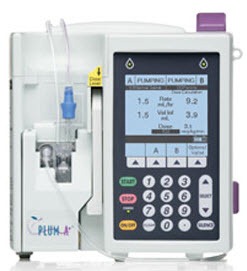
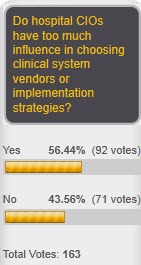









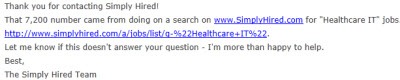

![8-10-2011 2-23-21 PM_thumb[2]](http://histalk2.com/wp-content/uploads/2011/08/8-10-2011-2-23-21-PM_thumb2.jpg "8-10-2011 2-23-21 PM_thumb[2]")



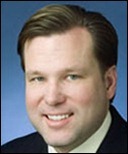


![8-11-2011 3-28-12 PM_thumb[1]](http://histalk2.com/wp-content/uploads/2011/08/8-11-2011-3-28-12-PM_thumb1.jpg "8-11-2011 3-28-12 PM_thumb[1]")




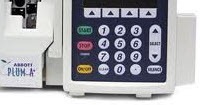
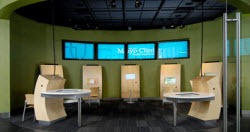


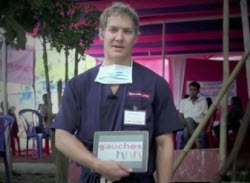
















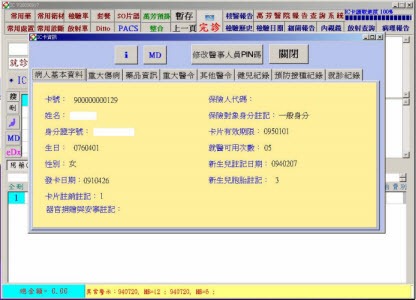



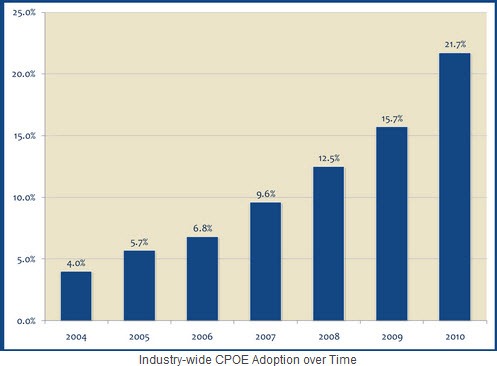


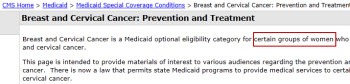


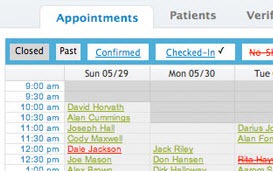




























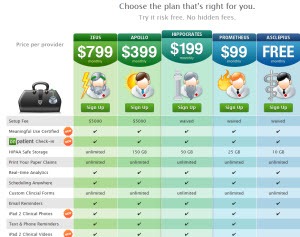








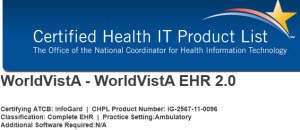

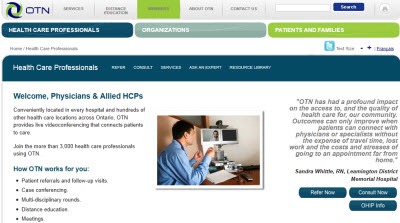













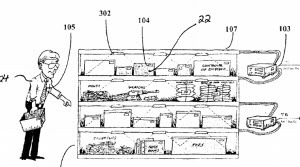



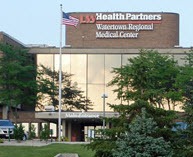





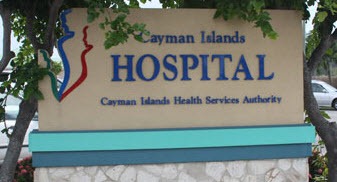






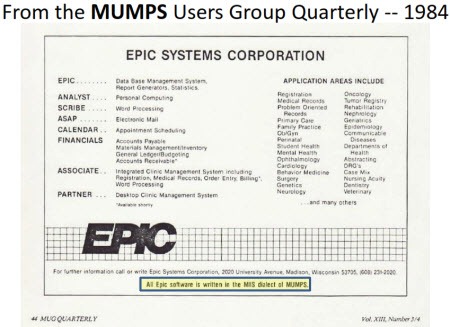



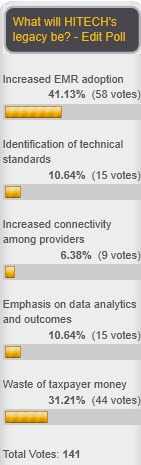





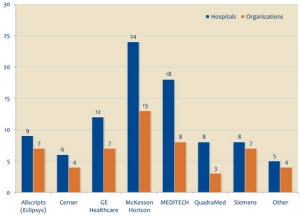















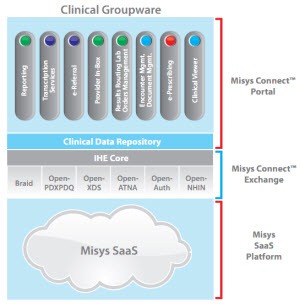












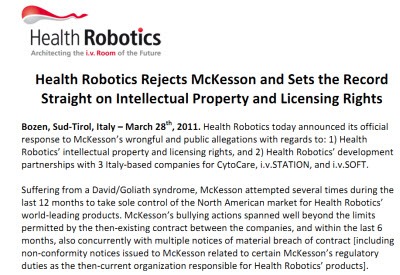


























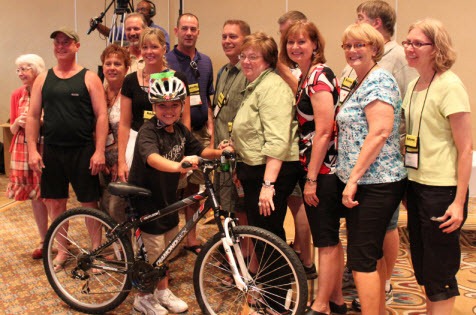
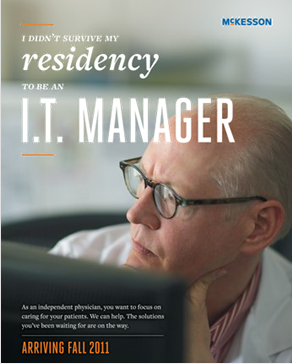






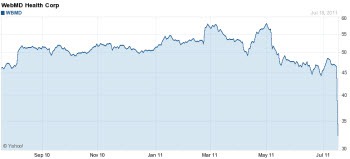









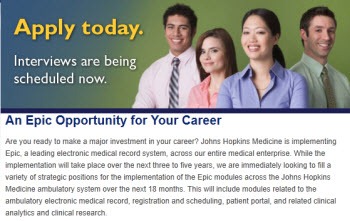


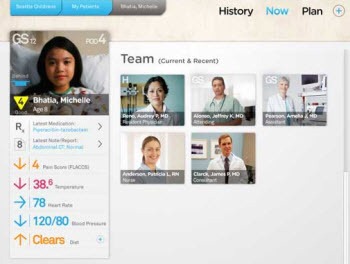





Thank you for the mention, Dr. Jayne — we appreciate the callout, the kind words and learning more about the…