
Recent Articles:

News 6/12/13

June 11, 2013 News 12 Comments

Top News

6-11-2013 11-33-45 PM

The HIMSS EHR Association announces the EHR Developer Code of Conduct, which is available for companies that develop complete EHRs. Principles include (a) communicating product information accurately; (b) designing products with patient safety in mind; (c) participating in a Patient Safety Organization for reporting and reviewing patient safety problems; (d) sharing product-related best practices with customers; (e) notifying customers of software bugs that could impact patient safety; (f) excluding contract language that prohibits customers from speaking up about safety concerns; (g) supporting interoperability through use of standards; (h) giving customers their data if they switch vendors; and (i) documenting how the product handles coding and quality measurement. It’s nicely done, and while I’d rather see these items in my contract instead of in a voluntary set of principles issued by a trade association, I like the idea of laying them out publicly.


Reader Comments

inga_small From Nick Carraway: “Re: TeraRecon changes. Longtime president Robert Taylor is gone. CFO Lakshmi Lakshminarayan is serving as interim CEO.” We requested confirmation from TeraRecon and haven’t heard back. Lakshminarayan is listed as interim CEO on the company’s Website.

6-11-2013 7-47-46 AM

inga_small From Georgia Peach: “Marketing gimmick. I got a HFMA ANI postcard from an exhibitor in the mail that made me laugh out loud, especially because I’m a parent.” Now that’s a genius marketing promotion. Any parent who has felt the pressure to return from a trip with goodies for the kids will appreciate this giveaway, which includes two iPad minis so the winner can keep one for himself and give the other to a spouse or “favorite child.”
6-11-2013 11-36-58 PM

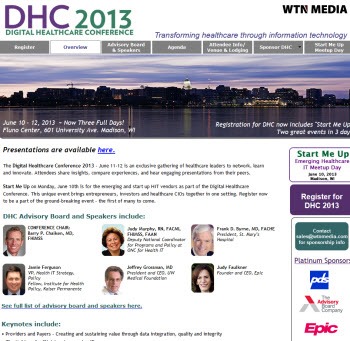
inga_small From Becky Badger: “In case it’s not on your radar, the Digital Health Conference is here in Madison this week and Judy Faulkner is a speaker this year. That’s notable because she rarely strays from the standard circuit.” Judy will participate in a panel discussion Wednesday morning on interoperability and information exchange. The other panelists are both Epic customers (Kaiser and St. Mary’s Hospital), so don’t be surprised if third-party EHRs fail to get much airtime in the interoperability discussion. Epic is also sponsoring the event.

From SNOMED Junkie: “Re: resignations. Both the CEO and chief technical architect of IHTSDO resigned today. That’s the non-profit that manages SNOMED content and distribution.” The announcements suggest that the Denmark-based organization made the change as part of a review of its long-term direction.

From Chas Incharge: “Re: McKesson Provider Technologies. They have lost market share but haven’t downsized marketing. Now it appears they want the marketing and sales team that oversaw the huge market share loss to do marketing for all technology business units. I’m a long-timer worried about my stock value. Harumph!” Unverified.

From Big Datty: “Re: Atlantic article. BKA in the EHR repeatedly, but the patient had both legs. Doesn’t anyone examine the patient any more?”The Drawbacks of Data-Driven Medicine” mentions an intern presenting a patient on rounds as having a below-the-knee amputation that had been noted on three previous discharge summaries. When the rounding team actually looked at the patient instead of the computer screen, both legs were intact. The incorrect information had been caused by speech recognition, which misunderstand DKA (diabetic ketoacidosis) as BKA (below the knee amputation) and nobody noticed.


Acquisitions, Funding, Business, and Stock

Great Point Partners makes a $10 million growth recapitalization investment in iVantage Health Analytics, a provider of healthcare informatics and business analytics solutions.

6-11-2013 8-08-02 AM

Parallon Business Solutions, a provider of business and operational services for the healthcare industry, will acquire The Outsource Group, a healthcare RCM company.
6-11-2013 7-18-19 PM

Ivo Nelson (IBM/Healthlink, Encore Health Resources) launches Next Wave Health, which will provide management advice, operational support, and capital to healthcare IT startups. Working with him will be Mike Davis, formerly of HIMSS Analytics and The Advisory Board Company.


Sales

Centra Health (VA) selects HealthMEDX Vision and the Exchange platform to manage post-acute patient care and facilitate patient data exchange.

6-11-2013 11-39-47 PM

Methodist Le Bonheur Healthcare (TN) will deploy McKesson’s enterprise medical imaging products.

Horizon Health Center (NJ) expands its relationship with eClinicalWorks to include its  Care Coordination Medical Record.

Piedmont Eye Center (VA) selects SRS EHR.

The Veterans Benefit Administration awards Harris Corp. a four-year, $37 million contract to provide technical services for the agency’s enterprise data warehouse.

Partners HealthCare (MA) will implement the Health Catalyst Late-Binding Data Warehouse across its two academic medical centers and community and specialty hospitals. Partners and Health Catalyst will also co-develop new clinical applications for the warehouse platform.

6-11-2013 11-40-40 PM

Hospital for Special Surgery (NY) contracts with SCI Solutions for its rules-based referral management system.

CAQH selects Passport Health to develop a national COB solution to improve the sharing of patient coverage data between healthcare providers and payers.


People

6-11-2013 7-16-48 PM

iSALUS Healthcare promotes Kimberly Poland to VP of client engagement.

6-11-2013 12-34-46 PM

Delta Health Technologies hires Lorraine Lodigiani (MedAct Software) as VP of marketing.
6-11-2013 12-54-32 PM

Zachary Landman, MD (Massachusetts General Hospital) joins DoctorBase as CMO.

6-11-2013 1-06-04 PM

Intellect Resources names Susan Williams (High Point University) VP of recruiting services.
6-11-2013 1-42-48 PM  6-11-2013 1-41-27 PM

Shareable Ink will on Wednesday name former Allscripts Chief Customer Officer Laurie McGraw as CEO, taking over for company co-founder Stephen Hau, who will transition to CTO.


Announcements and Implementations

VitalWare and Panacea Healthcare Solutions will co-market their CDM and pricing systems.

King’s Ridge Christian School (GA) becomes the first student health clinic to implement simplifyMD’s EHR software.
6-11-2013 10-22-21 PM

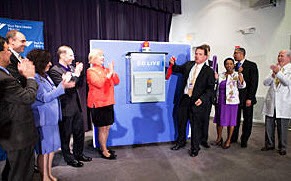
Yale New Haven Saint Raphael Campus and 63 practices and clinics went live on Epic on June 1, which followed the February 1 go-live of Yale New Haven Health System and the Yale School of Medicine, Epic’s third-largest go-live ever. CIO Daniel Barchi credits the Epic teams of the hospital and medical school and the clinician preparation at YNHHS Saint Raphael Campus for the smooth transition. The two remaining go-lives are Bridgeport Hospital and Yale Health, with the $293 million project targeted to finish ahead of schedule and under budget.

Urgent care provider CareSpot implements the PatientPoint Care Coordination Platform, including PatientPoint electronic check-in tablets, in 40 locations.
6-11-2013 11-11-19 PM

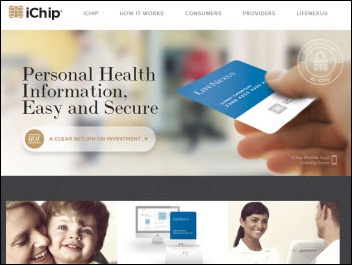
LifeNexus announces iChip, an insurance card chip that retrieves a patient’s personal health record.
6-11-2013 11-45-30 PM

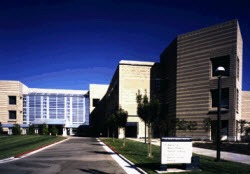
San Joaquin General Hospital (CA) implements the Logical Ink mobile data capture solution from Bottomline Technologies to automate patient registration and identify trends in population health.

Het Oogziekenhuis Rotterdam (Netherlands) goes live with iMDsoft’s MetaVision in its OR, holding unit, and PACU.

AirStrip’s applications earn DIACAP certification from the US Air Force, indicating that their use of authentication and encryption meets Department of Defense security requirements.

Lake of the Woods Hospital (Ontario) goes live on Meditech.

GE Healthcare will invest $2 billion over the next five years to develop software for hospital operations, clinical effectiveness, and care optimization.

Salem Community Hospital (OH) implements the PatientSecure biometric patient ID system.

HIMSS will release a healthcare IT value model on July 15 that will incorporate user satisfaction, care delivery, user education, prevention, and financial return.


Government and Politics

The Justice Department and Securities and Exchange Commission, investigating a suspicious surge in insurance company stock prices, find that hundreds of HHS employees had early knowledge of an impending Medicare change and could have tipped off investors.


Innovation and Research

6-11-2013 11-46-43 PM

The Boston newspaper covers startups working on healthcare application for Google Glass, including an app for hospital rapid response teams and another for patients and families.


Technology

6-11-2013 3-02-19 PM

Verizon launches the Blackerry Q10, which it claims is tailored for the healthcare market. It will use the BlackBerry Enterprise Service 10 Regulated Service to help providers remain HIPAA compliant.


Other

6-11-2013 11-50-36 PM

Six of the eight women allegedly sexually assaulted by former Epic project manager Brian Stowe are identified as his Epic co-workers, according to the criminal complaint. He’s accused of drugging them and filming the assaults. He was charged with 62 counts of felony and posted $500,000 in bail within 90 minutes of his May 31 arrest, but was re-arrested Monday on federal charges of sexual exploitation of a child. He has lost his job with Epic.

An Alameda County (CA) drug bust uncovers drugs along with personal information on about 4,500 Sutter Health patients. Officials are unclear about how the information got there, but say the data may contain patient demographics, including financial details and Social Security numbers.

Cerner paid $193,759 last year to a company controlled by its vice chairman Clifford Illig for use of its aircraft, also paying $184,579 to a second company owned by an Illig-controlled trust for fuel. Meanwhile, CEO Neal Patterson’s employment agreement promises him up to $110,000 for personal flights on aircraft that Cerner owns or leases and cash for any unused portion.

Weird News Andy says, “Soy vey!” A case study in NEJM describes a 19-year-old who drank a quart of soy sauce on a dare, leading to a hypernatremia-induced coma that lasted three days.


Sponsor Updates

6-11-2013 10-59-18 AM

  • ICA donates $6,000 to Pryor Ministry Center in the name of Lisa Lyon, clinical informatics coordinator at Cherokee Nation and recipient of ICA’s HIMSS13 booth giveaway. ICA partners HealthCare Anytime and CSC also contributed to the donation.
  • Ping Identity announces PingFederate7, an upgrade to its identity bridge software and cloud identity management platform that provides standards-based user provisioning, authentication, and authorization with support for cross-domain identity management and OpenID Connect identity standards.
  • Midas+ names 24 hospital customers as winners of its Midas+ Platinum Award based on a data analysis of utilization efficiency and outcomes.
  • PatientKeeper offers a June 27 Webinar on voluntary physician adoption of CPOE featuring the IS director and chief hospitalist of Community Memorial Health System (CA.)
  • VitalWare introduces VitalSigns, a claims auditing and ICD-10 financial risk assessment tool.
  • Ingenious Med reports that clients using its PQRS registry had a 100 percent reimbursement rate in 2012.
  • Medicity publishes a white paper on engaging patients within an ACO.
  • TELUS Health Solutions releases a white paper on the value of using and approaches for implementing home health monitoring solutions.
  • Frank Grella, director of patient financial services for T-System customer Conway Medical Center (SC), will discuss how his organization increased collections using a specialized ED billing solution during next week’s HMFA13 conference in Orlando.
  • Direct Consulting Associates interviews Michael Elley, CIO/VP of support services for Cox Medical Center (MO), who shares his thoughts on HIT leadership and management challenges.
  • iMDsoft and Anesthesia Business Consultants (ABC) partner to offer iMDsoft’s mobile solution for electronic documentation with ABC’s F1RSTUse EHR platform.
  • The Philadelphia newspaper interviews InstaMed Founder, President, and CEO Bill Marvin, who shares details of his company’s business model and history.
  • Park Place International joins the Citrix Solution Advisor program, allowing the company to offer Meditech-approved Citrix solutions to hospitals for three-tier connectivity.
  • SIS offers suggestions on choosing the right mobile device for OR use.

Contacts

Mr. H, Inga, Dr. Jayne, Dr. Gregg, Lt. Dan, Dr. Travis.

More news: HIStalk Practice, HIStalk Connect.

125x125_2nd_Circle

Curbside Consult with Dr. Jayne 6/10/13

June 11, 2013 Dr. Jayne 3 Comments

clip_image002

I’m a sucker for 1960s and 1970s pop culture. Whether it’s the vintage lunchboxes at the National Museum of American History or watching “Scooby-Doo, Where are You!” with my nieces, I’m in. You’ve got to appreciate that level of kitsch, the likes of which I’m not sure we’ll ever see again.

I’m glad to work with IT leadership that believes in developing our employees. We tend to hire quite a few relatively young grads who may or may not be “computer people,” but are critical thinkers who want to transform health care. Before I get accused of age bias, we also hire a fair amount of older workers who may be on their second careers and demonstrate the same level of malleability. I enjoy introducing both ends of the spectrum to some of the crazier things I’ve seen on my quest to find the kitschiest thing ever.

One of my favorite TV shows was “The Six Million Dollar Man.” I love the initial voiceover: “Gentlemen, we can rebuild him. We have the technology… Better than he was before. Better…stronger…faster.” That’s the way I like to think about some of the seemingly lose-lose projects our team is assigned. They are things that no one wants to deal with that can make users’ lives more complicated and can be generally annoying. The challenge is to work your way through the muck to find the one piece of the project that can bring positive benefit, and then try to build on it. Sometimes this has positive results and sometimes it just results in silliness, which happened this week.

We’re working on some projects to look at resource planning and employee time allocation. Like most organizations, we have more work to do than can be accomplished by a team that is not bionic. Our goal is to look at productivity patterns and try to figure out how to not only maximize what the team has to offer, but reduce the waste and inefficiency that happens despite our best efforts. The problem is that our enterprise resource management software isn’t that great. We’re not able to do a lot of customization to it and certainly don’t have budget to replace it, so we were brainstorming.

The idea on the table was finding the best way to manage meetings to ensure that required attendees are present, no extraneous people are pulled in, and no more time is spent in a meeting than is needed. Even with all the different productivity tools and add-ons that are plaguing our employees in Outlook, the team came up with one that I’d seriously like to see: the Relative Meeting Cost (RMC) analysis widget.

We would need to add some additional fields (hidden, of course) to the contact data to track an employee’s equivalent hourly wage as well as the billable rate for chargeable employees. It would look at the invitees and meeting length and display the RMC value not only in dollars, but with big tacky graphics to make it clear whether the event was a BEM (Big Expensive Meeting) or a PCM (Pretty Cheap Meeting).

Functionality would be added to create security options that would prevent people below a certain status from scheduling BEMs without review or approval. You could even prevent a BEM from being scheduled if more than a predetermined number of required attendees had conflicts.

Of course this will never happen, but it was a great way to blow off steam. Somehow the thought process circled back to being bionic, which led to a wide open debate on whether Steve Austin or Jaime Sommers was tougher. We’re not going to have a technology solution just yet that will let us avoid booking a Six Million Dollar Meeting, but we did bond as a team, which is no small feat. Maybe next time we’ll try some macramé owls.

E-mail Dr. Jayne.

Morning Headlines 6/11/13

June 10, 2013 Headlines Comments Off on Morning Headlines 6/11/13

Stanford Hospital Trims Use of Blood Supplies 

Stanford Hospital reduces its use of red blood cells by nearly 25 percent after building a pop-up window into their CPOE system which outlines the guidelines on blood use and asks the physician to explain the reason for the request.

IBM Partner Puts Big Data To Work At Seattle Children’s Hospital

Seattle Children’s Hospital reports significant performance improvements after integrating ten disparate data sources into a single, analytics-driven business intelligence system running in an optimized big data environment.

Doctors embrace the digital workplace

In Canada, 56 per cent of physicians have switched to electronic medical records, up from 23 per cent in 2006.

HIMSS Analytics Honors Legacy Health’s Hospitals and Ambulatory Clinics with Stage 7 Award

Six Legacy Health hospitals and their ambulatory clinics in Portland, OR and Vancouver, WA have achieved HIMSS Stage 7 designation. Legacy Health runs Epic in both the acute and ambulatory environments.

Comments Off on Morning Headlines 6/11/13

Morning Headlines 6/10/13

June 9, 2013 Headlines Comments Off on Morning Headlines 6/10/13

When e- stands for enemy: Installing e-medical records systems costly, frustrating

An office manager from a solo practice in North Carolina discusses the growing cost and frustration HITECH is having on managing a small practice.

Parkland researchers develop system to flag those in danger of death

Researchers at the Parkland Center for Clinical Innovation are profiled by a Dallas newspaper for their work with  predictive surveillance and population health management.

Olympic Medical Center: Progress made in digital conversion

Port Angeles, WA-based Olympic Medical Center CEO Eric Lewis discusses the hospital’s recent Epic go-live, describing the experience as “kind of like going from a landline to an iPhone.”

April 2013: EHR Incentive Program

According to a monthly update released by CMS, $14.6 billion has been paid to hospitals and providers since the EHR incentive program started in 2011.

Comments Off on Morning Headlines 6/10/13

Monday Morning Update 6/10/13

June 9, 2013 News 7 Comments

From CIO Reader: “Re: Webinars. I am thrilled you have put this type of process in place. I need to attend many of these Webinars to stay abreast of industry trends, yet many of them are sales pitches or poorly presented. Nothing is worse than having the presenter read slide after slide. A topic I’d like to see covered see is data governance, with real-life examples from hospitals that have developed a structure.” If you are a CIO who has implemented an effective data governance program, why not present your experience as an HIStalk Webinar? It’s just as gratifying as speaking at a conference without the logistical headaches and it makes a nice resume addition besides. Contact me if you are interested.

6-8-2013 6-51-05 AM

The vast majority of poll respondents, 82 percent, would avoid using a hospital whose clinicians are complaining publicly that its clinical systems are compromising patient safety. New poll to your right: should an EHR vendor be allowed to sell a patient’s de-identified data without their permission?

We’re doing an expansion of IT pay bands/job descriptions at my hospital, which caused me to recall how many times I’ve overseen that process at other hospitals I’ve worked in. The cycle involves: (a) deciding that IT has way too many job descriptions that don’t make sense and it would be better to collapse them into generic pay bands such as Analyst I/II/III; (b) everybody gets slotted with a lot of complaints, and the smart employees realize that the lower the band the better since their salary won’t decrease but they have more opportunity to move up; (c) the good IT people start leaving for greener pastures because there’s not much future upside if you’re already at the top of the grade with nowhere to go except into soul-sucking IT management, causing (d) HR and IT to agree that more job descriptions and pay flexibility would be just the ticket and it’s time to add a bunch of new job descriptions. This entire cycle gets repeated every 4-5 years, providing the illusion of effectiveness to IT and HR management.

6-8-2013 7-30-03 AM

Welcome to new HIStalk Gold Sponsor Alere Accountable Care Solutions. The company was formed in January 2013, made possible by Alere’s 2011 acquisition of Wellogic and integrating Alere’s offerings to help ACOs and provider groups improve outcomes and reduce costs. It offers interoperable HIE and EHR solutions developed with an emphasis on the physician-patient connection, physician usability, and innovation. Specific products include an HIE platform, EHR, PHR, connected biometric and diagnostic devices, decision support, real-time analytics, population analytics, wellness and health coaching, and evidence-based care management. Recently announced customers include Virtua, Triad HealthCare, and the MedVirginia HIE. Thanks to Alere Accountable Care Solutions for supporting HIStalk.

6-8-2013 7-46-25 AM

Supporting HIStalk at the Platinum level is Vital Images, part of Toshiba Medical Systems, which offers next-generation advanced visualization software that’s #1 ranked by KLAS and used by 5,000 customers in 83 countries. The software enables visualization and analysis by radiologists, cardiologists, and oncologists of 2D, 3D, and 4D images using CT and MR scan data. Its vendor-neutral Vitrea Enterprise Suite allows enterprise-wide sharing of images and functionality, providing consistent user interfaces and tools that that improve adoption and reduce support requests. The VitreaView universal viewer gives physicians fast access to DICOM and non-DICOM images from any archive via a zero-footprint browser or tablet, while VitreaAdvanced offers a wide range of best-in-class clinical applications such as stent planning, colon analysis, EP planning, and liver analysis. Check out their on-demand Webinar that explains how to image-enable the EMR using a universal viewer. Thanks to Vital Images for supporting my work.

6-8-2013 8-06-02 AM

Analysis of March-April MU attestation data by Wells Fargo Securities finds that Cerner has pulled slightly ahead of Epic in the percentage of clients achieving MU while McKesson has improved a lot. Meditech still leads the overall attestation count, while Epic is so far ahead in physician attestations that the analysis concludes, “… no vendor looks above average other than Epic.”

A newspaper editorial written by the manager of a North Carolina solo medical practice says the practice’s EMR implementation hurt its efficiency without improving patient safety. It also calls out state programs that chose the mothballed Allscripts MyWay as their foundation, the big financial losses experienced by Wake Forest Baptist Medical Center and Cone Health during their Epic implementations, and the failure of the state’s $484 million Medicaid system. She says that implementation of ICD-10 “would be the tsunami that derails our healthcare system.” Obviously she isn’t a fan of healthcare IT.

Here’s a video on the Blue Button Design Challenge from Health Datapalooza IV.

6-8-2013 8-28-13 AM

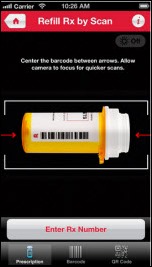
I take a mild blood pressure med that my doctor says I don’t really need but he likes me on it anyway. There was some screw-up with Express Scripts, so I decided to refill my 30-day supply at Walgreens. I thought I’d give their iPhone app a try and it was amazing. It located the pharmacy since it was nearest to me, then had me scan the prescription label’s barcode using the phone’s camera. A message said when it would be ready for pickup and I was done. You could literally request a refill in 10 seconds. The app also provides pill reminders, prescription transfer by taking a picture of another pharmacy’s label, loyalty card points tracking, the aisle layout of the store, and online shopping and weekly ads. I’m impressed. It makes “find our nearest hospital” apps seem pretty lame in comparison.

6-9-2013 11-42-13 AM

Perhaps ONC will learn the how hard it is to design usable software by introducing its “Health IT State Summaries” widget. States are arbitrarily divided into geographic regions that each have their own dropdown with resulting wasted space, words are misspelled (“state’s,” “South Caronlina”), and it’s an awfully big widget to embed on a website.

6-9-2013 1-09-46 PM

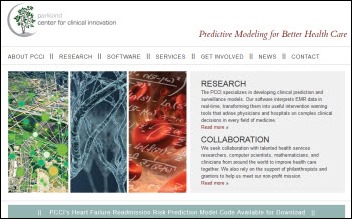
Researchers at the Parkland Center for Clinical Innovation, part of Parkland Memorial Hospital (TX), get a write-up in the Dallas paper for their work in developing a model called PIECES that analyzes EMR data to flag patients at risk for cardiac arrest. A randomized controlled study of the software’s effectiveness will start later in the summer. The Center has 35 employees and a $6.7 million annual budget. PIECES use information that includes monitoring data, lab results, MEWS, unit assignment, and orders to predict clinical deterioration 16 hours in advance on average. The original article in BMC Medical Informatics and Decision Making, published in February 2013, is here.

6-9-2013 12-19-37 PM

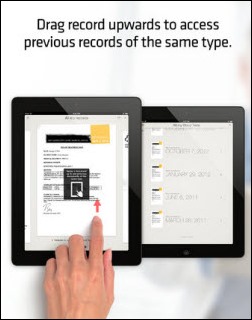
Hello Doctor introduces an iPad app that allows patients with complex medical conditions to organize their medical records for conversations with their physicians. 

New York City’s 911 operators are forced to use handwritten notes delivered by runners when the city’s new $88 million emergency dispatch system goes down for several minutes on at least three occasions.

A patient at the Bronx (NY) VA hospital dies when a gamma camera collapses on him during a radiology procedure.

Sue Fischer, a nurse who works in the Cerner practice of Encore Health Resources, recently saved the life of a man who had gone down in cardiac arrest in a Phoenix airport jetway by giving him CPR.

6-8-2013 7-21-05 AM

John Alexander (Optimum Healthcare IT) joins ESD as Epic practice director.

6-8-2013 8-01-31 AM

Glenn Cole (The Ghafari Companies) joins Nordic Consulting as CFO.

An Ohio medical practice’s letter to the editor of the local newspaper requests the understanding of patients as it transitions to an EMR, saying, “For the most part we are not computer savvy so this has been a real challenge. While we struggle with this change we are just not able to see the number of patients we had previously.”

Vince Ciotti has been a longstanding critic of what he sees as Epic’s cult of Kool-Aid drinkers, so did a personal audience with Judy Faulkner change his tune? Find out in this week’s HIS-tory.


Sponsor Updates

  • HCA will present its experience implementing identity and access management solutions in a Monday, June 17 Webinar sponsored by Caradigm.

Contacts

Mr. H, Inga, Dr. Jayne, Dr. Gregg, Lt. Dan, Dr. Travis.

More news: HIStalk Practice, HIStalk Connect.

125x125_2nd_Circle

The Skeptical Convert 6/7/13

June 7, 2013 Robert D. Lafsky, MD Comments Off on The Skeptical Convert 6/7/13

Silos vs. Holes

I hear a lot about data silos on this site, but not about data holes.

We talk about silos in reference to problems with data sharing resulting from differently designed information systems. As a negative metaphor that makes sense (although when you think about it, silos project a certain optimism about plentiful supplies stored away for future use.) But ever since my hospital system adopted a single-vendor comprehensive information system (whose name  shall not be mentioned,) I’ve been thinking about a different problem that needs a different metaphor. 

Consider the following scenario. A specialist — perhaps but not necessarily one at a tertiary facility — performs services on a patient that reveal a serious diagnosis, one clearly not resolved at the time of discharge. In keeping with computer training, said specialist has entered some discrete, mainly compliance-oriented data like med reconciliation in the system.  

But critical information about the diagnosis and interventions are put in traditional dictated reports. These reports are, by traditional standards, excellent– comprehensive and authoritative. And they were probably sent to the referring office-based primary practitioner.

But a few weeks later, the patient shows up in an ER of the same hospital system, with a problem that the patient herself thinks is new and unrelated. But it’s a problem that might lead a fully informed ER doctor, hospitalist, or consultant to conclude otherwise. But they don’t, at least right away. Because what they really need to know is in a hole. 

What do I mean? After all, the information is all there. Somewhere. But the system prominently displays listed summary information that’s supposed to be useful, information that the busy practitioner is inevitably going to rely on for initial decision-making. But nobody edited those lists during the previous hospitalization to include new and vital facts. 

Yes, way down on a list of, um, let’s see, progress notes, nurse notes, resident notes, consultant notes there’s an operative note and, um, what did they find? OK so let’s try to find the pathology report…let’s see….chemistry, micro, imaging, it’s here somewhere. It can be a while before a stranger looking at all this realizes that the patient has something new, and evidently, bad. It certainly doesn’t come across in the headlines the system displays. It’s in a hole. 

It’s funny — years ago I made my local reputation as a diagnostician mainly by asking for all the fat folders of the patient’s chart and going through them. There was a lot hidden away there if you took some time. Of course things were more leisurely then. Was I naive to think that computerization would be a time saver in today’s sped-up medical world? Seems like a lot of the advantage of having the system in the first place is being sacrificed. 

So what to do? People react very negatively to more written rules and policies that can get them into trouble, and those paper documents or PDF’s tend to sit ignored in their drawers or folders. Ultimately a sea change of everybody’s thinking has to happen if this sort of a system is going to work. Everybody has to think more about the big picture and the next step down the line and take the responsibility to get important information up where people will see it. 

Right now I’m just trying to get people’s attention. If they realize the problem with data holes, maybe they’ll recall that famous first rule about them. And first of all, stop digging.

Robert D. Lafsky, MD is a gastroenterologist and internist in Lansdowne, VA.

Comments Off on The Skeptical Convert 6/7/13

Time Capsule: Buying Doctors Systems They Don’t Want: Why Even Detroit’s Bailout is More Progressive than the HIMSS EMR Welfare Program

June 7, 2013 Time Capsule 2 Comments

I wrote weekly editorials for a boutique industry newsletter for several years, anxious for both audience and income. I learned a lot about coming up with ideas for the weekly grind, trying to be simultaneously opinionated and entertaining in a few hundred words, and not sleeping much because I was working all the time. They’re fun to read as a look back at what was important then (and often still important now).

I wrote this piece in January 2009.

Buying Doctors Systems They Don’t Want: Why Even Detroit’s Bailout is More Progressive than the HIMSS EMR Welfare Program
By Mr. HIStalk 

125x125_2nd_Circle

I must be getting old. I can actually remember when the most-feared words you could hear were, "I’m from the federal government and I’m here to help."

That has recently changed to, "We’re such terrible businesspeople that we desperately need Uncle Sam as a business partner to survive."

HIMSS is right there in the bread line, begging for $25 billion of taxpayer dollars to help loosen up prospects that haven’t shown much interest in buying the EMRs that its vendor members sell. That’s not too surprising; as a trade association (its words), the #1 job of HIMSS is to help its big-paying vendor members make money, of which Uncle Sam’s is as good as anyone else’s (which isn’t saying much these days since the overheated currency printing presses will probably deflate the dollar’s value as quickly as they’re printed.)

That’s what "advocacy" is all about (don’t you DARE call it "special interest lobbying" because that doesn’t sound as noble, just like the annual conference is an "educational event" rather than drawing in captive provider prospects for the vendor members to woo.) Obama’s got lollipops for everybody, even justifiably failed dinosaurs like venture capital owned Chrysler, proud purveyor of bad cars that even rental car companies avoid. So, why not a nice, round $25 billion to move a few EMRs?

(Prospects don’t have the money for these desperately needed systems, HIMSS intones, yet it rails against free EMRs, whether open source or government created. So, HIMSS is apparently pro- EMR only when its vendor members profit.)

At least Detroit is keeping a straight face when it says it will make much-needed product and efficiency changes with our money. The HIMSS program doesn’t say that the EMR vendors who get the money will change anything at all. To them, the dust-gathering EMR products aren’t the problem, it’s those darned chintzy doctors who won’t buy them. And unlike Detroit, nobody’s offering taxpayers any equity or oversight in the companies that will rake in all the freshly printed money. It’s the EMR version of George Bush’s "everybody go shopping" stimulus package all over again, which did — well, nothing at all except run up the federal debt.

What’s also lacking is any kind of context in the recommendation. With all of healthcare’s problems, is $25 billion for the same old systems really the best investment? If healthcare needs dramatic reform (of which there are few doubters except those who profit from it today), then is this the right time to automate? Are EMR trailblazers having such great success and positive ROI that massive rollout is sure to be worth it?

That last item is the biggest bugaboo in the HIMSS EMR welfare program. Without provider skin in the game, there’s no assurance that we’ll see anywhere near $25 billion worth of patient benefit. "Having" is a long way from "using optimally," especially when one vital fact is brought back by cynics like me: these are systems that most doctors have already assessed as not being worth it. And, in Cynicism Round II: free isn’t cheap enough for systems that take more doctor time to use without giving them any benefit. How about a show of hands of all of you willing to stick around at work for a couple of extra hours each day to use a new computer system that doesn’t benefit you or your employer?

HIMSS has got politicians moistened up at the concept of interoperability as the big payoff for all of this acquisitive action. Sounds great, right? That’s what all those failing RHIOs said, too. "Interoperable" is a theoretical systems capability, quite a long way from overcoming the governance, privacy, and cost problems that stand in the way of actually interoperating. Instead of pushing "interoperable" systems, why not use the $25 billion jackpot to reward providers who actually exchange predefined data instead of just funding their technical capabilities and hoping it will somehow just happen?

That’s my pitch for Uncle Sam. Don’t use my money to fund stale tactics and failed market participants. Use it (if you must) to set the goals of what we really need (improved quality, outcomes, and efficiency), create rewards for meeting them, and let the market decide which tools are best suited for getting the job done. If your EMR can do that, it will fly off the shelf under its own power without requiring HIMSS to fling it at doctors like Cupid’s arrows.

Let’s hope the Detroit equivalent of HIMSS has less self-serving ideas than to simply hand out taxpayer dollars so people can buy Chrysler Sebrings.

Morning Headlines 6/7/13

June 6, 2013 Headlines Comments Off on Morning Headlines 6/7/13

Ambulatory Physician Leadership Reports a 30-Point Usability Gap between EMR Vendors

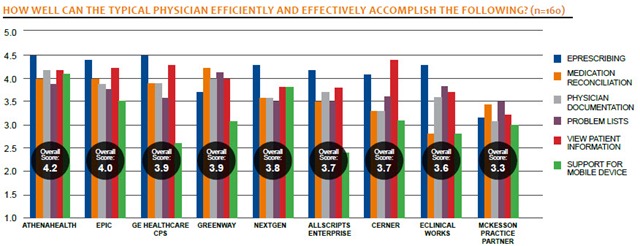
A new KLAS report looks at ambulatory EMR usability by measuring performance across various common tasks such as e-prescribing, physician documentation, and medication reconciliation. Athenahealth come out on top, followed by Epic.

China’s PLA Among Eight State-Sponsored Groups to Hack VA, Ex Official Says

Former VA chief information security officer Jerry Davis reports that eight different state-sponsored organizations have been hacking into VA networks and databases that contain millions of veterans patient information. The continued breaches are due to weak user authentication and a lack of encryption of VA databases.

Cleveland Clinic Making Electronic Medical Records More Transparent To Patients Online

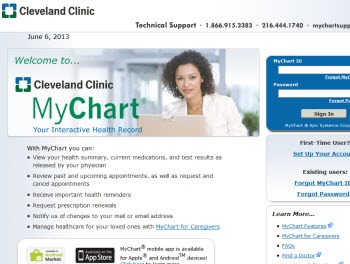
Cleveland Clinic will add physician notes, images, and results to its MyChart patient portal. A recent Robert Wood Johnston trial concluded that giving patients unrestricted access to physician notes led to increased patient engagement rates.

Dozens of health groups to create massive gene database

More than 70 medical, research, and advocacy groups are joining forces to create a massive databases of genetic and clinical data that will be accessible to doctors and researchers worldwide.

Comments Off on Morning Headlines 6/7/13

News 6/7/13

June 6, 2013 News 14 Comments

Top News

6-6-2013 10-40-50 PM

The former chief information security officer of the VA says the department’s networks and databases were hacked by at least eight foreign governments, including Russia and China. Jerry Davis, who was CISO from 2010 until February 2013, testified that the VA didn’t encrypt databases containing patient information, employed weak user authentication, and failed to address a backlog of 13,000 security-related corrective actions. A VA auditor says her group has identified 4,000 current security vulnerabilities, and when asked who was responsible, she blamed recently resigned former VA CIO Roger Baker.


Reader Comments

6-6-2013 7-58-13 PM

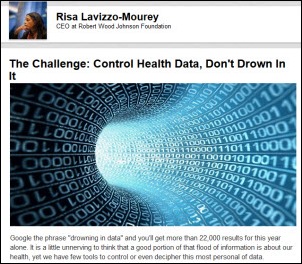
From Digital Bean Counter: “Re: Robert Wood Johnson / CMS data article on LinkedIn. I added a comment stating why I thought the CMS study is misleading and referenced Data Nerd’s recent Reader’s Write post on HIStalk. My comment was deleted. How are we to have a transparent industry if the organizations we work with are not willing to be transparent themselves?” RWJF issued a challenge for developing an app that would somehow make the useless CMS information valuable, to which I would issue a challenge of my own: explain exactly what a consumer would do with this information to save the healthcare system money.

6-6-2013 10-31-19 PM

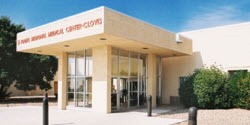
From Another Epic Go-Live: ”Re: Plains Regional Medical Center, Clovis, NM. On June 1, the 106-bed hospital became the first of Presbyterian Healthcare Services’ (NM) eight hospitals to go live with Epic. The rest will be rolled out over the next year.”

From Sad Day in Madison: “Re: accused predator. Many are shaken since he is one of the ‘fast crowd’ of young Madison professionals who fly out every week, make a lot of money, and hit the bars on the weekend.” Brian Stowe, a 28-year-old Epic project manager, is charged with sexual assault after prosecutors say he drugged at least nine women and filmed himself with them. Police recovered videos and pictures as evidence. They also retrieved the Epic-issued laptop that was visible in them with the help of Epic’s HR people. The court commissioner set bail at $500,000 because Stowe has wealthy parents and access to savings from his job.

6-6-2013 9-25-26 PM 6-6-2013 9-26-19 PM

From Small World: “Re: Duncan James (above left) replacing Vern Davenport (above right) at MModal. Isn’t this the second time? Vern was CEO of Misys Healthcare when they owned what is now QCPR.” QuadraMed acquired Misys CPR in the fall of 2007, but Vern stayed with Misys until a few months later when Misys and Allscripts merged. He stayed with Allscripts for almost three years, then went to Quintiles for a short stay, and then to Medquist, which eventually acquired MModal.

6-6-2013 4-01-04 PM

inga_small From Ed Marx: “Re: European shoes. Saw these shoes and thought of you.” Ed is touring Europe and has been kind enough to send me a few photos to satisfy my shoe obsession. Always good to have options for next year’s HIStalkapalooza!


HIStalk Announcements and Requests

inga_small Some of this week’s highlights from HIStalk Practice include: eClinicalWorks, Allscripts, and NextGen are the dominant EHR providers for freestanding practices while Epic, Allscripts, and Cerner dominate hospital-owned practices, according to a HIMSS Analytics/CapSite report. CIMRO, the REC for Nebraska, sells off its HIT consulting division, ensuring the continuation of the consultant practice after CIMRO’s grant funding runs out. Athenahealth extends a guarantee that it will waive customer service fees if not ready for the ICD-10 transition by the October 2014 deadline. Children are more likely to be fully vaccinated for influenza when a popup alert is added to the EMR. A nasty storm could be brewing in Massachusetts as officials determine how to interpret and implement a state law requiring the meaningful use of EHR in order to obtain licensure. iPads and iPhones are physicians’ favorite devices for interacting with EHRs and staff. Dr. Gregg offers some clever humor for those rough HIT days. Join the fun and sign up for the e-mail updates when you checking out these stories. Thanks for reading.

6-6-2013 7-16-27 PM

Welcome to new HIStalk Gold Sponsor CliniComp. The company’s Essentris EMR suite lineup includes solutions for CPOE, critical care, perinatal and fetal, ED, acute care, data repository, and real-time clinical surveillance. CliniComp takes full contractual responsibility for their systems, eliminating the need for IT resources for configuration, testing, training, and servicing and allowing customers to focus on patient care. It’s a provider of EMRs for the Department of Defense. Thanks to ClinicComp for supporting HIStalk.

Here’s a CliniComp video on the Essentris clinical workflow suite.

On the Job Board: Senior Product Manager, Compliance Program Manager, Systems Implementation Engineer, Dental Imaging Specialist. HIStalk sponsors get free job postings.

6-6-2013 7-35-40 PM

The new Webinar program is going gangbusters with a bunch of them upcoming. I recruit at least two experts to review a recorded practice session with me, and the Webinar doesn’t get the green light until we think it’s of suitable quality for the HIStalk audience. If you are a provider executive willing to help me as an occasional reviewer, let me know. It takes about an hour to watch the video and jot down your recommendations, and you can do it whenever it’s convenient. I’ll send you a nice Amazon gift certificate for your time. I can use IT executives (CIOs and IT directors) and CMIOs or other informatics clinicians. My most pressing need is for a couple of HIM and clinical documentation improvement experts for the next scheduled Webinar.


Acquisitions, Funding, Business, and Stock

6-6-2013 10-33-56 PM

Endo Health Solutions says it will consider options for its HealthTronics urology business, will eliminate 15 percent of positions, and reduce annual spending by $325 million. The company reduced earnings estimates by two-thirds.

Ascension Health Ventures makes a strategic investment in GetWellNework.

Xerox acquires Tallahassee, FL-based LearnSomething, whose employee e-learning solutions are used by 85 percent of US retail pharmacy chains to educate staff about new products.


Sales

Dignity Health, Legacy Health, and Catholic Health Initiatives will use Blackbaud CRM for fundraising.

6-6-2013 10-36-36 PM

Thomas Jefferson University Hospitals (PA) selects ICD-10 Intelligence and Compliance and Revenue and Integrity solutions from MedAnalytics.

Neosho Memorial Regional Medical Center (KS) chooses Access to provide bar-coded wristbands and face sheets.

AMEOS Group will implement Cerner Millennium and Lighthouse at two of its German facilities.


People

6-6-2013 6-45-30 PM

QPID hires Janine Powell (Encore Health Resources) as VP of client services.

6-6-2013 6-46-11 PM

PatientsLikeMe names Marcia Nizzari (Good Start Genetics) VP of engineering.

6-6-2013 6-47-08 PM

Passport Health Chairman Jim Lackey joins NextGxDx’s board.

6-6-2013 6-47-40 PM

iHT2 CEO Waco Hoover is selected to co-chair the 2013 WEDI Report Initiative.

6-6-2013 8-20-07 PM 6-6-2013 8-20-40 PM 6-6-2013 8-21-14 PM

J. C. Lundquist, Jeff Nestor, and Linda Jackson join Lucca Consulting Group as regional VPs.


Announcements and Implementations

HealtheConnections, the RHIO for Central New York, goes live on eHealth Connect Image Exchange integrated with its Mirth HIE platform.

6-6-2013 10-38-10 PM

Cleveland Clinic announces that it will give patients access to physician notes, pathology reports, and health issues via its Epic MyChart patient portal.

The State of Georgia launches the first phase of GeorgiaDirect, a secure e-mail system based on the Medicity platform.

HealthBridge and the Ohio Information Partnership, which manages the CliniSync HIE, launch connectivity using Direct.

6-6-2013 8-16-19 PM

GE Healthcare kicks off its Centricity Imaging IT Tour 2013 with stops this week in Texas. The 60-hospital road show runs through early October.


Innovation and Research

More than 70 medical, research, and advocacy groups in 41 countries will create a research database of their genetic and clinical data. Among them are NIH, Dana-Farber, Harvard, MIT, Johns Hopkins, and Stanford. The organizations will develop ways to standardize the data and to implement privacy controls that respect patient choice.


Technology

6-6-2013 10-05-14 PM

Miami Children’s Hospital (FL) rolls out the Fit4Kids Care iPhone app that provides indoor campus way-finding, wait times, a physician directory, and the ability to purchase gift shop items and order room service.

6-6-2013 10-12-54 PM

All Facebook employees will by the end of 2013 use hGraph, an open source visual representation of health status. It can use EHR information to create many of its views.


Other

Seattle Children’s Hospital reports that queries that took five minutes to run now finish in under four seconds after moving to IBM Big Data technology.

6-6-2013 3-44-34 PM

Greenway Medical Technologies opens its new corporate headquarters in Carrollton, GA.

6-6-2013 3-52-55 PM

Athenahealth scores highest in ambulatory EMR usability according to a new KLAS report. Success in achieving high usability in different EHRs ranged from 55 percent (McKesson) to 85 percent (athenahealth).

States are selling de-identified patient hospitalization information, but privacy expert Latanya Sweeney says the de-identification method isn’t hard to crack when you match the information against other databases. She paid $50 for records and was able to connect them to newspaper stories about accidents and crimes, thereby re-identifying the detailed medical records of 35 patients. An executive of a hospital performance data company says his employer immediately removes the ZIP codes provided by the states, saying they provide an easy link to other databases such that, “You might as well have the patient’s electronic medical record number.”

A Forbes opinion piece says electronic medical records are making doctors unhappy, saying (a) they turn doctors into box-checkers; (b) 75 percent of their capability does nothing except meet government mandates; (c) there’s no proof that government-mandated data collection improves care; and (d) conversion to ICD-10 will be expensive and will benefit mostly data miners.

The HIMSS EHR Association will announce creation of an EHR Developer Code of Conduct next week in Washington, DC.

The three doctors in Canada whose former employer refused to provide them with electronic copies of their patient files will get the information after all. Midway Walk-In Healthcare Centre followed the legal guidelines in sending paper medical records for a $35 fee, but pointed out that the law doesn’t require it to provide copies of electronic records even though a significant amount of  patient information is stored only in electronic form. The Ministry of Health intervened, convincing the owner of the walk-in clinic to obtain an electronic copy of the information from the clinic’s EMR vendor and send it to the departed doctors within 24 hours. The College of Physicians and Surgeons of Saskatchewan couldn’t help negotiate because the owner of the walk-in clinic isn’t a doctor.

Weird News Andy observes that migraines suck, but so does the cure. A writer in England says her migraine headaches were cured by hirudotherapy, applying leeches to her skin to remove blood.


Sponsor Updates

6-6-2013 2-07-45 PM

  • Billian’s HealthDATA and Porter Research employees participated in the Women in Healthcare Luncheon sponsored by the Georgia Association of Healthcare Executives.
  • Caradigm announces that one million caregivers are now users of its Identity and Access Management solutions.
  • Emdeon will present a series of educational sessions during AHIP Institute 2013.
  • HIMSS Analytics publishes the 5th annual US Ambulatory Electronic Health Record and Practice Management Study (previously published by HIMSS acquisition CapSite) which includes information on HIStalk sponsors ADP AdvancedMD, Aprima, eClinicalWorks e-MDs, GE, Greenway, McKesson, MedPlus MED3OOO, NextGen, OptumInsight, and Vitera.
  • Research and advisory firm Aite Group names PatientPay as the only new online bill pay provider working through PM software for maximum workflow efficiency. 
  • eHealth Technologies enhances its eHealthViewer ZF viewer to include real-time medical imaging collaboration and interaction.
  • T-System offers tips for earning optimal reimbursement for observation status.
  • Financial Post profiles TELUS Health, which has grown to be Canada’s largest EMR provider.
  • CCHIT certifies NextGen Electronic Dental Record version 4.3 with ONC 2014 Edition criteria as a Complete EHR.
  • Orion Health will participate in next month’s HIC 2013, Australia’s longest-running and largest HIT event.
  • Informatica introduces Vibe, an embeddable virtual data machine that provides a single simple virtualized data infrastructure.
  • Allscripts and its recent acquisition dbMotion host over 200 attendees at its dbU population health forum, which included a discussion of how Allscripts is driving care coordination, population health management, and consumer engagement. 
  • Frost & Sullivan recognizes Acuo Technologies with the 2012 North American Award for Market Share Leadership for its vendor-neutral archiving and enterprise imaging technologies. 

EPtalk by Dr. Jayne

Despite our voluminous coverage of Meaningful Use, CMS, and the ONC, HIStalk isn’t just about the US healthcare scene. Reports from across the pond note that an air ambulance had to abort its landing because off-duty “junior doctors” were hosting a BBQ near their lodging, which is close to the pad. For those of you who wonder where Oban is, it’s not far from Loch Lomond in Scotland.

clip_image001

Three physician Senators (Tom Coburn, John Barrasso, and Rand Paul) join Senator John Boozman in trying to block the implementation of ICD-10. The Cutting Costly Codes Act was introduced in the House in April. In addition to halting ICD-10, it calls for a study on preventing disruption during the migration from ICD-9.

The Senate has been busy in other ways, with Chuck Grassley and Ron Wyden calling for increased transparency in Medicare claims data. They plan to reintroduce the Medicare Data Access for Transparency and Accountability Act. The aptly acronym-bearing Medicare DATA Act as initially introduced  would create a publicly searchable Medicare payment database as well as ensuring that data on payments to physicians do not fall under an exemption for Freedom of Information Act requests.

Since I’ve apparently got a DC vibe going on this week, I’m interested to see what readers think about the Safeguarding America’s Pharmaceuticals Act. It’s aimed at creating a national system to make it easier to trace drugs from synthesis to market, which in theory should help fight drug counterfeiting. I’m counting on all of you because my knowledge of pharmacy IT systems is limited to calling retail chains in my area to see when they will be ready to accept electronic prescriptions for controlled substances and asking them not to send multiple refill requests before adequate time has elapsed for a physician response. What vendors do you think would jump into this space?

clip_image003

Here’s your opportunity to test your EHR’s ability to generate drug recall reports and your staff’s skill at documenting over-the-counter and herbal remedies. After years of us thinking Ginkgo Biloba was good to support memory, the National Institutes of Health releases a study indicating it might actually be a carcinogen.

One of my staff shared this piece about medical directors who search social media looking for “worrisome” issues during the hiring process. The article coaches would-be Facebook stalkers on what is appropriate to consider when determining if candidates match the office culture. It also reminds readers to steer clear of information that doesn’t belong in the hiring process including race and ethnicity, disability, religion, and pregnancy. It recommends considering using a third-party screening firm that is familiar with appropriate state laws.

I talked earlier this week about smart phones making us dumber. A regular reader sent me the link to this Northwestern University study on parenting on the digital age. Nearly 40 percent of families fell into the heaviest media use category with 11 hours of screen media per day. A New York Times blog notes that this time may have been double counted with parents using multiple screens, such using a computer while watching TV.

Researchers were surprised that parents were introducing their children to technology rather than simply responding to requests. Based on the behavior I see at the hospital (where the iPhone is the most popular childcare provider, at least in the ER) I’m not that surprised. There are ways to distract a hurt child that don’t involve Angry Birds. How about a book? Or telling them a story? I know my dad reads HIStalk regularly, so here’s a shout-out in thanks for all those retellings of Herkimer the Helicopter.


Contacts

Mr. H, Inga, Dr. Jayne, Dr. Gregg, Lt. Dan, Dr. Travis.

More news: HIStalk Practice, HIStalk Connect.

125x125_2nd_Circle

Readers Write: EMR Installed and Meaningful Attested — Now What?

June 5, 2013 Readers Write Comments Off on Readers Write: EMR Installed and Meaningful Attested — Now What?

EMR Installed and Meaningful Attested — Now What?
By Don Sonck

6-5-2013 9-53-58 PM

If it’s the spring of an odd-numbered year, then I know it’s time for me to pay a visit to my primary care physician for a biennial physical examination. So a couple of weeks ago, off I went!

As my doctor and I reviewed my medical history from the past seven years, all of which has been well-chronicled in an EMR, he asked me a series of diet- and exercise-related questions. At the conclusion of this exchange, he complimented me on my diligence in maintaining a diet and fitness regimen that promotes good health.

I’m no longer a spring chicken in biological years. Like many Americans my age, I’d like to extend my quality of life and attempt to do so by adhering to the recommendation of an expert in the field who in turn preaches evidenced-based best practices. My wife and two sons are on the same sheet of music. Whether it’s the preventative maintenance of our car, home, or any other major asset, the same discipline is implemented, and again based upon historical and empirical data.

Like anything in life, there are always accidents and anomalies that run counter-intuitive to the expected outcome, but common evidenced, majority outcomes cannot be refuted. To borrow a line from Sergeant Joe Friday of “Dragnet” fame: “Just the facts, ma’am” are words to live by.

This latest encounter with my physician got me thinking about the HIMSS EMR Adoption Model, particularly Level 4. Evidence-based population management is going to be critical if this country is ever to reach Level 7.

For the sake of full disclosure, I am a disciple of Dale Sanders in his conviction that the United States must become “a data-driven culture, incented economically to support optimum health at the lowest cost.” How long will it take for healthcare organizations to even assemble registries for their top 10 patient conditions; let alone share them? The life expectancy of HIEs is unknown, as the migration from public to private funding has yet to be determined.

The cornucopia of complaints spewing forth from health systems and physician practices on the subject of EMR (too expensive, no ROI, minimal patient-physician interaction, etc.), coupled with confusing government mandates, leads this writer to wonder if I’ll live to see the day that EMRAM is fully achieved. If I do, the likelihood is great that Mr. Sanders’ vision came to fruition.

Let’s hope for the sake (and health) of our country that the EMRAM progression marches onward expediently.

Don Sonck is director of EMR staffing solutions for AMN Healthcare of San Diego, CA.

Comments Off on Readers Write: EMR Installed and Meaningful Attested — Now What?

Readers Write: The Year is 2025…

June 5, 2013 Readers Write 4 Comments

The Year is 2025…
By Nick van Terheyden, MBBS 

6-5-2013 9-45-36 PM

In 1963, Spock uttered the words: “Computer, compute to the last digit the value of Pi," and with that launched us into a world of human to computer interaction. Reaching that vision took many more years and it was not until the 1990s that the first realistic tools emerged onto the market.

By 2001, it was clear that speech recognition technology was set to revolutionize healthcare’s clinical documentation industry, but there were many naysayers stuck in the paradigm of dictation and transcription who were unconvinced that the technology could ever be better than a human at transcribing doctors notes from audio into text. Acceptance of speech recognition took longer than many had hoped, but innovation helped accelerate adoption.

Still, delivering on the vision laid out in the Star Trek episode mentioned above would require a little longer since that vision included not just speech recognition, but also intelligent understanding.

I recently had a conversation with an analyst about how healthcare technology would evolve by 2025. Today, the pace of change in speech recognition is incredible, and I’m seeing something similar in the field of natural language understanding (NLU). As such, it is clear to me that we will see a similar explosion of NLU, making it pervasive in every aspect of our interaction with technology.

NLU will in time make technology fluent in human communication. The days of learning a system are numbered as we move away from requiring humans to learn a “language” to communicate with technology. NLU is poised to reinvent the relationship between people and technology, and nowhere is the potential of this innovation more pervasive than healthcare.

To get a sense of how deeply natural language technology has already entered our lives, you need only to sit in your car, pick up the phone, or even start talking to your television. In healthcare, these intelligent systems equate to allowing clinicians to spend more time practicing medicine vs. filling in forms and entering data.

A recent study found that medical interns spend 12 percent of their time examining and talking to patients, but more than 40 percent of their time behind a computer. And it’s not just clinicians who want to change this statistic – it’s patients who are frustrated with focus being placed on the technology instead of the patient-doctor interaction.

My daughter remarked on this lack of human-to-human connection after a recent doctor’s visit, which opened my own eyes even more so to both the benefits and downfall of technology in healthcare. Luckily, tools like speech recognition and natural language understanding can help streamline the transition to digital care and enable the physician to focus their efforts on the patient instead of the extensive documentation process and check boxes associated with the visit.

As I look ahead, by 2025 I think NLU will be readily available for physicians and patients alike and will have a profound impact on healthcare as such. Here’s an example of a patient interaction I imagine taking place in the not too distant future:

“Please book the next available appointment with Dr. Jones for my annual checkup.”

The system knows my calendar and Dr. Jones’ calendar and my health coverage. As a result, it is able to compare the two schedules to find the next convenient slot for a 30-minute appointment. It would also know that the standard 10-minute appointment would be insufficient. It offers me the options, I confirm, and the appointment is set in both calendars.

If we add this type of medical intelligence to the world of the physician, the interaction would look something like Project “Florence.” Today, the first virtual assistants for healthcare, like Florence, are just entering adolescence. As intelligence capabilities improve, we can expect to see NLU permeate throughout the patient-physician interaction, intelligently listening in to the exchange and extracting out clinically actionable data for summarization and presentation to the patient and clinician for review.

In essence, smart NLU will help drive complexity out of how physicians and patients engage with technology as part of the two-way care process. That’s something even Spock would be excited for.


Nick van Terheyden, MBBS is CMIO of Nuance.

Readers Write: High-Tech Patient Engagement Tools Empower Patients for Shared Decision Making

June 5, 2013 Readers Write Comments Off on Readers Write: High-Tech Patient Engagement Tools Empower Patients for Shared Decision Making

High-Tech Patient Engagement Tools Empower Patients for Shared Decision Making
By Corey Siegel, MD

6-5-2013 9-36-49 PM

Shared decision making (SDM) is one of few approaches proven to achieve the Institute for Healthcare Improvement’s Triple Aim of improving the patient experience, improving the health of populations, and reducing the per capita cost of healthcare.

The Patient Protection and Affordable Care Act (ACA), as well as organizations driving health policy such as the National Quality Forum, embrace SDM. Yet the roadblock to widespread implementation has been the lack of access to the technology and tools to make it a reality.

The process of SDM engages patients in treatment decisions to optimize the likelihood that a chosen therapy matches their personal preferences for care. Decision aids are standard SDM tools, which are used to present evidence-based data in a patient-friendly manner to help patients with preference-sensitive decisions.

Not all care decisions are preference sensitive, and not all patients are interested in being part of SDM. The responsibility of the provider is to identify how much of a role patients want, and then determine which decisions require their input to provide the best patient-centered care.

The overall goal is to involve patients in decisions so that they are educated about their options, confident in the plan, adherent to their therapy, and ultimately have a better quality of life.

One example is a new initiative by the Crohn’s & Colitis Foundation of America (CCFA) in collaboration with Dartmouth-Hitchcock Medical Center and Emmi Solutions to give its gastroenterologist members access to an interactive, Web-based patient education and engagement tool. The 25-minute decision aid combines voice, image, and on-screen text to explain Crohn’s disease and the potential natural progression and risks, as well as the benefits and tradeoffs of various treatment options.

Treatment options for patients with Crohn’s disease are improving. But because it’s a complex disease and some of the treatments have serious risks, too often, patients delay critical treatment until they are experiencing significant symptoms, and by then, it may be too late. The decision aid serves as an effective tool to engage the patient and open a dialogue with the physician, who can answer any of the patient’s questions or concerns.

Patients access the tool at their convenience from any computer using a unique access code provided by the physician in less than a minute. The technology enables providers to track compliance and measure outcomes. It can be used in a standalone mode or fully integrated into existing electronic health records or patient portals.

The goal is not to replace physician-patient conversations but to make these conversations more fruitful. The goal is to support physicians and empower patients so that SDM results in optimal treatment decisions for each patient.

SDM is a field that will continue to evolve, and hopefully the number of easily accessible patient tools will grow.

A simple approach to decide whether a SDM approach is right in certain circumstances is to consider these four questions:

  • Is there an established standard of care for the clinical scenario or is there equipoise?
  • What are the stakes? Is this a decision about which antibiotic to use, or do side effects such as death and cancer need to be discussed?
  • Does your patient want to be part of a shared medical decision?
  • What are the information needs of your patient?

Considering these questions and reviewing options with your patients will be a step forward in SDM and better-informed treatment decisions.

Corey Siegel, MD is director of the Inflammatory Bowel Disease Center, Dartmouth-Hitchcock Medical Center, recent co-chair of CCFA’s Professional Education Committee, and medical advisor to Emmi Solutions.

Comments Off on Readers Write: High-Tech Patient Engagement Tools Empower Patients for Shared Decision Making

Morning Headlines 6/6/13

June 5, 2013 Headlines 1 Comment

States’ Hospital Data for Sale Puts Privacy in Jeopardy

State public health departments have been selling access to hospital patient data that is de-identified, but investigators were able to identify anonymous patients in 35 of 81 cases involving stories mentioned in local media.

Systems move to doc-led treatment standardization

At Washington-based Everett Clinic, clinical decision support tools have reduced overall MRI and CT scans by 30 to 40 percent. Required questions were added to the test orders within the clinic’s CPOE system ,and if the doctor’s answers did not demonstrate that the patient met the criteria for the test, the physician was alerted that the test could not be ordered.

HP captures $220M Indiana Medicaid contract

HP Enterprise Services lands a $220 million contract with the state of Indiana to build a new Medicaid management information system.

House votes to cut salaries, deny bonuses to Veterans Affairs officials

The House passes its 2014 spending bill for the VA with a unanimously approved provision that imposes a 25 percent pay cut for senior VA officials if the VA benefits claims backlog is not reduced by 40 percent before July 1, 2014. A separate, unanimously approved provision strips executive leadership of all scheduled bonuses. The bill also provides funding to continue the implementation of an automated claims processing system and a medical records scanning system.

Morning Headlines 6/5/13

June 4, 2013 Headlines Comments Off on Morning Headlines 6/5/13

Constellation Acquires QuadraMed Corporation

Constellation Corporation, through its subsidiary Harris Computer Corporation, announces the acquisition of QuadraMed for an undisclosed sum.

MModal Announces Leadership Changes

Clinical language understanding vendor MModal announces that CEO Vern Davenport has been replaced as by Duncan James. former CEO of QuadraMed.

Patients and Caregivers: Amplify your voice through the Blue Button CoDesign Challenge!

Health Tech Hatch launches an innovation challenge that asks end users to finish the following sentence "Build me a Blue Button-enabled tool that…." Winners will be selected through public voting, which is open until June 11.

White House Task Force on High-Tech Patent Issues

The White House has issued several executive actions and published legislative recommendations designed to address the patent troll epidemic plaguing technology startups.

Comments Off on Morning Headlines 6/5/13

News 6/5/13

June 4, 2013 News 3 Comments

Top News

6-4-2013 11-24-49 PM

inga_small Constellation Software acquires QuadraMed through its subsidiary, N. Harris Computer Corporation. According to Constellation, the purchase of QuadraMed “provides Harris with a platform to support its entry in the US healthcare information technology market.” Financial terms were not disclosed, though Francisco Partners has to be pleased to divest QuadraMed from its portfolio given QuadraMed’s fairly tired product line. FP sold off the company’s most valuable asset, the Quantim HIM product division, to Nuance in September 2012. We ran a reader rumor Sunday (in the Monday Morning Update) that something was going on with QuadraMed courtesy of Misys-Ex, who reported that managers were clearing out their offices and employees would be told how long they had left to work for the company. Meanwhile, President and CEO Duncan W. James leaves QuadraMed to serve as CEO of MModal.


Reader Comments

6-4-2013 11-23-21 PM

inga_small From Ritchie Valens: “Re:MModal. Shakeup at the top. One Equity Partners is calling the shots now that they are private. They are bringing in their own people since the company has been losing money.” MModal names Duncan W. James, former president and CEO of QuadraMed, as its new CEO, replacing Vern Davenport. The company also promotes David Woodworth from VP of finance to COO, replacing Amy Amick, and names Graham King (McKesson/HBOC) as chairman of the board. The official press release says Davenport and Amick have “chosen” to leave the company.

6-4-2013 7-56-50 PM

6-4-2013 7-56-06 PM

From GreenJoy: “Re: font.  I wonder if you can make the HIStalk font darker? As my eyes age, the font seems to blend into the gray background.” Here’s good way to make it more contrasty and also printable: click the “View/Print Text Only” link at the bottom of the post.

From FDASIA Attendee: “Re: FDASIA. On Friday morning after @farzad_onc gave his rousing inspiring presentation to the workgroup and us attendees, the Chair asked for exemplars of HIT situations from the workgroup. Notably Dr. Paul Tang of Palo Alto Health Foundation spoke of three incidents, the third being most interesting. He reported a death due to a double dosing of potassium ordered by a doctor via CPOE.  The point was that the CDS (decision support) failed to warn of the excess.”

From FindingSanity: “Re: CompuGroup. CompuGroup Medical AG removed its last US CEO, Henrik Cruger, in May. The new CEO, Norbert Fischer, has replaced him, but not publicly. This is the sixth CEO change in the five years since the German company opened up US operations. Layoffs and office closures preceded the changeover. Poor sales, poor product performance, and a never-ending trail of unhappy customers has been unfixed with each sudden regime change. Germany continues to struggle not only with the US healthcare market, but with understanding how to run an American company with American customers who all quit believing the company years ago.” Unverified.


Acquisitions, Funding, Business, and Stock

6-4-2013 11-26-05 PM

SimplifyMD raises $1.3 million of a planned $1.8 million round of funding.

6-4-2013 11-26-58 PM

Patient engagement platform vendor Seamless Medical Systems closes $2 million in early stage funding.


Sales

Baptist Memorial Health Care will implement Omnicell’s G4 Unity medication management solutions across its 14 affiliated hospitals.

MedCentral Health System (OH) selects Wolters Kluwer Health’s ProVation Order Sets.

6-4-2013 11-30-10 PM

Boone Memorial Hospital (WV) selects Medhost’s EDIS.

Practice management service provider MyHealthNetwork (GA) will use Valence Health’s population health management and clinical integration solutions to identify customized patient populations.

Twenty-five bed Memorial Medical Center (WI) selects CPSI as its EMR vendor of choice after finding that NextGen, according to the local newspaper, “was not equipped to meet MMC’s needs as a facility.”

6-4-2013 11-31-36 PM

Ocean Beach Hospital (WA) chooses Healthland Centriq EHR.

The University of Arizona Health Network selects Capsule’s medical device integration solutions for its ED, OR, and ICU.

The DoD awards Philips Healthcare Informatics an $88.5 million medical imaging contract.


People

6-4-2013 7-10-05 PM

Vocera Communications promotes Brent D. Lang from president/COO to president/CEO, replacing Robert Zollars, who will remain as executive chairman of the board.

6-4-2013 7-12-14 PM

Rick Gilfillan, MD, head of CMS’s Innovation Center, will leave his post at the end of June.

6-4-2013 7-59-45 PM

Jeffrey Ferranti, MD, MS is promoted to CIO/VP of medical informatics at Duke Medicine (NC).

6-4-2013 8-24-39 PM

Diane Adams (Allscripts) is named chief people officer of QlikTech.


Announcements and Implementations

Cerner names Abu Dhabi Health Services Company, King Faisal Specialist Hospital & Research Centre (Saudi Arabia), and the UAE Ministry of Health winners of its Cerner Achievement & Innovation Awards 2013, which recognize excellence in adopting HIT in the Middle East.

The SSI Group and ICA will combine EHR and claims data to give payers and clinicians insight into patient populations.

Covenant Medical Group (TX) implements PerfectServe’s secure clinical communication platform.

Australia’s NSW and Queensland Public Hospitals will begin implementing Cerner Millennium late 2013.

Sanford Bemidji (MN) goes live on Epic.

Wolters Kluwer Health releases a Controlled Substances File for its Medi-Span drug database solution to help providers, pharmacies, payers, and EHR vendors adhere to controlled substance prescribing and reporting requirements.

PatientCo will integrate Streamline Health’s business analytics solution into its patient financial engagement platform.


Government and Politics

inga_small HHS Secretary Kathleen Sebelius announces the release of hospital outpatient charge data and details about which  EHRs are being used by EPs for MU attestation, saying that, “a more data driven and transparent healthcare market can help consumers and their families make important decisions about their care.” If that’s the case, why doesn’t Big Data CMS address possible concerns about privacy and security and then release much, much more data from its vast stores?


Innovation and Research

6-4-2013 11-34-53 PM

The Robert Wood Johnson Foundation launches a developer competition that will award $120,000 in prizes for creating technology components that turn the recently released CMS hospital pricing data into “intuitive, actionable tools.” Developers who can do this will earn their prize given that the CMS information is close to worthless, even to those few consumers who are willing and able to try to make sense of bizarre hospital Medicare and Medicaid pricing practices (from that same CMS, ironically enough) that probably don’t pertain to them.

Healthcare crowdfunding site Health Tech Hatch runs a Blue Button CoDesign Challenge to accept idea submissions that complete the sentence, “Build me a Blue Button-enabled tool that …” and then letting the community vote (through June 11) for the developers that will be chosen to build Blue Button prototypes for judging in August. Above is National Coordinator Farzad Mostashari describing the contest from Health Datapalooza on Monday.

The White House proposes patent troll legislation that would require companies threatening patent lawsuits to disclose who actually owns the patent, to initiate protection of end users of technology that is the subject of a patent claim, and to review policies and increase education. A commissioned study finds that patent trolls file 62 percent of infringement lawsuits vs. 29 percent just two years ago. The study specifically quoted health IT examples, including (a) the difficulty in separating function vs. means of delivering the function in medical imaging software, and (b) a healthcare technology vendor that had to cease research on a particular technology while being sued by a patent troll, causing its sales to drop by a third.

An NIH-funded study at Partners HealthCare finds that EHR information can complement evidence-based clinical decision support by identifying physician “group intelligence,” with the example being a better way to identify ordering of excessive lab tests by looking at patient subpopulations and concurrent medical situations instead of just lab data alone.

6-4-2013 10-20-58 PM

Kaiser Permanente announces the launch of its first application programming interface, which will allow developers to build apps using a database of Kaiser’s hospital and medical office locations. Hopefully their experience will encourage them to eventually open up access to something more useful. Travis has already played with the API and has thoughts on HIStalk Connect.


Other

6-4-2013 11-38-02 PM

Palomar Medical Center blames declining reimbursements, state budget cuts, and sequestration for its decision to lay off 84 employees, or about two percent of its workforce, as of July 26. It opened a billion-dollar new hospital in August 2012.

Heritage Provider Network awards $500,000 to POWERDOT.HPN, whose team is leading in a challenge to create an algorithm that predicts how many days a patient will stay in the hospital.

6-4-2013 10-53-20 PM

Practice Fusion launches Insight, a real-time analytics service that sells the patient information stored in its free EHR database to drug companies, including “real-time data covering diagnoses, prescribing behaviors, patient demographics and more.”

6-4-2013 7-33-11 PM

inga_small The Annals of Internal Medicine publishes a report finding that less than 10 percent of physicians have EHRs that meet Meaningful Use criteria, leading the authors to remark that the results “should be of concern to policy makers.” What should be of concern to just about everyone reading the report (including the publisher) is that the findings are based on data collected from late 2011 to early 2012. Perhaps none of the Annals of Internal Medicine editors have noticed recent reports that more than 50 percent of EPs have demonstrated MU, and EHR adoption has grown dramatically in the last 18 months.

The Pennsylvania Patient Safety Authority finds that using a hybrid mix of paper and electronic records for clinical documentation, either during an EHR transition or as a workaround, causes errors, mostly because of faulty handoff processes.

6-4-2013 7-41-35 PM

Boston Children’s Hospital (MA) is piloting MyPassport, an iPad app that helps patients identify their caregivers and understand their care better.

Three doctors in Canada change practices only to find that their former employer refuses to provide the electronic medical records of their patients, offering only the partial information kept on paper. The law requires only that paper records be made available.

Weird News Andy wants to know whether it’s cider or balsamic. A cheap vinegar test, serving as a replacement for unaffordable Pap smears in India, reduced cervical cancer deaths by one-third in a study of 150,000 women living in India’s slums. Minimally trained locals simply swab the cervix with diluted vinegar and check for a color change that indicates the presence of abnormal cells. Despite the benefits, the challenges in India are substantial: most women give birth at home having never visited a physician, the culture doesn’t allow them to make decisions for themselves without the approval of a man, and one health worker was beaten by a local mob when women found they had to take their clothes off for the screening.


Sponsor Updates

  • HealthMEDX announces the general availability of a bi-directional pharmacy interface between its Vision product and Omnicare.
  • Crain’s Chicago Business names Impact Advisors and Allscripts to its list of the 50 fastest-growing public and private companies in the Chicago area based on five-year revenue growth.
  • Craneware showcases its Pharmacy ChargeLink technology at this week’s American Society for Health-System Pharmacists 2013 Summer Meeting and Exposition in Minneapolis.
  • Lifepoint Informatics will serve as a gold sponsor at next week’s MDx NEXT conference on molecular diagnostic testing and genomic medicine. Also at the MDx NEXT Conference: Halfpenny Technology will demonstrate its clinical data exchange solution for molecular laboratories.
  • Besler Consulting and TeleTracking Technologies are awarded “Peer Reviewed by HFMA” designation.
  • John Fangman, MD and Michael Barbouche of Forward Health Group spoke at HealthDatapalooza IV this week in Washington DC, presenting with the Aids Resource Center of Wisconsin on managing high-risk HIV/AIDS populations.
  • ZirMed will launch a new brand and demonstrate its RCM, clinical communications, and analytics solutions at the HMFA 2013 Annual Institute conference June 16-18 in Orlando.
  • Info-Tech Research Group recognizes CommVault as an industry “champion” in virtual backup software, e-mail archiving, and backup software for heterogeneous environments in its “Vendor Landscape” report.
  • The Advisory Board Company launches the National Population Health Symposium September 13 in Washington, DC to give provider thought leaders the opportunity to collaborate on managing risk and migrating to a population health delivery system.
  • MediGain and ADP AdvancedMD post a video of their co-hosted Webinar on helping physicians prepare for healthcare reform.
  • Billians HealthDATA adds the latest AHRQ data to its online hospital database line-up.
  • Alere Analytics launches its clinical surveillance solution for infection control and medication management.
  • CareTech Solutions will participate in this month’s Ohio Hospital Association Annual Meeting and the Michigan Association Annual Meeting.
  • Ryan Tracy, MD of Diablo Valley Pediatrics and his staff discuss how their use of ADP AdvancedMD EHR eliminated manual process inefficiencies.
  • Care Team Connect hosts a July 10 Webinar on preventing readmissions.
  • Versus client Western Maryland Health System is featured in a June 20 AHA webinar on staff safety.
  • Informatica kicks off its Informatica World 2013 user conference and will make keynote sessions available via live Webcast.
  • EMDs highlights its support of the University of Texas Health IT program.
  • Hayes Management Consulting expands its clinical and revenue cycle optimization service lines to include increased focus on measuring outcomes and outcome-driven operational improvement services.
  • In a June 20 Imprivata-sponsored Webinar, Larry Ponemon reviews the findings of Ponemon Institute’s study entitled, “The Economic & Productivity Impact of IT Security on Healthcare.”
  • Beacon Partners hosts a June 7 Webinar with executive consultant Cindy Friend discussing how the PCMH model supports ACOs.
  • Nuesoft looks at the need of specialists for customized EHRs.
  • The Huntzinger Management Group launches Huntzinger Staffing Solutions, which will HIT implementation resources.

Contacts

Mr. H, Inga, Dr. Jayne, Dr. Gregg, Lt. Dan, Dr. Travis.

More news: HIStalk Practice, HIStalk Connect.
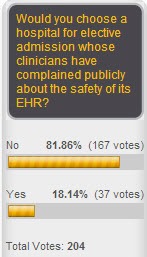
125x125_2nd_Circle

Morning Headlines 6/4/13

June 3, 2013 Headlines 2 Comments

Mass EHR mandate draws criticism, impact remains unclear

A change introduced with the Massachusetts health reform law comes under fire for requiring physicians to demonstrate proficiency in the use of CPOE, e-prescribing, and EHRs as a standard of eligibility for medical licensure in the state.

Secure health data helping patients, doctors improve care and health

HHS Secretary Kathleen Sebelius kicks off Health Datapalooza IV by announcing that CMS will release new data sets that include outpatient procedure data, Medicare spending and utilization data, and de-identified data on Medicare beneficiaries with chronic conditions. HHS also announced a $25,000 challenge encouraging developers to design "an innovative app or tool using Medicare data that primary care providers can use to help manage patient care."

HIE Participation Doesn’t Create Test Savings, Study Says

A new study published in the Journal of American Medical Informatics Association concludes that the deployment of a health information exchange is unlikely to produce significant cost savings through reduced testing rates, contradicting the study’s hypothesis that duplicate tests would be reduced if physicians were given access to the results.

MMRGlobal Retains Counsel in Australia and Issues Patent Update

Patient portal vendor and patent troll MMRGlobal retains legal representation in Australia and will pursue discussions with the Australian government and the National E-Health Transition Authority over potential patent infringement issues after NEHTA spent nearly $1 billion designing and implementing a national patient portal.

Curbside Consult with Dr. Jayne 6/3/13

June 3, 2013 Dr. Jayne 2 Comments

clip_image002

A recently posted Commentary in the Journal of Graduate Medical Education reflects on a study looking at resident physician use of iPads. The study itself only looked at 12 young physicians and their self-reported behavior. The commentary, however, provides food for thought about the risk of “distracted doctoring.”

There have been plenty of stories about badly-behaved physicians: surgeons making personal phone calls via Bluetooth in the operating room, physicians posting patient-specific comments on Facebook, and others ranting on Twitter. More insidious and possibly more dangerous is the negative impact that being constantly connected can have on concentration and attention. The commentary mentions residents responding immediately to requests from remote nursing staff while potentially ignoring the patient physically present.
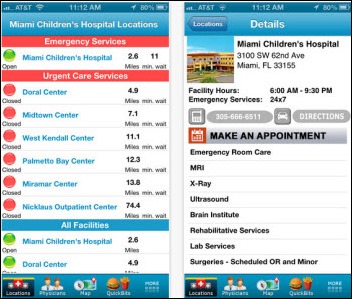
We’ve all experienced this in customer service situations when we’re standing at a checkout line or customer service counter and are functionally “put on hold” while staff answers the phone rather than attending to the customer in front of him or her. I see this in physician offices all the time, especially as incentives are put in place to reduce hold times or voice mail queues. While increasing satisfaction for remote patients, it does little to contribute to the satisfaction of the patient standing at the desk or sitting in the exam room.
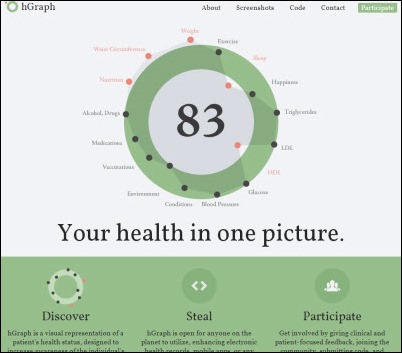
The commentary mentions a medical student using Facebook while rounding on patients, particularly when an attending physician was discussing a cancer diagnosis with a patient. There is no excuse for this kind of behavior, but unfortunately I don’t think everyone agrees with me. Social media can be incredibly enticing and it takes a lot of self-control to be able to put down the phone and be present.

We’ve all seen media articles wondering if smart phones are making all of us dumber. One could argue this is just an extension of the anti-technology rants of the 1960s and 1970s (remember when television was referred to as the “boob tube?”) but I think we could all use a little reflection about the amount of time we spend interacting with technology instead of people, especially when it’s not required.

I can’t count the number of times I’ve watched physicians who complain about having to use computers for patient care sit in the work area surfing the Internet. I once shadowed a physician who said she had to spend hours after work documenting, and during the course of the shift, she bought multiple pairs of shoes from three Internet sites. Although I have to admire her sense of style, it completely undermined any points she was trying to make about the computer slowing her down.

Although it’s frustrating, I guess I should be grateful that there’s virtually no cell signal in my ER. We’re located in the bowels of the hospital between radiology and the morgue. I usually end up turning my phone off to avoid battery drain. I guess I should also be thankful that we don’t have computers in the exam rooms because it really does force you to pay attention to the patient in front of you (although I think there’s a patient safety problem with not having the chart, but my Department Chair doesn’t agree).

I had the privilege of doing a rotation in the UK while I was a resident. I quickly learned that the easy availability of echocardiograms in the US made my ability to diagnose heart murmurs pale in comparison to my British colleagues. I’m sure there are other ways that technology is eroding our skills. What do you think? E-mail me.

Print

E-mail Dr. Jayne.

Text Ads


RECENT COMMENTS

  1. The CEO sentenced to jail for massive healthcare fraud will get pardoned in a week.

  2. The comments are true above. HIMSS is facing serious leadership and governance concerns, particularly involving the CEO and head of…

  3. "A valid concern..." Oh please. Everyone picks the software they like and the origin of that software is an afterthought.…

  4. I don't disagree with you completely, but to take the counterpoint: there is plenty of precedent for saying "this *entire…

Founding Sponsors


Platinum Sponsors


Gold Sponsors


RSS Webinars

  • An error has occurred, which probably means the feed is down. Try again later.