
Recent Articles:

This Week in HIT 8/16/13

August 16, 2013 This Week in HIT 1 Comment


FDASIA Minor

image

Facts and Background
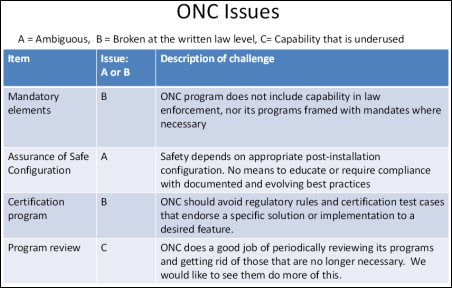
The 2012 Food and Drug Safety and Innovation Act (FDASIA) requires HHS to evaluate the patient safety risk of healthcare IT in the context of encouraging innovation and avoiding regulatory duplication. The FDASIA committee released its draft report this week, which concludes that FDA regulation of healthcare IT is not necessary, but better surveillance of live systems and post-implementation testing is needed.

Opinion
The committee likes the status quo a lot. Vendors can breathe a sigh of relief that the draft suggests only better communication about product safety issues and potentially a move away from product certification. 

Musings

  • The committee found it frustrating that definitions of healthcare IT and specific functionality that would trigger FDA oversight are not clear.
  • The report calls for creating a surveillance mechanism to track patient harm and near misses for unregulated software. Surveillance is an easy first step, but somehow it never seems to get done successfully. Who would a practicing physician contact when faced with a patient-endangering software defect?
  • The report wasn’t a big fan of product certification, saying it pushes vendors to meet the same checklist, gives prospects no way to compare products since they all pass, and focuses on features rather than outcomes. It recommended marketplace transparency instead.
  • The committee agreed with an earlier IOM report in saying that the federal government should discourage vendors from interfering with the free flow of product safety information.

Epic Has a Cow (Campus)

image
Photo: Amber Arnold, State Journal

Facts and Background
Epic Systems is finishing up construction of the third office complex on its 950-acre Verona, WI campus. The Farm Campus will house 1,000 employees.

Opinion
Whimsy is a strong attraction for candidates not overjoyed at the prospect of moving from a major metro area to Wisconsin farm country. The company needs the space and can afford it, employees and customers like it, construction costs are way less in Verona than many places, and building a cool building probably doesn’t cost much more than putting up a drab one. Non-profit hospitals and thus patients (and taxpayers via the federal government) are paying for it, but healthcare waste and extravagance is a target-rich environment.

Musings

  • Epic has 6,500 employees, hired 1,000 people in the past year, and took in $1.5 billion in revenue.
  • Construction of a fourth campus will begin almost immediately, expected to have a Harry Potter-type theme.
  • The 11,000-seat Deep Space auditorium will be ready for Epic’s user group meeting in three weeks.
  • Cost of the Farm Campus and Deep Space was estimated at $400 million by the city, with the total value of the property estimated at $800 million.
  • The company has 4,500 offices on the Verona property.

Merge Purges Surges

image

Facts and Background
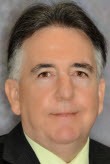
Merge Healthcare fired CEO Jeff Surges after another bad quarter in which revenue fell and losses increased, replacing him with former CEO Justin Dearborn.

Opinion
Merge has a lot of problems as a company. Jeff Surges may or may not have been one of them. He gave a pretty rosy outlook during last quarter’s earnings call, so poor results forced the company’s hand.

Musings

  • Surges joined Merge in November 2010, but was a director of the company since May 2010.
  • He came from Allscripts, where he had been president for three years. Both Chicago-based companies have struggled with proxy fights, management turnover, and poor financial performance.
  • Surges was named as one of Modern Healthcare’s “Healthcare’s Hottest” fluff award at #21 in September 2012, although perhaps they were referring to his seat.
  • MRGE shares have dropped almost 50 percent in the past week.
  • MRGE share price tripled during Justin Dearborn’s previous stint as CEO from 2008-2010.

Health Plan’s Leased Copy Machines End Up Costing $1.2 Million

image

Facts and Background
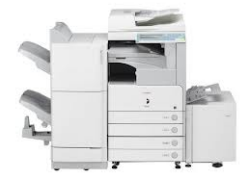
Affinity Health Plan pays $1.2 million for failing to erase the hard drives of leased photocopiers it returned to Canon Financial Services, which were later found to contain the protected health information of 345,000 patients.

Opinion
It’s likely that most hospitals have made the same mistake, either because they didn’t think of copiers as containing PHI or wrote unenforced policies for their disposal. It’s interesting that Canon Financial Services didn’t erase the drives themselves just like a seller of refurbished computers would – while not all customers copy PHI, all of them copy confidential information.

Musings

  • Talk about bad luck – one of the returned copiers was then sold to CBS, giving its news people an easy story to hype.
  • The Federal Trade Commission offers a reminder that “digital copiers are computers” and provides advice on how to secure their information.
  • Affinity should sue Canon Financial Services for failing to exercise reasonable care to prevent exposure of its data.

EHRs Aren’t Disruptive

image

Facts and Background
A blog entry by the Clayton Christensen Institute for Disruptive Innovation says that EHRs aren’t disruptive.

Opinion
Who said they were or should be? EHRs were primarily designed make data retrieval more convenient for regulators and insurance companies, not to provide innovative benefits to clinicians or patients. EHRs, rightly or wrongly, reflect what the market requires, excepting of course the skewing of that market by HITECH.

Musings

  • The article says that 80 percent of hospitals now have EHRs, yet none of the $81 billion per year in healthcare savings predicted by the vendor-funded 2005 RAND study have materialized. Nobody believed that study other than Presidents Bush and Obama, so that’s hardly a surprise.
  • It points out that “disruption” means small companies with cheaper, simpler technologies that target small customers or non-customers, but then move upstream to threaten entrenched competitors. That’s not the case in healthcare, where EHRs are a “sustaining innovation” that offer more features at a higher cost, but within the same customer business model.
  • “Implementing new technology to sustain the way you already make money almost always keeps costs high and prevents true disruption.”
  • The article recommends building systems that are based around doctor workflows instead of replicating paper, but that’s a lazy conclusion that assumes doctors are in charge rather than the government, insurance companies, and employers. The real problem is the lack of motivation for disruption and the absence of possible disruptors. There’s nobody to arm with technology to topple the status quo.

Contacts

Mr. H, Inga, Dr. Jayne, Dr. Gregg, Lt. Dan, Dr. Travis.

More news: HIStalk Practice, HIStalk Connect.

Morning Headlines 8/16/13

August 16, 2013 Headlines 2 Comments

Investor digital-health darling CareCloud raises another $9M

The additional funding raises the company’s total to $55 million.

Penn State Employees Protest Wellness Effort

A professor’s petition calls for the university’s wellness program to be cancelled, saying employees shouldn’t have to answer health questions and commit to receiving an annual physical exam in order to avoid a $100 per month insurance surcharge. The university says it’s trying to hold down healthcare costs in the face of a projected 13 percent cost increase in the next year alone and voluntary health and wellness programs have drawn minimal participation.

EHR costs outweigh financial benefits, doctors say

An athenahealth physician survey finds that while only 18 percent of them have an unfavorable opinion of EHRs and 68 percent of them say EHRs improve patient care, 51 percent say EHR costs outweigh their benefits. The survey also found that fewer physicians plan to buy an EHR in 2013 since 98 percent of them already have one.

News 8/16/13

August 15, 2013 News 3 Comments

Top News

8-15-2013 9-19-55 PM

CareCloud secures an additional $9 million from Adams Street Partners as part of its Series B financing round, bringing the company’s total funding to $55 million.


Reader Comments

From Frank Poggio: “Re: certification scoreboard. Here we are just six weeks away from the termination of Stage 1 vendor Certifications on 9/30/13 and there are only six Inpatient EHR vendors with 2014 Edition Certified systems (aka Stage 2). They are: Epic, McKesson (Paragon only), Allscripts, Meditech, HMS, and CPSI. No-shows for full EHRs are Cerner, GE, Siemens, Healthland, QuadraMed, and NTT-Data (Keane). If you are running a Stage 1 Certified system on 10/1/13, it will be considered a non-certified product even though you’ve not changed a line of code. As I have said on this blog before, the process and details under 2014 are far more difficult than ONC would admit, and even today the test scripts are still changing. In fact, while working through some test data with several of my clients this week, we came across three situations where the test data is in error. When we brought this to the attention of the test labs they simply said, ‘We’ll notify ONC, but for now just ignore it.’”   

From Dodging a Bullet: “With all the praise and glory for the soon-to-be former ONC head, you have to wonder about the timing of his departure. Does this really mean that MU2 will be pushed back and he doesn’t want to be at the helm when that takes place?” I can’t imagine the timing of Stage 2 would be enough to make Farzad leave. He’s been through Congressional grillings, has taken every kind of criticism there could be, and works for an agency that rarely sticks to dates it sets.

8-15-2013 6-49-59 PM

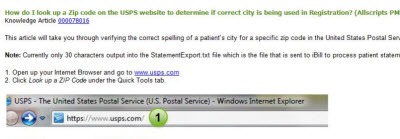
From Potha Cary: “Re: Allscripts tip of the week. Tells you how to look up a zip code on the United States Postal Service website. Asinine.” It would be nice if the app could do the lookup itself, but at least if not, they gave users good instructions that they may or may not need. I don’t see a problem with that.


HIStalk Announcements and Requests

8-14-2013 1-14-06 PM

inga_small Hot news from HIStalk Practice this week includes: the AAFP urges CMS to add a 12-month extension to the timeframe for Stage 2 MU compliance. MGMA-ACMPE adds almost 600 new members as HCA Physician Services joins the association. The majority of physicians believe EMRs have at least some positive impact on patient care according to an athenahealth / Epocrates survey, though 17 percent believe they worsen care. Thanks for reading.

inga_small Facebook reports that 128 million Americans and 24 million UK users access Facebook every day. A mere 278 of those are my friends, which happens to be a few more than Mr. H and Dr. Jayne but far less than the 2,271 who like our HIStalk page. We are collectively of the belief that you can never have too many friends, so send us a request and we’ll be happy to join your inner circle. If you prefer to keep it professional, you can connect with Mr. H and me through LinkedIn.

8-15-2013 5-52-17 PM

Welcome to new HIStalk Platinum Sponsor Symantec, which secures the IT systems and health information of medical practices, hospitals, and payers. Symantec Backup Exec simplifies backup and disaster recovery for practices. The company’s healthcare software solutions provide security, data loss prevention, HIPAA compliance automation, business continuity, and storage and infrastructure management (the list of specific products is surprisingly long, and Mobile Management is probably worth a look, as is Endpoint Virtualization for managing applications and standardizing single sign-on). Many of these tools are available as free trial downloads. Thanks to Symantec for supporting HIStalk.


Surescripts Mini-Interview

8-15-2013 4-42-52 PM

Surescripts announced Tuesday that it has added 19 state HIEs and health information providers to its clinical interoperability network, allowing them to exchange referrals, discharges lab results, CCD, prior authorization, and notes via the Surescripts network. I spoke to Jeff Miller, SVP/GM of clinical interoperability for Surescripts, who says the company “decided to move out of just electronic prescribing and support a wider set of clinical information on the Surescripts network.”

Surescripts network members have always been able to communicate with each other through the network directory, but Miller says that “communities of networks have significant populations we need to reach.” Now that Greater Rochester RHIO is on the network as one of the 19 new participants, for example, any of its members can communicate with any member of the Surescripts network and vice versa. Surescripts is paid by hospitals and EHR vendors, who may or may not pass along charges to their own users, but there’s no extra charge to use the gateway. 

Miller says the connectivity marketplace consists of HIE applications that poll EHRs to get information and send messages and EHRs that can exchange information within their own vendor-specific network or through partners such as Surescripts. The EHR-based solutions allow that communication to be integrated into user workflow, so that an Epic user discharging a patient can look up a provider in the directory and send a message out without launching another mailbox-type application. Miller says over 600 EHR vendors are connected to its network.

I asked how this type of messaging could support population health management. He says networks need to support three models: (a) a push or message-based model; (b) a pull or query-based model; and (c) a publish model, such as moving data to a repository to support managing populations. The benefit to patients, he says, “is to get rid of that clipboard you get at the practice. Let the doctors become more proactive. Take cost out and improve quality.”


Acquisitions, Funding, Business, and Stock

8-15-2013 9-22-27 PM

Imprivata announces that Q2 bookings grew 30 percent and headcount was increased to 250 with the addition of 48 new employees.

8-15-2013 9-23-26 PM

A stock analysis firm starting its coverage Quality Systems with lukewarm enthusiasm claims that the company’s customers, and presumably those of other EHR vendors, are being lost to enterprise vendors such as Cerner and Epic as hospitals acquire practices.


Sales

8-15-2013 9-24-18 PM

The NY eHealth Collaborative awards Mana Health a contract to build the “Patient Portal for New Yorkers.” 

8-15-2013 1-43-15 PM

Orthopaedic Associates of Augusta (GA) selects SRS EHR for its 14 providers.

8-15-2013 12-25-34 PM

Charleston Area Medical Center (WV) contracts with Besler Consulting to assist with the identification of Transfer DRG underpayments.

8-15-2013 12-23-24 PM

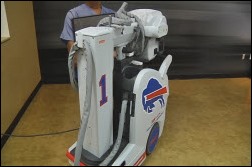
The NFL’s Buffalo Bills will implement medical imaging technology from Carestream at the Bills’ Ralph Wilson Stadium to provide early detection and monitoring of brain injuries.


People

8-15-2013 12-49-24 PM

James McDevitt (GE Healthcare) joins API Healthcare as VP of human resources.

8-15-2013 12-51-26 PM

The Integrating the Healthcare Enterprise Patient Care Device Domain Technical Committee names Iatric VP Jeff McGeath co-chair.

8-15-2013 7-58-25 PM

Jeff Finkelstein, MD, former chief of emergency medicine and CMIO of The Hospital of Central Connecticut (CT), joins Hartford Hospital (CT) as chief of emergency medicine.

8-15-2013 9-02-28 PM

Standard Register Healthcare names Kevin Lilly (McKesson) as VP of marketing and product management.

8-15-2013 9-10-21 PM

John Halamka,MD is named to the board of Imprivata.


Announcements and Implementations

8-15-2013 12-54-23 PM

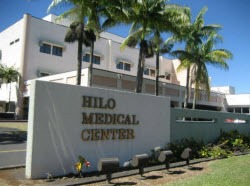
Hawaii Health System concurrently implements Perioperative Management by SIS and Siemens Soarian.

8-15-2013 12-55-52 PM

The Central Illinois HIE launches Direct communication between its members and other HIEs using ICA CareAlign Connect technology.

8-15-2013 12-56-53 PM

Prime HealthCare Services will connect its 23 hospitals to the Inland Empire HIE, which is based on the Orion Health HIE platform.

Appalachian Regional Healthcare System (NC) goes live on Allscripts Sunrise Clinical Manager.

Diagnotes launches a mobile clinical communications system for patient information, caregiver communication, and documentation.


Innovation and Research

ShiftyBits, LLC releases ID My Pill, a $4.99 iPhone app that identifies prescription tablets using the phone’s camera.


Other

Weird News Andy concludes about a story he titles “En Fuego” that, “Well, they are part of the fire department.” Two Washington, DC ambulances catch fire in separate incidents on the same day, fortunately with no injuries. WNA also likes this story, in which a surgeon intentionally lied to a patient for reasons unknown in claiming that he had removed her brain tumor, when in fact he had not.

8-15-2013 7-06-21 PM

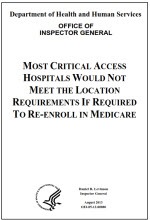
An OIG audit finds that Medicare paid $449 million too much in 2011 to hospitals that shouldn’t be considered critical access hospitals because they aren’t in rural areas and aren’t far from other hospitals. States were allowed to override the location criteria until 2006; OIG says it’s time to take their exemptions away and CMS seems to agree.


Sponsor Updates

  • Greenway Medical approves Master Mobility iPad and iPad mini applications as certified API solutions for its PrimeSUITE platform.
  • An article by Brad Levin of Visage Imaging covers radiology’s “imaging IT disorders.”
  • Intelligent InSites celebrates its 10th anniversary.
  • Aprima reports having over 600 participants at annual user group conference earlier this month in Dallas.
  • A Santa Rosa Consulting article offers a test to determine whether an organization needs to conduct an IT cost optimization review.
  • GetWellNetwork publishes an e-book on transformative health trailblazers.
  • Ohio State University’s Wexner Medical Center and GE Healthcare collaborate to find ways to make healthcare more enjoyable for patients.
  • HIStalk sponsors earning a spot on “Best Places to Work 2013” are Aspen Advisors, CTG Health Solutions, Cumberland Consulting Group, Divurgent, Encore Health Resources, ESD, Hayes Management Consulting, Health Catalyst, Iatric Systems, Impact Advisors, Imprivata, iSirona, Sagacious Consultants, Santa Rosa Consulting, and The Advisory Board Company.
  • ORA Orthopedics (IA/IL) reports that its implementation of Emdat’s clinical documentation technology has yielded operational and administrative advantages.
  • Direct Consulting Associates and Direct Recruiters expand their offices, staff, and services. 
  • HIMSS Analytics’ James Gaston, senior director of clinical and business intelligence, will participate in a panel discussion on leveraging analytics in clinical operations at next month’s Midwest Hospital Cloud Forum. 
  • Wolters Kluwer Health introduces iPad and iPhone apps of Lippincott’s Nursing Drug Handbook.

EPtalk by Dr. Jayne

Now here’s an app I’d use. A group of New York University researchers has developed a mathematical model to help identify which preventive measures would most improve a patient’s life expectancy. Responding to the challenges physicians face when trying to address the mass of preventive recommendations that exist, they hope to integrate the model into EHRs to prioritize guidelines on an individual basis. It’s not ready for prime time, but I’m seriously intrigued.

An app that is actually on the market, “Health through Breath – Pranayama” includes controlled breathing exercises intended to relieve tension and promote relaxation. I wish I could have beamed it to the attendees of a meeting I was in the other day because everyone was keyed up and irritable. Its topic: the cost of ICD-10 readiness.

Speaking of apps, Medical Economics releases its list of the top 10 apps physicians recommend to their patients. Four of the 10 are diabetes related, which parallels the percentage of patients I seem to be seeing.

The National Uniform Claim Committee publishes its transition timeline for the new CMS 1500 claim form. The timeline meshes with Medicare’s and proposes that payers begin accepting the new form in January 2014 with a dual-use period through April 1, 2014 when the new form is required. I may have mentioned this before but it’s worth mentioning again – I don’t know how a lot of providers keep up with this and I’ve gotten quite a few questions on it in the last few weeks.

clip_image002

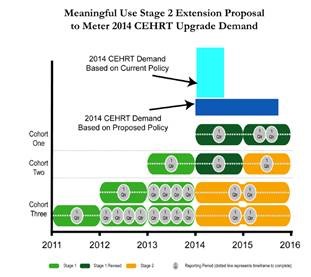
The American Academy of Family Physicians proposes a revised Stage 2 compliance timeline for Meaningful Use. The proposal actually includes three different revisions depending on whether 2014 is your first, second, or third/fourth payment year.

It’s not just a photocopier any more. Affinity Health Plan settles with the US Department of Health and Human Services over HIPAA violations. A returned leased copies rwas later sold to the CBS television network and investigators checking the hard drive found protected health information belong to over 300,000 patients. According to the documents, Affinity didn’t include photocopier hard drives in its HIPAA risk analysis as required. Show of hands: who is pulling out their risk analysis right now to double check? The FTC’s guidance on copier hard drives is here for your reading pleasure.


Contacts

Mr. H, Inga, Dr. Jayne, Dr. Gregg, Lt. Dan, Dr. Travis.

More news: HIStalk Practice, HIStalk Connect.

125x125_2nd_Circle

Morning Headlines 8/15/13

August 14, 2013 Headlines 3 Comments

Why EHRs are not (yet) disruptive

According to the Clayton Christensen Institute for Disruptive Innovation, EHRs aren’t disruptive because they were designed to simply replace paper and users aren’t motivated to change their business model.

Affinity Health Plan Fined $1.3 Million for Photocopier HIPAA Violation

AHP failed to erase the hard drive of a leased photocopier containing PHI of 345,000 patients.

Quality Systems slips on a less-than-stellar initiation at KeyBanc

Analyst’s report suggest that Quality Systems / NextGen and presumably other practice EHR vendors may be losing ground as hospitals acquire physician practices and replace their systems with those of enterprise vendors such as Epic and Cerner. 

Readers Write: Connecting the Industry: Behind the Scenes of the New Healthcare Triangle

August 14, 2013 Readers Write Comments Off on Readers Write: Connecting the Industry: Behind the Scenes of the New Healthcare Triangle

Connecting the industry: Behind the Scenes of the New Healthcare Triangle
By Gary Palgon

8-14-2013 6-14-18 PM

The days of patients accepting the decisions and information provided by their physicians – no questions asked – are in the past. Today, patients are in the driver’s seat, participating in discussions about their care and making crucial decisions based on information from all members of their care teams. The movement from a linear form of communication between a single physician and a patient has changed into a multi-dimensional conversation that includes a variety of healthcare providers and patients.

Patients have always trusted physicians to provide the best care for them as individuals. Yet few realize until they become ill that historically there has been little exchange of information between all points of care. A patient who first visits an urgent care center, for example, then sees a primary care physician who refers him or her to a surgeon expects their health information to follow from place to place.

Fortunately, technology now supports the exchange of health information among disparate sources so that a patient’s longitudinal record is accessible. This not only prevents the need for the patient to repeat information at each point of care, it also ensures the accuracy of the information on which all of the providers base their treatment recommendations.

Better exchange of health information among providers and patients has led to a more collaborative approach to developing the best possible treatment plans. While providers and patients make up two important points in the communications continuum, however, there is a third important point in the healthcare communications triangle that must not be overlooked – pharmaceutical organizations.

Access to the most current medications and treatment protocols requires an exchange of information among patients, physicians, and pharmaceutical organizations. Searches for clinical trial information can be initiated by patients or physicians, as each seeks the best care for a specific condition.

Nevertheless, patients expect physicians to have greater access to clinical trial information, as well as the ability to qualify them for participation in trials. This increased awareness of the benefits of clinical trials brings the healthcare industry face to face with a longstanding challenge: how to give pharmaceutical companies access to patient information for research while still respecting patient privacy where desired.

Concern about patients’ privacy and the security of their data has for many years limited healthcare providers’ willingness to share information, resulting in limited access to it for researchers. Yet de-identified patient information can be tremendously beneficial, helping shorten research timeframes and speeding time-to-market for new treatments. Today, many patients not only understand the importance of their medical data to research, they also want to share it with the general population as a way to help improve care for others suffering with similar conditions. It is, after all, their information to be used as they wish, which includes individuals using such data for future treatment of diseases.

The technology to connect all points of the healthcare continuum is available today. Although not perfect – industry standards are still evolving and interoperability challenges do exist – successful connections being made every day prove that the challenges can be overcome.

Take lab and diagnostic results, for instance. With lab results comprising roughly 70 percent of an average patient record, the ability to see and share lab data electronically greatly improves communication across the continuum of care. Physicians rarely have a laboratory in their own offices, so they rely on technology to share data outside their four walls. The connections among physicians and multiple laboratories or diagnostic services provide a real-life example of the benefits and possibilities of secure data exchange.

A truly connected healthcare industry can be accomplished if the strategy to achieve it is simple, cost-effective and beneficial to everyone. Technology that incorporates use of the cloud to integrate disparate systems, aggregate and harmonize data, and provide access in usable formats addresses these requirements. Not only does this strategy overcome the financial and staffing challenges of industry integration, but it provides enhanced security for health information.

Even though patients are willing to share their health information for research purposes, protocols that authenticate user identities and provide secure access for specific research needs still must be put into place to protect it. Leveraging cloud-based solutions is one way to provide those securities while enabling access to data for multiple researchers working on different studies at the same time.

Easy access to information is part of day-to-day life in the 21st century. In years past, you might have to ask the advice of the local hardware store owner or look through a book if you wanted to fix a leaky sink. Today, a simple Internet search provides hundreds of suggestions and videos showing exactly what to do.

The same concept – easy access to data in a usable format for everyone – applies to the exchange of health information among patients, providers, and pharmaceutical organizations. The benefits include improved clinical trials, appropriate research, faster time to market for beneficial new drugs, and ultimately enhanced population health management.

Just as access to information improves our daily lives, so it does too for patients, researchers, and providers. It is a win-win-win situation for those who rely on shared information to develop new treatments, assess care options, and make the best care choices possible.

Gary Palgon is vice president of healthcare solutions for Liaison Healthcare Informatics.

Comments Off on Readers Write: Connecting the Industry: Behind the Scenes of the New Healthcare Triangle

Advisory Panel: PHI Stored in the Cloud by Clinicians and Employees

August 14, 2013 Advisory Panel 5 Comments

The HIStalk Advisory Panel is a group of hospital CIOs, hospital CMIOs, practicing physicians, and a few vendor executives who have volunteered to provide their thoughts on topical industry issues. I’ll seek their input every month or so on an important news developments and also ask the non-vendor members about their recent experience with vendors. E-mail me to suggest an issue for their consideration.

If you work for a hospital or practice, you are welcome to join the panel. I am grateful to the HIStalk Advisory Panel members for their help in making HIStalk better.

This question this time: What policies or technologies do you use to prevent clinicians and employees from storing patient information on cloud-based consumer applications such as Google Docs or Dropbox? Have you discovered this happening?


By policy we prohibit moving PHI/PII outside our firewalls. Early on in using data leakage prevention type tools to prohibit. We do prohibit auto-forwarding emails. 


We use Websense for filtering all of our internet traffic – this includes blocks for sites like Google Docs and Dropbox. We also work to educate providers and staff on the related policies.


We actually had a reportable breach that involved Dropbox. We have developed policies and compensating controls (like random audits), as well as communication through our HIPAA office and inclusion in annual HIPAA training.


We block all file sharing sites. Google Docs have some interest but we have tried to direct all similar requests to internal, secure solutions.


We’re looking at Box, but haven’t done anything to block these sites.


This is almost certainly happening, but we have not been monitoring or preventing it in any systematic way.


Generally speaking, we’ve blocked nearly all access to file sharing services such as Drop Box and SugarSync. These services are opened on an exception basis only upon a justifiable request. We’ve implemented Mobile Device Management software to disable cloud based backup and photo streaming on iPhones and iPads to help prevent data from being stored off the network. We’ve forced password protection of connected device (tethered iDevice backups) to help secure our data.


Our "appropriate use of patient and employee data" policy defines the conditions under which the cloud applications can be used. For example, if a patient’s care is at great risk and using Dropbox will mitigate that risk, we allow for it and in fact, we encourage it. We have a corporate Dropbox account for his very purpose, which is very effective, particularly for sharing images. There’s no way you can expect the cloud applications not to be used. They are going to be used, especially by physicians who are tech savvy and see no other alternative to sharing data that is important to their patient care. So, with that realization, we’ve tried to put in place policies and corporate accounts that make it easier for clinicians to take advantage of the service, but do so with some degree of consolidation and risk reduction. We take the same stance on using Skype for remote consults with patients. For the ultra-paranoid and over-controlling CIOs in the crowd that freak out when they read this approach, they should remember that the data breaches which are plaguing healthcare are about simple sys admin passwords that have never been changed after install; unprotected thumb drives and mobile computers; and the insider that downloads data for resale. Worry about what matters, don’t worry about what doesn’t. That’s the key mindset to information security risk management, but we rarely hit the bullseye in healthcare.


We’ve seen this happen. We’ve blocked the ports so that they cannot use the consumer apps. We have also provided a secure cloud-based replacement for some of our staff that need to routinely share large files with others outside the organization.


Haven’t seen this yet.


I’m a physician, so we like this… shhhhh. 


Give them access to storage drive to network or give them access to private cloud for storage.


All are blocked on hospital network using a proprietary service (Websense? I’m a CMIO, not a CIO so I can’t recall all the vendors.) connected to our proxy. All PHI is available only over Citrix, no fat clients, so download would be screen by screen. Wireless Guest Network does allow connection to Dropbox, Google Docs/Drive, etc.


I think you would call our policy, "don’t ask, don’t tell". We are very concerned about encryption of laptops because we have had problems with lost devices, but so far we have not had problems with these publically-accessible cloud solutions … knock on wood. Therefore, our purely reactive leadership team has not made any pronouncements on this topic. I can’t wait to see what other responses you get so I can forward them to our leadership. Our sister organization has implemented an automated email "filter" that attempts to automatically identify patient-identifiable information included within emails and converts them to a secure messaging solution. Of course this creates so many problems that most people resort to Gmail to send their documents that are inadvertently trapped by the filter.


I don’t think docs even know these things exist!!!!!


Administrative policy prohibiting use of Cloud applications for sensitive data including but not limited to PHI.


Prayer,  and offering better alternatives. 


Policies for now, which are sub-optimal. Yes, it’s happening, and those who think it’s not needs to get their kid’s beach shovel and dig themselves out! We make it difficult by blocking certain known and popular file sharing sites, but it is imperfect. We have been evaluating technologies which have promise but struggled in a proof of concept. Could be a late ’14 initiative but more likely ’15.


These sites are blocked from access from our network. To date, we have not seen this occurring.


Morning Headlines 8/14/13

August 13, 2013 Headlines 2 Comments

Surescripts Adds 19 Healthcare Organizations to National Network

Surescipts adds 19 state HIEs and health information service providers to its national health information network, including Cerner, ICA, and Quest Diagnostics.

As its Farm Campus opens, Epic Systems prepares for even more workers

Epic Systems prepares to open its third campus, built to resemble a working farm, as the company also completes a fourth campus that will open in the fall.

CareFusion Reports Fourth Quarter And Fiscal 2013 Results

Revenue was down six percent, adjusted EPS $0.49 vs. $0.55, in line with expectations.

Scripps Launches Study To Assess Role Of Mobile Health Devices In Lowering Health Costs

Scripps Translational Science Institute launches a clinical study that will determine if wireless technologies and the use of social media can reduce healthcare spending.

News 8/14/13

August 13, 2013 News 11 Comments

Top News

8-13-2013 5-48-53 PM

Surescripts adds 19 state HIEs and health information service providers to its national health information network, including Cerner, ICA, and Quest Diagnostics.


HIStalk Announcements and Requests

inga Mr. H has taken a day or two off so I am flying solo tonight. He can never rest for long so be assured he’ll be back at the keyboard later this week.


Reader Comments

  8-13-2013 5-42-00 PM  8-13-2013 5-43-38 PM

From Elsie: “Re: Epic’s new campus. If I were a cow I think I’d want to live in Verona.”  Epic opens its Farm Campus, which includes a white farmhouse with a wraparound porch, a red barn with a silo, a creamery, and a John Deere tractor. The buildings, which have standard offices on the inside, will house up to 1,000 employees and include extra decorative touches that follow the farm motif. Verona city officials have estimated the value of the farm campus and Epic’s new 11,000-seat auditorium at about $400 million.


Acquisitions, Funding, Business, and Stock

8-13-2013 8-01-21 PM

Marlin Equity Partners acquires long-term care software vendor 6N Systems, which will be merged with Marlin’s portfolio company SigmaCare.

8-13-2013 8-03-30 PM

Emdeon reports Q2 adjusted earnings of $77.2 million, down 3.7 percent from a year ago. Revenues were up almost six percent to $311 million.

8-13-2013 8-04-40 PM

Endo Health Solutions subsidiary HealthTronics agrees to sell HealthTronics Laboratory Solutions, its anatomical pathology business, to Metamark Genetics as part of Endo’s announced plan to pursue strategic alternatives for HealthTronics.

Medical device maker Medtronic buys Cardiocom, a provider of telehealth and patient monitoring services, for $200 million.

CareFusion reports Q4 earnings: revenues down six percent, adjusted EPS $0.49 vs. $0.55 and in line with expectations. The company also announced a $750 million share repurchase program.


Sales

8-13-2013 8-07-46 PM

East Tennessee HIN selects DataMotion Direct as its secure messaging service.

Apria, a provider of home healthcare products and services, extends its contract with predictive analytics provider Connance.

8-13-2013 8-42-40 PM

Brazosport Regional Health System (TX) will implement MEDHOST’s EDIS.

8-13-2013 8-46-29 PM

Mercy Health System (ME) selects Allscripts RCM Services for back office processing and patient collections.

The Chain Drug Consortium renews its agreement with Emdeon to provide services through the Emdeon Clinical Exchange eRx Network.

The AHRQ awards ECRI Institute a contract to continue operating, maintaining, and enhancing the AHRQ National Guideline Clearinghouse and the National Quality Measure Clearinghouse.

PinnacleHealth System (PA) and Meridian Health System (NJ) select the SIS perioperative IT platform.


People

8-13-2013 8-48-24 PM   8-13-2013 8-49-12 PM

Impact Advisors promotes Matt Duncan and Kent Gray from principal advisors to VPs.

8-13-2013 8-50-21 PM

Conifer Health Solutions hires James C. Bohnsack (TransUnion Healthcare) as VP of acquisition strategy.

Healthcare analytics provider PTS Physicians names Penn Krause (Treatspace) CEO, replacing the retiring William Bennett.

8-13-2013 8-56-37 PM

WebMD names David Schlanger its permanent CEO following three months serving as interim CEO. The company also promoted Steven Zatz from VP of professional services to president.

8-13-2013 8-54-02 PM

US HealthCenter hires Paul A. Markham (V3 Healthcare Strategies) as chief strategy officer.


Announcements and Implementations

8-13-2013 8-58-44 PM

Cullman Regional Medical Center (AL) deploys the MedSnap ID Enterprise application, which can identify a patient’s pills from a single image and identify the name and strength of each drug. Mr. H mentioned the app several months ago and characterized it as “brilliant.”

Humana agrees to subsidize up to 85 percent of the purchase of Greenway’s PrimeSuite EHR for physicians practicing in the Humana network.

8-13-2013 9-00-03 PM

Appalachian Regional Healthcare System (NC) implements Allscripts Sunrise Clinical Manager.

8-13-2013 9-01-17 PM

Connections Counseling (WI) installs Forward Health Group’s PopulationManager for analytics.

The Kansas HIN will launch a statewide patient portal next month, which will be free to patients and based on the NoMoreClipboard PHR platform.

8-13-2013 9-02-25 PM

The Dallas Business Journal reports that Baylor Health Care System (TX) providers are electronically placing about 94,000 orders each weekday. Orders originate from multiple EHRs but integrate into Baylor’s existing EHR (Allscripts Sunrise, I believe.)

8-13-2013 2-06-52 PM

Novant Health (NC) begins implementation of its $1.1 million patient identification iris scanning system from M2SYS Technology.

Nuance Communications announces that in the last three month 100 hospitals and radiology practices, including 50 new customers, have converted to the latest PowerScribe 360 platform,


Government and Politics

The Obama administration reports that the VA backlog of disability claims is now 496,000, a 20 percent reduction since March.

8-13-2013 3-48-01 PM

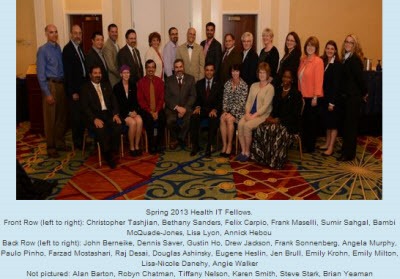
The ONC selects 28 practicing providers and staff from 18 states to serve as the inaugural class of the Health IT Fellows program, which aims to “help other providers overcome challenges faster and more efficiently by sharing key lessons learned.’”


Innovation and Research

The Scripps Translational Science Institute launches Wired for Health, a clinical study to evaluate whether the integration of wireless technologies, online social networks, and medicine have a direct effect on healthcare spending. Half of the study’s 200 participants will use a mobile health device for six months to monitor blood pressure, heart rhythm, or blood glucose and will have the ability to track their conditions through a web portal or mobile device. Researchers will evaluate whether the device-wearing patients have more online interaction with their providers and more success managing their health conditions.


Technology

The FDA extends 510(k) clearance for Verizon’s Converged Health Management remote patient monitoring medical device.

LRS and Siemens Healthcare jointly develop a solution that reduces the number of Windows print servers and printer drivers that need to be defined and maintained within the Siemens Soarian platform.


Other

8-13-2013 9-06-37 PM

The Jackson Clinic (TN) reports positive results from the first year of its collaborative accountable care initiative, including better than market measures for annual eye exams and kidney disease screenings for diabetics, breast cancer screenings, and adolescent well-child visits, as well as lower total medical costs compared to the local market.

Sign of the times: The AMA announces it will shut down its print and online news magazine because of its inability to generate a profit over the last 10 years. AM News has a print circulation of about 230,000 but saw an $8.7 million decline in print display advertising last year. Pharma advertising has historically accounted for the bulk of the publication’s advertising revenue.

8-13-2013 9-07-24 PM

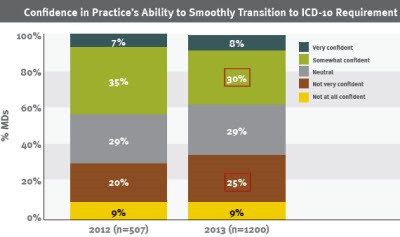
Only 38 percent of providers participating in an athenahealth/Epocrates survey claim they are at least somewhat confident in their practice’s ability to transition to the ICD-10 code set, while 79 percent express confidence in satisfying the requirements for Stage 2 MU.


Sponsor Updates

  • Frost & Sullivan awards Kareo its 2013 North American Physician Practice Management Customer Value Enhancement Award for demonstrating excellence in implementing strategies that create value for its customers.
  • Vitera Healthcare offers an August 28 Webinar to help physicians and their staff prepare for MU Stage 2.
  • NextGen Healthcare will utilize Clinical Architecture’s Symedical Server for its terminology integration architecture within the NextGen Hospital Solutions suite.
  • Allscripts Enterprise 11.4.1 and Professional 13.0 EHRs receive 2014 ONC HIT Certification from the Drummond Group.
  • API Healthcare looks at the healthcare system trend of eliminating differential pay in order to reduce costs.
  • Impact Advisors identifies three challenges in achieving MU Stage 2.
  • Billian’s HealthDATA ranks MedAssets the top healthcare group purchasing organization based on the number of affiliate beds.
  • Pro golfer Jason Dufner, who is sponsored by Greenway, wins the 2013 PGA Championship, his first major title since partnering with Greenway two years ago.
  • Alere Analytics releases its Electronic Laboratory Reporting solution for hospital reporting of results to state health departments and to improve care coordination between lab personnel and clinicians.
  • Ophthalmology EMR provider Medflow will give users access to LDM Group’s healthcare messaging programs for improved patient medication compliance.
  • iSirona posts a video featuring its client services team and how it supports hospitals’ medical device integration efforts.

Contacts

Mr. H, Inga, Dr. Jayne, Dr. Gregg, Lt. Dan, Dr. Travis.

More news: HIStalk Practice, HIStalk Connect.

125x125_2nd_Circle

Morning Headlines 8/13/13

August 13, 2013 Headlines Comments Off on Morning Headlines 8/13/13

Marlin Equity Acquires Health Care Software Firm

Marlin Equity Partners acquires long-term care software vendor 6N Systems.

Doctor lost control of patient records

A physician in Canada is cited for failing to exercise control over health records when she tries to obtain the electronic medical records of her patients to start a new practice and is denied by the EMR vendor because she had never registered as the official contact with the vendor.

Report: Apple will reveal new iPhone next month

Apple will reportedly announce a new model of the iPhone, rumored to be named either the iPhone 6 or iPhone 5S, on September 10.

Comments Off on Morning Headlines 8/13/13

Curbside Consult with Dr. Jayne 8/12/13

August 12, 2013 Dr. Jayne 7 Comments

clip_image002

There’s a physician I work with who is constantly calling for the death of the electronic chart. He’s completely convinced that life was better on paper, despite any attempts to convince him otherwise. I was trying to think of a word to describe him and “curmudgeon” was the only thing that really fit the bill. Often when I mention someone like him, people assume I’m speaking about an older physician who is close to retirement. This gentleman, however, is my age.

We both serve as faculty for the local medical school. He’s constantly mentioning how the students are much more facile with the EHR than he is. I’ve offered to spend time with him one on one, but he always refuses. I’m not sure whether it’s pride or some other factor at play. He can’t be worried about being left in the dust by some young whippersnapper since we’re age group peers. He won’t let anyone else help either – maybe he’s just embarrassed about his inability to effectively use technology.

I think he might also be embarrassed to let anyone see how his practice runs. His staff is not given the ability to work at the top of their skills and training. On the other hand, the medical assistants who room his patients are not held accountable when they fail to execute their roles and responsibilities as documented in the practice workflow or their personnel files. I often hear him make statements about “spending 20 minutes on the internet trying to find a pharmacy phone number” or “digging around for an accurate medication list.” These show that there are either issues with staff performing basic duties, how people use the EHR, or both.

Working under the same group practice organization, we have the same EHR with the same customizations, limitations, and frustrations. For some reason, however, I can see 40-plus patients per day in a primary care practice with top quality metrics and go home on time, where he is struggling with 25 patients per day and works hours each night at home. Other than medical school, our pedigrees are very much the same. We’re both certified by the same specialty board and trained in comparable residency programs. We’ve been in practice the same duration.

What makes the difference then? In my experience, there are a couple of factors at play. First, one has to have the willingness and ability to allow and enable the support staff to actually support the physician. This means not only ensuring they have the skills to do what needs to be done, but to make sure that tasks are performed properly. Case in point: he claims he doesn’t trust his nurses to take a blood pressure. I’ve told him a couple of times he can either spend the time training them to perform that task his way in a reproducible way or he can do the nursing tasks for the rest of his career. But if he chooses to do that work, he’s not going to see as many patients or finish the day on time. I’ve been in those shoes and the upfront investment in staff development pays off a hundredfold.

Second, success with the EHR (as well as in one’s practice and life in general) is impacted by the willingness to accept change. Some people just don’t do it well, but it’s a skill that can be learned. We all need to face that unless you’re willing to dump Medicare / Medicaid / insurance and go cash-only or concierge, change is going to be constant. Developing skills to manage the response to change is paramount to maintaining sanity.

Finally, there has to be a willingness to accept technology. Even if you identify as a Luddite, you have to understand that technology must play a role in healthcare if you’re going to stay in the game. I look at the transitions in other business sectors to see how they’re handling it. As a taxpayer, I recently received a postcard from my local school district. It was an annual notice that unless specifically requested otherwise, all communications are through the district website, email, and text messaging. Apparently they don’t even send home report cards anymore – parents must access them online unless they specifically request a mailed report card.

I was recently treating a patient for some wicked poison ivy and he mentioned that the ultimate bastion of outdoorsiness, the Boy Scouts of America, recently handled scheduling of activities at their National Jamboree through an app. He was overjoyed to find he had Wi-Fi in his tent and could charge his phone at the shower facility. (That’s a lot different from when I was a Girl Scout – I wonder if a cookie app is next?)

Back to my curmudgeonly colleague. He has a smart phone, he banks online, and I’ve certainly watched him shop on Amazon. We need to find a way to help him embrace technology in the workplace and understand that the EHR is not here to suck the life out of the patient-physician relationship or to wound his soul. Rather than resist, we need to look at data with a new eye, see the potential it has to help patients, and figure out how to work with it. It’s not just the young or the techies getting out there, either. When I finally signed up for Facebook a few years ago, do you know who I found had arrived first? My grandmother.

To work in healthcare, each of us has to embrace technology to some degree. Not everyone has to be able to manage a database or write code, but at a minimum, we have accept the fact that it’s part of our day. We can’t act like the world is coming to an end. Just a warning though – it might be. My newly smart phone-owning mother just sent me a text and used the word “selfie,” so don’t be surprised if the apocalypse is close behind.

E-mail Dr. Jayne.

Morning Headlines 8/12/13

August 12, 2013 Headlines 1 Comment

Draft – FDASIA Committee Report

HIT Policy Committee’s FDASIA workgroup, tasked with determining now to address patient safety concerns with electronic health records, call for leaving healthcare IT unregulated by FDA, but encourages reporting,  post-implementation safety testing, and allowing customers to publicly rate their applications. They also call for national standards for quality process and interoperability and encouraging vendors to publicly share patient safety information.

WattsUpDoc looks at medical device power usage to spot malware

University of Michigan researchers develop WattsUpDoc, which detects malware in biomedical devices by looking for changes in the power they consume.

Merge Healthcare CEO resigns

Merge parts ways with CEO Jeff Surges after a disappointing quarterly report.

Monday Morning Update 8/12/13

August 12, 2013 News 7 Comments

8-11-2013 9-53-53 PM

From Ramblin’ Gambler: “Re: HIT Policy Committee’s FDASIA workgroup. They released their draft EHR patient safety guidelines. I don’t think they went far enough.” The draft guidelines call for leaving healthcare IT unregulated by FDA, but encourage reporting,  post-implementation safety testing, and allowing customers to publicly rate their applications. They also call for national standards for quality process and interoperability and encouraging vendors to publicly share patient safety information.

From Leopold: “Re: breach. I had to chuckle at this one. The mixup was caused by a vendor named Infocrossing.” A programing error causes the medical information of 1,300 patients of MO HealthNet to be sent to incorrect addresses. Infocrossing is owned by India-based Wipro.

From Tennessee Dreamer: “Re: Re: Halamka’s view from the bunker. One really has to wonder whom he thinks he is fooling. When a topnotch trainee, who can do his residency at BIDMC, with its cloud-hosted, thin client, mobile friendly, highly interoperable software that is used nowhere beyond a city block from campus, or go to Mass General and use a commercial product that they will very likely use in their academic careers no matter where they wind up, will they decide to contribute to or chip away at BIDMC’s ‘strategic advantage?’ To express the obvious, that the academic, informatics-based HIT development enterprise has been a failure, clearly exemplified by BIDMC being surrounded by Epic in an over-before-it-began war for keyboards and eyeballs in the Boston healthcare market, would be too much to ask of Halamka, half of whose political capital is gained by his ever optimistic view of HIT. Yes, you can build a great suite of software when the only people you have to please are your friends and colleagues in your own neighborhood, when it really gets tough is please hundreds of other institutions at the same time. If Halamka was going to have made a real impact on healthcare, he and others in  the informatics community would have stopped living off government grants and taken the plunge to commercialize their products, putting their necks on the line in the marketplace and, if they were good enough, actually winning the war, to the benefit of everyone. But why do that, when even today you can retreat to the ever fewer centers, give each other tenure and Collen awards and cite each others’ JAMIA papers for research on products that hardly anyone uses? There are many useful lessons to be learned, and productive plans to be made in the current situation. Sitting in the last Boston holdout convincing yourself that you’ve fought the competition to a tie, and might yet win, isn’t one of them.”

8-11-2013 8-16-31 PM

Nearly 80 percent of poll respondents say they don’t pay any attention to Most Wired-type magazine awards. New poll to your right: is it necessary that the next National Coordinator be a physician?

8-11-2013 9-05-29 PM

Welcome to new HIStalk Platinum Sponsor lifeIMAGE. The company provides a network for sharing medical imaging information. Physicians, hospitals, and patients can securely exchange images from any location and integrate the images with EHRs and other systems. Workflows are defined for managing CD-based exams, receiving exams electronically from any source, importing images from outside into local systems, and sharing exams with physicians and patients. The network also includes a secure social component that allows individual users to connect with each other to exchange images. The company was the first to undergo a comprehensive KLAS review, with results that include 94 percent “would buy again” responses, along with 97 percent of clients interviewed saying the company keeps its promises. Notable customers include Boston Children’s Hospital, Mass Genera, and CHOP. Thanks to lifeIMAGE for supporting HIStalk.

I found this YouTube video describing how lifeIMAGE works.  

8-11-2013 9-26-05 PM

Private equity firm LLR Partners makes an investment in Philadelphia-area consulting firm HighPoint Solutions, which says it will become the largest life sciences and healthcare IT consulting company in the world by 2017.


HIStalk Webinar

8-11-2013 8-20-58 PM

Elsevier will present “Invigorate Order Set Management: Four Essential Steps” on Tuesday, August 27 from 12:00 – 12:45 p.m. Eastern. Presenters will be Jim Nolin, MD, editor in chief for order sets at Elsevier, and Kevin W. Hatton, MD, medical director of clinical decision support at University of Kentucky HealthCare.


University of Michigan researchers develop WattsUpDoc, which detects malware in biomedical devices by looking for changes in the power they consume.

Amendola Communications employees create a fundraising page for a co-worker, hoping to raise $10,000 towards the cost of brain tumor treatments for her newly diagnosed three-year-old son.

Merge Healthcare announces that CEO Jeff Surges has resigned due to poor company sales and will be replaced by Justin Dearborn, president of the company. Shares dropped 46 percent Friday on the news, dropping its market cap to $227 million.

It’s Siemens Part 4 this week in Vince’s HIS-tory.


Contacts

Mr. H, Inga, Dr. Jayne, Dr. Gregg, Lt. Dan, Dr. Travis.

More news: HIStalk Practice, HIStalk Connect.

Morning Headlines 8/9/13

August 8, 2013 Headlines Comments Off on Morning Headlines 8/9/13

Allscripts announces second quarter 2013 results

Allscripts announces Q2 results: revenue of $344.8 million and $0.05 EPS, compared to $370 million and $0.16 EPS for the same period in 2012. Paul Black is optimistic, based on strong bookings for the quarter driven primarily from its population health solutions.

Nuance Gains as Icahn Builds Stake in Software Maker

Investment billionaire and hostile takeover specialist Carl Icahn has increased his percent ownership of Nuance from nine percent to 16 percent, according to an SEC filing.

CDS Surveillance Significantly Impacts Patient Outcomes

A KLAS survey of 140 providers evaluates clinical surveillance systems which as a whole seem to be delivering on promises of improved outcomes, as 79 percent of customers report that utilizing the technology has a moderate to significant impact on clinical outcomes.

Inova Translational Medicine Institute and GNS Healthcare Partner To Advance Diagnosis and Prevention of Preterm Birth

The Inova Translational Medicine Institute and GNS Healthcare will partner on a commercial project aimed at developing software that will use sophisticated algorithms and datasets to create personalized prediction of preterm birth risk and more accurate gestational length estimates.

Comments Off on Morning Headlines 8/9/13

News 8/9/13

August 8, 2013 News 15 Comments

Top News

8-8-2013 7-53-34 PM
8-8-2013 6-09-57 PM

Allscripts reports Q2 results: revenue down 7 percent, adjusted EPS $0.05 vs. $0.16, missing earnings expectations of $0.10. Revenue of $345 million missed expectations of $357 million. Shares are down 6 percent in after-hours trading. It’s the third straight quarter that MDRX has fallen short of expected profit. The announcement’s headline is a clear signal of a bad quarter given that neither revenue nor earnings are mentioned, indicating that the company was forced to dive deeper into the financials to find something to brag about. Allscripts is moving its focus (or at least the attention of analysts) to population health management given the minimal mention of its ambulatory solutions. I tried to listen to the conference call, but felt cognitive dissonance as the optimism I heard didn’t match the pessimism the numbers suggest.


Reader Comments
8-8-2013 3-51-18 PM

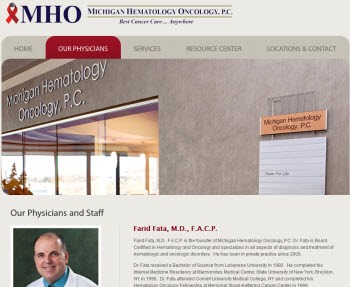
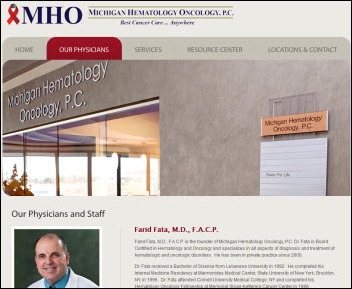
From Fraudbuster: “Re: Farid Fata, MD. Charged with Medicare fraud. He is affiliated with Crittenton Hospital in Rochester, MI and its cancer center. It’s big news in the Detroit metro.” Federal agents arrested the doctor at his practice Tuesday, charging him with a $35 million Medicare fraud scheme that included administering chemotherapy and PET scans to cancer patients who had no chance of survival. He is accused of employing hundreds of unlicensed doctors trained outside the US to see patients first so he could visit with 50-70 patients per day and bill Medicare for his time, which totaled $25 million plus another $24 million in drug infusions, making him #1 in Michigan. He’s also accused of taking home bags of patient records to do billing from his home. The complaint says that in one case, the doctor insisted that a male patient who had fallen and struck his head on the way to the clinic be given his chemo before being taken to the ED, where he later died of the head injury. You might think CMS suspicion might have been raised earlier(and payments frozen) by doctor billing $25 million.

From Bob: “Re: McKesson Horizon. My hospital is looking to migrate to Paragon. Can anyone share insight?” If your hospital has done the conversion or is underway, please leave a comment.

From DCInternRoomate: “Re: ONC-funded HIEs. They are failing, so expect a huge Blue Button push next week.” I’m assuming you are saying that HIEs have had minimal impact, so patients will be reenlisted as the hand-carrying human interfaces between non-interoperable systems. I wouldn’t necessarily disagree. Technology bears some of the blame for mandatory sneakernet, but mostly it’s the screwy US health system that created the problems involved with expecting competitors to freely share information, not to mention to disenfranchise the patient to the point where they are merely the widget that must be processed in order to trigger sending out a bill. Medicare in the 1960s made healthcare a business and not a charitable endeavor or a public health project as it simultaneous drove (short term) and drained (long term) the US economy, so it’s hard to work corporate empathy and compassion in there. Hospitals have generally good intentions but poor execution.
8-8-2013 6-57-11 PM

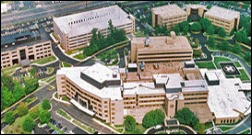
From Velvet Hammer: “Re: HCA. This e-mail should give you an idea about HCA’s EMR plans.” The e-mail describes plans for HCA and Reston Hospital Center to roll out Meditech Advanced Clinicals, which would suggest that perhaps HCA won’t abandon Meditech for Epic or Cerner after all.
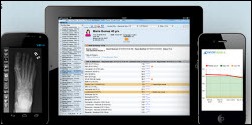
8-8-2013 6-58-02 PM

From MyFirstTime: “Re: [vendor’s name omitted]. I called them to learn more, but they say they are getting so many calls that they have started a wait list for new customers. Is healthcare IT so popular that it is now mainstream?” I can’t imagine that a lab ordering and results solution is creating such demand no matter how good it is, but readers have reported that it’s the real deal. I’m not mentioning the name again because this comment smells a bit like a company planted item, having originated in the same location as the company’s headquarters.  
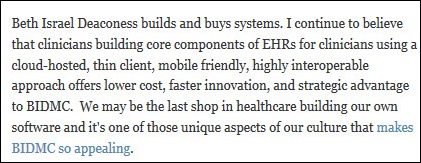
8-8-2013 6-59-19 PM

From Gordian Knot: “Re: Halamka’s recent self-indulgent blog post about benefits of keeping his organization homegrown. First, I really, really wonder what the cost analysis is when sites need to meet current regs. Second, I do find it humorous how other bloggers and semi-news sources immediately linked his comments with Maine Med having issues with an install of Epic. It all sounded like voices that have been waiting to jump on anything negative about Epic. How many people in leadership got ejected because of an install gone bad with Allscripts or Cerner or Siemens any other system? Look at Lahey and UCSF as extremes of installs gone bad. Since Epic is just about the only one installing anything,  a few missteps gonna happen.” I used to advocate homegrown software, but those days were gone once the federal government started setting the development agenda. It’s ironic that hospitals that outsource activities such as food service, ED coverage, and even clinical departments assume that they are better enterprise software developers than companies whose own core mission is exactly that. Sometimes organizations really do have expertise and processes that preclude using commercial software effectively, but usually they just overestimate their wonderfulness. Those big hospital systems that like developing their own systems (not BIDMC specifically – I ‘m generalizing now) often have the money to run huge IT departments because they’ve created a lofty-brand pricing monopoly rather than because they have the highest efficiency or best outcomes, and with reimbursement changes, they will just keep buying up practices and hospitals and spreading mediocrity.


HIStalk Announcements and Requests

inga_small From HIStalk Practice this week: 80 percent of clinicians use smartphones and almost half of physicians use a combination of smartphones, tablets, and laptops / desktops for professional work. Patients using EMRs through online portals express significantly higher satisfaction with their physicians and believe they are receiving better care. The AMA says CMS still has more work to do on the Medicare Physician Compare website. A reader reports on Aprima’s national user conference. A Colorado orthopedic clinic fires an employee who emailed PHI to her personal email in order to do some work from home. August is “Admit You’re Happy Month” which seems like the perfect reason to admit you’d love to make me happy by signing up for HIStalk Practice email updates. Thanks for reading.

Some recent HIStalk Connect posts worth your time:

Epocrates Mobile Trends 2013
HIStalk Connect Interviews Joe Reinardy, Founder and CEO, CenterX
Battle of the App Stores: athena vs. Greenway

Listening: Built to Spill, Idaho-based catchy guitar indie rockers that hit their popularity peak in the late 1990s that I’ve somehow missed until now. They’re on tour and I’m likely to check them out.

8-8-2013 4-08-56 PM

Welcome to new HIStalk Platinum Sponsor Valence Health, which offers providers turnkey solutions for delivering value-based care. The Chicago-based company has been doing that for 20 years and serves 35,000 physicians, 115 hospitals, and 15 million patients. Customers include Cleveland Clinic, Scott & White, OhioHealth, and half of the country’s freestanding children’s hospitals. Hospital solutions include clinical integration, population health, care management, analytics, managed services, physician network development, and financial analysis of value-based arrangements. Its Vision platform combines data from practice-based PM/EMRs, standardizes it with other data (hospital bills, labs, PBMs, LTC, payer), runs it through a proprietary EMPI, and then generates reports and analytics that measure quality, cost, and utilization and provides risk scores, identification of high-risk patients, and information to establish programs for specific populations and conditions. Its vMine technology obtains daily data from all certified PM/EMR systems and takes only 30 minutes to install remotely. Thanks to Valence Health for supporting HIStalk.


HIStalk Webinar

Elsevier will present “Invigorate Order Set Management: Four Essential Steps” on Tuesday, August 27 from 12:00 – 12:45 p.m. Eastern. Presenters will be Jim Nolin, MD, editor in chief for order sets at Elsevier, and Kevin W. Hatton, MD, medical director of clinical decision support at University of Kentucky HealthCare.


Acquisitions, Funding, Business, and Stock
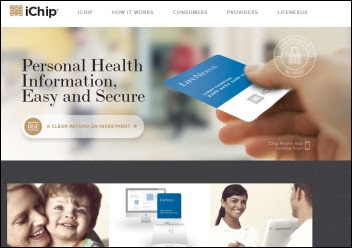
8-8-2013 8-05-16 PM

LifeNexus, which offers a personalized health information smart card, raises $3.7 million from unnamed investors. Smart cards have been a solution looking for a healthcare problem for at least 20 years and almost always fail miserably, even when packaged as a hospital loyalty card.

8-8-2013 8-07-21 PM

Could computing vendor ClearDATA secures $7 million in second-round funding from Excel Venture Management and Norwest Venture Partners.

SEC filings indicate that activist investor Carl Icahn has increased his stake in Nuance from the 9.3 percent of the company’s shares he reported in April to 16 percent now.


Sales

Geisinger Health System selects VisiQuate to develop predictive revenue cycle analytics to increase efficiencies and lower collection costs.

Boulder Community Hospital Physician Clinics select Wellcentive’s Advance platform to facilitate care coordination in support of its PCMH implementation and as part of its comprehensive primary care initiative.
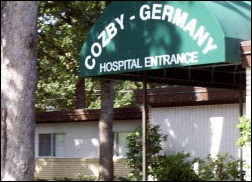
8-8-2013 8-08-45 PM

Twenty-four bed Cozby-Germany Hospital (TX) will implement RazorInsights ONE-Enterprise Edition.


People
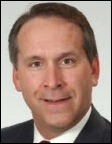
Chris Belmont (Ochsner Health System) will be named as VP/CIO of The University of Texas MD Anderson Cancer Center (TX). I interviewed him in February.


Announcements and Implementations

St. Louis Children’s Hospital (MO) goes live on iMDsoft’s MetaVision for perioperative.

8-8-2013 8-10-50 PM

The Medical Center of Central Georgia (GA) implements Cerner CPOE with assistance from HCI Group.

The Baylor Quality Alliance ACO (TX) will expand its private HIE into a community HIE using technology from Sandlot Solutions.

Quantros will announce Friday that more than 1,500 Target stores and 50 Target clinics will implement its Safety Rx medication incident reporting system.
8-8-2013 8-12-23 PM

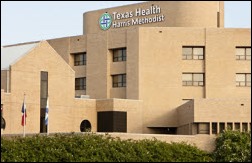
Texas Health Harris Methodist Hospital Hurst-Euless-Bedford, which surely must possess the longest and least-pronounceable hospital name in America, goes live on PCCI’s Pieces EMR-driven clinical surveillance and risk scoring system. PCCI is Parkland Center for Clinical Innovation, launched by Dallas-based Parkland Health & Hospital System in October 2012. Meanwhile, Parkland Memorial Hospital was finally deemed safe by CMS on Wednesday, which threatened in 2011 to cut off the hospital’s Medicare and Medicaid funding because of patient safety issues. The federal government said then that Parkland’s problems posed “an immediate and serious threat to patient health and safety,” forcing the hospital to spend $75 million on changes in the past two years.

Lubbock, TX hospitals launch the Llano Estacado Access Partners HIE, with the $80K startup costs underwritten by University Medical Center and Covenant Health System. 


Government and Politics

HHS releases a strategy for accelerating HIE in support of delivery and payment reform. Specific strategies and policies include:

  • Developing regulations and guidance on existing programs to enable the secure portability of health information
  • Advancing HIE among long-term, post-acute, behavioral health, and laboratory providers
  • Developing standards, including an interoperability and certification road map and HIT standards for quality measurement and improvement
  • Implementing incentive and reward-based policies to encourage providers to incrementally incremental adopt electronic HIE.

Innovation and Research

The Inova Translational Medicine Institute at Inova Fairfax Hospital (VA) and GNS Healthcare will develop and commercialize computer models for predicting risk of preterm live birth using next generation sequencing and EMR data.


Other
8-8-2013 3-06-54 PM

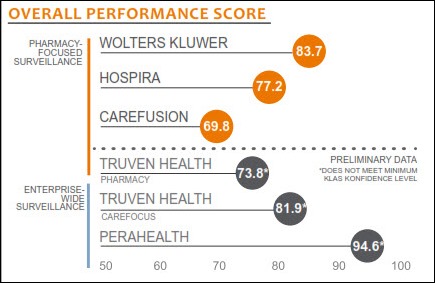
Seventy-nine percent of providers using clinical decision support surveillance software report that utilizing the technology has a moderate to significant impact on clinical outcomes, according to a KLAS report. Nearly all Epic, Hospira, and Wolters Kluwer users reported a moderate to significant impact on clinical outcomes, including reductions in length of stay, antibiotic usage, medication costs, and adverse reactions as well as better IV-to-PO conversions.

Highly rated with preliminary data in the KLAS report is PeraHealth, formerly Rothman Healthcare Corporation. I interviewed co-founder Michael Rothman in 2010 about what was then known as the Rothman Index, a real-time patient assessment and clinical decision support tool that readers found promising.
8-8-2013 7-20-18 PM

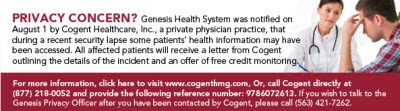
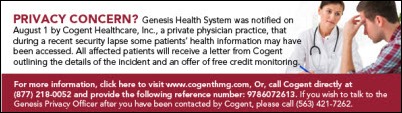
Genesis Health (IA) alerts several hundred patients that the transcription company used by Cogent Healthcare, its contract hospitalist provider, had exposed their information. It turns out it wasn’t just Genesis: Cogent now says India-based M2ComSys exposed information on 32,000 patients due to an incorrectly secured Web server. Cogent has since fired M2ComSys, which might have triggered confidence concerns initially given that all the photos on its home page still bear the stock photography watermark indicating that they apparently just stole the pictures instead of licensing them.

GlaxoSmithKline announces that packages of its vaccines will include two-dimension bar codes, which are smaller and can contain more information that linear bar codes. GSK will include lot number and expiration date so that hospitals and practices can log the information automatically in their EMRs.

Weird News Andy says he isn’t Captain Renault, but he is shocked – shocked – to read that CMS is months behind in testing data security for the health insurance exchanges that are supposed to be operational on October 1. CMS, having missed two June test dates, says it will instead test security on September 30, the day before the PPACA-mandated insurance exchanges are scheduled to be open for business.


Sponsor Updates

  • Encore Health Resources announces that its Activation Support Services has supported 28 go-lives in 22 hospitals involving more than 10,000 physicians in the past 18 months. Chief Medical Officer Judi Binderman, MD will present EHR go-live challenges in an August 15 HIStalk Webinar, “Full Speed Ahead: Creating Go-Live Success.”
  • Sharp HealthCare (CA) reports that its use of Caradigm’s Identity and Access Management suite has allowed it to grant system access requests in an average of one day compared to 21 days previously.
    NextGen Healthcare reseller ITelagen introduces UroWorx, a series of urology-focused templates for use with NextGen Ambulatory EHR.
  • Imprivata announces that its OneSign solution is the most widely deployed SSO product at hospitals using Siemens Soarian Clinicals.
  • CTG Health Solutions posts a white paper outlining the potential impact of big data on healthcare organizations.
  • TrustHCS joins Greenway Medical’s online marketplace to offer PrimeSUITE customers access to its coding and ICD-10-readiness solutions.
  • StrataRx releases details of its annual conference September 25-27 in Boston.
  • iHT2 interviews Rick MacCornack, chief systems integration office for Northwest Physicians Networks (WA), who will be a featured speaker at iHT2’s August 21-22 HIT Summit in Seattle.
  • Emdeon simplifies the new ACA operating rules and guidelines in its August newsletter.

EPtalk by Dr. Jayne

clip_image002

I can’t count the number of emails and text messages I received this week asking what I thought about Dr. Farzad Mostashari’s impending departure from ONC. Of all the names that are being thrown around as possible successors, none of them happen to share his impeccable taste in neckwear. I’m going to continue to appreciate each day that he remains on the job, although I suspect I will likely have to go into mourning when he leaves. I have a feeling we haven’t seen the end of his influence on health IT regardless of where he lands.

CMS issues a clarification on how multiple eligible professionals contributing to a patient portal may count a patient who views information. I’m glad they clarified that the patient does not have to specifically view information contributed by a particular provider for him/her to receive credit. Trying to track that level of data would truly be a chore.

Registration for ONC’s Third Annual Consumer Health IT Summit will begin on August 12. The event is September 16 and will include an announcement about a new eHealth campaign. How’s that for a teaser? The email from ONC was quite mysterious, and although it included a sentence missing the object of a preposition, it didn’t include a link to register or a specific website.

It may be old news, but I didn’t want to fail to mention the planned partnership to link LOINC and SNOMED. It should help with interoperability and hopefully will make things a little less difficult for those of us who have to hook everything up behind the scenes for hospitals and health systems.

Earlier this week one of my good friends mentioned he was frustrated with my health system’s lack of a patient portal. He can access the competitor’s portal but not ours and wanted to let me know. I was surprised since I helped install it almost four years ago. Turns out his physician is merely on staff at one of our hospitals rather than being employed by us, therefore uses a different EHR that may or may not have a portal live. We had a nice chat about the different kinds of community physicians and that their choice of EHR is largely determined by their employment status. It reminded me how obtuse the architecture of our healthcare delivery system is and how ridiculous it must seem to people working in more reasonably structured industries.

Pressure ulcers are a major problem in debilitated patients and ONC announced the winners of their mobile app challenge aimed at assisting nurses in documenting assessments and interventions for ulcer risk and prevention. The winning solution was WoundMAP PUMP from MobileHealthWare. It includes automatic graphing of wound size and time-lapse review of photos. The app is currently in beta testing.

clip_image003

I always like to hear about low-tech solutions and this story got my goat. Eco-Goats provides “environmentally friendly vegetation control,” which will be used at Washington’s Congressional Cemetery. Maybe I can get them to assist with my kudzu problem.


Contacts

Mr. H, Inga, Dr. Jayne, Dr. Gregg, Lt. Dan, Dr. Travis.

More news: HIStalk Practice, HIStalk Connect.

 smoking doc

Advisory Panel: Physician Order Cost Tools

August 8, 2013 Advisory Panel Comments Off on Advisory Panel: Physician Order Cost Tools

The HIStalk Advisory Panel is a group of hospital CIOs, hospital CMIOs, practicing physicians, and a few vendor executives who have volunteered to provide their thoughts on topical industry issues. I’ll seek their input every month or so on an important news developments and also ask the non-vendor members about their recent experience with vendors. E-mail me to suggest an issue for their consideration.

If you work for a hospital or practice, you are welcome to join the panel. I am grateful to the HIStalk Advisory Panel members for their help in making HIStalk better.

This question this time: What IT tools do you use to help physicians make cost-effective decisions as they are creating patient orders?


Although our system allows us to create rules that would give the provider options for less expensive selections, we do not use that feature. The pharmacy already has an aggressive substitution policy and the thought of more alerts makes us concerned. I’d love to hear how others are approaching this.


Not as much as we should. We try to build our order sets in a way that makes it easy to make cost-effective decisions. In particular, we try to make it easy to use best practices and make it difficult to order unnecessary tests and therapies. But we haven’t taken the path (yet) of displaying costs next to drug orders, for example.


We have not been very effective in bringing utilization management to the physician ordering workflow. We’ve tried with mixed success to incorporate best practices embedded in Zynx order sets into the standard content, but our physicians have many workarounds to avoid using condition-specific order sets. 


We embedded a link and query tool in Cerner PowerChart to our charge master that allows physicians to review costs of medications, tests, procedures, DME, etc., with their patients in the exam room. In our organization, the charge master reflects our actual charges and reimbursements from the national insurance company. In the course of re-competing our Cerner contract, I asked the EMR vendors to build a prototype equivalent of the Amazon shopping cart in the EMR. That is, as a physician completes the order, the total cost of the order accumulates in the upper right corner of the EMR.  RazorInsights developed a prototype demo that was very slick. None of the other vendors could do it in the timeframe of the re-compete. Of course, because of the laughable situation of the charge master in the US market, it’s not a very easy thing to pull off in a real setting. But at least we could have the functionality in the EMR, waiting for the industry to catch up.


None at the present.


Rank diagnostics and medication choices in increasing order of cost.


Right now, only thing I can say is they can use UpToDate to help make the right choice. We are looking into the option of displaying price and/or cost-effectiveness indicators in the ordering panels. And as we start improving our analytics capabilities so we can better understand variance, I assume we will start using more protocols/pathways to help ensure the right test is ordered for a specific condition.


Having the cost of the ordered test may help…duplicate tests alerts on CPOE, trend value of labs viewable in the clinical summary tile.


[From a vendor member] As a revenue cycle management company, we use various reports to show physicians where they are adequately being paid for the services they render and where there are gaps in the way they bill claims.  We do this retrospectively and not real time as coding is a matter of physician choice.


Our primary interventions to help physicians make cost-effective, appropriate decisions for patient care are actually 1) our actual hospital formularies themselves 2) antibiotic stewardship clinical decision support embedded in electronic orders for antibiotics at some facilities 3) evidence based order sets standardized by diagnosis at the facility level that are designed with high quality, high safety, high reliability and cost effectiveness in mind. Not overly fancy interventions, but they have been successful and really these are truly the basics that everyone should be doing in every hospital in the world (even laggard facilities out there that are still stuck on paper based provider ordering can be making an impact in all three of these areas).


None, yet. We’ve looked at a tool from Nuance for imaging orders–I can’t recall the name. We’re planning a rebuilding of order sets (and I’ll sleep when I’m dead) with fewer options and more guardrails to make it harder for practitioners to deviate from best evidence based practice when available.


Mainly the lab flow from the EHRs and the imaging studies from the  EHRs to avoid duplication of tests already performed.


There are efforts to incorporate the cost of various medications and treatments in the drop down menus. These also include the efficacy of the various treatments. In study after study, we find that the order of the options in the menus is significantly influential in determining the selection. At least if options were listed by least expensive to most expensive (and include efficacy) they would be useful guides to choices


We have been live with CPOE for several years and took the traditional approach of using various third party content providers to provide some insight into the clinicians thinking as they were attempting to build their own content. This helped us move along but didn’t assist in aligning cost to outcomes during their ordering process. We looked at opportunities prior to live hypothesizing on how CPOE would reduce re-tests but didn’t have much support to evaluate post live to assess any benefits realization. For us I think it is a matter of how much time do we have to spend looking back vs. focusing on the road ahead. Perhaps a good example of the unintended consequences of the things that you don’t do given other various obligations (MU2, I10, Bundle Payments, etc.).


There is little support to physicians to ensure / suggest more cost-effective treatments via the EHR / CPOE process. We do provide order sets that have some element of cost consciousness in them, but that it somewhat limited in scope.


Standard order sets. Descriptive information on order screens showing relative cost "$", "$$", or "$$$".


Comments Off on Advisory Panel: Physician Order Cost Tools

Morning Headlines 8/8/13

August 7, 2013 Headlines 2 Comments

Federal policymakers to develop EHR testing program for behavioral health, long-term care facilities

ONC will announce a voluntary program for the testing and certification of EHRs used by long-term care, post-acute care, and behavioral health providers.

Principles and Strategy for Accelerating Health Information Exchange

ONC releases the results of its March 2013 RFI on interoperability and health information exchanges, and publishes its broad, long-range strategy on accelerating HIE adoption.

4 potential candidates to replace Mostashari

Government Health IT speculates on ONC internal and external candidates that may take the helm after Farzad Mostashari, MD, moves on. The list includes current Principal Deputy National Coordinator and former Baylor Health CIO David Muntz and Beth Israel Deaconess Medical Center CIO John Halamka, MD.

The Pros and Cons of Electronic Health Records

This month’s issue of The Hospitalist explores the EHR cut-and-paste dilemma through a fictional clinical scenario told from a physician’s perspective.

The Skeptical Convert 8/7/13

The Curmudgeonly Diatribe

One reaction to the penetration of digital technology into medical practice is a type of editorial I hereby term the “curmudgeonly diatribe.” As the name suggests, it’s written by a senior practitioner who is displeased with something — or maybe everything — about the electronic medical record. The prototype is a JAMA piece  "Cut and Paste" but less clever examples have been appearing intermittently over the years. (My own experimental fiction trying to illustrate rather than just complain received mixed reviews).   

The latest such effort  was noted by Mr. HIStalk a few weeks ago, and it goes over ground much covered before (you can read part of it here). It’s well written enough, and not wrong on many specific factual statements, although I think it takes some cheap shots about distracting minutiae in EMRs that should in my view be minute enough to ignore.

But the main thrust of the article stems from a deep appreciation for a literary style of medical recordkeeping that the author remembers from back in his youth. He ends by making a plea for preservation of the kind of nuance an experienced clinician can bring to a case, as well as some sort of separation of what he sees as “the clinical record” from all of the data that clutter up the screen. 

OK, well whether the author may choose to claim curmudgeon status or not, I do, and I share his appreciation of nuance in medicine, especially in the context of evaluation of difficult diagnostic problems. And it’s true–the process of organizing a structured written report does help to organize and direct your thinking toward better conclusions. 

But it’s been obvious for decades that medical information had to be computerized in some way, and it’s obvious that much of the data in the medical record is granular enough to be collated and organized into database format. We had to have some sort of on-screen product. So here’s this big piece of complex software. And you don’t like things about it. You can imagine something better. OK, design it. 

Oh, but that’s not what you’re good at. The fact is that in medicine we’re mentally focused on discovering existing structures, not on creating new ones. Which is why big change in medicine tends to come from outside the clinical confines of the profession, either from basic scientific discoveries or new technological tools.  

And when we do change our internal structures, it tends to be by a gradual — well, gotta call it evolution — rather than wholesale redesign. The whole idea of laying out a new intellectual environment for ourselves has been problematic, not just because we aren’t trained in it, but at a basic intellectual level. We have to accept what our own methodology has done to us.

So outsiders had to design for us. And there’s a lot we don’t like about what we’ve got  But obviously there’s going to be improvement and redesign going on for the indefinite future, and input from specialty users will be critical.  

So sure, complain, but look ahead. And in the mean time, if you like to write and have language skills, there’s a lot you can do right now to improve things. Text is still critically needed –people will pick out coherent narrative and pay attention to it. Write good text, but get it in the system where people will read it. If that means reorganizing your traditional H&P format, APSO style, do it. 

But pay attention to the advantages the computer brings. You may not like the way it organizes things, but it sure does do it consistently. And what it organizes best is lists. You may not want to use them, but others will, and the experts have to police their accuracy. There are things you know that other people don’t. If you know that generic cardiac arrhythmia problem on the list  is WPW, change it.

But stop kidding yourself about the good old days. Back then any hospital had some talented people whose reports were incisive and informative. And a lot of others who just went through the motions. It’s just the same now. But at least now I can read what they are or aren’t saying. 

You can still be a curmudgeon. But be a useful one. Wow, good name for a column …

Robert D. Lafsky, MD is a gastroenterologist and internist in Lansdowne, VA.

Text Ads


RECENT COMMENTS

  1. The comments are true above. HIMSS is facing serious leadership and governance concerns, particularly involving the CEO and head of…

  2. "A valid concern..." Oh please. Everyone picks the software they like and the origin of that software is an afterthought.…

  3. I don't disagree with you completely, but to take the counterpoint: there is plenty of precedent for saying "this *entire…

  4. Teens will certainly find a way to use their social media apps of choice. I'm not in favor of the…

Founding Sponsors


Platinum Sponsors


Gold Sponsors


RSS Webinars

  • An error has occurred, which probably means the feed is down. Try again later.