Recent Articles:

Readers Write: The Chasm Between the Vision and Reality of Big Data

March 20, 2013 Readers Write 2 Comments

The Chasm Between the Vision and Reality of Big Data
By Ed Park

3-20-2013 4-35-43 PM

I attended the Bloomberg “Big Data” Conference in DC on Thursday, March 14. It was awesome. Folks from big business, big government, and beyond attended. Everyone was talking about the perils and opportunities of data – big data. As one executive creatively stated, “Data is the new oil, and what we want is the gold.”

I was lucky enough to take part in the healthcare panel. In short, my point of view is that healthcare desperately needs to attack and improve its many inefficiencies — much like how Walmart and FedEx have done — before it can successfully leverage big data to drive clinical enhancements. If we can’t get the simple stuff right— ensuring we follow up on lab orders, getting through Meaningful Use, etc. – we have no hope of getting to all of the great things we know are possible.

Athenahealth has brought insight and analysis to the way insurance claims are processed to ensure that the creation of claims and billing in general is streamlined. While this concept might seem simple, it has a powerful trickle effect. If physician practices can get claims and billing in order, they gain valuable time and resources to focus on care.

I tried to talk about the power of data in a tangible way by approaching the conversation from a “first things first” perspective. I tried my best to detail how data can be used to support primary care physicians’ workflow by selectively involving mid-level practitioners and administrators to take on tasks that doctors shouldn’t be doing. This in turn allows doctors to be fully present with patients.

To the dream-filled audience who perhaps thought the time for robot-driven care delivery was near, my goal was to keep it real by saying there is “no greater distance than the chasm between the promise of big data and where we are today.” The applications that healthcare needs to focus on first when it comes to big data are practical things: being more efficient, making administrative process fail-proof, identifying patient populations that are the most sick and most expensive, understanding what’s working and what’s not in the provider workflow, understanding the way patients act (or don’t act) based on a doctor’s order.

With this focus (to be more efficient), in time we’ll be better able to open the doors for healthcare to tackle data-driven clinical intelligence and improvement.

The future of big data in healthcare is bright. There are grand opportunities for patients and the industry at large as vendors, government, and health systems begin to embrace the idea of and build an infrastructure to support broad-based data liquidity. It is from this data openness that patients and providers will be empowered to take control of information to direct the health-related decisions they make.

It was mentioned at the conference that big data is not new, but what is new is “big, fat, messy, distributed data.” The challenge and opportunity is to bring together data to drive change based on evidence, with confidence.

Ed Park is chief operating officer of athenahealth of Watertown, MA.

Readers Write: Improving Patient Outcomes with Real-Time Decision Support and Analytics in the “Connected Home”

March 20, 2013 Readers Write Comments Off on Readers Write: Improving Patient Outcomes with Real-Time Decision Support and Analytics in the “Connected Home”

Improving Patient Outcomes with Real-Time Decision Support and Analytics in the “Connected Home”
By Fauzia Khan, MD, FCAP

Over the past decade, technology innovations have continually pushed the boundaries in the healthcare industry. Patient information in the hospital and ambulatory settings is now easily accessible through EHR/PHR systems and sophisticated Health Information Exchanges (HIE). With the addition of clinical decision support (CDS) and real-time analytics, clinicians are empowered to develop the best treatment plans for each patient, using intelligent and actionable information to improve care quality while reducing costs.

The mandate to embrace these technology innovations has been driven by federal government regulations, as well as disruption of the fee-for-service model. Although we have just barely embraced this model in the clinical world, what if these technology platforms could also be effectively used in the home setting?

With clinical decision support, patients could take a more active role in their own care. If the last decade was focused on inpatient, outpatient, and ambulatory data integration and interoperability, the next several years should focus on creating the “Connected Home.”

Data at the point of care in the home should be actionable, comprehensive, and increasingly accessible to patients, physicians, and payers. Whether that data is delivered through an HIE, EHR, or a smart device, patient data needs to be accurately captured and widely available, which will allow for the best healthcare decisions to be made. In time, once we move treatment closer to the individual, this will close crucial gaps, provide greater visibility, and accelerate decisions that lead to better outcomes.

All over the world, people want to be involved in their own care while remaining in their homes. Patients can receive attentive care in a comfortable environment, which ultimately improves their quality of life. If successful, home management will result in fewer urgent medical interactions and a reduction in hospital visits. In a recent Wall Street Journal story, the article demonstrated how the hospital-at-home concept is helping to take care of sick patients in the comfort of their homes.

With mobile technologies, ubiquitous Internet, and smart devices, the boundaries between home, hospital, and ambulatory and long-term care facilities will blur. Today, once data is captured through EHR, HIE, PHR etc., the next step is to make that information actionable.

With patient-specific and real-time information accessible at the point of care (the definition of which will also change), physicians could better manage common chronic conditions and patient populations. In addition to clinical decision support (CDS), another necessary layer to develop would be around analytics. CDS would empower clinicians to make more informed, evidence-based decisions, while real-time analytics would allow clinicians to view and analyze at-risk populations from both a preventative and interventional perspective. Analyzing patient populations and outcomes provides vital information for physicians that can significantly impact patients by triggering earlier interventions, reducing avoidable errors, and improving overall health outcomes.

A fully realized “Connected Home” is still in development, but it is certainly within reach. As we strive for more integrated technologies across hospitals and lab systems, we need to also spend our resources on developing a home network that can provide evidence-based data and real-time alerts to providers, patients, physicians, and even network managers. Once this integration takes place, the healthcare industry can focus its attention where it belongs—on better managing patients and populations.

Fauzia Khan, MD, FCAP is chief medical officer and co-founder of Alere Analytics.

Comments Off on Readers Write: Improving Patient Outcomes with Real-Time Decision Support and Analytics in the “Connected Home”

Readers Write: Vendors – Welcome to the World of HIPAA

March 20, 2013 Readers Write 4 Comments

Vendors – Welcome to the World of HIPAA
By Frank Poggio

For the last decade or so, vendors were on the fringes of the HIPAA regulations. Just sign a somewhat innocuous BA agreement and let the provider worry about the details of compliance.

As of January of this year, the Office for Civil Rights (OCR) formally “invited” vendors into the HIPAA labyrinth of rules and regulations. In the new 500-page HIPAA Omnibus Final Rule, Covered Entities (providers) are required to send out new Business Associate agreements to their suppliers and vendors. You should get yours soon, and as an IT supplier, you will see several new requirements.

The biggest one is that system vendors that touch Protected Health Information (PHI) in any way must agree to commit to achieving full compliance with HIPAA rules by September 23, 2013. Touching means  coming in contact with — whether you create, capture, edit, change, store, pass on, reformat, convert, etc. a single piece of PHI even for even one patient. The HIPAA rules do not differentiate between full EHR systems, EHR modules, application type, middleware, report tools, conversion, or archive tools, etc. Basically, if your system touches it, you own it.

As an extreme example, say your software does only parking lot management for a hospital. If you somehow capture any personal ID data, your firm will have to meet HIPAA compliance.

A more realistic example is the typical analytics tool that takes detailed information, aggregates it, and generates only summary, management, or trend reports. Your analytical system (such as grabbing a UB bill file and calculating averages) may never report out or allow access to any specific patient PHI, but since you received the data on a case-by-case basis even though you may have stripped out the PHI before you stored the records, your firm and software must meet HIPAA compliance.

The Final Rule is clear that if you touch PHI, even if you don’t look at it, you must comply. There are no exemptions for encrypted data, servers in locked cabinets, or remote cloud systems.

As a vendor, what must you do to be HIPAA compliant? Your firm must supply documentation of:

  1. Policies addressing HIPAA privacy and security issues
  2. Privacy and security procedures
  3. Workforce HIPAA training
  4. HIPAA-compliant workflows
  5. Compliance for an audit or data breach investigation
  6. HIPAA compliance of any subcontractors you use

Your clients may require an independent audit of the above at your expense as a requirement for you to continue as their vendor. If you do not provide it, their legal counsel may advise them to replace your system with that of a competitor. Remember, the above must be in place before September 23, 2013. Lastly, if you or your provider client has a data breach and OCR finds you lacking in compliance, you could be fined $1.5million per breach.

As I noted in a past HIStalk Readers Write piece, ONC in Stage 2 “exempted” EHR Module vendors from testing on the privacy and security criteria (if the vendor so chose), but they did state that the vendor must still be HIPAA compliant. Which means, implement the ONC privacy and security criteria.

Welcome to the wonderful world of HIPAA.

Frank Poggio is president of The Kelzon Group.

Morning Headlines 3/20/13

March 19, 2013 Headlines Comments Off on Morning Headlines 3/20/13

Boulder Community Hospital computer system crash frustrates patients

Boulder Community Hospital’s Meditech system has been down since last Tuesday and is not expected to return to a fully operational state until this Friday. No official word on what caused the outage or what is delaying the return to service. All users across the facility are on paper.

Health System Implements new Electronic Medical Records on March 18th

111-bed Beloit Memorial Hospital goes live on Cerner this week.

Lifespan Takes Major Step to Transform Health Care Delivery

Five-hospital system Lifespan, Rhode Island’s largest health care system, selects Epic to bring all of its facilities onto a single system. Implementation will start this spring, conclude in 2015, and cost $90 million.

KLAS Diagnoses EMR Usability Concerns

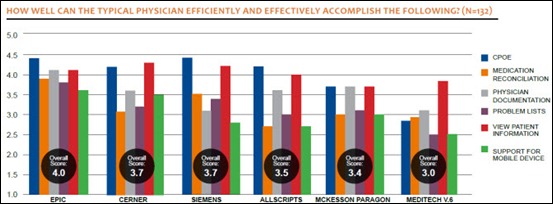
KLAS releases a report on acute EMR usability, measuring specific Meaningful Use related functions such as CPOE, problem list, and physician documentation. No vendor excelled, but Cerner and Epic fared best.

Comments Off on Morning Headlines 3/20/13

News 3/20/13

March 19, 2013 News 8 Comments

Top News

3-19-2013 7-54-09 PM

Cerner acquires Labotix Automation Inc., which offers specimen handling and transport systems for clinical labs.


Reader Comments

From Katie: “Re: market research companies. We as a vendor are interested in gathering information from our target audience of hospital CIOs and HIM leadership. Do you have any suggestions of anyone with market research expertise and connections in these areas?” I always prefer to open these questions up to readers so I don’t miss anybody. Leave a comment or e-mail me and I will forward to Katie.
3-19-2013 6-56-19 PM

From Shannon Vogel: “Re: EHR incentive payments as taxable income. I thought the IRS guidance may be of interest to your readers.” Thanks to Shannon, who is HIT director of the Texas Medical Association, for providing this information for those docs who are probably less than elated to see 1099s in the mail for their Meaningful Use payouts:

EHR Incentive Payments are Taxable Income

Physicians should have received an IRS Form 1099 from the Centers for Medicare & Medicaid Services for the incentive payments. The forms had to be postmarked by Jan. 31 and were mailed to  addresses on file with Medicare. If you did not receive your Form 1099, you may request a duplicate copy by calling (888) 734-6433, which will take you through a series of prompts (1-1-1-1-2). You will be asked for your National Provider Identifier.   Physicians in the Medicaid EHR incentive program should have received a Form 1099 from their state Medicaid office.  The Internal Revenue Service issued guidance on the EHR incentive payments that may help in tax preparation, especially if payments were assigned to your group or hospital. 

3-19-2013 6-53-55 PM

From Don: “Re: San Diego. Here’s hoping we can bring HIMSS back to San Diego where it belongs! Once the pompous mayor here concedes defeat of his push to renegotiate the hotel room tax, construction can begin. Maybe see you all back in The Gaslamp District in 2016 or 2017. Bring your finest shoe-wear and cut some rug at the grand ball room at The Hotel del Coronado.” San Diego gets the green light for a $520 million expansion of its convention center, which will take about three years. Now it’s up to HIMSS. San Diego, Seattle, and San Francisco are my favorite cities of those I’ve visited because they are on the water, have interesting terrain, enjoy mostly pleasant weather, and are walkable.


HIStalk Announcements and Requests

It’s last call to fill out my quick reader survey. I do it just once a year right after the HIMSS conference. Pretty much every change you’ve seen over my 10 years (hopefully more good than bad) came from survey comments. Inga gets nervous this time of year because after I’ve digested the hundreds of responses, I make our to-do list.


Acquisitions, Funding, Business, and Stock
3-19-2013 7-55-29 PM

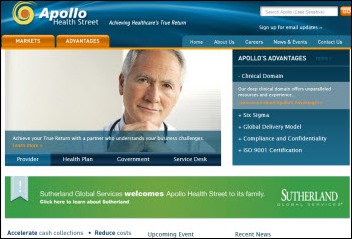
Sutherland Global Services completes its acquisition of Apollo Health Street, the technology subsidiary of India-based hospital operator Apollo Hospitals Group.

3-19-2013 7-56-15 PM

Emdeon reports Q4 revenues of $300.7 million, up six percent from a year ago, and a net loss of $10 million vs. $70 million.
3-19-2013 7-57-08 PM

Tenet subsidiary Conifer Health Solutions, which offers revenue cycle solutions, breaks ground on its new headquarters construction in Frisco, TX. The company acquired Dell’s revenue cycle business in November 2012, increasing the annual patient revenue it manages to $21 billion.


Sales

Maricopa Integrated Health System (AZ) selects HP Data Protector and HP StoreOnce for data protection and disaster recovery.

3-19-2013 7-58-42 PM

Providence Health & Service will deploy Health Catalyst’s data warehouse and analytic accelerators across its 32-hospital system.

Canopy Partners (NC) chooses the MModal Catalyst for Radiology platform for reporting and analytics.


People
3-19-2013 6-02-02 PM

PatientSafe Solutions names Tim Needham (Rubbermaid Health) VP of its western region.

3-19-2013 6-03-15 PM

Long-term care provider CenterLight Health System (NY) hires William C. Pelzar (Health Dialog) as its first CIO.

3-19-2013 7-21-03 PM

Anita Samarth, Clinovations president and co-founder, is named by the Washington Business Journals as one of the top 25 Minority Business Leaders of 2013.


Announcements and Implementations

Delaware HIN and Kansas HIN validate interoperability by exchange of patient records via Direct messaging using solutions from the Allied HIE Company and ICA’s Direct Messaging and Exchange products.

Beth Israel Deaconess Medical Center (MA) deploys CommVault Simpana for data backup and security.

3-19-2013 6-05-33 PM

Beloit Health System (WI) goes live this week on Cerner.

Clinithink releases an online version of CliX, its natural language processing engine.

3-19-2013 6-29-49 PM

Lifespan (RI) announces its plans to redesign its delivery model that includes implementing Epic at a cost of $90 million.

AHIMA calls for nominations for its Grace Award that recognizes outstanding achievement in health information management. Evaluation criteria include how organizations contribute to a patient-centered model of care, advance the use of electronic health records, and integrate HIM throughout the workplace.


Government and Politics
3-19-2013 3-10-14 PM

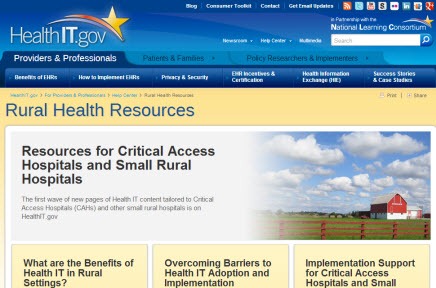
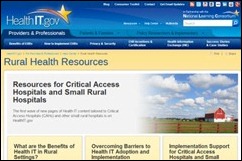
ONC launches Web pages to support its goal of having 1,000 critical access and rural hospitals achieve MU by the end of 2014.


Technology

Healthcare IT research funded by AHRQ has helped Partners in Health and the Regenstrief Institute develop an open EMR that supports healthcare initiatives in developing countries.

Seven Tennessee school systems receive $3 million in HRSA grants to implement telemedicine programs so that school nurses can connect with doctors to diagnose student problems, but the Franklin County school board delays its approval to start the program, citing liability concerns.


Other
3-19-2013 3-26-11 PM

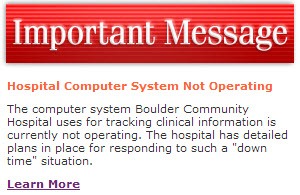
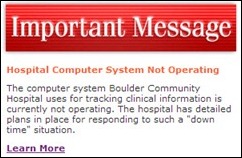
Boulder Community Hospital (CO) reports that its Meditech system has been down since last week and is not expected to be operational until the end of this week. Officials say the hospital has “detailed plans” for going back to manual operations. The outage has caused delays in scheduling non-critical diagnostic tests and distributing routine test results, but essential services are still being provided. The hospital offered no explanation of the problem. An anonymous physician said the backup response is “not an organized plan,” while a patient told the local newspaper, “If they can’t keep their computer system running, how can we trust them to perform surgery?”
3-19-2013 3-31-57 PM

A KLAS report finds that no acute care EMR vendor excels at usability, though Epic and Cerner are best poised to support deep clinical usage. Providers assume the bulk of responsibility for making EMRs usable and 86 percent say that configuring their EMR solution required moderate to extensive effort. Stage 2 MU, with its increased requirements for physician documentation, medication reconciliation, and problem lists, will magnify current EMR challenges.

EMR vendor Lawrence Melrose Medical Record, Inc. notifies the New Hampshire Attorney General’s office of a data breach that has potentially compromised the PHI of two state residents.
3-19-2013 3-51-36 PM

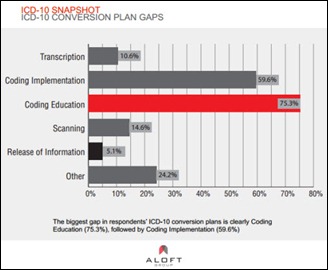
A small study of healthcare professionals finds that 75 percent of organizations are 25 percent or less complete with the ICD-10 transition process. Coding education and implementation are the biggest conversion gaps. Almost half the respondents express some concern about being ready in time to meet the October 1, 2014 deadline.
3-19-2013 6-19-47 PM

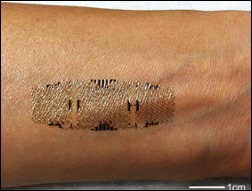
Weird News Andy finds this “more than an inkling.” Electronic sensors printed directly on the skin, aka “electronic tattoos,” can monitor health signs such as temperature and hydration status. One potential medical use would be to stream surgical wound information wirelessly to providers.

Strange: a nurse from India working in an Australian hospital just a month after finishing nursing school is fired and banned from practice after giving a 79-year-old patient the contents of a bottle marked as containing heart pills that actually held liquid detergent the patient had been using to clean his dentures. The nurse, who argued that he followed four of five medication administration rules, was ordered by the nursing board to take an English competency test, which he failed in six attempts.


Sponsor Updates

  • Glenn Focht, MD of Boston Children’s Hospital spoke at a private reception during the AMGA conference in Orlando hosted by Ingenious Med.
  • An EDCO Health Information Solutions Webinar profiles two McKesson Patient Folder facilities that enhanced their scanning processes using EDCO technology.
  • Industrial Alliance Insurance and Financial Services signs an agreement with TELUS Health to allow certain healthcare providers to use TELUS Health’s eClaims Web portal service.
  • ThedaCare (WI) selects Wolters Kluwer ProVation MD Cardiology for its catheterization labs at Appleton Medical Center and Theda Clark Medical Center.
  • Ping Identity opens registration for its Cloud Identity Summit 2013 July 8-12 in Napa, CA.
  • Emdeon releases details on its upcoming Webinars.
  • Prognosis offers a four-part series on strategies for MU success.
  • Hayes Management Consulting commemorates its 20th anniversary with an updated website.
  • Nuesoft hosts a March 27 Webinar on best practices for medical billing.
  • Jason Fortin, a senior advisor with Impact Advisors, discusses the need for smaller practices to select an EHR vendor that is capable of achieving Stage 2 MU certification.
  • The Tampa Bay Business Journal names MedHOK the winner of its 2013 BizTech Innovation of the Year Award.
  • Surgical Information Systems CTO Eric Nilsson offers a primer on how to set up a clinical quality reporting program.  
  • Merge Healthcare announces that more than 650 orthopedic surgeons at over 50 practices already have or are in the process of implementing Merge OrthoPACS.
  • ChartWise:CDI posts its 2013 conference schedule.
  • SiliconMesa partners with DrFirst to provide Rcopia e-prescribing functionality to customers running the SiliconMesa EHR and PM system.
  • Craneware announces its support of the Alzheimer’s Association and Alzheimer Scotland as part of its 2013 Craneware Cares corporate responsibility program.

Contacts

Mr. H, Inga, Dr. Jayne, Dr. Gregg, Lt. Dan, Dr. Travis.

More news: HIStalk Practice, HIStalk Connect.

Morning Headlines 3/19/13

March 18, 2013 Headlines 3 Comments

Cerner Has Acquired Labotix Automation Inc.

Cerner announces the acquisition of Labotix Automation Inc., a lab automation solutions vendor for the clinical labs. Financial details of the deal were not disclosed.

EHR vendor to report HIPAA breach

Lawrence Melrose Medical Electronic Record Inc., in Melrose, Mass. will notify the Office for Civil Rights of a data breach after an employee improperly accessed patients’ electronic medical records.

AHCJ unveils hospitalinspections.org

The Association of Health Care Journalists today launches a website to provide a free, searchable database of federal inspection reports for hospitals around the nation following the digital release of the reports by CMS. The Joint Commission has been petitioned to follow suit, but has so far rejected requests for this information, saying disclosure would compromise its efforts to improve hospital quality.

athenahealth Delivers 96 Percent Meaningful Use Attestation Rate Among Participating Providers

athenahealth announces that 96 percent of the company’s participating providers successfully attested for 2012 Medicare Meaningful Use Stage 1, Year 1, more than double the industry average.

Curbside Consult with Dr. Jayne 3/18/13

March 18, 2013 Dr. Jayne 6 Comments

clip_image002

I got a laugh yesterday when visiting the Southwest Airlines website. In honor of St. Patrick’s Day, they revamped it with a green color scheme and leprechaun-friendly prose. They’re one of my favorite airlines, not only because they are consistently on time and predictable, but also because of their corporate culture.

Culture has been in the news recently with Yahoo’s recent change in its work-from-home policy and the resulting backlash. In many ways I agree with Yahoo CEO Marissa Mayer that having employees in the office is important. As someone who has worked both in a cube farm and remotely, there are challenges to not being in physical proximity to co-workers. There is a loss of ability to read non-verbal communications and it’s hard to build workplace trust with co-workers you’ve never seen or met. My biggest issue with many people working from home is the risk of multitasking – it’s all too tempting to multitask in ways that you would never do in the office proper. I did really enjoy working remotely, however, and was a lot more productive than I was in the office because I could focus and work on complex problems without interruption. I can see both sides of the argument.

A recent piece on the corporate culture at Google illustrated their efforts to keep employees happy when coming to the office. Themed conference rooms, “design your own desk” offices, and free meals join subsidized massage therapy at the office as perks. (I’m not too sure about the claim of free weekly eyebrow shaping, but to each his or her own.) The idea at Google is to make it a place that people want to come to rather than forcing workers to the office each day. The comments on the Google piece were pretty fun to read as well and several gave me a pretty good chuckle.

Comparing a place like Google to the average healthcare IT workplace is like comparing apples to oranges. Unless you’re at a progressive vendor with a lot of money and a culture of innovation, you’re probably making do with what you have and with few perks. Being in the non-profit hospital space, I can definitely attest to making do with very little. My current office is an abandoned conference room, which was taken out of service because the conference table didn’t really fit and also because the ventilation is sketchy at best. Being in a cube at the time, I snapped it up simply to have a door and a place where I could go to have private conversations about disciplining physicians or to just sit in silence for five minutes to get my head together before a day full of meetings. I had to go to the hospital’s “dead furniture room” to pick out a desk that is decidedly from the Reagan administration.

Our ambulatory division is housed in the former billing office and has very few conference rooms, which makes it difficult to have meetings. Even though we’re sometimes crammed in and bumping elbows, we have a rule that if you’re in the building, you’re expected to attend in person. We have a group of extremely cohesive managers and I can’t help but think that our meeting culture helps keep that team strong.

In contrast, our inpatient division is housed in a brand new building that was designed with functional layout in mind. Although the cubes are short and the floor plan is open, there are scores of meeting rooms (from small two- or three-person huddle spaces to massive training suites) which allow for both privacy and collaboration. Despite this, the office culture still doesn’t encourage workers who are physically in the building to attend meetings in person. Sometimes no rooms are booked for meetings, which leads to annoying conference call behaviors and rampant multitasking, not to mention entirely too many “can you repeat that” type statements. There’s also nothing worse than being on a call with the person in the cube next to you when you hear their voice through the air and then hear it on the phone seconds later due to the conference line delay. People are so busy on instant messenger and doing multiple projects that they can’t focus.

Having worked in a variety of environments, I know that getting people in a room together would be beneficial. Alas, it’s not my division, however, so all I can offer is my suggestions and my support to the leadership should they decide to make people start showing up. If they’re not going to make them come to meetings, they might as well let them work remotely and cut the office overhead.

Regardless of division, our employer no longer provides coffee or any other amenities in the office. We’ve turned into people who hoard spare forks and ketchup packets just in case we forget to bring them from home. There aren’t even cups to offer water to visitors, and don’t get me started on the “Coffee Club” vs. “Keurig On Desk” cliques. We’re not on the hospital campus, so there’s no cafeteria and we’re at least 15 minutes from the nearest restaurant, so brown-bagging is a must. I sent the Google article to a couple of colleagues and the responses were generally of the head-shaking variety.

Whether you’re a vendor or an end-user, how’s your workplace culture? Leave a comment and let us know.

Print

E-mail Dr. Jayne.

Morning Headlines 3/18/13

March 17, 2013 Headlines Comments Off on Morning Headlines 3/18/13

House Republicans Question FDA on Mobile Medical Software: Taxes

FDA representatives will appear on Capitol Hill this week to answer for a delay in publishing a regulatory policy for mobile health apps. Additionally, House members want to know if the FDA plans to regulate smartphones as medical devices as has recently been speculated since they would be running FDA regulated health apps.

HIMSS13 with Dodge Communications: Our team picks the best and worst in the exhibit hall

Dodge Communications publishes its best and worst of HIMSS13. Voalte takes worst dressed, Cerner takes best in show. Alere, Caradigm, Greenway, Onyx, McKesson, SCI, and InterSystems also get mentions.

Class Calls IRS Rude, Crude and Abusive

A class action lawsuit filed against the IRS accuses agents of unlawfully seizing more than 60 million medical records from a HIPAA-covered entity in southern California following a raid in March 2011. The suit seeks $25,000 per violation. Agents are also accused of unlawfully seizing and searching employee cell phones without regard to privacy rights, ordering pizza and soda, and using the facility’s multimedia system to watch the NCAA tournament.

Making "Meaningful Use" of HHS Data

Social Health Insights publishes a visualization of Meaningful Use attestation data in what it calls its first of many data mash-ups to come.

Comments Off on Morning Headlines 3/18/13

Monday Morning Update 3/18/13

March 16, 2013 News 9 Comments

From E2M: “Re: enterprise to mobile. To make CPOE, portal, or other EHR component mobile, you either build it from scratch or build a new set of apps on top of the existing infrastructure. Capriza allows anyone without any programming skill to transfer an existing Web-based enterprise app to mobile in minutes.” Maybe someone will give it a try and report back. It seems pretty cool – you create what looks like a screen scrape type mobile front end to an existing web app by just dragging and adjusting.

From Spinnaker: “Re: Epic. I heard a rumor at HIMSS that they’ve signed some international deals, two more hospitals in the UK and one in Australia. Heard anything?” I haven’t heard anything recently, but someone can probably confirm. Usually someone attending an Epic class in Verona can verify that the new customers had people there.

3-16-2013 3-57-24 PM

From Pointy Ears: “Re: another athenahealth executive headed to CareCloud? Tom Cady, VP of professional services, has left.” Unverified, but reported by a couple of readers.

It’s time for my annual reader survey. I use it to plan the next year of HIStalk, so it would help me a lot if you could answer 10 questions.  

Thanks to the following sponsors, new and renewing, that recently supported HIStalk, HIStalk Practice, and HIStalk Connect. Click a logo for more information.

3-16-2013 3-27-59 PM
3-16-2013 3-41-42 PM
3-16-2013 3-31-43 PM
3-16-2013 3-08-06 PM
3-16-2013 3-19-30 PM
3-16-2013 3-33-22 PM
3-16-2013 3-42-28 PM
3-16-2013 3-27-07 PM
3-16-2013 3-29-35 PM
3-16-2013 3-40-44 PM
3-16-2013 3-34-54 PM
3-16-2013 3-23-21 PM
3-16-2013 3-20-16 PM
3-16-2013 3-10-58 PM
3-16-2013 3-09-58 PM
3-16-2013 3-22-36 PM
3-16-2013 3-36-30 PM
3-16-2013 3-08-58 PM
3-16-2013 3-38-32 PM
3-16-2013 3-21-02 PM
3-16-2013 3-43-37 PM
3-16-2013 3-35-44 PM
3-16-2013 3-28-42 PM
3-16-2013 3-25-32 PM
3-16-2013 3-32-32 PM
3-16-2013 3-39-52 PM
3-16-2013 3-21-49 PM
3-16-2013 3-37-18 PM
3-16-2013 3-30-55 PM
3-16-2013 3-11-58 PM
3-16-2013 3-14-21 PM
3-16-2013 3-15-57 PM
3-16-2013 3-13-26 PM
3-16-2013 3-16-57 PM
3-16-2013 3-18-36 PM

3-15-2013 7-33-48 PM

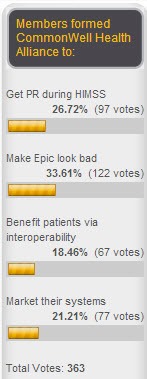
Fewer than one in five poll respondents think CommonWell was formed with the primary purpose of benefiting patients. New poll to your right: how has your perception of Allscripts changed since Paul Black took over?

3-15-2013 8-21-16 PM

Welcome to new HIStalk Platinum sponsor Quantros. The company offers SaaS-based healthcare quality and safety performance improvement systems with over 2,000 healthcare facilities as customers (Kaiser, NYU Langone, Ochsner, Scott & White, Exempla, etc.)Products include SRM safety and risk management (safety events, feedback, disruptive events, claims, MEDMARX ADE date repository, PSO submission); IRIS Executive (enterprise-wide patient safety system); ACE (continuous compliance readiness); and RRM regulatory reporting (Meaningful Use reporting, core measures, CM reporting). Quantros helps providers improve quality and safety by empowering all levels with actionable intelligence to improve outcomes and reduce risk. Thanks to Quantros for supporting HIStalk.

Here’s a new Quantros video featuring CEO Keith Hagen honoring National Patient Safety Week, which ironically was overshadowed by the overlapping HIMSS conference.

3-15-2013 8-06-48 PM 3-15-2013 8-06-16 PM

Suzanne Bledsoe and Wes Scruggs purchase oncology IT consulting firm Aptium Oncology from AstraZeneca PLC.

3-15-2013 8-09-13 PM

Here’s a nice shot of Dr. Gregg playing Quipstar at the Medicomp booth at the HIMSS conference.

Dodge Communications posts its much-awaited snarky review of the HIMSS exhibit hall and surrounding areas (like why so many of you were buying sushi from that sketchy kiosk out in the hall).

I like the Meaningful Use attestation reports created by Wells Fargo Securities. Jamie Stockton, who is in Wells Fargo’s HIT equity research group and creates the report,  e-mailed to say he’ll add any interested provider or vendor to his distribution list if you send him an e-mail.

3-15-2013 9-04-19 PM

Speaking of attestation data, Social Health Insights, which did the MappyHealth Twitter health term trend monitoring system,  did a visualization of Medicare hospitals that have attested to Meaningful Use that also includes their HCAHPS scores. Make sure to scroll down since a lot of information about individual hospitals has been mashed up.

A House committee will ask the FDA in hearings this week about any plans it has to regulate  or tax mobile health apps.

Microsoft lists software products supporting Windows 8 that were shown at the HIMSS conference.

Epocrates shareholder Goldman Sachs sells its remaining stake in the company for $32.5 million following its acquisition by athenahealth. Goldman bought $40 million worth of shares in 2007 and sold them for a total of $36.5 million after its plan to create an institutional investor research firm failed.

Weird News Andy has a solution for this problem: move to Australia. A Serbian woman sees images upside down due to a rare brain condition.

Vince’s HIS-tory this week begins the tale of Meditech. He would appreciate your nuggets and ephemera if you lived the company’s history.


Contacts

Mr. H, Inga, Dr. Jayne, Dr. Gregg, Lt. Dan, Dr. Travis.

More news: HIStalk Practice, HIStalk Connect.

Readers Write: Not Safer!

March 15, 2013 Readers Write 7 Comments

Not Safer!
By Ruth Bowen, MBA, CPHQ, CPHIMS

I’m an HIT professional in Philadelphia who lives in an area that supports multiple competing health networks. I am old enough to have a robust problem history and to have records that span multiple networks.

Having worked in this industry for 30 years, I am definitely a believer in the potential of EMR systems. But frankly, I am less safe.

All of my outpatient providers went from paper to a digital record. There wasn’t an opportunity for a conversion. Each of these practice systems took a different approach in terms of what data would initially populate the EMR. There are no standards here, only guidelines. There can be significant expense in terms of abstracting data from a paper record. Much of the data available in my paper records has just disappeared.

In one case, the paper record was simply scanned. I arrived for a visit with no problem list and no medication history and was treated as a new patient. The practice was dependent on my memory of events over 10+ years. In other cases, there was a subset of data, but in each case, most of the history was unavailable. The paper chart may have been scanned, but physicians do not page through images of paper record, so I consider the information unusable.

None of these EMR implementations has an interface from the laboratory system I use. In most cases, a subset of available laboratory results is transcribed into the electronic record. Although the physician also has a copy of the current paper lab results at the time of visit, the history of results in the EMR is incomplete and likely has transcription errors.

One of my physicians used to manually maintain a paper flowsheet for a subset of results significant to his specialty. That history is gone. His system doesn’t support the view he formerly had and there is no historical data that could populate a flowsheet or graph even if the capability was available.

The result is an increased personal safety risk related to multiple EMRs that are incomplete, each with a different subset of data. As it turns out, my responsibility in terms of patient engagement is record reconciliation at the time of visit, a reconciliation that is totally dependent on my memory. Not, I think, what ONC intended.

Ruth Bowen, MBA, CPHQ, CPHIMS is an independent HIT professional in Chesterbrook, PA.

Time Capsule: Conduct a Survey, Game the Results: If the Results are Important, Somebody’s Cheating

March 15, 2013 Time Capsule 3 Comments

I wrote weekly editorials for a boutique industry newsletter for several years, anxious for both audience and income. I learned a lot about coming up with ideas for the weekly grind, trying to be simultaneously opinionated and entertaining in a few hundred words, and not sleeping much because I was working all the time. They’re fun to read as a look back at what was important then (and often still important now).

I wrote this piece in July 2008.

Conduct a Survey, Game the Results: If the Results are Important, Somebody’s Cheating
By Mr. HIStalk

125x125_2nd_Circle

My doctor is part of a big medical center’s group practice. I noticed a big poster on the wall last week. It explains to patients in great detail how to fill out a patient satisfaction survey. It is helpful, especially if you want to give the office a perfect score (that’s the only option shown).

It’s about as heavy-handed as those car dealers whose signs urge, “See the manager if we didn’t earn all fives on your satisfaction survey.” Sometimes they even offer a free oil change if you agree to give them a perfect score. Strange: it’s their own survey, but they’re still encouraging customers to lie about being satisfied. Why bother to conduct a survey if you’re going to tamper with the results, especially if you’re only fooling yourself?

Places I’ve worked did employee satisfaction or communication surveys. Sounds great in the HR office, but in the trenches, executives were begging and threatening to get good marks.

All that led me to think about seemingly objective healthcare IT information sources that really aren’t. If the results are important, you can bet someone is cheating.

I went on a site visit for clinical systems awhile back. I knew the hospital was threatening to kick the vendor out and sue them, but everybody seemed manically happy. For good reason, it turned out: at least one of them was a vendor’s employee wearing a hospital badge. I also accidentally discovered that the hospital CEO had sent a threatening letter to the key contact, warning him not to say anything negative that would make the vendor mad (I saw it on his desk).

I’ve stopped reading free industry magazines. My IT world is a lot uglier, less conclusive, and more frustrating than the one they claim to live in. The stories are about as hard-hitting as a vendor’s press release. If you can’t find even one negative in a case study article, you’re reading propaganda.

I believe KLAS rankings in general, but I’ve heard that vendors work hard to get their best customers interviewed.

I’ve known some Most Wired survey respondents who either exaggerated or lied outright, depending on how charitable you might be at the moment. Looks good on the resume, you know, and the CEO will finally notice the IT department.

Most recently, I was excited that some healthcare-related organizations made Computerworld’s list of best places to work. Alas, employees from one of them e-mailed me to say that their employer had strong-armed employees to turn in happy surveys (think of the irony: those in the trenches were threatened to act happy or else).

My conclusion is this: caveat emptor. Nobody has an incentive to warn prospects about questionable vendors, products, or employers. Folks who wouldn’t lie to friends might exaggerate to strangers.

There’s an informal collusion among vendors, trade magazines, and member organizations to keep prospects buying by putting on a phony happy face. That’s their job. Yours is to seek the truth. And if the publisher of this newsletter sends you a reader survey, I’ll give you a free oil change if you say I’m the best thing about it.

Morning Headlines 3/15/13

March 14, 2013 Headlines Comments Off on Morning Headlines 3/15/13

Wells Fargo Securities publishes 2012 Year End Table for EPs and Hospitals

Wells Fargo Securities compiles 2012 Meaningful Use year end attestation tables which show that of EPs, 65 percent have registered and 25 percent have attested. In addition, 50 percent of hospitals have attested.

Voalte Expands Executive Management Team

Voalte announces major changes to the executive team as founder and VP of Innovation Trey Lauderdale takes on the role of president. In addition, Phil Fibiger (Canonical) joins as VP of engineering, Bob Peterfield (Capsule Tech) joins as VP of product and alliance management, Frank Watts moves up from sales consultant to VP of sales and marketing, and Don Fletcher (Google) joins as chief architect.

Tullman sets his sights on healthcare’s next frontier

Former Allscripts CEO Glen Tullman discusses his next venture, suggesting he and former Allscripts colleague Lee Shapiro will target mHealth.

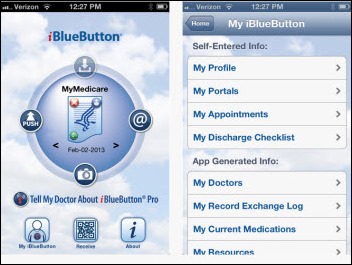
Humetrix to Present iBlueButton Mobile Health Information Exchange Apps for Use in United Kingdom

Humetrix has been invited to attend the NHS Innovation Expo 2013 in London to demonstrate the iBlueButton app.

Comments Off on Morning Headlines 3/15/13

News 3/15/13

March 14, 2013 News 6 Comments

Top News

3-14-2013 4-25-56 PM

Wells Fargo Securities slices and dices CMS Meaningful Use data to arrive at the 2012 year-end table for EPs above. It finds that 65 percent of physicians have registered and 25 percent have attested.


Reader Comments

inga_small From TechTalk: “HIStalkapalooza. Are there video or stills of HIStalkapalooza expected?” In case you missed this last week in the midst of HIMSS craziness, here is the link to the video. We also have a few pictures on our HIStalk Facebook page. We appreciate Medicomp Systems for sponsoring the event, with the help of a production team from Patrice Geraghty (bzzz productions), Cindy Wright and Shannon Snodgrass (Thomas Wright Partners), and Anthony Istrico (Istrico Productions).

From Close but Not Inside: “Re: Voalte. What happened to Rob Campbell, CEO and founder? Erased from the site.” Voalte just announced that Trey Lauderdale has been moved to president and four new VPs have been hired: Phil Fibiger, engineering (Canonical, Ltd.); Bob Porterfield, product and alliance management (Capsule Tech); Frank Watts, sales and marketing (F. Watts & Associates); and Don Fletcher, chief architect (Google). No word on Rob.

3-14-2013 6-32-09 PM

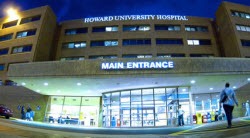
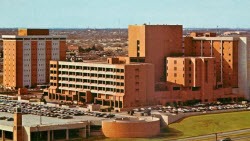
From Carly: “Re: Howard University Hospital. Brought its first unit live on Soarian CPOE earlier this month. Rollout to general medicine coming later in the month. Physician participation has been strong and enthusiastic.”

3-14-2013 6-33-52 PM

From Natalee: “Re: Nordic Consulting. We have not been sold. We’ve enjoyed a recent surge in growth, and continue to be focused on helping our clients successfully install and support their Epic system. Perhaps your readers are referencing an investment partnership Nordic made last October.” Natalee is from Nordic Consulting and responded to a reader’s rumor report from right before HIMSS. Here’s a statement from CEO Mark Bakken about the October investment:

We’re thrilled to have partnered with three IT investment groups who share our vision and commitment to excellent customer service. One of the most exciting things we’re doing with the help of their resources is developing new strategic lines of business, branded Nordic’s SUMMIT Series of Epic Solutions. These new services, focused on Optimization, Upgrades, Remote Services, and Reporting/Analytics, provide strategy and execution expertise to clients enabling them to achieve peak performance from their Epic system and realize the business value and patient care benefits that are now within reach.

From Moe Betta: “Re: New Orleans airport delays caused by TSA cutbacks. BS. After over a dozen visits to New Orleans, they can’t do anything efficiently. Aside from the sometimes intriguing and tasty cuisine, the city operates in a third-world atmosphere. It was that way long before Katrina and will be forever. Sunday in and Thursday out has always been a HIMSS disaster at the airport. Yet, that is part of its ‘charm,’ a trip outside – but inside – the US.” Most interesting to me was that the long security line was divided into two lines, but once you got around the corner, they merged back into one line. Queuing theory experts and Disney fans would have been horrified. Seth Frank, VP of investor relations for Allscripts, agreed in an investor presentation: “Last week at HIMSS conference, the big healthcare IT annual powwow, which was in New Orleans, hopefully, never to go back there again — I love New Orleans, great town, just not for 35,000 people.”


HIStalk Announcements and Requests

inga_small This week’s HIStalk Practice highlights include:  over 13,000 pharmacies now accept e-prescriptions for controlled substances. A survey of 2,600 primary care physicians reveals that 87 percent of doctors believe they receive too many EHR-based alerts. Emdeon begins working with CMS to map new HIPAA 6020 standards. HHS wants 50 percent of doctors online with EHRs by the end of the year. The average physician could lose over $43,000 over five years with EHR adoption. Culbert Healthcare Solutions’ Brad Boyd offers suggestions for the best ways for organizations to incorporate external data into their BI efforts. Dr. Gregg imagines the future of healthcare. It’s all good stuff so pop over and catch up on the latest ambulatory HIT news, check out a few of our sponsors’ offerings, and sign up for the e-mail updates. Thanks for reading.

On the Jobs Board: SCRUM Master, Healthcare Technology Project Manager, Practice Management/EMR Sales Executive, C-Level Healthcare Technology Sales Executive.


Sales

3-14-2013 6-37-09 PM

Integris Health (OK) will implement Phytel’s population health and care management tools at its physician practices.

South Jersey Healthcare (NJ) selects Surgical Information Systems Perioperative Management to work with its Soarian Clinicals.


People

3-14-2013 4-45-50 PM

Arcadia Solutions names Sean Carroll (Nuance) CEO.


Announcements and Implementations

3-14-2013 6-39-45 PM

The NHS invites Humetrix to present its iBlueButton platform at the NHS Innovations Expo 2013 in London.

iMDsoft releases MVpanorama for actionable cross-patient information and allocation of nursing resources.

Hawai’i Pacific Health goes live at its first of four locations with iSirona’s medical device integration solution.

NTT DATA is recognized by Canada’s Top 100 Employers program.

SuccessEHS goes live with a production connection to the South Carolina HIE (SCHIEx) as one of the first ambulatory EHR vendors to do so. 

3-14-2013 6-41-01 PM

Cerner will add symptom-specific patient questionnaires from Primetime Medical Software to its patient portal.

St. Joseph Mercy Oakland (MI) implements the latest version of Voalte’s iPhone for clinical communication.


Other

Fired Allscripts executives Glen Tullman and Lee Shapiro say they will be starting a mobile healthcare company.

WellStar Health System (GA) leases 21,000 square feet of an off-campus data center to handle its Epic implementation.

Strange: authorities say a homeless man was able to live in a Louisville hospital because he always wore scrubs, a lab coat, and a surgical mask. He was caught after using a restricted computer system, which a helpful doctor helped him access by logging in under his own password.

3-14-2013 6-09-03 PM

Weird News Andy christens this story “Fickle Finger of Fake.” Five doctors in a hospital in Brazil are suspended for using fabricated silicone fingers to clock in their colleagues on fingerprint-reading time clock readers. One TV network says the ringleader was the head of the ED, whose daughter was paid for three years despite never actually showing up. Authorities say up to 300 paid employees may exist only in silicon finger form.


Sponsor Updates

  • Alesco Medical becomes a channel distributor of e-MDs.
  • Thousand Oaks Radiology Group (CA) chooses McKesson Revenue Management Solutions.
  • KBQuest will showcase the Kony Solutions mobile platform at the Microsoft Tech Days conference in Hong Kong.
  • The British National Formulary offers direct access to the DynaMed evidence-based clinical information resource to its subscribers.
  • Commonwealth Orthopaedic Centers (KY) selects SRS EHR/PM for its 17 physicians, 10 physician extenders and 2 PT locations.
  • Ping Identity is showcasing PingOne Single Sign-On at the Ultimate Connections Conference in Las Vegas this week.
  • Cancer Treatment Centers of America expands its MedAssets relationship to include Capital and Construction solutions to drive construction costs down.
  • GetWellNetwork CEO Michael O’Neil shared his personal experience as a cancer patient and how patient engagement improves outcomes and satisfaction at The Thirteenth Population Health and Care Coordination Colloquium in Philadelphia this week.
  • Aycan, GE Healthcare, Siemens Healthcare, TeraRecon, and Vital Images participate in the European Society of Radiology’s Face-off.
  • Ingenious Med releases a white paper on the breakdowns in communication during patient handoffs and offers best practices.
  • Emdeon begins mapping HIPAA 6020 standards for CMS.
  • Informatica adds support services to its MySupport portal including eService apps Call Me, simple online escalation and online bug tracking.

EPtalk  by Dr. Jayne

The National Rural Health Resource Center offers an HIE tool kit that includes guide to Direct connectivity standards and an ROI calculator.

clip_image002

Through the retrospectoscope: CT scans on mummies from various parts of the world reveal evidence of heart disease. The presence of vascular disease was independent of the presumed diet consumed in the socioeconomic groups represented by the mummies. Several media outlets are using this to counter the theory that fatty diets and our modern lifestyle cause atherosclerosis. Bring on the curly fries!

Death by smart phone: researchers from West Virginia University are proposing that cell phones be rendered inoperable in moving cars. Drivers using cell phones cause more than 330,000 injuries per year including 2,600 deaths. Texting may account for more than 16,000 deaths between 2001 and 2007. I shudder every time I am cut off by a chatty driver who has no idea I’m in the lane. Of course blocking phone use in a moving car would also impact passengers. This may be responsible for a sharp uptick in teenagers forced to carry on a conversation with their parents which I definitely support.

A recent survey published in Health Affairs suggests that the majority of practices will lose money when adopting electronic health records. Major drivers of positive return on investment included the degree to which providers used the EHR to increase revenue and ceasing use of paper records. I continue to be amazed each time I step into a practice that professes to use EHR yet continues to either document on paper and scan, or document on paper and then key in the findings. Usually the providers are lamenting that they’re slower since they are on EHR and I wind up giving them a free informatics consult.

Speaking of EHR practices that still use paper, I had a patient appointment earlier this week at a rival academic medical center. Following the visit, I was given the opportunity to sign up for the patient portal. I was impressed by the ease of signing in using the combination of my Yahoo credentials and a token code given at the office. I was unimpressed that my chart has my name spelled wrong and a work phone number that I don’t recognize. Since my demographics were correct at the office, I sent a secure message to ask for a revision. The office again confirmed the accuracy of the outpatient chart and responded back that they had no idea who to contact or how to get it fixed. Since the Terms of Use included the vendor’s information, I know it’s a solid and highly regarded one. Just goes to show how a poor implementation can wreak havoc for patients.

Print


Contacts

Mr. H, Inga, Dr. Jayne, Dr. Gregg, Lt. Dan, Dr. Travis.

More news: HIStalk Practice, HIStalk Connect.

Morning Headlines 3/14/13

March 13, 2013 Headlines Comments Off on Morning Headlines 3/14/13

Arcadia Solutions announces Sean Carroll as CEO

Sean Carroll (SVP healthcare at Nuance) has been named the new CEO of strategic consulting firm Arcadia Solutions.

South Jersey Healthcare Selects Perioperative Management By Surgical Information Systems

Two-hospital South Jersey Healthcare signs with SIS to provide a perioperative management solution to complement its Soarian Clinicals EHR.

PwC finds HIT worker shortage bigger than expected

A recent study released by PwC finds a larger than expected shortage of qualified HIT workers, leading many to look outside the industry to fill gaps.

ICD-10 transition to move forward, CMS says

CMS announces that October 1, 2014 is a firm and fixed switchover date for ICD-10 codes and that no additional delays will be considered.

Time to Stop Tyranny in Medicine

Time to stop the tyranny in medicine is the general theme of the spring issue of the Journal of American Physicians and Surgeons, citing ICD-10 mandates, Meaningful Use requirements, e-prescribing, and Physician Quality Reporting System as indicators that things have gone too far.

Comments Off on Morning Headlines 3/14/13

Readers Write: A Balanced EHR Copy Forward Solution

March 13, 2013 Readers Write 8 Comments

A Balanced EHR Copy Forward Solution
By Kyle Samani

3-13-2013 5-53-18 PM

There’s been a recent wave of media coverage surrounding the topic of EHR copy forward functionality. Many have suggested that this function should be outright banned. The reasons vary, but in general most of the problems cited are related to the fact that the copy forward function in EHRs creates garbage and bloat in the patient’s record.

As someone who has experience designing and programming EHRs, who has deployed an EHR in inpatient and outpatient (PCPs and specialists) environments, and who has talked to hundreds of doctors about the subject in various presentations, I have a unique perspective to offer.

Lyle Berkowitz, MD, CMIO of Northwestern Memorial Hospital in Chicago, recently posted on the subject. He’s right. EHR copy forward is a great tool if used correctly. The problem is that EHRs make it too easy to abuse. Most of the copy forward functions in EHRs look at the last note and quite literally copy every field forward into the current note. This is problematic because full-note copy forward allows the doctor to copy forward too much information before all of it can be digested and understood.


There are easily dozens if not hundreds of data points in a given note. Doctors shouldn’t be encouraged to copy hundreds of data points into the current note before having a chance to complete the current assessment. It’s too much, too early in the examination process. The EHR should make it easy to copy forward information in manageable pieces.

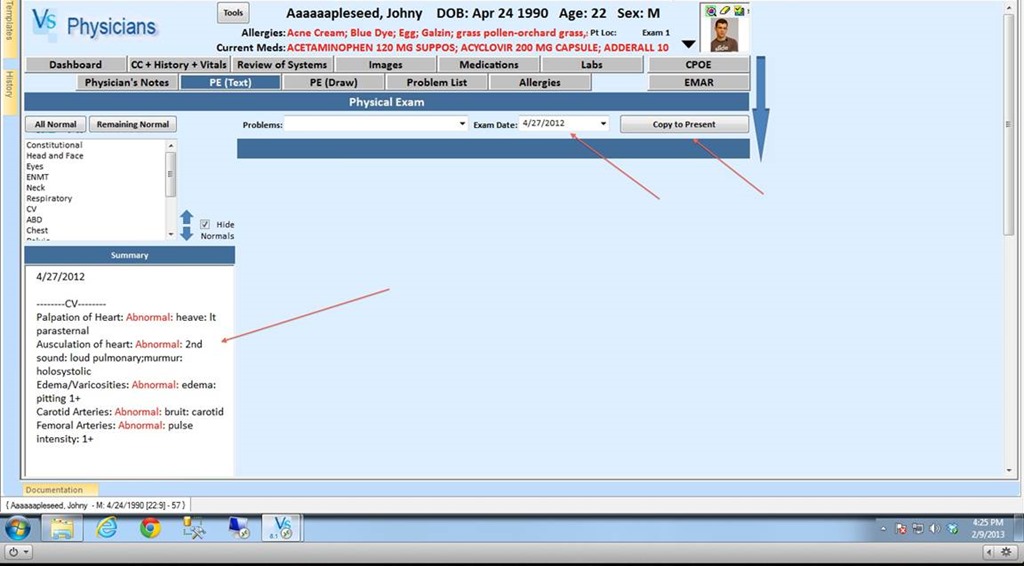
I lead the original design of a function in my company’s EHR called Copy to Present in the latter part of 2011. It’s similar to the copy forward feature in most modern EHRs. The primary difference is that it doesn’t copy the entire note forward, just the active area of focus. The function is available in conjunction with a date dropdown on all major sections of the chart.

clip_image004

For example, the physical exam page contains a date dropdown at the top of the page. When a doctor visits the physical exam page, the date dropdown defaults to the current date. Doctors can quickly review an old physical exam summary by selecting from a date in the dropdown, which is populated with dates of previous physical exams for the active patient. When looking at an old date, the Copy To Present button appears. Clicking it copies forward the selected physical exam to the current note. The Copy to Present button doesn’t affect any part of the chart other than physical exam; all other areas are left intentionally untouched. After clicking the Copy to Present button, the physical exam data is editable as if the doctor had entered the data by hand.

A video demonstration of Copy to Present is above and here.

Copy to Present and the date dropdown are useful for data points that need to be collected and updated during every examination. Examples include chief complaints, physical exams, review of systems, and assessments and plans. In these scenarios, the Copy to Present function allows the doctor to understand what they recorded last time before copying forward to the current note. It provides the quick copy-forward function doctors want and need, while still allowing fine-tuned control over what’s copied forward.

However, Copy to Present is irrelevant when dealing with other types of information. For example, allergy lists, medication lists, problem lists, lab results, medical history, and surgical history. The most up-to-date versions of these data points should always be shown regardless of who last updated the list across any care setting (inpatient, outpatient, ED). EHRs should understand (but most don’t) that these pieces of information aren’t part of a particular note as much as they are relatively static pieces of data about the patient. Once labs and allergies are recorded, they should be available to any clinician that needs access to them, and they should always be up to date independent of any clinical note.

EHRs need to understand the kind of information they’re handling. Different pieces of information should be handled differently depending on what the information is, who is accessing it, and what that person needs to do with it. EHR vendors have a responsibility to ensure they provide the tools to make sure clinicians can get what they need, when they need it, and understand it as quickly as possible.

Kyle Samani is inpatient deployment manager at VersaSuite of Austin, TX.

Readers Write: Practice Management Software, Payment Portals, and the Merchant Service Account Problem

March 13, 2013 Readers Write Comments Off on Readers Write: Practice Management Software, Payment Portals, and the Merchant Service Account Problem

Practice Management Software, Payment Portals, and the Merchant Service Account Problem
By Tom Furr

The more than 300 practice management software vendors in the United States help practices that range in size from individual doctors to multi-office groups made up of thousands of health care professionals manage their most important operations, both clinically and financially.

Attuned to the government’s drive to capture critical data and make it available online along with providing greater cost transparency, these practice management software providers are offering payment portals tangential to their core software. These electronic mail slots are intended to let patients see their statements online and then pay their bills through this technology using their debit or credit cards.

Unfortunately, with every payment portal that comes online, every practice is required to establish a merchant service account. In simplest terms, a merchant service account is a specialized account provided by a bank or other financial institution to enable online transactions. This account, which enables credit card transactions, is an agreement between the practice and the bank that contractually binds the practice to obey the regulations established by the bank.

To secure the agreement, a practice needs to complete an MSA application form which, amazingly typically numbers 18 pages or more. Imagine the office manager of a medical practice taking time out of his or her day to handle that. The list of questions that must be answered run the gamut from the practice’s address to its checking account number, the principal’s SSN, employer ID Number, and much more (and those are the easy ones). Let’s not forget the need to get a voided check on the account to be used, a copy of the driver’s license of application signatory, a detailed list of services offered, credit card processing statements of the previous three months, a copy of the articles of incorporation, as well as business tax returns and business financial statements. All in all it’s almost as much paperwork as that which you waded through when you closed on a house, and you remember how much work that was.

In the end, the unfortunate reality is a practice management software vendor often sees a deal come unraveled because of the obvious problems associated with getting an merchant service account in place. It doesn’t have to be that way. There has to be a better solution.

My issue isn’t with the role of a merchant service account or with the very real need to provide patients with a safe, secure, and simple way to pay for healthcare services online. My problem is with the process of setting up or, for that matter, going through nearly the same time-consuming process should changes occur that relate to an merchant service account.

A solution that can work for all involved resides within the practice management software itself where it has a universal merchant services account, like PayPal or Square, for all its practices and automatically receives, posts, and reconciles payments back into the system. This eliminates the merchant services account set-up problem and makes the practice management software all the more useful to the practices using it. The best part is such an approach could cut down on the amount of paper and time used to bill patients, reconcile patient balances, and more.

For the sake of the practices using their software and their potential clients, practice management software vendors should find and fit the sort of solution I’ve sketched out above into their systems. Their practices and their patients will thank them for it.

Tom Furr is CEO of PatientPay of Durham, NC.

Comments Off on Readers Write: Practice Management Software, Payment Portals, and the Merchant Service Account Problem

An HIT Moment with … Belinda Hayes, VP/GM Mobile Products, Imprivata

March 13, 2013 Interviews Comments Off on An HIT Moment with … Belinda Hayes, VP/GM Mobile Products, Imprivata

Belinda Hayes is vice president and general manager, mobile products, of Imprivata of Lexington, MA.

3-13-2013 5-38-30 PM

What are the biggest opportunities and challenges with mobile technology in healthcare?

Mobile technologies improve the way care providers communicate and collaborate on patient information and how they provide patient care. Almost every provider is armed with a smartphone that they use to communicate patient information, so we enable them to do that securely and for free.

However, it’s not just about the providers and how they access and share information. It’s about the entire ecosystem of healthcare professionals, like technicians, hospice workers, EMTs, etc. Mobile technologies have the potential to transform healthcare communication across boundaries that traditional communication could not.

These opportunities are not without challenges. Information is always at risk of becoming stove-piped or siloed. How do you take patient information from all these independent clinical systems and create a holistic view of a patient record? How do you decide what goes into the EMR? At what point does a medical record leave the EMR? Who has access to it and how is that tracked? How can that information be viewed across devices and clinical workflows?

Many hospitals restrict who can use smartphones today. Nurses may not have access to smartphones, for example, so mobile solution providers may need to support other forms of access, such as browsers. You’ve got to not only cover all relevant new devices, but give options for information access to the right people wherever its need.


The end of hospital pagers seems near. What will differentiate the products that are competing to replace them?

We hear this consistent theme from our customers. Smartphones will replace pagers. Providers are consumers just like you and me. They want the same experience communicating with their clinical team as they do with their kids. They want to use the latest technology. It complements our work and personal lives – we do our banking, schedule meetings, text our family, and communicate socially from our smartphones.

Providers want to similarly communicate with patients using their device. But it’s more than analog communication. It’s about collaboration. For example when a physician wants to communicate a patient’s status to a colleague, they first need to find a call list, then a phone, send a page to a different device, and wait around for a callback. This is terribly inefficient. Why is healthcare still relying on technology created over half a century ago?

Care providers want and deserve a better experience and pagers are limited. Pagers can’t provide you with a list of all your colleagues synced from the organizations directory. Pagers can’t see your colleagues’ status or send them a picture. Pagers can’t send group messages with conversation history and bridge communication across affiliated hospitals. Mobile phones and applications can. This experience, availability, and costs are driving providers to replace pagers with smartphones today.


What’s the business case for Imprivata Cortext?

Imprivata is fortunate to have a customer base of over 1,300 hospitals for our access management products. We frequently speak with our customers’ CIOs and clinical leadership about the next big thing. What problems are they facing? What is their long-term strategy and how does technology support it?

About a year ago, we heard an overwhelming need for secure texting from many of these customers. We ran our own survey across our base and found that over 81 percent of physicians have smartphones and 40 percent of physicians are already texting. CIOs told us this was a big risk that needed to be addressed. We launched our solution, called Imprivata Cortext, in October of this past year, and the response has been overwhelming. The application is completely free, including basic support, but we offer paid premium support options. We’re adding over 100 healthcare organizations a month and ended 2012 with over 400 enrolled in just three months.

We’ve learned a lot over the last 10 years in healthcare. It’s like no other industry. You have to nail the experience. We invest a lot of time talking to customers. Listening to what they need and collaborating with them early in and throughout the product design process. Care providers love Imprivata Cortext because it lets them communicate more efficiently. There is much more to secure texting than just a text message. A good solution will meet the basic requirements. But a great solution is actually built by clinicians, for clinicians. Its value will be self-evident to them.

For example, we found that a simple task such as locating a clinician on a phone wasn’t so simple. It needed to be easy and seamlessly incorporate the hospital’s corporate directory so providers can find one another with as few clicks as possible. It also must support group communication so that care teams can collaborate efficiently. And most importantly, it needs to enable providers to communicate across all of the healthcare organizations at which they work – all from a single application.

CIOs tell us they love Imprivata Cortext because it’s not only technically secure, but we back it up with a business associate agreement. There are many vendors in the space that call themselves “HIPAA compliant” but won’t back that up with a BAA. Our customers also care about where we are taking Imprivata Cortext. Texting solutions must provide a robust platform so that providers can support the evolving needs in healthcare such as the patient engagement requirements in Meaningful Use. Interoperability with clinical systems is critical.


What lessons about physician usage and preferences have been learned by their use of mobile devices that could be applied to other IT systems?

Physicians no longer work at one location. In fact we just did a study that shows over 50 percent of providers state they work at more than one location. Providers travel between their affiliated hospitals and practices, from nursing homes to even a patient’s home. So the power of mobile devices is the personal nature of the device. The power of mobile applications is that they enable you to be fully connected at all times. Now the only issue is how you bridge the desktop and the mobile device.

Let’s pretend a physician is treating a patient at the bedside and is viewing their current patient history. They need to get a consult from the patient’s specialist, which means they need to communicate directly with that clinician, sometimes in the form or an e-mail or text message. How do they compose that information? How do they transmit it securely? What if they want to add a photo, or video or audio of the patient’s heartbeat?

Smartphones have the potential to complement workflows that are today done from a workstation. This is what we’ve learned over the last 10 years from experience and a deep understanding of healthcare workflows. IT systems must bridge this gap. They must provide care providers with the ability to share and add to information from wherever they are. And do it securely.

We incorporated this thinking into the latest release of Cortext, which we announced last week at HIMSS. We designed a new capability that enables care providers to communicate across multiple organizations while still viewing a unified inbox of all their conversations. We heard loud and clear that IT wants to manage their own user policies and archives, but we had to balance that with a streamlined experience for the care providers. Early customer feedback is very positive.


Clinicians have embraced mobile technology, but hospital and medical practice systems don’t necessarily support those platforms very well. What’s the future for mobile-enabling enterprise applications?

There is a perfect storm happening in healthcare IT. On one front, you’ve got an industry that has been a slow adopter of technology, but HITECH and Meaningful Use have changed the game. Meaningful Use incentives have funded CIOs with investments to refresh their infrastructure. Not only are they deploying better EHRs and other clinical applications but the computing infrastructure is going virtual. Virtual desktops offer unique benefits to clinical workflows. You also have care providers and patients demanding and adopting technologies that they use in their everyday lives, like iPhones and iPads. Doctors and nurses are driving the BYOD revolution in healthcare.

Clinical applications have to incorporate mobile technology or their solutions won’t be complete and compete long-term. This idea that the EMR is the single-source of all information clinical is starting to change now that mobile applications are processing PHI. This needs to be part of the patient record. This provides a great opportunity for innovation. Take Imprivata Cortext. The concern around secure texting didn’t just happen. IT knew that their providers were already texting. Why? Because the convenience of communicating with their colleagues from their personal device greatly outweighed whether it was secure or not. Care will always trump security. Less than 24 months later, we are in a tornado of a market with over 30 vendors trying to solve the secure texting problem in healthcare. And in two years this number will be three or less. We like our odds with Imprivata Cortext.

Comments Off on An HIT Moment with … Belinda Hayes, VP/GM Mobile Products, Imprivata

Text Ads


RECENT COMMENTS

  1. The CEO sentenced to jail for massive healthcare fraud will get pardoned in a week.

  2. The comments are true above. HIMSS is facing serious leadership and governance concerns, particularly involving the CEO and head of…

  3. "A valid concern..." Oh please. Everyone picks the software they like and the origin of that software is an afterthought.…

  4. I don't disagree with you completely, but to take the counterpoint: there is plenty of precedent for saying "this *entire…

Founding Sponsors


Platinum Sponsors


Gold Sponsors


RSS Webinars

  • An error has occurred, which probably means the feed is down. Try again later.