Recent Articles:

The Skeptical Convert 4/5/13

Dispatch from the Beachhead

I’ve had a weekend to recover now, but on Friday, seven days into the Epic go-live (including the go-live weekend as the GI on call) I felt like Tom Hanks 20 minutes into “Saving Private Ryan.”

The D-Day analogy is actually pretty useful for both the negatives and the positive of the experience. The plus side is the incredible massive force brought to bear on the project — people everywhere, hardware guys, red-jacketed helpers, administrators, docs from the Big House, sometimes actual Epic people. The system was going live simultaneously for two community hospitals, but ours had the empty space for 140 call-in workstations, and when I went by there last week, every one of them was occupied. And so when I needed a beachmaster, I could walk on over there to find one without getting shot at (at least not yet). 

But even with massive firepower from the Navy and Air Force, the troops still had to take Omaha Beach. And every clinician seem to have reached that moment where he was hunched behind the seawall wondering how he would ever get out of this situation. 

Everybody survived, though, more or less. There was plenty of help from the red vest people standing around, although mostly of a very specific ground-level nature–sort of like the Bangalore Torpedoes that get way too much credit in all three of the cinematic depictions of Omaha Beach that I’ve seen (“Ryan,” “The Longest Day,” “The Big Red One”).

But historians say it was the individuals that were able to call in Naval artillery, and the ship commanders who responded with precision fire who turned the tide, and in my own (OK I admit overglorified) way, I had to find higher level people with a big-picture grasp of the situation to solve most of the problems I encountered. 

I know, I’m over the top, but I can carry this analogy further. The massive pre-landing bombing that fell behind enemy lines reminds me in a way of much of my 16 hours of training, with what in my ground-level opinion was overemphasis on detail (bombs/process) and not enough on fundamental principles (target/fundamental concepts).  

For example, in my training as a “surgeon,” with a lot of work on how to work the pre- and post-op navigators, there was no mention of the fact that apparently because of a fundamental issue in Epic, I wouldn’t see those navigators automatically if I opened up the patient from the inpatient list instead of the surgical schedule. 

But enough carping. The beach is secured, the smoke is clearing, the beachmaster did in fact show me how to get that navigator up from the inpatient list this morning. There are a lot of other details that will take months to figure out (I just discovered the existence of sticky notes about five minutes ago). But I’m up and walking forward, however shakily. Onward to Berlin. 

Robert D. Lafsky, MD is a gastroenterologist and internist in Lansdowne, VA.

Collective Action 4/5/13

April 5, 2013 Bill Rieger 5 Comments

The views and opinions expressed are those of the author personally and are not necessarily representative of current or former employers.

Make It Personal

Everything is a category, until it becomes personal. At one point in my life, my wife was a category. I was thinking about a wife, dreaming about a wife, looking for a wife, but at that point she was a category in my life, a label “Wife.”  

Then I met Susan. WOW! How blessed was I! When she was just a category, I knew I would love her of course, but not nearly as much as I found out I could. She switched from a category to something very personal.  

The same thing happened with my children. Before they were born, even during the pregnancy of each child, they were categories. We shopped for them and tried to love them before they were born, but to some extent they were still a category. Then the moment comes, the moment that happens so few times in life — you hold your child for the first time. This category suddenly became very personal. 

I read a blog post recently by John D. Halamka MD, CIO at Harvard School Of Medicine. In the post, John shared about the loss of his father. There are other posts on his blog where John talked about how his family prepared for this.  It reminded me of when my father passed in 2008.  As I am sure it did for John when he was with his father in the hospital, healthcare became very personal to me.

In the ICU where my father died, I was looking at tags on equipment, making sure they were safety checked.  The computers on wheels were looked at with scrutiny as I tested to ensure they could at least roll around easily. I wanted so badly to check the PCs to make sure they had antivirus software loaded. I watched as the nurse documented and became frustrated at how long it took the screens to update. At that point, processes, policies, procedures, communication, service, and clinical excellence were all very personal to me.  

When I returned to work at my local hospital, my team of technicians were not happy with me for the first few weeks. I was not only dealing with the passing of my father. The new heightened awareness of service gained on that trip was being unleashed on them.  I wanted to bottle the passion this intense personal experience gave me and carry it with me every day, but eventually the rhythm of everyday life interfered and that sensitivity lessoned.

Making things personal made a difference in my perspective. I thought about how to provide this personal experience to members of the team without them having to go through what John and I went through. How do we make flowsheets, order sets, discharge summaries, wireless access points, and Citrix servers personal?  

As we thought about this, the Clinical Experience program was born. Through a great partnership with clinical leadership, every member of the IS team is able to spend eight hours per quarter on a nursing unit observing. They are not there to fix anything or provide support, although I am sure at times they do. They are there to watch, learn, and gain the insights that only a personal experience can provide.  

There are times when team members get frustrated with this program, as they are busy and don’t want to be interrupted in their own work. We reinforce to them the power of personal experience. We ask others to share specific experiences they had while on the floor and how it impacted their work. 

Leaders promote engagement on many levels, but short of being a clinician on the floor, there is no better way to directly engage with our patients and co-workers than to be right there with them as they participate in the care process. We believe that this periodic change in environment will stir up some creative thinking and lead to great innovations for our hospital.

Bill Rieger is chief information officer at Flagler Hospital of St. Augustine, FL.

Time Capsule: Best Buy’s “You, happier™” Slogan Says a Lot About Unhappiness (Both American and Healthcare IT)

April 5, 2013 Time Capsule 1 Comment

I wrote weekly editorials for a boutique industry newsletter for several years, anxious for both audience and income. I learned a lot about coming up with ideas for the weekly grind, trying to be simultaneously opinionated and entertaining in a few hundred words, and not sleeping much because I was working all the time. They’re fun to read as a look back at what was important then (and often still important now).

I wrote this piece in September 2008.


Best Buy’s “You, happier™” Slogan Says a Lot About Unhappiness (Both American and Healthcare IT)
By Mr. HIStalk

125x125_2nd_Circle

To me, the most important part of the Sunday newspaper is the Best Buy ad. I don’t really need what’s in there (nothing they sell is essential, like food or clothing). I’m doing my patriotic duty, which calls for irresponsible consumer spending to keep the shaky economic wheels turning. I usually grab a computer gadget (who can resist yet another USB drive?) or a sure-to-be-unopened DVD boxed set of a TV show that I never watched when it was on.

This week’s ad had a new slogan under the Best Buy logo (right above the must-have LCD TVs). It said, “You, happier™.” They put that little TM in there, daring competitors to even think about appropriating such an ingeniously alluring come-on.

(TV may be nothing but trashy reality shows and endless commercials, but those can apparently masquerade as satisfying entertainment when beamed into a 52” plasma HDTV with surround sound. Insanity is watching Adam Sandler movies over and over on Blu-Ray and expecting different results).

Not that I don’t trust Best Buy’s motives, but I’m beginning to think that “You, happier™” isn’t working. According to a recent survey, US citizens are #16 in the list of countries when it comes to overall happiness. Everybody’s broke, so maybe we’re as happy as we’re going to get racking up credit card debt to fuel the pointless accumulation of consumer goods.

I was also thinking about the parallel with US healthcare. We’re mid-pack there, too, coming in at #37 as WHO sees it (edging Slovenia but trailing healthcare juggernauts Costa Rica and Dominica).

Providers waste a lot of money on poorly conceived IT purchases. That alphabet soup of ERP, CPOE, and BI looked appealing. So did all those juicers that late-night TV watchers ordered in a depressing quest for happiness (does anyone other than the 165-year-old Jack LaLanne really pulverize $3 worth of raw carrots to get a skimpy glass of awful-looking juice that still tastes like raw carrots?)

I love going into Best Buy. I’m happy roaming the HIMSS exhibit hall. I’m uplifted at the idea that I can trade money for, in the immortal words of Carl Spackler in Caddyshack, total consciousness. No fuss, no muss, just plug and play, or at least that’s the message. Don’t even think about trying to sell customers self-sacrifice and focused diligence when the guy next booth over is promising immediate gratification and a sweeping “vision.”

When healthcare IT enables great things, it’s because vendor and customer did a ton of work. That 10 percent of the iceberg that’s visible, the pretty screens and shiny servers, doesn’t begin to tell the story, although it often makes the sale. Home Depot’s hammer display doesn’t show bashed thumbs and blisters, I’ve noticed.

Conspicuous consumption of IT is highly unlikely to make “You, happier™” any more than passively buying self-help books or hanging on Oprah’s every word. What you get is a false sense of accomplishment that’s easily disproved by unchanged outcomes or efficiency. An hour later, you’re hungry again.

The industry doesn’t benefit long-term if customers are dissatisfied with vendors because they bought products naively, unwilling to contribute the sweat equity required for success. Maybe it would help if magazines and trade shows stopped trying to foist their breezy equivalent of Best Buy’s slogan on the industry: “You, Most Wired™.”

Morning Headlines 4/5/13

April 4, 2013 Headlines 1 Comment

Policy Committee ponders CommonWell influence

Farzad Mostashari, MD, and Judy Faulkner discuss the ramifications CommonWell will have on interoperability during this weeks ONC HIE workgroup.

Baylor Quality Alliance Selects Greenway for Participation in EHR Program

Greenway announces a partnership with Baylor Health Care System to provide ambulatory EHR’s for its cmomunity physicians.

HIMSS Analytics Honors Florida Hospital Carrollwood with Stage 7 Award

120-bed Florida Hospital Carrollwood, an Aventist Health System facility and Cerner shop, is awarded HIMSS Stage 7. 

EHR Adoption Encouraged by State Meaningful Use Acceleration Challenge 2.0

ONC has renewed the state Meaningful Use accleration challenge with new benchmark goals for the 2013 year.

News 4/5/13

April 4, 2013 News 16 Comments

Top News

image

At this week’s HIT Policy Committee meeting, members discussed the CommonWell Health Alliance and its implications for the industry. Committee member Paul Egerman outlined the Alliance’s goals, which focus on providing a nationwide data exchange program that is paid for by participating vendors. Judy Faulkner, who also serves on the committee, reiterated that Epic was not initially invited to participate in the Alliance and questioned whether the group would favor the founding companies and if it planned to sell de-identified data. Other members expressed concerns that Alliance efforts may inhibit other regional and national HIE initiatives.


Reader Comments

image

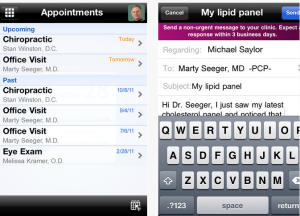
From The PACS Designer: “Re: patient engagement. TPD and spouse had our first experience this week with Epic’s MyChart as we were encouraged by our provider, Yale New Haven Health System, to create our online medical record. As more of us seek treatment, you can expect to be coaxed into having an online medical record so other future providers can verify your past medical history so as to provide high quality services to their patients. MyChart is on TPD’s List of iPhone Apps.”


HIStalk Announcements and Requests

A few highlights from HIStalk Practice  from the last week: Vitera launches an iPad app for Intergy EHR. The AAP recommends pediatricians adopt e-prescribing systems with pediatric functionality. Forty percent of physicians say they are burned-out. Legal experts recommend that physicians pay closer attention to ADA requirements when adopting computerized tools. More physicians are suing former patients and their families over negative ratings and reviews posted on the Internet. Dr. Gregg explains the correlation between scrambled eggs and MU, HIT, and HITECH. NextGen Healthcare’s SVP and Ambulatory Division Manager Michael Lovett discusses his company, the industry, the competition, and the future. And, one last plea: please take a moment to complete our annual HIStalk Practice reader survey. Thanks for reading.


Sales

Texas Health Services Authority selects InterSystems to develop and implement its HIE infrastructure based on the HealthShare platform.

Inland Empire Health Plan will deploy MedHOK’s platform for managing patient populations.

The NIH’s National Heart, Lung, and Blood Institute awards SAIC a prime position on an IT support services contract worth up to $184 million over five years.


People

4-4-2013 11-35-46 AM

Healthcare consulting firm Qualidigm names Timothy M. Elwell (Misys Open Source Solutions) as CEO, replacing the retiring Marcia Petrillo.

SAIC promotes Robert Logan from director of engineering for IT services to CIO. Logan will also serve as CIO for Leidos, SAIC’s planned spinoff company that will provide national security, health, and engineering solutions

Agilex hires former VA CIO Roger W. Baker as its chief strategy officer.

4-4-2013 1-50-57 PM  image

Besler Consulting hires Maria Miranda (Multiplan) as director of reimbursement services and Arthur Baxter (Hayes Management Consulting) as RVP of sales..


Announcements and Implementations

image

Summerville Medical Center (SC) completes a one-year pilot program with GE Healthcare for its hand-washing monitoring technology. The program monitors data from employee badges and soap and hand sanitizer stations and has been recording several thousand hand-washing events per day.

Austria’s Landeskrankenhaus Feldkirch goes live with iMDsoft’s MetaVision in its ICU.


Government and Politics

ONC awards the NY eHealth Collaborative a cooperative agreement to participate in the Exemplar HIE Governance Program on behalf of the EHR/HIE Interoperability Workgroup.

ONC launches the State Meaningful Use Acceleration Challenge 2.0, which will encourage states to set aggressive goals on EHR adoption and meeting MU criteria.


Other

Intermountain Health (UT) will pay the federal government $25.5 million after admitting it illegally compensated more than 200 of its referring physicians for more than 10 years. The health system reported the violations in 2009 following a review of employment contracts and lease agreements among its hospitals and doctors.

Bay County (FL) commissioners vote to approve $360,000 in incentives to to keep iSirona’s operations in Panama City. The company will consolidate its operations, which will either created 300 full-time jobs to Panama City or lose 117 jobs if it chooses another of te three locations it is considering.


Sponsor Updates

  • PeriGen highlights some of its Q1 2013 achievements, which included $6.4 million in funding, the addition of Thomas J. Garite, MD as chief clinical officer, NIH validation of its PeriCALM Patterns software, and a record number of bookings.
  • Holon Solutions participates in the TORCH Annual Conference in Dallas April 17-19.
  • Orion Health offers a white paper on demystifying direct messaging.
  • Lifepoint Informatics participates in the Clinical Laboratory Management Association’s annual KnowledgeLab conference April 7-10 in Orlando.
  • MedAssets recognizes University Health System with its 2012 MedAssets President’s Award for saving more than $13 million and realizing $14 million in cash flow improvement.
  • McKesson executives will share perspectives on technology innovation and strategic network design and management at next week’s World Health Care Congress in National Harbor, MD.
  • Medseek continues its discussion of why mobile is a must for healthcare organizations.
  • A Ping Identity survey of security professionals finds that organizations are embracing BYOD and the culture of work anywhere/anytime.
  • Ben Marrone, principal advisor with Impact Advisors, offers insights into balancing improved access with patient privacy concerns.


EPtalk by Dr. Jayne

CMS is hosting calls for groups considering participation in Medicare’s 2014 Accountable Care Organization program. Calls will be held on April 9 and April 23 and registration will close when space is full.

Practices using web tools, tablets, and kiosks for patient data entry, online bill pay, and other functions may want to consider whether those media are accessible under the Americans with Disabilities Act. The Department of Justice is working on regulations for accessibility of Web-based content, which should be out later this year.

A Cochrane Library review shows that computer-based tools to help diabetes patients manage their condition have a small impact on blood glucose control. There was no documented impact on weight loss, depression, or other quality of life metrics. Those using mobile phones did slightly better than other devices.

clip_image002

My Twitter-induced laugh of the day was “How People Sit in Meetings and What it Really Means.” Which style are you?

From Easter Bunny: “Re: EMR pimp. Did you hear Dan Marino is now pimping an EMR because IF ONLY his orthopedists had access to his complete medical records, he wouldn’t have been the greatest quarterback to never win a championship. Or, is he just repeating his old Isotoner gloves experience of being a shill for an underwhelming product or industry?” I do love some of the comments in the press release:

  • “Surgeons often see injuries they haven’t seen before…” Not according to my orthopods, who claim they see the same thing over and over and therefore should be able to document any visit in one click or less.
  • “Since no two orthopedic surgeons practice the same way…” Have they never heard of evidence-based care?

Not surprisingly, Marino is not only a spokesperson, but also an investor.

March 30 was Doctors’ Day. Although the AMA sent me an e-mail as did a locum tenens agency I worked for three years ago, there were no happy words from my hospital. Happy belated Doctors’ Day to all.

drjayne


Contacts

Mr. H, Inga, Dr. Jayne, Dr. Gregg, Lt. Dan, Dr. Travis.

More news: HIStalk Practice, HIStalk Connect.

Morning Headlines 4/4/13

April 3, 2013 Headlines 1 Comment

Former VA CIO Baker heads to Agilex

Recently resigned Roger Baker, CIO of the VA, has found a new home at Agilex, a government contracting firm specializing in software development, cloud computing, and mobility.

JAMA: Current EHRs Lack Large-Scale Data Capabilities

A recent viewpoint article published in the Journal of the American Medical Association suggests that as data-heavy sciences like genomics, epigenomics, and proteomics advance, health systems will be forced to look beyond the storage capacity of their EHRs to keep up with data storage needs.

Intermountain Healthcare pays $25.5 million to settle claims allegations

23-facility health system Intermountain Health has agreed to pay $25.5 million to settle claims that it violated the Stark statute after admitting that over a decade, it illegally paid bonuses more than 200 of its referring physicians.

ONC HIE workgroup offers interoperability suggestion

ONC’s Health Information Exchange workgroup met today to discuss possible policy solutions for promoting interoperability.

Veterans Affairs Backlog Files Stacked So High, They Posed Safety Risk to Staff

A recent PBS story on the now nationally followed VA claims backlog describes a Winston-Salem, NC office that had folders stacked so high that they posed a safety risk to employees and further delayed the approval process because needed folders were often stored layers deep in claims piles. The weight of the paper eventually created a structural problem when inspectors realized that the sheer weight of the combined folders exceeded the load-bearing capacity of the building itself.

Readers Write: The Economics of Google Glass in Healthcare

April 3, 2013 Readers Write 6 Comments

The Economics of Google Glass in Healthcare
By Kyle Samani


Google Glass is a fully-featured modern computer running a derivative of Android that fits into a glasses-like form factor that rests comfortably on your face. That includes CPU, RAM, storage, battery, a heads-up-display, a microphone, camera, speaker, WiFi, GPS, Bluetooth, and bone conduction technology.

Although Google has been shy to admit it, Glass will have some form of bone conduction technology so that you – and only you – can hear. Of course, you’ll be able to take a picture of or record anything at any time and transmit that data to the entire Internet wirelessly in real time. It’s quite an extraordinary technological breakthrough.

A lot of people think Google Glass can be used as a development platform to create amazing healthcare apps. So do I.

Many of these ideas are obvious, and many of them could be relatively simple to develop. But we won’t see most of them commercialized in the first year Glass is on the market, maybe even two years.

The most obvious analogy to Glass is the iPhone. It’s a revolutionary new technology platform with an incredible new user interface. Glass practically begs the iPhone analogy. Technologically, the analogy has the potential to hold true. But economically, it does not. Because of the economics of Glass, many of these great ideas won’t see the light of day any time soon.

First, there’s the cost. Glass will run a cool $1,500 when it lands in the US this holiday season. There’s no opportunity for a subsidy because Glass doesn’t have native cellular capabilities.

Second, and even more importantly, Glass needs to prove compelling given that you already have a pretty incredible smartphone in your pocket. When the iPhone launched, it competed with the non-consumption of 2007: dumb phones. Glass has to compete with a whole new class of non-consumption: iPhones and Androids. That means Glass has to be so incredible that you’re willing to spend $1,500 given that you already have an amazing smartphone in your pocket. Glass only provides marginal value. It’s a tough sell.

Take another look at the Google link from earlier in this post. Would you pay $1,500+ for any of those individual applications? Probably not. As a hospital CIO, would you pay $1,500+ per employee for hundreds of employees for any of those applications? Probably not.

Although these are all good ideas, the vast majority of Glass ideas aren’t compelling enough to justify the cost of Glass itself. This is inherently true in all Google Glass application markets, both consumer and enterprise. It’s especially true in healthcare given the additional costs of integrating into existing systems and processes.

Doctors in outpatient clinics face a similar challenge. Though some physicians, and perhaps some surgeons, will shell out $1,500 early on, most doctors won’t be willing to commit that kind of capital. I’m sure many physicians would feel concerned about making their patients feel socially uncomfortable, even if a given application proves clinical and financial ROI. But at some point down the line, doctors will probably adopt a Glass-like technology platform, especially with something like the MYO Armband. The human computer interaction (HCI) opportunities with a Glass+MYO armband are endless.

Over time, an increasing number of Glass healthcare apps will become available and the price of Glass and its competition (I’m looking at you, Apple. Also, learn why there will be no iWatch) will fall. Eventually, healthcare app developers writing on Glass will find success, but very few will in the first year Glass is on the market.

That does not mean that the Glass ecosystem is destined for failure. Glass has the potential to solve big problems. Capitalism dictates that app developers will figure out how to use it to solve big problems.

My favorite VC proverb is, "Provide pain pills, not vitamins." For every painkiller Glass app, there will be dozens of vitamins. The painkillers will drive the success of this platform. No one needs to buy Glass. But Glass can help people and create new efficiencies in enterprise markets such as healthcare, education, manufacturing, transportation, construction, gaming, tourism, and many others.

I’m incredibly excited about Glass. It will change the world. Maybe not in its first year on the market, but it will. No one thought much of the iPhone in its first year on the market, but it delivered a revolutionary new user interface and provided a new technology platform that app developers will extend to solve an enormous number of previously unsolvable problems. Glass will, too.

Glass developers, off to the races!

Kyle Samani is inpatient deployment manager at VersaSuite of Austin, TX.

CIO Unplugged 4/3/13

April 3, 2013 Ed Marx 4 Comments

The views and opinions expressed in this blog are mine personally and are not necessarily representative of current or former employers.

Meet the Parents: Making Lasting First Impressions

This past couple of weeks, I’ve had the honor of getting to know the newest member of my team. More than once, I’ve been the newbie on the block, and I know exactly how awkward this can feel. It reminded me of another newbie situation that happened over two decades ago.

My freshman year ended and I was smitten. Forced to part from my college crush made my summer unbearable. I didn’t see Julie for 12 long weeks while participating in Army combat medic school. Testosterone raging, I wanted to marry her. Right then!

When I returned in the fall, our courtship blossomed. We started making life-long plans and set a date 18 months out.

Then it was time to meet the parents.

A friend lent me her Jeep over winter break. I drove my future bride through the ice and snow to introduce her to my parents. Making our way from Ft. Collins south to Colorado Springs, we chatted about family as Julie played with the handcuffs hanging from the rearview mirror. She inadvertently cuffed herself.

Laughing, we searched the Jeep for the key. No key. I had no contact information for my friend, who had headed to Florida for Christmas. Bouncing down I-25, Julie’s arm dangled from the mirror.

Refusing to let her meet my parents in this condition, I pulled into a truck stop and explained our dilemma to a repairman. Smirking up a storm, he cut the chain, freeing Julie’s arm from the mirror. We continued our journey south.

Stopping at the Springs’ police headquarters, we requested assistance to remove the cuff. The suspicious officer pummeled her with questions — “Who did this to you?” — and asked for the Jeep’s registration. The Florida vehicle had no registration. I started to consider my one phone call. “Dad, can you and Mom meet us at the police station and post bail?” Not the ideal first impression.

We have one chance to make a first impression, so make it good. One nice thing about starting in a new organization is the opportunity to begin from scratch—with your management, your team and your customers. It’s critical to think about the mechanics of that first impression long before you arrive. Great books such as Your First 90 Days provide superb guidance.

The best takeaway for me was not to “hit the ground running,” but to “hit the ground listening.” In my current position, I’d spent the first 90 days meeting with 100 key leaders, team, and customers, taking copious notes. Summarizing by theme, I reported these back and used them to guide my priorities that first year. The greatest gift we can give is to listen.

First impressions work both ways and are too easily forgotten when new employees, leaders, or customers jump on board. Go out of your way to make a noble impression on the new team member who clearly feels lost and out of sorts. Newcomers to the organization afford us with golden opportunities to show we care about their success.

When possible, secure their contact information prior to their arrival and reach out in advance with an invite to dinner or coffee. In my role overseeing technology, I aim to guarantee that organizational newbies have all the tools and access needed to be productive on arrival day.

A first impression is more than personal. It’s professional.

The cops finally released us. Unable to de-cuff Julie, they sent us to a locksmith. After hearing our story, the locksmith called the cops and we repeated the cycle. Finally getting police clearance, the locksmith freed Julie.

Although late, we reached my parents’ home sans the suggestive jewelry. She made an incredible first impression, and Mom and Dad immediately embraced Julie as part of the family. I sometimes wonder if their reception would have changed if my fiancée had shown up as a jailbird. A tough gig to recover from, for sure. Perhaps my parents would have bribed me as Julie’s parents had tried to do.

Ed Marx is a CIO currently working for a large integrated health system. Ed encourages your interaction through this blog. Add a comment by clicking the link at the bottom of this post. You can also connect with him directly through his profile pages on social networking sites LinkedIn and Facebook and you can follow him via Twitter — user name marxists.

Morning Headlines 4/3/13

April 2, 2013 Headlines Comments Off on Morning Headlines 4/3/13

Nuance Jumps After Investor Carl Icahn Reports 9.3% Holding

Wall Street billionaire Carl Icahn, known for his longstanding history of executing hostile corporate takeovers, reveals that he currently holds a nine percent stake in Nuance. Should he manage to seize control, Nuance would very likely be reorganized, forcing out failing business units and consolidating the rest. Shares rose eight percent in after hours trading on the news.

WMC health records now electronic

238-bed Weirton Medical Center, WV, goes live on its $30 million Siemens Soarian EHR implementation.

Mo. Senate passes required telemedicine coverage

The Missouri Senate has approved legislation requiring insurance companies to cover medical services provided electronically if they cover for the same service delivered in person.

February 2013 EHR Incentive Program

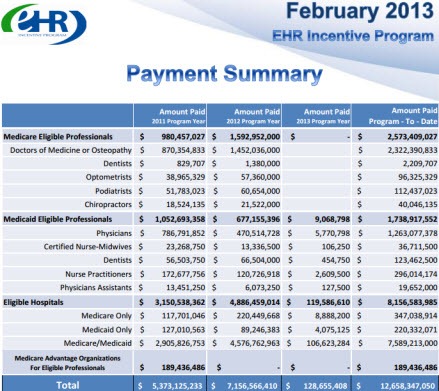
CMS has paid $12.7 billion in Meaningful Use incentive payments through February.

RazorInsights Hires Former Siemens RVP Karl Kiss to Drive Sales

Karl Kiss, regional vice president at Siemens, moves to RazorInsights taking over as VP of sales and marketing.

Comments Off on Morning Headlines 4/3/13

News 4/3/13

April 2, 2013 News 10 Comments

Top News

4-2-2013 10-52-51 PM

Nuance shares jumped 8 percent Tuesday after activist investor Carl Icahn disclosed that he holds a 9.3 percent stake in the company, with speculation that Icahn’s history of forcing underperforming companies to change may mean that he will seek to break Nuance into separate businesses. Above is the one-year share price (blue) compared to the Nasdaq (red).


Reader Comments

4-2-2013 10-53-53 PM

From Sequester: “Re: Vanderbilt University Medical Center. Sequester and Medicaid expansion hits the budget.” VUMC implements a hiring freeze for non-patient care positions, urges employees to control food and travel costs, stops vacation accruals through June 30, cancels the scheduled July 1 merit increases, and eliminate this year’s incentive bonuses. They need to make up a $20 million shortfall by June 30  and then find $50 million in ongoing annual savings.

From Hodor: “Re: HIMSS Analytics. We received an open records request stating we have to supply a copy of the contract with our EHR vendor as well as proposals from all bidders. This just seems wrong to me. A contract negotiated in good faith is now part of open records. Once we pick a vendor, we work at making it a partnership and this goes against all of that. I am seriously considering dropping my HIMSS membership.” Sunshine laws require that public organizations make their agreements available and I think hospitals are treated no differently than any other public agency or charity even though they often don’t think of themselves that way.


HIStalk Announcements and Requests

March easily set the record for one-month HIStalk readership with 156,337 visits, 266,440 page views, and 30, 824 unique readers. The needle pegged during HIMSS week with around 11,000 visits each day on Monday and Tuesday of that week.


Acquisitions, Funding, Business, and Stock

4-2-2013 10-55-20 PM

Emdeon announces its intention to re-price its existing senior secured credit facilities to benefit from current market interest rates.

4-2-2013 10-56-00 PM

Merge Healthcare announces a tender offer for all of the $252 million in 11.75 percent Senior Secured Notes that are due in 2015, hoping to refinance at a lower rate.

4-2-2013 10-56-35 PM

Colorado Governor John Hickenlooper joins TriZetto Chairman and CEO Trace Devanny in the cutting the ribbon for the company’s new headquarter in Douglas County, CO.


Sales

The Delaware Health Information Network will implement Audacious Inquiry’s Encounter Notification Service to alert physicians of patient admissions and discharges.

4-2-2013 3-41-38 PM

St. Francis Hospital and Medical Center (CT) signs a five-year contract extension for Streamline Health’s AccessAnyWare and FolderView suites and adds integration with Epic.

Rocky Mountain Health Plans (CO) contracts with HealthSparq for self-service websites for its insurance members.


People

4-2-2013 3-42-37 PM

NaviNet names Daniel Timblin (BCBS TN) CFO.

4-2-2013 8-19-38 AM

Health Evolution Partners promotes David A. Smith (PSS World Medical) from senior operating partner to general partner of the firm’s Growth Buyout Fund.

4-2-2013 1-24-01 PM

RazorInsights hires Karl Kiss (Siemens) as VP of sales and marketing.

4-2-2013 1-28-18 PM

Carol Zierhoffer (Xerox) joins the MedAssets board of directors as head of the IT committee.

4-2-2013 2-50-14 PM

MedHOK appoints Lisa Slattery (Health First) chief quality and compliance officer.

4-2-2013 3-02-04 PM

Availity names Karin J. Lindgren (Reed Group Ltd.) SVP of legal and regulatory affairs and general counsel.

4-2-2013 7-08-18 PM

Edifecs hires Sam Muppalla (McKesson Health Solutions – above) as SVP of products and strategy, Vik Anantha (McKesson Health Solutions) as VP of financial management solutions, and Prabhu Ram (GE Healthcare) as VP of clinical solutions.

4-2-2013 7-38-19 PM

Mark Snow (RevSpring) is named SVP of business development and marketing of revenue cycle outsourcing vendor GeBBS Healthcare Solutions.

4-2-2013 8-45-45 PM

Stephen Schuckenbrock (Dell) is named president and CEO of Accretive Health, replacing Mary Tolan, who will move to board chair.


Announcements and Implementations

The Patient-Centered Outcomes Research Institutes names 84 appointees to its first four advisory panels.

4-2-2013 3-46-35 PM

Weirton Medical Center (WV) goes live on its $30 million Siemens Soarian EHR and Siemens MobileMD HIE platform.

HL7 makes its standards and select intellectual property available at no charge under licensing terms. The organization is also revising its membership model to include an expansion of free or discounted education programs and training, a help desk, and enhanced testing of individual expertise in HL7 development, training, and implementation.

4-2-2013 10-58-34 PM

Patient Privacy Rights publishes its Privacy Trust Framework, a set of 75 criteria for measuring how well IT systems protect data privacy and patient control.

4-2-2013 6-08-42 PM

ZirMed launches Patient Estimation, a Web-based solution to determine a patient’s financial responsibility prior to providing care or service.


Government and Politics

The Missouri Senate approves legislation requiring insurance companies to cover telemedicine services if the same services are covered for face-to-face doctor visits.

4-2-2013 3-49-48 PM

Rep. Jim Dermott (D-WA) asks HHS to consider renewing its safe harbor provision that allows hospitals to subsidize EHR technology for its affiliated physicians under the federal Anti-Kickback Statute. The provision is set to expire at the end of 2013.

Rep. Diane Lynn Black (R-TN) proposes legislation that would exempt solo physicians from MU penalties based on lack of capital and resources, as well as exempt physicians nearing retirement age. Other provisions would expand the definition of an Eligible Provider to include rural health providers and to allow certain providers to participate in specialty registries in lieu of reporting on quality measures.

4-2-2013 3-15-43 PM

CMS has paid $12.7 billion in MU payments through the end of February.

A petition urges the White House to force the Department of Defense to use the VA’s VistA system to save taxpayer dollars and ensure continuity of care of veterans.


Other

An article in The Wall Street Journal covers saving the cost of repeated image scans by sharing them. Mentioned is lifeIMAGE, which offers radiology practice connections to the federal funded Image Share platform

4-2-2013 8-00-22 PM

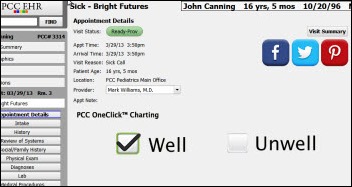
A fun April 1 phony EHR demo from pedatrics EMR vendor PCC includes the often-requested One-Click Charting enhancement as well as exporting patient information directly to Facebook and Twitter.

4-2-2013 8-02-11 PM

Epic sets the standard for self-parody in its April Fool’s home page makeover. The lead story claims the company will release its secret Kool-Aid formula to meet ONC transparency guidelines  and also apparently pokes fun at CommonWell in saying that other vendors are working on their own versions that promise to be more interoperable. It also announces Pair Everywhere, which will use shared personal information (entered by SmartText, of course) and ICD-10 codes to identify “that perfect someone who also likes long walks on the beach, dancing in the rain, and monitoring readmission rates for at-risk heart attack patients.” The short blurb says MU3 will require providers to wear bow ties instead of traditional ones as an infection control standard, while my favorite says the company will change its name from Epic to EPIC since “no one gets it right anyway.”

Speaking of Epic, a local article highlights the companies being launched in the area by former Epic employees, which have created 400 jobs in the Madison area. Profiled are Nordic Consulting, Vonlay, BlueTree Network, CenterX, and Moxe Health. Epic’s headcount is now at 6,400, the article says, up 1,000 from a year ago.

Craigslist founder Craig Newmark weighs in on the VA’s disability claims backlog in a Huffington Post blog post. He seems sincere, but not particularly insightful.

A Medical College of Wisconsin cancer researcher is charged with stealing another doctor’s drug research, sending it off to China, and then trying to delete data from the college’s computer system to avoid detection. The researcher had been disciplined previously for storing lab data on his own computer. He’s been charged with economic espionage.


Sponsor Updates

4-2-2013 7-11-31 PM

  • Carl Fleming of Impact Advisors will shave off his hair and beard at the company’s annual meeting on May 1, hoping to raise $3,000 for the St. Baldrick’s Foundation. He’s at $1,290 in donations so far.

4-2-2013 7-17-18 PM

  • ESD celebrates its 23rd year in business this week with photos and a company history.
  • MedAptus suggests ways to survive Medicare cuts from the sequester.
  • Accent on Integration will participate in the International MUSE Conference May 28 in National Harbor, MD.
  • Rebecca Saffert, product manager with Optum Health, hosts an April 25 Webinar on reducing readmissions through transitional case management.
  • Iatric Systems offers a two-part guide on how to use technology to prepare and meet the deadlines for MU 2014.
  • Gates Hospitalists (MO) secures PQRS incentive funds using Ingenious Med’s claim-based submission registry.
  • Levi, Ray & Shoup is sponsoring the CIO Summit in Newport Beach, CA April 8-10.
  • Crain’s Chicago Business names Deloitte the 12th best place to work in Chicago.
  • Kareo answers the top five questions from a recent Webinar on practice marketing.
  • SIS offers four tips to improving coordinated care in the OR.
  • First Databank announces its 2013 FDB Customer Seminar November 6-8 in North Miami Beach.

Contacts

Mr. H, Inga, Dr. Jayne, Dr. Gregg, Lt. Dan, Dr. Travis.

More news: HIStalk Practice, HIStalk Connect.

125x125_2nd_Circle

Morning Headlines 4/2/13

April 1, 2013 Headlines 1 Comment

Doctors firing back at patients’ online critiques

The Boston Globe covers the story of a Boston-based surgeon who is suing her deceased patient’s husband after he posted an unflattering review of her care.

Mixed results on computer-based support for diabetes

Researchers at University College London complete a systematic review of 16 control trials exploring the effect online and mobile diabetes management tools have on overall disease management. The study concludes that the tools had a positive but minor effect on glycemic control, with computer-based tools resulting in a net 0.2 percent drop in HbA1c levels, while the mobile tools yielded a 0.5 percent decrease. Four in ten tools showed a positive effect on lipid panels. The tools had no measured effect on weight, health-related quality of life, or depression.

H.R. 1331: Electronic Health Records Improvement Act

HR 1331, a bill that if enacted will create a Meaningful Use hardship exemption for providers approaching retirement age and small physician practices, is getting lots of media attention this week despite being given one percent odds of making it to vote and zero percent odds of being enacted. Its identical predecessor, HR 6598, was proposed on November 16 and died in committee, which is where HR 1331 now resides.

MMRGlobal Expands Licensing Initiative in Advance of Stage 2 Meaningful Use Patient Engagement Requirements

MMRGlobal announces that it will ramp up efforts to cash in on its patient portal patents, specifically declaring that it will expand its licensing efforts to include hospitals, ambulatory surgical centers, laboratory systems, pharmacies, mass merchandisers and other vendors and providers.

HIStalk Interviews Mitch Morris, MD, Principal, Deloitte Consulting LLP

April 1, 2013 Interviews Comments Off on HIStalk Interviews Mitch Morris, MD, Principal, Deloitte Consulting LLP

Mitchell Morris, MD is a principal with Deloitte Consulting LLP.

3-31-2013 11-21-45 AM

Tell me about yourself and the company.

I am a partner at Deloitte. I lead our health information technology practice.

My background is a little unusual. l started as a physician and was in academic practice for nearly two decades at MD Anderson Cancer Center. I  got very interested around problems of quality and efficiency in healthcare, as so many of us do, and what technology tools can be brought to bear to solve those problems.

I complained a lot, got put on a committee, kept complaining, and I was chairing the committee. Eventually they said, “Well, if you think you’re so smart, here’s a budget, you do it.” Over a period of years, I ended up being the chief information officer at MD Anderson, a post I held for about six years. I left for consulting in 2001. I have been with Deloitte for going on seven years now.


Most of us in hospitals think about Deloitte working with providers, but you have responsibility over pharma and medical devices as well. Do you a lot of issues that overlap with what we traditionally think of as healthcare IT?

Yes. It’s a fascinating time. One of the things about being at Deloitte, the nature of our company gives us exposure to some of the areas of convergence that are happening.

Some great examples are large health plans acquiring medical practices and even hospitals with an eye towards payment reform and accountable care. We’re seeing tremendous convergence there. We’re seeing a great level of interest in life sciences companies – pharma, biotech, devices — in better understanding and integrating with what goes on in the provider world. Their business models are driving them towards closer integration and accountable care is even a part of that. 

An interesting phenomenon to watch is academic clients — academic health centers and universities, who in a sense can be viewed as small biotech companies on their own as they have a research agenda — are also linking up the combination of genomic and phenotypic information from electronic health records with what goes on in the laboratory. 

It’s a pretty exciting time when you look at all of the different pieces that are in the mix. The driver of health reform making everyone go into a frenzy has created a lot of activity. It’s fun to get creative and innovative around it, but then it’s all sometimes a little frightening as to where we’re all headed and how much control we have over it. But it’s been a good time from that point of view to be a healthcare consultant.


Every kind of company is positioning themselves for whatever they think the healthcare system will look like. The roles are becoming blurred about who’s the provider and who’s the payer. Do you think all this is going to benefit patients?

That’s a great question and I don’t think there’s an easy answer. Certainly the current healthcare system is too fragmented, broken, and too expensive, so we needed to change. What I wonder about is how much pain we’re going to go through during the change process and how quickly we will get to something that actually does help patients.

I think at the end it will help patients and consumers. Part of it also is your perspective. In the US, we tend to have a perspective of healthcare from the point of view of the individual. What’s going to happen to me or my loved one and what can I access for them? Most other countries have the perspective of the population. I’ve got a bucket of money. I have a population I need to serve. How can I do the most good with the bucket of money I have? 

As we transition as a country from a very individual view of healthcare — that we do everything for everyone — to a more population-based view of population health management, another common term along with accountable care, there’s definitely some pain that we will go through and some careful examination of our values as consumers and providers of healthcare as to what we think is most important. I’s a not easy decision ahead of us on that score, I don’t think.


Most of the science of public health was developed in this country, yet most of it gets exported to other countries whose citizens accept that concept better than ours. Is there a movement that suggests we will begin to behave more like a public health organization?

There are signs that Health and Human Services is directing funding to that end. I think the different iterations of value-based care, whether it’s accountable care organizations or other forms of value-based payment systems, are a step in that direction. The formation of the PCORI and their funding and pushing clinical effectiveness studies and the regulatory pieces that are coming out for pharma and for healthcare providers around clinical effectiveness are pushing us in the right direction. We make decisions and consumers make decisions not based on what they saw on the television commercial for that new drug, but rather let’s look at some data and see not just from a Phase III clinical trial but actually out in the market, what’s the most effective way to spend our healthcare dollar to be most helpful?

The pace sometimes seems fast to us, but I think it’s proceeding fairly slowly. I think an open question is this. We get to 2014 and as the health insurance exchanges kick in and more people have access to care, there will be further pressure on reimbursement. The whole sequestration issue in Washington right now is having a big impact on that as well with a 2 percent Medicare cut.

I think those things are going to be drivers in the marketplace to accelerate the adoption of some these other approaches to reimbursement and care in general. It has a potential to move faster than it is, but one thing I’ve been guilty of in the past is thinking things will happen faster than they will. I wouldn’t be surprised if change continues to be at a relatively slow pace and maybe that’s a good thing.


Are we putting too much faith in both the motivation and the ability of providers to use business intelligence and analytics to improve outcomes and reduce costs?

You probably went to HIMSS and a lot of your readers did. I think at least half the industrial exhibits there had the word “analytics” on the booth somewhere. There’s certainly a great deal of interest, but also a fair amount of hype.

The question will be when provider organizations in particular have to continue their march towards Meaningful Use, they have to deal with ICD-10, they have to deal with shrinking reimbursements and their cost-reduction initiatives –are they going to be willing to spend on things that are not required to do? If they do spend something, will it be a minimalist approach or a more comprehensive approach towards analytics?

Trying to run a healthcare organization today without good at analytics is like flying a plane blind. But I haven’t seen a huge change in organizations’ willingness to significantly invest in this.

The good news is with all the competition that’s out there creating solutions, that’s driving prices of solutions around analytics down. You don’t have to spend millions of dollars. There are out-of-the-box things that can help you, for example, analyze your revenue cycle or analyze readmissions or fill in the blank of what your current problem is. 

To  do a comprehensive approach to solve the analytics problem at an organizational level requires some investment, careful thought, and careful adjustments of governance and organizational structure to make it work. I think we’re ways away, but as measured by the interest at HIMSS, it seems like a lot of people are talking about it, that’s for sure.


Do you expect to see any new government involvement with healthcare IT issues, for example usability or FDA regulation?

As we take each federal agency, I think FDA has a strategy that they are enacting at a careful pace that will include a greater degree of regulation and oversight and a broadening of what they provide oversight for. I think in terms of what comes out of ONC and the rest of Health and Human Services, it’s hard to guess what kinds of things will come out from them. I think they pretty much have a full plate right now, but I wouldn’t want to speak for what their intentions are. Deloitte does a lot of work for those organizations, so I feel it will be improper for me to speculate.


What’s your overall thought on Meaningful Use as a program?

It certainly stimulated a lot of spending and a lot of progress. It’s far from being perfect, but I think overall it has driven a lot of benefit and organizations that had been taking a wait-and-see or very slow approach to the adoption of electronic health records –and certainly in the case of medical practices — it’s really accelerating things. 

The challenge that we have as an industry is not just getting in a system and checking the boxes on the Meaningful Use attestation document, but being able to really say as a group medical practice or as a hospital system, we’re driving benefits around quality and efficiency by using a system that we didn’t we have before.

While there are examples of electronic health records achieving benefits, there are also examples where it didn’t work out so well. It’s frustrating for me personally that as an industry, we haven’t done a better job of showing a broad and widespread benefit. We shouldn’t even be asking this question, and debating is kind of shameful in a way. 

The good news is most organizations I’m working with and our teams at Deloitte are working with are showing really great progress. It’s happening at a much faster pace because of the federal funding compared to prior to that. The maturity of the software also has a lot to do with it today, too.


Other than the minimal requirements for Meaningful Use, are providers showing an interest in technologies that engage and motivate consumers or patients directly?

I think that’s emerging. In terms of working directly with consumers, some of the healthcare organizations — and I’ll include health plans in this — that are a little more on innovator side are really looking at solutions that involve mobile technologies that go into the home or to the workplace and help with wellness and chronic disease management. There’s plenty of examples of where those things have been successfully implemented. 

As we get towards more mature versions of accountable care, linking together all the providers in a consumer’s ecosystem that they deal with and allowing things to happen at home or retail settings is a tremendous advance. A lot of that is technology enabled. You can’t do it without technology.

We’re still at the early stages of developing transactional systems that advance the agenda around population health management. We’ve got some pretty good back-end analytics stuff that we’re capable of doing today. We still have a way to go on on the transactional side. 

Part of it is that interoperability is still off in the future somewhere. Every community has a bunch of different systems that they have to put together, so that that makes it challenging. But there are some interesting emerging technologies from several software vendors that, as they mature, are going to bear some fruit.


What healthcare IT changes do you predict over a three- to five-year timeline?

It’s always difficult to predict disruptive things that might come along. Barring that, I look at what our clients are really challenged with. Managing and reducing cost is a huge issue, not just of IT, but overall. Being able to manage IT spend, looking and doing that through selective sourcing, making sure the organization is firing on all cylinders, being able to support analytics for your organization to reduce cost, making sure the revenue cycle systems are firing on all cylinders. Those things are going to be tremendously important.

We see the healthcare industry consolidating. At Deloitte, we have very large merger and acquisition practice. They’re tremendously busy, and we are doing a lot of post-merger integration. When all of the consolidation occurred in the 1990s, very often there wasn’t consolidation of IT and supply chain and HR, etc. Now because of the cost drivers, as we are seeing medical groups consolidate, hospitals consolidate, health plans consolidate, they are all trying to figure out, how do we get IT to be a key enabler of the efficiencies that we expect to gain from the merger or the acquisition? We’ll see a lot of that.

Preparing for value-based payments through accountable care and all the analytics need to support that we’ve already touched on. Convergence with the health plans and life sciences will be another significant driver. What’s going to wind down a little bit as this big round of primary implementations gets finished for Meaningful Use around clinical systems, that work will diminish, although there’s still a lot of optimization work that can be done out there. “I installed Epic, Cerner, fill-in-the-blank system, but to really get the benefit I expected, I need to spend more time looking at workflow and efficiency and quality and decision support. I think that’s work that I will spend time on.”

ICD-10 is going to wind down. I think mobility is going to crank up. The whole layer of coordinating care at the population level rather than at the facility level will create some opportunities for existing software companies, there will probably be some new entrants into the market who are able to beyond what an HIE does, really coordinate the care and the workflow beyond the walls of an organization. There’s multiple pieces of the provider supply chain taking care of people out there.That will be a really interesting one to watch.

At the Deloitte Center for Health Solutions, we recently released some work by Dr. Harry Greenspun that interviewed some CIOs of large systems and what they’re thinking. Some of the things I’m saying are reflected in that, and as well as some of challenge, which is juggling so many different priorities. I think one of the challenges our CIOs and healthcare today face, if you ask them what’s their number one priority, they’ll list 10 things because they’ve got so many things they have to do. That competing set of priorities that are all number one gets reflected in everything that we’re doing in the industry, and everybody who works in it is a reflection of all those things that are going on in healthcare. Those things are fun, but also a headache at the same time.

Comments Off on HIStalk Interviews Mitch Morris, MD, Principal, Deloitte Consulting LLP

EHR Design Talk with Dr. Rick 4/1/13

April 1, 2013 Rick Weinhaus 3 Comments

The Text-Based Workaround

We have been considering two fundamentally different designs for presenting a patient’s past and present medical issues over time — the Snapshot-in-Time design and the Overview-by-Category design.

I have tried to make the case that the Snapshot-in-Time design, although rarely used as a high-level EHR paradigm, does a much better job than the widely adopted Overview-by-Category design for two reasons:

1) Clinicians think of the patient’s health as a story – a narrative of how things got to be the way they are. Each patient’s story is rich, complex, and unique. By presenting the patient’s story as a series of snapshots in time, this rich narrative gradually unfolds, a little like turning the pages of a picture book.

2) The Snapshot-in-Time design, when combined with assigning each category of data to a fixed location on the screen or page (see Why T-Sheets Work), allows us to take it in and process information using the fast visual processing part of our brain. In contrast, the Overview-by-Category design compels us to use slower cognitive processing.

In my last post, I wrote that perhaps due to the limitations inherent in the Overview-by-Category design, most EHRs that employ it also provide a workaround solution. This workaround is nothing other than a text-based chart note generated by the EHR.

For each patient encounter, the EHR can generate a single, relatively comprehensive text-based document assembled from the previously-entered structured data.

These text-based documents are typically in Microsoft Word or PDF format. They can be viewed on the monitor from within the EHR application, printed, or sent electronically as PDFs.

Although these text-based EHR chart notes are snapshots in time (unlike the Overview-by-Category EHR screens), they usually have significant problems, including:

  • low data density
  • non-interactive design
  • poor spatial organization and layout

In this and the next several posts, I will address these issues by presenting mockups of text-based chart notes, based on the design of several well-known EHRs.

The mockups use the same patient database that I used for the Snapshot-in-Time and the Overview-by-Category mockups. While these examples are for an ambulatory patient, similar designs are common in hospital-based EHR systems.

In order to see the mockups and read the accompanying text, enlarge them to full screen size by clicking on the ‘full screen’ button clip_image001 in the lower right corner of the SlideShare frame below.

Rick Weinhaus MD practices clinical ophthalmology in the Boston area. He trained at Harvard Medical School, The Massachusetts Eye and Ear Infirmary, and the Neuroscience Unit of the Schepens Eye Research Institute. He writes on how to design simple, powerful, elegant user interfaces for electronic health records (EHRs) by applying our understanding of human perception and cognition. He welcomes your comments and thoughts on this post and on EHR usability issues. E-mail Dr. Rick.

Curbside Consult with Dr. Jayne 4/1/13

April 1, 2013 Dr. Jayne 2 Comments

Every time I am invited to present at the hospital’s quarterly medical staff meeting, I feel like I should wear personal protective equipment. No one is hurling rotten tomatoes when we talk about EHR, but the verbal assault can be equally messy.

I was asked to present at the recent meeting with the goal of discussing our ICD-10 transition plan. Despite previous mistakes by our (now-disbanded) ICD-10 Task Force, our new team is confident that our vendor is ahead of the pack. I thought I would escape without too much drama. Thoughts of melting snow and approaching spring weather must have tricked me into forgetting the tendency of my colleagues to go completely off the agenda.

When we implemented EHR, we carefully audited the coding/billing functionality to make sure that not only did it adhere to CMS guidelines, but to the stringent standards of our auditors. We manually audited behind any computer-assisted coding for a period of time until we were comfortable that the algorithms were appropriate. At that point we discontinued full audits, but continued spot audits on high-dollar or high-risk episodes of care. We also continued our regular audit protocol where each physician had a set of charts audited each quarter with coding feedback delivered from our teams.

When the EHR was initially deployed, we saw a shift in the distribution of ambulatory Evaluation and Management codes, but this was expected. It also matched with published data that showed primary care physicians tend to under-document the care they deliver. We were happier with our increased documentation of the care we were appropriately providing.

Over time our EHR has matured and has had added to it a variety of individualized order sets, care plans, patient instructions, and documentation macros that allow our users to personalize their notes. Our coders have stayed on their toes, making sure visit documentation continues to be individualized despite these labor-saving features. We definitely don’t want to fall victim to the problems that can arise from cloned documentation or any other inappropriate use of the EHR.

Since we’ve been live so long and our medical staff has grown so much, many of our newer colleagues didn’t go through this initial auditing process and don’t understand the ongoing auditing that is in place. Without this comfort level with the EHR, they are extremely nervous about what will happen with ICD-10. Our EHR is moving to a new level of assisted coding to aid with the transition. 

People are, for lack of a better description, freaked out. The question and answer period following my ICD-10 presentation spiraled into paranoia and outright fear.

Providers have long been worried about audits that would demand large repayment sums based on a sampling of charts. Now they are worried about criminal prosecution on top of financial penalties and potential exclusion from federal health care programs. Several more vocal colleagues demanded that we go back to 100 percent chart review by certified coders, which is just not tenable given recent budget cuts. Others asked the medical staff to consider endowing a legal defense fund.

Fear of law suits has led to exorbitant health care costs through the practice of defensive medicine. Fear of audits will lead to more spending on non-patient-facing services such as chart reviews and coding audits. I for one would rather spend my healthcare dollar lowering the patient-to-nurse ratio and decreasing preventable harms. What do you think about the increase in audits related to the increase in EHR documentation? E-mail me.

Print

E-mail Dr. Jayne.

Morning Headlines 4/1/13

March 31, 2013 Headlines 3 Comments

Death of patient at Royal Derby Hospital leads to new system ‘to alert staff of medication needs’

In England, the Royal Derby Hospital implements an eMAR system after a patient’s DVT prophylaxis medication was skipped three times over nine days. During her stay the patient fell, broke her hip and then subsequently developed a fatal pulmonary embolism.  The coroner found that even though the appropriate fall precautions had been in place, the omission of DVT prophylactics "more than minimally contributed to the development of the DVT and was therefore a contributing factor in her death."

Hospitals Question Medicare Rules on Readmissions

An article in the New York Times questions the fairness of CMS’s new readmissions penalties, citing critics that say hospitals should be looking for ways to improve care for patients who are still in the hospital rather than managing the patients’ personal lives post-discharge. The article also questions the fairness of using readmission rates as a basis for penalizing hospitals. It does, however, acknowledge that since CMS’s October initiation of penalties, readmission rates have dropped from 19 percent to 17.8 percent.

Hospital implementing new electronic health record system

49-bed Keokua Area Hospital, of Keokua, IA, goes live with CPSI.

Tablet Computers Acceptable for Reading EEG Results, Mayo Clinic Study Says

Mayo Clinic physicians in Arizona have shown that tablet computers can be used to analyze EEG results. The objective of their study was to determine whether a tablet is an acceptable alternative to a laptop for remote EEG interpretation. The findings showed that the tablet cost significantly less and weighed less and had a comparable screen resolution as compared to the laptop.

Monday Morning Update 4/1/13

March 30, 2013 Headlines 8 Comments

From DailyShowFan: “Re: Daily Show. Did anyone see the 3/27 segment where Jon Stewart, a steady advocate for veterans’ rights, takes on the interoperability challenge with AHLTA (DoD) and VistA (VA)? Sad reality, but it’s good to see him bringing this specific healthcare IT issue to wider attention.”

3-30-2013 4-57-38 PM

From KB: “Re: St. Mary’s Hospital, Waterbury, CT. Finally pulled the trigger to put down their awful, botched [vendor name omitted] LIS after being live only eight months. They just signed a $1million+ contract for Sunquest.” Unverified.

3-30-2013 2-43-19 PM

From The PACS Designer “Re: Qubole. A next-generation cloud service focusing on building a new cloud data platform is Qubole. Their solutions use Hadoop, Hive, and Pig software to solve Big Data issues for cloud services.”

3-30-2013 2-22-11 PM

Half of readers have contacted their primary care provider via e-mail or secure messaging. New poll to your right: do you expect to stop working for your current employer in the next 12 months?

3-30-2013 3-43-31 PM

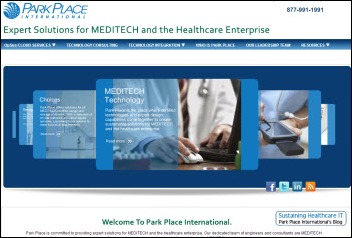
Meditech specialist Park Place International leases space in Worcester, MA for what will apparently become the company’s US headquarters, logically positioned near Meditech.

3-30-2013 4-23-01 PM

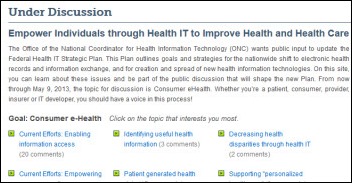
ONC seeks public input as it updates the Federal Health IT Strategic Plan, allowing reading and adding comments for 10 topics related to consumer e-Health

In the UK, Royal Derby Hospital implements an electronic MAR after an inquest determines that a contributing factor to the fall-related death of an 89-year-old patient was three missed doses of enoxaparin.

A Mayo Clinic study finds that tablet computers can be used to analyze EEG results outside the hospital or clinic.

A New York Times article questions whether hospitals should be held financially responsible for managing readmissions by, as it says, “managing the personal lives of patients once they are released” instead of focusing on other ways to improve care. Experts drily note hospitals with high mortality rates would appear to be more successful in managing health since dead patients can’t be readmitted. A health policy expert says readmission metrics are convenient, but not accurate.

3-30-2013 4-55-00 PM

Keokuk Area Hospital (IA) goes live on CPSI.

Medseek’s Client Congress will be held in Austin, TX April 15-17.

3-30-2013 4-33-12 PM

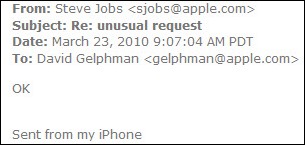
A former Apple employee recounts in a story called “2 Letters from Steve” the touching story of e-mailing Steve Jobs in 2010 to ask if he could take an iPad, which had not yet been released and thus was highly secured, to show a terminally ill friend who was not expected to live out the week. He received the above response three minutes later.

Vince continues with the HIS-tory of Meditech this week.


Contacts

Mr. H, Inga, Dr. Jayne, Dr. Gregg, Lt. Dan, Dr. Travis.

More news: HIStalk Practice, HIStalk Connect.

125x125_2nd_Circle

Readers Write: Get Ahead with Mobile Job Hunting

March 29, 2013 Readers Write 1 Comment

Get Ahead with Mobile Job Hunting
By John Yurkschatt

3-29-2013 11-08-09 PM

According to a recent report from The World Bank, three quarters of the world now has access to a mobile phone. In addition, ownership of multiple mobile devices is becoming increasingly common, suggesting that their number will soon exceed that of the human population. Unbelievable, right?

Recently, at HIMSS, I encountered numerous people who were there to network about jobs in the industry. While speaking with many, I couldn’t help but notice that they were checking their smartphones often during our conversation. It became apparent that they were engaged in mobile networking at HIMSS as well. In fact, today’s job seekers are avidly using the following job related functions on their smartphones:

1. Search for jobs

2. Receive e-mail job alerts

3. Read about recruitment process and tips for interviewing

4. Apply for jobs

5. Share content on social networks such as Twitter

In the age of mobile technology, the job hunt is only a click away. The rise of mobile technology is changing the face of how job seekers conduct their search and how employers and recruiters are reaching out to top talent.

Savvy job seekers are using a number of mobile apps. I found three apps to be extraordinarily powerful for the job hunt and for meeting those people who have the jobs:


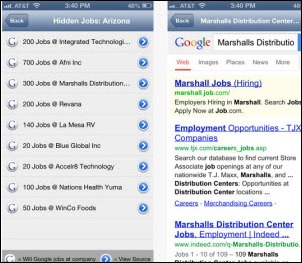
Hidden Jobs

3-29-2013 11-01-09 PM

This app provides you with job opportunities that are not posted on the company website. It tracks close to 2 million unadvertised jobs from companies that are growing and making headlines. In addition, if you are ever seeking a job at a particular organization, or within a geographic area, you must try Hidden Jobs.


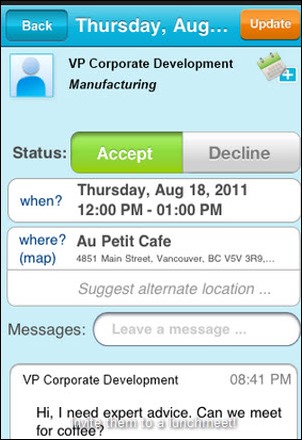
LunchMeet

3-29-2013 11-04-22 PM

According to its site, LunchMeet is a great tool for talent hunters; job seekers; career development professionals; entrepreneurs; people who seek or offer free consultation over lunch or drinks; business school students; business development, sales, and marketing people; and anyone who is interested in strengthening and expanding their professional network.


Sonar

3-29-2013 11-05-55 PM

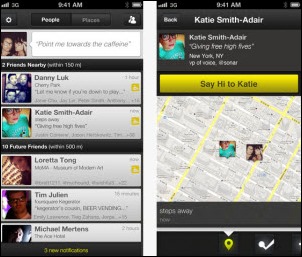
While this app is not necessarily a job search tool, it is the ultimate app to have while attending a conference. In fact, some job networkers at HIMSS found this app handy. Having Sonar enables like-minded individuals to easily connect while attending a conference, or within a certain geographic location. If I were in a networking frenzy, I would turn on my Sonar app and look for folks with similar interests. It is a great way to meet people you may have not known prior to arriving at the conference.

Let’s face it, mobile technology is changing the way people search for jobs and the way companies search for talent. It will only grow in popularity. Get a step ahead, or maybe, don’t get left behind. Take your job search mobile.

John Yurkschatt is project coordinator with Direct Consulting Associates.

Text Ads


RECENT COMMENTS

  1. The CEO sentenced to jail for massive healthcare fraud will get pardoned in a week.

  2. The comments are true above. HIMSS is facing serious leadership and governance concerns, particularly involving the CEO and head of…

  3. "A valid concern..." Oh please. Everyone picks the software they like and the origin of that software is an afterthought.…

  4. I don't disagree with you completely, but to take the counterpoint: there is plenty of precedent for saying "this *entire…

Founding Sponsors


Platinum Sponsors


Gold Sponsors


RSS Webinars

  • An error has occurred, which probably means the feed is down. Try again later.