
Recent Articles:

News 6/19/13

June 18, 2013 News 4 Comments

Top News

6-18-2013 7-20-54 PM

Robert M. Wah, MD, a reproductive endocrinologist, chief medical officer for Computer Sciences Corporation, Navy veteran, and ONC’s first deputy national coordinator, is elected president of the AMA. He’ll take office in June 2014.


Reader Comments
6-18-2013 8-22-09 PM

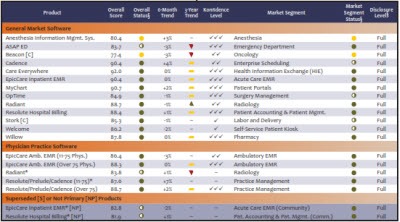
inga_small From Alectrona: “KLAS Mid-Term report. Epic was the only acute care EMR to earn a green stoplight.” In KLAS-speak, a green stoplight indicates a customer satisfaction that’s at least six points above the average for that product segment. EpicCare Inpatient scored 90.4 compared to the 12-month segment average of 73.2. Cerner Millennium PowerChart came in a distant second at 77.5. The average score for community hospital EMRs was 70.6, indicating a good deal of discontent across both segments. Ambulatory EMRs fared better, led by PCC EHR (94.5), EpicCare Ambulatory (88.3), and SRSsoft EHR (86.7).

From Stephanie: “Re: EMR. Can you recommend a system that would be ideal for a small, new epidemiology practice?“ I’ll open the floor to suggestions, particularly for EMRs known to work well for a practice of that type.

From Re-Org: “Re: Springfield Clinic. Dual-headed CIO initiates re-org and dismantles the clinical informatics department, which merges with IT. Top talent jumps ship along with dual-headed CIO. HR will no longer meet with confused, misled, and frustrated employees.” Unverified.


HIStalk Announcements and Requests

6-18-2013 6-32-28 PM
Welcome to new HIStalk Platinum Sponsor SpeechCheck. The Yorkville, IL company can help prevent errors that occur when physicians (especially radiologists) fail to correct mistakes created by speech recognition systems, which is often a problem with their rapid rollout. Those mistakes can cause embarrassment, loss of reputation, patient care problems, and lawsuits. The company analyzes a facility’s reports, trains their physicians, and develops measurable quality standards that include a goal of 98 percent accuracy and zero critical errors. The result is improved care, risk management, and increased reimbursement. Choose from four service packages that offer choices for type and frequency of auditing, creating or reviewing templates, one-on-one physician training and conversion to self-edit , and compliance updates. See where you stand by finding your documentation quality metric. As the company says, we’ve all seen radiology reports where the technology failed to wreck a nice beach recognize speech. President and CEO Lee Tkachuk is a friend of HIStalk going way back; she also leads ChartNet Technologies and Keystrokes Transcription Service. Thanks to Lee and SpeechCheck for supporting my work.  

Maybe I should have taken a picture with my iPhone. I noticed a guy standing at the urinal in the restroom at work doing his business while frantically keying into his iPad mini with both hands. I dawdled at the sink to see if he washed his hands afterwards since I wondered if he could stand the separation from his beloved gadget. He did, not that it mattered at that point.


Acquisitions, Funding, Business, and Stock
6-18-2013 8-25-02 PM

CareCloud secures $20 million in Series B financing led by Tenaya Capital, bringing its total funding to $44 million.
6-18-2013 8-24-24 PM

Mobile health monitoring provider Medivo raises a $15 million Series B round.

PaySpan, a provider of automated healthcare payments and reimbursements, acquires the assets of mPay Gateway, a point-of-service patient payment solution for healthcare providers.


Sales

6-18-2013 8-28-29 PM

St. Mary’s Health Care System (GA) selects Merge’s iConnect Access and iConnect Enterprise Archive for enterprise imaging.

OnePartner HIE will add the Allscripts dbMotion platform to enhance reporting and connectivity.

Nature Coast ACO (FL) expands its relationship with eClinicalWorks to include eCW’s Care Coordination Medical Record.

Community Health Network (IN) will deploy OpportunityAnyWare business analytic solutions from Streamline Health Solutions.

WellStar Health System (GA) selects Avantas to provide consulting services and its Smart Square labor management software to improve labor performance in its nursing units.

Lehigh Valley Health Network (PA) will implement Salar’s TeamNotes solution to capture clinical documentation and comply with ICD-10.


People

6-18-2013 5-56-57 PM

HIMSS Analytics promotes Bryan Fiekers (above) to director of consulting solutions sales and Matt Schuchardt to director of market intelligence solution sales.

6-18-2013 5-59-41 PM

CareCloud hires Tom Cady (athenahealth) as VP of professional services.

6-18-2013 6-02-18 PM

Former CMS Administrator Donald Berwick announces that he will run for governor of Massachusetts.

6-18-2013 6-03-18 PM

John Frenzel (Conifer Health Solutions) joins Convergent Revenue Cycle Management as CFO.


Announcements and Implementations

Cedars-Sinai Medical Center reports it has recovered more than $300 million by reducing net A/R with the help of Hyland Software’s OnBase ECM platform.

6-18-2013 8-31-48 PM

Mary Greeley Medical Center (IA) implements PeriGen’s PeriCALM fetal surveillance solution, interfacing it to Epic Stork.

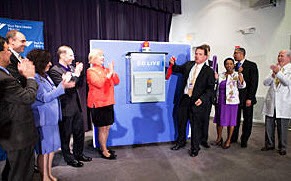
Glenn Medical Center (CA) goes live on CPSI.

Laurel Regional Hospital and Prince George’s Hospital Center, affiliates of Dimensions Healthcare System (MD), activate Cerner.
6-18-2013 8-33-15 PM

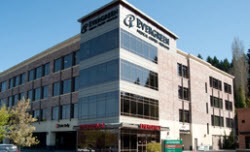
EvergreenHealth (WA) goes live with PatientKeeper Charge Capture.

Bumrungrad International Hospital (Thailand) deploys the Intelligent InSites RTLS solution.

ARC Community Services (WI) implements Forward Health Group’s PopulationManager to monitor addiction treatment programs.

Cerner will embed the MedAssets Claims Management solution within its patient accounting solution.

6-18-2013 8-34-41 PM

University of Ottawa Heart Institute (Canada) goes live on the Med Access EMR.

Adventist Health finishes its implementation of Strata Decision Technology’s StrataJazz for operating budgets and management reporting and will begin rolling out additional StrataJazz modules for capital planning and strategic planning.


Government and Politics

inga_small National Coordinator Farzad Mostashari, MD has supposedly confirmed that the ICD-10 transition date will not be extended beyond October 1, 2014. If CMS weren’t notorious for soft deadlines, would this even be news?

White House Senior Advisor Ryan Panchadsaram, a former executive of Ginger.io and former Rock Health fellow, talks about patients accessing their electronic records at TEDMED 2013.


Other

6-18-2013 1-05-28 PM

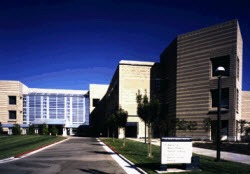
The first of 4,000 Cerner employees begin moving into the first of two high-rise towers at the company’s new Cerner Continuous Campus in Kansas City, KS.
6-18-2013 8-36-18 PM

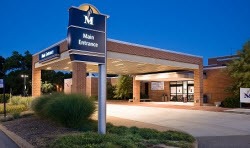
The Meditech system of Memorial Hospital (IL) has been down since June 11 after upgrade-related problems and won’t return to normal operation until June 24, forcing the hospital to go back to paper charts for almost two weeks.
6-18-2013 7-54-38 PM

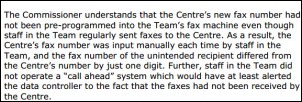
The UK government fines North Staffordshire Combined Healthcare NHS Trust $86,000 for exposing the medical information of three patients by manually entering the fax number of a psychiatric facility incorrectly and sending it instead to someone’s house.


Sponsor Updates
6-18-2013 1-50-56 PM

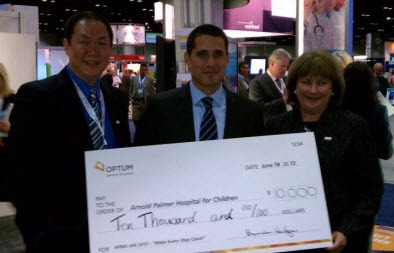
  • Optum donates $10,000 to Arnold Palmer Hospital for Children (FL) in connection with its successful “Make Every Step Count” campaign during this week’s HFMA-ANI conference.
  • PeriGen pledges support for the first published draft of nursing care quality measures developed by the Association of Women’s Health, Obstetric  and Neonatal Nurses.
  • e-MDs expands its headquarters to three locations in the Austin, TX area.
  • An eClinicalWorks survey finds that the primary motivator for becoming an ACO or PCMH is to improve patient outcomes, with respondents also stating that an integrated EHR would be the most valuable IT feature.
  • 3M Health Information Systems introduces the 3M CAC System, a computer-assisted coding solution for small hospitals.
  • Bay Area News Group includes First DataBank on its list of Top Workplaces based on employee feedback.
  • David M. Walker, former US comptroller general, provides the keynote address at the SCI Solutions Client Innovation Summit October 15 in Braselton, GA.
  • Advocate Health Care (IL) says its use of the Healthcare Workforce Information Exchange from API Healthcare has given the organization the ability to link patient satisfaction with employee satisfaction.
  • Craneware introduces enhancements to its Chargemaster Toolkit software.
  • Hayes Management Consulting discusses common areas to consider for increased EHR efficiency.
  • GetWellNetwork integrates its Interactive Patient Care solution with Rauland Responder nurse call system to improve nursing workflow and communication.
  • Capsule posts a white paper that discusses medical device connectivity that is vendor-neutral, open architecture, and device-specific.
  • SRSsoft completes the first phase of certification for the 2014 Edition of the SRS EHR.
  • HIStalk sponsors AT&T and Ping Identity are included on Computerworld’s “100 Best Places to Work in IT 2013.”
  • MedAssets introduces its Procure-to-Pay Solutions suite, which is designed to enhance the management and oversight of contract compliance, standardization, and pricing accuracy.
  • Beacon Partners hosts a four-part Webinar on getting the maximum value from HIT systems beginning with a June 21 discussion on optimizing systems to improve workflow around patient access.
  • T-System posts a video highlighting its RevCycle+ solutions for physician.

Contacts

Mr. H, Inga, Dr. Jayne, Dr. Gregg, Lt. Dan, Dr. Travis.

More news: HIStalk Practice, HIStalk Connect.

125x125_2nd_Circle

Morning Headlines 6/18/13

June 17, 2013 Headlines 1 Comment

Vitera Healthcare Solutions Announces Acquisition of SuccessEHS

Vitera announces the acquisition of Birmingham, AL-based SuccessEHS. Both vendors operate in the ambulatory EHR space. The acquisition expand Vitera’s user base to 10,500 organizations, 415,000 medical professionals, and 85,000 physicians. Financial details were not disclosed.

Mostashari asserts no more ICD-10 delays

Farzad Mostashari, MD gave the keynote address at the HIMSS Media ICD-10 Forum this week, during which he reiterated that there would be no additional deadline extensions for the ICD-10 switchover on October 1, 2014.

Apollo to scale up IT’s role in services 

Apollo Hospital is the first in India to be named a HIMSS (Asia Pacific) Stage 6 hospital, going live with CPOE and physician documentation on its Med-Mantra EHR.

Smooth move to electronic records in PT

Jefferson Healthcare, a Port Townsend, WA-based 25-bed critical access hospital and nine supporting clinics, goes live with Epic on Saturday morning at 2 a.m. The project was reportedly on time and on budget. Jefferson Healthcare is part of the Swedish Health Network.

Curbside Consult with Dr. Jayne 6/17/13

June 17, 2013 Dr. Jayne Comments Off on Curbside Consult with Dr. Jayne 6/17/13

Over the last month or so, I’ve become a frequent flyer patient at an orthopedic surgery practice. It’s been kind of fun because it’s a practice I rotated at when I was a resident. They’re also part of a local IPA and I’m able to see the workings of our competition.

I have to suspend the process redesign part of my brain when I go there because there are some office processes that drive me crazy. I’m amazed that they’re operating this way in 2013 and am hopeful that Meaningful Use will give them a kick start.

At this week’s visit, a sign appeared announcing they’re preparing to implement EHR, so it was hard not to make observations. One of my running buddies is part of the IPA, so I’ve heard her side of how the system is being rolled out. It doesn’t look like they’re taking lessons learned from one practice and carrying them to the others. I’m pretty familiar with their EHR vendor and I hope they’re not surprised when this practice isn’t successful, because what I saw was not pretty. If you haven’t implemented yet either, you might take some of this as a cautionary tale. Here is the recap.

With the market consolidation going on and the concessions vendors are willing to give to ensure a sale, does it make sense to keep a practice management system from a different vendor than your EHR? What about if the PM vendor is notorious for sunsetting products? The EHR vendor also has a practice management system, and in a lot of ways the PM system is stronger than the EHR. I know from my buddy that the vendor offered to throw in the PM system nearly free, but the IPA was concerned about a conversion. Instead, they thought creating a unidirectional interface from the PM to the EHR was a much better idea. The providers will continue to operate on paper fee tickets even after EHR is live.

It might be a good idea to optimize the practice management workflow and office processes before implementing EHR. Although they are strong at scanning the insurance card at every visit, they are still hand-writing receipts in a duplicate book. I would have thought they were on downtime procedures if I didn’t see it five times in a row. They have a credit card swipe device attached to the monitor at check-in (good) but the printer is 25 feet away on a back desk and they have to get up and walk to get the receipt for signature (bad). They then hand-write the co-pay receipt.

The credit card receipt doesn’t even have the practice name or show that it’s a co-pay. On three of four visits, they forgot to write co-pay on the paper receipt, and because their paper receipts doesn’t have the practice name either, patients can’t submit them for reimbursement from flexible spending accounts.

The staff then has to manually staple the top copy to the patient credit card receipt and the bottom copy to the patient demographic sheet, which they didn’t ask me to verify at any visit. On three of three post-procedure visits, they also collected a co-pay during the global period, which they had better be cheerfully refunding to me once I receive my Explanation of Benefits statements. Based on the chaos at the office, it seemed easier at the time just to pay it than to delay my visit with a discussion since I was juggling my appointments around my work schedule.

There are doors at each end of the large L-shaped waiting room to the patient care areas. They don’t warn patients as to which side their physician is working, and the employees don’t speak loud enough to be heard around the corner of the L (or over the loud televisions) when they call patients. This results in delays because patients can’t hear that they’ve been called and take longer to get to the door on crutches or in a wheelchair because they’re waiting on the wrong side.

Check-out is at the same desk as check-in (although with two separate lines), so there is constant competition between getting patients in and out. Each time I was offered a follow-up that was at least a week later than what the physician recommended, and the front desk staff had to call back to the physician area to have me approved as a work-in. I wonder how many patients insist on the follow-up interval they were told versus how many just take what is offered? Where orthopedics is concerned, that can sometimes make a difference in a patient’s return to function if their cast is left on longer than intended or they don’t get timely follow up. It’s also a waste of time to require the front desk to have work-ins approved when they are approved 100 percent of the time, which I witnessed in my multiple tours through the waiting room.

Workflow in the patient care areas was actually pretty good, with smooth handoffs between the medical assistants, radiology tech, and cast techs. There was a delay with the physician, which gave me time to read the brochure about the practice’s upcoming medical mission trip to the Dominican Republic, scheduled to start three days after my most recent appointment. I’ve actually used the EHR that they’re installing, so I chatted a bit with the cast tech about it and found out they were having training that afternoon.

She mentioned they will be going live while half the office is away and that the physicians won’t attend training. Instead, employees will attend he training and then train the physicians when they returned. I shuddered a little at what a terrible idea this is. Although train-the-trainer programs can work, it does take time to develop solid training competency and enough understanding of the software to be able to train it. Expecting front line staff to be able to train their physicians after a single round of training and only a week of real-world experience is not a good idea.

Scheduling a go-live when half the office is out is not the best idea, as those physicians going live will have to cover emergencies and other office tasks for those away. Expecting the rest of the practice to go live the week they return from being out is a disaster in the making, given the existing backlog and wait for patient appointments and the fact that they’re always double (and triple) booking. It’s not as if they didn’t know this trip was coming since they’ve been fundraising for it for six months based on the date of the brochure.

On the way out, I noticed the staff in a conference room, huddled around tablet PCs and going through training. What a way to spend a Friday afternoon! I’m scheduled for a follow-up the week of the second round of go-live, so it should be interesting. I have an add-on appointment at the end of the day, which guarantees it will be good for at least one story. I can’t wait to see their workflow for EHR or how well their train-the-trainer plan went. Stay tuned!

Print

E-mail Dr. Jayne.

Comments Off on Curbside Consult with Dr. Jayne 6/17/13

Vitera Acquires SuccessEHS

June 17, 2013 News 10 Comments

Vitera Healthcare Solutions will announce this afternoon that it has acquired Birmingham, AL-based SuccessEHS, which offers PM/EHR, electronic dental record, dental imaging, and revenue cycle solutions. SuccessEHS, which has doubled in size in the past two years, will be operated as a division of Vitera.

6-17-2013 5-47-20 PM

The acquisition will expand Vitera’s user base to 10,500 organizations, 415,000 medical professionals, and 85,000 physicians and will increase its customer base of Community Health Centers.

Vitera has invested $25 million in product development and customer support enhancement in the past 18 months and introduced four new products, including Vitera Intergy Mobile and the Vitera Stat PM/EHR package for small practices.

Morning Headlines 6/17/13

June 16, 2013 Headlines Comments Off on Morning Headlines 6/17/13

Office of the National Coordinator for Health IT Tackles Pressing EHR Issues

Farzad Mostashari, MD is interviewed by AAFP News, the news outlet representing the American Academy of Family Physicians. The discussion broached a number of topics including EHR usability, return on investment, the recent copy/paste debate and resulting Medicare audits, the future plan and timeline for national interoperability, and the future of the HITECH act beyond 2015.

Review of the final benefits statement for programmes previously managed under the National Programme for IT in the NHS

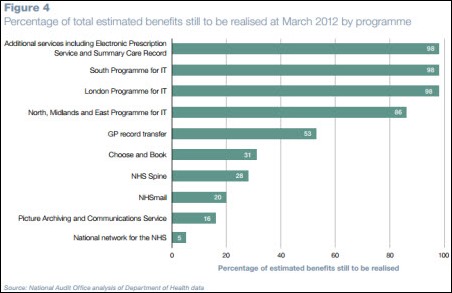
In England, a final cost-benefit analysis of the now dismantled National Programme for IT shows that the program ended up costing more than twice the value it had delivered at the time it was shut down. Analysts hesitantly forecast a 2024 break even point, but warn that long-range future benefits are nearly impossible to predict with any real accuracy.

11 medical schools earn AMA grants for education innovation

The American Medical Association announces that 11 medical schools have each won $1 million, five-year grants to reshape medical education by implementing innovative programs. NYU and Indiana University plan to create virtual EHRs using de-identified patient data to train students on EHR and population health systems that are becoming the norm in practice.

“OK Glass”: Improve Health Care. Now!

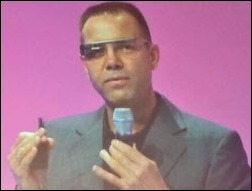
New Google Glass owner Rafael Grossmann, MD discusses the ways the technology might influence his approach to rounds, surgeries, and teaching.

Comments Off on Morning Headlines 6/17/13

Monday Morning Update 6/17/13

June 16, 2013 News 7 Comments

6-16-2013 6-49-56 PM

Three-quarters of poll respondents don’t believe EHR vendors should sell the de-identified data of patients who haven’t approved that practice. New (reader-suggested) poll to your right: what will be the effect(s) of the EHR Developer Code of Conduct? You may choose more than one answer and add your comments after voting.

6-16-2013 7-50-27 PM

Fans of the smoking doc HIStalk logo will like the old-new mash-up done by the folks at Billian’s HealthDATA. Inga and I think it’s pretty cool.

6-16-2013 7-31-27 PM 6-16-2013 7-41-01 PM

Welcome to new HIStalk Platinum Sponsor O’Reilly Strata Rx Conference, which runs September 25-27 at Boston Marriott Copley Place. It focuses on improving healthcare by acquiring, analyzing, and applying big data (the conference tagline is “Data Makes a Difference.”) Presenters include Jonathan Bush of athenahealth; James M. Maisel, MD of ZyDoc;  Richard Elmore of Allscripts; Jordan Shlain of Healthloop; Dale Sanders of Health Catalyst; and Michael Weintraub of Humedica. Fun events include speed networking, a startup showcase, and a five-minute presentation track. Use code HIST by August 15 and you’ll get 20 percent off on your registration, which ranges from $645 for Wednesday only to $1,925 for a three-day, all-access pass. Thanks to O’Reilly Strata Rx Conference for supporting HIStalk. I’m looking for interesting fall and winter conferences to attend if I can find the time and this one looks like a contender.

6-16-2013 7-17-14 PM

Speaking of HIMSS EHRA’s Developer Code of Conduct, its website doesn’t indicate which vendors have signed it, but Epic has, according to its site.

6-16-2013 9-18-56 PM

Mediware will announce Monday that it has acquired Fastrack Healthcare Systems, which will add home medical equipment systems to Mediware’s Alternate Care Solutions business.

Another acquisition will be announced Monday afternoon involving two physician practice system vendors, but I’m non-disclosed on that one.

Here’s a pretty funny video of athenahealth’s Jonathan Bush in a fake screen test (aka an athenahealth pitch) for Health Datapalooza.

From an AAFP interview with Farzad Mostashari: “I think that [physician EHR dissatisfaction] number may grow, because as we expand beyond the early adopters, the expectations for usable and intuitive technology are higher. I sure hope that the EHR vendors are hearing the same levels of dissatisfaction from their customers and their prospective customers that I’m hearing. I hope vendors are focusing on user-centered design in the next iterations of their software instead of adding more bells and whistles.”

6-16-2013 9-20-17 PM

Passport announces CareCertainty and PatientSync, which provide real-time notifications  of care transitions for population health management.

6-16-2013 9-21-30 PM

An article in the Madison newspaper provides a factoid about the brick building at 2020 Old University Road in Madison: it was the birthplace of both Epic and American Girl.

6-16-2013 7-23-04 PM

David LeClair, one of 140 athenahealth employees bicycling an 180-mile route from Maine to Massachusetts in the Trek Across Maine fundraiser for the American Lung Association, was killed Friday by a passing tractor trailer. He was 23.

6-16-2013 7-29-40 PM

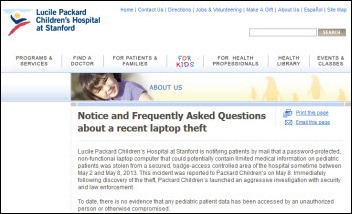
Lucile Packard Children’s Hospital at Stanford notifies 12,900 patients that their information was present on a broken, unencrypted laptop that was stolen in May.

Among the 11 medical schools earning a $1 million AMA grant for education innovation are New York University and Indiana University, which will develop a virtual EHR using de-identified patient data to each students how to manage population health.

Winner of ONC’s Family Caregivers Video Challenge is “Grandma Safe and Sound,” in which Rachel Rust describes using Independa Angela, a tablet- and TV-based system that gives users video chat, e-mail, health information, schedules, reminders, and photo sharing, to help care for her 91-year-old grandmother. The announcement was six months ago, but I hadn’t seen it until ONC tweeted it.

6-16-2013 9-22-49 PM

AMIA launches a Student Design Challenge to re-invent electronic clinical documentation to reduce clinician burden, improve decision-making, encourage teamwork, and support reuse of the captured data. Graduate student team entries are due July 31.

6-16-2013 9-23-30 PM

An interesting blog post by Barbara Bronson Gray, RN wonders why we someone doesn’t offer a Genius Bar for everyday health issues. The obvious answer: Apple charges a premium for its products and can therefore afford to spend money improving user satisfaction at no charge, while in healthcare someone would have to be paid to provide services for free. It would be nice for hospital EDs, though.

6-16-2013 9-24-51 PM

A Harvard Law symposium contribution on the re-identification of genomic data sets cautions hype-happy newspapers and blogs to understand and accurately portray what they’re writing about, concluding, “… while this recent re-identification demonstration provided some important warning signals for future potential health privacy concerns, it was not likely to have been implemented by anyone other than an academic re-identification scientist; nor would it have been nearly so successful if it had not carefully selected targets who were particularly susceptible for re-identification.” It doesn’t mention similar recent articles describing re-identification of health information for accident victims by matching their records to newspaper accounts, but the conclusion might be similar.

6-16-2013 8-41-57 PM

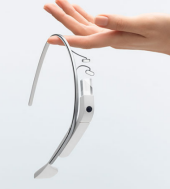
Surgeon and mHealth innovator Rafael Grossman, MD, FACS describes his experience with Google Glass and his ideas for developing medical applications for it. Examples: sharing live OR video, distance education, telemedicine, surgical back-up, and viewing EMR data without being distracted. He calls on the American College of Surgeons to lead the way in using Glass to improve healthcare.

6-16-2013 8-52-14 PM

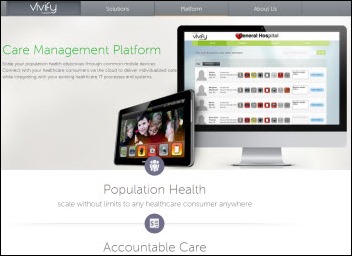
A Dallas newspaper article profiles Vivify Health (mobile apps for patient engagement and population health management) and Axxess (home health agency software.)

6-16-2013 8-58-57 PM

England’s National Audit Office finds that the now-defunct NHS National Programme for IT (NPfIT) cost a lot more than the benefits it delivered, and it’s doubtful it will ever pay for itself although estimation is difficult because of uncertainty. Three significant programs (Summary Care Record and the South and London programs) have delivered only two percent of the expected benefits.

Here’s Part 2 of Vince’s HIS-tory of Epic.


Contacts

Mr. H, Inga, Dr. Jayne, Dr. Gregg, Lt. Dan, Dr. Travis.

More news: HIStalk Practice, HIStalk Connect.

125x125_2nd_Circle

Readers Write: Time Out for Pre‐Implementation Training

June 16, 2013 Readers Write 1 Comment

Time Out for Pre-Implementation Training 
By Tiffany Crenshaw 

6-16-2013 5-31-27 PM

I’d like everyone to join me in giving a hand to the nurses at Marin General Hospital for bringing a bright spotlight to the specific issue of healthcare IT implementations and patient safety, and  the broader issue of the enormous pressure hospitals are under today.

As recently reported in HIStalk, a group of nurses from Marin General voiced their concerns at a recent board meeting with the hospital’s new CPOE system, citing threats to patient safety as a result of inadequate training and other unspecified problems with the software. Unlike those EMR detractors we’ve read about in the last few months, this group doesn’t want to kick the new technology to the curb. They simply want a “time out” for additional training so they can use it in the most effective way possible to provide the safest care possible. 

This particular hospital’s struggle with new technology highlights the many pressures providers  across the country are facing when it comes to implementing new healthcare IT systems. Many hospitals are enticed by Meaningful Use incentives. Some sign on the vendor’s dotted line, not realizing implementation timelines suggested by vendors are at times too aggressive and don’t typically allow for proper end-user training. But since hospital XYZ down the street is doing it and Meaningful Use deadlines are looming, new systems are being installed rapidly across the US. I’ve heard more than one hospital executive say meaningful utilization is becoming an afterthought. 

In my 15 years in this industry, I’ve learned – and I’ve seen my clients learn – that implementing EMRs isn’t a project that affects just one department for a few months. It’s an initiative that touches every facet of a hospital – from IT to operations, from clinical to financial. It can’t be stated enough how big of an initiative the transition to an EMR is. Its size necessitates careful, methodical planning – not only for implementation, but for training; go-live support; and post-implementation optimization, support, and continued education.  

Perhaps it is because of this “project” mindset that healthcare associations have become vocal in their cries to delay the transition to ICD‐10 and the deadline for Stage 2. Providers are realizing these initiatives and the funds they’ve spent on them will be compromised without a proper strategy in place for training, implementation, post go‐live, and continued education around upgrades.

Is there a disconnect when end users such as the nurses at Marin General are filing “assignment despite objection” forms while upper management attributes nurses’ uneasiness as “just to be expected” during times of change, or are both opinions valid?

Human beings by nature are resistant to change. Those in healthcare are doggedly so, and  with good reason. But it’s important to remember that most people are not totally averse to change. Some providers have embraced technology. Many attribute their adoption to being  involved in the decision-making process and/or being well trained in preparation. It’s a debate that will likely go on as more surveys come out around EMR dissatisfaction and HIT/ROI conversations play out.  
 
Tiffany Crenshaw is president and CEO of Intellect Resources of Greensboro, NC.

Readers Write: Shame on Health IT

June 16, 2013 Readers Write 9 Comments

Shame on Health IT
By Tom Furr

I’m willing to bet were I to ask anyone even remotely associated with healthcare IT, that person would wax poetically about how collective efforts are helping to advance the speed and quality of healthcare. I’d hear boasts of breakthroughs in all areas of medicine, drug discovery, imaging, lab procedures, and surgery as well as recovery and rehabilitation methods.

Be it ambulatory- or hospital-based care, all those advancements have made a big impact on the care and treatment of the patient. I can find nothing wrong with initiatives that yield a faster, better end result for any man, woman, or child who requires medical treatment.

Why, then, after having benefitted from 21st century state-of-the-art healthcare, does the patient get time-warped back to the 1950s when it comes to providing the bill? If the last impression left with a patient after receiving state-of-the-art care is an antiquated management and billing process, could s/he not question everything that’s happened in the examining room?

My point is simple: shame on the health IT industry as the advancements made on the clinical side of patient care have far outpaced the comparably meager improvements that have been made on the financial side. Don’t deny it, especially when you know that healthcare providers have played a major role in maintaining the existence of the US Postal Service, printer companies, toner suppliers, envelope makers, and a bunch of related entities.

Yes, shame for not embracing technology on the business side with the same determination so dramatically shown on the clinical side. What’s worse, the underpinnings for an automated patient bill and balance management system has been in place almost as long as practice management software has helped run practices, from the individual doctor to multi-office physician groups and multi-state hospital networks.

The need for every software vendor and billing company to get to the point where they are actually helping the patient manage and meet her/his financial obligations is very great and very much of the here and now. Not to mention the disservice that they are doing to the very clients who they claim to help … by not providing a tool to help medical practices keep their accounts receivable in check and drive them towards profitability instead of languishing with large back office overhead.

The high deductible health plan (HDHP) isn’t going away. Rather it is only going to grow, bringing with it change that must be dealt with in the business offices of healthcare providers and the homes of all their patients. The shift of the primary payment responsibility coming from the health insurer to an even split with that organization and the patient is here now and not helping practices collect those balances is negligent on health IT’s part.

As a practice’s A/R gets out of hand, one of two things will happen: the practice will be sold, either to a large physicians’ group or a hospital, or the doctor takes down her/his shingle and ends a career. Either way, the practice management software vendor and/or the billing company lose a customer.

But it doesn’t have to be that way.  Unless, of course, you want to continue to keep medical business offices operating like it’s still “Happy Days.”  Keep that attitude and there’s a good chance your company won’t be happy or healthy, especially if it makes practice management software.

Tom Furr is founder and CEO of PatientPay of Durham, NC.

Time Capsule: Software Usability: A Great Idea Whose Time (At Least in Healthcare) Will Never Come

June 16, 2013 Time Capsule 2 Comments

I wrote weekly editorials for a boutique industry newsletter for several years, anxious for both audience and income. I learned a lot about coming up with ideas for the weekly grind, trying to be simultaneously opinionated and entertaining in a few hundred words, and not sleeping much because I was working all the time. They’re fun to read as a look back at what was important then (and often still important now).

I wrote this piece in April 2009.


Software Usability: A Great Idea Whose Time (At Least in Healthcare) Will Never Come
By Mr. HIStalk

125x125_2nd_Circle

It seems that everyone (other than software vendors) is talking about software usability these days. A long-delayed light bulb finally went off somewhere that suggested, “Say, these systems we have are cryptic, ill-suited to match real-life work flows, and maybe should have had some human factors review before they were shipped prematurely as usual.”

Usability is a hot topic mostly for ambulatory EMRs. It’s a logical (or, some would say, convenient) reason that doctors don’t use them. The problem vendors have is that those private doctors actually have a choice, unlike their hospital counterparts who have IT people making EMR decisions without their input (except maybe the rubber stamp approval of the gadget-happy, CIO-reporting, doc-turned-CMIO who hasn’t practiced in years.)

Hospitals are willing EMR buyers (although inconsistent EMR users.) Vendors in that market sell to the C-level who are wowed by a “cue the music, the future is now” video, a visit or two from top vendor suits, and maybe a promise of extra-special hospital representation on vendor committees or to provide allegedly welcome input on how to make the marginally useful product marginally better (meaning: sign here and we’re out of this hick burg for good.)

That’s the dilemma of PM/EMR vendors. Doctors who are mostly an annoyance in hospital sales (critical, interrupting know-it-alls who check their watches constantly) are the people who actually make the “buy” decision in practices. They have to actually use the product, so they are as critical as anybody would be when it comes to the tools of their trade. Poor design can’t be glossed over. There’s no big-picture visionary willing to ignore product realities and make a decision based on a futuristic video.

Hospitals are so intent to buy that they’ll just pick the best of the worst and live with it. Doctors in practice will hold their ground and buy nothing (which they have, in droves.)

Government payola will probably get a bunch of those unwanted systems sold, but not necessarily used beyond the “minimum necessary” to get a check. The government subsidy will be long spent, but the product will live on and be cursed frequently. Users will get used to the irrational design like they do in hospitals, although their productivity may never recover to the level it was using paper.

The problem with usability is that you can’t just bolt it on after the fact. It’s part of design, not last-minute touchup. The ARRA gold rush will be a faint memory by the time a system launched today would ever reach the market.

None of that matters anyway. When’s the last time you saw a new, built-from-scratch clinical or practice EMR system? You don’t take a 1985 MUMPS-based system and suddenly embrace modern usability concepts. It’s not an iPhone that will not only steal market share but create its own market. Healthcare software has a limited market, limited competition, and product lifecycles that span generations.

Here’s what will happen with software usability discussions. People will gripe about how bad current products are. Vendors will do a little bit of pig-lipsticking so that products at least look more usable in demos, even when they aren’t. Private doctors will, like their hospital counterparts, be enticed or forced by higher authorities to use the admittedly non-usability centered products and they will learn to work around their quirks.

Usability, for all the passionate discourse, is a lost cause that will have minimal impact on the stodgy healthcare IT market.

Morning Headlines 6/14/13

June 13, 2013 Headlines 1 Comment

Lucile Packard Children’s Hospital notifying 12,900 after laptop stolen from secured badge-access area

Lucile Packard Children’s Hospital at Stanford is reporting a stolen laptop with unencrypted personal health information affecting nearly 13,000 patients. This is Stanford’s fifth data breach since 2010. In 2011, Stanford was sued over a data breach in a suit that sought $20 million in damages. In 2010, they were fined $250,000 for failing to report a breach.

‘Jeopardy’-winning supercomputer helping Maine doctors in cancer research

IBM’s Watson supercomputer has completed its installation at The Maine Center for Cancer Medicine and is now helping doctors create individualized care plans for lung cancer patients. Watson is being beta tested while engineers continue to enhance its ability to interpret clinical information and weigh treatment options.

Indian Health Service sets ambitious plan to upgrade health record system

The Indian Health Service is spending $10 million upgrading its EHR system to one integrated platform. Indian Health Services EHR was the first federal agency to have its EHR certified for Meaningful Use and received more than $50 million in EHR incentive payments thus far. They are first focusing on integrating across their network, and then will tackle larger interoperability projects with the VA and CMS.

Sonora Regional Medical Center Embarking on Major Technology Upgrade

Calif-based Sonora Regional Medical Center, an Adventist Health System hospital, has been selected as the pilot site for Adventist’s system-wide Cerner implementation. Sonora will go live September 4th, with Adventist’s remaining 18 hospitals scheduled to go live by the summer of 2014.

News 6/14/13

June 13, 2013 News 3 Comments

Top News

6-13-2013 10-58-55 PM

The FDA urges medical device makers to protect their products against hackers and malware and offers guidance for developing security controls that would protect the confidentiality and integrity of data and limit malfunctions in the event of computer viruses.


Reader Comments

6-13-2013 10-40-52 PM

inga_small From Biker Dude: “Re: HIStalk Practice. What do I win if I am your 500,000th visit?” Thanks for noticing that HIStalk Practice is about to hit a milestone in the next couple of weeks. No prize for making the visit counter hit 500,000, though every reader has my undying gratitude for the support.

inga_small From Mojo: “Allscripts. I heard they are scheduling a conference call Friday to announce another reorg. Have you heard anything like this?” No, although another reader shared news that Allscripts had sold off its forms division (who knew they still had a forms division?) Unverified but neither piece of news would not be surprising given that CEO Paul Black has now had six months to get a lay of the land and the company reported a loss in Q1.

From Zee: “Re: inbox. I want to do a prototype on how we could improve the old-style physician inbox so that read-only information can be delivered in a meaningful way on a tablet. Replicating the current functionality as is isn’t innovation.” Sounds like a fun challenge to visualize how an improved inbox might work. Send me your ideas and I’ll run them here.


HIStalk Announcements and Requests

inga_small HIStalk Practice highlights from the last week include: CMS pays out $547 million in PQRS and e-prescribing incentives in 2011.  Physician compensation is increasingly tied to measures of quality and patient satisfaction. AHRQ offers a guide for primary care physicians connecting to RHIOs. As of the end of April, one out of two Medicare EPs were meaningful users of EHRs. MyMedicalRecords ends a lawsuit with Emdeon but initiates a new one with Jardogs. Emdeon CEO George Lazenby discusses his company, the industry, and potential opportunities. Rob Drewniak of Hayes Management Consulting looks at healthcare data governance and data stewardship. Thanks for reading.

On the Jobs Board: Compliance Program Manager, Software Engineer, Territory Sales Manager – South Eastern US.

6-13-2013 9-31-14 PM

Welcome to new HIStalk Platinum Sponsor Sagacious Consultants of Lenexa, KS. Sagacious means smart and having good judgment (I had to look it up), and the company applies those qualities to its singular focus: Epic. A full 97 percent of its employees came from Epic, collectively holding every Epic certification. The company has worked with 40 Epic hospitals and physician practices on full implementations, big bang installs, upgrades, and rollouts. It can provide build analysts, team leads, project managers, trainers, and go-live support. KLAS ranks it #1 in satisfaction for staffing and implementation support, with 100 percent of clients saying it keeps its promises and 100 percent saying they would hire the company again. Consultants work from their homes nationally, reducing travel billing and making them happier besides. Thanks to Sagacious Consultants for supporting my work.

6-13-2013 10-42-39 PM

The next HIStalk Webinar will be “Using Clinical Language Understanding & Infrastructure Planning as Key Strategies to Ensure Clinical Revenue Integrity with ICD-10” on Tuesday, June 25, 2013 from 1:00 – 1:45 Eastern time. It is sponsored by Nuance Healthcare and will be presented by Mel Tully MSN, CCDS, CDIP, senior vice president at J. A. Thomas and Associates. Register now.

6-13-2013 8-57-22 PM 

A reader provides this photographic evidence of a pop-up HIStalk presence in Paris, as evidenced by a “I Could Be Mr H” banner in the shadow of the Eiffel Tower. Snap a picture with something HIStalk showing HIStalk in an interesting location and I’ll run it here.

Listening: new Black Sabbath, with “13” being the first new studio album since 1995 and the first with Ozzy in 35 years. I’ve listened to it at least 10 times and it’s a perfect 1970s sludge metal sound. It’s magnificent.


Acquisitions, Funding, Business, and Stock

6-13-2013 10-43-58 PM

Allscripts prices a private offering of $300 million aggregate principal amount of its cash convertible senior notes due 2020. The conversion price represents a 30 percent premium to June 12’s closing price of $13.22 per share.

Emdeon acquires Goold Health Systems, a provider of pharmacy benefits and related services to state Medicaid agencies.


Sales

Christus Health selects McKesson’s suite of documentation management solutions for integration with the health system’s existing HIS.

6-13-2013 10-45-37 PM

Swedish Covenant Hospital (IL) selects eClinicalWorks EHR and RCM solutions for its 150 employed physicians.

The DoD awards PSI and partners TechWerks and Mediware a $9.2 million follow-on task order to sustain and maintain the DoD’s enterprise blood management system.


People

6-13-2013 11-37-45 AM

inga_small Aneesh Chopra,  former US CTO and one of technology’s most beautiful men, loses his bid to be Virginia’s Democratic nominee for lieutenant governor.

6-13-2013 8-38-30 PM

Quantros names Dmitri Daveynis (HP) SVP of engineering.

6-13-2013 8-40-35 PM

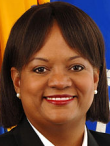
US Surgeon General Regina Benjamin announces her resignation after four years in the post. Benjamin does not provide specific details on her future plans, but Democratic Party officials have identified her as a potential candidate for a Congressional seat being vacated in her home state of Alabama.


Announcements and Implementations

Healthix and the Brooklyn Health Information Exchange will merge into a single RHIO and retain the name Healthix. A new board of directors will govern the entity and leadership and staff from both RHIOs will continue to support the organization.

Salford Royal NHS Foundation Trust implements Allscripts Sunrise Clinical Manager three months ahead of schedule and on budget.

KershawHealth (SC) implements a paperless clinical data bridge solution from Access to transfer EKG traces and other clinical data into its EHR.

6-13-2013 10-47-59 PM

Marshfield Clinic (WI) will form Marshfield Clinic Information Services, a  separate for-profit subsidiary that will support the clinic and technology and services to other customers. The clinic’s 350 IS employees will join the new entity.

IBM, the Premier healthcare alliance, and four healthcare systems launch the Data Alliance Cooperative, which will allow members to share experiences and co-develop solutions that integrate data across the care continuum. Initial focus will be on reducing medication non-compliance and readmissions through predictive modeling.


Innovation and Research

6-13-2013 10-50-30 PM

Interested in Google Glass? Kyle, who writes for HIStalk Connect, is part of Pristine, a startup that’s developing Glass apps for physicians. He has received his pair and invites readers to give them a try at a party in New York City on Thursday, June 20 from 6 to 9 p.m. at Galway Pub. E-mail Kyle to RSVP and bring friends if  you like.


Technology

6-13-2013 10-53-33 PM

Nuance releases a new version of Dragon Medical Practice designed for smaller practices that includes voice shortcuts to aid searches for medical information and more than 90 specialized medical vocabularies.


Other

6-13-2013 10-54-53 PM

Care Logistics sues Ohio-based Catholic Health Partners of Cincinnati and Mercy Health Systems of Toledo, claiming it has lost $50 million after the health systems reneged on a 2008 deal to serve as reference sites for the company’s bed management software in return for royalties. 

Inga is so proud of beating Weird News Andy to this story. A trucker sues a urologist for what he claims was a botched penile implant that caused him to have an erection for eight months. The doctor says the man should have told him when his scrotum swelled to volleyball size, but the man says he was told to expect swelling. The patient, who changed his wardrobe to baggy sweatpants and long shirts, made his case to the jury: “I could hardly dance, with an erection poking my partner … It’s not something you want to bring out at parties and show to friends.”


Sponsor Updates

  • CollaborateMD will add educational content from Elsevier into its ClaimGear solution for medical billing and coding education.
  • NoMoreClipboard will integrate ICA’s HIE offerings with its PHR and patient portal.
  • Vitera Healthcare releases Vitera Medical Manager EHR, a Web-based EHR, analytics, and transaction platform for its customers.
  • Ingenious Med integrates Wolters Kluwer Health’s Health Language code search engine into its point-of-care charge capture solution.
  • Impact Advisors Principal John Stanley discusses analytics as it relates to HIE.
  • Emdat publishes a case study highlighting Illinois Bone and Joint Institute, which reduced its documentation costs by 50 percent after implementing Emdat’s medical documentation platform.
  • Porter Research discusses the role of NLP technology in healthcare transformation with Nuance CMIO Nick van Terheyden.
  • Perceptive Software CTO Brian Anderson offers five predictions for business process management, enterprise content management, and capture and search.
  • The office manager for Summersville Pediatrics (SC) shares her practice’s experience migrating from MyWay to Aprima.
  • PeriGen publishes a case study featuring Summit Healthcare’s (AZ) experience of implementing advanced perinatal technology.
  • David Laureau, CEO of Medicomp Systems, discusses the importance of giving providers the data required to better manage the health of individual patients in real time and at the point of care.
  • VitalWare’s VP of Compliance Jill Wolf will discuss the benefits and limitations of predictive modeling at next week’s HIMSS ICD-10 Forum Washington, DC.
  • Wolters Kluwer Health’s customer advisory board says that improving clinical outcomes through expanded integration of clinical decision support is a top priority.
  • iSirona will remain in Panama City, FL after the county and state promise $1.8 million in incentives. The company will 300 new jobs in the next three years.

EPtalk by Dr. Jayne

The United States Supreme Court ruled this week on Oxford Health Plans v. Sutter. Essentially this paves the way for physicians to use class arbitration to resolve issues with payers. Dr. Sutter, a pediatrician, alleged that Oxford systematically bundled, downcoded, and delayed patients for more than 20,000 network physicians but Oxford claimed physicians had to participate in arbitration as individuals. The case has been in the courts for more than a decade. I like to see the little guy stick it to the payer at least once in a while.

Medicare will be issuing a redesigned Medical Summary Notice to beneficiaries. Aimed at preventing fraud and abuse, it will show the services and supplies billed to Medicare during the past three months, the amount paid, and the patient responsible portion.

I’d like to see all payers take this approach. I’m still getting Explanation of Benefits statements from a procedure last year that the practice erroneously billed yet keeps trying to hit me up for the insurance balance. Guess what, not paying it. And to my orthopedic surgeon – guess what, you’re going to be refunding me all the co-pays you’re making me pay for follow-ups in the global period. Dr. Jayne has her summary plan description and knows how to read it. And if you cross me, I might just demand an electronic copy of my record, which I know will cause much consternation in your office. Welcome to the era of patient empowerment.

Athenahealth offers an ICD-10 Guarantee for practices that are live by June 30, 2014. Additionally, practices experiencing cash flow disruptions may be eligible for cash advances against outstanding claims. There’s a fair amount of fine print involved, but I like the idea.

Apple announced this week that the next generation of its mobile operating system will contain a virtual “kill switch,” or activation lock to allow stolen devices to be deactivated.

A couple of my friends convinced me to sit for the Clinical Informatics subspecialty certification from the American Board of Preventive Medicine. In reading through the various requirements I have one major concern (other than the cost of the exam, which is substantial). The criteria require current certification by one of the other ABMS specialty boards. This is problematic for informaticists who have let their clinical certifications lapse. I understand why they’re doing it, but the thought of maintaining two certifications isn’t a happy one. I’d be interested to hear from others who are planning to take the exam.

E-mail Dr. Jayne.


Contacts

Mr. H, Inga, Dr. Jayne, Dr. Gregg, Lt. Dan, Dr. Travis.

More news: HIStalk Practice, HIStalk Connect.
Morning Headlines 6/13/13

June 12, 2013 Headlines 3 Comments

GE Healthcare To Spend $2 Billion On Data Analytics And Other Tools

GE Healthcare has announced that over the next five years, it will spend $2 billion creating data analytics and patient population tools that will enable hospitals to effectively shift to a performance-based payment system.

Mostashari: Slow but steady interoperability progress

National coordinator for health IT Farzad Mostashari, MD discussed interoperability and the path moving forward at the HIMSS 2013 Government Health IT Conference this week where he summarized the current state of interoperability in saying, "Today, my last visit doesn’t contribute to my next visit in healthcare. Most discharge summaries don’t get to the primary care provider; most referral summaries don’t get back to the provider who ordered them.”

Marshfield Clinic to launch new information services company

Wisconsin-based Marshfield Clinic, a two-hospital health system, announces that it will begin offering health IT support services through a wholly-owned spinoff business, Marshfield Information Technology Services .

Maine Medical Center moves closer to $40M expansion

Maine Medical Center has won approval to move forward with a $40 million expansion project that will add five new operating suites, in addition to preparation and recovery areas. The news comes just a month after MMC announced a hiring and travel freeze in an effort to plug a $13.4 million deficit in the hospital’s operating budget.

An HIT Moment with … David Engelhardt

June 12, 2013 Interviews 3 Comments

An HIT Moment with ... is a quick interview with someone we find interesting. Dave Engelhardt is president of ReadyDock of West Hartford, CT.

6-12-2013 8-24-35 PM

What problems do hospitals have with iPads that ReadyDock solves?

Hospitals deploying a pool of tablets for distribution to patients or healthcare personnel need a place to securely store and charge them. In addition, these tablets also need to be periodically disinfected. If a patient touches a tablet, the device should be disinfected before providing it to another patient, especially if a patient is known to be on precautions.

The ReadyDock platform serves as a home base for these tablets. You know when you grab a tablet that it is charged, disinfected, and safe for use.


What evidence exists that tablets used in hospitals require disinfection?

Tablets used in the clinical environment are roaming high-touch surfaces. They require the same consideration with respect to cleaning and disinfection of other high-touch surfaces. These high-touch surfaces can serve as reservoirs for dangerous microorganisms and can harbor them for days, weeks, or even months. This in turn can cause infections in patients and healthcare workers. 

It is for this reason that significant R&D has gone into developing an engineered solution that integrates with the existing workflow of secure storage and charging while at the same time provide a process to consistently and automatically disinfect tablets without the use of chemicals. The efficacy of the system’s general-purpose disinfection has been validated in controlled studies by Yale-New Haven Hospital’s microbiology lab.


How would hospitals that allow staff and patients to use their own devices use ReadyDock?

ReadyDock can disinfect an iPad in less than 60 seconds. ReadyDock can serve as a disinfecting processor for tablets and other mobile devices such as smart phones upon entering the building, between patients, and before going home for the day.


Describe the process and time required to run an iPad through a disinfection cycle.

When a tablet is placed in a ReadyDock for secure storage and charging, the system puts it in a disinfection queue and the tablet is automatically disinfected.  If a user only needs to only disinfect their device, they have the option to have it disinfected immediately. Total cycle time to disinfect in this mode is about one minute.


How does the CleanMe app help improve user compliance?

CleanMe is an easy to use software app available free in the iTunes store that allows users to setup their own personal cleaning and disinfection policy. Users can configure what days and hours they work within a clinical environment and how often they would like to be reminded to clean and disinfect their devices. For instance, they can insure that they are reminded to clean & disinfect before they go home, clean twice a day, etc.

Of course, when it tells them to disinfect, the app documents that they did.  This in turn will help users improve compliance. By design, the workflow of storing a device in a ReadyDock unit will ensure that disinfection occurs automatically along with secure storage and charging. 

Readers Write: Accent on Objects

June 12, 2013 Readers Write 1 Comment

Accent on Objects
By Woodstock

It has been many years since I acknowledged patient record subpoenas for medical malpractice lawsuits and other legal actions as an HIM professional and designated custodian of records (COR). But the process was memorable.

During the 1970s, one was not able to reproduce analog paper and photographic film or send records by postal mail or courier to the courts. Rudimentary paper and film photocopy machines only recently were introduced into healthcare organizations, and the courts required the personal delivery of “original” source documents and records by a COR.

Consequently, upon receiving patient record subpoenas, I took a large cardboard box and collected from each department the “original” source documents required by the subpoenas. The contents included the patient’s paper financial and medical records. The medical records also included all film-based diagnostic images, tape-based medical dictation, cine-based ECGs, and pathology slides.

During the 1980s, when I established my related career in HIT and because of my COR experiences during the “analog” years, I knew well that electronic patient records consisted of more than just the structured data typically found in electronic patient financial and medical records. Structured data are the record’s binary, discrete, and computer-readable data elements that, typically, are stored in relational databases with predefined fields. Electronic medical records (EMRs) also consisted of digital diagnostic images, audio file-based dictation, and ECG waveforms.

In fact, such unstructured data make up at least 75 percent of all the data in a typical patient’s EMR. Unstructured data are the record’s non-binary, non-discrete, and often human-readable data elements that, typically, are contained in text-based reports, e-mails, and Web pages and include symbols, images, video clips, and audio clips. In some vertical markets, unstructured data are referred to as a record’s intellectual substance or content. In technical arenas, unstructured data are referred to as objects.

My 1990s published chart below (note: not to scale) depicts a typical EMR’s structured and unstructured data. Thus began my affinity for marrying the two data types in healthcare provider organizations.

Frequently Mr. HIStalk receives comments and questions relating to an EMR’s unstructured data, particularly digital diagnostic image data around the time of the annual RSNA or SIIM conventions. Since The PACS Designer has been busy developing a growing list of mobile apps, I plan to contribute a Mr. HIStalk column relating only to patient record unstructured data or “objects.” I plan to focus on news, acquisitions, sales, people, implementations, and government, just like you are accustomed to reading in other HIStalk venues. I hope you will find this column important to your work and will reply with many comments and questions.

clip_image002

I’ll begin with a brief opinion piece, which is related to my above comments and subtitled:

When the Writ Hits the Fan

Just like healthcare organizations, the courts finally have entered the digital age. Today, secured electronic files of “original,” electronic source documents and records as well as “copies” of original, electronic source documents and records are admissible in courts as long as the healthcare organization can substantiate (1) the trustworthiness of the system(s) used to store and retrieve the documents and records; (2) the accuracy of the organization’s records management policies and procedures; and (3) the documents and records were not created (or altered!) just for a court case. (NOTE: Always one must verify the courts’ acceptance of digital records on a state-by-state basis.)

Large cardboard boxes have been replaced by EMR (or other system) features that promote single points of personalized access through which to find and deliver electronic information, applications, and services. As such, in either hybrid or full EMR environments, designated CORs, Release of Information professionals, and even patients—after rigorous authorization and authentication processes—merely click on hyperlinks and instantaneously retrieve “original” electronic source documents and records required by subpoenas or other requesters.

While our industry continues to pursue the best “highways” to securely transmit the documents to and acknowledge receipt from requesters, today’s day-to-day challenges involve the current mechanisms used to transmit unstructured data and the shameful output of structured data generated by most EMR systems.

For example, the transmission of the large and ever-growing number of patient diagnostic images (primarily radiology images), which remain hand-carried or sent by postal mail or courier from hospitals, physicians / groups, specialty (e.g., cancer) centers, etc., to other hospitals, physicians / groups, and specialty centers on CD storage media, is completely unmanageable. Many of the CDs containing (e.g., radiology) diagnostic images cannot be imported into the receiving radiology PACS due to the way the images were burned into the CDs. Although most of the CDs include the senders’ viewers for measuring, window / leveling, etc., often the CD files arrive corrupted. Frequently the CDs are misfiled and / or lost.

Consequently, transmitting diagnostic images on CDs has lead to duplicate testing with more patient exposure to radiation. In addition, when the CDs contain diagnostic images other than radiology images, often the receivers have no corresponding PACS for these other, “ology” images.

Thankfully, popular, standard, inbound (i.e., CD ingestion and electronic receipt of diagnostic images) and outbound (i.e., report and image distribution to referring physicians, referral centers, etc.) image sharing solutions exist. However, most are too expensive for the healthcare provider masses. In addition, few, if any, non-standard image sharing solutions exist, whereby direct connections are established between two or more organizations for readings, consultations, and second opinions and inbound and outbound electronic reports accompany the images.

Also, there is not a healthcare professional that has not experienced the reams of paper output generated by EMR systems because the systems’ structured data are not report-formatted for output. This is one reason why a patient still cannot receive his or her entire patient record from a portal. Not that I promote hard copy printing; however, healthcare providers still must maintain a legal archive from which to generate the electronic document presentation as proof for exception and dispute handling. In other words, providers must have the document presentation for legal purposes and not an informational statement or data representation of the document, which, unfortunately, remains common in today’s electronic patient record system output.

Yours truly,

Woodstock

Readers Write: What’s More Useful Than Hospital Pricing Data?

June 12, 2013 Readers Write 8 Comments

What’s More Useful Than Hospital Pricing Data?
By Data Nerd

An HIStalk reader challenged my recent post, “Hospital Pricing Data: Another Step Down the Rabbit Hole” by asking what healthcare data should be publicly available to help consumers make better choices, not just from CMS, but from providers and private insurers.

I cannot fault anyone for their enthusiasm. Trust me when I say I know how demoralizing it is to come up with a data solution that just doesn’t fit the need. That’s precisely why I felt compelled to speak out on the subject. After setting high hopes and expectations of the analytical possibilities from data in CMS’s pipeline, the solution fell drastically short of what I had hoped it would accomplish when it was finally released.

Having said that, the ideal data solution for me as a consumer would use the same or similar claims data sources, but aggregate the data two different ways to come up with a predictive solution that can be tweaked to assist the patient in their own cost containment efforts. This type of solution would involve:

  • Risk-adjusted cohorts. Grouping the data not just by DRG, but by patients with similar risks (age, co-morbidities, etc.) to chart out the most likely course of treatment for someone of my age and health facing the same diagnosis. Ideally, this dataset would include all payer types, but the next-best offering that is within CMS’s reach is to combine Medicare and Medicaid datasets to account for a broader age distribution. Data would not be aggregated by hospital, simply by patient characteristics across the country.
  • Once we have an idea of possible treatment routes, we can then couple that with charge data. And, yes, I want that broken down by procedure at each hospital. Like there is no such thing as bad data, there is no such thing as too much data. I’ve never seen OSCAR’s backend, so I’m not sure if it’s possible to break apart every claim and get a procedure-level charge, but I do know with the data as it is today, claims with only one procedure can be isolated and charges or reimbursements tend to have low standard deviations. Since I am not insured by Medicare or Medicaid, knowing what hospitals charge or are reimbursed by CMS does me very little good, though. I would need my own insurance company’s network rates with the hospital to analyze how soon I’ll meet my annual deductible, etc. Or, if I have the luxury of time to make a decision, evaluate if I’d be better served investing in an HSA and initializing treatment in the next fiscal year. But, for the millions covered under Medicare and Medicaid, such an analysis based on the data today would assist in forecasting when deductibles will be met and/or what other amounts will not be covered during the course of treatment.
  • In the event that I have a long-term illness or a more drawn-out treatment plan, I would want an analysis of whether or not it would behoove me financially to have different procedures performed at different facilities. Outcomes data would be useful here as well.

All of these data components would need to be dynamically updated and processed, probably using software to evaluate each step of the way, much like the way a simple tax form is completed online. Play with one number and see how it affects the final bill, and in this case assess the risk factor involved in hospitals with poorer outcomes. Ideally, the solution would also interject preventative challenges over time to help the patient meet their health goals in a way that saves the health system money as well, but that is more the quantified-self realm than the (current) data realm.

So, to recap the data offerings that would satiate my current appetite for price transparency:

  • Claims data, aggregated by DRG and patient characteristics to obtain expected procedures
  • Claims data, aggregated by hospital and procedure charge
  • Combine these two alongside insurance reimbursement rates to give a patient’s total estimated personal expense at every hospital
  • Hospital procedural outcomes data to evaluate cost savings and determine at which hospital(s) to have the necessary procedures performed

This is the type of data that would be useful to me as a consumer.

Morning Headlines 6/12/13

June 11, 2013 Headlines 2 Comments

EHR Developer Code of Conduct

The HIMSS EHR Association, a trade group representing more than 40 EHR vendors, publishes its long-awaited EHR Developer Code of Conduct. The document focuses on truth in advertising principles, patient safety guidelines, data security standards, and a vendor agnostic commitment to interoperability.

Some companies pay executives extra to fly on their own private jets for vacation

Cerner is profiled in an investigative reporting piece on private jet usage by large corporations. Cerner spent $193,759 last year on flights leased through a company controlled by Cerner’s own vice chairman Clifford Illig.

ROI Calculator for Heart Failure Monitoring

The Center for Technology and Aging and the Partners Healthcare Center for Connected Health have developed a return on investment calculator to help health care organizations assess the intrinsic financial benefits of implementing remote patient monitoring technologies.

Sutter Health patient information turns up in drug bust

A recent drug bust in Alameda County, CA turned up more than sheriffs were expecting as officers found the personal health information of about 4,500 patients from Sutter Health.

News 6/12/13

June 11, 2013 News 12 Comments

Top News

6-11-2013 11-33-45 PM

The HIMSS EHR Association announces the EHR Developer Code of Conduct, which is available for companies that develop complete EHRs. Principles include (a) communicating product information accurately; (b) designing products with patient safety in mind; (c) participating in a Patient Safety Organization for reporting and reviewing patient safety problems; (d) sharing product-related best practices with customers; (e) notifying customers of software bugs that could impact patient safety; (f) excluding contract language that prohibits customers from speaking up about safety concerns; (g) supporting interoperability through use of standards; (h) giving customers their data if they switch vendors; and (i) documenting how the product handles coding and quality measurement. It’s nicely done, and while I’d rather see these items in my contract instead of in a voluntary set of principles issued by a trade association, I like the idea of laying them out publicly.


Reader Comments

inga_small From Nick Carraway: “Re: TeraRecon changes. Longtime president Robert Taylor is gone. CFO Lakshmi Lakshminarayan is serving as interim CEO.” We requested confirmation from TeraRecon and haven’t heard back. Lakshminarayan is listed as interim CEO on the company’s Website.

6-11-2013 7-47-46 AM

inga_small From Georgia Peach: “Marketing gimmick. I got a HFMA ANI postcard from an exhibitor in the mail that made me laugh out loud, especially because I’m a parent.” Now that’s a genius marketing promotion. Any parent who has felt the pressure to return from a trip with goodies for the kids will appreciate this giveaway, which includes two iPad minis so the winner can keep one for himself and give the other to a spouse or “favorite child.”

6-11-2013 11-36-58 PM

inga_small From Becky Badger: “In case it’s not on your radar, the Digital Health Conference is here in Madison this week and Judy Faulkner is a speaker this year. That’s notable because she rarely strays from the standard circuit.” Judy will participate in a panel discussion Wednesday morning on interoperability and information exchange. The other panelists are both Epic customers (Kaiser and St. Mary’s Hospital), so don’t be surprised if third-party EHRs fail to get much airtime in the interoperability discussion. Epic is also sponsoring the event.

From SNOMED Junkie: “Re: resignations. Both the CEO and chief technical architect of IHTSDO resigned today. That’s the non-profit that manages SNOMED content and distribution.” The announcements suggest that the Denmark-based organization made the change as part of a review of its long-term direction.

From Chas Incharge: “Re: McKesson Provider Technologies. They have lost market share but haven’t downsized marketing. Now it appears they want the marketing and sales team that oversaw the huge market share loss to do marketing for all technology business units. I’m a long-timer worried about my stock value. Harumph!” Unverified.

From Big Datty: “Re: Atlantic article. BKA in the EHR repeatedly, but the patient had both legs. Doesn’t anyone examine the patient any more?”The Drawbacks of Data-Driven Medicine” mentions an intern presenting a patient on rounds as having a below-the-knee amputation that had been noted on three previous discharge summaries. When the rounding team actually looked at the patient instead of the computer screen, both legs were intact. The incorrect information had been caused by speech recognition, which misunderstand DKA (diabetic ketoacidosis) as BKA (below the knee amputation) and nobody noticed.


Acquisitions, Funding, Business, and Stock

Great Point Partners makes a $10 million growth recapitalization investment in iVantage Health Analytics, a provider of healthcare informatics and business analytics solutions.

6-11-2013 8-08-02 AM

Parallon Business Solutions, a provider of business and operational services for the healthcare industry, will acquire The Outsource Group, a healthcare RCM company.

6-11-2013 7-18-19 PM

Ivo Nelson (IBM/Healthlink, Encore Health Resources) launches Next Wave Health, which will provide management advice, operational support, and capital to healthcare IT startups. Working with him will be Mike Davis, formerly of HIMSS Analytics and The Advisory Board Company.


Sales

Centra Health (VA) selects HealthMEDX Vision and the Exchange platform to manage post-acute patient care and facilitate patient data exchange.

6-11-2013 11-39-47 PM

Methodist Le Bonheur Healthcare (TN) will deploy McKesson’s enterprise medical imaging products.

Horizon Health Center (NJ) expands its relationship with eClinicalWorks to include its  Care Coordination Medical Record.

Piedmont Eye Center (VA) selects SRS EHR.

The Veterans Benefit Administration awards Harris Corp. a four-year, $37 million contract to provide technical services for the agency’s enterprise data warehouse.

Partners HealthCare (MA) will implement the Health Catalyst Late-Binding Data Warehouse across its two academic medical centers and community and specialty hospitals. Partners and Health Catalyst will also co-develop new clinical applications for the warehouse platform.

6-11-2013 11-40-40 PM

Hospital for Special Surgery (NY) contracts with SCI Solutions for its rules-based referral management system.

CAQH selects Passport Health to develop a national COB solution to improve the sharing of patient coverage data between healthcare providers and payers.


People

6-11-2013 7-16-48 PM

iSALUS Healthcare promotes Kimberly Poland to VP of client engagement.

6-11-2013 12-34-46 PM

Delta Health Technologies hires Lorraine Lodigiani (MedAct Software) as VP of marketing.

6-11-2013 12-54-32 PM

Zachary Landman, MD (Massachusetts General Hospital) joins DoctorBase as CMO.

6-11-2013 1-06-04 PM

Intellect Resources names Susan Williams (High Point University) VP of recruiting services.

6-11-2013 1-42-48 PM  6-11-2013 1-41-27 PM

Shareable Ink will on Wednesday name former Allscripts Chief Customer Officer Laurie McGraw as CEO, taking over for company co-founder Stephen Hau, who will transition to CTO.


Announcements and Implementations

VitalWare and Panacea Healthcare Solutions will co-market their CDM and pricing systems.

King’s Ridge Christian School (GA) becomes the first student health clinic to implement simplifyMD’s EHR software.

6-11-2013 10-22-21 PM

Yale New Haven Saint Raphael Campus and 63 practices and clinics went live on Epic on June 1, which followed the February 1 go-live of Yale New Haven Health System and the Yale School of Medicine, Epic’s third-largest go-live ever. CIO Daniel Barchi credits the Epic teams of the hospital and medical school and the clinician preparation at YNHHS Saint Raphael Campus for the smooth transition. The two remaining go-lives are Bridgeport Hospital and Yale Health, with the $293 million project targeted to finish ahead of schedule and under budget.

Urgent care provider CareSpot implements the PatientPoint Care Coordination Platform, including PatientPoint electronic check-in tablets, in 40 locations.

6-11-2013 11-11-19 PM

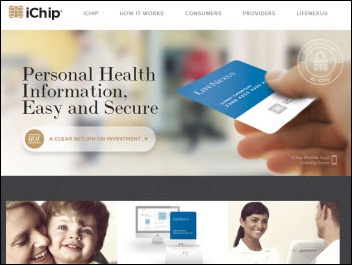
LifeNexus announces iChip, an insurance card chip that retrieves a patient’s personal health record.

6-11-2013 11-45-30 PM

San Joaquin General Hospital (CA) implements the Logical Ink mobile data capture solution from Bottomline Technologies to automate patient registration and identify trends in population health.

Het Oogziekenhuis Rotterdam (Netherlands) goes live with iMDsoft’s MetaVision in its OR, holding unit, and PACU.

AirStrip’s applications earn DIACAP certification from the US Air Force, indicating that their use of authentication and encryption meets Department of Defense security requirements.

Lake of the Woods Hospital (Ontario) goes live on Meditech.

GE Healthcare will invest $2 billion over the next five years to develop software for hospital operations, clinical effectiveness, and care optimization.

Salem Community Hospital (OH) implements the PatientSecure biometric patient ID system.

HIMSS will release a healthcare IT value model on July 15 that will incorporate user satisfaction, care delivery, user education, prevention, and financial return.


Government and Politics

The Justice Department and Securities and Exchange Commission, investigating a suspicious surge in insurance company stock prices, find that hundreds of HHS employees had early knowledge of an impending Medicare change and could have tipped off investors.


Innovation and Research

6-11-2013 11-46-43 PM

The Boston newspaper covers startups working on healthcare application for Google Glass, including an app for hospital rapid response teams and another for patients and families.


Technology

6-11-2013 3-02-19 PM

Verizon launches the Blackerry Q10, which it claims is tailored for the healthcare market. It will use the BlackBerry Enterprise Service 10 Regulated Service to help providers remain HIPAA compliant.


Other

6-11-2013 11-50-36 PM

Six of the eight women allegedly sexually assaulted by former Epic project manager Brian Stowe are identified as his Epic co-workers, according to the criminal complaint. He’s accused of drugging them and filming the assaults. He was charged with 62 counts of felony and posted $500,000 in bail within 90 minutes of his May 31 arrest, but was re-arrested Monday on federal charges of sexual exploitation of a child. He has lost his job with Epic.

An Alameda County (CA) drug bust uncovers drugs along with personal information on about 4,500 Sutter Health patients. Officials are unclear about how the information got there, but say the data may contain patient demographics, including financial details and Social Security numbers.

Cerner paid $193,759 last year to a company controlled by its vice chairman Clifford Illig for use of its aircraft, also paying $184,579 to a second company owned by an Illig-controlled trust for fuel. Meanwhile, CEO Neal Patterson’s employment agreement promises him up to $110,000 for personal flights on aircraft that Cerner owns or leases and cash for any unused portion.

Weird News Andy says, “Soy vey!” A case study in NEJM describes a 19-year-old who drank a quart of soy sauce on a dare, leading to a hypernatremia-induced coma that lasted three days.


Sponsor Updates

6-11-2013 10-59-18 AM

  • ICA donates $6,000 to Pryor Ministry Center in the name of Lisa Lyon, clinical informatics coordinator at Cherokee Nation and recipient of ICA’s HIMSS13 booth giveaway. ICA partners HealthCare Anytime and CSC also contributed to the donation.
  • Ping Identity announces PingFederate7, an upgrade to its identity bridge software and cloud identity management platform that provides standards-based user provisioning, authentication, and authorization with support for cross-domain identity management and OpenID Connect identity standards.
  • Midas+ names 24 hospital customers as winners of its Midas+ Platinum Award based on a data analysis of utilization efficiency and outcomes.
  • PatientKeeper offers a June 27 Webinar on voluntary physician adoption of CPOE featuring the IS director and chief hospitalist of Community Memorial Health System (CA.)
  • VitalWare introduces VitalSigns, a claims auditing and ICD-10 financial risk assessment tool.
  • Ingenious Med reports that clients using its PQRS registry had a 100 percent reimbursement rate in 2012.
  • Medicity publishes a white paper on engaging patients within an ACO.
  • TELUS Health Solutions releases a white paper on the value of using and approaches for implementing home health monitoring solutions.
  • Frank Grella, director of patient financial services for T-System customer Conway Medical Center (SC), will discuss how his organization increased collections using a specialized ED billing solution during next week’s HMFA13 conference in Orlando.
  • Direct Consulting Associates interviews Michael Elley, CIO/VP of support services for Cox Medical Center (MO), who shares his thoughts on HIT leadership and management challenges.
  • iMDsoft and Anesthesia Business Consultants (ABC) partner to offer iMDsoft’s mobile solution for electronic documentation with ABC’s F1RSTUse EHR platform.
  • The Philadelphia newspaper interviews InstaMed Founder, President, and CEO Bill Marvin, who shares details of his company’s business model and history.
  • Park Place International joins the Citrix Solution Advisor program, allowing the company to offer Meditech-approved Citrix solutions to hospitals for three-tier connectivity.
  • SIS offers suggestions on choosing the right mobile device for OR use.

Contacts

Mr. H, Inga, Dr. Jayne, Dr. Gregg, Lt. Dan, Dr. Travis.

More news: HIStalk Practice, HIStalk Connect.
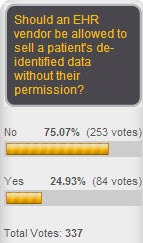
125x125_2nd_Circle

Text Ads


RECENT COMMENTS

  1. The comments are true above. HIMSS is facing serious leadership and governance concerns, particularly involving the CEO and head of…

  2. "A valid concern..." Oh please. Everyone picks the software they like and the origin of that software is an afterthought.…

  3. I don't disagree with you completely, but to take the counterpoint: there is plenty of precedent for saying "this *entire…

  4. Teens will certainly find a way to use their social media apps of choice. I'm not in favor of the…

Founding Sponsors


Platinum Sponsors


Gold Sponsors


RSS Webinars

  • An error has occurred, which probably means the feed is down. Try again later.