Recent Articles:

Healthcare AI News 6/11/25

June 11, 2025 Healthcare AI News Comments Off on Healthcare AI News 6/11/25

News

image

A KPMG survey of 183 health system leaders in eight countries contains these key points about the use of AI in their organizations:

  • Health systems are struggling to operationalize AI use cases beyond the pilot stage.
  • Common hurdles are fragmented implementations, challenges in measuring ROI, and workforce culture issues.
  • Self-development of AI solutions was reported by 85% of respondents.
  • Emerging intelligent AI agents have the potential to increase productivity.
  • Early use cases are ambient documentation, image analysis, virtual health assistants that help manage patient communication, early warning systems for patient deterioration, and claims and billing processing.
  • The top five applications of AI are generative AI, speech recognition, agentic AI, machine learning, and robotics.
  • One-third of respondents report that AI spending represents 10% or more of their technology budget. 

The Joint Commission and the Coalition for Health AI will partner to develop AI playbooks, tools, and a certification program.

OpenAI releases 03-pro, which performs PhD-level math and science tasks. The company also announced that it has dropped the price of o3 by 80%.

image

Apple announces Apple Intelligence enhancements to perform on-device live translation for Messages, FaceTime, and Phone and to perform contextual actions that are triggered by what appears on the iPhone’s screen. Apple’s WWDC announcements did not include anything pertaining to adding AI to Siri, which the company started mentioning last year.

The FDA launches an AI tool that it calls Elsa to summarize adverse events, compare product labels, and generate database code for non-clinical use. Rolled out ahead of schedule and under budget, Elsa is expected to be fully deployed by June 30. It is already being used to accelerate clinical protocol reviews and help perform scientific evaluations. A recent news report quoted FDA insiders who said that its AI tools are buggy, don’t connect to internal systems, and cannot access the Internet to retrieve studies.


Business

image

Mayo Clinic will invest in and collaborate with Hellocare.ai to develop ambient clinical intelligence technology. The company’s AI-powered platform passively listens to clinical conversations and detects care-related events that then trigger documentation and workflow actions. CEO Labinot Bytyqi, MS founded the Florida-based company, which was originally named Solaborate, in 2012 after working for several years at SAP.

Boehringer Ingelheim’s animal health unit will embed its canine heart murmur detection algorithms into Eko Health’s digital stethoscopes.

image

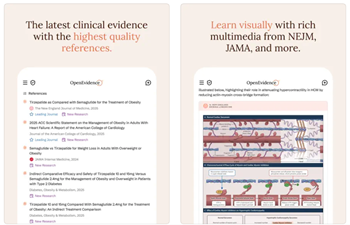
Clinical decision support developer OpenEvidence signs an agreement to incorporate data from 13 journals that are published by JAMA Network.


Research

image

Researchers develop an agentic AI system for choosing treatments for cancer treatments that agreed with the conclusions of experts 91% of the time. The system improved decision-making accuracy over GPT-4 from 30% to 87% and correctly cited recognized oncology guidelines in 75% of its answers.


Other

A ProPublica report says that software engineer Sahil Lavingia, who lacked healthcare or government experience, was tasked with canceling VA contracts using outdated, inexpensive AI models from OpenAI. He was fired two months into his assignment at the Digital Operations Growth Environment (DOGE) program for what he says were statements he made in an interview that fraud and abuse at the VA were “relatively nonexistent” and that he was surprised at “how efficient the government was.”

China-based AI startup DeepSeek is hiring interns to label medical data for applications that involve “advanced auxiliary diagnosis.” China-based researchers recently warned against the rapid adoption of DeepSeek by hospitals, warning that it is prone to hallucination and creates privacy risks.


Contacts

Mr. H, Lorre, Jenn, Dr. Jayne.
Get HIStalk updates.
Send news or rumors.
Follow on X, Bluesky, and LinkedIn.
Sponsorship information.
Contact us.

Comments Off on Healthcare AI News 6/11/25

This Week in Health Tech 6/11/25

June 11, 2025 This Week in Health Tech Comments Off on This Week in Health Tech 6/11/25
LinkedIn weekly 061125 - Copy
Comments Off on This Week in Health Tech 6/11/25

Morning Headlines 6/11/25

June 10, 2025 Headlines Comments Off on Morning Headlines 6/11/25

Hellocare.ai Enters into Collaboration with Mayo Clinic for AI Co-Innovation Project

Mayo Clinic will invest in and partner with Hellocare.ai, whose platform supports virtual nursing, virtual sitting, patient engagement, ambient documentation, and remote monitoring.

Guidehealth Receives $10 Million Investment from Emory Healthcare

Guidehealth will use new funding from Emory Healthcare (GA) to develop prescriptive analytics and AI-powered virtual care navigation capabilities.

‘Uber for Getting Off Antidepressants’ Launches in the US

Virtual clinic Outro launches in seven states to help patients taking antidepressants taper off their medications.

Comments Off on Morning Headlines 6/11/25

News 6/11/25

June 10, 2025 News Comments Off on News 6/11/25

Top News

image

Mayo Clinic will invest in and partner with Hellocare.ai, whose platform supports virtual nursing, virtual sitting, patient engagement, ambient documentation, and remote monitoring.


Sponsored Events and Resources

Live Webinar: June 18 (Wednesday) noon ET. “Fireside Chat: Closing the Gaps in Medication Adherence.” Sponsor: DrFirst. Presenters: Ben G. Long, MD, director of hospital medicine, Magnolia Regional Health Center; Wes Blakeslee, PhD, vice president of clinical data strategies, DrFirst; Colin Banas, MD, MHA, chief medical officer, DrFirst. Magnolia Regional Health Center will describe how its Nurse Navigator program used real-time prescription fill data from DrFirst to identify therapy gaps and engage patients through timely, personalized outreach. The effort led to a 19% increase in prescription fills and a 6% drop in 30-day readmissions among participating patients. Attendees will learn why prescribing price transparency is key to adherence, how real-time data helps care teams support patients between visits, and how Magnolia aligned its approach with value-based care and population health goals.

Contact Lorre to have your resource listed.


Acquisitions, Funding, Business, and Stock

Virginia Mason Franciscan Health (WA) will lay off 116 employees within its Virtual Health Services division and outsource those jobs to a different region, citing state-based financial pressures.


Sales

  • Southwest General Health Center (OH) selects Notable’s patient engagement, registration, and intake software.
  • MD Anderson Cancer Center (TX) will implement and further develop HealthEx’s patient consent and data management platform.
  • St. Charles Health System (OR) selects WovenX Health’s virtual visit and care pathway technology for gastrointestinal patients.

People

image

California-based HIE SacValley MedShare names Tiffany Hodgins, MSHI (Health Catalyst) chief technology and quality officer.

image

MedEvolve promotes Matt Seefeld to CEO.

image

Vaughn Paunovich (Amwell) joins Lifestance Health as CTO.

image

Dave Icke (Humana) is named CEO of Medisafe, replacing founder Omri Shor, MBA.

image

CommonSpirit Health promotes Carolyn New, RN, MSN to VP/chief clinical informatics officer, south region.


Announcements and Implementations

Altera Digital Health will integrate Health Gorilla’s interoperability network into Sunrise EHR.

image

The deadline to submit HIMSS26 presentation proposals has passed even though the annual meeting is nine months away.


Government and Politics

State officials and advocates raise privacy concerns about CDC’s planned consolidation of disease surveillance data on Palantir’s Foundry platform.


Privacy and Security

image

Jackson Health System (FL) fires an employee who inappropriately accessed 2,000 patient records between July 2020 and May 2025 as part of a scheme to promote a personal healthcare business.

The AMA advocates for limits on how the personal and biological data of physicians is collected and used to address burnout, requiring opt-in informed consent and advance disclosure if data is identifiable.


Other

image

Researchers at the University of Mississippi Medical Center’s Myrlie Evers-Williams Institute develop an online tool and hotline to help pregnant women find clinics within the state that offer prenatal care and accept Medicaid.

An Orlando Health study finds that using the EHR to identify and stratify high-risk metastatic cancer patients for targeted interventions decreased 30-day readmissions and length of stay.

image

UC Davis Health (CA) sees a considerable uptick in pediatric e-consults after developing specialty-specific e-consult protocols, adjusting referral options within its EHR to remind pediatricians that they can request an e-consult, and increasing messaging about e-consults amongst the larger UC Davis Health community.


Sponsor Updates

  • AdvancedMD announces 2025 summer product updates and makes Waystar its preferred clearinghouse partner.
  • Altera Digital Health offers a new client story titled “Bolton joins up and accelerates district nurse referrals across secondary and community care using Sunrise EPR.”
  • Greece ranks among the lowest-performing nations in Europe across critical digital health benchmarks, according to findings from Black Book Research.
  • Arcadia will exhibit at AHIP 2025 June 16-18 in Las Vegas.
  • Gartner recognizes Censinet as a representative vendor in its “2025 Market Guide for Third-Party Risk Management Technology Solutions.”
  • Clinical Architecture will sponsor a networking breakfast at the CHIME Innovation Summit June 11-13 in Fairfax, VA.
  • Capital Rx releases a new episode of “The Astonishing Healthcare Podcast” titled “The Future of Health Benefits: Integrating the Power of Pharmacogenomics (PGx), with Burns Blaxall, PhD, and Caitlin Munro, PharmD.”
  • Wolters Kluwer Health updates its Sentri7 Drug Diversion and Sentri7 Pharmacy solutions.

Blog Posts


Contacts

Mr. H, Lorre, Jenn, Dr. Jayne.
Get HIStalk updates.
Send news or rumors.
Follow on X, Bluesky, and LinkedIn.
Sponsorship information.
Contact us.

Comments Off on News 6/11/25

Morning Headlines 6/10/25

June 9, 2025 Headlines Comments Off on Morning Headlines 6/10/25

Virginia Mason Franciscan Health to lay off more than 100 employees

Virginia Mason Franciscan Health (WA) will lay off 116 employees within its Virtual Health Services division and outsource those jobs to a different region.

Kettering Health’s online patient portal, MyChart, back up

In Ohio, Kettering Health restores its patient portal, and most of its phone and laboratory systems and imaging equipment after a ransomware attack three weeks ago.

Salvo Health Reaches 700 GI Physician Partners Signed, 14% of all GI Independent GI Providers in the US, and Adds $4M in Investment to Scale Deployments of its Hybrid GI Care Platform Across the US

Salvo Health, which offers a digital digestive and metabolic care platform, announces $4 million in funding.

Comments Off on Morning Headlines 6/10/25

Curbside Consult with Dr. Jayne 6/9/25

June 9, 2025 Dr. Jayne 2 Comments

People often ask me about the kinds of things that excite me within healthcare IT. I have to admit that despite the amount of money that has poured into the industry over the last few years, I don’t run across things that I think are cool as often as I would like.

Although I’m enthusiastic about new developments, a lot of companies appear to be trying to jump on a bandwagon. Plenty are hawking solutions in search of a problem, while ignoring the real problems that clinicians face each and every day.

I was glad to see that Stanford Medicine is going after a solution that could be a game changer for clinicians. Their new ChatEHR platform is getting a lot of buzz, and rightfully so. The ability to effectively query the medical record and find information quickly would create a tremendous advantage for clinicians.

Back in the days of paper charts, we thought a hospital stay was complicated if the patient’s visit documentation expanded into a second chart. Sometimes patients who had been there for a while even had a third or fourth chart. I cared for quite a few patients who were long-term residents of the inpatient units. I once dictated a discharge summary for a pediatric patient who had been hospitalized for 18 months. I was extremely grateful to the different residents who had created transition summaries whenever one of them rotated off that particular medical service. It allowed me to draw the overall summary from those interim summaries rather than having to dig through 550+ days of documentation.

It should also be mentioned that good or bad, hospital notes were shorter in those days. Although an admission History and Physical or a Discharge Summary might have been a couple of pages, the average daily note was a couple of inches long on the page and included much less regurgitated information than notes do today. Sometimes they were borderline illegible, which I agree is a patient safety risk, but they cut to the chase.

I always enjoyed the notes of a particular infectious disease consultant who wrote his notes in bullet format and put the truly important items in all caps. Now, even a simple daily progress note can be several pages long. It feels increasingly difficult to find the information that’s important.

EHR vendors have tried to combat this by creating various summary screens, tables, dashboards, and other elements. Although some of them are truly awesome (hip, hip, hooray for graphing and trending of lab values and vital signs data) they don’t do well at capturing narrative information that is still frequently found in providers’ notes. Often it’s the narrative comments that really tell the story of what is going on with the patient. This is where using AI to better harness that information can deliver real value.

When I read the initial description of the Stanford tool, it reminded me of working with a human scribe in the emergency department. Our scribes were phenomenal and did a great job of anticipating the attending physician’s questions and having the answer ready by digging through the different screens while we were talking with the patient. Their ability to multitask was much appreciated, although not every scribe is that proficient. Many physicians don’t have scribes, so their thought processes were fragmented while they’re trying to simultaneously hunt for information and also talk to the patient, their family, and the care team. Stanford leadership called out the importance of having this functionality in the clinician’s workflow.

It should be noted that several EHR vendors have been working on this, but there are some limitations to a vendor-driven approach, at least in my experience.

I’ve worked with more than a dozen EHRs over the years, and many different instances of the same two or three EHRs. Despite the idea of vendor-driven standardization, when you’ve seen one installation of a big EHR, you’ve seen one installation of a big EHR. Unless the vendor is strict about preventing customization, care delivery organizations have been known to customize themselves into a corner in the name of trying to enable their own unique workflows.

With the health system driving the AI search and summary efforts, not only can those local customizations be addressed, but it would also seem easier to incorporate source material from other systems. That could be a different EHR, legacy records, HIE information, or state registry information.

The Stanford team has been working on their solution since 2023, so it’s not something that an organization can just throw together overnight at this point. The model has limited use, with just over 30 clinicians at Stanford Hospital working with it and providing feedback on its performance and usability. Their goal is to roll it out to other clinicians at the facility as well as those at other facilities within the larger organization. It will be interesting to see how that timing looks and how quickly they can have more distributed utilization.

The team is also developing automated tasks within the tool, including one that looks at the records of potential transfer patients to determine whether they can be received and others that could help evaluate patients for hospice placement.

As I was reading about the solution, I assumed that it would have metadata or citations to identify the origin of the data in the summaries. It sounds like that is a feature on the “coming soon” list, but I personally think that’s an essential piece that is needed to gain clinicians’ trust. I know plenty of physicians that don’t trust their support staff to take a patient’s blood pressure properly, which results in the clinician rechecking it on every patient, so doing the change management tasks that are needed to create buy-in from end users will be important.

Seeing expensive solutions in place that clinicians don’t use is one of the most frustrating things I saw regularly as a healthcare IT consultant, but I know that the “AI” label will create a lot of clinician interest right off the bat regardless of how robust the solution might be.

I’d be interested in hearing from other organizations who might be working on similar projects, or from EHR vendors that are also trying to make this happen. What information is the easiest to access, and what ended up being more challenging than you think? How are clinicians receiving the solution, and what kinds of enhancements are they asking for right away? If you’re a clinician, I’d be interested in your thoughts on this kind of tool and what you would need to feel that it was reliable. As always, leave a comment or email me.

Email Dr. Jayne.

Readers Write: The End of “Good Enough”: A Personal Journey to Better Healthcare IT Application Support

June 9, 2025 Readers Write Comments Off on Readers Write: The End of “Good Enough”: A Personal Journey to Better Healthcare IT Application Support

The End of “Good Enough”: A Personal Journey to Better Healthcare IT Application Support
By Jody Buchman

Jody Buchman, MBA is SVP of continuous services at Healthcare IT Leaders.

image

I never imagined that my most powerful lesson in healthcare IT application support would come from a hospital bed.

During my third pregnancy, I was given only a 30% chance of carrying to term. It was a high-risk situation that kept me on bed rest, working remotely for Cerner Corporation from a hospital room while continuing to support clients. For the first time, I was experiencing the healthcare system not just as a professional, but as a patient. And in that moment, I saw the real impact of the Women’s Health Solution we were implementing. Not on a screen, but in the care I was receiving when every decision mattered.

My son Jake was born early, just four pounds. But thanks to an incredible team of clinicians and the systems that empowered them, he went home just three days later. Today, he’s a healthy high school baseball player and a daily reminder of why this work matters so deeply to me.

That experience shaped everything about the way I lead today. Lying in that hospital bed, experiencing the system not as a technologist but as a mother, I came to understand what excellence in healthcare IT truly means. Behind every system alert and resolved ticket is a human story, a moment where things either go right … or don’t.

It’s why I’ve dedicated my career to building support organizations that are more than just reactive help desks. The traditional managed services model — transactional, after-the-fact, and satisfied with “good enough” — simply isn’t good enough. Not when every delay, every overlooked alert, every closed-but-not-solved ticket can directly impact care. I’ve seen the fallout firsthand: burned-out IT teams, clinicians wrestling with tools instead of treating patients, and families caught in the middle.

Healthcare doesn’t stop after hours, and neither can we.

Why the Old Way of Application Support No Longer Works

When you’ve managed global application support at scale, with thousands of clients and millions of incidents a year, you start to notice patterns. For too long, we tolerated a model that measured success by closed tickets, not real solutions.

I’ve seen the consequences: the physician who can’t get help after hours, the nurse who hesitates to open a ticket because it rarely leads to resolution, the IT manager who knows what’s broken but lacks the resources to fix it.

In healthcare, where time, accuracy, and availability are non-negotiable, that model simply doesn’t hold up.

What a Continuous Services Model Looks Like

Healthcare runs around the clock and technology continues to evolve. It’s time our application support models did, too.

What’s needed now is a continuous services approach, one that’s proactive, connected, and designed to prevent problems before they impact care.

Here’s what that means in practice.

First, real-time system monitoring should be the norm. Just as clinicians monitor patient vitals, IT support teams should track system health in real time. Application performance lags, interface errors, error pop-up messages, and failed jobs should be spotted early and addressed before users ever notice.

Second, automation needs to take on more of the routine work. Routine fixes like restarting ops job, failed interface transactions, or real-time data cleansing don’t have to require manual effort or have time constraints. Smart automation can handle these tasks, freeing up IT resources for higher-value work and providing an always-on and available resource around the clock.

Third, the tools and teams supporting the system need to be connected. Too often, monitoring tools don’t talk to ticketing platforms. Analysts don’t have access to context or history. A continuous model links everything together so that support is both faster and more informed.

Fourth, expertise matters. In a continuous services model, clinical and technical support analysts are experts empowered to do more than respond to tickets. They understand clinical workflows, governance and IT business processes to work as an extension of the IT team solving problems at the root.

Finally, the model has to scale. As organizations grow, the support structure should adapt with them. Intelligent automation makes that possible by creating a flexible operations model that evolves as needs change without drastically impacting cost.

What We Gain When Support Gets Smarter

The benefits go well beyond reducing tickets. Internal IT teams finally get room to focus on long-term projects instead of reacting to daily disruptions. Clinicians spend more time on care and less time wrestling with technology. Most importantly, patients receive care backed by systems that are reliable and responsive.

A Final Thought

After a career in healthcare IT support, I’ve learned that service excellence isn’t about heroics, it’s about making a difference. It’s about providing world-class support designed to ensure the technology is no longer a barrier for clinicians to provide quality care.

Status quo isn’t an option when lives are on the line like Jake’s. The real heroes are the nurses and caregivers. Our job is to make sure the systems behind them are just as ready and dependable.

That’s the kind of continuous support healthcare needs now. One that runs quietly in the background, and when it works well, it saves lives. It is entirely within reach.

Comments Off on Readers Write: The End of “Good Enough”: A Personal Journey to Better Healthcare IT Application Support

Readers Write: Access to Care Isn’t Just Technology, It’s Human Connection

June 9, 2025 Readers Write Comments Off on Readers Write: Access to Care Isn’t Just Technology, It’s Human Connection

Access to Care Isn’t Just Technology, It’s Human Connection
By Cheryl Dalton-Norman

Cheryl Dalton-Norman, RN, MBA is president and co-founder of Conduit Health Partners.

image

Every year, a new priority dominates conversations among hospital C-suites. The current buzz phrase is “access to care.” It’s certainly a priority that all stakeholders can rally around. While technology will be front and center as a critical enabler of better access, it must be paired with something just as critical: real human connection.

As healthcare leaders, we don’t just shape patient care, we experience it ourselves. I was reminded of this all too clearly during a recent family medical crisis.

It was a Saturday at 3 p.m. My father-in-law was in pain. His wound looked worse, and a rash had developed. None of these issues were new, but my mother-in-law was exhausted, my husband was worried, and our only option was an emergency room visit, one that would drain my father-in-law even further and send us down an all-too-familiar path. The cycle was grueling: hospital, rehab, ER, hospital, assisted living, ER, hospital, skilled nursing, assisted living, ER. Again and again.

Many healthcare organizations are making significant strides in using technology to improve access. That’s important. But at that moment, what I needed wasn’t just technology. I needed someone to talk to me. Someone who could listen, review my father-in-law’s medical record, understand where we were in the process, and help determine the best next step. That resource wasn’t available, so the cycle of fear, fatigue, and poor outcomes continued.

I’ve spent my entire career in healthcare, from bedside nursing to administrative leadership. Yet even with my experience, my own family struggled to navigate a system that too often leaves patients and caregivers feeling lost.

Access means different things to different people. For me, it’s knowing that when someone reaches out for help, whether at 3 p.m. on a Saturday or 2 a.m. on a Tuesday, they aren’t met with barriers, but with immediate connection.

This is why nurse triage is a vital first touch point for ensuring timely, appropriate patient access. The reality is that all healthcare settings are ripe for after-hours nurse triage services that can be used as a backend and backup clinical resource. These models work by ensuring 24/7 access to a registered nurse who listens, assesses the situation, and provides guidance using best-practice protocols. This way, patients avoid unnecessary ER visits while still ensuring they get the right care. More than that, that human touch point provides peace of mind, continuity, and true access to care.

While some healthcare work is easy to quantify, some is mission driven. It has value for communities, but might be difficult to define in dollars and cents. It’s one thing to do the math on a value proposition for healthcare revenue cycle. For example, “Here’s how much we collect on average. Here’s our rate of point-of-service collections year over year.” 

How do you measure the value of building trust and connection with patients? How do you capture improved access to care for underserved or rural populations from a telephone call after hours? These are new ways of looking at value, and the value proposition of nurse triage to the patient and clinician experience is just as important as the number of avoided ED visits. 

Additionally, the clinician mass exodus from healthcare continues at alarming rates. From nursing teams to ED staff and emergency medical services workers, health care professionals are overburdened and overextended. Alleviating even some of this burden would make a difference, especially when it comes to 24/7, 365-day coverage.

Health systems, FQHCs, medical groups, and payers need solutions, not buzzwords. We must commit to better patient outcomes while supporting caregivers and ensuring no one has to navigate the system alone.

Comments Off on Readers Write: Access to Care Isn’t Just Technology, It’s Human Connection

Readers Write: Happy Customers Don’t Just Pay Their Bills!

June 9, 2025 Readers Write Comments Off on Readers Write: Happy Customers Don’t Just Pay Their Bills!

Happy Customers Don’t Just Pay Their Bills!
By Dean Kaufman

Dean Kaufman, MS is founder and CEO of Healthcare Service Consultants of Millburn, NJ.

image

“The purpose of a business is to create a customer who creates customers.” Those are the words of Shiv Singh, chief executive officer at Savvy Matters, a business growth consulting firm, and author of “Savvy: Navigating Fake Companies, Fake Leaders and Fake News in the Post-Trust Era.”

The problem is that many company leaders are short-sighted when it comes to customer relationships and don’t make the most of satisfied customers in the long term. Singh’s sentiments, however, ring especially true in the healthcare IT and health tech markets, where ongoing customer success and relationship building are ultimately critical to long-term business success.

Indeed, this long-game approach is an absolute must-have for continued growth. This rings even more true for cloud-based SaaS companies since turning off the spigot is as easy as turning it on.

As such, healthcare IT company leaders must remember that happy customers can do more than simply pay their bills. They can evolve into strategic assets that fuel business growth in more ways than one might think.

The unfortunate reality, however, is that early stage healthcare IT companies are often pressured to focus on near-term customer acquisition and rapid top line revenue growth. This is often necessary to show investors they can solve a pressing problem and acquire paying customers. Company leaders, however, must look beyond these immediate concerns and realize that enduring success requires a people-first approach that nurtures trust and long-term customer relationships that extend beyond the initial sale and out-of-the-gates technology implementation.

Customer Success as a Product Commercialization Strategy

Concentrating on these relationships is crucial, because healthcare IT buyers at provider organizations typically are risk-averse and make fact-based buying decisions. For this reason, acquiring new customers hinges on the company’s ability to substantiate the accuracy of product claims. The best way to accomplish this is to provide quantified evidence via existing customers. This is why successfully nurturing long-term customer relationships is so incredibly important.

Happy customers are not “just” satisfied when a vendor solves their pressing problem. These customers will often vouch for the benefits their organization has realized by using the company’s products. Optimally, they will eventually see beyond their unique clinical or operational workflows and understand how a technology company’s solution can be applied broadly across the market.

If done well, a delighted customer will not only buy more from the company. They will become sales agents as well. By evangelizing the problems solved and benefits realized by healthcare IT products, happy customers attract others with similar needs. This creates new leads and leapfrogs these new prospects further along the sales process as interest and credibility are already established.

Happy Customers Drive Sales

Unfortunately, most early-stage companies are under pressure to complete an implementation as quickly as possible and move on to the next one so revenue recognition can begin. As a result, when an IT company walks away after implementation, the company is likely to miss a growth opportunity.

Truly successful companies are those that continue to satisfy customers’ needs while seeking new ones. Ensuring existing customers are taken care of by solving their problems as they arise, taking an interest in their ongoing needs, and identifying legitimate opportunities to sell more to them are three successful sales strategies. This ongoing relationship-nurturing process is especially important in healthcare, where continuous customer and technical support is required.

A happy customer is more likely to be willing to:

  • Contribute to case studies, webinars, and other forms of thought leadership content.
  • Provide favorable verbal and written testimonials.
  • Support reference calls, site visits, trade shows and introductions to others.

Such evidence-based product marketing content is invaluable for building confidence and eliminating the fear, uncertainty, and doubt necessary to drive the business forward.

Relationship Building Starts at the Top

The role of company leadership, particularly the CEO, is pivotal in fostering a culture focused on long-term customer success. CEOs who focus too much on technology or near-term revenue generation risk overlooking the importance of long-term personal relationships. After all, people buy from people, even in this day and age. No matter how sexy the technology, trust that another human will do what they say and solve a problem they say they can solve is the foundation for business success, not just in health tech and IT.

When company leadership is people-focused, other teams follow suit and are more likely to build customer trust through meaningful interactions that foster a richer understanding of the client’s business challenges and pain points. This benefits sales and support, leading to better products and a deeper understanding of market needs.

Customer Success as a Strategic Philosophy

Satisfied and engaged customers are a competitive advantage and a prerequisite for long-term business growth. Unfortunately, not every CEO gets the memo. There are plenty of companies that seem to care little about their customers and erroneously believe that “if we build it, they will come.”

When company leaders stay informed about customer journeys and optimize processes that ensure ongoing success, customers are apt to become fantastic allies. Remember, the reverse is also true. Unhappy customers are not always able to stop paying and switch vendors, even if they want to. When this happens, they can expose the soft underbelly of a company or product in unexpected ways, such as around interfacing and workflow issues that may not be a core expertise. They can hurt a technology company’s reputation through direct conversation, social media, and the rumor mill. As such, these customers might be doing just the opposite of what company leaders want them to do: Creating customers for competitors.

Comments Off on Readers Write: Happy Customers Don’t Just Pay Their Bills!

Morning Headlines 6/9/25

June 8, 2025 Headlines Comments Off on Morning Headlines 6/9/25

Omada Health IPO signals healthier market, avoids ‘down-round’ trend

Omada Health’s stock market debut earns it a valuation of $1 billion, a figure unchanged since its last funding round in 2022.

NJ company is laying off 142 workers this month due to large hospital closing in PA

RCM business Med-Metrix lays off 142 staff working at The Crozer Chester Medical Center (PA), which has had to close due to the bankruptcy of parent company Prospect Medical Holdings.

NextGen Healthcare Welcomes Madison Dearborn Partners as New Investment Partner and Announces Planned Leadership Succession

Private equity firm Madison Dearborn Partners acquires an unstated significant ownership position in NextGen Healthcare, which was taken private in 2023 by PE firm Thoma Bravo.

Software company XiFin lays off 87 employees in Austin

San Diego-based RCM and workflow automation vendor XiFin lays off 87 employees at its office in Austin, TX,

Comments Off on Morning Headlines 6/9/25

Monday Morning Update 6/9/25

June 8, 2025 News 1 Comment

Top News

image

Shares of virtual care and coaching company Omada Health jump to $23 in their Friday IPO debut, up from the $19 offering price.

The early pop faded by the close, however, with shares ending where they opened and the company’s public valuation of $1 billion remaining unchanged since its last private funding round.


Reader Comments

image

From Pedro Borbon: “Re: Emory Healthcare. Parted ways with its chief information and digital officer, its CISO, and its CTO within the past month. It previously dismissed its chief innovation officer and another C-suite executive, basically eliminating its entire technology leadership team without announcing it.” Partially verified since some, but not all, of those who have reportedly departed have updated their LinkedIn with a non-Emory status. That’s understandable since it’s tough to smile from the same face that just took a punch. Emory announced the departure of CIDO Alistair Erskine, MD, MBA in April as it also went back to separate CIDOs for the health system and university.

From Ornery Bugger: “Re: DexCare. Churn in past 12-18 months include the CEO, two CTOs, CPO, chief customer experience officer, chief growth officer, chief commercial officer, three sales VPs, and the head of implementation, also at least 30 director-level people from product or engineering. Only two sales reps out of at least 20 have lasted two years. Some of the execs have no healthcare experience.” Unverified because I wasn’t interested enough to crawl LinkedIn. The exec team page from just over a year ago lists eight execs, of which two are listed on the current version of the page. I’m omitting a lot of other information from the reader since I can’t confirm and I don’t want to pile on the Providence-launched capacity management software company. DexCare has raised somewhere around $200 million, with some of its customers taking a stake.


HIStalk Announcements and Requests

image

Last week’s poll results will surprise no one.

New poll to your right or here: Should health systems flag AI-generated content in the chart and patient-facing documents? My take: clinicians own the content, whether it comes from their fingers, ambient AI, or EHR auto-wizardry. The review-edit-approve loop goes all the way back to voice orders scribbled by a nurse onto a paper chart and human-transcribed dictation. Some docs will keep rubber-stamping whatever pops up, hoping that a malpractice jury will buy the argument that accountability was someone else’s job. But the real challenge is figuring out who the quarterback is for a given note or data element when multiple systems and clinicians are contributing. Maybe every data element, insight, recommendation, or observation should be tagged with its source, aka metadata as malpractice insulation.

I have been imperceptibly absent for several days on vacation, during which I missed HIStalk’s 22nd birthday on June 3. I was describing the site to a guy while I was away and he provided a perspective that I hadn’t thought of: “You’ve been writing the same technology blog for more than 20 years? How is that even possible with all the tech changes?” I’m the industry’s “Deliverance” banjo guy, sitting here plucking the same tune while bemusedly watching the oblivious paddlers.


Sponsored Events and Resources

Live Webinar: June 18 (Wednesday) noon ET. “Fireside Chat: Closing the Gaps in Medication Adherence.” Sponsor: DrFirst. Presenters: Ben G. Long, MD, director of hospital medicine, Magnolia Regional Health Center; Wes Blakeslee, PhD, vice president of clinical data strategies, DrFirst; Colin Banas, MD, MHA, chief medical officer, DrFirst. Magnolia Regional Health Center will describe how its Nurse Navigator program used real-time prescription fill data from DrFirst to identify therapy gaps and engage patients through timely, personalized outreach. The effort led to a 19% increase in prescription fills and a 6% drop in 30-day readmissions among participating patients. Attendees will learn why prescribing price transparency is key to adherence, how real-time data helps care teams support patients between visits, and how Magnolia aligned its approach with value-based care and population health goals.

Contact Lorre to have your resource listed.


Acquisitions, Funding, Business, and Stock

image

Best Buy reports a $109 million restructuring charge for its health division, citing slower adoption of its hospital-at-home offerings due to financial pressures that its health system partners are facing.

Private equity firm Madison Dearborn Partners acquires an unstated significant ownership position in NextGen Healthcare, which was taken private in 2023 by PE firm Thoma Bravo. Both PE firms will be involved in the company’s management. NextGen also announced that it will replace CEO David Sides with President and COO Sri Velamoor.


Sales

  • Managed Care Advisory Group offers its provider assistance services for the $2.8 billion BCBS provider settlement — which requires claims to be filed by July 29, 2025 — to customers of Altera Digital Health.
  • Emory Healthcare will spend $51 million to implement Epic at its newly acquired Houston Healthcare.

People

image

San Mateo County Health promotes Rich Bailey, MS (MultiCare Health System) to CIO.


Announcements and Implementations

Stanford Medicine is piloting ChatEHR, a homegrown, secure AI chatbot that focuses solely on a specific patient’s EHR data. A few dozen clinicians are testing the tool, which can retrieve allergies, procedures, and lab results on demand without adding its own interpretation or advice. It can also summarize the external records of hospital admissions, which is often a chore due to inconsistent formats and documentation styles.

image

TeleTracking and Palantir partner to offer hospitals AI-powered, real-time predictive insights to address capacity, staffing, patient flow, and financial performance.

Availity and Vim partner to integrate real-time care-gap identification directly into provider EHR workflows, enabling seamless point-of-care notifications and secure submission to improve HEDIS and Stars performance and reduce administrative burden.

KLAS offers “complete looks” at six ambulatory EHR vendors:

  • Athenahealth was graded B- with a score of 79.6, with strengths of product integration, timely upgrades, and user-friendly interfaces, with negatives of challenging implementations, varied support knowledge and responsiveness, and hidden costs.
  • EClinicalWorks earned a C- grade and 70.5 score, with strong suits being low initial licensing cost, web-based stability, scheduling tools, and internal integration, with weaknesses being poor training, nickel and diming, and slow support that is hampered by language barriers.
  • Epic earned an overall B grade and 82.3 score, with strengths in data sharing, innovation, and support and weaknesses in cost, frequent updates that can break workflows, and overly complex billing and reporting.
  • Greenway Health was graded D- with a score of 59.3, with its user friendly interface and telehealth capabilities being offset by slow support, nickel and diming, limited training resources, and cumbersome integration with external systems.
  • NextGen Healthcare was graded C- with a 70.1 score, with strong points being customization, product integration, and analytics capabilities but weaknesses in lack of employee knowledge, an unintuitive user interface, and gaps in implementation and training.
  • Veradigm earned an overall D grade and 63.8 score, with users appreciating its ease of use and integrated clearinghouse functionality, but expressing frustration with support, nickel and diming, and outdated functionality.

Government and Politics

image

CMS Chief Health Informatics Officer Alex Mugge, MPH will reportedly leave to take a health policy job with Oracle Health, where she would rejoin her former boss Seema Verma.


Sponsor Updates

  • Baptist Health (AL) will use managed services from Healthcare IT Leaders to maintain its Oracle Health system.
  • Altera Digital Health partners with Managed Care Advisory Group to bring MCAG’s class action lawsuit recovery services to providers.
  • Frost & Sullivan recognizes Wolters Kluwer Health as a clinical decision support leader in its 2025 Frost Radar report.
  • Elsevier develops an evaluation framework for assessing the performance and safety of generative AI-powered clinical reference tools including its Clinical Key AI.
  • A new Black Book Research analysis finds that providers are facing significant upheaval in their credentialing and privileging technology as major regulatory changes loom in 2026.
  • Waystar celebrates its one-year anniversary as a publicly traded company.

The following HIStalk sponsors will exhibit at the HFMA Annual Conference June 22-25 in Denver:

  • AGS Health
  • Altera Digital Health
  • Arcadia
  • CereCore
  • Clearsense
  • FinThrive
  • Healthcare IT Leaders
  • Infinx
  • Inovalon
  • MRO
  • Netsmart
  • Nordic Consulting
  • Nym Health
  • SmarterDx
  • TruBridge
  • TrustCommerce, a Sphere company
  • VisiQuate
  • WayStar
  • Wolters Kluwer Health

Blog Posts


Contacts

Mr. H, Lorre, Jenn, Dr. Jayne.
Get HIStalk updates.
Send news or rumors.
Follow on X, Bluesky, and LinkedIn.
Sponsorship information.
Contact us.

Morning Headlines 6/6/25

June 5, 2025 Headlines 12 Comments

OhioHealth Southeastern Medical Center Launches eICU Program

OhioHealth Southeastern Medical Center launches an electronic ICU program that enables OhioHealth staff at the health system’s central monitoring center to remotely monitor patients and communicate with bedside staff.

Clinicians can ‘chat’ with medical records through new AI software, ChatEHR

Stanford Health Care (CA) pilots an internally developed AI tool dubbed ChatEHR that enables clinicians to interact with patient medical records, primarily in the form of information-gathering.

Prompt EMR Rebrands as Prompt Health to Reflect Expanded Vision and Platform

Rehab therapy software vendor Prompt EMR rebrands to Prompt Health.

Omada Health Announces Pricing of Initial Public Offering

Virtual chronic care management company Omada Health adjust its IPO pricing to $19 a share in hopes of raising $150 million during its stock market debut June 6.

News 6/6/25

June 5, 2025 News Comments Off on News 6/6/25

Top News

image

The Interlock ransomware group claims to have stolen 940 gigabytes of patient, employee, and corporate data from Kettering Health (OH), which is still working to recover from the May 20 ransomware attack.

Kettering officials acknowledged earlier this week that a small subset of data had been accessed.

The health system’s latest update on recovery efforts stresses that the cybersecurity threat has been removed, connections to its partners are secure, and that access to care is returning to normal.


HIStalk Announcements and Requests

image

Welcome to new HIStalk Platinum Sponsor Kyruus Health. Kyruus Health is the leading care access platform on a mission to connect people to the right care. The company connects over 500,000 providers across 1,400 hospitals and 550 medical groups, and members across 100 health plan brands so that every stakeholder can access and harness the most accurate, comprehensive, and contextually relevant information. By enabling informed decisions and confident action, the care access platform supports healthier outcomes, reduces friction in healthcare, and grants more time back in everyone’s day. To learn more, visit KyruusHealth.com or follow us on LinkedIn. Thanks to Kyruus for supporting HIStalk.

I found this Kyruus Health explainer video on YouTube.


Sponsored Events and Resources

Live Webinar: June 18 (Wednesday) noon ET. “Fireside Chat: Closing the Gaps in Medication Adherence.” Sponsor: DrFirst. Presenters: Ben G. Long, MD, director of hospital medicine, Magnolia Regional Health Center; Wes Blakeslee, PhD, vice president of clinical data strategies, DrFirst; Colin Banas, MD, MHA, chief medical officer, DrFirst. Magnolia Regional Health Center will describe how its Nurse Navigator program used real-time prescription fill data from DrFirst to identify therapy gaps and engage patients through timely, personalized outreach. The effort led to a 19% increase in prescription fills and a 6% drop in 30-day readmissions among participating patients. Attendees will learn why prescribing price transparency is key to adherence, how real-time data helps care teams support patients between visits, and how Magnolia aligned its approach with value-based care and population health goals.

Contact Lorre to have your resource listed.


Acquisitions, Funding, Business, and Stock

Behavioral healthcare technology and services company Lucet acquires Emcara Health, which provides in-home primary care.


Sales

  • Baptist Health (AL) will use managed services from Healthcare IT Leaders to maintain its Oracle Health system.
  • UPMC Ireland will implement Meditech Expanse.

People

image

Arcadia names Lee Mooney (Sixth Street) CFO.


Announcements and Implementations

image

OhioHealth Southeastern Medical Center launches an electronic ICU program that enables OhioHealth staff at the health system’s central monitoring center to remotely monitor patients and communicate with bedside staff.

Zen Healthcare IT joins the CommonWell Health Alliance.


Government and Politics

image

CMS announces several digital health initiatives, including the development of an interoperable national provider directory, expanded availability of its Blue Button 2.0 API, and enhanced data exchange participation.


Other

image

New research from Linus Health finds that incorporating an electronic Person-Specific Outcome Measure tool into assessments used for Alzheimer’s disease and other dementias can help patients and their caregivers prioritize and manage self-reported life priorities.

Stanford Health Care (CA) pilots an internally developed AI tool dubbed ChatEHR that enables clinicians to interact with patient medical records, primarily in the form of information-gathering. Stanford’s research team is also developing companion automations that will use AI to assist providers in evaluating patients for transfers, determining eligibility for hospice care, and determining post-surgical levels of care.


Sponsor Updates

  • Black Book Research reveals strong momentum and challenges in European Health Data Space Adoption ahead of HIMSS EU 2025.
  • Ellkay raises over $30,000 during Alpine Learning Group’s Go the Distance for Autism event.
  • Five9 publishes its “2025 Business Leaders Customer Experience Report.”
  • Fortified Health Security names Angel Bonilla and Jackson See business development representatives and Zack Bishop threat defense analyst.
  • Inbox Health partners with Exdion Health to boost efficiency and revenue for urgent care and occupational health centers.
  • Infinx releases a new episode of its “Healthcare Revenue Cycle Optimized” podcast titled “Lab Revolution in the Age of AI and Access.”

Blog Posts


Contacts

Mr. H, Lorre, Jenn, Dr. Jayne.
Get HIStalk updates.
Send news or rumors.
Follow on X, Bluesky, and LinkedIn.
Sponsorship information.
Contact us.

Comments Off on News 6/6/25

EPtalk by Dr. Jayne 6/5/25

June 5, 2025 Dr. Jayne 1 Comment

As one might expect, the hot topic around the virtual physician lounge this week was the accuracy of the “Make America Health Again” report, which appeared to be at least partially co-authored by some unsupervised AI. The report exaggerated findings and cited studies that were nonexistent. As someone who has spent countless hours serving on the conference committees that review scientific findings and knowing how hard actual scientists and researchers work, it’s particularly offensive. The report doesn’t even have listed authors, which is telling. I wouldn’t accept bogus citations from the first-year undergraduates when I was a teaching assistant for “English 101: Thinking, Writing, and Research,” so it’s incredibly difficult for me to see this kind of thing happening among our nation’s leaders.

The physicians I work with are fed up with what they are seeing come out of CMS and the Department of Health and Human Services, knowing that not only do public health interventions such as vaccines or fluoride in the water supply reduce morbidity and mortality, but that they are also cost-effective. For those of us who have spent our lives in the pursuit of evidence-based treatments, improved outcomes, and careful spending on patient care, the cognitive dissonance we feel is profound when patients bring this pseudo-science into our exam rooms. We’re tired of being told that we’re “in the pockets of big pharma” and that we’re making money off of vaccines – neither of which is farther from the truth for the average primary care physician. It’s almost as bad as the cognitive dissonance we felt during COVID. If I were seeing patients full time right now, I doubt I’d be able to make it through a full day of clinic. I have the highest respect and gratitude for my clinical colleagues who do it every day and it makes me want to work harder to support them in whatever way the informatics team is able.

I had a chance to speak with some of my favorite EHR folks today, and we were talking about the challenges that hospitals and health systems will be facing in the next few years. Everyone seems to be struggling financially and looking for ways to reduce expenses because of the difficulty of forecasting income these days. It’s difficult to fine tune your assumptions if you don’t know whether there will be Medicare cuts, Medicaid cuts, or changes in how commercial insurance companies are paying due to changes with the first two. There are still concerns about telehealth payments, coverage for remote patient monitoring, and the ability to cover costs for other services that can drive the needle for health outcomes long term, such as weight management programs and preventive services.

Managing human health is a long game, with things that happen to us in childhood potentially driving health outcomes decades later. Since many of the players in our system are more concerned about generating profits for investors and shareholders on a quarter-to-quarter basis, it seems less common for organizations to consider taking less profit on a quarterly or annual basis in order to play a much longer multi-year game. There are also so many complex forces at play when you consider health outcomes, from access to high-quality food to the availability of preventive services. I remember back in the day when we struggled to care for patients with diabetes because Medicare wouldn’t pay for diabetic testing supplies until the disease reached a certain severity. Sure, test strips are expensive, but so are amputations and dialysis services, and it took years to get those coverage decisions amended.

I look at the IT budgets of some of the health systems I’ve worked with over the years, and on the surface they seem insanely high. However, when you look at the number of things we’re trying to do now using technology, it’s easier to understand. There are so many more technology workflows in the average patient’s care now – from online scheduling to contactless check-in to online bill pay and beyond. We have automated medication cabinets rather than candy stripers running medications down the hall on carts (which is actually how I started my clinical career, back in the day). We are trying to reach patients on so many more levels – from pre-visit education to in-visit technology support to post-encounter care, and we never did those things before. They all cost money, but technology isn’t necessarily to blame. They’d cost significantly more if we were trying to conduct those same workflows with humans.

I certainly don’t envy my CMIO and CIO friends who have been told to cut budgets across the board without regard to how those cuts are going to change outcomes and potentially impact patients. My generation of physicians is seeing quite a few early retirements and I fear that more will be on the way as organizations try to trim salaries by making it more difficult for physicians to make the same amount of money. I see plenty of hospitals that are being penny wise but pound foolish in how they are managing staffing models for nursing and ancillary services. I can’t help but think it is going to get a lot worse before it starts to get better. I’d be interested to hear how healthcare leaders are approaching those arbitrary budget cuts. I think I’d be tempted to bring out the Magic 8 Ball as I was assessing line items, just to bring a bit of levity to a difficult situation.

image

Mr. H shared this photo earlier in the week, and I cringed at the disingenuous caption. Anyone who thinks that caring for patients after a cyberattack is “caring through the unexpected” is delusional. Call me cynical, but we should all be expecting this, every single day. Hackers are getting more sophisticated every day and it’s only a matter of time before an organization gets hit. If you haven’t refreshed your downtime plans or had a drill recently, it’s time to do both.

image

I would be remiss if I didn’t say, “Happy Birthday, HIStalk!” since everyone’s favorite healthcare IT rumor mill began around this time in June 2003. Those were interesting times, when organizations were rolling out technology because they wanted to improve patient care, reduce physician documentation burdens, and save a lot of trees. Fast forward, and although we’ve met some of those goals, we’ve made others worse. Here’s to seeing what the next two decades of healthcare IT throws our way.

Do you have a favorite HIStalk memory? Leave a comment or email me.

Email Dr. Jayne.

Morning Headlines 6/5/25

June 4, 2025 Headlines Comments Off on Morning Headlines 6/5/25

Ransomware gang claims responsibility for Kettering Health hack

The Interlock ransomware group claims to have stolen data from Kettering Health (OH), which has been working to recover from the ransomware attack for over two weeks.

Epic Systems Nets $6 Million in Interest-Accrual Court Victory

A circuit judge rules that Epic is entitled to $6 million in interest on punitive damages awarded to it after winning a 2014 trade secrets case involving Tata Consultancy Services.

Hims & Hers to acquire European telehealth platform in global expansion

Days after confirming a headcount reduction, Hims & Hers Health announces it will acquire European telehealth provider Zava.

Comments Off on Morning Headlines 6/5/25

Healthcare AI News 6/4/25

June 4, 2025 Healthcare AI News Comments Off on Healthcare AI News 6/4/25

News

image

RCM AI company Amperos Health announces $4.2 million in seed funding and the launch of Amanda, an AI tool designed to help providers automate denial management and collections.

image

The FDA launches Elsa, a generative AI tool that employees will use to automate reading, writing, and summarization tasks across the agency. The FDA is also working to develop AI for use within its Center for Devices and Radiological Health. That software, which would help employees with medical device reviews and approvals, is still in beta testing.

image

CVS Health will spend $20 billion over the next 10 years on technology upgrades to its consumer healthcare services. The company’s plans include developing dashboards for improved care coordination; improving transparency around insurance claims and cost estimates; and continuing to explore AI, which it already uses within its patient-facing pharmacy phone system. CVS Health Chief Experience and Technology Officer Tilak Mandadi says that while AI will have its place, the company will never use it in clinical decision-making or denials.

Business

image

AssistIQ, developer of AI-powered supply chain and management software, announces $11.5 million in funding and that Northwell Health (NY) has implemented its AIQ Capture solution.
image

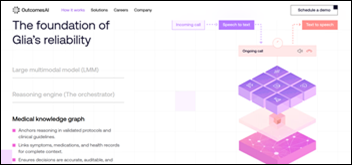
Allina Health (MN) implements SoundHound AI’s agentic AI call center technology. SoundHound’s software is built on the Amelia AI platform, which it acquired last August for $80 million.


Research

image

Mount Sinai researchers develop a machine learning model that can recommend and manage insulin dosing for patients recovering from heart surgery in the ICU. They stress that the GLUCOSE algorithm, which is still in development, should be used as a clinical decision support tool rather than a physician replacement.

Providers are optimistic about the benefits AI could bring to their staffing and clinical processes, but are hesitant to truly embrace the technology, according to a new report from Wolters Kluwer Health. The majority of respondents worry that overreliance on AI may be detrimental to clinical decision-making, and note that their organizations do not have governance policies or training programs in place to ensure AI is used responsibly.


Contacts

Mr. H, Lorre, Jenn, Dr. Jayne.
Get HIStalk updates.
Send news or rumors.
Follow on X, Bluesky, and LinkedIn.
Sponsorship information.
Contact us.

Comments Off on Healthcare AI News 6/4/25

This Week in Health Tech 6/4/25


June 4, 2025 This Week in Health Tech Comments Off on This Week in Health Tech 6/4/25
LinkedIn weekly 060425 - Copy
Comments Off on This Week in Health Tech 6/4/25

Text Ads


RECENT COMMENTS

  1. I dont think anything will change until Dr Jayne and others take my approach of naming names, including how much…

  2. I love the community health center that serves as my medical home, but they regularly ask me to sign forms…

  3. My mom was admitted to the hospital from the ED after she was diagnosed with multiple pelvic fractures. Two different…

  4. Many medical practices have become assembly lines, prioritizing throughput instead of personalized attention. In this case, patients are the widgets…

  5. Typical Big Health System experience. But the fraudulent charting is quite something. The higher-ups would care if they found themselves…

Founding Sponsors


Platinum Sponsors


Gold Sponsors


RSS Webinars

  • An error has occurred, which probably means the feed is down. Try again later.