From The PACS Designer: “Re: SlideRocket. Microsoft PowerPoint has been the dominate force in the presentation arena for business applications, but there are new ideas surfacing that could challenge their market share. One is a Web-based application called SlideRocket, acquired by VMware last month. You can try it by importing an existing PowerPoint presentation to see what a Web-based format can do to enhance your creative abilities.”
From Little Birdie: “Re: [SVP name omitted]. Fired from Ingenix last week.” I’m leaving the name off since nobody likes seeing themselves in unflattering headlines, but the source is a good one.
From Lawdy Mama: “Re: Ford’s in-car medical monitoring. The target is much larger. Truckers include a large population of diabetics and, since they live on the road, have problems managing their disease. It can also be dangerous for diabetics to drive while suffering dizziness or other symptoms.” I’m always fascinated by trucker health since I talked to a guy once who runs a company that provides healthcare services from truck stops – it was truly fascinating to hear about their particular risk factors and the challenges of delivering healthcare services to them when every minute off the road costs them money. I guess I can see the value there, although Ford didn’t mention trucks in their announcement. As long as the built-in device doesn’t require drives to interact with it (or drivers exercise reasonable caution by pulling over when doing so), then there may be some medical value.
My Time Capsule editorial this time deals with missing clinical information, even in supposedly advanced IT systems. A snip: “I can think of only two reasons: (a) command and control is so fragmented within our episode-based system of revolving door specialists that everyone assumes that someone else is watching the big picture, or (b) providers are too busy to do anything more than patch and mend, buried in piles of disjointed facts that are difficult to comprehend and act upon.”
I got a nice e-mail that I need to anonymize quite a bit, but here’s the gist. The author said reading HIStalk for years taught him/her two major lessons that he/she will use directly in his/her new vendor leadership role: (a) move your products up the value chain via application and technology integration, and (b) if your product enhances expensive hospital information systems, then price it accordingly based on the value it delivers. The conclusion: “Your blog sure cut down my learning curve for many things healthcare. I thank Dr. Jayne the newcomer, Inga, and yourself for your commitment to the industry.” I really appreciate that.
CMS may not show a lot of confidence in providers, but the feeling is apparently mutual. New poll to your right, for providers: are you confident that your employer’s security practices will keep your medical records private?
I found this installment of Vince Ciotti’s HIStory to be his most interesting so far, in which he also mentions the EMR that’s 40 years old and still running today (and it’s not Meditech).
Welcome to new HIStalk Platinum Sponsor Kony Solutions of Orlando, FL. They help companies (more than 35 Fortune 500 ones, in fact) get their message out to every mobile device that’s out there, providing a highly configurable out-of-the-box solution that allow companies to put mobile-rich apps (smart phone, mobile web SMS, etc.) in the hands of consumers in as little as a few weeks and at a lower cost than any other solution. These are not cookie cutter templates. Healthcare examples of what they can do: generate outbreak alerts, manage appointments, do prescription refills, and create provider-finder apps. Like their ad says, just putting an iPhone app out there is missing a bunch of consumers who use other technologies. I interviewed Aaron Kaufman, VP of the company’s healthcare and life sciences solutions division, just a few weeks back. Thanks to Kony Solutions and Kony Healthcare for supporting HIStalk.
Thanks to the readers who sent over new Annals of Internal Medicine articles on RHIOs and EMRs. Talking points: (a) only 13 of 179 RHIOs reported that they could meet Stage 1 Meaningful Use requirements, and (b) two-thirds of RHIOs won’t survive financially once their grant money runs out. The RHIO article points out that it’s not surprising that RHIOs can’t wean themselves off the taxpayer teat since free-flowing HITECH money encourages them to start up, but nobody wants to pay for information exchange except for directly beneficial transactions such as lab results. It also mentions that RHIOs are being held back by low EHR adoption (the accompanying editorial says RHIOs struggle “in exactly the same way as a cable company would if no one owned television sets.”) Here’s all you need to know about the article, which comes from its summary: “No RHIO in the nation met our expert-derived criteria for the comprehensive HIE needed to substantially improve care quality and efficiency.” The article had some unintentional humor in the footnotes: the authors who concluded that RHIOs are pretty much a failure were, like the RHIOs themselves, supported by ONC grant money. Doh!
Even Epic’s contractors get big new buildings. The company working on Epic’s never-ending construction projects figure they’re never going to be finished at this rate, so they build a 22,000 square foot building to hold their 65 on-site professionals that oversee several hundred construction workers. The construction company says they will have up to 700 people on site next year as they ramp up work on Epicenter 2, a second on-campus Epic auditorium that will seat up to 13,000 people.
A book detailing the 2004 murder of Cerner nurse Julie Keown by her husband (he poisoned her Gatorade with antifreeze), has been published.
A study finds that hospitals are over-promoting their robotic surgery gadgets and, in 73% of their Web sites, are using word-for-word questionable information provided to them from the manufacturer who sold them the equipment. According to the Hopkins surgeon who led the study, “To me, this is exactly what is wrong with American health care. We are adopting technology without being up front about the outcomes to consumers. And we adopt technology before we properly evaluate it.”
Bizarre lawsuit: a woman sues an Ohio hospital, claiming it mailed her picture of her premature baby who died there. She says she received 154 pictures of her dead baby propped into a variety of poses, including some of his body being held by an unknown hospital employee, even though the mother told the hospital she didn’t want pictures taken.
Sponsor Updates
DIVURGENT’s latest newsletter addresses activation management. The ACO book by partner Colin Konschak is now available on Amazon.
Practice Fusion is hiring at its San Francisco headquarters, looking for talent in account management, marketing, engineering, legal, customer engagement, and executive management.
The UK’s National Audit Office (NAC) says that the billions spent so far on the country’s National Programme for IT has been poorly used and the project needs to be reassessed. The NAC concludes that the investments don’t represent value for the money and officials are not confident that spending more will be any different. The NAC believes the project’s core aim of having an electronic record for each patient will not be achieved.
Reader Comments
From Frank Mac Court: “Re: study on operational RHIOs. Here’s more information on the study.” Earlier this week, I mentioned the report that found only 13 of 75 operational RHIOs met the basic criteria for Meaningful Use. The information was collected in early 2010 and the authors admit that “data exchange could have accelerated in the interim.” It’s likely that today there are more than 13 HIEs exchanging Meaningful Use-caliber data, though admittedly it’s still a pretty small club.
From Certs Two Mints in One: “Re: [vendor name omitted]. One of our sites is under siege by these folks, whose product holds only Modular EHR certification. They told the customer in writing that they ‘will be ONC-ATCB certified as a complete EHR for Meaningful use by July 1st, 2011.’ Vendors are supposed to be prohibited from pre-announcing their status and clearly they are saying something they can’t know is true. Maybe they failed and have made software changes that they assume will earn them certification.” That’s at least a poor choice of words – swapping ‘will’ with ‘hope to’ would have removed all grounds for complaints from either customers or the certifying body.
From Sarah: “Re: ONC and security awareness. If you heard and met some of the so-called IT consultants that standalone providers hired, you would think they needed some awareness. Many of the providers we deal with have IT people that can’t even set up a domain or workgroup correctly without leaving gaping security and permission holes, let alone manage security at a level we implement internally to protect their PHI. In some areas, the only option (no joke) is Geek Squad. They need step-by-step list for the techs and automated verification tools that providers can run themselves during annual security audits.” I think those are great ideas. Hospitals are reasonably good at basic security, but physician practices often don’t even know they need it, much less how to make it happen.
HIStalk Announcements and Requests
Listening: the just-released Rome from Danger Mouse, spaghetti western-style music mixed with a little R&B and played on vintage instruments (the keyboards are amazing) recorded straight to tape, some by the original musicians from The Good, the Bad, and the Ugly and similar movies. Mellow 60s hip with that shimmery, sharp, echoey movie soundtrack sound that makes you think that a guitar-carrying Claudine Longet could wander in looking wide-eyed and pensive in a mini-dress at any moment. Guest Norah Jones sounds sweet and Jack White is pretty good. If you’re in the right mood (and I’ll leave you to decide what that mood is), it’s transcendent.
This week on HIStalk Practice: the irreverent Joel Diamond, MD resurfaces and ponders what HIStalk would be like if it offered with some quaint, Andy Rooney-style observations. Don Michaels, PhD and VP of Hayes Management Consulting makes his premier on HIStalk Practice and offers tips to determine if one’s organization is ready for an ACO. Julie McGovern with Practice Wise shares insight into the high quality talent to be found in the country’s HIT programs. Massachusetts governor Deval Patrick helps eClinicalWorks celebrate the opening of its new office. Computer trumps doctors in detecting acromegaly. The AMA Board of Trustees argues against EMR standardization, claiming it would stifle product innovation. Participants in an ACO demonstration project contend that CMS’s proposed ACO framework is too risky. While you are paying a visit to HIStalk Practice, check out some the Web sites of some of our sponsors and learn more about their nifty products and services.
I had a routine doctor’s office visit this week. I observed perhaps 10-12 employees of the university-owned practice as I waited my turn, ranging from the front desk people to assistants to nurses. Every single one of them, other than my doctor, were somewhere between significantly to massively overweight, while all the patients in the waiting room were pretty much of normal size. I wondered how effective those employees are at convincing patients to change their dietary and exercise habits? That reminded me of the two respiratory therapists I’ve known who smoked constantly, with their cigarette packs prominently sticking out of their shirt pockets as they counseled patients on good pulmonary health. Healthcare is a funny business.
Acquisitions, Funding, Business, and Stock
Israel press reports that Reed Elsevier is in talks to buy Israel-headquartered dbMotion for $250-$300 million. dbMotion officially told me they could not comment. In February, dbMotion and Elsevier announced a partnership to integrate Elsevier’s analytics solutions into dbMotion’s interoperability platform.
Proof that Irrational Exuberance II is upon us even amidst a recession and smothering national debt, only this time limited to just a handful of darling companies. LinkedIn share prices more than doubled in their first day of trading Thursday, opening on the high end of their range at $45 and closing at $94.25. That values the company, which lost money for years until finally eking out a $15 million profit last year, at almost $9 billion. Hopefully the huge ranks of the unemployed will somehow benefit from the trickle-down effect of millionaire secretaries and trade-in VC wives buying Ferraris and McMansions. I hate everything about LinkedIn except that just about everyone is on it.
People
HIMSS runs a bio and interview of its 1990s CEO John Page. Interesting: he says his greatest achievement was splitting HIMSS off from AHA, which he said was essential for its survival. He also mention his greatest challenge – trying not to disenfranchise the management engineers that formed HIMSS as the IT side of the house started invading and eventually pushed them out like greedy European settlers marching red-skinned Americans off their land and into concentration camps called “reservations.” It must be lonely being among the tiny ranks of folks making up the MS part of HIMSS.
Announcements and Implementations
Detroit Medical Center anticipates receiving $40 million in Meaningful Use incentives, including $16-$17 million this year. Meanwhile, Beaumont Hospitals is planning for $26 million, including $10.3 million this year.
Verizon Wireless and Medco Health Solutions release a mobile app to guide patients and doctors to the lowest cost prescription drug. The app gives information on out-of-pocket costs and lower cost options, based on a patient’s specific insurance plan.
Ford will expand its Sync in-car automation to create “the car that cares,” planning to roll out allergy alerts and connected medical devices to monitor blood sugar with the help of its partners Medtronic, WellDoc, and SDI. I don’t get the point, not to mention that the last thing we need is a bunch more marginally skilled drivers screwing around with yet another electronic device instead of paying attention to the road. Maybe Ford can add monitors for bladder distension and grumbling stomachs and fund the whole project by running GPS-localized restaurant and gas station ads.
Government and Politics
CMS announces that the first Medicare EHR incentive payments will be issued this week. Greenway Medical says their client Childs Medical Clinic (AL) was among the first to receive funds Thursday, as was Cerner client Dr. Juan Salazar (TX).
Innovation and Research
An upcoming study in an economics journal claims that higher usage of EMRs would save a lot of babies. You can guess what they did: combined old (2006) data from several sources that include that of HIMSS Analytics, taking a guess at when those systems went live (since HIMSS Analytics reports products bought but not yet installed), did some kind of county-level breakdown, and found that EMRS are “associated” with lower infant mortality (leading to the dramatic title, “Can Healthcare IT Save Babies?”, that in my mind is a question left unanswered.) I would have been more convinced had they looked at infant mortality at individual hospitals pre- and post-EMR, also ruling out related OB-specific systems that don’t really require EMRs. I don’t doubt that hospitals with the ambition and money to buy EMRs may well have better outcomes with newborns (possibly because they aren’t usually in poor, inner city neighborhoods), but its a stretch to say it was the EMR itself that made them better (or to assume, even with everybody and his brother installing EMRs, that we’ll be seeing a drop in infant mortality anytime soon). It’s a free PDF download if someone wants to critique it in more detail.
Other
Officials with Saint Elizabeth Regional Medical Center (NE) say they will hold off on plans to form an ACO, following the release of proposed ACO rules. The hospital fears potential financial risks may not be sufficient to cover high initial investment costs, including IT-related expenses.
KLAS looks at partial and extensive IT outsourcing and concludes that CareTech, Dell, and Siemens rank high in both categories. CTGHS topped all firms for partial IT outsourcing and CareTech led for extensive IT outsourcing.
In the under-200-bed community hospital market, 80% of organizations report confidence in their vendor’s ability to ultimately satisfy Meaningful Use requirements. The other 20% are looking to replace their vendor. All of the Cerner clients participating in this KLAS survey expressed confidence in Cerner’s ability to meet Meaningful Use; at least three customers from each of the other seven vendors felt achieving Meaningful Use with their current vendor would be a long shot or probably won’t happen.
Weird News Andy likes this quote about NPfIT from UK MP Richard Bacon: “This turkey will never fly and it is time the Department of Health faced reality and channelled the remaining funds into something useful that will actually benefit patients. The largest civilian IT project in the world has failed.”
A NEJM editorial says the provider payment system based on CPT and E&M codes forces EMR vendors to modify their programs to create reams of repetitive and clinically worthless documentation instead of doing something useful, like improving clinical decision support. It points out that payments encourage upcoding and over-documenting, but nobody has come up with a better alternative.
Alan Cremer, founder and acting CEO of drug database search application vendor IntelliDex, e-mailed to ask me to mention that he’s looking for a president and CEO for the company. If you have startup leadership experience, preferably in a medical informatics company, check out the job description and consider throwing your hat into the ring.
Sponsor Updates
iSirona demonstrated its integration technology at last month’s Vision User conference in Salt Lake City. The company used its software to upload patient vitals from a Stryker Bed InTouch and a Fukuda Denshi bedside monitor, which were then verified and uploaded into the Siemens clinical suite.
H/P Technologies, which provides staffing and consulting for all Meditech modules, will exhibit at MUSE May 31–June 3 in Nashville.
The MSO Mississippi Health Partners selects RelayHealth to provide health information exchange for its 800 physicians and 13 hospital members.
ESD hires Dan Oberle as VP of business development. His previous employers include Santa Rosa Consulting, CTG, and ACS.
Orion Health and NextGate partner to include NextGate’s MatchMetrix EMPI and Provider Registry products in the Orion Health HIE solution.
Dossia partners with Health Language Inc. to embed HLI’s language engine into the Dossia Health Management System.
API Healthcare announces that it achieved its highest number of deployments ever during the first quarter of 2011.
Ovum, part of Wolters Kluwer Health, introduces OvidMD, a clinical tool that incorporates medical research with Wolters Kluwer’s UpToDate resource tools.
Children’s Hospital of Orange County (CA) selects MobileMD to provide HIE services to its 800 physicians and 1,000 referring physicians.
Healthcare Innovative Solutions co-sponsors a Victoria Era fashion show, which raised over $1,000 for the Seville Food Pantry (OH).
Hayes Management Consulting unveils a partnership with The Coding Network to provide audit and remediation services to physician practices using MDauditComplete.
Capario says it is now processing inbound 5010 claims (Errata version) and providing 5010 ERAs with submitters.
Sage SVP Tony Ryzinski offers up 10 areas for improvement when managing the revenue cycle.
EPtalk by Dr. Jayne
WebMD reports this week that even mild exercise with the Wii Fit game can improve fitness for COPD patients. Big surprise: patients are more likely to stick with exercising at home if it’s fun. I have to admit, the Wii is one of my guilty pleasures and its price point is more realistic for people than some of the other game consoles. If it gets people off the couch for even 10 or 15 minutes a day, I say go for it — although I’m not sure I want to know what my blood pressure looked like when I was trying to find the last three i-points on Island Flyover. But then again, there’s something therapeutic about crashing your biplane into the ocean repeatedly after a long day listening to physicians complain about computers.
I keep getting e-mails from the American Medical Association about their AMAGINE physician portal ,which “offers a low-cost approach to meet the needs of your practice and achieve each level of meaningful use.” If you’re a provider or someone who works closely with a provider, have you checked this out yet? I’d be interested to hear what you think. Featured products on the site when I stopped by included NextGen, Ingenix CareTracker, and Care360 EHR.
I’m still a bit in awe of being a minor Internet celebrity. I wonder if Centers for Disease Control spokesman Dave Daigle was ready for his brush with fame? The normally sleepy Public Health Matters blog featured a new topic this week: Preparedness 101: Zombie Apocalypse. The site has been so popular after being named a Twitter “Top Tweet” that it’s intermittently crashing, so be patient. I’m not sure of the specific impact of zombie apocalypse on IT infrastructure (my medical training was more in dealing with the brain-eating aspects of zombie behavior) but it’s always good to be prepared and make sure you have a disaster plan for each of your critical systems. If anyone has a good zombie preparedness checklist for enterprise EHRs, please share!
I agree with Inga, it was feeling like a bit of a slow news week, at least until I came across this headline: Don’t forget! Your computer job is still killing you. Based on the multitude of upgrades our organization has to complete in order to be ready for Meaningful Use attestation, I was sure the author had been following me around. I’m not sure about their level of medical fact-checking, but I do like their graphics. It’s a good reminder for those of us who have traded walking the clinical halls of academic medicine for a more desk-jockey lifestyle that we need to get up and move.
Finally, having spent some time attending a renowned Southern institution famous for matriculating Mrs. degree candidates, I learned that there are a few things that aren’t fit for discussion in mixed company if one wants to catch a good husband. Since I’ve turned into a grizzled IT veteran (although I do know how to identify a fish fork and exactly how to use it) I’m going to break that rule today. Last November, Mr. H mentioned a UK team that was working on a smart phone app that would instantly diagnose sexually transmitted diseases after urine or saliva was … ahem … applied to a chip that would then be attached to the phone, leading to a quick diagnosis. It seems this product will have an expanded target market after June 1 since Apple has approved a “prostitution-friendly” app aimed at pairing “sugar daddies” with willing companions. I was going to say something pithy about Adam, Eve, and an Apple until I read further to find it’s compatible with Android and BlackBerry devices as well. Instead, to the App Store, I say — “well bless your little heart.”
HHS’s Office of Inspector General spanks its fellow agency ONC for pushing interoperability without mandating security controls or encouraging standards. Examples of what it wants to see: requiring portable media to be encrypted, requiring two-factor authentication for remote access to PHI-containing systems, and mandating timely OS patch application and antivirus updates. OIG based this work on a previous project that looked at providers, in which it found unsecured wireless networks, lack of application vendor support for OS-level changes, poor antivirus practices, lack of event logging, allowing shared user accounts, and giving too many users administrative rights over their PCs.
ONC’s response to this report: (a) we turfed security work off to HITSP and incorporated some of its specs as HHS policy and in EHR certification requirements; (b) Stage 1 of Meaningful Use requires providers to fix their own security problems; (c) our job is to convince providers to use EHRs and we will worry about security later in the process; (d) our chief privacy officer is drafting a plan. It sounds to me like the typical external auditor’s report: their job is to find stuff to make sure you keep hiring them, while yours as the IT shop is to balance their sometimes ivory tower observations with your own realities. My only takeaway is that ONC should spend some of its billions to push security awareness, which you would think highly paid hospital and vendor IT people wouldn’t need, but apparently they do.
Reader Comments
From Mia: “Re: CompuGroup. Big layoffs at Noteworthy Medical (last week, I think) and other of their companies. Will be interesting to see how many of the 420 ONC-ATCB certified EHR companies are around five years from now.” Unverified.
From CPOE Zealot: “Re: medication error. Incidents such as these give CPOE a bad rap.” The parents of a five-week-old premature baby who died after being given 60 times the ordered dose of IV sodium chloride sue Advocate Lutheran General Hospital (IL) for wrongful death. Like most fatal medication errors, CPOE was a non-factor here: — most in-hospital medication error deaths are caused by incorrect IV preparation or administration. In addition, the doctor ordered stat labs and then a re-test after getting a high sodium level back, but nobody drew it, leaving the baby on the hyper-concentrated fluid for 20 hours. There is one good reason CPOE gets a bad rap in cases like these, though: vendors sell and hospitals buy the seemingly logical argument that CPOE prevents patient harm, when what it mostly does is prevent lots of errors that were being caught anyway (like poor handwriting, in which somebody just calls the doctor for clarification). The risk of harm doesn’t change much unless you work at the sharp end of the stick where EHRs fear to tread – medication preparation and administration. The best IT systems in existence (including bedside bar-code checking) couldn’t have saved this baby’s life when hospital employees, despite experience and best intentions, are just as prone to distraction and carelessness as the rest of us humans, especially when they are overwhelmed and tired (sometimes because their peers were laid off to help pay for CPOE systems).
From Wireless Observer: “Re: Cerner. Word on the street is that Cerner is getting ready to announce some big organizational changes and these are not good kind of changes for the employees (may be good for Wall Street, however). This is supposed to hit the CareAware division pretty hard.” Unverified. CareAware is Cerner’s solution for connecting medical devices to EMRs (video above).
Acquisitions, Funding, Business, and Stock
FairWarning will hire 70 employees over the next 24 months.
Salt Lake City-based MediConnect Global announces plans to hire 100 employees across multiple departments.
Cerner names SenSage its “Accelerate Partner of the Year” for demonstrating speed to value for Cerner and its customers. SenSage also an expanded alliance with Cerner to offer a SaaS-based version of P2Sentinel, Cerner’s enterprise clinical system auditing program.
CareCloud partners with Xpress Technologies to launch a combined EMR/PM solution for urgent care facilities and hospital ERs.
Sales
Sharkey Issaquena Community Hospital (MS) selects Custom Software Systems ChartSmart EMR.
Onslow Memorial Hospital (FL) contracts with Language Access Network to provide hospital video language interpretation services.
People
Awarepoint names Ralph Keiser (MedeAnalytics) EVP of sales and Jaime Ojeda (PCTS) EVP of marketing and business development.
Government and Politics
CMS announces plans to release applications for “mature ACOs” interested in participating in its new Pioneer ACO Model and taking part in shared savings. CMS is also seeking input on the idea of an Advance Payment ACO Model, which would give certain ACOs access to their shared savings up front so they could build the required infrastructure. For providers wanting to learn more about ACOs, CMS is offering four free Accelerated Development Learning Sessions beginning in June.
Innovation and Research
Of the 75 operational RHIOs in the US, only 13 meet the basic criteria for Meaningful Use (e-prescribing, clinical data exchange, quality reporting) according to Harvard researchers. I don’t have access to the study, but apparently the findings are based on data from 2009 (so old they use the term RHIOs, apparently). Surely there’s been some improvement since 2009. If you’ve seen the full report, please share your insights.
JAMAreports that the use of telemedicine in ICUs reduces mortality rates and length of stay.
The New Zealand government awards a $252K grant to Vensa Health to conduct further research related to its mobile health reminder system. The company recites an impressive list of technology features, but like just about every mobile health vendor, they have no evidence showing that their product is effective in improving health. Like Bill Gates told me at lunch once (well, OK, me and a huge ballroom full of people at the mHealth Summit), reminders and education don’t necessarily work when it comes to wellness – plenty of fat people own bathroom scales.
Other
I got another “urgent news” e-mail blast today from one of the rags that reinforces my argument that most industry publications either (a) can’t distinguish real news from press releases, or (b) don’t care as long as it draws readers and advertisers. Today’s hot news: a bond rating agency issued a press release claiming their study correlated use of advanced IT to hospital profitability and quality. I downloaded the “special report” from Fitch Ratings and it was, as I expected, not worth the excitement, being even less methodical (and therefore even less useful) than the Most Wired survey. Here’s a summary.
The bond ratings company looked at only the 291 hospitals that use its services. That’s out of maybe 6,000 US hospitals – a tiny, non-randomized, non-representative sample that excludes for-profit and government facilities.
They checked Leapfrog, Baldrige, and Healthgrades and found that 75 of their clients had won a quality award (all awards are created equal in drawing room studies like this that just match Readily Available Data Set A with Readily Available Data Set B).
They checked with HIMSS Analytics and found that 24 were at EMRAM Stages 6/7 (ignoring all other forms of IT except inpatient clinical).
Apparently disappointed to find that only 12 of the 24 EMRAM 6/7 hospitals had won quality awards, they invented an excuse related to “the evolution and maturation of how quality is measured.” (maybe that should have been the headline – that half the hospitals who reached IT Nirvana haven’t won even one major quality award as a result).
They found that richer hospitals won more quality awards and had more IT (neither of which necessarily has anything to do with patient outcomes).
They looked at utilization trends and concluded that higher IT hospitals (meaning richer ones) are improving, although they did not look at their absolute performance (meaning a hospital could still be terrible as long as it’s less terrible than before).
The bottom line: even if the bond ratings firm had conclusively proved any kind of relevant correlation (which they most definitely did not), that still wouldn’t have proved causation. The implicit message in running this yawner of a study as real news is that everybody now has the justification to buy more IT, which is an absurd conclusion for an industry that somewhere down deep is supposedly based on science.
Speaking of questionable studies, here’s another one: do seven percent of doctors really use video chat in patient care? I’m not interested enough to buy the company’s report to evaluate its methodology, but I would have to bet that they surveyed a disproportionate number of telemedicine physicians or tele-ICU intensivists. Most docs won’t even e-mail patients, much less fire up a Skype session for a leisurely and probably unreimbursed Webcam chat.
Quality IT Partners, Inc. announces its Facebook launch featuring a dedication to the Scott Hamilton Cares Initiative, including a song and video written and produced by the company.
Sponsor Updates
Sonoma Valley Hospital (CA) picks ProVation Order Sets.
BridgeHead Software will exhibit at the 2011 International MUSE Conference May 31-June 3 in Nashville.
Emdeon introduces Emdeon Audit Advantage, which will provide real-time prescriber eligibility and patient coverage alerts to pharmacies. The company also wins a five-year GSA contract that allows it to offer products to over 90 government entities.
Imprivata announces GA of OneSign Anywhere for authentication and single sign-on for remote and mobile users.
Delta Health Alliance, one of the country’s 17 Beacon Health communities, collaborates with Medicity to connect participating physicians and hospitals.
Daughters of Charity Health System (CA) expands its partnership with Passport Health Communications and adds three additional RCM solutions from Passport’s eCare Patient Access Suite.
McKesson medical director David K. Nace, MD is named first vice chairman of the board of directors of the Patient-Centered Primary Care Collaborative.
Practice Fusion says it has grown from a team of four in 2007 to 75 today. The company is expects to reach 150 employees by the end of the year and is seeking new office space.
MyHealthDirect assumes a silver-level sponsorship for the 19th Annual Medicaid Managed Care Congress this week in Baltimore. CEO Jay Mason will also participate in a panel discussion on ACOs and patient-centered medical homes.
API Healthcare publishes a whitepaper entitled Achieving Quality of Care and Controlling Costs, which includes best practices for workforce automation.
Concerro creates a Mac versus PC parody that compares healthcare scheduling solutions with paper-based systems.
The City of Philadelphia selects eClinicalWorks to provide an EHR/PM solution for the Department of Public Health, which includes 230 providers and 20 primary care and correctional clinics.
JEMS Technology announces a rental program that allows hospitals to provide smart phone video consultation capabilities (JEMS Consults) to their physicians starting at under $1,000 per month.
From Former CIO: “Re: high price of Epic. In my experience, the price of Epic software is competitive with others (at least the big guys). The difference is that they drive the customer to look at the true cost of implementation and plan for the resources, internal and external, training, etc. The other vendors hope you won’t actually add it all up until you sign the software contract. This is the best part about Epic since it gets the organization to accept the budget, even if difficult. If you are not prepared to spend the money then they may walk away. In the end, Epic is not necessarily more costly than the others would be.” An excellent reminder that I often need. Software license fees are often nearly irrelevant to overall project cost, especially on the often-forgotten cost of internal labor. It would be interesting to survey recently implemented hospitals to find out how implementation budget overruns correlate to specific vendors.
From Judy: “Re: couldn’t resist telling you. I have yet to receive an e-mail from iHealthBeat, HDM, or whomever that had a news flash I hadn’t already seen on HIStalk. Time to unsubscribe from these eJournals promising the latest, greatest news. Keep up the good work (although I do worry about you, truth be told) and help me SIMPLIFY my life! You should have NO doubts about your impact on this industry and I am SO proud of you!! Really.” I’m moved by that. From my vantage point, HIStalk has been eight years (as of June 20) of long evenings and weekends in an empty room, seven days a week (check out the count of my “sent” e-mails above from my HIStalk-only account). Comments like this keep me coming back, even though I’ll probably wonder on my deathbed what the heck I was thinking in spending all this time on what is basically a spare time hobby. At the moment, I’m still having a ball.
From IT Director: “Re: Siemens. At the recent Siemens Medseries4 User Conference in Salt Lake City, it was nice to see a strong message from Siemens leadership that Medseries4 is a go-forward strategy for Siemens. A recently approved five-year development plan increases focus on development already well under way on both the Clinical and Patient Financials as well as a much anticipated ‘spruce up’ of the General Financials. Also touted was a commitment to enhancing the integration of surround applications such as Pharmacy and EDM. This, combined with UHS’s (Universal Health Services) recent commitment to install Medseries4 in all 106 of its newly acquired facilities is certainly a positive note for Medseries4 customers.”
From Your Favorite Uncle: “Re: Lakeland in Michigan — confirmed. They are going up with Epic ambulatory at the end of the summer and inpatient at the end of the year.” Thanks.
From Nasty Parts: “Re: TSI Healthcare in NC. I hear they have been acquired. They are NextGen’s largest VAR.” Unverified.
From HealthCareIdiotSavant: “Re: healthcare IT stocks. My broker has found nothing other than the usual suspects and none of them are rated all that good. Would be interesting to have your investment banker dude weight in on investing in a fund or a reasonable combination of individual stocks, wit no promises or guarantees, of course.” I actually have quite a number of investment banker dudes (and maybe some dudettes) as readers, so if any of them care to advise (anonymously if desired), I’ll let you know. As you’ve found, not all that many pure HIT plays are publicly traded, though.
Poll respondents: next year will be the big HITECH hump for vendors. New poll to your right: do you trust CMS to accurately collect and report provider and quality data?
My latest Time Capsule editorial that hasn’t seen daylight since 2006 and even then only to print newsletter subscribers: Hospitals Need to Learn from Failed Transformation Missions. A snip: “Sometimes imaginary victory is declared at the HIMSS conference, proclaimed by ventriloquist vendors whose lips barely move when their customer speaks.”
Thanks to the following sponsors (new and renewing) that supported HIStalk, HIStalk Practice, and HIStalk Mobile in April (sorry it’s a long list this time, but there’s always a lot of activity right around HIMSS). As a non-professional part-timer, I’m humbled to see this impressive roster of supporters, especially since it represents just a four-week period. Click a logo for more information.
Ohio Valley Medical Center (WV), embroiled in a lawsuit with its former CEO, claims he struck secret deals with doctors that paid them exorbitantly and also diverted all the money from its endowment fund. The health system is laying off employees and says it is “tens of millions of dollars in debt.”
Congratulations to John Halamka, named a full professor at Harvard.
Healthcare Interactive, a Maryland-based vendor of something to do with the cloud that’s impossible to figure out from their buzzword-loaded Web site, looks to raise $10 million. Take your guess from this list of adjectives on their home page: suite, actionable, portal, stakeholders, transparency, engagement, cloud, and workflows. Or maybe this simple description from the CEO’s bio makes it crystal clear: “SaaS-SOA healthcare operating system (H-OS) framework leveraging an Inheritance-based Organic Network architecture using a unique combination of identity management, knowledge management and an application framework on a single cloud based environment.” Ready to sign up?
The next fun history lesson from Vince Ciotti, this time covering the 1960s development of “clinical” software, featuring Kelly Girls entering information dictated by nurses who didn’t know how to type.
Microsoft’s Bill Crounse, speaking in Hungary, gives examples of IT systems that are transforming healthcare: the Healthcare.gov Web site, NHS Evidence, and HealthVault. None of these have had any impact whatsoever on me or anyone I know (and Microsoft has a financial interest in at least two of the three), but I’ll give him the benefit of the doubt.
I’m intrigued by recent top executive hires by Siemens: John Glaser (Siemens Health Services Business) and Greg Sorenson (Siemens Healthcare), both brought in from non-profit Partners HealthCare with no business experience and immediately placed in CEO roles. Contrast that with GE Healthcare Systems, who chose as its top executive last week an internal candidate whose background is automotive, finance, and aviation with no healthcare experience at all. That’s a striking difference in philosophy from conglomerates that offer similar products and services. I have to say that as a customer, I like the Siemens approach a lot better — the idea that provider people who care enough about patients to work for a non-profit might bring something to the table that a circuit-riding GE lifer executive doesn’t.
Here’s the TEDxTHR talk of Ed Marx from this past Friday.
CMS gives General Dynamics a five-year, $95 million contract for claims processing support.
Clinical documentation system vendor Salar makes Fortune’s list of 100 fastest-growing inner city businesses with a 27% annual growth rate over the past five years. It’s in the Fells Point waterfront area of Baltimore.
Don Good, former NextGen Practice Solutions regional president, is named president of Talascend Healthcare, a newly created division of the technical professional placement firm.
VA CIO Roger Baker, who advocates an open source approach, tells a House committee that replacement of its VistA system with commercial software would cost $16 billion. But in a good example of bad timing, the GAO says the VA’s historically weak project oversight caused a $127 million appointment scheduling application to fail.
Reader Comments
From Court Jester: “Re: Society of Hospital Medicine. Here’s a picture of the action at the SHM meeting.” The action looks a bit light, but perhaps the picture is deceiving. SHM expected 2,500 physicians to attend the four-day event in Dallas.
From Bmore: “Re: Johns Hopkins. I know they have an old version of Epic scheduling, but has Epic always been its own job category? Or is this a sign of something to come?” I’d speculate B, despite no announcement so far. One thing I’ve learned about Epic: there isn’t always that dramatic moment of taking the two vendors of choice down to one and then heading off for extended contract negotiations, followed by the big public lovefest. Somehow, everybody sees the Epic demos and just assumes it’s a done deal, often gearing up for the project even before a contract is signed. I thought Cerner’s Vision Center was the ultimate mass hypnosis selling machine until people started telling me about being bewitched by Epic, with any IT-advocated precautions thrown to the wind as the operational people salivate at kicking out the incumbent vendors at any price and maybe taking down what they see as an unresponsive IT department along the way. That may just be my inaccurate perception, so please weigh in if you’ve been run over by the Epic train at your place.
From BadgerGrandma: “Re: Epic. A few weeks ago, attendees at Epic training were told that this was the biggest week ever, with over 1,000 people onsite for training.” It would be an interesting case study to review how formerly tiny, privately held Trojan horse Epic came late to the inpatient game, then in less than 10 years, totally ate the lunch of everybody in their target market of large academic medical centers. Cerner gets an occasional sale and Allscripts is doing recently better than Eclipsys did at selling Sunrise (which isn’t saying a whole lot), but that’s about it, at least unless the only hope of a worthy contender (Soarian) can move from nice idea to significant sales. It violates every economic principle that competitors haven’t developed something equivalent or superior to Epic without its high price. They’ve just handed the market over to Judy without a whimper, with customers happily plunking down dozens or hundreds of millions of dollars, in some cases replacing systems whose contract ink is barely dry.
From Just a rumour: “Re: Epic. Heard that Lakeland in St. Joe, MI signed up. No reference on their site.” Unverified. Actually, I’ll call it verified since I found the item above in their physician newsletter.
From Rodeo: “Re: hospital hiring. Are they going crazy? I’ve had 10 calls and e-mails from recruiters who dug my resume out of the dungeon – it isn’t posted anywhere. Is May 1 a significant date?” My phone is ringing a lot too, and I dread new LinkedIn connection requests because they’re always from recruiters (my magnetism is apparently entirely occupational).
From Clyde Dale: “Re: Siemens. A. Gregory Sorensen, MD. Director, Center for Biomarkers in Imaging Associate Director, Martinos Center for Biomedical Imaging at Mass General. Going to Siemens to head up Med for US/ Canada.” Verified by Siemens.
HIStalk Announcements and Requests
Welcome to new HIStalk Platinum Sponsor Practice Fusion, vendor of the free, Web-based EHR that Brown-Wilson’s Black Book ranks as the #1 EHR product in customer satisfaction among primary care specialties. The company announced last month that its product is now used by 80,000 medical professionals managing 10 million patients, with another one million patients being added monthly. They say “Live in Five,” meaning users can start charting within five minutes of signing up, using the provided test data for practice if they want. Total cost is $0, which includes patient import, specialty modules, lab integration, scheduling, billing, a connected PHR, e-prescribing, and free unlimited US-based support. Thanks to Practice Fusion for supporting HIStalk.
Here’s a Practice Fusion video I found on YouTube, with a user (and Desert Storm veteran – thanks for your service, Doc) doing all the talking.
I mentioned that I would be showcasing (at the suggestion of readers) small, innovative companies you might not hear about otherwise. Around 40 companies applied, my volunteer committee (provider, investment banker, financial services VP) chose nine to participate based on size and perceived level of innovation, and I have the first one nearly finished. The end result will be a company profile, interview, customer statement, and a pitch video. I was already overwhelmed, devoid of free time, and definitely not looking for new work, but this seems worthwhile.
The things you do for love (of HIStalk, hopefully): (a) sign up for e-mail updates to your right, giving me direct access to your brain jack so I can project my electronic power of suggestion; (b) send me news, rumors, secret documents, comments, and guest articles; (c) connect with HIStalk, Inga, Dr. Jayne, and me on your favorite social not-work; (d) peruse with wide-eyed wonderment the mosaic of ads of sponsors who support the “HIT information wants to be free” concept by supporting my endless toil, and who would greatly appreciate in return clicks and/or consideration if you are in the market for that which they offer; and (e) beam occasional positive karma our way since we don’t go public with our fears, mistakes, and disappointments, but we’re loaded with them just like everybody else. And for you, a double-barrel index finger point (I’m thinking Isaac the bartender on Love Boat since I’ll be mentioning Doc down the page) — thanks for reading.
Acquisitions, Funding, Business, and Stock
Cerner will acquire Resource Systems, the 30-year-old Concord, OH company that sells CareTracker, an electronic documentation system for skilled nursing and assisted living facilities.
HCA launches Parallon Business Solutions, a business services subsidiary that will offer services for revenue cycle, workforce management, supply chain, and group purchasing.
Secure healthcare network vendor Ability Network (formerly VisionShare) closes on nearly $20 million venture capital, led by Lemhi Ventures and Bain Capital Ventures.
Cleveland Clinic spinoff Explorys closes $11.5 million in Series C financing. The company’s cloud computing data warehouse aggregates and curates EHR data from multiple systems to allow population analysis, with customers that include Cleveland Clinic, MedStar, Summa, and MetroHealth.
Sales
Anthelio Healthcare Solutions (formerly PHNS) contracts with MedQuist to implement its DocQment enterprise platform at eight of its client hospitals.
The New York City Health & Hospitals Corporation signs a five-year, $20 million support contract extension with QuadraMed for the QCPR inpatient clinical system.
People
GE Healthcare’s Health Systems division CEO Omar Ishrak is named chairman and CEO of Medtronic, replacing the retiring William A. Hawkins. He’ll be replaced at GE by Tom Gentile, moved over from GE Aviation. The division sells medical technology, such as CT, MR, life support systems, and home health. GE also announces that it has created a new business called Global Services that will take over GE Healthcare’s services strategy, to be led by North American services leader Mike Swinford.
Announcements and Implementations
Business analytics software vendor SAS forms the SAS Center for Health Analytics and Insights, an internal incubator that will focus on applying analytics to patient data with the goal of improving healthcare quality and lowering cost. Areas of interest include evidence-based medicine and cost analysis. To which I’ll also add for you PR types: this is how press releases should be written — short, straightforward, chunked into easily readable paragraphs, and not turned into mind-numbing mush by overzealous, trademark symbol-wielding marketing people determined to collectively suck the life out of what started out as something interesting.
Corepoint Health’s integration engine receives ONC-ATCB Modular Ambulatory EHR and Modular Inpatient EHR certification.
Crystal Cruises goes live with Emergisoft Maritime, an EHR specifically for cruise ship crew and guests. I’m picturing the sleazy, shorts-wearing Doc from Love Boat (c’mon, you know you want to sing it with me: “Loooove, exciiiiiiting and new …”) having even more time to letch around with bimbettes half his age, apparently unrestricted out there in international waters of any ethical or legal concerns that would prohibit him from putting his smoove moves on patients.
Government and Politics
CHIME and AMGA announce their opposition to several provisions in the proposed ACO rule. CHIME objects to a privacy provision that would allow patients to opt out of data sharing while maintaining their ability to see primary care physicians within the ACO. It also takes issue with the requirement that 50% of an ACO’s primary care providers must meet MU standards by the ACO’s second year. Meanwhile, AMGA says 93% of its members would not enroll in an ACO based on the proposed framework, which AMGA considers “overly prescriptive, operationally burdensome.” Top concerns center around risk-sharing, static risk adjustment, retrospective attribution, quality measurement, and minimum savings.
In the UK, Prime Minister David Cameron says the government may cancel some or all of CSC’s $5 billion contract to install iSoft’s Lorenzo. CSC has been threatened previously for missing deadlines, and if it finally gets the boot, only BT will be left of the original four big contractors (Accenture and Fujitsu already bailed and were fired, respectively).
Innovation and Research
A University of Arizona study finds that 72% of the software used by retail pharmacies in the state cannot detect all significant drug-drug interactions.
Other
Thirty-four percent of all office-based prescribers were using e-prescribing by the end of 2010. Cardiologists had the highest adoption rates (49%) followed by family physicians (47%.) Providers created 326 million e-prescriptions in 2010, up from 190 million in 2009.
The Triangle/Eastern NC Chapter for the Juvenile Diabetes Research Foundation recognizes Allscripts and EVP Diane K. Adams, who along with CEO Glen Tullman, has family members with juvenile diabetes. Allscripts has contributed over $1 million to JDRF since 2004.
Weird News Andy celebrates what he calls “the breast app ever!” A plastic surgeon develops an app that uses 3D imaging to allow prospective breast implantees to visualize their new protuberances, followed by easy posting of the “check these out” pictures directly to Facebook so that cyber-acquaintances, business associates, and elementary school aged nieces and nephews can weigh in on the proposed alterations.
This came in my work e-mail from some vendor. Somehow I don’t have a lot of confidence in their “HIPPA” wisdom.
SCI Solutions provides laptops and cash donations from its employees to a project run by some surfer buds (one of them SCI SVP Vinnie Whibbs) and some non-profits to provide resources to students and for community projects at Playa Gigante, Nicaragua.
The LBJ School of Public Affairs and the Patient Privacy Rights Foundation will hold the one-day Health Privacy Summit: Getting IT Right: Protecting Patient Privacy in a Wired World on June 13 in Washington, DC, a public forum to address health privacy. Speakers include quite a few folks from government and academia, along with HIT-recognizable names Barry Chaiken (former HIMSS board chair and Imprivata CMO), Mark Frisse (Vanderbilt), Deborah Peel MD (founder, Patient Privacy Rights), Joy Pritts (chief privacy officer, ONC), Michael Stearns (president and CEO, e-MDs), and Latanya Sweeney (the Carnegie Mellon professor who proved that it’s not that hard to re-identify de-identified data when you match it up to a second database). Registration is $100 general, $75 government or academic, and $50 for students. I’d go if it wasn’t tough to get time off from work on relatively short notice, so if you’re attending and want to report from there, do it.
A coroner in Australia rules that a woman’s death after gall bladder surgery was due to medical error. Her gall bladder had been removed 10 years before, but radiology staff misidentified intestinal gas bubbles, the surgeon overlooked the medical history entry about her previous surgery, and everybody noticed but nobody questioned the scar on her abdomen. She died of post-surgical sepsis. Her granddaughter says she hopes the medical system will change so that clinical documentation is shared among physician practices and hospitals.
Sponsor Updates
Onze Lieve Vrouwe Gasthuis hospital in Amsterdam deploys iMDsoft’s MetaVision to provide tele-intensivist monitoring.
Moore Regional Hospital (NC) picks ProVation MD for gastroenterology procedure documentation and coding.
CareTech Solutions launches iDoc Savings Calculator, which estimates savings from implementing its iDoc document imaging and management product.
Universal American Corp., a Medicare health benefits company, collaborates with NextGen to offer participating physicians access to NextGen’s EHR in multiple markets
The Texas e-Health Alliance appoints ICA CEO Gary Zegiestowsky to its board.
The Centre hospitalier Pierre-Janet in Quebec adopts the Vocera voice communication system.
DIVURGENT announces new hires: Matt Curtain (client services VP), Sarah Rourke (recruiter), and Christina Pena Jones, DHA, (nurse educator).
Nashville-based iPractice Group will resell Greenway’s PrimeSUITE.
EPtalk by Dr. Jayne
The Centers for Medicare and Medicaid Services (CMS) recently launched the first phase of its Physician Compare Web site, which is supposed to display physician address information, medical education, credentials, gender, etc. as well as whether physicians reported quality data to CMS.
Like any good Internet junkie, I of course had to search myself. Not surprisingly, my listing has errors, as does the listing which appears below mine alphabetically (it happens to be a former colleague of mine whose details I know as well as my own).
My listing includes a practice address where I haven’t provided patient care for more than four years, as well as practices where I have never provided care. There’s even a location listed for me that belongs to a practice that used to be owned by my group, but was sold more than a year ago.
This does not give me great comfort in the skills of CMS to accurately portray my ability to report quality data (especially since they can’t accurately portray my address). Phase Two of the site will launch later this year and identify whether physicians are e-prescribing or not. Quality data will be available by 2013. I hope in that time frame they can figure out where I practice.
Speaking of government, for those of you who missed it, Newt Gingrich is officially seeking the Republican nomination for President. Gingrich has been dabbling in the healthcare space for some time, largely through his for-profit Center for Health Transformation (CHT), so this should be interesting.
CHT has a white paper about Accountable Care Organizations that features some well-known examples of ACO-type organizations. It’s pretty basic, but a decent read for those that need a quick study of ACO 101.
Newt’s proposed healthcare reforms are detailed on his Web site and include rewarding quality care, incentivizing health behaviors, stopping fraud, and educating patients on price and quality. For those of us in healthcare IT, the good times will continue to roll as there is more and more focus on data mining to support these efforts.
By the time the 2012 election rolls around, I’ll be sick and tired of the politics along with everyone else. On the other hand, I won’t have to worry about having enough material for HIStalk. Round and round health reform goes; where it stops, nobody knows!
Termination Means Never Having to Say You’re Sorry, Right?
A good learning situation sprang to the forefront of my creative thoughts the other day. I was representing a great EHR vendor (a great client and a great EHR) in a substantial deal and ran into a surprising request from opposing counsel regarding the default / termination process and procedure. In the end, the issue was resolved quite simply and quickly by taking a different path, but I will save that for the end.
The provider / customer side did a very good job of establishing certain milestone events, such as the operational date for e-prescribing, the vendor’s EHR certification deadline, and go-live for the then-certified EHR. Kudos to them because they set the bar precisely where they needed it. The vendor realized the importance and accommodated.
You can guess where this is leading. Failure to meet a milestone event gives the client the option to terminate.
A very straightforward default procedure was included in the standard vendor agreement — one party provides written notice to the other regarding any alleged default, then the supposedly defaulting party has 30 days to cure the problem. If the problem is not cured at the end of the 30-day period, the party that alleged the default has the option to terminate the agreement.
Termination was specifically addressed to include terms such as:
All licenses granted terminate and all rights automatically revert to the granting party
Payments due at date of termination must be made within 30 days of termination
Each party returns the other party’s confidential information, including the software and all associated documentation
Simple, no? No.
The other side wanted to bifurcate the issue and create two sets of “termination” procedures. The first (same as above) required that all licenses and rights granted under the agreement return to the grantor and the agreement terminates. Everything is over and done and the parties go their separate ways. The second proposed that there were conditions where the agreement could be terminated due to certain actions of the customer/user, but that the EHR software would remain in use by the customer/user.
It took two document turns, some polite but blunt e-mails, and two conference calls to assure the negotiators on the other side that there was no scenario under which the license could be terminated and the customer could retain use of the software.
For those of you shaking your heads in amazement, there was credible rationale behind the request, which was basically, “We understand the need to terminate absolutely in most situations, but we don’t want the vendor to be able to walk away for seemingly small issues that could rise to the level of default.”
The conversation between us attorneys at the end went very quickly. If I would add language stating that termination of ongoing maintenance support is at the customer’s option, and that terminating maintenance will not terminate the licenses and other rights granted under the agreement, then we would be all set and the default / termination provision would be acceptable as drafted.
That was it. All we needed was a clarification on maintenance cancellation and the whole issue was put away.
As for me, familiarity with an agreement sometimes begets a comfort that anyone picking up the agreement immediately adopts your perspective and interpretation of the terms and conditions. Not always the case — sometimes I need a reminder.
Lessons for the Day
In the SaaS model, there is no separate license fee and maintenance fee. Both are rolled into the recurring subscription fee. Termination means termination. Everything is over. No access to the software, no service, no maintenance.
On the other hand, in the perpetual license model, the ongoing maintenance features and obligations can be cancelled separately.
Note that I used the term “cancellation” to make a point. The customer in this model pays the fee for perpetual use of the software. Cancelling maintenance does not (should not) alter in any way or manner the license of use previously granted to the client. But general termination is the same in both models — terminate the entire agreement and you terminate use of the software.
Finally, what you believe is plain understandable language might not be to everyone. So keep the terms (and with respect to termination, options) clean and clear in your agreements. It saves time and money up front and in the long run by eliminating confusion.
Please note the above was intended to be short and sweet. There are many other issues that pertain to termination, such as transition services, data extraction, and historical system access — the list goes on. My point is straightforward. Keep it clean, clear, and above all, understandable. If termination, then XYZ.
Q2 numbers for Nuance: revenue up 17%, EPS $0.01 vs. -$0.05. Revenue was up 13% in healthcare, its largest segment. The company announced that it will acquire document management and print management solutions vendor Equitrac for $157 million in cash. NUAN shares hit a 15-year high Monday on rumors of a potentially expanded relationship with Apple.
Reader Comments
From MEDITECHer: “Re: Howard Messing. Wins the town’s annual award.” Meditech’s president and CEO wins the annual community service award from Town of Westwood, MA, where he has lived for 21 years and for which he has served on several committees and provided technology expertise. Meditech long-timers are definitely give-back types.
From ArkieHorn: “Re: JPS Health Network. The CIO resigns only a few months after taking on the full-time role from his interim role. The tax-supported hospital in Fort Worth selected Epic to make MU in 2009. Rumor has it they contracted with Accenture for a CIO to manage the Epic project … also being implemented by Accenture. The fox is in the house.” Unverified.
From Anonymister: “Re: Alameda County Medical Center, Oakland, CA. A nice article on turning around a failing public hospital.” Fast Company profiles ACMC CEO Wright Lassiter III and calls him a “medical wonder” in turning around the “shockingly mismanaged” inner city hospital (as its tenth CEO in 11 years), which is mostly remembered for a patient beating one of its doctors to death and “nurses who followed doctors’ orders only when they felt like it.” Lassiter brought in a new management team, cut costs, fired underperformers, and got union concessions (and signed up for Soarian, as we just mentioned). I like that he holds an MHA instead of the more common and less healthcare-specific MBA. His stated goal:
I want to make this place as good or better than the private hospitals. I believe ACMC has to be a real third choice in this community, a place where an elected official or a corporate executive would come for care. It’s not just the quality of medical service; it’s the helpfulness. Are people looking you in the eye and saying, “What can we do for you?” — anticipating your needs, instead of saying, ‘’Just go in the corner and wait. We have too many people to deal with today.”
From Coolio: “Re: physician practices. There is strength in numbers. It is hard for an independent physician to leverage size while negotiating reimbursement contracts (and even larger organizations often do not use their decision support applications well in determining whether a contract makes sense). Independent physicians are just at a disadvantage when dealing with payors. Plus, is it really worth being on call every night or every third night? And not being able to spread back office costs among more providers? That is a question for physician to face. (And it’s the primary care doc who usually loses out.) For years and years, hospitals have focused on physician outreach and links/alliances (for referral business). Software apps are one of those links. Why would a physician want the headache of implementing an EHR with clinical content tailored to her practice when she could share the cost of it?”
From The PACS Designer: “Re: using iPhone for dictation. Another iPhone app that looks interesting is one that provides dictation capabilities. Not sure how accurate it can be, but with the development of an iPhone dictation platform by Integrated Document Solutions called Voice2Dox, it’s probably worth a try in clinical applications.”
HIStalk Announcements and Requests
I thought it odd that Reuters cited “particularly weak” Medical Manager sales in its review of Sage Healthcare’s recent performance. I didn’t think Medical Manager would have that much influence considering that Sage’s go-forward product is Intergy, but I figured Reuters must know something I don’t. Turns out they don’t — my Sage executive contact tells me that Medical Manager hasn’t been actively sold for quite some time, even though Sage continues to support and enhance it. I’m not sure what Reuters was thinking.
Listening: Shinedown, Leave a Whisper. Solid, radio-friendly hard rock from Jacksonville, FL.
Acquisitions, Funding, Business, and Stock
Elsevier acquires Fisterra. com, a Spain-based clinical reference solution.
Microsoft will acquire free phone calls software vendor Skype for $8.5 billion, its largest acquisition ever. My reaction: (a) they’re paying way too much for a company that has always managed to lose money even with high penetration and big revenue, maybe just because they didn’t want Google to end up with it; (b) most Skype users don’t pay anything, and have plenty of free alternatives to prevent MSFT from simply charging for its use, so the best use of it will be as an add-in to other MSFT offerings; (c) it’s kind of bittersweet to remember when Microsoft was the brash innovator instead of the cash-rich, reactionary follower (remember when they wanted to pay eye-popping dollars to buy the hoarily irrelevant Yahoo, which has dropped something like two-thirds in value since then?); and (d) as an occasional Skype user (I use it for doing interviews) and I hope they don’t mess it up.
I’m suddenly getting e-mails from some pay-membership site aimed at healthcare CIOs, but apparently written by folks with limited understanding of healthcare IT and English as a first language. Here’s a sample: “Wolters Kluwer’s Buys Lexicomp: An Acquisition of Importance to The Realm of Meaningful Use. Wolters Kluwer Health (WKH) acquired Lexicomp. What is the big deal? Why is this any different than say Allscripts and Eclipsys?” It misspells both company names in the headline, mangles punctuation in several creative ways, and throws in some truly puzzling choices of wording (you don’t often see “What is the big deal?” in an article aimed at executives – that odd wording made me immediately think of SNL’s wild and crazy guys, “After all, there is no other pair of Czech brothers who cruise and swing so successfully in tight slacks!”). The graphics are randomly chosen stock photos (like a Meaningful Use analysis featuring the Jefferson Memorial). The site takes great pains to provide no information about who owns it, where it’s located, or what the annual subscription costs (even on the signup form where you’re committing).
Sales
Muenster Memorial Hospital (TX) picks Custom Software Systems’ ChartSmart Electronic Medical Record for its critical access facility.
St. Joseph’s Hospital Health Center (NY) contracts with MedQuist for clinical documentation outsourcing services.
Advocate Trinity Hospital (IL) will use PerfectServe’s clinical communication system.
Dallas Medical Center (TX) chooses HMS’s EHR and remote hosting services from its HMS Direct subsidiary.
People
Netsmart Technologies names former Cerner EVP/COO Michael Valentine as CEO. He replaces the retiring James Conway.
iSirona appoints Polly Mulford, formerly of AHA, as VP of account management.
Cape Regional Medical Center (NJ) appoints Dianna Derignan, MD to the role of CMIO.
Precyse names Chris Powell to the newly created position of president. He was previously with GE Healthcare and IDX.
Former Hillcrest Medical Center (OK) CEO Steve Dobbs joins the board of advisors for PSCI, a provider of analytics and decision support tools.
Billing service provider MedData names Frank B. Murphy to is board. He is president and CEO of Perimeter Health Advisors and was formerly president and CEO of HealthPort Technologies.
I see from my LinkedIn updates that HIStalk friend Mark Andersen, former CIO at Yale New Haven who I think is doing consulting work now, is interim chief technology and health information office at University of Virginia Health System.
Announcements and Implementations
PwC earns top ranking in a new KLAS report on extended business office service firms, followed by Firstsource (MedAssist) and Deloitte Consulting. Providers said the most important factor in selecting and keeping a vendor is, not surprisingly, its ability to keep receivables low and cash collection high.
CSC announces that it has brought all prisons in England live on the SystmOne clinical software.
Other
A Florida woman diving for coupons in a recycling bin finds a variety of paper records from an oral surgeon’s office that contain medical histories and Social Security Numbers. The doctor could be penalized even though the documents were placed in the recycling bin in error. Quote from a patient: “Thank God for the coupon lady. Without her, anybody could have gotten their hands on this."
A hospital volunteer sues Longmont United Hospital (CO) after being hit by a food cart during her shift, causing a fall and a compression fracture. She wants more than $100,00 to cover medical expenses and “loss of enjoyment of life.” I personally have felt compelled to sue various folks (a couple of ex-boyfriends come to mind) for loss of enjoyment of life, but never took action.
Sponsor Updates
Culbert Healthcare Solutions hires Jeff Wasserman to lead the company’s strategy and executive services team. He was previously with The Bard Group.
Southeast Eye (GA) selects NextGen EPM PM and EHR for its eight-location practice. TSI Healthcare will provide implementation services.
Surgical Information Systems (SIS) recognizes four clients with its 2011 SIS Perioperative Leadership awards for significant advancements in operational, financial, and clinical initiatives. The company also announces that Huntsville Memorial Hospital (TX) has selected the SIS system to interface with its current Meditech HIS.
The Ohio Health Information Partnership selects Medicity to create the technology infrastructure for its CliniSync HIE.
e-MDs is named a Tier 1 EHR vendor by the Kansas Foundation for Medical Care, the REC for the state of Kansas.
Allscripts makes a strategic investment in clinical analytics company Humedica. The companies will collaborate to market Allscripts Clinical Analytics Powered by Humedica, a new module which Allscripts will integrate into its acute and ambulatory EHRs.
MED3OOO wins 2011 top honors in customer experience and satisfaction among all EMR systems focusing on multispecialty clinics. Other top performers include NextGen Healthcare, Allscripts, Dr. First/Rcopia, Sage, Epic Systems, LSS Data, and Greenway Medical.
Childs Medical Clinic (AL) successfully attests as Greenway Medical’s first client to receive payment for Meaningful Use.
From Ralph Hinckley: “Re: [vendor name omitted] acquisition. Announcement coming very soon on a core HIS vendor acquisition.” Just for fun, above is a tiny bit of the logo of the company supposedly being acquired (left) and that of the acquirer (right).
From CMIO: “Re: Apple iPad 2 commercial. The medical app shown is almost certainly Great Connection, a Swedish company partnering with Qualcomm.” The company’s site says a hospital can deliver and receive medical images with nothing more than an Internet connection to its cloud server that takes five minutes to connect to an ultrasound machine, allowing them to be sent (encrypted and authenticated) to a smart phone or e-mail. It also says that a US entity was founded in San Diego and took over the Swedish entity in the spring of 2010. It also notes that the product is available in a white label version to mobile operators that want to resell healthcare images and related services to consumers.
From Lucite: “Re: Nuance. As a stockholder in both companies, this would be exciting!” Some rumors suggest that Apple will buy Nuance, while others say an expanded partnership is more likely, with the impetus for either being Apple’s interest in including speech recognition technology in the upcoming release of iOS 5. Nuance has a market cap of $6 billion, with its five-year share performance shown above (Nuance in blue, the S&P 500 in green). Those who timed their NUAN purchase just right by buying on the December 2008 dip would have tripled their money in just over two years, and surely will do even better if either rumor is correct.
From Epic Alum: “Re: Epic non-competes. Legal and enforceable or not, Epic has no-hire agreements with clients that they don’t tell you about in the exit interview. Those seem seem to prevent you from working with Epic clients through third parties, including those that aren’t Epic partners (but you might have better luck than I did). Even if you got a job or contract, Epic will instruct its employees to ignore your phone calls, e-mails, and questions at meetings, which would make your job all but impossible. I’d be concerned about retaliation from Epic when it comes to getting and maintaining certification later, although I don’t know for sure that they blackball anyone. As for what you should do now, every else (a) goes to grad school; (b) does non-Epic programming work if they’re a programmer; (c) does non-Epic healthcare consulting; or (d) works outside of healthcare. There will be plenty of work next spring. Advice to prospective employees, most of which are in their first real post-college job with no money saved: when you leave, you will be pretty much locked out of the one industry you have real experience working in.”
From InovaDoc: “Re: Epic at Inova. I wish that IT departments could be more transparent about their decisions. What will happen to those physicians that spent $30K on GE to integrate with the hospital? De-install, then re-install, foregoing their investment?”
A quick poll … please answer if you would be so kind. Thanks. Just trying to get a read on who’s out there.
Listening: Electric Wizard, Dopethrone. I’m the least-likely demographic for this Sabbath-y sludge / doom /stoner music, but I still think it sounds pretty cool. Also: Blackmore’s Night, renaissance faire rock by the former Deep Purple guitarist and the angelic Candice Night. And Watching: Saxondale, a well-made Britcom about a trying-to-stay-cool 1970s rock roadie turned pest control operator who mumbles his wry, psuedo-intellectual monologues like Johnny Depp’s Jack Sparrow.
I think I may have messed up one of the e-mail blasts Friday night, so apologies if you got something confusing. I put in nine hours at the hospital, ran six miles on the trail, and did another seven hours of HIStalk work after I got home, eating only some peanut butter crackers in the 12 hours from lunch until bedtime. I think the combo of hypoglycemia, slight dehydration, and way too much work made me a little woozy.
My Time Capsule editorial from March 2006 covers open source in healthcare, which I prefaced by promising little: “Since my open source knowledge is right up there with most CIOs and health care executives (I have next to none, in other words), I figured my populist opinions might be as useful as the next guy’s (also next to none).”
An article in last week’s San Francisco Business Times confirms that Alameda County Medical Center (CA) is going with Soarian (clinicals and revenue cycle) and NextGen, with CIO Mark Zielazinski giving the price tag as $75 million, including infrastructure upgrades. The hospital expects to receive $18 million in HITECH money.
Community Health Network (IN) names Ron Strachan as CIO, replacing the retired Ed Koschka. He was formerly SVP/CIO at WellStar.
Valerie Fritz joins the RTLS division of TeleTracking as VP of marketing. She was previously with Awarepoint.
NaviNet promotes Michael Ross MD to chief medical officer and David Kates to SVP of product management and clinical strategy. Both came to the company via its Prematics acquisition in December 2010.
It’s a fairly even split of which company’s stock looks good to readers. New poll to your right: when will vendors see the peak of HITECH-generated business?
Kaiser’s Q1 numbers: $12 billion in revenue, $921 million in profit, up 9% and 30%, respectively. Membership rose by 208,000 to 8.8 million. Considering healthcare costs, I can’t decide whether this news is good or bad, although I’m leaning toward the former since Kaiser is just about the only provider out there showing success in controlling costs without reducing quality.
Two Allina hospitals fire 32 employees, 28 of them from Unity Hospital, for snooping in the electronic records of 11 teen partygoers who overdosed on a synthetic drug. That surely is a record number of privacy-related terminations. Allina says it knew the patients were high profile, so it did an EMR access review afterward and discovered the digital intruders.
Q4 numbers for The Advisory Board Company: revenue up 22%, EPS $0.30 vs. $0.32. Two new programs were announced: Crimson Care Registry, which prompts physicians based on clinical care guidelines, and Clinical Denials Prevention Program, a best practices approach to pre-certification.
Quest Software acquires virtual desktop scanning and imaging technology vendor RemoteScan. RemoteScan has a pretty big healthcare presence in providing a scanning solution for providers running EMRs on Citrix or Terminal Server.
Froedtert Health (WI) cancels its HIM outsourcing contract with Pyramid Healthcare Solutions, offering jobs to all but three of 118 contractors. Pyramid was acquired a year ago by an India-based conglomerate.
Britain’s Department of Health will reduce CSC’s scope of work involved on the NPfIT project, specifically cutting back on work related to the Lorenzo system. CSC is in the process of acquiring Lorenzo vendor iSoft.
An interesting fact in a story about union nurses at Tufts signing a new contract: the average salary of a full-time nurse there is $115K.
Omnicare Clinical Research, a contract research organization, will use the clinical trials and clinical trials imaging solutions of Merge Healthcare in a large-scale clinical trial.
Hopefully, gentlemen, you did not forget either your mother or your wife on Mother’s Day. The entirely logical but ill-advised insistence that that, “Hey, you aren’t MY mother” will greatly increase the chances of experiencing a lonely night in the dark visually tracing said soulmate’s vertebral column.
Q1 numbers for Allscripts: revenue up 82% , EPS $0.06 vs. $0.12, but beating expectations by $0.01 excluding non-recurring items. The company announces a $200 million share buy-back.
Alembic Foundation announces the availability of Aurion 4.0, its first release of the open source HIE software based upon CONNECT from the Federal Health Architecture.
Reader Comments
From RC: “Re: Inova Health System. They’ve announced that they will be going with Epic. They were previously with IDX since before the GE acquisition.” Unverified since I couldn’t find any mention on the Web, but I believe it for two reasons: (a) an official-looking press release was included, and (b) I had little doubt after interviewing CIO Geoff Brown a few weeks ago, even though he didn’t come right out and say anything. Actually, I did just now find a tiny mention in an undated message from the peds chair at Inova Fairfax: “The Joint Commission (TJC) now requires all inpatient chart entries to be dated, timed and signed, with either a provider code or legible name present. This is evolutionary. The Electronic Medical Record will automatically contain this, and many of its other benefits will be transformative in nature. Inova is now going with the EPIC system.”
From Fixer Upper: “Re: Judy Faulkner. Is she selling her house? This must be it – it’s the same architecture and artwork as the Verona campus.” I see the resemblance, but from what little I could find by sleuthing, the $3.9 million, 8,000 square foot home on 173 acres (top) in Oregon, WI is being sold by an owner that isn’t Judy. The same sleuthing suggests that the house in the bottom picture, worth about 10% of the the Epic-looking one, is hers, which would strike me as being more in character. But that’s just casual Internet detective work. Maybe someone who works there knows, not that it’s all that important anyway. From Maven: “Re: not news, not rumor … just venting. As an HIT industry insider, I get so discouraged when I am a patient. I just registered for a minor procedure at a major teaching hospital that’s a beacon for HIT adoption. I was handed a two-inch, three-ring binder and was told by the clerk to take it with me when my name was called. Only nurses entered information into the computer, while the MDs and CRNAs did their documentation in the binder. I saw no evidence of innovation over what I implemented in 2002. I bet their EMR is mostly a document imaging system. I’ve seen progress behind the scenes at most hospitals, but bedside technology lags far behind.” I’ve worked in big places and IT is usually advanced in some areas, but a disaster of paper and poorly interfaced, outdated legacy systems in most. I’ll stick with my assessment that the big hospitals buy gazillion-dollar systems overseen by huge IT shops and highly compensated magazine-cover CIOs, but it’s often the tiniest ones that deliver the most impressive results from the systems they can afford. The main reasons: (a) fewer prima donna doctors and executives; (b) a more focused environment, both culturally and geographically; (c) better connection to their local community and patients; (d) more urgency to make IT projects succeed since they don’t have the bloated budgets to take a mulligan and buy them all over again a few years later when fads change. All of that offsets the lack of cash and the preponderance of community-based physicians whose EMR participation can’t be mandated.
From Jen: “Re: ex-Epic employees. I’m within the ‘exile period"’ of a year and am curious about my realistic job options. Recruiters lose interest when I explain I can’t staff for a few more months. Any tips on where I should put my considerable skills to use? Perhaps readers who have been in a similar position can offer advice.” Comments welcome. I’ve heard of employers taking on Epic-certified folks even with their mandatory time out, figuring they can let them do general project work until they are allowed to leave the penalty box. It depends on their project timeline and how desperate they are to land experienced people. It may be that recruiters just don’t want to be bothered with explaining your situation even though potential employers might be OK with it. But I’ll shut up and let those who have lived it first-hand chime in.
From California Dreaming: “Re: Alameda County Medical Center. Deep into a Soarian install, I hear.” I found the above in its 2010 annual report.
HIStalk Announcements and Requests
This week on HIStalk Practice: Micky Tripathi shares insights on Meaningful Use Stage 1’s Nasty Little Surprises in his Pretzel Logic column, about which a reader posted, “Adding Micky Tripathi to the HIStalk crew is further evidence of why HIStalk is one of the most worthwhile reads on the Web.” Emdeon acquiresEquiClaim for $41 million in cash. St. Jude Medical integrates its Merlin.net Patient Care Network with GE’s Centricity EMR and Scottcare’s Oneview CRM. AMA introduces online tutorials to help physicians select and implement HIT systems. Only about 21% of eligible providers participated in the 2009 PQRS program and only 12% earned bonuses. If you are thinking to yourself that you don’t recall reading any of these stories on HIStalk, you are correct! Sign up for HIStalk Practice updates so you don’t miss a thing.
Start-up eMerge Healthcare receives $650K in investment commitments, including $250,000 from the Ohio state-supported venture development group CincyTech. The company was founded by a group of Cincinnati gastroenterologists who developed intra-operative voice command software to document surgical procedures.
British software vendor Sage reports improving numbers for the six-month period ending in March, although its healthcare business fell 5%, with especially weak sales of its Medical Manager PM/EMR. The CEO declined to comment on rumors that the company is planning to sell Sage Healthcare, expressing a belief that stimulus money will eventually boost demand for Intergy.
Sales
St. Joseph Healthcare (CA) will use Emerge.MD’s OnePlace virtual clinic to support its telehealth pilot project and to expand services into other remote care services.
Downey Regional Medical Center (CA) signs a multi-year agreement with MedAssets to manage its patient financial services, including billing and collections for self-pay and third-party insurance accounts.
Conifer Health Solutions secures a multi-year contract to provide revenue cycle services to Memorial University Medical Center (GA).
Camden-Clark Medical Center (WV) signs for Allscripts Sunrise Enterprise and Enterprise Performance Management for recently acquired St. Joseph’s Hospital, replacing Meditech. Its Camden-Clark Hospital is already using those products.
Salem Hospital (OR) is mentioned as an Epic customer, with a rumored price of $48 million and an expected HITECH payout of $14 million over five years. It’s hard to determine exactly what was being announced, but I think they were Epic before, at least on the ambulatory side, and they did just go live with MyChart.
People
Harris Corporation promotes Jim Traficant from VP and GM to president of Harris Healthcare Solutions. An interesting quote from CEO Howard L. Lance: “Jim’s personal healthcare experience as a two-time liver transplant survivor drives his passion for transforming healthcare and informs his ability to understand the complex needs of patient and provider."
Skylight Healthcare Systems, a provider of interactive patient care systems, appoints Carla Hilts, previously with McKesson, as chief clinical officer.
MedSynergies adds Aaron Garinger and Amy Hartt from Baylor and Wellspring+Stockamp, respectively, as managing directors of its consulting services group.
MEDecision promotes Carole Hodsdon to EVP/COO, reporting to CEO Deborah M. Gage. She was previously EVP/CTO.
Kent Rowe, a former GE Healthcare VP/GM and IDX sales VP, joins Culbert Healthcare Solutions as VP of information technology services.
Announcements and Implementations
CIO Shafiq Rab ceremoniously flips a switch symbolizing the EHR go-live of Orange Regional Medical Center (OH) EHR. It’s moving its two hospitals to Epic as part of a $30 million HIT initiative.
The Varian ARIA oncology EMR receives ONC-ATCB certification as a complete EHR.
In New York, North Shore-LIJ and Montefiore announce a strategic alliance to share best practices, with Montefiore citing one of its own strengths as IT systems that support care management.
Government and Politics
The HIT Policy Committee suggests delaying Stage 2 Meaningful Use one year until 2014. Providers and vendors have told the panel, ONC, and CMS that they need the extra year to develop and implement the new technology since the final Stage 2 rule is not expected to be released until mid-2012. An added benefit of the date push-back: more providers might participate in the Stage 1 qualification process since they would have an additional year to qualify.
Innovation and Research
Interesting healthcare technologies are mentioned in an Indian newspaper: (a) a hospital’s smart card that can be used as a debit card and to store patient information in its 4 KB chip; (b) a Web service that allows finding blood donors by sending an SMS text message, with the same service also posting a message on Facebook and asking users to tweet it; (c) a smart phone-based personal case management system in which teams of experts monitor diabetics, send text reminders and advice, and intervene as needed; and (d) an online results service (Web, e-mail, SMS) offered by a chain of diagnostic centers.
UPMC and Alcatel-Lucent will jointly develop a telemedicine platform, extending their agreement that goes back to 2006. The “virtual exam room” will reach the commercial market in early 2013. UPMC will consolidate its telemedicine offerings, which are used in 16 service lines and 19 facilities.
Technology
The new iPad 2 TV commercial features medical imaging as one of its key uses. I’d guess it’s AirStrip’s app that is shown since Apple features them in nearly every promo, but I don’t know for sure.
Other
Twenty-four percent of hospitals will invest invest in new transcription services, according to a new CapSite study. The report also finds that 61% of study participants currently take or plan to take a hybrid approach to capturing physician documentation to meet MU requirements and 53% would consider their current transcription vendor for data extraction and analysis needs.
KLAS’s latest report looks at the challenges and benefits of an anesthesia information management system (AIMS) and the most talked-about AIMS vendors. The vendors with the largest market share are Cerner, Draeger, GE, Philips and Picis. Similar to findings with other modalities, hospitals tend to prefer enterprise integration over best-of-breed.
Vince Ciotti says you should watch his HIStory Part 7 (above) if you want to know the connection between IBM, men’s hair, and miniskirts.
Weird News Andy can’t decide if a proposed New York law intended to reduce infections is “typical bureaucratic overreaching or actually a good idea.” It would prohibit doctors from wearing ties on the job.
Kaiser Permanente finds that its use of health IT has allowed it to avoid using 1,044 tons of paper for medical charts annually; to eliminate 92,000 tons of carbon dioxide emissions by replacing face-to-face visits with virtual visits; to avoid 7,000 tons of carbon dioxide emissions by filling prescriptions online; and to reduce the use of toxic chemicals by 3.3 tons through the use of digital imaging. Kaiser also claims that despite the increased energy use and waste associated with PCs, its use of HIT has had a net positive effect on the environment.
The ratio of the length of a man’s ring finger to that of his index finger is linked to facial attractiveness, according to researchers in Switzerland (who must have extra time on their, um, hands). Apparently, the longer the ring finger, the hotter the guy. It all has something to do fetal testosterone. I can’t wait to test the theory next time I am at a cocktail party.
Sponsor Updates
Catholic Health Initiative’s use of the Clairvia Care Value Management solution is presented as a case study in the latest issue of HFMA’s Leadership report. A quote from CHI’s SVP/CNO: “Instead of just sitting there with a list of nurses and a list of patients and trying to figure out how to match them, this system will make assignments that are not only best for the patient, but better for the nursing staff, too.”
Maury Regional Medical Center (TN) selects ProVation Order Sets as its electronic order set solution.
CynergisTek will showcase its on-demand and managed security solutions alongside partner Diebold at next week’s 2011 Amerinet Member Conference in Orlando.
Medicity expresses support for the ONC’s Direct Project specifications.
Voalté is hosting a one-hour Webinar on May 19 entitled 3 Steps to Get Your Smart Phone Strategy Rolling. Sarasota Memorial Hospital’s CIO Denis Baker is the featured presenter.
Mobile Anesthesiologists (IL) implements the Shareable Ink Anesthesia Suite for capturing clinical data and streamlining billing.
Lakeway Regional Medical Center (TX) selects Allscripts’ Sunrise Enterprise suite, including EHR and CPOE.
Olmsted Medical Center (MN) chooses the Access Intelligent Forms Suite to generate on-demand, pre-filled patient forms from its McKesson Series 2000 system.
EPtalk by Dr. Jayne
I recently attended a conference where I presented to community-based physicians on Meaningful Use. Now that we’re a good chunk of the way through 2011, it still surprises me that some physicians don’t seem to know much about it. Specialty and advocacy groups have done a good job of trying to educate the general physician population and CMS is also running journal ads, so even those folks who read print journals should have a rough idea what’s coming.
On the other hand, they could be like my colleague who insists on getting the print versions of all his journals even though he never reads them. His office is straight out of an episode of Hoarders. When we first went to tablet PCs for our EHR, he complained about the accuracy of the stylus. Turns out he had the tablet balanced on a giant unstable mound of mail on his desk, causing the tablet to wobble every time he tapped the screen. I jokingly moved the cardiac arrest crash cart next to his office because I’m sure I’m going to find him one day trapped under twenty-odd years of JAMA.
Back to Meaningful Use. I was not only surprised by these physicians’ lack of understanding of MU, but their lack of understanding of the operations of their practices in general. They were a mix of employed and independent physicians, all of them at a minimum on electronic practice management systems and about half of them on an EHR already. Several didn’t have any idea whether they’d even qualify for either of the incentive programs, with no idea of the size of their Medicaid or Medicare panels.
One of the challenges of technology is not just the implementation and adoption, but also optimization. I used existing software systems as an example in a breakout session. We talked about what several referred to as “billing systems” and how the practices use them. One physician sheepishly admitted that he had used pegboard billing until sometime in 2002, but had finally embraced the 1990s after payers forced his hand.
There was an overall lack of understanding of the role of a true practice management system as opposed to just a billing system. These physicians were not using on-board reporting, panel management, disease registry, or revenue-enhancing features of systems that had been in place for years.
If the practice is only using a small percentage of their capabilities, how in the world are they going to be able to implement, adopt, and maximize patient outcomes with an EHR? I guess that’s why consultants do so well. There are plenty of groups poised to drag these folks (kicking and screaming or not) into the Brave New World of healthcare IT.
I sent the group home with some basic homework to discuss with their practice management teams:
How big is your panel of active patients?
How big are your Medicare and Medicaid panels?
What are your top five payers, and are there any problematic trends?
What percentage of your patients are self-pay, and has it shifted in the last year?
What is your first-pass “clean claim” rate?
How many of your active patients have diabetes, coronary artery disease, hypertension, obesity, or another one of the Top 10 chronic diseases based on ICD-9 codes assigned at the time of billing?
Hopefully this homework will spur some important discussions and will set the groundwork for them to determine if Meaningful Use is worth the time and effort in their specific situations. With or without an EHR, these data points provide important information on the health of a practice. Physicians should be conversant about these metrics.
Understanding the “clinical” data already available in their practice management systems can position them to dip their toes into disease registries, quality reporting, and a wealth of other incentive programs that can be put in place with or without Meaningful Use, some even with (gasp!) paper charts. And better understanding of existing technology might just put a few more dollars in their pockets.
McKesson’s Q4 numbers: revenue up 8.6%, EPS $1.62 vs. $1.26, beating earnings expectations by $0.02. Technology solutions sales were up 7%, but the Horizon Enterprise Revenue Management write-down in Q2 hurt the numbers, as did “continued investment in the Horizon product line.” CEO John Hammergren said in the earnings call:
Overall, our Technology Solutions financial results did not meet our expectations as our Horizon product line profitability fell below our anticipated level. It’s important to recognize that this financial performance is not an indication of problems or product functionality … I think that our view is that we’re quite pleased with the progress of the organization, and you know we’ve made many changes in our leadership team there. And frankly, if you go into the organization, we’ve made great progress in our development organizations and our implementation team. So I think we’re doing, frankly, a great job of getting after the issues that we would have faced two or three years ago that are now rapidly behind us. I think from a go-forward perspective, the clinical products are going to be a little less profitable than we had expected primarily because of the work required to make sure that our customers got them installed, got them installed quickly and are getting to Meaningful Use.
Reader Comments
From Ms. Blackwell: “Re: golf course fashion. I thought you would appreciate a few pix from yesterday’s GAHIMSS annual golf tournament. The Billian’s HealthDATA team took first place, with a little help from a last-minute recruit from GNAX. Attached are some pix snapped of two guys who were definite standouts in the fashion category, including Mike Mosquito, president and CEO of HealthNovation.” I agree with Ms. Blackwell. There are few things I appreciate more than guys who know how to show some flair at business events.
From David StockMan: “Re: Cerner ‘underperform’ rating from Oppenheimer. That particular analyst has been very negative on HCIT stocks since ARRA was passed. He likes to garner attention by being a contrarian, but conveniently changes employers from time to time and re-initiates coverage with a fresh start.” Unverified.
From Sun Myung Sun: “Re: Cerner. I enjoy this blog like something crazy. We’re a Cerner outpatient site looking into getting kiosks for patient check-in, but the insanely high quote from Cerner made that DOA. Do you know of any places that have implement kiosks with Cerner and like them?” Your non-commercial comments are welcome if you have experience to share with SMS.
From Wikileaks: “Re: nextEMR. They are displaying the CCHIT 2011 logo on their site even though they only achieved ONC-ATCB certification, not comprehension. That’s a clear violation of CCHIT’s trademark and is confusing to providers.” I forwarded your comment to CCHIT and they say you are correct – nextEMR is using the wrong seal and CCHIT has told them it has to come down immediately. They should be using the one on the left, but are using the one on the right.
HIStalk Announcements and Requests
Welcome to new HIStalk Gold Sponsor AirStrip Technologies of San Antonio, TX. The company gets a ton of buzz for its cool mobile device apps, which give clinicians real-time access to waveforms, alarms, and patient data from patient monitors and other devices. Its FDA-approved systems include AirStrip OB (maternal/fetal waveforms, annotations, meds, progress notes, etc.); AirStrip CARDIOLOGY (12- and 15-lead waveforms), and AirStrip PATIENT MONITORING (waveforms for cardiac, SPO2, ventilator, arterial lines, plus vital signs, meds, labs results, and other EMR data). Hospitals are finding that plain old remote access pleases some users, but not physicians in high-acuity specialties who want easier and more convenient access to data they need to manage critical patients from anywhere. Benefits include tighter physician alignment and higher satisfaction, quality gains, increased efficiency, and reduced risk. Not to mention that its products always show up in Apple’s commercials and you know docs like cool stuff. I interviewed co-founder Cameron Powell MD just over a year ago. Thanks to AirStrip Technologies for supporting HIStalk.
Here’s a live, Steve Jobs-type AirStrip demo I found on YouTube, which I note earned Cameron Powell spontaneous applause (which seemed to embarrass him a little) when the waveform screen came up on the iPhone.
TPD updated his list of iPhone apps, which I moved to a new page. You can find it here.
Acquisitions, Funding, Business, and Stock
Merge Healthcare posts Q1 numbers: revenue $52.7 million, up from last year’s $20 million. EPS -$0.04, unchanged.
Texas-based EDIS vendor MedHost will move its headquarters to a a larger facility after increasing headcount from 90 to over 130 in the past six months.
Q3 numbers from Mediware: earnings of $1.4 million ($0.17/share) compared to $891,000 ($0.11/share) last year. Revenues were $13.8 million, up from last year’s $12.8 million.
Meditech hired 618 people in the last year, a 20% increase in employees. The company is planning a new 180,000 square-foot facility on a 135-acre tract in Falls River, MA. A former city councilman estimates that the land cost $80-$100 million.
MEDSEEK acquires Third Wave Research Group, a predictive analytics company specializing in healthcare applications.
Precyse Solutions changes its name to just Precyse, along with a new logo and Web address (precyse.com). The company says the new identity is “designed to more accurately reflect the breakthrough technologies and comprehensive and holistic blend of services that are sparking true innovations in the flow of health information throughout the hospital environment, significantly improving the flow of revenue, work and patient data.” As Bard liked to say, “What’s in a name, that which we call a rose.”
Consulting firm Arcadia Solutions will acquire Concordant, which also provides consulting services.
Sales
eHealthObjects chooses Elsevier/Gold Standard’s Alchemy as its drug database for eHealthObject’s ThinkHIE, ThinkEHR, and ThinkCDM products.
Otto Kaiser Memorial Hospital (TX) picks ChartAccess EHR from Prognosis Health Information Systems. The 25-bed hospital will begin implementation this month.
The 44-bed Tippah County Hospital (MS) purchases Healthland’s EHR.
People
PNC appoints Marlowe Dazley as SVP and senior managing director to lead the company’s new revenue cycle advisory group. He was previously with Premier Consulting Solutions.
HIT consulting firm WPC Services appoints Rebecca Jones (InterComponentWare) VP of sales, Patrick McGrath (MedSolutions) director of technology services, and Larry Watkins (Qaledix) director of business services.
Streamline Health Solutions hires Gabriel Waters (Carefx) as VP of business development.
Former Partners HealthCare CEO James Mongan MD died Tuesday of cancer. He was 69.
Announcements and Implementations
The HealtheConnections HIE in New York says it has connected its first five facilities. Fifteen other community hospitals across Central and Northern New York will eventually join Community General, Crouse, St. Joseph’s and Upstate University hospitals, as well as the Laboratory Alliance of Central New York.
Logansport Memorial Hospital and Woodlawn Hospital (IN) join the Indiana Health Information Exchange.
Singapore goes live on the first phase of its $144 million national EHR system, which will provide a central repository for clinical data collected from different hospitals. Accenture, Oracle, and Orion Health are providing technology.
The folks at Shareable Ink tell us that Gartner has named them one of five cool vendors in healthcare for 2011. Click on the link if you like, but have $20K ready if you want to actually read what’s behind the teaser page. Congratulations also to another HIStalk sponsor, AirStrip Technologies, for making the list, along with AxSys Technology, DisastersNet, and Health Care DataWorks.
Omnicell announces its G4 platform, which will integrate 11 of its medication and supply automation products onto a single database. New products include a biometrics-capable console with a built-in medication label printer, a redesigned anesthesia workstation, a new controlled substances system, and a system (video above) for delivering meds from the dispensing cabinet to the bedside. The company also announced Q1 numbers: revenue up 5.5%, EPS $0.02 vs. $0.03.
Government and Politics
CMS issues a simplified final rule for credentialing and privileging physicians who provide telemedicine services. Hospitals and critical access facilities can use credentialing and privileging information from the hospital that’s providing telemedicine services instead of making their own privileging decisions for the consulting physicians.
NIST is holding a workshop on EHR usability on Tuesday, June 7 at its Gaithersburg, MD campus. I don’t quite understand the registration page since it says registration closed 6/1/11 (a few weeks from now – maybe it was supposed to say “closes”), there’s no pricing information to allow completing the “amount due” field, and it misspells “usability,” but I’m sure you can work it out with them if you want to attend (it’s not a very usable registration page for a workshop on usability, but that’s just me nitpicking). I didn’t recognize the names of many speakers since most are from NIST, but I did see Charles Friedman from ONC, Arien Malec from Direct, and DrLyle on the list.
The two physician founders of a South Florida software company unleash lobbyists and contribute $3 million in one year to state political groups, hoping to kill a bill that would stop doctors from dispensing medications directly to workers compensation patients at markups that far exceed what pharmacies can charge. Automated Healthcare Solutions sells software to support direct physician dispensing to those patients. A state senator drafted a veto-proof bill to kill the practice, but was told by the senate president’s office not to bring it up for a vote. “I’m just doing what I was told,” the senator says, dashing the few remaining hopes that politicians do the right thing and not what someone with money or power tells them.
Technology
HL7 publishes a standard that will allow insurance companies to transfer a patient’s personal health record information among themselves. They call it P2PPPHR – plan to plan personal health record.
Apple acquires a paging system patent that one expert believes will be used for in-hospital iPhone and iPad communication without using cellular networks, reducing power consumption and potential interference in the same way that RIM pagers work. Why does the expert think it’s intended for hospital use? Because they’re the only ones using digital antiques like pagers and fax machines.
Other
HP commits to spending $25 million over the next 10 years to support the expansion of Lucile Packard Children’s Hospital (CA).
The Office for Civil Rights says more than 10 million patients have been affected by 260 data breaches since September 2009.
A special thank you to the reader who saw this desk plate and sent a photo my way. It brightened my day immeasurably.
Weird News Andy, invigorated after his hiatus, provides his penetrating commentary for this story as, “It might be a little deep.” The cause of the bad cough of the former president of South Korea is found to be an acupuncture needle stuck in his lung. WNA also chimes in on an article observing that it’s going to get a lot harder to see a doctor given that Medicare is paying them less while giving more patients insurance, concluding, “When you lower payments without lowering costs, you get less supply. It’s been that way forever even if you don’t understand Econ 101. The most telling part is the average wait times going from 33 to 55 days in the home of Romneycare.”
I can never figure out why supposedly smart companies (especially ones with cool names themselves) give their products names that can’t be pronounced or remembered, seemingly choosing names intended to make everybody in a conference room full of marketing types happy to get a little piece of the final, unmemorable, Frankenstein-like compromise. Case in point: the new mobile results application of Halfpenny Technologies: ITF-GoDoc MobileOE. It looks like someone’s cat was stretching itself on the keyboard. Know a lot of buzzworthy nine-syllable brands, do you?
Sponsor Updates
Hayes Management Consulting promotes Robert Drewniak to Director of Strategic & Advisory Services.
The Anesthesia Quality Institute designates Surgical Information Systems as a preferred vendor.
Karl Graham of CareTech Solutions co-presented with Brett Norgaard of Kinetic Data at the Technology Services World 2011 Silicon Valley conference this week. Their case study was The Intersection of IT Outsourcing and Healthcare: How CareTech Solutions Achieved Top 20 Best in KLAS Awards Distinction.
Center for Diagnostic Imaging adopts Merge Healthcare’s RIS v.7.0 to meet Meaningful Use certification requirements.
3M introduces its Mobile Physician Solution that integrates coding technology to provide advice to physicians as they enter charges.
Diversified Clinical Services, a provider of wound care management services, to will use Allscripts EHR and PM products as part of its i-heal 2.0 clinical productivity solution.
Cumberland Consulting Group promotes Memory Baker to executive consultant.
Nuesoft posts a video called Reworking Workflow to Maximize Revenue.
From Kelli: “Re: Epic Beaker lab system. Epic isn’t much help in installing this application. Neither the technical or application side is a font of knowledge. I know it’s not a seasoned app, but I would still expect the company that coded it to have more knowledge about it.”
From Madeleine: “Re: immunization registry EMR interface. After multiple communications with [vendor], they decided that if the test submission of the Immunization Interface to the I-CARE registry fails, they will still charge us the full price of the interface. I asked for a refund if it fails and they declined to do so. The cost to our practice with be $6,000 for the interface and $900 for interface support, unfortunate since our three-provider practice already invested heavily in hardware to be able to upgrade to the vendor’s MU version. Even if all three providers are awarded MU in 2011, we will have paid more into the system to obtain MU than we will get back from the EHR Incentive payment.” We forwarded the comment to the vendor, giving them a chance to explain or maybe change their minds even though we (and possibly they) don’t know who you are. In the mean time, I’ll leave their name to give them time to respond. Hopefully you didn’t implement for the money alone because it won’t be the pot of gold you might have thought (as you are now finding out).
Nearly 3/4 of respondents to my last poll don’t think Meaningful Use will improve patient outcomes and patient safety. New poll to your right: given Oppenheimer’s initiation of coverage of certain healthcare IT stocks, which company’s shares would you buy today for long-term appreciation?
Meanwhile, the newly issued “underperform” rating that Oppenheimer gave Cerner didn’t dampen investor enthusiasm after the company posted strong quarterly numbers after Thursday’s market close. Shares closed Friday at $120.18 after touching on a new all-time high of over $124 in mid-morning. Cerner’s market cap is just over $10 billion, pushing the value of Neal Patterson’s holdings to beyond the half-billion dollar mark.
The Boston Business Journalreports that athenahealth’s SEC filings indicate that CEO Jonathan Bush earned $4 million in total compensation in 2010 and made another $4.4 million from exercising stock options. ATHN shares are at $46.21, double their July price and valuing the company at $1.6 billion.
From Meditech’s just-filed SEC quarterly reports: revenue up 20%, EPS $0.77 vs. $0.60. Product revenue made up $15.6 million of its $20.2 million increase in revenue. Meditech paid $13.7 million to acquire the remaining of shares of ambulatory EMR vendor LSS in February, with its total cost to buy the company just over $17 million.
This week’s Time Capsule editorial, revived from the slumber it has enjoyed since I wrote it in 2006: Just Back from HIMSS? Finish Implementing Yesterday’s Fads First. A sample: “Newly-minted experts fill HIMSS meeting rooms with audiences of the mildly curious, the crassly opportunistic, and consultants desperate for a fresh horse to ride.”
Weird News Andy is back after a break, entitling this find as “Here I sit, broken-hearted” and in Rohrshach test fashion, observing that the photos look like Jelly Bellies to him. Scientists genetically engineer E. coli bacteria to release specifically colored pigments in the presence of various maladies, turning bowel movements into a color-coded diagnostic tool.
Helen Devos Children’s Hospital (MI) creates My Baby View, which allows parents of newborns (who have an average length of stay of 27 days) to view their babies remotely. Parents ask for live video by calling the nurse, who positions the camera and e-mails back instructions for logging in to a secure Web site to view the video stream. The system was funded by a $25,000 grant from Ronald McDonald House Charities of Outstate Michigan.
Welcome to new HIStalk Platinum Sponsor dbMotion of Pittsburgh, PA. The company’s service oriented architecture (SOA)-based interoperability and HIE solution gives caregivers a real-time view of integrated patient information from disparate clinical systems and multiple facilities, providing the benefit of integrated patient records without system replacement. Providers get better information to make decisions and less time searching for important information, reducing unnecessary procedures and poor integration between acute and primary care settings. Its Semantic Framework enables information exchange across diverse systems. It also supports clinical effectiveness through population management, turning mountains of information into meaningful information for use by clinicians, for health surveillance, and to enable disease management. Thanks to dbMotion for supporting HIStalk.
India’s newest export: American babies, carried there by Indian women willing to become birth surrogates for cash in an arrangement called “rent-a-womb.” India’s minimal regulation and low prices encourage doctors to manage the high-profit process and for women to carry the babies of foreign strangers in return for several thousand dollars. A couple from Canada complain that the Indian doctor jacked up the price right before their baby’s due date, saying the original proposal was the “base price,” then billed them for the hospital stay at triple the usual price without paying the hospital its share. The couple paid the hospital directly, but the doctor’s staff prevented them from getting an exit visa to leave the country. It ended costing about the same as it would have in the US.
Driscoll Children’s Health Plan (TX) chooses Sandlot for its HIE, connecting it with Driscoll Children’s Hospital.
Mary Anne Leach, VP/CIO of The Children’s Hospital (CO), is named by the Denver Business Journal as its CIO of the Year for non-profits.
Sad: the Seattle Children’s Hospital critical care nurse and 27-year hospital employee who killed a baby with an overdose of calcium chloride last year after making a calculation error hangs herself.
Michael Dell speaks at the Health Evolution Partners Leadership Summit, saying the “insights gleaned from working with healthcare organizations around the world” have convinced him that higher-quality care is correlated to higher-quality information. He encouraged healthcare leaders to unlock healthcare information (buy Dell EMR solutions), empower caregivers (buy Dell mobile devices), improve business processes (buy Dell revenue cycle services), and use information for innovation (buy Dell medical archiving solutions).
API Healthcare and Kronos have explained why they cancelled merger plans, but the Department of Justice offers an explanation of its own, saying Kronos would have controlled 70% of the time and attendance market in healthcare and that “the abandonment of this transaction means that consumers will continue to receive the same benefits of competition, including greater innovation and lower prices, they’re now receiving.” That would make a great quote for API’s marketing collateral if you ask me.
More on the $4 million lump sum retirement package (plus $150K per year for life) given to the president and CEO of Salinas Valley Memorial Healthcare System (CA), which has one 269-bed hospital. The payouts were apparently structured into seven different plans to skirt IRS rules, with the board president justifying the amount by saying the payouts were OK’ed by an outside executive compensation firm and that the hospital has to pay big bucks to compete with for-profit companies. The union president says the district should be ashamed since the hospital is cutting 25% of its workforce and that the consulting firm who recommended the layoffs was paid $10 million in the last year to “do the job (the executives) should be doing.”
Strange: EMTs are called to the home of Doctor #1 to transport Doctor #2, who the inebriated partygoers thought was having a heart attack. During the ride, Doctor #2 unfastens his seat belt and starts hitting the EMT’s female co-worker. Doctor #1, riding shotgun, swore at the EMT and told him he would have his EMT license revoked. At the hospital, Doctor #2 unfastens his seat belt again, so the EMT holds him down to prevent the cot from overturning, inspiring Doctor #1 to rush over and punch the EMT in the jaw. Doctor #1 later pleads guilty to battery; the EMT files suit against him and wants his medical license revoked.
Wolters Kluwer Health will acquire Lexicomp, a provider of drug information and clinical content for pharmacists and clinicians.
Toshiba will buy medical imaging software company Vital Images for $273 million. Toshiba Medical Systems is the largest customoer of Vital Images. Toshiba America Medical Systems also announces that Donald L. Fowler, a former VP of Siemens Medical’s MR business unit, will be the division’s GM and SVP.
Cerner’s Q1 results: revenue of $491.7 million, up 14% from a year ago. Profit was $64.6 million or $0.75/share compared to last year’s $0.59/share. Cerner also says it signed a record $524.9 million in new bookings, a 30% jump over last year.
Reader Comments
From Sam Adams: “Re: GE and tax protests. Did you see the pictures of people protesting outside the GE/IDX building last week on tax day?” Thanks to Sam for sending the link. GE Healthcare’s Burlington, VT facility was the chosen site for protestors rallying against the US corporate tax code, which they believe unduly benefits large corporations. Earlier this month, The New York Timesreported that GE paid zero federal taxes on $14.2 billion in profit.
From Epicwatcher: “Re: Epic. I’ve heard from three sources that Epic might go for an IPO. It would be a good time to go to market, but I doubt Judy would go for it.” Unverified, but agreed on both arguments. It would be a great time but it probably won’t happen.
From Keep em Honest: “Re: Cerner. Interesting coincidence that Cerner COO Mike Valentine resigned within 48 hours of the first Siemens customer attesting for MU. HIT sleuths will recall that Valentine’s signature was on a letter penned to rival Siemens customers back in 2009 that claimed Siemens would not be able to get their customers to MU in time. As it happened last week, Siemens was the first of the major HIT vendors to have a customer attest.”
From JD: “Re: cloud backups. Your readers might be interested to learn about GNAX, a company in Atlanta that provides data center and cloud hosting services. Its customers include a number of hospitals in the Atlanta area. I toured their facility a few months ago and was very impressed by the many backups they had for their backups in case of things like power outages, floods, etc. (though I readily admit I am still learning when it comes to the cloud).” I found the video above on YouTube, which is fun as well as educational because there’s a great keg party going on right behind the speaker in the HIMSS11 exhibit hall. I should mention that I know JD and this isn’t shilling – she’s in an unrelated healthcare business.
HIStalk Announcements and Requests
This week on HIStalk Practice: Dr. Gregg contemplates dancing stars and easy EMRs. Rob Culbert debuts his Consultant’s Corner column with suggestions for the successful development of medical groups. CaroMont Health partners with athenahealth. Greenway Medical helps out the Boys & Girls Clubs. Triangle Capital Corp. bets big on house-calls. A urology group asks a judge to evict a hostile doctor. While you are visiting, join 1,063 of HIT’s coolest kids and sign up for the e-mail updates. You know you wanna.
Thanks to new HIStalk Gold Sponsor JEMS Technology of Orion, MI. This is cool stuff: a physician can perform a HIPAA compliant JEMS Consult via smart phone or tablet. Examples: consulting on a patient who’s on the surgery table, conducting a stroke evaluation from any location, getting or giving a second opinion, and safely evaluating prisoners without entering facility. The on-site person chooses the camera feed, the remote consultant presses the JEMS icon on their smart phone and enters their password, and the consultant is instantly participating in a live JEMS Consult from wherever they are, including the ability to carry on a conversation with those on the other end over the video stream. Benefits include making surgeons happier, decreasing OR time with on-the-spot consultations, and potentially reducing lawsuit risk. AT&T chose JEMS as its partner for handheld video streaming in healthcare. Thanks to JEMS Technology for supporting HIStalk.
Preaching to the PR people, continued: everyday is an adjective, not a phrase. You might wear everyday shoes, but you wear those shoes every day, not everyday. That was in a press release I got today and I was appalled. On the other hand, I was happy just to receive it since Yahoo Mail was down all afternoon and is still acting flaky even though the mail’s going through. Maybe this cloud thing is overrated.
On the other hand, I was beaming at the simple fix to my slow wireless Netflix streaming to the TV via my Roku box: powerline network adapters. I was skeptical, but they worked right out of the box: plug an adapter into a wall jack and connect it by network cable to your router, plug the other in the wall jack next to the TV and run the network cable from there to the Roku. Two minutes and $85 later, no more wireless bottlenecks – it’s like I had Cat 5 wiring right to the TV.
Listening: new from Augustana, straight-ahead Springsteen-type rock.
Your honey-do list: (a) sign up for e-mail updates to your upper right; (b) visually inspect HIStalk Practice and HIStalk Mobile as my quality assurance specialist to make sure Inga and Dr. Travis are doing a good job; (c) Friend, Like, or Connect everything HIStalk-y on Facebook and LinkedIn to help Inga, Dr. Jayne, and me feel like immensely popular celebrities, which offers some illusory consolation as we contemplate our reality of toiling in solitude like monks copying scripture on papyrus; (d) avail yourself of the Rumor Report function to send me whatever you know that is scandalous, insightful, or funny; (e) intently observe the impressive lineup of sponsor ads to your left, paying them homage with an occasional click in recognition of their sometimes misplaced confidence that sponsoring HIStalk means their days of worrying about being the subject of negative news or snotty commentary are over. And thank you for riding shotgun in the HIStalk weenie wagon by reading what we write since it would be pointless otherwise.
Acquisitions, Funding, Business, and Stock
A federal jury finds that a former Mayo Clinic researcher misappropriated trade secrets and violated his employment contract when he left Mayo for a job at Mount Sinai Medical Center. However, the jury ordered Mayo to pay Dr. Peter Elkin $143,222 in royalties for record-keeping software that was eventually sold by the company, LingoLogix, to Cerner for $5.7 million. Elkin and Mayo have been battling the issue since 2008. Mayo says Elkin tried to undermine the commercialization of the software. We profiled the technology (pre-Cerner) back in 2008. A Mayo representative sent over their summary of the verdict, saying the amount awarded to Elkin was money they had already planned to pay as his share even before the lawsuit was filed. The non-profit Mayo requires all funds that result from commercialization of its intellectual property be returned to it.
Telehealth provider iMetrikus changes its name to Numera. The company says its new brand “reflects the company’s focus on developing high-quality, low-cost methods of collecting objective patient health and biometric data and integrating this into popular electronic medical records, care management, and personal health records .” I don’t get how a name change “reflects” any of that, but then again I majored in economics and not marketing. The company also appoints Tim Smokoff CEO “to spearhead the newly branded company.” Smokoff is the former GM of Microsoft’s World Wide Health Industry Solutions Group.
athenahealth reports Q1 earnings of $69.9 million, a 28% increase over last year. Net income was $3.3 million, or $0.09/share, versus 2010’s $0.01/share.
Oppenheimer, which just started coverage on Cerner with an “underperform” rating, initiates coverage of Allscripts with an “outperform,” setting a $25.00 price target. Shares closed Thursday at $20.61, giving the company a market cap of $3.9 billion. Above is a one-year share price chart showing Allscripts (blue), Cerner (green), and the S&P 500 (red).
Sales
McLeod Health (SC) picks MedeAnalytics’ Patient Access Intelligence product for front-end patient collections and insurance verification.
The VA awards telehealth system provider Robert Bosch Healthcare a new contract for its Health Buddy System.
Reference lab PAML (WA) selects 4medica for clinical pathology lab ordering and results reporting.
Three HCA hospitals in South Florida sign up for AirStrip Cardiology to allow physicians to read ECGs on their smart phones.
People
IGI Health hires Lee Barrett as president and CEO. Founder Arthur Kapoor will assume the role of chairman. Barrett has previously served as executive director of EHNAC CEO of Claredi.
Streamline Health Solutions appoints Stephen H. Murdock as CFO.
Harry Greenspun, MD joins the Deloitte Center for Health Solutions to focus on health sciences and government clients, leaving his position as EVP and CMO at Dell Healthcare Services. He came to Dell as part of its Perot Systems acquisition.
Former Misys Healthcare CEO Vern Davenport is named to the advisory board of public health consulting firm SciMetrika.
PenRad Technologies hires Dan Bickford as EVP of sales and business development. He was co-founder and EVP of Confirma, now Merge Healthcare.
University of Wisconsin-Madison gives Judy Faulkner and four other alumni its Entrepreneurial Achievement Award.
John Glaser of Siemens is mentioned as being on the board of KEW Group, a Boston-area startup that is buying and partnering with community cancer centers that will use its personalized medicine and clinical IT platform. According to the company’s site, he is a founder.
Garrick Palmer, formerly of Oracle, IBM, and Cerner, joins Fujitsu to lead healthcare sales of its biometric solutions, such as the PalmSecure palm vein scanner.
Announcements and Implementations
AHA gives its exclusive (paid) endorsement to nVoq’s SayIt in the category of healthcare voice recognition. I have to say that I’ve never heard of it. I didn’t know that Nuance even had competitors that it hasn’t already acquired.
Sharp HealthCare uses Oracle’s SOA Suite and Weblogic to create its patient portal.
Government and Politics
HHS is considering a “mystery shopper” program to assess primary care physicians on their willingness to accept new patients and to provide them with services in a timely manner. The Office of the Assistant Secretary for Planning and Evaluation will contact 465 PCPs and simulate requests for appointments for both privately and publically insured patients. I have just two words to summarize my opinion: budget crisis.
CMS announces that it will offer conference calls next week to provide information about the Meaningful Use attestation process. They are scheduled for Tuesday for hospitals and Thursday for EPs. Signups close the day before the session.
The LA Timesbrings to light public pensions, including those of healthcare executives. The president and CEO of a public hospital district received a $3 million lump sum retirement payout when he turned 65, worked two more years at $688K per year, will get another $900K when he retires for a second time this week, and will get a pension of $150K per year for life. “I think I’ve earned it,” he says.
Other
Road warriors take note: Columbia University researchers find that extensive travelers are 260% more likely than light travelers to rate their health as fair to poor. Extensive travelers are also 92% more likely to be obese and have higher cholesterol and blood pressure.
Thieves steal $100,000 worth of copper from the Cerner campus and cause “a substantial amount of property damage.” The copper was in a building under renovation.
An internal audit at University of Iowa Hospital and Clinics finds “flaws” involving its $61 million Epic system, including inconsistent use and information being incorrectly entered or not at all. One pediatrician had not switched to Epic for prescriptions and was using an outdated system that lacked audit controls. Significant lag times were noted in three departments and 32 bills were missed in November as physicians were not entering charges in a timely fashion. One regent noted that “younger staff are more comfortable with the new technology but older staff have a harder time adapting.” So is it flawed software or flawed workflow?
Imaging the World wins a $100,000 grant from the Bill & Melinda Gates Foundation for its low-cost rural ultrasound project for areas of high maternal and neonatal mortality. The founders are Kristen DeStigter, MD (Fletcher Allen Health Care associate professor and vice chair of radiology) and Brian Garra MD (chief of imaging systems and research at the Washington DC VA and associate director in the imaging division of the FDA).
Employees of the Allscripts office in Raleigh, NC used Thursday’s “Take Your Daughters and Sons to Work Day” to prepare kits of personal items for victims of the April 16 tornadoes, which will be distributed by the Salvation Army.
Pompare Technologies files suit against Hospira, Cerner, and Epic, claiming those companies infringed on its patent for controlling an IV infusion pump. Pompare doesn’t come up in a Google search. Its patent was granted Tuesday and it set the lawyers loose on Wednesday, seeking to recover damages “but in no event less than a reasonable royalty.”
A couple’s lawsuit against a hospital in which the woman claimed she suffered marital problems and traumatic anxiety after a physician’s assistant stole the narcotic from her epidural pump is thrown out by a skeptical jury. The woman claims her motivation was purely to improve hospital safety, saying she wanted to make sure “this was something that wasn’t hid in the closet.” The jury foreman found her intentions less noble, saying “Every time we got to a particular count, it was like Swiss cheese. I almost felt bad for their attorney.”
Sponsor Updates
Grant Memorial Healthcare (WV), a 45-bed facility, selects HMS’s clinical and financial applications.
Iatric Systems receives ONC-ATCB certification from CCHIT for its Public Health Immunization Interface solutions.
Wake Endoscopy Center (NC) will implement ProVation MD software for gastroenterology procedure documentation and coding and ProVation EHR and patient charting.
Brazosport Regional Health System (TX) picks the e-Forms Repository downtime registration solution from Access.
RelayHealth announces the general availability of ProSMART, an on-demand pharmacy claims adjudication reporting product for payers. Pharmacy benefits manager Restat is deploying the solution.
Sunquest Information Systems is honored for its development of a CRM system that integrates sales and support functions.
Heartland Regional Medical Center (MO) implements Voalte’s iPhone communication solution. The company also gets a story in its hometown Sarasota, FL paper for the pilot program, mentioning that nurses there can use their Voalte-powered iPhone to access the hospital’s GE call system, Philips Emergin alarms, Cisco wireless, and Siemens telephone system. It also notes that the company will hire developers to port its application to Android smart phones.
Childs Medical Clinic of Samson, AL becomes the first Greenway Medical Technologies PrimeSUITE 2011 customer to attest and receive payment notice for Stage 1 Meaningful Use incentives.
Billian’s HealthDATA adds contact information for more than 10,000 long-term care executives to its online market intelligence portal, which now includes more than 3,000 data points covering more than 40,000 US healthcare facilities.
The Vancouver Clinic (WA) goes live on Epic ambulatory, with implementation assistance from the Epic practice of Culbert Healthcare Solutions.
EPtalk by Dr. Jayne
Dear Dr. Jayne,
Do you plan to attest for Meaningful Use in 2011 or 2012?
Dave the Healthcare Bean Counter
Dear Dave,
Are you a plant from my day job? Seriously, I get this question all the time. And the answer is, “most likely 2012.” We’re going to play the game under the Medicare rules, so we can’t ask for a check just for having purchased a system.
Like many other organizations across the US, we will have to upgrade to our vendor’s certified product before we can attest. Even though we’re able to do 90% of what Meaningful Use intends us to do, without the certified version, we may not be documenting in the precisely specified field that’s used for the certified version.
I alluded to this last week when I talked about tobacco use documentation. Do I ask every patient about their tobacco use and counsel those who use tobacco that they need to quit? Do I have a reportable discrete field in which to document? Absolutely. Am I documenting using one of the six required data points? Not so much, until I upgrade.
Additionally, after the upgrade, we’ll want to allow time for our providers to transition to the new fields (and some of the slick new workflow that comes with the upgraded version, independent of Meaningful Use) as well as to benchmark where our physicians stand.
I work for a large health system, which (news flash!) had priorities established long before MU was a blip on the horizon. We have a multi-year strategic plan that we’re trying to execute, with important outcomes like reducing length of stay, preventing medical errors, and providing care to the underserved and indigent. We’re targeting diabetes and obesity. We’re delivering thousands of babies and providing preventive care.
Needless to say, our IT department is fairly busy supporting all those initiatives. Although a fair amount of resources has been shifted to achieving MU, we don’t get to stop working on those priorities just because someone is handing out cash.
I’m grateful that our organization has gone with this approach. I think there are enough rational folks here who understand that MU is a bit of a shell game and will most certainly cost providers more than the payments they receive. But they’re also savvy enough to know that we don’t want to miss out on any of the money. Although we had plans to do the technology anyway, it’s definitely nice to have our friend Uncle Sam pick up part of the tab.
There was a recent discussion in the doctor’s lounge that revolved around whether Congress would repeal the provisions of health care reform and whether there would be any money available. Several independent physicians were discussing their plans to attest as soon as possible, just in case the funding dries up. Others lobbied for not even bothering, fearing or hoping that the program will disappear.
They asked my opinion, and it was this. If you plan to attest this year, keep going. Make plans to run interim reports to see how you’re doing and where you stand on the metrics, and implement programs and processes to get your numbers up if needed. Don’t let the fact that you can do it in either year delay you from your plans.
If you planned to attest in 2012, keep chugging away as well. If you meet your metrics early, you can always go ahead and submit and be ahead of the game.
Workforce management technology vendor API Healthcare announced this afternoon that it will terminate its previously announced merger with Kronos. API will exercise a right contained in the January merger agreement that allows either party to terminate if regulatory approvals were not obtained by mid-May. The Department of Justice had made a second request under antitrust laws.
API President and CEO J.P. Fingado stated in the announcement, “This process has been challenging, but it has also reaffirmed that our vision for healthcare-specific workforce management is solid. During the HSR review process, we heard the strong reaction of our healthcare provider clients from across the country as they spoke out with passionate support of our solutions, services and strategy.”
Fingado contacted HIStalk about the announcement, saying, “This may sound odd, but it is the right thing for our clients and employees, and that is what API Healthcare has always been about. I am very happy moving forward and very excited about our opportunities. We released ‘Synergy’ just before this all happened and now we can work even harder to roll that out to our existing and new clients. The support from our clients during this process has been amazing.”
Ezra Perlman of Francisco Partners care was quoted in the announcement as saying, “When we acquired API Healthcare two years ago, we saw the opportunity for long-term growth of a great healthcare-specific workforce management technology company. While the merger offer from Kronos certainly validated API Healthcare’s strong value proposition, Francisco Partners is looking forward to continuing to provide strong support to the API Healthcare management team and associates as they continue on their aggressive growth path as an independent company.”
The VA and DoD agree to “buy” rather than “build” a joint EHR in an apparent change in direction from their last announced plans. They will round out missing departmental modules by looking first at any available internally developed systems and will develop their own applications only as a last resort.
Reader Comments
From Professor Paul MD: “Re: Amazon cloud downtime. For those who didn’t know, their northern Virginia data center that hosts EC2 and RDS services went down hard for 24 hours last week and didn’t recover all volumes until late Sunday. A small company that apparently does ECG monitoring repeatedly begged for help on Amazon’s public online forum, bringing up good points on what to consider when hosting health apps on the cloud. I like the Halamka shout-out, too.” Someone immediately questioned why they would be running a mission-critical life-or-death system on the cloud, to which the original poster answered, “Well, it is supposed to be reliable.” One of several uncharitable responses was:
If you were smart, you would have a disaster recovery plan for just this kind of thing. Judging from your lack of said preparations, you lot figured the cloud never goes down, and got greedy by not wanting to spend money on hot standby machines on a different infrastructure. Good going. Hope none of your cardiac patients croak because you’re going to get sued into next week…
That news item does encourage good discussion. If your organization runs cloud-based apps, please share what actions you’ve taken, both contractually and technically, to prevent and mitigate outages. What happens if your Internet connectivity dies (killed in most cases by the proverbial cable-shearing backhoe excavating for some minor project outside your facility using erroneous city-produced utilities maps?) What is required to maintain a hot swap site? How often do you test? Send me what you can and I’ll share it here.
From Olivia: “Re: McKesson. Gio Colella and Pam Pure might have a different opinion about how big winning that patent lawsuit against Epic would have been. That was just a place to start. Think Kaiser. Then think about all the other vendors with similar solutions. That sure would have helped to justify the purchase of the original RelayHealth company, which happened not long before the lawsuit was filed. Another intriguing story for cocktails and dinner sometime.” Is that an invitation?
From Puts and Gets: “Re: Cerner. More changes in the plastic hair lineup. The stock has had an artificial ride up since investors don’t have a decent, large-scale pure play in health IT, so they get the default money. They are going down the other side of that first roller coaster hill later this year.” I’ll steer clear of this debate and mark it Unverified.
From NotAnEpicShill: “Re: Epic. Another Epic employee here. What Lucy Gucci describes may be true for some Epic employees, but there are plenty of us whose jaws drop when we see things like that on the Web. I myself work about 45 hours a week (50-55 a few times a year during a crunch) and have a pretty good balance of life to work.The same holds true for many, many people with whom I work. I just wanted to get it out there that though certainly not everything at Epic is sunshine and roses, the rumors of our misery are greatly, greatly exaggerated.”
From Madrigal: “Re: Neil Pappalarado. Just announced at the Meditech shareholder’s meeting that he had a minor stroke last week. He’s still in the hospital, but is expected to make a full recovery.”
From Human Factors: “Re: ONC usability meeting. The general consensus was that EHRs are difficult to navigate, time-consuming, frustrating, cluttered and disorganized, and unsearchable. They lead to fatigue and ultimately burnout, do not adequately support disabled users, do not adequately support clinical workflows, and they disperse and bury critical information. Most of the discussion was around provider pleas to either make usability standards part of certification or mandate a common user interface. There was also a call for EHRs to be held to accessibility guidelines, to support easy data migration from one to another, and for vendors to be more transparent about their internal usability guidelines. A Cerner spokesperson contributed this interesting insight: ‘The tools [EHRs] are designed for the volume of documentation instead of the value of the information.’”
From Private Pyle: “Re: ONC usability fireworks last Thursday. You have to listen to the recording and read through the testimonies on ONC’s site. The docs told vendors their systems sucked, then consumers told them they were disconnected electronically and don’t have the information they need to be an engaged member of the care team, the vendors whined about new requirements and said that certifying usability would kill innovation, and the usability experts tore up the crappy vendor systems. A heated exchange ensued. The vendors tried to use the analogy of cars and that it makes no sense to put parts from three different makers together, but the committee trashed that, saying monolithic platforms have such a high barrier to change that customers are at the mercy of the vendor. I truly believe the monolithic vendors will not disrupt themselves and we will see some serious challenges that will provide capabilities and price points that will destroy the current market.” I wrote a few thoughts at the end of this post about the meeting. Usability measurement and any new federal involvement in it is obviously a big topic that gets a lot of folks stirred up. Comments from all viewpoints welcome.
HIStalk Announcements and Requests
Readers occasionally tell me they’re having trouble reading HIStalk because of errors or slow load times. The culprit in 100% of those cases so far has been long-obsolete versions of Internet Explorer. IE is a far inferior browser to begin with (feel free to check page load times on any media-rich site if you don’t believe me), but it’s really trouble-prone in old versions. Here are some suggestions.
If you must use IE, upgrade if possible to the latest version your operating system will support – Version 9 if you have Vista or Windows 7, or Version 8 if you’re on XP.
If your computer isn’t in IT lock-down mode, download Firefox or Chrome, at least to read HIStalk. You can still leave IE on your PC for any purposes for which it’s required.
HIStalk is supported by the sponsors whose ads you see on the left, which means we all benefit when you read the site normally. If you can’t load the page, however, add /print to the link you get in the e-mail update to view a text-only version (so instead of this link, use this one instead, for example). Or, read via RSS reader (I use Google). You’ll miss a lot of other stuff, too, though – polls, links to the latest comments, upcoming events, etc.
I had to re-send an e-mail update that failed on the server for some reason, so if you got the same e-mail on both Friday and Tuesday, I promise I’m not intentionally spamming you. There was no way to pick up where it left off or to even tell how far down the list of 7,311 subscribers it got, so I started it over.
Acquisitions, Funding, Business, and Stock
Halfpenny Technologies says 13 new clients have signed up for its integration technology framework for delivering interfaces among hospitals, labs, and EMRs.
Huron Consulting announces its Q1 financials: revenue up 11.9% to $143 million and diluted EPS from continuing operations up 46.2% to $.19/share.
Keystrokes Transcription Service acquires competitor MTS of Texas, including its TxMTI online transcription school.
Oppenheimer initiates coverage of Cerner with an “underperform” rating, saying the company is “showing signs of age” with flat software sales even as HITECH brings buyers to the market, lower margins as services replace software sales, and a price-to-earnings multiple more appropriate for a software high flyer than a low-excitement services business. They also didn’t like the fact that the departure of COO Mike Valentine was announced on April 22 when the stock market was closed, saying “the timing of his departure is curious” unless he turns up almost immediately as CEO of a good-sized company (and if anyone knows where he’s going, let me know).
EncounterPRO chooses Intuit Health’s patient portal to offer its 300 pediatric practice EMR customers.
Consulting firm Computer Task Group (CTG) reports Q1 numbers: revenue up 22%, EPS $0.17 vs. $0.11. Healthcare revenue was up 30%, mostly from big EMR projects.
Sales
The Metropolitan Chicago Healthcare Council announces plans to develop the MetroChicago HIE using Microsoft’s Amalga and technologies from CSC and HealthUnity Corp. Seventy percent of the hospitals in Chicago are participating, with the notable exception of NorthShore University HealthSystem.
The Missouri Health Connection picks Cerner to build a statewide HIE, although they’re still negotiating the price.
The Missoula, MT paper reports that St. Patrick Hospital, part of Providence Health System, is moving to Epic. Cross-town competitor Community Medical Center is implementing NextGen for outpatient and will add Cerner inpatient next year.
Dundy County Hospital (NE) purchases Healthland’s EHR for its 14-bed critical access facility, anticipating a Q3 2011 go-live.
Salina Regional Health Center (KS) will implement Summit Healthcare Downtime Reporting System as part of its disaster recovery strategy.
People
Ben Foster rejoins Huron Consulting as managing director of its healthcare practice and will work with providers to improve their revenue cycle.
MetroSouth Medical Center (IL) names Steven H. Rube, MD as medical director of the hospital’s seven community health centers and CMIO for the hospital. He’s the former CMO and EVP of EmpowER Systems.
UC Health (OH) appoints Anil Jain, MD as the organization’s first CMIO and SVP. He was a senior executive and physician at Cleveland Clinic.
eHealth Initiative founding CEO Janet Marchibroda is named chair of the Bipartisan Policy Center’s Health IT Initiative. She has also worked as chief healthcare officer of IBM and was COO for the National Committee for Quality Assurance. BPC, a non-profit think tank, launched its health project in January, led by former senators Tom Daschle and Bill Frist and former governors Mike Rounds and Ted Strickland.
Robert Barber, 64, director of financial services at Carolinas HealthCare System (NC), was shot and killed last Friday morning by an unknown assailant in an apparent robbery attempt while walking outside a coffee shop near his home in Charlotte, NC. He was a retired Air Force Reserves colonel, held a doctorate in health administration from the Medical University of South Carolina, and was a part-time instructor for several universities. He had held several executive positions in his 19 years with CHS, including stints as CFO and CEO in affiliated hospitals, and was a former president of the North Carolina chapter of HFMA.
Government and Politics
Norton Healthcare (KY) agrees will pay the federal government $782,842 to settle allegations of Medicare overbilling. Federal prosecutors contend that Norton submitted charges for evaluation and management services that were never performed.
Dartmouth-Hitchcock Medical Center (NH) will pay over $2.2 million to state and federal agencies for improper Medicare, Medicaid, and Tricare billing. The payment includes over $344,000 to a former Dartmouth-Hitchcock physician who blew the whistle on the improper billing, which allegedly included charges for services delivered by unsupervised residents.
The American Telemedicine Association (ATA) calls for CMS to remove restrictions on telemedicine for ACOs. Recommendations include more medical videoconferencing access in metropolitan areas, home-based videoconferencing, and delivery of therapy services via telehealth.
Other
Performance scores for the four top interventional lab providers tighten to within five points of each other, according to KLAS’s latest report. KLAS notes that GE, Philips, Siemens, and Toshiba have slowed down the delivery of market-changing developments. In addition, healthcare reform and reimbursement pressures have resulted in increased provider innovation and the move toward multi-use labs.
A former employee of Carthage Area Hospital (NY) says its systems vendor CPSI was “thrown under a bus” when the hospital blamed the company for its billing problems. She says the problems started before CPSI was implemented, the hospital declined to send employees to Alabama for training because of the expense, and they replaced the business office manager who had received training right after they went live.
In case you have been living under a rock (or perhaps you’re just a normal guy) there’s a big wedding coming up Friday morning. I can’t decide if I will watch it live or set the DVR. Maybe both so I can relive the moment a few times. I did buy a special hat for the occasion, since I hear hats are an essential fashion accessory for royal weddings. And of course, some new shoes. Maybe Mr. H can come up with a Union Jack theme for next year’s HIStalkapalooza so I’ll have a chance to wear these beauties again.
Sponsor Updates
Sunquest’s Physician Portal 5.1 earns modular ONC-ACTB certification from CCHIT.
Mark N. Bair, MD, R.Ph and Jordan L. Schlain, MD join Ingenix’s independent advisory board. Bair is and ED physician and CEO for Emergency Medical Services, Inc. in Utah. Schlain practices internal medicine and is medical director and founder of Current Health Medical Group (CA).
Culbert Healthcare Solutions completes the implementation of Epic’s ambulatory suite of products at the 200-provider Vancouver Clinic (WA). The project took less than 12 months to implement from kickoff to go-live.
TeleTracking Technologies releases its Patient Flow Dashboard, powered by TeleTracking XT application, which monitors the real-time status of enterprise-wide flow operations.
Orthopaedic Surgery Associates (MI) selects SRS EHR and CareTracker PM for its 13 providers.
Vocera Communications announces that its first quarter revenues grew 56% compared to 2010. Vocera also added its largest client to date, a Department of Defense hospital.
The iDoc document imaging and management solution from CareTech Solutions earns certification as an EHR module.
Aspen Advisors is highlighted by Consulting magazine as one of “Seven to Watch” consulting firms. The magazine cited the company’s doubling of headcount and revenue since 2009 and the fact that 40% of its employees have at least 20 years of healthcare experience.
Thoughts on ONC’s Certification / Adoption Workgroup’s April 21, 2011 Meeting on Usability
I haven’t had time to listen to the audio, but I got a few interesting nuggets from skimming the meeting materials:
What folks are calling “usability” is really more “suitability to task,” not just counting clicks and seeing if on-screen terminology is consistent, but measuring how long it takes to do common tasks. In other words, ugly screens don’t matter too much as long as experienced users can get their work done quickly and accurately.
Because of that, vendors are worried about new “usability” requirements that may go well beyond usability, not to mention the need to have a consistent, unbiased way to measure usability in whatever way it is defined.
To compare usability among products requires definition of a perfect EMR, which puts the government in the position of designing systems.
Vendors claim they have all kinds of formally trained usability experts who have design authority over applications, but customers don’t seem to think the final product reflects that fact.
Users working with the same application rarely agree on the number and significance of usability problems.
Any measurement of usability needs to take place in a real-life work setting, not in a lab.
Some safeguards built into EMRs would be considered negatives by usability experts, such as the requirement for providers to review existing patient data, avoiding the dangers of “auto-complete” functions, and inclusion of the government-required signoffs and notifications that users resent and don’t find useful.
According to one practitioner, systems don’t work as well as paper in her practice. Examples: ordering a routine mammogram electronically takes 10 minutes, entering a family history on paper takes 24 seconds on paper and two minutes in the EHR, systems don’t highlight important information from the electronic clutter they create, and EHR information (such as with scanned documents) may be “in the record” but not easily accessible.
A provider urged the government to require vendors to design systems around a common schema to allow easy switching from one product to another, and also to require them to follow an app store model that supports picking and choosing from among competing functions.
Several presenters said the government itself makes usability worse by requiring entry of generally worthless information, such as IV end times.
Jacob Reider MD of Allscripts admitted that as a frustrated EHR user in 2004, he wrote a blog post blasting Allscripts for designing a system that took 40 seconds to enter a patient’s blood pressure. He said “the president of the company that had developed the EHR I was using to request that I delete the post, as it was costing the company sales.” He went to work for the company 18 months later (he must have either impressed them with his insight or inspired them to put him on the payroll to keep him quiet).
And some interesting comment snips from ONC’s usability committee blog:
If the Federal government wants to really accomplish they goals they list, every medical entity needs to be on the same system so it is seamless and information can be shared. Usability experts need to be brought in ASAP before the entire project fails. This should have been done before the project was ever launched!
Developers tend to follow what they know, retreading what’s been done before and packaging it with sharp marketing.
I truly don’t understand the arguments against standardization, when data exist to support it. Standardization has saved countless lives with respect to mission-critical systems, and EHRs are decidedly mission-critical systems. In fact, standards often originate as a response to accidents and disasters that occurred because of a lack of standardization. To say that having standards regarding font sizes, color contrast, and a host of other usability-related variables clearly related to human performance “stifles innovation” is a weak argument.
The current failure to act responsibly on this and other safety-related issues in health IT is an important ethical question that needs badly to be publicly discussed. It is wonderful that ONC has raised the issue, but unfortunately, it is several years too late, as care delivery organizations are currently too busy installing what’s available today in order to get the stimulus money to really attend to usability; and vendors are too busy managing these new installations to invest in the sort of thoroughgoing redesign that is needed.
I am horrified when I look at the design of HIT which violates standard, well-known usability principles. When I tried to publish a paper on a particular EMR design that was particularly horrifying, the lawyers stepped in and said we were not allowed to publish any screen shots (which would show the issues) as this **violated the contract with the vendor**. In discussions with them, the vendor argued that their design was user-centered because it was successfully transitioned from the company’s prior use of the software as a restaurant management system!
I hate my wonderful EMR. It has decreased my efficiency, decreased my face time per patient, not eliminated errors and resulted in significant employee dissatisfaction. In addition, it is not information-ful: when I read outside records on a complex patient and have to wade through page after page of meaningless review of systems, immunization histories, pharmacy records, vital signs, etc., etc. and never find what the patient was really feeling or what the reasons for the referral are, I have just wasted another 10 minutes that I could have spent with the patient – finding out relevant stuff! However, all important components of billing and compliance have been duly fulfilled (excuse my misapprehension that this was supposed to have something to do with patient care).
Lawson Software announced this morning that it has agreed to be acquired and taken private by Golden Gate Capital and software vendor Infor for $2 billion cash. Lawson has a significant hospital presence with products that include financial management, supply chain, human resources, the Cloverleaf integration line, a master patient index, and electronic health records.
Infor offers solutions that include customer relationship management, enterprise resource planning, supply chain, financial management, and workforce management. Infor CEO Charles Phillips was quoted in a statement as saying that the acquisition “will extend our existing portfolio, particularly in areas such as healthcare, public sector, manufacturing and human capital management.”
The acquisition is expected to close in the third quarter.
From A Friend: “Re: McKesson. Did you see they lost their appeal for patent infringement to Epic? The products affected are what is now called RelayClinical Communicator vs. MyChart.” I did see that, although the verdict was filled with a lot of legalese and dissenting opinions, which probably means the fat lawyer hasn’t sung yet. McKesson’s original patent was for putting visit-specific information on a Web page for patients, including offering online scheduling and refill requests. The judge found that Epic doesn’t make those capabilities directly available in MyChart, which requires patients to request the service and physicians to approve their request. On that basis, Epic is off the hook – for now. The ruling doesn’t really hurt MCK all that much since it only prevents them from insisting that Epic pay up.
From Cantankerous: “Re: videos on HIStalk. Is there a way to view them on the iPad?” I don’t think so. Apple refuses to work with Flash, which is how YouTube videos stream. You could use the YouTube app that’s included in the OS, but I don’t think you can do that without searching for the video all over again from YouTube. All of that’s good news for companies selling Android-based phones and tablets.
From Ishmael: “Re: Meditech 6.0. I was hoping for something that would improve my workflow, but all I got was a new graphical front end to the exact same functionality as 3.0 and 4.0 except that it now takes 50% longer to do it. Time is all I have and anything that takes it away without compensating me for it is my enemy. It’s not helping me, the doc who has to use it, and it’s taking nurses away from my patients so they can spend more time staring at a screen.”
From Outside Insider: “Re: iPad not being revolutionary. The device weighs just over a pound, you can access your network and systems, you don’t need an input device other than your fingers, and your developers can write apps that will let you access your data any way you want. Would you be as comfortable carrying around a laptop or rolling a PC on a cart? Those who don’t recognize the advantages to change are typically the last to implement and are behind the curve in realizing the benefits.” My iPad has a great screen and very cool apps written specifically for it, but I’ve found the iPod Touch to be the real game-changer since I don’t carry an iPhone. It’s always on and has a huge battery life and quick recharge time, so I check e-mail, CNN, and the weather last thing before bed and first thing in the morning. Sometimes I stream Netflix over it while sitting outside or in the kitchen. For both devices, the key to my satisfaction was to buy a cheap non-USB charger so I could top off the batteries quickly from a wall socket anywhere. The Touch costs only around $200 and carries no recurring expense since it hops happily onto the WiFi at home or work. My record still stands: I use the Touch all the time, and even though it’s primarily a music player, I’ve yet to play an MP3 on it.
From The PACS Designer: “Re: Microsoft Office 365 beta. Now that Microsoft has launched its online version of Office, those of you who could enhance your business practices by incorporating Office can contribute to further refinement of the Office 365 release by participating in the improvement process for this product, and also possibly improve your day to day operations for the future.” It starts at $6 per user per month, which is $6 per user per month more than Google Docs (although to be fair, you’d have to pay Google $4 per user per month for Google Apps for Business to get the uptime guarantee that’s probably not needed anyway). The Microsoft offering includes stripped down versions of Word, Excel, PowerPoint, Outlook, OneNote, and parts of SharePoint. Personally, I find Microsoft’s offerings confusing: there’s also Windows Live SkyDrive (free)and Office Web Apps, all to replace Office 2010 (which you can buy in a three-user license pack for $120 and with no stripping down or need for Web connectivity). I find Google Docs to be pretty clunky and not all that intuitive, so maybe that’s a market for whatever Microsoft ends up releasing. It should be most attractive to small business that haven’t already bought Office and don’t want to manage servers. Maybe I’m naive, but I just don’t see the average user needing to collaborate to an extent that e-mail doc swap doesn’t address, so I personally wouldn’t use either service enough to justify paying for it.
From GoTooSlow: “Re: Valley Medical Center, Renton, WA. Has signed with Epic to replace many modules.” Verified, apparently, since I found the above in the minutes from the hospital board’s December 13, 2010 meeting. It seems to me (without any hard data to prove it) that McKesson is losing more Horizon Clinicals customers to Epic as a percentage than any other vendor, which might have been expected given that those customers were the only ones with significant doubts that their vendor and product would get them ready for MU requirements in some survey I recall from a few months back.
From Lucy Gucci: “Re: Epic. They gave me a great start in healthcare IT (I didn’t exactly have recruiters pounding on my door as a fresh liberal arts graduate), but it’s truly a sweatshop for most people because of 70-80 hour weeks, lack of work-life balance, and travel. I got sick during a Monday-Saturday work trip and had to go to urgent care. The PA there said they see Epic staff constantly because they travel during normal appointment hours and need antibiotics since they can’t take time off to recover. In our March 2011 staff meeting, Judy spent five minutes going over the HIStalk awards and seemed to be tickled pink with her ‘industry figure with whom you’d most like to have a few beers’ award, although she said the would have to drink a chocolate milkshake since she doesn’t drink – at corporate events, we have ‘mocktails.’ As is obvious, sales are through the roof and we dread hearing the wedding music playing over the PA to indicate a new sale since Epic truly does not have the experienced implementation staff to support all the new customers. Experienced employees used to have two customers, now 3-4 are the norm. Please keep me anonymous – Judy warns us every single month at the staff meeting not to post anything about Epic to blogs.”
This weekend was an almost-first: I whisked Mrs. H away to a beach mini-vacation and didn’t touch the laptop until we got home. There was mango sangria, walking in the surf, watching a horrible Burt Reynolds movie (was that redundant? – well, it was Stroker Ace, which is bad even by low Burt standards, but I couldn’t look away given the mammoth thespian talents of Jim Nabors) while drinking wine in front of the TV with the sea breeze wafting in, and eating some excellent fish tacos and goat cheese with mango salsa (it was a two-mango weekend). I’m sunburned, behind in my work, and not a bit regretful about either.
The feds aren’t exactly wowing those of us in the industry with their Medicare and Medicaid fraud-fighting record, with 95% of respondents saying they’re doing something less than a good job. New poll to your right: will the Meaningful Use requirements significantly improve patient outcomes and patient safety?
Cerner COO Mike Valentine resigns the job he’s held for three years for unstated reasons, although the company claims it has nothing to do with its upcoming earnings announcement. He will be replaced by Mike Nill, EVP and chief engineering officer, who oversees the company’s solutions and technology management. Nill, who joined Cerner in 1996, holds a bachelor’s degree in computer information systems from Rockhurst University and was previously with Andersen Consulting.
In addition to the COO change, Cerner also announces that SVP Zane Burke has been promoted to EVP over the client organization that covers the Americas and the Pacific Rim. He joined Cerner in 1996.
More HIStory from Vince Ciotti.
The New Mexico REC accepts Sage Intergy Meaningful Use Edition as a qualified product.
Adena Health System (OH) chooses MedsTracker 5.0 from Design Clinicals for medication reconciliation.
The CDC-funded Lab Interoperability Cooperative is recruiting hospitals to participate in a program that will connect their labs with public health agencies as required by ONC’s Meaningful Use criteria. LIC will provide educational and technical assistance to at least 500 hospitals help them electronically transmit lab results. The underlying technology is the Surescripts Network for Clinical Interoperability. Participants include AHA, the College of American Pathologists (and CAP-STS – SNOMED Terminology Solutions), and Surescripts. A readiness checklist is here.
MedPlus puts a cool green bus on the road to demo its Care360 EHR. I should tag along since it’s as close to a rock star tour as we’ll get in this industry, although there was no mention of groupies or trashing hotel rooms.
Big Boston physician groups Atrius Health and Fallon Clinic are in talks to merge, with their common software platforms for EHR, PM, and patient scheduling being cited as a reason that action makes sense.
Banner Health and Poudre Valley Health System will participate in the Colorado RHIO, which awkwardly calls itself the CORHIO HIE since a substantial part of its name came from a fad that has already become passé.
Stupid: a former Ohio neonatologist pleads guilty to signing up for a child pornography Web site using a hospital computer. He has surrendered his Ohio medical license, was fired from his most recent job as a Massachusetts researcher, and will serve 27 months in prison.
CPSI reports Q1 net income of $5.37 million ($0.49/share) compared to $2.92 million in the prior-year period. Analysts were expecting $0.46. Sales revenue grew from $31.54 million to $40.38 million.
GE’s Q1 numbers: revenue up 6%, EPS $0.31 vs. $0.17, with $1.8 billion in profit from GE Capital. GE Healthcare put up good numbers.
Reader Comments
From Ishmael: “Re: Meditech. I am just loving being a Meditech beta tester for CHW’s rollout. It’s great when my livelihood and patients’ lives are on the line, especially when I’m not getting paid for it! I actually don’t mind the software as much as my median doc or nurse colleague, which are about an 80-20 split on hate/don’t mind. No one loves it.” I guess to be fair users almost never love enterprise software like they might Facebook or something. My armchair psychologist theory is that having software imposed on you with mandatory use is a reminder that you are subservient to management, and no matter how benevolent, nobody likes to give up control (and that’s what work software is – a package of rules, controls, and monitoring tools). Another problem I can cite from experience is that Meditech is the hardest system I’ve ever had to replace, and we’re talking the old Magic product – users hated anything that wasn’t Meditech. We took an IT black eye for replacing it in the hospital we acquired.
From St. Pauli: “Re: kudos. When I moved from medical practice to an informatics role, I researched any and all sources of information. HIStalk was one of the first I found and continue to read regularly. I admire anyone’s ability to write well and regularly and the expansion of HIStalk to include Inga, the reader polls, Dr. Jayne, Readers Write, and Ed Marx have increased HIStalk’s value logarithmically. I was recently promoted and would like to thank those responsible – my family, bosses, and employees. HIStalk is included in that list. This is not a lame attempt to get mentioned – I just want you and others that contribute to HIStalk to know the benefits you have given one of your readers.” Thanks – that made my day.
From Rango: “Re: HCRAP. Inga mentioned it, now I have to know what it means.” A couple of huge companies e-mailed to say, “We want to spend a ton of money and sponsor your site at a higher level than anyone else” (I’m paraphrasing slightly). I don’t do that – sponsorships are relatively inexpensive and everybody gets the same treatment – but I wanted to yank Inga’s chain. I first told her I was studying the Periodic Table of the Elements to find metals higher than Gold and Platinum and was feeling good about the Roentgenium Level and would calculate the price of that sponsorship based on its atomic number relative to those of the other metals. I then told her about the brainstorm I’d just had about two new sponsorship programs. The HS program (Hollywood Squares) allows a sponsor to not only run their own ad, but to buy the spots of their competitors (at a 50% premium) to block them from doing the same. The second option carries a 100% surcharge, for which we will send every news and rumor item about a company for their approval before we run it, which I dubbed the HIStalk Company Reputation Assurance Program (HCRAP). She was suitably amused, or at least pretended to be.
From iFad:”Re: iPad. It’s cool, but does anybody really think it’s revolutionary? We’ve had PCs for going on three decades and are still trying to figure out how to use them in healthcare. Call me a cynic, but there aren’t many paperless healthcare organizations and pie-in-the-sky simplicity and streamlined workflows remain just that. Reality check poll: if you own an iPad, do you really expect improved outcomes or productivity that you couldn’t get from a PC?”
HIStalk Announcements and Requests
Several dozen companies have asked to be featured in the innovation showcase I’m starting up. As usual, my reach exceeded my grasp given that my time is almost non-existent between my hospital job and HIStalk job. Despite my being the rate-limiting step, it’s underway, albeit in a more controlled manner than I’d like. Stay tuned. I hadn’t heard of several of the companies that are interested, which I think is great since I’ll learn about them along with everyone else.
Welcome to new HIStalk Platinum Sponsor HMS of Nashville, TN. HMS provides Meaningful Use-ready enterprise solutions for 680 hospitals, focusing on the often-forgotten community and specialty hospitals that deliver much of the care out there in the real world. They’ve been around since 1984 and offer a broad line of products: EDIS, LIS, PACS, pharmacy, radiology, surgery, AP/GL/MM, payroll/T&A, HIM, quality management, transcription, CPOE, eMAR, device integration, clin doc, patient accounting, claims, document management, and a bunch more I left off since the list is obviously comprehensive. The company’s inpatient EHR, EDIS, and ambulatory EHR all earned ONC-ATCB certification in 2011 and HMS clients are already receiving inventive payments for using them, which can be run locally or hosted by the company. Thanks to HMS for its support of HIStalk.
The State of Wisconsin awards Merge Healthcare $500,000 in JOBS Tax Credits and a $500,000 loan from the department of commerce to consolidate operations at its Hartland, WI facility. The project is expected to create 100 jobs and represents a $2 million investment.
Quest Diagnostics reports a 13.3% drop in net income compared to last year, falling from $162.4 million to $140.8 million ($0.86/share). Analysts expected $0.99 to $1.05. Revenue was up 1%.
Here’s the Cerner video presented by the ADP and the Small Business Administration, featuring co-founder Cliff Illig. It’s good.
Israel-based EarlySense, which sells a continuous patient monitoring system whose sensor resides under a bed mattress with no direct patient contact, announces that it will locate its US headquarters in Massachusetts. MetroWest Medical Center was also announced as the company’s first Massachusetts hospital customer.
Canadian vendor PatientOrderSets.com, which I mentioned last time, gets $750K in funding from a government-funded accelerator.
Sales
Emerus Hospital Partners (TX) selects InsightCS patient access, patient accounting, and revenue cycle information solutions from Stockell Healthcare Systems.
Allina Health System chooses Micromedex from Thomson Reuters as its drug information vendor after a month-long bake-off.
In Canada, Ottawa Hospital orders 1,800 iPad 2s for its physicians, saying they will pay for themselves through increased productivity and reduced errors.
NextGen gets a $6.7 million contract extension to provide an EMR to Maryland’s prison system.
People
Sad news: Craig Maszer died on April 11, 2011 at Brigham and Women’s Hospital after a long battle with multiple myeloma. He was a resident of Andover, MA and a principal at Champions in Healthcare, where he worked alongside his mother, industry long-timer Stephanie Massengill. Others may remember him from his time with Sentillion and Eclipsys. Craig Maszer was 46 years old. Condolences.
Omnicare names Randy Carpenter to SVP/CIO. He was previously CIO of HealthSouth and had hospital CIO experience before that.
University of Arkansas for Medical Sciences (UAMS) names David Miller as vice chancellor and CIO. He was formerly with University of Chicago Medical Center. I think I probably mentioned that awhile back — he and I swap e-mails occasionally and he let me know as soon as it was official.
OB-GYN PM/EHR vendor digiChart names Phil Suiter as president and CEO. The former president and CEO, founder and Vanderbilt professor G. William Bates MD, will remain with the company as board chair.
Former HealthPoint Medical Group CIO Steve Fisher joins MD Solutions as SVP of advisory services.
Announcements and Implementations
McKesson Horizon Enterprise Visibility earns top marks in KLAS’s new report on patient flow solution. TeleTracking and Allscripts Sunrise Patient Flow earned the next highest ratings. Only 20% of hospitals are using a patient flow system, but 85% of those say they provide benefits, especially in terms of resource collaboration and communication.
Denver Health (CO) implements Microsoft’s Chronic Condition Management platform to facilitate communication between providers and diabetic patients and promote better self-management of chronic conditions.
Wayne Memorial Hospital (NC) goes live on EXTENSION’s HealthAlert for Nurses for nurse call messaging.
The Methodist Hospital System (TX) will use the Rothman Index for scoring patient condition from EMR information into a dashboard.
Two Siemens Soarian customers successfully attest for Meaningful Use Stage 1: MedCentral (OH) and Riverside (VA).
Government and Politics
Indian Health Service becomes the first federal agency to have its EHR (the IHS Resource and Patient Management System, or RPMS, based on the VA’s VistA) certified as a complete EHR.
Other
A Sage Health survey finds that patients believe EHR use increases care quality and results in a more accurate health record. Eighty percent of patients have a positive perception of EHRs, compared to only 62% of physicians; privacy and security is a concern for 81% of patients but only 62% of doctors. Both groups agree that the biggest benefits of EHRS are real-time access to records and the ability to share information among providers.
A Texas hospital tries to convince county voters to create a hospital tax district after it experiences financial losses, layoffs, and wage freezes. The new tax dollars will pay for a new EMR, which will cost $1.2 million plus $18,000 per month maintenance.
Strange: the family of a patient who died after heart surgery is suing the surgeon and hospital after an anonymous caller told them that the surgeon’s 7-year-old daughter was showing a video of the surgery to her friends. The family claims the surgeon was so interested in making the movie for his daughter that he left the OR before the revascularization procedure was complete, allowing a non-physician to close and monitor the patient. The family also claims they found out only after the surgery that the surgeon has the worst outcomes of any surgeon in the state for the procedures he performed.
Sponsor Updates
Healthcare Growth Partners releases its Q1 2011 market and M&A report, which summarizes the capital market, M&A, and capital raising activity for the HIT and services sector.
Salar’s TeamNotes and Charge Capture software products earn ONC-ACTB EHR modular certification from Drummond Group.
Central Illinois HIE picks ICA as its vendor of choice to provide the HIE’s technology and infrastructure.
ZirMed and e-MDs partner to offer eMD clients ZirMed’s RCM services.
MEDSEEK obtains CCHIT ONC-ACTB EHR module certification for its eHealth ecoSystem, Version 3.4.
Hartford Hospital (CT) reports it has increased its early discharge rate nearly threefold by offering its clinicians access to Carefx’s business intelligence dashboard.
Harrison Medical Center (WA) is live on GE Healthcare’s eHealth Information Exchange.
EMRConsultant.comadds more than 100 EMR products to its database, a free service used by over 12,000 practices.
Mission Hospital (CA) has implemented Meditech C/S 5.64 CPOE at both its Mission Viejo and Laguna Beach campuses, assisted by H/P Technologies, which has been involved with Meditech and Epic go-lives at Cedars-Sinai, Mission Hospital, and University of Chicago.
EPtalk by Dr. Jayne
Earlier this week, the College of Healthcare Information Management Executives (CHIME) addressed a letter to new National Coordinator for Health Information Technology, Dr. Farzad Mostashari. It summarizes CHIME’s comments on ONC’s Federal Health IT Strategic Plan.
After the introductory pleasantries, CHIME delves into key areas close to many of us:
Consent issues for health information exchange, not only clarifying how consent will be stored / transmitted, but how it will integrate with personal health records; unifying the patchwork of laws across various states; and national standards to pull it all together and fix the problem created when HIPAA allowed states to preempt federal regulations.
Making movement to Stage 2 Meaningful Use requirements contingent on having a certain percentage of providers and hospitals compliant with Stage 1.
Clarifying disagreement between HIPAA and HHS (Department of Health and Human Services) regulations on timely release of information and making sure that granting patients instant access to health information will not be harmful.
Greater focus on the usability of technology.
As a practicing physician, the last one has the greatest impact in my day-to-day practice. There have been some unfortunate downsides to the speed of the Meaningful Use timelines. The relatively short time between the publication of the final rule and implementation has stressed vendors intent on incorporating items that may or may not be clinically helpful, yet cannot be ignored if they are seeking certification.
Let’s just look at a simple measure, documentation of tobacco use. Prior to the Meaningful Use hubbub, many EHRs did a perfectly fine job of collecting the information physicians needed to do appropriate health interventions. Physicians saw patients, counseled them, documented their findings, etc. However, MU required the documentation to meet certain standards of compliance. Was there any randomized, controlled study that showed that documenting tobacco use in a certain way changes patient outcomes? Or was it just nebulously decided that it should be “this way” going forward?
I’m certainly not privy to how it was all worked out, but vendors did a fair amount of retooling to make sure all the MU items were documented in the prescribed fashion. Don’t get me wrong, I support uniformity, the ability to report data across disparate systems, etc. But I also can’t help but think that the amount of development, testing, and implementation resources that were focused on making software changes that don’t materially benefit physicians (or patients) could have been better spent on making systems more usable.
This doesn’t even take into account the amount of time and resources spent by EHR customers to upgrade perfectly functional/serviceable systems to “certified” versions, regardless of pre-existing organizational priorities. A CMIO friend of mine laments the sheer number of projects (many of which would really have provided benefit to his physicians and their patients) that have been placed on hold so that all resources can focus on achieving Meaningful Use. The pursuit of MU has put his organization back a year or more on its five-year strategic plan.
I hope that ONC gives some thought to these comments as well as the thoughts of many others in the trenches who have submitted their thoughts. Do you have an interesting comment submitted to ONC? E-mail me.



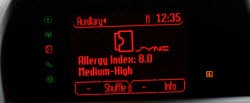
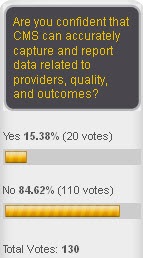

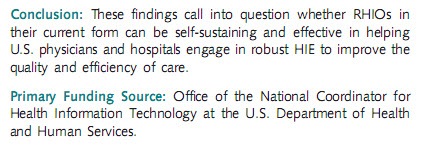

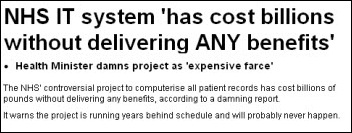



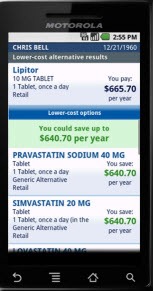





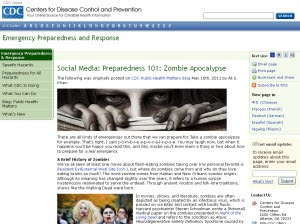








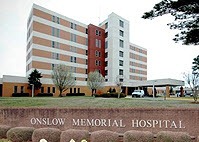




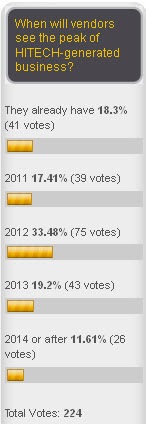
















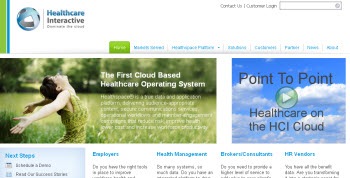
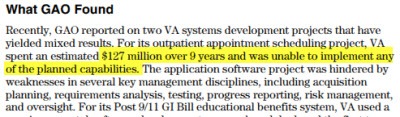

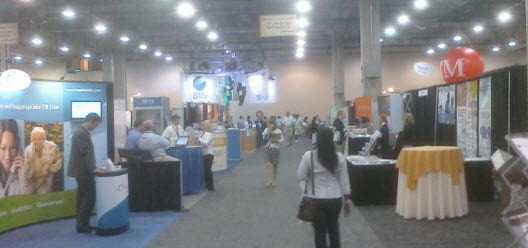




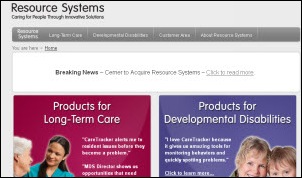










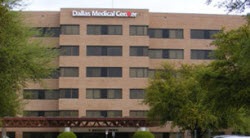











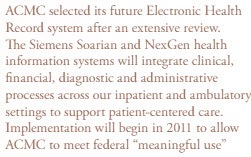



























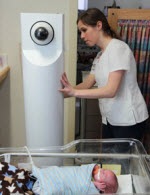





![4-28-2011 9-25-09 AM_thumb[1]](http://histalk2.com/wp-content/uploads/2011/04/4-28-2011-9-25-09-AM_thumb1.jpg "4-28-2011 9-25-09 AM_thumb[1]")


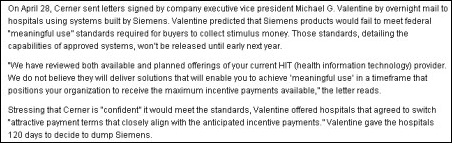
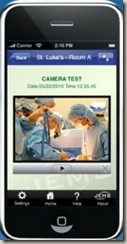


![4-28-2011 1-53-30 PM_thumb[1]](http://histalk2.com/wp-content/uploads/2011/04/4-28-2011-1-53-30-PM_thumb1.jpg "4-28-2011 1-53-30 PM_thumb[1]")
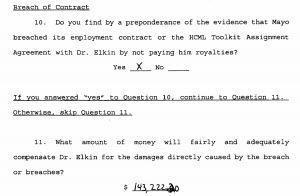
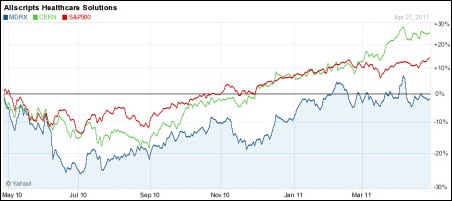
![4-28-2011 4-20-35 PM_thumb[1]](http://histalk2.com/wp-content/uploads/2011/04/4-28-2011-4-20-35-PM_thumb1.jpg "4-28-2011 4-20-35 PM_thumb[1]")


![4-28-2011 4-15-39 PM_thumb[1]](http://histalk2.com/wp-content/uploads/2011/04/4-28-2011-4-15-39-PM_thumb1.jpg "4-28-2011 4-15-39 PM_thumb[1]")

![4-28-2011 4-18-12 PM_thumb[1]](http://histalk2.com/wp-content/uploads/2011/04/4-28-2011-4-18-12-PM_thumb1.jpg "4-28-2011 4-18-12 PM_thumb[1]")






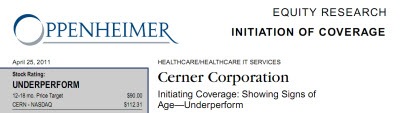















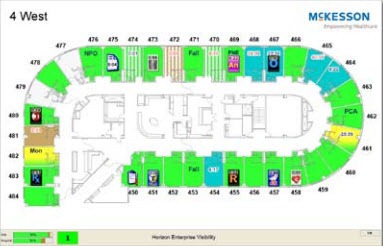

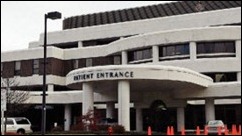


This debate came up years ago, at least inside my head, with "digitize" versus "digitalize." I reserve the latter to…