Recent Articles:

EPtalk by Dr. Jayne 12/18/25

December 18, 2025 Dr. Jayne No Comments

I interact with medical students and residents from different institutions. I’ve learned that the education that they receive about AI and its role in healthcare is highly variable.

The American Medical Association is taking a run at addressing this problem. I’m glad to see someone calling it out, but unfortunately, AI tools are already deeply ingrained in user workflows. Like anything in life, it’s difficult to undo bad habits, especially when they are perceived to create value. 

A resolution was introduced at the AMA Interim Meeting to create a policy that supports the development of “model AI learning objectives and curricular toolkits.” These would be aligned not only with AMA policies, but also the principles of the Association of American Medical Colleges. The AMA also plans to work with medical organizations to identify AI literacy elements, support CME offerings on the topic, and advocate for funding and other resources to promote AI training initiatives.

From Jimmy the Greek: “Re: the holiday gift that keeps on giving. My employer just dropped its new in-office requirements for those who live within a certain radius of one of our locations – four days per week, eight hours per day in the same office. People leaders must be on site for at least one week per month, meaning that our boss will travel 12 hours to the mother ship. It’s going to be a huge waste of money. They are trying to sell it by promising contests and celebrations. It also appears that part of their ‘enhanced office experience’ includes setting the paper towel dispensers in the restrooms to give you about three inches of paper towel per wave with an eight-second timeout. How about letting me enhance my workday by allowing me to effectively wash and dry my hands during cold and flu season?”

I theorize that this organization is trying to lose people through attrition by tightening its control over work locations. I’ve seen companies use this strategy when they’re trying to unload late-career remote employees who don’t want to do the travel and who are likely to be higher on the pay scale than others.

The talk of expanded benefits to being in the office seems like a standard corporate attempt to justify the imposition of a policy that doesn’t make sense for everyone. I’ve worked in-person, hybrid, and fully remote. All of them have pros and cons depending on how the company is structured. For teams that work closely together, physical proximity can be an advantage. Making someone go to an office four days a week when none of their team members work there is just silly, as is policing the restroom supplies.

A colleague clued me in to a New York Times article about a writer who tried to spend 48 hours without using any AI technologies. He was surprised at the breadth of AI’s penetration into daily activities, including weather forecasting, environmental monitoring, and supply chain management. It must be noted that the definition of AI used in the experiment included both generative technologies and machine learning.

In addition to forgoing social media, the author also avoided podcasts (due to the potential for AI editing) and most news outlets as well as email services. The article jumped the shark a bit, however, when it discussed not using electricity or municipal water sources because they use AI demand prediction or monitoring. The author instead planned to drink collected rainwater.

Other out-of-bounds services included municipal trash service, because it uses robotic sorting machines and machine learning that streamlines collection routes. Cars were out, as were many modes of public transportation.

I chuckled at his description of trying to get to a meeting using a bicycle and a paper map, then foraging a meal in Central Park to avoid the influence of AI on the food chain. He also reverted to a landline telephone for communications and typed the article on a manual typewriter before discovering that the ribbon was dry and switching to pencil and paper.

The author admits that early on in his experiment, he ranked tools and services from 1 to 10 to represent how much AI was present. He then went forward with using low-ranked tools. I think we can all agree that asking ChatGPT to create random graphics for entertainment is different from using a municipal trash service, but the space in between is grounds for conversation about the impact of AI on daily life.

image

I don’t follow as much global news as I would like, so I was delayed in learning that Australia has instituted a social media ban for children under age 16. The effort is hailed as a way of putting control in the hands of families rather than with social media tech companies, although as expected, young people are trying to figure out how to get around the ban.

Social media platforms can be fined $30 million if they don’t remove the accounts of children. They are also required to describe how they implemented the restriction. Australia’s ESafety Commissioner will report publicly how well things are working before the end of the month.

Regulators know that savvy youth will use VPNs to make it appear that they are outside of Australia. However, one of them noted that the platforms have the power to identify those who skirt the rules by analyzing their posts.

I ran across another article that addresses the under-16 point of view. It featured comments from a teen who lives in the Outback, who worries about how he will stay connected with his friends who live far away.

I would hazard a guess that young people who are smart enough to set up international VPNs are also smart enough to solve the problem by embracing older technology with a twist. Radio was used in the Outback for years as a way for students to attend school, and amateur radio has become much fancier in the last few years with digital, text and data modes. Where there’s a will, there’s a way. I’ll have to ask my favorite ham radio operators if they are seeing an uptick in activity in the land down under.

The law is being challenged by teens who claim that they have a right to freedom of political communication, so we’ll have to see what happens next.

What do you think of social media bans for young people? Will they result in greater health and safety for that segment of the population? Leave a comment or email me.

Email Dr. Jayne.

Morning Headlines 12/18/25

December 17, 2025 Headlines No Comments

Private practice platform Tebra secures $250M to accelerate AI innovation

Ambulatory health IT vendor Tebra announces $250 million in new financing.

Valerie Health raises $30 million Series A to scale “AI front offices” for physicians

San Francisco-based Valerie Health announces $30 million in Series A funding and the creation of a regional operations hub in Chattanooga, TN.

Vitalis Ventures Announces $15 Million Strategic Funding for Drive Health to Accelerate Avery, the Clinical Workflow AI

Healthcare AI company Drive Health secures $15 million in funding from Vitalis Ventures and Inside Capital Partners.

Healthcare AI News 12/17/25

December 17, 2025 Healthcare AI News 1 Comment

News

image

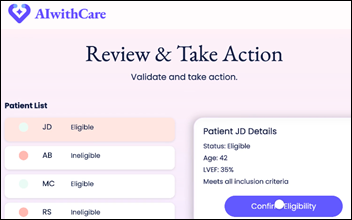
Mass General Brigham spins out AIwithCare, an AI-powered tool that matches patients to clinical trials.

image

In China, a health app from a financial technology company is answering 5 million questions daily. Ant Afu, whose parent company is affiliated with tech firm Alibaba, provides health tracking, goal reminders, smart device integration, AI Clinic follow-ups, report interpretation, and a connection to 300,000 doctors for online consultations and appointment booking.

NAACP urges an equity-first approach to designing and deploying healthcare AI to prevent widening racial and socioeconomic disparities.

image

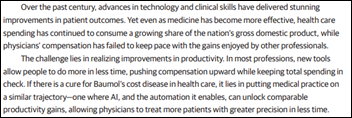
Scott Gottlieb, MD writes in JAMA Health Forum that AI has not yet lifted healthcare productivity because clinical work remains labor-intensive and is judged by outcomes, not output. He argues that AI will raise productivity by taking over cognitive and physical tasks, allowing physicians to focus on judgment-driven care. He also calls for replacing FDA’s static device framework with a system that allows safe, iterative AI updates without full reapproval unless performance fails to meet standards. He adds that adoption remains slow because Medicare’s budget-neutral payment rules require any new technology spending to be offset by cuts to physician reimbursement.

A Brookings report says that AI companion apps pose health risks because they lack guardrails, encourage addictive use, and displace human relationships. It concludes that AI companions should be treated as a public health issue using regulatory tools such as those that govern medical products.


Business

A UK doctor and YouTube celebrity says that Google’s AI search summary incorrectly claimed that his license had been suspended and that he exploited patients, misled insurers, and was disciplined for his online content.


Research

image

Researchers offer guidance for physicians on responding when patients present AI-generated recommendations that conflict with the clinician’s diagnosis or treatment plan.


Other

Many healthcare organizations have set up AI governance committees, but most lack a formal approval process for deploying AI and ommit ethics representation, a survey from Censinet and the CHIME Foundation finds. Two-thirds expect to implement agentic AI within the next year, a risky shift because these systems execute autonomous workflows rather than offering recommendations.

Health systems with under $1 billion in revenue see strong value in AI for revenue cycle management, but cost and budget restrictions slow their adoption. Survey respondents cite the top opportunities as finding missed reimbursement, flagging gaps in clinical documentation, and identifying missed quality indicators.

image

Hospitals and cosmetic surgery centers in South Korea are using inexpensive AI-generated stock “patient” photos to show expected surgical results. The practice is legal, but experts warn that failing to disclose AI use could violate consumer advertising rules. Patients are also bringing AI-enhanced images of themselves to consultations to illustrate desired outcomes, raising  concerns that standardized, often Westernized, features could drive new forms of discrimination. Up to half of female Korean college students have undergone procedures, often provided as graduation gifts, and hospitals promote plastic surgery medical tourism packages to non-residents.


Contacts

Mr. H, Lorre, Jenn, Dr. Jayne.
Get HIStalk updates.
Send news or rumors.
Follow on X, Bluesky, and LinkedIn.
Sponsorship information.
Contact us.

Morning Headlines 12/17/25

December 16, 2025 Headlines No Comments

FDA Eliminates Major Barrier to Using Real-World Evidence in Drug and Device Application Reviews

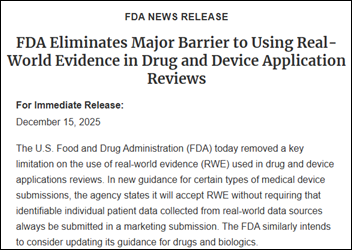
FDA updates its policy to accept de-identified real-world evidence to support drug and device application reviews, allowing the use of previously excluded registries, insurance claims, and EHR data.

GI Partners, TA Associates to launch Netsmart sale process in early 2026, sources say

The private equity owners of Netsmart will reportedly seek a buyer for the company for the second time.

Enjoin Acquires Pediatric Resource Group, Broadening its Expertise in APR-DRG Assurance, Clinical Documentation Integrity & Physician Advisor Solutions to Serve Children’s Hospitals

Clinical documentation improvement company Enjoin acquires Pediatric Resource Group, which offers pediatric clinical documentation integrity and physician advisory services.

Wyden Calls on Health Tech Companies to Add Privacy Features Letting Patients View and Control Access to Their Medical Records

Senator Ron Wyden (D-OR) urges EHR vendors to adopt privacy features that give patients the ability to view and control access to their medical records.

News 12/17/25

December 16, 2025 News 3 Comments

Top News

image

FDA updates its policy to accept de-identified real-world evidence to support drug and device application reviews. This change allows use of registries, insurance claims, and EHR data that were previously excluded because they lacked patient-level confidential information.

FDA says it intends to review the same policy change in its guidance for drug and biologics.


Reader Comments

From Dr.SickandTiredHIT: “Re: Texas versus Epic. Can we all just say the quiet part out loud? A conservative politician, who is running for statewide office and is looking to make a splash, is suing a company led by a liberal in a liberal city. The Texas v. Epic suit is nonsense beyond a politician trying to score points. Why can’t Epic say that?”


Sponsored Events and Resources

None scheduled soon. Contact Lorre to have your resource listed.


Acquisitions, Funding, Business, and Stock

image

Virtual cardiology company Auxira Health raises $7.8 million in seed funding. Auxira offers cardiology practices remote services that include access to advanced practice providers, care coordination, patient engagement, medication management, and system integration. MedStar Health (MD) launched Auxira in May through a collaboration with Abundant Venture Partners.

Healthcare technology, analytics, and services vendor Sentact acquires event and incident management company Performance Health Partners and Vizient’s Patient Safety Organization. Performance Health Partners founder and CEO Heidi Raines will join Sentact as chief strategy officer.

image

Lin Health announces $11 million in Series A funding. The company offers an app-based treatment program for the management of chronic pain.

The private equity owners of Netsmart will reportedly seek a buyer for the company for the second time.

image

Medify Health, which offers remote patient monitoring and chronic care management services for Medicare beneficiaries, shuts down.


Sales

  • WellSpan Health will expand its use of Aidoc’s clinical AI beyond radiology to include its nine hospitals and 250 outpatient facilities.
  • The Tampa General Hospital Cancer Institute (FL) selects Reimagine Care’s virtual cancer care services.
  • Mt. San Rafael Hospital and Clinics (CO) will implement Oracle Health, apparently replacing Medhost in the 25-bed hospital.
  • Berlin, Germany-based Charité, which is Europe’s largest university hospital at 3,000 beds, will implement Epic in a $235 million project.

People

image

Rakshay Jain, MBA (Innovaccer) joins DexCare as chief product officer.


Announcements and Implementations

Tebra incorporates DrFirst’s RxInform prescription notification tool into its EHR+ for private practices.

image

South Gippsland Hospital in Australia implements Altera Digital Health’s Sunrise EHR.

Children’s Minnesota will outsource its revenue cycle management to Ensemble Health Partners.

Manifest MedEx will provide the California Mental Health Services Authority with ADT notifications for people who are being seen by county behavioral health organizations.

Health insurer Fallon Community Health plan sues Innovaccer, alleging that the company’s software was worthless, didn’t improve risk adjustment revenue as promised, and was sold under fraudulent misrepresentation.


Government and Politics

PenRad Technologies will pay $530,000 to settle federal allegations that it violated the False Claims Act by inadvertently causing providers to bill Medicare and MassHealth for medically unnecessary breast cancer screenings due to an overlooked software setting. Intelerad Medical Systems acquired PenRad in 2022.

image

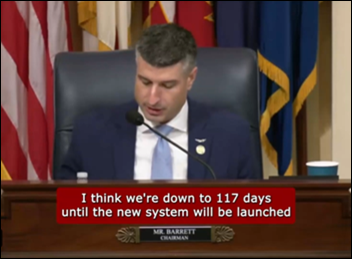
Members of the House Veterans’ Affairs Technology Modernization Subcommittee voice concern over the soaring cost of the VA’s Oracle Health–based EHR Modernization program. The estimate has grown from an initial $10 billion to $37 billion, and the Institute for Defense Analyses projects at least $50 billion. Thirteen facilities are slated to go live next year, with full deployment expected by 2031. Subcommittee chair Tom Barrett (R-MI), a US Army veteran, has a personal stake in the rollout because four Michigan facilities that he uses for care will be the first to adopt the system since the 2023 pause.

An ASTP blog post outlines the similarities and differences between TEFCA and CMS-Aligned Networks.


Other

image

University of California researchers find that automated outreach to patients offering help with advance care planning significantly increases the number of patients who complete ACP documentation.


Sponsor Updates

  • CloudWave names Maria Graham business development manager.
  • WellSky and UMed partner to expand home-based patient access to national clinical research registries.
  • Wolters Kluwer Health releases a new report titled “Future Forecast: The Growing Impact of PAs in the Healthcare System.”
  • Clinical Architecture releases a new episode of “The Informonster Podcast” titled “Inside Informatics with John D’Amore.”
  • Linus Health names Julie Wood, MD, MPH senior medical director, clinician engagement.

Blog Posts


Contacts

Mr. H, Lorre, Jenn, Dr. Jayne.
Get HIStalk updates.
Send news or rumors.
Follow on X, Bluesky, and LinkedIn.
Sponsorship information.
Contact us.

Morning Headlines 12/16/25

December 15, 2025 Headlines No Comments

Auxira Health Raises $7.8M in Seed Funding

Cardiology practice extension company Auxira Health raises $7.8 million in seed funding.

Sentact Acquires Performance Health Partners and Vizient Patient Safety Organization to Drive Patient Safety At-Scale

Sentact acquires event and incident management company Performance Health Partners and Vizient’s Patient Safety Organization.

Medical Software Company Agrees to Pay $500,000 to Resolve Allegations of Causing Medically Unnecessary Breast Cancer Screening Claims

PenRad Technologies will pay $530,000 to settle federal allegations that it violated the False Claims Act by inadvertently causing providers to bill Medicare and MassHealth for medically unnecessary breast cancer screenings.

Curbside Consult with Dr. Jayne 12/15/25

December 15, 2025 Dr. Jayne 3 Comments

A friend reached out this weekend to ask my opinion about the risks of plugging medical information into ChatGPT and other publicly available AI tools. She wanted to know if I agree with a recent New York Times article about it.

My first concern is with the accuracy of the medical information that is being fed in. My own records have contained a variety of misinformation in the last several years, including documented findings from exams that didn’t occur, incorrect diagnoses, and at least one document that was scanned into the wrong chart.

Smaller errors also occurred, such as inaccuracies in dictation / transcription that weren’t caught in editing. Although they don’t materially change the content of the record, I wouldn’t want them taken out of context.

The article starts with a scenario where a patient receives abnormal test results. She is “too scared to wait to talk to her doctor,” so she pastes the lab report into ChatGPT. It tells her that she might have a pituitary tumor.

This is a prime example of the unintended consequences of giving patients access to their lab results before the ordering physician reviews them. It’s the law, and patients have a right to their information, but it can be harmful to patients in some circumstances. I’m glad to see care delivery organizations giving patients the choice of receiving their results before or after they are interpreted by the care team.

Another scenario involved a patient uploading a half-decade of medical records and asking questions about his current care plan. ChatGPT recommended that the patient ask his physician for a cardiac catheterization.

The procedure was performed and the patient did have a significant blockage. However, it’s difficult to know what the outcome might have been had the original care plan been followed. The write-up of the scenario didn’t include any discussion of how things went when the patient pushed for a procedure, or if other ramifications, such as insurance issues, resulted from the pursuit of a higher level of intervention.

Most of the patients I see don’t fully understand HIPAA. They think that any kind of medical information is somehow magically protected. They don’t know what a covered entity is in the role of protecting information. They give away tons of personal health information daily through fitness trackers and other apps without knowing how that information is used or where it goes.

I personally wouldn’t want to give my entire record to a third party by uploading it to an AI tool. I don’t know how the tool handles de-identification and I’m not about to spend hours reading a detailed Terms and Conditions or End User Licensing Agreement. Based on the number of people who share their information in this way, it’s clear that many aren’t worried about the risks.

One of the professors who was interviewed for the article noted that patients shouldn’t assume that the AI tool personalizes its output based on their uploaded detailed health information. Patients might not be sophisticated enough to create a prompt that would force the model to use that information specifically, or might not be aware of instructions within the model to handle that kind of information in a certain way.

Assuming that you will receive a response that is tailored specifically to you can be challenging, especially since much of the medical literature looks at how disease processes occur across populations rather than for an individual.

The comments on the article are interesting. One cautioned users to consider using multiple models, asking the same questions, and having the models evaluate each other in order to make sure the output is valid. I can’t see the average patient spending the time to do that.

Others talked about how they’ve used ChatGPT to drive their own care. One commenter mentioned that she also used it to research care for her pet and to make adjustments to the regimen prescribed by her veterinarian.

Concerns were also expressed about the possibility for bias and advertisements to creep in, especially with the discussion of particular medications that are still under patent.

Several readers shared stories about AI tools giving wildly inappropriate care recommendations that could have been harmful if patients hadn’t done additional research on the suggestions. One specifically mentioned the AI’s “mellow, authoritative reassurance of the answers, in a tone not different from talking to a trusted and smart doctor friend” despite being “flat wrong on several points.”

Another reader mentioned that tools like ChatGPT  formulate their answers from materials that they find online. Unless you specifically ask for citations, it’s difficult to know whether the information is coming from a medical journal or an association dedicated to patients with a specific condition. Or, was simply made up.

Readers also called for certification of models that are being used for medical advice. One noted, “My doctor had to get a degree and be licensed. If he messes up bad enough, he can lose that license. There should be procedures for evaluating the quality of chatbot medical advice and for providing accountability for mistakes. Medical conversations with them aren’t like chatting with your neighbor about your problems.”

I hadn’t thought about it that way. It’s a useful idea that I may use when talking to patients who have been using the tools. The information they receive may or may not be better than what they would get over the fence from a neighbor, but it’s difficult to know.

One comment noted that since physicians are using these tools to do their jobs, it’s only fair that the patients have access as well. A follow-up comment noted that the writer “walked in on new residents Googling a patient’s symptoms.”

It makes one wonder how these tools will impact graduate medical education. Is the next generation of physicians building their internal knowledge and recall skills in the same way as previous generations? If they’re not, it’s going to be a rude shock the first time they have to live through a significant downtime or outage event.

It will also be interesting to see board exam pass rates change for physicians who trained in the post-AI era compared to those of us who didn’t have access to those tools.

What do you think about patients feeding their medical information into LLMs? Providers, under what circumstances would you recommend it? Leave a comment or email me.

Email Dr. Jayne.


Morning Headlines 12/15/25

December 14, 2025 Headlines No Comments

VA Electronic Health Record Modernization: Critical Actions Needed to Support Accelerated System Deployments

A GAO report says that the VA must address several previously raised issues to support its accelerated Oracle Health rollout.

Mass General Brigham Announces New AI Company to Accelerate Clinical Trial Screening and Patient Recruitment

Mass General Brigham spins out AIwithCare, an AI-powered tool that matches patients to clinical trials.

Ritten Announces $35M Series B Investment Led by Five Elms Capital

Behavioral health IT vendor Ritten raises $35 million in Series B funding, bringing its total raised to $52.5 million.

Monday Morning Update 12/15/25

December 14, 2025 News 2 Comments

Top News

image

A GAO report says that the VA must address several previously raised issues to support its accelerated Oracle Health rollout. Among them:

  • Produce an updated cost estimate and schedule.
  • Implement change management activities and conduct an independent assessment of the EHR’s user suitability and effectiveness.
  • Document a change management strategy to drive user adoption.
  • Develop change readiness scores before future deployments.
  • Assess whether enhanced VA and Oracle Health training has been effective.
  • Establish user satisfaction goals.
  • Monitor trouble ticket resolution within established goals.
  • Postpone deployment in new locations if critical test issues have not been resolved.

Reader Comments

From Jacinto: “Re: Dr. Craig Joseph’s comments about packaging AI as cuddly robots to improve behavior change. This is blazingly insightful. I can think of quite a few examples where words on a screen or delivered by a faceless voice would be more effective.” His company blog post made me think about the patient care value of anthropomorphized AI speech that is delivered by a comforting, universally understood form factor (which also happens to be inexpensive). As he says, “People don’t struggle with anxiety or diabetes or rehab exercises because they are missing the right paragraph of text.” Potential uses that I can see:

  • Deploy virtual avatar-powered staff extenders that engage with patients instead of being used in the factory robot model of making deliveries and lifting. This would be especially powerful if connected to humans who could seamlessly take over the conversation or look at real-time video as needed. Such use would be beneficial in any care setting, but especially in staff-stretched skilled nursing facilities.
  • Use a human-like robot to coach exercise or rehabilitation routines, with real-time personality tuning to adapt to whatever style works best for each patient (drill sergeant versus cheerleader).
  • Monitor and coach hospital-at-home patients, providing nudges and a sense that caregivers remain involved and invested in their outcomes.
  • Reassure children during pre-op coaching, MRI prep, and medication / injection administration and teaching.
  • Support patients who are experiencing agitation, dementia, or withdrawal symptoms and provide ongoing reorientation about place and situation.
  • Perform real-time language translation for informed consent, discharge instructions, and staff communications.
  • Conduct pre-rounding conversations that AI then turns into a clinician-ready daily narrative.
  • Allow distant family members to deliver verbal patient support via the comforting form factor.
  • This is way out there, but empathetic, carefully guardrailed robots could be used to reduce clinician burnout by debriefing them about the emotional weight of caring for distressed or critically ill patients or delivering bad news to families. Clinicians may lack social support or may avoid sharing concerns with peers. Studies show that people are often more candid with technology.

HIStalk Announcements and Requests

image

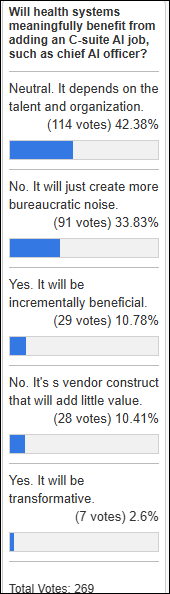
Poll respondents are still trying to figure out if having a C-level AI advocate provides clear benefit.

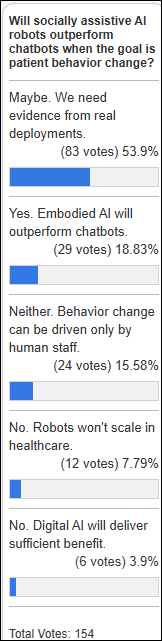
New poll to your right or here, from the discussion above: Will socially assistive AI robots outperform chatbots when the goal is patient behavior change? I expect a lot of respondents to punt with the “need more evidence” option, but let’s see votes and comments from those who have firmer opinions.


image

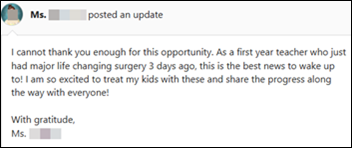
A generation donation from Bill, amplified by matching funds from outside sources and my Anonymous Vendor Executive, fully funded these Donors Choose teacher grant requests:

  • Cricut tools for STEM projects for Ms. N’s middle school class in Paterson, NJ.
  • Compassion corner furnishings for Ms. H’s elementary school science academy class in Youngstown, OH.
  • Science supply cabinets for Mr. T’s middle school class in Paterson, NJ.
  • STEM design supplies for Ms. P’s elementary school class in North Miami Beach, FL.
  • A microscope and STEM activities kits for Ms. Y’s elementary school class in Van Nuys, CA.
  • A document camera for Ms. R’s elementary school science academy class in Austintown, OH.
  • Headphones for Ms. S’s middle school class in High Point, NC.
  • Magnetic stick building blocks for Ms. O’s elementary school class in Hayward, CA.
  • Flexible seating and STEM kits for Dr. H’s elementary school class in Forest Park, GA.
  • Science club supplies for Ms. S’s middle school in Utica, NY.
  • Science and engineering expo supplies for Ms. S’s elementary school class in Lorton, VA.

Sponsored Events and Resources

None scheduled soon. Contact Lorre to have your resource listed.


Acquisitions, Funding, Business, and Stock

image

A report by The Information says that new fundraising by OpenEvidence values the company at $12 billion.

Mass General Brigham spins out AIwithCare, an AI-powered tool that matches patients to clinical trials.

image

A new reach for private equity tentacles shows up in software for volunteer fire departments. PE-backed ESO Solutions bought the $795-per-year system that is used by Norfolk VFD, shut it down, and offered a $5,000 replacement. Norfolk found a cheaper option, but ESO then acquired that vendor, too. ESO now serves 20,000 of the nation’s 30,000 fire departments, and its two largest rivals are also PE-backed. ESO’s majority owner is Vista Equity Partners, which also holds positions in Greenway Health, SimplePractice, and TigerConnect. Its president and CEO is Erick Beck, DO, MPH, who left his president / COO role at University Hospitals to join ESO in June 2022.


Announcements and Implementations

Investment banker and former FDA Commissioner Scott Gottlieb, MD says in a JAMA Health Forum article that AI has not boosted healthcare productivity because the industry depends on labor-intensive work that is better measured by outcomes than output. He predicts that AI will raise productivity by taking over some cognitive and physical tasks, which will free physicians to focus on work that requires human judgment. He argues that FDA should replace its static device framework with one that permits safe, iterative AI updates without full reapproval unless performance standards are violated. He adds that adoption lags because Medicare does not pay for technology directly and must remain budget-neutral, which forces any new payments to be offset by cuts to physician reimbursement.

Private equity firm Geneva PE launches the development and funding of NXXIM, an AI-powered enterprise medical imaging platform. The announcement provides few details, such as naming the “world-class leadership team of industry veterans” who are involved.


Other

A San Francisco woman gives birth in the back seat of a Waymo driverless car that she had hailed for a ride to the hospital. The car noticed “unusual activity” and called emergency services en route.

Interesting: HIMSS members who participate in any of its volunteer committees, task forces, and workgroups are prohibited from recording the content (that’s reserved for HIMSS to package as its own content) and can’t use any AI devices or software to record or transcribe the meeting.

Not health tech related (yet), but fascinating. Google upgrades Translate so that users can hear real-time translations in their earbuds. It also translates the user’s speech into the other person’s language. The Gemini AI enhancement auto-detects the languages being spoken, filters ambient noise, and preserves the original speaker’s intonation and pacing. I can’t imagine traveling internationally without Translate and Maps on my IPhone’s homepage.


Sponsor Updates

  • Nordic releases a new “Designing for Health” podcast episode featuring Matthew Trowbridge, MD.
  • Optimum Healthcare IT publishes a new white paper titled “Strategic Transformation in the AI Era: Turning Innovation into Impact.”
  • The “Lead the Team” podcast features RLDatix North America CEO Dan Michelson in an episode titled “The CEO Who Saw What Success Hid.”
  • Switchboard Health offers a new case study titled “Large Health System Cuts Provider Message Touches by 42% with Switchboard, MD.”

Blog Posts


Contacts

Mr. H, Lorre, Jenn, Dr. Jayne.
Get HIStalk updates.
Send news or rumors.
Follow on X, Bluesky, and LinkedIn.
Sponsorship information.
Contact us.

Morning Headlines 12/12/25

December 11, 2025 Headlines 5 Comments

Texas Files Antitrust Suit Against Epic Systems Over Health Data

Texas Attorney General Ken Paxton files an antitrust and consumer protection petition alleging that Epic maintains monopoly power and that the company misleads Texas children’s hospitals about its parental access rules.

HHS health IT chief hints at a new approach to EHR certification

Assistant Secretary for Technology Policy and National Coordinator Thomas Keane, MD, MBA tells STAT he’s hoping his office will soon do away with 34 certification criteria for EHRs and modify seven, with an eye to regulating EHR interoperability APIs in the coming months.

The State of Enterprise AI

OpenAI’s “State of Enterprise AI” report names healthcare as one of the fastest-growing business sectors for ChatGPT use.

News 12/12/25

December 11, 2025 News 11 Comments

Top News

image

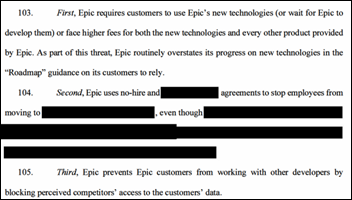
Texas Attorney General Ken Paxton files an antitrust and consumer protection petition alleging that Epic maintains monopoly power. It says that Epic controls more than 90% of US patient records, locks in hospitals through extreme switching costs, restricts competitor access to data, and imposes no-hire restrictions on employees. The petition also argues that Epic delays or limits access to medical records for providers and patients who are outside Epic’s system. 

The lawsuit further accuses Epic of misleading Texas children’s hospitals about its parental access rules, which is likely the key issue of the lawsuit.

The lawsuit seeks injunctive relief to restore competitive conditions, civil fines, and court costs.

An Epic spokesperson provided this company response:

The action taken by Texas is flawed and misguided by its failure to understand both Epic’s business model and position in the market and the enormous contributions our company has made to our nation’s healthcare system illustrated by products like MyChart —software that tens of millions of Americans depend on every day. Every month, we improve quality of care by helping providers see a more comprehensive picture of their patient through over 725 million record exchanges—more than any other electronic health records vendor—and over half of these are with non-Epic systems. Health systems using Epic shared information with almost 1,000 patient-facing apps 2 billion times in the past year. Epic does not determine parental access to children’s medical records. Decisions about parental access to children’s medical records are made by doctors and health systems, not by Epic.


Reader Comments

image

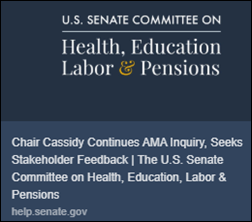
From Dr. Herzenstube: “Re: HELP committee’s inquiry into the American Medical Association. It sounds as if there are some very specific alleged practices around CPT codes that they are investigating.” Sen. Bill Cassidy, MD (R-LA) seeks information from organizations that have licensed CPT about their price structure, AMA’s willingness to negotiate contract provisions, and any other areas outside CPT in which AMA collects royalties.


Sponsored Events and Resources

None scheduled soon. Contact Lorre to have your resource listed.


Acquisitions, Funding, Business, and Stock

Oracle announces Q2 results: revenue up 14%, EPS $2.10 versus $1.10, exceeding earnings expectations but falling short on revenue. ORCL shares fell 11% on Thursday over investor concern about rising AI infrastructure costs. Co-CEO Mike Sicilia said in the earnings call that 274 customers are live on Oracle Health’s clinical AI agent and that its new AI-based ambulatory EHR is generally available.

image

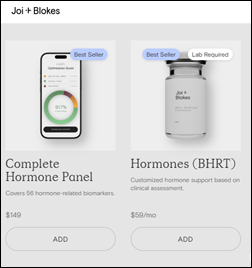
Nashville-based virtual clinic Joi + Blokes acquires women’s-health startup HerMD, creating one of the largest virtual care platforms for menopause, sexual health, and hormone therapy. HerMD previously raised $40 million in venture capital, then closed its five physical locations to focus on virtual care.


Sales

  • Val Verde Regional Medical Center will implement Commure Ambient AI.
  • Barking, Havering and Redbridge University Hospitals NHS Trust selects UpToDate Enterprise Edition from Wolters Kluwer Health.

People

image

Healthmonix hires Bill Marella, MS, MBA (HealthShare Exchange) as COO.


Announcements and Implementations

OpenAI’s “State of Enterprise AI” report names healthcare as one of the fastest-growing business sectors for ChatGPT use, with eightfold growth in  customers in the past 12 months.

image

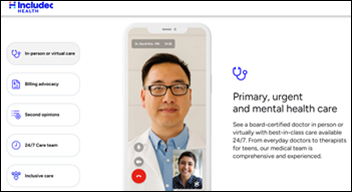
Included Health expands its care navigation platform with an intelligent AI assistant that uses personalized medical, claims, and benefits data to guide employer-based members. It also nudges them toward preventive screenings and better benefits use.

A Microsoft review of 37 million Copilot conversations finds that it is most often used to answer health questions.

A new KLAS report on IT planning and assessment services finds that Chartis, Impact Advisors, Healthlink Advisors, Nordic, Deloitte, and Optimum Healthcare IT are the firms that are most frequently considered and selected.


Government and Politics

More than 100 provider groups and medical societies ask HHS to withdraw its proposed cybersecurity rule that would expand HIPAA requirements, and instead collaborate with industry to develop practical, actionable, and less-burdensome cybersecurity standards.The 393-page Notice of Proposed Rulemaking would require providers, business associates, health plans, and clearinghouses to implement specific safeguards, perform annual compliance audits, document deeper analysis of technology assets, and maintain written documentation. Mandatory technical controls include encryption of EPHI at rest, multi-factor authentication, vulnerability scanning, and network segmentation.


Other

image

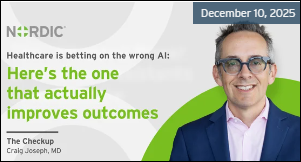
Nordic Chief Medical Officer Craig Joseph, MD says healthcare is betting on the wrong AI horse in embracing purely digital chatbots, which have been found to be less effective in improving outcomes than packaging the same LLM as an inexpensive socially-assistive robot. He says that digital health apps aren’t good at improving behavior change and engagement because they can’t provide the emotional experience and physical presence that engages the brain. Excerpts:

Behavior change is not a content-delivery problem; it is an emotional-experience problem. People don’t struggle with anxiety or diabetes or rehab exercises because they are missing the right paragraph of text. They struggle because doing hard things alone is deeply, intrinsically difficult … humans need accountability, presence, encouragement, and social cues to persist when something feels uncomfortable. Motivation is not downloaded; it’s co-created … The truth is that healthcare already understands the importance of presence. Physicians know that the 30 seconds spent sitting instead of standing changes the perceived quality of a visit. Nurses know that touch conveys trust in ways chart messages never will. Behavioral health clinicians know that therapy is not powerful because of what is said, but because of who is saying it, how they are saying it, and where the interaction occurs. Embodied AI doesn’t replace this relational wisdom. It simply extends it into new settings where humans cannot always be.

Eli Lilly says that a clinical trial of its next-generation, three-hormone GLP-1 drug for obesity and diabetes shows that participants with obesity and arthritis lost an average of 29% of their body weight, about 71 pounds, which exceeds the results reported for Zepbound and Novo Nordisk’s Wegovy. Participants also saw major improvements in their arthritis symptoms. Demand for Lilly’s GLP-1 drugs has driven the company’s valuation to $1 trillion.

image

The founder of online mental health platform BetterLyf is arrested after he allegedly started a fire at a California winery, threw a wine bottle at employees, intentionally crashed his Tesla into two cars while fleeing, and then locked himself in his car and refused to surrender until police officers pepper sprayed him. Vikram Beri was charged with assault with a deadly weapon and resisting arrest.


Sponsor Updates

  • CereCore offers a new e-book titled “The Buyer’s Guide to IT Managed Services: Your Guide to Smarter Healthcare IT Decisions.”
  • Findhelp and AIDA Healthcare announce an integration partnership to transform post-acute care referrals.
  • Optimum Healthcare IT publishes a white paper titled “Strategic Transformation in the AI Era: Turning Innovation into Impact.”
  • Goshen Health (IN) goes live on Meditech’s redesigned Expanse Pathology software.
  • Inbox Health partners with Encoda to help physician practices capture revenue.
  • Epic adds WellSky CarePort Community Referral Network solution to its Toolbox in the Community Resource Network category.
  • Judi Health releases a new episode of its “The Astonishing Healthcare Podcast” titled “Health Benefits that Work for Everyone: Aligning Incentives & Focusing on Members’ Needs, and with Susana Villegas Spillman.”
  • RxLogic’s new Formulary & Benefit Connect capability uses eligibility and formulary technology from Surescripts.
  • The American Board of Medical Specialties Portfolio Program will use Wolters Kluwer Health’s Ovid Synthesis to streamline the continuing certification credit process and fast-track patient improvement initiatives.
  • WellSky’s CarePort Community Referral Network solution is now part of the Epic Toolbox category for Community Resource Network.

Blog Posts


Contacts

Mr. H, Lorre, Jenn, Dr. Jayne.
Get HIStalk updates.
Send news or rumors.
Follow on X, Bluesky, and LinkedIn.
Sponsorship information.
Contact us.

EPtalk by Dr. Jayne 12/11/25

December 11, 2025 Dr. Jayne 1 Comment

The Association of American Medical Colleges has released new data showing that medical school enrollment has hit an all-time high. Total enrollment for 2025 is 100,723 students. It’s also the largest first-year class in history at 23,440 students.

A few stats stood out to me:

  • Incoming students range in age from 18 to 60.
  • The students logged 16.8 million hours of community service before applying, which averages 717 hours per person.
  • The cohort includes 163 military veterans.

Medical training can be a long, winding road, so congratulations to the entering class. For those on a semester schedule, go crush those finals.

I also saw an article about CMS contracting with Clear for identity verification as part of its quest to “kill the clipboard.” Eliminating manual and paper-based processes is a worthy goal, although technology alone never solves the problem. In my experience with process improvement work, the real challenge lies in understanding operations, culture, and history. Those often determine why a workflow looks the way it does.

My mammography center is a perfect example. It finally retired its wonky and duplicative paper questionnaire this year. I briefly celebrated not being handed a clipboard, but then was asked all the same questions verbally, regardless of whether or not the information was already in the chart.

The technician was rushed and misread my chart more than once. That led to a longer discussion than I cared to have while standing in a gown with half my body exposed.

I noted on my Press Ganey survey that these questions should be asked before patients disrobe. Whether anyone reads those comments is another story. Progress in healthcare tends to arrive as two steps forward, one step back.

image

As we coast toward year’s end, I’m watching healthcare IT projects nearly grind to a halt as team members take time off. Some absences were planned well in advance, especially for parents whose children are out of school, so those projects are only mildly affected. Others are chaotic as people realize, often too late, that their PTO is “use it or lose it.” The result is patchy staffing and sudden bottlenecks across teams.

I have worked under nearly every time-off model imaginable, from “unlimited” time away, subject to manager approval, to miserly accrual programs that make it hard for people to take more than a day or two off early in the year. Some employers allow a modest PTO bank before triggering “use it or lose it” rules. Others shut off rollover entirely. As a manager, I’ve always tried to explain the details to my team, including subtleties for remote employees who live in different states. I encourage people to spread their time off throughout the year unless they have a specific reason to save it.

Not everyone tracks their PTO or understands the fine print, and that can lead to scrambling at the end depending on organizational policies. I’m working on a multi-entity project in which time-off rules vary widely within the same metropolitan area. The most flexible arrangement allows employees four weeks of paid time off per year. Employees are required to take a minimum of two weeks away from the office, but can choose to have the other two paid out as wages. For those who don’t feel they need time away from work, that might be a good option.

A nearby organization uses what I call a “use it or else” policy. Employees cannot bank their PTO and cannot simply forfeit it. They must take all remaining days before December 31, even if doing so leaves co-workers hanging. Leadership announced the change over the summer, but many employees did not grasp the consequences, which is creating December chaos. Managers have been tasked to hold individual conversations to make sure everyone burns through their time. The official explanation is to avoid claims that workers aren’t allowed to use their time off. I’m sure there’s more to the story, but I don’t think the policy is working out as planned.

This year, I’m also seeing more people taking time off in December for health-related visits because they have already met their insurance deductibles. Hip and knee replacements seem to dominate. When I asked an orthopedic friend about it, she said her practice is running at full throttle to accommodate demand. The bigger problem, she said, is physical therapy. Local PT programs cannot keep pace with procedure volume, so her staff spends an extraordinary amount of time coordinating care to ensure patients are seen immediately after surgery. I don’t think that the folks who make healthcare policy and decide on our country’s patchwork of misaligned incentives understand these patient realities.

What is the atmosphere like in your workplace this holiday season? Are you racing to complete projects or taking a leisurely stroll towards the new year? Is it a ghost town due to last-minute PTO use? Leave a comment or email me.

Email Dr. Jayne.

Morning Headlines 12/11/25

December 10, 2025 Headlines No Comments

Cincinnati startup HerMD secures exit months after co-founders buy back business

Virtual health and wellness clinic Joi + Blokes acquires HerMD, expanding its virtual care reach to all 50 states.

MMH Announces Strategic Revenue Cycle Partnership to Support Future Growth and Strengthen Team Member Network

Margaret Mary Health (IN) will outsource its revenue cycle operations to Revology, laying off 55 employees in the process.

Competition Bureau obtains a court order to advance investigation into Well Health’s acquisition of Healwell

Canada’s Competition Bureau obtains a court order allowing it to move forward with its investigation of Well Health’s acquisition of Healwell, and if that acquisition has stifled competition within the AI transcription market.

Healthcare AI News 12/10/25

December 10, 2025 Healthcare AI News No Comments

News

image

Microsoft Research releases GigaTIME, an open-source, multi-modal AI system that researchers used to convert pathology slides into virtual images, then analyze them against patient data from Providence. The resulting virtual population allows researchers to study the associations between cell states and key biomarkers.

Nvidia CEO Jensen Huang warns that China can complete large construction projects, such as AI data centers, in a fraction of the time that is needed in the US. He added, “They can build a hospital in a weekend.”


Business

Meditation and sleep app vendor Headspace, which is repositioning itself as a healthcare company, is shifting from consumer subscriptions to employer and health-plan distribution. CEO Tom Pickett is pushing hard into AI with Ebb, a chatbot that is intended for everyday emotional regulation, after he moved the company’s full-time therapists into part-time and contractor positions. Competition with Calm is intensifying as downloads fall, but Headspace says that enterprise and payer channels offer greater scale. The company reports $200 million in revenue and EBITDA profitability. Headspace acquired health coaching company Ginger four years ago in a deal that valued the combined company at $3 billion.


Research

A charity study in England and Wales finds that 40% of teens who have been affected by youth violence have used AI chatbots for mental health support. They describe chatbots as being more private, non-judgmental, and accessible than traditional services that are bogged down by long waiting lists and reports of providers who show little empathy compared to chatbots. The teens also tout 24×7 availability and the ability of chatbots to learn and then mimic their conversational style.

A study finds that 28% of UK doctors are using AI tools to summarize encounters, help with diagnosis, and perform routine administrative tasks. A physician researcher at Nuffield Trust says that the government’s hopes that AI will transform the NHS are not reflected in the “Wild West” rollout of unregulated tools. The trust’s survey also found that doctors use their time savings from AI to self-care and rest rather than to see more patients.


Other

A developer discovers a hidden link in ChatGPT to Apple Health, suggesting that the companies are testing integration between the apps.

A class action lawsuit alleges that Sharp HealthCare deployed Abridge’s ambient documentation solution in April 2025 without obtaining all-party consent as required by a California wiretapping law. The plaintiffs argue that Sharp committed electronic eavesdropping, violated the state’s Confidentiality of Medical Information Act by sending patient information to the vendor’s cloud, falsely documented that patients had consented to AI’s use, and told patients that they could not force the vendor to delete their information on request.


Contacts

Mr. H, Lorre, Jenn, Dr. Jayne.

Get HIStalk updates.
Send news or rumors.
Follow on X, Bluesky, and LinkedIn.
Sponsorship information.
Contact us.

Morning Headlines 12/10/25

December 9, 2025 Headlines No Comments

Spare Tire raises $3M to save healthcare organizations from document downtime

Spare Tire, which offers on-demand access to inpatient historical data for workflow continuity during unplanned EHR downtime, raises $3 million in a Series A funding round.

Seattle startup Casera emerges from PSL to help hospital managers clear bottlenecks with help from AI

Casera launches out of Pioneer Square Labs with $1 million in funding to help hospitals improve patient flow via its case manager digital agent.

AngelEye Health Secures Additional $9 Million to Accelerate Innovation in Neonatal and Pediatric Care

Digital pediatric and neonatal patient and family engagement company AngelEye Health raises $9 million in a Series C funding round.

Text Ads


RECENT COMMENTS

  1. EHRMusing - You make a lot of accurate statements about key factors in the selection process but the comment about…

  2. If your core argument is that systems buying your product just didn't have enough information to choose you, then you…

  3. Re: VA Oversight Gaslighting Look at the very bottom footer of the GAO report detailing Oracle's vaporware feeding-trough gig. It…

Founding Sponsors


Platinum Sponsors


Gold Sponsors


RSS Industry Events

  • An error has occurred, which probably means the feed is down. Try again later.

RSS Webinars

  • An error has occurred, which probably means the feed is down. Try again later.