Home » News » Recent Articles:

News 8/29/12

August 28, 2012 News 7 Comments

Top News

8-28-2012 8-19-03 PM

Johns Hopkins will use a newly received $8.9 million grant to improve coordination in the ICU. Peter Pronovost MD, PhD, who leads the Johns Hopkins Armstrong Institute for Patient Safety and Quality, says he’ll be looking for ways to integrate new technologies into ICUs that he says “look the same as they did 30 years ago.” Part of that effort will be to develop software that allows medical devices to communicate with each other and with the EMR. The money comes from the Gordon and Betty Moore Foundation as part of a 10-year, $500 million Patient Care Program that was announced this week. Gordon Moore is the 83-year-old founder of Intel who in 1965 postulated Moore’s Law, which says that the power of computing circuitry doubles every two years.


Reader Comments

8-28-2012 9-02-27 PM

inga_small From Marketing Gal: “Re: HIMSS. Would you suggest participating in the Exhibitor Spotlight for a product launch?” Vendor readers, feel free to weigh in on whether the Exhibitor Spotlight would be a good way to make a big splash amidst a sea of 1,000 vendors trying to make big splashes. It costs $950 for corporate members.

inga_small From Lost in the Woods” “Re: Patient portals. Do you have any idea how and what vendors charge, especially those for practices?” I think it would make sense to just ask them, but readers, please leave a comment if you can help.

From Former MCK Employee: “Re: Practice Partner Seattle office. Developers and QA are leaving as MCK shifts its focus to the new SaaS application.” Unverified.

8-28-2012 9-04-52 PM

From Crook County Doctor: “Re: U Chicago Medical Center. Several days of Citrix logon misidentification troubles affecting all physicians. The help desk recording warns doctors to beware when logging on to Epic.” Unverified.

From The PACS Designer: “Re: ONC. Wimps out on image sharing. TPD is disappointed and angry that ONC has allowed vendors to intimidate the comment group when it comes to image sharing among practitioners. The overall comments were positive about the subject, but the powerful had the upper hand and made sure that image sharing was excluded from the next phase of Meaningful Use. David Clunie, a highly respected blogger on DICOM, did some sleuthing and points the finger at the Good Enuff participants. I can see why they wouldn’t want the image sharing, as it would reduce the need for more imaging at the next treatment facility and lower their chances to sell more imaging equipment.”


HIStalk Announcements and Requests

Here’s the latest musical production of The American College of Medical Informatimusicology, “Gimme My DaM Data,” featuring HIT notables Ross Martin MD (founder and HIStalkapalooza Elvis tribute artist), Harry Greenspun MD, e-Patient Dave, Todd Park, and “a cast of dozens.”

HIStalk sponsors with executives on Modern Healthcare’s 2012 100 Most Influential People in Healthcare list include Aetna (Mark Bertolini), McKesson (John Hammergren), and MedAssets (John Bardis).

This isn’t a pitch, just a recap. A relative saddled me with selling her 16 GB AT&T iPhone 4 after she upgraded, and it became obvious that messing around with Craigslist and eBay scammers and fools was going to be a big waste of my time. I ran across TriPhonia. Their online form took a few seconds to complete and I got an instant e-mail offer of $175 for my stated condition of “excellent.” They shipped a prepaid Fedex mailer and e-mailed a couple of days later saying it had a few scratches and wasn’t quite “excellent,” but said they’d still offer $158. I accepted, and within about two minutes I had the balance in my Amazon account. Maybe I could have held out for a few extra dollars elsewhere, but it was well worth it to just sell it and move on, plus they guarantee they’ll wipe the phone clean before reselling it. Do your own due diligence (almost all of the similar services have terrible reviews), but it might be worth a look.


Acquisitions, Funding, Business, and Stock

8-28-2012 7-45-10 PM

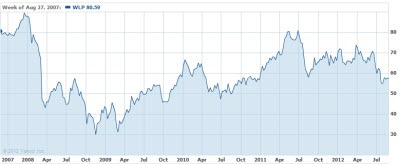
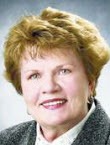
WellPoint Chairman and CEO Angela Braly resigns over criticism that the company is underperforming. Above is the five-year stock price chart for WellPoint, which was voted by hospital executives last week as the worst insurance company in the country.

8-28-2012 8-03-35 PM

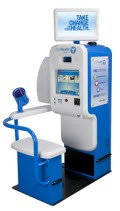
Dell signs a deal to provide computer kiosks for SoloHealth, whose interactive healthcare kiosks provide free health screenings from retail locations. CoinStar (aka Redbox) and WellPoint are investors.


Sales

8-28-2012 9-08-38 PM

Lexington Medical Center (SC) selects Patient Access and Payment Certainty solutions from Passport Health Communications to integrate with Epic.

8-28-2012 9-09-31 PM

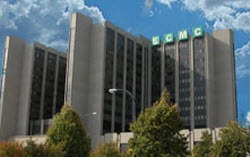
Erie County Medical Center (NY) contracts for Omnicell’s G4 automated medical management system.

OCHIN will deploy Caradigm’s Amalga solution.


People

8-28-2012 6-16-49 PM

TeleTracking Technologies promotes Mike Gallup from VP/COO to president/COO.

8-28-2012 6-19-01 PM

Business intelligence vendor Agilum Healthcare hires Winnie Fritz (Carondelet St. Mary’s Hospital)  to lead its healthcare performance improvement consulting service.

8-28-2012 6-19-45 PM

Caradigm names Rich Berner (Cerner) SVP of client services and support.


Announcements and Implementations

Memorial Health Systems (FL) nears completion of its two-year, $150 million Cerner implementation.

HealthHIE Nevada goes live on eHealth Image Exchange, allowing HIE participants to share diagnostic quality images.

The Pennsylvania eHealth Collaborative awards grants of $1.5 million each to four organizations to promote regional and statewide electronic information exchange.

8-28-2012 9-13-07 PM

Implementation draws to a close at two Missoula, MT, hospitals: St. Patrick Hospital (above) will go live in January on Epic, while Community Medical Center is on target for a November live with Cerner. Each hospital’s ambulatory clinics have begun their migrations (St. Patrick to Epic and Community to NextGen).

St. Mark’s Medical Center (TX) replaces Meditech with McKesson Paragon.

Virtua (NJ) initiates CPOE across four hospitals using Siemens Soarian.

PerfectServe launches a new version of its clinical communications app for iPhone and Android.

OnShift announces new acuity-based staffing capabilities for its long-term care scheduling and shift management software.


Government and Politics

HHS launches a competition for developers to create apps for reducing cancer among women of color. The top three developers will split $100,000 in prize money.


Here’s a Meaningful Use Stage 2 overview by Justin Barnes of Greenway.


Innovation and Research

IBM expects to market its Watson computer beyond healthcare to consumer uses, with plans to turn it into a Siri-like voice-activated analytics tool. IBM says the next version will work on tablets and smart phones, but they’re still working to add functionality such as speech recognition and the ability to understand images. Apparently IBM’s vision of its value for patients doesn’t necessarily include the participation of physicians – according to its VP of innovation, it will eventually so good at answering patient questions and making diagnoses that “you don’t need any intermediary.”


Other

8-28-2012 7-12-37 PM

Most healthcare providers still can’t justify the expense of infection control systems, though new incentive programs may spur adoption, according to a KLAS report. The market is dominated by best-of-breed solutions, with CareFusion taking top scores in product training and ease of use. Hospira led in interface capabilities and mandated reporting.

Allstate Insurance Company sues a Florida rehab hospital that it claims falsified medical records to bill it for $7.6 million in unnecessary medical services. Allstate says the hospital markets heavily in Michigan, which does not cap no-fault auto insurance payouts. The state is also investigating the hospital for alleged patient abuse.

A man reviewing the contents of a storage unit he bought at auction finds human brains, hearts, and lungs preserved in soda cups and plastic food containers. The unit was once used by a former Florida medical examiner who had been fired in 2003 for not completing autopsy reports.


Sponsor Updates

8-28-2012 6-29-16 PM

  • AT&T CMIO Geeta Nayyar discusses early successes and high participant engagement rates in AT&T’s DiabetesManager pilot.
  • SimplifyMD adds billing software provider Healthpac as a reseller for its EHR.
  • Greenway will offer Isabel Healthcare’s medical diagnosis tool with its PrimeSUITE EHR.
  • ICA’s chief marketing officer John Tempesco speaks at this week’s AlliedHIE-sponsored workshop on Direct healthcare communication.
  • The Pittsburgh Technology Council includes TeleTracking Technologies as a finalist for its Tech 50 Awards in the tech titan category.
  • iSirona is named the 82nd fastest growing company in America in the Inc. 500.
  • The Achievers names Impact Advisors to its list of 50 Most Engaged Workplaces.
  • AirStrip Technologies incorporates a real-time Meaningful Use tracker in its mHealth platform.
  • Imprivata customers share best practices in workflow, securing patient data, and enhancing patient care during this week’s VMworld 2012.
  • UpToDate by Wolters Kluwer Health adds psychiatry as its 20th specialty. The company also announces a partnership with the Altos Group to develop a sepsis mortality reduction program.
  • IDC MarketScape ranks Medicity as a leader of packaged HIE solutions.  
  • Billians adds 7,400 hospital social media links to its Portal healthcare sales and marketing database.

Contacts

Mr. H, Inga, Dr. Jayne, Dr. Gregg.

More news: HIStalk Practice, HIStalk Mobile.

A 2012 Campaign Primer 8/28/12

August 27, 2012 News 3 Comments

Campaign 2012 arrives at a formal down select today with supplier presentations in Tampa and Charlotte over the next two weeks. Like most selections, people involved are bemoaning the available options and questioning who designed the process in the first place.

The current preference gap is razor thin. The Real Clear Politics number, a blended average of major nonpartisan polls, has President Obama at 47% and former Massachusetts Governor Romney at 45.5%. It remains — for all the Fear, Uncertainty, and Doubt of the last several months — well within the margin of error.

Of course, as we were reminded in Campaign 2000, the popular vote doesn’t determine the President. The Electoral College does. And despite all the noise this summer, it too is a largely unchanged landscape since June.

The dirty Election 2012 secret is that 40 or so states are largely irrelevant, residing squarely in one camp or the other. Only about nine states, as of now, are being heavily contested: Florida, North Carolina, Virginia, New Hampshire, Ohio, Iowa, Colorado, Nevada, and now Wisconsin. And if you live in one of these states, you are being bombarded with micro-targeted messaging almost to the point of affliction. “Hello 9-1-1. It’s me again.”

The expansion of what the pros call the “map within the map” to include Wisconsin is a function of native son Paul Ryan joining the GOP ticket earlier this month. At 42, Congressman Ryan is the third youngest vice presidential nominee in the post-WW II period. He is, both sides agree, a serious policy thinker. He also brings a detailed plan, Path to Prosperity, to the national conversation.

The healthcare provisions within the Ryan policy sketch have of late been a focal point of the nightly shouting matches on cable news. Brookings Institute’s Henry Aaron and Robert Resischauer may have originated the term “premium support.”* Senator Ron Wyden (D-OR) may have embraced it last December. But Romney and Ryan now own it as the campaigns fight for seniors in Florida, Iowa, and rust belt states like Ohio.

The aggressiveness of the debate is a reminder that the modern presidential campaign sadly does not lend itself to deep educative efforts, particularly in the last 90 days. As the former DNC Chair Howard Dean said last Sunday, “I have always told people that campaigns are not for educating” and much of the last several weeks validates that near term view.

Romney and Ryan, of course, know how the game is played. And thus as we start the Republican National Convention this morning, the U.S. economy will be front and center. Q2 GDP (advanced) was middling at just 1.5%. Median household income has had its worst 10-year stretch since the Great Depression. U-3 unemployment remains above 8%. It is a tough narrative for any incumbent, even for the personally well-liked Barack Obama.

These Hurricane Isaac-quality headwinds, in turn, all but ensure a close race through November 6. For believers in Surowiecki’s Wisdom of Crowds, the online betting market Intrade currently favors Obama to win by 57.3% to 42%. That collective sentiment feels qualitatively right, with the caveat that even a week can be an eternity in modern politics.

Beyond the electoral outcome, it also is worth asking the larger question: what realistically can be accomplished in the coming Congress? The down ballot House and Senate terrain looks poised to deliver two closely divided chambers, including a U.S. Senate where Joe Biden or Paul Ryan may well cast the tie-breaking vote. Absent a fiscal crisis, and in the wake of an ugly campaign, it may make the current Congress look comparatively productive.

It will be a tough environment for either man. Selection is, of course, always easier than the change management required to make something work. And while some surely will bemoan the process, the blame in a democracy actually has to begin with us.

*Premium support, in simple terms, would provide Medicare recipients with an annual payment from the federal government to enroll in the health plan of their choice. It is a serious policy idea that has champions and critics alike. A primer can be found here. Beyond that, we will leave the debate around approach to the myriad sites focused on health policy and politics.

Donald Trigg, along with his long history in healthcare IT, spent a decade in the public policy space, including his work on the 2000 Bush for President campaign in Austin, Texas.

Monday Morning Update 8/27/12

August 25, 2012 News 12 Comments

8-24-2012 7-42-36 PM

From Siemens Surfer Dude: “Re: Mark Zielazinski, CIO of Alameda County Medical Center. An e-mail was distributed to ACMC staff last week saying he’s leaving with no details. They’re in the middle of an Invision to Soarian implementation scheduled for go-live on CPOE this fall.” Verified. Mark says he’s moving on to Marin General Hospital to rejoin his old El Camino Hospital boss Lee Domanico, who is now CEO at MGH. They’re building a replacement hospital and Mark will have some related additional responsibilities beyond IT, telecomm, HIM, and biomed. As far as ACMC goes, Mark says the Siemens / NextGen rollout is going fine and ACMC is getting its ARRA money. Both organizations will make announcements about his new job sometime this week.

We would expect that an EHR technology developer could satisfy § 170.523(k)(1)(iii) by disclosing: 1) the type(s) of additional cost; and 2) to what the cost is attributed. In reference to the first example above, an EHR technology might state that “an additional ongoing fee may apply to implement XYZ online patient service.” In situations where the same types of cost apply to different services, listing each as part of one sentence would be acceptable, such as “a one-time fee is required to establish interfaces for reporting to immunization registries, cancer registries, and public health agencies.

From Frank Poggio: “Re: MU Stage 2 zinger. Buried back on Page 405 is a real ditty, Price Transparency. Looks like in spite of all the flaming comments ONC received from vendors on the draft of this idea, they are moving ahead with it. ONC backed off requiring vendors to publish a specific price list, but now mandates that they list out all component, install, training, interface, third party and other costs. At this rate, I predict in Stage 3 they will ask for the numbers. Also, in the new certification rules, ONC estimates that it will cost vendors $195 million. If you take the 816 vendors certified under Stage 1 and then reduce the $195 million by ONC’s $60 million annual budget, that means each vendor will spend $165,000 to revise and certify their software for Stage 2. Who will eventually pay, and would that money be better spent elsewhere?”

From Sagacity: “Re: MU Stage 2. For the pleasure of your readers, the bookmarked and cross-linked versions of the Stage 2 and Certification Criteria rules. Save to the same folder with the original names and the cross-linking will work.” Thanks for that.

From Luminosity: “Re: authors. You should get more people to write instead of just giving space to a few guest authors.” Everybody is welcome to submit Readers Write articles as long as they meet my requirements for length, quality, and non-promotional topics. Being invited as an ongoing contributor to HIStalk is another matter – I’m not desperate for content, so I would expect folks to be way better than average. Regulars like Ed Marx, Dr. Rick, and others have an interesting and credible perspective, state it well, are entertaining as well as informative, and are diligent enough to keep it up month after month. Writing is like teaching – everybody thinks they could do it perfectly because really talented folks make it look easy. Anyone who thinks they have the right stuff and can send me a sample article along with ideas for their ongoing series and we’ll see where it goes. That’s the limiting factor on whose articles you’ll see here, not my unwillingness to give someone else a platform.

8-24-2012 7-20-59 PM

Welcome to new HIStalk Platinum Sponsor Sandlot Solutions. The Fort Worth, TX company, which is uniquely jointly owned by Santa Rosa Consulting and North Texas Specialty Physicians (NTSP), offers a platform that turns data into information. NTSP is a pioneer ACO (one of only 32, also named one of eight ACOs to watch including its use of Sandlot Solutions by Information Week) with 2.5 million patients. They know how to connect providers with critical information. Sandlot Solutions offers a next generation HIE and analytics system that uses low-cost cloud computing to connect physicians across all care settings and practice locations to improve care and reduce costs. The underlying products include Connect (HIE and master patient index); Dimensions (data warehouse); Metrix (analytics); and Care Manager (caregiver workflow driven by near real-time clinical and claims data). If you’re in the market for HIE software, check their no-nonsense evaluation checklist. The company’s leadership team has some familiar names, including that of our own “From the Investor’s Chair” Ben Rooks as an advisor. Thanks to Sandlot Solutions for supporting my work.

Now that I’ve talked about Sandlot Solutions, let’s have a short demo (which I found by cruising YouTube).

8-24-2012 6-32-44 PM

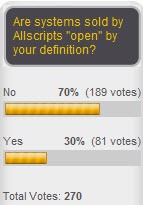
Allscripts says its systems are open, but 70% of poll respondents say really aren’t, at least by their definition of the term (the thoughtful comments are worth reading). New poll to your right: is your reaction to the announcement of the Meaningful Use Stage 2 rules positive, negative, or indifferent? Once you’ve voted, click on the Comments link in the survey box (or click here) and explain your opinion.

From that last poll, a comment by Limber Lob was particularly thoughtful given his obvious knowledge of several vendor EMR products:

Whether Allscripts is "open" centers on the definition of the term "open." "Open" conjures up notions of "open source" or at least multiple read/write APIs for a system, but it also reminds us of the important related concept of "extensible systems." An extensible software system is one that can be "extended" by someone other than the original developer AND in the programming language in which the system was written. It isn’t widely realized that three of the four successful long-lived integrated EHRs (with single patient database) are extensible by this definition. The VA VistA’s programming Standards & Conventions (SACs) allowed the extension of VistA over the years by VA sites nationwide, with — for example — the Puget Sound VA developing VistA’s Provider Order Entry (POE) system, and the Topeka VA writing VistA’s Bar Code Medication Administration (BCMA) module. VistA’s extensibility under the VA’s Decentralized Hospital Computer Program (DHCP) of the 1980s and 1990s is a principal reason why VistA now has more than 100 major sub-systems and an estimated 125,000 function points. Cerner’s EHR can be extended using Cerner Command Language (CCL), which is a proprietary "scripting language" in which as much as a quarter of the Cerner EHR’s logic is written. Many Cerner sites employ multiple CCL programmers, and books on CCL are available from Amazon. And perhaps surprising to many, Epic’s EHR is also extensible by Epic customers, as Epic makes source code and documentation available so that customer organizations can develop name-spaced code and data structures that extend Epic’s functionality in a manner similar to Epic’s customizations of their system for their clients. Epic encourages customers to use the other mechanisms for enhancing the functionality of the Epic EHR, but they also support what they term "free range programmers" in their customers’ organizations. Meditech, the fourth of the long-lived integrated EHR systems, has a closed code base. Finally, Allscripts’ supports extension of their Sunrise environment using a package called ObjectsPlus that has a reputation for being hard to use, and requires highly skilled and expensive programmers — which makes it an impractical proposition for many Sunrise customers.

I must have received half a dozen breathless “Breaking News” e-mails at work Friday screaming that HHS had delayed ICD-10 implementation until 2014. I’m not sure why this news was earth-shattering given that HHS itself proposed the extension in early April. Were the rags expecting some other outcome, or did they just forget that this is old news?

8-24-2012 7-05-43 PM 8-24-2012 7-08-49 PM

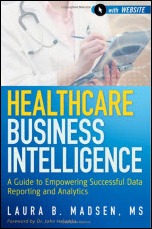
Here’s a new book on healthcare business intelligence. The folks involved sent me a Kindle copy, but I haven’t had time for more than a quick skim so far. Amazon has the Look Inside! feature turned on, so you can peruse the table of contents and quite a few sample pages. The author is Laura B. Madsen, who works for BI vendor Lancet Software.

In England, Lewisham Healthcare NHS Trust chooses Cerner Millennium for electronic patient records, its first UK win since it jointly bid to Royal Berkshire along with UPMC in 2009. InterSystems and Cambio were the other finalists and iSoft is the incumbent.

8-25-2012 4-52-47 PM

Also in England, Buckinghamshire Healthcare NHS Trust  admits that a software problem prevented the parents of some children from receiving their follow-up vaccination notices. The trust took over the vaccination program a year ago, but some parents were sent multiple reminder letters while others received none. A trust spokesperson said other customers of the unnamed software may also have been affected.

In another item from England, the county of Herefordshire, trying to determine why only 3% of its residents received an invitation to be checked for serious disease vs. the 20% target set by the government, find that a software problem may be responsible. A doctor tells them that the screening software only works with the Google Chrome browser, while the county-side medical system is not compatible with Chrome, forcing doctors to print out their entries and then re-enter them manually on two dedicated computers.

8-24-2012 7-57-04 PM

The Meaningful Use Stage 2 Webinar offered by NeHC and ONC on Friday filled up quickly. They’ve added sessions for Tuesday and Thursday at 12 noon Eastern, or you can view Friday’s recorded session or download the slides.

Researchers working with data from hospitalized HIV patient create a predictive model to estimate the chances of readmission within 30 days and death, using only EMR information from the first two days of their admission.

8-25-2012 4-54-24 PM

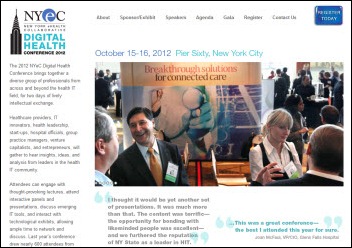
Keynote speakers at New York eHealth Collaborative’s October 15-16 conference at Pier Sixty in New York City: David Brailer, chairman of Health Evolution Partners, and Stephen Dubner, author of Freakonomics. Several dozen other speakers will grace the lectern. Receiving career achievement awards in health IT at the event’s gala will be Jeff Immelt of GE and Sam Palmisano of IBM. General registration is $395, licensed healthcare professionals and government employees get a $195 rate, and students get in for $100. The gala runs an extra $750. Rooms at the Hilton New York Fashion District are $319. HIStalk sponsors who are sponsoring this event include Optum, Emdeon, NextGen, and Nuance.

8-25-2012 4-10-37 PM

Tom Carson, founder and former president CEO of MD-IT until January of this year, is named CEO of Axion Health, which sells employee and occupational health software.

ZirMed names Kenneth Willman (WellPoint) as VP of payer solutions and strategy.

8-25-2012 4-56-14 PM

The University of Toledo Medical Center announced last week that it had temporarily suspended its live donor program and suspended two nurses after unspecified human error forced surgeons to abort a planned transplant while both patients (a male donor and his sister, who was the intended recipient) were in the OR. The university provided more information Saturday: the human error was that a nurse put the donor’s kidney in the trash, ruining it.

Doctors in Ontario complain in a town hall meeting about changes in their fee codes, intended to reduce costs by $340 million but making it impossible for physicians to bill for certain services. An interventional cardiologist says doctors are now paid only $2.50 for reviewing an ECG, with the rationale being that computers are doing all the work, leading her to say, “I’d like to think I’m better than a computer. I feel disrespected and disillusioned.”

Vince takes a short HIS-tory break to memorialize industry long-timer Dick Schopp, who died earlier this month.

E-mail Mr. H.

News 8/24/12

August 23, 2012 News 11 Comments

Top News

Meaningful Use Stage 2 regulations are approved.

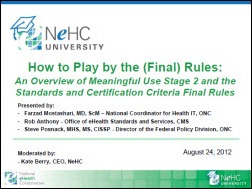
National eHealth Collaborative will present a free Webinar Friday afternoon, August 24, from 1:00 to 2:30 p.m. Eastern time called How to Play by the (Final) Rules: An Overview of Meaningful Use State 2 and the Standards and Certification Criteria Final Rules. CMS and ONC presenters will go over the rule and answer questions.


Reader Comments
8-23-2012 6-39-41 PM

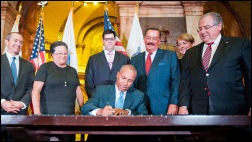
From Limber Lob: “Re: Massachusetts healthcare law. Note the quote by Governor Dev Patrick.” In summarizing the bill that he says will save the state $200 billion over 15 years, Patrick said, “We are ushering in the end of the fee-for-service care system in Massachusetts in favor of better care at lower cost.”

From Concerned in Texas: “Re: Epic. I work for a Epic hospital and haven’t signed any kind of agreement. I’ve heard from two sources that if my hospital wants to block another hospital from hiring me, my hospital can call Epic and they’ll tell the other hospital not to hire me. Is that true?” Recent discussion on that topic here brought out lots of folks with firsthand experience, so I’ll defer to them.

From Kara: “Re: managing population health and overall analytics. I would love to know who is having tangible, positive ROI-type success in this area. Not a vendor white paper, but real-world experience measuring financial impact done by someone who would be willing to talk about it.” I told Kara that the payment model isn’t very far along to have allowed anybody to demonstrate ROI on managing population health, but that’s probably a hospital-centric answer that doesn’t include other kinds of programs. She would really appreciate your comment if you can help.


HIStalk Announcements and Requests

inga_small Do the dog days of summer leave you wishing for cool reading material? If so, here are a few HIStalk Practice highlights from the last week: physicians are more likely to suffer job burnout than other professionals. Happtique introduces prescribe-able apps. Epocrates offers its Essentials reference product free to medical students. The number of retail clinic visits increased fourfold between 2007 and 2009. Student loan repayment is the top source of stress for physicians. Attorney Jessica Shenfield offers advice for physicians to stay HIPAA compliant in the age of mobile devices. Dr. Gregg shares the “gray lining” of the cloud. While you’re catching up on your HIStalk Practice news, click on a few sponsor ads and see if there are any ambulatory HIT goods or services that might make your life more complete. Thanks for reading.

I don’t like being scooped, so I was pleased to put a reader’s rumor that Inga forwarded to me on Twitter early Thursday morning saying that Meaningful Use Stage 2 would hit the Federal Register Thursday afternoon (which it obviously did). I tweet only stuff I think is important, so you won’t get bombarded following @histalk, but you might share my scoopage on occasion.  While you’re in that interoperating mood, you might as well follow Inga too, and follow that with a LinkedIn and Facebook chaser of connecting with any or all of our various personas since we are free with our Internet love. We don’t really solicit sponsors or hold their hands if they’re considering it, so marvel at how many of them have exhibited the resourcefulness to become one anyway and perhaps click on their ads to your left in a primitive form of the Like button. You can dig around in more detail in the Resource Center, and if you want to summon offers of consulting help while sitting regally on your throne and beaming benevolently at your hushed minions, simply fill out the Consulting RFI in maybe 60 seconds and dispatch it to several willing providers with one click of your royal scepter and wait for your e-mail to light up. You have surely noted that HIStalk is a contact sport – we minimize the usual pontificating and self-indulgent journalism and give readers the floor whenever they’ll take it – so feel free if not morally obligated to send us your news, rumors, and anything we would find interesting. It’s delightful having you as a reader.

On the Jobs Board: Services Implementation Project Manager, Account Executive Northeast, Services Implementation Consultant.

8-23-2012 5-44-52 PM

Welcome to new HIStalk Gold Sponsor Velocity Data Centers. The Chelsea, MI company offers economical, quick-to-build modularly constructed data centers installed on site. They’re bulletproof, hurricane tested, suitable for any climate, and less expensive than building from scratch or using valuable hospital square footage for data center space. If you’re worried about cloud security or service levels, you can build your own private cloud instead of renting someone else’s. if you’re struggling with technology expansion, obsolete disaster recovery capabilities, or need space for big data storage or research computing, you can get the data center capability you need for less money and time. Thanks to Velocity Data Centers for supporting HIStalk.

I found this really cool time-lapse YouTube video of a Velocity Data Center being built in 90 days.


Acquisitions, Funding, Business, and Stock
8-23-2012 5-08-05 PM

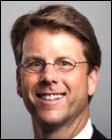
Two of the Quality Systems directors who were nominated by dissident board member Ahmed Hussein in a proxy fight have been elected, along with seven of the company’s eight nominees. Names have not yet been released pending certification of the results. The company also announced that Scott Decker, president of its NextGen subsidiary, has resigned effective September 7 to take another job with an unnamed healthcare IT vendor that the company says is not a Quality Systems competitor. QSII shares dropped another 4.5% Thursday to $17.39, above their 52-week low of $15.04, but down 66% from their 52-week high of $50.70.

8-23-2012 5-08-47 PM

Data analysis tools vendor Apixio raises $5.8 million of its $7.8 million goal from at least 10 private investors.

Michael Kluger, an Allscripts board member since 1994, resigns because of what the 8-K form says is, “His desire to spend time on his professional responsibilities.”

8-23-2012 9-07-28 PM

Roper Industries completes its previously announced $1.4 billion acquisition of Sunquest.
8-23-2012 7-13-44 PM

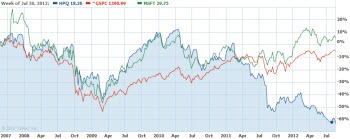
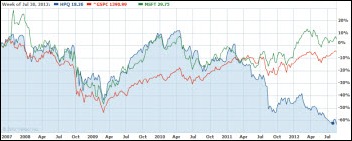
HP reports the biggest loss in its 73-year history, writing down a mind-boggling $8 billion of its $13 billion acquisition of Electronic Data Systems from GM in 2008 (GM had bought it from Ross Perot for $2.5 billion in 1984). Excluding one-time charges, the company’s revenue dropped 5% and earnings declined by 13% as its PC, printer, and notebook sales all dropped by double-digit figures. CEO Meg Whitman says she’s confident of a turnaround, but analysts are looking warily at the company’s $30 billion debt load. Above is the five-year HP share price (blue) compared to Microsoft (green) and the S&P 500 (red). Shares are at $17.64 after dropping more than 8% Thursday on the news, 41% off their 52-week high of $30.00.


Sales
8-23-2012 9-10-00 PM

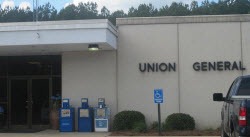
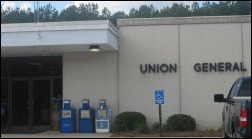
Union General Hospital (LA) selects the Healthcare Management Systems EHR and EDIS.

Walgreens will deploy its WellHealth EHR, built on Greenway’s PrimeSuite, to 8,000 locations, allowing pharmacy employees to view the immunization and health testing history of patients.

EHealth Saskatchewan awards SAIC Canada a three-year, $16 million contract to provide implementation and maintenance technology services in support of the province’s EHR.

8-23-2012 9-12-09 PM

West Virginia Health Information Network launches its statewide HIE, with Truven Health Analytics (the former healthcare business of Thomson Reuters) as its technology provider.

Mountain States Health Alliance selects the Siemens perioperative management solution by Surgical Information Systems for its 13 hospitals in Tennessee and Virginia.

Franciscan Alliance (IN, IL) selects Merge Healthcare’s iConnect imaging solution. Children’s Hospital & Research Center (CA) also contracts with Merge for its iConnect Access and Share solutions.

8-23-2012 9-11-25 PM

Rochester General Health System (NY) selects Wolters Kluwer’s ProVation Order Sets powered by UpToDate Decision Support for its eight affiliate hospitals.


People
8-23-2012 5-10-25 PM

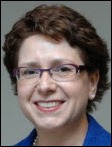
The University of Michigan Health System names long-time Brigham and Women’s Hospital CIO Sue Schade as its new CIO, effective November 1.
8-23-2012 5-11-46 PM

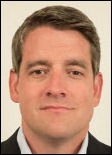
Physician networking site QuantiaMD appoints Mike Coyne (Verisk Health) as president.
8-23-2012 5-27-43 PM

Hayes Management Consulting names Shawn DeWane (Emdat) as EVP of business development.
8-23-2012 5-36-05 PM

Cumberland Consulting Group names Jeffrey Sturman (Memorial Healthcare System) as partner.


Announcements and Implementations

Hospitalist management company Cogent HMG will extend its use of athenahealth’s athenaCollector.

8-23-2012 9-13-40 PM

The University of South Carolina School of Medicine completes its implementation of Cerner Ambulatory EHR for 143 providers and 1,200 users. Affiliate Palmetto Health will bring another 153 providers live over the next 13 weeks.

The local paper mentions that Providence Medford Medical Center (OR) has implemented a Modified Early Warning System that scores vital signs entered into the EMR and pages the charge nurse if the score indicates possible problems. The article doesn’t give specifics, but it may be Caradigm Amalga that they’re using.


Government and Politics

CMS selects 500 primary care practices across seven regions to participate in the Comprehensive Primary Care initiative, which will pay primary care practices a care management fee of $20 per month per beneficiary to support enhanced coordinated services on behalf of Medicare FFS beneficiaries.

Open health and VistA advocate Matt McCall was honored Thursday by the White House as a Presidential Innovation Fellow. He’s working on the Blue Button initiative, the HealthME PHR, and formerly the VA’s OSEHRA VistA community.

In England, the Department of Health is reportedly pursuing the replacement of Cerner Millennium for its Choose and Book scheduling system, hoping to eliminate its dependency on commercial software products to reduce costs. It hopes to own the intellectual property outright.
8-23-2012 7-57-44 PM

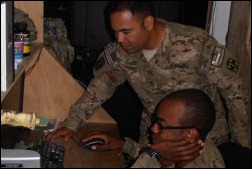
The US Army creates an open encounters report for its MC4 battlefield EMR in Afghanistan using a Business Objects query that finds open encounters that are more than three days old. The weekly reports, along with toughened policies, reduced open encounters by 72% in the first month, which it says will allow better care because encounters not closed per policy by the original physician were being cleaned up afterward by someone else.


Other
8-23-2012 6-47-59 PM

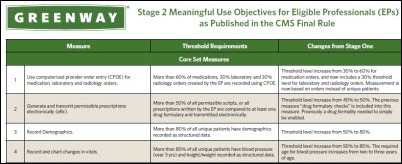
Greenway has put out a summary of the Meaningful Use Stage 2 rules for EPs.

8-23-2012 6-59-12 PM
8-23-2012 6-57-47 PM

Microsoft unveils a new company logo, its first in 25 years. According to the company, the font is Segoe, while the symbol conveys the company’s diverse product portfolio. The video is running 3,530 likes to 670 dislikes so far. Personally, I like it.

Epic is awarded a patent for, “A system for facilitating patient ownership of his or her medical data through the use of third-party health repositories that preserves the maximum information content of the medical records by displaying information relevant to the authority of the medical data as reflected by its source and types of modification as it has moved between institutions, as well as the data itself. In this way, improved use of this data is made possible.”

8-23-2012 9-15-05 PM

United Memorial Medical Center (NY) eliminates five transcriptionist jobs, blaming its financial losses and electronic medical record as good reasons to outsource the function. Two of them complained to the local paper, saying it “added insult to injury” that Intivia, the company chosen to take over the function, offshores some work to India.
8-23-2012 9-17-30 PM

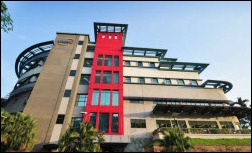
In Malaysia, the University of Malaya Specialist Centre is developing clinical and imaging systems for its new campus that will scale up from the current 100 concurrent users to 4,000. The CIO estimates that 80% of Malaysian hospitals are still paper-based and the remainder keep their electronic information in silos. He’s using VMware products to virtualize servers and desktops, including thin-client touchscreens for the OR that have washable mice and keyboards. He says desktop PCs are “irrelevant” with triple the three-year cost of a terminal, plus they support the “bring your own device” movement. The hospital is spending 4% of its annual revenue on IT.

Dan Mandy from Winthrop Resources tells me that CMS has changed its rules that previously required critical access hospitals to purchase hardware to be eligible for the Meaningful Use incentive. CMS apparently announced in July that a capital lease will meet the “purchase” requirement.
8-23-2012 8-27-10 PM

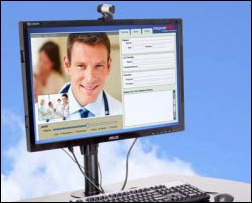
An Arkansas nursing home installs a telemedicine station that allows residents to be evaluated by a physician quickly instead of in several weeks. They’re using a digital stethoscope and cameras, while the vendor (IntegrateMD) will also offer wireless stethoscopes and iPad access.

The city of Alpharetta, Georgia forms a commission to attract and retain technology companies, hoping to brand itself as the “Technology City of the South.” The commission’s members include executives representing several companies that sell healthcare technology.

Grady Hospital in Atlanta suspects that a a married couple holding senior financial positions (payroll director and budget director) stole $500,000 from the hospital. They had been laid off and then sued the hospital for discrimination.

A fired account representative of a Chicago-area psychiatric hospital admits that she stole copies of patient files and used the information to send harassing letters to the hospital’s patients, which the police said included “vulgar comments, references to confidential medical information and psychiatric treatment received by these patients.” She also threatened to expose the information to the friends and families of the patients.

The State of Missouri will provide $4.6 million in incentives to Sporting Innovations, which will hire 120 people and spend $20 million renovating a Kansas City, MO building for building smartphone sports apps. The company is an offshoot of Kansas City’s professional soccer team, which has as two of its five owners Neal Patterson and Cliff Illig of Cerner. The soccer team famously chose Kansas City, KS for its stadium and a new Cerner complex after Kansas outbid Missouri with $230 million in “border wars” incentives. Illig says Sporting Innovations will deliver the same technology improvements to sports as Cerner has done for hospitals, allowing fans to view multiple video feeds of sports events and to scan QR codes on stadium seats to order team apparel. According to Illig, “What we see in sports is similar to health care. You have stadiums with 30 different technologies that don’t talk to each other. This will enhance the fan experience and be a platform for innovation.”

Strange: a male porn star named Mr. Marcus admits that he convinced a medical testing service to omit the positive result of his syphilis test, which he calls “the Scarlet Letter,” so he could continue working. The company denies his claim, saying their software does not allow employees to omit specific test results. Nine cases of syphilis have been documented in investigating an outbreak, with one trade group urging a temporary national moratorium on the production of adult films until all performers have been tested. I was highly entertained by the performer testimonials (especially their hilarious phony names) on the testing company’s site, including one enthusiastic Ms. Bailey Brooks, who said, “I have such a hectic life between kids, college, and travelling to shoot that I LOVE TTS!!!”

8-23-2012 9-26-16 PM

Hospital district officials checking up on complaints about taxpayer-funded 269-bed Salinas Valley Memorial Hospital (CA), best known for the $5 million retirement package it gave to its CEO last year followed by extensive layoffs and losses, say they have no problem with the hospital’s interim CEO turning in $4,000 in receipts from “Airport Town Car” since his contract guarantees him a car service. The driver providing the service: his daughter. They’re also happy to pay his commuting expenses from Seattle, his rounds of golf, and the candy bars he buys at the airport.


Sponsor Updates

8-23-2012 7-47-41 PM

  • Attendees at the all-employee annual meeting of Ignis Systems on August 9-10 pitched in at the Oregon Food Bank, repackaging two tons of bulk pasta for distribution to families in need.
  • Santa Rosa Consulting reviews the 2012 impact of the CMS hospital readmission reduction program in a blog post.
  • The State of Florida awards iSirona $530,000 in grant and tax incentives to create jobs in the Bay County, FL area.
  • Greenway Medical VP Justin Barnes reflects on the eight-year journey to accountable care in a blog post.
  • Wolters Kluwer Health’s Sentri7 Patient Surveillance software earns high marks in two recent KLAS reports.
  • Intelligent InSites offers a free August 29 webinar titled How to Better Manage Consumable Medical Assets with RTLS/RFID Solutions.
  • Medicomp Systems CEO Dave Lareau discusses the need to make clinical data usable in order to enhance patient outcomes in a guest article.
  • Nearly 200 volunteers from GE Healthcare helped prepare Milwaukee-area school buildings for the new school year on Wednesday.
  • eClinicalWorks expands its Westborough, MA headquarters with the purchase of a 61,000-square-foot building in the same complex.
  • Medical billing technology vendor Healthpac will offer products and services from simplifyMD to its customers.

Inga’s Quick Skim of Meaningful Use State 2


Inga came up with this after a quick skim of the rule as published. She and many others will be poring over the rule in more detail, so please leave a comment (as will Inga) with anything interesting you find.

  • A special three-month reporting period rather than one year of reporting for providers attesting to either Stage 1 or 2 in 2014.
  • A delay in the Stage 2 timeline probably is the most important to EPs. In the Stage 1 final rule, CMS established that any provider who first attested to Stage 1 criteria in 2011 would begin using Stage 2 criteria in 2013. This final rule delays the onset of those Stage 2 criteria until 2014, “Which we believe provides the needed time for vendors to develop certified EHR technology [CEHRT].”
  • For 2014 only, providers that are beyond the first year of demonstrating MU will have a three-month quarter reporting period to allow up to nine additional months to upgrade certified EHR technology to the 2014 edition.
  • Nearly all of the Stage 1 core and menu objectives included in the proposed rule are being finalized for Stage 2.
  • Adds “outpatient lab reporting” to the menu for hospitals and “recording clinical notes” as a menu objective for both EP and hospitals.
  • There will be 20 measures for EPs (17 core and 3 of 6 menu) and 19 measures for eligible hospitals and CAHs (16 core and 3 of 6 menu).
  • New core measure for EPs: use of secure electronic messaging to communicate with patients on relevant health information.
  • New core measure for EH/CAH: automatic tracking of medications from order to administration using assistive technologies in conjunction with an eMAR.
  • Ability to use a batch reporting process for MU, which will allow groups to submit attestation information for all of their individual EPs in one file.
  • CMS is requiring providers to send a summary of care record for 50% of its patients rather than more than 65%.
  • Providers electronically transmit a summary of care for more than 10% of transitions of care and referrals, but eliminated the requirement that the summary of care be electronically sent to a provider with no organizational or vendor affiliation.
  • Lab reporting for hospitals as a menu objective.
  • EPs who can demonstrate that they fund the acquisitions, implementation, and maintenance of CEHRT, including supporting hardware and interfaces needed for MU, without reimbursement from an eligible hospital or CAH —and use such CEHRT at a hospital, in lieu of using the hospital’s CEHRT—can be determined non-hospital based and receive an incentive payment. Determination will be made through an application process.
  • EPs must report on nine out of 64 total clinical quality measures (CQMs).
  • Eligible hospitals and CAHs must report on 16 out of 29 total CQMs.
  • All providers must select CQMs from at least three of the six key health care policy domains from the HHS’ National Quality Strategy: Patient and Family Engagement, Patient Safety, Care Coordination, Population and Public Health, Efficient Use of Healthcare Resources, Clinical Processes and Effectiveness.
  • Beginning in 2014, all Medicare providers that are beyond the first year of demonstrating MU must electronically report their CQM data to CMS.
  • Added four categories of exceptions for EPs to avoid Medicare pay adjustments: in a geographic area without sufficient Internet access; new EPs; unforeseen circumstances, such as a natural disaster; and, specialist/provider type, such as those that lack direct patient contact of follow-up needs with patients.
  • Made 12 additional children’s hospitals eligible to participate in Medicaid incentive program, despite not having a CMS certification number since they don’t bill Medicare.

EPtalk by Dr. Jayne
clip_image002

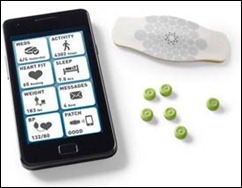
The Food and Drug Administration approves the Ingestion Event Marker, or so called “smart pill,” for marketing as a medical device. The sensor is embedded in a pill and is activated by contact with fluid in the stomach. A signal is sent to a wearable water-resistant patch that wirelessly transmits the data to a smart phone or computer. Manufacturer Proteus Digital Health Inc. will begin direct-to-consumer marketing in the United Kingdom with the sensor embedded in a placebo taken at the same time as the patient’s regular medication. The company hopes to gain FDA approval to embed it in therapeutic medications by 2014.

The Archives of Internal Medicine publishes a study that not surprisingly shows that burnout is more common among physicians than other types of workers in the US. Frontline specialties such as internal medicine, family medicine, and emergency medicine are at greatest risk. I’d be interested to see how healthcare IT workers fared on the same screening instrument.

HIStalk reader Evan Steele blogs about the “arduous task” of having hundreds of EHR vendors each programming more than 100 clinical quality measures. Software companies are spending their time jumping through hoops rather than advancing usability and innovation.

Hi tech, low tech: Dallas County declares an emergency with the recent outbreak of West Nile virus. Aerial spraying crews are deploying synthetic pyrethroids (chrysanthemum extract) to combat mosquitoes. If you’re going to be outside at dusk, it’s not a bad idea to break out the insect repellent.

Weird but true: Molecular geneticists translate an entire book into 55,000 strands of DNA, then convert it back to text. Researchers propose that “a device the size of your thumb could store as much information as the whole Internet.” The text used in the project was a book on genomic engineering. There are several other fun facts in the article, including discussion of sequencing Disney’s most annoying song, “It’s a Small World,” into a micro-organism.

Weird News Andy wannabe: This wasn’t from him, but it’s worthy of his name. The FDA recalls surgical bone putty that can ignite during surgery.

Medicare announces the completion of updates to its website. The list of accomplishments includes better design, increased compatibility with smart phones, and improved access to key parts of the site.

I had the privilege of hanging out with one of my favorite CMIOs as he was passing through town this week, and I’m especially pleased that he noticed my shoes. That’s the mark of a true Renaissance man, if you ask me.

Print


Contacts

Mr. H, Inga, Dr. Jayne, Dr. Gregg.

More news: HIStalk Practice, HIStalk Mobile.

CMS Releases EHR Incentive Program Stage 2 Rule

August 23, 2012 News 2 Comments

CMS publishes its 672-page Stage 2 Final rule in the Federal Register. A statement from HHS Secretary Kathleen Sebelius also notes:

  • Stage 2 will begin as early as 2014. No providers will be required to follow the Stage 2 requirements outlined before 2014.
  • The announced requirements include certification criteria for the certification of EHR technology.
  • The certification program has been modified to cut red tape and make the certification process more efficient.
  • Current “2011 Edition Certified EHR Technology” can be used until 2014.

News 8/22/12

August 21, 2012 News 2 Comments

Top News

8-21-2012 8-18-21 PM

MModal becomes a wholly-owned subsidiary of Legend Parent Inc., an affiliate of JP Morgan’s One Equity Partners, following the completion of Legend’s tender offer for all of MModal’s outstanding shares.


Reader Comments

From PCP Doc: “Re: specialists. In my community, 40-50% of specialists are practicing primary care because there are too many of them. It makes coordination of care more difficult. One patient sees a cardiologist for blood pressure and another who had breast cancer two years ago sees an oncologist, radiation oncologist, surgeon, OB-GYN along with her primary care doc just to get a breast exam, mammogram, and CBC. Specialists have said they’ll do primary care if the pay goes up, but they’re a bit rusty at it.” I suppose that’s the downside of luring the procedure docs back into primary care – many of them have never done it and more than a few are probably going to be lousy at it because of personality type or lack of interest. Can you imagine retooling a cardiac surgeon into a pediatrician?

8-21-2012 6-31-16 PM

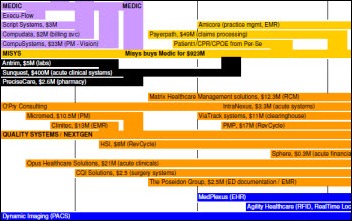
From Leopold: “Re: hospital software lineage. I’m looking for the link posted earlier this year showing vendor consolidation.” Constantine Davides of JMP Securities created the HIT family tree for HIStalk readers (parenteral alert: it’s full of HIT incest that spans decades.) I think he’s sorry he opened this particular can of worms since it was pain to create and then update with reader-suggested additions.

8-21-2012 6-30-18 PM

From Scott: “Re: Tableau data visualization free trial. Altosoft also offers a free download, but with no registration required. Clients include Cleveland Clinic, Geisinger, Memorial Sloan-Kettering, Yale, etc. We have pre-built dashboards for AP, CP, radiology, leadership, charge nurse, etc.” Scott’s from Altosoft.

From Oh the Humanity: “Re: PlatinumMD. I heard they’re calling practices with a ‘courtesy call’ from the ‘Stimulus Recovery Department’ and asking to have the doctor call them back about ‘the doctor’s reimbursement checks that come from CMS.’ I can only imagine how they respond once they find out that the company is a MU consultant and not the government calling to reclaim their stimulus dollars.” Unverified, but their site does have a page called Stimulus Center.

From Nicole: “Re: hospitals forced to share records. Two New York hospitals were told by the state that their certificate of need requests for construction would be approved only if they join a RHIO.” Nicole sent the article over, which is available by registration only on the Crain’s site. The Department of Health’s Public Health and Health Planning Council told Hospital for Special Surgery and Memorial Sloan-Kettering that their construction projects (valued at $859,000 and $339 million, respectively) would be approved only if they agreed to join a RHIO, observing that they are the only two hospitals in New York County that haven’t already done so. Council member Jeffrey Kraut said, “The time has come to make all CON applications join,” and when another member said their reasons might be financial, Kraut shot back, “You mean Sloan-Kettering is too poor?”


HIStalk Announcements and Requests

Listening: Pentagram, after watching a documentary on Netflix about their singer’s 44-year drug addiction and the band’s recent comeback attempt after years of self-inflicted lack of commercial success and endless membership changes. I’ve played this magnificent song, recorded during a 1976 basement practice session on a cheap reel-to-reel recorder, least 100 times in the last three days because it sends chills up my spine (it really kicks in at 1:50). Pentagram is like a mix of 70s heavy metal bands from my vinyl collection that you’ve probably never heard of, like Captain Beyond, Sir Lord Baltimore, and UFO. I may get a Pentagram tee shirt as my tribute to non-conformist failure in the presence of ample talent.


Acquisitions, Funding, Business, and Stock

The Outsource Group, an RCM provider for hospitals, acquires XAM/MAX, a provider of self-pay collection and insurance follow-up services.

Behavioral software vendor Netsmart Technologies, whose CEO is former Cerner COO Mike Valentine, acquires Behavioral Pathway Systems, which sells behavioral provider benchmarking services.


Sales

8-21-2012 8-24-30 PM

Arkansas Heart Hospital signs a 10-year, $10 million agreement with Siemens to implement Soarian clinicals, financials, pharmacy, and med administration check. Siemens Financial Services division financed $4.8 million of the purchase.

Jordan Hospital (MA) selects Mediware’s Insight Performance Management software for monitoring enterprise performance programs.

8-21-2012 8-25-34 PM

Trinitas Regional Medical Center (NJ) chooses Hyland Software’s OnBase enterprise content management to integrate with its Allscripts Sunrise EMR.

University of Iowa Hospitals and Clinics chooses Voalte’s iPhone-based communications system for use throughout its facilities.


People

8-21-2012 4-49-30 PM

Home health software provider Procura appoints Rebecca MacKinnon VP of US sales. She was the founder of BeyondNow Technologies, which was acquired by Cerner in 2003.

8-21-2012 4-52-29 PM

PracticeMax, a provider of practice management services, announces the retirement of Rick White as president and the promotion of Patrick Lukacs (above) from VP of software services to VP of operations.

8-21-2012 4-54-05 PM

Press Ganey Associates names David Costello, PhD (SCIOinspire) chief analytics officer.

8-21-2012 4-54-45 PM 8-21-2012 7-29-57 PM

Consumer health engagement firm Silverlink Communications names Adam A. Hameed (Emdeon) chief revenue officer and Paul G. Fitzgerald (ITA Software) CFO.

8-21-2012 4-55-25 PM

Natalie Sensabaugh (Picis/OptumInsight) joins PerfectServe as a clinical advisor.

8-21-2012 5-31-48 PM 8-21-2012 5-32-21 PM

Elsevier/MEDai names Peter Edelstein, MD (Adventist Health System) as chief medical officer and Gerald Osband, MD (Trizetto Group) as director of product strategy.

8-21-2012 6-07-34 PM

UNC Health Care System (NC) promotes Donald Spencer, MD to VP/CMIO.


Announcements and Implementations

HealthBridge and the Greater Dayton Area HIN announce the launch of secure, electronic transmission of immunization data from two primary care practices to the Ohio Department of Health.

8-21-2012 8-26-45 PM

Arnot Health (NY) joins the Rochester RHIO.

Healthcare Quality Catalyst says its data warehouse solutions sales increased by 1,100% in the first half of 2012 vs. 2011.

8-21-2012 6-48-00 PM

Microsoft announces release of an iPhone app for its HealthVault personal health record, which also includes a list of compatible apps such as iTriage and CareCoach.


Government and Politics

The Department of Defense and the VA eliminate an RFP requirement that proposed pharmacy systems for their combined EHR use First DataBank’s drug database.

HHS awards $48.8 million in grants to bolster epidemiology, laboratory, and health information systems in state health departments to help states fight the spread of infectious diseases.

ONC’s Consumer eHealth Program announces a contest for a mobile app that mashes up an individual’s Blue Button personal health data with open public health data to promote better personal health and lower costs. The top entry wins $45,000.

In England, the Department of Health and the trade department will encourage hospitals to open clinics abroad under the NHS brand to bring in additional revenue. They want to model their services after Mayo and Hopkins in providing services in India and China under the direction of Healthcare UK, an oversight board that has already been created.


Innovation and Research

8-21-2012 8-29-59 PM

In the UK, Birmingham Children’s Hospital is testing car-monitoring software that was developed for McLaren’s Formula 1 racing team. Input from 130 sensors provide 750 million data points during a race (fuel use, temperature, and tire wear) and the hospital is using it to monitor the vital signs of its pediatric patients. Says a PICU doctor, “Formula 1 engineers do lots of real-time monitoring during races and look at performance and modeling to see when they should change tires and have pit stops. They’re predicting, essentially, which we don’t tend to do in healthcare. Although we can see what is happening at the bedside, we can’t see trends over time.”

8-21-2012 8-03-41 PM

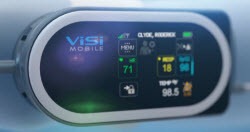
Sotera Wireless receives 510(k) clearance for its ViSi Mobile wireless vital signs monitoring system, whose body-worn sensors use hospital WiFi to allow monitoring to continue as the patient is ambulating or being transported. The company says the device’s output can be sent to an EMR.


Other

Hospital leaders rank WellPoint the worst health plan in the country, with BlueCross finishing last based on payment rates.

A former Florida Hospital Celebration ED employee is arrested following accusations that he sold the information of 700,000 auto accident patients to chiropractors and attorneys.

8-21-2012 6-33-10 PM

Sunquest held its annual executive summit on August 6 as the kickoff of its user group meeting, with presenters that included CIOs Dave Pecoraro of Exempla Healthcare and Allana Cummings of Northeast Georgia Health System along with Steve Lieber, CEO of HIMSS.

8-21-2012 7-09-48 PM

An article in The New York Times describes the secretive use of e-score, a “digital ranking of American society” that’s calculated as people cruise the Web. The CEO of eBureau says his product can predict whether a given person is likely to be a good or bad prospect in less than a second, scoring 20 million people a month and selling the names to interested companies. A spinoff uses similar information to decide which online ads to display. Clients send lists of sales leads they’ve bought, then eBureau extrapolates and adds details from other databases to generate up to 50,000 variables per person, which it then grades against similar factors for existing customers. Sounds harmless enough until they start selling scores to insurance companies or employers.

8-21-2012 7-47-19 PM

MD Anderson (TX) notifies 2,200 patients that their information was compromised when a trainee lost an unencrypted thumb drive on the employee shuttle bus. The feel-good part of the notice says they’re working at device encryption and have purchased encrypted thumb drives, probably hoping that nobody will remember that an unencrypted laptop was stolen in April that contained information on another 30,000 patients.

8-21-2012 8-35-10 PM

The State of California sues a plastic surgeon (who also apparently graduated from law school) for using strong-armed collection tactics on ED patients whose insurance doesn’t cover the full amount of her bill. She has sued more than 50 patients, taken out liens on their homes, and damaged their credit ratings, the state says. Her attorney admits that she is “very persistent” in her collections effort, but says she’s entitled to be paid. Other attorneys say so called “balance billing” isn’t common the ED because the patient doesn’t really have a choice about who to see, plus California law specifically requires doctors to settle their payment disputes with the insurance company and not the patient. Her lawyer has an answer for that, too: the patients were stable in the ED, so these weren’t emergency situations.

And administrative director at Maine Medical Center sues his employer, claiming they fired him for speaking out against the tradition of taking sports medicine residents attending an out-of-state conference to strip clubs. He says the hospital retaliated by moving his office to the attic of an old building that has bats. The hospital says he wasn’t very professional in raising his concerns, piping up at a department leadership meeting and addressing a physician in attendance, “So, what do you want to tell us about the lap dances at your conferences?”

8-21-2012 7-58-38 PM

Strange: a hospital in Israel recognizes clowns as members of the healthcare team, with up to 20% of surgeries featuring pre-op clowns to reduce tension and thus the amount of anesthesia required. A study found that in vitro fertilization success rates increased from 20% to 36% if the patient received a pre-procedure visit from a clown dressed as a bumbling chef. An American doctor says it probably won’t work here since a lot of us find clowns annoying.


Sponsor Updates

8-21-2012 6-18-33 PM

  • Billian sponsored last week’s Lekotek of Georgia Run 4 Kids that benefits special needs children, with its team receiving a bronze medal for participation in the four-mile run.
  • Virginia Physicians selects eClinicalWorks EHR for its 58 providers across eight locations.
  • Visage Imaging announces GA of an upgrade of its Visage 7 Enterprise Imaging Platform with enhancements that include lesion tracking, drag-and-drop support, single-click attachment of non-DICOM images, and integration with Nuance PowerScribe 360.
  • Capario launches an integrated patient pay solution in partnership with TransFirst that facilitates the collection of patient payments, including co-pays, deductibles, and balances after insurance has paid.
  • CommVault announces the integration of Nimble Store CS-Series with CommVault Simpana snapshot management software as part of the IntelliSnap – Connect Program.
  • Kony Solutions acquires Sky Technologies of Melbourne Australia to expand its global enterprise mobility market.
  • Prognosis Health Information Systems sponsors a Webcast featuring National Rural Health Resource Center CIO Joe Wivoda discussing EHR for rural health leaders.
  • The Nashville Area Chamber of Commerce names Cumberland Consulting Group, Emdeon, HealthStream, and Shareable Ink among the finalists for its second annual NEXT Awards.
  • dbMotion and Allscripts host a webinar on preparing for accountable care.
  • Anesthesia Business Consultants partners with Surgical Information Systems to integrate data captured in SIS’s AIMS with ABC’s anesthesia billing tools.
  • Inc. names the following HIStalk sponsors to its list of 5000 Fastest Growing companies:  Beacon Partners, Culbert Healthcare Solutions, eClinicalWorks, Enovate, ESD, etransmedia Technology, GetWellNetwork, Greenway Medical, Hayes Management Consulting, Healthcare Growth Partners, Iatric Systems, Impact Advisors, Ingenious Med, Intellect Resources, iSirona, Kareo, maxIT Healthcare, MED3OOO, MEDSEEK, Virtelligence, and Vocera.
  • A Wolters Kluwer Health Survey finds that a third of Americans have experienced a medical mistake, with two-thirds of them  firsthand or from a third party. The majority of respondents expect new technologies to reduce errors.
  • CPU Medical Management, a division of MED3OOO, announces a vendor partnership with eBridge to offer a combined PM and document imaging solution.

Contacts

Mr. H, Inga, Dr. Jayne, Dr. Gregg.

More news: HIStalk Practice, HIStalk Mobile.

Monday Morning Update 8/20/12

August 18, 2012 News 4 Comments

8-18-2012 6-38-16 AM

From The PACS Designer: “Re: data visualization. The concept is booming outside of healthcare. One of the beneficiaries is Tableau Software. They have free trial software for anyone in the healthcare field to try if they want to get an idea of what can be accomplished with it.” I’ve played around with it a couple of times over the years courtesy of their free trial offer. Both times I thought it was pretty cool initially, but I quickly ran out of stuff to try and lost interest. I probably would have kept working with it had there been specific, short examples or pre-loaded demonstrations of why it’s better than Excel 2010’s pivot tables or Analysis ToolPak, which can do quite a bit and don’t cost $999 for the personal version. Tableau gets a lot of love out there, so I assume it works well once you figure out what you’re doing and starting throwing more complex data at it.

8-18-2012 6-52-25 AM

From EHRbitrator: “Re: EHRevent. The EHR event reporting system has been showing an ‘under construction’ message. What’s going on with it?” I asked Ed Fotsch MD, CEO of PDR Network, the company that donates the resources to run EHRevent (PDR hosts the service, but it’s managed by the non-profit iHealth Alliance). Ed says that since EHRevent was launched, the Institute of Medicine report called for a national approach to health IT safety, which would have required EHRevent to expand dramatically. PDR Network and the iHealth Alliance decided to suspend the service pending a decision by the federal government on IOM’s recommendation. I interviewed Ed about EHRevent and other topics in November 2010.

8-18-2012 6-03-11 AM

Nearly two-thirds of poll respondents say that Meditech’s market position has worsened in the past year. New poll to your right: Allscripts is emphasizing its “open systems” message. By your definition, would you characterize the systems it sells as open? Once you’ve voted, show your work by clicking the Comments link on the poll and explain what your definition of “open” actually is.

Inga and I read tons of press releases and often roll our eyes at how badly done they are (which usually means the alleged news won’t see the light of day on HIStalk or probably anywhere else). Instead of just making fun of the PR atrocities, we’ve put together a list of 25 tips for doing them right. We’ll be sending it out to our sponsors, who no doubt will rise to the top of the press release heap after heeding unconventional advice from hack pseudo-journalists like ourselves.

Listening: The Bamboos, big-band soul from Australia (“funk from the deep southern hemisphere”). That’s when I can tear myself away from the purely angelic First Aid Kit, which is harder after I found this video that I’ve watched in amazement about 20 times. I’m listening to it solo in the house as I write this Saturday morning, having taken Mrs. HIStalk to the local farmer’s market for some summer tomatoes, a vegan barbeque hand pie that I ate right there in the parking lot, and a blueberry-cardamom goat cheese cake for later. She’s off for the facial and massage that I arranged and I’ll meet her for lunch (barbeque may or may not be involved), followed by my usual exercise routine, more work, and one of the Sierra Nevada Summerfest Lagers that I tried a couple of weeks ago and bought today. Maybe it gets better than that in your world, but not in mine, except maybe when college football starts in a couple of weeks.

Quality Systems Inc. held its shareholder meeting Thursday, but says the results of the board member election won’t be available until this week. In other words, we don’t know yet whether dissident shareholder Ahmed Hussein was able to wrest control of the company via his proxy campaign (although rumor has it that he lost and demanded an independent recount, which is why it’s taking so long, but that’s unverified). Hussein’s previous attempts failed, but that was before QSII shares took a beating and he added former QSI President Pat Cline to his slate of director nominees. Shares have rebounded to $19 after touching off the $16 range three weeks ago, which would be fantastic news had they not been in the mid-40s when the ugly slide started in April.

8-18-2012 7-25-58 AM

Stan Nelson, founder and chairman of Scottsdale Institute and former CEO of some major Midwestern health systems, died earlier this month at 85. The guestbook is here.

8-18-2012 11-40-00 AM

Dick Schopp, a 50-year healthcare IT veteran, died August 16 at 75. He had worked for McAuto and HIS, Inc. and also founded Healthcare Computing Strategies. He was a principal with HIS Professionals, LLC. He is survived by his wife Pat, five children, 27 grandchildren, and seven great-grandchildren. Vince Ciotti let me know and says he’ll have a salute to Dick in his next HIS-tory.

The VA awards a $4.5 million, one-year contract with four optional years to Ray Group International to restructure the MUMPS code of one module of VistA as well as its application layer, making it more modular. That’s the same company that got a $4.9 million contract in June to develop the VA’s OSEHRA project to make VistA an open source, community supported application. I’m impressed with CEO Ronald Ray: a Marine and Green Beret battalion commander for 21 years, three tours in Vietnam as a platoon leader, recipient of the Medal of Honor, a White House Fellow, and assistant VA secretary. He did something in Ia Drang Valley in 1966 that I thought only happened in movies: as he was getting his legs shot up by machine gun fire, he flung his body onto a live grenade to protect his comrades.

An article by two Yale economists says women would be better off financially to become physician assistants instead of doctors. Reason: women in medicine work fewer hours than their male counterparts, so their correspondingly reduced earnings don’t readily cover the high cost of medical school. If you didn’t buy the “an increased supply of doctors creates its own demand and therefore increases healthcare costs” argument, you might suggest that healthcare reform dictate a faster and cheaper pathway to becoming a primary care physician. You know the financial dynamics in play, however: universities love healthcare professions programs because they can charge huge tuition (knowing that students can get loans easier with expectations of eventual high incomes) and every healthcare profession is fiercely protective of its own, doing all it can (like any other business) to raise the barrier to entry to keep cheap newcomers out. On the other hand, it’s sad to see how many students take up one of those valuable spots and then either never practice medicine or gravitate to one of the high-paying specialties that does little to improve population health.

8-18-2012 7-00-51 AM

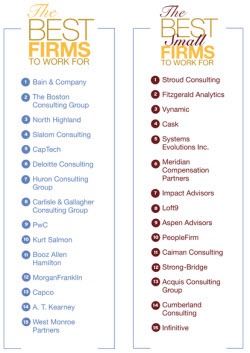
Several companies named as best to work for by Consulting magazine offer healthcare IT services. I don’t know all of them, but those I know as primarily serving healthcare are Impact Advisors, Aspen Advisors, and Cumberland Consulting.

8-18-2012 7-10-28 AM

West Virginia University Hospitals-East goes live on Epic.

8-18-2012 7-38-27 AM

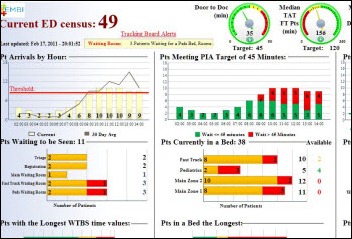
ED management company Emergency Physicians Medical Group will implement a digital dashboard from Emergency Medicine Business Intelligence for its 44 hospital customers to improve ED turnaround time. Scott Richards, one of the two principals of EMBI, used to be an IT director at UAB Health System.

8-18-2012 11-36-39 AM

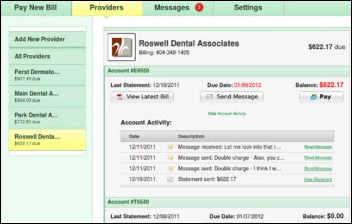
Consumer health expense management software vendor Patientco gets $3.75 million in funding. It offers patient-friendly bills, multiple bill payment methods, and secure patient-to-provider messaging for asking questions about a bill. They register using a secure code printed on their statement. 

Fidelity National Information Services sells its healthcare payments and claims business to a private equity firm for $335 million.

A University of Florida study finds that patients with three or more chronic conditions are only half as likely to receive treatment for depression if their doctor uses electronic medical records. The researchers speculate it’s because EMRs reduce the time doctors spend with patients or perhaps the EMR directs their attention to purely physical issues.

8-18-2012 12-17-07 PM

I’m always fascinated that this happens all the time in India when relatives suspect hospitals or doctors of substandard care of their loved one. Family members go on a rampage after the death of a hospitalized teenager, destroying hospital computers, breaking windows, and attacking police officers. Eighteen family members were detained and eight police officers were injured, two of them requiring hospitalization.

A former VA hospital employee who won a $1 million lottery prize in January of last year buys a scratch-off ticket, but gives it to a beggar in the convenience store. It turns out to be a winner worth $260K. She protests to the lottery commission, saying the man pressured her and she intended to give him money instead, but surveillance camera footage and interviews show she gave him the ticket voluntarily. Despite the million dollars she won, the woman claims she’s broke because of medical bills and her unpaid leave from the VA. She’s writing a book about her life.

Strange: a nurse performs her own fecal transplant to cure her chronic diarrhea, using her husband’s feces, a blender, and a turkey baster. She told the reporter that she kept the blender, so I’d suggest passing if she offers you a Margarita.

Vince’s HIS-tory this time is about INFOSTAT. If you’re watching on NBC, mute your TV now for a spoiler: “They were acquired by Keane in 1995.”


Sponsor Updates


E-mail Mr. H.

News 8/17/12

August 16, 2012 News 2 Comments

Top News

8-16-2012 5-49-13 PM

Streamline Health Solutions acquires New York-based HIM systems vendor Meta Health Technology for $15 million in a mostly cash deal. Streamline Health also announces new financing that will reduce its capital costs and a $12 million equity investment by Great Point Partners, LLC and Noro-Mosely Partners.


Reader Comments

From Grizzled Veteran: “Re: Quality Systems proxy fighter Ahmed Hussein. He sent a letter to fellow shareholders saying that NextGen VP Jerry Shultz has resigned after 15 years as sales VP, claiming that Shultz quit because the company is splitting the sales team while the market is demanding an integrated inpatient and ambulatory solution. Hussein says he’s been warning all along that critical employees could start leaving.” Unverified. Jerry Shultz still listed as SVP on the company’s site.

8-16-2012 6-09-55 PM

From exMDRX: “Re: ACE conference in Chicago. Apparently there’s some confusion this week. What is this EMR tool, and does it take 120 or 220v?” I was hoping that John Madden would take a wrong turn from his RV and join Glen on the podium with a turkey leg and Telestrator in his hands.

8-16-2012 7-05-58 PM

From Chrissy: “Re: pMD. We are big fans of HIStalk! We are a mobile charge capture company and work with doctors to streamline their practices. We released our new website today – wanted to let you know!” I would ordinarily delete a message like this without a second thought since companies are always bugging me for free PR (with said trashing being more likely if the requester isn’t one of the 2,668 members of the HIStalk Fan Club on LinkedIn, which Chrissy isn’t), but I figured I’d take a look at the new site before pressing Delete. It’s funny and brilliantly designed. The creative agency had the cool paper-cut illustrations made in Lucca, Italy, which against all odds has now been mentioned twice in one HIStalk post (see Lucca Consulting Group, coming up in a couple of inches).


HIStalk Announcements and Requests

inga_small Happy Elvis Week, everybody! If you have been too busy celebrating to stay current on HIStalk Practice, here is what you missed. PairOfAces points out that Chicago’s McCormick Center was headquarters to both the Allscripts ACE meeting and the ACE Hardware convention this week. Medical schools may not provide students adequate training on EHR usage. Several eClinicalWorks customers discuss the perks and problems of EHRs. Aaron Berdofe maps out MU attestations and looks for meaningful correlations (there are some.) When you check out these stories, please don’t be cruel; love me tender(ly) and sign up for the e-mail updates. Thanks for reading.

8-16-2012 6-17-34 PM

Welcome to new HIStalk Platinum Sponsor Lucca Consulting Group. Listen up if your organization is implementing Epic: Lucca is 100% dedicated to providing Epic implementation & training support, and can provide certified and credentialed consultants for those hard-to-find Epic skill sets, or if you’d rather, they’ll send you an entire project team. Maybe you’re worried about a big bang Epic go-live and wondering how in the world you’re going to get enough credentialed trainers or instructional designers to get over the hump. As the “go-to firm” for Epic training, Lucca can help there, too. Cedars-Sinai says “Lucca had the most qualified trainers of the competing consulting firms”, while UMass calls them "agile and accommodating." Need to backfill legacy apps so your team can move to your Epic project? Lucca can provide skilled expertise for Siemens, McKesson, Eclipsys/Allscripts, and others, working remotely to keep expenses down or on site under your direction if you prefer. They hire the best and the brightest, offering flexible employment options for those interested in a rewarding career with a company that supports them. Don’t call up asking for someone named Lucca, though — the company couldn’t get excited about yet another generic or clever healthcare IT name, so they went with Lucca, the picturesque Italian city (in Tuscany, actually) that founder Gina Craig had recently visited prior to starting Lucca in 2008 (check out this article and you’ll see why it’s memorable, but you’ll end up hungry). Thanks to Lucca Consulting Group for supporting HIStalk.


8-16-2012 8-24-19 PM

Response from e-MDs

In agreeing to publish Wednesday’s letter from Michael Stearns, MD related to his termination from e-MDs, I had said that in the interest of fairness, I would also run the company’s response if they provided one. They did, which I’ve added both to the original article and below:

e-MDs, Inc. removed all the material and information that comprised the web posting “The Truth About Michael Q. Stearns” that had been posted in March of 2010, and this removal occurred immediately following the action taken on July 2, 2012 by e-MDs that completely terminated its affiliation with Michael Q. Stearns. Both e-MDs, Inc., and Dr. David Winn, each formally retract that entire prior posting statement and want to be very clear that statement should not be relied upon as the current position of e-MDs, Inc. or of Dr. David Winn.


Acquisitions, Funding, Business, and Stock

Allscripts and Microsoft collaborate to create a healthcare open platform ecosystem through the Application Developer Program.


Sales

Long Island Radiology Associates (NY) and Horizon Imaging (AL) adopt Merge Healthcare subscription-based solutions.

8-16-2012 8-06-53 PM

Samaritan Health Services (OR) selects iSirona’s device connectivity solution to deliver patient data to Epic.

USC Care Medical Group (CA) chooses MediRevv’s Day One Self Pay Management services for self-pay cash collections.

Nonprofit health system Group Health, which offers health insurance and medical care in Washington and Idaho, chooses RTLS software from Intelligent InSites.


People

8-16-2012 5-34-45 PM

Origin Healthcare Solutions hires Steve Brewer (Merge Healthcare – above) as chief sales and marketing officer and Christine Campbell (Medical Present Value) as chief client offer.

8-16-2012 5-37-25 PM

Consulting firm North Highland names Richardo Martinez, MD (The Schumacher Group) its first chief medical officer.

8-16-2012 7-52-48 PM

Hill Meade (MEDecision, Siemens Healthcare) joins personalized medicine test maker Genomind as SVP of IT.


Announcements and Implementations

The local paper profiles the $70 million Epic implementation at Lee Memorial Health System (FL), which went live at four facilities earlier this month. Only one independent practice has contracted with the hospital to set up Epic in their office, and cost is a likely a barrier: affiliated practices pay $16,000 for licensing, $4,500 per year per provider for maintenance, and $25,000 to $80,000 for implementation.

McKesson announces the release of Cardiology 13.0.

Informatica introduces PowerCenter Integration Pack for dbMotion, which enables customers to draw clinical data from the dbMotion solution.

Saskatchewan eHealth (Canada) implements Orion Health’s Clinical Portal.

Allscripts announces plans to integrate American Well’s telehealth platform into its EHR. University of South Florida Health says it will use it to serve huge retirement community The Villages, which the press release describes as being “near Tampa, Florida,” which at 82 miles away and in the middle of nowhere other than being not too far off I-75 south of Ocala, could at least have been listed as near Orlando (58 miles).


Other

8-16-2012 8-18-17 PM

inga_small Parkland Memorial Hospital (TX) reports that its staffing has reached “crisis mode” with almost 16% (more than 1,300) unfilled positions. Most are in clinical areas, including 400 in nursing. The hospital is investing $250,000 on an enhanced recruiting plan that includes wading through a backlog of 29,000 job applications. With that many applications to process, maybe the first new hires should be in HR.

inga_small Ten St. Louis-area women sue their plastic surgeon after finding their before-and-after breast augmentation surgery pictures by Googling their names. Even though the pictures were not labeled with the patients’ names, the names were attached to the image files. Not that I have any reason to believe I would have any before-and-after pics on the Web, but reading this story made me feel compelled to Google my image. Curiously, a search of Inga HIStalk brings up a picture of John Glaser. Draw your own conclusions.

A Wall Street Journal article on new medical devices shows an artificial foot being tested that allows the user to adjust the ankle microprocessor via smart phone.

8-16-2012 6-07-39 PM

Here’s the latest cartoon from Imprivata.

The number of University of California employees making over $1 million per year has quadrupled to 22 in the past five years, with most of them being either coaches or doctors.

Weird News Andy declares that there’s no beating around the bush on this issue. Family physician Emily Gibson MD urges a truce in the “war against pubic hair” (her term for bikini waxing), warning that shaving causes susceptibility to infection and abrasion.

Strange: nurses who have been on indefinite strike over a minimum wage against their hospital in India have their demands met after three of them climb on the roof and threaten to jump. The nurses made $36 per month, but the new minimum salary will jump (no pun intended) to $137 per month.


Sponsor Updates

8-16-2012 8-21-57 PM

  • Presbyterian Intercommunity Hospital (CA) connects Surgical Information System’s anesthesia information management system to its Allscripts Sunrise Surgery solution, powered by SIS.
  • The Interboro RHIO (NY) and NYC Health and Hospitals Corporation join the Statewide Information Network of New York run by NY eHealth Collaborative.
  • Imprivata records 45% year-over-year growth for the first half of 2012 and the addition of 105 healthcare clients.
  • Galway Clinic (IR) selects Access Universal Document Portal to transfer paper documents into its Meditech scanning and archiving module.
  • Centra Health (VA) participates in an Emdeon-sponsored Webinar discussing its use of Emdeon’s eligibility and enrollment services.
  • The Huntzinger Management Group joins a panel discussion on MU attestation during the IHT2 Summit in September.

Report from the Allscripts Client Experience – Day Two and Three
By Bill Rieger, CIO, Flagler Hospital

The conference has been very good. It has been a very busy couple of days. From my perspective, Allscripts has pulled off a very successful event. 

One of the only issues I have experienced relates to the sessions. I went to one today where no one showed up to present. I heard others that went that way, so there is definitely room for improvement. 

8-16-2012 5-56-05 PM

At Wednesday’s kickoff keynote, both the mayor of Chicago and Glen Tullman spoke (the mayor for 10 minutes, Glen for an hour or so.) Again, Glen focused on the open nature of Allscripts. His message was to both Allscripts clients and partners — we made it open so you can innovate.  

Thursday morning’s keynote was Dr. Daniel Kraft. He spoke about the future of healthcare in many ways — technology, cost, genomic study, data, etc. It was an overstimulating presentation. He gave you so much in the first 15 minutes that could keep you researching for days, so much to think about that it was almost distracting for the rest of his presentation. A brilliant guy with a lot of great ideas, some of which are available today (EKG on iPhone, Eye Netra, Qualcom Tricorder etc.)

I spent most of my time in the Hub, where the booths are. Similar to HIMSS, but much smaller and more focused. I spoke to some great partners like MModal, Nuance, and SIS.  

8-16-2012 6-48-27 PM

By far, the highlight of the trip for me was a discussion and demo from The Breakaway Group (a Xerox company). Many of you may have read the book Beyond Implementation written by this group. It is a great read that challenges "go-live" focus and redirects focus to adoption through proper simulation-based training.  

Before I spoke with them, I had a meeting with Steve LeLand and another great partner, iMethods, an awesome organization helping us with staffing and culture development. During the meeting, Steve talked about the new Allscripts partnership with The Breakaway Group and their focus and commitment to adoption. That fit very well with our focus on culture and its impact on successful implementation.

Another awesome part of the event was a photographer who had people write on their body with a marker, mostly on arms, and took a picture. There were some very creative ideas and people had a lot of fun with it. Tonight they have reserved Navy Pier in Chicago for a blowout party. They had a killer party at HIMSS in Orlando at the Hard Rock, so I am heading into this with high expectation! 

My take on this whole event is that Allscripts is positioned for success. They struggle with the same challenges that all of these HIS vendors do, getting the right people on board when HIT staffing right now is very fluid. If their leadership stays in place and they maintain focus on their direction, they will do well. This conference has increased my confidence in Allscripts as an organization and a partner for our community.


EPtalk by Dr. Jayne

Researched published in the September issue of Pediatrics looks at whether systematically developed clinical decision support provides usability benefit or whether it decreases cognitive workload. Seven pediatric surgeons (residents, fellows, and attending) used either an ad hoc order set or a systematically developed one for managing postoperative appendicitis patients. After a washout period, each was tested on the other order set. Authors concluded that well-designed order sets reduce cognitive workload and order variation, although they didn’t improve speed, reduce mouse clicks, or reduce free text entry.

One of the things that annoys me in practice is the IRS rule that Flexible Spending Account funds are “use it or lose it.” This means that patients are calling the office throughout December trying to find reimbursable ways to spend their money. Rules like this just promote a consumer culture and lead people to buy things they may not need rather than forfeit. The Treasury Department is seeking comments on whether this rule should be modified or eliminated. Comments can be submitted through Friday. I tend to think that promoting savings for unanticipated future needs is a good thing and allowing a rollover would be beneficial.

HIStalk contributor Ed Marx tweeted about the stress-inducing nature of open office floor plans. Having worked in an office environment that not only was open but had mere half-walls between the cubicles, I agree with the statements about high noise, lack of privacy, and distractions. What surprises me with many of the groups I work with, however, is the lack of office protocols targeted at creating a better workplace. I recently visited an IT cube farm where many of the employees were either using speakerphones or listening to music (or in one situation, both). A simple intervention like requiring workers to use telephone headsets or listen to music with earphones would have made a huge difference. I’m thinking about printing copies and leaving them anonymously on a few management desks.

clip_image002

This is the 35th anniversary of the death of Elvis Presley. He was 42. The annual Elvis Week celebration of his life and work is expected to draw 75,000 people.

Print


Contacts

Mr. H, Inga, Dr. Jayne, Dr. Gregg.

More news: HIStalk Practice, HIStalk Mobile.

News 8/15/12

August 14, 2012 News 9 Comments

Top News

8-14-2012 9-23-52 PM

SAIC completes its acquisition of maxIT Healthcare, making SAIC’s Health Solutions Business Unit the nation’s largest commercial consulting practice in EHR implementation and optimization.


Reader Comments

From Neal Patterson’s Evil Twin: “Re: new research group survey of hospital CIOs. It compares the cost of a major EHR upgrade to the original contract price: Epic (40-49%), Cerner (30-35%), Allscripts / Eclipsys (20-22%), and McKesson Paragon (10-13%). Epic had the lowest cost for minor upgrades at 1%. Amazingly, the CIOs surveyed seem to have been caught off guard – they didn’t develop an adequate total cost of ownership model.” Unverified, since the company producing the report requires registering to get a copy of it and I refuse to do that on principle. I agree that Epic, often bought recently at the height of organizational optimism and as a knee-jerk reaction to previous experience with unresponsive vendors, is going to be a big budget problem for a lot of hospitals that will never realize the ROI. I don’t know of any examples where IT on its own has ever changed the trajectory of an organization – it usually just accelerates it slightly. If your organization has always sucked at management, planning, and delivering quality care efficiently, it’s probably not lack of Epic that caused that situation nor implementation of Epic that will fix it for you. Like all non-profits, hospitals change only to threats to their existence.

8-14-2012 6-39-47 PM

From Don: “Re: E.J. Noble Hospital hiring a CFO to improve their financial software. They are CPSI even though the CFO’s relevant experience was with Meditech.” Trying to confirm which system a given hospital is using is almost impossible. I always Google and try to find a couple of items that seem to confirm and none that contradict (announcements, posted jobs, physician newsletters, etc.) but I always say it “appears” they’re using the system since you never know what’s changed. In the case of E.J. Noble, I turned up one Meditech user list that included them (perhaps that site incorrectly assumed that they are the same facility as Noble Hospital, a Meditech hospital in Massachusetts) and, most convincingly, E.J. Noble Hospital’s employment application specifically asks whether the applicant has Meditech experience, which is not a common question for non-Meditech sites. I assume the reader is correct, but I can’t prove that, either.

8-14-2012 9-37-07 PM

From Dell Encore: “Re: Encore Health Resources. In serious negotiations to be acquired by Dell.” I asked EHR CEO Dana Sellers, who says she hadn’t heard the rumor and says the company isn’t for sale. I believe her since she’s always been a straight shooter, but I should mention that when I ask CEOs about acquisition rumors, I get one of three possible outcomes: (a) they don’t respond, which leads me to assume the rumor is true and I’ll run it as an unverified; (b) they tell me the rumor isn’t true, although in at least two cases CEOs who I would consider to be friends of HIStalk flatly denied a reader’s rumor that turned out to be deadly accurate all along shortly thereafter, which I don’t really consider to be uncool since they can’t have me blasting it everywhere right in the middle of their negotiations; or (c) the CEO tells me off the record that the rumor is true, but implores me to hold off mentioning it until the announcement, which I usually do (sometimes they offer me an exclusive story or interview in return). Occasionally I get briefed even before anything is announced, allowing me in several cases to conduct an interview and have it ready to blast out the second the news hits the wire. The best ever was when a CEO arranged to call my house one evening to tell me that the company was going to be acquired for huge money by a publicly traded company, which was fun because, (a) he treated me like a real journalist, trusting me not to do something stupid like leak the news or trade the stock of the company that was involved, and (b) it was priceless when Mrs. HIStalk asked me who I was talking to and I casually mentioned that a CEO just wanted to chat with me about selling his company for a few hundred mil the next day. For at least 30 seconds, I felt like more of a big shot than just some hospital guy and spare bedroom blogger, but then I had to get back to work.

From Horshack’s Laugh: “Re: predictive analytics solutions. Lots of vendors and providers are talking about the need for them without offering a standard definition of what they are or aren’t. Have you looked into who might be the reportedly top 5-10 vendors? Thanks much … love your stuff.” My stuff loves you right back. I’ll defer to readers on the question since I know better than to opine in the presence of experts.

8-14-2012 9-50-30 PM

From Dr. Nancy: “Re: article in The Atlantic. It’s old, but worth reading if you haven’t seen it. You are the best.” The perspective of the 2007 article by Shannon Brownlee (Overtreated: Why Too Much Medicine is Making Us Sicker and Poorer) is interesting and timely: do we have too many rather than too few doctors? It says that the usual arguments that aging Baby Boomers will increase demand just as aging doctors retire, causing a decline in patient outcomes, just might be wrong, quoting a physician researcher who said, “If we sent 30% of the doctors in this country to Africa, we might raise the level of health on both continents.” The article observes that docs congregate where business is good (bigger population, more insured patients) and generate their own demand by ordering more stuff for patients, but outcomes aren’t any better in those doctor-rich areas like Manhattan and Los Angeles. Doctor-patient ratios at academic medical centers are 2-3 times higher at UCLA and NYU than Mayo and Duke with no better results, it says, possibly because all those docs need to justify their existence, like by ordering unnecessary tests and not communicating with the hordes of competing specialists roaming the halls.


Acquisitions, Funding, Business, and Stock

8-14-2012 9-51-00 PM

Emdeon posts a loss of $35.4 million for Q2 compared to a net income of $9.2 million a year ago, attributing the red ink to the costs of its acquisition last year by Blackstone. Revenue was up 4.4% to $294.5 million.

8-14-2012 9-51-42 PM

HIM consulting firm TrustHCS acquires Legacy Coding LLC, a clinical coding and auditing form.

8-14-2012 9-53-57 PM

Health accelerator Healthbox starts its three-month Cambridge, MA program today, with 10 companies getting office space, mentoring, and $50K in seed capital in return for a 7% stake. I got distracted (and annoyed) by the write-up of Bon ‘App, which says its nutritional app has “simplistic language.” As Inigo Montoya says, “You keep using that word. I do not think it means what you think it means” (either that or its app is one to avoid).


Sales

Texas Health Resources selects Medicity’s HIE solutions to power information exchange among its facilities and physicians.

Winkler County Memorial Hospital (TX) will implement financial solutions from Prognosis HIS.

The George Washington University and the National Institute of Child Health and Human Development will use PeriGen’s PeriCALM Patterns alerting system for maternal in a research project involving the use of intrapartum fetal heart rate monitoring to predict neonatal outcomes.


People

8-14-2012 5-28-03 PM

Former Siemens Healthcare President and CEO Eric R. Reinhardt joins the board of Varian Medical Systems.

8-14-2012 5-30-06 PM

Seattle Children’s Hospital promotes Wes Wright from VP/CTO to SVP/CIO.

8-14-2012 7-35-57 PM

Beacon Partners promotes Kimberly Post from controller to CFO.


Announcements and Implementations

Harris Corporation will expand Florida’s HIE secure messaging service to 11,000 physician offices that use Care360 solutions from Quest Diagnostics.

Regional Medical Center at Memphis completes implementation of the Siemens perioperative management solution by SIS, which will interoperate with Soarian.

The Kansas HIN and ICA announce that Via Christi Health Systems and HCA Wesley have successfully transferred data into the KHIN production environment.

MEDSEEK will incorporate GetWellNetwork’s GetWell@Home into its patient portal.

8-14-2012 7-16-00 PM

University of Michigan Health system goes live this week on Epic’s MyChart patient portal. The article in the Ann Arbor paper also mentions that hospital executives attribute part of its fiscal year loss, announced in June, to the cost of implementing Epic.

8-14-2012 8-02-37 PM

Health Care DataWorks announces Value-based Purchasing, which tracks the 20 CMS VBP quality outcomes measures that affect hospital payments starting in October.


Government and Politics

Innovate Primary Senior Care (IL), Treasure Coast Healthcare (FL), and Virginia Commonwealth University Health System and the Medical College of Virginia Hospitals and Physicians (VA) join 16 independent practices in CMS’s Independence at Home Demonstration.

8-14-2012 8-31-45 PM

You might think the VA is paperless given the high marks its VistA system receives. Not so, as a VA OIG inspector knows after writing up its Winston-Salem, NC office for piling 37,000 claims folders on top of file cabinets, to the point that the sixth floor office’s floor was sagging and in danger of collapsing. The VA cleaned up the area and will spend $400K for a filing system to be located in the basement.


Innovation and Research

8-14-2012 6-31-50 PM

A group of 14 organizations in 10 European countries begins trials of the DebugIT antibiotic decision support system they developed, which applies statistical methods to their collective susceptibility information to recommend optimal antibiotic therapy to clinicians.


Other

The Kansas HIE board postpones voting on the proposal to dissolve the organization and instead forms a committee to analyze the proposal and return with a recommendation for the board’s September 12 meeting.

Greg Reed, CEO of the embattled eHealth Ontario, declines his $81,250 performance bonus for the second year in a row. The Ontario government is facing a $15 billion deficit and wants all public sector workers to take a two-year wage freeze.

The Surgeons of Lake County (IL) announces that an unauthorized user hacked into its computer system, encrypted the server, and demanded money in exchange for the password to regain access the EMR and corporate e-mail files. The practice refused to pay the ransom and instead turned off the server and contacted law enforcement. It’s unclear whether the practice had a backup, but the server remains unplugged. The practice believes the intent of the authorized access was to extort money rather than obtain patient information.

8-14-2012 7-31-30 PM

Ed Marx has an article called “CEOs, CIOs must look to IT for success” in Modern Healthcare (registration required).  

8-14-2012 7-21-33 PM

The Siemens folks at their user meeting sent this photo of John Glaser with Cal Ripken, Jr., who looks disturbingly like Uncle Fester in this shot.

Speaking of Baltimore, HL7 is holding its annual meeting there September 9-14. A reader invites you to attend a session on standards-based approaches for PACS-EHR integration, which will focus on DICOM and IHE workflow profiles. That session is September 13 from 11:00 a.m. to 3:30 p.m. at the Hyatt Regency Baltimore at the Inner Harbor. I would almost make the trip just as an excuse to revisit one of my all-time favorite restaurants, the brilliant Woodberry Kitchen.

8-14-2012 7-55-34 PM

Weird News Andy captions this article as “Say What?” but stop reading now if you’re one of those people that worries about bugs crawling on (or in) you while you sleep (or whether China has a HIPAA policy). Doctors at a hospital in China, examining a woman complaining about itching in her head, find and remove a spider that had burrowed into her ear five days earlier, easily discernible in the creepy photo above.

8-14-2012 8-51-33 PM

Speaking of HIPAA, the firefighter’s unions in Las Vegas, trying to convince insolvent cities to stop considering outsourcing non-emergency calls to private ambulance services, may have inadvertently violated HIPAA privacy laws by posting a list of private ambulance calls that took longer than their 12-minute contractual maximum. The list contained home addresses and reason for the call, which included such items as suicide attempts and drug overdoses. The image above blurs those reasons, but the one on Latefor911.com didn’t.

A New York Times article covers the huge profits being made by HCA and the mind-boggling money that private equity firms like KKR and Bain are making in orchestrating its complex financial transactions. How HCA does it: aggressive billing of private insurance, creative use of the coding system, turning non-emergent patients away from its EDs, and cutting clinical staff. On the other hand, the company at least pays taxes, unlike its non-taxpaying counterparts sometimes use those same tactics to boost their bottom lines. All of this was inevitable when the decision was made, going back to the early days of Medicare and Hill-Burton if not earlier, that hospitals should be run as businesses rather than as charities or religious outreaches. The new rules said you had to make money but weren’t specific about the limits of how you could do that beyond your organizational conscience.

Union representatives in Contra Costa County, CA say correctional system nurses filed 142 complaints about its new $45 million Epic system in July, claiming that they are Epic’s detention facility guinea pig. A nurse says super-users told management about the problems and warned that the two-hour training sessions weren’t adequate since the training system wasn’t fully set up. “What nurses want is for the Epic program to go away until it’s fixed,” she says.

A cardiac perfusionist sues Mount Sinai Hospital (NY) and her former boss for creating a hostile work environment, claiming everybody knew that he regularly watched porn on his smartphone while working cases in the OR.


Sponsor Updates

  • Forbes includes Greenway Medical Technologies as one of its five favorite growth stocks.
  • Like Kareo on Facebook by August 17 for a chance to win a Kindle.
  • St. Joseph Health (CA,TX, NM) adds additional revenue cycle technology solutions from MedAssets.
  • Simonmed Imaging will deploy Merge’s radiology and interoperability solutions across its 50+ sites.
  • A Vitera Healthcare Solutions study finds that 91% of doctors want a mobile EHR solution, yet only 6% connect to an EHR through a mobile device.
  • Allscripts says it will debut new mobility functions and integration between acute and ambulatory settings at this week’s ACE 2012 in Chicago. Wednesday’s opening address is available on the website.

Report from the Allscripts Client Experience – Day One
By Bill Rieger, CIO, Flagler Hospital

8-14-2012 8-14-48 PM

Today was a pre-conference workshop day. As CIO, I attended the executive session, which started off with Glen talking about transformation and change in a session titled, "It’s not about IT."  

He talked about the open approach Allscripts has, both from a philosophy and a technical perspective. He talked about Allscripts’ CLEAR values: Client experience (client always first); Leadership (inspire, innovate, grow);  Extraordinary people (learn, grow); Aspire (think different, think big); and Results (say, do).  

Kevin Larson from ONC spoke next and really didn’t enlighten us with any more information than we already had about MU and ONC initiatives. He brought up the concept of semantic interoperability (I saw a bunch of folks looking it up on their phones, me included!) and it became a buzzword that I heard multiple times throughout the day.

There was a panel discussion where LIJ, Brown and Toland, and Jefferson Medical college talked about accountable care and the iterations each organization has engaged in. Maureen Kahn, CEO of Blessing Hospital in Quincy, IL told a great community story and how the successful implementation of ADX 1.5 has impacted their organization.

Finally before lunch, Cliff Meltzer, VP of development at Allscripts, talked about what has been delivered since last year’s ACE conference: automated testing features, a client advisory group, and an early adopter program. He talked about the performance improvement with MSSQL2012 and how in 6.0 the whole environment can be virtualized. One of the things I liked that he talked about was end user performance monitoring.  I believe that the hourglass is the enemy of adoption, so I was glad to hear that they were focusing on that a bit.  

After lunch there were breakout / roundtable sessions that I found to be very valuable. I attended two of them. One discussed linking outcomes to income and heard several stories about using data to improve physician behavior leading to additional revenue. The other one was related to HIE, and dbMotion was there. There were some roundtable discussions that showed me that we are all not on the same page when it comes to simply defining what HIE is and what are the problems they are suppose to solve. Interesting, but frustrating.  

Finally, Thomas Atchison spoke. It was very entertaining, and I walked away with two thoughts. One is that in the absence of information, the void is always filled with negativity. The other is that words lie, behaviors never lie. Two things for me to chew on there. Looking forward to tomorrow when the regular conference begins.


Contacts

Mr. H, Inga, Dr. Jayne, Dr. Gregg.

More news: HIStalk Practice, HIStalk Mobile.
Monday Morning Update 8/13/12

August 11, 2012 News 8 Comments

From The PACS Designer: “Re: big data mining. One of the challenges facing healthcare is how to collect, manage, and view data that can improve outcomes. Some interest is brewing in the open source community to help with the challenge. An open source solution drawing this interest is Hortonworks with Apache Hadoop 1.0. While it’s still relatively new, the chances of HortonWorks being production ready in the next year or two are high, and it could show up in healthcare settings in several years.” The post also quoted EMC’s CTO, who listed some healthcare big data opportunities: (a) always-on end user query capability for all data sources; (b) data collection from real-time medical instrumentation; (c) in-memory capabilities for fast decision-making in the ED; and (d) real-time health scoring as is done in ICUs. Above is a nicely done overview of the Hortonworks Data Platform that should get tech geeks salivating.

8-9-2012 6-58-06 PM

From A Curious Reader: “Re: Meditech’s KLAS numbers. The 16 customer losses in 2011 are from the C/S platform, while the 14 are from Magic. The C/S losses are a mix of v.5.x and v.6. KLAS issued an trend alert in July reporting that 35% of over 50 hospital respondents said they wouldn’t buy v.6 again because of product immaturity and usability issues. Of the non-IT respondents, more than half said they wouldn’t buy it again. According to a CIO quoted, ‘Some of the applications have been developed in the new v.6 language and some applications are in the old NPR language. Because of that, the new v.6 platform requires a million connections, and from a management and monitoring standpoint, the transfer of data is very complicated.’” Just to address the counterpoints: (a) Meditech has a ton of hospital customers, so their percentage loss is probably tiny; (b) Magic is ancient and upgrading is almost like a re-install, so it’s not surprising that those clients would explore and sometimes choose alternatives; (c) Meditech hospitals tend to be small and thus more likely to be acquired and subjected to a forced system replacement, assuming those are counted by KLAS as “losses” (which would likewise give Epic an inflated count of wins.) The customer comments about v.6 are indeed troubling, however.

Listening: First Aid Kit, a pair of amazing sisters from Sweden who covered a Fleet Foxes tune with their camcorder running in a Swedish forest when they were 17 and 14, making them a modest YouTube sensation. That was five years ago and they’re still putting out mature, bittersweet harmonies that could be pegged somewhere between indie pop and American country-folk. They use talent, not studio tricks – check out this rather stunning video that was shot as they sing and play memorably while walking down a public street in Paris right before their show, with cars and people milling around them. They’re doing several US dates in September and October.

8-11-2012 5-28-27 AM

Two-thirds of us would be disappointed if we went straight from a routine doctor’s appointment to the hospital, which would have no record of our just-concluded ambulatory visit. New poll to your right: how has Meditech’s market position changed in the past year?

As I was creating the poll, I struggle as I always do with whether I should write Meditech (my usual) or MEDITECH (like everybody else does). It struck me that I should check the “AP Stylebook” (the Bible of news writing) that’s two feet from my chair, which says all-capital company names aren’t used unless the letters are individually pronounced. It’s OK for IBM or GE, but not Nasdaq or Meditech. That leaves me puzzled about HIMSS (Himss?) since it’s always sounded out. I also learned that characters are not used in a company name (so it’s MModal, not M*Modal), periods go outside parentheses unless what’s inside is a full sentence (so it’s outside this set), and the first word of a sentence is always capitalized no matter what (so it’s Athenahealth, not athenahealth, if it’s the first word of the sentence).

8-11-2012 2-55-32 PM

Speaking of MModal, the company agrees to release the projections its financial advisors used to determine that JP Morgan’s $1.1. billion buyout offer was fair. The disclosure is one of the terms in a settlement agreement the company reached with shareholders who felt the offer price was too low, representing just an 8.3% premium over current market share price and 18% less than a competing bid from Nuance that MModal’s directors rejected. Meanwhile, the company reports Q2 results: revenue up 7%, adjusted EPS $0.21 vs. $0.31, missing expectations on both but maybe backing up the board’s arguments that the buyout price is fair.

Bond ratings company Fitch warns bond investors that HITECH payments can hide the “otherwise anemic revenue growth” of hospitals given that it’s a one-shot payment that doesn’t even cover the IT costs required to earn it in many cases. They also say that the need to implement IT is helping drive hospital consolidation.

Presidential candidate Mitt Romney names Rep. Paul Ryan (R-WI) as his running mate. Ryan’s healthcare IT connections: (a) he wants to overhaul Medicare and Medicaid, saying the country can’t afford the cost; (b)  he was #1 on the “100 Most Influential People in Healthcare” for 2011; (c) he co-sponsored a bill in 2008 that would have established independent health record trusts that would allow consumers to manage their own health records, force EMR vendors to link to those trusts, and split the proceeds from de-identified data sales between the patient and the trust to fund the operation; and (d) he and four other Wisconsin politicians tried to influence the VA and DoD to buy systems from home-state vendor Epic instead of writing their own. My favorite trivia items about him: he was voted prom king and “Biggest Brown-Noser” as a high school senior and he worked a college summer job at Oscar Mayer and was allowed to drive the Wienermobile once (both irrelevant factoids courtesy of warring Wikipedia edits by fans and foes).

Allscripts chooses Symedical Server from Clinical Architecture to address clinical terminology requirements for its entire product line.

E.J. Noble Hospital (NY) hires a new CFO mostly for his IT experience, saying an unnamed system it installed in 2010 works OK for patient care, but isn’t user-friendly for the finance people. That system would be Meditech, according to noted healthcare IT expert Mr. Google. UPDATE: they aren’t Meditech, even though their job application asks about Meditech experience. Folks are suggesting they are using CPSI.

8-11-2012 4-26-28 PM

St. Luke’s Hospital (NC) goes live on McKesson Paragon after what it said was a 3,000-man-hour, $2.5 million project.

General Dynamics is awarded a five-year, $20.6 million contract to connect the Indian Health Service’s EMR system (an offshoot of the VA’s VistA called RPMS) to the Nationwide Health Information Network.

Former Awarepoint CEO Jason Howe is named president and CEO of Vaporstream, which offers a secure digital messaging channel for executive communication that prevents legal discovery.

Personal health records systems haven’t done much of anything, but that doesn’t keep everybody and his brother from cranking out low-rent versions sold cheap on the Internet or burned onto flash drives. Here’s a new $35 one from from “a local Mom” that runs on your PC and requires printing out your manually entered information in advance. The local mom even made a TV commercial. I couldn’t find a screen shot or example of the printed report anywhere. At least the local mom identifies herself as “Owner/Founder” on the site, unlike most spare bedroom part-time moguls who grandly label themselves as CEO like that’s going to fool someone into thinking they’re running multinational conglomerate.

8-11-2012 4-29-46 PM

This story about over-capacity Yale-New Haven Hospital buying the money-losing Hospital of Saint Raphael, also in New Haven, CT, illustrates how political the hospital business is. The YNHH people had to brief city aldermen whose constituents have been pestering them about their fear of losing their jobs or benefits. YNHH said only one group would definitely lose their jobs: the estimated 60 people on HSR’s payroll that Yale had previously fired, raising the ire of one alderwoman who said, “Just because Yale fired them they can’t work? You’re not willing to give them a second chance?” YNHH was also questioned about whether it would dismantle the Teamsters union at HSR; it said it wouldn’t. Maybe it’s no mystery why HSR needs a bailout given that it hires previously fired employees, has to deal with the Teamsters, and pays so much that employees are afraid of a gravy train derailment after being taken over by a university, a group collectively known (as are hospitals) for overpaying masses of marginally competent people who will never be fired or demoted for anything short of a felony committed on company time. Hospitals are like NASA: the science is sometimes questionable, the lack of value is inarguable, but nobody can touch them because they create a lot of jobs and political allies.

Bizarre: a new mom who agreed to appear in an instructional video for breastfeeding is horrified when Googling her own name to find a slew of porn links and explicit YouTube videos. The video company said it’s not their fault that somebody spliced the breastfeeding scenes into a porn video featuring graphic footage of someone who resembles the woman performing acts much less innocent than breastfeeding, but they don’t deny that the video displays the woman’s full name on the screen. She’s suing, of course.

Weird News Andy finds the story of this former law student inspiring (“Tough as Nails,” he labels it). Experts can’t figure out her skin disease, in which fingernails are growing out of hair follicles all over her body. She was referred to Johns Hopkins, where she’s racked up $500,000 in medical bills that her insurance won’t pay because it’s an out-of-state provider. She takes 25 medicines, of which insurance pays for five.

Vince responded to a reader’s request to have all of his HIS-tory episodes available in one place. All 50+ of them have been loaded to his company’s site, where I intended to take a quick look but got wrapped up in reviewing them all over again. This week’s edition is an introduction to the series, why he’s doing it, some folks he fondly remembers, and a plea for material for future episodes from those who lived the HIS-tory he writes about.


Sponsor Updates

  • Certify Data Systems, which offers the HealthDock intelligent interoperability appliance, is named as a "Major Player” in HIE technology.
  • A White Plume blog post observes that physicians seem to prefer to code E/M visits manually even though most EHRs can do it automatically.
  • A HealthCare Anytime fact sheet describes its patient portal, which offers online bill pay, appointment requests, refills, messaging, and a PHR.
  • Henry Elliott & Company’s hot position openings include Cache’ developers, MUMPS programmers, and several other technical jobs.
  • Eastern Health goes live with the disease screening solution of NexJ Systems, which offers next-generation customer relationship management systems for healthcare.
  • Besler Consulting provides an overview of CMS’s Hospital Readmission Reduction Program.
  • Southern Oregon Orthopedics (OR) chooses SRS after de-installing its legacy EHR product that it says had tedious drop-downs, wasn’t meeting transcription needs, and wasn’t getting them to Meaningful use.
  • Shareable Ink customer Sheridan Healthcare (FL) describes its use of the company’s “digital pen and paper” system.
  • Current opportunities at Executive Search Recruiting include consulting VP, IS director, consulting partner, and certified consultants for Meditech and Epic.
  • API Healthcare offers a free August 14 Webinar called “Will You Ever Love Your Patient Classification System? Embracing PCS with Evidence and Persistence.”
  • Health Data Specialists, which offers consulting services for Cerner, Epic, Meditech, and Siemens, will exhibit at Siemens Innovations this week in Baltimore.
  • TrustHCS, which offers coding, compliance, and ICD-10 solutions, will speak about ICD-10 readiness at the AHIMA convention October 1-3 in Chicago.
  • OTTR Chronic Care Solutions will host its user conference September 17-19 in Omaha. The $485 registration fee includes 2 1/2 days of discussions, Q&A sessions, networking, lunch, and a half day of small group workshop training.

The “Future” is Now “Today!”
By Dr. Gregg

There’s a true labor of love that I do each year for the American Academy of Pediatrics – National Conference & Exhibition (AAP-NCE) which used to be called the Pediatric Office of the Future. This non-profit event began as a demonstration of how technology could improve a pediatrician’s office practice. It now showcases technology in all areas of practice – office-based, hospital-based, and mobile / social / telemedicine. It has grown from just seven sponsors and a 900-square-foot booth in 2007 to more than 30 sponsors in a 4,500-square-foot space last year.

It’s a huge volunteer effort. We work hard every year to give our attendees greater informative value and our exhibitors greater ROI. Big changes this year include:

  • No more “sponsors.” Every vendor in our exhibit is a true “exhibitor” who gets better signage, sales conversations, and individual lead capture for a single exhibitor fee.
  • The event itself is now an exhibitor, allowing us to offer short and sweet exhibit hall-style educational offerings as long as we clearly label them as non-CME.
  • We (COCIT — Council On Clinical Information Technology, which runs the event) control the marketing. If we can fund it, we can do it.

We’ve rebranded the exhibit as the “Pediatric Office of Today!” to make it clear that what we are showcasing are tools that can help today instead of in the future.

The non-CME educational offerings will build on last year’s Tech Talk Theater, adding the TIP Stop Video Booth (“How do you put “Technology In Pediatrics?”) and a Meet The Experts area where, during the MTE sessions, attendees can chat one on one with pediatric informaticists, telemedicine pros, REC reps, MU and ePrescribing experts, and even high-level ONC folks. (there’s a rumor that “The Farzad” might drop by.)

The media area of our new site will contain an ongoing record of these sessions, along with audio and video recordings from past years and professional video from this year. It will become our virtual pediatric tech library.

The Pediatric Office of Today! is all about having some fun as we promote advanced technology for delivering better pediatric care, improving bottom lines, and enhancing life and work styles. As the pediatric HIT market’s potential is just starting to take off, it’s exciting to help it take wing. To all our volunteers, AAP support staff, and each and every vendor who has helped or will help support our project: thanks for helping turn the “Future” into “Today!”

(And a special thanks to Mr. H for graciously letting me share the word here about my little pet project.)

8-11-2012 2-37-50 PM

Dr. Gregg Alexander, a grunt in the trenches pediatrician at Madison Pediatrics, is Chief Medical Officer for Health Nuts Media, directs the Pediatric Office of Today! exhibit for the American Academy of Pediatrics, and sits on the board of directors of the Ohio Health Information Partnership (OHIP).


E-mail Mr. H.

News 8/10/12

August 9, 2012 News 8 Comments

Top News

8-9-2012 9-21-00 PM

Allscripts reports Q2 results: revenue up 4%, EPS $0.04 vs. $0.08 (adjusted: $0.16 vs. $0.22), falling short of analyst estimates on earnings. The company raised earnings expectations for 2012 and says it will borrow money to buy back its own stock, sending shares up 18% on Thursday. Puzzling given the current lackluster results right there in black and white, but perhaps this was a relief rally since no new bombs went off like last quarter and pessimism was already built into the share price. Some highlights from the conference call:

  • Two new Sunrise clients signed on in the quarter, one of them in the UK.
  • The company says it continues to “make progress enhancing the performance and integration of our portfolio."
  • Sunrise Financial Manager is entering early adopter phase and is scheduled for general availability in Q4.
  • The company admits that upgrades have been spotty as some clients "experienced challenges."
  • Allscripts expects 4,000 attendees to attend the Allscripts Client Experience in Chicago next week.
  • The company says it expects to win more hospital business in the next year since unnamed competitors have "started to step away."
  • Glenn Tullman admits that some prospects were holding back in case more corporate surprises surfaced or the company turned in a disastrous quarter, but says "the selling environment is going to come back."
  • MyWay sales were announced as flat, with more of its users moving to Professional.
  • Allscripts Professional will have an iPad version released at ACE.
  • Glen Tullman describes Sunrise as "affordable, easy to install, and open."
  • Glen Tullman: "The open message is starting to resonate … paying these astronomical amounts to installed a closed system doesn’t make sense for the future … they simply can’t afford it anyway … healthcare is going to get squeezed … we’re in talking to a lot of customers, including some customers who are saying, hey, we have this big system that’s from a well-known brand and we can’t afford it anymore, so how can you help us take down our cost.."
  • More Glen Tullman: "And relative to population — health and population management, Humedica is our partner there. As full disclosure, we have an ownership stake in Humedica, that they’re known as industry leader in the space and we’re strengthening both our marketing and sales efforts, but we are also strengthening the integration between the products."
  • On the relationship with clinical research organization Quintiles: "But as we talked about creating a partnership to improve research, that benefits the clients, it benefits the patients and it benefits pharma "

Reader Comments

From Black Box CIO: “Re: HIPAA and business associates. We are working with a company on development work and they refuse to sign a BA agreement, even though they have access to patient information. They are not permanently storing information, but are running scripts, pulling and manipulating data, viewing data, and printing out data. Our risk director, attorney, and I think they are wrong and need to sign the BAA. Do you or your readers have an opinion?” Per HHS, if you’re disclosing protected health information to that company, you need to get a signed business associate agreement to protect yourself unless the company’s people are under your direct control (i.e., working at your site under supervision just like your own employee would) and their service doesn’t involve treatment, payment, or operations. The primary question is whether the company really needs live patient data to do their work – if they do because of your setup, then they need to sign a BAA even if it’s not their fault that you don’t have good test data (I bet if you told their competitor they could have the job if they sign a BAA, they’d jump all over it.) Obviously it’s in the company’s best interest to convince you to let them slide, but HHS is clear on the issue:

The mere selling or providing of software to a covered entity does not give rise to a business associate relationship if the vendor does not have access to the protected health information of the covered entity. If the vendor does need access to the protected health information of the covered entity in order to provide its service, the vendor would be a business associate of the covered entity. For example, a software company that hosts the software containing patient information on its own server or accesses patient information when troubleshooting the software function, is a business associate of a covered entity. In these examples, a covered entity would be required to enter into a business associate agreement before allowing the software company access to protected health information.

From Digital Bean Counter: “Re: personnel updates. Michael Streetman has joined WellStar as VP of IT. His LinkedIn profile does not yet show the update. I am fairly certain Michael is Jeff Buda’s replacement (Jeff left for Floyd Medical Center, as you reported).” Unverified.

From Love is a Drug: “Re: HIMSS. Continues to demonstrate a complete lack of leveraging basic online business and IT practices. First it was the horrible, long post-conference survey, and now this week it tested a listserv in production, filling by inbox with a dozen garbage messages. They’re not moderating the comments on their mHIMSS site, allowing search engine manipulators to post spam. The industry is lost if this is our leader.” I see they’ve added CAPTCHA spam protection to their commenting function and have removed the garbage comments that were posted earlier.

From Chester the Investor: “Re: technologies. Speech recognition came out of nowhere after many years of dormancy to suddenly be the hottest thing in the sector, as just about all the players were acquired over a short period. Is there a similar technology that will follow that trajectory?” Real-time location systems.

From Pilsner Paul: “Re: surveys. How can vendors influence surveys conducted by reputable survey firms? You say they do, but I don’t see how.” The best way of all is the method drug companies have been using for years to get positive research articles published: commission a bunch of them, then toss all the ones whose findings don’t match your marketing plan. Nobody knows that the one good research paper represents 50 that failed to prove anything positive and therefore never saw the light of day (note to self: why doesn’t FDA require all research to be registered with them in advance as with hospital IRBs so we see all the results, not just the favorable ones that get published?)

From Hurry & Wait LLC: “Re: Meaningful Use. I’m hearing that OMB now has the final rules from ONC/CMS. However, it may take until the fall of 2012 (think turkey and stuffing) for the final rules to be published. With that comes the requirement that the MU2 attestation period will be 90 days in Year 1.”


HIStalk Announcements and Requests

inga_small If work, vacation, or Olympics TV viewing got in the way of reading HIStalk Practice this week, here are some highlights: a UC Medical School physician says EMRs are expensive, take time to implement, and decrease office efficiency. CareCloud adds a VP of product management. AAFP supports new measures to reduce prescription drug abuse. Better economic conditions and new insurance plans that support preventative care services helped drive clinician visit volume up 5% in Q2. The ever irreverent Joel Diamond considers the meaning of “ACO.” Kyle Swarts of Culbert Healthcare Solutions tackles business intelligence and the need to create a body of knowledge. My fragile self-esteem gets a boost each time a new subscriber takes the required two seconds to sign up for e-mail updates, so thanks for taking the time to boost my mental health. Thanks for reading.

8-9-2012 7-03-41 PM

Thanks to the folks at Vitera Healthcare, sponsoring both HIStalk and HIStalk Practice at the Platinum level. I figured we’d made them mad since they previously sponsored awhile back, but apparently their was some mixup that they’ve fixed by rejoining the fold of happy sponsors. They’re talking about the newly released Vitera Intergy v8.00 if you’d like to click on over to reassure them that they made the right decision. Thanks to Vitera.

This is the point where I cheerfully warn anyone who doesn’t already know (noobs) that I’m always behind, so set your expectations appropriately for me to respond to e-mails. Picture your own full-time job, then another 4-5 hours of heads-down focus when you get home, plus all weekend — that’s pretty much my life right there. My “sent” folder has 25,000 e-mails, so that gives you an idea of how long it takes to work my way through my inbox, which usually has hundred of e-mails crying for attention. I try to catch up over the weekend, so wait until Monday at least before resending, which just makes the situation worse. After nine years of writing HIStalk, I’m cured of the shame of not always being able to keep all the plates spinning in the air at once, so now I just say that’s the way it is.

I know how to keep women happy and dewy-eyed satisfied, at least if the ladies in question are Inga and Dr. Jayne, who will reward your skilled electronic touch (male or female) with a rapt, smoldering gaze of longing and maybe even a more intimate connection if you play your cards right. Here’s the move: (a) sign up for spam-proof e-mail updates; (b) arrange to have your paths cross by surreptitiously seeking them out on the usual social not-working sites (Facebook, LinkedIn, Twitter) and connecting with them; (c) influence them through their friends by reviewing those shimmering sponsor ads to your left and possibly perusing the surprisingly robust Resource Center that has cool, searchable sponsor information and maybe even some videos and stuff; (d) stand out in their crowd of smitten admirers by sending news, rumors, guest articles, and anything else that demonstrates your wit, wisdom, and charisma since everybody likes someone who can make them laugh or feel special; and (e) feel free to tell everyone you know about your shared experience — the ladies have enough reader love to go around. We appreciate your attention in whatever form it takes and we reciprocate whenever we can.


Acquisitions, Funding, Business, and Stock

8-9-2012 5-51-26 PM

Shares of Accretive Health fell more than 14% Wednesday after the company reported earnings that missed expectations and lowered its revenue forecast. Shares are down 41% since April 24, the day the Minnesota attorney general accused the company of using overly aggressive hospital collection tactics. The company tried to put some positive spin on the glum report by announcing that it has signed a five-year contract extension worth up to $1.7 billion with its largest customer, which to the slight detriment of the big news, happens to be partial owner Ascension Health.

Meditech files its 10-Q for the most recent quarter. Revenue was up 9%, net income increased by about the same percentage.


People

8-9-2012 6-06-33 PM

University Hospitals (OH) names John Foley (West Penn Allegheny Health System) as CIO.

8-9-2012 6-07-43 PM

NaviNet appoints Frank Ingari as CEO, succeeding Bradley J. Waugh. He was previously CEO of Essence Healthcare, a sister company of Lumeris Corporation, which acquired NaviNet earlier this year.

8-9-2012 6-48-09 PM 8-9-2012 6-47-30 PM

Cloud computing vendor ClearDATA Networks hires Ralph Reyes (an early partner in KLAS) and Jonathan Russell (HMS) as sales VPs.

8-9-2012 7-34-22 PM

CareCloud names Edwin Miller (Cardinal Health) as VP of product management.

8-9-2012 8-31-45 PM

Old news, but I missed the announcement if there was one: Jacque Dailey, formerly CIO of UPMC’s Children’s Hospital of Pittsburgh, is now CIO at Highmark.


Announcements and Implementations

Regional Medical Center at Memphis (TN) completes its six-month implementation of perioperative and anesthesiology systems from Surgical Information Systems.

8-9-2012 6-44-09 PM

The local paper in Cranston, RI profiles the use of GetWellNetwork by an 11-year-old boy whose rare skin disease requires frequent hospitalizations and surgeries. His condition precludes the use of his hands, so he has learned to use Facebook, control on-screen entertainment functions, and peruse medical education content by using his feet on the touch screen (he says he got a ton of Facebook Likes when he explained how he was posting.) If you watched the video I posted a couple of weeks back from the GetWellNetwork user conference in Orlando, you saw him (Antonio Torres) speaking to the group.

Grand Itasca Clinic & Hospital (MN) goes live next week on Epic (or EPIC, as they apparently can’t resist shout it out proudly), provided by Allina.

The Phoenix business paper covers the work of Dignity Health and the Arizona State Physicians Association to create an accountable care organization with Vanguard Health Systems, which will allow independent physicians access to an HIE powered by Siemens MobileMD.


Government and Politics

CMS releases details on the Medicare EHR Incentive Program 2012 Reporting Pilot for eligible hospitals and CAHs.


Other

The Geisinger-led Keystone Beacon Community (PA) will use Caradigm’s data-sharing technology to allow skilled nursing facilities to contribute their patient data to the HIE, even if the facilities do not have an EHR. The Caradigm “MDS to CCD Transformer” converts the minimum data sets (MDS) used by nursing homes into Continuity of Care Documents.

Columbus Regional Hospital (IN) blames its new EHR for temporarily doubling its average ED wait time to nearly five hours. Two months after the go-live, the average wait is still more than three hours, worse than before. The system vendor isn’t mentioned, but they were a Meditech site at one time.

A federal judge approves a whistleblower lawsuit against Florida Hospital Orlando and several other Adventist Health System hospitals in Central Florida. A former billing employee says the hospitals overbilled the federal government tens of millions of dollars in false or padded medical claims. The attorney for the plaintiffs says damages could exceed $100 million, barely containing his excitement over his mentally tabulated percentage.

8-9-2012 6-27-52 PM

CapSite’s 2012 US Medical Device Integration study finds that nearly two-thirds of 400+ bed hospitals recently bought such technology, with many of them implementing it right now. Cerner and Capsule were the most common vendors, with Capsule easily leading the pack in the 400+ bed range. iSirona is getting an equal number of looks from those considering vendors. The primary reasons for implementing medical device integration was to improve outcomes and efficiency. Of those big hospitals that haven’t bought yet, an amazing 82% say they’re planning to, most of them within two years.

8-9-2012 6-58-06 PM

A new KLAS report on hospital clinical system finds that when it comes to new wins, it’s pretty much all Epic with a bit of Cerner thrown in and everybody else eating their dust. There’s not even a clear-cut third-place winner for reasons spelled out in frank detail (remember, these are customers talking, not self-proclaimed experts.) Epic sold 54 hospitals of 200+ beds in 2011 and lost none. Biggest losers were GE Healthcare, McKesson Horizon, and Meditech (who lost more current product users than legacy product users.) Thanks to the folks at KLAS for allowing us to excerpt their report. Definitely worth a read if only to hear the customer-provided counterpoint to what some glass-half-full vendor CEOs are saying.

A federal monitoring team hits Parkland Hospital (TX) with scathing criticism about poor management and a quality culture that allowed patient-harming errors (and deaths) to occur. One bright spot: the report said Parkland was doing a pretty good job in enhancing its clinical systems (in other words, Epic is the best thing happening there, according to the report.)

A Reuters article frets that Obamacare will make it easier to identify and deport illegal aliens who seek medical care since they’ll be the only people left without an insurance card.

8-9-2012 6-30-04 PM 

The teenager accused of impersonating a PA at Osceola Regional Medical Center (FL) and performing CPR on one patient, blames hospital personnel for giving him the wrong ID card. He says it was the hospital’s “stupid” mistake and that whoever made the error should be fired “because apparently they are too ignorant to have that position.”

8-9-2012 9-04-08 PM

Strange: in England, an NHS hospital ED doctor who took a six-month paid sick leave for stress and then worked at other hospitals goes on trial for defrauding her primary employer of almost $50,000. She was turned in by her former boss (also her married former lover) after boasting of her “megabucks” and “stupid amount of dosh” on Twitter, catching the attention of the former boss’s wife. The doctor said she worked the extra shifts to keep her clinical skills current.


Sponsor Updates

  • Medicomp Systems announces its MEDCIN U conference October 14-16 in Reston, VA.
  • dbMotion and Allscripts host a free webinar September 18 on preparing for accountable care within the workflow.
  • Imprivata announces details of its HealthCon 2012 user conference November 6-8 in Boston.
  • Alere Health and AT&T partner to deliver DiabetesManager,  a mobile health solution powered by WellDoc for type 2 diabetes management.
  • Jay Savaiano of CommVault authors an article on big data in healthcare.

EPtalk by Dr. Jayne

clip_image002

It’s not just for pharmaceutical companies any more. ONC uses direct-to-consumer marketing to explain “how widespread adoption of electronic health records and other health information technology is giving our health care system a 21st century upgrade.” The animated video from ONC’s new Office of Consumer eHealth aims to “spark conversation” between patients and providers about leveraging technology. The opening slide shows various caregivers, including ‘my doctor’ and ‘my gynecologist.’ (last time I checked, gynecologists were doctors, too.) Some of the other graphics are downright goofy: a stereotyped female nurse in old-school whites and a cap and a hipster pharmacist who needs a shave.

All the health IT in the world can’t fix the fundamental problems: many people eat too much, don’t exercise enough, and indulge in habits with negative consequences. A Centers for Disease Control report published Tuesday corroborates this. The study was designed to assess the prevalence of walking, which was defined as “at least one bout of 10 minutes or more in the preceding 7 days” which is really quite minimal. Not surprisingly, one out of three US adults reports no aerobic exercise during leisure time and less than half report levels of activity meeting current guidelines.

clip_image004

In trying to convince patients of the importance of exercise as “medicine,” I started recommending the Presidential Active Lifestyle Award challenge program. Anyone age six or older can sign up for the six-week program and jump start their exercise plans. As an added bonus, those of us who weren’t proficient at the flexed arm hang or the shuttle run in middle school have another chance to earn a cool patch with the Presidential seal. The downside: the website is a little glitchy and they don’t have a mobile app. Perhaps the folks at ONC could help out.

I came across this publication in the AHIMA library: Ensuring Data Integrity in Health Information Exchange. It offers a good, high-level overview for anyone starting involvement with HIE. They address governance up front, which is unfortunately something quite a few HIEs fail to do effectively. This should be required reading for all tech people working on HIE projects so that they understand the big picture.

clip_image006

Thanks to Twitter to alerting me to this piece by Atul Gawande talking about how restaurant chains control quality, cost, and innovation. He wonders if health care can learn from the Cheesecake Factory. I found the discussion of “guest forecasting” and restaurant analytics fascinating and agree with Gawande’s premise. We need to be using aggressive analytics throughout healthcare and enable highly functional teams throughout the patient care space. He also talks about his mother’s knee replacement experience, which is timely for those of us with parents in the Medicare set.

Have an idea how long you have to spend on the treadmill to neutralize a piece of cheesecake? E-mail me.

Print


Contacts

Mr. H, Inga, Dr. Jayne, Dr. Gregg.

More news: HIStalk Practice, HIStalk Mobile.
News 8/8/12

August 7, 2012 News 10 Comments

Top News

8-7-2012 6-49-05 PM

The board of the Kansas HIE, having found few takers for its fee-based services, meets this week to decide whether to dissolve itself and turn its operation over to the state, hoping to reduce its $400,000 in annual operating costs. Taxpayers would be on the hook to cover the remaining half of its costs. Former Kansas Governor Kathleen Sebelius, now HHS secretary, convened the commission that recommended creating KHIE by executive order in 2010, which makes it questionable as to whether the group has the legal authority to simply disband itself. KHIE funded its operations with a $9 million federal grant and has $5.5 million left.


Reader Comments

8-7-2012 7-52-59 PM

From InTheKnow: “Re: Alere. Just closed a deal to acquire DiagnosisOne.” Verified, but not announced as far as I can tell. Alere (the former Inverness Medical Innovations, which acquired interoperability vendor Wellogic last year ) offers diagnostic and health management  technologies and programs, while DiagnosisOne sells tools for order sets, decision support, analytics, and public health surveillance. DiagnosisOne is backed by Edison Ventures, which is how I verified the rumor after digging around forever – the acquisition was buried on one of the pop-up pages on their site.

8-7-2012 8-36-33 PM

From Justa CIO: “Re: Indiana University Health. Announced that Bill McConnell, Jr. started this week as CIO, replacing Chris Van Pelt, who has left the organization.” Verified. Bill has updated his LinkedIn profile showing that he started this month. He was previously CEO of FlowCo, which makes a stent-related medical device.

From Jeremy: “Re: 3D printed medicine. How would people feel about their EHRs printing the medicine ad hoc?” A research paper speculates that a 3D printer could be loaded with pre-filled, drug-containing vessels, allowing medications to be “printed” on demand.

8-7-2012 8-14-47 PM

From Rick Starkey: “Re: JAMA article. Very entertaining.” Indeed it is. John Lennon’s Elbow, by Robert H. Hirschtick MD from Northwestern University’s Feinberg School of Medicine, is funny as it criticizes EMR documentation with Beatles references (I won’t give away its conclusion, which yielded the title.) A snip:

I once asked an intern why his successively longer daily progress notes retained old or irrelevant test results. His response was revealing: “This way, my final progress note is also the discharge summary.” This Twelve Days of Christmas approach—building a final supernote by successive daily addition—yields a discharge summary that is long, thorough, and unreadable. Unreadability is a problem only if readability is a goal. But these notes are not constructed to be read. They are constructed to warehouse data. All the key information is contained within but as hard to find as a radial pulse beneath multiple color-coded wristbands.

From Consultant: “Re: Providence Health Systems. They are slowing down their Epic implementation, one of the largest in the US to learn from initial go-lives.” Unverified. The $750 million implementation was announced in 2010 and the first go-live was originally planned for 2012, with a 30-month completion timetable.


HIStalk Announcements and Requests

8-7-2012 6-23-51 PM

inga_small My top Olympics’ observation of the day: water polo players rock. Twenty-eight minutes of treading water and swimming and throwing a ball? The athleticism of it has almost inspired me to jump off the couch and go for a run. And speaking of runners, how about Felix Sanchez, the 35-year-old from the Dominican Republic who won the men’s 400m hurdles? Way to beat the youngsters. And speaking of youngsters, I am adding Uruguayan footballer Edinson Roberto Cavani Gómez to my Hot Olympian list.


Acquisitions, Funding, Business, and Stock

8-7-2012 8-38-03 PM

HCA reports Q2 results: revenue up 12% to $8.1 billion, EPS $0.85 vs. $0.43. The company reaffirms 2012 guidance, including estimated EHR incentive income of $325-$350 million and EHR expenses of $90-$115 million. The company also announced that it was notified this week that the Justice Department wants to see records from its heart procedures at certain hospitals. A New York Times report suggested that they performed unnecessary procedures to boost revenue in preparation for HCA’s 2011 IPO.

8-7-2012 8-39-16 PM

Mediware  will acquire the assets of Strategic Healthcare Group, an Indianapolis-based provider of blood management consulting.

8-7-2012 8-50-51 PM

Nuance announces Q3 numbers: revenue up 31%, EPS $0.25 vs. $0.13.

Staffing company Cross Country Healthcare swings to a Q2 loss due to a delay in an unnamed large EMR project for which it provides staffing.

It’s not healthcare related, but it’s a cautionary tale about letting computers do too much thinking (or maybe to do more testing before a rollout.) Stock trading firm Knight Capital, which single-handedly caused wild swings in stock market share prices last week when its newly installed high-speed trading software sent incorrect orders to brokerage houses over a 45-minute period, nearly goes out of business when the SEC holds it accountable for the $440 million in erroneous trades its software caused, four times the company’s profits last year.


Sales

Orlando Health (FL) selects onFocus epm software for enterprise performance management.

Muenster Memorial Hospital (TX), United Hospital District (MN), and Rothman Specialty Hospital (PA) sign with Park Place International for its OpSus|Live cloud-based hosting solution utilizing Meditech-certified servers and storage.

8-7-2012 8-42-59 PM

Poudre Valley Hospital (CO) selects ProVation Medical Software for gastroenterology procedure documentation and coding in its GI labs.

Windsor Health Plan will deploy MedHOK’s care, quality, and compliance platform that includes NCQA certified software for HEDIS, pay for performance, and disease management performance measures..

8-7-2012 8-41-41 PM

Anderson Hospital (IL) selects M*Modal Fluency Direct for use with Meditech in the hospital and NextGen in its physician offices.

Allied Services (PA) signs a contract to implement Cerner Millennium. It offers rehab, vocational, home care, and residential services.


Announcements and Implementations

South Lyon Medical Center (CA) goes live on CPSI’s EHR.

8-7-2012 8-44-24 PM

Powell Valley Healthcare (WY) goes live on NextGen’s Inpatient EHR.

Orion Health is named a reseller and services provider for Caradigm’s Amalga platform and Vergence SSO software in the Asia Pacific region.

McKesson announces McKesson Cardiology Inventory and McKesson Surgical Manager Point-of-Use Integration Module which allows a clinician’s single barcode scan to document, charge, and reorder items.

8-7-2012 7-35-20 PM

Chicago Mayor Rahm Emanuel proclaims October 30 – November 7 to be Informatics Week (plus a couple of days, apparently), a “city-wide celebration” of biomedical and health informatics that will precede the AMIA meeting there.

The VA begins its RTLS implementation at seven VA VISN 11 medical centers in Indiana, Illinois, and Michigan. HP is managing the project, which involves several brands of sensors providing real-time information to its Intelligent InSites RTLS software to track equipment and supplies, monitor temperatures, and trigger workflows. The $543 million project will eventually cover 152 medical centers.

8-7-2012 8-26-39 PM

Hospitals in Franciscan Alliance Northern Indiana Region go live on Epic, right on time from their project plan.

Zynx Health announces Version 3.0 of its AuthorSpace clinical decision support authoring tool.

Katalus announces an EHR Total Cost of Ownership model that will be offered as a cloud-based solution.


Government and Politics

The Substance Abuse and Mental Health Services Administration awards $4 million in grants to six organizations for HIT tools to expand access to substance abuse treatment in underserved areas.


Innovation and Research

Researchers from NorthShore University HealthSystem (IL) find that the increased use of EHRs by hospitals and health systems could help physicians make more exact, real-time decisions when prescribing antibiotics.


Technology

Health engagement management provider Eliza Corporation receives a notice of allowance from the patent office for its Complex Acoustic Resonance Speech Analysis System, which provides conversational, high-performance speech recognition.


Other

8-7-2012 8-46-13 PM

Hospital officials at Olympic Medical Center (WA) tell commissioners that their ongoing transition from Meditech to Epic will cost about $6 million, with ERP software from Infor/Lawson running an additional $1 million.  

8-7-2012 9-31-46 PM

A blog post from John Glaser of Siemens Healthcare compares his selection to throw out the first pitch at a baseball game to the impending accountability of healthcare IT to improve care (in neither case would you want to pull a Baba Booey in front of a crowd.)

8-7-2012 6-57-07 PM

HHS records show that the medical records of 21 million patients have been exposed by breaches since September 2009, with six organizations reporting incidents that affected more than a million people. Leading the pack is the federal government itself, whose Department of Defense / TRICARE (specifically, federal contractor SAIC) lost backup tapes during shipping in September 2011 that contained information on 4.9 million individuals.

ONC’s Office of Consumer eHealth puts out a video pitching EHRs to consumers.  

8-7-2012 7-08-31 PM

If you’re an Epic competitor, there’s not much good news in the KLAS Mid-Term Performance Review from June that a reader just sent my way. Unless you sell anesthesia information systems, anyway.

8-7-2012 8-47-43 PM

A pharmacy technician at University of Miami who “seemed to live beyond his means” in paying $56,000 in cash for a BMW is suspected of stealing $14 million in drugs from the cancer center pharmacy over a three-year period. The university’s CFO admits that the pharmacy had no inventory controls at all in place. The technician was caught pocketing drugs on surveillance cameras, but his lawyer says that while he did steal some drugs, it could have been anyone who nabbed the $14 million worth since anybody could just grab what they wanted. He was caught when the pharmacy buyer noticed discrepancies in the quantities on hand of the drug Neulasta, which she then inventoried manually since the new inventory software “was not the most trustworthy.”

Seattle Children’s Hospital, trying to cheer up a 16-year-old cancer patient who has been hospitalized in isolation for months and missing her cat Merry, crowdsources through Facebook to collect 3,000 cat photos to project in a “virtual feline cocoon” they built for her. Her response: “You guys remind me that there is so much good in the world, and its just makes me feel so much better, and connected. I can’t tell you how it feels sometimes, feeling disconnected and cut off from the world, and then with something like cat pictures bringing me back.”


Sponsor Updates

  • GetWellNetwork launches a video on the future of patient engagement using interactive patient care solutions.
  • Billian’s HealthDATA recognizes five hospitals to watch on Twitter.
  • e-MDs hosts a webinar featuring Jen Brull MD, FAAP and her practice’s use of social media to build community and engagement with patients.
  • GE Healthcare releases details of its Centricity Perinatal National Users Group conference in October.
  • OTTR Chronic Care Solutions will participate in next week’s NATCO Conference in DC.
  • Forrester Research names Covisint a cloud identity and access management leader in its Enterprise Cloud Identity and Access Management report.
  • A Surgical Information Systems survey indicates that drivers for implementing perioperative IT include facilitating improvements in OR efficiency, the quality of patient care, and reduction of documentation errors. 
  • Howard County Medical Center (NE) selects BridgeHead Software’s healthcare data management solution as its backup and archival system.
  • Cumberland Consulting Group promotes Mark Riley to principal.
  • T-System hosts a free webinar on proper documentation of E&M services to optimize reimbursement.

Contacts

Mr. H, Inga, Dr. Jayne, Dr. Gregg.

More news: HIStalk Practice, HIStalk Mobile.

Monday Morning Update 8/6/12

August 4, 2012 News 2 Comments

8-4-2012 2-36-36 PM

From Fact Checker: “Re: New York Times editorial. Implies that an EHR might have prevented a 2007 death at Wyckoff Heights Medical Center, but a Meditech announcement says it went live on Q1 2006.” I don’t know which Meditech applications went live in 2006, but it probably wasn’t all of them. The hospital CEO’s comment specifically referenced clinician documentation of vital signs.

8-4-2012 5-27-12 PM

From The PACS Designer: “Re: chemo preparation. No one wants to hear they have cancer, but if you have to deal with it, there’s a website called Guide2 Chemo to help anyone get prepared for their treatment plan, along with an iPhone application.” The advertising company that offers it, Health Monitor Network, has a variety of sites and tools to “create a dominant presence in targeted physician waiting and exam rooms” that results in “NRx and TRx [new and total prescriptions] script lifts.” It sells its mailing list of condition sufferers to marketing companies. The company publishes a weird magazine called New York Giants Health Monitor with a claimed readership of 3 million “male condition sufferers 40+” that not only ties Giant players and coaches to health articles, but also offers companies promotional opportunities for hair growth, erectile dysfunction, and “always adding more.” If you want to control healthcare expenses, you might logically look at anything so profitable (i.e., costly to the system) that companies spend big money to promote it directly to patients. In fact, you might conclude that a lot of this mess started when laws were changed to allow companies to market to directly to patients and to run TV commercials, drumming up demand for products that patients themselves aren’t actually paying for.

8-4-2012 1-11-59 PM

Put your money in athenahealth if you’re buying a healthcare IT stock, say 40% of poll respondents. New poll to your right, checking up on interoperability: was the information from your most recent doctor visit immediately available at your hospital of choice? Mine was.

8-4-2012 5-47-53 PM

Welcome to new HIStalk Platinum Sponsor PeriGen. As the Princeton, NJ company’s name suggests, it offers fetal surveillance systems that support real-time decision-making in caring for mothers and babies. They include PeriCALM Tracings (bedside fetal surveillance with complication recognition and evidence-based data analysis for physicians and nurses); PeriCALM Plus (ONC-ACTB certified physician and nurse documentation, labor progress analysis, and decision support); PeriBirth (ONC-ATCB certified specialty EMR for obstetrics with protocols and best practices, real-time patient integration, and enterprise EMR integration); and PeriCALM Shoulder Screen (a Web-based prenatal tool for identifying shoulder dystocia). PeriGen systems are installed at over 150 hospitals. You may know former Allscripts sales SVP Matt Sappern, who was named CEO of the company in January 2012, or former Misys VP Mike Pritts, who is president and CTO. Thanks to PeriGen for supporting HIStalk.

Here’s a new YouTube video I found that covers PeriGen’s PeriCALM Plus.

Thanks to the following sponsors, new and renewing, that supported HIStalk, HIStalk Practice, and HIStalk Mobile in July (click a logo for more information):

8-4-2012 4-34-29 PM
8-4-2012 4-29-03 PM
8-4-2012 4-31-47 PM
8-4-2012 4-28-08 PM
8-4-2012 4-35-23 PM
8-4-2012 4-33-46 PM
8-4-2012 4-36-08 PM
8-4-2012 4-29-57 PM
8-4-2012 4-27-19 PM
8-4-2012 4-33-00 PM

Stanford Hospital announces that a laptop containing the information of 2,500 patients was stolen from a doctor’s locked office in mid-July. The article says the laptop was password protected but doesn’t specifically say it was encrypted, although the university’s IT security site says patient information cannot be stored on a computer without explicit permission, and if it is, the disk should be encrypted.

Weird News Andy finds this interesting. A 17-year-old high school student hears cries for help from a child swimming in the ocean. He pulls the child out, bystanders call for help, and both are taken to the hospital by ambulance. Weeks later, the student receives a bill for $2,600, including $1,907 for the 15-minute ambulance ride. His family, who has nine children and no insurance, is trying to arrange payments. After the story ran on TV, two anonymous volunteers offered to pay the full amount.

I mentioned the $70 Leap Motion input device awhile back. Some healthcare folks are discussing how it might be used in the clinical setting. Register for the company’s discussion board and then go to this forum to participate. The device, which won’t ship until December, is supposedly 200 times more accurate than Microsoft’s Kinect and can track the movements of all ten fingers individually. There’s a software developer kit that might be fun.

Wayne Memorial Hospital (PA) launches its Direct program using Secure Exchange Solutions.

A self-described “doctor uber-nerd” whose practice has been using an EMR for 16 years says Meaningful Use incentives have shifted focus away from the patient and instead caused a preoccupation with gathering compliance data. He says his vendor, who was “stuck in a pre-Internet, office-network design” shifted all their resources to Meaningful Use. He concludes:

This is sadly ironic. We were once using our computers in a meaningful way for the benefit of our patients, but now we are being pressured to abandon the patients in order to qualify for “meaningful use.” This should come as no shock to anyone who has watched American health care over the past 20 years. We have beaten doctors over the head with “clinical pathways,” and “evidence-based medicine,” all with a good intent: to make sure doctors gave good care. The problem was, however, that these criteria become more important than the patients they were meant to serve. The same is true with our payment system: designed with the initial intent of enabling patients to have access to care, but becoming a behemoth in the exam room, standing between the doctor and the patient.”

8-4-2012 7-14-52 PM

In Canada, an Alberta Health Services EVP/CFO resigns his $425K position after his expense reimbursements from his previous position are made public by a CBC Freedom of Information request. In three years with Capitol Health Authority (which was later absorbed into AHS) Allaudin Merali turned in $346,000 of expenses, which included costs for fixing his Mercedes, installing a car phone, buying gasoline and car washes, and purchasing a golf membership. He previously worked for scandal-ridden eHealth Ontario, where he billed an average of $76,000 per month, even turning in expenses for chocolate bars and tea. In investigating the expense claims, it was discovered that he had been paid $2.6 million in severance from his previous job, even though he ended up going to work for its successor organization. He’s eligible for almost $500K in severance this time around. His former boss at Capitol Health, who also found her way to Alberta Health Services as a board member, also resigned on the news. She had signed off on his expenses at Capitol Health, not to mention that when her CEO job there was eliminated, she received $4.1 million in retirement benefits.

A reader forwarded a client alert from law firm Post & Schell that warns companies, especially hospitals, to check their use of terminal and security software from Attachmate. They say Attachmate is aggressively auditing and suing its customers, especially those in healthcare.  The law firm warns that organizations might not even be aware that Attachmate software is installed, and since the products are licensed per PC, Attachmate could argue that running it on a Citrix server means that every PC needs a license. Attachmate bought Novell in 2011, so they advise checking those licenses as well.

8-4-2012 7-17-58 PM

The VA says the open source Web viewer it’s calling Janus will give clinicians a combined view of patient information from the DoD’s AHLTA and the VA’s VistA EMR systems, the first step in their integration project and also the first use of code from the VA’s OSEHR repository.

8-4-2012 7-17-12 PM

WellPoint takes a financial position (apparently $12 million worth) in SoloHealth, which offers a consumer health screening kiosk for vision, blood pressure, weight, and body mass index. According to the company’s site, the kiosk, which was just approved by the FDA, also allows consumers to find a doctor and schedule an appointment. An earlier investor in SoloHealth was Coinstar, the company behind Redbox.

Massachusetts announces that it will create a statewide HIE, with the $16.9 million cost paid for by the federal government in the form of ARRA and Medicaid money from CMS. Orion Health was chosen as its technology provider.

A Xerox survey finds that only 26% of Americans want their medical records stored in digital form, and 60% of them don’t think EMRs will improve care. On the other hand, the survey was conducted online and Xerox sells electronic document systems and the services of the former ACS Healthcare consulting firm (which it acquired for $6.4 billion in 2009) rather than EMRs, so the conclusion could be disputed.

SAP acknowledges that its ERP software has usability issues after companies such as Varian Medical Systems start to look for replacement products for non-core applications, citing changing user expectations brought on by the iPad and iPhone. SAP plans to offer software that allows IT departments and individual users to personalize its screens.

8-4-2012 7-19-38 PM

An $8.1 million federal lawsuit against Kernan Hospital (MD) that claimed the hospital intentionally coded patients with a rare malnutrition disease to increase reimbursement is dismissed. A federal court said the government did not provide evidence that the hospital actually submitted the claims for payment. The hospital’s claims for kwashiorkor as a secondary diagnosis increased from three in 2005 to 358 in 2008. One of the patients was also documented as being overweight and was counseled to go on a diet. The University of Maryland Medical System, which owns the hospital, said the coding is confusing.

A GAO report covering only Florida, New York, and Texas finds that 7,000 Medicaid providers who were paid $6.6 billion in 2009 owned $791 million in back taxes. It recommended (and the IRS agreed) that more rigorous review is needed. One provider owed over $6 million in unpaid federal taxes.

8-4-2012 7-00-51 PM

Chicago-based startup Procured Health, which helps hospitals evaluate medical devices for potential cost savings,  raises $1.1 million in seed funding from several investment groups and athenahealth’s Jonathan Bush. The company is testing its product and plans to launch in 2013.

Vince’s HIT time travels this week involve Pentamation (spoiler alert: they were acquired by Keane indirectly via an acquisition in 1992) and a sales executive who ended up as a Hollywood and Broadway producer. Vince got help this time from Gary Pollock and Doug Abel and he would he happy to receive your assistance as he continues to dig into the (sometimes) storied histories of the (sometimes) fondly remembered healthcare IT companies of yesteryear.

E-mail Mr. H.

News 8/3/12

August 2, 2012 News 7 Comments

Top News

Even though the Stage 2 MU final rule has yet to be published, the HIT Policy Committee MU Workgroup releases its preliminary draft recommendations for Stage 3 MU. Among them:

  • Threshold requirements are higher in several areas, including the percentage of EP prescriptions sent electronically (50%), percentage of hospital discharge medications sent electronically (30%), percentage of lab results that must be stored in the EHR as structured data (80%), and percentage of patients using secure messaging communications with providers (15%).
  • More clinical support interventions are required (15 related to five or more clinical quality measures).
  • New EHR certification standards, including requirements that EHRs maintain up-to-date and accurate problem and medication lists.
  • Increased emphasis on patient and family engagement, including requirements to provide patients an option to submit data online and to offer additional patient education material in languages other than English.
  • Expanded requirements to improve care coordination and population and patient health.

Reader Comments

8-2-2012 10-40-06 PM

From Hilltopper: “Re: AHA Solutions endorsement. Two years we (naively) responded to an AHA RFP to become an endorsed solution provider for a specific category of consulting services. We were down-selected, went to Chicago for a presentation, and were eventually named their vendor of choice for the prescribed consulting services. We then found out they wanted way in excess of six figures for their endorsement (advertising, promotion over a three-year period) and a percentage of new business, we declined. What a waste of time, and it was not disclosed earlier in the process.”

From Benny Hanna: “Re: MUMPS. It’s ugly and I despise it, but like XML, DB2, or NoSQL, it works. If you index properly (or at all) and your storage is fast, the database will perform. The biggest news around MUMPS was your item about Dell/Epic to allow virtualization of their servers, both application and database. Now you can throw a whole farm of processing and storage power behind that old flat file database.”

From Lovelietuva: “Re: Adventist Health System vs. Moleski. The pre-trial hearing is October 8, 2012 at the Orange County Courthouse in Orlando. AHS is the Goliath that owns the Orange County justices.” This is the “Death by Deletion” former Adventist Health System risk manager and whistleblower who claims she was ordered to deleted electronic patient information to cover up errors and who also says AHS’s Cerner system caused incidents of patient harm. She should definitely press for a change of venue.

From BlueDog: “Re: Community Health Systems contractors. The rumor is true, although the number seems high. I know that they sacked roughly 80 contractors working on Allscripts Enterprise EHR projects and scaled back a lot on Allscripts and athenaclinicals implementations. All eyes within CHS IT are on an Oklahoma City Allscripts Enterprise EHR implementation that begins in five days.” Unverified.


HIStalk Announcements and Requests

8-2-2012 3-32-29 PM

inga_small I’ve been struggling with badminton today. I admit there probably has been a time or two I intentionally threw a gutter ball while bowling in order to commence happy hour, and I do recall a certain strip poker game in college. But intentionally losing at the Olympics makes no sense to me. Maybe my real issue is that I dislike badminton since it conjures images of sixth grade PE and those horrible one-piece uniforms we had to wear. Speaking of images, if you haven’t seen one of US rower (and Wilhelmina model) Giuseppe Lanzone, he’s worth a Google.

inga_small HIStalk Practice highlights from the last week: as mentioned below, a few observations  from the just announced Stage 3 MU draft recommendations. Medicare and Medicaid issue $6 billion in MU payments through the end of June. Dr. Gregg whines about his unread EMR prose. My thoughts on why some crunching of MU attestation numbers may be meaningless. The ONC says the TOC is higher for a SaaS EHR than an in-office solution. I’ll keep it simple this week: go to HIStalk Practice, read good stuff, and sign up for e-mail updates. Thanks for reading.

Listening: new Rush, thanks to reader Mark, who tipped me off that Amazon is running it as a $0.99 full-album download.


Acquisitions, Funding, Business, and Stock

8-2-2012 10-31-30 PM

Visage Imaging signs a definitive agreement completing the sale of its Amira Division to Visualization Sciences Group for $15 million.

8-2-2012 10-32-02 PM

Quality Systems, Inc. continues its public spat with big shareholder and director Ahmed Hussein, who has nominated his own slate of directors to be considered at the upcoming shareholder meeting. Management says he’s trying to take the company over without paying a premium via a proxy fight and hasn’t made a convincing case that his nominees would enhance shareholder value, also calling out the company’s historically successful (until recently) share value growth, its sales opportunities, and its opportunity to focus on revenue cycle management. They also say Hussein has violated the company’s insider trader policy by pledging all of his company shares as collateral for margin accounts, requiring him to liquidate 2.24% of the company’s shares and further driving share price down. They also comment that his track record in creating value for his other businesses is poor. His press release says as a board member, he’s never heard anything about the strategies the company says they’ll follow and that his gripes aren’t with management, but rather with the current board.

8-2-2012 10-32-44 PM

MedAssets reports Q2 results: revenue up 11%, adjusted EPS $0.28 vs. $0.23, beating consensus estimates of $0.22. Shares jumped 20% Thursday on the news.

8-2-2012 10-33-12 PM

Vocera reports Q2 numbers: revenue up 30%, non-GAAP EPS of $0.09 vs. $0.00, beating expectations of $0.01 and raising guidance. 


Sales

The Purdue REC will use SA Ignite’s MU Assistant for client MU reporting.

Franciscan Alliance chooses Merge Healthcare’s iConnect Access to image-enable its EMR.


People

8-2-2012 3-38-15 PM 8-2-2012 3-38-42 PM 8-2-2012 3-39-11 PM

AirStrip Technologies hires Lori Jones (McKesson) as chief commercialization officer, Matthew Patterson MD (McKinsey) as SVP of business transformation, and Rudy Watkins (GE Healthcare) as SVP of business development.

8-2-2012 4-18-51 PM

NexJ Systems appoints former SAP North America president Robert Courteau to its board.

8-2-2012 4-27-31 PM

Cumberland Consulting Group promotes Amy Meiners from principal to partner.

8-2-2012 5-10-22 PM

Kelley Schudy, group SVP at Allscripts, announces that he’s leaving the company.

8-2-2012 9-51-57 PM

Baptist Memorial Health Care (TN) promotes chief nursing officer Beverly Jordan to VP/chief clinical transformation officer, leading its Epic implementation.

Precsyse appoints former IDX CEO James H. Crook, Jr. to its advisory council.


Announcements and Implementations

St. Francis Medical Center (CA) goes live with electronic medical records from QuadraMed, including medical device integration using iSirona.


Government and Politics

Medicare’s fraud unit opens a $3.6 million command center in Baltimore that includes a giant video screen that two Republican Senators are labeling a boondoggle, saying that the fraud unit is not implementing common sense recommendations in claiming that they are understaffed. The unit’s computer system went live last summer, but by Christmas had only stopped one suspicious payment totaling $7,600.


Other

Providers are concerned about vendor training and readiness for hybrid OR suites when selecting interventional systems, according to KLAS. Toshiba earned top scores for overall satisfaction, though Siemens had the greatest market penetration.

8-2-2012 10-35-18 PM

About 50 unionized transcriptionists at The Ottawa Hospital (CN) complain about losing their jobs to Dragon Voice Dictation, trying to get doctors on their side by sending them a Christmas card saying they were being let go and including an instruction book for Dragon. According to the union’s spokesperson, “Not only was technological change implemented without any canvassing of staff, but an interesting fact is that at the end of a transcription, the voice recognition software adds a disclaimer stating that the document ‘may contain errors.’ There has got to be a better solution, especially when it comes to patients’ health.”

Olympus, fresh off accounting fraud problems, informs the Department of Justice that its physician training program in Brazil may have violated the Foreign Corrupt Practices Act. The company says that DOJ was already asking questions, potentially indicating that Olympus and perhaps other companies were being investigated following DOJ’s multi-million settlements with Biomet and Smith & Nephew over bribing foreign doctors to use their medical devices.

8-2-2012 9-41-28 PM

The TV program “In Focus with Martin Sheen’” will cover electronic medical records in a series of reports. The show doesn’t say it’s a paid infomercial that runs between PBS programs, but it seems like that might be the case.

8-2-2012 10-37-36 PM

In Canada, patients at St. Joseph’s General Hospital have been without TV since mid-May after Healthcare Resource Group shut down its prototype touchpad-driven bedside entertainment system. The company restructured and found that its server licenses from Microsoft, Adobe, and Dell had been illegally registered under the name of their former CTO. The hospital says HRG missed their final deadline to sort out their problems and will be replaced.

8-2-2012 10-03-19 PM

Strange: a blind Native American man files suit against a hospital, several doctors, and others, claiming he’s the victim of a racial hate crime because his non-blind friends are telling him that scars from his emergency stomach surgery kind of look like the letters KKK.

Also odd: the family of a deceased man files a $2 million lawsuit against a New York medical school, claiming the school humiliated them by declining to accept the man’s donated body as a medical cadaver because he was too heavy.


Sponsor Updates

  • TELUS Health Solutions and Sun Life launch an eClaims solutions for extended healthcare providers in Atlantic Canada.
  • BridgeHead Software and the European Centre of Expertise for the Health Care Industry EEIG partner to provide a cloud-based archiving solution for European hospitals.
  • Lippincott Williams & Wilkins, part of Wolters Kluwer Health, launches an EHR learning tool to prepare nurses for new practice requirements.
  • GE Healthcare IT reports that its customers have received more than $100 million in MU incentive payments since the program’s inception.
  • CommVault and Fujitsu expand their partnership to offer an integrated solution with Fujitsu’s ETERNUS DX storage arrays powered by CommVault Simpana 9 software.
  • Kareo CEO Dan Rodrigues advises physicians on the use of technology to thrive in business.

EPtalk by Dr. Jayne

clip_image001

HIMSS issues its call for proposals for the HIT X.0: Beyond the Edge “conference within a conference” at HIMSS13. No, that’s not a mistake in the link – it’s a HIMSS12 link. If they can get their act together, they will accept proposals from August 1-31. I’m pretty burned out on HIMSS between the annoying mailbox clutter and the feeling that they’re not really doing anything new or different these days. But I am looking forward to getting my New Orleans on, whether I actually attend the meeting or not.

Northwestern Memorial Hospital’s Home Hospice office was burgled last week, resulting in the theft of laptops and tablets. Supposedly their security controls were suspended because they were receiving upgrades. They are offering credit monitoring services to affected patients. Luckily the authorities do not suspect that PHI was specifically a target of the theft. That’s a good thing, because I can’t imagine anything more pathetic someone preying on hospice patients.

In a reminder that they’re not just a software company, McKesson is ordered to pay $151 million in a legal settlement involving related to Medicaid drug price inflation. Although New York State Attorney General Eric Schneiderman issued a statement that, “This settlement holds McKesson accountable for attempting to make millions of dollars in illegal profits,” the company denies price manipulation or illegal activity.

clip_image003

News outlets continue to report that there will not be enough physicians to meet the country’s health care needs in coming decades. I don’t disagree, yet I don’t see people dangling money in front of me to convince me to return to traditional primary care practice. I’m not hopeful for the next generation, either. A high school student I have been mentoring decided that he wouldn’t be meeting with me any longer because he had decided on a new career path. His choice: game warden.

I’m a sucker for technology stories of all kinds, so I was interested to hear today about a Dark Matter detector in a former gold mine in South Dakota. Here’s to unlocking more mysteries of the universe right in our back yard.

No, it’s not Las Vegas: Cerner partners with the town of Nevada, Missouri (pronounced Ne-VAY-da) to reduce costs and improve care. The project will involve health education via the local school district, construction of sidewalks and bike lanes, and digitizing health records at Nevada Regional Medical Center.

As the world comes together at the Olympic Games, I am reminded of the vast disparities still present in world healthcare with two sad stories from Uganda. Ebola virus is causing an outbreak of hemorrhagic fever, and this is on top of a mysterious illness called nodding syndrome that has killed more than 300 children and neurologically devastated more than 3,000. Even with all the negative things about our healthcare system, we should be reminded of how lucky we really are.

Print


Contacts

Mr. H, Inga, Dr. Jayne, Dr. Gregg.

More news: HIStalk Practice, HIStalk Mobile.

News 8/1/12

July 31, 2012 News 15 Comments

Top News

7-31-2012 9-55-13 PM

Accretive Health will pay $2.5 million to settle charges by Minnesota’s attorney general’s office over its aggressive patient collection tactics in hospitals (including those of Fairview Health Services) and lax security controls involving a stolen PHI-containing laptop. The company will cease all business operations in Minnesota, is banned from returning for the next two years, and can re-enter the state within the following four years only with the attorney general’s approval. Accretive is also required to return all patient information to the hospitals that provided it. The attorney general says she will turn over the patient affidavits her office collected to CMS, suggesting that Accretive’s hospital clients may have violated EMTALA laws that require them to treat emergency patients before trying to collect payment. The $2.5 million settlement will be added to a fund to compensate patients. Chicago Mayor Rahm Emanuel, who had previously inserted himself into the proceedings by trying to use his Democratic Party influence to get AG Lori Swanson to back off, declined to answer questions about his involvement.


Reader Comments

From Yesterdays: “Re: Community Health Systems. Contractor friends tell me they were part of the nearly 600 IT contractors laid off by CHS recently.” Unverified. I didn’t bother trying to confirm since I recently e-mailed someone at the for-profit hospital operator about a rumor that they were switching EMRs, but didn’t hear back.

7-31-2012 6-44-11 PM

From Wildcat Well: “Re: Practice Fusion. They have discontinued their affiliate program, which pays websites to promote signups for their ‘free’ EHR.” Unverified. They’re still taking signups on their Web page from what I can tell.

From Carolyn: “Re: National HIT Week. Are you involved in any of the activities?” No. To be honest, I’ve hated that concept from the day HIMSS started pitching the idea that provider IT people should stand shoulder to shoulder with their vendor brethren in trying to persuade politicians to throw taxpayer money at products sold by the vendor members of HIMSS (or as HIMSS nobly rephrases it, “public and private healthcare constituents will work in partnership to educate industry and policy stakeholders on the value of health IT for the US healthcare system.”) I don’t blame vendors for trying to influence the DC crew, but I am totally mystified how hospitals can justify spending the time and money required to send their IT people traipsing around Capitol Hill for the benefit of for-profit companies.

7-31-2012 9-57-01 PM

From Safety Paradocs: “Re: Wyckoff Heights. Wired for safety ‘well before ARRA’ as reported by the newsroom of Meditech, yet the young patient was not safe. How can we prevent such striking deaths?” Wyckoff Heights Medical Center in New York, which The New York Times politely calls “one of the most troubled hospitals in the city” because of mismanagement and its hiring of political cronies, admits a 22-year-old student who had consumed a diet drug and beer while pulling an all-nighter for her college Latin course. The hospital gives her IV lorazepam, ties her arms to her bed, and makes no notations in her chart (all documentation was on paper) that anyone was checking on her. Nobody notifies her family. She dies. A few weeks ago, the hospital’s own 83-year-old former chairman, who had been forced to resign and was then admitted for fainting spells, was found in his hospital room with a broken neck. Despite its problems (check out its reviews on Yelp), the hospital earned HIMSS EMRAM Stage 6 and $4.9 million in federal taxpayer dollars for its Meditech MAGIC implementation. To be fair, the incident occurred in 2007, which I assume was long before all of its EMR accomplishments. My takeaways are as follows: (a) while it’s true that better hospitals use more technology, it’s also true that technology didn’t make them substantially better – its use is correlated, but not causative, and plenty of crappy hospitals are using cool systems; (b) all the IT systems in the world won’t help if you have unskilled or uncaring caregivers, so choose your hospital based on quality and reputation, not what they’re packing down in the data center; (c) never, ever go to a hospital for anything serious without having an intelligent and alert advocate sitting by you at close to around the clock as possible, because having worked in several hospitals for most of my adult life, I can say that every one of them screwed up regularly due to inattentive or poorly trained staff, overworked doctors, unwashed hands, failure to notice when patients start to slip, overly aggressive treatment just because it’s possible, and lack of care coordination by all the one-trick specialists running around treating their particular body part of interest. Bring along a friend or family member to check your meds, personally challenge each major decision to make sure it’s based on conviction and science rather than lack of objection, and ask nurses whether your doctor and treatment plan are any good because they know but won’t say unless you press them. I think most hospital employees would agree that you need a wingman.

7-31-2012 10-00-14 PM

From Westie: “Re: cancer patient whose costs exceeded insurance cap. Wins a victory via Twitter.” Treatment of a 31-year-old’s colon cancer exceeds the lifetime dollar limit of his Aetna student insurance plan, leaving him with no insurance. He gets into a Twitter debate with Aetna CEO Mark Bertolini, who decides to cover the $118K in bills the patient racked up before was able to sign up for a different insurance plan. The tweets are fascinating as observers jumped on Aetna, blaming the company for selling insurance with low caps, questioning what would have happened had the patient not drummed up his own social network, ridiculing the CEO’s $10.6 million salary, and questioning how the Affordable Care Act will or won’t help. I’m glad he’s getting help, but we’re back to the original issue that patients can easily run up more expenses than the insurance they voluntarily signed up for will cover, and unlike every other kind of insurance, everybody expects someone else to pay without objection even though they met their legal obligation. I’d be interested to see who charged what of the $118K University of Arizona Cancer Center bill since those folks aren’t sharing Aetna’s financial sacrifice on the patient’s behalf as far as I know.
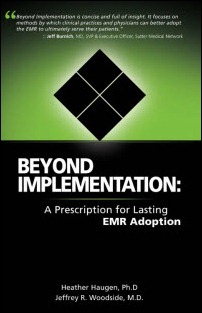
7-31-2012 10-01-30 PM

From Frank Fontana: “Re: paid endorsement programs such as those from AHA Solutions and the HFMA Peer Review Program. What do readers think about those programs?” I said years ago that they were pay-to-play, but they do still require products to be vetted, leaving me neutral on their value (I don’t see the benefit, but if they help connect vendors with prospects, then I see no harm.) Your opinions, please.

From EMR User: “Re: downtime penalty terms in contracts. We negotiated that any issue that we deem adversely affects our access or system usability allows us to subtract 5% of our monthly fee. We can do this daily up to five times per month.” I’ve said it before, but maybe it bears repeating. List the top handful of items that would be worst-case to you once you’re live on a vendor’s system (downtime, vendor acquisition, hardware failure, lack of acceptable implementation people, poor support) and insist on a penalty if any of them occur. Or, if you’re a glass-half-full type, reduce your fixed payment amount and offer a bonus if none of the events happen (same result, but it sounds nicer.) That makes sure your vendor has a vested interest in not allowing your worst dreams to come true, and at least if they do, you get the slight satisfaction that you’re getting paid for your trouble.

From Laboratorian: “Re: Epic. Could you opine to the extent to which MUMPS is constraining the growth of Epic? Everyone suggests this is a limiting factor, but so far it hasn’t been. How and when would they hit the proverbial wall?” It’s armchair quarterbacks, not customers, that keep trying to create a non-existent Epic Achilles’ heel out of MUMPS and Cache’. Most of that hot air comes from competitors Epic is killing, self-proclaimed experts who’ve never worked a day in IT or in a hospital, and cool technology fanboys who can’t stand the idea that Epic doesn’t care what they think. Despite the use of some ancient underpinnings, Epic’s product is apparently almost infinitely scalable, it does everything customers need it to do, and it works reliably. Nobody cares what it’s written in except their programmers – customers just want solutions, and the decision-makers when Epic is purchased are usually end users and operational executives, not IT geeks who salivate over source code. The only walls Epic could hit would be if InterSystems decided to go out of business (that’s not happening – they were absolutely printing money even before all those thousands of new Epic Cache’ user licenses dropped into their lap); if InterSystems decides to get greedy and either raise their Cache’ licensing fees or stop developing it (doubtful); or if Epic can’t get programmers willing to learn MUMPS (which has never been a problem because they do all of their training in-house and new UW psychology grads aren’t exactly swimming in job offers from Microsoft or Cisco). Anyone who claims Epic is about to hit the technical wall is just trying to plant fear, uncertainty, and doubt in the market. If there’s an Epic wall to be hit, it will be high costs that hospitals can no longer afford with reduced reimbursement, lack of ability to scale as it tries to extend its dominance outside of the US, some kind of meltdown like Judy stepping down and creating a vacuum of power, or perhaps some major and heretofore unfelt shift toward open systems that would put its rather closed model at risk. You’ll know that’s happening when you see the KLAS scores move from green to yellow. The only opinions that count are those expressed by customers with their dollars.

From Infrastructure Manager: “Re: downtime. I used to work with McKesson Horizon Clinicals, which didn’t have a great downtime report system. We scripted a routine that generated a PDF on a different server than Horizon and also copied it to a few PCs. It’s not a fast system to begin with, and you can’t help but feel the system drag when running those reports every hour, even with a huge Oracle server farm run by skilled DBAs. Also, the database design is poor and the tables are not indexed properly – you’ll see 4000 IOPS on a table/storage location and wonder that the hell is going on. If you’re hosted, who cares? Chew up those servers in a data center you don’t run and hope they’ve scaled to the appropriate size. If you aren’t hosted, take these reports very seriously.”


HIStalk Announcements and Requests

7-31-2012 9-34-41 PM

inga_small Unlike the curmudgeon Mr. H, I have watched a good deal of the Olympics. Who knew team handball was even a sport, much less an Olympic one? Yep, that’s what’s on at 5:00 a.m. on Sunday (don’t ask why I was up so early.) Go Iceland, by the way. So far my biggest complaint is that the men beach volleyball players don’t wear uniforms that are nearly as hot as the women’s. Thank goodness for men’s synchronized diving, however. I have decided that someone ingenious needs to develop an app that blocks all spoilers on Twitter and Facebook so that I will be totally surprised when Michael Phelps becomes the most decorated Olympian of all time (thanks all you expats in England who just had to share the news on Facebook.) Finally, good thing Rio is only one hour ahead of Eastern time so we’ll all see more live coverage in 2016.

7-31-2012 10-03-51 PM

Just  to prove to Inga that I’m not totally Olympics ignorant even though I haven’t watched the tape-delayed spectacle, here’s an interesting fact: the 300 hospitals beds used in the producer’s opening ceremonies tribute to NHS will be donated to hospitals in Tunisia.

Listening: reader-recommended Son Volt, music for driving or moping in smoky bars. Born of the remnants of 1990s minor stars Uncle Tupelo, somewhere between alt-country and roots rock. REM meets Neil Young.


Acquisitions, Funding, Business, and Stock

7-31-2012 10-04-53 PM

CommVault beats Wall Street expectations with its Q1 performance: net income of $10.1 million ($0.21/share) compared to $3.1 million last year on revenues of $111.3 million, up from $91.5 million.

7-31-2012 10-05-36 PM

Merge Healthcare announces Q2 numbers: revenue up 13%, adjusted EPS $.02 vs. $0.06, beating earnings estimates by a penny.


Sales

7-31-2012 10-08-02 PM

The Canadian Centre for Addiction and Mental Health selects Cerner Millennium as its clinical information system.

North Carolina HIE expands its relationship with Orion Health with the implementation of the company’s Health Direct Secure Messaging. The HIE went live in April 2012 and 70 providers have signed up, with the next phase being rollout of Orion’s EMR Lite. NC Direct is free for NC HIE participants and $100 per year per mailbox otherwise.

St. Louis-based Mercy chooses Humedica MinedShare as the Epic-integrated clinical intelligence solution it will use to manage population health for its 31 hospitals and 200 hospitals.


People

7-31-2012 5-41-41 PM

Lifespan (RI) names Eric Alper MD (UMass) as information systems medical director, charged with overseeing the development and implementation of clinical applications for the health system.

7-31-2012 5-44-37 PM

Amanda LeBlanc (Encore Health Resources) joins CTG Health Solutions as managing director of marketing and communications.


Announcements and Implementations

7-31-2012 10-09-46 PM

Yavapai Regional Medical Center (AZ) implements Cerner.

Christus St. Vincent Regional Medical Center (NM) goes live on the second phase of its Cerner implementation with the addition of CPOE and documentation for physicians, nurses, and ancillary care providers.

The VA system in western New York announces its participation in the HEALTHeLINK HIE as part of the VA’s Virtual Lifetime Electronic Record Health Communities Program.

Vocera announces the availability of its B3000 Communication system in France and introduces the Vocera Secure Messaging application for tracking messaging communications.

7-31-2012 10-10-57 PM

Jacksonville Medical Center (AL) goes live on CPSI.

E-prescribing system vendor NewCrop will incorporate interactive drug services from PDR Network into its platform, allowing its users to receive updated drug information, safety alerts, and regulatory and liability messages at the point of prescribing.

Caradigm (the GE-Microsoft joint venture) announces GA of Vergence 5, the latest release of its single sign-on and context management platform for healthcare.

Iowa Medicaid says its integrity program saved the state $30 million in its second year of operation, bringing the total to more than $50 million. Optum administers the program that analyzes provider claims for overcharges due to upcoding, unnoticed private insurance coverage, fraud, and simple math errors in bills.


Technology

The FDA clears Proteus Digital Health’s ingestible sensor, which works with a companion wearable patch and mobile app to monitor medication adherence.

7-31-2012 10-15-08 PM

The DoD and VA release PE (for prolonged exposure) Coach, a free smart phone app to assist service members and veterans with PTSD.


Other

Minnesota achieves the highest rate of e-prescribing use in 2011, with 61% of prescribers routing prescriptions electronically. Massachusetts and New Hampshire had the highest physician adoption rate at 86%.

The New Orleans paper reveals that two-thirds of the full-time physicians working in Louisiana state prisons have been disciplined by the state medical board for issues that include pedophilia, substance abuse, and dealing methamphetamines.

7-31-2012 9-43-15 PM

Hartford Hospital (CT) and a home care group announce that information about 10,000 patients was contained on a laptop stolen from an employee of Greenplum, a “big data analytics” vendor and division of EMC that was doing readmission analysis for the organizations. The laptop was not encrypted.

I’m always skeptical of the Meaningful Use attestation numbers, so here’s an example that Meditech sent over in response to some of our recent posts. Inga’s analysis of numbers provided by CMS showed Meditech with around 120 hospital customers attested through May 2012. Meditech’s official number is 431, and even if mega-customer HCA is counted as only one hospital, they’re still at 271. That would place Meditech at #1, far above CMS’s #1 Epic, except that maybe CMS has their numbers wrong, too. I personally don’t think the number of attesting customers means much and this makes me even less interested in the vendor totals.

Physicians and experts testify to a House subcommittee that small practices are dropping like flies, with physicians moving to employed positions because of declining payments and increased reporting requirements. An orthopedist said his group shut down and took hospital jobs after spending $500K on an EMR hoping to reduce cost and improve quality, but the initial savings were eaten up by increased IT labor costs, upgrade fees, and the work required to document Meaningful Use.

Weird News Andy dubs New York Mayor Michael Bloomberg as “Dr. Bloomberg” after his push for hospitals to discourage new mothers from using canned baby formula instead of breast-feeding. WNA adds that he assumes the newborns won’t be allowed to have 32 ounce Big Gulps, either.


Sponsor Updates

  • Wolters Kluwers executive board member Jack Lynch discusses the emergence of “compliance clouds” during the company’s Half Year Media Roundtable meeting in Amsterdam.
  • Informatica gains partner support for its latest release of Informatica Cloud.
  • Impact Advisors earns the highest ranking in KLAS’s HIE consulting report, specifically identified as the only fully rated vendor providing HIE advisory and technical work.
  • DrFirst Chief Strategy and Privacy Officer Thomas Sullivan testifies at an ONC hearing on identity-proofing solutions for the electronic prescribing of controlled substances.
  • HIStalk sponsors earning a spot on Modern Healthcare’s Best Places to Work in Healthcare in 2012 include Aspen Advisors, DIVURGENT, Encore Health Resources, ESD, Hayes Management Group, Iatric Systems, Impact Advisors, Imprivata, Intellect Resources, Intelligent InSites, maxIT Healthcare, Santa Rosa Consulting, and The Advisory Board Company.
  • Allscripts, Beacon Partners, Cumberland Consulting Group, ESD, Merge Healthcare, and The Advisory Board Company receive the Healthcare’s Hottest companies designation by Modern Healthcare.
  • eClinicalWorks and Intelligent Medical Objects host webinars to introduce eCW IMO Problem IT Smart Search for ICD-10 coding.
  • United Hospital System of Kenosha (WI) renews its licensing agreement for Streamline Health’s Enterprise Content Management Solution.
  • MED3OOO customer Family Healthcare Network (CA) receives over $500,000 in EHR incentive payments.

Contacts

Mr. H, Inga, Dr. Jayne, Dr. Gregg.

More news: HIStalk Practice, HIStalk Mobile.

John Gomez 7/30/12

July 30, 2012 News 4 Comments

HIT Integration Analysis Guide

Over the past several months, one of the biggest questions I have gotten regarding the state of HIT is related to platform and technical integration. Specifically, the debate related to single platform vs. an integrated platform. Typically the question is posed by someone who is not technical and who is concerned about separating vendor hyperbole from reality.

In order to try and shed some light on this topic (which is not a simple one), I have developed what I am tentatively calling the “HIT Integration Analysis Guide,” which I outline below. The purpose of the guide is to provide those analyzing single vs. integrated platforms a means to better understand the true nature and ability of integration. I will provide further light on this shortly, but for right now, let’s create some definitions for what I mean by single vs. integrated.

A “single platform” is one that provides a single set of technologies and database across a set of applications. The common example of this is where you have an EMR which relies on a single database across ED, lab, surgery, OB/GYN, pharmacy, acute, ambulatory, physician and nursing documentation, CPOE, and other venues. In a single platform offering, you have a single technical offering with all data being shared across the different venues of care.

An “integrated platform” is one which uses technical and architectural approaches to “integrate” the various venues of care together. Data and other features may or may not be shared, depending on the level of integration.

To help clarify this a little, let’s consider an analogy.

A store such as Target is a good example of a single platform system. When you shop at a Target (or similar department store), you are able to have most of your needs met (to varying degrees of satisfaction) while never leaving the store. You can get a DVD, clothes, food, household items, and appliances. Regardless of the department in the store, you expect consistent signage, vocabulary, customer service, and support. When you check out, you can use a single method of payment. You have more than likely have saved time by simply dealing with a single vendor. If you need to return an item or have another issue, you can resolve it with a single vendor — the department store.

In contrast to this is the mall (such as the Mall of America), which is representative of the “integrated platform” experience in HIT. In this model, you go to the mall, and although everything is housed in a single location with similar look and feel in common areas, similar operating hours, and other shared services, the experience you have with each vendor in the mall is unique to that vendor. Customer service levels, return policies, product quality, and other attributes are specific to the store you enter within the mall. Although there is some commonality throughout the mall, it ends at the door of the individual store.

Each of these models has its pros and cons. What is important to keep in mind is that the tradeoff is often on depth of service vs. convenience and “good enough” service. For instance, you are apt to get better service regarding an iPad at the Apple store in the mall then you would for the same iPad at Target. Yet the number of people and level of chaos at the Apple store may not make it right for you.

Unlike this analogy, in the world of HIT there are some hidden factors which need to be evaluated when you are deciding the “single platform” vs. “integrated platform.” This bring us to the “Integration Analysis Guide” and the meat of this diatribe. Although there may be other tests, criteria, or scorecards for measuring how well things integrate, I think it is important to have something that is simple to understand, that provides some key and direct questions you can ask your vendor’s executive management, and that removes the complexity and the “marketecture” from your vendor’s presentation.

Single Platform Analysis

The key concern here is related to understanding if the vendor’s system is truly on a single platform and using a single set of technologies. This should not take long to determine. To be honest, the technologies they are using are not as important for this analysis as to whether or not there is a single set of technologies. Here is what I would be asking:

  1. Do all your applications run from a single database?
  2. Do you have a single technical stack across all of your applications?
  3. Do you employ a single programming language across your technical stack?
  4. Do you have a single configuration system, help system, HIE system, HL7 sub-system, reporting system, security framework, and user documentation across your platform?

That’s pretty much it. The answer should be a resounding “yes” to each question for a vendor to declare a single platform architecture with single database. Are there are other things to consider? Of course, but to keep this simple, those are the big things to understand.

If the answer is “no” or “we are working on it,” then start asking for percentages of completion. “What percent of your system is on a single security framework?” for instance.

Integrated Platform Analysis

Analyzing the Integrated platform is not as simple as the single platform analysis, but I will do what I can to keep it as simple as possible. For the techies among you, please note that I am deliberately pushing topics related to technical integration to the bottom of the list, because unlike single platforms, the specifics of workflow are more important then what technology or programming language is being utilized. At the end of the day, the goal of embracing an integrated platform by a healthcare system should be that the individual specialties of the system (ED, lab, CPOE, etc.) are much more advanced then that offered by a single platform vendor. Hence we will focus first on workflow and then on technical integration.

Level 0 Integration – The Basics

If we think of this as a set of building blocks, the most basic building block is the exchange of rudimentary information among the various components and application offered by the integrated platform vendor. How this integration occurs is not as important as the fact that it does occur reliably. To understand how well your vendor is doing this, here are some questions to ask and the right answers:

  • Question: please list for me the basic data you are sharing among your modules and applications. Answer: problems, allergies, immunizations, history, orders, demographics, family history, billing information, and care team. This is a pretty basic list, and to be honest, most of it is what is required to effectively support HIE systems (regardless of what the government thinks.) Also, much of this can be done via HL7 or other simple data exchange. The point being that if your vendor cannot exchange this information, then regardless of how advanced their technology, you are in for serious workflow challenges.
  • Question: what is the latency encountered with sharing data? This is how long it will take for data to show up that is entered in one application in another application. For instance if you update an allergy in the ED system, how long before it shows up in the ambulatory system? Answer: three minutes. I know three minutes sounds like forever in healthcare, right? But it is realistic, and without a major infrastructure investment by you the healthcare provider, you should consider this an adequate answer.
  • Question: what occurs if there is an application outage? If we enter an allergy in the ED system and the ambulatory system is down for maintenance, what happens? Answer: the applications will resynchronize after an outage to assure all information is correct. Simply stated, all the data is always up to date give or take three minutes, even after a system outage.
  • Question: how does integration support workflow? Answer: any data that is exchanged is treated as if it was entered by a human, and so all workflow remains effective. The goal here is to assure that when data is passed back and forth behind the scenes between systems, it does what is supposed to do. For example if you have a rule in your ambulatory system that if a patient’s body weight drops more then 12 pounds a blood test should be drawn, then that rule should fire even if the data was entered in an ED system and sent to the ambulatory system behind the scenes.

Level I Integration – Content Integration

Assuming your vendor can fully support your needs for Level 0, then you should begin Level I analysis. If the vendor cannot support Level 0, there is no need to consider Level I or continue your analysis of the vendor, if your goal is to hope for a truly integrated platform that is not on a single platform.

Level I is concerned with content integration and how critical it is that information that is heavily relied on by the care team is always available, regardless of how it was entered. To be frank, most vendors can do Level 0, but they cannot do Level 1 unless they are on a single platform. Level I is by far the most difficult part of integration, and frankly, the most critical to get right.

  • Question: do you exchange all nursing and physician observations and are they editable? Answer: yes. All nursing and physician observations are exchanged among all systems. You can edit them and update them in any application. Let’s walk through an example. A nurse inputs an observation in a surgery system. That observation should now be in the acute care system. If the nurse using the acute system needs to amend that observation, they should be able to do so without issue. (Editing is something debatable, but the point is the observation should be exchanged and should act as if it was entered by a human.)
  • Question: do you exchange all nursing and physician documentation and allow it to be edited? Answer:  yes. All nursing and physician documentation is exchanged among all systems in our platform. You can edit them and update them in any application. Again, the issue here is that you need to share content. A physician sees a patient in their office, makes some notes on the patient, admits the patient, and then later sees them in the hospital. They need to see that note and then continue updating it. Same goes for the nurses’ needs related to documentation.
  • Question: is your content ubiquitous throughout your system? Answer:  yes. We provide the same level of content across our system. You want to make sure that all content is the same. You don’t want a situation where one application on the platform supports oncology content and then another application does not or doesn’t support it to the same level.
  • Question: do you support the same vocabulary throughout all your applications on your platform? Answer: yes. If you are going to eventually be doing analytics related to performance, cost management, and compliance, you are going to need a single vocabulary shared among all the applications.
  • Question: does personalization follow the user? Answer: yes. Things like patient list layout, favorites, order sets, documentation sets,  and personal rules and shortcuts follow the user regardless of the application they are using. Users tend to spend a good deal of time once they get to know a system setting it up to meet their needs. If their personal settings are not available or don’t follow them, you need to know this upfront.

Level II Integration – Infrastructure

Here is where we start to look at the technical integration, but still from a business and user perspective. We are not going to concern ourselves with technical choices, but rather with technical implementation by the vendor. Most of these questions will be similar to those you ask of a single platform vendor.

  • Question: do you have a single reporting and analytics system? Answer: yes. Regardless of the application you are using, we provide a means to access all data from a single location for purposes of reporting and analysis. It is important that reports, dashboards, and other analysis can be run across applications. If you are going to truly have a holistic view of your platform, the vendor most provide you with reporting tools that go across all integrated applications.
  • Question: do you have single security framework? Answer: yes. You only need to define a single set of user groups and user IDs and you can centrally manage all users. If the vendor does not support this, it will mean that a physician using a system in their office will have a different user ID and password for that system than the one in the hospital. The vendor at a minimum should support a single sign-on solution, but keep in mind most SSO solutions don’t allow for role-specific management and policies across applications.
  • Question: do you have a single configuration system? Answer: yes. You can manage all configuration some a single set of tools. Again, if this is not the case, you will need to figure out how you will manage and configure each system on the platform and how you will distribute changes. This becomes much more of an issue as you consider things like content changes, standardized care, reporting, and other workflow items.

Level III – TCO Analysis

This section is not so much a series of questions to the vendor, but more so a series of things to consider when you are evaluating a single vs. integrated platform. Each of these items relates to the impact of costs. How much of an impact and if it is of concern is left to you to determine. What is important is to consider the tradeoffs in depth versus breath that you get from a single platform vendor vs. that of an integrated platform.

  • If the vendor doesn’t support a single look and feel across all their applications, will the cost of training different users on multiple systems be an issue? Most integrated platform vendors do not provide a single look and feel across all their applications. This means that a user who has to interact with multiple applications will need to learn different menus, commands, and layouts.
  • Will you need to increase staff to manage different applications using different configuration tools if the vendor doesn’t have a single configuration system? If the vendor doesn’t support a single configuration toolset, what impact will that have on your staff in responding to changes and upgrades?
  • Does the vendor require different technology for each application? Although we didn’t dive into technical architecture, you should understand if on a per application basis the vendor is using the same technology and database across all their systems. If not, you may have to maintain technical staff with different areas of expertise, different licensing agreements, and even manage different versions of a similar technology.


Although this is a rather lengthy article overall, I tried to keep it as short as practical and provide some focused questions that help you quickly determine what is right for you. And more importantly, to understand if your vendor is able to meet your needs. There is so much more that we could evaluate regarding either side of the coin, but I am rather confident that if you use the information above, you will quickly be able to pinpoint where your vendor stands and if they are able to deliver.

Lastly, yes you can and should analyze the single platform vendor as to if they can truly do all that we asked of the integrated platform vendor. Although chances are that they can, and it is probably harder for an integrated platform vendor to achieve the same level of ability, there is a chance that a single platform vendor made design choices that preclude them from sharing data among their applications in a way that you need. If you feel you need to dive deeper, you can certainly ask all of the “integrated platform” questions of the “single platform” vendor.

I will refrain from providing an opinion here on weather or not you should move in one direction or the other (single vs. integrated). What I will say is that you need to keep in mind that at some point you will need to integrate third-party systems into your ecosystem. Regardless of if you go single or integrated, you do need to consider the openness or closed nature of your vendor offerings.

I do believe there are many myths related to this topic in HIT. It is a topic I will think about exploring and writing about in the future. But for now, let me say that I do not see any one vendor being tremendously more open or closed then any other vendor. In fact, I would say that most HIT vendors offer closed systems, which is unfortunate.

All that aside, I hope that as you continue your journey the information here is somewhat helpful and useful.

John Gomez is CEO of JGo Labs.

Roper To Acquire Sunquest for $1.4 Billion

July 30, 2012 News 3 Comments

image

Roper Industries announced this morning that it will acquire laboratory and diagnostic information systems vendor Sunquest Information Systems. The all-cash transaction is valued at $1.415 billion.

Roper Chairman, President, and CEO Brian Jellison was quoted in the announcement as saying, “Sunquest meets all of Roper’s key acquisition criteria and is an ideal fit with both our Medical and Software platforms. The business is the market leader in software solutions for the critically important healthcare provider laboratory market. We expect Sunquest to benefit in all economic environments from very favorable market forces – an aging population, expansion of anatomic pathology, and the need for reduced healthcare costs and improved quality of care. Sunquest’s software and application engineering capabilities deliver an outstanding return on investment for their customers. The company has attractive cash return characteristics and generates significant recurring revenue through long-term customer relationships and very high retention rates.”

Jellison also stated that the company will continue to operate under the Sunquest name with full continuity of personnel. Closing is expected within 30 days.

Sarasota, FL-based Roper Industries is an industrial manufacturer whose medical units include measurement systems, medical devices, and imaging solutions. Sunquest is owned by an investor group that includes Huntsman Gay Global Capital and Vista Equity Partners.

Text Ads


RECENT COMMENTS

  1. Isn't that actually present perfect indicative?

Founding Sponsors


Platinum Sponsors


Gold Sponsors


RSS Webinars

  • An error has occurred, which probably means the feed is down. Try again later.