


EPtalk by Dr. Jayne 7/17/25

It’s been one of those weeks where I’m pulled in so many directions I’m not sure which way I’m supposed to be going. Just when I think I’ve finished something, another obstacle turns up in my path and I have to swerve.
I’ve attended enough workplace resilience seminars over the years that pivoting from crisis to crisis seems second nature, even if it’s not fully in my comfort zone. Still, there’s something to be said for the excitement of doing the corporate equivalent of a “cattle guard jump” from time to time, so I’m happy to keep on keeping on.
From Universal Soldier: “Re: LLMs replacing physicians. What’s your take on projects like this?” Headlines abound for this kind of work, especially when the media talk about models achieving “diagnostic accuracy” or outperforming the average generalist physician.
The Microsoft AI Diagnostic Orchestrator (MAI-DxO) is claimed to deliver greater accuracy, but also to reduce diagnostic costs, compared to when physicians evaluate a patient. I don’t disagree with the fact that we need to figure out how to do workups efficiently and to improve cost savings, but I wonder about the ability to translate this work to bedside realities. Let’s inject some of the realities of the current state of medical practice into the model and see if it can come up with solutions.
We can add a medical assistant who is stuck in traffic and doesn’t arrive in time to room the first patient, increasing everyone’s anxiety level as the office tries to kick off a busy clinic session when they’re already behind before they even start. As the model suggests tests to order, let’s throw in some cost pressures when those interventions aren’t covered by insurance or the patient doesn’t have any sick time to cover their absence from work. Add in a narrow network that makes it nearly impossible to refer to a subspecialist even when it’s needed. Let’s add an influencer or two worth of medical misinformation to the mix. Now we’re getting closer to what it’s really like to be in practice.
It’s great to do tabletop exercises to see if we can make clinical reasoning better. But unless we’re also addressing all the other parts and pieces that make healthcare so messy, we’re not going to be able to make a tremendous difference. I would love to see an investigation of whether physicians can improve their clinical reasoning simply by having more time with the patient, or fewer interruptions when delivering care, reviewing test results, and formulating care plans.
I would also like people to start talking more seriously about how care is delivered in other countries, where better clinical outcomes are achieved while spending less money. Maybe it’s just easier to talk about AI.
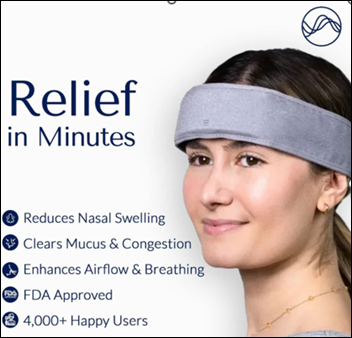
An informatics colleague asked me what I thought of the Sonu Band, which is a therapeutic wearable that promises “clinically proven, drug-free vibrational sound therapy” that has been proven to improve the symptoms of nasal allergies. The band is used in conjunction with the Sonu app, which works with the user’s smartphone to scan their face and combine it with voice analysis and a symptom report to personalize the therapy.
The company says that the facial scan produces skeletal data that is used to create a digital map of the sinuses. It then uses proprietary AI to calculate optimal resonant frequencies for treatment.
Having spent most of my life in the Midwest, I can attest that allergy and sinus symptoms seem to be nearly universal. I reached out to my favorite otolaryngologist for an opinion, and although he pronounced it “fascinating,” he hadn’t heard of it. If it works as well as the promotional materials say, I could imagine it flying off virtual shelves. If you’ve given it a whirl or seen it prescribed in your organization, we would love to learn more.
The American Academy of Family Physicians and its Family Practice Management journal recently reviewed some AI-enhanced mobile apps that target primary care physicians. This was the first time I had seen their SPPACES review criteria:
- S – Source or developer of app.
- P – Platforms available.
- P – Pertinence to primary care practice.
- A – Authoritativeness, accuracy, and currency of information.
- C – Cost.
- E – Ease of use.
- S – Sponsor(s).
Even if you’re not in primary care (in which case you can feel free to omit the second “P”), this is a good way to encourage physicians to think about the sources of information they use in daily practice.
It’s not mentioned in the article, but the author also encourages physicians to be aware of whether their tools are HIPAA-compliant and whether they’re entering protected health information into third-party apps. He also mentioned that none of the apps reviewed are a substitute for physician judgment.
I would also consider adding an element to the “cost” criteria that encourages users to think about how the app is making money. People seem quick to overlook third parties that are monetizing user information, if they’re even aware of it happening at all.
I will use this as a teaching tool with students and residents, especially since they’re quick to download new apps without doing a critical review first.
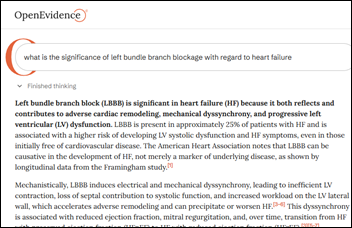
I’m not sure how I missed this one, but OpenEvidence filed a complaint against Doximity last month, alleging that Doximity’s executives impersonated various physicians and used their NPI numbers to gain access beyond what they should have as lay people. Such activities are prevented by the OpenEvidence terms of use, assuming anyone actually reads them (they’re included in the complaint as Exhibit A if you’re interested).
The complaint alleges “brazen corporate espionage” and points out that Doximity “has built its brand on physician trust and privacy protection.” The defendants are alleged to have used prompt injection and prompt stealing to try to get at proprietary OpenEvidence code.
Pages 3 and 4 of the complaint describe a few examples of attacks in detail. The complaint notes that “this case presents the rare situation where defendants’ illicit motives and objectives are captured in their own words.” I always love reading a good court document and this one did not disappoint.
What do you think about corporate espionage? Can companies truly protect their intellectual property anymore? Leave a comment or email me.

Email Dr. Jayne.















I was born roughly 2 months after the US space program began (Explorer 1), and I've followed it all my…