Recent Articles:

EPtalk by Dr. Jayne 1/23/20

January 23, 2020 Dr. Jayne 2 Comments

IBM has proposed measures to reduce concerns of bias in the use of artificial intelligence solutions. Critics have noted that AI technologies use data that can reflect past discrimination and may not accurately reflect health factors for women, minorities, the elderly, and disabled persons. IBM is urging industry and governmental agencies to work together to create standards to measure bias and prevent potential discrimination. It also calls on companies in the AI space to appoint ethics officials and to assess whether AI systems can cause harm.

I’m eagerly awaiting the arrival of useful AI systems in my clinical practice, since we perform primary readings on all of our so-called “plain film” radiology studies. (It’s been decades since I’ve seen any film, or smelled the delightful chemicals, and I certainly don’t miss it.) It feels like we sometimes over-call findings on chest X-rays, but without truly crunching the data it’s hard to tell, since we have an inherent bias because everyone who has a film is already pretty sick. It would be great to have AI backup or pre/post screening to make our lives a little easier and a little more evidence-based, while we wait the 30-45 minutes for a radiology overread.

I enjoyed reading this op ed piece about renewed efforts to combat medical errors. I’ve worked with a handful of systems recently that still struggle with the basics, including ongoing use of so-called “do not use” abbreviations. Some vendors seem to think that just because their product isn’t certified EHR technology that they don’t have to respect the standard conventions for safety and usability. The piece does treat a couple of issues too simplistically, blaming EHRs for physician burnout (I’d argue it’s not only EHRs but the mounds of regulations and data collection requirements that EHRs were designed to satisfy). There is also a lack of citations for key data points, such as the allegation that radiologists at one organization are viewing images at a rate of one every four seconds. I wonder if that state’s Board of Healing Arts has anything to say about that.

Applications for the CMS Primary Care First program closed this week, and I’ll be interested to see how many organizations signed up and ultimately what payers end up participating in the program. The initiative didn’t excite any of my clients, despite their detailed evaluation of the program’s different tracks and comparison of it to existing programs. The application process ran so far behind that they had to shift the program by a year, so I’m not sure anyone has too high of hopes for it.

I missed this newsy tidbit last week: The US International Trade Commission will be investigating Fitbit, Garmin, and other wearable devices following a patent infringement complaint by competitor Koninklijke Philips. At least in my community, interest in fitness trackers seems to have waned – no one talks much anymore about their steps or jumps up based on a prompt to MOVE! like they used to. I still use my Garmin watch to track my runs in addition to telling me the time, but I turned off the activity prompts and the display of texts from my phone, as I found them too disruptive.

My inbox has been overstuffed for the last couple of months, so I also missed this item: Hims & Hers telehealth is partnering with Ochsner Health System for coverage of conditions not usually treated through the Hims & Hers platform. They’re fairly small as a telehealth vendor with only 200 physicians, so I’m sure broadening their network will be a benefit. I’m not a fan of their sale of nonmedical consumer products such as beauty and skincare formulas, nor their sale of various supplements and alleged sex drive boosters. I’m not a fan of those in face-to-face practice either, as I think it’s hard to remain objective about pushing products if you profit from them, and I think the evidence on some of their products is thin at best. Apparently Ochsner isn’t worried about being on the slippery slope and they plan to launch the service first in Florida.

A good friend of mine has done significant work for tobacco quit-line services, so I was glad to see this article looking at EHR-based versus fax-based referrals to the quit lines. Long study short, the availability of EHR-based referrals produced referral rates at three to four times that of the current fax-based standard of care. EHR-based referrals were also more numerous for underserved populations. The key takeaway is that the easier the process, the more likely that clinical teams will do it – and if launching referrals from screens where the staff is already working does the trick, that’s a win for patients.

image

HIMSS is hosting a webinar on Monday, February 3 that caught my eye: “Monitoring Grandma: Adoption of Connected Health Tech by Seniors.” The objectives are to explore current tech trends in the older population, along with real-world experiences from clinicians using technology with geriatric patients. They also plan to discuss attitudes toward health technology at the community level along with how it should impact design and adoption. I’ve struggled occasionally with getting my Amazon Echo to do what I want it to do – maybe it’s my accent or maybe I’m just not using the right words. Or perhaps as I head farther away from the tender age of 29, I need to embrace the mythical Amazon Echo Silver.

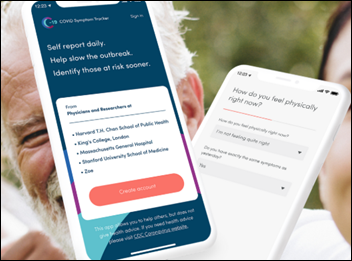
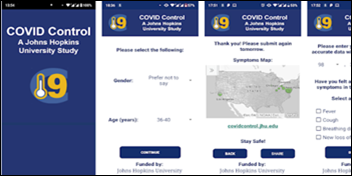
Informaticists are discussing the recent surge in China of a novel coronavirus that has killed 17 people with more than 540 cases confirmed. Health systems in the US, especially those in major points of entry, are debating the addition of EHR screening questions similar to past outbreaks of Severe Acute Respiratory Syndrome (SARS) and Ebola virus. The city of Wuhan, with a population of nearly 12 million people, has shuttered local transportation systems, suspended outbound flights, and is asking residents to stay home. The new flu-like virus is suspected to have jumped to the human population from illegally traded wildlife at a Wuhan market. The World Health Organization will decide this week if this outbreak qualifies as a global health emergency, although airports are already screening travelers. Meanwhile, the United States has already seen over 9.7 million cases of influenza with 87,000 flu-related hospitalizations and 4,800 deaths (including more than 30 children) this season. Just something to think about.

Has your hospital added coronavirus screening questions to the EHR yet? Leave a comment or email me.

button

Email Dr. Jayne.

Morning Headlines 1/23/20

January 22, 2020 Headlines 6 Comments

Epic’s CEO is urging hospital customers to oppose rules that would make it easier to share medical info

Judy Faulkner urges CEOs at some of Epic’s largest hospital customers to sign a letter to HHS Secretary Alex Azar protesting the proposed interoperability rule published last year.

Gentem raises $3.7 million to fund future growth

San Francisco-based Gentem raises $3.7 million in a seed funding round that will help the company scale its RCM technology for physician practices.

DoctorLogic Secures $7 Million Series A Financing From Unbundled Capital

Medical marketing software and services vendor DoctorLogic raises $7 million in a Series A round.

Morning Headlines 1/22/20

January 21, 2020 Headlines Comments Off on Morning Headlines 1/22/20

Snohomish County man is first US case of new coronavirus

Providence Health & Services in Washington is working to install screening for the Novel Coronavirus in its Epic EHR after caring for the first US citizen to contract the infection.

Amazon just filed a bunch of international trademarks for ‘Amazon Pharmacy’

Amazon files trademarks for “Amazon Pharmacy” in the UK, Canada, and Australia.

Operations back to normal at Great Plains Health after cyberattack

Great Plains Health (NE) nears full recovery from the November 25 ransomware attack that forced it to pen and paper for several days, and to cancel some services and appointments.

Comments Off on Morning Headlines 1/22/20

News 1/22/20

January 21, 2020 News Comments Off on News 1/22/20

Top News

image

Amazon files trademarks for “Amazon Pharmacy” in the UK, Canada, and Australia. It’s a move some see as indicative of the company’s global plans for PillPack, the online prescription drug delivery company Amazon acquired for $753 million in 2018 and rebranded to an Amazon company late last year.


HIStalk Announcements and Requests

image

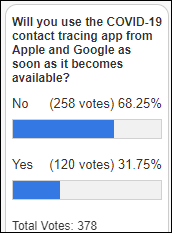
I had a technical hiccup when publishing this week’s poll, so I’d like to give readers another chance to respond. Comments (anonymous or not) are appreciated.


Webinars

January 29 (Wednesday) 2:00 ET. “State of the Health IT Industry 2020.” Sponsor: Medicomp Systems. Presenters from Medicomp Systems: Dave Lareau, CEO; Jay Anders, MD, MS, chief medical officer; Dan Gainer, CTO; Toni Laracuente, CNO. Despite widespread adoption of EHRs, healthcare professionals struggle with several unresolved systemic challenges, including the lack of EHR usability, limited interoperability between disparate systems, new quality reporting initiatives that create administrative burdens, and escalating levels of physician burnout. Join the webinar to learn how enterprises can address current industry roadblocks with existing market solutions and fix health IT’s biggest challenges.

Previous webinars are on our YouTube channel. Contact Lorre to present your own.


Acquisitions, Funding, Business, and Stock

image

Health Scholars raises $17M in a Series B round. The Westminster, CO-based company has developed virtual reality-based medial training and simulation software and programs for hospital and public safety personnel. Co-founder, President, and CMO Brian Gillett, MD is still a practicing emergency physician with US Acute Care Solutions.

image

Socially Determined, a social determinants of health analytics startup based in Washington, DC, raises $11 million in a Series A round. 


Sales

  • Banner Health (AZ) signs a five-year contract with EVisit and VeeMed for integrated ambulatory and acute care telemedicine services.
  • Steward Health Care expands its Meditech deployment with the addition of 18 facilities across Arizona, Arkansas, Louisiana, Texas, and Utah.

People

image

Kernie Brashier (Payspan) joins urgent care health IT vendor Experity as CTO.

image

Tenet Healthcare names former Oracle EVP Joe Eazor president and CEO of Conifer Health Solutions.


Announcements and Implementations

image

Fulton County Medical Center (PA) will move from Greenway to Meditech Ambulatory in early February.

image

Experity announces GA of Experity 2021, software that combines EHR, practice management, RCM, and updated coding capabilities from Practice Velocity and DocuTap, which merged to form the company last year.


Privacy and Security

image

In Nebraska, Great Plains Health CIO Brandon Kelliher says the hospital has nearly fully recovered from the November 25 ransomware attack that forced it to pen and paper for several days, and to cancel some services and appointments. Primary clinical systems including Epic were back up and running in less than two weeks. The hospital ended up having to rebuild 290 of its 360 servers.


Other

image

Researchers at UC San Francisco determine that physicians prescribe fewer opioids when default settings related to the preset number of opioids are adjusted downwards in the EHR.

image

Mayo Clinic Platform President John Halamka, MD shares a high-level overview of Nference, a new project that will turn patient data into de-identified data that analytics partners can then use to generate new insights. Halamka stresses that “this is the perfect balance of agility, innovation, and privacy protection. I’ve worked in many organizations and not experienced a design that has so many safeguards against data leakage.”

image

Cape Fear Valley Health (NC) apologizes to 17 rape victims after billing them for their forensic medical exams, an action prohibited by state law. The health system blamed the patient classification and billing error on its conversion from Cerner to Epic last May.


Sponsor Updates

  • Avaya names William Madison (Masergy Communications) VP, North America cloud sales.
  • Bluetree adds Emily Tempels, Brian Redig, and Paul Haney as executive partners.
  • Burwood Group will sponsor the HIMSS 2020 Cybersecurity Forum January 24 in Irvine, CA.
  • Nuance makes Dragon Medical One available in France, Belgium, and the Netherlands.
  • Spok adds Advocate Aurora Health CIO Bobbie Byrne, MD to its Board of Directors.

Blog Posts


button


Contacts

Mr. H, Lorre, Jenn, Dr. Jayne.
Get HIStalk updates.
Send news or rumors.
Contact us.


125x125_2nd_Circle

Comments Off on News 1/22/20

Morning Headlines 1/21/20

January 20, 2020 Headlines Comments Off on Morning Headlines 1/21/20

Two Former Outcome Health Employees Plead Guilty

Former Outcome Health analysts Kathryn Choi and Oliver Han change their pleas to guilty of charges related to felony conspiracy to commit wire fraud.

Health Scholars, the Virtual Reality Healthcare Training Platform, Raises $17M in Series B funding.

VR medical training and simulation company Health Scholars raises $17M in a Series B round.

Apple working on preventative healthcare technology, CEO Cook reveals

Apple CEO Tim Cook says he is hopeful the yet-to-be-revealed work the company is doing to further incorporate preventative healthcare technologies into products like the Apple Watch will improve lives and cut healthcare costs.

Comments Off on Morning Headlines 1/21/20

Curbside Consult with Dr. Jayne 1/20/20

January 20, 2020 Dr. Jayne 2 Comments

image

On occasion, I’ve done consulting for groups who are trying to drive clinical outcomes through better patient engagement. Both vendors and healthcare delivery organizations have an interest in this, as they try to help providers capture incentives with value-based payment models or try to prevent unnecessary care. I’ve seen some unique and compelling apps that they expect patients to use, some of which try to gamify the healthcare experience. Other organizations are betting their money on patient portal functionality, and some are leveraging text-based solutions.

There’s a fine line, though, between trying to converse (whether electronically, face-to-face, or virtually) with patients versus using social medial platforms to try to reach specific clinical goals. I was interested to see this article in the Journal of the American Medical Association that looks at the potential role of social media in preventive health care. The authors start by noting Centers for Disease Control and Prevention data that indicates that more than 100,000 lives could be saved annually if patients in the US received clinical preventive services. These include basic elements such as vaccinations, tobacco use counseling, cancer screening, and blood pressure screening. They note key barriers such as access, cost, and awareness as factors that lead to inadequate delivery of services.

The authors note that “social media and other digital platforms that enable connectivity have unprecedented influence,” which to me is an understatement. The rise of social media “influencers” in many facets of life is somewhat surreal to those of us who have dedicated our lives to being expert in a field and trying to use evidence to guide what we say and do. In the world of social media, you can know fairly little about something, but if you present yourself well and have something catchy to offer, you can get thousands of people to begin following your every word. Sometimes notoriety is more important than knowledge or experience, and often consumers fail to understand the difference. With that in mind, I was skeptical about how social media could positively impact healthcare delivery. Not to mention, there are obvious privacy concerns where social media and personal health information intersect.

The authors specifically discuss the Facebook Preventive Health tool, which is available only in the mobile app. The app consumes sex and age data and matches it with guideline-driven preventive health services, also offering locations where users might want to receive them. The app uses a variety of guidelines from the American Cancer Society, American College of Cardiology, American Heart Association, and the Centers for Disease Control and Prevention. In looking at the app myself, they seem to pick and choose some of their recommendations, particularly where there are discrepancies between bodies such as the CDC and ACS. It’s also not very clear who is behind choosing the recommendations, and how they decided which set of guidelines to follow for any given condition. It’s also not clear how they decided what conditions to include or exclude in the tool. The app isn’t totally benign, as Facebook gathers user data about how individuals interact with the tool. Although the company claims they’re not sharing it with third parties, I’m skeptical.

The authors note that the Facebook Preventive Health tool suggests that users can share it with their networks. Although this can theoretically raise awareness of screening measures, it’s not clear whether such sharing actually drives health behavior change. They do cite a study on voting that showed that among 15 million Facebook users, direct messages encouraging voting influenced the behavior of individuals and their networks. However, they note that “a better understanding is needed in regard to whether information about preventive health propagates across users and how new users and influencers affect dissemination.” They also note some previous research that shows that “fact checking declines when information is presented on social media compared within an individual setting.” They cite the number of anti-vaccine “influencers” online and how misinformation can impact vaccine delivery. They go on to note that “for any health intervention on a social media platform, it will be important to determine how to assess the success of an intervention that includes vetted health recommendations on the same platform as misinformation.”

The authors note that privacy is an issue. While patients easily offer their personal data to apps, fitness trackers, and other platforms, they may not be aware how that data is used or that it can be combined with other data sources to personal data profiles that are beyond what they might normally share. I had a “wow this is scary” moment with one of my clients recently when they did just this – combining publicly available data that used only a name and email address to bring in demographic data, address information, and more, and ultimately created psychosocial profiles with specific predictions of income, educational status, political leanings, and other potentially sensitive data.

They go on to discuss the challenge of engaging populations that struggle to access health services – uninsured patients and those without primary care providers. Just making these patients aware that they need screening isn’t going to make family physicians create more openings for Medicaid or uninsured patients. The retail clinics mentioned in the app don’t offer a wide variety of services and the federally qualified health centers that are recommended might not have capacity to care for these patients either.

In the end, the authors leave us with more questions than answers. They note that it has always been a struggle when technology crosses paths with healthcare and there is typically skepticism of things that are new. Miasmas versus germ theory, anyone? They note the need for careful evaluation of the use of social medial platforms in driving public health needs, and the opportunity for partnership among healthcare delivery organizations, researchers, and the social media industry. These groups need to work together to enable studies of the interventions and definitions of a successful result.

This leaves me wondering, though – what would happen if specific social media influencers teamed up with reputable healthcare organizations to promote healthy behaviors? What if the Kardashians were hawking the concept of “eat less, move more” rather than “waist trainers,” which are essentially corsets? What if Goop sold “wellness” products that were actually based in science? What if famous rappers talked about taking their lady friend to get her pap test versus taking their daughter to get a “virginity test?” (Google it if you missed it in real life.) It has to go beyond getting former Surgeon General Vivek Murthy and HHS Secretary Kathleen Sebelius on Sesame Street.

What do you think about the role of social media in health promotion? Leave a message or email me.

button

Email Dr. Jayne.

Morning Headlines 1/20/20

January 19, 2020 Headlines Comments Off on Morning Headlines 1/20/20

Epic Systems, a major medical records vendor, is warning customers it will stop working with Google Cloud

Epic decides to stop pursuing integrations with Google Cloud based on a lack of customer interest.

Cox Enterprises Invests in Aver’s $27M Series C to Accelerate Implementation and Execution of Value-based and Bundled Payments Programs

Columbus, OH-based analytics company Aver raises $27 million in a Series C round led by Cox Enterprises.

Surescripts Can’t Sink FTC’s Monopoly Case

A federal court turns down Surescript’s motion to dismiss the FTC’s antitrust lawsuit against.

Comments Off on Morning Headlines 1/20/20

Monday Morning Update 1/20/20

January 19, 2020 News 3 Comments

Top News

image

Epic decides to stop pursuing integrations with Google Cloud based on a lack of customer interest, according to a CNBC report that adds that the EHR vendor will instead focus on AWS and Microsoft Azure.

Cerner made a similar decision last year.

An anonymous Epic customer believes health systems will be reluctant to use a cloud service that conflicts with the underpinnings of their EHR vendors – a concern that may end up swaying Big Tech’s market share.


Reader Comments

image

From Butterfly: “Re: Ascension. Another major RIF at Ascension beginning this week. Rumor is 1,509 associates this time around. However, in marked contrast to the one in June 2018, affected employees are being treated with respect and dignity. The layoffs are not about budget this time, they’re about transformation.” Chatter at TheLayoff.com confirms the news, to some extent: “I was part of the June 2018 IT layoffs (there was about 400 or so {nationwide} of us at the time). Yesterday, several of my former colleagues were also laid off in the Saginaw and Grand Blanc, MI areas…. I know of a couple who were there at least 20 years and have heard several desktop repair techs were let go too. A lot of people are leaving on their own and I’m told it’s a toxic environment.” With regard to it being about “transformation,” it’s interesting that this round coincides with fall-out from the news that the organization signed over patient data to Google.

image

From Tuvalu: “Re: Timing of final interoperability rule. This article, a follow-up to Tommy Thompson’s op-ed arguing against proposed data-sharing requirements for economic reasons, leaves me wondering when the final rule on information-blocking will drop.” The comment period for the rule closed in June. If HHS is true to form, they’ll likely release it around HIMSS.


HIStalk Announcements and Requests

image

Over half of poll respondents are optimistic that their employer’s business will improve over the next 12 months.

New poll to your right or here: Will your hospital employer’s decision to purchase cloud services be impacted by your EHR vendor’s relationship with that service? Feel free to share the reasoning behind your response by leaving a comment (anonymous or not).


Webinars

January 29 (Wednesday) 2:00 ET. “State of the Health IT Industry 2020.” Sponsor: Medicomp Systems. Presenters from Medicomp Systems: Dave Lareau, CEO; Jay Anders, MD, MS, chief medical officer; Dan Gainer, CTO; Toni Laracuente, CNO. Despite widespread adoption of EHRs, healthcare professionals struggle with several unresolved systemic challenges, including the lack of EHR usability, limited interoperability between disparate systems, new quality reporting initiatives that create administrative burdens, and escalating levels of physician burnout. Join the webinar to learn how enterprises can address current industry roadblocks with existing market solutions and fix health IT’s biggest challenges.

Previous webinars are on our YouTube channel. Contact Lorre to present your own.


Acquisitions, Funding, Business, and Stock

image

Columbus, OH-based Aver raises $27 million in a Series C round led by Cox Enterprises. The company has developed software that enables providers and payers to calculate bundled prices based on past claims.


Sales

  • University Health System in San Antonio, TX selects wayfinding app technology from Gozio Health.

People

image

Shannon Sartin joins CMS as CTO within the Center for Medicare & Medicaid Innovation. Sartin comes to the position after a two-year stint as director of digital service at HHS/CMS, a rewarding yet Devil Wears Prada-like experience she recaps here.


Announcements and Implementations

image

The Regional Medical Center (SC) implements tele-ICU software and services from Advanced ICU Care within its intensive care and coronary care units.

image

UF Health Jacksonville (FL) leverages the Loopback Rx Platform from Loopback Analytics to help its pharmacists improve medication adherence.


Government and Politics

image

Efforts by Surescripts to dismiss the FTC’s antitrust lawsuit against it come to naught, with the company’s motion being turned down by a federal court. The FTC filed a suit last April accusing the company of illegally monopolizing the e-prescribing market in the areas of routing and eligibility.


Other

image

Researchers determine that wearables may have an important role to play in future efforts to predict and react to flu outbreaks. An NIH-sponsored study of 47,000 Fitbit users in five states found a correlation between the percentage of those with elevated resting heart rates and increased sleep levels and weekly flu outbreak data provided by the CDC. 


Sponsor Updates

image

  • Nordic staff volunteer at The River Food Pantry.
  • MDLive CMO Lyle Berkowitz, MD appears on the local news to discuss the value of telemedicine during flu season.
  • Meditech will host the 2020 Northeast Nurse Leadership Summit January 22 in Canton, MA.
  • Waystar and Relatient will exhibit at the Healthpac Annual Users Meeting January 23-25 in Savannah, GA.
  • NextGate will exhibit at the IHE NA Connectathon 2020 January 20-24 in Cleveland.
  • Netsmart expands its work with Health Homes of Upstate New York to include real-time care notification alerts through its CareManager software for people entering and exiting correctional facilities.
  • ROI Healthcare partners with MedPower to offer mobile training and analytics.
  • Wolters Kluwer CEO Nancy McKinstry appears on Harvard Business Review’s podcast.
  • Bluetree publishes a new case study, “UMC develops real-time monitoring tools to improve patient outcomes and reduce penalties.”

Blog Posts


button


Contacts

Mr. H, Lorre, Jenn, Dr. Jayne.
Get HIStalk updates.
Send news or rumors.
Contact us.


125x125_2nd_Circle

Weekender 1/17/20

January 17, 2020 Weekender Comments Off on Weekender 1/17/20

weekender


Weekly News Recap

  • Masimo buys NantHealth’s Connected Care business for $47 million in cash.
  • ONC publishes a draft of its “2020-2025 Federal Health IT Strategic Plan” for public comment, due March 18.
  • Physicians spend 16 minutes per encounter doing EHR work, according to a Cerner study that reviewed client data from its Lights On Network.
  • Medsphere raises $40 million in new funding to support growth and pursue acquisitions.
  • R1 RCM acquires SCI Solutions for $190 million just days after SCI announced its acquisition of Tonic Health.
  • Former US Senator Bill Frist, MD launches CareBridge, a Nashville-based technology company that will use an initial $40 million in funding to improve home healthcare.
  • Teladoc will acquire telehealth platform vendor InTouch Health for $600 million in cash and TDOC shares.

Best Reader Comments

We are in the strangest time in my career, with so many mergers and acquisitions by competitors and VC firms. I started as a consultant on Millbrook/Paradigm PM and MedicaLogic/Logician EMR which became the initial GE Centricity suite, on two separate platforms smushed together. Now that product line has been acquired again. I also work with another full PM/EMR that was just acquired by a competitor who is owned by a VC. The mission of a VC is different than the traditional EMR vendor, so we’ll see how it shakes out. In the more than a decade GE had Centricity, changes were made for mandatory programs, but there was never any real product development after the acquisition. That’s always the fear, your EMR will be acquired at some point, by whom and why will dictate if the product continues to be developed or not. Everyone is for sale for the right price at the right time. (PM Consultant)

While non-competes are largely not legally enforceable – they are enforceable in operational practice. Epic practices this, or at least used to, by restricting UserWeb access, access to resources, or just general threats to the consulting firms that work with them. In this David vs Goliath fight of worker rights and hiring freedom, Epic is a Goliath that doesn’t look like it’s found a worthy David to keep it in check. It continues to not only hurt and frustrate their own employees, clients, and partners, but it also hurts local businesses in the Madison area. These local groups constantly deal with the Ex-Epic people starting jobs to only leave after a year to chase the consulting money increasing their turnover and decreasing their ability to hire reliable staff and hurting trust in hiring anything from Epic. (Epically Annoyed)

In the case of Epic, you’re now limited not only by your own non-compete, but the separate agreements that Epic has made with the various consulting firms. For instance, I left Epic in 2018 with a 1 year non-compete. When my year was almost up, I started reaching out to various hospitals and consulting firms. I heard back from several of the bigger consulting firms saying that they couldn’t even begin conversations about employment until I had been away from Epic for 1.5 years.

Due to these newer agreements between Epic and the consulting firms, I essentially had an additional non-compete that extended beyond the one I signed when I was hired. Furthermore, preventing employment conversations to even start until the wait period ends just adds extra time beyond the non-compete that you will most likely remain unemployed since you can’t get a jump start on the process. (Ex-Epic Chiming In)

If Cerner received top marks for IT hospital support, then I cannot imagine how bad it really is out there. Cerner IT support is about as helpful as the worse DMV experience you can imagine. I am a front line MD, and if they are the benchmark, then we need a whole new paradigm. EHRs are an abomination and the support of them is equally terrible. CMS and Congress did patients and MDs a HUGE disservice by enabling this artificial market for Cert EHR and its resultant disaster we all live in today. It has set back REAL innovation in EHR/HealthIT at least a decade, maybe 20 years. I’m not sure how many more articles, research, studies, etc we need to show that the current crop of EHRs are almost criminal in terms of safety, security, outcomes, burden to MDs nursing, and the ridiculous buzzword care (MACRA, ACO, Value based care) are complete and utter nonsense and HORRIBLY expensive and causing devastating damage to the practice of medicine. When will we learn that Washington DC’s policy wonk, non practicing CMS staff have NO idea how to practice medicine safely, securely, and with the help of customized technology. We do NOT need more program changes unless they are…hey…we only make a mess of things…we are getting out of the way of physicians and IT and let them actually work together instead of the data click driven nightmares they continue to pile on to us. Its time to just say no to all of this. Stop trying to fix the unfixable. When will we learn that when government runs healthcare it turns into the VA and postal service combined. (meltoots)


Watercooler Talk Tidbits

image

GoodRx co-founder Stephen Buck (who also happens to be co-founder of a wine tour and experience company) turns his attention to cancer survival rates with the launch of CancerSurvivalRates.com. Using public data from the National Cancer Institute, the site offers survival rates of up to five years based on a cancer patient’s stage, grade, time since diagnosis, and histology. Buck, who bootstrapped the project with co-founder Omar Mehmood, would like to eventually sell the site to Google: “It would be ideal to maintain as a free public resource that comes up when someone searches on Google.”

image

Mona Siddiqui, MD announces she will step down from her position as chief data officer within HHS. HHS CIO Jose Arrieta, who has also claimed the role of CDO under the ambiguously structured Foundations for Evidence-Based Policymaking Act, says he will hire the agency’s “first” CDO. Politico reports that she will become a VP at Humana.

image

Chiropractor Gregory Johnson, DC credits his practice’s surge in popularity to Youtube, where he has gained an online following of “crack addicts” who have traveled far and wide to take advantage of his signature spine realignment known as the “Ring Dinger.” Johnson earns around $20,000 each month for the 10-minute videos he makes with his cell phone’s camera and a selfie stick.

image

Goop just keeps going: Netflix will release “The Goop Lab” next week. Billed as a “docu-series,” the six episodes are, according to one critic, a thinly veiled infomercial for Gwyneth Paltrow’s pseudo-scientific lifestyle brand.

image

Just what every Oscar winner wants: Academy Awards swag bags will offer urine sample collection devices and genetic testing kits to select nominees. No word yet on whether or not Goop will include one of its wacky products.


In Case You Missed It


Get Involved


button


125x125_2nd_Circle

Comments Off on Weekender 1/17/20

Morning Headlines 1/17/20

January 16, 2020 Headlines 2 Comments

Buoy Health Raises Investment from Cigna Ventures

Digital triage startup Buoy Health raises $20 million in an oversubscribed Series B round.

The Future of Healthcare Tech Support, Black Book Research Releases 2020 Outlook

Cerner achieves top marks for hospital technology support services for the fourth year in a row, according to Black Book Research’s latest survey of senior-level health IT end users.

Piedmont Names New Chief Health Information Officer

Piedmont Healthcare (GA) names Lacy Knight, MD (Northwestern Medicine) chief health information officer.

News 1/17/20

January 16, 2020 News Comments Off on News 1/17/20

Top News

image

ONC publishes a draft of its five-year strategic plan for federal health IT initiatives. Goals include promoting health and wellness; enhancing care delivery and experience; building a secure, data-driven ecosystem to accelerate research and innovation; and connecting stakeholders and their data through interoperability. Comments are due March 18.


Webinars

January 29 (Wednesday) 2:00 ET. “State of the Health IT Industry 2020.” Sponsor: Medicomp Systems. Presenters from Medicomp Systems: Dave Lareau, CEO; Jay Anders, MD, MS, chief medical officer; Dan Gainer, CTO; Toni Laracuente, CNO. Despite widespread adoption of EHRs, healthcare professionals struggle with several unresolved systemic challenges, including the lack of EHR usability, limited interoperability between disparate systems, new quality reporting initiatives that create administrative burdens, and escalating levels of physician burnout. Join the webinar to learn how enterprises can address current industry roadblocks with existing market solutions and fix health IT’s biggest challenges.

Previous webinars are on our YouTube channel. Contact Lorre to present your own.


Acquisitions, Funding, Business, and Stock

image

Bon Secours Mercy Health makes an undisclosed investment in Lirius Health and will adopt the company’s AI-based behavioral change software for women’s health programs and those that encourage use of digital health tools like patient portals. The organizations will also develop and market programs for patients at risk of chronic disease.

image

Digital triage startup Buoy Health raises $20 million in an oversubscribed Series B round.


Sales

  • WakeMed Health and Hospitals (NC) will implement Health Catalyst’s Data Operating System and Rapid Response Analytics.
  • ChristianaCare (DE) selects patient engagement and payment software from Cedar.
  • PIH Health (CA) extends its enterprise solutions, services, and outsourcing agreement with Allscripts through 2025; and will implement Sunrise, TouchWorks, and CareInMotion at the recently acquired Good Samaritan Hospital.
  • Utah’s UHIN HIE will replace its patient-matching software from IBM with NextGate’s Enterprise Master Patient Index.
  • Orlando Health (FL) will deploy Andor Health’s care team communication technology.

People

image

Piedmont Healthcare (GA) names Lacy Knight, MD (Northwestern Medicine) chief health information officer.

image image

First Databank promotes Bob Katter to president. He succeeds Charles Tuchinda, MD who becomes executive chairman.


Announcements and Implementations

image

MDLive announces GA of virtual primary care services for health systems and payers that enable patients to develop ongoing relationships with the same telemedicine doctor.

image

Michigan Health Information Network Shared Services leverages CarePort Health’s care transition and management capabilities to improve the experiences of patients in the state’s Dual Eligible Demonstration program.

image

HSHS St. Mary’s Hospital (IL) implements tele-ICU software and services from Advanced ICU Care.


Other

image

Cerner achieves top marks for hospital technology support services for the fourth year in a row, according to Black Book Research’s latest survey of 2,448 senior-level health IT end users. The study also found:

  • Ninety percent of survey-takers believe multi-level tech support will be a key differentiator in health IT purchasing over the next five years.
  • Though the same number of respondents won’t look for replacement systems in the coming year, 80% believe it is easier than it was five years ago to take their business elsewhere.
  • Fifty-three percent say they’d pay more for greater tech support that results in enhanced provider productivity and improved patient satisfaction.
  • Eighty-two percent prefer tech support come directly from their vendor.
  • Of those that do outsource, 81% are significantly dissatisfied with service quality and support levels in the first year after go live.

image

image

image

The well-tweeted excesses and idiosyncrasies of the JP Morgan Healthcare Conference come to an end in San Francisco.

image

Kudos to the organizers of this fundraising campaign for trying to funnel some of that excess into ameliorating the city’s homelessness problem. Looks like they are over halfway to their $15,000 goal.


Sponsor Updates

image

  • Patientco staff sort 849 pounds of medical products and pack 102 boxes for MedShare, impacting 708 patients.
  • Healthcare Growth Partners advises medical device company ImPact Applications in its acquisition by Riverside Insights.
  • Ensocare hires Jennifer Gardner and Parker Stock as regional sales directors.
  • Hayes Management Consulting extends early bird registration for its MDaudit User Group Meeting in May to January 31.
  • Impact Advisors hires John Klare (Navigant) to lead its Performance Excellence service line.

Blog Posts


button


Contacts

Mr. H, Lorre, Jenn, Dr. Jayne.
Get HIStalk updates.
Send news or rumors.
Contact us.


125x125_2nd_Circle

Comments Off on News 1/17/20

EPtalk by Dr. Jayne 1/16/20

January 16, 2020 Dr. Jayne Comments Off on EPtalk by Dr. Jayne 1/16/20

Support of Windows 7 came to an end this week, and many organizations seem to be willing to take the risk that comes with not having security updates. My practice waited until the last two weeks to upgrade all the clinical workstations, resulting in countless hours being spent by end users rebuilding bookmarks, re-saving passwords and logins, and rearranging desktops as people try to get their computers to look and work “like they used to.” All of our staff rotates among a dozen or so locations, meaning they have to repeat the process multiple times because user profiles don’t sync across the organization. I think the most annoying piece was they didn’t announce they were going to do it, or which locations were going to be impacted, so every shift has been a little bit of a surprise.

The providers would have definitely preferred this be done in September or October, before the busy flu season hit. If I was wondering why I felt so beaten down after my last few clinical shifts, the month-end data explained it. My “patients per hour” metric was the highest it’s been since I’ve worked in the practice. Interestingly, even though patients had longer wait times and I had a couple of patients give me low ratings this month, my patient satisfaction score was the highest it’s ever been. I do enjoy being able to see data that explains what we’re feeling in the trenches, and being able to use it to improve how we work.

I’ve been reading reports from the recent Consumer Electronic Show. Many offerings have been over-hyped (“swim like a mermaid” had no tail) but others are kind of cool – the Mateo Smart Bathroom mat can track weight and evaluate posture while integrating with your phone, but the $179 price tag seems a bit steep. Withings has been in the health tech business for a while, and brings its clinically-tested ScanWatch, which is pending FDA approval. The cool part is its 30-day battery life. Kaiser Permanente is expanding its investment in a program using Samsung smart watches as part of a remote cardiac rehab program, with current technology showing promising results, so we’ll have to see what the next generation of tech brings.

Not all the technology that caught my eye was tech-related – the Juno Chiller can chill a bottle of wine in three minutes, but for $299 I think I’ll plan ahead instead, or just keep a bottle perpetually chilled. Other products on display are a bit much – such as Kohler’s line of Moxie showerheads, which include a magnetic Bluetooth speaker that fits in the middle. I shouldn’t be surprised, as Kohler already has a Bluetooth bathtub that features lights and vibration in addition to actual water. The LuluPet litter box uses images of feline stool and urine to monitor cat health, and can distinguish between different cats as well as weighing them. Get ready to have a discussion with Alexa about your cat’s waste, because it’s integrated.

Technology doesn’t always make things better and I’ve found that for many people, it has resulted in significant time-wasting as they struggle to keep up with multiple social media channels. The concept of “time affluence” being at an all-time low in the US was addressed in a recent Dropbox blog, which noted that 80% of 2.5 million people surveyed felt they did not have the time to do everything they felt they needed to do. According to the piece, people who feel like they don’t have enough time are more likely to be depressed and anxious than those who feel they have adequate free time. That’s been my experience in real life – you can tell the people who thrive on deadlines from those who feel overwhelmed.

The blog cites data from the Bureau of Labor Statistics that shows that people have more free time than they did 50 years ago, but for many people it doesn’t feel like it. It attributes this feeling to “the digitization of society,” along with information overload, and the fragmentation of time. Feeling distracted increases the perception of time stress. The blog also calls on companies to set protocols that enhance available free time, and practice them. I still see companies that don’t set appropriate rules for meetings and that fully support time-wasting practices such as double booking of meetings and not allowing people enough control over their calendars so that they can actually get work done.

Time is running out for anyone interested in the Primary Care First payment model and who hasn’t yet applied. Practices have until January 22 to apply. Modeling by the American Academy of Family Physicians “indicates that it should consistently work better than the Medicare Quality Payment Program’s Merit-based Incentive Payment System, even for those getting the maximum MIPS bonus.” They go further to say that the ideal successful practice will have at least 600 Medicare fee-for-service beneficiaries and should already be involved in value-based programs with Medicare Advantage or managed Medicaid.

Time is also short for those who are awaiting the ONC final rules on interoperability, which are expected late this month. The rules went to the Office of Management and Budget for review in September. The ONC annual meeting takes place January 27 and 28 and might be an opportune time for an announcement. CHIME recently wrote to members of Congress noting that the proposed rule doesn’t adequately address concerns about health IT security for third-party apps that are not created by organizations covered under HIPAA. They are concerned that without protections, third parties will be able to share or sell sensitive patient information.

image

From Jimmy the Greek: “I know you enjoy the outdoors, did Santa bring you one of these?” He had me at the headline: “This Floating Tent Offers You A Cool New Way To Die While Camping.” I don’t think I’ll be adding it to my arsenal, given it’s hefty $1,999 price tag or its equally hefty 75lb weight. The tent has a graphic of a campfire on its floor – although it’s the manufacturer’s logo, I hope no one gets the idea that it’s an indicator that you should build a fire on the base of the floating dome that is your home. I think I’ll stay with my standard issue REI on solid ground.

What’s the wackiest gadget you’ve seen, from CES or anywhere else? Leave a comment or email me.

button

Email Dr. Jayne.

Comments Off on EPtalk by Dr. Jayne 1/16/20

Morning Headlines 1/16/20

January 15, 2020 Headlines Comments Off on Morning Headlines 1/16/20

2020-2025 Federal Health IT Strategic Plan

ONC publishes a draft of its “2020-2025 Federal Health IT Strategic Plan” for public comments, due March 18.

Fellow Health Partners Acquires Billing Services, Inc.

Fellow Health Partners acquires New York-based competitor Billing Services for an undisclosed amount.

Bon Secours Mercy Health and Lirio Announce Partnership and Investment

Bon Secours Mercy Health adopts behavioral change software programs from Lirio and makes an undisclosed investment in the company.

Comments Off on Morning Headlines 1/16/20

Readers Write: Amazon is Coming, Here are the First Steps to Prepare

January 15, 2020 Readers Write 3 Comments

Amazon is Coming, Here are the First Steps to Prepare
By Derek Baird

Derek Baird, MBA is SVP of Avia of Chicago, IL.

image

Amazon made another high-profile hire last week, further raising the anxiety level of traditional healthcare providers. Dr. Gupta (no, not that Dr. Gupta) has impressive credentials and joins a cast of other smart hires. Though, despite Business Insider’s clickbait headline, I’m not ready to agree with the media experts (?) who quickly posited that this hire means Amazon Care will be available to the public any day now. However. whether it’s tomorrow or in 2022, most predict that the services Amazon is testing with employees will make their way to Prime customers.

Quick refresh: In September, Amazon announced a virtual medical clinic called Amazon Care for use by employees. The services include nurse chat, video visits, and house calls. One month later, they announced the acquisition of Health Navigator, a tool that provides online symptom checking and triage tools to route patients to the appropriate care setting. It’s no secret that Amazon is planning to provide convenient, technology-enabled options for consumers to find and receive physical or virtual care.

Amazon Care services will someday show up next to my book recommendations. Health system executives need to be planning as if that’s going to happen sooner rather than later. That plan must include an aggressive roadmap (and sizable accompanying investments) to develop and scale a digital front door.

ICYMI, digital front door became a buzzworthy phrase in provider-side healthcare in 2019. The digital front door includes consumer-facing capabilities, not hidden behind a friction-filled portal login, to support easy access to information or care. Core components include physician search, online scheduling, video visits, and virtual triage. 

A key reason to develop a digital front door is to attract the increasingly large group of consumers who don’t care about their parents’ advice, physician credentials, or US News awards. They don’t have a PCP, and above all, they value convenience. Many of our health system clients believe three points of commercial market share are at risk, depending on whether they delight or disappoint consumers with the convenience of their front door offerings. CFOs can quickly do the math, where that 3% may be the difference between being in the red or black.

Back to Amazon. A health system’s competition no longer just includes the neighboring health system and the upstart urgent care operator in town. The list is long and growing: Optum, CVS, Walmart, virtual solutions like 98point6, and (soon) Amazon. These tech-enabled competitors will change the expectations and requirements of consumers. If a traditional provider organization falls too far behind, consumers will make choices based on convenience and develop habits that take them elsewhere. Now is the time to become known as the friendly, convenient, transparent place to seek care.

This doesn’t mean another year of dabbling. Many health systems have rolled out a physician finder, video visits, or online scheduling. The results have been underwhelming, in large part because the pieces and parts don’t fit together in a way that supports a seamless consumer journey.

The digital front door is a complicated creative assembly project that requires multi-year focus and investment from many departments: IT, marketing, strategy, innovation, patient experience, and more. If a health system leadership team doesn’t have a robust plan and roadmap, now’s the time to rally colleagues, allocate funding, and get to work.

If health systems don’t get ahead of the digital convenience curve, the impact isn’t just losing flu visit volume. One downstream effect will be further fracturing an already broken continuity of care. It will be much harder to deliver effective population health management when patients are increasingly “seeing other people” who don’t aren’t aware of, or don’t care about, the patient’s chronic condition. 

Many health systems are already taking action to make sure this doesn’t happen. Others need to get organized and mobilized ASAP to build their own front doors, plus develop plans to work well with the other doors that consumers will use, e.g. Google, Amazon, and Yelp.

Note: I believe Walmart is a more formidable competitor than Amazon, but we will save that for another day.

HIStalk Interviews Charles Corfield, CEO, NVoq

January 15, 2020 Interviews 2 Comments

Charles Corfield is president and CEO of nVoq of Boulder, CO.

image

Tell me about yourself and the company.

I am CEO of NVoq, which is a Boulder, Colorado based technology company. We are active in the HIT space. We provide end customers and technology companies with voice recognition services to help them in their workflows, or in the case of software developers, to incorporate speech recognition into their products and enhance the experience of their  own users and customers.

What is left to accomplish with speech recognition now that it has become ubiquitous and of high accuracy?

There a still quite a lot to be done in terms of accuracy. You need the speech recognition to respect the domain in which somebody is talking and how they want the results to come back. That may vary from somebody who is getting the results directly back in front of them to somebody who may be a transcriptionist incorporating this into some other work. Or indeed, in the case of software developers, what they would like extracted from the recognized speech for their own programs. There is still a lot of post-processing work to be done. 

I should put in the caveat that it’s easy to confuse speech recognition from mind-reading. Remember that a computer CPU sitting there has not had the social immersion that a human has had. It doesn’t watch TV, it doesn’t go to the pub, it doesn’t get into arguments. It is very easy for us to project onto a computer CPU all sorts of human attributes which it does not have. Part of our skill as a technology company is to set the appropriate expectations amongst consumers of recognized speech as to what’s really going on and how to leverage it best for their own purposes.

Do the sellers of consumer-grade voice assistants try to make them seem smarter than they really are?

That depends what your end user experience is. Many people can have the experience on the one hand that it nails something, but then it appears as dumb as bricks at the next point. It’s no fault of the technology. It’s simply there are limits to what it can do. Because it is missing social context, the recognition mistakes are still there. I don’t think humans are in any danger of being replaced by these digital assistants anytime soon.

Has technology advanced to the point that computers can mimic human interaction?

You have to be careful that you get what I might call the clever dog trick syndrome. You can train a dog to do all sorts of interesting acrobatic tricks, but it’s extremely narrow what the dog can master. You are still left with that question at the end of the day, having been very impressed by what the dog can do — how does it pay the rent? There’s a versatility that humans have. Most humans who have walked the planet, and we’re talking adults here, have got a couple of decades of social immersion under their belts.

We should be cautious that we don’t over-hype what the machines can do. If we keep the machine’s focus on fairly narrow tasks, there’s plenty of opportunity for rote tasks to be automated and, shall we say, narrow social interactions to be automated. But if I might be somewhat tongue in cheek, artificial intelligence has a ways to go before it catches up with natural stupidity. [laughs]

Will ambient clinical intelligence, like that being developed by Nuance, be able to extract data from an encounter and allow the physician to work hands free?

Again, it’s a question of the focus. In doing the speech recognition in different environments, audio environment is not really the issue. It is, what are you trying to extract from what you have recognized? In fact, if you go back to a paper that Google published a little while back, they noticed in their own tiptoeing into this arena of ambient recognition that the problem was much, much harder than they initially thought. It comes down to all those other environmental cues about what is going on.

The computer is like the proverbial story of the blind man encountering an elephant. The computer sees the trunk, or the computer sees the tail. It’s hard for the computer to get the whole picture. Whereas the human, who is apparently so much slower and less able than the computer chip, actually readily digests the social cues as to what is expected and makes very good predictions in that environment.

Computers will get better at that, but I think we should be cautious that we don’t over-hype what they can do today. The best one in the world, even the biggest GPUs out there that are used for artificial intelligence, the amount of memory and processing power at their disposal is actually quite limited. I can stack up your common garden bee against one of those GPUs and note that the bee, with a brain the size of a pinhead, is able to communicate to other bees the location of food sources, navigate to those food sources without killing too many pedestrians on the way, and land upside down in reverse on that moving parking spot. You know, not bad. [laughs] Let’s not get carried away here.

That gives you my philosophy. I grew up in a culture where it was drilled into our heads that we should focus on meat and potato problems. [laughs] In other words, don’t get carried away. Go after the real meat and don’t be too proud to tackle what may, on the surface, seem too simple a problem.

You’ve said you don’t use speech recognition yourself even though some, including me, would say you are the father of it.

In my private life, I’m pretty low tech. About as high tech as I get is when I’m in my workshop making up a new pair of running shoes. [laughs]

As a vendor in health IT, how do you view that marketplace and the recent changes in it?

It’s a marketplace which is going to evolve enormously. The acute space is undergoing a lot of changes. Then there is a growth in post-acute and ambulatory going on. What you are seeing is the issue of data privacy, where consumers are now perhaps getting a little concerned about things they find scary about state-sponsored surveillance when they read stories about what is going on in China.

What about private sector surveillance, which if anything in America, is even more intrusive than government sector surveillance? Then combine that with the hackers who are busy ransacking every healthcare clinic or HIT provided to those healthcare clinics. They’re busy trying to loot them for as much ransom as they can get their hands on.

The issue about data privacy and security has become enormously more important. Without naming any names, some notable HIT vendors themselves have run into trouble on that score. For me as a vendor, it’s certainly one of the things that I spent a lot of time thinking about – how to put as many obstacles in the way of the black hats, and when and if your day comes up, how to limit the amount of damage that they can inflict.

Health IT vendors are partnering with big tech companies like Google, Amazon, and Microsoft. Should they be worried about getting too close to technology companies that are a lot bigger and smarter than they are?

There’s always that concern that, “Are you going to be road kill on the information superhighway?” as it was once put. The concern you’ve got is where Google is trying to open up partnerships with some of the larger healthcare providers to get access to their records and Cerner went through some sort of heartache over whom to partner with on that because of this issue. Will they just get disintermediated? I can’t say that I can look in the crystal ball and give you an answer to that, but it’s a concern.

For us as a vendor, the old mantra is that you want to be outside the kill zone. In other words, do not do something which is right in the target of what the major platforms are going to be doing. Do something which is differentiated, which is not worth their while to do, but which they would like to have as part of their ecosystem. That’s our approach. You’ll get to see over the next few years whether we’re right or wrong.

What has happened in the last couple of years with NVoq and where do you see the company going in the next few years?

It’s a bit like that old BASF tagline. “We don’t make the products you buy. We make the products you buy better.” There is IP know-how and what have you that we can bring to the table for the people who wish to incorporate voice into their own product offerings, where we can save them an awful lot of ramp-up time and we can save them from a lot of missteps. So for us, the next a few years is going to be a story of the partnerships that we build out there and the value that we can add to other people’s stories.

You developed the technical document processor FrameMaker over 30 years ago and sold it Adobe 25 or so years ago. How does it feel to know that software you developed generations ago is still being used and sold today?

I had the privilege of being connected to the engineers who now maintain it a couple of few years back. As I talked to them, we eventually ended up talking about some of the algorithms in it. What I found interesting was here we were all these years later and I said, “Well, haven’t you just rewritten all that stuff for something better?” And they said, “No, actually your original algorithm is still state of the art.” [laughs]

And then I had this thought. I wonder if it’s going to be a point that, should make it into my eighties, that I’m going to be speaking to some other engineers, finding out what sorts of things I’m worrying about today are either stupid or still state of the art? [laughs]

Maybe well-designed algorithms don’t have a shelf life.

You have no idea at the time. You’re simply just trying to crack a problem. There’s no textbook you get to look it up in. You do the best you can and then you have to move on to the next thing. It was kind of an interesting calibration experience, getting decades-later feedback like that. [laughs]

I saw in the infinite font of knowledge of Wikipedia that you have a species of lizard named after you. Who makes that call to let you know?

Goodness knows. [laughs] I think somebody with a wicked sense of humor. I will take it as a compliment and hope there’s nothing too horrible about the lizard or whichever reptilian species it is. [laughs]

Do you have any final thoughts?

In the world of HIT, it’s going to be a very exciting time, technology-wise. The impact of the cloud is going to come to bear. Even within an area like speech recognition, which has been around for a very long time, we will see a lot more application of it in different workflows. It’s the proverbial, “You ain’t seen nothing yet.” If you think about it, the number of people who are actually using voice recognition within healthcare is quite limited compared to the total number of people — consumers, clinicians, therapists, or what have you — who are out there in the field. 

I think we will see some very interesting value propositions emerge, and from a diversity of players as well. Keep your eye on some of the emerging startups, who may be just incorporating it into whatever newfangled clinical offering that they’re doing. It’s going to be an exciting time.

Morning Headlines 1/15/20

January 14, 2020 Headlines Comments Off on Morning Headlines 1/15/20

Physician Time Spent Using the Electronic Health Record During Outpatient Encounters: A Descriptive Study

Physicians spend 16 minutes per encounter doing EHR work, according to a Cerner study that reviewed client data from its Lights On Network.

Medsphere to Grow Interoperable Healthcare IT Platform with $40 Million Preferred Equity Investment from TPG Sixth Street Partners

Medsphere raises $40 million in new funding to support growth and pursue acquisitions.

Masimo to Acquire Connected Care Business from NantHealth

Masimo buys NantHealth’s Connected Care business for $47 million in cash.

AHRQ Advances New Frontiers in Digital Healthcare

AHRQ launches a Division of Digital Healthcare Research, which will produce and disseminate evidence about how digital health can support healthcare quality, safety, and effectiveness.

Comments Off on Morning Headlines 1/15/20

News 1/15/20

January 14, 2020 News 17 Comments

Top News

image

Physicians spend 16 minutes per encounter doing EHR work, according to a Cerner study that reviewed client data from its Lights On Network.


Reader Comments

From OK Competer: “Re: non-compete agreements. It’s time for employers to stop requiring these from staff-level employees, which seems un-American. I’ve been affected by this several times, most egregiously when I was notified of my pending layoff by a healthcare IT consulting firm right after it was acquired by a large corporation. I was denied the opportunity to accept a job from one of the large corporation’s clients in my home town even though I had not served as a consultant for that client.” Abolishment of those requirements is being considered in proposed legislation and an FTC review (public comments are welcome). I’m not surprised that lame companies include such language in their desperate attempt to wield control over employees, but taking the devil’s advocate position, a lot of bad corporate behavior is enabled because employees voluntarily sign their rights away and then complain only later when their personal circumstances are impacted. The most insulting example is that a fast food worker, like the minimum wage kid who assembles your Subway sandwich who is not allowed to take their vast corporate insider knowledge to Jimmy John’s for 50 cents more per hour. I agree that non-competes for marginally skilled workers need to be made illegal, while acknowledging that it’s a sad state when employers can be counted on to misbehave to whatever extent the law allows. They would stop if people refused to work for them.

From Epically Annoyed: “Re: Epic. It is boosting its non-compete back up to 18 months from one year, and it’s a massive list of firms. It hurts not only those who leave the company, but those customers working to hire quality employees, as every one of Epic’s clients are included in their non-compete.” Unverified. A purported list of the non-compete companies listed is on Reddit, while an annoymous Glassdoor poster says the non-compete was increased to 18 months for consulting firms. 


Webinars

January 29 (Wednesday) 2:00 ET. “State of the Health IT Industry 2020.” Sponsor: Medicomp Systems. Presenters from Medicomp Systems: Dave Lareau, CEO; Jay Anders, MD, MS, chief medical officer; Dan Gainer, CTO; Toni Laracuente, RN, chief nursing officer. Despite widespread adoption of EHRs, healthcare professionals struggle with several unresolved systemic challenges, including the lack of EHR usability, limited interoperability between disparate systems, new quality reporting initiatives that create administrative burdens, and escalating levels of physician burnout. Join the webinar to learn how enterprises can address current industry roadblocks with existing market solutions and fix health IT’s biggest challenges.

Previous webinars are on our YouTube channel. Contact Lorre to present your own.


Acquisitions, Funding, Business, and Stock

SNAGHTMLa2283ad

Revenue cycle services vendor R1 RCM acquires scheduling and patient access solutions vendor SCI Solutions for $190 million in cash. The acquisition comes three days after SCI Solutions announced that it had acquired patient access vendor Tonic Health.

image

Former Senator Bill Frist, MD launches Nashville-based CareBridge, which will offer electronic visit verification, information sharing, and decision support in serving long-term home care patients. The company is backed by $40 million from investors that include Google.

image

Medsphere raises $40 million in new funding to support growth and pursue acquisitions.

image

Industry data and analytics vendor Definitive Healthcare acquires six-employee PatientFinder, which analyzes patient claims data to identify doctors as sales prospects for drug and medical device vendors.

SNAGHTMLa931369

Infor aquires RTLS systems vendor Intelligent InSites to enhance its CloudSuite Healthcare clinical offerings.

image

Global Healthcare Exchange acquires Lumere, which offers drug and medical device supply chain and pharmacy technology.

image

Arcadia raises $29.5 million in closing its fully subscribed growth equity investment.

image

Masimo buys NantHealth’s Connected Care business for $47 million in cash. NantHealth Chairman and CEO Patrick Soon-Shiong says the sale will allow the company to focus on its healthcare communications, clinical decision, and analytics businesses. NH shares jumped 12% on the news to $1.36, valuing the company at $150 million. NantHealth acquired Harris Corporation’s FusionFX integration business medical device connectivity vendor ISirona, both in 2015.


Sales

  • Northwell extends its Allscripts Managed Services agreement through 2026, adding $500 million to the company’s contract backlog.
  • Carilion Clinic (VA) will implement VisitPay, which allows patients to pay online and set up payment plans.

People


image

Collective Medical hires Wayne Grodsky (SOC Telemed) as chief revenue officer.


Announcements and Implementations

image

Black Book lists its top-dated healthcare analytics solutions vendors and consultants for 2020.

image

KLAS reports on digital faxing as healthcare organizations work on eliminating paper faxing. KLAS proposes a four-step digital maturity framework: (1) secure digital fax via APIs; (2) outbound fax integration; (3) document routing, both inbound and outbound, to specific applications; and (4) allowing digital fax documents to be interrogated using NLP or OCR. The sampled customer bases were tiny (two to five customers each), but responding customers of the four vendors studied (Concord, EtherFax, J2 Global, and OpenText) say the vendors haven’t gotten very far in developing intelligent automation.

SNAGHTMLb87faaa

AHRQ launches a Division of Digital Healthcare Research, which will produce and disseminate evidence about how digital health can support healthcare quality, safety, and effectiveness.


Other

image

UCSF Medical Center adds diagnostic images to its Epic MyChart patient portal.

SNAGHTMLb973eaf

Proteus Digital Health, once valued at $1.5 billion for its technology that monitors when patients take their pills, loses the drug company contract that yielded the FDA’s approval of its technology. The company, which has raised nearly $500 million in funding, is laying off employees and pivoting in trying to get insurers rather than drug companies to pay for its services. Drugmaker Otsuka gave Proteus a financial lifeline in buying exclusive rights to use the technology for mental illness. Insiders say the technology worked, but didn’t fit well into hospital workflow, patients didn’t like wearing the required patch, and physicians didn’t really know what to do with the reams of data the device produces. Surely all of this was painfully obvious to everyone except investors.

Odd: In Bahamas, publicly traded Doctor’s Hospital Health System will redirect its strategic focus from medical tourism to using AI and machine learning.

image

A Madison newspaper editorial by former Wisconsin governor and HHS secretary Tommy Thompson says HHS’s proposed data-sharing requirements will harm Epic and the Wisconsin economy with no benefit to patients, giving “Silicon Valley and new entrants an unfair leg up at the expense of Wisconsin jobs” in forcing Epic “to spend a significant amount of its time on work to share its trade secrets with newcomers.”

Weird News Andy flexes his keyboard-buffed biceps with this story, which he retitles “Working Out is for Schmucks.” Scientists find that a naturally occurring protein mimics the effects of exercise. The subjects of the study — laboratory mice and flies — are reportedly abandoning their Orange Theory memberships while waiting for the websites Hers and Hims to start selling it.


Sponsor Updates

  • Hyland Healthcare announces GA of new enterprise imaging tool PACSgear Video Touch 4K.
  • Pivot Point Consulting’s parent company, Vaco, expands its offices in Miami and West Palm Beach, and hires new managing partners.
  • FDB VP Tom Bizzaro retires after more than 20 years with the company.
  • Optimum Healthcare IT publishes an infographic titled “Q4 2019 Heathdata Breach Report.”
  • AdvancedMD will exhibit at Hawaiian Eye 2020 January 18-24 in Koloa.
  • EMedix Reimbursement Solutions, a CompuGroup Medical brand, achieves the CAQH Committee on Operating Rules for Information Exchange Phase 1 Certification Seal.
  • CoverMyMeds shares 2019 milestones, including 3,000 volunteer hours with Besa Community and $13,000 raised for Pelotonia.
  • Patientco achieves HFMA Peer Review designation.
  • IDC MarketScape names Arcadia a leader in its population health management 2019 vendor assessment.

Blog Posts


button


Contacts

Mr. H, Lorre, Jenn, Dr. Jayne.
Get HIStalk updates.
Send news or rumors.
Contact us.


125x125_2nd_Circle

Text Ads


RECENT COMMENTS

  1. The orthopedic and PT strain is 100% accurate. Had a knee injury in the family and the doc had to…

  2. I don't think the Paradigm transaction includes OncoEMR....just plans to collaborate on it. Looks like the only bought the clinical…

  3. You know what will radically improve patient lives? Universal healthcare, access to housing, paid childcare, better public transport. Improve a…

  4. History strongly suggests that AI applications in health care will be more often than not focused on reimbursement, cost containment…

Founding Sponsors


Platinum Sponsors


Gold Sponsors


RSS Industry Events

  • An error has occurred, which probably means the feed is down. Try again later.

RSS Webinars

  • An error has occurred, which probably means the feed is down. Try again later.