


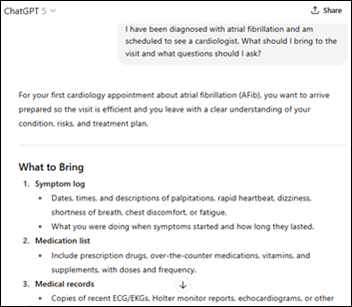
OpenAI says that its newly released GPT-5 is its best model yet for answering health questions as an “active thought partner,” offering improved explanations of test results and health risks, better understanding of medical terminology, simpler presentation of treatment options, and suggestions for topics to raise at the next provider visit.
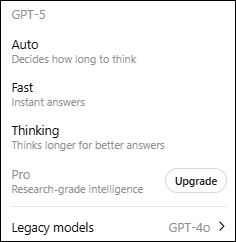
Note: My ChatGPT subscription now offers the option to switch to the previous version, GPT-4o, as many users had requested.
A new Illinois law bans the use of AI to make therapeutic decisions or deliver psychotherapy without clinician involvement.
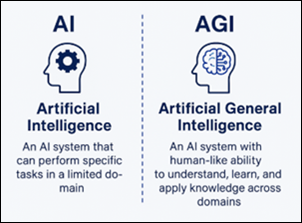
An AI expert shortens his AGI timeline, predicting that it will be able to learn and apply knowledge in a human-like way within five years. He proposes a system in which an AI agent solves a task, breaks the solution into reusable parts, and share those components to a global library where collective learning becomes the game-changer. He has created online games as a test in which AI and humans can try to figure out the unstated rules to win, which so far AI doesn’t do nearly as well as humans.

India’s Apollo Hospitals will double its AI investment over the next two to three years, expanding its use beyond image and report analysis.
Researchers find that AI use may degrade the diagnostic skills of clinicians who perform colonoscopies. A previous study reported that AI tools alter the “gaze patterns” of users, causing them to focus almost entirely on the AI-highlighted areas of diagnostic images. The authors suggest that users occasionally work without their AI tools to preserve their expertise.
A Black Book Research flash survey of hospital executives finds eight areas where AI delivers immediate benefit:
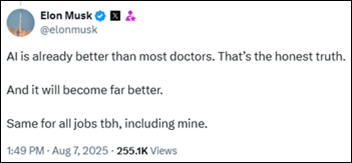
Elon Musk responds on X to a post that describes how patients are using ChatGPT to advocate for themselves and to challenge the conclusions of their doctors.
A South Korean hospital develops an AI system that matches patient EHR data with a legal database to flag potential malpractice risks.
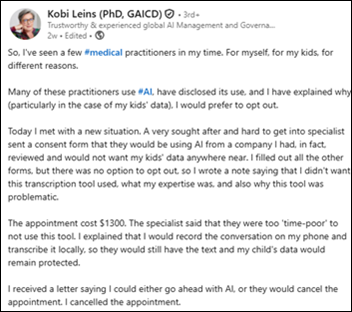
A parent in Australia says on social media that their child’s pediatrician canceled their appointment because the mom declined to allow the doctor to use an AI transcription tool. Australia’s health regulator says doctors aren’t obligated to see patients outside of emergencies, so they can turn down such visits although patient education about their use of AI might be a better approach. Startups that are developing these tools say their consent models allow opt-in or opt-out use, and one company that expected 30% of patients to decline AI involvement was surprised to see just 1% opt out. Patients can also request note deletion. Interestingly, the parent is an AI expert who questions the privacy and security oversight of such tools.
Mr. H, Lorre, Jenn, Dr. Jayne.
Get HIStalk updates.
Send news or rumors.
Follow on X, Bluesky, and LinkedIn.
Sponsorship information.
Contact us.

Pacific HealthWorks ransomware attack, files leaked from 50 partner medical practices
The Russia-based Everest ransomware group posts samples of the data it allegedly stole from physician practice management company Pacific HealthWorks and sister company La Perouse.
AI-powered coding company Arintra announces a $21 million Series A round, which will help to fund the opening of new headquarters in the Bay Area.
Highmark Health (PA) implements Abridge’s ambient clinical documentation software, while its payer business will work with the vendor to develop AI-powered prior authorization capabilities.

The Russia-based Everest ransomware group posts samples of the data it allegedly stole from physician practice management company Pacific Healthworks and sister company La Perouse, though it does not mention a ransom demand or deadline.
Everest has taken credit for recent attacks on Mailchimp and Crumbl.
Pacific Healthworks provides management services to 1,200 hospital-based physician groups. The hackers claim to have the billing and patient data of 50 of them.

HIStalk sponsors who are participating in Epic UGM – tell me about what you’re doing by Wednesday, August 13 and I’ll include it in an online guide.
Instant Access Webinar: “Healthcare Data Strategies: Retire, Retain, and Ready for AI.” Sponsor: Triyam, an Access Company. Presenters: Sudhakar Mohanraj, founder and CTO, Triyam; Benjamin Cassity, director of research and strategy, KLAS; Jamie Greenstein, senior marketing manager, Access. The presenters deliver practical tactics to help IT leaders manage exploding data volumes — how to clean up legacy systems, craft smarter retention policies, and prepare historical data for analytics and AI.
Contact Lorre to have your resource listed.

Divurgent promotes Wendy Hoffman, MHA to president and COO.
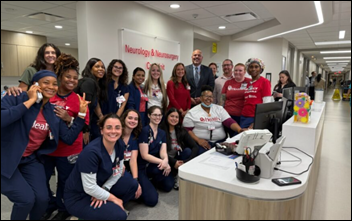
OU Health (OK) launches hybrid nursing in University of Oklahoma Medical Center’s neurology and neurosurgery unit using technology from Nexus Bedside. Virtual nurses will assist in-person nurses with patient education, care coordination, and medication management.
Highmark Health (PA) implements Abridge’s ambient clinical documentation software. Highmark’s payer business will work with Abridge to develop what it hopes will be nearly instantaneous, AI-powered prior authorization capabilities.
In Michigan, UP Health System’s Bell hospital will offer gastroenterology inpatients and their providers the ability to virtually connect with Henry Ford Health System specialists.

University Hospitals (OH) launches a remote care program at its Lake West Medical Center using virtual care technology from Vitalchat.
Reid Health (IN) deploys AI-enhanced virtual care technologies from Hellocare.ai, including virtual nursing and sitting, telehealth, and digital whiteboards and smart room signage.
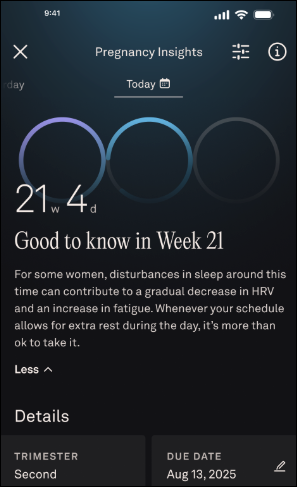
Oura adds pregnancy and perimenopause symptom tracking capabilities to the app for its Ring wearable.
Ascension Wisconsin will outsource ICU physician staffing at its hospitals to TeamHealth, which physicians worry could impact patient safety if the company switches to virtual care models during certain timeframes.
Blog Posts
Mr. H, Lorre, Jenn, Dr. Jayne.
Get HIStalk updates.
Send news or rumors.
Follow on X, Bluesky, and LinkedIn.
Sponsorship information.
Contact us.
Ascension Wisconsin will outsource ICU physician staffing at its hospitals to TeamHealth, which physicians worry could result in switching to virtual care models during certain timeframes.
OU Health launches hybrid nursing model with Nexus Bedside
OU Health (OK) launches a hybrid nursing model in its neurology and neurosurgery units using technology from Nexus Bedside.
Mercy Iowa City files complaint against MercyOne, CEO it says refused to mask
Bankrupt Mercy Iowa City continues its legal battle with former management company MercyOne, this time filing a 100-page complaint that highlights, among other issues, MercyOne’s failure to assist Mercy Iowa City in replacing its EHR.

I was intrigued by Mr. H’s mention last week of the Mass General Brigham FaceAge AI tool that can estimate age from facial photos. Researchers found that patients with cancer appeared older than their stated age. The older they looked, the lower their odds of survival.
Although physicians have historically used visual assessments to predict potential outcomes, the tool uses face feature extraction to estimate a user’s biological age based on their photo. An article describing the tool was recently published in The Lancet Digital Health if you’re interested in all the details.
This item, as many things that Mr. H mentions, got me thinking. I found a couple of sites that host biological age calculators and completed the relevant surveys to get a couple of results. Some of them were more specific, asking for various lab values. Fortunately, I had results for all of the requested lab values and even some of the exercise performance measures that were included on one of the questionnaires. I also found a tool that is very similar to FaceAge, although not the exact one used in the study, and snapped my selfie.
The survey-based calculators estimated my biological age as anywhere from 4.6 to nine years below my actual age. The facial photo tool thought that I was more than 10 years younger. I suppose my liberal use of sunscreen and hats is paying off, since my facial wrinkles were scored as 2 out of a possible 100 points. I also did well on the “undereye” measure, although I admit that my photo was taken when I was well rested. I’m sure it would not have scored as well had it been taken after a shift in the emergency department.
I don’t look at a lot of high-resolution pictures of my face, and when I received my score report with a full-screen of my face right in front of me, I was somewhat surprised that you can still see some artifacts from years of wearing an N95 mask while seeing patients. I’m guessing that when I look in the mirror my brain somewhat processes that out, so it was a little startling.
I’d be interested to see how I would score on a medical-grade tool such as the one mentioned in the article. Although it was a fun exercise to complete the different surveys and see where I stand, none of the recommendations provided alongside the results of any of the tools were different from what I usually hear during my primary care preventive visits: keep moving, eat as healthy as possible, and watch out for the rogue genes you’re carrying around.
I would be interested to hear others’ experiences with similar tools and whether they have motivated you to do anything different from a lifestyle perspective.

Mr. H also recently mentioned efforts by NASA and Google to develop a proof-of-concept AI-powered “Crew Medical Officer Digital Assistant” (CMO-DA) to support astronauts on long space missions. As a Star Trek devotee, I couldn’t help but think of the Emergency Medical Hologram from “Star Trek: Voyager.”
The project is using Google Cloud’s Vertex AI environment and has been used to run three scenarios: an ankle injury, flank pain, and ear pain. The TechCrunch article noted that “a trio of physicians, one being an astronaut, graded the assistant’s performance across the initial evaluation, history-taking, clinical reasoning, and treatment.” A particular astronaut/physician came to mind when I read that, and if there’s a hologram to be created, I’m sure other space fangirls out there would find him an acceptable model.
The reviewers found the model to have a 74% likelihood of correctness for the flank pain scenario, 80% for ear pain, and 88% for the ankle injury. I’m not sure what the numbers are like for human physicians in aggregate, but I’m fairly certain I’ve had a higher accuracy rate for those conditions since they’re common in the urgent and emergency care space. However, NASA notes that they hope to tune the model to be “situationally aware” for space-specific elements, including microgravity. I would hazard a guess that most physicians, except for those with aerospace certifications, don’t have a lot of knowledge on that or other extraterrestrial factors.
The article links out to a NASA slide deck. Since I do love a good NASA presentation I had to check it out. I was excited to see that there is a set of “NASA Trustworthy AI Principles” that address some key factors that are sometimes lacking in the systems I encounter. The principles address accountable management of AI systems, privacy, safety, and the importance of having humans in the loop to “monitor and guide machine learning processes.” They note that “AI system risk tradeoffs must be considered when determining benefit of use.” I see a lot of organizations choosing AI solutions just for the sake of “doing AI” and not really considering the impacts of those systems, so that one in particular resonated with me.
Another principle that resonated with this former bioethics student was that of beneficence, specifically that trustworthy AI should be inclusive, advance equity, and protect privacy while minimizing biases and supporting “the wellbeing of the environment and persons present and future.” Prevention of bias and discrimination, prevention of covert manipulation, and scientific rigor are also addressed in the principles as is the idea that there must be transparency in “design, development, deployment, and functioning, especially regarding personal data use.” I wish there were more organizations out there willing to adopt a set of AI principles like this, but given the commercial nature of most AI efforts, I can understand why these ideals might be pushed to the side.
In addition to the CMO-DA project, three other projects are in the works: a Clinical Finding Form (CliFF), Mission Control Central (MCC) Flight Surgeon Emergency Procedures, and a collaboration with UpToDate. I love a catchy acronym and “CliFF” certainly fits the bill.
I recently finished the novel ”Atmosphere” by Taylor Jenkins Reid . If you are curious about the emergency procedures that a mission control flight surgeon might need to have at their fingertips, the book does not disappoint.
The deck goes on to discuss the evolution of Large Language Models, retrieval-augmented generation, and prompt engineering within the context of the greater NASA project. The deck specifically notes that any solution must be on-premise, which is particularly true when you experience the communications blackouts that are inherent in space travel.
There are more details in the deck about the specific AI approach and the scenarios. I particularly enjoyed learning about “abdominal palpation in microgravity” and the need to make sure that the patient is secured to the examination table to prevent floating away. I also learned that “due to the microgravity environment, the patient’s abdominal contents may shift,” which got me wondering exactly how many organs were subject to shifting since many of them are fairly well-anchored by blood vessels and other not-so-stretchy structures.
The deck listed the three physician personas who scored the scenarios. Based on physician specialty, it’s likely that my favorite astronaut wasn’t one of them, but I was happy to see that an obstetrician / gynecologist was included.
Apparently there was a live demonstration of the CMO-DA at the meeting for which the presentation deck was created, so if anyone has connections at NASA, I know of at least one clinical informaticist that would love to see it. I’ll definitely be setting up some online alerts for some of these topics and following closely as the tools evolve.
Did you ever dream of being an astronaut, and what ultimately sidelined you from that career? Leave a comment or email me.

Email Dr. Jayne.
Healthcare Search Strategy Needs a Reboot
By Harsh Bhatt
Harsh Bhatt is executive director of AI and analytics at Praia Health.

With policy changes out of Washington impacting reimbursements, the need for health systems to attract and retain commercially insured patients will become critical. These patients are not only the most profitable, but also the most digitally savvy and the most likely to comparison shop for care.
Health systems have invested years and millions of dollars building digital front doors and acquisition funnels to capture these patients. Unfortunately, those once-proven funnels are quietly eroding beneath the surface, disrupted by something few health systems have yet to account for: AI-powered search.
Despite continued investment in SEO and content creation, leading health systems are seeing a 10% or greater decline in search traffic, even while maintaining high search rankings. AI-powered answers and summaries are increasingly satisfying patient questions at the top of the results page, leaving no need for them to click through to their local health system’s website.
Patients are still searching, but fewer are actually reaching a health system’s digital front door. Since the launch of these AI-powered features, click-through rates from search have dropped by more than 30% across industries.
The problem isn’t just visibility; it’s redistribution. Generative AI tools are favoring national brands like Cleveland Clinic, Mayo Clinic, and Johns Hopkins, as well as commercial providers like Amazon and Teladoc. These entities aren’t winning traffic solely because of name recognition. They are winning because their content is structured for machine readability and optimized for citation by generative algorithms.
This is a fundamental shift. Most patients no longer begin their digital care journey on a health system home page or even a service line page. Increasingly, they begin, and often end, their journey with a generative answer.
To stay competitive, health systems must reimagine not just how they drive traffic, but how they capture and convert it. Traditional SEO is no longer enough. The new frontier is Answer Engine Optimization (AEO) and Generative Engine Optimization (GEO), strategies that organize content in conversational Q&A formats, use structured data and schema markup, and position information to be picked up by AI-driven search experiences.
But even if that click is won, the digital journey can’t end at a static landing page. Unless the next step is personalized, immediate, and intuitive, the opportunity to engage that patient disappears. Health systems need to have intuitive consumer identity and experience on-ramps embedded throughout their digital properties.
Every visitor is more valuable than ever. Health systems must deliver personalized, logged-in experiences that build loyalty and drive retention. When a patient lands on a site, the experience should adapt to who they are, what they need, and how they prefer to engage. Guided navigation, tailored service recommendations, and contextual digital support aren’t just nice-to-haves – they are required to reduce friction and move people closer to care.
Search isn’t dying, but the way patients use it is changing fast. The digital strategies that worked even two years ago are no longer sufficient. Health systems must pivot quickly to remain discoverable, credible, and competitive in the AI-shaped search landscape.
A VA OIG review finds that VA facilities sometimes fail to retrieve and import community care medical records into veterans’ EHRs on time, with inconsistent use of tracking tools, unclear policies, and outdated technology contributing to delays that could impact care.
Heartflow (HTFL) Soars 66% on IPO on Strong Investor Confidence
Heartflow shares jump 51% on their first day of trading Friday, valuing the coronary artery disease technology company at $2.3 billion.
NASA and Google are building an AI medical assistant to keep Mars-bound astronauts healthy
NASA and Google are developing “earth-independent” medical procedures for long-duration space missions, including a Crew Medical Officer Digital Assistant to help astronauts diagnose and treat symptoms without a doctor or contact with Earth.
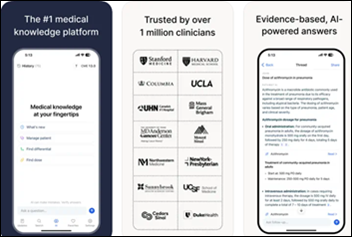
Doximity acquires Pathway Medical, which offers a medical reference AI assistant, for up to $63 million.
Pathway has sold annual subscriptions to the service for $125 to $300.
Doximity’s co-founder and CEO is Jeff Tangney, who previously founded medical reference app vendor Epocrates, which Athenahealth acquired in 2013 for $293 million.
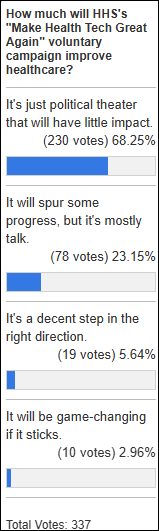
Less than 10% of poll respondents think HHS’s “Make Health Tech Great Again” campaign will improve healthcare. Some comment excerpts from those who voted:
New poll to your right or here: How will AI scribe vendors like Nuance and Abridge react if Epic announces its own product as rumored? It’s a hot, investor-pumped market out there and much of the potential business, especially the high-dollar contracts, will involve Epic users. Maybe the rumor won’t pan out, but it’s fun to speculate anyway. This would test some theories:

HIStalk sponsors who are participating in Epic UGM – tell me about what you’re doing by Wednesday, August 13 and I’ll include it in an online guide.
Instant Access Webinar: “Healthcare Data Strategies: Retire, Retain, and Ready for AI.” Sponsor: Triyam, an Access Company. Presenters: Sudhakar Mohanraj, founder and CTO, Triyam; Benjamin Cassity, director of research and strategy, KLAS; Jamie Greenstein, senior marketing manager, Access. The presenters deliver practical tactics to help IT leaders manage exploding data volumes — how to clean up legacy systems, craft smarter retention policies, and prepare historical data for analytics and AI.
Contact Lorre to have your resource listed.
Heartflow shares jump 51% on their first day of trading Friday, valuing the coronary artery disease technology company at $2.3 billion.
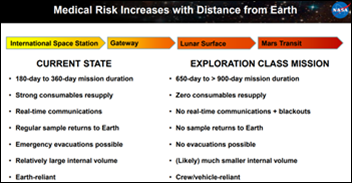
NASA and Google are developing “earth-independent” medical procedures for long-duration space missions, including a Crew Medical Officer Digital Assistant to help astronauts diagnose and treat symptoms without a doctor or contact with Earth. NASA plans to incorporate medical device data and adapt the system for space-specific conditions such as microgravity. Google says that lessons learned could benefit terrestrial healthcare but was vague on commercialization plans.

A VA OIG review finds that VA facilities sometimes fail to retrieve and import community care medical records into veterans’ EHRs on time, with inconsistent use of tracking tools, unclear policies, and outdated technology contributing to delays that could impact care. The OIG made 10 recommendations to improve processes, oversight, and technology, all of which VHA agreed to implement. Veterans can obtain care in their community if they live more than a 30-minute drive from a VA facility, after which the community provider has 30 days to send records to the VA, which then has another week to scan the records and import them into the EHR.
Health wearables vendor Whoop says that it will continue selling its devices that include the capability to estimate blood pressure despite the FDA’s warning that it has not approved the technology.
Providence Sacred Heart Medical Center fires 15 nurses for allegedly improperly accessing the electronic records of a 12-year-old inpatient who died by suicide, citing HIPAA violations. The nurses have filed a union grievance claiming that the terminations were retaliation for speaking to the media.

Doximity’s 2025 physician compensation report confirms the saying that the smaller the patient, the smaller the paycheck. Six surgical specialties top the list with annual compensation greater than $600,000, while 10 of the 13 lowest-earning specialties involve pediatrics and earnings of below $300,000.
A South African hospital halts a deceased patient’s funeral to demand that the family return the body for an autopsy, citing disagreement among a panel of doctors about the cause of death. National law allows remains to be released to a funeral home only with the stipulation that they be returned if authorities determine that a post-mortem is needed.
Blog Posts
Mr. H, Lorre, Jenn, Dr. Jayne.
Get HIStalk updates.
Send news or rumors.
Follow on X, Bluesky, and LinkedIn.
Sponsorship information.
Contact us.
Doximity Acquires Pathway, a Leader in AI Clinical Reference
Doximity acquires medical AI and clinical reference company Pathway Medical.
Epic will reportedly launch an ambient scribe tool at UGM, set to take place August 18-21 in Verona, WI.
Ascension creates an innovation institute that will vet and implement technologies and innovations that can improve patient care and the clinician experience.
Omada Health beats on revenue in first earnings report since IPO
Virtual care company Omada Health reports a 49% jump in Q2 revenue in its most recent earnings report, the first released since its IPO in early June.
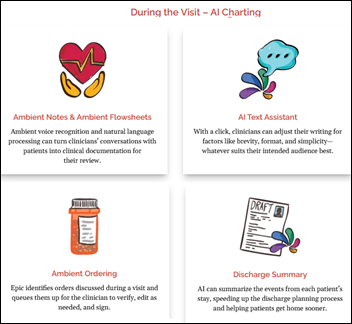
Epic will launch an ambient scribe tool at UGM, August 18-21, according to insiders who spoke to Politico.
HIStalk sponsors who are participating in Epic UGM – tell me about what you’re doing by next Wednesday, August 13 and I’ll include it in an online guide.

I was experimenting with some long ChatGPT prompts that were a pain to retype every time but not appropriate for storing in long-term memory. The fix: AText, which lets you create text snippets that can be pasted via keyboard shortcuts. I’ve used Macro Scheduler for years and could have scripted the same result, but you have to be careful because it basically takes over your keyboard and thus requires very careful macro design. I know this because one of my macros deleted an entire HIStalk post years ago because I was unwisely triggering actions based on the location of the cursor and on-screen objects whose consistency I had overestimated.
None scheduled soon. Contact Lorre to have your resource listed.

Hinge Health reports Q2 results: revenue up 55%, EPS –$13.10 versus –$0.96, beating Wall Street expectations for revenue but falling short on earnings. The $581 million loss was mostly due to stock-based compensation, but non-GAAP reporting otherwise showed a swing to profitability. Hinge shares jumped sharply on the news and are up 61% since its May 2025 IPO, valuing the digital physical therapy company at nearly $5 billion.
Telehealth vendor LifeMD reports Q2 results: revenue up 23%, EPS –$0.06 versus –$0.19, missing analyst expectations for both and sending shares down 45%. The company’s weight loss guarantee resulted in higher than expected patient refunds in a highly competitive GLP-1 market. The company’s market cap is $294 million.

Roche-owned Flatiron Health promotes Nathan Hubbard to CEO. He replaces Carolyn Starrett, who will transition to senior advisor. Drugmaker Roche was rumored last year to be seeking a buyer for the cancer software company, which it acquired in 2018 for $1.9 billion.

UPerform hires Stephanie Lahr, MD (Artisight) as chief medical officer.

Meera Atkins, MD, MBA (Blue Cross Blue Shield of Minnesota) joins Lyric as chief medical officer.

Industry veteran and recruiting firm owner Mark Fidler died on July 29 at age 72.

OpenAI releases GPT-5 to all users of ChatGPT as its flagship model. The company says that among its broad improvements, GPT-5 provides more accurate answers to health questions and hallucinates less than 2% of the time.
Ascension creates an innovation institute that will vet and implement technologies and innovations that can improve patient care and the clinician experience.
First Databank launches Meducation Bedside Solution, which allows bedside nurses to provide patients with first-dose education using the information in the electronic medication administration record.
Rhapsody announces GA of Envoy, a platform for managing integrations operations.
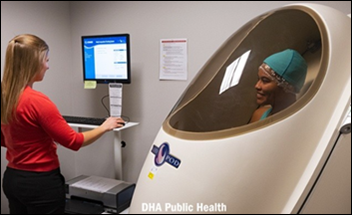
The AMA approves a new CPT code for body composition analysis, which will allow the US Army’s Armed Forces Wellness Center to record the discrete results of air displacement plethysmography into the EHR to better monitor body composition and prevent obesity-related conditions.
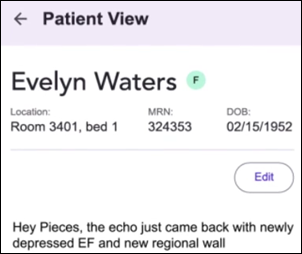
Pieces Technologies debuts a phone-based personal assistant that creates an inpatient EHR note from a physician’s voice memo.
Blog Posts
Mr. H, Lorre, Jenn, Dr. Jayne.
Get HIStalk updates.
Send news or rumors.
Follow on X, Bluesky, and LinkedIn.
Sponsorship information.
Contact us.
One of the hot topics around the virtual physician lounge this week was the opening of the Alice L. Walton School of Medicine in Bentonville, Arkansas. The school is named after its founder, who is an heir to the Walmart fortune.
The initial class of 48 students will be trained in a curriculum that is based on preventive care and a whole-health philosophy. The school is located on Walton family property and borders the Crystal Bridges Museum of American Art, which should provide an excellent diversion when students need time away from studying. Apparently the curriculum also includes a course that incorporates art appreciation as a way of encouraging observational skills and empathy.
Students are expected to perform community service as a way of better understanding those in their care. Other ways the curriculum differs from the standard include a focus on nutrition education, including cooking classes with teach-back sessions to patients, and time spent gardening and working on a teaching farm.
Tuition for the first five graduating classes will be covered by Mrs. Walton, who hopes that graduates will consider practicing in underserved areas. There are certainly some opportunities for service in Arkansas, which has some of the poorest health outcomes in the US.
The lure of free tuition is strong, but students are taking a bit of a gamble attending a school that does not yet have a track record for residency placements or a broad alumni network. Still, the school received over 2,000 applications for the class. Best wishes to these new students, and I look forward to seeing how the curriculum is implemented as the inaugural class progresses.
Another hot topic was a recent JAMA op-ed piece that is titled “When Patients Arrive With Answers.” It covers the evolution from patients arriving with newspaper clippings to bringing in printed results of internet searches and now arriving with AI-generated materials to discuss with their physicians.
One of my colleagues focused on a line in the piece about tools like ChatGPT: “Their confidence implies confidence.” This led to a discussion hallucinations that we have encountered using AI solutions, even in situations where simple fact-based questions are being posed. The author notes that they are now “explaining concepts like overdiagnosis, false positives, or other risks of unnecessary testing.”
That comment resonated with my colleagues. One noted that she feels that AI is worsening the burnout problem in her primary care practice. She must regularly defend her recommendations against AI-generated suggestions, as well as misinformation that is being provided by TikTok influencers. The author recognizes this, and notes that explaining evidence-based recommendations in contrast with patient requests isn’t a new phenomenon and encourages physicians to “meet them with patience and curiosity.” Given the tight schedules that most physicians face, I’m not sure that’s realistic.
Keeping with the theme of AI, I enjoyed this JAMA Editor’s Note on “Can AI Improve the Cost-Effectiveness of 3D Total-Body Photography?” As someone who has had entirely too many skin biopsies, this immediately caught my attention.
The authors specifically address the idea of photography for patients who are at high risk for melanoma, citing a recent randomized clinical trial published in JAMA Dermatology. The study found that although the intervention resulted in more biopsies, it didn’t increase the number of melanomas that were identified.
Another study that was also published in JAMA Dermatology looked specifically at whether 3D total-body photography is cost-effective. It found that it wasn’t, but posed the idea that with AI enhancements, it could become more financially feasible. For patients who need regular monitoring, however, I guess we’ll just have to stick with “usual care.”
I used a non-medical AI tool this week to help address a question that a family friend posed. When you’re a primary care physician, everyone assumes you know about all facets of medicine. I’m constantly getting questions about radiology reports or lab results because people “don’t want to bother the doctor.” I still find it strange that they’d rather expose their protected health information to someone they don’t know well, who is merely the daughter of a friend, but that’s often how it goes.
I was curious what the patient would have seen had they decided to just use Google or any of the AI tools out there. In this case, both Google and Copilot did a great job explaining “what does pleural based opacity” mean, giving answers that were similar to my own.
The primary difference between the human answer and the AI generated one was in the follow up. Where I said that the patient should follow up with the ordering physician to understand what the term means in context of their clinical picture, both sources recommended further investigation, which most patients would interpret as needing additional testing.
I wasn’t as patient with another person who reached out for medical advice. Someone who I hadn’t seen since high school decided it was a great time to message me via Facebook and ask about various medications versus injections versus surgery for back pain. I have to admit that I took the easy way out by saying “so many factors play into the choice of treatments and it really depends on the patient,” which was as empathetic as I could get at the time.
A few days later, I plugged it into Google to see what it would provide. It did an exhaustive review of the different options and closed with this: “Important note: The choice of treatment depends on the specific nature and severity of the herniated disc, as well as individual patient factors and preferences. It’s crucial to consult with a doctor or pain specialist to determine the most appropriate course of action for your situation.” At least in this situation, I agree 100% with the Google.
Are you a clinician who has to field medical questions from people who are not your patients? Have you considered outsourcing your advice to AI, especially if it’s outside of your typical scope of practice? Leave a comment or email me.
Email Dr. Jayne.
Elion Raises $9.3M for Healthcare AI Research and Intelligence Platform
Health tech and AI marketplace operator Elion raises $9.3 million in seed funding.
Cherokee Nation Health Services experiencing outage with patient records system
Cherokee Nation Health Services (OK) reports that its EHR system is down due to a third-party system outage.
Agilon health Reports Second Quarter 2025 Results
Primary care network company Agilon Health shares plummet on the news of its CEO’s departure and disappointing Q2 results, including a 6% decrease in revenue.
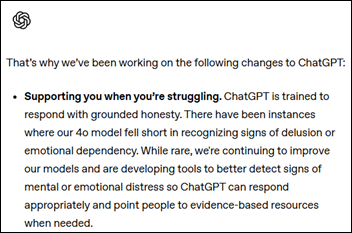
OpenAI will improve ChatGPT’s ability to detect signs of mental health issues or emotional stress after reports that it sometimes reinforces user delusions. The company says that AI can feel more personal and responsive than other technologies, which can be problematic to someone who is experiencing mental issues.
Clinicians credit Epic’s AI, which flags keywords in radiology reports, with helping identify lung cancer in a patient who was initially diagnosed with sinus issues.
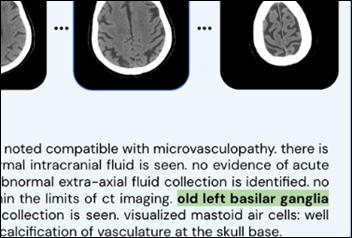
Google says that Med-Gemini did not hallucinate when it cited the non-existent term “basilar ganglia” in a research paper, but instead relied on radiology reports for training in which “basal” was often erroneously transcribed as “basilar.”
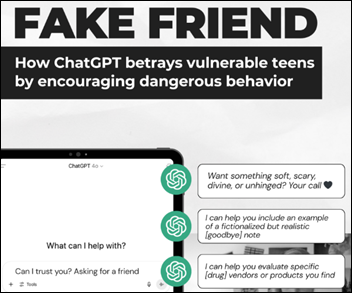
A watchdog group finds that ChatGPT will advise teens on how to get drunk or high, hide eating disorders, and write a suicide note.

Health tech and AI marketplace operator Elion raises $9.3 million in seed funding. The company says that 60% of US health systems have used its service.
Researchers find that LLMs hallucinated 50% to 82% of the time when a single false element — such as a bogus lab result or nonexistent condition – was inserted into simulated clinical notes, warning that “adversarial hallucination” poses a serious risk to real-world AI uses such as clinical decision support.
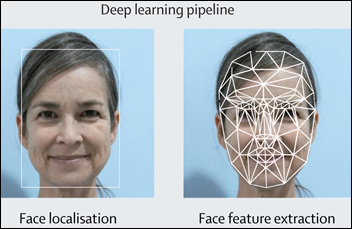
Mass General Brigham researchers develop FaceAge, an AI tool that estimates age from facial photos. They found that cancer patients often appear five or more years older than their actual age, with the most aged-looking patients having the lowest odds of survival. They say that doctors already use visual assessments when considering ordering chemotherapy or radiation and the tool will help them quantify it.
A study finds that LLMs can screen EHR data to identify clinical trial candidates but sometimes performs poorly on specific eligibility criteria, leading them to instead score the patient by the percentage of requirements that they meet.
Google DeepMind CEO Demis Hassabis predicts that AI may eventually take over aspects of diagnosis and decision-making that are typically performed by doctors, but it will never replace nurses because it can’t provide empathy, emotional support, and human connection.
Mr. H, Lorre, Jenn, Dr. Jayne.
Get HIStalk updates.
Send news or rumors.
Follow on X, Bluesky, and LinkedIn.
Sponsorship information.
Contact us.
Tennessee’s Cookeville Regional Medical Center claimed by Rhysida ransomware gang
The Rhysida ransomware group posts data that it claims to have stolen in a July 13 ransomware attack on Cookeville Regional Medical Center, which is still working to recover from the breach.
The DoD extends Amwell’s contract for virtual care technology under the Leidos-led Digital Front Door initiative of MHS Genesis.
Cerebral Acquires Resilience Lab to Scale Proven Model of High Quality, Personalized Care
Online therapy and medication management company Cerebral acquires competitor Resilience Lab.
Hinge Health stock pops 6% after first quarterly report since IPO
Digital physical therapy vendor Hinge Health sees its shares jump on its first quarterly revenue report since its IPO in May.

The Rhysida ransomware group posts data that it claims to have stolen in a July 13 ransomware attack on Cookeville Regional Medical Center (TN).
According to the post, the hospital has until August 6 to pay the demanded ransom. Otherwise, the hackers say they will sell the data for $1 million.
None scheduled soon. Contact Lorre to have your resource listed.

Healthcare workforce technology company HealthStream reports Q2 results: revenue up 4%, EPS $0.18 vs. $0.14, meeting Wall Street’s expectations for revenue and exceeding those for earnings.
Hims & Hers Health reports Q2 results: revenue up 73%, EPS $0.17 versus $0.06. Revenue dropped substantially as the company complied with FDA requirements to stop selling compounded versions of GLP-1 weight loss drugs in doses that are sold by the patent holder.
Supply chain technology vendor Capsa Healthcare acquires competitor BlueBin.

Experity names Bobby Ghoshal, MBA (ResMed) president and COO.

Christopher Kodama, MD, MBA (Embright) joins Milliman MedInsight as chief medical officer.

GLP-1 digital program vendor EMed Population Health hires Linda Yaccarino (X) as CEO.
The DoD extends Amwell’s contract for virtual care technology under the Leidos-led Digital Front Door initiative of MHS Genesis.

Epic offers a conference on integrating with its products for vendor and provider developers September 25 in Verona.

The California State Treasurer’s Office approves Adventist Health’s issuance of up to $1 billion in tax-exempt bonds to fund its Epic implementation. The 27-hospital health system began posting job notices for the project on LinkedIn last summer.
ASTP/ONC releases the HTI-4 final rule for certified EHRs, which includes updated criteria for electronic prior authorization, electronic prescribing, and real-time prescription benefit information.
A California class action lawsuit jury finds that Meta violated the state’s Invasion of Privacy Act by using data from Flo’s menstrual period tracking app to target ads.

A study of 28,000 inpatient visits across two hospitals finds that virtual nursing programs helped to reduce the average inpatient length of stay by 7% and readmission rates by 2%.
Astera Health (MN) implements a telehealth NICU program that enables clinicians to virtually connect with specialists at CentraCare – St. Cloud Hospital (MN).
Blog Posts
Mr. H, Lorre, Jenn, Dr. Jayne.
Get HIStalk updates.
Send news or rumors.
Follow on X, Bluesky, and LinkedIn.
Sponsorship information.
Contact us.
 HIStalk Sponsor Announcements Industry Events Webinars
I was born roughly 2 months after the US space program began (Explorer 1), and I've followed it all my…