Recent Articles:

Weekender 5/22/20

May 22, 2020 Weekender Comments Off on Weekender 5/22/20

weekender


Weekly News Recap

  • Optum acquires post-acute care management company NaviHealth.
  • Amwell raises a $194 million Series C funding round.
  • Microsoft announces Cloud for Healthcare.
  • Omada acquires Physera for a rumored $30 million.
  • Cerner joins the Fortune 500.
  • Cerner begins bringing its employees back to campus.

Best Reader Comments

Optum are the healthcare Borg. Now they add Navihealth’s service and technological distinctiveness to their own. Resistance is futile. (Lazlo Hollyfeld)

If you look at all the ‘successful’ vendors, ALL of them (Epic, Cerner, Meditech, CPSI) started in HIT and built a business solely around HIT. Seems to me there is significant message there. (FLPoggio)

What I am curious about is how all those Epic-ites will react when the stay stay at home order goes away how much pressure will there be to not return to the office. And if Epic goes the route that many Silicon Valley companies seem to be (remote working can work), what happens to the billion dollar edifices in Verona? (HISJunkie)

Epic doesn’t need differentiation in their video visits to be successful and valuable for their customers. They’ve already done the leg work to get through hospital bureaucracy and get clinicians using their products. Their products are the safe choice for administration and reliable enough to have staying power with users. Unless your product is stunningly better, people are just going to wait for Epic to release your functionality. Having a technical product in an app store is living on borrowed time. Have you ever noticed how Apple takes the good iPhone apps and puts the functionality in iOS? If your product is just an app in an app store, you’re the first fish eaten whenever the sharks start getting hungry. The good thing is that Epic is slow and not hungry, but you still have to swim fast or be swallowed. (Sidelines)


Watercooler Talk Tidbits

image

Readers funded the Donors Choose teacher grant request of Mr. M in California, who asked for codable Legos. He reported in February, “We have been having so much fun with our basic Lego set, and this expansion set will make our Coding club even better! I think students really love to build and code because it builds their confidence. They are able to experience the pride of creating something from scratch and tell their family and friends about it. We have only been able to scratch the surface with this expansion set, but the projects that are included in it will allow my students to continue in our club next year!”

New York’s requirement that recovered, hospitalized COVID-19 patients can’t be transferred back into nursing homes until they test negative is causing hospital backups, as PCR tests can show positive results – most likely from measuring dead virus – for up to several weeks after the patient recovers and is likely not infectious.

image

A UK bus operator takes just two weeks to roll out an app-powered service in which hospital staff can request free transportation to and from work. The app allows workers to book a seat in advance, with the bus company then using their pick-up and drop-off information to choose the most efficient routing.

Florida spent $283 million in a no-bid deal to create temporary COVID-19 hospitals that were never used, with a politically connected bidder signing a deal to operate a 200-bed hospital for $42 million per month. That construction contractor has no hospital experience, but has developed emergency shelters and previously won a $789 million contract to build a wall on the US-Mexico border.

image

Lloyd Falk, a 100-year-old World War II veteran, is cheered by employees of Henrico Doctors’ Hospital as he is discharged following a 58-day stay for COVID-19. His wife of 74 years died from COVID-19 a few weeks before.

image

The UK funds a brilliantly creative trial to see if “bio-protection” dogs – which can detect some forms of cancer and malaria from smell alone – can sniff out COVID-19 as an early warning measure or for screening travelers. NHS will collect odor samples from infected patients and train six dogs being provided by the Medical Detection Dogs charity for 6-8 weeks, and then launch a three-month trial.


In Case You Missed It


Get Involved


125x125_2nd_Circle

Comments Off on Weekender 5/22/20

Morning Headlines 5/22/20

May 22, 2020 Headlines Comments Off on Morning Headlines 5/22/20

Flagler Health+ and Healthfully Offer Back-to-Work Solution for Employers

Flagler Health (FL) and consumer digital health company Healthfully develop a COVID-19 screening and monitoring app for employers that includes virtual visit capabilities.

Aetion launches research collaboration with FDA to advance understanding of COVID-19

The FDA launches a research project into the origin, treatment, and diagnostic patterns of COVID-19 using Aetion’s Evidence Platform, which aggregates data from EHRs, claims, registries, and clinical trials.

HHS Proposes ‘IT Control Tower’ to Manage Strategic National Stockpile

HHS issues an RFI on re-developing the IT strategy behind its Strategic National Stockpile of items associated with coronavirus-like pandemics.

Comments Off on Morning Headlines 5/22/20

News 5/22/20

May 21, 2020 News 3 Comments

Top News

image

Optum acquires post-acute care management company NaviHealth.

The company’s private equity owner gets $1.1 billion in cash after buying a majority stake in the company for $400 million just 21 months ago.

The deal values NaviHealth at $2.5 billion.


Reader Comments

image

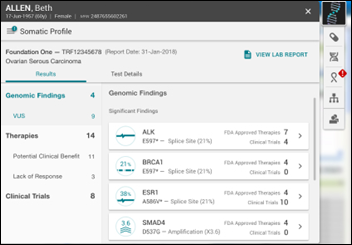
From Dumas: “Re: Epic’s COVID-19 immunity passport. They didn’t name the organization they are working with, but I think it’s probably Bluetree, which is owned by one of Epic’s biggest shops in Providence. They are working with Lumedic, which is also owned by Providence, to create an app that stores COVID-19 test status and immunity status that Bluetree specifically calls an immunity passport that is being considered by other organizations.” Unverified, but Lumedic has published screen shots of such a credential (above). I assume that Epic’s role is to provide results of COVID-19 diagnostic and antibody tests.

image

From Serrano Seed: “Re: HIMSS20. A group of exhibitors is petitioning for a refund of exhibit space fees.” The group of a couple of dozen companies, most of which I admit I’ve never heard of, hopes to shame HIMSS into refunding their exhibitor money for the cancelled conference. I suspect their efforts will be futile since (a) big-name exhibitors aren’t included; (b) their leverage is minimal given that HIMSS already has their money and, short of legal proceedings, seems unwilling or unable to return it; and (c) the cost of every company that is listed bailing on HIMSS21 (not likely) is minimal compared to the cost of refunding all exhibitors. I suspect that their polite petition will be far less effective than an impolite lawsuit.

From Nasty Parts: “Re: IBM Watson Health. I hear they are cleaning house, with some saying up to 80% of employees have been let go and a number of products (minus the employees who support them) being sold to Vizient.” Unverified. IBM Watson Health’s PR contact did not respond to my inquiry.


HIStalk Announcements and Requests

image

It’s my lucky day, y’all! I have learned from Mr. Prashant Kumar via LinkedIn that I have been “shortlisted for the Top 100 Healthcare Leaders award,” where I (fingers crossed!) will stride humbly across a Las Vegas stage later this year for my bestowment at a conference that is conveniently operated by Mr. Kumar’s employer, with my award consisting of a registration fee discount. I am especially grateful that the judges recognize my global healthcare leadership, given that I don’t actually lead anyone and despite the fact that my only job that is listed on LinkedIn is “Cynical Blowhard Healthcare IT Blogger.” Above is the upscale Wilmington, DE headquarters of the conferring organization Prism Events, in which the fate of my esteemed award rests in the capable hands of several dozen all-Indian employees who conduct their deliberations in a rented PO box.

image

Provider IT folks, help your peers by describing your department’s plan for bringing employees back to the office (or not, as the case may be), even if you’re just following organization-wide policies and would like to summarize those. I’ll post a recap this weekend. Thanks to those who have already provided some good (and sometimes surprising) ideas.


Webinars

None scheduled soon. Previous webinars are on our YouTube channel. Contact Lorre to present your own.


Acquisitions, Funding, Business, and Stock

image

Amwell will use a $194 million Series C funding round to further scale its telemedicine technology and services. Reports of delays and crashing calls due to record utilization during the COVID-19 pandemic had already forced it to upgrade its hardware and software, in addition to onboarding new providers. The Boston-based company has raised over $700 million since launching in 2006.


Sales

  • The Idaho Health Data Exchange selects 4medica’s enterprise master patient index software and data-cleansing service.
  • Pathos Clinical Solutions will implement OpenText’s EMR-Link for secure EHR integration and CPOE between its lab and clinicians.
  • Sunnybrook Health Sciences Centre in Toronto signs a seven-year contract with Allscripts for managed services of the company’s Patient Flow software.
  • Texas-based GI Alliance selects Modernizing Medicine’s EHR for gastroenterology.
  • University of Alabama Birmingham Medicine will deploy sepsis-monitoring software from Ambient Clinical Analytics.

People

image

EHR vendor Casamba promotes Billie Nutter to CEO.


Announcements and Implementations

image

Valley Children’s Healthcare (CA) goes live on Epic with virtual support from Optimum Healthcare IT.

Engage offers a free version of its WaitTimes app customized for COVID-19 testing sites for 90 days.

image

Carequality announces that 1 billion clinical documents have been exchanged via its interoperability framework since it launched in 2016. The organization will soon add image-sharing to its HIE capabilities.

Valley Community Healthcare (CA) rolls out virtual visit software from Otto Health.

image

Patient engagement software vendor Conversa Health launches Employee HealthCheck, an automated COVID-19 screening app for employers that was developed with help from UCSF Health.

Flagler Health (FL) and consumer digital health company Healthfully develop a similar app that also includes virtual visit capabilities.

image

A KLAS report on go-live support finds that engagement size is decreasing as the large health system market for new systems has matured. CSI Healthcare IT, Engage, and Medasource excel at executive involvement, while HCI Group and Nuance draw the most customer complaints about employee quality.


Government and Politics

HHS will award $5 million to support research into the ways healthcare organizations are responding to COVID-19, including the impact of expanded telemedicine services and digital care tools.

image

HHS issues an RFI on re-developing the IT strategy behind its Strategic National Stockpile of items associated with coronavirus-like pandemics. The new strategy would include greater use of analytics to forecast requirements. Comments are due May 29.


COVID-19

image

Alabama, North Dakota, and South Carolina become the first states to publicly commit to using contact-tracing technology developed by Google and Apple in their respective COVID-19 exposure notification apps.

The FDA launches a research project into the origin, treatment, and diagnostic patterns of COVID-19 using Aetion’s Evidence Platform, which aggregates data from EHRs, claims, registries, and clinical trials.

UC San Diego Health develops a remote patient monitoring program for COVID-19 patients recovering at home that includes a wearable to track vital signs, and activity and sleep levels; and an app through which they can report symptoms and communicate with their providers. The next phase of the program will use machine learning to predict a change in symptoms.

image

The Atlantic reports on the CDC’s practice – and that of four states as well — of combining the results of viral and antibody tests, which produces misleading metrics that governors are using to develop their re-opening plans.

The federal government will pay AstraZeneca up to $1.2 billion for the development and delivery of 300 million doses of a COVID-19 vaccine by October.

image

Officials in Iceland are underwhelmed by the impact the national contact-tracing app has had on COVID-19 containment efforts, stressing that, despite its high adoption rate, manual techniques like phone calls have been more effective: “The technology is more or less … I wouldn’t say useless. But it’s the integration of the two that gives you results. I would say it has proven useful in a few cases, but it wasn’t a game changer for us.”

image

Current and former government and health system leaders collaborate on a national #OpenSafely plan that calls for, among other things:

  • Following already documented plans to open communities up after two weeks of declining case counts.
  • Ensuring adequate diagnostic testing is available.
  • Implementing contact tracing and voluntary isolation.
  • Improving and implementing safety standards and protocols.
  • Protecting populations most at risk.
  • Ensuring adequate PPE.
  • Widespread use of telemedicine.
  • Screenings and symptom monitoring.

Other

image

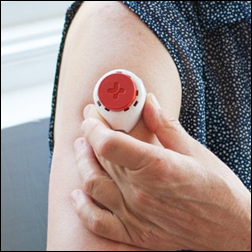
Researchers develop a wearable they hope can successfully predict the onset of COVID-19 symptoms. The patch tracks coughing and respiratory activity, heart rate, and temperature, and then transmits the data to cloud-based data management software, where algorithms transform it into graphical summaries.


Sponsor Updates

  • Elsevier’s Clinical Path wins Best Computerized Decision Support Solution award from MedTech Breakthrough for the second year in a row.
  • Ellkay offers a customer testimonial featuring its COVID-19-related interoperability work with Acutis Diagnostics.
  • Infusion service company Option Care Health expands its use of Wolters Kluwer’s compounding compliance solutions for patient care.
  • Healthwise celebrates its 45th anniversary.
  • Omni-HealthData adds new data visualizations and interactive dashboards to its COVID-19 Resource Center.
  • InterSystems publishes a new case study, “Helping Care Teams on the Front Lines: Providence St. Joseph Health.”
  • Kyruus ProviderMatch for Consumers wins the Best Patient Registration & Scheduling Solution award from MedTech Breakthrough.
  • ROI Healthcare Solutions launches an EDI Benchmarking and Health Check Eligibility Survey for Infor (Lawson) users.
  • The Healthcare Technology Report includes Waystar CEO Matt Hawkins, AdvancedMD CEO Raul Villar, and CompuGroup Medical Chairman Frank Gotthardt on its list of “The Top 50 Healthcare Technology CEOs Of 2020.”
  • Wolters Kluwer Health will publish the American Society of Clinical Oncology’s portfolio of five medical specialty journals.
  • InterSystems adds support for AWS Graviton2-based Amazon EC2 M6g instances for IRS and IRIS.
  • Relatient expands availability of its solutions in Athenahealth’s Marketplace to include patient self-scheduling, patient intake, and secure two-way messaging.

Blog Posts


Contacts

Mr. H, Lorre, Jenn, Dr. Jayne.
Get HIStalk updates.
Send news or rumors.
Contact us.

125x125_2nd_Circle

EPtalk by Dr. Jayne 5/21/20

May 21, 2020 Dr. Jayne Comments Off on EPtalk by Dr. Jayne 5/21/20

clip_image002 

There has been a significant amount of chatter among my friends in the public health community, mostly around how COVID-19 tests are being documented, counted, and tracked. When we deal with other public health scourges such as measles, typically there would only be one positive test per person. With this pandemic, patients may be receiving numerous tests, generating both positive and negative results.

I followed one case where a patient tested negative three times and then positive four times before finally getting the two negative results that were needed for release from quarantine. There are plenty of public health organizations out there that are using lower-tech solutions — including paper, fax, and Excel — as opposed to the sophisticated databases that we all picture.

The issue of multiple tests per person is only one of the issues. Another is understanding which humans have been tested, since patients use a patchwork of identifying information that depends on the circumstance.

Let’s say a patient gets tested at an office that sends the specimen out to a national reference lab and wants the test billed to insurance. It’s likely that patient is going to be registered at the office under the name that is on their insurance card so that the claims get paid. If the patient goes to a drive-through public health clinic that is funded by grants, they might use the name that’s on their driver license, which may not match the one on their insurance card. If they order a kit online, such as those offered by a couple of labs, they might use the name on their credit card if they are paying out of pocket.

Now you have three names, which hopefully are similar, but might not be associated with one date of birth. Less-sophisticated matching algorithms might not identify them as the same person.

The Pew Charitable Trusts sent a letter to the US Congress last week, urging legislators to work with federal agencies such as ONC and the US Postal Service to enhance patient matching. Matching can be improved even with small steps, such as adding more data elements and standardizing those in use. The final ONC interoperability role focused on interoperability for EHRs, but didn’t address the role of other systems, such as those that handle laboratory information. Mandates for all systems to handle this information would be of benefit for data sharing.

This level of mismatch isn’t new. These are the same kinds of issues that EHR users have been having for years. We have been mandated to do various things that other parts of the industry are not. This has created all kinds of confusion in prescribing workflows and delays in patient safety efforts, as rule makers mandated actions for providers that receiving systems were unable or unready to process.

Standardizing existing data elements, such as phone numbers and addresses, would also be a benefit. According to a 2019 study in the Journal of the American Medical Informatics Association, patient matching could be increased by 3% with the addition of address formatting that is consistent with that used by the US Postal Service. The use of the USPS formatting is complicated by the fact that USPS doesn’t share its address standardization web tools with healthcare providers – they are reserved for exclusive use in shipping and mailing efforts. Congress would need to address this and expand the use of the tools to healthcare.

clip_image003

I’m always interested in solutions that promote desired health behaviors or encourage patients to receive recommended services. I wasn’t initially sure what to think of a recent article in JAMA Network Open that looked at participation in an end-of-life conversation game and its association with advance care planning. The study participants included nearly 400 underserved African American patients who participated in a game that was designed to help overcome reluctance to discuss death and dying. Researchers found that a positive association with care planning behavior among patients who participated in games at community events.

My initial skepticism at the idea of a game around death and dying was overcome by their results. The intervention was low cost and delivered by community organizations rather than health professionals. There are significant disparities among end-of-life care and I’m a huge proponent of access to a “good death,” so I hope these results can be replicated on a larger scale.

clip_image005

I picked up an urgent care shift this week and it was an absolute circus. The site was offering coronavirus antibody testing and the community came out in force to have their blood drawn. It was almost more exhausting than flu season, since every visit involved a fairly extensive discussion about what the results might mean, whether they were positive or negative.

The majority of patients were under the impression that a positive antibody test is akin to an immunity passport that allows them to run out and see their grandkids or have a bunch of people over. A couple of people wanted to have the test to know if they could donate convalescent plasma, and were saddened to learn that in our area, they can only donate if they had a positive COVID-19 test while they were sick rather than just having the antibody. One patient wanted to know whether the intravenous vitamin C he received from a mobile infusion center would be protective, and wasn’t too receptive of my explanation that we have no data on that treatment for this disease.

The best patient of the day was a retired general surgeon, who responded to my introduction by taking my hand firmly, staring deeply into my eyes, and asking, “How ARE you? How are you holding up in all this?” He was genuine and his compassion was palpable. I spent a few extra minutes with him and learned that he had previously been a residency program director, but retired “when selecting residents became all about the test scores and not about whether they were a good person or whether they could walk and chew gum at the same time.” I’m sure he could tell that I was just about laughing behind my mask. He was reading the latest issue of JAMA, and not surprisingly, had his surgical mask tied in precise knots behind his head.

It’s always great to see a patient like that, even in the midst of a wild and crazy day. It certainly recharges your clinical batteries. I’m not sure when I’ll work again, but it’s a nice memory and I can hope our paths cross again.

What has your bright spot been amid all the coronavirus chaos? Leave a comment or email me.

Email Dr. Jayne.

Comments Off on EPtalk by Dr. Jayne 5/21/20

Morning Headlines 5/21/20

May 20, 2020 Headlines Comments Off on Morning Headlines 5/21/20

Amwell Raises $194 Million, Committing to Expand the Best and Largest Digital Health Platform

Amwell will use a $194 million Series C funding round to further scale its telemedicine technology and services, which have seen record utilization during the COVID-19 pandemic.

Exclusive: NaviHealth sells to health care giant

UnitedHealth subsidiary OptumHealth acquires NaviHealth, a vendor of post-acute care management software, for an undisclosed sum.

Three states will use Apple-Google contact tracing technology for virus tracking apps

Alabama, North Dakota, and South Carolina become the first states to publicly commit to using contract-tracing technology developed by Google and Apple in their respective COVID-19 exposure notification apps.

    Comments Off on Morning Headlines 5/21/20

    HIStalk Interviews Philip Meer, CEO, PatientKeeper

    May 20, 2020 Interviews Comments Off on HIStalk Interviews Philip Meer, CEO, PatientKeeper

    Philip Meer, MBA is CEO of PatientKeeper of Waltham, MA.

    image

    Tell me about yourself and the company.

    I grew up in New Jersey. I’ve spent my entire career leveraging software to advance a greater good. I’m an operator by trade. I enjoy solving problems and tinkering, using operations and using software to ultimately improve the quality of human life, but more tactically, to help companies scale their operations and make things better, faster, and cheaper, ultimately benefiting the end customer.

    PatientKeeper is a 20-year-old software company whose mission is advancing healthcare by creating instinctive, empowering technology that respects the importance of the physician. I joined PatientKeeper because we can solve the big healthcare problem of providing a better clinical experience for the physician, who is at the core of what we do.

    As an operator and tinkerer, it must be either terrifying or exhilarating to see healthcare and technology throwing out the rules and trying new ideas in response to the pandemic.

    I think you said it very well — terrifying and exhilarating. What’s terrifying to me about the pandemic is that the healthcare IT and software community has not fully grasped the size, scale, and scope of the pandemic. It’s just now, a couple of months in, that we are advancing real solutions to support the healthcare ecosystem. It is terrifying because it took us by surprise. I’m not sure what we could have done differently, but it is terrifying to see the scale of a pandemic and what it can do to our healthcare system.

    What’s exhilarating is that healthcare was already undertaking new strategies. Telehealth and home care allow mobility and enable the provider to provide care wherever they are, under whatever circumstances come their way. I’m proud as an operator that we are deploying software in these areas that the healthcare community had begun to embrace pre-COVID and now have accelerated with the pandemic.

    What have we learned from moving physicians out of their specialties, and in some cases out of retirement, and placing them on the COVID front lines in new hospitals that have unfamiliar technologies and workflows?

    The primary learning is that the new norm is mobility — the ability for a provider to render care, collaborate with the care team, and to reach patients and family members in an ergonomic way. Collaboration, both inside and outside the four walls of the hospital, must be a strategy when it comes to healthcare technology.

    EHRs are great systems of record, as they were designed to be. But we have learned that the imperative is a system of experience, in which a clinician can provide care and also ergonomically tackle their administrative and data entry responsibilities in a way that minimizes their burden. Mobility and ergonomic systems that support physician productivity are no longer nice to have — they must be at the forefront of healthcare as we look beyond the pandemic.

    How will increased use of telehealth and remote monitoring and the resulting changes in clinical collaboration change the demand for technology?

    There’s a growing need to have, at your fingertips, a workflow tool or a system of experience where you can do your job in a way that doesn’t sacrifice the interpersonal care that is needed. That is the jigsaw puzzle that we are all being asked to solve right now as software engineers and technologists. That is the puzzle that PatientKeeper is being faced with.

    How do you do clinical documentation without sitting at a dumb terminal by a patient’s bedside? How do you capture the work you’re doing from a billing perspective by quickly speaking or typing into your mobile device from the golf course or working from home? How do you view lab results, x-rays, and lab results virtually and be able to take actions to support your patient? No question about it, the ability to deliver care in a virtual setting and tools that provide an ergonomic experience for the physician have become the imperative in the COVID world and beyond.

    What should the working relationship be between EHR vendors and companies like yours whose products improve and in some cases replace theirs?

    Surveys have found that more than 50% of healthcare executives wish they could have made a different decision in their EHR selection process. I don’t fault the EHR for that. It was designed to be a system of record, and over the last 20 years, EHRs have done their best to serve the healthcare community in that way. PatientKeeper’s 20-year experience has been focused exclusively on the actual experience that the physician undergoes to do their job and to render care to the patient.

    It is a complementary relationship between EHR vendors and PatientKeeper and other third-party tools that focus on end user experience, workflow, mobility, and integration that fits the way the provider chooses to practice medicine. The key for PatientKeeper and others going forward is interoperability. How do we work with multiple EHRs in a standardized way so that clinicians can serve patients seamlessly regardless of the underlying tech stack and EHR that they or their employer have chosen?

    How is that vendor relationship managed, in terms of both technology and philosophy?

    I don’t think there’s a simple answer to that question. From a technology perspective, I don’t know of any major EHR vendor who is against interoperability. Judy Faulkner herself recently said that Epic invented interoperability or created the concept of interoperability. From a technology perspective or philosophical perspective, the closed, monolithic EHR system will not survive into the next decade. It is inevitable that with standardization, open architecture, and APIs that EHRs will have the ability to provide a common patient experience across multiple EHRs.

    From a philosophical and competitive perspective, the companies that succeed will be those that put the physician experience first and spend time speaking them and understanding their experience. The product in healthcare is the ability to render care in the best possible manner and to incorporate the best possible physician experience while serving interoperably among multiple EHRs or any healthcare tech stack. That has been our mission at PatientKeeper and will continue to be our mission in the coming years.

    How is it different working under the ownership of hospital operator HCA instead of as a standalone vendor?

    It’s all positive as I see it. One of the reasons I joined PatientKeeper was the support and the partnership between PatientKeeper and our owner. HCA offers us a treasure trove of physicians to observe, to listen to, and to help design PatientKeeper solutions. That’s the single biggest advantage of being owned by HCA.

    Secondly, HCA does not just focus on one thing. They are across 185 hospitals and 40,000 clinicians across all service lines, practicing in many of the geographies around the country. We can truly understand the breadth of a solution that we need to provide, but we can also capture the depth of the solution required for a particular service line or geography. HCA is the greatest learning lab any CEO could ask for.

    Financially speaking, HCA is an investor in PatientKeeper, but we also serve a large bulk of commercial customers beyond HCA . We listen them to and incorporate best practices across HCA and non-HCA systems. That gives PatientKeeper a huge competitive advantage in understanding what the end user, the clinician, is looking for so that we can deliver world-class solutions to meet those needs.

    What will be the most significant impact of COVID-19 on the company?

    Mobility and mobile solutions have always been part of our strategy and a differentiator for us. The greatest impact is that we will emphasize mobility even more in our strategy. The ability to provide clinicians with mobile tools on their smartphones and IPads so they can do their job virtually with a better clinical experience will have the biggest impact on PatientKeeper. We will accelerate our investments in mobility and mobile capabilities. It will also accelerate our partner strategy, where we will be looking to do more on the telehealth and home healthcare side with third parties that are working diligently and quickly to provide solutions based on the new way that healthcare is being practiced as a result of the pandemic.

    Do you have any final thoughts?

    We have done a good job of innovating in healthcare since 2010. The healthcare ecosystem has better solutions that allow providers to deliver better care for consumers and patients, with a better experience for the providers themselves. We haven’t done enough. The next 10 years will be defined by the patient experience and the physician experience, and I’m so excited by that. That creates a great opportunity for an operator and a tinkerer like me to get involved and actually solve a greater problem to meet the healthcare community’s needs in 2020 and beyond. I am excited by the opportunity to take on this challenge and to lead PatientKeeper.

    Comments Off on HIStalk Interviews Philip Meer, CEO, PatientKeeper

    Morning Headlines 5/20/20

    May 19, 2020 Headlines Comments Off on Morning Headlines 5/20/20

    Deliver better experiences, insights, and care with Microsoft Cloud for Healthcare

    Microsoft announces Cloud for Healthcare, its first industry-specific cloud offering.

    Francisco’s QGenda, a scheduling-software company for docs, heads to market

    Francisco Partners seeks a buyer for medical practice scheduling platform vendor QGenda.

    Omada Health scores $57 million as coronavirus pandemic sparks investor interest in health tech

    Employer-focused, chronic disease management company Omada Health acquires digital physical therapy solution vendor Physera for a rumored $30 million.

    Carequality Reaches New Milestone of One Billion Clinical Documents Exchanged

    Carequality announces that 1 billion clinical documents have been exchanged via its interoperability framework since it launched in 2016.

    HHS To Award $5 Million for Health Services Research Related to COVID-19

    HHS will award $5 million to support research into the ways healthcare organizations are responding to COVID-19, including the impact of expanded telemedicine services and digital tools. 

    Comments Off on Morning Headlines 5/20/20

    News 5/20/20

    May 19, 2020 News 6 Comments

    Top News

    Microsoft announces Cloud for Healthcare, its first industry-specific cloud offering.

    image

    The platform provides capabilities to deploy virtual visits, assessment chatbots, remote monitoring, referral management, patient engagement tools, and intelligent outreach.

    The new Booking app in Teams allows providers to schedule, manage, and conduct virtual visits from inside Teams.

    Microsoft is offering a six-month free trial of Cloud for Healthcare.


    Reader Comments

    From Nutter Round: “Re: Epic. I’m interested in how the company is responding to Wisconsin’s overturning of stay-at-home recommendations. Will it penalize employees who take advantage of the ‘right’ to congregate in bars?” I will invite Epic folk to weigh in, although I can’t imagine that the company is mounting an operation to surveil the after-work activities of its employees.

    image

    From Remote No More: “Re: returning employees to in-office work. I work in the IT department of a healthcare provider in a large city. I’d like to hear how other provider IT departments are planning for such a return. No sense in planning this in a silo.” Good question, thanks. I’ve created a quick response form for provider IT department folks to anonymously describe their policies and practices for bringing remote workers back to the office. HIStalk crowdsourcing is of high value to readers who are looking for ideas, so please take a moment to respond. I’m sure we would all be interested in general hospital policies about bringing at-home workers back to the office as well.

    From Long-Time Reader: “Re: not HIT related. A piece of the GI snare broke off during removal of a polyp from my duodenum. My lawyer’s GI expert says standard protocol does not requiring examining the snare afterward to see if it broke since the assumption is that the patient will just pass it anyway.” This was not an anonymous submission and therefore represents a real request for help, so GI clinicians are welcome to comment.

    From Media Horror: “Re: MedTech Breakthrough Awards. Seems like yet another shady healthcare racket.” The company is suspiciously protective of its privacy given that it claims to be a marketing intelligence organization even though it seems only to dispense awards. Its minimal online presence hides everything important: physical address, executive names, telephone number, and award judging methodology. It masks its website’s domain registrar and lists no employees on LinkedIn other than the “photo not supplied” and generically named managing director James Johnson. It seems to offer no products or services beyond handing out awards. I can’t say that it’s a health IT racket, but I can say that it at least bears a strong physical resemblance to others I’ve seen that typically involve offshore companies.


    HIStalk Announcements and Requests

    Welcome to new HIStalk Platinum Sponsor Narrative Shift. The Herbster, WI-based company crafts written and visual narratives for companies who understand the value of generating excitement and curiosity about their products and services with prospective customers. A powerful narrative builds the brand effectively, gets the attention of prospects, and establishes stickiness with current customers. The company has 23 years of healthcare experience and thus does not require customers to educate its team or to develop their own marketing and sales deliverables. Narrative Shift is especially interested in working with new and founder-led ventures. As the company concludes, “We’ve seen too much crappy marketing and design developed for health technology companies,” motivating it to take on the mission of delivering attractive, witty, creative, and effective messaging. Thanks to Narrative Shift for supporting HIStalk.


    Webinars

    None scheduled soon. Previous webinars are on our YouTube channel. Contact Lorre to present your own.


    Acquisitions, Funding, Business, and Stock

    Cerner joins the Fortune 500 largest US companies by annual revenue, coming in at #498. 

    image

    PE Hub reports that Francisco Partners is looking for a buyer for medical practice scheduling platform vendor QGenda. FP made its growth investment in June 2016. The Atlanta-based company reportedly has EBITDA of $25 million on revenue of $75 million.

    image

    Omada Health, which offers a chronic disease management platform primarily to employers, acquires digital physical therapy solution vendor Physera for a rumored $30 million. Physera has raised $10.8 million, most of it in a March 2019 Series A funding round.


    Sales

    • Collective Medical is providing the technology that Cigna uses to quickly identify and manage its customers who visit an ED with symptoms of possible COVID-19 infection.

    People

    image

    Experity hires Kim Commito (WellSky) as SVP of product management.


    COVID-19

    image

    A JAMA Network editorial says that the federal government could be collecting COVID-related patient data in real time using existing EHRs and HIEs rather than emailed worksheets and anonymous digital thermometer reports, but it would first need to overcome issues such as opt-in requirements, willingness of hospitals to participate given the possible alienation of their profitable patients, and lack of a national identifier. The authors recommend creating a national health IT infrastructure that would allow real-time, patient-level data collection as has been done in other countries (including using cell phone-based location data), but with its use limited to public health emergencies.

    image

    The geospatial expert who developed Florida Department of Health’s COVID-19 dashboard that was touted as the gold standard by the White House says she was fired after refusing to “manually change data to drum up support for the plan to reopen.” Rebekah Jones was offered a settlement to resign after disagreeing with her bosses. They had ordered her remove a column containing the date in which patients said they first experienced symptoms since some of those occurred weeks before the state officially admitted that residents had been infected. Florida’s government has declined to provide race and ethnicity case details and won’t give scientists the underlying data that the site uses to allow them to perform their own analyses, while a graph published by the Georgia Department of Health that showed a continuous case decline was found to have been sorted in descending rather than chronological order.

    President Trump tells reporters that he is taking the unproven malaria drug hydroxychloroquine to prevent coronavirus infection. Asked about the medical evidence that supports his decision, he replied, “Here’s my evidence: I get a lot of calls about it.” FDA softened its previous advice immediately after the president’s statement, moving from a position that consumers should not take the drug outside the hospital setting to advising that it’s up to them and their doctor to decide.

    Fluid physics researchers determine that six-foot physical distancing is adequate as long as wind speed is zero, but saliva droplets can travel up to 20 feet in even a light breeze.

    Moderna reports that the coronavirus vaccine it is developing has raised antibodies in the eight patients who are receiving it, with levels comparable to those seen in recovered COVID-19 patients. Experts warn that many drug trials look good in early phases but fail quickly afterward.

    A preliminary, small study in South Korea finds that recovering COVID-19 patients do not spread infection, as the virus they shed is dead. The government will therefore allow patients who have been discharged from isolation to return to work or school without obtaining a final negative test.

    image

    COVID Exit Strategy maps the readiness of states to reopen safely based on the White House-issued gating strategy of disease spread, hospital capacity, and testing capacity.

    Utah, North Dakota, and South Dakota have rolled out contact tracing apps without much success in generating participation rates of under 2%. Utah’s Healthy Together app has resulted in zero instances in which contracts were traced.

    A health reform professor says she was wrong in calling for the federal government to require that private insurance pay for COVID-19 testing. Reasons: a huge number of people need to be tested, many of them retested repeatedly; providers can set whatever price they want with the cost ranging from $50 to $1,000 per test; it doesn’t help people who don’t have insurance; and insurers will need to reduce test access or raise premiums to cover the cost. She says a better approach is a testing and vaccination fund, overseen by the federal government, to provide free diagnostic and antibody tests for anyone who needs them to return to work or classes. That group could also negotiate pricing for a vaccine if and when one is developed.


    Sponsor Updates

    • MassChallenge features CareSignal in its new video, “Innovation in the Age of COVID-19.”
    • Meditech AVPs Janet Desroche and Cathy Turner, RN speak with ANIA President Cheryl Parker, PhD, RN about the company’s response to the COVID-19 outbreak.
    • Experian launches an interactive US map showing populations most susceptible to developing severe cases of COVID-19.
    • MedTech Breakthrough names Kyruus Provider Match for Consumers as its “Best Patient Registration & Scheduling Solution.”
    • Vocera Vina is named “Best Overall MHealth Solution” in the MedTech Breakthrough Awards.”
    • Clinical Architecture releases the latest edition of its Informonster Podcast, “A History and Analysis of ICD-10.”
    • ConnectiveRx will participate in a virtual job fair May 27 from 8:30-10 a.m.

    Blog Posts


    Contacts

    Mr. H, Lorre, Jenn, Dr. Jayne.
    Get HIStalk updates.
    Send news or rumors.
    Contact us.

    125x125_2nd_Circle

    Morning Headlines 5/19/20

    May 18, 2020 Headlines Comments Off on Morning Headlines 5/19/20

    Holmusk Announces Closing of US$21.5 Million Series A Funding Round, Led by Optum Ventures & Health Catalyst Capital

    Behavioral health and chronic disease-focused technology and analytics company Holmusk raises $21.5 million.

    MTBC Reports Record First Quarter 2020 Revenue

    The health IT company attributes record Q1 revenue of $22 million, a 45% increase over the year before, to its CareCloud acquisition in January.

    Cerner joins the Fortune 500

    Cerner breaks into the Fortune 500, a ranking of companies with collective revenue representing two-thirds of the country’s economy, at 498.

    Amazon extends telemedicine pilot to warehouse employees in Seattle area

    Amazon expands its Amazon Care telemedicine service initially offered to its Seattle office workers to nearby warehouse employees.

    BlueCross BlueShield of Tennessee to make telehealth coverage permanent after expansion amid COVID-19 crisis

    Insurer BlueCross BlueShield of Tennessee announces that it will continue to cover expanded telemedicine services after the pandemic ends.

    Comments Off on Morning Headlines 5/19/20

    Curbside Consult with Dr. Jayne 5/18/20

    May 18, 2020 Dr. Jayne 5 Comments

    As a consultant, you never know what’s going to come your way. Even projects that seem like they’re going to be straightforward might not be, as was the case with something I worked on recently.

    I was dealing with a practice that had an issue with a staff member who was allegedly snooping through employee charts. They asked me to take a look at their audit trails and put together documentation so they could confront her. Finding the data in the EHR was easy since it has an activity log for each patient encounter that can be accessed by clicking a link at the end of the visit note. This is front-end visible data, so any user with the right access can look at it. That made me wonder why they needed to hire a consultant in the first place, other than to be able to say that they worked with an expert resource. I was sad that I didn’t even need to access the database.

    The next step was cross-referencing the access time stamps with the actual patient visit time stamps, to either rule in or rule out whether the staffer might have rightfully accessed the charts as a part of the clinical encounter. When the charts are being accessed at midnight, it starts pointing towards an unusual pattern of behavior. When the midnights occur while the employee is supposed to be on vacation, you start to know that you have a winner.

    Getting confirmation of the employee’s work schedule and days off was one of the biggest challenges since the practice didn’t want people to know they were investigating the employee. I had to talk to the payroll people to confirm the dates. Much of my engagement was being coordinated through an office manager who was relatively new to the practice, so I assumed that either she was just overwhelmed and wanted me to deal with everything or wasn’t sure of all the data points that needed to come together to make the case for inappropriate access.

    Once we had the data in hand, the next step was putting together a report of the intrusions into various charts. Excel is my second language, so I had it all documented in a couple of hours and sent it over.

    This is where the engagement turns strange. They wanted me to add documentation to each episode of chart access to specify why it was inappropriate. Sure, I said, send me over your employee handbook and I’ll tie each episode back to the relevant parts of your code of conduct and whatnot. I also offered to review their HIPAA training materials and link my findings back to that as well, functionally putting the nail in the coffin of this medical records misadventure. Since I haven’t been working clinically, I was happy to add a couple more hours to the engagement.

    I didn’t hear back for a couple of days and the office manager didn’t respond to follow up emails. I escalated to calling (which I rarely do) and didn’t hear back from the voice mail messages I left either. I finally became irritated and reached out to the physician in charge of the practice, figuring that since he signed my engagement agreement, the buck would stop with him. I caught him in the car, and either he was distracted and just started talking off the top of his head or he had forgotten that they had left out a few key points when they hired me to do this work.

    The snooping employee in question turns out to be the ex-wife of one of the practice’s physician owners. The situation is not just an employee discipline problem, but is also linked to a spousal support situation, with concerns that if the employee / ex-wife is terminated, the physician owner / former spouse might have to pay more. He doesn’t want her terminated.

    Are you kidding me? Is this not something that could have been brought up when the engagement was outlined? I guess I’ll have to add some interrogatory questions around this type of shenanigans to my engagement intake form.

    The plot thickened further. It turns out that the practice didn’t send over the employee handbook because they don’t have one. They also have no documentation of its employees having attended HIPAA training except for a log showing the date the employee watched some YouTube video on HIPAA. That video is no longer accessible, so we have no idea what they watched or whether they agree that they watched it. There is no documentation of a post-test or other evidence of mastery, so it’s going to be awfully hard to tie the misbehavior back to clear violations of office policy. The practice is liable for a HIPAA violation, but they can’t claim that the employee should have known better if there’s no documentation that she ever knew what HIPAA was or how it affected her.

    Once this mess became apparent, it was clear why they hired a consultant. No one in the practice wanted to deal with the steaming pile of finger-pointing and ex-spousal angst that it was.

    A couple of days later (and after a couple of calls with all parties involved on the practice side), the engagement was again expanded, with additional time for the creation of office policies and procedures regarding HIPAA training, chart access, use of practice resources outside working hours, and more. What started as a simple little project became not only a decent amount of work, but a great story for my next healthcare virtual happy hour. You simply cannot make this stuff up.

    I have no idea what forces transpire to make a practice think it’s OK to operate this way in the year 2020, but apparently it has been going on for a long time. They were shocked that I also recommended they discuss this with their various liability carriers and their general counsel, to obtain additional advice on what to do next. I love writing policies and procedures, so it was great to settle into the sofa and spend some quality time with my laptop on a long, rainy weekend. I’m presenting their updated training plan to them next week along with their new employee handbook. Although this after-the-fact effort won’t do much to help them with their problem employee / ex-spouse, it will at least put them on a more solid footing moving forward.

    How does your practice handle employee medical records violations? Leave a comment or email me.

    Email Dr. Jayne.

    Morning Headlines 5/18/20

    May 17, 2020 Headlines Comments Off on Morning Headlines 5/18/20

    Cerner, Hallmark, H&R Block: when Kansas City’s big employers plan to return to office

    Cerner will begin moving employees back on campus Monday, starting with 10% of its workforce and aiming for no more than 50%.

    UnitedHealth Group and Microsoft collaborate to launch ProtectWell™ protocol and app to support return-to-workplace planning and COVID-19 symptom screening

    Microsoft and UnitedHealth Group offer their self-developed ProtectWell coronavirus symptom screening app, which they will use for their own employees, to all US companies at no charge.

    Software problems thwart patient consultations with NHS specialists

    The NHS and its remote consult vendor, Attend Anywhere, attempt to get the health service’s telemedicine software up and running reliably after several outages last week.

    House and Senate Democrats Introduce Public Health Emergency Privacy Act

    Lawmakers introduce the Public Health Emergency Privacy Act, which would require individuals to opt in and that data collected for pandemic efforts be deleted afterward, and would prohibit using the data for purposes outside of public health.

    Comments Off on Morning Headlines 5/18/20

    Monday Morning Update 5/18/20

    May 17, 2020 News 1 Comment

    Top News

    image

    Cerner will begin moving employees back on campus Monday, starting with 10% of its workforce and aiming for no more than 50%.

    Employees will be encouraged to wear masks, fitness centers and cafeterias will be closed, elevators will be limited to two passengers, and staircases will be designated as one way.

    The company says positions in its consulting and client support areas may remain virtual permanently.


    Reader Comments

    From Allscripts Insider: “Re: Allscripts layoffs. About 60 people on Monday, several of whom I know.” Unverified, but reported by several folks.


    HIStalk Announcements and Requests

    image

    Few poll respondents have been tested for COVID-19, although a significant percentage tried but couldn’t get access to a test. Maybe I should ask about antibody testing now that those are more widely available.

    New poll to your right or here: How do you expect your family’s financial security to look on January 1, 2022 compared to the same day in 2020?


    Webinars

    None scheduled soon. Previous webinars are on our YouTube channel. Contact Lorre to present your own.


    Acquisitions, Funding, Business, and Stock

    In Asia, health tech giant Ping An Healthcare, whose market cap is $15 billion, removes Wang Tao as chairman, executive director, and CEO.


    Announcements and Implementations

    image

    Banner Health launches chatbot-powered “virtual waiting rooms” from LifeLink to collect patient check-in information before all telehealth and in-person office visits.

    image

    Microsoft and UnitedHealth Group offer their self-developed ProtectWell coronavirus symptom screening app, which they will use for their own employees, to all US companies at no charge.


    COVID-19

    Few of the 1,200 LifeBridge Health employees who have been tested for COVID-19 antibodies are positive, suggesting that most of its employees do not have immunity.

    In England, BBC looks at the healthcare technologies that have changed in response to COVID-19:

    • One hospital developed a “call for help” app for ICU workers who need assistance and who otherwise would need to leave a patient’s room and use another set of PPE, with the app featuring large fonts for viewing through visors and sensitive buttons that respond to double-gloved fingers.
    • Expanded staffing of the NHS’s 111 national non-emergency medical help line.
    • Creation of machine learning models that predict demand for ICU beds and ventilators, now being extended to estimate length of stay.
    • Rapid rollout of video consults, with 88% of GP practices in Wales offering them within a month, after which their use was extended to hospitals, mental health services, and nursing homes.

    image

    Former National Coordinator David Blumenthal, MD, MPP and his brother, Senator Richard Blumenthal, JD (D-CT) warn that COVID-19 contact tracing – whether by app or by human contact tracers – is intrusive by definition, as identifying contacts requires reviewing social media posts, text messages, credit card statements, and other personal records. They say that while the notification system that Apple and Google are rolling out limits contains privacy-preserving technologies, the US is overdue for a federal consumer privacy law. Senator Blumenthal and several other Democratic senators and representatives introduced on Thursday the Public Health Emergency Privacy Act, which would require individuals to opt in, require that data that is collected for pandemic efforts be deleted afterward, and prohibit using the data for purposes outside of public health.

    image

    FDA orders the shutdown of a broadly supported Seattle COVID-19 population testing program pending federal government review. Seattle Coronavirus Assessment Network ran afoul of FDA by telling participants the result of their tests, which places the program within the realm of diagnostic – rather than surveillance – testing, requiring a different FDA group to review the safety and accuracy of its at-home collection kits. A predecessor program that identified the first US cases of COVID-19 infection using patient swabs from a previous flu study was ordered closed by federal and state officials because the researchers did not have patient consent for the new use of their samples and their lab was not certified for diagnostic testing.

    New York City Mayor Bill de Blasio chooses Health and Hospitals to run the city’s COVID-19 contact tracing program instead of the Health Department, which has extensive experience in doing the same work for tuberculosis and HIV. Health and Hospitals CEO, Mitchell Katz, MD had previously urged the mayor to avoid mitigation measures, arguing that most people recover and will then contribute to herd immunity. Katz’s predecessor says, “Just because they both have ‘health’ in the name doesn’t mean they’re in the same business … this is a job for the Health Department.”

    Former FDA Commissioner Scott Gottlieb, MD notes that the pandemic has slowed dramatically in the US after a long plateau, a trend that could be boosted by seasonality as summer sets in. Cases are declining or flat in most states, but a handful have an expanding case count and relaxation of mitigation steps will cause growth. He also notes that 40% of states don’t report COVID-related hospitalization, so the national count is incomplete.


    Sponsor Updates

    • Health Catalyst appoints Mark Templeton (DigitalOcean) to its board.
    • Clinical Computer Systems, developer of the Obix Perinatal Data System, releases the latest edition of its Clinical Concepts in Obstetrics podcast, “Team Skills.”
    • Spirion raises over $9,000 for local restaurant workers impacted by COVID-19 closures through its This One is On Us restaurant relief program.
    • StayWell publishes a new infographic, “Content marketing strategies to recharge from COVID-19.”
    • Surescripts publishes a new report, “Pharmacist Perspectives on the Specialty Fulfillment Process.”
    • TriNetX adds the Brazil-based Techtrials integrated, real-world dataset to its global health research network.
    • Vocera publishes a new CNO Perspective, “Nurses Have Stepped Up. Now It’s Time to Support Them as We Move Forward.”

    Blog Posts


    Contacts

    Mr. H, Lorre, Jenn, Dr. Jayne.
    Get HIStalk updates.
    Send news or rumors.
    Contact us.

    125x125_2nd_Circle

    Weekender 5/15/20

    May 15, 2020 Weekender 1 Comment

    weekender


    Weekly News Recap

    • Cerner moves its October health conference to an online format.
    • Epic is working with an unnamed group on a COVID-19 “immunity passport.”
    • AMA publishes privacy principles for companies that aren’t HIPAA covered entities, such as technology firms.
    • Quarterly reports from Livongo and Health Catalyst beat Wall Street expectations for revenue and earnings.
    • Akron Children’s Hospital creates the country’s first endowed chair in telehealth and appoints its CMIO to the role.
    • Researchers find that an app’s four-question COVID-19 questionnaire can determine with 80% accuracy if the user is infected.
    • KLAS says that more than 100 Epic customers are using its AI-powered model, making it the only inpatient EHR vendor to have a significant number of sites live on AI.

    Best Reader Comments

    Epic/COVID-19: If Epic has really done rigorous analysis on 100 million patients and 30 drugs, don’t they owe it to the public health experts (and to public at large) to publish that information? … Same goes for the deterioration index mentioned in the conversation. If this index has really been successful in providing early alerts to front line clinicians at over 100 health systems (and has discriminated meaningfully between COVID-19 induced crash and other underlying cause of crash) and has been a factor in reducing COVID-19 related mortality (or even in reducing hospital stay or ventilator use etc.) then that’s a huge success and breakthrough! Why not publish those results and performance of the index? Why not publish it so that other non-Epic hospitals can also use it and save lives? (Corona_Verona)

    Direct Trust is doing good work, but it is mostly around how to get the next generation out and building standards for the solutions to use. Who uses, how they interpreted, and what they exchange via those standards will dictate how effective their efforts will be. Carequality is an interesting concept, but if you don’t solve the underlying interoperability failures, then you are back to the same problem. I know several EHRs are trying to get together and do formative testing between themselves, but it is slow going and has been recently hobbled. We know with certainty that certification testing is not sufficient to solve this problem Here is a challenge for you. Can you exchange your top 100 problems, allergies, medications, procedures, labs, results at 100% accuracy with the top three ambulatory, acute, and SNF solutions? Can you then create a longitudinal record for the top 10 most common conditions with and without co-morbidities — and exchange that with 100% accuracy? (Brody Brodock)

    The Health Insurance Portability and Accountability Act of 1996 (HIPAA) is a ubiquitously overused excuse for inaction and unwarranted “privacy” protection. And it is definitely a favorite blocking tactic of hospital administrators, especially witless ones. I have been told at my bank and grocery store that rule or policy was for preventing a potential HIPAA violation. Just for giggles, I generally ask the earnest clerk/cashier: “Who is the covered entity in question?” or “Which of the 18 protected health information identifiers are being exposed?” When they admit they don’t know what I am talking about, I explain that they obviously do not understand the HIPAA law. (Wadiego)


    Watercooler Talk Tidbits

    image

    Readers funded the Donors Choose teacher grant request of Ms. M in Washington, who asked for math manipulatives for her kindergarten class. She reported in February, “My students are aware that generous and thoughtful folks have donated these manipulatives in order to enhance their math skills. I am so happy to know that my current and future students will all benefit and become better mathematicians because of your generosity. We are currently working on composing and decomposing numbers, and the number windows came in so handy. Critical thinking is happening. With the rockets, students had to basically find the numeral, the appropriate ten frame, the tally, and the array that represent the same number. Seeing how the students persevere and seeing their smile brings me so much joy.”

    image

    A Cambridge, MA pub that reopened as a COVID-19 antibody testing site in partnership with the owner’s physician brother lasted four days before the city shut it down over zoning issues. According to the vice mayor, “I felt that it was a little bit odd and quite honestly concerning to see a restaurant pivot from serving food to being a phlebotomy site.”

    FDA provides guidance for disinfecting refrigerated trucks that temporarily held human bodies so that they can again carry food.

    SNAGHTMLdcc49af

    A doctor treating a COVID-19 patient at Advocate Christ Medical Center (IL) leaves the man’s sister a voicemail but fails to hang up afterward, with the doctor’s phone then continuing to capture her telling co-workers, “Look, he’s going to die. It’s just a matter of time. For the safety of everybody that’s involved, we should not do chest compressions on him.” The man died 10 days later, after which his sister expressed concerns that he didn’t receive all the care he could have.

    SNAGHTMLdbe08d2

    An Emmy-winning camera operator records parts of his two-week COVID-19 hospital stay on his phone, hoping to leave his family a record of what he feared would be his final days. He is recovering at home and says he hopes his videos will encourage people to maintain physical distancing and wear masks. His wife’s mother had died from COVID-19 two weeks before his admission in mid-March.

    image

    A woman in labor whose husband rushed her to a Louisville hospital only to find the doors locked gives birth on the sidewalk, with a 911 dispatcher walking her husband through the delivery. He couldn’t find anything to tie off the umbilical cord, so he used one of the COVID-19 masks that his grandmother had knitted for the family. The couple’s new son is fine.


    In Case You Missed It


    Get Involved


    125x125_2nd_Circle

    Morning Headlines 5/15/20

    May 14, 2020 Headlines Comments Off on Morning Headlines 5/15/20

    Donation to Akron Children’s establishes new chair that may be first in nation

    Akron Children’s Hospital (OH) will use a $1 million donation to endow the country’s first chair in telehealth, to be held by CMIO and oncologist Sarah Rush, MD.

    Utah has rejected the Apple-Google approach to tracing coronavirus, and is using an app made by a social media start-up instead

    The state of Utah opts for contact-tracing app technology from Twenty, a social media startup that pivoted from developing a meet-up app to the Healthy Together app in just three weeks.

    23andMe study to recruit sickest Covid-19 patients in bid to unravel role of genetics in disease

    In an effort to find out if genetics plays a role in COVID-19 symptoms, 23andMe enlists hospitals to help it recruit severely ill patients for an expanded study.

    Comments Off on Morning Headlines 5/15/20

    News 5/15/20

    May 14, 2020 News 9 Comments

    Top News

    image

    Cerner announces that its annual conference, scheduled for October 12-14, will be conducted as a virtual event.

    The conference, one of Kansas City’s largest, is among 78 that have cancelled so far during the pandemic. City officials estimate that the cancellations will cost the local economy $137 million in lost hotel room bookings alone.


    HIStalk Announcements and Requests

    SNAGHTML98ce02f

    Welcome to new HIStalk Gold Sponsor Pure Storage. The Mountain View, CA-based, NYSE-traded company gives technologists their time back. Pure delivers a modern data experience that empowers organizations to run their operations as a true, automated, storage-as-a-service model seamlessly across multiple clouds. One of the fastest-growing enterprise IT companies in history, Pure helps customers put data to use while reducing the complexity and expense of managing the infrastructure behind it. Healthcare organizations enjoy always-available EHR information with always-on encryption and quality of service, with no performance impact and no tuning required. Virtual desktop infrastructure applications are accelerated with <1 ms latency and 99.9999% FlashArray availability. With a certified customer satisfaction score in the top one percent of B2B companies, Pure’s ever-expanding list of customers — which includes Atlantic Health System, Carilion Clinic, and Intermountain Healthcare – are among the happiest in the world. Thanks to Pure Storage for supporting HIStalk


    Webinars

    None scheduled soon. Previous webinars are on our YouTube channel. Contact Lorre to present your own.


    Acquisitions, Funding, Business, and Stock

    image

    Health Catalyst reports Q1 results: revenue up 28%; EPS -$0.06 vs. -$0.23, beating analyst expectations for both. The company said in the earnings call that uptake of its free, rapidly developed COVID-19 analytics package is strong, including its patient and staff tracking solution and capacity planning tool. Health Catalyst expects its professional services revenue to dip due to hospital financial challenges and says it may discount those services as a long-term partner. The company will consider acquisition of capital-struggling startups that have developed apps that could help hospitals with revenue, cost, or clinical quality.

    image

    Health IT entrepreneur Tim Peck, MD launches Curve Health to help hospitals and nursing homes coordinate and manage patient care. Peck’s previous venture, Call9, shut down last summer after raising $34 million with help from investors that included 23andMe’s Ann Wojcicki and Ashton Kutcher.


    Sales

    • Boston Children’s Hospital will implement KyruusOne provider data management and Kyruus ProviderMatch for Consumers.

    People

    image image

    Wolters Kluwer moves Stacey Caywood, MBA, who is CEO of the company’s Legal & Regulatory division, to CEO of its Health business. She replaces health IT long-timer Diana Nole, MBA, who has joined Nuance as EVP/GM of its healthcare division.

    image

    Trinity Health names Eileen Matzek, MBA (Amita Health) as CIO of Loyola Medicine (IL).

    image

    Recently hired Haven Healthcare COO Mitch Betses will manage the company’s operations until a replacement is found for Atul Gawande, MD, who confirms that he will step down as CEO and transition to board chair. Betses is a pharmacist and has spent most of his career as EVP of CVS Health.

    SNAGHTML9a36283 image image

    Nordic promotes Sriram Devarakonda to advisory services managing director and practice leader; Ian Mamminga to SVP of managed services solutions; and Andy Mueller to SVP of managed services operations.


    Announcements and Implementations

    image

    True Women’s Health (MI) deploys a menopause virtual care and support app that it built using OptimizeRx’s RMDY digital health tools. The app provides educational videos, trackers, surveys, coaching and telehealth consults, appointment scheduling, and progress and symptom tracking.

    NHS Trusts in southwest England will set up a temporary hospital using Epic software from Royal Devon and Exeter NHS Foundation Trust.

    Change Healthcare offers de-identified COVID-19 claims data for analysis of disease progression, intervention effectiveness, and overall health system impact.

    image

    HBI Solutions develops an EHR-friendly fall risk assessment algorithm for elderly patients.

    Meditech adds Apple Health support to Magic and Client/Server, making the app usable by all of its customers.


    Government and Politics

    Thirty amicus briefs were filed from both sides of the political aisle with the US Supreme Court on Wednesday in support of the Affordable Care Act, which Republican state attorneys general and the White House are seeking to repeal. Economic scholars warn of the damage that would be caused by eliminating what could be the only health insurance option that is available to the 37 million newly unemployed Americans, along with the many billions of dollars worth of uncompensated care that struggling hospitals would be forced to provide.


    COVID-19

    image

    The New York Times looks at why some city hospitals were being overwhelmed with COVID-19 patients even as others had 3,500 open beds, sometimes under the same corporate umbrella of Health & Hospitals. Governor Andrew Cuomo concludes, “We don’t really have a public healthcare system. We have a system of hospitals.” Load-balancing challenges include moving unstable patients and overcoming the hospital ethos of treating every patient who arrives there. The state basically took over capacity and transfer management to fix the problem of competing, brand-obsessed “independent duchies” that couldn’t overcome their cultural differences to work together voluntarily.

    Experts question the accuracy of COVID-19 testing numbers given the lack of federal reporting guidelines. Some states track the number of samples rather than the number of patients, some do not report racial or ethnic breakdown of cases and deaths, and others have switched methods midstream to make past versus present comparisons impossible. Virginia just started combining the results of viral tests and antibody tests, which is indefensible statistically and epidemiologically but expedient politically, with the chief of staff of the state’s Democratic governor (a pediatric neurologist) explaining that Virginia wants to move ahead of other states in its number of tests per capita. Virginia joins Colorado and Arizona in using the questionable numbers to justify re-opening and to allow bragging on improving testing numbers that still lag much of the developed world.

    A study finds that just 4.4% of the population of France, which was hit hard by COVID-19 with 27,000 deaths, has been infected, making it unlikely that countries can reach herd immunity to avoid a second wave of infection as social restrictions are eased

    image

    CNBC interviews Epic CEO Judy Faulkner, who made these points in response to some inexpert questions:

    • Epic customers have increased their telehealth business by an average of 100-fold, with some going from 20 daily visits to 8,000.
    • The company analyzed its database of 100 million patients to see if any of 30 targeted drugs might protect patients against COVID-19, finding that none did. They will next look at outcomes from convalescent plasma therapy, the use of remdesivir, and whether patients who recovered from COVID can become infected again.
    • Faulkner says, “We were actually the originators of interoperability” in the early 2000s, first among Epic users, then with all EHR users via Share Everywhere.
    • Epic is working with an unspecified group to develop a phone-based “immunity passport” that indicates that the user has tested positive for COVID-19 antibodies (though the unmentioned challenge is that nobody has proven that the presence of those antibodies ensures immunity and quality of the tests is all over the place in the absence of FDA approval of the predominantly China-developed tests).
    • Asked about whether Epic will develop contact tracing phone apps, Faulkner cited a healthcare blog’s poll (presumably the one I just ran on HIStalk) that showed two-thirds of people wouldn’t participate.

    image

    The state of Utah opts for contact-tracing app technology from Twenty, a social media startup that pivoted from developing a meet-up app to the Healthy Together app in just three weeks. Once out of beta, the app will become part of the state’s contact tracing program.

    23andMe enlists hospitals to help it recruit patients for a study of severely ill COVID-19 patients. The consumer genetics testing company hopes to find genetic correlations that could explain why some patients become sicker than others.

    image

    Collective Health, which offers insurance administration tools for self-funded employers, develops an evidence-based return-to-work app that performs worker risk assessment, screening, and testing.  The company notes that the app protects employees because their information isn’t shared with their employer, who only sees a completed “pass” that can be used to allow the employee to return to work.

    Kaiser Health News shares a story of a restaurant worker who tested positive for COVID-19 in late March, after which her co-workers were notified immediately that they should self-quarantine. The woman’s second job was as a cafeteria cashier at University of Washington Medical Center, which did not notify co-workers or even require the infected employee to wear a mask while working. Employees of other hospitals say they either aren’t notified or aren’t told who the infected co-worker is, which means they don’t know the extent of their exposure.

    President Trump tells employees of a medical equipment distribution center Thursday that COVID-19 testing is “overrated” in suggesting that the US’s world-leading number of cases is due to over testing. He said, “When you test, you have a case. When you test, you find something is wrong with people. If we didn’t do any testing, we would have very few cases.”

    Australia’s NSW Health reduces patient wait time to receive negative COVID-19 test results from several days to several hours by using a text messaging bot to send them electronically to those who opt in.

    Former National Coordinator CEO Farzad Mostashari, MD and former CDC Director Tom Frieden, MD, MPH say in a CNN editorial that the crisis-created bias toward action is encouraging tech companies like Apple and Google to push proximity-based contact tracing apps as an “overreaction of surveillance,” as low usage could then encourage the next step of hiding the apps or coercing users to run them. They say tech companies should improve the accuracy of information they allow on their social media platforms, open up access to de-identified user data to help public health officials understand the response to shelter-at-home and distancing strategies, and support human contract tracers, all while “first doing no harm.”


    Other

    image

    Strata Decision Technology’s newly launched National Patient and Procedure Volume Tracker shows that 55% fewer Americans sought hospital care in March and April at the 51 health systems studied. Some areas with the largest drops potentially involve life-threatening problems, such as cardiology and oncology. Volumes dropped by more than half for congestive heart failure, heart attacks, and strokes, raising again the ongoing question of what is happening with those patients. The health systems that were studied reported a staggering average revenue drop of $1.35 billion each in the two-week study period.

    image

    Akron Children’s Hospital (OH) will use a $1 million donation to endow the country’s first chair in telehealth, to be held by CMIO and oncologist Sarah Rush, MD.


    Sponsor Updates

    • Ellkay’s LKCOVID-19 lab connectivity package that supports testing, results, and state reporting processed 1.6 million COVID-19 tests in April.
    • Hyland offers free subscriptions to its ShareBase cloud-based sharing and collaboration tool.
    • Imat Solutions releases a new podcast, “Reliance EHealth Collaborative Leverages IMAT for COVID-19 Response.”
    • Veradigm will incorporate Specialty Patient Enrollment software from Surescripts into its AccelRx specialty medication fulfillment solution.
    • Optimum Healthcare IT publishes a white paper titled “ Targeted Training: Promoting EHR Efficiency.”
    • A 2020 US EMR Market Share report from KLAS highlights Meditech as one of two EHR vendors that saw significant market share growth in 2019.
    • Wolters Kluwer Health releases a new report, “Next-Generation Nurses: Empowered + Engaged.”

    Blog Posts


    Contacts

    Mr. H, Lorre, Jenn, Dr. Jayne.
    Get HIStalk updates.
    Send news or rumors.
    Contact us.

    125x125_2nd_Circle

    EPtalk by Dr. Jayne 5/14/20

    May 14, 2020 Dr. Jayne Comments Off on EPtalk by Dr. Jayne 5/14/20

    EHR vendors have officially started canceling their annual user conferences or moving them online, with Cerner receiving coverage in the Kansas City Star. NextGen Healthcare hinted at a move to virtual in their recent earnings call, but I haven’t seen a formal announcement.

    I agree that large gatherings, especially those with international attendees, are as Cerner officials noted, “irresponsible and ill-advised.” Epic is still showing their event scheduled for August 24-27 in Verona, with hotel reservations open through June 18. This year’s theme is “The Magnificent Land of Oz,” but I just hope it doesn’t turn into a magnificent viral exposure.

    clip_image002

    Funds are being granted from the pot spelled out in the CARES Act. The Department of Health and Human Services will distribute $20 million to four telehealth programs for pediatric and maternal care, and two projects focused on increasing the portability of medical licenses across state lines. The grants are being awarded through the Health Resources and Services Administration (HRSA), with two grants of $2.5 million flowing from HRSA’s Federal Office of Rural health Policy to the Federation of State Medical Boards (FSMB) and the Association of State and Provincial Psychology Boards. The FSMB launched the Interstate Medical Licensure Compact initiative back in 2017, attempting to make it easier for physicians to become licensed in multiple states. Those of us whose main licenses are in states that don’t participate are out of luck as far as being helped by the Compact.
    Although HHS hopes the grant recipients will “work with professional and state licensing boards and national compacts to develop a streamlined process for telehealth clinicians to obtain multi-state licensure,” it begs the question whether this shouldn’t be for all clinicians and not just those practicing telehealth. I would love to be licensed in multiple states and travel more, but maintaining multiple licenses is a pain and a significant expense. I would love to see medical licensure go national since we have to take standardized national board exams anyway. States can still discipline physicians for improper activities that take place within their boundaries, but let’s free up the licensure pathway.

    The remaining $15 million was granted through HRSA’s Maternal and Child Health Bureau, with $6 million going to the American Academy of Pediatrics, $4 million each going to the Association of Maternal and Child Health Programs and the University Of North Carolina-Chapel Hill’s Maternal health Care program, and $1 million going to Family Voices, which is a New-Mexico-based program for families of children with special healthcare needs. The grants are aimed at increasing telehealth services for adolescents, young adults, children with special healthcare needs, and pediatric practices that need to develop telehealth capacity for rural and underserved areas. Other offerings include virtual doula care, remote prenatal care, and behavioral health services.

    clip_image003

    I’ve spent what seems like a lifetime in bad meetings, many of which are not productive because there are no agendas and no designated scribes. It’s hard to follow up on action items when no one documents them. I was excited to hear about Cisco’s Webex Assistant, which claims to be AI_powered and capable of “everything from automatic note-taking and real-time transcription, to identifying meeting highlights and action items.” I watched their very slick video and have to say I’m intrigued. I’d be interested to hear from anyone who is actually using it. How does it work in real life? Can it handle speakers with different accents? Is it able to parse medical or technical verbiage? Or does it quickly become like Clippy and you just want it gone?

    On the flip side, I was on a great call the other night, having been invited to a virtual happy hour with a group of sassy ladies. I’m glad we didn’t have a virtual assistant capturing our conversation because it was wide-ranging, and at least without a transcript, we have plausible deniability. It did get me thinking, though, that Cisco’s product would be even more compelling if you could put it in “snark mode” and have it capture side bar notes such as “Bob’s dog is barking again” and “We can hear the ice cubes clinking in Dave’s glass. Based on the pitch, it’s half empty. Do you think it’s vodka?”

    Speaking of slightly stalker-ish software, my clinical employer (from which I am once again furloughed after working a couple of shifts) is offering social medial monitoring as part of its defined benefits plan. The package promises to deliver “actionable alerts when there are any potentially racist, derogatory, vulgar, or inappropriate comments within your social media posts.” Since I know my employer is already monitoring what we post and occasionally asks us to take things down, I’m not terribly interested in giving them or their affiliates any more personal information than they already have.

    clip_image004

    An editorial in JAMA Internal Medicine addresses the topic of “Commercial Influences on Electronic Health Records and Adverse Effects on Clinical Decision Making.” They retell the story of the Practice Fusion opioid prescribing debacle in plain terms that might be news to physicians outside the healthcare IT industry — that the pharmaceutical manufacturer’s marketing team contributed to the design of clinical decision support alerts that promoted opioid prescribing practices that deviated from the standard of care.

    The authors call on EHR purchasers to “require vendors to attest that no commercial interests improperly influenced clinical decision support design and that all tools are based on unbiased and clinically appropriate standards.” That might work for out-of-the-box code, but I’ve also seen healthcare organizations and providers themselves manipulate clinical decision support tools, including order sets, to preferentially position services with a higher profit margin for the organization. Somehow we’ve got to get past the place where money is a key driver in the delivery of healthcare.

    clip_image006

    Atlas Obscura is one of my favorite time-wasters, and I’m always intrigued when something medical is mentioned. This entry hit two targets – women in medicine and handicrafts. The pillow sham in question dates to 1896, when a group of graduates of the Woman’s Medical College of Pennsylvania embroidered their signatures along with medical symbols such as a doctor’s bag, a thermometer, and a skeleton. My medical school class was the first at my school that had more women than men, and I am in awe of the women who truly pioneered our path during the 1850s.

    For trivia buffs, the Woman’s Medical College of Pennsylvania was the alma mater of “Dr. Quinn, Medicine Woman,” which remains one of my favorite medical TV shows of all time, along with “M*A*S*H,” “Call the Midwife,” “St. Elsewhere,” and “Trapper John, MD.”

    What’s on your list of favorite medical movies and TV shows? Leave a comment or email me.

    Email Dr. Jayne.

    Comments Off on EPtalk by Dr. Jayne 5/14/20

    Morning Headlines 5/14/20

    May 13, 2020 Headlines Comments Off on Morning Headlines 5/14/20

    Cerner moves its annual conference online, canceling one of KC’s largest gatherings

    Cerner announces that its annual conference, originally scheduled for October 12-14, will become a virtual event.

    Health Catalyst Reports First Quarter 2020 Results

    Health Catalyst reports Q1 results: revenue up 28%; EPS -$0.06 vs. -$0.23, beating analyst expectations for both.

    RxSense Announces Investment From Parthenon Capital

    Parthenon Capital makes an undisclosed investment in prescription savings and analytics vendor RxSense.

    HHS Awards $15 Million to Support Telehealth Providers During the COVID-19 Pandemic

    HHS grants $15 million to 159 organizations for telemedicine training.

    Dr. Atul Gawande Assumes New Leadership Role at Haven

    Atul Gawande, MD confirms that he will transition from Haven Healthcare’s CEO to chairman of its Board of Directors.

    Comments Off on Morning Headlines 5/14/20

    Text Ads


    RECENT COMMENTS

    1. Re: It would be interesting to compare after-hours use of generative AI solutions by patients who have access to after-hours…

    2. Would be interesting to see what Providence St. Joe's return has been on all their adventures. When I was on…

    3. It doesn't look like much more than a computer facing a wall!!

    4. Really interesting perspective — especially around the EHR market. What I’m seeing lines up with this: Epic keeps consolidating, Oracle/Cerner…

    Founding Sponsors


    Platinum Sponsors


    Gold Sponsors


    RSS Webinars

    • An error has occurred, which probably means the feed is down. Try again later.