Home » News » Recent Articles:

Monday Morning Update 3/16/09

March 15, 2009 News 5 Comments

HERtalk by Inga

From: Sundance Kid. “Re: Anthony Rodgers joining the Office of the National Coordinator? Tony is a very HIT-savvy leader currently Director at Arizona Health Care Cost Containment System. One well placed call from Head of Homeland Security to Secretary of HHS and he is in!” Not sure if this means that Rodgers would want the DC gig.

From: Johnny B-good. “Re: Hospital CEO salaries. I hope that the same rules are applied to the Banking Execs who’s salaries I’m paying (unlike these Hosp execs.).”

USF Health and Allscripts initiate a pilot program called Paperfree Tampa Bay that aims to convert 100 percent of physicians in the Tampa Bay area to electronic prescribing. Program leaders view this as a first step toward the implementation of EHR in the region and is expected to create 100 jobs in the region. We chatted with Allscripts CEO Glen Tullman about the initiative, and have posted the interview on our HIStalkPractice site.

President Obama nominates NYC health chief Margaret Hamburg commission of the FDA.

HIMSS claims that total conference registration “parallels” last year’s record-breaking figures during the same time last year. The numbers suggest that those staying home to save money seem to be balanced by attendees making plans to learn more about how to get their share of the stimulus pie.

Here’s a study that many vendors may hope gets swept under the rug. Researchers from the University of Minnesota find that the use of HIT has little or no effect on patient safety. The AHQR-funded study also suggests it may be “too early” to judge HIT’s overall effectiveness.

Surgical Information Systems now integrates with Cardinal Health’s Pyxis Supply Technologies.

According to the local paper, Catholic Healthcare Partners (OH) is nearing a decision to invest $100 million over the next five years for an unnamed EMR. The organization includes 32 hospitals across the Midwest.

KLAS releases a report entitled “The Rise of eClinicalWorks: Separating Fact from Fiction.” KLAS examines why ECW is growing faster than any other EMR vendor and whether if it could sustain the grown and still provide effective support. While customers expressed strong satisfaction on functionality and cost, support was noted by many users as the worst aspect of their ECW relationship. Users also claim that integration with other clinical systems was a challenge.

MedAvant Healthcare Solutions changes its name to Capario to better reflect the company’s revenue cycle solutions and renewed focus on growth. OK, I give up. What does “capario” mean anyway?

Document indexing vendor InDxLogic names Susan Thomas to its board of directors. Thomas is the former Chief Medical Officer for GE Healthcare ITS.

Baton Rouge, LA implements a telemedicine program that allows ED doctors to begin testing patients as they are being transported by ambulance. Funds for the BR Med-Connect program came from the US Department of Homeland Security. Can someone explain the Homeland Security connection?

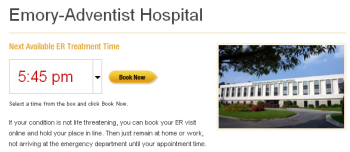
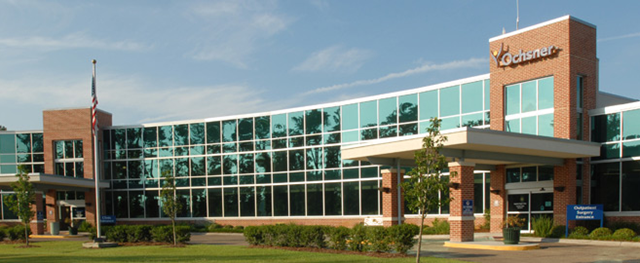
Ochsner Medical Center (LA) posts ER waiting times online, giving patients the chance to select which of Ochsner’s four hospitals can see them the soonest.

Current and former physician employees of Medical Edge Healthcare Group (TX) file a suit against the company, charging them of improper billing and practices that violate state laws prohibiting corporate control over physicians. The doctors say Medical Edge used “deceptive accounting practicing” and charged them unfairly for taxes, benefits and other expenses.

Fifty physicians are set to receive their first rewards for participating in New Jersey’s Bridges to Excellence Program, which is designed to recognize and reward providers that demonstrate safe, timely, effective, and patient-centered care.

Meridian Health (NJ) selects TeleHealth Services to provide television-based services in the patient rooms of three hospitals.

San Mateo County (CA) pays the federal government $6.8 million to settle charges that the county medical center intentionally inflated its numbers of acute care beds in order to receive bigger Medicare payouts. San Mateo claims that any overstatements were unintentional.

The American Hospital Association reports that 53% of all US hospitals reported overall losses in the fourth quarter of last year. The aggregated overall margin for the quarter was -8%, compared to a positive 5% for the same quarter in 2007.

Third-party benefits administrator First Service Administrators appoints CareMedic CEO Sheila Schweitzer to its board of directors. 

Mr. H is taking a few days off, so the posts this week may be short and sweet. Email me.

News 3/13/09

March 12, 2009 News 6 Comments

From Six Sigma: "Re: HIMSS keynote speakers. You failed to mention 2004 when HIMSS had hiker Aron Ralston, who cut off his own arm with a pocket knife to escape a fall in a rocky canyon. Now this was classic poor HIMSS programming. And let’s not forget co-keynoter, Tom Wolfe, the noted author and White House fellow for not going home again." I actually was trying to remember the arm-cutting guy but couldn’t think of his name, so I fell back to Dana Carvey as the "why is he keynoting?" example. But, HIMSS likes affordable C-list celebrities (Ben Vereen, for example) who seem hot until you think about when you saw them last in something important. Hold for Mr. Piscopo, please.

From The PACS Designer: "Re: Windows 7 beta. TPD has been watching for Microsoft to offer in its pending operating system Windows 7 Beta more solutions that will be usable by both Windows XP and Windows Vista users. With the addition of the system owner being able to shut off applications, the Windows 7 solution can win more advocates in the business world where having extra bandwidth available for business use is a valuable asset. Also being able to turn off Internet Explorer 7 can allow other Internet solutions to be employed." Link. I still hate using Office 2007 since I can never find Page Setup, Zoom, or Paste because of that damned ribbon, but Vista is OK.

From Andy: "Re: you said you liked weird stuff, right? What exactly is the procedure code for this?" A woman is airlifted to a Maryland hospital after being injured during a romantic escapade involving an electric saber saw. Hospital ED people can tell some bizarre stories (say, they would be great keynote speakers). At least this one’s not on YouTube yet.

From Kiwi Pete: "Re: movement. Or, is it more haste, less speed?" HHS is looking for people to serve on the HIT Standards Committee and HIT Policy Committee, with nominations for both due by March 16.

From Taxpayer: "Re: stimulus bill. Any thoughts on this? I’m a worker bee that sees so much squandering of good $ in HIT that I’m convinced the same thing will happen to stimulus $. Happy for never-ending employment, though." Link. The article by open source supporters says proprietary systems will turn into "poorly performing, opaque national Health IT at a high price." Maybe, but I don’t see that open source solutions are ready to step in as replacements (except maybe for VistA in specific circumstances), at least unless someone starts up the equivalent of a Red Hat to reduce the risk (real or perceived). On the ambulatory side, free/cheap EMRs exist, but are not dominating the market, which means upfront money isn’t the only problem. Hospitals waste a lot of capital on expensive applications that are woefully underused and fail to deliver ROI, but that’s usually the fault of the hospital and not the vendor (they bought it, superficially installed it, didn’t like it, and stopped using it, all without any serious effort or commitment). I doubt results will be any better now that the goal has changed to a quick selection, a subsidized purchase, and rapid go-live. I’m more in favor of getting the national infrastructure in place and then plugging in whatever appliance you want to exchange information with it. The value is in the network, not market-differentiating bells and whistles running on a local PC (I say that with great hopes for clinical decision support, but I’ve worked with it and it’s not really supporting many clinical decisions except to ignore the constant, unhelpful cookie cutter warnings). On the other hand, products and support aren’t fully commodotized, so as it stands today, there may be strong, valid reasons for choosing one commercial product or vendor over another. If there was a perfect system, we would need only one and that’s not the case.

Speaking of which, I like this quote by Mark Smith of CHCF on the stimulus bill: "It’s the land rush and the gold rush and the GI Bill of Rights all rolled into one."

Inga and I will be taking some possibly overlapping breaks over the next few days. We need to rest up for HIMSS, although I’m not sure that coming back to an inbox full of hundreds or thousands of messages will do it for me.

Riding on some Oprah quotes from Dennis Quaid (which were wrong, since he still thinks bedside barcoding will fix IV compounding errors like the one that affected his twins), Detroit Medical Center puts out a press release touting its own system. It’s actually Cerner’s, which would not have prevented the Quaid error either since it’s not used inside the pharmacy for IV prep, at least not as far as I know. There are hardly any systems that will detect mislabeled products when the barcode doesn’t match the contents of what it’s attached to. The hospital is awfully proud of the pro sports teams it takes care of, rattling them off at the end as though people who wield balls and pucks are more important that regular Joes.

Some folks who missed the HIStalk reception cutoff asked me to post that they’d like to meet similarly situated people at the Trump’s lobby bar during the same hours, a kind of Overflow Reception of the buy-your-own-drinks variety. I may swing by incognito just to see what’s happening there, so be rowdy.

FBI agents raid the offices of Washington, DC’s CTO (the previous job of Obama’s newly named US CIO), reportedly arresting an employee and a contract worker for bribery.

huntzinger

Just about everybody who’s been in the industry for more than a few years knows who George Huntzinger is, but here’s a refresher: he was president of CSC Healthcare for many years and also COO for the gone but not forgotten Superior Consultant, one of the class acts of HIT consulting. He’s now at The Huntzinger Management Group of Plains, PA, which in a remarkable non-coincidence, shares his name. A couple of HMG’s partners are also former SUPC folks who have decades of experience in running businesses, doing M&A work, etc. HMG offers consulting services to both providers and vendors, such as business assessments and planning, marketing strategy services, operations effectiveness, IT effectiveness, and full program management and PMO services. The Huntzinger Management Group is a new HIStalk Platinum Sponsor and I am delighted to have their support.

Listening: Pink Floyd’s Wish You Were Here, an incredible, moving tribute to LSD-fried (and now deceased) founder Syd Barrett. I rediscovered them after watching the Which One’s Pink documentary recently.

McKesson is the latest HIT vendor to pony up to make a patent troll go away. The troll’s strategy: find companies using technologies vaguely similar to a patent it bought with lawsuits in mind, sue everybody and his brother for infringement in a friendly court’s jurisdiction, then generously offer to settle if the target company agrees to buy a license that costs just a little bit less than mounting a legal defense. Everybody caves in every time except Epic, which happily offered to trade legal punches until the weaker fighter hit the canvas.

It’s nine years in jail for the New Zealand health district CIO accused of defrauding his employer of $11 million US by submitting phony IT maintenance invoices paid to himself.

esd

Enterprise Software Development is a new and appreciated HIStalk Platinum Sponsor. The company offers management consulting, supplemental staffing, software services, implementations, integration, and infrastructure support (among other services). Solutions expertise includes Cerner, Eclipsys, Epic, Siemens, MEDITECH, and McKesson. Some familiar client names are here. Thanks to the folks there for supporting HIStalk.

Massachusetts Senators Kennedy and Kerry bring home the pork, getting $143K of federal taxpayer dollars for the South Shore RHIO, among other spending items like sewer repairs and a bus. I guess that passes for cheap stimulus spending these days.

Perot Systems will spend up to $60 million on a new campus, stimulating India’s economy instead of ours. It’s also talking to five Indian hospital chains about implementing "hospital software that is available in the US and UK," which sounds like Cerner.

A report says Connecting for Health will lose its standards-setting role to a new group under the Department of Health, opening the door for more NHS organizations to choose their own systems as long as they can interoperate via a common infrastructure. Some have argued that stimulus money will encourage healthcare IT like the UK’s, which aren’t fairing so well, but it sounds like they are actually gravitating more toward our model, with certified commercial products being chosen locally but exchanging information on a common network.

E-mail me.

HERtalk by Inga

From Code Red: “EMRs, ROI, and physician adoption. I think if the market actually realized the savings and efficiencies, there would not be a need for government forced market demand to move these products. I think the reality is that the current generation products do not provide these things, or why would a doctor not adopt them? The current generation of products have low adoption and high abandonment because they force the wrong workflow into the clinic and the doctor. Many EMR products ignore the doctor’s need to enter original thoughts and observations which do not appear on a pull down list. My fear is that the HITECH spending is going to freeze spending and investment on next generation products that would be adopted, and create artificial market demand on old school products certified based on the rules from the old school vendors. So, no better mouse trap for the next few years, just ‘bridges to nowhere’ in HIT.” Hasn’t the industry spent the last 15 years or so trying to come up with the better mouse trap? Maybe it’s time to try something new. Plus doesn’t new business provide vendors increased revenues for product reinvestment?

Thank you for all that sent over the great footwear suggestions. Did I forget to mention that in addition to gorgeous and comfortable, they need to be affordable enough for someone on a blogger’s salary?

UTMB (TX) remains on life support after regents approve a proposal to keep the Galveston hospital and school open. Now the organization needs to find $1 billion from philanthropic and government sources to fund the rebuilding of the hospital, which was heavily damaged in Hurricane Ike.

The FDA clears Sunquest Information Systems’ latest Blood Bank software application.

The HHS creates a new Office of Recovery Act Coordinator to manage the distribution of the $137 billion in ARRA funds. HHS veteran Dennis Williams will lead the office and serve as Deputy Assistance Secretary for Recovery Act Coordinator. That really rolls off the tongue.

PatientKeeper is mentioned in this article about Caritas Christi Health Care (MA) and its $70 million technology project. At first glance, it sounds as if the Caritas IT staff actually created the PatientKeeper technology, which is not the case. I asked for clarification from Susan Worthy, PatientKeeper’s director of marketing. Her reply: “PT Barnum says any publicity is good publicity. Not sure that’s true. I sent a note to the editor regarding the inaccuracy.” I’m with PT.

Greenway Medical Technologies celebrates its 1,000th connection of PrimeExchange, Greenway’s interoperability engine.

Poor communication at US hospitals costs $12 billion per year, according to business school researchers at the University of Maryland. Communication failures result in unnecessarily long hospital stays and account for 54% of total losses. The $12 billion figure is equal to about 2% of hospital revenues nationwide and definitely cuts into the average hospital’s 3.6% margin. Leaders at the school’s Center for Health Information and Decision Systems believe that improved IT would streamline communication among caregivers and reduce inefficiencies.

OSU Pathology Services (OH) selects McKesson’s Revenue Management Solutions.

clip_image002

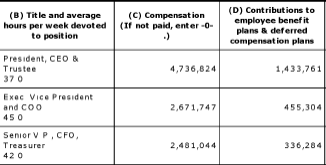
Some Congressmen take a closer look at the healthy salaries earned by many hospital CEOs. The IRS says the average CEO salary is almost $500,000, with a small group averaging $1.4 million. Republican Senator Charles Grassley would like to introduce legislation that puts more pressure on hospital boards to keep salaries in check.

Beth Israel Medical Center implements Meta’s Electronic Physician Query software to improve clinical documentation.

Availity promotes (warning: PDF) Russ Thomas to the role of President and COO. Thomas joined Availity in 2008 as an executive VP and COO and was previously president of Gold Standard.

PHR provider HealthTrio will leverage Dossia’s technology platform to advance the clinical data integration within HealthTrio’s PHR and EHR products and increase online record access.

The Rochester RHIO goes live with eHealthConnect Image Exchange, a service by eHealth Global Technologies to automate access to patient images. The service ingrates with Rochester’s Axolotl Elysium system and connects to the PACS imaging services at eight radiology providers.

As Mr. H mentions, I once again have the opportunity to take charge of the blog while he taking a break in some Internet-less location. Feel free to drop me a note. It makes me feel important.

E-mail Inga.

Sam’s Club to Sell eClinicalWorks EMR Bundle

March 11, 2009 News 65 Comments

A New York Times article reports that Wal-Mart will begin selling small-practice physician systems through its Sam’s Club division, pairing Dell hardware with software from eClinicalWorks in a complete package that include installation, ongoing maintenance, and training.

Marcus Osborne, Wal-Mart’s senior director of healthcare business development, was quoted as saying, "We’re a high-volume, low-cost company and I would argue that mentality is sorely lacking in the health care industry."

Sam’s Club will offer the package this spring starting at under $25,000 for the first physician in a practice and $10,000 for each additional doctor. Ongoing costs will be $4,000 to $6,500 per year.

The package will include a Dell desktop or tablet PC installed by Dell technicians and software-as-a-service applications from eClinicalWorks.

Wal-Mart says it got the idea from its own in-store clinics, which use the same technologies. It says it’s role is simply to bundle the products together into an affordable and accessible offering. "We’re the systems integrator, an aggregator," Osborne said.

David Brailer was quoted as saying, "If Wal-Mart is successful, this could be a game-changer."

I’ve asked Girish Kumar of eClinicalWorks for more information. Meanwhile, your comments are welcome.

UPDATE: notes from speaking with Girish Kumar Wednesday afternoon. Sorry that they are terse and a little raw, but I had 15 minutes between meetings at work and Girish was in the car on the way to the airport.

If a physician buys from Sam’s, will it be the same product, implementation services, and support that eCW offers directly?

Absolutely. We’re trying to make it simple. Everybody says EMRs are hard and implementing change is hard. We realize that. We’ve been doing SaaS since 2003 and have invested a ton on a data center. We wanted system that is ready out of the box, configured, with content, although it will still require on-site implementation and services. It’s the same in terms of product, services, training, but faster and easier to deploy.

Why would a customer buy from Sam’s? Do they save any money? Can they choose a no-services option?

Wal-Mart used its Sam’s Club division because it has a lot of small business customers as corporate members. They buy ongoing stuff every month, not just simple things like gloves and bandages, but have a corporate account and buy copiers, payroll software, etc. They don’t have to go into Sam’s. You call a corporate number, get an assigned representative, talk to them about what you need, and the item is shipped. eCW salespeople will still show the product and talk to the customer. There are packages we want to give them that are pre-configured. The customer will not pick blindly – they will still consult with an eCW person.

Will Wal-Mart do its own advertising and marketing?

There will definitely be a significant campaign. They have 200,000 healthcare professionals today as members, mostly as doctors.

Any projections on volumes?

I have to keep that confidential, but there was a lot of planning on the eCW side. Investments have increased, made the company even more ready. This can have a significant impact on how physicians look at, evaluate, and purchase EMRs. We would like to see taking it away from being a niche sales process, where sometimes we confuse the customer, to make it a very streamlined process so that a customer can make an educated decision. They know how many days to go live, how many days training, cost, etc. eCW does 30 Webinars every week that every customer has access to with a live attendant and all Sam’s members will be able to avail themselves of that.

We believe we are the largest SaaS EMR in the country with 4,000 physicians. If we include hospital customers hosting affiliated physicians and RHIOs, that’s another 4,000. That’s 8,000 today of our 25,000 physicians. We’re trying to leverage that scale to make it easier and cheaper to deploy.

Do you anticipate any product changes?

For primary care, we spent two years working with New York City. We put into the product all the content needed to run a primary care practice – templates, order sets, clinical decision support. That is years of content that we jointly developed. That is all pre-packaged with the product – it’s not just the software any more. On the specialty care, we have about 50 specialty databases. All of that will be available pre-configured when they sign up. When the trainer shows up, all the content will be there and if we want to change it, we can change it together. We will go live with a comprehensive data repository with clinical decision support at no extra cost for the content.

A primary care doctor can go live with the system as it is, with rich content.

What does this to do the competitive landscape?

We’ve always taken tremendous pride on our leadership on price and functionality. 97% of eCW customers surveyed said their total costs met their expectations when they bought and implemented eCW. 93% of physicians said the EMR met or exceeded expectations. I still have to worry about the 7% and I lose sleep about it more than I take advantage of the 93%, but if a package with those numbers is readily available, people will ask the question: if I’m able to get a comprehensive product that people are happy with at this price point with content and support, why should I spend more? Price visibility will be black and white. No longer will you see those quotes saying an EMR will cost $300,000. You will see more informed questions, pricing pressure, and frankly, higher expectations if content is provided. I don’t want to take six months to implement PM and another six months for an EMR. This is a unified product we’re offering, by the way, both EMR and PM. We’re offering five days of implementation on site with the Sam’s Club package and they can buy more for $750 a day plus travel, but our track record is that we can do it in five days.

What are the benefits to eClinicalWorks?

There are many benefits. We want to be a company with 100,000 physicians using our product and 100 million patients whose lives are positively affected by it. There’s a lot more work to be done, but this platform gives us more opportunity.

News 3/11/09

March 10, 2009 News 4 Comments

From Paul Pott: "Re: grocery code barcode article. Didn’t you write some commentary awhile back? Maybe Dennis Quaid should read it …oh, wait, he is too busy solving the problem with his easy solutions." A couple of readers recalled a piece I wrote two years ago called Want to Anger a Nurse? Make Smug Coments about Grocery Store Barcoding. And regarding Dennis Quaid, I should say that I have no problem with his being mad, disillusioned, distrustful, litigious, and now vocal. Its HIMSS that I have a problem with, putting him onstage in an HIT keynote as though we are ignorant to medical errors without having a layperson challenging us at a conference, particularly one who suffered no loss other than some panicky moments (unfortunately, there are plenty of people whose experience with medical errors is far more tragic). Well, HIMSS has made some odd keynote choices before (Dana Carvey, for example) and I suppose this one’s no worse when the objective is simply to pay a big celebrity to bump up the cool factor. Maybe he’ll do something interesting like have someone from Cedars on stage with him (I’m predicting that).

akron

From xtremegeek: "Re: Akron General Hospital. Heard they laid off over 100. Can anyone confirm?" The body count was 145, according to an article in today’s Plain Dealer.

Fountain Valley Regional Hospital (CA) is using video-equipped robots to connect doctors with patients. It is law that every IT system intended for nurse use must have a contrived acronym name chosen by contest (as a thinly disguised ploy to increase rank-and-file support, of course, and highly insulting to nurses if you ask me), so theirs is called ERNI. A patient is quoted: "They said a doctor was going to talk to me and then it came wheeling around. I just figured that was the new era. I didn’t feel like it was impersonal at all."

3d

IBM works with a hospital in Denmark to develop a 3D anatomical view of available EMR information, allowing doctors to click on a body part to drill down into related information. Sounds cool, although I don’t see how it affects outcomes.

Analytics vendor Enclarity raises $5.5 million in Series C funding, bringing its total to $22 million.

Marlin Equity Partners acquires billing and collections vendor MDeverywhere, adding it to a stable that includes MedAvant. I Googled HIStalk to see if I’d mentioned MDeverywhere previously and darned if I didn’t mention a company by that name (maybe not the same one) in my 12th-ever HIStalk post, June 30, 2003. That was right after I boldly predicted that Epic would no longer be a serious HIS competitor because it had just signed the Kaiser deal (which I also predicted would fail). Well, I was young and foolish and so was Epic back then, so you will have to forgive us both.

gwn

Thanks to GetWellNetwork of Bethesda, MD, a brand new Platinum Sponsor of HIStalk. Premise Chairman CEO Eric Rosow (now Eclipsys) introduced me by e-mail to GetWellNetwork Founder and CEO Michael O’ Neil, we did a Moment With, and he must have gotten a lot of response because here they are a new sponsor. The company sells interactive patient care solutions (bedside education, safety, pathways, pain assessment, etc.) and patient entertainment and communication systems. I appreciate their support.

The medical director of O’Connor Family Health Center (CA) tries to make the best of its transition to an EMR, saying he doesn’t regret it despite (a) the fact that it cost $250,000 and required an army of people; (b) patient backlog was up and revenue down for three months after go-live; and (c) their vendor has gone belly-up since their implementation and product support ends in two years. I bet that particular Mrs. Lincoln really liked the play.

I bet HIMSS was hoping for some rosy survey results about ARRA after all the cheerleading it did for it, but HIT professionals think differently: only a third of them believe all those HIT stimulus provisions will end up saving healthcare dollars.

Thanks to those who RSVPed for our HIMSS reception and apologies to those who missed the cutoff (some folks took heed when I wrote Saturday that the cap was imminent). The most common titles of attendees: VP/EVP/SVP/RVP (76), CEO/Chairman (45), and Director (40). I’m happy to see that some of my provider-sider peers jumped in there too, with some doctors, nurses, IT people, and CIOs. Title counting aside, thanks to every single person who signed up – it means a lot to me. It never ceases to amaze me that people pay at least a little attention to an anonymous blogger who’s sticking to his nonprofit hospital IT day job (as some of you less impressed readers have recommended).

A reader had posted a comment about IntrinsiQ, the folks who sell the IntelliDose oncology system. Inga connected with Jeff Forringer, the company’s new president, who was good enough to provide a response. "Thanks again for reaching out to me directly. As I said in my initial response there is no planned reduction in force for 2009. As a matter of fact we plan to invest even more in software development and client service this year. Overall I think you’ll be happy to hear where IntrinsiQ is heading – especially given your concerns about the ongoing importance of our clinical software business. While we’re still putting the operational roadmap in place to achieve our goals, here’s an overview of our vision. (a) Extend the improvements we made in version 3.8 to the e-nurse and charge capture modules to the order writing module in our 3.9 version this year. (b) Use these changes in the underlying architecture to develop a light version of the product that can be used by smaller facilities. (c) Continue our cooperative approach with full service EMR vendors to be the oncology module that makes their systems better. (d) Use our data processing and analytical skills to provide sites with information about how they practice and how that compares to the rest of the country. (e)  Develop new modules and services that help sites improve the quality of care. On the software management side I have made two changes. I hired Rich Gray as the GM of our software division. Rich was with IntrinsiQ for a number of years and has rejoined. Rich’s experience with the software, healthcare  IT space and his clinical background are a great addition to the team and will help us reach our goal of becoming a bigger part of helping sites improve the quality and understanding of care The other management change that I made was to promote Steve Hamann to the management team. Over the past 2 years Steve has led the effort to improve IntelliDose’s user interface and the underlying architecture. I hope this gives you and ideas of where we are headed. I would be happy to talk more about what we would like to do long term, the commitment of our board to the process and how the software and data business work together if you are interested."

Philips expands its headcount by 30 in its Belfast office, the Northern Ireland location that was formerly part of the acquired Tomcat Clinical Systems.

QuadraMed announces Q4 results after Tuesday’s market close: revenue down 6%, EPS $0.14 vs. $0.52 (after excluding a one-time tax treatment from last year).

We did an interview with Cheryl Iseberg, COO of Renaissance Resource Associates, an HIStalk Platinum Sponsor that provides consulting services for GE Centricity Enterprise, Picis, Epic, and other systems.

Another example that consumers don’t think doctor bills are real: someone complains to a TV station that if a doctor doesn’t write off charges for a test his insurance company said he didn’t need (after refusing to pay for it, of course), his credit score will suffer because he’s not planning to pay the bill.

Jobs: Project Office Manager (NC), MEDITECH Financial/Billing Expert (national), Director of Business Systems (CA), MEDITECH Consultant – Advanced Clinicals (national).

A RAND Corporation study says pay-for-performance plans sell a lot of IT, but haven’t improved healthcare quality, based on its review of a big California project. The problem: doctors weren’t interested in major change when only a couple of thousand dollars a year was at stake.

MEDSEEK is offering a free Webinar in its series on eHealth, this one on Wednesday, March 18.

Southern Arizona HIE is working with Wellogic to roll out more electronic patient information. Also mentioned: it hopes (like everybody else) to get a slice of the Obama Pork Pie (actually, I shouldn’t say that since I’m almost but not quite convinced he had no choice).

CVS Caremark closes 16% of its MinuteClinic locations, placing them on a "seasonal schedule" to supposedly reopen later. I’ll give its PR people credit for putting a positive spin on closing stores because of poor sales: they are doing it "to align with consumer demand."

The Conficker worm is still out there, infecting networks at two hospitals in Scotland last week and requiring a two-day downtime that forced the rescheduling of cancer patients.

Maybe this is an argument for EMRs: the family of a 60-year-old woman who died of an E. coli infection gets a $2.6 million jury verdict from a hospital. They had taken the patient to the ED, which drew positive blood cultures, but the nurse put the paper result in a folder on the doctor’s desk, where it went unreviewed for 12 hours.

E-mail me.


HERtalk by Inga

From Spicey: “Re: HIStalk/Ingenix reception. You guys should be flattered it’s sold out … everyone thinks this is the ‘must do’ of HIMSS!” We are flattered that so many want to attend this sure-to-be-fun event hosted by the wonderful Ingenix folks. I hear the location (Trump Hotel) is gorgeous and I am sure the food will be divine. If, by chance, you did RSVP and your plans change, let us know if you can’t make it. We’d love to free up some spots for people who missed the cutoff (some of whom are e-mailing frantically hoping to get squeezed in, but we have a space limit).

From Shoe Diva: “Re: HIMSS footwear. I went shopping a couple of weeks ago for comfy shoes … none of those beautiful shoes for me. I swore last year I would resort to black tennis shoes. What about you?” This is one of life’s biggest dilemma: function versus fashion. Why can’t someone design a gorgeous shoe that you can walk around in all day without killing your feet and your back? And, that is also suitable for Chicago’s potentially frigid weather?

Speaking of HIMSS, the obvious buzz this year will be around HITECH, including how each vendors have the perfect solution and what providers will need to do in order to get their money. Coming in a distant second, I predict a good deal of talk of products and services to help providers adapt to a more consumer-driven healthcare world. Next, look for cool ways to use your PDA.

Thirteen hospitals reach HIMSS Stage 7 EHR ranking and all but one are part of Kaiser Permanente. NorthShore University HealthSystems (IL) was the other system to make the list for three of its four campuses. Interestingly, all Stage 7 honorees use Epic for their core HIT system.

A new study suggests that as many of half of the country’s physicians will determine that HITECH financial incentives are not enough for them to move forward on EHR adoption. Avalere estimates that the average solo or small group practice will spend $124,000 over five years to adopt EHR and will receive $44,000 in incentive payments. That’s a $14,000-a-year deficit compared to an estimated $8,500 a year Medicare reimbursement penalty for non-adoption. The biggest problem with this argument, however, is that it does not address any potential savings and efficiencies physicians gain as a result of implementing EMR, such as reduced transcription costs, savings on charts and chart storage, lower malpractice rates, etc. And what about the value of improved patient safety?

Health Systems Solutions announces it will de-register its common stock and stop filings with the SEC following the collapse of its planned Emageon merger and the fraud investigation of its principal investor.

The US unemployment rate continues to climb and now sits at 8.1%. Meanwhile, healthcare remains one of the few bright spots, adding 27,000 more jobs in February.

Integration firm Bostech Corporation partners with HIT consulting firm Orchestrate Healthcare to promote open and integrated healthcare technology solutions.

Allscripts-Misys finds a buyer willing to pay $26 million for its medication services business. A-S Medication Solutions will pay Allscripts $8 million in the 4th quarter and $3.6 million per year over the next five years in return for A-S sales and marketing services.

clip_image002

St. Joseph’s Hospital Health Center deploys RelayHealth’s IntegrateRX Prescription History to aid with medication reconciliation.

CHRISTUS Health implements Picis LYNX E/Point in 18 of its acute care hospitals and plans to add three more sites soon.

The Department of Justice files suit against Community Health Systems (CHS) for allegedly defrauding Medicaid of $47.5 million. A whistleblower originally alerted officials of possible fraud after three New Mexico hospitals and CHS allegedly collected disproportionate share payments to which they were not entitled.

The 235-bed Children’s Hospital (LA) successfully installs Sunquest LIS specimen Collection Management and Encompass Web-based ordering, resulting, and reporting systems.

Satyam Computer Services starts a competitive bidding process to find an investor willing to acquire a majority stake in the scandal-ridden company.

Memorial Hospital and Health Care Center (Indiana) migrates to Corepoint Health’s Integration Engine.

For $199, you can purchase a new genetic test that predicts the risk of male and female hair loss. Though I personally would hate to lose my hair, I’m quite fond of bald men, so I wonder why a guy would waste this kind of money? I suppose the idea is that if you are going to go bald, you can take medications early to slow the hair loss, though apparently the meds include a threat of “sexual” side effects. Men: bald is sexy.

Ambulatory surgery center operator AmSurg selects ProVation MD software by Wolters Kluwer Health.

A new P4P survey reports that P4P payments have grown to over 7% of physicians’ total compensation and 4% of hospitals, with some physician programs producing 30% of physicians’ compensation. Since 2006, the percentage of programs reporting quality improvements due to P4P has doubled and more than half of P4P programs cite measurable increases in their providers’ clinical quality.

The Alaska Native Tribal Health Consortium awards GCI $250,000 to provide a statewide broadband network to give health care provides more ready access to patients’ EHR.

WestCare Health System (NC) implements Preferred Medical Marketing’s Estimator PRO software to provide patients written estimates for expected payments due.

The Michigan Health & Hospital Association commits to a three year contract with ECRI Institute Patient Safety for ECRI to provide support for the Association’s patient safety data collection and analysis project.

Residents strolling their Aurora, CO neighborhood find personal medical documents littering their streets. Apparently the “trash” came from a healthcare facility eight miles away and included names, addresses, social security numbers, and other personal data. The healthcare facility is uncertain how the papers got there and is investigating.

Finally, a San Diego State University study finds that there are more indoor tanning salons than either Starbucks or McDonalds. Did my tax dollars help pay for that study?

E-mail Inga.

Monday Morning Update 3/9/09

March 7, 2009 News 11 Comments

From Bill Swerski: "Re: negativism. I can’t tell you how much I look forward to your news blogs. They just keep getting better and more informative. Your statement regarding not worrying about the economy and working harder is one of the most prolific statements I have heard in the past few months. The negativism to me is what is hurting the economy. This single quote needs to be plastered on billboards, bathroom stall walls, and anywhere else a Sharpie can be held! Our statement here for the bad times is ’Suck it up, cupcake!’"

With those kind words, let me say for the record that I’m just as hard-hit and discouraged as anyone else (my IRA and 401k are down 60%, so I’ll probably be working until I drop). I also don’t like the idea that I did the apparently unfashionable — paid my mortgage and taxes on time, lived within my means, and didn’t start crying for help because my house payment went up while its value went down, so there’s no bailout in my future (except paying for one to help the irresponsible people). Still, whatever degree of intelligence, ambition, and resourcefulness I had hasn’t seeped out of me just because others (some of them elected to high office) made truly boneheaded decisions. I’m knocked down, but not out. If your priorities were based entirely on accumulating wealth, it’s a great time to re-evaluate. One of my favorite sayings: I’ve never seen a hearse pulling a U-Haul.

It may already be too late, but if you want to attend the Monday, April 6 HIStalk reception at HIMSS, please RSVP immediately as we are just about to hit the cutoff of 300 (or it may have been 400 — hopefully the Ingenix folks sponsoring kept better notes than I did of what we decided). Please don’t RSVP if you aren’t sure you’re coming since someone else will lose their chance. Pretty nice digs: the 92-story Trump International Hotel is right on the river at the Loop and North Michigan. We will be in the largest room, the Grand Ballroom, which has views of Lake Michigan and lots of historic buildings through 24-foot windows. If you are the sort that likes to hobnob with movers and shakers, the RSVP list includes 27 CEOs and presidents and 56 VPs so far, plus an assortment of financial types, media people (what are they doing attending a blogger’s event?), and friends of HIStalk (that’s all of you, of course, but some of these are names you would know from reading). Thanks to Ingenix and Ingenix Consulting for sponsoring and for everybody attending. If it’s a great event, it will be because of the cool folks who chose to be there.

Speaking of the reception, a reader informs me that the NCAA basketball championship tips off the same night at 8:21 Chicago time. I wouldn’t have known since the only sport I care about is college football, but I know people obsess over their brackets and all that. Hopefully it won’t be too much of a conflict. That reader suggested a post-party viewing event and is looking into underwriting a modest one (heck, all you need is some Chicago dogs, a keg, and maybe … just thinking out loud … a couple of cheerleaders).

uic

Gwen at Healthcare IT Jobs was curious about the University of Illinois at Chicago’s online MS in Health Informatics program whose ad is running to your right and on Healthcare IT Jobs, so she assembled some information (warning: PDF) about it, just in case you are curious. People often decide to further their education when the economy is unfavorable, so it’s a timely topic.

CalRHIO and OCPHRIO will launch a statewide system providing secure access to patient information in 23 Orange County, CA EDs in July. The Orange County group will use CalRHIO’s electronic platform, which I believe (but the press release doesn’t say) is Medicity.

Hopefully your Daylight Saving Time switchover went OK.

Young adults ages 19-29 make up the larges group of uninsured citizens, all 13.2 million of them. One reason: they’re too old to stay on the plan of their parents, but their employers don’t offer coverage or they can’t afford it. These are the folks, of course, who will have to bail out Medicare, fund the retirement of all of us baby boomer geezers, and pay massive interest on the federal debt racked up trying to keep an economic balloon with a hole in it inflated. Somehow I’m not feeling real good about their willingness to do that when the time comes.

A New York Times op-ed piece called The Computer Will See You Now seems to have gripes about EMRs that aren’t really described too well, but seem to be: (a) using the computer in front of patients is intrusive; (b) standard questions must be asked in order even when they clearly don’t apply; (c) the doctor might swear in front of patients when the computer does something wrong; and (d) computers lose context because doctors can’t underline, write bigger, or otherwise highlight something important. From those observations, the author suggests further studies are needed and perhaps EMRs should be maintained only on tablet PCs. That’s a pretty big and unconvincing leap from the anecdotal experience of one user, but lay readers will unfortunately assume it is authoritative since the Times ran it.

The Minneapolis-St. Paul paper highlights Amcom and VisionShare, healthcare software companies that "are proof, even amid all this economic turmoil, that we can build growth companies by making health care and other industries simpler and more efficient." Probably true.

Lobbying experts say Nancy-Ann DeParle’s industry ties shouldn’t disqualify her from being health czar, saying experience "on the other side" is not a negative because you need people who have worked in the field. I would ordinarily agree, but much of the Obama stimulus and reform plan is prescriptive in specifically advocating and advancing EMRs and she has profited greatly from being involved with companies that sell them. Still, I agree that shouldn’t rule her out. I think some in the industry would have preferred someone who has actually worked in healthcare, but I suppose at high-profile levels you’re always going to have someone who has risen to heights above the majority of us who actually do the work as non-profit employees.

quaid

Healthcare expert Dennis Quaid revisits Cedars Sinai with Oprah’s TV people and cameras, "to see what steps have been taken to ensure a similar mistake won’t happen again." Apparently the best case study on medical errors involves his twins, who unlike some victims had no lasting ill effects whatsoever, and the best investigator for the job is their actor dad. I thought his movie Everybody’s All-American was pure dreck, so I plan to call up Oprah to film me as I meet with studio executives to demand an explanation of how they will make sure something that horrifying never happens again. Dennis, of course, can do whatever he wants at Cedars because he’s hanging a potential lawsuit over its head, so they have to grit their teeth and pretend he’s got insightful thoughts as he lords around the place with the TV crew catching his good side. He’ll be great at HIMSS in any case since actors can make you love them by just being whatever you want them to be (I bet actors would make great salespeople).

palmer

A Massachusetts doctor who writes best-selling novels says the inspiration for his latest, The Second Opinion (# 1,563 on Amazon) came from a visit to his own doctor, who was too busy entering information into the computer to make eye contact. "I started thinking about electronic medical records and HIPAA (Health Insurance Portability and Accountability Act, which requires standards for electronic medical records and also helps to ensure patient privacy.)  So that’s what I wrote about."  

Nuance announces that its SpeechMagic has been rolled out in 12 London sites of HCA.

GE and Siemens are upset that Obama’s plan calls for cutting government spending on MRIs and X-rays, so they’re threatening to turn the lobbyists loose to argue that it would deny seniors "life-saving medical services" (taking a cue from HIMSS in using the term "advocacy" instead of the much less noble-sounding "special interest lobbying"). Like everybody else, they’re all for cutting massive healthcare expenses as long as it doesn’t cost them anything. Another entirely impartial group, the American College of Radiology and its radiologist members, also doesn’t like the plan. Both like to raise the specter of "actuaries" making medical decisions.

Healthcare IT mecca Beth Israel Deaconess Medical Center is on track to lose $20 million this year and layoffs are apparently coming. The Most Wired folks are always stretching to try to correlate IT investment to outcomes, so I expect they’ll modestly look away.

Some highly insightful equities research: an analyst notes that AMICAS offered $1.82 per share to buy out Emageon, so his target price is $1.82.

E-mail me.

News 3/6/09

March 5, 2009 News 9 Comments

amg

From Bignurse: "Re: concierge practice. The New York State insurance department says that a New York City physician’s concierge medicine practice ‘amounts to insurance and requires a license’." Link. State insurance regulators order AMG Medical Group to shut down its $79-a-month practice. They are obviously wrong – if it was insurance, you couldn’t touch it for $79 a month. A bad call by the state, if you ask me.

From Leland Palmer: "Re: KP. Hearing any chatter that their CTO is seeking pastures of the greener variety?" Not so far, anyway.

From Harold Kumar: "Re: layoffs. The IT department at my hospital is sure to get hit next round. I am really worried." Worry is not a constructive action – it doesn’t change the odds that the next pink slip will have your name on it. Stop reading the negative financial news, work harder than you ever have, and keep your eyes open for opportunities. It’s all you can do. No matter how tough the times, some percentage of people will do even better than they did before and there’s no better place to do it than here. All of us in hospital IT are feeling the same way, I expect.

From CS Guru: "Re: Cedars-Sinai. Grand kudos to the folks at Cedars-Sinai as they went live this weekend with the full Epic revenue cycle suite. It is the biggest Epic install for revenue cycle ever (except of course KP). This is a huge success by all measures, but mostly for new CIO Darren Dworkin. The word is they are closing the command center early as support calls have slowed to a drizzle."

As you would hope, new health czar Nancy-Ann DeParle has resigned from Cerner’s board.

News flash headline from HIMSS: "Quaid to address ‘broken healthcare system’". Great! An actor who’s never worked in healthcare, who didn’t finish college, and who showed no interest in healthcare whatsoever until Cedars Sinai overdosed his twins on heparin is ready to tell industry experts what we’re doing wrong. I guess the non-celebrity parents of the other Cedars-overdosed baby weren’t invited because they don’t have The Right Stuff (my favorite Dennis movie, but he’s also been in some real crap, like Jaws 3-D and Wilder Napalm). He could bring his brother Randy to talk about Christmas Vacation.

Bret Jones of Leerink Swann was one of the best HIT analysts in the financial industry in my opinion, recently doing a ton of work following the stimulus goings-on and setting a contrarian (and accurate) tone in saying it wouldn’t boost the bottom line of vendors until at least next year. I say "was" because the company sent e-mails indicating that a "change in personnel" cause it to drop coverage of HIT companies and his bio page gives a 404 error. I assume he’s gone.

The country’s newly announced and first CIO, Vivek Kundra, booted Microsoft’s office tools in favor of Google Apps when he was CTO of the District of Columbia and said in a Thursday conference call that he wants the government to use more cloud computing.

docusys

Brooke Army Medical Center chooses the anesthesia system of DocuSys.

A New Zealand IT healthcare IT executive says governments should provide incentives for clinicians to use IT. Panelists said Australia’s e-health policies are falling behind UK, Northern Ireland, and New Zealand (the US wasn’t mentioned). Suggested initiatives include a SNOMED terminology project, a national provider and citizen health ID, and a user authentication system. Actually, the US was mentioned in lauding the potential of telehealth, with a Hawaii project as the poster child. An Intel healthcare guy said, "I’ll be honest; vendors are sometimes as much to blame for [e-health] challenges as policy makers; there needs to be a shift to [coalitions of] healthcare providers."

Vitalize Consulting Solutions announces its acquisition of 70-consultant r3 Health Partners of Santa Ana, CA, expanding its West Coast capabilities. Vitalize Chairman and CEO Bruce Cerullo dropped no hints that I could detect in my interview with him a few weeks ago.

A Washington hospital’s board approves motions to decline to participate in assisted suicide and to approve a $6 million EMR upgrade. The minutes do not indicate whether the decisions were related.

3m

Thanks and welcome to new Platinum Sponsor 3M, specifically its transcription, dictation, and document and chart management business. Thanks to 3M for supporting HIStalk and its readers. It’s really gratifying that even in tough times, companies still want to support what Inga and I do.

The military’s Tricare system is cross-checking prescriptions for duplicate therapy and drug interactions, alerting the pharmacist to discuss the issue with the patient’s doctor. Also mentioned: a DoD/VA partnership with the FDA to track adverse drug events. The article slips in referring to AHLTA as "Altha," but it’s still interesting.

Jobs: Clinical Pharmacist, Director of Business Systems, EpicCare Ambulatory Consultant, Cerner CoPath Plus Consultant.

A couple of folks have had trouble registering for the HIStalk reception at HIMSS (probably some browser setting-specific Javascript error if I had to guess) so the folks at event sponsor Ingenix added e-mail and telephone options. Problems aside, something like 150 people registered in the first day. It’s RSVP only, so if you want to come, you might want to sign up before we hit the cutoff.

Vince Balsamo of Cisco e-mailed to say that someone either shares his name or used it in posting a recent comment. In any case, it wasn’t him.

I don’t know where expensive conferences are finding enough attendees willing to miss work and spend big money on education, but here are two: the X3 Summit on health design (notice the eye-rolling misspelling of Johns Hopkins as John’s Hopkins, which sounds like a Hopkins owned by a prostitute’s customer) and the HealthCare New Media Marketing Conference (warning: PDF). I know I’m a cynic, but here’s an idea: stay home and try to save your struggling non-profit employer instead of screwing around at conferences that cost thousands of dollars by the time you add in travel cost and missed work. I’m still puzzled that all these 2.0 and new media conferences still require you to travel to some remote site to physically sit in front of a speaker who’s pitching the benefits of online video and connecting with audiences via new media. That’s not exactly living the message.

Interesting: Pennsylvania’s state senate wants to copy an Altoona health clinic that treats patients whose incomes fall between Medicaid and private insurance. The mostly volunteer-staffed clinic treats 3,500 people a year for $207 each vs. the $4,470 it would take to insure them. The idea should appeal to everybody except insurance companies (which is why everybody else likes it) and hospitals, who would somehow have to be paid for rendering inpatient services. I would be surprised if it will scale, though, given the requirement of using volunteer doctors whose supply is finite.

Listening: Trion, symphonic progressive, on Prog.FM via my little Aluratek USB radio gadget. I know prog is pretentious, soulless, and overwrought, but I still like it.

Orthopedic surgeon and Time writer Scott Haig writes a piece critical of government-pushed EMRs. He says hospital-forced CPOE turned a lot of docs off and left them puzzled how to handle orders like "patient may wear her own flannel nightgown" and also made it less obvious how long it would take for a living, breathing nurse would find the order and act on it. "Before we had them on every countertop, computers held such promise for us in medicine: doctors and patients live in a world of painful, pressing questions, the answers might be in there. Or so we thought. Twenty nine years from the night I first sat in a hospital in front of a computer screen the questions persist. And I still don’t see the profit-maximizing, cost-controlling physician with his nationwide computer treating patients any better than the great physicians I’ve known have. With pen and paper, personal commitment to each patient and judgment born of practical experience. None of which I have found in a machine." I’d like his arguments better if they weren’t all about him.

MUSC chooses Horizon Enterprise Revenue Management from McKesson. CIO Frank Clark mentioned that deal when I interviewed him a year ago, so I’m not sure why it took that long to be announced.

Picis announces Picis InSight ED Charge Rules and Picis LYNX E/Point, two products that simplify ED documentation of infusions and injections. They say 15% of ED revenue comes from those items but is often lost because of deficient documentation.

apihealthcare

API Healthcare has joined up as an HIStalk Platinum Sponsor. You may have noticed a new name for the #1 time and attendance vendor (seven years’ running) formerly known as api software, inc. (all lower case, so I like the name change since all upper or lower case names drive me nuts, ee cummings included). The name change was announced (warning: PDF) this week to emphasize that, unlike some of its competitors, it will tend to its healthcare customers instead of chasing new ones in other industries. New web site, too. The company was acquired by Francisco Partners in November and brought on J.P. Fingado as president and CEO. He and I have swapped e-mails a few times since about this and that, but it was still a pleasant surprise to have them sign on. I appreciate their support.

The Boston paper’s photo site shows two images (#3 and #12) of the da Vinci robotic surgery system. Reader Andy says, "While not in the typical bailiwick of your IT coverage, it is technology, and it is really cool." Agreed.

Baxa acquires ForHealth Technologies, the Daytona Beach, FL developer of the IntelliFill i.v. and IntelliFlow RX pharmacy robotics and software products.

eHealth Initative founder CEO Janet Marchibroda quits to become chief healthcare officer at IBM, thus neatly closing the loop: pushing hard for stimulus money from an independent non-profit, then cashing in with IBM once Big Blue got a whiff of the green chum in the HIT waters that resulted. I expect we’ll see more of this as companies (especially the big ones) try to beef up their lineups to improve their chances in the ARRA lottery.

A Medicity white paper says that CalRHIO’s Medicity-powered HIE project is "shovel ready", has a sustainable business model, and is ready for rapid expansion.

February’s HIStalk stats: 74,599 visits, 106,055 page views, 3,804 active e-mail subscribers. Not bad for a short month (both are records, in fact). We might hit the two million visit mark by HIMSS.

E-mail me.

HERtalk by Inga

From Nurse Chris: “Re: Who invented the hormone patch. Inga, my BFF … you know it had to have been a man who invented the testosterone patch. Heaven forbid they take any personal responsibility for our low libido 😉 It must be something wrong with us…” ‘Nuff said.

Google Health introduces a new sharing feature that allows users to invite others to view their health records. The “Share This Profile” enhancement works similar to Picasa or Shutterfly when a user sends you an e-mail link and password to view their photos. Also new from Google: the ability to print a wallet-size listing of your medications and allergies.

After losing $22.5 million in state funding since October, the College of Medicine at the Medical University of South Carolina plans to trim at least $3 million in expenses. Officials plan to consolidate programs and eliminate jobs.

The board of directors of Virtual Radiologic Corporation approves a $5 million re-purchase of common stock. Dr. Sean Casey, the company’s co-founder and chairman, also plans to sell up to 1 million shares to diversify his holdings.

clip_image001

Providence Alaska Medical Center implements Philips VISICU to connect off-site critical care specialists to ICU patients.

Patient Care Technology Systems announces successful implementations at three hospitals. Moses Taylor Hospital (PA), Providence St. Vincent Hospital (OR), and Stafford Hospital Center (VA) all have the Amelior EDTracker software in place.

Pediatric Associates (WA) selects Greenway Medical Technologies for its PrimeSuite EHR solution. The 70-physician group is the country’s largest pediatric practice.

An independent study concludes that Midland Memorial Hospital (TX) has reduced patient deaths, medical errors, and infection rates since implementing Medsphere’s OpenVista EHR.

Christiana Care Health System (DE) selects the financial decision support software suite of MedAssets.

Monroe Clinic (WI) becomes the first site to benefit from the integration of Epic’s Radiant RIS and the AMICAS PACS.

Catholic Healthcare West will test the EverOn patient monitoring technology from Israel-based EarlySense. The EverOn device is a wireless patient supervision system installed underneath the hospital bed mattress. EarlySense just raised $2 million in private placement from shareholders.

7Medical Systems announces it added 11 new contracts in the fourth quarter for 2008. 7Medical provides on-demand PACS, teleradiology, and EMR solutions.

Healthcare data exchange vendor Certify Data Systems hires Jeffrey Rideout, MD as its Chief Strategy Officer. Rideout previously served as chief medical officer at Health Evolution Partners, and as the global leader of the healthcare division at Cisco Systems Internet Business Solutions Group.

An anonymous donor provides an $880,000 grant to establish a Medication Management Research Network at the University at Buffalo’s New York State Center of Excellence in Bioinformatics and Life Sciences. The organization will use electronic medical record data to research how specific health care decisions impact patient outcomes and health care costs.

clip_image004

The 24-bed Eastern Plumas Health Care (CA) goes live on its $750,000 EHR system from Healthland. The local paper reports that it meets “HIPPA” security regulations.

A jury finds a veteran guilty of altering his medical records to collect more benefits. He apparently fixed up his records a bit so that his tonsillectomy and circumcision looked like a heart attack, thus earning him an extra $200,000 in benefits. He now faces 30 years in prison and a $1.5 million fine.

A 35-year longitudinal study finds that kids who had the most friends grew up to be the adults with the most wealth, indicating the same social skills used to build friendships also serve you well in the workplace. Typically our social worlds consist of an inner circle of five core people, an additional layer of 10, then another 135 or so. Based on my social success in junior high, I am stunned I never made the Fortune 500 list of wealthiest people.

E-mail Inga.

News 3/4/09

March 3, 2009 News 3 Comments

From Drew: "Re: Governer Sebelius. Governor Sebelius is the second Obama cabinet member with an HIE history, having sponsored a statewide HIE roadmap project in 2006-2007. Governor Napolitano in Arizona was the first. Both served as foundations for future HIE efforts in their states." Link 1, Link 2.

centraldesktop

From The PACS Designer: "Re: Central Desktop. Another project collaboration tool that is low cost is CentralDesktop. It has a format that is similar to a web mashup and can be easier to use for less experienced users. CentralDesktop has received numerous recommendations on its usefulness." Link.

A reader reports that Sutter Health’s Epic implementation has changed considerably, with each affiliate submitting their own business plan and timeline as an individual capital project, making it somewhat of a voluntary standard. The reader says this was necessary because economic conditions make it impossible for Sutter to pay the $1 billion total cost. All unverified, but I will ask Inga to try to reach Jon Manis.

secondlife

Palomar Pomerado Health opens a Second Life version of its $811 million hospital that won’t be finished for two years. The online hospital will be used for visitor previews, modeling equipment placement, and soliciting donations.

Charities are worried about President Obama’s 2010 budget, which would reduce charitable giving tax deductions for people making over $250,000. Charity Navigator says 80% of individual contributions come from the so-called wealthy. Not mentioned but surely concerned are hospitals and their foundations, already slammed by investment losses and what looks like payment cutbacks to come.

trump

The signup page for the HIStalk reception at HIMSS, sponsored by Ingenix and Ingenix Consulting, is now open. You must RSVP to attend and we sold out early last year (fair warning). It will be Monday, April 6 from 7:00 to 9:00 PM at the Trump International Hotel, 401 N. Wabash. We’ll have food, drinks, the HISsies announcement, and maybe a speaker or two. People seemed to think it was pretty cool last year, but I’ll let you be the judge since all it takes to make me happy is a beer and a sandwich. Update: some folks say the signup form isn’t working for them, so consider it a Beta in progress.

Dartmouth-Hitchcock Medical Center’s investment portfolio has lost 25% ($100 million) of its value, but will continue with its planned EMR project.

deparlestock

According to this writer, new health czar Nancy-Ann DeParle has some deep financial ties to the healthcare industry she’s supposed to reform: (1) she is a managing director for an advisory firm whose affiliate converted a non-profit Idaho hospital to a for-profit; (2) as a Cerner board member, she was paid $195K in stock and cash and held around $1 million of CERN shares at the end of 2007; (3) she was on the board of Triad Hospitals and made $1.4 million on its sale; (4) she’s on the board of medical device maker Boston Scientific, paid $160K and holding $400,000 of stock at the end of 2007; (5) she’s on the board of dialysis vendor Davita, paid $194K and holding $1.8 million in shares in 2007; (6) she was on the board of specialty pharmacy vendor Accredo, now Medco; (6) she made money by selling Guidant shares when it merged with Boston Scientific; (7) she was on the board of Specialty Labs, Inc. and got 38,500 shares, which she sold. Maybe she can reform the system, but so far her talent seems to be in profiting from it. Not exactly the anti-insider that Obama said he wanted all around him.

capsts

Welcome to new HIStalk Gold Sponsor capSTS, the SNOMED Terminology Solutions division of the College of American Pathologists in Deerfield, IL. They are the terminology experts who created SNOMED CT and offer clinical informatics and terminology consulting services, mapping, and education. Information and a downloadable brochure are here. I appreciate their support.

Speaking of the not-for-profit CAP, they just released Electronic Cancer Checklists in XML format. It helps pathologists and cancer registrars collect cancer data reporting elements.

I interview Jim Bodenbender, RelayHealth VP, on HIStech Report. Pretty interesting, I think. They do a lot of cool stuff for a young company.

columbiaasia

Two Seattle entrepreneurs have figured out how to make big money in hospitals — build them in Asia. Columbia Asia owns or runs 11 hospitals and expects to have 33 by the end of next year. A Seattle developer who says US hospital regulations are "Luddite" summarizes nicely: "They’re going to be coining money. I think it’s a cash cow and a wonderful thing for a U.S. company to do, to bring our health care to the rest of the world. Health care is an exportable business, and Baty’s got it figured out." The company’s hospitals average 90 beds and focus on short, non-critical stays by young, middle income patients. They use EMRs and centralized accounting systems.

getwellnetwork

Interactive patient care systems vendor GetWellNetwork gets $10 million in Series C funding as well as eight new customer sites.

"Few vendors have delivered an integrated, full-featured RIS/PACS." So sayeth KLAS.

Health Information Trust Alliance releases its common security framework. If you’re a security expert, chime on in.

Chuck Christian, CIO at Good Samaritan Hospital (IN), is featured in an article about his 247-bed hospital’s implementation of Imprivata’s single sign-on. This quote sounds like Chuck: "I basically tell them Big Brother lives and breathes at Good Samaritan Hospital and he is standing right in front of them. I explain that I have audit trails on every one of the systems and I can tell what they looked at, how long they looked at it, and from where they looked at it. The last person they want to see walk in their director’s office is me with the audit logs, because they next person they’re going to see are the folks in HR as they are being processed out of the building."

patientplacement

Cerner isn’t the only software vendor with a Vision Center. Patient Placement Systems opens its version in Alpharetta to showcase its Web-based referrals management system.

A California guy writes software that matches lists of kidney donors and recipients, sorting through millions of combinations (up to six-way) to generate the largest number of transplants possible from the pool. It was claimed to have saved two patients in 2007, 20 in 2008 ,and the goal is 200 in 2009.

hospitalis

A bizarre and gory hospital-themed restaurant called Hospitalis opens in Latvia, featuring dining on gurneys using syringes and scissors for silverware. Not nearly as scary as eating in a real US hospital’s cafeteria, I’d say.

E-mail me.

HERtalk by Inga

From Vince: “Re: MS IV. You got Siemens MedSeries IV a bit wrong: it’s not COBOL, it is written in RPG, on IBM’s OS/400 operating system, and running on iSeries (the old AS/400 minicomputer line with a new name). It was originally written by IHC (Intermountain Health Care) back in the 80s for their chain of hospitals, was sold to GTE, who then sold it to SMS in the 90s. I agree that its roots are old, but give Siemens credit for a bunch of R&D that has given the old RPG some neat Java front-end stuff they call ‘WebConnect’. Although I am no fan of any vendor (they all charge too much and deliver too little – it’s called ‘profit margin’), MS IV is pretty reasonably priced and competes well in the small to mid-size (100- to 300-bed) hospital market.” Thanks, Vince, I stand corrected. I am blaming my COBOL mis-statement on an expert friend of mine who shared his opinions with me, then claims he forgot it was RPG. Still sounds “old and lipsticked”.

If you are looking for new medical office space, you may want to take advantage of the renters/buyers market. An increase in newly built space, coupled with the weaker economy, is providing an opportunity for providers to negotiate lower rates on current leases or rent/buy space at attractive prices.

A new Thomson Reuters analysis presents a pretty dismal picture for the financial well-being of the nations’ hospitals. Based on a study of 400 hospitals, the report finds that half of the hospitals are unprofitable and the median total margin in Q4 was zero percent. Cash on hand also hit historic lows, with a median value of 110 days.

The hometown paper of Initiate Systems highlights how the company and its software are well positioned to take advantage of Obama’s plan for interoperable electronic health records.

With consumers responsible for a higher percentage of their medical costs and with more providers requiring deductible and co-pay payment of up front, a consultant predicts more banks will offer interest-free healthcare credit cards. The cards might be linked to payrolls for deductions and even offer discounts for users. But will it offer frequent buyer points like Nordstrom’s so you can save up for some free plastic surgery?

A Press Ganey survey of 2.4 million patients indicates that patient satisfaction is on the rise. The report concludes that increased competition and consumer empowerment are spurring improvements. Patients claim their top priorities are the sensitivity of caregivers, the cheerfulness of the practice, the overall care received, and the comfort of exam rooms. The survey also found that patients will tolerate some waiting, but delays over 10 minutes decrease satisfaction. Practices with 3-8 physicians earned the highest overall patient satisfaction scores.

HealthPoint Rehab (MO) implements Chart Links therapy documentation and scheduling system. HealthPoint Rehab is a 26-therapist, two-location practice associated with Southeast Missouri Hospital.

Picis introduces its new Insight ED Charge Rules and LYNX E/Point products. The solutions are designed to improve workflow and hospital charging for IV and injection services in the ED.

Partners Healthcare (MA) selects Compuware Vantage to optimize its end-to-end EMR system performance.

Southern Arizona HIE chooses Wellogic as its technical partner, along with Apollo Health Street and Initiate Systems.

clip_image001

Wheeling Hospital (WV) agrees to implement Eclipsys’ Sunrise Enterprise suite across its two hospitals, two clinics, and four outpatient centers.

Virginia Mason Medical Center (WA) selects Enterprise Vision, Versus Technology’s hybrid infrared and RFID RTLS for its new primary care clinic.

InfoLogix subsidiary Healthcare Informatics Associates hires Richard C. Howe as VP of business development and appoints Shirley Hughes as VP of Healthcare Consulting. Rowe is a former HIMSS president and VP at First Consulting Group and MedPlus. Hughes is a five-year veteran of HIA and has worked at several other vendors over the past three decades.

The Georgia Cancer Coalition selects Medicity to power its statewide HIE to share evidence-based medicine with community cancer care centers.

The VHA chooses Thomson Reuters as its preferred vendor for clinical quality improvement solutions.

Fletcher Allen Health Care (VT) is counting down the days until it goes live on Epic as part of its $57 million automation project. When complete, the system will connect every function at the hospital and provide prescription information for almost half the physicians in the state.

Finally, I just want to know if it was a man or a woman who created this product.

E-mail Inga.

An HIT Moment With … Marv Addink

marvaddink

An HIT Moment with ... is a quick interview with someone we find interesting. Marv Addink is the new Chief Innovative Officer for EDCO Group Inc., which announced Monday its merger with SolCom, Inc., of which he was previously CEO. 

What were the respective strengths of the two companies and what benefits will the merger offer to customers and prospects?

The strengths are leadership and innovative technology. EDCO brings leadership by being the largest document management services company in North America, specializing in healthcare. SolCom brings to the table a proven EDMS and innovative capture technology.

The merger allows SolCom’s capture technology to reach more hospitals as a cost-saving alternative to traditional scanning.

What is the role of electronic document management in the quest for EHRs?

An electronic document management system is only as good as its document imaging capabilities. While an EDMS is instrumental in managing electronic records, getting the records to an electronic format becomes a vital part of an EMR initiative.

Can a "paperless" operation be achieved with existing information systems when paired with a document management system?

Yes, an electronic document management system (EDMS) aids a paperless initiative by electronically managing documents from multiple systems so they don’t have to be printed out and shuffled between departments.

But until documents become part of the hospital-wide repository, paper still exists and is relied upon for patient care. For example, we see many hospitals that only have the resources to scan records after discharge. This means that inpatient care continues to rely on paper and the EDMS simply becomes a history repository. Until all records — inpatient, outpatient and ED — are scanned on-demand, a paperless goal is not feasible.

SolCom, now a division of EDCO, addresses this dilemma with scanning technology and on-site scanning services that turn around scanned documents within 24 hours.

What are some examples of high ROI or high patient benefit projects customers have implemented using your technology?

On-demand scanning is vital to a paperless EMR, but it requires significant technical, capital, and time resources throughout the capture process. HIM departments that can manage to keep up are doing it on an average of 18 to 22 cents per page.

EDCO provides an alternative capture process that can cut those costs in half.

Will the positioning of the products and services change as a result of both the merger and the economic challenges hospitals are facing?

SolCom’s technology, now coined “Solarity,” had only recently entered the healthcare market. With EDCO’s resources, this patent-pending process will be positioned not only for hospitals, but clinics as well. In economic challenges, the savings potential of Solarity becomes even more appealing to HIM Directors and CFOs.

Being John Glaser 3/3/09

March 2, 2009 News 24 Comments

A couple of decades ago, public health officials noted an increasing and alarming phenomenon. Smart people who had spent a lot of time with stupid people were turning stupid. Permanently. This was seen as a significant problem.

Investigation revealed that stupid people emit a small, lightweight particle that travels in irregular motions like a fly buzzing around a room. These particles were called bozons (hence the origin of the word bozo to describe stupid people). These particles penetrated the skulls of smart people, turning them stupid.

clip_image002

Bozons

Sometimes a smart person knows that they are in the presence of a stupid person and hence is at risk. Other times a smart person may not know that a person is stupid (e.g., standing next to a person on a subway) and does not know that their IQ is plummeting with each second.

To protect intelligent people, a bozon detector was developed. This detector provides an audible alarm if someone is standing next to a stupid person. The alarm sound indicates the density of the bozons being emitted. Early versions of the detector were cumbersome, requiring the placement of the detector paddle on the forehead of the suspected stupid person.

clip_image004

Early Bozon Detector, circa 1982

More recent versions of detectors have been developed that can be installed as a software a plug-in for cell phones. This enables one to discreetly sweep the room to detect bozons. Currently plug-ins can detect a bozo at 100 feet.

There are situations in which a smart person has no choice but to spend hours of time in the presence of stupid people. This situation can regularly occur in management meetings.

To protect smart people, the bozon deflector was developed. These deflectors shield a smart person’s skull and absorb bozons. Early deflectors were not stylish and led to difficult conversations, i.e. “Why are you wearing that helmet?” Answer: "To ensure that you don’t make me as stupid as you are."

clip_image006

Early Bozon Deflector, circa 1983

More recent versions are less obtrusive and provide a protective electromagnetic shield around the head. You can see a modern deflector below.

clip_image008

For many people, the damage has been done. I am one of them. Years of having been exposed to stupid people have left me with a diminished capacity to remember names, location of car keys, and the reason I called a meeting.

However, young or old, it is not too late to protect yourself. You owe it yourself, your family, your organization, and this industry.
 

johnglaser

John Glaser is vice president and CIO at Partners HealthCare System. He describes himself as an "irregular regular contributor" to HIStalk.

DeParle Named White House Health Czar

March 2, 2009 News 7 Comments

deparle

Nancy-Ann DeParle, a Clinton administration veteran, has been named by President Obama as Director of the White House Office for Health Reform, the "health czar" position conceived by Obama’s original HHS secretary nominee Tom Daschle.

DeParle managed Medicare and Medicaid in the Clinton administration and ran Tennessee’s Department of Human Services from 1987 to 1989. She sits on the board of Cerner, Medco Health, and Boston Scientific, which could raise concerns about conflicts of interest.

Reports: Kansas Governor Sebelius is Obama’s HHS Secretary Pick

February 28, 2009 News Comments Off on Reports: Kansas Governor Sebelius is Obama’s HHS Secretary Pick

sebelius

Kansas Governor Kathleen Sebelius has accepted President Obama’s nomination to become Secretary of Health and Human Service Services, several newspapers have reported.

Sebelius, an early Obama backer who was rumored at one time to be his choice as running mate, will be announced as the nominee on Monday. She has no Washington experience.

A source indicates that Obama will choose a second unnamed individual for a post previous nominee Tom Daschle intended to create for himself, director of the White House Office of Health Reform.

Monday Morning Update 3/2/09

February 28, 2009 News 8 Comments

From Al Mikes: "Re: Brailer. He has always focused on self-promotion. Kolodner is the opposite, but he will be out within six months since the new HHS secretary will want his own person there. It will not be a purely ceremonial role like it was under Brailer with all the money, accountability, and transparency that is now expected. It will take a real go-getter and risk-taker, an entrepreneurial type who can be a lightning rod for the changes needed, like an American version of Richard Granger from NHS."

From Dr. T: "Re: GE. I spoke with a college buddy that works there in Seattle. Many Centricity/IDXers are getting the axe. GE is giving them a month (or was it two?) Their ‘new’ product will probably have a sunset announcement before the two remaining US customers go live. Thank God I didn’t take that position three years ago!" Unverified.

From John Johnson: "Re: IBM. Not only do they not have an EMR, they don’t have services OR a sales force. Most of the Healthlink execs have bailed. They had over 50 people in their healthcare sales and delivery group (I was one of them) and ALL of the non-executive staff were laid off.  Only five VPs are left in that group with no teams under them any more. This is big-company spin at its best. I am happy to be moving on, hopefully to a company that really is serious about spending that stimulus money wisely and has leaders that truly understand the healthcare business." Unverified.

aviara

Speaking of the invitation-only David Brailer Innovation 2009 conference, here’s the agenda. The registration fee is $1,600, hotel rooms are $345, and the speakers are a bunch of stock market types.

Neal Patterson has a blog, or at least a Cerner-approved online write-up that bears his name. Maybe Neal’s casual blog writing consists of long, carefully documented and footnoted position statements and corporate marketing graphics. See if this snip sounds like him: "Although no meta-analysis has yet attempted to quantify these savings, in aggregate they are very significant, and supported by much research and published studies." My predictions: (1) it will rarely be updated because committees can’t turn it around quickly; (2) it invites comments, but they will be carefully moderated and answered only with additional harmless boilerplate; and (c) it will contain nothing controversial or contrarian because the marketing people will redact anything interesting. Neal is vitriolic, passionate, and hard to follow, but quotable. His alleged blog, like most CEO blogs, is none of those things. The PR people e-mailed me to say he wants to start up a conversation with it, so post a challenging comment and let me know how quickly and thoroughly "Neal" answers.

Ed posted a comment that said I never say anything positive about GE, so maybe I’m biased. My bias is more generalized against multi-national conglomerates who buy up really good HIT companies (Triple G, BDM, and maybe even IDX in GE’s case) and run them right into the ground, the "first to worst" phenomenon that is the nearly exclusive province of GE. I’m also not a big fan of Siemens, Microsoft, Oracle, IBM, and other healthcare IT dabblers. I’ve worked in healthcare all my life, so I like companies like Epic, Cerner, MEDITECH, and that majority of HIT companies willing to make or miss their fortunes by dancing with the one who brought them. Market penetration, performance, and user satisfaction seem to validate that bias.

Jobs: Physician Clinical Resource, Regional Sales Director, Senior Manager.

Gregg Alexander, a tech-savvy practicing physician (he says "grunt in the trenches")  whose gifted writings grace HIStalk Practice, is starting off a series called US Healthcare Overhaul? Sure … in 5 Easy Steps! Worth a read. A snip about HMOs: "Suppose there was one acceptable formulary structure, that quality measures could be promoted universally, that health maintenance care was paid better than (or, at least as well as) health repair, that our struggles with healthcare provision were about improving ‘best practices’ not ‘best reimbursements’."

February was the busiest month every for HIStalk readership (even though it’s a short month) with around 75,000 visits, so thanks for spending time with Inga and me.

UT Southwestern Medical Center CIO Kirk Kirksey writes a pro-EMR opinion piece for the Dallas paper, specifically mentioning Epic’s MyChart by name.

I thought athenahealth turned in good Q4 numbers Thursday, but the market apparently didn’t agree: the stock dropped around 25% Friday. The earnings call transcript is here.

expendability

This Deloitte social software evangelist isn’t a fan of CIOs, but he’s pretty funny in a cynical, HIStalk kind of way. Perceptive readers may note his slight bias from the posting’s title, "The CIO Should Be Janitor." Love the graphic. Here’s an caustic excerpt: "Their job was to connect people to data. Now their job is to ignore people, their business requirements, and generate metrics which ensure the survival of the CIO function. They drain money like a 2-year old goes through a juice box, but somehow they continue to be seen as an important function within the business world … You are only the “chief” because you have (inappropriately) been given fiscal responsibilities. Being the gatekeeper should not be what makes you important." Ouch!

hospitalradio

I got an e-mail from Nigel Dallard, secretary of the UK’s Hospital Broadcasting Association, which I mentioned earlier saying that I wasn’t sure how hospital radio stations work. He was nice enough to explain. There are 240 volunteer-run radio stations that serve over 400 hospitals, hospices, and retirement homes in the UK (and more in Ireland and the Netherlands). Most are run as charities, although hospital volunteers operate a couple. They broadcast using low power on the AM and FM bands, licensed to cover one hospital. The content is mostly music that is targeted to the older patients who make up much of the hospital population (I’m thinking Hendrix and Pink Floyd since the Benny Goodman generation is nearly gone). The volunteers visit patients, take requests to be played in the evening, and get local sports club members to provide sports commentary. Patients can use the bedside entertainment system to participate live in the programs. Some stations actually do remote broadcasts live from the nursing stations. Since volunteers often are available only in the evening, stations often run unattended during the day, using computer automation to run pre-recorded programs. Nigel says evidence is building that music, particularly that which brings up personal memories, can relax patients, reduce perceived pain, and allow them to accept their situation. He mentioned three US stations run as part of the UK’s Radio Lollipop: Miami Children’s, Texas Children’s, and CHOC. I’m pretty fascinated by this (I’m a geek and it sounds cool) and I appreciate the explanation.

The US operation of BearingPoint, drowning in $2.23 billion of debt, files Chapter 11. What the hell was a services firm wasting all that money on — suits and Kinkos presentation folders? Uncle Sam was paying huge dollars to buy business advice from a company that couldn’t even run its own business BEFORE the recession – nice. My theory is that it’s CoreFLS karma coming around.

An incident reporting system at Queensland Health (Australia) is being reviewed after it was noticed that employees often bailed out in the middle of trying to log an incident because of the application’s general clunkiness. It also does not notify managers that incidents have been reported in their areas of responsibility, requiring instead that they log on and check.

I ran across this by accident and it’s pretty cool: Johns Hopkins offers a fully online MS in Biotechnology, Bioinformatics, or Bioscience Regulatory Affairs.

Mobile technology vendor Zi finally capitulates to the acquisition overtures of Nuance, agreeing to a deal worth $35 million after a months-long mating dance.

Red Hat says the poor economy is sending both large and small companies to its door looking for cost-savings opportunities.

E-mail me.

News 2/27/09

February 26, 2009 News 3 Comments

From JCrew: "Re: Meditech. Has anyone heard a rumor that they will launch a new product?"

From Susan Jacks: "Re: GE. I’m surprised you haven’t mentioned the layoffs at the Centricity Enterprise office in Seattle. Rumor has it that 100 folks got their 30-day notice, including client-facing staff. A shame to see the old LastWord/Carecast product and employees fade away." That’s the first I’ve heard about it, if indeed it’s true. GE stock price is back where it was in 1995 at barely $9. It’s kind of like the newspapers: your local one was probably doing fine until the high-falutin’ conglomerate blew into town and bought it with a ton of highly leveraged debt, reducing it to a pathetic joke because they can’t make their overly optimistic earnings and are too paralyzed by corporate nonsense to come up with a competitive business model. Maybe the one lesson we’ll learn from our financial Armageddon is that there’s no shame in being small, profitable, and anti-Wall Street.

HIMSS Analytics announces the current 42 Stage 6 EHR hospitals, ranging in size from 55-bed Parkview Adventist Medical Center to 7,654-bed Kaiser.

Athenahealth announces results after Thursday’s market close: revenue up 47%, EPS $0.19 vs. $0.07. I’m glad somebody’s turning in good numbers.

Based on what appears to be a misleading (or at least intentionally inflated) press release, Motley Fool crows that "Big Blue Struts its Stimulus Stuff" in selling "its medical records systems". Apparently the Fools missed the point that IBM doesn’t sell EMRs, at least here. After skipping over several paragraphs of self-congratulatory gibberish, here’s what it says IBM actually sold: (a) services for a Sovera document imaging and workflow account; (b) some vaguely described services for a tiny hospital; (c) a business intelligence contract; and (d) an ILOG business rules engine (IBM bought the company last summer). Given its status as an on-again, off-again HIT dabbler, I wouldn’t be surprised to see the big blue corporate toe poised to dip in our now-enriched waters. Maybe this was the kickoff, as modest as it was.

soaps 

Hammy General Hospital actors chew the scenery in a scene involving "Meditech," an unnamed product from a publicly traded company that one of the hospital executives wants in the hospital despite being turned down by the board. "I want them to think Meditech is like the second coming … I want Meditech in this hospital." I’ll say this: I’ve worked in several hospitals and I’ve never seen nurses that look like those in GH.

Someone asked me if I have many readers in the UK. If you read there, let me me know (and also what else you read to keep up with HIT happenings there).

Listening: The Old Ceremony, polished orchestral pop from Chapel Hill, NC that I found on Rhapsody. Touring now. A compilation CD they are on led me also to Kelly McRae, who I like a lot (try "Fall" on the player).

Alliance for Clinical Excellence, a new international non-profit group that looks at cost/benefit metrics of IT, announces at AsiaPac09 that evidence is insufficient to prove that IT improves healthcare. Given the unyielding support HIMSS has for its vendor members, I’d be surprised if they are asked back.

himssheadline

Speaking of HIMSS, this was the subject line of their latest e-mail blast. Tacky, yes? (not to mention grammatically atrocious with the superfluous "why" after "reasons").

clatterbridge

Wirral University trust signs its own deal with Cerner, going direct after local service provider Fujitsu bailed out last summer.

Sentry Data Systems announces availability of its Datanex Platform, a cost-effective healthcare cloud computing platform on which solution providers can build business intelligence and data-intensive applications. It includes a virtual server infrastructure, a massively scalable distributed database, ETL services, an API, and a "digital highway" transport and interoperability layer. They’ll have a preview fired up at HIMSS, which I plan to check out since this is the future. Pharmacy folks will know Sentry for their inventory and 340b tools and claims processing infrastructure, while hospitals may have seen their HealthBIT business intelligence system. They’re already moving hundreds of millions of transactions each day, so they’ve got cred.

Supply chain and revenue cycle vendor MedAssets announces Q4 numbers: revenue up 55%, EPS $0.11 vs. -$0.20.

Q4 numbers for soon-to-be Emageon parent AMICAS: revenue flat, EPS -$0.81 vs. -$.02, although all but a penny of the loss was from an impairment charge.

Jim Brady, founder of Payerpath and a partner with the private equity firm that acquired claims processor MedAvant for $24 million last year, will take over as MedAvant’s executive chairman.

Merge Healthcare’s Q4 numbers: revenue down slightly, EPS $0.03 vs. -$0.28.

David Brailer announces the agenda of a conference that the public can’t attend (So why a press release? Maybe to remind you that he was king of the HIT world once, leaving just in time to miss the chance to be a $2 billion Santa Claus). Anybody want to buy some stocks? Anyone?

CareTech Solutions announces that it finished 2008 by signing Web product and services agreements with Lehigh Valley (PA), Covenant (TN), and Marietta Memorial (OH), wrapping up a big year for its Web services division. Client quotes here.

singaporegeneral

Singapore General Hospital will go live on a SaaS EHR by the end of the year now that its pilot project has concluded successfully.

We don’t have this here: a UK charity hospital radio station gets a grant to replace its equipment that provides patients in many hospitals with music, information, and entertainment. It doesn’t actually broadcast since the content is sent directly to individual patient beds. Pretty cool, although I’m not clear how it’s content differs from regular radio.

eClinicalWorks gets a mention in an Inc. article titled Three Small Business Owners Who Love Obama’s Stimulus. At a $1.75 trillion deficit and counting, Obama’s not exactly exploding the image of politicians bankrupting tomorrow to keep today’s party hopping, but I guess that’s considered conservative ranting these days.

Here’s an interesting business: a 30-year-old paramedic starts Remote Medical International, which offers world-wide telemedicine services for adventurers and travelers, with its medical staff sharing information by iPhones, laptops, BlackBerries, and satellite phones. He said he could do it all cheaply because of the technology, with just himself and another techie handling the IT chores for 67 employees.

Bizarre: Mercy Walworth Medical Center (WI) fires two nurses and calls in the FBI after they’re caught posting cell phone pictures of a patient’s X-ray on Facebook. The image showed a sex device lodged in the patient’s most private of areas, as Howard Stern used to say when he was on FCC-regulated radio.

E-mail me.


HERtalk by Inga

We know that Obama’s 2010 budget proposal includes a 10-year, $634 billion reserve fund to help finance universal health coverage. Unfortunately, we don’t have too many specific on what money (if any) will be targeted to HIT (beyond the HITECH funds.) However, if you want details about possible dogs for the Obamas, a simple Google of “Obama dog” will yield over 41 million choices – or, about 40,994,00 more options than you get with “2010 budget healthcare technology”.

The Institute for Transfusion Medicine licenses four of Mediware’s Blood Center Technologies software products to enhance recruitment and improve efficiency and effectiveness of blood collection initiatives.

Device manufacturer Medtronic will disclose payments it makes to any physician that exceed $5,000 starting next January.

clip_image001

Baylor Health Care System (TX) selects MedAssets to provide group purchasing services, supply chain analytics, and medical device consulting services. Also, MemorialCare Health System (CA) signs an agreement with MedAssets for its Alliance for Decision Support enterprise-wide management tool.

Siemens announces three new Soarian clients: H. Lee Moffitt Cancer Center (FL) — financials; Champlain Valley Physicians Hospital (NY) — clinicals, ED, and Device Connect solutions; and Franklin Medical Center (LA) — several applications plus MedSeries4 general financials. That last hospital caught my eye in the press release, first because the CFO’s name is Bob Boullion (if only that first O wasn’t there) and he said this about MS4: "The MedSeries4 will bring state-of-the-art technology to Franklin Parish." It’s an OK product from what I’ve heard, but unless it’s been rewritten since I saw it last, it’s a lot of 1980s COBOL with some technical lipsticking (the Siemens Web page calls it a "proven, yet progressive platform"). It’s a workhouse, I imagine.

A Parks Associates’ report finds that personal health technology providers can generate over $460 million in revenue by 2013 in targeting the disease management industry. The study looked heart monitoring devices, PHRs, and similar technology.

Virginia Commonwealth University Health System, Mercy Medical Center (IA), and CHRISTUS Health (TX) implement PatientKeeper’s Sign-Out application.

clip_image002

Mobile charge capture and rounding software provider pMDsoft offers a BlackBerry Storm version.

HIMSS promotes its vendor members by offering an Online Buyers Guide, which is free for providers looking to buy HIT solutions. Question: where do you go to find product information when looking for options? Mr. and I have had this discussion a few times, only to conclude there aren’t enough unbiased and free alternatives out there.

A jury awards a female Brigham and Women’s neurosurgeon $1.6 million after finding she was subject to a hostile work environment and that the hospital retaliated against her when she complained. The verdict concludes a seven-week trial that addressed a sex discrimination lawsuit.

State government rolls out a secure portal for staff in rural hospitals in South Australia that will give them around-the-clock access to cardiologists.

Streamline Health Solutions names Jay Miller to its board of directors. Miller is the former president and CEO of Vital Images and served in various roles at GE Medical Systems and Siemens.

Here’s more evidence that the economy is causing more Americans to cut back on healthcare in order to save money. Of 1,500 people surveyed, 53% admitted to delaying medical treatment or seeking home remedy alternatives. Nineteen percent claimed that medical costs were already leading to severe financial hardships and 34% feared losing their healthcare coverage.

Presbyterian Healthcare Services (NM) selects  master data management software Initiate Patient to support its enterprise-wide call center.

clip_image004

Dr. Gary L. Gottlieb, the president of Brigham and Women’s Hospital, will take over as CEO of Partners HealthCare Systems when Dr. James J. Mongan retires at the end of the year. Meanwhile, Partners announces it lost $185 million in its first quarter as a result of investment performance. As a result, the health system will slow its HIT investment plans, as well as facility expansions and other capital expenditures.

E-mail Inga.

News 2/25/09

February 24, 2009 News 6 Comments

openofficeFrom The PACS Designer: "Re: OpenOffice. In these tough times, everyone is looking for free software applications that are tried and tested for usefulness. One that comes to TPD’s mind is OpenOffice. Since it’s Java-enabled and supported by Sun Microsystems, it is a solution that is gaining in popularity and is a good one for use by collaboration teams." Link.

From Cam Winston: "Re: Eclipsys. I’ve heard a rumor that Philip Pead, former CEO of Per-Se, has joined the board of directors of Eclipsys and that he ‘may’ replace Andy Eckert by year-end. As CEO of Eclipsys since 2005, Andy has failed to turn around this second-tier HIT company." You’re at least half right – Pead’s on the BOD. Nothing else has been suggested or announced (so far). I just remembered when checking that information that Jay Pieper of Partners HealthCare is still on the ECLP board after 13 years, maybe going back to the days when SCM was going to ride the Brigham’s BICS rules into market dominance (but those seemed to disappear quickly right after). Partners got almost a million shares of ECLP stock for their clinical rules, which was a fantastic deal (for Partners).

Speaking of Eclipsys, the company announced Q4 numbers after the market close Tuesday: revenue up 2%, EPS $0.06 vs. $0.44, missing expectations on earnings but beating on revenue. Weak sales and a slow services business were blamed.

Georgetown University Hospital sets up six webcam-equipped laptops in its ped onc department, allowing elementary school patients to take part in their classes remotely with video and Skype audio.

Verden Group releases (warning: PDF) its insurer ranking report for Q4.

Amicas will pay $39 million for Emageon, which presumably includes the $9 million Emageon just got from failed suitor HSS. It’s a long way from the $62 million that HSS was supposed to pay, but still more than the market thinks Emageon is worth (shares were at $0.82 when Amicas offered $1.82, which seems irrationally generous).

Jobs: Clinical Systems Analyst, Business Development Executive, Client Services Director. Hot jobs gravitate right into your inbox if you sign up here like I did (always be looking, I say).

Matthew Holt posts a rational look at the man-made tempest in a teapot over CCHIT, concluding that the government naturally wants some kind of oversight in return for spending money directly on EMRs. He also suggests a better firewall between HIMSS and CCHIT, which I think is an excellent idea given that HIMSS has called itself a trade group in the past and also lobbies on behalf of its members (primarily the vendor ones). While we’re changing CCHIT from the cheap seats, we might wish for reduction or elimination of vendor members (of 14 ambulatory work group members, eight appear to be from large vendors; and of 21 commissioners, only six appear to be from provider organizations and none from the typical 1-2 doc practice). I suppose small vendors and practices don’t have the time to participate, thereby ensuring (like always happens) that big groups are over-represented. 

himms

Speaking of CCHIT, PCC blogger Chip Hart says he was Cyber-SLAPPed by HIMSS, who was unhappy about the anonymous individual who keeps posting raving anti-CCHIT comments on any sites vaguely healthcare-related. To be honest, I thought the attorney’s e-mail was polite and careful to not impugn Chip rather than his anonymous commenter (at least it wasn’t full of the usual lawyerly fake threats using words like "demand," "immediately," and "further action.") Here are the funny things I noticed, though: (1) the attorney managed to mangle the acronym for HIMSS, turning it into HIMMS (maybe he’s a "HIPPA" lawyer); (2) the crank making the anonymous post used the name Rocky Ostrand and the lawyer’s name is Ernst Ostrand (another Leavitt conspiracy!); and (3) the attorney works for a labor law firm (do they suspect a rogue current or former employee, maybe, from this looney comment accusing HIMSS of violating human rights?) Adding icing to the conspiracy theory cake, a couple of bloggers desperate for attention keep posting identical comments (with their blog links, of course, and without their names) urging the other blog’s readers to come over to their place for the definitive word. I don’t know about you, but I’ve had enough of all this grandstanding, so I’m done with the topic unless someone turns up something a lot more interesting than I’ve seen so far. Let’s turn this into something useful: assuming CCHIT isn’t going away and will continue to be the government’s certification body, what would you like to see changed about it?

I’ve worked in a couple of hospitals that made dumb payroll errors in paying out excessive severance and then sheepishly asked the former employees to return the excess, so I predicted this would happen. Microsoft finally gives in, saying the laid-off workers it accidentally overpaid can keep the change, for the same reason my two hospitals did (the PR is terrible and you’ll never get the money back anyway).

Consumer Watchdog, which wailed about Google’s "rumored lobbying effort aimed at allowing the sale of electronic medical records," is now officially and publicly unhappy that a Google executive referenced that incident in suggesting to a philanthropic foundation that it stop giving Consumer Watchdog money. Sounds like each hit the other where it hurts.

Ignacio Valdes wants Congress to ban the use of federal money to purchase proprietary EMRs, saying, "Without a ban on federal money for purchasing proprietary Electronic Medical Record software and requirements for licenses such as the Affero General Public License that safeguard public rights and ensures sustainability, we will become a nation of renters of poorly performing health IT software infrastructure that taxpayers paid dearly for, and will pay for again and again."

Steve from the Transforming Healthcare Summit says 400 people have registered for the Thursday evening event, so it’s your last chance (the text ad to your right saves you 10%).

An Atlanta conference that kicked off Tuesday puts Israel-based telemedicine companies in front of US-based vendors for potential deal-making.

Scottish charge master services vendor Craneware books a 59% increase in profits and says it expects to benefit substantially from US HIT (space carefully double-checked) stimulus money and requirements around recovery audit contractors.

Community Health Network (IN) announces its PillBox medication management application for the iPhone.

keele

The school of pharmacy at Keele University (UK) develops virtual doctors, patients, and a pharmacy for training students in communication and decision-making. That sounded great until this line of the press release: "They have also developed a ‘virtual doctor’ to help with the training of pharmaceutical sales representatives." (video demo here). Why would a pharmacy school train drug salespeople? The sleazy computerized drug rep keeps using hard-sell phrases like, "I’m sure you’ll agree" and "this benefits the patient greatly enough to be worth the extra cost." Maybe they have to provide virtual lunch.

E-mail me.


HERtalk by Inga

Huron Consulting Group posts a 95% increase in operating income for its health and educational consulting segment in Q4. The company as a whole saw a 20% increase in revenue in Q4 and a 22% increase for the full year.

Here is a curious consequence of the economic downturn. Despite strong demand for nurses, hospitals and nursing schools lack funds to recruit additional staff.

A study conducted on behalf of Wolters Kluwer Health and ProVation Medical finds that cardiovascular information systems are not delivering quantifiable financial benefits, according to participating cardiac cath directors. Sixty-nine percent of the respondents said that physicians were continuing to dictate and 31% reported no quantifiable improvements in revenue or revenue cycle.

pkuhn

MEDSEEK promotes Peter Kuhn to CEO and SVP of operations and Daren McCormick to president and COO, saying the changes reflect the company’s record success over the last year.

Catholic Health Initiatives completes its deployment of Lawson’s software suite of business applications, claiming it has already saved $125 million in supply chain costs. The Denver-based healthcare system anticipates it will continue to reduce annual operating costs by $50-60 million a year.

CMS predicts that the government will be paying more than half of the country’s healthcare spending by 2018. Kind of makes you sick just thinking about it.

Here is a scary report: a survey finds that 59% of workers leaving a job within the last 12 months admitted to stealing company data, while 67% used the former employer’s confidential information to get a new job.

Sandlot, a subsidiary of North Texas Specialty Physicians, takes its HIE and integrated EMR platform live. The HIE is powered by Healthvision and is integrated with Allscripts and NextGen Healthcare EMR systems. Sandlot is a 600-physician IPA in Fort Worth, TX.

clip_image005

Indiana University Health Center launches the NoMoreClipboard online PHR solution for its students. Sounds like a great place to use the application because students are already well versed in using online tools. Their doctors at home may or may not want to help populate a patient’s history, but I bet graduates will come to expect their physicians to use similar online tools.

The Military Health System places a $14.1 million order with Vangent to develop a clinical solution to improve the workflow of patient’s behavioral health information and integrate it with military’s EHR.

Dialog Medical announces that St. Luke’s Episcopal Health System (TX) has extended its contract for Dialog’s iMedConsent.

UnitedHealthcare offers a portable medical record option that benefits the patients and physicians of Southwest Medical Associates (NV). Patients willing to sign an advanced directives statement will receive a CD that contains the directives plus current medical records information. The 14-clinic, 250-doctor practice is a subsidiary of United Healthcare.

HealthGrades identifies (warning: PDF) the country’s top 50 hospitals based on highest performing outcomes. They were found to have a 27% lower mortality rate than their competitors and eight percent fewer complications. Funny how few of them are Most Wired (and despite the Massachusetts saturation of big-name medical centers, IT hotbeds, and ultra-expensive care, that state has zero hospitals on the list).

CareTech Solutions adds three large health systems to its client roster, saying it has grown its client base 69% since 2007.

E-mail Inga.
Monday Morning Update 2/23/09

February 21, 2009 News 7 Comments

massgeneral From Todd: "Re: Mass General. The Boston Globe reports that Mass General waited four days before alerting public health authorities that a wave of gastrointestinal illness was sweeping through one of their floors." Link. The hospital stopped admitting patients to the affected unit after nine patients and 18 employees came down with vomiting and diarrhea, but did not report the suspected disease outbreak immediately to the Boston Public Health Commission as city regulations require. The hospital says the "so-called delay" was necessary because they were collecting information for the commission.

Some readers posted comments ridiculing the idea that Epic is cutting back on staff, while others (some of whom have HR contacts at Epic) assure me it’s happening. Supposedly individual employees are being asked to resign, not exactly a layoff, but perhaps a quiet way to cut back while assuring employees there are no "layoffs." Someone who should know tells me the company’s benefits/departures team is overwhelmed. One reader says it’s the glut of 2004 hires now hitting their five-year mark (and earning additional benefits) who are leaving, maybe not voluntarily. All speculation, nothing verified.

A New York woman complains that she constantly receives PHI-containing faxes intended for the HIM department at Putnam Hospital Center, whose telephone exchange is one digit off from hers.

UPMC hires a big-bucks Hollywood PR agent to market itself, joining notables such as Paris Hilton, Hulk Hogan, and Wesley Snipes on his client roster. The $7 billion chain refused to say what it’s paying. When the newspaper asked the PR guy’s people about the deal, they gave a very non-PR answer: no comment.

The Friday post was a little bit abbreviated, as you may have noticed. Inga did, instantly e-mailing me, "Have a hot date?" She’s good: Mrs. HIStalk and I actually spent time together in in which we were (a) both awake, and (b) not eating, with me sitting at a live performance with her instead of being hunched over a smoldering keyboard (although I admit that I longed to be there a couple of times). I actually bought her flowers for Valentine’s Day as well, thus earning significant goodwill after her initial shock waned.

Kaiser Permanente’s executives are told to cut costs after the health system lost $800 million in investments last year: freezing salaries, limiting hires, laying off, cutting back on contractors, reducing travel, and spending aggressively on marketing and sales to get new members (as with most non-profit hospitals, it’s simply unthinkable to scale expenses to volume — the answer is always to fight harder to steal more sick people who are going elsewhere, thereby adding zero incremental value to the health system as a whole).

Listening: Tsunami Bomb, defunct female-led pop-punk.

histalklinkedin

Housekeeping reminders: the Subscribe to Updates box to your upper right is the lifeline between you and me since you won’t know about HIStalk updates unless you sign up. If you’re not getting e-mails when I write something new, check with your e-mail server people since the spam blockers are getting more aggressive these days. Also to the right is a Google search box for the nearly six years’ of HIStalk, an Email to a Friend button that will let you tell your compatriots about HIStalk, and some other cool stuff. Topside is the Archives link (at the very top of the page) where you can browse previous HIStalk articles and a link to the discussion forum, which is cool but rarely used, unfortunately. Please don’t forget about HIStalk Practice, where Inga and I (and our guest authors) write for the physician practice IT crowd (it has its own signup for updates, so what the heck, drop your e-mail in there, too). Also to the right is my version of the telethon tote board, that magic count of how many people have visited HIStalk since I started it in mid-2003. Will it hit the 2 million mark by HIMSS? Maybe — I’ll be watching it with great interest since we Web misfits have nothing to live for except our page hits. And related to that electronic narcissism, thanks to the folks who have signed up for the volunteer-created HIStalk Fan Club on LinkedIn, a veritable Who’s Who of the industry (and Inga and I will approve all LinkedIn connection requests to scratch your electronic back since you would do the same for us, wouldn’t you?). Thank you sincerely for reading and thanks to the sponsors who keep the keyboards clacking.

Peter Waegemann and Claudia Tessier have left what’s left of the Medical Records Institute and TEPR (not much, apparently), moving to their newly created non-profit cell phone organization mHealth Initiative. Waegemann defended MRI’s for-profit status in the "HIT Moment" I did with him a few weeks ago, but was apparently careful to make the new group seem less proprietary since the "non-profit" part is mentioned prominently (despite dues ranging from $500 per year for individuals to $9,500 for larger vendors). Tessier is listed as serving in all corporate roles in its Massachusetts corporate filing.

mhealthalliance

Speaking of mobile phones in healthcare, that was a hot topic at Mobile World Congress in Barcelona. Also mentioned was a new organization with a similar mission and name to the one Peter Waegemann chose: the non-profit mHealth Alliance, launched by the Rockefeller Foundation, the United Nations Foundation, and the Vodafone Foundation last week.

antiguabank

Lots has happened with Stanford International Bank, the primary owner of failed Emageon acquirer Health Systems Solutions. Billionaire owner Allen Stanford has been found and served, most of his enterprise has been frozen by the SEC, Antigua is having a run on banks including ones he doesn’t own (like Bank of Antigua above), liens have been placed on his US properties for the $104 million he owes in back taxes, and even pro jocks can’t pay their bills because their money is frozen in Stanford’s bank, earning twice the interest everyone else was paying (hmm …) Sir Allen (he earned himself an Antiguan knighthood for buying up the island) may have been located, but his bank’s claimed $8 billion in assets hasn’t. The New York Times says his wealth wasn’t built by admirable bootstrapping and shrewd Houston property investments as he says; instead, he took millions from his father and started offshore banks on loosely regulated Caribbean islands. Sounds like HSS just got stuck in the middle of the mess through no fault of its own, at least pending its resolution.

Staff at Genesis Medical Center East (IA) set up a Webcam so that a husband hospitalized for kidney stones could join his wife’s 80th birthday party virtually. Both the hospital and the site of the 250-guest celebration (a local bar) had wireless, so the guests dropped by the camera to send good wishes to the husband.

InterSystems Iberia wins a prize for the best technology effort for developing healthcare solutions in Spain.

Healthcare portal vendor MEDSEEK acquires Visibility Factor, whose technology it will use for search engine optimization projects.

Dubai News
By Ms. Adventure

Since there seems to be so much interest in what is happening over in Dubai, I thought I would let everyone know what the latest news is and the effects of the economic crisis in this country.

dubai Many construction projects have been put on hold indefinitely. Yes, that includes many of the new hospital construction projects. In the Dubai Healthcare City, the University Hospital construction has been halted for a period of 18 months ( it might as well be indefinitely). With the halting of construction, 60 clinical planning and non-clinical projects employees were laid off, and only six were retained for management purposes (C-suite).

The new Epic Systems contract is also under investigation, as there are charges of corruption in the management and acquisition of University Hospital HIS system.

In other areas of the Healthcare City, over 100 people were laid off. In Dubai overall, 1,500 people per day are cancelling their visas and returning to their home country. As they are leaving, they are also leaving their debt behind.

So who is left in Dubai and where is all the excitement? Looks like Cerner is going strong, working on their project for the Ministry of Health (14 hospitals and 60 clinics) named Wareed. I had the pleasure of meeting a few of the project consultants demonstrating applications in the MOH booth at Arab Health ( I was shocked that Cerner actually had quality and seasoned people working on the project — looks like many of them came over from the States to live in Dubai). You could see that the relationship with MOH and Cerner is very good and that Love was in the air. I caught glimpses of the Cerner executives interacting with the UAE Minister of Health as he introduced them very happily to other Ministers of Health in the region (couldn’t hear which countries they were from).

I have been in this region over 10 years and sadly I will be returning home soon. I must say that in one short year things have changed so much, from a thriving and booming town to a town that may not have a tomorrow.


More About CCHIT

People still insist on posting absolute drivel about CCHIT for some reason, some of it so clearly wrong that I’ve heard that HIMSS has loosed its lawyers to ask (some have called it "threaten") bloggers to remove some of the more hysterical comments posted by the same, anonymous person (and often duplicated word for word on multiple sites). You know you need a twit filter when a major investigative point of contention is that Mark Leavitt and Mike Leavitt share the same last name even though they are not related.

For all the time the conspiracy theorists have spent writing up their imaginative speculation, you would think that maybe they could have done a little bit of research. The question about CCHIT’s incorporation status has been endlessly pontificated upon, with relevance unclear (Would be it be a travesty if they weren’t actually incorporated? Does anyone really lose sleep wondering in which state it’s incorporated)?

Well, all the Internet nimrods had to do was look. Within 60 seconds (literally) of deciding I’d look for myself, I had both CCHIT’s corporate records and their federal tax filings (from October) in front of me, maybe another indication that these aren’t exactly geniuses out there riding the comments trail.

I figured CCHIT was, like many organizations, probably incorporated in Delaware. Looked it up online, bingo. Incorporated as an LLC in 2004, reincorporated as a non-profit C-corporation in 2006. I e-mailed Sue Reber at CCHIT and she confirmed that the Illinois incorporation was accidentally allowed to lapse, which is why those records show "involuntary dissolution." OK, is everybody happy that they’re really incorporated? The only question I couldn’t answer is why they filed for domestic residency, which according to the Delaware department of state, means "this entity is domiciled in Delaware." I’m sure they have a registered agent in Delaware, so that may be adequate to claim that category. I find it hard to get excited about it one way or another. They’re legal, not a big shocker since they get government contracts and Uncle tends to check those things (unlike when paying Medicare claims).

regus

On with the tax records. CCHIT’s address on the tax form is 200 S. Wacker Drive, Chicago, IL 60606. That’s a 41-story building that includes CCHIT’s Suite 3100, which is actually a Regus/HQ Business Center that will rent you a "virtual office" for $225 per month or a mail box for $80 per month. In other words, I could share a suite with CCHIT if wanted (along with about a zillion companies that use same suite number). I wouldn’t plan a field trip during the HIMSS conference since I’m pretty sure there won’t be any certification activities happening there, just some people sorting mail into roomful of boxes. It is a cool building, though — I bet I would get some good HIStalk writing inspiration there.

Anyway, here’s the money story: CCHIT took in $4.7 million in FY2007, spent $3.6 million of that, and banked $1.1 million, bringing its fund balance up to $2.7 million and total assets of $3.4 million (they’re running some pretty heavy AR at $750K, so someone’s not paying their bills on time).

Of the $4.7 million in income, $2 million was from certification fees, $2.7 million was from government contracts. CCHIT got an HHS contract in 2005 to develop and a certification program, which it says is "transitional" and will be followed by a self-sustaining model (all the more reason to bank some of its income). That’s dead on with earlier announcements that pegged the HHS award at $7.5 million over three years, plus a $1.4 million extension that runs through April 2009, so it would appear that CCHIT’s only income will very soon be from certification, which means it will need to do some cost-cutting (current spend $3.6 million, current income $2 million).

CCHIT’s biggest expense by far was for consulting – $1.9 million. There are some mildly interesting expenses there:

  • ISIS Health Informatics Resource Group was paid $243K. That’s a Canadian company owned by Guy Paterson, who was previously CCHIT’s director of certification development according to his LinkedIn profile (although it also lists him as currently employed by CCHIT, so it’s not entirely clear). According to CCHIT meeting minutes, he left in July 2007. Perhaps he’s contracting back to CCHIT at a handsome rate.
  • Public Communications, Inc. received $184K. That’s a Chicago PR company that also has HIMSS among its clients.
  • Soloman Appavu was paid $166K. A Google search shows him as a former Stroger Hospital and Cook County employee who served on CCHIT’s security and reliability work group. He has also listed in his biography as being President of Center for Healthcare Automation Ltd. whose address appears to be a residence (he lists that employment for a HITSP article planned for a June printing by HIMSS) and whose Illinois corporation has been dissolved. He is listed on CCHIT documents as "staff."
  • Reber Marketing got $157K. I assume that’s my contact Sue Reber, who is CCHIT’s marketing director.
  • Merril Prager was paid $152K. Her LinkedIn profile shows her as an independent consultant specializing in helping organizations turn around their financial performance. She is listed on CCHIT documents as "staff." Her name is on the tax form as the contact for financial records.

Salaries totalled $356K for officers, $382K for staff. CCHIT reported having four employees. The highest paid non-officer made $110K with benefits, but that doesn’t count those folks above, I assume, since they are paid as contractors. Alisa Ray, executive director, made $192K.

CCHIT reported $866K transferred to AHIMA in a category that includes sharing of equipment, facilities, or employees. HIMSS received $196K for a category that includes performance of membership services.

The tax records indicate that CCHIT chair Mark Leavitt is still a HIMSS employee, "on leave from his position as HIMSS’ Chief Medical Officer while serving as Chair of CCHIT. CCHIT pays HIMSS an hourly rate for Dr. Leavitt’s services that is intended to cover the portion of his salary and benefits allocable to those hours." That’s at odds with both his CCHIT bio and his LinkedIn write-up, which say he’s finished with HIMSS and working full-time for CCHIT (he put on LinkedIn that he left HIMSS in September 2005). I don’t know which is correct, but he is shown as being paid $164K for 40 hours a week at CCHIT and I would bet he’s making more than that.

I’m not finding any smoking guns here. Everything looks entirely above-board, although Mark Leavitt’s employment status probably should be clarified by CCHIT.

E-mail me.

News 2/20/09

February 19, 2009 News 18 Comments

From The Watchman: “Re: rumblings from Verona. I’m hearing that there’s a 10% Epic downsizing going on. Can this be validated?” That doesn’t sound likely, but someone will probably chime in one way or another.

From Lemmy: “Re: announcement from Harvard Vanguard Medical Associates, Boston. ‘I regret to inform you that Kash Basavappa, Chief Information Officer, has resigned from Atrius Health effective March 18 to pursue other career opportunities.'”

Ardent Health Services announces that it has saved $2 million (TN) using the eScription computer-aided medical transcription system.

 iu

World Health Organization designates Regenstrief Institute as the first WHO Collaborating Center for Medical Informatics. Paul Biondich, MD from Indiana University School of Medicine has been named director; he co-founded the OpenMRS EMR for resource-constrained environments (aren’t they all these days?) 

Albert Einstein (PA) signs up for Cerner Millennium.

McKesson announces its Achieve IT Web site and telephone center for doctors interested in HITECH.

Here’s what piles of stimulus money does: the non-profit Massachusetts eHealth Collaborative creates a for-profit subsidiary to bid on commercial EMR work. As far as I’m concerned, they should now be treated like any other for-profit vendor, with justified suspicion about credibility and lack of bias when they start trotting out educational programs and studies. Too bad. Even HIMSS couldn’t pull that off with HIMSS Analytics.

E-mail me.

HERtalk by Inga From Famous Johnny: “Re: HIMSS. Just wanted mention how sorry I am we shall again not meet at HIMSS, you being undercover and all. However, I, being the public kind of guy I apparently am, will be the one nursing an obvious hangover. Folks I know in this world have recently postulated that with HIMSS budgets being skinny, a few notable no-shows, and these governmental (we hope) tailwinds combined with economic headwinds, this year may be more substantive than most. I guess we’ll see.” That is actually a great point. If you are a real buyer, you are going to find it in the budget to attend HIMSS. If you are a vendor, perhaps you will see fewer tire kickers and those (like me) just stopping by for free trinkets.

 From Oakie: “Re: HIMSS Webinar. Just wondering if the word from the Webinar today was focused only on EMR/EHRs? Or is some of this $$$$ able to be used for other HIT like eRx, registries, portals, document management, etc. We deal with a LOT of small practices who aren’t always so gung ho about EMR, even eRx for that matter. Just wondering what help they can expect, if any.” I sat through most of the HIMSS Webinar Wednesday that gave an overview of the economic stimulus act and its HIT components. No specific mention (that I recall) about funding for eRX, etc. One requirement for receiving government reimbursement is that a provider use the EHR in a “meaningful” way, which includes eRX, information exchange, and reporting on quality measures. My guess is that a purchase of document management only, for example, would not qualify. However, if someone interprets this differently, please share your thoughts. Here is a link to the HIMSS presentation, if you are interested.

This may very well be the year that I come home from HIMSS with a new Vespa scooter. Despite the recession, tight budgets, and HIStalk criticism of the ludicrous and crass commercialism of such a move, Health Data Management and three co-sponsors are giving away four of these cool rides for dropping by booths. One sponsor is athenahealth, surprising given its anti-boat show stance.

Speaking of HIMSS, we hear that consulting firm Quammen Group is the latest vendor to cancel.

Mercy Medical Center (IA) implements a hiring freeze, as well as a salary freeze for its managers, directors, and senior managers. In addition to the general economic decline, Mercy is still recovering from the floods last June, which forced the hospital to be evacuated and created $66.3 million in property damage.

Another troubled hospital is River West Hospital (LA), which cuts its FTE count in half to around 100. The cuts couldn’t have been too much of a surprise given that the paychecks of 60 employees bounced last month. It’s another hurricane-related problem.

German eHealth service provider CompuGroup, spurned in 2007 for iSoft but looking for acquisitions since, completes a “substantial” equity investment into Noteworthy Medical Systems.

A transcription company lapse is blamed when patient records from Northeast Orthopaedics (NY), including full dictations and patient data, are found to be openly accessible on the Internet.

I’m always amazed by the number of niche solutions in HIT. Case in point: a company named ACEOS announces that the Johns Hopkins Bayview Medical Center has successfully implemented a wound documentation system called WoundMatrix. Who knew such programs existed?

Pee Dee Cardiology, a 16-provider group in SC, selects Allscripts’ EHR and PM to replace its Misys system originally purchased in 1987.

Sentillion signs 30 new customers in 2008, representing over 500,000 new licenses for its SSO product.

The 25-bed Marcus Daly Memorial Hospital (MT) installs HospitalPortal.NET’s Intranet solution.

Allen Technologies, an interactive patient communication systems provider, adopts the Avance high-availability software from Stratus Technologies.

Frimley Park Hospital NHS Foundation Trust selects Picis CareSuite integrated software.

DR Systems announces $1.53 million in sales for four new Unity RIS/PACS solutions.

Satilla Regional Medical Center (GA) enters into an agreement with Perceptive Software to deploy ImageNow enterprise document management, imaging, and workflow software.

E-mail Inga.
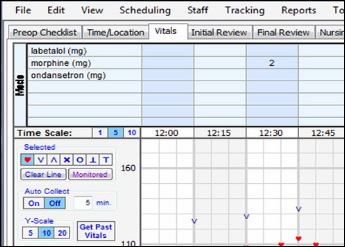
Being John Glaser 2/18/09

February 17, 2009 News 3 Comments

The Stimulus Bill has been signed. The $19B healthcare IT portion is now official.

There will be Webinars, briefings, conference sessions, and blog postings galore as the industry tries to get its hands around the legislation and the challenges and opportunities that it presents. And it is appropriate that a whole lot of learning go on over the next several weeks.

As we all head up the steep part of the learning curve and enter a period of hype, anxiety, salivation, and confusion, we should be collectively thoughtful about several things.

First, it will take weeks and months before several important sections of the legislation are clear. It is not clear how states can apply for grants. The specific meaning of "meaningful use" is not clear. It will take the government some time to develop the regulations, policies, and procedures needed to fully answer the question, “What do I need to do?” Even after you’ve listed to ten Webinars, there will be holes in your understanding.

Should you wait for all to be made clear? No – you could lose valuable time. Some things are clear, e.g., e-prescribing is important and outpatient EHR implementations could be accelerated. Should you plow ahead full speed? No – some things are not clear enough, e.g., if I didn’t have a regional HIE, I wouldn’t try to start one tomorrow.

It will take some thought to figure out initiatives that should be pursued now and initiatives that would benefit from waiting a little bit.

Second, despite the near-term availability of funds, the factors critical to the success of an electronic health record implementation have not changed. Processes must be thoughtfully re-engineered. Clinicians must be meaningfully engaged. Giving these factors short shrift in a stampede to get money is not smart and could leave the organization with an EHR that has been funded by the government but has fundamentally failed since care improvement has not happened and the clinicians are angry.

Third, these funds, while large, are not infinite. At some point, monies for initiatives such as health information exchanges and research will probably go away. The country cannot afford a never-ending stimulus. Pursuing stimulus funds will require that those pursuing think through how they might sustain the activity once the stimulus bolus runs dry. Cheap/free capital can become an expensive operating budget.

The stimulus funds were meant to be spent. It is smart to pursue the funds. However it is not smart to be seduced by the prospect of buckets of money to the point that we forget that we have to balance moving forward with waiting. The fundamentals of care improvement through EHRs have not changed and capital investments bring operating budget hangovers.

johnglaser

John Glaser is vice president and CIO at Partners HealthCare System. He describes himself as an "irregular regular contributor" to HIStalk.

News 2/18/09

February 17, 2009 News 4 Comments

From Smells Like Teen CCHIT: "Re: did you get wind of this already? I don’t remember hearing about it on HIStalk yet but I could be wrong! It gets less juicier as you read, but leaves at least one major issue open for interpretation." Link. Don’t get too excited – nearly every point in the "very troubling post" is wrong, starting with the first paragraph (HBOC is indeed the former HBO & Company). CCHIT was dissolved, but only to change its organization type. CCHIT is still a private, non-profit organization and it’s entirely irrelevant as to which state it’s incorporated in since you don’t have to incorporate in the state in which you operate (surely everyone’s heard of the huge number of Delaware and Nevada corporations out there). Conflicts of interest with HIMSS? Obviously – HIMSS, AHIMA, and NAHIT founded it in 2004, so clearly they share an agenda and aren’t exactly secretive about that fact. Mark Leavitt of CCHIT used to work for HIMSS, but left to take the CCHIT job. CCHIT has paid staff, but most of the work is done by volunteer commissioners. CCHIT’s criteria are publicly vetted and open for anyone to see, so it’s not like they’re doing some kind of beauty pageant judging with no oversight. I could go on, but clearly it’s a waste of time — someone with an axe to grind decided to air their prolific ignorance or denial of the facts publicly. The legitimate gripes about CCHIT are its fees (but it is a self-supporting nonprofit), its existence (but Brailer sold the world on CCHIT-certified EHRs for interoperability reasons even though most of the CCHIT criteria have nothing to do with interoperability), and its failure to get its stated job done (reducing EMR purchase risk of doctors to move the adoption needle).

I’m not going to dwell on this, but suffice it to say the folks at MEDHOST dealt professionally with the issue I mentioned previously involving comments sent to me regarding a competitor. I appreciate their support.

The stimulus bill is signed, so right or wrong, it’s happening. I have to commend Allscripts for being on the ball – they had a new ad (to your left) to me almost immediately that links to a resource page for providers. We’ll stay in touch with our EMR vendor contacts since it will be interesting to see how the stimulus actually gets operationalized and what providers do.

And now that we’re getting stimulated, may I offer a brief criticism of Saint Obama on the day he signed the stimulus bill and yet the Dow dropped another 300? Enough of the gloom and doom predictions of just how bad the economy is and how long it will take to recover. We’ve got the pessimism angle covered, thanks. You’re supposed to inspire us with your energetic optimism, which is why people vote for big-picture vision-painters and not analytical realists. Take it from Ronald Reagan: the economy will recover when people believe it can. It’s your job to convince them. Thank you.

Jobs: Client Services Director, SCM Clinical Consultants, Epic Resolute Professional Billing Consultant. Sign up for weekly job blasts.

Least-shocking news of the day: the Electronic Health Records Association and HIMSS support spending taxpayer billions on their wares, reminding everyone that broad, noble-sounding causes always mean someone makes bunches of money.

Hong Kong’s hospital authority will spend $130 million over 10 years on a national e-health project, linking to the free physician EMR being developed by the Hong Kong Medical Association at government expense.

Picis signed several EDIS deals in Q4: Alegent, Palisades, Inova, and others listed in the press release.

Modern Healthcare gives its latest round of awards to big-salary hospital CEOs who have spent a lot on healthcare IT. Other than making the healthcare IT vendor advertisers happy and encouraging consumption of their products, I don’t understand why buying IT merits an award. First, their IT projects were presumably for their own organization’s benefit, not to get an award from an ad-supported magazine. Second, there were only 48 nominees for three awards, so obviously hospitals aren’t all that interested. Third, why give an award for "leadership and commitment" (tools) instead of outcomes of their use (results)? No offense to the winners, but we ought to be a little more mature than treating IT like its own little Most Wired science fair with winners and losers. Other than Concord Hospital this year, every past winner seems to be the huge, massively budgeted and staffed health system that represents about 0.1% of the hospitals out there purring happily along with non-award winning technology. All the hospitals I knew of (including my own) who won Most Wired made fun of it offline, so I don’t think anyone really thinks these magazine contests mean much (at least the HISsies recognize bad achievements, like stupidest strategic move and the much-discussed Pie in the Face award). Modern Healthcare is usually more rational than the cheerleading HIT magazines, so I’m disappointed. Next think you know they’ll be giving away a car at HIMSS to bribe people to visit advertiser booths.

Eclipsys names former Per-Se CEO Philip Pead to its board. Says he’s a managing partner of Beacon Point Partners that’s supposedly a healthcare consulting organization, but I’m guessing it’s just his own shingle since the only connection I could find had an address in a building full of multi-million dollar condos in Coconut Grove, FL.

Microsoft will be selling Amalga in the UK, at least if customers want it.

Ronald Tomo is named CIO of Nassau Healthcare Corp. (NY), coming over from Episcopal Health.

jimhewitt

This is interesting, but confusing. An Illinois clinic CIO who used to work for Allscripts is rolling out a registration kiosk for his clinic, which he developed under his separate company, and which Allscripts will resell.

South Dakota pharmacist and physician groups want the state to join those that have rolled out a doctor shopping prescription database.

Vint Cerf, who beat Al Gore in creating the Internet, makes the case that online privacy is relative. His example: if you’re in the ED, you don’t care about privacy at that moment because you want staff to see your medical records so they can help you. But, that proxy should be limited by time, so that the ED has a few hours to check out your information, but your doctor has longer. That’s an interesting concept: time limits can be a privacy enforcer (after you’re discharged or transferred, for example).

A Texas company wants a judge to let it tap into the accounts receivable of shuttered Brownsville Tri-County Hospital (PA) to collect the money owed to it, blaming inept hospital staff for its failure. "The audit revealed that (the hospital) and its personnel do not fully understand the components and functions of the (computer billing system) due to the fact that expertise in neither hospital billing nor financial reporting exists within the hospital."

Check out this amazing photo and story from the UK, showing "the world’s highest intensive care ward" in a C-17 Globemaster transport jet in which British troops critically injured in Afghanistan are brought back for treatment.

Sad lawsuit result: a baby born in 1988 with brain damage is awarded a $2.4 million medical negligence award in 1999 from a Boston hospital. She lived with her father, who was just sentenced to five years in federal prison for spending more than half her money on race cars, drugs, and his own attorney fees in trying unsuccessfully to beat an attempted murder charge in 2004.

E-mail me.

HERtalk by Inga

SouthEast Alaska Regional Health Consortium (SEARHC) launches the ALERT EDIS from ALERT Life Science Computing. SEARHC is in the middle of a two-year, $5.4-million transition to EHR, one of first and largest of its kind for tribal health systems.

Mount Sinai Medical Center (NY) signs a multi-year contract with GE Healthcare for management consulting and IT services.

The VA discovers that a contractor providing medical transcription services violated department rules by allowing employees to use computers that did not adhere to the government’s security policy. The contractor has been suspended, even though there is no evidence that patient information was disclosed.

A Utah study finds that 98% of stroke patients evaluated using telestroke consulting technology received appropriate treatment, compared to 82% of those evaluated by telephone alone.

Conifer Revenue Cycle Solutions files a warning letter with the Texas Workforce Commission that confirms 57 employees will be laid off by April 13th. The 2,300 employee Conifer is a division of Tenet Healthcare. The affected employees are employed with within Conifer’s Center for Patient Access Service.

As everyone scrambles trying to figure out how to get their piece of the economic stimulus package, I am wondering how things will shake out with vendors. For example, what if your product is not CCHIT certified? Are you going to lobby against any policy that formally requires providers to have CCHIT–certified products in order to receive subsidies? Or are you going to rush to get your product certified? Do vendors need to start ramping up their implementation staff (if they haven’t already?) I also wonder if providers will attempt to hold vendors liable should a provider fail to be using EHR “meaningfully” in time to qualify for the various adoption deadlines.

Informatics Corporation of America (ICA) announces that its solution is live and aggregating data from all core clinical systems at Northwest Healthcare (MT).

Former McKesson VP of Customer Operations Tom Pianko joins Occupational HealthLink as executive VP of business development and marketing.

clip_image001

Two former Healthlink executives launch a new HIT consulting firm named Encore Health Resources. Ivo Nelson is chairman and Dana Sellers is president and CEO.

Fairfield Medical Center (OH) deploys Imprivata’s SSO technology.

IntelliDOT appoints Margaret Laub to its board of directors. She is CEO of the HIT outsourcing company Policy Studies, Inc. and a former president for McKesson Health Solutions.

Cardinal Health chooses CareFusion as the new moniker for its $4 billion clinical and medical product business spinoff. You may recall that they acquired CareFusion awhile back, so they are getting good use of the name.

I’ve received a number of e-mails recently asking if any fake Ingas will be floating around HIMSS. Truthfully, I have no idea. I wonder if fake Ingas are too “last year?” Perhaps too frivolous in these days of tight budgets? On the other hand, who could resist a wise (and sexy) fake Mr. H, with sort of a George Clooney-ish look? Wouldn’t we all feel a little more reassured that our HIT world is safe if we had a few Mr. Hs bopping around?

PatientKeeper and St. Vincent’s Hospital Manhattan will host an eSeminar focusing on the hospital’s use of PatientKeeper’s charge capture and clinical portal. The event features CMIO Dr. Richard Roistacher and takes place February 26th from 2-3:00 EST.

clip_image002

Mediware introduces a new product designed to manage the storage, preparation, and administration of mother’s milk used in hospitals. All Children’s Hospital (FL) has already adopted Mediware’s LacTrack SafeLx software.

HIMSS is hosting a series of Webinars highlighting the new economic stimulus package and its effect on healthcare. In additional, HIMSS has added 10 new sessions on the topic for the April convention.

Advocate Good Samaritan Hospital (IL) selects Patient Care Technology Systems’ Amelior ORTracker system.

A KLAS study concludes that healthcare providers are largely unaware of the RTLS solutions on the market and their capabilities. Only 29% of those surveyed could list an RTLS by name and 59% were unable to identify which RTLS offerings they would consider using.

E-mail Inga.

Text Ads


RECENT COMMENTS

  1. "A valid concern..." Oh please. Everyone picks the software they like and the origin of that software is an afterthought.…
  2. I don't disagree with you completely, but to take the counterpoint: there is plenty of precedent for saying "this *entire…

  3. Teens will certainly find a way to use their social media apps of choice. I'm not in favor of the…

  4. I've been in this business a long time. Choosing the "right" technology product is fraught, especially when it comes to…

  5. EHRMusing - You make a lot of accurate statements about key factors in the selection process but the comment about…

Founding Sponsors


Platinum Sponsors


Gold Sponsors


RSS Industry Events

  • An error has occurred, which probably means the feed is down. Try again later.

RSS Webinars

  • An error has occurred, which probably means the feed is down. Try again later.