McKesson Will Distribute CytoCare Chemotherapy Compounding System
Nuance Trims Losses, Beats Expectations
England’s Conservative Party Pushes Non-Centralized Electronic Medical Records
From Baron de Cobray: “Re: blaming vendors. Hospital administrators seem to be using clinical systems as an excuse for poor outcomes instead of their own poor management and operational workflows. I have seen hospitals bleed money because they refuse to fix workflow while demanding to replace a current IT system. The attitude that a system should fix these problems is absurd. Why do people believe they no longer have to think?” Ever since systems were first sold. In my experience:
- Hospitals like the idea of solving a problem by buying something — a piece of equipment, the services of a consultant, or a software application. It seems so much more decisive than the unglamorous chore of fixing poor organizational habits or culture.
- Hospital project management is usually iffy and IT portfolio management and governance even worse. IT should not own or run any IT project except infrastructure, yet you see IT departments claim they are going to lead clinical transformation. Not likely.
- Once the switch is flipped, everybody walks away instead of starting the long-term work of wringing value out of the technology.
- Hospital buy applications to avoid confronting employees for subpar job performance and managers for poor job definition. Hospitals almost never fire salaried employees, so nobody feels much pressure to change.
- Every area within a hospital thinks they are too different to allow conformance (especially pediatrics and surgery). Every hospital with an IDN (especially the flagship one) is convinced that nobody has a better idea.
- All that said, it’s easier to blame your vendor and then dump them than to look in the mirror to see who’s really responsible. I rag on vendors because I know they could do better, but when you paint an ugly picture, it’s ludicrous to blame the paintbrush you willingly chose. Every vendor’s product is wildly successful in at least one site, so that pretty much validates that it works when implemented and used correctly.

From The PACS Designer: “Re: file backups. TPD wants to inform HIStalkers of a backup system that can provide automatic continuous backup of your files through a USB attachment. The product is called OneTouch 4 Plus and is manufactured by Seagate/Maxtor. The OneTouch comes in several capacities. TPD installed a one-terabyte system for a family member and was impressed by how easy it was to copy all aspects of the system to a USB backup system. The one-terabyte system can be bought for about $125.00 from various sources.” I got the same device in a 500 gig USB hard drive configuration a couple of months ago, with the OneTouch software doing daily backups and prompting for regular full-system backups. What impressed me the most (other than the price, now $70) was that the drive turns itself off when the PC is turned off, apparently reacting to the loss of USB connection, so I don’t have to unplug it or turn it off.
Kaiser Permanente is cutting 1,200 more jobs, or 2% of its workforce, due to economic and enrollment issues. IT took the big hit back in the spring, with Kaiser confirming 850 IT-related jobs eliminated then. It’s also eliminating merit increases and delaying capital spending. A reader reports that one Kaiser region is offering voluntary retirement in hopes of reducing layoffs and, for those affected, offering generous severance benefits.
Health Alliance (OH) promotes Jay Brown to CIO.
Web-based transcription vendor iMedX gets a $13 million equity investment.
The eHealth Ontario news just keeps getting juicier. Former CEO Sarah Kramer got the job only after Ontario Premier Dalton McGuinty overrode the objections of his staff who questioned her lack of experience. Sealing the deal was the hiring of Alan Hudson as eHealth’s chairman of the board, who said he wouldn’t take the job unless Kramer, who worked under him as CIO when he was president of Cancer Care Ontario, was chosen as CEO. Both recently resigned in a scandal over excessive expense reimbursement and no-bid consulting contracts. Critics say eHealth Ontario has spent hundreds of millions of dollars without accomplishing much of anything.
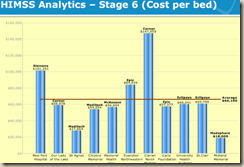
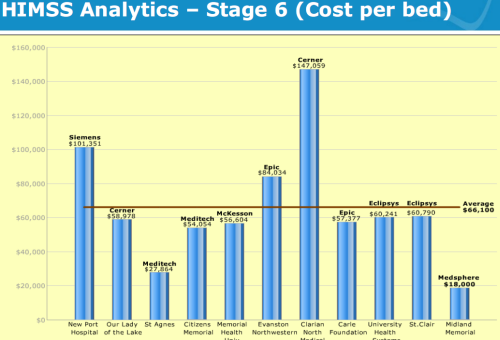
Medsphere’s strategy is interesting, as published (warning: PDF) on the WorldVistA site: they’re targeting hospitals of 100-500 beds, for whom they say competing systems are unaffordable and low in customer satisfaction (I’m not sure that’s true of all competitors, but certainly some). They’re looking to hit the customer bang-for-the-buck plateau of the HIMSS Analytics EMRAM Stage 3, meaning no CPOE, clinical decision support, closed loop meds administration, physician documentation, PACS, and interoperability. Reason: Stage 3 costs only 40% of the tab required to get to Stage 7 and that bed range doesn’t necessarily have the money or the interest to shoot for the EMR moon. All of that sound good, but it’s really not all that insightful since most vendors in those bed ranges aren’t pushing CPOE or physician documentation either. Still, it’s a solid plan. Click the graphic above to see the cost-per-bed of several vendor clients.
Healthways, the disease management and health management company (market cap: $470 million) contracts for health services for its employees from Marathon Health. Employees get an on-site clinic, health coaching, and an EMR/PHR. Just about everyone on the Marathon executive team came from IDX.

McKesson announces an exclusive five-year partnership with Italian oncology IV robotics vendor Health Robotics, whose CytoCare compounding system will be sold along with McKesson’s ROBOT-Rx cart filler and MedCarousel drug picking system. A good move by them. Health Robotics also sells systems for non-hazardous IV compounding and is developing a similar system for TPN compounding in the pharmacy. I mentioned the company in March, also pointing out that former Eclipsyser Gaspar DeViedma is on the company’s management team and board.
England’s Conservative Party, calling NPfIT “shambolic,” wants to dump plans for a single national medical record per patient and instead share records kept individually within each hospital and practice (in other words, they propose to do it more like we’re trying to do here). Their plan to renegotiation contracts with BT and CSC doesn’t make sense to one analyst, who said, “It sounds a nonsensical approach with all the compensation payments that would be due. They could not make the contracts any cheaper – when they were struck years ago they managed to screw the lowest possible price and that led to the suppliers not being able to make any money.”
Weird News Andy checks in with a story from England involving a gang who held down a 14-year-old boy and forced a python to bite him. Paramedics on the scene identified the snake by Googling “snakes” on a cell phone, showing the boy pictures until he recognized it. It was found to be non-venomous, so he’s fine.
HITGhost followed up on my “female bass player” observation, pointing out Jeff Beck’s outstanding, jazzy bassist Tal Wilkenfeld (excellent live video here). She’s 23; Beck is a doesn’t-look-it 65.
Kaiser Health News runs an interesting story on EMR projects in Seattle’s hospitals, pointing out that three of the best hospitals in Washington are in the same neighborhood and use fancy EMRs, none of which can share information with each other. Fine comments from Swedish Medical Center CIO Janice Newell, who says that the Feds should encourage use of existing systems to avoid having the money “go down a rathole.” Even Steve Lieber of HIMSS gets in a rational, non-cheerleading quote that advocates reform along with automation: “As long as you will pay every time I do that test, the incentive is to do that test as many times as I can.” And kudos to David Brailer, whose viewpoint I share in pushing the network, not the devices that connect to it: “Imagine if companies tried to sell cell phones connected to some networks, but not others or that would call only certain area codes. The equivalent is trying to get doctors to switch to electronic medical records when they have, at best, a patchwork network to connect to.” That’s not the kind of story the trade press runs between the Most Wired beauty contests and vendor-written fluff pieces.
Tidewell Hospice (FL) names David Lafferty as EVP/CIO.
A group of Connecticut providers and insurers plans to launch an HIE next year, hoping to get stimulus money.
Allscripts is named one of North Carolina’s 10 Best Employers for 2009.
Hospital PR people will get hammered for information after a Hearst investigation concludes that 200,000 Americans will die from preventable medical errors and hospital infections this year. The report noted that federal and state governments have done next to nothing since “To Err is Human” came out in 1999, although assuming that government reporting and regulation will improve the admittedly ludicrous situation is a stretch.
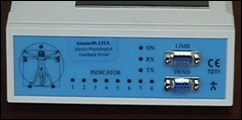
An unemployed math instructor who claims his “energy medicine” machine can cure disease has sold 17,000 of them at $20,000 each (that’s $34 million worth) despite a lie-filled resume and a shady network of dealers and practitioners. He got two of the devices into St. John’s Hospital in Springfield, MO and touted that as mainstream acceptance, but it turns out that an RN in that department is also a regional sales manager for the company and her VP boss conducts training on its use. Googling the product’s name (EPFX) yields 26,000 hits.
Mayo Clinic hires an online ad network to place consumer ads on MayoClinic.com. Seems like a really bad idea for Mayo to pimp itself out that way. There are lame excuses at how the ads will help consumers, but it looks to me like Mayo just wanted to cash in like a mini-WebMD.
India will issue an RFP for a 20-hospital Health Management Information System, which sounds like a patient portal for getting information, making payments, and reviewing lab results.
iSoft says that a National Broadband Network in Australia would save $8-10 billion per year in healthcare alone, paving the way for healthcare reform and cost reductions and paying for itself twice over. It could be used for a health records network, patient management, and telemedicine.
The family of a patient who died of what they say is a Stanford University Medical Center medical error claim that, after the mistake, the hospital deleted entries from the patient’s medical record. The Department of Public Health seems to agree, finding that entries were indeed deleted and post-mortem entries were made by a nurse as instructed by her supervisor. Stanford says the deleted information was intended to be temporary, not part of the medical record.
A study conducted by a children’s hospital in Israel finds that the adoption of CPOE in the pediatric intensive care unit reduced error rates a little, but clinical decision support made a big difference. Medication prescribing errors dropped from 5.5% to 0.7%, although one might quibble at the definition of “error” vs. “error likely to not be intercepted and to therefore cause patient harm.”
Odd lawsuit: the widow of New York City’s first H1N1 flu victim says the city didn’t do enough to control the outbreak and didn’t tell her husband that he had come in contact with people who had tested positive for H1N1. She’s filing a $40 million lawsuit.
E-mail me.
HERtalk by Inga
The Social Security Administration plans to spend $24 million to link with healthcare organizations and hospitals. The goal is to seek health data on patients seeking Social Security disability benefits.
Healthvision boasts 13 new customers and two new partner engagements for the second quarter. The company also announced its upcoming user conference October 5-7 in Irving, TX.
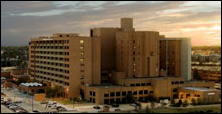
INTEGRIS Health (OK) signs a three-year agreement with CareTech Solutions to provide Web services. INTEGRIS will implement the CareWorks CMS content management system to support its 13 hospitals.
James E. Peebles is named the new Chairman of QuadraMed, replacing Robert L. Pevenstein. Pevenstein will continue to serve as chair of the audit committee. Meanwhile, Julian A. L. Allen resigned from the QuadraMed board after a year and a half of service.
Springhill Medical Center and Eclipsys announce that their outsourcing agreement won a 2009 Outsourcing Excellence Award for Best Impact. The award is presented by the Everest Group and Forbes and winners can be nominated for a mere $1,500 fee. In addition to industry recognition, winners have the opportunity to spend a “winners night” on the Forbes Highlander yacht. I like the $1,500 per nomination idea. In fact, I’m now motivated to work on a business plan for Mr. H that includes charging similar fees for next year’s HISsie Awards. I’m hoping to leverage Jonathan Bush’s boat show connections for a cruise down the Chattahoochee River.

Patients needing to visit an HCA hospitals in South Carolina can send the hospital a text message and and their zip code; a reply will come back with the average ER wait time. If that method doesn’t work for you, you can either view the wait times online (www.grandstrandmed.com) or check out one of the digital billboards along the highway.
McKesson Specialty Care Solutions is adding up to 200 full-time positions at its call center in Scottsdale. New jobs are so much nicer to talk about than job layoffs.
Speaking of jobs, healthcare employment grew by 20,000 in July. The total unemployment rate, by the way, is a dismal 9.4%. Healthcare employment has grown from 13.3 million to 13.6 million over the last past year.
Elsevier announces that CHRISTUS Health (TX) will install five of Elsevier’s online clinical decision support solutions.
LRGHealthcare (NH) purchases IntraNexus SAPPHIRE clinical software suite, including IntraNexus’ Web-based EHR.
Diagnostic imaging provider Foundation Radiology Group will use software from Vital Images in its 20-hospital customer base.
Pendulum Healthcare Development Corporation selects DocSite as its preferred PQRI vendor.
Individual and family health savings account balances increased in the first quarter of 2009, which is the first time since Q2 2008. Employer and employee contributions to HSAs nearly doubled quarter-over-quarter. Individual and family account holders age 51+ hold the highest average account values.
Boston Medical Center claims referral volume has grown 10% since adding Carefx’s Referral Management Solution. Since May, the hospital has measured a a net 20% improvement in scheduled referrals and a net 5% reduction in no-shows. Administrators estimate they’ll generate an additional $7 million annually, based on preliminary ROI analysis.
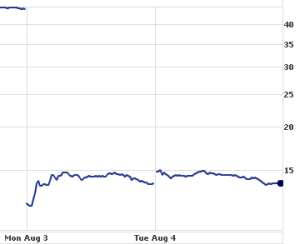
Nuance Communications beats analysts’ expectations for its fiscal third quarter. The company posted a quarterly net loss of $1 million, compared to a loss of $9.9 million during the same time period last year. Total revenue grew 11% over last year, led by a 27% increase in Nuance’s healthcare and dictation revenues.
The folks at SCI Solutions are sponsoring a webinar next week and asked us to extend an invite to readers “following the healthcare reform issues/challenges on Capitol Hill.” After one of last week’s posts, I am positive there are a large number of folks following the situation closely. The webinar is entitled, “Healthcare Reform Update from Capitol Hill: The Latest News from the Senate Finance Committee.”

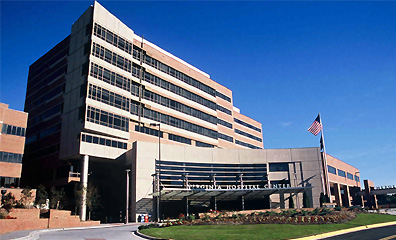
Virginia Hospital Center is deploying a wireless network across 1.1 million square feet in three separate buildings. The hospital is installing Horizon Converged Wireless solution by InnerWireless to provide mobile access to a variety of applications, including the soon-to-be installed Siemens Soarian HIS.
A grandmother becomes the first American to receive a wireless pacemaker that allows her doctor to monitor her health over the Internet. The monitor communicates with a server at least once a day. If anything is abnormal, the system immediately calls the doctor.
Canadian researchers announce some important results of a social networking study: the more time people spend on Facebook, the more jealous they get about about the other relationships of their partners. Having been de-friended by someone recently (the nerve, huh?) I found the results very comforting. Clearly I was de-friended because of some jealous, psycho girlfriend and the action had nothing to do with me. Whew!

E-mail Inga.

























































The news about AHRQ is very unfortunate. The AHRQ staff were always excellent to collaborate with. They had an impressive…