
Recent Articles:

HIStalk Interviews Krishna Ramachandran, Chief Information/Transformation Officer, Dupage Medical Group

September 24, 2013 Interviews 2 Comments

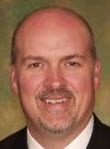
Krishna Ramachandran is chief information and transformation officer at Dupage Medical Group, Downers Grove, IL.

9-20-2013 6-14-19 PM

Tell me about yourself and the group.

I’m the chief information and transformation officer at Dupage Medical Group. DMG is a 400-doctor independent multi-specialty group practice. We’re about 50-plus specialties, about 60 or so locations spread out in Chicago’s western suburbs.

My role primarily is to drive the Value Driven Health Care initiative, focusing on improving patient outcomes, reducing healthcare costs, and increasing access to care using a combination of technology and process improvement. I have a team of project managers, training, and IT fall under me.


Does it make it easier to have the IT function together with the quality improvement function so they can work as a team?

I think yes and no. QI actually doesn’t roll up under me any more now.

I used to work at Epic for many years. Then I came in and joined clinical operations. I had QI also at that point. When I took on IT, I moved QI back to clinical operations.

But I think quality these days is working hand in hand with technology. We want to make sure we’re all aligned with the same goals in terms of data, data mining, analytics, and reporting. How we use technology to drive care and how care gets delivered is the goal behind this.


CIOs and the IT department have what it takes to do that work, setting project deliverables and making sure everybody’s accountable. Should CIOs seek out a quality role like that?

I’ve seen the evolution of IT from my Epic days to here. The role of the CIO is changing. Before, it was just keep the lights on. Now I think it’s more of a strategic partner with where the organization is going. That’s certainly evolved. 

I don’t think there’s a whole lot of pitching and case-making that one has to do. Keeping the lights on these days is taken for granted. You expect the systems to be up. You expect the network be up. It’s about how we use technology to partner with the group, whether it’s growth within an organization, whether it’s taking on more of a risk profile, whether it’s doing more analytics and data mining, whether it’s doing telemedicine. Those are all things I think the organization is moving towards. 

The role of technology and the CIO is changing and in some ways becoming more tied to the clinical operations. My advice to them would be pay attention, be in these meetings, figure out where the business is going, and then see how you can come up with answers for that as opposed to waiting to be asked.


In the Value Driven Health Care project, what kinds of technologies are you employing?

The three pillars of our value-driven healthcare initiative are quality, efficiency and access. Quality certainly is working closely with the QI department, working closely with the clinical operations. Making sure we are setting up the EMR in a way that it’s capturing the right data we need, making sure that we understand what the needs are for our physicians and staff members to collect, and of course making sure that we can report on this in a meaningful sort of manner.

One of the things we’ve added under the quality umbrella are transparent dashboards. We crank out dashboards monthly or quarterly that are unblinded, transparent, and one line per doctor to make sure that we are seeing where we need work on and making sure we are making progress towards achieving organizational goals. That’s the quality part. 

Efficiency, what we’ve done from a technology perspective is, it is a big efficiency equation and the healthcare system is trying to solve it. How do we take different and better care of our really sick patients? We’ve employed fundamentally tools such as Epic as well as Clarity or SQL report writing on top of that. Essentially what we’ve done is two things, We’ve written tools to do modeling and risk stratification of our patient database. Really figured out who our high-risk patients are. We use that result to see if we can partner with our patients to have them go through what we call our Break Through Care Center, opened in January. It’s a high-risk, high-touch care model with nurses, health coaches, educators, social workers, and pharmacists all on site. The idea is to use technology, partner with operations, and make it happen. Technology is like a pen. You can write like a third grader, you can write like Shakespeare. It’s what you do with it that counts. That’s the efficiency side.

The access side, we’ve really been doing more with Epic’s MyChart. Our big goal is trying to get 175,000 active patients by the end of this year. We’re at 150,000 as of today. We’re excited about that. Laying the foundation for meeting our patients when and where and how they want to be seen. Where they can send us messages via an app. Ultimately I think we’ll probably want to do some telemedicine and e-visits and stuff as well, maybe next year. Those are ways in which we’re implementing technology for our QEA efforts.


A lot of organizations are just beginning to collect the data that they need from newer clinical systems, while others have moved on to looking at other sources of data to combine for a population health view.  Are you using or planning to use information that does not originate inside the group?

We are starting to. One of the most common challenges is that the silos of data has been a struggle. As we get to Meaningful Use,  ACOs, and risk stratification, it’s getting to be more and more of a challenge. 

A big chunk of our data model comes from data we already have. We’ve been an Epic shop since 1995, EMR since 2006. There’s a good chunk of clinical data that’s in our system there.

We are using data from our hospital partners. We get flat file extracts from our hospital partners for patients that have had admissions or ER visits in these hospitals. We get it from our top three hospitals.We’re working to expand the data we get and more hospitals as well.

We feed that into our predictor model, especially for the Break Through Care Center, which is the high-risk clinic I was talking about. We also send the data to Humedica, which is a clinical intelligence tool that we implemented, but we’re starting to do more work with it as well. We can get the fuller picture of the patient view — inpatient, outpatient, and other hospital systems, too.

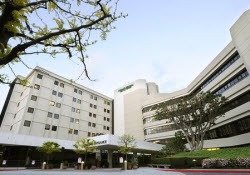
As of the end of April, we have an image of Edward Hospital and Health Services, also being in our same shared instance of Epic, which is pretty cool. At least we have one record for the patient there. But getting flat files is what we’ve done for other hospitals and other places and we’re starting to use that more.


On the more patient-specific end of the spectrum, are you able to use Epic to provide guidance to physicians during the encounter differently than you might have five years ago?

Absolutely. I think there’s a few ways to kind of skin this cat. I spoke to you about the dashboards. These are Epic data, but it’s not on a real-time basis. It’s basically done monthly or quarterly. Just gives them a big picture. Hey, how are we doing with diabetes results? How are we doing with A1C? How are we doing with BP control.That’s one angle of it.

The other thing we’ve done is deployed Epic’s Reporting Workbench. They get a list of patients that are, say, part of Blue Cross Blue Shield. At a glance, you can  see how they’re doing with each of those measures for the patients that they are responsible for. Then we take it one level deeper, which is we have these Best Practice Advisories that show up for key disease states – diabetes, CHF, COPD and asthma – so if a patient has one or more of these conditions, these BPAs show up at the point of care, which shows them, hey, here’s the most recent lab values, most recent BP, and so on and so forth. And give them easy access to order sets where they can place referrals if need be or repeat labs if needed as well as give them hints on evidence-based guidelines, whether it be the American Diabetes Association or in partnership that our endocrinologists have come up with. 

That’s our point-of-care piece. I do think there’s more opportunities for the actual point of care. As we get deeper into our ACO world, we’ll expand our point-of-care alerts and guidance, I’m sure.


You spent eight years working at Epic. What did that experience prepare you to do and where do folks who leave Epic typically land?

There’s a lot of opportunities, a lot of money being pumped in. The industry –  broadly, not just as IT — is going through a transformation around the move from evolving value and getting more of the analytics. There’s tremendous opportunities for  healthcare IT professionals and obviously anybody that has an Epic background is clearly valued a lot. I’ve notice, at least, because we’ve used consultants and many of them have worked there in the past. 

You’ve written many times about their hiring model, a lot of young go-getters that want to do the right thing. Those are the people that come in and they get molded. The key thing at Epic is do the right thing by the customers, something deeply ingrained in the culture. Finding creative solutions to solve the client’s problem is just very inherent in how Epic does business. That’s certainly helpful as these people come out and work with healthcare systems. There’s a lot of drive in these people to do the right thing, solve some of the problems.

Epic, as you know, is a complex system. There’s a lot of layers, a lot of moving parts. Certainly knowledge people bring from Epic outside of Epic has been helpful to get things done quicker. One of my favorite Carl Dvorak quotes is, “How do you figure out the shortest path of cutting through the swirl?” That’s what I did in my time at Epic. I used to run the technical services division. How do you get at the core of the problem and get at what you need to do to solve the problem? The people that have done in a stint at Epic in many different ways are able to do a better job than the average healthcare worker. Getting to the core of the problem, using Epic, and solving the problem there.


What challenges over the next several years will be most important to the medical group?

The biggest challenge for me is the healthcare system, as such. We have to take different care from a risk perspective. There’s a Boston Consulting Group statistic which is 15 percent of Medicare beneficiaries account for 75 percent of Medicare spending. These are people that have multiple chronic conditions. These are patients that have CHF and diabetes and kidney failure, all these things happening together. As a system, the fee-for-service model is every patient gets treated somewhat similarly. Our big challenge is, how do you truly take different care of these patients that need a higher touch point, that need a different kind of care than a 20- to 30-minute office visit? 

Along with that kind of business-driving change, there are technology changes. Analytics is such a buzzword these days. Everybody feels like they can do big data. We’ll see how the industry starts to coalesce around directionally where we need to go from an analytics perspective, come up with some meaningful solutions that focus on the right problems to solve. I think we’ll see a lot more work from healthcare IT vendors like Epic and others doing more in the system. Epic’s done some work with their Cogito data warehouse, more work with Reporting Workbench. But many, many miles to go before we can rest in the area of population management and data mining. I think a lot more focus will happen there.

We spend a lot of money as a nation on healthcare and we don’t always get returns that are consistent with it. As a way to taking different care of that 15 percent of population, we’re going to see more solutions operationally, clinically, as well as technologically — reporting, EMR — geared towards doing a different, better job with our patients. That’s where my prediction is. Even our own work starting of this high-risk clinic in January, doing more population management work around reporting and unblinded dashboards, doing things like home monitoring, MyChart. Moving away from fee-for-service, taking on a larger risk footprint.


Any final thoughts?

I just want to thank you for doing what you do. I’ve been a big fan of HIStalk since my days at Epic. It’s always been good. At Epic, they used to follow it closely and I certainly continue to do it here, so thank you for doing what you do.


Curbside Consult with Dr. Jayne 9/23/13

September 23, 2013 Dr. Jayne Comments Off on Curbside Consult with Dr. Jayne 9/23/13

clip_image002

I spent most of this week conducting a site visit at a primary care practice that subscribed to our affiliated physician EHR offering last year. When they decided to take the bait on my hospital’s hook (as well as the accompanying subsidy) they were on an ambulatory system from another vendor. They had a contractor perform a partial conversion of their clinical data (“partial” due to cost) but my team was told to officially stay out of the conversion due to concerns with the subsidy agreement, data ownership, liability, and other contract-related issues. It was instead approved by the practice’s clinical champion. Since they are on their own instance of the application and their data doesn’t commingle with mine, I had no reason to push back or demand involvement.

When they migrated to our platform, our team conducted their training in the same manner with which we have trained hundreds of other physicians. Since they are affiliated and not employed (and also because they are located several hundred miles from our corporate mother ship) I hadn’t been out to visit them. Their leadership complained to our CIO that they were struggling with the system and requested that we send someone out to “fix it.” The practice is in a prime location for some fun outdoor activities, so I decided to conduct the site visit myself. After some preliminary discussion with practice leadership to obtain some background information and specifics on their concerns, I was on my way.

Performing a site visit like this is not for the faint of heart. As part of an employed medical group, we have people who are constantly after us to make sure we are compliant with OSHA, CLIA, HIPAA, and a host of other acronyms. Many small practices struggle in keeping up with these basics, not to mention with the multiple regulatory requirements that keep popping up like dandelions in spring. I always remind our process improvement team that it is important to clearly define the areas of observation and the questions to be answered before you start the site visit. Otherwise, it is possible to be overwhelmed with findings that may be outside the project parameters. Many of us have been confronted with findings that although out of scope, are so critical that they must be immediately addressed and sometimes the site visit comes to a screeching halt because of it.

I’ve had providers scream at me about unrelated issues, have had providers cry while I try to interview them, and have had them complain about their spouses making them late to the office which interferes with the schedule. There have been those that argued, others that pleaded, and some that stood up and walked away when we presented our findings. We try to stay objective and professional even when we see things that make our skin crawl.

With those experiences under our belt, sometimes we numb ourselves to the things we see because we’re there to assess people, process, and technology, not how providers are practicing or how diligent the housekeeping staff might be. In my role, I’m not there to address the fact that you just performed what you thought was a diabetic foot exam but what I thought would have earned one of my interns a trip to physical diagnosis remediation class. However, if I see you wearing a dirty lab coat with a Santa Claus pin on it in August, I’m probably going to say something whether it’s in scope or not. Luckily I didn’t run across anything like that on this visit, but what I did find was a group that is trying to perform the practice equivalent of running a marathon in high heels.

The practice has a great layout and plenty of space – it was built for six physicians but currently holds only four and all of them feel that they are equally busy. Their levels of productivity are similar except for a senior physician who no longer takes call but makes up for it with lower compensation. It’s nice to have that kind of a level playing field when you’re observing practice dynamics because when some partners are busier (or feel they are doing more of their share of the work) it’s usually a marker for dysfunctional team dynamics. They’ve had some staff turnover but not an unusual amount, and currently have two clinical support staff for each physician. Another good sign.

As part of our Meaningful Use preparation, we recently upgraded their EHR to the most current version available from our vendor and they received the same training our own physicians received. Unfortunately, the positive signs stopped there. Some of the first questions I ask when shadowing physicians involve how they feel the use of the EHR is going for them, and what their personal priorities are for use of the system. I also ask what they feel are the practice or health system’s priorities. Not only did all five of them have very different personal priorities, none of them could accurately identify the practice’s priorities. They could not identify a mission statement or a vision for how care is to be conducted in the office.

I wanted to assess how the recent upgrade impacted them and they admitted that they were not using many of the new features including some that streamlined workflow, reduced manual data entry, and others that provided clinical decision support. I felt bad that despite our educational efforts, they either failed to understand the clinical utility of the content or didn’t know how to incorporate the features into their existing work flow. In digging deeper though I found the root cause. The providers had made a deliberate choice not to use the new features. Instead, they decided that they needed to focus all their efforts on the many incentive programs available to them.

In addition to Meaningful Use, they are trying to obtain recognition as a Patient Centered Medical Home and are participating in a diabetes care collaborative. They are also participating in four different pay for performance plans that each have different metrics. Due to the disparity, they’re trying to focus on the key elements for each patient based on insurance rather than taking a population-based approach. In regards to Meaningful Use, they were not able to articulate which clinical quality measures they would be reporting or how they were performing on the MU measures overall. They haven’t run any preliminary Meaningful Use reports despite planning to attest soon. They have no idea where they stand.

Over the lunch hour, I decided to queue up some of their reports and I had some not so pleasant surprises. The first things I found were some pretty serious artifacts from their conversion. There were diagnoses such as “Verify: Gout” and “Verify: Diabetes” and “CONVERSION: DO NOT USE.” All of them had ICD-9 codes of 000.00 associated with them. I drilled down to a handful of patient charts and found that they also had multiple versions of similar diagnoses (250.00, 250.02 for example) that had not been reconciled. In addition to causing havoc with the reports, the patient diagnosis lists were messy and difficult to read with the conflicting codes present. It seems that they were supposed to clean up the diagnosis lists the first time the patient had a visit on the new EHR, but it didn’t get done. Unfortunately the providers have continued to select diagnoses of 000.00 from the patient diagnosis list which carries it forward and the coders have been fixing them on the practice management side, but no one closed the loop in the EHR.

Additionally, after a couple of months on the HER, they had stopped reconciling altogether. I had been thinking about how to create some payer-specific alerts for them for their pay for performance programs (assuming I couldn’t convince them to either care for all patients with the same standards regardless of payer or drop the incentive programs that created conflict) but without accurate codes to identify the disease states, it was going to be extremely difficult.

As much as they decided to mix it up with the pay for performance indicators, they took the opposite tack with Meaningful Use. Uncertain of the actual thresholds for some of the measures, they decided to go whole hog. Instead of reconciling medications at transitions of care, they were performing full reconciliation at each visit. Instead of summarizing tobacco use and updating any changes since the last visit, they were eliciting a complete tobacco use history even if it had already been documented. One patient actually complained about being asked the questions at every visit even though he had stopped smoking years ago. They are performing full vital signs on all patients (including infants) at every visit, regardless of the reason for visit or the time since they last presented to the office. They are trying to provide patient education for every visit, even when education may not be relevant. By the end of the first day, I was tired just watching them.
I observed each physician’s care team for several hours over a couple of days and also shadowed in the lab. Working with the billing and coding staff and the office manager, we identified additional areas for improvement. Typically at the end of a site visit I do a report-out with the providers and leadership. Most of the time I am recommending that they get moving and add MU activities to their processes. This time, though, I had to make recommendations for them to do less in some regards, which felt very strange as a recommendation. We had some good discussion and they really struggled with how to determine which things they should do for every patient and which they should do only when required.

I left them with a simple litmus test: actions should be performed at every visit only when they are clinically significant or are required by a regulatory body. We looked at the tobacco use item as an example. If the patient is not currently smoking, does it make sense to ask about their past use at every encounter? Probably not, as long as they are flagged as a never smoker or a former smoker. If the patient is currently smoking, does it make sense to ask about cessation at every visit? Yes, because all four P4P programs are looking for that element. I’ve asked them to go through their work processes and ask those kinds of questions for the various documentation elements. I’ve also asked them to start reconciling diagnoses on each visit to get those lists cleaned up before we head for ICD-10.

We’re going to set up monthly calls to check on their progress. I’ve given them some homework that is due before the first one. I’m hopeful that we can make their workflow more streamlined and less stressful while delivering quality care. They’re going to be working hard to get ready for their attestation period, but I’m cautiously optimistic. Hopefully I’ll be able to keep you posted on their progress.

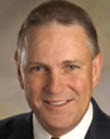
For those of you who are curious about the picture, it’s Julia Plecher of Germany. She holds the Guinness World Record for the fastest 100 meters in high heels. Her time: 14.531 seconds. I wonder if Inga will be able to top that in her party hopping at MGMA? I can’t wait to find out.

E-mail Dr. Jayne.

Comments Off on Curbside Consult with Dr. Jayne 9/23/13

Morning Headlines 9/24/13

September 23, 2013 Headlines Comments Off on Morning Headlines 9/24/13

Greenway Medical Technologies and Vitera Healthcare Solutions to Combine

Vitera Healthcare Solution’s parent company Vista Equity Partners announces a $644 million buyout of Greenway Medical Systems. The new, combined organization will continue on under the Greenway name, marketing product from both companies.

Keeping Up with Progress in Mobile Medical Apps

The FDA has issued its final guidelines for mobile health app developers, leaving much of the market unregulated and focusing on apps that act as, or interface with, an actual medical device.

National vision for digitizing health records has failed as each province does its own thing

In Canada, the Canada Health Infoway, a faltering $2.1 billion national EHR program, is profiled in an article that blames province-level control, rather than national-level control, as the primary reason for failure.

Comments Off on Morning Headlines 9/24/13

Greenway Medical Technologies and Vitera Healthcare Solutions to Combine

September 23, 2013 News 10 Comments

Vista Equity Partners, which owns Vitera, will pay cash to acquire all outstanding shares of Greenway common stock for $20.35/share in a transaction valued at $644 million. The price represents a 62 percent premium to Greenway’s 90-day volume weighted average stock price and a 20 percent premium to Greenway’s closing share price the day before the merger agreement was signed.

It is anticipated that the Vitera and Greenway businesses will continue as Greenway Medical Technologies with the products and services of both Greenway and Vitera marketed under the Greenway brand. The combined entity will serve nearly 13,000 medical organizations and 100,000 providers.

How Not To Spend $1.3 Billion: A DoD/VA Interoperability Summit Recap

September 23, 2013 News 3 Comments

Lt. Dan is a veteran who works in healthcare IT and writes the morning headlines on HIStalk and daily posts on HIStalk Connect.

9-23-2013 12-45-12 AM

“I’m asking the Department of Defense and the Department of Veterans Affairs to work together to define and build a seamless system of integration with a simple goal: when a member of the Armed Forces separates from the military, he or she will no longer have to walk paperwork from a DoD duty station to a local VA health center; their electronic records will transition along with them and remain with them forever.” – President Barack Obama April 9, 2009


Last week I attended the DoD/VA EHR Integration and Interoperability Summit. It was an insightful opportunity that offered a lot of lessons on how stubborn and narrow-minded leadership can derail even the best intended projects being worked on by a committed and talented staff. It also served as a primer on how not to spend $1.3 billion.

The conference was only two days long, promised big-name speakers, was held in Washington DC in early fall, and still drew a crowd of under 100. I was surprised. Maybe the iEHR saga isn’t as interesting to others as it is to me. Everyone in healthcare IT is understandably distracted with MU2 and ICD-10.

Still, iEHR was an important program, not only to veterans and soldiers, but to anyone working in healthcare IT. iEHR would have been the single largest integrated EHR in the world, shared jointly between the VA and DoD’s combined 209 acute care facilities. It would have supported the largest group of employed clinicians in the country, with the VA employing more nurses and clinical social workers than any other organization and ranking as one of the largest employers of physicians and PAs as well. With military personnel, qualifying veterans, and all of their families eligible for care, iEHR would have contributed to the care delivery of up to 25 percent of the nation’s population.

iEHR was a promise made to develop a modern EHR that would pull clinical data from two large and complex organizations through a single application and into a single database, a platform that would have been capable of incorporating advanced tools like population health and telehealth, all while satisfying the workflow needs of the largest employee base of clinicians in the country. The cherry on top is that it was to be coded in an open-source environment, meaning that iEHR would be free to install at any facility in the country, private or public. Sound like something that would be valuable in healthcare today?

After spending $1.3 billion pursuing this promise, the VA’s CIO and CTO resigned and the DoD announced that they would be pursuing a commercial option instead of an open source option. The plan was unofficially abandoned. Thus far, no one has stepped up with a Plan B that would delivery anything resembling the initial promise.

Fast forward six months, and to my surprise, a conference is announced featuring some relevant, and high-ranking speakers:

  •  Frank Kendall, Undersecretary of Defense for Acquisitions, responsible for issuing the DoD’s commercial RFP and running the DoD’s EHR vendor search.
  • Seong Mun president of OSEHRA, the organization responsible for programming the VA’s current VistA platform and in line to take on coding of the new iEHR platform.
  • Major Hassan Zahwa, Chief in the DoD/VA Interagency Program Office. The department is led by a DoD Director and a VA Deputy Director and is responsible for overseeing the development of iEHR and delivering on the president’s mandate for an integrated system.
  • Patrick Sullivan, Director of the Lovell Federal Healthcare Center in North Chicago, the nation’s first fully integrated DoD/VA medical facility.

Frank Kendall was the big name that everyone came to see. Unfortunately, the Friday before the conference, he cancelled. Maybe it was just a conflict of schedules, but it set an undertone at the conference that the DoD just wasn’t as invested in the project as the VA or general healthcare IT community.


9-23-2013 12-53-31 AM

Seong Mun, President of OSEHRA

Seong Mun’s presented on the work that OSEHRA is doing with VistA. He described a project being developed to standardize the VistA code set across all 151 VA facilities. A common critique of open source systems is that there are as many variations within the code as there are users of it – meaning that everyone customizes it a bit here and there and it results in a rat’s nest of code to manage and integrate at an organizational level.

Seong Mun explained that the VA is actually well into a project that is standardizing the VistA code sets installed at VA hospitals and maintaining it with a new versioning control system. When he explained this, Major Zahwa – who works in the Interagency Program Office on the iEHR program – raised his hand to clarify, asking Mun exactly what the program is and what its goals are. He was impressed with the program, as we all were, but it’s disappointing that he found out about it only now and at a public conference. This program is already well underway and the key DoD iEHR representative, a chief in the Interagency Program Office, had just found out about this plan at the same time that I had.

The DoD was supposed to evaluate both the iEHR project and the VistA alternative during the famous 30-day “We didn’t know what the hell we were doing” Chuck Hagel reset. Had they done so with any seriousness, the VistA Standardization Initiative would not have been news to someone working so closely to the core of the iEHR project. The fact that VistA is standardizing its entire code set across all VA facilities should be common knowledge among anyone holding a leadership position in the government’s Interagency Program Office.


Major Hassan Zahwa

“Lead the Departments into the future DoD/VA inter-agency electronic health record. Bridge the gap between the functional and acquisition communities though active communication and interpersonal skills.” – LinkedIn

Major Zahwa himself presented at the conference earlier in the day. He chose to focus on the value HIEs could play in the path forward, and to that end, his presentation covered the work being done in BHIE (Bi-directional Health Information Exchange).

BHIE is an old DoD/VA HIE system installed in 2004 to replace an even older VA/DoD HIE program called FHIE. The system was in place when the need for iEHR was defined and funding was approved. But to Major Zahwa’s credit, there have been significant enhancements since that time and BHIE has grown into a fairly robust exchange, facilitating one million queries every month. It’s capable of sending and receiving patient demographics, problem lists, home medication lists, allergy data, lab results, radiology reports, and consult notes. If you were looking to put a rosy shine on the level of interoperability available between DoD and VA systems, the BHIE would absolutely be your topic of choice.

At this point in the conference, it was clear that the VA and OSEHRA wanted a single, integrated EHR, and that they had been working hard and effectively to fix any perceived weaknesses in the VistA platform to eliminate DoD objections to their system. It was just as obvious that DoD wanted the freedom to buy a commercial solution and was working on a sophisticated information exchange to validate that approach as a viable long-term solution. With BHIE, the DoD was working just as hard and effectively, making significant advances that support the validity of this strategy.

It was sad that all that impressive work was being done toward two opposite ends and that these clearly very talented and task oriented teams couldn’t have aligned their goals. I suppose the silver lining to it is that no matter what happens, everyone is better of if VistA has a single code set across all the VA facilities, and everyone is also better off if the Interagency Project Office develops a robust information exchange suite that interfaces with that VistA platform. If iEHR is going commercial, as everyone seems to think it will, then both of those tools will be useful down the road. If it does not go commercial, and DoD agrees to a single VistA architecture, it will be just as useful to have versioning control for VistA and an HIE capable of pushing data out of those EHRs and into commercial systems.


Patrick Sullivan, Director of the Lovell Federal Healthcare Center

The conference closed on what was supposed to be a happy story. A shared DoD/VA hospital was opened in North Chicago and it was being held up as a model of interoperability. The hospital was used to physically examine new recruits, treat active duty sailors, and provide care to local veterans and their dependents. To the public (and in the video above) it was advertised as a true, fully integrated VA/DoD facility. Clinicians work on a mixed patient population, and an integrated EHR was necessary. It was a setting prime for a happy ending story.

Unfortunately, behind the scenes, the VA and DoD could not agree on which EHR to use, so they implemented both. Care providers now have to switch back and fourth between the two systems depending on which type of patient they are seeing. Data does not flow between the two systems much better there than it does in most other VA or DoD facilities. At the end of 2012, an Institute of Medicine report identified a laundry list of serious HER-related inefficiencies. They issued a concluding recommendation that no new joint DoD/VA hospitals be opened until an interoperable or joint EHR system was made available.

The “good news” in this story was that the IT department had created a registration routine that auto-registered the patient in both systems, saving administrators a good deal of time. They had also created a single sign-on solution that opens both EHR systems in split-screen mode, so that users could navigate and have a view of both systems in a single window. Lastly, they created a view-only display that aggregates data elements from both systems and displays it on one screen. It was not actionable data, meaning that clinicians still needed to go to the primary EHRs to place orders or document notes or take any tangible action, but it was a single location where combined data could be viewed together to tell a complete story.

The North Chicago project was a $100 million IT investment and is still operating under these conditions. When you think about that, makes it easy to understand how $1.3 billion was spent on a national iEHR program with so little to show for it.


9-23-2013 1-48-44 AM

My walkaway impression from this conference was that there does not seem to be an empowered leader running the iEHR program. Technology projects of this scale need a clear vision that stakeholders believe in and a well-established and empowered leader to bring the project to completion. There isn’t now and hasn’t ever been any one person who was given ultimately responsibility and sole authority over the iEHR program.

There are too many cooks in the kitchen. The DoD leaders ultimately fight for DoD interests while the VA leaders lobby for VA interests. In the middle, programmers at OSEHRA are trying to code an entirely new EHR with no clear direction. Someone should have been put in charge of the entire project, empowered to lead and answering only to Congress, funded independently of either organization’s budget, and with the authority to make the sweeping changes that neither organization seems willing to compromise on.

In an environment so ripe with amazing leaders, I can’t believe it would be hard to find a good candidate to properly lead this project. Someone to define the vision, unify the team, and pursue it as efficiently as they’ve pursued the standardization of the VistA code or the the expansion of the BHIE structure. At the very least, the staff at Lovell Federal Medical Center should be using one HER. That alone is something worth fighting for.

Morning Headlines 9/23/13

September 23, 2013 Headlines Comments Off on Morning Headlines 9/23/13

Pricing Glitch Afflicts Rollout of Online Health Exchanges

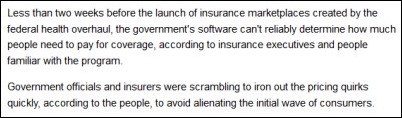
Less than two weeks before the October 1 launch of ACA-mandated health insurance exchanges, the government is still working through significant technical issues within the infrastructure. If not corrected by the October 1 go-live, the issues could affect consumers across the 36 states that are relying on the federal infrastructure to support its exchange.

U.S. FDA issues final rule on medical device identifier codes

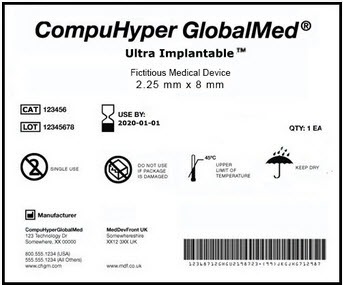
The FDA issued a long-awaited rule on Friday requiring companies to include codes on medical devices that will allow regulators to track the products, monitor them for safety, and expedite recalls.

HAMC going digital

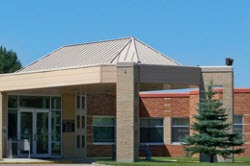
20-bed Heart of America Medical Center’s (ND) migration from Healthland to Epic is covered by the local paper. HAMC’s go-live is scheduled for November 1.

Comments Off on Morning Headlines 9/23/13

Monday Morning Update 9/23/13

September 21, 2013 News 9 Comments

9-21-2013 6-03-19 PM

From HIS Junkie: “Re: ONC. I find it absolutely depressing that the government has created a monster bureaucracy to test and certify healthcare software and spends over $70 million a year to do that,  yet these same people cannot release one piece of software that works right from the get-go. There is an article in the Wall Street Journal entitled ‘Pricing Glitch Afflicts Rollout of Online Health Exchanges.’ Another buggy system brought to you by Uncle Sam. If that was the only  glitch, I could look past it. But consider that over the last two years ONC has issued three software systems to support the vendor certification process and all have bombed more than once. They were – POP Health, Cypress, and the Transmission Transport Test tool. They eventually killed POP Health. All were needed to pass ONC certification. Each one created major delays and resubmits for vendors, not to mention the related wasted time and costs. Amazing that a federal agency that can’t get relatively simple software right the first time is telling vendors of mission critical complex software how to build theirs. I think we need to create another federal agency to certify ONC software before we let them move to Stage 3.”

9-21-2013 6-21-51 PM

From Vandy Watch: “Re: Vandy VPIMS lawsuit. I wonder if other facilities could be at risk? According to Acuitec’s website, ‘Acuitec’s flagship products are VPIMS, an integrated clinical solution for the perioperative continuum of care, and Vigilance, a customizable remote presence monitoring solution. Our strategic relationship with Vanderbilt Medical Center (VMC) enables us to ensure our products are thoroughly tested and clinically verified.’" I wouldn’t be too worried. The government hasn’t proven their rather broad claims against VUMC and even if they really did use VPIMS to intentionally overbill Medicare, that doesn’t mean anyone else would be forced to use VPIMS in the same way. It’s unlikely that fraud was baked into the product.

From The PACS Designer: “Re: Google Glass. The Yale football team got a chance to test Google Glass in a practice game and found the experience exciting from a quarterback perspective. The Internet link could present some interesting uses in healthcare for physicians seeking to inform others of their daily wants and needs.”

9-22-2013 5-49-14 AM

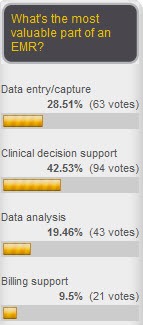
Poll respondents say the most valuable part of an electronic medical records system is clinical decision support. New poll to your right: when will vendor opportunities for population health and analytics really kick in?

Listening: new from The Sadies, Canadians who offer a compelling blend of American music styles like country, surf, and psychedelia. One of the members is Travis Good, no relation as far as I know to Travis Good, MD from HIStalk Connect.

9-21-2013 4-33-20 PM

Welcome to new HIStalk Gold Sponsor AirWatch, the leader in enterprise-grade mobility and security solutions. More than 8,000 customers across the world trust AirWatch to manage their most valuable assets: their mobile devices. The company’s highly scalable solution provides an integrated, real-time view of an entire fleet of corporate, employee-owned, and shared iPads, iPhones, Androids, Toughbooks, and more. With AirWatch, healthcare IT can automate the management and tracking of all mobile assets; reduce the cost and effort of device deployments; improve the technical support experience for device users; and enable and enforce IT security and compliance policies that secure the device and its data. Thanks to AirWatch for supporting HIStalk.

Here’s a YouTube video I found on AirWatch’s mobile device management.

9-21-2013 3-52-02 PM

The local paper covers the move from Healthland to Epic of Heart of 20-bed Heart of America Medical Center (ND).

9-21-2013 5-18-49 PM

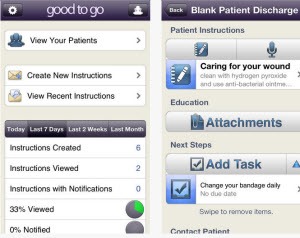
I interviewed a patient about her use of the Good to Go recorded discharge instructions system from ExperiaHealth.

The HCI Group creates an integration and testing services division, naming Scott Hassler and Mark Jackson as VPs of integration services.  Both were previously with Information Technology Architects.

ABC for Health, a Madison, WI-based nonprofit healthcare advocacy law firm, receives a $1.2 million NIH grant to develop software that determines if a patient is eligible for government health programs.


Upcoming Webinars


9-21-2013 6-01-04 PM

Speaking of Webinars, I said when I started doing them that I wanted to showcase fresh ideas, giving a voice to folks who don’t usually do conference presentations. I’m really happy that several of those Webinars will be coming your way soon. I’m certain you will enjoy the topics and the presenters. Vendor-sponsored webinars make it possible to offer these non-commercial ones where everybody can use the Webinar platform I’m already paying for. If you have a great message that needs an audience, let me know.

9-21-2013 6-02-31 PM

FDA issues a rule requiring medical devices to bear manufacturer tracking codes. FDA will used the IDs to create a publicly searchable database. The likely next steps: (a) FDA, Joint Commission, Medicare, and insurance companies require logging the ID of each device implanted, and (b) vendors of systems used in the OR or elsewhere will be pressured to make recording and recalling this information easier.

Vince finishes up his HIS-tory of Cerner this week. Next up will be McKesson, which should be interesting.


Craig Richardville on the Future

Carolinas HealthCare SVP/CIO Craig Richardville followed up his September 13 interview on HIStalk with thoughts on the future.

As you look ahead over the next several years, one thing we can count on — it will be here and gone before you know it. The boost of HITECH has made technology more than an enabler as it has become a foundational element for all future endeavors. It is the common thread that not only provides the glue within service lines and organizations, but also connects the care, the care team ,and our patients across the continuum. 

The financing challenges of healthcare requires us to be more selective in our ideas, as only the best of the best will survive, and more innovative in how we deliver care and maintain the health of our consumer. As part of the Triple Aim, a main focus is on quality and high quality will become the norm to play in the game, and the other two elements — service and pricing — will become equally dominant as the industry continues its movement towards consumerism and choice. 

Healthcare will start to take on other characteristics of other consumer industries such as retail and banking. Online services will become the routine. Consumers will access a variety of comparative sources to make decisions, the same that we do today for other personal products and services, such as Consumer Reports, Angie’s List, Google Reviews, etc. Technology will be used to transform operations to be more efficient and provide access and engagement for the consumer, wherever and whenever it is required or requested. 

The care offered will continue to travel rapidly to the patient. Self-service tools will be a necessity. We will connect to patients via mobility, instant access, and migrate monitoring for fixed devices to smartphone apps and wearable devices. We will go to the patient, wherever they are and whenever they need us — the workplace, the home, across state boundaries, and while in motion. We will see competitive communities becoming connected and unifying for the benefit and health of the patient and of our populations.

Historically competitive organizations will start to share data and collaborate to ensure that we are reducing duplication and providing all information necessary to treat the patient. We will not compete on data, but rather on how we use the data. Predictors and analytics will be a core competency and those who get their first, will have a small advantage as others will get there as well, and then we will need to quickly move to the next prospect. 

Expectations will continue to rise and new innovations discovered and the ability to be agile and collaborative will create a competitive advantage. Look to the use of data, ensuring privacy and security, development of new evidence, analytics, genomics and be prepared for the next unknown and seize the opportunity not to compete on transactional data, but predicting and engaging. 

There is not a day that goes by that new opportunities to optimize and advance arise, times will be challenging, and also very opportunistic. The best of times are ahead for all of us, especially our patients.


Contacts

Mr. H, Inga, Dr. Jayne, Dr. Gregg, Lt. Dan, Dr. Travis.

More news: HIStalk Practice, HIStalk Connect.

125x125_2nd_Circle

Patient Report: Good to Go for Discharge Instructions

September 20, 2013 News 1 Comment

The PR folks working with Good to Go from ExperiaHealth (part of Vocera) offered to let me speak to an actual patient user who has used the company’s solution. Hospital nurses use Good to Go’s technology to record their discharge instructions as they are discussed with the patient. The patient, family, and caregivers can review the session recording at any time on a smartphone, iPad, desktop PC, or telephone.

ExperiaHealth, whose tagline is “Humanizing the Healthcare Experience,” says the technology improves the patient experience and reduces readmissions, citing a CDC report that found that 90 percent of adults can’t follow the medical instructions they are given because they can’t understand them or don’t remember them. Good to Go won the “Care About Your Care” award from the Robert Wood Johnson Foundation this year.

I spoke to Mrs. Beverly Sturm, a 69-year-old widow who lives alone in Cullman, AL. She was recently  discharged from Cullman Regional Medical Center after being treated for diabetes.

9-20-2013 2-31-05 PM

According to Mrs. Sturm, “We all need an advocate. It’s difficult to remember everything they’re telling you when your being discharged. Sometimes you don’t have time to read the paperwork immediately. It’s helpful to my daughter, who was giving me care at home, to be able to hear the discharge information first hand. I thought it was a pleasant experience and helpful.”

Mrs. Sturm’s daughter wasn’t able to be present during the discharge session with the nurse since she was bringing the car around to take her home. Mrs. Sturm says it would have been hard for her to remember on her own. “When you get home, besides having to go by the drugstore and get your medicine and read the paperwork, you’re tired and want to lie down and rest. It was extremely helpful.”

I asked her what kinds of things the recording helped her remember or understand. “I had a couple of changes of medication,” she said. “That’s one thing I needed to listen to again. I had one or two things that were eliminated and something new started, how to take it and when to take it. Then, too, when I was supposed to be back in and contact my doctor in the office. The medicine was the most important thing. I’m diabetic and I have to be careful of the information I get and what I have to change with my diet, the medicine, and the units of insulin. I could hear it while it was quiet and had my undivided attention.”

I asked Mrs. Sturm if having the information made her healthier. “Oh, yes. I’m certain at least being able to go over it again verifies my memory.”

Time Capsule: A Day in the Life of IT-Visionary Hospital VPs: Laying Out CPOE Benefits to Luddite Doctors

September 20, 2013 Time Capsule 3 Comments

I wrote weekly editorials for a boutique industry newsletter for several years, anxious for both audience and income. I learned a lot about coming up with ideas for the weekly grind, trying to be simultaneously opinionated and entertaining in a few hundred words, and not sleeping much because I was working all the time. They’re fun to read as a look back at what was important then (and often still important now).

I wrote this piece in July 2009.

A Day in the Life of IT-Visionary Hospital VPs: Laying Out CPOE Benefits to Luddite Doctors
By Mr. HIStalk

125x125_2nd_Circle

Doctors are such whiners when it comes to computers. Everyone can see that. Resisting the use of CPOE and EMRs is just silly in this day and age where everything is done on computers.

This recently came to a head at my hospital. The CEO got a voice mail from a peer at St. Roxy Hospital, left on his desk by his executive assistant, who transcribes all of his messages.

St. Roxy was mandating CPOE, he read, underlining the word “mandatory” since it was important. Doctors need to do all their work on computers instead of the paper chart. There were too many errors and too little opportunity to oversee their work by monitoring electronic databases.

My CEO responded decisively, leaving his executive assistant a Post-It note on her monitor right beside the one holding her current password, asking her to schedule a meeting with all his VPs about CPOE. She was asked to prepare a relevant PowerPoint presentation and attend the meeting to run the laptop.

The executive assistant e-mailed all the VPs to ask them when they would be free for an hour in the next two weeks. It took a week to get all their replies since some were out of town and hadn’t set their vacation alerts.

One was late in responding because her top-of-the-line hospital laptop had failed after her teenaged son had used it for several consecutive hours of doing Internet research for a school project in his locked room, necessitating a call to the VP-only IT support hotline so that a technician could be dispatched to her house on a Friday evening.

Once the meeting finally occurred, everyone agreed that it was time to take a hard line with CPOE-resistant doctors. The marketing VP took minutes, asking to have someone type them up because he doesn’t have a PC in his office since it clashes with his executive furniture.

The CPOE software vendor was the problem, the COO decided. He had his assistant arrange a Webex with the vendor after having her call the CIO to find out what vendor had provided the $20 million system. It started late because several of the VPs needed personal help getting connected. Once on, the vendor’s sales VP apologized that he would be not be able to see the PowerPoint because he was on the road, where he doesn’t like carrying a laptop.

The solution, it was decided, involved tablet PCs and speech recognition software. The CIO had never used either, but recommended that the CEO order some of both for doctors to try. Since the CEO was running late for his 5:30 tennis match, he asked his executive assistant to get on “The Google” and order some copies. She asked if it was OK to work an hour of overtime to get it done since she was responding to a Wackovea request to send in her account’s user name and password to avoid having access to her checking account frozen. He agreed, telling her to draw up a check request and leave it in his inbox to sign.

The CIO was tasked with putting some kind of graph on the executive dashboard to monitor the progress. He wasn’t too worried about it since executives rarely looked there anyway. He had asked them whether they found the Intranet useful, but all the VPs replied that as leaders, they relied on instinct and their skills at understanding people to make decisions rather than graphs.

Everyone felt good about the progress that had been made in helping doctors understand their vision of shifting their income-earning patient care activities to computers. So good, in fact, that the CEO decided to publish his thoughts on CPOE to his widely read blog, which will happen just as soon as his executive intern finds the time to write something up for him.

Crowdsourcing Results: User Group Meetings

September 20, 2013 Advisory Panel Comments Off on Crowdsourcing Results: User Group Meetings

A growing vendor asked me about when and how it should consider hosting its first user group meeting. I surveyed readers for their opinions and received 44 responses. Thanks to all who responded – I’ve read every word carefully and summarized below. I think it’s fascinating.


Reasons for Attending

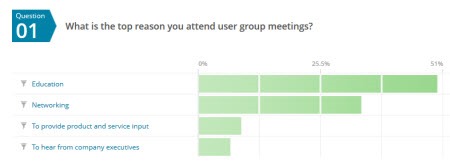
9-20-2013 9-48-30 AM

Attendees attend UGMs to get education and to network with peers. Company interaction isn’t nearly as important.


Meeting Sponsor

9-20-2013 9-51-07 AM

Most respondents preferred an event produced by the company itself rather than by a user group.


Most Valuable Education Sessions

These were freeform responses, but the majority of respondents expressed a strong preference for allowing customers to present rather than the vendor. Some ideas:

  • Big picture company strategy
  • If I had to do it over again ….
  • Customer roundtables
  • Regulatory compliance training
  • Tools and tricks
  • Workgroup sessions for customers with a shared market challenge
  • Hands-on customer sessions, such as best practices
  • Customers describing how they use and derive value rom a product – are they using it in a way I’m not?
  • “Did you know” sessions from the vendor
  • Training sessions delivered by customers, but with vendor assistance to make sure the information is correct
  • Information about upgrades and how to use new functionality
  • Product road map sessions from the vendor
  • Implementation lessons learned
  • Integrating the product with other solutions

Fun Session or Event

  • Customer panel
  • A concert
  • Beach party
  • Sailing
  • A casual wine tasting the night before the main session
  • Closing down an attraction just for attendees
  • A session just for newbies who need tips on how to network, how to join a conversation, what  not to say
  • CEO new feature rollout
  • Dinner out with groups by individual signup – large enough to provide networking, but small enough to force interaction
  • A general session with a hired speaker to motivate the audience
  • An evening at a local farm with homegrown local foods and wines
  • Sporting event
  • Competitive events
  • Team building exercise, such as group drumming
  • Breaking out into groups and being asked to design new functionality
  • Company party
  • Attendees brainstorm new features and “sell” the idea to the vendor
  • Panel session where the company was “roasted” in a professional and non-personal manner
  • Theme night dinner
  • Surprise slumber party – guests received a tee shirt and slippers, just a few tables, a room full of games like Twister, and finger food — the common dress and surprise nature made networking comfortable
  • Group activity to support local charities – build bikes, create care packages for troops overseas, work in the local food bank
  • Square dancing and dinner on a farm

Best Experience

  • Learn more about product capabilities
  • Specific product workshops by users
  • Customers create the agenda and run most of the presentations
  • Focused networking, like tables by topic
  • User case studies about problems solved
  • Every best experience involved networking
  • Being invited to present about lessons learned and having prospective customers asking questions afterward
  • Getting confirmation from other users and presentations that we’re on the right track with our use of the system
  • A good keynote speaker from outside the company who presents a motivational message always sets the tone for everything else
  • An EDIS competition among top competitor products
  • Hearing gotchas from customers so I could avoid them
  • “Seeing 30 kids being told they were to become ‘bike testers’ – after ‘testing’ the bikes they were told they could keep them. The squeals of joy, kids tears of happiness, parents of the kids with tears of gratitude, attendees with a lump in their throats seeing what they could do working together to bring happiness to someone else.”

Worst Experience

  • Vendor taking control of the meeting
  • Standardized lecturing by company employees, more like a trainer session for “one size fits all”
  • Company rah-rah at every session – get on with your discussion
  • Boring speeches by executives telling me how great their product is
  • Company-run presentations that turned it into a two-day sales pitch
  • Go easy on trying to sell me something
  • Rooms that were too small to hold everyone
  • Execs talking about how great the company is and how lucky we are to have them as a vendor
  • A pompous executive telling us the same thing every year – if you’re going to share your roadmap, make sure it’s paved
  • Hard sell by the vendor of vaporware
  • Bad presentations or poorly prepared presenters
  • We present real-time issues and company leaders dismiss their significance to healthcare
  • Vendor using their “top” customer as a mouthpiece – you attend a session thinking it’s a customer speaking and then learn they’re in bed with the vendor
  • Networking events with music that’s too loud and everyone (especially the company’s employees) drinking too much free alcohol
  • Sessions that weren’t as advertised
  • Condescending speakers
  • Lack of signs to get to rooms on time

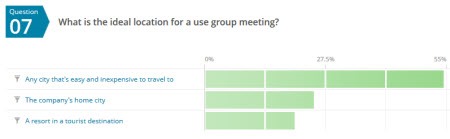
Ideal Location

9-20-2013 12-27-19 PM

Any city that’s easy to get to an inexpensive was the clear choice.


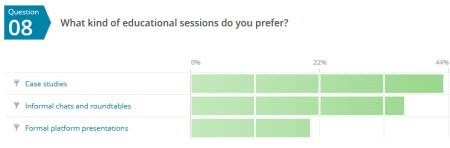
Preferred Type of Educational Sessions

9-20-2013 12-28-34 PM

Case studies win, followed by informal chats and roundtables.


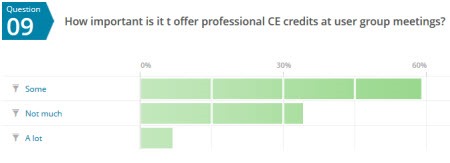
Importance of Offering CE Credits

9-20-2013 12-29-24 PM

Offering CE credits isn’t essential.


When is it Time to Have the First User group Meeting?

  • Size of install base and maturity of product
  • Vendors need to lead their customers to what the marketing is doing – if you have multiple products and services, then get your act together and design the meeting
  • Sufficient user size where the cost will benefit an expected number and quality of attendees
  • User requests
  • Number of users, demand for training, frequency of new products that require training, established groups at beginner, intermediate, and advanced levels
  • When customers ask for peer references for best practices and when product complexity and changes can’t be explained in an email blast
  • If your customers aren’t involved, don’t start one
  • Multiple users that are geographically disparate
  • At least 20 installs
  • Clients are meeting informally on their own
  • If at least a third of the user base is asking for it
  • If the company doesn’t have a formal process to gather and respond to customer enhancement requests
  • Size of the customer base – maybe 30-40 percent will attend
  • In the first year, do it close to home so you can learn and get back to the office quickly to make changes
  • When there are enough successful to-lives to make sure it doesn’t turn into a giant gripe session – there must be enough true believers for critical mass
  • After 2-3 major updates or the first all-new release of the software, especially if the updates coincide with government, payor, or industry changes
  • The vendor has at least 20 customers and actually cares about them
  • When it seems customers are asking the same question over and over

Should The Meeting Have an Exhibit Hall?

9-20-2013 12-38-05 PM

Yes, it should.


What Can a Company Do to Create a Great User Group Experience?

  • Keep it orderly, timely, and on track
  • Keep the meeting to 1-2 days
  • Make it easy to register and attend
  • Have a customer panel for Q&A
  • Make sure the company staff interacts with customers
  • Have engineers attend – they will learn a lot about customer use
  • Get topic ideas from customers
  • Offer varied events, not just lunches and educational sessions, and include after-hours events
  • Crowd source the venue and sessions from active users
  • Make sure space is big enough for all attendees
  • Repeat popular sessions
  • Always offer vegetarian options
  • Offer CEUs if possible
  • Make it about edification of the current customer base, not a sales pitch
  • Choose a location that’s travel friendly and inexpensive
  • Make staff available, which is why you have it near your headquarters
  • Advertise well in advance so customers can budget travel
  • Provide hands on experiences
  • Give customers something they can use to make their organization better
  • Have good food!
  • The company should provide support resources but not control the group
  • Fewer sales staff at the meeting and more support and technical staff
  • Less pitching of new stuff
  • Use an advisory board to set the agenda
  • Make sure the people behind the scenes who customers talk with but never in person are there
  • Arrange good, clean, and safe accommodations
  • Include a lot of case studies
  • Allow customers to interact with each other and the real developers in the company

Advice For a Company About to Launch Its First User Group Meeting

  • Designate resources to ensure smooth delivery–1 person can’t do it all re strategy, planning, communications, positioning, event aspects, as well as internal communication to staff involved. And don’t assume because the company launches with an email communication that customers will read it and understand what’s in it for them. Customer’s are spending money to attend and time out of their medical practice. Make sure there’s plenty and frequent advance notice and easy registration and staff available to answer my questions–pre and during the group meeting. Seek continual improvement–do a electronic post event survey–both to customers and internal staff.
  • Make it as central to your user community as you can to reduce expenses for attending and announce it in enough time for me to get it funded to go.
  • If you are going to hand out free swag, don’t make it too cheap. Better to not give anything at all. Also consider location carefully. A mix of a tourist area, easier to get to gives folks a nice excuse to attend. Forget Fargo in winter or any combo of Verona and cheese curds.
  • Invite small group of active users (each should represent all regions of the country) to act as ambassadors/advisors to provide recommendations on sessions, venue, fees, etc. This group should also be encouraged to promote event to colleagues via social media channels.
  • Try to imagine yourself as an attendee and what kind of service you would expect, and then go beyond that to knock their socks off…in other words, treat your customers like royalty and they’ll respond with loyalty.
  • If you don’t already have an enthusiastic group of users who are willing to share ideas – don’t expect it to magically happen at your first event.
  • no hard sales pitched. sell via education and solving client problems
  • Start planning & advertising to base early. Make sure the location is experienced with handling such events.
  • Be a facilitator, not just a presenter. Remember this meeting to to let clients learn from one another, not just from you. Manage the process to insure constructive feedback, not just bitch sessions. Have fun.
  • Ask for your users to be active partners in the process. They know & use the product in ways you won’t expect.
  • Get at least some of your frontline staff to the meeting, not just marketing. They are your day-to-day contacts with your customers, and they probably want to actually meet the people they spend a lot of time on the phone with. Your customers also want to put faces to names when they can.
  • The lower the cost, the more users they will attract. Don’t make it free, because "you will get what you pay for".
  • Select users to help set the agenda and overall experience goals of the conference. Select a mix of; great and not so great users; large medium and smaller organizations; encourage networking opportunities; Keep the message clear, simple and honest.
  • Plan, plan, plan. Don’t expect to make money – it is an investment and will take several years to break-even.
  • Pretty simple. If you make it a big company sales pitch, it will be the last UG meeting I attend. Your goal should be to increase customer loyalty by showing off a community and ideas. Your goal should not be to upsell.
  • Re-evaluate if you really should. Make sure you have enough client support.
  • Keep costs in line with expectations created, follow the old adage to deliver more than promised.
  • Get a major client to host the first few meetings at their location.
  • Get input from your customers using a survey or direct calling to gauge interest and get input on the agenda.
  • Do It!

Comments Off on Crowdsourcing Results: User Group Meetings

Morning Headlines 9/20/13

September 19, 2013 Headlines 1 Comment

Epic Systems shows off its new Deep Space auditorium as customers gather for annual meeting

Epic unveils its 11,000 person, five-story underground auditorium named Deep Space at this year’s Epic UGM conference. The conference drew more than 15,000 attendees.

$1 billion e-health system rejected by doctors as ‘shambolic’

Australia’s $1 billion patient-centered health records system contains only 5,427 records after 15 months. Doctors reportedly have less than a 0.5 percent chance of finding clinically relevant information about their patients on the new system. Health Minister Peter Dutton, who was sworn in on Wednesday, has pledged to undertake a "comprehensive assessment."

Provider Resources

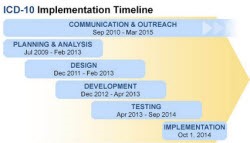
CMS publishes an ICD-10 implementation guide designed to help providers prepare for the upcoming transition.

Healthbox selects first class of health tech entrepreneurs

Health IT startup accelerator Healthbox has announced the first class of startups that will attend the new Nashville program this fall.

News 9/20/13

September 19, 2013 News 12 Comments

Top News


The Greater Madison Convention & Visitors Bureau estimates the economic impact this week’s Epic user group meeting is $6.5 million, second only to the World Dairy Expo. Despite being behind the cow show, Judy Faulkner was apparently pleased to tell her 15,000 customers and employees that Epic now serves 51 percent of US patients and 2.4 percent of the world’s. She also reports that 86 percent of Epic implementation projects over the past two years have come in under budget.


Reader Comments

From Wild Duke: “Re: Caradigm. Did a major executive purge. Chief Medical Officer Brandon Savage and SVP of Product Management Mark Johnson both gone. COO Nigel Mason is heading back to GE. CTO Neal Singh is now running the show.” A Caradigm spokesperson responded to our inquiries by saying, “I can confirm that earlier this week Caradigm made some organizational changes within our product teams to drive greater alignment and focus on our healthcare analytics and population health solutions.” We’ll call it unverified since companies can’t comment on the status of individual employees.

9-19-2013 6-42-43 PM

FromPit Viper: “Re: VA. Under Secretary Petzel is resigning.” Unverified, but Pit Viper has been a good VA source previously. Robert Petzel, MD is Under Secretary for Health in the Department of Veterans Affairs.

9-19-2013 6-51-57 PM

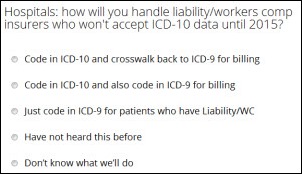
From Would Like to Know:“Re: ICD-10. CMS is not requiring it for coding Liability Insurance, No-Fault, and Workers Comp until April 1, 2015. For vendors that rely on UB-04 billing data, this exception is causing some angst. We’ve heard hospitals will code in ICD-10 and then either crosswalk back to ICD-9 or code to ICD-9 for these insurers. Would you be able to survey hospitals about this? I love HIStalk and have promoted it inside my company, plus we are now a sponsor.” Thanks. I created a poll that will take hospital folks maybe 10 seconds to complete. I’ll share the results here in a few days.

9-19-2013 7-02-35 PM

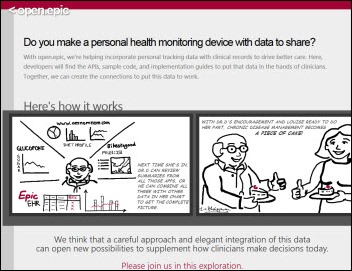
From Movie Sign: “Re: open.epic. Epic’s big announcement to the world of modern startups looks like it was designed by an amateur. It doesn’t help accusations that legacy vendors are out of touch.” Nobody seems to know anything about open.epic other than what’s on the site, which indicates that it’s a connection from EpicCare to personal health devices. Folks attending UGM probably got more details.


HIStalk Announcements and Requests

9-19-2013 12-02-32 PM

inga_small Thanks to Jennifer Dennard (@SmyrnaGirl) of Billian’s HealthDATA for hosting Thursday’s #HITchicks tweetup, which happened to be the first TweetChat I’ve ever attended. The discussion covered women in the healthcare C-suite, mentoring, HIT week, and, my favorite: should women have to “harden” or “soften” themselves when in positions of leadership. I agreed with the consensus view that women (and men) must remain genuine and true to themselves. Nice job moderating, Jennifer!

9-19-2013 5-49-04 PM

inga_small I updated my iPhone 5 to iOS 7.0 last night (it took about an hour) and, so far, so good. I did have to delete about 2GB of videos to make room for the update, so beware if you are low on storage. I am excited about the new camera features, which include Instagram-like tools for enhancing photos and a faster shutter speed (which will be perfect for taking stealth photos of shoes at MGMA.) The iTunes Radio is also fun and should give Pandora a run for its money, especially since it’s ad free. I listened to a few tunes using the Bluetooth in my car, but then realized that too many tunes may be a quick way to eat up all the data included in my cell phone plan. Finally, the overall navigation is enhanced in several areas, resulting in fewer swipes to get where you are going.

9-19-2013 5-58-56 PM

Welcome to new HIStalk Platinum Sponsor Prominence Advisors. The company, founded by former Epic managers who hire Epic superstars, provides the country’s foremost healthcare organizations with Epic expertise, with over 90 percent of the company’s employees being Verona alumni. Prominence is a QlikView healthcare implementation partner, levering its knowledge of Epic’s data model to help organizations aggregate data from multiple systems to spot trends, predictively improve patient care, optimize revenue cycles, and monitor operational performance. High-profile projects require extraordinary, high-performing talent and Prominence has earned the reputation of deep domain expertise and exemplary character as it provides services in analytics, strategy, and execution. Thanks to Prominence Advisors for supporting HIStalk.

Bored? (a) sign up for email updates so you’ll be the first to know; (b) repeat for HIStalk Connect, where your signup gets you really cool HIT innovation news from Travis, Lt. Dan, and Kyle; (c) connect with us on Facebook, Twitter, and LinkedIn, including the HIStalk Fan Club that Reader Dann created a long time ago that now has 3,242 members, making my mom very proud even though she’s not sure why; (d) peruse and occasionally click the ads of the folks who keep me in keyboards and check them out in the Resource Center and Consulting RFI Blaster; (e) send me rumors, pictures, or whatever interesting stuff you have using the secure Rumor Report form that goes straight to my inbox along with any attachments you’ve included; (f) check out the Webinar Calendar and vow to learn something; and (g) accept my appreciation for your  support of HIStalk in whatever form that support takes (just reading it counts a lot.)

Upcoming conferences: Inga will be at MGMA in October, I’ll be at the mHealth Summit in December. That’s all we have on our dance cards for now.


HIStalk Webinars

9-19-2013 6-26-20 PM

Encore Health Resources will present “Full Speed Ahead: Creating Go-Live Success” on Tuesday, September 24, 2013, 1:00 – 1:45 p.m. Eastern, featuring William Sangster, MD. Dr. Bill will impart wisdom, I’ll say a few words that will be far less wise, and a lucky attendee will win a $50 Amazon gift card door prize. Register now.

Speaking of webinars, we’re doing quite a few of them and I could use a few more CIO-type reviewers. Here’s how it works: I’ll send you a link to the recorded rehearsal, you’ll spend 30 minutes or watching it and jotting down suggestions for improvement, and you’ll earn the same gift certificate as the Encore door prize winner. Let me know if you’re interested. Thanks to the folks who have been reviewing all along – your feedback is making the Webinars better and more enjoyable for everyone.


Acquisitions, Funding, Business, and Stock

9-19-2013 4-05-53 PM

Health tech business accelerator Healthbox selects its first Nashville class of seven companies, each of which will receive a $50,000 seed investment and four months of mentorship. Chosen were:

9-19-2013 8-45-00 PM

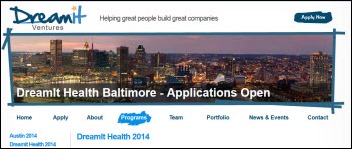
DreamIt Ventures launches DreamIT Health Baltimore, a partnership with The Johns Hopkins University and BioHealth Innovative, to accelerate the growth of early-stage HIT companies.

9-19-2013 6-21-15 PM

HIMSS acquires Health Story Project, which focuses on standards related to non-EHR clinical documentation such as transcription and electronic documents.


Sales

Skilled nursing and rehab operator Greystone Healthcare Management selects HealthMEDX as its HIT solution.

The New York Office of Mental Health awards health system integrator CGI a $48.7 contract to implement an EMR platform, including NTT DATA’s Optimum. Document Storage Systems will provide additional implementation services for the vxVistA EHR.

Vanderbilt University Medical Center (TN) will deploy MedAptus Technical Charge Capture solution to code and bill hospital-based procedures.

UC San Diego Health System (CA) selects Merge iConnect Access to image-enable its Epic EHR.

9-19-2013 9-00-19 PM

Self Regional Healthcare (SC) selects McKesson Paragon .

The New York City Health and Hospitals Corp. awards IBM an one-year, $10 million contract to build an analytics platform to improve patient care and operational efficiency.

9-19-2013 9-01-28 PM

The Torrance Memorial Medical Center (CA) selects Daylight IQ for disease-based clinical protocols.


People

9-19-2013 4-20-31 PM

Bronson Healthcare (MI) hires Paul Peabody (Palomar Health) as VP/CIO.

9-19-2013 4-31-22 PM

Emmi Solutions names Steve Martin (Merge Healthcare) as SVP of sales.

9-19-2013 7-31-25 PM

Ron Strachan (Community Health Network) is named CIO of McLaren Health Care.

9-19-2013 7-12-05 PM 9-19-2013 7-12-36 PM 9-19-2013 7-14-43 PM

Health Care DataWorks Co-founder Jason Buskirk is named CEO, Ivo Nelson becomes board chair, and John Gomez is engaged as a development consultant.


Announcements and Implementations

Fairfield Memorial Hospital (SC) goes live on Cerner.

9-19-2013 9-03-45 PM

Duke University Health System reports that it has installed Epic ahead of time and under budget throughout the entire system, including 223 outpatient facilities and Duke University Hospital. Epic says it was one of the company’s biggest single-day go-lives with 16,000 Duke employees trained. Competing Research Triangle health systems WakeMed and UNC are also implementing Epic.

Pacific Alliance Medical Center (CA) deploys electronic patient signature and e-forms solutions from Access.


Government and Politics

9-19-2013 7-32-34 AM

CMS publishes an online ICD-10 implementation guide to help practices, small hospitals, and payers navigate the ICD-10 transition.

9-19-2013 10-14-53 AM

ONC names GenieMD the winner of its Blue Button Co-Design Challenge for its app that helps users diagnose their symptoms, find providers, and learn more about medical conditions.

9-19-2013 10-45-36 AM

inga_small From an ONC post I missed last week: 54 percent of EPs have 2014 Edition EHR technology available to them from their primary 2011 EHR vendor; 45 percent of EHs/CAHs have 2014 Edition EHR technology available from their primary 2011 Edition vendor. An additional 13 percent of EPs and 19 percent of EHs/CAHs have a primary 2011 Edition EHR vendor that is on track toward providing a 2014 Edition solution. Translation: one out of three providers attested with EHRs that are potentially not on track with 2014 Edition technology. Another interesting nugget: 31 percent of the 861 ambulatory EHR vendors on the Certified HIT Product List and 49 percent of the 277 inpatient EHR vendors don’t have a single MU attestation. In other words, look for a sizable reduction in the number of vendors listed for 2014 Edition certification.

Here’s a new ONC video on interoperability.


Other

The CMS Office of the Actuary projects that healthcare spending will increase at an annual rate of 5.8 percent from 2012 to 2022, or one percent faster than the GDP.

A former advisor to Australia’s billion-dollar eHealth system calls it “shambolic,” with incorrectly loaded data and doctors who don’t have the software to read it. The medical association pegs the odds of finding useful information for a given patient at 0.5 percent.

John over at EMR and EHR Videos has a Google Plus Hangout video featuring the always-fascinating Dr. Nick, aka Nick van Terheyden, MBBS, CMIO of Nuance Healthcare. You can also get on the update list and check the schedule of future events that are streamed live.

9-19-2013 6-55-36 PM

The Milwaukee newspaper runs an article about the growth in lucrative Epic consulting jobs, featuring a cool photo of Mark and Drew from Nordic, which has 350 employees and is adding 20 per month after bringing in $38 million in investor money in the past year. Frank Myeroff of Direct Consulting Associates is quoted in the article as saying the number of Epic consulting firms may approach 2,000. Also mentioned are Vonlay and BlueTree Network.

In Canada, Jewish General Hospital goes on diversion and elective imaging tests are postponed when its data center overheats, taking all of its servers down Thursday morning.

9-19-2013 7-25-27 PM

A report by Wells Fargo Securities says that CMS’s July attestation data suggests that the replacement EHR market will heat up in 2014 as practices drop productivity-sapping EHRs in favor of those products with a higher MU attestation rate. The report also says, “Replacement activity could
intensify further if CMS ever decided to audit providers who pocketed the Medicaid incentives instead of using them to fund actual EHR adoption. “

Weird News Andy, who as he says is “putting the ‘News’ in Weird News Andy for the past five minutes,” notes that Cleveland Clinic is shrinking. Employees were told this week that $330 million needs to be trimmed from the clinic’s 2014 budget and layoffs may be required.

9-19-2013 8-27-04 PM

At least it wasn’t healthcare: a BBC TV news anchor grabs a pack of copy paper instead of the intended iPad and bizarrely carries it around while reading the news. Anchors there hold the iPad to pretend they are technology-savvy journalists instead of talking heads reading off a screen, an illusion suffering mightily from this incident.


Sponsor Updates

  • The Colorado Technology Association names Ping Identity winner of its Technology Company of the Year award.
  • HCI Group posts an article titled “Credentialed Trainers – Secret Superstars of the Install.”
  • Lifepoint Informatics serves as a gold sponsor for next month’s G2 Lab Institute Conference in Arlington, VA.
  • Sunquest is attending ASCP in Chicago this week, exhibiting in Booth #219.
  • Direct Recruiters is named a Weatherhead 100 winner as one of the 100 fastest growing companies in Northeast Ohio.
  • Jeff Bell, director of IT security and risk services for CareTech Solutions, joins the HIMSS Privacy and Security Committee for a two-year term.
  • CCHIT certifies that Medseek Empower enterprise patient portal is compliant with the ONC 2014 Edition criteria and awards it certification as an EHR Module.
  • Merge Healthcare reports that radiologists use its certified EHR technology more than any other, according to HHS MU attestation data.
  • Drummond Group certifies that two SuccessEHS products, SuccessEHS 7.0 and MediaDent 9.0, are compliant with ONC 2014 Edition criteria.
  • CIC Advisory launches a Facebook page to provide an interactive forum on the operational and regulatory challenges facing HIT execs.
  • API Healthcare President and CEO JP Fingado participated in this week’s Healthcare Workforce Information Exchange demonstration.
  • Hospital Physician Partners (FL) reports on its experience using Ingenious Med’s business analytics platform.
  • Xerox researchers address the challenge of big data and what to do with social media analytics.
  • HCI Group details three areas a good credentialed trainer can impact during an EMR implementation.
  • Beacon Partners outlines six steps to minimize ICD-10’s negative impact on revenue cycle.
  • Nordic Consulting reports that its $38.3 million influx of capital from investment partners has allowed it to increase service offerings, bolster staff to over 300, and grow clients and partnerships to over 75.
  • Quantros hosts an Advisory Panel this week to discuss the commercial viability of data in an intermediary role and the value of bundled safety products.
  • Clients attending this week’s Verisk Health user conference prepared 2,000 food packs for Second Harvest Food Bank of Central Florida’s Hi-Five Kids Pack Program.
  • Vitera Intergy EHR is tested and certified as a complete EHR under the Drummond Group’s EHR ONC-ACB program and is an ONC 2014 Edition-approved solution.
  • Anita Archer, Hayes Management Consulting’s director of regulatory compliance, co-authors a HIMSS-published article entitled, “ICD-10 Documentation for State Medicaid Agencies (SMA) Health Conditions Categories.”

EPtalk by Dr. Jayne

clip_image002

Lt. Dan tweeted this morning about Google’s launch of Calico, a company that will focus on “the challenge of aging and associated diseases.” The venture will be led by Arthur Levinson, chairman and former CEO of Genentech. He’s also a director of drug giant Hoffman-La Roche and chairman of Apple.

My initial response to the announcement was that there are some significant conflicts of interest here. Others have had that thought as well, with Time posting a piece about it in the context of previous Google vs. Apple conflicts that received scrutiny from the Federal Trade Commission. My mind, however, was going more towards the conflict stemming from having a company like Google — which controls vast amounts of information about seemingly everything and everyone — cozying up with the pharmaceutical and genetic sphere.

For quite some time, I’ve had concerns about so-called personalized medicine. Farzad Mostashari tweeted about this earlier this week, sharing why personalized medicine might be bad for all of us. The focus of the opinion piece is that when people increase focus on themselves and their personal choices, they tend to decrease focus on population-based health, such as global vaccination efforts and other public health initiatives. It also mentions pharmacogenetics, where drugs can be targeted for patients who have certain mutations present. It mentions the example of vemurafenib as a drug for metastatic melanoma, which can help 25 percent of patients live seven months longer.

This kind of data leads me to my chief concern with personalized medicine – is it cost effective, and who is going to pay for it? Vemurafenib costs $56,400 for a six-month supply. (Surprise, when I did my Google search to find out the cost, I discovered it is made by Genentech.) If it only works 25 percent of the time for patients with a specific mutation, and their lives are only extended seven months, should we be routinely recommending it? As a primary care physician who has cared for numerous terminal patients, I understand the appeal. If it helps a father live long enough to see his daughter married, or a mother long enough to see her son graduate from college, these are the Hallmark moments we all want to think of. But in our situation where the healthcare system is collapsing under its own weight and excess, I could really make the argument that spending $56,000 to help fight diabetes, obesity, or heart disease for many patients is a better investment of our increasingly scarce healthcare dollars.

One could argue that personalized medicine is for those who can afford it, but then we will have the counter argument about healthcare being a right and about treating everyone equally. Eventually we have to come to the realization that we can’t afford to provide these expensive treatments for everyone no matter how hard our heartstrings are tugged. As a family physician, I’m all for health promotion and disease prevention. I am not, however, in favor of extending life just because we can, and I think this venture has the potential to drive efforts in the wrong direction.

I recently saw an elderly patient in her mid-90s who has been blessed with extremely good health. She has taken care of herself all her life, watched her weight, didn’t drink alcohol, and didn’t smoke. Her only “vice” was wearing high heels every day, which has caused some orthopedic problems. As for medications, all she takes are pain relievers that she takes as needed for aches and pains. She is a remarkable lady. She has been widowed for more than 30 years, outliving most of her close friends and some of her family members. She doesn’t want to live forever.

When people think of halting the aging process, I think they expect it to be something like the movie “Cocoon,” where you have a bunch of sassy septugenarians frolicking around. How are we going to fund retirement for these folks? Will they understand that if they’re going to live to be 100 they need to work until they are at least 75 or 80 because the average person cannot save enough money to fund a 35- to 40-year retirement during a 45-year working life? We already have people who can’t save enough money for retirement period, let alone an extended one. The focus on instant gratification and the “me” generation can only skew that further as people spend their current income rather than saving it.

Anyone who has worked on a medical/surgical unit at a hospital has seen the people who are not as fortunate as my ultra-healthy patient. What about the people whose lives have been prolonged through multiple invasive treatments but who are debilitated and have a very low quality of life? Wouldn’t it make more sense to talk about palliative care for the obese smoker who has had four heart attacks, multiple cardiac catheterizations and a bypass, and can’t walk to the bathroom without being exhausted than to bankrupt his family by pursuing more invasive treatments?

I’m sure the argument here is that they want to come up with technologies to help that patient have a better quality of life, but I’m not sure I buy it. Looking at the players involved (Genentech, Roche, Google, and probably multiple intermingled board members from other companies) this feels more like a profit-driven venture than a humanitarian one. Like commercial space travel, it will be only for the ultra-wealthy and will potentially divert resources and attention from important work that could benefit all patients.

What do you think about Calico? Email me.


Contacts

Mr. H, Inga, Dr. Jayne, Dr. Gregg, Lt. Dan, Dr. Travis.

More news: HIStalk Practice, HIStalk Connect.

125x125_2nd_Circle

Morning Headlines 9/19/13

September 18, 2013 Headlines 2 Comments

open.epic

Epic announces a new API that will allow developers of health and wellness apps, medical devices, and activity trackers to push health data directly into the Epic EHR, where clinicians will be able to use it as part of clinical decision-making.

Hospital Readiness to Meet Meaningful Use Stage 2

Sixty-eight percent of hospitals have already purchased MU Stage 2 certified (2014 Edition) EHRs, according to a recent HIMSS Analytics report.

HMC returns $1.5 million to feds

Habersham Medical Center (GA) will return its $1.5 million Meaningful Use incentive payment after its governing body, the Hospital Authority of Habersham County, found that it had not actually meet all of the requirements.

CGI wins $48.7M contract to implement electronic medical record system

CGI signs a $48 million contract with the New York State Office of Mental Health to implement and optimize VistA across all of its facilities.

All connected — Duke Health completes EHR transformation

Duke University Health System is now live with Epic across its entire system, including Duke University Hospital and 233 outpatient facilities.

Readers Write: Meaningful Use to the Maximum: Keeping the Focus on the Patient

September 18, 2013 Readers Write Comments Off on Readers Write: Meaningful Use to the Maximum: Keeping the Focus on the Patient

Meaningful Use to the Maximum: Keeping the Focus on the Patient
By Gary Hamilton

9-18-2013 6-33-03 PM

Across the country, healthcare organizations are evaluating their ability to meet the Centers for Medicare & Medicaid Services (CMS) Meaningful Use (MU) requirements. Data recently released by CMS revealed that more than 23,000 family physicians became first-time “meaningful users” last year, a 180 percent increase from 2011. At the same time, CMS data showed a 21 percent drop in the retention rate of attesting physicians.

Although these statistics reflect one portion of the physicians seeking to attest for MU, they point to a bigger issue among all entities involved in this effort. While MU Stage 1 attestations are up, the number of providers dropping out of the program before reaching Stage 2 is also on the rise.

The question is: Why?

One contributing factor may be the lack of focus on “meaningfully” using technology. As physicians and hospitals embark on the MU journey, they often focus their attention on technology purchases and upgrades, losing sight of the true intent of the government’s program—to improve patient care.

In fact, some organizations have been so preoccupied with the technical components of their IT systems and how they meet Stage 1 requirements that they fail to realize their current technology is not capable, or does not have the necessary certifications, to help them meet Stage 2. As organizations become increasingly concerned with Stage 2’s escalating requirements, some providers are deciding it is easier to drop out of the MU process than to continue to the next level.

For those physicians and hospitals that do decide to forge ahead, it’s imperative not to lose sight of the intent of MU: a better patient experience both in terms of outcomes and satisfaction. To do this, healthcare providers must go beyond merely viewing MU attestation as a “check the box” exercise; instead, they must take a more strategic approach that puts the patient at the center of the process.

Here are some key questions to keep in mind when developing a MU strategy that maximizes the “meaningful” in Meaningful Use.

1. How would you use technology to improve patient care if the government’s incentive program didn’t exist?

Elevating patient care and making it more patient-centered cannot be viewed as a separate initiative from MU attestation. To keep the patient firmly at the forefront of MU efforts, an organization first must consider how to foster patient-centered care and then think about the technology that will best enable the work. Many MU standards represent activities that organizations should be doing to make the care experience more patient-driven, regardless of the decision to attest. These efforts can also streamline operations, enhance workflow ,and facilitate strong care coordination. For instance, patient-focused organizations should consider implementing technology that enables electronic scheduling and appointment reminders as both a convenience for patients and a time-saver for staff. Or, electronic forms should be used to speed new patient registration, eliminating the need to scan or key paper documents and control delivery.

2. Is the technology you’re considering “smart” for your organization and your patients?

For technology to be beneficial, patients and providers must fully embrace and use it. To realize this level of interaction, an organization must consider both patient and provider needs and workflows when selecting technology. Getting a firm grasp on this information may require an organization to conduct focus groups, interviews, or surveys to learn more about both groups’ needs and how the technology can best meet those needs. Things to look at include how the technology can improve convenience, enhance information sharing, further efficiency, and foster communication. By taking the time to fully appreciate and respond to patient and provider input, an organization can ensure the selected technology is appropriate and “smart” for the organization.

3. Is your patient-centered approach enabling the transition to MU Stage 2 and beyond?

MU Stage 1 requires organizations to prepare to involve patients in their care by providing patients the ability to request and view an electronic copy of their health information. Beginning in 2014, a key Stage 2 objective will require at least five percent of a health organizations’ patient population to download, view, and transmit health information. When organizations attest for MU Stage 1 with an eye toward patient-centered care and strong information sharing, they not only meet MU Stage 1 requirements, but also lay the groundwork for MU Stage 2 and beyond, progressing toward the next stage faster and more efficiently. More importantly, they are able to maintain greater patient focus and foster satisfaction because patients are interacting with the technology in a way that is both convenient and enhances the care experience.

Successfully meeting MU criteria requires patient-centered care to remain the central focus, regardless of the stage. Without maintaining this attention, an organization can quickly get lost in the weeds of technical specifications and lists of requirements. By intentionally selecting technology that keeps the patient at the forefront, organizations can provide a positive patient experience while bolstering patient loyalty. Engaging this approach can effectively underpin efforts to not only meet the MU criteria, but also put the “meaningful” back in Meaningful Use.

Gary Hamilton is president and founder of InteliChart of Fort Mill, SC.

Comments Off on Readers Write: Meaningful Use to the Maximum: Keeping the Focus on the Patient

Readers Write: Healthcare Talent Shortages: So Where Are All the Mentors?

September 18, 2013 Readers Write 2 Comments

Healthcare Talent Shortages: So Where Are All the Mentors?
By Helen Figge, PharmD, MBA, CPHIMS, FHIMSS

9-18-2013 6-22-19 PM

Healthcare is a business from every angle, and from each of these angles there is a need or a demand for something, whether it is a skill or some other attribute. It’s all about supply and demand. The age-old problem in healthcare of finding qualified staff never seems to land on a solution. It is now pointed out in virtually every article of why milestones are missed or professional burnout occurs.

Even a new survey from SSi-Search reports, for example, that the CIO is now more than ever under pressure to perform and execute day-to-day issues and processes to move their institutions to the next level. In this recent study, it was again pointed out that CIOs are finding it hard to find qualified help to diffuse the pressures being felt on them and their IT teams in order to execute the various technology projects within their organizations.

Most of these pressures being discussed and felt firsthand reportedly are mapped back to the HITECH Act of 2009 and healthcare reform in general. In the end, to add to the conundrum, these various healthcare reform changes are all dependent on technology enablers and qualified help to use these technologies to support the various healthcare programs being implemented in the institutions. Alas, potential full circle turmoil.

This particular survey even catalogued the “standard” CIO as a “highly educated male, who has served in the role for 10 years and earns $286,000.” Approximately 178 individuals responded to the survey, probably even adding to their stress load of the day. The study also presumed that increased responsibilities would result in greater compensation, but the findings did not support this line of thought. In the end, workload was viewed as not being compensated compared to job responsibility and stress of performing.

But when all was said and done, the CIOs queried really focused on having the right teams in place to support the ability to continue to deliver good quality results. Those who answered the survey wanted “more and/or better qualified resources." What is a CIO, or for that matter anyone, facing this issue in healthcare today possibly doing to resolve this?

Not sure, but one suggestion: create a mentoring program and create others who “grow up to be just like you.” The gaps we are seeing in healthcare today will never be filled by “Stepford wives” or cookie cutter personnel. These individuals just don’t exist and probably never did or will. But the healthcare IT roles in particular out there today can be filled with those in the lower ranks of many organizations. If these individuals have the base skills and degrees required and then get groomed and cultivated by those who have been there and done that, we might be surprised just how effective this approach might be filing the healthcare IT void once and for all.

Early in American history we had apprentice programs for virtually everything from growing crops to shoveling coal in the coal mines. These industries survived and flourished. Why not create the same programs in healthcare IT and address the workforce shortage once and for all? Besides, there are some really great CIOs out there (and they know who they are) who have lectured, cultivated, mentored, and even picked up the phone to answer a question from a nobody like me to offer up guidance, patience, and direction to help the cause. These are the true leaders out there today and we need them now more than ever.

I say create a true mentoring program with these individuals (and not all are male or award winners) and create bonds between a these giants of healthcare IT industry ( the mentor) and the “I want to be a CIO someday” (the mentee). This in turn can create an opportunity to train by example of what needs to be done and the necessary steps involved in making things happen in healthcare IT.

Be a mentor, personally achieve some personal growth and career satisfaction, learn more about yourself as a human being, and really make a difference in your life and those you touch. This approach might not help the healthcare IT shortage immediately, but within three to five years if we have enough good mentors training mentees, this conversation would most likely be not worthy of much discussion.

Helen Figge, PharmD, MBA, CPHIMS, FHIMSS  is advisor, clinical operations and strategies, for VRAI Transformation.

Readers Write: Provider Charges: An Excellent Start

September 18, 2013 Readers Write 1 Comment

Provider Charges: An Excellent Start
By Data Nerd

9-18-2013 6-04-20 PM

Any data nerd worth his or her salt will tell you that a thorough analysis starts with vetting, mining, scrubbing, and purging compilations of data. Most of my time on any analysis project is spent understanding the context and cleansing data to the point that I can work with it confidently. So, when I came across this Medicare and Medicaid Research Review article, I wanted to bring it to the HIStalk readership’s attention as an excellent methodology for doing meaningful cost analysis across the country.

Remember earlier this summer when CMS unleashed the tip of the kraken with average DRG charges for hospitals? I say the tip of the kraken because (1) it was really a minute slice of a much larger pie, and (2) the data was sliced, diced, and visualized to a bloody pulp and although we haven’t seen a new release of data to confirm, we certainly aren’t hearing about any major price shifts in the market. As a similar release for individual providers is being considered, here is something meaningful we can do to actually understand and do something about real price variation.

Adjusting for acuity and policy factors that influence prices is essential to understanding why one provider charges more than another. Just like it was insufficient for CMS to release DRG data with average charges when patients could be treated for up to 25 diagnoses and 25 procedures in the same charge amount, it will be meaningless to release individual provider charges without the context of treatment.

Usually, I’m the first to ask for atomic “Collect Once Use Many Times” data elements (hard numbers on which to base other calculations), but in this case, relative weights really are more meaningful if you want to scout out the root of price differences. Are abnormally high salaries driving price? Supply chain inconsistencies? Medical errors? If you really want to know why one provider charges more than another, you need to hold all things constant, and the methodology outlined in this paper is an excellent start.

What do you think? Is it more meaningful to look at hard numbers (Hospital A charges $x vs Hospital B charges $y) or a relative weight holding wage and policy initiatives constant? Do relative weights obstruct meaning or provide a lens through which we can view data more clearly?

CIO Unplugged 9/18/13

September 18, 2013 Ed Marx 13 Comments

The views and opinions expressed in this blog are mine personally and are not necessarily representative of current or former employers.

Executive Success – The Secret Unplugged

(Actual Unplugged posts indicated this blog have been renamed for the sake of humor.)


The wealthy York Pepperdine, president of the distinguished Pepperdine Software Corporation, had just finished attending his 30th high school reunion with his wife. Their former classmates embraced these high school sweethearts and offered the executive kudos for his success. Afterward, the couple enjoyed a drive through the town, dropping by their old hangouts and reminiscing their teen years.

Mr. Pepperdine asked his wife, “Did you talk to Gunter?”

“Do you mean Gunter Hockledorfer, the man I dated before I went out with you?” His wife’s Mona Lisa smile made him nervous. “We exchanged greetings. Why?”

“It’s sad that he didn’t do much with his life. He manages the gas station on Main Street.” Mr. Pepperdine winked at his wife, hoping his smugness didn’t show in his expression. “Just think, honey. If you had married Gunter you’d be a gas station manager’s wife today.”

She patted his leg. “Trust me, dear. If I had married Gunter, I would be Mrs. Hockledorfer, wife of the nation’s most successful gas corporation president.”


9-18-2013 4-45-56 PM

The above tale, though fictional, reflects the saying, Behind every successful man is a strong, or good, wife. (Feel free to switch around the genders to suit your scenario.)

If that adage is no longer politically correct, then how about this old proverb: He who finds a wife finds a good thing. Darn it, that’s still cliché and too traditional for “CIO Unplugged.”

Chill. You’ll get over it.

I’ve overheard people closest to Ed say, “Boy, it’s a good thing Edward Marx has Julie for a wife.” I laugh at this, not at the cliché implication within the wording, but because I know what it takes to keep things running behind the scenes in the Marx household—a sense of humor.

What really goes on behind the scenes, you ask?

Climbing mountains, running races, Ironman, Tango, speaking at every healthcare function between New York and LA … Does Ed ever slow down? Not really. Part of that is because God wired him to be a virile force within his circle of influence. The other part is Ed simply over-pushing the envelope and forgetting his Margins. Purposeful and radical trying to co-exist.

Where do those interesting and provocative blog messages come from? Disrupt the Heck Out of Your Workplace or Kill the Devil’s Advocate. Does he live that way at home, too? Yes. Life is never boring or stale.

What about the posts he regrets writing: Multitasking—Killing 50 Tasks in One Hour on the Treadmill? To which I said, Bad idea, honey. And that led to the post: I Take That Back. This all comes with the learning process. Few people, like Ed, aggressively seek to learn and grow, and growth requires making mistakes.

With the exception of the two-piece suit, Ed Marx is genuinely the same in private as he is in public. Ninety-eight percent of the blogs he writes spring from what he’s currently dealing with at work. “CIO Unplugged” is his method of working through his issues. A therapy of sorts.

Here are survival tips from how this executive’s wife manages behind the scenes:

  • Balance. At all costs, avoid falling into the same trap. Life is meant to be enjoyed not glanced at while constantly on the run. Be the smiling example where Mr./Mrs. Do-it-All can see your stark calmness amid his/her self-made storms. Gently express concern for his/her health (mental/physical) but realize they might have to pay the consequences before learning this lesson. When he comes to you with the suggestion that you both should slow down and enjoy life, just kiss him and tell him how brilliant he is.
  • Support. I belong to the Edward Marx Support Group. Seriously, we’ve been meeting once a month for five years. We share stories and sympathize with one another over the pressure Ed doesn’t realize he’s putting on us. Then we conspire how to change his course through prayer and by governing his calendar. Trust me, his executive assistant and I do our best behind the scenes to keep Ed from derailing himself.
  • Genuine. We spend very little time together with other exec couples because Ed is busy mentoring and serving those under him, and I prefer it this way. We’re both mentors, and we look at our joint role as one that complements and serves. Joy is found in serving, not being served, so I eagerly open our home and try to be real with his peeps. (Hospitality isn’t your strength? Take a Dale Carnegie Course.)
  • Identity 1. Knowing who you are is essential to thriving under corporate-ladder pressure, especially when the exec’s spouse is often referred to as “Ed’s wife.” Not to mention how we’re stereotyped as unapproachable, stuck up, and superficial. Ignore all the nonsense and find your source of true identity. For me, it’s in God.
  • Identity 2. A person’s source of identity should never be found in the temporal or the materialistic, in nothing that fades or rusts with use. The money any exec makes will never satisfy, so don’t bother finding yourself there. Never look to your exec for fulfillment or personal significance. Instead, look to something bigger than life, unchanging, and solid as stone. Pray constantly. And learn to laugh.

I’m not sure what motivated Ed to ask me to write this post—except that perhaps he’s behind on all his blogs at the moment. Do I consider myself his sole secret to success? No, it’s a team effort. His admin, his 600-person department, his boss, mentors, direct reports, and—whether or not you realize it—you the readers help make up that team. So I thank all of you, including the adversarial and accusatory readers. Possessing the solid identity mentioned above helps us clip the thorns while inhaling deeply of life’s roses.

Edward Marx’s wife writes suspense novels. Her hobbies are fitness and nutrition, which help her keep Ed healthy. You can find Julie and her traditionally-published books at
http://online.jamarx.net/

Text Ads


RECENT COMMENTS

  1. "most people just go to Epic" that's a problem because then EPIC becomes a monopoly in healthcare, if it isn't…

  2. Only if CEO can post 'bail' which nowadays stands at 1B$ paid directly to the orange president or his family…

  3. I enjoy reading about the donations to Donor's Choice by HIStalk members. I also believe in the worthiness of Donor's…

  4. I hear you, and I agree—HIMSS is definitely facing some big challenges right now. The leadership and governance issues you…

Founding Sponsors


Platinum Sponsors


Gold Sponsors


RSS Webinars

  • An error has occurred, which probably means the feed is down. Try again later.