Recent Articles:

News 10/22/21

October 21, 2021 News Comments Off on News 10/22/21

Top News
image

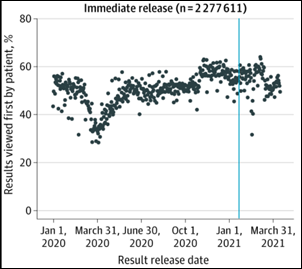
Vanderbilt University Medical Center finds that immediately releasing lab results to the patient portal, as required by the Cures Act, was associated with a doubling of the number of patient-to-clinician messages that were sent immediately afterward.

The percentage of patients that saw their results before their provider had reviewed them jumped from 10% to 40%.

The report didn’t investigate whether patient questions about their results drove the increased messaging.

VUMC delayed release of results to patients based on test sensitivity and complexity until January 2021, which it met Cures Act requirements.

The authors question whether the unintended consequences of immediately sending results to patients, such as patient wellbeing and clinician workload, outweigh the benefits. 


Reader Comments

From Dolla Bill: “Re: executive compensation. Obscene and pointless – you can only spend so much.” Business ambition is another ultimately pointless diversion in the continuum of birth to death since we all know that hearses don’t pull U-Hauls. We all strive in our own ways to earn “gone, but not forgotten” status even though the legacy we create – other than our children – usually fades away after one generation no matter what we leave behind.

From Periodically Panned: “Re: new health IT publications. Seen these? New HDM and something from Modern Healthcare.” Health Data Management has been resurrected as part of a South Carolina non-profit health collaborative, while Modern Healthcare owner Crain Communications has announced a “digital media brand” that rolls up some databases it bought via an acquisition this summer. I didn’t see anything on either website that hasn’t been amply covered elsewhere and most of their content would have been irrelevant to me personally, but it’s the opinion of a potential audience rather than mine that counts.

From HLTH on Wheels: “Re: HLTH21. What have readers said about the conference compared to HIMSS?” I haven’t heard from anyone who attended, but I’m interested as well, especially with regard to sponsors and the exhibit hall since those are what make or break a conference. Most of the social media comments I saw were from folks who focused on socializing or attending celebrity panel discussions for which in-person attendance seems to add little value over virtual viewing. Perhaps academically focused attendees could research the validity of the oft-repeated conference-goer claim that the networking alone makes in-person attendance worth it (they don’t usually add “to my employer, who is paying the cost.”)

From Rx Wrangler: “Re: Walmart and Surescripts. I heard that incorrectly barcoded medications caused medication reconciliation errors this past weekend, similar to incidents from 2014 in which special characters in a drug database caused prescriptions to be listed incorrectly. Have you heard anything?” I haven’t, but reports are welcome.

From Cricket: “Re: high-cost patients. See this Twitter thread from Jay Parkinson, MD, MPH.” I like it. Jay postulates that nearly all VCs are seeking investments that address the 5% of Americans that consume 50% of healthcare costs, but the reality is that improving their situation won’t move the needle much on overall costs because those people in the 5% fall into three groups:

  • Those who are chronically sick whose situation can be improved with interventions. That might reduce overall cost 3% at best.
  • Those who have an unpredictable incident, such as an accident, who will go back to being low spenders the next year.
  • Those who are dying expensively. It’s easy to predict who they are, but there’s little ROI to intervene because the health system is geared to take advantage of heroic Western medicine by making huge profits from their final months.

Webinars

October 28 (Thursday) 1 ET. “A New Streamlined Approach to Documentation and Problem List Management in Cerner Millennium.” Sponsor: Intelligent Medical Objects. Presenters: Deepak Pillai, MD, physician informaticist, IMO; David Arco, product manager, IMO; Nicole Douglas, senior product marketing manager, IMO. IMO and Cerner announce the launch of the IMO Core CSmart app, an in-workflow offering to improve clinical documentation and problem list management in Cerner Millennium. The presenters will review the challenges and bottlenecks of clinical documentation and problem list management, discuss how streamlined workflows within Cerner Millennium can reduce clinician HIT burden, and demonstrate how IMO Core CSmart can help clinicians document with ease and specificity, improve HCC coding, and make problem lists more relevant. Additional sessions will be offered on November 17 and December 1.

Previous webinars are on our YouTube channel. Contact Lorre to present your own.


Acquisitions, Funding, Business, and Stock

Hackensack Meridian Health becomes one of the first health systems to use Google Workspace and Chrome OS devices (3,000 Chromebooks and Chromeboxes running Citrix) across its clinical and business environment. The health system will also deploy Google Cloud’s AI/ML solutions for screening and disease detection.

AI Visualize sues Nuance and Mach7 Technologies, demanding royalties for what the company says is infringement on its image-sharing technology patents. AI Visualize has a minimal web presence and seems to employ mostly patent attorneys.

Venture funds operated by investment firm Carlyle invest $430 million to take a majority position in clinical trials management and analytics platform vendor Saama.
image

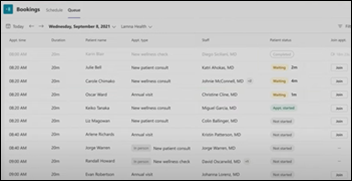
Microsoft announces enhancements to Cloud for Healthcare:

  • Microsoft Forms has been integrated into Bookings so that schedulers can collecting patient information while scheduling virtual visits.
  • Microsoft Teams adds a Waiting Room so that virtual visit patients can receive messages and notifications providers can send from their queue view.
  • Providers using Cerner PowerChart can launch virtual visits from the patient portal or SMS with no patient app download required. Multi-participant virtual visits will also be supported.

Sales

  • In the UK, NHS Wales chooses Australia-based Citadel Health’s Evolution VLab software for pathology, replacing three separate systems that manage 35 million tests each year.
  • Blue Shield of California will move toward real-time provider payments using AI/ML tools from Google Cloud.
  • Pharmacy benefits management company Vivid Clear Rx chooses Banjo Health’s prior authorization management solution.

People

image

Hospital medical equipment tracking system vendor Cohealo hires Tom Cady (Kareo) as SVP/COO.


Announcements and Implementations

An InterSystems-sponsored study finds that 80% of surveyed health system executives don’t trust the data they use to make decisions. Half of the respondents say that lack of data integration and interoperability is the biggest barrier to achieving their strategic data analytics priorities.

The Vaccine Credential Initiative and The Commons Project will hold a webinar next week on using SMART Health Cards as a digital vaccination certificate that includes well-known speakers such as Andy Slavitt, John Halamka, Micky Tripathi, and Aneesh Chopra, 


Government and Politics

A federal court rules that the insurer for HIMSS20 has to cover the organization’s settlement with exhibitors of the cancelled conference.
image

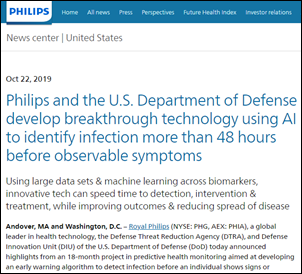
The Department of Defense’s program to use smart watches and rings to predict COVID-19 infections ends, with its former program manager blaming DoD’s sluggish innovation processes. A team that included Philips Healthcare ported a previously developed algorithm that mined EHR data to predict illness to commercially available wearables as a “check engine light” indication that something unusual is happening. The program manager says the big problem was that DoD needs to categorize projects to determine which regulations apply (is it a weapon, a platform, or a system?) and it could not decide if the tool was a medical device.


Sponsor Updates

  • EVisit launches the Change Healthcare Podcast featuring co-founder and CEO Bret Larsen and co-founder and CTO Miles Romney.
  • The Surescripts White Coat Award recognizes a dozen healthcare leaders for improvements in e-prescription accuracy and patient safety.
  • Everbridge launches its Unlocking Resilience Podcast with an episode featuring William Shatner, “Resilience Makes the Leader.”
  • Vyne Medical publishes a podcast titled “Connecting with Today’s Consumer: A Closer Look into the State of Healthcare Consumerism.”
  • Jvion publishes a new whitepaper, “Smart Healthcare: The AI-Enabled Patient and Population Healthcare Journey.”
  • Lyniate names Shelley Wehmeyer (Cerner) director of product marketing.
  • Meditech congratulates customer Kingman Regional Medical Center (AZ) for on receiving Health Current’s 2021 Health IT Innovation Award.
  • Nuance will present at the CHIME Fall Forum October 27-30 in San Diego.

Blog Posts


Contacts

Mr. H, Lorre, Jenn, Dr. Jayne.
Get HIStalk updates.
Send news or rumors.
Contact us.

125x125_2nd_Circle

Comments Off on News 10/22/21

EPtalk by Dr. Jayne 10/21/21

October 21, 2021 Dr. Jayne Comments Off on EPtalk by Dr. Jayne 10/21/21

clip_image002 

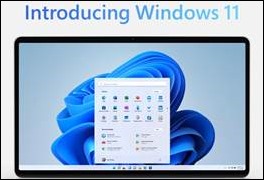
There has been lots of chatter with my IT friends around the Windows 11 rollout. Most of the large organizations I’ve worked with over the years would rather risk letting their operating systems become so dated that they’re almost not supported rather than consider being on the cutting edge of a new release. I worked with several people who I thought would need to have Windows XP pried out of their cold dead hands, but somehow everyone survived their upgrades. From a consumer standpoint, several of my physician friends have run the “compatibility check” from Windows and are concerned that they may not be able to support the new release, but it’s usually due to requirements that they can meet but that aren’t enabled.

Apple is preparing to move AirPods into the medical device space. Temperature and posture sensors are on the horizon, as well as the ability to use them to augment hearing. Using them to check temperature in the ear isn’t a tremendous leap, but I’m less convinced about the posture sensor’s proposed slouch-detecting capabilities. AirPods Pro already have the “conversation boost” functionality, but it’s not clear whether they’re going to expand on this or offer something else for hearing loss. Having been part of plenty of dinner table conversations where dead hearing aid batteries have been a factor, I’m not sure how that’s going to play for Apple either.

As technology becomes smaller and has the potential to bring new diagnostic modalities to the bedside, it becomes more important to evaluate whether they’re really better than the status quo. There are some big discussions going on regarding whether robotic-assisted surgeries really deliver better outcomes than non-assisted procedures, and I’ve seen some pretty heated debates on the matter in the physician lounge. I enjoyed reading this article in JAMA Internal Medicine regarding so-called point-of-care ultrasound (POCUS). The headline sums it up: “Visually Satisfying Medicine or Evidence-Based Medicine?” Over the last several years, primary care journals have had plenty of editorials and discussions about the technology. It’s pretty slick, whether you’re using a dedicated device or something that hooks into your phone. But it requires training to interpret the images and seems to be best used by people who have the opportunity to use it frequently, rather than by individuals who might use it sporadically. The authors note that although “it has become the standard of care for most common bedside procedures” that “its use for diagnostic purposes is not as firmly grounded in evidence demonstrating net benefit on patient outcomes.”

They point out some key challenges for POCUS – that its use is somewhat informal and that images may not be accessible for later review. There is also a lack of clinical trials that have looked at key clinical outcomes such as length of stay or complications from a missed diagnosis. The variability between users is also a concern. They authors call for additional studies as well as the ability to capture images for later review. This may be a field where artificial intelligence might come into play to help with those retrospective reviews, flagging studies with concerning findings for immediate review as well as creating a quality assurance model for overall use. I always enjoy a scholarly article that has a little flair, and the description of POCUS use as “viscerally satisfying” is on track both for accuracy and in making my inner reader smile.

I had virtual drinks with a friend who works in the accountable care organization space and asked her what she thought about this piece regarding the transition to eCQM reporting. She agreed that the process is painful and shared some of her own experiences with the process. CMS is apparently listening and has pushed back the timeline for the transition, but it sounds like some of the EHR vendors might not be as on top of things as they need to be for ACO leaders to feel comfortable. It’s important to remember that ACOs might be dealing with data from dozens of disparate EHR platforms and making sure that the measure specifications are consistent is a significant challenge.

The article calls out a key challenge of electronic quality reporting, that users have to enter the data in the fields where the reports are looking for the reports to work. If there is a lot of dictation or speech recognition documentation being performed at the expense of discrete data entry, numbers aren’t going to look very good. Early in my consulting career, I worked with a number of health systems on their Meaningful Use efforts and it’s more difficult to change end user behavior than you might expect. My more successful clients baked discrete data entry into their physician compensation programs, which as you might expect led to a rapid transition.

JD Power released the results of its 2021 US Telehealth Satisfaction Study. Of the 4,600 patients surveyed, Teladoc was ranked number one for the time period from June 2020 to July 2021. The survey ranked providers based on customer satisfaction, consultation, enrollment, and billing / payment categories. Some interesting tidbits: although telehealth usage was consistent across generations, the highest use was among Generation Y (born 1977 to 1994) and the “Pre-Boomers” born before 1946. Top reasons for use include convenience, timeliness of care, and safety. Top concerns noted include difficulty accessing care and inconsistent service, which given the pandemic and its impact, I’m not surprised. Rounding out the top five, in order: Teladoc, MDLive, MyTelemedicine, Doctor on Demand, and LiveHealth.

Researchers at Stanford and UNC are looking at a wearable medical device that can deliver vaccines. The hope is that it will make it easier to distribute vaccines in underserved areas, but I’m sure there are plenty of people that will still see it as a product of a vast conspiracy. The 3D-printed vaccine patch works without the traditional injection and is said to also work more effectively than current delivery techniques. Using microneedles, the vaccine is delivered intradermally (into skin) rather than into muscle, creating a significant immune response. Part of the magic is that the 3D printing method allows creation of microneedles of controlled geometries which are difficult to manufacture via other means, which leads to greater retention of the vaccine within the skin. I’m a huge fan of prevention, so I can’t wait to see what they come up with next.

Fall is here in my world, with daily temperatures swinging 50 degrees during the course of a 24-hour period. I’m heading south for a little bit of sunshine before I have to deal with freezing temperatures and the potential of increasing COVID-19 transmission as people move their activities indoors. It will be good to get a little break because my latest project has me spinning in circles, but in a good way.

What are you doing to prepare for fall and ultimately winter? Leave a comment or email me.

Email Dr. Jayne.

Comments Off on EPtalk by Dr. Jayne 10/21/21

Morning Headlines 10/21/21

October 20, 2021 Headlines Comments Off on Morning Headlines 10/21/21

GoCheck Raises $10 Million in New Funding to Protect More Children from Vision Impairment and Blindness

Digital vision screening technology vendor GoCheck raises $10 million in a funding round led by Hatteras Venture Partners and Pisgah Fund.

Bardavon Health Innovations Secures $90 Million in Series C Funding to Advance True MSK Technology Platform Beyond Workers’ Compensation Care

Worker compensation technology company Bardavon Health Innovations raises $90 million in a Series C funding round.

Marathon Health Unveils First-of-its-Kind Virtual Primary Healthcare

Occupational healthcare company Marathon Health launches a virtual primary care service for employees that includes telemedicine, remote patient monitoring, and care navigation and coordination.

Comments Off on Morning Headlines 10/21/21

Morning Headlines 10/20/21

October 19, 2021 Headlines Comments Off on Morning Headlines 10/20/21

General Catalyst and Jefferson Health Announce Innovation Partnership

General Catalyst and Jefferson Health form an innovation partnership in which the health system will use technologies from the venture capital firm’s Health Assurance Network of companies.

Insiteflow Raises $2.3M to Accelerate Electronic Healthcare Record (EHR) Workflow Interoperability

Insiteflow will use a $2.3 million investment to further develop integration software that enhances the interoperability between third-party apps and EHRs.

TripleBlind Lands $24 Million in Series A Funding Led by General Catalyst and Mayo Clinic, in an Oversubscribed Round

Privacy-enforcing data sharing platform vendor TripleBlind raises $24 million in a Series A funding round that includes the participation of Mayo Clinic.

Comments Off on Morning Headlines 10/20/21

News 10/20/21

October 19, 2021 News Comments Off on News 10/20/21

Top News

image

General Catalyst and Jefferson Health form an innovation partnership in which the health system will use technologies from the venture capital firm’s Health Assurance Network of companies.

GC’s Health Assurance Network portfolio includes Commure, Tendo, Transcarent, and Olive.

The announcement suggests that Jefferson will de-emphasize the “hundreds of technology solutions who are vying for a piece of the hospital system’s growing technology budget” and instead will give preference to the General Catalyst-backed vendors.

Retiring Jefferson Health CEO Stephen Klasko, MD, MBA co-wrote “Unhealthcare: A Health Assurance Manifesto” with General Catalyst managing partner and billionaire Hemant Taneja last year.


Reader Comments

From Yuma Dew: “Re: having a PCP who knows you. It seems more important that they know your data.” I agree that “knowing about me” is a lot more important and achievable than “knowing me.” One of the most important clinician functions should be contributing and consuming patient data across providers, even though patients have low expectations and payers don’t seem to care. Thoughts:

  • My direct primary care doctor “knows me” because of the nature of that kind of relationship, but I doubt that has much impact on my health. She still documents the elements she needs to remember.
  • I don’t have records from other providers to review, but if I did, I should expect (and prepare to be disappointed) that they will be available if needed.
  • The provider should review my documentation before my visit, whether in-person or virtual, so they aren’t wasting our limited time together. Taking a 10-second glance at a printout before knocking on the exam room door is not ideal.
  • EHRs aren’t always ideal at allowing providers to tag those parts of a patient’s record that they find especially important or relevant.
  • The provider should document whatever is important to both of us even if it is in narrative form. My perception of symptoms her to-do items for down the road are as important as recording conveniently numeric lab or vital signs data. For that reason, Microsoft Word with speech-to-text might be a better documentation platform than an EHR if it didn’t have to generate bills.
  • We should all choose providers who value our data, maintain it rigorously, and share it with us so we can verify its accuracy and understand their thought process. That data should paint a concise picture for another provider who receives our records via interoperability.
  • Every provider who is being paid to work on the patient’s behalf — specialist, telehealth, therapist, pharmacy, urgent care, etc. — should be held accountable for documenting their work into the patient’s “permanent record” that at this stage of interoperability is mostly a pipe dream. By definition, they are documenting what is important to them, so that same information would likely be important to other providers and thus to the patient. Why should we expect less?

Webinars

October 28 (Thursday) 1 ET. “A New Streamlined Approach to Documentation and Problem List Management in Cerner Millennium.” Sponsor: Intelligent Medical Objects. Presenters: Deepak Pillai, MD, physician informaticist, IMO; David Arco, product manager, IMO; Nicole Douglas, senior product marketing manager, IMO. IMO and Cerner announce the launch of the IMO Core CSmart app, an in-workflow offering to improve clinical documentation and problem list management in Cerner Millennium. The presenters will review the challenges and bottlenecks of clinical documentation and problem list management, discuss how streamlined workflows within Cerner Millennium can reduce clinician HIT burden, and demonstrate how IMO Core CSmart can help clinicians document with ease and specificity, improve HCC coding, and make problem lists more relevant. Additional sessions will be offered on November 17 and December 1.

Previous webinars are on our YouTube channel. Contact Lorre to present your own.


Acquisitions, Funding, Business, and Stock

image

Israel-based Navina, whose AI model turns point-of-care data into a “Patient Portrait” for PCPs, raises $15 million in a Series A funding round. The co-founders worked in Israel’s military intelligence AI labs.

Privacy-enforcing data sharing platform vendor TripleBlind raises $24 million in a Series A funding round that includes the participation of Mayo Clinic.

Trinity Health (MI) invests $1 million in digital prescription referral vendor Xealth, increasing its Series B funding round to $25 million.

image

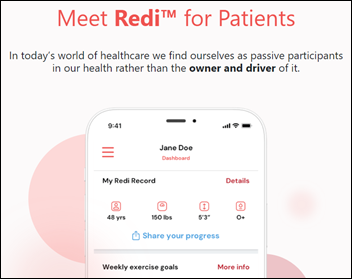
Redi.Health raises $1.3 million in seed funding to develop technologies and services for chronic disease management. Offerings currently include a patient-facing app with medication management, symptom tracker, educational content, and PHR. The startup offers pharma support companies the ability to integrate their services with the app. Co-founder and CEO Luke Buchanan was previously with CoverMyMeds, as was co-founder and Head of Business Development Nate Rehm.

image

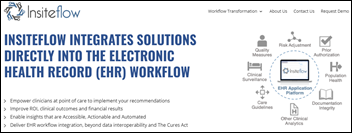
Insiteflow raises $2.3 million. The company has developed integration software to enhance the interoperability between third-party apps and EHRs.

Health insurer software vendor HealthEdge will acquire Wellframe, which offers digital health management solutions for health plans.


Sales

  • UnityPoint Health (IA) will work with B.well Connected Health to offer patients access to all of its digital health tools in a single app.

People

image

Fivos hires Susan Andrise (Global Payments) as CFO.

image

Availity names former US Navy SEAL Jim McNary (Consortium Health Plans) COO.

image

Remote patient monitoring platform vendor Veta Health hires James Sutcliffe (DayToDay Health) as CEO.


Announcements and Implementations

InnovaQor subsidiary Health Technology Solutions announces GA of virtual CIO services focused on IT infrastructure security and management.

Grand Rounds Health and Doctor on Demand rebrand as Included Health, the name of the healthcare navigation and care concierge vendor the merged companies acquired several months ago.


Other

image

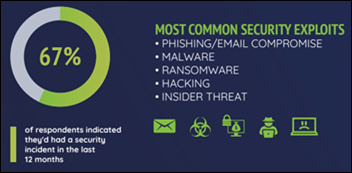
A CHIME survey of member CISOs finds that nearly 50% have experienced a phishing email or compromising business email at their organizations within the last year, while nearly 30% have suffered through an EHR or system outage. Fifteen percent have experienced a patient safety incident related to a cyber event, and 10% have had to divert patients as a result. Top areas of needed cybersecurity assistance include grants and federal assistance, and on-site guidance and expertise from cybersecurity experts associated with regional extension centers.


Sponsor Updates

  • Change Healthcare releases a new podcast, “Cost Transparency: Driving Better, More Informed Care Decisions.”
  • CHIME releases a new Digital Health Leaders Podcast featuring John Kravitz, chairman of the CHIME Board of Trustees and CIO of Geisinger Health, and Marc Potash, founder and CEO of Certify Global.
  • Clearwater Chief Risk Officer and SVP of Consulting Services Jon Moore will present at The Healthcare MSO Conference October 22 in
  • Dimensional Insight announces it has been named a top performer in KLAS Research’s “Data and Analytics Platforms 2021” report.
  • Tegria publishes a new case study featuring Engage, “EHR Implementation Project Transcends Multiple Natural Disasters.”
  • EZDI will exhibit at the ACDIS Conference October 25-28 in Dallas.
  • Healthcare Triangle advances to Google Cloud Premier Partner status based on its success in building, deploying, and managing Google Cloud solutions for healthcare and life sciences organizations

Blog Posts


Contacts

Mr. H, Lorre, Jenn, Dr. Jayne.
Get HIStalk updates.
Send news or rumors.
Contact us.
125x125_2nd_Circle

Comments Off on News 10/20/21

Morning Headlines 10/19/21

October 18, 2021 Headlines Comments Off on Morning Headlines 10/19/21

Grand Rounds Health and Doctor On Demand Rebrand as Included Health

Grand Rounds Health and Doctor on Demand rebrand as Included Health, the name of the healthcare navigation and care concierge vendor the newly merged companies acquired several months ago.

West Monroe eyes platform expansion after MSD deal

A strategic investment from MSD Partners will enable digital consulting firm West Monroe to expand in the US and abroad, beginning with the opening of a new London office next year.

CoverMyMeds, Beam vets found startup taking on chronic disease management

Redi.Health raises $1.3 million in seed funding to develop technologies and services for chronic disease management.

Comments Off on Morning Headlines 10/19/21

Curbside Consult with Dr. Jayne 10/18/21

October 18, 2021 Dr. Jayne 5 Comments

I was feeling a bit bummed this weekend, as I couldn’t attend the HLTH conference due to a previous commitment. I do a little dabbling in amateur radio and had been asked by a local radio club to be a station operator for the World Scout Organization’s “Jamboree on the Air” event. It’s held the same weekend in October every year and is a chance for young people around the world to talk to each other via radio (an internet component was added in 1995). There is always a big contingent from Germany on the air and it’s fun to try to have your scouts reach someone from every state as well as reaching international scouts. Women are typically a small percentage of any amateur radio gathering and I think it’s important for girls to have role models in tech hobbies, so I packed my gear and headed out.

Usually there is a lot of time for chitchat as you’re assembling antennas, staking them out, running cable, and figuring out how things are going to work when you’re trying to operate from a location you’ve never been. My team for the event included a search and rescue specialist, a retired Navy signal operator, an Eagle Scout, and a retired electrical engineer. Whenever people find out I’m a physician, they always ask where I practice, which can be tricky to explain based on what I do. When I mentioned that I’m only practicing virtually right now, the electrical engineer’s ears perked up. It turns out he’s got a little broader experience than electrical engineering. After receiving his degree in the 1960s, he started doing work in the then relatively new arena of biomedical engineering, specializing in the design of technology for the practice of nuclear medicine, but also in expanding the use of computers in healthcare.

Based on that, I figured I could go a little further and tell him that I spend the majority of my time working with electronic health records and emerging technologies such as chatbots, artificial intelligence, etc. and he was very interested. He asked if I had ever heard of “a guy named Larry Weed” and I said of course. Apparently my new radio friend had done some collaboration with him on his problem-knowledge coupler software in the 1980s and had some great firsthand stories about how that technology was received by physicians (not as well as it might have been) and how it evolved. It’s always interesting to learn from people who worked with the founders of our specialty and what they were like not only as innovators but as people. Had I gone to the HLTH conference, I certainly would have missed out on my own healthcare IT oral history project.

The day ended up being a lot of fun and hopefully we were able to get some young people interested in the art of radio. They enjoyed hearing how amateur radio operators can help in natural disasters and other emergencies, and they really loved learning how to craft Morse Code messages using some vintage code keys. Fortunately, conditions were such that they were able to chat with scouts on the radio from coast to coast, but the parents’ eyes were widest when they saw our teenage radio operator having a live Morse Code conversation with someone 2,000 miles away.

Online, they connected with scouts from Iceland, Taiwan, Finland, Japan, Cyprus, the UK, Serbia, and more. One of the highlights of the day was a radio “fox hunt” where the scouts had to use a directional antenna to find a hidden transmitter more than a quarter of a mile away, especially since the reward for successfully finding the fox involved chocolate chip cookies.

In addition to learning about Dr. Weed and his efforts, I picked up a couple of other tidbits along the way. The best radio tip was how to make an easily assembled and effective antenna mast out of a fiberglass paint roller extension pole, and needless to say I have since added one to my collection. We’ll have to see if the Homeowners Association has anything to say when I test it on my front lawn.

Back to HLTH, I’ve been getting some reports from the field, and it sounds like there is some good networking going on. Telehealth seems to be a hot topic, along with remote patient monitoring. I haven’t heard any grumbling about HLTH’s health and safety protocols, which involve not only proof of COVID-19 vaccination, but also a negative test within 72 hours of picking up your attendee badge at the conference. For those unable to get a test at an approved provider, onsite testing is available. Reading through the documentation on the HLTH website, the conference is picking up the tab for the onsite pre-event testing. It notes that optional testing will be available at no cost for anyone who wants to test throughout the event.

In the details, however, it specifies that attendees must have active US health insurance coverage “to receive free onsite services,” which tells me they’re not actually free — there just isn’t a patient payment required. We’ll all be paying for those “free” COVID tests that everyone is getting so they can attend events through higher insurance premiums and increased cost-sharing to the patient. As of this weekend, one of my local sports teams is requiring proof of vaccination or a timely negative test prior to attending events, and local urgent cares are already feeling the pressure.

Tuesday night is the HLTH Foundation Gala, and I hope people will share reports about the evening as well as photos of any sassy shoes or bedazzled masks they may encounter. I’m sure a lot of people have missed being able to dress up and go to events like these, so I’m betting at least one person will go all-out. At $250 per ticket, I hope the dinner is good and the entertainment is engaging. If not, the cocktails will certainly help. Maybe I’ll bust out some high heels and a martini glass and attend in spirit from my living room.

Are you at HLTH, and what’s your take on the event? Leave a comment or email me.

Email Dr. Jayne.

Morning Headlines 10/18/21

October 17, 2021 Headlines Comments Off on Morning Headlines 10/18/21

Walmart Selects Transcarent To Provide Go-to-Market Solution for Self-Insured Employers

Transcarent will offer Walmart’s pharmacy services to its self-insured employer customers.

West Monroe announces strategic investment by MSD Partners

MSD Partners will make a strategic investment in digital consulting firm West Monroe.

Right on Cue: NBA finds high-tech option for virus testing

The NBA will allow its players to self-test for COVID-19 via Cue Health, which provides a smartphone-connected nasal swab reader to provide results in 20 minutes.

Comments Off on Morning Headlines 10/18/21

Monday Morning Update 10/18/21

October 17, 2021 News Comments Off on Monday Morning Update 10/18/21

Top News

image

Transcarent will offer Walmart’s pharmacy services to its self-insured employer customers.


Reader Comments

From Slattery: “Re: digital health. Are prescription delivery services really digital health companies or technology disruptors?” Startup folks have been motivated by investors to declare that just about any healthcare business that has a website and app is “digital,” hoping to be anointed as the next high-valuation Facebook or Salesforce. Examples: mail order pharmacies, Medicare Advantage insurers, vanity prescription drug companies, weight loss companies, primary care chains that have developed a basic app, online counseling services, and fitness tracker manufacturers. Health IT websites and publications gush over their latest funding rounds and acquisitions without asking questions such as, (a) are they really doing anything new? (b) can they can improve outcomes or cost? (c) does their incidental use of technology really make them a tech company that can scale with low overhead? and, (d) do they offer a sustainable competitive advantage with a high barrier to entry over the companies that are already serving their potential customers? I also look hard at who is paying for their services and whether those buyers are likely to continue doing so given that companies live or die by recurring revenue that must be predictably extracted from fickle markets. There’s also the telehealth-highlighted tension between giving consumers what they want versus what the science says is best for them in a a transactional environment where they won’t likely see the patient again anyway. Healthcare is different because it’s horrendously expensive, notoriously consumer-indifferent, and loaded with bureaucratic paper-pushers, but odds are slim that a couple of kids and their slick app will take money away from the incumbents. Maybe worst of all is that companies will profit by catering to the most financially capable users while not only failing to make the underlying health system better, but quite possibly making it even worse than it already is for those without those means.

From Tubeless Tired: “Re: blood collection tubes. Our hospital has been told that we can get just half our normal supply of blue top, pink top, and light green top tubes over the next several months. We are asking providers to evaluate the clinical need for tests, evaluate and reduce when possible the frequency of standing orders such as PT/INR, and only draw a tube when actual testing has been ordered instead of as part of any hold request.” This is probably a useful heads-up for informatics teams that will probably need to make system changes to preserve blood tube supplies.


HIStalk Announcements and Requests

image

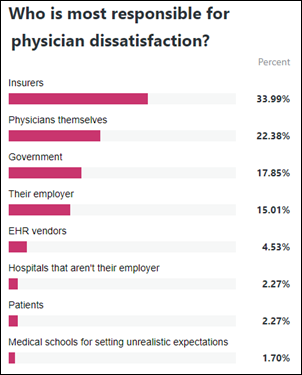
It’s not EHR vendors that are making doctors unhappy, poll respondents say. Good comments: HITPM says doctors are trained and paid to treat acute illness reactively, so the high-earning specialists who swoop in and out of a patient’s life aren’t the ones complaining – it’s the lesser-compensated physicians who help keep people away from those specialists who aren’t happy. IANAL ponders whether doctors who envy their overseas counterparts do so selectively in forgetting that along with the absence of administrative overhead and price-gouging in those countries comes lifetime earnings that could be half or three-quarters less. IANAL also adds that doctors themselves spawned the role of insurers and their overhead by pushing to keep physician compensation private.

New poll to your right or here: In your most recent physician or hospital encounter, did your provider review your records from a different organization?


Webinars

October 28 (Thursday) 1 ET. “A New Streamlined Approach to Documentation and Problem List Management in Cerner Millennium.” Sponsor: Intelligent Medical Objects. Presenters: Deepak Pillai, MD, physician informaticist, IMO; David Arco, product manager, IMO; Nicole Douglas, senior product marketing manager, IMO. IMO and Cerner announce the launch of the IMO Core CSmart app, an in-workflow offering to improve clinical documentation and problem list management in Cerner Millennium. The presenters will review the challenges and bottlenecks of clinical documentation and problem list management, discuss how streamlined workflows within Cerner Millennium can reduce clinician HIT burden, and demonstrate how IMO Core CSmart can help clinicians document with ease and specificity, improve HCC coding, and make problem lists more relevant. Additional sessions will be offered on November 17 and December 1.

Previous webinars are on our YouTube channel. Contact Lorre to present your own.


Acquisitions, Funding, Business, and Stock

image

MSD Partners will make a strategic investment in digital consulting firm West Monroe.


Sales

  • Stillwater Medical Center (OK) will implement system integration from Summit Healthcare and patient identity modernization from NextGate to provide a simplified and interconnected health record.
  • Physicians Ambulance Service (OH) chooses Spok Go for communication between ambulance staff and hospitals during critical patient transports.
  • In Switzerland, University Hospital Basel will implement Sectra’s radiology module.

Announcements and Implementations

A Well Health survey of frontline clinical support staff finds that most are burned out by communicating with patients on the telephone, which has worsened during the pandemic as those employees try to coordinate complicated vaccination appointments and to support virtual care. 

image

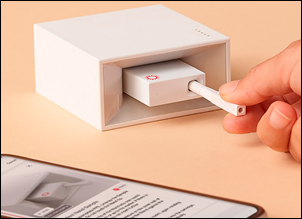
The NBA will allow its players to self-test for COVID-19 via Cue Health, which provides a smartphone-connected nasal swab reader to provide results in 20 minutes. Only unvaccinated players – about one player per team – will be required to take the test on practice, meeting, and travel days, while all players will still need to pass a PCR test right before a game.

In Abu Dhabi, all 59 public and private hospitals, 1,100 clinics, and 380 pharmacies have connected to the Malaffi HIE as mandated by the emirate’s Department of Health.

A Waystar survey of health system executives finds that 64% of organizations plan to implement robotic process automation and/or AI in their revenue cycle in the next three years, most often to improve financial performance.


Other

image

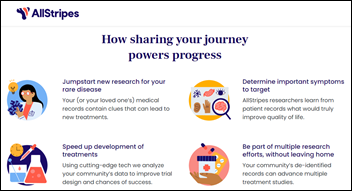
A pharma article describes the benefits of using real-world data (such as from EHRs and claims) to develop drugs for rare diseases: (a) patients are dispersed geographically and can’t be easily found and studied otherwise; (b) FDA hasn’t developed study endpoints for conditions that have no approved treatments; and (c) small numbers of patients and doctors mean that symptoms, diagnosis, and progression are hard to understand. The author mentions AllStripes, which uses EHR data (including unstructured physician and encounter notes), imaging data, and genetic testing results. The company recruits individual patients to participate.

Virtual-first health insurance plans cost less and are convenient, but online visits aren’t ideal for first encounters or for detecting new problems. The KHN article also observer that telemedicine doctors are often work-from-home contractors who are paid based on patient volumes and who often don’t have access to medical records from other providers.

Fascinating testimony from the trial of Theranos founder Elizabeth Holmes: the company’s second lab director had zero lab experience or credentials – he was the dermatologist of COO Sunny Balwani. Sunil Dhawan, MD, who replaced the previous (and qualified) director who quit over the company’s questionable technology, testified that he was paid $5,000 per month to sign whatever Balwani sent him, having never met any company employee, patient, or clinician and without knowing anything about its technology.


Sponsor Updates

  • OneMedNet will provide imaging platform vendor Arterys with real-world data to aid in the development, validation, and regulatory approval of its solutions.
  • NetSmart will exhibit at the Fall Conference October 19-21 in Memphis, TN.
  • Pure Storage announces it has been positioned by Gartner as a Leader in the Magic Quadrant for Primary Storage.
  • The Philadelphia Business Journal names Quil Health CEO Carina Edwards a 2021 Woman of Distinction.
  • Redox adds former MuleSoft executive Simon Parmett to its Board of Directors.
  • Goldman Sachs recognizes Talkdesk founder and CEO Tiago Paiva as one of the 100 Most Intriguing Entrepreneurs of 2021 at its Builders + Innovators Summit.
  • Tegria partners with the Seattle Kraken’s One Roof Foundation to support South Park community health initiatives.
  • Vocera publishes a new case study, “MercyOne Elkader Medical Center – Unifying Staff Through COVID-19.”

Blog Posts


Contacts

Mr. H, Lorre, Jenn, Dr. Jayne.
Get HIStalk updates.
Send news or rumors.
Contact us.

125x125_2nd_Circle

Comments Off on Monday Morning Update 10/18/21

Weekender 10/15/21

October 15, 2021 Weekender 3 Comments

weekender 


Weekly News Recap

  • Intelerad acquires Ambra.
  • Healthcare Triangle shares drop after IPO.
  • GetWellNetwork renames itself to Get Well.
  • A security researcher documents widespread security vulnerabilities in FHIR APIs.
  • Best Buy announces its planned acquisition of Current Health.
  • Cerner President and CEO David Feinberg, MD, MBA kicks off the virtual Cerner Health Conference with a call to “eliminate the noise in healthcare.”
  • SSM Health outsources services, including digital transformation and RCM, to Optum and will send 2,000 employees to the company.
  • The VA contracts for a year-long cost review of its Cerner implementation.

Best Reader Comments

The NPfIT attempted to build a system rather than buy one. My pet theory is that this is part of why the NHS failed with NPfIT. Having an existing system to implement automatically puts all sorts of conceptual stakes in the ground. You not only get the What will this system do, you also get the How and the Why laid out for you. Ultimately, this is why purchasing third-party software eclipsed homegrown systems. Well, that and the ability to spread the development costs around. (Brian Too)

I believe this announcement [of the VA’s 12-month Cerner implementation cost review] still requires far more of an explanation than was given. I think an explanation can be given that protects the identities and dignity of VA employees, but also makes it clear that changes are underway. This organization still serves a gigantic public need for a very valued constituency. Our veterans really do deserve a lifetime of strong support from the VA. I want to recognize that there is a lot of good work the VA does in fulfilling that mission. This project sounds like a corner where the VA may not be living its values. (Accountabilibuddy)

UHC is amassing a huge presence in healthcare (data, contracted patient lives, POC resources, etc), where they can use their position to control cost and access, much in the same way people fear digital companies like Google having access to large amounts of healthcare data. Your CIO audience should be concerned about the motives of these vendors, short and long term. They are in it to make money, many times at the expense of patients. (Susanna Stevens)

I don’t want to diminish [Seve] Job’s legacy in tech, because it is truly massive. That said, I think his early death is a good parable for Apple (and others) attempts to break into healthcare technology. Steve Jobs died because he thought he was smarter than oncologists who had studied cancer for years, and appeared to think he was smarter than the healthcare delivery system as a whole. Had Jobs pursued traditional treatment as soon as his cancer was detected, he would very likely be alive. He should be a very real warning to every startup and VC that thinks they are smarter than the people who have actually been doing it for their whole career. (Elizabeth H. H. Holmes)


Watercooler Talk Tidbits

image

Readers funded the Donors Choose teacher grant request of Ms. R in Oklahoma, who asked for a tripod stand and microphone for conducting virtual classes. She reports, “I am beyond blessed to have people like you continue to believe in the importance in education even during difficult times. Teaching online is difficult as it is, but knowing I have wonderful people like you who are willing to go the extra mile warms my heart and gives me the energy to keep doing the best I can for my students. Thank you once again and may God bless you for your contribution to this wonderful project.”

In England, an NHS nurse is fired for refusing psychiatric help after losing her lawsuit against a hospital that she claimed was secretly hypnotizing her, which she says caused headaches, breathing difficulty, uncontrollable flatulence, and unspecified attacks on her private parts.

image

Harborview Medical Center (WA) nurse Guy Maddison, RN launches a podcast that interviews hospital workers about the challenges of caring for COVID patients. Maddison is also the bass player for Seattle cult grunge band Mudhoney.

image

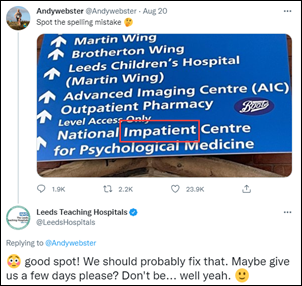
England’s Leeds Teaching Hospitals responds good naturedly to a sign’s spelling error that was called out on Twitter.


In Case You Missed It


Get Involved

Sponsor
Report a news item or rumor (anonymous or not)
Sign up for email updates
Connect on LinkedIn
Contact Mr. H

125x125_2nd_Circle

Morning Headlines 10/15/21

October 14, 2021 Headlines Comments Off on Morning Headlines 10/15/21

Intelerad and Ambra Health Combine to Form the Global Industry Leader in Cloud PACS and Enterprise Imaging

Imaging management platform vendor Intelerad acquires competitor Ambra Health for a reported $250 million.

Medsphere Systems Corporation Acquires Systeem Medical

Medsphere acquires Plano, TX-based Systeem Medical, which offers managed IT services to medical practices.

Digital health veterans launch virtual primary care clinic for patients with chronic disease

Marley Medical announces the launch of its membership-based virtual primary care clinic for patients with chronic conditions alongside a $9 million seed funding round.

Comments Off on Morning Headlines 10/15/21

News 10/15/21

October 14, 2021 News Comments Off on News 10/15/21

Top News

image

Imaging management platform vendor Intelerad acquires competitor Ambra Health, whose clients include Johns Hopkins Medicine, Memorial Hermann, and New York Presbyterian.

The reported price was $250 million, valuing the combined companies at nearly $2 billion.


HIStalk Announcements and Requests

image

Welcome to new HIStalk Platinum Sponsor EVisit. The Mesa, AZ-based company simplifies healthcare delivery with its market-leading virtual care platform, which works seamlessly across enterprise service lines and departments to improve outcomes, reduce costs, and boost revenue by enabling healthcare organizations to deliver faster, more accessible virtual care using their own network of providers across any specialty. With its distinct and leading position in the telehealth marketplace as a business-to-business company supported by a team of expert virtual care consultants, the flexible, end-to-end technology platform can match and virtualize any clinical workflow. Its system does not come with a competing provider network. EVisit is helping HCOs, including the largest systems in the US, innovate and succeed in today’s changing healthcare market. The company is the leader in the “Forrester Wave: Virtual Care Platforms in Digital Health, Q1 2021” and is a representative vendor in the “Gartner 2020 Market Guide for Virtual Care Solutions.” See them at HLTH21 next week. Thanks to EVisit for supporting HIStalk.

I found a brand new EVisit overview video on YouTube.


Webinars

October 28 (Thursday) 1 ET. “A New Streamlined Approach to Documentation and Problem List Management in Cerner Millennium.” Sponsor: Intelligent Medical Objects. Presenters: Deepak Pillai, MD, physician informaticist, IMO; David Arco, product manager, IMO; Nicole Douglas, senior product marketing manager, IMO. IMO and Cerner announce the launch of the IMO Core CSmart app, an in-workflow offering to improve clinical documentation and problem list management in Cerner Millennium. The presenters will review the challenges and bottlenecks of clinical documentation and problem list management, discuss how streamlined workflows within Cerner Millennium can reduce clinician HIT burden, and demonstrate how IMO Core CSmart can help clinicians document with ease and specificity, improve HCC coding, and make problem lists more relevant. Additional sessions will be offered on November 17 and December 1.

Previous webinars are on our YouTube channel. Contact Lorre to present your own.


Acquisitions, Funding, Business, and Stock

Shares in healthcare cloud and data technology vendor Healthcare Triangle closed down 10% on their first day of trading Wednesday. They shed another 2.5% at Thursday’s market close, valuing the company at $118 million.

Medsphere acquires Plano, TX-based Systeem Medical, which offers managed IT services to medical practices.

image

Walgreens invests another $5.2 billion in value-based primary care center operator VillageMD, increasing its stake to 63% and supporting the opening of 1,000 in-store practices by 2027.

image

GetWellNetwork renames itself to Get Well.


Sales

  • Atlantic Health System will implement Syft’s enterprise-wide supply chain management system.
  • In Netherlands, Amsterdam UMC chooses Infor CloudSuite Healthcare with the support of system integrator Avaap.
  • Virginia Cardiovascular Specialists selects HealthSnap’s remote patient monitoring platform for chronic condition management.

People

image

Industry long-timer Matthew Tuck, MBA (IRIS) joins NextGen Healthcare as VP of account management.

image

Medical equipment tracking software vendor Cohealo hires Tom Cady (Kareo) as COO.


Announcements and Implementations

image

Several big-name health systems form the Advanced Care at Home Coalition advocacy group, which will seek to extend COVID-driven payment coverage for at-home care permanently.

Nordic opens a security operations center at its Madison, WI headquarters.

Sentara Martha Jefferson Hospital (VA) goes live on enterprise imaging from Mach7 Technologies. Twelve Sentara hospitals have migrated 22.5 million studies from multiple PACS into Mach7’s vendor-neutral archive.

Bluestream Health announces Care Navigator, which offers patients a personalizable page and link from which they can initiate a app-free visit in which a dropped connection will reconnect automatically.

image

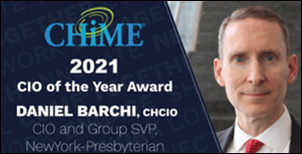
CHIME names Daniel Barchi, MEM, CIO of New York-Presbyterian Hospital, as its CIO of the Year.

image

GE Healthcare and Apprise Health Insights launch an HHS-funded real-time hospital occupancy solution in Oregon that will be implemented statewide next year. The system will be expanded beyond beds and ventilators to include specialty bed, PPE ED, and ECMO capacity as extracted from hospital EHRs.

A small study of the Epic Signal event log activity finds that ambulatory care network physicians who spent less time working in the EHR, especially in managing their inbox, were more likely to quit. The authors speculate that the counterintuitive findings may have been caused by physicians who were planning to leave and thus were winding down their patient activities or that EHR-proficient doctors may have been more marketable for new jobs. They also think that EHR workload or burnout is perhaps less directly related to turnover than other studies have suggested.

A Kyruus survey finds that consumers are increasingly using and preferring digital access channels to research providers, services, and care sites. Health plan websites have a strong role that is growing. Consumers place high value on understanding insurance acceptance, clinical expertise, reputation, and appointment availability and 40% of them prefer booking appointments online. 

image

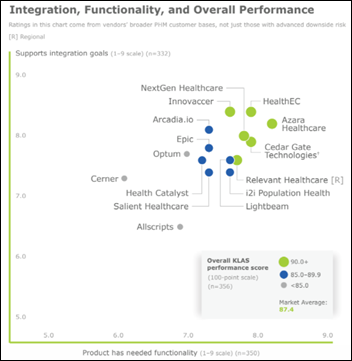
KLAS looks at health systems that manage downside risk contracts, which make up just 10% of the average system’s revenue. Successful organizations say that contract management is crucial and that interoperability with systems and payers needs to improve to apply advanced analytics. Vendors that primarily serve ambulatory providers – such as Azara Healthcare, HealthEC, and Cedar Gate Technologies – earner higher functionality ratings, while Innovaccer scores well for integration in larger organizations. Allscripts customers report frustration with interface management.


COVID-19

A highly anticipated study finds that it’s OK to mix and match initial vaccine doses and boosters, and in fact those people who initially received Johnson & Johnson’s vaccine initially mounted a stronger immune response when given a Moderna or Pfizer booster instead of another round of J&J.

FDA’s vaccine advisory committee unanimously recommends approving a half-dose booster for Moderna’s COVID-19 vaccine for the same high-risk groups for which Pfizer’s vaccine was cleared.

image

Time magazine describes how a cobbled-together chain of acquired pharmacies took advantage of loosened telehealth rules, millions in PPP loans, and demand for unproven COVID-19 treatments to make millions selling ivermectin and hydroxychloroquine at exorbitant prices via telemedicine visits, sometimes failing to deliver the expected medication to the desperate families of unvaccinated patients. Ravkoo, a “digital pharmacy” whose predecessor organization had several executives charged with running various opioid and kickback schemes, has not drawn scrutiny from the federal government even though customers – most of them referred by partner America’s Frontline Doctors — complain of price-gouging, lack of responsiveness, and threats about negative reviews.


Other

A security researcher finds that FHIR APIs are vulnerable to hacking, noting that a single log-in provided access to 4 million patient and clinician records. Every FHIR app tested gave access to the information of other people. EHR security was strong, but third-party data aggregators and mobile apps were full of security holes. The report calls for use of API security shielding solutions such as that offered by study sponsor Approov.

An EpicShare report describes how Seattle Children’s involves its patient family advisory councils in technology decisions. Parents provided input on its initial Epic and MyChart configuration for scheduling complex appointments, requesting prescription refills, and providing access to multiple caregivers. The council also tested its virtual visit access instructions for patients early in the pandemic. 


Sponsor Updates

  • Everbridge announces that its CareConverge telemedicine solution has won a 2021 Stratus Award from the Business Intelligence Group.
  • Black Book Research recognizes Fortified Health Security as a top outsourcing vendor for cybersecurity.
  • Jvion CMO John Frownfelter, MD will present a Tech Talk on AI and health equity at HLTH October 18 in Boston.
  • Kyruus publishes its fifth annual “Patient Access Journey Report.”
  • University of Michigan Health-West expands its adoption of Nuance’s Dragon Ambient EXperience across its entire primary care group.

Blog Posts


Contacts

Mr. H, Lorre, Jenn, Dr. Jayne.
Get HIStalk updates.
Send news or rumors.
Contact us.
125x125_2nd_Circle

Comments Off on News 10/15/21

EPtalk by Dr. Jayne 10/14/21

October 14, 2021 Dr. Jayne Comments Off on EPtalk by Dr. Jayne 10/14/21

As my readers know, I’m a big fan of prevention. I went this week for my regular dental visit and was interested to see a wireless headset sitting on a charger on the dental hygienist’s counter where she usually charts. She mentioned that they had installed a new system that would allow her to dictate her findings as she was performing my preliminary examination, so my informatics senses were tingling.

Looking closer as she was getting ready, I noticed that an Echo Dot had also been added to the exam room, so I figured it was part of the new solution. Unfortunately, the system failed to respond to the wake word after several tries. Since patient care was the priority and not troubleshooting the technology, she said she was going to go “old school” and key in the data manually as they had done in the past. It was disappointing not to be able to see their new toy in action, but I have to give them full credit in doing what was better for the patient (and likely for their schedule). As always, I scheduled my six-month follow up before I left, so hopefully the system will be better behaved in April.

Digital transformation has certainly impacted care delivery organizations, but it is also impacting those that support clinicians. The American Academy of Family Physicians announced last week that they are no longer requiring a certain number of live Continuing Medical Education (CME) hours for physicians to maintain membership. In the past, physicians had to report 25 hours of live CME every three years. Reductions in the availability of live meetings due to the COVID-19 pandemic impacted the ability of physicians to claim these credits, leading initially to the AAFP granting extensions on the time needed to obtain the hours.

However, AAFP also realized that the definition of “live” has become more fluid in the digital world. Rather than deal with the complexity of defining whether “live” means “in person” versus “virtual” versus “livestream” or something else, they’re eliminating the category altogether in the name of allowing active members “to pick the learning formats that best suit their needs and preferences.” Active members will still need to report 150 hours of CME every three years and half must have the AAFP Prescribed credit designation, so we’re not entirely to the point where we have total flexibility in how we obtain our CME. The response in the comments section was overwhelmingly positive, so kudos to AAFP for helping make physicians’ lives at least a tiny bit less complicated.

Speaking of blurred lines between in-person interactions and other modalities, I enjoyed learning more about what Cleveland Clinic is doing at its Indian River Hospital in Florida. As part of a new program, patients are being “seen” by mental health providers during emergency department visits, an approach that not only reduces the time for patients to receive services, but is improving quality. Psychiatric consultations are being seen in less than an hour versus the 24 hours that could occur previously. Often, treating psychiatric concerns in the emergency setting can be a challenge, and in my area, we recently opened a dedicated psychiatric emergency department to better serve patients in a more welcome environment. From the day it opened, though, it’s been at capacity, so maybe augmentation with telehealth resources – either there or within traditional emergency departments – is something to think about.

clip_image001

JAMIA Open published an article last week looking at an AI-based system that can flag medication errors in the EHR by looking at clinician ordering behavior in context. Researchers looked at pharmacy orders over a two-week period in a major metropolitan hospital system. The goal was to identify orders requiring pharmacist intervention then to further refine it within a given clinical context. Contextual data included specialty, clinician type (attending, resident, midlevel provider), day of the week, time of day, and the therapeutic class of the medication. The data used was from two weeks in July 2017, which somewhat limits the study – July is when new interns start and residents typically advance, resulting in changing responsibilities. The authors note this, and also that the small sample wouldn’t account for seasonal variations. Still, it’s important work, and developing effective systems to help reduce medication errors is a good thing.

I’m prepping tonight for a community presentation about COVID-19 vaccines, as a local volunteer organization tries to push its vaccination rate beyond 90%. I expect quite a few questions about third doses versus boosters as well as the usual questions about vaccines in general. I’m on a couple of groups’ COVID advisory panels, so I have to keep up with a steady stream of news along with being able to play my own little version of “MythBusters” every time I do a public forum. Today provided some interesting material about long COVID, which now has been officially defined by the World Health Organization. The clinical case definition of “Post COVID-19 Condition” as it is called includes lingering fatigue, shortness of breath, and cognitive dysfunction (also referred to as “brain fog”). Symptoms may continue for months after the initial COVID infection and are often severe enough to prevent patients from completing daily activities. Additionally, other explanations for the symptoms must be excluded before a patient is considered to have the condition.

In parallel, the US Centers for Disease Control and Prevention formally added an ICD-19 code for long COVID: U09.9 Post COVID-19 Condition, Unspecified. Additional guidance from the US Department of Health and Human Services explains that the condition can be considered a disability under the Americans with Disabilities Act. For those who think that COVID-19 infection is not a big deal, I hope we can look back in a few decades and it’s actually true. In the short term, however, I have significant concerns about the overall cost of COVID care to our health system and ultimately to the global economy. Seems like the $20 vaccine is looking like more of a bargain every day compared to the potential of hospitalization, disability, and death.

clip_image003

CMS announced that the Quality Payment Program website will no longer support Internet Explorer 11 after October 13, 2021. I was shocked by the fact that approximately 2% of users access the site through IE 11. If you’re still using it, you’re missing out on the features offered by other browsers, so hopefully those users will like what life is like on the other side of the fence.

What’s your favorite browser? Leave a comment or email me.

Email Dr. Jayne.

Comments Off on EPtalk by Dr. Jayne 10/14/21

Morning Headlines 10/14/21

October 13, 2021 Headlines Comments Off on Morning Headlines 10/14/21

Healthcare Triangle, Inc. Announces Pricing of $13.0 Million Initial Public Offering

Healthcare Triangle debuts on the Nasdaq in an IPO of $4 per share, with a goal of raising $13 million.

Lark Health Raises $100 Million Series D Funding Round Led by Deerfield Management

Mental health coaching app company Lark Health raises $100 million in a Series D funding round, which it will use to advance virtual care integrations with payers.

ScienceIO leaves stealth with millions to structure health data

Health data aggregation and curation startup ScienceIO raises $8 million in a seed funding round.

Comments Off on Morning Headlines 10/14/21

HIStalk Interviews Shawn DeWane, CEO, TransformativeMed

October 13, 2021 Interviews 2 Comments

Shawn DeWane is CEO of TransformativeMed of Seattle, WA.

image

Tell me about yourself and the company.

TransformativeMed focuses on the clinical workflows of physicians and nurses. Healthcare is a team sport and COVID-19 has made this a focal point. We are looking to bring a revolution to healthcare IT by delivering smart technology, smart algorithms, and the organization of clinical information in an intuitive manner so that clinicians can effectively and efficiently impact patient lives with a strong patient safety aspect.

We got our start in rounding and handoffs, then moved into other smart care capabilities, such as diabetes. The focus of our company has always been around research and development, done in partnership with our customers. Some of those customers are among the most prestigious in the country, so we have some great thought leadership as a result. Clinician satisfaction is high, in the 95th percentile range. Our implementation experience is exceptional. The product is sticky and clinicians love it. We are in 26 health systems around the country and we have one overseas. We have over 170 hospitals that use the products. There are a lot of hospitals that we are not in and a lot of beds that we’re not servicing at the moment, so we have a lot of opportunity, a lot of green space in front of us.

I grew up in rural Northern Illinois in a Midwest farmland culture that emphasizes hard work and fair dealings. I’ve hade a successful career in healthcare IT and technology and have developed a system of sorts that I can assess, grow, and scale businesses with great talent. My focus has always been around relationships and a fundamental commitment to delivering success to customers and my teams. Some of the key bodies of work that are most significant for me in the past are a 13-year run with IDX, then McKesson, and most recently with Hayes. My wife of 37 years and I live in the Chicagoland area. We have three great kids, all adults and on their own.

How would you describe the relationship between Cerner and Epic and companies that develop embedded or connected apps that extend the capabilities of their core EHR products?

I’ve had a great deal of experience with large enterprise EMR production systems through McKesson and IDX. They typically can’t handle the level of precision a clinician needs for problem-based care. With the changing landscape that COVID brings to the table, it makes it even harder for an EMR system to be both nimble and effective in addressing patient care. Problem-based care and the precision of what the clinician needs is at the heart of why a company like TransformativeMed exists. Recently a CMIO of one of our customers, a large health system, told us that we come in with the eyes of a clinician and know exactly what they need. That’s really what it boils down to.

User testimonials on your website talk about how your product improves clunky EHRs, provides financial benefit, and increases clinician satisfaction. Do those comments get back to the EHR vendors in highlighting seeming shortcomings in their products?

Some of that probably does happen. My experience with large enterprise production systems do just that. It’s hard for them to be nimble and focused on the moment and the issue when you’re standing over a patient, whether you’re a nurse or a physician. The ability of a system to be able to gather information, suggest a treatment of care, and then document that back into the EMR — that level of efficiency in a fluid situation is difficult for a large production system to handle. At some point it is what it is, but we make the EMR what the user thought they should have gotten.

How much of clinician EHR dissatisfaction and burnout is caused by plain-vanilla implementations that avoid personalization for individuals and clinical specialties?

Each specialty has its own angle that they’re coming at in terms of the problem that the patient presents. You have to have smart care algorithms to address the unique needs of the specialty and by type. Not just the needs of the physician, but of the nurse as well. The cumulative nature of what happened, what is presented in the moment, what to do, and then the further documentation along the lines of that specialty is what TransformativeMed does, which is what users like the most.

Some issues are time-based, where I get 15 minutes extra a day or 30 minutes extra a day or two hours extra a day back into my life so I can see more patients. Bed capacity management, especially these days, is chronic. How do I treat the patient as effectively as possible and move them into a discharge status so I can make that bed available to another patient? All of that is expedited and made more efficient when you have specialty-based algorithms to provide them the information they need.

Does the underlying architecture of EHRs support real-time capabilities and user personalization?

EMR systems are sound technology to store batches of information like lab data, nurse documentation, or physician documentation, but it’s gathering up that into an efficient way to present those findings to the provider at the time of care for the patient. That efficiency of gathering that and presenting an algorithm for care is where TransformativeMed fits in. The ability to gather effectively, present it in a smart manner, and then — and this is the main thing — to be able to document back to the EMR while in the event, the moment with the patient. That’s the part that creates the efficiencies.

How much of the company’s efforts will be driven by which EHRs you work with and how you work with them?

We are embedded at the EMR level through FHIR API kind of technology. It’s important to get that connection and linkage done correctly. It’s also important to make sure that all of the rich features and functions that the clinicians need are intact. We have some partnerships with clients to make sure that from a qualitative point of view, everything works the way it should. We have some other partners lined up to make sure that that happens.

Whether it’s Epic or Allscripts, the quality of the connection and delivery of the function for efficient problem-based care delivery are the focus. We are on that journey, it’s moving along pretty well, and we’re going to continue that journey. We are going to take a more qualitative approach and make sure that it’s done right.

Is it difficult to create or maintain a brand identity when clinicians may not be able to tell which parts of the system were provided by the EHR vendor and which parts came from TransformativeMed?

Because the embedded nature of the solution, the clinician really doesn’t know that they are in TransformativeMed, because it is just brought in from the Cerner screen or the Epic screen. There’s a seamless nature to it that is very attractive to clinicians.They don’t have to toggle in and out of one system to another.

From a branding point of view, CORES is the brand title. Physicians who have used CORES want to use it again. If physicians are thinking about getting a solution that CORES addresses, the referrals are made. We get inbound interest from clinicians who want CORES because their colleague used it at a different health system. There’s a seamless usage of that through the UI, but the CORES brand is very strong out there.

Has their been interest in making the company part of a vendor or consulting organization?

Valuation and general value are dependent on the revenue you have coming in, your customer satisfaction, and the breadth and depth of products that you have. Right now our focus is to grow the company in a sustainable manner. If our customers are happy, they will stay with us and our revenue will continue to grow. We will have to see from there.

Where do you see the company’s recent work with the VA in Puget Sound leading?

We are super excited and honored. I’m very excited to be able to have an impact on the care of veterans. It’s a nice mission for our company. We have a great culture, but it’s a special honor to be able to do this.

This initial site will go fairly rapidly. We should have some pretty good results in the next two or three months. With that said, as we make progress through the rest of the VA, we will have some great use cases as a result. We are looking for other avenues with the government as well. It’s going great so far and we expect great results and are looking forward to further use of the product throughout the VA.

How will the VA and your other customers determine the impact of implementing your product?

We always do a compare and contrast of the situation before we were installed and afterwards as a use case. We document what the problem was, what we did, and what the results were. We will be doing the same thing with the VA.

The specific aspects that we will look to impact here will be around rounding and handoffs, and also with diabetes care and management for both the physicians and the nurses. They will be permeated throughout the VA. We expect to chart and document those results. 

In the short term, we will be able to coordinate care better. As I mentioned before, healthcare is a team sport. Statistically, you’ll see in a typical episode that maybe 50 clinicians of one sort or another are involved in a patient’s care. We’ll be able to coordinate that better. We’ll be able to hand off that information better and they will use their time more efficiently.

On the diabetes side, diabetes care is fluid and it’s conditional depending on a number of factors. We will be able to coordinate that better, especially with the CMS regulations that are coming out around performance and generally regulating diabetic care. We will be positioned to affect the diabetic care of the veterans that we’ll be serving.

Where do you see the company’s future over the next three or four years?

We are focused on adding new customers, keeping our customers happy as they typically are while expanding the footprint in our customer base. We are going to look to a lot of revenue growth, a lot of expansion into both the government and international markets. We will invest in additional product development, research and development for new modules to help support our customers. We are looking at not just solutions for residents, hospitalists, or endocrinologists, but a number of other areas to continue to expand our footprint.

Morning Headlines 10/13/21

October 12, 2021 Headlines Comments Off on Morning Headlines 10/13/21

Best Buy to acquire Current Health to help make home the center of health

Best Buy will acquire home monitoring platform vendor Current Health, which raised a $43 million Series B round earlier this year.

“We Must Eliminate the Noise,” Reflected Cerner’s New President and CEO

Cerner President and CEO David Feinberg, MD, MBA kicks off the virtual Cerner Health Conference with a call to “eliminate the noise in healthcare” by getting the right information to the right people at the right time.

HealthVerity awarded CDC contract for real-world healthcare data to advance COVID-19 response

CDC will use HealthVerity’s privacy-protected data exchange to develop a real-world dataset for projects related to COVID-19, viral hepatitis, and HIV.

Comments Off on Morning Headlines 10/13/21

News 10/13/21

October 12, 2021 News 3 Comments

Top News

image

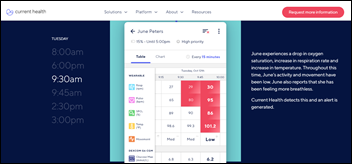
Best Buy will acquire home monitoring platform vendor Current Health, which raised a $43 million Series B round earlier this year.

Co-founder and CEO Christopher McCann will remain with the company. He completed a master’s in computer engineering and left medical school in Scotland to start the company in 2015 with his co-founder and CTO, who had just completed a PhD in computing science.


Webinars

None scheduled soon. Previous webinars are on our YouTube channel. Contact Lorre to present your own.


Acquisitions, Funding, Business, and Stock

image

Cerner President and CEO David Feinberg, MD. MBA kicks off the virtual Cerner Health Conference with a call to “eliminate the noise in healthcare” by getting the right information to the right people at the right time. He mentioned the essential clinical dataset, defined by 12 Cerner clients in 2016 as the EHR data elements that are essential for providing quality care.


Sales

  • CDC will use HealthVerity’s privacy-protected data exchange to develop a real-world dataset for projects related to COVID-19, viral hepatitis, and HIV.

People

image

Andrea Marks (UnitedHealth) joins Walmart as VP of clinical performance, overseeing the clinical data and analytics team.


Announcements and Implementations

image

MSU Health Care (MI) leverages remote Care Everyday patient monitoring technology from Higi as part of its RPM program for patients with chronic conditions.


Government and Politics

Rumors of an enterprise Epic implementation across the NHS in England begin swirling after NHS England Director of Transformation Ian O’Neil attended “high-level meetings” with Epic CEO Judy Faulkner. Adding flame to the fire of speculation is the fact that Tim Ferriss, NHS England’s new head of digital transformation, comes from Massachusetts General Hospital, which rolled Epic out in 2016.

image

In Canada, Newfoundland and Labrador’s COVID-19 vaccine passport system crashes just a few hours after launching due to overwhelming traffic. At one point, 600 QR codes were being downloaded every minute to the province’s NLVaxPass app.


Sponsor Updates

  • Netsmart VP and GM AJ Peterson and customers present at the American Health Care Association/National Center for Assisted Living 2021 Convention and Expo through October 13 in Washington, DC.
  • Istishari Hospital in Jordan selects Wolters Kluwer Health’s UpToDate and Medi-Span Clinical clinical-decision support tools.
  • CareSignal publishes a new case study featuring The Andrews Center, “High-Touch Care: Remote Patient Monitoring for Mental Health Identifies Potential Crises Ahead of Time.”
  • CHIME awards 10 healthcare organizations the highest level of its Digital Health Most Wired Survey.
  • CloudWave’s OpSus Healthcare Cloud attains SSAE18 standards certification renewal plus HITRUST.

The following HIStalk sponsors will exhibit at HLTH 2021 October 17-20 in Boston:

  • InterSystems
  • NTT Data
  • CoverMyMeds
  • Olive
  • Cerner
  • Ellkay
  • Infor
  • Jvion
  • Quil
  • RxRevu
  • Talkdesk
  • Well Health
  • CloudWave
  • Dina
  • Gyant
  • Health Catalyst
  • Lumeon
  • Pure Storage
  • Relatient
  • Upfront Healthcare

Blog Posts


Contacts

Mr. H, Lorre, Jenn, Dr. Jayne.
Get HIStalk updates.
Send news or rumors.
Contact us.
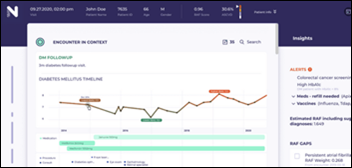
125x125_2nd_Circle

Text Ads


RECENT COMMENTS

  1. Merry Christmas and a Happy New Year to the HIStalk crowd. I wish you the joys of the season!

  2. "most people just go to Epic" that's a problem because then EPIC becomes a monopoly in healthcare, if it isn't…

  3. Only if CEO can post 'bail' which nowadays stands at 1B$ paid directly to the orange president or his family…

  4. I enjoy reading about the donations to Donor's Choice by HIStalk members. I also believe in the worthiness of Donor's…
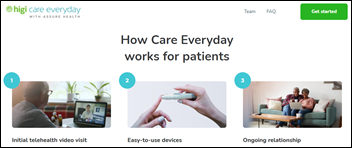
Founding Sponsors


Platinum Sponsors


Gold Sponsors


RSS Webinars

  • An error has occurred, which probably means the feed is down. Try again later.