Home » News » Recent Articles:

Monday Morning Update 2/4/08

February 2, 2008 News 2 Comments

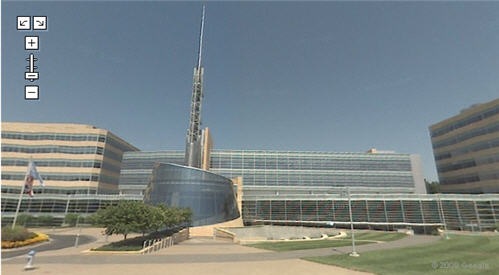
Your gas dollars at work: check out Sidra Medical and Research Center, being built in Doha, Qatar as part of Education City and in affiliation with Cornell. Operational funding is $9 billion, an insider tells me, which doesn’t even include the construction cost of $2 billion for the 380-bed facility (but check out amazing virtual tour of how it will look on the site). It’s being overseen personally by Her Highness Sheikha Mozah bint Nasser Al Missned, Chair of Qatar Foundation and Consort to the Emir. Core sciences listed: functional and anatomic imaging; stem cell; genetic, genomic, and proteomic; bioinformatics; and tissue management systems. Opening 2011. All digital. They’re hiring if you don’t mind the heat (over 105 degrees in the summer).

Jobs: Director of IS in Arizona, Senior Software Engineer in WA, Business Analyst in CO.

Listening: Marmalade, psychedelic pop, circa 1967. You would know “Reflections of My Life” if you heard it.

New healthcare CIO blog: Dale Sanders of Northwestern Medical Faculty Foundation.

Health First (FL) chooses Eclipse Project Portfolio Management for starting up its project management office.

Cerner shares drop 10.3% Friday and hit a 52-week low after the company fails to meet Wall Street’s revenue expectations and forecasts weaker Q1 sales, even though earnings beat estimates by the usual penny. Good lesson: publicly traded companies waste time and energy managing the share price instead of the business.

McKesson shares also drop on Q3 numbers announced Thursday: revenue up 15%, EPS $0.68 vs. $0.80, with $0.11 due to one-time charges for “restructuring, severance, and pending legal settlements.” So, those of you they canned have extracted at least a little revenge, that is unless you’re also a stockholder, in which case your involuntary march-out has now doubly screwed you. At least it hurts John Hammergren more than you, unless you hold more than his $14 million worth.

I’m running a comment left by Deborah Peel below, so here’s a related reminder: she’ll speak at HIMSS on Tuesday, 2/26 at 2:15 on “The Privacy Imperative in Healthcare IT”. I’ve already marked that session as a must-see on by HIMSS dance card. I’ll admit once again that I assumed she was a paranoid flake until we swapped a couple of e-mails in which she was thoughtful, rational, and entirely logical. She’s not against healthcare IT, just the lack of attention to privacy it involves. I’m pretty sure if privacy were improved, she would happily disappear from the limelight.

Speaking of patient privacy: how many days will it take before somebody sells the current inpatient medical records of Britney Spears to trash magazines for the gratification of their undermotivated readers? It’s already been announced that she’s under psychiatric care, is on Adderall, and was taking up to 10 laxatives a day. How much more detailed can it get?

Wyse Technology announces its TCX Virtualizer, which allows virtualized desktop users to connect to USB devices.

University of Michigan is on a $1.75 billion construction spree, including a new $51 million data center for the health system.

Sparrow Health System (MI) rolls out the T SystemEV EDIS running on the Motion Computing C5 tablet PC.

I noticed that Misys is an anchor exhibitor at HIMSS. Since they sold off all their inpatient products, that’s a lot of space to show physician office stuff. If you need a place to take a break, I bet they’ll fill lots of the excess space with comfy chairs.

CPSI’s Q4 numbers: revenue down 6.9%, EPS $0.36 vs. $0.39. The company also declares a dividend, which always sends the message that investors are better off with cash for investing elsewhere instead of having the company do something useful with it, like improve its performance.

Medical Associates of Erie (PA) chooses MedAppz for community-based EHRs. I checked out the website to see who runs the company, but apparently it’s a guarded secret, with the “Who We Are” section failing to answer that question, containing only marketing-speak, trite slogans, and stock photos without listing who’s in charge, making it feel distant and impersonal. There’s no charge for that marketing consultation.

The Scottish Centre for Telehealth will pilot Cisco’s HealthPresence, a telemedicine platform built around Cisco’s acclaimed but expensive TelePresence videoconferencing system. For healthcare, it will interface to diagnostic and monitoring equipment. Cisco’s Danny Sands, MD discussed TelePresence in my September interview.

Microsoft wants to buy Yahoo for $45 billion to compete with Google, which is like a guy who’s jealous of his buddy’s gorgeous girlfriend hooking up with two unattractive ones in response.

Omnicell’s Q4: revenue up 35%, EPS $0.40 vs. $0.14. Shares tanked to a yearly low anyway, down nearly 23% on Friday, since investors don’t like declining order backlogs for hardware vendors. Analysts said Omnicell was talking up some big deals during the ASHP Midyear Clinical Meeting in December but failed to close the business in Q4.

Strange: a 31-year-old medical resident accused by her physician husband of bisexual affairs and drug abuse disappeared on September 10, 2001 after shopping at a department store. Investigators initially suspected she took advantage of the World Trade Center situation to skip town, but an appeals court declared her a September 11 victim last week despite no proof that she was in or near the area at the time. They want her name on the memorial. The family speculates she rushed in from her nearby home to help victims.

Leon Medical Center (FL) has started a $6 million NextGen implementation in its five Medicare clinics.

INVISION earns CCHIT’s inpatient EMR certification. The press release headline brags that it met 100% of the criteria, which of course is redundant since you can’t pass with anything less.

The Army’s MC4 combat medical records system hangs in there despite the widespread Internet outage in Asia and the Middle East last week. Combat hospitals had offline-ready systems to fall back on.

The quoted reply of athenahealth’s Jonathan Bush when asked at an IPO forum “how is the President related to you?”: “The President is my cousin, and he lobbied hard for the role and succeeded in the end. We took him. Sometimes we think about putting him back.”

Physician software user groups create a website to advocate allowing England’s physicians to choose their own clinical systems instead of being forced by patient care trusts to standardize.

Sonoma Valley Hospital (CA) blames its financial problems on a billing system outage that lasted several days.

West Virginia University Hospitals will go live on its $90 million Epic system on March 1.

Kaiser Permanente will be Oracle’s landlord in Pleasanton, CA, buying three Oracle buildings totalling 186,000 square feet and renting them back to the company.

E-mail me.


Deborah Peel, MD on Rogue’s Example of EMR Privacy Concerns

As far as I know, there are no existing EMRs that ensure consumers control all access to personal health information. This is a HUGE market opportunity. So, all of Rogue’s highly sensitive old medical records can and will be used, shared, and sold without his consent to discriminate against him and his children (depression has a genetic basis) because electronic health records systems were NEVER designed to ensure Americans longstanding legal and ethical rights to control access to PHI.

Electronic health information systems were not designed to replace paper medical records systems (whose function was SOLELY to help doctors care for patients). They were designed to deliver information to corporate end-users. It will be very difficult and expensive to successfully rebuild existing EHR systems to conform to existing strong state laws, common law, Constitutional law, tort and contract law, the physician-patient privilege, and medical ethics that all require informed consent.

Vendors, insurers, hospitals, drug companies, and data miners do not want new HIT systems that restore our rights to privacy because that will put an end to the billions in profits from the sale of stolen prescription, health, and claims data (IMS Health and the BCBS Blue Health Initiative come to mind).

The original HIPAA Privacy Rule required consent. But the consent requirement was gutted in 2002, legalizing the data mining and data theft that HIT systems were originally designed for. HIPAA is now the data miners’ DREAM regulation — because it puts “covered entities” in control of when PHI can be used for TPO, not consumers.

Learn what Congress and federal agencies are up to and what you can do to stop them from destroying your health privacy by signing up for our e-alerts.

In 2006 and 2007, Patient Privacy Rights and over 50 bipartisan national organizations in the Coalition for Patient Privacy urged Congress to restore Americans’ longstanding basic rights to privacy: i.e., our rights to control access to personal health information. The Coalition was the key force that stopped the HIT bills which had no rights to health privacy. We need your help in 2008.

Rogue, maybe you can sue the hospital (your employer) for disclosing your PHI under strong state laws that require informed consent before the disclosure of mental health records. But first, you will have to have audit trails to prove where your data went and also be able to prove how you were damaged. Good luck.

Or you can be an advocate and work with Patient Privacy Rights to restore and strengthen your privacy rights.

Inga’s Update

Bariatric surgeons take note: a proposed bill in the Mississippi legislature would prohibit food establishments from serving “obese” people. Shares for Gold’s Gym are up; McDonald’s shares down.

CoxHealth in Springfield, MO adds Krptiq ePrescribing solutions.

Less than a month after announcing a secondary public offering, athenahealth withdraws its registration. Seems as if the current market conditions created a risk that athena wouldn’t be able to sell the deal to investors at a price that made sense. Is this an isolated incident or a sign of the times?

Privacy rights “warrior” Dr. Deborah Peel is again in the news. Her Patient Privacy Rights organizations plans to evaluate EHRs and award seals of approvals for those that meet the organizations standards for protecting the privacy of personal health information.

Perot Systems announces it won over 90 revenue cycle solution contracts last year that resulted in the collection of over $2.4 billion in cash and the resolution of $4.6 billion in A/R for its clients.

E-mail Inga.

News 2/1/08

January 31, 2008 News 5 Comments

From Bignurse: “Re: EMR/EHR. Assuming that a completed implementation is characterized by some level of utilization, what would that level be? How would you experts define ‘implemented’? Should it be based on percentage of functionality used, attainment of predefined success metrics, etc.? And if so, what would you suggest?” Good question. Is “implemented” a word to use any time you’re live, or only if you’re getting usage and/or value you expected? Answers welcome, although if anyone from HHS is reading, please don’t engage one of those trough-lapping consulting firms to define it and then invoice me $500,000 like I was Uncle Sam or something.

From Phil R: “Re: RemedyMD. Not sure how much Kool-Aid that former staffer has been drinking, but the number of ex-Remedy employees sending resumes our way would suggest that they’re leaving en masse these days.”

From The PACS Designer: “Re: hospital labs. Hospital & Health Networks online magazine has an interesting article about hospital labs and how they can be outsourced to bring in much needed capital to alleviate the cash crunch hospitals are facing because of DRA cuts. Also another benefit would be to speed the transition to populating PHRs with lab results since most lab services have digital repositories of patient tests. Another revenue increasing option is for hospitals to offer their lab services to local physicians similar to what is being done by many hospitals in Michigan.” Link.

Confirmed: CEO Bob Cullen has left Thomson Healthcare “to pursue other opportunities,” according to a marketing contact Inga reached there. Mike Boswood is the new president and CEO, coming over from the company’s legal business side. A reader noticed the tip we ran from Curious George this week and asked to have it confirmed. We are responsive, yes?

Listening: Airbourne, Aussies that sound like AC/DC circa 1976 with some Spinal Tap cliches mixed in.

Interesting seminar: The Unsummit, three days on bedside barcoding with some really good-looking sessions (including a discussion with Julie Thao, the nurse whose admitted medication error led to her legal prosecution). April 30-May 2 in Austin, TX. I know some of the folks speaking and it should be good, plus I like barbeque and I’m sure there will be some.

January will set the record for most monthly visits to HIStalk, around 54,000 or so. Man, that’s a lot of readers, every one of whom I appreciate (along with the great sponsors who get what Inga and I are doing and want to support us). I don’t get all swell-headed about it since, from this chair, it’s more like a videogame than something real, just pecking on keyboards in a quiet room and never talking about it to anyone. Sometimes I’m tired after a long day at work, but this never gets old.

Jobs: MPI Project Manager, Account Executive Sales, VP Research Services, Online/Internet Marketing Manager.

Misys put its name on iMedica’s EMR, so it’s only natural that they won’t host it, either. If there’s innovation in there somewhere, it must be in marketing.

Southeastern Regional Medical Center (NC) signs up for the RadarFind RFID-based asset tracking system.

AMICAS signed more than 60 radiology and imaging contracts last year.

HHS Secretary Mike Leavitt’s editorial on healthcare information technology runs in the Memphis newspaper. Nothing new, but aimed at the lay public: EMRs, P4P, and the FCC’s rural broadband telemedicine grant program.

UPMC South Side’s department of medicine chair is sentenced to three years in prison after pleading guilty to possession of child pornography. UPMC says he won’t be coming back, naturally. And in Louisiana, a 72-year-old retired anesthesiolgist gets 16 1/2 years for trying to get what he thought was a 14-year-old girl online to send him dirty pictures. It’s just my perception, but after many years of working with doctors, there sure seem to be a disproportionate number of horndogs among them.

Speaking of doctors in trouble, a physician peer reviewer for NEJM is caught tipping off Avandia maker Glaxo that an article he was reviewing was about to blow the lid off the drug’s heart attack risk. He was a paid shill for Glaxo, racking up the usual doctor consulting and speaking fees to push their products on his peers. His excuse: “Why I sent it is a mystery. I don’t really understand it. I wasn’t feeling well. It was a bad judgment.” Is that a multiple choice excuse?

Four hospitals that previously employed nurse Charles Cullen, who admits to having killed at least 29 patients by injecting medication into random IV bags, argue that the victims’ families shouldn’t be allowed to sue them, even though they didn’t report his previous errors and investigation for tampering.

A University of Minnesota doctor is in trouble for losing a flash drive that contained his fertility patient data backup. It was supposed to be encrypted, but wasn’t.

University of Alberta researchers have developed a $1,000, shoebox-sized microchip system (i.e., “lab on a chip”) for performing lab and genetic tests.

Sumter Regional, the feel-good recipient of a lot of good press after its tornado damage and its grace under pressure afterward, has not-so-good news this time: 31 of its employees will be laid off Friday.

UnitedHealth Group’s PacifiCare insurance subsidiary faces fines of up to $1.33 billion for not paying claims, which caused some providers to stop accepting their patients. UnitedHealth, which bought the company for $9.2 billion two years ago, said they’re sorry. California’s insurance commissioner is obviously not in a forgiving mood: “After years of broken promises to California regulators, it became crystal clear that PacifiCare simply could not or would not fix the meltdown in its claims-paying process. We’re going to put an end to that. If PacifiCare can’t understand the ABCs of basic claims payment, maybe it will understand the dollars and cents of regulatory action.”

CAP puts the lab at Yakima Valley Memorial Hospital (WA) on probation after an unannounced inspector found a patient who was transfused with another patient’s blood because a lab tech misread a computer screen listing single-spaced lines of tests. Some of the changes involved software.

Great idea: a hospital installs wall-mounted “Yacker Trackers” that look like stop lights, turning yellow and then red when noise levels get too high in patient care areas.

Physician EMR vendor MedcomSoft closes a $500,000 private placement. Its shares trade on the Toronto Stock Exchange.

E-mail me.


Inga’s Update

Re: Rogue and his PHR/EMR concerns. I have had the opportunity to hear privacy advocate Dr. Deborah Peel speak on this very topic. Dr. Peel can be a bit extreme at times, but her overall position is that patient medical records belong to the patient and not the doctor and not the facility. Her belief is the government is capable of creating a national health record bank with “Fort Knox” type security and the patient regulates who gets to see what information.

I guess it was destiny that for Hopes and Deams to come together. HopeHealth, a SC FQHC and member of the Community Integrated Management Solutions IPA will be implementing DREAM EHR and CARE Disease Management solution from Visionary Medical Systems.

Cerner announces 2007 bookings were up 14% over 2006 and revenue up 10%. Fourth quarter bookings were up 5% over 2006 and revenue up 4%.

Healthgrades says (warning: PDF) that if you go to one of the top 5% of hospitals, you are nearly 1/3rd less likely to die. Their study claims 171,424 lives could have been saved and 9,671 major complications avoided between 2004 and 2006 if the quality of care at all hospitals matched the level of those in the top five percent. Will people consider this before their next hospitalization?

Trizetto wins a $100 million contract with Blue Shield of California for a system-wide technology upgrade.

The LA County DHS contracts with Sunqest to expand and transfer its existing Sunquest LIS to a new facility and implement and integrate new enterprise applications.

E-mail Inga.

News 1/30/08

January 29, 2008 News 1 Comment

From Curious George: “Re: Thomson. I’m surprised no one has mentioned that the CEO and VP of sales at Thomson Healthcare were both fired a couple of weeks ago.”

From The Alchemist: “Re: Middle East. On an engagement for a few months in the Middle East — you know, where all the money is. Let me propose a scenario to all you HIStalkers out there. If you had the funding, approximately 100 times the average U.S. hospital construction, what would want in your hospital? All fantasies will be accepted, but try to keep them earth-bound.”

From Scott Shreeve: “Re: athenahealth. My normally calm demeanor got a little rankled after reading Cady Heron’s comment that athena is just a billing operation.” Scott’s riposte is here.

From Tex Arcana: “Re: Christine Stanfield and QuadraMed. Yes, Christine was terminated on Thursday after receiving an unsolicited contact by another company about potential opportunities. In her research, she asked her line manager what her future role was with QM. Based on a brief discussion, QM considers these inquires as acts of resignation and promptly terminated her! The sad part is there are less than a handful of people left who know the CPR product. It’s apparent QM doesn’t get it after all.”

From Dave DiVida: “I can confirm the ‘departure’ of Christine Stanfield. I was just informed by current QuadraMed employees that QuadraMed showed her to the door. These people now report that since this development, morale there in San Bernardino is now lower than it has ever been … which is a real accomplishment, considering how low Misys could keep it. I’m dumbfounded. This is one of THE most knowledgeable CPR employee on the planet in my humble opinion. Potential employers should watch for the name to come across your desk if she’s seeking, or even proactively find a way to get in touch with her. If you have the opportunity, SNATCH HER UP.”

From Slim Whitman: “Re: Sumter. I remember reading in the rules (they’re now gone from the website) something along the lines that the MRI had to be installed in a permanent location and wondered how Sumter would qualify given that it would have to be located initially in a temporary structure. That may be the ‘gotcha’ here as on December 28th, Sumter was way ahead of Lockport in votes. Regardless, I am thrilled that Siemens chose to donate one to them as well. That’s TWO patient populations that will benefit!” I bet you’re right. Sumter did say that it would work out much better for them to take delivery later, when a permanent location will be ready. I rarely say anything nice about Siemens, but they did the right thing here and deserve kudos.

From Steve Lamo: “Re: Revolution Health. Revolution Health may have a PHR, but as a company which seems to have a strategy de jour approach, it is not very compelling and is not getting any traction in the market. The B2C model for PHRs which Revolution Health is pursuing  is not working. Also, with the impending release of Google Health, my bet is CEO Schmidt will introduce during HIMSS keynote, Revolution Health’s PHR prospects will be increasingly bleak.”

From Rogue: “Re: musings on data sharing. Hypothetical case: When I was 19 and in college, I was treated for an STD at the hospital connected to the university. Three years later in grad school, at a community hospital down the road, I saw a psychiatrist for a bout of depression associated with flunking two courses and changing my major. On meds for two months. Fast forward 10 years. Married now. One kid. All those electronic records are, of course, just archived on terabytes of EMC storage media. Why bother to electronically shred old EMRs? With storage so cheap, it’s easier to just file them. The new RHIO links those two hospitals with everyone else in the area/state. My new medical record, in Employee Health at hospital #3 where I now work, contains all this juicy info, right?  It’s just a Social Security number link away. And of course, since the patient doesn’t own their records, the facilities do, I have no control over who sees what. My hospital (employer) EHR now contains links to all this old stuff, right? Is this possible? What am I missing? I’m in the business and I can’t figure out how to reassure my neighbor that a certain degree of privacy IS possible with EMRs. Is some measure of privacy and personal control only possible if RHIOs fail?”

From For the Record: “Re: Cerner. For the record, John Goodrow used to work at Cerner as a lab sales person. Not sure how forthcoming he will be.” That’s in reference to the downtime rumor. I’ve heard from several readers that Cerner puts contract language in that prohibits hospital people from saying anything bad about them, but I don’t recall seeing that in there. If you have, send it over, please. That would be fascinating to know.

Several vendors e-mailed offering to hand out HIStalk goodies at their HIMSS booths. I’ve sent out the pitiful supply I have to the vendors who asked first, but if anybody wants to create their own HIStalk trinkets or arrange some sort of in-booth entertainment that would benefit HIStalk readers, I’ll promote it (I’m thinking a buxom Miss HIStalk in evening gown and sash — along with a male equivalent — to hold court at booths at an appointed time, but I’m open to ideas).

The VA’s had quite a few data leaks, but it’s the water variety that got them in Tennessee. A broken water pipe damages the VA’s servers, so clinics all over the state were shut down yesterday and today.

Leslie White, PR VP for McKesson, e-mailed to say that it’s not the end of the line for the Dubuque crowd. The company will move operations and 340 positions to a new facility in the spring of 2009 to provide space for growth.

I hoped you enjoyed the interview with Denis Baker. Denis noted that he’s getting calls galore from people he’s known but not heard from over the years because of my wide readership, many of them trying to sell him something. Surely salesfolk aren’t so desperate that just mentioning his name here would open the floodgates? (other than GE, which he called out specifically as ignoring him).

Marshfield Clinic CIO Jeremy Miller is nominated for a case study award on the use of Fujitsu tablet PCs at Healthcare IT Summit.

American Hospital Dubai announces what it says will be the most advanced integrated healthcare information system in the UAE, using technology from Meditech, Lawson, Siemens, Cisco, and HP.

The Military Health System will enhance AHLTA’s imaging capabilities for scanned documents and photographs using a Web-based front end for its Documentum content management system.

Sweeny Community Hospital (TX) is written up by the local paper as the CCHIT certification site of Prognosis Health Information System‘s inpatient EMR.

I’m really buried, so don’t give up that I may eventually reply to your e-mails. I barely have time to sleep between work and after-work. I’m sure it will build my character if I survive.

E-mail me.


Inga’s Update

I am still trying to figure out how I was on the mailing list for a particular mailing received over the weekend. I was notified of a new physician house call service that specializes in providing at-home Botox injections. (I was embarrassed to ask my more youthful neighbors if they got the same mailing). But, it does beg the question whether or not the cutie Dr. Parkinson provides this service. Anyway, I have spent too much time in the last couple of days looking in the mirror and wondering if someone in my life is suggesting it’s time for Botox.

Federal health inspectors fault Kaiser’s Fresno hospital for not acting on complaints and keeping a closer watch on its medical staff following an investigation into one its perinatologists. It’s a sad story with no winners and includes the death of at least two babies and the resignation of hospital administrator Susan Ryan.

Eclipsys announces the availability of Sunrise Clinical Essentials, a seemingly “lite” version of their original Sunrise Clinical Manager solution. It offers more pre-configured software and pre-defined implementation methodology for quicker setup and easier support. Coming soon to a small community hospital near you!

HIMSS Analytics announces they’ve doubled the number of free benchmarking reports available to healthcare providers. The only catch is that providers first have to complete HIMSS Analytics’ Annual Survey to populate the HIMSS Analytics database.

Re: RemedyMD. A reader considering a job with them recently asked for any insights from any current or former employees. A former staffer told me the CEO was great and they have some great products, although for a sales position, it’s always good to verify how ready they are for market.

Cerner Millennium will be implemented in the three hospitals that are part of Health Quest healthcare system in NY’s Hudson Valley.

EpicTide is now FairWarning. The supplier of privacy auditing solutions for EHRs also announces a 200% growth in software bookings for 2007 and expectations for a positive cash flow by the end of this quarter.

Newton Memorial Hospital is appropriated $146K from the federal budget, courtesy of the efforts of their Congressmen. The money will be applied towards their $7 million Cerner computer infrastructure. This announcement comes a couple of weeks after the hospital laid off eight people, blaming the cuts on $3 million in state Medicare spending cuts and squeezes from physician-owned ambulatory surgery centers. (The same article also indicated their marketing department had to be streamlined as well, but I would say they still did a pretty good job blaming others with nary a mention of the $7 million elephant in the room).

More CCHIT 2007 certifications: Allscripts Healthmatics EHR Version 2007.1 and MediNotes e Version 5.2. Both have pre-market approvals.

Here’s a new networking site for all the HIT geeks out there. The description: the Healthcare Technology Alliance is a group of technology specialists working in the health care industry. Clearly they are in need of a marketing specialist to help spice up that language.

If you haven’t already, check out the cool interviews at www.histechreport.com. Don’t miss Mr. H’s “Bottom Lines” which include a bunch of those well-loved “Mr. H-isms.” (Ok, that isn’t a word, but it should be.) The latest ones are on The White Stone Group and Stratus (both who are going to be exhibiting at HIMSS.)

E-mail Inga.

Monday Morning Update 1/28/08

January 26, 2008 News 6 Comments

From Mitt Romney: “Re: Lowell. Lowell General Hospital is the only full Cerner site in Massachusetts and a fairly new install. They had a multi-day,system-wide downtime last month that has been kept very quiet. It would be good to hear from CIO John Goodrow what the outage was and its impact on clinicians.” Inga will make inquiries.

From Big Fan: “Re: Cerner. Lazlo has the Cerner health plan mostly correct, but we associates have always been told that the TPA processors are not Cerner employees. Cerner has received numerous Top 100 awards for Best Places to Work, citing the health club, onsite daycare, etc. but to me, it is not as good as it sounds. The health club/associate center is more costly than the local gym, the onsite daycare is convenient and nice but more expensive than nearby places, and the health care plans are expensive compared to most area employers. Three days paternity leave – hey, at least it is something. They offer an FMLA-like option for people employed less than one year, which isn’t a bad thing. If that makes one a Best Place to Work, then I guess just having those sorts of things exceeds what most other companies do for their employees.”

From Dan Tanna: “Re: progress notes. We are moving our inpatient progress notes online. An issue that has come up has been during a code or RRT situation, people have to leave the bedside to find a computer and look at the ‘chart’. I recommended using one of the nurse’s medication carts since they are wireless, portable, and hooked up to the EMR, but was wondering if there are any better ideas. We don’t want to print out notes.”

From Walt Ducati: “Re: Cerner in the Middle East. Cerner was chosen by the American Hospital in Dubai, but later lost because ‘management couldn’t deal with the arrogant Cerner salespeople, so we took our next choice – Meditech.’ The hospital did not look at Epic because ‘they didn’t have plans to sell internationally.'”

From NY Customer: “Re: QuadraMed. Could someone please confirm the departure of Christine Stanfield from QuadraMed? She was one of the few who really knew the CPR system.” I’ll defer to anyone who knows one way or the other.

Intercepted e-mail: Drexel DeFord has resigned as VP/CIO of Scripps Health, according to an internal memo dated January 22. His last day will be February 22, after which he’ll head off to be SVP/CIO of Seattle Children’s after two years at Scripps. You may know him from his Air Force hospital CIO days or his HIMSS involvement. The anonymous source sent the e-mail over by confidential Rumor Report.

Jobs: MUMPS Software Engineer, Centricity Consultant, SCM Project Manager (Contract), Allscripts Consultant.

McKesson joins the “vendors laying off” club, wiping out 79 IT jobs in Dubuque, IA and announcing plans to sell the old department store it occupies. Sounds like the end of the line for CyCare, the practice management and EDI vendor that HBOC bought for $287 million in 1996.

The Raleigh paper declares that Misys Healthcare is “on the mend,” although its numbers don’t seem quite that rosy and betting its future on a relabeled competitor’s physician system seems both risky and uninspired. Maybe it’s just me, but they’ve got a lot of train wreck baggage to unload before I’d project their success.

HHS recognizes three of HITSP’s interoperability specifications.

Calgary Health Region reveals that a problem with fax software held up delivery of radiology reports to doctors’ offices last year. I’m still amazed that anybody faxes anything. If someone e-mails me some document to be signed, I print it, sign it, scan it, and e-mail it back. Primitive, but way better than faxing.

This seems preordained: in Michigan, St. Mary Mercy Hospital will join St. Joseph Mercy Health System.

Investigators say that an electronic medical records system is partly to blame for the low productivity of its contracted prison doctors, calling the documentation function “achingly slow”. Their recommendation: get rid of it.

I’m puzzled: Sumter Regional didn’t win the MRI from Siemens, according to announcements that proclaimed Lockport Memorial Hospital (NY) to be the winner despite what looked like about a 2 to 1 Sumter victory based on the online vote counts. I’ve seen no mention of how or why the auditors overturned the tally, although the phrase “qualified votes” has been thrown around. Still, Siemens is giving them a free MRI anyway, saving themselves a PR headache in having to explain how, in the absence of an electoral college, the popular vote winner lost. I’m trying to hold back on the Siemens bribery jokes.

Physician billing company MTBC is named a Microsoft Gold Partner, which I don’t care much about, but I did look at the company’s site since I’ve never heard of them. Looks pretty good and the management team has great credentials. Says they take care of all physician office billing for 4%. You can download their free EMR in case it’s a slow weekend.

Big problems at $3.8 billion insurance company WellCare Health Plans, which probably thought they’d bottomed after state and federal investigations and a stock price freefall. Well, maybe: the CEO, CFO, and general counsel all quit Friday. At least the CEO has an impressive resume to take job-hunting; he was also CEO of a subsidiary of Oxford Health Plans, which had a similar meltdown.

Nice reporting by an Idaho reporter: researching the governor’s claim that the RHIO he wants to start will be self-supporting after the grants run out, she dug up several sources from our industry citing how hard it is to wean off RHIO grant money. Both the writing and the research behind it are better than what most of the industry rags put out.

John Dvorak says Sun’s aquisition of open source database vendor MySQL is such a bad idea that surely Sun is trying to kill MySQL off to benefit Oracle. Evidence: Sun’s terrible acquisition track record and its willingness to pay $1 billion for a company whose annual revenue is only $60 million. I’ve also heard that the price was really too low and that the stalwart Swedes who run MySQL should have shopped it around before simply handing over the keys to Sun. Since its database runs most of the Internet (mostly because it’s free), it’s surely got a footprint.

Bizarre hospital lawsuit: an Illinois hospital will pay a $100,000 EPA fine but still faces a civil suit from a man who says he saw a hospital employee toss a cardboard box of body parts into the open grave of his father and stomp on it, explaining that the hospital contracted with the cemetery for such disposal.

E-mail me.


News 1/25/08

January 24, 2008 News 1 Comment

From Kevin Gnapoor: “Re: HIMSS Analytics mention of HIStalk. It came off better than you reported. Of surveyed healthcare IT execs, 65% reported reading a technology blog in the last year. When asked to mention specific blogs read, 13% identified HIStalk, whereas no other blog was mentioned more than once.” Glad to hear that, although I’d like think I can compete well with mainstream publications and not just blogs. It makes Inga happy to be anonymously famous.

From Cady Heron: “Re: Misys. Misys will have a big roll-out of an SaaS solution. athenahealth may start feeling some heat if Misys can overcome its current dismal perception in the market. As my contact stated, athenahealth is nothing more than a service operation for handling billing with a software front-end.

From Broadway Joe: “Re: Keane. We run their RCM product and some clinical apps and we were happy to see there recent press releases with some new deals. I know they are actively installing new business in the NY/NJ area.  I think the CHS move was a provider acquisition that is causing the move away from Keane.”

From Gretchen Wieners: “Re: Leapfrog. I agree Leapfrog has become irrelevant, but they started with the realization that employers held the purse strings in many cases and had motive for lower cost and better quality of care and better negotiating power given their role. So they analytically looked at what would have the biggest impact on medication errors and chose them. That included CPOE, which can play a key role if the system is designed for clinical decision support. The others were also no-brainers, e.g. the intensivists. But, they never used their clout and their demands were unfunded. Once the MDs balked, they caved.” 

From The PACS Designer: “Re: Oracle VM. Virtualization has been mentioned in past posts by TPD. Oracle has a new software offering called Oracle VM, which makes it easier to implement virtualization within the institution at a relative low cost for both Oracle and non-Oracle applications. Edward Screven, Oracle’s chief corporate architect, states ‘Oracle is the only software vendor that combines the benefits of server clustering and server virtualization technologies to deliver integrated clustering, virtualization, storage, and management for grid computing’.” Link.

From Cliff Pantone: “Re: AMIA. This job posting on the American Medical Informatics Association website nearlymade me spurt my morning coffee over the screen: ‘Applicants should have experienced first-hand the creation and rollout of a commercial software product, or else should possess a good sense of humor.’ Too true, too true…”

From Jerry Aldini: “Re: Cerner in the Middle East. I wonder if Cerner will sue IBA since the hospital IBA supposedly took from them was never in the Cerner-Health Authority contract? Also, I have heard that the delayed go-live is mainly due to data center delays. In the Middle East, there is NO experience on the client side when it comes to projects of this magnitude. If a data center is not ready, PCs are not ordered, or end users are not trained, it’s the vendor’s default.”

From Lazlo Hollyfield: “Re: Cerner. It’s funny how an organization supposedly trying to improve healthcare treats its own employees poorly in health benefits and policies. Cerner offers only high-deductible health plans. It created its own TPA (whose medical director was a Cerner associate) to handle employee healthcare claims and Cerner employees manage precertifications, claims, and medical records, meaning the company is looking at the medical records of its own employees. HealtheExchange uses a second-tier provider network that leaves major metro areas uncovered, so if an associate falls seriously ill while working at a client site where the plan has no in-network providers, the associate gets stuck with the bill for any charges over the usual and customary amount, typically 60-75% of the provider’s claim.” I’ll just jump in to disclaim that I don’t know this officially, so you’ll have to take Lazlo’s word for it unless somebody wants to second his emotion.

From Charles Bronson: “Re: RevolutionHealth. They already have a PHR, soon to be CCD-structured.”

From Dr. Lisa Cutty: “Re: Cerner. We get rumors from Asia about Oracle buying Cerner. I know they are interested in the company since 2004 and Cerner is using Oracle’s platform, but are there any new developments?” None I’ve heard. The floor is yours if you have.

MedStar Health, the Baltimore/Washington system in which Azyxxi was created, chooses Cerner Millennium for all seven of its hospitals, although not all apps. A couple of people e-mailed me wondering if that means anything beyond the obvious. I’m guessing no. From Art Vandelay: “I wonder if they used the funds from the sale of Azyxxi to pay for Cerner? Ironic … at least there was no mention of replacing the ED module. Do you really still need your own CDR/Viewer if you are going away from a best-of-breed strategy?”

This must have been embarrassing. HealthTrio is working with CMS in a PHR pilot, which requires going through a security audit. Auditors connected their equipment to power in a server rack and blew a power circuit. That was fixed, but somehow the connector on the server’s RAID controller card was broken. They failed over and were up again within a couple of hours, but this morning went down again due to DNS problems. It’s running, although not very well, and another outage this evening is needed to catch up the primary server.

I’m guessing that Sumter Regional Hospital won the MRI since the Sumter folks sent me an invitation to attend a joint Siemens-SRH announcement tomorrow morning. Good for them. Unusually smart marketing by Siemens, too.

Inga and I finished the first of several new HIStech Report interviews, this one with Stratus Technologies. Pretty interesting stuff. We’re proud of how cool our reprint format (warning: PDF) looks considering we’re moonlighting amateurs.

Jobs in cities: Nashville, Chicago, Denver, Los Angeles. I see we now have 230 jobs listed.

Meditech’s Magic 5.6 is now CCHIT certified.

Premise had a 260% increase in revenue in 2007 (2,265% over five years). I interviewed CEO Eric Rosow in November about hospital throughput.

Ann Carey of St. Vincent’s HealthCare (FL) is promoted to VP/CIO.

Suffolk RHIO in New York chooses HealthUnity.

Last chance for HISsies voting.

Former State of California CIO J. Clark Kelso replaces the receiver of the state’s prison system. I had to look up what that meant: California’s prisons provided such bad medical care that the federal government seized the system in 2005, calling conditions deplorable despite annual medical costs of over $1 billion. The guy in charge is the receiver.

Cleveland Clinic is a big sponsor of Arab Health Congress and CIO Martin Harris will speak. Mr. HIStalk was not invited to attend as a guest of the countries he so richly supports through his regular gasoline purchases, so he sends his regrets. Dubai seems pretty cool.

MedAvant’s shareholders approve the sale of its preferred provider network for $23.5 million.

Wal-Mart starts an employee pilot of its Dossia PHR system, a quick rollout considering it wasn’t long ago (September 2007) that Omnimedix was replaced with Children’s Boston as the technology supplier.

Busted: a Massachusetts doctor is reprimanded for reviewing the electronic medical records of a nurse he was dating. The hospital caught him in an audit and gave him a written warning, but the medical board fined him. Another employee found that the doctor had checked out her OB/GYN records, so she’s suing the him and hospital for $250,000.

The Massachusetts Attorney General is investigating the $16.4 million parting gift that “nonprofit” (despite a $157 million “surplus” in one year) BCBS of Massachusetts gave its retiring CEO this month.

Varian Medical Systems announces Q1 numbers: revenue up 18%, EPS $0.43 vs. $0.37.

The government is anguishing over those five acronyms that are holding the industry at bay due to imprecise definitions, but there’s another mammoth problem that’s keeping Uncle Sam awake at night: the job descriptions of HIT employees. HHS secretary Mike Leavitt asks AHIC to come up with job descriptions and their required credentials in the next year. It is mentioned that the shortage of trained HIT experts is getting critical and not just in the US.

E-mail me.


Inga’s Update

Misys PLC announces its interim results from the first six months of their fiscal year. While overall revenue for the company (including banking and financial services) was up about 3%, healthcare saw only a slight revenue rise and order intake was up only 1% over the same period last year. One of the most painful numbers has to be the 34% decrease in initial license fees. No doubt they are hoping MyWay will turn things around for the rest of the year.

Medcomsoft signs a $750K agreement to put EMR in Puerto Rico’s largest owned drug store chain. The deal includes licenses for 100 physicians.

Just the other day I was wondering if I should consider a health savings account and if anyone really used them. Well, according to HSA Bank (warning: PDF), quite a few folks are using them, given the bank’s status as the first HSA administrator to surpass $500K in HSA deposits.

Revenue cycle management provider Accuro Healthcare Solutions files a registration for an IPO to raise up to $144M.

McKesson adds Intel executive Andy Bryant to their board. Bryant is an Intel executive vice president and chief administrative officer.

HIMSS announces that registration for this year’s conference is up 17% over this time last year and more top-level execs than ever are attending. Mr. H swears it’s because I’ll be at the Healthia/HIStalk soiree, but I think he’s just saying that to get me to wear some fancy ball gown.

Read about Meriter Hospital and details on its $30 million all-digital hospital in Madison, WI. Epic is called the “centerpiece” of their showcase for the latest in healthcare technology for patients with cardiovascular disease.

E-mail Inga.


News 1/23/08

January 22, 2008 News 4 Comments

From Neal’s Pizza Guy: “Re: Cerner. 21 June 2005: Cerner wins a seven-hospital Abu Dhabi contract and no doubt promises the world. Arab pizza futures soar on the news. 14 June 2007: Cerner opens a new office in Dubai to supplement efforts in Abu Dhabi. The smile on Doug Krebs face says the parking lot is full and the pizza is yummy. The other Cernerbots smile pretty for Neal. 22 January 2008: Doh! What do you mean we had to deliver?!? IBA Health boots Cerner from Abu Dhabi hospital after ‘lengthy delays.’ Abu Dhabi pizza futures are down …way down. No word on whether Krebs is still smiling. Also: Computer Weekly reports that Fujitsu is ready to pull the plug on NPfIT program. UK pizza futures are rocketing on the news.” Link.

From Rich Davis: “Re: Cerner layoffs. Go back and check your lists of healthcare IT employers in KC. There are several pharmacy tech vendors of size and lots of other niche players. Other IT only places are Garmin, Yellow Freight, etc. Don’t cry too hard for these folks. If they have any skills at all they will easily find work.”

From Kenny Crawdad: “Re: Keane. What is up with Keane? I hear they are imploding because of the new acquisition and the loss of CHS business. No real new sales in over six months, and the only thing going is some offshoot deals with MedSphere. Sounds pretty scary.” Unverified, assumed inaccurate unless someone wants to confirm.

A sponsor tells me (via Inga) that HIStalk was mentioned in a recent HIMSS Analytics webinar, with 13% of surveyed healthcare CIOs saying they read here regularly. I’m a glass-half-empty kind of guy, so I’m thinking that having 87% who don’t is a terrible disappointment, but I guess that’s pretty good.

My editorial this week: Cerner Layoffs in Review: Why Marching People Out Makes Sense, but Sickouts Don’t. A short teaser: “Personally, I’m blaming Meditech.” Want to guess the connection?

Houskeeping issues: the search box to your right plows through millions (literally) of words of HIStalk going back to 2003, so Google yourself or a company for fun. That Rumor Report button to your right lets you send me anonymous, secure messages (including attachments if you’re so inclined), so give me some good dirt and I can write about. Sign up for e-mail updates when I write something new here or for the Brev+IT weekly e-mail. Try HIStalk Discussion or the stock page. Our friends at Healthcare IT Transition Group have a text ad to your right for their 2008 Health IT Grant Resource Directory (you can check out sample pages and full details). And please take a moment to do a little click-visiting to the sponsors whose ads grace the left margin and thereby keep my keyboard clacking until all hours of the night like Design Clinicals (HIStech Report coming soon), SCI Solutions (ditto), high availability architecture gurus Stratus Technologies (ditto again), and patient flow experts Premise.

Speaking of Google search, I was scouring HIStalk for something yesterday and ran across this post from May 2006, when Electronic Slide laid on some heavily sarcastic criticism of my skepticism about the rumor that Allina was bailing out on Epic, saying I play Epic favorites and have no journalistic standards. Since then, Allina’s live on Epic and, in fact, won the Davies Award. So there.

Jobs: Account Executive Sales (note: it’s in KC!), Physician Liaison, Information Architect, Sales Executive. Signup is quick for a weekly jobs update.

Stocks started out in meltdown mode this morning, then rebounded, with the Dow down 1% and Nasdaq down 2%. Most HIT stocks did a little but worse than that, but Eclipsys and Perot Systems were up.

Jim Wilson is promoted to president of Craneware’s US subsidiary, which sells charge master software.

Philips had a big Q4, doubling profits to $2 billion on a 3.8% revenue increase, but US sales were down 10%. Healthcare is right up there with shaving and grooming for US investment, the company president says.

King’s Daughters Medical Center (KY) names Cathy Cooper-Weidner as VP/CIO. I think she used to be CIO at Memorial at IU South Bend.

West Georgia Health System is bringing up a $12 million Meditech system. It wasn’t clear what it is from the newspaper article, but C/S 6.0 is mentioned.

If you have to make a medication error, make sure no celebrities are involved. Dennis Quaid criticizes Cedars-Sinai in a Sundance Film Festival interview, something the average patient isn’t often asked to do.

Looking for a laptop deal? Best Buy has a Gateway with Pentium Dual Core 1.6 GHz, 2 gig memory, 160 gig SATA, DVD/CDRW, 15.4″ display, and Vista Home Premium for $549. I got one and it’s sweet, even to the laptop-indifferent like me.

GE Healthcare will exhibit at Arab Health 2008 in Dubai next week. So will just about everybody else in HIT, according to the conference page. Which reminds me: if you’re an HIStalk sponsor, Inga will be contacting you about some cool HIMSS benefits: a free sign for your booth (autographed by her, no less!) and a mention in the upcoming “Mr. HIStalk Goes to HIMSS” guide. Thanks to the companies who volunteered to help out with our little giveaways there. We’ll name them soon.

Siemens will announce the MRI winner in a live webcast Friday morning at 8:00 Eastern. Sumter says they haven’t heard anything.

The Ann Arbor Area Health Information Exchange gets a Detroit mention. Its annual budget is only $140K, which is darned good. NextGen is mentioned because all the partners use it.

An embarrassing NHS glitch: a server crashes at midnight, the primary on-call tech forgot to turn his cell phone on, and the backup support tech didn’t have a data center key. The ED and results inquiry function were offline for 12 hours. Maybe not as embarrassing as this NHS gaffe: a patient’s newly transplanted kidney has to be removed when caregivers notice that the patient’s blood type was recorded wrong in the computer.

E-mail me.


Inga’s Update

The country’s oldest visiting nurse association, VNA of Western NY is partnering with Cardiocom Multi-Disease Management to provide home telemonitoring technology.

Cerner Millennium PowerChart 2007 and MEDITECH MAGIC 5.6 just gained 2007 CCHIT EHR certification. INVISION Clinicals Version 27.0 with Siemens Pharmacy and MAK Version 24.0 is conditionally certified, pending a “verifiable customer reference.”

Awarepoint and Skytron announce a new integrated active RFID asset management and information resource solution.

McKesson pats itself on the back a bit for having 18 solutions ranked in the top three in the recent KLAS rankings. Not shabby at all.

Greenway Medical Technologies was another strong KLAS performer, named Best in KLAS for ambulatory EMR in the 6-25 physician practice. Greenway’s also making headway into the RHIO/IDN/IPA segment since the Stark laws were modified and has signed on 10 community healthcare organizations since July.

Fujitsu announces a more secure and powerful mobile device targeted for healthcare (and some other industries.) The newest design of the P1620 includes such features as a biometric fingerprint sensor, secure asset tracking software, and a weight of just 2.2 lbs.

Is it tougher than ever to be in healthcare sales? Out of 180,000 surveyed docs, 19% said they refuse to see drug and device sales reps at any time and 23% make the reps to set an appointment. However, 73% of the physicians said they’ll take details from reps at any time of the day or week. A couple of curious observations here: first, the numbers add up to greater than 100 (what is up with that?) and second, this study by SK&A Healthcare Information Solutions (who sell physician databases) claims they reached all 180,000 doctors by phone. Why would a doctor take a phone call from a marketing company but not see a sales rep in their office? Are there perhaps no restrictions on paying physicians for their time to answer surveys?

E-mail Inga.


Art Vandelay on Social Networking in Healthcare

The spigot is opening. Another Web 2.0 company, IMedix, is stepping onto the scene to take social networking and apply it to healthcare. This company offers a virtual gathering place for patients to share their experience and search for useful health info.

This is one of those trends I follow from outside of our industry and try to figure out when it will make inroads into our strategy. I have seen small communities arise around support groups on Yahoo Groups, FaceBook, and MySpace. These venues aren’t tailored to health information. CarePages offers a somewhat similar concept but is usually offered through a specific health care institution. WebMD offer this service but it can be a challenge to navigate. Revolution Health (RH) seems to be the player with the most momentum. They offer the communities and health info, but also aim to link in information about physicians (typical find-a-doc search), insurance companies, and health risk appraisals. Like RH, IMedix makes money by selling targeted ads.

What does all this mean for us? Other than “never a dull moment”, I see four blips on the radar. First, these sites are yet another logical platform for personal health records (PHRs). Second, they are a platform for physician and insurer report cards. Third, we will be monitoring content sources to provide a list of approved sources for patients. Lastly, our media awareness requirements will evolve.

For PHRs, start brushing up on your HL7 Continuity of Care Document (CCD) specification and quizzing your vendors. Then, start tracing the data sources that feed the CCD. The CCD content in a PHR will be just like a patient receiving a bill and questioning the details (“Did I see Dr. ‘A’? I don’t remember her coming in.). In the PHR scenario, it will be patients questioning diagnoses, procedural descriptions, and results they see. Decoding the trail of consumer terminology versus medical and billing terminology and norms will be the challenge.

For report cards and content sources, the responses of our organizations are pretty clear. We will be asked to either try and compile the same report card info or develop systems to align with or challenge the scores. For content sources, we will be asked to provide a place where our clinical content managers or librarians can add or remove approved sites while also educating our physicians about the sites where we usually direct patients.

Media awareness, outside of health care, is a niche service. There are services that scour the public sources of information (ex: Internet, publications, radio, TV) for mentions of a company and sell the transcripts to the company. We may soon be in this challenging situation – finding all the mentions of our organizations and attempting to validate that what was said was correct.

Monday Morning Update 1/21/08

January 19, 2008 News 5 Comments

Francisco Partners acquires practice management software vendor AdvancedMD, a pretty good billing and scheduling performer in KLAS.

Charges against a suspect in the 2003 murder of a Cerner sales associate are dropped for police misconduct but will be re-filed, the prosecutor says. The 25-year-old Connecticut-based rep was in Kansas City for a Cerner sales conference, went to a bar and strip club, left to buy cocaine and methamphetamine, and was later shot dead in a prostitute’s bed in a crack house during a robbery attempt, according to testimony.

ZDnet says Misys is one of the “biggest open source health care outfits.” For making one tiny, zero-demand niche connectivity product available, sort of? Either ZDnet drank some purple Kool-Aid or it only takes one product to reach the Big Outfit list in healthcare.

Richard Temple, CIO of Saint Clare’s Health System (NJ) is profiled in Information Week.

GE Healthcare’s Q4 numbers: revenue up 6% to $5 billion, earnings $1.04 billion, down from $1.08 billion. Immelt blames Medicare for lower profits. I’m sure Medicare blames GE for higher costs to taxpayers.

Memorial Health of Savannah will lay off 130 employees in its elimination of 180 positions. They’re combining RT and PT, which seems odd. The president says the level of care won’t change, they’ll just become more efficient. If that’s the case, I’d lay off the management team who waited until now to make it so.

SMDC Health System (MN) bans drug company gifts and hauls off 20 shopping carts of mugs, pens, and notepads. The drug company trade organization, naturally, is horrified at the terrible misunderstanding in which they were cast as anything less than noble. “It’s a bit draconian. But the onus is on us now to do a better job of explaining the job and the importance of marketing representatives. Unfortunately there are a lot of cynics in America who want to think the worst.” Unfortunately, a lot of those cynics are right.

A new CHCF report reviews federal HIT initiatives. Summary: the President’s agenda hasn’t improved HIT/EHR adoption, NHIN is wasted money because it won’t work, EHR certification efforts turned out to be the easiest project, state and federal privacy laws need to be merged into something usable, the government isn’t exerting its purchasing influence to encourage HIT adoption, and ONCHIT isn’t doing enough to get federal support.

MedPlus is chosen as the preferred LIS for the Canadian healthcare system.

Green Bay (WI) hospitals get a mention in the local newspaper for their physician portal project, for which Medicity is the vendor.

NAHIT’s still working on defining those five acronyms (HIE, RHIO, EHR, EMR, PHR) so they’re holding two-hour work group sessions at HIMSS. The press release quotes the chief marketing officer (!) of NAHIT (which they insist on calling The Alliance, which sounds sinister and mysterious) who says the definitions “will remove a major barrier to HIT adoption.” Say, what does HIT mean since she used that acronym? Healthcare or hospital? Is healthcare one word or two? I smell more BearingPoint contracts! And maybe a follow-up study on how the HIT floodgates will open once these five pesky acronyms that confuse no one are put in their grammatical place by big government contractors more than happy to undertake fool’s work as long as it pays well.

E-mail me
.


Inga’s Update

Add a couple more products to the 2007 CCHIT certification list. Intergy by Sage and Noteworthy EHR 6.0 by Noteworthy Medical Systems gain approval this week.

The current issue of The Annals of Family Medicine has a report on the state of EHR adoption for FPs in academic facilities. A survey showed that 72% have implemented an EHR and another 18% plan to do so in the next 12 months.

E-mail Inga.


Art Vandelay on Patient Command Centers

I share Jim Stalder‘s vision of a patient command center. I never considered using SNMP and Zenoss as a core engine for communication of information from the devices. Merging Jim’s concept with what I have been thinking for some time, the patient command center is similar to the air traffic control center at a busy airport. The air traffic control center knows who is arriving, when and where they are leaving, and they share status with all the others on the ground and in planes.

My vision is that the patient command center will be a physical or virtual department where traditional admissions, financial folio, bed, transport and discharge management are handled. It will manage service desks for IT, facilities, clinical engineering, and equipment, as well as clinical alerts and data from medical devices and the computerized patient record for singular issues and trended problems. It will monitor throughput bottlenecks, such as ED, OR, and patients ready for discharge.

I had envisioned using real-time location tracking systems (RTLS) integrated with a real-time data store of ADT, orders, billing, enterprise scheduling and results data. Large screens with various real-time reports would be available. Think of this like the status boards for the Emergency Department on steroids. With a complex event processing (CEP) engine monitoring the information, the proper resources could be alerted to the status of the facility, patients, and staff at any point in time via visual queues on the big board, a user-specific screen, or various reports. Alerts could also be sent to the device of choice, i.e., PC, handheld, Crackberry, local mobile phone. Sorry nurses, it looks like there is another job for you to consider – Command Center Czar.

SNMP isn’t that complex. What are the chances of getting the medical device vendors to add this to their devices? It already runs on the private networks and servers they use. In my opinion, the companies to watch in this space are Cerner, with their medical device push, and Philips, with their recent acquisitions. All-in-one vendors like Epic and Meditech are also well positioned with the data their systems have – in theory.

News 1/18/08

January 17, 2008 News 3 Comments

From Latka Gravas: “Re: Cerner layoffs. Interesting that this subject was broached prior to Thanksgiving, when the internal job site was taken down for ‘construction,’ not allowing anyone to review possible openings and make a move prior to being escorted out the door. None of this has been handled with dignity and grace by Cerner, as ‘associates,’ rather ’employees,’ were escorted out the door by HR and security. This is from someone who is still employed by Cerner, but observing the action from my office.”

Speaking of Cerner’s layoffs, the Kansas City paper’s website has several pages of interesting comments from readers on that story, including one ripping the company by an Indian associate (you know you’ve stirred people up when the offshore employees are livid). Those severed are planning to connect at Ameristar Casino Friday night at 5:00 for a “We’re Finally Free – No Pity Party” to which all former and current associates are invited. They’re even planning a dramatic reading of Neal’s infamous “tick tock” e-mail (YouTube it and send me the link) which I’m sure all this will give him a few more Pie votes. With the big price drop yesterday, he’s down to $294 million worth of CERN.

From Shiftcycle: “Re: RemedyMD. Anyone every worked for them? Thinking about a job with them, but wanted to hear anyone’s experiences.”

From The PACS Designer: “Re: Web x.0 hysteria. What brings up the Web x.0 headline is TPD recently noticed a website touting Web 3.0. There has been a lot of Web 2.0 stuff, some valid and some not, but we are years away from even beginning to consider Web 3.0 solutions. Since we are only in the first inning of this new Web 2.0 era, be skeptical about anything purporting to be Web 3.0 ready. Instead, HIStalk readers may want to peruse the Oracle website and their Oracle WebCenter offering for Web 2.0.” Oracle WebCenter. PC Magazine’s Web 3.0 overview.

From Curious: “Re: RPP. Anatomical Pathology standards question – does anyone know how commonly RPP is used these days? Is it still in test phase? Will it be commonly used in the visible future?”

From Hillary Flammond: “Re: HISsies. I’m a little surprised that you only placed Picis on positively stated questions within your HISies poll. I’d bet that, had they been a candidate on some of the more negatively phrased questions, you’d have received some more votes for them. I do remain hopeful, however, that their performance and our experience with them will improve over time.” A couple of folks commented that certain vendors showed up only in positive categories. It’s important to note that I didn’t choose the nominees – you did. They’re exactly as nominated by HIStalk readers, with no intervention by me. Good to remember next year, especially for the folks who didn’t nominate but now are unhappy with the nominees of those who did. I re-checked the nominations and Picis got one vote in the “stupidest move” category and one in “worst vendor.” That’s certainly no groundswell among those doing the nominating, considering that companies nobody’s heard of got more than that and still didn’t make the ballot.

Jobs: Manager Corporate Systems, Sales Executive, Data Center Technologies Analyst.

Your opinion: for the HIMSS get-together, would you like to see any particular agenda item? I may have the HISsies announced there. I could maybe get a CEO or two to say a few words, although there’s no guarantee since anonymous bloggers are low on the food chain. Or, we could just eat, drink, gossip, and admire how smart and attractive we all are. I’m picturing Inga like in one of those old movies, wearing a fabulous gown and smiling suggestively as 10 tuxedoed guys eagerly thrust out lighters, jostling to be the one who gets to light her cigarette in its gaudy holder while she throws back her head in self-indulgent laughter at the silly boys who adore her.

For those who care (not me), the Most Wired Survey is open, with a new appendage “& Benchmarking” tacked on, most likely to appease survey co-sponsor and outsourcer Accenture. If you can buy the shaky premise of such a survey, the questions are vastly better than those from years ago, although subject to the same overly generous respondent interpretation. There’s a PDF link at the bottom of the page if you want a look.

Elsevier acquires Florida predictive analysis company MED-ai, finally putting an end to its years of struggling.

Alex Rodriguez, CIO of Ohio’s Health Alliance, leaves to become VP/CIO of St. Elizabeth Medical Center (KY) in a ten-year, $252 million deal. Maybe I’m confusing him with someone else.

Scott McMullen, formerly Misys, joins Medsphere as VP of engineering. From one open source evangelist company to the next, eh?

Sonitor Technologies says it gained more than a dozen new real-time location system hospital customers recently, with 20% of its sales replacing dysfunctional RFID tracking systems. That’s what RTLS stands for, I keep reminding myself, since that’s an acronym on the rise.

Eight Ohio hospitals will use Premier’s SafetySurveillor infection control system. Premier bought Cereplex and that product along with it in 2006, if I recall.

ClinicComp gets an Essentris electronic medical records contract for Landstuhl Army Medical Center in Germany. One interim step is to generate PDFs for inpatient records to share with the VA.

Defense and aerospace contractor Harris Corporation announces the formation of Harris Healthcare Solutions. Bart Harmon, formerly of DoD, was announced as CMO.

Forgot to mention: thanks to AT&T Healthcare and eScription, both of which just upgraded their HIStalk sponsorships to Platinum. Thanks to both companies for supporting HIStalk and, by doing so, supporting its readers. Sponsors provide the money I need to hire fabulous colleagues like Inga, pay server and software bills, give stuff away at HIMSS, and support a worthy cause every now and then. Give the ads a look and click over to those with interesting stuff. It really helps. I was far less jolly when it was coming out of my day job paycheck with mumbled excuses to Mrs. HIStalk about the odd expenditures.

Information Week looks at the cost of health IT projects touted by presidential candidates. Clinton wants $3 billion, Obama says $50 billion. See Harris Corporation item above.

UPMC pilots an internally developed “smart room” program in which patient rooms are equipped with monitors that display medical information.

Arizona surgeons are developing simulated surgery trainers for the Nintendo Wii. Surgical residents who warmed up with a Wii training tool scored better on tool control and performance.

Sun Microsystems will acquire open source database vendor MySQL for $1 billion.

A SureScripts analysis finds that 50 times the number of prescriptions were transmitted electronically in 2007 as in 2004. Allscripts was the most used e-prescribing system.

Bizarre hospital lawsuit: an injured construction worker is told by ED docs that he needs a rectal exam to rule out spinal cord injury. He refuses and hits a doctor who orders him held down so he can do the exam. The patient is arrested afterward on assault charges that are later dropped, but he’s suing the hospital because “he has absolutely no trust in the system at all”, “has post-traumatic stress syndrome”, and is unable to work.

E-mail me
.


Inga’s Update

Opus Health Care Solutions names Brad Karagin VP of sales. He previously worked as a sales executive for T-System and, before that, Cerner.

Medicity gets some press in Green Bay, WI, home of Packers’ cutie Brett Favre as well as St. Vincent’s and St. Mary’s Hospitals. The hospitals, along with 11 others in the Hospital Sisters Health System, are implementing Medicity’s centralized medical record repository and physician portal.

Hayes Management Consulting announces their new Technology Solutions business division, along with the appointment of two new VPs. Former IBM associate partner Peter Zazzara is Hayes’ new VP of client services, while Andrew Treanor is the new technology solutions VP. Treanor comes from GE/IDX, where he served as VP of client support and operations.

I went to Sears a couple of weeks ago to buy a dryer (one of those “incidentals” that is never part of the budget.) Who knew that Sears also sells a loaded Linux desktop PC for under $200? Definitely less than my dryer.

Allscripts partners with billing company CHMB Solutions to provide an outsourced EHR and PM solution to CHMB’s 500 clients. CHMB will provide the hosting, support, and implementation services.

The state of Maine is jumping into the IHE arena. More than $4 million has been raised to begin the nonprofit HealthInfoNet. 3M Health Information Systems and Orion Health have been retained to build and operate the program.

Survey update: glad to see most readers are like me and prefer free stuff (you can never have too many pens or bags) and invites to an event (I still have some open spots on my dance card) over attractive reps. Also tied for the lead is cool demo technology.

E-mail Inga.

Clinical vs. Clerical Systems – Why FDA Software Regulation is Inevitable

January 16, 2008 News 1 Comment

Inside Healthcare Computing has graciously agreed to make previous Mr. HIStalk editorials available from its newsletter as a weekly “Best Of” series for HIStalk. This editorial originally appeared in the newsletter in December 2006. Inside Healthcare Computing subscribers receive a new editorial every week in their Electronic Update.

Most hospital information systems are old. Faded pictures of the original system architects feature bushy-haired guys wearing plaid pants, wide ties, and CPO jackets. Given their unfortunate fashion sense, it’s not surprising that their precognition of today’s healthcare environment didn’t include having physicians and other clinicians use their creations directly. The goals of information technology were simple: capture charges, batch-bill the heck out of Medicare and Medicaid, and maybe provide a simple order entry function.

Today’s so-called “clinical” systems mostly sit on that antique and unsuitable foundation, outdated not because of old programming languages and hardware platforms, but because their original design mindset is now hopelessly obsolete. Clinical applications are really just green-screen type data entry forms that happen to accept clinical information. It’s the mainframe mentality at its worst – the all-knowing system that requires regular data feedings from subservient users who, despite their occupational disposition, are relegated to data entry clerks.

Eventually, some company will actually design a new system from the ground up. We can fervently hope that when they do, they’ll start with a blank slate and not simply port outdated, monolithic thinking to a newer technology platform. With that innovation, though, will come the crossing of a huge chasm: the no-man’s land between “information systems” and FDA-approved systems.

Clinicians gripe that clinical systems are user unfriendly, do little to help them perform their jobs, and add little value to personal productivity or patient outcomes. They’re just accounting systems dealing with clinical widgets. One reason: HIT vendors are terrified of FDA regulation. It’s easier to make sure systems are too dumb to require it than risk exposing sometimes bad software practices to government oversight. No wonder our clinical systems are substandard.

Clinicians are overwhelmed by too much raw data whose presentation can’t be individualized, i.e. don’t insult bone marrow docs with low platelet warnings. That picture that’s worth 1,000 words can’t be included because 1980s-era programmers didn’t see cheap multimedia and storage coming. Systems deliver data like an obedient mailroom clerk, with equally unimpressive value added.

It’s like Lucy working on that candy assembly line – reams of often irrelevant information is unceremoniously dumped in the laps of physicians and nurses, who are expected to manually figure out what’s relevant and then “process” it, often by entering even more on-screen information. Eventually, the administrivia buries someone who ought to be making patient care decisions instead of romancing a keyboard.

IT vendors have good reason to fear the FDA, who won’t be happy to hear about buggy code, poor testing practices, slow updates for known defects that have clinical implications, and head-scratching user interfaces that merited no more than an afterthought. Maybe that level of scrutiny would slow development and increase costs, but accepting possibly dangerous software as long as it’s fast and cheap (both debatable) doesn’t seem like much of a bargain.

A smart clinical systems vendor would build FDA approval into their long-term plans and build killer applications around it, thereby scooping their competition by years. Redesign the first-generation systems, step boldly into the FDA-regulated space before the device vendors instead step over into the IT space, and build systems that improve patient care, not just caregiver data processing skills.

Today’s software was designed around old constraints and its design shows it. Clinicians should get together with no programmers in the room and design the systems of tomorrow. Clinical systems need to interrupt the care process less and enhance it more. Doing that right will require FDA approval.

This editorial is copyright-protected by Algonquin Professional Publishing, LLC., publishers of Inside Healthcare Computing. Please do not copy, forward, or reproduce this material without prior permission.  To obtain permission or for more information about Inside Healthcare Computing’s reprint policy, please contact the Customer Service Department at 877-690-1871 or go to http://insidehealth.com/ihcwebsite/reprints.html.


Mr. HIStalk’s editorials appear each Thursday morning in the subscribers-only version of Inside Healthcare Computing’s E-News Update.  To subscribe, please go to:  https://insidehealth.com/ihcwebsite/subscribe.html or call 877-690-1871.

News 1/16/08

January 15, 2008 News 3 Comments

From Stanley Twanger: “Re: career move. If anyone has advice on moving from academic medicine to the corporate world, I’d be happy to hear it.”

From Neal’s Dog: “Re: Cerner. Cerner is letting VPs and directors go in an effort to trim the executive level roles and put more associates on the front line.” It’s hard to be against that action unless you’re one of those axed. Unlike some companies, Cerner at least waited until after the holidays (they surely planned this well before). The stock’s down 8% on a day when the market dropped 2.5%. Earnings are out in a couple of weeks. The Kansas City Star reports 97 jobs cut, with a total of 152 positions eliminated. In my experience, you can’t fault a company for a one-time layoff, as long as they handle it professionally, with dignity and sensitivity toward those let go, and after exhausting other options. In other words, it needs to be as distasteful to management as it is to employees, to the point that no one wants to do it again. Condolences to those affected, for whom it’s a cold, frightening winter’s night.

Julie Wilson, Cerner’s Chief People Officer, sent this to me through a high-ranking Cerner friend of HIStalk: As HIStalk readers will see from my comments in the attached coverage, ‘Cerner continues to anticipate growth at our locations worldwide’ and is ‘actively recruiting and hiring at this time.’ We currently have dozens of roles posted on cerner.com. We have 45 new hires in orientation classes this week alone. Ultimately, these new associates will share the same goal as our more than 7,500 current associates: value creation for our clients. And as we deliver, it will have positive implications for ongoing growth and future job creation here at Cerner.

From Danny Noonan: “Re: HHC. I can verify that they’re looking for a QuadraMed CPR replacement. They’ve hired a guy to evaluate vendors. There’s a big disconnect between management and users. They’ve built some cool stuff that’s better than the mess that they paid Misys to develop. The customizability is a plus and the back end is stable. Instead of paying $10 million to bring in some programmers, they’ll spend $500 million (at least) to buy a new product. Almost every CMIO and CIO in the corporation wants to stay the course, but the central office seems to be set on the new vendor route. They’ll lose the local control that has led to many impressive applications.”

From GE Insider: “Re: interview. Wow! Not sure how I missed this interview initially, but what a crock! I used to work on the IHC project. When it ‘goes live’ in a few months (and I hear it’s not even code-complete with a go-live date of March 08), it will be attached to the IHC back end (the HELP system). So, for all of their investment, all IHC will have to show for it is a new UI. Just now are they starting to plan for the new infrastructure and in the future, you’ll completely have to throw away your IDX solution and drink the new Kool-Aid. Already IHC is getting tired as they have instructed employees to discontinue some of their content work until they can reevaluate. Eventually GE will get tired of all of this, and when they’re not getting new sales, and they’ll bow out, leaving IHC holding the bag.” Just to be clear, this isn’t verified (but it’s interesting).

New text ad to your right: Medziva, which has an SaaS-based clinical lab collaboration platform, is seeking companies interested in making a cash or equity offer.

I see a company or two is encouraging employees to stuff the HISsies ballot box. That’s OK – that happens ever year. Since I can’t stop it, I have fun with it. There could be some surprising results (who’ll be wearing The Pie in a few weeks?) Statistically valid or not, it’s fun. I’m still considering making the official announcements at the HIMSS get-together, putting them online nearly simultaneously. Please vote just once because I have to pay by the response if it goes over 1,000.

Listening: L7, foul-mouthed, all-female punk metal, now disbanded. The second video down shreds it. My new favorite drummer.

David Starr joins Queen’s Health System (HI) as CIO, coming from BearingPoint.

The Fort Myers, FL paper has a good article on Lee Memorial’s implementation of Epic for its physician group.

Dennis Quaid goes public with his complaints about Cedars-Sinai, saying family members didn’t hear anything until a gossip website broke the story on their heparin overdose, which he believes a hospital employee leaked. The hospital’s now going after presumed HIPAA violators.

Jobs: Director of Outpatient Clinical Systems, Manager of Clinical Support Systems, Director of Sales, HL7 Integration Expert.

This seems like a really bad idea: a Pennsylvania start-up records the examining room conversations between physicians and consenting patients, transcribes and de-identifies them, then sells the recordings and transcripts over the Web to drug companies. The docs get paid and the patients are told the recordings support “medical research.”

For the other side of the coin, see No Free Lunch: Just Say No to Drug Reps, a non-profit started by a New York doctor. ” … the doctor-patient relationship … is a fiduciary relationship … Patients rightly expect their physician to act in their (the patient’s) best interest. Patients do not enter the examining room caveat emptor. Patients should be confident that the drug being is prescribed is the best, the most cost-effective, not the best promoted.”

The Houston Fire Department is implementing software that will direct ambulances to the least busy hospitals.

E-mail me. It makes my day, even though I’m just buried and may not e-mail you back anything other than gibberish. It’s interview season, so look for new ones soon.


Inga’s Update

I think Mr. H has found an even better give-away option than rejected vendor trinkets for the Healthia-sponsored HIStalk party. In light of Hollywood writer’s strike and canceled Golden Globes bash, he worked his connections to get all those extra swag bags donated for our faithful readers. I personally can’t wait to get my eyelash-strengthening serum, pearl necklace and Croton watch.

Special note to Pokenoke who suggested I might not (!) be female. Be assured, this cougar is all woman!

CSC is told to pay the NHS £5m in penalties for late delivery of patient administration software.

Quest Diagnostics HIT subsidiary MedPlus wins a contract to implement a clinical portal and information exchange for the Brooklyn Health Information Exchange.

I think I may be in love. Peter sent me this lovely note: “Booth babes are like when they give away free key chains. Initially they are attractive, but you find out later that they aren’t really useful and they get in the way. Spoken like a true fan of the mature woman …”

CSC’s acquisition of First Consulting is now complete. All $365 million of the purchase was in cash.

Beth Israel Deaconess selects Concordant to assist them with building and managing their EHR infrastructure for up to 300 practices.

Aetna donates $500K to UC Davis Children’s Hospital to expand its PICU and telemedicine functions.

Dublin Methodist Hospital opened its doors last week with an all-digital setup with McKesson’s Horizon Clinicals throughout.

Emerging healthcare market trend: cellulite treatment. Since 85% of women have cellulite, it’s no wonder that medical device companies are scrambling to enter into this estimated $3 billion (!) “cosmeceutical” market. (I personally blame it on booth babes! OK, I admit I’m obsessed with them, but not in the same way you guys are!)

Fallon Community Health Plan in Massachusetts selects Trizetto’s QNXT enterprise admin system and application hosting services.

SureScripts announces that Allscripts eRX NOW and TouchWorks have achieved GoldRX advanced product certification for 2007, meaning they really work. More specifically they have “gone beyond SureScripts baseline product certification to establish a proven track record in pharmacy interoperability.”

Health Affairs announces the results of new study of ED wait times and documents increases of more than 4% a year from 1997 to 2004. It’s really bad news if you had an acute MI because your waits increased over 11%. Blacks, Hispanics, women, and patients seen in urban EDs waited longer than other patients did.

Docusys signs a letter of intent to buy surgical planning software vendor Prompte. Docusys has had an exclusive marketing agreement with Prompte for the last two years.

A reader sent me a note saying he’d heard that athenahealth might have performance issues with a high number of users. I checked with the folks there, who gave this response. “We have the same stacking architecture as eBay and Amazon and have thousands of providers billing, ordering labs, and prescribing on the system daily with approx 35k daily users on athenaNet. There is only one instance of the application and we put out new versions 6-8 times a year automatically. The athena network is supported by hundreds of people that are athena’s virtual back office. Our infrastructure can currently exceed 4x its current volume and will increase when we open our new operations center in Maine.”

E-mail Inga.


Monday Morning Update 1/14/08

January 12, 2008 News 4 Comments

From Kim Chi: “Re: QuadraMed. They are losing people by attrition, layoffs, and cutting CPR development. Word has it Health and Hospitals in NYC decided to look for another solution.” Unconfirmed and assumed incorrect unless someone wants to go on record (anonymously is OK). I’m always cautious about specific rumors involving publicly traded companies, although this one comes from a good and historically reliable source.

From Abigail Papshmir: “Re: Is this El Camino story highway robbery or what? They screw it up with a flawed and now-defunct system, then offer to evaluate the mess for millions.” Link. Eclipsys, which sold El Camino Hospital an interfaced Sunrise to Meta Pharmacy solution since abandoned in favor of Sunrise Pharmacy, says they’ll evaluate the hospital’s medication ordering situation for $3.4 million, requiring 16,000 consulting hours to do so. The end result will be “recommendations and training.” The original implementation, along with some underlying process issues, nearly caused the state to shut the hospital down when its medication error rate tripled. The hospital had outsourced the entire IT department to Eclipsys, I believe, with only the CIO as a hospital employee. The hospital says it needs another $6.6 million for pharmacy system upgrades this year. That’s $10 million, plus the original $8 million that Sunrise cost, plus a previous $2 million in upgrades planned in 2006, plus the cost of outsourcing the pharmacy to Cardinal that was required to keep CMS from padlocking the doors. That’s one expensive medication management system for a 400-bed hospital, especially considering that it still seems dysfunctional judging from this latest decision.

From Wilma Nordberg: “Re: One Laptop Per Child initiative. Intel has pulled its financial support.” Link. Intel joins Microsoft in boycotting the project, which hopes to give the world’s poorest children inexpensive laptop PCs. An Intel salesperson tried to talk Peruvian officials out of buying the nonprofit’s cheaper PCs, which come with AMD chips and open source software, in favor of the company’s own proprietary product. Maybe Craig Barrett can get involved since he thinks he’s already got healthcare figured out.

From Inside Outsider: “Re: Dennis Quaid. All I can say is – NO WAY! He has every right to be outraged and he should be outraged. The simple fact that hospital errors kill people all the time is not a good enough reason to say that the damage done to his kids should not be considered a bad thing. Yes, death is worse than maiming or brain damage or temporary damage, but the day that we look at it as acceptable is the day that we should get into another business. Just my two cents.”

From The PACS Designer: “Re: WiserWiki. TPD has discovered a new free wiki called WiserWiki by Elsevier. Only board-certified physicians can post. TPD browsed cardiovascular disease,diabetes, and COPD and found significant detail. It would be a nice complement to a PHR that would give it precise health information from prominent physicians.” Link.

HISsies voting is open. Thanks for your nominations. Time to vote … now git. I was serious when I said that Inga led the nominations for industry figure of the year, so you can congratulate her even though I didn’t include her on the ballot.

Listening: Big Elf. Black Sabbath meets the Beatles.

eScription earns 2007 Best in KLAS for its #1 ranking in Transcription and Back-End Speech Recognition for the fourth consecutive year.

Jobs: IT Manager, Product Manager, Web Developer. We’re getting lots of hits at HealthcareITJobs.com, so sign up for weekly e-mail updates of new listings.

Speaking of job listings, HIStalk sponsor Intellect Resources has quite a few their site. They’re also listing on HealthcareITJobs.

Delano Regional Medical Center (CA) and Sentillion get mentioned for the hospital’s single sign-on implementation, which it says boosted business because doctors are now willing to use its Meditech, Dictaphone, Cerner, and GE systems instead of sending patients elsewhere because of complexity and the myriad of passwords formerly required.

A former St. Cloud Hospital (MN) programmer pleads guilty to putting a logic bomb in a training program he wrote for the hospital. The code activated after he quit in June 2006 and trashed his program. He probably thought he was pretty darned clever until the FBI’s cybercrime unit came knocking on his door, for which he’s now facing 10 years in federal prison and a $250,000 fine. Doh!

Stratus Technologies is offering (warning: PDF) a free “Fault Tolerance for Dummies” book.

CraneWare announces software that links pharmacy purchasing to CDM pricing.

Missouri’s governor wants $15 million for a Web-based electronic health records system for MO HealthNet, which I think is a cute marketing name for Missouri’s welfare program.

Odd lawsuit: a Canadian drug addict wins a negligence lawsuit against her former drug dealer for getting her hooked on crystal meth and causing her hospitalization for an overdose. “”I sued him for negligence … for selling me (illegal) drugs and getting me hooked when I was vulnerable”. The dealer’s defense said the woman “voluntarily consumed illegal drugs, thus contributing to her own condition. She assumed the risks.”

Sutter Medical Center lays off 49 employees and cuts back on housekeeping services after its divisional profit drops to $111 million. It blamed that financial crisis on salaries and technology investments. Why didn’t they invest in technology that pays for itself instead of laying off janitors? You may recall that its Epic implementation will price out at $500 million or more. They even hired a “transformation vice president.” (Note to providers: any time anyone mentions the word “transformation”, do that little “make a cross with your fingers to repel vampires” thing and run for the hills. All that will be transformed is your money into someone else’s.)

An HHS/OIG report blasts the capability of physician-owned specialty hospitals to handle medical emergencies. The investigation came after two patients died following elective surgery complications when no physicians were in the building. Both hospitals called 911. Findings: less than one-third of specialty hospitals have a physician on site at all times, some had neither physicians or nurses present on some days, and two-thirds include calling 911 as part of their emergency procedures.

San Antonio Community Hospital (CA) gets local coverage for its use of scribes to follow physicians and do their paperwork. It’s the anti-CPOE solution, variants of which I’ve advocated here on occasion.

E-mail me. I’m a busy boy, but I read every e-mail even though I can’t always respond. Thank you for reading.


Inga’s Update

Special thanks to the (female) reader who sent me a note with her opinion on booth babes. “While I’m not a fan of putting a younger, thinner, cuter version of myself in my booth to draw traffic, I’m not proud.” It was such a spot-on comment! While the guys might love the eye candy, it serves as too much of a reminder for us “former” 22-year-old babes that perhaps we’re past our prime! (This is when all you mature guys can send me notes telling me how you much prefer your women to be worldly and a bit more mature).

Meanwhile I have been glued to the latest survey to see what attracts you to HIMSS booths. I’ve been happy to see “free stuff” and “cool technology” pull ahead of “attractive representatives,” proving that not all our readers are as shallow as Mr. H predicted.

As Mr. H noted earlier this week, we have some great new interviews on tap for HIStech Report, just in time to pique your interest about some of the more innovative companies exhibiting at HIMSS. Coming soon: chats with McKesson, Sage, and QuadraMed, to name a few.

E-mail Inga.

News 1/11/08

January 10, 2008 News 5 Comments

From Rogue: “Re: HIStalk get-together. Thanks, Healthia. I propose the price of admission be a wrapped/bagged trinket from your vendor company or organization —  a go-live t-shirt, hat, pen, stress ball, Post-It pad, or whatever logo item you have lots of. (And Mr. HIStalk can get rid of the bag of last year’s leftover buttons, too). Drop yours in as you arrive, take one home as you leave. Something fun to talk about later. Maybe a couple vendors will seed the grab bag with a neat MP3 player or two. BTW, the Communities open house is Monday night until 6.30 pm, so I’ll be late. And isn’t the Chapters Open House night on Monday traditionally since Tuesday is the awards dinner and Wednesday is the Universal Studios event? Stagger from one open house to another. Maybe I’ll be lucky and they’re all in the Peabody. Do we use our real names when we RSVP to keep our blog pseudonyms secret?” I like the swag idea, a modified Christmas party idea where you bring a wrapped toy. Would anyone do that? I know there will be conflicts with the time since every HIMSS event is either Monday or Tuesday night, so we figured making it 6:00 to 8:00 would allow hitting the big blowouts afterward (we know our place in the universe). I think you’ll want to use your real name on the RSVP, but we can try to guess each other’s secret HIStalk identity. Inga and I will be undercover most likely, so we can all play.

From Animal Mother: “Re: temper your envy. There is certainly a happy McK rep – or reps, actually – but no one is retiring. McK has a 27-page comp plan: one page on how to earn the money and 26 on how to actually get it. There’s a cap of around $300K on the commission will be paid out in total for any one contract, even if there are three, four, or five reps on the deal. Then you start the clocks on what will be paid when, based on the deal. The result is that the McK retention plan holds around $50-100K from the performing rep. The comp plan is the #1 reason reps leave and leave the money behind. It’s a monthly slap in the face to see that the largest number on the commission statement is the money you don’t get.”

From Willem Seminole: “Re: your free research. I got an e-mail update from [magazine] and it’s obvious they’re just writing up the news you’ve found. Some of your links from Tuesday were obscure and, what do you know, they covered those stories like they found them themselves.” I know. Adds to my legend.

From Leonard Pratt: “Re: ECG. I heard a rumor that ECG, the company that owns CHIMES, shut its doors yesterday. This is third-hand info, but I thought I would see if you heard anything about it.” I assume this is the contract worker firm. If so, yep, they’re toast. Ensemble Chimes Global was a subsidiary of Hollywood payroll services Axium International, which filed bankruptcy and tied up lots of payroll deposits this week when it defaulted on a $140 million loan.

From Lumpy Rutherford: “Re: Allscripts. This was posted on the MDRX message board: ‘Allscripts announced to customers yesterday that they’re halting all further upgrades and installations of version 11.0 and waiting until 11.1 can be released. This is in response to massive technical problems in v11.’ Any truth to this rumor?” According to my internal source, it’s not true. Lots of folks are already live on v11 (some upgraders, some net news) and v11.1 will GA in a few weeks.

From Eightball: “Re: athenahealth. Word is athena’s big win at Harbin was an IDX install and Allscripts lost out.” Here’s an announcement of their 2002 TouchWorks intentions, anyway, so it seems likely.

I’m not naming names, but a reader was looking for some help and someone from HIMSS stepped forward. Enough said, other than thanks.

Listening: Maeder. Also: Zebrahead.

Last chance for HISsies nominations. We have a couple of frontrunner disqualifications already, namely me in the “HIS industry figure with whom you’d most like to have a few beers” category and Inga in “HIStalk HIT Industry Figure of the Year.” We appreciate the support, but we’ll keep it honest. And to think I had my beer alone today while watching a Gilmore Girls rerun and waiting for Mrs. HIStalk to get home. We’ll have no remarks about Inga’s figure, please.

Jobs: Web Developer, PathNet Architect, Senior Account Executive, Epic Consultants.

McKesson claims to be the first vendor to GA software for the Intel C5 tablet PC. Says it will support Admin-RX barcoding, which could use some improvement.

Verispan announces availability of a database of retail clinics.

Jay Miller, president and CEO of Vital Images, resigns (with someone else’s hand firmly forcing his signature on the resignation letter, no doubt.) The guy he hired as COO will take his job.

I haven’t mentioned them in awhile, so here’s a plug for The Revere Group, a big hitter in providing Microsoft services to healthcare providers. Thanks for sponsoring. Ditto for MedMatica Consulting Associates, a fine source for experienced healthcare consultants.

Midwest Regional Regional Medical Center (OK) goes live with SafeScan medication barcoding.

And speaking of a potential SafeScan client, Dennis Quaid is really peeved at Cedars-Sinai now. He found that his twins got two heparin overdoses each, not just the one the hospital told him about. Not to belittle DQ since I’m a fan of his Right Stuff work, but Dennis … hospital mistakes kill patients all the time, unfortunately. Your kids got protamine and are fine, with no lasting consequences. I know actors are self-centered and all, but leave the outrage for someone looking at a headstone instead of healthy, happy babies. Go ahead and sue since that’s the American way, but remember how it could have turned out. Start a foundation or something for those not so lucky.

Speaking of positive ID technologies, Mercy Medical Center (AR) will implement a state-of-the-art RFID scanning system. In its gift shop, along with Camille Beckman lotions.

FCG’s shareholder merger vote on its CSC acquisition forges ahead. The court told a couple of legal firms that always file shareholder class action suits to stick it. Surely no one with any shred of sanity thinks FCG could do better.

Washington Hospital Center, fresh off selling Azyxxi to Microsoft, apparently will turn its ED into a mini-HIMSS, with its technology vendors running around with reporters for the launch party … errr,  “unveiling,” as the press release says. Somebody keep those unsavory patients out of the camera shots, please.

In the UK, a passer-by finds a bicycle courier bag in the street that contains sensitive lab results. He turns them over to the local newspaper, of course, since people who find medical records always seek a media outlet instead of just giving them back.

The remains of shuttered practice managment vendor AcerMed are bought for $500,000 by a newly formed subsidiary of an ophthalmic sofware vendor. Former AcerMed CEO Michael Bina is brought on as CEO of the new Abraxas Medical Solutions, Inc., along with seven other former employees. Could be good news for practices who figured they were stuck with an albatross.

Elekta AB is negotiating to buy CMS, Inc., a St. Louis radiation treatment planning software vendor, from its private equity owner.

Former Summit Medical Systems execs form clinical trials software vendor MedNet Solutions.

Mayo Clinic and IBM announce formation of The Medical Imaging Informatics Innovation Center, whose bulky and voluntarily chosen name is helpfully pushed as MI3C, which they might have picked upfront if it tickled them so darned much that they immediately started using it instead of the real name.

Cleveland is a healthcare investing hotbed, although the local paper doesn’t mention Cleveland Clinic’s doctors who have been caught running up patient tabs for medical devices and treatments produced by companies in which they have a financial interest.

Sounds interesting: a new documentary investigates the massive doping of American children with ADHD drugs. “Ethics, or as Miller reveals, the lack of such, is a central theme of the film. As he investigated the culture of medicine, the producer was shocked to learn that a vast majority of psychiatric drugs being prescribed to millions of children worldwide have never been proven safe and/or effective for the very conditions they are purported to treat. In fact, he uncovered a pattern of collusion between drug manufacturers and their regulatory watchdogs at the FDA, who literally hid evidence of suicidal thoughts and violent acts long before these drugs were approved for the marketplace.” Maybe he should offer CME and a free lunch.

The new drug benefit increased Medicare’s costs by 18.7% in 2006, now up to over $400 billion. Demanding boomers should be able to bankrupt the entire country in a few years at that rate of increase.

If you read this snip out of context, would you guess the article is about EMR software developed by a doctor in Viet Nam? “Medisoft makes things too explicit. Even one dong cannot be concealed. Perhaps that bothers some people.” Maybe it’s just me.

E-mail me.


News 1/9/08

January 8, 2008 News 10 Comments

From James Ballard: “Re: checklists. HHS’s ruling on the checklist issue is a perfect example of the loss of common sense caused by excessive regulation. If we call the documentation of the checklist a ‘Nursing Intervention’ and we then call the study a ‘Chart Review’, the Joint Commission would be singing our praises for an effective quality improvement initiative. I can’t help but wonder if I was breaking the law during most of the chart reviews I was asked to take part in.”

From Mac MacGuff: “Re: checklists. Check the credentials of the person the Bush Administration put in charge of the Office for HUMAN research protection (Acting Director). You’ll find he is a veterinarian. Apparently human protection has gone to the dogs. It appears there’s a new acting director now, but I don’t know his background.” Bet he’s driving improvement guru Peter Provonost through the woof. Sorry.

From Sam: “Re: Greenway. I was contact by Greenway Medical about a position. Do you know anyone who worked there or anything about the company?” I’ll need some reader help here since I know next to nothing.

I heard from Mike Quinto and others with clarifications about a reader’s comment involving Mike’s new CIO job at Applachian Regional Healthcare System. Mike says he’s not the only one who sold Affinity deals during his time there, although he was the big gun (he didn’t say it like that, but I spiced up the wording since I always picture sales guys as swaggering former jocks who talk that way). He also mentions that this particular ARH is not the one I was thinking of in KY and  WV — it’s a three-hospital group in Boone, NC (I gave him a barbeque joint tip since that’s one of my core competencies, but he’d just been there the night before).

From The Shelton Shadow: “Re: PACS in NPfIT. Word has come that the PACS installation in the UK has reached conclusion. The positive responses from users are starting to roll in, with many reporting faster processing of patients and quicker access to image files, thus saving money. Another key decision was made by Philips Medical to exit the installing of any further PACS for radiology in the UK, leaving the potential future business for Sectra and others to pursue.”

Mark your HIMSS calendar for Monday evening, February 25, from 6:00 to 8:00 at the Peabody Orlando, right at the convention center. It’s the first ever HIStalk get-together, unbelievably sponsored by the cool folks at Healthia Consulting. This will be first class in every respect — food, drinks, and who knows what else. I just about fell out of my chair when Shawna from Healthia sent me the menus, which just happened to include costs (I’m parsimonious), but they graciously volunteered to make the arrangements and spend the bucks to support HIStalk’s readers. Details to follow (including an online RSVP page so we can reserve those $7 Peabody shrimp, which is about what I pay for one of those barbeque dinners I mentioned). If you’re an outgoing sort, I may need some “ambassadors” to mingle on HIStalk’s behalf (I’m considering hiring cheery booth babes and boys, which even Inga thinks would be fun, although I’d be too embarrassed to have Healthia pay for them).

Speaking of booth candy: I put up a new poll to your right, playing off Inga’s earlier question. What would draw you into a vendor’s booth if you otherwise had no particular interest? I se that “attractive representatives” is doing well, so it’s not just me.

Houskeeping stuff: check the Healthcare IT Stocks page, which displays current (well, delayed 15 minutes, anyway) stock prices of some bit HIT vendors. Also, the Best Practices question is still open, with good feedback from readers about their choice of project tracking and communications tools. There are new text ads to your right — thanks to Dragon Medical, CodeMap, and Patient Placement Systems for supporting HIStalk. And, time is slipping away to get your HISsies nominations submitted, joining 137 of your colleagues so far in deciding who will be on the ballot shortly. I was thinking of unveiling the HISies winners at our Orlando soiree, although that may take more organizational skills than I can muster. Wouldn’t it be cool to have The Pie winner show up to accept? Unlikely.

Nearly 200 jobs are listed on HealthcareITJobs.com, including listings from QuadraMed, Partners Healthcare System, Intellect Resources, and DocuSys. Employers can post jobs at no charge for a few more days.

Listening: Chevelle.

My editorial in tomorrow’s Inside Healthcare Computing electronic update: “RHIOs 2.0 Dying Uglier Deaths than 1.0,  but Hardy Survivors Guarantee Another Round.” I might surprise you with my tiny, guarded RHIO optimism, including this comment about my previous posture: “I was a real buzz-kill, raining rational thinking onto the frenetic, obedient parade of RHIO trough-lappers.” I notice today that Marc Overhage has an editorial in the Indianapolis paper, although he isn’t unbiased like I am since he runs a RHIO.

American Radiology Services Inc. will be sold by its buyout owners for $151 million to CML HealthCare Income Fund. Johns Hopkins owns a big chunk.

Cerner, Microsoft, and Spectrum Health (MI) will partner to develop the Cerner Care Console, one of those combination clinical/entertainment systems that companies keep trying to sell. Cerner’s version will include an Xbox 360, patient-physician communication, patient schedules, surveys, and hospital propaganda.

McKesson signs a big deal with Community Health Systems (TN) that includes its physician portal, EMR, and clinical systems in over 40 hospitals. There’s one happy salesperson out there somewhere who will eventually pocket a fat commission check (How much, since I’m an incentive-free provider sider? A million?)

Provena Health signs up for Misys EMR, Tiger, and Homecare.

Lonnie Johnson joins Zotec Partners as COO.

Goldman Sachs puts money into portable clinical information vendor Epocrates.

The DoD wastes so much money that another $4 million and over 100 employees for a “Military Interoperable Digital Hospital Testbed” doesn’t register, even when it’s in that high-tech haven of Johnstown, PA and paid out to Northrop Grumman. Still, you have to guess this announcement is a lot more about federal pork than technology.

Former Amicore president Richard Noffsinger is named CEO of SafeMed. I couldn’t figure out what they sell from the lofty-sounding press release, but it’s something to do with health analysis and it brims with buzzwords: actionable, empower, architect, etc. According to my trustworthy Bullfighter software, “Diagnosis: You like to hear yourself write. Despairing of the thought of bringing a sentence to a close with something as demeaningly ordinary as a simple period, you shower readers with gratuitous, interminable and often weighty if not impossibly labyrinthine prose. Meaning lingers, albeit awash in a thick tide of metaphor and exposition that threatens to drown the writer’s message. Seek help.” I didn’t think it was that bad, but I don’t question BF.

Sage Software announces go-lives of its Intergy Practice Portal for patient-physician communication.

CalRHIO announces that Cisco will join Medicity, Perot, and HP in developing its information exchange.

InterSystems announces that partner Oleen will provide its Cache’-powered SurgiDat system to the VA.

E-mail me. Inga’s working on some HIStech Report stuff tonight, trying to catch up for HIMSS, so it’s just me.


Monday Morning Update 1/7/08

January 6, 2008 News 6 Comments

From Christine Slater: “Re: HIMSS legislative success. HIMSS sponsored 92 healthcare IT bills. Zero passed. Anything wrong? Nah.” And in more bad news for EMRs, fading presidential candidate Hillary Clinton says she’s all for them.

From Is CCHIT Irrelevant?: “Re: CCHIT. The CCHIT home page lists Epic as the only vendor with a certified ambulatory EHR and inpatient EHR system. Is the baseline functionality that CCHIT requires really missing from other enterprise vendors, or have vendors just stopped caring about CCHIT certification and the advantages that it is supposed to bring their customers?”

From
Patrick Ayephbee: “Re: new vendors. I’m seeing more get rich schemes and dirty tactics from the usual greedy vendors plus companies new to HIT. Greed, inexperience, and arrogance – great combo. Most of the IT world seems to think that poor industry performance can be explained because we’re in the pioneering stages. No, THEY are in the pioneering stages. The industry is 40 years old and they have not stopped to learn one damn thing. In fact, they don’t even ask. If you heard some of what the [vendor name removed] folks are saying, it would bring a tear to your eye.”

From Gail Pileggi: “Re: real time location systems. The area of RTLS is suddenly the ‘next new thing’. We fail with overhyped CPOE, so turn to nursing documentation and BCMA. Oops, that’s not easy either, so let’s focus on supplies since they can’t gripe. Not a bad thing, just another detour and hype cycle to deal with.”

From The PACS Designer: “Re: 2008 outlook. The outlook for 2008 is rosy for some new software applications. We will be hearing about successes and failures of PHR efforts and implementations of thin client applications Another innovation that will begin to find a home is the ASTM International Continuity of Care Record (CCR). Since TPD was a participant in its creation, it would be gratifying for me to hear that it’s in use and working to improve the information flow of healthcare!”

From Stratto Cumulus: “Re: cloud computing. Reminds me of the late, unlamented ASP model, where clients wanted to outsource everything, lay off staff, and make huge profits. In real life, the vendors were running cloud servers with vanilla COTS applications that they would not modify, which killed the business since enterprise apps always need customization and interfacing. Questions to ask: who’s handling authentication and security? Will the cloud vendor tell you if someone snoops in George Clooney’s records, or if you suspect someone is, how fast will they look into it? How will COTS licensing be handled, or will only open source stuff be in the clouds? Will the cloud be a data repository with local data marts or will local systems collect the data and batch it up to the cloud? Will it be transaction driven and Web-based, and if so, how many critical clinical apps are really Web-enabled? How will APIs and web services be handled? Are you sure you have the bandwidth? Clouds could be great for research repositories, provided authentication and architecture is adequate to handle the multiple query services. It would be great if we could integrate research findings across multiple studies to increase statistical power or see relationships across organizations, genes, etc.”

My editorial in last week’s Inside Healthcare Computing: “How the Layoff Grinch Stole Christmas: Clueless Management 101.” I gave myself some love (is that immoral?) for this line about how suits pick layoff targets: “Extra points are assigned if the victim doesn’t seem like the sort to argue, sue for discrimination, or return with armament (the worst part of being laid off is realizing that management put you in the same league as those losers who got axed with you.)” I’m not claiming it’s Tolstoy, but it sounds like me.

Heard: Lucida Healthcare IT has been acquired by Vitalize Consulting Solutions. Lucida’s execs have taken key roles (CEO, CFO, and CIO) in the new entity, which has the financial backing of some big players that include Bank of America and SV Life Sciences. Vitalize’s Mary Pat Fralick will stay on as COO.

Jobs: Manager of Clinical Informatics, LIS Director, HRIS experts, Sunquest lab consultant. Employers can list jobs free for a couple of more weeks.

Make your HISsies nominations now. Surely you have thoughts on the best and worst HIT vendors, the smartest and stupidest vendor strategic move of 2007, and the HIStalk Industry Figure of the Year. There’s about 100 nomination votes so far and the top nominees will go on the ballot. Maybe the obvious choices haven’t been named, so why take the chance?

I’ve got a few giveaway items for the HIMSS conference and need vendors to make them available to attendees. If you want a little extra booth traffic, drop me a line. These are small items, so they won’t be hard to handle in the convention center. Unlike those damned “I Am Mr. HIStalk” buttons from two years ago, which I can’t believe I found a forgotten sackful of while cleaning out my computer closet this weekend. Maybe they’re reproducing like Tribbles. Unless someone saved theirs, I could wear one myself and have an exclusive (plus they say “I Am Mr. HIStalk”, so I’d be telling the truth).

Former QuadraMed sales guy and HIStalk reader Mike Quinto has joined Appalachian Regional Health System in Boone County, NC as CIO. Fun fact somebody told me: he sold the only Affinity deal made in the last three years and his customer was … Appalachian Regional Health System. He must be persuasive.

Kelly Barland, formerly of GE Healthcare, has joined InfoLogix as senior director of professional services.

Somebody sent me a Medicity Christmas letter of sorts (I always appreciate forwarding!) Revenue doubled again for the third year in a row (notable considering the obvious floundering of their interoperability competitors). They also signed a big deal with HSHS. I always harp on idiotic RHIO business models and Medicity’s customers seem to be a lot smarter about theirs (including CalRHIO, which is hush-hush about their arrangement but promises to spill it someday).

Remember that glowing article about Peter Provonost’s reminder checklists that were saving tons of lives and money, just like a pilot’s pre-flight checklist? They were cheap, easy, and set to roll out in the US and in other countries. Well, make that just “other countries” now because the geniuses at HHS’s Office for Human Research Protections, apparently in need of a moment of bureaucratic limelight, have declared the use of such lists unethical and have shut the program down. They decided that using a safety checklist and tracking the results violates IRB requirements, claiming that using a list is no different than injecting a patient with an experimental drug (huh?) Knowing that patients will die otherwise, that seems like a puzzling decision (who wouldn’t want their caregivers to use a list that could save their lives?) I’m not one to advocate storming the castle with pitchforks, but you could e-mail acting director Ivor Pritchard (ivor.pritchard@hhs.gov) your courteous, well-informed opinion if you agree with me that this seems ludicrous. Peter Provonost (of Johns Hopkins) agreed earlier to be interviewed here once we work out details, so I’m sure he’ll have plenty to say.

Former Navy hospital CIO David Yovanno has been named COO of Internet advertising firm ValueClick.

UK researches think Google’s PageRank technology can be used to identify MRSA hotspots in hospitals.

California’s data breach law, which previously covered only financial information, now requires patients to be notified if their medical information has been exposed.

ONCHIT’s 2008 budget will be the same as 2007’s, about half of what President Bush wanted. Rob Kolodner says they’re on track to meet Bush’s goal of EHRs for every American in the next six years. If Vegas gives odds, go the other way.

KLAS has announced its year-end Best in KLAS report. Since vendors aren’t shy in telling you when they’re #1, I like to focus on those products that are dead last in their respective categories: GE Centricity CDR, Siemens Invision ADT, Cerner FirstNet ED, Cerner Scheduling Management, GE Centricity LIS, Siemens SIENET PACS, Cerner PharmNet Pharmacy, Sunquest RIS, and GE Centricity Perioperative.

Bizarre medical lawsuit: a strip club owner whose penis is tattooed with the words “Hot Rod” is suing Mayo Clinic’s chief surgery resident, who admits taking a photo of it while catheterizing the man and showing it to other doctors.

E-mail me.


Inga’s Update

An Arkansas neurosurgeon pleads guilty to soliciting and accepting kickbacks from a surgical device company. The doctor has agreed to pay $1.5 million, of which $1.1 million will go to the state and to the whistleblower (who happened to work for a competitor.)

Overheard: two Misys operational superstars with over 30 years of combined tenure say goodbye to Misys to work for former Misys VP’s Marc Winchester and Scott Sanner at Digital Healthcare, a retinal risk assessment company. Their resignations come on the heels of at least a couple of senior sales superstars over the last month or so. Guess they’re all choosing the highway over Misys MyWay.

Mr. H and I have had a few conversations about what attracts people to booths at big shows like HIMSS. Let’s say you are only mildly interested in the company’s offering, or perhaps have no clue what the company does. Does a free latte or margarita get you to step into the booth? (my favorite). A beautiful young female with a bit of exposed skin? (Mr. H’s favorite). Pictures of Mr. H and me? (that was what our friends at The White Stone Group want to give away). Or, various trinkets and chances to win some exciting prize? Let me know.

Apparently the bean counters at PricewaterhouseCoopers will begin performing a new type of audit: PwC has been hired by CMS to perform 10 to 20 HIPAA “compliance reviews” of organizations facing complaints.

After an “independent strategic reviews,” MedcomSoft announces an overhaul to its board of directors. They are also looking for a new US-based CEO, if anyone is interested.

Barnes-Jewish Hospital in St. Louis is partnering with iMDsoft to implement MetaVision anesthesia information management system.

Reminder: our new “Best Practices” section of the Forum is up and running with this week’s question: what software or forms do you use to track an active project … tasks, percent complete, assignments, due dates, etc.? Add to your list of New Year’s resolutions to post a message or two to share your wisdom.

At the top of my personal resolutions is regular exercise, especially since I don’t seem to be too good at skipping cocktails or carbs. Happy New Year, by the way!

E-mail Inga.


News 1/3/08

January 2, 2008 News 1 Comment

From Lazlo Hollyfield: “Re: AHRQ. It amuses me how some of the health news outlets are highlighting the AHRQ focus groups on how consumers perceive health IT. Besides an area that several market research companies already cover, this is a complete non-story at best and lazy journalism at its worst. NIH budgets have dwindled/been flat and so has AHRQ’s budget. Most of the bureaucracy is leaving before the end of this presidential term and decisions to award money have gone astray. This is probably a case officer at AHRQ who basically had some extra money to throw around. Nothing more. I would be shocked if something truly interesting gets published from it. Probably just verifies existing customer data out there from the various market research firms.”

From The PACS Designer: “Re: Cloudy 2008. TPD took a well-deserved vacation and a break from HIStalk, but is now back in the groove as we approach 2008. Speaking of ‘Cloudy 2008’, it’s not weather or financial predictions, but refers to the emergence of more ‘Cloud’ offerings in the healthcare space, with Clouds being bundled software services which include  automatic upgrades from time to time which will remove the burden and worry from institutions. Since hospital budgets are tight due to reduced Medicare expenditures, you can expect more C-level execs to consider outsourcing many of the more laborious tasks to vendors who offer their services as ‘Clouds,’ which will expand the size and number of clouds employed to get the jobs done in 2008 and beyond. Short term, it will mean lower software revenues for vendors, but longer term will provide stable monthly/yearly business revenue volumes for companies offering this option. Happy 2008 from TPD to all HIStalk readers!”

From
Nasty Parts: “Re: rumor. I can confirm your rumor of a British EMR company’s SVP of sales leaving. He came from outside of healthcare, a decision I never understood. Morale is high with his departure.”

From Marge N. Alperformer: “Re: HIMSS. Do you know of any inexpensive way to to attend?” Registration’s going to set you back $740 if you get it in by the 28th and there’s not much way to avoid that unless you: (a) “share” a badge with someone else and split your time; (b) find a vendor to comp you, which isn’t likely; (c) do something for HIMSS that will get you a free reg, but it’s probably too late for that; (d) skip the educational sessions (or assume credentials won’t be checked closely) and buy just an exhibit hall badge for $175. You can save on flight and lodging by using Priceline (I’ve done that), especially since rental cars are cheap in Orlando so you can stay further out and off the shuttle line. Anybody else have ideas?

From Kiera Whitlock: “Re: MGMA. They are very visible in the Medical Group Practice world; their founding fathers practically invented the large multi-specialty group practice. Most of the big groups are members, but MGMA is catering more and more to the smaller practices. Their sectional and national conferences are big, though not as big as HIMSS; but also don’t have HIMSS’ price tag, for vendors or for members. If you don’t know much about medical groups (or even if you do),their training and publications are a good value. If you want to hang around exclusively with the bigger (50+ MDs) groups, you’ll probably want to check out AMGA; their conference is smaller, but the biggest groups and the best vendors are there. AMGA does not (as far as I know) have individual memberships; so if you’re looking for a personal (as opposed to organizational) membership, MGMA is the place to go.”

From Techman: “Re: HL7. I work for a software vendor and I am interested in the way HL7 is used in practice by healthcare providers, like which parts of the HL7 messages are used. Anyone have suggestions for information sources?”

From Grizzled Veteran: “Re: Alteer. The California-based EMR/PM company is being acquired by VisionaryMED, a Florida EMR/PM company.” I saw nothing in the news or on either company’s site, but I’m not doubting you.

From Porchean Cantrall: “Re: HISsies. athena’s insane IPO and ongoing industry buzz around their disruptive SaaS model have got to make it for biggest industry event. Loved Beers with Bush last year in any event – thought that was pretty cool.” Beers with Bush was fun, especially since athenahealth brought out the good stuff right on the exhibit hall floor for HIStalk readers who dropped by. We need another fundraiser for a worthy cause, if anyone has ideas.

And speaking of HISsies, it’s that time again: your nominations for “The Brutally Honest Healthcare Information Systems Awards” in 18 categories are now welcome. Among them: who’s the worst vendor, what’s the biggest HIT news story of the year, who is the HIS industry figure in whose face you’d most like to throw a pie, and who gets the biggest award: the “HIStalk HIT Industry Figure of the Year.” Nominations will run until the end of next week, then voting begins. Don’t discount the importance of voting now: only the top handful of nomination vote-getters appear on the final ballot. If you’re new, don’t think this is a joke just because the categories are cheeky: it draws 1,000 or more voters each time, some vendor always tries to rig the voting by urging employees to vote for them as Best Vendor, and the number of people who read the results announcement is off the scale.

Cardinal Health recalls another 200,000 of its Alaris Medley smart IV pumps. Springs inside the pump were assembled incorrectly, leading to the potential for overinfusion.

Pennsylvania get its usual abundance of federal pork barrel money, including $86,000 each for clinical IT projects at Mercy Hospital Scranton, Moses Taylor Hospital, and Mid Valley Hospital.

Inga mentions her Christmas presents below. Mine: the rest of the Gilmore Girls DVDs (so femme, I know, but I’m addicted); Call of Duty 4; a couple of books, including How Doctors Think; and some Boy Scout popcorn from Mrs. HIStalk’s batty but adorable 90-something aunt.

Let’s get this Best Practices thing going! What software or forms do you use to track an active project … tasks, percent complete, assignments, due dates, etc.? An HIStalk reader has asked, so share your thoughts in this new HIStalk Forum topic. Register to post if you haven’t already.

If you found the Rose Bowl coverage annoying (nearly assured since Brent Musburger was involved), you’ll find this funny.

CPSI signs a deal with NeoTool to use its NeoIntegrate interface engine.

Listening: Blonde Redhead.

Merge Healthcare did some restating and reporting, but I just can’t get interested in their ongoing troubles any more.

Sumter Regional Hospital wins the Siemens MRI with over 260,000 votes, 101,000 more than the second-place finisher. The official announcement will come in a couple of weeks. Congratulations to them and thanks to the HIStalk readers who voted for them.

A Malaysian hospital has developed its own information system using free Oracle software. It includes ADT, ED, surgery, HIM, case mix, and patient accounting, with CPOE and HL7/DICOM integration planned for 2009. Says it costs millions of ringgits to implement (a ringgit is around 30 cents US) and that distributors are interested in selling it.

A former GE Healthcare bigwig, soon to be CEO of a small medical data analysis company, says he wants to sell clinical-genetic information systems to vendors like Cerner and GE.

Jobs: Pharmacy Application Specialist, Epic Trainers, Director of Global Training & Education.

A doctor creates a video e-mail for each patient to explain their lab results.

Allscripts acquires discharge referral system vendor Extended Care Information Network for $90 million in cash.

E-mail me. It’s time to get back in the swing of things.


Inga’s Update

I am back from a week in the land of no Internet access. I loved my time with the extended family, but truly, how does one survive in a world with no Wall Street Journal, one FM radio station, and 20 miles from the nearest manicurist? The highlight was driving into “town” one day and seeing a plethora of beefy country boys in their nice-fitting jeans. They all looked like they spent a lot of time hauling things around all day, though I bet none knew anything about healthcare IT. Next year I am voting for a Four Seasons somewhere (I love their towel boys.)

My best Christmas present is my 320GB external disk drive that I haven’t hooked up yet. Probably next was the 1000-page “World Without End” by Ken Follett. No healthcare IT references at all, though it is Oprah-approved.

I was pretty amused by the number of posts related to Meditech and their technology. To be fair, I should note that I am the one who introduced the MUMPS technology issue when asking if Meditech had difficulty finding employees with expertise in MUMPS (to which he pointed out that the current technology was not MUMPS.) I was a bit surprised by the passion my Meditech friend still had for his company. Whether or not you agree with his opinions on Meditech and its technology, my impression was he honestly believed in the company and their products. On one hand that is commendable, and certainly understandable. How could you stand by your company and its products and people for so long if you didn’t believe in them? On the other hand, it’s easy to get blinders on after a period of time. I know little about Meditech’s management but I hope they take time listening to the market (and not just their clients) since it appears the world views things differently than the Meditech folks.


News 12/28/07

December 27, 2007 News 5 Comments

From Bruce Teeler: “Re: MGMA. Does anyone have any feedback on this organisation? They claim 21k members, which doesn’t seem like a lot to me.” MGMA is the defacto member organization for physician practice management. 21,000 members sounds like a lot to me (I don’t recall how many HIMSS has, but I bet MGMA is nearly as large.) If anyone has first-hand experience with MGMA or its conference, feel free to provide an opinion and I’ll run it here.

From Neal’s Pizza Guy: “Re: Cerner. Rumours abound that Fujitsu is pulling out of the NHS contract, leaving Cerner in a prime contractor role for the Southern Cluster of England. Townsend has been spending a lot of time in the UK to negotiate, along with Neal, who presented how they would take on a cluster direct. Get the pizza ready!!!!” Speaking of pies and Neal, I’ll be opening up the HISsies nominations very shortly. If you’re new here, you can check out the writeups for 2005, 2006, and 2007. Neal’s a three-peater for The Pie, of course, the most recognized subset (and least desirable) of the HISsies awards. So if you’ve been anxious for this year’s round, I’ll say just this: tick-tock. Billy “Biff” Jutjaw is getting fitted for a new tux for the ceremony since he’s put on a few pounds since the last one, so I hear.

From EX-Xtenity: “Re: layoffs. It seems that one of the only certain things in this industry is that there will be layoffs. My heartfelt condolences to those who were recently laid off during this time of year. You might want to consider pulling together as a group for the purpose of networking. Best of luck to you all from someone who has been there a few times.” Agreed. It’s not much consolation while the wound is still fresh, but I’ve known a bunch of people who were laid off and nearly all of them ended up better off because of it. The companies doing the deed don’t usually fare so well (how talented are executives who can’t plan far enough ahead to dump payroll expense sometime other than November or after December knowing how bad that makes them look?) It’s a good reminder that, despite feel-good HR talk about being a “valued associate,” we’re all expendable horseflesh. I’m not against that concept at all since it’s a two-way street in our capitalist society, but sometimes companies say one thing and behave entirely differently and I’ve got a problem with that. I’ve laid off a bunch of people in my time and didn’t like it one bit (like a death camp guard, the clueless commandants didn’t exactly give me a choice). One thing I’ve learned: a company that’s laid people off more than once is entirely likely to do it again, meaning think twice before taking a job there no matter how superior you believe your skills are. Those laid off aren’t necessarily the least-capable employees, just the easiest targets because of their assignments or lack of political connections. There but for the grace of God go you.

From Matchless: “Re: St. Joe’s. I don’t think you published this, but St. Joe’s in Atlanta has to pay the government $26m for overbilling Medicare. Case workers of the world unite!” Link. The most interesting part of the story: a nurse whistleblower gets $5 million for documenting that the hospital billed outpatient and observation services as inpatients. Sweet.

From TheCoolerKing: “Re: [British EMR vendor]. Fired their SVP of Sales last week. It took over two years to find him and he is gone in less than a year. 50% of plan will do that to you.” I expunged the company’s name because that would single out a guy who’s out of work (if the rumor is true, anyway). Those who care will easily figure it out. Hint: it’s not Misys.

From Malvern: “Re: selling patient data. The desire to keep patient data confidential is understandable, but we tend to forget what is known about each of us who uses a credit card, takes out a loan, or swipes the grocery store tag to get the store discounts. When you ask the credit report companies what they know about most of us, there is not a whole lot that escapes the electronic eye.” True, although they need to know lots of stuff to gauge your credit risk and there’s no morally acceptable equivalent in the healthcare insurance business. Maybe that in itself is illogical: other insurances are priced by risk (living in a flood zone, driving like a maniac, skydiving, etc.) but health insurance is supposed to be blind to higher-risk purchasers with no cost adjustment for risk factors. If we were designing the concept from scratch, I don’t think we’d come up with today’s system of voluntary participation and employer-based signup.

From Billie Jean Queen: “Re: mining EMR data. Issues include: disparate standards across specialties and vendors; HIPAA and patient consent information, which requires metadata; control of the repository and how it will be secured, since search engine technology is so good that re-identification of patients is frighteningly easy; and getting enough data to make it useful for research (how BP was collected, for example: sitting, standing, etc. and most EHRs don’t capture that). The most useful thing that could be done would be to get device vendors to output all the information about how a signal was collected, such as device name, parameters for the study, methods used, software version, patient ID, etc. and automatically put that in the EHR in a standard form.”

A Washington Post article describes the software-driven ED turnaround at Inova Fair Oaks, with sophisticated applications forming the cornerstone of Inova’s plan to integrate its six Washington-area hospital EDs and several more freestanding emergency centers. GWU Hospital is also mentioned. The software isn’t mentioned by name, but a little Googling turns up that it’s Picis ED PulseCheck at both places.

Housekeeping reminders: you can sign up to your right for electronic updates when I write something new or for the Brev+IT weekly newsletter. New interviews are coming soon to HIStech Report, whose interviews delve deeper into vendors and their products (it will swell right before HIMSS). HIStalk Forum gives you a place to start discussions or participate in them — we’re planning to open up a Best Practices section there with an assigned focus area every couple of weeks for tip-sharing (grateful kudos for Noteworthy Medical Systems for sponsoring HIStalk Forum). There’s a site-specific Google Search box to your right, the first place I look when someone asks a question about a company or person since it covers 4 1/2 years of HIStalk. Lastly, please take minute to read and click those sponsor ads to your left and text ads to your right since they make HIStalk possible (and free).

A group of Paris hospitals withdraws its $110 million contract for patient systems development, awarded to GE and other companies, because the companies struggled to define their proposal. The tender has been reopened and a local paper says Capgemini and McKesson will probably jump back into the bidding.

Jobs: Medical Knowledge Engineer, Clinical Content Production Manager, Corporate Manager of Clinical Applications, Project Manager.

Barring last-minute voter fraud or eBay-type sniping, it looks like Sumter Regional Hospital will win an MRI machine from Siemens. The hospital has accumulated 244,000 votes, far ahead of #2 Grant Regional Health Center with 151,000.

Odd story: the Fiju hospital trust is running its own IT system after its vendor failed to meet its needs. The vendor’s owner is a businessman wanted for questioning over an alleged assassination plot.

Varian Medical Systems completes its acquisition of a radiology equipment distributor in China. Maybe I should study the Chinese HIT market since everybody seems to be looking there for growth unattainable elsewhere.

Idiotic hospital lawsuit: Wisconsin’s governor takes $200 million from the state’s medical malpractice fund to balance the budget. A patient is suing St. Luke’s Hospital for a medication error that occurred before state pain and suffering caps were enacted, with a potentially huge payoff on the line. The state’s medical society has filed a counter claim against the hospital to make them pay their own damages, claiming the hospital’s employee training is inadequate. The state’s hospital association, as you might expect, begs to differ, saying St. Luke’s should be covered by the malpractice fund because that’s why it was created in the first place. Now the medical society is suing the governor. An epidemic of lawyer paper cuts and 30-hour billing days is next.

Healthcare spending in California’s prison system has doubled in two years. Prisoner count is up 8% since 2003, but the budget increased 79% to $8.5 billion and expected to exceed $10 billion next year. The state faces a $14 billion budget shortfall, which surprises no one in the 49 other states who find it hard to suppress a guffaw. Surely The Terminator will blow away the deficit and save El Lay.

Interesting: an electronic stethoscope under development will use onboard Linux despite perceptions that it will make FDA approval difficult.

athenahealth’s IPO was the ninth best of 2007, one of 10 that doubled their IPO price. Implantable RFID chip maker VeriChip was the worst IPO of the year, down nearly 62% from $6.50 to $2.49.

I hope you’re enjoying the holiday. Shockingly, it’s just nine weeks or so until HIMSS. Save the early evening of Monday, February 25th if you’re headed to Orlando. That’s all I’m saying for now.

E-mail me.


Monday Morning Update 12/24/07

December 22, 2007 News 41 Comments

From Orthopod666: “Re: selling patient data. This is from an interview with the CEO of the AMGA regarding the AMGA/Anceta National Collaborative Data Warehouse, which provides groups with access to comparative healthcare data. ‘The revenue for the company (Anceta) will come from making the totally identified, HIPAA-compliant data available to third parties.’ If this is true, how can they possibly be HIPAA compliant?” Link. Other references to Anceta indicate that the data in the Collaborative Data Warehouse is de-identified, so I assume the reporter misquoted her source (her freelance articles elsewhere cover everything from beauty academies to LCD projectors to real estate, so she may have been in over her head, but surely the editor should have caught that goof).

From Former Medseek Employee: “Re: Medseek layoffs. Yes, it’s true. I was one of the chosen few who got the boot a week before Christmas. I believe there were 30+ employees shown the door. Cash flow was stated as the problem. Mike Drake is out too. The rumor mill has it that egineering folks are not happy in Jackson with losing their leader. Many are are ready to leave, which will only put Medseek in more dire straits.” Maybe you’ll get separation counseling from Chief Strategy Office Gale Wilson-Steele in the form of a free pass to her upcoming lecture called “Promote the Best, Improve the Rest: The Power of Positive Reinforcement.” Feeling better now?

From MedSlease: “Re: Medseek. Mr. HIStalk, you are a good judge of character and hit the nail on the head. Do you remember? Mr. Grehalva has been shaking the clients’ hands and working his free hand to pass out pink slips yesterday, five days before Christmas. There have been some very talented, seasoned people let go, including an older employee on medical leave whose wife is in intensive care with a brain hemorrhage. Merry Christmas, Medseek, and a Happy Lay Off. May 2008 bring you all that you deserve.” The reader is referring to this mention. Layoffs are part of corporate culture, unfortunately, and not entirely unsavory provided that: (1) companies don’t overhire and then correct their own excesses by downsizing; (2) the decision of who gets let go is made fairly; (3) executives share the pain by reducing their own compensation or benefits; (4) volunteers are first solicited to leave before axing those who don’t want to go; (5) separated employees are treated fairly and professionally without the usual security guard escort BS; (6) executives realize that layoffs are their failing, not those of the employees involved, and take appropriate actions to either improve their own skills or find better managers to replace them; (7) layoff decisions are a rare exception and not a routine management tool; (8) management is open about why the actions were taken and what they plan to do to avoid it in the future; (9) management doesn’t expect the shell-shocked survivors to cheerfully work extra hard to make up for the loss of downsized employees; and (10) employees aren’t singled out just because the company has at some point in the past decided to pay them higher salaries.

From Dr. Elias Kuando: “Re: Medseek. First Healthvision, now Medseek. It would seem that a lot of these size HIT vendors keep getting it wrong. Healthvision was expected. They lacked focus. But Medseek? This one surprised me. In my contacts with them as both a partner and a customer using their product, I always had the impression they had it right. That the CEO has left either by design or request speaks volumes about the company’s stability or instability. We have had discussions with Geonetric, but felt they were too small to be considered a serious player. The impression we got from their demo and functionality was that they aspired to be Medseek someday. Given this recent news, I would rethink that position.”

The SEC creates a Web-based tool that allows comparing executive compensation at 500 big companies, although the only healthcare IT one I could find was GE.

I decided not to send a Brev+IT today since not much is going on. Next week.

Listening: Catatonia, witty Welsh (and disbanded) chick singin’ alternative rock. Also: new Nightwish, icy, cinematic, and operatic Finn prog metal.

James Pennington, former CIO at Blue Ridge Healthcare (NC), joins JPS Health Network (TX) in the same role.

University of Miami’s heart clinic will use Active Ink‘s electronic forms software for patient check-in on tablet PCs.

Your federal tax dollars at work: bankrupt Bayonne Medical Center (NJ), soon to be sold off to a for-profit company, gets $487,000 for an EMR upgrade.

Philips hasn’t run out of acquisition money yet. The company announced Friday that it will buy sleep therapy products manufacturer Respironics for $5.1 billion in cash.

Merry Christmas (or its equivalent for whatever holiday you may be celebrating).

E-mail me.


Art Vandelay on Vendor Project Management

Many days, I feel like a boxing trainer looking at all kinds of boxers but not finding any with a solid one-two punch – a solid product with strong professional services. More and more, I have been focusing on the strength of the second punch – the vendor’s ability to provide technical assistance and manage a project. You have a real contender when you find one who can help with integration into our diverse environments.

The vendor’s ability to provide technical assistance includes application config., getting their product to work in our hardware environments and delivery of standard interfaces. As virtualization and monitoring ( e.g., response time, SNMP) become more prevalent, the vendors need to develop these skills. The challenges in the hardware environment are the lack of standards and number of varied products we all own. We now include information about these topics in our RFPs to set expectations with vendors.

Managing a project includes a flexible project plan and managing scope, issues and risks. Vendors need to leave appropriate “stubs” in the project plan where we can insert our tasks so that we have an integrated plan. This is always expected from our vendors answering RFPs.

Integration into our diverse environments involves more than just technology.  It is about people, processes and other vendors’ technology as well in order to drive real workflow changes. As the number of broad independent consulting firms dwindle, the opportunity for vendors to step into this space will grow. I have yet to see the “heavyweight” vendors really grab this concept and run with it, directly, or through channel partnerships with others. Right now, we operate as our own integrator as the vendors really aren’t looking outside the domain of their products.

Inga Talks to a Former Meditech Director

I had the opportunity to talk to a former Meditech director recently. He had some interesting commentary about the company, its culture, technology, and people. Here are a few interesting tidbits.

Product development

I would say that a very wise move made six or seven years ago was to consolidate all development efforts throughout the company into one organization. Prior to that development had sprouted up and was going on in all different parts of the company. But when the product efforts were consolidated under Bob Gale, the process of developing products matured to the extent that now there are some really good processes in place that have much less in the way of redundancy and reinventing the wheel many times over and also for more rapidly deploying resources to customers.

Orienting new employees to Meditech

The new employee orientation process is either two or three days and consolidates together a large group of people who all start at the same time. Everyone starts at the same time, and there is a certain bond that people have with that group that they started with. They get to know each other and I think that that method of bringing people on board is a good one in terms of not having to individually deal with so many people on common issues such as enrolling in health plans and understanding benefits and just general corporate culture pieces such as how you page people in buildings and so forth. And without that sort of centralized dissemination of the information you’d have all sorts of crazy things going on that would seem small but would make kind of a funny footprint over the whole organization.

Neil Pappalardo and whether he has a hands on or a delegating leadership style

Both – there are certain things he doesn’t get involved with day to day. He is very closely involved with the broad vision of where the company is going and the broad vision of the company’s financial direction but he is not one who would want to see every single detail of what is going on. He just wants to see if the broad vision is heading the way he has asked it to go. He has a very small number of people that report directly to him who would sort of fill him in whether or not we are moving in the direction he has asked for. He doesn’t have an office and sits out in the open in a workstation with other people. He goes right down in the cafeteria with everybody and just grabs his lunch. If you didn’t know who he was you wouldn’t know who he was (laughs) if you know what I mean. If someone didn’t point out that guy over there at that workstation is Neil, you would be likely to think that guy has been here awhile and looks a little older than everybody else. He has always made time for me.

Technology

The products are now developed in a much newer technology than MUMPS. The latest version of their products 6.0 client/server is written in a brand new technology developed by Meditech. Meditch develops the technology that is used to develop the applications and that has always been the case. MUMPS has not been used – I am not sure it was ever used to develop any Meditech products. A close cousin of that is named MIIS was the first language that any product developed by Meditch was written in. Over the years, that evolved into Magic, and Magic evolved into a Magic-based C/S. This newest technology is a brand new development environment that runs in Windows NT and but it also has ability to run in other environments as well because it relies minimally on the server side. They have applications that are used internally for administrative purposes that are running on Linux instead of NT just to give it a test and see how platform independent the technology can be. That is a newer product that is more of a staff scheduling kind of model that’s issued internally.

Why Meditech has been able to achieve such long-term success

Simply the fact the products do work. That is the key thing. It sounds almost like – why wouldn’t they work. You buy a car and expect to drive off the lot, not that they will have to tow it to your house and hopefully in a couple of months you can drive. I think because the products have been written to work together has been is a key to the success of their stability. They have never acquired other companies’ products and tried to put a portal or some kind of other face on top of that product and interface it behind the scenes. It’s true integration. The products were developed with the same technology under the same leadership and that really gives them true integration and not just the appearance of integration.

Meditech’s biggest challenges and opportunities going forward

I think continuing to retain good talent is going to be a critical piece for them. That is really what the company is built on. It’s human capital. You can be financially solid in many ways, but you have to be able to have the people who can carry out that vision and that plan. Another thing that will be a big challenge is getting customers moving forward on new technology. Magic is very solid and I know for a fact there is no plan to scale back or sunset Magic at all. Magic has been moving forward because there are so many clients on it. It would be very difficult from a logistical standpoint envision trying to get more than 1500 customers over to a brand new platform in a short amount of time. It would take a decade or more.

Whether Meditech will lose clients in the migration to newer technologies

I think the cost factor will be far too compelling to leave. And that people would benefit with staying with Meditech because it is only going to be a fraction of the cost to implement a newer technology then it would be to go out and license brand new software from a brand new vendor and do all the conversion. And who knows how much of the data would go with you and now more than ever be able to keep and maintain that data. Staying with Meditech would allow you to keep your historical data. They have migration plans in place that would allow customers a way to do that with minimal effort and maximum retention of historical data. That is an important thing I think to customers.

The biggest misconception about Meditech

That Meditech systems aren’t open. That is a long time fallacy that people have somewhere grasped onto. I think it is because it is not written in a language that they know, the assumption is it’s a closed system. The newer version, the 6.0 version of c/s, is even more open, even with data repository as one of the standard products that Meditech sells, which is a relational copy of their entire data set. That is about as open as you can get by today’s standards. And, even if you think about it, if the technology is different to write or to develop the product, it can be done in such a way that it will allow you to get at data you want to get at if you know the way to do it, and at the same time it can help protect your data from hackers and viruses and other malware that you want to keep away from the software. If you are running an application that is written in a technology that millions of people are familiar with, then millions of people would potentially know how to write something that would do harm, whereas with a Meditech environment you are not going to find that.

Text Ads


RECENT COMMENTS

  1. I don't disagree with you completely, but to take the counterpoint: there is plenty of precedent for saying "this *entire…

  2. Teens will certainly find a way to use their social media apps of choice. I'm not in favor of the…

  3. I've been in this business a long time. Choosing the "right" technology product is fraught, especially when it comes to…

  4. EHRMusing - You make a lot of accurate statements about key factors in the selection process but the comment about…

  5. If your core argument is that systems buying your product just didn't have enough information to choose you, then you…

Founding Sponsors


Platinum Sponsors


Gold Sponsors


RSS Industry Events

  • An error has occurred, which probably means the feed is down. Try again later.

RSS Webinars

  • An error has occurred, which probably means the feed is down. Try again later.