Home » News » Recent Articles:

News 4/23/08

April 22, 2008 News 6 Comments

From SurprisewithSmile: "Re: NHS. It looks like a side effect of the ‘credit crunch’ is the UK Government doesn’t want to spend any more money on IT for its nationalised healthcare system. So the NHS and its suppliers are going to be locked into their obsolete contracts until this recession ends or they lose patience. The rumour at the UK Healthcare IT conference (HC2008) is that the NHS will reduce the scale of the national programme by allowing healthcare organisations to choose systems from the new framework contract rather than having to take the integrated systems that have had delivery problems and delays for the last four years." Link.

From Serrenity: "Re: SecondLife. I found your comment on SecondLife to be a little bit disparaging and a little offensive. I think that your characterization of SecondLife as pertaining only to Internet hermits and those desperate for phony friendships and cybersex. Wow, talk about a low-ball punch. I mean, I would have expected such luddite thinking and stereotyping for some other blogs, but from a technology forum? No." I know it has many fans, but I just don’t see casual business users doing anything than ordering the hip young techies to stick a site out there. I gave it a couple of hours, during which time I loaded a 35 meg client that ran like molasses on my PC, tried to get my headset to work in it (I’m not picturing CEOs in headsets), and went halfway through a tutorial and tried to figure out the mass of messages and controls required to perform even the simplest tasks (flying was cool). Pretty much like The Sims to this untrained eye, which is why I stopped playing around with that after about the same two hours (I admit that I have a short attention span, but I have do more computer geekiness than the average businessperson).

From The PACS Designer: "Re: CCR. The Continuity of Care Record or CCR will start to be employed going forward as sort of a passport of your health symptoms. Since it is carried or transmitted from one provider to another, you can help improve care if the new provider has as much detail as possible about your health history and the prior health experiences of your family."

From Marty Puccio: "Re: comments. Is there a way to access the site other than histalk2.com that automatically loads all of the comments?" Not that I know of, although that would be nice. The best way to see them is to click the e-mail update link. You can also click the article’s title to open a new page with comments displayed. Speaking of which, if you don’t get the updates, stick your e-mail and name in the "Subscribe to Updates" box to your upper right (and the Brev-IT e-mail newsletter signup box right below it if you’re so inclined – here’s the latest issue).

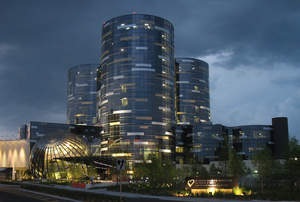
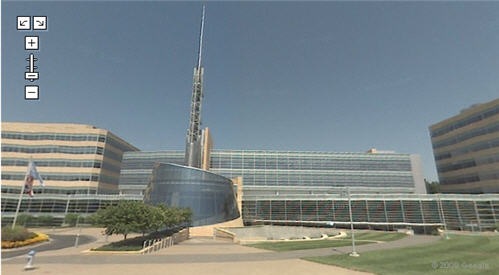
From Larry Zito: "Re: name that hospital. Looks like Winnie Palmer Hospital (Orlando Regional Medical Center). It’s a little less ominous in the daylight." Right you are, according to the reader who sent in the pic.

From Dr. Dobbs: "Re: AJAX frameworks. Here are some links to show how far they’ve come." Links: Screencast, sample Javascript widgets, desktop emulation, comparison of AJAX frameworks.

Listening: The Frost, late 60s Detroit psychedelia. Kind of Grand Funkish.

We did a fun interview with Rob Seliger, CEO of Sentillion, over on HIStech Report.

Jobs: Marketing Director (any location), Account Manager (UT), IT Director (NC).

Picis announces ED PulseCheck 4.0.

Great Q1 numbers for Cerner: revenue up 5%, EPS $0.44 vs. $0.34, beating estimates by 3 cents. I’m delighted to have been wrong — I thought sure they would turn in a bad quarter and, as the industry’s bellwether, foretell bad times coming for all. Congratulations to everyone there. CERN shares are up over 7.5% in after-hours trading. We’ll see shortly if its competitors fared equally well.

A bad Wall Street day for Omnicell, whose announced lower expectations led to a 30% haircut in the share price. Market cap’s down to $417 million with a PE of 16 even at the lowered earnings estimate. I don’t buy individual stocks, but this one looks like a deal (either as a shareholder or an acquirer).

Here’s an interesting story on the virtual physician visits offered by RelayHealth.

GE’s Jeff Immelt is taking big heat (some of it from predecessor Jack Welch) for the company’s recent and surprising downturn. Conde’ Nast Portfolio has an interesting recap of GE’s problems (too big and conglomeratized for investors to reward with anything but a pitiful PE) and suggestions to streamline the structure. "Nobody really understands your Healthcare business, so you can get rid of it however Wanchoo sees fit."

Sumter Regional CEO David Seagraves provides a somber update to the destroyed hospital’s financial situation.

Sad: a patient in a mental hospital for the elderly hangs herself by stringing a computer cord around her neck and raising it with an overhead motorized bed lift.

Australia’s Queensland Health is suing TrakHealth and its new owner InterSystems for misrepresentation. That follows TrakHealth’s earlier lawsuit against Queensland Health for cancelling its contract.

E-mail me.

Inga’s Update

Computer Sciences Corporation establishes a dedicated healthcare sector, leveraging its 2007 First Consulting Group acquisition. CSC veteran Deward Watts will lead the new business unit.

McKesson announces the availability of its integrated workforce management suite. Regular HIStalk readers know all about it since we did an HIStech Report on the suite right before HIMSS.

Since I am plugging HIStalk productions, I encourage you read the LingoLogix review posted Monday. We are starting a new series called HIStalk 911 to provide high level observations and recommendations for newer, emerging and/or smaller companies (at no charge and not available to sponsors just so everybody knows there’s no mutual back-scratching or anything). Since it was our first one, we are dying to know readers’ opinions, both in response to our comments and to the company itself. Thanks to LingoLogix, by the way, who asked us to take this peek under the hood.

Michael B. Kaufman, former Eclipsys executive VP, is named to the board of Premise Corporation. I was impressed to read in their press release that Premise grew revenue a whopping 260% in 2007 and 2265% over five years.

Unity Health Care in Washington DC selects eCW for EMR/PM. Unity has over 100 providers across 31 locations.

Seems the Seppos are not the only ones with HIT implementation issues. The Aussie’s HealthSmart project is at least two years behind schedule with more than half the budget spent and only 24% of the planned installations complete. The “cornerstone” of the project is implementation of Cerner’s Millennium clinical suite, which is not yet operational at any of the participating hospitals.

Connecticut IPA Fairfield (CT) County Physician Management Corporation and Norwalk Hospital select NextGen’s EMR/PM for its 200 member physicians.

MediCorp Health Systems (VA) purchases Sunquest’s LIS for a new Stafford hospital next year. MediCorp already uses Sunquest products at its Fredericksburg facility.

MEDecision names Tim Wallace as interim president and COO. Former president John Capobianco resigned last year. The company also named a former Horizon BCBS executive medical director as executive VP and CMO.

I looked over the newly announced Fortune 500 list, scanning for healthcare-related companies, and found a few familiar names. GE ranked as the country’s third largest publicly traded company, HCA was 31st, and EDS came in 43rd. GE was also the second most profitable. Cardinal Health was named the 19th fastest growing and McKesson is considered the 13th best bang for the buck (based on revenues per dollar assets.)

E-mail Inga.

HIStalk 911: LingoLogix

April 21, 2008 News 2 Comments

lllogo 

Company
LingoLogix
25 Highland Park Village #100 509
Dallas, TX 75205
214.252.9522
www.lingologix.com

Product
GoCode computer assisted coding for ambulatory encounter notes.

The Elevator Pitch (provided by the company)
"Improved compliance, revenue, and speed to billing – automatically for ambulatory patient encounter notes, with our Natural Language Processing (NLP) solution, GoCode from LingoLogix.  Physicians do their documentation while GoCode works in the background, without requiring providers to change the way they work.  New intelligence, reporting, knowledge extraction from narrative, free-text digital medical content.  We can work with an EMR or without one, real-time or batch mode, ASP or behind the firewall – no problem. And, the Chief Compliance Officer will be impressed with our consistent coding accuracy that has been demonstrated against audit to exceed 90% accuracy in automatic E&M, ICD9, and CPT coding extraction."

First Impressions
We went right to the the company’s web site, of course. It’s very serious and low key. Can we figure out what the company does and why customers and prospects should care? Let’s jump in.

The good news about all the smarmy criticism that follows: we think GoCode is pretty cool, at least judging from our CIO-level, first-pass review. It passes the first-sniff test. The customer we talked to raves about its ability to bill fairly and consistently (which usually means increased revenue) for its target customer, large organizations that do outpatient billing. Compliance is important, but nobody likes buying compliance solutions, so let’s go with Get the revenue you’re entitled to through accurate, defensible billing advertising approach. Is that the message being sent? Let’s take a look.

llweb

The most important web real estate (top left of the home page) has some stock art and a tagline, "The Science of Specialized Languages." That’s not much of a come-on, at least until the company gets huge and has offerings in many industries. It’s true, it’s bold, and it’s broad, but it’s not the best use of the 30 seconds of a casual reader’s attention that you’re apt to get. Redesign the front page with a clearer call to action and a single, constantly repeated message.

We’re serious about the 30 seconds rule. It’s like a date – the evening’s outcome is usually decided in that same 30 seconds. Spend more time creating a shorter message. 

Under The Company, it says, "“LingoLogix was formed in 2002 for the purpose of taking core technology developed at The Mayo Clinic to market.” Nobody’s going to buy just because Mayo wanted to make money. Isn’t your purpose to assure doctors they are coding accurately for maximize reimbursement? Prospects like customers whose very specific mission aligns with theirs. Name-dropping Mayo is fine, but not here. Would you go to a doctor who says, "I went into medicine because I wanted to drive a Porsche?"

Neither is the unremarkable history of the company and the year-old press releases in the News section of the front page. What are you selling? Am I a prospect? Has nothing happened in the year since the last press release went out? What do you want me to do next?

We would write sexier press releases. The news isn’t that the customer signed the agreement to use the product, but that they state that it’s "more accurate than human coders." This is a great story badly told. Don’t be afraid to market yourself – tune the message, focus on what’s newsworthy, and give the press ideas for stories that will generate free PR. 99% of press releases are terribly written, guaranteeing that no reporter in their right mind will do anything except move on quickly.

Since we’re lost at this point, we’ll click on Products. That’s a misnomer – there’s only one (and there’s nothing wrong with that – it shows focus). If I do enough clicking, I can find more specific information. The downloadable brochure is good, but it’s hidden away and is in the PDF form that clickers often avoid. It also doesn’t match what’s on the site – it’s better in identifying benefits, though it stops short of saying it helps you get your money. The testimonials are good and should be on the main site.

It’s better to repeat one focused message than to spray out several of them. Tell me (again) what problem I have and how you’ll solve it. Give me a bullet list of key features (reduces the need for coding specialists, works with free-text dictation without templates, etc.)

There’s a link for Demos. Oops – it’s just a signup form, free of the immediate gratification I’m seeking. Few people will do that. I’m doing you a favor looking for information – why stick a salesperson in between me and what I want to see? Is it top secret? Why can’t I just look at a video or PowerPoint on my own? The product section actually has a link in microscopic letters that links to a screen shot, but there needs to be more of that and it should be easier to find.

Surely something here is innovative (what was that "science of specialized languages" bit?) so where are the white papers, testimonials, architecture descriptions, etc.?

There’s no mention of a sales and marketing executive or of any strategic partners who will resell the product. Prospects might not care, but investors might, so we would talk a little about the distribution channel.

If you redesign the web site, go Web 2.0 and hire a pro. Simplify the message. Make it appealing. Strip away everything that doesn’t add value. Put your best foot forward in 30 seconds or less.

Identify the Problem, The Audience, and Their Fears
The first question we ask a company that’s looking for marketing help: who’s your target decision-maker? What pushes their button? How do you find them and get your message in front of them?

It’s not clear from the LingoLogix site, but its customer tells us the company has three influencers to reach: the CIO, the outpatient manager, and the compliance officer. Since their agendas are wildly dissimilar, why not provide each with a link to click and then hit them with a targeted message? One size does not fit all.

We would say that CFOs and COOs (hospital or large practice) would be the best contacts. They own revenue and compliance issues and have authority to buy a solution. They think big picture. Regardless of title, find out who owns revenue and compliance issues – and that’s not likely to be the CIO, whose only role is probably to veto if the technology is risky.

And like most hospitals, the first question is "who else is using it?" Your customer sites are excellent.

We like the OIG/compliance pitch, but until a provider is busted, how do they know they have a problem? Nobody buys compliance solutions proactively, at least not since HIPAA was found to be a toothless tiger. And in our experience, compliance officers don’t have a lot of clout when it comes to changing systems or workflow. It’s the secondary message to improving billing accuracy, especially since most organizations underbill, according to your customer. Focus on the incremental revenue opportunity, but use compliance as the nobler way to get that message across without making the prospect feel greedy.

Here’s what we’d want to see: some kind of checklist or online worksheet that tells me if I have the problem you’re solving. People buy solutions. That implies problems. How do I know I have one?

Say what you’re selling me – often. A computer product? Peace of mind? Enhanced revenue? Pick an honest yet sexy marketing message and sprinkle it liberally everywhere.

This is the area we’d focus on first since it spans all aspects of marketing the product, not just the web site.

Management Credentials
A small company’s executive team and board attract three audiences: customers, partners, and investors. LingoLogix has a strong team when it comes to investors, but not so strong for customers and partners.

We’d like to see more operational healthcare experience represented. If you’re selling solutions for billing and compliance, get people with impressive experience in those areas. General business experience in leadership gives the perception that a company is a technology vendor rather than a solution provider, which the company clearly isn’t – it has real-life, deep domain offerings. We’d make that statement more strongly, perhaps with a strong advisory board of provider-siders. Get people who are similar to your target prospects.

It’s a well-credentialed team. Get some heavy healthcare experience as an advisory board and it would be much stronger. Or, have a third party "expert" from a well-known consulting company review the product and provide a quote about how great it is (assuming they think it is).

Focus on Results
We see a lot about what the product does, but not enough about what benefits the customer enjoys from its use (and from its customer, there are many). The customer says the ROI is impressive, so tell me about it (or better yet, give me tools to predict it at my place). Show me the workflow before and after. Let me feel what it would be like running it.

ROI is important when it comes to passing that first hurdle. Put it in the prospect’s face.

Business Benefit is Strategic
No problems here. Customers don’t often buy solutions that don’t align with strategy. Who wouldn’t want revenue enhancement and compliance assurance? Companies often miss that point – even a great product won’t get a second glance if it doesn’t solve a strategic problem. This one’s a natural.

Innovation – Why Are You Better?
We recommend more information here. We don’t know who the competitors are or what our strategic alternatives might be. Tell us! You don’t need to be innovative from a technology standpoint (people buy solutions, not gadgets), but give the CIO something to grab onto – architectural diagrams, interfacing information, hosted vs. locally installed, etc.

And if the rules-driven NLP is more sophisticated than the usual text decomposition (which the customer says it is), then tell the CIO. Just don’t expect the rest of the customer’s people to care. They want results.

Do you have any services, support, updates, etc.? Do clients like it?

From what the customer tells us, GoCode is damned impressive at consistently and accurately creating accurate charges from documentation, easily measured and monitored by running it against "gold standard" documents of known quality. That might the most compelling sales point available. Remember Kasparov vs. IBM’s Deep Blue chess matches? Even people who didn’t follow chess got interested in the man vs. machine angle. Pit expert coders against GoCode and publicize the results (no matter who wins). The PR possibilities are endless and the resulting message is razor sharp.

Or, hitting the compliance angle, get statements from neutral third parties on the value of having an unbiased, consistent billing tool vs. humans. The customer has done that. Or, offer an accuracy guarantee or to appear with the customer if billing is called into question.

While doctors aren’t heavily involved in the decision, the customer tells us there’s a strong argument for them. Billing more procedures accurately means higher numbers,which may mean bigger bonuses with no extra work whatsoever. Physicians could help seal the deal.

We wouldn’t talk yet about the tool’s obvious potential to build or mine data warehouses. That would just confuse customers. Stick with the single message.

Conclusion
LingoLogix has a happy prestigious customer, an apparently highly functional product that delivers big strategic benefit, and some smart technology people. Like many or most small companies, they’re still working on their message and positioning.

We like the company’s chances of success. Few have the big-name reference sites that LingoLogix has, plus the strong possibility of some huge deals upcoming. Bring on some sales and marketing expertise after the next big sale, we say, and go looking for investor money if you need it. And be ready to build a strong support organization for a wider user base.

We’re most encouraged that LingoLogix opened themselves up for our critique. We said we wouldn’t mince words (we said it would be like Kitchen Nightmares, where Gordon Ramsay rips into a restaurant to help make it better). We’re confident that the average decision-maker would have similar reactions to ours, although they wouldn’t make recommendations for improvement – they would just move on if they didn’t get the picture quickly.

Now It’s Your Turn …
We said upfront that we would give LingoLogix the chance to respond to our observations and recommendations. Secondly, and arguably most importantly, we offered the expert opinions of HIStalk’s readers. We gave our thoughts for free and invite you to do the same.

Do you agree or disagree with what we said? What advice would you give LingoLogix? What else should they know about their market? What partnerships should they seek?

Add your comments below. I guarantee that a lot of people, including everyone at LingoLogix, will be hanging on your every word.

Monday Morning Update 4/21/08

April 19, 2008 News 1 Comment

From Ralph Hinckley: "Re: replacing Vista with XP. I just did it. Make sure your licensed version of XP on a CD is bootable. Boot from the CD. Nuke the partition when given the chance and install XP. If you attempt to do it while Vista is running and insert the XP CD, that will fail."

From Dnomyar: "Re: Epic .NET rumor. At the Epic User Group Meeting last fall, one of Carl’s announcements was an intention to move the Hyperspace environment from a native client to the web in an incremental fashion. As I remember, he estimated that that the full conversion would take at least five years, although some specific modules or applications (e.g. Prelude) might be deployable on the web sooner. Haven’t heard whether Epic has picked .NET for their toolset, though."

From Geek99: "Re: Epic .NET rumor. Epic moving to web deployment (regardless of whether they use .NET or some other application tier) does not necessarily have anything to do with the ‘end of Cache in healthcare’. Epic is a client-server application moving to an n-tier application. It’s highly unlikely that they would change databases on the back end just because they are changing the presentation layer."

From B: "Re: Epic boycott. Probably worth noting that Epic itself doesn’t support PP – certain employees do. Each employee gets to direct a portion of the yearly giving to area/national charities of their choice. Kind of sad that it comes to this, as I imagine this will end up affecting where some people want to have their charitable giving directed." Actually, as a reader pointed out, that page the first reader sent in is over two years old, which I missed because it looked like a news item. So, whatever the boycotters hoped to accomplish apparently hasn’t happened since Epic seems to be doing just fine. Nothing to see here, move along.

From Arse-Enio Hall: "Re: Epic’s non-compete. Here’s the latest list of companies that Epic identifies as competitors for non-compete purposes." On the list: Allscripts, Cerner, eClinicalWorks, Eclipsys, GE Healthcare, Google’s healthcare area, InteGreat, McKesson, Misys, Meditech, NextGen, and Siemens, along with all parent companies, affiliates, joint ventures, etc. including those pending. I’m pondering: is being on the list a good thing since that means Epic is taking you more seriously than other vendors?

From Roy Loney: "Re: Firefox. For some reason, HIStalk causes the Firefox 3 Beta 5 browser to consume a very high percentage of CPU. IE uses less than 2% after the page is loaded. It’s not HIStalk and it’s not Firefox, but the combination is a problem. Maybe FF3 is inefficient with those separate Flash objects for sponsor ads and will be cleared by by the time it’s GA." I noticed that it handles Flash poorly on other sites, particularly video (always stopping a couple of seconds in). It also doesn’t work with my employer’s web E-mail client or portal. Guess that’s why it’s a beta, but I’m still using it.

From Dash Riprock: "Re: VA. VistA is bulletproof when run in one instance per hospital, with at most an hour a month for maintenance. What has happened since the VA’s reorganization and move to regional data centers  is unprecedented in scope and inconceivable to staff. This is more than 30 outages in the past six months. Most are 1-2 hours long so they don’t make the press." Link. An April 10 outage in 12 medical centers was caused by hardware failure in the VA’s Denver data center. In addition, Qwest had a one-hour outage just as the VA began troubleshooting its own problem. Stakes are higher when you centralize IT.

From Dr. Chumley: "Re: CEO Enrichment Index. How about this one? The interim CEO at Grady Memorial Hospital is a state representative who missed 177 of 233 House votes this year. She is managing partner of her  law firm, a Grady board member, and was appointed to the Grady non-profit corporation. After firing the CEO, she took the position herself and accepted the $600,000 salary, She has never been a CEO." State Rep. Pam Stephenson was named a couple of months back. Here’s a little reporting error: a Grady official was quoted as saying that Stephenson is "imminently qualified to run the state’s largest public charity hospital." Unless she’s expecting a just-in-time dose of executive experience, I think the intended word was "eminently." A fellow Representative said he will introduce legislation prohibiting board members from taking executive positions at hospitals they oversee, calling Stephenson’s appointment "a conflict of interest of epic proportions."

From Carb Venturi: "Re: Cerner. I’ve noticed that web search tracking tools are showing a spike in searches for  ‘cerner layoff’ and ‘cerner layoff age discrimination’. I report this, but I have no idea what it means."

From McK-Nuggets: "Re: McKesson. John King, son of former McKesson/HBOC CEO Graham King, is appointed to SVP of sales, central region, for Mckesson." It is good to be King.

Here’s a reader’s submission for "Name That Hospital". Looks kind of ominous to me.

Hospital10

Patient Privacy Rights (Deborah Peel) issues a press release about the NEJM article on PHRs. "Contrary to popular belief, the ‘P’ in HIPAA does not stand for ‘privacy.’ Rather, HIPAA allows millions of healthcare businesses to snoop in our personal health records without our permission for ‘treatment, payment and operations’ (TPO), which allows data mining, marketing and the sale of our electronic records." The NEJM article seems to be getting a good deal of attention.

Look for a fun writeup on Monday or so: HIStalk 911. You asked for more coverage of small vendors, so we offered to give a volunteer company a CIO-level first impression. We got information from an executive there, did a telephone interview with a customer, and sifted through everything on their Web site and our e-mailed question responses. Inga and I will offer our thoughts on how they could improve. The company won’t see our conclusions until they read along with you, so you can bet they’re sweating right about now. HIStalk 911 is a dramatic but misleading name (the company isn’t desperate and we’re not passing ourselves off as esteemed experts), but we thought it was fun. Best of all, we’ll ask for your thoughts, too. Companies willing to accept public critique in return for visibility are welcome and we’re doing it pro bono, of course, although it does take a fair amount of time so we can’t do it too often. See you then.

A new study says healthcare IT needs 40% more people to implement advanced systems on a national level.

Jobs: IT Director of Business Applications (NC), Consultant (MA), Cerner PathNet Consultant (PA). Gwen has a deal for HIStalk sponsors running position listings.

Meditech co-founder and MIT professor Ed Roberts wins an MIT entrepreneur mentoring prize.

Clinical reference provider Epocrates, fresh off its iPhone stage time with Steve Jobs and apparently unafraid of a terrible stock market, files for a $75 million IPO. It’s profitable, anyway.

If you subscribe to Google Alerts and are getting updates from Advance for HIE, I’d ignore them. They apparently screwed something up and are blasting out all kinds of undated news story links that are years old (I don’t know why you’d ever post a news story without a date, but they do). Inga was atwitter over a QuadraMed news alert she received today that was interesting, but when I found the original press release, it was from early 2006.

All the geeks are aroused over Second Life, so I gave it a try and left unimpressed, at least for its business usefulness (maybe it was a pop-up offer to buy avatar genitalia about 30 seconds into the orientation that did it). It was a resource hog and isn’t easy to figure out, although it’s kind of cool. Maybe I’m being curmudgeonly, but it seemed like yet another time-waster for Internet hermits desperate for phony friendships or cybersex. I can’t imagine companies building Second Life storefronts and training centers will get their money’s worth.

This guy is interesting: at 26, he earned OHSU’s first PhD in biomedical informatics and is now a Harvard Medical School instructor. His interest and doctoral dissertation topic: working on the Nationwide Health Information Network.

E-mail me.

The PACS Designer’s Open Source Software Review

TPD was happy to see our fellow blogger Shahid Shah posted a list of 100 open source software programs for medical professionals. TPD has decided to review some these programs for HIStalk readers. It will  be a review of their usefulness in daily work activity and not much about their technical aspects. The first review is about Debian, which is an alternate operating platform than you would traditionally see in a medical practice.

Debian looks like it would be useful in work environments of small practices where one of the staff members has a broad knowledge of operating platforms and has done some previous installs of similar systems. Since there will be frequent bug fixes, you will have to evaluate each fix as to how it will affect your system. It would probably not be useful in large institutions unless it was first tested in a pilot of a select group of users.

Debian is available on the hardware platforms of  Hewlett Packard, Dell, and a few other hardware suppliers. Support functions can be outsourced to them if Debian is deployed in your practice. There is also a broad developers network and many universities across the world are using Debian.

TPD Usefulness Rating:  8.

Link 1, Link 2, Link 3, Link 4.

An Epic Customer’s Impromptu Visit to Verona

I’m a general surgeon and Epic user. You might be amused by my impressions of Epic and my poor cell phone photos of the campus.

While I was in Madison WI, my wife and I drove out to Verona. We could not find Epic’s address in our GPS, so we just drove out. Once in town, my wife just went up to the counter of a mini-mart and asked them, "Where is Epic?"  Everyone knows where Epic is! We got directions with only one turn, and voila!, we were looking at the familiar view from Google Maps.

We just drove around this HUGE campus, with many buildings still under construction, and nervously parked our car at what appeared to be a visitor’s parking spot and walked up the steps and hill to the Mecca. All around you see whimsical little sculptures and paintings and themes, like this one of Humpty Dumpty sitting on a wall holding a laptop that says "Epic!"

Epic

There are multiple finished buildings in a general circle of top of one hill all generally constructed in a brown, red, and grey theme, but each one designed differently. Across an artificial ravine, about 1/2 mile away, there is another massive office building of green and chrome glass, presumably an office and training center, which will dwarf this current new campus.

We walked inside and introduced ourselves to one of three secretaries and explained we came on short notice to visit. She said she would arrange a tour. In the entry lobby, we got the impression of the Pacific Northwest, with artificial trees, tree trunks framing a staircase nearby, and little ceramic photos and items hanging on the walls. Wood paneling and dark browns and greens mingled with Geek cultural icons like the head of Yoda of Star Wars perched on some end tables where visitors wait. 

Epic6

There are some photo books that I should have picked up, 24 Hours in the Life of Epic, featuring photos of employees getting up, getting ready for work, driving into work in minus 11 degree weather, and at work around the world, in airports, and on site.

It turned out there was no one to give us a guided tour, so we were given a four-page color brochure of Epic’s "Intergalactic Headquarters" and map of the campus and told we could take our own unescorted tour. We were introduced to the "Lake Conference Room" (on a lake theme with a rowboat in the side of the room framing a large paper tablet). More scenic sites were hard to figure out, "Wall of Hands," "Sunroom and Fireplace," or "Galaxy" or "Ice Palace." We were perfectly free to wander around and look inside offices and conference rooms which seemed to be about 1/3 full and 2/3 unoccupied.

People were pretty preoccupied. There were a few people sitting on couches with laptops, dress was casual, there were grease boards up in every office, many computers and laptops about, and all sorts of juxtaposed sculptures, furniture, artwork in whimsical arrangements and themes — an overview of our popular culture. It was at once distracting, interesting, and full of play.

Epic2

There seemed to be little concern for stealing trade secrets or unauthorized access. In several very large auditoriums, there seemed to be large employee orientations going on, teaching them principles of responsibility and responsible reporting.

Different buildings had different themes and names. We did not venture into the dining area, "Cassiopeia" but we found out that building "Formalhaut" was in a New York City theme with city streets, park benches, subways, and stuffed dummies adding to the décor. We did meet a few denizens of the building "Ganymede" who showed us around a little.

We were late for a dinner, so we stopped by the entrance, said goodbye, and drove off, musing at what is in store for Epic, a privately-held company with business expansion, lots of employees and space, and no significant financial debt. It looks like a company to watch.

Inga’s Update

Seems as if some TriZetto shareholders aren’t pleased by the company’s plan to be acquired by Apax Partners for $1.4 billion and are filing a class-action lawsuit. Mr. H predicted the acquisition might not be a slam dunk.

Medford Medical Clinic in Oregon is deploying Krptiq’s eScriptMessenger for eRx.

The University of Tennessee Medical Center selects GE Healthcare’s Centricity Perioperative Solution.

E-mail Inga.

News 4/18/08

April 17, 2008 News 10 Comments

From Mr. FA Queue: "Re: MUSE. Not a rumor, but certainly a head-scratcher. Replacing John Cleese as the keynote speaker at the 2008 International MUSE Conference… drum roll … Fran Drescher. What don’t I know that makes her appearance pertinent?" What’s all this, then? She wrote a book about her cancer experience. I’d rather see her in character as Bobbi Flekman with the lads.

From Spurious Emissions: "Re: GE. GE’s disappointing earnings at the corporate level are finding their way down to their hospital and physician customers. 30 FTEs in their physician solutions area (Flowcast and Groupcast) have been laid off and more may be impacted. After a long winter in Burlington, this is a tough start to the usual joyous spring." Unconfirmed. That does kind of suck – the only advantage of being absorbed by a humorless conglomeratized beauracracy is job security, then one bad quarter unleashes the pink slips (not a new concept for those in Burlington since the acquisition, unfortunately). I bet FAHC is getting pummeled with IDXers hoping to learn Epic.

From Ovid: "Re: EHR vendors. Lots of communication going on between eMedicalFiles (MDAware) and Propractica (StreamlineMD). Word is that these two CCHIT-bearing companies might be joining forces. Also lots of talk about a biometric application that might be adaptable to any existing EHR vendor platform."

From Pat Robertson: "Re: Epic. To all those Christian healthcare organizations spending tens of millions on EPIC’s EMR. Did you know EPIC supports Planned Parenthood? How does that compute with your healthcare ministry?" Link. Epic is newly added to a pro-life organization’s boycott list for supporting Planned Parenthood, along with Oracle and Merck. Already on the list: American Automobile Association, Kaiser Permanente, American Cancer Society, Girls Scouts, Kiwanis, Rotary International, March of Dimes, Susan G. Komen Breast Cancer Foundation, and American Diabetes Association. There’s nothing I can say that won’t make somebody mad, so I’ll just ride the fence.

From Jill St. John: "Re: Epic .NET rumor. If Epic decided to move to .NET, it would take billions of dollars and a decade or so. Can you call Epic or ask a big client?  This really would be game changing info and likely mark the beginning of the end of Cache in healthcare." Confirmation, anyone? I’m pretty sure Judy won’t take my calls, so if anyone knows, chime right in. 

From Pastor Taco: "Re: Sunquest. The situation at the ‘new and improved’ Sunquest has not changed. People continue to bail left and right. They still have leftover Misys executives who live in Raleigh (makes sense, huh?) and other senior management from the Misys era. Over the past several months, key senior managers have been pushed out of the organization without as much as a severance. Check with your sources – they will validate that not all is well at the good ole SQ. Everyone there is in fear for their jobs and under dictatorship rule. The numbers look good, but Vista really needs to look under the covers." Unverified, but confirmation welcome. It didn’t make sense to me either that they kept all the old Misys management and left them sitting thousands of miles away from the troops, as though the inconvenience of relocating to run the new company was too much to ask. I know nothing about them, but I would have cleaned house just to shake the Misys cobwebs off.

From Mikey Likes It: "Re: Art Vandelay on Epic. He states ‘the company supplying the consulting services is making the gold mine’. In my humble opinion as a grunt consultant, we earn every dime. Epic installs and go-lives are no picnic:  a) being away from home 14 days straight because an implementation manager scheduled me one day off during a go-live; b) working a 15-hour day correcting the instruction manuals because the client let his staff slip their due dates; c) being assigned a work space for five months smaller than my powder room at home with no intranet connectivity and being told ‘you figure it out’. I make a good salary, enjoy implementing Epic, and chose my profession, but please don’t whine that consultants make good money. 99.9 percent of us are dedicated to your success, willing to do whatever it takes, and we earn it every day."

From Tommy Pischedda: "Re: HIMSS booth race. All the companies I talk to are looking at ways to scale back on HIMSS booth size and investment. Times are very hard and HIMSS will really have to pad the numbers to show an increase if things progress as it’s looking. Many small start ups with small HIMSS booths are dying by the wayside – they are  way undercapitalized and in the midst of the recession (whether we call it that or not) that’s hitting healthcare and HIT." How about some multilateral HIMSS disarmament? Everybody cut back 20% from what you spent this year. Agreed? And I’m sure HIMSS will show an attendance increase, even if it means offering cheap day passes again (like this year) to move the turnstiles. Maybe that’s another reason to hold it in the puzzling choice of Chicago – more locals who’ll commute over.

From Rogue: "Re: XP support. MSFT support for XP is due to expire June 2008.  Please sign the petition at http://weblog.infoworld.com/save-xp/ to persuade MSFT to keep XP around another year or two until Vista or its successor can come up to snuff. I love my XP and if anyone can send Mr H. a good link on how to uninstall Vista and install XP (my new home desktop – no other option from Dell), I’d be way grateful."

From Mr. FA Queue: "Re: Hackensack. My deep inside source tells me that Siemens has not been booted from Hackensack University, but that they are looking at other vendors, including EPIC. This source tells me that the reason this is on the table is not because of Soarian, but because Siemens has not addressed the replacement of technology that already exists within their Invision environment. Plus the fact that Soarian Financials are way past due and there doesn’t seem to be much light at the end of the tunnel."

From Leroy Brown: "Re: Soarian. Siemens has web information showing Soarian implementations. The install activity and number of live applications is growing, but I’d estimate that Siemens has only 15-20 US customers live with one or more Soarian applications. Not a lot after all those years and billions." The most recent newsletter link is here. Leroy compared it to previous issues to draw conclusions. It says 80 customers, but I’ll trust Leroy’s number-crunching.

From The PACS Designer: "Re: Zimbra. As we move forward in bringing new concepts to healthcare, it would be nice to have tools to support this activity.  Zimbra is a next-generation messaging and collaboration software tool from Yahoo that has seen some application in educational institutions and may be a good tool for teams planning to improve the efficiency of working together daily. Ohio State, UCLA, and Georgia Tech are some of the universities already using Zimbra." Link.

Listening: 60s cult faves Flamin’ Groovies. Also, Fine Young Cannibals.

Two Children’ Boston doctors (at least one of them a long-time HIStalk reader) write an NEJM article warning of the privacy implications of personal health records, specifically those offered by Microsoft and Google, and the fact that those companies aren’t bound by HIPAA. We might as well raise the white flag right now and admit that HIPAA hasn’t done much for privacy except to raise awareness.

If you work in a hospital, give me a few seconds and be (anonymously) counted in my three-question survey (what’s your job description, what hospital do you work for, and what city is it in). I’m curious who’s reading. Thanks.

New poll to your right: what will happen to Cerner’s share price after its April 22 earnings announcement?

Call center software vendor Amcom Software says it grew 68% in its just-ended fiscal year.

Quantros announces its Disruptive Event Manager software for hospitals. That’s not defined, but other references suggest it means harassment, discrimination, and medical errors (but I’m still not sure). I guess if you’re a prospect, you’d know.

A British surgeon suspended for not keeping computerized records after being ordered to do so by overseers says he was misled. "My only problem is computers. I didn’t like computers. I was not computer literate and I was misled. I was told computers were coming, but not that it must all go on computer. You can do it manually as well."

Bringing home the pork: a Vermont counseling service gets $191,000 in federal money to pay for an EMR system, allowing it to move its own money into a big construction project, the opiate of nonprofit healthcare.

Bizarre: some Philippine surgeons are in big trouble after a YouTube video showed the entire OR crew laughing, cheering, and taking cell phone video during surgery on a male patient brought in after a New Year’s drinking spree and one-night stand with a male partner. The surgeon extracted six-inch long metal canister from the patient’s rectum, triggering a shout of "Baby out!" and resulting cheers from those in attendance. The doctor then chased staff around the room, spraying the can’s contents at them. Med and nursing students from the OR next door came over for the festivities. The patient says he was too drunk to remember how the can got there.

The Cayman health authority gets GE PACS for George Town Hospital. I only mention that because I’ve been there a few times. It was darned expensive even before the dollar went to hell.

WellPoint announces some kind of vaguely described medication surveillance system that will detect adverse events. Hopefully they’re not selling patient information to drug companies.

A West Virginia ambulance chaser gets a law passed to hide damages sought in personal injury and wrongful death lawsuits. He was prompted by a WV suit against McDonald’s that claimed a guy’s two Quarter Pounders Without Cheese were actually Quarter Pounders With Cheese, causing him a near-death allergic experience worthy of a $10 million lawsuit. Peering under the bun, even to preserve one’s frail and ephemeral human existence, was apparently beyond the plaintiff’s capability.

I haven’t done a CIO Salary of the Week for a very long time (and I’m not sure if anyone really missed them), but here you go: Albany Medical Center, Albany, NY: $310,433. HIStalk CIO Enrichment Index: 443. Wakemed, Raleigh, NC: $256,441. HIStalk CIO Enrichment Index: 38. Baylor Health System, Dallas, TX: $419,287. HIStalk CIO Enrichment Index: 154. Extra points if you can remember how to calculate the Enrichment Index because I couldn’t.

Thanks for reading, commenting, and e-mailing. It keeps me interested during the very many hours I sit here alone in front of the computer. Feel free to use the secure and anonymous Rumor Report to shoot me juicy stuff.

E-mail me.

Inga’s Update

From Greg Focker: "Re: VISICU. Talking to a VISICU sales rep, they are waiting for some of their installs to publish results of remote ICU citing positive patient outcomes and (of course) a huge economic benefit. They then expect to double their sales and support staff to handle the anticipated orders flowing in." Unconfirmed.

NextGen announces (warning: PDF) that Arkansas MSO Practice Plus will implement its EMR/PM suite. Practice Plus will utilize the PM product for its 200+ physicians and EMR for its employed physicians.

Apparently to Mediware’s surprise, Constellation Software of Toronto purchases 6.1% of Mediware’s outstanding stock. The stock price has fallen more than 50% over the last year.

The Rural Wisconsin Cooperative Information Technology Network selects HMS to provide EHR infrastructure for four Wisconsin community hospitals. The hospitals will share a data center and eventually exchange clinical data.

This week we ran Mr. H’s Inside Healthcare Computing 2006 editorial about the HIMSS booth arm race. Q posted a comment that he/she disagreed with my self-proclaimed curmudgeon boss who said he didn’t know anyone who enjoyed the exhibit hall experience. Like Q, I love running into folks I haven’t seen in years and find the people-watching aspect very entertaining. Q – I happen to be an ENFJ, so I totally get what you were saying.

A reader asked if we knew if many readers were planning to go to AONE. If you are a nursing exec heading to Seattle this month, feel free to drop us a note with updates.

Infosecurity Europe surveys 576 office workers and concludes that women are more likely than men to give away their passwords to strangers in exchange for chocolate. In fact, 45% of women and only 10% of men felt a chocolate fix was more important than security. If it were dark chocolate, I am pretty sure I might be inclined to share all sorts of secrets! Anyway, you have to love those crazy Brits for their ingenious marketing techniques.

A Florida radiologist will pay the government $7 million to resolve a healthcare fraud case. The doctor is accused of billing for procedures not performed, not ordered, and not deemed medically necessary. Seems the government also thought he was paying other physicians for referrals. A whistle-blowing ex-employee gets $1.75 million of the money.

Eclipsys announces that Cancer Treatment Centers of America has achieved 100% CPOE adoption on the first day using the Sunrise solutions. The Centers just activated the system simultaneously at all of its hospitals (four, I believe).

SCI Solutions  releases an upgraded version its Order Facilitator online order communications tool.

Arkansas convicts its first HIPAA violator, a nurse who accessed a patient’s PHI. The nurse’s husband took the information, called the patient, and threatened to use the information in an upcoming legal proceeding. The nurse pleaded guilty to wrongfully disclosing a patient’s health information for personal gain and faces up to 10 years in prison and a $250,000 fine.

E-mail Inga.

Which Trolley Goes to the Massage Tables? The HIMSS Booth Arms Race Is Getting Out of Hand

April 16, 2008 News 3 Comments

Inside Healthcare Computing has graciously agreed to make previous Mr. HIStalk editorials available from its newsletter as a weekly "Best Of" series for HIStalk. This editorial originally appeared in the newsletter in February 2006. Inside Healthcare Computing subscribers receive a new editorial every week in their Electronic Update.

I didn’t learn much at the HIMSS conference last week (despite having attended several purportedly educational sessions.) However, I did arrive at one conclusion: the exhibits are out of control.

I’m a confessed curmudgeon not entirely thrilled to see the Neon Gulch exhibit hall outgrow all but a handful of convention centers, a marketplace in which vendors pay millions for a few hours of exposure to the largely indifferent masses.

We all know that decisions aren’t made and contracts aren’t signed at HIMSS. In fact, real decision makers are so vastly outnumbered by vendor staff that the yellow badgers often demo their latest PowerPoint-powered vaporware to each other just to kill time before their expensive dinners. Booth traffic seemed to be down this year even by Tuesday, with shell-shocked attendees wandering around like the confused zombies in Dawn of the Dead, seeking familiar comfort from free pens and phony sales smiles.

I’ve yet to meet anyone from either the vendor or provider side who actually enjoys the exhibit hall experience. Odd, since it’s hard to dislike a place with free cookies, scantily clad rent-a-babes, and chances to win sporty midlife crisis mobiles. Maybe because I know it’s all fake. Interchangeable booth employees are eagerly trying to convince low-ranking non-decision makers that their product is Hot and Wonderful and maybe even Sucks Less than it did last year.

You might believe this after your first HIMSS conference, but surely not after your second.

Attendees are steered to the exhibits like cattle in a slaughterhouse. Hmm, I wonder why no educational sessions are scheduled for Monday afternoon or at other obvious times? It’s to make vendors feel good about their foot traffic, best measured in quantity rather than quality.

HIMSS encourages the booth arms race. You want to erect an acre’s worth of steel on two levels? No problem, as long as you can afford it and have your HIMSS points. Throw it out and start over next year? Do it! Bring your best gimmicks, your toothiest glad-handers, and your choicest trinkets and beat your competitor. It’s fun! Don’t be a tightwad! We reward big spenders by letting them spend even more!

Does anyone remember when HIMSS limited booth sizes to something like 20 by 20 feet, which was enough when you didn’t have booth babes, cookie and popcorn machines, cheesy celebrity look-alikes, and a fleet of cars to be raffled off? Were you really less well-informed when you didn’t need a sponsor’s trolley to haul you around the sprawling acreage of magicians and massage tables? If you’re really going to buy, won’t your vendor come to your place instead of waving you over at HIMSS?

We’re mostly a non-profit customer base. The country’s economy and competitive advantage are getting destroyed by escalating healthcare costs. Many of our organizations struggle with capital shortfalls and indigent care. And yet our big conventions (whether HIMSS or RSNA or ASHP or whatever) are looking more and more like Comdex 1999, apparently encouraged by us fun-loving representatives anxious to live it up on someone else’s dime. You know it’s bad when even the keynote speakers make fun of the excesses.

I personally could enjoy HIMSS with smaller booths, fewer gimmicks, less noise, and better disclosure of which demonstrated products are real vs. wishful thinking. I’d like to see little companies be able to exhibit without being slandered as “struggling” by their bigger-boothed competititon. I’d like to go home after the conference less tired, less embarrassed at wasting my employer’s money in sending me there, and better informed. But, that’s just me.

Mr. HIStalk’s editorials appear each Thursday morning in the subscribers-only version of Inside Healthcare Computing’s E-News Update.  To subscribe, please go to:  https://insidehealth.com/ihcwebsite/subscribe.html or call 877-690-1871.

News 4/16/08

April 15, 2008 News 6 Comments

From Pretty Kitty: "Re: Fletcher Allen Health Care. It is a full Epic implementation, managed by CSC. It will take up to five years to complete."

From Inside Outsider: "Re: Vista vs. XP. Now is a great time to go over to the Apple store and see what the future looks like. If you need a Windows security blanket, you can run Parallels or Boot Camp and use Windows as well."  I wish the price was closer to my usual beige box PC. In fact, news came out today that a company is offering a $399 Apple clone with a lot more horsepower, at least until Apple shuts them down (which will probably be in the next five minutes).

Do you work for a hospital? Would you mind telling me (anonymously) your job title, the hospital you work for, and its location? I’m just curious who’s reading. The survey is here and it will take less than 30 seconds. Thanks.

Former Misys Healthcare CEO Tom Skelton ended up here. Don’t bother clicking  if you’re not running Internet Explorer since IT noobs built the site using Office (the HTML source is horrendously bloated) so it doesn’t work in non-proprietary browsers.

Listening: The Sword, Gods of the Earth. It’s like traveling back in time to a 70s arena and having Black Sabbath’s Tony Iommi steal your girl and break his guitar over your head during their War Pigs encore. I’m percussing with all four extremities.

Cardinal Health announces $1 million in patient safety grants awarded to 34 hospitals.

Burlington Free Press opines that Fletcher Allen’s $89 million EMR project (their figure) and an impending $32 million claims surcharge to pay for interoperability is good, but premature without a plan to protect patient privacy. Odd: ACLU was an interested party in Fletcher Allen’s certificate of need review.

Philips joins GE in having a bad quarter: flat revenue, profit down 28%. Unlike GE, though, healthcare was a bright spot, with sales growth of 5% and unchanged profit margin. Their problem was TVs.

Jobs: SQL Report Writer (MA),  Clinical Systems Analyst (WI), PathNet Consultant (PA).

E-mail me.

Art Vandelay on Converting to Epic

I am certain much less than $1B is going to Epic as part of the Sutter implementation. From their press information in 2004, it is one part of a $1B+ transformation. I have seen press about their underestimating the Epic install.

The cost of Epic licensing isn’t that high compared with other vendors (Meditech excluded). Big-money Epic installs are due to third-party services, the cost of the client’s staff (if tracked – it varies everywhere), the cost of the infrastructure, and supporting applications like Cache, Oracle, and Citrix. Add-ons from companies like Capsule, Ingenix, Zynx, and Sentillion need their own infrastructure. Those add on a few more million.

The most difficult parts to swallow with an Epic decision are:

1. They will tell it like it is if you don’t have the right quality and quantity of staff, if your support processes and tools are weak, or your training isn’t very good. Few people want the truth. Everybody loves the "high" of the "first hit" off the promise of the future without thinking about what it will take to get there.

2. They will tell you data conversion is possible. FORGET IT. You can do basic conversions like MPI, basic schedules, and possibly "flat" clinical results. Do not entertain the idea of complex data conversion (insurance, battery style micro-lab data, accounts receivable) without God-like patience, a fat wallet, and a healthy dose of contingency time. Epic’s M data structure is 10x more complicated than a flat file or relational format. I have never had the pleasure of trying M to M. I could only imagine how much balder I’d be.

3. Epic’s flexibility is a killer. It will be a long, expensive, and hard installation and support challenge if each hospital and clinic is allowed to dictate the full scope of decisions. Avoid this with a strong base install model, good governance processes, and negotiation of changes.

4. The recurring maintenance fees can be pretty high. Smart organizations spend more time negotiating the recurring costs, especially the transaction-based fees. Ongoing cost of ownership can be an eye-opener.

So – $1B isn’t going to Epic. The company’s total revenues in 2006 were $422M. The company supplying the consulting services is making the gold mine.

Inga’s Update

Hope everyone had a happy tax day. I had to write a check, so mine could have been better.

Another nice win for eClinicalWorks. Salud Family Health, one of Colorado’s largest FQHCs, will implement ECW for more than 100 providers.

The Defense Medical Logistics Support-Defense Logistics Agency awards $54.8 million of your money to CACI International. The five-year blanket agreement covers professional services and information technology solutions for managing medical supplies and services for military forces.

Microsoft wins Frost & Sullivan’s 2008 Global Healthcare Information Product of the Year Award for HealthVault. Frost & Sullivan said, “The HealthVault initiative is a definitive step towards making online sharing of personal health information a mainstream activity that has the potential to improve doctor-patient relationships.” Perhaps. However, how much value does such an award have when it comes from a company that announces 3-4 “awards” to various companies on a daily basis?

Greenway Medical says it’s now the largest integrated, single-database EHR/PM/interoperability solution provider for OB/Gyns, with more than 260 practices on board. That equates to 1,334 doctors, 7,921 users, and 532 sites.

The town of Middleton, WI wants a piece of the hotel business generated by visitors to Epic Systems. Epic apparently generates 60,000 room nights a year and Middleton wants to offer free shuttle service between the airport, Middleton hotels, and Epic to take advantage of some of that tourist business. To get from the Madison airport to Epic headquarters, you have to travel through Middleton.

Sage predicts its financial results will meet analysts’ estimates, though analysts are still concerned about the company’s North American growth. One of the financial experts noted the healthcare division is still facing “zero revenue growth and flat margins.”

I suppose we have all concluded that hospital staffers in Hollywood like to peek in medical charts to feed the country’s gossip fix. In New York, however, all one medical worker was concerned with was how those charts could make him a buck. A New York-Presbyterian Hospital/Weill Cornell Medical Center employee is charged with stealing nearly 50,000 patient files and selling at least a couple thousand of them. Apparently he got $750 for one sale of 1,000 charts, which included patient Social Security numbers but no medical data.

E-mail Inga.

Monday Morning Update 4/14/08

April 12, 2008 News 7 Comments

From Fall Guy’s Bride: "Re: UCLA. I have worked at several hospitals and I can tell you that many employees are improperly viewing files on a regular basis. That goes for everyone from the aides to the nurses and even the physicians. One of my employers was much better at limiting access to necessary viewers than the other. I think this is a common occurrence among hospital personnel and I do not believe for a moment that this woman was a ‘rogue’ employee or that she did not share the information. At the least, she would have gossiped to her friends and co-workers. The laws guarding privacy need to be tightened! I would never go to the hospital I worked at because I knew my nosy co-workers would snoop." I agree. Don’t ever go to the same hospital you work in. You’re records will be widely viewed, even though mostly likely with the best of intentions and concern.

From Malvern: "Re: Eclipsys. On April 11, Eclipsys filed an 8K with the SEC in which it announced the termination of the poison pill by May 8, 2008.  Although the company said in the announcement that there is no anticipated transaction (read: acquisition of Eclipsys), it is hard to fathom why the board decided to do this without at least some thought towards an acquisition." A lot of companies are letting those agreements expire. A shareholder rights provision only protects the company from an uninvited takeover attempt, as I understand it, so it’s not relevant to voluntary acquisition. Sounds like good governance – in the absence of a poison pill provision, shareholders get to vote. On the other hand, removing the provision may signal interest in hearing from suitors.

From Just a squirrel: "Re: UPHS. Mike Restuccia named CIO of UPHS? Mike also owns a consulting firm. Guess which consulting firm UPHS uses. Hmm."

From Fish n’ Chips: "Re: Sutter. Sutter nurses are getting ready for their fourth strike. Meanwhile, the cost of the Epic migration is approaching $1B! What does Judy do with all that money?" I’ve always wondered. She doesn’t seem like a conspicuous consumer. Once you’ve got more than a few million, I suspect it doesn’t matter (but I’m not speaking from experience, of course).

From Californiasunshine: "Re: Keane. IMED is DEAD. They haven’t sold it for years. Now they are looking for everyone to move to Patcom. Lots of stuff going on with India, though."

From Dutch Treat: "Re: Philips. I noticed quite some coverage of  Philips on HIStalk related to a lot of acquisitions. Hot off the press – the latest ‘value” scoop." Link. Philips buys Chinese patient monitoring company Shenzhen Goldway Industrial, saying it likes that company’s products not just because they’re big in China, but because they’re suitable to other "value-conscious, high-growth markets around the world."

Eclipsys clarifies that its $90 million of auction-rate securities weren’t traded for $45 million of cash to by EPSi, but rather as collateral for it, just in case any finance weenies were holding passionate water cooler discourse about it.

A long-time Misys sales VP quit this week as we predicted. More to follow.

Want to be an athenista? athenahealth’s growth has opened up quite a few jobs, including some clinical ones.

Signups are to your right for the HIStalk update (so you get blasts when I run something new) and the weekly Brev+IT newsletter. Also, weekly job updates from HealthcareITJobs.com. The Google search to your right will dig through the five-year history of HIStalk, which is quite an archive of just about everything important that’s happened in the HIT world since mid-2003.

A British private equity firm will buy TriZetto Group for $1.4 billion and take it private. Apax Partners also owns India’s Apollo Hospitals, which runs a chain of medical tourism hospitals and related facilities. Apax has backed out of deals before, though, and shareholders still must approve.

Auditors of Memorial Health System of Colorado Springs say its software has serious security deficiencies that allow unauthorized employee access. The systems weren’t named, although they’re a big Cerner shop if I’m remembering right.

A newspaper article on physician EMRs neatly encapsulates the conundrum of getting docs to use them: "But doctors don’t get paid more by health insurers when their office staffs are more efficient. And they actually get less money when they take better care of patients. If a doctor cures a patient’s ailment in one office visit instead of two, he receives half as much money. Health insurers pocket the savings."  

GE Healthcare’s disappointing quarterly performance drags down the company’s earnings and sends the stock (and the stock market) into a tailspin. Healthcare’s revenue was flat and earnings were down 17%. GE missed expectations by 7 cents, of which healthcare’s poor performance accounted for 1 cent. Competitors shouldn’t gloat just yet: the company blamed hospital reimbursement and credit issues, which I’ve been saying will hurt most vendors. I expect Cerner to have bad news when it reports on April 22, although not as bad as GEs since its exposure to diagostic imaging reimbursement changes is minimal.

Fletcher Allen Health Care (VT) gets state approval to spend $57.2 million on a clinical system. The article didn’t mention the system, but I’ve said before that it was Epic (that’s obvious from the price, I think.)

E-mail me.

Inga’s Update

With all of McKesson’s recent acquisitions, perhaps they’re having cash-flow problems. Sheriff’s deputies padlock an Ohio mental health services company over a $13,500 debt owed to McKesson. If McKesson resorts to such tactics over $13K, I can’t imagine what they do when a hospital system owes them millions.

George Washington University will use Mediware’s blood management software product.

University of Kentucky Chandler Medical Center goes live on Eclipsys Sunrise Ambulatory Care.

Cardinal Health is handing out $1 million in grants to 45 health systems and community health clinics for the implementation of programs with creative and replicable methods of improving patient care. They claim 700 organizations applied for the grants.

The MA eHealth Collaborative announces an extension of its EHR program, providing participants an additional six months of support. The organization says that MA BCBS used the initial $50 million in funds so efficiently that there is enough money to continue certain aspects of the pilot, including participation in an HIE. They claim that 417 of the 435 participating docs are live on EHRs, but also note that the technologies are difficult and time-consuming to get up and running.

Our friends over at the HIT Transition Group are running a survey over the next week entitled, “The NPI Contingency Status Survey.” Michael Christopher says, “We’re doing it for free, and making the data available free, too. It’s a big project, designed to rapidly tell us (and the industry – especially including CMS) what problems there are in the NPI implementation right before CMS’ current contingency period ends.” If you are a healthcare provider, payer, clearinghouse or otherwise involved in claims processing, take a moment to support the creative guys that did our HISsie Awards announcement.

E-mail Inga.

News 4/11/08

April 10, 2008 News 4 Comments

From UPHS Employee: "Re: CIO. Mike Restuccia was named CIO of University of Pennsylvania Health System on 3/31. He was interim from early 2007 until now."

From The PACS Designer: "Re: DCP. TPD coined the acronym DCP for the relative new concept of the Digitally Connected Patient.  Now, it appears the concept is gaining momentum, as Philips Healthcare has released a survey on the effects of DCP in home care agencies. (1) 17.1% of agencies use some type of telehealth system. A much higher percentage of large agencies (32.0%) report that they provide telehealth services. (2) 88.6% report that telehealth led to an increase in quality outcomes, with 76.6% reporting a reduction in unplanned hospitalizations and 77.2% reporting a reduction in emergency room visits. (3) 71.3% report that telehealth services improved patient satisfaction, with no agency reporting that it reduced patient satisfaction. (4) 83.9% state that fewer than one in ten patients refused a home telehealth system."

From Spud Webb: "Re: HIMSS. Big names were part of an end-of-day panel at a regional HIMSS policy forum on April 8 in a city just outside of Boston. Jonathan Bush of athenahealth lived up to his reputation as an engaging attraction, saying, among other things: ‘I’m so sick of standards’ and ‘I hate the word interoperability.’ Also on the same panel were Girish Kumar of eClinicalWorks, Sumit Nagpal of Wellogic, and others. Pretty impressive gathering organized by HIMSS, New England Chapter." Another reader comment about the meeting: "I saw you mentioned the New England HIMSS meeting. I was able to attend today and have to say the CEO panel was very well done. The athena CEO and eClinicalWorks CEOs are both very compelling. These things are usually very boring, but this was one of the better lineups."

From Dutch Treat: "Re: OHT. In Europe, quite a buzz around the Open Health Tools initiative. Pretty quiet in the USA as observed from this side of the pond." Link. It’s an interoperability framework based on Eclipse that will link healthcare systems, with the first tools due on by January. The VA and Oregon State University are among the members, as are IBM, Oracle, and Red Hat.

From Gov’t: "Re: AHIC. Secretary Leavitt wants to take it private before the end of the Bush term. The various successor committees met for the first time this week. Not everyone is happy about privatizing AHIC – Pete Stark." Link 1, Link 2. Stark’s comment: "Secretary Leavitt wants the blind to lead the blind. If the private sector was interested in developing or able to promote interoperable standards for health information technology, it would have done so years ago – and private companies wouldn’t today be asking the government to pay for it. Self-interested private firms have and will continue to fight among themselves over specifics, further delaying the adoption of money saving and lifesaving technologies. It is well past time for federal leadership to fix this market failure."

From OneWizer: "Re: Keane. I had not heard that they lost the CHS account, but I do know that the First Coast system is being phased out, with clients expected to move to the Patcom and iMed solutions. Seems they have lost a number of hospitals of late with many of those moving to Meditech." No Paragon? Surprising.

Healthcare Growth Partners has its Q1 healthcare IT M&A transaction summary ready to go.

Roger Madura has a new edition of his VistA & Open Healthcare News, which I find to be one of the most interesting and well-written newsletters out there (even if you don’t follow VistA and open source all that much, like me). You can download it here (warning: PDF). A few factoids I extracted: Picis has ported its periop suite to work with VistA, a couple of best-selling healthcare books talk about the VA and VistA, and Roger has his take on the VA’s recent big outage and its intended replacement of VistA’s LIS with Cerner. Most interesting: the effect of putting a lot of DoD people in charge at the VA and their cultural bias toward big-ticket contractor software development (like ultra-expensive AHLTA). "Well, as a result, MHS is now facing a exodus of physicians and nurses. Because AHLTA does not work the way clinicians do they are having problems working with their patients and are having to spend several extra hours a day entering data into the system. Contractor-designed and built, AHLTA meets all the specifications,yet unlike VistA it very hard to use."

Kaiser Permanente tells 800 specialty nurses to either leave their union or lose their retirement benefits, so the union claims. The union withdrew its representation of the nurses, apparently the first time that’s happened since KP formed a partnership with them to avoid labor strife.

The folks at what used to be InteGREAT had to swallow some pride and pick a new name after one of those "too close to ours" complaints (even made-up words are off limits, apparently, leaving no names left except random combinations of letters and numbers that resemble a strong password.) Anyway, as their text ad to your right indicates, they’re now Orchestrate Healthcare Consulting. 

My editorial in this week’s newsletter: Perfect Is the Enemy of Good Enough: Waiting for IT Nirvana Kills Projects and Patients. It’s in the electronic update, just in case you’re looking.

Jobs: Clinical Informaticist (CA), Orders Systems Analyst (FL), Regional Managers Consulting Services (MA). 

Google announces its App Engine that lets developers upload, host, and run applications for free, with 500MB of storage and 5 million page views a month and the eventual option to buy more. Great if you code in Python since that’s the only language supported for now. Video showing a Hello World app being built is  here

Two Gartner analysts say that Windows is collapsing because of legacy code issues that prevent innovation. Their conclusion: Windows needs to be killed off in favor of a modular solution. I’m hitting the three-year mark on my desktop and considering a quad processor AMD, but then the decision: XP or Vista for about the same price? Vista’s doing fine on the laptop, so I might be tempted by it even though MSFT had to begrudgingly extend XP support because Vista isn’t selling.

A securities analyst says companies with a lot of auction-rate debt could be hurt by increased financing costs. Named: Eclipsys, HLTH Corp., and Cerner. One example is that Eclipsys got $45 million in cash for what I assume was its EPSi acquisition, but had to trade $90 million worth of those securities to get it.

Jim Bradley is named chairman and CEO of claims processor GTESS, moving over from its board. Big-time loaded, I assume. He used to be with Abaton.com and then iMcKesson (that was an unpleasant memory there for a second).

Microsoft launches the former Azyxxi in Europe.

The LA Times outs the now-fired UCLA nursing secretary who snooped into the EMRs of 33 of its celebrity patients. She declined to answer when asked if she sold Farrah Fawcett’s cancer information to the National Enquirer.

Bizarre lawsuit: a woman whose husband died a month after a liver transplant is suing PetSmart, claiming the liver donor was infected with a virus caught from a hamster she bought there.

And another: a Louisiana jury awards a couple $5 million from Chrysler after their Jeep ran over the pregnant woman as they were leaving for the hospital delivery room, killing her baby shortly after birth. The husband told deputies he left the Jeep in reverse while getting his cell phone, but the lawsuit claimed it spontaneously shifted from park to reverse. He changed his mind after reading claims that one model year of Jeeps could do that, even though his wasn’t one of them.

E-mail me.

Inga’s Update

The faculty physician organization at Duke University Medical Center selects Hayes Management Consulting’s MDaudit software. The solution will help Duke’s Private Diagnostic Clinic reduce compliance risk.

When it comes to sensationalizing the news, those Brits have got us beat hands down. Earlier this week, Barts and The London NHS Trust went live on Cerner and The Sun reported the hospitals “descended into chaos” when the systems failed to function properly. Hospital officials denied that the system crashed, though one admits there were some “teething problems.” (Don’t you just love those British-isms?)

Sunquest names Kelly A. Feist VP of marketing. Feist was previously senior VP of marketing for Eclipsys and Siemens before that.

Since my top pick for the NCAA basketball pool lost early (Duke), I sort of lost interest in the whole thing. $10 down the drain (not that I was betting – there was a charity involved!) My only consolation was coming in way ahead of Mr. H, who has shown to be far better at predicting HIT company mergers than college basketball winners. Thanks to the fun vendor folks for including us and sending humorous updates. They’ve sent over a nice chunk of change to Project Bethlehem.

Shar posted a note earlier this week on the HIStalk Forum asking if anyone had heard that EMR vendor Catalis was going out of business. After a bit of investigative reporting (I picked up the phone and called over there plus got an e-mail from an employee,) I got a little information. Apparently since last summer, they have had some major management shake-ups including most of their board and their President. They then hired a well-known management consulting firm and the proposed “solutions” actually led to more problems. They are now trying to dig out from the various issues and say they still have plenty of money.

CCHIT announces receipt of an additional 27 applications for ambulatory 2007 certification and four inpatient applications. CCHIT claims that if all four of the inpatient applications are approved, then more than 50% of the estimated market will be certified. All certifications are expected to be announced by July.

From Dr G: "I heard Mr. Hammergren, CEO of McKesson, on talk radio this morning (Ronn Owens show, KGO AM). One caller said, ‘John, you’ve swallowed the Kool-aid. You’d be perfect for a cabinet post in a McBush administration.’ The radio station offers podcast downloads, but that hour of today’s show (from 10-11 a.m.) wasn’t downloaded yet. The promos for Hammergren’s interview he would be discussing issues facing health care in America today. If you heard the interview, feel free to share." Link.

Former McKesson VP John Danahy joins Medsphere as vice president of sales. Apparently one of Danahy’s primary responsibilities will be to generate new business by leveraging Midland Memorial Hospital’s designation as one of only twelve Stage 6 healthcare facilities in the U.S.

The Center for Connected Health claims that connected health technologies, such as remote monitoring, are empowering patients to take a more active role in managing their health, and are helping clinicians provide more timely interventions and information to improve patients’ overall quality of life.

E-mail Inga.

Give Some Love to Nurses Who Don’t Love Computers: Why Nerd-Designed Clinical Systems Are Underused

April 9, 2008 News 12 Comments

Inside Healthcare Computing has graciously agreed to make previous Mr. HIStalk editorials available from its newsletter as a weekly "Best Of" series for HIStalk. This editorial originally appeared in the newsletter in May 2006. Inside Healthcare Computing subscribers receive a new editorial every week in their Electronic Update.

In working with nurses for many years. I’m always amazed by two things: (a) they are shockingly caring and helpful to complete strangers who are experiencing pain, fright, and human emotion and I love and respect them for that; and (b) they are terrible computer users.

Before the nurse readers of Inside Healthcare Computing rise en masse to lynch me, allow me to present my flimsy, anecdotal evidence. I’ve known at least 500 nurses over the years, many of them in informatics or IT roles. I’ve yet to see more than a handful who are good computer users and no more than a couple who can program or fix hardware and software problems.
Watching them navigate through complex clinical applications is like watching your kid play tee-ball from the stands – we nerds try to help them with muttered urgings (“Press Alt-Tab … Alt-Tab”) or subtle body English. It doesn’t come natural.

The part of the brain that makes a great nurse has some sort of limbic dominance over the nerd center of the brain. That’s not the case with lab techs, pharmacists, physicians, or most other healthcare professionals. It’s not good or bad, it just is.

In  short, there are few geek nurses, which is great news if you’re a patient who needs comforting or complex clinical care. Do you want a nerdy programmer or network engineer inserting your urinary catheter?

Who are the main users of our clinical systems? Nurses. Who designs their systems? Nerds, with occasional help from nurses (usually formerly practicing nurses with a little more of the nerd center, actually.)

I can’t think of any other industry where the front-line workers (and darned busy ones at that) are expected to interact at a high level with computers at all times. Lawyers, professors, artists, executives, and salespeople don’t. Maybe we’re asking too much for good nurses to be good computer users, too.

That’s where software design comes in. We’re still installing software that assumes that end users know and love the programmer’s way: poorly designed screens, unhelpful edits, and workflow that doesn’t match reality.

A just-released study found that routine overrides policy: 44% don’t always follow the two-identifier rule and a fourth of ICU nurses give critical meds without a double check. I suspect we don’t want to know how often nurses fail to chart meds electronically, clear their work lists, or reconcile orders.

While IT people sit in meetings and see policies in black and white (just like the absolute right and wrong of computer programming,) nurses are out there caring without much of a safety net. They often don’t know or remember the rules; sometimes they break them because it makes sense.

I’m not blaming nurses. If you asked programmers to suddenly start taking care of their co-workers when they’re sick, you get the idea.

Systems being sold today require too much training and computer savvy to ever expect a large body of nurses to master. They are not usability tested or certified against a panel of typical nurses. Not surprisingly, they aren’t particularly well used, either.

Rewriting old applications to make sense to nurses isn’t easy or cheap. It isn’t even necessary, since the bar hasn’t been set all that high. Still, I can’t help but think that the lack of clinical system success will eventually be tracked back to sub-optimally designed applications, which might spur at least one vendor to market a system that thinks like nurses, is easy to use, and doesn’t require compromising workflow. That’s what I’d like to see.

This editorial is copyright-protected by Algonquin Professional Publishing, LLC., publishers of Inside Healthcare Computing. Please do not copy, forward, or reproduce this material without prior permission.  To obtain permission or for more information about Inside Healthcare Computing’s reprint policy, please contact the Customer Service Department at 877-690-1871 or go to http://insidehealth.com/ihcwebsite/reprints.html.

Mr. HIStalk’s editorials appear each Thursday morning in the subscribers-only version of Inside Healthcare Computing’s E-News Update.  To subscribe, please go to:  https://insidehealth.com/ihcwebsite/subscribe.html or call 877-690-1871.

News 4/9/08

April 8, 2008 News 6 Comments

From Sookie Steppenwolf: “Re: Columbus Regional. With some of the recent dialogue about the need for IT based solutions for nursing, I’m surprised there was no mention about Columbus Regional Hospital’s 2008 Health Data Management Nursing IT Innovation Award. They were also first to achieve nursing magnet designation in the state of IN. Would be interesting to profile what they have done.” I will ask Inga to connect.

From BlueBadge: “Re: Epic. Epic is replatforming to Microsoft .Net, reversing a decision in December 2007 to go all Java/BEA.” That didn’t take long if so.

From Californiasunshine: “Re: Keane. Looks bad for them with the loss of the CHS account and decimation of the sales staff. The Medsphere relationship appears to be holding them up. Anyone hear anything?” Unverified.

From Agent99: “Re: layoffs. I’m curious whether other states show upcoming company layoffs.” Link. California’s web page shows WARN Act (Worker Adjustment and Retraining Notification) Notices, which employers must file 60 days before conducting mass layoffs (50 employees or more) or office closings. That would be quite interesting to know for other states, particularly since it lists individual positions affected.

From Cary Outsider: “Re: KLAS. People need to understand that KLAS results can be manipulated pretty easily. Certainly every vendor can play the game, but I guarantee you that Greenway and Allscripts incent their top reference sites to fill out glowing reviews. Marketing drives this and each company aggressively promotes their results.” Adam Gale said a year ago that the company would be willing to have its processes validated by an outside expert, but I haven’t heard that they’ve done it. And in this case, you’re right — it could be that vendors can convince marginally happy customers to screw over prospects by turning in a falsely positive review. In case it’s news to anyone, you really can’t trust reference sites any more — many of them are firmly in the pockets of their vendors. You’ll have to slip off from the executives and find a frontline worker to get an honest assessment these days.

Our now-doubly wealthy (he was an IDX co-founder) old HIStalk friend Paul Egerman of eScription, maybe the nicest guy in the industry, gave us a reaction when we e-mailed about today’s announcement of the company’s acquisition by Nuance for around $400 million. “We are very excited about today’s announcement. eScription is a great success story about emerging from a small entrepreneurial company with a pioneering approach to medical transcription, to the proven, well-respected market leader that we are today. We are appreciative of our customers, partners, and employees who have helped us achieve our great success. Further, we believe that we have been able to provide tremendous value to healthcare organizations through our software, in terms of improved productivity, lower costs and reduced turnaround time of medical transcription. Our mission, since our inception, has always been to improve the process of clinical documentation. Ben Chigier and I believe that, as part of Nuance, we can accelerate our ability to achieve our goals, and continue to innovate and serve the healthcare industry.” My 2005 interview with him is still one of my favorites. He mentions Dictaphone, also since acquired by Nuance. I think he should run for political office – I’d vote for him.

Speaking of acquisitions, it seems that HIStalk’s sponsors have enjoyed a high rate of being acquired for tidy sums. I’m not suggesting a cause and effect, but if you’re on the sponsorship fence …

Listening: Switches, British powerpop.

Jobs: McKesson HEC Project Advisor (FL),  Surgery Systems Analyst (FL), Revenue Cycle Systems Analyst (FL), Clinical Improvement Analyst (TX). Weekly job alerts are going out to several thousand folks, of which you can be one.

Happy one-year HIStalk anniversary to Inga. It’s seems impossible that it’s been that long since we crossed paths, but even more impossible that I did the first four years of HIStalk without her. I think she’s hooked on being an anonymous celebrity.

If you’re an IT exec interested in project portfolio management, Baystate Health and Solution Q will have an April 24 webinar on Baystate’s PPM implementation.

At least it isn’t yet another case of celebrity EMR snooping: UCLA Medical Center spends twice as much on end-of-life care as top-ranked hospitals. All the variation, interestingly, was from volume, not cost. Patients spent twice as long in the hospital than at Mayo. UCLA’s boilerplate response, like every other hospital’s with unflattering numbers: our patients are sicker.

McKesson sells its pharmacy management unit to Comprehensive Pharmacy Services for an undisclosed sum. No reason was given – not core business, I expect.

misys

Misys Healthcare, Raleigh, NC (click to enlarge).

Froedtert Hospital’s CEO, fresh off a $60 million Epic implementation, says interoperability is the best hope for IT to control healthcare costs (also implying that clinical systems won’t pay for themselves and repeatedly mentioning their high cost). “IT right now will improve healthcare in some ways, but the bigger issue in IT is that we’ve got to get to greater interoperability to really create some of the economies of scale that are needed. That requires a higher degree of collaboration among manufacturers. It may take the federal government to get involved in the standard setting, but I think at this point IT offers a promise. The cost of IT is incredibly expensive.” Depends on your vendor.

UPMC announcements: VP of emerging technologies Jay Srini is named chief innovation officer. CIO Dan Drawbaugh is elected to the board of Tickets for Kids Charities.

London-based Informa’s Map of Medicine is acquired by Hearst Corporation. Its graphical clinical pathways are used by NPfIT.

AORN hires CSC to develop a standard perioperative record for use in information systems and for benchmarking, using its PNDS nursing vocabulary. CSC’s Deward Watts is a buzzword-emitting Chatty Cathy doll whose string was pulled by the announcement, at least if you believe the boilerplate that’s attributed to him five paragraphs down in the press release. Nobody talks like that except press release writers.

Bizarre: two employees of a South African hospital, one of them a computer programmer, are arrested and charged with attempted murder and animal cruelty for killing 18 pigeons with pellet guns on the hospital’s roof, assigned to do so by hospital management because the birds were pests. Two other hit men are still on the loose.

Idiotic hospital lawsuit: a former hospital nurse fired after 35 years on the job files suit against her former employer. She claims her husband, who is the hospital’s CEO, discharged her when she confronted him for having an a suspected affair with the VP of physician practices. She says the hospital permitted his dalliances during his business trips and in his office.

E-mail me.

Inga’s Update

In response to its North American growth, Israel-based dbMotion, names Peter A. McClennen as its North American president. McClennen has spent time as president and COO at AMICAS, a GM at GE Healthcare, and in hospital and ambulatory healthcare management.

Re: reminiscing about Fake Ingas. For those of you not at the party, the one of the left is the pregnant Inga. Still lovely, but pregnant nonetheless. Come TEPR in May, pregnant Inga will be much more in blossom. Sure, it might spice things up, but I am not digging Mr. H’s twisted sense of humor. By the way, I am not sure who the pretty tall blond is between the Fake Ingas, but she should apply for the Inga job next year.

Fujitsu and NHS’s National Programme for IT (NPfIT) contract renegotiations continue to be stalled, leading to additional go-live delays.

This week marks my one-year anniversary with HIStalk. In reading over Mr. H’s initial introduction, he mentioned hoping that in time, my sarcasm would develop (to be more like the rest of HIStalk’s writers and posters.) Most days, I’m able to maintain my sweet Pollyanna persona, and I know compared to Mr. H, I am a honeybee’s delight. Hope that hasn’t been too much of a disappointment to the boss. It’s been an incredibly fun year and my knowledge of HIT has broadened dramatically, so thanks to both Mr. H and readers. Mr. H originally hoped my assistance would provide him additional time to be a coach potato, but I think instead he is now spending more time than ever figuring out creative ways to be the coolest read in HIT. Oh well, I take that as job security for me and more entertainment for all of us.

Synamed, an EMR vendor that has had won a few TEPR, AC Group, and KLAS awards, is offering its EMR/PM “free for life.” In the press release, they say they’re now selling ad space on their site, giving them the ability to offer the software free. I would also assume they are still selling and support (not mentioned in the release) because ad revenue is unlikely to provide much incremental revenue. My take is that they had a good product that never hit its stride in a competitive market, so they decided to change the business/marketing model. We’ll see if doctors “rush to enroll” as suggested in their release. Also just announced is a free on-line personal health record, also supported by ads.

Walters Kluwer Health announces the results of a survey showing 82% of ambulatory surgery centers do not yet use an EHR. Reasons: cost, lack of interfaces to other clinical systems, and fears of lost revenue. Walters Kluwer, by the way, provides clinical solutions for ASCs through its Provation Medical division.

The big news in Belfast, ME is that athenahealth’s first local employees punched in for the first time Monday. With 180,000 square feet, each of the 12 Mainers has about 15,000 square feet to spread out. When you look at the photos, you can see athena plans to put the other 100 folks they hope to have on board by the end of the year.

Children’s Hospital Boston is purchasing eClinicalWorks EMR/PM software for its primary care network, which includes about 175 doctors. ECW will work with the network to build a pediatric-specific disease registry reporting module for the physicians’ use. The hospital will host the software.

Internet-based revenue-cycle management provider Accuro Healthcare Solutions buys contract management services vendor TPMS. Both serve hospitals and healthcare providers.

Mr. H mentioned that HIStalk sponsor InnovateCG has a new website, so here’s the correct link. I noticed that, in addition to company information and listings of current employment opportunities (if you have McKesson, Siemans or Cerner skills, check it out) they also have a cool map displaying locations for an impressive list of clients.

A.O. Fox Memorial Hospital in New York signs a multi-million dollar deal for McKesson’s Horizon Clinicals.

E-mail Inga.

Nuance to Acquire eScription for $363 Million

April 8, 2008 News Comments Off on Nuance to Acquire eScription for $363 Million

Nuance Communications announced this morning that it will acquire transcription technology vendor eScription of Needham, MA for $363 million. Nuance says it will use eScription’s systems as part of its hosted solutions.

As part of the transcription, private equity firm Warburg Pincus will buy $100 million of Nuance stock and will acquire warrants allowing it to purchase an additional 3.7 million shares within four years at $20 per share.

Monday Morning Update 4/7/08

April 5, 2008 News 6 Comments

From Sleepless: "Re: Hackensack. If the Soarian rumor is valid, it would not be a surprise. I was involved in their Soarian Financials decision in 2002. They have been looking for ‘perfect’ rather than ‘good’ since then. They could have gone live with Financials three years ago, but they kept moving their ‘wants’ list, rather than address their ‘needs’. Lex is somewhat to blame, but his constituents keep moving the bar on him. His FTEs are extremely competent people, but the clinicians across the street constantly move the target. Siemens competed heavily against EPIC and IDX back in 2001/2002 and again for the Clinicals in 2005. No surprise that one of the clinicians has maintained a relationship with EPIC."

From On A Friday: "Re: Cerner marketing slick. An unidentified man seems way too happy to be configuring his computer’s BIOS. Scroll down to page 2, look closely at the text on the computer screen in the picture." Link (warning: PDF). Yep, Stock Photo Man is poking vigorously at a BIOS setup screen, of which the IDE drive’s master/slave settings are clearly visible.

From Wendell: "Re: GE Healthcare. 150 people cut Thursday."

From The PACS Designer: "Re: SAP. TPD has worked with SAP and noticed their expanding healthcare presence. Their software is quite complex and not easy for users to comprehend, so it could be a difficult sell if IT is unfamiliar with their applications. One option could be to hire a consulting firm to do custom development and provide training. When the SAP application is turned over to the client for daily use, the quantity of the data collected can grow quickly, thus providing real value to the client while reducing the number of data silos."

From Carl Hubbell: "Re: Unibased Systems Architecture. Health IT Strategist ran a blurb on the company’s CEO, with the last sentence being ‘Unibased declined to provide Covington’s age.’ Isn’t that odd, both that they wouldn’t say and that the journalist printed that fact? Maybe it’s like a back-handed compliment in discussing John McCain’s 50 years of service."

A well-placed source suggests that Misys will be losing some top-level salespeople (like VPs and directors) when the company’s fiscal year ends in May.

One reader guessed one hospital from the set of pictures I ran last time – UPMC Presbyterian. Nobody recognized MD Anderson (or said they did, anyway). Here’s another, sent in by Ray. Hint: the Swan-Ganz catheter was invented there (that gives it away, right?)

hospital3 

I see new HIStalk sponsor Innovative Consulting Group redesigned its web site.

Newt Gingrich is a self-worshipping blowhard at times, but he gets off a good line at Princeton: "“In the average doctor’s office, when a UPS person walks in, they double the amount of technology in that office." He also mentioned that some South Florida pizza restaurants registered as HIV clinics to rip off the federal government, apparently a widespread practice there.

TEPR unleashes another example of the marketing savvy that has made it a trivia question compared to HIMSS. The name of its latest award: "EMRs Best Meeting Medicolegal Requirements." I know they do serious work there, but theirs is the least-fun conference I’ve ever attended (once, long ago), about as dry as that name. Still, 5,000 attendees is pretty darned good and I guess that’s what you get when you dump the boat show and emphasize education. And while we’re all freezing in Chicago in April, TEPR attendees will be enjoying Fort Lauderdale in May, a far wiser decision.

Daph sent over some HIMSS pictures. Feel free to reminisce:

histalk_reception1

The first is a trio of lovely lasses (two of them Professional Fake Ingas) at the HIStalk reception. I should bring them to a TEPR shindig to spice things up.

himssreception2

The beer encouraged more food and vice versa and Healthia arranged a first-rate spread. If I had Neal Patterson’s money, I’d have a guy like this in my kitchen around the clock just in case I wanted a sandwich while toiling away on HIStalk, as opposed to the current arrangement whereby I drop broad hints and Mrs. HIStalk tells me to get my own peanut butter.

histalk_shoeshine1 

This is Red Hat’s Mr. HIStalk Shoeshine. It’s strange to see your stage name on beauty queens and shoeshine stands. I rather like it, actually. 

Here’s another patent extortion company making money from healthcare. Kaiser Permanente "buys a license" for running a call center, the patent for which is claimed by a company that’s allegedly extracted over $1 billion through aggressive lawsuits that end up being settled for the purchase of a license. The company’s patents are notoriously vague and short – here’s an example.

The folks at Raymond James sent over their quarterly KLAS review, which is handier than digging through KLAS myself (although keep in mind they’re in the stock biz, so there’s some vested interest inherent). Some nuggets, which mostly involve my interpretation (disclaiming so the KLAS folks don’t complain that I’m not presenting the entire statistical story):

  • Epic continues to slay everybody, now stealing another #1 in the pharmacy systems category and still busting it in the large ambulatory practice segment. If you sell against Epic, you might as well bow down now instead of waiting for the inevitable, especially if you’re a hamstrung publicly traded vendor.
  • GE’s Lastword Clinicals is dead last in primary and detail indicators. In fact, GE Healthcare turns in the most pathetic performance of every vendor IMHO, especially given the company’s inconceivable resources and reputation. The whole portfolio seems to be heading down the crapper as everybody waits for the genie to come out of the Intermountain bottle to save the day.
  • Cerner ProFit isn’t any better than it was. Too bad – it looked like they might salvage it a year or two ago.
  • Epic and Allscripts lead the ED segment. Hello again, Epic.
  • Centricity Lab’s scores are so low they mess up an otherwise tightly packed chart, surely one of the most dramatic first-to-worst stories ever written. It was #1 before Triple-G sold it to GE, if I recall.
  • Ditto GE’s medication administration product, the cellar dweller.
  • Ditto GE’s pharmacy system, also #1 at one time before BDM sold it to GE. Sensing a pattern?
  • For small-practice EMRs, Allscripts HealthMatics, Greenway ,and eClinical Works lead the pack, with Allscripts moving up a little and eCW dropping, with the analyst’s conclusion that eCW is having product and services delivery problems.
  • athenahealth leads the small-practice billing and scheduling segment, widening its lead in PM over eCW, whose "best vendor" score dropped from 95% to 69% in 12 months.
  • My impressions after a quick skim: Epic, athenahealth, Allscripts, Greenway, Sunquest, and McKesson Paragon are winners (with the Allscripts scores reminding everybody that the company is more than just TouchWorks and stock problems). Laggards trending down are GE and Cerner. Doing very well but worth watching in the next report is eCW.

OSU Credit Union donates its used telephone system, valued at $100,000, to Samaritan North Lincoln Hospital (OR).

A three-stented heart patient scheduled for a monitor implant in the UK is scared out of her mind when her appointment is cancelled. The hospital told her it was because of equipment and staffing levels, but a spokesperson contacted by the newspaper said the patient scheduling system messed up.

The Wall Street Journal rips non-profit hospitals that roll in the cash, citing 25 that earn more than $250 million a year and calling attention to Ascension Health’s $7.4 billion war chest. They mention Gary Mecklenburg’s $16.4 million parting gift when he left Northwestern Memorial in 2006 (he’s now a venture capitalist), nearly as much the paltry $20.8 million it spent on charity care (less than 2% of revenues, a ton less than the tax breaks it gets for doing so). UPMC, defending its $3.35 billion in cash and investments, says it will spend $1 billion (!!) to create electronic medical records, although the reporter mentions its $10 million in advertising and $3.3 million CEO salary. A billion-dollar EMR built on top of Cerner? How much better or cheaper would care have to be delivered to pay back a billion dollars? In the mean time, Pittsburgh is rotting away because there aren’t many taxpaying businesses left in it.

An enterprising doctor in Australia admits he used a PC to blast out boilerplate treatment plans to receive reimbursement, of which "every single one of them was considered inappropriate."

E-mail me.

Inga’s Update

Will Congress be hot to focus on patient privacy issues now that one of their own might have had his privacy breached? Apparently Rep. Joe Barton was one of 3,000 patients whose records were on a stolen NIH laptop. Barton was already a strong privacy advocate, having founded the Congressional Privacy Caucus.

No surprises here. Men are more likely to lose money on Internet scams than women, losing $1.67 for every $1 the fairer sex loses. Send a man a sexy photo and an e-mail and you never know what you’ll get back. So I hear.

Will the palm be more popular than the finger? BioGuard announces the launch of PalmGuard for biometric authentication. The product will look at unique pattern of veins in the palm for authentication.

Here is a link to participate in the Medical Records Institute/Philips Speech Recognition survey on EMR trends and usage. Results to be released in July.

E-mail Inga.

    News 4/4/08

    April 3, 2008 News 12 Comments

    From Stu Mascarpone: "Re: Siemens. Even after flying in its entire top brass to NJ, Siemens in now only a clicking clock away from losing one of its key flagship Soarian clients, HIMSS President’s Award-winner Hackensack Univ Med Ctr. After basically turning nothing on since 2004, HUMC is now in negotiations with Epic. The kicker: Epic is telling HUMC, which has an IT department of over 100 FTEs, that it is understaffed. So, before the Epic project can start, the hospital has to hire in excess of 50 FTEs and then send them to Madison to become Epic certified. Total cost is already estimated at well over $100M." Unverified. Makes sense on the staffing though. I can’t imagine installing Epic or any other big system with just a handful of reassigned staff and 100 total in the shop sounds light. Scrimping on help after spending millions on the system doesn’t make sense since the project will never get done. But, that’s an argument for considering all costs carefully upfront instead of just taking a hiring leap of faith after you’ve signed the deal.

    From Gatorray: "Re: your article on CIOs. There are other factors involved in the success or failure of a project. One that drives me nuts — having the IT department off-site. I know space is at a premium in the hospital, but sticking all of us IT types in another building away from the main campus removes us from the care-giving environment. It helps foster an us vs. them attitude." I’m with you there. It’s cool being off in the geek building where you can wear flip-flops and leave campus for lunch easier, but you’re just another vendor at that point. It’s much easier for users to hate people they never see face to face. 

    From Tina Recruiter: "Re: McKesson. They reorganize every year, change sales leadership every year, change sales strategy every year. Why would this year be any different?  The resumes are flowing on the streets, so something must be happening. BTW does anyone know what is happening with the McKesson ED product?" I had another company tell me they’re getting snowed under with Misys resumes (other than the recruiter I mentioned a couple of days ago), so it’s not just McKesson, I’m thinking.

    From Carl Kibble: "Re: Cerner picture. If Neal Patterson reads HIStalk, he must be beside himself (again) because your picture of the Cerner headquarters shows the parking lot (scroll to the left or right) as 98% empty. It must have been about 5:05 PM. No pizza deliveries to be seen either." I meant to comment on that, but I figured those parking spaces must be for visitors since most companies make the help park out back. I doubt he reads, although if I were a shareholder or employee, I’d want him to.

    Listening: Wolfmother. Aussie Zep/Sabbath clones.

    Welcome and thanks to new HIStalk Gold Sponsor Renaissance Resource Associates. They’re in University Place, WA and provide consultants for projects involving Epic, Centricity, Picis, Sunrise Clinical Manager, and other hospital systems. They’ve got some positions available too, I noticed.

    rra

    Take your last fond look at Merge Healthcare as it slips into likely oblivion. Shares are at $0.52, the company adds to its thick Nasdaq folder a delisting notice because of share price, and just-announced Q4 revenue was a paltry $15.6 million with EPS was -$0.28 vs. -$0.93. Improving, but they’re bleeding cash and not exactly inspiring confidence in prospects (if there are any). Stick a fork in ’em, I’ll predict.

    Medicity just sent out its latest electronic newsletter, which I always enjoy. The company did 10 million clinical transactions in the last quarter, has 97,000 physician users, announced Hospital Sisters Health System as a customer, and hired Gifford Boyce-Smith as CMO. They also mentioned my positive comments about their booth, which I thought was very cool, and included a picture that I’m stealing since the HIMSS Police made me holster my camera before I could take one. Looks like you’re headed up the stairs of a spaceship.

    medicitybooth 

    If you’re a hospital CIO or IT manager, please take my medical device survey for our little white paper project. Thanks. 

    More HIPAA problems at UCLA Medical Center: the hospital fires an employee for selling information from Farah Fawcett’s chart to a tabloid. The rag got the ultimate scoop — reporting her cancer relapse even before she’d had the chance to tell her family and friends. It’s like drugs, though: you will never win trying to curtail supply instead of reducing demand – all that does is raise the price. Most of the country seems to be preoccupied with reality TV and gossip sites, too busy to worry about war, the economy, or their own financial future.

    Doctors order inappropriate lab tests because of computers, including ordering prostate screening levels like PSA on teenagers who don’t need them.

    Teddy Kennedy and the usual suspects urge passage of what must be the hundredth health IT bill, of which the previous 99 have gone down in flames. It would codify ONCHIT, give the office $5 million a year, and provide IT grants. Among the rosy verbiage was nothing about the bill’s cost: $692 million (when it was originally proposed in 2005, anyway).

    GE Healthcare will shut down its Tampa office, with 72 jobs moving to Milwaukee and to Finland.

    Royal Bolton Hospital (UK) goes live with the Ascribe web pharmacy system in 12 weeks.

    Philips signs a research partnership with 5,000-bed West China Hospital, one of the largest in the world, to develop medical imaging procedures and cardiovascular monitoring.

    OK, here’s a couple of hospital pictures from Google Street View to guess. I’ve been to both campuses and I recognize them – how about you?

    hospital1   hospital2
    E-mail me.

    Inga’s Update

    Mobile computing supplier Socket Mobile announces the results of an “informal” survey conducted during HIMSS. The top concern of HIT professionals is apparently improving patient care, with 1/3 mentioning bedside POC as their top IT initiative. Lack of employee computer proficiency and cost factors were the chief impediments to implementations. The survey also noted that most institutions were considering laptops and COWs, not handheld devices like Socket Mobile sells.

    Saint Clare’s Health System says it has saved thousands of dollars a year on paper costs using DB Technology RAS and RASi for enterprise-wide data and report management system. I am sure that saving “thousands” is a good thing, but for an organization the size of St. Clare’s (four hospitals), I sure hope the “thousands” are more like $90,000 than $3,000.

    What Nurses Want” — a completely electronic health record, which they believe will give them more time for patient care and improve patient safety and quality of care.

    For those of you who tried but were unable to read Ed Marx’s CIO Unplugged blog. Ed, as well as his editor, dropped me a note saying there were some technical difficulties and the link is now working. I suspect the outage was related to a flood of his HIStalk fans visiting his site, but Ed was too modest to admit that was the issue.

    And if you were trying to check out the Soarian user group I mentioned earlier this week, here is the correct link: www.soarianusers.com.

    Perot Systems names John Hummel its new CTO for global healthcare. Hummel was most recently CIO of the California Prison Healthcare Receivership and Sutter Health CIO prior to that.

    Lehigh Valley Hospital-Cedar Crest is using Patient Care Technology’s Amelior ORTracker in its perioperative department. The automatic tracking software uses an ultrasound indoor positioning system from Patient Care’s business partner Sonitor Technologies.

    Six facilities have signed a total of $3.2 million in contracts with RIS/PACs vendor DR Systems. The contracts range from $195,000 to $1.1 million.

    Only five VC-backed staged IPOs came out in Q1, the lowest number in about five years. Of the five, four were medical device or biotech companies and one was a computer security technology company.

    I suppose looking at IPO numbers is as good a way as any for gauging the state of the economy. My next door neighbor surveyed our regular UPS and Fedex drivers, who both said their companies are laying off drivers and consolidating routes to cut costs. Personally, I have found that getting in for a pedicure is easier than ever, so I am blaming (thanking?) the economy, too.

    E-mail Inga.

    An Argument Against Giving CIOs Control Over Clinical Systems Projects

    April 2, 2008 News 6 Comments

    Inside Healthcare Computing has graciously agreed to make previous Mr. HIStalk editorials available from its newsletter as a weekly "Best Of" series for HIStalk. This editorial originally appeared in the newsletter in June 2006. Inside Healthcare Computing subscribers receive a new editorial every week in their Electronic Update.

    It’s hardly news that clinical system implementations in hospitals fail with astonishing regularity. Sometimes they explode in a huge fireball of organizational upheaval. Other times, they simply fail to deliver the benefits everyone expected. By failing, I’m referring to not just the IT part of the project, but the overall change management required to be successful.

    It seems we as an industry don’t learn well from our past mistakes. We keep making the same ones over and over again. Many of those I’ve seen involve the role of the hospital CIO in the project.

    CIOs rarely have a clinical background, most often having risen through the ranks of programming, managing, or consulting. I’m therefore postulating that they should not be given control over major clinical system implementations.

    CIOs don’t always have the respect of physicians, nurses, and those other key clinical personnel actually carrying out the organization’s mission. They may be recognized as holding authority over needed hardware and software tools, but to most clinicians, the CIO is the besuited mid-level functionary whose job it is to say “no” to IT requesters who did not pay adequate homage when defining for themselves which technology tools would improve patient care. Since IT controls the budget, innovation is allowed only if committee-approved.

    Some CIOs I’ve known made it their personal mission to set clinicians straight, convinced that without their wise paternal oversight, the wacky clinicians can’t be trusted with money or system selection power. Clinicians armed with reams of objective and factual system data are overridden with logic such as “It just doesn’t feel right” or “I know that company from another job or my peers,” which seems reasonable other than it fails to prevent the train wreck most of the time.

    CIOs like to make executive decisions even when they’re ill equipped to do so. Since IT executives have little influence when they’re not making big decisions, they tend to relish the chance to buck convention or override carefully designed committees. Their veto power is absolute.

    IT executives fear for their jobs, much more than they fear for the well-being of patients. They’ll override nurse informatics people nearly all of the time and MDs 50% of the time when it comes to delaying an implementation when faced with dangerous shortcomings. The most common reasons: (1) we’ve spent the money, so we have to go live; (2) it’s bad and not likely to get better, so we might as well go live, or (3) I promised my peers this system would work and I won’t tell them differently.

    Should CIOs be involved in clinical systems projects? I honestly don’t know. Programmer-trained logic doesn’t add much value. Neither does having been involved with a similar project somewhere else or sporting an MBA. Golfing and free lunch vendor relationships seem to hurt more than they help.

    Some of our big-name CIOs were directly involved in some of our big-name clinical systems failures, although the ensuing spin often hid that fact from everyone except the hospital employees and medical staff. Whether they made wise decisions or worried mostly about the Dilbert-esque world of timesheets and timelines I can’t say. But they’ve failed enough times that it’s worth trying something new.

    This editorial is copyright-protected by Algonquin Professional Publishing, LLC., publishers of Inside Healthcare Computing. Please do not copy, forward, or reproduce this material without prior permission.  To obtain permission or for more information about Inside Healthcare Computing’s reprint policy, please contact the Customer Service Department at 877-690-1871 or go to http://insidehealth.com/ihcwebsite/reprints.html.

    Mr. HIStalk’s editorials appear each Thursday morning in the subscribers-only version of Inside Healthcare Computing’s E-News Update.  To subscribe, please go to:  https://insidehealth.com/ihcwebsite/subscribe.html or call 877-690-1871.

    News 4/2/08

    April 1, 2008 News 8 Comments

    From Jackie Chiles: "Re: McKesson. It’s probably not really a rumor anymore, but McKesson is acquiring Rosebud Solutions, a maker of tracking software for tissue, instruments, scopes, etc.  Press release will likely hit today. The Rosebud booth at AORN conference has the McK logo hanging above it.Another more juicy nugget that I have heard from several independent sources is that McKesson is making some major changes in its salesforce, with some significant restructuring likely. One well-placed source told me McKesson’s cost of sales is about double its competitors due to current sales force structure." Here’s a link to the press release on Rosebud.

    From Sophie Winslett: "Re: RHIOs in Europe. They’re not that monolithic in the UK and Canada. Primary care providers are in their own clinics in the UK.  Even though it is a single payer system, they all buy their own IT systems. The UK is trying to get them to standardize on a few systems to provide competition and flexibility while limiting the number of interfaces, but each doc decides on their own. In Canada, hospitals the hospitals I’m familiar with are the equivalent of non-profit groups (such as you would see in a metropolitan Catholic consortium in the US). They are not directly owned by the government and they all made their own informatics decisions."

    From EasyRHIO: "Re: RHIOs in Europe. There is already a country with a nationwide RHIO for all eight million citizens. All clinics in the country are connected and most hospitals are connected with the remainder rapidly deploying. Welcome to Kaiser country, my friend."

    From Amanda Rada-Range: "Re: Brev+IT. I quite enjoy this – thanks for publishing it. You might have heard that AWP stands for ain’t what’s paid." Amanda was commenting on the latest issue’s lead story.

    From Lester Bangs: "Re: Axolotl. Axolotl has won the Queens NYC HIE contract, which adds to their dominance in NY state — they also have Buffalo and Rochester, which are also live. Check the details of the press release for what they are doing — EMRLite, e-Rx. It’s not just results reporting."

    From Chang Kai Shek: "Re: Epic campus. Looked pretty basic, but cool drive-through. Do you have other vendors’ campuses?" Well I mapped Cerner’s campus and found a drive-through just for you. Here’s a shot (if that design feature stays that way for more than four hours, I’d suggest going to the company infirmary). Thanks to the power of the Internet, I also found Judy Faulkner’s house with drive-by pictures and its appraised value (surprisingly modest), but that’s nobody’s business, of course, including mine. I’m thinking I’ll do a series featuring hospital pictures – what do you think? You could try to guess the hospital from its exterior.

    cernercampus

    Greenway Medical announces expanded support for PQRI/P4P programs.

    If you want a copy of the 101 Healthcare IT Marketing Ideas booklet I mentioned, e-mail Steve Bennett (he said it was OK to give his e-mail, although he may regret that once he starts licking a mountain of envelopes and stamps).

    Heard: Hayes Management Consulting is working with a Fortune 100 company to develop an employee health clinic — consumer-centric, paperless, and with an EMR linked directly to medical devices.

    CIOs or other hospital IT execs: help me out by completing a questionnaire on medical devices and IT. We’ve got a crackerjack group working on a white paper and we need some input. Thanks.

    Jobs: Clinical Applications Analyst Lab (WA), Business Analyst (CO), Centricity Senior Healthcare Consultant (CA), Client Manager (TN).

    I thought Dennis Quaid was just being a self-centered movie star in his ripping of the medical system after his twins were overdosed with heparin at Cedars-Sinai. He’s changing my mind: he implies he won’t sue the hospital if it does the right thing — implement bedside barcoding of medications (from his foundation page). He also seems to have a handle on the "system problems, non-punitive culture" concept: "Individually, the doctor, nurse, pharmacist, or other staff members, who commit these unintended medical errors, are not bad people. Indeed choosing a career devoted to curing the sick and easing the suffering of others is one of life’s highest callings. But these health care professionals are working in, and are sometimes victims themselves, of a broken health care system that has become more and more obsessed with the threat of exposure to liability and protecting it’s bottom line rather than being vigilant about correcting the flaws in that system that are the root cause of that very exposure." Damn well said, although this quote surely means he hasn’t seen the barcoding products currently available: "They have a bar code system in every checkout stand of every supermarket in the country. How could it be so complicated, and so expensive?"

    A UK health minister admits that work on Cerner Millennium in the South has stopped because of contract disputes with Fujitsu and Cerner.

    Problems in Australia, where devices set their clocks back for fall (seasons are backwards from us down there, remember) even though daylight savings time had been extended by a week in New South Wales.

    It was hard to tell with all their goofy April Fool’s announcements, but Google is apparently serious that its Google Docs word processor can now be used offline, courtesy of the Google Gears project.

    Here’s a pretty interesting look at telehealth in India. Interesting comment: "Technology has never been, and never will be, a stumbling block to progress in telemedicine." Another: "We should, however, remember that a fool with a tool is still a fool, and ultimately therefore it is the individual, not the technology, that can make or break the system." Sounds like they’ve got some great ideas over there. How long before someone starts offering telemedicine consultations from there at low rates?

    Fun: a Wales hospital has had its own radio station for entertaining patients for 40 years.

    A VA patient who nearly had unnecessary surgery because a nurse mistakenly read an old lab result proposes a software solution that the VA is considering: modify VistA to show only current lab results unless users explicitly request older ones.

    E-mail me.

    Inga’s Update

    McKesson announces its acquisition of Rosebud Solutions, which provides software to track and manage surgical instruments and implant materials.

    StatCom hires former Siemens and Lawson sales executive Michael Holland to head up sales and marketing.

    David Brailer’s Health Evolution Partners launches a $200 million investment fund aimed at early stage and venture companies. The fund’s advisors include a former US Surgeon General, a past Kaiser CEO/President, a Leapfrog Group founder, and a founder/CEO of The Health Technology Center. Former Partech International/First Consulting/Accenture executive Roy Ziegler will lead the group. I guess when you have been a healthcare IT czar, you’re able to get all sorts of folks to come to your party.

    Elmhurst and Queens Hospital Centers plan to make a go of a RHIO using Axolotl’s Elysium technology. The project is expected to take three years.

    I am not sure how significant this news is, but I smiled a bit at the press release. gMed announces the launch of a new EMR product called gCardio, which the company claims is a solution that “thinks like a cardiologist.” Hmmm.

    Cardiac Science announces that its HeartCentrix ECG software is certified with NextGen and the two have already deployed their first installation. Meanwhile, Cardiac Science also just signed a letter of intent to start working on a similar connectivity model with the Misys MyWay product.

    Nuance announces the release of Dictaphone healthcare division’s Veriphy-Ready HL7 Integration Server to automate the closed-loop communication process.

    Picis announces version 8.1 of its total perioperative automation and critical care applications.

    Soarian clients have a new users’ forum available at www.soarian.com. Formed with the help of Stoltenberg Consulting, the group will initially focus on question posting/answering and discussion.

    Health Management Associates and Novant Health announce a partnership in which Novant will purchase a 27% stake in HMA. The two organizations will co-manage 16 hospitals.

    Sachi Rath asked if there were other CIOs besides Halamka writing blogs. Check out Ed Marx’s CIO Unplugged. I like Ed because he’s a regular HIStalk reader.

    A Dell issue or sign of the times? Dell announces actions to restore its competitive advantage and drive $3 billion in cost savings. Included in the plans is the closing of its Austin desktop manufacturing facility, eliminating 900 jobs.

    E-mail Inga.

    Monday Morning Update 3/31/08

    March 29, 2008 News 9 Comments

    From Up to You: "Re: Scott Wallace. From a magazine: Wallace said he will continue to work in the area of healthcare IT at, ‘something really exciting, but I’m not quite ready to announce it yet. I’ve got another six weeks of really intensive work before I can announce it.’" NAHIT seems to want to reinvent itself following (and may related to) his departure. So, where’s he going?

    From Tree Adams: "Re: RHIOs in Europe. Points worth mentioning: (1) Taxpayer money and government are the only available sources of funding and administration in a cradle-to-grave welfare state; (2) Might it be easier to introduce a single, electronic solution within an existing nationalized bureaucracy when compared to our disparate, private organizations?; (3) Is it theoretically easier to finance and implement technology when the populations in question are so small (less than 10 million)? But go ahead and keep comparing them to our model."

    From The PACS Designer: "Re: Philips acquisitions. TPD is impressed by the recent acquisitions of Emergin, Visicu, Respironics, and Tomcat  With the addition of these four, it appears a move by Philips toward the center of the IT process in the enterprise. The mini-EMR mentioned in my HIStalk interview may have to be revised to a main player in the EMR competition!"

    Listening: new B52s, the first album with all four members in 16 years. If you liked Cosmic Thing, this is for you – the always-cute, beehived Kate and Cindy still sound young when they soar on the harmonies. Bet they’d play a mean HIStalk party next HIMSS.

    A reader pointed out that the Rumor Report button wasn’t working all of a sudden, so I made a new one and moved the form to a new page. It now loads instantly and takes you back to the "new" HIStalk page. So, send me a rumor.

    Why Epic is so expensive: take a virtual drive through its new campus Google Street View (the car-mounted 3D camera thing). Nice buildings surrounded by endless muddy fields, but it probably looks better now (or will by summer).

    Cool booklet: Steve Bennett, VP of Snelling Executive Search and Chuck Christian, CIO of Good Samaritan Hospital have published 101 Healthcare IT Marketing Ideas and sent me a copy (I had mentioned their quest for reader ideas, although I don’t know if they received any). Item #38: "Station the Help Desk in the cafeteria for a day." Fun. Some of my smarter IT management ideas have involved internal marketing, so I can vouch for these 101 as useful for ensuring IT department visibility and CIO job security. I don’t know how you can get your copy, but I expect the Snelling folks can hook you up. 

    Execs may like the Allscripts-Misys merger idea, but the sales natives are apparently restless. Resumes from both companies are hitting the street in great numbers, a recruiter tells me.

    Your federal tax dollars at waste: a for-profit hospital in New Jersey gets $500K for PACS upgrades. The hospital won’t peg a completion date until it can take another lap around the trough for more federal money. A real estate development company bought the bankrupt hospital in October. Maybe New Jersey has hospitals that aren’t bankrupt, under investigation, or both, but those aren’t making the papers.

    A bunch of New York RHIOs gets $105 million in grants.

    I mentioned that AT&T’s booth at HIMSS was busy, with a lot of potential partners sidling up as well. If you wonder what the company’s healthcare strategy is, check out my HIStech Report interview (just posted).

    A demonstration project says its "best practices" processes reduced medication administration errors by 56%, but of course leaves off the most important stat: how many of those would have caused patient harm? Most people miss the point that a "medication error" is usually something as benign as not being given your daily 8 a.m. laxative until 8:30. Fixing that doesn’t do … well, you know.

    More jobs: Account Executive (NC), Revenue Cycle and Operations (MA), Healthcare IT Project Manager (FL), RVP Sales (Western US), Information Security Manager (CA), MUMPS/Cache’ Software engineer (VA), Epic/Bridges Senior Integration Analyst (MA).

    Deborah Moore, a former RN and CEO of Accustat EMR of of Myrtle Beach, SC, is named as state Small Business Person of the Year (I assume it’s the business that’s small and not her).

    LSU wants a $250 per semester tuition increase on top of $43 million extra it’s getting from the state. They plan to spend $20 million for a new hospital EMR system.

    I was looking for a lesser-known EMR vendor and found them on the list of 321 covered by EHR Scope. I didn’t realize there were so many.

    Strange hospital lawsuit: Dongwoo Chang, a UC Davis neurosurgeon, accuses his supervisor Jan Paul Muizelaar of incompetence and practicing illegally. UCD suspends Chang citing his high complication rate and being a general pain in the ass. Chang is suing UCD’s top physician officers, saying he was fired in retaliation and that his own death rate and number of malpractice suits is zero, compared to Muizelaar’s high numbers of each. Makes you feel real good about needing trauma work done there.

    HHS launches a hospital comparison site that includes process of care measures and patient survey results (when available). I doubt most patients would understand the clinical measures (although they can review bathroom cleanliness and noise), but providers might find competitive bragging rights therein. Unmotivated newspaper reporters are already crafting stories around how the local hospitals did, I’ve noticed.

    Sad: a man whose mother died at Doctors Hospital (GA) in 2004 after what he believed was substandard care returns to the ICU armed to the teeth, killing a nurse, a secretary, and a bystander. I’m scared to say it out loud, but I’m surprised that it doesn’t happen more often with all the wackos that pass through hospital doors.

    The charitable foundation started by IDX co-founder Bob Hoehl donates $1 million to a Vermont literacy organization.

    Vermont Information Technology Leaders changes its mind – it now backs a surcharge on medical claims to pay for physician EMRs. Getting doctors to use them wasn’t mentioned.

    Oracle’s Larry Ellison is bonkers, but smart: he successfully challenges the tax valuation of his $200 million Japanese-themed estate, arguing that Larryland is so bizarre that it’s worth a lot less than he paid. Result: he’ll pay taxes on only $65 million, earning him a $3 million refund.

    ZDNet says Janet Dillione, CEO of Siemens Medical Solutions,was the smartest person at HIMSS, apparently because the reporter thought she looked a little like Hillary Clinton and because of her daringly insightful predictions such as "PHRs will be popular" and "Healthcare IT needs to change." ZDNet fawns over Soarian, apparently unaware that nobody’s buying it.

    E-mail me.


    Thoughts from the HIStalk 2008 Reader Survey

    Thanks to those to responded. Inga and I pored over your survey submissions endlessly, so your time was well spent.

    Not surprising: about 4% of readers are CEOs and 4% are CIOs, not much different than last year. As to the degree that HIStalk influences your perception of products and companies, 8.7% said none, 68.6% said some, 22.7% said a lot. The most popular HIStalk elements (in order) are news, rumors, and humor.

    Surprising: to the true/false question of whether reading about a company in HIStalk raises interest or appreciation for those companies, 80.3% said yes (that’s a lot). Best of all, to the question of whether reading HIStalk helped you do your job better in the past year, 75.4% said yes (a 10% jump from last year). I don’t know of any organizations or publications that can claim that strong of an endorsement, so that’s pretty darned cool.

    The comments were nearly universally complimentary (thanks for that). Some specific themes I teased out: you would like to see more interviews with non-CEO/CIO types, such as clinicians and non-hospital IT leaders (we’ll work on that). You’d like to see more activity in HIStalk Discussion (so would I.) You suggested a raffle or other incentive for readers who recommend new HIStalk readers (good idea). You suggested changing the sponsor ads (smaller, simpler, different layout) which we will review with the sponsors since they’re the ones keeping the virtual presses running. You asked me to highlight small, innovative vendors who might not make your radar otherwise, another good idea (if you know one or are one, check in).

    You also gave us a couple of great ideas for major, separate offerings that we may do if I can figure out how create extra hours in the day. Since I work full time, I’m close to maxing out at maybe 90 hours a week, so maybe it’s time to hire more helpers or something. The ideas were good and have been suggested before, so I’m confident they would be successful.

    Inga’s Update

    Cerner is participating in a community outreach program that will bring in 45 Kansas City area high school students for half their school day. The curriculum will focus on teaching students the skills necessary to succeed in the workforce, particularly team work and problem solving. Good stuff.

    The chairman, CEO, and CFO of Misys show enough confidence in the company’s direction to pull out their checkbooks and make substantial purchases of additional shares.

    The chief of neurosurgery at Brigham and Women’s Hospital is accused of sexual discrimination in a lawsuit filed by a female surgeon who believes she was denied promotions in favor of male colleagues with less experience. Whether true or not, the chief definitely has odd taste in office decor and at a minimum has been accused of having a pretty annoying sense of humor. (I will leave my “men are pigs” comments to myself.)

    MD Anderson is implementing MedAptus’s Facility Charge Capture and Infusion Services modules. Eight infusion centers will initially use the programs for reconciling the charge review, approval, and transmission processes.

    E-mail Inga.

    News 3/28/08

    March 27, 2008 News 6 Comments

    From Cherry Rojas: “Re: PHR fiasco. The State of Washington issued a $2 million dollar RFP for a demonstration project to link the EMS system in four counties to PHRs last fall. An out of state vendor won it December 12 using smart cards to verify patient ID and to hold their critical patient information, readable by portable reader. Two in-state consultants who wanted to sell the state proprietary software and (and who sat on the Health Information Infrastructure Advisory Board) got their legislators to cancel the RFP before the contract could be signed in February. SMART Association, the apparently successful vendor, had no idea it was an inside game. All references to the RFP have been pulled down from the DIS web site (but we have copies). How will we ever change healthcare if it’s just another inside game? Some DIS staffers were so upset that they were ready to quit.”

    From Bruce: “Ars Technica, a popular tech news web site, has posted an interesting article on EHRs and PHR. Very high level, but it’s interesting to see this hit the mainstream tech community.” Link.

    From Up to You: “Re: Scott Wallace stepping down as NAHIT CEO. This was WAY overdue.”

    From Dutch Treat:
    “Re: PHR/EHR. EMC and InterSystems are testing the PHR/EHR waters in Northern Europe. IBM runs Denmark. Who’s next? Case in point: unlike RHIOs in in the USA, governance and funds make a difference in Euroland.” Link 1, Link 2.

    From Art Vandelay: “Re: dumb EMRs. Many specialists using Epic find the EMR dumb until more configuration is done. This is always a tough position for hospitals or medical groups rolling out Epic. In the typical Epic EMR implementation, the first step is to focus on primary care in the ambulatory setting and hospitalists in the hospital setting. To make it more usable by the specialty physicians, a second round of tailoring then occurs. It is much easier for the implementation team to initially go with SmartText macros for notes and a few order sets for specialists. The team comes back again later with more focused templates for specialists. This causes many headaches in organizations without strong leadership, a large team, and good content management capabilities. By now, a couple of years have gone by and it is time for an upgrade, so progress may stall while the upgrade is tested. Still later comes the health maintenance reminders with the specialists saying, ‘WOW, you mean I get to use some of the discrete data I entered?’ Next, comes the focus on making sense of the order set and template proliferation. Few places take content management seriously and later have clean-up to do. It may or may not be time for another upgrade or the roll out of more specialty models. At last, many places then get to publishing queries in Clarity (data warehouse) for more advanced users to use in delivering care where some reminders may not exist. As with larger clinical systems, it is a toolkit. If the organization doesn’t have the right size team to match the hospital or clinic’s desire to implement and strong sponsorship to focus attention on the goals of the implementation, it is a rough uphill climb. It takes time, money, super-users, technology resources and a strong infrastructure to deliver the product. A place implementing an EMR can learn from Allina and Kaiser. Allina seems to have had great super user involvement. Kaiser has a content management discipline and content teams to quickly go area-by-area.”

    I got an e-mail from Bryan Walser, MD, JD, CEO of Perlegen Sciences, Inc. about the company’s activities with the unnamed EMR vendor. Actually, it was the same “letter to the editor” sent to other publications, so I don’t see much point in running it here. I asked him for an interview and he declined. I’m mostly interested in the EMR vendor, of course, and I’m still trying to find out who it is.Design Clinicals has a new web site, I noticed.

    Philips will buy Irish cardiology software vendor TOMCAT Systems. Lots of informatics activity in Ireland, it seems (field trip!)

    Information Week digs around the Gnutella file-sharing network using LimeWire peer-to-peer software to see if business documents might actually be found there. Downloaded:  banking passwords, credit card numbers, credit reports, tax returns, cell phone numbers of senators, meeting notes, and medical documents listing patient names with HIV status. The default setup of those P2P clients is often confusing about which PC folders you’ll be sharing with the world, so it’s likely that employees were so anxious to start downloading that they were sloppy in its setup.

    Jobs: EMR Developer, Clinical Improvement Analyst, Meditech Clinical Consultants, Physician Liaison. There’s a ton of new jobs listed, I see, so take a look and sign up to get Gwen’s weekly job listing.

    A few folks missed the HISsies cartoon, so I’m listing the winners below.

    HIStalk readership will break another record this month. It’s nearly there already with four days left in March. Sitemeter projects 66,796 visits and 101,700 page views. Thanks to those who read, sponsor, e-mail me stuff, and spread the word among colleagues. It means a lot. I’ll have an update on the broad themes from the reader survey in a couple of days. One of them: everybody loves Inga (and rightly so).

    New text ad to your right: InteGREAT Healthcare, which offers consulting services in the areas of application integration and interoperability.

    California will delay for two years its plan to track prescription drugs to prevent counterfeiting, moving it back to January 1, 2011. Everybody in the drug supply chain said they wouldn’t be ready and would have to stop selling drugs in California (riiiiight). How about that nimble pharma industry, of which Pfizer says it will need 5-7 years just to put serial numbers on its products, even though it’s already doing that for some of its high-profit drugs like Viagra?

    Allscripts files a new 8-K that describes the mechanics of its proposed merger with Misys Healthcare. It says the per-share value to MDRX shareholders is $14.30 to $16.20, an 85% premium to the share price the day before the announcement. Shares closed today at $9.06 if you want in.

    Cerner shares hit a 52-week low today. Share in athenahealth are dropping, too, and PSS sold some of its pre-IPO stake Wednesday. Nothing’s going to do consistently well in this market, of course.

    Former Harvard Vanguard CIO Tom Congoran will fill in as CFO of Massachusetts practice group Atrius Health, which has cleaned house on its executive team after parting ways with former CEO Debra Geihsler.

    Harvey Picker, founder of the Picker Institute that promotes measurement of the way patients experience healthcare, has died at 92.

    Cambridge Consultants says its Vena single-chip platform can allow medical devices to transmit data wirelessly for less than $10.

    RemedyMD will integrate the disease models and biospecimen management system of GulfStream Bioinformatics Corp. into its Investigate research software.

    The all-lower-case api software (annoying, yes?) acquires EPEPCS, a tool that estimates required nursing hours and skill mix.

    E-mail me.

    Inga’s Update

    Dr. Deborah Peel’s Patient Privacy Rights organization has posted a summary outlining each remaining presidential candidate’s stand on patient privacy. It’s worth a read if the topic concerns you.

    Mediware announces that its blood management software systems are ready to accommodate ISBT 128 labeling.

    Oshsner Health System is implementing new DocuSys technology for pre and post surgical care. The solutions will be used across Oschner’s 28 operating room and 15 other anesthetizing locations.

    Some not-so-good news for McKesson. A US District court certifies a $7 billion nationwide class-action lawsuit against McKesson on behalf of consumers and third-party payers. It has the potential to be the third largest class action suit in the US. It charges McKesson engaged in a scheme to fraudulently inflate the price of more than 400 prescription drugs.

    While it’s unlikely to cover the extra $7 billion, McKesson is partnering with Clorox to develop and promote disinfection protocols for mobile equipment and handheld devices.

    Nebraska’s Great Plains Regional Medical Center selects Eclipsys Sunrise Clinical Essential for EMR and medication management. They’ll add additional Sunrise products after Essentials is deployed.

    Thank you Wheaties Gal for sending me this link for an inspiring new bingo game. “This does not have to do with big mergers or company layoffs- has to do more with passing time in those boring IT meetings where they think nothing of rattling off acronyms and trying to put together sentences around the latest business buzzwords. Here is a site that you can print out ‘B-S Bingo’ cards. I think you would have to be careful not to yell out (like the girl in the TV commercial). Some meetings I have been in lately, I could get a cover-all in 30 minutes- or less.” I am on the same page as you on this, Wheaties Gal. Going forward, for all mission critical enterprises Mr. H and I will simply set our goals, leverage our resources, and just get it done.

    Speaking of getting it done, I was making up some pretty charts for Mr. H showing the growth in readers over the last 18 months. The number of monthly visits has doubled during that time period, which is pretty darned impressive. So keep telling your friends because it sure seems to make Mr. H happy!

    E-mail Inga.

    HISsies 2008 Winners

    Smartest vendor strategic move
    athenahealth, for its initial public offering (IPO)

    Stupidest vendor strategic move
    Medseek, for laying off employees right before Christmas

    Most impressive vendor sales deal
    Epic, Cedars-Sinai

    Best healthcare IT vendor
    athenahealth

    Worst healthcare IT vendor
    Cerner

    Best provider healthcare IT organization
    MD Anderson

    Vendor most likely to be acquired in 2008
    Allscripts

    HIS-related company in which you’d love to be given $100,000 in stock options that can’t be cashed in for 10 years
    athenahealth

    Most promising technology development
    Software as a Service/Service Oriented Architecture

    Most overrated technology
    RHIOs

    Biggest HIS-related news story of the year
    athenahealth’s IPO

    Best speaker you heard at a conference in 2007
    Jonathan Bush

    Most impressive vendor at the HIMSS Annual Conference in 2007
    athenahealth

    Most overused buzzword
    Interoperability

    Most effective CIO in a healthcare provider organization
    Judy Middleton, William Osler Health Centre

    HIS industry figure with whom you’d most like to have a few beers
    Jonathan Bush, athenahealth

    HIS industry figure in whose face you’d most like to throw a pie
    Neal Patterson, Cerner

    HIStalk Healthcare IT Industry Figure of the Year
    Jonathan Bush, athenahealth

    Text Ads


    RECENT COMMENTS

    1. Today's post contains the phoenixes rising from the ashes of the post COVID telehealth era. There's two things that destroy…

    2. "Block [...] will lay off nearly half of its workforce [...citing...] AI". Here's an alternative interpretation. AI has become an…

    Founding Sponsors


    Platinum Sponsors


    Gold Sponsors


    RSS Webinars

    • An error has occurred, which probably means the feed is down. Try again later.