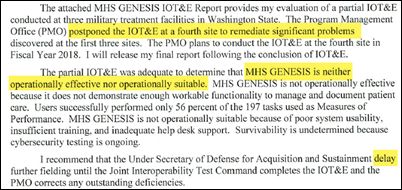
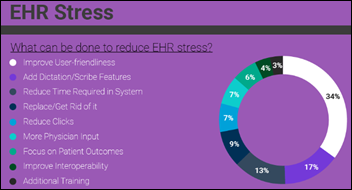
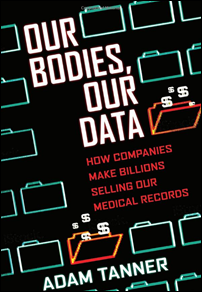
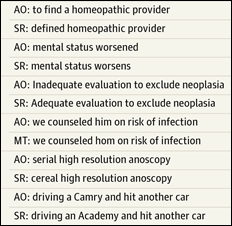
Curbside Consult with Dr. Jayne 8/6/18

August 6, 2018 Dr. Jayne 1 Comment

The Atlantic recently ran a great piece that talks about why physicians should read fiction. It discusses a paper recently published in Literature and Medicine that suggests that working with literature can help physicians think more broadly and can help them better understand the situations their patients are facing.

My medical school was progressive in this regard, offering a writing elective for first-year students. We met with a member of the faculty who was also a writer and worked through both reading and writing exercises. Of course, we talked about famous physicians who were writers, such as Chekhov, but also had the opportunity to write about our experiences with medicine both personally and professionally.

Hot on the heels of some short story classes in college, I wrote a story about my grandfather’s having a heart attack and dying at a fairly young age. It was a challenge to think about it from a medical perspective and to try to link together some of the things that occurred prior his death, in the greater context of the disease that ultimately took him. I’m not much of a poet, but one of my classmates wrote some moving verse about her experiences in the neonatal intensive care unit. It was great to see a different side of my classmates, considering we spent most of our time competing for the scarce A grades our professors were willing to award.

In particular the paper, titled “Showing That Medical Ethics Cases Can Miss the Point,” talks about ethics cases that healthcare students might review as part of their coursework. The goal is for students to think how they might react in similar situations, and what different options they and their patients might have to choose from. The paper suggests that the case studies are lacking in style, and don’t include the nuances or tidbits that would help the characters come to life. Author Woods Nash feels the sparseness of the case studies might limit their ability to impact students. He uses examples to show the difference between a story that explains characters and their motivations and a dry ethics case that tries to boil the issues down to a minimum of words.

When Nash works with medical students, he assigns stories that the students have to try to distill to an ethics case study. The students then read each others’ work and talk about whether students make different assumptions about the situations or whether they include the same details in their respective write-ups. The point is to help students understand that style can influence how a case is perceived.

Nash told the Atlantic that case studies might need to fall by the wayside: “The real world is messy, of course, and ethics cases often teach us (implicitly) to clean up that mess by oversimplifying it.” He goes on to say that ethics cases “are themselves a byproduct and reflection of clinical practice’s overemphasis on efficiency. Not just in primary care, but in many areas of medicine, doctors spend far too little time really listening to patients and trying to appreciate the depths of their patients’ problems.”

As our healthcare system continues to press for efficiency, it makes it harder for physicians to listen to their patients. Market forces are driving physicians to only see the sickest patients, leveraging care teams including midlevel providers to deliver the more routine visits, including preventive visits. For younger patients, the preventive visit might represent the sole interaction with a physician each year.

As patients age, their needs increase and those visits become more frequent, resulting in the intensification of the patient-physician relationship. Of course, this assumes that the patient’s insurance hasn’t changed, they haven’t had to move to a different primary care physician, and that they’ve been able to maintain continuity. From experience, it’s much easier to advise a patient and his or her family on end-of-life issues if you’ve known them for some time and have been able to build that relationship. In the world of six-minute office visits, that’s a much taller order to try to fulfill.

The practice of medicine is messy and I’m glad to have come across authors who recognize that and can lead people through some of the challenges we face. A favorite author who is very good at this is Chris Bohjalian, whose book “Midwives” captivated me in medical school. The book deals with a particular medical scenario, where a midwife performs an emergency C-section on a patient who may not have been dead. It goes through the resulting legal issues and trial, and brings up a lot of questions about what happens in the heat of the moment when there is a medical emergency. I hadn’t read anything of his until recently, when I came across “The Double Bind.” It also has some medical overtones as well as being a good read.

Being in healthcare can lead many of us to question our own humanity. I don’t think it’s exclusive to people who are providers, but I think it starts to flow over to people in related fields such as healthcare IT and health policy. As we start to look more at populations and cohorts of people, will that lead us to stop thinking about individuals and their unique situations? Will we be more likely to treat the statistics rather than treating the patients in front of us?

As cool as I think big data is and how great it is to be able to look at population-based data, it’s hard to explain odds and statistics to families who want everything done for their loved ones despite insurmountable odds. Population health is great when it helps us reach patients who might not be receiving recommended preventive services or who are at risk for serious health conditions. The ability to protect patients and preserve health is amazing. At some point, however, population health technology might be used to identify people who are receiving what some might perceive are too many services or too many treatments given their age and condition. Where do we go from there?

I always ask myself whether I’m considering everything a patient is going through when they make what might initially seem like an unreasonable request. Are they just having a bad day, or is there something else going on? What else can we in the healing professions do to help? Those questions are difficult to contemplate in a short visit, but reading about similar experiences may help prime our brains so that we’re better prepared to address complex situations when they come our way. That’s the point of ethical case studies.

Are they as helpful as we think? Will they better prepare us for the challenges we face in healthcare? Does your organization use them? Leave a comment or email me.

Email Dr. Jayne.


Monday Morning Update 8/6/18

August 4, 2018 News 4 Comments

Top News

image
image

Allscripts will sell its joint venture stake in behavioral technology vendor Netsmart, the company said in its quarterly earnings call Thursday. Allscripts acquired Netsmart for $950 million in April 2016 with the participation of a private equity investor.

Allscripts President Richard Poulton said:

Seizing on the momentum we’ve created in Netsmart during the quarter, we took further steps to position ourselves to unlock value for shareholders through monetizing our investment in Netsmart. After researching and discussing several possible alternatives, we began detailed negotiations with multiple parties on the sale of our interest. We have signed a letter of intent and buyer diligence currently continues. Based on the work accomplished to date, we expect to answer a definitive documentation on the sale during the third quarter.

image

Allscripts CEO Paul Black explained the rationale for the sale:

From the beginning, we set up a ownership structure that was not sustainable for the long term. It meant we were either going to be a seller or a buyer, ultimately, of the rest of that. What our shareholders are clearly telling us today is they don’t put a lot of value on our ownership in that today, based on where our stock is. You’re probably pretty familiar with what’s happening at some of the post-acute assets right now, which are trading at very high numbers. We think it’s in the best interest of our shareholders to let somebody who values this more own it and will reward our shareholders with the benefits of that. It’s really been more of a financial asset than a strategic asset for us and I think it’s the right thing for us to do.

Other items from the Allscripts earnings call:

  • Recurring revenue made up 80 percent of the total.
  • The absence of regulatory-motivated buying behavior has extended the software sales cycle and made revenue timing prediction trickier, especially in the hospital market.
  • The company sold its first managed services deal to a former McKesson EIS client.
  • Practice Fusion has had “tens of thousands” of paid signups since the June 1 termination of the free offering.
  • Paul Black says companies that offer only EHR/PM systems, unlike Allscripts, will struggle in a competitive market.
  • The company says M&A has never been a specific strategy, but they’ll jump on deals that increase the Allscripts scale or footprint.

Reader Comments

From CI-CI-O: “Re: project branding. I’m interested in your thoughts and those of your readers. As we embark on a project to move to a single EHR across our organization, I believe we need to brand this with our own name and avoid having our users refer to the EHR by the vendor’s name. My marketing leader disagrees. There seems to be people on both sides of this debate. Do you think in-house branding a makes a difference in how the EHR is perceived during or after a roll-out?” I think you absolutely should give your project a specific name, for a couple of reasons: (a) the effort goes far beyond that single vendor’s implementation and thus it is your project and your organization’s effort, not theirs; and (b) it needs to resonate with hospital employees who need a better visual than the company name alone can provide. Just don’t name it something goofy or overly ambitious (which is harder to do than it sounds). Skip the employee naming contest and get your marketing people involved to treat it like a business identity project in giving it a descriptive name, logo, and tagline. It sounds woo-woo, but it’s not. Your marketing people seem inept to not be jumping all over this opportunity to show their skill. Readers?


HIStalk Announcements and Requests

image

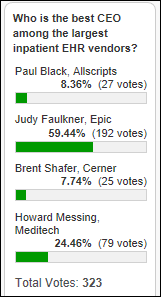
Two-thirds of poll respondents say it’s not acceptable to fire an employee over activities that are repugnant but legal. Nick says it’s just another form of lynch mob for unproven rumors similar to what’s happening in rural India. A couple of folks say it’s fine if the employee agreement contains a morals cause. B thinks companies have a responsibility to create a safe environment and thus to exclude those who promote violence. A few respondents say it’s a slippery slope in defining “unacceptable” behavior.

New poll to your right or here: Is it OK that medical bills regularly force people into bankruptcy?

image

Thanks for some good answers to last week’s question.

image

This week’s question: what do you wish you’d known before turning 40?


Webinars

None scheduled soon. Previous webinars are on our YouTube channel. Contact Lorre for information.


Acquisitions, Funding, Business, and Stock

image

From the Cerner earnings call:

  • The company’s 9 percent bookings growth included seven contracts valued at over $75 million.
  • Work with the VA and DoD will accelerate efforts in the areas of population health, open platforms, and telehealth.
  • Cerner says its work with Lumeris give it the ability to add provider health plan functionality to HealtheIntent and new markets for Millennium.
  • The Lumeris investment is an example of looking for acquisitions that can provide a faster path to the $100 million level. 
  • The VA contract, as expected, had minimal impact on the quarterly results.

Sales

  • Hadassah Medical Center (Israel) joins the TriNetX global health research network.
  • Flagler Hospital (FL) will use Ayasdi’s Clinical Variation Management system.

Announcements and Implementations

image

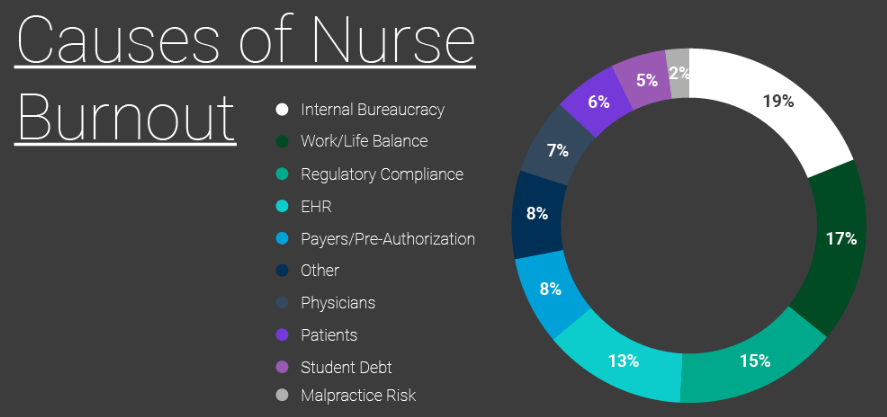
A small Reaction Data nurse survey about burnout finds that the most prevalent causes are dealing with internal bureaucracy, work-life balance, and dealing with regulations. The most-suggested solutions for each of those factors are more clinical input, flexible schedules, and reduce regulatory burden. Nurses say the EHR’s biggest problem is poor usability. 

Redox introduces its medication-related data model, which enables the exchange of new medication orders and modifications or cancellations to existing ones.


Other

image

Lexington Regional Health Center (NE) gets board approval to replace its unnamed EHR vendors, explaining that it can’t deal with poorly integrated integrated inpatient, ambulatory, and ED systems and such systems hurt its recruiting efforts. They’ve already chosen an unnamed vendor and can now negotiate a contact.

For-profit hospital operator Prime Healthcare will pay $65 million to resolve charges related to Medicare short-stay admissions, with founder and CEO Prem Reddy personally responsible for $3.25 million of the total.

The New York Times covers “post-hospital syndrome” that may explain why elderly patients are readmitted for unrelated problems in the weeks after discharge: hospital stays involve interrupted sleep, weight loss, stress, mild delirium, and weakness due to being in bed for days. Somehow you have to think that if you were designing a healing environment, it would look nothing like a modern medical center, but then again “healing” has been replaced by “fixing.” 

image

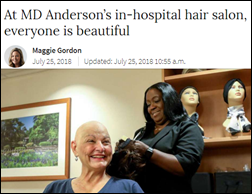
The Houston paper profiles MD Anderson’s in-hospital hair salon, which has been run by Justine Jordan for 10 years. She says,

It’s hard losing your hair and not knowing when it’s going to grow back, or if it’s going to grow back, and how people are going to look at you. I think most of my patients wonder if their husband is still going to think they’re beautiful. If they’re still going to look at them the same way … I want them to have the confidence and know that they’re beautiful, no matter how they look on the outside. And I think that’s what people really have to start saying to themselves: I’m beautiful … Treating someone nice, it makes them happy. It makes them feel like someone cares about them. And it costs nothing. It’s so free.


Sponsor Updates

  • Liaison Technologies publishes a new e-guide, “Enterprise Data in 2018.”
  • NPR’s BioTech Nation podcast features MDLive CEO Rich Berner.
  • MedData will exhibit at the HFMA Region 8 MidAmerica Summer Institute 2018 August 6-8 in Independence, MO.
  • Waystar will exhibit at Epic Core August 8-10 in Denver.
  • Clinical Computer Systems, developer of the Obix Perinatal Data System, will exhibit at the AWHONN Texas State Conference August 9-11 in Corpus Christi, TX.
  • CloudWave achieves SSAE 18 standards compliance for its OpSus Healthcare Cloud services.
  • Sansoro Health and Divurgent co-author a new white paper, “The Evolving Role of Health IT in Fighting the Opioid Crisis.”
  • Wellsoft achieves 2015 Edition EHR certification.
  • WiserTogether partners with Peers Health to deliver its Return to Health treatment guidance solution for disability and workers’ compensation markets.
  • Wolters Kluwer Health will begin publishing The Journal of the Association of Nurses in AIDS Care from ANAC.

Blog Posts


Contacts

Mr. H, Lorre, Jenn, Dr. Jayne.
Get HIStalk updates. Send news or rumors.
Contact us.

125x125_2nd_Circle

Examples of a Boss Doing Something Heartfelt or Supportive

August 4, 2018 What I Wish I'd Known Before Comments Off on Examples of a Boss Doing Something Heartfelt or Supportive

The owner discovered that one of the employees could not afford the additional cost of their honeymoon, and the newlyweds were planning to just stay home. The owner paid for a little getaway for the couple, including the food and the hotel suite.


Any time we had a collection at work (flowers for someone who lost a family member, baby shower for a co-worker, etc.), we would always end up with more than we thought we’d get. Turns out the boss at that time would find it how much had been given, then double it out if his pocket. He did it very quietly, not wanting attention. I airways looked at him differently after that.


Working extensively with HR to ensure that a co-worker with a new cancer diagnosis would be able to continue working while going through chemo


Years ago, we had an admin for our company who had to take a second job to support her family (single mom). Our CEO heard about it, and gave her enough of a raise so that she would not have to work all the time to make ends meet.


Our CEO at the time set up an employee fund to other employees to contribute too for a fellow employee that lost his entire home to a fire.


I think the best examples are the small, every day examples that assist a staff member to navigate their career in a way that supports their needs, whether that is offering new challenges that are right up their alley, supporting them as they seek work/life balance, or getting employee input as they craft plans for the organization. That is what I feel I have always had where I work (MEDITECH), and I can compare that to my spouse who tends to get treated like just one of many in an army of workers. When you truly know your staff, you can support them every day, but then also be there when major events occur.


A teammate went out with cancer who happened to be a single mom with kids. The C-suite quietly continued to give her a paycheck for a year until she passed away. It was a huge blessing to that family, although it hurt the team tremendously because they wouldn’t let her be replaced and it was a very small team. To this day it’s still a moral dilemma I struggle with, but I’m glad they were able to support her.


Before I started in HIT, I worked at a gas station / convenience store. One of my co-workers was a single mom, barely making ends meet. One day she called the store just after leaving work to say that her car had broken down right around the corner and could she leave it in the parking lot until she found someone to look at it. My boss knew she never put more than a gallon or two in at a time so he told me to grab the store gas can and go see if the issue was that she was out of gas. Turns out that was it. We got the car back to the store and he paid for a full tank of gas for her and a bag full of groceries to boot. It was a relatively small thing, but to this day I don’t think I’ve ever seen anyone more grateful than she was at the time.


Daily encouragement and opportunities to speak up if things feel icky. Reminders of work / life balance and ensuring that, despite being a team that is all over the country / globe, we are 1 @googlecloud @GoogleGenomics


Buying an analyst a case of Diet Mountain Dew for the day of a Go-Live 😎


I gave my employee his choice of hours and location to take care of his wife with breast cancer treatment. My wife went through it, too. It consumes the individual, who really needs the support probably fears losing a high-paying IT job. I said nope, work can wait. We’ll hire some consultants for now.


I used to work down the street from a homeless shelter. Of the three brothers that owned the store, one was known for his grumpy personality. That is, until he hired a homeless woman and gave her cash to cover expenses until her first paycheck. I never let him forget that I was aware of his “soft side,” and that seeing it changed my image of him for the better.


Donating money to help a single, older employee pay for an expensive operation for a beloved pet.


When I first started out on the Rev Cycle business, the owner of the company, a small mom & pop shop at the time,  gave me a car because mine broke down. No excuses to not come to work! 🙂


When my daughter got sick, my employer allowed me to work remotely (2,500 miles away) for the past three years.


About 10 years ago, my new boss was starting our first cybersecurity department and we only had three employees. At Easter he went and bought us all very nice baskets with gourmet chocolate. Our department grew, but at least twice a year, this boss took all of us out to dinner with a guest to a local casino. After a very nice dinner, he got up and laid a $20 bill in front of each of his employees and said lets go have some fun. Just a few of the ways he supported us. Best guy I ever worked for and I try to repeat some of these items with my staff today.


My brother was killed, a victim of a robbery. Wrong place, wrong time. I was a mid-level manager in a software development organization, and had no notion that anyone would attend my brother’s funeral. I was surprised and touched that several people, including the two most senior execs and head of HR, made the 2 1/2 hour trip. My respect and appreciation for those folks rose to a new level as a result of that kindness. Thank you again Tom, Al, and Rita.


I had a project I had to complete, but the dreaded phone call from my son’s school nurse that my son had gotten sick at school. I let my manager know I’d pick up my son and finish the day from home so I could meet my project deadline. My manager assured me that my son was more important and told me to take the time I needed to finish it up. As a working parent, flexibility like this never goes unnoticed and I’m so thankful to have a manager that is so understanding and accommodating.


My last boss was a true nurturer. We had a colleague struggling with a terminal cancer. She arranged for ongoing cards to be collected, signed and sent so that there wasn’t a week that went by without kind words of support, strength, love, and family being shared. Not only was our colleague, but his entire family grateful for that support.


A boss in one division abruptly terminated my employment after many years of outstanding annual performance reviews. The only reason provided was, “I am going to take a different direction.” A dotted line boss in another division did not agree with what was taking place and brought me into his division to start a new business service line. My dotted line, now new boss, had a reputation for being very tough, having unreasonably high expectations, and impersonal. After this career changing event, I learned that you should not judge people by their outward persona. I am forever grateful for his support during an unexpected time of vulnerability and career difficulty that ultimately launched my career to the next level.


When my mother passed away several years ago, my CIO took the time to attend her calling. He had to drive for more than an hour (one way) to get to the funeral home at a time when I know he was extremely busy. He did this for just about everyone in the department who suffered the loss of a loved one.


Drove 3.5 hours one way for visitation of a co-worker’s parent. Pulled someone who had just been given bad news into their office so that person could react in private.


My boss organized my inpatient analyst team to help me move into a smaller house when I was dealing with my husband’s dementia and very poor health. I was so grateful to have the help and they really didn’t have to do that. My boss is fantastic and I am glad to be in his employ.


Weekender 8/3/18

August 3, 2018 Weekender Comments Off on Weekender 8/3/18

weekender 


Weekly News Recap

  • Global Payments will acquire AdvancedMD from Marlin Equity Partners for $700 million
  • Bob Wilhelm (Adreima) joins emergency and urgent care IT vendor T-System as CEO
  • Athenahealth reports Q2 results: revenue up 10 percent, adjusted EPS $1.08 vs. $0.51
  • Meditech reports Q2 results: revenue up 7.1 percent, EPS $0.65 vs. $0.39
  • Cerner reports Q2 results: revenue up 6 percent, adjusted EPS $0.62 vs. $0.61, beating analyst expectations for both
  • HHS OIG fines EClinicalWorks $132,500 for failing to file timely reports of patient safety-related software issues
  • President Trump nominates Marine Corps veteran James Gfrerer to be the VA’s assistant secretary for IT, commonly referred to as its CIO
  • The DoD justifies paying Leidos up to $1.1 billion more for its EHR implementation by mentioning the unstated cost of adding the Coast Guard while redacting the list of “as a service” requirements and their associated costs

Best Reader Comments

We must remember that in the paper or analog days, most clinicians took notes while speaking to patients so that they had a medical record of what transpired during the visit. These notes (SOAP, scribbles, whatever) were retrieved when the patient returned and/or when the clinician revisited the patient (e.g., in the hospital) so that the clinician had a handy memory jogger and/or quick analysis of the patient’s progress, test results, etc. Because the earliest EHRs were based on existing clinician workflows, the EHRs merely copied the paper workflow routines. What’s pitiful is that 40+ years later, the usability factors of the most popular EHRs have not changed, with companies blaming external regulations as the reason entire product rewrites have not occurred to make the EHRs more 21st century (e.g., Facebook-like) and less 20th century, while still storing key information. (Woodstock Generation)

We all knew that was going to be the case. I’ve been on client side where Cerner says, “That wasn’t in the RFP, but for $400k, we can add that in. Gee, thanks.” (Ex-Epic)

I recall launching an evidence-based focused program for a large academic facility, just to learn that the #1 reason we lost out to patients or companies was because the large academic facility on the other side of the same city included a free golf swing analysis. (Katie Goss)

Very insightful. Key insight: provider organizations spent a fortune on an OS, and now they have to go buy apps to get any value out of the effort. (Robert D. Lafsky, MD)


Watercooler Talk Tidbits

image SNAGHTML615ce715

Reader donations funded the teacher grant request of Ms. C in California, who asked for two Kindles for programming her middle school class’s Dash and Dot robots. She reports, “With the new Kindle Fires, my class had only increased their passion for computer science and coding. We have been using our robots daily and integrating it in our curriculum to help them learn from many different perspectives. The students are really excited when they come to school and always ask if we will be coding today or using robots.”

image

A CNBC LinkedIn search finds that Apple’s employee health clinic unit called AC Wellness has hired at least 40 people recently, most of them focused on wellness rather than healthcare services delivery. The program is rumored to be led by Sumbul Desai, MD, previously of the Stanford Center for Digital Health.

image

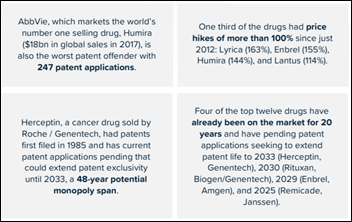
A study by non-profit “patent detectives” I-Mak finds that manufacturers of the 12 best-selling drugs in the US have tried to stifle generic competition by filing an average of 71 patents per drug. Each of the top drugs has been on the market for at least 15 years and all but one have gone up in price, with an average hike of 68 percent.

image

Walmart announces that it will not renew its contract with price transparency technology vendor Castlight Health, with the news sending CSLT shares down 26 percent and forcing the company to embark on a restructuring and cost-cutting project.

The White House issues a rule that will allow less-expensive, short-term health plans, aka “junk plans,” to be renewed for up to three years versus the previous three months. The plans, which are not required to meet ACA requirements, typically don’t pay for prescriptions, pre-existing conditions, mental health, substance abuse, or maternity and may include low lifetime maximum payouts or tiny daily payments for hospital stays. Minimal coverage also gives insurers a profit margin of 50 percent or more on premiums versus the 20 percent maximum as ACA plans require. Everybody understands both the problem these plans solve (high premiums) and those they create (people won’t understand the coverage limits or will become expensively ill while covered by a plan that offers them little financial help). They also create profound questions:

  • Nobody can afford the cost of major and/or long-term medical care, so is it OK for people to under-buy insurance such that their short-term cost savings require the rest of us to pay their bills – maybe for life — via Medicaid or cost-shifting charity care?
  • Should sicker people to be charged more for insurance or to make them pay a higher portion of their medical bills depending on their risk, the same as most other forms of insurance? What if they can’t afford it?
  • Is it OK to be forced into bankruptcy over medical bills?
  • Americans barely understood health insurance even with the mandated coverage and easy comparisons the ACA introduced, so what small-print secrets will be stuffed into the plan documents they ignore when buying this new “insurance?”
  • Aren’t we really just playing the shell game in allowing providers to charge wildly high prices for health services that provide questionable value while we argue over “who pays” versus “what it costs” in pretending that healthcare is like other services in which smart consumers buy only what they need and shop around for the best price?

image 

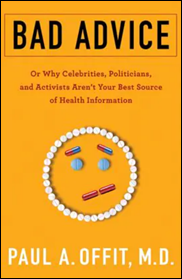
Pediatrician, vaccine expert, and author Paul Offitt, MD says in a new book that scientists need to be able to explain themselves concisely in interviews and on social media to offset the passionate but wrong medical ideas spread by celebrities, activists, and politicians. He notes widespread misconceptions about genetically modified organisms and glutens, suggesting looking at the shelves of Whole Foods to see social denialism at work.

image

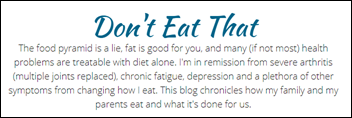
A 26-year-old woman who swears that her new diet of only beef, salt, and water cured her depression and arthritis solicits online donations and sells Skype consultations to support her “carnivore diet.” She has also given her year-old daughter nothing but breast milk and beef so far.

image

Maybe Theranos should have worked on this. A group of four tech-powered pharma anarchists develops plans for a homebrew MicroLab powered by a $30 computer that they’ve programmed to create drugs cheaply, so far allowing anyone to make their own naloxone, HIV drugs, and abortion-inducing drugs. The government and drug companies don’t make it easy for the group to obtain the raw ingredients, so they buy OxyContin from street dealers to modify into naloxone. They explain,

The rhetoric that is espoused by people who defend intellectual property law is that this is theft. If you accept that axiomatically, then by the same logic when you withhold access to lifesaving medication, that’s murder. From a moral standpoint, it’s an imperative to enact theft to prevent murder. So yeah, we are encouraging people to break the law. If you’re going to die and you’re being denied the medicine that can save you, would you rather break the law and live or be a good upstanding citizen and a corpse?

image

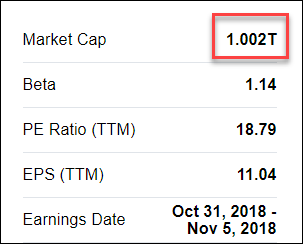
Apple becomes the first company to achieve $1 trillion in market value, having gone from near-bankruptcy to become the US’s most valuable publicly traded company. Hopefully we won’t see a Y2K-type effect from financial reporting technology firms that didn’t anticipate the need to express market cap to 13 digits.  

image

Tech expert and newly appointed New York Times opinion contributor Kara Swisher weighs in on the naivete of inexperienced, closed-culture, California-happy social media technology executives who won’t acknowledge the harm their products cause:

Facebook, as well as Twitter and Google’s YouTube, have become the digital arms dealers of the modern age. All these companies began with a gauzy credo to change the world. But they have done that in ways they did not imagine — by weaponizing pretty much everything that could be weaponized. They have mutated human communication, so that connecting people has too often become about pitting them against one another, and turbocharged that discord to an unprecedented and damaging volume. They have weaponized social media. They have weaponized the First Amendment. They have weaponized civic discourse. And they have weaponized, most of all, politics.


In Case You Missed It


Get Involved


125x125_2nd_Circle

EPtalk by Dr. Jayne 8/2/18

August 2, 2018 Dr. Jayne 3 Comments

From Captain Obvious: “Re: AMA policy advocating for EHR training in medical school. Seems like that horse has already left the barn.” Initially, I was surprised to see that it was just released in June 2018. It seems like something that should have come out way earlier, say back when regulators were cooking up Meaningful Use and other endeavors that would dramatically increase the use of EHRs. Reading a bit deeper, the AMA is alleging that some hospitals and training programs are restricting access to EHRs for students and trainees. That hasn’t been my experience in the local community, where so-called scut work continues to roll downhill to the students and lower-level trainees.

I do agree with the AMA that there are “concerns about the effects of the EHR on student and resident relationships with patients, in that students and residents may be more engaged with the chart and computer than with the patient.” It doesn’t sound like the EHR is restricted, though, if trainees are engaged with it. AMA asks that training include education on “institutional policy regarding copy and paste functions” as well.

AMA also goes on to state the obvious: “Students may receive poor role modeling from faculty, as well as from the entire care team, on appropriate use of and best practices for EHRs.” The document goes on to ask that training programs “provide EHR professional development resources for faculty to assure appropriate modeling of EHR use during physician/patient interactions.” Banging on keyboards and kicking computers on wheels is something I’ve seen more often I care to, so I certainly support that last bit.

The Medical Board of California launches the first “license alert” mobile app. Rather than searching on the Board’s website to see if providers had new discipline notices on their licenses, the app can directly notify patients when changes are made. Suspensions can be communicated in a matter of hours to panels of patients, who are able to follow up to 16 providers at a time. The Board believes users will want to follow not only their own providers, but also those of close family members. Users will also receive notification of address or practice status changes as well as license expiration. The app is only available for Apple devices, but they do plan to deliver an Android version next year. I’d be game to just subscribe to my own updates, which I’ve been stalking on my State’s board for the last couple of weeks. Every time our practice opens a new site, it’s an adventure to get dozens of providers updated in a timely fashion and I always wonder whether I’m current.

Centene announces its intent to explore a joint Medicare Advantage plan with Ascension. They plan to target several US insurance markets by 2020, creating a “preferred model” for providers in the Ascension health system. Ascension is the largest non-profit health system in the US. The agreement is non-binding with approval required by the respective boards of directors, so there’s always a chance the wheels will fall off before it launches. No details were provided as far as how the plan would operate, how patients would join, any fees, or what would happen if patients need out-of-network care.

This week, CMS finalized three 2019 Medicare Prospective Payment System (PPS) rules, covering Skilled Nursing Facilities, Inpatient Rehabilitation Facilities, and Inpatient Psychiatric Facilities. CMS cites them as victories in the battle for “Patients over Paperwork” along with reducing “unnecessary burden” and “easing documentation requirements” while “offering more flexibility.” The release reads like a game of buzzword bingo, and I honestly had to stop reading it before I lost my mind. I struggle to keep up with the ambulatory payment rules in depth and the inpatient payment rules at a high level. I applaud the people who are able to keep up with all the different rules covering all the different sites of care.

clip_image004

A recently study presented at the American Society of Clinical Oncology meeting  looked at patient acceptance of genetic counseling using a remote platform compared to care in the community without genetic providers. Researchers hypothesized that remote access to specialists would increase access to genetic testing. The data did suggest that both telephone and video conference can improve adoption of genetic testing, although researchers note that a comparison of video vs. telephone modalities will be needed to identify the best way to drive outcomes. Having been through genetic counseling myself, I know there is a vast body of knowledge that I can’t begin to address as a primary care provider. Knowing how many people are taking advantage of consumer-oriented genetic testing, I’d rather see patients meet remotely with an expert than to be subjected to my efforts at ad-hoc research.

As we are increasingly connected through technology and social media, it feels like there is a frenzy of competition for our time and attention. I’m not sure if it’s a direct reaction to that phenomenon, but I feel more frequently drawn to getting away where I can think without distraction and experience some of the wonderful things that our continent has to offer. Already in that frame of mind, I came across this piece from earlier this year where former Surgeon General Vivek Murthy talks about the level of loneliness that people are experiencing despite being “connected” 24-7. He recommends that we put down our phones and try to make actual face-to-face connections with the people that are important to us.

Researchers believe that feeling loneliness can be as harmful for health as smoking nearly a pack of cigarettes each day. Loneliness leads to stress and inflammation, which sets us up for illness. Although choosing to be alone is different than loneliness, it can still be risky. Murthy encourages us to “focus on rebuilding our connection with each other.” Having seen many families at airports this summer all staring at phones rather than talking to each other, I endorse his relatively straightforward prescription. Cigna released similar data in May – it’s worth a read.

clip_image008

It’s hard to believe, but today marks my 800th post for HIStalk. It’s been an amazing privilege to be part of this team and to be able to put my finger on the pulse of healthcare IT. Thank you to all our readers and sponsors who help make it possible every week.

Email Dr. Jayne.

News 8/1/18

July 31, 2018 News 3 Comments

Top News

image

HHS OIG fines EClinicalWorks $132,500 for failing to file timely reports of patient safety-related software issues as required by the Corporate Integrity Agreement it signed in May 2017 as part of its $155 million False Claims Act settlement. 


Reader Comments

From Low Slider: “Re: Recondo. Just a point of clarification. Payment Navigation Compass is a white label of Recondo products, not Empowered Access being a Recondo name for Payment Navigation Compass. Recondo has purchased that Advisory Board / Optum client base to be managed by the original manufacturer, Recondo.” Thanks.

From Not KLAS-sy: “Re: KLAS. A former executive recently took a job with one of its high-scoring vendors that financial supports KLAS’s work. Sounds fishy.” I don’t see any harm on that and I don’t think it reflects negatively on KLAS or the vendor. I don’t know who you’re referring to specifically, but if that person had a lot of healthcare IT experience, it’s not unreasonable that they would remain in the industry and end up working for a high-achieving vendor when they were ready to move on. I doubt there’s any pay-for-play at work here if that’s what you are suggesting – if that were the case, the vendor would be better off leaving that person as a KLAS insider instead of hiring them. Regardless, check back in a year, and if the vendor has dropped out of frontrunner status, then maybe you were right. 


HIStalk Announcements and Requests

image

A reader desperate for all-too-rare good news suggested this question about bosses showing humanity (which might be all-too-rare as well since I’ve received few responses.) I remember when I was fresh out school and running a hospital department and one of my employees died unexpectedly in a biking accident. The associate CEO I reported to insisted that the two of us take the six-hour drive to the employee’s home town to attend his funeral, with the hospital quietly footing the travel bill. The employee’s family members were amazed to see us there and were touched that we had traveled so far.

image

Welcome to new HIStalk Gold Sponsor Zen Healthcare IT. The Costa Mesa, CA-based interoperability technology and consulting company offers its Gemini Integration-as-a-Service platform that allows healthcare organizations to outsource their interoperability challenges or just use the company’s enterprise architecture. Gemini is the fastest, most affordable way for healthcare organizations to achieve connectivity between systems and exchange partners, whether it’s one interface or thousands. The company also offers the Stargate IHE on-ramp to Carequality and EHealth Exchange and a FHIR-based clinical data repository.  Its consulting service helps design, deploy, and support use-case driven healthcare integrations. Thanks to Zen Healthcare IT for supporting HIStalk.


Webinars

None scheduled soon. Previous webinars are on our YouTube channel. Contact Lorre for information.


Acquisitions, Funding, Business, and Stock

image

Athenahealth reports Q2 results: revenue up 10 percent, adjusted EPS $1.08 vs. $0.51 (both based on a new revenue recognition standard), beating earnings estimates but falling short on revenue. From the earnings call:

  • Hospital business remained “relative small” with bookings down year-over-year, and effort will be focused on small hospitals going forward.
  • Executive Chairman Jeff Immelt says the company is “moving with a purpose” in considering a company sale, a merger, or continuing as an independent business to “unlock value in the company.”
  • R&D was one of few expense categories that increased amidst cost cutting.
  • Immelt says the seismic changes in healthcare are forcing clients to figure out their best business model going forward, but they remain supporters of Athenahealth.
  • Executives on the called prefaced their responses to analyst questions with “look” 11 times in addressing the questioner, which I usually read as being defensive or dismissive.
  • It was a pretty dull call without Jonathan Bush.

image

Meditech reports Q2 results: revenue up 7.1 percent, EPS $0.65 vs. $0.39. Product revenue rose 28 percent, while services revenue dropped slightly due to customer consolidation.

image

Teladoc will change its name to Teladoc Health.

image

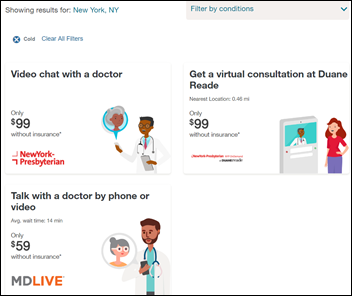
Walgreens launches Find Care Now, a marketplace on its website and app that lists alternatives for ED visits — with cash prices  — as provided by Walgreens and its partners, which include several major health systems.

image

Newly renamed Verana Health (formerly known as DigiSight Technologies) raises $30 million in a Series C funding round led by Alphabet’s venture capital arm. The company’s technology merges EHR data with registries to support drug and medical device development. The company also announces that Miki Kapoor, former CEO of Welltok-acquired Tea Leaves Health, has signed on as president and CEO in replacing Doug Foster, who was apparently demoted to chief strategy officer.

image

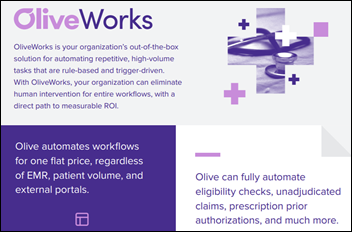
Columbiu, OH-based healthcare AI and workflow automation vendor CrossChx renames itself Olive and raises $33 million in Series D funding round, increasing its total to $73 million.

Former GE Chairman and CEO Jeff Immelt bet the farm on GE Digital’s “digital industrial” and Internet of Things services before he was shown the door, but now the company is shopping for a buyer of part of that money-losing business.

Bloomberg notes that little-known people sometimes become fabulously wealthy, even billionaires, after helping relatives and friends with their tech startups. The parents of Amazon’s Jeff Bezos helped him out with $250,000 in 1995, with those shares now worth up to $30 billion, while the $10,000 his brother and sister provided in 1996 gave them shares now worth $640 million each.


Sales

  • Roper St. Francis Healthcare (SC) chooses DocASAP for online appointment scheduling.
  • Mercy selects Visage 7 Open Archive and will convert 25 million diagnostic images from its current archive.
  • Four-hospital UHS (NY) chooses Epic, according to this video forwarded to me by a reader.

People

image

Evergreen Healthcare Partners hires Todd Hatton, MHSA (Saint Luke’s Health System) as VP of advisory services.

image

Kathy Ross, MBA (Stony Brook Medicine) joins Broward Health (FL) as CIO.


Announcements and Implementations

image

Mary Washington Healthcare (VA) went live June 2 on Epic, hopefully inspiring the health system to create a new “Hamilton”-themed video as it did when announcing Epic as its choice and when calling out its planned go-live.

Virginia Governor Ralph Northam announces that all 129 of the state’s hospitals are live on Collective Health’s network, allowing emergency medical services personnel to access patient information and to display integrated information from the state’s PDMP database and advance directive registry.

Galway Clinic goes live on Meditech Expanse, the first hospital in Ireland or the UK to do so.


Government and Politics

Specialty physicians are complaining about a proposed Medicare change that would pay them a flat fee per patient visit, warning that not being paid more for seeing more complex patients will hurt their incomes, steer medical students away from specialties like rheumatology, shorten visits that would then require follow-up care, or give specialists incentive to cherry-pick just the healthier patients or to stop accepting Medicare entirely. Doctors would have the option to tack on a $67 Medicare bill for more complex visits, which you can bet will be a popular option as, once again, trying to cut healthcare costs means reducing someone’s income and they’ll fight it however possible.

image

Farzad posts a wise comment about the proposed flat fee rule and the political issues that stand in the way of reducing healthcare costs.


Privacy and Security

Blue Springs Family Care (MO) notifies patients that its EHR was penetrated in a ransomware attack, saying that as a result, it has implemented a new firewall and intrusion detection system and also replaced its EHR with one that encrypts patient data (Jenn contacted the practice, which told her they are moving from E-MDs to EClinicalWorks).

Ancestry.com and 23andMed will provide consumers with a separate consent form to convey their permission for their genetic information to be shared with third parties.


Other

AMA Wire interviews a Regenstrief scientist who lists three reasons that EHRs are hard to use even for digital natives: (a) mobile devices can’t display enough information, so PCs are still the norm; (b) most EHRs were designed in the last century before mobile devices became ubiquitous; and (c) the EHR paradigm is that users look up what they need to know, unlike smart search and voice-powered systems that anticipate user need.

image

Forty physicians and employees of Dignity Health (CA) who lost their homes in the Carr wildfire are still showing up to work as scheduled.

A new study by the Nation Association of Insurance Companies finds that insurers that sell short-term policies (aka, exclusion-filled “junk” insurance as touted by the White House) pay out just 44 percent in claims versus the ACA-required 80 percent Medical Loss Ratio, meaning those plans generate far higher profits in sticking patients with more of the bills.

An Indiana teen becomes the latest of several hospitalized victims of the Hot Water Challenge, in which YouTube videos dare kids to pour boiling water on an unsuspecting friend or to drink boiling water through a straw.


Sponsor Updates

clip_image001

  • Bluetree employees raise $7,000 for local nonprofits RISE and Friends of the State Street Family.
  • Burwood Group will exhibit at the NC Tech Leadership Summit August 9 in Pinehurst.
  • Carevive Systems publishes a new video, “Acute Myelogenous Leukemia: Treatment Updates and Implications for Older Patients.”
  • CoverMyMeds will exhibit at the EMDs User Conference August 5-7 in Grapevine, TX.
  • Cumberland Consulting Group will sponsor the Health Plan Alliance Government Programs Value Visit August 6-10 in San Francisco.
  • Meditech publishes a podcast titled “Social Determinants of Health and Transitional Care.”

Blog Posts


Contacts

Mr. H, Lorre, Jenn, Dr. Jayne.
Get HIStalk updates. Send news or rumors.
Contact us.

125x125_2nd_Circle

Curbside Consult with Dr. Jayne 7/30/18

July 30, 2018 Dr. Jayne Comments Off on Curbside Consult with Dr. Jayne 7/30/18

I have to admit I cracked a smile when I heard about the proposal to do away with so-called provider-based billing. I always found that term kind of humorous, since it’s actually hospital and provider billing rather than billing for the provider’s services. It’s always felt like a cash grab by hospitals, who snapped up physician practices and added facility fees without so much as changing a light bulb in the doctor’s office. Physicians who became hospital employees during this time often didn’t realize what they were getting into, only to begin to hear from angry patients who didn’t understand why they were receiving two bills for physician services that previously cost less.

It’s being referred to as “site neutrality,” which although accurate, doesn’t sound very sexy. Payment for a given service would be the same regardless of whether it’s delivered in a physician office or a clinic that’s considered an outpatient department of a hospital. Leveling this charge playing field has been discussed for the last several years; endorsed by Congress and the Medicare Payment Advisory Committee; and was been supported by previous administrations, although loopholes have allowed hospitals continue to take advantage of their cash cow by exempting existing outpatient departments from rate cuts.

Including hospital facility charges for basic outpatient visits serves to drive up costs for Medicare as well as patients. Hospital organizations try to justify the charges by explaining that they need to charge more in different ways to make up for shortfalls due to Medicaid cuts as well as money spent on charity care and to finance all the services that are on standby for patients.

The Hospital Outpatient Prospective Payment System rule released this week aims to end this grandfathering for certain services, including routine physician visits. This would result in hundreds of millions of dollars of savings for Medicare, and by extension, should save patients about $150 million through reduced co-payments. The proposal doesn’t touch most of the procedures where hospitals make a great deal of money, however.

It’s not surprising that hospitals are pushing back and litigation may follow. I enjoyed the Twitter thread that followed Farzad Mostashari’s post about it, with various health IT personalities weighing in on his thoughts. The rule also addresses some drug payment issues and promotes movement of services from inpatient facilities to outpatient settings. The hospital lobby is powerful and it’s not clear whether the rule will stay in its current form.

Of the physicians I’ve chatted with since the rule came out, many are ambivalent about the change. Most are employed physicians who didn’t see any increase in their compensation when their employers started charging facility fees, but they did have patient complaints and some lost patients to independent competitors who didn’t charge facility fees. They’re just happy they won’t have to deal with the negative aspects.

Some of the older physicians appreciated that it might help prolong the solvency of Medicare, allowing them to actually take advantage of it as patients. A few of the surgical subspecialists (who were almost universally independent) had no idea what provider-based billing even was, so that they didn’t have an opinion on site neutrality.

They did have an opinion, however, about the movement of services to outpatient facilities since several of them are involved with ambulatory surgery centers. Under the rule, there will be additional procedures payable at surgery centers along with language to ensure payment parity for ASC procedures using high-cost devices. The goal is to help ASCs be competitive, so it’s not surprising that the surgeons’ ears perked up.

I’ve been following along with the CMS campaign for “Patients Over Paperwork” and just saw the July newsletter. This edition was mostly focused on how CMS is trying to address burden in the context of skilled nursing facilities. There were several comments from stakeholders that were included and I appreciated their candor. One example: “Unfortunately, health care has evolved into this: head in a bed, payer, and a pulse – and that’s it. I think everybody has lost sight of the actual … care of the patient. Nobody really looks at that any more.” That sentiment is true at far too many places of service, not just nursing facilities. We’re violating the basics of what we learned in medical school, treating “the numbers” instead of the patients in front of us. We’re checking boxes and following rules and not truly getting to know our patients or how best to help them.

There were a couple of bright spots in the newsletter, although reading through the lines, they were a little bit tardy. One such bright spot was about simplifying documentation, although the example given was a bit of a slap and a kiss at the same time. CMS apparently updated certain payment rules for podiatrists, orthotists, and prosthetists. Now it is “allowing payment for therapeutic shoe inserts made with current technology.” You got it, folks – CMS required providers to take an actual impression of the patient’s foot for them to be paid rather than using the digital image technology that many foot specialists have been using for years. Why this took so long is baffling, and it makes my arches ache just thinking about it since I had my own orthotics created from a digital scan several years ago. I had no idea Medicare still required patients to step on pieces of foam in a cardboard box that was then mailed off to the lab. I’m sure there are mail carriers across the country that will be glad to not have to pick up the boxes at the practice’s front desk.

I hadn’t seen the newsletter previously, so I’ll have to keep an out for it moving forward. This is only the sixth issue, so I don’t feel too bad about having missed it. There is so much to keep in with in my inbox – a steady stream of government announcements, payer updates, drug recalls, and more. Then, there are the fun things such as reader mail, rumors, and industry gossip. And of course, there are the messages for my actual day job, which pays the bills but isn’t as fun as the former.

What’s your favorite part of your inbox? Leave a comment or email me.

Email Dr. Jayne.
HIStalk Interviews Lillian Dittrick, VP of Actuarial and Healthcare Analytics, Health Alliance Plan

July 30, 2018 Interviews Comments Off on HIStalk Interviews Lillian Dittrick, VP of Actuarial and Healthcare Analytics, Health Alliance Plan

Lillian Dittrick, MAAA is VP of actuarial and healthcare analytics at Health Alliance Plan of Detroit, MI and is a fellow of the Society of Actuaries.

image

Tell me about yourself and your job.

Henry Ford Health System owns a health insurance company called HAP, Health Alliance Plan. I am building for them both their actuarial and analytics function. I am an actuary and an FSA in the Society of Actuaries. I have extensive actuarial and analytics experience for both the payer and the provider. This is a good and exciting fit for me since it’s both of them combined. I feel strongly that payers and providers need to collaborate for both to succeed. We have the same end goals. Whether we’re calling them members or patients, we’re supporting the same people.

Prior to this, I was at Highmark, leading their provider analytics area, and before that, I spent a number of years embedded in a large provider system.

When I hear “actuary,” I think of a life insurance company person who can tell from an Excel worksheet when I’ll die. What is the training of actuaries and how is their analytics approach different?

[laughs] Your comment is more what a life actuary would do. A life actuary is more mortality versus a health actuary, which is morbidity. There are a number of tracks you can go down for an actuary. It could be in more the investment realm, too, and a lot of actuaries are in that space.

Predictive analytics is a lot of the education, which is newer to healthcare, but not newer to many industries. You have to go through a series of exams that have a heavy reliance on math, actuarial science, and modeling in general. It’s really in that modeling space.

Over the last few years, the Society of Actuaries has added specific education that speaks to predictive modeling. They’re revamping their education and recognizing and understanding the importance  of predictive modeling. Actuaries, with that heavy math and modeling education and background, are well suited to do that kind of work in any industry.

Beyond EHR and claims data, what data sources are important for creating a healthcare model?

Both of those are important. It’s important for payers and providers to share that information so they have as complete a picture on a patient as possible.

Also important are social determinants of health. There’s a lot that goes on with a patient that can be used to predict their future healthcare use that you will not find just looking at their claims history. Information about whether they have someone to help them, if they need help getting medications, or if they have transportation issues. People present in the ED or hospital because they didn’t have a way to get to their follow-up appointments. Or, they have a financial barrier to obtaining medications that would keep them out of the ED and hospital. Payers and providers alike, more strongly in the provider realm right now, are recognizing that and are performing assessments to capture that information.

A number of government grants are going on now to help providers work with the community to link people up with all of the resources that may be available, such as social services, that can help fill in those gaps to make sure that people are getting the appropriate care they need, when they need, and where they need it.

Reports suggest that insurers are buying consumer data to, depending on who you believe, either cherry-pick less expensive patients or to create tailored health interventions. What are people doing with less-obvious data sources and what are the ethical issues involved?

That is very much a concern. When SOA did the survey, challenges around HIPAA and regulatory issues came up pretty high as a barrier to implementing predictive analytics. All insurers that I have worked for, because you were speaking more to the insurance side, are very aware of those ethical issues. I haven’t seen them using any data inappropriately. They’re all using that data to try to understand the best care to wrap around a patient. I’m aware of least two places, here and Highmark, that have programs with Lyft to help people get the transportation they need to their appointments. Unless you are able to collect that information, you’re not able to provide that extra level of care that the patient needs to make sure they’re receiving that care where they need it and when they need it.

What are the analytical challenges of trying to draw insights from a population that’s heterogeneous to begin with, but that is also changing all the time?

Not having complete data and those regulatory issues or having the technology and skill to deploy those kinds of models. I don’t think employers always realize that when they have actuaries on the staff, those are the skills they need and the people who are suited to doing that kind of work. They are under-utilizing the skillset in the actuaries they have.

Incomplete data is always on the top of the list. What I have found in my experience is you can do a lot with what you have. You do not need to wait for perfect information. There will always be holes and some gaps in your data. Tools, technology, and methodology can help you fill in some of those gaps. But even with having some gaps in data, you can draw a lot of good conclusions by just going forward with the information that you have.

How could a mid-sized health system create a predictive analytics service and what low-hanging fruit might provide the fastest benefit?

Leverage models that are already created first. There’s a lot of them out there that are good. It’s not like you’d have to re-create the wheel and do all of that coding yourself. There’s models that are available out there that you can utilize that use both claims and EHR data. You can alter them based on what you have.

The larger EHR vendors have embedded predictive analytics in their model that can be leveraged. If you are a smaller organization trying to figure out where to start, especially on the provider side, you can generally utilize models that you have within the vendor that you’re already using.

The low-hanging fruit that I’ve found involve inappropriate ED utilization, inpatient readmissions, and admissions for something that could have been prevented around chronic conditions. I’ve seen models in all of those areas embedded in EHRs. That’s the easiest place for people to start.

University of Minnesota is offering to license an algorithm they developed to predict one-year patient mortality based on EHR data. Is it as simple as just creating a good algorithm and seeing results?

If someone has created an algorithm, you can take it in house and make it fit for your data. It could be that with your population and demographics, you’ll get different results, and maybe you need a variation of that model. I’m not saying it’s a “one size fits all” model, but if a health system or payer has found success with the theme of a model – something around readmissions or blood utilization — then it’s likely that someone else will, too.

Do actuaries get involved on the front lines with convincing clinicians to trust their information and to change their habits?

Yes, absolutely. The success I’ve found is from beginning to end, where we have had the physician and clinical involvement. Both from designing new algorithms and new processes all the way through to having physician champions that are out there helping us. Sometimes they are the ones taking that message out and sharing it with other physicians. I absolutely believe that.

Whoever your audience is, but certainly with the providers, you can’t just dump a whole bunch of data and Excel spreadsheets on people. You need to present it in a way that’s visual, actionable, and tells a story, so that anyone can pick that information up and know the two or three things to work on right now for success in that model solution is that’s being developed. You’re not going to pull it across the finish line unless you have the physician champions as part the build as well as visualizing the information in a way that is easily digestible.

We have mountains of newly electronic information as well as AI and machine learning tools to apply to it. What will be different in five years?

There will be more leveraging of AI, the automation technology that helps us handle that huge amount of data that we’re dealing with today, along with doing a better job of visualizing the data.

Monday Morning Update 7/30/18

July 29, 2018 News 3 Comments

Top News

image

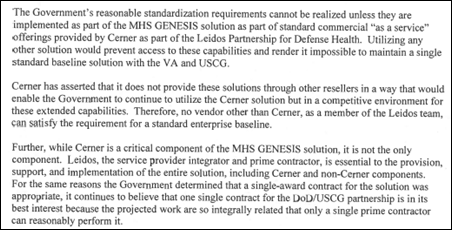
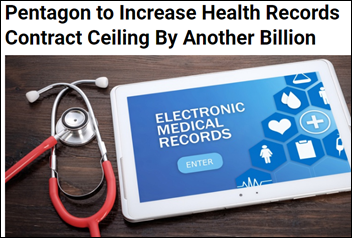
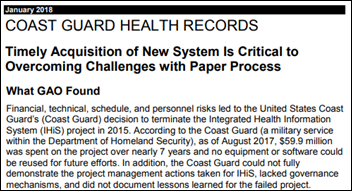
The DoD justifies paying Leidos up to $1.1 billion more for its EHR implementation by mentioning the unstated cost of adding the Coast Guard while redacting the list of “as a service” requirements and their associated costs that the VA included in its contract that the DoD had to add after the fact.

DoD says it had to extend the work of Leidos to include EHR standardization since the VA hired Cerner as its prime contractor, such that “contracting with anyone else (other than Leidos) to work with Cerner would create significant redundancies, inefficiencies, and other issues.”

image

DoD says Cerner declined to provide access to its Clinical Application Services to third parties “to enable competition.”

Allscripts and CACI challenged DoD’s sole-source selection of Leidos for the contract extension, but were rejected with the rationale that the government isn’t interested in bringing another EHR into the mix.

image

Meanwhile, Leidos says in its earnings call that it will serve as Cerner’s subcontractor in the VA’s implementation, providing services for program management, implementation, help desk, and security.


Reader Comments

image

From Magic Kingdom: “Re: Orlando Health. Going Cerner.” Unverified. The job description of the CIO who was hired earlier this year said that the health system will be choosing a new EHR after running Allscripts Sunrise for around 15 years. Adventist, the other big system in town, is a Cerner shop, and Orlando Health uses Cerner lab. But nothing’s been announced and I haven’t seen any relevant open position listings. If the rumor is true and the process is far enough along (and I have no knowledge of either), the announcement would probably come Thursday when Cerner post Q2 earnings.

From Health System Exec: “Re: consultants. Is it possible for you to ask where your readers would go to find a list of consulting firms that can handle a large health system’s full ERP implementation? (human capital, materials management, finance and accounting). Gartner? KLAS? Other?” I’ll open it up to readers to post a comment about their sources (not specific consulting firms since that’s not the question).

From RxPriceResearcher: “Re: drug prices. Is there a public or federal database that maintains historical medication prices? For example, I would like to compare the price of Tylenol 500mg from 1990-2017.” Medicaid publishes a database that goes back to 2013. The only source I know otherwise is from Wolters Kluwer and it’s not free. It’s hard to even understand the effect of “price” since the US healthcare non-system involves a hidden web of contractual discounts and rebates that make it less meaningful.

image

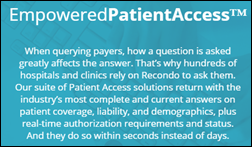
From Vague Gravity: “Re: Optum and Recondo. Confirming Eligible Bachelor’s rumor from Friday with the attached email.” The customer email from both companies says that, as the reader’s rumor said, Recondo has taken over Advisory Board’s Payment Navigation Compass reimbursement product, which Recondo has been reselling under the Empowered Patient Access name. The email notes that both Optum and Advisory Board are owned by UnitedHealth Group, which is a “key shareholder” in Recondo (I don’t think I knew that).

From James: “Re: hospital sleep. Not really news, just confirmation of what we know.” A JAMA Internal Medicine-published survey of 2,000 inpatients in the Netherlands asked a simple question – how did you sleep last night compared to at home? Patients reported sleeping 83 percent less and 70 percent said they were awakened due to external causes, half of those due to hospital staff. Rest was most commonly interrupted by the noise of other patients, medical devices, pain, and toilet visits. I’ve spent just one night in a hospital and it was anything but restful and recuperative, hitting every anecdotal cliche in been awakened by vital sign checks, IV tinkering, hallway staff exuberance, and the racket of beeping and wheezing machines from my own bedside and that of my roommate in what was supposed to have been a private room. I will posit that length of stay would be longer if hospitals had better accommodations, food, and hospitality instead being barely better than a prison, which is probably a good thing since it’s not supposed to be a vacation (not to mention that every hour in a hospital bed increases your chances of being harmed by the never-ending screw-ups).


HIStalk Announcements and Requests

image

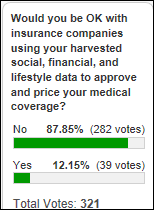
The vast majority of poll respondents don’t want health insurers making coverage or premium decisions based on their harvested, non-medical data, which of course will return to legality once again following the White House’s scuttling of the ACA, which set minimum standards for coverage and policy terms that benefitted even those who buy insurance from their employers. The business of health insurance is interesting since pricing every other kind of insurance — auto, homeowner’s, life, and malpractice — requires the applicant to disclose everything that might affect the insurer’s risk even though those insurers don’t pay out until the subscriber experiences a catastrophic, measurable event, with premiums set by that person’s risk. Health insurance pays routine costs for accumulated health conditions starting almost immediately, yet we don’t want those insurers knowing too much about us. It’s like a reverse Las Vegas, where the house’s lack of information and forced participation gives gamblers the edge, with the solution being that insurers either overcharge and bank handsome profits or pull out of a market entirely, all based on the risk pool they’re stuck with.

This week’s question, based on the Montefiore resident who may be fired over unproven accusations that he posted white supremacist writings under another name – Is it OK to fire an employee over unsavory but legal off-the-job activities? Internet lynch mobs who were raised on TV judge shows love playing armchair jury and going personally after someone who has done or said something they don’t like — even when that person hasn’t been charged with a crime or the information source is unvetted — and companies that are worried about taking a bottom-line hit find it easier to just fire them in publicly shared indignation. Any resemblance to actual legal process is coincidental – it’s short attention span, “I know it’s true because I read it on Facebook and someone is trying to hide it even though I haven’t read a newspaper in years” outrage, because everybody is required to be outraged by everything these days.

SNAGHTML4694d2b6

I gave the “wish I’d known” series a short vacation since summertime responses were sparse, but I’ll revive it this week with a reader-requested question in a slightly different format.The reader says we need more positive stories and I agree.

image

Welcome to new HIStalk Platinum Sponsor Apixio. The San Mateo, CA-based company offers an AI-powered data insights platform that creates a comprehensive picture of a patient’s medical history, then applies data classifiers and predictive models that give insights to their health to support delivery of personalized and affordable care. It also offers an efficient, accurate, and complete risk management solution that turns unstructured data into meaningful data to maximize coding efforts while remaining compliant, with an average ROI increase of 400 percent and productivity gains of 4-7x over manual, low-tech methods. Quality measurement expert Darren Schulte, MD, MPP has worked in healthcare analytics and technology for a long time and has been with the company since 2011. Thanks to Apixio for supporting HIStalk.

I always head over to YouTube to scope out a new sponsor, so here’s the intro video I found for Apixio.

I’m losing a handful of sponsors that (a) have hired empowered but industry-clueless marketing people who don’t know what HIStalk is; or (b) are too broke to continue their sponsorship. Contact Lorre to replace them. I don’t lose many sponsors except by acquisition, so it boosts my self-esteem to replace the others.


Webinars

July 31 (Tuesday) 12:30 ET. “How to Proactively Troubleshoot End User Experience Issues in Healthcare IT.” Sponsor: Goliath Technologies. Presenter: Goliath Technologies engineering staff. An early warning system for EHR access problems helps prevent downtime and user access problems before they impacts patients and collects objective technical evidence of the issue’s root cause. This webinar will describe how hospitals protect their investment in Allscripts, Cerner, Epic, and Meditech EHRs by anticipating, troubleshooting, and preventing end user experience issues and collecting the technical data needed to collaborate with their vendors on a solution.

Previous webinars are on our YouTube channel. Contact Lorre for information.


Acquisitions, Funding, Business, and Stock

image

Vocera announces Q2 results: revenue up 8 percent, adjusted EPS $0.09 vs. $0.02.


Sales

  • Carilion Clinic (VA) joins TriNetX’s global health research network to assess its patient population for suitability for clinical trials.

Decisions

  • Nemaha Valley Community Hospital (KS) has switched from Medhost to Cerner.
  • Essentia Health (MN) is replacing Caduceus Systems with Tecsys supply chain management software, to be completed by June 2019.
  • Stonewall Memorial Hospital (TX) will replace Evident (CPSI) with Athenahealth in October 2018.

These provider-reported updates are supplied by Definitive Healthcare, which offers a free trial of its powerful intelligence on hospitals, physicians, and healthcare providers.


Other

image

A literature review finds that consumer-facing diagnostic websites and apps – excluding those that are approved or being reviewed by FDA, that perform physical tests, or that offer only literature searches – are poorly supported by clinical studies and sometimes offer low accuracy rates. The categories included symptom checkers, smartphone photo analysis for skin or eyes, and crowdsourced problem solving. The authors recommend that studies name the apps they are reviewing (as they would in medical device studies), consider how the apps work (algorithms versus attached devices), and follow a standardized evaluation methodology.

A data-crunching research project tries to associate EHR adoption with 30-day mortality, predictably failing to conclude much of anything useful for obvious reasons: (a) EHR adoption isn’t binary since use may vary widely; (b) the study used old data from 2008-2013; (c) the authors obviously had no way to prove causation of EHRs to deaths, only to find a faint correlation that is likely to be dependent on a zillion more relevant factors that changed over those years or that differ among hospitals. I want to perform studies that correlate hospital quality to CEO salary, the average Kelly Blue Book value of cars parked in the doctors’ lot, and the number of self-congratulatory awards and signs posted in public areas.

This is dope: A study finds that 25 percent of people who show up in the ED with a sprained ankle were given a prescription for opioids.

image

CNBC’s Chrissy Farr writes about her sneak peek at Mount Sinai Hospital’s (NY) Lab100, a reinvented, technology-focused annual physical. Patients complete an online assessment in advance, then pass through a series of stations that includes a body composition scanner, a virtual reality-powered strength assessment, and cognition tests, with the results displayed on a screen for discussion with the physician. I’m cynical:

  • Are all these tests meaningful, exhaustive, and supported by evidence?
  • Do we really need more vague diagnostic measurements that rope people into a medical system they would do well to avoid?
  • Is this just another form of the “executive physical” that allows health systems to sell high-margin, medically questionable services that the rest of us can’t afford and probably don’t need?
  • Do you go to Mount Sinai because you don’t trust your own doctor who knows you well and who offers — instead of buzzword-heavy gadgetry — medical expertise, empathy, and chronic care?
  • Is Mount Sinai doing this to improve population health, the health of wealthy folks who can afford this test, or just its own bottom line, patient funnel, and marketing reputation?
  • Do we really need more diagnostic tools when much of our population can’t afford treatments for their known chronic conditions?

Sponsor Updates

image

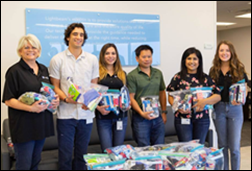
  • Lightbeam Health Solutions employees donate toiletries and snacks to charities serving the homeless in Dallas.
  • MDLive joins Walgreen’s new digital healthcare provider marketplace.
  • Waystar will exhibit at the NextGen Texas Regional Client UM August 2 in Irving.
  • Netsmart will exhibit at the HCAF Annual Conference July 30 in Orlando.
  • Voalte CEO Trey Lauderdale will speak at the Sarasota Young Professionals Group on August 10.
  • Mission Health President and CEO Ronald Paulus joins Vocera’s board.

Blog Posts


Contacts

Mr. H, Lorre, Jenn, Dr. Jayne.
Get HIStalk updates. Send news or rumors.
Contact us.

125x125_2nd_Circle

Weekender 7/27/18

July 27, 2018 Weekender Comments Off on Weekender 7/27/18

weekender


Weekly News Recap

  • CMS proposes site-neutral payments in which hospital-owned practices won’t earn higher rates for billing as a hospital outpatient department
  • Internal IBM documents indicate that Watson Health has made unsafe treatment recommendations
  • The White House reverses its decision to halt ACA risk adjustment payments, citing the need to keep small insurers solvent and participating in the exchange markets
  • The Department of Defense increases its MHS Genesis budget by $1.1 billion to include implementation of Cerner at the US Coast Guard and to add on items that were included in the VA’s Cerner contract
  • The Senate confirms Robert Wilkie as VA secretary
  • England’s new Health Secretary Matt Hancock announces $640 million in additional technology funding
  • LabCorp continues to restore its systems following a July 13 ransomware attack
  • Arizona state records reveal that Banner Health’s poorly managed Epic-to-Cerner conversion at its acquired Tucson facilities caused medical errors and staff frustration

Best Reader Comments

“Healthcare is the only industry that requires its highest-educated, lowest-supply professionals to perform data entry work.” You mean documenting what you do to care for your patients? I can’t think of a single other job where a person doesn’t have to demonstrate, one way or another, that they did their work in order to get a paycheck. (HIT Girl)

So England has gotten over the NPfIT systems implementation failure? At least enough to try something else? (Brian Too)

Maybe its just me, but CMS is completely tone deaf for frontline MDs. This latest salvo of a ‘remedy’ is yet another nightmare. More complex quality reporting, changing the name (AGAIN) to Promoting Interop instead of MU, ACI, etc. Requiring the exact same counting, numerators, denominators, attesting nightmare AND now adding in AUC the CMS answer to pre-auth of MRI CT etc. (Meltoots)

Regarding poll results – thank you for reporting on this even though it is not, strictly speaking, healthcare news. It’s important, both in the realm of politics as well as fly-by-night news stories trumpeting the latest poll results of private companies. Reminds me of the old joke – five out of six surveyed researchers say Russian Roulette is completely safe. (Cosmos)

Re: Epic’s growth is mostly due to its hospital customers acquiring more facilities. While true, one could also argue that their product makes it easier for organizations to consolidate on their platform. (RobLS)

Re: lifestyle information for sale by data brokers. It’s really sad that so many people are so clueless as to how they’re constantly being measured and scored and basically discriminated against. IMO, population health has nothing to do with helping populations, but rather being able to measure and score groups and then drill down to individuals so they can be ‘managed’ for profit. One day there will be a revolt and I suspect it won’t be pretty. (Blocked by Gurus)


Watercooler Talk Tidbits

image image

Readers funded the DonorsChoose teacher grant request of Ms. B in Georgia, who asked for tablets, a charging station, and magnetic tiles for her class’s STEAM time. She reports, “It feels like Christmas every time we have new ‘gifts’ brought to our class from DonorsChoose. I am so grateful for supporters like you. You truly understand the struggle that teachers face every day to provide our kids with great education. Technology is so important today and not just for playing video games. Teaching STEAM allows my kids to explore the world in our class. Thank you for being apart of my class and making learning fun.”

image

Montefiore Medical Center (NY) suspends a radiology resident pending an investigation after an anonymously written, blog-type article claims he is responsible for white nationalist writings that were published under a different name. The website Medium took down the article because it violated its policy against “doxxing” by including his home address, email, phone number, and links to his social media accounts. Netizens predictably took the article as gospel and rushed to judgment to get the “white supremacist doctor” fired after which Montefiore dutifully distanced themselves from him at least temporarily, raising interesting questions: (a) what if the article is wrong?, and if it is, then (b) who pays for his permanently harmed reputation? or, if it’s accurate, then (c) is it OK to fire someone for their off-the-job beliefs or writings, no matter how repugnant they might be?

image

Investigators execute search warrants to obtain the Fitbit data and social media account logins of a missing 20-year-old University of Iowa student, hoping the FBI can find electronic clues to her disappearance.

The New York Times magazine snarkily rips the fake science, elitist aspirational pretensions, and massive but questionably earned profits of Gwyneth Paltrow’s Goop. A snip:

The weirder Goop went, the more its readers rejoiced. And then, of course, the more Goop was criticized: by mainstream doctors with accusations of pseudoscience, by websites like Slate and Jezebel saying it was no longer ludicrous — no, now it was dangerous. And elsewhere people would wonder how Gwyneth Paltrow could try to solve our problems when her life seemed almost comically problem-free. But every time there was a negative story about her or her company, all that did was bring more people to the site — among them those who had similar kinds of questions and couldn’t find help in mainstream medicine … “I can monetize those eyeballs,” she told the students. Goop had learned to do a special kind of dark art: to corral the vitriol of the internet and the ever-present shall we call it cultural ambivalence about G.P. herself and turn them into cash.

A large-scale study finds that one in six Americans have a past-due healthcare bill on their credit report, 11 percent of them at age 27 after losing the option to remain covered by the health insurance of their parents. Medical debt drops at 45 years of age when 30 percent of people carry health insurance.

SNAGHTML34c8715d

Surprise, CA worries about the future of its one-bed hospital that it voted to sell to a 34-year-old private investor from Denver who planned to use it for lab and telemedicine billing from his nutraceutical and lab companies. Beau Gertz hasn’t been around, websites for his businesses have been taken down, four of his former employees say everybody has been laid off, and his office landlord says the space is empty.

image

Cincinnati’s Shriners Hospital for Children, which treats only pediatric burns, says its future is uncertain since such burns are increasingly uncommon and outpatient treatment reduces the need for inpatient beds.

In Netherlands, the medical complaints board reprimands a doctor who asked the family of a nursing home resident with dementia to hold her down so he could administer a euthanasia IV drip after she refused to drink the sedative-containing coffee that was supposed to have been given first. Dutch law allows anyone over 75 years of age to participate in assisted suicide, but legal questions remain when the person’s mental status is unstable.

An opinion piece written by two doctors says that physicians aren’t experiencing “burnout” (PTSD-like symptoms of exhaustion and cynicism that suggest a failure of resilience) but rather “moral injury,” the lack of ability to deliver high-quality care as trained because of the health system’s patient-marginalizing requirements. They say,

In an increasingly business-oriented and profit-driven health care environment, physicians must consider a multitude of factors other than their patients’ best interests when deciding on treatment. Financial considerations — of hospitals, health care systems, insurers, patients, and sometimes of the physician himself or herself — lead to conflicts of interest. Electronic health records, which distract from patient encounters and fragment care but which are extraordinarily effective at tracking productivity and other business metrics, overwhelm busy physicians with tasks unrelated to providing outstanding face-to-face interactions. The constant specter of litigation drives physicians to over-test, over-read, and over-react to results — at times actively harming patients to avoid lawsuits.

Patient satisfaction scores and provider rating and review sites can give patients more information about choosing a physician, a hospital, or a health care system. But they can also silence physicians from providing necessary but unwelcome advice to patients, and can lead to over-treatment to keep some patients satisfied. Business practices may drive providers to refer patients within their own systems, even knowing that doing so will delay care or that their equipment or staffing is sub-optimal.

Mom-recorded video of a dad dancing to celebrate the discharge of his 15-month-old son from Children’s Hospital of Philadelphia after a 32-day stay for Down syndrome and leukemia lights up the Internet. Says father Kennith Thomas of Merchantville, NJ, “Don’t every look at a situation and think the worst. I want people to look at their situation and flip it and change the perspective.”


In Case You Missed It


Get Involved


125x125_2nd_Circle

EPtalk by Dr. Jayne 7/26/18

July 26, 2018 Dr. Jayne Comments Off on EPtalk by Dr. Jayne 7/26/18

clip_image002

The American Medical Informatics Association announces the launch of its Fellowship program (FAMIA)  for recognition of professional achievement and leadership in applied informatics. The FAMIA designation will be inclusive, recognizing physicians, nurses, pharmacists, and others working in the realm of clinical informatics. Fellowship candidates must demonstrate eligibility in education, certification, experience, AMIA membership, and AMIA engagement as well as through peer recommendation and commitment to future activity in clinical informatics.

I’m qualified except for the AMIA “engagement” part. I wonder if being the anonymous face of clinical informatics for thousands of readers would qualify under the “other contribution by petition” category? Applications close September 3 and require a $200 application fee.

clip_image004

New Medicare cards are on the way, with mailings complete in Delaware, the District of Columbia, Maryland, Pennsylvania, Virginia, and West Virginia. Patients in those states who haven’t received their cards can sign into www.MyMedicare.gov to confirm the mailing and print a card. I still get questions from practices that are confused about what to do when the new cards start coming in, so make sure your organization has a plan and that it’s well socialized.

Physicians who participated in the 2017 Merit-based Incentive Payment System (MIPS) program are now able to review their CMS-calculated scores and feedback reports. Penalties and incentives based on the data will impact Medicare payments for services rendered in 2019. Providers who have concerns about their performance data can request a targeted review from CMS. Common reasons for review include errors in data submission; physician eligibility issues; problems with the alternative payment model participation list; or issues with previous eligibility.

For a long time, my laptop would give me trouble when I tried to use the camera during conference calls, so I got in the habit of not using it. It’s probably a good thing, since my work-at-home schedule sometimes involved prolonged wearing of pajamas, followed by workout clothes, followed by wet hair. I did get my camera issues resolved and have been trying to make a point of having more of my calls with video.

I’m always worried I will do something dumb because I’ve forgotten that I’m on camera, but I’ve seen enough botched video lately to know that I probably look good by comparison. This week’s highlight reel: a call with someone who immediately got up from the computer and walked away, but insisted he was there reading the materials I was showing; camera angles that gave me a great view of one client’s nasal passage; and my favorite – someone trying to take a call from his boat, resulting in plenty of squinting against the sun and ambient noise from seagulls.

I was glad I wasn’t on camera for one call (the client doesn’t do video, so I don’t feel obligated to do it, either) because I am not sure I could have kept a poker face after hearing this quote from a newly-minted VP of operations: “I assigned this to you because I didn’t know who else to give it to.” I’m betting it didn’t build confidence among his new direct reports, so we’ll be doing some coaching on that approach later.

I was recently asked to provide a reference for a former colleague as she looks for a new position. Her hospital was acquired by a large corporate organization and the entire IT team was cleaned out. She’s applying at one of the only hospitals in our region that is still independent. I was surprised to receive a web link from the hospital, leading me to provide the reference through a short survey. It didn’t appear to really provide a mechanism to provide a peer reference vs. an employer one and gave no opportunity for narrative comment. I was forced to choose “yes” or “no” to a “would you rehire?” question despite not having been her supervisor.

I suspect that the HR department involved is just using these “references” as a check-the-box step rather than using them for actual content. It’s unfortunate, because she was great to work with and I think she would be an asset to anyone, but didn’t have a mechanism to share that information.

clip_image008

My office pre-books their order for flu vaccine as soon as our distributor will take it and requires all employees to receive vaccination as a condition of employment. Since we’re just about six weeks out from the start of the vaccination season, I was glad to see that the CDC’s Advisory Committee on Immunization Practices (ACIP) has included nasal flu vaccine in this year’s recommendations. There are quite a few people who are reluctant to have a shot but will accept the risk of a live (although modified) vaccine up their nose.

Last year’s flu season was particularly gruesome, and I hope we have an easier time this season. ACIP also delivered new guidelines on anthrax vaccine for post-exposure prophylaxis and updated recommendations on HPV, mumps, zoster, and pneumococcal vaccines. EHR vendors, start your engines – it’s time to update your logic. EHR clients should make sure they’re taking updates so that they have the best information available in their systems. I would estimate that more than half of the clients I work with don’t take regular updates to their systems unless they’re automatically applied in the background.

I was hanging out on a conference call the other day, waiting to figure out whether my client was just late or was going to no-show. I came across this site offering lab coats “for the perfect poise” that will ensure that “customers are enabled with confidence and grace through its sophisticated but classy appearance.” They ought to be pretty enabling since they start at $178 and run to $340. I found several other sites with pricey coats, and although they were more stylish than what I usually buy, given the things that are occasionally splashed on us at the office, I think I’ll stick with my $25 version.

I’m not sure whether it was worse for him to no-show or to have to endure the call I was on next, which featured an attendee who was doing the “I’m on two calls at once” routine but had the other call on speaker so that everyone else could hear it. Unfortunately I wasn’t the host and my client thought it was OK, so I was forced to play along. I still struggle to understand how someone can think they are able to meaningfully participate in two calls.

Given challenges in staffing and an overall nursing shortage, one hospital has come up with an innovative solution for staff retention. Pediatric nurses at Mercy Children’s Hospital can opt for a “seasonal staffing” program that allows them to work nine months out of the year but maintain their full-time benefits while taking summers off. The move addresses low census issues during the summer while expanding time off to travel or care for children out of school for the summer. Hospital leaders also hope it will allow nurses to recharge and return to work with “excitement for nursing.”

Having grown up as the child of a teacher, there’s something to be said for being able to have family adventures when school is out for the summer, even if there’s a chance your mom might want to leave you at a scenic overlook because you’re a grumpy pre-teen.

What’s your favorite childhood vacation memory? Leave a comment or email me.

Email Dr. Jayne.
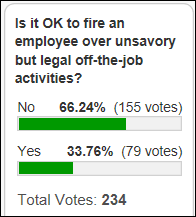
HIStalk Interviews Jeremy Bikman, CEO, Reaction Data

July 25, 2018 Interviews 2 Comments

Jeremy Bikman is CEO of Reaction Data of American Fork, UT.

image

Tell me about yourself and the company.

I’ve spent a long time in healthcare doing research and helping hospitals, clinics, and even the vendor side make better decisions. That’s what our company does. We get organizations, whether they’re a hospital or vendor, answers to their biggest problems really quickly.

What are the most-hyped and most-promising healthcare technologies?

Over-hyped is blockchain, hands down. People don’t even know what it is. It’s moving so fast. You would think that in an industry like healthcare, people would be more skeptical because we’re supposedly a more data-driven, evidence-based industry. You go to HIMSS and someone says they’re doing something with blockchain. You ask them to describe its advantages and they end up talking about the technological benefits. You ask what that means for a hospital and they can’t articulate it. How is it going to improve the bottom line, top line, patient care, whatever it is? They’ll answer it as a feature statement rather than benefit.

Most promising is, surprisingly, artificial intelligence. I say “surprisingly” because healthcare is typically last to the tech adoption game on anything that’s emerging. But we’re seeing that it’s picking up the pace pretty significantly, mainly in the imaging departments, but also expanding outside.

We launched some research around that. We wanted to keep it open ended, asking the C-suite where they saw it being used without giving them a list to choose from. Number one was virtual health services. It’s interesting that they said that since CMS just said that they will materially up the reimbursement level for telehealth, telemedicine, or I guess I’ll use the macro term virtual health. That correlates to what the hospital C-levels are saying, that AI will be the most disruptive, impactful, and beneficial emerging technology.

Second is machine learning and deep learning. I was surprised that CEOs of hospitals said that. We get skeptical when someone makes a choice like this, so we asked, you said machine learning, do you even know what you’re talking about? They really did. They could talk about it, saying, we have all this data, and if we could use machine learning algorithms to look at it, maybe it could help us predict the types of patients who are most likely to miss an appointment or not take a med. These algorithms could help us with medication adherence, following a certain protocol, or even with logistical issues.

On the imaging side, it was much easier for them to answer that it could help a radiologist diagnose something or notice some lesion or some problem with a vessel within an image much more quickly. That would make them more efficient and hopefully raise the clinical efficacy of the encounter and the diagnosis.

Then they brought up the nebulous interoperability, which they couldn’t describe it at all. Most of the research I’ve seen around interoperability is pretty garbage. Everybody defines it in their own way, and if they can define it their own way, then we don’t have a definition. I don’t know how you attack a problem that has a nebulous definition.

Wall Street and private equity firms are buying high-income medical practices such as dermatology and are already deep into hospitalist, ED, and anesthesia staffing. How will that change the market?

It will be interesting to see if pay-for-performance ever really takes off or some mandate from on high alters the financial dynamic whether they’ll really stay in. Do they go the way of a lot of these vendors that come in and do the hokey pokey, where their right foot’s in, their right foot’s out? You never know. That’s why a lot of healthcare organizations are professionally skeptical. They’ve learned to be about those new entrants that say they know healthcare or that buy their way in.

People buy up amazing companies and do layoffs right away. You talk to those acquired installed bases over a few years and they say, it’s all changed. Things were going really well before. I understand economy of scale, but the problem is when that they get integrated, it goes in the opposite direction. Things are getting worse. They might be getting some sort of year-over-year benefit from economies of scale, but the end users don’t.

You’re seeing the same thing with Wall Street, private equity, and others jumping in. There’s money right now and there’s inefficiency. But once they’ve squeezed as much inefficiency out as possible, then they start looking at their returns. They owe their limited partners or their investors. That’s who they serve. How long will they stay in the game? Are they in it for the long haul? I doubt it. Some are, so they will be able to make some improvements and then look at it as a long-term play.

You’ll see a lot of them getting out in the next decade or less. You can see these guys having to go private again or coming up with their own ownership groups or whatever it is. You’ll see the investors stepping out. That’s again if the government doesn’t step in, behind the scenes, and collude to help make markets happen, keep people in business, and keep themselves elected. I’m going to get really cynical if we get into the government aspect. Which I’ll certainly do, and I’m willing to fall on my sword about my opinion of government and business collusion. But enough about the HITECH Act.

What changes have you seen in the big four inpatient EHR vendors of Epic, Cerner, Meditech, and Allscripts?

Hospitals and clinics have learned that an EHR is not the panacea it was made out to be, or I should say, it was mandated to be. It certainly needed to happen, but whether it needed to happen as fast and in such a rigid way is up for debate.

\What they’re finding out is that, we put the EHR in because we were explicitly or implicitly promised that we would see a lot of improvement. Patient care would improve, and over time, our organization’s financial position would improve, all because of digitizing patient records, order entry, the MAR, and everything else. What you’ve seen — at least from the research I’ve done and research I’ve read – is that there has not been a material or even statistically significant improvement in hospital bottom lines, clinic bottom lines, or patient outcomes.

Now what are they doing? We have to create accountable care organizations. We have to coordinate patients. We have to get them in their own little sub-populations. How do we treat those patients? We had better have analytics. Do we even have a real data warehouse? Crap, now we have to go get a real data warehouse. Now we have all the data, we don’t know how to analyze it, so we had better get several analysis tools. Do we know how to do that? No, so we have to hire Accenture or Deloitte or some other firm to come in and help out.

They start realizing that for all the time and money they spent on an EHR, all they have done is that the ball got kicked into the end zone and it’s been advanced to the 20-yard line. You mean that we have 80 yards more to go? Yes. Now they’re having to look at everything else to understand that the EHR, these big clinical systems, get put in and they’re the operating system of the hospital. You have a lot more apps and a lot more things that you have to load on top of it.

That’s not the way it was sold back then. Ten years ago or so, no one was talking about having do do all these sorts of things and I’m not sure everybody knew it. When you’re a hospital trying to run your organization in dealing with state mandates, local mandates, employers, payers, and Medicare, it’s tough. You have to rely on the vendors you work with to help you out. You really do. I’m not sure the vendors really understood that it’s not just putting in the EHR. I don’t think anyone would have bought it if they realized, we’re going to spend how much of our budget? Then the upgrades are going to be all this and other sorts of stuff? That’s just the foundation now. We have to do all these other things and bear all this additional cost and labor.

It’s shocking that so much money has been spent on the space, our space. What are the outcomes? Are hospitals in better financial shape? Has putting in all this technology caused a significant improvement in outcomes — financial, operational, specifically for patients? No. You certainly had to put in these systems, but the end result has not been as super positive as everybody expected. I don’t think anyone was necessarily to blame. I don’t think Epic, Cerner, Meditech, or Allscripts went in knowing, ha, you’re going to have to dump huge amounts of money here and then load all these other solutions over time. Because I don’t think people anticipated it. We have so much more that we have to do. I really see healthcare at about the 20 or 25-yard line.

Looking back at the HIMSS conference, how are vendors approaching the market?

It’s net fishing, where you’re just throwing out instead of being precise. They’re just trying to catch it all. So many vendors say they can do pretty much everything. If you look at the HIMSS listings for vendors, you know some of them really do just one or two things, but they will list 15 or 20 because they’re just trying to catch attention.

HIMSS is something you have to do, but I’m wondering about the value of what’s going on there. I love it because you get to collaborate with everyone. That’s the best part of it. People come by our booth just to hang out, ride our bikes, and try to break a clavicle or something. They just come to talk. Most of them just shake their head because everybody does everything and it’s all becoming white noise. It’s hard to differentiate.

My recommendation to vendors is to know who you are, know your ideal customer who you can have the greatest success with, and try to be precise in your messaging to that group. Because everyone’s getting washed out. That means that only the largest of the large are going to get attention because of their sheer scale, size, and reach.

Being precise is better for attendees and eventually better for vendors. You may not get as many people coming by your booth, but you’ll get a better quality of interaction and probably end up closing more business. But taking that approach is a scary step into the dark, because everybody is saying they do lots of things and trying to get more people to come in. That confuses the message and prolongs the sale.

The most successful vendor at HIMSS seems to be HIMSS.

They bought Healthbox, which invests in tech companies. HIMSS is indirectly and directly competing with almost every one of their members. It’s confusing. They’ve done a brilliant job.

You wrote some funny stuff about the HLTH conference. That would not have emerged if everyone was happy about what’s going on with HIMSS. There is demand because HIMSS is this incredibly successful organization that seems like it has to grow. It doesn’t know how to stay put, so it has to acquire other conferences, do partnerships, and acquire a research company or whatever HIMSS Analytics is now. I heard many vendors say they’re not really comfortable now because HIMSS was a partner — an expensive partner, but a partner — that offered value, but now it’s encroaching into their business.

Do you have any final thoughts?

Disruption is the name of the game, far more than ever. I don’t necessarily mean technology disruption, it’s more organizational. The lines are blurring and they’re going to blur even more to where entities become indistinguishable from one another. You’re seeing hospitals launching vendors. You’re seeing vendors looking at coming up with their own healthcare organizations. You’re seeing insurance companies do different intermediaries, buying up provider organizations all over the place.

We just did research around the frustrations that physicians and nurses are dealing with. We looked at key disrupter stuff, such as Amazon or others coming in, and what hospitals and clinics plan to do about it. We found out that 48 percent of healthcare organizations have active plans to acquire other healthcare orgs, get acquired, or do a merger in the next few years, which is enormous. The level of disruption we’re seeing just within provider M&A is enormous.

I would not be surprised if you start seeing massive investments in the life sciences and drug companies into provider organizations to help shrink clinical trials and to get more access to that information. You’ve seen what Intermountain is doing. We did a huge amount of research around the generic drug company they are launching. That never happened before. That’s a seismic event. I don’t think the drug companies are going to sit back and go, OK, fine, whatever. This is a signaling of all the lines blurring and everything coming together.

It’s almost like the old company store model, where the town is owned by the company that puts up the road, hires the police force, and runs the stores. I’m going to go on record as saying that you’ll have a single entity that is a drug company, a provider org, a vendor, and a payer. You’re seeing it coming together and it’s crazy. It could be awesome crazy or it could be really bad crazy, but as we’ve triangulated all of the enormous amounts of data that we’re collecting, it’s heading that direction. I don’t know when that will happen, but it will be super fun to watch.

News 7/25/18

July 24, 2018 News 7 Comments

Top News

image

The Department of Defense will increase its EHR contract ceiling by $1.1 billion in expanding MHS Genesis to cover implementation of Cerner by the Coast Guard. The extra cost will also cover items included in the VA’s contract that were not present in the DoD’s agreement, according to Defense Healthcare Management Systems Program Executive Officer Stacy Cummings.

Cummings added, “A standard electronic health record baseline for the Department of Defense, Department of Veterans Affairs, and US Coast Guard will enable more efficient, highly reliable, safe, and quality care.”

The DoD’s original contract ceiling with lead contractor Leidos was valued at $4.3 billion and a total of $9 billion if all options were exercised.

image

The Coast Guard gave up on its attempt to implement Epic in 2015 after running $46 million over budget with no sites live. A GAO investigation blamed poor project management, insufficient governance, inadequate project documentation, lack of testing, and internal staff turnover. The Coast Guard began searching for an alternative to Epic in February 2016, reverting to paper and, according to the GAO, endangering members with convoluted processes.

image

Cummings said the Pentagon will publish a second evaluation report by the end of the year, following a scathing internal review from May that concluded that MHS Genesis “is neither operationally effective or operationally suitable” and not capable of managing care delivery.

The DoD also announced that the next four MHS Genesis rollout locations will be Naval Air Station Lemoore, Travis Air Force Base, US Army Health Clinic Presidio of Monterey, and Mountain Home Air Force Base.


Reader Comments

SNAGHTML33138967

From FlyOnTheWall: “Re: Allscripts. The company’s investor page proudly boasts in a press release from last year that Rothman Ortho selected Allscripts PM to replace its ‘legacy system.’ Was not that system Allscripts Vision? Nice to see Allscripts getting into the rip-and-replace frenzy of Allscripts solutions, even though they did an RnR of one of their own products.” Unverified, but I believe Rothman was using the old Vision product of Medic / Misys, acquired by Allscripts in 2008. If that’s indeed the case, then I would categorize the announcement as misleading since it’s just swapping one Allscripts product for another, not a brag-worthy displacement of a competitor’s system.


Webinars

July 26 (Thursday) 1:00 ET. “The Patient’s Power in Improving Health and Care.” Sponsor: Health Catalyst. Presenter: Maureen Bisognano, president emerita and senior fellow, Institute for Healthcare Improvement. Patients, even those with chronic diseases, only spend a few hours each year with a doctor or a nurse, while they spend thousands of hours making personal choices around eating, exercise, and other activities that impact their health. How can we get patients to be more engaged in their care, and help physicians, nurses, and healthcare providers transition from a paradigm of “what’s the matter” to “what matters to you?” This webinar will present stories of patients and healthcare organizations that are partnering together with tools, processes, data, and systems of accountability to move from dis-ease to health-ease.

July 31 (Tuesday) 12:30 ET. “How to Proactively Troubleshoot End User Experience Issues in Healthcare IT.” Sponsor: Goliath Technologies. Presenter: Goliath Technologies engineering staff. An early warning system for EHR access problems helps prevent downtime and user access problems before they impacts patients and collects objective technical evidence of the issue’s root cause. This webinar will describe how hospitals protect their investment in Allscripts, Cerner, Epic, and Meditech EHRs by anticipating, troubleshooting, and preventing end user experience issues and collecting the technical data needed to collaborate with their vendors on a solution.

Previous webinars are on our YouTube channel. Contact Lorre for information.


Acquisitions, Funding, Business, and Stock

image

Identity and access management technology vendor Identity Automation acquires HealthCast, which offers single sign-on and virtual desktop systems for healthcare.

SNAGHTML31b56cdc

Former employees of the shuttered CareSync describe the company’s final days to the Hardee County (FL) Board of County Commissioners, saying they were pressured to keep patients of its chronic care management business on the telephone line for at least 20 minutes to qualify them for their monthly Medicare billing. CareSync co-founder and State Rep. Jamie Grant — who served as senior solutions architect and was cleared of ethics violations after charges that he funded the company’s startup by misusing Hardee County development grants – says he hasn’t ruled out suing unnamed parties. Co-founder Travis Bond, who employees said was removed by the board because of poor financial management, says he does not plan to pursue litigation.

Cerner has added half of the 600 Kansas City-based employees it needs for an expansion of its RevWorks and ITWorks outsourcing businesses.

University of Minnesota hopes to license an algorithm created by its medical school researchers that predicts a patient’s one-year mortality risk using EHR data.


People

image

DirectTrust hires Scott Stuewe (DataFile Technologies) as president and CEO. He worked for Cerner for 20 years through December 2016.

image

Methodist Health System (NE) promotes Kent Sona to VP/CIO.


Announcements and Implementations

image

A Reaction Data survey of 250 physicians finds that EHRs, regulatory compliance, and internal bureaucracy contribute most to their burnout, with patients named as the problem only 2 percent of the time. The top wished-for EHR improvements are improved user friendliness, additional dictation or scribe capabilities, and reduced time required.

A Black Book survey finds that two-thirds of hospitals are reconsidering whether the ED information system supplied by their EHR vendor can handle efficient ED workflows and meet consumer expectations, with outsourced ED doctors being the least satisfied due to EHR training gaps, excessive clicking, and difficulty in obtaining outside patient data. ED doctors who were forced to move from a best-of-breed EDIS to an EHR’s ED module say their new system hurts their productivity (90 percent), impedes patient workflows (75 percent), and contributes to medical staff burnout (90 percent). CIOs are mostly at odds with those beliefs, favoring a single source EHR solution. The top-rated best-of-breed EDIS vendor is T-System, followed by Optum Picis and Wellsoft. Cerner, Meditech, and Allscripts were also highly rated by users. The most-desired features of both types of EDIS in order are better mobile deployment, interoperability, and patient satisfaction tools.


Government and Politics

image

The Senate confirms Robert Wilkie as VA secretary in a 86-9 vote.

image

The National Institutes of Health launches its Google Cloud-powered STRIDES Initiative to allow researchers to analyze large biomedical data sets. Meanwhile, a Google Cloud blog post says that former Cleveland Clinic President and CEO Toby Cosgrove, MD has signed on as an advisor.


Privacy and Security

image

A Kaiser Health News report recommends that consumers pay cash for alcohol and cigarettes while bragging about gym memberships on social media since insurers and other groups are using personal information from credit cards and other sources to create individual profiles that are then sold to companies. Buyers include drug manufacturers – which might want to buy a list of men over 50 who are experiencing erectile dysfunction – and insurers that may use the profile to predict lifespan or medication adherence. Even employers can use the information to check for a job candidate’s potential work-affecting and expensive chronic illnesses before hiring them. The article quotes Harvard fellow Adam Tanner, who wrote “Our Bodies, Our Date: How Companies Make Billions Selling Our Medical Records.”


Other

image

A small JAMA-published study finds that back-end speech recognition (specifically Nuance’s former EScription product) has a 7 percent error rate when creating dictated notes (operative notes, office notes, and discharge summaries), with some of those errors such as “grown mass” instead of “groin mass” remaining on the chart for weeks or sometimes indefinitely as clinicians either don’t review them promptly or sign them without double checking. The authors recommend that speech recognition errors be submitted for calculating error rates and for creating automated error detection systems.

Banner Health posts a job for CEO of its Tucson campuses just after its corporate VP/CIO announced plans to leave and the local paper published documents from a state investigation into problems with patient care, provider satisfaction, and billing from its Epic-to-Cerner conversion at the former University of Arizona Health Network hospitals in Tucson.

Google’s Nest home automation division is approaching eldercare facilities to use its products for monitoring the wellbeing of residents.

A Stanford University scientist invents a patch that measures cortisol in sweat to detect disease, measure stress, and evaluate sports performance.

image

Columbia University’s new Center for Precision Dental Medicine offers RFID tracking of patients and equipment, biofeedback-measured stress levels for quantifying pain, video recording of procedures, and all-digital dental chairs whose six instruments are RFID-enabled for tracking usage and sterilization. They hope to use the resulting data not only to make patients more comfortable, but to analyze provider technique to identify best practices. They also hope to to integrate their systems with EHRs to remove the silos between professions.


Sponsor Updates

  • Ellkay will exhibit at AACC’s Annual Scientific Meeting & Clinical Lab Expo next week in Chicago.
  • Iatric Systems will exhibit at the SHIEC Annual Conference August 19-22.
  • In Ohio, the MetroHealth System and Medical Mutual become the first provider and payer organizations to digitally exchange data and documents with Hyland’s OnBase Mackinac solution.
  • AdvancedMD publishes a new eGuide, “Best Practices to Improve Patient Payments.”
  • Nordic posts a podcast titled “Developing a strategy for your Epic Community Connect program.”
  • Audacious Inquiry names Roxanne Johanning health IT product manager.
  • Arcadia will host a career open house at its Pittsburgh office July 25.
  • CompuGroup Medical will exhibit at AACC July 29-August 2 in Chicago.
  • Divurgent publishes a new white paper, “Medjacking: A Life or Death Issue for Leaders in Connected Healthcare.”

Blog Posts


Contacts

Mr. H, Lorre, Jenn, Dr. Jayne.
Get HIStalk updates. Send news or rumors.
Contact us.

125x125_2nd_Circle

Curbside Consult with Dr. Jayne 7/23/18

July 23, 2018 Dr. Jayne 1 Comment

Every time CMS releases new proposed rules, I feel like the circus has come to town. The most recent offering includes 1,472 pages of bliss and is open for public comment until September 10.

I used to try to read them on my own, but found it too hard to get through them in a timely manner. I’m grateful to the people who have dedicated time to review and summarize them for the rest of us. It seems like most healthcare media outlets are trumpeting the “historic shift” for ambulatory Evaluation & Management (E&M) codes, so I decided to do a little deeper dive myself. Most recent federal proposals trumpet their aim to reduce administrative burdens, so I was curious whether they had truly found the “easy” button.

This document is a double whammy, addressing both the Medicare Physician Fee Schedule and the MACRA Quality Payment Program. There’s a whopping 0.13 percent increase in the fee schedule, which frankly I would rather have had them just keep it static than to try to explain various updates and adjustments. There are new G codes for preventive telehealth services that may be enticing for primary care physicians.

Our enthusiasm is curbed, though, by the continued insistence on EHR support for Appropriate Use Criteria for Advanced Diagnostic Imaging. That’s a measure that has been created, delayed, stayed, and revisited for the last several years and now will start in January 2020, with a year-long testing period but no enforcement. Providers can apply for hardship exceptions if they have poor Internet access, EHR vendor issues, or uncontrollable circumstances. CMS is relaxing a bit in allowing AUC tasks to be performed by ancillary personnel rather than requiring the provider to do the work, so that’s a good thing. It will be interesting to see how much of a difference the use of AUC really makes. In my market, we’re already well trained by commercial payers so that we don’t order tests that aren’t indicated.

The Accountable Care Organization programs received an update, with some measures being retired and a new one added. I didn’t spend too much time on the ACO part of the rule, since it’s expected that CMS will release a separate ACO regulation in the near future. I jumped to the part about outpatient E&M coding, which wasn’t as exciting as I expected. Providers will have the choice to document and code their visits based on the current schemes (formulated in 1995 and 1997) or through either a framework around time and medical necessity, or one around medical decision making. Rather than the distinct charges we have now for visits under the 99202-99205 and 99212-99215 codes, a blended rate is proposed.

Not surprisingly, there is a shift towards the lower end of the range rather than a shift towards the higher end, and for those of us used to performing and documenting high-level visits, it will be a cut. This may be made up for by the reduced documentation requirements, but for providers used to maximizing their use of macros, personal defaults, and templates, the perceived reduction in work isn’t going to make up for a more than 10 percent reduction in payments. If you’re not optimized on your EHR or don’t document efficiently, it may be a boon, but not for every practice.

As far as MACRA, MIPS, and the Quality Payment Program, CMS is just shuffling things around again. Advancing Care Information has been renamed Promoting Interoperability, and additional providers are being invited to the party: physical therapists, occupational therapists, clinical social workers, and clinical psychologists. From a quality perspective, all-cause readmission is being added as a measure for groups. Quality reporting will remain full-year, despite provider groups lobbying for a change.

Quality measures that CMS has identified as ineffective will be dropped, potentially saving physicians $2.3 million. Additional quality measures will be added, including four that address patient-reported outcomes. Reporting for Improvement Activities will be 90 days, however, along with Promoting Interoperability. Use of Certified EHR Technology that complies with the 2015 edition is mandatory. Within the Promoting Interoperability category, new elements are available for Prescription Drug Monitoring Program (PDMP) query, verification of an opioid treatment agreement, and expansion of electronic referral loops by receiving and incorporating information. Vendors will need to incorporate functionality to track and report on these elements, and I suspect that many do not currently have that capability.

Security Risk Analysis remains a required element. I continue to find practices that think that this is somehow the responsibility of their EHR vendor and who don’t understand that it’s the covered entity’s responsibility, with EHR vendor compliance being only one piece of it. Organizations are required to assess how they handle Protected Health Information in a variety of different settings, whether in person, on paper, on the phone, etc. which may or may not have anything to do with the EHR. If you don’t know your organization’s plan for Security Risk Analysis, it might be worth a discussion.

As was true previously, participation in an Advanced Alternate Payment Model such as an Accountable Care Organization means a practice doesn’t have to keep track of all the changes in the Merit-based Incentive Payment System (MIPS) model. The APM track is definitely where CMS wants providers to be, adding a 5 percent bonus for them. CMS is also pushing providers to be ready for programmatic updates on a regular timetable with its move to combine QPP with the Physician Fee Schedule. If this holds, providers can plan for updates to both in July and November instead of playing the waiting game.

Still, each time a new rule or proposed rule comes out, the chatter in the physician lounge increases. In my market, we’ve seen a number of established clinicians opt out of Medicare and even more choose to move to cash-based practices whether they involve retainer / concierge fees or not.

My practice remains firmly opted out of MIPS although we accept Medicare patients without restrictions. It remains to be seen whether there will come a time that the penalties outweigh the extra work that will be required to avoid them. So far, we’re diversified enough that it’s not an issue. As I work with practices that don’t have the luxury of non-participation, I’m thankful for that day a couple of years ago when we disabled the “Meaningful Use Content” checkbox and our lives got quite a bit easier.

Given the published comment period on this proposed rule and the typical CMS schedule, we’ll know in a couple of months whether any parts and pieces will be thrown out or modified. Based on this proposal compared to all the feedback that has been submitted on other proposed rules, I’d bet there aren’t too many material changes.

What is your take on the proposed rule for MPFS and QPP? Leave a comment or email me.

Email Dr. Jayne.
HIStalk Interviews Jeremy Pierotti, CEO, Sansoro Health

July 23, 2018 Interviews Comments Off on HIStalk Interviews Jeremy Pierotti, CEO, Sansoro Health

Jeremy Pierotti is co-founder and CEO of Sansoro Health of Minneapolis, MN.

image

Tell me about yourself and the company.

I grew up in Madison, Wisconsin. I went to school out East, then worked in healthcare policy in Washington, DC after college. I then moved to Minnesota for graduate school. Despite promising my wife that we would be here for only two years, that was 1996, and we’ve been here in Minnesota for 22 years.

We started the company in 2014. We knew that the next generation of digital health solutions would require data liquidity. We thought we had an innovative way of providing advanced data exchange between health IT applications. I had no actual skills since I’m not a physician and I can’t code, so when I showed my partners how to move a PowerPoint slide backwards and forwards, they told me I should be CEO.

How widely are APIs being used in healthcare?

We’re seeing them adopted at an accelerating pace. We’re excited by it. I’ve always believed that in healthcare, we adopt treatment technology eagerly and deploy it pretty rapidly. New information technology has been adopted more slowly. But now we are counting on digital health solutions to help us deliver better outcomes with lower costs, higher patient satisfaction, and higher provider satisfaction. Recognition is now widespread that this will happen only with secure, seamless exchange of data between applications. In manufacturing, retail, logistics, and financial services, that’s all done through APIs. We are seeing more rapid adoption of that in healthcare, too.

Do EHR vendors make it easy for customers to integrate their products with those sold by other companies?

To some extent, yes. Most of the major EHR platforms have API or developer programs. Some are more robust than others. It depends on the business strategy of the company and the other demands that are on the company. A lot of regulatory requirements have been placed on EHR vendors over the last 10 years. That has consumed a lot of engineering and product development time within those teams.

Our goal at Sansoro is to provide a universal API so that great developers and great healthcare software companies can write to a single API standard. Then we will handle the nuances of getting the data out and putting the data back into the EMR. As a developer, you don’t have to learn the different APIs and the different integration approaches of each vendor.

I saw you your site that Emissary doesn’t update EHR tables by scripted inserts or updates, but instead uses the vendor’s back-end service to preserve their validation logic. What are the use cases for updating the EHR database and do other methods do direct database updates?

I don’t know whether other companies are doing direct table inserts. Our team is a collection of experienced health IT personnel who know how to create safe application. We’ve all been working with health IT for 20, or 30 years per person. Our approach has been to use the back-end services to make it a safer process. We also get to take advantage of the work that’s already been done by the EHR vendor in terms of the updates.

Examples of what we allow for writing data to the EHR would be discrete observations, documents, and notes. Pretty straightforward stuff, but important. In most provider systems, the EHR is the system of record, so it’s important to get key data into the EHR itself. That’s the operating system for a provider.

Our secret sauce is doing the hard work of mapping the data structures of all of the different EHRs that we support into a unified data model. That’s the holy grail. That’s why we can provide a single API in which an engineer can read data from different vendor platforms and write data back to different vendor platforms without having to know the nuances and differences between those vendor platforms.

What are the most-request API integrations and also the most-desired that aren’t yet available?

We see three common use cases across our customers and prospects.

One is pretty simple. We want to pull patient charts. We typically will have to do an extract, run a database report, or send personnel into the clinic or hospital to print out the chart or print it to a PDF. Being able to pull that chart for quality reviews, medical necessity reviews, and release of information — just being able to pull the basic patient chart — is a standard need and use for our APIs.

The second is for advanced analytics. Basic patient chart information, but with additional information. What clinic or department was this patient in when this procedure was performed? What is the provider’s background? Then combine historical information with real-time information to create a dashboard back to the provider in real time, with insight about the possible best treatment for this patient or how the patient’s condition is improving or deteriorating. Real-time analytics, pulling both historical data and data that’s up to the minute from the EHR or from other data sources to provide those exciting insights for clinicians for administrators.

The third and broadest use case involves workflow improvement. Probably 200,000 prior authorizations are submitted every day in the United States. You print out a bunch of information from the patient’s chart, fill out a prior authorization cover sheet by hand, and fax it into the payer. Then the payer has a person who adjudicates that prior authorization. Often, the the approval will be snail-mailed back to the provider. Not really up to 21st century speeds.

Workflow improvement is using our integration platform to listen for orders, determine if those orders require a prior authorization based on the patient’s insurance, and if so, grab only the data that’s needed from the chart to adjudicate that prior authorization, and then push the approval number back into the patient’s chart. All without any further human intervention. Once the provider places the order in the EHR, the rest happens automatically. That’s a great workflow improvement that saves hours for every prior authorization request.

Another great workflow improvement involves unified communications. Lots of companies provide communications tools that augment the EHR tools, whether it’s Vocera, Voalte, PatientSafe Solutions, or Spok. There’s a pretty good list of vendors that have great tool sets. Enhancing those tool sets to send those messages to the right clinician with appropriate context. Here’s a lab result for the stat order you placed, but in addition to this lab result, we’re going to include the last three results for that same lab test so you can put this result in context. Also, here are the patient’s most recent vital signs and here’s the medication list.

As a provider, you’re not getting a call from the lab with the lab result and then having to log into the EHR to find all that information manually. Instead, it’s delivered to you on your smartphone. As a clinician, that saves you a lot of time and allows you to make a decision faster about the appropriate treatment for that patient.

The FHIR standard is even further entrenched now that Apple is using it to populate Health Records. How does FHIR fit into the overall needs for interoperability?

We believe in a “FHIR and more” approach. Our integration platform, we believe, provides the most complete and comprehensive integration on the market today. But we understand that there’s a role for FHIR.

The challenge with any standards group is that it takes time to develop those standards, and that’s totally understandable. The other thing we’ve seen is that those standards are a paper-based or an electronic specification, but they don’t always get implemented in the same way by each vendor. You can look for a single FHIR resource and find that different vendors implemented it in different ways. You would need a different code base for using the same FHIR resource from one vendor to another.

We believe that FHIR has an important role and Apple has shown that you can do some interesting things with it. We’re working with customers that may be able to use FHIR for some of their needs, but they have other needs as well. We are able to provide APIs that fulfill needs that the FHIR working groups haven’t gotten to yet or that haven’t been deployed by the vendors yet.

There is no “one size fits all” solution for data exchange. We know from our growth over the last few years and from the continued interest that we have from new customers that there’s a demand for FHIR and more.

Do you have any final thoughts?

The next generation of software that will be part of the digital health revolution demands data liquidity. When you have free flow of data, it’s fascinating what you can accomplish.

The easiest analogy that I draw is to the smartphone. As a platform integrating your location and the ability to send messages, the smartphone has enabled whole categories of industries to develop. Take ride-sharing, for example. That never would have been developed.

As we start to break down the barriers among health IT applications and create the ability for them to exchange data, we’re going see a similar explosion in the creativity and innovation around health IT software. We are excited to be able to support that. For all of us, it will mean a better patient experience, lower costs, and better outcomes. That’s what we’re all trying to achieve.

Monday Morning Update 7/23/18

July 22, 2018 News 5 Comments

Top News

image

In England, new Health Secretary Matt Hancock pledges his support for NHS modernization and announces $640 million in new technology funding. He touted virtual visits, barcode tracking, and electronic medication ordering.  


HIStalk Announcements and Requests

image

Poll respondents say Epic has the best CEO. HISJunkie says Meditech hasn’t grown, Brent Shafer is too new to judge, and Allscripts is a mess. Tripp Tart voted for Judy Faulkner in admiring her for keeping the company free of shareholder influence. Former Community CIO votes for Howard Messing since he also kept Wall Street out of the picture and is creating company growth again, while Epic’s growth is mostly due to its hospital customers acquiring more facilities.

New poll to your right or here: would you be OK with insurance companies using your harvested social, financial, and lifestyle data to approve and price your medical coverage?


Webinars

July 26 (Thursday) 1:00 ET. “The Patient’s Power in Improving Health and Care.” Sponsor: Health Catalyst. Presenter: Maureen Bisognano, president emerita and senior fellow, Institute for Healthcare Improvement. Patients, even those with chronic diseases, only spend a few hours each year with a doctor or a nurse, while they spend thousands of hours making personal choices around eating, exercise, and other activities that impact their health. How can we get patients to be more engaged in their care, and help physicians, nurses, and healthcare providers transition from a paradigm of “what’s the matter” to “what matters to you?” This webinar will present stories of patients and healthcare organizations that are partnering together with tools, processes, data, and systems of accountability to move from dis-ease to health-ease.

July 31 (Tuesday) 12:30 ET. “How to Proactively Troubleshoot End User Experience Issues in Healthcare IT.” Sponsor: Goliath Technologies. Presenter: Goliath Technologies engineering staff. An early warning system for EHR access problems helps prevent downtime and user access problems before they impacts patients and collects objective technical evidence of the issue’s root cause. This webinar will describe how hospitals protect their investment in Allscripts, Cerner, Epic, and Meditech EHRs by anticipating, troubleshooting, and preventing end user experience issues and collecting the technical data needed to collaborate with their vendors on a solution.

Previous webinars are on our YouTube channel. Contact Lorre for information.


Decisions

  • Schoolcraft Memorial Hospital (MI) switched from Evident to iSolved HR and payroll software in June.
  • Divine Savior Healthcare (WI) will replace Evident with Athenahealth in fall 2018.
  • Crisp Regional Hospital (GA) will replace Meditech HR with Kronos in 2018.
  • North Country Hospital & Health Center (VT) replaced Allscripts Paragon with Athenahealth in April 2018.

These provider-reported updates are supplied by Definitive Healthcare, which offers a free trial of its powerful intelligence on hospitals, physicians, and healthcare providers.


People

image image

Chronic Care Management, Inc. hires two former executives of its defunct competitor CareSync, Gurpreet Singh (CIO) and Marc Gauthier (head of enterprise business development).


Announcements and Implementations

image

Publicly traded rural hospital operator LifePoint Health is considering selling itself to a private equity firm for up to $6 billion, with the report sending LifePoint’s shares up 40 percent. LifePoint Health also operates 15 hospitals in partnership with Duke University Health System under the Duke LifePoint Healthcare brand.


Privacy and Security

image

LabCorp is close to fully restoring its systems after they went offline in a July 13 ransomware attack. The company’s security team detected the Remote Desktop Protocol attack and stopped it within 50 minutes, but by then, the SamSam ransomware had impacted 7,000 Windows-based systems and 1,900 servers. SamSam took Allscripts down earlier this year, reportedly also using RDP as its vector.

image

Members of a private Facebook group for sexual assault survivors find themselves trolled by new users who threaten to post the intimate details they had shared under their real names. The group was apparently created by an anonymous administrator who either had duped the members or whose account was hacked. The report by “Wired” notes a Facebook flaw that allowed this to happen – groups can be created by “pages” that aren’t tied to an individual’s profile, the same way Russian propagandists used the platform before the 2016 elections to keep themselves anonymous. I was going to play around with some Facebook group stuff but decided instead to try Microsoft Teams now that the company is offering a free tier and no longer requires members to use Office 365.

image

Singapore says hackers stole the information of one-fourth of its population, 1.5 million people, in an attack involving its SingHealth clinics. The hackers specifically targeted the information of the prime minister in the cyberattack that lasted from June 27, 2018 until it was discovered on July 4. They breached a specific PC and then elevated its account privileges to access the database.


Other

image

Epic’s campus is free of cranes for the first time in two decades as the company’s frenetic construction projects wind down, having expanded the campus to handle employee headcount that tripled to 10,000. Epic says that it may another set of buildings next year.

image

The local paper reports that Banner Health’s $45 million, October 2017 conversion to Cerner at its acquired Tucson academic medicine locations caused medical errors and staff frustration, although hospital officials said delays in patient registration, lab ordering, and medication ordering and delivery didn’t harm patients. The paper just received heavily redacted records of an Arizona Department of Health Services investigation. Banner says it made 100 improvements to Cerner this year, naming specifically changes in pharmacy processing, oncology administrative activities, and patient records access. The paper notes these items uncovered from various state investigation documents and meetings:

  • The Tucson locations had a smooth transition when they originally implemented Epic, but moving to Cerner “provided fraught for some patients and staff,” with significant problems due to poor implementation planning and training.
  • This was Banner’s first implementation in an academic medical center (the former University of Arizona Health Network) and its Cerner system couldn’t distinguish between a medical resident and an attending doctor.
  • A near-miss infant overdose happened because Cerner was set up to order per-kg weight-based doses, while Epic had been set up as per-gram ordering.
  • Banner’s CFO admitted to state officials last month that it underestimated Cerner’s data center and bandwidth requirements.
  • Banner’s CFO says both revenue and clinical productivity have yet to recover from the Epic-to-Cerner switch nine months ago. He replied to a Regents member who expressed concerns about Banner’s Tucson reputation, “You and me both.”
  • The article notes that Phoenix-based Mayo Clinic Arizona will replace Cerner with Epic on October 6.
  • In other Banner news from Tucson, the health system cancels its nurse Magnet status, where under University of Arizona Medical Center’s ownership in 2003, it became the first Magnet-designated hospital in Arizona. Banner will continue Magnet participation at its Phoenix campus.

AP Stylebook neatly summarizes how publications should use the results of political polls, offering rules that also apply to healthcare IT:

  • The existence of a poll isn’t in itself newsworthy.
  • The poll results should disclose who paid for it, and if the poll was commissioned by an organization that benefits from its results, it is not newsworthy.
  • Polls should include a description of their methodology and a list of the questions asked.
  • The polled group should be randomly selected to make sure that every member of that population has an equal chance of being selected. Online polls are valid only if participants are randomly recruited, while polls of website visitors, a company email list, or Twitter should be avoided.
  • The poll should state its margin of sampling error.
  • Reporting on results from a poll’s subgroup – such as people of a certain age or location – may be meaningless if the sample size is small.

An interesting study finds that telling students to “find your passion” for a career is bad advice since most passions are grown from experience, not discovered. The danger of the “do what you love” argument is that it encourages people to give up too easily and move on to something else if they don’t receive immediate gratification.

image

This is where science and public health meet the reality of people who don’t value them or who think they are driven by conspiracies. The parents of 57,000 Texas public school students decline to have them vaccinated in the 2017-2018 school year for non-medical reasons. In a significant jump, some counties saw a 9 percent opt-out rate and nearly half of the parents of students at one Austin private school opted out of giving them vaccinations under the repeatedly scientifically disproven belief that vaccines cause autism and other diseases, with “vaccine choice” being viewed by some as resistance against overly intrusive government. Supporters of Texans for Vaccine Choice are mobilizing political activities, protesting with signs that say “The State Does Not Own My Children” and promoting “informed consent” in publishing anecdotal stories in which parents claim that the medical problems of their children were caused by vaccinations. Obviously their choice affects everyone as vaccines work for entire populations only when enough people receive them to create “herd immunity.”

image

A CNBC report notes that a roadblock to digital health company success is that apps always end up recommending that users see their doctors, which people don’t like doing and often can’t afford. That leaves apps as “a funnel or a stopgap rather than a revolution.” A cardiology fellow and digital health founder says, “All the things done well by digital health — they’re simple, fun, visual, with great user experience — are still missing from most clinical visits, so it remains pretty unpleasant to be a patient. To me, this gap gets closed by bringing the clinical experience up to the same standards as our digital health solutions.” That is pretty brilliant insight – imagine frictionlessly summoning a ride on Uber and then having a 2004 Pontiac Aztek show up an hour late with the meter already at $40 and the lost driver refusing to use the GPS.

image

Google, Facebook, Microsoft, and Twitter launch an open source Data Transfer Project that allows people to transfer their data from one online service to another (the technical overview is here). Healthcare wasn’t mentioned specifically, but it would be pretty cool if EHR vendors provided a similar capability in allowing patients who are seeing a new doctor to initiate their own transfer of data to the new doctor’s EHR, although questions would then arise about the lack of synchronization capability afterward.


Sponsor Updates

  • Elsevier will offer its StatDX radiology diagnostic decision support tool through MModal’s Fluency for Imaging.
  • Liaison Technologies partners with One Laptop Per Child.
  • Pivot Point Consulting names Matthew Curtain director of business development.
  • Sunquest will host its annual user group conference July 29-August 3 in Scottsdale, AZ.
  • Vocera will exhibit at LeadingAge Florida July 29 in Kissimmee, FL.
  • Mazars USA names Steven Herbst principal, health care consulting group.

Blog Posts


Contacts

Mr. H, Lorre, Jenn, Dr. Jayne.

Get HIStalk updates. Send news or rumors.
Contact us.

125x125_2nd_Circle

Weekender 7/20/18

July 20, 2018 Weekender Comments Off on Weekender 7/20/18

weekender


Weekly News Recap

  • A survey finds that both consumers and physicians recognize the benefits of virtual care, but few consumers have experienced it and few doctors offer it
  • Tenet Healthcare considers selling its Conifer Health Solutions business for up to $2 billion
  • LabCorp shuts down its nationwide computer network when it detects that a hacker has penetrated it and is trying to access patient records
  • Draft CMS rule changes would make major changes to physician billing, the Quality Payments Program, EHR design in supporting simpler billing requirements, and telehealth coverage
  • The VA creates a committee to oversee its Cerner implement that will be led by ONC Principal Deputy National Coordinator Genevieve Morris

Best Reader Comments

No one is commenting on the CMS announcement, I suppose because no believes they are serious, or capable of executing any part of this grand plan. (DZAMD)

As a former CFO at a university medical center, a ROI of $190m that requires a $180m investment is a no-brainer — that is the people moving ahead with it have no brains! Any project as large and complex as this has at least a 90 percent probability of being 20 percent (or more) over budget. Nor did I see a contingency allowance in the budget which would allow for any mistakes. Given that, I would need to see at least a 50 percent ROI before moving ahead. Good luck UW, you’ll need it. (HISJunkie)

The communication director for BJC needs a communication director for her own messaging. You START the public statement about how bad you feel for the people whose lives you just turned upside down. You don’t bury that sentiment after two lengthy paragraphs about “market forces.” This should be a PR no-brainer in today’s hyper-sensitive environment for businesses who face these tough decisions. (AreUKiddingMe?)

“If I were a CareSync investor.” Apparently CareSync got millions from a local county development fund. That makes the county taxpayers the investors. Good luck to them recouping any money. (Blocked by Gurus)


Watercooler Talk Tidbits

image image

Readers funded the DonorsChoose teacher grant request of Ms. B, whose classroom is in “one of the most dangerous cities in America” in New Jersey, as she describes it. She asked for puzzles, books, and STEM supplies for her after-school program in which students remain on campus until 6:00 p.m. She reports, “My students were so excited when our After School Fun box arrived! Thank you again for your continued support to our school and specifically my classroom. My students come from a city that will not define their future and it is because of donors like you that make them see the possibility this world has for them!”

image

Telehealth vendor Dictum Health’s Virtual Exam Room and VER-Medic are featured in Discovery Channel’s new show “Sharkwrecked,” where paramedics used it to monitor the health of participants at the show’s shooting location in the Bahamas. Producers blew up a boat in the ocean, then left two men floating with sharks for two days to see what happens in simulating a real-life (yet rather far-fetched) situation. Just in case anything in Shark Week sounds like actual science, the network eliminated all doubt by featuring budget-friendly, D-list celebrities like Ronda Rousey and the massive Shaquille O’Neal, whose fear-overcoming shark dive might well trigger tsunami warnings.

image

Something I learned about the Chrome browser today after months of pondering instead of simply Googling: yellow lines stacked in the scroll bar show where the most recent search term appears on the page. Remove the search term from the search box and they go away, but otherwise you can scroll to one of the lines and then you’ll see your search term highlighted in yellow in the page text.
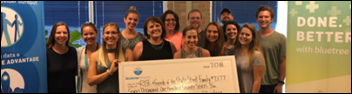
image

A woman is charged with breaking into Westmoreland Hospital (PA) on two occasions to steal soda, once by guessing the ICU door’s access code to enter its conference room, from which she left with a backpack full of drinks. The woman says she regrets her arrest since it might impact her ability to return to her paralegal studies, explaining, “I was thirsty, and it was really late at night, and there are no convenience stores really in my neighborhood. I just thought I’d get some soda. I didn’t think it was this big deal.”

image

British Airways responds to a customer’s tweeted complaint by asking him to provide his personal information “to comply with GDPR,” which the dimwitted customer (among others) does by tweeting it right back at the company and to the world. A security expert baffled at why the company would try to solve problems on Twitter instead of asking the customer to call in. He also notes that British Airways allows customers to check in online only if they disable their browser’s ad blockers, after which it sends their information to many third parties.

In England, a 63-year-old NHS doctor who is upset about his pension investment losses sends messages to his financial advisor threatening to kill himself, then uses a “hire-an-assassin” site on the dark web to order the advisor killed. The National Crime Agency detected his activity while investigating the Chechen Mob’s site, finding that the doctor had chosen the first of four predefined options: kill the man, beat him, set his car on fire, or set his house on fire. The doctor entered the advisor’s address but didn’t pay the $5,000 fee, leading him to plead not guilty of attempting to solicit murder.


image

Catholic Health Initiatives collaborates with AHA and Mass General to develop a set of IICD-10 codes that allow providers to document sex and labor exploitation.

image

I’m not sure if this is an Amazon success or failure, but the company’s website was so busy in the first few minutes of  this week’s Prime Day that its servers bogged down, forcing IT staff to deploy a stripped-down home page and to shut off international access. The company’s auto-scaling feature apparently also failed, requiring manual server spin-up and the need for “looking at scavenging hardware.” Prime Video was slowed, Alexa experienced outages, and warehouse employees weren’t able to prepare orders. Experts say that Amazon may have a bug in its auto-scaling service, but they nevertheless marvel that all of the Amazon sites remained up despite unprecedented volume. The company’s Sable computational and storage system processed 64 million requests per second under last year’s less-busy Prime Day.

image

The 63-year-old chief of cardiothoracic surgery at Jersey City Medical Center (NJ) is commissioned as a US Navy Reserve commander after receiving an age waiver for his in-demand skill. Tyrone Krause, MD, who was sworn in by his Navy ensign daughter, said, “Why don’t I just relax and sit in my back yard and drink some beer? But that’s not my style. I’ve always been on the move. And hopefully I’ll always be on the move.”


In Case You Missed It


Get Involved


125x125_2nd_Circle

Text Ads


RECENT COMMENTS

  1. Challenger exploded on lift-off when the O-rings failed. Columbia disintegrated on reentry after one of the heat shield tiles were…

Founding Sponsors


Platinum Sponsors


Gold Sponsors


RSS Webinars

  • An error has occurred, which probably means the feed is down. Try again later.