AI-enhanced remote patient monitoring vendor 100Plus raises $25 million and has signed distribution agreements with AdvancedMD, DrChrono, and Athenahealth.
Sponsored point-of-care patient education vendor PatientPoint acquires one-time high flyer Outcome Health to form PatientPoint Health Technologies.
The acquisition was rumored in October 2020, when the value of the combined companies was estimated at $600 million.
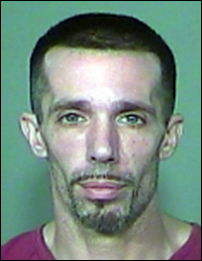
Outcome Health was valued at $5 billion until November 2019, when its two founders and two of its executives were charged with $1 billion in fraud for overstating revenue and inflating ad performance to overcharge drug company advertising clients.
Outcome Health’s founders, former CEO Rishi Shah and former president Shradha Agarwal, along with the two other executives, have pleaded not guilty to fraud and are scheduled to stand trial in February 2022.
Reader Comments
From Digital Dragoon: “Re: technology and insurers. Some of these tools will be threats to individual hospitals and practices, probably the smaller ones.” Maybe, but the bigger threat is those providers staying relatively small, which means they can’t compete effectively in many areas. Small banks were a good example of limited-scale operations that may or may not have jumped on ATMs and online services, but they were going to be toast regardless because they were being circled by competitors who were committed to change – not just semi-accepting of it – in a quest to gain economy of scale. Also note that those small banks didn’t usually fail and instead sold out profitably to the better-funded and more intense regional chains that were rapidly on their way to becoming national powerhouses, courtesy of altered anti-competitive laws (changing regulations is another thing that big companies can do that smaller ones can’t). Most of those small banks were probably not unhappy about being bought out and may have conducted themselves all along knowing that they were likely to enjoy a financially successful outcome. Takeaway: technology doesn’t necessarily drive success, but it is often competitively used by successful companies who pair it with ambition and skilled execution.
HIStalk Announcements and Requests
Dear PR people: I almost never read a press release that starts with the word “today” given that (a) every announcement pertains to “today” (it being an announcement and all); and (b) the date of the announcement’s already defines “today” better than the word, which won’t be “today” when someone reads it tomorrow.
Reader Mark’s generous donation, with matching funds applied from my Anonymous Vendor Executive and other sources, fully funded these Donors Choose teacher grant requests:
Headphones for virtual learners of Ms. B’s elementary school class in Houston, TX.
A mobile whiteboard for math lessons for Ms. C’s first grade class in Fresno, CA.
A document camera for Ms. M’s kindergarten class in Sharon, WI.
Mobile carts and storage bins for simultaneous in-person and virtual class of Ms. A in Dallas, TX.
Math manipulatives for Ms. M’s elementary school class in Detroit, MI.
Webinars
None scheduled soon. Previous webinars are on our YouTube channel. Contact Lorre to present your own.
Acquisitions, Funding, Business, and Stock
Germany-based imaging workflow vendor Brainlab acquires Mint Medical, which provides a structured workflow for analyzing medical images.
Forward Health, which offers direct primary care at a flat fee of $149 per month in eight US cities, raises $225 million in a Series D funding round.
Vancouver-based Well Health will acquire Intrahealth, a New Zealand EHR vendor, for $15 million.

Sales
Walgreens uses Nuance’s Intelligent Engagement conversational chatbot to help customers schedule their COVID-19 vaccinations by telephone.
Northeast Georgia Health System chooses Kyruus ProviderMatch to create a system-wide provider directory and power patient-provider matching for consumer search.
CareMount Medical will deploy RCxRules Revenue Cycle Rules Engine for claims scrubbing and submission.
Northeast Ohio Medical University licenses VisualDx to teach observational clinical reasoning and differential diagnosis, especially in patients with dark skin, which represent 28% of the VisualDx images versus 19.5% in common medical education resources.
Michigan Medicine contracts for 3M’s speech recognition, coding, and clinical documentation products. 3M acquired MModal’s technology business, which included most of the products involved in this sale, in early 2019 for $1 billion.
Healthcare Outcomes Performance Company selects Emerge to convert data from its legacy EHRs to Athenahealth, normalize the data sets, and create a searchable database.
Leon Medical Centers (FL) will implement Bluestream Health’s telehealth platform.
People
Lauren Verdery (EY) joins Nordic as SVP of brand, marketing, and communications.
Health Data Movers hires Monte Hess (Quest Diagnostics) as VP of sales and recruiting.
Industry long-timer Jeff Litterst, who was most recently director of enterprise sales at NThrive, died Monday at 57.
Announcements and Implementations
PeriGen’s Vigilance continuous labor monitoring system goes live in Area 25 Health Centre in Malawi in a project with Baylor College of Medicine and Texas Children’s Hospital. Facebook posts about the center by Mr. Omar of Child Legacy International show a patient meal (all products were harvested from the health center’s own garden except the rice) and a local artisan teaching expectant mothers how to weave.
Health Catalyst launches an updated Healthcare.AI suite of products and services.
Healthcare Growth Partners advised Bizmatics on its acquisition by Harris Healthcare.
Censinet announces RiskOps, which consolidates enterprise risk management and operations across clinical, regulatory, cybersecurity, research, and supply chain.
Metro Health – University of Michigan Health reports that hypoglycemia and hyperglycemia were reduced by 54% and 40%, respectively, since its implementation of Glytec’s EGlycemic Management System. Metro Health implemented the cloud-based system remotely last year as COVID-19 interrupted its planned rollout.
Google Cloud announces GA of an API that collects and stores the privacy choices of an app’s users, then validates individual data requests to determine if they should be allowed based on those stored user preferences.
COVID-19
WHO declared COVID-19 to be a pandemic on March 11, 2020. I ran reader poll results that day in which 75% of respondents said that cancelling HIMSS20 was the right thing to do. That day’s HIStalk also included warnings about ICU demand and a shortage of ventilators and staff in hospitals in Italy, as well as comments from former FDA Commissioner Scott Gottlieb, MD (just before the pandemic was officially declared) warning that the US was already overrun with coronavirus, public gatherings would need to be curtailed, and businesses should plan to offer teleworking.
One year after the pandemic was declared, CDC reports that 96 million doses of COVID-19 vaccine doses have been administered of 128 million distributed, with the US on track to have 100 million citizens vaccinated by early April. The US has contracted for more than enough supply to vaccinate everyone.
COVID-19 was the US’s third-leading cause of death in 2020 as overall deaths jumped 15%.
Other
In Canada, a doctor who treated a veteran who later committed a triple murder and then killed himself says that a better connection between provincial and military EHRs “would certainly be beneficial.” He said that accessing the patient’s Halifax records required using that province’s buggy SHARE web viewer, but even then, some of the doctors who saw the patient kept only paper notes that weren’t being scanned into Meditech and SHARE, so he didn’t know the patient’s history. The man had been home from residential psychiatric treatment for two months and the doctor still didn’t have access to his chart, leading to confusion over who was supposed to be coordinating his care.
A study of clinical decision support rules in nine Epic-using sites finds that 0.5% of the statements contained errors in Boolean logic, whose nested true-false statements can be hard for people to intuitively understand. The authors recommend that EHR vendors consider adding the open source error-checking tool that they developed for the study. They also note that their method can detect only logic statement errors, not cases in which a statement won’t work as expected, such as a rule that attempts to identify patients outside of normal weight range by selecting BMI < 25 and BMI > 25, where “and” should be “or” since both conditions will never be simultaneously true and thus no patient will ever be selected.
Sponsor Updates
Everbridge receives a new patent related to its Public Warning system, pertaining to technology focused on hybrid population alerting systems and intelligent sending of messages in public mobile networks.
Authority Magazine features “Kelly Maggiore of Impact Advisors on The 5 Leadership Lessons She Learned From Her Experience.”
The Chartis Center for Rural Health honors Mercy Health Lakeshore as a 2021 Top 100 Critical Access Hospital.
March 11, 2021Dr. JayneComments Off on EPtalk by Dr. Jayne 3/11/21
I had an opportunity this week to do something I haven’t done in a while, and that was to support a go-live.
It was very different than my pre-pandemic experiences, with very few implementation support staff actually on the ground. I was pulled into it by chance. A friend of mine has been helping lead a major health system EHR replacement project for more than 18 months. Along the way, the health system acquired a small cardiology practice and had allowed them to stay on their legacy EHR until the main roll-out was complete. They planned to circle back and do the conversion.
I’ve been involved peripherally over the last couple of quarters since the cardiologists are on a fairly niche system and I had done a couple of conversions off of that system previously. Often people don’t realize until they get to an EHR conversion how bad the data management is in their current system. For example, the legacy system stores blood pressure values in a single text field rather than having separate fields for the systolic and diastolic numbers. It also didn’t have restrictions on it that prevented users from entering non-numerical values or excessively high values, so we had to make some difficult decisions on how much data we were going to try to bring into the new system and how we would prevent poor data from coming across.
Generally, the physicians understood the need to make those decisions, but they were a little more resistant to the overall conversion process because they would be giving up all their individually-customized visit templates and coming onto the health system’s enterprise version. I was asked to do a fair amount of “physician whispering” as part of the project, making sure that they understood the “what’s in it for me?” component of the conversion. We knew it would go more smoothly if they felt they were receiving a benefit as opposed to being forced to do something they didn’t want to do.
Surprisingly, one of the more difficult physicians was the youngest, who had actually trained on the EHR they were moving to. In breaking down his concerns, it seemed like most of his resistance stemmed from being upset that he had come into a private practice situation where he thought he would be on a partner track. Now he was one of hundreds of physicians employed by a large health system. There’s a lot of psychology to unpack there, and being able to explain the benefits of integration every time he threw up a red flag was helpful.
The practice’s super users were responsible for doing most of the support during the go-live, with backup from a vendor-specific consultant. I was engaged to be on call as escalation support for physicians who needed significant hand-holding or who had issues that would take a little longer to work through, since the super users were trying to do their day jobs as well as support the go-live. We knew that two of the doctors would be leaving early in the day due to other commitments and would likely need help in the evening as they logged back in to complete charts, and I was going to be plugged in there as well. One of them did really well and only sent me a couple of text messages with specific questions, but the other became an immersive support experience.
Most of his frustration was around the fact that he had decided to leave the office for a conflict that he decided wasn’t ultimately worth his time, and he was aggravated that he was now having to make up work in the evening. He wanted to do a web support session. We spent the first 15 minutes with me just listening to his frustrations as he worked through his inbox, which was full due to being out of office, not because of the new EHR.
He actually had a decent knowledge of the system, but felt like he needed someone to tell him he was doing the right things with his documentation rather than trusting his intuition. He kept getting interrupted by family issues and jumping off and on our support session, which didn’t help the situation. Having done this for a long time, I understand the importance of work-life balance and that family life happens, but the ability to focus on the thing in front of you is ultimately key for long-term success.
The physicians knew that their support window was closed between midnight and 6 a.m., so I did get a little bit of a break before starting the morning’s adventures. Everyone is scheduled to be in the office this morning (as opposed to being at the hospital or doing procedures), so that will be all hands on deck. Fortunately, the practice managers have held the line at making sure schedules are slightly reduced to allow the staff to adjust to the new system, so I hope things run smoothly. I hope the physicians who are used to being perpetually double-booked don’t find the relaxed schedule too shocking. Maybe they’ll be inspired by seeing how it can be when you’re not running every day on a steep uphill climb.
Everyone seemed to be in good spirits this morning and I’ve only had two calls, so that’s a win in my book. We’ll see what the rest of the week holds. I do like mid-week go-lives because they allow people to have a break after the first few days on a new system and then come back refreshed the following week.
I’m not on call for coverage this weekend, so I’ll be looking forward to a break as well. Spring has finally arrived in my neck of the woods and I will be spending some quality time outdoors. Although there’s a fair amount of rain in the forecast, it will be nice to get away somewhere out of cell service range and just enjoy the fact that winter is on its way out.
What are you most looking forward to about spring? Leave a comment or email me.
Release-of-information and clinical data workflow software vendor MRO acquires Cobius Healthcare Solutions, which offers reimbursement and compliance risk management technologies.
Digital pharma advertising and patient education company Outcome Health has merged with competitor PatientPoint to create PatientPoint Health Technologies.
Rural hospital operator Rennova Health cancels plans to sell its software and genetic testing interpretation divisions to InnovaQor, which would also include telehealth technology that Rennova had licensed from TPT Global Tech.
AI-powered cancer pathology diagnostics vendor Ibex Medical Analytics raises $38 million in a Series B funding round, increasing its total to $52 million.
Emergency medical services-focused telemedicine company DocGo will merge with Motion Acquisition Corp. to become a publicly traded company with a $1.1 billion valuation.
Former Practice Fusion Director of National Accounts Steven Mack pleads guilty to attempting to obstruct the federal investigation into the relationship between Practice Fusion and Purdue Pharma after admitting he deleted hundreds of relevant computer files from his work-issued laptop.
Practice Fusion paid a $145 million settlement in January 2020 to resolve federal allegations that it violated the False Claims Act by configuring its EHR software to influence the prescribing practices of its end users for the benefit of opioid manufacturers like Purdue.
HIStalk Announcements and Requests
Welcome to new HIStalk Platinum Sponsor GetWellNetwork. The Bethesda, MD-based company’s interactive solutions engage patients and families, empower clinicians, and deliver outcomes that matter. It has been helping to unite providers and patients as partners in the healthcare journey for 20 years. From inpatient to outpatient, its comprehensive cross-continuum platform bridges care settings to create a seamless experience for patients and their families. Recent big news for the company was its acquisition of Docent Health, which offers AI-enabled outreach technology for consumer engagement and “next best step” in their care across episodes. Thanks to GetWellNetwork for supporting HIStalk.
I took a look at the technology being touted by some of the insurance companies and for-profit primary care chains that claim that their “full tech stack” differentiates them from stodgier but infinitely larger and more profitable competitors. That seems to be especially common in companies that offer Medicare Advantage plans. Consumer-facing apps usually had some combination of these capabilities:
Appointment scheduling.
Messaging, either directly with clinicians or with a “concierge team.”
Telehealth visits.
Plan details and benefits management.
Status of claims, payments, prescriptions, and lab results.
Doctor and urgent care finder.
Cost comparisons, either drug or procedure.
Smart watch or fitness tracker connectivity for health prompts, activity goals, synchronization.
Collaborative sharing of EHR data and clinician notes (this was one specific national primary care practice).
These services alone don’t offer much competitive advantage since they are commonly offered. I expect that back-end systems contribute more to how companies market themselves, upsell to members, and create efficiency that may or may not translate into efficiency that can boost margins, so these seem a lot more important. Some of those I thought of:
Anything that can help an insurer get to the scale needed to reduce per-member costs, improve provider negotiating position, and improve actuarial forecasts. Predicting and controlling costs is the bread and butter of insurance companies, which are not, despite their self-assigned labels, technology firms.
Sales tools, especially for insurers and their broker network.
Automated onboarding systems.
Any kind of self-service capabilities that can reduce administrative costs.
Enrollment for clinical trials, selling data to drug companies.
Supporting paperless communications.
Efficiently serving employers, who are the actual customer for most US-sold health insurance.
Analytics to nudge members into behaviors that reduce short- or medium-term costs (companies aren’t likely to worry about long-term costs since members come and go and these public traded companies worry quarter to quarter).
Customer relationship management to help overcome impersonal relationships at scale and to sell additional services, either those offered by the company or co-marketed through a third party.
Chatbots to support members with administrative needs at scale.
Patient education.
Chronic condition monitoring and at-home monitoring to reduce the need for provider services.
Customer segmentation and analytics to support variable pricing.
Tools for clinicians to help ensure evidence-based practice, reduce documentation burden, increase payment efficiency.
Fraud detection.
Trying to integrate the web of third-party services that is the US healthcare system (labs, specialists, out-of-network providers, pharmacies, medical devices, home care, etc.) to provide a single experience that customers value.
My admittedly superficial conclusion is that most of the consumer-facing technology that insurers are rolling out is limited, focusing mostly on administrative tasks, upselling and cross-selling, and giving customers an alternative to long phone wait times for questions or complaints. A significant reason for this limited technology arsenal is that pure insurers have a mostly intrusive administrative role between the provider and the patient. It’s a different and much more interesting story when the insurer has vertically integrated itself to offer its own services in competing with providers who accept its insurance (as in the Kaiser Permanente model).
For me, then, companies that have a small insurance footprint (in terms of enrollees, markets served, revenue, etc.) seem to be highly at risk to big competitors who can outspend them, replicate their innovative tech tools, and just buy those companies if they get too sassy. US healthcare is almost always dominated by big companies that kept getting bigger, and late starters who hope that tech-powered disruption can upend the market (whether the insurance market or the stock market) may find that to be harder than it sounds.
Webinars
None scheduled soon. Previous webinars are on our YouTube channel. Contact Lorre to present your own.
Acquisitions, Funding, Business, and Stock
Canadian telecommunications company Telus will acquire Babylon Health’s Canadian operations. The deal includes a $70 million licensing fee for virtual care technology already used by Canadians in the Babylon by Telus Health app. Babylon Health is reportedly exploring IPO options via merger with an SPAC.
Patient payment vendor Cedar raises $200 million in a Series D investment round led by Tiger Global Management, giving it a $3.2 billion valuation.
Rural hospital operator Rennova Health cancels plans to sell its software and genetic testing interpretation divisions to InnovaQor, which would also include telehealth technology that Rennova had licensed from TPT Global Tech. Rennova says the companies could not agree on terms, but it will still pursue separating its software assets.
AI-powered cancer pathology diagnostics vendor Ibex Medical Analytics raises $38 million in a Series B funding round, increasing its total to $52 million.
Sales
USA Health (AL) selects Twistle’s COVID-19 vaccine management technology, including automated patient outreach and adverse effect reporting.
Wellstar Health System (GA) will offer its employees digital health and wellness resources from Sharecare, and will work with the Atlanta-based company to develop similar tools for patients.
Hartford HealthCare (CT) will implement Cedar’s patient billing software.
The Christ Hospital Health Network (OH) selects Omnicell’s automated Central Pharmacy Dispensing Service.
Mountain Health Network (WV) will work with Infor, The Chartis Group, and Avaap to implement Infor’s CloudSuite ERP technology.
People
Kevin Johnson, MD, MS (Vanderbilt University Medical Center) joins University of Pennsylvania as professor, VP of applied informatics at University of Pennsylvania Health System, director of a new informatics center, and senior scientist in science communication.
Southwestern Health Resources hires Donghui Wu, PhD, MBA (Texas Health Resources) as VP of data science and analytics officer.
Investor and advisor Scott Vertrees joins Heal as CEO, replacing co-founder Nick Desai, who remains a shareholder.
H1 names Julie Stern (HealthReveal) CISO and VP of engineering.
Alcatel-Lucent Enterprise promotes Lisa Simpson to head of North American sales.
Provider analytics vendor Trilliant Health hires Sanjula Jain, PhD (The Health Management Academy) as SVP of market strategy / chief research officer.
Announcements and Implementations
Fifteen VA health systems and medical centers in 11 states join Medicom’s health information network.
Change Healthcare announces GA of Data Science as a Service, which assists customers in using de-identified claims and social determinants of health data for analytics projects.
Philips will add OpenDoctor’s radiology patient self-scheduling technology to its new Patient Management Solution of its Radiology Workflow Suite. The system will also offer contactless registration, automated communication, and intake questionnaires.
Meditech launches a genomics solution for its Expanse EHR, which includes the ability to collect and store patient genetic information, connect to reference labs, and enable personalized treatment. Its embedded pharmacogenomic alerts are provided by First Databank.
PVerify launches a real-time and batch Medicare Beneficiary Identifier lookup solution that can be accessed via API, Excel file batch processing, or individual patient lookup on the company’s portal.
COVID-19
CDC says it’s OK for people who have been fully vaccinated against COVID-19 to gather indoors without masks and distancing, as long as the group is made up of either all people who have been fully vaccinated or those from the same household who are not at increased risk. Masks and distancing are still recommended while in public, while visiting with unvaccinated people who are at increased risk, or when assembling in groups that involve multiple households. Domestic and international travel are still not recommended, advice that CDC defends by citing a lack of information about the impact of variants.
A study finds that the relationship between obesity and negative COVID-19 outcomes is nearly linear, as increased BMI is associated with higher rates of hospitalization and death. Severely obese patients were 33% more likely to be hospitalized and 61% more likely to die of COVID-19 than non-obese people.
A study that was performed using University of California EHR data finds that 27% of people who tested positive for COVID-19 experienced symptoms that lasted 60 or more days afterward, including shortness of breath, chest pain, cough, or abdominal pain. Many of those people did not originally experience any symptoms when they tested positive, and the severity of any initial symptoms didn’t always line up with eventual post-COVID problems. Patients in all age groups had long COVID effects, including 11 of the 34 children in the study. The study was limited in that (a) it was not able to review people who were asymptomatic but didn’t get tested; and (b) the static 60-day snapshot would have missed an unknown of people who don’t develop problems until after two months.
Other
A long-time hospital IT technologist friend of HIStalk and supporter of my Donors Choose projects sent a CIO job opening my way for Denver Health. You can read all about its clinical and community services (the latter are extensive), and on the IT side, Denver Health is in the 91st percentile of Epic’s gold stars program and recently migrated its self-hosted data centers to colocation centers (the new CIO will lead development of a full-blown cloud strategy). US News & World Report ranks Denver and nearby Colorado cities as four of the best five places to live in the US (Boulder, Denver, Colorado Springs, and Fort Collins). What better candidate can you get, my reader asks, than someone who routinely reads HIStalk? I appreciated that thought so much that I decided to mention the job opening here, which I usually wouldn’t do.
University of Washington researchers develop an Alexa skill that can detect heart rhythm problems in people who sit within two feet of a smart speaker during a telehealth visit. They are also looking at whether the same technology could detect sleep apnea in the home.
Sponsor Updates
Clinical Architecture staff volunteer at the Gleaners Food Bank of Indiana.
Capsule receives the 2021 New Product Innovation Award in the North American remote ventilator surveillance industry.
Humber River Hospital in Canada deploys Ascom’s transformative tech ecosystem for improved patient safety.
CarePort announces that more than 130 hospitals and health systems selected CarePort Care Management in 2020.
CereCore publishes an overview of Meditech reporting and regulatory submission.
The Cerner Charitable Foundation approves medical grants for 66 children.
SOC Telemed earns full URAC accreditation in telemedicine.
Frost & Sullivan features Change Healthcare in its Executive Brief, “Empowering Healthcare with a Cloud-based Enterprise Imaging Strategy.”
ChartSpan will market its services to members of the Kentucky Hospital Association.
Clinical Computer Systems, developer of the Obix Perinatal Data System, releases a new Clinical Concepts in Obstetrics podcast, “Cardiac Disease in Pregnancy.”
Divurgent releases a new episode of The Vurge podcast, “Using AI to Identify and Correct Issues with Claims.”
Waystar adds text statements to its line of payment tools, and announces that nearly 300 healthcare facilities now use its Price Transparency solution.
Former Practice Fusion Director of National Accounts Steven Mack pleads guilty to attempting to obstruct a federal investigation into the relationship between Practice Fusion and Purdue Pharma after admitting he deleted relevant computer files.
The Washington Post ran a piece this week on Zoom fatigue. It brings up some good questions about whether calls really need to have a video component and links to a paper on the topic titled “Nonverbal Overload: A Theoretical Argument for the Causes of Zoom Fatigue.”
The author, Jeremy Bailenson, PhD, is a professor and founding director of Stanford University’s Virtual Human Interaction Lab. He concludes that there are four major causes of videoconferencing fatigue:
Excessive direct eye gaze as people look at faces close up rather than at notes or other places in the room.
Constant self-evaluation from seeing ourselves in real time.
Reduced mobility for those used to walking and talking on phone calls or in person,
Bailenson recommends use of the “hide self” view and minimizing the video call screen as potential solutions. He also recommends that meeting hosts specifically ask attendees to look around their environments and move around as they would in an in-person meeting.
Another paper from Andrew Bennett, PhD, assistant professional of management at Old Dominion University, is pending publication in the Journal of Applied Psychology. It offers some specific suggestions for reducing videoconference fatigue:
Hold meetings earlier in the work period.
Enhance perceptions of group belongingness.
Mute if not speaking.
Take breaks from looking at the screen, both during and between conferences.
Establish group norms for mute, camera, acceptability of multitasking, hand raising, etc.
Interestingly, Bennett’s research found inconclusive evidence for changes in webcam usage or using the “hide self” view.
Other potential solutions to videoconference fatigue might be to do calls as audio only. Those of us who have been videoconferencing for years have already been through this and created solutions.
At some companies, the first few minutes of a call includes video so that everyone can see each other and have a time of relationship building with a little bit of chit-chat. Then cameras go off as the meeting gets underway. I like that approach personally because I take a lot of notes during meetings and people sometimes find my downward gaze to look like inattention. I’m still a pen-and-paper girl for many of my notes because I find it helps me remember content better. I also like to keep my microphone live all the time so that I don’t forget to unmute before speaking. I have a quiet work environment so this generally works, and my pen makes far less noise than my clacking keyboard would.
I personally find Zoom calls to be fatiguing only when dealing with individuals who haven’t figured out how to effectively use the system. We’re a year into this pandemic and if you don’t know where the mute button lives by now, I really feel for you. This sentiment is found in numerous comments on the Washington Post article, along with other positive impacts of remote work including decreased commuting time and expenses. I was also annoyed with a recent Zoom call that I knew was going to be audio-only when it wouldn’t let me in because I tried to access it on a computer that doesn’t have a webcam. I don’t know if that’s a setting on the host side since usually I just use my laptop, but it resulted in some last-minute scrambling.
I might be in the minority, but I find the use of Zoom backgrounds to be distracting, especially when there is a lot of bleed-through or issues with people moving around a lot and having parts of their body disappear. If you’re a fan of backgrounds, I definitely recommend investing in a green screen so you can get the best performance out of the system. Otherwise, I would recommend trying to find a calm corner to customize for when video is needed or considering something like a folding screen to provide a neutral background.
I am on far too many calls where people have children and pets running around in the background, and that’s definitely distracting. I once terminated a call when I dialed in to find my coworker sitting by her pool with her children in it. She said she didn’t want them to be in the pool without her, but thought it was OK to be on a call. I’m a firm believer that if you’re supposed to be supervising your kids in the pool, you had better be giving them your full attention. She disagreed, but I certainly didn’t need to enable her dangerous behavior.
Another angle on Zoom fatigue is to make sure that you are leveraging the leisure time benefits of videoconferencing as well as the work-related ones. I have monthly happy hours with people all across the country that wouldn’t be as much fun if we were only on the phone. It helps establish the role of videoconferencing in building relationships and not just driving one crazy. I’m about to embark on a trip with one of my video happy hour friends, and if our conversations are any indicator, it should be a doozy of an adventure. Without building a friendship on video, we might not have even thought about this since our previous interactions were mostly built on emails about cute shoes and boots.
Zoom has also allowed me to continue to take music lessons despite the pandemic. I previously studied in my instructor’s home, and since she has an elderly relative in the household, she stopped in-person lessons fairly early in the pandemic. I was happy to avoid the 90-minute round trip commute. Although Zoom isn’t perfect, the platform has made some significant enhancements to allow it to better handle events such as music lessons. The “original sound” feature has been enhanced, along with other audio settings, to allow a truer audio representation. My only issue with it is that I can’t seem to default it on, so sometimes I forget to turn it on for every lesson. As an adult beginner on this particular instrument, I was definitely less anxious about playing my first recital via Zoom than I would have been had I been in an auditorium with my 5- to 9-year-old peers.
What do you think about the idea of Zoom fatigue? Leave a comment or email me.
March 8, 2021Readers WriteComments Off on Readers Write: Remote Monitoring is Crucial for Hospital Asset Management — Here’s Why
Remote Monitoring is Crucial for Hospital Asset Management — Here’s Why By Scott Trevino
Scott Trevino, MS, MBA is SVP of product management and solutions of TriMedx of Indianapolis, IN.
As any health IT professional would know, the ability to remotely monitor hospital devices is critical in ensuring efficient operations. Unplanned downtime, spontaneous device failure, and unexpected maintenance all impact the ability to safely provide care for patients.
A recent example took place at a hospital in Indiana, when a remote monitoring device was used to detect a fault on an MR scanner. During the proactive repair process, technicians ultimately discovered that the pressure relief valve on the roof of the hospital was stuck open, a defect that could have caused countless other problems. Luckily, the remote monitoring system the hospital had in place allowed them to identify this problem before it caused a domino effect of consequences.
Preventing unplanned downtime is the most prominent argument in favor of remote monitoring. By 2025, it’s estimated that 68% of medical devices will be network connected, which only increases the need for ongoing device monitoring. Hospitals are always searching for cost-effective avenues to help improve patient care and safety, and the efficiency and scalability that remote monitoring offers is unrivaled.
Here’s a closer look at why remote monitoring is an essential component of providers’ approach to clinical asset management.
Remote monitoring is getting smarter
Even the smallest of details can make a difference in a clinical device setting. With remote monitoring, device analytics will only continue to evolve and produce predictive insights for each asset, effectively anticipating potential failures and/or optimizing service schedules.
Device failure is costly and leads to unplanned downtime, labor costs, risk to patient safety, and more. Instead of throwing potential solutions at the wall and hoping one of them sticks, utilizing predictive analytics guarantees that hospitals are putting their resources to good use. A robust remote monitoring system uses predictive analytics to produce data that is crucial in making decisions. This system will pose questions like, is a device worth the cost to continue to repair and maintain it? Or, is it time to purchase new equipment? Healthcare providers that lean on these data-driven decisions will be at a considerable advantage when it comes to optimizing acute and non-acute care facilities.
Care in non-acute settings will become commonplace
Over the past few years, healthcare has seen a large push towards non-acute settings. Transitioning care to outpatient centers helps care systems reduce costs, but reimbursements in these facilities are still lower than in a traditional hospitals, meaning that providers are going to face challenges to transition care without breaking the bank.
Where does clinical asset management fit in? Let’s look at an example. If a provider has 3,000 devices in an acute facility, typically an economy of scale is in place for teams to service on site. If the provider takes 1,500 of those devices and moves them around to various care sites, the cost to service each device at a different site will be higher since it will be less efficient and cost-draining for providers to station service teams at each location. However, this problem can be addressed through a remote monitoring system within a comprehensive clinical asset management program to keep locations up and running.
Servicers productivity must improve alongside device growth
Healthcare providers are not alone in their struggles to reevaluate how to manage a larger equipment footprint. Manufacturers are feeling the same pressure. No longer can servicers, such as OEMs, afford to send out a technician for every service call, especially when many arrive to find device problems that cannot be fixed. There’s little choice but for the labor force to improve productivity and reach maximum efficiency to keep up with the growing number of devices.
The best way to do this is to use remote monitoring, which allows technicians to troubleshoot a problematic device without having to physically be on site. Not only do these systems create better efficiency across the service labor force, they add to hospital systems’ ability to reduce unplanned downtime and improve patient care.
All signs point to remote monitoring as the future of the healthcare industry. Device optimization, cost pressures, and the growing number of facilities in a provider’s network have shown us that remote monitoring is no longer nice-to-have, but a need-to-have for healthcare providers who are ready to embrace a new, innovative landscape.
Comments Off on Readers Write: Remote Monitoring is Crucial for Hospital Asset Management — Here’s Why
Canadian telecommunications company Telus will acquire Babylon Health’s Canadian operations, and license virtual care technology used in the Babylon by Telus Health app since 2019.
Harris acquires Bizmatics, which offers the PrognoCIS EHR/PM.
Recent acquisitions have given Canada-based Harris, which is owned by Constellation Software, a long list of health IT brands that includes Amazing Charts, GEMMS, QuadraMed, Iatric Systems, IMDSoft, Just Associates, Picis, Obix, DigiChart, Uniphy Health, and MediSolution.
Reader Comments
From ML Ratio: “Re: tech-powered insurers. Several are going public and touting their technology. Will you be covering them?” Probably not since I think they are blowing smoke in trying to convince investors that they are sexy tech companies instead of boring old insurers whose profitability is based on stealing someone else’s insurance customers, negotiating provider contracts, and managing their medical loss ratio. You’re still an insurance company if most of your income is generated by premiums rather than a cute app or quickly launched telehealth program whose main end product is buzz. That’s especially true of recent startups whose website and pitch deck tries to make you think they are the next Facebook. Ignore the self-assigned labels and focus on their tiny market share, handful of coverage areas, and big competitors to whom they provide little threat. You don’t want to go toe-to-toe with UnitedHealth Group, Anthem, or Centene armed only with a clever idea for making Medicare Advantage primary care seem more interesting
HIStalk Announcements and Requests
Welcome to new HIStalk Platinum Sponsor Culbert Healthcare Solutions. The Woburn, MA-based company’s patient access, clinical workflow, and revenue cycle operations experience, combined with its deep IT strategy and deployment experience, uniquely qualifies it to select, implement, and optimize healthcare technologies. Its health IT consulting team includes former CIOs and vendor-focused analysts who design and deliver high-value services that advance the delivery of care, enhance the patient experience, and improve financial performance. Thanks to Culbert Healthcare Solutions for supporting HIStalk.
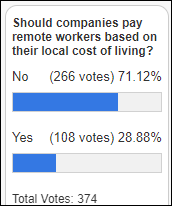
About 60% of poll respondents say their company’s work culture is the same or better now as it was a year ago, results I didn’t expect given a tough year of pandemic challenges, remote work, and uncertainty. I’m interested to see how both company culture and internal job opportunities are affected when some but not all employees continue working remotely as a permanent arrangement. Remote workers were out of sight, out of mind in the places I’ve worked, with those jobs (other than consulting or sales) best suited for folks who weren’t looking to gain responsibility, get promoted, or boost their resumes with challenging new assignments. Those rewards were given to the familiar faces of people who spend their days around conference room tables, in unplanned hallway conversations, and at lunch with those who have some control over their occupational destiny.
Thanks to the following companies that recently supported HIStalk. Click a logo for more information and to thank them for keeping my keyboard clacking.
Webinars
None scheduled soon. Previous webinars are on our YouTube channel. Contact Lorre to present your own.
Acquisitions, Funding, Business, and Stock
Real estate investment trust Omega Healthcare Investors acquires Connected Living, which provides smart devices, apps, and wearables to senior housing and care companies.
Ascension Ventures raises $285 million for its fifth strategic venture capital fund, increasing its assets under management to more than $1 billion.
The one-month performance of the Global X Telemedicine and Digital Health EFT is a loss of 18% versus the Nasdaq’s 9% loss. EDOC shares are up 15% since their July 30, 2020 listing, trailing the Nasdaq’s 19% gain in the same period.
Announcements and Implementations
Walmart heir Alice Walton, who is one of the world’s richest women at a reported net worth of $60 billion, announces that her non-profit will create a new medical school, Whole Health School of Medicine and Health Sciences, in Walmart’s home town of Bentonville, AR.
COVID-19
Nearly one-fourth of Americans have received at least their first dose of COVID-19 vaccine, including 59% of those 65-75 and 69% of those over 75.
Former FDA Commissioner Scott Gottlieb, MD predicts that meetings and widespread travel will return to the US in July through September, but that will slow again to some degree as cooler weather drives people back indoors.
Sponsor Updates
Nordic welcomes Saran Sonaisamy (Cognizant) as director of cloud transformation and cybersecurity.
PerfectServe publishes a new case study featuring the University of Tennessee Medical Center, “EMR Embedded Communication Improves Efficiency.”
Pure Storage and Equinix develop a Bare Metal as a Service storage offering that delivers a unified, connected platform for any stage of an organization’s cloud journey.
Redox releases a new podcast, “Withings’ Journey from Consumer to Remote Patient Monitoring.”
March 5, 2021WeekenderComments Off on Weekender 3/5/21
Weekly News Recap
Several health systems and home-based care companies form Moving Health Home to encourage federal payment for moving some care from hospitals to home.
Premier acquires Invoice Delivery Services.
Duke University personalized chronic care spinout ZealCare will launch later this month.
BD acquires GSL Solutions.
Universal Health Services estimates that September’s cyberattack has caused $67 million in losses.
HHS OIG officials recommend that prescriptions be required to include the condition for which the drug is being used to reduce errors, allow correct CMS payment, and help families sort patient meds.
Naval Medical Center San Diego goes live on Cerner.
Ambulatory health IT vendor MTBC will change its name to CareCloud, the EHR vendor it acquired in January 2020.
Cigna’s Evernorth health services business will acquire telehealth vendor MDLive.
Best Reader Comments
I couldn’t agree more with the second point on why vaccination self-scheduling is harder than it looks. In Florida, Publix Supermarkets is the best place to get COVID vaccinations IMHO, but their self-scheduling app stinks. And it’s for that very reason; users have to enter several screens of data before you actually get to the point of trying to find locations with appointments. And Publix has hundreds of stores here. (Jim Beall)
When big health system is the only provider in town, they don’t need to thank you for choosing them. You had no other choice. (Was a Community Hospital CIO)
Interesting to see Allscripts spend time discussing Veradigm to the investor community. We recently asked them for a briefing to better understand Veradigm’s business model, including data governance model for patient privacy. They canceled that briefing after we authored a post looking at the healthcare data-for-sale marketplace. (John)
Watercooler Talk Tidbits
Readers funded the teacher grant request of Ms. H in Arkansas, who asked for laptop accessories to support her class’s hybrid learning. She reports, “Thank you so much for your donation. The laptop riser and wireless mouse have made teaching much easier; and I honestly would not know what to do without the camera as my laptop is older and I didn’t have access to a camera until your donation. These have helped greatly with ease into this new type of teaching with blended classes of in-person and virtual students. I appreciate your help in making this year a success! These materials we are using almost daily to improve instruction and help my students.”
Baltimore County, MD’s vaccine site coordinator says his 12 years of experience as a roadie with Twisted Sister prepared him to get crowds into and out of large venues. His tips: (a) give each crew member just one job to do; (b) make it easy for attendees to follow the coned and taped areas that designate the flow of cars and people; and (c) keep attendees moving but don’t allow one station to move so quickly that people wait too long at the next one.
A 75-year-old Long Island doctor is charged with murdering five patients who died of opioid overdoses. Prosecutors say George Blatti, MD worked out of a hotel parking lot, a doughnut shop, and a defunct Radio Shack, prescribing massive quantities of drugs to addicts without an exam while accepting either cash or insurance for payment.
First-year internal medicine resident Troy Manz, MD died from being struck by a car during a Florida bicycle race last weekend. The 46-year-old Air National Guard air transport physician and captain in the 126th Medical Group served eight years in the US Marine Corps, 13 years as a US Air Force critical air transport respiratory therapist flying injured service members in Iraq and Afghanistan, and then earned his medical degree from University of Kansas School of Medicine in 2020. His commanding officer said, “He went to medical school in his 40s and that’s unheard of. it was frankly a struggle for him. But he set goals and had a vision of where his future was going to lead him.”
Actor Hugh Jackman delivers a loaf of his homemade sourdough bread to Wyckoff Hospital (NY) ED nurse and nurse practitioner student Alina Jackson, RN, who volunteered to work a 24-hour shift during snowstorm even though she is six months pregnant.
Ottawa Public Health’s earns accolades and millions of Twitter views for mixing up the usual serious coronavirus pronouncements with empathy, riffs, and jokes. Social media lead Kevin Parent says he uses the account to talk “with” rather than “to” readers in hopes of engaging them and having them share the information. The tweet above was seen and shared by millions of people, with newbies crowing about “you had just one job” and pondering the employment future of poor Bruce, unaware that (a) the answer to the question of whether any OPH tweet was intentional is always “yes;” and (b) there’s not an actual Bruce.
The local paper profiles Blount Memorial Hospital (TN) environmental services worker Tom Cunningham, who cheers up employees, visitors, and patients by channeling Elvis Presley in the hallways. He has done Elvis impersonation shows at birthday parties and weddings for 20 years. He joined Blount Memorial two months ago after years at University of Tennessee Medical Center, which asked him to stop praying with patients and employees who asked him, ordering him to leave religious work to the hospital pastoral staff.
Several health systems and home-based care companies form Moving Health Home, a coalition that will try to convince the federal government to permanently pay for telehealth, remote patient monitoring, virtual disease prevention and management, caregiver support, and medical record sharing as an alternative to in-hospital care.
New Duke University personalized chronic care spinout ZealCare will launch later this month, co-founded by former Duke University Health System CEO Ralph Snyderman, MD and personalized healthcare research fellow Connor Drake, PhD.
Medical and safety technology vendor Dräger will work with several healthcare organizations to develop medical device interoperability standards in a US Army-funded project that will use IEEE’s service-oriented device connectivity (SDC) standard.
Several health systems and home-based care companies – including Amazon Care, Intermountain Healthcare, Ascension, and Landmark Care – form Moving Health Home.
The coalition will try to convince the federal government to permanently pay for telehealth, remote patient monitoring, virtual disease prevention and management, caregiver support, and medical record sharing as an alternative to in-hospital care.
The group says that the pandemic has shown that clinical services can be safely and effectively provided at home. Many Americans, they say, would prefer receiving services at home instead of in hospitals.
The announcement says that home health services have been focused on delivering short-term services to primarily seniors who are recovering from an illness, injury, or hospital stay. They believe that home care should be a regular option for primary care, behavioral health, chronic disease management, and hospital-level care.
Reader Comments
From HIMSS Venues: “Re: post-COVID events. My hope is that they will combine in-person and virtual sessions, which will open up those smaller venues like San Diego, New Orleans, and Atlanta. HIMSS in San Diego was always my favorite.” San Diego was my favorite HIMSS city by far, which places it on the opposite end of the spectrum from Las Vegas. My recent mention of San Diego was with the same thought you had – conferences are likely to be smaller, so perhaps San Diego could be added back into the HIMSS rotation. My HIMSS experience in Atlanta and Dallas was big-box bland, while New Orleans was heavy on personality and great food that was more than cancelled out by infrastructure that bordered on third world at HIMSS13 (cramped airport, decrepit hotels, lack of service personnel, and boil water advisories) I’m on the bubble with Chicago because weather can be iffy and hotels are expensive, although I had fun staying in a VRBO house in Bridgeport last time. The San Diego downside to me is its limited number of business class hotels and its landlocked, often fogged-in airport that provides a white-knuckle, steep descent thrill ride with each landing. It’s hard for HIMSS to be nimble since big conferences require infinitely complicated planning and contract negotiations, so if they interrupt the Las Vegas-Orlando back-and-forth, I would expect them to push Chicago yet again to keep their own costs down. I’ll take it over Las Vegas any day.
From Spinout: “Re: partnership. What do marketing people think that word means when they use it in announcements?” They think it means free PR. I’m slowly moving to a policy of not mentioning any announcement that references a “partnership” since:
I can’t tell 90% of the time exactly what the business arrangement is under which the companies will work together, which I suspect is intentional obfuscation.
If it’s some kind of marketing or sales agreement (i.e. “we’ll both try to sell our customers each other’s stuff”), then nobody cares.
If one “partner” is writing a check to the other, then the agreement should be clearly labeled as a sale, not a partnership, which would then earn my mention.
I get a lot more interested in “collaboration” and “partnership” when they result in something that will be useful to the industry at large, which is rare. It’s mostly a concept that would only interest a salesperson.
From Unicornrows: “Re: billion-dollar valuation companies. We have a lot in healthcare.” We have a lot of companies with a billion-dollar valuation but a lot fewer that are actually worth a billion dollars, with the difference being irrational exuberance in a frothy market. I’ve heard the theories that SPACs and various forms of corporate financial shell games haven’t caused companies to be excessively valued, but I’m a fundamentals guy and most of these companies seem to be struggling to sell much of anything except their own shares. The unicorns and SPACs are floating all health IT boats at the moment, but at some point the telehealth, RPA, tech-heavy health insurance, and employee wellness music will stop due to lack of ROI and financial performance and that’s when sitting on a big position in a “story stock” becomes less fun. However, people who have more money than I could earn in 10 lifetimes are placing their bets, so follow their lead if you want but recognize that it’s a zero-sum game and many of those gung-ho traders weren’t in the market during the dot-com boom and bust that taught many of us lessons. Buy shares early and you are dealing with an insider who, by definition, knows the value of both their shares and your money and chooses the latter.
HIStalk Announcements and Requests
Welcome to new HIStalk Platinum Sponsor Lyniate. The Boston-based company partners with healthcare organizations around the globe, delivering cutting-edge solutions to address interoperability challenges. The company’s industry-leading products, Corepoint and Rhapsody, are used by thousands of customers to send hundreds of millions of messages every day. Lyniate is committed to delivering the best interoperability solutions for healthcare organizations, from specialty clinics to large networks, from payers to vendors, and everything in between to build the future of interoperability. Thanks to Lyniate for supporting HIStalk.
I found this explainer video about Lyniate on YouTube. Should you be of the barbeque persuasion as I am, study this video recap by Lyniate UK employee James Hardacre, who has embraced his inner Texas pitmaster by creating a fire-enabled (pun intended) Rhapsody engine connection to his collection of smokers to write temperatures to a database for graphing to monitor low-and-slow progress, which is fascinating to hear him describe with a British accent.
I continue to hear from readers who have stopped getting my email updates. I’ve described before how overaggressive email server settings on their end keep recipients from receiving emails that they signed up for. My suggestion is to simply sign up again, which will either fix the problem or do nothing (you won’t get duplicate emails no matter what). I use the emails only to send notices that I’ve published something new, which means just a handful of emails each week and no spam.
Webinars
None scheduled soon. Previous webinars are on our YouTube channel. Contact Lorre to present your own.
Acquisitions, Funding, Business, and Stock
Premier acquires Canada-based Invoice Delivery Services — which offers a system that converts paper and PDF invoices to electronic form to reduce the costs of invoicing, tracking, and payments — for $80 million. Premier will operate the business under the Remitra name.
Publicly traded hospital operator Universal Health Services says in its Q4 earnings report that its fall cyberattack cost it $67 million in labor costs and delayed billing, but it expects to get most of that back from cyberinsurance.
New Duke University personalized chronic care spinout ZealCare will launch later this month, co-founded by former Duke University Health System CEO Ralph Snyderman, MD and personalized healthcare research fellow Connor Drake, PhD. President, CEO, and investor Maureen O’Connor comes from BCBS North Carolina and breast cancer screening AI technology vendor Whiterabbit.
Medical technology vendor BD acquires 20-employee GSL Solutions, which offers RFID-powered will-call prescription cabinets and drug dispensing systems. The original developers and founders are Oregon State graduates in pharmacy and computer engineering, respectively.
Sales
In Canada, Newfoundland and Labrador choose Change Healthcare Canada to develop staff scheduling software for its hospitals and long-term care facilities, also giving the company up to $28 million in incentives for cost savings it identifies.
Axiom Healthcare Services will implement a customized version of Azalea Health’s EHR for its two behavioral health hospitals.
People
Industry long-timer Mike Raymer (AngelMD) joins clinical trials training and compliance solutions vendor Pro-ficiency as CEO.
Announcements and Implementations
Health system staffing and services vendor HCTec launches a vaccine administration support service.
A new KLAS report on EHR best practices for hospitals of under 200 beds finds that while their vendors provide technology and support, the hospitals need to get IT teams involved with frontline clinicians, set realistic expectations, invest in IT resources, deploy skilled trainers with required clinician engagement, and create a collaborative relationship with their vendor that has regular touch points. Meditech’s updated technology and more prescriptive implementation approach have elevated Expanse to the top spot in satisfaction.
Black Book’s annual survey of ambulatory practices find that specialty-driven EHRs earn the top satisfaction, although most specialists regret their hurried EHR choice and implementation that failed to consider connectivity with other providers. Nearly all specialty practices that expect to change EHRs will be looking only at cloud-based systems because of cost.
Medical and safety technology vendor Dräger will work with several healthcare organizations to develop medical device interoperability standards in a US Army-funded project that will use IEEE’s service-oriented device connectivity (SDC) standard.
Walgreens expands its Find Care digital health marketplace, which is part of the Walgreens app, with 11 new providers.
Government and Politics
A Johns Hopkins Bloomberg School of Public Health study finds that Medicare would have saved $1.7 billion in 2017 if prescribers and/or patients had not insisted on using a brand name drug for which a generic equivalent was available.
COVID-19
CDC reports 83 million COVID-19 vaccine doses administered versus 110 million distributed (76%). Hospital inpatient count continues to trend down, at 42,000 this week versus the peak of 125,000 in early January.
Italy invokes its European Union powers to block the export of 251,000 doses of AstraZeneca’s COVID-19 vaccine to Australia. EU countries are frustrated that they can’t meet their stated vaccination goals because AstraZeneca is tens of millions of doses behind its agreed-on delivery schedule. Italy’s foreign ministry flagged the shipment from AstraZeneca’s factory in Rome, noting that Australia is not considered by the EU to be a vulnerable country.
California’s switch to Blue Shield to distribute coronavirus vaccine will require consumers to use MyTurn to sign up and V-Save to report adverse events, while providers will be required to use MyCAVax for enrollment and vaccine management; MyTurn for clinic management; MyTurn, EHR, or CAIR2 to report daily doses administered; VAERS, FDA, or V-Safe to report adverse events; and VaccineFinder to report daily inventory. I learned this from the Twitter of Christopher Longhurst, MD, MS, CIO/associate chief medical officer of UC San Diego Health.
New York State continues testing IBM and Salesforce-developed Excelsior Pass for attendees of professional sports events, which allows people who have recently tested negative for COVID-19 or been vaccinated to present an on-screen or printed QR code “boarding pass” that will give them entry into the venue. The system is based on IBM Watson Works Digital Health Pass digital wallet. I haven’t seen an whether the system actually tries to import vaccination and testing records (it seems like patient identification and the wide variety of testing sites and systems would make that hard) or if it just allows users to self-report their COVID-19 status – each venue sets its own requirements.
Other
The Las Vegas Sands company sells the Venetian, Palazzo, and the Sands Expo and Convention Center for $6.25 billion as it exits the US to focus on running casinos in Asia and venturing into online gambling. The company lost $300 million in the most recent quarter because of the pandemic and its founder and CEO Sheldon Adelson died in January. The sale will close in Q4, after HIMSS21 has concluded in whatever form it eventually takes. I admit that while I like nearly nothing about Las Vegas, I prefer naturally occurring tackiness (like the off-Strip liquor stores that offer inebriates thousands of kinds of airline-sized bottles to guzzle down on the sidewalk) over upscale but even tackier gondoliers, fake sky ceilings, and celebrity-licensed generic restaurants.
A Kentucky woman sues a hospital that performed a mammogram that detected signs of cancer, but then mistakenly sent her an all-clear letter. Digital forensics experts say the radiology tech chose the wrong software drop-down option, triggering the “no cancer detected” letter, after which radiology department employees tried to hide her mistake by changing the entries. The hospital refused to turn over system audit logs until it was served with a court order, then claimed that the logs can’t track changes accurately because the hospital’s software was buggy and is no longer sold. Experts say that EHR audit logs are seldom useful for malpractice cases because they are hard to interpret and require hiring expensive experts to review them. The digital forensics expert in this case is Andy Garrett, who started Garrett Discovery in 2007 after leaving his Navy IT job. His small company offers EDiscovery, cell phone forensics, social media evidence collection, audio and video forensics, cell phone analysis, and a service in which attorneys who are questioning potential jurors are provided with their real-time social media histories and background checks.
Sponsor Updates
Everbridge announces the newest enhancements to its ManageBridge critical event management mobile app.
The HCI Group releases a new Digital Voices with Ed Marx podcast, “How I Made My First Million at Age 25!”
ChartSpan will offer its Chronic Care Management program to members of the Kentucky Hospital Association.
Health Data Movers publishes a new white paper, “How We Make it Happen: Transplant Data Conversion.”
EHR/PM vendor ISalus will integrate electronic prior authorization from CoverMyMeds .
KLAS recognizes Impact Advisors as a high performer in its latest “ERP Implementation Report.”
Infor makes new courses available for Infor CloudSuite Healthcare.
March 4, 2021Dr. JayneComments Off on EPtalk by Dr. Jayne 3/4/21
The states continue to add complexity to the vaccination process, which is unfortunate for patients, but handy for those of us who depend on billable consulting and technology support hours to pay the rent.
Florida is my new cash cow this week. It issued a form Tuesday to certify patients who have a “COVID-19 Determination of Extreme Vulnerability.” Some of my clients brought this to my attention and asked for a quick migration of this form into their EHRs so that they could complete it without patients having to bring it to the office. I have a couple of consultants frantically building them to include auto-fill fields and blobulized and digital signatures, which hopefully the public health authorities and/or vaccinators will accept.
I found it interesting that they require the physician to “certify that I have a physician-patient relationship with the patient named above,” which would seem to indicate they’re concerned about certification mills or people just buying signed notes. On the other hand, they specifically left out NPs and PAs who provide a substantial amount of primary care in the state, which is unfortunate for both providers and patients.
Additionally, these medically vulnerable patients can only be vaccinated by physicians, nurse practitioners, or pharmacists, which doesn’t make sense with medical standards of care. Not to mention, let’s use our most expensive resources to do tasks that could be done by a less-expensive resource, such as a registered nurse, licensed practice nurse, medical student, paramedic, or military medical staffer. Score one in the “poorly thought and executed” column yet again.
I continue to see a lot of poorly planned initiatives among organizations. One created a shingles vaccine campaign that brought patients in for immunization, only to launch their COVID-19 vaccine campaign shortly thereafter, which created confusion as patients were turned away due to having had a vaccine in the previous 14 days.
I’m still seeing aggressive intake forms and pre-screening processes that exclude patients from in-person visits for findings that may or may not be COVID-related, such as fever. I guarantee that the six year-old who is attending in-person school and had exposure to a child with strep throat and who now has a fever and sore throat is much more likely to have strep then COVID-19, but algorithms are still pushing those patients to virtual care, which either results in antibiotics over the phone (less than ideal) or an additional in-person trip for testing or evaluation.
As someone who has passed the 1,000-patient mark for COVID-19 exposures, this is starting to feel similar to what we went through with HIV. We need to just start assuming that everyone might be carrying it and make sure healthcare providers have appropriate universal protections (including adequate and regularly replaced N-95 masks) and proceed accordingly. People much smarter than me are all similarly concluding that we’re going to head into a phase where this virus is endemic and we’re going to deal with it for a long time, so we need to start retooling our processes for the long haul. This includes IT systems that haven’t been updated. I still see electronic intake forms with questions about travel to China and we’re long past that being relevant.
Lots of attention this week to a pre-print research study that suggests that wearing glasses might reduce COVID transmission, a phenomenon jokingly referred to as “nerd immunity.” Although we know that protective eyewear can be a barrier to viral particles entering the eyes, the backlash on this one was swift, with multiple people pointing out that pre-print studies can be problematic. Fact-checkers concluded that there is no definitive evidence that wearing simple eyeglasses make someone less susceptible to COVID-19 and that the study cited was low powered (304 patients with disease) and noted that the study has not gone through the peer review process. There are additional design problems in that the researcher only included patients with mild disease and excluded those with moderate or severe illness. If we’ve learned one thing during this pandemic, it’s that watching science unfold in real time can be messy and confusing to those not involved in the process.
HIMSS recently put out a call for nominations for its Changemaker in Health Awards. Nominators were asked to put forth “inspiring senior health executives who rigorously challenge the status quo in their journey to build a brighter health future.” As part of the nomination process, one had to submit an essay on why their candidate was deserving of the Changemaker designation, as well as providing the candidate’s CV and other supporting materials. On March 2, my nominee received a notification that he had not been selected as a finalist, but no communication was made to the nominator. He was encouraged to visit the Changemaker page to see the finalists and vote, but it took HIMSS a full day to get it live despite it being March 2 and the website encouraging people to come back on March 2 to vote.
The page finally went live sometime on March 3. It looks like a fairly solid bunch of people, but none of them are big-league rabble rousers or changemakers in my opinion. Most have led steady careers as CIOs or equivalent, and work for large hospitals or health systems. There was little representation from entrepreneurial or cutting-edge technology interests. In order to help the public vote, the site lists the individual’s title and a link to their LinkedIn page, but doesn’t include any of the color or meaty information that some of us included in our nominating essays, which is disappointing.
I wish good luck to those who are in the running, although selection is a mixed bag because the winners have to engage in various HIMSS events and panels as a condition of recognition. My candidate suggested that perhaps HIMSS “wasn’t looking for the real troublemakers” and suggested we have our own “Rebels in Healthcare” list and party at HIMSS. In the absence of a HIStalk kegger (and don’t get me wrong, that would be perfect for the half-baked HIMSS that we might be all walking into this August), it’s sounding like a fairly decent idea. If you have a rebel you’d like to nominate for inclusion, or just want to nominate yourself, leave a comment or email me.
Care Medical, which powers the Amazon Care virtual and house-call clinic offered to Amazon employees in Seattle, has filed paperwork to operate in 17 additional states.
The House Select Subcommittee on the Coronavirus Crisis launches an investigation into One Medical’s COVID-19 vaccination practices after NPR uncovers that it provided vaccines to ineligible patients, including some with ties to company leadership.
Healthcare API developer Health Gorilla raises $15 million in a Series B round of funding it plans to use for market expansion and product development.
HHS OIG Principal Deputy Inspector General Christi Grimm, MPA and HHS OIG Chief Medical Officer Julie Taitsman, MD, JD say that prescriptions should be required to include the condition for which the drug is being prescribed.
Hill-Rom cancels its plan to acquire ambulatory ECG monitoring vendor Bardy Diagnostics for $375 million, citing potentially unexpected reductions in Medicare reimbursements for patient-monitoring devices.
Traditionally Professional Courtesy is something that physicians gave each other - but we had to be careful with it when…