


News 5/28/25
Top News

Coalesce Capital acquires Das Health, a health IT software and services business based in Tampa, FL.
Once primarily focused on the ambulatory space, Das has expanded to health systems and senior care through its acquisitions of Itentive, VCPI, and Randall Technology Services.
HIStalk Announcements and Requests
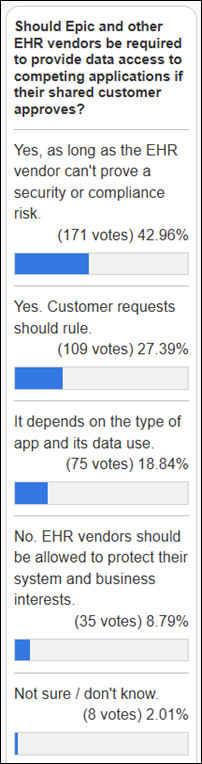
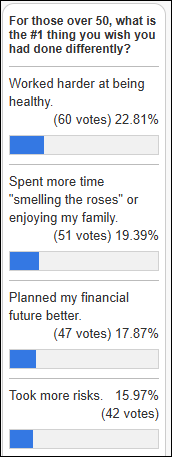
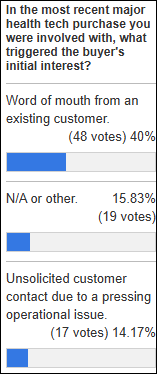
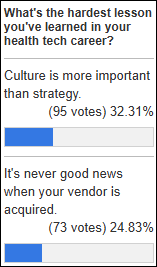
The majority of poll-takers are in favor of EHR vendors being required to provide data access to competing applications with shared customer consent.
New poll to your right or here: Have you ever used a digital physical therapy tool as part of your recovery? With Hinge Health’s IPO in the news and competitors like Luna, Sword Health (rumored to be prepping for an IPO later this year), and Kaia Health seemingly gaining traction, I’m wondering if providers are pushing them or payers are the more typical conduits. Share your experience by leaving a comment.
Sponsored Events and Resources
Live Webinar: June 18 (Wednesday) noon ET. “Fireside Chat: Closing the Gaps in Medication Adherence.” Sponsor: DrFirst. Presenters: Ben G. Long, MD, director of hospital medicine, Magnolia Regional Health Center; Wes Blakeslee, PhD, vice president of clinical data strategies, DrFirst; Colin Banas, MD, MHA, chief medical officer, DrFirst. Magnolia Regional Health Center will describe how its Nurse Navigator program used real-time prescription fill data from DrFirst to identify therapy gaps and engage patients through timely, personalized outreach. The effort led to a 19% increase in prescription fills and a 6% drop in 30-day readmissions among participating patients. Attendees will learn why prescribing price transparency is key to adherence, how real-time data helps care teams support patients between visits, and how Magnolia aligned its approach with value-based care and population health goals.
Contact Lorre to have your resource listed.
Acquisitions, Funding, Business, and Stock

Digital healthcare software and services vendor Healthcare Triangle forms new subsidiary QuantumNexis through the acquisition of Niyama Healthcare, which specializes in AI-enabled digital mental healthcare, and Ezovion Solutions, which offers EHR and smart hospital management tech.
23andMe will delist and deregister from the Nasdaq. The consumer genetics testing and research company filed for bankruptcy in March and sold the majority of its assets to Regeneron Pharmaceuticals earlier this month.
Announcements and Implementations

The Boulder County Family Resource Network (CO) launches an online social services resource tool using software from Findhelp.

In England, Birmingham Women’s and Children’s NHS Foundation Trust implements Epic.
Privacy and Security

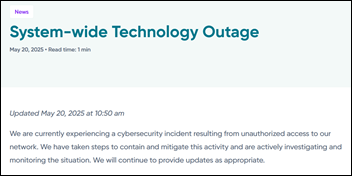
Kettering Health (OH) acknowledges it was the victim of a ransomware attack last week and announces that it has restored its clinical communications and radiation oncology systems. It expects the rest of its network to be up and running soon.
Healthcare cybersecurity leaders are unprepared for AI-enabled physical threats to their facilities, according to a new study from Black Book Research. Seventy-one percent of hospital survey respondents say they are unprepared for things like sensor spoofing or deepfake badge credentials, while just 18% say they have a strategy in place to mitigate this new type of digital manipulation.
Other

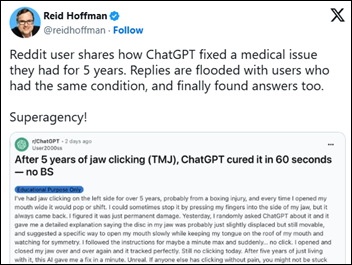
A patient catches their therapist using ChatGPT during a virtual session after the therapist mistakenly enables screensharing: “This led to a very surreal session in which out of sheer shock I also ended up basically cribbing from ChatGPT in my responses. For example, I’d say something, he would type it into ChatGPT, it would return a result, like a summary of ‘Cognitive Flexibility,’ and then because I could see his screen, I would say something like ‘I guess I could be more flexible…’ and he’d say, ‘Yes! Exactly!’”
Sponsor Updates
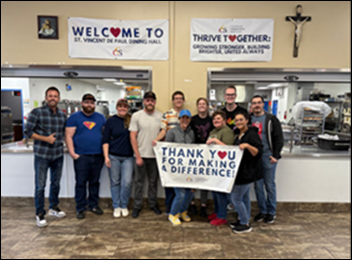
- AdvancedMD staff volunteer at several charitable organizations, including the St. Vincent De Paul Dining Hall, during the company’s Day of Caring.
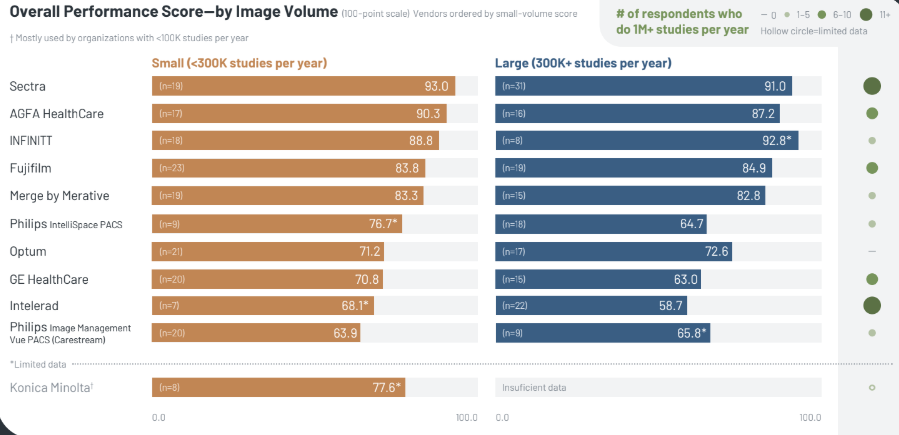
- Agfa HealthCare North America reports strong Q1 2025 momentum with major enterprise imaging expansion and strategic customer wins.
- Fortified Health Security names Rachel Bryant and Danika Miles marketing coordinators.
- Wolters Kluwer Health receives for the 14th consecutive year the NorthFace ScoreBoard Service Award for achievements in customer support by its Ovid and Lippincott customer service organizations.
- Capital Rx releases a new episode of “The Astonishing Healthcare Podcast” titled “The Evolving Health Benefits Market: Everyone is Getting Smarter, with Mike Tate.”
- Tegria will present at the International Performance Management Institute Healthcare IT Institute June 9 in New Orleans.
- Waystar will exhibit at the 2025 HFMA Region 1 Annual Conference May 29-30 in Uncasville, CT.
- Clinical Architecture releases a new case study featuring LifePoint Health titled “From Fragmented to Future-Ready: How Data Governance Fueled Clinical Transformation.”
- CloudWave will exhibit at the E-Health Conference and Tradeshow June 1-3 in Toronto.
- DrFirst is now accepting nominations for its 2025 Healthiverse Heroes Award.
Black Book Research’s latest survey reveals the top technology vendors driving Medicare Advantage five-star ratings amid heightened CMS audit standards, including the following HIStalk sponsors:
- Arcadia (population health management)
- InterSystems (interoperability and data integration)
- Redox (interoperability and data integration)
- Inovalon Quality Intelligence (quality measure management and analytics, audit readiness and compliance management)
Blog Posts
- Securing Healthcare Data: Ensuring Cyber Resilience with Vendor Partnerships (AGS Health)
- Why Cybersecurity is Critical for Modern Health IT Solutions (PerfectServe)
- Why Onboarding Matters More Than Ever in Senior Care (Symplr)
- The keys to unlocking the power of AI for nurses (Altera Digital Health)
- Virtual nursing at Hackensack Meridian Health is making nurses and patients happy (AvaSure)
- The Missing Link in Healthcare Cyber Defense: Culture (CTG)
- The ROI of Working with a Specialized Recruitment Partner (Direct Recruiters)
Contacts
Mr. H, Lorre, Jenn, Dr. Jayne.
Get HIStalk updates.
Send news or rumors.
Follow on X, Bluesky, and LinkedIn.
Sponsorship information.
Contact us.













































































One solution would be federal (or state) requirements; but more ideally health systems would view their digital patient tools as…