Home » News » Recent Articles:

News 8/21/09

August 20, 2009 News 9 Comments

Obama people bring healthcare PR show to Chicago bearing taxpayer gifts
Research article: eICUs may or may not work, but we didn’t really have time to check that out
Medsphere gets a sale

capecod

From I.T. Guy: “Re: Cape Cod Hospital. Apparently they made the decision to pull the plug on Meditech after a long relationship and install McKesson.” Unverified.

From Jules Verne: “Re: Check out these earnings.” Ancillary systems vendor Aspyra (warning: their site has loud and gratuitous Yanni-type music to accompany an otherwise stark site) files a horrendous 10-Q: a loss of $1.6 million on revenue of $2.1 million. The company says it will have losses and negative cash flows for the foreseeable future, meaning it needs financing or to sell shares (not likely: 12 million shares are already out and trading at 19 cents, 66% off the year-ago price, valuing the whole shebang at just over $2 million). I might have to ask our new financial expert Ben Rooks to lay out what options the company has (beyond the obvious – sending everyone home).

From Dr. T: “Re: hospital in Taiwan using the PBX-to-Skype gateway. I had been to this hospital and seen this working. It is very effective and the carts are battery operated with standing space for the nurse to actually ride it. The cart accommodates a fixed touch screen along with MAR drugs.” I’m getting a brainstorm … nurse golf carts with a built-in Pyxis machine, a Skype headset, and maybe a drink holder and MP3 player. They can be like those golf course ladies who sell snacks to the people pretending to exercise by riding around on carts of their own and swinging a club occasionally between beers. Patients pop their “give me drugs” bedside button, the nurse gets a Skype message, the eMAR pops open the onboard Pyxis and pops out the med, and the nurse careens off to dispatch it to the patient. Actually, the Taiwan hospital does have a pretty good idea, although Segways would be cooler.

From Sylvester Stallione: “Re: boards. Are you an advisor or board member of any companies that you haven’t disclosed? I don’t see it mentioned on your About page.” I’m not. Nobody really is interested in me as me, only as Mr. HIStalk, and that’s not happening. Sometimes companies ask for advice, but in the rare cases where I have the time and interest to do it, it’s free (and of corresponding value).

biden

Vice President Joe Biden, HHS Secretary Kathleen Sebelius, and ONCHIT head David Blumenthal visit Mount Sinai Hospital in Chicago to talk up the administration’s healthcare reform programs and to announce $1.2 billion in ARRA grants for Health Information Technology Regional Extension Centers and state-level information sharing projects. The public wasn’t invited and the dignitaries wouldn’t take questions from reporters. Maybe I’m cynical (OK, I’m cynical for sure), but it mostly seemed like a PR visit to put some positive spin on the administration’s floundering healthcare reform program, sending the politicians with some Uncle Sam financial lollipops to hand out. The best quote came from an ED nurse at the financially dying hospital, which recently had less than two days’ cash in the bank: “We’re spit at. We’re swung at. We’re kicked. We have urinals thrown at us. We have bedpans thrown at us." That’s always the bad side of some of us paying for the care of others like we do for welfare and other entitlement programs: sometimes the recipients are nasty ingrates that make us wish we’d spent the money on someone who appreciates it.

calvert

Hospitals using electronic ICU systems like those sold by VISICU/Philips think they are improving safety and outcomes, but a 100-hospital study of those facilities shows no improvement, according to a Robert Wood Johnson Foundation study. But here’s the kicker: it appears that the methodology used was to just do a bunch of interviews about why hospitals bought the technology and ask their opinions about the benefits received. I didn’t see anything in the article suggesting that the authors actually looked at outcomes data of any sort. So, the conclusion isn not that eICUs don’t work, it’s that hospitals that use them think they do; therefore, they don’t see the need to do outcomes studies of their own (notice also that the article appears in Health Affairs, which is a health policy journal, not a clinical journal). Here are the takeaways: (a) nobody knows if widespread adoption of eICUs would save money, improve outcomes, or increase intensivist coverage (even after reading this article, which you might think would try to answer that question); (b) hospitals use eICUs to improve outcomes and utilization of specialists; (c) eICUs would work better if they were more interoperable with other clinical systems (gee, I wonder why clinical systems vendors aren’t more cooperative about interfacing to the product of a competitor like Philips?); (d) hospitals that don’t use them don’t believe they are worth the effort and cost (duh, and why even bother surveying those who don’t have them?); (e) here’s the money shot: “All ten respondents from eICU hospitals were enthusiastic about the technology’s impact on ICU performance, particularly on quality and safety. They all emphasized the benefits of redundant processes in the care of critically ill patients, whose clinical conditions can worsen rapidly.” So why in the world would the opinions of the non-adopters be relevant in any way? If you were considering buying a particular car, which would influence your decision: (a) asking 100 owners of that model if they like it and having every one of them say yes, or (b) asking 100 people who don’t even own a car at all why they haven’t bought one? The article doesn’t even answer the question that serves as its title: “Does telemonitoring of patients – the eICU – improve intensive care?” It seems like a pitch to have further eICU studies funded by government grants. The organizations with which the authors are affiliated get most of their income from grants. I suspect correlation, if not causality.

Informatics Corporation of America will add XML-based quality reporting capabilities from Mark Logic to its clinical portal.

NextGen gets several community health centers as new customers. ARRA will help a lot of them pay for new IT systems, so it’s a market that could be pretty hot.

HP, which bought EDS for almost $14 billion less than a year ago, is whacking the top-heavy salaries of the former EDS employees to be in line with what other HPers make, which is also a lot less since they cut salaries on the HP side in February. Some employees will take a hit of more than 30%.

adena

Adena Health System (OH) extends its contract with MEDSEEK to automate physician referrals and to let patients view estimated out-of-pocket expenses before tests or procedures are performed.

The just-finished and sold out e-MDs user conference in Austin provided CME credits to physician attendees, which was apparently well received.

Scot Silverstein had a great idea to follow up on my “should I disclose vendor non-disclosure terms”. His thoughts: I shouldn’t have to do that because vendors should, as he says eloquently, “in an atmosphere of transparency and in deference to patients safety and to hospital governance, should gladly and transparently do so if such language exists in their contracts.” Great idea. OK, here’s what I know: Medsphere says it does not put nondisclosure language in its contracts. A reliable Meditech source says they don’t either. So here’s the challenge to Cerner, Epic, Eclipsys, McKesson, and other vendors of clinical systems: tell me that your standard contracts don’t prohibit customers from freely talking about software defects that could have patient safety implications and I’ll proudly announce that on your behalf right here. Or if your contracts do include such language, tell me why. I still feel creepy that when I worked for a vendor long ago, we were instructed to lie to customers who were anxiously reporting patient-endangering bugs, resulting in some wildly over-the-top telephone histrionics by thespianically challenged support reps. A typical overheard conversation: “Oh, you’re kidding – you don’t get a warning when entering that order?” (meanwhile, the rep is giving adjoining cube mates a laughing nod and making an overtly suggestive up-and-down fist movement that indicates a serious lack of concern that somebody’s loved one may be at risk because we as the scumbag vendor didn’t want to admit defects that would get us sued or replaced).
Medsphere gets a sale to 60-bed Beauregard Memorial Hospital (LA).

Weird News Andy found this article, which describes the previously illegal practice of hospitals paying doctors a cut of whatever cost savings their treatments generate. CMS is testing the practice in, as you might expect, graft and corruption rich New Jersey, where the concept of healthcare vig is well established in a less reputable way.

”Experts” in Australia say that too-rapid implementation of e-prescribing could compromise patient safety, citing a government study that found one hospital’s system doubled the rate of medication errors because it defaulted to the maximum dose and auto-refilled.

CMS is shopping for claims auto-denial software that will cut the $10 billion in improper payments it paid in 2007. These are the folks urging adoption of patient-critical computer systems, right?

OhioHealth goes live on a remotely hosted version of the EMPI of Initiate Systems, running on the interoperability platform of Accenx.

gardencity

Garden City Hospital (MI) contracts with CareTech Solutions to support new AMICAS radiology workflow modules.

The backup generator fails at Fletcher Allen Health Care, taking its Epic system offline.

Capital Health CIO Gene Grochala is intereviewed about its implementation of Keane’s clinical system, which he called “a diamond in the rough … a sleeper” that the hospital’s clinicians scored 93 on a 100-point scale.

Cardinal Health’s Q4 numbers: revenue up 10%, EPS $0.86 vs. $0.96, but meeting expectations. The sexy part of its business will be spun off on August 31 as Carefusion, leaving Cardinal as basically a warehouse and truck delivery operation for drugs.

Sometimes I wonder if doctors pay attention to pre-med economics: this one is proud to do his own network wiring and PC maintenance, thus turning his own valuable time into that of a $30 an hour technician. You can’t accumulate wealth if your time is spent doing low-value chores like computer programming or screwing around with PCs, which is really more of an expensive hobby than a frugal handyman gesture when the only thing you have to sell is your time.

Odd lawsuit: a patient given what appears to be a single dose of the very common sedative Ambien during a hospital sleep study sues the hospital, claiming the drug blinded and paralyzed him. Ambien is not known to cause either problem.

E-mail me.

Biden, Sebelius, Blumenthal to Announce HIT Grants in Chicago Today

August 20, 2009 News 3 Comments

sebelius

Vice President Joe Biden, HHS Secretary Kathleen Sebelius, and national coordinator David Blumenthal will meet today with doctors, nurses, and administrators at Chicago’s Mount Sinai Hospital, according to an announcement from the vice president’s office.

Grants of $1.2 billion will be announced, including $598 million to fund 70 Health Information Technology Regional Extension Centers and $564 million for states to develop practices on sharing information with the Nationwide Health Information Network. The grants will be funded under ARRA, with money available in 2010.

The panel discussion will include Peter Ingram, CIO of Sinai Health System, as well as clinicians from Mt. Sinai and Northwestern Memorial Hospital. The discussion is not open to the public. A second event will take place Friday in Ohio.

HHS also says it will e-mail everyone who has signed up for the administration’s healthcare updates with the benefits of using healthcare technology. Jeanne Lambrew, director of HHS’s Office of Health Reform, was quoted as saying “All that paperwork is more than just annoying. It wastes time, prevents quick and accurate diagnoses and makes our health care system less efficient. And it simply doesn’t make sense in today’s digital age.”

The government also released a video of Secretary Sebelius touring “first paperless hospital” 83-bed Lakeside Hospital in Omaha, NE in June.

News 8/19/09

August 18, 2009 News 3 Comments

From Just wondering: “Re: Eclipsys. More Professional Services leadership cuts at Eclipsys, VP Linda Lockwood and RVP Gaye Fright.” Unverified.

From Lucky13: “Re: Healthland. A letter from our account rep today – we are a Healthland (formerly Dairyland). Thanks! Love the blog … I have learned so much about our industry through it.” Healthland (the former Dairyland) announces that it has acquired small hospital HIS vendor American Healthnet. A snip from the letter: “Not only are we staying the course with Healthland solutions and our product roadmap, we expect to continue improvements across the board in how we support and service your hospital and staff. This includes launching new modules and enhancements you’ve been waiting for — like Emergency Department, Long-Term Care, Home Health, and others.” Thanks for sending it over.

From Kyle: “Re: conference. I’ve been a reader for a little bit now and found out about an event through my school. Loma Linda’s School of Public Health is hosting the Southern California Health Care Summit on October 29 at the Ontario Convention Center. The conference will be a chance to earn FACHE credits and learn about some the latest trends in HIT. They are billing it as the West Coast’s version of the World Health Care Congress.” Thanks.

Listening: Tindersticks, British and obscure, a lush mix of dark vocals, lounge music, and jazz. Kind of like Leonard Cohen or Nick Cave, rainy night music.

She’s not a doctor, but she plays one on TV: an Obama campaign volunteer admits that she claimed to be a doctor in praising Obama’s health reform plan at the town hall meeting of Congresswoman Sheila Jackson Lee of Texas.

vacbo

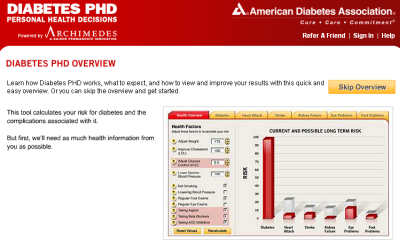
A Congressional Budget Office report (warning: PDF) gives the VA’s VistA good marks (above), although it cites conclusions from elsewhere that EHR adoption incentives should specifically require quality improvements.

Picis announces an enhanced ED PulseCheck: more clinical rules, alpha paging, and standard integration with bed management systems.

Former A4/Allscripts executive David Bond gets out of healthcare to develop a social networking site for teen athletes, earning kudos from former boss John McConnell (who did the same, now running his string of high-end golf courses).

El Camino Hospital goes live on the first phase of its Medicity-powered HIE. The Medicity Novo Grid is delivering real-time information to physicians, depositing ADT, insurance information, lab results, and transcribed reports into their EHR systems.

Mercy Medical Center (IA) will implement PatientKeeper’s Physician Practice Connector to give doctors a view of inpatient data, connecting the PatientKeeper Physician Information System with Sage Intergy EHR.

A couple of readers wisely suggested that I not consider running nondisclosure language from vendor contracts. Reasons: (a) it might identify the client since terms are often customized; (b) it might violate vendor privacy requirements and get a client or me in trouble; (c) clients might not want to share anyway since they may like the idea of being prohibited from sharing patient safety information. A couple of vendors e-mailed to say they don’t include such terms. I’d  be very surprised if Cerner and Epic don’t based on my limited history with them.

Jobs: QA Engineers, GE Centricity CPOE Project Manager, Strategic IT Consultant, Eclipsys SCM Systems Engineer.

vosky

A hospital in Taiwan implements a PBX-to-Skype gateway that allows free calling between nursing stations and its computers-on-wheels. Each COW has a USB handset tied into the hospital PBX so that employees can make and take Skype calls on regular phones. I Googled around and the four simultaneous calls version of the VoSKY appliance costs $1,500.

api

API Healthcare announces availability of its Business Analytics solution, which covers Staffing Solutions (staffing ratios and schedules) and Overtime Cost Control. MemorialCare (CA) is running it now.

va

The federal government rolls out a very Web 2.0-ish IT Dashboard that gives a quick green-yellow-red report like that of the VA above.

Chicago hospitals spent $32.4 million on advertising in 2008.

German HIT vendor CompuGROUP’s Q2 numbers (warning PDF): revenue up 61%, earnings up 19%.

In Australia, iSoft reports a 50% increase in revenue and 143% increase in profit, also predicting 10% sales growth for 2010.

Oracle’s Larry Ellison made $557 million in compensation in 2008, but was still #2 to the CEO of Blackstone Groups, who took home $702 million.

E-mail me.

Healthcare IT from the Investor’s Chair 8/17/09

August 17, 2009 News 17 Comments

“Tap-tap-tap, is this thing on?”

I’d like to thank the Academy, Mr. HIStalk, and Inga for allowing me the chance to post on a regular basis. Starting today, I’ll be writing a column sharing the Wall Street/investor perspective on HCIT, so I first thought I’d briefly share my background to give an idea of why Mr.HIStalk thought I’d be a good regular contributor.

I began my Street career on a crisp autumn day as a sell-side stock analyst (well, I was an associate analyst first) covering healthcare IT companies, most of which seem to have been acquired by HBO & Co. (now, of course, known as McKesson). Spending about a decade as a research analyst, I covered the stocks of around 25 companies such as Cerner, HBO, Sunquest, Eclipsys, etc. As the dotcom/e-health era arose, I covered those stocks as well, helping to take companies like Allscripts, Healthstream and others public.

After ten years, it was time for a change, so I went to what many called “the dark side” and became an investment banker. I spent six years doing both M&A and public offerings, primarily in the healthcare IT sector that we all know and love.

Wall Street has a few things to recommend it as a career, but the ability to speak truth isn’t always one of them. So, in March, I left the Street to become an independent strategic advisor to healthcare IT and other companies. So far, so good …

Yes, but just what does an analyst do and what’s the sell-side and how is it different from banking? For my first few posts, Mr. HIStalk and I thought a brief tutorial on the industry might be interesting to you, gentle readers. Let’s start with equity research.

There are two sides of Wall Street, the “buy-side” and the “sell-side”. Buy-side means the entities that actually purchase stocks (mutual funds, hedge funds, pensions, etc.). These institutional investors are what typically drive stock prices and through their commission dollars, sell-side behavior.

Sell-side analysts work for brokerage firms, aka investment banks. The other key difference is where buy-side analysts might cover hundreds of stocks or even the entire healthcare sector (from Merck to Mediumune and from McKesson to Medtronic), sell-side analysts typically focus on much smaller swaths of the economy such as biotech, big pharma, or healthcare IT and distribution, covering 15-25 stocks.

It’s the sell-side analysts’ job to know how the companies in their sector perform, what’s driving their growth, and to predict what their income statements will look like each quarter for the next few years. Why? Because it is viewed as axiomatic that earnings drive stock prices and so an analyst will model what they expect the company to earn and then try to determine if its stock price is appropriate. If it’s not, the analyst puts a coveted “buy” rating on it and proceeds to pitch the idea to the buy-side. If a buy-side client likes your idea, there’s the usually unspoken assumption that their fund will try to buy the stock through your firm and you get some credit for the commission dollar.

Earnings might drive stock prices, but I think John Maynard Keynes had a better assessment. He said, in effect, that picking stocks is like judging a beauty contest, but you are trying to figure out who the other judges would find the most attractive. This is why companies that care about their stock prices (and given that CEOs tend to own a lot of stock, most seem to care about this), care about the care and feeding of their sell-side analysts, trying always to paint the rosiest picture possible without (hopefully) crossing the line into fabrication or outright dishonesty.

I say “hopefully” because in my research days, I had countless CEOs telling me how their company was kicking competitive butt, taking market share, etc. All too often (especially early in my tenure), I’d then stand in front of my sales force and call clients to say, “we’re feeling very confident in HIStalkCo’s upcoming quarter”. Usually other analysts were saying the same thing (conformity is typically rewarded) and a “whisper number” began to circulate, meaning analysts are in print saying earnings will be $0.12 this quarter, but they’re all really expecting $0.15. This is why stocks would sometimes drop after hitting analysts’ consensus. This rosy feeling would often last until the company in question reported its quarter and, instead of the $0.12 – 0.15 expected, they reported $0.05 and the stock (of both the company and the analysts) fell.

I should note that it wasn’t always outright dishonesty. CEOs, by their nature, tend to be optimists and salespeople at heart, and the best salespeople, in my experience, believe their own stories.

A few questions might arise.

What does share price mean to me, the customer? In my view, often more than it should. Assuming your vendor has a decent amount of cash on their balance sheet and has a market capitalization high enough to remain somewhat relevant to investors (say, over a few hundred million), let investors and vendors obsess over share price and you can obsess over implementation and support issues.

Why the focus on quarterly results? When I was on the banking side, I had a client who was private and had just missed their internal quarterly budget numbers. The CFO, however, felt “great” about the year. Wanting to go public in the worst way, he asked me why they couldn’t just give annual guidance (like some companies were starting to). The answer is analysts are required by both their firms and their clients to develop quarterly estimates, which are then published. That means an expectation has been set, regardless of whether the company has endorsed it.

The company then achieves, exceeds, or disappoints on those expectations and, in my experience, its stock price reacts accordingly. Discussing what it would be like if this weren’t so is like discussing how pro baseball would be like if they switched to softballs. It might make an interesting conversation over a glass of cabernet or two, but it’s not terribly relevant to the real world. The fact is that quarterly results matter to stock prices here in America, at least in the short term. (incidentally, the company than proceeded to go public in the worst way, missing their forecasts within a few weeks of its IPO. The stock never again saw the IPO price and the management team didn’t get half the kicking around they deserved).

Should I chose a vendor that’s public or private? I’ve never selected a vendor, but IMO, you should choose the one that offers the best product for the best price (sorry to state the obvious). Recognize that there are certain incentives that drive public companies and this quarterly earnings game can impact the amount they spend on R&D, customer service, or other areas you care about. Recognize also, however, that this access to capital and currency allows them to invest in ways private companies often can’t and also is often a recruitment and retention tool (assuming the stock price goes up).

What else matters when dealing with public companies? There was an interesting Readers Write posting a few months ago where a customer complained that they were being ignored by a vendor for reasons having to do with their need to make quarterly numbers. Now as I mentioned, companies really care about their stock price and what investors are saying about them, perhaps more than they should.

Further, analysts (at least good ones) love to have any kind of proprietary morsel about the companies they cover. It’s always great to go to the buy-side and share special information — a key form of currency on Wall Street, and customer insights are always some of the best. It shows the analysts are doing some research away from the companies they follow.

Were I the ill-used client in question, I’d draft a lengthy e-mail detailing all these issues and send it to the vendor’s CFO saying, I’ll be forwarding this and similar views to one or two analysts that follow the company. I’ve not tried it, but it might improve your care and feeding as no company should want to have anything but a good reputation for customer service. Recall how the stock of Cerner fell after CEO Neal Patterson wrote his scathing “parking lot” e-mail and it surfaced on Yahoo! a few days later.

Thanks for your attention, I very much appreciate it. If interest warrants, we’re hoping to make this a regular column. Please let me know what topics you’d like to see discussed or just e-mail or leave a comment. Other areas Mr. HIStalk and I thought might be well received are:

A similar view of investment banking
How does an IPO work?
What exactly is private equity and what is it doing in healthcare IT?
An M&A watch – who’s buying whom, why, and does it make even a modicum of sense?

benrooks

Ben Rooks is the founder of ST Advisors, a strategic consultancy offering long-term and project-relationships to companies and financial sponsors. He earned an MBA in healthcare management from The Wharton School of the University of Pennsylvania, has done healthcare IT equity research, and has worked as an investment banker in over 25 successfully closed healthcare and medical technology transactions valued from $40 to $365 million.

NAHIT Shuts Down

August 17, 2009 News 2 Comments

The National Alliance for Health Information Technology announced this morning that it will cease operation on September 30. COO Jane Horowitz says NAHIT has accomplished its mission of moving HIT “front and center” to reinvent the US healthcare system.

The NAHIT announcement says the challenge of implementing and using technology can be better met by other organizations. It named those as the American Hospital Association and the College of Health Information Management Executives, both of which were NAHIT founding members.

NAHIT was founded in 2002 as a technical standards organization. CEO Scott Wallace resigned in early 2008 as the group explored “new strategies and tactics and a different operating structure.” According to federal records, NAHIT took in $3.5 million in 2007, but had net liabilities of over $600,000. Scott Wallace was paid $679,000 that year.

NAHIT, along with HIMSS and AHIMA, found CCHIT in 2004. It also funded a controversial project to define five common healthcare technology acronyms, paying BearingPoint $500,000 for the job. The organization had begun calling itself “The Alliance” in 2005.

The HIMSS Web site refers to NAHIT as one of its sister associations, along with AHIMA, AMIA, CHIME, and eHI.

Monday Morning Update 8/17/09

August 16, 2009 News 19 Comments

michigan

From Don Money: “Re: West Michigan HIE article.” Here’s the link, but you have to be a subscriber (the reader sent me a PDF). The Grand Rapids Business Journal covers an HIE created by three hospitals, all of which are using technology from the former Novo Innovations (now Medicity). Medicity’s Robert Connely: “It’s not designed to create the next generation of applications. It’s designed mostly to solve work and save tons of money, and that’s the reason they’re willing to pay for it.” The hospitals’ HIE is replacing the community-based model advocated by Alliance for Health, which found providers unwilling to pay third-party usage fees. Trinity Health will use the Medicity approach for all 45 of its hospitals, according to the article. Medicity says its technology and business models can be adapted to any connectivity scenario: a hospital-owned HIE servicing its doctors, a RHIO/HIE with third-party governance, and (as in this case) a RHIO/HIE without third-party governance.

From Stan Pacifica: “Re: PROMIS pain scale. This is an adaptive testing methodology that contains 120 items in the item bank, but far fewer than 120 are used to assess pain.” That makes sense, although the reporter specifically said “asks patients 120 pain-specific questions, as well as hundreds more that probe the physical and mental effects of pain.”  

Here’s the layoff letter from Philips Healthcare, citing lower profitability and “risk of further deterioration in several of our markets.” The usual “simpler, leaner, more flexible organization” mantra is recited, oddly enough by the same CEO who originally oversaw its regrettable transformation to more complex, fatter, and more rigid organization in the first place. He’s making $2.5 million a year for 20-20 business vision, which would value it at $5 million if it worked in foresight and not just in hindsight.

cert

It’s clear from Friday’s excellent recommendations to HHS by the Certification and Adoption Workgroup of the HIT Policy Committee that they want major changes made to EHR certification. Some of the high points:

  • HHS certification (notice they didn’t call it CCHIT certification) is not intended to be a seal of approval.
  • A new certification process should be developed that focuses on Meaningful Use rather than specific functionality points (that change will let specialty EMR vendors certify their products).
  • Certification should include all privacy and security policies that are in ARRA and HIPAA.
  • New highly detailed interoperability and data exchange specs should be created.
  • “Test harnesses” should be created so that providers can test their own software.
  • Multiple certification organizations should be allowed, with NIST accrediting them.
  • ONC should define certification criteria, not the organizations performing the certification testing.
  • Certification criteria will be updated no more frequently than once every two years and certification should be good for four years.
  • “Lock down” requirements should be eliminated to level the playing field for open source systems.
  • Since Meaningful Use definition is imminent, HHS should create a preliminary certification that would be valid through 2011.
  • Interesting quotes: “There has been criticism that CCHIT is too closely aligned with HIMSS or with vendors. While we did not see any evidence that vendors were exerting undue influence on CCHIT, we also understand that the appearance of a conflict is important to address … Most vendors advocated for a minimal approach to certification, complaining that CCHIT has ‘hijacked their development effort’ and that they are developing features/functions that nobody will use.”

The takeaway: if the recommendations are accepted, CCHIT’s role will be diminished and shared with other certification bodies, none of which will be allowed to create certification criteria; certification will move away from a detailed product design to focus instead of how EHR products are used; and CCHIT cannot shake its reputation for being controlled by a few big vendors and HIMSS. It’s pretty clear that CCHIT may well have an ongoing role in the government’s HIT policies, but not at the level of influence it has enjoyed until now. Finally, someone says no to HIMSS.

The Colorado Hospital Association and the Colorado Behavioral Healthcare Council select Qwest Communications to provide broadband services to create one of the largest health information networks in the country, connecting 400 providers and supporting telemedicine initiatives. The Colorado Telehealth Network will focus on rural areas, giving them 100-megabit connectivity via Qwest’s fiber-optic network.

Ross Koppel pointed out that hospitals probably can’t sign software vendor contracts containing non-disclosure language without running afoul of the Joint Commission’s accreditation requirements, which require hospitals and providers to share information about known patient safety risks. Here’s my challenge to you providers: send me a copy (scanned or copied and pasted) of the non-disclosure language in your contracts and the vendor involved. I’d like to run some of them here anonymously (nothing but the wording and the vendor) so new customers will recognize those terms and insist they be removed.

Recondo Technology announces EligibilityPlus, a SaaS insurance eligibility application. I mentioned the defunct (well, acquired by Sybase, which is pretty much the same thing) New Era of Networks the other day and, what do you know, founder Rick Adam is now chairman and CEO of Recondo. It’s a small world, this healthcare IT stuff.

A Florida medical magazine covers the history of EMR vendor DoctorsPartner, which says its PM offering was Best in KLAS 2007 and its EMR #2.

A London Times article compares US healthcare to the NHS, quoting a patient who moved from Britain to the US. “Every time you go for any treatment here, they want to see your insurance card and check every detail they have about you and that is wearisome. But I’ve had some terrific treatment. There are all sorts of things you have to be aware of: some treatments you part-pay for and you have to choose a doctor who is approved by your insurer. But it’s not all about money here. The doctors are doctors – they really want to help you.” Another insightful comment from a UK cancer patient who sought treatment here: “Most doctors in Britain, if they’ve worked overseas, will admit that somewhere like America has the best of the best. What it doesn’t have is the breadth of coverage. Ours is an equitable, morally cogent way of doing things. But looking at the amount and quality of research into my cancer, there was a clear difference between Britain and the United States.”

cropp

A pharmacist who didn’t catch a technician’s IV mixing mistake that killed a child at Rainbow Babies & Children’s Hospital (OH) is sentenced to six months in jail for involuntary manslaughter, to be followed by six months of house arrest, three years of probation, a $5,000 fine, and 400 hours of community service. His pharmacy license was also revoked. It appears from the newspaper’s description that the technician mixing the chemo IV used sodium chloride concentrate 23.4% instead of sodium chloride 0.9%, related to the fact that the hospital’s computer system had been down for some time. The tech was charged, but not indicted. I don’t know that putting healthcare providers in jail for making an honest mistake is a good idea, especially if you want to keep enough providers providing.

E-mail me.

News 8/14/09

August 13, 2009 News 9 Comments

iSoft Enters US Integration Market
Social Security Administration Says New Certification Bodies Coming
HIPAA Violations: Nobody Has Ever Been Fined

From UCSFWatch: “Re: UCSF CIO’s e-mail. The GE Centricity Enterprise project is in full stop mode.” The attached and unverified e-mail from CIO Larry Lotenero says this: “The medical center’s Senior Management Group has engaged Kurt Salmon Associates (KSA) to assist us with a review of our IT clinical strategy. We are doing the review because we are dissatisfied with our progress to implement clinical applications to support the care of our patients. KSA will arrange interviews with many of you to capture your insights for the strategy planning. They will be on-site to begin their interviews on August 18. If KSA contacts you, I ask that you be as flexible as possible with your schedule to accommodate this process. We expect to receive a final report before November. For now, all activities associated with developing the GE clinical system should immediately be put on hold. Despite this action, we remain fully focused on our goal to complement our excellent clinical care providers with equally excellent clinical applications as soon as possible.”

From Jeannie with the Light Brown Hair: “Re: Allscripts. What? No mention of the Allscripts class action? Thought we’d hear some anti-lawsuit rhetoric at least.  :)” Jeannie, I’m concerned about you. I mentioned the securities lawsuits prominently on 8/5 and again on 8/7, appropriately loaded with anti-lawsuit rhetoric (all the lawsuits since then are just copycat litigation filed by the same old me-too corporate heel-nippers who must love America’s legal system since they make a nice living wasting everybody’s time and money with BS lawsuits just because a company’s stock price drops). My concern: I bet a third of the e-mails I get regularly say, “Wow, you have to check out this story” and send a link to something I’ve mentioned days, weeks, or even months before. So here’s the warning: I write concisely and I don’t follow the lazy “Generalissimo Francisco Franco is still dead tonight” trick of repeating a story endlessly. I figure HIStalk readers are smart enough to get it the first time around. So, the takeaway is this: (a) read carefully, even the short paragraphs; (b) if you miss reading a posting, don’t just skip it since I will probably not repeat any of the same stories out of respect for your time; and (c) I still appreciate having stuff sent my way even if I’ve already mentioned it.

From Weird News Andy: This is neither weird nor news; I have instinctively known it for years.” Heart attack survivors improve their survival odds by eating chocolate at least twice a week.

robot

WNA also called attention to the above photo, which shows a Lahey Clinic doctor consulting with a patient in a hospital 20 miles away. That led Andy to ponder, “Is the point of service the hospital room or the clinic where the doc is?”

I’ve been citing strong hints for months that iSoft had eyes on the US market, so that has finally turned into news. The big Australian HIT vendor acquires Boston-based integration vendor BridgeForward, which sells the Viaduct integration design studio, the Physician Integrator for connecting EMRs to practice management systems, and integration servers. They paid up to $15 million depending on performance. BridgeForward’s founder was John Moriarty, who founded integration vendor MicroScript before it was swallowed in the bottomless pit that was New Era of Networks. All of the company’s executives were from MicroScript as well.

A former Kaiser executive files a whistleblower lawsuit against the organization, saying it ignored his concerns and instead assigned an HR “grim reaper” to make him quit. He claims that Kaiser refused to track patient deductibles and instead made them bring in receipts; exposed medical information on all of its dementia patients by putting a registry on an unsecured network; and dumped intact patient records into unlocked Dumpsters. This site reports that the complaint says KPIT’s compliance officer responded to his complaint as follows: “That officer told Plaintiff that Kaiser leadership did not care and that there was widespread violations of HIPAA throughout the Kaiser network and throughout the organization. He told Plaintiff that the only way he could get the company’s attention would be to send the information anonymously on a disk to George Halverson, Kaiser Foundation Health Plan’s then CEO, at his home with a note telling him that unless this was corrected by a certain date, the next time he would see the information would be in the New York Times.”

A company I’ve never heard of is bringing 40 jobs “to Henderson”, with no mention anywhere on the site of the Evansville Courier & Press as to what state the company, Henderson, or Evansville are in (I’d guess Indiana except I don’t care enough to waste the energy since the ace journalists can’t be bothered to actually say). The company, Innovative Workforce Technologies (wow, killer name there) doesn’t even have a Web site that comes up on Google. The story says they have an odd lot of apps like interactive patient entertainment, bed management, and some other stuff I can’t decipher from the reporter’s description.

TPD says he likes Google’s Caffeine search engine, the heir apparent to Google search and a Bing-killer, the company hopes. It’s fast for sure (and free of Adsense ads for now). I tried “HIStalk” on both and Caffeine got 91,000 hits vs. 90,000 for plain old Google. I did find one killer Bing feature a couple of weeks back: if you Bing a location and click Maps, you can shoot the location with one click directly to your MSN Direct-powered GPS right over the satellite connection without even plugging the GPS into the USB jack. I’m find that highly useful – any time I’ve looked up an address or location by name, I just click Send and it loads as a Web favorite on my Nuvi 780 the next time I turn it on. That’s just plain brilliant.

maxit 

maxIT Healthcare of Westfield, IN is a new HIStalk Gold Sponsor. The company’s 300 healthcare-only consultants offer a long list of services, with their long suit being EMR and clinical systems (Cerner, Epic, Meditech, Allscripts, and all the big names). In fact, a recent KLAS report, 2009 Maximizing Your Consulting Investment: A Report on Healthcare IT Consulting Services, survey found that where only four companies had enough engagements for clinical applications consultants to be rated and found that ‘maxIT Healthcare scored the highest, receiving especially high marks for the quality of their consultants’ in Staff Augmentation. Thanks to the folks there for supporting HIStalk.

I don’t have enough interest to want to absorb the details and I suspect you don’t either, but it appears JMJ and its EncounterPRO EMR may or may not be wrapped up in some kind of lawsuit and bankruptcy actions, depending on how you define some confusing holding and parent companies. There’s supposedly a family feud involved (or so this message purports), a 1:250 reverse stock split, a management attempt to authorize 500 million shares of stock, the resignation of the CEO from the board of the holding company, and all kinds of questionable but entertaining gossipy tidbits. Shares are at 6/10 of a penny. If you think your life is hard, imagine being a salesperson for them.

Health plans are responding in inconsistent ways to the drug price drop that will happen in September as a result of the McKesson, First DataBank, and Medispan AWP lawsuits that were settled awhile back. Payors expect a windfall, while PBMs are adjusting prices upward to protect their now-lower margins.

Cardinal Health launches the Pharmacy Health Network, a closed-circuit video channel for retail pharmacies that will will carry what sounds like endless paid advertisements for drug companies aimed at people waiting the inevitable 20 minutes for their prescriptions.

Researchers at Northwestern University create a 120-question pain scale software application. Sounds good, except if I was in pain I sure wouldn’t want to sit there and answer 120 questions about it instead of just pointing to a smiley/frowny face or grimacing theatrically to make sure the narcotic analgesics keep coming.

Here’s another argument for placing exam room computer monitors so docs don’t have to turn their backs on patients. A family medicine doctor turned away from a drug-seeking patient to enter information on the computer. The patient attacked him, biting his finger off.

waste

A consulting firm says half of the $2.2 trillion the US spends on healthcare is wasted.

Siemens posts some ARRA-related online tools (I can’t imagine they’ll be a player, but they have to try), but what caught my eye is the “all your base are belong to us” odd grammar and phrasing, like someone with English as a second or maybe a third language labored to sound like a native English speaker.

The Social Security Administration will pay $500 million to settle a class action lawsuit claiming that it illegally withheld benefits. The agency’s computer matched beneficiary names to arrest warrant databases in an attempt to cut off payments to criminals on the run, but instead shut off benefits to people with false allegations and old warrants. I bet there was a fat cat contractor company doing the programming.

CMS, until recently the HIPAA security rule enforcer for over four years, didn’t levy a penny in fines to violators. Likewise, new enforcer Civil Rights Office, which received 44,000 privacy complaints over six years, didn’t issue even one fine. Joe Conn did what journalists are supposed to do (but rarely do in HIT-land) when covering an otherwise mundane story – he dug for the facts that nobody else even thought to ask about.

While I’m kudoing journalists, I’ll laud nextgov, which I’ve found to be an excellent resource. This article about the Social Security Administration’s $24 million contract to automate its disability program, but only for certified products, has some fascinating facts buried in it. An SSA spokesperson said that while CCHIT is the only certifying agency now, “other programs are planned for the near future”. US CTO Aneesh Chopra was reported as acknowledging that CCHIT’s specs have a worthy competitor in the Continuity of Care Record and finds the discussion important. GE was somehow involved in commenting on certification, and being a multi-national conglomerate that hasn’t innovated anything interesting that I can recall in HIT and that sells CCHIT-certified products, took the obvious position: “Officials at GE, which manufactures CCHIT-compliant technologies, said not only are certification criteria not a barrier to innovation, they actually enable it by focusing product development on value-added areas, while facilitating the exchange of data among different health organizations and products.”

A US district judge issues a permanent injunction prohibiting Microsoft from selling copies of Word after a ruling found that it violates the XML patent of a Canadian company. If the injunction is upheld when appealed in the next 60 days, Microsoft won’t be able to sell Word 2003 or 2007.

E-mail me


HERtalk by Inga

From Michelle Duggar: “Re: Tweeting during childbirth. Obviously this lady had issues.” Michelle Duggar sent this story about the wife of Twitter CEO Evan Williams. Ms. Williams tweeted her 14-hour childbirth experience to 15,000 followers, starting from the time her water broke. Narcissistic? Twitter hype? Or perhaps just more effective than Lamaze breathing?

KLAS confirms what vendors have been saying for months: sales of acute care EHRs have been slow. KLAS, which has been collecting similar sales data for the last seven years, reports that 2008 sales were the lowest they’ve ever recorded. However, Epic grew its market share, selling 40% of the new systems sold to 200+ bed hospitals. McKesson and Siemens also saw market gains, though Cerner saw no new net growth for the first time.

CSC is named a preferred vendor for the Georgia Hospital Association. CSC hopes to help Georgia hospitals comply with ARRA’s yet-to-be-finalized Meaningful Use provisions for EHR.

gila

maxIT Healthcare announces that its client, Gila Regional Medical Center (NM), has achieved Stage 6 designation on the HIMSS Analytics EMR Adoption Model. Phoenix Health Systems also assisted Gila Regional advance its Meditech utilization.

Ochsner Health Systems will take advantage of a three-year grant from the CDC to create a telemedicine stroke network. Ochsner will connect physicians at five of its community hospitals to on-call neurologists using REACH’s telestroke and telehealth service.

AHRQ plans to extend $48 million in grant opportunities for developing national patient registries that can be used for comparative effectiveness research. This amount is in addition to the $300 million funded by the economic stimulus to fund similar research. Look for more details this fall.

Meridian Health (NJ) selects Language Access Network to provide real-time video language interpretation services.

Virtua, an IDN in New Jersey, picks the Picis CareSuite perioperative and anesthesia solution for its nine facilities. The Picis software will connect to Virtua’s Siemens applications.

madison 

Healthcare Managements Systems secures an order with Madison County Memorial Hospital (IA) to supply an integrated clinical and financial solution for Madison’s 25-bed hospital and two rural health clinics.

MGMA members say their top concerns and struggles are dealing with operating costs rising faster than revenue, maintaining physician compensation despite reimbursement declines, and selecting and implementing an EHR. Interestingly, medical practice managers ranked these same three issues at the top of last year’s survey. Other big concerns centered around patient collections, uncertain Medicare reimbursement rates, recruiting physicians, and negotiating payer contracts.

Telehealth Services signs up two new customers for its TIGR on-demand patient education system. Both Peace River Regional medical Center (FL) and SSM St. Clare Health Center (MO) will install Philips LCD televisions and the TIGR interactive patient education and entertainment systems.

Presbyterian Intercommunity Hospital (CA) reports a 99% CPOE adoption rate since going live on Eclipsys Acute Care last year. The director of pharmacy also notes a 60% decrease in medication delivery times, down from 60 minutes to 24. The hospital recently activated Eclipsys’ Sunrise Pharmacy solution.

At least 10 HIStalk sponsors made the 2009 Inc. 5000 list, which recognizes the country’s fastest growing private companies in terms of revenue. One of the highest ranking HIT companies was eClinicalWorks, which has grown revenues 460% between 2005 and 2008. SRSsoft has grown 330% over the same time period. In case you were wondering, the overachieving Northern Capital Insurance topped the list with a 19,812% growth rate.

Global Med Technologies saw a 79% jump in its Q2 net income. Net income was $272,00 and quarterly revenues increased 66% to $8.1 million. Global Med provides blood and laboratory systems and services.

Perhaps a lawyer can explain how one can even file a lawsuit this vague. A man files suit against an unknown person for an alleged and unnamed medical condition. The unnamed medical condition created unspecified disabling injuries, so the man is asking for Mr. Unknown for $75,000 in damages.

inga

E-mail Inga.

News 8/12/09

August 11, 2009 News 14 Comments

McKesson Will Distribute CytoCare Chemotherapy Compounding System
Nuance Trims Losses, Beats Expectations
England’s Conservative Party Pushes Non-Centralized Electronic Medical Records

From Baron de Cobray: “Re: blaming vendors. Hospital administrators seem to be using clinical systems as an excuse for poor outcomes instead of their own poor management and operational workflows. I have seen hospitals bleed money because they refuse to fix workflow while demanding to replace a current IT system. The attitude that a system should fix these problems is absurd. Why do people believe they no longer have to think?” Ever since systems were first sold. In my experience:

  • Hospitals like the idea of solving a problem by buying something — a piece of equipment, the services of a consultant, or a software application. It seems so much more decisive than the unglamorous chore of fixing poor organizational habits or culture.
  • Hospital project management is usually iffy and IT portfolio management and governance even worse. IT should not own or run any IT project except infrastructure, yet you see IT departments claim they are going to lead clinical transformation. Not likely.
  • Once the switch is flipped, everybody walks away instead of starting the long-term work of wringing value out of the technology.
  • Hospital buy applications to avoid confronting employees for subpar job performance and managers for poor job definition. Hospitals almost never fire salaried employees, so nobody feels much pressure to change.
  • Every area within a hospital thinks they are too different to allow conformance (especially pediatrics and surgery). Every hospital with an IDN (especially the flagship one) is convinced that nobody has a better idea.
  • All that said, it’s easier to blame your vendor and then dump them than to look in the mirror to see who’s really responsible. I rag on vendors because I know they could do better, but when you paint an ugly picture, it’s ludicrous to blame the paintbrush you willingly chose. Every vendor’s product is wildly successful in at least one site, so that pretty much validates that it works when implemented and used correctly.

maxtor

From The PACS Designer: “Re: file backups. TPD wants to inform HIStalkers of a backup system that can provide automatic continuous backup of your files through a USB attachment. The product is called OneTouch 4 Plus and is manufactured by Seagate/Maxtor. The OneTouch comes in several capacities. TPD installed a one-terabyte system for a family member and was impressed by how easy it was to copy all aspects of the system to a USB backup system. The one-terabyte system can be bought for about $125.00 from various sources.” I got the same device in a 500 gig USB hard drive configuration a couple of months ago, with the OneTouch software doing daily backups and prompting for regular full-system backups. What impressed me the most (other than the price, now $70) was that the drive turns itself off when the PC is turned off, apparently reacting to the loss of USB connection, so I don’t have to unplug it or turn it off.

Kaiser Permanente is cutting 1,200 more jobs, or 2% of its workforce, due to economic and enrollment issues. IT took the big hit back in the spring, with Kaiser confirming 850 IT-related jobs eliminated then. It’s also eliminating merit increases and delaying capital spending. A reader reports that one Kaiser region is offering voluntary retirement in hopes of reducing layoffs and, for those affected, offering generous severance benefits.

Health Alliance (OH) promotes Jay Brown to CIO.

Web-based transcription vendor iMedX gets a $13 million equity investment.

The eHealth Ontario news just keeps getting juicier. Former CEO Sarah Kramer got the job only after Ontario Premier Dalton McGuinty overrode the objections of his staff who questioned her lack of experience. Sealing the deal was the hiring of Alan Hudson as eHealth’s chairman of the board, who said he wouldn’t take the job unless Kramer, who worked under him as CIO when he was president of Cancer Care Ontario, was chosen as CEO. Both recently resigned in a scandal over excessive expense reimbursement and no-bid consulting contracts. Critics say eHealth Ontario has spent hundreds of millions of dollars without accomplishing much of anything.

medsphere

Medsphere’s strategy is interesting, as published (warning: PDF) on the WorldVistA site: they’re targeting hospitals of 100-500 beds, for whom they say competing systems are unaffordable and low in customer satisfaction (I’m not sure that’s true of all competitors, but certainly some). They’re looking to hit the customer bang-for-the-buck plateau of the HIMSS Analytics EMRAM Stage 3, meaning no CPOE, clinical decision support, closed loop meds administration, physician documentation, PACS, and interoperability. Reason: Stage 3 costs only 40% of the tab required to get to Stage 7 and that bed range doesn’t necessarily have the money or the interest to shoot for the EMR moon. All of that sound good, but it’s really not all that insightful since most vendors in those bed ranges aren’t pushing CPOE or physician documentation either. Still, it’s a solid plan. Click the graphic above to see the cost-per-bed of several vendor clients.

Healthways, the disease management and health management company (market cap: $470 million) contracts for health services for its employees from Marathon Health. Employees get an on-site clinic, health coaching, and an EMR/PHR. Just about everyone on the Marathon executive team came from IDX.

cytocare

McKesson announces an exclusive five-year partnership with Italian oncology IV robotics vendor Health Robotics, whose CytoCare compounding system will be sold along with McKesson’s ROBOT-Rx cart filler and MedCarousel drug picking system. A good move by them. Health Robotics also sells systems for non-hazardous IV compounding and is developing a similar system for TPN compounding in the pharmacy. I mentioned the company in March, also pointing out that former Eclipsyser Gaspar DeViedma is on the company’s management team and board.

England’s Conservative Party, calling NPfIT “shambolic,” wants to dump plans for a single national medical record per patient and instead share records kept individually within each hospital and practice (in other words, they propose to do it more like we’re trying to do here). Their plan to renegotiation contracts with BT and CSC doesn’t make sense to one analyst, who said, “It sounds a nonsensical approach with all the compensation payments that would be due. They could not make the contracts any cheaper – when they were struck years ago they managed to screw the lowest possible price and that led to the suppliers not being able to make any money.”

Weird News Andy checks in with a story from England involving a gang who held down a 14-year-old boy and forced a python to bite him. Paramedics on the scene identified the snake by Googling “snakes” on a cell phone, showing the boy pictures until he recognized it. It was found to be non-venomous, so he’s fine.

HITGhost followed up on my “female bass player” observation, pointing out Jeff Beck’s outstanding, jazzy bassist Tal Wilkenfeld (excellent live video here). She’s 23; Beck is a doesn’t-look-it 65.

Kaiser Health News runs an interesting story on EMR projects in Seattle’s hospitals, pointing out that three of the best hospitals in Washington are in the same neighborhood and use fancy EMRs, none of which can share information with each other. Fine comments from Swedish Medical Center CIO Janice Newell, who says that the Feds should encourage use of existing systems to avoid having the money “go down a rathole.” Even Steve Lieber of HIMSS gets in a rational, non-cheerleading quote that advocates reform along with automation: “As long as you will pay every time I do that test, the incentive is to do that test as many times as I can.” And kudos to David Brailer, whose viewpoint I share in pushing the network, not the devices that connect to it: “Imagine if companies tried to sell cell phones connected to some networks, but not others or that would call only certain area codes. The equivalent is trying to get doctors to switch to electronic medical records when they have, at best, a patchwork network to connect to.” That’s not the kind of story the trade press runs between the Most Wired beauty contests and vendor-written fluff pieces.

Tidewell Hospice (FL) names David Lafferty as EVP/CIO.

A group of Connecticut providers and insurers plans to launch an HIE next year, hoping to get stimulus money.

Allscripts is named one of North Carolina’s 10 Best Employers for 2009.

Hospital PR people will get hammered for information after a Hearst investigation concludes that 200,000 Americans will die from preventable medical errors and hospital infections this year. The report noted that federal and state governments have done next to nothing since “To Err is Human” came out in 1999, although assuming that government reporting and regulation will improve the admittedly ludicrous situation is a stretch.

epfx

An unemployed math instructor who claims his “energy medicine” machine can cure disease has sold 17,000 of them at $20,000 each (that’s $34 million worth) despite a lie-filled resume and a shady network of dealers and practitioners. He got two of the devices into St. John’s Hospital in Springfield, MO and touted that as mainstream acceptance, but it turns out that an RN in that department is also a regional sales manager for the company and her VP boss conducts training on its use. Googling the product’s name (EPFX) yields 26,000 hits.

Mayo Clinic hires an online ad network to place consumer ads on MayoClinic.com. Seems like a really bad idea for Mayo to pimp itself out that way. There are lame excuses at how the ads will help consumers, but it looks to me like Mayo just wanted to cash in like a mini-WebMD.

India will issue an RFP for a 20-hospital Health Management Information System, which sounds like a patient portal for getting information, making payments, and reviewing lab results.

iSoft says that a National Broadband Network in Australia would save $8-10 billion per year in healthcare alone, paving the way for healthcare reform and cost reductions and paying for itself twice over. It could be used for a health records network, patient management, and telemedicine.

The family of a patient who died of what they say is a Stanford University Medical Center medical error claim that, after the mistake, the hospital deleted entries from the patient’s medical record. The Department of Public Health seems to agree, finding that entries were indeed deleted and post-mortem entries were made by a nurse as instructed by her supervisor. Stanford says the deleted information was intended to be temporary, not part of the medical record.

A study conducted by a children’s hospital in Israel finds that the adoption of CPOE in the pediatric intensive care unit reduced error rates a little, but clinical decision support made a big difference. Medication prescribing errors dropped from 5.5% to 0.7%, although one might quibble at the definition of “error” vs. “error likely to not be intercepted and to therefore cause patient harm.”

Odd lawsuit: the widow of New York City’s first H1N1 flu victim says the city didn’t do enough to control the outbreak and didn’t tell her husband that he had come in contact with people who had tested positive for H1N1. She’s filing a $40 million lawsuit.

E-mail me.

HERtalk by Inga

The Social Security Administration plans to spend $24 million to link with healthcare organizations and hospitals. The goal is to seek health data on patients seeking Social Security disability benefits.

Healthvision boasts 13 new customers and two new partner engagements for the second quarter. The company also announced its upcoming user conference October 5-7 in Irving, TX.

integris

INTEGRIS Health (OK) signs a three-year agreement with CareTech Solutions to provide Web services. INTEGRIS will implement the CareWorks CMS content management system to support its 13 hospitals.

James E. Peebles is named the new Chairman of QuadraMed, replacing Robert L. Pevenstein. Pevenstein will continue to serve as chair of the audit committee. Meanwhile, Julian A. L. Allen resigned from the QuadraMed board after a year and a half of service.

Springhill Medical Center and Eclipsys announce that their outsourcing agreement won a 2009 Outsourcing Excellence Award for Best Impact. The award is presented by the Everest Group and Forbes and winners can be nominated for a mere $1,500 fee. In addition to industry recognition, winners have the opportunity to spend a “winners night” on the Forbes Highlander yacht. I like the $1,500 per nomination idea. In fact, I’m now motivated to work on a business plan for Mr. H that includes charging similar fees for next year’s HISsie Awards. I’m hoping to leverage Jonathan Bush’s boat show connections for a cruise down the Chattahoochee River.unstarred

billboard

Patients needing to visit an HCA hospitals in South Carolina can send the hospital a text message and and their zip code; a reply will come back with the average ER wait time. If that method doesn’t work for you, you can either view the wait times online (www.grandstrandmed.com) or check out one of the digital billboards along the highway.

McKesson Specialty Care Solutions is adding up to 200 full-time positions at its call center in Scottsdale. New jobs are so much nicer to talk about than job layoffs.

Speaking of jobs, healthcare employment grew by 20,000 in July. The total unemployment rate, by the way, is a dismal 9.4%. Healthcare employment has grown from 13.3 million to 13.6 million over the last past year.

christus

Elsevier announces that CHRISTUS Health (TX) will install five of Elsevier’s online clinical decision support solutions.

LRGHealthcare (NH) purchases IntraNexus SAPPHIRE clinical software suite, including IntraNexus’ Web-based EHR.

Diagnostic imaging provider Foundation Radiology Group will use software from Vital Images in its 20-hospital customer base.

Pendulum Healthcare Development Corporation selects DocSite as its preferred PQRI vendor.

Individual and family health savings account balances increased in the first quarter of 2009, which is the first time since Q2 2008. Employer and employee contributions to HSAs nearly doubled quarter-over-quarter. Individual and family account holders age 51+ hold the highest average account values.

Boston Medical Center claims referral volume has grown 10% since adding Carefx’s Referral Management Solution. Since May, the hospital has measured a a net 20% improvement in scheduled referrals and a net 5% reduction in no-shows. Administrators estimate they’ll generate an additional $7 million annually, based on preliminary ROI analysis.

Nuance Communications beats analysts’ expectations for its fiscal third quarter. The company posted a quarterly net loss of $1 million, compared to a loss of $9.9 million during the same time period last year. Total revenue grew 11% over last year, led by a 27% increase in Nuance’s healthcare and dictation revenues.

The folks at SCI Solutions are sponsoring a webinar next week and asked us to extend an invite to readers “following the healthcare reform issues/challenges on Capitol Hill.” After one of last week’s posts, I am positive there are a large number of folks following the situation closely. The webinar is entitled, “Healthcare Reform Update from Capitol Hill: The Latest News from the Senate Finance Committee.”

virginia

Virginia Hospital Center is deploying a wireless network across 1.1 million square feet in three separate buildings. The hospital is installing Horizon Converged Wireless solution by InnerWireless  to provide mobile access to a variety of applications, including the soon-to-be installed Siemens Soarian HIS.

A grandmother becomes the first American to receive a wireless pacemaker that allows her doctor to monitor her health over the Internet. The monitor communicates with a server at least once a day. If anything is abnormal, the system immediately calls the doctor.

Canadian researchers announce some important results of a social networking study: the more time people spend on Facebook, the more jealous they get about about the other relationships of their partners. Having been de-friended by someone recently (the nerve, huh?) I found the results very comforting. Clearly I was de-friended because of some jealous, psycho girlfriend and the action had nothing to do with me. Whew!

inga

E-mail Inga.

Monday Morning Update 8/10/09

August 8, 2009 News 3 Comments

Merge Healthcare will acquire MRI software developer Confirma
Continua certifies new personal health devices
Google, Microsoft execs disagree with government’s EMR plans

meditech

From Ruppert Breedlove: “Re: Meditech’s latest results. They are trending from high margin (product sales) to low margin (services) revenue that is bringing down profits. Maybe it’s a short struggle while they try to get 6.0 going, or maybe it’s the start of a slow, chronic decline. They are losing a few customers at both ends (Paragon and Epic) and the larger Magic hospitals see a long and winding road that leads to the 6.0 door. Service revenues lag product revenue, so if those flatten and then decline, that would be significant.”

From Cathy Halloran: “Re: Eclipsys Knowledge-Based Charting (KBC). The latest go-live of KBC occurred at North Shore Long Island Jewish Health System in the last three months. It incorporates CPMRC/Elsevier’s evidence-based content within Sunrise Clinical Manager to support the clinical workflow of the  interdisciplinary (nursing and allied health) patient care team. This content and design was endorsed by enterprise-wide  NSLIJ interdisciplinary teams including physicians with the goal to use KBC to advance practice at the point of care. NSLIJ teamed with the CPMRC for Transformational Services and with Eclipsys for implementation services. There are two hospitals live right now, the  children’s hospital and a large academic/tertiary hospital. As we continue to  implement KBC across NSLIJH, the tools and content will support evidence-based  care and practice.” Cathy is VP of clinical systems at NSLIJ.

From Bulbs: “Re: GE. GE has a warranty on Meaningful Use and, unlike NextGen’s, it doesn’t specify ‘to use our BEST EFFORTS to keep a general released version of the Software in compliance’. It actually says it WILL meet compliance with certifying bodies, although they have carved out Enterprise stating they will use ‘diligent efforts’.” GE’s warranty text is here. The penalty, though, is only a credit (not refund) of six months’ of support fees, which isn’t much consolation if you’ve bought licenses, hardware, and implementation services (all from GE, the warranty specifies). My advice would be to forget the boilerplate and insist on your own contract language, backed up by more significant penalties. And, while customers are semi-guaranteed that GE’s product will be certified, most of the Meaningful Use obligations will fall on them, not their vendor (e-prescribing, getting quality results, keeping data in electronic form, etc.) I’ve got a UL-approved electric saw, but I’m still not prepared to build a house.

From Fed up with Zynx pricing: “Re: evidence-based nursing. With the recent acquisition of Provation, WoltersKluwer is now a reasonably priced alternative to Zynx for evidenced-based order sets and the recently released care plans. We were able to negotiate a substantial savings compared to Zynx when we bundled in the UpToDate product that Wolters also offers.”

Here’s what you thought about NPfIT in my previous poll: big success (3%); big failure (51%); somewhere in between (27%); don’t know and don’t care (19%). New poll to your right: will more EMR vendors promise their prospects future CCHIT certification or Meaningful Use compliance?

Allscripts will add 125 new jobs in Raleigh.

kk

I couldn’t resist looking up Ken Kizer’s 11 acronyms: MD (medical doctor), MPH (master of public health), FACEP (Fellow of the American College of Emergency Physicians), FACPM (Fellow of the American College of Preventive Medicine), FACOEM (Fellow of the American College of Occupational and Environmental Medicine), FAMT (Fellow of the American College of Medical Toxicology), FAACT (Fellow of the American Academy of Clinical Toxicology), FAAMA (Fellow Academy of Medical Administrators), FACPE (Fellow of the American College of Physician Executives), FRPH (Fellow of the Royal Society for Promotion of Health), and FRSM (Fellow of the Royal Society of Medicine). He’s one busy “fellow”, apparently, since he’s also board certified in six medical specialties.

Listening: reader-suggested Silversun Pickups, LA indie with an all-too-rare female bass player. 

The Seton Law people say that HITECH improves requirements for breach handling, holds business associates directly accountable to the government, increases enforcement of violations, strengthens “minimum necessary” restrictions, improves accounting of disclosures, and prohibits sale of PHI. On the other hand, personal health record vendors like Google and Microsoft are not specifically included, so they can still use, disclose, and possibly sell the health information of patients, leaving consumers no choice but to accept their privacy promises. 

Speaking of Microsoft, it’s taking heat after a report found that 90% of the ads displayed when searching for prescription drug information on its Bing search engine led to unlicensed pharmacies, many of them providing illegal offshore counterfeit drugs.

Girish Kumar Navani, president of eClinicalWorks, is interviewed in The Journal of New England Technology and is asked excellent questions. He predicts the stimulus impact to eCW will be only 20-25% and will take 5-6 years to evidence itself. Asked if he wants to take the company public: “No. There is no question about it. There’s no way I would kill my freedom to be shackled by reporting to Wall Street every quarter … I think going public is like the hangover after a night out. You really feel good about it the day you go public, and then after that it feels like a hangover — and it never stops.”

A North Carolina business paper covers local companies that have added HITECH-inspired services (EMR hosting, order management, patient communication) to their physician product list.

The C. difficile bacterium killed 248 people in Scotland last year and was involved in the deaths of another 517, leading a public health official to urge use of an electronic bed management and infection tracking systems to combat the problem.

A new RFP tender from NHS: an order communications system.

a&d

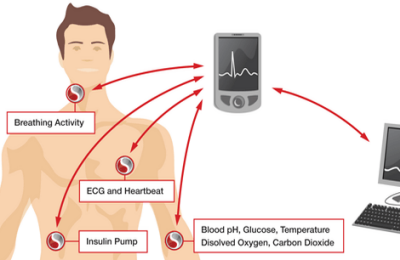
Continua Health Alliance certifies three new personal health devices for connectivity and interoperability: a blood pressure cuff, scale, and glucometer.

Cleveland Clinic CEO Toby Cosgrove says healthcare reform “may end up making the problem substantially worse” if all it does is make insurance more widely available, adding that “the conversation has morphed from health-care reform to insurance reform.” Unfortunately, we’ve let those terms become synonymous.

Interesting results from the President’s Council of Advisors on Science and Technology this past Thursday and Friday in Washington. Attending were CTO Aneesh Chopra, ONCHIT head David Blumenthal, and our own John Glaser. According to the excellent recap by nextgov, Google CEO Eric Schmidt told them that the administration’s health IT system will keep hospitals using outdated databases in a Web-centric world, stifling innovation. He, of course, humbly suggested using Google Health and then snipped when Blumenthal told him the national system will share some information with PHRs. “Giving me a summary … is not the same thing as giving me the record." Microsoft’s Craig Mundie advised the administration to worry more about metadata and information lookup instead of specific EHR applications, but Blumenthal told him that’s not possible because stimulus funding was tied to EHR adoption (which seems more and more to have been a big mistake – you pay for a house, not for a pile of boards and a promise, to continue my construction analogy from above). He also admitted that we’re way behind Scandinavian countries in EMR usage (not to mention overall health and healthcare value). 

South Florida HIE and Community Health Alliance, two dormant and broke RHIOs that never got much of anywhere, regroup to chase stimulus money. They’re arguing that it makes sense to give them the cash instead of using it to “reinvent the wheel”, which I almost buy given today’s prevalent bail-out mentality (crappy car makers, criminally greedy financial institutions, and market-failed EMR vendors and RHIOs … hey, it’s only taxpayer money).

GE paid $50 million in fines and $200 million in legal fees to make SEC book-cooking charges go away, but it was a corporate embarrassment nonetheless, “like a professional baseball player revealed to have been dabbling in steroids”, Forbes says (while also pointing out that the SEC is mighty blustery about going after GE considering they missed major scandals like Bernie Madoff’s). Other articles I’ve read said that Jeff Immelt panicked because he was about to break a long string of profits under Jack Welch as the new CEO and maybe created a culture of fudging the numbers. A former GE executive says he was told, when he advised another executive that results were coming in light, he was told he was “taking those accounting courses way too seriously” and to “just reverse a few journal entries.” 

svi

St. Vincent Indianapolis Hospital is experimenting with letting UPMC’s neuropathologists perform live biopsy readings via TeleNeuropathology, in which the Indianapolis neurosurgeons follow along as UPMC’s pathologists control a robotic microscope in the OR and inspect its images over an Internet connection.

Merge Healthcare will acquire Confirma, a Seattle-based MRI software developer, for $22 million in stock. I thought those Merrick people were obnoxious when they took Merge over a year ago, but they are doing everything right, including the eTrials acquisition last month and a stock price run-up of 16 times its 52-week low.

Kaiser Foundation Health Plan and Hospitals had a fair Q2: revenue was up a little, but net income was way up on lower non-operating losses (investments, I’d guess). It lost 36,000 members, but surely that’s related to higher unemployment. HealthConnect got a big mention in the announcement.

Winner of the Highest Potential Startup Idea at IPhoneDevCamp: Nurse Brain, a patient dashboard that nurses use to log their activities and then hand off to the oncoming nurse at shift change. Brilliant.

An HUC at St. Francis Hospital (WI) gets her job back after an arbitrator finds that termination was too severe a penalty for violating HIPAA laws in using the hospital’s medical records to locate her estranged son. The son filed a hospital complaint when he received a birthday card from her, claiming the only way she could have gotten his address was from hospital records.

The former director of interoperability and standards at HHS says the Nationwide Health Information Network needs to be scrapped because it’s obsolete, but there’s time because “I have not seen in the stimulus where the NHIN is being advanced.” David Blumenthal responded that HNIN is important and a work in progress.

gijoe

HIMSS keynoter Dennis Quaid is on the big screen in GI Joe: The Rise of Cobra as General Hawk. How does a movie about a generations-old doll translate to the big screen? “Big, brainless action and bad acting,” said one critic. Others:  “Whoever said Dennis Quaid was set dressing in this film was absolutely right … every line he delivers sounds as if he’s reading it right off the page” and “Dennis Quaid has apparently been assigned to look gruff and bark orders.” Roger Ebert gives it 1.5 stars and, in the biggest Dennis insult of all, doesn’t even find him worthy of mentioning. Despite the pans, it’s pulling in big box office, at least until word gets around.

E-mail me.

News 8/7/09

August 6, 2009 News 20 Comments

From Wade Welles: “Re: evidence-based nursing. Do you know of any product in the market similar to Zynx Care, Milliman Guidelines, or McKesson InterQual?” I’ve heard of MCAP, which might be worth a look. Sunrise Knowledge-Based Charting from Eclipsys looked pretty good last time I checked quite some time ago. The floor is now open for suggestions.

From Sally Apizza: “Re: Todd Park. Todd’s appointment as CTO for HHS makes perfect sense. He is one of the most sincere, honorable people in the industry and, while the money he made building athena is nice, he is clearly focused on fixing the healthcare system. Besides, he has way too much energy to stay retired at 35.”

From Wes Jeeter: “Re: magazines. They are doing blogs and interviews. Like yours, only way not good.” I’m flattered in that imitation sort of way, especially since I’m a toiling-after-work amateur competing against companies and full-timers.

From The PACS Designer: “Re: cloud basics. Smaller institutions can benefit from good content on the Web. InformationWeek has a Plug into the Cloud blog that continually posts the latest in trends when it comes to cloud computing concepts.”

From The Queen: “Re: TPD. Would it be possible for TPD to please, please stop referring to himself in the third person?” It’s possible, but of unknown likelihood. Mr. HIStalk will leave that up to him since it’s his brand.

QuadraMed announces Q2 numbers: revenue down a little, EPS -$0.04 vs. $0.05. Severance payouts for two departed executives were largely responsible for the loss.

Eclipsys also moved into the red in Q2: revenue was down slightly, EPS -$0.07 vs. $0.15, missing revenue estimates by a large margin and guiding lower for the fiscal year. CEO severance was part of that loss, too.

Listening: reader-suggested Muse, pop-progressive that sounds kind of like the best parts of Queen. They’re doing a big stadium tour starting next month as the opening act for U2.

jp 

Streamline Health Solutions names board member Jonathan Phillips as board chair, replacing Brian Patsy, who will continue in his CEO role. Jon is founder of Healthcare Growth Partners and has supported HIStalk as a sponsor nearly from the beginning, also sharing his expertise in some interviews that turned out to be eerily accurate about the HIT vendor marketplace.

merge

Merge Healthcare, seemingly back on the right track after some long and ugly struggles, announces that its PACS product has been integrated with Epic at HealthPartners. Shares have nearly tripled in three months, with market cap back to a respectable $235 million.

Speaking of Merge, it says it will “unlock the vault” on its internal imaging software tools, making them available to the commercial market as toolkits.

Salesforce.com takes a minority equity position in free EMR vendor Practice Fusion, also announcing the use of Salesforce.com’s cloud infrastructure for Practice Fusion’s new PHR, due out in November.

The military releases an independent report (warning: PDF) reviewing the design plans for the “world-class medical facility” that will replace Walter Reed. On the IT side, it worries about infrastructure planning (fiber and wireless) and EHR issues such as interoperability and usability. Most interesting is the highly practical definition of “world-class medical facility” in Appendix B, which calls for Stage 6 of the HIMSS Analytics EMRAM and state-of-the-art technology for knowledge management and unified communication. A fine job, but no surprise given those involved, including Ken Kizer of Medsphere (with a record-breaking 11 credential acronyms after his name) and Orlando Portale of Palomar Pomerado Health.

A reader is looking for technical experts who have experience with the Touchworks data model. E-mail me if you are interested.

AHRQ will provide a Web site generating application that allows organizations to publish hospital quality and utilization data.

Mississippi Medicaid will offer beneficiaries an EHR and e-prescribing system from HIE provider Shared Health.

ehrtv

EHRtv filmed last week at the Orlando Allscripts ACE09 meeting.

Speaking of Allscripts, several more uncreative law firms have filed suits against the company that are identical to the ones already filed by their legal competitors, i.e. the same “material misrepresentation” charges that don’t stand a chance at lining legal pockets unless certified as class action. The stock went down and is climbing back nicely, but naturally anyone who lost money must have been a victim of something other than market conditions or their own bad decisions. At least we still lead the world in something: resource-wasting lawsuits.

Epocrates gets a nice plug from US CTO Aneesh Chopra: “There is not a doctor I know who hasn’t downloaded a copy of Epocrates. It’s accessible and they use it on their Treos and iPhones."

China’s Ministry of Health is getting expert opinions on EMR standards, hoping to use electronic records to save money.

Jobs: Account Executive, Practice Partner Consultant, Lead Pharmacy Informaticist, Project Office Manager, CFO/VP Finance, Director of Marketing. Lots of winners here. I might apply.

Memphis startup Provider Health Services, which puts doctors and nurse practitioners in nursing homes, is using EMRs as a core strategy to manage costs and reduce provider paperwork.

Local police are mad at Rhode Island Hospital for refusing to give them details about a suspected homicide victim’s injuries, citing state privacy laws. Disclosure to police is allowed only in cases involving gunshots and abuse of children and the elderly, the hospital says. Police called out an exception that allows it if the information could help law enforcement.

Massachusetts, which has most expensive health care in the country, wants to replace the fee-for-service model for all providers with a capitated payment (although they avoid calling it that to prevent memories of bad HMOs).

chop

Children’s Hospital of Philadelphia gets recognition for its Pediatric Knowledgebase, which provides dosing guidance, therapeutic drug monitoring, and medication usage research. It can be customized to work with EMRs.

IT solutions vendor PC Mall announces the formation of a dedicated healthcare division. 

This gripes me too: a husband and wife get their annual physicals, taking care to get blood work at an in-network hospital. They got a bill for $1,700 after the fact — the in-network hospital had sent their blood off to an out-of-network lab. The hospital told them it was their job to figure out which lab the hospital uses, later sending collectors after them. I had the same problem with my own hospital’s ED doc – the hospital’s insurance didn’t cover their own ED doctor services because they contracted ED coverage out to another company. How the heck are hospital patients supposed to figure that out in an emergency? And what alternative do they have anyway?

AMICAS reports Q2 numbers: revenue up 73%, EPS -$0.19 vs. $0.00, and guides revenue up. The stock jumped 15%, now having nearly tripled since December.

Somehow hearing Fannie Mae say this while asking for another $10.7 billion in taxpayer bailout money because of their bad mortgage investments makes me nauseous: “We are dependent on the continued support of Treasury in order to continue operating our business.”

quicken

UnitedHealthcare will make Quicken’s health expense tracking tool available to 700,000 of its enrollees, with plans to roll it out to 20 million people by the end of the year. Or, you could just download it here.

E-mail me.

HERtalk by Inga

From Worried:Re: healthcare reform. Consider this: over the next three months, more than 700 post offices will be reviewed for possible closure. Don’t know about you, but the last time I had to go to the post office, I stood in line forever. Rates continue to rise and the quality of service doesn’t come close to Fedex. Hmm … does anyone seriously want this same government to run our healthcare system?”

From Robe 411: “Re: ARRA vendor guarantees. With all the talk about how IT vendors can get hospitals to Meaningful Use, is anyone aware of any guarantees vendors are stating should they be selected? For instance, are they promising in writing to be CCHIT certified by a particular date or promising to have a capability gap filled by a certain date?” Robe 411 posted this now on the HIStalk Discussion Forum, in case you missed it. I’d be interested in hearing what companies are doing. I do know that NextGen has a money-back guarantee program that includes a promise that the “solution that will always evolve to meet the standards and certifications for federal stimulus reimbursement programs of interest to physicians using NextGen Healthcare products.”

Eclipsys names former Trinity Health CEO Judith C. Pelham to its board of directors.

barrett

Cardinal Health elects current executive George Barrett chair and CEO, just in time for its August 31st spinoff of CareFusion. The company also announced a $500 million stock buyback plan and appointed Glenn Britt, chairman and CEO of Time Warner Cable, to its board.

Twitter suffers a denial of service attack Thursday, making the service unavailable and leaving users like me confused about alternate ways to waste time. Meanwhile, Facebook was suffering its own performance issues, possibly also due to an attack or maybe because of extra traffic from all those Twitter-deprived folks.

 ginos

SRS announces that the 12-provider Chestnut Hill Cardiology (PA) has selected the SRS hybrid EMR for its practice. We mentioned this on HIStalkPractice and included a photo of the office. EMR_guy sent us this note: “I saw the building and immediately recognized it even though I haven’t lived in Chestnut Hill in 12 years. When I was a kid (a long long time ago) the building was originally a fast food burger place (fitting that it is now a cardiology practice). The place was call Gino’s and they had great burgers and shakes.” We are happy to inspire trips down memory lane. Mr. H, being a sucker for nostalgia and reader happiness, tracked down the photo above that should really take you back.

Maryland state officials agree to fund up to $10 million over the next five years to build a statewide HIE, getting the money by adjusting hospital reimbursement.

Picis enhances its ED PulseCheck solution with the embedding of First DataBank Drug Data File Plus. Picis has long supported access to Cerner Multum Vantage Rx Database, but with the addition of FDB, now covers 95% of what hospitals use.

Perot reports a 3% increase in profit for the second quarter despite an 11% decline in revenues. Perot says tighter cost controls helped earnings to rise to $31 million, compared to $30 million last year. New contract signings decreased 48% to $135 million, but have totaled $1 billion over the last year.

peace

PeaceHealth (OR) selects ProVation MD software for procedure documentation and coding. Meanwhile Provation vendor Wolters Kluwer Health introduces its ProVation Care Plans solution, which allows interdisciplinary care teams to customize care plans and create education programs and guidelines.

AT&T agrees to extend special pricing to VHA member hospitals and non-acute care organizations. The contract allows VHA members to obtain “competitive” rates on AT&T wire line services, including local, long-distance, and toll-free services, plus audio and video conferencing.

Consumer Reports, the granddaddy of rating services, offers patient satisfaction ratings on more than 3,400 hospitals. The Consumer Reports Health Ratings Center rates the overall patient experience, including doctor and nurse communication, room cleanliness, and hospital staff attentiveness.

Healthcare Management Systems launches a new online bill pay service, providing hospitals the alternative to send electronic bills and receive payments online.

athenahealth reports its second quarter results, which included a 9% increase in profit compared to a year ago. The company reported $3 million in profit ($.03/share) and revenue of $46.7 million (a 42% increase.) athenahealth attributes the positive results to better sales, including an increase in athenaClinicals EMR users from 498 to 1,034 providers. Results were in line with analyst expectations, yet the stock price has fallen the last two days. Go figure.

A British GP receives a formal warning for downloading pornography at his surgery computer. The General Medical Council said the actions don’t meet the standards required of a doctor, but “are not so serious as to require any restriction on his registration.” Got to love those Brits and their sense of humor. I know people who have been fired for far more frivolous dalliances.

AMICAS second quarter results: revenue of $23.5 million compared to $13.6 million last year; net loss of $6.6 million compared to last year’s $97,000 loss.

runpee

Darn. Why didn’t I think of this?

inga

E-mail Inga.

News 8/5/09

August 4, 2009 News 2 Comments

From Sweet Duck: “Re: Philips. Starting RIF this week. Some will be notified this week, most next week.”

From Former Misys: “Re: interesting lawsuit.” It’s the usual securities fraud lawsuit that inevitably results when share price drops even temporarily, one of many filed by “corporate wrongoing” attorneys Izard Nobel LLP, this time against Allscripts. Another was filed against Allscripts by fellow corporate heel-nippers CSGRR, which has filed hundreds of similar suits (I’m not kidding – I broke out of their Web page navigation structure to get this folder of suits filed, of which company names starting with A alone take up three pages). I get several of the class action notices every month for one company or another since my IRA is in a “wrap fund” that trades a lot, but I thrown them straight to the trash unopened because I’ve long since learned that (as in life in general) the only benefit invariably accrues to the lawyers on both sides.

From The PACS Designer: “Re: Scribd. Another collaboration Web site you might want to checkout is Scribd. It’s a place to form a group to discuss a specific subject or event. TPD came across this site when viewing a cloud computing use cases white paper, and the open cloud manifesto (OCM) website, which also may be of interest to HIStalkers.”

huron

From Bob in Accounting: “Re: Huron Consulting Group. Wow.” Shares of Chicago-based Huron Consulting Group dropped 75% on Monday after an audit uncovered what looks like suspicious accounting, the company announced it will restate three years’ of results, and most of the company’s executive team resigned (Holy HBOC, Batman!). They did a bunch of healthcare acquisitions over the years: Spelz & Weis, Wellspring Partners, Aegis Advisers, and Stockamp. Huron was founded by a bunch of former consultants from Arthur Andersen, the scumbag, fee-obsessed company that let Enron and HBOC happen as their see-no-evil auditors. I know there are at least a couple of folks who work there who read HIStalk, so hang in there. The sins of the suits usually hit the peons hardest.

Speaking of Huron, here’s an ironic story lead from a 2004 WSJ: “Down the road and across the river from Arthur Andersen LLP’s old 28-story headquarters in Chicago, a firm set up by some of its former employees is hoping to become a beneficiary of the spate of accounting scandals that helped cause the collapse of the once-venerable audit firm. Huron Consulting Group Inc., a financial and legal advisory firm founded by former Andersen partners during the company’s death spiral in 2002, is set to go public with a $115 million stock offering by the end of the year. Its specialties include "forensic" examinations of companies with accounting blowups. That is, its consultants drill deep into particular accounting areas to figure out what went wrong, often working with audit committees and their law firms.” If they were Andersen, they would hire themselves as external auditors.

From Kit Kittredge: “Re: Todd Park as HHS CTO. What do you think about that?” Brilliant, although I’m shocked that they could get him since he doesn’t need the paycheck and seemed to be enjoying semi-retirement and starting up Maria Health (apparently now Ventana). I’m surprised HHS went outside the usually bureaucrat farm system to get someone so notable from private industry, especially since athenahealth is about as opposite as you can get from the COBOL-loving civil servants unimaginatively carrying out tedious political decrees involving the most arcane and mind-numbing financial transactions. You have to admire him for giving up cushy family time to get into a government grind with little to gain in money or reputation, knowing that entrepreneurs don’t easily morph into DC lifers. I e-mailed him today and he promises to interview here again once he’s settled in.

Speaking of Todd Park, ABC News e-mailed after finding his interview here, asking to use the picture I had run (which came from athenahealth, who gave their OK to them, which I now see has been picked up by Modern Healthcare). I see they are running it now in a story quoting a watchdog group’s spokesperson as saying TP “played the campaign finance system well” in donating to Obama’s campaign and expressing concern that his recusal on issues germane to athenahealth would hinder his effectiveness. I’d strongly disagree on the former: you’d have to be an incredibly idealistic multi-millionaire to want a wonky beltway CTO job, so I’m pretty sure he’d otherwise have rather have kept his ATHN shares. On the latter issue, I suppose it’s a theoretical risk, but since he has to sell his shares and give up his board position, he wouldn’t have much motivation. I’d rather have this situation than the ever-present ones where influential public servants quit to sell their influence to the private companies they formerly regulated.

Fred e-mailed the Allscripts internal e-mail announcing that field engineering services will be outsourced to DecisionOne in October. “DecisionOne is the right partner because they are expert at hardware installation and repair and have been in this business for the past 50 years. They have high standards and their employees will be trained and certified to the same standards as our employees. More importantly, they are committed to retaining the majority of our employees.” Sounds like a win all around, although hiring on with a new outsourcer is always traumatic for the affected employees (hopefully Allscripts put in the contract that nobody gets let go for some period of time). Outsourcing non-core business under carefully defined terms often works well.

A reader sent over the Boston Business Journal article featuring eClinicalWorks President Girish Kumar Navani, who founded the company with his brother-in-law and cousin, all three of whom live in houses next door to each other. Doing EMRs was their third idea after a golf course tee time app and a hotel reservation system. I like it that he’s cheap like me: the article mentions that he didn’t like the $90 walk-up rate he was quoted at a rental car counter, so he whipped out his laptop and made an online reservation for a $19.95 rate.

ecw

And I swear this is coincidental because I forgot to mention it Saturday until Inga reminded me: eClinicalWorks has signed on as  Gold Sponsor of both HIStalk Practice and HIStalk, which I appreciate even more now that I know how much Girish hates wasting money. I was super impressed when I interviewed him in 2006 and 2008 because he seems like an absolute straight shooter whose physician practice systems were forcing dramatic changes in the EMR marketplace. He said the company was doing $60 million in revenue in the 2008 chat, but that BBJ article pegs it at $100 million now. He had this to say about the much-watched New York project: “New York is not just about implementing an EHR, it’s about demonstrating that you can improve quality of care. Then, it’s all about expanding that to connect into the local RHIOs. There’s another level and degree of integration that’s big in the city – connecting with their school health program, with their immunization registries. You’re now talking about a truly digital healthcare system.” I’m really honored that he always takes my calls and e-mails, like when he hastily arranged a telephone interview on his way to the airport the day news of the eCW-Sam’s Club distribution deal broke, allowing me to get the details to you just a couple of hours later and before anyone else. Thanks to eClinicalWorks.

Listening: Keane, sweeping pop-rock, mostly piano and soaring harmonies. If you’ve seen the gazillion ads for the final season of Monk, that’s their song Time to Go playing. Excellent all around.

We’re working on an interview with the CEO of the unnamed HIE vendor that has been the subject of reader speculation. If you have information or questions we can use, send them my way.

rnpocketguide

The RN Pocket Guide is offered as a $19.99 iPhone version. Nice.

Brigham and Women’s gets an $8 million research grant to strengthen Rwanda’s health centers, including expanding its EMR to cover all patients instead of just those with HIV/AIDS and TB.

I’m sure Kathleen Sebelius is relieved that HIMSS issued a press release supporting her HIPAA security enforcement responsibility change to the Office of Civil Rights, then pitching HIMSS products and its self-nominated involvement in CMS’s work just two paragraphs later.

NHIN vendor MEDNETWorld.com announces that it will offer the Voluntary Universal Healthcare Identifier from Global Patient Identifiers, Inc. (that’s former Gartner guy Barry Hieb and former HIMSS VP Liddy West).

eHealth Ontario makes headlines for financial excess again, although support or criticism seems to follow party lines. One SVP consultant was paid $58,000 plus another $10,000 in expenses for just 21 days of work, later upping the average to $76K per month and billing for his nightly glass of wine. The CEO and board chair stepped down in June over no-bid contracts, of which $16 million were issued. Courtyard Group got $10.5 million of those, billing several of its executives (some of them believed to have political connections) at $393 per hour.

This Information Week article says CIOs should embrace Twitter because it’s “driving significant business value” and not “solely the province of professional goofballs and teenagers.” Case in point: Mayo Clinic, which announced a disease study on Twitter, checked to see who re-Tweeted it, and then e-mailed some of those people copies of the embargoed study so they could blog about it.

RealMed is named the exclusive practice clearinghouse for Adventist Health System.

E-mail me.

HERtalk by Inga

eHealth Ontario names its third new CEO in three months. Rob Devitt is stepping in until the end of the year as the board searches for a permanent CEO.

MedMatica Consulting Associates announces the availability of its HISAssist service line, which offers EMR implementation assistance such as go-live support, on-demand service desk support, and remote analyst and report writing assistance.

 trialx

TrialX will release an iPhone application that gives doctors and patients the ability to search for various clinical trials. Could be cool to play with next time I’ve self-diagnosed myself with some life-threatening condition.

Durham, NC internist Esther E. Poza, MD joins TSI Healthcare as the company’s chief medical officer, tasked with leading the company’s efforts help physicians adopt EHRs.

The Hospital of Central Connecticut signs an agreement with AMICAS for its PACS, Reach, and RadStream solutions.

Merge Healthcare announces net income of $400,000 for the quarter ending June 30th. This compares to a $18.2 million loss during the same period last year. Second quarter 2009 revenues rose more than 15% to $15.4 million. Merge also announced a new contract with the Center for Diagnostic Imaging, a 51-center network based in Minneapolis. And, Allscripts selects Merge Healthcare’s Cedara WebAccess software application to “image enhance” Allscripts EHR solutions. The Cedara WebAccess portal will provide users a zero-footprint method of distributing medical images and reports.

MedAssets releases its second quarter 2009 earnings report, which included a 37.5% increase in net revenue over 2008. Total revenue was $84.2 million; net income was $2.2 million vs. last year’s $1.6 million loss.

sac-osage

Sac-Osage Hospital (MO) is likely not alone in its financial struggles or its desperate hope to win federal monies. The 47-bed facility, which bagged an 0.065 on the seven-point HIMSS Analytics EMRAM scale, is borrowing $1 million to purchase an EHR, apparently solely to hope to qualify for $3 million in ARRA funding. Says the CEO: “We wouldn’t have gone to an electronic health record at this point and time, because we just don’t have the cash to do it. We’re taking a risk that we’re going to be able to meet the criteria and get some of this stimulus money to help offset the cost … If that doesn’t happen, we’re shutting it down.”

A new KLAS report reiterates the struggles of small critical access hospitals wanting to adopt healthcare technology. Challenges include the limited number of vendors serving that market segment, inadequate functionality, and low CPOE adoption. Cost is also noted as a barrier.

Meanwhile, Randolph Medical Center (AL) completes an 18-month transition to Healthland EMR. To fund the project, the 25-bed hospital received a $1.2 million Critical Access Hospital Health Information Grant from HHS.

DOD introduces an online mental health system for its service members and their families. The TRICARE Assistance Program allows members and families speak via webcam with a licensed counselor at any time.

JPS Health Network (TX) anticipates a net loss in its new fiscal year, yet its proposed budget includes $152 million for an upgrade to existing computer technology. Adding a system-wide EHR accounts for $44 million of the budgeted funds.

An ultrasound tech from Jackson Memorial Healthcare (FL) pleads guilty to selling confidential medical information. The tech was paid $1,000 a month to capture details on patients involved in accidents, gunshot wounds, and stabbings. A third party then sold the information to a lawyer suspected of soliciting patients to file personal-injury claims. Details on at least 26 patients were compromised over a two-year period.

Despite of a weak economy (or because of it?) women continue to spend money on plastic surgery, particularly to enhance their professional marketability in a tight job market. In fact, the American Society of Plastic Surgeons finds that about 3% of working women have already undergone a cosmetic surgery they considered a career investment. Botox use was up 8% in 2008 and the use of hyaluronic acid was up 6%. The volume of tummy tucks and breast implants fell 9%, however. Draw your own conclusions.

I’m lobbying Mr. H to send me on assignment to do some investigative reporting. The Mexican government is offering free health insurance for tourists staying in city hotels. The plan will pay for medical care for any disease or accident, including ambulance service, hospital accommodations, prescriptions drugs, and emergency dental care. Sounds like a perfect time to visit if one needs emergency mammoplasty or the like. The offer comes on the heels of a 50% decline in tourism since the first outbreak of swine flu.

inga

E-mail Inga.

Todd Park, athenahealth Co-Founder, Named CTO of HHS

August 3, 2009 News 1 Comment

Todd Park, co-founder and board member of athenahealth, has been named CTO of the US Department of Health and Human Services. He will resign from athenahealth’s board on August 10 and will divest his ATHN stock position to meet government service requirements.

Park will report to Deputy HHS Secretary William Corr and will start on the job later this month.

An athenahealth press release quoted him as saying, “My entire professional career has focused on developing technologies and services that can help our health care system work the way it should. I am extremely excited about the opportunity to help the Administration explore and catalyze new ways to improve the health status of the United States through the power of data, technology, and innovation.”

I interviewed him nearly a year ago.

Monday Morning Update 8/3/09

August 1, 2009 News 5 Comments

Meditech’s Revenue Flat, Earnings Up
Xbox Game Used for Hospital’s Veterans Therapy
Hospital Employees Charged with Selling Patient Information

From Colorado Epic Doc: “Re: Microsoft. Microsoft is taking credit for the improved outcomes at Kaiser in Colorado and claiming that patients are using HealthVault’s platform to communicate with their doctors, when in fact it is Epic that provides the portal. ‘The whole system is build around empowerment of patient, increased collaboration between healthcare professionals and with the patients, pay per quality ad performance. The patients are encouraged to manage their own health, are educated and informed. They have their own health space (called My Health Manager) based on HealthVault platform and can communicate easily with the healthcare team.’” It mentions an EHR without naming Epic, but mostly touts HealthVault and Amalga, which would do next to nothing without a robust EHR as the centerpiece. Microsoft’s folks are good at self-evangelizing.

From Support Tech: “Re: Sage Software. They’re closing the New Smyrna Beach office and laying off the staff. The office had the most senior and experienced MedWare product support teams. Support staff were initially told we would be able to work from home. Only two techs were willing and able to relocate.” Unverified, although someone posted a similar comment on JobVent. But from what you wrote, they didn’t lay you off, you opted not to take a company transfer to a location 2 1/2 hours west. I give Sage credit for offering, as inconvenient as it might be for employees to take them up on it in a terrible Florida housing market. Jobs are hard to find and the Tampa area is nice, so I hope everybody made the decision that was right for them.

In the last poll, I asked HIMSS members about its level of involvement in government relations projects. Participation wasn’t all that high, but 62% said HIMSS should do less of that, 16% said more, and 22% said about the same. New poll to your right: what do you think about the NPfIT project in the UK?

medaptus 

Welcome aboard to brand spankin’ new HIStalk Platinum Sponsor MedAptus. The Boston company, founded by doctors, offers charge capture automation for physician groups; an Inpatient Edition for managing patients and charges by hospital specialists like hospitalists and anesthesiologists; the EMR Edition for physician groups wanting to add robust charge capture to their clinical workflow; and other solutions for hospital-based outpatient clinics, infusion services, and large academic medical centers and IDNs. Lahey Clinic is saving $1 million a year with its coding and compliance tools. Looks like a strong management team and solid financial backers. Thanks, Medaptus, for supporting HIStalk and its readers.

Listening: Sloan, Canadian power pop.

rxnorm

Clinical Architecture has put together a 15-minute narrated screencast on how to work with the NLM’s RXNorm drug nomenclature database.

Several Boston-area companies wanted to distance themselves from the unnamed and supposedly struggling HIE vendor we mentioned earlier without naming them. One was PatientKeeper, who e-mailed to say (a) it’s not them, and (b) they are, in fact, hiring like mad, especially developers.

Wolters Kluwer Health announces a redesign of the user interface and searching tools in the Facts & Comparisons Online for Health Systems drug reference tool.

Meditech just filed its latest 10-Q. Revenue was flat, EPS $0.57 vs. $0.46. Its customers who have reached Stage 6 of the HIMSS Analytics EMRAM are listed here.

The former Fletcher Allen Health Care CFO who tipped off authorities about its fraudulent bookkeeping for a construction project lands a new job with Marin Healthcare District (CA), where he will coordinate a computer implementation run by Affiliated Computer Services. The Fletcher Allen CEO who fired him for refusing to take part got two years in jail for conspiring to defraud a state regulatory agency, joined there by several other Fletcher Allen brass. The CFO was charged with making false statements, a misdemeanor.

More big salaries for supposedly non-profit hospitals: the former CFO of Danbury Hospital was paid $4.7 million in one year, while an HR VP (!!) got $2.1 million. Paging Senator Grassley.

Investors in Maaguzi, a 2005 clinical trials software startup, made less than 20 cents on the dollar when the company was sold last week. Blamed: a poor economy, delays in getting product to market, huge contractor expenses to get the software ready to sell, and lack of access to further financing. There’s a good lesson to be learned: everything looks wonderful on its site, so don’t believe everything you read.

Pondering: Cash for Clunkers was so successful to the point of blowing its entire budget in a week. Maybe that’s the model that should have been used for EMRs. Trade in your old, character-based, non-interoperable system for a new one and get cash back. (Actually, Cash for Clunkers seem to indicate that today’s cars are overpriced by $4,500).

virtualiraq

A New York hospital offers a new treatment to veterans of the wars in Iraq and Afghanistan who suffer from post-traumatic stress disorder: Virtual Iraq, a $50,000 simulator created by customizing the $20 Xbox video game Full Spectrum Warrior (now available as a free download, courtesy of the US Army, which paid $5 million toward its development, only to get screwed when developers ignored all the Army’s specs). According to a therapist, “It’s like watching a scary movie over and over again; by the 100th time you see it, you’re not as fearful.”

Microsoft CEO Steve Ballmer says Apple is too expensive, Linux is too cheap, and Windows is just right.

A New York clinic owner is arrested and charged with bribing hospital workers to send a lawyer friend the names of patients involved in auto accidents, who then steered them to the man’s chiropractic and acupuncture clinics. The clinic helped patients exaggerate their injuries so they could file lawsuits, the charges say, while the clinic billed their no-fault insurance carriers for millions in bogus services. The clinic owner has no clinical credentials. Two hospital employees have been charged so far.

E-mail me.

News 7/31/09

July 30, 2009 News 10 Comments

Cerner boosts earnings on cost cutting, but misses estimates and issues warnings
FTC pushes Red Flags rule back again
Ad industry worries about increased government oversight of healthcare advertising

From Michael:Re: trouble. A number of reliable sources are saying that the high visibility HIE vendor in the Boston area is in trouble. The senior engineers have left. Less than a handful of employees can be seen entering the building. Phones are not answered. Customers are bailing.” We guessed at the vendor in question and Inga placed some calls to their offices, all of which went to voice mail. It’s hard to believe that a company in that business would scale back right on the cusp of massive government HIT spending, but I can’t explain why they’re so hard to reach. Lots of their developers are offshore, I’ve heard, so maybe nobody’s left near the phone.

From Perez: “Re: site name. ‘So,’ my wife said walking by, ‘what’s new on your his story website?’ An avid reader of Perez Hilton, she’s always looking for similar vices she can nail me on. ‘It’s HIStalk’, I said. ‘Hiss – like the noise a snake makes. It’s an acronym, not a guy thing.” This got me thinking … what IS the gender ratio of HIStalk readers?  And is it even possible to have a cool name for a site like this that someone like my wife would understand as something more than just another celebrity gossip website?” According to one of the site analyzer tools, the HIStalk audience is 63% male, 37% female. As to names, maybe we need a synonym since I made up HIStalk back in 2003 with the firm belief that I would be the only one reading it, so the name wasn’t too important. I bet some of those marketing people I’m always making fun of could come up with something.

From C.C. Ryder: “Re: Utah’s law requiring patient ID. You’ll note that this is useless — there are no penalties for the provider not asking or the patient not providing.” Right you are, according to the bill’s text.

From Raleigh in Raleigh: “Re: Allscripts. Heard that Allscripts has offloaded their field engineering staff to Decision One. The move will be announced by the end of this week. All the field engineers were told about it on Monday.” Unverified.

From The PACS Designer: “Re: HP printers in sync. TPD got a kick out of some guys who synced a group of printers to produce a clever video of printing coordination.” It’s brilliant.

summa

Summa Health (OH) goes live with Sentillion’s single sign-on and context management, with an eventual rollout to 4,000 caregivers.

A software entrepreneur whose wife was dying of cancer promised her he would develop tools to help home medical companies. He started Ankota.

Nurses at St. Joseph Hospital (CA) accused by administrators of intentionally oversedating ICU patients blame what sounds like Pyxis Consultant narcotics tracking software, claiming it didn’t give a true picture of their activities. One of them admitted that the night crew regularly brought in food, played their guitars, read books, played games, checked eBay, and watched Internet video, but said they gave good care nonetheless.

cerner

Cerner reports Q2 results: flat revenue, with obvious cost cutting to earn $0.52 vs. $0.42, missing estimates slightly and warning of lower Q3 earnings and FY09 revenue. Global revenue declined by 21%, but domestic revenue was up 6%. Pat yourself on the back for helping the cause if you’re paying maintenance fees because that revenue was up 13%. From the earnings call: as everybody is finding out, providers are not making capital expenditures and are also waiting until meaningful use is defined (thanks for the slowdown, Uncle Sam). They announced plans to take over more of the IT operations of customers and to sell Lighthouse clinical optimization services. They’re also looking to sell into small hospitals (better be ready to cut the price). This sounds interesting, even though I don’t have a clue what it means: “For the most part, the core of our business runs on several hundred large relationships, across a few thousand individuals. The real consumers that establish the success of our brand are those that rely on our solutions and services as part of their day-to-day role in healthcare … This is only one click away from an even bigger audience, patients. The number jumps to 60 million to 70 million plus interactions across our client base annually … We envision a day when Cerner has more than 120 million relationships, self organizing all with a contextual identity, consuming Blue Sky services to navigate and address their healthcare needs.” Sounds like they’re trying to add some dot-com sexiness or maybe planning to get into some kind of consumer advertising, maybe to avoid talking about Epic. Blue Sky is Cerner’s cloud computing strategy. Neal wasn’t on the call.

The government wants to ban peer-to-peer software from government and contractor computers following reported information leaks and a consultant’s demonstration of how installing LimeWire opens up the My Documents folder for full sharing. LimeWire’s chairman showed up to dispute that claim, stating that no files are shared by default and Office and PDF files aren’t shared at all. Arguments aside, there’s no reason anyone needs LimeWire to do their jobs, so banning it makes perfect sense to me.

The advertising industry is upset that the government is raining on its parade — frowning on consumer drug advertising, considering laws against Internet user tracking, threatening increased FDA oversight of nutritional claims, and flexing control over ad budgets at Chrysler and GM. They’re also worried about potential FDA regulation of health-related searches. But, this advertising CEO had a brilliant comeback: “Advertising is the makeup on the public face of capitalism, for better or for worse, so any tension that people feel about capitalism comes right down to their feelings about advertising. If what happens in business offends them, the advertising gets blamed.”

Computer Weekly points out that the UK’s NPfIT is being used as an example, but not as the government planned. It quotes an Economist article: “They’d wanted the NPfIT to be used by various governments as an exemplar. It is – as a type of scheme to be avoided.” And, quoting another newspaper editorial: “We only have to read current headlines from England to see the unintended consequences of trying to implement a nationalized HIT system … the programme was started in 2002 and implementation began in 2005. It was originally supposed to cost $3.7bn over a three year period of time for full implementation … it  should have been up and running successfully since 2008. As of this month, only very small parts of the NHS NPfIT are working correctly and two of their four main contractors have either been fired or quit. There is now a revised completion date of 2015 and a revised projected cost of $32.9bn – if it is even finished…”

Former MedAssets software VP Wade Wright joins RemitDATA as CTO. The Memphis company sells Web-based tools for practice reimbursement and document management.

pubmed

The National Library of Medicine’s PubMed search engine will get a Web page makeover later this year, with the goal of improving the way related information is presented when users search.

Buffalo-based Computer Task Group’s profits fell 32% in Q2, but the CEO says the company is getting lots of EMR activity that should help business.

The big Medicare fraud raids this week were made possible by cooperation among the FBI, HHS, DEA, and the Texas Attorney General, but also software that can detect fraud “as it’s happening, using real-time data analysis of Medicare billing records.”

Odd lawsuit: an anesthesiologist claims someone at his previous hospital employer caused him to lose his new job by stealing his credit card and ordering a sex toy under his name, shipping to a female colleague.

HERtalk by Inga

From Richie Simmons: “Re: obesity rates. I think we should start with Congress reducing their obesity rates! While at Healthcare Unbound Conference, I was appalled by the number of obese participants. Surely they see the numbers every day as to why there is now such a market for remote patient monitoring. Check out this related article.” The article, entitled “Overweight and Obese Health Providers Aren’t Taken Seriously”, looks at the problem of overweight providers who struggle when they need to advise a patient to lose weight.  Maybe we need to start some virtual HIStalk weight-loss contest. Perhaps the winner could have his/her picture posted in HIStalk in a speedo/bikini (a la Valerie Bertinelli in People magazine).

From Friend of Minne’s: “Re: new Allscripts partner. Allscripts does have a new partnership with mPayGateway. I’m at the ACE meeting in Orlando and they are showing off the new product, called Patient Payment Assurance. It’s already in GA for the Tiger product and will soon be available for the other product lines.”

ace

Speaking of the Allscripts Client Experience (ACE), the company announces a record 2,700 registrants for the event, which includes both Allscripts customers and the former Misys clients.

Last week we noted that Cardinal Health hired the former Motorola exec Patricia Morrison as CIO. Interestingly, Morrison sits on the board of SPSS, the company IBM just announced it was buying.

Genesis Physicians Group, a 1,400 member physician organization in Dallas, has secured Covisint to provide its cloud-based healthcare platform. The solution will provide physicians a centralized view and SSO access to such applications as e-prescribing, EMRs, and referral management.

The FTC again pushes back the deadline to enforce the “red flags” rule, moving it from August 1 to November 1 to provide additional resources and guidance to businesses.

St. Elizabeth Healthcare (KY) announces plans to roll out Epic throughout its entire system, which includes 31 primary care offices. Beginning in September, St. Elizabeth’s will  introduce EpicCare Ambulatory to its nearly 1,000 physicians. St. Elizabeth’s is also adding Resolute Hospital Billing, EpicCare Inpatient, Prelude Registration and Cadence Scheduling.

Legacy Hospital Partners (TX) announces four new management team members, including former PHNS COO Lawrence V. Schunder as CIO and SVP of business processes.

Crittenden Regional Hospital selects Healthcare Management Systems to supply financial and ancillary clinical HIT solutions, planning to go live in October.

The University of Miami UM-JMH Center for Pain Safety deploys a hand hygiene compliance pilot project that uses IR-RF sensors in soap dispensing units. The IR-RF devices read staff ID badges and monitor the location and timing of hand-washing events. Dynamic Computer Corporation and Versus Technology provided the technology for the project, which I am going to propose to a couple of my favorite dive restaurants.

Affiliated Computer Services promotes Connie Harvey to group president of business process solutions.

Did we really need a scientific study to figure this out?  A PhD surveyed 1,400 adults and concludes that taking time for leisure activities helps people function better physically and mentally. And, the more time you spend doing different enjoyable activities, the better one’s health tends to be. I’m thinking about heading to a beach to confirm if this is true.

dentist

Here is a brilliant new business model for healthcare. An Iowa dentist gives up his traditional practice and sets up shop at Iowa 80 Truck Stop (the world’s largest truck stop). About 35,000 people a week stop at Iowa 80 and Dr. Thomas P. Roemer correctly guessed he could stay busy helping truckers who needed immediate dental care (apparently he does a lot of extractions.) Some days he doesn’t see any patients; others he sees as many as 15.  I bet it’s only a matter of time until some enterprising doctor follows suit.

E-mail me.

News 7/29/09

July 28, 2009 News 17 Comments

McKesson beats earnings estimates on flat revenue
Confirmed: VA puts Cerner LIS project on hold 
Varian acquisition does not include Varian Medical Systems (correction below)

spss 

From The Alchemist: “Re: shocked, amazed, and totally blindsided.” IBM announces that it will acquire statistical and data mining software vendor SPSS for $1.2 billion in cash. Everyone who has taken Stats 101 in the last few years has almost certainly bought a copy of one of their products. IBM is paying 4x annual revenue and 33x annual net income, which seems way too much to a cheap seater like me.

From A Reader: “Re: Cedars-Sinai. Went live on schedule across the house with EpicRx (Epic pharmacy module) this weekend, after the activation of all Epic revenue cycle modules (Cadence, Prelude, Resolute, and Coding/Abstracting) in March. Next Epic clinical roll-out will be in the emergency dept (all disciplines) plus inpatient nursing and clerk order entry in the fall.”

From Captain Hook: “Re: Epic. I represent a hospital who recently selected Epic to replace Meditech after more than 20 years. Meditech let their product languish and chose to take money out of the business instead of investing in their product. The choices were clear — stay with Meditech and share in that stagnation or seek a solution that created a connected, integrated care environment, which Epic does. Does it cost more than Meditech? You bet. We are well on our way to creating that integrated care community (including patients) and would have been nowhere near it with Meditech.”

googlemini

From Tony Romano: “Re: Google. A hospital where I used to work was looking for a CMS to run our intranet and to search documents. Proposals ran into the tens of thousands of dollars and required an IT learning curve. Enter Google Appliance for $3K – searchable documents from the storage servers already set up.” I love Google Search Appliance and it truly mystifies me why most hospitals don’t have it. Why work to set up a complicated folder structure, permissions, and document naming convention when you can just let Google crawl the darned things and offer a full-text search? Everybody has tons of policies, paper order sets, forms, meeting minutes, lists, etc., but nobody can ever find them easily. Google Mini handles 50,000 documents for $2,990 for two years.

I got both “like it/don’t like it” comments about putting the biggest news stories first, mostly because of appearance. One person said they didn’t want me picking the top stories and instead suggested tagging every item in some way, but that’s beyond the scope of this little makeover. So, here’s the compromise, as you’ve already seen. I’ll put the headlines of what I think are the main news items first, then go right into the usual format.

McKesson announces Q1 numbers: flat revenues, EPS $1.06 vs. $0.83, handily beating earnings estimates. The company raised its full-year outlook.

Meddius announces the launch of SecureTransport, an SSL-based connectivity platform that allows healthcare networks to exchange information over a public network without using site-to-site VPNs.

Stamford Hospital (CT) buys 100 licenses for eClinicalWorks. The hospital will use EHR, PM, the patient portal, the electronic health exchange, the Enterprise Business Optimizer, and eClinicalMobile.

I don’t even know where to begin with the spelling and grammar errors in this CIO job posting. Other than bizarre upper case and underlining, maybe the zero-for-two spelling of the two vendors mentioned: “Siemans” and “GE Contricity.” Or, maybe they’ve had a bad experience with GE and made up their own derogatory name.

Confirmed in a Modern Healthcare story by Joe Conn: one of the halted VA projects is the one that would have replaced VistA’s LIS with Cerner. That could be a bump in the road or it could be a second chance to reevaluate what a lot of people (me being one) thought was an ill-advised push toward commercial software.

Healthcare Growth Partners releases its Q2 HIT industry transaction report (warning: PDF).

stbarnabas

St. Barnabas Hospital (NY) chooses Eclipsys Sunrise Acute Care, hoping for a quick implementation that will meet meaningful use requirements.

I Google “histalk” a couple of times a year just to see who’s saying what, so I was happy to find a PowerPoint PDF from John Lillie, interface supervisor at SISU Medical Systems (it’s a non-profit IT resource sharing organization in Duluth, MN). In his slide urging attendees to keep up with their HIT education, he mentioned, in order, the State of Minnesota, HIStalk, HIMSS, AMDIS, and HITSP. Thanks, John. I need to buy him a beer or something.

Inga did a great HIStalk Practice interview with Christoph Diasio, a pediatrician who likes technology, but not necessarily EHRs that take more of his time. “That’s just not enough money for it to be worth it for me to do this. This is just a major gift to the EMR industry and it’s the guy who’s head of the VA said, ‘We’ve basically had major market failure,’ and that’s why you’re having to pay people to adopt EMRs that slow them down. A one-time payment or a couple years’ payment is just not going to be enough to convince me that I should do something that doesn’t make sense to me.”

A New Zealand newspaper article says the growth of integration technology vendor Orion Health has slowed from the predicted 20-30%, much of that because of hospital conditions in the US. Says the CEO, “Even though there is going to be a huge investment over the next three years, in the last six months there have been hospitals that have been struggling.”

Speaking of Orion Health, estimates for an EHR for New Zealand are $32-$96 million US if you believe the government or $300 million if you believe Orion’s CEO. He mostly seems unhappy at the prospect of competing with US vendors for the business, saying the health boards seem “pretty keen on getting a big American product in here … If they are New Zealand-supplied solutions, we can take that intellectual property and can sell it to the rest of the world.”

Agfa’s Q2 numbers: revenue down 12.9%, earnings up 2.7%. Healthcare sales dropped because customers delayed their IT investments.

Inga and I have been working hard to bring you some interesting interviews, several of which are yet to come. Know someone we should talk to, preferably on the non-vendor side of the house so that nobody claims bias?

A proposed e-health plan for Australia recommends that the government steer clear of a “big procurement” free market approach and instead create standards and technology goals that developers can follow, with e-prescribing being the highest priority.

aria

Agilent Technologies will acquire rival medical instrument maker Varian for $1.5 billion. It looks like most of the rags missed the HIT connection that we hospital types got immediately: that acquisition includes Varian’s widely used oncology EMR, ARIA (formerly OpTx, acquired by Varian in 2004). Agilent, you may recall, was a 1999 spinoff of Hewlett-Packard’s medical products business by then-CEO Carly Fiorina in her first year with the company. CORRECTION: some of the initial media reports were incorrect and have been updated — thanks to the reader who pointed out that Varian Medical Systems, spun off in 1999, is not part of the acquisition. Agilent is buying only Varian, Inc., which shares its headquarters with Varian Medical Systems. Oddly enough, Varian Medical uses the domain varian.com, which didn’t help my confusion. Also not involved in the deal is a third spinoff, Varian Semiconductor Equipment Associates. So, no change for ARIA customers.

IBM and Nuance announce an expansion of their joint agreement to accelerate the use of advanced speech recognition in several industries, one of them being healthcare and life sciences. IBM still has ViaVoice as far as I can tell (one of the last consumer-grade competitors to Dragon Naturally Speaking), but Nuance even sells that under some kind of exclusive distribution agreement.

E-mail me.


HERtalk by Inga

From St. Pauli’s Girl: “Re: new Allscripts partner. I hear that Allscripts has signed on with another strategic partner, this time mPay Gateway.” Unconfirmed, but sounds like it would be a good fit. mPay Gateway offers a Web-based credit card payment system that helps practices calculate and collect patient monies at the time of service.

QuadraMed launches Quantim Coding Simulator, its ICD-10 compliant encoder training tool. The new tool is designed to enable coders to gain proficiency in using ICD-10-CD/ICD-10-PCS code sets. QuadraMed is showing it off at this week’s AHIMA Assembly on Education Symposium in Las Vegas.

Adena Health System (OH) selects Rhapsody Integration Engine to improve access to and facilitate messaging with the hospital’s Meditech system.

Orlando Health expands its use of MedeAnalytics software with the addition of Patient Access Services. The new tool will facilitate front-end patient workflow, including helping staff to estimate patient payment obligations.

RelayHealth signs a deal with VHA to supply its RevRunner financial clearance services. The agreement also establishes revenue management educational opportunities and preferential pricing for VHA’s members.

I mentioned in HIStalkPractice yesterday that obesity rates are rising rapidly and one in four Americans is considered obese. The medical costs for an obese person is $1,492 per year more than normal weight people and 9% of all medical spending is attributed to obesity care. Care for obesity-related conditions is costing us $147 billion a year. Since Congress seems interested in becoming involved in every other part of our life, how about they come up with a plan to give some money for everyone who is not obese and tax those that are? OK, I see all sorts of flaws in the plan, but really, when you consider how much we spend for healthcare compared to other countries and our 30th ranking for life expectancy, shouldn’t we be doing more to “fix” obesity?

Meanwhile, if you are considering bariatric surgery, refer to HealthGrades’ new report identifying the 88 best performing hospitals for the procedure. Patients treated at one of the top hospitals have, on average, a 67% lower chance of serious complications than those treated at poorly rated hospitals.

Speaking of HealthGrades, the company reported Q2 profits of $1.73 million, up from $1.21 million for the same quarter last year. HealthGrades is expecting full year revenues of $50 million, which is a 25% increase over 2008.

Arizona’s University Medical Center contracts with MEDSEEK to redesign its consumer-facing Web portal.

advocate

Advocate Health Care (IL) signs a three-year extension for its license to IntraNexus’ SAPPHIRE Patient Financial Management software suite. The extension covers all nine Advocate hospitals and continues a 16-year business relationship.

I love pop culture, but I am officially sick of hearing about Michael Jackson, his probable drug problems, and his likely negligent doctor(s). There. I feel better. OK, now back to pondering what it will take to get an invite to drink a beer at the White House.

In a report to the Board of Trustees for Phelps County Regional Medical Center (MO), CIO David Dowdy reports the hospital’s EMR has helped reduce mortality rates by 15%. Phelps has achieved Stage 6 EMR adoption with its Meditech product.

KLAS releases a new report that concludes hospitals are considering vendor-neutral solutions for archiving and accessing medical images in order to avoid being locked in to closed, proprietary software.

Another KLAS reports suggests that the release of Medtech 6.0 will provide an improved user interface and easier navigation, but many users may struggle to achieve full CPOE adoption. The biggest hurdle for most hospitals will be covering the costs associated with implementation and hardware and infrastructure upgrades.

And, Hilo Medical Center (HI) engages Healthcare Informatics Associates in a multi-year contract to implement MEDITECH 6.0 across its East Hawaii Region facilities.

inga

E-mail Inga.

QuadraMed Names Duncan James CEO

July 27, 2009 News 9 Comments

image

QuadraMed announced this morning that Duncan W. James will become CEO of the company when it files its 10-Q report next week. He succeeds interim president and CEO James Peebles.

James was previously with McKesson Provider Technologies, where he was group president for Health Systems Solutions from 2000-2009. Previously, he was senior VP for consulting firm Scient and VP of marketing and product management with McKesson.

Monday Morning Update 7/27/09

July 25, 2009 News 26 Comments

Top Stories

  1. Enforcement of the Red Flags Rule starts this week. Providers who extend or facilitate customer credit (even doing nothing more than mailing bills after services are rendered, some attorneys have interpreted) are required to check patient ID to prevent identify theft, have a policy on handling questionable patient documents and patient complaints, and check to see that patients who claim insurance have proof.
  2. Bankrupt OB systems vendor LMS Medical Systems sells its its assets to the Canadian subsidiary of PeriGen for $3.5 million. McKesson bought the IP rights to CALM OB in April, relabeling the product Horizon Perinatal Care, but LMS supposedly kept the rights to support McKesson’s customers and to sell the product outside McKesson’s customer base. Perigen, renamed from E&C Medical Intelligence in April of this year, also sells OB risk reduction software.
  3. David Blumenthal of ONCHIT says he doesn’t have an opinion on whether health systems should comply with FISMA, the security guidelines for federal computer systems, to share information with federal agencies.

The Top Stories thing above is an experiment that a couple of readers asked for, putting the stories that I think are most important at the top. I like the concept, but I worry that people will infer that everything else is trivial, which it isn’t (I wouldn’t put it on HIStalk if I didn’t think it was important). What do you think, good idea or too enabling of skimmers who will miss important information? I will say that I get e-mails all the time from people who say, “Wow, I just read this and you should put it on HIStalk” even though I have already covered it in detail, so I already worry that some readers are missing good information.

glostream

From Dan: “Re: EMR powered by MS Office.” It’s CCHIT-certified gloStream, which we’ve mentioned in HIStalk Practice (in fact, I see that item is listed on the company’s News page, so that’s pretty cool). The user interface is Office-based (which I wouldn’t necessarily find advantageous if it uses Office 2007’s ribbon bar, which I spend way too much time whining about instead of just learning to love it or downloading this free utility to bring back the old menus).

From Otis Miman: “Re: Epic. Meditech hospitals in some areas are getting pressure to upgrade to Epic since physicians are using Epic in their practices. This seems like a tremendous cost burden to healthcare – to throw out a a cost-effective, integrated solution instead of a more expensive, non-complete HCIS and non-integrated solution. Having little or no competition in the marketplace is not a good thing.” Both Meditech and Epic, having sprung from related loins, have the same tendency to not want to play well with others, probably more so than any other HIT vendors. Epic is simply capitalizing on a stagnant HIT market that isn’t putting up much of a fight, although I think hospitals would be hard pressed to get ROI on the cost difference between Meditech and Epic (not many Prius owners are candidates to move to a Cadillac Escalade, not to detract from either system). Every vendor has a showcase site or two that has done great things with their system. They also have some real whiner customers who blame the vendor and vow to buy again from someone else, only to find that their failure cloud follows them. Which category a given site falls into is much more a function of their own abilities than those of their vendors. Anyone who is seriously considering buying Epic who hasn’t been on their current system for at least 6-8 years is demonstrating that they have no idea what they are doing (why didn’t they buy Epic in the first place if that’s what they wanted?) Big-name hospitals choose Epic mostly because all other big hospitals choose Epic, just like they used to buy Cerner and, before that, SMS. Theoretically, the march of the lemmings will eventually end since the market is ripe for new entrants, but so far vendors are just handing their customers over to Epic with heads hung. I don’t blame vendors for selling what customers demand – I blame customers for not demanding better, cheaper, and more open systems (and for being too easily influenced by what everybody else is doing).

From Looking for Answers: “Re: Cerner. I hear the Cerner PETA person wasn’t disgruntled, just looking to score points with his babe — though he does enjoy a good steak! ;-)” Reason enough, I say. 

From Eclipsys Watcher: “Re: Eclipsys. I’m hearing rumors of major organizational changes in the next several weeks with more layoffs, etc.” That’s usually a safe bet with most vendors these days, but especially unsurprising since a new Eclipsys CEO was brought in, presumably to make changes. And, while the excuses have changed, company performance hasn’t – shares are worth less now than 10 years ago and its limited clinical product line which, despite having CPOE and documentation that are among the best, still lags way way behind in new sales to Epic, Cerner, and maybe even McKesson. A strong CPOE and documentation system, integrated pharmacy, industry-leading EPSi, and what used to be a strong consulting practice – if none of that translates into sales and then financial results, you have to blame the corner office people. I haven’t been a big fan of most of the company’s management team once Harvey Wilson stopped being actively involved, but most of the folks I knew have been replaced, so maybe the new blood can shake the company out of its doldrums. I can’t decide whether getting into the practice EMR business is a logical extension or a distraction for them.

wave

From The PACS Designer: “Re: Google Wave. As a software developer, TPD gets to see new and interesting applications in their early concept development stage. Google has an upcoming release of an advanced collaboration tool that combines e-mail with instant messaging and many other features in an application called Google Wave. It could be use in healthcare to improve communication amongst numerous caregivers and departments.” According to the demo, it was developed by the Google Maps people. Google has so darned many Web tools out there that I bet someone could write some cool hospital apps purely by mash-up. If I were Medsphere trying to get a foothold against legacy vendors, I’d look at that as an inexpensive way to interject some cool factor. An internal messaging app based on Gmail Chat? An Intranet based on Sites? Documentation via Forms? Social networking with Orkut or Wave? Dumping resource-intensive internal e-mail in favor of Gmail? All possible, all useful to customers, and all with a free backbone for vendors to use for their product extensions.

Listening: In This Moment, a female-led metal band now on the Warped Tour.

Jonathan Bush on Fortune, referring to Epic: “The Cleveland Clinic has software that they had to pay $200 million to get. It was written in MUMPS in 1974. There is nobody left alive who can write MUMPS any more. That’s the model … the curve of innovation, the disruptive technology engine in healthcare is broken.”

I’m a Tiger Direct junkie, but this deal is stunning even to me: Dragon Naturally Speaking 10 Preferred with a headset for $49.99 (it’s $118 on Amazon). The rebate ends 7/31. Amazon has a lot of reviews, the gist of which seem to suggest that some users will struggle to get it up and running, but those who do find it pretty amazing. It’s heartening to read the reviews of people who can’t type because of nerve disease, wrist problems, etc. for whom DNS is their lifeline. (Note: this version isn’t for use with EMRs – you would want to look at DNS Medical for that.) I keep thinking that maybe I’d enjoy dictating HIStalk, so I may get it. I know some writers who record interviews, then play them back into headphones while repeating what their subject says into Dragon so it can “transcribe”.

AT&T says the $300 subsidy it pays for each new iPhone it sells hurt its most recent quarterly numbers, but will eventually pay off in lower churn for its exclusive service. The carrier activated 2.4 million iPhones in Q2, many of them because of the new 3G S model.

Cardinal Health names Patricia Morrison as CIO after its spinoff of CareFusion and the Friday announcement that CIO Jody Davids was quitting. The new CIO has no healthcare experience, having been CIO at Motorola and Office Depot. That brings up an interesting argument: should hospitals do what Cardinal did and bring in IT leadership from another industry that’s more technologically advanced than healthcare, or is it better to get healthcare experience even though it’s a technologically backward sector? Who would you pick for CIO: a geek doctor who thinks 10-year-old, off-the-rack apps are cool or someone who knows nothing about patients, but who has vast experience with e-commerce, state-of-the-art infrastructure, and self-developed technology as a strategic differentiator? I waffle on that, I admit.

The results of my poll on CHIME’s new CHCIO credential: 9% think it’s a good way for CIOs to demonstrate competency, 13% say it’s a vanity credential, 33% say it has no relationship with competency, and 45% say it’s just another income source for CHIME (so, that’s 91% against). New poll to your right, for HIMSS members: should it devote fewer resources to Government Relations, more, or about the same?

I continue to be impressed with EHRtv. Check out its EMR Matters newcast. I don’t know how they get such dazzling video and audio quality with fast streaming, but I’ve never seen anything like it. There’s also an interview with Allscripts CEO Glen Tullman a few weeks ago that I hadn’t seen. I think it’s brilliant, much more interesting than sticking a $100 camcorder in someone’s face and asking a few trite questions.

vanderbilt

Bill Stead of Vanderbilt and Informatics Corporation of America CEO Zegiestowsky talk about interoperability in this article. Here’s what Bill had to say about Vandy’s StarChart, now commercialized by ICA: “The simple idea was to assemble information from any source and to use computational algorithms to turn it into something that can be used. It has no boundaries and it’s analogous to what Google has done. Google answers questions by crawling over any number of sources of information — each of which are used for a single purpose but none having the original purpose of answering your question.” Bill’s the man, I say.

Housekeeping stuff: put your e-mail in the Subscribe to Updates box to your right (like 4,474 of your peers and despised competitors have done) so that you’re among the first to know when I write something new (remember Todd Cozzens of Picis at the HIStalk reception at HIMSS, asking for a show of hands of how many people run to the PC to read it as soon as the e-mail comes? Several CEOs raised theirs). It’s spam-free since I don’t use it for anything else and don’t make it available to vendors even though I get asked all the time. The Search HIStalk box lets you dig through the six-plus years of HIStalk to find whatever tickles your fancy: your name, your employer, or a vendor. Click the disturbingly green box to report a rumor to me, which I always enjoy. The links at the top of the page let you go do HIStalk Discussion, Industry Events (the HIStalk calendar), and also the Archives links to previous articles. You can e-mail me for anything else (interview ideas, guest articles, volunteering to write for HIStalk, etc.) Thanks to you for reading and to HIStalk’s sponsors for bringing it to you.

The HIMSS conference will go back to New Orleans in 2013. I’m surprised since I thought HIMSS was sticking with Orlando, Atlanta, and Las Vegas (which never seemed to pan out, actually). I figured the 2007 conference in New Orleans was strictly a one-time charitable, post-Katrina offering. I didn’t think it was all that great, so I can’t say I’m elated at the news (I miss San Diego and maybe even Dallas, which was at least cheap and had barbeque). Now that we’ve had a snowy conference in Chicago to keep attendees hanging around the exhibit hall, maybe HIMSS should have cut a deal with Detroit, Cleveland, or Pittsburgh, all of which could surely use the economic boost.

Bill Gates, speaking from India, says the American healthcare model is flawed because the government won’t adopt a national identity card, doctors aren’t allowed to share electronic medical records (?), and virtual visits are banned (?) He also predicts that cell phones will be used to test for diseases and that voice recognition will be big (maybe he got the Tiger Direct e-mail too).

The LA coroner’s office is investigating security breaches in which Michael Jackson’s death certificate was viewed “hundreds of times” by employees, some of whom were said to have printed it. They had blocked access to all but the highest-ranking employees, but later found a flaw that could have let others in. The chief coroner investigator says he thinks such violations are only internal policy violations and didn’t break laws, but my understanding that HIPAA is still in effect even when the patient is dead (although maybe coroner’s records don’t count since they become public documents when completed anyway).

HITSP’s Privacy and Security Workgroup wants EMR standards that include encryption, access controls, and audits. Deb Peel isn’t happy with their prioritization of patient consent management, which isn’t scheduled until 2015 and which she calls “foxes designing the hen coops.”

Bad news for hospitals: if CIT Group goes into bankruptcy, that could be one fewer line-of-credit vendor willing to loan money based on receivables.

ap

Australia-based medical device vendor Applied Physiology gets $5 million in financing to launch its Navigator circulation guidance system, which turns information from cardiac monitors into graphical treatment guidance for doctors.

CPSI announces Q2 numbers: revenue up 11.2%, EPS $0.32 vs. $0.28, missing expectations for both.

The City of Los Angeles submits a plan to City Council to replace outdated e-mail technology (“the slowest, most inefficient, crash-prone e-mail system in the history of mankind”) with Google Docs. 

Odd lawsuit: an AIDS advocacy group sues the LA County Health Department, alleging that it isn’t doing enough to stop the spread of disease among porn stars.

E-mail me.

Text Ads


RECENT COMMENTS

  1. Merry Christmas and a Happy New Year to the HIStalk crowd. I wish you the joys of the season!

  2. "most people just go to Epic" that's a problem because then EPIC becomes a monopoly in healthcare, if it isn't…

  3. Only if CEO can post 'bail' which nowadays stands at 1B$ paid directly to the orange president or his family…

  4. I enjoy reading about the donations to Donor's Choice by HIStalk members. I also believe in the worthiness of Donor's…

Founding Sponsors


Platinum Sponsors


Gold Sponsors


RSS Webinars

  • An error has occurred, which probably means the feed is down. Try again later.