Recent Articles:

News 5/01/09

April 30, 2009 News 17 Comments

From Francisco Respighi: “Re: Sutter. Massive layoffs soon to be announced (by mid-May) at Sutter Health Information Services. According to an enterprise-wide communication today from Sutter CIO Jon Manis, the poor economy is to blame for the layoffs and the de facto termination of the Epic project. The economic downturn has in turn meant that affiliates cannot fund the adoption of the Epic EHR (an interesting spin, since it was Sutter Corporate, and not the affiliates, that mandated adoption in the first place). Officially, the Epic project is merely delayed at Sutter. However, the announcement then goes on to say that nearly all Epic staff will be terminated. Nowhere in the communication from Mr. Manis is the enormous cost of the Epic project itself cited as a root cause of the current fiscal crisis at Sutter.” Unverified. If you can confirm (say, with an electronic copy of the e-mail) then talk to me.

From Del Fuego: “Re: CCHIT. Bobbie Byrne has updated her LinkedIn profile to indicate that she works for CCHIT now.” Link. The pediatrician and former Eclipsys SVP is now clinical director at CCHIT.

twitterbrain

From The PACS Designer: “Re: Twitter brain waves. Mr. H is skeptical about the usefulness of Twitter, so TPD wants HIStalkers to judge and comment about a University of Wisconsin participant in Epicland who used his brain waves to complete ‘GO Badgers’ by focusing on the R and S on the screen to complete the Badgers cheer! To complete the assignment, the participant focused on the letter N to complete the statement ‘Spelling with my brain’. The messages can be sent by focusing on ‘Twit’ at the bottom of the screen. Next, TPD wonders if he can spell a brainy ‘Faulkner’?” Link. At least we now know at least one Twit who thinks before Tweeting.

From Bogo Pogo: “Re: HIStalk. Any plans for a mobile version?” I confess that I don’t exactly know what that means. I can read HIStalk on the BlackBerry Bold and it reads fine, so I assume it’s hitting the WordPress Mobile plugin that’s been in place since the beginning. Is there something else needed to support mobile devices? Say, I could write the whole thing as a series of Tweets!

From James: “Re: Kaiser flash drive. The USB drive is password-protected (I got mine today) and the clerk gave me a wireless keyboard to enter my password twice. The data file is a PDF so almost anyone can view it if you have the password.” I’ve always been a big fan of using scanning and PDFs as a simple but highly cost effective (and paperless) electronic medical record. I like Kaiser’s approach.

Listening: great surf music from The Neptunes.

Just announced: athenahealth’s Q1 numbers: revenue up 41%, EPS $0.12 vs. $0.09, hitting earnings estimates.

doylestown

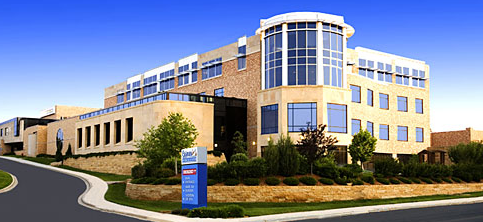
Doylestown Hospital is featured on Apple’s iPhone 3G page for rolling iPhones out to docs, including giving them mobile access to Meditech. I got my Consumer Reports today and was amazed at how well Apple did in the computer reviews: #1 in all three laptop screen size categories, #2 in desktops, and #1 in support in both desktop and laptops by far (81% and 84%, respectively, blasting the #2 vendor with 55% and 61%, respectively). Of course, Apples cost twice as much, so you could buy two of anybody else’s and keep one as a spare for the same money.

Medicity and Intermountain Healthcare will host a free Webinar called “A Data-Driven Approach to Improving Hospital and Physician Care Collaboration” on May 14. And speaking of Medicity, the company’s new CMO, Gifford Boyce-Smith, will speak on translational medicine at the Delaware Health Sciences Alliance research conference next Wednesday.

McKesson employees in Carrollton, TX spent time putting together care packages and notes for wounded veterans in VA hospitals last week. Nationally, 14,000 McKesson employees created 16,000 of the packages.

David Blumenthal follows the current administration’s mantra: we believe in the free market in theory, but sometimes it doesn’t work and the government can manage it more efficiently (which generally means: Bush and his cronies were dangerous fools and anything Republicans advocated must be repudiated by expensive and massive retaliatory government intervention). Speaking Thursday about healthcare technology, he said, “It is clear that this field has not advanced (enough) … when left exclusively to the private sector so there is a public role” Sounds good, except when surveyed, the public didn’t give a whit about healthcare IT. Your benevolent government knows best, as it constantly reminds us.

I just realized that it’s almost the end of the month as I write this, so I checked the HIStalk stats (that’s Inga’s territory, so I generally stay out of it). Shazam! Over 90,000 visits and 126,000 page views for April, breaking the record set in March by over 15% and up 66% from a year ago. I can only say thank you for contributing to that number by reading. I can’t imagine the stats going up since surely it’s at the saturation point, but I was saying that a year ago. Maybe the industry is bigger than it looks sitting here alone and staring at a keyboard and monitor for hours.

cern

CERN shares hit a 52-week high today, topping at $54.71 and closing at $53.80. Above is a five-year stock chart that you can’t read because I had to shrink it to fit, but it shows Cerner share price (blue), McKesson (green), Eclipsys (gold), and GE (red). Go Neal (he’s not just doing it for you – he owns $303 million worth himself).

Bored at work? Try Internet sensation Swinefighter. It’s lame, but addictive.

Jobs: Senior VP of Sales, Technical Project Manager, VP, Finance and Administration.

google

Consumer Watchdog says it has proof that Google used paid lobbying firms to try to influence the government on the economic stimulus act, which it speculates (without proof) means the company wanted the right to sell medical data. Google says it was lobbying to support healthcare IT standards and to protect consumer privacy. Consumer Watchdog says fine, prove it by releasing your lobbying records. End Act 1.

It’s like one of those cheesy used car companies that offers to loan you down payment money until your tax refund comes: IBM makes $2 billion available to customers who don’t have the patience for their government checks to arrive. Come on in, everybody rides!

Siemens announces Q2 numbers, with revenue and profit up big.

Another doctor criticizes electronic medical records in a national publication, Time in this case in a story called How to Fix Health Care: Four Weeds to Remove (Larry wasn’t one of them). One of the four weeds identified as choking off the medical garden is Computerize Everything. “It’s a complex topic that boils down to this: If we who do the medicine thought more computers would save us money, we’d buy them ourselves. In fact, sometimes we do. But the federal mandate to computerize and centrally connect the entire country’s medical records has little chance of saving money for anyone except the lucky insiders who sell the computers, software and support. Aside from their costs to us, electronic records are time-consuming — a constant distraction from patient care. They also put doctors on a slippery ethical slope; it’s pretty easy to bill more for the same services with a good EMR program. They are a dangerous weed being advertised as fertilizer.”

 samsecw

Sams’s Club says it’s ready to sell eClinicalWorks (although it manages to spell the company’s name wrong in the headline, putting a space before the “Works” part). I did a Google site search to find the page, which doesn’t come up in the site’s own search.

In Europe, Ronald Verni, former CEO of Sage Software, is named non-executive director of charge master software vendor Craneware.

An Ohio State University medical professor and cervical pathologist says his employer demoted him, cut his pay by 60%, and took away his laboratory after he publicly accused the university of botching tests for human papillomavirus. He’s concerned about the incorrectly diagnosed women, but the $100 million he’s suing for will apparently assuage his anguish. Since every TV addict in America feels qualified to judge people based on a superficial knowledge of whatever’s being judged, I’ll side with him since he sounds sincere and is amply qualified.

E-mail me.

HERtalk by Inga

From Newlywed: "Re: Nobel Prize winner’s survey on women and mood lifting. Heck yeah … I think he is dead on. For me, sex and eating … helllooo? Unfortunately, I travel for my job, so I don’t spend many nights at home for the sex with my perfect, divine husband. But man, do I get to eat!"

From Lynn Vogel: "Re: MD Anderson and facilities. Appreciate your comments re: importance of facility ambiance to patients. Cancer patients face significant challenges and in many cases truly ‘life or death’ choices. Notwithstanding Mr HIStalk’s views about the relationship between the egos of healthcare CEOs and their facilities, it is easy to dismiss the importance of surroundings in providing a supportive and comfortable environment in which such choices can be made. And I would venture a guess that those most critical of healthcare facilities are those who have not had to experience them from the patient’s point of view."

DocuSys and CPSI team up to install DocuSys’ anesthesia solution at at Muskogee Community Hospital (OK). I have actually been to Muskogee, the town that Merle Haggard was proud to call home. I am pretty sure I ate some ice cream from Braum’s. Ymmm.

silver

Silver Hill Hospital (CT) signs a five-year agreement with Medsphere to provide implementation, training, and support of Medsphere’s OpenVista EHR.

Froedtert & Community Health (WI) signs up for Epic Systems’ Care Everywhere network. The Care Everywhere network is designed to connect EMR information between different Epic systems and as well as third-party EMRs. Froedtert & Community Health is the second health system to sign up for the network, which the health system claims cost them $60,000.

McKesson promotes Randy Spratt to the newly created position of Chief Technology Officer. Spratt will also maintain his current role as executive VP and CIO.

Note to all you road warriors: while in a plane, experts recommend you sanitize your hands before eating and drinking, after retrieving something from the overhead bin, or after returning from the restroom. A little Purell and you cut your chances of getting infected by at least 40%.

Virtual Radiologic posts first quarter net income of $1.39 million ($0.09 per share), compared to $2.00 million ($0.12 per share) in the prior year period. Adjusted net income was up 40% from last year, coming in at $2.51 million, compared to 2008’s $1.88 million. Revenues rose to $28.6 million for the quarter, up 23% from last year.

Online learning and survey vendor Healthstream releases their Q1 financials showing net income of $878,000 versus $66,000 last year. First quarter revenue grew 19% over the previous year to $13.6 million.

If you are considering bariatric surgery, here’s some good news. Individuals with bariatric surgery reduce the prevalence of disease by 25%, compared the morbidly obese. Also, the rate of post-surgical complications has fallen 21% since 2002. Overall complication rates have also dropped (from 24% to 15%). Fewer complications also translate into lower cost of care.

Merge Healthcare announces its third straight quarter of positive net income. For the first quarter, Merge had net income of $2.8 million compared to a $7.9 million loss a year ago. Revenue was up 11% from 2008.

Researchers at Brigham and Women’s Hospital (MA) and Massachusetts General Hospital find that the use of integrated computerized medication reconciliation tools and process redesign were associated with a decrease in the number of unintentional medication discrepancies.

E-mail Inga.
Readers Write 4/30/09

April 29, 2009 Readers Write 18 Comments

Submit your article of up to 500 words in length, subject to editing for clarity and brevity. I’ll use a phony name for you unless you tell me otherwise. Thanks for sharing!

Note to the US Healthcare System: Treat Me Like a Dog
By Peter Longo

hamlinI think everyone knows the US healthcare delivery system seems to have more challenges than solutions. From my vantage point, working in healthcare technology,I sometimes wonder if we can ever put all the crazy puzzle pieces together. I never thought that one day, soon after a long overdue physical and a trip to my dog’s vet, I would deem it in so need of repair that I begged to be treated like a dog.

Recently my beloved dog Hamlin’s digestive system grew tired of his “Cowboy Chow” dog food. Without a moment’s notice, my wife quickly went out and purchased him three other kinds to choose from. (I wonder if tonight I complain about dinner, will my wife run out to three different restaurants and find me something I prefer?)

Even the newly purveyed dog food did not settle Hamlin’s stomach. My wife, busy escorting three kids about town, informed me I had to take him to the vet. Since I work for a healthcare technology firm, I assumed going to a doggy doctor would be fun and enlightening; a respite from seeing human hospitals and doctor offices.

Hamlin and I eagerly pranced into the office with me ready for the inevitable “doctor wait”. Interestingly enough, I was greeted at the counter by a smiling receptionist calling out Hamlin’s name. But of course, they were expecting him because he had an appointment! Wow, novel concept here I thought.

Next I had my wallet out, ready to be accosted for money before I could even get a quick question in. Before I could eject my credit card, the side door opened and a smiling “nurse” asked Hamlin to come this way. (I assumed they were smiling because they were going to make a fortune out of me). Guarding my wallet, I followed our escort down the hall. I was still dazed from the fact they were expecting us and recognized Hamlin.

As we entered our exam room, I was perplexed to see a shiny new notebook computer on display. Before I could gasp in shock, the vet walked up behind me, introduced himself to Hamlin (the patient) first, then to me. Casually, he turned toward his shiny new laptop and within two key strokes had Hamlin’s medical record on the screen. My dog’s entire record. Looking like the complete geek that I am, I jumped at the vet asking to see everything on the system.

Eyeing me as though I might be in need of medical help myself, he leaned back to show me Hamlin’s electronic medical record. His life history, his owners, where he was born, any past medications he had, everything. Even his lab results were in there. The polite but guarded vet then showed me three other exam rooms, all equipped with shiny new laptops, all with Hamlin’s record available on them.

After a quick and thorough exam, the vet punched a few more keystrokes. He electronically ordered various lab tests — right then and there! I asked him about the firm that performs the tests and he told me the lab he uses provides great service and is top notch. He said the lab results will be sent back electronically and into Hamlin’s file directly! (In a moment of serendipity, I later discovered it was my company’s software providing the lab with the tools to accomplish this small miracle).

As I left the room and approached the front counter, a nurse had a prescription waiting for me along with three cans of super special dog food. Now I was really confused — is it not the patient’s job to walk the prescription and files to the front counter? Did my paper shuffling job just get outsourced to a computer? Adding to staff’s perception of my total geekiness, I asked how she did that. With a slight chuckle, she showed me the computer screen where the doctor requested it from the exam room. It just angered me to see such efficiency. I know my kids feel Hamlin deserves only the best, but better healthcare service than me? Adding injury to insult, I paid only $55 for the visit.

Hamlin’s enlightening experience really made me think of my own recent medical episode. A few weeks earlier, I went to my annual check-up. I scheduled the appointment and diligently showed up on time. As I checked in to see my doctor, one hand shoved a clipboard in my face, while a second hand went for my wallet. No verbal communication yet. Even though Hamlin theoretically can’t speak, he was treated to verbal communication and a custom greeting. I then proceeded to brush up on pop culture in a six-month-old People Magazine (I did not know Britney had a second baby and broke up with K-Fed?) while waiting 27 minutes for my appointment. If only someone told me how long my wait would be — but hey, that would take the fun out of guessing when I would be home.

I finally entered my exam room to be greeted by a nurse,a sheet of blank paper and a $.25 pen. She took my vitals. Later, my doctor sashayed in with that same high tech paper but a more expensive pen (with a drug company’s name on it) to drill me further. As all checked out fine, he indicated he needed some lab work to complete the exam. Amongst some forms floating on a table (uncomfortably near my half-clothed rear end) he found an order sheet. He checked a few things here and a couple things there then gave me the nod to transport the paper across the hall; then my lab orders and I waited some 18 minutes more.

A couple of weeks after my exam, I received my lab results “in the mail.” Next to each test result, the doc was kind enough to scribble an “OK.” Then a nice hand-written note claiming, “All looks OK, see you next year.” I put that report in a sophisticated manila folder and filed it. Why did I have to have this manual, impersonal, medical experience right before my vet visit?

Dazed and confused after leaving the vet, I wandered back to our house. Upon opening the door, my three kids showered Hamlin with love. They rubbed his back, gave him endless kisses and asked him easy softball questions. “Have you been a good boy?” My wife brought over doggie treats and “king” Hamlin relaxed on his back as the kids indulged him full of treats. My life quickly went to the store to find him “the best food money can buy.”

I was left standing at the door waiting to even be recognized. I sure did not get any kisses, let alone a back rub. I put myself on the couch and wondered if anyone was going to fetch me a treat. I would have been happy if one of my three kids just pushed the remote closer. As I stared at a blank TV screen, it dawned on me … I really need to be treated more like a dog.

News 4/29/09

April 28, 2009 News 19 Comments

From Ralph Curmudgeon: “Re: Kaiser’s flash drive PHR. Kaiser’s offer of the flash drive has the same inherent problems as shoving a stack of papers and an x-ray folder in the patient’s hands. Unless the drive is encrypted and the patients have the computer skills to use it, it’s effectively worthless. Besides, I’ll wager >50% of them end up getting lost – just like the paper records. The average Joe and Jane out there – particularly the elder ones – aren’t ready to haul around electronic records in the pocket or purse – heck, they can hardly understand their treatment bill. Now injecting them with a re-programmable chip in their upper back – like Rover – that’ll work.”

twitterea

From The PACS Designer: “Re: Seesmic/TweetDeck. As Twitter gains more popularity, there are enhanced free applications that will manage all your Twitter favorites and also allow you to manage photos and videos to give you a ‘video Twitter’. One of them is Seesmic, created by a French company, which competes with another application called TweetDeck. TweetDeck has had some memory leak problems that are now supposedly fixed according to Adobe, so Seesmic appears to be the better choice to track Mr. H’s, the Candid CIO’s, and Labsoftnews’s Twitter posts along with others.” Link. At the risk of sounding tragically un-hip, I have to admit that I’m already sick of Twitter even though I do basically nothing with it. At least blogs required minimal effort to actually write and post the usual vapid, dull comments. Twitter makes it easy for Twits to expel a never-ending, 140-character flatus stream of “what I’m doing right now” self-indulgent babbling (as long as the activity allows keeping at least one hand on the keyboard) that puzzlingly finds an audience of people willing to read it. People complain that they have no free time, yet they apparently use what they do have screwing around with World Wide Waste of Time applications that provide the illusion of usefulness.

From Leon Poncey: “Re: cyber-attack. Thought this might be interesting to HIStalk readers.” Link. An interesting recap of an incident in California where unidentified individuals crawled into several manholes (they’re never locked, of course) and cut eight fiber cables, causing a loss of 911 service, cell signal, landline telephone, broadband, alarms, ATMs, credit card terminals, utility monitoring applications, and the hospital’s internal network (which apparently had some unexpected dependencies). Repercussions were fascinating: the hospital went to paper, stores accepted only cash, and employees were sent home. The only technology that worked was one of the oldest and least sexy: ham radio (I can say that because, being a nerd, I will admit that I was once a ham radio operator, at least until I noticed that it was like Twitter: the technology was ample to interconnect people from all over the world, but the people using it invalidated the entire premise because they had nothing interesting to say).
 workspaces
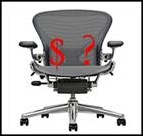
From Alter Ego: “Re: Halamka’s blog. I think he’s getting a bit egocentric, kind of full of himself. Does anyone really need to know about the details of his work spaces?” I already assumed he was full of himself, although I don’t know him. I actually kind of enjoyed the post that has pics of his digs at Harvard, BIDMC, and his home office, which is just a chair and a MacBook Air (I certainly enjoyed that post more than those Zen ones where he gets all moist talking about some bizarre flute he has dedicated his life to playing, his tea ceremonies, or climbing rocks). And, I have to defend us bloggers since there’s always some reader who launches ballistically when a couple of sentences didn’t hit his or her interests precisely. I get an e-mail something like this: “Oh my GOD I don’t read HIStalk to get (humor, music recommendations, guest articles, etc.) and I want the time back that it took me to read (the three sentences out of hundreds). Stick to the facts and leave that to the professionals (comedians, music critics, professional writers, etc.)” Apparently just skipping over those few words is too much of a challenge compared to writing out a complaint, so I have no idea how those folks can read a newspaper (“Oh my GOD I don’t follow stocks so please stop running that crap and stick with the sports and leave the investment talk to stockbrokers”). If Halamka wants to write about tooting his flute, then that’s his right, and anyone who can’t stand that should probably just read the personality-free trade rags.

From Deborah Kohn: “Re: HIPAA. I completely agree with your reply. Just a history reminder of this complex law. Prior to 1996, the public was demanding two things: 1) greater portability of health insurance between jobs, and 2) confidentiality protection of personal information and privacy protection of the individual – with a focus on health information. Consequently, the 1996 Kennedy Kassebaum Bill (K-2) or Public Law 104-191 or the Health Insurance Portability and Accountability Act (HIPAA) (and, given the 2009 ARRA HITECH Act, this 1996 law could be viewed as version 1.0 or 1.a), was introduced with the following legislative goals: Title I – Portability, which contains only one major component — ensuring that individuals between jobs are able to carry their health coverage forward or obtain similar coverage. Title II – Administrative Simplification, which contains four major components, which are the most publicized: 1) Unique Identifiers (for Employers, Health Plans, Health Providers, and Individuals); 2) Electronic Data Interchange and Coding Standards (the Transaction Set and the Code Set); 3) the Confidentiality and Privacy Standards for analog and digital records / documents (the Minimal Disclosure of Individually-Identifiable Health Information, the Control Over Sharing this Information with Outside Entities, and the Ability of Patients to View Their Information and Receive a Record of Access to Their Information); and 4) the Security Standards for digital records / documents (the Administrative, Physical and Technical Safeguards).”

The last plea of this particular telethon: if you haven’t completed my reader survey, would you? I’m already making my to-do list from the responses so far, but it’s not too late to register yours.

Not willing to take the chance that the government will define “meaningful use” of EHRs in a way it doesn’t like, HIMSS goes ahead and preemptively makes up its own definition and sends it off to CMS and ONCHIT for what they hope is rubber stamping. Its recommendations:

  • Name CCHIT to be the EHR certifying body (no surprise there).
  • Adopt interoperability per the specs of HITSP and IHE.
  • Implement increasingly stringent metrics. For hospital systems, HIMSS wants metrics to be ratcheted down no less often than every two years to allow “health IT companies to make necessary modifications to their products, including the rewrite of legacy enterprise EMRs as necessary.” (Question 1: what enterprise EMRs are not legacy? Question 2: does anyone really expect products to be rewritten?)
  • Evaluate best-of-breed and open source technologies fairly in their demonstration of meaningful use (note that HIMSS throws in a half-hearted but still eyebrow-raising acknowledgment that free software that competes with the products of its vendor members, saying “use of open source options can be cost-effective for some hospitals.”)
  • For the first two-year phase (FY11), measures include use of lab, pharmacy, and radiology systems, along with a CDR (interfaced to “the patient accounting system” for some reason). Discrete clinical observations (allergies, problem list, vitals, I&O, flowsheets, meds) are recorded electronically, but electronic physician documentation is not required. Auto-capture of NQF quality measures is required. Hospitals exchange electronic information, but it can be in the form of scanned documents.
  • For the second phase (FY13), 51% of orders must be entered by CPOE, e-prescribing to outside pharmacies must be in place, and systems follow whatever data output standards HITSP and IHE devise.
  • For the third phase (FY15), CPOE goes to 85%, bedside eMAR/barcode verification is in place, evidence-based order sets and reminders are in use, and information exchange is underway with public health organizations and subunits of a statewide or national exchange. There’s a line about analyzing “pharmacokinetic outcomes resulting from patient medication interaction” that makes no sense to me.
  • Most of the practice-based EMR recommendations are similar: clinical data display with CPOE capability and doctors entering their own orders, e-prescribing, and quality measures, followed by clinical decision support and interoperability.

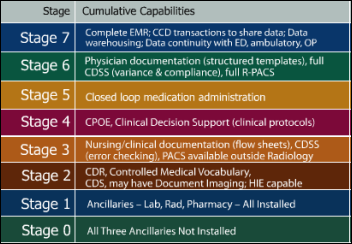
My opinion: a pretty nice job. The standards are straightforward and measurable, although the practice EMR document doesn’t get specific about physician usage percentages like the hospital one does. It looks to me like they basically took the HIMSS Analytics EMR Adoption Model and made Stage 3 (minus the diagnostic imaging requirement) the first phase and Stage 5 the second (along with part of Stage 7 – capturing data in CCD format). Fairly ambitious, but it may go back to Obama’s early question about “what would it cost to get all hospitals to Stage 4”.

Microsoft creates a version of its Amalga data analysis tool for life sciences. They claim it connects information in ways that allow researchers to make new discoveries.

Cerner just announced Q1 numbers: revenue up 2%, adjusted EPS $0.52 vs. $0.47, beating estimates of $0.51 by the usual Cerner penny (but light on revenue, so shares are pricing down). Nobody I know is buying Cerner systems, but they are managing their business with great skill, working the recurring revenue stream and managing expenses to keep Wall Street happy. 

UK’s NHS threatens to give BT and CSC the boot if they can’t get their Cerner and iSoft systems, respectively, up and running in at least one large hospital by November.

 episurveyor

Joel Selanikio of Georgetown University (and of his own company, DataDyne) wins a $100,000 Lemelson-MIT Award for Sustainability for developing the open source EpiSurveyor mobile healthcare survey software.

Continua Health Alliance wins the American Telemedicine Association’s award for innovation. The ubiquitous John Halamka’s quoted congratulations on behalf of HITSP are included for some reason.

Palomar Pomerado Health is offering, without a prescription, the personal genetic testing kits of Google-backed 23andMe.

Southeastern Regional Medical Center (NC) promotes Eric Harper to CIO.

maringeneral

Sutter Health is reluctantly turning Marin General Hospital (CA) back over to the county next summer, so that means it will need new information systems. ACS gets a $55 million contract to install McKesson Paragon and support it through 2017. Former El Camino Hospital CEO Lee Domanico is running the transition team that will take over. The hospital originally said it couldn’t afford to pay him more than $264K, but he will make up to $779K a year under his two-year contract signed in January, a large pile of money for running a 235-bed hospital.

The University of Nebraska and the technology transfer organization of its medical center are suing Siemens Healthcare Diagnostics for patent infringement, claiming that Dade Behring knowingly sold laboratory testing systems that used technology the university had patented and licensed exclusively to Abbott Laboratories. Siemens AG bought Dade Behring in 2007.

Kathleen Sebelius is confirmed to become HHS secretary, but none of HHS’s 18 other key positions have been filled. I want Obama to succeed, but so far he’s just a cooler version of Jimmy Carter – lots of lofty goals, but incompetent when it comes to execution (how many times has he apologized for one gaffe or another in just his first 100 days or so?) Anyway, she’s in, but without a team.

A new study published in Archives of Internal Medicine found that computerized medication reconciliation reduced medication errors by 28%.

Total margins for Pennsylvania’s hospitals have dropped 12% in the past two years to –6.3% due to portfolio losses and more uninsured patients.

E-mail me.

HERtalk by Inga

From Old Coot: “Re: John Wennberg. ‘Too much acute care today/wasted money spent at end of life – need to redirect those resources to community health initiatives.’ In other words, let the old folks die off peacefully – and quickly – and spend more money handing out condoms to kids who won’t use them. Wennberg, who is no spring chicken, better watch out. His kids will be slipping that potassium chloride mickey into his Metamucil one evening. I wonder how Wennberg’s parents are doing these days . . ."

From Hair on Fire: "Re: insecurity. Glad you got back at Mr. HIStalk for his snarky comments about your insecurity (or was it his?) with your comment about the Code Blue band :> We chicks need to stick up for ourselves – and one another!” Thanks for the chick support. However, Mr. H created his comments  after mine, so I didn’t really have a chance to get back to him, although I did chastise him for letting the world know I was insecure (am I insecure about that?) The secret is now out. Will the adoring fans be disillusioned?

From John d’Glasier: "Re: Twitter. Doonesbury says it all: Tweets for twits. Twitter is adolescent narcissism.You can’t possibly said anything worth reading in 140 characters unless you believe American Idol, Survivor, and Are You Smarter Than a 5th Grader? represents the zenith of American entertainment – preparing you well for pop culture acceptance of anything without meaning, gravity, or importance." Here’s the strip. I was totally with you, John, right until the subtle slam on American Idol, which happens to represent the most entertaining three hours of my week (after reading Mr. H’s posts, of course.)

From Lucy Padovan: "Re: shoes. At the height of the dot-com era, some well-meaning but alcohol-befuddled colleagues thought I should be nicknamed e-babe, odd since I’ve never bought or sold anything on eBay in my life. Nonetheless, a friend sent this link to me and I wanted to pass it on. This is just shoe lover to shoe lover." What is there not to love about sexy crocodile pumps that retail for $2,650 that you can steal for a mere $630?

Clara Maass Medical Center (NH) successfully implements Axolotl’s Elysium Exchange, enabling ER, inpatient, and outpatient records to be shared electronically across the health system.

I have enjoyed reading the various posts about fancy hospital building, bloated budgets, etc. Here is my two cents. I visited a friend once who was at MD Anderson. If one day (God forbid) I wind up with cancer, MD Anderson is where I want to go. It felt comforting, current, and everyone was efficient, friendly, and supportive. The pretty building made a difference. Another time during my traveling days, I had the unlucky chance to spend the night at a hospital in a major city. At the time I didn’t know this, but it this hospital is considered one of the best in the country for the type of emergency I was experiencing. While the staff was great, the hospital itself was old and tired-looking and my room was dreary. I actually knew enough about healthcare to understand that such things don’t affect the quality of care, but, the lack of aesthetics didn’t aid my overall comfort level. So I am of the mindset that if someone wants to donate millions on pretty buildings, I’d like to say "thank you" on behalf of all of us average patients who rather be sick in an attractive facility.

United Hospital System (WI) selects Eclipsys Sunrise Enterprise clinical solutions for its multiple hospitals and clinics.

Medfusion names Bill Loconzolo chief technology officer. Medfusion provides online communication tools for healthcare practices.

A Nobel Prize winner finds the top five mood-lifting activities for women are: sex, socializing, relaxing, praying or meditating, and eating. (No mention here if the Nobel Prize person is a man who believes in the power of suggestion, but it’s not a bad guess.) Exercising and watching television followed closely. Near the bottom of the list were cooking, “(day-to-day) taking care of my children,” and housework. If you are in need of advice on how to be happy, Dr. Lobe has some tips for you. And if you are a woman, let me know how well these these five activities are working to increase the joy in your life.

map

Hard to miss finding information on swine flu, especially with all the tweets, podcasts, and up to the minute postings by the CDC/HHS, WHO, and every news agency out there. Personally I prefer the Google map that displays confirmed outbreaks by location (helpful for planning my next vacation.)

MED3000 gets a mention in a Wall Street Journal article that looks at various tactics by employers and insurers to motivate people to make healthier choices. Money, by the way, seems to be a good incentive.

Picis announces that the VA has selected Picis Critical Care Manager for its Veterans Integrated Service Network 12, aka the Great Lakes Health Care System.

Let’s hope that the US health crisis never gets this bad. A Japanese woman with headaches during labor is turned down by 18 hospitals that refused to accept her due to overcrowding or overly busy doctors. She had a brain hemorrhage and went into a coma, but a hospital that finally accepted her delivered the baby by Caesarean before she died eight days later. The Japanese ER crisis is blamed on a number of factors, including the aging of the population, economics pressures, and professional and legal issues. ER doctors are overworked, poorly compensated, and risk criminal prosecution (not civil) over malpractice issues. The government estimates that currently Japan has half the number of ER doctors required to serve the population (about 2,500 to serve 127 million people.)

E-mail Inga.

Monday Morning Update 4/27/09

April 25, 2009 News 25 Comments

From 13th Floor Elevators: “Re: traffic tickets covered by HIPAA. The clerk must have consulted our hospital’s HIPAA officer, who says employees who have babies can’t use hospital e-mail to tell their colleagues as it would be a HIPAA violation. This HIPAA thing needs a lot of rework. And, when was the last time you heard anything about the ‘portability’ in HIPAA?” HIPAA was a pretty good 1.0 effort, but it’s hopelessly outdated, seldom enforced, and watered down by special interests. Pre-Internet privacy laws and information systems are relics that really should be rewritten. As for portability, I don’t see much improvement, especially if you have a pre-existing condition (does “pre-existing” mean before you were born?)

mda

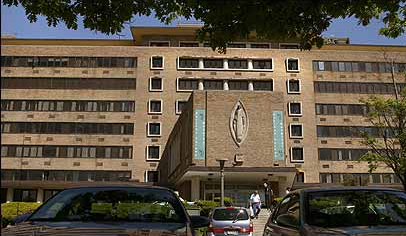
From KitKat: “Re: MD Anderson Cancer Center. Layoffs Monday, with 16 anesthesiologists getting the pink slip.” MDA is looking for $280 million in budget cuts and will start cutting employees within a month. The best thing about the article was this reader comment: “I’m STILL trying to figure out why the new buildings at MD Anderson had to be so over the top lavish; almost like a shrine to cancer.” It’s not just MD Anderson. Lots of hospital executives I’ve known love building fancy structures as a substitute for the imaginary careers they gave up in private industry, always daydreaming that they would be running big for-profit businesses and flying around in corporate jets if they weren’t so selfless. It’s always rationalized that the community wants those magnificent edifices, despite the evidence that suggests what the community really wants is easier hospital parking, reasonable rates, a chance to get in and out of the ED without taking six hours, and interacting with employees who at least pretend to be empathetic. Unfortunately, those big buildings seem to make all of those attributes worse. I would trade all that architecture for a couple of good nurses (especially since you can’t see that imposing facade from your room anyway). Like financial institutions, when you’re selling an intangible, you have to convince customers that it’s real by spiffing up the storefront.

That reminds me of that consumer survey early in the stimulus talks about where they wanted to see healthcare money spent. IT was dead last. Fancy buildings would probably have been there, too, if respondents were asked to rate their importance. So why don’t we give our customers what they want instead of what we think is good for them? Maybe that’s more of that good old paternalism, where you just tell the patient not to worry their pretty little heads because the doctor knows best. You and I are healthcare consumers and patients, so if asked what we would really like to see changed, I bet it would be the easy stuff like what I mentioned above and not buying new IT systems. We want to be respected, informed, consulted. We don’t want to be inconvenienced, harmed by medical error, or infected. We would like to be able to afford the care we need. If IT (and those fancy buildings) can do any or all of those things, consumers will love it, but just having the IT without delivering the results won’t impress anyone except nerds.

dennis 

I think I need to write a novel since I have this great story idea stuck in my head. Here it is. A fictional foreign industrial conglomerate, despite a generations-long history of shameful behavior (using death camp labor, bribing prospects to get business going back 100 years) wins a huge government contract. Champagne corks are popped back in the home office, stiff executives clumsily attempt fist bumps. Now comes the key scene: at that moment, dozens of unsmiling federal agents crash through the office door, armed with search warrants and evidence boxes. The big government contract had been a sting operation! The conglomerate has been caught red-handed after decades of improper government contracting! I’m trying to decide whether to portray the company’s competitors has having set up the sting, but I need to give that more thought. I’m picturing Dennis Quaid as the humorless government agency head, Maureen McCormick as his love interest, and maybe Rod Blagojevich in his big-screen debut as the conglomerate’s ranking executive. I dunno … not very believable, I guess.

bw

The new BusinessWeek says EMRs may be a waste of government money in The Dubious Promise of Digital Medicine. Points: evidence that EMRs improve patient safety is scant, vendors like selling off-the-shelf systems that are hard to implement and maintain, and HIT special interests have kept government oversight to a minimum. Individuals are called out: Newt Gingrich for playing a heartfelt futurist when he’s getting paid by vendors, Nancy DeParle for having high-dollar Cerner connections, Glen Tullman for working his Obama connection, and McKesson’s lobbyists pushing policy ideas on members of Congress and of the Administration to reward clients for using their aging systems. Several negative hospital EMR experiences are cited. Also mentioned: vendors are pushing for CCHIT as the certifying body, knowing that a group led by a former vendor executive and started by HIMSS will provide a friendlier audience than FDA. OK, the article is all over the place and certainly sought out whatever high-profile negative stories it could come up with, quoting only those who had a bad EMR experience (who never blame their own organizations for choosing or implementing it poorly, of course – everything is the vendor’s fault). Worth a read, but only because lots of people will see it. Its conclusion, however, is entirely reasonable: we’re spending billions on systems developed even before the Bush administration (HW, not Shrub) that haven’t exactly lit healthcare on fire so far. As a taxpayer, you’re taking a bet with billions that a prudent gambler wouldn’t. Water under the bridge, though, so there’s no point pontificating about it now.

Is Apple developing a Mac Tablet and would it be a great platform for EMRs? Good article, good reader comments.

An interesting article on 12-employee Precept Health, a New Zealand startup struggling financially but winning big business over companies like Philips for ICU monitoring.

New poll to your right: what’s the impact of Oracle’s acquiring Sun? From my cheap seat, it looks like the showdown to be king of the technology world will be between Oracle and Google. The worst aspect is that Oracle gets MySQL, Oracle’s main (free) competitor that powers much of the Internet (including HIStalk). Oracle hates Microsoft, which is already wheezing, and can inflict serious damage on it by attacking its Office and SQL cash cows with Sun’s free alternatives. Since Oracle is still buying everything in sight, what if it picks up Red Hat? (IBM better strike fast if it still wants to be a playa). Microsoft hasn’t made a good acquisition in years. Proclarity in 2006, maybe, but that’s niche; I can’t think of anything else other than Visio in 2000 since the Great Plains deal didn’t make sense to me. Everything else seems to be add-ons to fix holes in existing products, not anything innovative.

Interesting in the definition of “meaningful use” of EHRs? The VA will provide a live audio broadcast of Tuesday’s NCVHS meeting, which will attempt to create one.

Fujitsu announces its new EMR in Japan: HOME/EGMAIN-GX V2  (don’t they have marketing people over there who could come up with a name that might actually be remembered?) The only Web pages I could find were in Japanese, but it appears to do orders, meds, bed management, and diagnostic imaging.

Reader survey. Important. Complete, please. Thanks.

majorbaker

The economy may be wearing you down a little, but at least nobody’s moving you to a desert and planting bombs in your front yard. Major Patrick Baker is a citizen-soldier and chief nursing officer at Madison County Hospital in London, Ohio, deployed since January to Balad, Iraq as Flight Commander, Flight Clinical Coordinator Team of the 332nd Expeditionary Medical Group, the largest trauma center in Iraq. He organized a charity marathon in Iraq to coincide with one in his hometown, recruiting 400 airmen, soldiers, and sailors to help raise $8,400 for the American Heart Association in honor of his six-year-old daughter Ellie, who was born with multiple heart problems. Tired of manufactured “heroes” like shallow TV stars and exorbitantly paid athletes? You can e-mail a real one. HIStalk Practice contributor Dr. Gregg Alexander knows him and sent me a link to the video.

Senator Jay Rockefeller (D-WV), chairman of the Senate Finance Subcommittee on Health Care, introduces legislation that would create an HIT Public Utility Model that would provide grants to safety net providers that would cover the cost of implementing open source systems plus five years’ maintenance. It would also create a HIT Public Utility Board within ONCHIT to over see the program. He says, “Open source software is a cost-effective, proven way to advance health information technology – particularly among small, rural providers. This legislation does not replace commercial software; instead, it complements the private industry in this field – by making health information technology a realistic option for all providers.” I like it. Jay’s kind of doing his own thing here without being steered by lobbyists and HIMSS, proposing a solution that could put more HIT in the field without just dropping big dollars on private companies. I just wish that, when we talk about open source, it covered more application ground than VistA. It’s good, but not exactly cutting edge, and the number of potential community members is limited to those who happen to know MUMPS programming. 

flash

Kaiser Permanente offers members a $5 USB flash drive containing their basic medical information and recent encounter data. A secretary downloads the patient’s data while they wait. But, they have to show up in person to get it. The article omits the most important fact: how do doctors access that data in case of emergency, which is the whole point of getting the USB drive in the first place? Hopefully it is easy, does not require loading anything on the doctor’s PC, and doesn’t require a password if the patient is brought in unconscious. Maybe someone should invent a hardware or software token that would positively identify a PC user as a doctor so they could be given elevated privileges to open the medical files of patients.

Forbes profiles Steve Schelhammer, a former teacher and yearbook salesman who formed disease management company Accordant Health Services, sold it for $100 million, and is now CEO of Phytel, which analyzes EMR data to find non-compliant patients and sends them messages asking them to schedule a visit. Practices pay for the service, but benefit from increased visits.

E-mail me.

News 4/24/09

April 23, 2009 News 5 Comments

From Harry Reems: “Re: EHR certification. Do hospitals using an internally developed EHR have to get CCHIT or someone else to certify it to be eligible for HITECH incentives?” I’ll throw out a guess of “yes” given the inordinate confidence placed in CCHIT so far to decide whether a given product is one taxpayers should help pay for, but surely someone knows more than me.

From Eldridge Dickey: “Re: Dubai. I’m curious how bad things have gotten there after all the healthcare IT activity last year. Not much reporting in the mainstream news.” Ms. Adventure provided a bleak assessment in February, but has not sent updates since. First-person reports are welcome.

From The PACS Designer: “Re: VA private cloud. InformationWeek reports that the move to create ‘private clouds’ as a test bed for a cloud computing platform is gaining momentum among the advanced IT developers. Even the VA has started to experiment with a private cloud called ‘Health Associated Infection and Influenza Surveillance System’.” Link.  

siemenstv

An update on the federal raid at Siemens Medical Solutions in Malvern, PA. Nobody’s saying officially what the feds were looking for, but rumors are that it could relate to an earlier whistleblower lawsuit claiming that Siemens did not give the government its lowest prices. That would align with who did the raiding: the criminal unit of the Defense Department. It may be connected to the $267 million contract the company won just three weeks ago to sell imaging equipment to the DoD. There’s a lot at stake since supplier fraud falls under the Federal False Claims Act (aka qui tam), which calls for damages equal to three times the overcharge plus up to $11,000 for each individual “false payment demand,” meaning each bill, invoice, contract, etc. Every one of the biggest judgments and settlements under that act involved healthcare: Tenet ($900 million), HCA ($731 million), HCA again ($631 million), HealthSouth ($325 millon), and a slew of drug companies and miscellaneous specialty care organizations. Siemens has previously admitted and paid billions in damages for bribery, falling under the US Foreign Corrupt Practices Act since it’s a German firm. Interestingly, Siemens may have paid those big fines because the alternative was being banned from bidding on government contracts (the CEO of the company’s US subsidiary was reported to have said that he expects the company to get $75 billion of the $787 billion in federal stimulus money). All of that is unverified speculation, although I’m a pretty good speculator.

Listening: Garageland, defunct Pixies-like New Zealand indie pop.

Jobs: Meditech Financial/Billing Expert, McKesson Analysts, Senior Cisco Wireless Expert.

Housekeeping: if you want to get HIStalk before your competitors and co-workers, put your e-mail address in the Subscribe to Updates box in the upper right corner of the page (you should have seen the server load when I sent out the Siemens raid story, which thanks to a reader tip, went out here long before any of the industry press found it, probably by reading their own HIStalk e-mail update). The search box in the right column will dig through almost six years of HIStalk to find your name, your company’s name, or whatever industry term you like. HIStalk’s sponsors are an important part of the mix, so peruse their ads and check out what interests you (I need to thank Founding Sponsors Medicity and Nuance since I haven’t done that recently). And if you want to send me a rumor or something I’d find interesting, click the ugly green Rumor Report box to do that easily. Thanks for reading, by the way.

I get quite a few e-mails listing things individual readers love or hate about HIStalk (almost always the same things, just with opposing opinions). The best way to register your opinion is by completing my short, once-a-year reader survey. I’m not going to beige HIStalk down by turning it into a committee-run snoozefest that everybody tolerates but nobody loves since we’ve got plenty of industry choices for that, but I do reconsider my direction each year when the survey runs (it’s pretty much the same survey I’ve been using for years). Some are great ideas that are a bit lofty for a day-job guy, like undertaking major investigative reporting, convincing hospitals to provide detailed success stories, etc. (kind of amusing since people who work no more day job hours than me complain that it takes 10 minutes to read – it takes me FOUR HOURS to write it after I get home plus Inga’s time, so playing Woodward and Bernstein is probably not in the cards). Anyway, I promise to read and consider every survey response.

CPSI’s Q1 numbers: revenue up 2.1%, EPS $0.37 vs $0.32.

Hospital layoffs: Ministry Health Care (WI), 60 employees; Shriner’s (HI), 10.

The 21 horses that died during a Florida polo match suffered a medication error when a compounding pharmacy incorrectly prepared a vitamin product.

The King of Pork, Senator John Murtha of Pennsylvania, brings home the bacon to fund a desolate, barely used (three flights a day) airport bearing his name in the middle of Nowhere, PA: $200 million in earmarks for what watchdogs call a “museum piece” with fewer than 10,000 passengers a year (its only flights go to Washington Dulles) that will get a second runway, joining the $8 million air traffic system installed in 2004 that has never been used because there are no employees to run it. His Military Interoperable Digital Hospital Testbed, also in Johnstown, got $5 million of Murtha Money, which one might at least hope has something to do with the DoD-VA interoperability projects going on instead of just paying Northrop Grumman contractors to fly back and forth from DC on the taxpayer time (that’s probably the three flights a day).

Microsoft’s Q3 report: revenue down 6%, EPS $0.33 vs. $0.47, the first time the company’s quarterly revenue has ever decreased. Announced: no employee merit increases this year, no earnings guidance will be provided, and the upcoming quarter isn’t looking any better than the last one.

Healthcare Growth Partners releases its Q1 HIT transaction report (free PDF download). An interesting observation about recent M&A transactions: they involved either premium deals or fire sales.

One HIStalk reader always finds and sends bizarre healthcare news items, so here’s his latest. A male nurse whose former job was a stripper is suing his personal care home employer for sexual harassment, claiming he was propositioned, called a “pretty boy”, asked for lap dances and to provide bachelorette party performances, was slapped and pinched in the rear, and was referred to by elderly residents as “one of them go-go boys” and a “hootchie-kootchie dancer.” He claims he was fired because he’s a 55-year-old man who was not taken seriously by the mostly female nursing staff.

I’ve let Inga gradually do more of the research and writing for HIStalk Practice, so she posted solo last night while I attended to pressing day job duties. She’s cute and 1000 ccs of fun, but insecure: she e-mailed me almost immediately afterward to say, “I’m dying … was it OK?” Isn’t that adorable? I think she craves validation, so if you want to suck up shamelessly, she would probably be your immediate BFF.

Kryptiq sells its Choreo health plan contracting division to health plan software vendor Portico Systems to focus on its Connect IQ medical communications network.

mivitals

Free Australian PHR vendor miVitals goes belly up for lack of funding because it has no partnerships like its big-name competitors, according to the Washington Post. With all the interest in PHRs (misplaced, I think), you would think its assets would be worth something. Perhaps this is the first of a wave of dot-com like PHR failures given that most of them don’t charge anything, usage is low, value is questionable even for free, and the big boys are using their clout. If you think doctors don’t like using technology that doesn’t fit their routine, try getting the average patient to do so.

E-mail me.

HERtalk by Inga

From John Moore: "Re: Health 2.0 conference. Health 2.0 remains an event that has a lot of cheerleaders, groupies, and technologists and unfortunately, not enough consumers/patient stories in how they are actually using all of these new Health 2.0 solutions coming into the market. The Health 2.0 companies who present don’t help their cause either, as virtually none of them presented any meaningful stats on consumer or clinician adoption and use of their technologies. That being said, there were some highlights including John Halamka, BIDMC and Roni Zeiger of Google Health talking through the problems of administrative data being exported out of a hospital to a consumer’s PHR, e.g., e-Patient Dave. Also, John Wennberg, lead author of the Dartmouth Atlas, gave a great presentation, best of show really, with real numbers about what is and is not working and some of the hard choices that need to be made, e.g., too much acute care today/wasted money spent at end of life – need to redirect those resources to community health initiatives."

Have an opinion on the how to define "meaningful use" in the HIT world? The National Committee on Vital and Health Statistics executive subcommittee schedules a gathering April 28-29 in Washington to figure it all out. The public is welcome and we’ve embedded a mole in the proceedings who will give us an update.

Ingenious Med, a provider of billing tools for inpatient physicians, raises $1 million in VC money to beef up its sales and marketing efforts.

West Penn Allegheny Health System files a complaint in US District against regional rival UPMC and Highmark, alleging conspiracy to protect one another from competition.West Allegheny’s chairman says, "We believe that for several years UPMC and Highmark have engaged in mutual back-scratching designed to preserve Highmark’s monopoly in health insurance and to permit UPMC to build a monopoly." The financially troubled West Penn Allegheny announced operating losses of $9.1 million for the quarter ending December 31, leading UPMC to issue a statement calling the lawsuit frivolous and a  "tactic to divert attention from their own operating and financial difficulties." Can’t we all just get along?

bates

Bate County Medical Hospital (MO) selects the web-based OpusClinicalSuite EMR for its 60-bed hospital.

Shameless plug: if you are not reading our new HIStalkPractice site, you are missing out. This week we had two excellent columns that are definitely worth a read. Dr. Gregg Alexander’s piece entitled, "Two Thirds of the NHIN by 2010 (or, Not Your Daddy’s CHIN)" is thoughtful, humorous, and well-written. Dr. Joel Diamond writes on the need to expand the use of natural language processing in EMRs, and throws in some hilariously immature humor in the process. We are also posting news and commentary twice a week on topics of particular interest to those in the ambulatory care space. Check it out and sign up for e-mail updates so you can keep up with all the cool happenings.

HIStalk sponsor MEDSEEK is hosting a free webinar April 29th discussing the patient-centered medical home and why it should be important to hospital executives. Here’s the link to sign up or learn more.

Valley Baptist Health System (TX) decides to outsource its IT services to PHNS and help the hospital complete its EHR implementation. The 10-year agreement allows Valley Baptist’s employees to remain as employees, but will be managed by PHNS.

An apparently confused city treasurer in Albany, NY sites potential HIPAA violations as the reason she cannot release copies of forgiven parking violations to city council leaders. Council members call the explanation "absurd."

code blue

Three ER docs and a computer guy rock Delaware in a band called Code Blue. Sounds like the perfect BFFs for Mr. H.

Gwinnett Medical Center (GA) contracts with InfoLogix to provide a wireless infrastructure assessment, followed by the development of a a customized mobile deployment strategy.

Random musing: the last couple of days I have followed Twitter, particularly noting the messages about the Health 2.0 seminar. At least half a dozen Twitterers were sending updates on virtually every word being said by the speakers. While at times interesting, I had to finally step back and ask myself if all these tweets were really adding value. I wanted to know what’s going on in the forest rather hear about every last tree. Am I the only one who feels that way? I’ve never been a huge fan of webinars or podcasts, probably for the same reason. In the past, I’ve worried if the problem is that I lack sufficient curiosity, but now I’m thinking the real issue is information overload.

Emergency room visits are up while the number of emergency departments are falling, according to a new Picis-sponsored study. As a result, patient satisfaction and ED performance have fallen over the last 10 years. The details are included in the final report, "Profiling Success: Managing Emergency Services in the Largest Health Systems,” which includes specifics on best practices from top performing hospitals.

st joseph

St. Joseph’s Healthcare System (NJ) plans to implement the INFINITT Enterprise-wide PACS solution.

E-mail Inga.

Federal Agents Raid Siemens Medical Solutions Offices in Malvern, PA

April 22, 2009 News 24 Comments

siemens

Federal agents from the Defense Criminal Investigations Service raided the offices of Siemens Medical Solutions in Malvern, PA today, according to a Philadephia TV station. Agents armed with search warrants secured employee workstations, seeking documents related to the company’s military contracts.

UPDATE: Inga contacted Siemens and received this response:

Statement Regarding Government Inspection at Malvern Facility of Siemens Medical Solutions USA, Inc.

Malvern, Penn., April 22, 2009 — Siemens Medical Solutions USA, Inc., the U.S. operation of Siemens Healthcare, has been served with a search warrant. Siemens Medical Solutions USA, Inc. has and will continue to cooperate fully with the Government’s investigation.

Readers Write 4/22/09

April 22, 2009 Readers Write Comments Off on Readers Write 4/22/09

Sense of Reality
By Greg Weinstein

I have been working on clinical systems and integration in an academic medical center for 20 years now and I am watching with growing concern the frenzy of the standards writers. Prior to going to HIMSS, I took the time to read some of the HITSP specs – specifically. the C32 document sections related to medications. Everyone has a problem with sharing medication lists and everyone wants to do it right. But while C32 has over 30 data elements for each medication record (down to the lot# and bottle cap style) the only thing required was the text of the drug name. When I asked people how they could build a data sharing system (NHIN, RHIO, HIE) with only that requirement, they answer that, within each exchange, the “details need to be agreed on”. This sounds a lot like the failure of HL7 v2, though with a lot more baggage.

I visited the IHE Connectathon at HIMSS. What I saw was not encouraging, but entirely predictable. The scenario demonstrated a patient moving through a series of care facilities with CCDs used to transfer the patient’s record. Naturally one site included only the medication names (actually they stuffed long strings with the names, routes, frequencies, dose all together into the name field) and embedded this in their CCD. The next site expected to receive the medication name, route, dose, etc. as separate fields and was unable to import the data. The demonstrator began manually re-entering the data by reading the long multi-element strings and using the data entry form of his own system. This might have allowed entry of the data into his system, but almost certainly lost the data “provenance” (that it arrived via a specific signed CCD). 

After a few minutes, the crowd became restless and he gave up, skipping the last four medications. He then generated his CCD and transferred it to the next system in the scenario, which, amazingly, only saw the medications from the last CCD, where four medications had been omitted. In fact, the contents of the multiple CCDs reflected the system limitations of the various systems more than they did the actual patient state being represented in the scenario.

Against this background of non-success, we see CCHIT certification scenarios of ever-increasing complexity and new HITSP requirements to include every data function ever conceived. And then we see published research stating that no one has proven that any of this actually improves outcomes.

Regarding CCHIT, the entire focus of application certification is wrong. We ought to be asking providers to support certain functions. The CCHIT approach of application certification implies that a single system needs to do everything. Why couldn’t a provider choose to use more than one piece of software so long as their practice did what was needed?

I sincerely hope that someone will be able to calm the waters, make rational decisions on what data is most valuable to share (medications, allergies, problems, labs, images, and “documents”), and how to go about it.  Without some focus and reasonable expectations, we may waste an entire generation of software development activity, kill innovation, and crush smaller companies, all without tangible benefit.


MUMPS to Java … Caveat Emptor
By Richie O’Flaherty

I couldn’t let this pass un-commented, having had some direct experience in language translations many years back in which the organization I was a part of translated a number of applications (mostly in-house developed) from Meditech MIIS and MaxiMUMPS. While most of the pain occurred in the MaxiMUMPS translations due to extensive non-ANSI standard extensions in the language implementation, a common theme (pronounced "fly in the ointment") became apparent in the implementation of the resulting application.

This was the shocking performance impact of the translated code. Differences between how language components are coded in the source and destination languages can have crippling effect on the translated application. A primitive operator in the source language may or may not exist in the target language. If it doesn’t exist, an equivalent piece of code must be written and invoked everywhere it occurs in the source application code. That may involve many instructions or even many lines of instructions as well as overhead to invoke and clean up every time it is used. 

The difference in the number of machine cycles to execute these "equivalent" components can (and did) bring the translated application to its knees, requiring rethinking of hardware configurations as well as targeted application redesign in the resulting language to salvage the very life of the system which was the principal IT solution for a major outpatient clinic.

I am not a Java programmer so I cannot offer perspective on speed and efficiencies that Java may bring to the table, only that this is and was the massive piece of the iceberg in our translation efforts involving MUMPS. It should be noted however, that MUMPS (and MaxiMUMPS) cut their teeth supporting an impressive number of simultaneous users on hardware that had but fractional MIPS ratings. That these outmoded dinosaurs are yet running applications anywhere is a sure sign that the possess a level of efficiency that should be at minimum respected, but more advisedly investigated when seeking to translate them to anything. Iron is certainly cheap(er) these days, but I reiterate — caveat emptor.

Do You Know What’s In Your Medical Record?
By Deborah Kohn, Principal, Dak Systems Consulting

One must go back to ePatient Dave’s main point (albeit difficult to find given all the exchanges and text): "Do you know what’s in your medical record? THAT is the question worth answering."

It doesn’t matter if the data are stored on paper, on analog photographic film, or on a digital storage medium. The only way one will be truly responsible for one’s health is to get copies (analog or digital) of one’s complete, episodic medical record, review the record with one’s provider(s) if necessary, and if errors are are found, correct them. Because one deals with people, processes, and technologies, data inaccuracies occur all the time!

However, since the 1970s, patients have been allowed to access the information contained in their medical records, and since HIPAA "I", patients have been allowed to add addenda to their records. Similar to obtaining and correcting the data contained in one’s credit report, one must ask to do this.

As a health information management professional for over thirty years and long-time member of the American Health Information Management Association (AHIMA) whose banner remains "Quality Information for Quality Healthcare", I never NOT obtain copies of my episodic medical record for review, archive, and information exchange purposes. Hopefully your readership will do same.

For example, as a health information management professional (fortunately or unfortunately) I knew only too well that when I was hospitalized five years ago my clinical records (created and stored in both analog and digital formats) would contain inaccuracies. One operative report contained my correct demographic information in the report header but described me as male (I’m a female) with inoperable colon cancer in the report body. (Either the surgeon or the transcriptionist had mistakenly switched the dictation based on another case that day). Subsequently, these data were coded as such for billing /reimbursement purposes (ICD/CPT) and clinical purposes (SNOMED), making no difference had the data populated a Google or Microsoft or other PHR.

In summary, to answer another question asked in one of the blogs, " Who’s going to validate and correct the data?", the good news is that health information management professionals working in all types of healthcare provider organizations are not only trained but tasked to validate these data. The not-so-good news is that given staffing constraints and other similar issues, it is not and never will be possible to audit 100% of the medical record content in 100% of the cases. Therefore, only YOU, the patient, can and must review and correct the data.

Comments Off on Readers Write 4/22/09

News 4/22/09

April 21, 2009 News 7 Comments

From Susie Adamo: “Re: CCHIT. Definitely adding headcount. They just hired Bobbie Byrne, who is a pediatrician who recently left Eclipsys, where she ran clinical strategy.” Unverified – not yet reflected on her LinkedIn profile or on the CCHIT site.

From Stella Artois: “Re: Being John Glaser. I love the column. I had dinner with John one night, touched his shirt sleeve, and didn’t wash my hands for days (despite all infection control precautions). He is my idol and I do so love his latest inspirational post that I am handing it out to wannabe CIOs.” John’s postings may be less frequent as he starts his ONCHIT gig in a couple of weeks, so he may be busy and/or muzzled. I replied to his e-mail asking if he’ll get to bunk over in the Lincoln Bedroom, run up a big expense account tab, and enjoy the thanks of a grateful nation. He said he’s not sure about all that, but he’ll be able to to see the Capitol from his office window. Well, that’s fairly cool.

From The PACS Designer: “Re: Oracle buys Sun. Mr. H. and HIStalk readers know that TPD has been fond of Oracle for their focus on the healthcare space. Now, an Oracle-Sun Microsystems combination will bring a powerful offering of open software solutions that prospective customers can choose to meet their upgrade needs. Additionally, Sun Microsystems storage solutions can further enhance the performance when integrating numerous databases within the enterprise to create a neutral archive.”

From Californian: “Re: the data model that nearly killed Joe. It’s from Epic. Would you have the courage to publish this factoid?” Apparently I would. Still, to single out Epic wouldn’t really be fair since the problems he describes mostly involve (a) caregivers who didn’t use the system; (b) caregivers who didn’t deliver patient care all that well; and (c) caregivers who were using a system that they claim wasn’t designed well for their work (or could it be that their work wasn’t all that well designed and standardized that no amount of programming could support it?) and (d) caregivers dealing with patient information stuck in the the never-ending and very deep chasm between outpatients and inpatients (which are actually the same patients, of course) created by different billing rules (they don’t even speak the same language, such as “episodes” vs. “visits”). Nobody puts a gun to the head of a hospital and/or practice group to buy a company’s software, so if it doesn’t work well for their situation, I’d put the blame on the user for voluntarily choosing it. I wouldn’t be able to critique the data model without seeing it and neither would a patient who experienced what they felt was substandard care, no matter how technical their background. I doubt any hospital could say with certainty that they don’t have stories just like that one in their own place.

insta

Former Wipro executive Ramesh Emani starts Insta Health Solutions, a Bangalore-based hospital information systems company selling low-cost systems for small hospitals. It has 20 customers already and plans to have 2,000 within five years.

The New England chapter of HIMSS will have its public policy event on May 8 in Norwood. Agenda here (warning: PDF).

mc50

Thailand’s medical tourism hospital Bumrungrad International Hospital will deploy a medication verification system that runs on Motorola (aka Symbol) MC50 PDAs.

A reader asks: are companies out there asking employees to resign rather than calling it a layoff (which would allow affected employees to collect unemployment, continue COBRA, etc.)?

Eclipsys announces a new release of its PeakPractice PM/EMR aimed at ambulatory surgery centers.

mayo

Mayo Clinic announces a Mayo Clinic Health Manager, a personal health Web site that uses Microsoft HealthVault to provide reminders and guidance.

Jim Stalder, former CIO of Mercy Health Services, joins call center operator The Beryl Companies as CIO.

safestick

UK hospitals roll out 100,000 SafeStick USB devices that are password-protected and encrypted.

A London hospital raises privacy concerns by trialing the use of body-worn video cameras connected to video recorders for its security guards.

A Hartford Courant article points out astronomical non-profit salaries even while big company CEOs and Wall Streeters take their public lumps: UPMC’s CEO made $3.3 million in 2006 and hospital CEO Gary Mecklenburg made $16.5 million the year he retired. One state United Way CEO made $1.2 million in a year. From the article: “Every year I sit in editorial board meetings in which CEOs of nonprofit hospitals come to press their case for more public money. They want taxpayers — bus drivers, small-business owners and public school teachers — to send them more to cover the hospital’s charity cases. And every year I can’t help but think: Before you come asking for more public money, you need to reassess your own remuneration. Until top salaries are more in line with, let’s say, the salary of a U.S. Supreme Court justice, a position that currently pays $208,100 and has no trouble attracting top talent, the poor-mouthing is a little too self-serving.”

Is this reasonable? An uninsured man had what he admits was life-saving surgery. He couldn’t pay the bill, so the hospital turned it over to a collection agency. His only asset is his house, so he’s going into bankruptcy but will still have to sell the house to pay up. He calls it a “gross injustice” and wants people to demand “affordable health care”. If the hospital writes it off for him (not unusual when the press runs stories like this), someone else gets stuck helping the hospital make its margin. Should surgeons be paid less, or drug and supply companies, or hospital CEOs ($300K in this case), or nurses? The “healthcare should be cheaper” argument requires a corollary that “someone is overpaid,” so who? If someone asked him before the surgery, “You will die unless you’re willing to sell your house,” wouldn’t he have done it? Healthcare is run like a semi-business, but we seem to want it to be a charity again like it used to be (without the multi-million dollar CEOs plotting takeovers and layoffs, anyway).


HERtalk by Inga

From Large and In Charge: "Re: consultants. I have plenty of consultant names now. Thank you! More than I expected." 

From John T: "Re: ICE. So, now that there is a new acronym in the marketplace, ICA finally has a solid place in the market. We’re an ICE Vendor – pretty cool. Actually, downright cold!" In case you missed it, ICE stands for Integrated Community EHR.

Dr. Lyle, a regular HIStalk commentator has initiated his own blog entitled, The Change Doctor. His initial post focuses on the "Three Is" for EMR adoption. One likely to create some controversy is Dr. Lyle’s take on interoperability: "While many say that we don’t have enough, I’d actually argue that we are so obsessed with this issue that we are losing the forest for the trees. In other words, let’s get doctors using systems first, and worry about interoperability later."

Ontario Systems signs a multi-year contract with Memorial Sloan-Kettering Cancer Center, which includes the purchase of Ontario Systems Revenue Savvy software.

Montefiore Medical Center’s IT subsidiary Emerging Health Information Technology signs a multi-year hosting agreement with the North Shore-LIJ Health System (NY). Emerging will provide support for a portion of North Shore’s computer network.

The folks at Vitalize Consulting Solutions collected almost $2,000 for the hungry during the HIMSS conference. Vitalize accepted food donations and cash to benefit the Greater Chicago Food Depository. Wouldn’t it be great if more vendors used such creative "marketing ploys?"

patterson 

2008 was something of an off year for Cerner’s Neal Patterson, who received 8% less compensation than the previous year. His total package — including base pay, stock options, use of the company aircraft, and other benefits — was approximately $3.5 million.

Perot Systems signs a multi-year agreement with The Christ Hospital (OH) to provide revenue cycle services.

RelayHealth introduces FastTrack5010, a online informational resource center to help health insurers prepare for and comply with new HIPAA 5010 transaction standards. The deadline for the new claim version, by the way, is January 1, 2012.

The FCC approves $35.6 million to fund the development for five telehealth networks to link rural hospitals in nine states. The Rural Health Care Pilot Program is allocating the money, plus an additional $10.4 million for the Alaska Native Tribal Health Consortium to connect rural healthcare providers.

EHNAC announces a new accreditation program for application service provider-based EHRs. The new ASPAP-EHR (catchy name) is seeking participants for both its ASP and HIE accreditation programs. Do we seriously need another certification program? And really seriously, enough with all the acronyms already.

The ever-turbulent MedQuist names Dominick Golio as CFO. Golio previously served as North American CFO for D&M Holdings.

childrens pitt

The Children’s Hospital of Pittsburgh of UPMC celebrates the grand opening of its new campus with a ribbon-cutting ceremony. The first outpatients are being seen this week and the hospital officially opens May 2nd.

The New York eHealth Collaborative partners with InterComponentWare and Surescripts on a prototype project to facilitate prescription routing and the the delivering of  prescription histories.

Tenet Healthcare announces its preliminary Q1 numbers. Net income is expected to be $178 million compared to a $31 million loss in 2008. EPS is projected to be $.37/share compared to last year’s $.06/share loss.

TeraMedica Healthcare Technology and Compressus partner to offer an enterprise-wide solution to provide comprehensive clinical workflow, data management, and a unified view to the resident EMR system. Teramedica is a provider of enterprise imaging and information management solutions, while Compressus specializes in interoperability and workflow solutions.

The New York State Department of Health selects APS Healthcare and Thomson Reuters to manage its state Medicaid clinical practice utilization review program. The program examines how Medicaid patients utilize medical services and explores patterns of potentially unnecessary care and opportunities for improving patient safety or quality of care.

The LA Times explores the huge industry of outsourced transcription to Asian countries. In the Philippines, 34,000 transcriptionists generated $476 million in revenue last year. Experts predict revenues to exceed $1.7 billion by the end of 2010. Most work costs $.10 to $.15 per line and is delivered within 24 hours. In the Philippines, a fast transcriptionist can earn about $6,000 annually, which is about three times a nurse’s salary. The median income for American transcriptionists is $31,250 a year.

Kentucky Lt. Gov. Dan Mongiardo proposes that Northern Kentucky University become a national laboratory for testing the financial viability of EHRs and is seeking up to $500 million in federal money to get it started. His proposal includes a study of how healthcare providers can set up cost-effective e-health systems. I suppose a good way to make it cost-effective is to have the government give you $500 million up front for an EHR. Mongiardo happens to be running for a US Senate seat that becomes open next year, so one has to wonder if his actions are at all politically motivated. Nothing like working to get a little extra pork for the home state!

I was flattered that Matthew Holt forwarded me an invite to the Health 2.0 conference that starts Wednesday in Boston. I won’t be able to make it, but if you are attending, make sure Matthew wears his Inga 2.0 sash.

E-mail Inga.


What Will Oracle’s Acquisition of Sun Microsystems Mean for Healthcare?
By Orlando Portale

Reading about the acquisition of Sun by Oracle yesterday brought back some fond memories for me. I recall a discussion that my team had while sitting in the lobby of Oracle’s headquarters in 2003. We were there to meet with John Wookey, the head of healthcare (now at SAP) to discuss how we would continue to align Sun and Oracle’s business development programs. 

While hanging around Oracle’s lobby, my team began discussing how a potential Sun/Oracle merger made a lot of sense. Our products fit together very well and both companies had a strong culture of innovation. We discussed how Oracle had embraced Java as its standard for software development and the many deals we had captured together. Unfortunately, the discussions didn’t go anywhere, although in hindsight, it could have been a game-changer. Better late than never, I guess.

In my view, the acquisition of Sun by Oracle is synergistic for the following reasons:

  • Oracle invested millions in standardizing all of its applications to Java. Therefore, outright ownership of Java is a plus for Oracle. IBM has also embraced Java, but Oracle will have increased leverage over them.
  • Oracle and Sun already have a large installed base in common. Many of the largest databases in the world run on these platforms.
  • Sun recently acquired MySQL, the open source alternative to the Oracle database. Oracle can now control MySQL’s destiny and any negative revenue impact it could have had against its own flagship database product.
  • Sun and Oracle have always been in the anti-Microsoft camp. Sun owns Open Office, a robust and cheap alternative to Microsoft’s cash cow. This represents another opportunity for Larry Ellison to stick it to Microsoft. In addition, there are opportunities for tighter Open Office integration with Oracle enterprise applications (e.g. Peoplesoft, Siebel), thereby obviating the need for third party Microsoft licenses.

What effect will the acquisition have on the HIS software vendors?

Cerner has a sizable installed base already on Oracle. Most of these systems are hosted on IBM hardware under the AIX operating system, and NOT on Sun Solaris. Cerner has always refused to support Sun’s Solaris OS. That may change now, if Larry Ellison drops a dime. During my time at Sun, I tried to broker a meeting between Sun CEO Scott McNealy and Cerner CEO Neal Patterson. McNealy was eager, but Patterson said he saw no reason why they should speak. "Open systems, Java, Solaris … who cares.” Hello Neal, it’s Larry calling.

With respect to Cerner and Oracle, here are three potential scenarios:

  1. Oracle Wins/IBM Loses = Cerner + Oracle + Solaris OS
  2. IBM Wins/Oracle loses = Cerner + IBM DB2 + IBM AIX OS
  3. Status Quo = Cerner + Oracle + IBM AIX

Note:  Other vendors such as Epic have a MUMPS installed base and are mostly hardware and operating system agnostic. Therefore, I believe this acquisition will have a minimal impact on Epic.

The other area of interest for healthcare customers will involve the status of Sun’s SeeBeyond SOA/Integration platform. At one time, SeeBeyond held considerable market share in healthcare, particularly for  HL7 messaging and system integration. However, in recent years, Sun has let SeeBeyond slip by the wayside. Oracle could gain considerable traction in the healthcare space by bolstering investment in SeeBeyond. This is a particularly useful platform for enabling HIE/NHIN integration. 

What will Oracle do with Sun’s assets after the acquisition?

First 180 days:

  1. Rapidly cut Sun’s sales, marketing and back office functions by integrating them into Oracle.
  2. Consolidate the Sun software and R&D organizations into Oracle.
  3. Create a separate hardware division. Consider either continuing the hardware business or divesting the assets to companies such as Fujitsu or Cisco.

Post 180 days:

  1. Oracle will begin create tightly bundled system stacks which incorporate hardware and software components. Oracle will now have all layers of the systems stack under its umbrella, including the storage, server, operating system, programming language, database, Web services, etc. If Oracle goes to market with integrated system stacks, it could put considerable pricing pressure on its hardware competitors.
  2. Integrate Sun’s open source cloud computing solution infrastructure with Oracle technology. These solutions are ideal for startup companies looking for cheap entry level systems.

What will be the potential impact on IBM, HP and Dell?

From a hardware stand point, HP and Dell may have the most to lose.  Today, both companies have captured significant revenues from their relationship with Oracle. If Oracle retains Sun’s hardware business and begins going to market with integrated hardware and software systems, it will find itself in a channel conflict with HP and Dell. Will HP and Dell be forced to work more closely with IBM to capture DB2 deals? This is problematic as well, given that IBM already sells competitive hardware platforms and can embrace a similar integrated system strategy. Should this scenario play out, clearly HP and Dell will be at a disadvantage by virtue of not owning the components of the software stack.

IBM will need to revisit its long-held Java strategy, including its heavy dependence on Java for the Websphere platform. IBM will seek assurances from Oracle that it will have equal access to Java in the future. Otherwise, the only other major development platform for IBM to embrace would be Microsoft’s .NET. A shift by IBM away from Java and toward the Microsoft .NET platform would be a monumental and costly move. In years past, when confronted with this situation, IBM would just release its own new proprietary competitive development platform, but IBM no longer has that leverage in the industry. Hello, Sam, it’s Larry calling again.


image

Orlando Portale is Chief Innovation Officer, Palomar Pomerado Health District, San Diego, CA, and former GM Global Health Industry, Sun Microsystems.

Monday Morning Update 4/20/09

April 18, 2009 News 16 Comments

From Leonard Smalls: “Re: CIOs. The selection of the HIMSS chair best highlights all that is wrong with healthcare IT. He was an X-ray technician, went to work for a healthcare IT vendor, and then to his hospital, where he is now CIO. He was groomed by vendors and HIMSS with little information technology education and experience other than vendor applications. This is what is wrong with healthcare IT. You can’t be just a good manager and join the right organizations to be an effective CIO. You must have information technology education and real-world experience in the layers below the application layer in order to make effective decisions about systems and how to integrate them. If not, you become a vendor-whore (pardon the language). I see this repeated often in healthcare organizations. Those in the industry need to stand up and shout when the emperor has no clothes.  Otherwise, sit down, be quiet, and quit complaining about crappy software in the healthcare IT space.” This is the “CIO as the technician in charge vs. generalist change leader” argument that never seems to end. One camp says hospital CIOs should be doctors and nurses, another says they should be the same kind of person you’d want for COO or even CFO, while the old-schoolers says the CIO should know the bits and bytes. I’ve yet to see a convincing correlation between CIO effectiveness and their background since so much depends on leadership style and the organization they work for. I do believe that hospital CIOs are too cozy with the idea that everything revolves around vendor software, often because that’s all they know. Look at how chummy CIOs are with vendors with HIMSS and CHIME – is that an admirable win-win position or is it an incestuous relationship? Either way, that’s why it’s an uphill battle for open source applications, internal development, or simply optimizing the use of what’s already been bought. Those less-sexy efforts rarely get you on the A-list of advisory boards, speaking engagements, and rah-rah magazines. Plus, lemming hospital executives are swayed by vendorspeak, too (“vision centers” are for non-IT execs looking through a gauzy and deceiving lens, for the most part, not CIOs) and not encouraging their CIOs to blaze any trails.

From Svetlana Stalin: “Re: two million visitors. This very intelligent and sometimes bizarre Web comic strip relates to your recent achievement. Congratulations!” Link.

From Bashkirian: “Re: the data model that nearly killed Joe. Heard the vendor was Epic. Can anyone confirm?” I believe ample clues were provided to draw a conclusion about the vendor, although the conclusions about the magnitude of the problem and who’s to blame for it could certainly vary.

From Speedo: “Re: MED3OOO. Heard Tom Skelton has inked a big deal with Tenet.”

From IT Manager: “Re: Carilion. Carilion Clinic’s EMR implementation is going as smoothly as any I have seen at several other health systems. I think we are rolling out Epic at all of our hospitals and ambulatory sites faster than anywhere else in the US. Carilion’s 140-bed hospital implemented Epic smoothly on all applications just a few months after the 800-bed Carilion Medical Center went live.”

chopra

President Obama names 36-year-old Aneesh Chopra as chief technology officer of the United States in his Saturday morning radio address. Chopra is Virginia’s secretary of technology, but more relevant to healthcare, was previously managing director of The Advisory Board Company, the publicly traded healthcare consulting and advisory firm, where he led the CFO group. His LinkedIn profile shows no technology experience or education whatsoever (that should drive Leonard Smalls, whose comment about CIOs is above, crazy), although his Democratic party participation is impeccable. Jeff Bezos, Bill Gates, Eric Schmidt, and other big-name visionaries had been touted for the job, so many are scratching their heads as to why he was chosen and what he brings to the table. HIMSS gave him a state advocacy award in 2007, so I’m sure a fawning press release applauding his selection is imminent. I wouldn’t get too stoked: he’s not a member.

Interesting: Gibson General Hospital finds a Russian hacker’s exploit on its e-mail servers that allowed them to be used to forward spam all over the world. Palisade Systems, whose packet management technology was used to detect and fix the problem, ran the press release. One case study involved using the company’s PacketSure Procotol Management Appliance to limit peer-to-peer traffic for a university.

The latest newsletter (warning: PDF) from Intellect Resources has thoughts on how to tell your kids that you’re out of work (advice you’ll hopefully never need). Check in, too, with Traveling HIT Man (their version of Flat Stanley) to see where he’s been. He may find his way to HIStalk Intergalactic Headquarters someday.

Would you please complete my reader survey? I do it every year to help me keep HIStalk on track. Thanks.

A pharmacy technician whose job was the subject of layoff rumors kills the pharmacy manager, a co-worker, and himself at Long Beach Memorial Medical Center (CA).

Anonymous whistle-blowers claim (and press-obtained documents seem to confirm) that the Australian government is rushing its Cerner systems into production without any medication functions working, presumably to get something live to avoid embarrassment in next year’s elections. The $70 million system was ripped by an unnamed health IT expert, who predicts hospitals won’t use it: “No one likes using it because it’s shit. It’s totally inflexible.”

fluno

The folks at Digital Healthcare Conference (May 6-7 in Madison, WI) are offering a special $295 registration rate (use code HISDC) for provider readers of HIStalk. It’s a pretty high-powered speaker list and a nice facility (Fluno Center for Executive Education, above). I’d go if I could get off from work.

voalte

Those pink-pantsed boys at Voalte have got their marketing on despite being a start-up. This funny video makes fun of an unnamed competitor that should be obvious to everyone, a la Apple vs. IBM (Voalte isn’t a sponsor or anyone I know, by the way, for those who may think I have a hidden agenda – I just find their product interesting and their approach fresh).

globe

BIDMC CIO John Halamka says sending clinically unreliable administrative data to Google Health for PHR use was a mistake in retrospect, as evidenced by the head-scratching conclusions e-Patient Dave found when he viewed his own records there and found a long list of medical conditions that he mostly didn’t have (but had been tested for). BIDMC is shutting down the ICD9 feed and trying to map their homegrown software’s data to SNOMED-CT instead of sending free text. e-Patient Dave, who is the public face of the problem, is advising Google and BIDMC. Not to minimize his contributions, but couldn’t Google have spent a few of its gazillion dollars to actually talk to one of the many informatics experts in the industry instead of just happily blowing in whatever data BIDMC said it could send and calling it mission accomplished? Honest to God, we’ve got real-life doctors, nurses, informatics PhDs, and nomenclature and taxonomy experts everywhere and nobody ever asks them, instead just sending off a bunch of marketing types and programmers to hack out something that looks cool even if it is somewhere between medically useless and medically wrong. Show of hands: who out there would have told Google that it was a fantastic idea to use claims data as a clinical tool? (like, “The doctor tested you for cancer once, ergo, you must have cancer.”)

If top dogs Google and Harvard’s BIDMC (and Uncle Sam, who’s putting a lot of faith in aggregating data from iffy and undocumented sources) can’t figure out this data quality issue, what does that say about an industry that’s about to spend billions on a national data exchange? Who’s going to validate and correct EMR data that’s being whisked electronically all over the country? (or, more importantly, who will use it knowing its limitations, which is the reason that PHRs are of limited value today?) Here’s what e-Patient Dave wisely said about the fiasco: “I suspect processes for data integrity in healthcare are largely absent, by ordinary business standards. I suspect there are few, if any, processes in place to prevent wrong data from entering the system, or tracking down the cause when things do go awry. And here’s the real kicker: my hospital is one of the more advanced in the US in the use of electronic medical records. So I suspect that most healthcare institutions don’t even know what it means to have processes in place to ensure that data doesn’t get screwed up in the system, or if it does, to trace how it happened.” I was talking to Robert Connely of Medicity (formerly Novo Innovations) and we agreed that interoperability is a piece of cake compared to the next mountain to climb: semantic interoperability (I’m getting this data element from you, but tell me what it really means). Vendors don’t always document that even in their own databases (see the healthcare data model critique that I wrote about earlier).

The Australian Business Journal profiles the resurrection of IBA Health, parent of British software company and NPfIT vendor iSoft. Some fun talk from IBA’s chairman about that iSoft acquisition, which initially was going the other way as the much larger iSoft was to acquire IBA, but then iSoft’s market cap dropped from $3 billion to $300 million. “It had lost 90 per cent of shareholder value and its management team and we ended up as the underdog bidder — the pissy little Australian company — wanting to take over a British institution. They did not treat us seriously. I guess there was a bit of colonialism involved. They had hoped an American company would take them over. Instead, I came back with a slingshot and we took it over.”

Speaking of IBA, it acquires Hatrix, an Australian vendor of eMAR systems.

Alaska, already the most pork-heavy state, zips through a bill pushing electronic medical records, hoping to grab some stimulus money.

A Huffington Post article by Deane Waldman (a doctor) decries poor usability in clinical systems. “I can access my Excel spreadsheets on either MAC or PC but I cannot see a chest X-ray and lab results using the same program. Inpatient files are coded (and secured) separately from outpatient records making it impossible easily to compare them … The Obama administration is encouraging the development of EMR and that is wonderful. The scary part is that I know they will do it wrong. They will do ‘business as usual’ … As a colleague on Twitter wrote recently, ‘IT tends to focus on back-end programming and loses sight of the front-end [the users]. Without usability, software is [and EMR will be] useless’ … the screen in the hospital on which I am supposed to electronically sign my letters: it has 74 icons! Talk about incomprehensible. The needs of the end-users must drive the design.”

CCHIT takes the first step toward its expansion to certify long term care systems, putting together a LTCS Advisory Task Force. The CCHIT apple didn’t fall far from the HIMSS tree: keep the paid headcount down, use volunteers to do all the real work, keep expanding, and figure out multiple revenue streams. None of that is bad, necessarily.

GE’s Q1 earnings sucked less than expected: EPS $0.26 vs. $0.43, but the GE Capital news just keeps getting worse: its earnings dropped 58% to $1.12 billion, but without a favorable, one-time tax treatment, it would have lost $153 million. GE Healthcare wasn’t exactly a bright spot, with revenue down 9% and profits off 22%.

reading

Reading Hospital (PA) will lay off 250 employees.

Turns out the cure for the nursing shortage was a recession. The RN position vacancy rate in Massachusetts is only 4%, with new grads scrambling to try to find jobs. Mass General has a 2% vacancy rate, BIDMC is laying off some nurses, and Children’s has nothing for new grads.

tmds

Top military doctors in Iraq aren’t happy with its new tracking system for wounded soldiers. The new system, Theater Medical Data Store (TMDS) replaced Joint Patient Tracking Application (JPAT). I wrote about JPAT awhile back, citing this article and others. Lt. Col. Mike Fravell was a Landstuhl Regional Army Medical Center CIO and VA fellow who built JPAT himself, where it found a wide and appreciative user audience, but his initiative annoyed top brass determined to spend big money on the TMDS replacement system. He was transferred out to his own Siberia. The main complaints about TMDS involve data loading time (it’s run from servers in Virginia) and multiple information links for each patient, making easy interpretation difficult. An army vascular surgeon sounds like his civilian counterparts: “I know JPTA is dead, but our current system is not functional. As we do more with less putting the administrative burdens on the doctors is ludicrous.”

Odd lawsuit: a woman is suing Boulder Community Hospital (CO) and nearly a dozen doctors, claiming that the hot water bottle placed underneath her while she was in labor exactly two years ago left third-degree burns on her buttocks.

E-mail me.

News 4/17/09

April 16, 2009 News 22 Comments

timelineFrom Rick Weinhaus MD: “Re: Cheezborger and usability. I agree completely. I also found Dr. Bradford’s special article in January on usability, as well as the comments, right on the mark. The promise of EHRs to improve patient care, reduce costs, and minimize errors will never be fulfilled until the software becomes more usable. As a physician, I have had first-hand experience with several EHRs. On the basis of these experiences and my sense of what mental models I actually use in taking care of patients, I have proposed two EHR design idioms to improve work flow and reduce cognitive load. If any readers would like to see detailed descriptions including graphics, they are posted as threads on the EMR Update website.” Link 1, Link 2, Link 3. Jim Bradford’s excellent article is here.

From Pete Potamus: “Re: war game EMR predictions. How about making EMRs easier to use? This includes personalization by physician or nurse, select versus enter, dictate complex orders in ‘human’ terms; use voice recognition and personalization to present the order for review and approval. Physicians and nurses are busy people. Make it easy and they will use it. Design it so they do more work and they will resist using it. But who wouldn’t respond the same way?” I like the idea, but everybody says the same thing and the products are still never really retooled. Apple creates its own market every time it adds its considerable design expertise to otherwise pedestrian and commoditized products. Why hasn’t it happened with healthcare software? I see only two possible answers: (a) customers are buying anyway, so the redesign isn’t necessary to make sales; or (b) vendors don’t expect to get ROI from doing it even though prospects say they want it. 

From Val Kelly: “Re: Epic layoffs. The last number I heard was about 400 people who were asked to resign in January and February. It’s hard to say for sure since they were told not to talk about it.”

losgatos

El Camino Hospital gets a second campus and CMIO Eric Pifer gets a hospital president’s job. Interesting financial tidbits: ECH has $400 million in cash and $1.1 billion on the books (note to self: recheck the definition of “not for profit”). Not to worry though – projections are that the new place needs a daily census of only 42 patients to throw off $11 million in annual profits … sorry, margin contribution … starting the third year.

Hedge fund Tremblant Capital discloses that it has taken a 6% stake in Eclipsys.

Listening: The Cliks, an outstanding hard-rocking Canadian band (which happens to be all-LGBT). I’m desk-drumming to Oh Yeah (seventh song down in the player). And I admit I don’t watch much TV, but I’m liking 30 Rock (smart women like Tina Fey are hot, yes?) and I’m enthralled with Brit talent show singer Susan Boyle (while the cynic in me says it could be a stunt since she surely had to audition in front of someone to get there, but watching the sniggering, superficial audience and judges reduced to slack-jawed awe and near tears is still priceless). I could get pop culture if I had more time.

The son of British TV magician Paul Daniels, an IT support manager with an NHS trust, is charged with fraud for allegedly engaging a company to perform phony IT work and skimming a fee in return for approving the invoice.

JPS Health Network (TX) mulls over a potential $150 million project to implement electronic medical records, hoping to suck up some stimulus money but still worried about the upfront cost. Nobody wins those deals except Epic, so you know they’ll be calling Judy if they get their nerve up.

South Nassau Communities Hospital (NY) goes live on the Forerun ED dashboard application commercialized from BIDMC.

It’s reader survey time! It’s a quick, non-annoying way for you to let me know how to make HIStalk better for you. Here’s the link. Thank you.

A reader asked if the HIMSS presentations can be downloaded yet. They were giving a link at the conference, but the member pages don’t show the 2009 files yet.

TeraMedica will partner with Compressus Inc. to create a workflow and data management tool that will make all of an enterprise’s imaging systems and databases available from a single worklist and will support data exchange.

natividad

Natividad Medical Center (CA) hires Kirk Larson from Cerner as CIO, intriguing the local paper because he stands to make more than previous CEO ($185K and up to a 30% bonus). Seems kind of rich for a 172-bed county hospital to pay up to $240K for a CIO to run what must be a fairly small IT shop.

Two companies selling MUMPS-to-Java conversion try to convince the DoD and VA to give them a big contract to turn VistA into a semi-new system that will run on something newer than aging DEC Alphas. The estimate to develop a new system: $15 billion (!). The estimate to convert VistA to Java: $125 million over 2-5 years, including replacement servers. The problem with that kind of porting is that all the internal expertise has to start over with a new language and database (and the fact that the resulting source code is next to unreadable and free of comments to provide documentation, at least in my limited experience). And I miss the Alphas, personally.

The local health district is trying to figure out who will help Petaluma Valley Hospital (CA) pay to replace its retired A4 hospital system with Meditech. Perot told them Meditech was a logical fit, which seems kind of self-serving since it owns the former JJWILD and needs work for those people. The hospital’s parent company has Meditech and PVH can jump on for $2.8 million, but they’re worried about parting ways when the hospital lease is up.

Bad Philips numbers have investors worried about GE’s, to be reported Friday. I’m not sure how anyone could expect good GE numbers given their big exposure to bad markets (construction, manufacturing, big-ticket healthcare equipment, aviation, and of course albatross GE Capital), but maybe they will surprise positively. The stock price is at 1995 levels, but then again the Dow itself is at 1997 levels.

Backup tapes from Penisula Orthopaedic Associates (MD) containing information on 100,000 patients are stolen from a courier’s vehicle.

This is an excellent first-person story by a technologist about how bad healthcare data models nearly killed him in facilities with supposedly state-of-the-art EMRs, leading him to conclude that any kind of nationwide health network will never work. HIT people should read every word since it dashes the notion that having an EMR means improving care. “Medical personnel at urgent care and the hospital who interacted with me all used a version of the same electronic health information system (the ‘system’). It became clear that everyone was fighting that system. Indeed, they wasted between 40% and 60% of their time making the system do something useful for them … I was in ER for 20 hours before being admitted to the intensive care unit (ICU) where I spent another 28 hours. Throughout my stay, I was hooked to network attached monitors that incessantly sounded alarms to which no one responded. I was asked 11 times to repeat my medical history, medication, and allergies to as many different medical professionals. I was seen by seven doctors each of whom asked me similar questions. Five doctors were never to be seen again. All doctors mumbled something about putting their findings into the hospital’s electronic records system – most did not according to ICU nurses. No one read my allergist’s detailed report about my condition and health history.”

Groups line up against the Australian government’s plan to use patient medical records to detect Medicare fraud. "The patient record will be completely exposed, extracts obtained, copied, retained and potentially submitted in court for all to see.”

Tech Mahindra acquires Satyam for $578 million, giving it 425 acres of land, 48,000 employees, and a big footprint (not to mention a reputation sorely in need of repair, but not unsalvageable). It’s hard to believe IBM didn’t beat that bid.

Odd lawsuit: a woman microwaving hair removal wax and apparently not following instructions overheats it, then spills it as she tries to take it out of the microwave. She was burned on the thigh and chest. She’s suing the wax manufacturer for $160 million.

E-mail me.


HERtalk by Inga

From Deborah Peel: "Re: stolen laptop at Moses Cone. The new security protections for health IT in the stimulus package require encryption of data, which will help prevent thieves from being able to use personal data in the future. But that is not enough to prevent future privacy violations like at Moses Cone. Strong state laws and medical ethics that require patient consent before medical records are disclosed were violated, but victims will have to go out and hire their own lawyers to sue hospitals and vendors to enforce these rights and protections. The stimulus package empowers state AGs to defend citizens’ privacy rights in HIPAA, but in 2002, HIPAA granted rights to hospitals like Moses Cone and over 4 million other ‘covered entities’ to disclose YOUR personal health information to outside vendors like VHA for any ‘healthcare operations’ or business use like ‘improving care’ or ‘reducing costs’ without your informed consent. Congress should have closed this giant privacy loophole in HIPAA, too."

From Large and In Charge "Re: EMR consultants. My large practice in the Midwest is looking at EHR options. Can you recommend any consultants?" If you are a consultant and/or have any names to recommend, let me know and I will forward to Large and In Charge.

imedconsnet

The County of Los Angeles signs a contract for iMedConsent, an informed consent and patient education system by Dialog Medical. The product includes thousands of consent forms and patient education documents, plus provides digital capture of signatures and other annotations.

Allina Hospitals & Clinics settles a lawsuit with the state of Minnesota over high interest rates charged on medical debt. The not-for-profit Allina will pay patients $1.1 million to settle a dispute over whether the health system broke state law by charging patients double-digit rates on certain outstanding medical bills. Allina maintains its actions were legal.

Utah implements a new task force to stop the state’s pharmaceutical drug problem. The Utah Pharmaceutical Drug Crime Project will work to eradicate the selling, buying, stealing of prescription drugs. Utah, by the way, has the country’s highest rate of non-medical painkiller abuse. (Who’d a thunk it?)

The for-profit HCA expects its Q1 profits to much better than last year’s, in part due to higher inpatient volume and better controlled expenses. Pre-tax income is projected to be $600-$650 million for the quarter compared to $344 million last year.

aurora

I am wondering if Twittering is going too far? Do we really need our doctors Twittering during surgery?

Regardless of the answer to that question, I am loving Twitter and have decided there are really two types of users: The Tweeterers (those who use Twitter to send out information) and Tweetees (those who primarily follow others to glean information.) I suppose there are also in-be-Tweeters who do a bit of both. I am primarily a Tweetee, though I do send out the occasional pearl of wisdom. IngaHIStalk if you want to follow.

IASIS Healthcare (TN) contracts with McKesson for the Horizon Medical Imaging PACS solution. IASIS is a 16-hospital system with approximately 2700 beds.

QuadraMed announces an agreement with e-MDs to provide QuadraMed’s hospital clients with the eMDs EHR/PM software for its affiliated physician groups. Sounds like e-MD is looking for a way to compete head-on with ECW for the hospital-supported physician EHR deals.

Gateway to Care, a large FQHC system in greater Houston, selects Sevocity EHR as the system’s only funded EHR solution. Five of the organization’s health centers will implement Sevocity by August for over 200 physicians and other users.

So far this month, it looks like five new ambulatory products have achieved CCHIT 2008 certification.

 power

I nominated Mr. H for this award, though its doubtful they would accept an anonymous blogger. But they should, don’t you think?

E-mail Inga.

CIO Unplugged – 4/15/09

April 15, 2009 Ed Marx Comments Off on CIO Unplugged – 4/15/09

The views and opinions expressed in this blog are mine personally, and are not necessarily representative of Texas Health Resources or its subsidiaries.

Health Information Exchange Begins at Home
By Ed Marx

To date, I’ve had the privilege of holding three CIO positions. First, for a physician managed services organization. Second, in an academic-based multi-hospital system. And currently, as CIO for a large faith-based community hospital system. In my first C-suite gig, we talked about CHINs, which morphed into talks of RHIOs, while today we discuss HIEs. All of these have had the big, hairy, audacious goal to exchange information on increasing quality and decreasing costs.

Clinical, financial and now federal incentives generate a noble rush to participate. As I dug into details of certain opportunities at current and former organizations, I discovered that neither technology nor the sustainable business model posed the greatest challenges. Instead, the information exchange within the walls of my own institutions verged on nonexistence or lacked vision. We talked at high levels about exchange while knowing full-well we had not yet achieved this nirvana internally. Much work needed to be done at home, and we had to act with purpose to prepare for HIE.

In 1995, at Parkview Episcopal Medical Center, we reached advanced stages of interoperability. First, we implemented strong inpatient clinical systems and practice EMRs. We began sending electronic scripts to the local pharmacies. Participating physicians received a 10 percent discount on their malpractice insurance. We stopped printing and sent all reports to our medical staff electronically. Only after getting our own house in order could we achieve this exchange.

At University Hospitals, our team was awarded the very first NHIN grants. We freely exchanged data with other sites across the country. We exchanged clinical information with our joint-venture hospitals, with federally qualified health centers, and with others. We achieved our increased quality and reduced costs objectives. Our success came after we laid a firm internal foundation and developed our own portal.

At Texas Health, we’ve used a similar approach. Because we had disparate applications early on, we built a portal that essentially mimics an HIE but fits our health system. We exchange externally but on a limited basis. We’re just now completing our overall HIE strategy that might be as simple as plug-and-play going forward. Despite the years of futile conversations regarding data exchange taking place in the region, we would not have been ready without the current portal.

HIE is a critical component of our American health care landscape. It’s the right thing to do. Caution! First look in the mirror and ensure that you’re exchanging data internally before placing your expectations externally. We don’t want to find ourselves saying "do you remember the word HIE," just like we do today with CHIN.

Take action now.


Ed Marx is senior vice president and CIO at Texas Health Resources in Dallas-Fort Worth, TX. Ed encourages your interaction through this blog. (Use the “add a comment” function at the bottom of each post.) You can also connect with him directly through his profile pages on social networking sites LinkedIn and Facebook, and you can follow him via Twitter – User Name “marxists.”

Comments Off on CIO Unplugged – 4/15/09

News 4/15/09

April 14, 2009 News 9 Comments

mosesconeFrom HIPAA Hound: "Re: another example of poor privacy practices. Perhaps more disturbing than the loss of the patient data was that affected patients were not notified of the compromised information for a full 30 days." Link. A laptop belonging to Moses Cone Health System (NC) and containing information on 14,000 patients is stolen from a VHA office in Georgia, which was doing quality analysis of the hospital’s data. The hospital said it regrets waiting a month to let the affected patients, employees, and the public know. The laptop wasn’t encrypted, of course, and the hospital didn’t say why sending the VHA a laptop was the best way to get them data. If anyone can think of ways to screw up that the hospital missed, please let them know. And in a similar story, Southwest Mississippi Regional Medical Center finally comes clean to patients after a PC used by the billing company of its radiology group is stolen — in February.

From Skip Stephenson: "Re: diagnosis code for a tree growing in your lung?" Link. Russian surgeons looking for a suspected lung tumor instead find a fir tree growing in the patient’s lung. Also from Skip: a surgery nurse at Dean Health (WI) is called out of the OR by her manager so she could be laid off. Now those are stories you won’t read elsewhere.

From The PACS Designer: "Re: native virtualization. As we hear more about the virtualization concept in daily media presentations, it appears that still more education is warranted since there are still doubts about its versatility. Sun Microsystems has just released a new open source software version for its VirtualBox. It will give experimenters the ability to apply ‘native virtualization’ to their installed systems using a desktop workstation" Link.

From Just the Beginning: "Re: Google Health. Blasted for data inaccuracy & raises questions about data exchange." Link. I don’t blame Google, at least not entirely. Hospitals are so terrible at capturing and exchanging complete, meaningful patient information that billing data is about as good as you can get (arguably better than nothing). Google’s mistake, if it made one, was either (a) not letting patients know that its information is suspect, or (b) trying to roll out a fully functional PHR knowing that it’s way too early to expect much in the way of available information except what the patient is willing to type in, so then dropping back to claims data to sex it up a little.

From Daryle Lamonica: "Re: eHealth Initiative. Interesting way to recruit a CEO. Saving executive search fees?" eHI e-mails out a notice of its job search, providing a direct link to its site to apply via its law firm.

From TrashTalker: "Re: the incestuous relationship between CIOs and their vendors. Sad but true. When is the healthcare industry going to wake up and kick these self-promoting, mostly non-tech CIOs out?" If you’re a Maslow’s Hierarchy of Needs fan, they are just attending to their basic and safety needs, thinking that buying the big-name products is not only safe, but also a better path to a future job should one be needed. And, buying same-vendor application clusters (all clinical apps, for example) from the same vendor provides that "one number to call" peace of mind even though it drives clinicians crazy to be overridden by a CIO looking out for #1. Every provider I’ve worked for, mostly big ones, encouraged clinician input into product selection, but then ignored it in buying more stuff from the same old underperforming vendor. The predictable result: low utilization ("you asked us what we wanted, we did the research, then you just ignored our recommendation and bought what you originally wanted").

From Hello Kitty: "Re: ACS. Rumor has it that while ACS Healthcare Solutions is announcing the Marin outsourcing deal, they are losing Southwest Washington and Princeton." Unverified.

From Cheezborger: "Re: ‘the power is in the network, not the desktop’. While I agree that there is power in simply getting data online now (e.g. access, potential for analytics, personalization, etc.) we can’t put the chicken before the egg. In other words, how do we think the data is going to get there in the first place? We often seem overly focused on the end effects of the EMR without giving enough respect to the concept of GIGO. If we can’t create an EMR that makes it easy to input and read data, then don’t expect too much from the output. While INTEROPERABILITY is a big buzz word due to this network effect concept, I’d strongly argue that the real key is USABILITY – we need systems that allow for easy interaction (better input of data, better display of data) before we need to worry about how they will share data. Said a simpler way, there is no payoff without use. What was so nice about Dale’s ‘story’ was the incorporation of both these facts — creating easier systems to engender utilization, then using the network effect to make the systems even easier and better to use!"

From Da Bear: "Re: Chicago. Chicago is the greatest convention city in the U.S. My company has also exhibited there annually at RSNA. But for crying out loud, can we settle on a month that is actually nice? RSNA is locked in the Daley Machine’s death grip and can’t move off their post-Thanksgiving date. HIMSS is under no such political obligation. Late May is usually wonderful."

qualcomm

From Bill Kinsella: "Re: Qualcomm video. Like the fake article Lyle sent you, the following Qualcomm (or is it??) video is worth a peek. I don’t know whether this was produced within Qualcomm or by a competitor." Link. "We came up with this idea to implant tiny base stations into thousands of pigeons and have them fly around and form a dynamic network." Pretty funny and very well done. Bill sent the YouTube link, but I found it directly on Qualcomm’s site, so they’re going all viral on us.

Now that we’re back into the usual post-HIMSS routine, we’ll get back to the interviews, HIT Moments, etc. If you know interesting people we should talk to, let me know.

Listening: new from Metric, indie/pop/new wave from Canada. Video here. Kind of a Throwing Muses meets the Pixies sound if you ask me. I like it very much.

uf

University of Florida Physicians posts its Epic outpatient project Web page.

The authors don’t claim a high correlation, but this study suggests that states with strict privacy rules have a lower EMR adoption rate, but that the network effect means each hospital that implements electronic medical records increases the chances of others doing the same. I wouldn’t bet the farm on the privacy correlation since I can’t imagine hospitals sit around worrying about that, but certainly the lemming-like behavior of many hospitals makes the second conclusion reasonable.

New York City’s health department uses drug company marketing techniques, such as memorized pitches and free pens and condoms, to educate doctors on desirable practices.

ehrtv

Eric Fishman, MD (of EHR Scope, EMR Consultant, MCM-Medical Content Macros, and Dragon reseller) is the mastermind behind EHRtv, a wide-ranging series of professionally recorded interviews and tutorials by Dr. Eric himself. I’m enamored with the video quality, the layout, and the idea, especially since I saw him doing interviews for it at HIMSS. He captured some of the HIStalk reception and speeches, not easy since we had low light and iffy audio, and it’s a fun watch. He caught a nice speech there by Todd Cozzens of Picis.

Students from four big-name MBA schools participating in a "war game simulation" last week make interesting predictions: (1) EMR resistance will remain high, but P4P may help; (2) there won’t be enough HIT experts to implement all the EMRs being sold; (3) Allscripts and Epic will use cloud computing to drive down the cost of today’s client-server systems and make them affordable to small medical practices; (4) risky EMR implementations will push small medical practices to band together or merge; (5) Kaiser Permanente will take an active role in setting EMR-related best practices and standards; and (6) McKesson will use its logistics and value chain to increase its provider and payor IT offerings. I’ll say this: all sound reasonable, even when taking the dynamics of the organizations into account.

On HIStalk Practice, we’ve got a couple of docs sharing their thoughts about the HIMSS conference.

Excluding the university president and coaches, all of the 21 people at Ohio State University making more than $500K work for the medical center. The university claims that both the jocks and the docs are paid what the market demands even though the university’s own industry comparisons show it pays above its comparable peers in both categories. Isn’t that kind of admitting that nobody would want to work there if it wasn’t for the money? Seems like a trap hospitals everywhere have gotten into – paying more because they think they have to in order to get competent leaders (meaning: bribe them to leave somewhere else for a bigger paycheck just like when universities raid each other’s coaches). Once you’ve established yourself as a generous John, the best-looking hookers will always want more.

I’ve decided that since my day job title isn’t sufficiently lofty and I can hardly put HIStalk on my resume, I’m just going to start calling myself a thought leader and futurist. Those titles seem to be reserved for those willing to anoint themselves knowing that no approval is required, so I’m going to pad my resume. If anyone calls you to check, vouch for me.

ARRA is drawing companies into healthcare that have had zero interest previously, The Washington Post reports. Named: FreightDesk Technologies (cargo trackers turned Medicare auditors), RollStream (partner interactions), and the usual lame, just-started social networking startups (i.e., Web sites) masquerading as fervent healthcare consumer advocates.

Odd lawsuit: a woman dies a few hours after being sent home from a West Virginia hospital’s ED. Two years later, her husband gets an unsigned letter urging him to call an enclosed telephone number to find out what really happened to her. The ED doctor working that night calls back, saying nurses had killed his wife with an accidental overdose, that he had kept the original chart to prove it, and would testify on the family’s behalf. The doctor then allegedly changes his story, allegedly, telling the family there wasn’t really a medication error but he just wanted to get back at the hospital. In the mean time, the family found that the ED doctor had lost his privileges at another hospital, was not certified in emergency medicine, and had been the subject of review by both the hospital and the ED contract employer for poor care. The family is suing the hospital, the doctor, and the contract ED company.

E-mail me.

HERtalk by Inga

From Fisher of Men: "Re: changes at Sage. I hear Sharon Howard from Sage is no longer there and they have hired a new VP of Sales." Unverified, though we did ask Sage and she’ no longer listed on the Sage Healthcare site. The leadership page says Jason Dvorak, formerly of TeraMedica, joined the company this month as senior VP of sales.

From Prairie Statesman: "Re: Illinois. Sure, the weather wasn’t perfect for HIMSS, but at least our governor wasn’t asking for Illinois to be declared a disaster area." Prairie Statesman sent this link with a copy of the Florida governor’s request for federal assistance following severe storms earlier this month. I responded (I think rather cleverly) that Illinois seems to be recovering from its own disaster area, right in the governor’s office.

HIMSS releases attendance numbers from last week’s conference and the numbers are down only slightly from 2008. An estimated 27,500 attendees traveled to Chicago, compared to the 29,100 participants at last year’s Orlando meeting. HIMSS attributes the drop numbers to general economic conditions and fewer personnel staffing exhibit booths. Based on conversations I have had with various health systems, I would also say many organizations sent a smaller contingent than in past years. Apparently the figures are based on registrations, so it’s quite possible a number of organizations ended up not sending everyone originally registered. Regardless, I’d say the numbers are respectable.

This is undoubtedly one of the gutsiest PR moves I’ve seen in awhile. SRS announces that Valley Oak Orthopaedics (CA) de-installed a CCHIT-certified EMR and replaced it with SRS hybrid EMR. The legacy EMR is not named, but the administrator is quoted as saying, "We chose the SRS hybrid after the existing traditional EMR in our practice drained our productivity and became unusable." Obviously it would be fun to know who is being replaced. Will the unnamed vendor speak up or ignore SRS?

A consumer survey concludes that 55% of us want the ability to talk to our docs via e-mail, 42% want to set up a PHR, and 57% want to schedule appointments and complete other transactions online. I think the e-mail and transaction figures look about right. On the other hand, I question whether 42% of Americans really want to set up AND maintain a PHR every time they go to a doctor, get a test result, or add a new prescription. Not too many people have the time or discipline to keep that up. Great idea whose time has not yet come.

Lehigh Valley Health Network plans to leverage the training resources from Greencastle Consulting to enhance its EMR implementations process for its ambulatory care practices. I believe Lehigh Valley is rolling out GE Centricity.

The India tourism ministry is finalizing a plan that would allow medical tourists to pay for one medical treatment and receive a second, smaller procedure for free. That sounds even better than Nordstrom’s annual shoe sale!

amendola

Congrats to Jodi Amendola, CEO of Amendola Communications, for her appointment to the board of directors of The X2 Healthcare Network. Jodi’s company is a healthcare and PR firm and X2HN is a not-for-profit organization of women healthcare executives representing more than 50 companies. I don’t know Jodi, but she clearly must be cool and has the PR thing figured out because she lists the HIStalk Fan Club as one of her important professional social networking organizations.

Perot confirms the elimination of 30 to 40 jobs at its Plano, TX headquarters.

Mark Anderson mentioned the term ICE on HIStalk Practice last month, which was the first time I had heard it. It seems to be catching on since I’ve now heard others use the term. ICE is  an acronym for Integrated Community EHR (wow – an acronym that includes an acronym!) Essentially it’s a patient record produced from an IHE (integrated health network, yet another acronym.) BTW, all these acronyms make me LOL!

A federal judge sentences the former president of Roger Williams Medical Center (RI) to three years in prison for corruptly employing a former state senator to advance the medical center’s interest in the General Assembly. Supposedly Robert A. Urciuoli paid former Rhode Island state senator John Celona $260,000 in consulting fees in return for taking steps to support legislation favorable to Roger Williams and to kill bills deemed unfavorable. In October, Urciuoli was found guilty of 35 counts of mail fraud.

If you are a healthcare informatics specialist, you have one of the hottest jobs right now. According to the president and CEO of the American Medical Informatics Association, the recent passage of the ARRA legislation is creating a need for as many as 70,000 health informaticians.

E-mail Inga.
Being John Glaser 4/14/09

April 13, 2009 News 2 Comments

The foundation of any high-performing organization is talented, experienced, and motivated staff. Attracting and retaining these staff members requires that the IT organization be seen as a great place to work. Over the years, I have learned that six factors form the foundation of an organization that people want to work for.

  1. For any organization to function and for its staff to get work done, it must be organized. Departments must be formed. Processes are needed for making decisions and performing recurring activities such developing applications. People want to work for well-managed organizations.
  2. The IT organization must hire well, bringing in the talent, skills, and experience that it needs. If a person turns out to be a less than satisfactory addition to the team, the organization has to handle the situation quickly and with humanity.
  3. The IT organization has to help its staff grow and learn. Training and professional growth opportunities are needed and staff must be given time to pursue them.
  4. There should be ongoing efforts to improve the work setting. These efforts can range from events such as social functions to tele-work programs to improving space.
  5. Organizational problems need to be fixed. Process redesign efforts that streamline requests for new applications. Changes to the organization structure to reduce confusion over accountabilities. At any point in time, the organization is not firing on all cylinders across all functions. Problems need to be assessed and fixed.
  6. And finally, a tone must be set. I am not sure that I have a good definition of tone other than it is the climate of the organization. Tone results from the daily actions (or inactions) of IT management and IT staff. It seems to me that the tone of a great IT organization has several characteristics. The actions:
  • Inspire and motivate. The work is interesting. We believe that the work is important and we know that each of us is needed if the work is to happen well.
  • Exhibit integrity. The actions and words of individuals are true to their values and beliefs. There is little tolerance for dishonesty and “games.”
  • Demonstrate courage. There is a willingness to make hard decisions and stand by them. There is a realization that you may personally have to absorb the blame and anger of others.
  • Show caring. We reach out to those who need personal or professional help. Disagreements and debates avoid personal attacks. We take the time to give someone a heads-up.
  • Are demanding, but tolerant. The organization sets high standards for the work that it does. However, it recognizes that even the best people screw it up from time to time (sometimes in very big ways) and the organization does not eviscerate those who make mistakes.
  • Exhibit accessibility. Those who need us can get to us. One may or may not be able to help or help right away, but one is not sitting behind a moat.
  • Are comfortable with personal limitations. All of us have strengths and weaknesses. It is important to know yourself and be comfortable with the fact that, in some ways, you are limited. And it is a sign of personal and management strength to surround yourself with colleagues who have the strengths that you do not.
  • Being a great place to work is important. While making sure that the necessary factors are in place is a key responsibility of IT leadership, this responsibility is shared by everyone in the organization.

Of all of the factors, tone is the most important. If the tone is a good one, the climate will exist that enables all of the other factors to happen well. And tone is set by everyone.

Making sure that the IT organization is a great place to work is something that each of us does every day.

John Glaser is vice president and CIO at Partners HealthCare System. He describes himself as an "irregular regular contributor" to HIStalk.

Monday Morning Update 4/13/09

April 11, 2009 News 14 Comments

From Ben Mehling: "Re: open source. I can state emphatically that Medsphere is ‘truly open source’. This fact is easily verifiable with a quick visit to http://medsphere.org where anyone can download copies of our software and use them within the provisions of OSI (http://opensource.org/) and FSF (http://www.fsf.org/) approved licenses under which we release software. Medsphere.org is also our community’s central hub for discussion, support and development activities — anyone interested in open source and healthcare is welcome. We’re happy to discuss this with anyone that still has concerns, either publicly or privately." Ben is director of advanced technology at Medsphere.

satyam

From MiamiRocksters: "Re: Satyam. Looks like IBM is still in the running." The company will be sold off by the end of the month, with bids due Monday. IBM said it was pulling out because of Satyam’s exposure to US class action lawsuits for accounting fraud, but I bet they’re still in the hunt (building the net present value of the lawsuit risk into the offering price, of course). Two Indian companies have been bandied about as front runners to buy Satyam, but Cognizant, HP, and CSC are also said to be interested. And why not? The accounting scandal was limited to a few hands and the business should still be sound, at least once the bad PR can be soothed. The Pricewaterhousecoopers auditors are still in jail, as should be whomever thought up that ridiculous company name.

From Kenneth Parcell: "Re: HIMSS. It was OK. The traffic seemed lighter, but the transportation was reliable and convenient. My only beef was that the shuttle service to the airport took over one hour. Chicago is a wonderful city and I would definitely enjoy it if HIMSS decided to return. Most interesting technology was Google’s PHR suppository repository. Wish I had a picture, but it looks like a little white capsule with Google written on the side. I assume it is placed in the appropriate orifice where it seeks all health information from the source. When finished, the collected data is linked to your PHR and you can Google search clinical information about yourself, such as ‘Find abnormal growths’ and ‘Am I getting enough fiber?’ Not sure why I saw others rubbing the repository on their lips … perhaps they were salesmen and were confused about where to stick it." So far, the poll to your right is running 2:1 for a Chicago return.

cernersl

From Being John Doe: "Re: Cerner’s answer to HIMSS?" Link. It’s a Cerner YouTube video about its Second Life world or whatever the fantasy-nerds call it. I have to think all those companies that hired hipsters to create Second Life sites are regretting that decision. I didn’t see or hear Second Life mentioned even once during the entire HIMSS conference.

A New York Times article profiles the use of an EMR (from e-MDs) of a rural doctor, who summarizes as follows: "I’ll never go back to the old system. I can always look at the records by Internet, whether I am seeing patients at the nursing home or a clinic or the hospital, or even when I’m as far away as Florida. The change has been tremendously beneficial for my productivity.” This is what I’ve been saying here for years: the main value of electronic records is being able to review and create electronic data from anywhere. Just getting data into an electronic form is where the payoff lives. I’ve argued that HITECH should have rewarded providers for sharing data on a national framework such as NHIN, paying them per patient (or, even better, per record type). Using technology is one form of "meaningful use," but making data available to other providers is more so. The power is in the network, not the desktop.

And in that regard, Dale Sanders, CIO of Northwestern Medical Faculty Foundation (thanks to Dr. Lyle for the link) might change your EMR perception with his phony news article about an EMR created by Amazon.com. It’s a deceptively simple and light-hearted piece, but think about what he’s saying about software personalization, analytics, architecture, and social networking, a contrast of pre-Internet EMRs to what could be given what we know today.

deparle

C-Span has video coverage of a White House discussion on healthcare reform led by Nancy-Ann DeParle this past Wednesday. She seems fun.

The AMICAS-Emageon headcount reduction, according to one very informed source, is over 100.

intrahealth

Global nonprofit IntraHealth International launches IntraHealth Open, offering free downloads of celebrity remixes of "Wake Up (It’s Africa Calling)" and accepting donations to support open health software solutions for the developing world.

CCHIT musings: everybody wants CCHIT to "certify" EMRs on everything from usability to the financial stability of the vendor. Is that really necessary? Stimulus payments will be tied to using a product certified by CCHIT (or some other group), so it doesn’t make sense for users of already-certified systems to lose money because their vendor can’t meet new usability standards (even though that provider is actually using the product without complaint). CCHIT was formed to evaluate interoperability and reduce physician risk, back when its certification had little impact on the income of either vendors or providers. We need to be careful about wanting CCHIT to turn into KLAS, churning out a "Top X" ranking instead of certifying minimum requirements and letting the market decide which vendor is doing all the non-essential stuff better. Surely doctors are smart enough to buy wisely.

Ivo Nelson e-mailed to say his ongoing pub event HIMSS was so popular that Encore might do it next year in Atlanta. That’s the home base of the Fado’s chain, about which he mentioned that his deal with a more authentic Chicago pub fell through at the last minute because it decided to close for the weekend (hey, if they’ve got Guinness and a green flag or two, who cares?) I’m also interested in ideas for the HIStalk bash there, assuming I can get sponsors and all that. I have thoughts on just about everything except location since I don’t know Atlanta very well.

A note to all you supposedly expert media people covering Dennis Quaid’s speech: please stop capitalizing heparin. It’s a generic name, not a brand name. Thank you.

Some open source people believe they saw the beginning of mainstreaming of open source at the HIMSS conference. I don’t see that happening. Reason: hospital CIOs were raised under the influence of application vendors, often have worked for them in the past, and even more often hoping to work for them in the future, and overseeing Epic or Cerner shops is a resume builder. CIOs, like the hospitals they work for, don’t like to be the first in their area or size range to do something different. Most importantly, healthcare is driven by special interests, lobbyists, vendor people volunteering for influential committees, and job-creating potential. Open source doesn’t have any of those (not to mention a non-government track record). Even the VA seems to be itching to dump VistA in favor of commercial products (again, rightly or wrongly). When you talk about hospitals using open source, that’s mostly VistA, which would be fantastically lucky to get 1% market penetration. Not a rosy opinion, I know, but I promise to update it when any open source clinician application hits 50 hospital clients. If hospitals aren’t interested even when starved for capital as they are today, they never will be.

Since the President is promising everything to everybody and printing whatever amount of current those promises require, he goes ahead and adds "give all veterans a new electronic medical records system" to his Santa list.

New York offers $60 million in financing for HIT projects, this time targeted to medical home applications.

I see the e-mail update signups have been going like gangbusters, so that box to your upper right is calling your name, at least if you want to be among the first to know important stuff. Inga pores over the stats like a CPA, so it makes her happy.

Odd lawsuit: the patient of a plastic surgeon who claims her face-lift surgery was botched has posted an ongoing stream of nasty comments and videos all over the Web, blaming the doctor. He sued her for defamation for doing so and then, according to the patient, called the mental health department claiming she had e-mailed him saying that she planned to commit suicide live on the Internet, getting her Baker Acted. The doctor says she is psychotic and hurting business for his $5,999 Tax Time Special breast augmentation surgery. Here is her site, with a ton of documentation (seems convincing to me, but I’m not taking sides because both parties sound litigious).

utah

The Conficker worm hits University of Utah’s health sciences schools and its hospitals.

Harris Corp. gets a $14 million, one-year contract to provide an imaging system for 65 DoD hospitals, announced at HIMSS. Also announced: Harris donated $10,000 to the Wounded Warrior Project.

E-mail me.

News 4/10/09

April 9, 2009 News 8 Comments

From Big Bird: "Re: AMICAS. They are closing the former Emageon headquarters in Birmingham. Many layoffs announced today."
 mccormick
From Leo Sayers Fro: "Re: I enjoyed Chicago much more than Orlando or Atlanta. Thoughts: (1) is Fourth Hanson Brother really saying that Linux has less capacity, is older technology, creates more pollution, and appeals only to hippies who are kidding themselves? Lots of enterprises employ Linux, although they do use some middleman like Red Hat. Lots of people say that Cache is older (and complain about old technology), but InterSystems is successfully supporting a lot of enterprises across industries in this big world. Old technology is not necessarily bad technology. Maybe Medsphere is the way to go given a lack of access to capital and given that lots and lots of residents like their VistA system. I would have a better idea if the VA and DOD were on the same page (and is there still a question about Medsphere truly being an open source participant?) (2) EMRAM Stage 7. Just how many Stage 7 users really use a unified medical vocabulary underlying their clinical documentation, thereby presumably allowing for meaningful analysis (and comparison) of clinical documentation? How many use LOINC for results, not only for clinical laboratory, but waveforms and imaging? How many fully leverage SNOMED? And how can you really determine efficacy if you really can’t evaluate outcomes fully? Are their cancer registries fully linked to their EHRs and data warehouses or their pathology reporting systems? And to think: a common medical vocabulary is a Level 2 requirement!"

From Vendman: "Re: GetWellNetwork. Johnson and Johnson to invest $25 million for a substantial ownership position." I asked Michael O’Neil, founder and CEO, and he says that’s not exactly true. J&J’s development corporation invested $10 million in the company in January, reported here, and has high expectations of its impact on healthcare. That’s it so far, although the companies continue to share ideas and discuss projects. Michael did mention that GetWellNetwork recently expanded its relationship with Catholic Health Initiative and added new accounts with Norton Healthcare and an Adventist hospital.

From The PACS Designer: "Re: ETIAM CD-in. When patients are at the ER with CD’s or DVDs from previous episodes of care, it is never easy to import the image files. Now, ETIAM has a new version of their CD-in solution with enhancements that make it much easier to do the importing of other institutions’ image files into your PACS archive." Link.

From Mark: "Re: CPOE – A New Conceptual Model. Physicians use the iPhone to dictate orders and approve the transcribed order; view clinical results; and dictate reports. Say ‘Potassium Replacement Protocol’, press Send, receive a text alert with HIPAA-compliant link, click on the link to review order, select Approve. Orders flow to appropriate systems and personnel. Fast, simple, and easy." Link to presentation

From Dodele: "Re: EMRAM Stage 7 all being Epic. Sounds great, but I believe there are only two that qualify as Stage 7. Still, kudos to Epic for having a system capable of getting them there." Correct: two organizations (KP and NorthShore) with 15 hospitals (12 and three, respectively). It still makes a killer ad for Epic.

fados

From HIMSS Party Dude: "Re: HIMSS parties. Perot Systems and Dell get high marks, but the one that seemed to be most accommodating was Ivo Nelson’s Encore Pub Night at Fado’s. EVERY NIGHT he hosted folks at the pub to free adult beverages. I’m gonna guess that over 300 people were there on Monday night. Great concept – free beer, free food, come and leave when you want – EVERY NIGHT of HIMSS. Simple. And blue jeans are a welcome alternative to my stuffy suit." Sounds nice, at least if you like chain, Atlanta-based fake Irish pubs (and I’m not saying I don’t). Did you know there’s an entire company that builds fake Irish pubs in this country and others? We’ve probably got more Irish pubs than Ireland.

carnivale

My only real meal in Chicago was here and it was outstanding (and this beer was mild but amazing).

IBM says China’s healthcare reform will create the need for at least $1.5 billion in software.

Medsphere, Midland Memorial Hospital, and David Whiles get some BusinessWeek love.

Listening: Carolina Liar, pop-rock MTV darlings from Sweden (despite the name). Also: obscure Philly hard rockers Automatic Black.

New poll to your right: if you went to HIMSS, would you like to see the conference return to Chicago at some point?

I’m still getting used to being home from HIMSS. Mrs. HIStalk opened the door for me this morning and I tipped her $1.

It was funny to hear several times at HIMSS and at the reception (Todd Cozzens asked for a show of hands) that many people jump on to HIStalk first thing in the morning or sit by the PC at the time they know I usually post. I don’t know what they’re doing (scooping the competition? hoping not to find their names mentioned?) but that’s pretty funny.

Premise, now part of Eclipsys, earns the Outstanding Portfolio Company award from Connecticut Innovations.

Heard at HIMSS and elsewhere, when some pompous ass was asked where he works: "Oh, I work for this little outfit you might have heard of called Oracle." Nobody should have so little self-identity that they can’t come up with something to crow about except who pays them. I heard it again from someone from a snotty university guy.

A reader asked if I’m convinced that it will be CCHIT alone doing the government’s EHR certification going forward. I am, given its clout, connections, head start, and performance. Anyone else feel differently? I know a different group could theoretically be named, but I don’t see that happening.

The Robert Wood Johnson Foundation announces a call for proposals due June 3 for $2.4 million in grants for Project HealthDesign: Rethinking the Power and Potential of Personal Health Records. Up to five teams will be funded for 24-month demonstration projects for up to $480K each. The topic is how Observations of Daily Life (diet, exercise, sleep, pain, etc.) can be used to infer how patients feel and therefore modify their treatments. I had a great idea for offshore call center operators to call patients and ask how they’re doing, but all Americans ever say is "fine."

GE Healthcare announces its Digital Day One program, a service to get Centricity Enterprise implemented in a year or less.

MEDSEEK will integrate 3M’s CDR and vocabulary capabilities into its community portal, providing comprehensive interoperability.

A new JAMA study finds that Leapfrog Group’s safe practices (CPOE, intensivists, evidence-based surgery referrals) are not predictive for patient mortality. "The results of this study support the concerns expressed by physician groups who have discouraged public use of quality measures that have not been fully validated." Leapfrog cranks out a press release (warning: PDF) questioning the number of hospitals surveyed and citing a study with different conclusions, but admits that process improvements don’t always provide better outcomes.

Incoming national coordinator David Blumenthal says that his office needs to tighten the EHR certification process to include usability and their capabilities to support HITECH’s quality and cost goals.

Jobs: Inside Sales Executive, Sunrise Clinical Manager Consultant, Business Development Executive.

Shared Health will make its HIE technologies available to hospitals in some way, but the press release is so self-congratulatory it never really says how (that I can tell, anyway). I was looking for "free" and didn’t see that.

IBA is looking for US distributors for its iSoft Lorenzo Health Studio, hinting that the Australian company would like to get some stimulus handouts like everyone else.

IntraNexus will remarket Mediware’s Ascend pharmacy system to round out its Sapphire HIS. Ascend was the system sold by Hann’s On Software, the California company Mediware bought in November.

Yale-New Haven’s CEO breaks the $2 million compensation mark in 2008.

Odd lawsuit: A Toronto weight loss surgeon who already lost his medical license after sexual abuse claims now faces a $12 million class action lawsuit along with the hospital that employed him. He pleaded no contest to sexual abuse that included a twin sisters on which he had performed bariatric surgery, reportedly telling them that it was every man’s dream to have sex with twins, which he did in his office along with using illicit drugs he told one of them to buy.

E-mail Mr. HIStalk.


HERtalk by Inga

From Dr. G: "Re: HIMSS/Ingenix reception. Thanks for the invite. Boy, you’ve really become the ‘Fantasy Girl,’ at least with Jonathan Bush!" Even though Jonathan’s comments weren’t exactly politically correct, I must admit I enjoyed being called "luscious".

From Smaller Vendor: "Re: HIMSS impressions. The show was okay – it was really more to meet with other vendors. The most exciting booth I saw at HIMSS was … not there. I was very pleased to see the many infrastructure offerings finally bringing true connectivity (Capsule, among others). The Microsoft booth — folks raved to me about the table demos — left me ho-hum (it was really just a new table-based display). As pretty as it was, it was in reality expensive and not high enough resolution."

From Spice Guy: "Re: reception. That was an interesting night! Was talking with Matthew Holt when ‘Shhhh Inga’ (Deborah Peel) came up. Interesting to eavesdrop on their interaction!" Matt Holt, who was wearing a "Inga 2.0" sash, had the opportunity to chat with Deborah Peel (adorned in a "Shhh, I’m Inga" sash.) Suffice it to say that Matt and Dr. Peel don’t see eye to eye on all matters of privacy, though both were perfect guests.

From C-Note: "Re: Ingenix reception. I spent most of the reception going around and accusing people of being Inga, all of whom were honored at the accusation and resulted in great conversation. One person even watched me carefully as I walked by, then as he got to the ‘toe’ part of his head-to-toe scan of me, he started shaking his head. As I made eye contact with him he grinned real big and said, ‘Nope, you’re not Inga – I can tell by the shoes.’"

I’m recovering from my post-HIMSS fatigue, wondering if my feet will ever return to their original non-puffy form. All in all, I thought the meeting was great: tons of informative topics, good speakers, and a fun city. I loved catching up with old friends, chatting with new folks, and spying on our sponsors’ booths. The HIStalk/Ingenix party was in a gorgeous location atop the Trump Tower and everyone seemed to be having a great time. I got invites to a couple of vendor parties and each was very well done in its own way.

Only complaints: I hate cold. I really hated having to pay $3 each day to check my coat. Wish the shuttle buses ran more frequently. Don’t understand why it has to cost at least $14 to get lunch at a convention center. I’d have liked a few more "surf the net" stations since I chose not to lug my laptop around (the iPhone is great for checking e-mail, but not writing anything of length.)

IMG_0454

Probably not worth complaining about, but I didn’t win this cool scooter that a magazine was giving away.

IMG_0448 

Sunday morning, the Olympic International Committee toured the convention center. Everywhere you looked you saw dancing dragons, wrestlers, and tumblers. Also, these two adorable girls in Native American dress.

I spent a fair amount of time waiting for Starbucks coffee the last few days (not exactly a complaint since I did make a conscious choice to stand in the long lines.) I actually enjoyed the opportunity it gave me to talk with strangers about their HIMSS experience. One IT manager told me his large health system typically brings 30 or so people every, year but this year the employer only sent the five who had speaking engagements.

This year’s buzz words: stimulus, ARRA, meaningful use, and interoperability. The "also-ran" words were iPhone and mobility. In the mix you heard discussion about CCHIT and whether or not they provided the de-facto standard. According to CCHIT and all CCHIT-certified vendors, CCHIT is the inevitable standard. If you had a document management-only system or some sort of EMR-lite offering, you stressed the necessity of your offering to get ramped up. A reader shared that the CEO of a large CCHIT-certified vendor told an audience to expect only five major players to remain after everything shakes out.

medkey 

I tried to check out as many of the smaller vendors as possible and MedKey PHR Systems caught my eye. I’ve said before that I don’t believe the public is ready to take the time to set up a PHR. However, if you are chronically ill, for example, I liked how this technology looked. The device is a portable and wireless PHR that can be worn like a medical bracelet or be on an insurance ID card or on a key chain. It is supposedly "completely" secure and password protected. Data can be synched with the integrated USB port, or wirelessly. I suppose if a big insurance company pushed the technology, the design is convenient enough that I think people would wear/carry it. Although there is still the question of who is going to input the clinical data.

eClinicalWorks and Sam’s Club release details of their new EMR program, which is targeted for the one- to three-provider space. Check out the Sam’s Web site to see of what is included in the offering.

Greenway Medical Technologies announces a strategic deal with Detroit Medical Center to provide PrimeSuite EHR to physicians across Detroit Medical’s nine hospital network.

Streamline Health Solutions reports a net loss of $146K for the fourth quarter and $1.4 million loss for the year. The company posted a net loss of $736K in 2007.

The Texas Senate is considering raising taxes on chewing tobacco and using the funds to help doctors pay off student loans. New physicians could be reimbursed as much as $160,000 for agreeing to work at least four years in under-served areas.

The University School of Community Medicine and IBM plan to build a primary-care medical home pilot project that connects clinical data between the medical school, 325 physicians, and other area care-givers.

Sprint Nextel and GE Heatlhcare sign a multi-million contract with Methodist Healthcare (TX) for a complete wireless infrastructure across its six sites. The setup includes integration with GE’s Carescape Enterprise Access.

IMG_0463

My feet are recovering nicely, thanks to my new slippers from Chipsoft. As I was unpacking, I also found some a frosted Oreo, courtesy of HealthPort. Yummy. Next week, back to reality.

E-mail Inga.
An HIT Moment with … Judy Kirby

April 8, 2009 Interviews Comments Off on An HIT Moment with … Judy Kirby

An HIT Moment with ... is a quick interview with someone we find interesting. Judy Kirby is president of Kirby Partners of Altamonte Springs, FL (formerly Snelling Executive Search).

How would you characterize the healthcare IT job market and how do you it see changing over the next 1-2 years?

The healthcare IT job market is different than I have ever seen. I entered healthcare IT recruiting during the recession of 1992 and have witnessed its peaks and valleys. With the current economic crisis this country is experiencing, healthcare seems to be relatively stable, compared to other industries such as finance or automotive.

judykirby That being said, healthcare organizations have investments that have diminished and are struggling with shrinking reimbursement rates. According to Thompson Reuters, the median profit margin of U.S. hospitals has fallen to zero percent. There is a lot of financial pressure on hospitals and nearly half are operating in the red. Many see hope in the stimulus money that will be available for electronic health records. Right now, there is caution and uncertainty in most organizations. They have needs in their IT departments, but are being very, very cautious in hiring and we have seen the hiring time increase.

If the stimulus money for EHRs has the effect that some like Dave Garets from HIMSS Analytics predicts, there will be a shortage of implementation talent in the future. But that being said, as always, there will be positions that are “hot” and those skills that will be in abundance. Two years ago, we encountered many senior healthcare IT managers and CIOs who were approaching retirement age. They are now saying they will remain in the workforce longer and postpone retirement due to their dismal retirement portfolio performance. Healthcare IT positions, especially higher level positions, that were to open by the retirement of baby boomers will open up later rather than sooner.

There is good news, however. We recently did a survey of healthcare CIOs that showed 31% expect their organization’s IT departments will grow in the next year. 50% said their department numbers would remain the same, and only 19% predicted a decrease in their department staff levels. The survey also indicated that 39% of the respondent’s IT departments are currently actively hiring, 6% will hire in the next three months, and 4% will hire in the next 3-6 months. There are always numerous opportunities out there no matter what the current economic conditions.

The biggest effect the economy has had on our business is the number of possible candidates for positions who cannot relocate because they are upside down in their current homes or live in such a down real estate market that they can not sell their home.

You might think a firm such as ours would have experienced a downturn in the current economy. Just the opposite is true. We are as busy now as we were three years ago. 

What advice would you have for employees to both keep their current jobs and prepare for their next one just in case?

We actually are presenting at HIMSS on this same topic, “Know when to hold them and know when to fold them”, with Jon Manis, CIO of Sutter Health System. The advice for keeping your job is the same for preparing for your next move up on the rungs in your career ladder – you have to be invaluable to your organization and not just taking up space. We have heard from many CIOs they are using this recession as a way to “clean house”, so to speak. All things being equal, they will keep the employees who are doing the best job and have the best attitude. You can train skill sets, but you cannot train attitude, enthusiasm, or a desire to be successful. Those are the traits you need to exhibit.

This is also the time to update your resume. Do it before you are in need of a new position. Don’t list what you have done, but describe what you have actually accomplished in your position. It is much easier to keep track of these accomplishments on a regular basis rather than having to go back and try to remember after the fact. Quantify your results as much as possible. Plus, when having conversations with your boss, it is always nice to be able to talk about your successes.

How is the role of the CIO changing? What should CIOs be doing now?

The CIO role has really changed over the years from a “bits and bytes” individual to a true C-level leader. John Glaser, CIO of Partners HealthCare, and I did a presentation at the CHIME Fall Forum on this very topic entitled “Where are we going? Evolution of the CIO”. Put succinctly, the CIO has to be a true leader, just like any other C level position in the organization. It goes beyond just keeping the systems up and running. That is part of it and a crucial part that can get a CIO fired. But, the role is starting to go way beyond that as CIOs acquire additional departments and different responsibilities.

The CIO of today and tomorrow needs to be reaching out within their organization. They need to learn what leadership “looks like” and become more involved in working on business issues and contribute more than technology. They need to work with colleagues as peers and focus on understanding them and solving their problems. They need to fill domain knowledge gaps and skill gaps. And as we already stated, they never need to rest on their laurels, but focus on future accomplishments and how those accomplishments benefit their organization.

Management of a healthcare IT department requires the same skills as management of any other department. As more and more in the hospital domain becomes “application driven”, CIOs will shoulder more and more responsibilities. We have heard several CIOs mention recently that they have picked up oversight for other departments – even departments such as HR or marketing. You need to know your limitations, and know when and where to find true specialists to handle things you cannot. 

What will the effect of the stimulus package be on the job market?

It will be interesting to see just how the stimulus money does affect the job market. As you reported recently, Wal-Mart is entering the EHR market, and others will jump on the bandwagon to get those funds. The money will have some positive impact on those with strong implementation knowledge and for those in consulting. What the real impact of the stimulus package is will be difficult to predict until all the rules and regulations are ironed out. Any time the government is involved, your guess is as good as mine, but I do see it as a positive for those in healthcare IT.

We have talked with healthcare IT organizations that are already looking ahead to the stimulus monies and planning for the talent they need to embark on the projects that will attract these dollars. 

What kinds of roles and training are available for clinicians who want to get more involved with IT and informatics?

The roles are many and varied, depending on the clinical background. With EHR, lab, radiology, pharmacy, and informatics, depending on the background, there are lots of opportunities for the clinician who wants to be involved in technology. These include everything from a CMIO to nursing informaticist to builder and implementer. The individual needs to look at where they would like their career to take them long term, and then decide the best route to reach that career goal.

We are seeing more physicians and nurses in the CIO role. We are seeing a new position, CNIO (Chief Nursing Information Officer) develop in larger organizations. Consulting firms and vendors are utilizing these skill sets in their business models. As far as training, there are numerous masters’ programs out there and they provide a good education. If at all possible, while pursuing book learning, try to balance that out with hands-on experience. The two paired make a much better skill set than just a degree and no real technical experience. The employment world is a competitive place: degrees, experience, certifications, and a broad range of experiences do make a huge difference in how fast and how far you can move up the career ladder.

On a side note, we would like to mention we will have a name change this month from Snelling Executive Search to Kirby Partners. We feel this name will not create confusion as Snelling has. There are other Snelling personnel offices out there that focus strictly on administrative and temporary employment. Our people remain the same, and our niche remains the same. All we do is healthcare IT recruitment.

Comments Off on An HIT Moment with … Judy Kirby

From HIMSS 4/7/09

April 8, 2009 News 13 Comments

From Evil Knavel: "Re: HIMSS. Do you get special treatment from companies at HIMSS, especially sponsors like athenahealth that seem to get a lot of PR? It seems like it." Guess you missed the part about eating burgers in the hotel and at McDonalds. Only one sponsor knows who I am, so the answer is absolutely not. I am an anonymous peon at the conference, so I’m seeing it just like everyone else (intentionally – I don’t want favors, but yes, I’m sure I could milk the heck out of it if that interested me). In fact, anybody with CIO in their title is going to get treated a lot better than me since they have their own off-limits meetings, vendor giveaways, and fancy event invitations that I don’t get (disclosure: I went to the Cerner CIO event as an anonymous guest of someone, which was cool to a day-jobber like me). FYI, athenahealth is not a sponsor (and disclosure there: they don’t do much marketing, but decided to be an HIStalk sponsor about a year ago just to be nice. I turned them down because that was right after the HISsies and it would have looked suspicious, which we both agreed was the right decision).

IMG_0310 From Christi: "Re: reception. I’m ever so grateful to Ingenix for hosting the party. The Trump Towers staff was over the top on customer service – every single staff person was incredible! When I’d ask for directions to something they’d not only tell me where it was, they’d walk me all or part way to it! And the ballroom we were in was gorgeous. What a lovely site and lovely party – thanks for being so cool as to have someone who wants to throw money into doing this." Thanks to Tom for sending over the pictures.

That’s it for me – I’ll be heading home first thing Wednesday morning. I saw quite a few people with suitcases in the hotel lobby today, so I’ll guess that the exodus already started. That astronaut doing the closing keynote tomorrow afternoon may have had more people in his Mir space station than will be in the audience.

My verdict on the conference: nicely done. I actually didn’t mind the weather as much as I thought, but the Saturday start in April really threw me off. The logistics were as good as ever and Chicago and the convention center were fine. My only remaining gripe the cost of hotels. I really wish I had bypassed the Ambassador people and just used Priceline since I paid too much, but couldn’t cancel and re-book without a penalty. 

001

My favorite giveaway (other than the foam slippers): the tee shirt above from Solution Q, vendors of the Eclipse project portfolio management system. It’s not new humor, but I hadn’t heard it in a while and never from a tee shirt.

VC firm Psilos Group will raise a $450 million healthcare IT fund.

IMG_0365 It’s probably just as well that Cerner opted to stay out of town this week since an ugly PR episode might have resulted. This article says that four Chicago mental health centers closed today as a result of billing glitches in the Chicago Department of Public Health’s Cerner system caused it to lose more than $1 million in state funding when bills backed up for over six months.

Someone asked me about ARRA and innovation. They are mutually exclusive terms. ARRA was designed to dump a lot of taxpayer dollars into private hands quickly and forcefully, yet it requires CCHIT-certified products that would take years to develop from scratch. For that reason, it will just boost sales of the same old stuff. If anything, it stifles innovation because all the prospects who might have decided to sit tight and hope for better products will have to spend sooner to get their cut. The most valuable asset any company can have right now is a CCHIT certification, whose value went up multiples with ARRA.

I was chatting with someone earlier this week and he said he hated Citrix. I made my usual comment that it’s like a Denny’s restaurant – always a compromise from what you really wanted. His theory is that the availability of Citrix allowed old, primitive applications live on, providing another layer of workaround that gave vendors an easy out for bad system performance, difficult maintenance, poor security, and lack of a true thin client or Web strategy. The healthcare-only combo of Citrix-MUMPS-Cache is everywhere, of course, and there’s no customer indignation to replace it because it works.

IMG_0346 Some guys talking on the escalator this morning said that Rob Kolodner got a standing ovation in his final HIMSS appearance as ONCHIT (and deservedly so). I would be shocked if he isn’t in Atlanta next year, but in the booth of a consulting firm or vendor instead. He confirmed that he’s retiring, but looking for other opportunities. By all accounts I heard, he’s a good guy, humble and fun.

I want to get the autograph of Gay Madden, CIO of The Hospice of the Florida Suncoast, since she’s on the shuttle bus TV every morning (in a Sprint commercial, I think).

I went to a session this morning on digital pathology that was pretty cool. It’s interesting that systems exist to convert slides to massive images that can then be manipulated and studied in a cockpit of monitors rather than through a microscope. The speaker said his company had licensed satellite image processing technology since it works about the same on the cellular landscape as it does the terrestrial one.

UPMC chooses chooses the clinical research management system from mdlogix (the annoying all-lowercase name is their doing, not mine).

Ingenix announces its Care Tracker EMR, priced at $5,000 per year for a solo practitioner. Also announced: RAC software and services that help hospitals comply with the Medicare Recovery Audit Contractor (RAC) program by providing alerts of claims likely to be audited.

Someone told me of an overhead conversation this week in which national drug chain VP said his company hoped to cobble together a simple EMR (enough to claim minimal use) just to get stimulus money.

Jonathan Bush was on FoxBusiness this morning after a late night at the Trump (I don’t know how he does it). The site doesn’t support a direct link, but you can search on athenahealth and look for today’s video. The host opens with a HISsies mention, although not by name: "Jonathan was honored last night as the industry’s figure of the year in healthcare technology." He talks about HIMSS and HIT. The company also announced that its eRX module has received Surescripts certification.

Someone mentioned that it’s ironic that Sun is pitching its NHIN capabilities even as its IBM acquisition went up in smoke, implying that maybe it’s not stable enough to hang the NHIN hat on.

A HIMSS location name that sounds like 1999: "Surf the Net".

The digital pathology session talked about IT as a barrier because of locked down PCs. That reminded me of editorials I’ve written lambasting the lazy IT socialism of treating all users equally (badly) in assuming they are all too stupid and irresponsible to have any control over their PCs. Their ought to be a way to gain responsibility points based on need and ability, allowing higher level users with a defined need to perform simple software installations or OS changes.

Seen on Epic’s booth: every EMRAM Stage 7 hospital uses EpicCare. For a company that says it doesn’t market, that sure kicks the competition where it hurts.

I took a look at iMedica’s new/not new Transition product. It’s the existing product with the knowledge base turned off at a 20% discount, giving an easier and cheaper start. If you want the knowledge base later, you just pay the difference.

The last of the booth observations:

  • iMDsoft has a Visicu-like ICU monitoring. I tried to learn more, but the reps were too enamored with each other’s company to want any of mine.
  • Corepoint Health (the former Neotool) had a nice booth and seems to have grown considerably in capability and ambition.
  • iSoft was demonstrating Lorenzo, which isn’t sold in the US. One rep was, anyway. The others were sitting on the demo station stools playing around with their cell phones.
  • AT&T/Cisco Telepresence had a conference room setup in the booth with the big monitors in place, which actually looks like have a conference room since the one side of the table is for virtual participants.
  • Medicity had a good crowd.
  • I chatted briefly with the ICA person, who explained the company’s CDR and clinical portal that can also be used as an in-house clinical workstation to add capability to existing systems.
  • I checked out Bistro HIMSS: $23 (including tax and drink) gets you a paper plate on which to load up pedestrian-looking heat lamp Chinese.
  • I miss the blue nametags that distinguished vendors from providers, but that was in a simpler, black and white HIMSS world.
  • PatientKeeper had a big rack of smart phones and PDAs running their software to show its versatility.
  • I don’t know much about Orchard Software, which had some KLAS information on a booth sign that suggested it’s the highest rated lab system. I’d tell more, but nobody there was paying much attention to my eye-catching glances.
  • eClinicalWorks had a bunch of people in the booth.
  • There was a good crowd at the Sentry Data Systems booth.
  • EDIMS had a nice booth and crowd. Apparently they have a EDIS Lite kind of system with knowledge management, but nobody made an effort to talk to me.

I apologize if you e-mailed an invitation for me or Inga to visit your booth or meet you personally and it didn’t happen. We stayed very busy getting information to write each day’s HIStalk, so we ran out of time.

HISsies 2009 Winners

It’s time now to announce the winners of the 2009 HISsies, the Brutally Honest HIT Awards, as voted by the readers of HIStalk. We don’t claim the results are scientific, but they are always interesting.

  • Smartest vendor strategic move: Medicity-Novo Innovations merger.
  • Stupidest vendor strategic move: GE Healthcare losing unsatisfied clients.
  • Worst healthcare IT vendor: GE Healthcare.
  • Best healthcare IT vendor: Picis.
  • Best provider healthcare IT organization: Cleveland Clinic.
  • Hospital you’d want to go to if facing a life-threatening illness: Mayo Clinic.
  • Most promising technology development: Software as a Service.
  • Organization you’d most like to work for: Picis.
  • Company in which you’d most like to be given $100,000 in stock options: Picis.
  • Most overrated technology: speech recognition.
  • Biggest healthcare IT related news story of the year: Obama’s position on healthcare IT.
  • Most overused buzzword: interoperability.
  • “When _(blank)___ talks, people listen,” the person who influences healthcare IT the most: President Obama.
  • Best CEO of a vendor or consulting firm: Todd Cozzens, Picis.
  • Most effective CIO in a healthcare provider organization: Lynn Vogel, Ph.D., associate professor of bioinformatics and computational biology, vice president, and chief information officer, University of Texas M.D. Anderson Cancer Center.
  • HIS industry figure with whom you’d most like to have a few beers: Tom Daschle.
  • HIS industry figure in whose face you’d most like to throw a pie: Neal Patterson, Cerner.
  • Healthcare IT industry figure of the year: Jonathan Bush, CEO, president, and chairman of athenahealth.

E-mail me.

Text Ads


RECENT COMMENTS

  1. I hear you, and I agree—HIMSS is definitely facing some big challenges right now. The leadership and governance issues you…

  2. The CEO sentenced to jail for massive healthcare fraud will get pardoned in a week.

  3. The comments are true above. HIMSS is facing serious leadership and governance concerns, particularly involving the CEO and head of…

  4. "A valid concern..." Oh please. Everyone picks the software they like and the origin of that software is an afterthought.…

Founding Sponsors


Platinum Sponsors


Gold Sponsors


RSS Webinars

  • An error has occurred, which probably means the feed is down. Try again later.