


News 4/23/10

From Reader: “Re: McAfee bug. Multiple hospitals (U of Michigan, Rhode Island Hospital System, Upstate University Hospital in Syracuse) report being affected by buggy McAfee security release. 1000s of computers down, emergency patients diverted and surgeries being postponed.” I know first-hand since it nailed our place, too, with all kinds of disruptions and “everybody get off the network NOW” emergency messages. McAfee wasn’t much help, being slow to post the problem and a tricky solution. It’s a great time to be a competing antivirus vendor.
From LeapFrog: “Re: Allscripts. I am hearing rumors of a joint GE and Allscripts user conference in June. What does that mean?” Inga tried to tracked this rumor down, reaching the conclusion that a joint meeting is unlikely given the short time frame. However: (a) the Allscripts sales meeting is in June; (b) Allscripts might like getting its hands on an inpatient product like the old IDX one that GE has botched, despite lofty Intermountain partnership announcements; (c) a new Allscripts sales director came from the old IDX group; and (d) GE’s IDX failure might make it happy to get rid of that product. All speculation, but not too far out there as rumors go.
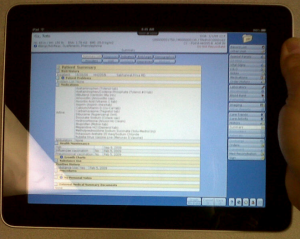
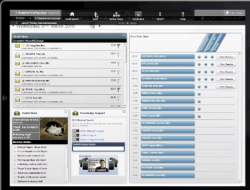
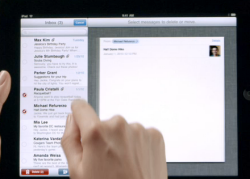
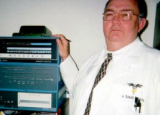
From Dr. M: “Re: Meditech. The iPad runs Meditech using the Citrix connector.” Dr. M supplied the photo above. Another reader cautions that just because apps run in Citrix Receiver shouldn’t be construed to mean that vendors have released specific iPad clients or, until they do, that the Citrix versions are fully usable. The reader says some apps look good and navigation is OK, but typing is slow on the on-screen keyboard.

I’ve confirmed a couple of reader-reported rumors. You’ll Know Who reported yesterday that McKesson Provider Technologies had replaced Sunny Sunyal as president with McKesson Automation’s Dave Souerwine, which was confirmed today on the MPT site. In the Cheap Seats told you on March 29 that Merge Healthcare had acquired anesthesia EMR vendor Docusys, which I’ve finally confirmed through independent sources. Thanks for those reports!
Greenville Hospital System goes live with SabalRx, which routes medication orders to the proper dispensing location and technology based on location. I’ve never heard of Sabal Medical, the press release isn’t very good, and the “About Us” on the company’s Web page doesn’t say who “us” is, so that’s all I know.
Listening: Material Issue, long-defunct Chicago-based power pop.

This sounds like a bad idea: Medical College of Georgia will consolidate management with its hospital and physician group, with the just-hired college president (a doctor and scientist) also serving as CEO of MCG Health. The college’s CFO and CIO may also serve dual roles.
A New York Times article lists the downside of electronic medical records: odd computer placement in the exam room, the need to type instead of listen, an overwhelming amount of information for the doctor to review (like “having a 2-year-old in the exam room”), difficult to use systems that were designed for charging and not treating patients, and the failure of those systems to convey complicated information in an easily understood “story” form.
Another blow to iSoft and NPfIT: northern trusts scheduled to implement iSoft Lorenzo can now opt out and instead run McKesson’s Totalcare instead, courtesy of a new $55 million contract signed last week. Three of the trusts will stick with McKesson Star for some time. Reader UKMaxPaying thinks Cerner may be well positioned to take advantage of the mess and also calls attention to another Lorenzo go-live delay at Morecambe Bay, rumored to have been rescheduled from early May to the end of May.
Sage Healthcare is sponsoring the Texas Health Information Technology Summit, which started Thursday in Dallas. Everything you need to know about the agenda is contained in the prominent explosion-shaped graphic that says, “Learn how to get your $44,000”. I know a handful of the speakers, but not most.
CPSI announces Q1 numbers: revenue up 4.7%, EPS $0.27 vs. $0.37, missing analysts’ expectations and its own estimates.
The Huffington Post Investigative Fund continues its coverage of electronic medical records. In an article on patient harm, it cites 18 voluntary reports to the FDA involving Cerner software, one of which involved a patient death after “an unplanned hospital wide CPOE and electronic record breakdown.” A second article calls attention to a lack of FDA oversight, with its example being a GE Healthcare imaging system that reversed the patient’s image, causing the surgeon to operate on the wrong side. It concludes that a new oversight group might be formed by ONCHIT, with providers held accountable for reporting problems as a condition of receiving stimulus money.
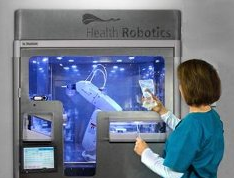
Italian vendor Health Robotics says it’s now the largest American IV robotics vendor after signing 15 new contracts for i.v.STATION, i.v.SOFT, CytoCare, and i.v.Room of the Future as well as some beta contracts with big-name hospitals like Brigham and Women’s, Cleveland Clinic, Duke, and MD Anderson.
Jobs: Allscripts Consultant, Integration Engineer, Senior Product Marketing Manager, NextGen Consultants.
The Birmingham paper profiles MedManagement, a 110-employee local company that offers advisory services and software, now offering Medicare admission help to hospitals. I like the poster in the background of the CEO photo, titled “Between a RAC and a Hard Place.”
Harvard-affiliated Massachusetts Eye and Ear Infirmary alerts several thousand patients that a laptop containing their information was stolen from one of its doctors who was lecturing in South Korea. They were able to detect it through its LoJack “phone home” feature and determined that someone installed a new OS without the software needed to read the information. They then sent a LoJack command over the Internet to trash the laptop’s hard drive. That’s pretty cool, although they still should have used encryption.
Strange: a British doctor labeled as a “Jekyll and Hyde” drives 800 patients away from his practice in four years by being rude to them during surgeries and focusing on his computer instead of them during consultations. And in this hardly shocking development: his wife, also his practice manager, was equally rude to his employees.
Reuters reports that WellPoint, the country’s largest health insurance company, uses software to target newly diagnosed breast cancer patients for the purpose of finding excuses to cancel their medical insurance.
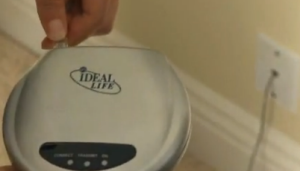
Ideal Life, a Toronto company, says its wireless home monitoring devices (blood pressure, scales, blood sugar) are the first that are easy and affordable for remotely managing chronic disease, establishing two-way communication between patients and providers that can include motivational messages or tips. That along might not have earned the company an HIStalk mention, but this did: the CEO’s prior job involved the company that sells Teddy Ruxpin and Funoodles.
The outgoing CEO of Sage will get a $32 million parting gift.
HERtalk by Inga
From NoPie: “Re: Cerner. I am a Cerner employee. I would like to point out that the McKesson Diabetes Initiative posted on the website yesterday is somewhat old news when compared to what Cerner has been providing for free for many years. There is no place I would rather be able to call home for my career. While others may read this e-mail and consider me just another person drinking from the ‘Cerner Kool-Aid’, we really are devoted to promoting a change in what Neal likes to call ‘the middle’ of healthcare.’ How refreshing to find someone from the vendor world who is willing to stand up and say they are passionate about their employer. I happen to like Kool-Aid every once in awhile, as long as it’s made with real sugar. I see on the Cerner Web site details of their Cerner Diabetes Initiative, which pledges to invest $25 million over 10 years for an online diabetes management tool for diabetic children. And, the Cerner-founded First Hand Foundation is a 15-year-old program that provides assistance to children with health-related needs. To date, the foundation has given $12 million in funds to children across 70 countries. Big kudos.

Allina Hospitals and Clinics (MN) selects Language Access Network to provide video language interpretation services to 11 of its hospitals.
University Hospitals (OH) launches Siemens Soarian Financials at Case Medical Center, completing University’s enterprise-wide deployment.
Edwin Miller, formerly with Artromick and athenahealth, joins Curaspan Health Group as VP of product management, along with three new sales executives.
Quality Systems, the parent company of NextGen, shuffles the roles of several executive leaders. Tim Eggena moves from executive VP of NextGen Practice Solutions to the newly created role of executive VP of R&D for NextGen’s ambulatory products. Monte Sandler takes over as EVP of Practice Solutions after serving as NextGen’s VP of account management. Finally, Donn Neufeld is now EVP of EDI for NextGen and QSI, in addition to SVP and GM of QSI’s Dental unit.
Kentucky Governor Steve Beshear announces the official launch of the Kentucky Health Information Exchange (KHIE), which currently connects six hospitals and one clinic. The Kentucky Department for Medicaid Services will also begin data exchange with the facilities.
Robinson Memorial Hospital (OH) selects Eclipsys Sunrise Enterprise as its integrated EMR solution.
Cullman Regional Medical Center (AL) will deploy MedAssets’ revenue cycle solutions for its 145-bed facility.
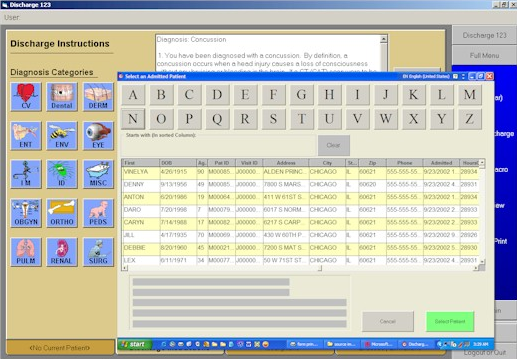
EDIMS will incorporate Callibra Inc’s Discharge 1-2-3 solution into its ED EHR product.
Harris Corp wins a $72 million contract to update the VA’s billing and collection operations.

University Health System (TX) implements InfoLogix’s HealthTrax mobility solution for its hospital and 20 clinics.
Brandeis University starts an online master’s degree program in health/medical informatics.
McLaren Health Care Corporation (MI) contracts for McKesson Paragon. PHNS will implement six more of McLaren’s hospitals, adding to the two already running Paragon.
Researchers from Henry Ford Hospital release details on their use of electronic medical records during last year’s Detroit Free Press Marathon. Using laptops and a Web sites, medical team members were able to coordinate patient care in real time, as well as help family members locate injured runners. Researchers say the solution also provides data to identify injury patterns and thus improve preparations for other large sporting events. There’s got a be a clever pun to tie the Ford/EMR/road race thing together, but it’s just not coming to me.
Franciso Partners expands its HIT holdings, making a significant capital investment in T-Systems. Founders Woodrow “Woody” Gandy, M.D. and Robert Langdon, M.D will remain on the board, with FP operating advisor John Trzeciak taking over as president and CEO. The company also owns QuadraMed, Healthland, AdvancedMD, and API Healthcare.
EMH Regional Healthcare System(OH) selects Allscripts EDIS for its three emergency rooms.






















































The news about AHRQ is very unfortunate. The AHRQ staff were always excellent to collaborate with. They had an impressive…