Recent Articles:

Monday Morning Update 10/22/12
October 21, 2012 News 13 Comments

10-20-2012 9-30-04 PM 10-20-2012 9-30-49 PM

From MyWay or the HyWay: “Re: Aprima. I hear that Allscripts is upset that Aprima is offering MyWay customers a free conversion to Aprima. I don’t understand the situation there.” Unverified, but that’s surely the case. Here’s some history for the industry newcomers. Misys was a train wreck in 2007, a clueless British company stuck with a bunch of badly aging practice EMRs that could not compete with newer, better, and cheaper competitors that were flooding the small practice market. Instead of developing a new product, Misys took the questionable step of paying iMedica for the source code to its EMR product in a non-exclusive agreement that allowed each company to do its own development going forward, with Misys relabeling its copy as MyWay and selling it through resellers instead of the traditional sales channel. The relationship got ugly, with all kinds of legal actions and maneuvering.

Misys then merged with Allscripts in 2008, its old HealthMatics EMR product was renamed Allscripts Professional, and iMedica changed its name to Aprima in 2009 (for a first-person historical snapshot, see my 2008 interview with Aprima CEO Michael Nissenbaum and my 2010 interview with Glen Tullman and the since-departed Phil Pead from Allscripts.)

Fast-forward to 2012: Allscripts tells customers it won’t enhance MyWay to meet ICD-10 or Meaningful Use Stage 2 requirements, but will support their continued use of their product as-is or convert them to Allscripts Professional for free. Aprima, sensing opportunity, offers those customers a similar deal to move to its product, which is a lot more like MyWay than Allscripts Professional (Aprima’s product isn’t ICD-10 or MU Stage 2 ready either, but the company has said those enhancements are on its roadmap.)

MyWay customers have four options:

  1. Keep using MyWay, realizing that while Allscripts support will continue to be available, the product is moving into maintenance mode with no planned ICD-10 or Meaningful Use Stage 2 capabilities. Practices that don’t need those enhancements don’t need to make any change at all right away. Historically, however, vendors usually don’t continue to indefinitely support maintenance mode products, so this option is realistically more of a decision deferral than a long-term strategy.
  2. Accept the rather generous Allscripts offer of a free conversion and no-change maintenance cost in moving to the arguably more comprehensive but also more complex Allscripts Professional. That’s a great deal on the surface, but with a caveat: even free EMR conversions to an entirely different product are painful and productivity-sapping, not to mention that the Allscripts conversion schedule is ambitious and they’ve previously struggled with even same-product upgrades (TouchWorks).
  3. Convert from MyWay to Aprima at no charge. The Aprima product should look and feel more like MyWay than Allscripts Pro. The switch involves signing up with a different company, which could be good or bad depending on how you feel about Allscripts as a vendor. I don’t know if Aprima has ever done a conversion of that type, but I would suspect they haven’t.
  4. Buy a competitor’s product instead of accepting a unwelcome migration to either Allscripts Pro or Aprima. That option makes sense only for a limited subset of customers given the effort and expense required for an on-your-own switch. However, kicking tires doesn’t cost anything, so some customers will probably at least explore competitive products, driving their sales reps crazy since “free” is a tough selling point to beat.

In comparing products, KLAS customer respondents score them about the same:

Aprima EHR 72.39
Aprima PM 71.58
Allscripts MyWay EHR 70.54
Allscripts Professional EHR 69.81

Aprima beats Allscripts significantly in the all-important “would you buy it again” number from real-life customers, which I consider to be the most important KLAS measure since it summarizes both the product and the company:

Aprima EHR 80 percent
Aprima PM 71 percent
Allscripts MyWay EHR 60 percent
Allscripts Professional EHR 60 percent

I’d want assurances from either vendor:

  1. How much productivity will you lose during the switch?
  2. Can you talk to reference sites that converted before yours? You don’t want to be the first one.
  3. What information will be converted automatically? “Conversion” is not necessarily a generic term.
  4. What’s the cost of any required third-party product licenses, hardware upgrades, optional maintenance costs, after-hours support availability, on site training if you think you’ll need it, etc.? Both companies suggest minimal changes, but I’d want that in writing.
  5. Will they guaranteed maintenance costs with limited escalation?
  6. Will they send you a sample project plan for the conversion?
  7. What if something goes wrong? Every factor that’s important to your practice should be covered by a contractual promise from the vendor and a contractual penalty if they fail to meet it.

I’m a cheap-seater on this issue, so comments from Allscripts and Aprima users are welcome.


10-20-2012 9-28-13 PM

From Now Seriously: “Re: Paul Levy’s Stockholm syndrome comments about Epic. For some reason in his mind, it’s a bad thing that Epic skated to where the puck was going and got there first with string of solid installs that are successful models for the industry. His poor judgment and lack of clear thinking must have helped him achieve the title of ‘former CEO’ and his blog’s title change to ‘Not Running a Hospital.’” Paul is certainly entitled to his opinion even when it’s uncharacteristically negative, but he (and the pedantic EHR-haters that posts like this one always attract) would carry more credibility with actual experience using Epic or any other commercially available product. It’s the height of arrogance to dismiss the first-hand opinions and experiences of hundreds of hospitals and thousands of actual users of Epic or any other clinical system by writing them off as collectively deluded, like a know-it-all nosebleed-section sports fan shouting out naïve advice to a professional athlete. Paul finishes on a wild tangent in predicting that any Epic error (of which the documented incidence is apparently zero) will cause “a bunch of Congressional committees to come down on the firm like a ton of bricks.” That didn’t happen with Cerner at UPMC Children’s Hospital, the homegrown CPOE system at Cedars-Sinai, or Eclipsys at El Camino Hospital, where IT problems definitely threatened patients. Or for that matter, at Paul’s former employer BIDMC, where a multi-day network outage in 2001 that included its homegrown EMR surely exposed its patients to harm. The crux of his message seems to be that someone should stop Epic’s domination of the hospital systems market (like their competitors, maybe?) and the FDA should regulate clinical software, which always elicits passionate, conflicting opinions about whether government intervention generally improves a given situation.  
10-20-2012 2-10-12 PM

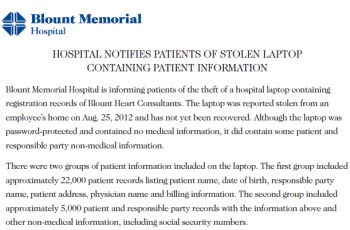
From HIPAA Girl: “Re: Blount Memorial Hospital. The Tennessee hospital’s stolen laptop contained information on 27,000 patients.” The laptop stolen from an employee’s home contained only basic demographic information. The hospital says the laptop was password protected, which usually means not encrypted.

From Virtual Virtuosity: “Re: copying and pasting of patient information in EHRs. Is Dr. Mostashari aware that this is how most EHRs work? Does HHS and ONC really expect providers to individually enter every piece of data from a clinic visit? We had a doctor join our practice from the same Kaiser office I used to work at. She had been using Epic for eight years and I asked her how she did it. She said it was initially hard, but she and most of her colleagues finally just made 20 templates and copied them for the vast majority of patients. EHRs from Epic and everybody else were designed to improve efficiency by copying and pasting. If HHS and ONC really expect providers to manually enter every piece of data from every patient visit, we’ll need double or triple the number of primary care providers to keep up with demand. That also brings up another point: as we read the rah-rah press reports about how Kaiser is a shining beacon on a hill for gathering and collecting data to improve healthcare, aren’t they just analyzing the same data constantly if their doctors are just using those 20 templates over and over? How does that reduce costs or improve efficiency?” My opinion is that providers have met every expectation as long as each patient’s EHR information is accurate. If HHS wants providers to craft innovative and individualized prose just for the sake of making every patient record pointlessly different, then they need to set a payment rate for creative writing. First they wanted discrete data, then they decided that what they really want is lots of plain text to assure them that they aren’t being defrauded since they are apparently powerless to determine otherwise. I’ve said it before: the reason that EHRs haven’t improved patient outcomes is because HHS and other payors have forced vendors to focus their development efforts on administrivia enhancements to meet needlessly complex payment requirements that have nothing to do with patients. You could develop a kick-butt EHR if you weren’t required to get bogged down in the Vietnam-like quagmire of billing documentation requirements that allows payors (Uncle Sam included) to avoid writing checks. Unfortunately, that situation is getting worse instead of better as the government insinuates itself even deeper into the practice of medicine. I bet you could design a really cool EMR for cash-only practices, except you’d have few prospects to sell it to.

From Minor Key: “Re: Michigan HIEs. Talk to providers and practices in the state and you’ll hear a different story. They’re realizing benefits now, with little jeopardy or delay in the HIE’s work toward the longer-term goal of interconnection.”

From Jock Ewing: “Re: FDA and biomedical system OS, antivirus, and software patches. This 2005 article says it’s a common ploy for vendors to tell customers that applying software patches would require re-approval by FDA. FDA has clearly said that this is not the case. The bottom line is that manufacturers are supposed to be validating patches and the only issue with getting that done is their willingness to dedicate resources to the task. It’s up to their customers to demand that they validate patches in a timely manner.”
10-21-2012 10-23-15 AM

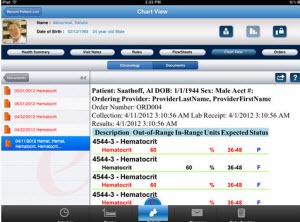
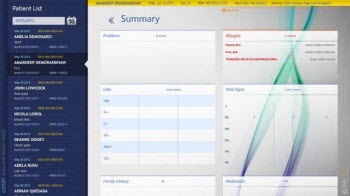
From The PACS Designer: “Re: busy week ahead. Both Apple and Microsoft plan to introduce new hardware and software next week. First, we hear from Apple on the 23rd with the expected offering of new smaller versions of their product line, and on the 26th we will hear from Microsoft on the introduction of Windows 8. Windows 8 is the big deal of the week because it is projected to be the key operating system that will replace Windows XP, and will be used in many upgrade efforts across all of industry, academics, healthcare, and home computing. One of the first apps in healthcare space will be Pariscribe’s Windows EMR Surface (above), which should draw some interest from practitioners.”

From LaRusso: “Re: Fast Company. Several pages on healthcare IT are in the current issue.” It’s mostly the usual oversimplified geek piece on how tiny software startups you’ve never heard of are going to not only disrupt healthcare IT, but healthcare itself because they have brash founders, a few thousand dollars of VC or incubator money, and cool Web pages. I don’t recall many industries that have been disrupted by apps or websites, other than retailers outflanked by competitors who started selling first via the Web, so I’m skeptical that most of these companies will even survive, much less single-handedly transform the highly profitable, political, and parochial healthcare system into a consumer-driven and transparent industry where good defeats evil. Companies get my attention once they hit $5 million in revenue since that’s the point where the concept has been validated, initial development and scaling has been completed, the organizational culture has been defined, and skilled management has been brought in to protect the VC’s investment from the managerial whim of the inexperienced founders. That’s when companies become worth writing about, if for no other reason than the strong possibility that some old-school company will just buy them outright, making the founders as rich as they’d hoped while usually ruining what they created.

Now that I’ve been predictably curmudgeonly in dismissing wide-eyed startups and their naïve faithful who really believe that every David will inevitably rise to defeat his personal Goliath, I’ll take my own counterpoint in reminding myself that I ran a successful series of profiles awhile back called Innovator’s Showcase that introduced several companies to the more traditional side of the industry that most of us work in. I want those small companies to innovate and succeed and that was my way of trying to give them a boost, choosing those that seemed to have predictors of success. Some of them have done quite well since then from all appearances. If your healthcare IT-related company is less than five years old, has sold your offering to real customers, and brings in revenue of less than $2.5 million from selling a truly innovative product or service, e-mail me and tell me why my readers should be interested — I might include it in future posts. Those companies I’ve showcased previously include Aventura, Caristix, Health Care DataWorks, Health Nuts Media, Logical Progression, OptimizeHIT, and Trans World Health Services. There’s work for both of us to do if you’re chosen, so don’t take it lightly.
10-20-2012 7-51-23 AM

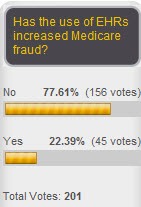
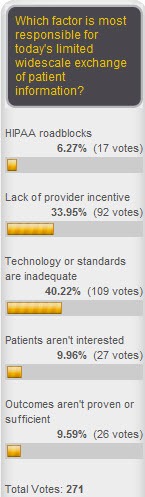
Widespread interoperability is limited because (a) technology or standards are limited, and (b) because providers have no incentive to share the data they keep. New poll to your right: does your PCP use Twitter for medically related tweets? I don’t really care so I wasn’t sure if mine did, but I’m guessing no since he doesn’t turn up in a Twitter search.

10-20-2012 10-10-42 PM

Welcome to new HIStalk Gold Sponsor HealthTronics, which offers a wide portfolio of urology-specific services (mobile lithotripsy, laser prostate treatments, cryotherapy, equipment services) that includes IT solutions such as its market-leading, urology-specific EHR used by over 2,100 providers seeing 18,000 patients daily and who have received more than $12 million in HITECH incentive payments. Its UroChartEHR and MeridianEMR were among the first EHR products to earn certification. Features include hundreds of templates and treatment plans specific to urology, pre-programmed urology terms, an easily understood user interface that requires minimal training and offers a one-screen patient encounter, PQRI, eRX, a sketch pad, device integration, built-in practice analytics and economics analysis, and remote access via iOS and the Web. HealthTronics joined Endo Health Solutions in 2010. Thanks to HealthTronics for supporting HIStalk.

10-20-2012 3-39-17 PM

Mrs. HIStalk dragged me to my once-a-year trip to the mall this weekend since I needed some new cooler weather clothes. I noticed that a Microsoft Surface kiosk is scheduled to open there shortly (in the mean time, it was serving as a place to deposit partially consumed cups of coffee and food court trash). The tablet is scheduled to ship on October 26, but pre-orders have sold out. Microsoft is getting killed as iPads have eroded sales of Windows-using PCs (Apple is the #1 PC maker in the world if you consider an iPad a PC as many consumers apparently do) and they need Surface to stop the bleeding. It comes in two versions: one that’s priced similar to the iPad running Windows RT (which has a micro-percentage of the number of apps as the iPad and a questionable apps ecosystem to compete with iTunes) and an expensive Surface Pro running Windows 8. I don’t see it making a dent in consumer iPad sales or even those of Android devices, but Microsoft’s one advantage over Apple is enterprise credibility. I would say their best chance for Surface success is that companies push off employees demanding to use iPads by offering Surface as an less-desirable but acceptable enterprise alternative. Otherwise, I expect few consumers to pony up $499 for a Surface RT tablet (not including the $100 keyboard) with they can get an iPad for the same money. If you can’t beat Apple on price, you’re screwed, because they own the customer experience.
10-20-2012 2-02-12 PM

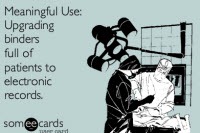
T-System is on a roll with its funny HIT-related e-cards.
10-20-2012 2-05-38 PM

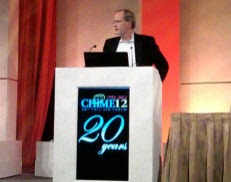
John Glaser of Siemens Healthcare wins CHIME’s lifetime achievement award. Above is a photo of the occasion taken by Ed Marx.

10-20-2012 2-08-03 PM

Also at CHIME, Ed Martinez, SVP/CIO of Miami Children’s Hospital, is awarded CHIME’s Innovator of the Year award.

A newspaper covering the highly publicized opening of the Massachusetts HIE provides a good reminder of where healthcare stands compared to other industries: “To those in fully automated industries, like banking, the state’s rollout of a new health information network last week must seem sadly behind the times … the experience can leave anyone who has ever used an Internet driven technology like Facebook or even simple email wondering just how exciting it can be to send one file electronically from one organization to another? Very exciting, say those in the health care profession.”

Athenahealth shares took a dive Friday as investors reacted to earnings that were improved, but increased less than expected following its Proxsys acquisition. ATHN closed at $73.31, down more than 8 percent to levels last seen in June. In the earnings call, Jonathan Bush blames Epic for extending the company’s sales cycles and a lowering its close rate:

They go out and sort of do some Bush Doctrine, saying, “In three years, we’re going to be live with this thing, and it’s going to slice and dice and bring world peace. You’re either going to be on it or not allowed in our hospital … you’ll be cut out of our ACO. You’re going to not be clinically integrated with us if you’re not on this thing.” … I believe that all of the banks in America may not be on one instance of one software, and yet all of us can stumble up to any cash machine we want and exchange information. It’s a ludicrous, pre-Internet idea.

El Camino Hospital (CA) provides most of the funding for a group that’s trying to defeat a November 6 ballot measure called Measure M, which would cap ECH’s executive compensation as a tax district-supported hospital. ECH’s CEO makes $700K and can earn a 30 percent bonus. The measure was proposed by the SEIU labor union, which says it’s less interested in that topic now since another bill has earned its undivided attention – one that would limit the ability of unions to raise money for political candidates.

Quite a few readers are fans of snarkmeisters The Onion and feel-good TED talks that tend to be long on inspiration but short on applicability, so here’s what happen when they meet. “I’ll be your visionary, and you do the things I come up with.”

The parents of an 8-year-old boy sue a Chicago hospital for pronouncing their son dead and taking him off life support for five hours until the patients insisted on a cardiac ultrasound that showed he was actually alive. Family members said doctors told them that the boy wasn’t actually opening and closing his eyes – it was just the medications he’d been given that made it look that way. The hospital says he really was dead, but they’re happy that his heart function returned spontaneously.


Sponsor Updates
10-20-2012 3-05-39 PM

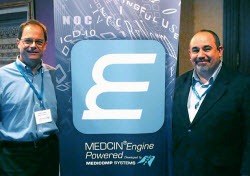
  • Medicomp hosted the two-day MEDCIN U for 32 EHR developers and vendors last week in Reston, VA, teaching attendees about integrating the company’s MEDCIN engine and Quippe into their applications. That’s Medicomp CEO Dave Lareau and Clinical Architecture CEO Charlie Harp above.
  • EHR vendor Prowess will use the OrdersAnywhere CPOE product from Ignis Systems for lab orders, results, and lab integration. OrdersAnywhere has been integrated with 120 lab and radiology systems and is being used to satisfy Meaningful Use Stage 2 orders requirements.
  • Quest Diagnostics announces that it has certified the first 20 EHRs under its Health IT Quality Solutions program that recognizes EHRs that share data with Quest’s clinical laboratory system. The full list is here.

Contacts

Mr. H, Inga, Dr. Jayne, Dr. Gregg.

More news: HIStalk Practice, HIStalk Mobile.

HIStalk Interviews Trenor Williams MD, CEO, Clinovations

October 19, 2012 Interviews Comments Off on HIStalk Interviews Trenor Williams MD, CEO, Clinovations

Trenor Williams, MD is is CEO and co-founder of Clinovations of Washington, DC.

10-19-2012 7-36-42 PM

Give me some background about yourself and the company.

I’m a family practice physician. I’ve been in healthcare for about the last 20 years and in healthcare consulting for the last 11, working with large IDNs and government organizations both in the US and abroad. I left a clinical practice that I loved at a ski resort in California because I truly believe that clinicians — and specifically physicians — need to have a role and be a part of the solution rather than just bystanders along the way.

I’ve had the opportunity to work with large management consulting firms like Healthlink IBM and Deloitte. Five years ago, with Anita Samarth, I started Clinovations as a collaborative, really a networking group of clinical leaders, CMIOs, CMOs, and operational leaders in the DC and Baltimore area. It was an opportunity for us to share our thoughts, solutions, and struggles, sometimes, with a bunch of like-minded individuals. 

In 2008, Anita and I started Clinovations as a clinically-focused advisory consulting firm,  working with IDNs, federal organizations, pharmaceutical companies, payer organizations, and technology vendors. I really believe that we’re at the intersection of healthcare and healthcare delivery. We act as integrators, translators, and guides between those multiple different groups.


Companies often have a clinical person or two on staff, but I don’t know of many large ones that are all physicians and clinicians. What do you do differently than you did for the firms you left?

When Anita and I started it, it was just the two of us. We’ve been able to grow the company to 100 employees and consultants, and 60 percent of those people are clinicians – physicians, nurses, physical therapists, and other clinicians. We’re fortunate that half of our team live here in the DC region, but we’re delivering work around the US. 

Because of our clinical focus and our understanding of care delivery, clinical workflow, and the impact of technology, we believe that that practical on-the-ground experience is unbelievably valuable for our partner clients who are going through some of the most diverse and challenging experiences from a healthcare delivery standpoint. We have healthcare executives, CMIOs, CIOs, practicing physicians, hospitalists, emergency medicine doctors, nurse executives, management consultants, and trained researchers all together. I truly believe that that combination of skills helps us focus on the strategic for our clients, but then roll up our sleeves and provide on-the-ground tactical support to execute the approaches that we help them develop.


There’s mixed opinion on whether software vendors adequately use clinicians in roles where they can be valuable. Are they as good at using their clinicians as Clinovations?

I think that’s a “depends” answer. Many of the software vendors have a really nice focus with clinicians. I see them used in three ways.

One is from a technical development standpoint — software development. Another is sales, so demo docs and demo nurses. The third is management consulting and helping with clinical engagement and delivery. The vendors that use physicians specifically and nurses in those positions do well.

My experience has been that they don’t have the bandwidth to do it for all of the clients that they would like to. We’ve been able have some really nice relationships with vendors and have been able to partner with them to provide some of that clinical leadership.


Most of the people running vendor companies came from the sales side of the organization instead of having a technical or clinical background. Clinicians may take a vendor role not knowing that in some companies, the focus is going to be on selling and implementing product rather than worrying about the clinical considerations after it’s live.

I couldn’t agree more. Where clinicians want to make an impact is on the care delivery side. Whether you’re at a vendor, a consulting firm, an IDN, or in a practice, it really is about how you effectively use that technology, and ideally, how we deliver better care at an individual level and for populations of patients. For us and our  vendor partners, that’s our goal — how can we help organizations design a system and design processes to deliver better care at the end of the day?


You worked on a medication clinical decision support book that HIMSS published. What were some of the findings that came out of that?

There are several. Jerry Osheroff did a great job of organizing a large number of individuals to help support the most recent book a few years ago.

One is helping to make sure that organizations have governance. I don’t mean an organizational structure, but truly a way to prioritize their decision making and then formally and structurally think about how they’re going to get value from the decision support that they use. I don’t think that that is common. It’s easy to fall into the trap of looking to an alert or a reminder as the solution in electronic health records for a specific disease or a group of patients.

Jerry and the other authors, I believe, would agree that if you start with which questions you’re trying to answer and problems you’re trying to solve, prioritize your decision support and whether that links to evidence — whether it’s patient education or provider education materials — and then as a last resort use an alert or reminder to help a provider at the point of care, you can develop a comprehensive solution to treat that individual patient better and that type of patient better as well.


Do you think that consideration of the evidence and attention to the content usually happens after go-live because nobody wants to hold up the go-live to build it upfront?

I think that there is some focus prior to go live. One of the things that we’ve been able to do is focus a lot on evidence-based content development – specifically, order sets or Interdisciplinary Plans of Care (IPOCs) — and develop those ahead of time.

I think in some respects, clinical content development is like a Trojan horse for a clinical engagement. One of our most recent clients had over 1,000 clinicians involved from seven different hospitals to develop over 350 evidence-based order sets in a 10-month period. That’s unusual, but I also that that focus leads to developing the foundation for them to move forward. To have gotten that many clinicians — physicians, nurses, pharmacists, therapists — involved in a process also was a great way to get them engaged in the project.


I would think that a lot of your future stream of work will come from that optimization, when the bolus of hospitals that have gone live in the past two years or that will go live in the next two years will need to use that platform to get the expected benefits, meaning they’ll need to move to practices that are more evidence based.

Three things there that you said. One is optimize. I think you’re exactly right, especially with the acceleration of implementations around the country. The expectation, and from the vendors as well, is that if you just get it in, you can optimize later. We think that organizations have to have a structured plan around that. It’s not just going to happen on its own. But you’re right — the opportunities to help organizations optimize the technology, their workflow, and the reporting will be unbelievably important.

The other thing that you said was value — getting value from these implementations. We expect and are seeing boards, chief executives, and chief financial officers asking about the return on investment from these implementations. When I say return on investment, I mean clinical, financial, and operational return on investment. That work is going to have to happen after the implementation, even if you build the foundation from the beginning. 

The third really is around what do you do with the data, thinking about analytics. There are plenty of folks that talk about big data, but for us it’s how organizations effectively utilize the data, review it, analyze it, and then help change the way that they deliver care dynamically. 

I think all three of those things are going to be really important as we move forward.


Organizations need both the IT capability to get systems in and also the relationship with clinicians to be able to ask the to change the way do business, which is why they bought the system in the first place. How hard will it be for the average hospital to convince physicians to change just because they have data suggesting they need to?

I think it can be challenging. One of the ways to counteract that is having clinicians involved from the beginning in systems design, evidence-based content development, evaluation of clinical workflows, review of training materials, and design of support plans. Engaging clinicians, helping them, and helping the implementation process be done with them and not to them is a huge piece of it. But even as you do that, there will be a large number who won’t be involved in that process.

Then it becomes after the fact. What’s in it for me? It goes back to that idea of return on investment, even on an individual clinician level. Clinically, how can you help me take better care of my patients, whether that’s providing evidence at the time of care or helping me looking at a population of patients? Operationally, how can you help me be more efficient?

The last thing I want to in an ambulatory practice is to spend an extra two hours after my busy clinic going back and documenting in the electronic record, or in an inpatient system, having to round on countless patients. How can you help improve that workflow, leveraging and utilizing technology to support better interaction and communication with all the different stakeholders?


When you’re called into a hospital to consider an engagement, what are some warning signs that things won’t go well?

If it’s only an IT department – CIO or director of IT leading the project– that we’re meeting with, that’s an immediate red flag. I believe that successful implementations are a partnership between IT leadership, operational leadership, and clinical leadership. That would be one of the first ones.

The second is evaluating and understand the experience of their team. Many times an organization’s folks on the ground are going through this for the first time. They don’t have experienced leaders — I’m not talking about outside consultants necessarily — but if they don’t have experienced leaders and project managers who’ve been through the trials and tribulations before, that’s usually a red flag. 

Thirdly, how much involvement does the vendor have? A lot of these vendor contracts are different, but I think the most effective vendors have truly become partners with the health systems, providing the right level of assistance — not nickel and diming their health system and practice clients.


Do you think the CPOE battle has been won?

I think it’s more of a war. I think some of the initial battles have been won, but I also think that there’s a long way to go. I think the expectation for physicians will appropriately continue to increase. 

Having physicians place orders electronically, we’re seeing consistently — and I think we as the industry — right above 90 percent in most places now. I think the systems are getting better and providing more efficiencies, but there’s still a lot of room to grow. The more that we implement these systems, the higher the expectations are going to be from our physician partners out there in the field.


What are some surprising or fast-moving trends you’re seeing that you wouldn’t have predicted a year or two ago?

Starting to think about how we leverage different technologies to support the continuum of care. This has been a real change in the last 12 to 18 months . The shift from just thinking about “my practice” or “my hospital” to now having to proactively think about the care that’s going to be delivered outside of my four walls. How do we start to leverage technology to support those improved communications — whether that communication is to an outside specialist, a primary care doc,  to patients or caregivers, or home health organizations — and helping to leverage some really new, innovative tools to do that.

I think the other interesting one has been the collaboration of differing partners — health plans, insurance companies — setting up NewCos with IDNs to provide and leverage some of the tools that they have to provide better care across the continuum. Pharmaceutical companies partnering with IDNs and analytics companies to look at public health management and how they can better support a large population of patients and pharma helping to support that. We’ve been fortunate to do that work with a couple of top organizations around the country, thinking about how you manage a population of patients and leverage technology to do that differently.


Do you have any concluding thoughts?

The world and the landscape of healthcare is changing so dynamically right now. We know that our clients are facing more and unmet challenges than they ever have before. We think it’s important to treat our clients like partners. We end up saying “we” more than “they.” 

We are passionate as individuals and as a company. I take pride in the work that we do and understand the responsibility that goes along with that. Our goal is to think strategically yet practically and deliver creative solutions. I’m proud of the team that we have in place and the work we’ve been able to do with our partners around the country.

Comments Off on HIStalk Interviews Trenor Williams MD, CEO, Clinovations

Time Capsule: How the Layoff Grinch Stole Christmas: Clueless Management 101

October 19, 2012 Time Capsule Comments Off on Time Capsule: How the Layoff Grinch Stole Christmas: Clueless Management 101

I wrote weekly editorials for a boutique industry newsletter for several years, anxious for both audience and income. I learned a lot about coming up with ideas for the weekly grind, trying to be simultaneously opinionated and entertaining in a few hundred words, and not sleeping much because I was working all the time. They’re fun to read as a look back at what was important then (and often still important now).

I wrote this piece in January 2008.

How the Layoff Grinch Stole Christmas: Clueless Management 101
By Mr. HIStalk

mrhmedium

You had a pretty good holiday, I bet. Lots to eat, good company, and that slow, post-Christmas week to revitalize (even if you were “working” … wink).

Some industry folks didn’t enjoy it. They found lumps of coal in their stockings. Actually, it was pink slips, courtesy of Scrooges in suits who laid them off right before Christmas.

I’ve both given and received the “your position has unavoidably been eliminated” speech. Neither was enjoyable. Losing a job (and taking one from someone, for that matter) is shameful and energy-sapping. You head home in a nauseating haze, pitiful work belongings in the trunk, trying to find the right words to tell your significant other and maybe your kids and your parents. Imagine doing that right before Christmas. False cheer and optimism abounds, at least until the stark winter sun goes down early and the panic sets in all over again.

Companies hand-pick employees to march out, of course. The official excuse is that the outstanding managers have skillfully discovered duplication and cancellable projects, leaving nothing but good times ahead once the unfortunate smoke has cleared.

Here’s how it really works. Some manager’s budget or sales projection proves to be wildly inaccurate. Nobody can come up with anything better than payroll cuts. The suits draw up a list of employees who appear to be unproductive, whiny, or rebellious, using the chance to make up for previously unaddressed problems. Extra points are assigned if the victim doesn’t seem like the sort to argue, sue for discrimination, or return with armament (the worst part of being laid off is realizing that management put you in the same league as those losers who got axed with you.)

Only shareholders and competitors love layoffs. Great management and sound strategic planning seldom involves headcount-cutting your way to profitability. Before you know it, quality slips a notch, cheaper but less experienced workers are hired, and management hunkers down to desperately manage one quarter to the next.

I’d buy a toaster from a company like that. Maybe toothpaste. Probably not multi-million dollar enterprise software where the future value of support and R&D has been built into the large upfront cost.

How a company handles layoffs tells you a lot about its competence and humanity. To do it right:

  • Don’t use layoffs instead of setting and managing performance expectations.
  • Cut the use of contractors and consultants first.
  • Do it quickly, fairly, humanely, and not during November or December (duh).
  • Don’t hide on Mahogany Row before, during, or after.
  • Explain to the survivors how you’ll avoid doing it again.
  • Sacrifice management’s bonuses and perks since they’re the ones who failed.
  • If you have to lay people off more often than once every two years, lay yourself off and bring in better management.

For employees, layoffs are the new reality. We’re all contractors. Sometimes you get insurance and a badge with your name on it, but nobody’s getting the gold watch. So, think like a contractor:

  • Immediately start looking for another job if your company violates any of the rules above.
  • Keep your skills current, on your own time if necessary.
  • Keep up with the industry, make contacts, and market yourself to find the next gig.
  • Invest your money and try to develop secondary income stream so you aren’t one employer’s paycheck away from a financial crisis.
  • Don’t neglect any of the above to work massive hours thinking that your loyalty will be reciprocated.

I worked the bluest of blue collar jobs during summers in college (I wore a hard hat and a uniform with my name on the pocket). The militant union ran the show, but one of its bigwigs told me in confidence, “Workin’ man don’t need no union.” I’d like to update his wise words with this century’s version: “Workin’ man or woman don’t need no permanent employer.” Defer your gratification at your own risk … there are lots more coal-bearing Grinches out there, but lots of opportunities as well.

Comments Off on Time Capsule: How the Layoff Grinch Stole Christmas: Clueless Management 101

News 10/19/12

October 18, 2012 News 3 Comments

Top News

10-18-2012 6-22-53 PM

AirStrip Technologies wastes no time in filing a lawsuit claiming that clinical mobility vendor mVisum is violating its remote monitoring patent, awarded September 11, 2012. Travis wrote about the patent on HIStalk Mobile at that time, musing about its potential effect on innovation against the backdrop of Apple’s $1 billion patent victory over Samsung. Travis said:

There isn’t an answer yet as to exactly how this patent will protect AirStrip or how it will affect other mobile health vendors developing solutions to enable remote, mobile viewing of physiologic data by providers. As a methodology patent, can AirStrip use it to protect the experience of viewing a EKG, zooming into specific leads, accessing relevant additional data at the at point in time? … It’s interesting to consider the potential of a company’s defining and protecting the experience of mobile patient data viewing. As we start to see more intuitive user experience design for providers, will a standard emerge and can it be protected, enabling a patent holder to require licensing of the its patents to mirror the user experience?


Reader Comments

10-18-2012 3-14-00 PM

From Iguana: “Re: MED3OOO leadership conference. I was pleased to hear McKesson exec Pat Leonard suggest that InteGreat may be the go-forward ambulatory EHR product for hospitals implementing Paragon. Another highlight was former Highmark CEO Kenneth Melani, who provided a terrific synopsis of healthcare reform and where it’s heading.” The MED3OOO folks say several hundred clients participated in last week’s National Healthcare Leadership Conference and Users Meeting in St Thomas, USVI.

10-17-2012 4-09-12 PM

From Ms. Kravitz “Re: HIStalk’s Must See Vendors for MGMA 12. How do vendors get on this list?” The“Must See Vendors” lists for MGMA and HIMSS includes those HIStalk, HIStalk Practice, and HIStalk Mobile sponsors who chose to be included (there’s no charge) and provided exhibit information. The MGMA list includes over 50 vendors. Most of them will have a booth on the exhibit floor, while a few others aren’t exhibiting but will have people available for one-on-one meetings.

From F. Jackie: “Re: LogiXML fake 1960s TV commercial. Totally cheesy, but I needed a good laugh and it delivered.” I like it.

From Awkward Debates: “Re: degrees. I’m considering a post-grad education and wonder how the industry, particularly the vendor side, views degrees. MBA? Health informatics? Finance?” Vendor side, I’d go with an MBA unless you’re interested in sales or the executive ranks, in which case degrees (advanced or otherwise) matter little and many folks in the job don’t have them. Health informatics is a good advanced degree or certificate program, but less useful if you don’t already have a clinical degree to pair it up with. My experience is that if you have good qualities (ambition, smarts, relevant experience) and make early connections then a degree doesn’t matter all that much, especially the higher you go up the ladder, and there aren’t many cases where the degree itself is going to get you a job that you couldn’t get otherwise except in technical areas. Personally, I’d say an MBA was my best investment, but the one I admire the most in healthcare specifically is an MPH plus a professional degree (physician, nurse, pharmacist, PT, etc.) We’re going to need public health expertise since you can’t fix healthcare while ignoring health.

From Academic CIO: “Re: Allscripts protest of NYHHC’s Epic selection. We had a similar experience with Cerner. After losing on all counts, including price (Cerner’s five-year cost of ownership was twice Epic’s), Cerner had the audacity to aggressively pursue a Freedom of Information Act request for all of our e-mails, notes, meeting minutes, and Epic-supplied documents in an obvious attempt to get competitive information on Epic. At the end of day, we didn’t have to give it them, but it cost us a great of taxpayer-supplied resources to comply with their request. This was one of many attempts they made to circumvent the selection process. I would never do business again with them under any circumstances.” As I wrote previously, it’s a high-reward, high-risk strategy for a vendor to try to force itself on a customer who prefers a competitor’s product. Maybe you get a desperately needed new client and keep Wall Street off your back for one quarter, but who’s going to invite you to bid in the future knowing your history of being a sore loser?

10-18-2012 7-08-59 PM

From In the Know: “Re: Arcadia Solutions and the Azara Healthcare spinoff. The Pohlad family will sell them to a private equity firm, with the deal expected to close November 1.” Unverified. Arcadia is a consulting firm, while Azara offers analytics. The Minneapolis-based Pohlad Family Companies, which made its founder one of the richest people in America, bought Arcadia in 2007, adding it to holdings that include the Minnesota Twins, real estate, car dealerships, and banks.

10-18-2012 8-25-14 PM

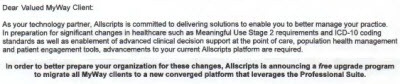
From Oh MyWay – Dust in the Wind: “Re: MyWay. Here’s the Allscripts letter sent to each MyWay client with the grim confirmation. Interesting that the letter wasn’t from Glen, but rather Laurie McGraw. I guess he has bigger issues trying to find a buyer for his company.” It’s a good deal (free) for those MyWay customers who want Pro, but it’s anybody’s guess as to the percentage of MyWay customers in that camp, not to mention that changing systems is always tough. Allscripts says everybody will be upgraded from January to September 2013, which seems ambitious given the tendency of practices to delay until the last minute. I’m curious: if you attended ACE in August, what was said about MyWay then? I assume MyWay clients weren’t forewarned even though Allscripts surely had already planned its strategy. Given that Allscripts says MyWay isn’t ready for Meaningful Use Stage 2 or ICD-10, what were customers led to expect? Still, it’s probably a good decision – Inga asked Glen Tullman an insightful question when she interviewed him on HIStalk Practice in April 2010:

It seems almost as if Allscripts really has two businesses, one that’s focused on the selling the inexpensive MyWay option to small practices through resellers and the other focused on selling to the large, integrated delivery networks and hospitals that subsidize the small practices and offering them the Allscripts EHR products. Explain the strategy and tell me how you avoid channel conflicts.

From Lady Pharmacist: “Re: National Health-System Pharmacy Week next week. It’s time for the annual shout-out to pharmacists and pharmacy technicians, who from an IT perspective are helping their organizations attest for Meaningful Use, closing practicing gaps, and helping with medication-related safety initiatives related to CPOE, medication reconciliation, barcode medication administration, and e-prescribing.” Consider it shouted out.

From Patty Melt: “Re: HIEs. This article from Crain’s Detroit reminds me of the Rodney King line – can’t we all just get along? Do you ever wonder what the cost to society is for lack of consensus and cooperation?” The article says that the state’s two biggest HIEs (Great Lakes HIE and Michigan Health Connect) are competing to become the statewide exchange and aren’t sharing patient information with each other. The CEO of Oakwood Healthcare says they’re happy with Epic and not interested in joining an HIE until there’s just one because they could connect with one that won’t survive. Beaumont, also on Epic, said the state needs to get more involved but healthcare reform will force information exchange in any case.


HIStalk Announcements and Requests

inga_small Highlights from HIStalk Practice this week include: Mount Sinai Queens (NY) implements Epic at its ambulatory care locations. MED3OOO and SRS provide updates on their user conferences. Patients who are comfortable accessing and understanding their health information online will use PHRs more willingly. A REC advocacy organization defends the Meaningful Use program. CBS Morning News profiles a pediatrician’s use of social media. Dr. Gregg ponders whether HIT is becoming passé. And as mentioned above, our HIStalk Must See Vendor Guide for MGMA12 is a must-read for anyone heading to MGMA in San Antonio this weekend. Nothing says I love you like a gift of Lucchese cowboy boots (since I am Texas-bound) or your e-mail address for our HIStalk Practice updates. Thanks for reading.

inga_small Speaking of MGMA, I will be posting conference updates starting Sunday night or Monday morning (depending, of course, on the quality of the Sunday evening parties.) Our exhibiting HIStalk sponsors will have signs indicating their support of HIStalk, so please take a moment to tell them thanks on our behalf. If you have any suggestions for sessions or exhibits I should peruse, let me know. Please also take a moment to share any conference comments you might have, as well as your photos. See you in San Antonio! E-mail me.

10-18-2012 7-23-57 PM

I was initially startled and then pleased to receive this HIStalk sponsorship announcement at my hospital e-mail address. I finally realized that it went out a broad audience, not just me. Inga got one too, and we agreed that it’s nice when a sponsor is publicly proud of supporting our work (as most seem to be). It made our day.

10-18-2012 7-55-12 PM

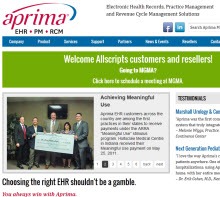
Welcome to Aprima, sponsoring both HIStalk and HIStalk Practice at the Platinum level. The company offers a certified, fully integrated, single application, single database EHR/PM solution along with RCM services. The template-free design is chief complaint-driven with adaptive learning capability. The company, which has a 14-year track record, is offering a timely deal (free license and data migration with a signed support agreement) to users of Allscripts MyWay, for which it provided the original code in 2008. A partial list of the nearly 1,000 enhancements Aprima has made to the product since then is here. MyWay customers and resellers can connect with the Aprima folks at MGMA next week or AAFP this week. Thanks to Aprima for supporting HIStalk and HIStalk Practice.

10-18-2012 9-15-50 PM

Welcome to new HIStalk Platinum Sponsor SuccessEHS. The Birmingham, AL-based company offers a Certified Complete EHR and PM that it says can prepare practices for Meaningful Use within 60 days, not to mention that its clients experience an average 11 percent in visit increases and a 19 percent increase in collections in the first six months. The company has been in business for 15 years and is profitable and debt free, with 425 clients and 4,200 providers. Calling support gets you an in-house employee sitting in Birmingham. They’ll be at MGMA next week, also presenting the results of their new practice survey on maximizing revenue. They’re also offering a white paper on healthcare reform (e-Prescribing incentive, Meaningful Use, ICD-10, PQRS). Thanks to SuccessEHS for supporting HIStalk.

I always hit YouTube to see what a new sponsor has out there, so here’s an introductory video from SuccessEHS.

Listening: new from Brooklyn-based Woods, sometimes labeled as folk, but to my ear is more 1970s-influenced trippy, jangly guitar rock with lots of hooks and thoughtful lyrics. I liked it even from the first listen. Best song to me: “Find Them Empty,” featuring wailing psychedelic guitars and keyboard work that could pass for paisley ‘70s bands like Strawberry Alarm Clock or Vanilla Fudge.

On the Jobs Page: Product Manager, Regional Sales Executive.


Acquisitions, Funding, Business, and Stock

10-18-2012 9-47-41 PM

Athenahealth reports Q3 numbers: revenue up 26 percent, EPS $0.30 vs. $0.24, falling short on revenue expectations. Shares are down 3 percent in after hours trading.

Microsoft’s Q1 numbers: revenue down 7.9 percent, EPS $0.53 vs. $0.68, missing earnings estimates on continued weakening in PC demand and a corresponding drop in Windows sales.

Shares in Google dropped precipitously Thursday when the company’s financial printer filed its 8K report in the middle of the trading day instead of after hours as intended. Trading in GOOG was temporarily halted, but shares still ended up down 8 percent at the market’s close because of slowing revenue growth.

Trinity Health and Catholic Health East announce plans to merge, forming a new system with annual operating revenues of about $13.3 billion and 87,000 employees. Trinity’s president and CEO Joseph R. Swedish would head the new organization and Catholic Health East’s president CEO Judith M. Persichilli would be EVP. The organizations anticipate reaching a definitive consolidation agreement in the spring of 2013.


Sales

Australia’s UnitingCare Health will implement Cerner at the recently-opened St. Stephen’s Hospital, which claims it will be the country’s first digital hospital.

The 60-provider Mid Dakota Clinic (ND) selects athenahealth’s EHR, practice management, and care coordination solutions.

10-18-2012 10-10-02 PM

Wenatchee Valley Medical Center (WA) chooses Merge’s iConnect Enterprise Archive.

The University of California, Irvine Medical Center, will deploy MModal Fluency Direct and MModal Catalyst integrated with Allscripts Sunrise Clinical Manager.


People

10-18-2012 5-42-37 PM

RCM and consulting services provider Cymetrix names Jeffrey Nieman (Accelion) SVP of remote operations.

10-18-2012 5-44-12 PM

Alan Fowles, managing director of Cerner Europe and overseer of the first Cerner NHS installations, resigns after 11 years with the company.

10-18-2012 5-45-26 PM

RCM provider Office Ally names Daniel Wojta (United Healthcare) director of eSolutions and business development.

10-18-2012 5-46-34 PM

Health First (FL) appoints Lori DeLone (PatientKeeper) SVP/CIO.

10-18-2012 11-08-33 AM

Mobile PHR provider Cognovant hires Andrew Lambert (Press Ganey) as EVP of business development.

10-18-2012 11-13-41 AM

Lynn Danko (Lawson Software) joins Amcom Software as CFO.

Ambulatory surgical center and rehabilitation clinic software vendor SourceMedical announces the resignation of CEO Larry McTavish and the promotion of Ralph Riccardi from EVP/COO to president and CEO. The company announced last month that PE firm ABRY Partners had made a significant investment.

Standard Register promotes John King from VP of sales to president of Standard Register Healthcare. He replaces Brad Cates, who is leaving the company to serve as CEO at another company.


Announcements and Implementations

Omnicell and Cerner will develop interoperability between their products using CareAware iBus,  Cerner’s medical device connectivity solution .

HIMSS names the 91-provider Coastal Medical (RI) the winner of its 2012 Ambulatory HIMSS Davies Award of Excellence.

10-18-2012 5-53-25 PM

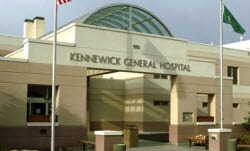
Kennewick General Hospital (WA) launches McKesson Paragon CPOE.

10-18-2012 5-54-42 PM

Baptist Memorial Health Care (TN) deploys EMC VNX and Citrix virtualization technologies in advance of its Epic implementation.

University of Kentucky Healthcare implements Harris Corporation’s Business Intelligence Documentation and Coding dashboard.

MedAptus announces the availability of its ICD-10 software suite.


Government and Politics

National Coordinator Farzad Mostashari, MD says the HIT Policy committee will review whether EHRs are leading doctors to overbill Medicare. He says repeated copying and pasting of patient information is “not good medicine” and wants to determine if EHR functions that prompt doctors to inflate their bills should be made “off limits.”

An Institute of Medicine report finds that the DoD and VA’s failure to create a sequential prescription number system has hindered joint EHR development at the co-managed Captain James A. Lovell Federal Health Center (IL). Because the DoD and VA have both agreed not to charge their respective EHRs, the departments are spending $700,000 a year for pharmacists to manually input prescription data. The IOM recommends that the DoD and VA avoid establishing other combined facilities until an integrated EHR is available.

The VA launches a contest to encourage the development of an appointment scheduling system to work with VistA EHR open source applications.

10-18-2012 12-20-22 PM

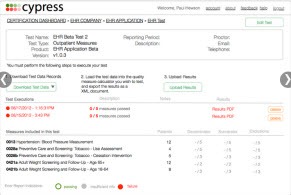
ONC announces availability of Cypress, an open source certification tool for testing the availability of complete or modular EHR systems to meet Stage 2 MU requirements for clinical quality measures.

As of September, almost 50 percent of all EPs and nearly 81 percent of hospitals have registered for the MU program. CMS also reports total program-to-date payments of $7.7 billion, including $4.8 billion to hospitals and $2.6 billion to eligible providers and healthcare professionals.

10-18-2012 5-59-29 PM

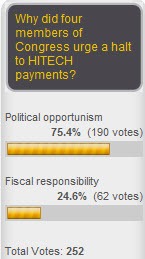
Two weeks after House Republicans call for a freeze on all MU payments, four Republican senators request a meeting with HHS Secretary Sebelius to discuss the incentive program. The senators would like CMS and ONC to address four questions, including whether EHRs are increasing the volume of diagnostic tests and Medicare billings. One of those questions (above) indicates a lack of familiarity with the HITECH program, which did not require providers to buy anything at all to qualify for taxpayer-funded incentives.


Technology

10-18-2012 6-02-21 PM

eMDs launches its nMotion EHR iPad application.

Medsphere Systems contributes its MSC FileMan database management system to the OSEHRA open source community, which chose it for collaborative development work on VistA.

An article in MIT’s Technology Review says that medical devices in hospitals are regularly infected with viruses because vendors are so scared of the FDA’s requirements that they won’t allow hospitals to keep their operating system patches and antivirus software current. I’ve seen this personally: my former hospital had a nasty worm that was flinging itself with impunity from one networked system to another because our vendors wouldn’t allow us to apply any changes to their FDA-approved configuration (even including applying the latest antivirus update that was known to fix the problem). We had to take the entire imaging network and several systems offline to the extreme displeasure of our physicians, while the vendor said they might get us an answer in a few weeks. I told the network team to ignore everything they had heard and simply do what they knew needed to be done. We were worm-free within a few hours and I have no doubt patients would have suffered had we not ignored our vendor’s advice, albeit at our own risk.


Other

Former Beth Israel Deaconess Medical Center CEO Paul Levy, writing in his Not Running a Hospital blog, equates buying Epic to the Stockholm syndrome, where hostages develop affection for their captors. He concludes that Epic’s market share, driven by HITECH money, makes the company a target for Congressional retribution if a system malfunction harms patients. He also complains, “How did this firm get such a big share of such a critical market with no government review?”

The local paper covers Michigan-based HipaaCat, an image sharing and messaging app developed by a plastic surgeon.

10-18-2012 7-45-55 PM

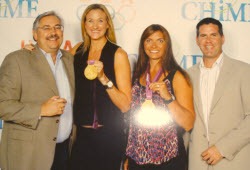
Dan and Colin from Divurgent said Olympic bling-bearers Kerri Walsh Jennings and Misty May-Treanor were “great fun and great sports” in posing with attendees like themselves at CHIME 2012 this week. They (Kerri and Misty, that is) look a lot different with sunglasses off and clothes on.

In England, a healthcare trust that’s in such serious financial straits that it may be dissolved takes heat from the local paper for sending five managers to the Cerner Health Conference. The paper couldn’t find a source to back up its predetermined editorial outrage, so it quoted some guy who whose partner “does not wish to be named who worked as a nurse at Princess Royal Hospital.” It also seems to find a sinister connotation to KC’s power and light district, which it repeatedly places inside quotation marks as though it’s a code word for a hooker-staffed crack house. Must have been a slow news day.

Weird News Andy thinks maybe someone misspelled “birth” as “berth” in this story: a woman delivers her one-month premature baby in a Philadelphia subway car in which she is the only occupant. She calmly walks off the car and finds a police officer, who says the newborn girl “took on her personality” in exhibiting the same calm demeanor as her mother as they were taken to the hospital.


Tweets from CHIME


Sponsor Updates

10-18-2012 9-57-20 PM

  • PatientKeeper employees donate services, goods, and cash to help a Boston-area homeless family move into a furnished apartment.
  • GetWellNetwork launches its Transformative Health blog with an introductory post by CEO Michael O’Neill, Jr.
  • Intelligent InSites shares best practices for deploying an enterprise-wide RTLS during an October 25 Webinar.
  • Infor opens its new headquarters in NYC and unveils updated branding. Also, the Institute for Transfusion Medicine (PA) upgrades its Infor Healthcare Revenue Management solution to integrate with its outpatient records and receivables solution.
  • Oregon Medical Association will offer Dr. First’s RcopiaMU e-prescribing services to its members.
  • Emdeon releases a white paper on payment collection best practices for small physician offices.
  • Teradata will integrate QlikView in-memory data with Teradata’s Integrated Data Warehouse via the QlikView Direct Discovery  utility.
  • Physicians in Costa Rica’s public health system use DynaMed’s clinical reference tools to create national breast cancer guidelines.
  • Quality IT Partners sponsored last month’s 2012 Hillman Cancer Center Gala in Pittsburgh.
  • Imprivata announces 10 additional sponsors of its Imprivata HealthCon 2012 User Conference next month in Boston.
  • Cancer Treatment Centers of America and CareTech Solutions present a case study on the need for clinical help desks at this week’s CHIME CIO Forum.
  • American Well CEO Roy Schoenberg and Allscripts CMO Douglas A. Gentile discuss the benefits of integrating American Well’s telehealth offer with EHRs offered by Allscripts.
    McKesson integrates RelayHealth’s procedure and test results functionality into its Practice Choice EMR and financial management software.
  • T-System announces six winners of its T-System Client Excellence Awards.

EPtalk by Dr. Jayne

Researchers at Duke University create a 3D training application for transesophageal echocardiography for anesthesiology residents. It runs only on the iPad, leading one researcher to state that it would have greater effect if it worked on multiple platforms.

Speaking at the American Academy of Family Physicians annual meeting in Philadelphia, Farzad Mostashari encourages physicians to “turn the tables” on vendors that aren’t addressing interoperability issues. He reportedly advised users to report vendors to certification bodies. Considering the rank-and-file primary care physicians I work with every day, I’m not sure many of them are savvy enough to understand the certification requirements, let alone to become whistle-blowers. I’d rather see physicians spending their time learning to use their EHRs efficiently to deliver quality care. I invite my family physician readers who may have heard the speech in its entirety to weigh in – don’t worry, I’ll keep you anonymous.

The Breast Tissue Screening Bra from First Warning Systems has been designed to detect minute temperature changes in breast tissue that may indicate cancer via sensing the growth of new blood vessels. Temperature data is uploaded to the Internet and algorithms provide a reading to the patient. FDA approval is pending, but release in Europe is anticipated next year.

An impending change in the ranks of Medicare administrative contractors prompts concerns from providers that payments could be delayed. CMS is in the process of re-bidding contracts for claims processing, program enrollment, and other administrative functions in several regions. During a 2008 change, some payments were delayed for six to 12 months. Given the rigor with which CMS audits providers and the narrow tolerances in which we must perform to get paid, it would sure be nice if they held their contractors to the same standards. If we don’t file promptly, we don’t get paid – maybe if they don’t pay promptly, they should be fined.

clip_image002

I have to admit that I’ve been jealous reading about Inga’s plans to attend the MGMA meeting in San Antonio next week. I’m trying to find a way to sneak away for a day so the two of us can make a pilgrimage to the source of some of the hottest boots known to (wo)man. I had a chance to buy these beauties last year and flinched. Cross your fingers!


Contacts

Mr. H, Inga, Dr. Jayne, Dr. Gregg.

More news: HIStalk Practice, HIStalk Mobile.
Collective Action 10/17/12

October 17, 2012 Bill Rieger 4 Comments

The views and opinions expressed are those of the author personally and are not necessarily representative of current or former employers.

Not an App for That

While listening to the radio recently, I heard about a new app called the Super Pac App (as far as I can tell, it is only available for Apple products, go figure.) It got me thinking about how I wish I had this ability in all areas of my life.

The app provides information relating to political ads. It is, of course, an election year, and ads are flying around in both traditional and social media. The app will tell you the following: the validity of the ad, the funding source, who it benefits, and what the ad wants you to believe. Simply stated from their website, "The Super PAC App is a simple way for you, the voter, to bring transparency to the 2012 presidential campaign."

Wouldn’t it be nice if we could apply this app to all areas of our life? What is my wife really trying to say when she casually mentions that there are still coffee grounds in the coffee maker? Why doesn’t she just say that she feels it is my responsibility to empty the coffee maker since I am the one who makes it in the morning? I would like to use this app like Siri: “Super Pac App, what does my boss mean by that statement?" That would be awesome!

Unfortunately, there are no magic apps we can download to help change the effectiveness of our communication forever. There is a reason why communication is very challenging and whole are fields dedicated to the study of it.

In our IS department, we try to tie our core values to everything, especially communications.  Our core values are honesty, transparency, unity, and integrity. Every time I walk away from a conversation (especially a group discussion), I think about the impact of that discussion and whether or not our core values were on display. Sometimes it is an intentional thought. Mostly, it is that gut feeling or instinct a lot of us rely upon. That gut instinct in this case is rooted in our core values.

As I was writing this, the red car syndrome hit me. You know how when you buy a red car, suddenly you see a lot of them on the road? The increase in red cars is not accurate, of course. Because of your focus, you are more aware of them. 

The red car syndrome has delivered a lot of communication-related articles to me, most of them spot on and with several small, important steps an individual or group can take to increase effectiveness. None of them, however, addressed authentic communication, as I like to call it. When you walk away from a conversation or a presentation, you generally know if the presenter or other person was honest and trustworthy.  

If two people in the same day delivered the same news or information to you but you knew one of them was shady and the other was honest and trustworthy, who you would go to for follow up questions or comments? Easy answer, right? That’s the point.  

Now here is a hard statement. If that is true for you, then it is true about you as well.  

Uh-oh, I’ve crossed the line, gotten into your space, stirred you to look inside. Sorry about that, but you need to know that others are looking inside every time you talk to them, regardless of the circumstance.

I am kind of glad this transitioned into a conversation about you and me, because that is where all change begins. I have worked for several organizations by now, as most post-industrial age professionals do. In most of them, I have had issues with management and decisions made. I have made a commitment however — a commitment to making myself better regardless of where I might find myself. 

The good thing about that commitment is that it works everywhere. Let’s bring that back to communication. If I think that people around me are not communicating effectively or are not very trustworthy or honest, I can either complain about the situation or dedicate myself to being trustworthy and honest and using my influence to bring positive change (that’s right, no matter where you are in an organization, you have influence.) When communicating, communicate with others the way you would like to be communicated with. The power of positive influence is strong. Sometimes slow, but always strong.

In my last post, I mentioned the frantic change in healthcare IT today. Research shows that one of the keys to successful change management is communication. If communication is key, then the last thing this industry needs is for people to walk away from conversations second guessing what has just said because they are questioning someone’s character.  

I could easily parrot other published articles here and give you five quick points to help your PowerPoint presentation. That would be fun and provide value. The harder road leads to the core of the matter and recognizes that your character, above everything else, impacts the effectiveness of your communication.

This may not make me many friends, but that is not the reward I am going for. I am striving for something greater. I am determined to effect change in an industry that is in the middle of historic transition and needs great leadership.

The higher up you go in an organization, the more circles you may be exposed to, but sometimes I find the best impact and the biggest influence usually happens around a coffee cup. You don’t need to be high up to have influence and effect positive change. You just need a coffee cup and a few minutes. Sprinkle it with honesty and trust and your message becomes clearer.

It is no different in a group setting. If you are presenting in a group, a lot of people will be "looking in." If that group even senses dishonesty or lack of integrity, the message is blown regardless of how important it is. The core of communication is not what you say — it is how you say it.  What you are saying may be critically important, but what people walk away with is always the “how.”  

Some people are master communicators, but if you do not trust them and you feel there is an angle, how effective are they, really? I would rather be bored to PowerPoint death by an honest, trustworthy person who desperately needs Toastmasters than to be wowed by someone with an angle and a personal agenda.

Keep it real. Keep seeking improvement. Commit to making yourself better regardless of circumstance and you will find yourself experiencing positive change in your communication skills and beyond. Character delivers much more than any app ever will.

Bill Rieger is chief information officer at Flagler Hospital of St. Augustine, FL.

Readers Write 10/17/12

October 17, 2012 Readers Write Comments Off on Readers Write 10/17/12

Submit your article of up to 500 words in length, subject to editing for clarity and brevity (please note: I run only original articles that have not appeared on any Web site or in any publication and I can’t use anything that looks like a commercial pitch). I’ll use a phony name for you unless you tell me otherwise. Thanks for sharing!

Note: the views and opinions expressed are those of the authors personally and are not necessarily representative of their current or former employers.


ONC Moves on Data at Rest
By Frank Poggio

ONC recently published the draft of the new Stage 2 certification criteria for data at rest — or as they call it, End User Device Encryption Test Procedure 170.314(d)(7). With the almost weekly stories about stolen notebooks, lost thumb drives, and missing data CDs while the new HIPAA audits get underway, this new criteria are no surprise. But as understandable as the ONC goals are, the implementation of 170.314(d)(7) may give system vendors fits.

Per the published ONC test script, there are two ways for a vendor to meet this criteria:

  1. If, while your Complete EHR or EHR Module is active you allow data to be moved to external devices, then your system must do it using a FIPS 140-2 (AES 256) encryption algorithm. The data on the device must stay encrypted and only be allowed to be de-encrypted by authorized personnel. Encryption must be the default setting.
  2. Or, your system must prohibit any movement of PHI data to external devices.

To pass the new Device Encryption test procedure, you must have either one of the above capabilities embedded in your system.

Here are just a few possible problems you might encounter from a vendor’s perspective under Scenario 1.

If you are currently using a full system encryption tool such as BitLocker under Windows, this will not work for external devices, so you’ll have to move to other third party products such as TruCrypt or 7Zip.

If within your application you support user-generated SQL searches and tools like Crystal Reports, then the reports that the user generates will only be allowed to be copied to external devices (thumb drives, note books, tablets, etc.) if the reports are properly encrypted. The same is true for images, care notes, instructions, etc.

It can get more complicated if you have a patient portal and allow me to download my personal info to my personnel tablet. Will you encrypt the download? And then give me the key to allow me to view my information after I have signed off from your portal? Will my tablet support your encryption tool? If on the other hand you (the vendor) do not support downloads, yet I undertake that step on my own (e.g. use screen print), then per ONC the vendor is not responsible.

If all that seems too complicated to deal with, as noted earlier, you could go for Option 2 and prohibit any movement of PHI to external devices. You allow clients to see reports on screen but not move /copy them. No transfers to Excel or Crystal and no screen dumps. Already I can hear the roar of client complaints.

On a positive note, ONC does say that the vendor must supply the provider with this capability, but it is up to the provider to use it. This new criteria also state if a provider manages to accesses your application data outside your application, you are not responsible.

Finally, included in the last set of Stage 2 test criteria there was a another new one called ‘Safety Enhanced Design’ (170.314(g)(3). I’ll cover that one next time. You can see all the new Stage 2 test criteria here.

Frank L. Poggio is president of The Kelzon Group.


RTLS Offers Value Beyond Asset Tracking to Healthcare Facilities of All Sizes
By Barry Cobbley

HIMSS Analytics Vice President John Hoyt was recently interviewed regarding Real-time Locating Systems (RTLS) for an article that appeared at mhimss.org and healthcareitnews.com. The premise of the article is true enough—that RTLS offers significant ROI as well as improvements to patient safety, yet adoption among hospitals is lower than it should be.

However, other assertions simply miss the mark.

First and foremost, RTLS is discussed primarily in terms of asset tracking. It’s a common use, but forward-thinking healthcare organizations use it for so much more. Mr. Hoyt does mention “patient tracking,” but only as a way to relay completed stages of a patient’s visit to family. The article even goes so far to state that “RFID/RTLS has a lot to offer—but primarily only to hospitals—big ones, at that.”

This couldn’t be further from the truth. Large facilities like The Johns Hopkins Hospital will reap huge value from RTLS, but there’s plenty of evidence that small- and medium-size facilities benefit as well, and the value goes far beyond simple asset tracking.

What Mr. Hoyt seems to miss is that RTLS is not just about tracking. It’s about making healthcare more efficient through workflow automation. In this way, RTLS addresses a fundamental challenge that all healthcare organizations are facing: how to do more with less.

Large and small emergency departments, hospital operating rooms, outpatient clinics, ambulatory surgery centers (ASCs), long-term care facilities, and others successfully use RTLS to improve processes, giving providers more time with patients while increasing volume. They’ve reduced patient wait times and increased patient satisfaction. They’ve nearly eliminated phone calls and search times for patients, assets, and other staff members, allowing more time to focus on the patient. And in one of the most impressive use cases, they’ve automated EMRs, relieving skilled clinicians of tedious data entry.

I agree with Mr. Hoyt that the rate of RTLS adoption would certainly be higher in a healthcare landscape not focused on regulatory compliance. But the fact of the matter is that nearly one in five hospitals have already adopted this technology without a mandate. In other words, based strictly on merit. Those organizations that are truly internalizing the need to operate more efficiently are at the head of the adoption curve.

Take for example Memorial Hospital Miramar, a 178-bed facility in Florida, the first to automate Epic EMR with RTLS. Thanks to their work, RTLS was highlighted as a hot technology recently at Epic UGM. The integration automates the entry of important patient data normally typed manually into Epic (patient arrival, nurse/doc assignment, room/bed assignment, nurse/doc assessment complete, discharge time, etc.)

EMR automation is just one of several ways Memorial Miramar leverages RTLS. This community hospital is one of many who see the big picture of healthcare IT, where technology like RTLS improves efficiency and enhances patient care—far beyond finding assets.

10-17-2012 5-23-38 PM

Barry Cobbley is director of location solutions of Versus Technology of Traverse City, MI.


Strategies for Healthcare’s Successful Transition into the BYOD Era
By Brent Lang

Bring Your Own Device (BYOD) is a hot topic as companies across all industries are increasingly faced with allowing employees to use their own smartphones, tablets, and other mobile devices for work purposes. Within the healthcare industry, there continues to be a rise in the number of busy physicians, nurses, and other healthcare professionals who have consolidated their mobile devices to streamline the use for both work and personal into one. In fact, a recent survey of mobile device usage indicates that 84 percent of individuals across all industries use the same smartphone for personal and work issues.[i]

Despite this demand, security concerns have led hospitals and health systems to embrace BYOD in varying degrees. Some organizations permit employees within designated departments to use personal devices, while requiring other employees to use company devices designed specifically for unique healthcare settings. For instance, purpose-built devices or in-building wireless phones are relatively easy to manage, secure, and clean. Conversely, there can be great variation in employee personal devices and operating systems. This lack of uniformity will place an increased burden on IT departments as they seek to configure, manage, and implement both security and network changes on a plethora of devices.

Fortunately, various strategies exist to mitigate the risk caused by this rich diversity of mobile devices entering the healthcare work environment. For example, the use of Mobile Device Management (MDM) software, which can include password protection, software control, version management, remote wiping, inventory, and other security controls. MDM tools can also be used to create “enterprise partitions” in personal devices. This allows for an individual’s work-related applications and data to reside on a secured partition within the device, easily managed by the hospital or health system. Organizations may also consider storing patient information on a centralized enterprise server rather than on the individual device, or creating wireless local area networks (WLANs) specifically for personal devices to help limit network access.

Additionally, executives tasked with health IT purchasing decisions should only partner with healthcare communications vendors that make their applications “BYOD ready.” In certain circumstances, this will include encrypting all data while “at rest” and “in motion” and providing remote wipe capabilities. Vendors should also have the ability to monitor the security of their corporate data.

By and large, BYOD is having an impact on companies across all industries. Its evolution has unique meaning in healthcare, where a generation of internet savvy physicians, nurses, and other clinicians are bringing the promise of mobile technology to the bedside. To ensure the successful transition of the healthcare industry into the BYOD era, hospitals and health systems must carefully consider and adopt policy, software and infrastructure controls, and educational initiatives.

[i]Weber, M. (2012, August 14). BYOD Survey Results: Employees are not playing it safe with company data

10-17-2012 5-32-53 PM

Brent Lang is president and COO of Vocera Communications of San Jose, CA.


 ICD-10: Time to Act
By John Pitsikoulis

Now that the ICD-10 implementation deadline has been extended to October 1, 2014, time is ticking away as we move closer to the date. The extension was a reaction to intense pressure from the American Medical Association (AMA), hospitals, and others who reported that they need more time to implement the extensive changes. As the deadline loomed, many hospital leaders admitted that their organizations weren’t prepared for the ICD-10 transition.

Now that we have an extension, how can providers use the time wisely, especially as they are contending with other competing and conflicting priorities such as electronic health records projects, Meaningful Use deadlines, and IT system replacements that impact the abilities of organizations to stay on task with their ICD-10 activities? Now is the time for hospitals to go into overdrive and concentrate on their planning, strategic decisions and implementation activities.

Developing the ICD-10 project plan for complying with the deadline is the first step many organizations have accomplished. While there are some great resources for organizations to utilize for managing the assessment and implementation key remediation components, many organizations are relying on a “check the box” methodology for readiness and mitigating the risks associated with the conversion to ICD-10. While this is a good framework for project managing the global tasks associated with ICD-10 initiatives, this approach will not provide the organization with alternative strategic considerations or the content expertise that will complement the organization’s portfolio of strategic initiatives. The average organization’s resources are stretched so thin, they just do not have the bandwidth of personnel to manage all of the activities required to mitigate the risks.

Managing a multi-year enterprise-wide initiative is a monumental initiative that requires planning, preparation, collaboration, progress evaluations, and alternative decisions throughout the project’s life cycle. With any multi-year enterprise project, periodic evaluations of the plan, progress, and timelines are critical success factors for achieving the desired end goals. But how are you measuring the end goals?

For example; there is an industry shortage of medical record coders. The simple answer to meet the demands of the industry would be to train more coders. This might be a solution for the productivity issues associated with ICD-10, but how many CFOs would be comfortable with entry-level coders determining the organization’s reimbursement? Coding is more complex than simply assigning a code from a coding book – it takes years of education, training, and mentoring to be a seasoned coding resource. You may have met the goal of providing education and training, but do you have the confidence that after the coders, physicians, and other contributors are educated they will achieve the same level of proficiency they obtained with the ICD-9 system? Managing the clinical documentation specificity and coding quality requirements will be a continuous process that will require dedicated resources focused on clinical documentation improvement, operational process improvement, and financial analysis to ensure the organization is receiving the appropriate reimbursement under ICD-10.

How will your organization test for ICD-10? We know the testing focus for ICD-10 will be fundamentally different than 5010 testing. Even with the 5010 experience, the industry learned that validating the end result was not sufficient and a significant amount of content modification was required. ICD-10 will require changes to the IT infrastructure, which is the foundation for the organization’s business processes. More importantly, the content of the business transactions that are the core of the healthcare delivery, reimbursement, and data outcome models is being replaced with a new set of coding standards.

Standard testing for compliance with format and content will not be enough for a seamless transition. End-to-end testing with payors and trading partners will require a detailed inspection of the claims submission and adjudication transaction process, both from an internal and external methodology, to ensure that business intent and reimbursement requirements meet the anticipated results.

Testing functionality and content with payors will be a challenge that will be costly from a dollars and resources perspective. Close enough is not good enough when talking about revenue neutrality and compliance with billing guidelines. ICD-10 testing will certainly need to include end-to-end, cross-functional, bi-directional, internal and external testing activities. Additionally, ICD-10 will require coupling testing analytics with ICD-10 coding expertise to validate the results of the test transactions and expected revenue outcomes.

Hospitals must also take a hard look at their strategic approach when it comes to the ICD-10 transformation of the organization’s processes and technology. Emphasis must be placed on the tactical approach for education, clinical documentation improvement, testing, and data outcomes, etc. Organizations that focus on content and desired outcomes and not merely the steps to complete a task will achieve the benefit s of a highly trained workforce and a strategic and comprehensive ICD-10 business transition that covers every major impact area.

10-17-2012 5-28-01 PM

John Pitsikoulis is ICD-10 practice leader for CTG Health Solutions of Buffalo, NY.


Seven Things Most Important to Top Performers
By Frank Myeroff

Can you relate?

Recently, a leading HR organization conducted a survey of top performing professionals at a wide variety of organizations in order to understand what they find most important to them on their jobs. Overall top performers ranked the following seven as the most important things to them (industry or practice area did not matter):

  1. Challenging and meaningful work. Top performers want to be engaged and energized by their work and organization. In addition, people generally want to feel a sense of achievement, responsibility, and to know that what they’re doing on a daily basis has some purpose behind it.
  2. Compensation. Top performers want to make top dollar, and salaries that include bonuses and benefits ranked as very important. Also, regular performance reviews and salary reviews were included as part of compensation.
  3. Job security. While job security is hard to come by these days, it is important for workers to avoid layoffs and declining salaries. Therefore, top performers found it important to have up-to-date skills, follow industry trends, and keep pace with their industry in order to bolster their job security.
  4. Work-life balance. Top performers are looking for synergy between their personal and professional lives. The 8 a.m. to 5 p.m. schedule isn’t for everyone. They appreciate having a say over when they work and sometimes even where they work, including from home.
  5. Career development. Technology innovations and fast-changing trends in any field are hard to keep up with. That’s why top performers value ongoing career development and training. It enhances their capabilities and sharpens their skills.
  6. Leadership style. A manager’s leadership style is critical to a satisfactory work environment and production levels. To keep the best and brightest engaged in their jobs and performing at high levels, managers need to provide support, resources, and opportunities.
  7. Advancement. A promotion is viewed as important and desirable because of the impact it has on pay, authority, responsibility, and the ability to influence broader organizational decision making. In addition, a promotion raises the status of an employee because it is a visible sign of esteem from the employer.

10-17-2012 5-17-20 PM

Frank Myeroff is managing partner and VP of business development and operations of Direct Consulting Associates of Solon, OH.

Comments Off on Readers Write 10/17/12

Wolters Kluwer To Acquire Health Language, Inc.

October 17, 2012 News 2 Comments

10-17-2012 4-55-03 AM

Wolters Kluwer Health announced this morning that it will acquire medical terminology content and mapping vendor Health Language, Inc.

Arvind Subramanian, president and CEO of Wollters Kluwer Health Clinical Solutions, was quoted in the announcement as saying, “Medical terminology management is quickly emerging as a core point-of-care market as hospitals, EMRs, and payers are increasingly focused on interoperability of systems to realize the advantages of healthcare information technology. Health Language has built a leadership position in meeting this important interoperability need. This acquisition allows Wolters Kluwer Health to enhance its current market leading point-of-care solutions and better position its customers to fully leverage existing and emerging healthcare quality and reimbursement initiatives. The acquisition also provides Wolters Kluwer Health with greater access to payers, key customers for various Health Language offerings.”

The Denver-based Health Language has 85 employees. Terms were not disclosed.

News 10/17/12

October 16, 2012 News 8 Comments

Top News

10-16-2012 10-22-48 PM

10-16-2012 10-24-35 PM

Massachusetts Governor Deval Patrick and other state officials celebrate the launching of the Massachusetts state HIE as the first medical record is transmitted from Massachusetts General Hospital to Baystate Medical Center. The Massachusetts HIway was funded by a $17 million federal grant. John Halamka writes about the significance, professional and personal, on his blog (his photo of the “Golden Spike” is above).


Reader Comments

10-16-2012 9-00-02 PM

From FirstHand: “Re: MModal changes. SVP of strategic business development Taras Silecky has left the company. Not sure if it is a one-off personnel change or a sign of restructuring following several acquisitions.” Unverified. MModal declined to comment, citing policies prohibiting disclosure of personnel information. His LinkedIn page says he’s still there, but those are notoriously unreliable.

10-16-2012 9-01-00 PM

From Allagash: “Re: Aprima. Aprima gave indication that they would have a direct migration from MyWay to Aprima. Not the case. Aprima says that the client needs to contact Allscripts and beg for the database, which won’t come easy since they’re trying to sell us Pro. I get the impression there’s a large fee as well.” Aprima President and CEO Michael Nissenbaum responded as follows: “Aprima offers a free software license and upgrade for MyWay customers with the purchase of an annual support and maintenance agreement. MyWay customers have a multitude of environments in which they reside, including hosted with Allscripts, hosted with independent hosting entities, as well as practices having their own servers. Aprima’s statements regarding our offer are based on the practice having access to their database and an ability to move it to a server / hosting location of their choosing. In most scenarios hosting is a service offering, and as long as the practice is in compliance with the hosting contract, they should have access to their database. Most companies do not hold the practice’s data hostage.” Specific details of Aprima’s migration offer are here.

From Scrooge: “Re: CIO cost pressures. Reports say that CIOs in all industries are having a hard time justifying the long-term operating costs for advanced systems. Hospitals are under pressure to cut staff and other costs due to Medicare cuts. Maybe a topic for a survey?” I would be interested in hearing from hospital IT executives on this issue in a bit more detail than a poll allows. Send me your thoughts and I’ll run them, anonymously if you so indicate.

10-16-2012 10-07-52 PM

From Cool School: “Re: Pulse. I received an e-mail indicating that Basil Hourani (director, president, and CEO) and Alif Hourani (executive chairman and CTO) are ‘retiring,’ leaving former CFO Jeff Burton as CEO. Lots of blah about amazing journey, innovation, vision, etc. Recall that they were bought out by Cegedim two years ago. Significance?” Unverified, but reported by several readers. The PM/EMR vendor’s web page has no news. I’ll defer to readers to comment.

From Shock & Awe: “Re: Will Showalter, VP/CIO @ Sisters of Mercy Health System in St. Louis. Left last week. Can you find out why? Everyone loved and adored him!” As mentioned below, Mercy (as the former Sisters of Mercy now calls itself) has replaced him with no explanation. I’ll update if he checks in.

10-16-2012 8-54-31 PM

From Magenta: “Re: Cerner Health Conference. The tagline was ‘because it’s personal,’ which I thought was a little ridiculous on all the signs and displays. I didn’t realize how much until I saw this sign.”

10-16-2012 9-18-13 PM

From Buffalo Tom: “Re: Health 2.0 and Stanford MedX conferences. Free recorded streams are available from a company called Learn it Live that’s trying to disrupt the learning market. The interview with Lumeris CEO Mike Long was especially inspiring – he said mercenary companies look for where to make the most money, while missionary companies want to solve big problems and hope to make money. Sign up for free, choose the ‘three CEOs’ session, and go to the 31.25 mark.” He’s fun to watch. He gives his e-mail address and invites people creating cool things to contact him because he doesn’t think the big companies are moving fast enough.  

10-16-2012 10-10-40 PM

From PC Doc: “Re: pharmacy chains encroaching on the practice of medicine. Walgreens has walk-in clinics whose mission is to sell what’s on their shelves, give vaccine injections, and now deliver meds to hospital bedsides to ‘curb readmissions!!’ I smell a coordination nightmare as patients get mammograms at the local retail pharmacies and pharmacists manage diabetes, not to mention that Walgreens is smelling profit while physicians are again asleep at the wheel.” It is interesting that just as we see EMRs taking a firm hold and interoperability taking a shaky one, now you’ve got disconnected non-EPs out there whose corporate parents may lack the interest or ability to share the medical information they’re creating. I don’t know how they’ll play in the ACO world, though – maybe they’ll just pick up the cash-paying business. Those with long memories may recall that the difference between EMRs and EHRs was that the latter were supposed to collect information from every potential point of healthcare service, but here we are years later still thrilled when docs working for the same health system can exchange information with the hospital and each other. That’s a problem with the proprietary EHR-centric model in which neither providers nor vendors have much reason to push their data out in a way that everybody can use it, and the further away you get from the traditional office practice, the less likely those providers are going to be on the grid. In other countries, patients are expected to keep their own medical records and bring them in – sounds primitive, but with all the technology investments we’re not too far beyond that here with our printout and faxes. Not to mention that at least in those countries, the patients are in control of their own information.


HIStalk Announcements and Requests

10-16-2012 6-28-29 PM

Going to MGMA next week in San Antonio? Here is our annual list of Must See Vendors. Inga will be there to pick up trinkets, make stealth observations, and post daily updates.

10-16-2012 7-02-44 PM 10-16-2012 7-03-53 PM

Welcome to new HIStalk Gold Sponsor Direct Consulting Associates and its sister organization Direct Recruiters Inc., both of Solon, OH. DCA offers IT consulting and staffing solutions (staff augmentation, temp to perm, and permanent placement), providing individuals or entire teams to help with Epic, Allscripts, Cerner, Meditech, McKesson, and other healthcare IT systems for short- or long-term contracts. DRI is an executive search firm with a healthcare IT practice that places top professionals (CXO, VP sales, sales rep, product manager, applications engineer, IT director, CMIO, etc.) The company’s site has a nice testimonial from Medicity that calls Director of Healthcare IT Mike Silverstein a “trusted resource” who doesn’t push candidates, but rather listens to understand the talent needs first and makes sure to present only the most qualified candidates. Thanks to DCA and DRI for supporting HIStalk.

10-16-2012 7-20-35 PM

Also supporting HIStalk is new Platinum Sponsor PatientPay of Durham, NC. PatientPay is an innovative, patented, Web-based service that addresses the physician practice challenge of managing patient balances. Practices can be up and running within 30 minutes of signing up online, with no IT help required to instantly integrate PatientPay into the practice management system. Patients review their balances and pay online by credit card, while the cost of managing paper is reduced by half. No upfront or monthly costs are involved, just a small, flat per-transaction fee that means they get paid only when the practice gets paid. The company’s goal is to be the most attractive patient payment solution for their ambulatory PM/RCM vendor partners. They’ve been around since 2008, and you may recall hearing a couple of months ago that David Bond (A4, Medic, Allscripts) has joined the company as EVP of sales and marketing. They’ll be at MGMA, so drop by and tell them you saw them mentioned on HIStalk. Thanks to PatientPay for supporting my work.

Speaking of my (endless) work, I’ve reluctantly reached the conclusion that I need more help to make HIStalk, HIStalk Practice, and HIStalk Mobile the best they can be while not getting fired from my hospital job. I’m interested in hiring someone, but I’m picky about capabilities: a stellar and fast writer, lots of energy, an enviable sense of humor, skill with social media, and knowledge about healthcare IT. Sometime with a full-time job probably won’t work since I need more hours. I’m looking for a self-starter who probably doesn’t need to be prompted about what to do next, but here’s a hint since it worked for Inga and Dr. Jayne: tell me why I should hire you while demonstrating the qualities I mentioned.


Acquisitions, Funding, Business, and Stock

The UK-based Wellcome Trust secures an equity stake in AirStrip Technologies.

10-16-2012 10-12-12 PM

Healthrageous, a developer of Web and mobile health apps for consumers,  raises $6.5 million in Series B financing.

10-16-2012 3-08-49 PM

Nuance discloses that it paid $230 million in cash for QuadraMed’s Quantim HIM division and another $265 million for JA Thomas and Associates, raising its 10-year acquisition total to 34 companies at a cost of $3.6 billion (Nuance’s market cap today is $7.2 billion). Maybe its best deal was paying $400 million for eScription in 2008 to get a strong healthcare foothold. Historians (hello, Vince?) may recall Nuance’s origins as a vendor of scanners under the ScanSoft and Visioneer names  — the PaperPort was all the rage in the mid-1990s.

UnitedHealth Group’s Q3 numbers: revenue up  8%, EPS $1.50 vs. $1.17, beating expectations of $1.34. Growth of its Optum division contributed to the $1.56 billion of quarterly profit, although the company warned of uncertainty about competition and the November election. Analysts say the company always sets conservative expectations, with one saying, “There’s nothing there that reform is going to hurt.”


Sales

10-16-2012 10-13-12 PM

Regional Medical Center at Memphis (TN) replaces its Cisco wireless network with Aruba.

Sigmund Software will embed OrdersAnywhere from Ignis Systems into its behavioral health EHR to manage lab orders and results.

Emergency Medicine Specialists of Orange County (CA) selects McKesson Revenue Management Solutions to provide billing and RCM for its 40-physician practice.

The Military Health System’s TRICARE Management Activity segment awards Four Points Technology a multi-year contract to facilitate an expanded rollout of RelayHealth’s Medical Home Support Package.


People

10-16-2012 6-17-53 PM

Richard Poulton (AAR Corp) joins Allscripts as CFO. An SEC filing discloses that Poulton will earn an annual salary of $450,000, a $450,000 annual bonus target, a one-time cash payment of $750,000, and stock grants worth up to $2 million. He’s also guaranteed double his salary and target bonus plus full equity vesting if terminated due to a change of control, which could be relevant if the company goes private as has been rumored.

10-16-2012 6-21-43 PM

Clinithink names Phil Davies (NHS Connecting for Health) CIO.

10-16-2012 2-38-36 PM

Mercy (MO) names Gilbert Hoffman (Maritz) VP and CIO, replacing Will Showalter.

10-16-2012 6-26-10 PM

Kathy Ebbert (Achieve CCA) joins Clearwater Compliance as EVP and COO.

Delta Health Technologies names Ben Clay (Prognosis Health Information Systems) VP of product development.


Announcements and Implementations

InterSystems Corporation and eHealth Technologies will offer offer single-click access to diagnostic quality images via the InterSystems HealthShare platform.

EXTENSION added 22 customers of its critical alerting and HIPAA-compliant texting solutions during the third quarter.

VersaSuite announces that its certified ambulatory EHR is the first to earn CCHIT’s certification for Clinical Research, with the capability to automatically determine if a patient is eligible for an open clinical trial.

UMass Memorial Health Care is working with with Informatica and MedCPU on a readmissions reduction project.

AHRQ awards the Oregon Health & Science University a $1 million grant to create smarter and better organized EHR systems.

10-16-2012 8-21-19 PM

10-16-2012 8-22-15 PM

10-16-2012 8-23-05 PM

10-16-2012 8-23-52 PM

10-16-2012 8-24-41 PM

10-16-2012 8-25-27 PM

10-16-2012 8-26-22 PM

10-16-2012 8-27-14 PM

NYeC and Partnership for New York City Fund select eight early- and growth-stage companies for its inaugural class of the NY Digital Health Accelerator. The winning companies, which were selected from 250 applicants, were each awarded up to $300,000, plus mentoring opportunities from senior-level hospital executives. The Accelerator program is expected to create 1,500 jobs over five years and attract $150 to $200 million in VC investment post-program.

North American Partners in Anesthesia partners with SIS to offer a combined AIMS and managed anesthesia services solution.

Electronic patient payment processor BillingTree announces a new partner program for solution providers interested in integrating a payment portal into their products.

10-16-2012 10-15-09 PM

Nuance Communications announces that its voice recognition technology is now integrated into Epic’s Haiku for iPhone and Canto for iPad applications.

10-16-2012 8-57-14 PM

Industry long-timers Bill Spooner, Bert Reese, and Colin Konschak are the editors of a newly published book called Accountable Care: Bridging the Health Information Technology Divide. It’s on Amazon for $89.99.

DrFirst launches Patient Advisor, a medication adherence solution designed to work with DrFirst’s Rcopia e-prescribing platform or any EMR or HIT solution.

DSS releases its Patient Search Tool Extension and Launcher to the Open Source EHR Agent via the Apache 2.0 Open Source license, enabling VistA EHR users to search for free text data within a chart.


Government and Politics

ONC names iBlueButton from Humetrix the winner of its Blue Button Mash Up Challenge to make personal health information for usable and meaningful for consumers. ONC also awards Apollo’s Pinaxis top honors in the EHR Accessibility Module Challenge for creating an Internet portal to allow patients to interact with any provider’s existing EHR system over the Web.


Other

Akron General Medical Center (OH) fires several employees for unauthorized access of computerized patient records following the fatal shooting of an ICU patient.

Epic will install six 262-foot wind turbines on its Verona campus that, along with its geothermal and solar systems, will allow it to generate 85 percent of its energy needs by 2014.

I haven’t watched Saturday Night Live for years, but this week’s skewering of the iPhone 5 and self-obsessed Americans in general was savagely funny. It’s slightly mHealth related, at least if you watch through to around the 5:00 mark for the punch line.

The Methodist Hospitals (IN) settles its 2011 lawsuit against FTI Cambio, HealthNET, and Meditech. The hospital hired Cambio to review its entire operation, part of which involved bringing in HealthNET to review its Epic implementation that had already cost $26 million. The lawsuit says HealthNet recommending dumping Epic and buying Meditech for $16 million because of lower maintenance costs. The hospital says the consultants lied in saying it would cost $25 million to finish the Epic project when in fact it would have been only $11 million. It also claims that Meditech never worked and caused a host of problems to the point that the implementation was abandoned in 2009.

10-16-2012 10-05-02 PM

The Italian hacker who turned to the Web for help with his brain cancer diagnosis has received 200,000 responses in a month from his Open Source Cure plea. The Italian government is interested in his project as an example of opening up medical records since he struggled to obtain his records and images in an easily read electronic format. He has decided to have surgery, but is talking to 40 doctors about which procedure to have, and will also follow a crowd-sourced diet in the hospital.


Sponsor Updates

  • A study by Truven Health Analytics finds that hospital employees are less healthy and more likely to be hospitalized compared to the general workface, with their healthcare costs also running nine percent above average.
  • Versus customer Northwest Michigan Surgery Center discusses its use of RTLS to maximize patient flow during an AHA Solutions Webinar.
  • Liaison Healthcare launches its Healthcare Information as a Service solution suite.
  • GetWellNetwork and Treatment Diaries partner to provide additional resources for patients during and after their hospital stay.
  • ZirMed showcases its RCM solution at this month’s MedTrade, MGMA, NAHC and APTA conferences.
  • Ninety percent of anesthesia providers believe that perioperative solutions increase success rates, according to a Surgical Information Systems-commissioned study.
  • HIStalk sponsors earning a spot on Modern Healthcare’s Healthcare’s Hottest 2012 based on revenue growth include: ESD (1,455%), Allscripts (533%), Cumberland Consulting Group (328%), Merge Healthcare (213%), Beacon Partners (172%), and The Advisory Board Company (92%).
  • MEDSEEK moves to new office space in Fitchburg, WI after almost doubling its Wisconsin operations over the last year.
  • Two teams of Craneware employees spend a week Peru volunteering with medical staff at the Villa la Paz Center for Destitute and Sick Children.
  • Aspen Advisors principal Guy Scalzi discusses HIT governance at this week’s CHIME Fall CIO Forum.
  • Digital Prospectors Corp wins a subcontractor role as part of a $15 billion Alliant Small Business Governmentwide Acquisition Contract.
  • MModal partners with the BigHand Group for next month’s BigHand Healthcare user conference on digital dictation, speech recognition, and clinical correspondence system .
  • A SuccessEHS survey of MGMA registrants finds that the majority are losing revenue due to four problems: clean claims, same-day collections, preventable denials, and underpayments.
  • Klinikum Weis-Grieskirchen Hospital (AU) reports saving 10-20 seconds per login session with Imprivata’s OneSign single sign-on solution.
  • NextGen adds Logi Info from LogiXML as its embedded actionable analytics tools within the NextGen Dashboard product.

Contacts

Mr. H, Inga, Dr. Jayne, Dr. Gregg.

More news: HIStalk Practice, HIStalk Mobile.
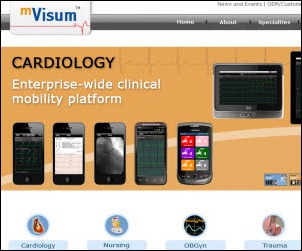
Curbside Consult with Dr. Jayne 10/15/12

October 15, 2012 Dr. Jayne 2 Comments

It’s been a rough couple of weeks around the hospital with several ambulatory practice go-lives. It’s also the last time this year that Eligible Providers can start their Meaningful Use attestation periods.

We had a couple of affiliated physicians decide at the last minute that they wanted to give it a try. Since my hospital never says no, the team had to scramble to get everything in place for them to be ready to report. Everyone is so afraid of the audits that the level of documentation being produced to support attestations is simply staggering.

Whenever there’s an increased work load in my day job, I find myself spending more and more time on Twitter and other social media sites just surfing around and trying to get my brain to shut off for the night. I also end up sifting through little notes I make throughout the week reminding myself of potential content for HIStalk. Many of us should be glad that we work in IT because it somewhat insulates us from being on the front lines. Here’s tonight’s highlight reel:

  • Healthcare “feel bad” story of the week: A Detroit paramedic lands in hot water after giving a blanket to an elderly fire survivor who escaped his home wearing only his underwear. This is a great parable for preventive medicine. It sounds like the powers that be would have preferred to have to treat the man for hypothermia and transport him to the hospital instead of keeping him warm in the first place.
  • The supersonic skydive: I’m eager to see the data they gathered regarding human physiology in extreme conditions. I have a soft spot for space exploration and am also excited about potential new technologies to help astronauts in the event of a catastrophe.
  • Healthcare “gross out” story of the week: The New England Compounding Center fiasco, which has led to hundreds of sick patients and at least 15 deaths. While I’m being audited to make sure my recommendations meet strict guidelines and that I check meaningless boxes to meet federal requirements, these guys are completely unregulated at the federal level.
  • Black market silicone injections: I spend a good part of my day telling patients that their backsides are too big and they need to lose weight. Another chunk of time is spent with patients who are trying to fight me about the costs of preventive care and screening tests. And yet, there’s a subset of the population out there who is willing to give thousands of dollars in cash to charlatans selling illegal cosmetic treatments to plump up their posteriors. Some of the substances injected by perpetrators: hardware-grade silicone, mineral oil, Fix-A-Flat tire sealant, and furniture polish additives.
  • Proofreading is dead: The editor of CMIO Magazine (now Clinical Innovation + Technology) pens an article about their recent CMIO Leadership Forum. Unfortunately, her headline copywriter doesn’t know the difference between a marquee and a marquis. Farzad is definitely a headliner, but now I’m excited to learn he’s also a nobleman.
  • Too much standardization is just too much: I received my flu shot recently at an occupational health clinic where I received it last year. I was handed a patient demographic form (clearly printed from their billing system, because they hadn’t replaced the vendor’s logo with their own) and asked to verify the contents. My employer information was completely incorrect, so I made sure to mention it to the receptionist rather than just handing back the clipboard after I marked it up. I work for a large health system with hundreds of locations, but know for sure that we don’t have a building at the address that was listed. The explanation: they wanted to standardize their master files, so they only allow one location for any given employer name. I can buy that, but if you’re going to do so why not choose the address of the corporate headquarters at least? I hope they never have to call me at work, because I didn’t recognize the phone number either. I’m also not sure why they wanted me to waste my time updating it if they have no ability to correct it.
  • D’oh, I can’t believe I missed this: I ignore a lot of e-mails I get from certain organizations, simply because my mailbox is so full it’s barely functional. As the days get shorter I can’t believe I missed that the AMA 2012 Interim Meeting is in Hawaii in a few weeks. It would have been a great opportunity for some sunshine and a tax-deductible trip to stock up on material.

Let’s hope this week is better than the last few. Thank goodness I have a vacation coming soon!

Print

E-mail Dr. Jayne.

EHR Design Talk with Dr. Rick 10/15/12

October 15, 2012 Rick Weinhaus Comments Off on EHR Design Talk with Dr. Rick 10/15/12

The View of the Patient over Time

Until now, all of my posts have dealt with EHR user interface designs for a single patient encounter. In other words, they have been designs for displaying a snapshot of the patient’s health at a single point in time.

An electronic health record, however, is fundamentally a longitudinal record – a record that includes both the present and the past medical history. The record is updated as events, interventions, and health changes occur.

The electronic health record can be thought of as a cognitive tool for understanding and reasoning about these past and present health events to make the best decisions going forward. If you accept this premise, then in rethinking EHR design, even before considering usability or functionality, the most important question should be:

What user interface designs do the best job of presenting the patient’s past and present history and findings? How does a physician make sense of all the disparate information that accumulates in a patient’s chart over time?

There are two fundamentally different EHR user interface designs for presenting a patient’s story.

The design used by most EHRs places emphasis on the patient’s present state of health. In this design, each category of data (Problem List, Medications, Allergies, Procedures, and so forth) is maintained as a separate list. The lists are updated as events occur. Each event in a list has a start date associated with it – for instance, "Lipitor started 12/12/2008." Past events in the lists are indicated by stop dates or by designations such as "resolved" or "discontinued."

I might state this model formally as:

The patient’s current health information is the most important determinant of his or her future health. The patient’s current health status is best organized and understood as a set of categories that contain up-to-date lists of both present and past information. While it is essential to work with an up-to-date record of the patient’s current health problems, it is not necessary to be able to retrieve snapshots of what the record looked like in the past.

I believe, however, that both the patient and the physician think about the patient’s health very differently – as a series of inter-related events that unfold over time. It is fundamentally a story, a narrative of how things got to be the way they are. The story has the capacity to convey all the richness, complexity, and uniqueness of each patient.

A powerful way of telling and understanding the patient’s story is to present each point in time as a single screen view – a snapshot of the patient’s health at that time. The patient’s story can then be understood by stepping through the screen views in sequence, similar to turning the pages of a paper chart where each event or encounter is documented on a separate paper form which gets appended to the previous pages in chronological order (see my post on Why T-Sheets Work).

It’s also a little like turning the pages of a picture book or viewing the frames of a story board for a film – the patient’s story gradually unfolds.

I might state this model formally as:

The patient is a complex biological organism whose health changes over time. Every health event, intervention, procedure, and change in behavior potentially has an effect on all subsequent health events. The best way to comprehend the patient’s health issues is to treat the record as a narrative that unfolds over time and to present that narrative as a series of snapshots.

In the abstract, the difference between these two models may seem academic. In practice, there are profound implications for how easy or difficult it is to grasp and reason about a patient’s health issues. More on this in my next post …

Rick Weinhaus MD practices clinical ophthalmology in the Boston area. He trained at Harvard Medical School, The Massachusetts Eye and Ear Infirmary, and the Neuroscience Unit of the Schepens Eye Research Institute. He writes on how to design simple, powerful, elegant user interfaces for electronic health records (EHRs) by applying our understanding of human perception and cognition. He welcomes your comments and thoughts on this post and on EHR usability issues. E-mail Dr. Rick.

Comments Off on EHR Design Talk with Dr. Rick 10/15/12

Monday Morning Update 10/15/12

October 13, 2012 News 3 Comments

10-13-2012 6-23-27 PM

From mmm: “Re: Allscripts vs. HHC. The whole $1.4 billion is set out in the board agenda. A very small portion of that is Epic software, training, and implementation itself, which came in LESS than Allscripts. Some of it is the maintenance of the software (Epic + InterSystems) over 15 (yes, 15) years. Another huge chunk must be allocated for conversion/interfacing with legacy systems and adding staff.” The September HHC board minutes explain the decision to drop QuadraMed CPR (executive turnover, minimal sales, low R&D, and insufficient functionality) with Epic. The 15-year cost analysis has Epic at $303 million vs. Allscripts at $299 million, with the complete Epic project expected to cost $1.4 billion over 15 years, including significant labor costs that include internal staff and keeping existing systems running during the transition. According to the HHC total cost of ownership analysis, it would have cost $1.278 billion just to keep 135 existing systems and implement 15 required new ones (Epic replaces 90 of those), so if HHC’s numbers are accurate, the switching cost is minimal. From the same document, the five original vendors being considered were Allscripts, Cerner, Epic, McKesson, and Siemens, with McKesson and Siemens voted out early. The minutes suggest that Epic was chosen because of a single inpatient-outpatient record, its track record as a financially strong and stable privately held company, and the percentage of its clients represented on the HIMSS EMRAM Stage 7 list.

From Limber Lob: “Re: extensibility of Epic. IT organizations need to develop software to gain competitive advantage. Academic health centers who are the first to figure out how to do this efficiently and safely with Epic will eat everyone else’s lunch.” Limber Lob is an informaticist – physician at one of those big medical centers and points out that Vonlay is offering services that include development on Cache’, Epic’s Web Services, and probably (but not stated) using Epic’s programming points to extend the applications. It’s early in the game since many of Epic’s customers are relatively new and working within the basic implementation, but it will be interesting to see whether Epic follows some of its competitors in declaring that it’s a platform upon which vendors are welcome to build value-added applications.

From The PACS Designer: “Re: network cleanup. Just as there’s spring cleanup each year at home, there needs to be a regular check and cleanup of network infrastructure wherever it may reside. With the FCC approving a new frequency spectrum for wireless patient monitoring systems, the time is right to make this the effort to improve network speeds and traffic management. The file sizes are also getting larger with each new system release from vendors, so networks can quickly be slowed during busy hours of the day. Also, if network equipment closets haven’t been check for several years, now is the time to upgrade those still working systems with the latest technology offerings for maximum possible throughput of data streams.”

From Radio Silence: “Re: IBM’s protest of the VA’s RTLS award. They probably wouldn’t have spent the entire $540 million anyway, but the options would be (a) reissue the bid, possibly after rewriting the RFP; (b) put the entire project on hold; or (c) split the pie differently so that all the parties agree not to fight the new decision. I would have bet on Option C, but with the political and budget variables they may invoke at least a modest delay.” The GAO accepted IBM’s protest of the award to HP Enterprise Services, saying that the VA’s assessment of the proposals relied on erroneous conclusions.

Thanks to Inga for covering during my vacation. She was one-for-two in her “exotic beach sipping umbrella drinks” guess as to my whereabouts. Correct about the beach, but not the umbrellas  — they tend to poke your eye when you’re trying to sip from a bottle of local Central American beer, although Mrs. HIStalk seems to like them in the wildly colored concoctions she favors. I both enjoy and detest being forced to disconnect from the real world due to poor Internet connectivity. My inbox is bulging (some of those being of the impatient “Why haven’t you responded to the e-mail I sent you yesterday?” variety) and my HIT situational awareness is a week behind, so my priority is to catch back up on both. You can help by e-mailing all those rumors, news items, and fun items that I missed last week.

10-13-2012 6-28-19 PM

Three-fourths of poll respondents believe that those four Republican Congressmen who called for an immediate end to HITECH payments were motivated by politics rather than fiscal responsibility. New poll to your right: what’s the holdup on the widespread exchange of patient information? Feel free to use the poll’s comment function to argue your position or to choose a different answer.

Listening: the final album from the recently deceased blue-collar electric bluesman Michael “Iron Man” Burks, recommended by a reader. I’m usually indifferent to blues unless I’m listening to it live in a smoky bar with cheap beer, but he had a 70s-sounding gritty vocal, some wicked growling organ, and a searing rock-style guitar reminiscent of Robin Trower or Eric Clapton. He out-Hendrixes Hey, Joe on this live video. I’m playing him hard on Spotify given my appreciation for honest, non-computer enhanced musical craftsmanship.

I was intrigued by Inga’s mention that the Nashville Medical Mart project has been killed by its developer due to lack of leasing interest, apparently not salvageable even with its partner HIMSS cheerleading and announcing grandiose plans for its involvement going back to the heady HITECH days of 2010. HIMSS planned to place its Interoperability Showcase there, run special exhibits and conventions starting with the center’s grand opening in 2013, and create a “world showcase” for “one-stop procurement market for health information technology, equipment, and software” with up to 600 vendor showrooms on site. The developer blames the sluggish economy for their failure to sign tenants, a lame excuse given that the healthcare IT economy is booming even more than back in 2010. A similar project in Cleveland that’s struggling with the same problems (construction delays, few interested tenants) can at least say it has now no competition, which is similar to being the last front-line soldier who hasn’t surrendered or retreated. All that’s left in Nashville other than cancelled lease agreements is the overpromising vaporware video above.

The other big news item that caught my eye last week was Allscripts protesting New York HHC’s selection of Epic. Usually the protesting vendor at least claims some kind of procedural error or violation of rules, but Allscripts apparently is protesting only that Epic shouldn’t have been chosen because the bid from Allscripts was lower. That’s not exactly the case, according the the board meeting minutes I quoted above (Epic’s software cost was actually less, and the 15-year analysis was performed only for Epic, so there’s no good way to make an apples-to-apples comparison unless you work for HHC, as did the people who chose Epic for presumably sound reasons). Not to mention that software isn’t such a commodity that the lowest bidder automatically wins. The positive outcome for Allscripts would be that the decision is overturned and the bidding opened back up to give them a second chance. I can see quite a few negatives in the “lose the selection, file a protest” strategy:

  • Winning the protest would require implementing a complex system in a notoriously problematic client who liked your competitor’s product better, which is a nice short-term boost but a long-term nightmare.
  • Going to the press with the protest invites the hospital to do the same with their rebuttal, which HHC’s president has done (he said in the New York Times that Allscripts’ cost analysis is false, HHC’s choice of Epic turned out to be wise given the financial and management problems Allscripts has had since the decision was made, and Allscripts is just trying to buy time as they “scramble to get private equity firms to take them over,” not exactly the kind of PR you want from a prospect that has evaluated your company carefully over many months.)
  • If the protest is denied, the protesting company risks losing quite a bit of credibility along with the deal.
  • Most importantly, future prospects may balk at inviting a vendor to the table who has previously tried to go over the heads of hospitals that chose a competitor. I’ve only ever banned one company (SMS, now Siemens) from my hospital’s premises and it was for that reason – the rep whined to the board chair that the IT department was incompetent in choosing their competitor, which at the board chair’s insistence got both the rep and the company banned permanently from setting foot on hospital property.

10-13-2012 7-56-31 PM

Imprivata has assembled a nice collection of cartoons under the Funny Bones banner. Here’s the latest one.

An interesting demonstration of PEBMAC (Problem Exists Between Monitor And Chair): a physician classifies 90% of his patients as Albanian in his new EMR. Reason: it’s the first country listed alphabetically in the EMR’s Ethnicity pull-down menu.

Health Nuts Media has raised $19,000 of its $90,000 goal to develop The Best Asthma Education App in the World … Period. You get swell prizes if you chip in as little as $5 by October 31.

In Canada, hospitals in Saskatoon and Regina go live on bed tracking software from Allscripts, which I assume is the former Premise although it’s not specifically named.

In England, poor employee training is blamed for quality problems in several areas after the recent Cerner implementation at Royal Berkshire Hospital, including increased wait time for cancer diagnostic results and reduced venous thromboembolism performance.

Henry Schein, which offers the Dentrix dental practice management system, acquires a majority interest in Vancouver-based Exan, which sells software for dental schools and dental practices.

A San Francisco business publication names Kaiser EVP/CIO Phil Fasano as a potential candidate to replace retiring Chairman and CEO George Halvorson.

10-13-2012 9-17-18 PM

Former Concerro CEO Graham Barnes is named CEO of care coordination systems vendor HealthyCircles.

The entrepreneur who launched Epocrates and Doximity advises companies developing software for physicians to focus on solutions that, in order, (a) save them time; (b) make them money; and (c) improve the quality of care.

Vince wraps up the HIS-tory of QuadraMed with a timely piece on HDS Ulticare, then Per Se Patient1, then Misys CPR, and finally QuadraMed QCPR. A timely story as it turns out: QCPR is the system that New York HHC is replacing with Epic, at least assuming that the protest by Allscripts does not change the plan.


Cerner Health Conference Tweets and Photos

The official recap is here. There were very few attendee tweets and minimal comments from HIStalk readers, so here’s what I could find that was interesting.

10-13-2012 7-43-52 PM

10-13-2012 7-45-58 PM

10-13-2012 7-50-54 PM


Sponsor Updates

  • Dodge Communications offers an October 16 Webinar on leveraging social media tools in conjunction with trade shows, with panelists Brian Ahier (Mid-Columbia Medical Center), Jennifer Dennard (Billian), and Cari McLean (HIMSS).
  • An HCI article covers the Top Three Tips for a Successful Go-Live.
  • Streamline Health adds Netsmart CEO Michael Valentine to its board.

Thanks to the following sponsors, new and renewing, that have recently supported HIStalk, HIStalk Practice, and HIStalk Mobile. Click a logo for more information.

10-13-2012 9-42-26 PM
10-13-2012 9-41-29 PM
10-13-2012 9-38-43 PM
10-13-2012 9-35-35 PM
10-13-2012 9-44-16 PM
10-13-2012 9-45-02 PM
10-13-2012 9-37-47 PM
10-13-2012 9-45-46 PM
10-13-2012 9-39-32 PM
10-13-2012 9-46-34 PM
10-13-2012 9-36-30 PM
10-13-2012 9-47-58 PM
10-13-2012 9-40-15 PM

Time Capsule: Enterprise IT Projects Are Like Corvettes: Keep Hotheaded and Unskilled Drivers from Behind the Wheel

October 13, 2012 Time Capsule Comments Off on Time Capsule: Enterprise IT Projects Are Like Corvettes: Keep Hotheaded and Unskilled Drivers from Behind the Wheel

I wrote weekly editorials for a boutique industry newsletter for several years, anxious for both audience and income. I learned a lot about coming up with ideas for the weekly grind, trying to be simultaneously opinionated and entertaining in a few hundred words, and not sleeping much because I was working all the time. They’re fun to read as a look back at what was important then (and often still important now).

I wrote this piece in December 2007.

Enterprise IT Projects Are Like Corvettes: Keep Hotheaded and Unskilled Drivers from Behind the Wheel
By Mr. HIStalk

mrhmedium

Big IT projects are a lot more fun to talk about than little ones, aren’t they? Transformational! Visionary! Strategic!

Hospital executives love those adjectives. Big projects make them look like decisive leaders and doers, bold swashbucklers in gray pinstripe who will throw well-placed caution to the wind to get an exhilarating ride to the IT stars.

That those projects nearly always fail doesn’t deter them. CPOE, ERP, and RHIO projects are launched with great fanfare and unrestrained executive enthusiasm. They almost always die an ugly, quiet, and protracted death, sad little pockets of unrealized objectives and defeated naiveté. The executives find other pressing obligations at the first smell of death, leaving the CIO and team to ride the flaming plane into the ground.

Tactical IT projects, on the other hand, nearly always succeed. You want to put in a lab system, HR suite, medication automation, PACS, or portal? They’ll work as planned, delivering pretty much exactly those reasonable benefits projected by the less-lofty suits who are usually involved. Sexy or not, most hospitals have the aptitude to make these projects work.

Unfortunately, enterprise-wide failures suck up a lot of the available capital, organizational energy, and IT resources of hospitals whose reach has exceeded their grasp. Failure is hard work.

The bigger the project, the more likely it will flop. It’s more than a linear relationship. Projects twice the size have four times the chance of failing. (Note: I just made that number up, which is shameful for an objective publication, but then again, I’m just an obnoxious guest here).

Where that failure point lies depends on an organization’s readiness. An assessment tool for warning signs might be useful. Score low enough and your project is doomed before the Rolex-wearing salesperson has headed off for the Caribbean.

Your organization should steer clear of big-vision projects and stick with the tactical stuff if:

  • Organizational politics are ugly and widespread.
  • Everybody in the trenches likes things the way they are and management doesn’t have the skill to convince them otherwise.
  • Strategies always seem to involve copycatting the ideas of smarter or better-known organizations.
  • Conditions are never stable enough for long-range planning and consistent execution.
  • Stakeholders are too busy to attend project meetings.
  • Everybody secretly hopes software will start enforcing all the rules that nobody follows now.
  • Managers rely on intuition instead of objective tools like productivity management, process redesign, and a consistent reward system.
  • Non-IT projects that cross disputed organizational territories (physicians vs. administration, pharmacists vs. nurses, finance vs. everybody else) fail every time they are attempted.
  • Funding never seems to be available for post-project assessment and improvement.

Hospitals don’t see themselves in the flattering mirror held in front of them. Vendors and consultants don’t say a word. The healthcare IT industry would shrink to half its size if somebody created a tool that could unerringly conclude, “Don’t waste your money – you can’t handle this project.”

Rich parents have no business giving their 16-year-old a new Corvette, even though the salesperson is deliriously reassuring. That car is for people with years of experience and cooler heads.

If only the healthcare IT industry could figure out how to keep its overconfident and unskilled drivers from behind the wheel, maybe fewer of them would wrap themselves around trees at 100 miles per hour.

Comments Off on Time Capsule: Enterprise IT Projects Are Like Corvettes: Keep Hotheaded and Unskilled Drivers from Behind the Wheel

10/12/12

October 12, 2012 News 16 Comments

Top News

Allscripts files a protest against New York City’s hospital system after losing a $303 million contract to Epic. Allscripts claims that its solution would be $700 million cheaper over 15 years than the $1.4 billion total cost to implement Epic. The president of the Health and Hospitals Corporation, which runs the city’s 11 public hospitals, said Allscripts’ coast analysis was false and unrealistic and the selection of Epic came after four years of consideration and analysis of nine different vendors.


Reader Comments

From Straight Arrow: “Re: Allscripts NYC protest. Allscripts comes across as a sore loser, and trying to invoke ‘teachers and doctors’ smacks of desperation. Instead of asking the health system why they chose Epic (they mention Allscripts’ history of management and financial problems) they should have left well enough alone. Nobody ever wins these challenges and cooler PR heads should have prevailed; now the market smells Allscripts’ fear.”

From HitTheRoad: “Re: Allscripts missteps. In the New York Times article, Glen Tullman is quoted as saying Epic’s ‘language is more expensive to maintain.’ That is perhaps the least-informed comment ever uttered by a vendor CEO. That comment, their bizarre bid, the MyWay announcement, and the baiting of a former prospect in a public debate that they are bound to lose in an embarrassing fashion could easily mark the beginning of the end of Allscripts.”

From MDRX Knows: “Rumor: Re: MyWay Rescue Program and Allscripts Buyout. Good for Aprima to step in and try to capitalize on a poor move by Allscripts to shut down MyWay. Converting MyWay clients to Professional is laughable. Professional is embroiled in enough trouble of its own without taking on more clients, including a lack of product functionality and overall application inefficiency. Perhaps if the buyout is successful, Glen and company can take the opportunity to clean the Professional house and actually make it the product they claim it to be, not the one they are currently selling.”

10-12-2012 4-25-41 AM

From Nasty Parts: “Costco. Word on street is that Costco is going to file a lawsuit against Allscripts over the whole MyWay fiasco. Costco is sitting on a good number of licenses that are not moving, especially with the recent news.” eTransmedia, the Allscripts reseller that owns the Costco relationship, declined to comment.

From Tracker: “Re: VA RTLS The previously announced VA RTLS award of ‘up to’ $540M to HP Enterprise Services has been vacated based IBM’s successful appeal. The entire project on hold until they decide to either re-issue after rewriting the RFP; re-examine the previously submitted responses with a possible different outcome award based on that reexamination (read – work it out so more of the pie is split and the parties agree not to fight the new decision); or, put the entire project on hold. Given the political and budget variables now present I predict there will be a modest delay for now.” Last week the GAO issued the decision stating that “the VA had made several prejudicial errors in its evaluation of the offerors’ proposals. Those errors led to a source selection decision that GAO found was unreasonable since it relied on the erroneous evaluation conclusions to support the award decision.”

10-11-2012 5-08-37 AM

From CDiff: “Re: Advice. Asking you and the readers for help in avoiding a slippery slope. Could buying a shoe ornament be considered contributing to a shoe fetish and therefore to be avoided or one of those things that we just wink at and go ahead in the spirit of gift giving with best wishes?” How could gifting a loved one with something as amazing as these shoe ornaments be wrong? Not to mention the cost is a fraction of the cost of a new pair of Christian Louboutins (size 8, in case anyone is doing some early Christmas shopping.)


HIStalk Announcements and Requests

inga thumbMany thanks to all the readers who sent notes or Facebook posts wishing me a happy birthday. All the greetings were lovely, but I particularly liked the sentiment expressed here:

May you have the ability to happily wear your shoes high, proud and with padded insoles where necessary!

The best gift will be Mr. H’s return, since this job is not nearly as fun without him. Though not necessarily birthday related, I will note that several readers asked for that perfect margarita recipe. Alas, I am still waiting for the cabana boy applications.

This week on HIStalk Practice: athenahealth integrates Entrada voice services into its EHR. Women’s preventative healthcare improves when providers use EHRs. Doximity grows to 100,000 verified members. Miami Children’s Hospital selects CareCloud for RCM. BetterDoctor launches its doctor-connect app nationwide. If you are still looking to give me the perfect birthday, let me make it easy on you: take a moment to sign up for the HIStalk Practice email updates and click on a few of the sponsors’ ads to learn more about their offerings. Thanks for reading.


Acquisitions, Funding, Business, and Stock

TELUS Health acquires KinLogix, a cloud-based EMR provider headquartered in Quebec.

HealthTech Holdings acquires perioperative solutions provider Acuitec. HealthTech will integrate Acuitec’s VPIMS solution into the HMS EMR.

10-11-2012 5-10-25 PM

Investment bank Berkery Noyes reports a year-to-date 19 percent increase in healthcare and pharma IT M&A activity compared to 2011.


Sales

The Norwegian Directorate of Health awards Accenture a five-year contract to build and implement Norway’s EHR system.

10-12-2012 4-07-25 AM_thumb

OhioHealth contracts with Health Care DataWorks, Inc. for its KnowledgeEdge Enterprise Data Warehouse.

10-12-2012 4-09-57 AM_thumb

Partners HealthCare (MA) extends its contract for MedeAnalytics’ Revenue Cycle Intelligence solution for an additional three years.

10-12-2012 4-11-09 AM_thumb

Day Kimball Healthcare (CT) will implement SCI Solutions’ Schedule Maximizer and Order Facilitator for it employed and affiliated physicians.

10-12-2012 4-13-11 AM_thumb

University Physician Associates of New Jersey signs a five-year contract renewal with MedAptus for its Professional Charge Capture software.


People

10-12-2012 4-05-39 AM_thumb

Tenet Healthcare names Paul T. Browne (Trinity Health) CIO, succeeding the retiring Stephen F. Brown.


Announcements and Implementations

Country Villa Health Services (CA) will be the first organization to implement the AHRQ On-Time Avoidable Nursing Home Transfer Module from HealthMEDX.

Mt. Ascutney Hospital and Health Center (VT) implements Cerner Millennium EMR under the management of The Huntzinger Management Group.

Continuum Health Partners deploys Caradigm eHealth solutions, including the eHealth Community Desktop clinical portal and the eHealth Information Exchange.

The EHR/HIE Interoperability Workgroup, the NYeC, and Healtheway establish a testing program to certify EHRs and other HIT for the reliable transfer of data within and across organizations and state boundaries.  CCHIT will perform the testing.


Government and Politics

10-12-2012 4-31-13 AM

Kinergy Health’s MyKinergy wins the Patient Engagement Blue Button Challenge, sponsored by the ONC and The Advisory Board Company, and is awarded the $25,000 grand prize. Other finalists winning $5,000 each include Humetrix, TrialX, Jardogs, and mHealthCoach.

About 284,000 Medicare patients who are potential victims of identity theft are facing difficulties getting healthcare benefits because the government won’t issue new IDs. Medicare officials claim it’s too expensive and too many agencies are involved to reissue the cards.


Innovation and Research

Medicare’s policy to block hospital reimbursements for certain preventable, hospital-acquired infections has not significantly changed the rates of two types of infection.


Technology

Cerner will embed Nuance’s cloud-based medical voice recognition technology into its mobile EHR products including PowerChart Touch. Cerner is also integrating Nuance’s PowerScribe 360 radiology reporting product with Cerner’s RadNet RIS.


Other

10-11-2012 5-05-13 PM

The development company overseeing the conversion of the Nashville Convention Center to a medical mart suspends the project, saying that the “leases signed to date do not yet enable the project to be financially feasible.”

10-12-2012 4-22-50 AM_thumb

Meditech purchases a 26-acre office and conference center in Foxboro, MA for $19.8 million. The site, which will undergo renovations over the next year, will eventually employ 500 workers.


Sponsor Updates

  • Impact Advisors releases its 2014 ONC EHR Standards and Certification Criteria primer.
  • EBSCO Publishing announces the availability of the Health Economic Evaluation Database, which provides comparative analysis of of medicines for health economists.
  • HIStalk sponsors earning a spot on the 2012 Best Places to Work in Healthcare list include: Aspen Advisors, Divurgent, Encore Health Resources, ESD, Hayes Management Consulting, Iatric Systems, Impact Advisors, Imprivata, Intellect Resources, Intelligent InSites, maxIT Healthcare, Santa Rosa Consulting, and The Advisory Board.
  • Surgical Information Systems releases its SIS Surgery Dashboard, which displays real-time current case statuses on mobile devices.
  • Elsevier recognizes four “Superheroes of Nursing” at this week’s ANCC Magnet Conference.
  • University Physician Associates of New Jersey renews its charge capture contract with MedAptus.
  • EBSCO Publishing releases its Applied Science & Technology Source resource to facilitate the research needs applied sciences and computing users.
  • CommVault announces the integration of its Simpana 9 data and information management platform with Microsoft’s Cloud OS, including Windows Server 2012, Hyper-V, and Windows Azure.
  • MedHOK is named a finalist for the Tampa Bay Technology Forum Emerging Technology Company of the Year Award.
  • TeleTracking Technologies offers a three-part Webinar on reducing hospital costs through automated asset management.

EPtalk by Dr. Jayne

Another acronym bites the dust: ONC announces that the Nationwide Health Information Network (NwHIN) Exchange is now eHealth Exchange. Nonprofit Healtheway assumes operational support.

Now that 2012 is almost over, CMS has announced distribution of ePrescribing program incentives and PQRS payments from 2011. Accompanying feedback reports, manuals for interpreting the data, and guides for understanding incentive payments are available on CMS’s Quality Net portal. Don’t spend all that money in one place, folks.

10-11-2012 4-19-02 AM

An apple a day: Inga shared this article that suggests doctors practice healthy behaviors more often than other workers in the US. I’m glad they didn’t report on doctors who have become administrators or IT staffers. I was definitely healthier when I was running around a practice as opposed to sitting in endless meetings. I think I’m going to have to start adding “stand and stretch” to my time-boxed agendas if I want to avoid getting a blood clot from immobility.

Speaking of health, I went for my physical today so I can scuba dive again. As I sat in the waiting room, my phone buzzed and it was an email from the receptionist inviting me to enroll in the practice’s patient portal and fill out my introductory health questionnaire. It’s always fun to see these things actually work in a practice. Now we’ll just have to see how long it takes before my clinical summary is available.

10-11-2012 4-21-03 AM

Jeers to Anthem BlueCross BlueShield who continues to recycle tired old jokes about physician handwriting. If they want something fresh and modern to pick on, let’s try poor typing skills.

I wasn’t able to attend Health 2.0 although I enjoyed reading the reflections by Dr. Travis on HIStalk Mobile. I was glad to hear that Extormity made a with their strategic plan to acquire every application developer in attendance.

Today is my BFF’s birthday, so if you haven’t done so already please take a moment to send Inga your congratulations. I hope her day is full of sassy shoes and adoring fans.

Jayne125_thumb1


Contacts

Mr. H, Inga, Dr. Jayne, Dr. Gregg.

More news: HIStalk Practice, HIStalk Mobile.
News 10/10/12

October 10, 2012 News 7 Comments

Top News

10-9-2012 3-18-02 PM

Bloomberg reports that Allscripts has received first-round bids for a leveraged buyout from PE firms Blackstone Group LP and Carlyle Group LP and expects additional offers within three to four weeks. Allscripts closed Tuesday at $13.57 per share.


Reader Comments

10-9-2012 8-35-23 AM

From Master Yoda: “Re: Cerner Health Conference. I doubt you will be able to make it to the conference, but if any of your readers are going, I’ll be the one in the guayabera with the hair that says ‘he really isn’t trying to impress anyone.’ I hope to see Farzad speak and I wonder how long it will take before I hear someone say ‘Epic’?” Cerner provides its own Day One Recap here.

From Innovator: “Re: Cerner conference. The vibe here is cautiously optimistic. Cerner has put a significant emphasis on mobility. PowerChart Touch (Cerner iPad app) and Cerner Careaware Connect (nurse iPhone app). Both are very impressive and the immediate reaction from the customer base seems very positive. However, you can sense a bit of hesitation, as if customers are cautious about getting too excited about new technology because they have been burned in the past.”

From Motown Nurse: “Re: HCA and Beaumont. A couple of my CRNA colleagues who work for Beaumont state that they were informed that HCA has purchased their health system. I had not read this as confirmed anywhere yet though I may have missed it.” The local Detroit business news mentioned a rumored sale last month but I could not find confirmation. Meanwhile Beaumont’s Physician Organization and United Physicians announce plans to combine operations by the end of the year.

From Future Perfect: “Re: Cerner. Have you heard about Cerner trying to sell a single patient accounting system for both hospitals and physician offices? Usually Cerner sells ProFit for hospital billing and Powerchart for physician billing but now they are trying to sell ProFit for both and compete head-to-head with Epic’s combined billing solution. Does it really work and is it tested?” Do any readers have an answer?

From Retired Barkeep:Inspiration by drink. I have a great single-serving margarita recipe for you.” Thanks for the recipe, which I am happy to share with interested readers. I am pretty sure I will need at least a double by the time Mr. H return at week’s end. Retired Barkeep was unable to offer cabana boy services to accompany the beverage(s) so I will continue to accept applications.

From Amarba: “Stan Opstad. Stan was the product SVP at Healthland but is no longer there.” Healthland confirmed that the company’s product management and development operations were consolidated under SVP Michael Karaman in 2011 and that Opstad left the company in August.


HIStalk Announcements and Requests

inga thumbMr. H has yet to check in with me, other than to report a typo, so I suspect he is in total relaxation mode. Feel free to send me your burning HIT news until he returns this weekend.


Acquisitions, Funding, Business, and Stock

Orion Health’s managing director and majority owner says the company is “strongly considering” going public.

10-9-2012 7-03-35 AM

Health Tech Hatch, a crowd-funding site, launches to provide early funding and mentoring to HIT innovators that are developing new companies and products.

Volate secures $6 million in new funding from an unnamed HIT leader and a major healthcare system. The company plans to triple its staff to almost 150 over the next 18 months.


Sales

Massachusetts Eye and Ear Infirmary selects MedeAnalytics’ Clinical Performance Intelligence and Revenue Cycle Intelligence solutions to analyze physician utilization and quality metrics. MedeAnalytics also secures a five-year contract extension with West Tennessee Healthcare for its Compliance and Revenue Integrity and Revenue Cycle Intelligence solutions.


People

10-9-2012 8-16-36 AM

MediRevv appoints Patrick Tierney (above – University of Iowa Hospital and Clinics) managing director of consulting services and Matthew Reat and Diana Moore (CSC) senior consultants.

10-9-2012 6-31-18 AM

Medecision names Jerry Baker (Halfpenny Technologies) SVP and GM of its value-based healthcare solutions business for care delivery systems.

10-9-2012 8-12-10 AM

Consulting services firm SISU Medical Solutions names Scott Lee (Lee Advisory Services, KPMG) CEO.

10-9-2012 9-56-03 AM

RegisterPatient, which just raised $4.1 million in series A funding, hires Jana Skewes (Shared Health) as CEO.

10-9-2012 11-45-56 AM  10-9-2012 11-23-54 AM  10-9-2012 11-26-44 AM

CHIME elects Pamela Arora (Children’s Medical Center Dallas), Charles Christian (Good Samaritan Hospital), and George McCullock (Vanderbilt University Medical Center) to its board of trustees.


Announcements and Implementations

10-9-2012 4-24-47 PM

Awarepoint announces 226% deployment growth, including new activations at Kaiser Permanente, Yale New Haven Health System (CT), Monongahela Valley Hospital (PA) and Vidant Medical Center (NC).

The town of New Canaan, CT pilots a teleheath program that provides 10 seniors iwith Pad or Acer tablets to communicate with nurses two to three times per week. The participants, who range in age from 70 to 85, will also be provided medical equipment to monitor and report vital signs.

10-9-2012 4-26-32 PM

Hillcrest Medical Center (OK) goes live on Forerun’s FlexChart physician documentation in its ED.

AT&T and IBM will begin selling private cloud computing services next year over a mutually owned network.

10-9-2012 4-28-28 PM

Southern Tier HealthLink (NY) joins the New York eHealth Collaborative’s Health Information Network.

Allscripts announces its Open App Challenge, which offers $750,000 in rewards for developers that create and integrate applications that build upon Allscripts Open EHR platform.

10-8-2012 12-46-07 PM

Aprima reminds MyWay customers that the software is based on Aprima’s PRM 2008 version and offers a no-charge license migration, as long as practices sign up for maintenance and support. Aprima also says that MyWay resellers can join Aprima’s reseller network and offer their customers an upgrade option.


Innovation and Research

Physicians using EHR scored significantly higher on quality of care for four screening measures for diabetes, breast cancer, chlamydia, and colorectal cancer, according to a study published in the Journal of General Internal Medicine.


Technology

10-9-2012 12-11-33 PM

Imprivata releases Cortext, a free HIPAA-compliant text messaging solution for iPhones and Android devices and Web-based chat solution for nurses without smartphone access.

Anesthesia Business Consultants and iMDsoft launch cloud-based myAnesthesia for the iPad.


Other

10-9-2012 1-15-25 PM

Providers need to work together to accelerate interoperability and electronic information sharing across care settings, according to a report from the Bipartisan Policy Center. The Center also recommends a national strategy to improve accuracy of patient matching; an extension of Stark Law exceptions and Anti-Kickback Statute for safe harbors for HIT donations; and improved clarity of federal privacy and security laws.

Doctors are generally healthier than other US workers according Gallup-Healthways report. A physical health index that considers such factors as obesity, colds, the flu, headaches, and sick days gives doctors a score of 86, nurses 80, and other employed adults 81.

The New York Times takes a look at the use of telemedicine on Nantucket Island, MA as a means to increase access to specialists and decrease costs. Nantucket Cottage Hospital’s CEO estimates that the island’s use of tele-dermatology is saving $29,000 per year and provides patients’ access to dermatologists six times a month instead of just four times a year.


Sponsor Updates

10-9-2012 7-46-23 AM

  • Three hundred Encore Health Resources’ employees build and deliver fifty wheelchairs to Houston-area veterans and the disabled during the company’s annual retreat.
  • Aspen Advisors’ Fran Turisco and Dan Coate deliver a presentation on patient monitoring technologies and accountable care at next week’s NY eHealth Collaborative Digital Health Conference.
  • NTT DATA will integrate Dart Chart Systems’ proactive analytics tools into its NetSolutions POC software.
  • A local Eden Prairie (MN) publication profiles Virtelligence, which was recently named as one of the country’s fastest-growing companies.
  • Wellcentive’s VP of product strategy Mason Beard discusses six pillars of population health management.
  • Mike Reppart, (Hendrick Medical Center TX), and Kelley Blair (Craneware) will speak at the 2012 AAHAM ANI Conference on RCM strategies and performance improvements.
  • IDC Health Insights recognizes Harris Corporation as a leader in the packaged HIE segment.
  • Beacon Partners offers two Webinars in October on risk management.
  • Infor releases its Workforce Management 6.0 solution and announces a private beta availability of its iPaaS stack on the IBM SmartCloud platform.
  • EBSCO Publishing and Elsevier will provide access to Elsevier’s Scopus database from within EBSCO’s Discovery Service.
  • Imprivata customer Dr Harald Eder joins a panel discussion on improving patient care with cloud-based desktops during VMworld 2012. Imprivata also announces the finalists for its inaugural Healthcare Innovation Awards.
  • Visage Imaging will participate at the second annual Imaging Informatics Summit this week in Washington, DC.
  • McKesson announces general availability of its Reimbursement Manager to assist with bundled payments and fee-for-service reimbursement models.
  • Surgical Information Systems offers integration with abeo’s MedSuite billing software.

Clarification from Allscripts

We asked Allscripts to answer a few additional questions about their MyWay to Professional Suite upgrade option. We appreciate their providing us with these responses.

Could you clarify “free upgrade?” Is that a free license, a free conversion, or both?

This upgrade includes software, implementation and training. It will start in January 2013 and end in September 2013. The implementation will be facilitated by enhanced tools that make data conversion and interface activation seamless. This, coupled with tailored simulation learning and a hands-on weekend learning event, will prepare clients to take advantage of their newly upgraded software.

Does the maintenance fee change for MyWay clients once they’re on Pro?

The maintenance fees will remain the same as what is defined in a MyWay client’s current agreement.

And when you say “converged platform,” how is it different than the current Pro product?

We are launching a converged platform and the first step is to move our MyWay clients to this platform. They will experience many enhancements including mobility with Wand, our native iPad mobility solution, additional content including more specialties, and real time point of care/clinical decision support. In addition, the converged platform will be able to process ICD-10 codes and is planned to be certified for Meaningful Use Stage 2.


More news: HIStalk Practice, HIStalk Mobile.
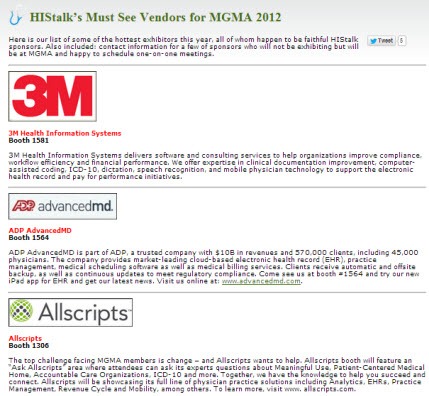
Curbside Consult with Dr. Jayne 10/9/12

October 8, 2012 Dr. Jayne 2 Comments

clip_image002

Despite recent calls by some members of Congress to halt Meaningful Use incentive payments, providers are still gearing up to attest. The last 90-day reporting period for 2012 just began and it’s interesting to see people who haven’t yet been able to meet the requirements try to gear up and get it done.

I ran across an article that’s really timely. Basically it poses the question: Who gets the money? Whether providers are employed by large integrated delivery systems or whether they are partners in small practices, it’s often not clear how incentive payments should (let alone will) be allocated.

This doesn’t apply to just MU payments, but nearly any kind of pay for performance bonus, quality bonus, or capitation payment. Often physicians seem to be too busy actually caring for patients to spend the kind of up-front thought needed to solve these questions before they become practice-shattering issues.

The article presents a cautionary tale about a solo physician who employed a nurse practitioner in her office. After spending more than $50,000 to implement an EHR, the employee received the MU check and walked away with the cash, leaving the practice holding the bag. There’s probably more to the story, but it raises important questions about the intent of MU incentives and how they are paid.

The employed physicians working for our large health system have language in their contracts that basically state any incentives received for work done as an employee belong to the health system. In the event that they are paid to the physician personally, they are to be signed over to the health system who also has the right to pursue legal remedies to obtain the funds. The language is clear that it only applies to work done within the course of employment. It also requires providers to complete any assignment paperwork within 30 days of receipt or penalties apply (the same language applies to credentialing paperwork, conflict of interest documentation, employee code of conduct updates, etc.) It’s very “take it or leave it” and that’s part of what being in an employed situation is about.

The key here is that these stipulations are made clear during the hiring process – no surprises. Should the health system decide to be benevolent and actually share quality bonuses with physicians, it’s completely up to the leadership. Although it’s maddening as a provider because we’re doing the work, it’s understandable because none of us personally put up the $45,000 it cost to deploy our EHR system. The one time they did pass funding through to the physicians, I ended up with a whopping $40 bonus. I think at the time it covered about a week’s worth of interest on my student loan payment.

Even in small practices with physician partners, I’ve seen resentment between those who embrace EHR and enter the majority of the data and those who coast on the coat tails of their colleagues. There need to be minimum standards for data entry if payments are to be divided equally. This is not a lot different than the decisions that need to be made when partners who have capitation agreements cross-cover patients or when one partner takes more call or works less than another.

Bottom line: regardless of which side of the table you may be on, this needs to be addressed contractually before it becomes an issue. If you’re an employer and your providers haven’t brought it up yet, don’t assume they won’t be bitter when they figure out in the future that they should have. Be the bigger person and start the dialogue now. And if you’re an employee, be ready to discuss what kind of a split you think is fair and why you feel that way. Interesting discussions will certainly ensue and it may not be easy to avoid hurt feelings or bitterness on either side. Personally, after living through my last contract negotiation, I might just be inclined to arm wrestle for it.

How does your organization allocate incentive payments?

drjayne

E-mail Dr. Jayne.

Monday Morning Update 10/8/12

October 7, 2012 News 12 Comments

From Factory Girl: “Re: Allscripts. My company is an Allscripts partner and last week they told us they were not planning to make any official announcement about the decision to move customers off the MyWay platform. Yet I see that the day after HIStalk mentioned it, they posted details on their WebSite.” Allscripts also filed an 8-K so they probably figured everyone would know even if they didn’t read HIStalk. Allscripts is taking a $10-$13 million write-down on MyWay so that business apparently won’t be sold as once rumored.

10-7-2012 9-20-35 AM

athenahealth CEO Jonathan Bush says his company is considering a move to a larger location or an expansion of its Watertown, MA headquarters from 330,000 to one million square feet.

The local paper profiles Nashville-based Shareable Ink, which has grown from two customers at the beginning of 2011 to almost 100 hospitals and clinics today. CEO Stephen Hau says he expects the company to grow from 40 employees to 80 within the next six months.

The 100+ physician Colorado Springs Health Partners chooses Humedica’s MinedShare clinical intelligence platform.

10-5-2012 9-10-33 AM

The use of EHRs isn’t increasing Medicare fraud, say 78 percent of poll respondents. New poll to your right: what is the primary motivation of the House members who are urging cessation of HITECH payments?

Listening: new from reader-recommended The Vaccines, an English indie band that sometimes sounds like the Ramones, but is a good (better) listen even when they don’t. I’m also wistfully listening to YouTube recordings of The Howard Stern Show from the early 1990s when it was actually good (Howard, Robin, Fred, Jackie, and Billy, and especially the Jackie Puppet).

10-7-2012 8-16-52 AM

Streamline Health Solutions promotes Matthew S. Seefeld from chief strategist of revenue cycle to SVP of solutions strategy.

Providers rank CareFusion, Omnicell, and McKesson the top providers of anesthesia cabinets based on functionality, implementation, and training, according to KLAS. Half of users that have implemented anesthesia cabinet systems say the main benefit of OR-specific cabinets is having an organized and controlled medication inventory.

10-7-2012 8-59-50 AM

Surgical Information Systems integrates its perioperative IT solution with OpenTempo’s surgical and anesthesia workforce scheduling tool.

10-7-2012 9-55-28 AM

The T-System folks forwarded this card, which they developed in advance of this week’s ACEP Scientific Assembly in Denver.

The former HIM manager of a small Nevada hospital files a wrongful termination lawsuit against her former employer, claiming she was fired for questioning what she says was ED upcoding.

inga Just a reminder that Mr. H is taking some R&R this week. If you send him an e-mail and he fails to respond, hopefully that means he is busy reclining on an exotic beach sipping umbrella drinks. Actually I don’t think he is an umbrella drink/exotic beach kind of guy, but since that’s my idea of the perfect vacation, that’s what I am envisioning for him. While he is out of pocket this week, feel free to drop me a note, should you have any burning HIT news to share, want to offer encouragement, or have any umbrella drink recipes worth consideration.

10-7-2012 7-56-43 AM

Thankfully Weird News Andy never takes a break and sends over this story about one Florida county’s attempt to have patients waive their privacy rights. The Sarasota County sheriff’s office is encouraging pain physicians to have their patients sign a form authorizing the release of PHI to law enforcement, should a physician believes a criminal violation has occurred. The local paper reports that the medical community is is concerned the move violates “HIPPA law.”

Vince provided a HIS-tory this week after all, continuing his QuadraMed history with a fascinating look at Health Data Sciences, which was the hottest vendor going a couple of decades ago. My favorite trivia: founder Ralph Korpman MD was a computer genius who started medical school at 15.


Contacts

Mr. H, Inga, Dr. Jayne, Dr. Gregg.

More news: HIStalk Practice, HIStalk Mobile.

HIStalk Interviews Dale Sanders, SVP, Healthcare Quality Catalyst

October 5, 2012 Interviews 3 Comments

Dale Sanders is SVP of Healthcare Quality Catalyst of Salt Lake City, UT. He is also senior technology advisor for the national health system of the Cayman Islands and a senior research analyst for The Advisory Board Company.

10-3-2012 7-38-42 PM

Tell me about yourself and the company.

I’ve been in IT since 1983. I’ve got bachelor’s in chemistry and biology. The Air Force sent me back to their version of an information systems engineering master’s program. So the first half of my career, 15 years, was in the military and national intelligence and then manufacturing. Then I got into healthcare about 15 years ago and I’ve been there ever since. It’s been a great transition.

At our core, Catalyst is a company that specializes in data warehousing analytics for healthcare. We are commercializing through Catalyst not only the technology, but the cultural alignment and exploitation of data. All of us that are involved have had the background in that operationally. This is the opportunity for us to make it more available in the industry.


I’m fascinated from your background that you were a nuclear launch officer on Looking Glass, the plane that stayed airborne to launch retaliation in the event of a nuclear strike. Did you ever almost lean on the wrong button and start World War III by accident?

[Laughs] No, never quite that. There’s a lot of checks and balances. But that was an awesome job. I mean, considering how young I was and the responsibility that the Air Force places upon you, it was phenomenal.

Here’s a weird little twist. I was actually working on a nuclear decision support aid for the Joint Chiefs of Staff when I stumbled upon healthcare. I was reading about the use of computers in healthcare, and the idea was that I was going to apply what healthcare was doing to nuclear decision making. But as it turned out, I came away from those studies and I went, “Wow, if that’s the best that healthcare can do with computers, there’s a lot of opportunity ahead.”


Thank goodness you didn’t take what healthcare does and apply it to nuclear strike decisions.

[Laughs] The parallels are very direct. It’s all about false positives and false negatives and diagnosis and the appropriate response. Not over-treating, not under-treating. It’s amazing, the parallels.


The next most fascinating thing about your background is that you went to the Caymans. I’ve been there and mostly remember that the water’s really nice and the biggest industry is bunches of post offices boxes that are the only physical presence of offshore banks. How did you end up there? You’re still working there, right?

I’m still consulting there. I plotted out this high-level strategy in my career. I wanted to work for an integrated delivery system and I wanted to work for an academic medical center. 

Then I saw what was happening in the US, and I thought I’d love to get out and work for a national healthcare system. I was actually headed to Canada, but out of the blue, this opportunity in the Caymans came along. I literally turned around within a matter of just a couple of weeks of heading to Canada and went there to work in this more laboratory-sized setting on a national healthcare level. It was the best experience of my life.

One of the nice things about my life is every job that I’ve had is better than the last one. The Caymans is exactly that. It was fascinating. What was really fascinating, talking about the financial arena, is that they pull off a national healthcare system without a national income tax system. They basically operate on what amounts to a national sales tax. There’s no income tax. It’s just fascinating from an economic perspective how they fund healthcare as well as the entire government without a national income tax.


I would assume – maybe incorrectly – that they’re not big technology users.

It’s a tiny little country, only 60,000 people, and talk about isolated from skilled labor. They implemented Cerner about nine years ago. It was not a good implementation. That’s one of the values that I brought down as we turned that around.

But they’re actually very, very capable. Technically, very capable. They were in a bad state of affairs when I took over, but they supported me very well and we turned it around.
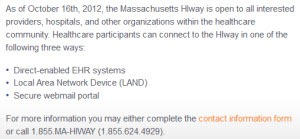
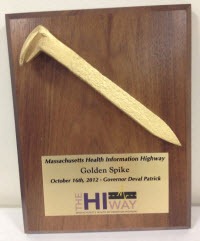
Now we’re doing things down there that the US system isn’t even doing. We just implemented a real-time claims adjudication system that adjudicates your claim right at the point of care. The physician signs off on your encounter, and by the time you get to the checkout desk, your claim is submitted and returned, and if there’s any self-pay portion, you manage it right there.


Everybody dreams about a healthcare system where automation adds value to the patient instead of getting administrivia done. It must be frustrating to be back in the middle of this mess we call the US healthcare system.

I’ve had to learn to temper my impatience working in the US system, that’s for sure. But I’m actually very encouraged. I think we finally reached the tipping point. My theory is that whatever happens with federal legislation, the employers aren’t going to tolerate what they’ve tolerated for so many years. 

I think we’re at the tipping point now. I think we’re about to enter a very fun period in healthcare in the US.


Suddenly everybody wants to know what you know about data warehouses and business intelligence. A lot of organizations tried stuff before that flopped, often not because of the technology, but because they didn’t have the leadership or culture to act on what business intelligence was telling them. How would you assess the current state for data warehouse and business intelligence and what are hospitals doing now?

Well, it’s kind of funny. I was reflecting … you know, I love your “Time Capsule” reflections, so I was doing that myself. Then I found a paper that I wrote – it was 10 years ago to the month – for HIMSS. It was entitled, “Standing on the Brink of a Revolution: Healthcare Analytics,” I think was the title of it. It was basically the summary of my experience at Intermountain and what we were doing.

I was convinced at that time that data warehousing and analytics were going to take off in the industry. Of course, that was 10 years ago and it hasn’t moved very far, but I think we all see now that analytics is absolutely fundamental to the future. We’ve been in the EMR deployment phase, which is about collecting data. We’ve been in the HIE phase, which is about sharing data. Now we’re finally getting into this age of analytics and exploiting all that data.

It’s really fun to be a part of that and I’m really grateful to be involved with it again. In particular, I’m grateful for Catalyst. I started the Healthcare Data Warehousing Association in 2001 with the idea that we would stimulate best practices and greater adoption of analytics in healthcare. HDWA has done OK, but not great. I think there’s something like 300 member organizations, but it’s not as good as it could be. For me, the involvement in Catalyst is now an opportunity to make best practices available in the market in a commercially sustainable way. It’s a lot of fun.

We’ve been seeing all these debates about whether there is value in the deployment of EMRs and if you drive healthcare costs up or down. I really believe, having watched this now for 15 years, that the return of investment from an EMR comes from the deployment of the data warehouse. For about one-tenth the investment of an EMR, you can implement a data warehouse. I can show all sorts of data that proves the return on investment from a good data warehouse is 1,000 to 1,500 percent in two to three years. You can’t show that with an EMR, but there’s plenty of studies that show tangible measurable ROI from the data warehouse.


Some people would argue, me probably being one, that the real value of an EMR is really at the very front end and the very back end. On the front end, you’ve got decision support that may influence decisions, and on the back end, you’ve got analytics that may influence decisions more broadly and get into population management. Everything in between is a utility. Are people beginning to realize that the EMR isn’t the end of the project, it’s the beginning of the next project?

That’s a great point. I think that’s exactly where the market is right now, and we’re seeing that in kind of the market timing in Catalyst. It’s a little bit like the Wild West — their pulse rate is still pretty high from deploying EMRs. Now suddenly everyone’s saying, “You know what, you’re not done yet.” It’s really about analytics, and the EMR is really a means towards to the end state, which is analytics. People are a little confused by it right now. It’s a little bit of Wild West going on, but it will calm down in the next six to 12 months, I think.


I’m sure a lot of the calls you get are from the average Cerner or Epic shop wondering what you can do for them.

The EMR vendors are – and we would expect them to be this way – very EMR-centric. If you look at Cerner’s and Epic’s offerings, it’s really been around the aggregation of data that they collect, which is all well and good. But if you look at the ecosystem of data that you have to analyze in healthcare, it’s way beyond the data that’s collected in the EMR. 

Even if you have a full-blown suite like we did in the Caymans — or as is more commonly deployed now with Epic customers — there’s data outside of the boundaries of Epic and outside the boundaries of Cerner that you have to have in order to understand the full continuum of care, and especially to manage the risk of care and capitated payments. 

You have to have claims data, outside pharmacy data, mortality data, and you may want benchmarking data from other organizations. You want to mix that all together into an enterprise data warehouse. And that’s the challenge that Cerner and Epic have never really addressed very well. 

Epic is coming out with a new product. It’s a little more extensible. Cerner has been toying with that for a while as well, but they’re a little bit late to this. That’s OK, because the reality is, we leverage what they do. For instance, if you have PowerInsight, if you have Clarity or Cogito, the new Epic product, we will attach to that and leverage that in our data warehouse solution. We’ll pull data out of those EMR-centric designs and pull that into a more extensible design in Catalyst.
 

The guy who will be running the proposed Vermont statewide ACO said what he wants most is data, because if they’re approved as the statewide Medicare provider, they will get to see Medicare claims data for individual patients – how often they seek hospitalization and for what purpose, more of a population health view. Would you be able to manage government data like that if you could get it?

Yes, absolutely. I can’t say that I’ve ever had the opportunity to pull in Medicare or Medicaid data back into a data warehouse, but we certainly have a strategy for utilizing the data that goes through an HIE. It adds a lot of value to the content of the data warehouse.
I might also mention that some folks are looking at HIEs as being the primary source of data for their enterprise data warehouse. But again, it doesn’t provide the complement of data that you need. In particular, you can’t do what we focus on. You can’t do waste analysis with an HIE data stream, for example. It just doesn’t provide the fidelity or the granularity of data that you need, and there’s no costing data in that data stream. 

A big part of what we do in Catalyst is to knock out all of those relatively simple but non-differentiating reports — internal reporting and external reporting to Joint Commission and Meaningful Use and that kind of thing — that everybody has to abide by. There’s no differentiation there, so we try to make that as easy and as quick as possible to deploy. 

Then we focus on what we call the upper layers of the analytic adoption model. That’s where we get into waste elimination. We philosophically believe that the emphasis on accountable care and the physicians who are taking great responsibility for a patient’s outcome is a pretty tough accountability to swallow. Depending on which study you look at, 40 to 70 percent of the healthcare costs are lifestyle related. We don’t really know how in the near future a CEO for a healthcare system is going to take accountability for those lifestyle changes that are required to drive healthcare cost down. 

But the one thing that is within the complete control of the CEO is waste management within the boundaries of his or her own organization. What we try to do is get people up the analytic adoption model as fast as possible into those areas that allow them to quickly identify waste. It’s not unusual for us to find 25 to 30 percent opportunity waste and that can be returned right back to the bottom line of your organization.


The challenge, I would think, is trying to get the attention of prospects where every vendor of every system that can export to Excel claims they have an analytics suite. What’s the message you have to send to get people’s attention that just having a bunch of raw data isn’t really business intelligence or analytics?

We see that going on right now. In fact, when I talk to fellow CIOs about this, a lot of them are deer-in-the-headlights right now because there’s so many different options in the market. 

We’re hoping that that calms down a bit. We hope that as people become familiar with us and they see our track record and they see the history of what we’ve done in our clients — and not only with our commercial clients, but our background as operational data warehouse developers in places like Intermountain and Northwestern — that they’ll see the value that we offer. But, yeah, it’s the Wild West out there right now, that’s for sure, and the options are overwhelming to most CIOs.


Suppose somebody came to you and said, “Give me your best success story so far.” What’s the best outcome someone got from using your products and services?

About $10 million savings in readmissions is probably the big one, within a year and a half. We have numerous success stories in the $4 to $5 million range of tangible, measurable return on investment and savings. Those stories are gaining momentum all the time. It’s very fulfilling.


What effort and resources are required to implement your product?

The combination of a culture that’s willing to exploit the data along with the technology of analytics. Those are the two fundamental pieces you need no matter what your organization or what vendor you’re looking at. You have to have the culture that’s willing to exploit the data, and you have to have robust and extensible technology.

We’re a little different from a lot of vendors in that we try to commoditize the technology and get that implemented as fast as we can. At one of our largest clients, we were able to implement the core analytics solution for them in seven weeks. Our whole goal is to make the technology as commoditized as possible and then move into that cultural exploitation of data just as quickly as we can.

Time to value is a big deal for us. We keep trying to compress that all the time. The message that I share with my fellow CIOs is that if there’s ever a vendor that tells you you have to engage in a multi-year data warehousing project, you need to look somewhere else. You need to measure these data warehousing projects and their deployment and their time to value in weeks and months now. The old 18- to 24-month time to value for a data warehouse is just not acceptable any more. We’re pushing that down. We’re trying to compress that more and more and more.

One other comment on that is that as soon as we deploy the raw technology, the raw data warehouse, one of the things that we bundle on top of that is a waste analysis right away. It gives organizations this compass about where their greatest waste opportunities reside. We’re big believers in the Pareto principle. What we typically find is that most organizations have huge opportunities for waste elimination by just focusing on 10 to 20 care processes and disease states.

It’s very fun to watch that happen. We run this analysis that we call it a key process analysis. We present that to the leadership team, and it just leaps right out at them where they should focus first. Not only have we sped up the adoption and technology, but we’re speeding up the cultural exploitation of the data, too, by giving them this compass.


How does a CIO keep or increase their organizational value as the healthcare reimbursement model changes?

Maybe five or six years ago, I wrote an article for HIMSS, “The Role of the CIO in Healthcare Economic Reform.” I was reading that the other day and  there’s a lot that you can do. It ranges from keeping a lean organization internally to IT, rather than always asking for more money, try and compress your budget while still delivering greater value. Simple things, like working with physicians so that medication preferences are listed in generic format first. There’s all sorts of economic benefits to that.

I’m a little bit biased here, but I think as a CIO, the most satisfying part of my job has always been around the analytics that I help endear to the organization. A lot of times, I run into CIOs that don’t have a strong background in data, in data modeling or data management or data analysis. If everyone who feels they need to would spend some time beefing up their skills in that regard, the CIO can be the champion for the data warehouse.

People remember me at Intermountain and at Northwestern, not for all the other things that I did there, but for the data warehouses that I played a part in. Knock on wood, I’m very grateful for that, but it’s the data warehouse and the analytics that has been most kind to my career. It’s a great time to be a CIO if you can lead the organization down that path.


Do you have any concluding thoughts?

We are soon to announce a couple of major partnerships that will address this $750 billion a year waste issue that Don Berwick and company identified in the JAMA article. These two partnerships in particular are going to enable and make available this Catalyst solution on a much broader basis than we’d be able to do on just our own without the partnerships. I’m very excited about that.

Going back to who should lead these, I would encourage the CIOs to step forward and take a big leadership role in these projects. Typically what happens is that the CIO will lead the implementation and lead the selection, then over time, the day-to-day management of the data warehouse tends to migrate elsewhere — towards the chief medical officer, the chief quality officer. I’m a big advocate of the CIO, because so much of the initial implementation is technically driven. I would just encourage CIOs to get out there and really dig into this.

Wearing my other hat for just a minute, The Advisory Board just presented at their national conference in Chicago a really good slide deck on what we should be thinking about in the CIO space around business intelligence. If you can, get your hands on that slide deck and maybe schedule some time with The Advisory Board to go over it. I think it will be a good roadmap for most organizations, and it’s a great tutorial if you don’t have a background in analytics.

Text Ads


RECENT COMMENTS

  1. Merry Christmas and a Happy New Year to the HIStalk crowd. I wish you the joys of the season!

  2. "most people just go to Epic" that's a problem because then EPIC becomes a monopoly in healthcare, if it isn't…

  3. Only if CEO can post 'bail' which nowadays stands at 1B$ paid directly to the orange president or his family…

  4. I enjoy reading about the donations to Donor's Choice by HIStalk members. I also believe in the worthiness of Donor's…

Founding Sponsors


Platinum Sponsors


Gold Sponsors


RSS Webinars

  • An error has occurred, which probably means the feed is down. Try again later.