Recent Articles:

Morning Headlines 11/8/13

November 7, 2013 Headlines Comments Off on Morning Headlines 11/8/13

Allscripts Healthcare Posts Q3 Loss

Allscripts reports Q3 results: revenue dropped to $330 million, compared to $360 million a year ago. EPS $0.05 vs $0.23, missing analysts estimates.The company also announced that it has fired  Cliff Meltzer, EVP of solutions development.

Data Analytics Update: Health IT Policy Committee Meeting

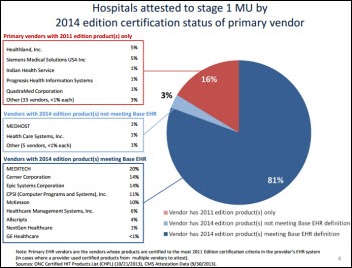
CMS has paid $16.5 billion in EHR incentive payments thus far. Meditech, Cerner, and Epic customers account for almost half of Stage 1 hospital attestations. Epic, Allscripts, eClinicalWorks, and NextGen represent almost half of Stage 1 EP attestations.

HIMSS Offers Guidance to HHS on FDA Regulation of Health IT

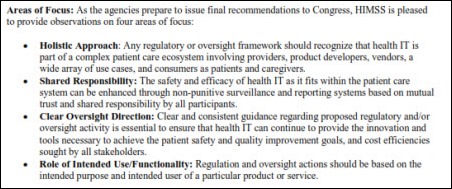
In a letter to HHS Secretary Kathleen Sebelius, HIMSS argues against FDA regulation of EHRs as a medical device, instead proposing "a new risk-based oversight framework that takes into account factors such as risk relative to intended use and cost/benefit of any proposed oversight."

Results From Survey on Health Data Exchange

eHealth Initiative’s 10th annual health data exchange study consolidates survey responses from representatives at 200 HIEs across the country. Respondents report that large scale interoperability is still too difficult and expensive for most to sustain on revenue alone. Currently, only 25 percent of respondents report that they are earning enough to operate independently.

Comments Off on Morning Headlines 11/8/13

News 11/8/13

November 7, 2013 News 6 Comments

Top News

11-7-2013 6-41-31 PM

Allscripts reports Q3 results: revenue down 8 percent, adjusted EPS $0.05 vs. $0.23, missing estimates on both. By GAAP standards, the company lost $48.9 million in the quarter. The company also announced that it has fired Cliff Meltzer, EVP of solutions development since July 2011, and will pay him severance that includes his expected one-year salary and bonus totaling $900,000. A reader’s rumor suggests that former Jardogs CEO Jim Hewitt, named Allscripts SVP of development after the the company acquired Jardogs in March 2013, will replace Meltzer. I interviewed Hewitt in June 2012.


Reader Comments

11-7-2013 11-16-30 AM

inga_small From HerkyHawk: “Shoes. A Symantec representative was wearing these shoes at the Virginia HIMSS meeting. They serve a dual function: conversation starter and castrator for when she gets angry.” Readers often send me photos of fun shoes, for which I am thankful. This shoe earned a rare mention on HIStalk because its owner clearly understands that shoes offer so much more than foot protection.


HIStalk Announcements and Requests

inga_small A few goodies you may have missed from HIStalk Practice this week include: the implementation of HIT in practices reduces the demand for physicians. CMS says it’s not appropriate to charge patients a fee to access their records online. A reader worries about ZocDoc and HIPAA compliance. Lawmakers consider phasing out fee-for-service billing in favor of rewards-based models. The government shutdown delays the release of the 2014 Medicare physician fee schedule. Jaffer Traish of Culbert Healthcare Solutions discusses EHR clinician adoption and change management. Dr. Gregg shares a post-Halloween nightmare. Julie McGovern of Practice Wise offers advice for providers seeking a replacement EMR product. Micky Tripathi’s “Pretzel Logic” post is called Have Sympathy for Your Vendor. Thanks for reading.

11-7-2013 6-45-21 PM

HIStalkapalooza planning has begun for the February 24 event at the HIMSS conference in Orlando. It’s too early to announce the sponsor, venue, and other details (registration won’t start until right after New Year’s) but I always get requests from companies asking about co-sponsoring it along with the primary sponsor. The previous sponsors have always declined to share the limelight, but this one is OK with the idea and has a plan for providing exposure and recognition at the event because it’s going to be really big and impressive. Let me know if your company is interested.


Acquisitions, Funding, Business, and Stock

11-7-2013 6-47-10 PM

Verisk Analytics reports Q3 results: revenues up 10 percent, adjusted EPS of $0.62 vs. $0.54, missing analyst estimates on both measures. The company noted that its “healthcare business delivered growth that was below” plan, but it remains “enthusiastic” about the longer-term outlook.

11-7-2013 5-25-15 PM

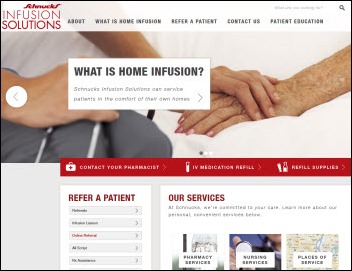
Midwest grocery chain Schnucks follows its competitor Walgreens by opening its first 6,500 square foot IV infusion center, offering patients free Internet access, a TV, a snack bar, and evening and weekend appointments. The center’s pharmacist and two nurses can either infuse the medications on site or prepare them for home administration.


Sales

In England, BT selects Harris Corporation to supply clinical portal solutions for health and social care organizations across the NHS.

The California Office of Health Information Integrity awards contracts to Humetrix, UC San Diego Department of Emergency Medicine, and the Santa Cruz HIE to participate in a PHR demonstration project.

Huntsville Memorial Hospital (TX) selects StrataJazz from Strata Decision Technology for cost accounting, operating budgeting, long-range financial planning, and capital planning.

11-7-2013 6-50-27 PM

Mammoth Hospital (CA) chooses the MEDHOST emergency department information system.


People

11-7-2013 9-06-31 AM

Coker Group hires Jeffrey T. Gorke (Castle Gate Management) as SVP of practice management.

11-7-2013 9-20-24 AM

VA’s acting CIO Stephen Warren is named executive in charge of the office of information and technology and CIO.

11-7-2013 3-27-19 PM

Capsule names Didier Argenton (Siemens Healthcare) as VP of international sales.

11-7-2013 4-32-58 PM

Patricia Sengstack, DNP, RN, formerly deputy CIO of NIH and currently president of the American Nursing Informatics Association, is hired as chief nursing informatics officer of Bon Secours Health System (MD). 


Announcements and Implementations

Software Testing Solutions will provide automated testing services for Sysmex WAM decision support software for the clinical laboratory, validating the system’s rules, application settings, and workflow practices.

Surescripts adds 12 Epic health systems to its national clinical network, including Swedish, UCSD, UCSF, and Community Health Network.

11-7-2013 6-56-20 PM

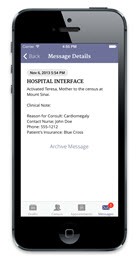
pMD expands its charge capture secure messaging feature with real-time alerts and direct text messaging.


Government and Politics

11-7-2013 5-41-36 PM

CMS CIO Tony Trenkle will leave the agency, according to an internal email sent to CMS employees.Trenkle oversaw $2 billion in annual IT products and services, including the development of the healthcare.gov website. Dave Nelson, the current director of the office of enterprise management, will serve as acting CIO.

11-7-2013 1-49-39 PM

CMS paid $16.5 billion in EHR incentive payments to over 325,000 EPs and hospitals through the end of September. Customers of Meditech, Cerner, and Epic account for almost half of all hospitals that have attested for Stage 1 MU; customers of Epic, Allscripts, eClinicalWorks, and NextGen represent almost half of all EPs that have attested for Stage 1.

11-7-2013 5-45-29 PM

USO CEO Sloan Gibson, the President’s nominee for the VA’s deputy director position, says in his nomination hearing that he will focus on the agency’s disability claims backlog and the integrated EHR (i-EHR) project of the VA and Department of Defense.

The Military Retirement and Compensation Modernization Commission, reviewing the failure of the VA and Department of Defense to create a single EHR, floats the idea of combining the entire health systems of the VA and DoD into a single organization, with former Senator Bob Kerry stating, “If [VA and DoD] can’t work together, put one of them in charge. Pick your poison, I don’t care which one. Create a unified command with DoD or put VA in charge.” Former Indiana Congressman Stephen Buyer agreed by saying, “If you had one chief information officer in charge of budget and line items for both, this problem and many others would not be an issue.”

I signed up on Healthcare.gov this week just to see what all the fuss was about. I have to say it was a pleasant experience – the much-criticized identification system worked great and the entire process to get quotes took maybe five minutes. Once I saw the prices I’m glad I have hospital-subsidized medical insurance. I  wasn’t as pleased with the site when I logged back in later – it seemed to be confused that I had requested quotes without buying insurance, and I kept getting warnings about pending messages when there weren’t any. Trying again just now, all I got was a blank screen with no options, and clicking the “Get Insurance” tab just took me back to the default page.


Other

Jackson Health System (FL), planning how it will spend the $830 million it will get from a just-passed property tax referendum, says it will upgrade rather than replace Cerner with the $130 million that is intended for EMR-related improvements.

An investigative report finds that financially struggling Lifespan (RI) paid its now-retired CEO $8 million in 2011, raising his 14-year total compensation with the organization to $39 million.

11-7-2013 6-33-54 PM

HIMSS, trying to ensure that FDA doesn’t regulate EHRs as medical devices, proposes to HHS a “risk-based oversight framework” that would consider the risk when used as intended and the cost vs. benefit of oversight. It makes sense – HIMSS points out that non-clinical IT that has no patient safety implications doesn’t oversight. They also don’t want vendors to be solely responsible, with surveillance and reporting responsibilities to be shared among vendors, providers, and government. They suggest that vendor responsibility ends once their control of their product ends, such as when users customize it.

Weird News Andy is at a loss for all but one word: unbelievable. A man claims that city police in Deming, NM pulled him over for rolling through a stop sign at Walmart, then decided from his posture and previous behavior that he was hiding drugs in his anal cavity. A judge issued a cavity search warrant but the local ED doc refused to do it, saying it was unethical. The man was then taken to Gila Regional Medical Center, which obliged by performing two sets of x-rays, two rectal probes, three enemas, and a colonoscopy, all without the man’s consent and with no drugs were found. The hospital is adding its own version of anal intrusion to the story by not only billing the man, but threatening to turn his debt over to collectors.


Sponsor Updates

  • Informatica achieves top marks for customer loyalty, overall quality of products, and product reliability in the 2013 Data Integration Customer Satisfaction survey.
  • Halim Cho, director of product marketing for Covisint, will discusses the importance of cloud identity and access management at the November 20 Gartner Identity and Access Management Summit in Los Angeles.
  • Intelligent InSites VP Marcus Ruark presents on the value of operational intelligence at this week’s Data Intelligence for Health Care Conference.
  • QuadraMed will add Health Language terminology management solutions to its QCPR platform.
  • Bottomline Technologies hosts its second annual Healthcare Customer Insights Exchange this week in Del Mar, CA.
  • Airwatch secures additional office space for its UK facility to accommodate recent growth.
  • Verisk Health publishes its schedule of events through the end of the year.
  • Vocera’s chief medical officer Bridget Duffy offers ideas for improving patient satisfaction scores.
  • eClinicalWorks CEO Girish Navani predicts that patient engagement and population health management will become essential components of EHRs.
  • Predixion Software publishes a white paper on embedding predictive analytics into software.
  • PGA Championship winner Jason Dufner gives Greenway employees a putting clinic.
  • Hayes Management Consulting provides details on its monthly webinar series.
  • HIStalk sponsors named to the Thomson Reuters 2013 Top 100 Global Innovator list include 3M, AT&T, Fujifilm, GE, NTT, and Xerox.
  • PeriGen hosts a November 13 webinar on labor progress as part of its inaugural webinar series on excellence in perinatal care.
  • ZirMed’s Betty Gomez discusses risk mitigation strategies for ICD-10 at next week’s WEDI 2013 Fall Conference in Maryland.

EPtalk by Dr. Jayne

News flash: CMS requests public comments on potential Clinical Quality Measures for Stage 3. The measure specifications are published on the CMS website for your review. If you don’t have any exciting social plans for the weekend, I’m sure it will be a good read. The comment period closes on November 25.

clip_image002

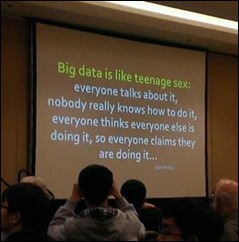
You know you’re a clinical informatics propeller head when you find a quote like this one funny. It’s gone somewhat viral in the health care IT universe since being shared on Twitter last week. I have a medical student working with me this month and he almost spit his coffee when I turned my laptop so he could read it. It’s true, though – lots of people are talking about doing it, but the realities of actually doing it are very different.

My own health system has a vision of big data. They’re spending loads of money building various analysis platforms since they never met a homegrown application they didn’t like. There is a herd of project managers and marketing types that has embarked on a road show to extol the virtues of big data. It’s exciting to hear them talk to groups of physicians about the vision for the future, when they will bring together data from our EHR with payer and community data and use it to change the world.

Call me cynical, but rather than pin all our hopes for the future on a project that is just getting started, perhaps it would be a good idea to go ahead and use what we already have to start changing how we practice. We’re fortunate to have selected an ambulatory EHR that has robust reporting capability. It also can automatically send patient-specific tasks to the care team when test results are overdue, when preventive services need to be scheduled, or when clinical values are out of range. A couple of years ago we bought additional hardware to be able to run over 250 clinical reports and tasks from them, but the servers are largely sitting idle.

Why is this happening? My theory is this. Unlike a certain baseball field in Iowa, if you build it, they may not come. Our physicians are deathly afraid of these reports and what they represent. They’re worried about liability – specifically, the liability of having these patient care tasks and not having the staff to work them. They’ve been told that having a report that they don’t take action on is riskier than having no report, so they have not allowed us to enable them for their practices. They feel trapped in a Catch-22 — if they can demonstrate higher clinical quality they hope to negotiate better reimbursement for their services, but they can’t demonstrate quality because they can’t afford the staff to drive it.

It’s easy to say that physicians should cut their take-home pay and hire more staff, but it’s not realistic. In our group, primary care physicians make less than half of what their subspecialty peers make and typically work longer hours in the office and hospital. The bulk of our primary care growth has been with younger physicians who are still paying off student loans debt that is higher than the mortgage on a McMansion. Our starting salary for most new primary care physicians is barely more than IT managers make.

This brings me to the point of why I have a medical student working with me. He’s in his fourth year and is a smart cookie, but is no longer sure he actually wants to be a physician. He sees the long hours that his faculty preceptors put in and the sacrifices their families have made and doesn’t feel it’s worth it any more. So, with over $180,000 in student loan debt, he’s looking for a way to leverage his clinical knowledge and critical thinking skills in the healthcare field. Unfortunately, learning about the complexities of the Meaningful Use program, the transition to ICD-10, billing requirements, documentation standards, the plethora of audits that we face, and the overall anarchy found in the healthcare system may be driving him out of medicine altogether.

One of the more challenging aspects of working with him has been trying to help him make sense of everything. Much of what we deal with defies logic and pushes the bounds of reason. When I delivered his mid-rotation evaluation, I asked what part of our time together he enjoyed most and he said it was the more IT-focused meetings we’ve had. We’ve been through some highly technical discussions the last few weeks about server virtualization, hardware and operating system upgrades, backups, redundancy, and off-site storage. I asked him what he found appealing about that and he said it was the fact that it was logical and made sense.

I’ve got another two weeks with him, so there’s hope, but it’s been interesting to see his reaction to the things that CMIOs deal with every day. At best I want to convince him to complete an internship so he can be fully licensed and will have more options than if he decides not to pursue additional clinical training. But in the mean time, I’m sure I can come up with plenty of sticky hardware and infrastructure issues to keep him occupied.

Do you work with medical students? What do they think about healthcare IT? Email me.


Contacts

Mr. H, Inga, Dr. Jayne, Dr. Gregg, Lt. Dan, Dr. Travis.

More news: HIStalk Practice, HIStalk Connect.

125x125_2nd_Circle

Morning Headlines 11/7/13

November 6, 2013 Headlines Comments Off on Morning Headlines 11/7/13

Healthcare.gov casualty: CMS CIO steps down

Centers for Medicare & Medicaid Services CIO Tony Trenkle will step down from his position effective November 15 according to an internal email sent by CMS COO Michelle Snyder. Trenkle joined CMS in 2005, directing the Office of E-Health Standards and Services before becoming CIO and overseeing the agency’s $2 billion IT budget.

NSA allegations prompt NIST to review data encryption processes

The National Institute of Standards and Technology announces that it will have its data encryption standards independently reviewed after leaked documents reveal that the NSA has cracked the encryption standard. NIST encryption is the de facto standard for healthcare information security.

Surescripts Network Gains Momentum, Adds 12 Health Systems to Connect Providers across Care Communities

Surescripts adds 12 Epic health systems to its growing health information exchange network.

Disability claims backlog, EHR efforts top VA nominee’s priorities

Sloan Gibson, current USO CEO and presidential nominee to be the next VA deputy director reported that he would tackle the longstanding backlog of disability claims and will work to find common ground with the Defense Department on a new strategy for a joint electronic-health records system.

Comments Off on Morning Headlines 11/7/13

Readers Write: Big Data: Enabling the Future of Healthcare

November 6, 2013 Readers Write Comments Off on Readers Write: Big Data: Enabling the Future of Healthcare

Big Data: Enabling the Future of Healthcare
By Anthony Jones, MD

11-6-2013 12-38-27 PM

Everyone’s talking about the importance of big data in healthcare. Yet as the data piles up – most of it still in different silos – health systems are struggling to turn big data from just a concept into a reality. Here’s how I see big data having the biggest impact on the health of populations, both today and tomorrow.

Most healthcare organizations today are using two sets of data: retrospective (basic event-based information collected from medical records or insurance claims) and real-time clinical (the information captured and presented at the point of care  — imaging, blood pressure, oxygen saturation , heart rate, etc.). For example, if a diabetic patient enters the hospital complaining about numbness in their toes, instead of immediately assuming the cause is their diabetes, the clinician could monitor their blood flow and oxygen saturation and potentially determine if there’s something more threatening — like an aneurism or stroke — around the corner.

Where real pioneering technologies have succeeded is putting these two data pieces together in a way that clinicians can grasp the relevant information and use it to identify trends that will impact the future of healthcare – predictive analytics. So for example, if more diabetic patients start to present a similar trend of numbness in their toes, the coupling of real-time and retrospective data can potentially help doctors analyze how treatments will work on a particular population. This gives hospitals a much stronger ability to develop preventative and longer-term services customized for their patients.

Now what if we take data a step further and introduce gene sequencing into the picture? Today, gene sequencing is used primarily to determine the course of treatment for cancer patients. As we reach an inflection point in the cost of gene sequencing, this data will be routinely added to a patient’s health record. Imagine the kind of impact this data will have on treating infectious diseases, where hours and even minutes matter. The next time there’s a disease outbreak, we could potentially know the genome of the infectious organism, the susceptibility of the organism to various antibiotic therapies, and determine the correct course of action without wasting precious resources in trial and error.

Undoubtedly, we have yet to determine the most practical, cost effective way to manage this kind of data. To put it into perspective, the human body contains nearly 150 trillion gigabytes of information. Imagine collecting that kind of data for an entire population.

There’s no doubt this is a mammoth task, and while we might not be there yet, we are certainly getting closer. There are still challenges ahead: organizations are learning lessons from the early adopters and trying to determine the best ways to cooperate and share data. Undoubtedly the amount of investment required to make big data technologies work is more than what a single segment of the market can afford. That means all stakeholders, including pharma, will have to work toward a common vision. But with Accountable Care Organizations paving the path for payers and providers to work more closely together, we are heading toward success, and more importantly, better patient care.

Anthony Jones, MD is chief marketing officer, patient care and clinical informatics, for Philips Healthcare.

Comments Off on Readers Write: Big Data: Enabling the Future of Healthcare

Readers Write: Epic Concerns

November 6, 2013 Readers Write 18 Comments

Epic Concerns
By Long-Time Epic Customer

Wake Forest Baptist is just the tip of the iceberg for Epic clients struggling with revenue, based on conversations I’d had with various contacts at UGM. There was quite the buzz about a large number of customers with revenue concerns who are not hitting the news. Yet.

We installed Epic years ago, but have seen a vast difference between our prior experience and a recent rollout of newer products. The method where time was taken to help us build our own system has been replaced by a rushed, prefab Model system installed by staff where even the advisers and escalation points at Epic have little knowledge of their applications. Epic has always had newer people, but it was much more common to have advisers during the install who did have experience to watch for pitfalls.

Though today’s economy is certainly a large factor in any revenue struggles, I am unsurprised by stories like Wake Forest or Maine and believe Epic should have seen some of it coming. We had enough experience with Epic to spot trouble with new products. New clients likely don’t have that built up yet, and they probably rolled off the cliff with nothing but green lights on Epic’s reviews of their install progress from newbies who didn’t know any better.

It feels like Epic tossed a winning formula in favor of a faster, cheaper install. What many of us are getting ends up being cheaper, indeed. That is a tough contrast to reconcile at UGM. After getting my ears blown out at an expensive, new, rarely-used auditorium that was just built to replace a barely older, rarely-used auditorium, Judy spoke at length about how the campus was cost-efficient and made employees more productive. Many of us are developing an alternative thesis, which is that productivity has been getting squeezed (and compromised) to support the costs of the campus.

I want to keep loving Epic. They are still good, but their services are declining.  The campus strikes a nerve with many clients who justifiably wonder whether our vendor is investing in the things that made them great when we’re getting answers, solutions, fixes, and reports slower than ever.

Readers Write: Applying Lean Startup Principles to Optimization

November 6, 2013 Readers Write 1 Comment

Applying Lean Startup Principles to Optimization
By Tyler Smith

11-6-2013 12-24-41 PM

If you haven’t had the chance to read Eric Ries’ 2011 bestseller The Lean Startup, I highly recommend adding it to your reading list. Typically, I am not a big fan of business literature, but I found the book particularly stimulating, largely because its concepts can be readily applied to that currently hot phase of EMR projects – optimization.

After all, entrepreneurism, Ries insists, is not limited to dorm rooms and Silicon Valley garages. Instead, Ries contends that the processes inherent to entrepreneurism can and should take place in large, established institutions – say large healthcare organizations – via the efforts of "intrapreneurs.” Ries goes on to outline the principles of the lean startup and Ries’ fourth principle of the lean startup – Build-Measure-Learn – provides an excellent framework for the optimization phase of EMR systems projects.

The build-measure-learn feedback loop, according to Ries, is one of the key activities that entrepreneurs and “intrapreneurs” alike must perform. In the build-measure-learn feedback loop, minimum viable products (MVPs) are built by entrepreneurs to test certain product and market hypotheses. These MVPs are launched quickly in order to enable entrepreneurs to gather relevant data fast – prior to making large investments of time or money. Using the data generated by the MVP launch, entrepreneurs must then swiftly validate or refute their hypotheses. If the MVP data does not clearly point to success, then the entrepreneurs must use what they learn about their MVP to iterate by building another prototype based upon a modified or newly formed hypothesis and start the cycle all over again.

Here is an example of how I see the feedback loop being utilized during EMR system optimization:

  1. Hospital administrators have mandated that population management be the first major undertaking of the optimization team.
  2. As the first order of business for the population management initiative, the optimization team is tasked with implementing a health maintenance alert mechanism.
  3. While there are a number of different ways that the activity can be instituted, the optimization team meets and decides that since feedback has indicated that providers prefer mobile alerts to desktop alerts, the team will implement the transmission of daily, HIPAA-compliant text message to providers that will provide the providers with patient specific alerts regarding patient health maintenance.
  4. Using the small batch approach advocated by Ries, the optimization team implements the text messages for breast cancer screening and HIV screening only (their MVP) with the intention to expand the text message content to other conditions if the MVP is successful.
  5. After implementation, the optimization team follows up with the end users every few days to check on the initiative, only to learn that most providers aren’t really using the functionality.
  6. When the team queries staff, they learn that providers are not receiving the daily text message until after having seen the first patient of the day and are complaining that messages are long and cumbersome.
  7. After reviewing the data, the team must decide whether the whole idea should be scrapped or whether a few tweaks will fix the MVP’s obvious issues.
  8. The team theorizes that the lack of effectiveness of their MVP is due to lengthy and poorly timed text alerts.
  9. Based upon their conclusion, the team makes the decision to send shorter messages at 5 a.m. each day.
  10. The team builds and launches this new MVP and thus the loop starts over.

In many institutions where the build-measure-learn feedback loop is not utilized, optimization projects check off an optimization as complete after Step 4. What appears to be a premature ending of a particular initiative is not necessarily caused by a lack of understanding of the need for follow up, but is often due to the long list of optimizations that need to be executed. Teams falling into this category are often tasked with implementing a large quantity of optimizations or checking off a few high profile optimizations, but not explicitly tasked with actual optimization as the end result.

Teams in this aforementioned category fall prey to what Ries calls vanity metrics. As Ries warns, vanity metrics are sets of data which companies use to bolster their perceived success but do not really measure criteria that contribute to the actual stated goal. Teams tasked with long laundry lists of items to check off are prone to this trap. If simply going through and performing optimizations for a laundry list of topics allows the team to state that they have accomplished x number of optimizations and then tout this metric, but at the same time end users feel as if there has been no real optimization of the system, then this x number statistic is a vanity metric. Teams must avoid the allure of vanity metrics and ensure that a solid feedback loop is in place.

Recently, Dr. Val wrote of EMR, “My initial enthusiasm has turned to exasperation and near despondency.” She cited that she is not sure that simply getting the bugs out will fix the issue. I cannot comment specifically on Dr. Val’s issue, but I can only say that if the bugs are truly ever going to be got out, it is going to require more than checking optimization items off a list. The real optimization is going to come about via a fully robust effort by optimizers to build, measure, and learn. That is why the time is so ripe to apply lean startup principles to optimization.

Tyler Smith is a consultant with TJPS Consulting.

Readers Write: Organizational Mergers

November 6, 2013 Readers Write Comments Off on Readers Write: Organizational Mergers

Organizational Mergers
By Anonymous CIO

Last fall, a full asset merger of our hospital into a larger health system in the region was announced. This has become a common event in our state and was strategically important to our organization.

Both organizations had developed working relationships in several clinical areas over the years, so at least some synergy had already been established. Geographically, the merger appears logical and based on sound thinking. Ours will become branded as part of the larger, well-regarded health system, and positioned well to confront the ongoing evolution of health care in our region and the country.

The agreement amongst the parties established the agenda for IT. From the outset, project plans were developed and staffing focused on achieving important goals by the established milestone dates. Fortunately, some date slippage in the regulatory approval process provided us with a bit more breathing room than what was originally expected.

Short-term initiatives have included the following:

  1. Establish connection between the entities and the trust among disparate networks to enable coexistence of e-mail, calendar, and access to each other’s systems.
  2. Migration of all personnel to the health system’s payroll and human resources applications including the replacement of all aspects of time collection, payroll, and people management by Day 1.
  3. Establish the larger health system’s financial systems as the final collector and reporter of all numbers and statistics, meaning that all data from our systems (comprised primarily of a core, integrated, community hospital system) would be fed to the designated systems of the larger enterprise. Support the consolidation of business office functions at the enterprise’s corporate headquarters.
  4. Retain our clinical systems for now due to our progress with Meaningful Use, ICD-10, clinical documentation improvement, and local acceptance of that system. Become part of a larger enterprise-wide clinical system decision and migration within the next two to three years.
  5. Continue local initiatives such as participation with HIE, ARRA Stage 2, expansion of our electronic patient records efforts, physician compliance with on-line documentation, and individual physician bonding efforts such as BYOD, electronic rounding tools, etc.
  6. Replace our physician practice/EHR system deployment efforts with the solution provided by the health system.
  7. Prepare for absorption of our IT infrastructure team (network, hardware, PC support) into that of the health system; retain the core applications team to continue to support our legacy system for the duration of its existence.
  8. Prepare for my own absorption into the health system with a different title along with changing roles and responsibilities. This includes the adjustment of my vision and plans from that of a single entity CIO to a role that will cross all aspects of the enterprise.

Observations on the effort to date:

  1. Attitude. Although it’s clear who will run (or, is running) the larger health enterprise, those who we’re working with from the health system have the strength of character not to conduct this combined work effort as a siege of greater over lesser. As a result, our team does not feel besieged, and cooperation prevails.
  2. Project management. Efforts of this magnitude don’t go well without the expertise of highly engaged and empowered professionals to oversee the details. The health system has several of those and the ones assigned to our project are excellent.
  3. Few versus many. Many project teams have been established to execute each of the planned efforts. It’s truly comical when our community hospital team shows up with so many of the same people for each effort while the health system often brings a unique set of experts. It’s the best visual representation of working vertically versus working horizontally that I’ve seen in a while.
  4. Disagreement management. Both sides need a clear path of hierarchy to resolve differences in understanding of the goals. Even in the best of cases this can (and does) occur so a time-efficient escalation process is needed to discuss, digest, and resolve issues as they arise.
Comments Off on Readers Write: Organizational Mergers

Experian Acquires Passport Health Communications for $850 Million

November 6, 2013 News 1 Comment

11-6-2013 6-30-27 AM

Global information services company Experian announced this morning that it will acquire Franklin, TN-based Passport Health Communications for $850 million in cash.

Experian CEO Don Robert said of the acquisition, “Since entering the US healthcare payments market five years ago, we have steadily expanded our position through both organic investment and acquisition, and our business is growing strongly. We are now taking the next step and the acquisition of Passport Health will make us a clear leader in this high growth and attractive market. With our newly combined product range, we will offer our clients in the US healthcare industry a competitive one-stop-shop to manage risk and to satisfy their payments requirements. We are excited about the growth opportunities created by this combination and we greatly look forward to welcoming our new Passport Health colleagues to Experian once the transaction completes.”

Passport, founded in 1996, operates five divisions: Passport (orders, scheduling, verification, patient payments); HealthWorks (physician order screening for compliance); Nebo Systems (claims management); Stat Technologies (scheduling, surgery and bed management); and Data Systems Group (claims and payment processing). It summarizes its mission as “Patient access and payment certainty.” The company’s annual revenue was reported as $121 million.

Passport CEO Scott MacKenzie joined the company in April 2009 after serving as president of RelayHealth Pharmacy Solutions and holding several positions with Cerner. I interviewed him in November 2011.

Morning Headlines 11/6/13

November 6, 2013 Headlines Comments Off on Morning Headlines 11/6/13

Health Management Associates Announces Restatement of Financial Statements

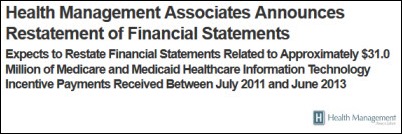
Health Management Associates will restate all of its financial statements going back to 2010 to correct for $31 million in EHR incentive payments improperly collected by 11 of its hospitals. An internal audit recently found that the hospitals attested for Meaningful Use Stage 1 when they did not actually meet the requirements.

CPSI Announces Third Quarter 2013 Results

CPSI announces Q3 results: revenue up four percent, to $47 million vs. $45 million over the same period last year. EPS $0.66 vs. $0.63.

Community CIS Market Quickly Turning into Replacement Market

KLAS reports that 25 percent of community hospitals would not buy the same HIS again. Epic fared the best in the community hospital space, followed in order by Healthland, CPSI, Meditech, and McKesson.

Rotherham trust revises EPR strategy

In England, Rotherham NHS will walk away from its $50 million Meditech 6.0 system that went live in 2012.

Comments Off on Morning Headlines 11/6/13

News 11/6/13

November 5, 2013 News 7 Comments

Top News

11-5-2013 9-31-24 PM

For-profit publicly traded hospital operator Health Management Associates will restate its financials going all the way back to 2010 after internal review finds that 11 of its hospitals inappropriately collected $31 million in HITECH money in 2011-2013 due to the corporation’s mistaken application of EHR certification criteria in failing to meet Meaningful Use requirements. HMA has repaid the money. I received a rumor report last Friday from FL IT Guy, which I didn’t run in its entirely because I couldn’t verify it and HMA is publicly traded, that said, “After releasing our CIO and multiple VPs from his organization at HMA, the office has been in a state of chaos. Auditors have been working around the clock including over the weekend capturing any and all documentation. It’s unknown to most of us what they are looking for however it appears serious and it’s easy to speculate that some inappropriate handling of funds was occurring with vendors.”


Reader Comments

From VAInsider: “Re: VA’s latest contracting fiasco. There is more to this story that is likely to be uncovered if an official investigation is launched. This is yet another example of the VA’s flawed IT procurement process and what happens when you let greedy contractors steer the ship.” The VA awards a $162.5 million contract to ASM Research to improve the user experience of VistA on September 30, choosing the vendor whose bid was more than triple that of two competing bids of less than $50 million. The bid was issued under a $12 billion IT contract with vague requirements that let departments use vendors without seeking competitive bids. One month after issuing the bid to ASM, one of the VA technical leads who worked on the contract quit to become chief strategy officer for ASM. The VA cancelled a 2012 $102.6 million contract with ASM due to a conflict of interest with ASM’s subcontractors, one of which is Agilex, which had hired former VA CIO Roger Baker as chief strategy officer in April. Accenture acquired ASM Research just over a month ago


HIStalk Announcements and Requests

11-5-2013 7-10-32 PM

Welcome to new HIStalk Platinum Sponsor BlueTree Network. The Madison, WI HIT consulting company’s network of 300 healthcare IT experts develop their professional equity via contributions to the company’s collaborative network, endorsements from colleagues, and ratings from previous clients. Once BlueTree objectively identifies the best people, they give them the chance to offer services that they’re really good at and enjoy, moving away from staff augmentation toward offering specialized solutions based on client needs. The best people get the best placements. One consultant used her extensive Epic and ICD-10 experience to develop an ICD-10 service package, while another created dynamic tools to help clients optimize their revenue cycle. Clients rate the experts publicly on every project, so there’s nowhere for mediocrity to hide. A happy consultant is a productive consultant and BlueTree’s Consultant Happiness Advocates offer feedback, goal alignment, and making sure work and lifestyle are balanced. If you think you’re up to the challenge of working with the best, create a profile on their site, find projects that interest you (part-time, full-time, remote, on-site, etc.) and see if you can make the cut to bid on and win a choice assignment. Thanks to BlueTree Network for supporting HIStalk.

Here’s an introductory video for BlueTree Network that I found by Googling.


Acquisitions, Funding, Business, and Stock

11-5-2013 6-39-11 AM

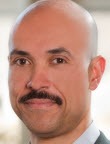
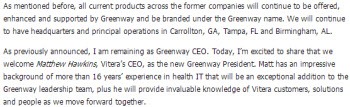
Vista Equity Partners, parent company of Vitera Healthcare Solutions, acquires the outstanding shares of Greenway Medical common stock for $644 million, completing the merger of the two companies. The new company will be privately held and operate under the Greenway brand, with Tee Green (Greenway) assuming the role of CEO and Matthew Hawkins (Vitera) as president. We interviewed Green and Hawkins when the merger was first announced in September.

11-5-2013 10-59-44 PM

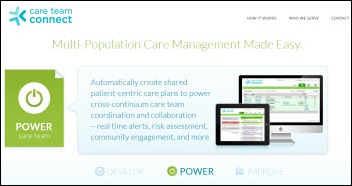
The Advisory Board Company reports Q2 numbers: revenues up 16 percent, adjusted EPS $0.31 vs. $0.31, beating estimates on both. The company also announced the acquisition of Care Team Connect and the promotion of SVP Glenn Tobin to CEO of the Crimson unit. I asked Chairman and CEO Robert Musslewhite about former Crimson CEO Paul Roscoe, who has been in health IT for years at Microsoft HSG, Sentillion, Sybase, and NEON. According to Robert, “The Advisory Board Company leadership wants to recognize that Paul did a tremendous job of leading Crimson to explosive growth and impact to our member hospitals and health systems. Paul, in working from and living in New England, realized that there needed to be greater presence for the Crimson CEO role in Austin, Texas. We collaboratively initiated a decision with Paul to hand over management of the business to Glenn Tobin, PhD.” Tobin was previously SVP of accountable care solutions, and before that, held COO positions with CodeRyte and Cerner.

11-5-2013 11-00-22 PM

CPSI files Q3 numbers: revenues up 4 percent, EPS $0.66 vs. $0.63, missing expectations by $0.01. The board of directors also declared a regular quarterly cash dividend of $0.51 per share.

11-5-2013 11-01-13 PM

Francisco Partners completes its acquisition of McKesson’s hospital automation unit (the former Automated Healthcare) and renames it Aesynt.

11-5-2013 11-02-04 PM

Compliance information and HR training provider Business and Legal Resources acquires the HCPro and HealthLeaders Media brands.


Sales

Fletcher Allen Health Care (VT) selects healthcare enterprise management solutions from Avantas.

HealthCare Partners (CA) will deploy Allscripts EHR across its California medical group sites and will add the FollowMyHealth patient portal and the dbMotion population health management platform.

11-5-2013 9-51-52 AM

Indiana University Health selects Evariant’s Patient Solutions platform for business analytics and patient communications.


People

11-5-2013 6-35-24 PM 11-5-2013 6-45-40 PM

Kareo hires David Mitzenmacher (Volusion) as VP of customer success and Nitin Somalwar (Flurry) as VP of engineering.

11-5-2013 9-13-06 AM

Vikram “Vik” Natarajan (MDLIVE) rejoins Medfusion as CTO.

11-5-2013 8-05-52 PM

The Dallas Business Journal names T-System CFO Steve Armond private technology CFO of the year.

11-5-2013 8-10-34 PM

Cleveland Clinic Innovations names  acting Executive Director Gary Fingerhut to the permanent position. He was previously the group’s general manager for IT commercialization.


Announcements and Implementations

Ocean Beach Hospital and Medical Clinics (WA) rolls out Healthland for inpatient clinicals and NextGen for the clinics.

11-5-2013 10-01-30 AM

EXTENSION changes its name to Extension Healthcare and rebrands EXTENSION HealthAlert to Extension Engage.

One thousand healthcare professionals in Tennessee adopt Direct secure email technology through the state’s Health eShare Direct Project.

11-5-2013 6-31-26 PM

Bottomline Technologies announces Logical Ink for the iPad, which allows completion and signing of forms electronically and sending discrete data to downstream systems.


Government and Politics

11-5-2013 8-29-01 PM

This is either wickedly funny or a sad indication of just how far partisanship in government has gone. HHS Secretary Kathleen Sebelius, speaking at a healthcare event in Memphis, is presented with the book Websites for Dummies by Tennessee State Senator Brian Kelsey, who you may infer is a Republican. You may also infer from the Secretary’s expression that she was not amused.

And in the daily recap of new  Healthcare.gov problems, a South Carolina man demands that HHS remove the information he entered after another user accidentally pulls it up and e-mails him screen shots to prove it. CMS’s Marilyn Tavenner acknowledged the problem in a Senate hearing Tuesday, explaining, “We implemented a software fix yesterday to fix that.” The man who saw his records says he’s not buying insurance anyway – when he saw that the prices listed on Healthcare.gov were double what he expected, he figured he doesn’t need a doctor very often and decided to save money by going uninsured and paying the federal penalty instead.


Innovation and Research

A study of highly questionable design (and with quite a few product misspellings) from Riverside Methodist Hospital (OH) concludes that medical residents don’t think iPads are worth much for clinical use. It was performed as a satisfaction survey, which is already questionable since nothing was actually measured, but the reasons I suggest ignoring it completely (as well as any site that publishes its conclusions uncritically) are:

  • It asked a lot of questions about using the iPad on rounds and when doing documentation, but the hospital is still hand-writing orders with no CPOE.
  • It didn’t mention the clinical system they use, but the iPad access to it was running VMware View, which I assume means screens designed for seated users who are  typing on keyboards were just dumped onto an iPad.
  • It didn’t distinguish between resident satisfaction with the systems they were accessing vs. satisfaction with the iPad itself.
  • It questioned the residents on their use of the iPads outside the hospital, but the iPads were Wi-Fi only.
  • The app generating the highest number of complaints was ORB Mobile, OhioHealth’s homegrown results browser.
  • Many complaints related to connecting to Wi-Fi, but those complaints weren’t analyzed to determine if the problem was actually the network or authentication rather than the iPad.
  • User expertise wasn’t tested, so they don’t know how many of the residents had used iPads previously.

Technology

11-5-2013 10-21-28 PM

ECRI Institute releases its 2014 Top 10 Health Technology Hazards:

  1. Alarm Hazards
  2. Infusion Pump Medication Errors
  3. CT Radiation Exposure in Pediatric Patients
  4. Data Integrity Failures in EHRs and other Health IT Systems
  5. Occupational Radiation Hazards in Hybrid ORs
  6. Inadequate Reprocessing of Endoscopes and Surgical Instruments
  7. Neglecting Change Management for Networked Devices and Systems
  8. Risks to Pediatric Patients from “Adult” Technologies
  9. Robotic Surgery Complications due to Insufficient Training
  10. Retained Devices and Unretrieved Fragments

Other

11-5-2013 12-58-33 PM

One-fourth of community hospitals say they would not buy the same HIS again, according to a KLAS report. No vendor demonstrates a combination of high customer satisfaction and strong sales momentum, though Epic comes closest. Epic is winning the most deals, mostly from larger health systems converting their community hospitals, while Siemens, McKesson, Meditech, and Cerner are losing the most legacy clients.

Epic reveals plans for its fourth campus, which will be called the Wizards Academy and is meant to resemble the traditional look of classroom buildings at older universities in the US and England. Plans call for exteriors with steeples and castle-like notched parapets, as well as 1,580 offices and underground parking for 1,500 cars. The two-story King’s Cross Dining Hall will have 64,000 square feet of space. Epic says the new campus will be filled to capacity the day it opens. The Verona City Council is scheduled to vote on a conditional-use permit next week. Who needs to go to Disney when you can go to Wisconsin to experience Harry Potter, a farm, outer space, and original art?

A Valence Health study finds that more than one-third of Americans will consider non-traditional healthcare plans.

11-5-2013 11-08-44 PM

In England, Rotherham NHS Foundation Trust, which was one of the first hospitals to bail out of the NPfIT program in 2009 to buy its own solution, will dump its $50 million Meditech 6.0 system that just went live last year. The primary reason appears to be that physicians don’t like it and weren’t involved in its selection and rollout. Perot Systems (now Dell Services) did the implementation. The Trust’s board called the project a “catalogue of failure.”

Jackson Health System (FL) had a $832 million bond referendum on the ballot Tuesday, of which $130 million is planned for electronic medical records. UPDATE: Miami-Dade voters approved the measure, which will raise their property taxes to fund facility and equipment upgrades as the hospital hopes to make itself more attractive to patients with insurance. Jackson will build a new rehabilitation hospital and open a dozen urgent care centers. The health system already gets $350 million per year from taxpayers from property taxes and a half-cent sales tax.

Northwestern Memorial Health Care (IL) paid an apparent record price for the Chicago area of around $349 million to buy 900-physician Northwestern Medical Faculty Foundation, or around $400K per doctor.

11-5-2013 11-13-25 PM

Strange: Desert Springs Hospital Medical Center (NV) rolls out a virtual plastic surgery imaging app, hoping that paying customers who like the looks of their photo after they’ve swiped away excess pounds will sign up for bariatric surgery.

11-3-2013 8-08-41 AM

inga_small I am happy to report I was finally able to complete my application on the healthcare.gov website last week. I also finally opened a letter from my current insurance provider (note to self: open mail more regularly) and realized that my existing plan would not be available next year. My choices were to move to a comparable plan that met ACA requirements (about five percent more than this year’s plan) or to a plan that did not include dental (about four percent less.) My 2013 rate, by the way, was about eight percent higher than 2012’s. Bottom line: I’ve secured a new plan that is four percent less than my current coverage and includes a lower co-pay and a significantly lower deductible and out-of-pocket maximum. Once I got through the initial problems logging into the system, I found the site easy to navigate and the amount of data required for the application was minimal, though I did have to provide my Social Security number. Over the weekend I encountered an issue that prevented me from reviewing my initial application and the live chat support advised me to call for assistance (I didn’t.) Without getting into any politics, I am glad the website finally worked for me and am pleased I’ll be saving a few hundred dollars a year.


Sponsor Updates

  • Aventura Founder and CTO Joe Jaudon presented at the International Conference on Awareness Computing and Technology on Monday on the topic of “Advancement in Clinician Efficiency Through Awareness Computing.”
  • First Databank will convene its annual customer seminar in Miami beginning Wednesday.
  • HIMSS Analytics reports that Imprivata is the most widely selected SSO solution in Canadian hospitals with a 34 percent market share.
  • Abraham Verghese, MD provides the keynote address at this week’s 2013 First Databank Customer Seminar in Miami.
  • Andy Smith, president and co-founder of Impact Advisors, discussed employee recognition systems at last week’s Workforce Live! event in Chicago.
  • CareWire discusses how effective communication increases patient safety in surgery centers.
  • Health Catalyst sponsors a November 6 webinar featuring Charles Marcias, MD reviewing cost and quality issues in light of changing payment models.
  • Consultant Micah Solomon recommends direct communication technologies, such as Vocera’s Communications Badge, to improve patient satisfaction.
  • Encore Health Resources selects Compuware’s Changepoint professional services automation solution to manage service engagements.
  • QlikTech and Deloitte co-host a November 6 webinar on the use of analytics to improve capital planning decisions.
  • Sagacious Consultants launches its Strategic Clinical service line to assist organizations with EMR implementations and optimization support.
  • Christine Kalish, national practice director of strategic advisory services for Beacon Partners, shares tips for simultaneously planning and implementing ICD-10. Beacon Partners also hosts a November 15 webinar outlining steps to reduce revenue cycle risks with ICD-10.
  • AirWatch CEO John Marshall discusses the industry’s move away from BlackBerry.
  • CliniComp celebrates its 30th anniversary with a record of near perfect reliability despite technological challenges and various disasters.
  • Hilo Medical Center’s (HI) use of E-forms on Demand from Access helps the organization move towards HIMSS Stage 7.
  • PointClickCare will connect its EHR platform for the long-term care industry to more than 120 labs and imaging departments using the Liaison EMR-Link hub.
  • iCIMS recognizes Intelligent InSites and NTT DATA with Excellence Awards for best company expansions of talent acquisition strategies.
  • Culbert Healthcare Solutions and Greenway co-host a November seminar on how ICD-10 will impact clinical workflow.

Contacts

Mr. H, Inga, Dr. Jayne, Dr. Gregg, Lt. Dan, Dr. Travis

More news: HIStalk Practice, HIStalk Connect.

125x125_2nd_Circle

HIStalk Interviews Pamela Arora, CIO, Children’s Medical Center

November 5, 2013 Interviews Comments Off on HIStalk Interviews Pamela Arora, CIO, Children’s Medical Center

Pamela Arora is VP/CIO of Children’s Medical Center of Dallas, TX.
11-5-2013 11-06-48 AM 

Tell me about yourself and the medical center.

At Children’s, we’ve reached our 100-year anniversary, which certainly shows that Children’s Medical Center here is here to stay. Relative to the organization, we’re a not-for-profit. We’re the fifth-largest pediatric healthcare provider in the country. We have campuses in Dallas, Plano, and Southlake, which is around this Dallas-Fort Worth area. We also have 15 My Children’s pediatric practices. By the end of the year, we’re expecting that to be 17.

From a Children’s standpoint, not only do we have the hospital and the ED and we’re a Level One trauma center, but we’re also affiliated with UT Southwestern Medical Center. We have been working the hospital, the ambulatory setting, with over 50 subspecialties, and we have these primary care offices around the area here.

Relative to my background, I’ve been here at Children’s as CIO for approaching seven years. When I joined Children’s, it was just embarking on its Epic deployment. Prior to that, I was CIO at UMass Memorial in central Massachusetts in Worcester and have over the years worked in information technology — including some of Ross Perot’s companies, Perot Systems and EDS — working in a number of industries, including healthcare.


How is it different working in a children’s hospital instead of a general one?

From an electronic medical records standpoint, we really do have to look at weight-based much more extensively and from the standpoint of how the alerts work. It does have unique aspects that really affect the quality and safety of the children that we serve. 

From a non-EMR standpoint, what I do say, which isn’t so professional, is that grumpy adults lead to grumpy adults, but kids, the pediatrics — they bring out the best in everybody. Really, I find that the folks here just love to adopt technology. It really is about making life better for kids. It helps people focus on, let’s say, the larger end game, just because with these children, they’re just amazing as far as how they’re working through their various conditions.


Someone from outside might say, gosh, you don’t have any Medicare to deal with. 

We have a huge Medicaid base. We do have Medicare as well, but Medicaid is administered at the state level. That’s about 60 percent of our population. Relative to Medicare, we have that as well.


How did you choose Epic it and how do you view that project?

With Children’s, they’ve been a Cerner shop as far as hospital-based. We still have a footprint of Cerner within our back yard. But we’re for the most part Epic in a single instance. That has ended up being a good solution for us and we have a very strong ROI for our deployment.

Why switch from one EMR vendor to another? As context, our ambulatory clinics and our primary care office — at the time there was one – were on paper. When the organization was going to deploy an enterprise solution, a single instance across the entire organization, we stepped back, looked at it strategically, also took a look at our campus partners with UT Southwestern because we’re a teaching hospital and we certainly collaborate very well with Parkland, who’s also on this campus. 

A strategic choice was made to go to Epic because our partners on the campus were also going to Epic. When you think of physicians that work in multiple environments, residents that may be working in Children’s as well as over at Parkland or one of the two hospitals with UT Southwestern, being able to be on the same EMR helps the care delivery.

In addition, our patients flow among the campuses. A baby might be born in Parkland and then end up being here at Children’s because they have broader needs. Sometimes from an ancillary standpoint we deliver services across the campus. Being on the same electronic medical record really helps.

We took it beyond that. We had cross-campus standards groups that clinicians engaged in to help us standardize how we deployed these three separate instances of Epic across our campus partner organization.


I’ve never heard of anybody collaborating with what could be considered your competitors. It’s interesting that for the benefit of physicians and patients, you’ve combined it into one big project.

We have, and I’ll give you more examples. We’ve even have a single program manager across all three campuses, select the same vendor product, kind of rework decisions along the way. We did that with our transplant solution. 

From that vantage point, we’re looking at some solutions today around radiology, because in many cases, we’re running these tests for patients across the various campuses. It’s something that we do, and we’re expanding. I will also offer that we meet on a monthly basis, and when I describe the kind of collaboration across our campuses, many organizations that are in the same corporate entity cannot get that level of cooperation.


Now that you’re on Epic and having seen Cerner recently, what would you say are the best and the worst aspects of being live on Epic?

We have no regrets about being on Epic at all. I’m going to give you just a quick sense of how we rolled out, because comparing Cerner to Epic in some ways is apples and oranges because we are using Epic differently.

I think Cerner has a good product suite as well, honestly. We think that they have a great lab system. Epic’s has improved dramatically, too. But as far as working through it, when we first embarked on the Epic journey, we had Epic in the hospital, but the doctors weren’t documenting on the system. There was no CPOE. Our ED was still on paper, Ambulatory was on paper, those 55 different subspecialties. That one primary care office we had — that was on paper, too. 

We went live with the first phase of Epic in October 2008. We took in scheduling, registration, and hospital billing. Phase 2, about a year later in November 2009, is when we got into the clinical documentation, bar code med administration, CPOE. Phase 3 was when we upgraded and we started to get into the subspecialties. But when you take a look at the doctors, it really became in Phase 2 that they got much more engaged. 

If you take a look at how we digitized, we have eliminated paper. We’re a HIMSS Level 7 organization. From the standpoint of that journey, the contract was in early 2007 and even now we’re doing different components of rolling out Epic. We’re very happy with the Epic solution. No regrets. 

As far as Cerner, we have been over the years a development partner with them, and bar code meds, we’ve been one of the first organizations. We’ve had, I think, four different solutions in here. Since I’ve been here, it was a Cerner solution and then we helped Epic as far as refining their solution. The nursing and the folks that had been using Cerner before – they came into using Epic with a point of view. 

There were some things that allow navigation that we needed to refine after we went live with Epic. At first the nurses in particular found it hard to follow the way the flow of documentation works within Epic. But truth be known, Epic is very flexible. They work with their customers. They’ve been very responsive.

Cerner, we’ve continued to be impressed with some of the innovations they’re doing around their lab solution. But because we’re trying to move to seamless, we keep working with our lab organization here, our lab department, to see at what point we can take them over to Beaker. Ultimately our aim is to deploy Epic enterprise-wide vanilla, and it has been deployed enterprise wide. But when you take a look at radiology, we still have iSite and we have Cerner for lab. There’s different boutique solutions we have out there.


What recent projects, excluding Epic, are you the proudest of?

Here in Texas, we’re just going onto prospective payment.That occurred in September of this year. As far as deploying that solution, as our organization is going through and seeing how that impacts our organization, there’s a lot of awareness that needs to be built with the clinical folks on how their documentation translates into how prospective payment informs reimbursement. From that vantage point, we’ve had a very helpful deployment. We’ve plugged in some 3M tools. The partnership between the HIM, the IT organization, and the clinicians as far as going through that transition … I’m incredibly proud of the accomplishments even at this early stage of the go-live of prospective payment in our state. 

In addition, we looked at it as a broader clinical documentation improvement program. I would say that a lot of the work that needs to be done for ICD-10, we’re at a state of readiness because we were working a lot of those components simultaneously, even though the date for ICD-10 was pushed out. I’m very proud of the accomplishments there.

We recently went live with a telemedicine solution for our NICU. Given that our organization handles the most of fragile of patients, and we have the highly specialized clinicians in our environment; we’re trying to figure out how to help the community broadly and allow children, especially when they’re in that fragile state, help them be able to stay in their community and only be flown in phone in or helicoptered in when they absolutely need to be. We have a partnership with Trinity Mother Frances. We’re deploying our talent with our NICU via telemedicine into that community hospital. In doing so, we’re finding opportunity to turn around the care of a patient within their environment.

When you talk about how pediatrics is different from adult care, the clinicians certainly see that there’s a difference between delivering care to a child versus an adult. In many cases, if you’re in a community hospital, you get concerned on whether you can deliver the right care for that child. Many cases, they’ll transport the child to us just because they’re not certain. By having telemedicine in the mix, we’re in a position to be able to give them that support that they need in their location, which ultimately leads to not only lower-cost care, but higher quality. When you talk about transporting a child when they’re in that fragile state, it impacts their health as well.

As far as that particular accomplishment, we’re getting such positive response on leveraging our capabilities around the NICU that we’re finding a number of locations across Dallas-Fort Worth that are interested in an organization that can help them in that manner. We are somewhat unique in that we’re the first pediatric hospital in Texas to achieve Level One trauma status and we’re the only pediatric facility that’s associated with UT Southwestern Medical Center.


What technologies have you planned or implemented that will empower the families of your patients?

We have several areas where we’re helping families. We have what we call the Children’s Online Experience. It’s a portal into our electronic medical record so that they can get information on tests and be able to see about appointments. In addition, we have very specialized portals based on the disease population. For example, if I’m an endocrine patient and let’s say I’m 10 years old, I might be wanting to converse with other patients that are like me in a support group way. We provide social networking capabilities in that regard as well as education on the portals.

I will also talk about one other initiative that we’ve worked with the OCR, and that’s our personal health record. While we leverage Lucy, which is part of Epic, some of this is consumer-based on whether they’re demanding or they’re interested or even asking or aware of what a personal health record is. We’ve been committed since I’ve arrived here at Children’s to support whatever platforms the patient families are interested in leveraging in that vein. But we haven’t seen it take off very rapidly.

The OCR felt similarly. They have a grant program called Ignite. They recently shot a video about some of the work that we’ve done with their Ignite program. It was a grant-funded program that we engaged in. We were the first in the nation to use the PHR where we take records from Epic and push them out to Microsoft HealthVault.  Verizon was good enough to donate handheld iPhones for our patient families that could help with sickle cell patients in Tyler, Texas. This is our initial case, and we have a number of instances across the organization, Children’s, that are interested in doing like-type solutions. 

In a nutshell, we push out the record directly into Microsoft HealthVault and then the patient family gets medication alerts for these sickle cell patients, because if they don’t take their medicine in a timely way, it’s very painful. That condition is such that if you don’t take it on a regular basis, it’s very painful. Through the mechanism of using the PHR, we’re using the medication alerts on these mobile phones. But on top of that, that patient and that family has their PHR information that’s theirs to leverage at all these different locations that they may get care delivered to them. In the case of Tyler, many of these patients, to travel to Dallas-Fort Worth. That’s a long distance. 

We’re finding that we’re doing a better job managing their conditions directly. It’s a slightly different model, but very similar to what we’re talking about with telemedicine. How do you get the care delivered to the location of where the patient family is, whether it happens to be in a community hospital, or happens to be on their handheld in a school?

There’s one other thing I’m going to mention relative to telemedicine. We’re also doing telemedicine with schools. It’s a much more sophisticated set of instruments for the NICU, but if you think of a little metal travel bag that someone might take on an airplane, about that size. It’s filled with medical equipment. A Children’s nurse goes into the school system and they’re able to deliver care to the patient in the school. At that point, not only is it helping the patient, it’s helping the families in some cases because it is a bit of a struggle when the child gets that earache in the middle of the day, and invariably when the parent comes home, they find it hard to find services.

In this case, we’re able to help the patients right in the school system and be able to leverage our primary care offices across the community to be able to deliver care without the child leaving the school and the physician can deliver care from one of our primary care offices. That’s another area where we’re reaching out into the community.

Comments Off on HIStalk Interviews Pamela Arora, CIO, Children’s Medical Center

Morning Headlines 11/5/13

November 5, 2013 Headlines Comments Off on Morning Headlines 11/5/13

Care Team Connect Is Now a Part of The Advisory Board Company

The Advisory Board announces that it has acquired Evanston, IL.-based Care Team Connect, a population health vendor that provides web-based SaaS to help care teams utilize population risk stratification while coordinating care across care settings.

Registry-based clinical trial puts heart treatment to the test

Researchers in Sweden are validating a new post-market clinical trial approach that uses analytics tools to pour through EHR data to substantiate outcomes are matching expectations established in pre-market trials. During their research, they discovered that the use of thrombus aspiration, a common procedure for certain types of heart attack patients, resulted in no difference in 30-day all-cause mortality rates for patients who received the treatment vs. patients who did not. The findings are the subject of a new study published in the New England Journal of Medicine.

New technology helps smaller hospitals identify signs of a stroke

Five remote hospitals across Ohio are using a new telehealth system to connect with stroke specialists at Toledo Hospital. Two more hospitals are expected to join the network by the end of the year.

Comments Off on Morning Headlines 11/5/13

Curbside Consult with Dr. Jayne 11/4/13

November 4, 2013 Dr. Jayne 2 Comments

clip_image002

For the last few weeks, my email box bas been filling up with lots of comments and feedback. I particularly like hearing from other CMIOs in the trenches who are sharing the same experiences. Let’s dip into the reader mailbag and see what’s buzzing with our readers.


Dear Dr. Jayne,

What do you think is going to happen when folks have those big deductibles because their Bronze or Silver insurance operates that way? Won’t the docs delay billing by months so they don’t have to chase the deductible, especially if it’s the professional fee associated with inpatient or ambulatory surgical care? It used to happen only in January, but could it become a year ‘round phenomenon? Or do you have other thoughts?

No Sleep Till Brooklyn

Dear Brooklyn,

I hope this doesn’t happen. To me, waiting to bill until you think a patient has met his or her deductible is kind of like playing Russian Roulette. If you wait too long you could run up against timely filing deadlines and miss out altogether. Plus there is no guarantee of when the patient will be meeting his or her deductible.

I’m hoping that this pressure will improve the quality of services offered by eligibility vendors and encourage more adjudication and subsequent collection at the point of care. For elective or semi-elective services, this should be fairly straightforward as long as providers know their contracts and are willing to ask for payment. At a minimum, they can collect the patient portion of the post-deductible allowance. Providers could also elect to go for a higher amount and refund it later, or go ahead and set up payment plans for high-dollar services.

It’s a little trickier with inpatient since it’s not always planned and emergency services will be even tougher. I think the best strategy is to go ahead and bill as you have been doing (preferably as soon as possible) and get the charges in the system. We bill daily in our organization although statements only go out monthly. For patients who see multiple providers, this will help those deductibles be met faster. It’s not going to change how fast patients pay their bills, however, so there will still be the need to collect up front as well as to chase the rest of the payment.

I think there is also the possibility of more medical credit cards and debt programs like those we used to see only in the cosmetic and dental realms. Some can be a good deal, especially those that are low interest, but there have been some abuses recently and patients will have to protect themselves from predatory lending.

Jayne


Dear Jayne,

I’m outraged at a recent blog post from Evan Grossman at Athena. He talks about retail clinics “following guidelines” more often than the actual doctors’ offices. I always wondered what it would look like when we have all this “data” to look at. I am convinced that what we are measuring now is actually what is easy to measure – the low-hanging fruit. What we do with that data is going to be important, but all this data interpreted in silos is going to cause more harm than good. Like Einstein said, “Not everything that counts can be counted and not everything that can be counted counts.”

In reality, many of my patients may only get to see me when they come in with a “cold” and get to talk about their prevention, cholesterol, and BP or weight and now even that is not happening as we have an even more fragmented system for the sake of convenience. I cannot give the flu shots to my patients, but I am supposed to report on it? I am merely reduced to treating train wrecks who could have had a chance at a conversation for prevention but they dismissed it because the Walgreens was closer and cheaper. Penny wise and pound-foolish.

The Thrill is Gone

Dear Thrill-less,

I share your disappointment with this simplified analysis and agree that right now we’re looking at the low-hanging fruit. We’re also looking at many factors that I’m not sure make a bit of difference in the long-term outcomes for patients – factors like wait time and patient satisfaction scores. We also can’t just look at retail clinics as low-cost providers – we have to look at total cost of care. We know that comprehensive care by a single primary care physician can be very cost effective. That’s one of the reasons behind the patient-centered medical home pushes we’re seeing and is also important for the accountable care movement.

We’ve figured out though that we can’t get enough primary care physicians to operate in the way they need them to for the reimbursements they receive, so we end up with multiple care providers and locations and hope interoperability can patch it all together. I understand that the PCP can’t do everything and we need interoperability to put together the hospitalizations, post-acute stays, home health, and other data, but adding the equivalent of multiple PCPs to the mix is not the answer. I’m not opposed to retail clinics. As a solo PCP for a number of years, it was impossible for me to be open 24×7 and I’d much rather see patients have a low-cost alternative to the ER.

In my state, nurse practitioners can only practice independently for certain types of conditions unless the patient sees the collaborating physician first, so it’s important to understand that retail clinics cannot take over everything a primary care physician provides. Incidentally, I ran my office in an open access paradigm where same day appointments were the norm, so during business hours, there was no need to go elsewhere. Patients appreciated that and it made my practice grow quickly.

If I could have staffed my office the way retail clinics staff — with a rotating cast of part-time nurse practitioners (which is largely what I see in my area) — I could have had a lot more access, but it wasn’t what the patients wanted. They wanted a single person to get to know them and take care of them. That doesn’t come cheap, though. It requires smaller patient panels, high-quality staff, and efficient systems (both technical and operational) to ensure quality care.

Check out this story about Illinois physician Russell Dohner, who has been seeing patients for $5 per visit for decades. He had the luxury of doing that because of a family farming business that helped pay the bills. He also sounds like he oozes altruism from every pore and pretty much sacrificed most of his personal life to caring for his patients. Residents of his town “would line up in his office and wait as long as they needed to see him” but he would often be working until 9 p.m. (as would the local pharmacy who always waited for him to let them know he was done seeing patients). That’s just not a reality with many people today who seem to be taking “me-me-me” to the extreme. Now that you can track facility wait times on Twitter and go wherever is quickest (or to whichever retail pharmacy offers you a 20 percent off coupon for non-drug items after your visit) why bother waiting for someone who wants to care for you until you die?

I’ve had patients complain when I ran late after sending a patient out of my office via ambulance. Really? I guess they figured that patient who just rolled past them on a gurney to the big yellow vehicle with the flashing lights triple parked outside the waiting room didn’t need extra time, or maybe the complainers are just narcissists. Medical care should be first and foremost about quality and caring, not cost and convenience. Being a member of the human race should also be about getting over one’s self and putting yourself in the other guy’s shoes from time to time.

I’m not saying physicians should habitually run late because that is disrespectful to patients, but people need to understand that if you don’t want cookie-cutter medicine, you might have to wait now and then. I’m not giving physicians a blank check for outrageous charges, either – but being able to collect enough payments on a visit to actually pay a health coach, a social worker, and a diabetic educator to work with me would be nice since I’m now expected to provide those services on top of normal patient care. It’s rare to get the same kind of long-haul care in a walk-in clinic with a rotating staff as you would in a true medical home. If nothing else, I would almost bet the midlevel providers at a retail clinic aren’t having sleepless nights about their patients nearly as often as the average family physician, internist, or pediatrician.

Jayne


Print

Email Dr. Jayne

Advisory Board Acquires Care Team Connect

November 4, 2013 News 2 Comments

11-4-2013 4-03-51 PM

The Advisory Board Company announced this afternoon that it has acquired Care Team Connect. The Evanston, IL company offers an integrated, Web-based care management platform for population health management.

Care Team Connect will be positioned under the The Advisory Board Company’s Crimson organization and the name Crimson Care Management. Crimson offers hospital-physician alignment performance technology that include analytics and business intelligence.

11-4-2013 3-58-11 PM

The Advisory Board Company also announced that SVP Glenn Tobin, PhD, has been promoted to CEO of the Crimson unit, replacing Paul Roscoe. Tobin joined the company in September 2012 and has previously served as COO of CodeRyte and Cerner.

Tobin was quoted as saying about the acquisition, “Care Team Connect (CTC) is a powerful complement to our Crimson physician analytics suite as it makes it easier for caregivers to implement our best-in-class analytics through lightweight and mobile workflows. As in other parts of our broad technology suite, ABC was led to CTC by our progressive members. The research arm of the Advisory Board profiled Care Team Connect as a best-in-class provider of care management technologies in our research for hospital and health system CEOs over the last two years. Additionally, our Crimson member MissionPoint asked the Advisory Board and Care Team Connect to coordinate much more closely to best serve the emerging MissionPoint’s needs for advanced population health capabilities. Through these channels we came to see the unique and valuable capabilities CTC had developed.”

HIStalk interviewed Care Team Connect Founder Ben Albert in May 2013. When asked how the company’s product fit in among analytics offerings such as those of the Crimson business, he said,

But as soon as a client really digs in and says, OK, how are we actually going to manage the population? Not how are we going stratify and identify the population, but how are we actually going to manage the population and all of these care coordinators we’re hiring now? How are we going to power their workflow in a way that we’re sure that they are going to follow the right patients and that we’re going to get the yield out of the initiative that we anticipated getting? It’s the next step. People recognize that as a major need. We sit on front of it to make it all happen. But until there is that understanding of what analytics is really built around — and it’s really built around crunching the data and what we do, which is built around workflow and coordinated care — I think the market does get confused until they understand the difference.

Young Professionals in Healthcare IT– Jonathan Bush Interview

November 4, 2013 Young Professionals 3 Comments

11-4-2013 9-33-55 AM

Ben Bohlen suggested this ongoing series to serve as “a resource for young professionals to seek advice, inspiration, insight, and possible mentorship through successful HIT leaders.” Ben is a business development / business process analyst at LightSpeed Technology Group in Chapel Hill, NC. He graduated from the University of North Carolina at Greensboro in 2012 with degrees in finance and economics. You can contact him by email.  

In Ben’s words proposing these articles, “I recognize that larger firms likely have a training program in place, but there are literally thousands of shops that supply critical parts of the healthcare infrastructure that cannot afford to provide such a program. In my case, we employ seven people, and I benefited because I had an employer willing to answer my thousands of questions and was patient in doing so. I had the opportunity to come to work for him because I put myself largely through school selling shaved ice, and my employer just happened to have kids who loved shaved ice! Without that edge, I would likely have been on the street today staring into the job market like many of my graduate peers.”

Ben conducted this interview with athenahealth  CEO, President, and Chairman Jonathan Bush.

11-4-2013 5-03-34 PM


How did your education benefit your career? 

I’m dyslexic, so I didn’t all the way learn to read. I’ve always kind of had it out for my education. But I think the social groups I was exposed to in each of the educational institutions I attended have remained extremely important to me throughout my life, as have some of the teachers, more in terms of social iconography than skill set development.


What’s your best story from college of business school?

Announcing to the dean of students at Wesleyan University — easily the most left-leaning institution in the United States of America, an institution that makes Progress Now seem like the Montana Militia — that I had just joined the Army and would be taking a year off from college.

There was the guilty pleasure in shocking the left wing hegemony at Wesleyan, but there was also the pleasant surprise of re-integrating after my military service and witnessing sort of a melting of the close-mindedness there. At the time, Wesleyan called itself “Diversity University,” but they certainly didn’t have in mind diversity including somebody in combat fatigues and a buzz cut. Even a medic.


Why did you decide to pursue change in healthcare?

It seemed like a big enough problem that it could consume an entire attention deficit life without a second of boredom. And it seemed the folks in place were sucking badly enough that even I could make improvements.


Who did you respect or aspire to be like in the industry?

I aspire to a cubist Mr. Potato Head of many pieces and parts of people I see. The decisiveness of Ralph de la Torre, the intense patient focus of Dr. David Loxterkamp, the administrative control of Wayne Smith, and the courageous candor of Mr. HIStalk.


What’s the best piece of advice a mentor has given you? 

I just heard the most entertaining piece of advice from Ron Williams, former CEO of Aetna, who told me that he heard long ago, “If it feels good, don’t say it.”

I’m not sure I will live by that advice, so I’ll throw in the one I do live by, which is from Bill Donaldson, founder of Donaldson Lufkin and Jenrette — also a former CEO of Aetna, ironically — who said, “Your ideas probably won’t work, but if you try hard enough at them, Lady Luck will show you one that will.” Which is exactly what happened.


What regrets do you have with your career or life?

I did not want to get divorced. And I wanted to have a lot more dates before I got married because then I don’t think I would have gotten divorced. I would have been a more compelling husband if I had more dates before I got married.


What obstacles did you face with building athenahealth?

None. None. Not a one. The bankruptcy wasn’t a problem. The divorce wasn’t a problem. It was a total cakewalk.


What advice can you offer to young professionals in healthcare or post-college grads that may not know what they want to do?

Sweat lodge. Then pursue anything with all of your heart. Nothing is worth doing on the surface. Anything you pursue with all of your heart will be rewarding either in and of itself or for what it shows you about where to go next.

Millennial dabblers critiquing their workplace but not really digging in will die unhappy. I’m sure of it. Critiquing it from the side and then also leaving at 5? Screw you. You’re part of it. We build such a social fabric it feels like everybody thinks someone else is going to take care of it. We all think the government is going to take care of a lot of things.

Even setting aside the government, all of us have this idea that everything is someone else’s responsibility. And in many ways, that’s true. We are a highly functionalized, professionalized society. But when something is going wrong near you, that’s you. You’re the someone else.

But that’s a big thing, and what’s amazing is even failing at it is the most heroic, euphoric feeling — trying to be the one who changes “the thing.” It doesn’t matter what it is.


If you could go back in time and leverage one piece of advice to the young Jonathan Bush, what would it be?

You must piss off your mother, deeply and thoroughly, before you are 20. I never did. I’m 44. I’ve never pissed off my mother. I’m terrified of even saying it. It’s too late for adolescence.


If you could go back and do it again, what career path would you chose?

Every last bit of what I did. I wish I could have done each thing longer except Booz Allen. I think I did that just the right amount of time given that they were about to fire me.

I think about every fork. All the things. Give me another hour of every day. Give me another week in every month. Give me another year in every life. There are so many things that are left undone.


To what do you attribute your success in healthcare?

That Bill Donaldson quote. We went after a bad idea long enough, with enough passion, that Lady Luck showed us a good one. It was a beautiful idea — it just wasn’t a doable business at the time. But it revealed in us, it allowed us to cook off the things that were insecurities, and get down to the root of the things that the world would let us want, let us have.

Morning Headlines 11/4/13

November 3, 2013 Headlines 1 Comment

Wake Forest Baptist Medical Center bond rating lowered

Standard & Poor’s lowers Wake Forest Baptist’s bond rating following a problematic Epic implementation that took place during the fall of 2012 and resulted in weak operating performance. Moody’s lowered the medical center’s credit rating in March.

Peter Dutton to announce inquiry into online health record system

In Australia, the administration of newly elected prime minister Tony Abbott will launch an inquiry into its national patient-controlled EHR. The patient portal-based platform has cost about $200,000 per patient to launch, attracting only 400,000 users to date. The incoming health minister Peter Dutton is calling the failed EHR program a "scandal."

Why Obama’s ‘IPod Presidency’ Was Doomed

A Bloomberg article compares innovation in business with innovation in government, concluding that organizations like HHS are fundamentally disadvantaged when it comes to creating websites like healthcare.gov because they are older organizations and are not subjected to market pressures to stay current with innovation.

Samsung edges Apple in tablet-satisfaction survey

Samsung gets top honors from JD Power’s biannual tablet satisfaction survey even though Apple scored higher in four of five categories: performance, ease of operation, styling/design, and features, while Samsung scored higher in just one: cost.

Monday Morning Update 11/4/13

November 2, 2013 News 20 Comments

From SNOMED Junkie: “Re: IHTSDO. Don Sweete, executive regional director of the Atlanta Region of Canada Health Infoway, has been named CEO of IHTSDO, the Denmark-based non-profit that manages SNOMED.” Verified. Don must have a graven image-like avoidance of being photographed since despite having held all these high-profile jobs, I can’t find a picture of him anywhere to include here (even on his LinkedIn profile, which is essential these days.)

11-2-2013 11-36-18 AM

From AthenAscendant: “Re: athenahealth. As a former employee, I heard from a colleague that some giddiness has been building regarding recent KLAS performance. She tells me that athenaCollector has established a lead on the score for Epic’s practice management suite and that athenaClinicals is within a fraction of a point of closing the gap with Epic’s Ambulatory EMR.” Unverified. I don’t know that athenahealth stands to gain a lot of Epic business in any case since it’s usually hospitals making those Epic decisions and they won’t give up integration to chase KLAS EMR scores.

From Nila: “Re: unstructured content. I’m curious what the HIStalk audience thinks when they hear that term.” Readers are welcome to leave a comment. What comes to mind for me is clinical documentation, discharge summaries, images, and scanned reports (internal or external). However, I’m not a fan of the term – a programmer would consider Shakespeare’s works “unstructured,” a somewhat derogatory label (i.e. structure is good, so anything that isn’t is bad) that in no way diminishes their usefulness or desirability to everybody else. Some parts of the unstructured information could be structured for portability and searching, but there’s nothing like seeing an actual picture or reading (or hearing) a clinician’s nuanced expression when trying to understand a patient rather than trying to understand a patient’s chart.

11-2-2013 11-29-12 AM

From Brandi: “Re: Health Tech Holdings. Rebranding all of their companies under the Medhost name.” Unverified, but it makes sense. The companies include HMS, Medhost, and Patient Logic. If they are changing, it’s a good time to stop writing MEDHOST in all capital letters. Overzealous marketing people convince companies to capitalize their names (and those of their products) for no reason, which sites like HIStalk ignore because it’s not proper journalism style and it’s also annoying. I’ll leave the all-caps version of the company name if it’s clearly an acronym (like HMS), but I’m going mixed case otherwise (Meditech, Medseek, etc.) Journalism style is also to strip off all of the copyright and trademark symbols the marketeers plaster on everything.

From David Copperfield: “Re: Siemens. Changing leadership in sales, marketing, services, cloud, and legal. This misdirection should keep the German brass looking for the pea for at least another year.” Unverified.

From Opie: “Re: funding rounds. We’re seeing some big numbers in HIT. Some of the recipient companies seem iffy.” The worst thing about big funding rounds is that they lock companies into their specifically stated strategies because that’s what the funders backed. Young companies need to learn from their inevitable early mistakes in strategy or vision as their customers tell them what they should really be doing and push the company into a different business than the ones they planned. If those companies are financially struggling but smart, they will figure it out over time and be better for it as Darwinism weeds out their less-capable competitors who don’t react to the realities of the marketplace. Companies flush with fresh VC money (along with the mandatory loss of control that comes with it) use the cash to charge hard and fast blindly down a path that is very likely not the best one, locking themselves into a strategies and products that were developed before the leaders have had the chance to figure out what they are doing. They can’t just change the plan since that would require telling the investors that they were wrong in the first place. The time value of money dictates finding hares rather than tortoises, but you can bet that the VC guys will deal themselves out within a few years either way. As a prospect, I’d be wary about doing business with a heavily funded but inexperienced company – their major motivator may be to sell the company rather than the product and you don’t really know what kind of company they’ll be when (and if) they grow up. I like what Steve Jobs had to say: “I hate it when people call themselves ‘entrepreneurs’ when what they are really trying to do is launch a startup and then sell or go public, so they can cash in and move on. They are unwilling to do the work it takes to build a real company, which is the hardest work in business. That’s how you really make a contribution and add the legacy of those who went before. You build a company that will still stand for something a generation of two from now.”

11-2-2013 5-38-19 AM

Poll results suggest keeping your expectations somewhere between modest and nonexistent if you’re a company with a hot new application but minimal experience working with hospitals. New poll to your right: which company’s stock would you buy if you had to invest in a healthcare IT vendor?

Listening: The Wrens, an amazingly literate but hard-luck New Jersey day jobber band that hasn’t released anything since 2002 but still has a reputation as one of the best live bands around. I’m playing this song a lot.

I’m changing the rules on the reader-contributed pieces I run as “Readers Write.” I’ve previously run just about any article as long as wasn’t commercial in nature so that any reader, regardless of employer, could express their point of view. I figured the potential negative reaction to lower quality submissions would set the bar to an adequate height. Unfortunately a lot of what gets submitted is PR-ghostwritten, company-friendly fluff pieces that are painfully basic for the HIStalk audience. I’m going to start politely rejecting those articles that don’t contain anything that the the average CIO wouldn’t already know or care about, Articles with personality and humor have a better chance of running, and I’ll always give special consideration to those submitted by providers, which unfortunately are rare.

Talk about scalability issues: only six people were able to successfully sign up for insurance via Healthcare.gov in its first full day of operation in which the administration claimed 4.7 million attempts.

I’m posting this on Saturday, so Monday morning readers will think I’ve erred in wishing luck to the hospital IT and vendor crews managing tonight’s fall-back to standard time. Setting the clocks ahead in the spring doesn’t usually cause as many problems as setting them back in the fall – it’s just not logical for time-dependent software applications to see an hour repeated, as I learned years ago when programming a repeat lab orders routine for my hospital’s order entry system (it mostly worked, but I did miss something that I shouldn’t have when the clocks fell back.) I like having daylight hours artificially manipulated to match the clock-bound schedules of most Americans, but it is a bizarre practice and it causes a lot of confusion if you live in Arizona or Hawaii or try to connect with someone there since they don’t observe DST and the rest of us are supposed to recall that fact.

11-2-2013 6-19-01 AM

Ray Murray (maxIT Healthcare) joins ESD as regional VP.

11-2-2013 6-35-32 AM 11-2-2013 6-36-42 AM

Todd MacCallum (TUC Managed IT Solutions) and Peter Schermerhorn (HealthMEDX) join Beacon Partners as regional directors.

ONC will convene a December 16 meeting of vendors interested in electronic patient identification and matching, with further details forthcoming. UPDATE: Per Lee Stevens, director of ONC’s State HIE Policy Office, the meeting isn’t just for vendors – also invited are HIE experts, state HIE leaders performing patient matching activities, HIE/HIT stakeholder associations, and privacy advocates.

11-2-2013 12-31-36 PM

Standard & Poor’s becomes the second financial rating firm to downgrade the bonds of Wake Forest Baptist Medical Center (NC), announcing its decision the day after the hospital reported a wider than expected $57 million operating loss following a disastrous implementation of Epic.
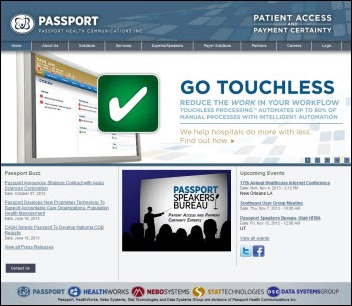
11-2-2013 12-32-37 PM

I mentioned that Travis from HIStalk Connect and I will be reporting from the mHealth Summit December 8-11 at the Gaylord National Resort just outside of Washington, DC. The folks there are offering HIStalk readers a $75 discount on the full access pass price ($675 general, $215 government, $200 student) if you register using discount code HISTalk (their spelling, not mine).

Here’s a decent SNL sketch skewering Kathleen Sebelius and Healthcare.gov from last week’s show.

11-2-2013 8-26-02 AM

It’s hard to fathom that a healthcare-related website (Healthcare.gov) can attract so much national and political attention, but it will make the November 11 cover of The New Yorker.

An interesting analysis of Healthcare.gov says the problem isn’t the Obama administration, which has successfully launched similarly complex sites under newer government agencies that were willing to fight to get the job done right. The problem, the author concludes, is HHS, which doesn’t have the competition that finally mercy-killed similarly walking dead organizations like Polaroid and Eastman Kodak:

Old organizations definitionally have a lot of longtime stakeholders. And in a sort of ecological process, those stakeholders have been selected for a certain amount of fitness for their environment, which is to say that they are good at doing things the way they have always been done, and they like things the way they are. They are averse to any sort of big change, and they will fight you with every tool at their disposal, from open warfare to passive-aggressively going through the motions on everything you ask them to do. That’s why organizations in crisis frequently need to fire the majority of their staffs to turn things around — and, more than once, an organization that has done so has found that it’s still stuck with the same corporate culture that wasn’t working before.

11-2-2013 11-47-08 AM

Lawyers file a class action lawsuit against Johns Hopkins Hospital over a gynecologist who is accused of wearing a pen-shaped video camera during his examinations, claiming that the doctor recorded up to 9,000 exams and stored them on 10 file servers. The doctor committed suicide earlier this year as investigators reviewed claims involving a variety of inappropriate behaviors. I was curious where you’d get a camera like that and the answer of course is Amazon, which offers the above 30 frames per second, HD-quality model with an 8GB memory card for $70. I saw YouTube video from it and the quality is not bad, although I can’t vouch for its use as alleged. You would think that the last thing a gynecologist would want to watch is movies of his own exams.

11-2-2013 10-42-27 AM

JD Power takes heat for awarding Samsung the #1 rating for customer satisfaction among tablet manufacturers even though Apple beat Samsung in every category except cost.

This is both depressing and uplifting. The California Department of Social Services orders closure of a filthy, unsafe residential care facility whose license had been suspended, so its employees simply walked out after the notice was posted on the door on Thursday and left 14 residents to fend for themselves. The uplifting part is that a cook, a janitor, and two caretakers stayed out of a sense of responsibility even knowing they wouldn’t be paid, finally calling 911 when they realized they couldn’t manage the residents until the Monday deadline for the residents to make new arrangements.


Sponsor Updates


Vince uncovers more great information about HBOC in this week’s HIS-tory. I was curious about former HBOC President and CEO John Lawless and I found that he’s retired in the mountains of North Carolina. I don’t know of anyone who has captured the kind of information Vince has, and the more time that passes since the industry’s early glory days of the 1970s and 1980s, the less chance it will ever be documented.


Contacts

Mr. H, Inga, Dr. Jayne, Dr. Gregg, Lt. Dan, Dr. Travis.

More news: HIStalk Practice, HIStalk Connect.


125x125_2nd_Circle

Text Ads


RECENT COMMENTS

  1. The comments are true above. HIMSS is facing serious leadership and governance concerns, particularly involving the CEO and head of…

  2. "A valid concern..." Oh please. Everyone picks the software they like and the origin of that software is an afterthought.…

  3. I don't disagree with you completely, but to take the counterpoint: there is plenty of precedent for saying "this *entire…

  4. Teens will certainly find a way to use their social media apps of choice. I'm not in favor of the…

Founding Sponsors


Platinum Sponsors


Gold Sponsors


RSS Webinars

  • An error has occurred, which probably means the feed is down. Try again later.