
Recent Articles:

Curbside Consult with Dr. Jayne 11/25/13

November 25, 2013 Dr. Jayne 1 Comment

I’ve seen a lot of articles lately about physicians who are unhappy with their EHRs because they feel they’re being forced to collect too much meaningless data and to do “too many clicks.” I read most of them to see if I can pick up any pearls that will help my physicians and also to prepare counter-arguments for when my colleagues email me links to those articles.

I’ve used quite a few different systems and each has its own little annoyances. Physicians always seem to think the grass is going to be greener on the other side of the fence. If I had a dollar for every time I’ve heard someone say, “It would be so much better if we just had System X,” I could retire much sooner than currently planned.

I know I have a fair number readers who are CMIOs, medical directors, CMOs, or EHR champions. There are quite a few physician leaders I know who are new to the EHR game and haven’t quite figured out all their responses yet, so I wanted to share some of mine. These should also be helpful to anyone who has to work with physicians, train them, or manage physician practices. Vendors might want to take note as well and incorporate some of these elements into their implementation and optimization strategies.

When physicians complain about entry of discrete data, I like to ask them specifically what data fields they are referencing. Our organization has a pretty liberal policy about using free text or voice recognition to enter data in certain parts of the chart. For example, users can enter the patient’s History of Present Illness (why they are seeking care and how their condition has progressed) in a non-discrete way. No drop downs, no picklists, no checkboxes, if that’s how they want it. When you dig deeper, many of the fields they are complaining about are those that are required for Meaningful Use, quality initiatives, or important things like drug-allergy checking. They are often fields that do not specifically require physician entry.

We created a matrix of required data and documented which staff members could be authorized to enter the data after appropriate training. It also includes directions on where and when it should be done in the flow of the patient visit. For example, the patient’s pharmacy and HIPAA contact preferences can be entered by the front desk check-in staff. Neither data element requires clinical training or expertise, just access to the right screens. If a physician has to enter the pharmacy name (and it’s not because the patient changed his or her mind at the last minute regarding where the prescription should be sent) this is a systems and workflow failure, not a “terrible EHR.”

The matrix also explains specifically why each data element must be collected, what our organization plans to do with it, and how it benefits patient care. This has been a helpful reminder for many of our physicians as well as new information for those who tried to skip out on training. It doesn’t make the data gathering less from a volume standpoint, but often understanding why these might be “good clicks” can make them feel less burdensome.

For those physicians who do choose to enter non-required data discretely, the most common mistake I see is feeling the need to ask about something just because there is a field for it. For example, in the social history section under pets, our EHR has a specific checkbox for “reptiles in the home.” This makes sense if you’re a gastroenterologist or infectious disease specialist treating certain symptoms, or if you’re a pediatrician who needs to counsel against risks, but if it’s not pertinent to the user’s specialty it doesn’t need to be asked.

It’s OK to ignore fields. That’s a hard thing to teach people – if you don’t like it or don’t need it, don’t use it. And if you didn’t ask it before EHR ,don’t feel obligated to ask it now just because there’s a box (unless it’s flagged as required).

One of the other things I hear a lot of complaints about is refill management, especially in the primary care setting. Some EHRs are better than others at being able to streamline refills, but the key is to eliminate the existence of the refill request in the first place. This is not really an EHR strategy. Primary care literature has been talking about this for years, but it’s been slow to catch on. The concept of writing for enough medication to see the patient through the next scheduled appointment (or for up to a year for stable patients with controlled conditions) seems hard for some physicians to accept. Of course there are some controlled substances that aren’t inherently refillable and may require paper prescriptions between visits, so practices need systems and rules to handle these so they don’t cause chaos.

In my practice, I took a lot of time to educate our patients that we don’t do refills. If they are out of medication, they need to be seen. Everyone in the office was schooled on the same message so that it could be delivered consistently. Patients were encouraged to schedule their next appointment before they left. We had same-day and next-day appointments available for people who missed the point and ran low on their medications. Worst case scenario, we could get patients in to be seen within a week and at that time they got new refills for a maximum time period based on their status (as well as re-education.)

Another huge time suck is allowing the patients to call a refill phone line at the office and leave messages for the staff requesting refills, or even worse, to speak directly to a staff member. Those conversations were never brief. Patients often brought up other medical issues or wanted to chit-chat. Given the status of electronic refill requests in most systems, it’s much more efficient for patients to request their refills through the pharmacy and let the staff process them electronically in the EHR. The worst case of this I’ve seen is staff who were transcribing the voice mail messages onto little pink phone message slips, then later transcribing them into the EHR. Not only was it double work, but it delayed the refill process for the patient. Again, there are exceptions (controlled substances being one of them) that may merit a call to the office, but these should not be the rule.

Physicians usually push back here and tell me they don’t want to receive requests from the pharmacy because X pharmacy always sends erroneous requests or something similar. I’ve seen this in practice and have found that a quick phone call to the pharmacy supervisor recommending that they get their staff in gear or you might start recommending all your patients have their scripts filled at Competitor Pharmacy Y is very helpful in producing high-quality refill requests with few errors. It may take 10 minutes to make the call, but it will save countless minutes in the future.

For practices that refuse to write medications through the next scheduled appointment, I often recommend a protocol-driven refill policy that allows nurses to refill based on a signed standing order and written algorithm. The key words here are signed standing order and written algorithm. You can’t just let your staff issue refills “because they know what you would want” because in most states that’s considered practicing without a license. On the flip side, you can’t have standing orders in every state and may only be able to do them with a certain level of staff (RN), but it’s worth considering. If a patient who has controlled high blood pressure and high cholesterol is current on labs and has an appointment scheduled, I as a physician don’t need to see that request because my protocol allows the staff to issue scripts through the scheduled appointment.

These concepts stray a little from our healthcare IT focus, but I’m tired of the EHR taking the blame for clunky and duplicative office processes. In what situations do you find physicians and staff using the EHR as a scapegoat? Email me.

Print

Email Dr. Jayne.

HIStalk Interviews David Chou, CIO, University of Mississippi Medical Center

November 25, 2013 Interviews 5 Comments

David Chou is CIO of University of Mississippi Medical Center of Jackson, MS.

11-25-2013 9-34-39 AM

Tell me about yourself and the medical center.

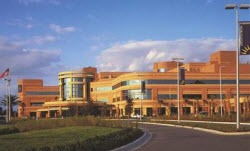
University of Mississippi Medical Center is an academic medical center. We’re here supporting our research sector, our hospital sector – healthcare, and the medical school. We’re the state’s only Level I Trauma Center and the state’s only children’s hospital. Given that, we are also a state entity, so we are here to provide outstanding care for the state of Mississippi.

I’ve been on the ground here for about almost two months now. I previously came from Cleveland Clinic. I was overseas in Abu Dhabi working on the joint venture project that they had with the government of Abu Dhabi. I was there for almost two years before leaving to come back to the states. I’m originally from southern California in Los Angeles, so I’m accustomed to being in a big city throughout my life until now where I’m in Jackson, Mississippi. Overall it’s going well.


What are your biggest projects and your biggest challenges?

The biggest one now is that we’re looking at optimization. We went live with Epic about 16-17 months ago with a big bang installation. All the hospitals and all the clinics, so campus-wide we rolled out Epic, which is a very great task that was undertaken. Now we’re looking at ways to optimize it.and utilize the system to our advantage. I’ll say that’s probably the number one thing for me right now.


What are your goals for the system and what do you hope to accomplish using Epic?

I would say just utilizing the system to its fullest capability. Right now, we’re utilizing probably about 40-45 percent of the system’s functionality. I want to get it to at least 85-90 percent. In addition to that, some of the main technology initiatives are moving toward the BYOB environment and we’re moving toward virtual desktops. We’re going mobile. I want to get us where we’re one of the very few healthcare players that’s able to support a mobile environment. I want to get away from the traditional client-server setup.


What do you need in terms of infrastructure to support a mobile workforce?

We currently have Citrix as a main partner in terms of supporting Epic. We’re almost there, we’re pretty far ahead. In terms of infrastructure, we just need to take a look at some of the hardware upgrades, then we should be ready. We rolled out Citrix for all of our clients. Everything’s running through our Citrix client. What that means is that we just have to get some of the other healthcare applications to work well with our Cisco container and we should be good to go. We’re very close, closer to what I originally imagined coming on board.


Are other clinicians other than physicians going mobile as well?

Primarily physicians, medical staff and nurses. We have a really big telehealth program here. We have over 85 hospitals on site that are utilizing our telehealth program. Our goal is to get it to over 100+ sites and capture not just the state of Mississippi, but we want to capture the southeastern region of the US and potentially go global. They’re going to be a big player in terms of utilizing the mobile platform.


What’s the vision for global telehealth?

We grew so fast here, in terms of this telehealth program. I think the vision is to be able to provide care for the state of Mississippi and the rural areas first. We want to scale it to where obviously just to be able to service the area of Mississippi, but I think we have the potential to expand it globally. We need to be able to showcase and show everyone what we’re doing here in Mississippi from a telehealth perspective.

It is fast-evolving technology that right now is still very premature, so we’re scrambling at this point. But hopefully we’ll get to stage to where we’re solid and we have a few solid partners that are working with us. Then I think we’ll be able to extend it globally, working with some of the other countries that are in need of telemedicine. You know, given the fact that I was in Abu Dhabi, I see a strong need for healthcare players in North America to boost healthcare globally throughout the world.


Are there specific services that you plan to use in your own institution?

I would say anything. I don’t think the organization has thought about expanding globally, but that’s the sort of the goal that I have in place of the organization, along with my director of telehealth.


Are you doing anything else that you would consider innovative or unusual?

Telehealth and getting solid on a more mobile strategy. Those are the two primary things I would say that’s very innovative right now. We’re still trying to get some of the basics in terms of the basic functionalities in place, but from a healthcare perspective, I would say those are the two biggest areas. From a medical college standpoint, there are a lot of things we want to do as far as mobile strategy as well, but that’s something that’s still a work in progress.


You were a hospital analyst 10 years ago and now you’re the CIO of a large health system. What advice would you give people who are interested in a similar career path?

It’s very important to understand the business side of healthcare. I was fortunate enough to where I was able to roam and understand the various departments. I’ve had various departments report up to me as well, such as supply chain. I have a lot of knowledge from a revenue cycle standpoint. 

I would say really get involved and understand operations, how things work. That’s going to carry a lot of weight in terms of fitting technology into the business side. After all, business drives technology, so it’s very important and very valuable for someone to actually understand how to operationalize the hospital and how to make it profitable.


In terms of educational background as well as experience, what do you think would be ideal for today’s CIO role?

A technology background would be ideal, just to understand how things work and have that foundation. But ideally, someone with a business background, specifically in the healthcare sector. If there’s a passion for that individual on the technology side, that’s a plus, primarily having to be a little more business savvy. Most of the CIOs today have been in technology for a long time and they understand technology, but when you ask them to transfer that knowledge from a technology terms to business terms, there has been a challenge.


How is your relationship with your CFO and how can CIOs improve that relationship?

What’s helped me is the fact that I work closely with my CFO as a partner. He trusts me to help him solve things that are going wrong on the revenue side because I have that knowledge from a business side as far as how to run a business office. That’s helped me tremendously in that relationship to where I’m viewed as a solid partner, not just a technology advisor. I’m there helping from a financial perspective as well. That’s what’s very critical, and that’s what’s lacking these days.


Is the industry is doing a good job of preparing the next generation of IT leadership?

No, I don’t think so. I was very fortunate that at my previous organization, AHMC Healthcare, I was very close to the chairman of the board. I had his trust and he allowed me  roam and take note of the various stakeholders from a business perspective. That was how I was able to understand how healthcare operates from an operational perspective. Without that experience, I don’t think I would be where I am now. I would say that in general we do not do a good job of educating technology leaders on the business side to groom them for the next level.


Your background illustrates that sometimes you have to take jobs that are either geographically unusual or maybe not even desirable jobs to be able to move up. It’s not likely that you’ll just stay in one place and 20 years later you’ll suddenly be promoted. Do people understand that you can’t just stay put and work your way up to the one and only CIO job?

You have a point. You do have to navigate and move around a lot, just to be able to get where you want to be from a career path. Obviously you’d like to stay in one place, but there’s only one role. The chance of someone younger getting that high-profile role is a little bit tougher unless you move around and get some exposure outside the one organization.

I think you brought up a really good point as far as being able to grab on to an opportunity and take the challenge. Once folks get comfortable, it’s hard to get them out of that comfort zone. That’s a big separation divider between someone being able to lead and take on the next role.


Do you think a lot about government decisions about healthcare IT?

I do. I try to stay involved, but that piece is a little bit tougher. But given that we’re a state entity now, I am a little bit more involved than I have been in the past. I did come up from a for-profit institution as well. Now that we’re a state entity, I am heavily involved with the regulatory that goes around in healthcare IT.


Are there lessons you learned on the for-profit side that you can bring to your current employer?

Oh, yes. That was a big separation divider, given that I have a good background in terms of maximizing return on investment and being able to be profitable for an organization. That’s helped coming to this sector, where traditionally from a non-profit, academic standpoint, that has not been the key driver. As healthcare is consolidating, everyone is looking at ways to maximize their return on investment.


You weren’t there when the Epic decision was made, but what return on investment assumptions were built in? What are you measuring and expecting?

Going Epic is the right path. Every healthcare system in the US is trying to get to that consolidated platform. I think they made the right choice. The main drive, the key metric to measure, is how do we look from a revenue standpoint after go-live versus before go-live? I think we’re at the point where we’re above where we were before in terms from a revenue standpoint, but we’re still pretty far from where we can be. We’re looking at a lot of ways to optimize and be that far ahead in terms of from a revenue standpoint.


Do you think Epic will provide a positive return on investment?

We will. We’re utilizing Epic for almost every module. I think we will see a positive return.


People are always asking me what kind of healthcare IT company they should start. What would you say to somebody who’s contemplating that and wonders where the opportunities might be?

The best opportunity is to be a partner and a problem solver. Obviously if they’re not able to solve complex problems, then that niche is not there. Understand the various problems that facilities and healthcare facilities are facing these days and try to find a niche as far as where they can fit in. It’s very easy for someone to be a generalist, but I think focus on a specific area, a few specific niches. That’s where they would stand out.

A perfect example that came to my mind is I worked with a consultant that knew how to help a healthcare facility qualify for and maximize their DSH, Disproportionate Share Hospital, reimbursement. That’s a niche market. There aren’t too many people that can go into successfully and help a non-DSH hospital become qualified for DSH. These are special sort of niches that are valuable. Otherwise, it’s very hard for a small firm that is more of a generalist to be successful in the long run.

Morning Headlines 11/25/13

November 24, 2013 Headlines 2 Comments

Tension and Flaws Before Health Website Crash

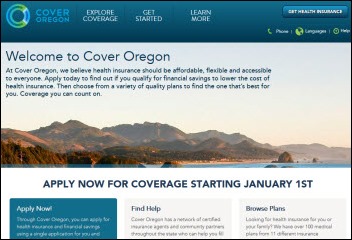
The New York Times says the White House, CMS, and the prime contractors all knew that Healthcare.gov was not ready for its October 1 launch.

THE HIT GROUP

Sunquest forms The HIT Group, a group of health IT vendors calling for FDA regulation over the health IT marketplace. Sunquest is hoping other vendors join its call for stronger and clearer regulatory guidance. Meanwhile on Capitol Hill, legislators hear testimony from FDA representative Jeffrey Shuren, MD concerning the recently proposed SOFTWARE Act which would restrict the FDA from exercising oversight on EHRs and clinical decision support tools.

Providence moves to save $5M at western Montana hospitals

Providence Health’s western Montana region, which includes St Patrick Hospital and St Joseph Medical Center, will lay off an undisclosed number of employees in an effort to offset the cost of hiring additional staff to support the network’s EHR.

So much data-gathering, so little doctoring 

A Los Angeles Times op-ed piece by gastroenterologist Michael Jones, MD calls EHRs "the latest wrench the healthcare industry has thrown in the way of doctors just listening to their patients." He goes on to explain that he left academic medicine for a small private practice, where he still hand writes all his notes and then calls the referring physician to discuss his findings.

Monday Morning Update 11/25/13

November 23, 2013 News 13 Comments

From HIT Newbie: “Re: Jonathan Bush of athenahealth. Here’s his recent interview at Duke’s Fuqua Distinguished Speaker Series. Great stuff.” It’s very interesting even for non-athena fans and less manic (but still as full of quotable sound bites) as his shorter-form interviews. It’s hard to stop watching once you start.

From The PACS Designer: “Re: Android’s coming up fast. The latest information available on shipping volumes for mobile platforms shows the Android platform beating everyone else easily. While the healthcare space is benefiting from the huge volume of available Apple apps, it won’t be long before Android development expertise grabs the opportunity to offer solutions for big data applications which are sorely needed by researchers and practitioners.”

11-23-2013 9-01-21 AM

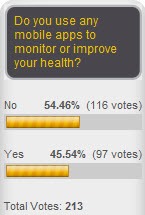
Our field involves technology and health, but only about half of respondents use apps to monitor or improve their own health. New poll to your right, inspired by Dr. Jayne: if you’re going to the HIMSS conference, will you be open to the possibility of finding a new job?

Healthcare IT news is always slow in November and December unless some company decides to do a year-ending acquisition, so don’t think a shorter HIStalk post means you’re missing anything. It’s not a magazine with an incentive to pad out the issue with non-newsworthy junk. As I always say, 90 percent of my job is deciding what “news” to ignore. I hate reading stories with attention-getting headlines and cleverly written prose that turn out to be a complete waste of time.

11-23-2013 6-54-31 PM

Sunquest forms The HIT Group, soliciting member companies that agree with its position that the FDA should regulate healthcare IT, with particular emphasis on patient safety and software development practices. I wouldn’t expect many companies to join except those who, like Sunquest, are already regulated by the FDA, but it would be a bold move for vendors to encourage regulation and use their influence to make it reasonable rather than waiting for the FDA to spring a potentially vendor-unfriendly surprise. As a patient, it’s hard to argue against external oversight of systems that are becoming more influential in how care is delivered. I’m not quite sure why the announcement letter capitalizes words and phrases that don’t require it, such as “patient,” “health information technology,” “government,” and “patient safety.”

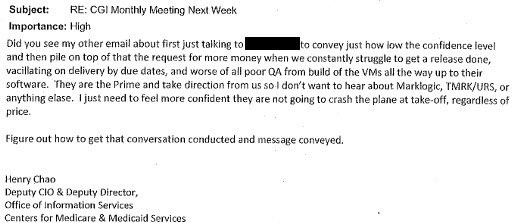
The New York Times finds that Healthcare.gov was doomed from the start by an unbroken string of bad decisions: the White House’s infatuation with creating a dazzling site, its inflexibility on an October 1 go-live that required ill-advised shortcuts, White House meddling that caused weeks of delay in answering simple software engineering questions such as whether the user should be required to enter their Social Security number, CMS’s decision to use the NoSQL database despite warnings from contractor CGI that not many people know how to program against it, CMS deciding to act as its own systems integrator instead of hiring an experienced company, and putting a CMS official in charge without giving him the authority to make decisions without first contacting the White House. The gist of the article is that White House arrogance combined with CMS incompetence created a disaster that everybody saw coming but nobody could stop.

Encore Health Resources will present an HIStalk Webinar, “Looking Behind the Curtain: Value Based Care’s Impact on the Revenue Cycle” on Thursday, December 12 at 1:00 Eastern.

11-23-2013 6-57-50 PM

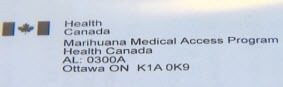
Health Canada apologizes to 40,000 medical marijuana users when it mails an information update with a privacy-torching return address of the Marijuana Medical Access Program.

Block Island Medical Center, a two-doctor practice in Rhode Island, reports frustration with its conversion to an unnamed EMR in its quest to collect HITECH incentives. The executive director says “it takes hours to enter records” and one of its doctors reports, “What used to take minutes to write in is now taking hours. The other night I was here until midnight.” A board member says the EMR is “totalitarian,” while the board president said they should have had an implementation person or guide.

The western Montana region of Providence Health & Services lays off employees to offset the cost of new positions required to support Epic.

11-23-2013 6-59-44 PM

Virginia-based gastroenterologist Michael P. Jones, MD (who, interestingly enough, also holds a degree in dentistry) writes a Los Angeles Times opinion piece on EMRs, saying it takes doctors more time to document procedures than to actually perform them and that the main role of EMRs is to create “a bill of sale” to get insurance companies to pay for services. He’s not a fan of the healthcare system in general, either:

My job is to listen and observe, to figure out who really does have something bad going on and who may simply be feeling the effects of life’s wear and tear. There’s a huge difference between that and the healthcare industry, which is more about industry than health or care. Third-party payors don’t really care what happens in an exam room. The visit that you, as a patient, have been anxiously waiting for could just as easily be shoes or oranges or pork bellies to these folks. It’s just a commodity. It’s just data. And now the industry wants it documented in a format that works for billers and statisticians but not so much for doctors: the electronic medical record.


Sponsor Updates

  • Prominence Advisors is named as a “National Best and Brightest Companies to Work For” for 2013.
  • Infor announces enhancements for its MediSuite system for hospitals in Canada, including workflow enhancements, the addition of care models, and improved physician integration.

Contacts

Mr. H, Inga, Dr. Jayne, Dr. Gregg, Lt. Dan, Dr. Travis, Lorre.

More news: HIStalk Practice, HIStalk Connect.

125x125_2nd_Circle

Morning Headlines 11/22/13

November 22, 2013 Headlines Comments Off on Morning Headlines 11/22/13

Children’s Medical Center Selected as 2013 Enterprise HIMSS Davies Award Winner

Children’s Medical Center in Dallas, TX has been named this year’s HIMSS Davies award winner.
Administrators at Children’s used their EHR to introduce standardized clinical pathways that have decrease variation in care and significantly improve patient outcomes.

Cedars-Sinai Taps iPhone For Enterprise Mobility       

Forbes profiles Cedars-Sinai’s roll out of iPhones for its nurses. CIO Darren Dworkin says "The iPhone, while a consumer device, has been the first real platform on which we could see our core vendors, like Epic, and an eco system of new vendors, like Voalte, coming together to deliver the workflow that our nurses and doctors deserve."

Clinovations Launches Center for Population Health Management

Clinovations, a Washington DC-based healthcare consulting firm, announces the formation of a center that will focus on designing and implementing population management and value-based care delivery systems.

Comments Off on Morning Headlines 11/22/13

News 11/22/13

November 21, 2013 News 9 Comments

Top News

11-22-2013 12-23-38 AM

HIMSS names Children’s Medical Center (TX) its 2013 Enterprise HIMSS Davies Award of Excellence winner.


From Ricky Roma: “To shag or not to shag… Please weigh in to help with our HIMSS 2014 booth decision, as our team is split along gender lines this year. Do we go with the high shag, ‘flooring equivalent of a peacock’s tail’; or the low shag, ‘it’s apparently easier to endure if you’re in heels’ booth carpet? What’s a sales leader to do?” I will solicit the collective knowledge of the HIStalk readership to answer this very important question.


HIStalk Announcements and Requests

inga_small A few HIStalk Practice highlights from the last week include: AMA continues to push for an ICD-10 delay. I share my recent experience with physician rating websites. The majority of physicians express dissatisfied with their ambulatory EHRs. A reader offers a music review from the NextGen UGM. A New Jersey practice manager shares details of her office’s EMR selection and implementation and discusses how the EMR has help improve the quality of care for patients. Thanks for reading.


Acquisitions, Funding, Business, and Stock

Catalyze.io, which offers a platform to accelerate the development of mobile health apps, secures a Series A financing round. The CEO of Catalyze.io is HIStalk Connect’s own Travis Good, MD.

Experian completes its acquisition of Passport Health.


Sales

Healthconnect HIE (TX) selects Surescripts services to make prescription and medication fill data available to hospitals.

11-21-2013 1-58-44 PM

Children’s Hospital of Wisconsin will implement Health Catalyst’s Late-Binding Data Warehouse and Analytics platform.

11-21-2013 2-00-16 PM

Inland Imaging (WA) will expand its use of MModal products to include MModal Fluency for Imaging and MModal Catalyst for Radiology.

11-21-2013 2-01-29 PM

Christiana Care Health (DE) selects grants management software from Huron Consulting Group.

11-21-2013 2-03-10 PM

Texas Health Resources will implement patient engagement technology from Emmi Solutions.


People

11-21-2013 2-05-07 PM

Huron Consulting Group names William T. Foley (Vanguard Health Systems) managing director of its healthcare practice focused on public healthcare systems and academic medical centers.

11-21-2013 9-34-48 PM

Randy Fusco (Microsoft Health & Life Sciences) joins Emdeon as SVP/CIO for revenue cycle services.

image

St. Luke’s Health System (ID) promotes CMIO Marc Chasin, MD to VP/CIO.


Announcements and Implementations

Clinovations launches the Clinovations Center for Population Health Management to help stakeholders design and implement infrastructures and operating models to support population management and value-based care delivery systems.

11-21-2013 6-58-02 AM

Children’s Hospital & Research Center Oakland (CA) completes the first phase of its $89 million Epic implementation.

Michigan Health Connect delivers diagnostic-quality images to its HIE member hospitals using the eHealth Connect Image Exchange platform from eHealth Technologies.

Visage Imaging implements its Visage 7 Enterprise Imaging Platform as part of vRad’s RG2 radiology operational management solution.

Roskilde Sygehus in Denmark goes live with iMDsoft’s MetaVision in its ICU, NICU, OR, and PACU.


Technology

The US Patent and Trademark Office issues SCI Solutions a patent for its method and systems used for secure online patient referral and ordering.


Other

11-21-2013 12-51-41 PM

inga_small I’m thrilled to have found the perfect Christmas or Hanukah gift for all my favorite  clinicians (you know who you are, so just skip down to the next item if you don’t want to ruin the surprise.) Struck by Orca includes dozens of illustrations that depict artists’ visual interpretations of their favorite ICD-10 codes. I’m impressed that many of the illustrators are healthcare professionals and I thought the $20 price tag sounded reasonable. One of my favorites (because I’ve had this injury numerous times) is the above work by Sarah Bottjen, an Epic project manager.

Forbes profiles Cedars-Sinai Medical Center’s (CA) implementation of Voalte One technology combined with Epic.

Weird News Andy titles this article “Unconventional Therapy.” A Florida doctor uses whips and blindfolds to perform sadomasochistic acts in attempt to cure a female patient of depression. He wasn’t charged because the relationship was consensual, but he may lose license.


Sponsor Updates

  • Wolters Kluwer Health launches an enhanced web application within ProVation Order Sets.
  • Awarepoint is named the seventh fastest growing medical device company in North America in Deloitte’s 2013 Technology Fast 500.
  • RelayHealth Financial announces that all its financial connectivity solutions meet the current ICD-10 standards and that ICD-10 testing is available at no cost to its customers.
  • Troy Group and LRS install tamper-proof prescription printing capabilities at a North Carolina hospital.
  • Ping Identity introduces PingAccess, an identity gateway that combines web access management with mobile and API access management.
  • The Huntzinger Management Group reports that this year the company has increased its managed and advisory services and launched Huntzinger Staffing Solutions, a healthcare staffing company.
  • Perceptive Software’s Records Manager product is certified against Chapters 2 and 5 of the DoD 5015.2 standards for records management.
  • Intelligent Medical Objects highlights the integration of IMO’s Problem and Procedure solutions with Aprima EHR, which gives users on-demand access to over 180,000 medical terms from within the Aprima application.
  • MedDirect releases its upcoming conference schedule.
  • iHT2 interviews Wesley Valdes, DO, the medical director for telehealth services at  Intermountain Healthcare.
  • Vital Images will participate in the Image Sharing demonstration at next week’s RSNA meeting in Chicago.
  • UnitedHealth Group and Optum offer a free emotional support help line for people affected by recent tornados in the Midwest.
  • Liaison Healthcare wins four Gold, three Silver, and three Bronze awards at the Golden Bridge Awards ceremony. 
  • WisBusiness.com discusses the growth of HIT in Wisconsin with Nordic Consulting CEO Mark Bakken.
  • Bonnie Cassidy, Nuance’s senior director of HIM innovation, offers some key questions to consider when evaluating the efficacy of an ICD-10 coding program.
  • A Washington neurologist explains the benefits of the Virtual Lifetime Electronic Record, which uses technology and services from INHS.
  • The Business Application Research Center ranks QlikView first in collaboration and performance satisfaction among large international vendors offering BI software products.
  • HIMSS Analytics and The International Institute for Analytics launch DELTA Powered Analytics Assessment to allow healthcare provider organizations to evaluate and benchmark their analytical maturity relative to their peers.


EPtalk by Dr. Jayne

clip_image002

Readers who follow me on Twitter @JayneHIStalkMD may have seen me kvetching about problems with the HIMSS registration sit. I tried it multiple times on Firefox over a multi-hour period and even tried Internet Explorer. Previously it just said “something went wrong” but now it’s displaying a specific error. HIMSS did respond and offer to help me get squared away. If it’s not working in the next few days I might have to call. It’s expensive enough without missing the early bird registration and particularly so since my hospital no longer pays for anyone to attend.

Speaking of HIMSS, I was looking at last year’s “HIStalk Ladies Social Schedule” and it’s not too early to ensure your party makes it onto the Inga and Jayne must-see list. Email Inga inga@histalk.com or me drjayne@histalk.com and let us know why your event should make the cut. I’ll be arriving a little early to relax before the exhaustion of sessions, the exhibit hall, and of course HIStalkapalooza. I should probably take a few days off on the tail end of the meeting however my boss (probably assuming no one would actually pay his or her own way to HIMSS) scheduled a leadership retreat for Thursday and Friday so that’s not going to happen. Let’s hope it gets canceled or bumped.

I’m looking forward to HIMSS as a time to meet up with old friends and perhaps to explore some new opportunities. I’m starting to become a little leery of how our hospital is planning to tackle MU2 and various other initiatives. Several key members of our leadership have fallen victim to vulture-like consultants that have been circling. (Incidentally, did you know a group of vultures is called a committee? Makes perfect sense to me.) After dozens of hours of assessments the consultants have determined that our fairly conservative approach to Meaningful Use is overly strict and that we need to relax a little bit.

I know for a fact that I don’t look good in either black and white stripes or prison orange so some of the things they have suggested we do are downright frightening. They’re fairly cavalier in their interpretation of some of the rules and I’ve already made enemies by printing out specific CMS FAQ items and bringing them to meetings. I know the consultants think they’re impressing us by showing how much money we could be collecting (since we already ruled out a good chunk of providers as likely to not be able to attest) but it seems to be a shell game to me. Given the all-or-none nature of the Meaningful Use program it doesn’t seem like cooking the books even a little bit is a good idea.

They’re also pushing hard that we reorganize our employed medical group so we can start doing provider-based billing. I find it a fundamentally offensive approach to charge patients more a) just because you can, and b) just because everyone is doing it. We dabbled in this a couple of years ago with laboratory billing and the backlash from patients was overwhelming. It seems we are doomed to repeat the mistakes of the past.

Watching this happen is just one symptom of the growing dysfunction within the organization. It’s not easy to admit that you’re working at a place that is allowing its values to slip away in pursuit of profit (despite being a non-profit entity). I’m all for efficiency and streamlining, but there is a difference between that and cutting corners. We had a pretty significant layoff earlier this year and people genuinely fear for their jobs so what used to be a fairly transparent team-oriented workplace is rapidly becoming factious and paranoid. Many of the most talented analysts and team leads have already left with a fair amount of them going to work for either competing hospital systems or for vendors.

I’m not sure what I think about working for a vendor having been in non-profit health care for so long but sometimes it looks pretty good. On the other hand, I’ve seen how our CIO behaves towards some of our vendors and I wouldn’t want to be on the receiving end of that kind of treatment. I’m watching him pit two vendors against each other for a large rip-and-replace project and it reminds me of the movie “Gladiator.” It’s unpleasant yet I am still tugged by loyalty to an organization that I’ve been with a long time. Regardless, I’ll be dusting off my curriculum vitae (why can’t physicians just call it a resume?) and seeing what’s out there. What do you think about job hunting at HIMSS? Email me.


Contacts

Mr. H, Inga, Dr. Jayne, Dr. Gregg, Lt. Dan, Dr. Travis, Lorre

More news: HIStalk Practice, HIStalk Connect.

HIStalk Interviews Todd Plesko, CEO, Extension Healthcare

November 21, 2013 Interviews Comments Off on HIStalk Interviews Todd Plesko, CEO, Extension Healthcare

Todd Plesko is CEO of Extension Healthcare of Fort Wayne, IN.

11-21-2013 9-20-08 AM

Tell me about yourself and the company.

My career began in the ambulatory space in the mid-90s. It was a very interesting time where CMS, Medicare, Medicaid, etc. had mandated that ambulatory care move from paper-based billing and scheduling, primarily billing, to electronic billing. That created a huge boom right around 1996 in the first wave of HIPAA for every ambulatory practice in the country to switch to an electronic practice management system. Then as we know, EMRs came 10 years later, with Meaningful Use and the Recovery Act.

Extension Healthcare is my third startup. We’re well past the startup stage now. We focus on acute care. At Extension Healthcare, we believe fully that the enemy is alarm fatigue.We believe that that enemy will be beat over the next 770-plus days as the Joint Commission focuses on solving that problem via their National Patient Safety Goal on alarm safety.

Today we’re just under 200 hospital clients. Right around 90 staff and four registered nurses. We’re poised to grow very, very quickly as the problem of alarm safety and alarm fatigue in particular becomes more and more relevant, becomes more and more of a discussion point, and of course with the Joint Commission focusing on eradicating this problem, or helping to solve it, with a National Patient Safety Goal on alarm safety.


The ECRI Institute also recently named alarm safety as its number one technology hazard. With all that attention, what’s been the response from the monitor manufacturers, the companies like yours, and the hospitals themselves?

There are only a handful companies that can solve the problem of alarm fatigue. In fact, that’s a very small amount. What’s important for your readers to understand is there’s a very distinct difference between an alarm and an alert. There are many companies out there focused on alerting, which is low priority — something that may not be clinical in nature and doesn’t require a response to that event. Alarming is very, very different. 

As it relates to the monitor manufacturers, some of the EHRs and other companies that are just on the outside or adjacent to the middleware space – which is a word traditionally used to describe what we do — we see some of them entering the market. But most of them are leveraging tried and true companies, like Extension Healthcare, to deliver those alarms and alerts and allow a knowledge worker — a nurse or a physician or someone else in the hospital clinical — to respond to those alerts. Event response is a very, very important topic for us. It’s something that’s not talked about a lot. But in our view, it’s at least as important as delivering an alert with context to the caregiver.

Most of the companies understand that middleware, alarm safety, alarm management, and event response is a business all its own. It’s taken us years and many, many millions of research and development dollars to get to the place where we support every major device on the market, every EMR on the market. Every input that you can imagine, we support. Every output you can imagine, we support as well, which is equally important.

As the world moves towards smartphones, specifically iOS and Android, what people often overlook is that the majority of devices in place at a hospital today continue to be voice over IP devices. We believe that the only way to effectively begin to solve the alarm fatigue problem is to recognize that most communication begins with an event, an alarm or an alert; recognize the fundamental difference between an alarm and an alert; be able to support hybrid environments from pagers to voice over IP phones to smartphones; and be able to work inside the four walls of the hospitals and outside as more and more workers begin to work outside of the hospital.

Those several statements alone are enough to deter a lot of would-be companies from entering the space because it’s just a daunting challenge, not to mention the regulatory environment. We are a Class II regulated medical device focusing on alarm safety in the alarm safety category. That’s a daunting challenge for any company and something that obviously we take very, very seriously.


Just to put the market in perspective, who are your top two competitors?

I don’t consider any company in the space to be competitors with what we do because we go about it a different way. In the traditional middleware space, Emergin and Connexall are probably our top two competitors. Two companies that I have a lot of respect for.

Emergin created the industry. They changed dramatically when Philips bought them. We have many, many — upwards of 20 — ex-Emergin staff with us now, something that I’m proud of. They bring with them tremendous knowledge.

The way we handle data is very, very different from anyone else on the market. We believe that context is king. Context means everything when it comes to solving the problem of alarm fatigue, truly solving it. 

The two companies I mentioned, I would consider first generation middleware companies. We consider ourselves the next generation of alarm safety and event response companies because of the way we handle data, because of inside the four walls, outside the four walls, and most importantly, because of the way we enable event response. That’s very, very important.

I had mentioned earlier that the most important thing, we believe, to solving the problem of alarm fatigue is delivering context with an alert.  We’re running a clinical study now where we’ll soon share with the community exactly what that number is — what percentage of clinical communication begins with some event, an alarm or an alert. We believe it’s very, very high. Soon we’ll have those data.

If you believe that, and you believe that context is king as we do, that means that the only way to truly solve the problem of alarm fatigue is to deliver the five Ws — the who, what, why, where, when — in the form of an alarm or an alert to the appropriate caregiver at the right time on the right device, whether that’s a smartphone or a voice over IP phone, and whether it’s inside the four walls or outside the four walls. Then the event response piece occurs. That event response today is predominantly secure text messaging. 

Those are the full components required to solve the problem of alarm fatigue. If you don’t have context, you are sending an unintelligent alert. If you are not sending the who, what, why, where, when, the user has to ask those questions. That’s just yet another interruption that contributes to the problem of alarm fatigue. That’s why we believe that those first generation companies or competitors are missing the boat on actually solving the problem. Evidence exists over the last five years that hospitals that have installed first generation alarm safety middleware have indeed contributed to the problem and not solved it. 

We’re taking a very, very different approach, which includes delivering context inside the four walls and outside and allowing event response via the form of voice or secure text messaging – point-to-point, point-to-group, etc., to truly finally solve that problem. It’s killing people, it’s costing a lot of money, and it’s a big dissatisfier for nurses and for physicians. 

We believe over the next 778 days, the time between now and the Joint Commission mandate, that the problem can mostly be solved by intelligent, contextual systems that allow for event response.


A lot of the work with alarm management seems mostly to be routing and prioritizing an excessive number of alarms or notifications that weren’t significant to begin with. Can monitors be made smarter so that they do more than just display information and make noise all the time?

That’s what our system does and that’s what other systems do. It’s not just our system that can solve that problem. To take data in, parse out what’s relevant and what’s not relevant, determine what’s actionable and what’s not actionable. That’s really a small sliver of the problem.

Imagine stripping out some of the data that the alarm is sending, the physiological monitor in this case. Stripping out what’s relevant and what’s not relevant, packaging what’s relevant with the other who, what, why, where, when. Typically that’s not coming from the monitor. That’s going to come from the EHR and from other systems like nurse call systems. Often the “who” comes from there.

That’s going to, in delivering an intelligent alert, someone who can be actionable with it. What happens today is a lot of those alerts go to someone who’s on break. The system is not intelligent enough to understand presence and whether someone is actually available, or whether that person can actually solve the problem or act on it. We don’t see the monitors doing that any time soon. That’s why we work closely with those companies and we’re proud to do it. That’s precisely the problem we solve. 

Most importantly, it’s just a fraction of the problem is getting that monitor alert to the right person at the right time. That’s a sliver of the problem. The bigger problem is context and how the user will interact with those data, something that we call event response.


Has anybody done statistics on how many of the alerts that go through your system or other systems are found clinically useful by the clinician?

There is a cacophony of bells and whistles going off in a hospital. Walk through one someday and it doesn’t take long to get a headache. You can imagine what those nurses do day in and day out, God bless them.

To my knowledge, the clinical studies, as it relates to alarm safety, are lacking. I’m really glad that you asked this question. One of the things that we’re doing with a new program that we call Extension Evaluate, a free service designed to collect those data for a hospital. Think black box recorder. We put Extension Evaluate in. Because of the way we handle data, it works out of the box. 

As opposed to sending alarms, triggering alarms, and communicating with endpoints, Extension Evaluate sits and listens. It listens for 30 days. And at the end of the 30-day period, our consulting group sits down with the hospital and shows them a very deep and illustrated picture of what’s happening with their alarming and alerting environment. Those data are incredibly valuable, especially spread over time. Nobody to my knowledge ever in the space has collected those data longitudinally over time and reported on them. From an academic, clinical study standpoint, that’s exactly what we intend to do with Extension Evaluate. 

We’re solving two problems. One is allowing hospitals for free, no risk, to get a very good and deep picture of their alarming environment. Then of course a gap analysis between where they are today and what they need to do to be compliant with the new Joint Commission mandate. But also building a compendium; building a library of data that can be used and regressed to answer the question you just asked. To answer how many alarms are actionable. How many alarms beget a clinical communication. We believe that number’s incredibly high.

That’s another clinical study that’s currently underway. If you have to communicate with someone as a nurse or a physician, how often does that begin with an event, an alarm, or an alert? We believe the number is very, very high, well into 80-90 percent. Soon we’ll have that exact number. That’s something that we’re very excited about — contributing to the academic community on true statistics taken from real-life hospitals longitudinally over time.


Nurses are on the hook to not only set up and adjust the monitors, but respond to the messages they issue. Are problems caused by nurses not having the time or knowledge to perform as monitor maintenance techs?

While some of that may be true, we would never, ever blame the nurse. Our view at Extension Healthcare is truly the nurse and the physician are the most important knowledge workers in the country. Nurses in particular have an incredibly challenging job, maybe the most challenging of any job in America. I believe it’s incumbent upon companies like us and the monitoring companies, perhaps biomed and IT, to design clinical workflows that truly contribute to solving the problem.

That is where a lot of the first generation alarm safety middleware companies have not spent enough time – pausing to evaluate what is truly causing the problem and what’s contributing to it. It’s very easy to send out, for instance, a Code Blue alert to a code blue team when someone is in asystole. It’s easy to send that via a phone or a pager or overhead. What’s not easy is to do it in a silent way and allow the first responder to respond in a silent way,and inform everyone else on that team who’s in different areas of the hospital, perhaps even outside the hospital, of exactly what’s going on — the who, what, why, where, when. That is what we call event response and probably the most important thing. 

For me, for us at Extension Healthcare, it’s about educating and informing the nursing community about which workflows make sense and which ones don’t. Because a lot of the time, tried and true methods that are in place today are actually contributing to the problem and not solving the problem of alarm fatigue.


Do you have any final thoughts?

The future is very important. Our space is dynamic. It continues to evolve. Data handling will become more and more contextual. Alarm management systems will continue to become much more advanced in terms of rules engines and complex rules processing. Clinical algorithms will become part of the system. All of this will advance patient safety and complexity even further. 

It’s very, very important to take into account not only where we’re at today in lessons learned from the past, but also where the industry’s going. Not only in terms of which device a nurse will use, but which data to deliver to a nurse or a physician, the context, and how they’ll interact with that. Not only now, but in the future, to drive down this evil, evil problem of alarm fatigue.

Comments Off on HIStalk Interviews Todd Plesko, CEO, Extension Healthcare

Morning Headlines 11/21/13

November 21, 2013 Headlines Comments Off on Morning Headlines 11/21/13

FDA approves next gen sequencers in watershed for personalized med

The FDA has cleared toe manufacturers of four next generation high-throughput DNA sequencers to market the devices to help identify gene mutations that are linked with cystic fibrosis.

Children’s Oakland completes Phase 1 of $89 million electronic records system

Children’s Hospital & Research Center in Oakland (CA) goes live with its $89 million Epic rollout across its inpatient and oncology/hematology clinics. The remainder of its ambulatory clinics are scheduled to go live in April.

Health dept pleads for PCEHR patience

In Australia, Department of Health secretary Jane Halton is asking for patience as the nations newly elected Prime Minister calls for a review of the nations failing $1 billion patient-controlled EHR portal program. To date, only 11,136 shared health summaries had been uploaded into the system despite being live for more than a year.

Comments Off on Morning Headlines 11/21/13

An HIT Moment with … Stephane Vigot

November 20, 2013 Interviews Comments Off on An HIT Moment with … Stephane Vigot

An HIT Moment with ... is a quick interview with someone we find interesting. Stephane Vigot is CEO of Caristix.

image

Are HL7 interfaces becoming more important or less important with the push for interoperability and the popularity of integrated hospital systems?

HL7 interfaces are becoming more important than ever. Interoperability matters because information has to flow in order to improve patient outcomes, reduce error, reduce costs, and remove duplicate testing. Despite the popularity of integrated systems, much of the data in hospitals, physician practices, and other organizations is still siloed.

ICD-10 computer-assisted coding systems need interfaces. HIEs rely on interfacing. We can’t address continuum of care and accountable care issues unless disparate systems can share information, which requires interfacing.

The next big leap forward we’re facing in healthcare IT is actually using the data in the systems we’re buying — in other words, analytics. Again, interfacing plays a big enabling role here, and in fact, the lack of easy interfacing is why we’re still early on the hype cycle in clinical analytics.


What’s the hardest part about designing, building, and maintaining interfaces?

Stop me if you’ve heard this before. They say that when you’ve built one interface between two systems, you’ve built… one interface. Marc Probst, CIO at Intermountain Healthcare, did an interview where he said, "I have a huge staff that does interfaces. And every time the software changes, they do interfaces again. And every time we have a problem, they do interfaces again. It’s not efficient."

The hardest part is that the work you put into one interface isn’t reusable,unless you use Caristix software, though I promised Mr. HIStalk I wouldn’t pitch. HL7 messages and interfaces are everywhere — we just don’t see them. A few weeks ago on HIStalk, Ed Marx wrote about how he sends handwritten thank you notes. The people who really deserve them are the analysts, developers, and testers who design, build, and maintain interfaces. When they do their jobs right, no one notices. When something goes wrong with an interface, that’s when the help desk lights up and they get an earful.


People often express frustration with HL7, saying that system vendors use it in ways that are anything but standard. Is that the case?

To be honest, yes. But can you blame vendors? No. The HL7 standard actually lets you customize an awful lot, from the codes used to indicate patient gender — there are six, and providers can change them — to the length of fields, to how you mention a date. There is a big difference between a date expressed as "2013-11-24" versus "November 24, 2013."

A vendor has to make these calls because the standard doesn’t and the standard wasn’t designed to. I don’t blame the standard because there’s no getting around the fact that healthcare data is complex. Think of a barcode transaction at the grocery store. That’s five to 10 data elements. A med pass with barcode verification, easily 1,000 data elements. 


How has your market changed with new Meaningful Use and HIPAA expectations?

Meaningful Use has made some forms of interoperability and information exchange must-dos. The interoperability requirements that were optional in Stage 1 are now core in Stage 2. That places increased pressure on vendor and provider teams to specify, test, and deliver the interfacing-related components of these requirements. The new HIPAA expectations mean that business associates, not just covered entities, need to be more vigilant in preventing theft; loss or improper disposal of data; or direct disclosure of PHI. We’re seeing that it’s becoming increasingly important to be able to show exactly what measures you’ve taken to secure PHI, whether you’re a vendor or a provider.

In the case of HL7 data, if you’re reusing production data in testing systems, you must remove the PHI. We had an example of a vendor customer who worked with months of retrospective HL7 messages from a provider organization. They were analyzing physician performance for a new product, and both organizations were adamant about protecting that PHI.


What are some of the strangest or most interesting interfaces customers have built?

The strangest interfaces? Well, who am I to judge? The most interesting interfaces aren’t about simple data exchange or orders and results. The workflow is transparent and the benefits are immediate. The most interesting ones right now push the envelope on analytics, pulling data that is really tough to get to, and it’s incredibly gratifying to see our software play a role there. I can’t wait to see what our customers come up with next.  

Comments Off on An HIT Moment with … Stephane Vigot

Readers Write: Seven Safety Checks Before Diving into the Big Data Ocean

November 20, 2013 Readers Write Comments Off on Readers Write: Seven Safety Checks Before Diving into the Big Data Ocean

Seven Safety Checks Before Diving into the Big Data Ocean
By Frank Poggio

When I last visited the topic of big data (BD) and analytics, I proposed that big data could easily become a wasteland for health providers and the next EHR boondoggle that could generate wads of cash for system vendors. I noted a large investment in big data could easily go for naught if we do not pay attention to at least two key issues. They were employing bad data as a foundation and blindly accepting analytics or mathematical models that do not correctly represent your world.

I received several responses to that piece, some stating that I was opposed to big data and analytics. Not true. As a one-time practitioner of analytics, back when it was called operations research in commercial industry, I saw firsthand the value of BD but also the very large expense and pitfalls. At the close of my first writing, I promised to follow up with a list of safety checks you should employ to avoid drowning in the big data ocean. Here they are.

Bad data. Big data and bad data do not mix. Before you jump in, you should get clear answers to these questions. Do you thoroughly understand what is in your data? How old is it? Where and how it was originally generated? What coding structures were used? How has the coding structures changed over time? How many system conversions and mutations has the data gone through? What is the consistency and integrity of your data?

Scrubbing your data, particularly if it goes back several years and/or transcends different information systems, is critical. A recent HIStalk piece written by Dan Raskin, MD covered this topic well. If you can’t answer these questions before you apply analytics, then all the conclusions you draw from your sophisticated analytics will be on a foundation of quicksand. And be aware, scrubbing historical data can be very time consuming and costly, which leads us to the next safety check.

Focus. Keep your focus as narrow as possible. When you jump in the BD ocean, keep your eyes on that floating life preserver. If you do not, you’ll get overwhelmed and sink fast. Most big data projects will fail because you tried to do too much or you were too broad in our goals, which led to loss of control, missed target dates, and over budget situations.

It’s very easy to fall into this riptide. For example, with a sea of data at our disposal, we surely should be able to predict census or institution-wide patient volumes for the next five or 10 years. The complexity of such an analytical model could easily overwhelm. As an alternative, try something more restricted and focused. For example, maybe just trying to predict volumes of a narrow specialty practice or identifying the three primary causes of re-admits. With a narrow focus, the probability of your model being useful will be far greater, which takes us to our next safety check.

Validate your model. Run simulations against past time periods with known outcomes. Did you get the answer you expected? If not revise, or replace the algorithm(s). Smaller models are easier to validate. Apply basic common sense against any prediction. Remember the end user, usually an executive or physician group, must buy in to the model logic and have full trust in the data before they can accept any predictions. If they do not understand it, they will not trust the forecasts and it the model will never be used. Once smaller models are validated, you can link multiple ones together to create larger organizational-wide models.

Change can sink your analytics. One of the primary reasons to apply models to big data is to predict change, then use that new knowledge to deal with the change before it becomes a problem. Unfortunately, there are some changes that your historical big data can’t predict. You need to understand them and factor them into any decisions you make. For example, can your model anticipate changes within the practice of medicine? Medical protocols change almost every month due to new research and new technologies. Hardly a week goes by without reading about a new protocol for medications, diagnostic testing, and chronic disease management. Your ocean of big data cannot predict these changes, and yet if you are planning a new medical service, you need to somehow factor in these elements.

Another unpredictable element is government regulations. A good deal of industry change will be driven by what party wins each election. Today it’s MU, ACOs, P4P, value-based purchasing, and many other regulations that did not exist five years ago. Tomorrow it will be something else. If you can predict those changes, you probably would do better in another profession. The analytics and models you build will only reflect past practices and governmental policies, and like they say on Wall Street, past performance may not be indicative of future results. In modeling building, these are known as ad hoc or exogenous variables. You take the model’s output then make a one-time swag adjustment to reflect your best guess for exogenous factors.

Pick the low-hanging fruit first. There are two major kinds of analytics: strategic models and operational models. Strategic analytics try to predict enterprise-wide outcomes and volumes five to 10 years out. They focus on questions such as: What are the population trends in our market? What patient programs should we be moving towards? Can they be financially viable? Where should they be located? What are the competitive factors?

Operational models deal with more immediate issues, such as: How can we handle higher patient volumes using less resources? What can we do to reduce re-admits? What is the ROI on a large capital investment? They are by nature near term and usually address efficiency questions.

Due to their complexity and time horizon, strategic analytics are tough to measure in terms of efficacy. Operational models are far easier to measure, while strategic models are sexier and costlier to build. Until you have had repeated good results with operational models, you should stay away from strategic models. The low-hanging fruit are in operational analytics. Moreover, there are a myriad of them that could quickly generate real ROI and may only require “little data.”

Paralysis by analysis. You could spend a long time drifting in the big data ocean and paralysis by analysis could easily set in. Remember, there will always be flaws in your historical data, and no model can be perfect, so do not let perfection become the enemy of good. This is not an academic exercise and you do not have an unlimited budget. All analytics need to be improved, so do it incrementally. Lastly, after many iterations and revisions and based on your real-life experiences, if the model still does not make sense to you, toss it out and move on.

Educate and understand. What problems are you really trying to solve? Many organizations waste time and money building models for problems they really do not have or understand. Due to hype, department managers come to believe the model will fix operational problems. Department managers need to be trained in how to use and interpret these powerful tools. Understand what the tool can and can’t do and what the real limitations of the model are. This step must come first or analytics projects can easily run amok

If you use outside resources, make sure they understand the healthcare industry and your particular venue. Being expert in quantitative tools is not enough. Having a sound footing in the complex relationships that drive the delivery of patient care is critical to the success of employing analytical tools.

Conclusion

The annual budget is an excellent example of an operational model. Before you jump into BD, take this test. How effective is your organization at budgeting? How close do you routinely come to hitting budget targets? Have you used variable budgeting successfully?

If you can’t answer these questions positively, you are not ready to swim in the BD ocean. Big data and analytics can be powerful tools when used with foresight and care. Applying BD without clearly identifying your objectives, being familiar with the weaknesses of your data, and not understanding the limits of mathematical modeling or analytical tools will be a costly and fruitless exercise.

Frank Poggio is president of The Kelzon Group.

Comments Off on Readers Write: Seven Safety Checks Before Diving into the Big Data Ocean

Readers Write: The Three Most Important EHR Decisions (hint, it’s not whether to choose Epic or Cerner)

November 20, 2013 Readers Write 1 Comment

The Three Most Important EHR Decisions (hint, it’s not whether to choose Epic or Cerner)
By Chuck Garrity

11-20-2013 8-36-34 PM

As hospitals and physicians groups replace their current EHRs (and 17 percent of them did last year – either due to merger/acquisition or replacement of a “second tier” system), they traditionally focus on two things. First, which EHR platform to choose, and shortly after, who is going to implement the new EHR.

These are critical decisions on which technology and medical leadership teams rightly spend lots of money and time. And increasingly, they are choosing among a smaller and smaller number of solid partners that have established themselves as the smartest choice – as evidenced by third party rankings and success stories in publications such as this. Beyond these two, however, there are three other key decisions which must be made that have just as much impact on the ultimate success of an EHR switch.

Who goes first? Second? Last?

As we enter 2014 and beyond, practices who are still on paper will be subject to Meaningful Use reimbursement penalties, so they are a natural choice to put onto a replacement EHR first. After them, however, who should be next in line for the new system? Ideally it should be based on quantitative, thoughtful data, not just on the physician or office manager who raises their hand first.

Establishing a baseline of practice health – leadership, EHR usage, workflow, and technology — to stratifying a diverse network is critical. Using this baseline in conjunction with ongoing measurement at go-live to identify challenges, best practices, and areas requiring additional support is critical to a successful program.

How do you manage your legacy systems?

It’s generally a given that systems do not have the capacity or budget to move everyone over at the same time, that old systems will need to be maintained, and their data made accessible for some period of time. Can your support team focus on implementing and supporting the new EHR while keeping the lights on for legacy EHRs? Not by themselves – the core team must focus on the future, and practices can’t be left in the cold.

Practices on legacy EHRs generally need even more responsive technical and customer support in period of change, especially considering enterprise implementations could take 1-2 years, and the pressing regulatory deadlines of ICD-10, shared savings programs, and PQRS penalties are within that timeframe. This will lead to significant challenges while you’re training a support team on a brand new system while trying to maintain your legacy environment.

Where does the data go?

When implementing a new EHR, there is always the question of whether to migrate data or not. The natural answer is “of course” until you find the proverbial devil in the details. The legacy system may not meet discrete data standards, but rather might rely on custom fields or free text entry. There is rarely the ability to do a true 1:1 mapping and practices either convert a subset of the key data according to important quality and operational measures or the legacy data is migrated to an ambulatory data warehouse.

In either case, however, practices often miss an opportunity to examine and remediate quality of data issues. Using this migration as an opportunity to ensure apples-to-apples measurement based on consistent, dense, and correct data that reflects the quality of care being delivered is one that should not be wasted. Understand that under the future population health model, the quality of how the data is captured in the EHR that will directly drive revenue based on key quality measures. As such, data governance should be a primary consideration in your replacement strategy.

In the coming years, the majority of physician practices will likely move to a new EHR because they are not happy with their current vendor or are forced to adopt a new one due to a merger or acquisition. Multiple implementations are a major grind for physicians and their staff. Implementations should consider readiness and overall practice health.

While the choice of the EHR platform itself and the team that will implement it are the first and most critical decisions to be made, those organizations that focus on a data-based migration strategy from a holistic perspective — one that supports not only the new system but also the old while using the transition as an opportunity to strengthen their core data asset — will ensure they don’t yet another migration in the near future.

Chuck Garrity is regional vice president with Arcadia Healthcare Solutions.

Morning Headlines 11/20/13

November 19, 2013 Headlines Comments Off on Morning Headlines 11/20/13

The Anatomy of Health Care in the United States

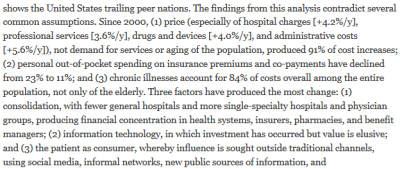
Researchers at Johns Hopkins publish a study in JAMA that evaluates the economic mechanisms contributing to the rise of healthcare costs in the US. The study finds that costs are increasing for a number of reasons: 1) hospital and practice consolidation is weakening the purchasing power of healthcare consumers 2)  drug and medical device costs are increasing 3) expensive investments in health IT have not resulted in a significant savings.

eClinicalWorks Makes Additional $50 Million Investment in Patient Engagement & Population Health

Westborough, MA-based eClinicalWorks will spend $50 million bolstering its patient engagement business unit, adding 100 employees over the next year to enhance the company’s patient portal mobile app.

Icahn says would ‘never’ push Apple to buy Nuance

Active Investor Carl Icahn, who has a 16.9 percent stake in Nuance and a significant stake in Apple, says that he will not pressure Apple to buy Nuance.

Healthsherpa Helps Thousands Get Insurance Quotes

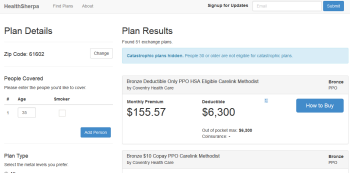
Three entrepreneurs from Silicon Valley code a healthcare.gov competitor, called TheHealthSherpa.com, in just three days. The site is able to generate insurance quotes based off zip code, age, and smoking status, and estimates federal subsidies based on annual income. It stops short of actually enrolling consumers in new plans, but does serve as a research tool for consumers, not to mention proof of how quickly and efficiently projects can be rolled out if the right people are involved.

Comments Off on Morning Headlines 11/20/13

News 11/20/13

November 19, 2013 News 2 Comments

Top News

image

A Johns Hopkins-led study published in JAMA concludes that the major factors driving healthcare costs up are consolidation of hospitals and practices that increase pricing power, high drug and medical device costs, and heavy IT investment with questionable value. It notes that costs are not visible to doctors or patients, which prevents healthcare from functioning as an efficient market.


Reader Comments

From Flash: “Re: AMIA. Perhaps the biggest news at AMIA so far is the non-news that CMS probably won’t delay Stage 2 MU. That’s essentially what the ONC’s Jodi Daniel said during a session Monday.” At this stage in the game, it would be more surprising if CMS did consider changes or delays.


Upcoming Webinars

DocuSign will present “Paperless Practices: Harnessing EHR Value by Improving Workflows with Electronic Data” on Tuesday, December 10 at 1:00 p.m. Eastern. “Audit Readiness: Three Simple Steps to Protect Patient Privacy”, presented by Iatric Systems, will be presented on Wednesday, December 11 at 2:00 Eastern. More information on both programs is on the Webinar page.


Acquisitions, Funding, Business, and Stock

CareFusion will acquire respiratory care and anesthesiology medicine manufacturer Vital Signs from GE Healthcare for $500 million.

11-19-2013 10-15-57 AM

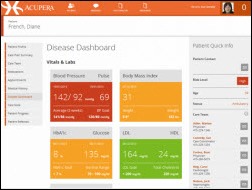
Acupera, developers of population healthcare and coordination workflow management technology, secures $2 million in bridge financing.

MDS Medical, Greenway Medical’s top-producing channel partner, acquires the assets of EHRsolutions, Greenway’s second largest reseller.

Carl Icahn, who owns 4.7 million shares of Apple and a 16.9 percent stake in Nuance Communications, tells participants at an investment summit that he will not push Apple to buy Nuance.

Truven Health Analytics provided this comment related to its recently released 10-Q forms that a reader commented about in the Monday Morning Update:

Truven Health Analytics has performed well in 2012 and through the first three quarters  of 2013, with steady increases in revenue and robust margins for adjusted EBITDA.  Reported losses are due to accounting changes stemming from our divesture from Thomson Reuters and one-time costs associated with the migration of our data center from Thomson Reuters onto a standalone platform, neither of which affects ongoing operating performance.


Sales

The 25-bed Van Buren County Hospital (IA) selects McKesson Radiology and McKesson Study Share.

MModal adds new customers for its MModal Fluency for Imaging product including Coastal Radiology (NC), Coosa Valley Medical Center (AL), Greensboro Radiology (NC), Maricopa Integrated Health System (AZ), and Radiology Associates (OR).

Avera Health selects Craneware InSight Medical Necessity for 28 of their 33 hospital organizations.

11-19-2013 9-37-37 AM

King Khaled Eye Specialist Hospital in Saudi Arabia will implement InterSystems TrakCare. The hospital, by the way, is part of a compound that includes six five-story apartment buildings, 22 villas, a community center, tennis courts, playgrounds, a cinema, a supermarket, and a mosque.

Ophthalmology Associates (WI) selects SRS EHR for its six providers.

Avera Health (SD) chooses Craneware’s InSight Medical Necessity. 


People

11-19-2013 3-15-47 PM

The Georgia HIN names eHealth Services Group CEO Denise Hines executive director.

11-19-2013 3-19-47 PM

Recondo Technology appoints Lori Prestesater (McKesson Provider Technologies) chief growth officer.

11-19-2013 3-22-30 PM

Verisk Health promotes Nadine Hays from EVP of sales, marketing, and strategic partnerships to president, replacing Joel Portice who is leaving to pursue other interests.

Nuance extends the existing employment agreement with its CEO Paul Ricci through November 11, 2015 and agrees to pay him a base salary of $800,000 plus annual performance bonuses of up to $1.2 million.

MediTract, a provider of automated contract management solutions, names David F. “Buddy” Bacon (Meridian Surgical Partners) CEO.


Announcements and Implementations

eClinicalWorks will invest an additional $50 million over the next 12 months in addition to the $25 million it had already committed to enhance and expand population health solutions and patient engagement tools under its Health & Online Wellness business unit. Part of the funding will be used to hire an additional 100 software developers.

Southeaster Overread Services (NC) implements eRAD PACS with integrated speech recognition technology from MModal.

11-19-2013 10-47-26 AM

Parrish Medical Center (FL) expands its use of products from Strata Decision Technology with the implementation of  StrataJazz Decision Support.

11-19-2013 11-14-47 AM

Florida Governor Rick Scott joins iSirona employees to announce the company’s plan to create 300 new jobs over the next three years at its Panama City headquarters.

HIMSS Analytics and The International Institute for Analytics announce the launch of a service that will allow hospitals to assess the maturity of their analytics capabilities and benchmark against peers.

The Boston Globe names Meditech as one of the Top Places to Work in Massachusetts.

iMDsoft integrates the Electronic Whiteboard from  Intelligent Business Solutions into its MetaVision AIMS solution.


Government and Politics

House lawmakers introduce legislation that would create and expand physician reimbursement of telehealth services to active-duty service members, their dependents, retirees, and veterans.

Sen. Rob Portman (R-OH) proposes a bill that would extend MU incentive payments to behavioral health providers, including psychiatric hospitals, substance abuse facilities, and psychologists. The legislation would also address EHR-related adverse drug reporting to patient safety organizations, clarify that EHRs are not subject to the Food, Drug and Cosmetics Act, and limit electronic discovery in EHRs.

Medicare will cut reimbursements by as much as 1.25 percent to 1,451 hospitals next year as a result of their performance in CMS’s value-based purchasing program. An additional 1,231 hospitals will see payments increase by as much as 1.25 percent based on their performance across quality indicators.


Other

The American Academy of Ophthalmology unveils the IRIS Registry, the nation’s first eye disease and condition patient database. The registry is designed to interface with any EMR system and will handle data on more than 18 million patients by 2016.

11-19-2013 8-22-44 PM

Three young programmers create HealthSherpa.com, which one-ups Healthcare.gov by allowing consumers to quickly get insurance prices by entering only their ZIP code. It took them only three days to develop and test the site. I tried it and had insurance prices and details in less than five seconds.

Weird News Andy finds this story to be strange but true. Researchers find that patients with a wide range of red blood cell sizes are more likely to have depression.


Sponsor Updates

  • Greenway Medical releases Intergy v9.00, which includes a dashboard to track the progress of a practice’s transition to ICD-10 or MU attestation.
  • The Drummond Group certifies Allscripts dbMotion 5.0  as an ONC-ACB 2014 compliant EHR Module.
  • Lifepoint Informatics announces the details of its March 13, 2014 user conference in Orlando.
  • National Decision Support Company, Montage Healthcare Solutions, and Nuance Communications collaborate to bring Imaging 3.0 tools to radiologists.
  • Medical Staffing Network (FL) completes their companywide implementation of API Healthcare’s solution suite.
  • Aspen Advisors raises $2,300 for Florida’s Health First health system during the company’s annual retreat in Ft. Lauderdale.
  • The Detroit Free Press names CareTech Solutions the top workplace in the large-company category based on employee satisfaction.
  • Surveys from Porter Research and Imprivata indicate that healthcare is beginning to trust cloud technology for the storage of PHI.
  • Emdeon discusses the challenges and opportunities of CPOE under Stage 2.
  • Sagacious Consultants launches Sagacious Connect to support hospitals extending their EMR software to independent practices and hospitals.
  • T-System’s Tonda Terrell offers seven considerations for payer contracting in the healthcare reform-era. The company’s Elizabeth Morgenroth also provides communication tips for a successful ICD-10 implementation and conversion.
  • Imprivata earns a spot on the Boston Globe’s Top Places to Work 2013 in the medium company category.

Contacts

Mr. H, Inga, Dr. Jayne, Dr. Gregg, Lt. Dan, Dr. Travis, Lorre.

More news: HIStalk Practice, HIStalk Connect.

Morning Headlines 11/19/13

November 19, 2013 Headlines Comments Off on Morning Headlines 11/19/13

Use of Analytics Produces Better Patient Outcomes

Informaticists at UNC Health Care in Chapel Hill, NC are using natural language processing analytics tools to comb through text-based mammogram reports to help ensure that all patients who need follow up appointments are seen. Researchers with the study report that 25 percent of adverse affects occurring in the outpatient setting are a result of inadequate follow up of abnormal test results. The NLP-based analytics tool was able to read through 500 reports and accurately identify which ones needed follow up appointments with a 100 percent accuracy.

Here’s What Your Operation Will Really Cost

Intermountain Healthcare announces that it will begin tracking the cost of all consumables, equipment, and time spent delivering care across the network to get a more accurate picture of the total cost of care for different conditions. The hope is to create a "cost master" that could then be embedded in Intermountain’s EHR and used to help drive fiscally responsible care planning.

CareFusion plans to acquire GE Healthcare’s Vital Signs

CareFusion announces that it will acquire GE Healthcare’s Vital Signs business unit for $500 million. Vital Signs makes a variety of single-use products that support respiratory care, anesthesiology, and patient monitoring.

Comments Off on Morning Headlines 11/19/13

Curbside Consult with Dr. Jayne 11/18/13

November 18, 2013 Dr. Jayne 1 Comment

clip_image002

Lots of buzz this week around San Francisco’s “Batkid” fighting crime with the help of the Make-A-Wish Foundation. The real heroes there were the people behind the scenes, coordinating to make this leukemia patient’s wish happen as he celebrated completion of three years of treatment. I’m fortunate to work with superheroes every day, although most of them are the unsung variety. I’d like to introduce you to a few of them.

The Desktop Support Agent. One of my favorite people in our health system’s IT universe, he lives in another time zone, but you’d never know it. It’s almost like he never sleeps. No matter what time of day I open my ticket, he always responds with a virtual smile. He relocated away from our city to be closer to family and is a great example of how remote employees can be an asset to the organization. I’ve had to call with some pretty ridiculous questions, including problems with my calendar appointments spontaneously mutating (a.k.a. user error) and my entire inbox vanishing. He’s very nonjudgmental when you call for newbie-type problems (or maybe he’s just good at hiding it). Without him our jobs would be a lot harder and I know many users take him for granted, so I always make sure he knows how much I appreciate him.

The Documentation Supervisor. This unsung hero works for our vendor and was instrumental in helping a small, rabid group of clients convince the legal team that it would be OK to give clients copies of the training manuals in editable format. For many years, they were afraid of this and would only provide PDF copies, which was silly since we ended up reproducing all their content anyway so that we could create end user training manuals. She manages an extremely diverse team and ensures that what the technical writers produce is in a truly human readable format. She encourages clients to provide feedback on the materials and actually incorporates the changes. I have to laugh because every once in a while she will slip in something that is a reference to one of the rabid clients – it might be a patient name on a screenshot or a practice address, but it’s always funny.

The Account Executive. Our hospital uses CCOW technology, which was originally provided by Sentillion, which was gobbled up by Microsoft. Although we had multiple systems live and sharing context, we ran into some roadblocks bringing up a new application. Microsoft played the “we don’t support that Software Development Kit anymore” card and our vendor was at the end of its rope as far as what it could do to try to bridge the gap. The Account Exec worked tirelessly on our behalf, calling in multiple favors and arranging calls with the actual developers who helped us code around the problem. It would certainly have been easier to just say no and go along with the party line, but I will be forever in his debt for helping us out.

The Hospital Volunteers. Ours used to be called “Pink Ladies,” but now they’re co-ed. Some of the veterans still wear pink smocks and that definitely puts a smile on my face since it reminds me of my days as a candy striper. They always greet you with a smile and even if you’re having a terrible, horrible, no good, very bad day you can’t help but be engaged by them. They will go out of their way to find things to make our oncology patients have a more comfortable stay, even tracking down unusual reading material. I could say I once saw one bring in a bottle of Scotch for a patient, but that would probably violate their circle of trust, so I wouldn’t dare.

The Citrix Guy. This is my absolute favorite superhero. When our IT department was a little less mature and a little less competent (did I just say that out loud?) he saved us. We had just deployed dozens of offices not only over Citrix, but using wireless at a time when it was a relatively new technology. Our team just wasn’t very good at it and we had all kinds of issues with dropped sessions, random application hangs, and misbehaving CCOW. He swooped in (I swear it was like he had a cape) and helped us fix our own dysfunction, yet never made our team feel less than capable even though they were. He travels 48 weeks out of the year and is in a different city nearly every week yet never seems tired or worn out. I don’t know how he does it.

There are many other unsung heroes we encounter every day. Who are yours? Email me.

Email Dr. Jayne.

Morning Headlines 11/18/13

November 17, 2013 Headlines Comments Off on Morning Headlines 11/18/13

Health IT helping to fight the prescription drug abuse epidemic

ONC announces a new interoperability project that will help establish common technical standards and a standard vocabulary that will allow EHRs and HIEs to integrate data from state-run prescription drug abuse databases.

Cover Oregon: Health exchange board puts director Rocky King on notice over stalled website

The board of Oregon’s health insurance exchange program has places its executive director, Rocky King, on notice over technical issues that have plagued the exchange’s website, and prevented anyone from buying health insurance on it, since its October 1 launch.

AMIA 2013 Annual Symposium

The American Medical Informatics Association (AMIA) kicks off its week-long annual conference in Washington DC this week.

Steve Larking Joins ESD as Regional Vice President

Former MaxIT VP Steve Larking joins health IT consulting firm ESD. MaxIT was acquired by SAIC last year, and then rolled into a new company after SAIC split itself into two businesses. Ray Murray, another maxIT VP, also left for ESD at the beginning of November.

Comments Off on Morning Headlines 11/18/13

Monday Morning Update 11/18/13

November 17, 2013 News 8 Comments

11-17-2013 11-13-49 AM

From Concerned: “Re: Truven Health Analytics. Its Q3 2013 SEC 10-Q says 2012 was an earnings disaster, and so far this year the company has lost $26 million and is increasing debt to pay bills.” I took a quick glance over the form, but I’m not an accountant and most of it glazed me over. Revenue took a big jump year over year and the net loss dropped as expenses were held fairly steady through the acquisition of the Thomson Reuters healthcare business in June 2012. As of September 30, the company appeared to be running a monthly loss of around $3 million and had $8 million in cash. The long document full of numbers is confusing because of the acquisition, but it appears that the company lost $8.4 million in the quarter vs. $20 million a year ago, so the situation may be improving. I found it depressing that Truven has 225 pending lawsuits against it filed by people who claim they were harmed by the drug Reglan and are suing the company because its patient education materials didn’t warn them of that possibility.

UPDATE: Truven provided this clarification: “Truven Health Analytics has performed well in 2012 and through the first three quarters  of 2013, with steady increases in revenue and robust margins for adjusted EBITDA.  Reported losses are due to accounting changes stemming from our divesture from Thomson Reuters and one-time costs associated with the migration of our data center from Thomson Reuters onto a standalone platform, neither of which affects ongoing operating performance.”

11-17-2013 11-14-48 AM

From FormerHHSIntern: “Re: HIE. Secondary consequences of poor Healthcare.gov rollout. Impending implosion over failed $600 million HHS/ONC Health Information Exchange grant program. At least one senior ONC leader will leave in next two weeks.” Unverified.

From Ken Dahl: “Re: paper vs. EMR for physician data entry. There’s a big difference on that score for inpatient vs. outpatient. For inpatient care, EHR is much better – for purposes of rounding, orders, med rec, and keeping track of care plans. Outpatient clinics are a bit more difficult because of the amount of charting required on EHR is overwhelming, and leads to a lot of MDs typing while talking which sets up an uncomfortable dynamic for the ‘therapeutic’ interaction. But there’s  always a tradeoff – either you chart with the patient or you chart at the end of the day and you lose an hour or two of time with your family that night. That is a reason MDs are becoming less interested in having a clinic practice.” General practice and some specialist physicians are, for the most part, vastly overtrained for seeing office patients. They are wasting most of their day looking at the same old problems that an extender could handle, playing EMR stenographer, and chatting with patients whose chronic disease requires no new diagnosis or treatment. Doctors (and healthcare in general) could learn from my dentist. Usually there’s just one dentist on duty, but a stable of hygienists and techs keeps several rooms full of patients undergoing everything from cleanings to denture repairs to crown and cavity work. He flits between rooms to oversee everything, speaks to every patient to hear any concerns, and shows up just in time to perform procedures on the fully prepped patients. He does not touch the practice’s fully electronic dental record and imaging system that I’ve ever seen, complete billing documentation, or handle referral or absent-from-work forms. We need to separate out the tasks that truly require a physician’s extensive education and experience and turf everything else off to cheaper and more readily available positions. One might argue, however, that physicians created the current state because they, until recently, were happy to collect big paychecks in return for underusing their skills.

11-16-2013 9-33-53 AM

From The PACS Designer: “Re: Apple’s curved screen iPad. As Apple continues to innovate in the PC space, they will be offering an edge to edge curved screen with the iPad 6 in 2014. Other rumored improvements are the replacement of the current screen material called Gorilla Glass with the indestructible sapphire material which is currently in the camera and fingerprint button.” The curved glass (image above from TechCrunch) would be mostly a cosmetic enhancement, but Apple is supposedly working on technology that will allow its mobile devices to detect the amount of pressure of a fingerprint touch and react accordingly. The current iPhone touch accuracy has been tested and found to be dramatically inferior to that of the Samsung Galaxy S3, so it’s time for the House That Two Steves Built to get on the ball.

11-16-2013 7-46-42 AM

Hospitals should stop fantasizing about big data and instead use the data they already have (and often ignore) to make improvements, the clear majority of poll respondents say. New poll to your right: do you use any mobile apps to monitor or improve your health? You can interpret what that means to you – apps for exercise, diet, medically related reminders, or health tracking.

11-17-2013 2-53-52 PM

Welcome to new HIStalk Platinum sponsor Connance. The Waltham, MA-based company was founded in 2007 to offer cloud-based predictive analytics and rule-driven workflow technologies that improve the financial performance of healthcare providers. Programs include self-pay maximization, commercial revenue optimization, performance benchmarking, charity and outreach, A/R valuation, revenue leakage detection, managed care contract enhancement, preventable readmission management, and consumer engagement. St. Joseph’s Hospital of Atlanta reported a 13:1 ROI, Florida Hospital saw a 20 percent increase in cash collections, and Children’s Hospital and Medical Center saw a 45 percent increase in charity dollars and a 40 percent decrease in bad debt expense (more case studies are here). I interviewed CEO Steve Levin in October 2013 and we covered some interesting topics: the changing nature of self-pay patients, the hit hospitals take on their patient satisfaction scores that are due to lack of financial service excellence, and ACA-triggered changes in charity classification. Some fun facts from its site: 40 percent of self-pay accounts generate 90 percent of the cash; 30 percent of accounts assigned to bad debt should be charity; and 20 percent of denials cost more to pursue than they will generate in cash. Thanks to Connance for supporting HIStalk.
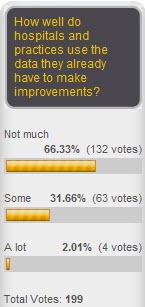
11-16-2013 9-50-34 AM

Travis from HIStalk Connect and I will be reporting live from the HIMSS-produced mHealth Summit in the Washington, DC area on December 8-11. They’re offering a $75 registration discount to HIStalk readers (use code HISTalk). We’ll have a tiny HIStalk booth in the exhibit hall, staffed by my newest team member and the non-anonymous face of HIStalk, Lorre. I think she’s bringing some little giveaway items, hoping to distract from the fact that our booth will have all the charm of a rental storage unit because the furnishings were out of our price range (I may begrudgingly get her a chair to sit on, but I’m thinking about bringing one of those $10 folding camp chairs from the local Walmart). Lorre is getting a crash course in all things HIStalk without having met any actual readers or sponsors, so stop by and say hello so she doesn’t think I made it all up. You can email her to say hello if you like.

The AMIA 2013 Annual Symposium started Saturday in Washington, DC. I’ve never been to one (I’m not a member, although I once was, and I had a conflict this week) but I like the topics – it’s like a more academic and less commercial HIMSS conference from what I can tell. I decided to run tweets from the conference in the right column just in case you want to see what’s going on there.

11-17-2013 10-46-40 AM

AMIA announces at the leadership dinner of its conference the Stead Award for Thought Leadership, which will be awarded to recipients whose vision influences the use of informatics to improve healthcare. It honors Bill Stead, MD, associate vice chancellor for health affairs and chief strategy and information officer at Vanderbilt University Medical Center. Above are Stead with the members who recommended creation of the award: Nancy Lorenzi, PhD (VUMC); Bill Stead; Ed Hammond, PhD (Duke Center for Health Informatics); and Kevin Johnson, MD, MS (VUMC). The award’s colors will be Duke blue (where Stead was a student under Hammond), Vanderbilt gold, and AMIA crimson. I was amused that AMIA, like others regularly do, confused in the announcement its own journal’s name (JAMIA) with that of JAMA, saying that Bill was the first editor of the Journal of the American Medical Association, which if so means his informatics research has turned up the Fountain of Youth since JAMA’s first issue rolled off the presses in 1883.

ONC announces that it will develop interoperability standards that will allow EHRs to exchange information with state-run prescription drug abuse databases, updating pharmacy records in near real-time and helping prescribers identify potential abusers directly from order entry. An HHS task work group created the plan in 2011, final recommendations were issued in August 2012, and pilots were completed this year.

The Metro Atlanta Chamber names patient payments platform vendor Patientco its 2013 Healthcare IT Startup Company of the Year. I interviewed CEO Bird Blitch a month ago, including a question about Georgia healthcare IT companies.

11-17-2013 11-24-37 AM

Knowledge management solutions vendor Streamline Health announces a secondary stock offering to finance the acquisition of two small, unnamed software vendors. Company A offers patient scheduling and access solutions, has 29 clients, and will be acquired for $6.5 million in cash. Company B offers financial and operational analytics to its 35 clients and will be acquired for $13.75 million in cash and stock. I interviewed CEO Bob Watson in August 2013. I observed then that STRM shares had jumped from $1.50 in early 2012 to $7 at that time; they’re at $7.60 now.

Eleven Canada-based startup healthcare IT vendors will demonstrate their products in Philadelphia on Tuesday as part of a collaboration program between the city and a Canada-based health IT accelerator. On hand will be Caristix (HL7 integration), Hospitalis (clinical pathways and interventions), Infonaut (infection control surveillance), Memotext (patient adherence), Pulse InfoFrame (analytics), Sensory Technologies (homecare management), HandyMetrics (hand hygiene auditing), Impetus Healthcare (online communities), Interfaceware (HL7 integration), MetricAid (ED efficiency), and Phemi Health Systems (analytics).

11-16-2013 8-13-44 AM

The board of Cover Oregon, the state’s health insurance exchange, places its executive director on notice because of website problems that have resulted in zero enrollments for coverage that begins January 1. The board expressed displeasure with Oracle, which it says missed deadlines and provided marginally skilled employees. The exchange has asked the federal government to loan it seven people to help.

11-17-2013 11-34-00 AM

CMS Deputy CIO Henry Chao did his best to rally the troops this summer to get Healthcare.gov ready, but his patience for missed deadline excuses and demands for more money (especially from contractor CGI) was obviously wearing thin by mid-July. According to a July 12 email, “they [CGI] need about $38 million more to get them through Feb. 2014 … the $38 million does not include the approximate $40 million we have in the budget for this contract.”

11-16-2013 8-19-59 AM

Steve Larkin (maxIT Healthcare) joins ESD as regional VP.

11-16-2013 9-19-46 AM

Marc Winchester (Intuit Health) takes a sales and marketing role with supply chain systems vendor Aperek, previously known as Mediclick.

11-16-2013 7-54-35 PM

Robert Marcus, MD (NextGen) joins TrustHCS as a physician consultant.

11-16-2013 8-05-57 PM

Richard Tunnell (UMDNJ) is named CIO of University Hospital (NJ).

11-16-2013 8-17-15 AM

Fargo-ND-based Intelligent InSites employees wore tee shirts Friday to support United Way. The hats are from the company’s user group meeting held this summer, and since they invited me but I couldn’t attend, they’ve got one with my name on it.

If your HIS-torical memory includes names such as McAuto, SAINT, IBAX, and Amex, then you’ll enjoy Vince’s chapter this week in his continuing analysis of the confusing and sometimes incestuous McKesson HIT family tree.


Contacts

Mr. H, Inga, Dr. Jayne, Dr. Gregg, Lt. Dan, Dr. Travis, Lorre.

More news: HIStalk Practice, HIStalk Connect.

125x125_2nd_Circle

Text Ads


RECENT COMMENTS

  1. The comments are true above. HIMSS is facing serious leadership and governance concerns, particularly involving the CEO and head of…

  2. "A valid concern..." Oh please. Everyone picks the software they like and the origin of that software is an afterthought.…

  3. I don't disagree with you completely, but to take the counterpoint: there is plenty of precedent for saying "this *entire…

  4. Teens will certainly find a way to use their social media apps of choice. I'm not in favor of the…

Founding Sponsors


Platinum Sponsors


Gold Sponsors


RSS Webinars

  • An error has occurred, which probably means the feed is down. Try again later.