Home » News » Recent Articles:

News 1/10/14

January 9, 2014 News 3 Comments

Top News

1-9-2014 10-34-30 PM

inga thumb Merge Healthcare discovers in an internal review that a former sales employee falsified the existence or amount of certain customer contracts. Merge had not invoiced any of the customers or recognized revenues, meaning previously reported results are not affected. However, the company reduced its non-GAAP subscription backlog totals over 25 percent from prior statements. The sales rep, who had been paid about $250,000 in commissions on the invalid contracts, has admitted to falsifying the orders and has offered to pay restitution. Merge has referred the matter to the US Attorney’s Office. While the rep’s actions are reprehensible, I am sure that plenty of sales veterans (me included) in HIT and other industries are aware of other instances of  “creative accounting” in order to hit quotas.


Reader Comments

1-9-2014 10-35-38 PM

From Politico: “Re: Greenway. Major layoffs this week.” Unverified, but reported by several readers, one of whom gave a number of 80 affected employees.

From Nasty Parts: “Re: Carrollton is cratered. Rumor is 150 people downsized at Greenway’s former HQ, including the VP of HR. This comes on top of an exodus of sales executives, including two VP. Approximately 10 of the top reps have left, many because they did not want to sign the feared Vista non-compete. Also, word is that the HQ of SuccessEHS, another Vista acquisition, was also cleaned out today.” Unverified, but Nasty Parts has been right several times in the past. We didn’t receive a response to our inquiry.

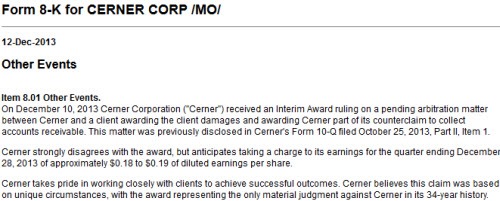
From Xflo-Bee: “Re: Cerner. I’m hearing a lot of buzz on the wire about Cerner being the focus of a big lawsuit over a state reporting SNAFU. Can anyone verify?”

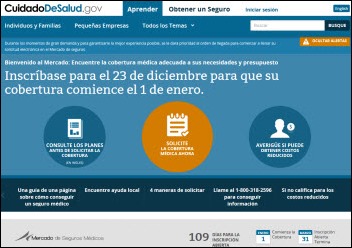
From Bob A. Booey: “Re: MU attestation. We’re having an awful time trying to attest for 2013 MU on the CMS website. Here is the response from CMS. ‘We have been notified that the Registration and Attestation Application is experiencing technical difficulties. This is currently being investigated. At this time, we do not have an estimated time for resolution. Please try again later. We apologize for any inconvenience this may cause.’”

1-9-2014 10-15-33 PM

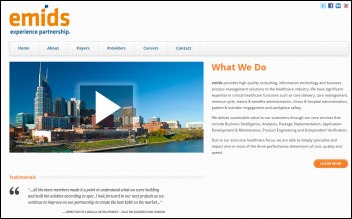
From MT Hammer: “Emdat. A new banner on Emdat’s website points to another Nuance acquisition.”


HIStalk Announcements and Requests

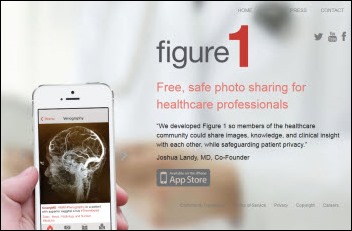
inga thumb Here’s some HIStalk Practice highlights from the first week of 2014: doctors who Google patients. CMS wants to ban abusive prescribers from government programs. Free app Figure1 allows physicians to share de-identified photos of medical conditions. Patients from practices affiliated with University Hospital (GA) embrace the health system’s Epic portal. Montana requires insurers to reimburse telehealth visits at the same rate as in-person visits. Brightree and athenahealth will share patient referral data. Dr. Gregg provides insight on why some physicians choose to remain independent. While you are stopping by, sign up for the email updates so you don’t miss a post. Thanks for reading.

inga thumb We sent our sponsors an email earlier this week about our activities at the HIMSS conference, so if you should have seen this and didn’t, email me

1-9-2014 12-56-29 PM

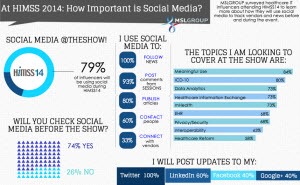
inga thumb Speaking of HIMSS, I ran across this infographic depicting the importance of social media during HIMSS14. Mr. H, Dr. Jayne, and I will be providing occasional updates on Twitter, but you’ll also want to make sure you are following Lorre (@Lorre_HIStalk). She’ll be manning our HIStalk booth (#1995) and passing along our impressions of the exhibit hall’s best and worst booths, as well as tips for finding the coolest swag, free cocktails, and good coffee.
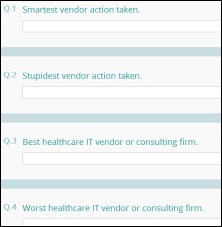
Last chance: HISsies nominations will close shortly, so nominate your choice for Best Vendor, Best CIO, etc. ASAP.

HIStalkapalooza details and registration will be available next Wednesday, January 15. We’re getting a bunch of emails every day asking about it, so please save us some time by hanging in there until next week. Our primary sponsor still has spots for two more co-sponsors who will be recognized in a variety of ways, so email me if your company is interested.

1-9-2014 9-34-01 PM

Welcome to new HIStalk Gold Sponsor Wide River Consulting. The Lincoln, NE-based company offers healthcare IT consulting services with an emphasis on serving hospitals in rural and underserved communities. Wide River has helped 50 Critical Access and Rural Hospitals that were struggling to keep up under the weight of ICD-10, MU, EHR upgrades, and PQRS reporting, often with vendors that find it challenging to send people to their locations. The company offers a wide range of technical and engineering services through a partnership with Sterling. Executive Director Todd Searls tells me that with the REC grants ending, PPCPs and CAHs need a low-cost way to keep forging ahead with Meaningful Use and Wide River can help. The company’s ICD-10 services are a big hit as well. CAHs can get a one-year subscription to Wide River’s Meaningful Use Help Desk for $175 per month and providers can sign up for $60 per month, gaining access to experts who can help with MU-related questions ranging from patient portals to exclusions. The company’s goal is to help teach small and rural hospitals to succeed with the resources they have, even helping them form mini-HIT co-ops. Thanks to Wide River Consulting for supporting HIStalk.


Upcoming Webinars

January 16 (Thursday), 1:00 p.m. Advanced Efforts to Identify and Eliminate Waste from Healthcare. Sponsored by Health Catalyst. Presenter: David Burton, MD, executive chairman, Health Catalyst. Based on a breakthrough analyses using several large healthcare data sets as representative samples, Dr. Burton and team will present insights designed to help executives struggling to identify, quantify, and extract waste from their systems.


Acquisitions, Funding, Business, and Stock

Shareholders of Health Management Associates approve the previously announced $3.9 billion sale of the hospital chain to Community Health Associates.

Endo Health Solutions will sell its HealthTronics business to Altaris Capital Partners for total consideration of up to $130 million, including $85 million in cash upfront. HealthTronics is a provider of urological products and services, including the UroChart EHR and meridianEMR systems.

1-9-2014 10-42-01 PM

Lumiata, formerly known as MEDgle and the developer of a predictive analytics platform for healthcare, closes a $4 million Series A round led by Khosla Ventures.


Sales

1-9-2014 10-47-00 AM

Dameron Hospital Association (CA) selects Allscripts Sunrise clinical products suite.

1-9-2014 12-22-08 PM

Presbyterian Senior Living (PA) will implement AOD Software’s long-term care EHR across its 23 locations.


People
1-9-2014 11-23-59 AM

VMware promotes Ben Fathi from SVP to CTO.

1-9-2014 11-23-15 AM

Telehealth solution provider AMC Health names John Larus (Clinipace) SVP of solutions development for the clinical trials division.
1-9-2014 11-21-57 AM

RCM provider Encoda names Michael Kallish (RemitDATA) CEO, replacing co-founder William Cox, who will assume the role of president and CTO.

1-9-2014 11-53-23 AM

Impact Advisors appoints Steven Schlossberg, MD (Yale School of Medicine) VP/CMO.

1-9-2014 12-15-42 PM

Surescripts announces that CEO Harry Totonis will step down effective March 2014 and that it has hired an executive search firm to find his successor.

AHIMA members elect Angela Kennedy (Louisiana Tech University) as president/chair of the board of directors, a role she has held since June following the death of Kathleen A. Frawley. Members also elected Cassi Birnbaum (Peak Health Solutions) president/chair elect; Jennifer McManis (Crowley Fleck Attorneys) speaker of the house; and Zenethia Clemmons (HHS OCR), Virginia Evans (Emory Healthcare), and Colleen Goethals (Midwest Medical Records Association) directors.

Southcoast Health System (MA) hires Greg Robinson (AltaMed Health Services) as executive director of enterprise informatics.


Announcements and Implementations

ICUcare and IEEE will collaborate to develop a universal industry standard/specification and a free web-based middleware API to help healthcare providers map data from medical devices to EHRs and other health information systems.

1-9-2014 12-04-06 PM

Advocate Eureka Hospital (IL) implements electronic patient and e-forms technology from Access.


Other
1-9-2014 11-05-23 AM

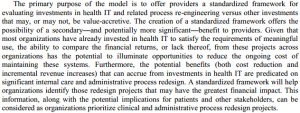
The Institute of Medicine proposes a standard framework to help providers identify and quantify the costs and benefits of EHR implementations.

Non-profit hospitals paid their CEOs a mean compensation of $594,781 in 2009, according to a JAMA Internal Medicine-published report. Hospitals with high levels of advanced technologic capabilities compensated their CEOs $135,862 more than hospitals with low levels of technology.

A Reuters article says that drug companies, with newly limited access to doctors per PPACA requirements, are moving their sales efforts to EHRs. It mentions Practice Fusion, which sells EHR pop-up ads, and EHRs that email refill and vaccine reminders that don’t clearly state if the message is sponsored by a drug company.

Weird News Andy says the appropriate ICD-10 code is “X59.9 or X12 or combination thereof.” At least 50 people are scalded from emulating TV weather people who tossed boiling water into cold Midwestern air to watch it freeze.


Sponsor Updates

  • AirWatch wins three 2014 Compass Intelligence Awards in the enterprise mobility category, while AT&T was named the best service provider in the health and wellness category, as well as a winner in multiple non-healthcare related categories.
  • Lexmark’s Perceptive Software launches Perceptive Media Connector, which enables the cloud-based capture, management, and access of video content with the Perceptive Content client interface.
  • Ping Identity opens registration for Cloud Identity Summit 2014, scheduled for July 19-22 in Monterey, CA.
  • KLAS extends a high early-performance score to Health Catalyst for its healthcare-specific analytics platform.
  • ChartWise Medical Systems and TrustHCS partner to offer ChartWise’s CDI software with TrustHCS’s coding services and ICD-10 education.
  • Ellis Medicine (NY) cut overtime costs by $721,000 during the first six months after deploying API Healthcare’s workforce management technology.

EPtalk by Dr. Jayne

clip_image002

After several extremely slow news weeks, I’m glad to see things are starting to heat up. I’ve heard a lot of buzz about the Consumer Electronics Show, which is taking place this week in Las Vegas. Several readers have sent me blurbs about wearable tech. I’m not nearly as much of a fashionista as Inga, but I do like to keep an eye on the trends, especially when they’re related to health IT.

The first product I looked at was the wearable ambulatory blood pressure monitor from iHealth. It’s both USB- and Bluetooth-enabled and allows for blood pressure readings at intervals of 15-120 minutes. Most home blood pressure monitoring units are bulky and patients are not as compliant as they might be. It is compatible with both iOS and Android and can store up to 200 measurements. It reminds me a bit of a futuristic version of the shoulder holsters worn by 1980s television cops, but with a touch of neoprene.

clip_image004

The company also has a wireless ambulatory ECG device that looks pretty cool. Instead of having multiple sticky leads attached to the patient, it has a single unit that is worn under clothing. In keeping with the throwback 80s vibe, it reminds me of the handset of a vintage rotary phone, although it doesn’t appear to come in avocado green or harvest gold. Bluetooth connectivity to iOS allows for real-time transmission of readings. Both it and the blood pressure monitor are still awaiting FDA clearance and pricing isn’t yet available, so put your credit cards away.

Another reader sent me an article about the need to design tech wearables for women. I was excited to read about Ringly, which is creating jewelry and accessories that receive notifications from the wearer’s mobile phone. Being alerted by jewelry would be much nicer than the incessant phone checking I see. After recently working in an office where the front desk staff notified the back office of patient readiness using an extremely loud intercom (“patient for Dr. Jayne!”) I wonder if we could tie it to the EHR patient tracker. Ringly’s goal is to create jewelry that looks like jewelry rather than gadgets and also to allow users to leverage its app to prioritize the alerts they receive.

Don’t get me wrong, gadgets can be cool. I wear a Garmin when I run that screams, “Hey, I’m a GPS! No way you’re mistaking me for a watch!” I’m not crazy about how it looks, but its function makes it tolerable. On the flip side, there’s Everpurse, which can charge a cell phone on the go and looks nice as well. Although they’re sold out of virtually everything except the persimmon leather clutch, I might have to keep an eye on the site for new offerings.

Looking back at some of the promotions from the Consumer Electronics Show, Intel has launched its Make it Wearable contest to help identify the next generation of accessories. Maybe someone will develop a white lab coat with a sensor to track the level of dirt on the cuffs or the time since it was last laundered. I can think of a couple of physicians who would benefit from that functionality.

How about a patient hospital gown that alerts you when your backside is flapping in the breeze or one that self-adjusts to prevent unintended exposure? The video clip on the Intel website showed a dress that appeared to be zipping itself, so it might just be in the realm of possibility. Maybe next year Inga and I should include the Consumer Electronics Show in our meeting and convention plans. Have a connection that can help us register? Email me.


Contacts

Mr. H, Inga, Dr. Jayne, Dr. Gregg, Lt. Dan, Dr. Travis, Lorre

More news: HIStalk Practice, HIStalk Connect.

125x125_2nd_Circle

News 1/8/14

January 7, 2014 News 1 Comment

Top News

1-8-2014 6-34-26 AM

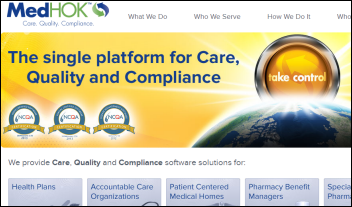
Two healthcare-focused private equity firms will invest $77.5 million to take minority positions in MedHOK, which offers care, quality, and compliance software.


HIStalk Announcements and Requests

1-8-2014 5-29-05 AM

Welcome to new HIStalk Gold Sponsor Coastal Healthcare Consulting. The Mountlake Terrace, WA-based company has completed 850 engagements and won numerous KLAS clinical implementation awards since its founding in 1995. Most of its consultants have been with the company for at least 10 years. Offerings include Catalyst (SWAT team project crisis response), Convergence (reducing denied claims), Fusion (linking technology to clinical processes), and Wave (application support, workflow analysis, system build, and activation). Product expertise includes Allscripts, Cerner, Epic, GE Healthcare, and Meditech. Industry long-timer Amy Noel, RN is CEO of the company. Thanks to Coastal Healthcare Consulting for supporting HIStalk.


Upcoming Webinars

January 9 (Thursday), 2:00 p.m. Beyond the Summits. Sponsored by HIStalk. Presenters: Ed Marx, SVP/CIO, Texas Health Resources, and Elizabeth Ransom, MD, FACS, EVP/clinical leader North Zone, Texas Health Resources. Everyday healthcare executives share leadership and teamwork principles they learned from climbing some of the world’s highest peaks over the last four years.

January 16 (Thursday), 1:00 p.m. Advanced Efforts to Identify and Eliminate Waste from Healthcare. Sponsored by Health Catalyst. Presenter: David Burton, MD, executive chairman, Health Catalyst. Based on a breakthrough analyses using several large healthcare data sets as representative samples, Dr. Burton and team will present insights designed to help executives struggling to identify, quantify, and extract waste from their systems.


Acquisitions, Funding, Business, and Stock

1-7-2014 11-51-07 AM

Press Ganey acquires On The Spot Systems, developer of a real-time data capture system for patient feedback, and launches Point of Care, a solution that allows providers to capture patient feedback via tablets and mobile devices.


Sales

Mount Sinai Health System (NY) selects MU Assistant from SA Ignite to automate its MU attestation process.

The Guam Regional Medical City hospital will deploy Allscripts Sunrise EHR and Financial Manager platforms when it opens in late 2014.

The Department of Defense awards Carestream Health a  one-year, $70.2 million contract for medical imaging technology.


People

1-7-2014 7-32-21 PM

McKesson Specialty Health and the US Oncology Network appoint Jeffrey Kao (Coventry Health Care) CIO/SVP of information and technology services.

1-7-2014 7-33-36 PM 1-7-2014 7-34-26 PM

T-System promotes Mark Horner from VP of client services to SVP/GM of RevCycle+ and  expands CFO Steve Armond’s duties to include leading the company’s documentation solutions.

1-7-2014 8-07-10 AM

Jacob Nguyen (Craneware) joins VitalWare as EVP of business development and operations.

1-7-2014 7-35-30 PM 1-7-2014 7-36-55 PM

Vocera names Rhonda Collins (Fresenius Kabi, USA) chief nursing officer and promotes Steve Jackson from COO of its ExperiaHealth division to chief strategy officer.

1-8-2014 7-34-58 AM

David Cerino (Zynx Health) is named CEO of WiserCare.


Announcements and Implementations

1-8-2014 7-02-06 AM

Fairfield Medical Center (OH) goes live this month with a fingerprint ID system from CrossChx.

Harrison Medical Center (WA), which affiliated with Franciscan Health System last year, will switch to Epic this summer.

Riverside Medical Center (IL) implements the DebMed electronic hand hygiene compliance monitoring system.

Wesley Medical Center (KS), Cypress Surgery Center (KS), and Surgery Center of Kansas go live on Anesthesia Touch from Plexus Information Systems.

inga thumb McKesson announces the general availability of its Paragon Ambulatory Care Practice Management solution, which is an extension of its single database HIS for inpatient facilities and designed for hospital-owned practices. I understand the PM module was developed internally, as opposed to a bolt-on of one of McKesson’s acquired products, and that an EHR module is also in the works. Sounds like McKesson is positioning itself to compete with Epic and Cerner in the IDN market.


Government and Politics

The Office for Civil Rights proposes an amendment to the HIPAA privacy rule to allow certain entities to disclose the identities of individuals with mental health “prohibitor” status to the gun background check system. The change would apply to individuals who have been involuntarily committed to a mental institution; found incompetent to stand trial or not guilty by reason of insanity; or otherwise deemed by a lawful authority to be in danger of themselves.

CMS reports that more than 30,000 hospitals, physicians, and medical equipment providers are using its online esMD documentation system instead of mail or faxes for auditor medical record requests and prior authorizations requests for power mobility devices.

1-8-2014 6-01-46 AM

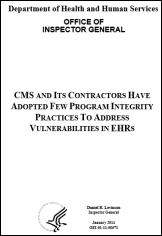
A new OIG report says CMS and its contractors haven’t done enough to address Medicare fraud related to EHRs. It recommends that CMS provide guidance to its contractors on detecting fraud and suggests they review provider EHR audit logs. The report identifies inappropriate EHR copy-pasting and creating of false documentation to support higher charges as key fraud issues. CMS responded by saying it will develop copy-paste guidance and identify best practices for its contractors to detect fraud associated with EHRs.


Innovation and Research

South Dakota philanthropist T. Denny Sanford donates $125 million to Sanford Health (SD) to support the incorporation of genomics into the health system’s primary care programs, including added genetic testing information to the EHR to allow clinicians to personalize drug therapies. Sanford has donated $1 billion to the health system that bears his name.


Other

1-7-2014 9-42-35 AM

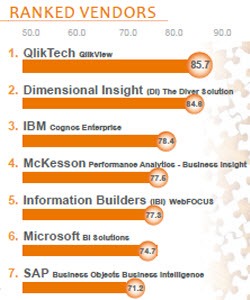
QlikTech’s QlikView earns the top spot among business intelligence products in a KLAS report on the healthcare analytics market.

125x125_2nd_Circle

inga thumb According to a JAMA-published study, not too many physicians are joining Mr. H’s smoking doc for smoke breaks. Only about two percent of physicians admit to smoking, compared to 16 percent of the general population and 25 percent of licensed practical nurses.

1-7-2014 8-31-06 PM

A local paper profiles Whidbey General Hospital (WA), which experienced critical cash flow issues during its transition to Meditech. The hospital claims its billing process was abnormally slow after the system went live in May and caused A/R levels to climb and cash on hand to decline. The hospital, which expects to spend $7.5 million on its Meditech installation, is recovering. The paper incorrectly blames the ACA rather than than HITECH for requiring the use of EMR to avoid financial penalties.

A federal judge dismisses a patient’s lawsuit that charged a healthcare provider violated HIPAA laws when an employee’s laptop was stolen. The judge ruled that only HHS can enforce HIPAA and individuals do not have the right to bring lawsuits for its enforcement.

1-7-2014 8-50-30 PM

The Pittsburgh paper profiles hospital pharmacy automation vendor Aesynt, the former McKesson Automation / Automated Healthcare that was sold to Francisco Partners in November. It says the company has developed new hospital drug management software being tested by UPMC and Intermountain. President and CEO Kraig McEwen says the company has introduced more products in the past 12 months than in the past five years. He also says the company is looking for acquisitions  that will help it expand its offerings for reducing hospital drug costs.  

IBM’s “Jeopardy”-winning Watson computer is falling far short on the company’s revenue targets. Healthcare is its most promising market, but a $15 million M.D Anderson cancer genomics project is “in a ditch” according to the IBM executive in charge. A Watson oncology regimen project at Memorial-Sloan Kettering could go live later this year. IBM’s business plan calls for Watson to contribute $1 billion in annual revenue by 2018, but it has only generated $100 million in its three-year existence. The main problem is the effort required for engineers to program Watson for each business case so that it can learn from available information.

1-8-2014 6-53-33 AM

Massachusetts will launch the second phase of the Mass HIway HIE Wednesday at Beth Israel Deaconess Medical Center. The HIE  has received $55 million in federal funding.

E-Health Ontario, the provincial agency tasked with creating EHRs for all Ontarians, will share $2.3 million in performance bonuses across its 704 staff members. The payout follows a court settlement that restored payouts that were cancelled in 2011 as part of a controversial wage freeze.

John Lynn of EMR and HIPAA is producing an April 7-8 Las Vegas conference covering healthcare IT marketing and PR.

James Parks, former COO/CIO of Box Butte General Hospital (NE), is indicted on seven counts of child pornography after the hospital reports finding explicit content on his computer.

The governor of Minnesota blames IBM for problems with its state-run health insurance exchange that launched October 1. Minnesota Governor Mark Dayton sent a highly critical letter to CEO Ginny Rometty last month that blamed the company for a laundry list of items:

Your product has not delivered promised functionality and has seriously hindered Minnesotans’ abilities to purchase health insurance or apply for public health care programs through MNsure…. your product has significant defects, which have seriously harmed Minnesota consumers.


Sponsor Updates

  • CCHIT certifies that the Arcadia Analytics Meaningful Use Calculation Engine v1.0 is compliant with the ONC 2014 Edition criteria as an EHR module.
  • PeriGen recognizes Barbara LaBranche, senior director of clinical informatics design and usability, for being named an EHR Game Changer.
  • Muhammad Chebli, interoperability product manager for NextGen Healthcare, discusses the importance of interoperability in achieving MU2 objectives, particularly summary of care.
  • Liaison Technologies reveals its top predictions for 2014, including the dramatic growth of data integration complexity and the normalization of mass customization.
  • Nuance Communications demonstrates wearable devices with Dragon Mobile Assistant and Swype keyboard for smartwatches at this week’s CES 2014 in Las Vegas.
  • Prominence Advisors is named one of the 50 top Chicago employers of Generation Y employees (those aged under 33).
  • Visage Imaging releases a demo video shot at RSNA of its Visage 7 Enterprise Imaging Platform.

Contacts

Mr. H, Inga, Dr. Jayne, Dr. Gregg, Lt. Dan, Dr. Travis, Lorre

More news: HIStalk Practice, HIStalk Connect.
 

125x125_2nd_Circle

Monday Morning Update 1/6/14

January 4, 2014 News Comments Off on Monday Morning Update 1/6/14

From The PACS Designer: “Re: Google Apps starter. With the continued growth of mobile devices, Google has exploited this trend with a mobile app landing platform for the iPad, iPhone, Android Tablet, and Android Phone. Now and in the future it will be easier to get apps to play on no matter which mobile device you may have in your possession as Google expands this landing platform with even more mobile solutions.” Google is everywhere these days, but I’m finding their apps less capable and more annoying. They tie everything into your Gmail account even when you don’t want them to, and the initially intriguing minimalist design of all Gmail-related apps is now just as annoying and clunky as a 1980s Invision screen (example: Gmail doesn’t support using the Delete key to delete an email, instead going the proprietary/obscure route by using the E key instead.)

1-4-2014 8-19-56 AM

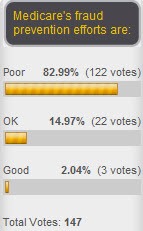
Poll respondents find Medicare’s fraud-sniffing efforts to be unimpressive. New poll to your right: what will be the biggest challenge for hospital CIOs in 2014? The length of the list suggests the challenges inherent in that job.


Upcoming Webinars (Times are Eastern) 

1-4-2014 2-32-14 PM
January 7 (Tuesday), 1:00 p.m. Clinical Analytics for Population Health Management. Sponsored by HIStalk. Presenter: Cora Sharma, principal analyst, Chilmark Research. As providers move from fee-for-service to value-based payment models, they must not only comply with ever-proliferating quality metrics, but also transition from a cost-plus business model to one of cost containment. 

January 9 (Thursday), 2:00 p.m. Beyond the Summits. Sponsored by HIStalk. Presenters: Ed Marx, SVP/CIO, Texas Health Resources, and Elizabeth Ransom, MD, FACS, EVP/clinical leader North Zone, Texas Health Resources. Everyday healthcare executives share leadership and teamwork principles they learned from climbing some of the world’s highest peaks over the last four years. 

January 16 (Thursday), 1:00 p.m. Advanced Efforts to Identify and Eliminate Waste from Healthcare. Sponsored by Health Catalyst. Presenter: David Burton, MD, executive chairman, Health Catalyst. Based on a breakthrough analyses using several large healthcare data sets as representative samples, Dr. Burton and team will present insights designed to help executives struggling to identify, quantify, and extract waste from their systems.

HIStalk-sponsored webinars are non-commercial presentations of broad interest. I appreciate our pro bono presenters, who get a sizeable audience and recognition without the frustrations involved with presenting at a conference. Contact me if you’d like to present.


1-4-2014 9-21-20 AM 1-4-2014 2-33-19 PM

Welcome to new HIStalk Gold Sponsor The Loop Company. The Williston-VT-based research advisory firm helps companies launch new offerings, enter new markets, win more business, and create customer loyalty. They design programs to help companies understand how the market perceives them and can help improve sales, marketing, product development, and operations. It’s a new venture from old HIStalk friend and industry long-timer Gino Johnson, who created the excellent CapSite healthcare IT research and advisory firm that HIMSS acquired and rolled into HIMSS Analytics in October 2012. Thanks to The Loop Company for supporting HIStalk.

HISsies nominations continue, so please submit yours now. It will only take a couple of minutes and you can skip categories you aren’t interested in.  I’m enjoying reading the early nominations for worst vendor, Lifetime Achievement Award, and the always-popular “industry figure with whom you’d most like to have a few beers.” Long-time readers may remember years ago when Jonathan Bush won that category (as he often does) and agreed to let me auction off an evening with him as a charity fundraiser.

Listening: Blue Coupe, made up of hard-rocking 1970s legends Dennis Dunaway (the shamefully underappreciated bass player and principle songwriter for Alice Cooper when it was a real band) and the Bouchard brothers Joe and Albert (key members of Blue Oyster Cult), thus the band’s name as a nod to the respective histories of its members. The band started out playing Alice Cooper covers, but earned Grammy attention for new material in 2011/2012.


Thanks to the following sponsors, new and renewing, that recently supported HIStalk, HIStalk Practice, HIStalk Connect, and HIStalk Webinars. Click a logo for more information.

1-4-2014 8-41-30 AM
1-4-2014 9-01-58 AM
1-4-2014 9-03-30 AM
1-4-2014 9-00-26 AM
1-4-2014 8-56-37 AM
1-4-2014 8-49-29 AM
1-4-2014 8-51-37 AM
1-4-2014 8-50-10 AM
1-4-2014 8-58-08 AM
1-4-2014 9-02-44 AM
1-4-2014 8-55-30 AM
1-4-2014 8-44-14 AM
1-4-2014 8-53-34 AM
1-4-2014 8-45-20 AM
1-4-2014 8-57-27 AM
1-4-2014 8-40-27 AM
1-4-2014 8-48-42 AM
1-4-2014 8-47-32 AM
1-4-2014 8-43-21 AM
1-4-2014 8-52-42 AM
1-4-2014 8-54-32 AM
1-4-2014 8-51-00 AM


In Australia, the ambulance service of New South Wales requires a government bailout after its aborted EMR and billing system project left it with $7.5 million in invoices it couldn’t send out.

North Carolina, which just passed a law requiring hospitals treating Medicaid patients to participate in the state HIE, sends out nearly 50,000 new Medicaid cards to the wrong people.

1-4-2014 10-57-35 AM

Intelligent InSites names investor and executive board chair Doug Burgum as interim president and CEO, replacing Margaret Laub, who has left the company. Burgum founded accounting software vendor Great Plains and sold to Microsoft in 2000 for $1.1 billion.

Weird News Andy likes the story that he titles “Print a Liver – 2014,” to which he adds a “Silence of the Lambs” pop reference in wondering if they can also print a nice Chianti (although I seem to remember that the book instead said “big Amarone” before Hollywood dumbed down it down for less oenophilic  moviegoers.) A California biotech firm says it will successfully use 3D printing to create a human liver (or more precisely, a working model of a human liver suitable for drug company research) by the end of this year.

“Taking from Peter to Pay Paul” is WNA’s assessment of a survey of doctors in England, in which a third of them want to charge each ED patient $16 to to discourage usage for minor complaints. The patient counterpoint would be that appointments are hard to get and practices are closed nights and weekends. We have similar challenges here, obviously: the ED is always open and free if you can’t or won’t pay, while urgent care isn’t always open and they expect money upfront.

1-4-2014 1-17-29 PM

Strange: a medical student examining a standardized patient (an actor playing the role of a patient) pretending to have an abdominal aortic aneurysm detects the actual condition, alerting the instructing physician to urge the man to see a cardiologist. He does and is found to require stent replacement surgery. According to the patient’s wife, “Jim’s life was saved by a UVA medical student, no doubt about it.”

Vince covers the $14.5 billion acquisition of HBOC by McKesson in this week’s HIS-tory. I think he’s planning to wrap up his HIS-tory series after the next couple of installments. I will miss them since I have enjoyed every one.


Contacts

Mr. H, Inga, Dr. Jayne, Dr. Gregg, Lt. Dan, Dr. Travis, Lorre

More news: HIStalk Practice, HIStalk Connect.

125x125_2nd_Circle

News 1/3/14

January 2, 2014 News 3 Comments

Top News

1-2-2014 7-58-42 PM

President Obama announces that he will nominate Leon Rodriguez, director of the Office for Civil Rights of HHS that enforces HIPAA, for Director of Citizenship and Immigration Services in the Department of Homeland Security.


Reader Comments

1-2-2014 7-45-24 PM
Photo: Brian Snyder/Reuters

From DZA MD: “Re: Baystate Medical Center. Cerner PowerChart crippled with record inpatient census and Nor’easter in full effect. Unable to process timely discharges before brunt of storm arrives.” Unverified. As I write this Thursday evening, Massachusetts is about to get nailed by a winter storm that will bring up to 30 inches of snow in places with wind chill as low as 20 degrees below zero and even colder Friday night.

From Dirk Benedict: “Re NextGen lawsuit. Mountainview Medical Center in Montana sues NextGen, saying it didn’t install its $441,000 EHR system as promised.” The six-bed hospital contends that NextGen was to install a system “which would permit MVMC to demonstrate ‘meaningful use’ of such electronic health records through all stages of applicable federal regulations” and was to complete implementation by October 1, 2013. According to NextGen’s website, NextGen Inpatient Clinicals EHR 2.6 is 2014 Edition certified as a modular EHR, so it’s difficult to determine what the exact issue(s) might be. NextGen provided us with this statement:

We cannot comment on the pending litigation, other than to say that we firmly believe the allegations made by Mountainview Medical Center are without merit and we will defend against them vigorously. We confidently stand behind the quality and performance of our products and offerings.

1-2-2014 6-06-14 PM

From Intractable Vermonting: “Re: Vermont health insurance exchange. The cost overruns have been tremendous and the politicians responsible pass it off as ‘changing project scope costs money.’ 99 percent of all IT leaders in the US would be fired if they managed a project in this fashion. Also, security is the last thing that is built into the technology before it goes live and I am sure there were shortcuts taken with all these exchanges. The hackers know that most sites require Social Security number to register.” The Vermont Health Connect insurance exchange website is the most expensive IT project ever undertaken in the state, running up a tab of $172 million, of which the federal government contributed $48.7 million. One big contractor was the ever-present CGI, which managed to turn its $42 million contract into $84 million worth of billables while missing key deadlines that kept the site from being ready on October 1. CGI was smart: the state says the delays cost $26 million, but CGI’s contract says it can be penalized a maximum of $5 million.


HIStalk Announcements and Requests

1-2-2014 5-48-35 PM

It’s time for the HISsies nominations. What’s your choice for “Stupidest Vendor Action Taken,” “Most Overused Buzzword,” “Industry Figure With Whom You’d Most Like to Have a Few Beers,” and “HIStalk Healthcare IT Industry Figure of the Year?” Enter your nominations, from which the most-nominated choices will go on the final ballot in a week or so. That means no complaining if your choice isn’t on the ballot and you didn’t nominate them.

1-2-2014 6-15-48 PM

HIStalkapalooza registration will open up the week of January 13. Read HIStalk religiously for the link to the signup notice in the next couple of weeks. We fill up really fast every year. Above is a photographic hint of the venue for those wondering. The primary sponsor has a couple of co-sponsors whose support will allow the event to be even bigger and better. If your company is interested in getting exposure as a HIStalkapalooza co-sponsor, let me know and I’ll connect you since they are willing to take on two more.

1-2-2014 6-39-01 PM 1-2-2014 6-48-11 PM

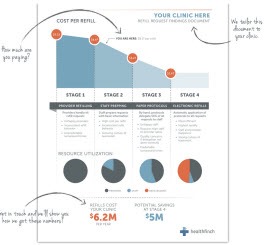
Welcome to new HIStalk Platinum Sponsor healthfinch (they tell me it’s supposed to be all lower case). The company offers RefillWizard, which improves doctor efficiency as a “Team-Based Decision Support System” that improves patient safety while reducing refill turnaround time by up to 95 percent. They begin by preparing a customized savings document like the one above and making recommendations to optimize the refill process. They have found that 62 percent of refills can be selectively and safely delegated to clinical staff, reducing the staff time to 34 seconds (some PCPs spend 1-2 hours per day just managing refills.) RefillWizard, which just won the Allscripts Open App Challenge, works either with paper protocols or integrated with the EMR. HIStalk readers probably know DrLyle (Lyle Berkowitz, MD), the company’s chairman and chief medical officer. Thanks to healthfinch for supporting HIStalk.

I found this healthfinch RefillWizard overview on Vimeo.


Upcoming Webinars (Times are Eastern) 

January 7 (Tuesday), 1:00 p.m. Clinical Analytics for Population Health Management. Sponsored by HIStalk. Presenter: Core Sharma, principal analyst, Chilmark Research. As providers move from fee-for-service to value-based payment models, they must not only comply with ever-proliferating quality metrics, but also transition from a cost-plus business model to one of cost containment. 

January 9 (Thursday), 2:00 p.m. Beyond the Summits. Sponsored by HIStalk. Presenters: Ed Marx, SVP/CIO, Texas Health Resources, and Elizabeth Ransom, MD, FACS, EVP/clinical leader North Zone, Texas Health Resources. Everyday healthcare executives share leadership and teamwork principles they learned from climbing some of the world’s highest peaks over the last four years. 

January 16 (Thursday), 1:00 p.m. Advanced Efforts to Identify and Eliminate Waste from Healthcare. Sponsored by Health Catalyst. Presenter: David Burton, MD, executive chairman, Health Catalyst. Based on a breakthrough analyses using several large healthcare data sets as representative samples, Dr. Burton and team will present insights designed to help executives struggling to identify, quantify and extract waste from their systems


Acquisitions, Funding, Business, and Stock

Healthcare Data Solutions acquires StratCenter, a provider of healthcare provider data.

1-2-2014 9-09-48 PM

Stryker Corporation will acquire surgical sponge counting technology vendor Patient Safety Technologies, Inc. for $2.20 per share. The company’s market cap is $85 million.


Sales

1-2-2014 11-52-35 AM

In the UK, King’s Mill Hospital signs a five-year, $5.9 million EHR contract with Specialist Computer Centres and McKesson.

Medical billing company Medorizon Partners selects InstaMed’s patient payment plan technology.

The Defense Logistics Agency awards TeraRecon a maximum $30 million fixed-price contract for the procurement of radiology systems and services.

Central Georgia Health System will implement Infor’s healthcare business automation applications.


People

1-2-2014 11-54-08 AM

CareTech Solutions hires Daniel Lincoln (Palace Sports & Entertainment) as corporate controller.

1-2-2014 11-55-09 AM

CMS announces the retirement of COO Michelle Snyder, who supervised development of HealthCare.gov. The agency says Snyder had originally planned to retire in 2012 but stayed on at the request of CMS chief Marilyn Tavenner.

1-2-2014 3-47-05 PM 1-2-2014 3-49-03 PM

CareView Communications, which offers patient flow and safety solutions, promotes Steven G. Johnson from president to CEO, taking over for Samuel A. Greco, who is retiring for health reasons. Careview also names Sandra K. McRee (McRree Consulting) COO and appoints Jason T. Thompson to the board, replacing his father, Tommy G. Thompson.    

1-2-2014 7-26-42 PM

Direct Consulting Associates promotes Frank Myeroff to president.


Announcements and Implementations

Baptist Memorial Health Care (TN) goes live on Epic this week at four minor medical centers and at its Baptist Medical Group clinics. Four Memphis-area hospitals are scheduled for a March 11 go-live.


Government and Politics

1-2-2014 8-13-46 PM

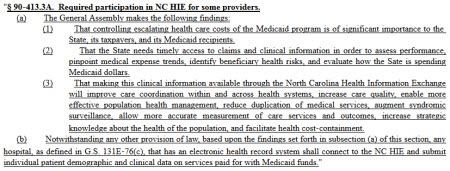
A new North Carolina law requires hospitals with EHRs to connect to the state’s HIE and submit data on services paid for with Medicaid funds.

The Department of Defense issues an RFP to keep AHLTA and CHCS running through the end of 2018 after plans for a joint DoD-VA EMR were scrapped last year when costs were estimated at $28 billion. The value of the new contract is estimated at $250 million to $1 billion. DoD is looking at a commercial replacement for contractor-developed AHLTA, whose estimated cost to taxpayers was up to $5 billion.


Innovation and Research

1-2-2014 8-06-17 PM

A study of 295 smartphone apps that claim to prevent, detect, or manage cancer finds no published studies that prove their usefulness, effectiveness, or safety.


Technology

The FDA extends the Kinsa Smart Thermometer the first-ever 510(k) clearance for a smartphone-connected thermometer.

The US Patent and Trademark Office issues CommVault Systems a patent for efficient data management improvements, such as docking limited-feature data management modules to a full-featured data management system.


Other

Riverside Health System (VA) announces that a now-terminated LPN inappropriately accessed the records of 919 patients over a four-year period.

Cerner completes the purchase of the 237-acre tract for its planned $4.3 billion office development in south Kansas City.

1-2-2014 12-09-10 PM

Ward County (TX) officials will give Ward Memorial Hospital an additional $200,000 to cover a budget shortfall that is partially blamed on their recent EHR implementation (Healthland Centriq, I believe.) 

A new study contradicts the Affordable Care Act assumption that putting uninsured Americans on Medicaid will reduce ED visits, instead finding that ED visits in Oregon increased by 40 percent as the newly insured sought ED for issues that could have been handled in physician offices. The primary author, an MIT economist, concludes that, “As I tell my economics students, when something is free, people use more of it.”

The Department of Justice joins the whistleblower lawsuit of two Charlotte, NC contract ED physicians who claim for-profit hospital chain Health Management Associates offered them kickbacks to order unnecessary tests and increase admissions. The doctors say HMA’s Pro-Med software was programmed to automatically order batteries of tests on ED patients based on their complaints before they were seen by a physician. They say HMA required EDs to admit 50 percent of Medicare patients whether they needed it or not, quoting a 2009 email from an HMA executive to ED managers that said, “Big declines in over 65 admissions – you know what to do!”

A Huffington Post reprinted piece by writer and medical resident Brian Secemsky, MD doesn’t have much good to say about the EMR used by the underserved clinic where he works:

After several months of receiving emails full of buzzwords such as improved care coordination and effective closed-loop med administration from the powers that be, I couldn’t help but drink the Kool-Aid and join the anticipated excitement of integrating an innovative source of technology into an over-booked and often overwhelming practice. Where my mind was brimming with images of easy-to-use tabs, high-yield keywords and a system where clinic documentation could effectively reflect patient encounters using minimal time and effort, I was instead bombarded with yet another early ’90s-style template full of odd-sized buttons and novel concepts that were the far from intuitive. The spiked punch quickly wore off the minute I first fumbled through this bulky piece of technology, and I was back to spending hours each night typing away, well after seeing the last of my patients.

1-2-2014 6-34-23 PM

Weird News Andy likes this unlikely innovation and even suggests the above graphic for advertising. A car mechanic in Argentina falls asleep after watching a YouTube video about a machine that extracts corks from wine bottles, then wakes up inspired to invent a device that uses an inflated plastic bag rather than forceps to extract babies stuck in the birth canal. Against all odds, WHO has endorsed his invention and a US device maker has licensed it.

1-2-2014 8-51-31 PM

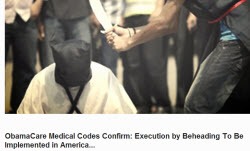
A bizarre article concludes that the government is planning to execute US citizens. It concludes that ICD-9 code E978 (legal execution) is part of a secret plan to create an “International One World Government,” claiming that, “Even more disturbing, is finding out American citizens have been subject to the ICP Medial code for many years. Thus, giving the United Nations our private information through coding.” The article proposes a solution even more dramatic than ICD-10 foot-dragging: the US should pull out of the United Nations.


Sponsor Updates

  • Sunquest releases new versions of Sunquest Laboratory and Sunquest Molecular.
  • The Boston Globe profiles Sumit Nagpa, CEO of Alere Accountable Care Solutions.
  • Jason Fortin, senior advisor for Impact Advisors, discusses the impact of Meaningful Use in 2013.
  • EDCO Health Information Solutions posts a Point of Care Scanning Process video.

EPtalk by Dr. Jayne

I received a lot of feedback about this week’s Curbside Consult. I’ll be posting more responses to the original reader email in the next Curbside Consult, but wanted to share some quick responses in the interim.

One reader asked for more detail about how we’ve tied the physician bonuses to EHR use. I can’t claim credit for the approach since we copied it from another organization, but it has worked well. It only applies to employed physicians using the group’s EHR platform. We have a couple of practices that we have acquired that are on other systems and are not yet converted, so they are exempt for now.

Physician bonus amounts are determined by three factors: patient satisfaction, clinical quality scorecard results, and productivity. A sliding scale is used for each element. For example you might receive 100 percent of your patient satisfaction and productivity bonuses but only 80 percent of your quality bonus.

The EHR plays into that in two ways. Since we’ve been fully adopted on EHR for many years, all of our quality reporting is now derived from EHR data (no more manual chart reviews). If providers are not documenting in the EHR, their scores will be low. We initially did a hybrid approach with both manual chart review and EHR reporting while physicians were adopting, but that has been phased out. Our staffing for compliance reviews has dropped significantly. They used to take three full work days per physician and now they take two to three hours per physician.

The major way that EHR applies to the bonus, however, is simple. All visits must be documented in the EHR and must meet our minimum data standards. These aren’t a lot different than the paper chart. The visit has to be complete within 24 hours of the patient visit and has to include certain critical data elements that essentially align with CMS coding requirements. For example, documentation has to have a chief complaint, history of present illness, review of systems, review of pertinent patient history, physical exam, and an assessment and plan.

We expected this to be present in the paper world and now it’s actually easier since the data is shared across the multispecialty group rather than living in separate paper charts by location. Providers can review histories with one click rather than having to dig for histories that may have been mentioned in various progress notes. Our physicians were not particularly good at keeping the paper problem list and past / family / social history face sheets up to date on paper.

For some practices that were challenging implementations, we actually had to physically visit the practice and make sure they didn’t have shadow charts. One site didn’t have charts, but had “jackets” for each patient. We didn’t just fail them outright but gave them three months to remediate, then audited them again. Over the last few years that the EHR requirements have been attached to the bonus structure, we’ve been fair about doing pre-audits so people know where they stand, then allowing enough time for them to remediate before their final audit.

The reader also asked about the “standards” that I mentioned our physicians have to meet to stay employed. Some are pretty simple – no OSHA or CLIA violations, favorable scores on coding and compliance audits, and getting along with their partners and staff. Some are more rigorous. We have high standards for clinical quality, and physicians are graded on blood pressure control, appropriate use of drugs for coronary artery disease, cholesterol control, influenza vaccination, cancer screening (colorectal, breast, prostate), diabetes management, and a couple of others. Physicians who can’t keep their scores in the desired range are remediated (as are their office staff – many of the metrics can be improved by leveraging staff and using standing orders including vaccination and screenings).

Finally, physicians are expected to be productive – specifically, to be above the 75th percentile based on MGMA data. That’s a lot to ask, but the group makes it clear when physicians join and it’s actually spelled out in the contract. Our compensation parallels this – our physicians consistently earn salaries in the top 20 percent based on MGMA data. If they choose to work less than full time, the productivity expectations are scaled accordingly. Our retention rate has been very good. Most of the providers who leave within five years of joining have a family reason. For example, they may only work with us for a year or two while they wait for their spouse to receive a residency or fellowship appointment that requires relocation.

In addition to their bonuses, our providers also received a hefty chunk of their Meaningful Use payments as a cash bonus. This differs from most organizations I’ve talked to that tend to keep the MU payments at the corporate level. I think the way we shared them is especially surprising given the fact that our providers don’t pay anything for EHR software, training, or maintenance. The only EHR-related charge that the practices incur is for hardware, which averages $8,000 – $10,000 per provider every three to four years.

Another reader asked how we handle the EHR records with a physician who chooses to leave the organization (or is let go) yet wants to keep his or her patients and office location. It’s actually pretty easy. We have a subsidized EHR offering (under the Stark exception) so we already have local private physicians on our EHR database with independent practice data. We simply copy the charts of active patients (those seen by the provider within the last three years) into a new practice in the EHR. Only clinical data is copied, no financial data and no accounts receivable.

If the provider is on staff at one of our hospitals, he or she may be eligible for a subsidy. Otherwise they pay fair market rate and we host it similar to a SaaS model offering. Although the providers can still share data with the employed practice, they have to do it through our private HIE rather than sharing a direct chart within the multispecialty practice. Providers are charged $0.50 per chart for the copy. That’s a holdover from our old contract when we had paper charts and they paid that much for the paper charts. I have no idea where that number came from — it’s been in place for at least 15 years.

If they choose not to stay on our platform, we have a third-party consultant perform an extract based on the new vendor’s specifications. It’s the same very skilled consultant we use when we acquire practices and bring the data into our system. Once the drive goes into the Pelican case and enters the physical transport protocol, though, it’s out of our hands.

I’ve seen two physicians treated poorly by their new vendors. One took several months to move the extracted data onto the new EHR. Another simply turned the data into PDFs and parked it in the new EHR’s scanning system, which is pretty sad considering the level of discrete data we can provide. Providers can also buy a system directly from our vendor and we’ll do the extract in that situation as well.

I’ve shared a lot of fairly specific information this week, so I hope it doesn’t come back at me. Stay tuned for the next Curbside Consult. I’ll be sharing my thoughts on infrastructure and interoperability as well as what happens when you try to drive a Ferrari in a corn field.


Contacts

Mr. H, Inga, Dr. Jayne, Dr. Gregg, Lt. Dan, Dr. Travis, Lorre

More news: HIStalk Practice, HIStalk Connect.

125x125_2nd_Circle

Monday Morning Update 12/30/13

December 29, 2013 News 6 Comments

12-29-2013 9-01-12 AM

From Informatics Doc: “Re: PCORI. Announces who they will fund to build clinical data research networks and patient-powered research networks, which has a fairly ambitious national goal. MU-compliant EHRs will be a key component to several networks.” The Patient-Centered Outcomes Research Institute, a non-profit created as part of PPACA/Obamacare,  approves $93.5 million to fund 29 clinical research data networks that will form PCORnet, a national network that will study clinical outcomes. Of the 29 participating organizations, 11 are hospitals, plans, and health networks that will provide real-time patient encounter information, while the other 18 are patient-operated, condition-focused groups. Quite a bit of technology is involved, including interoperability and data collection from EHRs such as Cerner and Epic, data standardization, patient-facing applications, and population health management tools. Harvard Pilgrim Health Care Institute won a $9 million contract in September to run the program, naming as directors Richard Platt, MD, MS from Harvard Medical School along with Robert Califf, MD from Duke University Medical Center. I think it’s a great idea, although the politics and special interests involved in translational research make it hard to predict whether it will be successful in turning new medical data into health-improving and cost-saving principles. 

12-29-2013 2-11-27 PM

From The PACS Designer: “Re: iPhone 5S. With the gifting completed for the holiday, TPD thought it would be useful to post instructions for the HIStalkers who may have received the iPhone 5S. Since it can be daunting getting started with the 5S,  providing detailed instructions will get you going sooner.”
12-29-2013 7-20-01 AM

Barely more than half of poll respondents think Karen DeSalvo was a good choice to be Farzad’s replacement as National Coordinator, although none of those who voted added a comment to explain their position. The suck-up organizations (which is pretty much all of them) can’t say enough good things about her even though most of their flattery is either superficial or irrelevant, so to you naysayers, what don’t you like about her? Leave a comment on this post if you like. New poll to your right: how would you grade Medicare’s fraud prevention efforts?

12-29-2013 8-16-29 AM

The Associated Press Oregon names Cover Oregon’s botched insurance exchange website as the state’s top news story for 2013, summarizing:

Once considered a national health care leader, Oregon produced the worst rollout in the nation of the new national health insurance program. While the crippled federal website eventually got up and walked, Oregon’s remained comatose, unable to enroll a single person online. The state had to resort to hiring 400 people to process paper applications. Officials lay much of the blame on the primary information technology contractor, Oracle Corp., and withheld some $20 million in payments. But state officials’ own actions played a role, too. In the face of disaster, they insisted on doing things The Oregon Way, clinging to a grandiose vision of creating a grand health IT system that would not only enroll new people in the national health insurance program, but also provide other vital services. In the midst of the finger-pointing, executive director Rocky King went on indefinite medical leave, and chief information officer Carolyn Lawson resigned.

12-29-2013 10-31-27 AM 

Massachusetts, whose healthcare programs inspired Obamacare, has paid $11 million of a $69 million contract for creating its health insurance exchange website, which has enrolled only 2,800 people due to technical problems. The state says the system, built by Healthcare.gov lead contractor CGI, is slow, displays random error messages, and times out. It requires applicants to submit their information online, then wait for a mailed letter before signing up for insurance. Both Massachusetts and Vermont have halted payments to CGI for their insurance exchange sites, saying the company isn’t meeting its obligations.

12-29-2013 9-30-52 AM

Canada-based CGI, whose Healthcare.gov contract is worth around $300 million of that site’s $700 million cost so far, has a market cap of $10.6 billion. It’s one-year share price chart is above, with GIB in blue and the Dow in red. Vanity Fair’s profile of CGI is unflattering, citing previous unhappy customers and creative acquisition-related accounting practices (the company is made up of 70 acquired entities.) Industry long-timers will remember its 2004 acquisition of American Management Systems (AMS), from which quite a few hospitals bought medical records scanning and workflow applications. Including my hospital at the time, which earned AMS/CGI strong consideration for my “worst vendor” list. The article summarizes:

The story of how the Obama administration and the Centers for Medicare and Medicaid Services (CMS), the agencies tasked with implementing the Affordable Care Act got it so wrong is still unfolding. Much of the blame has to fall on an insular White House that didn’t want to hear about problems, and another chunk has to land on CMS, which instead of hiring a systems integrator, whose job it would have been to ensure that all the processes feeding into healthcare.gov worked together, kept that role for itself. As anyone who has worked with the federal government on such projects knows, it is utterly inept when it comes to technology.

Palomar Health’s Glassomics incubator for Google Glass releases a demo video of potential medical applications, including real-time integration with patient monitors and the EHR.

12-29-2013 2-13-01 PM

Hawaii Governor Neil Abercrombie releases $21.7 million in state capital funds for healthcare projects, of which Hawaii Health will receive $14.3 million for EHR-related projects.

Venture Beat predicts the hot tech buzzwords for 2014: “growth hacker” (data-driven marketing people); “nth screen” (sharing across devices); “design thinking” (human-focused innovation); “ephemeral sharing” (Snapchat-like shared data that disappears); and “hyperdata” (cooler than the now-unhip term “big data,” but meaning about the same thing).

In England, NHS and Department of Health create The Walk, an exercise app that combines a pedometer with a mystery story that unfolds as more steps are accumulated toward 500 miles of walking. It was developed by the creators of Zombies, Run!, which similarly combines a mystery story with running.

Hope Phones collects unwanted cell phones, allowing individuals and companies to outfit global health workers with the erased and furbished devices. Donation couldn’t be simpler: just print a postage-paid label from their site and put your phone in the mail. It’s part of Medic Mobile, a San Franciso-based public charity that uses mobile technology to improve health.

A Hero’s Welcome to Health IT, a government-funded program, will introduce military veterans to careers in health IT at the HIMSS conference. It offers mentoring and entry-level certification.

12-29-2013 2-46-21 PM

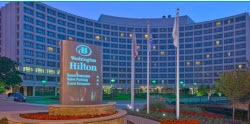
ONC’s annual meeting will be held January 23-24 at the Washington Hilton in DC, with 1,200 attendees expected.  It will probably be the first public appearance of new National Coordinator Karen DeSalvo, MD, who will start at ONC on January 13. 

The txt4health mobile personalized messaging program for diabetes management launched by three ONC-designated Beacon Communities reached a good many participants in Michigan, Ohio, and Louisiana, but more than half of them dropped out of the 14-week program, many of them apparently just ignored the messages, and only 3 percent of active participants tracked their weight. The article generously concludes that “this type of approach may not be appropriate for all.”

12-29-2013 1-55-14 PM

The board chair of a children’s hospital in Greece is arrested for demanding a $34,000 bribe from an advertising company that had been awarded a $262,000 contract to develop an anti-obesity campaign for children. He was also fired from his full-time position with the National Bank of Greece. The bribe was paid by an informant wearing a wire, which recorded the man’s stated rationale: “What kind of an idiot would I be to have made a 190,000-euro deal and not kept a cent for myself?”

12-29-2013 2-02-55 PM

Strange: parents of a newborn sue a Pittsburgh rabbi, claiming he severed their son’s penis while circumsizing him. Surgeons reattached it during an eight-hour microsurgery that involved six blood transfusions, two months in the hospital, and leech therapy. According to the rabbi’s website, “A doctor’s medical circumcision, usually performed in the hospital on the second or third day after birth, does not fulfill the requirements of a Bris Milah and is not considered valid according to Jewish law.”


Sponsor Updates

12-29-2013 9-09-57 AM

The annual holiday fundraiser held by Surgical Information Systems raised $15,000 from employees to support Cookies for Kids Cancer, Donor’s Choose, Toys for Tots, USO Wishbook, and The Weekes House.

12-29-2013 9-13-09 AM

Employees of ESD donated toys for Lucas County Family Services, which supports abused and neglected children.

The Lab Executive War College and CHUG (Centricity Healthcare User Group) donate hundreds of extra conference backpacks annually to Coffee Creek Backpacks project, run by Frog Pond Church in Wilsonville OR, which provides women newly released from the local correctional institute with essentials to help them return to society.


Contacts

Mr. H, Dr. Jayne, Dr. Gregg, Lt. Dan, Dr. Travis, Lorre.

More news: HIStalk Practice, HIStalk Connect.

125x125_2nd_Circle

News 12/27/13

December 26, 2013 News 11 Comments

Top News

12-26-2013 7-01-06 AM

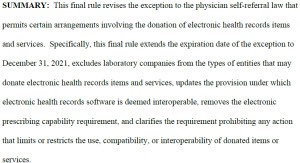
CMS adopts final rules that extend the Stark exception sunset date from December 31, 2013 to December 31, 2021. The amendment allows healthcare entities to continue subsidizing physician purchases of EHRs and includes additional rule modifications, including:

  • The exclusion of lab companies from donating EHR items and services
  • The elimination of the e-prescribing capability requirement
  • Updates to the interoperable provision
  • Clarification of the requirement prohibiting any action that limits or restricts the use, compatibility, or interoperability of donated items or services.

HIStalk Announcements and Requests

inga thumb   Mr. H whisked away Mrs. H for a little holiday this week, but he should be back this weekend. We’re about to be in the midst of the pre-HIMSS fury so I am glad he took time for R&R with Mrs. H before the craziness begins.

inga thumb  News was slow on HIStalk Practice this week but you’ll want to check out the letter Dr. Gregg sent to Digital Santa before St. Nick jumped on his sled.  Thanks for reading.


Acquisitions, Funding, Business, and Stock

The HIMSS Foundation and the National eHealth Collaborative merge their organizations and announce plans to create the HIMSS Center for Patient- and Family-Centered Care and to integrate NeHC’s educational and HIE programs with existing HIMSS resources.

PM and RCM service provider Medical Transcription Billing files a registration statement for a proposed IPO.

12-26-2013 12-51-39 PM

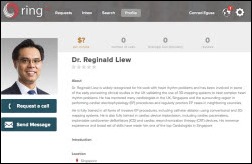
The Singapore government invests $500,000 in Ring.MD, a telehealth startup focused on improving access to high-quality physicians in Asia. The company was founded by Justin Fulcher, a 21-year-old entrepreneur who has been coding since he was seven and started his first business as a preteen.


Sales

12-26-2013 2-40-26 PM

Big Bend Hospice (FL) selects Allscripts Homecare software.

12-26-2013 2-42-49 PM

CareTech Solutions will provide consulting services to Medicine Bow Technologies (WY), which is developing a disaster recovery plan for services impacting Invinson for Memorial Hospital.


People

12-26-2013 2-46-03 PM

Cerner names former Indiana governor/current Purdue University president Mitch Daniels to its board of directors.

12-26-2013 12-42-09 PM

Family Health West (CO) hires Pam Foyster (Quality Health Network) as clinical informatics director.


Announcements and Implementations

Jamaica’s minister of health says his country will being implementation of an $50 million EMR system for hospitals and primary care clinics during the first quarter of 2014.

12-26-2013 2-47-16 PM

Maine Medical Center will increase its Epic EMR investment from $145 million to $200 million and dedicate about two-thirds of the funds for additional employee training. Health system officials admit they originally underestimated the resources required for training and may have made a mistake by starting the implementation at its 6,000-employee Maine Medical Center, rather than a smaller pilot facility. Earlier this year the hospital’s CEO said the Epic rollout and incorrect billing issues contributed to a $13.4 million loss in the first half of its 2013 fiscal year.

12-26-2013 2-48-59 PM

Weems Memorial Hospital (FL) goes live on its $450,000 EMR from CSS.

Sagacious Consultants launches Sagacious Analytics to help hospitals improve reporting and make better use of EMR data for performance measurement.

Vermont Information Technology Leaders makes radiology and transcribed reports from Fletcher Allen Health Care available to providers via the state’s Medicity-powered HIE.


Government and Politics

CMS announces the formation of 123 new accountable care organizations, bringing the total number of established ACOs to more than 360.


Innovation and Research

A new influenza forecasting method developed by Columbia University’s Mailman School of Public Health is proving almost twice as reliable as traditional approaches that rely on historical data. The system combines real-time estimates from Google Flu trends and CDC surveillance programs.


Technology

12-26-2013 2-55-33 PM

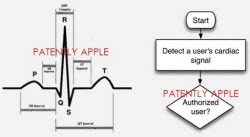
Apple secures a patent for an embedded heart rate monitor for smartphones.


Other

A USA Today article looks at how the adoption of HIT and preventative care are improving healthcare and lowering costs. David Blumenthal, MD highlights areas requiring more work, including moving from fee-for-service payment models to risk-sharing or team-pay systems; improving care coordination through the use of IT; educating consumers on how to choose better care based on quality and lower costs; and, increasing the use of standards to lower administrative costs.

Mount Sinai Hospital (NY) reports a 40 percent decline in its sepsis mortality rate since implementing an early warning system within its EMR. The system triggers an alert whenever staff enter vital signs that match the criteria for early sepsis.

12-26-2013 10-25-15 AM

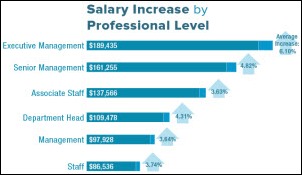
Over two-thirds of HIT professionals participating in a HIMSS compensation survey report receiving a salary increase in 2013; the average reported salary was $110,269.  Almost half of the 1,126 survey participants also received bonuses with the median bonus equal to three to four percent of annual salaries.


Sponsor Updates

  • NextGen posts its January webinar schedule.
  • Optum opens an on-demand health and wellness clinic in  Overland Park, KS.
  • Imprivata hosts its second user conference HealthCon 2014 May 4-6 in Boston.
  • Forbes profiles Ping Identity founder and CEO Andre Durand.
  • As the industry shifts to P4P and ACOs, API Healthcare VP of nursing Karlene Kerfoot predicts a shift in healthcare jobs from hospitals to home care agencies, outpatient surgery centers, and urgent care clinics.
  • Info-Tech Research Group names Informatica a Champion in its Data Integration Tools Vendor Landscape.
  • EDCO posts a video highlighting its point of care scanning process for clinical staff.

EP by Dr. Jayne

It’s a very slow week here since a good portion of our department took vacation days around the Christmas holiday. I’ve enjoyed the relative quiet and am glad to see that people are staying off of email. CMS shared some holiday cheer by emailing providers to remind them that if they didn’t e-prescribe in 2012 or 2013 they will receive their penalty in 2014. I don’t know why they insist on calling it a “payment adjustment” rather than a penalty. Penalties related to Meaningful Use will begin on January 1, 2015 so if you’re going to avoid them you need a solid strategy now.

I’m keeping my eye out for exciting opportunities in the New Year and was interested to see a couple of CMIO postings pop up at organizations that haven’t had a CMIO previously. Although it may be exciting to be the first CMIO and to be able to define the role, I don’t envy anyone taking a job at an organization that is just now figuring out they need one. A couple of the job descriptions were nebulous to the point where I’m wondering if the hospital even understands what they are looking for.

Medical Economics recently did a piece on the survival of the doctor-patient relationship. Physicians cite administrative burdens as the highest threat (41.9 percent) followed by EHR at 25.8 percent. I’m glad the article makes the point that some of the tasks could be assigned to other office staff members. I still struggle with physicians who insist on doing work that could be done by support staff including printing lab requisitions, tracking down test results, processing refill requests, and dealing with insurance paperwork.

The article addresses the EHR challenge more specifically – citing anecdotal stories of physicians who spend 10 minutes of a 15 minute appointment typing. I’m continually surprised by the number of my peers who refuse to learn to type. If you’re going to use free-text rather than structured documentation, typing skills are essential. I remind our physicians that if they mastered biochemistry and tying surgical knots they can learn to touch type but they still resist. I’ve even tried a games-based approach to try to harness their competitive natures, but haven’t had a lot of success.

Another physician states he spends “eight to 10 minutes per chart entering information not directly related to patient care, mainly tied to quality metrics.” Based on conversations with some of our providers I’d have to challenge that statement. We have a large employed provider base and it’s always a shock when someone thinks that a particular clinical quality element is “not my problem” especially in the ACO environment. We’re fortunate to have an EHR where the quality metrics are baked into the documentation – there’s not a lot of extra work to do. I know many sites don’t have this advantage but for us there’s no excuse.

I recently went a couple of rounds with a surgeon who said the patient’s morbid obesity was “not my problem.” I countered that if he plans to do any procedures on her, it certainly is his problem because of the risk of complications directly related to the obesity, not to mention the need to find out if there is diabetes related to the obesity because that alone can complicate wound healing. The same thing applies to our orthopedic surgeons who don’t want to check blood pressures. Fortunately our organization has made measurement of vital signs part of the required elements for physicians to receive bonus payments, so it makes it easier for me to push back at them.

I know there are a lot of EHRs out there where the documentation isn’t so simple and having used a couple of them I’d encourage physicians to look for alternate strategies to make it easier. I did a stint as a locum tenens where the physicians dictate using voice recognition and then staff post-loads the discrete data elements that the system doesn’t recognize. It worked well and the physicians had a high level of satisfaction. Essentially the extra two patients a day they could see by using voice recognition allowed them to pay for the extra staff needed to load the data. It was revenue neutral but the physicians felt better not clicking as much as they used to.

I think the key to managing quality indicators is having a plan on when they are going to be addressed. I see a lot of physicians struggling to try to address every indicator at every visit and it’s just not necessary. My EHR allows me to filter and only see those items that are due in the next three months, six months, etc. so that helps somewhat. Our group also has policies about when the indicators are to be addressed. For example, patients in for an annual preventive visit should have all preventive services due during the next 18 months addressed. This covers them for the next year and a little bit extra should their return appointment be delayed.

The article also cites the amount of time needed to have a conversation with the patient about screening services as a barrier. We provide extensive training to our medical assistants (no nurses in our world) on how to address preventive services with patients during the intake and rooming process so that the patient knows it will be a topic of discussion. The staff can provide educational materials for the patient to read before the physician enters the room, which can make some of those conversations easier and faster. Additionally, providers are not expected to address all preventive services on acute visits. We rely on our automated outreach mechanisms to catch those patients who don’t come in for preventive visits or who have lapses in care. This has been a major physician satisfier because the acute visits remain fairly quick and they don’t have to spend time worrying about patients falling through the cracks.

Having policies on when to address what kinds of services doesn’t have anything to do with the EHR – we actually had these policies in place in the paper world – but they’ve made a great deal of difference. We also provide training for support staff on completing pre-authorizations and pre-certifications so that work can be handed off even in a small office that doesn’t have dedicated referral staff. Looking at the operational workflow and staff training has helped physician satisfaction and hopefully will be one of the things bolstering the patient-physician relationship in our organization. Does your organization have any secret recipes for success? Email me.


Contacts

Mr. H, Dr. Jayne, Dr. Gregg, Lt. Dan, Dr. Travis, Lorre

More news: HIStalk Practice, HIStalk Connect.

smoking doc

Monday Morning Update 12/23/13

December 20, 2013 News Comments Off on Monday Morning Update 12/23/13

12-20-2013 2-24-22 PM

From Kris Crinkle: “Re: Epic. The bells rang for a new contract signing. Southcoast Health System (MA). Replacing Meditech Magic, eClinicalWorks, athenahealth, and Cerner homecare. I’m an avid reader and love the format, especially Dr. Jayne.”

From JG: “Re: musical stocking stuffers, best of 2013. The Growlers, Dean Wareham, The Men. Thank you for everything you do!” I listened to all three bands and liked all three.

12-20-2013 1-23-27 PM

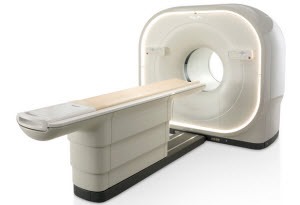
From The PACS Designer: “Re: all-digital solutions. A truly remarkable event took place at this year’s RSNA. Philips Healthcare introduced the world’s first all-digital diagnostic treatment solution in the form of a CT/PET Scanner. This event should be of great interest to Doctor Dalai as he’s been contemplating the purchase of such a system for quite some time.”

12-20-2013 10-09-07 AM

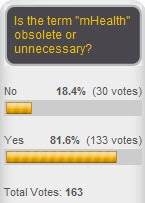
The vast majority of poll respondents think it’s time to retire the word “mHealth.” New poll to your right: is Karen DeSalvo a good choice for National Coordinator? Feel free to click the poll’s Comments after you’ve voted to explain why you think she is or isn’t.
12-20-2013 10-24-43 AM
Welcome to new HIStalk Platinum Sponsor DataMotion. The Morristown, NJ-based company offers easy-to-use solutions for email encryption, secure file transfer, and Direct-based secure messaging, allowing customers to cut costs and meet compliance and Meaningful Use requirements. DataMotion Direct makes secure messaging via Direct easy to implement and use, and the DataMotion Direct Developers Program provides vendors a quick, capital-free way to implement Direct messaging in their applications (EHRs, HIE, patient portal, interface engine) and to meet MU Stage 2 secure data exchange requirements. Give SecureMail a free trial, request access to their Sandbox,  or view the recorded Webinar, “HIPAA, Business Associate Agreements, and What You Need to Know.” Thanks to DataMotion for supporting HIStalk.
Here’s a DataMotion introductory video I found on YouTube.Here’s the complete list (not just AMIA members like the list I ran earlier) of the new diplomates in the Clinical Informatics subspecialty area.
 
Athenahealth will move its Bay Area office from a 20,000 square foot space in San Mateo to a 60,000 square-foot building in San Francisco.
 
Archbold Memorial Hospital (GA), San Francisco General Hospital and Trauma Center (CA), Virginia Hospital Center, and Western Connecticut Health Network select Perioperative Management from Surgical Information Systems.
 
An internal Marine memo reveals current inefficiencies in the transfer of medical records from the Navy to the VA. Currently the Navy prints service treatment records and mails them to the VA. At the same time the VA is in the process of scanning all paper files, which are saved electronically as PDFs. Depending on a the service member’s length of service and documented medical conditions, a single record can run thousand of pages.
 
Pharmacy benefit manager Prime Therapeutics contracts with CoverMyMeds.com for electronic prior authorization services.
 

A ProPublica investigation uses the federal government’s own Medicare databases to find evidence of rampant Medicare drug plan fraud, with organized groups either stealing the identity of doctors or bribing them to write prescriptions. Medicare’s process is so poorly managed that they rarely catch anyone. Example: Medicare paid $3.8 million in one year to fill the prescriptions of a psychiatrist, most of them for drugs unrelated to his specialty, when someone stole his identity. Pharmacies and insurers say they’re reporting suspicious behavior to Medicare but are being ignored. The series of articles concludes that newspaper reporters can easily detect fraud from Medicare’s databases, but the agency itself isn’t doing it.

Fraud rings use an ever-evolving variety of schemes to plunder the program. In one of the most popular, elderly, broke, disgraced or foreign-trained doctors are recruited for jobs at small clinics. Their provider IDs are used to write thousands of Medicare prescriptions for patients whose identities also may have been bought or stolen. Once dispensed, the drugs are then resold, sometimes with new labels, to pharmacies or drug wholesalers. In other schemes, investigators say, pharmacies are active participants, billing Medicare multiple times for prescriptions they never fill. Doctors can readily disavow the prescriptions as forged, investigators say. And because the schemes don’t always involve painkillers, a law enforcement focus, they can escape notice.


Weird News Andy delivers this story, which he titles “Yes C-Section, No C-Baby.” Doctors in Brazil perform an emergency C-section delivery after failing to hear the baby’s heartbeat, only to find that their patient wasn’t pregnant. The woman showed up with proof of her prenatal care and a protruding abdomen, but she was having a false pregnancy, her second of the year. The hospital suggested she seek mental care instead.


Contacts

Mr. H, Inga, Dr. Jayne, Dr. Gregg, Lt. Dan, Dr. Travis, Lorre

More news: HIStalk Practice, HIStalk Connect.
125x125_2nd_Circle

News 12/20/13

December 19, 2013 News 7 Comments

Top News

HHS names Karen DeSalvo, MD, MPH, MsC National Coordinator for Health Information Technology. DeSalvo, health commissioner for the City of New Orleans, will start on January 13, succeeding Farzad Mostashari, MD, MsC. According to an internal email from HHS Secretary Kathleen Sebelius, “Throughout her career, Dr. DeSalvo has advocated increasing the use of health information technology (HIT) to improve access to care, the quality of care, and overall population health outcomes –including efforts post-Katrina to redesign of the health system with HIT as a foundational element.”


Reader Comments

12-19-2013 5-44-16 PM

From MC Scanner: “Re: Apple commercial. The video for ‘Misunderstood’ that will air on TV next week brought tears to my eyes. It’s amazingly powerful – even better than their ‘1984’ ad.” Maybe I’m just being a Scrooge, but it seemed to me like a lame, Microsoft-style attempt to make people believe that their lives are incomplete unless they experience it using consumer technology. This commercial features a kid who chooses not to participate in family holiday activities with everybody else, instead messing around with his phone and recording everything for the big reveal when he shows the edited video to the family on the big screen TV. The message appears apt for the self-obsessed Facebookers of the world who can’t turn their smartphones off long enough to participate in the world instead of documenting it in Kodak moments for public display. I was creeped out when the family stopped doing everything warm and loving about the holidays and instead stared at themselves on TV, suddenly overcome with affection for the kid who couldn’t relate to them otherwise (probably because he never stops staring into his phone). Here’s my alternative, non-Apple approved holiday message: put down your electronic pacifiers, spend time with people you love, forget the always-beckoning fantasy world of your phone for just one day, and live like a human instead of an online avatar.

From Unnamed: “Re: [company name removed]. Laying off US employees right before Christmas, moving jobs to India, cutting budgets by 25 percent, and disregarding outstanding financial commitments. Sounds like a HISsies ‘Stupidest Vendor Move’ category.” We had some financial problems with that company, too.

From Jack: “Re: Orion Health’s list of best healthcare reporters and blogs. I saw this and figured either your actual name was on here (gasp) or whomever wrote this doesn’t actually read HIStalk. But how in the world do you get left out of that list?” HIStalk gets left off quite a few of the “best HIT sites” lists for several reasons: (a) it competes with the interests of whoever created the list; (b) it’s based on an Internet metric like Alexa or Klout scores; (c) they can’t figure out whether to consider HIStalk a blog or something else; or (d) they think other sites are better, which is perfectly fine and maybe they’re right. I never look at those lists and I often haven’t heard of the sites they proclaim as the busiest or best, but all I know is that Orion Health sponsors HIStalk, which seems to indicate they think it’s OK even though it’s not on their “Five Healthcare IT Reporters You Need to Follow” or “Health IT Thought Leaders” list.


HIStalk Announcements and Requests

inga_small From HIStalk Practice in the last week: a few moonlighting suggestions for physicians. CMS offers informal reviews for EPs and group practices who will be subject to the 2014 eRx payment adjustment. CMS confirms that providers who assign their reimbursement and billing to a CAH under Method II are now eligible to participate in the MU program as EPs. A solo physician does a commendable job addressing a data breach. Salaried GPs in the UK face declines in compensation. My favorite gift, regardless of the holiday, is having new readers, so please take a moment and stop by. Thanks for reading.

Listening: The Honorary Title, a Brooklyn-based indie rock band that flamed out in 2009 without a lot of success. I’ve been obsessed with Nada Surf lately and they sound a good bit like them.

12-19-2013 6-15-33 PM 12-19-2013 6-21-15 PM

Welcome to new HIStalk Gold Sponsor (and HIStalk Connect Platinum Sponsor) CareSync. The Florida-based company offers a family health record and the mobile-based Visit Manager that provides access to a family’s medical records, organizes questions for providers, and stores to-do lists and notes, all to get family members organized before, during, and after their medical appointments. Information can be selectively shared with providers and family and friends who are helping with health needs. It allows tracking of health goals, prescriptions, emergency contacts, and providers. The company’s team of medical records specialists will even help assemble and organize the health information. It is reasonably priced and could make a nice Christmas gift for a family member. You probably know some of the industry long-timers who are involved – Travis Bond (Bond Technologies) and Amy Gleason, RN (Allscripts), to name two. Thanks to CareSync for supporting HIStalk.

I found this CareSync video on YouTube that explains it much better than I just did.


Sales

Mercy Health Physicians (OH) will implement PatientPoint’s patient engagement solutions.

Queen Elizabeth Hospital King’s Lynn (UK) selects iMDsoft’s MetaVision for its ICU.

Children’s Medical Center (TX) engages PCCI to build predictive analytical models to identify children at-risk for asthma crises and to develop an information exchange between pediatric and social services providers.


People

12-19-2013 12-42-34 PM

ClearDATA names Scott Whyte (Dignity Health) SVP for growth and innovation.

12-19-2013 8-39-01 AM

Ryan Donovan (Visa) joins Practice Fusion as VP of corporate communications.

12-19-2013 8-45-05 AM

CareInSync hires Cheryl Cruver (The Advisory Board Company) as SVP of provider solutions.

12-19-2013 9-13-32 PM

Rainu Kaushal, MD, who holds a number of roles including informatics at Weill Cornell Medical College and New York-Presbyterian Hospital, is named chair of the college’s Department of Healthcare Policy and Research.


Announcements and Implementations

Arch Health Partners, a medical foundation affiliated with Palomar Health (CA), deploys Phytel’s population health management platform.

Kansas HIE and the Lewis and Clark Information Exchange connect their networks.

University of Colorado Health migrates 17,000 mailboxes from three disparate healthcare organizations on multiple legacy email platforms into one single consolidated Microsoft Office 365 environment. The consolidation is expected to save the organization $13.9 million over 11 years.

Landesklinikum Amstetten (Austria), AZ Sint Lucas (Belgium), Hospital La Pitie-Salpetriere and Centre Hospitalier Regional De Metz-Thionville (France), and Medway Maritime Hospital (UK) go live with the iMDsoft MetaVision platform.

Wesley Medical Center, Cypress Surgery Center, and Surgery Center of Kansas go live on Anesthesia Touch from Plexus Information Systems.

Lehigh Valley Health Network (PA) implements Salar’s TeamNotes, which sits on top of GE Centricity EMR to facilitate ICD-10 compliant documentation.


Government and Politics

A report by the Senate Commerce Committee highlights minimally regulated data brokers that buy and sell patient data, including disease-specific patient lists and in one case, lists of rape and domestic violence victims.

The VA’s ongoing cybersecurity problems are the subject of a Federal News Radio series, which points out the material weaknesses listed in its financial statements. Among them: failing to revoke network access of terminated employees, failing to keep unauthorized software off the network, and improperly securing Web-based applications. An unnamed government official says the VA CIO’s office has developed a siege mentality against Congressional inquiries, concluding,

“I find it disingenuous in how they are responding to this and the degree of contempt they have in how they are approaching this. They feel it’s a witch hunt. There is a marked lack of respect for the committee by the IT leadership. How they are managing the process is indicative of the lack of respect for Congress and particularly the Veterans Affairs Committee. They think it’s a game so they will evade, obfuscate and they will basically come back with just the bare minimum so as not to be out of compliance.”

12-19-2013 10-20-31 PM

The Oregon government official in charge of the state’s trouble-prone health insurance exchange website resigns. The state had bragged that its marketplace would be one of the most advanced when it opened October 1, but it still can’t handle electronic applications and required hiring 400 workers to process paper forms. Carolyn Lawson, CIO of the Oregon Health Authority and Department of Human Services, stepped down Thursday for “personal reasons.”

12-19-2013 9-29-02 PM 12-19-2013 9-30-58 PM

Representatives Doris Matsui (D-CA) and Bill Johnson (R-OH) introduce the Telehealth Modernization Act of 2013, which would create a federal definition of telehealth based on an earlier California definition with the hopes of standardizing inconsistent state-level policies. It addresses patient-provider relationships, informed care,  provider documentation, sending documentation to other providers, and prescribing requirements.


Technology

Scripps Health launches a pilot of the Sotera Wireless ViSi Mobile vital signs wrist monitor, which measures ECG, heart rate, pulse,  oxygenation, and temperature.

MMRGlobal is awarded another patent, this time for just about everything a person can do to access health information on a mobile device.


Other

The healthcare industry is making slow progress on preparing for ICD-10, according to a WEDI readiness survey. About 20 percent of vendors claim they are halfway or less complete with product development, while about half of providers have yet not completed an impact assessment. Meanwhile, about one-third of health plans have not initiated internal testing; two-thirds have not started external testing.

12-19-2013 5-12-32 PM

The Orlando newspaper profiles Automated Clinical Guidelines, which offers some kind of clinical pathway guidance product whose company-provided description is obfuscated by a writhing nest of unintelligible HIT-related cliches that marketing people dream about when you naively ask what a particular product does and 20 minutes you still have no idea:

ACG has developed an innovative healthcare ecosystem that is patient-centered, operates in real-time, is language-independent, and serves up evidence-based medicine for application on a worldwide basis. The ACG expert system represents a breakthrough in processing structured clinical information utilizing automated clinical guidelines. ACG software is a patented, smart, internet-based, and platform independent solution to the medical crisis in a demographically aging world faced with a severe shortage of physicians. ACG is NOT an EMR or an EHR product and in fact operates in a product space that is totally EMR/EHR independent. ACG revenue streams come from annual renewable institutional contracts, physician patient visits on a per click basis, and by medical products advertising. The ACG ecosystem is an elegant design that requires little or no training and guides the user by use of Symbolic and Boolean logic clinically correlated algorithms, as opposed to current attempts to use database centered templates and report writers.

12-19-2013 5-36-03 PM

The Houston newspaper writes up Decisio, which formats information from patient monitors into an electronic triage system. Says CEO Bryan Haardt, who was COO of Prognosis Health Information Systems until June 2013, “Today’s thermostats have more intelligence than most medical monitors.”

12-19-2013 7-36-34 PM

Cottage Health System (CA) discloses that the information of 32,500 patients was exposed when a vendor inadvertently opened up one of its servers to the Internet. As is nearly always the case, the problem was discovered by someone who found the information while Googling names. Surely there must be a monitoring service that can ping a supposedly secure server from outside the firewall and raise an alert if it gets in.

AMIA runs a list of its members who passed the first clinical informatics subspecialist exam in October.

12-19-2013 10-38-05 AM

inga_small A 66-year-old man files a lawsuit against Advocate Condell Medical Center (IL), claiming that hospital security guards threatened him, beat him, and bit him as he attempted to discharge himself from the ER. The main waited six hours for treatment of his TIA before trying to depart for another hospital, at which time he says seven security guards verbally and physically attacked him. Following the altercation, he claims he was injected with narcotics, strapped to a gurney, and kept in the hospital for six days.

12-19-2013 6-08-37 PM

Weird News Andy offers a list of items “for all the HIStalk techies in your life” from this article, cynically saying of an anesthesiologist robot, “What could go wrong?”

WNA will be sorry he didn’t see this first. A Chicago ED doc says he deals with sex-related accidents twice per week, enough to make him the star of a stupid new reality show (was that redundant?) called “Sex Sent Me to the ER.” Some of the cases he’ll cover involve people who fell on penetrating foreign objects (right), broken penises, and a 440-pound male virgin so focused on his first sexual experience that he pushed his girlfriend’s head through a wall. It looks stupid, sensationalistic, and poorly made, which of course means it will be an instant hit.


Sponsor Updates

12-19-2013 5-18-19 PM

  • Visage Imaging lists the top five trends it observed about enterprise imaging at RSNA 2013.
  • QPID releases some funny, holiday-themed training videos for its customers (1, 2, 3).
  • The MarketsandMarkets research firm ranks Perceptive Software’s Acuo VNA platform the world market share leader among all independent and PACS-affiliated VNA solution providers.
  • ICSA Labs awards CliniComp’s Essentris v213.01 software 2014 Edition Inpatient Modular EHR ONC Health IT Certification.
  • Deloitte includes Kareo on its Technology Fast 500 list of fastest growing technology, media, telecommunications, life sciences, and clean technology companies in North America based on its 797 percent growth over the last five years.
  • Gartner positions Informatica as a leader in its 2013 Magic Quadrant for Data Masking Technology report.
  • University College London (UCL) and Elsevier will establish the UCL Big Data Institute to explore innovative ways to serve the needs of researchers by providing analytical data for scientific content.
  • The Drummond Group certifies Alere Analytics Clinical Quality Measures Services version 2.1 and Public Health Electronic Laboratory Reporting and Communication Portal version 3.2 for ONC-ACB MU as Modular Inpatient and Modular Ambulatory solutions respectively.
  • T-System offers free T-Sheets flu documentation templates to hospitals and healthcare providers.
  • Greenway Medical Technologies wins the 2013 Intel Innovation Award for its PrimeMOBILE app for Windows 8.
  • Besler Consulting releases a review of the Hospital Outpatient Prospective Payment System 2014 final rule.
  • Experian integrates its identity proofing and risk-based authentication platform Precise ID for health care portals with Epic’s MyChart patient portal.
  • Impact Advisors principal Laura Kreofsky discusses HIT in 2014.
  • E-MDs Cloud Solutions v. Cirrus achieves ONC-ACB certification for MU Stage 1 and 2 and is compliant as a Complete EHR 2014.
  • Huntzinger Staffing Solutions expands its offerings to include Cerner staffing and sourcing services.
  • Carolyn Brzezicki, senior clinical specialist for Healthwise, challenges readers to behave as if they have Type 2 diabetes for one day.
  • Billian’s HealthDATA hosts a January 16 #HITchicks Tweet Chat.
  • HIStalk sponsors winning Fierce Innovation Awards include Health Catalyst for Best Problem Solver and Data Analytics; Patientco for RCM; QPID for Best Cost-Saver and Clinical Information Management; and CoverMyMeds in the HIE category and an overall award in Best in Show: Best New Product/Service.
  • Australia’s Adelaide Research and Innovation names Wolters Kluwer Health an Innovation Champion based on its ongoing partnership with Joanna Briggs Institute to bring evidence-based practice resources to healthcare institutions globally.

EPtalk by Dr. Jayne

I keep my eye on Twitter for interesting health IT items. A mention of “24 Outstanding Statistics on How Social Media has Impacted Health Care” caught my eye, mostly because of the use of the number 24. Usually articles will feature a top 10, top 20, maybe a top 25 but I thought going with 24 was an interesting choice. The statistics are drawn from some interesting sources from advertising and media firms to Mashable.

The first two numbers weren’t surprising: 40 percent of consumers say social media impacts how they deal with their health, 18-24 year olds are more likely than 45-54 year olds to use social media, and so on. The third did surprise me: 90 percent of those 18-24 said they’d trust medical information shared by others on their social media networks. This little tidbit doesn’t give me a lot of hope for humanity since my “official” practice persona is Facebook friends with a number of our patients in that age bracket. Let’s just say that most of the posts from that demographic are not exactly systematic literature reviews.

I wonder if they also buy into links for “one simple way to lose belly fat” or “avoid this one food to lose weight?” Behind the closed door of the exam room, I’ve heard a lot of things that 18-24 year olds say about health issues and can confidently attest that most of them have been bogus. Typically those conversations have been in the realm of reproductive health, which probably adds to the mystery of some of their statements, but I’m not sure I’d trust most of the advice these teens have been given by their peers.

Back when the Internet was all we had, I used to counsel patients that the Internet is like the world’s largest bathroom wall. There are a lot of things written on it and some of them are certainly true, but it’s hard to figure out which. The number and volume of sites, apps, and sources available now makes keeping track of the truth even more challenging.

Only 31 percent of healthcare organizations have written guidelines for social media, which I think is low, especially if the respondents were organizations of any size. A good friend of mine is a plaintiff’s attorney and regularly licks his chops at the prospect of litigating cases where medical advice was inappropriately given via social media or where patient-specific information was inadvertently released. Another statistic later in the piece states that 26 percent of hospitals participate in social media, so perhaps the relatively low rate of those online makes the guidelines percentage look a little better.

I liked the statistic that 54 percent of patients are “very comfortable” with their providers using online communities to aid in treatment. It’s validating for me personally since I was once yelled at by a hospital VP after being quoted in a newspaper interview about using the Internet to search for information while seeing patients. He told me it was “unseemly” to admit that you didn’t know everything the patient needed you to know and would undermine confidence. I’ve always found patients appreciated the fact that I admit I don’t know everything and am willing to make sure I have the correct approach before I apply it to their situation.

Although 41 percent of people claim social media would impact their choice of a physician or hospital, I’d like to see the numbers if we asked which was more influential: social media or insurance coverage. I’m pretty sure reimbursement trumps reputation and quality much more often than most of us would like. Among resources used to health information, Wikipedia was at 31 percent. Since I personally use Wikipedia to validate information fairly often, that felt low to me.

I was heartened to learn that 60 percent of people trust physicians’ social media posts over any other group. In real-life clinical practice, it felt like I was often competing against Aunt Betsy or the neighbor up the street, so six out of 10 isn’t bad. Given this number in light of the statistic about the 18-24 year olds being so trusting of items seen on social media, I should probably start posting “safe sex” advice on my professional Facebook page. I’m sure my grandmother would be scandalized, but I can say I’m doing it in the name of science.

The final statistic mentioned is that Facebook is the most popular for hospitals that have an online presence. I must admit, my professional self no longer follows my hospital’s Facebook presence because I simply couldn’t take it any more. Rather than being a good source of health information and patient advocacy, it had become little more than a marketing vehicle. If I read one more congratulatory back-pat for earning some bogus “Top Whatever Hospital Center of Excellence Patient Choice Satisfaction” award, I was going to need anti-nausea medication.

What would Mark Twain think of the information age and its lies, damned lies, and statistics? Email me.


Contacts

Mr. H, Inga, Dr. Jayne, Dr. Gregg, Lt. Dan, Dr. Travis, Lorre

More news: HIStalk Practice, HIStalk Connect.
125x125_2nd_Circle

DeSalvo Named National Coordinator

December 19, 2013 News 1 Comment

12-19-2013 1-12-47 PM

Karen DeSalvo, MD, MPH, MsC has been named by HHS as National Coordinator for Health Information Technology. DeSalvo, health commissioner for the City of New Orleans, will start on January 13.

According to an internal email from HHS Secretary Kathleen Sebelius, “Throughout her career, Dr. DeSalvo has advocated increasing the use of health information technology (HIT) to improve access to care, the quality of care, and overall population health outcomes –including efforts post-Katrina to redesign of the health system with HIT as a foundational element. ”

News 12/18/13

December 17, 2013 News 6 Comments

Top News

The 2014 defense authorization bill, which has been endorsed by both the House and Senate, requires the DoD and VA to develop by the end of January “a detailed plan for the oversight and execution of the interoperable electronic health records with an integrated display of data, or a single electronic health record.” If the agencies miss the deadline they risk losing their ability to spend more than 25 percent of the estimated $344 million in funding needed for the project and will be required to notify military and veterans committees before dispensing any project funds in excess of $5 million. The system deployment deadline is end of 2016.


Reader Comments

12-17-2013 1-11-40 PM

inga From Lion: “Re: LinkedIn. OK, I’m curious. What is the deal with your profile picture?” There’s no faster way to peg yourself as a HIStalk Newbie than by asking Mr. H why a healthcare-related website features a smoking doctor or why I have hot shoes on my LinkedIn profile. I shared with Lion that I used to have the Inga avatar on my profile, but the LinkedIn police took it down, saying only photos were acceptable. I feel like such a renegade every time I see the sexy shoe photo on LinkedIn, though I’m now thinking it’s time to feature a new pair. Stay tuned.  

12-17-2013 6-32-42 PM

From Leaving T-System: “Re: big changes at T-System last Friday. Sunny Sanyal will leave the company in January, now looking for new CEO. Mikael Ohman, COO will be working on special projects only. Jim Mullen, SVP Sales is leaving to join Allscripts. Mark Horner is now SVP & GM over RevCycle+, already updated his LinkedIn page.” Varian Medical Systems has already announced that Sunny Sanyal will be taking over as SVP and president of its Imaging Components businesses as of February 7, 2014.  We appreciate T-System’s response to our inquiries:

It is with mixed emotions that we can confirm those changes are accurate. Sunny made the decision based on a personal need to work closer to his family and spend more time with his wife and three children. Sunny was very well-liked and respected at T-System and we will truly miss him. Sunny will remain as the CEO of T-System until the end of January. On a positive note, we have some additional, exciting changes that we would like to share with HIStalk readers. John Trzeciak, a long-standing board member and principal at Francisco Partners, will help with the transition and step in as the interim CEO of T-System while we search for a replacement. John has an extensive background in leading healthcare organizations and helping companies manage leadership transitions, and is already engaged in the T-System business through his role on the board. We are excited to announce that Tom Dunn has been named as Executive VP of sales and marketing. Tom had tremendous success as the sales and marketing VP at QuadraMed, helping the company achieve double-digit growth. We anticipate that he will drive further alignment of our new revenue cycle and documentation solutions. Jim is leaving to pursue new opportunities and we’re grateful for his contributions. Additionally, Mark Horner was promoted to senior VP and GM of our revenue cycle solutions while Steve Armond, T-System CFO, was promoted with additional responsibilities that include operations for client services and performance solutions.

12-17-2013 9-41-01 PM

From Dr. L: “Re: technology tip. I appreciated your review of the Asus MeMo Pad and the tip to find it on sale at Office Depot! I checked immediately and snagged the last one at my local store. I’m in a similar situation with an aging device, and it’s helpful to follow someone you trust to wade through the plentiful options. I was considering one of the new iPad Minis, but I agree the Asus delivers a lot of value and doesn’t feel like I’m skimping. You’d have a lot of grateful followers if you included a regular Personal Technology section on your blog. I recall a comment several years ago about your strategy to use your iPod Touch on WiFi instead of an iPhone, and I adopted that idea, too. Many thanks to you and your team for all you do each week. You’re the highlight of my day!” I appreciate those nice words and I’m still loving the Asus, especially for $120 (try playing this movie on it to appreciate the HD display.) I don’t buy a whole lot of technology, but I usually get excited about it when I do, because I’m a nerd, obviously, and a bargain hunter besides. It would be fun to have readers weigh in on their latest purchases and the deals they’ve found.


HIStalk Announcements and Requests

12-17-2013 6-48-04 PM

Welcome to new HIStalk Platinum Sponsor Lincor. The 10-year-old Nashville-based company’s patient engagement technology portfolio includes PatientLINC (touch-screen, in-room access to clinical information for caregivers and  patient tools, communication services, and entertainment such as on-demand video and games); ClinicalLINC (secure bedside EMR access via wall-mounted terminals);  MediaLINC (in-room patient access to educational materials and entertainment); and MobileLINC (patient access to medical information, educational materials, and entertainment on their mobile devices). All of these increase patient satisfaction and improve outcomes, helping hospitals meet Medicare-funded requirements for patient satisfaction, readmissions, and Meaningful Use. The company’s systems are used by 120 hospitals and 25,000 beds all over the world, and the world headquarters have been moved from Cork, Ireland to Nashville. Just this week the company announced another funding round, this time of $3 million, to expand in the US and EMEA. Thanks to Lincor for supporting HIStalk.

My YouTube cruise turned up this new and well-done video overview of Lincor’s LINC technology.


Acquisitions, Funding, Business, and Stock

12-17-2013 6-33-29 AM

HealthTech Holdings, which includes the HMS, Patient Logic, and Medhost brands, changes its name to Medhost and names Craig Herrod president. He previously served as president and CEO of the Medhost division.

Juniper Networks will acquire WANDL, a provider of software solutions for multi-layer networks, for $60 million. 


Sales

At Home Healthcare (TX) selects Procura Homecare software as its home and community care platform.

The Louisiana Senior Care Coalition chooses eClinicalWorks Care Coordination Medical Record as its population health management solution for advancing ACO objectives.

12-17-2013 6-22-19 PM

The VA St. Louis Health Care System will implement LiveData PeriOp Manager and integrate it with its existing VistA EHR.

Hospital Sisters Health System (IL) chooses Passport to provide RCM solutions and services to its 14 hospitals and network of affiliated facilities.

Intermountain Healthcare (UT) selects Elsevier ClinicalKey to provide electronic medical reference and knowledge-based information to its clinicians and medical libraries.


People

12-17-2013 10-48-26 AM

Medfusion names Vern Davenport (MModal) president and an equity partner.

12-17-2013 9-28-06 AM

Jack Redding (Mount Sinai Medical Center) joins Halfpenny Technologies as SVP of sales and marketing.

Oncologist Susan Desmond-Hellman, MD, MPH (UCSF) is named CEO of the Bill & Melinda Gates Foundation. One of her key policy recommendations to the National Academy of Sciences was creation of a knowledge network that would allow sharing patient data across research and clinical practice to tailor treatments to individual patients.

T-System appoints Tom Dunn (QuadraMed) EVP of sales and marketing.

12-17-2013 5-50-58 PM

inga Kathleen Sebelius announces the appointment of former Microsoft executive Kurt DelBene as senior advisor to lead and manage the Healthcare.gov project. DelBene was president of the Microsoft Office division, leading me to wonder if he’ll be typing many of his own memos in Word and if the memos will ever include the term “EHR.” Wouldn’t it be great if he were able to lobby his former employer to fix that annoying EHR/HER auto-correct issue?


Announcements and Implementations

HIMSS and HHS are recruiting for an “Innovator in Residence” to serve a two-year term to develop and implement a nationwide patient data matching strategy.

12-17-2013 6-18-02 PM

Susquehanna Health (PA) implements Summit Provider Exchange technology to provide bidirectional integration between its hospitals and physician practices running NextGen EMR.

Bay Area Medical Center (WI), which recently signed a letter of intent to partner with Aurora Health Care (WI), begins implementation of Epic, the platform already in place at Aurora.

The Illinois HIE and Missouri Health Connection will share clinical patient data.

12-17-2013 12-10-00 PM

Essentia Health-Virginia (MN) goes live on Epic.

Polk County Human Services (WI) adopts Forward Health Group’s PopulationManager to track and analyze the progress of patients with substance abuse disorders.

Palomar Health (CA) goes live with AirStrip ONE for remote EKG access, co-developed by the organizations based on Palomar’s MIAA (Medical Information Anytime Anywhere) platform that AirStrip acquired in mid-2012.

12-17-2013 7-50-09 PM

Oncology EMR vendor Altos Solutions and outcomes and analytics vendor COTA announce a partnership to sell value-based cancer care systems in the US.

In the UK, the Department of Health opens bidding to choose a new outsourcing provider for its Oracle HR management system, planning to replace McKesson after 13 years. The contract is valued at up to $730 million over six years.

12-17-2013 8-21-36 PM

UPMC’s Children’s Hospital (PA) will make its physicians available for second opinions to members of MDLIVE, which offers secure online access to physicians.

In England, NHS’s clinical research group uses QlikView to review clinical data quality and find unusual patterns.


Government and Politics

12-17-2013 6-19-56 PM

Medicare publishes a list of the 97 best and 85 worst hospitals for hip and knee replacements based on post-surgery complications and readmissions.

inga Congressmen Erik Paulsen (R-MN) and Jim Matheson (D-UT) propose legislation that would mandate the use of clinical decision support software by physicians receiving Medicare and Medicaid reimbursement when they order diagnostic imaging tests. The goal is to provide doctors with immediate feedback and recommendations for the appropriate tests to order. Sounds like a great idea that would likely create a few administrative nightmares.

Big pharma wants an independent investigation of the FDA’s computer security after a database containing clinical trial results and drug marketing plans submitted by drug companies was hacked last month. The drug companies are afraid their confidential information could end up in the hands of a competitor. FDA says the attacked system didn’t contain such information.


Other

12-17-2013 9-05-13 PM

ReferralMD Founder and CEO Jonathan Govette, like others, says that EMRs will become unbundled the same way that a myriad of Craigslist features turned into much better individual platforms started by others. Above is how he sees that happening (click the image to enlarge). Tip from @ForwardHealthGP.

HIMSS will hold an mHealth Summit Middle East in Abu Dhabi in May 2014.

12-17-2013 9-54-13 PM

StartUp Health and AARP release a report on digital health in consumers over 50. Like much of what’s packaged as mHealth, it’s mostly aimed at investors rather than consumers.

Saint Francis Hospital (NY) says its Meditech implementation forced it into bankruptcy with $50 million in debt, but adds that it was the hospital’s own poor financial implementation and not Meditech that cost it “tens of millions of dollars” of uncollectible revenue. The hospital will sell itself once it exits bankruptcy.

A group of New York City parents files suit against the city and the Department of Education, claiming that disruptive 6- and 7-year-olds are being sent by ambulance to area EDs in violation of the Americans with Disabilities Act solely because the schools can’t handle them. According to one mom, “It has caused a financial and emotional strain for me and my entire family. I feel that they sent my son to the emergency room as an excuse to not do their job. If my child acts up at home I cannot send my son to the hospital emergency room.”

12-17-2013 10-39-45 PM

A California newspaper profiles 20-employee, Sebastopol-based E-Health Records, which develops EHRs primarily for use in developing nations. It runs on Android-powered tablets over Amazon cloud services.  

inga A former HHS investigator shares tips for preparing and responding to a fraud and breach investigation. The investigator says one of the biggest mistakes an organization can make during an on-site visit is to make the investigator wait. I’m guessing he’s never had to be on hold forever while trying to follow up on a Medicare claim. Now that’s waiting.

12-17-2013 7-46-39 PM

Weird News Andy summarizes this story as, “Makes it easy to put on socks.” Doctors in China reattach a man’s severed hand to his ankle for a month while he regains strength for hand surgery. I’m not entirely buying it – the story sounds suspicious and the picture looks a bit Photoshoppy.

WNA also notes this non-weird story, which describes November’s US hospital admissions as the lowest in a decade, with the survey sample of 98 hospitals reporting that admissions were down more than four percent.


Sponsor Updates

  • LRS releases the Mobile Connector for VPSX software, which allows users to print documents from any mobile device to any VPSX-defined output destination.
  • Athenahealth will integrate Merge Healthcare’s iConnect Network into its athenaClinicals EHR to allow users to receive and view exam results and diagnostic-quality images.
  • Wolters Kluwer Heath integrates its Health Language Provider Friendly Terminology with Epic EHR for mid-size to large practices and for hospitals.
  • Greenway Medical adds Digital Assent, a provider of patient satisfaction survey solutions, to its online Marketplace of value-added partners.
  • McKesson Episode Management releases 22 new episodes based on the PROMETHEUS Payment Evidence Informed Case Rate definitions, making it the first automated bundled payment solution to support the latest PROMETHEUS model.
  • InstaMed has grown to 1,000 providers and has processed over $30 billion in healthcare payments in 2013.
  • Razornsights employees celebrate the company’s Founder’s Day by building shoebox gifts in support of Operation Christmas Child.
  • Minnesota’s Office of the Commission of Health certifies Sandlot Solutions a health data intermediary, authorizing the company to provide HIE services in the state.
  • Maryland hires Optum/QSSI to provide project management and operational support for the Maryland Health Connection website.
  • A Nashville paper spotlights Lincor Solutions and the launch of its patient engagement technology for hospitals and health systems.
  • Health Catalyst board member and former Intermountain CIO Larry Grandia wins the 2013 Utah Governor’s Medal in Science and Technology.
  • Fujifilm demonstrated its Synapse products and the showed the MU Stage 2 capabilities of its Synapse RIS at RSNA
  • T-System authors a case study featuring its facility coding customer Memorial University Medical Center (GA), which boosted its ED revenues 20 percent through its coding initiative. 

Contacts

Mr. H, Inga, Dr. Jayne, Dr. Gregg, Lt. Dan, Dr. Travis, Lorre

More news: HIStalk Practice, HIStalk Connect.

125x125_2nd_Circle

Monday Morning Update 12/16/13

December 14, 2013 News 11 Comments

12-14-2013 3-20-22 PM

From Epic Fail: “Re: Epic. During the Q&A portion of a talk by Bernard Tyson (Kaiser CEO) at Epic today, an Epic employee stood up in front of a full Epicenter and asked Mr. Tyson if he thought that Kaiser would consider selling insurance in the future.” I will generously assume that the interrogator was one of Epic’s youthful, perfect-SAT savants who performed a quick scenario analysis and was shrewdly suggesting to Mr. Tyson that Kaiser’s business model might need to adopt to ever-changing healthcare requirements by focusing on other aspects of the corporate portfolio beyond its extensive insurance offerings. Either that or it was the typical Epic 24-year-old philosophy graduate who knows nothing about healthcare, but who has gained unwarranted conversational confidence from telling hospital people how to run their businesses using knowledge obtained from reading software manuals.

12-14-2013 8-48-04 AM

From Sharing is Caring: “Re: Kaiser. I just got this and it is very interesting… revolutionary, in fact. We can now share patient information between any Kaiser and all of the major hospitals in the SF Bay Area that use Epic-Sutter, Stanford, UCSF, and Alta Bates.” Shared Epic information includes just about everything from the patient, encounters, and results, omitting only flowsheets, images, smart forms, and scanned documents.

12-14-2013 9-39-51 AM

From The PACS Designer: “Re: RSNA highlights. The 2013 RSNA featured an interesting shift in how radiologists can interact with patients. Aunt Minnie listed five areas that drew the attention from attendees. TPD was pleased to see informatics among the list of the top five categories presented in the list for radiologists to consider for adoption.” According to the writeup:

In the past, big iron scanner introductions drew the lion’s share of attention at McCormick Place. One of the defining characteristics of the “new normal” for the RSNA meeting, however, may be the continued prominence of imaging informatics software in the exhibit halls and the scientific program. Indeed, market interest in these technologies seemed to provide a rare sign of hope amidst the overall malaise that still seems to be plaguing much of radiology.

That radiology maturation seemed inevitable – it happened in lab, where the intelligence moved from the instruments to the software managing the information the instruments created. Imaging costs, radiation exposure, remote viewing, patient image sharing, and radiology efficiency are all key issues that smart software (rather than the latest and greatest scanner) can improve.

12-14-2013 7-48-50 AM

Even hospital people like HIStalk readers don’t pay attention to published hospital quality data when making medical decisions for themselves. New poll to your right: is the term “mHealth” obsolete or unnecessary? I think it’s not only meaningless (as is “digital health”) but also unnecessarily divisive as companies and people wall themselves off behind that label instead of jumping into the mainstream of just “health.” That’s not a criticism of the companies waving the mHealth banner – we’re having the same identity crisis in “healthcare IT” as well as it becomes clear that our horizons should be “health” and not just “healthcare” and we try to figure out how population health management and wellness fit among our stodgy billing and order entry episode-based applications. Somewhere among all of that self-imposed digital segregation are consumers-slash-patients wondering why we have to make everything so provincial, fragmented, and complicated.

My latest grammar pet peeve examples, provided without explanation since they are hopefully obvious: (a) I went away for a couple days; (b) So I read a new book; (c) I eat breakfast everyday in the backyard. I’m also still frustrated constantly by lame articles with supercharged headlines that make them sound useful and insightful when they clearly aren’t, leaving me to feel as though I wasted my time with the journalistic equivalent of trying to make a meal of air-filled Cheetos and instead ended up still hungry and with embarrassing orange gunk on my lips (I’m often led to those worthless articles by Twitterers and Facebookers who seem to love being the first to link to awful healthcare IT articles.)

12-14-2013 9-18-37 AM

Welcome to new HIStalk Platinum Sponsor Proximare Health. The 10-year-old Savannah, GA-based company improves the referral process, with 3,000 users processing 25,000 referrals per month through its clinical rules-powered IRIS (Internet Referral Information System). The result: referrals are made to the most appropriate service, the appropriateness is validated from the Web-based system, eligibility and authorization are verified, patients are prioritized by condition, clinical documentation is managed, and results are shared among a patient’s providers. IRIS was built with the help of clinicians from nearly every specialty at Cook County in Chicago, who were trying to solve access challenges by making sure referrals were clinically appropriate, with the referral process managed by (and supported by) clinicians instead of a non-clinical utilization management department. Cook County’s results: (a) referral processing time was reduced from three months to 5.5 days; (b) 22 percent of the referrals were rejected as inappropriate; (c) referral volume increase sevenfold with fewer employees needed to manage it. Check out the short  videos covering order entry, rules engine, scheduling, document and results sharing, patient messaging, appointment preparation, interoperability, and business intelligence. Thanks to Proximare Health for supporting HIStalk.

Proximare had lots of its own YouTube videos, but I found one created by Portland IPA on how it uses the IRIS referral management system.

12-14-2013 8-32-16 AM

My first-generation iPad is getting long in the tooth to the point it can’t run newer versions of apps. I don’t use it enough to justify spending $499 on an iPad Air or even $299 for an iPad mini, so I did my research and instead bought an Asus MeMo Pad HD 7 for $119 from Office Depot on Friday. It’s amazing how much technology you get these days for so little money and in a thin, 10-ounce package: a high-definition display, super fast performance with 1 GB of DDR3 memory, front and rear cameras, dual speakers that sound really good, 10-hour battery life, highly responsive touch, 16 GB of storage, and a Micro SD card reader slot for cheap storage expansion. A seven-inch screen is plenty big when you have an HD display — even tiny text is crisp and playing a YouTube HD movie will just about take your breath away (I’ll use it to watch movies on planes, I’m sure.) Picking up my old iPad now is like hefting a yellowed, weighty encyclopedia volume from 1970. The MeMo Pad feels every bit as satisfying and well designed as my iPhone and Android is just as easy to use as iOS. Thank you, Google, for developing an economical and powerful alternative to the OS wares of Apple and Microsoft.

12-14-2013 8-06-25 AM

Cerner announces a $217 million share repurchase program. As a review, those programs involve companies using their cash to buy their own shares (which they often consider undervalued) on the open market. Or at least that they’ve announced plans to do so – companies don’t always follow through. Those purchases take shares off the market, which increases earnings per share even though overall earnings haven’t changed. They also increase executive bonuses tied to earnings per share at the expense of reduced cash that might have been spent on R&D or acquisitions. In other words, share repurchase programs don’t mean a thing despite the feel-good message that “we love our stock so much that we’re buying it ourselves.” Above is the five-year performance of CERN vs. the Nasdaq.

12-14-2013 8-10-17 AM

Jamie Stockton of Wells Fargo Securities provides the above slice-and-dice of hospital Meaningful Use attestations through 10/31/13. Meditech leads by far in total and net number of attestations, while Epic, Cerner, and McKesson have the highest percentages of clients successfully attesting. Trailing the pack in client percentages are Healthland, Siemens, and Allscripts.

12-14-2013 3-26-42 PM

Duke University Health System goes live with Strata Decision Technology’s StrataJazz for capital and long-range financial planning. 

12-14-2013 3-16-40 PM

A former IT director of The Advisory Board Company pleads guilty to defrauding his employer of $100,000 by approving the payment of invoices to a sham company he created for that purpose.

12-14-2013 3-28-52 PM

Barron’s says athenahealth’s stock drop late last week was due to concerns raised at the company’s investor meeting: (a) CEO Jonathan Bush announced that he will take a two-month leave next year; (b) the company guided next year’s earnings expectations down; (c) the company’s use of flattering but unusual financial measures that have given it a “thin-air valuation” of $5 billion; (d) athenahealth’s statement at the investor meeting that it will double its market opportunity by selling inpatient clinical software to hospitals and by doing so will “undermine the foundations” of Cerner and Epic; (e) the company has little choice for selling to hospitals because they are acquiring its practice-based customers and replacing athenahealth’s products. Athenahealth’s hospital plans apparently involve pre-certification and referrals.

Weird News Andy titles this story as “Now that’s what I call a gestation period,” although he notes that “the train never left the gestation.” Doctors find that an 82-year-old woman with stomach pain has a 40-year-old fetus inside her.

Here’s Vince’s Christmas edition of HIS-tory.


Contacts

Mr. H, Inga, Dr. Jayne, Dr. Gregg, Lt. Dan, Dr. Travis, Lorre.

More news, HIStalk Practice, HIStalk Connect.

125x125_2nd_Circle

News 12/13/13

December 12, 2013 News 1 Comment

Top News

12-12-2013 7-22-35 PM

Athenahealth lowers FY14 guidance, projecting EPS of $0.98-$1.10 vs. analyst expectations of $1.38, sending shares down 14 percent Wednesday.


Reader Comments

From Norm: “Re: HHS Office for Civil Rights. I’m not surprised the OCR had issues with their internal security practices based on my past interactions. I’ve been through a couple of OCR audits and my staff and I spent almost as much time educating the auditors on the MU requirements and the meaning of various measurements as we did compiling the reports for the actual audit. I’m curious if that is also the experience of other HIStalk readers.” Readers are welcome to weigh in.

12-12-2013 8-47-43 PM

From Bobby Orr: “Re: Lifespan (RI). Having to borrow another $50 million during bad financial times to buy Epic may not have been the best idea.” Lifespan’s net earnings dropped from $41 million to a loss of $5 million in the most recent fiscal year excluding a one-time gain. The health system blames the “unique dynamic in play nationwide.” It paid its CEO $7.88 million in 2011.


HIStalk Announcements and Requests

inga_small In you’ve gotten behind on your ambulatory reading in the midst of the busy holiday season, here are a few highlights: MGMA requests end-to-end ICD-10 testing with physician offices. CMS will develop guidelines for the practice of copying and pasting in EHRs. Private physicians office are predicted to net profit margins of 12.7 percent for 2013. Only 17 percent of Medicaid EPs are meaningful EHR users, though 76 percent have been paid an EHR incentive. An autism module added to an EHR’s clinical decision support system improves screening. Brad Boyd of Culbert Healthcare Solutions considers the value of EHR optimization. Dr. Gregg wonders if health IT cares. If you take a moment to sign up for the HIStalk Practice email updates it will be like buying a Christmas present for your BFF (in this case me) and getting a present for yourself at the same time (come on, you know you’ve done that.) Thanks for reading.

On the Jobs Page: VP of Product Management.


Acquisitions, Funding, Business, and Stock

12-12-2013 10-36-18 PM

Streamline Health Solutions reports Q3 results: revenue flat, EPS -$0.50 vs $0.18.

12-12-2013 7-25-08 PM

Doctor on Demand, which offers $40 video chats with US-licensed doctors, closes $3 million in seed funding. Investors include athenahealth’s Jonathan Bush, Venrock, and Google Ventures.

12-12-2013 7-27-18 PM

Toronto startup Figure 1, which offers a photo-sharing app for physicians, raises $2 million in seed money.

12-12-2013 8-37-59 PM

Cerner will take a Q4 earnings charge of up to $0.19 per share (vs. expected earnings of $0.35) after an arbitrator rules in favor of Trinity Medical Center (ND). The value of the settlement wasn’t announced, but the hospital had sought $240 million, claiming that the Cerner Pro-Fit financial system it bought in 2008 was dysfunctional. CERN shares closed down 1 percent Thursday.


Sales

12-12-2013 7-28-50 PM

Estes Park Medical Center (CO) selects Summit Healthcare to integrate its Meditech HCIS and MEDHOST EDIS.

12-12-2013 7-29-40 PM

Butler County Health Care Center (NE) selects Access electronic patient signature and e-forms solutions to complement its Meditech rollout.

Springhill Medical Center (AL) chooses Allscripts Sunrise Surgical Care to manage the perioperative care process.

The 16-bed Crook County Memorial Hospital (WY) contracts with RazorInsights for its ONE-Enterprise Edition.


People

12-12-2013 7-31-58 PM

Alere appoints former US Surgeon General Regina M. Benjamin, MD to its board.

12-12-2013 9-14-10 PM

MidMichigan Health names Dan Waltz (University of Michigan Health System) as VP/CIO.

12-12-2013 9-26-02 PM

Joe Craver, president of the health and engineering sector of Leidos, resigns. The parent company of the split-up SAIC announced this week that it lost $7 million in the most recent quarter vs. a profit of $100 million year over year. Revenue in Health and Engineering dropped 20 percent, which the company attributed to completed projects, less new business, and shrinking hospital budgets. That division includes SAIC’s healthcare consulting acquisitions, Vitalize Consulting Solutions (July 2011, price not disclosed) and maxIT Healthcare (July 2012, $473 million.)


Announcements and Implementations

CommonWell Health Alliance will launch its interoperability services in early 2014 in Chicago; Elkin and Henderson, NC; and Columbia, SC.

12-12-2013 7-34-24 PM

Cerner will offer KidsHealth pediatric-specific discharge and after-care instructions within the Cerner Millennium Patient Education Content.

Practice EMR vendor drchrono releases an API that will allow developers to extend and enhance its platform.


Government and Politics

HHS Secretary Kathleen Sebelius reports that 365,000 individuals had selected plans from the state and federal marketplaces by the end of November, with November’s enrollment in the federal marketplace four times greater than that of October. Sebelius also reveals that the IT costs for the website totaled $677 million through the end of October.

12-12-2013 7-16-39 PM

HHS launched the Spanish version of the marketplace website last weekend.

12-12-2013 8-33-04 PM

Texas Medical Association urges CMS to extend the MU Stage 2 deadlines for another year.

A Kentucky doctor announces closure of his practice, erroneously blaming Obamacare (rather than ARRA) for requiring him to adopt electronic medical records. He says the change would be too expensive and would require thousands of hours of work to convert his paper records.

12-12-2013 10-21-08 PM

An OIG report on fraud prevention safeguards in hospital EHRs recommends that hospitals:

  • Turn on EHR audit logging at all times (ONC responded that it will make this a certification requirement for vendors)
  • Revoke permissions for users to delete or edit the audit
  • Use audit logs to detect fraud, not just monitor for HIPAA violations
  • Develop policies for using EHR copy-paste capabilities, issue warnings to users copying and pasting, and capture copy-paste activity in the audit log (CMS responded that it will develop guidelines on copy-paste use)

ONC will discuss findings from its patient matching initiative next week in Washington, DC.


Innovation and Research

12-12-2013 7-35-55 PM

Kaiser Permanente’s use of data analytics is helping to lower hospital mortality rates, according to CMIO John Mattison.

HIE data can identify ED frequent flyers better than a single hospital’s records, according to a Health Affairs-published study of 10 hospitals participating in the New York Clinical HIE.

Researchers at Johns Hopkins University are working with a Belgium-based technology company to developed a nanotechnology-based “lab on a chip” that would allow diagnostic testing to be performed anywhere.


Technology

In England, an NHS-funded patient safety project replaces paper charting of vital signs with automatic recording via an iPad app, which also calculates an Early Warning Score. Project developers Oxford University Hospitals was also awarded a grant to develop a system that links the EHR to the pharmacy packaging robot so that take-home meds can be prepared and delivered automatically, decreasing discharge delays.


Other

12-12-2013 1-26-26 PM

The Fire Department of NYC sends a medical bill, addressed to “unknown Asian” to The New School of New York, a 10,000 student college.  A spokesman for FDNY says their billing contractor is fixing the problem.

HIMSS names MedPeds (MD) a 2013 Ambulatory HIMSS Davies Award of Excellence winner for its use of EHR to improve the healthcare delivery process and patient safety while achieving a demonstrated ROI.

12-12-2013 9-19-17 PM

Horizon Blue Cross Blue Shield of New Jersey notifies 840,000 customers that their personal and clinical information has been exposed after two unencrypted laptops are stolen from its offices. 

Healthcare app platform vendor Happtique, which sells services to app vendors intended to improve provider confidence, suspends its certification program when an outside developer finds that apps in the first group Happtique certified two weeks ago store usernames, passwords, and data as easily exposed plain text.

A tweet by UCSF physician Bob Wachter, MD says that each ICU patient triggered an average of 1,156 alarms per day, leaving nurses with 2.5 million alarms to deal with in one month.

Weird News Andy suggests redefining “never.” In England, NHS reveals that 150 patients were harmed in six months by “never” events that included performing heart surgery on the wrong patient, removing a woman’s fallopian tube instead of her appendix, and 69 cases in which surgery implements were left inside patients.


Sponsor Updates

  • Market research firm Radicati Group names AirWatch a “Top Player” in the Enterprise Mobility Management Market Quadrant.
  • Cornerstone Advisors Group chooses three client-related hospital projects to support from its Cornerstone CAres charitable program funded by the company and its employees.
  • The Orange County Register names Kareo a top workplace in the mid-sized company category.
  • Clinithink wins the 2013 MediWales Innovation Judges Award for the development of innovative technology and outstanding contribution to the life science sector.
  • Business NH Magazine names Bottomline Technologies to its Best Companies to Work For Hall of Fame for 2013.
  • The HROToday Forum names Aspen Advisors and its big data platform Pando the Top Technology Innovator for 2013.
  • Forward Health Group CMIO John Studebaker,  MD discusses the transition to value-based care in an MGMA on-demand webinar.
  • Halfpenny Technologies discusses how access to actionable and complete lab and clinical results data enables health insurance organizations improve care management.
  • DrFirst presents a case study profiling Edward Sobel, DO and David Krasner, DO and and their transition to e-prescribing.
  • Craneware sponsors a December 17 HFMA webinar featuring Lake Regional Health System’s (MO) development of an audit management process. 
  • The Boston Globe names Imprivata one of the city’s best places to work for 2013.
  • Porter Hills Retirement Community Services and Home Care shares how it found flexibility and time savings through the use of the HealthMEDX Vision solution. 
  • Liaison Healthcare predicts six 2014 trends that will make an impact on the healthcare and life sciences industries.
  • Laura Kreofsky and Jason Fortin of Impact Advisors provide commentary on the recently announced extension of Stage 2 and Stage 3 MU deadlines.
  • Lincor Solutions launches a portfolio of products for delivering patient engagement to hospitals and health systems.
  • Truven Health Analytics releases MarketScan Oncology EMR Database for oncology-focused research studies.

EPtalk by Dr. Jayne

I enjoyed reading Rebecca Sutphen’s piece on bringing up family health history during the holidays. Not only is it important for individuals to understand their family history for genetic purposes, but it’s good for the younger generations to be aware of conditions their older relatives may be treating. Knowing that Uncle Sal is diabetic may be helpful if he starts acting funny on Christmas Eve and he hasn’t been hitting the eggnog.

It can also be important to understand relatives’ end-of-life plans. I encourage everyone to discuss their wishes with family, especially if they don’t have an Advance Directive in place. The holidays may be the only time families get together and talk about these important issues. Good information on talking points can be found at FamilyDoctor.org.

I’ve received a lot of correspondence regarding Monday’s Curbside Consult discussing the CMS changes to Stage 2 and Stage 3. I got quite a few questions about the three years of Stage 2 for those practices that started Meaningful Use in 2011 or 2012. At this time, participating providers and hospitals will have to complete all three years and there won’t be any skipping allowed. All of the CMS materials will need to be updated, but I’m sure they will be clarifying this.

As CMS tries to use information from Stage 1 and Stage 2 to inform Stage 3, a reader shared John Halamka’s recent blog (written before the announcement) about rethinking certification. Make no mistake, the recent timeline shift does not do anything to delay the need for hospitals and providers to have their certified 2014 software live so that they can attest in 2014. I agree with his assessment that the certification criteria are “overly burdensome…. And disconnected from the attestation criteria.” Some of the certification criteria have also forced vendors to modify functionality in ways that fracture provider workflows and make it more difficult to provide care.

Since I use several different big-name products, I know that there are some nuances in the ways that vendors implement these requirements, but some of them are particularly difficult to implement with good usability in a way that actually supports clinical care. I visited one of my providers the other day and listened to what can only be described as a tirade against all the bells and whistles that don’t do anything to help him provider better care to his patients. I agreed, but also pointed out that it’s bigger than Meaningful Use and EHRs, though – there are many things that have happened in medicine during the last few decades that do little to improve patient care.

E&M coding rules, draconian audit methodologies, Medicare RAC hit squads, pre-payment audits, and the rise of defensive medicine have done little to improve care. In my experience as a patient, I think that patient portals are the best thing since sliced bread. I enjoy being able to use secure communications to take care of issues without having to take phone calls at work or schedule time off.

However, in looking through communications with my physicians over the last two years, not a single question has been medical. I don’t think it’s because I’m a physician and am making my own medical judgments. My clinical history looks very similar to most women in my age group and it’s not that complicated. Looking at the topics of communication across a couple of practices reveals: requesting a mammogram order with a wet signature for no good reason other than the imaging center wants one because it’s afraid of an audit; dealing with wacky insurance rules that require me to reschedule a visit because it’s one day earlier than the insurance plan allows; requesting to have a prescription rewritten with specific directions because my pharmacy benefit manager disagrees with one that meets all of the Surescripts guidelines for correct and accurate prescribing; and dealing with a co-pay issue because the office didn’t understand that I don’t pay one for preventive visits. There are more, but the theme is the same.

My fear (which I think is well founded) is that things are only going to get more complex. To make things more interesting, like many Americans, I have brand new health insurance starting after the first of the year. Now I get to figure out all the nuances that took me years to figure out with my previous carrier. At least we can all sympathize. It’s looking like 2014 is shaping up to be a very interesting year indeed.

A shout-out to my friend Dr. Doug Farrago of the Authentic Medicine Gazette for sharing this quote of the week which sums up my recent challenges as a CMIO:

clip_image002

I never did give anybody hell. I just told the truth and they thought it was hell.


Contacts

Mr. H, Inga, Dr. Jayne, Dr. Gregg, Lt. Dan, Dr. Travis, Lorre.

More news, HIStalk Practice, HIStalk Connect.

125x125_2nd_Circle

From the mHealth Summit 12/10/13

December 11, 2013 News 2 Comments

I’ve been at the conference for two days and it still doesn’t have a clear identity in my mind. Others told me the same thing – it’s unfocused and hard to describe, much like “mHealth” itself.

The term “eHealth” was coined a few years ago and was quickly hijacked by companies and people who didn’t have much credibility in the non-eHealth world. Everybody else piled on to avoid being seen as passe’, turning eHealth into a frothy marketing term that meant whatever you wanted it to mean. It didn’t take long to shake out the 80 percent of that movement that was unsound and absorb the rest into the mainstream of healthcare IT. The term was retired because it was no longer necessary.

The concept of mHealth as a separate area of focus needs to be retired. It no longer means anything. It was born when so few healthcare people were using smartphones that it seemed like a geeky special interest that required intentional cultivation.

Since then, the mission has been accomplished. Mobile is a given. Nobody spends their lives perched in front of a desktop PC or even a “mobile” computer on wheels. You’re mobile if you use a connected smartphone, laptop, or tablet. That’s pretty much everybody, which means the mobile device itself as a common thread of interest is no longer compelling.

The mHealth Summit features topics that have little in common. Some themes might be:

  • Consumer-facing apps
  • Global and population health outreach
  • Clinician access to systems and information
  • Connected health devices and real-time body monitoring systems
  • Non-mainstream and often naive ideas about transforming healthcare and health
  • Startups and investors (by far the overriding theme)

The HIMSS conference has a lot of subject areas as well, but it’s so big and the content so deep that any attendee can create their own track and feel fulfilled. Most of them are hospital people, but those from other work settings (practices, research, technology, etc.) can find plenty to keep them busy and justify their employer’s cost to send them.

Not so at the mHealth Summit. Few people make “mHealth” their living, so most of what is being presented is irrelevant to any given individual. If you are interested in physician mobile access to enterprise systems, you aren’t likely to care about SMS health messaging in Africa or some cool gaming app for nutrition. The fact that they both run on smartphones is irrelevant.

Most of the people I saw at the conference seemed to be wandering around in a daze trying to figure out what they should be doing. I felt the same way. I spent time in the exhibit hall trying to find something that interested me and came up short for the most part. I couldn’t find many compelling educational sessions, especially after ruling out those that didn’t involve a vendor.

Health 2.0 offered a co-located afternoon track. Someone remarked to me that the mHealth Summit probably needed Health 2.0 more than the other way around. Both place heavy emphasis on startups, mostly those selling to consumers, sometimes for passionate health-related reasons but often because their people and products are too rough around the edges to sell into the conservative hospital and physician practice market.

Both conferences seem to highlight companies that are just as interested in selling themselves as their products. The mHealth Summit feels like a speed-dating event for questionable companies and wary investors, with all of us other attendees there trying to educate and entertain ourselves around the commerce-driven mating rituals. Maybe that’s what the mHealth Summit should morph into – a conference purely for startups and investors. They dominate the proceedings anyway and that would at least allow prospective attendees to plan accordingly.

I wonder how many of this year’s attendees are first-timers and where the returning attendees work. My speculation is that people from broad healthcare IT go once and don’t find a reason to come back, while the company and investment people dutifully return hoping to raise or invest money, find partners, and recruit staff.

12-11-2013 8-30-15 AM

It’s interesting to me that the mHealth Summit is run by HIMSS Media, which probably explains the both heavy presence and promotion of its own advertiser-driven products and the appearance of vendors in nearly every aspect of the conference, including opening keynotes by company executives who were mostly pitching their companies. Even the wildly commercialized HIMSS conference doesn’t usually give company CEOs timeslots in the first morning’s session where attendees don’t have alternatives (both conferences, however, shut down the educational track for blocks of hours to herd attendees into the cash machine of the exhibit hall.) The pre-HIMSS mHealth Summit featured keynoters from the National Institutes of Health or heads of foreign governments rather than VPs from Qualcomm and AT&T.

A few random observations:

  • The biggest racket on the planet is Freeman, the company that provides exhibitors with carpet, chairs, and technology. Need a single cheaply made chair for your booth? That’s hundreds of dollars, probably 10 times or more to use the chair for three days than buying it outright. If you want to plug in your laptop, that will be $100 per day for the power strip and connection, please. Our tiny booth had only a chair and table and it will end up costing me over $1,000, Lorre says. I knew it was expensive, but somehow seeing it on an invoice brings it home.
  • Maybe I’ll get over the urge to snicker every time I see someone walking around in public wearing Google Glass, but I don’t think it will be any time soon.
  • The conference badges were slick, including embedded RFID chips instead of barcodes for booth scanning, but the font was unreadably small unless you planted your face directly into someone’s chest.
  • Imprivata was giving away those gloves with the little metal things on them that allow you to use your mobile device in the cold. Several people asked me where I got mine.
  • Like every other conference, most of the people in the booths were screwing around with their phones at any given moment. I saw several booths in which people walked up, waited, and finally grabbed a couple of pieces of collateral and walked away, all while the booth rep intentionally ignored them by staring into their phones.
  • I heard quite a few complaints about the food service set up inside the hall. Apparently the pre-made sandwich, chips, and a drink cost $15. I feel pickpocketed every time I attend a conference and have no alternative to overpriced concessions that still require waiting in line. Lunch alternatives were nearly non-existent – the open-air restaurant outside the exhibit hall had a sign up that said “Now Serving Breakfast and Lunch” and I was hungry enough to be willing to pay $16 for the salad and soup bar, but promptly at 11:00 they stuck out a sign that said they were closed until the next day, leaving only the sports bar.
  • I was surprised to gaze down the Innovation Zone exhibit area and see almost all men in dark suits, making it look like a Secret Service convention. I didn’t picture the environment there as being heavy on suits, so I don’t know if these were the startup people, investors, or attendees who just don’t feel complete without a tie.
  • The best discovery is that right across from the Gaylord is a CVS drugstore well stocked with snacks and drinks that, unlike everything else in National Harbor, don’t carry a “you don’t have a choice” surcharge. They even had pre-made sandwiches and salads that looked better than the ones in the Gaylord at half the price or less.

12-11-2013 9-25-25 AM

Lorre wants to thank our exhibit hall booth neighbors from Endeavour, who helped her hang our banner and took messages from booth visitors while she was away from the exhibit hall running the DocuSign webinar. On the other side of our booth, the Kore rep let her plug in her laptop to charge since she knows I would have vetoed $100 a day for a power strip. Across the aisle, Geoff from AT&T was really friendly and tracked down our expensive Freeman-provided chair that someone in another booth took because they hadn’t rented their own. We don’t know anything about exhibiting, so Lorre appreciated the support from folks who weren’t new to it.

12-11-2013 9-32-30 AM

I took a look at MediVu, which offers a tablet-based EMR view that gives doctors the big picture of all their patients. It was pretty cool, although I bet interfacing to the EMR would be ugly.

12-11-2013 9-34-46 AM

I saw a brief demo of MediSafe, a family-oriented medication adherence solution that lets you visually follow your own medication schedule or monitor the adherence of a loved one. They sell the software and partner with another company to provide the pill bottle sensors.

12-11-2013 9-37-15 AM

AT&T demoed some cool solutions in their ForHealth lineup. EverThere is a hands-free personal monitoring device that monitors a person’s activity with fall detection and connects to a call center. The real-time graph was pretty slick – it was easy to detect changes in movement pattern or a fall to a horizontal position.

I also looked at Toggle from AT&T, which allows enterprises to create a virtual desktop-type setup on a person’s individual mobile device to allow them to securely run enterprise apps in BYOD situation.  They’re offering a 30-day free trial, according to Lorre’s friend Geoff who gave me the demo.

12-11-2013 9-40-46 AM

The VGo mobile telepresence robot was interesting.


mHealth Summit Observations from Anonymous CIO

Monday

I saw the HIStalk booth and stopped by and introduced myself to Lorre. I thought she represented the site very well.

This is my first time at this conference. I came with a set of expectations that does not seem to align with what I’ve seen. In my view, a mobile health strategy for a provider should address all four quadrants found below (sorry for the rudimentary examples in each category).

12-11-2013 9-15-26 AM

Much of what’s been presented at the educational sessions and on the exhibit floor focuses on the Patient Health quadrant. A tiny bit addresses the physician component. (I thought that the Wired Magazine Health Conference in NYC a month or so ago did a better job, in a shorter, less expensive forum, providing a greater breadth of info – and much, much better food included in the price.)

I am surprised to see how few — relative to vendors or developers – hospitals and health systems seem to be represented here. When at HIMSS, I can barely move five feet without encountering someone I’ve worked with during the decades of my career. Here, I’ve found barely one. So it begs the question, what are providers doing about developing a mHealth strategy?

Some of the sessions I attended were completely mislabeled. As an example, a session called “Adopting mHealth Strategies to Remain Competitive” was nothing more than four independent vendors promoting their wares. (I notice that this conference does not ask for participant feedback on each session – probably a good thing).

The Executive Breakfast that I paid additional money to attend, entitled “The World is My Waiting Room” I thought would be chock full of discussion about patient outreach in a variety of ways, seemed like nothing more than friendly banter amongst the presenters. The “breakfast” was nothing more than croissants, yogurt, fruit and coffee – none of it remarkable. I left disappointed and hungry. I paid to attend tomorrow’s breakfast as well. I’ll eat before I go.

Weather apparently kept more than a few presenters away, so maybe this isn’t the right time of year for this forum.

All your comments about the venue and location itself I agree with.

So maybe I expected too much? Maybe this part if the industry is too new to provide what I’m looking for? I don’t know. What I do know is that in my new role in the health system into which we’ll be merging, I’m tasked with developing and implementing a Phase One mHealth strategy, and thus far, this conference isn’t giving me much to work with.

Tuesday

For whatever reason, the sessions I attended seemed more interesting than yesterday’s. In most cases providers, were interspersed with technology providers. A lot more real-life stories of how to deploy technology for the betterment of a certain patient population were told.

At the Executive Breakfast, Nasrin Dayani from AT&T for Health and David Levin from Cleveland Clinic brought real passion to the discussion about mHealth’s role in patient engagement. Still stumped as to why I had to pay to attend this session – which was full. This panel seemed just like all the others in content and message.

At today’s keynote, both Astrid Krag (Denmark) and Muhammad  Yunus (Bangladesh) did a great job speaking about how technology improves a population. Is it wrong to say I admire what I perceive as somewhat homogenously populated countries who seem to be able agree on an agenda to actually get things done? Eric Dishman’s personal story was effective too.

One of the two most significant sessions for me was “Aligning mHealth to Your Strategic IT Plan.” That’s just what I showed up to this conference to hear and I took away really useful info.  

At “Streamlining Chronic Care: Keeping the Patient and the Bottom Line Healthy,” I’m not sure they effectively covered all of that, but all presenters were really good and spoke to actual experience in the mHealth space.

My other favorite session was “Lessons Learned from the mHealth Grand Tour.”  It showed what breaking down the walls of politics and connectivity can do to achieve something great for a specific population group, in this case, diabetics,  in mHealth.

Sometimes at these events, I’ll buy my lunch and look for random folks join at a table to start a conversation. I actually picked a great table and the conversation was flowing. It got even better when Kyle Samani sat down with is Google Glass.


News 12/11/13

December 10, 2013 News 6 Comments

Top News

12-10-2013 5-23-25 PM

Practice Fusion closes a $15 million Series D round led by Qualcomm Ventures, bringing the company’s total funding raised to date to $149 million.


Reader Comments

12-10-2013 5-53-48 AM

From Lorre: “Re: mHealth. So many people were coming up to me asking if I was Inga that I finally had to make this sign. I am going to get a well-made one for HIMSS. At one point today I showed someone my shoes and he said, ‘Yeah, you’re not her.’” Lorre was holding court at our little HIStalk booth at this week’s mHealth conference. I’m going to recommend that she not only get a better sign for HIMSS but step up her shoe attire, just to confound suspicious readers.

From Helen: “Re: mHealth Summit. I met Lorre – she rocks!” Lorre enjoyed meeting those (few) readers who attended the conference this week. I’m not sure it was relevant enough for a return next year, but we’ll see.

From ASMD: “Re: floppy disks. New York Times or Dilbert?” An article points out that government is not the most sophisticated technology user, noting that The Federal Register often receives submissions from federal departments via 3.5” floppy disks.


Acquisitions, Funding, Business, and Stock

12-10-2013 5-26-09 PM

HealthLoop, which offers an automated patient follow-up solution, raises $10 million in Series A funding led by Canvas Venture Fund. The company’s CEO is Todd Johnson, the former CEO and president of Salar.

IMS Health, a big data firm that aggregates and sells large databases of de-identified healthcare data, acquires Pygargus, a Swedish health analytics firm. Bloomberg, by the way, reports that IMS Health is considering an IPO in 2014 and  may seek a company valuation of at least $8 billion.


Sales

The Indiana HIE selects AT&T’s healthcare Community Online information exchange platform for clinical messaging and medical record sharing.

12-10-2013 1-49-05 PM

Crystal Run Healthcare (NY) selects the Health Catalyst data warehousing and analytics platform.

12-10-2013 1-48-17 PM

UF Health Shands (FL) contracts with Besler Consulting for its Transfer DRG recovery services.


People

12-10-2013 1-50-04 PM   12-10-2013 1-53-47 PM

HMS Holdings names Joel Portice (Verisk Health) divisional president of government solutions and corporate strategy and Douglas M. Williams (Aveta) divisional president of commercial solutions.

12-10-2013 1-54-45 PM

Teleheatlh solution provider AMC Health appoints Lisa J. Roberts (Viterion Corporation) SVP of its government market division.

12-10-2013 11-54-26 AM

Juan Diaz (Association Capital Resources) joins The HCI Group as SVP/general counsel.

12-10-2013 4-37-04 PM

Bobbie Byrne, MD is named SVP/CIO of Edward-Elmhurst Healthcare, created by the merger of her former CIO employer Edward Hospital and Elmhurst Memorial Healthcare. She will also have responsibility for the facilities and construction departments at Edward as well as the two locations of the Edward Cancer Centers.  

Next Wave CONNECT names Doug Cusick (HP/IBM), Robert Cothron (Singing River Health System), Becky Heflin (IBM), John McDowell (Oslo’s), and Sherry Reynolds (HHS) to its community management team.


Announcements and Implementations

12-10-2013 8-21-45 AM

St. Mary’s Health Care System (GA) makes the Epic MyHealth portal available for hospital patients.

Billings Clinic (MT) implements Omnicell automated dispensing cabinets integrated with Cerner Millennium EHR via the CareAware iBus.

Mercy Medical Center (MD) deploys BridgeHead Software’s Healthcare Data Management for the protection of its Epic system data.

PA eHealth, eVantage Health, and Caradigm will complete the pilot for their HIE project in early 2014.

The Mount Sinai Health System (NY) will use $5 million in funding from the NYC Economic Development Corporation to establish the Mount Sinai Institute of Technology. The Institute will initially focus on digital health technologies, biologically integrated technologies, and prescription technologies.


Government and Politics

The FDA, ONC, and FACC will release a report early next year outlining strategies and recommendations on an HIT framework that promotes innovation, protects patient safety, and avoids regulatory duplication.

Do as I say, not as I do: the OIG finds that the HHS Office of Civil Rights failed to comply with certain federal cybersecurity requirements for the IT systems used to store HIPAA-compliance investigation data. The OCR says all deficiencies have now been corrected.


Other

Almost 76 percent of the largest not-for-profit senior living organizations are implementing EHR technology and 83 percent are implementing point-of-care systems.

12-10-2013 12-25-49 PM

KLAS finds that despite vendor claims of the importance of technology differentiation, providers find that technology platforms do not accurately predict EMR capabilities or clinical success.

12-10-2013 12-45-36 PM

Also from KLAS: StatRad, Rays, and TRS earn top scores for overall customer satisfaction in a report on teleradiology in the ED.

12-10-2013 12-33-20 PM

Thanks to Brian Ahier for forwarding an updated graphic that clarifies the newly proposed timeline changes for MU. Brian notes, “I think the important point here is that although there will very likely be more changes to come, healthcare organizations and providers should not count on any delay or changes but prepare for plans to proceed under this current current regulatory framework.”

Further thoughts on the MU Stage 2 extension: the Stage 2 timeline is unchanged, as Brian’s graphic depicts. Just because Stage 3 has been pushed back a year doesn’t mean that ONC is ignoring concerns about Stage 2 as CHIME and other groups seem to assume by their ballistic reaction to the Stage 3 announcement. ONC’s decision-making process has been thoughtful, participative going back to when Farzad was named National Coordinator. ONC announced the Stage 3 decision Friday and mentioned this week that it will offer a public comment period for the regulatory strategy being worked on with HHS and FDA when that report comes out in in early 2014. Those events show show that nothing has changed just because Farzad has moved on – ONC is listening and won’t blindside anyone with salvos of dictatorial imperatives. The pundits are also missing another important point – decoupling product certification from MU gives vendors more predictable certification updates and the change to give input. Vendors can deliver what the market wants (usability and patient safety features, for example) instead of chasing certification checkboxes.

A Massachusetts man spends about $10 and 20 minutes to make a prosthetic hand for his 12-year-old son on a 3D printer using plans he found on the Internet. The estimated cost for a traditional prosthetic hand is $20-$30,000.


Sponsor Updates

  • API Healthcare reports that more than 250 hospitals and other healthcare providers have chosen its ShiftSelect to automate staffing and scheduling processes.
  • HMS will integrate Medi-Span Controlled Substances Drug File from Wolters Kluwer Health into its Prescriber Eligibility solution.
  • Visiongain includes AT&T and Airstrip on its list of Top 20 Mobile Health Companies for 2014.
  • Anthelio Healthcare Solutions and Encore Health Resources align to promote economies of scale and expand available services.
  • Certify will participate in next month’s IHE NA Connectathon 2014 in Chicago.
  • Caristix posts a white paper on managing predictable outcomes and margins with  HL7 integrations.
  • Iatric Systems hosts a December 12 webinar on integrating EHRs with Welch Allyn vitals.
  • Billian’s HealthData shares its list of the five most popular health market reports for 2013.
  • Twenty-nine percent of patients participating in the 2013 Connance Consumer Impact Study rate their most recent hospital billing experience with top satisfactions scores, though 19 percent express full dissatisfaction.
  • PeriGen hosts a December 11 webinar featuring the company’s chief clinical officer Thomas Garite, MD and a discussion on problems with Category II fetal heart rate problems.
  • KLAS gives 3M Health Information Systems the highest overall performance score among vendors for the 360 Encompass System, 3M’s inpatient CAC technology.

Contacts

Mr. H, Inga, Dr. Jayne, Dr. Gregg, Lt. Dan, Dr. Travis, Lorre

More news: HIStalk Practice, HIStalk Connect.

From the mHealth Summit 12/9/13

December 9, 2013 News 2 Comments

12-9-2013 5-01-58 PM

12-9-2013 4-00-25 PM

I’m at the mHealth Summit at the Gaylord National Resort and across the Potomac River from Washington, DC on the Maryland side. It’s a 2,000-room hotel surrounded by chain restaurants and stores in one of those destination developments aimed squarely at tourists who want to travel without being exposed to anything new, or heaven forbid, local (think Orlando on the Potomac. ) The weather has been terrible with snow and freezing rain, which has added to the feeling of captivity of being in a hotel intentionally located far from competing restaurants and stores and with no convenient shuttle service or Metro station access, meaning everything you eat or drink will cost twice what the market would otherwise command. It’s an expense account crowd, so they don’t seem to mind.

The last time I attended this conference was in 2010, when it was still being run by the Foundation for the National Institutes of Health and held in the Washington Convention Center. HIMSS took over in the meantime and attendance has more than doubled to around 5,000. Quibbles aside, HIMSS knows how to run conferences much better than the NIH, meaning there is good signage, an annoyingly peppy opening session featuring questionable curated pop music and lighting, and a strong vendor and commercial presence. It’s much more enjoyable.

I felt as though I had intruded on a geeky academic conference in 2010, although with Bill Gates, Ted Turner, and Aneesh Chopra speaking, the keynote star power was a lot higher then than now. Presentations back then were often about public health projects in Africa, government informatics research, and government policy. The “exhibit hall” was mostly just a part of the hallway where public health poster presentations were displayed, along with a modest presence by the telecom companies. I felt somewhere between virtuous and bored being there.

HIMSS, as it usually does, put all of that unsexy and unprofitable subject matter almost out of sight. Now the conference is a freewheeling ode to capitalism showcasing companies willing and able to pay big bucks for space in the exhibit hall and in the endless number of HIMSS-owned publications. The exhibit hall is like a downsized version of that at the HIMSS conference and most of the educational sessions are either about companies or feature vendor people as presenters or moderators. The attendee demographic seems to have shifted from a heavy non-US presence to the same kind of minimally diverse suited people who go to the HIMSS conference, except few of the folks here are from hospitals since we hospital rabble are seen as part of the problem, not of the solution.

HIMSS seems to be positioning the mHealth Summit as the minor league of its conference portfolio. Most of the small mHealth exhibitors will be toast in a couple of years, but those who survive will graduate to the big show, the HIMSS conference. It’s an untapped market for HIMSS since companies at this conference aren’t selling to hospitals and practices. It’s become more of an investment conference than anything else.

The same issues dominated this year as in 2010. Nobody’s really sure what mHealth is, basically punting off by saying anything that runs on a smart phone must be, which means the subject matter is entirely unfocused and confusing. Startup companies keep trying to convince each other that they can hang on long enough to be bought out. Everybody fervently believes that mobile apps and brash startup spirit can transform the US healthcare system into one that’s cheaper, more health-focused, and more consumer driven. It’s always easy for me to be cynical and dismissive, but especially so at the mHealth Summit.

Speaking of disruptive, I had firsthand experience with a business that truly is. Take a look at Uber, which is fairly new to DC and several other cities. Cab companies and the local governments that regulate and tax them are freaking out over Uber. You punch up on your smart phone that you need a run (either a limo-type service or  cab). Uber tells you how many minutes it will be until your car arrives, and you can watch it moving toward you in real time on a map. Your driver calls to confirm, takes you to your destination, and then you just walk away since Uber charges your credit card plus a 20 percent gratuity automatically. You don’t have to flag down a cab, figure out the whole payment forms/ tip / receipt issue, or explain on the phone where you need picked up. It’s pretty amazing, and clearly the deceptively simple app is connected to a super-sophisticated back-end system. I loved everything about it except the two cab problems that even it apparently can’t solve – my driver spoke no English and never heard of National Harbor so I had to punch it up on my phone and show him the screen so he could type it into his phone’s GPS.

12-9-2013 5-02-46 PM

The opening keynotes I saw all involved vendors or investors. It almost made me miss the puzzlingly unrelated but occasionally interesting HIMSS conference speakers, like Dana Carvey or that mountain climber who sawed his own arm off. The Qualcomm guy proudly mentioned its venture arm’s new investment in Practice Fusion, which has zero to do with mHealth, but given that everybody wanted to talk about investments and valuations, maybe he was just caught up in the moment.

Investor Ester Dyson was interesting, although a bit prickly. She observed that cell phones didn’t compete with land lines, they just showed up and created their own market. She said that mHealth is like that, where it doesn’t have to compete with or earn the approval of entrenched companies. She also observed that mHealth has too many iffy apps and not enough real companies.

AOL founder Steve Case said mHealth needs to move from features to products to platforms. He gave an example in the early days of the PC, companies did nothing but sell printer drivers, but that didn’t last long. He says the market will open up in 5-10 years (the timeline apparently hasn’t changed much since the 2010 conference since that’s what they were saying then). Steve’s Revolution Health was a flop so he got rid of most of it and turned it into an investment vehicle that doesn’t seem to have kicked much of a dent in the universe either, so I don’t know if finding a rich, clueless buyer for AOL right before the dot-com bust makes him a sage, so take it for what its worth.

Dyson made an observation I heard a couple of brave skeptics utter at the 2010 conference. All of these cool apps haven’t had much impact on health. One company doubled the rate of smoking cessation, but that was still a jump from just 5 percent to 10 percent. In 2010 they were talking about the need for more outcomes research; apparently there still isn’t much of it. Case may have explained that in his talk – healthcare and education are the two sectors in which consumers have so little influence (and government has so much influence) that you can’t encroach on them via consumer pressure, you have to partner with the entrenched players.

12-9-2013 4-57-29 PM

12-9-2013 4-58-58 PM

I floated around some sessions and the exhibit hall, not really seeing much that interested me. Apparently the Twitter crowd was more easily impressed since they were lighting up the Twittersphere with observations about both the educational sessions and the exhibits. The biggest and busiest booths were Qualcomm and the National Institutes of Health, which should illustrate my “unfocused” observation pretty well.

I went to a session on government mHealth policy and outcomes. Jodi Daniel of ONC said the FDA, HHS, and ONC are working on a draft strategy report related to the FDASIA report and the FDA’s potential role in regulating healthcare IT. She said the report will go out for public comment in early 2014. Credit ONC for always trying to get input from all stakeholders before just laying the law down.

12-9-2013 4-54-25 PM

The exhibit I appreciated most was Alego Health, which not only had a bartender handing out wine and beer, they also had a nice cheese board that prevented me from having to pay $8 for a cold wrapped sandwich. I looked them up and they do EMR consulting, which doesn’t seem like a good fit for this conference, but I was glad to see them.

12-9-2013 5-00-06 PM

The exhibit hall had an Innovation Zone, where smaller, newer companies got a small demo space in a dedicated area in the back.

12-9-2013 5-06-45 PM

We had a little HIStalk booth (a freebie from the conference people as a media partner, meaning we write about the event, like right now) where Lorre said hi to anyone who dropped by. Enough people were convinced that Lorre is actually Inga and challenged her on it, so we made her a sign to put front and center assuring that she isn’t. She will be in the booth again tomorrow (#1305).

I’ve chosen some session for Tuesday that sound interesting. It’s fun to see a different side of healthcare and healthcare IT than I’m used to as a hospital person. If you’re at the conference, feel free to leave a comment with your takeaways so far. Let me know if you saw something amazing in the exhibit hall that I shouldn’t miss.

Monday Morning Update 12/9/13

December 7, 2013 News 8 Comments

12-7-2013 7-45-29 AM

From Beyond the Legalese: “Re: revised Stage 2 timelines announced late Friday. What exactly does this delay mean? If we are a hospital that must attest to Stage 2 by end of fiscal year 2014, does this mean we now have until end of fiscal year 2015 for our first MU2 attestation year?” My impression is that the Stage 2 start date hasn’t changed, only the end date, so it’s not really a “delay” as much as it is an “extension” to make Stage 2 a three-year program. In that regard, I’m not sure the extension is cause for universal celebration since the 2014 dates remain unchanged for Stage 1 and Stage 2 – it’s really only Stage 3 that has been delayed. Feel free to leave a comment. CMS and ONC “announced” the change in a potentially obscure blog post late on a Friday without making supporting material available to clarify, but I expect they will provide more details. CHIME is already complaining that the 2014 start dates haven’t changed as it and other organizations wanted (nobody feels guilty about looking the taxpayer gift horse in the mouth, apparently.)  

From The PACS Designer: “Re: smartphone overview. With the holiday season upon us, TPD thought it would be useful to post features of the smartphones currently available from various sources. As smartphones get more integrated into everything we do daily, it’s important to match the intended use with the right smartphone features, whether it be iOS or an Android system.”

12-6-2013 3-46-17 PM

Respondents are split on whether the FDA should regulate clinical software to any degree. New poll to your right: have you made a personal medical decision based on published hospital quality data in the past one year? I’ll admit that having worked almost my entire adult life in hospitals, I’ve never looked at the published quality data of local hospitals, including my own (although I’ve also never been hospitalized, so I had little motivation.)

I’ll be writing from the mHealth Summit this week. Drop by the microscopic HIStalk booth (#1305) and say hello if you are so inclined. The event has more than doubled in attendance since the last time I attended in 2010 and I’m hoping that the conference logistics have improved after HIMSS took it over from the National Institutes of Health.

12-6-2013 4-39-53 PM

Welcome to new HIStalk Platinum Sponsor Juniper Networks. A secure, reliable network is mandatory for EMRs, HIEs, telemedicine, PACS, high definition video, remote patient monitoring, real-time wireless location, and mobile clinicians. Juniper’s Healthcare Network Solution provides clinician access from any mobile device, secure access to patient records, a single user policy for all network points, and reductions in cost and risk via a unified wired and wireless infrastructure. Juniper’s WLAN solution provides the highest levels of reliability, scalability, management, and security to meet the needs of a mobile healthcare workforce. See “Top 10 Reasons Healthcare Prefers Juniper Wireless.” A case study quote from Juniper customer Lurie Children’s Hospital (IL): “We need to broker the complex relationship between stability and speed. We want to be able to put new applications on the network and adjust the network to meet the need. But on the other hand, we want to retain a stable network. We need a network that has very predictable behavior.” Juniper powers 60 percent of the world’s Internet transactions. Thanks to Juniper Networks for supporting HIStalk.

I found this new Juniper Networks video on YouTube.

Thanks to the following sponsors, new and renewing, that recently supported HIStalk, HIStalk Practice, HIStalk Connect, and HIStalk Webinars. Click a logo for more information.

12-6-2013 4-03-56 PM
12-6-2013 4-05-11 PM
12-6-2013 4-09-48 PM
12-6-2013 4-15-53 PM
12-6-2013 4-16-41 PM
12-6-2013 4-17-49 PM
12-6-2013 4-18-40 PM
12-6-2013 4-19-27 PM
12-6-2013 4-20-16 PM
12-6-2013 4-21-34 PM
12-6-2013 4-22-29 PM
12-6-2013 4-23-27 PM
12-6-2013 4-24-58 PM
12-6-2013 4-25-48 PM
12-6-2013 4-31-56 PM
12-6-2013 4-27-10 PM
12-6-2013 4-28-09 PM
12-6-2013 4-30-18 PM
12-6-2013 4-31-06 PM
12-6-2013 4-33-03 PM
12-6-2013 4-33-51 PM
12-6-2013 4-35-02 PM
12-6-2013 4-36-12 PM
12-6-2013 4-37-09 PM
12-6-2013 4-38-17 PM 

Medicaid fraud is too common to be newsworthy, but not when foreign diplomats are involved. Among the 49 people charged with defrauding Medicaid of $1.5 million are dozens of Russian diplomats and their wives, who federal prosecutors say misstated their income to get Medicaid to pay their medical bills and then used the money for luxury vacations and helicopter rides. The government, of course, didn’t blame itself for happily paying the bills of non-citizens.

12-6-2013 7-59-11 PM

Nashville-based healthcare IT consulting firm eMids raises $13 million in funding.  

12-7-2013 6-52-41 AM

Emory University Hospital (GA) uses IBM InfoSphere Streams real-time analytics and data acquisition software from Excel Medical Electronics to analyze ICU patient data in real time. If you want to play around with stream computing, there’s a free download of InfoSphere Streams.

12-7-2013 7-50-25 AM

Huntsville Hospital Health System (AL) chooses Caradigm Health Information Exchange to connect its affiliates. Caradigm signed a partnership deal earlier this year to market Orion Health’s HIE product.

A former Epic employee files a class action lawsuit against the company, claiming he and hundreds of other Epic quality assurance employees should have been paid overtime wages over several years. Epic disagrees, saying federal law is clear in classifying QA people as salaried rather than hourly.

12-7-2013 7-05-04 AM

Keith Seaman (Department of Veterans Affairs) joins VMware as chief technology executive for healthcare.

Saint Francis Health System (OK) chooses Epic.

Norton Healthcare (KY) reports that it has earned $12 million in HITECH payments in the third year of its $200 million, five-year Epic implementation.

Houston Methodist Hospital reports that a laptop containing the information of 1,300 transplant patient was stolen last week, but as is rarely the case when these announcements are made, the laptop was encrypted.

12-7-2013 7-40-39 AM

A 22-year-old woman sues a doctor, Northwestern Memorial Hospital, and the Feinberg School of Medicine (where the doctor is a pain management fellow) after he posts pictures of the woman drunk in the ED on Facebook and Instagram. The doctor also posted a Facebook invitation to join him for cocktails near the ED while waiting for the woman to recover from alcohol poisoning. He wasn’t actually her doctor – he came to the ED at the request of a mutual friend – and the hospital now claims he inappropriately accessed the patient’s medical records.

Illinois chiropractors consider going off the insurance grid and making patients pay cash due to high patient deductibles, medical coding issues, and the cost of software. According to one chiropractor, “The Affordable Care Act will make deductibles so high that people will soon be paying out-of-pocket for chiropractic medicine anyway. So why not go cash-only? This way, I can get rid of the headache of dealing with insurance companies, bring costs down for my patients, and get back to spending more time helping people.”

Ed Marx got a lot of responses to his “Identity and Leadership” CIO Unplugged post last week and has decided to delve deeper into the topic in the specific areas of titles and physical appearance. Watch for his next post.

The last 100 directory assistance operators in Connecticut will lose their jobs in February due to smart phones, which caused 411 calls to drop by 70 percent in the last three years.

12-7-2013 6-41-08 AM

Congratulations to those physicians (Dr. Jayne among them) who received notice Friday that they passed the exam to become board certified in clinical informatics.


Contacts

Mr. H, Inga, Dr. Jayne, Dr. Gregg, Lt. Dan, Dr. Travis, Lorre.

More news: HIStalk Practice, HIStalk Connect.

125x125_2nd_Circle

CMS Proposes Meaningful Use Stages 2/3 Pushback

December 6, 2013 News 9 Comments

12-6-2013 5-07-29 PM

CMS has proposed a new Meaningful Use timeline that would extend Stage 2 through 2016. Eligible providers who have completed two years of Stage 2 would begin Stage 3 in January 2017.

CMS and ONC say the relaxed timeline will allow more thoughtful review of stakeholder feedback and data collection and give vendors more time to prepare their systems for Stage 3 requirements. Several industry groups had called for a Stage 2 delay.

ONC is proposing that certification criteria be updated more frequently, including a 2015 Edition that would be optional for providers and vendors already certified under the 2014 Edition criteria.

Text Ads


RECENT COMMENTS

  1. Isn't that actually present perfect indicative?

Founding Sponsors


Platinum Sponsors


Gold Sponsors


RSS Webinars

  • An error has occurred, which probably means the feed is down. Try again later.