News 7/2/14

July 1, 2014 News 10 Comments

Top News

image

Bloomberg profiles InterSystems founder and owner Terry Ragon, net worth $3.1 billion, and the connections he has with other early healthcare IT companies such as eScription and IDX.


Reader Comments

image

From Illinois Blago: “Re: Riverside in IL. Moving from McKesson to Epic.” Unverified.

From GhostofEclipsys: “Re: Allscripts. In an effort to reduce costs as sales continue to wane, the company is considering outsourcing its client education and training group this fall. This has not worked well for other HIT companies and is an often quoted reason for not selecting a vendor during RFP. Clients want training by experts from inside the four walls who have critical relationships with engineering, not the B-team outsourcer. The Allscripts education team has won several awards for client education nationally.” Unverified.
image

From Block and Tackle: “Re: Self Regional Healthcare. Has had three days of Allscripts Enterprise downtime due to a known issue involving a patch. I’m curious if readers have had similar experiences with Allscripts Enterprise.” Unverified.

From Nasty Parts: “Phytel laid off a large number of people today. Rumor has it that the primary VC wants their $40M investment back and that Premier backed out of a deal to buy Phytel. I hear Phytel wants $225M and Premier wants to only pay $165M. So, today’s layoffs are to help the company get to a more profitable number that can justify the larger purchase price.” Unverified.

From Furydelabongo: “Re: athenahealth. The Belfast, ME office is bringing in a local primary care practice, Searsport Family Medicine,  to serve as the clinic practice for their employees as well as be a test site for new functionality.” Unverified.


DoD EHR Update from Dim-Sum

image

DHMSM status and latest rumors in the halls of bedlam, located “just to the right” of K Street. Sorry about he delay, I have been rather busy.

  • June marked the date where the DHMSM vendors will finally peruse a more comprehensive assessment of what each and every vendor will have to endeavor.
  • Great job Captain W and your respective team – The REAL RFP will be dropped September 2014.
  • One can only hope that your DHMSM team’s work will allay the fears and will fuel the excitement of those that are crazy brave and yet confident to move forward with this unique EHR experience
  • Rumors are ringing about the Womack ousting. In all sincerity, I believe that all three impact solution teams could improve safety across the DoD HIT environment, be it Cerner, Siemens/athena, or Epic (have yet to decide if Allscripts can compete with their sub-mundane acute solution). Good news, DoD, all of these solutions will improve workflows, enable true integration and interoperability, and will be focused on clinician adoption. In the immortal words of the DoD, “There is no such thing as too much training?” COTS love to train the trainer (for a nominal fee) and perhaps that mentality will be a bright spot in a bleak environment.
  • Six site visits by DoD to Epic sites, one gratis for McKesson, Meditech, and Cerner. I guess Siemens/athena and Allscripts missed the boat?
  • Can anyone explain how with two media submissions (one article, one announcement) the DHMSM solution price went from $5.5B to $11B? Perhaps it is the Watson effect?
  • In that same way of thinking, I believe that the first decade in a half of amateur DoD HIT design cost tax payers a trillion dollars give or take a half a billion!
  • Claims rumors abound. Wondering how much of the claims processing debacle including collections will be handled by one of the big three. This is an essential component, and since ABACUS is having FISMA issues, I figured that maybe Mr. Miller will see value in pushing claims in the DHMSM deal – more than revenue cycle, so sorry, Epic, you will have to actually find a third-party system (feel the fear!)
  • Industry Day – interesting, not as interesting as the RFP team read. Telehealth, asset tracking, real enterprise scheduling, military styled healthcare logistics (COTS, this is more of a challenge than most realize – hope there are some real discussions to understand what it means to be a functional ERP+ system).
  • Cerner, you are not ranked in the top five to install your own system. Good thing you have Accenture to pick up the slack – Leidos “as is” is your key to victory – Theme “transition, transition, transition”
  • Siemens, be happy athena is a very competitive ambulatory care solution. Teamed with your SOA your co-hosting maturity in acute and ambulatory settings make a lot of sense. I believe it might be appropriate for Tibco to lend a hand in the technology story that is truly a differentiation for the Lockheed team.
  • BTW, Lockheed, I could have sworn you had more than a part-time employee working your public relations program – is it difficult to state your intentions? CSC passed you as though you were riding a moped on the autobahn.
  • Allscripts, CSC, and HP — what a combination. You only need a population health solution and have to press the fact that Eclipsys is not archaic – good luck with that. Great announcement, short, succinct, and made people scratch their head.
  • McKesson is rumored to be in deep negotiations with themselves – so far no progress.
  • Cerner is the closest COTS to try to emulate what Epic has done, stating proudly that they are a monolithic solution, built on a myriad of frameworks they are competitive and can hold their own (however, I do not like the ambulatory solution, but the RFP will not have a weighted value assessment on features and functions, merely a check box that allows a team to state “YES we CAN"). Cerner should also utilize the Oracle story as they did in Utah for a win.
  • Accenture “good on you” for the Henry Schein relationship. If my teeth were falling out of my mouth, the first and most exciting dental EHR solution I would want managing my episode of care would be Dentrix!
  • GE Healthcare is missing in action. Perhaps an upcoming announcement will be made about their acquisition by SAIC? OK, maybe that is pure rumor 🙂
  • VistA – we all know your solution is awesome, everyone loves it, adoption in a monopoly environment is 110 percent. However, do you really think after the debacle that is VA, informatics should try to be proliferated across the DoD? Methinks NO.
  • NOTE: After several “as is” and “to be” meetings, the EHR vendors real fears have more to do with two things: (a) Legacy solutions that were so poorly designed and the manner in which they were integrated requires duct tape and glue – can any vendor that programmed the old solutions actually stand behind their solution?  Did anyone within 50 miles of the beltway ever read anything about HIT standards? (b)How does a real EHR maintain parallel operations with a variety of poorly designed systems? These two thoughts are constantly on the minds of the EHR vendors – it haunts their dreams!
  • There is a sobering thought I had with a colleague over a cigar — that Leidos (SAIC in general) and Grumman should not be allowed to bid as a member of any team, but instead be enlisted as enablers to access the “stuff” they created. Perhaps they should be relegated to provide 100 percent support for all transitions, migrations, parallel synchronization, and conversions for the new EHR solution team. This time using real standards, ones that people can understand, would be refreshing. In essence they should act as Switzerland so they can actually do something that emits value over the next 5-7 years associated with rollout. Think of it as penance.

Webinars

July 2 (Wednesday) noon ET. The CIO’s Role in Consumer Health. Sponsored by HIStalk. Presenter: David Chou, CIO, University Of Mississippi Medical Center. We are moving towards an era where the consumer is searching for value. Healthcare is finally catching up with other industries and this is forcing health care providers and health plans to rethink their "business model" as consumers test new decision-making skills and demand higher quality and better value. Technology can provide value in this space as we move towards a digital healthcare.


Sales

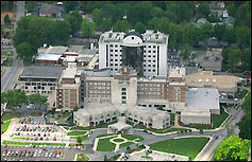
Arkansas Methodist Medical Center (AR) chooses T-System’s ED documentation and coding solutions.

image

Children’s of Alabama extends its contract for Allscripts Sunrise and adds dbMotion, Sunrise Ambulatory Care, and Sunrise Emergency Care.


People

image

Voalte promotes Trey Lauderdale to CEO and appoints a new board of directors: Tom Johnson (Global Imaging Systems), Nico Arcino (Kaiser Permanente), William Gish (Cerner Corporation), Isobel Harris (PeopleFluent), Jeffrey Lozon (Revera), Michael Marvin (MapInfo). 
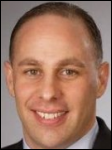
image

SRS names Scott Ciccarelli (GE Healthcare) as CEO. He replaces Evan Steele, who will become senior advisor.
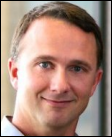

image image

AirStrip promotes Matt Patterson, MD to president and hires Nancy Pratt, RN, MSN (St. Joseph Health) as COO.
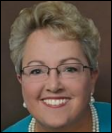
image

Robin Raiford, RN-BC (The Advisory Board Company) died on June 26 at 62. The visitation and service will be held Wednesday, July 2 in Springfield, VA. Details and guest book are here.


Announcements and Implementations

PatientKeeper adds a rules engine to its charge capture solution that allows billers and coders to manage code edits.
image

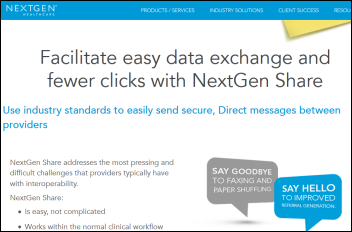
QSI subsidiaries NextGen and Mirth announce NextGen Share, a Health Information Service Provider (HISP) that will connect NextGen and non-NextGen EHR users via Direct.

Albany Area Primary Health Care (GA) goes live on Forward Health Group’s PopulationManager and The Guideline Advantage.


Innovation and Research

Researchers develop the capability to create blood vessels using a 3D printer and then growing cells around them, leading to the possibility of “printing” a full organ.


Other
image

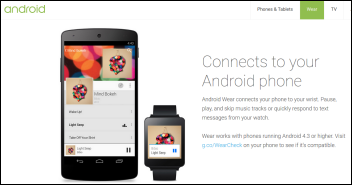
An Ars Technica article written by an early Google Glass Explorer  says Android Wear smart watches make Google Glass obsolete. Reasons: (a) Google is developing more technology for Android Wear than for Glass; (b) Glass will always look weird and raise suspicions that the wearer is secretly recording them; (c) Google disabled live video streaming on Glass because it didn’t work well; (d) Glass doesn’t fold, so it takes up a lot of room wherever you place it other than on your face; (e) it’s easier to look at a watch than upward to Glass; (f) Android Wear watches cost $200 vs. Glass at $1,500 and do more; (g) Android Wear is being run by Google’s powerful Android team while Glass is a skunkworks project that hasn’t even exited beta; (h) Android Wear is faster and less buggy; and (i) Google has no plans to add augmented reality or facial recognition to Glass to make it something more than just a computer built into a pair of glasses.

Weird News Andy wonders “retail or wholesale” when an ED patient is charged with walking out with $300 worth of medical supplies that included bed sheets, 47 latex gloves, a bloody syringe, oxygen tubing, washcloths, alcohol wipes, lubricant, and pulse oximeters. WNA concludes, “The list price on a pulse oximeter on Amazon is $199. A single aspirin might be a hospital charge of $25. Seems like the perp might have gotten off cheap.”


Sponsor Updates

  • Aventura releases the latest in its “This is Aventura” video series, seasonally appropriate in being set to the “1812 Overture.”
  • EDCO Health Information Solutions publishes an article, “Solve Patient Indexing Errors Once and for All.”
  • Liaison Healthcare will offer its EMR-Link laboratory and radiology integration solution to members of GNYHA Services.
  • Beacon Partners offers an article, “Four Key Components for Building a Sustainable mHealth Strategy” and publishes a blog post “Are You Ready for Change? Four Questions to Ask Before Launching a Healthcare IT Project.”
  • Truven Health Analytics reports that 300 hospitals have integrated Micromedex patient education and clinical decision support with their EMRs so far in 2014.
  • QPID CEO Mike Doyle will participate in the “Big Data and Decision Making” panel at the Connected Health Symposium 2014 October 23-24 in Boston.
  • ADP AdvancedMD introduces integrated fax with a short video clip.
  • ICSA Labs certified products from First Databank, Iatric Systems, Juniper Networks, Orion Health, Quest Diagnostics and The Advisory Board Company in June.
  • Health Catalyst explains the anatomy of healthcare delivery model in a recently published white paper.
  • Maury Regional Medical Center (TN) selects Nuance services for its medical transcription needs.

Contacts

Mr. H, Lorre, Jennifer, Dr. Jayne, Dr. Gregg, Lt. Dan, Dr. Travis.

More news: HIStalk Practice, HIStalk Connect.

Get HIStalk updates.
Contact us online.

 

125x125_2nd_Circle

Curbside Consult with Dr. Jayne 6/30/14

June 30, 2014 Dr. Jayne 11 Comments

I spent most of this weekend doing a special project. Our coding and compliance officers approached me about how some of our providers’ notes look in EHR. They had seen some notes that were “really awful” and naturally assumed that something was going on with the EHR to cause them to be that way.

Our ambulatory vendor offers checkbox-style documentation templates, so I figured the complaints were about how their documentation was being output now that we’re dealing with SNOMED and other factors.

I asked my team to pull a sampling of notes from each of our specialties so that I could look at them myself. We’ve seen issues where the behind-the-scenes verbiage engine generates some subject/verb disagreements. Additionally, when a large number of positive and negative symptoms are documented, sometimes that can get a little strange.

Since our analysts are not clinical, I know that I can’t exclusively use their review to identify good vs. bad notes. Sometimes the documentation might be technically accurate, but would actually be something a receiving physician would laugh at.

We have a lot of subspecialists who do a lot of procedures, so I had the team pull a variety of those notes as well. They’ve been problematic in the past, especially when multiple procedures are documented. Most of those issues have been easy fixes. Still, considering the variety of specialties and all the different kinds of documentation, I had well over 100 visit notes to review.

By the time I was done, I could barely contain my aggravation. The largest subset of “awful” notes came from our providers who are heavy users of voice recognition. Some of the notes were downright incoherent. The problem however wasn’t with the technology – it was with subspecialists dictating sheer nonsense that normal humans (even those with medical degrees) would have difficulty comprehending.

The next subset of bad notes came from providers who have created their own documentation macros. The idea of providers having their own saved text blocks is generally a good one. We all know that there are some parts of the note that are the same over and over again: “regular rate and rhythm, no murmurs, rubs, or gallops, lungs clear to auscultation bilaterally, abdomen soft non-tender and non-distended with normal active bowel sounds.” From years of dictation it just rolls off the tongue, so it would make sense to save it as a block for EHR.

The problem comes when providers save text that either doesn’t make sense or has gender-specific findings that winds up being reused on the opposite gender. The point of saved text is to be able to quickly add documentation with little work. Some of our providers take the idea of efficiency too far, with so many acronyms and abbreviations it’s impossible to figure out what is going on with the patient.

Even with the subject/verb disagreement and some of the typical template issues, the group that most heavily uses check-box powered documentation did the best. They were easy to sort out due to the way the history blocks format and I was surprised at how much clearer their notes were compared to those done via other methods. Those that used the templates, however, had a much higher propensity to document Review of Systems items that I’m sure they didn’t actually perform.

For your amusement, I’ll share some of the highlights:

  • General surgeon sees a patient to remove a skin cyst. She documents a gynecological review of systems with seven negative elements. I confirmed that it wasn’t from a paper form the patient completed and staff keyed in. She also documented the procedure as “EXC TR-EXT B9+MARG 2.1-3cm.” What does that even mean? I could extrapolate “benign” and “margins” from that, but it makes no sense for the type of cyst excised.
  • The same surgeon documented a 21(!) point male urinary review of systems for a similar visit. The procedure document was the same except it was 0.6-1cm. At least she’s consistent. And apparently thorough, since she documented that she examined all 12 cranial nerves and the cyst was on the shin.
  • Orthopedic surgeon documents a physical exam that includes a normal fundoscopic exam. I’d pretty much bank that the last time an orthopedic surgeon touched the instrument needed to look at the back of the eye, it was in medical school.
  • Chief complaint of “bx results” which was saved to a provider custom list. Could we not have spared the extra characters to have it read “biopsy results” so that when the patient receives the note on our patient portal it makes sense?
  • Not capitalizing the names of other physicians on the team. Nothing says “thanks for the referral” like addressing the letter to “dear dr jayne.”
  • A “follow up back pain” visit with a (no kidding) 91-point review of systems including “changes in shape/size of moles” and “breast lumps.” I can’t wait until that one gets pulled for a CMS audit.
  • Detailed discussions of radiologic studies pulled into the note from other practices. I guess in addition to being “one patient, one chart” the EHR also lets us time travel because the same CD with the MRI results that the patient hand-carried from shoulder surgeon was simultaneously imported to the orthopedic consultant’s May visit note and also to the nephrologist’s note with a date stamp two months prior to the visit.

I could go on, but it would just make me frustrated and likely make you angry. More than anything, it just makes me sad, especially since the providers electronically signed all of them and indicated that they were read and reviewed.

You might ask who had the best documentation. Hands-down the most coherent, thorough, and clearly non-padded were the notes done by one cardiology group using a mix of voice recognition for the history and plan and template documentation for the physical exam and review of systems. I didn’t identify any gratuitous documentation and the notes were high quality. It probably takes them longer to document since they’re speaking most of the note vs. clicking. However, their documentation was so pretty I wish I could clone them. But CMS says cloning is bad, right?

Got documentation problems? Email me.

Email Dr. Jayne.

Monday Morning Update 6/30/14

June 28, 2014 News 22 Comments

Top News

image

image

White House Deputy Chief of Staff Rob Nabors delivered his review of the VA to President Obama Friday. The report’s high points:

  • The VA is the country’s largest health system with 1,700 sites and $150 billion per year in funding.
  • The 14-day patient scheduling standard was unrealistic and encouraged inappropriate behavior.
  • The Veterans Health Administration needs to be restructured because it has little accountability, isn’t responsive, and can’t communicate effectively.
  • One-fourth of all federal government whistleblower complaints involve the VA.
  • Individual VA facilities often ignore VHA’s directives and sometimes express their disagreement via the press.
  • Employees know that the federal government rarely fires anyone, so they don’t try to solve problems.
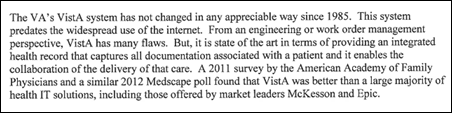
  • The VA’s VistA system is “cumbersome and outdated,” but is state of the art when it comes to capturing patient documentation to form an integrated health record. The real problem with scheduling patients is a lack of clinicians, support personnel, and space, not deficiencies in IT systems.
  • The VA hasn’t planned well and hasn’t tied its budget requests to specific outcomes.

Reader Comments

From Mcklayoffs: “Re: McKesson layoffs. There were huge ones in April. I heard it happen again on Thursday. I heard even some of the Paragon folks were let go from services. You have to wonder if that’s their go-forward solution.” Unverified.

image

From Lt. Dan: “Re: cyberwarfare visualization. This real-time map of hacker attacks shows that the US is getting bombarded by pretty much everyone.” The extremely cool display from cybersecurity firm Norse, which looks like one of those 1960s US-Soviet World War III doomsday scenario illustrations, shows who’s being attacked and from where. Some of the information is surprising: at this moment, attacks are being launched from the domain of drug maker Merck in New Jersey as well as the University of Michigan and Cal Berkeley, quite a few attacks are originating from military domains, and the US is by far the most popular intended target with 10 times as many attacks as #2 Hong Kong.


HIStalk Announcements and Requests

image

Welcome to new HIStalk Gold Sponsor Ivenix. The Amesbury, MA-based company offers the Ivenix Infusion Management System, a smart IV pump that combines information technology with new smart pump design to reduce errors and improve patient safety. It measures and adjusts IV flow rate in real time and manages patient-specific infusion information via a secure, wireless, Web-based architecture that lets clinicians make decisions by viewing remote dashboards that display infusion information, alerts, alarms, and cross-pump drug alerts. Its analytics capability supports organization-wide quality and cost projects. IV orders are sent to the pump with nurse verification via open, pluggable EMR integration and drug library and software updates are delivered transparently. Thanks to Ivenix for supporting HIStalk.

image

Six percent of poll respondents said they participated in a video-based visit as a patient in the past year. New poll to your right: which EHR package should the DoD choose – Allscripts, Epic, or Cerner? Click the Comments link on the poll widget after voting to defend your decision –  you never know, maybe the DoD is looking for your insight.

Listening: Austin-based Ume, who I saw live awhile back. Singer/guitarist Lauren Larson shreds it on stage with monstrous distorted guitar licks, passionate vocals, and a head-pounding mane of blonde hair, but I met her after the show and she’s a tiny, sweet Texas cheerleader type who decided to take a break from working on her PhD to focus on music along with her bass-wielding husband Eric. Ume is on tour with Circa Survive, which will play in Riot Fest in Chicago in September with some of my favorite bands: Jane’s Addiction, The Cure, Weezer, Metric, Failure, Superchunk, Dandy Warhols, and Mastodon.


Webinars

July 2 (Wednesday) noon ET. The CIO’s Role in Consumer Health. Sponsored by HIStalk. Presenter: David Chou, CIO, University Of Mississippi Medical Center. We are moving towards an era where the consumer is searching for value. Healthcare is finally catching up with other industries and this is forcing health care providers and health plans to rethink their "business model" as consumers test new decision-making skills and demand higher quality and better value. Technology can provide value in this space as we move towards a digital healthcare.


People

image

ONC’s Director of the Office of Consumer eHealth Lygeia Ricciardi announces on Twitter that she has resigned effective July 25.


Announcements and Implementations

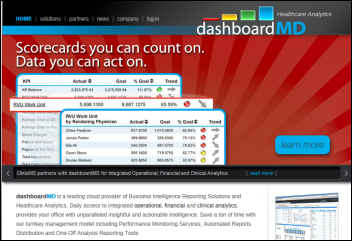
ZirMed announces enhancements to its Analytics solution that include a customizable dashboard and drill-down interactive KPIs for key business metrics.

image

Cerner, not surprisingly, joins Epic and Allscripts in throwing its hat into the DoD’s EHR replacement ring. Cerner will bid along with partners Accenture and Leidos. Someone asked me on Twitter how I saw it playing out and I gave the odds at 80 percent Epic, 20 percent Cerner, and zero percent Allscripts. Epic has a big advantage in covering a huge chunk of the US population, having the only comparably sized implementation in Kaiser Permanente, winning just about every large-system bid, having implemented its system with the Coast Guard, having IBM as a partner, and having powerful members of Congress like Paul Ryan who have previously demonstrated willingness to use their clout to push Epic. Cerner’s advantages are the comfort level of being a large, publicly traded company with increasing healthcare reach outside of IT, strong government-savvy partners in Accenture and Leidos, good hosting experience, and a potential willingness to beat Epic on price in what will be the biggest deal in healthcare IT history. I don’t see Allscripts having a chance since large hospitals aren’t buying Sunrise, its biggest client North Shore-LIJ is keeping whatever enthusiasm it has quiet, its offerings are narrow compared to Epic and Cerner, and memories of its corporate stumbling  haven’t faded yet, but it does have the strongest set of partners in CSC and HP, the latter being important since the much-touted $11 billion bid value is a 10-year cost including maintenance and infrastructure where HP shines.


Technology

3M announces ePrivacy Filter, $50 software that uses webcam-powered facial recognition to limit screen viewing to the authorized user, warn them if someone is looking over their shoulder, and blur their screen when they step away.


Other

image

Implementation of the C-CDA (Consolidated Clinical Document Architecture) semantic interoperability standard needs work, according to a JAMIA-published study by a group that found many errors in documents submitted from 21 systems. Meaningful Use Stage 2 requires using C-CDA, but the samples provided to the authors often included missing or incorrect information. The authors made four recommendations: (a) create a site with public C-CDA samples and scenarios since vendors say they don’t always know how to represent their data; (b) require EHR certification testing to include validating terminology such as SNOMED and RxNorm; (c) add a certification requirement that EHR vendors provide all of the data elements they capture instead of making many of them optional; and (d) electronically monitor the quality of real-world C-CDA documents being produced and report results. The authors conclude that further effort will determine whether C-CDA documents “can mature into efficient workhorses of interoperability.”

A study finds that patients discharged from hospitals that use an advanced EHR cost $731 less than those from non-EHR using hospitals. The methodology isn’t convincing: (a) the data is from 2009 and simply matched up a discharge database to what the article says is the HIMSS annual survey (which really means the HIMSS Analytics database);  (b) the “cost” figures were the nearly worthless cost-to-charge ratios that everybody uses because hospitals don’t track individual unit costs well; (c) the analysis seems to have looked only at overall cost rather than for comparable diagnoses or treatments, but I’m not clear on that from the methodology provided; (d) correlation isn’t causation, so any jumping to conclusions that plugging in an advanced EHR will reduce hospital costs is ridiculous.

image

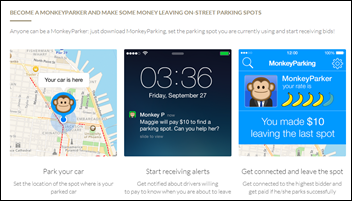
Here’s how disintermediated San Francisco cab drivers are competing with ride-sharing service Uber (valued at $18 billion): they’re using an app that lets people pay them for the public parking spots they intentionally occupy for that purpose. The city has ordered the app’s Italy-based developers to cease operations, saying its excuse of selling convenience rather than parking spots is “like a prostitute saying she’s not selling sex — she’s only selling information about her willingness to have sex with you.” The developer of a competing app is paying people $13 per hour to tie up high-demand evening spots in the Mission District and then resell them, give the company working inventory to promote its app.


Contacts

Mr. H, Lorre, Jennifer, Dr. Jayne, Dr. Gregg, Lt. Dan, Dr. Travis.

More news: HIStalk Practice, HIStalk Connect.

Get HIStalk updates.
Contact us online.

 

125x125_2nd_Circle

News 6/27/14

June 26, 2014 News 5 Comments

Top News

image

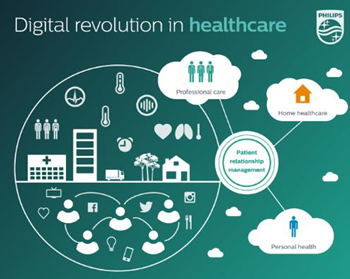
Philips will deploy clinical applications in a Salesforce.com-powered cloud environment that’s centered around patient relationship management. Two applications will be launched this summer, eCareCoordinator and eCareCompanion, which are collaboration platforms for monitoring chronic condition patients at home.  Philips says future offerings will incorporate information from EMRs, medical devices, home monitoring, and wearables. The platform will be open to developers to create add-on products.


Reader Comments

image

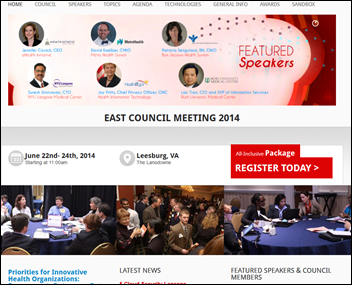
From Otto Complete: “Re: HTRAC East conference in Leesburg, VA. I attended this week and found it to be amazingly enlightening! Limited vendor involvement, zero exhibitors, and passion for IT improvement in our space, along with tremendous information sharing – these are just a few of the compliments I would give the conference. As you are a thought leader in our field, I wanted to be sure this group was on your radar.” I hadn’t heard of the group or conference, but they get points from me for being non-profit and for bundling meals (and an open bar) with the registration fee. The write-up says it’s invitation-only and limited to around 200 attendees, with minimal vendor participation and no exhibit hall.

SNAGHTML4f322d7

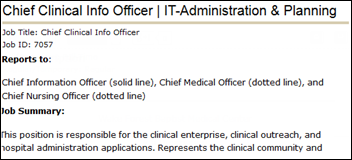
From Demon Deacon: “Re: Wake Forest Baptist IT department. The CMIO and VP of clinical applications positions were eliminated and will be replaced with a chief clinical information officer.” Unverified, although a search of Google’s cache turns up the now-removed job posting that I assume they filled. They’ve had a lot of IT turnover after their horrific Epic implementation.


HIStalk Announcements and Requests

This week on HIStalk Practice: Avecinia Wellness Center CEO Unaiza Hayat, MD shares the details of successfully attesting for S2MU and the role good physician leadership plays in any implementation. HIE merger creates largest in Michigan. Nashville physicians show no love for Epic. Verizon gets into the telemedicine game. Maine Primary Care Association goes live with new pop health technology. Thanks for reading.

This week on HIStalk Connect: researchers with Sandia National Laboratory make headway on their work developing non-invasive ways of monitoring electrolyte levels. Google unveils Google Fit, a digital health developers’ platform that promises the same basic functionality that Apples HealthKit offers. San Francisco-based startup Grand Rounds raises a $40 million Series B round to expand its growing network of physician thought leaders who offer remote second opinions on complex cases.

Listening: Chicago-based Eleventh Dream Day, probably the best and hardest-rocking Midwestern band that nobody’s heard of thanks to their record label’s incompetence. Also: Queens of the Stone Age.

My latest reading peeves: (a) cutesy reporters who start off a healthcare technology story with, “The (technology name here) will see you now.”; (b) using “there” as the subject of a sentence; (c) clickbait headlines, tweets, and lame slide shows that will do anything to get you to click even though you will regret it almost immediately; (d) referring to doctors as Dr. John Smith, which doesn’t tell us what kind of doctorate John earned; (e) surveys that try to hide low participation by giving results only as percentages; and (e) as I try to ignore the flood of World Cup chatter, people who confuse spectating with exercising in referring to someone else’s athletic team as “we.” I’ll keep the porn analogy that popped into my head to myself.


Webinars

July 2 (Wednesday) noon ET. The CIO’s Role in Consumer Health. Sponsored by HIStalk. Presenter: David Chou, CIO, University Of Mississippi Medical Center. We are moving towards an era where the consumer is searching for value. Healthcare is finally catching up with other industries and this is forcing health care providers and health plans to rethink their "business model" as consumers test new decision-making skills and demand higher quality and better value. Technology can provide value in this space as we move towards a digital healthcare.

We’ve decided to post the recorded videos of our HIStalk Webinars on YouTube to avoid the playback problems some viewers were having. The webinar, Cloud Is Not (Always) The Answer, ran live this past Wednesday. Not only did Logicworks do a great job in taking our suggestions and input from two CIOs into account to perfect their content and delivery, running the recorded version from YouTube is cleaner and faster, with no signup required to start watching.


Acquisitions, Funding, Business, and Stock

image

CareCloud borrows $25.5 million from a growth capital lender. I’m never cheered by a company taking on debt just like I wouldn’t be thrilled about a relative signing up for a home equity loan, but I guess it’s good news to be found credit-worthy and to have your plan for using the money vetted by someone whose objectivity is inarguable given their interest (no pun intended) in being repaid.

image

Physicians Interactive, which markets life sciences products to physicians, acquires consumer health information site WebHelp.

image

Imprivata’s raises $66 million in its Wednesday IPO.


Sales

Central Florida Health Alliance (FL) chooses MModal for transcription technology and document insight.

Sutter Health (CA) selects Orion Health to build and deploy its HIE.


People

image

Mark Caron (Capital BlueCross) is named CEO of population health and analytics systems vendor Geneia, which is owned by Capital BlueCross.

image

The Jersey Health Connect HIE names Judy Comitto, VP/CIO of Trinitas Regional Medical Center (NJ), as its board chair.  

Secure email vendor DataMotion appoints Kathleen Ridder Crampton (United HealthCare Group) to its board.


Announcements and Implementations

image

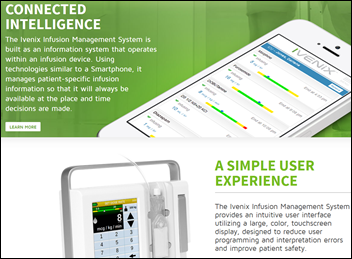
Ivenix announces that it is developing a new smart IV pump that will feature a smartphone-like user interface, enhanced IT capability that includes Web-based EHR integration and analytics, and new pump technology.

image

Telehealth solutions provider AMC Health says it has integrated its system with Epic.

Verizon announces Virtual Visits, a secure video technology platform that allows consumers to connect with doctors. The company hopes to license the technology to health plans (i.e. doctor not included.)

image

The non-profit CCHIT, which exited from what it said was the unprofitable EHR certification business in January 2014, announces its new mission of selling developers advice on how to get their EHRs certified.

image

Biometric Signature ID announces its handwriting-powered identity authentication system for Epic. It seems that handwriting would not be reliable given that users would be “writing” with their fingertip on a small screen while standing up in most cases, but maybe they’ve figured it out. You can try cracking a “Go Verify Yourself” signature-powered access page on their site.


Government and Politics

A Bloomberg editorial says that the Affordable Care Act is drawing a disproportionate number of people with chronic conditions to sign up for health insurance, which could possibly drive insurance companies out of the market or force the President to try to bail them out (with questionable legality) as he promised upfront to get them to participate.

CMS claims that its much-maligned Medicare fraudulent claims detection system prevented $210 million in payments in 2013, its second year of operation. That works out to something like 0.02 percent of total payments, a fraction of the government-estimated $50-60 billion that CMS improperly pays each year, and less than a monkey throwing darts could turn up before hitting the Beltway by noon on the Friday before Independence Day.


Other

A Wisconsin high school loses its track coach to Epic, where he will become a project manager. He says, “I’ll be working to implement software, and going out to hospitals and clinics, visiting with doctors and nurses, and discuss their ideas and concerns with the developers at Epic … I’m no computer whiz. They say they want people who are able to distinguish themselves through their careers, and they’ll teach the rest. There will be a lot of learning.”

image

An editorial in Applied Clinical Informatics says that specifying advance directives should be easy and the resulting preferences should be stored by HIEs and shared via interoperability. It proposes an input sheet that looks like a US tax form in making the analogy that advance directives should be as easy as electronic filing of taxes. Misusing the term as “advanced directives” drives me crazy (you make them in “advance,” not “advanced”) so it was disappointing that “advanced” made an unwelcome appearance three times in the mostly-correct article. Note the subtle humor in identifying the form as 419, the police code for a “dead body found.”

A small (120 responses) AMDIS-Gartner survey of CMIOs finds an average annual salary of $326,000 in a range of $206,000 to $550,000. Respondents reported slightly less job satisfaction than last year, higher CMIO turnover, and an overwhelming preference for reporting to the chief medical officer rather than the CIO.

image

In Canada, a $300 million privacy lawsuit is filed against Rouge Valley Health System that alleges two hospital employees sold the names of 8,300 mothers of newborns to an investment who cold-called them to sell education savings plans.

Google CEO Larry Page says yet again that 100,000 lives would be saved each year by more healthcare data mining. He’s made that claim (without backing it) several times.

A Bloomberg article says that hospitals are starting to use consumer information from big data sources to target their at-risk patients for interventions, such as finding out which asthma patients are buying cigarettes or whether heart patients are allowing their gym memberships to lapse. Patients say hospitals making cold calls about health habits is intrusive, but hospitals say they need to aggressively manage their patients under new payment models.

A new KLAS report reaches an obvious conclusion: only Epic, Cerner, and Meditech are expanding their hospital EMR client bases. Actually I was surprised that Meditech was included since my perception is that they are falling behind rather than gaining, but I assume KLAS has hard data suggesting otherwise.


Sponsor Updates

  • Validic will be featured by TEDMED 2014 as one of its chosen “transformative startups and the inspiring entrepreneurs that power them.”
  • Optimum Healthcare IT will be featured in a June 29 episode of “21st Century Television” on Bloomberg Worldwide.
  • Jeanette Ball, RN, PCMH CCE of CTG Health Solutions shares her experience working with western New York providers to create a PCMH framework in the Journal of Clinical Engineering.
  • CareTech Solutions launches its website built on CareWorks CMS v4.1.
  • ESD shares how to implement automated testing.
  • Navicure partners with Acculynk to launch a customized payment platform for providers.
  • Netsmart posts a white paper exploring the similarities and difference in PC and behavioral health.
  • Allscripts receives 23 commitments for expanded Allscripts Sunrise solutions such as Ambulatory Care, Emergency Care and Surgical Care.
  • Practice Fusion partners with Emdeon to offer automated health plan eligibility check in its EHR.
  • Juniper Networks announces the capabilities and enhancements of its Next-Generation Firewall and SRX Series Services Gateways.
  • The Advisory Board Company is profiled by a local news station for its community volunteer projects.
  • Extension Healthcare discusses how EHR alerts have contributed to alarm fatigue and offers a two-part white paper on managing alarms to improve patient safety.
  • Wellcentive client Children’s Health Alliance (OR) receives the Analytics All Stars Award for Population Health Project of the Year award.
  • Albany Area Primary Health Care (GA) goes live on Forward Health Group’s PopulationManager and The Guideline Advantage.
  • Divurgent offers a series of free conference calls on big data and analytics.

EPtalk by Dr. Jayne

It’s been a completely random week at work. Most of the practices we acquired earlier in the year have stabilized from a revenue cycle perspective, so it’s time to bring them up on EHR. Once the Independence Day holiday rolls by, it will be full steam ahead.

There have been a couple of last-minute glitches though, mostly involving providers behaving badly. There are always challenges when a practice has to change its culture, but I’ve not seen this many employed providers who don’t seem to remember that they’re employed.

Some of our operational leaders try to soften the blow by referring to them as “partners” or “associates,” but the bottom line is that they are employees. If we were partners, there would be shared decision-making and give and take. There would not be top-down leadership with requirements that must be adhered to. There would not be contractual obligations that require compliance with a host of regulatory items. There would not be penalties for failure to adhere to documented policies.

I’m fortunate to have an implementation team that’s well-seasoned and grateful for its manager and her solid leadership. Since the team has had a couple of months without active deployment cycles, we front-loaded the calendar with some of the most difficult providers. That way they can get them done while they’re still fresh. The majority of the team agreed they’d rather save the best providers for last rather than having to look forward to all the difficult ones at the end.

From Stay Glassy San Diego: “Re: Dr. Chrono’s Glass app. Did you see it? They’re referring to it as the first wearable health record.” I did see, it but I’m not sure it’s actually a wearable record as much as a different way to interface with the record. Physicians can store a video of an office visit in the EHR but it’s not clear how that translates to discrete data or the other hoop-jumping we need for payers and incentive programs. I did find it interesting that media reports cite 300 of the 60,000 drchrono clients as users of the Glass app. They may have downloaded it, but given psychosocial and privacy concerns around use of Glass, I’d be surprised if that many were actually using it. According to the company website, users can sign up to be beta testers, which doesn’t exactly sound like widespread adoption to me. If there are any readers who have actually used it, I’d be happy to share your stories.

clip_image001

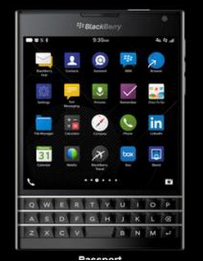
From App-e-tite for Destruction: “Re: Open Payments, did you look at any of the other government apps that were available? Some are amusing.” I was on a pretty focused expedition the other day but did have some time tonight to check out the Mobile Apps Gallery at USA.gov.  In addition to Apple and Android, they still offer content for BlackBerry. There’s an app to help you through the National Gallery of Art as well as one to locate alternative fueling stations for electric, biodiesel, CNG, and other non-gasoline vehicles. I spent some time playing with the FDA Mobile app, which has medication recalls and safety alerts as well as consumer updates. There’s also a radiation emergency app, one that manipulates census data, a rail crossing locator, and a ladder safety app to boot.

What’s your favorite government app? Email me.


Contacts

Mr. H, Lorre, Jennifer, Dr. Jayne, Dr. Gregg, Lt. Dan, Dr. Travis.

More news: HIStalk Practice, HIStalk Connect.

Get HIStalk updates.
Contact us online.
 

125x125_2nd_Circle

HIStalk Interviews Davin Lundquist, MD, CMIO, Dignity Health

June 25, 2014 Interviews 1 Comment

Davin Lundquist, MD is VP/CMIO of Dignity Health of San Francisco, CA.

image

What systems are you using on the ambulatory side and what are your priorities there?

In California, we have laws that prevent corporations from hiring physicians directly. The structure that Dignity Health primarily uses in California is a medical foundation. We have Dignity Health Medical Foundation, for which I practice at one of their sites in the Ventura market. Camarillo, California specifically. I’m a family medicine physician, a PCP. 

In our medical foundation, which has about 600 physicians plus several hundred radiologists, we use Allscripts Enterprise for our ambulatory EMR. Dignity Health has nearly 40 hospitals crossing California, Arizona, and Nevada. We are moving to the Cerner platform in the hospital.

Outside of the foundation, we also have some employed medical groups in Nevada and Arizona. The large one in Arizona is using Allscripts Enterprise. Then in Nevada and a lot of our clinics that are not part of the foundation … many hospitals have community-based clinics. There’s a hodgepodge of systems that are being used there. We are in the process of looking to maybe consolidate or figure out if there’s an enterprise solution that we can roll out to all of those sites.


Are you having any challenges to tie in Allscripts ambulatory with Cerner inpatient?

In some of our markets, we’ve done a better job than in others with creating the integration. I would guess that a lot of health systems have this challenge of integrating data and having it be seamless. Integration tends to be very costly. There are issues around patient matching. 

We have one of the largest private HIEs in the country. We use MobileMD, which was acquired by Siemens a few years back. We have nearly 7,000 of our physicians that have an account with that HIE. Primarily we’ve used that as a way for doctors out in the community to get information from Cerner, the hospital. Both the Cerner and the Meditech hospitals will feed data into MobileMD and then those physicians and offices in the community can access that. 

Leveraging that integration platform, we’ve been able to, for our own providers that are on Allscripts, create a pretty good integration. A lot of our Allscripts providers in Sacramento will get automatically delivered to their Allscripts platform discharge summaries and radiology reports and labs and things that are done in the hospital.


Are most of the physicians attesting for Meaningful Use?

Yes. Of the providers who are on a system that is up to speed with Meaningful Use, we’ve had a nearly a 100 percent rate of Meaningful Use attestation. The clinics where we don’t run them from a foundation standpoint, then those doctors tend to work in clinics where he hospital staffs it, but the doctors are independent contractors. There’s a lot more variability there because a lot of those doctors may be specialists who have their own practice and just come in a few days a month. We believe a lot of them are attesting in their own practices.


Are you looking at any specific Meaningful Use Stage 2 challenges?

Yes. For Stage 2, the biggest challenge for us is the patient portal. We’ve been working with a company called Medseek to customize a portal for our Allscripts users. We’ve made a lot of progress, but there’s still challenges in getting patient enrollment, in getting doctors to feel comfortable sharing the amount of information that needs to be shared to achieve Meaningful Use. We’re still working through a lot of those issues, but we feel like we’re on a trajectory to make that happen by the end of the year.


Did you make that decision before Allscripts acquired Jardogs and FollowMyHealth? I’m just curious why you wouldn’t have chosen it.

We did. Without getting into the specifics, there was a very detailed RFP that went out and Jardogs was part of that. There were, I think, some specific limitations that Jardogs had, not necessarily related to function, but more around privacy and security and the way that Dignity Health approaches those things that I think made it incompatible with our setup. That was all pre-date of the acquisition by Allscripts.


Describe the pilot that you’re doing with Google Glass and Augmedix.

I practice in a clinic in Camarillo. We have several other primary care doctors there. We learned of the Augmedix solution. As you heard me describe some of the other technologies that we’re using at Dignity Health, you probably didn’t hear a lot of excitement in my voice. [laughs] I try not to reveal my true feelings.

Technology for physicians, while we understand and we know that it’s where we need to go, it hasn’t always been easy to adopt. If you talk to most physicians, they probably wouldn’t say that the EMR has made them more efficient. Again, I think we all understand that it’s important and having access to that data will eventually be more important.

The Google Glass technology was something that intrigued me. How is this going to impact healthcare? Where will this fall? You can imagine lots of potential use cases for it, but what we liked about the way Augmedix was deploying it, it seemed to be something that added value to physicians that would improve their ability to interact with patients, to do their job more effectively and not feel like they were getting bogged down with technology.

The way that it works is we wear the device as we’re seeing patients. The audio and video are being streamed to the Augmedix team. Through a combination of humans and technology that’s proprietary to them, the progress notes are being completed. As a practicing physician, the ability to feel like you’re getting back to that doctor-patient interaction has been a tremendous experience.


I assume they use some type of back-end speech recognition with human review and correction and that information is placed in the EMR?

I would encourage you to reach out to the Augmedix people and have them explain it to you. I want to protect their proprietary endeavors there. But I would guess that there’s probably some combination of human and technology going on there.

My experience would tell me that it has to be different than just voice recognition. You would understand this better than people that have interviewed me that when you use Dragon or even traditional dictation, you as a physician have to summarize the encounter for that voice-to-text to happen. In this case, Augmedix has partnered with us. They came and observed our workflow, observed the physicians that are using it beforehand, they met with us, they understood how we like to document, how we like to capture our physical exam and other things. They’re summarizing in real time for us. The true medical elements of that conversation are making it into the chart.


That’s not customized for each physician, right? It’s somewhat of a templated formula of how you speak to Glass to get it to understand what you’re doing at that point?

It’s not fully customized. I don’t want to imply that you can have it any way you want, but there is some customization. They do take time to learn how we like our notes to look. Also things like as I’m examining the patient, they can’t hear what I’m hearing, so I have to be able to communicate that to them in some way. Things like, if someone’s exam is normal, then in the absence of me verbalizing what I found, they may use a normal exam template that we agreed upon.

Then other times, if I miss something, one of the great and nice things about Google Glass is they can send me a little message that shows up on the Glass device and says, hey, you forgot to tell me what you saw in their ear exam. So there’s some two-way interaction that goes on.


Did Augmedix have to interface into Allscripts or did Allscripts have to participate in the setup to get your progress notes into their EMR?

Our version of Allscripts is hosted internally by Dignity Health. The Dignity Health IT team worked closely with Augmedix to sort that out. We ran everything through the privacy and security and compliance people so that the way it’s set up, everyone’s very comfortable with.


The release used the word “partnered.” There’s no financial interest either by you personally or Dignity Health with Augmedix, right?

Correct.


This is a three-physician pilot. What are the plans to roll it out further?

We’re currently looking in negotiations with Augmedix to expand to other physicians in Ventura. We’re excited about that opportunity. Then depending on how that goes, we may look to roll it other sites within Dignity.


What’s the patient reaction to using Glass in their encounters?

Overwhelmingly it’s been very positive. That’s definitely a question I had going into this — whether or not patients would accept it. I don’t wear glasses normally, so I was kind of curious what my patients would think of me wearing something like this. 

One of the most surprising things is how many of my patients don’t even seem to notice. I think that probably has to do with patients coming in not feeling well or looking for help and focused on their concerns. When they come in now and see that I’m not typing, that I’m just sitting there, looking at them, waiting and listening and asking pointed questions about what’s happening — they almost don’t even notice that I have it on there.

There’s another group, obviously, that’s more tech savvy. They recognize that it’s a Google Glass and they’re interested in that because they haven’t seen one yet and they want to know what is it like. But even that, too, is a really short conversation. I explain to them what’s happening, that the information is being transmitted, and that this is helping us to document so that we can spend more time with them. 

Across the board it’s been very well received. They even get a little excited about the fact that their doctor is using a new technology. It gives them confidence that we’re looking to whatever it takes to provide better care for them.


Are there still things in an encounter that you have to use a keyboard or a tablet for, or are there things that you would like to see added to what Augmedix can do to make it complete so that you don’t have to use any other device?

In this first phase, we still have to do our orders. We didn’t feel comfortable yet turning over the keys to that CPOE engine given that there’s a lot more important things going on there, like we should get the right medicine ordered, right labs ordered, those kinds of things. 

Usually that happens at the end of a nice interaction with the patient, though, where we say, “OK, this is what I’m going to do for you.” That’s when I can turn and enter in some orders. But I think that’s a much more accepted thing for patients because they feel like they’ve had their time and now you’re actually doing something for them. When you do have to turn to your computer to do that, I think that’s an appropriate thing.

We are looking and hoping that as the technology matures, both the EMR and the Augmedix technology, that maybe at some what point we can verbalize those orders and that our voice can be recognized and authenticated. Who knows what that will turn out to be? But I am optimistic that we can push the limits of that.


Is it storing video or audio or both from the encounter?

At this point, no. I think our compliance people and everybody wasn’t comfortable with that yet, is my understanding. It’s an interesting thought, though. I think I saw an article recently where someone else was looking to maybe record video and audio right into a medical record, which I thought was an interesting concept. But we’re not doing that.


People always say technologies don’t preserve the patient’s story or the full richness of the encounter, so it would be pretty cool to say, “I want to see this whole visit over. I want to hear what I said, what the patient said.” That would be interesting documentation, although certainly there’s privacy and litigation concerns on both sides.

Absolutely. Once people feel comfortable that there’s technology out there that would really keep that safe, then I think we’ll move in that direction.


Dignity recently formed an accountable care organization. What lessons are you learning about the need for data and analytics tools?

ACO is kind of a broad term. There are several ACO-type contracts throughout Dignity Health in both California and Arizona. Some of them are more along the shared savings route and others are maybe more along just some metrics and other things. Clearly we understand the need for having access to data across the continuum of care. We need to be able to see longitudinal view of a given patient in order for us to really understand what it’s going to take to care for that patient and partner with them in helping them achieve their health goals.


What other projects are taking the most of your time and energy?

I’m working on projects with population health. We are looking to create what we call our population health management technology stack. You described the need for data — we’re looking at getting the data gathered for the first phase, then getting into the analytics layer, care management, what we do with that data, the clinical and patient portal-type interactions. 

Related to pop health, we’re looking at collaboration tools, secure messaging tools, video visits … the list goes on and on. I think there’s probably a common list that you would hear from any big health system that is trying to anticipate what might be needed as we turn the corner on healthcare reform.


You’ll be buying and implementing quite a lot of systems over the next several years.

Yes. We are in the process of looking for vendors who, in some cases, have the maturity for us to buy them and purchase. But in most cases, especially in the population health space, we’re looking to either build or partner to co-develop solutions. I think it would be naive of us to invest too much money in a "solution" when nobody really knows what’s exactly going to be needed. We’re going to be very busy for a few years on that front.


Do you have any final thoughts?

I just want to say that I’m excited to be a part of Dignity Health. I’ve only been here for a couple of years. I came on at a really good time. I arrived right about the time that they were changing their name from Catholic Healthcare West to Dignity Health. I’ve seen a trajectory in this company that seems to really understand where things are headed, but not losing sight of the mission and value, this campaign around human kindness. 

This particular Google Glass pilot and project has demonstrated that Dignity Health is willing to put their support and invest in projects that go in line with that. I’ve done a lot of technology stuff over the years, but this is one of the first that seems to excite every physician that comes around it, which is different from a lot of technology. I think the reason is because it really does get us back to why we got into medicine, which is that patient interaction, making a difference and feeling like you’re using something that’s more transparent and that is helping you as opposed to getting in your way.

News 6/25/14

June 24, 2014 News 1 Comment

Top News

image

Emdeon will acquire Capario for $115 million in cash from its private equity owner Marlin Equity Partners, with Emdeon announcing plans to incorporate the CaparioOne revenue cycle management product into its Intelligent Health Network.


Upcoming Webinars

June 25 (Wednesday) 2:00 p.m. ET. Cloud Is Not (Always) The Answer. Sponsored by Logicworks. Presenter: Jason Deck, VP of strategic development, Logicworks. No healthcare organization needs a cloud – they need compliant, highly available solutions that help them deploy and grow key applications. This webinar will explain why public clouds, private clouds, and bare metal infrastructure are all good options, just for different circumstances. We’ll review the best practices we’ve learned from building infrastructure for clinical applications, HIEs, HIXs, and analytics platforms. We will also review the benefit of DevOps in improving reliability and security.

June 26 (Thursday) 1:00 p.m. ET. The Role of Identity Management in Protecting Patient Health Information. Sponsored by Caradigm. Presenter: Mac McMillan, FHIMSS, CISM, co-founder and CEO of CynergisTek. Identity and access management challenges will increase as environments become more complex, users create and manage larger amounts of sensitive information, and providers become more mobile. Learn how an identity and access management program can support regulatory compliance, aid in conducting audits and investigations, and help meet user workflow requirements.

July 2 (Wednesday) noon ET. The CIO’s Role in Consumer Health. Sponsored by HIStalk. Presenter: David Chou, CIO, University Of Mississippi Medical Center. We are moving towards an era where the consumer is searching for value. Healthcare is finally catching up with other industries and this is forcing health care providers and health plans to rethink their "business model" as consumers test new decision-making skills and demand higher quality and better value. Technology can provide value in this space as we move towards a digital healthcare.


Acquisitions, Funding, Business, and Stock

image

KPMG acquires Cincinnati-based Zanett Commercial Solutions, an Oracle partner and health IT consulting firm.

image

A new $152 million funding round for doctor-finding site ZocDoc values the company at $1.6 billion.

image

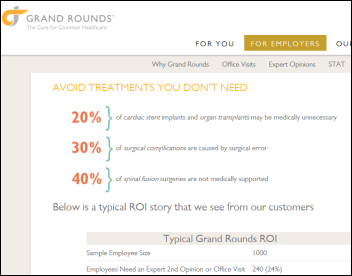
Second medical opinion site Grand Rounds raises $40 million in funding. The company charges $7,500 for an online review by a nationally recognized physician, while arranging an appointment with a specialist costs $200. The company says that its second opinion finds the original doctor wrong 60 percent of the time, giving employers more than a threefold benefit to their investment, which for companies of fewer than 1,000 employees is $10 each per month. The company also offers physician-to-physician consultation for hospitalized patients who demand a review by a recognized expert. It would be interesting to know how they choose the “top 3 percent of specialists in the nation.”   

image

IMS Health will acquire some product lines of Cegedim, which sell life sciences marketing solutions, for $520 million in cash. Cegedim’s Pulse Systems products for medical practices (PM/EHR, RCM, patient portal, patient kiosk) weren’t mentioned as being part of the deal.


Sales

image

St. Luke’s (MN) chooses Strata Decision’s StrataJazz for Decision Support.

Cerner signs a 10-year deal with existing customer Mission Health (NC) to work on unspecified innovation and population health projects.

image

University Health Shreveport (LA), UMass Memorial Medical Group (MA) and Baptist Memorial Health Care (TN) select Infor Healthcare financial solutions.

RegionalCare Hospital Partners (TN) will deploy Agilum Healthcare Intelligence’s BI solutions and services across its eight hospitals in seven states.

Verizon will provide AirWatch by VMware to its US enterprise clients.


People

image

M. Bridget Duffy, MD (Vocera) joins the board of scribe and EHR consulting vendor Essia Health, formerly known as Scribes STAT.

image

Athenahealth names Kristi Matus (Aetna) to the newly created role of EVP/chief financial and administrative officer.


Announcements and Implementations

Premier, Inc. launches PremierConnect Price Lookup, which will allow members and vendors look up pricing information for nearly 7 million contract items.

CSC will partner with Allscripts and HP in vying for the DoD’s $11 billion EHR replacement. CSC wastes no time in playing the card of Robert Wah, MD, its chief medical officer and newly installed AMA president.

The newly merged Great Lakes HIE and Michigan Health Connect choose Great Lakes Health Connect as their new name.


Government and Politics

image

Janet Woodcock, MD, director of FDA’s Center for Drug Evaluation and Research, says the agency’s Mini-Sentinel drug surveillance system that’s being piloted combines claims and EHR dispensing data from 18 large healthcare organizations in a common data model that its safety scientists can query with drug safety questions. It covers 153 million people, 4 billion drug dispensing episodes, and 4 billion patient encounters.

A South Dakota newspaper points out that small claims collection lawsuits for medical expenses often violate patient privacy since they list the services for which the patient owes the provider. One collections agency requests that each of its lawsuits be sealed to prevent casual electronic observers from prying into a given patient’s procedure codes.

Above is video from Tuesday’s 21st Century Cures digital health roundtable convened by the US House Energy & Commerce Committee. Among those speaking are Jonathan Bush (athenahealth), Jeff Shuren (FDA), Martin Harris (Cleveland Clinic), and Brian Druker (OHSU).


Other

Seven-bed Reagan Memorial Hospital (TX) says it was unable to pay its vendors after the only employee who knew how to issue checks from Meditech quit. They’re back on track after having Meditech train more people.

Above is Deborah Peel, MD of Patient Privacy Rights at TEDxTraverseCity on “Designing Technology to Restore Privacy” from a few weeks ago. She’s also starting a campaign, #MyHealthDataIsMine.

image

Fitch Ratings holds the rating on bonds of Beebe Healthcare (DE) at BBB-, one step above junk status, with EHR implementation contributing to its losses.

image

The State of Montana starts notifying 1.3 million people — more than the entire population of the state — that hackers got into a state health department server containing their medical information. A surprising amount of medical information was stored on the server, including “health assessments, diagnoses, treatment, prescriptions, and insurance.” Also on the same server: the bank account information of 3,100 department employees and contractors and 50 years’ of birth and death certificate information.

image

Parkview Health (IN) pays $800,000 to settle an OCR HIPAA investigation in which a retiring independent doctor who was transferring her patients to new practices found 71 boxes of medical records dumped in her driveway when she got home. The hospital says it has since replaced its insecure paper records with an EHR.

On Computerworld’s “100 Best Places to Work in IT 2014” in the “Large Organizations” category are Sharp HealthCare (#7), Texas Health Resources (#8), OhioHealth (#10), Carolinas HealthCare System (#20), Cedars-Sinai Health System (#21), Cancer Treatment Centers of America (#27), Children’s Hospital of Philadelphia (#33), Cerner (#37), Ascension Health (#39), HCA (#42), Kaiser Permanente (#45), and McKesson (#50). On the “Midsize Organizations” list are Miami Children’s Hospital (#8) and Genesis HealthCare System (#12). UHC takes the #2 spot in the “Small Organizations” category.  

image

A small (111 hospitals) AHA-sponsored survey finds that a third of the responding organizations don’t feel they have the right executive team in place to execute their strategy, with their biggest talent shortfall being in creating non-traditional partnerships, managing community and population health, and managing change. Just half have a CIO/CTO on the executive team, and only 20 percent say the CIO is always involved in making decisions. The report predicts the emergence of new executive titles that include chief population health manager, VP of cost containment, chief patient engagement officer, and VP of clinical informatics.

“No Matter Where,” a movie about HIEs in Tennessee, has a limited premiere in Nashville. The executive producer is Kevin Johnson, MD, professor of pediatrics and biomedical informatics at Vanderbilt University School of Medicine.


Sponsor Updates

  • Black Book Rankings names Streamline Health’s Looking Glass ECM system as #1 in the “Document Improvement” category of “Financial Products and Services.” Also #1 in its category is PatientKeeper in the “Charge Master” and “Charge Capture” categories.
  • Netsmart is providing CareManager to the Early Connections Network in Tennessee.
  • Levi Ray & Shoup announces its MFPsecure pull printing software that enables secure delivery for Ricoh devices.
  • Craneware earns HFMA Peer Review Designation for five products for the tenth consecutive year.
  • Agilum Healthcare Intelligence introduces its new website and BI solutions.
  • Health Catalyst posts a video demonstration of its new Financial Management Explorer.
  • MedAssets introduces the first module of it revenue cycle analytics suite Contract Analytics during the 2014 HFMA National Institute in Las Vegas.
  • Vital Images releases VitreaExtend advanced visualization solution that supports up to three simultaneous users.
  • Navicure launches BillingBetter.com to connect medical billing companies and practices and provide education resources on billing.
  • MedAssets unveils the next generation of Decision Support Costing and Contracting this week at the 2014 HFMA National Institute in Las Vegas.

Contacts

Mr. H, Lorre, Jennifer, Dr. Jayne, Dr. Gregg, Lt. Dan, Dr. Travis.

More news: HIStalk Practice, HIStalk Connect.

Get HIStalk updates.
Contact us online.
 

125x125_2nd_Circle

Curbside Consult with Dr. Jayne 6/23/14

June 23, 2014 Dr. Jayne 2 Comments

clip_image001

The pile of medical journals on my desk has been growing steadily over the last several months. It’s hard to keep up with all the reading required for my informatics role (Federal Register, anyone?) let alone make time for clinical reading.

Summer hit full force this weekend and the prospect of going out in 90 percent humidity didn’t sound too enticing, so I decided to play catch up. One of my journals has a dedicated public policy section and of course the IT-related items always grab my attention.

CMS apparently released a mobile app to help physicians track payments and gifts received from drug and device manufacturers. My journal stack must have been older than I thought since the requirement for manufacturers and group purchasing organizations to collect the data kicked in last August. Separate apps were created for physician and industry use. Maybe being behind on one’s journals is a good thing, however, since it would allow me to do a post-live assessment of the app.

Looking at the FAQ for the app (only CMS would release an eight-page document for a smart phone app) it didn’t look that promising, although I liked the feature that would allow physicians to send profile information from the physician app to the industry app. That would have been helpful last year when I had to provide my NPI number after a colleague bought me a drink. He realized as he was signing the bill that as an employee of a medical device manufacturer, he was obligated to report it.

Knowing that I have no idea what my NPI is, I’d rather have bought him a drink as opposed to having to email myself a reminder to dig it up and send it to him. In case you’re interested, the threshold for reporting is $10. The martini in question was $12.50, having been purchased in a hotel bar at HIMSS. Had we both had the app in play, I could have stored my NPI in my profile and simply beamed it over.

Other than that, the apps don’t communicate with anyone. They are designed to make tracking easier, which probably benefits the manufacturers more than it does individual physicians, except for those who habitually mooch off of every vendor rep they encounter. In the interests of full disclosure, I didn’t accept drug samples in my primary care practice and generally don’t attend industry-sponsored events. I would probably have less than a dozen items to track over the course of a year and they would probably all be related to drinks at HIMSS, MGMA, or another trade show.

The physician app (which is also for other professionals subject to the reporting requirements) also features the ability to create or import QR codes to share information with others involved, although separate codes are needed for profile and payment data. A summary of transactions can be downloaded and the app is password protected. The information is stored locally and will auto-erase after multiple failed access attempts.

If you get a new phone, you might be out of luck since there’s not an easy way to transfer the information. Just looking at the FAQs, it seemed like more trouble than it was worth, but I headed off to download it nevertheless. It requires an eight-character password although it didn’t require me to use anything other than lower case. The cheesy stock images of physicians and industry staff were a turn-off however. Data entry was completely manual, so my initial reaction was right. I’d rather email myself the information and auto-route it to a folder in Outlook.

I agree it’s important for physicians to keep track of their data since it will be made public this fall. I decided to visit the CMS website to see what information was available and whether that martini from HIMSS was now visible to the public. Apparently it’s more complicated than I thought. There are two phases of registration. Physicians can register in the CMS Portal, but then they’ll have to come back in July to register in the Open Payments system itself.

The CMS website links to a “Step-by-Step” registration presentation.  Seriously? CMS expects us to demonstrate Meaningful Use in a variety of ways but has to provide a presentation on how to complete a registration to an online repository? No kidding, it was 42 slides long.

I did learn that the registration just started June 1, which seemed somehow validating that maybe procrastinating on my journals wasn’t a bad thing. Had I read about this last August when it was released, I probably would have forgotten by now.

I also learned that I’d have to go through an identity-proofing process that was even more stringent than what I had to go through to be an e-prescriber of controlled substances. I’ll be asked questions about my employment history, mortgage lender, and other “private data” and information from my credit report. The identity-proofing process is being run by Experian, but CMS wants to assure me the information isn’t going to be stored anywhere. The registration process will result in a soft credit inquiry.

By Slide 11, I was ready for a martini even if I had to make it myself. CMS requires the password to be changed every 60 days, so I’m sure I’ll become familiar with the reset process. I’m not familiar with this CMS portal, so I was intrigued by its promise to “present each user with only relevant content and applications” yet “provide ‘one-stop shopping’ capabilities to improve customer experience and satisfaction.”

clip_image003

My satisfaction wasn’t much improved by the popup that appeared when I tried to read the FAQs to see what else I could do on the Portal while I wait for Open Payments registration to open next month. I did find quite a few new acronyms I hadn’t seen before, but left before discovering anything I thought might be of use. I finally figured out that I had to request access to Open Payments specifically. Maybe I should have paid more attention to Slide 28.

At that point, I went through the actual identity proofing, only to be told I need to set up another profile to register to see my data. I got blocked at that point, since the “Physician” option is still inactive. I’ll have to try my luck in July, when I can not only see my data but experience a yet-to-be-determined dispute process should the need arise. At least that will give me plenty of time to find a new martini recipe. Have a good one for summer? Email me.

Email Dr. Jayne.

Monday Morning Update 6/23/14

June 22, 2014 News 2 Comments

Top News

image

HHS Secretary Sylvia Burwell reorganizes the staff of Healthcare.gov in preparation for the next open enrollment period that starts in November, hiring Andy Slavitt of Optum (above) as CMS principal deputy administrator. Optum helped fix Healthcare.gov after its disastrous rollout. Slavitt fills the vacant position that places him as second in command to CMS Administrator Marilyn Tavenner, replacing Jonathan Blum, who left the agency in April. Burwell also announced plans to hire a Healthcare.gov CEO and CTO.


Reader Comments

From Dingo Boot: “Re: HIStalk Practice. I took a break from reading but I’m back. A double dose of industry news there and on HIStalk gives me an edge, I think.” Thanks. Jenn is doing an amazing job on HIStalk Practice. She is contributing in other less-obvious ways and will most likely become more visible on HIStalk.

image

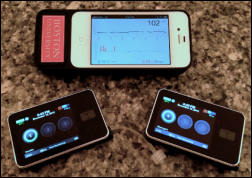
From The PACS Designer: “Re: the bionic pancreas. A new concept to help with Type 1 diabetes has been announced by Boston University. The bionic pancreas device uses uses a smart phone, glucose monitor, and insulin pump to automatically control blood sugar levels.” Quite a few groups were working on the concept, including University of Virginia, but what’s different about this device is that it can manage both high and low blood glucose because it is loaded with both insulin and glucagon. This one’s getting coverage because it was mentioned in a NEJM article describing results from a tiny study of 52 patients over five days. It avoids finger sticks by using a continuous glucose monitor and lets the patient describe what they just ate, such as a “typical breakfast” or “small bite.” Most interesting is that the system doesn’t know or care what type and dose of insulin the patient has been administering since it’s measuring blood glucose continuously – all it needs is the patient’s weight and their descriptions of meal size.  


HIStalk Announcements and Requests

image

Epic supports interoperability as well or better than its competitors, according to 75 percent of a large number of poll respondents (630). Quite a few thoughtful and informed comments were left on the poll, many of them non-anonymously. I’ll excerpt a few that are from real-life experience rather than the more common sideline Epic bashing or cheerleading:

I’ve worked with several vendors over the years and plenty of HIEs. At the end of the day, Epic connects to other Epic facilities or to non-Epic just fine. Epic to Epic is priceless and effortless. More than 50 percent of the patients in the US today are or will be using Epic when the current Epic pipeline is implemented. For organizations that are not Epic, we expect them to connect to a commercially available HIE or to the federal level HIE (eHealth Exchanged managed by Healtheway). We have no plans to connect our Epic system to other EHRs directly, not when the states and fed are encouraging and incenting us to connect to HIEs.

Epic has already built and tested connections to a wide variety of other vendors, so that implementation is rather easy. Epic notifies us when a new vendor connection is available and we are eager to proceed based on prior success. When configuration changes are found, Epic promptly addresses and tests changes, so there is no finger pointing or project delays. Epic is dedicated to interoperability in a way that I don’t see from a variety of other EHRs. Interoperability projects with Epic will be delivered in a fraction of the time and at a fraction of the expense of many other vendors

My experience with Epic and Direct messaging to date is less robust than some other vendors. At this point in time, Epic can only send and receive CCDA documents — other enclosures like notes, radiology reports, discharge summaries, .wav files — are unable to be sent from Epic to other EMRs. I have seen other EMRs be able to send us different types of information, including free text notes (like an email) and we cannot process them. So in this regard, Epic has lower performance than other vendors.

Our hospital connects with other Epic facilities, local, state and national government organizations and we are currently working on connecting with non-Epic entities. Whether we connect via Query/Retrieve or interfacing, Epic has always been extremely knowledgeable and helpful in assisting us to link to Epic or non-Epic entities.

Very impressed with Epic interoperability. They do it the best of any vendors we’ve had to work with. If we are frustrated its the lack of real standards across the industry. Id like to see true semantic interoperability.

Epic has the ability, but not the will to interface with other vendors. As one of those vendors, our customers are not getting what they need to support their workflows in specialty areas when Epic declines to provide interfaces to vendors supporting specialty areas.

New poll to your right (or here): have you as a patient had a video-based “visit” in the past year? Vote and then click the “Comments” link to describe.

Listening: new from Mali Music, also known as 26-year-old Kortney Jamaal Pollard from Savannah, GA. His heartfelt lyrics are always uplifting and often religious, while musically it’s mostly neo-soul with some light rap thrown in. It’s likely to polarize people who react strongly to some aspect of his work, which I did: I loved it. Coincidentally sticking with the Georgia theme, I’m also listening to the defunct, Athens-based Magnapop.

firsthistalk

Saturday was the summer solstice, which means it had more hours of daylight than any day of the year. It also reminded me that Friday marked 11 years since I wrote the first HIStalk post. Several of the folks who have recently recommended me on LinkedIn have been readers since the beginning, or at least nearly so, with quite a few going back to 2005 or 2006. Thanks for reading regardless of how long you’ve been doing so. I’m lucky to be doing something that gets me so excited every single day that I can’t wait to get started.


Upcoming Webinars

June 24 (Tuesday) noon ET. Innovations in Radiology Workflow Through Cloud-Based Speech Recognition. Sponsored by nVoq. Presenters: David Cohen, MD, medical director, Teleradiology Specialists; Chad Hiner, RN, MS, director of healthcare industry solutions, nVoq. Radiologists – teleradiologists in particular – must navigate multiple complex RIS and PACS applications while maintaining high throughput. Dr. Cohen will describe how his practice is using voice-enabled workflow to improve provider efficiency, productivity, and satisfaction and how the technology will impact evolving telehealth specialties such as telecardiology.

June 24 (Tuesday) 2:00 p.m. ET. Share the Road: Driving EHR Contracts to Good Compromises. Sponsored by HIStalk. Presenter: Steve Blumenthal, business and corporate law attorney, Bone McAllester Norton PLLC of Nashville, TN. We think of EHR contracts like buying a car. The metaphor has is shortcomings, but at least make sure your contract isn’t equivalent to buying four wheels, an engine, and a frame that don’t work together. Steve will describe key EHR contract provisions in plain English from the viewpoint of both the vendor and customer.

June 25 (Wednesday) 2:00 p.m. ET. Cloud Is Not (Always) The Answer. Sponsored by Logicworks. Presenter: Jason Deck, VP of strategic development, Logicworks. No healthcare organization needs a cloud – they need compliant, highly available solutions that help them deploy and grow key applications. This webinar will explain why public clouds, private clouds, and bare metal infrastructure are all good options, just for different circumstances. We’ll review the best practices we’ve learned from building infrastructure for clinical applications, HIEs, HIXs, and analytics platforms. We will also review the benefit of DevOps in improving reliability and security.

June 26 (Thursday) 1:00 p.m. ET. The Role of Identity Management in Protecting Patient Health Information. Sponsored by Caradigm. Presenter: Mac McMillan, FHIMSS, CISM, co-founder and CEO of CynergisTek. Identity and access management challenges will increase as environments become more complex, users create and manage larger amounts of sensitive information, and providers become more mobile. Learn how an identity and access management program can support regulatory compliance, aid in conducting audits and investigations, and help meet user workflow requirements.

July 2 (Wednesday) noon ET. The CIO’s Role in Consumer Health. Sponsored by HIStalk. Presenter: David Chou, CIO, University Of Mississippi Medical Center. We are moving towards an era where the consumer is searching for value. Healthcare is finally catching up with other industries and this is forcing health care providers and health plans to rethink their "business model" as consumers test new decision-making skills and demand higher quality and better value. Technology can provide value in this space as we move towards a digital healthcare.


Sales

image

Centegra Health & Wellness Network chooses Valence Health to provide infrastructure and support for its clinically integrated network.


Government and Politics

image

FDA publishes draft guidance stating that won’t enforce regulatory controls on Medical Device Data Systems (MDDS) because they pose low risk to the public and are important for advancing digital health. MDDS are medical devices that transfer data electronically (such as from a ventilator to an EHR), store and retrieve data (blood pressure readings), convert data using preset specifications (pulse oximeter data to printed form), display data (displaying a patient’s EKG), or store or communicate medical images. Only apps that control other medical devices would continue to be regulated. The 60-day comment period is open.

image

ONC will present a webinar on Thursday, June 27 at 1:00 ET on how to implement digital privacy notices on websites. PatientPrivilege won ONC’s contest to create compelling, easy to implement online NPPs – its example shows how one might look.

A Huffington Post article talks up Blue Button (and Humetrix’s iBlueButton) as a way for veterans to work around the never-ending DoD-VA EHR fighting, saying it’s easier for veterans to just download their own information and take it to whoever they’re seeing, including private practice doctors.


Other

image

Niko Skievaski, the guy behind “Struck by Orca: ICD-10 Illustrated” (you have more time to buy it now that ICD-10 is delayed) has made the Breadcrumbs knowledge management software available for free. Users can ask questions and receive answers from the health IT community, members of which earn reputation points from the moderators.

A BMJ essay says evidence-based medicine is having a crisis, postulating that its promise isn’t being met because: (a) drug and device vendors have hijacked the process by manipulating clinical trials and publishing only favorable research to create “evidence”; (b) the amount of available evidence is unmanageable for practicing physicians, even with technology help; (c) the low-hanging fruit of managing established diseases has already been picked and the emphasis has moved to industrial-scale screening that may involve unexpected opportunity costs or unintended consequences; (d) less-skilled or lazy doctors may treat by template rather than by using experience and judgment; (e) EBM gives bureaucrats a way to impose rules that marginalize the physician’s skill and eliminate the opportunity for the patient to be involved in the decisions made about them; and (f) EBM works best for a single condition, which isn’t usually the case. The authors plea for a return to “real” EBM that uses the physician’s judgment, involves the patient, resists the use of “evidence” created by special interests, and places ethical care as its highest priority.

I’m fascinated that Google just bought home security and camera vendor Dropcam for $555 million in cash. The Wi-Fi video service offers live streaming, two-way talk, alerts, and night vision. Naturally I was thinking about healthcare uses, such as monitoring processes (like in the OR, pharmacy, etc.) or as a patient advocate wisely unwilling to leave a loved one lying in a hospital bed surrounded by potential misadventure. The company has lots of competitors, but their product looks simple to set up and my interest was more in the concept rather than the specific product. On the Big Brother side of the argument, I can just see a clueless, overly controlling Dilbertesque IT director demanding that work-from-home employees have the camera trained on their chairs at all times.

A video from Missouri Economic Development highlights Cerner’s program to hire military veterans.


Contacts

Mr. H, Lorre, Jennifer, Dr. Jayne, Dr. Gregg, Lt. Dan, Dr. Travis.

More news: HIStalk Practice, HIStalk Connect.

Get HIStalk updates.
Contact us online.
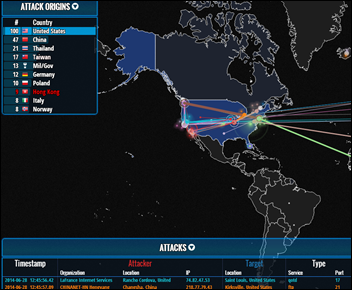
 

125x125_2nd_Circle

HIStalk Interviews Farzad Mostashari, CEO, Aledade

June 20, 2014 Interviews 9 Comments

Farzad Mostashari, MD, MSc is CEO of Aledade of Bethesda, MD.

image

How do you pronounce the company’s name? Is it Allay-DODD?

Allay-DADE.

Explain the company’s business model and what Venrock’s interest is in backing it with a significant investment.

The business model is pretty simple, actually. We’re going to give physicians – independent primary care practices – pretty much everything they need in order to form and join an ACO. The key business model for an ACO in this case is that the main revenue source for us comes if and when we generate total healthcare spending reduction and improvement in total healthcare quality and coordination.

This is all predicated on our belief that with the right tools, with the right technology, with the right boots on the ground, with the right team, with the right primary care providers, we can go right at the heart of what’s ailing healthcare today and get to better care, better health, and lower cost. If we can do that, the company prospers and the primary care docs prosper.


Who actually writes you checks and how do you calculate that savings that I assume you’re getting a percentage of?

There is an organization, an accountable care organization, which we will stand up. That entity then enters into contracts with health plans. The contracts with the health plans basically say, “You have a projected total cost for this panel of 5,000 or 10,000 patients. If we come in below that benchmark, the health plan gets half and the ACO gets half.” The largest plan in the world, Medicare, now has this available for primary care providers throughout the country. Many other health plans are following suit.


If I’m a physician and I decide I want to get in on this ACO thing, who are my fellow members or should I even know or care?

Healthcare is very local. We believe that you need boots on the ground, like the Regional Extension Centers in a way, harking back to that. Or even before that, to my experience with Mat Kendall, my co-founder, when we were in New York City. We went to 233 independent practices and we enrolled them in the Primary Care Information Project. This is similar, where in a given geography, we get a field team out, we find the right practices, and we bring them together, oftentimes with practices in a group they haven’t worked with before.

But really the work is done one-on-one with the practice. There’s a common set of tools — referral management tools, patient management tools, and risk management tools — but the real work happens in an individual, given practice, with the team going into the field.

What we’re looking for isn’t really networks of docs that have already come together. We’re looking for the independent, individual practices who might have thought, gee, I really want to get into this, but I’m just one practice — I only have a few hundred patients. They can’t by themselves enter into these risk arrangements. They need to be part of a bigger group. We’d be aggregating them with other docs who could form the core of this new high-value network.

That’s part of the value proposition we offer. It’s not that we’ll sell to anyone or work with anyone. A big part of this is the filtering out to make sure the people — the people you’re in the boat with — are really the people you want to be in the boat with.


What’s the risk to the practice?

Risk is something we have to manage. One risk is that it turns out there’s someone in the boat who’s not pulling their weight. Part of what we have and part of what Medicare requires is some incentives within the ACO that say, “We’re not just going to divide up the shared savings totally equally.” How much your participate in the ACO makes a difference in how much of a share you get. How do you on the key performance indicators determines how much of a share you get. In extreme cases, if someone’s really not doing anything, you can be expelled from the ACO. You can be voted off the island. That’s one risk.

I spent nine months at Brookings becoming a little bit of a student of ACOs that have succeeded and those that haven’t. One of the risks is if you don’t understand the regulations and their implications. This is one where being someone who’s been a regulator before and who understands how the regulators think is pretty helpful — to be able to reduce that risk for them. To say that I understand and our team has an in-depth understanding of what the regulations say and also what the implications of them are so you avoid some of the gotchas that have gotten people before.


I assume the doctor’s entire panel doesn’t just go ACO — there’s some blend of insurance patients and then adding new patients and converting some patients.

Exactly. This is perfect because it helps you transition.

It’s really hard to be going from one day doing fee-for-service regular practice and the other day to be taking full cap risk as part of Medicare Advantage. That’s not really feasible. There’s no health plan in the world that’s going to just turn over full risk contracts to you if you haven’t had the experience with this.

This is an ideal transition path for practices who know that’s the direction they’re in, that the future is value-based purchasing and being able to take accountability for total risk. This is training wheels, one-sided risk from CMS for three years. I’d love to go to a casino that gives me one-sided risk. [laughs].

In this model, if you get savings over the threshold, you share it with CMS. If costs go up, you don’t have to pay CMS the difference. It’s a really perfect opportunity for them to begin to gain the skills, gain the competencies, gain the tools, and then ramp up the risk. Ramp up with the number of different health plans that are participating. Expand to other commercial plans — as I said, more and more are going to be willing to give you these sorts of deals if you’ve proven your ability to manage risk. Then ramp up in terms of the kinds of risk you accept.

Initially, maybe you start off with one-sided risk. Then in three years, if you’ve done a good job with that, then you can feel more confident to move to two-sided risk or even delegated capitation agreements, where you get paid upfront for managing the total cost.


You mentioned the boots on the ground approach. Is this tied in any way to the Regional Extension Centers?

Well, you know, I have been a huge fan of the work of the Extension Centers. I’ve been saying for some time that the future for those Extension Centers is going to be in providing not health IT help, but actually getting into practice transformation. There’s not the funding available from the federal government for them to expand in a major way and to have a sustainability for those Extension Centers.

But you know, this could be a set of services that they could contract with us or anyone else to provide. This could be part of the sustainability model for Extension Centers moving forward if those Extension Centers have demonstrated their value to the providers and have the ability to move beyond just health IT to true practice transformation.


Assuming you work with the RECs in some capacity, who do you employ within the company?

There’s a set of central resources that you need that you don’t want to duplicate for every ACO — for every ACO to have their own legal team and have their own regulatory review and have their own IT team. 

One of the things I’ve realized is once you are doing this ACO work, I can’t tell you the number of IT companies who assure me that they have the solution for me. [laughs] I’m the former National Coordinator for Health IT. I’ve seen a few products in my day. I have a sense and my chief technology officer Edwin Miller has been involved with some 30 different products. We have the ability to weed through and find out what makes sense to buy, what makes sense to build, and how do you assemble this all into one integrated technology platform. For a small ACO to do that, that’s just prohibitive.

I’ve talked to many ACOs  who a year into it say, “We haven’t done anything because we’d have to start all over with our IT vendor.” That’s part of the central support that they get — the integrated technology platform, the data, the analytics, the regulatory, the legal, protocols, all that stuff. Then that’s partnered with the boots on the ground, which are local to them. A medical director who’s dedicated to them. A nurse coordinator. The project managers and transformation staff who go into the practice. The best of both worlds.


You mentioned EHR optimization and the integrated data and technology platform. Do you anticipate working with the EHRs each practice runs or will you have a relationship with vendors that will become the standard for the ACO?

Step one is I’m going to pre-select the practices based on their ability to demonstrate Meaningful Use. For me, Meaningful Use is, “You’ve got to be this tall to ride.” Because without that, you don’t have the data to be able to make all this work.

Two, you and I know well that the EHR systems are not optimized, particularly for population health. We’re not going to rip and replace people’s EHRs, but we’re going to optimize the hell out of them. Make sure that the efficiency is there, that the workflows make sense, that the work of documentation doesn’t all fall on the poor doc. That you actually make use of the data you’re collecting. That their decision supports are meaningful and tied to the quality measures they’re trying to accomplish. That the registry functions actually work as intended.

Our team will have something of an advantage having not just implemented the certification and Meaningful Use qualities, but having actually built, with Edwin, three cloud-based EHRs that met the Meaningful Use requirements. So step one, make sure that they have the basic foundation.

Step two, optimize the heck out of them. Step three, bring to bear the tools that EHRs aren’t really built for. I wrote about this after HIMSS last year. There are too many people selling shrink-wrapped population health — reporting, really, not management — tools that are trying to automate stuff when we’re in the discovery stage. I think the first infrastructure we really need is a discovery set of tools, where you have a very flexible data architecture underneath with some very flexible data analytics tools on top. Then you figure out what it is after you do discovery. Then you create protocols. Then you move to automation.

We’ll look at what’s available right now in terms of both the fundamental underlying data architecture, the middleware tools that are needed, the analytic tools that ride on top, and then some frameworks for being able to create custom visualization into that framework. As I’m describing it, I’m sure you are seeing the flavor of what we’re building is not monolithic software platforms or enterprise pieces of software. It’s really more of a platform that becomes a chassis with separation between the logical layers.


There are a lot of certified products, so in a given group of practitioners that might want to be part of an ACO, you might have 10 or 15 EHR systems. How can you optimize those systems not knowing them first-hand like the users of those systems do?

I think we’re going to need to probably develop and hire and add to the team people who are experienced and experts in each of probably the top half a dozen, maybe eight EHRs, that will probably account for the bulk of our practices we want to work with. That’s one. 

Two is to work with the vendors. This is one of the advantages that I’ll have. I’ll continue to take a vendor-neutral approach on the EHR side, which is more comfortable to me, and I’m sure there will be some that see the opportunity to work with us and will be able to learn from us even as we are working with them to optimize their solutions for the practices.

The EHR vendors need to learn how to optimize their own systems for population health management. There will be no one better to work with than us in terms of figuring out what that means.


You’ll be supporting some number of the more popular EHRs and then building the data layer that’s aggregated across all members of the ACO and you’ll provide analytics and population health management tools to sit on top of that?

Correct.


From the physician’s standpoint, you’re handling the administrative overhead. They’re just using the EHR they’ve always used and it’s somewhat invisible to them other than optimization changes or changes to meet quality standards. You’ll report back to them from the centralized version of their data collected with everyone else’s.

That’s right. Same EHR, just better. [laughs]


Hospitals and even practices are hearing “ACO” and are writing checks having no idea what they need or want. Will people get burned trying to jump too early on what they think the future will be?

I think this is a key risk for for ACOs — jumping on with the wrong technology and the wrong technology platform. Assuming that there’s going to be some magical ACO technology that’s going to solve your problem. This is still very much about discovery before we get to automation.


What have we learned about ACOs since the arguably mixed success of the Pioneer group? Can ACOs work everywhere and not just in areas where Medicare is paying too much?

Great question. I think my team at Brookings was the first to actually identify the individual 29 who had gotten shared savings and then start to look at the predictors and correlates of that.

What we found was that, one, it had been assumed that the Pioneer-type ACOs, the big integrated delivery networks, were going to blow the small physician-led ACOs out of the water. That was not true. Thirty percent of the physician-led ACOs demonstrated savings in Year One versus 20 percent of the hospital-sponsored ones. That’s a really interesting observation.

The second observation that I’ve had in a more qualitative than quantitative way has been that among a lot of ACOs that didn’t succeed, there were three factors and one underlying issue. The one factor was that they didn’t understand the regulations. The second factor was that they didn’t use data. They didn’t use data, they sat on the data, this treasure in the form of the claims data of every client paid by CMS, they just sat on it. They didn’t do enough with it. The third thing was that they didn’t change practice enough. They had monthly meetings and that was kind of it. If you do that, it’s too hard. You’re not going to generate savings.

I think those three factors are going to be more important than where you are. It’s can you use data? Have you invested enough, both in terms of your time and in money, in changing what you do? Third, do you understand the regulations? That’s what I’m bringing to the practices.

What you still need — and no one can hand it to you — is will. The will to change. That’s what we have to select for.


Hospitals I’ve worked in were swimming in data but didn’t act on it because there wasn’t enough imperative. Do we have enough data to move to a value-based payment model? Do you think the economic pressure will be enough to get people to pay attention?

I do. I do. Particularly for the smaller primary care practices.

With the hospitals, it’s more complicated. A, they have tons of competing demands. Forget about academic medical centers who have the teaching mission and the research mission and all of that mixed in. Even in just the tertiary care setting you have all these entrenched structures that reflect the fee-for-service optimization world.

For the hospital, life begins with the emergency room admission. Now you’re asking them to think about how to prevent an admission. That is totally foreign to a hospital and totally schizophrenic in terms of their revenue, where on the one hand they’re trying to reduce admissions, but on the other hand that’s their revenue and their bread and butter — heads in beds.

With a physician — and particularly a primary care-led ACO — it’s much easier. One, you don’t have tons of committees [laughs] to navigate through. It’s a small practice. The doc gets together with the office manager and their nurse and they say we’ll do this, and they do it, and it happens. I’ve seen time and time again in trying to make changes that it’s easier in the smaller practices than in the larger institutions.

Two, the incentives are much more meaningful to the primary care doc who is making $150,000 a year. That’s their take-home pay — $150,000 a year on average. For them, saying you could make an extra $50,000 or $100,000 – that’s really meaningful. That’s game-changing for them, whereas for a hospital to get back half of the revenue that they lost, that’s not really a game-changer.


How do you see small practices being configured differently with primary care docs getting squeezed by mid-levels and then operating under an ACO model?

We’re not going to try to totally upend the practice. We’re going to start with pretty simple stuff. Is there going to be someone to answer the phone at 9:00 at night when the patient calls or is there an answering service that says to go to the emergency room? That’s not totally upending the practice structure, exactly.

I think in the ultimate manifestation of really optimizing for value, what I suspect we’re going to see is primary care providers using referrals as consults. Neil Calman at the ACO Summit talked about how when as a group of family medicine docs they took over a practice that had tons of specialists in it – 10 orthopods and a hematologist or whatever – and they looked at what the patients were coming in for, they realized this is family medicine stuff. They were managing people with stable anemias. They were managing people with stable seizure disorders.

Use specialists as consultants, not to manage patients with stable conditions. That’s an example of disruption, where the primary car doc starts to do more of the work and not just refer patients reflexively to this specialist for this and that specialist for that and a third specialist for that and a fourth specialist for that. 

Their job, frankly, is going to become a lot more interesting. That lets them shed some of the boring stuff that pays the bills today – the strep throat, the poison ivy. Let the mid-levels do that. Heck, let the urgent care center do that. Let CVS do that. Focus on what the highest value work is that each part of the healthcare system can provide.


Where do you hope the company is in two or three years?

For me, I want to have the most successful ACO in the country. [laughs] That to me is success, where we’re the best. We’re the best. We figure out how to use data and technology to bring the focus on the outcomes.

Gosh, I just can’t wait to tear into the meat of what we’ve needed to do, which is about the outcomes. It’s about being able to focus on how do we get measurably better health, measurably better patient experience, and lower cost. And use data and technology in really fundamental ways to accomplish that, but to have our eyes on the prize instead of structures and processes and so forth.


Do you have any final thoughts?

It’s an exciting time. This is in some ways a strange turn for me to do a startup and join the ranks on the private sector side. But in other ways, it just feels incredibly familiar to me. [laughs]

Let’s start with a blank piece of paper. Let’s think about what the world needs and build a team, build an awesome team, that can use data to improve population health. In a way, I feel like I’ve been in training for this all my life.

Readers Write: Replace Your RFP with an RFS

June 20, 2014 Readers Write 2 Comments

Replace Your RFP with an RFS
By Patty Miller

image

I have been on both sides of an RFP, as a member of the organization issuing the RFP and the organization receiving the RFP. In one case, when on the issuing side, we did not select a vendor, as no traditional vendor solved our problem. We went back to the drawing board, so to speak.

From the receiving side, I have seen organizations spend hundreds of thousands of dollars to millions of dollars on software or services, only to realize none or a small portion of their anticipated ROI because they implemented only part of the services or software or never completed the implementation.

What happened? Everything was spelled out in the RFP. All the vendors followed the steps and they had their evaluation process down.

The RFP is a wonderful tool to reduce price and squeeze an existing vendor for savings or to use when the solution is known. But what happens when there is a real problem to solve or when venturing into new territory?

That is where the RFS, or Request for Solution, comes into play. Entrepreneurs, innovators, and vendors are some of the most effective problem solvers we have in society today. How do we harness them? Bring these solution architects into our fold and share the insights we have into the problem we are trying to solve or the direction we would like to take. Then, we can create a solution that is used, solves challenges, and realizes the desired ROI.

Let’s use an example scenario. Our organization is looking to purchase analytics software. What is the desired outcome? Is this in line with our strategic goals? For this example, we would like to better understand how we are paid and ultimately be paid 10 percent faster.

Problem Definition Phase

In this phase, the solution architects are engaged as a group or one-on-one to hear what the problem and current state is. An NDA may be a good idea during the problem definition phase. To convey the problem and current state, a presentation, observation, or a demonstration can be used. That’s it. Share the problem, nothing else.

In our case of looking to purchase analytics software, we find our DSO to be 89 days on average. Delays in cash collection inhibit our ability to reinvest in the company, thus delaying sales.

Ideal Future State Definition Phase

Describe and share with the solutions architects what some of the desired outcome looks like when the problem is solved, such as, we will reduce defects or have zero defects. We can deliver 10 percent more of our product to the customer for the same price. We have reduced overtime by 10 percent.

Make part of the selection criteria about these outcomes and other outcomes they can deliver and convey this information to the solution architects so that they will provide all the value they can. The ideal future state should align with organizational strategic goals as well.

In our scenario of looking for analytics software, we would like to bring DSO down from 89 days to 80 days and increase sales by 5 percent. Due to the high importance of cash in running a business, it is in our best interest to collect outstanding receivables as quickly as possible. By quickly turning sales into cash, we can put the cash to use again — ideally, to reinvest and make more sales.

Solution Definition Phase

During this phase, work collaboratively with each solution architect to refine the initial solution they provide. If this is a large project, this phase can take months. The payoff is implementing a solution or service that is used, solves challenges, and realizes the desired ROI.

In this phase, the solution architects are designing and proving — through POCs, demonstration, references, or site visits — how their analytics software will help us reach our desired outcomes along with other benefits they can provide. We decided the goals of this implementation. They will be to reduce DSO and more accurately forecast sales because the solution architects demonstrated in their solution that we would be able to forecast sales more accurately.  They also demonstrated how that would lead to turning sales into cash.

Contracting Phase

Contracting should include deliverables and a timetable based on the collaboratively designed solution.

For our analytics software scenario, in contracting we ask for a guaranteed outcome, perhaps not as aggressive as our original goals. In some instances, it might be more aggressive, depending on what the solution architects have demonstrated they can deliver and if our goals have changed in any way. Contracting can be difficult because everyone is trying to minimize risk during contracting, but ultimately everyone should have a little skin in the game, both solution architect and buyer. Include a change policy during contracting.

In our scenario of analytics software, we agreed that DSO would decrease by nine days in one year.

Implementation Phase

During this phase, the solution should be referenced frequently. If there are changes, they should be documented per the change policy agreed to in the contracting phase, especially if the anticipated outcomes change. Needs change during an implementation and, if additional value can be achieved, it may make sense to proceed in a slightly altered direction.

In our analytics software scenario, during implementation, some lean processes were put in place and DSO decreased by two days. We are now looking for the software to give us another eight days instead of the initial nine, although we think the benefits will be greater.

Solution Monitoring Phase

For a period of 3-12 months or more after the solution has been implemented, there should be frequent monitoring to ensure that the solution or service is utilized, has solved the challenge, and realized the desired ROI. If not, the solution architects or issuing organization should be accountable as per the contract.


If someone is truly interested in solving a problem, that person will have skin in the game. RFS issuing or receiving can be a scary process for an organization that is accustomed to the traditional RFP. The organizations interested in change will embrace the RFS; others may be resistant.

No organization can afford to spend its resources, time, people, and capital on a project that does not produce the desired outcome. I expect many vendors, entrepreneurs, and purchasers will welcome this collaborative solution design, but some will be resistant due to the insecurities associated with change.

Harnessing the power of the Request for Solution allows for bringing solution architects into your fold and implementing a solution that is used, solves challenges, and realizes a desired ROI.

Patty Miller is sales manager, health and sciences division,  for TechDemocracy of Edison, NJ.

Readers Write: AMA Adopts New Recommendations on Telemedicine, Signaling Further Comfort with Telehealth

June 20, 2014 Readers Write Comments Off on Readers Write: AMA Adopts New Recommendations on Telemedicine, Signaling Further Comfort with Telehealth

AMA Adopts New Recommendations on Telemedicine, Signaling Further Comfort with Telehealth
By Alexis Gilroy, JD

image

Earlier this month, the American Medical Association (“AMA”) approved recommendations regarding the provision of medical services using telecommunications technologies (commonly known as “telemedicine”). AMA’s report, on the heels of a policy adopted in April by the Federation of State Medical Boards, indicates the growth of telemedicine, an increased comfort-level with telemedicine, and a desire to align legal and regulatory frameworks between medical services provided “in-person” and those provided using telemedicine.

In particular, AMA’s report provides an overview of key topics specific to telemedicine, including reimbursement, known practice guidelines, and telemedicine use cases, and it establishes a number of new AMA policies and recommendations regarding telemedicine services. The report is a significant departure from some of the AMA’s previous policies regarding the use of telemedicine, including a 1994 AMA opinion prohibiting physicians from providing clinical services via telecommunications (to which the report notes “may no longer be consistent with the best ethical analysis”).

Most notably, perhaps, the AMA advocates equating the standard of care for services provided via telemedicine with the standard of care for in-person services. While this may just seem like legal jargon to some, it has potential real positive impact on the digital health industry. This move signals an acknowledgement of telemedicine as an accepted delivery model akin to “in-person” delivery models. After all we are talking about medical services in either context with the difference merely being the venue for accomplishing delivery.

Unfortunately, to date, regulators do not always have similar views between medical services provided “in-person” versus telemedicine, as adopted regulations in many states indicate a strong deference to traditional “in-person” services and in some cases a flat prohibition on services provided through telemedicine. For example, Texas and Alabama currently require an in-person exam prior to any services provided via telemedicine in a patient’s home regardless of the patient’s illness or situation, causing significant roadblocks for telehealth providers in these states. This is especially frustrating for some home-based patients who could significantly benefit from engagement with a primary care or specialty physician using telemedicine.

With the AMA’s support through the new policy, similar to the Federation’s telemedicine policy, we may see state medical boards and other regulators rethink existing and proposed regulations specific to telehealth that placed an across the board barrier on the delivery of some medical services merely because the provider chose to utilize telecommunications rather than considering whether telemedicine could be used safely and perhaps more effectively for some patients and illnesses.

The AMA’s adopted recommendations about the delivery of health care services via telemedicine include the following items:

  • Establishing a valid patient-physician relationship. Telemedicine services should be based on a valid patient-physician relationship established prior to providing telemedicine services, which can be established through: (a) a face-to-face examination, where a face-to-face encounter would otherwise be required for providing the same service in-person; or (b) a consultation with another physician who has an ongoing patient-physician relationship with the patient and agrees to supervise the patient’s care; or (c) meeting standards of establishing a patient-physician relationship included as part of evidence-based clinical practice guidelines on telemedicine developed by major medical specialty societies, such as those of radiology and pathology. Although this recommendation does not explicitly describe what constitutes a “face-to-face examination,” the full report provides that “[t]he face-to-face encounter could occur in person or virtually through real-time audio and video technology.”
  • State licensure. Physicians and other health practitioners delivering telemedicine services must abide by state licensure and medical practice laws and requirements in the state where the patient receives services.
  • Choice of provider and information on provider credentials. Patients seeking care delivered via telemedicine must be offered a choice of provider. Further, patients receiving telemedicine services must have access to the licensure and board-certification qualifications of the health care practitioners providing care in advance of their visit.
  • Practice guidelines. The delivery of telemedicine services must follow evidence-based practice guidelines, to the degree they are available, to ensure patient safety, quality of care, and positive health outcomes.
  • Patient history and documentation. The patient’s medical history must be collected as part of the provision of any telemedicine service, the services provided must be properly documented, and a visit summary must be provided to the patient.
  • Care coordination. The provision of telemedicine services must include care coordination with the patient’s medical home and/or existing treating physicians, which includes, at minimum, identifying the patient’s existing medical home and treating physician(s) and providing such physician(s) with a copy of the medical record.
  • Emergency referral protocols. Providers must establish protocols for emergency referrals.
  • Privacy and security. Delivery of telemedicine services must abide by laws addressing the privacy and security of patients’ medical information.

Alexis Gilroy, JD is a partner with the Jones Day law firm of Washington, DC.

News 6/20/14

June 19, 2014 News Comments Off on News 6/20/14

Top News

image

The American Hospital Association urges CMS and ONC to quickly adopt plans that were identified in its Notice of Proposed Rulemaking that would give hospitals flexibility in the combinations of EHR certification and Meaningful Use stages that are permitted for 2014. AHA observes that the proposals are last minute given that the last FY2014 reporting period is July through September 2014 and the NPRM’s comment period won’t be finished until that reporting period is underway, meaning that “hospitals are essentially being asked to act on faith that the agencies will finalize these proposals as written while risking that they may not.” AHA also wants the 2015 reporting period shortened to 90 days and to avoid setting a firm October 2016 start date for MU Stage 3 given that “fewer than 10 hospitals and 50 EPs had attested to Stage 2” as of mid-May.


Reader Comments

From Clueless About HIT: “Re: magazine’s Top 100 ‘HIT’ vendors. Many represented their revenue from payers, life sciences, and government health as ‘HIT.’ This includes Cognizant, Optum, Infosys, TriZetto, Syntel, and Edifecs. Either these vendors are clueless about what ‘HIT’ means or they are deliberately misreporting. It also speaks volumes about publications that come up with these lists.” I never even look at those lists, to be honest. They’re great for the magazines who make them up to sell ads, but even if the numbers are accurate (and that’s obviously dependent on interpretation), who cares? Bigger vendors aren’t necessarily better vendors, and anyone who would make a buying decision based on a company’s annual revenue is likely to be disappointed. I think I’ll sell spots on a “Coolest Vendor” list and donate the proceeds to charity – at least some good would come from it.


HIStalk Announcements and Requests

This week on HIStalk Practice: ARcare CIO Greg Wolverton talks agility and mandatory EHR training. Virginia’s "people problem" gets in the way of HIE. Mobile access to EHRs takes a back seat to workflow. Physicians may be the biggest barrier to HealthKit’s success. Dr. Gregg pontificates on the inevitability of change. The Brookings Institution highlights the top challenges of Medicare ACOs. ONC leadership changes have some questioning the longevity of the Meaningful Use program. Thanks for reading.

This week on HIStalk Connect: Former National Coordinator Farzad Mostashari, MD, launches a startup that will focus on optimizing EHRs for primary care practices interested in joining an ACO. Dr. Travis discusses the promising but very new telecharting market. In an effort to keep up with Apple and Samsung, Google will unveil its new health data platform at next week’s Google I/O developers conference. Mr. HIStalk interviews Colin Konschak, CEO of Divurgent.

Listening: Birdy, the 18-year-old singer-songwriter from England who has recorded several international hits and contributed a track to “The Hunger Games.”


Webinars

June 24 (Tuesday) noon ET. Innovations in Radiology Workflow Through Cloud-Based Speech Recognition. Sponsored by nVoq. Presenters: David Cohen, MD, medical director, Teleradiology Specialists; Chad Hiner, RN, MS, director of healthcare industry solutions, nVoq. Radiologists – teleradiologists in particular – must navigate multiple complex RIS and PACS applications while maintaining high throughput. Dr. Cohen will describe how his practice is using voice-enabled workflow to improve provider efficiency, productivity, and satisfaction and how the technology will impact evolving telehealth specialties such as telecardiology.

June 24 (Tuesday) 2:00 p.m. ET. Share the Road: Driving EHR Contracts to Good Compromises. Sponsored by HIStalk. Presenter: Steve Blumenthal, business and corporate law attorney, Bone McAllester Norton PLLC of Nashville, TN. We think of EHR contracts like buying a car. The metaphor has is shortcomings, but at least make sure your contract isn’t equivalent to buying four wheels, an engine, and a frame that don’t work together. Steve will describe key EHR contract provisions in plain English from the viewpoint of both the vendor and customer.

June 25 (Wednesday) 2:00 p.m. ET. Cloud Is Not (Always) The Answer. Sponsored by Logicworks. Presenter: Jason Deck, VP of strategic development, Logicworks. No healthcare organization needs a cloud – they need compliant, highly available solutions that help them deploy and grow key applications. This webinar will explain why public clouds, private clouds, and bare metal infrastructure are all good options, just for different circumstances. We’ll review the best practices we’ve learned from building infrastructure for clinical applications, HIEs, HIXs, and analytics platforms. We will also review the benefit of DevOps in improving reliability and security.

June 26 (Thursday) 1:00 p.m. ET. The Role of Identity Management in Protecting Patient Health Information. Sponsored by Caradigm. Presenter: Mac McMillan, FHIMSS, CISM, co-founder and CEO of CynergisTek. Identity and access management challenges will increase as environments become more complex, users create and manage larger amounts of sensitive information, and providers become more mobile. Learn how an identity and access management program can support regulatory compliance, aid in conducting audits and investigations, and help meet user workflow requirements.

July 2 (Wednesday) noon ET. The CIO’s Role in Consumer Health. Sponsored by HIStalk. Presenter: David Chou, CIO, University Of Mississippi Medical Center. We are moving towards an era where the consumer is searching for value. Healthcare is finally catching up with other industries and this is forcing health care providers and health plans to rethink their "business model" as consumers test new decision-making skills and demand higher quality and better value. Technology can provide value in this space as we move towards a digital healthcare.


Acquisitions, Funding, Business, and Stock

image

BlackBerry reports a surprise quarterly profit and announces the Passport, which CEO John Chen says is either the world’s smallest “phablet” or its largest phone. It features a hardware keyboard at a 4.5-inch square display. The device will be marketed to healthcare users, which is a key target of the struggling BlackBerry.

Vocera opens an office in Dubai, UAE.


People

image

Fraser Bullock (Sorenson Capital) is elected chairman of the board of Health Catalyst, replacing David A. Burton, MD.  

image image

Valence Health names Tony Gutierrez (Missouri Care) as VP of operations of its health plan division and Jack Risenhoover (Napier Healthcare) as VP of business development.

image

Kryptiq hires Jacquelyn Hunt, PharmD, MS (Bellin Health System) as chief population health officer.

image

AirStrip appoints Orlando Portale (Palomar Health) as chair of its newly created Innovation Advisory Board.


Announcements and Implementations

image

Aprima will offer dashboardMD’s performance management and BI reporting tools.

image

Kareo offers medical practices a guide for registering for the VA’s “Accelerating Access to Care Initiative,” which allows them to serve VA patients who can’t get appointments for primary or specialty care.

In England, Cerner launches a SaaS version of Millennium for smaller NHS trusts (under 500 beds) that can’t afford its system otherwise. The company says it’s similar to a US version used by 70 hospitals.

Athenahealth announces that its users account for 59 percent of the 485 providers who have attested for Meaningful Use Stage 2 even though its market share is les than 3 percent.

Hartford HealthCare’s Integrated Care Partners goes live with High Line Health’s Visual Analytics Platform for population health management and value-based care.

image

California Telehealth Network chooses HealthFusion’s MediTouch as its first EHR partner.


Government and Politics

Governors of several New England states say they will explore sharing prescription data to thwart doctor-shopping drug seekers who cross state lines. 

ONC will present a webinar on the FDASIA draft report on Friday, June 20 at 3:00 p.m. Eastern.

The US House Energy & Commerce Committee’s 21st Century Cures seeks guidance on how the vision of a digital health ecosystem (mobile apps, EHRs, cloud, and big data) can be realized to create new treatments and cures. Public input is solicited to cures@mail.house.gov. The group will convene a roundtable in Washington, DC on Tuesday that includes Jeffrey Shuren, MD, JD (director, FDA’s Center for Devices and Radiological Health), Martin Harris, MD (CIO, Cleveland Clinic), Jonathan Bush (president and CEO,athenahealth), and Joseph M. Smith, MD, PhD (chief medical and science officer, West Health.)


Innovation and Research

SNAGHTML7fc2ce3

Apple files patent applications that include an iPhone receiving sensor data — including from at least one that’s worn and not part of the iPhone — and calculating a “personal scorecard” and triggering alarms.


Other

image

image

The Wall Street Journal profiles Flatiron Health, which gathers de-identified treatment and outcome data from cancer centers to give doctors visibility into how treatments are working for the 96 percent of patients with cancer who aren’t enrolled in a clinical trial. The 28-year-old co-founder, who with his Flatiron Health co-founder sold their advertising technology company to Google in 2010 for $81 million, says it was hard to get the cancer center CIOs and doctors to contribute information they considered proprietary. The company has 105 employees, has 200 cancer centers on board, and received a $130 million investment from Google in May 2014, using some of the money to acquire oncology EHR vendor Altos Solutions.

A survey by FICO (the former Fair Isaac) finds that 80 percent of people want to communicate with their providers via smartphone, while 76 percent would like medical appointment reminders and 69 percent say they want appointment scheduling and medication reminders.

image

Rady Children’s Hospital (CA) exposes the information of 14,000 patients when employee accidentally attaches a worksheet to emails sent to six job applicants.

A Huffington Post report calls out for-profit hospices that make up nearly 60 percent of the total, including 6,100-employee Vitas, which was bought out for $406 million in 2004 by the parent company of Roto-Rooter. Companies are accused of upcoding, sending marketers to find dying hospital inpatients to sign up quickly, enrolling patients at Medicare’s expense who were healthy enough to play golf, treating patients against their will, and having a high rate of safety and patient care violations. Experts say the problem is that Medicare pays set day rate, encouraging hospitals to enroll patients who don’t require their services and provide higher levels of services than the patient needs. Medicare’s data shows that non-profit hospice had an average length of stay of 69 days vs. 105 days for for-profits.

image

Fletcher Allen Health Care (VT) will change its name this fall to The University of Vermont Medical Center.

A North Carolina business paper mentions the status of EHR deployment in the state. Wilmington Health is about to go live with NextGen, New Hanover Regional Medical Center is expanding Epic to give inpatients access to MyChart, and Novant is expanding Epic use throughout its facilities. Tad Dunn, CIO of New Hanover, says 70 percent of the citizens of North Carolina now have a chart in Epic.


Sponsor Updates

  • Connance announces the Analytically Optimized Revenue Cycle, predictive analytic and workflow strategies to increase cash 10-30 percent and reduce cost up to 25 percent.
  • Elmhurst Clinic (IL) shares how its use of healthfinch RefillWizard has led to happier doctors.
  • Nuance announces that Valley Medical Center (WA) gained $2.2 million in revenue by using its Clintegrity 360 clinical documentation improvement program.
  • Fujifilm Medical Systems USA will demonstrate the latest version of its Synapse Cardiovascular and it Synapse Mobility mobile ap, which will allow viewing of non-DICOM information from its vendor-neutral archive in EHRs such as Epic, at the American Society of Echocardiography meeting in Portland, OR starting this weekend.
  • Sagacious Consultants will participate in the HFMA ANI 2014 in Las Vegas June 22-24.
  • Predixion is recognized as a Challenger in the Advanced Analytics Market by Hurwitz & Associates.
  • Texas Pulmonary & Critical Care Consultants is experiencing increased doctor collaboration since going live on pMD Messaging.
  • Texas Children’s Hospital shares how it improved appendectomy outcomes using Health Catalyst’s analytics solutions.
  • InterSystems expands its New York City office.
  • Aspen Advisors celebrates its eighth anniversary, adding 10 clients this year.
  • Divurgent announces the addition of Cost to Collect service to its Revenue Cycle Management Practice solution.

EPtalk by Dr. Jayne

clip_image002

Quite a few readers responded to my recent Curbside Consult regarding a telemedicine solution a potential part of an employee benefits package. One made a very good point:

I read your recent op piece on the new “benefit” your HR department is trying to roll out to employees. I wondered what issue they were trying to solve, other than be on the “bleeding” edge of offering this service? If the employees have an access issue, seems like the first step would have been to meet with medical staff leadership and brainstorm alternatives. I’m just a CIO with no clinical background so I can’t bring a clinical perspective to the discussion, but the one that I always tell my colleagues I do have is that of a patient and how our decisions are viewed through those “lenses.” In this case, I wonder how someone I don’t know and have never met will understand me within the full context of my medical history and current environment and can deliver better quality and outcomes than someone who does.

That’s a very good point and one that was brought up to some degree in our committee’s discussion. It also makes a good point about IT solutions. In general, it’s good practice to understand the business problem you’re trying to solve prior to looking at vendors. In our case, the business problem is that we’re notoriously cheap. Our employees haven’t had raises in years (blamed on MU-induced belt tightening). Many of us suspect they’re trying to use this as a way to make up for what we’re lacking in salary or other retention perks. Another reader wrote:

As a long-time practice administrator in hospital systems, I totally agree with your reaction. The med exec committees will have a heyday and make life miserable for the hospital administrators. Aren’t we all trying to keep care within our own “families?”

Another physician reader referred to the story as, “Almost Dilbert material, except there are too many layers of absurdity.” I almost spit coffee on my keyboard as I read that because I had to withstand the pointy-haired boss in a previous life. The need for patient privacy was also a recurring theme:

At our facility, we have an aggressive strategy to significantly incent our employees to receive care within our network. The loudest noise we hear on this topic is what you alluded to – patient confidentiality. It is cited as the #1 barrier to our employees seeking care with us.

Readers also sent plenty of tips about nice seaside locations where I could consider practicing. It’s looking awfully tempting. Another travel-savvy reader sent me this article about the urgent care clinic that recently opened. Since the airport already has a liquor store in the baggage claim area, it was only a matter of time. They do offer hangover remedies including intravenous fluids, vitamin B12, and oxygen. I wonder if Chicago O’Hare will offer the same options for HIMSS15 travelers? Not likely.


Contacts

Mr. H, Lorre, Jennifer, Dr. Jayne, Dr. Gregg, Lt. Dan, Dr. Travis.

More news: HIStalk Practice, HIStalk Connect.

Get HIStalk updates.
Contact us online.

 

125x125_2nd_Circle

Advisory Panel: Budget Challenges, Favorite Vendor

June 18, 2014 Advisory Panel Comments Off on Advisory Panel: Budget Challenges, Favorite Vendor

The HIStalk Advisory Panel is a group of hospital CIOs, hospital CMIOs, practicing physicians, and a few vendor executives who have volunteered to provide their thoughts on topical industry issues. I’ll seek their input every month or so on an important news developments and also ask the non-vendor members about their recent experience with vendors. E-mail me to suggest an issue for their consideration.

If you work for a hospital or practice, you are welcome to join the panel. I am grateful to the HIStalk Advisory Panel members for their help in making HIStalk better.


What are your biggest capital and operational budgeting challenges and what creative solutions have you used to overcome them?


Being able to retain talent and valuable people in a very competitive environment while facing lower reimbursements.


We are receiving diminished funding for maintenance of infrastructure systems (storage, network, tools, etc.) while experiencing increasing demand for security solutions and acquisitive growth requiring unplanned support. We are shifting resources as needed to keep up with demand and we’re candidly disclosing the system availability risk levels we believe are rising as a result of delaying infrastructure maintenance. We’ve tapped philanthropic donors for “marquee” investments, leaving routine sources to the less-glamorous work. 


Our hospital has seen volumes plateau and reimbursements decreasing. Our revenues are well below target and we are trying to cut expenses everywhere. Going into our next financial year, we are focusing on optimization efforts of existing systems and infrastructure replenishment. All other projects will have to show hard dollar ROI to be approved.


[from a vendor member] We’re seeing that a number of our clients are employing advanced analytics to their administrative data to address and close gaps related to missing charges for devices, drugs or care provided. Leveraging their own historic HIS data with predictive modeling technologies, they’re bringing in millions of additional dollars in net revenue per year — an interesting and creative approach to addressing budget challenges.


Like everyone else, we are expected to do less with more. We are located in a remote area and have little access to advanced IT talent. I located a vendor who provides DBAs (and other programmers) at less than $30/hour. We currently use them for SQL and Oracle DBA as well as a Citrix administrator, all 20 hours/week. There is no way that we could afford this support any other way.


After an enormous EMR expense, the hospital is looking to cut down ongoing expenses, pointing out that IT is not a source of revenue. They seem most eager to trim optimization expenses, particularly in compensation to clinical experts and consultants. On the clinical side, we have done best with investing in fewer, but more involved subject experts ("a few good men and women"). They do well getting ad-hoc consensus and being the face of IT. On the consultant side, we have made the case that "a few good men and women" are essential to operations.


As reimbursements are continuing their decline, we are under the same scrutiny as all other departments. What was once considered nearly untouchable is now under the microscope. Our biggest challenge does not come under a program or project specific area, it is everything we do. We are in the process of figuring out what we need as essential services and what can be shut down. This is not a small task as we have some platforms that do not scale well and causes us duplicative support and infrastructure services. In addition to that, the shadow IT problem is hard to fully identify and reduce spend on. This will be an ongoing challenge for us and I believe will become more acute for all providers in the next few years.


Our board has a policy that project overruns over 5 percent have to be approved by them. We were replacing our pharmacy system and working on MU2 with the same set of resources. As MU2 came to be more complicated than anticipated, we pulled internal resources away from pharmacy and brought in more expensive outside resources. Pharmacy went live on time but $500K over budget. This is the only time in 20 years that I’ve had to go to the board for a project overrun. My point is that it demonstrates again what a huge distraction MU has and will continue to be along with potential career-limiting impact.


I work for a provider organization that manufactures many of its own products. As such prior to my arrival we had begun experimenting with outsourcing development, at least the maintenance/break-fix items from the products we develop. Largely speaking, this wasn’t successful for many reasons.  Although the entire organization was cutting back and findings ways to get more efficient, I was able to position this as a means to eliminate the outsourced relationship, hire/onboard new personnel (still in process) to create a budget neutral situation where the organization’s experience was better with our own internal resources yet achieved a positive boost from a cultural perspective (we are hiring now vs. outsourcing). From a cost savings perspective, I focused my efforts on how technology could take out costs from the organization creating re-engineering opportunities. For example, driving efficiency through the applications used by our operational teams so they could cut headcount by 20 percent. Another example is how we are re-architecting our corporate fax solution (we fax many of our results back to our customers/partners) saving 40 percent in fax costs on an annualized fashion. Re-engineering through technology doesn’t necessarily have to include headcount reductions.


Who is your favorite healthcare IT-specific vendor (product or services) right now and why?


None really. One must not underestimate the power of IT vendors to disappoint. One CMO once advised me in advance that there is really a "curve of disillusionment" but what I did not anticipate is how much disappointment I was going to experience not from the IT product itself but from the people in the company.


I continue to like Impact Advisors and their Epic consultation services. We have encountered novel integration challenges in our acquisitions and they seem to have been there/done that.


Right we are very pleased with select vendors that spend time learning about our business and figuring out how to adapt their offerings for our benefit, challenging us along the way with how to think differently. The best example for us right now is CDW, which frankly was surprising to me when joining the team. CDW offers a basic fulfillment service for most equipment we purchase but they also bundle it with creative solutions like headcount to help drive our Sharepoint implementation as well as creative packaging such that we can avoid shipping/prep of equipment at our location rather pre-loading it at Sharepoint, including asset tagging, and direct shipping it to our destination. CDW has done a nice job understanding how they can help us and brings great value outside of basic order fulfillment service


Aspen Advisors. They’ve done a few key projects for us that have come in on time and under budget.


INHS (now Engage). Hands-down favorite. My biggest beef about vendors (product or service) is that they don’t have to live with what they deliver. If you are required to support what you implement or recommend, it seems to change your build and recommendations. INHS provides the IT systems for numerous hospitals and practices, so I know that when they build something for me (a non-INHS site) or make a recommendation, it is something that they can or have lived with in the past. They also understand that the build/recommendations have to be practical and executable and as non-invasive as possible to our customer. That frame of reference makes a significant difference. 


Epic. Best support ever, and they seem committed to our success despite a rolling cast of characters. Very few issues are dropped, even when we don’t like the answers. They do prompt, customer-wide notification of clinical issues and potential near misses.


The only vendor names that come to mind are the ones that are letting us down in a significant ways by their lack of proper development focus, ability to deliver on time, or just a general lack of indifference toward our needs as a customer.


Epic. They are our EMR and provide great support


Prominence Advisors. They are a small consulting firm full of "Epic all-stars" and have been tremendous in helping us with our Epic project.


None of our vendors are standouts. They continue to deal with MU and it has distracted them.


Health IT from the CIO’s Chair 6/18/14

June 18, 2014 Darren Dworkin 2 Comments

The views and opinions expressed in this article are mine personally and are not necessarily representative of current or former employers. Objects in the mirror may be closer than they appear. MSRP excludes tax. Starting at price refers to the base model; a more expensive model may be shown.

Mary Meeker’s 2014 Internet Trends

clip_image002

Each year Mary Meeker publishes a report describing Internet trends. I’m not sure I know the full history of the report, but she traditionally presents it in the spring at the AllThingsD conference (formerly run by WSJ) and now at the new version of the conference called <re/code>.

It is hard to imagine how much research and data must be collected to produce such a data-rich report. I have never seen her present it live, but I’m told she shares the whole thing in an action-packed 15-minute presentation.

The full report is available here. It is truly amazing and is one of my favorite things to read of its kind.

Since my world is healthcare IT, here are a few of my own opinions of how the larger trends described will have an impact.

Trend #1

clip_image004

Tablets are growing at a faster rate than PCs and laptops ever did, with a growth rate of 52 percent. With only a 6 percent population penetration or 439 million global units, we will likely soon see tablets pass both desktops and laptops. I think this will translate to at least three things in the healthcare setting: (a) the mobile shift has another big wave coming; (b) like smartphones before tablets, the unit growth will be propelled by BYOD; and (c) users will expect to use multiple devices in one setting and be able to easily navigate between them.

Trend #2

clip_image006

Cyber threats are intensifying along all dimensions. They occur more frequently, happen faster, and result in more serious implications. An exposed machine is likely to be compromised in 15 minutes or less. While healthcare has struggled to not lose information and has achieved a mostly failing grade, we are in for a major shock wave as new entrants begin to seek the data we have.

Trend #3

clip_image008

I hope healthcare is really at the inflection point predicted. The backdrop plays out as follows:

  • Providers have underutilized technology historically.
  • HITECH Act brought billions in spend.
  • 52 percent of consumers want access to tools to manage their care and data on quality, satisfaction, and reviews of doctors and hospitals.
  • 84 percent of hospitals have EMRs.
  • 51 percent of doctor’s offices (and rising) have EMRs.
  • 62 percent of consumers/patients want to communicate via email.
  • Venture fund investing in health IT is up 39 percent to $1.9B.

Some of the hottest spaces will be employer engagement, telemedicine, adherence tools, and chronic disease management platforms.

Trend #4

clip_image010

While our existing client-server and even our cloud-based healthcare applications will continue to struggle with interoperability (of workflow, not so much around data), everyone will get a new chance at building it right. The mobile platform will create an environment to have single purpose, best-of-breed apps working in a unified way in a dynamic user-initiated platform.

Trend #5

clip_image012

The term “big data” is overused, misused, and probably overhyped. But that is probably because it is still early and it is hard to get actionable results today. From a trend perspective, it could be the most exciting thing to watch in healthcare in the years ahead. It will pose complex challenges around transparency and privacy, but we should imagine a healthcare world that is filled with sensors producing troves of data that we can analyze and problem solve in real time.

Trend #6

clip_image014

Privacy will drive new approaches to have data that is uploadable and shareable without being findable. This trend will probably help us get around complex privacy concerns in the short term by making the data single use.

Trend #7

clip_image016

It won’t be just about what wellness or health sensors we have on our bodies or even in our bodies. Our smartphones will sense things for us. We might not need a fitness band if our phones can tell us the same thing. Samsung’s new device has 10 sensors. Apple’s new iPhone will likely match or surpass that.

Trend #8

clip_image018

Bigger, cheaper, and faster. Compute measured by $ per 1mm transistors from $527 in the 90s to $0.05 now. Storage measured by $ per Gigabits from $569 in the 90s to $0.02 now. Bandwidth measured by $ per 1,000 Mpbs from $1,245 in 1999 to $16 now. All the while, use of the cloud is rising. It is getting hard to imagine why any healthcare organization would be thinking to build a new massive data center of the past.

Trend #9

clip_image020

Beautiful new interfaces aided by data-generating consumers will not just be the new standard, but the only standard. As consumers and employees continue to use a host of well-designed apps in their daily lives, tolerance for poorly designed UI will plummet. As consumers continue to engage in managing their health information through provider-based portals, the EMR titans will either rapidly evolve their UI or be disrupted by those who can.

Trend #10

clip_image022

Precision medicine is on the way (period).

Mary Meeker’s whole report is 144 pages (with an additional 20 pages in the appendix – referenced as the slides she ran out of time to talk about). I recommend you give it a read.

Let’s not just find a better mousetrap. Let’s disrupt the whole idea. Mary’s report should challenge us all to re-imagine!

1-29-2014 12-54-46 PM

Darren Dworkin is chief information officer at Cedars-Sinai Health System in Los Angeles, CA. You can reach Darren on LinkedIn or follow him on Twitter.

Mostashari Launches ACO Creation Company for Independent Physicians

June 18, 2014 News 7 Comments

image

image

Former National Coordinator Farzad Mostashari, MD, MSc announced this morning the launch of Aledade, a new company that will help independent physicians form Accountable Care Organizations. The Bethesda, MD startup is backed by $4.5 million in seed funding from Venrock.

Mostashari said in a statement, “Empowering doctors on the front lines of medicine with cutting edge technology that helps them understand and improve the health of all of their patients has been the mission that’s animated my career. That’s Aledade’s mission – and we’ve assembled the best possible team to guide our doctor partners to success in the ACO space.”

The company, which is not tied to any hospital or health plan, says it has initiated partnerships in four areas it has targeted – Delaware, Arkansas, Maryland, and New York City – and will use that experience to create a replicable model that will allow it to expand rapidly over the next year.

Mostashari will serve as Aledade’s CEO. His co-founders are EVP Mat Kendall, formerly ONC’s Director of the Office of Provider Adoption Support, and CTO Edwin Miller, formerly VP of product management for CareCloud.

Aledade will offer primary care doctors services to form an ACO that include on-site clinical support, EHR optimization, implementation of an integrated data and technology platform, quality reporting, provider benchmarking, real-time ADT notification, identification of high-opportunity patients, and patient outreach.

Mostashari adds in a company blog post, “I have also found my cause. It’s to help independent primary care doctors re-design their practices, and re-imagine their future. It’s to put primary care back in control of health care, with 21st century data analytics and technology tools. It’s to support them with people who will stand beside them, with no interests other than theirs in mind. It’s to promote new partnerships built on mutual respect, and business arrangements that will truly reward them for the value that they uniquely can bring- in better care coordination, management of chronic diseases, and preventing disease and suffering. It’s to achieve lower cost through better care and better health. ”

News 6/18/14

June 17, 2014 News 16 Comments

Top News

image

Nuance is reported to be discussing a sale of the company to Samsung, with shares rising nearly 10 percent Monday and a bit more on Tuesday on the rumor. One might speculate that the recent addition of two of Carl Icahn’s people on Nuance’s board may have heightened the money-losing company’s interest in finding a buyer. Samsung already uses Nuance’s voice technology in its devices (as does its arch nemesis Apple, for which Nuance provides Siri), but would probably have little interest in Nuance’s considerable healthcare businesses that includes Dragon speech recognition, transcription, clinical documentation and coding, and image sharing. Highly paid Nuance CEO Paul Ricci ($78 million compensation in three years and shares worth $60 million) swelled Nuance with a bunch of acquisitions in two main sectors (healthcare and mobile) and has declined to focus its corporate strategy despite lackluster results, while Icahn likes selling off individual parts to create shareholder value. It will be interesting to see whether cash-rich Apple will be threatened enough by the rumored Samsung interest to make overtures of its own for the $6 billion market cap Nuance or perhaps part of it if Nuance is willing to break it up.


Reader Comments

image

From Joe: “Re: rumored Nuance acquisition talks. Ironically Domino’s announced its Nuance-powered ‘order your pizza by voice’ app today. There’s probably a ‘Pete’s a delivery boy’ misrecognition joke in there somewhere.” Domino’s, which like Walgreens and other retailers is making technology an integral part of its product, says that typing characters is becoming obsolete and its app (which features order-taker “Dom”) will differentiate it from competitors. It’s refreshing to see how non-healthcare companies use technology to improve their business and customer experience given obvious, non-government mandated incentives (i.e., profit) to do so.

image

From KayCee: “Re: Epic. I asked Epic about whether their name should be capitalized.” KayCee inquired of Epic, “Only Mr. HIStalk seems to be defending the position that an all-caps reference reflects ignorance” and asked the company’s position. Epic’s response from spokesperson Shawn, who said the email was forwarded to him because, “We don’t have a marketing department,” states “EPIC” was used in an old version of the logo, but that was changed in the late 1990s and “Epic” is correct. I enjoyed Shawn’s erudite conclusion, which is more tolerant than mine: “Without judging whether it represents ignorance or an historical homage to our early years, we’re pretty forgiving and accepting of the misuse.” I will stubbornly point out that Shawn said that writing EPIC constitutes “misuse.”

image

From Art Vandelay: “Re: Walmart opening clinics. The mind begins to work when combining this with information from Castlight Health: there is no state exchange or ‘caid expansion, Austin, TX has very expensive office visits but isn’t representative of the state, Walmart enters with a low-cost alternative. Most large health systems aren’t worried about retailers like Walmart, CVS, and Walgreens entering the market. It is less about primary care and more about interrupting their ecosystems for chronic care management – how will the data come back, will they use similar protocols, will patient education materials and the plan of care align.” Walmart will open its second and third company-owned clinics in Texas, expecting to expand that to a dozen this year in a pilot project. They will offer primary care services for $40 and will treat insured Walmart employees for just $4, but they won’t take private insurance, only Medicare and Medicaid down the road. The clinics will be staffed by nurse practitioners and managed by workplace clinical operator QuadMed.


HIStalk Announcements and Requests 

Lorre has a lot of webinars going on and could use more CIO-type reviewers to fill out a quick evaluation form after watching a recording of the rehearsal that lasts about 30 minutes. I will send a $50 Amazon gift certificate as my thanks (or just my thanks to the folks who can’t accept them because of employer policy). Let me know if you can help out every now and then. I provide each Webinar presenter with three reviews of their practice session — two from CIOs and one from me – to make their live day webinar the best it can be in terms of educational value and in keeping my short attention span engaged. If you’d like to present a webinar, I’m all ears for that, too – I’m up for anything that is educational and interesting to readers.


Upcoming Webinars

June 24 (Tuesday) noon ET. Innovations in Radiology Workflow Through Cloud-Based Speech Recognition. Sponsored by nVoq. Presenters: David Cohen, MD, medical director, Teleradiology Specialists; Chad Hiner, RN, MS, director of healthcare industry solutions, nVoq. Radiologists – teleradiologists in particular – must navigate multiple complex RIS and PACS applications while maintaining high throughput. Dr. Cohen will describe how his practice is using voice-enabled workflow to improve provider efficiency, productivity, and satisfaction and how the technology will impact evolving telehealth specialties such as telecardiology.

June 24 (Tuesday) 2:00 p.m. ET. Share the Road: Driving EHR Contracts to Good Compromises. Sponsored by HIStalk. Presenter: Steve Blumenthal, business and corporate law attorney, Bone McAllester Norton PLLC of Nashville, TN. We think of EHR contracts like buying a car. The metaphor has is shortcomings, but at least make sure your contract isn’t equivalent to buying four wheels, an engine, and a frame that don’t work together. Steve will describe key EHR contract provisions in plain English from the viewpoint of both the vendor and customer.

June 25 (Wednesday) 2:00 p.m. ET. Cloud Is Not (Always) The Answer. Sponsored by Logicworks. Presenter: Jason Deck, VP of strategic development, Logicworks. No healthcare organization needs a cloud – they need compliant, highly available solutions that help them deploy and grow key applications. This webinar will explain why public clouds, private clouds, and bare metal infrastructure are all good options, just for different circumstances. We’ll review the best practices we’ve learned from building infrastructure for clinical applications, HIEs, HIXs, and analytics platforms. We will also review the benefit of DevOps in improving reliability and security.

June 26 (Thursday) 1:00 p.m. ET. The Role of Identity Management in Protecting Patient Health Information. Sponsored by Caradigm. Presenter: Mac McMillan, FHIMSS, CISM, co-founder and CEO of CynergisTek. Identity and access management challenges will increase as environments become more complex, users create and manage larger amounts of sensitive information, and providers become more mobile. Learn how an identity and access management program can support regulatory compliance, aid in conducting audits and investigations, and help meet user workflow requirements.

July 2 (Wednesday) noon ET. The CIO’s Role in Consumer Health. Sponsored by HIStalk. Presenter: David Chou, CIO, University Of Mississippi Medical Center. We are moving towards an era where the consumer is searching for value. Healthcare is finally catching up with other industries and this is forcing health care providers and health plans to rethink their "business model" as consumers test new decision-making skills and demand higher quality and better value. Technology can provide value in this space as we move towards a digital healthcare.

Speaking of webinars, Steve Blumenthal’s abstract for his EHR contracts one was witty, so we suggested he do a video introduction. I can’t help but snicker every time I play it, especially when I see his fake smarmy, “Oh, I just noticed the camera was running five feet from my face” introduction. He’s a good actor and funny (even by non-lawyer standards), so it should be a good webinar.


Acquisitions, Funding, Business, and Stock

image

Cost management systems vendor Equian, which changed its name from Health Systems International a few weeks ago, completes its acquisition of AfterMath Claim Science, which offers data mining cost analysis solutions to payors. 

image

Consulting firm VeritechIT acquires Health Technology Solutions, a one-employee consulting firm run by Terry Grogan, acting CTO for Temple University Hospital (PA). It appears from VeritechIT’s bio page that Michael Feld — listed as founder, president, and CEO – is also acting CTO of Lancaster General Health System (PA).

image

Medical device maker Medtronic acquires competitor Covidien for $42.9 billion in cash and stock, giving Medtronic a convenient excuse to move its headquarters out of US tax jurisdiction to Ireland even though the company’s name will continue as Medtronic and its “operational headquarters” will remain in Minneapolis. Several companies have taken the acquisition route to evade the 35 percent US corporate tax rate that’s one of the highest in the world, the only method remaining to accomplish that since US laws now prohibit a company from simply moving its headquarters offshore to pay a lower tax rate (12.5 percent in Ireland). The deal also gives Medtronic a place to spend the $14 billion of foreign profits it has parked offshore to avoid paying US taxes.

image

From the Streamline Health Solutions earnings call:

  • President and CEO Bob Watson apologized for the late financial report, caused by a change in CFOs, a change in audit firms, and completion of an internal controls audit required by the company’s market capitalization.
  • The company is offering the commercialized version of analytics software it acquired last year from Montefiore Medical Center.
  • In a refreshingly honest announcement, Watson said the company erred in taking on work to help its clients go live faster in hopes of being able to recognize more revenue from the backlog, which Watson said didn’t really help and cost the company twice as much as expected. He concluded, “An outside consultant stepping into XYZ health system doesn’t have the innate natural knowledge of how that health system’s IT infrastructure is organized and therefore cannot be that helpful. So that was our plan that didn’t work.”
  • Sales of computer-assisted coding solutions were delayed after the “disastrous” results experienced by early adopters of “some of our well-known competitors.”
  • The acquisition of Unibased Systems Architecture resulted in one new Q1 sale and renewals worth a total of $10 million.
  • The company’s products have been renamed within the Looking Glass family nameplate and underlying analytics platform.

image

Healthcare benefits electronic payment systems vendor Evolution1 will be acquired by corporate payment solutions vendor WEX for $532.5 million in cash. The Fargo, ND-based Evolution1 has 300 employees.


Sales

image

Children’s Hospital Los Angeles (CA) and Wisconsin Statewide Health Information Network (WI) choose Orion Health’s Rhapsody Integration Engine.

The FHP Health Center (Guam) selects eClinicalWorks.

image

Thibodaux Regional Medical Center (LA) will implement Health Catalyst’s Late Binding Data Warehouse and Analytics platform.


People

image

Practice Fusion names Robert Park (Chegg) as CFO.

image

Dan Baker (NextGen) joins Remedy Informatics as SVP of sales.

image image

HealthStream hires Tom Schultz (Infor) as SVP of sales and promotes Michael Sousa to SVP of business development.

Payment financing company CarePayment names Craig Hodges (Emdeon) as CEO. Outgoing CEO Craig Foude will stay on as board chair and managing partner for Aequitas Capital, founder and owner of the company.


Announcements and Implementations

image

Aesynt, the former Pittsburgh-based McKesson Automation plus its acquired Health Robotics, says it signed 18 IV automation contracts in Q4. Those are for the former Health Robotics i.v.STATION hospital IV room products.

The Central Texas division of Baylor Scott & White Health goes live on API Healthcare’s ShiftSelect.

Memorial Hermann (TX) launches Wolters Kluwer UpToDate Anywhere for its 12 hospitals and 5,000 affiliated physicians.


Government and Politics

The VA will issue an RFP next week for a commercial patient scheduling system to work within VistA, with its CIO saying that while VistA’s clinical system is “one of the best out there,” its non-clinical modules haven’t kept up. He also says that current events make it obvious that the new system will include extensive auditing features to review changed appointments. The VA gave up on a previous attempt to build its own scheduling system a few years ago and nothing seemed to happen with the open source Health eTime app that won the VA’s scheduling system competition last fall.

image

Health IT Now says HITECH has paid $24 billion to subsidize information-hogging EHRs and wants HHS to make data sharing (at no extra customer cost) a certification criterion. Health IT Now is a coalition of patient groups, providers, employers, and payers – it claims that Aetna, American Cancer Society, AHIMA, IBM, Intel, Oracle, the US Chamber of Commerce, and a few health systems are members – whose agenda involves promotion of interoperability standards, Meaningful Use changes to emphasize lower cost and improved outcomes, innovation and increased use of telemedicine, and medical licensing that spans state boundaries. I first reported on the group in mid-2007, saying, “The founding members include a couple of former Congressmen ([Nancy Johnson and John Breaux] and a cross section of influential medical, professional, and other organizations. I don’t think I’ve heard anything from them since (their “About” page claims “we will continue a formidable education agenda in 2012”), so while I agree with their platform, I don’t think it’s having much of an impact inside the Beltway. The only named employee is Executive Director Joel White, a former Congressional staffer who omits the group from his LinkedIn profile and instead list himself as President and CEO of Horizon Government Affairs, which sells political services and operates four other non-profit coalitions: Council for Affordable Health Coverage, Rare Disease Legislative Advocates, Prescriptions for a Health America, and Newborn Coalition.

DoD releases the third and near-final draft of its $11 billion DHMSM EHR solicitation, removing the veterinary medicine requirement, eliminating required use of any particular development methodology, and making the contract performance-based. Vendors will have a chance to ask questions on Industry Day next Tuesday, June 24, which would be fun to write up if you’re going.


Innovation and Research

Microsoft announces Azure Machine Learning, available in July, that will allow users who store data in its Azure cloud to use drag-and-drop predictive analytics. Potential healthcare uses include scheduling, reducing readmissions, and anticipating disease outbreaks.


Other

image

Research by The Commonwealth Fund finds that the US health system is not only the most expensive among 11 developed nations, it is also the worst, coming in dead last in access, efficiency, equity, and healthy lives, primarily due to the lack of universal healthcare coverage and support for the patient-physician relationship. The report also calls out the stubborn resistance to using healthcare IT. The bright spot, the report says, is that the Affordable Care Act is improving access and the system is moving toward more value-based payments. Methodology footnote: the study was done by surveying around 3,000 US residents with a self-rated health status of below average and recently treatment for a serious problem that involved at least one hospitalization, so the sample size wasn’t very large and the results reflected patient perception more than hard measures. The president of The Commonwealth Fund is former National Coordinator David Blumenthal, MD, so naturally the report pays disproportional attention to EMRs. Still, nothing in the results is all that surprising since it measures overall health of a cross-section of citizens, not just the specific healthcare outcomes of the more privileged among us.

The Wall Street Journal profiles Dignity Health’s use of Google Glass for clinical documentation, which it claims allows physicians to double the amount of time they can spend with patients. Dignity is using software from startup Augmedix to send Glass-collected information and commands to the EMR. It’s a small pilot started in January 2014 – the CMIO and two other docs – but they say manual EMR entry was reduced from 33 percent of their total time to 9 percent.

An apparent tornado damaged several homes and an elementary school within a mile of Epic’s Verona, WI campus Tuesday morning, but nobody was hurt.

image

Overlake Hospital Medical Center (WA) gets a S&P bond ratings upgrade to A, primarily due to completion of its Epic implementation.

image

In China, Internet giant Alibaba, which has more sales than eBay and Amazon combined and is planning a US IPO, unveils a 10-year plan to disrupt China’s notoriously backward hospital system with online payments, patient scheduling, e-prescribing, hospital transfer, insurance claims management, and eventually wearables and other prevention technologies. The company had released a patient self-scheduling application for 600 hospitals last year to fix the eight-hour process of getting an appointment, but the government shut it down over privacy concerns (not mentioning that the site competed with the government’s own online service). The announcement of Future Project is here, although you should probably be able to read Chinese since Google translates it as, “Today, Alipay announced a program called ‘future hospital.’ Payment was originally conducted in hospitals, registered, classified ad will be transferred to PayPal platform. The implementation of this plan is completely far away from us, section house, ‘said the doctor chase behind the ass, give praise it pro’ story can become true?” And in other breaking news, all your base are belong to us

image

Alexian Brothers Health System (IL) cancels plans to form an accountable care entity to manage Medicaid patients, saying it’s too hard to connect the 10 EHRs used by 80 percent of the doctors, not even counting those that might have been added to the network later. The ACE would have been required to connect 60 percent of its network to the Illinois HIE within 15 months, include 100 percent within 30 months, and file electronic summaries of care for 70 percent of the network within 15 months.

image

CHIME’s Keith Fraidenburg tweeted out this photo of Tim Stettheimer presenting at the CHIME/AMDIS CMIO Boot Camp at Ojai, CA this week. Attendees are welcome to send me a write-up about the experience.

Pittsburgh insurer Highmark stops paying higher physician chemotherapy fees devised by hospitals buying oncology practices and then billing out drugs at the much higher hospital outpatient rate. Other insurers are trying to hold down oncology costs by paying oncologists a stipend to use less-expensive (and less-profitable) chemo regimens or bundling all treatment costs into a flat payment. Brand name chemo drugs cost an average of $10,000 per month, giving physicians a financial incentive to use more expensive ones as insurance companies haven’t protested for fear of losing oncologists in their network.

image

Mary Milroy, MD, the new president of the South Dakota State Medical Association says EHRs add an hour of busy work to a doctor’s day, adding that, “The systems we use are cumbersome, designed by IT people and not medical people. The huge problem is they don’t communicate.” Her clinic uses NextGen, another practice she covers uses Epic, and the local hospitals use Epic and Meditech. She says none of them talk to each other.

HIMSS Analytics has issued a new report about cloud computing, but with that ever-blurring line between whether HIMSS is a member organization or a vendor, you can’t download it without providing your email address, telephone number, job title, and other contact information for the inevitable sales cold call. I’m still not clear on how HIMSS managed to change HIMSS Analytics from a for-profit subsidiary to part of the non-profit HIMSS.

Non-profit patient advocate group Stupid Cancer launches an Indiegogo campaign to raise $40,000 to develop its free Instapeer app, which will connect young cancer patients to other patients, survivors, and caregivers.

image

In England, Health Secretary Jeremy Hunt says new guidelines calling for hospitals to list the name of each patient’s doctor over their bed is a “huge step forward for patient safety” since it’s not always clear where the medical buck stops. A spokesperson for a patient group said writing names on a board is fine, but that won’t accomplish much if the doctor doesn’t stay in touch with the patient.


Sponsor Updates

  • Regenstrief Institute joins ConvergeHEALTH by Deloitte, a real-world evidence and analytics consortium.
  • SD Times names InterSystems and its Cache’ system as one of the software industry’s top 100 innovators in the Database and Database Management category..
  • RelayHealth announces that RelayHealth Financial has bolstered RelayAssurance Plus 5.0, providing transparency into your claims lifecycle.
  • AirWatch by VMware opens registration and lineup of analyst speakers for the AirWatch Connect Global Tour 2014 in Atlanta, London, and Sydney.
  • McKesson launches Benchmark Analytics service to provide custom reports and consultation to optimize performance.
  • GetWellNetwork CEO Michael O’Neil discusses the CDC Morbidity and Mortality report on the cost of cancer survivorship with a local journal.
  • Kareo and Falcon EHR partner to provide cloud solutions to nephrology practices.
  • Gartner names Informatica as a Leader in the 2014 Magic Quadrant for Structured Data Archiving and Application Retirement.

Contacts

Mr. H, Lorre, Jennifer, Dr. Jayne, Dr. Gregg, Lt. Dan, Dr. Travis .

More news: HIStalk Practice, HIStalk Connect.

Get HIStalk updates.
Contact us online.

125x125_2nd_Circle

Curbside Consult with Dr. Jayne 6/16/14

June 16, 2014 Dr. Jayne 3 Comments

clip_image002

I’m sure those of you that follow me on Twitter were wondering what could possibly have happened last week to make it one of the strangest days of my career. In retrospect, it wasn’t just one of the craziest days of my IT career, but of my physician career as well.

My hospital is part of a larger health system. When have to have a representative on some kind of IT-related committee, I am usually tapped to attend.

We’re a decent-sized organization with plenty of employed physicians. One of my CMIO friends in a similar situation has employer-paid medical co-payments to encourage staff to see the physicians in their group. Another offers their “associates” early access to office appointments that aren’t available to other patients. Theoretically, when you’re caring for your own people, it should be like a miniature accountable care organization and might give you insight into the best way to maximize health and lower costs for a defined patient population.

I have to admit I am way behind on my email and didn’t read the agenda for our Emerging Technologies meeting prior to heading uptown for the session. I’m barely keeping my head above water and didn’t think it was a big deal because usually the topics are things I can handle on the fly. This time, however, I was seriously wrong.

The meeting happens over lunch and I was trying to grab a quick bite while scanning the agenda as people arrived. One of my IT colleagues thought he was going to have to perform the Heimlich maneuver after I started choking on my salad.

Apparently our brilliant “ET” group decided to bring in a third-party solution for “advanced access” to physicians. Unfortunately, it’s a telemedicine solution staffed not by our own physicians, but by others in the market. As the meeting started, a glossy marketing slick was passed around. I thought it might be some kind of Friday the 13th prank until I realized they were serious.

Our human resources department wants to roll this out as part of our benefits package in the fall. They wanted to vet it with our group as far as our thoughts on HIPAA and other regulatory issues. The health system would pay a fee to the vendor, which offers “doctor visits anytime, anywhere!”

I’m not opposed to the concept of virtual visits, but I’m truly surprised that we wouldn’t give our own physicians the opportunity to not only serve the employee community, but to maybe make a little extra cash as “advanced access” physician resources. Given the recent draft policy from the Federation of State Medical Boards regarding telemedicine, we would be ideal. We’re licensed in the states where most employees live (and are usually located), so that’s easy. We already have unified medical liability coverage, so that’s easy, too. We also have a vested interest in keeping our collective employees healthy as a means to strengthen the community.

I also like the idea of employees being able to receive care without disrupting work schedules, although the service promises access to physicians “at home, at work, or anywhere you need care.” We have enough issues with staff using cell phones to take care of personal business in patient care areas and don’t want to encourage them to talk about their medical issues in the workplace. There aren’t a lot of private places in most of our ambulatory practices (the physicians don’t even have private offices any more) so I’m not sure that’s a benefit.

What really got me was the assertion that the third-party physicians would become “your doctor.” Are they really advocating conducting a longstanding patient-physician relationship established via smart phone? Are they going to be accessible 24/7 to handle all the health issues that typical patients should be addressing with their personal physicians? What is their plan for continuity of care?

I was trying to see the other side of the equation. Maybe they were worried about patient privacy. Employees might not want to see network physicians because their records would become part of our central database. That’s certainly valid. Maybe they were worried about accessibility and that’s a factor, although more and more of our employed practices are extending their hours and providing walk-in accessibility. Maybe they think offering this will differentiate us as an “employer of choice,” as the HR people like to describe it.

One of the other physicians at the table who wasn’t distracted by lunch managed to access the telemedicine website and find out more about it. Apparently they’re willing to partner with healthcare organizations to involve their own physicians, but our HR department didn’t think that was important. They figured they’d just offer it to our employees with the existing provider network because that would be faster.

I wonder if they seriously considered the public relations and morale repercussions of offering our staff having virtual visits with providers from a competitor health system. I’m sure the various medical executive committees at our hospitals will have a field day with this if it moves forward. That’s likely to happen since HR didn’t seem to understand our objections or find them valid. One of the physicians actually got up and walked out. The rest of us stuck it out, if for nothing else than to gather information to help inform our next steps.

Since we’re a technology committee and we couldn’t find any significant technology objections (I have to admit their setup looks pretty slick), it’s likely to move forward. I’m interested to see what the hospital administrators will think since it will likely have an impact on their bottom line.

I’d be interested to hear from organizations who have done something like this, including whether your providers participated or whether you used an existing or external network. We’re having a discussion with the vendor in a couple of weeks, assuming roadblocks aren’t thrown up in the interim. I’m putting together my list of questions and “what if” scenarios for the meeting.

Got ideas? Or alternatively a potential job with a seaside location? Email me.

Email Dr. Jayne.

Text Ads


RECENT COMMENTS

  1. Re: Deliberately Faked Academic Papers in Nature See, this doesn't surprise me at all. Of course AI quotes these bogus…
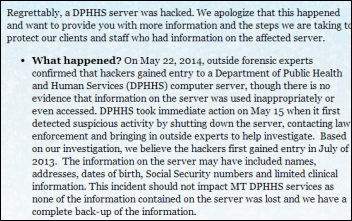

  2. Challenger exploded on lift-off when the O-rings failed. Columbia disintegrated on reentry after one of the heat shield tiles were…

Founding Sponsors


Platinum Sponsors


Gold Sponsors


RSS Webinars

  • An error has occurred, which probably means the feed is down. Try again later.