Curbside Consult with Dr. Jayne 4/27/15

April 27, 2015 Dr. Jayne Comments Off on Curbside Consult with Dr. Jayne 4/27/15
clip_image002 

CMIOs Gone Wild

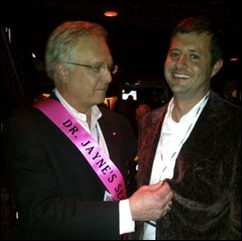
One of the challenges of being anonymous is missing out on get-togethers at HIMSS. Sometimes vendors invite me to participate in events as myself, but other times the invitations come to Dr. Jayne. Even though most of them promise to either maintain my anonymity or allow me to register under whatever name I choose, attending such invitations has risk. Plus, I generally don’t attend events that I didn’t get invited to as my “real” self (or at least couldn’t tag along as someone else’s +1).

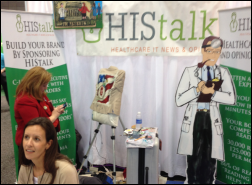
Although I trust Lorre and Mr. H to protect my identity, I had mixed feelings about attending the HIStalk CMIO lunch at HIMSS. I was excited about meeting other CMIOs outside the settings where we normally cluster in the wild – symposia, conferences, and of course the AMIA Clinical Informatics board review course. I get together with other CMIOs in my health system at least quarterly.

But it’s different when you have the opportunity to talk to people from other parts of the country that may be facing challenges that haven’t hit your market yet. It’s also different when you get a group of CMIOs who face the same pressures every day and they’re put in a relatively “safe place” where they can speak their minds.

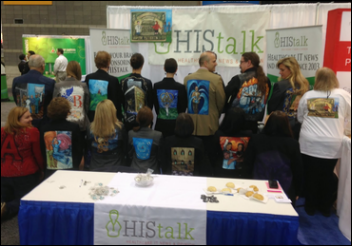
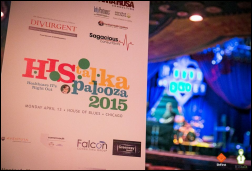
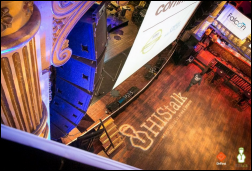
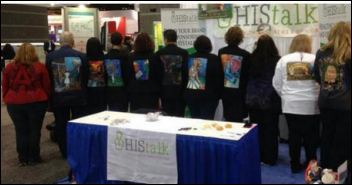
My original plan was to cruise by, see who was at the table, and drop in if feasible. Most of the time though the table was packed and Lorre reported that they had to swipe chairs from the McKesson table because more people kept arriving. She was gracious enough to take notes on some of the discussion so that I could attend vicariously, as well as some pictures.

I thought about running the photos, but then I remembered my own hospital’s rules about vendor interactions and I certainly don’t want to get anyone in trouble by calling them out. I’ll keep the attendees anonymous, but here are the group demographics:

  • University hospital or major health system – 4
  • Physician group or IPA – 2
  • Government or public health – 3
  • Industry or vendor – 6
  • Other – 2 (multiple roles, consulting, etc.)

Since women in technology leadership has been a hot topic on HIStalk lately, I’ll give the breakdown: two were women, the rest were men. There were more vendors than I had expected, but several were either notable personalities or had been CMIOs in a previous position.

Although I had given Lorre some conversation starters in case the group was quiet, from her notes, it sounded like the discussion did just fine on its own. Hot topics included:

  • Patient portals. What strategies are CMIOs using to increase patient portal use? Most agreed it needs to be more valuable to the patient to get them to engage. One mentioned that at Duke the only way to pay a bill is through the portal. Others agreed that the ability to schedule appointments was key. There are different strategies to gradually add the appointment piece to the portal since physicians are sometimes reluctant to allow patients to self-schedule. Appointment cancellation is also important. The topic of no-shows came up and the general thought was that if patients are willing to go online to schedule, they’re typically willing to go online to cancel.
  • Physicians opting out of MU. Several felt that MU is not useful. One commented that, “There are no opt-outs in malpractice.” Another commented that the penalties aren’t high enough to force providers to engage – some have done the math and if they can see one more patient a day and do less work, that’s more economically favorable even with the penalty.
  • Board certification. CMIOs discussed fellowships vs. on-the-job training. Many would not choose to spend time in a fellowship if it was required. There was discussion about Maintenance of Certification and the fact that the American Board of Preventive Medicine has not certified enough relevant content for Clinical Informatics. One CMIO is going to take a dive medicine trip because those credits count and she gets to SCUBA dive.
  • Various CMIO challenges. New problems seem to crop up daily. One physician found that lab analysts were rounding the numbers for lab values rather than displaying them as they were reported from the analyzer machines. Another cited the difficulty getting clinical photos into the EHR and the problem of physicians taking photos on their iPhones and sending them around. They also noted the problem of dealing with operational issues that are uncovered by an EHR implementation. For example, labor and delivery nurses that could no longer “preorder” for physicians before the patient was admitted. Since there weren’t any formal standing orders, the nurses were ordering on paper what they knew the physicians would want. When they couldn’t do it in EHR, it became an issue, requiring discussion of their scope of practice.
  • Documentation was a hot topic. Attendees felt that what EHRs are putting out isn’t clinical documentation — rather it’s all about billing documentation. They’d like to ask CMS whether clinical documentation should be required to support clinical decisions rather than billing decisions. Evidence-based documentation is necessary and needs to be pertinent. CDS should be a major part of documentation, but it needs to be filtered to the situation and actionable. Context is key. Alerts should be standardized. Use of documentation templates and order sets is increasing. One site is using Lean Six Sigma principles and Kaizen events to create disease specific clinical note templates to help communicate information to help nurses and social workers with post-discharge care. We need to better identify what parts of the documentation need to be discrete. What is the important information? What is the minimum needed?
  • Global healthcare models are being examined. One attendee recently visited hospitals in Japan. He liked their clinical pathways, where grids are used for each day of the treatment plan. Each role had guidelines on what should be documented.
  • Interoperability. FHIR was discussed as was the use of SNOMED and LOINC. What will the next standard be? There are still problems between systems. We need to broaden interoperability for problems like visual diagnostics. Providers should be able to take a photo and send to dermatologists behind the scenes for decision support. Another wants to be able to take a photo and have it count for documentation and billing/coding bullet points – rather than describe the rash inadequately, put a picture in the chart. But CMS doesn’t allow providers to do that.
  • Retail healthcare was mentioned. Some CMIOs are having interactions, receiving referrals, and being part of the feedback loop. One mentioned his experience with a specific retail clinic, saying that working with them was “as complex as working with the Department of Defense.”
  • HIPAA Omnibus Rule requirements were discussed. If patients declare they are paying cash, the encounter data can’t be reported to payers. How are various vendors handling this? Some are suggesting providers use a “shadow chart” for the protected content. Others are just starting to discuss tagging the data. There is concern that allowing patients to choose which portions of the chart can be shared will interrupt care and cause possible misdiagnosis if physicians don’t have all the information.

Although I’ve mostly summarized from Lorre’s outstanding notes, one of the quotes caught my eye. I’m not sure who said it, but, “The CMIO is the face of dysfunction” might just be my new mantra. We (or our respective EHRs) certainly get blamed for everything. We’re also expected to figure out how to solve it without hurting anyone’s feelings while helping the operational, clinical, and technical teams play nicely together.

Based on the number and caliber of attendees who stuck around for a fairly long time during a very busy HIMSS week, it sounds like they found the event valuable. I hope Mr. H will consider doing it again in Las Vegas.

Email Dr. Jayne.
Monday Morning Update 4/27/15

April 26, 2015 News 14 Comments

Top News

image

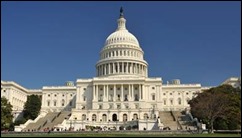
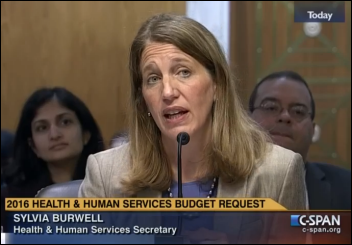
HHS Secretary Sylvia Burwell, testifying on the department’s $84 billion 2016 budget request, is challenged by Sen. Lamar Alexander (R-TN) who stated that half of doctors don’t like their EHRs to the point that they’ll accept Medicare penalties rather than deal with workflow disruption, adding that the AMA found that 70 percent of doctors say their EHRs weren’t worth the cost and that EHRs are the leading cause of physician dissatisfaction. Burwell responded that HHS will work with Congress on a list of administrative action items related to EHRs, which seems to refer to the work of the HELP committee that most recently talked about interoperability and interviewed Epic’s Peter DeVault. What worries me most about the entire exchange is that nobody questioned whether HHS or Congress have any business involving themselves with how doctors use EHRs, where Burwell’s response might have logically been, “Respectfully, our job is making taxpayer payments to providers who choose to participate in Medicare and HITECH, but otherwise the EHRs that providers buy, use, and complain about really aren’t under the government’s purview. We should be monitoring the outcomes, not prescribing the process, which is how government works with all other industries.”


HIStalk Announcements and Requests

image

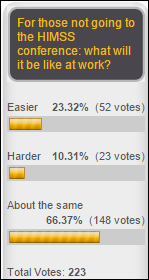
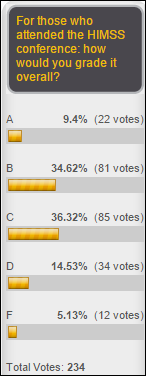
Poll respondents grade the HIMSS conference with somewhere in the C-plus range. A consulting company vendor says it was successful in meeting with clients and networking with peers, while a CIO observes that the HIMSS conference is all sizzle and no steak as it keeps growing and ratio of vendors to providers seems to be going up as well. New poll to your right or here: what do you think about the fact that most health IT vendor executives are white men? (“I’m not thinking about it at all” is a poll option as well). Add a comment to support your position if you like.

image

We were signing up for our microscopic booth for HIMSS in Las Vegas and were surprised to find that nearly all of the exhibit spaces have already been taken in the booth signup frenzy that occurs even before the previous conference is over. I don’t have the money or HIMSS points to play with the big boys, but even the 10×10 spaces in weird locations were mostly booked up. The tiniest parcels run around $5,500 and I declined the $2,500 extra HIMSS wanted for a corner space (they didn’t charge extra for our corner spot the past two years). We’ll be in #5069, with our presence probably annoying our next door neighbors Varian Medical Systems and Patient Prompt even though we’ll keep their area busier than it would be otherwise as we have a fun cast of characters running around. At least we don’t have much stuff to stick in there – we brought everything we used in our McCormick Place booth in one large duffel bag and set it up in maybe 20 minutes. There’s no ROI since we don’t have anything to sell, but we like just saying hello and giving our boothless friends a place to hang out.

image

Speaking of our McCormick Place booth, patient advocate Regina Holliday wrote a nice summary of the time she spent there and her HIMSS experience in general.

I forgot to mention an unpleasant encounter Lorre had with the “HIMSS police,” who were a little bit snippy in confronting her at our booth and demanding that we stop using the name “HIMSS Bingo” in referring to a contest that we had nothing to do with other than allowing winners to pick up their prizes there. The HIMSS person was too busy scolding to hear that she had the wrong scoldee.

Most people think of Epic first on the list of Madison-connected companies. Here’s another that just came to me: John Holton, who graduated from UW in 1975, founded Atwork in 1983 and then Scheduling.com (now SCI Solutions) in 1999, although both operated out of California rather than Wisconsin.


DonorsChoose Project Updates

Feel free to skip this section if you aren’t following our project as it winds down – the normal stuff follows.

image
image
image
image
image

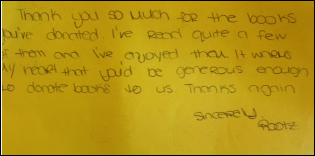
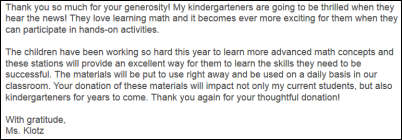
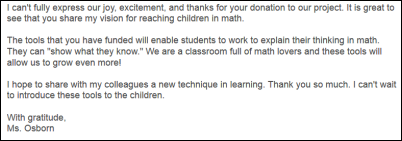
Thanks to new participant The Breakaway Group, who donated $500 to get on Centura SVP/CIO Dana Moore’s dance card. I’ve funded $10,478.21 in projects, including these new ones, including some I chose in Colorado since that’s where Dana lives:

  • A printer, tablet supplies, and early literacy books for an elementary school teacher’s graduate courses in education, Los Angeles, CA.
  • A camera and photo printing equipment for creating a time capsule for a high school in Atlanta, GA.
  • Math games and learning activities for a second grade class in Garland, TX.
  • An iPad case and AV adapter for English language learners at an elementary school in Las Vegas, NV.
  • A TV and flash drive to promote newly arrived books in the library of a high school in Walden, CO.
  • Drums for rhythm and movement activities for special needs students at an elementary school in Centennial, CO.
  • Six iPad keyboard cases for a fourth grade class in Lone Tree, CO.
  • Globes, maps, and books for a K-2 class in Denver, CO.
  • A tablet with keyboard for English as a second language students at an elementary school in Fort Lupton, CO.
  • A Chromebook for an earth sciences class at a high school that can’t be accredited due to lack of hands-on learning tools in Norfolk, VA.
  • A complete library of high-interest, low-readability books for a class of severely intellectually disabled students at a middle school in Conway, SC.
  • Four boom boxes and 12 sets of headphones to create a literature listening station in the reading area of an elementary school in Seattle, WA.
  • A library of classic books for a third grade class in Clarksdale, MS.
  • Hand sanitizer and tissues for profoundly mentally disabled K-5 classroom in North Charleston, SC.
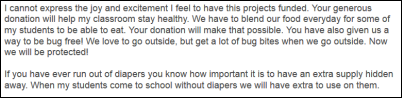
  • Baby wipes, diapers, a food blender, wheelchair supplies, and insect repellent for a handicapped K-2 students at an elementary school in North Charleston, SC.

Webinars

None scheduled soon. Contact Lorre for information about webinar services.


Last Week’s Most Interesting News

  • Infor signs an agreement to distribute its hospital data integration products in Cuba.
  • A RWJF study of personal health records finds that consumers value their own subjective narrative entries more than anything else, while doctors rarely even look at them.
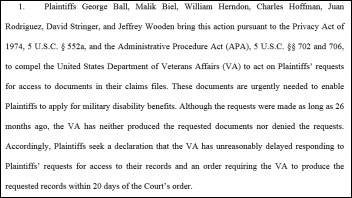
  • Seven disabled veterans sue the VA for failing to deliver copies of their disability-related medical records for up to 25 months after their requests.
  • LabCorp announces a direct-to-consumer testing program.
  • Kaiser Permanente announces plans to open a 900-job healthcare IT campus in Atlanta.
  • A judge orders MyMedicalRecords to pay the legal defense costs of Allscripts and WebMD after those companies prevailed in two of a nearly endless number of questionable MMR patent infringement lawsuits.

Acquisitions, Funding, Business, and Stock

image

Business Insider runs the first skeptical article I’ve seen about Silicon Valley lab darling Theranos and its $4.5 billion net worth, 31-year-old founder Elizabeth Holmes. Experts say they have no idea how the company’s technology works because Theranos won’t publish peer-reviewed studies about its tests, won’t let independent experts review its labs, and doesn’t acknowledge whether it’s actually using the same analytical machines as other labs in addition to its small-sample size equipment that other labs use as well. The article also questions whether can scale given its plans to perform 1 million tests in 2016, less than 0.2 percent of the number performed by Quest. Quest and other competitors are questioning whether tests performed by Theranos using capillary blood (microfluidics) are accurate.   


Sales

Children’s Hospital Association chooses Clinical Architecture’s Symedical for global terminology management for analyzing comparative data.

image

Avera Health System (SD) selects Meditech 6.1 Web EHR for 33 hospitals and 208 clinics. The press release isn’t clear as to whether this is an all-new product and Googling the term “Meditech Web EHR” brings up a non-specific mention on the company’s website, which used to be a no-nonsense list of information but is now maddeningly glossy and detail-free, with artsy scrolling pages and oversized type crying for Internet attention without providing much value in return. Click “EHR Solutions” and you won’t see a list of them. I don’t fully understand how a product can be “groundbreaking” if it’s in version 6.1 or whether this is just a new Web front end for the same old products.


People

image

Mark Young (StayWell Health Management) joins PatientSafe Solutions as COO.


Announcements and Implementations

Phynd Technologies will analyze the cost to Nebraska hospitals of managing their provider information manually vs. using its provider information management platform in a project funded by the state.


Government and Politics

The VA forms an 11-member medical advisory group to advise it on healthcare delivery issues.

image

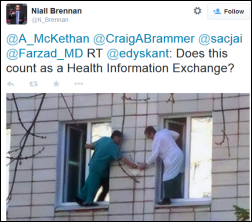
Here’s a pretty funny tweet from CMS Chief Data Officer Niall Brennan.


Technology

image

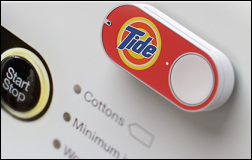
Healthcare is always a lagging chaser of consumer technologies, so I’m not quite sure what to make of the just-announced Amazon Dash, a WiFi-connected, product-specific stick-on electronic button that lets users restock a particular product with a single press. It’s either a brilliant time-saver that creates even more loyalty to Amazon and the products it sells or, as The New Yorker opines, “an uneasy image of our homes as giant Skinner boxes, and of us as rats pressing pleasure levers until we pass out from exhaustion” that bypasses the brief thinking moment of “Why am I using all this stuff?” while driving to the store. I didn’t realize that Amazon already offers a speech recognition and barcode scanning version of Dash for users of its expensive AmazonFresh grocery delivery service in Seattle, California, and New York metro areas.


Other

USA Today profiles the involvement of patients in the EHR selection of Partners HealthCare (MA), which invited a patient who sits on its advisory board to help choose its $700 million system. I like the approach, although I can’t help but think of the economic strong-arming and brand name-brandishing Partners does to squeeze out competitors and force insurers to pay its exorbitant rates, which isn’t really in the best interests of patients or the healthcare economy in general.

An investigation has been underway in Texas to review the state’s issuance of a no-bid Medicaid anti-fraud system contract to a local bidder with zero experience. The Houston newspaper points out that the state was already using a similar system that had recovered $56 million against its original cost of $16 million, while the new $20 million system (with a pending $90 million extension) has recovered zero dollars. Nearly all of the funds came from all of us who pay federal taxes. State government was asleep at the wheel, with a prime example being that the contractor (21CT) billed it the full price of a $452,000 project the day after the purchase order was signed and the state paid it immediately. A few state employees have been fired and a criminal investigation is underway. The state’s HHS inspector general who arranged the deal lied to CMS by claiming that a competitive bidding process had been conducted and then resigned after local newspapers exposed the scandal.


Sponsor Updates

  • Nordic offers a recap of #HIMSS15 through its Twitter feed.
  • PatientKeeper offers thoughts on “HIMSS and hEHRs.”
  • MBA HealthGroup offers “Skin in the Game: Keys to Success in a Private Dermatology Practice”
  • MedData breaks down the 2015 PQRS payment adjustment statistics.
  • Wellsoft will exhibit at the EDPMA Solutions Summit April 26-29 in Amelia Island, FL.
  • Sandlot Solutions will exhibit at the Big Data in Healthcare Summit April 28-30 in Boston.
  • Netsmart’s e-prescribing solution attains certification for controlled substances.
  • TeleTracking asks, “Who’s Looking Out For Nurses?”
  • PDS offers “Five Tips for a Trend-Setting Healthcare IT Strategy.”
  • NTT Data offers “Wearables in the Enterprise – What are Industries Saying?”
  • Patientco adds 2.4 million patients to its patient revenue cycle platform.
  • PeriGen recaps last fiscal year in “Another 48,611 births powered by PeriGen.”
  • PMD offers “Keeping Priorities Straight and Scaling Support.”
  • QPID Health CMO Michael Zalis, MD is featured in “Diagnosing Imaging: Maximizing Appropriate Use with Smart Decision Support.”
  • Sagacious Consultants offers “ICD-10 Training for Providers, Coders, and CDI Specialists.”
  • New York eHealth Collaborative offers “The Healing Power of Your Own Medical Records and SHIN-NY.”
  • Stella Technology offers “HIMSS15 Conference Highlights and Takeaways.”
  • Summit Healthcare declares that “HIMSS 2015 Did Not Disappoint!”
  • T-System will exhibit at the UCAOA National Urgent Care Spring Convention April 27-30 in Chicago.
  • Truven Health Analytics offers “Appealing the CMS Risk Adjustment and Reinsurance Calculations: Making Sense of the Discrepancy Regulations.”
  • Versus Technology publishes “Reflections on the Oklahoma City Bombing, from a Nurse Who Was There.”
  • Huron Consulting Group is named one of America’s best employers by Forbes.
  • Winthrop Resources will exhibit at Interop Las Vegas 2015 April 27-May 1.

Contacts

Mr. H, Lorre, Jennifer, Dr. Jayne, Dr. Gregg, Lt. Dan.

More news: HIStalk Practice, HIStalk Connect.

Get HIStalk updates.
Contact us online.

125x125_2nd_Circle

EPtalk by Dr. Jayne 4/23/15

April 23, 2015 Dr. Jayne 1 Comment

clip_image002 

It was only a couple of weeks ago that I was lamenting a slow health IT news cycle. Now I’m up to my eyeballs in things I want to write about.

The physician lounge is buzzing about the Medicare Access and CHIP Reauthorization Act of 2015, also called the “SGR bill” or “Doc Fix” bill. Unfortunately, most of them didn’t read beyond the AMA headline — “Medicare payment formula bites the dust” — to see what is really heading their way. Although they won’t be threatened frequently with Medicare payment cuts, the entire Medicare payment game is changing. For those who participate, there will be annual payment increases of 0.5 percent through 2019 and then a variety of other changes.

Although that’s certainly better than a cut, it doesn’t even keep up with inflation. Physicians can’t ask their suppliers to limit their price increases to 0.5 percent. Many hospitals and health systems that only offered employees that level of salary increase would see feet moving towards the door. AMA leadership is lauding it as historic legislation that “finally brings an end to an era of uncertainty for Medicare beneficiaries and their physicians.” Based on the discussion around the physician lunch table, anyone who thinks this is going to end uncertainty about physicians and Medicare might be confused.

I have to admit I haven’t read the whole thing, but rather several strategic digests and quite a few chest-thumping press releases. Colleagues who are savvier about the actual contents of the legislation are appropriately skeptical. Those that were considering a departure from Medicare haven’t changed course, and today, additional physicians were jumping into the discussion. Although Medicare’s quality reporting programs should be streamlined, many physicians still are not on board with pay for quality if physicians will continue to be graded on outcomes beyond their control.

Although the new payment models are voluntary, I can see employed physician organizations immediately heading in that direction. Administrative bloat will increase as teams are hired to review and comply with what will undoubtedly be reams of new CMS requirements and regulations. While physicians around the table were initially applauding the end of MU as we know it, the room became quiet when the detail-oriented ones pointed out its replacements. The more unified incentive program will be based on quality metrics, resource and cost utilization, practice improvement, and also Meaningful Use. Physicians in the so-called “Alternative Payment Models” will also have to continue using certified EHR technology, so vendors aren’t off the hook either.

Physicians are particularly leery of metrics that include untested patient satisfaction or engagement metrics. A piece in The Atlantic this week addresses the issue. My favorite quote: “Patients can be very satisfied and be dead an hour later.” It cites research by a professor at the University of California-Davis that concluded the physicians may be reluctant to have difficult conversations with patients due to fears of lower patient satisfaction scores. There’s not a tremendous amount of data looking at patient satisfaction scores compared to morbidity and mortality data. We all know of patients who continue to go to physicians that we know have horrendous disciplinary records and poor clinical skills, yet when a change is suggested, they profess happiness with their care.

I’m encouraged that legislators included some level of protection so that plaintiff’s attorneys can’t use Medicare quality data to support a standard of care, but there are plenty of other organizations collecting and analyzing the data and where no such protections exist. As CMS goes, so go the commercial payers and eventually we’ll all find ourselves dealing with all kinds of different flavors of payment schemes from the large health insurance companies.

Interoperability is also a key feature of the legislation. HHS will have to figure out how to measure whether national priorities are being met and determine how providers will be evaluated. This means additional rulemaking and additional burdens on providers and vendors. As specified in the title, the bill also extends the Children’s Health Insurance Program (CHIP) as well as community health center funding for another two years.

The good news is that the bill didn’t include anything delaying ICD-10, so those of us making plans can get on with it. I had a good laugh reading an AMA fluff piece on prepping for ICD-10. “Spend your time in the month ahead identifying the changes you need to make in your practice for ICD-10. For example, you’ll need to update your systems, forms, and work flow processes.” Just a couple of small things you can do in your spare time, right? The next sentence was even better. “Pull together a group of all staff members involving coding, billing, claims processing, revenue management, and clinical documentation, then figure out each task necessary to bring your practice in line with the new code set.” That’s pretty much everyone in a typical physician practice. If practices are just figuring out what they need to do now, they’re way behind and oversimplification doesn’t help things.

The bill also includes provisions on competitive bidding; Medicare face-to-face documentation requirements; chronic care management services; funding for the National Quality Forum; and requirements that Medicare Administrative Contractors establish “improper payment and outreach education” programs. It also includes a section on what happens to monies recovered by Medicare Recovery Audit Contractors. The Secretary of Health and Human Services is required to use that money for alternative payment model incentives, additional Medicare Administrative Contractor functions, reducing payment errors, prior authorization for repetitive scheduled non-emergency ambulance trips, and improving chiropractic documentation.

You never know what you’re going to find in a piece of legislation this size, which illustrates the old adage about the devil being in the details.

What’s your take on this recent legislation? Email me.

Email Dr. Jayne.
News 4/24/15

April 23, 2015 News 8 Comments

Top News

image

Two New York-based, healthcare-related organizations strike deals that will make them some of the first US firms to conduct business in Cuba now that sanctions have been relaxed. Roswell Park Cancer Institute (cancer research) and Infor (hospital data integration) announced their plans following a trade delegation visit this week led by New York Governor Andrew Cuomo.


HIStalk Announcements and Requests

I decided to follow through on looking at female representation on vendor executive teams as listed on company webpages since it came up on HIStalk last week. Companies have the incentive to hire the most qualified people regardless of demographics, but just in case you’re interested for whatever reason, here’s the percentage of females they’ve chosen.

Percentage of Females on Leadership Team (highest to lowest)
Wolters Kluwer Health 50
Meditech 41
Merge 33
TriZetto 25
Advisory Board 25
Optum 23
Athenahealth 22
Quality Systems 22
InterSystems 22
Cerner 19
Nuance 18
Greenway Health 18
Leidos Health 17
GE Healthcare 15
Premier 15
Surescripts 12
Philips North America 11
MModal 10
Emdeon 8
Allscripts 0
McKesson Technology Solutions 0

Some other percentages:  Facebook (20), Microsoft (19), Google (15), and IBM (27). HIMSS comes in at 17 percent.

I was reading a tweet that referred to pilot turned safety expert (and 2010 HIMSS keynoter) Sully Sullenberger as a “national hero.” The cynic in me (which has a significant presence) cringes at how we’ve devalued the term “hero” to label anyone who experiences adversity (including the randomly applied kind) rather than reserving the term for those who exhibit bravery or noble deeds in intentionally sacrificing themselves on behalf of others. Sully landed his plane safely in the Hudson River, but he was saving himself as well as his passengers. He was cool under pressure, humble, and performed the job he was being paid to do better than most would have done, but “hero” might be a stretch, just as it is when referring to athletes, victims of violence, someone who calls police to report a crime in progress, or groups that may well contain some but not all heroes (firefighters, service members, or even clinicians, for instance).

This week on HIStalk Practice: interoperability melancholia sets in after HIMSS. Matter Chicago CEO previews AMA physician office of the future. Radiology practices select new rev cycle technology. Azalea Health takes on telemedicine. Physicians’ Alliance of America looks for PCP feedback on EHR charting productivity. New study finds that online physician reviews don’t have much to do with clinical expertise. Modernizing Medicine CEO Dan Cane dives into the company’s relationship with IBM Watson. StatDoctor CEO Alan Roga, MD outlines the benefits of video in telemedicine.

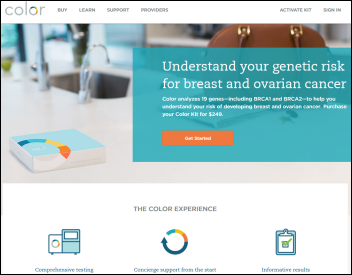
This week on HIStalk Connect: Tech-savvy health insurance newcomer Oscar Health raises a $145 million funding round on a $1.5 billion valuation in just its second year in business. Ernst & Young creates a digital maturity index focused on quantifying the sophistication of telehealth programs. Color Genomics unveils a $259 genetic screening test that looks for 19 key mutations, such as BRCA1 and BRCA2, that are known risk factors for developing breast or ovarian cancers. Gravie, a private health insurance exchange startup, raises a $12.5 million Series B to expand its presence into Texas and Illinois.


DonorsChoose Fundraising Project Update

image

image

image

Our total now stands at $10,000 thanks to new participation from ZirMed, TransUnion Healthcare, BlueTree Network, and Orchestrate Healthcare. BlueTree Network was notable in donating $1,000 instead of the requested $500, while TransUnion Healthcare VP Patrick Gilmore missed the chance to meet with Centura SVP/CIO Dana Moore at the HIMSS conference but said he wanted to donate anyway. Dana will provide a summary of his conversations with these companies later. I’ve funded $6,656 in projects and will get the remaining $3,344 out to classrooms by this weekend.


Acquisitions, Funding, Business, and Stock

Navicure announces a 32 increase in year-over-year sales of its billing and payment solutions.

India-based Wipro expects its healthcare business to hit $2 billion in annual revenue by 2018, double its 2015 expectations, mostly due to increased technology spending triggered by US healthcare reform. The company will target acquisitions in the $100-$200 million range, saying it passed on acquiring TriZetto (acquired by Cognizant for $2.7 billion) because of the price.

The Illinois Hospital Association will merge with the Metropolitan Chicago Healthcare Council effective January 1, meaning the state hospital association will be running an HIE (MetroChicago HIE) and insurance company.

image

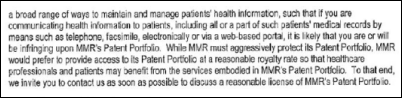
A federal judge orders the legally prolific MyMedicalRecords to pay the defense fees of WebMD and Allscripts, which beat some of MMR’s bottomless patent infringement lawsuits after refusing to pay “licensing fees” for ubiquitous technologies.

image

Jeff Bezos discloses the financial performance of Amazon Web Services for the first time in the unit’s nine-year history, stating that it’s a $5 billion business that’s growing fast.

A Wall Street Journal article finds that universities (Vanderbilt, Emory, and University of Arizona) are cutting ties with their cash cow academic medical centers as their high costs threaten to exclude them from exchange-based insurance networks.


Sales

image

Swedish Cancer Institute (WA) chooses the Synapse Precision Medicine Platform to provide oncology clinical decision support using patient genomic information.

Mount Sinai Health System (NY) selects the InterSystems HealthShare interoperability platform.

CareWell Urgent Care chooses Athenahealth’s EHR and practice management system for its 49 providers.

LTPAC EHR vendor SigmaCare chooses Liaison EMR-Link hub to connect with lab and imaging vendors.

Augusta Health will use Meditech performance monitoring tools from Goliath Technologies. The company’s press release doesn’t bother to mention where its new client is located (who writes this stuff, anyway?), so I’ll take a Google-inspired guess and say Virginia.


People

image

Davide Zaccagnini, MD (Nuance) joins SyTrue as CMIO.

image

Dominick Bizzarro (Value Informatics) joins insurer MVP Health Care as EVP of business development and informatics.

image

Cerner co-founder and Chief of Innovation Paul Gorup is retiring, insiders tell me. He helped develop PathNet in the 1980s, left Cerner in 1987 to run a radio station monitoring company, then returned to Cerner in 1999 to develop its hosting business. Gorup said in a 2013 interview, when asked why Cerner succeeded in healthcare while IBM and GE fizzled, “That’s easy. What does the head of IBM get up and think about every morning? I guarantee you it’s not healthcare. Same with the head of GE. He might think about energy or finance, but not healthcare. You have to think about it 24 hours a day. It’s not a part-time business. If healthcare becomes a part of something else, you’ve lost your focus.”


Announcements and Implementations

Referral software vendor EHealth Technologies announces a partnership with Box to support PDF viewing, medical image display, and structured document viewing.

Craneware announces enhancements to its Chargemaster Corporate Toolkit that include a single consolidated view, corporate chargemaster change distribution, and advanced workflow integration.

Capsule releases its Early Warning Scoring System for its SmartLinx Chart Express charting solution to alert clinicians of patient deterioration based on real-time vital signs analysis.

Zynx Health enhances the secure text messaging capabilities of its ZynxCarebook mobile coordination platform.

A TransUnion Healthcare analysis finds that increasing healthcare expenses and lower consumer credit lines have left consumers less able to pay their medical bills than last year. A big driver of the increased patient cost involves joint replacement procedures, which are 20 percent more expensive than they were a year ago.


Government and Politics

In Australia, the Victoria medical association calls on the state to spend $39 million to improve connectivity between hospitals and practices, hoping to at least enable delivery of discharge summaries and lab results after several expensive IT projects failed to deliver that capability.

Minnesota’s health commissioner says he’s concerned about pushback on the state’s 2008 requirement that all providers use EHRs by the end of this year. He debunks four privacy myths that are apparently the crux of the unstated opposition’s campaign.

A New York Times investigative report finds that the VA’s wait times scandal cost only three jobs vs. the 60 firings the VA claimed. One VA employee was fired for accepting gifts not directly related to wait times, one retired to avoid being fired, one is awaiting termination, and five employees were reprimanded. The VA often transfers problem employees and those who appeal their terminations can collect their paychecks for up to two years while awaiting a decision. 


 Innovation and Research

HHS will support three projects via its Ventures Fund: a website that allows providers to crowdsource possible new uses for existing drugs, an evaluation system for funding disaster preparedness, and a smart phone based diagnostic tool for malaria.

A Robert Wood Johnson Foundation study of personal health records finds that while consumers believe the most important information contained in PHRs is their own recorded daily observations (diet, exercise, mood, medication response), physicians usually don’t even look at them, instead turfing such review off to nurses and health coaches. The study also found that consumers think their information is valuable enough to outweigh any privacy concerns. It also concludes that demand for PHRs is surprisingly low because nobody is sure what problems they’re supposed to solve. I’ll extend my own musing: technology-powered lusting for discrete data capture and big data analysis cannot overwhelm the essential nature of the encounter, which is to listen to what the patient (and not necessarily their data points) is saying. Not everything that’s health related can be described by passively collected data dropped into convenient little buckets, and not everything that’s important will come up without skilled engagement of the “tell me how things are going” variety. My takeaway is that we need to make sure that technology enhances rather than limits the use of the patient’s own voice in the participatory guiding of their health.


 Technology

image

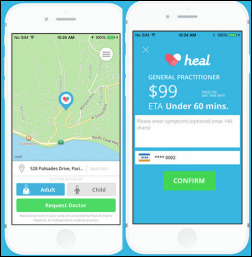
Heal releases a house call app for the Apple Watch that allows users to request a doctor visit with a single touch. Doctors equipped with mobile diagnostic apps such as the AliveCor ECG and CellScope otoscope arrive at the desired location within an hour and spend as much time as needed for a fixed fee of $99. One of Heal’s investors is Lionel Richie.


Other

Hospitals are moving inner city hospitals to suburbs where better-paying patients live, a Kaiser Health News article reprinted in Newsweek points out. Hospitals defend the practice by saying it’s cheaper to build a new suburban hospital than to renovate a old, land-locked downtown facility, but city officials say their core areas are being medically abandoned as hospitals chase patients who have better insurance.

Oxycodone-related deaths dropped 25 percent following Introduction of Florida’s doctor-shopping database of controlled substance prescriptions, a University of Florida study finds. However, deaths were already decreasing after the state shut down hundreds of pill mills posing as pain management clinics.

A study finds that 28 percent of Americans did not perform even one physical activity in 2014, increasing the “totally sedentary” number to the highest it’s been since 2007. Experts blame reduced physical education time in school and the competitive nature of school sports that leaves most students on the sidelines.

HealthLoop founder Jordan Shlain, MD says he started the company when he realized as a doctor that his mental model was wrong – inviting a patient to contact him when in need is not the same as proactively checking up on them, which he summarizes as invalidation of the “no news is good news” attitude since that means the same as “no data is good data.” He also says hospitals dehumanize their treatment failures by giving them the blame-free, dumbed-down label of “readmission.” He warns that probability-challenged people often make bad decisions in using data and algorithms as a blunt instrument without paying attention to what it means for individual patients.

An Australian blogger who built a business (including a wellness app) by claiming she cured her terminal brain cancer by diet and lifestyle alone admits that she was lying – she never had cancer. She was caught when she failed to donate $300,000 in app sales to charity as promised.

image

Weird News Andy titles this article as “A Rocky Experience in the OR.” A professor and facial surgeon in England loses his license after punching an anesthetized patient in the face 10 times to correct a broken cheekbone. The doctor admits that he “manually reduced the fracture” because the patient wasn’t fit for surgery, adding that doctors punch patients all the time while doing CPR. The patient is fine, while the surgeon is now offering his services in Dubai.


Sponsor Updates

  • Valence Health is convening its second annual Pediatric Collaborative for Value-Based Care forum in Chicago this week.
  • DocuSign is named among Silicon Valley’s “Best Places to Work 2015” for the fourth consecutive year.
  • E-MDs will exhibit at the MGMA regional meeting April 29 in Galveston, TX.
  • Galen Healthcare recaps the “Top 5 Themes from the Super Bowl of HIT.”
  • Hayes Management Consulting offers “Planning for the Unexpected EHR Downtime: 4 Key Steps.”
  • HCS will exhibit at the National Association of Long Term Hospitals 2015 Annual Meeting April 30-May 1 in Washington, DC.
  • HCI group offers “7 Essential Items Every McKesson Horizon Customer Should be Considering.”
  • Healthfinch’s Karen Hitchcock offers “A First-Timer’s First Impressions.”
  • Healthwise will exhibit at the Annual NPSF Patient Safety Congress April 29 in Houston.
  • Holon Solutions offers “RightFax End of Life Support Dates: Are You Ready?”
  • Impact Advisors offers its top 10 takeaways (and HISsies Award coverage and predictions) from HIMSS15.
  • The Atlanta Business Chronicle recognizes Ingenious Med as one of the city’s top 100 fastest-growing privately held companies.
  • PDR will exhibit at the National Association of Chain Drug Stores Annual meeting April 25-28 in Palm Beach, FL.
  • LifeImage celebrates five years in business and 1 billion images exchanged.
  • LifePoint Informatics offers a new white paper explaining “Why Access to Lab & Diagnostic Data is Important to Providers, Payers, and Patients.”
  • Logicworks explains why it sells managed cloud services rather than consulting services.

Contacts

Mr. H, Lorre, Jennifer, Dr. Jayne, Dr. Gregg, Lt. Dan.

More news: HIStalk Practice, HIStalk Connect.

Get HIStalk updates.
Contact us online.

125x125_2nd_Circle

News 4/22/15

April 21, 2015 News 10 Comments

Top News

image

Seven disabled veterans sue the VA, claiming that they’ve waited 10 to 25 months for copies of their medical records, delaying their eligibility for benefits.


Reader Comments

From CIO: “Re: patient engagement survey. Do CIOs really think they own it?” A HIMSS-sponsored poll finds that nearly half of health system CIOs believe they own patient engagement in their organizations, but I think there’s a definitional issue here. CIOs often mislabel the tools vs. the program when it comes to analytics, population health management, and patient engagement. The software is just one part of the initiative even though Meaningful Use muddies the picture with its purely technical requirements for patient engagement. I’m fairly certain CIOs don’t really believe they’re in charge of the entire program, but if they do, either they or their employer have a big problem. Non-clinicians (especially IT and marketing people) should not be trying to engage patients.

From Nasty Parts: “Re: Allscripts. What’s going on? Lots of recent senior departures: Diane Bradley, John Dragovits, Peter Mcclennen, Perry Sweet, and Chad Baugh, to name a few.” Unverified. The LinkedIn profiles of all of these folks still list Allscripts as their current employer, although I’ve found that in general people don’t update their profile until they get another job.

From Little Suzie: “Re: [publicly trade vendor name omitted]. I’ve heard from a not-necessarily-reliable source that they may be acquiring [publicly trade vendor name omitted]. True?” Lips are typically and justifiably sealed when publicly traded companies are involved in M&A talks. This one would be huge. I don’t see the synergy, but the first vendor is on a roll and the second is wheezing, so it’s possible that a fire sale is being discussed.

image

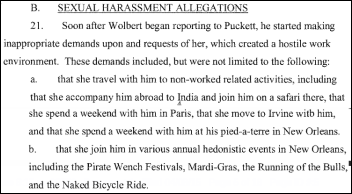
From Pirate Wench: “Re: interesting sexual harassment lawsuit against a healthcare IT executive.” It’s juicy, but keep in mind you’re reading only one of the inevitable two sides of the story. The lawsuit, filed by a demoted employee, says Quality Systems, Inc. (parent of NextGen) protects its male employees who harass female employees. The real story will be how the lawsuit is disposed of, which I strongly suspect will be by a sealed settlement since a trial would be unpleasant for both sides.

From Candid Cameron: “Re: females at HIMSS. I saw a big drop in booth babes, which I think is due to pressure from publications such as HIStalk. I’d like to see recognition of companies with at least 40 percent female executives or 40 percent female speakers at the conference.” I’m wary of assuming intentional bias (gender, age, nationality, etc.) in observing executive team demographic composition, but it would be interesting to see the percentage of VP-and-up females in each company.


DonorsChoose Project Updates

This isn’t directly related to healthcare IT, so feel free to skip on down to the next section if it’s not your thing.

image

image

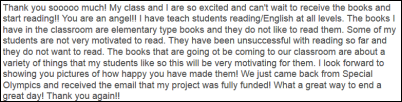
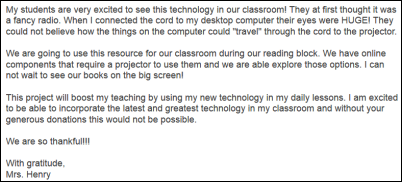
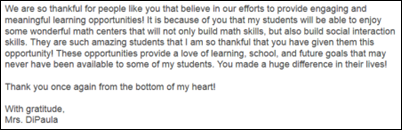
Our DonorsChoose project donations have jumped as another company offered a $500 donation in return for 20 minutes of Dana Moore’s time by telephone and our anonymous matching vendor agreed to match this donation as well. That brings our total to $8,000. I’ll be funding new projects as a result. Meanwhile, above is another of the many teacher thank you emails I received, this one from a kindergarten classroom for which we donated a projector. I was so moved that when I saw that Mrs. Henry had an open grant request for an AV cart to house their new projector that I funded that as well.

image

image

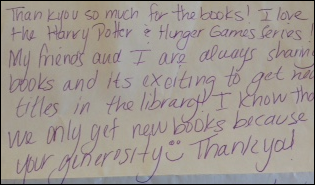
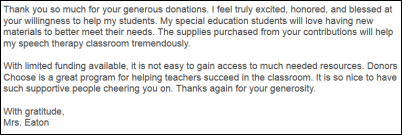
Meanwhile, here are a couple of student-written thank you notes from an earlier project we funded. DonorsChoose defaults the option to receive student notes to “yes” when you fund a project, but I unchecked it this last time because it’s a fair amount of work for the students and we funded so many projects I would be overwhelmed by all their notes anyway. Still, it’s gratifying to hear from the students who are actually benefitting from the donations.


HIStalk Announcements and Requests

image

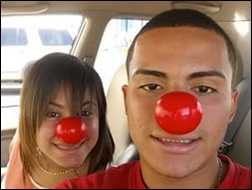
One of the more disturbing things I saw at the HIMSS conference was people running around wearing giant red noses, courtesy of a Walgreens fundraiser for children’s poverty. I like the cause but not the noses, which make me think of Stephen King’s evil clown in “It.”


Webinars

April 22 (Wednesday) 1:00 ET. “Microsoft: The Waking Giant in Healthcare Analytics and Big Data.” Sponsored by Health Catalyst. Presenter: Dale Sanders, SVP of strategy, Health Catalyst. Microsoft has been quietly reengineering its culture and products to offer the best value and most visionary platform for cloud services, big data, and analytics in healthcare. This webinar will cover the Healthcare Analytics Adoption Model, the ongoing transition from relational databases, the role of new Microsoft products such as Azure and Analytic Platform System, the PowerX product line, and geospatial and machine learning visualization tools. Attendees will learn how to incorporate cloud-based analytics services into their healthcare analytics strategies.


Acquisitions, Funding, Business, and Stock

Israel-based drug maker Teva will pay $512 million to settle charges that it paid competitors $200 million to delay rollout of a generic version of its sleep disorder drug Provigil. The company  also an unsolicited $40 billion bid to acquire generic competitor Mylan, which recently moved its headquarters to the Netherlands to avoid US corporate taxes and to take advantage of anti-takeover laws.


Sales

image

St. Luke’s University Health Network (PA) chooses Strata Decision’s StrataJazz Continuous Cost Improvement.

image

University of Florida Health (FL) chooses Visage Imaging’s Visage 7 Enterprising Imaging Platform for both Shands and UF Jacksonville.

image

Beth Israel Deaconess Hospital-Plymouth (MA) selects Voalte for caregiver communication and secure texting on personal smartphones.

IntegraMed Fertility chooses the Patient Pulse portal from Anthelio Healthcare Solutions.

University of Vermont Medical Center chooses ReadyDock’s disinfecting device docking station for its NICU.

Erlanger Health System (TN) will implement an unnamed $100 million EHR, replacing the current system that the CEO says is the #1 source of hospital dissatisfaction. I found their RFI online, which says they are running Siemens Invision in the hospital and GE Centricity in most of the practices, but I didn’t run across anything that says which system they’ve bought.

Henry Mayo Newhall Hospital (CA) chooses Summit Healthcare’s Provider Alert solution for ambulatory information sharing.


People

image

Awarepoint names Thomas Warlan (Medlee) as SVP of software engineering.

image image

Besler Consulting hires John Slaby (Siemens Healthcare) as VP of product strategy and Heather Swanson (Wolters Kluwer) as regional VP.

image

Ahmed Haque, ONC’s director of the office of programs and engagement, will join former National Coordinator Farzad Mostashari’s Aledade.

Source Medical names a new leadership team that includes former executives of Dell, Allscripts, and NextGen.


Announcements and Implementations

image

Extension Healthcare announces upgrades to its alarm management solution that include enhanced voice-annunciated alarms, enhanced RTLS-enabled care team availability, extended iOS and Android device support, and a way for physicians to view their patient’s care team members and contact them securely from outside the hospital.

LabCorp will launch a direct-to-consumer lab testing business to compete with drug chains and other competitors that have offered those services for years, many of which were using LabCorp to draw and process their samples. Patients won’t need a physician’s order if their state permits them to request their own lab tests. LabCorp hasn’t said which tests it will offer or how they will be priced. Sounds great for patient empowerment, but then again, so did the idea that drug companies should be allowed to advertise directly to potential patients.

Netsmart enhances its vendor-agnostic HIT Value Model that helps providers develop IT adoption strategies and benchmark progress.


Government and Politics

Congress finally acts on a 2004 GAO recommendation to remove Social Security numbers from Medicare cards to prevent identity theft despite CMS complaints about the effort involved. The mandate was included in the SGR doc fix bill.


Technology

Software vendors always state that you legally don’t own their software – you’re just licensing it. Tractor maker John Deere takes it to the next level, telling the Copyright Office that farmers aren’t actually buying their tractors, they are instead purchasing an implied lifetime license to the John Deere software that runs them. It’s an important argument as companies try to favorably position their products as being software that end users or potential competitors can’t tinker with under the Digital Millennium Copyright Act.

image

Color Genomics announces a $249 saliva test kit that detects 19 genetic markers for breast and ovarian cancer. The company, sensitive to the limited population for which screening is indicated and the potential patient concerns about the results, requires that one of its designated physicians order the test and then provides a board-certified genetic counselor to explain what the results mean. Similar tests were priced at up to $4,000 until the US Supreme Court denied a competitor’s assertion that nobody else should be able to perform such testing since it held a patent for naturally occurring genetic sequences such as the BRCA1 and BRCA2 genes.


Other

image

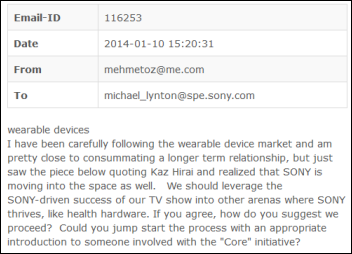
Emails exposed in the Sony Pictures breach show TV huckster-physician Dr. Oz trying to get Sony to sign him up as a pitchman for its wearables line, although his interest seems entirely commercial rather than medical.

image

Health Catalyst SVP David Burton, MD provides six predictions in an HFM Magazine article: (a) health systems and payers will address at-risk contracting as strategic thinkers, bet-hedgers, or ostriches with their heads in the sand; (b) population risk evaluation will shift from reviewing actuarial buckets to being driven by delivery systems that focus on improving specific clinical areas where they can perform optimally; (c) virtual shared accountability networks will form as ACOs and clinically integrated networks realize the cost of out-of-network services; (d) the emphasis on quality and safety improvement will spur development of analytic software and best practices starter sets; (e) providers will focus cost reduction efforts on the 80 percent of patients for whom evidence-based guidelines apply; and (f) sponsors will seek more flexible analytics systems that can respond more quickly to external changes.

Reporter Joe Goedert shares my disdain for turning marketing and PR people loose to make illogical decisions, specifically as related to the HIMSS conference: (a) CPSI not only changing its name questionably, but providing a confounding buzzword-heavy and thoroughly unconvincing explanation of the need to do so; (b) an unnamed analytics vendor that bussed reporters offsite for a roundtable discussion but then informed them that the discussion was off the record and nobody could leave until it was over, which means it was a complete waste of their work time; and (c) President Bush and HIMSS telling reporters 90 minutes before his keynote that his remarks and the softball questions asked by HIMSS CEO Steve Lieber (the guy who wrote him a huge check – his speaking fee is around $150,000) were off the record.

image

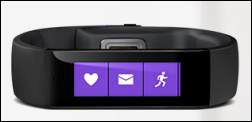
A vendor friend gave me a $200 Microsoft Band smart watch at the HIMSS conference. I gave it a try yesterday but put it back in the box after an hour or so. It is huge, bulky, and rigid (since it has a touch screen) to the point I couldn’t even get it under the cuff of my long-sleeved shirt and it barely fit around my wrist besides. It has a continuous pulse monitor, which is interesting but of marginal value for most people, and it pops up calendar and message alerts provided you’re willing to leave your phone’s Bluetooth turned on at all times. I gave it to an initially enthusiastic friend for a second opinion and got the same feedback: it’s cool, but not cool enough to be worth permanently hanging a heavy handcuff on your wrist even though it packs the heart sensor, GPS, light sensor, skin temperature sensor, and galvanic skin response measurement. I think my friend may end up reconsidering, though, after using it for a workout and seeing the results in Microsoft Health.

A judge issues a temporary restraining order that prevents Texas Health Resources from filing a worker’s compensation claim on behalf of Nina Pham, the Ebola nurse who is suing the health system. THR says such a claim should settle her issues and that Pham’s claims against it are unjustified since she’s an employee of one of its hospitals, not the corporation itself, and she’s not suing the hospital.

image

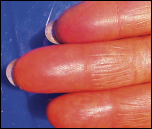
Weird News Andy says “Some day my prints will come – you can bank on it.” A NEJM case study profiles a woman whose chemotherapy treatments caused her fingerprints to disappear, which she discovered when her bank’s biometric ID system rejected her transaction.

I’m sure WNA would have caught this story: an Irish bank presses charges against customers who discovered that a temporary bug in the bank’s ATM software allowed them to withdraw more cash than they had in their accounts, inspiring one woman to make 115 ATM withdrawals totaling $60,000 in one afternoon to pay a Nigerian man to donate a kidney to her father.


Sponsor Updates

  • Medicity Network 5.6x earns Healtheway Vendor Validation.
  • CenterX Co-Founder and CEO Joe Reinardy will moderate a session on real-time benefit verification and electronic prior authorization at this week’s CBI conference in Philadelphia, PA.
  • Kareo announces a new version of its outsourced billing solution.
  • SyTrue publishes a story  about how healthcare organizations are unlocking the value of unstructured data.
  • Accreon’s work on the NB Cancer Network project is nominated for a 2015 Kira Award.
  • ADP AdvancedMD offers “Recent enhancements to the EHR charge slip.”
  • CommVault posts the second part of its series on “Disaster Recovery: Past, Present, and Future.”
  • Aventura posts a brief explanatory video on awareness computing.
  • Caradigm staff offer reviews of HIMSS, one featuring a great pic of HIStalk friend Regina Holliday.
  • CareSync offers “The Top 6 Reasons Why CareSync is For You.”
  • CitiusTech exhibits at Bio-IT World 2015 through April 23 in Boston.
  • ZeOmega releases its annual content update of best practices in evidence-based medicine care management.
  • Columbus CEO ranks CoverMyMeds as a Top Small Employer Workplace in Central Ohio.
  • Culbert Healthcare Solutions offers  “A Consultant’s Perspective: Teach ‘Em How to Fish.”
  • HIMSS15 attendees help Divurgent raise $5,000 for Lurie Children’s Hospital.
  • Peer60 offers a new report on mobile health and patient engagement.
  • Burwood Group is named to The Channel Company’s CRN Tech Elite 250.

Contacts

Mr. H, Lorre, Jennifer, Dr. Jayne, Dr. Gregg, Lt. Dan.

More news: HIStalk Practice, HIStalk Connect.

Get HIStalk updates.
Contact us online.


125x125_2nd_Circle

HIMSS15 Patient Advocate Recap – Carly Medosch

April 21, 2015 News 3 Comments

image

This year was my first time attending the HIMSS conference. I definitely like to be prepared, so I took advantage of the pre-conference materials such as guidebooks, maps, and an hour-long webinar orientation in the week before the event.

image

I knew McCormick Place was a large venue and I knew HIMSS would have a lot of attendees, but when I walked in Sunday afternoon, I felt like yokel in the big city for the first time “Golly gee, this sure is a big building!” And that was just the lobby of the North Building – one of four (plus a hotel) that make up McCormick Place.

image

I spent most of Sunday on the hunt for a suit jacket that would become my very first Walking Gallery jacket. In fact, Regina Holliday would be painting it in the HIStalk booth during HIMSS! The jacket had to be perfect because I plan to treasure it for years to come, but it also had to be stylish since I intend to wear it every chance I get. As a patient suffering from a variety of symptoms that include pain, fatigue, and brain fog, it’s important to me to look my best as a way to compensate.

Although I have an undergraduate degree in design and a masters in business, my symptoms often cause me to feel inadequate. In a crowd of healthcare professionals, I still often struggle to be taken seriously as “just the patient.”Never mind the fact that my 21 years of daily on-the-job experience often exceeds that of other healthcare professionals.

Garment bag in hand, I arrived for the first party of HIMSS — the speakeasy-themed opening reception. It was impossible to spot anyone I might know in the huge, dark ballroom. Eventually I met Vincent McGee, a healthcare IT executive from Atlanta. He later emailed me to say that one of the highlights of HIMSS was the conversation we had. Later, I found Colin Hung, someone I have known online for years but never met. In fact, earlier this year, Colin volunteered to call my mom and walk her through the live stream set up so that she could watch me in a keynote panel at Stanford. These types of friendships exemplify social media and the online health community for me.

At the end of the party, I finally met up with Regina. Of course she had been held up on the way to meet us, recording an impromptu interview calling for everyone in America to request their medical records on July 4!

Next, I was on to a glitzy party at the top of Wit hotel, where I met up with friends and basically ate my weight in cheese and bread. This event was notable as a place where I finally met #HITsm maven Mandi Bishop. I was warned that these parties have a reputation for people drinking too much and getting a little “handsy.” I am grateful to my friends for allowing me to tag along to some parties, never making me feel out of place for not being an HIT insider and, of course, not getting handsy! I only had one drink and turned in early because I had a long, busy Monday ahead of me.

In Chicago, I used the city bus and the subway system to get around. Monday morning I walked a block, picked up a dozen Dunkin’ Donuts, and caught the city bus for the mile ride to McCormick. I didn’t know anybody at the Walgreens / Alex Gourlay keynote, but I made friends with the gentleman sitting next to me, who had attended all the way from England. We discussed the pros and cons of the NHS vs. the American healthcare system. After the keynote, I offered donuts to the people sitting near me. Then it was off for the exhibit hall.

image

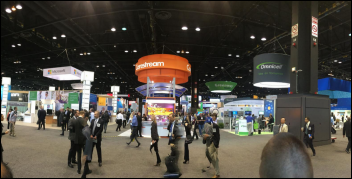
I ended up spending most of Monday and Tuesday in the exhibit halls, and even then I was not able to walk past every section, let alone visit even a fraction of the booths. In fact, there was allegedly an entire disaster response section with a tractor-trailer that I never even saw.

The exhibit halls, occupying the North and South Buildings of McCormick Place, totally blew my mind for a number of reasons. In a past life as a graphic designer, some of my work involved designing exhibit booths—of course these were the standard backdrops and pop-ups. The booths at HIMSS ran the gamut from these small, standard types to truly massive structures, many of which had two levels and included large conference tables or enclosed rooms for discussing business deals.

In the weeks prior to the conference, I was surprised at the volume of direct mail I received, each full-color glossy postcard extoling the virtues of one booth or another and describing the fabulous prizes I could enter to win when I visited. This all seemed extremely lavish to me, especially since I know many people dealing with chronic illness who are unable to work and struggle every month covering basic expenses such as $4 prescriptions. The Walgreens keynote mentioned their program to donate a vaccine to an underprivileged person in a third-world country for each customer who purchased their vaccine at Walgreens. I wonder how many vaccines could be provided with the money spent at HIMSS?

image

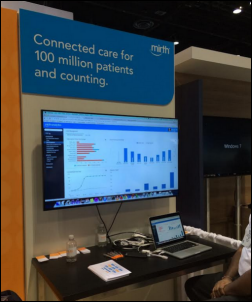
In fairness, I should say that once I experienced the exhibit floor, the lavish giveaways seemed more practical. I certainly made sure I attended my pre-booked appointment at the Mirth booth. How did I decide to book this 30-minute demo? They promised a Fitbit fitness tracker to every person who completed their demo. I am happy to report that they treated me fairly, explaining their products to me and giving me the Fitbit without complaint.

The really neat thing about demos like Mirth’s was that it afforded me a rare opportunity to experience HIT tools from the provider side, something I’m not likely to see an my next checkup. I’m sure that for many vendors, offering prizes and giveaway offers better ROI than large, flashy booths. As a consumer and a patient, I want vendors to keep their costs as low as possible. I am not convinced that a gigantic booth at HIMSS actually pays off.

I was definitely concerned about how vendors would react my presence. I was “just a patient” and I definitely did not have thousands or millions of dollars to spend on their products. Thankfully, Mr. HIStalk reassured me prior to the conference that he would happily call out any vendor who treated us especially poorly. It’s not that I wanted to get people in trouble, but fear of reenacting the shopping scene from the movie “Pretty Woman” kept playing through my head.

Luckily the vendors I visited at HIMSS pleasantly surprised me. I did have one vendor tell me not unkindly that they didn’t have anything that I would be interested in seeing.

Only two unpleasant experiences stand out in my mind. One day I was behind two very unsavory sales dudes as they discussed their annoyance at having their time wasted talking with someone who obviously was not going to make a purchase. Luckily for those guys, I did not see what company they represented. Another instance was when I tried to enter a prize drawing and was met with a bit of a sneer from the woman working there. It might have just been a matter of luck, however, because fellow HIStalk patient advocate scholarship winner Amanda told me that she did not have very pleasant interactions with many of the vendors.

I was relieved that the most common reaction to my presence was a little confusion and then mostly excitement. On Wednesday I had several hours of demos booked with people interested in my opinion and expertise as a patient. I was also lucky to know a handful of people from previous events or from Twitter who were happy to introduce me to other vendors. Some positive reactions that stand out in my mind are those from the Dell booth, the Panasonic booth, and of course the CTG booth who provided the registration badges for the patient advocates.

image

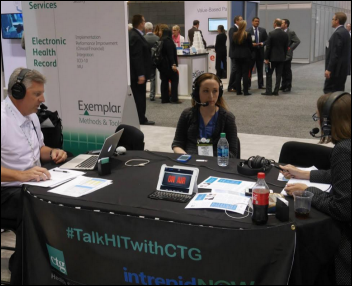
It was such an honor for me to be interviewed by Joe Lavelle and Rayanne Thorn at the CTG booth. I laughed when they thanked me for taking the time to tell my story. As I explained, it’s easy to talk, but the real honor is when someone is willing to listen. We came up with the idea to have a patient for every booth at HIMSS16. Will your organization step up and sponsor a patient?

There were two cool things about the Dell booth. Instead of the usual swag (most of which probably ends up in the trash), Dell had glue guns and flower petals so visitors could make colorful, sparkly flowers which would then be donated to Brooke’s Blossoming Hope for Childhood Cancer Foundation which provides fun headbands to children who’ve lost their hair from chemo. The Dell employees were also really excited to hear that HIStalk had sponsored patients to attend HIMSS. They enthusiastically told me about programs where Dell used feedback from actual patients.

image

While checking out products on the outside of the Panasonic booth, I got called over by an acquaintance to try out their Connected Patient Room Solution. They had a display with information, education, and entertainment for the patient and their caregiver. The system also featured audio technology that could be used to isolate sounds for patients sharing a room (or just those with alarm fatigue). I have no idea how it works, but if you are directly under the speaker, you can hear music (or other audio), but as soon as you shift a bit, you can’t hear anything. The sound also has the effect of drowning out the other noises in the room.

image

The Sonifi Health booth had similar types of displays for patient education and entertainment. They had modules with specifics on medications, and the program could also utilize videos as part of the discharge process. I appreciated that they had an RN on staff to help with education and engagement. From my months in the hospital, I know that nurses interact far more with patients than anyone else, although they often don’t get the respect they deserve within healthcare.

The most creative swag was from Nick Adkins, who (lacking a booth) wandered HIMSS wearing a kilt and handing out pink socks with mustache designs to promote his HIPAA-compliant video service Reel Dx. I was happy to trade donuts for socks with Nick and his business partner.

I was pleased that HIMSS had a Connected Patient Gallery, but the actual experience left me disappointed. At one point, they were using the theater to run a trivia game about Walgreens. On another visit, I tried to find someone from Patients Like Me, but only found a video, no actual humans. I spotted some devices to record blood glucose, weight, blood pressure, etc. but the vendor (who admitted their products weren’t capturing the older, less techie demographic) got agitated when I persisted in asking why something like a scale needed to use a smart phone anyway. My older, less techie relatives barely leave their house, and I’m sure transmitting the data via dial up would suffice, if necessary. This strikes me as a prime example of a business not really understanding or caring about their customers. It’s worth noting that I did not see any patients in the Connected Patient Gallery on any of my visits.

Overall, I’d give HIMSS a B rating. The event was way too big. I’m concerned about the professionals there to make important business deals for their organizations. There’s no way to keep everything straight and the pace and atmosphere is exhausting and confusing. The keynotes were mostly overly optimistic, glossy commercials presented by rich white men. We need to see more patients on stage. The options for food were so expensive and the lines so long that at one point my favorite booth giveaway was cucumber water. I’m not sure why the transportation was such a problem — Chicago has a train, a subway, and city buses, along with shuttles to nearly every hotel, taxis, and Uber cars. I’m concerned that health IT purchases are being made by people willing to wait an hour for a taxi or pay 4.5x surge pricing for an Uber rather than walk to the curb to catch a bus for $2.

The best parts of HIMSS for me all involved people. My favorite thing was meeting up with old friends and making new ones. I loved vendors who were genuinely excited to talk to a patient. It was an honor to be able to tell my story and to represent patients who could not attend. I had a lot of fun live tweeting and was especially happy when my “normal” followers (non-HIT) thanked me for the coverage. The best swag I brought home was the stack of business cards and new connections for future advocacy opportunities.

The buzzword for HIMSS seemed to be interoperability. I also heard a lot about engagement and compliance. Hopefully the campaign to bring more patients next year takes off. I think many vendors want to involve patients, but are genuinely baffled about how to do so. I hope that with the presence of more patient advocates at HIMSS, vendors will begin to understand that they must learn how to engage with patients and that we need them to comply with their oaths to serve us.

Curbside Consult with Dr. Jayne 4/20/15

April 20, 2015 Dr. Jayne 1 Comment

HIMSS Wrap-up and Final Fashion Commentary

I’m still recovering from HIMSS. Apparently there was a lot of craziness at the hospital while I was gone, but I’m grateful to my second in command who handled all the issues. That lets me know that they’ll be in good hands down the road.

I’ve been going through my notes and arranging follow up with a handful of vendors that caught my eye. I’ve also been sorting through the scads of business cards I collected and am trying to remember who I met at which events. The week was quite a whirlwind.

clip_image002

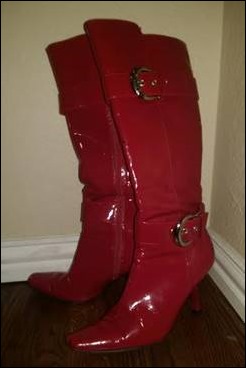
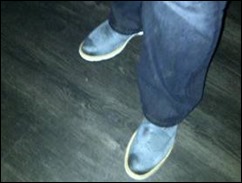
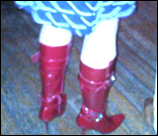
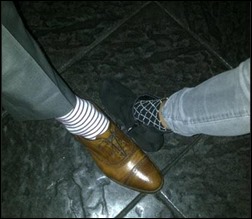
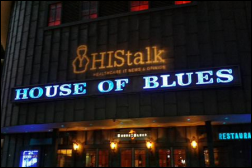
From Bright Lights, Big City: “Re: my boots. As requested, here’s a better picture. They are one of my favorite pairs of boots (my blue suede ones are killer too). Thanks for the compliment on HIStalk. I was totally flattered. The House of Blues was so much fun!” Mr. H and Lorre outdid themselves with the event. Although I wasn’t an official shoe judge, after discovering these boots I’m thinking that next year we need a “Jayne wishes she had my shoes” sash to hand out. I’m also thrilled that she responded to my plea for a photo of the boots. It’s fun to connect with readers, even if it’s just email. It also lets us know you’re actually keeping up with HIStalk, unlike the two guys at the bar at the House of Blues who had never heard of Mr. H or Dr. Jayne.

clip_image004

clip_image006

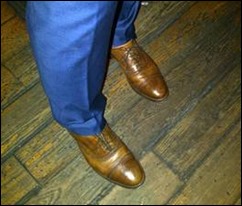
Although Nordic’s Drew Madden won our official shoe contest, a reader emailed a picture of this pair of blue suede shoes that he snapped at the NextGen party. I’m thinking they could be a contender next year. Drew also sported an inlaid wood tie clip and I’m thinking we need to add some additional categories for best accessories.

clip_image008

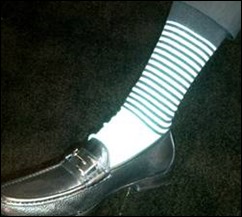
I’m declaring HIMSS 2015 to be “The Year of the Sock.” I saw more fetching hosiery this year than ever before. Special mention goes to Colin at the Patient IO booth. The socks were kind of a teal/aqua color with several accent colors below the shoe line, and coordinated perfectly with his bow tie and pocket square. His described his companies app as being “like Legos for patient engagement,” which drew my attention when I was fading partway through the exhibit hall.

clip_image010

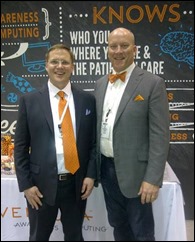
Speaking of bow ties and pocket squares, the Aventura team had it going on all week long with different combinations every day. The ties, pocket squares, sweaters, Converse sneakers, and strappy sandals spotted at the booth were perfectly matched to their specific shade of orange, as were their giveaway candies. I didn’t know you could Pantone match M&Ms, but they just might have done it. I heard they also had cufflinks that honored their owl mascot, but I missed them.

clip_image012

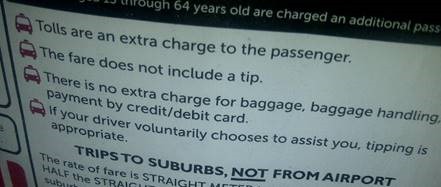
After my final lap around the show floor, it was time to head to the airport. I chuckled at the seat sign which promised no extra charge for payment by credit card since I was charged a processing fee every time I used an actual taxi. Usually I’m just changing planes at Midway and hurrying to another gate, but this time I had time to stop for lunch and more hydration at Harry Caray’s. I was people-watching when a vendor rep I haven’t seen in a while stepped up to the host stand. I waved him over and we caught up over a burger. He’s starting a new venture soon and I can’t wait to hear more about it.

image

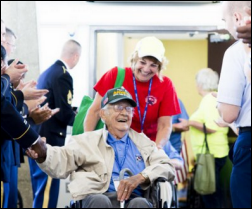
The other bonus of arriving at Midway early was being able to help welcome in an Honor Flight group from Kansas that was changing planes in Chicago. Honor Flight sends veterans to Washington, DC to visit their respective war memorials. This looked to be largely a group of World War II veterans. Travelers stopped and lined up a good way down the terminal, applauding as each veteran deplaned. The applause followed them down the concourse as they passed different gate areas. Many of their family members and escorts were moved to tears and I was as well. This generation sacrificed so much and being able to thank some of them really put the week in perspective.

My flight home had multiple vendor reps still in booth attire, including scrubs. Everyone appeared tired and I almost had to use my doctor skills when a passenger nearly dropped her bag on our row while trying to get it in the overhead bin. “Heavier than I thought” almost caused a head injury, which makes no sense on an airline that checks bags for free. Based on the backpack (carry-on number three for her), she was a HIMSS attendee. Maybe a first timer – HIMSS is the one event I take my expandable suitcase to, because you never know what you might bring back. Thank goodness the folks at Medicomp agreed to ship the six gallons of popcorn I won playing Quipstar. As a reminder for those of you who are not road warriors: If you can’t lift it, it’s not a carry-on.

clip_image013

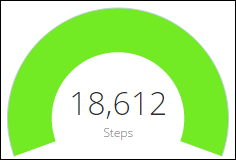
The in-flight Wi-Fi allowed me to file most of my expense report before landing and I also had a chance to get caught up on email. One of my readers had reminded me on Monday that running would be my sanctuary this week. It had me wondering how many steps are in a HIMSS. Although I didn’t participate in the BYOD wellness challenge, I can state with confidence that it’s at least 65,000. I don’t know exactly because I didn’t wear my Garmin to HIStalkapalooza, so all that dancing didn’t get captured. I’m not sure on mileage since the data from the Garmin (29.2 mi) doesn’t match Garmin Connect (50.4 mi). I’m more inclined to believe the wrist unit, but I’m glad Garmin isn’t building healthcare software.

How many steps were in your HIMSS? Email me.

Email Dr. Jayne. clip_image003
DonorsChoose Fundraising Project at the HIMSS15 Conference

April 20, 2015 News 1 Comment

image

Dana Moore, SVP/CIO at Centura Health, offered to give vendors 20 minutes of his full attention during the HIMSS conference in return for a $500 donation to support classroom projects via DonorsChoose. Seven companies signed up, plus another company that wishes to remain anonymous offered to match the money pledged. Dana said it was the best hours he spent at the conference.

image

image

image

image

The project made $7,000 available to help teachers. The grant requests I funded with the money (some of which I announced previously) are as follows, some of them made possible because of available matching funds from other donors such as the Bill & Melinda Gates Foundation:

  • Two Fire HD devices for a middle school reading program in San Diego, CA.
  • A projector for a kindergarten class in Erie, PA.
  • Professional development books for kindergarten teachers in Charlotte, NC.
  • A Chromebook for an elementary school class in Toppenish, WA.
  • Algebra calculators for a high school class in Auburn, WA.
  • A sand and water table for K-2 children, all with multiple disabilities, in Rosamond, CA.
  • Headphones for K-2 classes in Portland, OR.
  • A drawing tablet for the iPad for grades 3-5 in Lockhart, TX.
  • Three iPad Minis for a sixth grade class in Oklahoma City, OK.
  • A television and wall mount for presenting Spanish learning materials for a middle school in Magna, UT.
  • Speech therapy learning tools for a speech pathologist for an elementary school in Hawkinsville, GA.
  • Two Chromebooks for web-based reading and writing programs for an elementary school in Springfield, OR.
  • A science, technology, engineering, and math (STEM) bundle for an elementary school in Herminie, PA.
  • Studio furniture for a TV show news set for a high school in Atlanta, GA
  • An iPad Air 2 and strategy workbooks for an elementary school in Phoenix, AZ.
  • A Chromebook for a high school in Gilroy, CA.
  • An iPad Air 2 with classroom management tools for a high school in Conway, MO.
  • A microphone and recording equipment for creating video documentaries for an elementary school in Pea Ridge, AR.
  • Teacher lodging expenses for attending a national educator’s conference for an elementary school in Greenville, SC.
  • Math learning centers for an elementary school in Wilder, ID.
  • Math learning centers for a kindergarten in Chicago, IL.
  • An iPad Mini for teacher professional development for an elementary school in Memphis, TN.
  • A STEM bundle for a second grade class in East Islip, NY.
  • A Surface Pro 3 for math practice for deaf students in Grades 4-5-6 in Seatac, WA.
  • Seven laptops with robotics programming tools for an elementary school in Tukwila, WA.
  • A Surface Pro 3 and iPad Mini for math exercises for an elementary school in Seatac, WA.
  • Six iPad Minis for math practice for an elementary school in Auburn, WA.
  • Math problem solving centers for an elementary school in Fort Walton Beach, FL.

Dana Moore’s Recap

I wanted to give a report on my experience at HIMSS meeting with companies who each generously donated $500 to DonorsChoose.org.

In order to give some perspective, it is important to note that Centura is in the early stages of replacing our current EHR with Epic. Two areas of focus for me related to the Epic implementation were supplementing our training and go-live support and helping us jumpstart our Connect program.

With that background, here is a brief synopsis of each of the companies I met with at HIMSS. Please remember that I had 20 minutes with each firm, so these are impressions and not endorsements.


Leidos

image

Full disclosure: we currently are working with Leidos.

Scott and team were checking in on the team in place at Centura and then we discussed our potential needs on training support and Connect. We had a very casual conversation due to the current working relationship.


QPID Health

image

Early Wednesday, I ran into a colleague from Colorado and we were discussing our never-ending pursuit of analytics. We both commented how great it would be if our HIE could find a company that could jump start such efforts. Enter QPID. Their platform seems to be an answer to the problems I had been discussing earlier and they are currently working with two HIEs as well as numerous health systems.


Nordic

image

Drew and the team at Nordic were very informative on their experience supporting health systems implementing Epic. We discussed our challenges and will be having further discussions with Nordic on the areas where we may need assistance.


TeraRecon

image

Full disclosure: we currently are working with TeraRecon. 

This was a reminder that every organization needs to have regular meetings with all of their current partners to ensure they fully understand the solutions offered. Paul and his team quickly outlined a way we could potentially leverage our current solution to reduce our interface costs with Epic as well as bring outside images into the organization in a more efficient manner than is happening today. Follow up meetings are being scheduled.


Serra Health Consulting

image

Loyal readers will remember Mr. H writing that one donor was planning to teach me how to make balloon animals. Serra generously wanted to make a donation and also donated their time since I was behind schedule.


EDCO

image

One of the issues we have at Centura is indexing of scanned documents, especially with our clinics. While we will be dramatically reducing the number of scanned documents with the implementation of Epic, it will never go to zero. EDCO appears to be a solution to help. They offer several solutions from total outsourcing of scanning to outsourcing the indexing of the documents. EDCO does not sell a document management system and we are not in the market for one. Their solution seems to be a good fit to solve an issue for us so further meetings are being scheduled.
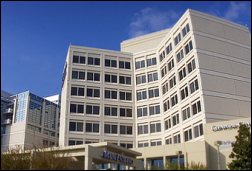

Physician Network Advantage

image

PNA was on my list of people to talk to at HIMSS so I was excited to see them on my calendar. My interest was on their Connect offering and how they might help Centura jumpstart our efforts. If you are an Epic client and considering offering Connect, ask John to show you their eight-foot long Visio on the Connect process. It is impressive and sobering at the same time.
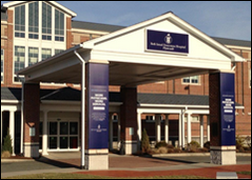

I had a lot of fun meeting with everyone and came away with follow up for the team at Centura. I want to apologize to all of the people who patiently waited for me when I fell behind schedule due to travel time between booths.
The most exciting part of this experience is that we raised $7.000! Thank you to the companies listed above and to the anonymous donor who matched everyone’s contributions. I would also like to thank Mr. H and Lorre for all of their work to make this happen.

Monday Morning Update 4/20/15

April 18, 2015 News 7 Comments

Top News

image

Kaiser Permanente chooses midtown Atlanta for a $20 million IT campus that will create 900 jobs.


Reader Comments

From Justa CIO: “Re: HIMSS. Do you think it’s becoming irrelevant for people in HIT leadership roles? I find it much less compelling since I can find product information or call someone who has experience with something without being away for a week and spending thousands of dollars of my employer’s hard-earned money while plugging away at real issues. I would like to know what you and others think. Your coverage is excellent – it was enough to make me post this question as I realized that the only things I miss was networking and your choice party.” I’m mixed on the value of attending the conference. Networking can be overrated if you aren’t a vendor selling something – I sometimes think CIOs should stop talking to each other entirely (except to check vendor references) and do creative rather than imitative things since healthcare IT sometimes looks like lemmings following each other off the cliff. HIMSS is efficient in bringing people together so they can schedule time together, but otherwise it’s a horribly inefficient mess of social events, glitzy exhibits, job seeking, and glad-handing and you might be better off just buying the education session recordings (which are included free with conference registration). I’m not convinced that the non-profit health systems that spend fortunes to send people there (often more as a personal reward than a business necessity) show measurable ROI or demonstrate care improvement as a result. Here’s a challenge to health system CIOs that I will report anonymously if you respond: list the immediately actionable items you took away from the conference that you couldn’t have done without attending. Or, the actions you took in the past year that were driven entirely by your 2014 HIMSS attendance. Our HISsies “best CIO” winner John Halamka keeps BIDMC running despite his non-attendance this year.

image

From Texas Rules: “Re: Next Wave Connect healthcare-specific social collaboration solution. It continues to purge staffers – Drex DeFord and most of the Seattle team are gone.” Drex’s LinkedIn profile indicates that he left the company in February. I asked Chairman Ivo Nelson, who replied,“ It’s pretty common for startups to go through some turnover in the first few years. As you know, I’ve been through this before and getting the right team in place is a sign of health, not illness. Next Wave Connect has steadily grown its staff and will continue to grow this year. We have a good team in place under the leadership of Jim Jacobs and I’ve been very pleased with our progress. Just our March To HIMSS campaign garnered over 15K hits and MyCHIME is has been a huge success.”

From Concerned Tester: “Re: [health system name omitted]. An IT director is under investigation for accepting an Aruba vacation from their [vendor name omitted] rep. That director and his former boss hid a problem with orders that didn’t match after an EHR upgrade. He also pushed out an update that broke the connection to the HIE that caused slowdowns and lost data. The good news that the vendor is being kicked out and Epic will happen in 10 months, but the bad news is that the director was successful in getting them to switch to the previous vendor’s HIE.” I’ve omitted names since I couldn’t verify, but I’m interested in who’s doing the investigation.

image

From Magnum PI: “Re: Meaningful Use data from Jamie Stockton at Wells Fargo Securities. The numbers don’t seem to match what CMS provides. I also thought CMS stopped including vendor names in their numbers due to ongoing inaccuracies.” Jamie provided this response: “The only hospitals that needed to attest for Stage 2 in 2014 were the ones that originally entered the program in 2011-12. That cohort of hospitals is 2,600 facilities (vs. the 4,800 that have registered for the program through today). If we look at net attestations (adjusting for the fact that sometimes more than one vendor is listed by a hospital when they attest and therefore one hospital occupies multiple rows for the same attestation year in the CMS spreadsheet), then we calculate that 1,800 hospitals have attested for Stage 2, which roughly matches the number your reader quoted. If you just took 1,800 and divided it by 2,600, then you would get about 70 percent of hospitals having successfully attested for Stage 2. I probably need to make that 70 percent number much more clear in the future and we also need to add a line to the bottom of our Stage 2 table that adjusts the gross number of attestations (which was 2,900) down to the 1,800 net. When we look at vendor success rate, we are excluding the hospitals that have switched vendors since 2011-12. If we didn’t, Epic would have a 130 percent success rate because many McKesson, Meditech, and Siemens hospitals that first showed up in 2011-12 with those vendors have subsequently switched to Epic and would not be in the denominator of the calculation for Epic. Excluding all 400 hospitals that have switched vendors, we get to an average vendor success rate of 55 percent. Obviously that penalizes vendors in their success rate if they have lost market share, but I think that is OK. There is a reason that the hospitals moved away from them. At least with the February data set that powered our most recent analysis, CMS continued to publish the vendor names associated with each attestation.”

From The PACS Designer: “Re: medical 3D printing. At the Washington University School of Medicine, cardiothoracic surgeons are using 3D printing to prepare for heart operations. Recently they used the 3D method to prepare for a difficult heart repair for a 20-month-old toddler at St. Louis Children’s Hospital.”


HIStalk Announcements and Requests

I feel sorry for the housekeeping people who had to discard all the junk HIMSS conference attendees left in the overflowing trash cans of their hotel rooms at checkout. Every year most of the booth swag and handouts that seemed worth grabbing in the exhibit hall fail to earn their luggage space back in the hotel, so rather than pack it and haul it home, it’s easier to just chuck it. Somewhere in Chicago there’s a landfill full of Caradigm-provided HIMSS backpacks, although I actually brought mine home since it’s a nice one. I also brought back the pair of insulated coffee mugs that First Databank cheerfully provided.
image

Arcadia Healthcare Solutions provided the most useful handout ever, a conference essentials pack that included a bottle of water, a coozie, breath mints, ibuprofen, foot bandages, antacid tablets, and vitamin C fizzy drink powder.

The conference reminded me of an observation I had years ago after sitting in on a variety of VC and executive meetings. Mid-level executives and startup CEOs always wear impeccable suits and frown at everything to make sure people take them seriously, while the folks with real money and power wear casual clothes and joke around because they’ve earned the ability to do whatever they want and don’t care what the suited second string thinks. I like that a lot. Big-time VC guy Peter Thiel famously says that his fund will never invest in a technology company whose CEO wears a suit.

Speaking of the conference, I didn’t hear any comments or see any tweets quoting something interesting that was said by the keynote speakers. Did I miss anything by not attending any of them? I’m also interested in more definitive comments about what you liked and didn’t like. Did you go to any educational sessions? Did you meet anyone who was particularly impressive or obnoxious? What vendors raised your interest?
Here’s an odd expression I’ve heard quite a few times over the years: “a piece of software.”

Phrases that need to be expunged from the healthcare vocabulary: mobile health, population health, and patient-centered. All of those be assumed when talking about health. They don’t require being defined as a separate novelty category as they once might have been.

I was annoyed at a video interview with Karen DeSalvo conducted by a young HIMSS Media person with unstated credentials (she includes nothing about education or background in her LinkedIn profile) who repeatedly referred to the national coordinator (and acting assistant secretary for health)  as “Karen.” Even if she’s your BFF, she should be referred to as “Dr. DeSalvo” when interviewing her on video – that shows basic respect for her education, role, and age. 

Thursday beat Wednesday’s HIStalk readership record with 14,658 page views from nearly 11,000 unique visits.

image

The folks who didn’t attend HIMSS expected their workload to be about the same last week, although a fourth of them admitted that it’s easier when their bosses aren’t around. New poll to your right or here: if you attended the HIMSS conference, how would you grade it?

Lorre has posted some of the interviews DrFirst did at the conference. Here’s one with our HIStalkapalooza host, Forward Health Group’s Barry Wightman.

Here’s another DrFirst HIMSS conference interview, this one with DrFirst CEO Cam Deemer on the one year delay of mandatory electronic prescribing in New York.

For those who attended HIStalkapalooza: what would you do differently? How would you make it more attractive to potential sponsors for a 2016 version? I haven’t decided if I’ll do it again next year, but Lorre has confidently placed a hold on a Las Vegas venue thinking I’ll re-up.

Listening: The Suffers, big-horns Gulf Coast melting pot soul from Houston. This is your chance to tell people about a great band they’ve never heard, but will almost certainly like once they do.

Welcome to new HIStalk Platinum Sponsor xG Health Solutions of Columbia, MD. The clinician-led company brings to the national market healthcare transformation tools and knowledge developed by Geisinger Health System. The company offers care management services (including population health analytics) and offers help with transition to a fee-for-value environment. XG Health solutions announced at the HIMSS conference EnrG, a suite of advanced interoperability software modules that use Geisinger-developed care models to improve acute and chronic care management, connecting via SMART on FHIR to work seamlessly with any FHIR-enabled EHR (the initial partners are Athenahealth, Cerner, and Epic). The evidence-based care modules address procedures and conditions such as CABG, hip fracture, COPD, diabetes, and chronic kidney disease. EnrGRheum, which addresses rheumatologic diseases, will be released in Q3 2015 with six additional apps following. Thanks to xG Health Solutions for supporting HIStalk.


Webinars

April 22 (Wednesday) 1:00 ET. “Microsoft: The Waking Giant in Healthcare Analytics and Big Data.” Sponsored by Health Catalyst. Presenter: Dale Sanders, SVP of strategy, Health Catalyst. Microsoft has been quietly reengineering its culture and products to offer the best value and most visionary platform for cloud services, big data, and analytics in healthcare. This webinar will cover the Healthcare Analytics Adoption Model, the ongoing transition from relational databases, the role of new Microsoft products such as Azure and Analytic Platform System, the PowerX product line, and geospatial and machine learning visualization tools. Attendees will learn how to incorporate cloud-based analytics services into their healthcare analytics strategies.


Acquisitions, Funding, Business, and Stock

image

CPSI renames its EHR business line Evident. or at least that’s what the verbose yet uninformative press release suggests. It will continue to run its services business under the TruBridge name. The Evident name seems rather generic, not particularly relevant, and likely to get lost in Google searches. Apparently the CPSI name survives as the parent and in the company’s Nasdaq listing. Vince Ciotti tipped me off with the photo above that he took in the HIMSS exhibit hall.

image

Streamline Health reports Q4 results: revenue up 1.2 percent, adjusted EPS –$0.04 vs. –$0.13. Shares dropped almost 7 percent Friday on the news. Above is the one-year price chart of STRM (blue, down 49 percent) vs. the Nasdaq (red, up 20 percent).


Announcements and Implementations

Tallksoft launches its Survey+ patient survey app that allows medical practices to benchmark their patient experience and practice performance.

Cerner will offer Healthwise health education content to Millennium users and via its HealthLife Engagement module.

image

Ernst and Young announces development of its Telemedicine Adoption Model.


Government and Politics

image

The estimated cost of opening the new Denver VA hospital rises to over $2 billion vs. the original VA estimate of $630 million. It’s also two years behind schedule.

The Atlantic says hospitals are chasing CMS patient satisfaction scores that focus on making people happy rather than making them well, encouraging hospitals (even those with low clinical ratings) to redirect funds toward putting in valet parking, live music, and VIP loyalty lounges. They’re also scripting nurse interactions to troll for higher survey scores and tying clinician pay to the results even though everybody knows that the patient isn’t always right. A previous version of the survey allowed comments, where patients complained that their dying roommate was making too much noise and that their sandwich didn’t contain enough pastrami. Experts worry that hospitals trying to appease patients might avoid talking to them about unpleasant topics such as losing weight, seeking mental health treatment, or stopping smoking. Most amazing is that patients with the highest reported satisfaction had higher hospitalization rates, higher costs, and a higher mortality rate.


Other

Here’s the final installment of Vince Ciotti’s vendor revenue review for 2014, this time covering small-hospital vendors.

image

I missed that Athenahealth’s Jonathan Bush tweeted this last Tuesday, including a HIStalkapalooza photo taken back stage at the House of Blues.

The latest drug of abuse: amphetamine-based ADHD drugs such as Adderall (aka “mommy crack” or “productivity in a pill”), which mostly young career go-getters are using to increase career competitiveness through short-term improvement in focus and attention. Interestingly, the anonymous executive profiled in the New York Times article is a health IT startup CEO, who says she has no choice but to take the drug because it is “necessary for the survival of the best and the smartest and the highest-achieving people.”


Sponsor Updates

  • HCS sponsored the “Arc of Monmouth Walk and 5K” on the Asbury Park Boardwalk in New Jersey last week and raised more money than all other teams for people with intellectual and developmental disabilities.
  • Strata Decision Technology will add Yale-New Haven Health’s quality indicators into its StrataJazz platform to help providers understand the high cost of quality variation.

Contacts

Mr. H, Lorre, Jennifer, Dr. Jayne, Dr. Gregg, Lt. Dan.

More news: HIStalk Practice, HIStalk Connect.

Get HIStalk updates.
Contact us online.

125x125_2nd_Circle

Dr. Jayne at HIMSS 4/16/15

April 16, 2015 Dr. Jayne Comments Off on Dr. Jayne at HIMSS 4/16/15

I’m home but still playing catch-up with my HIMSS experiencing. As I was triaging my inbox, I found a gem about a new patient engagement product. It wasn’t a great release and didn’t even mention the vendor showing it at HIMSS. Who sends dry press releases during HIMSS and doesn’t even mention the conference? I’m sure the visibility on this one was pretty low.

clip_image002

The highlight of my day Tuesday was running into a good friend while waiting for the show to open. His cup caught my eye and we had a nice catch-up until heading into the fray. The show floor was pretty busy. The creepiest booth was in the Interoperability Showcase, where one of the hospital displays had two people sitting in a hospital bed together. One was wearing a baseball cap and looked totally bored. The same display area also had a guy walking around in a hospital gown with a sign around his neck, pushing what looked like a vital signs monitor machine. Very strange.

clip_image004

I saw HIStalk sponsor signs at Sunquest and Santa Rosa as well as at Healthfinch, where I had a great demo from Debbie. Healthfinch is one of what feels like only a handful of products that actually makes physicians’ lives easier, so I salute them. I stopped by the Enovate booth to see if they had anything new – we use their pediatric computer carts and they’re super cute. I was hoping they’d have a new animal offering this year and they promised to send some literature.

Venturing back into the bowels of the hall to the HX360 area, there were quite a few empty booths. One of my colleagues joked about creating a fake wireframe and sitting at their booth just so we could have a rest. We did use their chairs while I caught up on email. My goal was to check out MediVu, who had emailed me about their startup. Although their message said they had “no fancy giveaways or fancy parties to invite you to,” they were warm and welcoming as I chatted with CEO Robert Baldwin about their product’s dynamic icons. They did offer me some mints in a test tube, so they passed the southern hospitality test as well. I like to follow startups – I’m still following one that I first saw at HIMSS in 2011. They haven’t made the big time, but they’re still at it.

clip_image006

McCormick Place failed the southern hospitality test, with overflowing trash cans and recycle bins. They also committed the “here’s a trash can but no corresponding recycle bin” faux pas, which makes me crazy. It’s not like they’ve never hosted a convention before, you know?

clip_image008

They did, however, have an actual working pay phone near the lower-level restrooms, so that’s something.

clip_image009

I spotted these shoes in the 900 aisle. Although they’re attractive, I think the gentleman she was talking to made a more responsible shoe choice.

I tried several times to connect with specific vendor reps as I roamed the aisles. My success rate was zero for three –people had stepped out of their booths and the response of those left behind was highly variable. IMO (Intelligent Medical Objects) gets the prize for best response. First they asked if I would like them to try to find the person or whether they could help me, then offered refreshments while they looked for him. The second two vendors will remain anonymous to protect the guilty – one didn’t bother to ask what I wanted, saying, “He’s out of the booth, but I can help you,” which wasn’t true since I was just there to see pictures of his new baby and catch up. The third just said, “I have no idea where he went, but it was a while ago” and left it at that. Vendors take note: you should have a plan for this because I bet it happens a lot. Other “booth teams behaving badly” included the guys from Intel, who were leaning on the door of the Medicomp booth and preventing people from getting in or out.

clip_image011

Humetrix had surfing rubber ducks at their booth.

clip_image013

I headed to the HIMSS Bistro in the afternoon to stalk the CMIO lunch. This sign on the sky bridge reminded me of the need to proofread. It looked like the CMIO group was having a great discussion, but I was a little disappointed by the small number of women at the table, one of whom was Lorre. She has promised to send me her notes from the discussion – I bet it was a good one and would have loved to attend if there was any way to stay anonymous.

clip_image015

Epic had their traditional quirky art. I really like this guy, though – I would totally buy him. Insight Enterprises had a life-sized “Operation” game in their booth, but I couldn’t get a picture of it because of the crowd around it. I visited with my good friends at RemitDATA for a few minutes. They helped talk me off the ledge after I was accosted by aggressive vendor reps on the way there. One was stepping into the aisle, randomly shoving literature at people in complete disregard to their “no thank you” or corresponding lack of interest in their product. Another actually grabbed my hand and tried to pull me into the booth. When I told a colleague about it, he also commented on the aggressive nature of some of the reps, saying, “It was like they were on an attack vector.”

After that, it was time to head back to the hotel and change for the evening’s parties. The bus to the hotel was much faster this time, but still with the same people rushing the front as soon as it stopped. I got ready quickly and the cute boots I brought sat unused as I knew I wasn’t going to make it through the night without serious pain. I cabbed it over to the New Media Meetup at Gino’s East with a friend. The Chicago-style pizza was the perfect way to fuel before a big list of events, but I was bummed that I didn’t have a paint pen to add my “Dr. Jayne was here” to the walls.

clip_image017

From there it was off to the “HIMSSandHers” networking event, sponsored by XX in Health and Edifecs. They generously donated $5 to Bright Pink for everyone who tweeted a pic from their event. Do you like my selfie? There were several other parties that night including Nordic and NextGen. I caught up some friends at the end at Tavern on Rush, where I was confused by the fact that they have a pair of sparkly Louboutin heels in a rotating Plexiglas box behind their bar. I’m sure there’s a story there.

clip_image019

By the end of the night, I was ready for a trip to the spa as this bakery display advertised, but alas there was still more HIMSS ahead of me. Next up: I’ll post my HIMSS wrap-up after the weekend.

From HIMSS 4/16/15

April 16, 2015 News 8 Comments

My headline isn’t exactly accurate – I’m still in Chicago, but I didn’t wend my way back to McCormick Place this morning since I just wasn’t interested enough to bother. Instead, I caught up on some work, bought some clothes at Macy’s on State Street (my favorite store anywhere), and had dim sum in Chinatown.

Interesting: HIMSS scratches Atlanta and New Orleans off the cities list for future conferences, saying they can’t handle the growing attendance. That leaves only Orlando and Las Vegas as HIMSS conference locations since HIMSS had already expunged Chicago permanently (for the second time, in fact, as a result of two different tiffs – once over nasty exhibit hall workers and the second because RSNA got better Chicago hotel room rates). Exhibitors won’t be thrilled since both Orlando and Las Vegas have ample distractions that keep attendees doing something fun instead of trudging the exhibit halls like swag-seeking zombies. I really dislike Las Vegas, but there’s nothing like being handed stripper cards on your way to an educational session. If HIMSS were a stock, it would be split – other than vanity and economy of scale, it would be a lot more interesting and manageable as two separate conferences.

I thought of another company that is growing quickly based on announcements and appearance: Validic.

This week on HIStalk Connect: A number of enterprise health IT Apple Watch apps are unveiled during this week’s HIMSS conference. CMS publishes data suggesting that up to 66 percent of rural US hospitals failed to generate a single patient portal visitor during MU1 attestation. Partners Healthcare joins forces with Samsung to develop a series of remote patient monitoring solutions. Researchers at Vanderbilt University develop genetically engineered microbiome capable of tricking mice into thinking they are not hungry. 

image

I was surprised to see this photo tweeted by Athenahealth showing Jonathan Bush returning to his company’s Monday night party with the shaving cream from his HIStalkapalooza-applied pie still on his face. We provided him with cleanup facilities, so I can only assume he wore the foam as badge of honor.

The final HIStalkapalooza count from House of Blues was 788. We invited 1,465, meaning that 46 percent of them didn’t attend. That’s a frustrating part of trying to plan an expensive per-person event, which I fortunately anticipated in assuming a no-show rate of 40 percent in signing the House of Blues guarantee. I’ll try not to think about the fact that the incremental cost of having more than 100 extra folks would have been zero since I was charged for them anyway. At least it’s not like last year when each of those no-shows prevented someone else from coming, although we would have let some walk-ins enter had we known about the no-shows ahead of time.

HIStalk had 13,500 page views on Wednesday, which I believe is a record.

Jenn reported an encounter with the “Epic police” this week. Epic was demonstrating in the Interoperability Showcase and Jenn (who had a HIMSS conference press pass) snapped a photo of what Epic was publicly displaying. Someone from Epic came up, said nobody’s allowed to take pictures of Epic’s screens, and then demanded that the photo be deleted from the camera while they stood there to verify. That sounds like Soviet-style overstepping big time, especially since Jenn was attending as a journalist – if you are showing your product on the big screen, if HIMSS doesn’t prohibit picture-taking in the exhibit hall (which they don’t any more as far as I can after reviewing the attendee agreement), and if the person taking the photo doesn’t work for an organization that has signed a confidentiality agreement with Epic, then I don’t believe Epic people have any legal basis for detaining attendees and demanding that they delete photos. Claims of friendly and open interoperability just don’t jibe with clearly evidenced paranoia and legal muscle-flexing. I think there’s enough Epic out there that whatever national secrets are contained on their screens have already been exposed.

Nordic did some live interviews during the HIMSS conference. Here’s one with Lorre.

Here’s Nordic’s interview with one of our patient advocate scholarship winners, Carly Medosch. We’ll have a writeup from each of them next week. Carly had a flare-up of her condition on Wednesday that required her to visit the ED, so I’ve suggested she write up that experience as part of her narrative as a HIMSS conference patient advocate.

I’m not sure what my HIMSS takeaways are. The focus seemed more on “doing” rather than “buying.” The first glimmer of patients turning into consumers showed itself. Big health systems have gotten bigger and are dealing with electronically absorbing their acquisitions. Every vendor has figured out interoperability according to themselves, yet every provider struggles to get the patient information they need that resides elsewhere. Everybody seems sick of Meaningful Use. What’s your answer to “HIMSS15 was the year of the …”?

I took some of the photos DrFirst took at HIStalkapalooza and turned them into a video (with marginally cheesy royalty-free music that I bought for the occasion for $18 just to stay legal). I’ll probably post more later and I have video from the event coming as well.

Dana Moore had a great time meeting with folks who donated to DonorsChoose. He’ll be writing up what he learned and liked for next week’s HIStalk.

I’ll be back to normal HIStalk writing this weekend for the Monday Morning Update after traveling back Friday. I’m interested to hear your thoughts about the conference this week.

Dr. Jayne at HIMSS 4/15/15

April 15, 2015 Dr. Jayne Comments Off on Dr. Jayne at HIMSS 4/15/15

I’m way behind on my writing, mostly due to the overwhelming nature of the exhibit hall coupled with entirely too many social events. I had decided to walk to McCormick Place Monday morning but abandoned my quest after the first half mile due to the drizzle. I was joined on the bus by two women who joked about the window curtains, saying that if they were rock stars they’d close them and kick back. If they were rock stars they’d have couches and tables rather than the flimsy cup holder that turned my bottle of Diet Coke into an ankle-seeking missile.

They joined me in rolling our eyes at the people on the bus who jumped up and rushed the front as soon as the bus stopped. I’m not sure what happened to waiting until those in front of you exit, but that wasn’t the only bus ride where that happened. I had been trying to time my arrival to the opening of the exhibit hall, but was early since I decided to catch the shuttle at the Hilton. I picked up some breakfast and was nibbling a sandwich and juggling my stuff. I want to offer a profound thank you to the gentleman who gave me his chair and proved that manners still exist.

clip_image002

Shortly after that, I saw a tweet from Jessica Kahn that highlighted images of women at HIMSS with the hashtag #overit. Sex definitely still sells, as proved by a vendor event I attended that featured scantily-clad Go-Go dancers. I did overhear several attendees comment that they thought there were fewer “booth babes” than in previous years. The wildest thing I remember seeing was in 2011 when one vendor had contortionists on stage in their booth. As a clinician, it was fascinating, but still not appropriate.

I did make it to a couple of sessions, but none of them had anything earth shattering. Monday’s agenda was aggressive and included hitting several booths before making my way to play Quipstar at the Medicomp Systems booth. The amount of work that goes into putting together a full-scale working game show set is huge. Their backstage area hosts a variety of technology that keeps the game up and running. I’m not sure how many trucks it takes to haul it, but the infrastructure of their two-story booth is pretty impressive.

My performance as a contestant, however, was not impressive. Despite winning the double-points bonus question, I finished second and will be taking home six gallons of popcorn, which I’m sure my staff will enjoy. The real prize was their donation of $1,000 to Wings of Hope. Nominated for the 2011 Nobel Peace Prize, they set up field bases in developing nations. The bases help build clinics and schools, and establish air ambulance service for rural areas. As a non-sectarian, non-political organization, they can often work in areas that will not accept other charities. They also operate a Medical Relief and Air Transport Program in the US that flies children for medical treatment free of charge.

clip_image004

clip_image005

I returned to Quipstar later in the day to escort Jonathan Bush to the booth. He played for the St. Boniface Haiti Foundation against former ONC Deputy National Coordinator Jacob Reider. St. Boniface Haiti Foundation helps bring healthcare, education, and community development to the people of Haiti. The highlight of the round was seeing them take a selfie together. The contest was also full of entries for my “things I thought I’d never hear at HIMSS” list, but they were throwing them out too fast for me to jot them all down. Dr. Reider won the round, earning $300 cash which he added to the Medicomp donation to Engeye, which is dedicated to improving health and education in Uganda.

Later I stopped by the Dell booth to put together some cute headbands for Brooke’s Blossoms. They will go to pediatric cancer patients. We always like hearing about HIMSS events that benefit others, so if you have pictures or write-ups, feel free to share them. I wanted to hit several other booths, but was struggling mightily with the floor plan, mostly due to confusing booth numbering and crazily staggered aisles.

clip_image007

I left the exhibit hall early to get ready for HIStalkapalooza and was glad that I did since the bus ride to my hotel involved nearly 45 minutes of bumper-to-bumper traffic. Luckily the taxi to the House of Blues was much quicker. I had the opportunity to chat with my Secret Crush, David Dieterich, who was admiring my escort’s crushed velvet jacket. Although my crush initially bought my cover story, I’m pretty sure he figured out my secret identity.

clip_image009

The third floor at the House of Blues was the place to be for dinner, with minimal buffet and bar lines. I snagged a front row seat to enjoy the music while having dinner with a couple of friends. Although I couldn’t experience the sponsor opera boxes because I didn’t have a wristband, they looked cool. After dinner, it was time to grab some pecan pie and head to the dance floor for the HISsies.

As an avid baker, I enjoyed Judy Faulkner’s comments about liking to bake pies. She said she was reluctant to put the pie in Jonathan Bush’s face because it would be an insult to the pie. BTW, apple is her favorite. Once the HISsies were over and the pie was abused, Party on the Moon took the stage. They were even better than I remembered and I hope we can make them a permanent fixture. I overheard several hysterical comments throughout the night, including one attendee’s remark that the lead singer looked like the love child of Farzad Mostashari and Usher.

clip_image011 clip_image012

I admired many footwear choices, lamenting the fact that I just can’t do stilettos anymore. I wish I could have gotten a better picture of the red boots above — they were phenomenal. If the owner sees this, please send me a picture and description for my wish list. I could probably tolerate those for a couple of hours. Since I listened to my Shoe Advisor’s pronouncement that “wedges win every time,” I was able to stay on the dance floor until the bitter end, then hit two after-parties before collapsing at The Palmer House.

clip_image014

A reader shared a pic of the Athena Cloud Party, describing it as “insane.” I’m wondering if Jonathan Bush had any comments to make about HIStalkapalooza? I know there were plenty of other events Monday night – send your best pics and a description and I’ll run them next week.

From HIMSS 4/15/15

April 15, 2015 News 9 Comments

From Canuck: “Re: British Columbia EMR. Big implementation gone sour with a reported $125 million spent so far with nothing to show. This story barely touches upon the issues encountered thus far, issues we’ve all seen in other similar projects.” British Columbia parts ways with IBM two years into a 10-year, $700 million project that remains 85 percent incomplete. The health minister still expects to get the project done on time and budget, which is ridiculously optimistic given government IT performance worldwide even when it doesn’t involve dumping the prime vendor. Perhaps the US Department of Defense should notice that its big EHR bidders haven’t performed well in comparable but much smaller projects outside the US, although fault is often hard to assign to either government or prime bidder incompetence. I can’t name a single big government IT project that was delivered on time and on budget, but I can name a bunch that were abandoned with no benefit whatsoever.

From Due North: “Re: NantHealth. Cancelled their HIMSS conference presence at the last minute, eating the huge deposit. Everyone I knew there is gone.” Unverified, but new President Bob Watson was available only in the private meeting rooms over by HIMSS Bistro, which I happened to see while having a lakefront lunch there today. 

Here’s an interesting rumor I heard today from a fairly good source: Karen DeSalvo will reportedly leave her HHS position in a couple of weeks. I hope it’s not true because she’s a credit to public service and has in her short tenure done a very good job in walking the ONC tightrope that tries to balance innovation, public health, and Meaningful Use. The source suggested that Micky Tripathi turned down an offer to serve as interim, which would be a surprising offer given that he’s brilliant but not an MD like all of the National Coordinators so far. I’m almost always a cynical sourpuss when it comes to industry leadership and yet I find myself hoping she not only continues as National Coordinator,  but is given more federal responsibility despite serving within a lame duck administration. The rumor wasn’t clear, so perhaps there’s a bigger role for her within HHS, such as with CDC or NIH. Or maybe it’s not true at all. Feel free to ask her after her Thursday morning HIMSS keynote if you’re still in Chicago. She gets my vote for whatever she wants to do, as does her predecessor Farzad.

image

Here’s Regina Holliday’s latest artwork, which she painted right in the HIStalk booth this week. It’s in honor of HIStalkapalooza, with the pie representing the one Judy Faulkner presented to Jonathan Bush and the beauty queen sash indicating, “We are your biggest fans,” which Regina said she heard repeatedly from folks at the event in reference to HIStalk.

image

I met one of our HIStalking scholarship winners today when Lorre introduced me to Mélanie Péron, our representative from Paris. She cried, hugged, and expressed endless appreciation for the opportunity to attend the conference representing patients. She triggered instant insight on what it takes to be successful as a patient advocate. We healthcare people are used to geeks calmly presenting reams of worksheets, but we are justifiably easily moved by people who can tell a heartbreaking or inspirational story, who get fighting mad at injustice or incompetence, or who tug at our hearts with sadness when the industry in which we work in caused harm to their loved ones or failed to prevent it. We all know it could have been us our our family members on the wrong end of a bad but unfortunately not uncommon healthcare experience. Maybe that handful of people we brought to Chicago are dwarfed by the 43,000 others here who are more interested in finding expensive dinners or selling systems, but their activism keeps us all honest and pushes our faces to the mirror of what’s wrong with healthcare that only we can fix. It’s brilliant. I’m glad they were in Chicago this week and I’m anxious to hear their thoughts about the big business aspects of a sometimes indifferent care delivery system that they’ve now witnessed firsthand.

image

Our HIStalk friend Marty Mercer says HIStalkapalooza is the best party he’s ever attended, possibly because he was being fawned over by two members of Party on the Moon.


Today’s Conference Notes

image

I started my day with a visit with HealthLoop. They were handing out badge ribbons indicating “Empathologist” because they create electronic connections to patients that make them feel connected and engaged in a high-touch way, including scripted electronic check-in. The messaging extends the patient experience before and after the planned encounter, such as sending pre-surgical patients a daily reminder by phone or email to get up and walk around or otherwise prepare for their procedure or to recover from it afterward. It boosts patient satisfaction while delivering patient education. It can even route patients automatically to doctor rating sites and collect survey information for patient-reported outcomes. It was a quick but positive look.

I then stopped by Medfusion, which offers a free “portal of portals” in aggregating multiple portals into its vendor-agnostic one. It was pretty cool in that it can tie together multiple portals to look like a single one to the patient, displaying everything via a slick app. Vendor- and provider-specific portals are really ridiculous in this day and age where every patient would have to manage 10 of them to keep up (and instead never bother to log on at all), so combining them all visually is about the best we can hope for at present.

Next I visited Influence Health, whose EHR-agnostic product brilliantly combines patient engagement, provider marketing, and a patient portal. Consumer choice means providers need to selectively market their services and it’s interesting how Influence Health does it with a consumer user interface that is as familiar as Facebook and Outlook. The company seems to get the connection between clinical patient engagement and provider marketing better than anyone. I only saw a short demo, but it looked solid and smart to me.

A reader asked me to check out Patient Route, way back on the no-man’s land of the HX360 pavilion (which was maddeningly difficult to navigate even with booth number in hand – it literally took 20 minutes to find them even though I was within 100 feet of their little stand). They do some kind of predictive throughput and staff modeling based on historical and real-time information, although I have to say the pitch I was given was not particularly well thought out or informative. About all I heard is that the Brigham is using it to push more surgeries to their suburban hospitals where they get paid more for the same work and don’t have capacity limitations. They didn’t give me enough information to form an opinion.

I checked out MedCPU and was guardedly impressed. The company’s clinical decision support product brings in the usual HL-7 data but also decomposes the free text information that forms most of the available patient data, using natural language processing, text extraction, and a clinical context engine. It turns all of that text into discrete information that is used to provide EHR warnings via a Citrix DLL, so that it sits in the EHR window but separate from it and thus requires no integration effort. It gives clinicians warnings of conditions that are far too subtle for normal field-based CDS to detect. My “guardedly” adjective refers only to the fact that I want to talk to a live site, which the company is arranging. If it works as billed, it’s really well beyond the rather primitive CDS such as drug-drug interaction warnings and drug-lab contraindications. Eyal Ephrat, MD has a track record that instills trust, having founded E&C Medical Intelligence (now PeriGen, which does great work). He and I got a bit deep into the bowels of their patented technology and I want to learn more from actual users.

A reader suggested I look at Innovatient, which offers in-room entertainment, patient assignment, and some nurse call system overlap. I can’t say it struck me as offering anything not already readily available from Oneview, GetWellNetwork, and other vendors, but they have 10 live sites and maybe there’s more than I noticed.

Another reader wanted me to look over Patientco. I can’t get too excited about patient bills and payment options, but if I did, I would love it. They print easily understood bills (designed using sound psychological principles right down to the colors used) and make it easy for patients to settle up online. Patientco is about as cool as billing can get and customers are seeing higher collections and patient satisfaction from using it.

Yet another reader asked me to check out Healow, part of eClinicalWorks. I don’t have much of a reaction – it seemed to be a basic phone-powered portal into a provider’s eCW system with some wearables connectivity built in.

image

NextGen had this cool, computer-controlled waterfall that actually spelled out words and presented pictures using only water patterns. It was bizarre but fascinating.

Today’s MedData scones: banana-maple and pumpkin. My Fitbit can’t count enough steps to offset the calories I took in enjoying them.

image

HIMSS requires exhibitors to refrain from heading out before Wednesday’s 4:00 exhibit hall close time, but plenty of them (HIStalk included) were boxing up well before then.

image

Some strange Epic booth art.

image

Epic’s KLAS results posted on their booth walls shows Cerner second with no green at all, Allscripts flailing around in the middle spot, and Meditech dropping precipitously toward the all-red CPSI bottom feeder level.

image

This is pretty amazing. Centura SVP/CIO Dana Moore met with interested vendors today at a price of a $500 donation to DonorsChoose in return for 20 minutes of his uninterrupted time (which was matched by a generous, anonymous vendor so that we raised $6,000 for needy classrooms today). I expected Dana to nod politely and check his watch constantly from boredom, but instead he told Lorre that it was the best two hours he’s ever spent at a HIMSS conference. Every one of the six vendors had a solution to one of his current problems and one of them had a solution that he didn’t even know existed. His positive experience makes me think we should replicate it on a larger scale at some point, carefully matching provider executives with vendors based on needed, available solutions.  


HIStalkapalooza Photos from DrFirst

Thanks to DrFirst for providing photography and videography at the event. I’ll probably turn some of the many great photos into a video slideshow or something since it’s great for folks to see themselves having fun. As much as I fussed for many months about the effort and personal cost exposure of running the party, it felt worth it to see the crowd responding so positively to the HISsies and the band.

image

image

image

image

image

image

image

image

image

image

image

image

image

image

image

I’ll get back to a more regular posting schedule since I’ll pass on returning to the conference Thursday. It’s been a long week.

From HIMSS 4/14/15

April 14, 2015 News 11 Comments

From Thinking Ahead: “Re: HIStalkapalooza. How can we sponsor next year’s event?” Contact Lorre. I think this year’s sponsors feel they got their money’s worth since it let them have a “party within a party” that offered cool exposure that impressed prospects, but didn’t cost them much since the fixed costs were spread over several sponsors. I question my sanity in assuming so much work and financial risk just to throw a free party where I don’t know all of the attendees, but for at least one evening per year, it almost seems worth it. I haven’t fully decided about doing it again next year.

From Donnie Brasco: “Re: Epic. Announced that Care Everywhere is free until 2020. The $2.35 per patient per year Epic to non-Epic exchange fee was eliminated. Haven’t heard start date or other details.” Epic was taking in only a tiny bit of revenue anyway, and given the negative (and often inaccurate) press as well as the occasional Congressional scorn, it’s a smart move to just waive the small fee rather than defending it.

From GE Hellcare: “Re: Centricity Enterprise. Announced as retired during HIMSS. No more inpatient EHR. They haven’t decided whether to sell it to another company or retire it.” I hadn’t heard that, but then again it’s not exactly a force to be reckoned with either way.

From Tom Terrific: “Re: MedCity News referring to HIStalk as ‘the National Enquirer of health IT.’ I may never read that site again!” I was peeved that a snarky report that recapped HIStalkapalooza made it sound like HIStalk is some kind of tabloid journalism site that isn’t respected or trustworthy, which seems a bit ungrateful given that the writer enjoyed their evening at my expense and filled some of their news space recapping the Jonathan-Judy portion of it (which, now that I think of it, sounds a lot more like ‘National Enquirer’ celebrity gossip masquerading as news than anything I write). I’ll compare experience, issues analysis, news relevancy, and rumor accuracy with anyone.

From Lincoln: “Re: Allscripts. I heard UCI is dropping Sunrise for Epic, the last of the UCs to do move there.”

Centura Health SVP/CIO Dana Moore’s dance card is filled for his 10 until noon time slot in our booth Wednesday, but if you’re willing to donate $500 to DonorsChoose to get 20 minutes of his undivided attention, Dana says he’s willing to stick around later. Remember that we also have an anonymous vendor that is matching that amount, so each 20-minute taker sends $1,000 to underserved classroom projects. One vendor’s executive says she doesn’t really have anything to pitch to Dana, so she’ll use her time to teach him how to make balloon animals. See Lorre in the booth Wednesday morning.

News: the Senate passed the SGR doc fix bill late Tuesday without ICD-10 additions, requiring only the President’s signature to avoid cutting doctor payments (at the expense of adding another $141 billion to the deficit).


Announcements That Are Kind of Interesting

  • Arcadia Healthcare Solutions announces $13 million in new funding.
  • InstaMed offers its payment network customers the ability to charge patients using Apple Pay.
  • Identity management vendor CrossChx raises $15 million.

Today’s Conference Notes

image

We had The Walking Gallery in our booth this afternoon. Each painted jacket tells a story of suffering and loss amidst a struggle with a sometimes uncaring, bureaucratic, paternalistic, or inefficient medical establishment. You should care because it’s about patients and we’re all a patient at one time or another – working in healthcare doesn’t protect you or your family from its problems.

image

Our favorite attorney Steve Blumenthal (on the right) hung out in the booth today and handed out swag. He tried to get approval to give away little bottles of whiskey since his company is in Nashville, but being lawyers, they scotched the idea (no pun intended) fearing mass litigation from conference attendees who might injure themselves in an alcoholic stupor. He made himself a badge labeled “HIStalk Booth Babe” that featured a silhouette of a reclining obese male (he’s pointing at it in the photo). He says he’s pretty funny for a lawyer but it’s not exactly a high bar, so I’m not sure if the “bar” part was an intentional pun.  

image

I still haven’t received any of the HIStalkapalooza photos or video folks were taking for us, but here’s a great band shot from Nordic. Guys loved those red dresses. I should have Lorre check the band’s rider and production details to see if they intentionally installed a hair-blowing fan to make the angelic-sounding ladies look more model-like – I noticed their tresses were undulating fetchingly in the apparently intentional stage breeze.

Want to see the big HIMSS conference keynoters? Plan on sticking around longer than you should since HIMSS backloads the big guns – George Bush is at 4:30 Wednesday and Karen DeSalvo isn’t until 8:30 Thursday morning after everybody who has real work to do is already back doing it.

I remember when vendors weren’t allowed to offer food from the exhibit hall, not even packaged candy. Now you can get just about everything – I’ve had margaritas, mini hot dogs (the sauerkraut was smelling up the adjacent booths), and of course the amazing scones from MedData – my favorite was on tap today, peach with passion fruit icing. Seriously good. I would have had a second one with my HCI-provided beer except they ran out. MedData even delivered some scones to our booth. I’ve heard a scary rumor that Las Vegas doesn’t allow ovens in the exhibit hall and that’s a problem for next year’s scone supply.

Tip: if you want to take UberX back to your hotel, they can’t pull into the taxi loop at the door and the app won’t let you call a car – instead, walk a block or two to the right and then place your Uber request. Even with surge pricing I was able to get back to Bridgeport for $13 this afternoon.

I meant to check out NantHealth since last year I couldn’t figure out what they do even after the booth people tried to explain it to me (clearly they didn’t really know either). I haven’t found their booth so far.

The companies that seem to be on a growth rocket ride, at least from their conference presence, include Access and CoverMyMeds. I’m sure there are others, but those made my radar.

Speaking of growth, here’s a project for all you analytics people. Get copies of the HIMSS exhibitor guide from the previous couple of years. Assign weighting factors to each vendor in the exhibit hall that are both positive (bigger booth, more desirable location, consecutive years of exhibiting) and negative (dropping out of exhibiting or taking a smaller booth). Who is trending up or down? Who stopped showing up at all? How many first-timers returned? How many companies shot their financial wad on one big HIMSS presence and then sank without a trace?

I took a look at Medhost’s YourCareEverywhere, which is sort of a patient portal for hospitals that run its systems. It looked pretty good.

I thought Marshfield Clinic had given up trying to turn its CattailsMD ambulatory EHR into a commercial product, but they’re back with a new cloud-based version. I watch part of a demo and it looked OK but nothing special. I don’t know why with all the EHR vendors out there someone would buy from a provider, but Farzad was checking it out, so maybe it’s cooler than I thought. They only ever sold 34 Cattails systems and now those users have to move to the new one.

PeraHealth says it has grown a lot and they list a bunch of big-name academic medical centers as customers for its Rothman Index patient early warning system.

The Anthelio folks say they’ve grown a lot. I liked them.

I got a quick look of PerfectServe’s slick Synchrony secure communication app. They’re planning to expand it to cover nurses.

I sat through part of a demo of Oneview Healthcare, which offers a cool tablet-controlled in-room patient display where patients can order meals within their prescribed dietary restrictions, input questions that employees are prompted to answer, view educational material (which can be prescribed by clinicians), and a lot more that I couldn’t stay to see. It’s worth a look.

It was bad enough that the exhibit hall is divided into two wildly non-linear sets of booths, but today I found that way down on one side is a real no-man’s land housing the cybersecurity, disaster recovery, and HX360 tracks. You go through some depressing loading dock type doors into what looks like a truck garage and there are a bunch of nondescript booths, mostly free of people, energy, and buzz (although the Leidos cybersecurity speaker had a pretty good crowd). I felt bad and strolled through all the aisles trying to raise spirits by just having a visitor poking around, but the reps had mostly already flatlined their interest and were counting down the minutes until quitting time. I figure some of the products back there surely have a chance to be eventually successful, but the HIMSS setup as so awful that it was creepy just hanging around back there, so I bailed. Here’s how remote it was: there were a ton of empty soft couches, tables, and chairs with no takers. Haul that messy barbeque sandwich there at tomorrow’s lunch and you’ll have a place to eat it instead of spilling it on your shirt and shoes.

I saw a display that offered, in large letters, a “Wellenss Kiosk.” I didn’t have the heart to snap a photo to run here.

Speaking of food, we had a great CMIO lunch today in Bistro HIMSS in the Lakeside building near the exhibit hall. The buffet was really good, the lake view was nice, and it was comfortable and reasonably quiet. Anybody can stroll up and buy lunch for $24. Thursday’s menu sounds excellent and we have a handful of leftover tickets, so maybe I’ll buy someone lunch if I’m in the mood. The CMIOs seemed to enjoy getting together today with Lorre.

image

Cerner takes direct aim at Epic on one of its booth signs.

image

This prize must have had the nerds salivating.

image

image

Clever badge ribbons.

image

I thought I might learn something about the just-announced IBM Watson Health, but this guy was way over my head with P53 genetic variants.


HISsies 2015 Winners

The winners are here.

More Wednesday. I’m taking a look at products claiming to be innovative for patients and families. Let me know if there’s anything else I shouldn’t miss.

Dr. Jayne at HIMSS 4/13/15

April 14, 2015 Dr. Jayne 1 Comment

I made it to Chicago despite an extremely turbulent flight, opting to take an earlier route to Midway instead of O’Hare. The taxi queue was epic and made me long for the organization of Las Vegas. I did run into several friends in line, although none we headed to the same hotel. Although I’m usually annoyed when my taxi driver talks on the phone while driving, this one was lecturing his high school daughter on her GPA and the importance of getting into a good college, so I just relaxed and enjoyed the ride.

Besides catching up on new products and doing research, the main reason I come to HIMSS is to catch up with colleagues. It’s nice to be able to chat in person and the event brings so many people together. A friend who has missed the last couple of HIMSS conferences met me and we enjoyed the long walk to the convention center for registration. Other than a few sprinkles, the weather was gorgeous. The only thing that could have been better would be if Google Maps had not been providing walking directions that felt like we had been bar-hopping first.

While waiting outside the opening reception, I ran into a CMO friend that I hadn’t seen in several years and we talked about her new work with the VA system. Our employed specialty physicians provide a lot of care to veterans outside the VA clinics, so we talked about some strategies for making sure all the information is shared not only within the VA but with the community physicians who deliver increasing amounts of care for veterans.

The reception opened a bit early and there were plenty of bars and buffets set up. The band was named The Fat Babies and was playing to the backdrop of scenes from The Untouchables on the video screens above and behind them. I haven’t seen it in years and the younger Kevin Costner and Sean Connery reminded me that I’m not getting any younger either. I’ve officially been in healthcare IT for more than a decade. Had you asked me at the start whether I’d be doing it full time, I’d have thought you were crazy.

The reception brought some interesting characters my way. Since I was there early enough to grab a table, I made a good target for solo attendees looking for a place to set their drinks while they ate. People aren’t afraid to just introduce themselves and start talking, and my wing-man got to see me almost choke when one of the random people started talking to us about absolutely ridiculous things. Despite the titles on his badge, he had only a loose grasp of some of the key concepts in health IT, so we educated him on the Direct protocol and how physicians need to incorporate received data into patient charts – not just leave it in some email box. I had to leave my wing-man after the reception, but he promises to share many stories about other characters on our upcoming stroll through the exhibit hall.

clip_image002

After the reception, we headed towards the river with a stop at Rebar at Trump Tower. It has a beautiful view and apparently also was hosting a get together for Healthfinch, so we enjoyed seeing celebrities come and go. After a quick dinner we headed to the Divurgent/Experis reception at Roof on the Wit. I was traveling with a pack of party animals who decided to have a contest to see how many people each knew. The competition was stiff and I was quickly reminded that even though I’ve been around a while, I’m but a young pup when it comes to networking. I did run into Nordic’s Drew Madden who showed off what must be the year’s hot accessory – snazzy socks. He informed me that he brought a special pair of shoes for HIStalkapalooza.

clip_image004

On the way to catching my beauty rest, I happened upon the Aventura team at the Palmer House bar. I didn’t make it to the HIStalk sponsor reception (it’s a little tricky to do that and remain anonymous) but they promised a pair was waiting at their booth. I’m excited and think I’ll sport them at Quipstar rather than the sparkly numbers I brought.

From HIMSS 4/14/15

April 14, 2015 News 1 Comment

HIStalkapalooza took up a lot of my time yesterday, so I didn’t even have time to post. This will be a dribs-and-drabs version – I’ll have more time the rest of the week to get organized. Let me know if there’s something I should make sure to see since I’m just flailing around for the most part.


From Anonymous Vendor President: “Re: Dana Moore and DonorsChoose donations. We will anonymously match whatever total you raise up to $5k. Let’s make this thing really work! Many of my family and countless within our company have ties and heartstrings attached to the cause.” Centura SVP/CIO Dana Moore will be in our booth Wednesday, meeting with vendors for 20 minutes each in return for their $500 donation to DonorsChoose. I’ve scheduled six sessions with him so far, meaning with with the very generous anonymous matching funds, we’ll be donating $6,000 for individual classroom projects via DonorsChoose. I have a bunch of teacher thank-you emails to get through from the projects already funded. Next up is the fun of funding new projects. Thanks to everyone involved.

From Kaboodle: “Re: MedStar in Maryland. You failed to mention their GE Centricity EHR crash, where all clinics were down and back to paper. But, but mind you, care was not affected!” Unverified. I haven’t heard anything about it.


HIStalkapalooza

I haven’t had much time to do the post-mortem on HIStalkapalooza since I didn’t get back until well after midnight. House of Blues was perfect and ran things with great skill, the food and bar service was really good, and the band was as outstanding as I remember them from last year. I was backstage the whole time so I didn’t experience the event as an attendee this time around, which I sort of regret, but I could feel the energy and excitement. Some notes:

  • Lorre Wisham worked on the event for many months going back to last spring. She arranged everything you saw or did as an attendee, wrangling an enormous list of to-do items (contracts, menus, sponsors, band details, banners and signs, etc.) The many hundreds of hours were in addition to her doing her “real” HIStalk work.
  • I would have gone seriously broke without the financial help of the event sponsors since we had to sign band and venue contracts almost a year ago, putting me at complete financial risk if sponsors hadn’t participated. Thanks to Elsevier, Santa Rosa Holdings, Divurgent, Sagacious Consultants, Aventura, CommVault, Falcon Consulting Group, Greenway Health, PatientSafe Solutions, Sunquest, Thrasys, and Validic for making it happen. Those who had opera boxes seemed to be enjoying themselves as Lorre checked in with them several times through the evening.
  • Sagacious did a superb job checking people in (and apparently, according to their report, keeping quite a few people out who showed up but weren’t supposed to be there). HOB says we had close to 1,000 people in the house (of 1,500 invited), meaning their folks got everybody in professionally and cheerfully. Elsevier ran the red carpet and I heard people enjoyed that.
  • The House of Blues staff was super professional and treated us like the big-name acts they host there.
  • Rocking doctor Ross Martin kicked it off in style despite a technical snafu that prevented us from enjoying the big finish of his freshly updated Interoperetta. I’ll try to get something on audio or video from Ross so we can hear the full version.
  • Barry Wightman and Jennifer Lyle were great hosts on stage. It’s harder than it looks to engage a huge room full of partygoers and managing the people and equipment on stage.
  • Special thanks to Judy Faulkner and Jonathan Bush for presenting each other awards on stage in a funny but classy manner.
  • I can’t really say anything about Party on the Moon because if you were there, you already know how electrifying they were, and if you weren’t, words alone can’t describe it. Lorre had vendors coming up to her wanting to know how to book them for their own events. The 13 band members came all the way from Atlanta on their tour bus to spend the evening with us. You know a band is killing it when, as one attendee pointed out, you have nerdy IT guys so anxious to participate that they dance with each other. There were some great moments out there in the audience. According to one attendee, “Easily the best party I have ever been to, as good or better than any fraternity party.”
  • We have photos and video coming from several sources that I haven’t had time to review yet. Stay tuned and we can all relive the evening all over again.

image

Neil Versel took some good pictures of the Judy and JB show, even though he annoyed me by dismissively referring to HIStalk as the “National Enquirer of health IT.”

image

A nice HOB exterior shot by Rudy Flores. The stencil over the light that shines the logo — I now know having ordered three of them for this event — is called a “gobo,” just in case you want to increase your vocabulary.


Somewhat Interesting News Announcements

  • IBM creates Watson Health with the announced acquisition of Explorys (analytics and population health management) and Phytel (population health management). The company also announced health partnerships with Apple, J&J, and Medtronic.
  • Surescripts creates a National Record Locator Service along with EClinicalWorks, Greenway, and Epic that will allow providers to locate and exchange patient health records using the Carequality trust framework.
  • InterSystems announces a vendor-neutral, interoperable patient portal.
  • HIMSS turns the work of its interoperability workgroup into a certification program for EHRs, HIEs, and HISPs, run by ICSA under the name “ConCert by HIMSS.” I don’t think of HIMSS as the group that should be certifying products, but apparently their opinion differs from mine.
  • KPMG acquires Beacon Partners, as was predicted in an HIStalk rumor report a couple of weeks ago.
  • Peer60 publishes a free report titled “Will mhealth Drive Patient Engagement?” that questions whether EHRs provide adequate mobile support to meet consumer expectations.

Today in our booth (# 5371)

All day (I think): Regina Holliday will be painting
11:00 Funny lawyer Steve Blumenthal will be handing out swag and dry humor.
2:00 NVoq will hand out Garrett Popcorn (it’s the great Chicago kind that costs a fortune in the airport).
3:00 Your HIStalkapalooza host Barry Wightman will be autographing copies of his book “Pepperland” (which I enjoyed a lot).
4:30 The Walking Gallery will meet.

I forgot that we intended to auction off Regina’s HIStalking original painting from which we made the scholarship winner tee shirts. Make Lorre an offer if you are interested. Maybe she can post the highest current bid on an index card underneath it or something.


My Fitbit shows that I walked 12 miles Monday. It felt like I wasted a lot of time just walking around, but that’s par for the course on the first day of the conference.

image

The folks at XG Health Solutions (a new HIStalk sponsor that I haven’t announced yet) invited me to a breakfast briefing covering their new apps. It’s a Geisinger spinoff that will sell software based on work done there to present clinicians with a better view of EHR data and collect additional information to make it easier to quickly understand patient problems and concerns and to document additional specialty-specific findings (rheumatology is the first one). Partnerships were announced with Epic, Cerner, and Athenahealth, whose EHRs will exchange information with the XG apps using SMART on FHIR. They have four apps going to beta testing by summer and plan to roll out six over the next 18 months.

From the hallway conversations I heard and my own opinions, here are the positives: Geisinger has developed a lot of expertise and content that’s less ivory tower than most big academic medical centers, they put some thought into involving the patient in the use of their apps, and the SaaS-based subscription means new best practices can be put into place quickly. Negatives: the company has significant venture capital ownership (they aren’t Geisinger, in other words), you might suspect that Geisinger applied soft pressure to the newly named EHR vendor partners to get on board with uncertain future commitments, and so far they’re a company that hasn’t done much to dent the market other than to do Geisinger stuff and make announcements. Success in commercializing hospital software is elusive, and while Version 1.0 is easy, it’s Version 2.0 that gets ugly with upgrades, design decisions, and testing. The first non-Geisinger betas will be important.  

image

image

image

image

image

image

image

image

image

image

Some notes from my circuits around the exhibit hall (actually both of them – it’s a split hall that ensures confusion and uneven booth traffic). My badge is intentionally unimpressive to vendors, so I get the same treatment as everybody else.

  • Trying to find a given booth even when you know its number is maddening given the gerrymandered aisles. The printed floor layout is laughable – you would need a high-powered microscope to read any part of it except the anchor booth companies (which may be the intention, come to think of it).
  • Booth reps were screwing around with their phones literally from the moment the exhibits opened. It was depressingly easy to find booths where every single person was staring in rapt attention at their phones while prospects passed by without even being acknowledged. Vendors are really stupid in not coaching and policing their people.
  • Even the fake patient in the hospital bed was surreptitiously killing time with her phone while waiting for her next scene. Check her out in the photo above – I wasn’t quite sure what was going on under those sheets until I came around to the head of the bed.
  • I have three mandatory HIMSS kickoff rituals – I have to stroke the sultry curves of the latest Enovate cart; I have to have amazing scones from MedData (the orange chocolate chip were great, but I swung by later for one that had ham, cheese, and what looked like chives); and I have to see the magic guy in Hyland’s booth (above), who is simply amazing not only magically, but in snarky humor and getting people to come closer. I don’t usually like that kind of stuff, but he has been my favorite part of HIMSS for a bunch of years.
  • Amazon Web Services had a little booth, which was interesting.
  • A guy from Network Detective for Healthcare pitched their product that analyzes the network looking for HIPAA-related problems. It seemed pretty cool, especially the report showing the results in plain English with cross-references to HIPAA sections.
  • Scotland-based Nugensis had guys in kilts and bottles of Scotch on the shelf.
  • I tried to use the HIMSS app, but it locked up, spammed me with some guy’s endless and boring motivational quotes, and then started pushing ads as notifications. Big waste of time. The conference is basically just one giant advertising platform already.
  • The NextGen booth was very cool with clear walls and a waterfall.
  • Elsevier demoed their Tonic iPad app that collects information from patients. One of the cool aspects is that it can steer patients to automatically log on to the patient portal without their even realizing that it’s a separate app, which is nice for Meaningful Use. I didn’t see many products Monday, but this one was my favorite. That’s my bad iPhone picture of it above with the beer mug.
  • The nice folks at zCover gave me a new iPhone case to replace the one they gave me a couple of HIMSS conferences ago. Stop by and they’ll even put it on for you.
  • The FHIR puns were plentifully irritating. IT geek humor doesn’t usually work.
  • Kforce was giving out pretty decent pizza way back in a low-density corner of the hall.
  • Sagacious had their fun HIStalkapalooza posters out.
  • InterSystems had a huge audience for one of their presenters. Their presence was significant.
  • I stopped by the Microsoft booth and, as happens every single year, the reps were too busy yapping at each other to even look at all those prospects invading their space. As also happens every year, I stood patiently in front of a display (mobile devices and Surface this time) and the nearest Microserf stormed by scowling while nearly pushing me out of his way. Perhaps that’s why, unlike years past, their booth didn’t have much traffic.
  • The Georgia display featured the sign I had made for them a few months ago following Atlanta’s HIStalk poll win.
  • Bathroom capacity and seating space were ridiculously inadequate. I hiked forever down a long hall following the restroom sign, only to be met with the dreaded “pardon our dust” sign that said to find another restroom without actually saying where one might be. Another one had a grand-looking entrance, but inside was just one stall and one urinal. I’m thinking of one of those parking space type apps where I hire people to sit in the very few actual seats where people can relax or eat, then providing an app for attendees to find and buy their seats. It makes me uneasy to watch guys in crisp white shirts slopping down a wildly overpriced commissary barbeque sandwich while standing in front of a trash can.

image

Tahoe Forest Hospital (CA) names CIO Jake Dorst as interim CEO. He’ll also continue as CIO.

The outcome of dueling lawsuits between Allscripts and Medfusion may hinge on interpretation of the use of an Oxford comma in their agreement, which is pretty fascinating.

image

A reader wants to know if anyone else thinks that having costumed female entertainers at the HIMSS opening reception crossed the border into sexism territory. I wasn’t there, but if they didn’t have any men, that might at least make me think about it. I noticed fewer obvious booth babes in the hall this year, so maybe the “skin to win” sales approach is finally and deservedly dying off. It would seem especially inappropriate to have a provocatively clad model pretending to be a company rep in trying to get the attention of a female CEO, CIO, or CMIO.

A terribly written and insight-free Forbes article click-baitingly titled “Two Dirty Little Secrets About Electronic Health Records” says EHRs are “a threat to freedom of speech and academic freedom” in claiming that EHR vendors (and Epic specifically) requires customers to sign non-disparagement clauses. The author works up righteous indignation for Bob Wachter, MD, who the author says had to get Epic’s permission to write about a UCSF medication error and to use Epic’s screenshots to illustrate it. The problem is the author just made stuff up rather than asking anyone involved and Bob had to correct him – Epic doesn’t include non-disparagement language in its contracts, although the screenshot part is true and Bob’s not thrilled about that (he emailed me to clarify that the author was wrong on the first point and has since changed the story). The second big secret is that EHRs are designed to help with billing and management. The author magnanimously proclaims that, “I’m not against EHRs,” which would be comforting except nobody’s ever heard of him and his mastery of the subject is clearly minimal.

That’s all for now. I’m headed over to McCormick Place later than I’d like.

From HIMSS 4/12/15

April 11, 2015 News 7 Comments

Top News

image

HHS proposes to shorten the Meaningful Use attestation period to 90 days for 2015 in an announcement released, as always, late on a Friday (they also seem to like to put out big news right before the HIMSS conference). It also proposes removing requirements that are duplicative or no longer needed. Interestingly, HHS wants to reduce the five percent threshold for view/download/transmit to just a single patient – if even one patient retrieves their information, then the capability has been proven and the requirement is met. That addresses the argument that providers can’t force patients to access their data who are unwilling or technically unprepared to do so.


Reader Comments

From Hermanically Sealed: “Re: Evan Nordgren lawsuit against Epic for not paying overtime. Stories reported that the employees were encouraged to donate their settlement money to the health center where Judy Faulkner’s husband works as a physician.“ Unverified. I haven’t seen anything about donation requests. Sounds unlikely to me and easy enough to prove if you’ve received such suggestions.


HIStalk Announcements and Requests

I’ll be posting differently this week, with less emphasis on the clutter of questionably interesting announcements and more on the conference. I may post more than once daily and Jenn will post separately, but I’ll probably send just one email blast daily to avoid overloading inboxes.

I VRBO’ed a little apartment  in Bridgeport, south of downtown within a few blocks of US Cellular Field (the unfortunately and opportunistically renamed Comiskey Park, which was a replacement for Old Comiskey Park). It costs less than a boxy hotel room, is in a cool neighborhood with interesting restaurants within walking distance, and is a short Uber ride to downtown or McCormick place. It’s much better having a kitchen, plenty of room to spread out, and a bay window looking out at White Sox fans heading down the sidewalk to the game than sitting in an airless room in a sterile building packed to the gills with lost, badge-wearing geeky HIMSS peers clogging up slow elevators and chattering way too loudly from being jacked up on exhibit hall adrenaline.

Saturday was stunningly beautiful in Chicago, with temperatures in the mid-60s with blue skies and sunshine. The trees are still denuded, but the grass has greened up and daffodils are poking up. I did some site checking of the House of Blues (looking great there), walked around the river, took a boat ride, and went to the Bulls game courtesy of a reader who invited me. I even Uber’ed back after the game, got picked up quickly near United Center, and didn’t even get hit with the dreaded surge pricing.

I downloaded the HIMSS15 mobile app and found it to be pretty buggy, requiring a bunch of iPhone restarts and confusing password prompts that didn’t make it clear whether it was the HIMSS website password or a new one (I’m still not sure since I had to do a password reset just to get it going). It has pretty good information, although I’m not sure the educational session list will replace the need for the little spiral-bound book that I always carry, assuming they’re still printing them. I used to study the agenda carefully and plan which educational sessions to attend weeks ahead, but they’ve been disappointing in the past few years (too much vendor involvement, boring presenters, too much reliance on PowerPoint, etc.) and I’m going to fewer and fewer of them.

image

Response has been brisk to the gracious offer of Dana Moore, CIO of Centura, to meet in the HIStalk booth with anyone willing to donate $500 to DonorsChoose.org in return for 20 minutes of his uninterrupted attention. Six companies have donated and I’ve funded the first wave of classroom projects that their $3,000 is supporting. The donations paid for the full cost of these projects, all of which are for classrooms in high-poverty areas, most of which involve Teach for America teachers, and many of which include matching funds from other charitable organizations:

  • Two Fire HD devices for a middle school reading program in San Diego, CA
  • A projector for a kindergarten class in Erie, PA
  • Professional development books for kindergarten teachers in Charlotte, NC
  • A Chromebook for an elementary school class in Toppenish, WA
  • Algebra calculators for a high school class in Auburn, WA
  • A sand and water table for K-2 children, all with multiple disabilities, in Rosamond, CA
  • Headphones for K-2 classes in Portland, OR
  • A drawing tablet for the iPad for grades 3-5 in Lockhart, TX
  • Three iPad Minis for a sixth grade class in Oklahoma City, OK

I’ve already received appreciative emails from most of the teachers (it seems to be a pattern that good teachers work through the weekend) and I’ll follow up with photos, teacher comments, and student thank you notes once they put the materials to use. I also have quite a few more projects to fund given the generous response. A couple of companies have taken the “top spot” banners at the top of the page in the next week and most of that money will go to DonorsChoose as well.

image

Poll respondents favor disbanding ONC’s certification program after Stage 3, although a few folks wouldn’t mind seeing ONC keep the program alive but with more input from previously attesting users. New poll to your right or here, for those who aren’t attending the HIMSS conference: will you be working more, less, or about the same this week?

I’m puzzled at companies (HIMSS Analytics, among them most recently) that proudly boast via a grandiose press release of having redesigned their websites. People who already follow the company will see for themselves, while those who don’t aren’t likely to rush to the nearest browser to gaze in wonderment. More self-congratulatory marketing run amok.


Last Week’s Most Interesting News

  • The Texas Medical Board, protecting the interests of its members, prohibits prescribing medications for patients who have been examined only by telemedicine.
  • Health IT issues once again make ECRI Institute’s list of top patient safety concerns.
  • Allscripts agrees to pay $10 million to settle a shareholder class action lawsuit claiming the company’s executives misled investors with overly positive comments following its 2010 acquisition of Eclipsys.
  • FTC warns ONC about unintentionally limiting consumer choices in setting or approving interoperability standards.

Webinars

April 22 (Wednesday) 1:00 ET. “Microsoft: The Waking Giant in Healthcare Analytics and Big Data.” Sponsored by Health Catalyst. Presenter: Dale Sanders, SVP of strategy, Health Catalyst. Microsoft has been quietly reengineering its culture and products to offer the best value and most visionary platform for cloud services, big data, and analytics in healthcare. This webinar will cover the Healthcare Analytics Adoption Model, the ongoing transition from relational databases, the role of new Microsoft products such as Azure and Analytic Platform System, the PowerX product line, and geospatial and machine learning visualization tools. Attendees will learn how to incorporate cloud-based analytics services into their healthcare analytics strategies.


Acquisitions, Funding, Business, and Stock

image

Patient engagement solutions vendor PatientBond acquires consumer profiling company C2b Horizons.

image

SSI Group will announce Monday that it has acquired patient access management software vendor Provider Advantage. Readers who reported the rumor earlier almost got it right – the only part they missed is that SSI Group was the acquirer rather than the acquiree (and SSI’s response to my inquiry was truthful – they weren’t going to be acquired). I call that a win all around.


People

image

Parallon promotes Curtis Watkins to CEO of its technology business unit.

Truven Health Analytics hires former CMS Healthcare.gov official Kirk Grothe as VP of its federal government business.


Announcements and Implementations

MedEvolve, Salar, and Net Health choose VitalWare’s ICD Sherpa as their ICD-10 partner.

Aprima announces a mobile app for its products.

ARC Devices and Orchestrate Healthcare launch ARC VitalConnect, which transmits readings from ARC’s non-touch digital thermometer to EHRs.

Senior care software vendor PointClickCare joins the Surescripts network.


Government and Politics

image

ONC delivers its congressionally mandated report on information blocking, defining the term as when “persons or entities knowingly and unreasonably interfere with the exchange or use of electronic health information.” I’m not quite sure how a company could “reasonably” interfere with information exchange, although ONC later mentions possible patient safety concerns that I would take to mean mental health information. ONC admits that it doesn’t really know how extensive information blocking is since stories are anecdotal or how that practice could be assessed other than by in-the-field product reviews. ONC is clear on practices it considers detrimental to information exchange, including contractual restrictions, charging for information exchange, developing or implementing systems in non-standard ways that increase interoperability difficulty or cost, and practices that lock users in with regard to a particular technology (from  vendor’s standpoint, good business practices, in other words). ONC’s recommended actions: start in-the-field testing as part of certification, tighten technical standards, increase product and vendor transparency (although ONC admits it can’t do much in that regard), mandate sharing, clarify to providers what information sharing is allowed under HIPAA, and refer obvious cases for review under anti-kickback statutes or even to law enforcement agencies where appropriate.

The problem with provider information blocking is that only patients could report it and they’re not likely to call up ONC to complain. Vendor practices, whether contractual or technical, are easier, so it seems to me the most effective way to move the market is to call them out publicly (800.ONC.BLOK, anyone?) It would also be nice for ONC to provide suggested contract boilerplate language for providers, especially medical practices that seem inclined to sign everything shoved in front of them by a exuberant salesperson without even reading it, much less altering it favorably. That’s assuming that providers even care about sharing information, which is the biggest unknown of all. I’d like my local paint store to electronically exchange information on textures and shades with their competitors so I have more freedom of choice, but I doubt they share my enthusiasm.


Sponsor Updates

  • Medicity CEO Nancy Ham pens a blog for HFMA entitled, “Do You Know Where Your Patients Are?”
  • MedData launches major upgrades to its client reporting portal and iPhone app.
  • Navicure releases an upgrade to its billing and payments platform.
  • NVoq offers “The Link Between the Simple Checklist and Improved Patient Safety.”
  • Experian Health/Passport launches a video contest to show how its solutions have helped improve client organization’s patient access processes.
  • PatientPay produces a video detailing its new solution that enables practices to get real-time pricing for patients who call to request estimated visit costs.
  • A PDS blog, “When I Was Your Age: The Challenge of Generational Patient Engagement,” is featured in the HIMSS15 blog carnival.
  • PMD offers “Apple’s Most Important iOS Security Update.”
  • Talksoft’s Hamilton, NJ office is featured in the local paper in a piece about recycled office spaces.
  • TeleTracking asks, “Are U.S. Hospital Operations in Need of an Operation?”

Contacts

Mr. H, Lorre, Jennifer, Dr. Jayne, Dr. Gregg, Lt. Dan.

More news: HIStalk Practice, HIStalk Connect.

Get HIStalk updates.
Contact us online.

125x125_2nd_Circle

Text Ads


RECENT COMMENTS

  1. Re: Deliberately Faked Academic Papers in Nature See, this doesn't surprise me at all. Of course AI quotes these bogus…

  2. Challenger exploded on lift-off when the O-rings failed. Columbia disintegrated on reentry after one of the heat shield tiles were…

Founding Sponsors


Platinum Sponsors


Gold Sponsors


RSS Webinars

  • An error has occurred, which probably means the feed is down. Try again later.