Curbside Consult with Dr. Jayne 10/15/18

October 15, 2018 Dr. Jayne Comments Off on Curbside Consult with Dr. Jayne 10/15/18

As an urgent care physician, I enjoy the satisfaction of being able to make a bad day better for many of my patients. Although I live in a major metropolitan area, there is a relative shortage of primary care physicians (at least ones taking new patients). For those patients who have primary physicians, there’s a shortage of same-day and after-hours appointments that mesh with patients’ busy schedules and their desire for convenience.

I’m happy we can meet our patients’ needs, but I’m often conflicted about the fact that delivering what is essentially primary care in an urgent care setting often contributes to the fragmentation of care. That’s in addition to the cost contribution, because a visit with us typically costs more than a visit to a primary care physician due to negotiated contract rates with payers and higher co-pays for patients.

The fragmentation could potentially be reduced through better technology, particularly better interoperability. Our EHR allegedly has all the interoperability bells and whistles, but local hospitals and their owned physician groups aren’t too keen on sharing data with competitors despite our desire to deliver better patient care. Our state HIE’s provider-centric pricing model makes it cost prohibitive for us to connect, given that the majority of our providers are part time. Even if it were more economical, our HIE is largely read-only, which doesn’t do a lot for the efficiency or accuracy of being able to bring patient data to life in the chart.

A good chunk of our patient volume happens before 9 a.m. and after 5 p.m., which is a testament to the fact that patients want to receive care at a time that is convenient for them, even if it might be more expensive. They also like being able to get care same day and not have to wait for 3-5 days for an appointment for straightforward medical problems. Many of our patients are hourly workers who don’t have paid sick time, and even those who have sick days may be challenged to find two or three hours to visit their primary physician during the work day.

I often think of the reasons behind why people choose to get their care when and where they do, so this Kaiser Health News article caught my attention.

The article covers the idea that millennials are at the forefront of wanting convenience when selecting their care and tend to choose urgent care, telemedicine, and retail clinic options. A poll of 1,200 adults found that younger patients were less likely to have a primary physician, ranging from 45 percent of patients ages 18 to 29 and declining to 12 percent for those age 65 and older. We see that play out in practice, whether it’s strictly due to the convenience angle or whether it’s due to a lack of available primary care capacity.

However, I’m seeing more patients in the Baby Boomer demographic who may have a primary physician, but choose to come to urgent care because they’re busy in their retirement and don’t want their schedules upset by needing to seek medical care.

I have several friends who are dabbling in telemedicine as an adjunct to their regular primary care practices. They report that patients have discussed their desire to handle medical issues at the time and place of their choosing, whether they actually get to interact with the physician face to face or not. Patients are used to transacting the business of their lives online, whether it’s banking or retail, and since healthcare has become a commodity, it’s no different.

One colleague notes that while the patients are glad she’s offering the service, many of them would be just as happy seeing any other physician and not specifically her. We’ve moved into a generation where patients no longer have a primary care physician for life. They may have one for three or four years and then have to change because their employer selected a different network, or they may change due to relocation and the more fluid lives that people tend to live now.

There are concerns that moving away from that continuity where physicians know their patients not only drives up costs, but also leads to inappropriate antibiotic use or misdiagnosis. We see patients who come in specifically because “my primary wouldn’t call me out a Z-pack” and spend a lot of time educating them about viral illnesses. At least we can send them home with medications to help with their symptoms, which makes them feel like they’ve done something to get better even if it’s not an antibiotic. There’s a powerful psychology in that.

We also see patients who have been to their primary care physician and also a subspecialist, but feel like their problem isn’t being addressed so they come to us “for another opinion.” It’s difficult to explain that we’re not experts and if they’ve been to a subspecialist at one of the local academic medical centers and there’s not an answer, that we’re unlikely to find one at the urgent care with our limited testing and radiology capabilities.

I’m particularly interested in the concept of delivering regular primary care via telemedicine, rather than just care for urgent and acute issues. Virtual visits have the power to revolutionize what we do, adding convenience for both patients and providers. In order to be successful, though, we have to get payers and policies aligned to pay for them so that physicians will be more likely to offer them. We also have to get technology aligned, including robust patient portals, the ability for patients to upload their own health data and documents, and better understanding from mid-career physicians that telemedicine isn’t going to suck away their evening and weekend hours.

I think about all the hours that my practice spent trying to track down patients and get them to come in for appointments back when I was in the primary care trenches. I would bet that at least half just disliked the process of going to the doctor and would have been game to do a virtual visit.

I’m excited about projects that pair community health workers with physicians to deliver a combination of in-home contacts with virtual physician visits, particularly in rural areas. A friend of mine recently received a grant in that regard, and I can’t wait to hear how it plays out in real life. I know she is having some challenges figuring out how to actually deliver the services, whether to try to integrate something with her EHR or to use a third-party telemedicine solution. It sounds like the options among vendors vary dramatically, so she is going to keep me posted on her progress.

Are you a physician who regularly incorporates virtual visits into care, or a healthcare IT person who supports one? I’d love to hear from you. Leave a comment or email me.

Email Dr. Jayne.

Readers Write: Hurricanes Michael and Florence Remind Us Why We Need a Data Backup Plan

October 15, 2018 Readers Write Comments Off on Readers Write: Hurricanes Michael and Florence Remind Us Why We Need a Data Backup Plan

Hurricanes Michael and Florence Remind Us Why We Need a Data Backup Plan
By Marty Puranik

image

Marty Puranik is president and CEO of Atlantic.Net of Orlando, FL.

The immense flooding of Hurricanes Michael and Florence across the Florida Panhandle and southeastern areas of the Carolinas, respectively, is yet another business reminder of the omnipotent power of natural disasters. The devastating chaos and aftermath of the massive storms bring into sharper focus a humbling affirmation of the critical need to safeguard health data.

The data backup plan is a mandatory stage of HIPAA compliance requiring healthcare organizations to create, implement, and maintain a set of rules and procedures to follow when managing the backup and restore requirements of electronic protected health information (ePHI).

The data backup plan encompasses wider contingency planning processes that include your chosen business associate (BA) or managed service provider (MSP). The company engaged to remotely or on-site manage your plan must demonstrate a compliant backup service capable of backing up and restoring exact copies of ePHI. 

In choosing a backup service for business continuity and HIPAA compliance, it is critically important to understand the HIPAA Security Rule requirements. This rule demands a backup solution that adheres to the following criteria:

  • Use of data encryption. Backup data is expected to be encrypted at rest and in transmission. This encryption is achievable by using a storage hardware or operating system-level encryption techniques.
  • User authentication safeguards. Applying unique multi-factor password protection is accomplished using Active Directory and a token-based security key such as PKI.
  • Role-based access rules. Users are restricted access on a need-to-know basis following a least-privileged design. These measures help prevent access to backup data by unauthorized personnel.
  • Offsite storage capabilities. Backups must be stored in a separate location to production services.
  • Secure data center facilities. This measure applies to the facility security processes such as SSAE 16 SOC1 and SOC2 standards.
  • Detailed monitoring and reporting functions. Backups must be reported upon and alerts generated in the event of failure.

Moreover, leaving any best-laid plan involving patient data to chance opens to the door to security risks. Proactively test your data backup plan to ensure the MSP’s systems work harmoniously in any unexpected situation. Testing procedures can include:

  • File-level restore. A file-level restore involves one or several files restored to the file system. This can be set up on the original server or to a different location.
  • VM-level restore. If the MSP deploys virtualization technology, a full virtual machine restore can be performed. The server then can be tested for functionality.
  • Application-level restore. A common application restore is a database from inside a Microsoft SQL server instance or a mailbox from Microsoft Exchange. This test guarantees data integrity and verifies that correct permissions and security configuration are recovered.

I often recommend to providers to delegate the backup and restore responsibilities to a compliant cloud or backup-as-a-service (BaaS) offering. The MSP determines the type of backup media to use, which is usually disk-based storage. Once successful backups are achieved, the next step is the restore process for testing to validate the data’s integrity. The testing also assures the backup engineer’s ability to restore data in tandem with the precise speed of timing to complete the process.

Integration within a wider contingency plan is also essential as a failsafe for the data protection. Most MSPs offer disaster recovery technology capable of failing over data and services to a secondary location almost instantaneously. However, be aware that backups are often considered the last line of defense in the event of a catastrophic system failure. The contingency plan authorizes instant data restoration capability in the worst possible case scenarios.

To meet HIPAA security rule requirements, the BaaS platform incorporates offsite backup technology that will offload entirely the ePHI healthcare infrastructure to an external location. The offloading is most frequently performed through site-to-site replication technology or even by shipping backup tape media to a compliant external location. Since backup data is transferred externally over a network, determining the network security being provided by the MSP is imperative to prevent breaches.

Hurricanes Michael and Florence clearly bring into focus the need for emergency preparedness to protect the security of patient data. Indisputably, losing data has huge consequences for healthcare providers who routinely handle sensitive and private ePHI. For example, if access to a critical pharmacy, lab or EHR system is severed, a medical practice struggles to recover and continue its business operations. Reputations are damaged. More importantly, patient lives are put at risk.

Like insurance plans, a data backup plan is there when you most need it as an integral part of your overall business strategy. Before the next natural disaster strikes, what is your backup plan?

Readers Write: The Compliance Difficulties of Medical Device Connectivity

October 15, 2018 Readers Write Comments Off on Readers Write: The Compliance Difficulties of Medical Device Connectivity

The Compliance Difficulties of Medical Device Connectivity
By Abbas Dhilawala

image

Abbas Dhilawala, MS is CTO of Galen Data of Houston, TX.

There are numerous challenges facing the global healthcare ecosystem today, including aging populations that require more healthcare products and services; rising costs across the industry (shared among consumers, insurance carriers, healthcare providers, and taxpayers); growing wait times for medical services; and a growing demand for convenient and personalized care.

To address these challenges, medical device companies are beginning to produce medical devices with cloud connective capabilities that promote the digitization of healthcare and promote better physician-patient engagement while driving down costs. The global market for connected medical devices is expected to increase from $21 billion in 2018 to $63 billion by 2023, an annual growth rate in excess of 25 percent, according to one report.

Still, the path forward for medical device companies that want to design the connected medical devices of the future and get them to market isn’t always clear and direct. Medical device manufacturers are subject to extensive regulations and compliance requirements for the medical devices that they produce. A recent survey of 237 medical technology employees by Deloitte found something important: 67 percent believe that the current regulatory framework will not catch up with what we can do with medical device technology today for another five years.

Medical device companies today face a fractured compliance landscape that can stifle innovation and lead to heavy expenditures in compliance activities at the expense of research and development. Medical device companies that wish to sell their devices in the United States must comply with the quality regulations set forth by the United States Food and Drug Administration (FDA) in Chapter 21 of the Federal Code of Regulations, Part 820. The regulations include guidelines for ensuring the safety and effectiveness of medical devices, including the establishment of detailed design control documentation, the creation and maintenance of processes for corrective and preventive actions when non-conforming products are discovered, and requirements for document control and approval.

Quality system regulations exist around the world in different forms. Canada uses the Canadian Medical Devices Regulations (CMDR), while medical devices sold in Europe must obtain a CE Marking through compliance with ISO 13485, the international standard for medical device quality. Each time a medical device company enters a new market, it must demonstrate compliance with the corresponding local quality system regulations. Sometimes this means conducting a gap analysis and addressing compliance issues internally, but it could also mean hiring a Notified Body to conduct an expensive and time-consuming third-party compliance audit.

To help ease the path to compliance for medical device companies and reduce the cost burden of compliance activities, regulators worldwide are working towards a Medical Device Single Audit Program (MDSAP) that can establish medical device compliance for global markets based on a single audit. While this measure should reduce compliance costs for medical device companies, it remains to be seen how connected medical devices will be regulated under a new system.

As healthcare innovators continue to develop connected medical devices, privacy is a growing concern for regulators and industry professionals. Imagine a future where in-home care is increasingly common and where patients use wearable and implantable medical devices that deliver patient data electronically in real time to a central repository of electronic medical records.

Such a future might not be far off. The EHR mandate already requires hospitals and medical clinics across the United States to use electronic medical records to track patient data, and connected devices with data transmission capabilities already exist. What doesn’t exist yet is a common framework that promotes interoperability between connected devices and patient databases or any kind of privacy and security regulations that would safeguard such a system against malicious attacks that could compromise patient data.

The final compliance issue faced by manufacturers of connected medical devices has to do with changing payment models throughout the healthcare industry. As the industry shifts towards a model that compensates healthcare providers based on the effectiveness of treatments and patient care outcomes, government regulators and payers are increasingly asking for objective evidence that medical devices are positively impacting patient outcomes. Manufacturers of connected medical devices may face additional compliance obstacles when required to demonstrate that their devices actually improve patient engagement, satisfaction, and outcomes.

Despite the compliance difficulties faced by the industry, medical device manufacturers are meeting the challenge head on by innovating new ways of doing business, including funding models that offer data as a service, the adoption of value-based pricing, and the use of real-world patient data to drive business decisions. The medical device companies of today are ready to advance healthcare into the future. Now it’s up to healthcare providers and regulators to keep up.

Monday Morning Update 10/15/18

October 14, 2018 News Comments Off on Monday Morning Update 10/15/18

Top News

image

Pathology image detection support system vendor Deep Lens announces $3.2 million in seed funding and availability of its free VIPER service for pathologists.

Co-founders of the Columbus, OH-based company are CEO Dave Billiter, MBA (Cardinal Health) and President Simon Arkell, MBA (Predixion Systems).

The company is based on work first performed at Nationwide Children’s Hospital in Columbus.

I like an uncredited quote in a company blog post that says you can’t rely too much on company experts whose user experience still makes them “FORMER experts in the field.” It also notes that product feedback from anyone other than a customer should be politely answered with, “Your opinion, although interesting, is irrelevant.”


Reader Comments
image

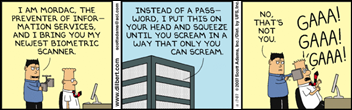
From Biometric Believer: “Re: biometric ID. Would you mind asking your readers why, with advances in technology and increased fraud, hospitals aren’t deploying more iris scanning to patient care locations?” Good question, although I would expand your question to include palm vein scanning, facial recognition, voice recognition, and other less-used forms of biometric ID that hold equally promising potential without the need to approach someone’s eyeball with a scanner. There’s no question that all of these technologies work, only that consumer perception isn’t always great and healthcare and other industries (even banking) have resisted accordingly despite its obvious utility in fraud prevention. Some problems I see:

  • Cost. Although technology costs are going down, deploying biometric readers broadly is a big expense and requires a coordination effort that you don’t want repeat often as those technologies change.
  • Workflow integration, which has been mostly solved, I expect.
  • The creep factor. Years ago I got the job of convincing nurses that our newly implemented fingerprint scanning for drug dispensing machines did not mean we were storing their fingerprints or checking them for criminal history.
  • If hackers breach your system or someone grabs a patient’s fingerprints or takes a picture of their face, your patient is screwed because unlike passwords, they can’t change their biometrics.

My conclusion is that perhaps all of these problems could be solved by using the patient’s own phone as the biometric reader. People are happily using fingerprint recognition, voice recognition, and in some cases with higher-end phones, facial recognition to identify themselves for their own security. You would think that the hospital’s reader could connect via Bluetooth, although that’s a minor patient setup issue as well. Or, to address that issue as well as the fact that not everyone has a cell phone, maybe the hospital could use its own cell phones, handing one over temporarily to the patient to provide a less-threatening biometric ID process using a familiar consumer device.
image

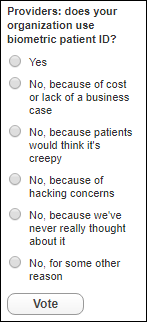
For Biometric Believer, I created a poll for providers to say if they’re using biometric patient ID or why they don’t. Vote and then add a comment to elaborate.
image

From Arthur Allen: “Re: HIStalk. I spotted a rare error in Friday’s update. The VA’s assignment of Paul Tibbits to executive director for the Office of Electronic Health Record Modernization is not a direct replacement of Genevieve Morris. Title-wise at least, Tibbits and Morris differ. She was CHIO, but was also ostensibly in charge of OEHRM. Tibbits is the exec director and they described his job a little differently as well,  more of a liaison with OIT, leaving Captain Windom in charge of OEHRM.” Good point, thanks. John Windom, III led the Cerner selection and rollout by the DoD. Arthur is Politico’s e-health editor who made me beam with his “rare” adjective.

From Kermit: “Re: pre-existing conditions. NPR has a good analysis of the nuances.” The article notes that Republican leaders recognize that it’s politically unwise to take a stand against pre-existing conditions since at least 25 percent of us have them, yet their continued efforts to dismantle the Affordable Care Act and to encourage junk insurance plans as an alternative are making them legal once again after several years. Medicare and Medicaid don’t have pre-existing condition limitations, so claims by Democrats that everyone would be impacted by ACA changes isn’t accurate. HIPAA is a factor since most Americans get health insurance through their employer and HIPAA doesn’t allow those insurers to deny coverage or price premiums based on medical history, but even that’s complicated since some HIPAA protections were moved into the ACA and might die along with it if ACA doesn’t survive legal challenges given the White House’s strategy of not defending it vigorously. TL; DR: everybody hates pre-existing conditions except politicians, who will throw those who have them under the bus if it helps their party.


HIStalk Announcements and Requests
image

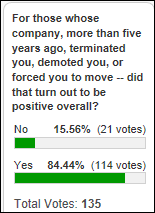
I ran this poll to encourage folks who are struggling with an involuntary career change. Respondents who were fired, laid off, or relocated a few years back overwhelmingly say it turned out to be a positive development.

Marketing Guy was let go the same week he and his newly pregnant wife bought a new house, but he eventually got two job offers, took one that allowed him to move his family to Europe, and rose within that company’s ranks over 10 years. His advice is to keep working hard (even if that work involves job-hunting), keep learning, and stay positive. Hermanator was fired due to office politics from a company he had helped start, but he says it was the best thing that could have happened because he then started an even better company. He advises that folks take a break, reflect, learn from any mistakes they made, focus on their strengths, and find a new opportunity they can get passionate about.
image

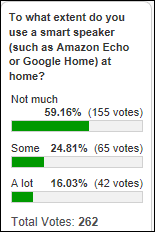
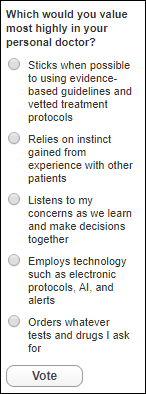
New poll to your right or here: which would you value most highly in your personal doctor? You don’t get an “other” or intellectually lazy “all of the above” option because it’s my poll and I know what I’m trying to assess, but those who feel deprived that they weren’t given an essay question can click the “Comments” link after voting and opine away.

Old friend of HIStalk Alex Scarlat, MD (we first corresponded sometime before 2011, I found by searching my old emails) is doing fun work on his own with machine learning. Check out his DogBreed.io, which can identify a dog breed from a photo with 97 percent accuracy (giving you some idea of the excitement behind using ML for diagnostic imaging analysis). He says he wrote it in under 50 lines of Python code. Alex has also done some work with weather prediction that is showing high accuracy. I have suggested that he consider writing a primer series on machine learning for clinicians for HIStalk, a non-technical review of what’s inside the black box and where it might be good (or not so good) for healthcare applications.
image

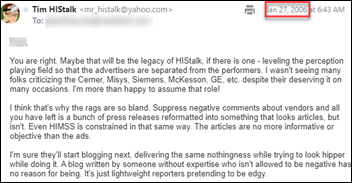
I realized that my ancient Yahoo Mail account is a treasure trove of 80,000 emails going back to August 2004, 14 months after I started HIStalk (I don’t recall which email provider I used before then). Reading the names of defunct companies, seeing email from now-retired or deceased industry people, and marveling at my energy and exuberance in my emails way back then made me nostalgic. Yahoo Mail is still the best service I’ve used and its search is excellent, so let me know if there’s something fun I should search for (people, companies, unflattering terms, etc.) I found my first-ever interview from late 2004 that I thought was lost forever (with Meditech’s Howard Messing); planning emails from the first HIStalkapalooza in 2008; and threats from an industry magazine’s publisher who was unhappy that I ridiculed a newly assigned health IT reporter who was hired from a pastry magazine.


Webinars

October 30 (Tuesday) 2:00 ET. “How One Pediatric CIN Aligned Culture, Technology and the Community to Transform Care.” Presenters: Lisa Henderson, executive director, Dayton Children’s Health Partners; Shehzad Saeed, MD, associate chief medical officer, Dayton Children’s Health Partners; Mason Beard, solutions strategy leader, Philips PHM; Gabe Orthous, value-based care consultant, Himformatics. Sponsor: Philips PHM. Dayton Children’s Health Partners, a pediatric clinically integrated network, will describe how it aligned its internal culture, technology partners, and the community around its goal of streamlining care delivery and improving outcomes. Presenters will describe how it recruited network members, negotiated value-based contracts, and implemented a data-driven care management process.

Previous webinars are on our YouTube channel. Contact Lorre for information.


Acquisitions, Funding, Business, and Stock

image

Four private equity firms and activist investor Elliott Management are considering placing a bid to acquire Athenahealth, sources suggest. Pamplona Capital, which was previously rumored to be interested in acquiring the company and merging it with its NThrive holding, is not listed in the latest round of rumored potential acquirers but is presumably still in the hunt. ATHN will announce earnings on Thursday. Somehow you get the feeling that Elliott’s malicious manipulation isn’t going to be good for Athenahealth, its customers, or the health IT industry, but I’m sure some money guys will figure out how to enrich themselves while creating nothing more than mayhem.
image

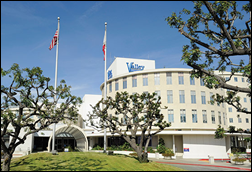
Valley Presbyterian Hospital (CA) tries to ride the coattails of the new Neil Armstrong movie “First Man” by reminding everyone that it was the first hospital to use telemetry-based patient monitoring back in 1966, when Spacelabs took NASA’s astronaut monitoring product into healthcare.


Sales

  • Drug maker Allergan joins TriNetX’s global health research network to analyze patient cohorts, choose study sites, and determine drug study protocol feasibility.
  • The Kentucky Hospital Association joins Collective Medical’s care collaboration network to allow state hospitals to identify patients with a history of substance abuse or treats to ED staff safety as well as to identify and support complex patients.

Decisions

  • Select Specialty Hospital-Johnstown (PA) will replace Medhost with Epic in 2019.
  • Maury Regional Health System (TN) will implement Cerner in November 2018, replacing Meditech.
  • Mercy Medical Center (MA) went live with Epic in September 2018.
  • Washington County Regional Medical Center (GA) will go live with Evident financial management on November 1, 2018.

These provider-reported updates are supplied by Definitive Healthcare, which offers a free trial of its powerful intelligence on hospitals, physicians, and healthcare providers.


People
image

Wayne, PA-based behavioral health solution vendor Tridiuum hireshttps://tridiuum.com/tridiuum-expands-executive-team-with-cro/ Chris Salvatore, MBA (Halo Communications) as chief revenue officer.
image

Intelligent Medical Objects promotes Eric Rose, MD to VP of clinical informatics.


Announcements and Implementations

Mayo Clinic has been going live with the Visage 7 Enterprise Imaging Platform along with its Epic go-lives, finishing up last week at its Jacksonville and Scottsdale campuses. Mayo now has a single enterprise imaging platform and diagnostic viewer along with Epic-driven interpretation workflow across its national network.

image

Maitland, FL-based Therigy, which sells specialty pharmacy software for therapy support and patient assessment, says it has reached 100 million patient engagement activity and assessment responses. The company offers care plans and assessments for 20 conditions, with 900 assessments covering 400 medications.


Government and Politics
image

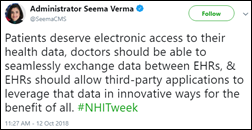
A tweet by CMS Administrator Seema Verma implies that EHR vendors are responsible for the lack of interoperability adoption (which I’m wording intentionally as a combined technical and business problem as opposed to “lack of interoperability capability” as a purely technical issue). She says “doctors should be able to seamlessly exchange data between EHRs,” failing to note that many of them who are properly motivated already do in proving the product’s capability, while those using the very same EHR often remain as information silos.

The government of China expands its e-healthcare regulations:

  • Commercial companies can collaborate with providers to offer electronic diagnosis, telemedicine, or e-hospitals, but they can’t provide those services on their own.
  • Only licensed professionals with at least three years of clinical practice experience can offer online diagnostic services.
  • Patients can use online clinical services only for follow-up visits. Physicians must refer patients to traditional channels otherwise.
  • Remote consultation and prescribing is allowed as an adjunct to a hospital visit.
  • Controlled substances may not be prescribed as part of a telemedicine visit.

Other
image

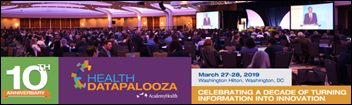
You won’t like this if you think HIMSS already has too much influence by running its own conference, media, and advertising empire and absorbing competitors by acquisition. HIMSS will help health services research organization AcademyHealth run Health Datapalooza 2019, which used to be a rather quiet conference targeting mostly federal government leaders and data wonks. You may take it to the bank (and HIMSS will) that the exhibit hall is going to get a lot bigger.

HIMSS haters might not like this, either. HHS will work with Healthbox (acquired by HIMSS a few months ago) to convene quarterly Deputy Secretary’s Innovation and Investment Summit meetings to ask investors which policies are standing in the way of innovation. Healthbox is a business accelerator that HIMSS acquired to expand its consulting, investment fund management, and startup assistance programs in uncovering yet another way to compete with its paying members.
image

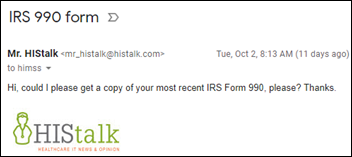
Speaking of HIMSS, they’ve yet to respond to my October 2 request for their non-profit Form 990 federal filing, which they are required by law to provide (but maybe not promptly), even though I notice that I fawningly and mistakenly said “please” twice in the same sentence. I’m always interested in its salaries, revenue by segment, and the occasional buried information about its acquisitions.

image

The American Nurses Association’s journal celebrates National Health Information Technology Week with observations about EHR nurse documentation:

  • Data models do not accurately capture nurse assessment and interventions, focusing instead on patient demographics, diagnoses, and procedures instead of the actions that nurses take.
  • All care team members should be able to add to the electronic care plan documentation, including non-clinical information such as social determinants of health, and that documentation should be supported by health IT standards.
  • A study has found that the EHR requires 593 clicks for a nurse to complete the nursing admission assessment and that 31 percent of the required items were already documented elsewhere, motivating Vanderbilt University Medical Center to create a “click gatekeeper” team that must approve requests to add items to the nurse documentation record.
SNAGHTML57b6cac

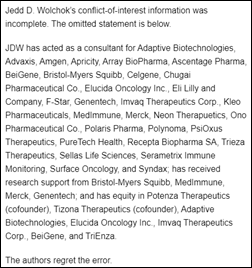
Several prominent Memorial Sloan Kettering Cancer Center researchers update their conflict-of-interest disclosures in previously published journal articles, adding previously undisclosed financial ties to drug companies. One doctor added 31 company affiliations, while another’s updated long list of company ties includes being paid consulting fees, owning stock options, and co-founding a company. MSKCC says each journal has its own disclosure requirements and some require authors to disclose relationships unrelated to the study being published, complicating the issue.

image

Weird News Andy titles this story as “CO and Old Lace.” In China, an anesthesiologist who was having an affair with the tutor of his children is sentenced to life in prison for killing his wife who refused to divorce him (his 16-year-old daughter also died as unintended collateral damage) by filling a yoga ball with carbon monoxide, removing the stopper, and placing it the trunk of his wife’s car. The deflated ball raised the suspicions of police, who then found that the doctor had ordered the carbon monoxide from his university employer claiming he needed it to perform animal tests.


Sponsor Updates

  • Intelligent Medical Objects chairman, chief innovator, and co-founder Frank Naeymi-Rad, PhD, MS, MBA will be inducted into the American College of Medical Informatics at AMIA’s annual symposium in San Francisco November 3-7.
  • InterSystems makes its IRIS Data Platform available in the Microsoft Azure Marketplace.
  • Waystar will exhibit at HFMA Region 2 Conference October 17-19 in Verona, NY.
  • Nordic will exhibit at the Georgia HIMSS Annual Conference October 16 in Atlanta.
  • Clinical Computer Systems, developer of the Obix Perinatal Data System, will exhibit at the AWHONN Iowa Section Conference October 16 in Des Moines.
  • Recondo Technology will present at the Health Management Academy’s CFO Forum 2018 Meeting October 17-21 in Deer Valley, UT.
  • Experian Health will host its 2018 Financial Performance Summit October 22-24 in Dallas.
  • Redox partners with Smart Health Innovation Lab to help innovative healthcare startups accelerate time to integration.
  • Sunquest will exhibit at ASHG 2018 October 16-20 in San Diego.
  • Surescripts CEO Tom Skelton will keynote the Value-Based Care Summit October 17-19 in Boston.
  • T-System offers disaster relief sheets free of charge to hospitals in the path of Hurricane Michael.
  • Voalte will exhibit at the 2018 Michigan Nursing Summit October 18-19 in Lansing.
  • FormFast joins the Zen Healthcare IT Interoperability Community.
  • ZeOmega will exhibit at the 2018 CAHP Annual Conference October 22-24 in San Diego.

Blog Posts


Contacts

Mr. H, Lorre, Jenn, Dr. Jayne.
Get HIStalk updates. Send news or rumors.
Contact us.

125x125_2nd_Circle

Weekender 10/12/18

October 12, 2018 Weekender Comments Off on Weekender 10/12/18

weekender 


Weekly News Recap

  • Athenahealth is reportedly choosing from its options to accept acquisition bids from previously rejected suitors, sell out to NThrive, or continue as a going concern
  • Several hospitals evacuate patients and suffer damage from Hurricane Michael
  • The VA promotes Paul Tibbits to executive director for the Office of Electronic Health Record Modernization
  • The DoJ clears CVS Health to proceed with its $69 billion merger with Aetna
  • GE Healthcare’s former Value-Based Care Solutions Group, now owned by Veritas Capital, renames itself Virence Health Technologies
  • Mayo Clinic completes the final go-lives of its $1.5 billion Epic implementation
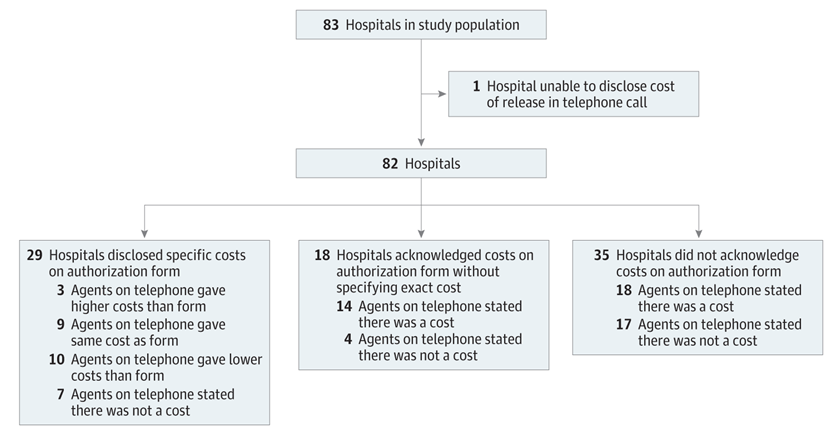
  • A study of 83 mostly top-rated hospitals finds that patients still struggle to get copies of their medical records

Best Reader Comments

Many states have information blocking (!) from their PDMPs. In fact, many state laws prohibit PDMP data from being exported outside the system to EHRs (it can only be seen in view-only mode on their web browser interface), making use in clinical decision support problematic. It’s not an issue of EHR vendor unwillingness, but rather that they can’t do an implementation if they can’t consistently get the data. (Harry Solomon)

Alerts seem like a perfect opportunity for an AI system rather than manual configuration files that will drive everyone crazy. (rxsdsu)

Tailoring every alert to each clinician requires work and maintenance far beyond the capacity, much less interest, of most IT departments. And, even people who rarely make mistakes still do make mistakes. Having a system that helps prevent that as a safety net is still relevant and helpful. I agree with you that too often a “one size fits all” policy is applied, which is inappropriate.  How much “tuning” can actually be accomplished is a yet to be seen outcome, but I’m not sure it is as much the hospital’s view of physicians as it is the financial and WorkStream reality we currently have. (Michael J. McCoy, MD)

As Warren Buffet has said, “When the tide goes out, it is easy to see who is swimming naked.” Jack Welch was really running a hedge fund within the GE Capital division. It accounted for over 50 percent of corporate profits many years. Everybody thought he was a management genius based on his PR announcements. Turns out he was nothing more than a hedge manager and the tide went out in 2009. He jumped ship and left the ruins to Jeff Immelt, who couldn’t turn it around for whatever reason. Now it looks like GE will follow many other firms like Xerox, Eastman, Alcoa, etc. Many years ago, I worked for GE and the inbreeding was smothering. (HISJunkie)

Totally agree with Mr. H about careers. Each time I was shown the door (boss conflict, downsizing, and failed salesmanship), I fell up to a better job, better pay, and more interesting work. Keep the resume ready, network all the time (it’s fun finding out who is where and what they are doing), keep records of your contacts, and keep reading HIStalk! (Laid Off)


Watercooler Talk Tidbits

image image

Readers funded the DonorsChoose teacher grant request of Ms. J-J, who asked for tablets and a printer for her Georgia class (whose 18 students, she notes, include six English language learners and three who are homeless). She reports, “The tablets we received allow students to work independently in small groups on lessons and activities that help to increase learning and comprehension. The printer has also been a huge help because now we can send information about school and additional practice work home to parents without hassle. I am beyond thankful that my class was chosen and was able to benefit from the generous donation that you sent.”

Here’s a summary of how my DonorsChoose project works:

  • I accept donations from individuals, but mostly companies willing to donate a significant sum in return for being included in my HIMSS-related activities, such as CIO/CMIO lunches.
  • Donors place their donation directly with DonorsChoose and thus receive charitable donation documentation directly from that organization for tax purposes. I never touch their money directly.
  • Their donation is matched by an anonymous vendor executive (who pretty much every HIStalk reader knows), doubling the original donation. That will continue until those matching funds are exhausted.
  • I choose STEM-related DonorsChoose projects that resonate strongest with me, most of those involving additional matching money from foundations.
  • I immediately describe on HIStalk the projects I chose, and when I receive updates and photos from the teacher involved, I post a summary. You don’t see them all right away since I run just one update each week, but I include all of them eventually.
  • As an example of the buying power of a donation, the project above totaled $735, which includes $30 to DonorsChoose for doing all the labor and an additional 20 percent general donation to DonorsChoose that I always select. Of that, the matching offer from Arthur M. Blank Family Foundation covered $368, and of the remaining $368, half of that was provided by my anonymous vendor executive. The original donor’s $184 donation thus provided this classroom with six Kids Edition Kindle Fire tablets and a Xerox wireless printer.

A researcher says high-profile cases, such as the Golden State Killer, that were solved through DNA forensics prove that just about every American could be genetically identified if just 2 percent of us have our DNA tested through consumer sites such as MyHeritage and Ancestry.com. Such matching requires only a third-cousin or higher relationship and the authors say that “such database scale is foreseeable for some third-party websites in the near future.” 

image

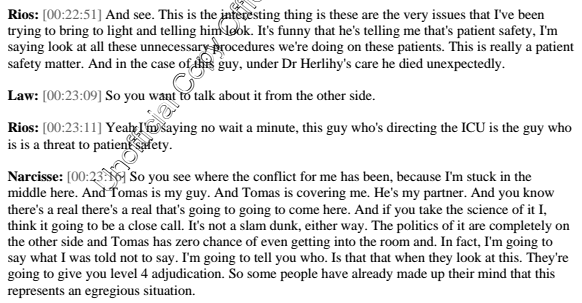
Baylor St. Luke’s Medical Center (TX) threatened to punish an internist in “an assassination” in retaliation for his complaining about unnecessary services his patients received in the ICU. A private practice physician who serves on the hospital’s medical executive committee warned Tomas Rios, MD that “you’ve got to get the guy you’re going after and none of the people who were involved get implicated” and suggested that he resign instead. A hospital committee found Rios in violation of patient care standards just weeks later. The hospital says in response to his lawsuit that Rios is not a board-certified intensivist and opposes the closed ICU process that would place them in charge of all ICU patients, while legal experts have noted that hospitals have in some cases used peer review threats to silence doctors from speaking out about patient care issues.

Five New York City doctors are called “drug dealers in white coats” by the US attorney who has charged them with writing prescriptions for 5 million oxycodone pills to patients with no documented medical need who paid them $5 million. Neighbors called police several times to complain about lines of people at all hours outside of the office of one doctor who had two of his own employees, along with several patients, die of overdoses. Another doctor took in so much cash that he had to count it using one of those bill counters that banks use, after which he would hand out wads of cash to his employees. Another doctor prescribed 12,000 tablets for a single patient over five years. A pharmacist who received free lunches and a trip from a customer observed, “I guess you could call us licensed drug dealers. Oxy pays the bills around here.”

image

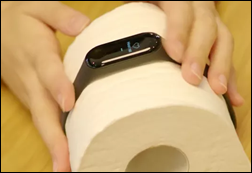
A Chinese tech site finds that fitness trackers will display a heart rate when wrapped around anything cylindrical, most impressively a roll of toilet paper or the arm of a stuffed animal. Apparently the light sensors that attempt to detect a pulse rate are easily confused by reflections, although they still read a human pulse accurately.

image

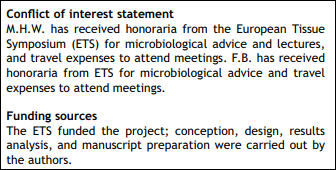
It’s all in the fine print: a small research study concluding that paper towels are better than air dryers in hospital handwashing was funded by the paper towel lobbying group.


In Case You Missed It


Get Involved


125x125_2nd_Circle

EPtalk by Dr. Jayne 10/11/18

October 11, 2018 Dr. Jayne 2 Comments

clip_image002 

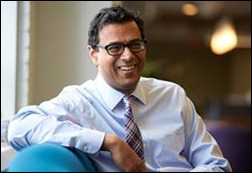
I was excited to hear that Atul Gawande, MD has been booked as the opening keynote speaker for HIMSS19. Many of us were initially enthusiastic about the efforts by Amazon, Berkshire Hathaway, and JP Morgan Chase to revolutionize healthcare delivery. That enthusiasm was somewhat tempered by the clarification that they’re really focused on solving the issue for themselves as employers, although it may eventually be extrapolated to the world at large. Regardless, Dr. Gawande has significant street cred in the healthcare trenches, and as a practicing physician, I’d much rather hear from him than from some of the other recent HIMSS headliners.

I was also excited to hear some information coming out of the American Academy of Family Physicians annual meeting this week. The American Board of Family Medicine used the meeting to announce a pilot program starting in January that will “assess the value and feasibility of a longitudinal assessment option to the 10-year secure examination.” Completing educational opportunities on an ongoing basis rather than cramming for an exam every 10 years is much closer to what we do every day in practice and was the preferred choice for recent exam-takers who were surveyed by the University of Florida in conjunction with ABFM’s assessment of the role of the exam. The questions will be administered quarterly and providers can use resources to find the answers, which better demonstrates our ability to manage knowledge rather than memorize.

I’m doubly excited since I have to recertify in 2019, although I already spent nearly $1,000 on a self-study board review course. The proposal still has to be approved by the American Board of Medical Specialties Committee on Continuing Certification in November. There aren’t any details on how large the pilot will be or whether everyone who wants to participate can actually take part, so I might still have to take the exam. I’ll be crossing my fingers, though.

clip_image004

The use of ride-sharing services as an alternative to ambulances for transportation to the hospital is getting some coverage in mainstream media. Data from 2011 shows that the US spent $14 billion on ambulance services, more than a third of which was paid for by Medicare. Inappropriate use is estimated at approximately 30 percent.

Although it sounds like a good idea from a cost perspective, I’ve found that in practice, patients don’t do the best job of determining whether an ambulance is necessary or not. We’ve had patients in the midst of active heart attacks at our urgent care who want to argue with us about an ambulance transport because of the cost. I’d hate to see someone in that situation summoning an Uber to their home because they’re worried about the money.

In order for this lower-cost transportation to be appropriate, patients are going to need education on whether it’s the right option for them. Maybe the ride sharing services need to add some screening questions to the app to not only help patients, but also to protect drivers from unwittingly picking someone up who needs serious medical attention. So far, what I have heard about Uber Health is that it will allow providers to order transportation, but doesn’t necessarily address the issue of patients trying to get rides on their own. I’m still up for some screening questions in the apps themselves.

Last week, the US Senate sent for presidential signature a bipartisan package fighting the opioid epidemic. The bill passed the Senate by a vote of 98 to 1, showing that political adversaries can and actually will cooperate when the circumstances are right. The only opposition was from Senator Mike Lee of Utah. The 600-plus page bill includes relaxation on Medicaid payments for inpatient treatment, increased surveillance on opioids being imported by mail, and allows certain midlevel providers to prescribe buprenorphine treatment. It doesn’t appear to have been signed yet, but I’m keeping my eye out.

The opioid bill is timed nicely with the release of the Surgeon General’s report on “Facing Addiction in America.” Assisting in management of opioid use (not only prescription, but illicit versions) is an area where EHR technology can be expanded for better support of clinicians. It’s not just about making it easy to link the EHR to the state prescription drug monitoring program (assuming the state has one, which one state does not) but in getting those links into the right part in the prescribing workflows and making the connections fast enough that they don’t impede provider workflow. It’s also about providing clinical decision support including morphine equivalents for drugs patients are already taking as well as those providers are considering for a new prescription. These should be relatively simple things to code, but don’t seem to be given much bandwidth on the development calendars of vendors.

clip_image006

It’s National Health IT Week, but I didn’t see a celebration in the physician lounge. Most of my local physician colleagues still see healthcare IT as a threat, not necessarily because of what it offers at face value, but because it’s a proxy for the perceived decline of medical practice as they used to know it. National Coordinator for Health Information Technology Don Rucker, MD blogged on the HIMSS site about how automation in healthcare is transforming medicine. Rucker talks a fair amount about the 21st Century Cures Act and its prohibition on information blocking.

Despite being signed into law in December 2016, it hasn’t done anything to improve information blocking in my region, which is largely due to competing health systems that refuse to share data even though they could do it fairly easily if they wanted to, especially now that all of them are on the same vendor platform. As an urgent care physician, I can’t even get their physician-owned practices to give me a medication list over the phone (despite the fact that it’s permissible under HIPAA for treatment, payment, and operations), let alone gain access to their clinical data repositories to find out what testing has already been done for patients before they arrive in my exam room.

Speaking of automation (or lack thereof), I’m still battling a billing issue with the hospital where I had emergency surgery over a year and a half ago. They sent me a bill last month for which I had no explanation of benefits document, which is unusual since I save every scrap of documentation around my healthcare. I hadn’t yet had time to call my insurance and see what the story was, but in the mean time, the hospital sent me to collections less than 30 days from the date of the statement.

I hopped on the phone to the payer, who had no record of a claim for that date of service, then had to call back to the hospital’s outsourced collections company, which provided me a supposed claim number. I called back to the payer to learn that the provided claim number didn’t even fit the standard format. They dug a bit deeper and found a charge for the same amount, but on a different date of service. It turns out it was paid, no one knows why I didn’t receive an explanation of benefits, and no one can explain why I was billed more than 18 months after the fact or why I was sent to collections less than 30 days after the bill was mailed. I paid my co-insurance online after sorting it all out, so hopefully this adventure is at an end.

What’s the longest running medical bill saga you’ve ever seen or experienced? What are you doing to celebrate National Health IT Week? Leave a comment or email me.

Email Dr. Jayne.

News 10/10/18

October 9, 2018 News 6 Comments

Top News

image

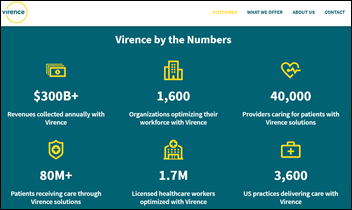
GE Healthcare’s former Value-Based Care Solutions Group, sold to private equity firm Veritas Capital in April 2018 for $1.05 billion in cash, renames itself Virence Health Technologies.

The GE Healthcare products that were included in the acquisition are revenue cycle, ambulatory, and workforce management systems previously sold under the Centricity and API Healthcare brands.

image

Virence Chairman and CEO Bob Segert, appointed in mid-September, has zero healthcare experience. Former GE VP/GM and industry long-timer Jon Zimmerman will report to Segert as president.


Reader Comments

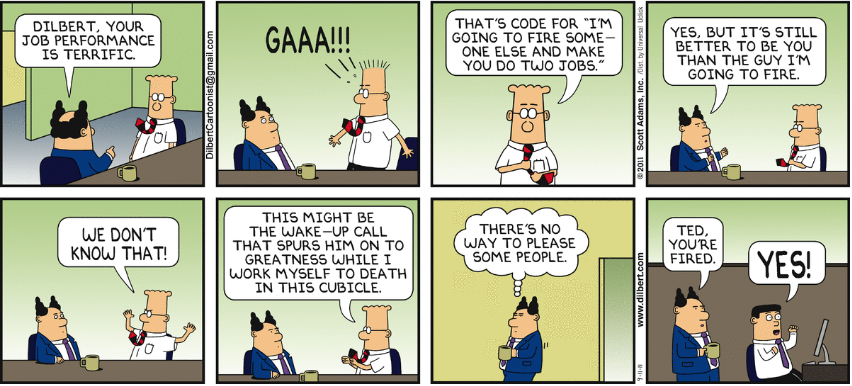
From Red Red Wine: “Re: careers. Why would you say that co-workers aren’t your friends? I socialize quite a bit with my work family at [vendor name omitted].” The people who might give you a ride to work from your oil change since they might need you to return the favor won’t be nearly as willing to serve as emergency overnight dog-sitters, listen patiently as you tearily describe your mother’s dementia, or know when and how to reach out supportively when you miss a few work days without explanation. I should probably take my own “work is not life” advice by not holding a grudge against former co-workers who I think wronged me in some way – it probably wasn’t personal that they were back-stabbing opportunists who were forged in an ugly corporate health system crucible that resembled one of those psychology experiments where a test subject will apply deadly electric shocks to an innocent victim when an authority figure insists. I guarantee that within minutes of your also-friendly employer marching you off their property in a layoff, your “work family” members are going to be unemotionally circling like vultures to get first dibs on your cubicle stuff.

From Conference Liner: “Re: Cerner naming social media influencers for CHC. Is that a thing now that HIMSS has been doing it?” Beats me. I don’t really get the point of naming “social media influencers” unless it’s to give them free registration in return for the free advertising they theoretically offer in return. It’s not as though tweeting is so hard that only Twitter experts can figure it out, or that those folks possess industry influence that correlates to their Twitter stats (since those stats don’t indicate exactly who they are influencing beyond each other). At least the Cerner-named influencers are mostly accomplished people who hold responsible jobs as recognizable subject matter experts.


Webinars

October 30 (Tuesday) 2:00 ET. “How One Pediatric CIN Aligned Culture, Technology and the Community to Transform Care.” Presenters: Lisa Henderson, executive director, Dayton Children’s Health Partners; Shehzad Saeed, MD, associate chief medical officer, Dayton Children’s Health Partners; Mason Beard, solutions strategy leader, Philips PHM; Gabe Orthous, value-based care consultant, Himformatics. Sponsor: Philips PHM. Dayton Children’s Health Partners, a pediatric clinically integrated network, will describe how it aligned its internal culture, technology partners, and the community around its goal of streamlining care delivery and improving outcomes. Presenters will describe how it recruited network members, negotiated value-based contracts, and implemented a data-driven care management process.

Previous webinars are on our YouTube channel. Contact Lorre for information.


Acquisitions, Funding, Business, and Stock

image

Odd: the soon-to-be-renamed Adventist Health System / Florida Hospital signs up as a multi-year sponsor of Nascar’s Speedweeks, heretofore to be reverently referred to as “Daytona Speedweeks Presented by AdventHealth.” Nascar, which must be happy to have signed a new sponsor as its attendance, TV ratings, and sponsorships continue their sharp slide, declares that “the Daytona Speedweeks brand will provide another platform for Florida Hospital to amplify their new name.” Hopefully the terms did not include requiring Florida Hospital’s doctors to wear ads on their scrubs or surgical teams to swoop in with their instruments like a pit crew to complete an appendectomy in less than 20 minutes.


People

image

The National Library of Medicine promotes Clem McDonald, MD, MS to the newly created position of chief health data standards officer.


Announcements and Implementations

image

China-based Tencent – which developed the globally popular (except in the US) WeChat app — will work with England-based Medopad to assess the condition of Parkinson’s disease patients by analyzing video of their movements and to alert their doctors of any deterioration. Tencent is working on other AI-related healthcare projects.

image

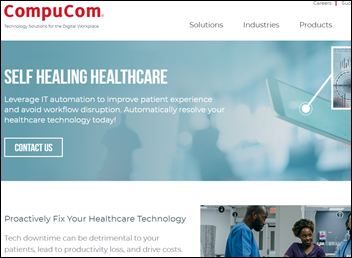
Office Depot-owned CompuCom launches Self Healing Healthcare, a service that monitors end user devices for problems, outages, and failures.

SNAGHTML5b1436be

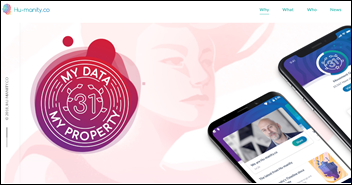
Blockchain-focused, UK-based health data rights organization Hu-manity.co launches in Europe to push for patients to control and manage their own healthcare data under the #My31 movement that advocates making such ownership the 31st Human Right. They’re also launching a US-only app to allow users to specify such control.


Privacy and Security

image

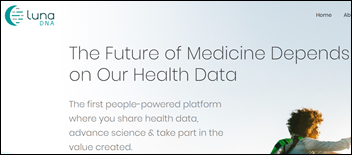
Startup LunaDNA, backed by a DNA sequencing company, seeks SEC approval for its business plan to pay consumers for the right to sell their genetic information, the opposite of companies like 23andMe that charge people to sequence their DNA and then profitably sell their information on the sly. Donors earn shares in the “biobroker” company and post their de-identified information up for bid on its marketplace to keep a share of the proceeds.

image

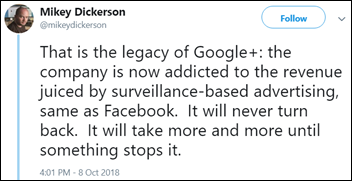
Google shuts down its spectacularly failed would-be Facebook competitor Google+ after deciding not to alert users that a security hole allowed their data to be hacked over several years. A Google committee advised executives that owning up to the breach would damage the company’s reputation and trigger a regulatory response a la Facebook’s Cambridge Analytica scandal, so it decided to close Google+ instead. A splendid Twitter review by former US Digital Service Administrator (and former Google employee) Mikey Dickerson says Google+’s self-proclaimed “social spine” infected the company’s other products, such as YouTube’s shared log-in and the termination of Google Reader. He concluded with a brilliant observation above. We science types appreciate Mikey’s LinkedIn tagline of “Free Radical.”

DataBreaches.net reports that virtual visit vendor MedCall Advisors has, for the second time in a month, been caught storing patient data in an unsecured Amazon S3 bucket. CEO Randy Baker did not acknowledge the courtesy notifications that were sent to him or ask those who alerted him about the exposure to delete any PHI they accessed.


Other

image

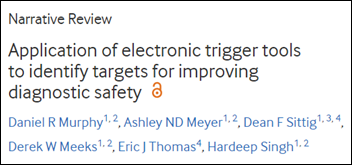
Researchers advocate that EHR-powered electronic trigger tools be used to detect possible diagnostic errors and to identify patients who are at high risk of adverse events. The most obvious immediate benefit would seem to be to identify gaps in care cause by poor coordination, such as when nobody seems to have followed up on critical diagnostic results. The most limiting factor is the extent of clinical information stored as free text.

A BMJ opinion piece says the industry needs to do a better job of reducing the number of unwanted EHR alerts that consume physician time. Here’s the dilemma – we don’t let doctors individually decide based on their own practice which alerts to turn off because those “unwanted” alerts are often important, at least in the opinion of the non-doctors who maintain them. That brings up the never-ending dilemma of the purpose of the EHR – is it intended to help doctors, or instead to force administrative policies and concerns on them? I’ve worked a lot on those alerts and found these challenges:

  • Alerts are not always personalized (or cannot be personalized). A warning about a specific drug for a patient with kidney disease might be useful to a surgeon, but not a nephrologist.
  • An overridden alert, where the intended action is completed as an order, means the user, rightly or wrongly, didn’t find that alert useful.
  • On the other hand, doctors routinely fail to read EHR screens (due to alert overload, poor UI, or sloppy behavior) and will happily override a warning that prescribing 1,000 Tylenol tablets might be unwise and leave their error for someone else to catch.
  • My most important conclusion is that the quest to apply alerts universally is an illogical reflection of the collective nature of how hospitals see doctors. They know which ones have marginal skills or a record of causing patient mayhem, but they punish all doctors instead of just those who clearly need more than an average amount of electronic help to avoid screw-ups. Doctors should be regularly graded on their clinical track record, experience levels, malpractice and discipline history, and history of alert compliance, with the sensitivity of clinical alerts tuned to prevent them from making mistakes while not hindering those who rarely do so.

SNAGHTML5a5f25b7

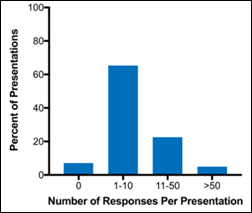
A review of virtual online consultation platforms, aka virtual second opinions – specifically Medscape Consult – concludes that medical crowdsourcing can reduce diagnostic errors and increase global reach. The most valuable takeaway is that most of the doctors presenting cases were young, but most of the expert responses came from doctors over 60 years of age, suggesting that: (a) younger doctors can benefit from asking more experienced ones to weigh in; and (b) older doctors are technically comfortable enough to provide such wisdom. The authors note that they don’t have any way to determine whether those second opinions improved diagnostic accuracy, but it doesn’t matter – even if the original doctor’s conclusion was correct, having experienced peer validation provides confidence and perhaps reduces further expensive diagnostic work. Having face-to-face contact with patients is important, but this is an example of where armchair quarterbacking can provide real patient value and an opportunity for older doctors to contribute purely as an intellectual challenge without dealing with reimbursement, the limitations of a 15-minute encounter, practicing defensive medicine, or managing a patient’s entire medical life instead of just recognizing what’s wrong with them and then moving on.

SNAGHTML5a8cf159

A fascinating New York Times article covers the MD-PhD co-founder of drug maker Regeneron, whose cholesterol-lowering drug is so widely useful yet so expensive ($14,000 per year) that insurers often won’t pay for it. The kicker: that co-founder is the guy who invented the drug and yet he pays full list price for his own prescription (so he claims, anyway) since the company’s insurance doesn’t cover it. He says Regeneron spent $2.6 billion to get the drug on the market and annual sales are less than $200 million.

image

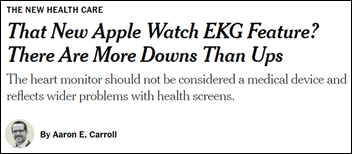
Pediatrics professor and New York Times contributor Aaron Carroll says the Apple Watch’s new EKG capability has quite a few negatives – few people have undiagnosed arrhythmias that don’t have symptoms, false positives and negatives can be worrisome and expensive, a Stanford study found that most of the Watch’s EKG warnings were wrong, previous large-scale studies found little value in mass population EKG screening, and that the device’s cost (which isn’t covered by insurance) means that people who would benefit most from it won’t get it. He advises, “But I’m under no illusion [Apple Watch’s activity monitoring] will help me lose weight or exercise more or improve my heart health. I own one because I want it, not because I need it.”

A Washington Post review finds that millennials often don’t have a primary care provider and don’t want one, favoring the convenience, speed, and upfront pricing of walk-in clinics and urgent care centers to meet their infrequent needs instead of PCP practices that require making appointments well in advance, cover limited hours, and send patients to the ED on evenings and weekends. The dilemma is that patients have to give up the benefits of longitudinal care because they value it less than convenience.

image

Cerner Chairman and CEO Brent Shafer provides Monday’s opening keynote at the Cerner Health Conference in Kansas City, MO.

image

I enjoyed this recap of the beginnings of Flatiron Health by co-founder Nat Turner, who with his also-under-30 co-founder had previously sold their ad business to Google for $80 million. They  decided to do something about cancer, figuring Flatiron would be a non-profit until they realized that “great engineers don’t work at non-profits. They tend to go to places like Facebook.” Flatiron bought oncology EHR vendor Altos Solutions with Google investment money barely after not even knowing what an EHR is, but quickly figured out how to mine EHR data to assess cancer drug effectiveness. Drug maker Roche bought the company six years after its founding in April 2018 at a $2.1 billion valuation. Cancer has made a lot of people poor, but a few people rich.

Anxious healthcare startups love to compare themselves to Uber or Facebook, but here’s a legal case where Uber can call itself the Epic of ride-sharing services. A court rules that Uber’s driver arbitration agreements are legal based on the US Supreme Court’s ruling in Epic Systems Corp. v. Lewis, which found that such employer-mandated terms preclude employees from undertaking actions as a class to address labor disputes.

image

Tuesday was Ada Lovelace Day, honoring the mathematician – and arguably the world’s first computer programmer — who recognized the potential of the Analytical Engine theorized by Charles Babbage. She died at 36 in 1852 after doctors treated her uterine cancer with bloodletting. Her father was Lord Byron, although he bailed on Lady Byron early on and his daughter never knew him.


Sponsor Updates

  • Ellkay is exhibiting this week at the Cerner Health Conference, where it will demonstrate its LKArchive data archiving solution for accessing information from decommissioned legacy systems. 
  • Spok’s Connect 18 annual conference attracts 150 attendees to Scottsdale, AZ this week.
  • Smart Health Innovation Lab will offer Redox’s integration platform to companies that have graduated from its market accelerator program.
  • Howard Medical will offer Imprivata Medical Device Access on some of its medical storage carts.
  • AdvancedMD will exhibit at the American Society of Dermatologic Surgeons Annual Meeting October 11-14 in Phoenix, AZ.
  • Aprima and CompuGroup Medical will exhibit at the AAFP Annual Meeting October 10-12 in New Orleans.
  • Audacious Inquiry hires Christina Caraballo (Get Real Health) as director.
  • Arcadia will exhibit and present at the SRHO 2018 annual conference October 11-12 in Dallas.
  • Bluetree and Direct Consulting Associates will exhibit at the Health Connect Partners Hospital & Healthcare IT Conference October 15-17 in Chicago.
  • Bernoulli Health will present at the Connected Health Conference – Immersion Day October 17 in Boston.
  • Datica will present at the Cloud Native PDX meeting October 12 in Madison, WI.
  • CarePort Health will exhibit at ACMA North Carolina October 12 in Asheville, NC.
  • Diameter Health will speak at the HIMSS NE Health IT Advocacy and HIE Day October 10 in Worcester, MA.

Blog Posts


Contacts

Mr. H, Lorre, Jenn, Dr. Jayne.
Get HIStalk updates. Send news or rumors.
Contact us.

125x125_2nd_Circle

Curbside Consult with Dr. Jayne 10/8/18

October 8, 2018 Dr. Jayne 1 Comment

Although the majority of my work is in the CMIO space, I occasionally do some work for vendors. Depending on the vendor and the situation, it could be anything from participating in a focus group to helping design and execute on usability studies.

I’ve worked with vendors who truly get it and are just looking for supplemental input or outside validation for their strategies, but occasionally I work with a vendor that has some significant gaps. This week included successful interactions and one that left me perplexed, so I’ve decided to put together some thoughts for vendors on what to do (or not do) when seeking input from physicians.

First, vendors need to know what they hope to accomplish by interacting with physicians. Do you want an actual practicing physician, and if so, in what specialty or what setting of practice? If not, do you just want someone who “thinks like a physician” and can take you through typical diagnostic or management options? Do you want to work with physicians who understand both the clinical and informatics spheres, so they can provide input on the end user experience but also strategies for solving the problems they may help you identify? Do you want someone who can help with clinical guidelines only and needs no understanding of software and technology?

Working with physicians can be costly since many expect compensation for their time equal to what they would have earned seeing patients during the time they spent with you. It’s important to not only make sure you have the right type of physician, but also that you are prepared to spend your time with him or her wisely.

I worked with a company early in the week that knew exactly what they wanted. They provided a brief synopsis of the project and the assumptions they wanted to test with a physician. They provided that information with enough lead time that I could review it thoughtfully prior to our call. They made sure to let me know that they wanted to interact over video, which let me know that I shouldn’t be in my pajamas or look like I just came off the treadmill, which is occasionally my habit depending on how many calls and meetings I have in a given day.

When I joined the call, it was clear that all internal resources had joined with enough time to be set up and oriented and they were ready to introduce themselves and describe their roles on the project. They also asked me to say a few words about myself and my background, which allowed for adequate level-setting all the way around.

We worked through a product prototype first at a high level, with me giving initial impressions and the team documenting any questions I raised or elements that I didn’t understand. That allowed us to get through the entire workflow without being derailed by details or issues with the mock-ups. Then, we took a second pass through the prototype and addressed the areas where I had questions or didn’t understand where the workflow was going.

I think it was helpful to them that I understood that we were working with some enhanced wireframe designs and not actually software on some of the screens, so that I could phrase my questions around whether what I was seeing was just an artifact of the mock-up or whether it was actually a design element. We then took a third pass through the workflow, with the team allowing me to identify areas where I thought the flow could be enhanced or where functionality could be added to better meet the original design intent.

It was clear that the team was experienced in respecting the time of their audience and also that they had prepped for the call, knowing approximately how much time to allot for the different phases of review. It didn’t feel rushed, we didn’t end with a lot of time left over, and there weren’t too many items that needed additional follow up. They clearly took good notes during the call because they were able to come back to different comments I had given and read them back to me almost verbatim, asking for clarification or expansion on what I was thinking. The whole experience was challenging and fun, and I hope they’ll be interested in my feedback as the project progresses.

The vendor I worked with later in the week provided a polar opposite experience. It was a bit of a different situation to begin with, since the vendor is trying to introduce a new spin on existing workflow and technology rather than moving forward with an innovative product. In my opinion, that makes it challenging since anyone looking at their offering is judging it against their current technology whether consciously or not.

They were asking me to evaluate a new way to do work that I’ve been doing electronically for nearly two decades across half a dozen platforms with numerous upgrades on each. Although one could take the strategy that it would be good to have an experienced clinician who can provide feedback on what other vendors are offering or have tried in the past, the developer kept interrupting the conversation and going on and on about not allowing “the experience” to be hampered by “the technology of today.”

I didn’t realize there were going to be developers on the call. That’s always a tricky one since sometimes when you provide feedback, they can take it personally, and especially since they weren’t introduced when the call began. Having silent parties on a feedback call that suddenly jump in and start a conflict with your research subject usually isn’t an effective strategy.

The product owner tried to calm him down, but it wasn’t working. I tried to explain that unfortunately the workflow they’re trying to address is hampered by a litany of external requirements that they hadn’t addressed, such as governmental and payer regulations. It doesn’t matter what your UI looks like if it is going to force the end user to behave in a way that is going to cause trouble in the case of an audit.

Part of the exercise was for me to work through an alpha version without direction or training to evaluate how intuitive the workflow was. At one point, someone who probably thought he was on mute but wasn’t actually said, “She’s doing it wrong. Why is she clicking there?” When I replied, “I clicked there because every other screen has the ‘save and close’ button in the bottom right corner and that’s where my hand naturally flowed,” there was just a stunned silence. At that point, another member of the team took over the call and we moved forward in the workflow, but I had a hard time thinking of the product vs. whether someone was getting schooled out in the hallway.

The session ended about 30 minutes early. I wasn’t sure whether they were out of material or whether they were just flummoxed. Frankly I was glad for it to be over, because it was stressing me out and my treadmill was calling. I’m happy to help, but there’s a level of dread that they might ask me to work with them again. We’ll have to see how the next sprint cycle unfolds for them. I hope if they’re working with other physicians (they had better be, because when you’ve heard one physician’s opinion, you’ve heard one physician’s opinion) that it’s a more successful experience.

Do you have any advice for software vendors who are seeking physician input? Leave a comment or email me.

Email Dr. Jayne.

Monday Morning Update 10/8/18

October 7, 2018 News 8 Comments

Top News

image

An study of 83 mostly top-rated hospitals finds that patients still struggle to get copies of their medical information (matching my appalling experience):

  • 89 percent do not allow patients to request a specific category of information to be released
  • 47 percent don’t offer an option to request the entire medical record even though all of them claim to offer that option
  • Medical records release form instructions often differ from what employees tell patients by telephone
  • Many hospitals ignore the federal requirement that they provide information in whatever format the patient wants
  • More than half of hospitals charge patients more than OCR guidelines and 8 percent say they routinely don’t meet state-mandated release timeframes
  • Trying to get to the right person by telephone is made difficult by complex phone trees and, in the case of two hospitals, no option was offered to speak with a human or to leave a message

Reader Comments

From Kenny Powers: “Re: the all-new Allscripts Avenel EHR. I haven’t heard anything about it since it was announced in March. Is it being sold yet?” I haven’t heard a peep since the buzzword-heavy announcement seven months ago. The product isn’t listed on the company’s EHR page and Googling turns up nothing. It wasn’t mentioned in the company’s August earnings call. Allscripts said it’s being used by Carlinville Area Hospital (IL), which didn’t respond to my inquiry.

image

From Pure Prairie: “Re: GE. I can’t figure out how they took such a hard fall.” Chasing business and technology fads; poor strategic and operational performance by Jeff Immelt; a smothering bureaucracy that stifled innovation and encouraged executive backstabbing; unfocused acquisitions under both Jack Welch and Immelt whose interesting aspects were digested away in GE’s sluggish colon; incestuously moving the same old executives around in wildly unrelated divisions per the “GE way;” and a conglomerate strategy that left it vulnerable to big downturns in oil and financial services. GE Healthcare IT was best known for buying vendors with top-ranked products and then diving straight to the bottom as the poster child for “first to worst.”

image

From Amatriciana: “Re: careers. I was laid off and could use advice.” I’ve had my share of career missteps (being demoted, boss conflicts, regretting taking a promotion after belatedly realizing that the last thing I wanted was more responsibility) and my general conclusions are these:

  • It doesn’t matter whether the seemingly undesirable change is your fault or the company’s.
  • Your self-worth or identity is not defined by what you do for money and the people you worked for or with are not your real friends. You are a vendor (of your own services) who lost a key account and life goes on.
  • Always be managing your career and your network so you aren’t caught off guard when you need to make a change quickly (OK, I’ve never done that, but I wish I had when the layoff axe began swinging and we were all scrambling simultaneously hoping to find local jobs with similar skill sets).
  • Never stop learning, even if on your own (cue my pitch for reading HIStalk as well as my original incentive for writing it).
  • The dotted lines of your career changes make sense only after the fact, when the pattern becomes clear. You never know where you’ll end up or how to get there. Serendipity is often your friend.

HIStalk Announcements and Requests

image

Most poll respondents aren’t heavy users of smart speakers at home. The most common uses are setting hands-free timers, playing music or mood sounds, keeping shopping lists, checking the weather, and controlling smart plugs to turn specific items on and off. There’s apparently also an intercom feature on Echos that I didn’t know about and some folks play games on their devices. 

New poll to your right or here: for those whose company, more than five years ago, terminated you, demoted you, or forced you to move — did that turn out to be positive overall?

Thanks to these companies that recently supported HIStalk. Click a few logos to learn more about companies you don’t know much about and to thank them for making what I do possible.

image
image
SNAGHTML460cb030
image
image
image
SNAGHTML4610ff27
image
image
image
image
image
image
image
SNAGHTML4603c72e
image
image
image
image
image
image
image
image
image
image
image
image
image
image
image
image

image

I didn’t realize what a mess I’d gotten into when a friend asked for help buying a replacement set of wired earbuds for her Phone 7, a shining example of Apple’s recent cluelessness and crappy accessory quality. That model eliminated the headphone jack for no user-benefitting reason; Apple’s Earpods (as well as the Lightning-to-3.5mm connector) are pure junk that last weeks at best, according to reviews; you can’t listen and charge simultaneously; and because of the market opportunity offered by Apple’s misstep, every product listing on Amazon is obviously fake since the reviews don’t match the product. Bluetooth is an option, but it’s pain having to charge earbuds as well as the phone itself. I finally gave up and spent $30 on the EarPods from Best Buy plus $10 for the converter cable since I was getting free shipping anyway, so at least the option is there to ditch Apple’s earbuds in favor of decent ones, at least for the few days the converter cable is likely to last before falling apart.


Webinars

October 30 (Tuesday) 2:00 ET. “How One Pediatric CIN Aligned Culture, Technology and the Community to Transform Care.” Presenters: Lisa Henderson, executive director, Dayton Children’s Health Partners; Shehzad Saeed, MD, associate chief medical officer, Dayton Children’s Health Partners; Mason Beard, solutions strategy leader, Philips PHM; Gabe Orthous, value-based care consultant, Himformatics. Sponsor: Philips PHM. Dayton Children’s Health Partners, a pediatric clinically integrated network, will describe how it aligned its internal culture, technology partners, and the community around its goal of streamlining care delivery and improving outcomes. Presenters will describe how it recruited network members, negotiated value-based contracts, and implemented a data-driven care management process.

Previous webinars are on our YouTube channel. Contact Lorre for information.


Acquisitions, Funding, Business, and Stock

Gastroenterology EHR vendor GMed, acquired in mid-2015 by Modernizing Medicine, renames itself to Modernizing Medicine Gastroenterology. 


Sales

  • Hackensack Meridian Health (NJ) implements Vocera Rounds at JFK Medical Center, the health system’s 10th deployed hospital.
  • Berkshire Health Systems selects Santa Rosa Consulting to lead its Meditech Expanse implementation.

Decisions

  • Kessler Institution for Rehabilitation (NJ) switched from Medhost to Epic in March 2018
  • University of Mississippi Healthcare (MS) will replace Infor with Workday human resources software by January 2019
  • Yalobusha General Hospital (MS) implement Athenahealth in December 2017, replacing Medhost
  • Memorial Hospital (IL) will replace Evident financial management with Infor
  • Olmstead Medical Center (MN) will implement Epic in September 2018, replacing Cerner

These provider-reported updates are supplied by Definitive Healthcare, which offers a free trial of its powerful intelligence on hospitals, physicians, and healthcare providers.


People

image

Tim Knoll (Healthgrades) joins PatientSafe Solutions as regional VP.


Announcements and Implementations

image

A KLAS report on medical device security — created with CHIME and its security group AEHIS — finds that few CIOs and CISOs are confident that those devices are protected, mostly because of poor manufacturer support or due to their own lack of a device inventory. The confident respondents give credit to good policies and procedures, strong technology, and interdepartmental collaboration, although it’s anybody’s guess as to whether they are truly more secure rather than naive. Respondents say it’s tough to protect legacy devices due to outdated operating systems, lack of patching capability due to technology limitations or warranty policy, hardcoded passwords, and lack of encryption. They also say manufacturers use FDA policies as their excuse for not patching their devices, yet FDA rarely holds the device-makers responsible when their systems are breached.

image

A new Reaction Data report on clinical decision support finds that 55 percent of mostly hospital-based respondents use multiple CDS solutions, with most of those provided by their EHR vendor. Caveat: I would question the accuracy of the 25 percent of respondents who say their hospital doesn’t use any form of CDS, the non-appearance of Meditech on the list among its EHR competitors, and the inclusion of Allscripts EPSi even though it offers only financial (not clinical) decision support. Non-EHR vendors with the largest presence are Stanson Health and National Decision Support Company. A 2017 study found that the imaging CDS of NDSC, which was acquired by Change Healthcare in January 2018,  holds 70 percent of that market.

EClinicalWorks will integrate its Healow mobile app with the WellWatch smart watch being developed by UK-based Care UK.


Government and Politics

The latest Bureau of Labor Statistics employment report finds that healthcare employment increased by 26,000 in September, nearly evenly split between hospitals and ambulatory services. Healthcare employment has increased by 302,000 in the past year. In other words, we’re turning the entire country into one giant hospital and then complaining that insurance costs too much and our taxes are too high.


Other

image

CNBC profiles Heartbeat, a cardiology practice startup that is opening offices in New York City that will offer online tests, virtual care, and treatment plans that include exercise and nutrition components. The “fully digitized boutique cardiology practice” accepts Medicare, commercial insurance, and cash ($200 for a visit or $299 for an annual membership).

Aprima sales executive Lance Allen donates a kidney to allow his peer Mike Alfieri — who he met two years ago at a company sales meeting — to receive a transplant in a 13-person paired exchange.

Just in case watching a single shark jumping isn’t enough, BlackBerry (are they still in business, and if so, why?) announces a blockchain solution for health data storage, an operating system for secure medical devices, and a skin cancer data sharing service for researchers. The company has chased healthcare tech fads before — I haven’t heard a thing about BlackBerry’s work with (and investment in) NantHealth in early 2014.

image

The Montivideo, MN paper apparently confused the local hospital’s incumbent vendor (Meditech) with its new one (Epic). I assume it’s a Community Connect implementation at a price of just $1.5 million. It’s also odd that the hospital says its existing system is “outdated” when it was supposed to have upgraded to Meditech 6.1, although maybe that never happened.


Sponsor Updates

  • Liaison Technologies will accept applications for its $5,000 Spring Semester 2019 Data-Inspired Future Scholarship through October 31.
  • LiveProcess will exhibit at the Iowa Hospital Association Annual Meeting 2019 October 9-11 in Des Moines.
  • Vyne Medical, Experian Health, The SSI Group, Surescripts, and National Decision Support Co. will exhibit at the Cerner Health Conference October 8-11 in Kansas City, MO.
  • Netsmart will exhibit at the Michigan Premier Public Health Conference October 10 in Bay City, MI.
  • Clinical Computer Systems, developer of the Obix Perinatal Data System, will exhibit at the AWHONN conference October 11 in Freeport, ME.
  • TransUnion wins an “Outstanding Company Culture” award from the Illinois Technology Association.
  • TriNetX will exhibit at the MedImmune California Translational Science Forum October 9 in San Francisco.
  • Voalte names Candice Friestad, RN of Avera Health the 2018 Voalte Innovator of the Year.
  • Wellsoft will exhibit at the Urgent Care Association Fall Conference October 12-14 in Houston.

Blog Posts


Contacts

Mr. H, Lorre, Jenn, Dr. Jayne.
Get HIStalk updates. Send news or rumors.
Contact us.

125x125_2nd_Circle

Weekender 10/5/18

October 5, 2018 Weekender 3 Comments

weekender


Weekly News Recap

  • Cerner announces the partner companies that will serve on its VA EHR modernization team
  • Change Healthcare is reportedly preparing for a 2019 IPO that will value the company at up to $12 billion
  • A new Pew Charitable Trusts report on patient matching offers potential approaches that include unique patient identifiers that incorporate biometrics, placing more onus on the patient through verification via text message, and standardizing data elements
  • GE’s board fires Chairman and CEO John Flannery after just over a year on the job, potentially disrupting the company’s plans to spin off GE Healthcare
  • VA OIG is reviewing last year’s manual cancellation of 250,000 radiology orders across eight hospitals during a push to remove duplicate and outdated requests, raising concern that some of the studies might have been medically necessary or had been entered as future orders that had not expired
  • Orion Health shareholders approve the company’s plan to sell its only profitable division, which offers the Rhapsody integration engine, to a private equity firm that will run it as a private company
  • The former CEO of Singapore’s SingHealth’s IT services organization testifies about its massive data breach that she fired an employee who discovered a security vulnerability in Allscripts Sunrise Clinical Manager after he emailed Epic to suggest using his information competitively, but she didn’t take action on the vulnerability because she assumed Allscripts had already fixed it

Best Reader Comments

I, too vividly remember the rapturous articles, books, and memoirs about GE’s Jack Welch back in the day. Creating a durable corporate culture of high performance, customer service, and as a consequence, superior profitability was supposed to be the magic formula for success. The leader doesn’t matter (as much)! The macroeconomic climate doesn’t matter (as much)! The lines of business don’t matter (as much)! The theory being, good people were attracted to such organizations and all obstacles could thereby be overcome. Culture was supposed to “eat strategy for lunch.” I wonder if the Harvard Business Review has ever published a mea culpa on this or any thesis whatsoever? (Brian Too)

I am a physician and worked briefly for a health IT company whose single-minded focus was on patient safety — at least that is what the slick website said. When you got behind closed doors, the single-minded focus was on money. They rolled out products that internal developers said were not ready for the market. The product was unstable and could harm people. Brilliant management wanted to get updates out so they could boast about their latest product. There is plenty of greed out there. The other term for it is capitalism. For better or worse, that is the system we choose to live in. But if we are going to point out the greed and highly questionable ethics amongst doctors and pharmaceutical companies, lets do the same for health IT as well. (Anon)

Cash-strapped hospitals aren’t the reason that Orion Health went over the cliff. They scaled and bloated the company based on the state HIE market that had no sustainable financial model. Add to that they rarely delivered (because it’s big software = complex implementations) customers started to bail. (Iknowaguy)

There’s nothing described here I haven’t seen countless times before. What would be educational from you and/or someone else contributing to this website would be more reporting from the legal front, specifically cases of, or statistics involving the effect in depositions and trials of the sort of autocomplete/ cut and paste / incorrect voice transcription issues that you describe. Are plaintiffs lawyers actually using these sorts of mistakes to discredit defendants in front of juries, i.e. OK, you admit that’s false, where else in the record were you lying, doctor? (Robert D. Lafsky, MD)

The Epic installation appears to have been immensely profitable for Erlanger. Epic has many features which enable and facilitate upcoding. As a psychologist, I received a cover letter describing the enclosure on one of my shared patients as a “brief progress note.” It was eight pages of legible medical jargon which obfuscated what was done by the clinician. It was comprehensive everything, enabling maximal billing. Is it any wonder that costs of the healthcare system have increased? (Karen Kegman, PhD)


Watercooler Talk Tidbits

SNAGHTML4083c8e4 image

Readers funded the DonorsChoose teacher grant request of Ms. K in Kansas, who asked for a Little Scholar tablet, fabric letters, a sentence building set, and a Ten-Frame Treasures. She reports, “Thank you so much for providing great learning tools to my students. One of their favorites is the Little Scholar Tablet. My lower students really benefit from having the preschool and kindergarten apps to play and learn from. The students have been able to grab the tablet and get on a game without any help from me. This has been awesome because I don’t have to stop helping students with their worksheets and lessons to help those get on an app.”

A woman shot in the Route 91 Harvest Festival leaves the hospital a year after she was admitted. She underwent 12 surgeries to repair damage to her liver, spleen, and stomach.

Police shoot and kill an ED patient at Orlando Regional Medical Center after he threatens staff, falsely claiming that he had a gun.

image

The New Yorker questions why FDA approved the marketing of menstrual cycle tracking app Natural Cycles as “digital birth control” despite its high failure rate in Sweden, supporting studies that were small and funded by the company, and effectiveness that is predicated on users entering their temperatures correctly each day and following a program that differs little from old-school rhythm method paper tracking. Title X changes are expected to roll back ACA rules, moving federal dollars to clinics that don’t offer the most effective birth control options of condoms, hormonal contraception, or IUDs and instead recommend abstinence or fertility tracking such as that supported by Natural Cycles.

image

The VA rates nine of its hospitals as the worst in its system, earning a one-star score. Five of those have been cellar-dwellers for three straight years. As is the case with hospitals, the potentially most-beneficial technology tool for patients might be the car or jet that takes them away from:

  • Big Spring, TX
  • Decatur, GA
  • El Paso, TX
  • Loma Linda, CA
  • Memphis, TN
  • Montgomery, AL
  • Phoenix, AZ
  • Tucson, AZ
  • Washington, DC

image

Nobel Prize winner Leon Lederman, who created the physics concept of a “God particle” later discovered as the Higgs boson, dies at 96 after being forced to sell his Nobel medal at auction in 2015 to pay for medical bills and nursing home care.

image

Iowa insurance agents will start selling less-expensive but unregulated health plans from Iowa Farm Bureau, which can exclude people with pre-existing conditions or charge them higher premiums. Lifetime benefits will be capped at $3 million. The plans go on sale November 1, the same day ACA open enrollment begins, leading to concerns about consumer confusion. The plans aren’t technically insurance – they are not regulated and policyholders have no recourse to protest insurer decisions. The plans look great on paper, at least, and use Wellmark Blue’s HMO network and prescription coverage. A big, lightly-noted hole even beyond pre-existing condition coverage, however, is that policyholders are on the hook for ACA-prohibited balance billing by out-of-network providers, which could be just about anyone you see wearing scrubs in an in-network hospital.

image

Axios reporter Bob Herman notes that attending the AMA’s RVS Update Committee (RUC) – whose rules are used to set Medicare’s payment policies – as a journalist requires signing a confidentiality agreement that prohibits all attendees from disclosing potential CPT code changes, anything the committee talks about, and the names of committee members. AMA says the requirement prevents market speculation and the protection of its proprietary information.

image

The FBI releases a Physical Fitness Test app for aspiring agents that includes a privacy warning that users “are subject to having all of their activities monitored and recorded.”

image

Employees of St. Luke’s Hospital (ID) line the halls leading from the ICU to the OR in the hospital’s traditional, silent “Walk of Respect” that honors an organ-donating patient on their way to having their life support system turned off and their organs harvested.


In Case You Missed It


Get Involved


125x125_2nd_Circle

EPtalk by Dr. Jayne 10/4/18

October 4, 2018 Dr. Jayne Comments Off on EPtalk by Dr. Jayne 10/4/18

ECRI Institute releases its 2019 list of the Top Ten Technology Health Hazards. The list is created each year by assessing various factors around each potential hazard, including severity, frequency, preventability, and breadth of the hazard. Insidiousness is also considered – whether the problem is difficult to recognize and whether it could lead to downstream errors before the problem is identified.

This year’s list contains some hazards that are clearly healthcare IT issues. but also some problems that healthcare has been grappling with for a long time:

  1. Hackers can exploit remote access to systems, disrupting healthcare operations
  2. “Clean” mattresses can ooze body fluids onto patients
  3. Retained sponges persist as a surgical complication despite manual counts
  4. Improperly set ventilator alarms put patients at risk for hypoxic brain injury or death
  5. Mishandling flexible endoscopes after disinfection can lead to patient infections
  6. Confusing dose rate with flow rate can lead to infusion pump medication errors
  7. Improper customization of physiologic monitor alarm settings may result in missed alarms
  8. Injury risk from overhead patient lift systems
  9. Cleaning fluid seeping into electrical components can lead to equipment damage and fires
  10. Flawed battery charging systems and practices can affect device operation.

Most of us are familiar with the need to address cybersecurity concerns, as we see ongoing cases of not only breaches, but ransomware attacks. However, I’m still surprised by the number of organizations that don’t keep their systems current with recommended patches and updates, or that are even on versions of software that are no longer supported by their vendors.

Other items such as alarm settings may be addressed by policy and procedure, which can be harder to institute than technological safeguards unless the organization is truly invested in a culture of safety.

Items 2 and 5 are simply gross and it seems they should be straightforward. Unfortunately, the situation is complicated by some manufactures not providing detailed cleaning recommendations or institutions using harsher cleaners than recommended, which damages the surfaces of equipment and allows absorption or sequestration of contaminants.

Retained surgical sponges are an issue that hospitals and surgery centers have tried to address through technology, including special thread in sponges that shows up on x-rays. Other technologies augment the manual counting process and can be effective if they are used correctly. These vary from special counting racks to radio frequency locator systems.

The Centers for Disease Control’s National Center for Health Statistics recently updated its guidelines regarding hurricanes. These go into effect October 1. The hurricane piece is located on pages 19-20 of the 120-page document, which I’m sure all physicians, coders, and billers will be lining up to read. It mostly addresses the ICD-10 codes for external causes – although they have been in place for years, the guidelines direct physicians how they should be used. The guidelines also address the use of Z codes, which can explain why patients presented for care, including homelessness, inadequate housing, poverty, and lack of availability or inaccessibility of health care facilities.

Speaking of CMS, a recent blog by administrator Seema Verma addressed the topic of “Better Data Will Serve as the Foundation in Modernizing the Medicaid Program.” Essentially, CMS is seeking to demonstrate how the ever-growing Medicaid budget is driving better health outcomes. CMS is also looking for ways to “improve program integrity, performance, and financial management in Medicaid and CHIP.” CMS has identified core sets of quality measures that will be used to monitor outcomes, although reporting is voluntary at this time. It admits that reporting is burdensome and has tried to mitigate the burden through the Meaningful Measures initiative, noting future intent to “leverage existing and more automated data reporting systems to generate these Medicaid measures on behalf of states, thereby reducing reporting burden while also improving data consistency, comparability, and comprehensiveness.”

That’s a buzzword bingo winner right there. Theoretically, isn’t CMS already receiving the data through individual provider reporting as part of Meaningful Use? Wouldn’t that allow CMS to aggregate the data rather than having states submit it? I’m not in the details on Medicaid MU very much any more, but maybe someone who is can shed a little light on this for me. All I know is that as a practicing clinician, fewer of my peers are accepting Medicaid patients and those who are have generally stopped booking new patient visits, leaving a continuing gap in care delivery and pushing patients to the emergency department.

Flu season is officially upon us, with positive cases being reported even though the 2018-19 season is not yet being named on the CDC website. We’re seeing plenty of cases in my practice, along with a particularly nasty influenza-like illness that walks like the flu and talks like the flu but comes out negative in testing.

Our urgent care volumes during last year’s flu season were largely driven by patients who either couldn’t get in to see their primary care physicians or who didn’t want to go to the emergency department due to potential wait times, overcrowding, and perceived lack of service. We’ve hired several new providers and a small army of paramedics and scribes to help us get through the upcoming season. If you haven’t received your vaccine yet, now is the time.

We already knew it in our hearts, but I was saddened to see the Journal of the American Medical Association call out the “Southern diet” as deadly. Its main mechanism is thought to be elevated blood pressure. The study looked at nearly 7,000 people who were part of a larger long-term study of diet and lifestyle. It tracked weight, blood pressure, cholesterol levels, alcohol use, income, and exercise habits along with symptoms of stress and depression. The study notes, “The largest statistical mediator of the difference in hypertension incidence between black and white participants was the Southern dietary pattern, accounting for 51.6 percent of the excess risk among black men and 29.2 percent of the excess risk among black women.” Hispanic and Latino individuals were excluded from the study.

I looked in the full-text article as well as in the references for the link to the “Southern diet score” they used but didn’t find it. I’m curious how my own diet stacks up – I do love a good fish fry with cheesy potatoes and apple cobbler.

Email Dr. Jayne.

Readers Write: Recapturing the Best Part of Best-of-Breed

October 3, 2018 Readers Write Comments Off on Readers Write: Recapturing the Best Part of Best-of-Breed

Recapturing the Best Part of Best-of-Breed
By Meg Aranow

image

Meg Aranow is CEO of Edaris Health of Boston, MA.

Early on in HIT, departmental systems were the only computer-based clinical and business solutions we had. Often built and sold by teams that came directly out of the operational areas and bringing experiential credibility, these solutions spoke the language of the department leaders who were making the purchasing selections. The more relatable they were, the more significant their market share.

Later, with reputations solidified, these vendors began to capitalize by broadening their horizons into related areas, offering suites of applications to handle adjacent functions, such as all labs sections, not just blood labs, or all finance departments, not just AP/AR.

Then came the perfect storm that really engaged us all in the allure of the enterprise systems. First, computerization became the expected standard and big-budget centralized IT departments took root. Second, the market responded with R&D money and new investment capital. Third, healthcare costs and patient safety became everyday news and the idea of health consumerism grew. As timely, accurate shared data seemed the holy grail for both quality and expense control, the lure of single fully integrated systems became irresistible.

The decisions seemed easier 10 years ago. That was when the primary definition of an enterprise was its physical boundaries. There wasn’t much talk about IDNs and integrating freestanding surgery centers, urgent cares, or SNFs.

Now, even as we seek to integrate the data that ensures quality, safety, and expense control within the walls of our institution, we are simultaneously pushing care outside the walls to be handled in places that have less overhead and are easier for patients to navigate. There’s a tightrope to walk. We can’t trample on the very workflows that have created those higher margins and faster throughput at the lower-cost locations. If we make them behave as the rest of the enterprise does, we may lose the very things that made them attractive business assets and popular care destinations for patients in the first place.

As interoperability standards have become de rigor, there are options of where to draw the perimeter of the enterprise system and where to allow – or even encourage – deep support of site-specific workflows without compromise. That is, workflow support as once delivered by narrowly-focused departmental systems.

Customized workflow support is the new best-of-breed. With mature interoperability standards in place, we do not have to sacrifice tailored, intuitive workflow support for the sake of integrated data, decision support, and analytics. There is no reason not to have it all.

HIStalk Interviews Chris Klomp, CEO, Collective Medical

October 3, 2018 Interviews Comments Off on HIStalk Interviews Chris Klomp, CEO, Collective Medical

Chris Klomp is CEO of Collective Medical of Draper, UT.

image

Tell me about yourself and the company.

Collective Medical is a Salt Lake City-based developer of collaboration software. I started working on the company with two of my best friends from Boise, Idaho. We grew up together and we all went to Brigham Young University together. Two of us studied computer science and I was the token business guy. I went off to Bain & Company and then Bain Capital for roughly a decade.

One of our moms, Patti, is a social worker in the emergency department. She had been working on complex patient care coordination, particularly for patients who move across emergency departments. She had hypothesized that not only was this happening, but that a subset of those patients was probably opioid-seeking. Nobody talked about that 15 or 20 years ago, so she was pretty prescient on the ground.

The guys didn’t want to go work for “the man.” Patti, who is a pretty intimidating and awesome lady, told them to “build a computer program” for what she was doing in a circulated Word document and they did. They won a couple of business plan competitions and decide to take it out to the world. It took a lot of years and a lot of bootstrapping, but off we went.

My dad was a physician who told me that healthcare is the highest calling, so that’s what I wanted to do in some form. I had a bit of circuitous path, but I found my way back and we’ve been doing that since.

Collective Medical builds collaborative care networks. We help disparate stakeholders across the continuum — emergency, inpatient, skilled nursing facilities, mental health stakeholders, and even health plans and ACOs with their care managers – become aware when a patient needs them, particularly those vulnerable members who have figuratively fallen. We then unify their records collectively and help pick that person up.

How do you see the company fitting into the interoperability landscape?

We’re attacking from a different direction. I’m not sure I would even classify what we do as carte blanche interoperability. Interoperability is principally concerned with moving data from Point A to Point B. There are a number of pathways by which that’s taking place.

Health information exchange has made tremendous advancements, particularly in the last several years, in linking communities together to unify a care record. There’s a lot more work still to be done, but they’re making great strides. You have the networks like CommonWell and Carequality that are doing that with CCDs and certainly have ambitions to do more. You have platforms like Epic Care Everywhere that are, in some regards, even more advanced in how they link data from Point A to Point B and unify that into a single patient record.

The world is focused on these opportunities for good reason, but it’s a necessary but insufficient condition of driving coordination across an otherwise highly fragmented set of providers in a landscape. We have data silos and we need to unify those. We should have a single patient record that isn’t replicated with duplicative tests or because a patient goes from one site of care to another. However, it’s highly unlikely that the entirety of the country is going to be comprised of organizations like Kaiser, Intermountain, and Geisinger. Even those organizations — and I can say this because Kaiser and Intermountain are among the owners of our company — still have affiliated providers that they don’t own and that aren’t on their same record of care. They still require collaboration and coordination across those disparate providers.

You can either throw a tremendous number of expensive, scarce bodies at the problem, which isn’t scalable, or you can use technology. I’m not talking about mere notifications that an encounter has occurred, which we do, but a deeper level of collaboration. A mental health provider in the emergency department creates a crisis plan for the patient at 3:00 in the morning that involves a primary care provider who is affiliated with a multi-specialty clinic that is not connected to the health system and a Medicaid managed care manager. How do you help those individuals get on the same page and interact with the patient in sequence so that we’re not wasting resources or missing opportunities to help the patient navigate across the continuum, efficiently using the existing technology infrastructure of each organization? That’s the set of problems that we’re focused on.

Notifications are a mechanism to gain provider attention or to nudge them to intervene to mitigate an identified risk. But your phone has 15 notifications an hour popping up and most of that is noise. The more that we can increase the fidelity of those notifications and distill signal from that noise to make them actionable, the better.

Patti’s original work involved competing hospitals sharing her Word document, which was probably shockingly collaborative back then. Is the questionable business case for broad interoperability a non-issue when the addressed problems are overuse of opiates or EDs, which are in nobody’s best interest?

The premise of our business is that bad people don’t go into healthcare. That’s true even with the big, bad health plans that sometimes get painted into a corner. I’m not suggesting that there aren’t disagreements or even mistrust in healthcare and I’m sure there can be tense moments during contract negotiations between a health plan and a health system. But our job is to find the opportunities where there’s an alignment of incentives. When good people are reminded of why they joined up in healthcare and what their true purpose is, those instincts of competition or mistrust that might lead them to not want to share data fall away. When you give them a cause or a reason to collaborate, people will rally.

Let’s say we have a low-income, low-acuity pediatric asthmatic patient who’s bouncing around emergency departments. Nobody’s looking to increase their volume by having that patient coming to their hospital. The health plan, the Medicaid ACO or MCO, and the pediatrician, pediatric pulmonologist, or emergency department physician all have a perfectly aligned set of incentives to get that patient into the most appropriate care channel, stabilize them, and help them lead a healthy life. What level of interoperability and coordination is required to restore that child to a point of health?

How will Virginia’s statewide ED collaboration project work?

Our objective is to connect healthcare at scale. Virginia is a perfect example. You have 130-some hospitals and health systems, hundreds of post-acute operators, and thousands of ambulatory providers across the state, along with Medicaid, Medicare, and commercial health plans. The state’s objective was not only to reach a level of interoperability in terms of data sharing, but even more so, to reach a level of collaboration to manage down medically unnecessary utilization, avoidable friction, or risk.

The state evaluated a number of different paths and vendors and ultimately partnered with us. In five months, we connected 100 percent of the state’s acute care hospitals. We brought on all of the managed Medicaid organizations. In the next wave, we’re onboarding skilled nursing facilities and non-Medicare and other ACOs. We’re beginning to bring on ambulatory providers as well.

The state of Virginia had phenomenal leadership and vision. They didn’t just talk about interoperability that could move data from A to B. They’re goal was real coordination. It’s called the EDCC — Emergency Department Care Coordination — initiative because it starts in the emergency department, the front door of the healthcare continuum for so many vulnerable patients. Virginia is seeking to instantiate workflow broadly out into the rest of the community. Not just through interoperability, but by actually prompting coordinated sequences of engagement of various providers across specific patient archetypes to drive resolution.

Interoperability is the base layer. Then, how do we use data to coordinate human behavior? We make it easier for them by meeting them in their workflow, not making them go look up information. They can understand which of their patients are at a place of need and coordinate with others who can help meet the needs of that individual, to lift them up and catch them before they fall.

How will the company’s momentum or direction change following the large fundraising you completed a year ago?

We bootstrapped the business for most of our history. We aren’t a non-profit, but we’ve effectively run it that way. We don’t dividend out proceeds. The principals haven’t taken raises and draw pretty nominal salaries.

Our goal now is to invest in the platform and to grow networks. Building network effect-enabled platforms is capital intensive because you need to reach critical density in a given geography to create value for the constituents there. We’ve done a pretty good job of that. We’re live in 17 states, not just with one or two hospitals, but penetrated broadly to 100 percent of acute hospitals. We’ve got a bunch more in the hopper.

We realized that while bootstrapping a company gives you tremendous autonomy to do the right thing, it’s a rate limiter to growth. Building a network effects-enabled platform hasn’t been previously done at scale in healthcare. We raised capital to accelerate our growth across the country, to deepen our technical capability with significant R&D dollars, and to gain partners who can help us think through these things since this is our first rodeo.

Our whole point is to act as a rising tide. It’s not to give any individual health system a competitive advantage — which isn’t to say they can’t find it by using our software — but our goal is to help communities lift up their most vulnerable patients. We think about the entire country as that community.

News 10/3/18

October 2, 2018 News 10 Comments

Top News

image

A new Pew Charitable Trusts report on patient matching offers these potential approaches:

  • Implement a unique patient identifier, but given the challenges experienced with this approach in other countries, consider powering it with biometrics
  • Give patients a more active role in verifying their identity by sending text verification messages sent to to their phones
  • Standardize the data elements that are used to predict a patient match, such as making email address one of the match criteria
  • Use referential matching that goes beyond name spelling and potentially outdated addresses using third-party data sources such as the US Postal Service

Reader Comments

From Barely Constrained Capitalist: “Re: David Bradshaw of Memorial Hermann. Now working as a contractor for Cerner. Did we ever learn why he was fired from MH?” David’s LinkedIn says he’s working with a “large EMR solution provider” as a population health management advisor, which must pay a lot less than the $1.3 million he made last year. Memorial Hermann just announced plans to merge with Baylor Scott & White to form a massive health system that employs 73,000 people running 68 hospitals from the Gulf to the Oklahoma border. Most of the newco’s named executives are from BSW, so maybe he saw the CIO writing on the wall. Regardless, parting ways at that level is often the result of leadership or strategic changes that are not indicative of personal performance and certainly we don’t know (or need to know) the details of his departure. I think MH uses Cerner and BSW is mostly Epic and Allscripts, not that I would expect them to standardize IT systems. The footnote here might be that big-name CIO jobs are declining in number as their employers frantically merge and affiliate to flex their market power for self-enrichment. Oh, sorry, to deliver the efficiency improvements, reduced costs, and improved care that such mega-mergers always create in their maniacal pursuit of patient-focused excellence.

From Brangelina: “Re: HIMSS. You haven’t commented on their IRS tax filings recently.” I haven’t been able to locate their most recent reports, so I’ve emailed a request for them to send their Form 990 my way.

From Standard Spiel: “Re: clinical mobility poll. Check out these results.” The HIMSS-owned publication writes lengthy analyses of its online polls down to the fractional percentage point, but those typically generate only 100 or so anonymous responses that make any conclusions questionable. I usually get 200-400 poll responses to each week’s HIStalk question and even then I don’t spend a lot of time dissecting the statistically questionable results – it’s just a fun snapshot of what readers think that merits no further analysis.


HIStalk Announcements and Requests

Listening: new from The Sea Within, a new prog supergroup led by Roine Stolt and other members of The Flower Kings.


Webinars

October 30 (Tuesday) 2:00 ET. “How one pediatric CIN aligned culture, technology and the community to transform care.” Presenters: Lisa Henderson, executive director, Dayton Children’s Health Partners; Shehzad Saeed, MD, associate chief medical officer, Dayton Children’s Health Partners; Mason Beard, solutions strategy leader, Philips PHM; Gabe Orthous, value-based care consultant, Himformatics. Dayton Children’s Health Partners, a pediatric clinically integrated network, will describe how it aligned its internal culture, technology partners, and the community around its goal of streamlining care delivery and improving outcomes. Presenters will describe how it recruited network members, negotiated value-based contracts, and implemented a data-driven care management process.

Previous webinars are on our YouTube channel. Contact Lorre for information.


Acquisitions, Funding, Business, and Stock

image

At least GE’s alarming levels of suckitude weren’t limited to its now-abandoned GE Healthcare IT efforts. GE’s board fires Chairman and CEO John Flannery after just over a year on the job, seemingly shocked that he couldn’t dump ballast quickly enough to save the sinking ship he had just inherited. GE names outsider Larry Culp (who?) to replace him as CEO and board chair. Flannery shared GE Healthcare heritage with predecessor and fellow oustee Jeff Immelt, so maybe that’s not the best group to tap for leadership talent. The new guy comes from Danaher, which sells an odd mix of bioscience products (Beckman Coulter, HemoCue, Molecular Devices) and unrelated stuff like the Pantone color matching system. Above is the definitely ugly five-year GE share performance chart, in which it shed 51 percent of value while the Dow was rising 75 percent. The company’s market cap has declined to barely over $100 billion, so hopefully your employer didn’t spend a lot of cash in gifting budding executives with the how-to business books written by Neutron Jack Welch that were all the rage in the 1990s when people still admired the company. GE was among the 12 industrial giants that made up the first Dow Jones Industrial Average in 1896 and was the last of those to drop off the 30-company list in 2018. GE waved goodbye to health IT through the rear window of its submerging dump truck in April of this year, handing that business off to Veritas Capital for $1 billion. It would still like to spin off GE Healthcare, one of its few bright spots, but acquirers and investors don’t love company turmoil.


Sales

  • Thirteen-hospital ProMedica will deploy PeriGen’s PeriWatch Vigilance AI-based maternal-fetal early warning system in all of its hospitals that offer labor and delivery services.
  • Cleveland Area Hospital (OK) chooses Cerner Millennium under the CommunityWorks deployment model.

People

image image

Provation, fresh off its sale by Wolters Kluwer to a private equity firm, hires Tom Monteleone (Ancile Solutions) as CFO and Jim Mullen (Nextech Systems) as SVP of global sales.


Announcements and Implementations

image

Australia’s Royal Adelaide Hospital will spend $7.8 million to extend its offsite paper records storage and delivery service for three years, with the failure of its over-budget, behind-schedule Allscripts implementation forcing it to store records offsite since the new hospital’s floors weren’t designed to handle that much weight. The health minister said this week that an independent committee has ruled out continuing the EPAS rollout, so it will either be overhauled or scrapped. Allscripts was supposed to have gone live four years ago at a cost of $158 million, but costs have swelled to $340 million and the rollout stalled as doctors complained that it was unsafe. The hospital might want to investigate the circumstances leading to the approval of its questionable architectural design, which looks like someone sprayed machine gun fire into an ugly airport terminal.

InterSystems announces IRIS for Health, which provides a FHIR application development framework, support for every national and regional interoperability standard, and a normalized and extensible data model. Its capability will be added to HealthShare and TrakCare products next year.

image

A new KLAS report covering in-home patient monitoring, released in partnership with the American Telemedicine Association, finds that of the small number of organizations surveyed (24) and the small number of patients being monitored, most are happy with their programs despite most of them not achieving key outcomes. The report notes that the line between vendor monitoring and provider outreach is blurred and that most organizations say their program pays its own way under existing capitated and bundled payment models. Legacy vendors include Honeywell Life Care Solutions, Medtronic, and Philips, while more flexible upstarts are Health Recovery Solutions and Vivify Health.

image

Researchers find that laws requiring prescribers or their delegates to check state prescribing databases caused a 7.2 percent reduction in patients with three or more opiate prescribers, but EHR integration is the holy grail. The authors note that interstate data sharing isn’t really necessary since doctor-shopping across state lines seems to be rare.

image

Mitre publishes a guide to medical device cybersecurity incident response that recommends incorporating cybersecurity standards in product selection, creating an asset inventory, defining how incident command systems can support cybersecurity issues, and creating an incident response communications plan that includes external stakeholders. I admit that I glazed over pretty early on, so let me know if you see any buried pearls.

Citrus Valley Health Partners (CA) goes live on Meditech Expanse in its hospice and home care locations, with a full system go-live planed for March 2019.

Ciox launches Smart Chart, an expansion of its HealthSource clinical data exchange and aggregation platform that uses AI and NLP to extract clinical data elements from unstructured sources.

image

Children’s Hospital Colorado, whose IT team is led by friend of HIStalk SVP/CIO Dana Moore, earns an Enterprise HIMSS Davies award.


Government and Politics

VA OIG is reviewing last year’s manual cancellation of 250,000 radiology orders across eight hospitals during a push to remove duplicate and outdated requests, raising concern that some of the studies might have been medically necessary or had been entered as future orders that had not expired. As an example, as many as 10 people under the direction of the radiology managers at the Tampa VA cancelled orders without consulting doctors or patients. The Columbia, SC VA topped the leaderboard with nearly 30,000 outstanding radiology orders, with public outcry pushing VA brass to vow they would clear the backlog (although maybe not in the smartest way).


Privacy and Security

The DEA is installing license plate readers on the back of those highway signs that tell you how fast you’re going, an extension of the 2008 program in which all levels of law enforcement share data from license plate readers and surveillance cameras, some of them using facial recognition technology to identify the driver and passengers. Privacy advocates (shouldn’t that be all of us?) worry that the government could be applying algorithms to the huge database for less-transparent purposes. Genetec, the company that manufactures the license plate readers, has healthcare offerings – video surveillance, access control, and license plate tracking cameras for parking lots that can be installed in access gates or on top of security vehicles to track people parking where they shouldn’t.


Other

image

Members of Connecticut’s Health IT Advisory Council – charged as the exclusive creator of a state HIE – are stunned to learn from a presentation at its September meeting that the Department of Social Services is continuing its previously failed efforts from 2007 to build a similar system that would not cover the whole state. Both organizations have received CMS funding.

An Annals of Internal Medicine article offers ideas to balance under-diagnosis with wasteful, harmful over-diagnosis:

  1. Don’t rely excessively on lab tests, imaging, and specialist referrals to arrive at a diagnosis. Listen to the patient and trust the physical exam.
  2. Acknowledge that precision medicine increases the extent of uncertainty and should not drive less-conservative practices.
  3. Stop chasing symptoms that often defy a medical diagnosis or are self-limiting and instead watch for the usually-missed symptoms of problems caused by mental state, such as depression or anxiety.
  4. Maximize patient-provider trust and continuity.
  5. Make time to listen, observe, discuss, and reflect, which can be supported by practicing top-of-license and redesigning EHRs to support “watchful waiting.”
  6. Link treatments to diagnosis, but be careful about diagnosing a condition that isn’t treatable, whose treatment can be safely deferred, or that involves a treatment that the patient declines.
  7. Consider the potential harm in ordering diagnostic tests and the lack of rigor required to develop and use those tests wisely.
  8. Recognize that ordering more tests may seem like a good idea for reducing diagnostic errors, but it doesn’t always provide the answers that patients and providers are seeking.
  9. Don’t overemphasize early cancer detection through extensive testing that may raise false positives or result in harmful treatment by over-diagnosis.
  10. Recruit specialists and ED doctors to take a stewardship role in reducing overreliance on their services.

image

Health economist Zack Cooper notes that both the newly installed president of the American College of Emergency Physicians and its president-elect work for companies that profit by charging patients for out-of-network services (physician staffing firms TeamHealth and Envision Healthcare, respectively). The key issue of new President Vidor Friedman, MD is to make insurers pay for ED visits as long as the patient thinks it’s an emergency, even if they are wrong. His employer paid $60 million last year to settle a whistleblower lawsuit involving an upcoding scheme and he was previously known for creating a lobbying group for “emergency medicine advocacy” that mostly involved protecting ED doctor payments under ACA.

image

Memorial Sloan Kettering Cancer Center President and CEO Craig Thompson announces that he will give up his board positions at cancer drug maker Merck and drug research company Charles River. A 2015 report found that Thompson was making more than $750,000 annually from the companies and presumably was also granted stock options. That article also observed that while it’s easy to look up which doctors had their $15 lunch paid for by a drug company rep, it’s harder to find such board-level relationships. A 2013 analysis found that 279 university-affiliated employees served on the boards of 442 companies, earning $55 million in compensation and owning 60 million shares of stock. Thompson was sued in 2011 by previous employer University of Pennsylvania, which claimed he used intellectual property from his Penn research to start Agios Pharmaceuticals as a Penn employee in 2007 before he left for MSKCC. Apparently the many millions MSKCC pays him isn’t enough and Big Cancer is happy to use its coffers to make it rain for him and other academic researchers who help them make obscene profits on the backs of people with cancer.


Sponsor Updates

  • Redox offers access to its interoperability platform to healthcare non-profits and public health organizations that provide access to at-risk populations through its Redox Gives program, with the first beneficiary being the Wisconsin Women’s Health Foundation, which provides free health education and support programs to women and their families and will use Redox integration to streamline referrals to the state’s First Breath stop-smoking program.
  • DocuTap and InstaMed partner to improve the patient and provider experience for urgent care centers across the US
  • The National Hospice and Palliative Care Organization will offer its members software and services from Audacious Inquiry.
  • Nordic wins a work-life balance award based on anonymous employee submissions in the large-employer category.
  • Kyruus adds Stephen Kahane, MD, MS to its board.
  • AdvancedMD will host its annual user conference, Evo18, October 3-5 in Salt Lake City.
  • The Advisory Board publishes a new briefing, “5 insights to help you address burnout.”
  • The Business Intelligence Group awards Apixio its 2018 Stratus award for AI.
  • Aprima and CompuGroup Medical will exhibit at AAFP’s annual meeting October 10-12 in New Orleans.
  • Arcadia congratulates its ACO customers on achieving $90 million in MSSP savings in 2017.
  • Greenway Health features AssessURHealth on its podcast, “Putting Possibility into Practice.”
  • Bernoulli Health will present at the Spok Connect annual conference October 9 in Scottsdale, AZ.
  • Datica will present at Techstars Startup Week Seattle October 10.
  • Burwood Group will present at the 2018 Healthcare Facilities Symposium & Expo October 8 in Austin, TX.
  • CarePort Health will exhibit at the AHCA National Convention October 7-10 in San Diego.
  • Providence Ventures Radio features Collective Medical CMO Benjamin Zaniello, MD.
  • CoverMyMeds will exhibit at the Allscripts Client Experience October 3-5 in St. Louis.
  • Crossings Healthcare Solutions and Culbert Healthcare Solutions will exhibit at the Cerner Health Conference October 8-12 in Kansas City, MO.
  • HealthShare Exchange wins the SHIEC 2018 Achievement Award for Quality and Quality Data for its work with Diameter Health to standardize member CCDs.

Blog Posts


Contacts

Mr. H, Lorre, Jenn, Dr. Jayne.
Get HIStalk updates. Send news or rumors.
Contact us.

125x125_2nd_Circle

Curbside Consult with Dr. Jayne 10/1/18

October 1, 2018 Dr. Jayne 2 Comments

clip_image003 

I occasionally do a little bit of work for a local personal injury attorney. It’s not the big-time expert opinion work you hear about physicians doing on the side, but more of a translation service. Basically, I take hundreds to thousands of pages of printouts from EHRs and try to reconstruct a coherent timeline of what happened and who documented which data, so that the legal team can understand the facts of a case and determine whether they have something they want to take forward. At least the printouts are virtual, and I’m sifting through PDFs rather than dealing with boxes of documents delivered to my door.

I worked on a case over the weekend from a local hospital where I have never been on staff. The most striking part of the assignment was the poor quality of the records.

The case involved a “routine” outpatient surgical procedure that ended in the patient’s death. The entire episode of care lasted barely more than 24 hours, but there were six different PDFs sent, ranging from 20 pages to 370. Although all the notes and entries were electronically signed by the pertinent physicians, it was quickly apparent that the physicians hadn’t really read the notes before authenticating them. Either that, or they read them and just have a passing familiarity with the idea of matching the pronoun to the gender of the patient or ensuring that the note actually makes sense. Especially since this episode of care contained a profound medical misadventure, one would think that the attending physician (who was going to receive attribution for the case) would have made sure the key portions of the record made sense.

The hospital had numbered the PDFs from one to six, and I quickly realized that the numbering was not at all related to what one would expect in a typical chart. Each file contained a mixture of timelines and care locations (pre-operative area, operating room, intensive care) and was so confusing that I actually thought about printing the whole thing out so I could sort it into chronological order. The admission history and physical was in the middle of the third file, and the discharge summary (also known as the death note) was in the middle of the second. It probably would have been better if the discharge summary was at the end of the last file, because after reading it, I was so aggravated that I had to take a break.

Although the document was clearly identified as a death note, it also contained “Home Instructions for the Patient” and a list of “Medications You Should Continue at Home.” I imagined myself as the widow of this patient reading that and how insensitive it must have seemed to her. She had requested the records personally and provided them to the attorney after she was unable to get answers to her questions from the hospital’s risk management team.

I imagined how confused she must have been by the six files, how disjointed they were, and why she felt she needed to ask the hospital for clarification because the records didn’t make sense. I also put on my EHR hat and thought about how easy it would be to have a separate template for the death note that didn’t have those components that only apply if a patient is actually leaving the hospital.

When I finally made it to the physician notes, I noted how poorly the history of present illness (HPI) was written even though it was either dictated or typed as free text. The patient had been transferred from the operating suite to the intensive care unit after being emergently intubated and placed on a ventilator, which the HPI described as “the patient was difficult to breathe.” The patient was referred to twice as “her” and the rest of the time as “him,” the latter of which was appropriate. Another physician note said that the patient had been “electively intubated for the outpatient procedure” which was incorrect, which somewhat makes one question the accuracy of the documentation in general.

The nursing notes were also interesting, with a nurse documenting that a fall risk assessment was performed and “the patient verbalized understanding” despite the patient being paralyzed, sedated, and on a ventilator, with a documented Glasgow Coma Scale of 3 which basically means the patient was nonverbal and unresponsive to verbal or painful stimuli. One can perhaps blame that one on a macro or shortcut being used, but as a healthcare provider I was embarrassed to see it. The patient also had a “weapons assessment” performed upon arriving to the intensive care unit, although I’m not sure how he could have become armed after being assessed similarly in the pre-anesthesia care unit and having been unconscious most of the time. I understand the value of checklists, but it was just one more thing clogging up the notes that didn’t make sense.

I was heartened to see that the hospital was using a virtual sepsis protocol and remote ICU services from a tertiary care center. My enthusiasm was curbed, however, when I reached the laboratory data section, which displayed the data in an extremely hard-to-read grid (above). I can’t imagine that there was much clinical input on or approval of that document before putting it into the system, and if there was, would love to have a conversation with whoever approved it to go into production. I’m sure users are reading the data on a screen with a scalable display in real time, but it’s still important to be able to have a printout that makes sense.

The attorney who sent me the case felt that there was not likely a valid claim, but had asked me to review to help provide answers to the family. Even in that context, I always review to see if there was an element of negligence or substandard care. I wasn’t pleased to see that the consent for surgery document didn’t have the patient’s name filled out or the surgeon’s name completed in the respective blank spaces. It did have a patient sticker and MRN on it, but not using the blanks as designed just makes it feel like either someone was in a hurry or someone didn’t care, neither of which are great when there has been a poor outcome.

The bright spots of the entire chart were the chaplain’s notes. They were free-text narrative, and although I couldn’t tell whether they were dictated or typed, they were cohesive and actually told the story of what had happened to the patient far better than the physician progress notes (each of which was 8-10 pages long because they contained copy-and-paste content from previous notes). The chaplain’s notes also contained detailed summaries of what was discussed with the family and their responses to the information provided. Those chaplain’s notes were probably the most solid piece of documentation in the chart and they illustrated that the clinical team acted within the standard of care after the initial event.

In the healthcare IT world, we think of projects and timelines and budgets and deliverables, but often we struggle to find the time to think about patients and their families and how those individuals would view our efforts. This family probably doesn’t think very much of the quality of records at this institution and I know the attorney doesn’t either.

As a CMIO, a patient, and a family member of patients, I’m appalled by what I saw. We can do better, and our patients deserve it.

I’d like to throw out a challenge to readers. Take a look at the documentation your systems are producing. Find a death note or a discharge summary with an outcome of “deceased” and see what’s in it. Make sure that you are producing documentation that you would want a patient’s widow or child to see. If you’re a vendor, take a look at your document production code and see if you’re contributing to the problem or helping to solve it. I challenge you to find the development budget to make these issues right if you’re the cause.

Do your users read and correct their notes, or just sign them? Leave a comment or email me.

Email Dr. Jayne.

Monday Morning Update 10/1/18

September 30, 2018 News 2 Comments

Top News

image

Memorial Sloan Kettering Cancer Center tells technology commercialization VP Gregory Raskin, MD to turn over $1.4 million worth of biotech company shares that he personally owns to MSKCC.

MSKCC had invested in the cancer drug company — which just went public at a share price that values the health system’s stake at $73 million — and had assigned Raskin as its representative on the board of Y-mAbs Therapeutics, for which the company gave him stock options.

MSKCC says it will change its policies so that it will retain any proceeds accruing from the involvement of its executives instead of enriching those executives.

The new policy will not be retroactively applied to MSKCC’s high-profile involvement with Paige.AI. In addition, MSKCC’s CEO will be allowed (at least for now) to continue serving on the board of cancer drug maker Merck.


HIStalk Announcements and Requests

image

The vast majority of poll respondents don’t want researchers or insurers monitoring their social media activities, no matter how pure their intentions. Also noted in the poll’s comments is that our approval as consumers isn’t really necessary anyway – once you’ve posted your data online, anyone can buy and sell it.

New poll to your right or here: to what extent do you use a smart speaker (such as Amazon Echo or Google Home) at home? I like the Google Home Mini that I bought for $20 last Christmas, but I admit that I haven’t done much with it beyond asking it for the weather and setting timers for cooking (it’s totally worth it for just those two things, however). Add your comment after voting to inspire me with ideas of how I can use my gadget more productively.

image

I’m improbably penning this from the sparse plains of Thackerville, OK. Mrs. HIStalk mysteriously announced last week, “We’re flying to DFW Saturday morning. Pack casual clothes for two days and don’t Google to figure out where we’re going because it’s a surprise for you.” Our destination turned out to be front-row seats at The Roots concert at WinStar Casino. It was as stunning as you might expect – I’m convinced that they’re the most talented, hardest-working band in the US and Black Thought and Questlove are geniuses in several disciplines. I’ll be playing their back catalog and revisiting Black Thought’s epically poetic 10-minute freestyle rap – imagine the talent required to throw out off-the-cuff, rhythmically resonant lines such as, “As babies we went from Similac and Enfamil to Internet and fentanyl.” Kudos for them for increasing the number of things I can stand about Jimmy Fallon to one. Trivia: Questlove’s father was Lee Andrews, singer for the great 1950s doo-wop group Lee Andrews & The Hearts (“Long Lonely Nights.”)


Webinars

None scheduled soon. Previous webinars are on our YouTube channel. Contact Lorre for information.


Acquisitions, Funding, Business, and Stock

image

In New Zealand, Orion Health shareholders unenthusiastically (given the lack of better options) approve the company’s plan to sell its only profitable division, which offers the Rhapsody integration engine, to a private equity firm that will run it as a private company. Orion’s other divisions (population health management and hospital software) are big money-losers and did not attract buyer interest. Orion blames its poor results on cash-strapped US hospitals cancelling orders before the company could develop a cloud-based version of Rhapsody. It also says the former Amalga HIS and RIS/PACS it acquired from Microsoft in 2011, developed by another company at Thailand’s Bumrungrad International Hospital, were more of a mess than it thought.  

image

The New York Post says revenue cycle technology vendor NThrive (the former MedAssets and Precyse) is the previously unnamed strategic bidder that has offered to buy Athenahealth. NThrive CEO Joel Hackney is a former GE colleague of Athenahealth board chair Jeff Immelt and NThrive owner Pamplona Capital Management could fund the deal by taking on debt.


People

image

Konica Minolta Business Solutions USA promotes Joe Cisna, MBA, MHA to global director of vertical solutions and digital marketplace.


Announcements and Implementations

image

National Decision Support Company expands its CareSelect solutions for Cerner users to include decision support for laboratory, blood management, and the ABIM Foundation’s Choosing Wisely. Cerner customers were already widely using its image stewardship program to support Medicare’s upcoming imaging appropriate use criteria.

image

TriNetX announces self-service precision medicine capabilities for its researcher users, adding Patient Journey Analytics, the ability for researchers to apply their own predictive model to patient data, and giving them the capability to create and monitor de-identified patient cohorts.

SNAGHTML2dba7e2e

UNC-affiliated Nash UNC Health Care (NC) goes live on Epic, replacing Cerner to run the same system used by UNC, Duke, and Vidant. The president and CEO says the upfront costs are straining the hospital’s bottom line, but annual costs after Year Three will be the same as it was spending on Cerner.  


Privacy and Security

Michigan Medicine notifies 3,700 patients that a fundraising mailing mistake contained one patient’s name on the label but a different patient’s name on the enclosed letter. The fundraising office says it will begin using windowed envelopes to avoid future mishaps.


Other

The former CEO of SingHealth’s IT services organization IHIS, testifying in hearings about its recent massive IT breach, says she immediately fired an employee who in 2014 discovered a security vulnerability in Allscripts Sunrise Clinical Manager and then emailed Epic to suggest using his information to increase market share. IHIS did not, however, follow up on the vulnerability the employee had discovered, assuming that it was no longer a problem since Sunrise had been upgraded. An Allscripts executive complained to the CEO, who then dismissed the employee who had warned that the SCM flaw “could lead to a serious medical leak or even a national security threat.”

Las Vegas’s University Medical Center has still not changed its practices for using an “internal disaster” alert that tells first responders to send patients elsewhere a year after the Route 91 Harvest Festival shooting, where at least two shooting victims were taken to another hospital instead of UMC, which is the state’s only Level 1 trauma center. The county designed the alert so that hospitals can notify first responders about flooding or power issues, but it has no power to insist that hospitals stop using it when their EDs are at capacity.

The New York Times notes that nursing homes are closing at a rapid rate, plagued with low occupancy, changes in Medicare payment policies that favor home care, and the problem of offering a service that nobody wants until their other options have been exhausted. Medicaid’s long-term care payments have shifted from 90 percent going to nursing homes 30 years ago to 43 percent today. Aging baby boomers may reverse the trend, however, and nursing homes are retooling to chase the higher payments offered by Medicare for short-term rehab.

image

CB Insights perceptively covers the impact of “The Wellness Economy” in which the vague idea of healthy, holistic, experience-driven lifestyles is driving many industries other than healthcare. It predicts the waning of gyms as people (especially Millennials) purse at-home fitness, an increased focus on smart cities, repositioning of nutrition and beauty brands, and an increase in corporate wellness services, providing as evidence the funding and strategic changes companies are adopting to capture new markets.

In India, family members of a man who died during an inpatient stay accuse the private hospital of storing his body for three days afterward so it could bill them for more services.


Sponsor Updates

clip_image001

Blog Posts


Contacts

Mr. H, Lorre, Jenn, Dr. Jayne.
Get HIStalk updates. Send news or rumors.
Contact us.

125x125_2nd_Circle

Weekender 9/28/18

September 28, 2018 Weekender Comments Off on Weekender 9/28/18

weekender


Weekly News Recap

  • VA Secretary Robert Wilkie tells the Senate VA Committee that he and representatives at the DoD are working to create a “single point of authority” for their respective EHR projects with Cerner
  • CNBC reports that two private equity firms and one strategic buyer have expressed interest in acquiring Athenahealth, but at a per-share price that carries no premium
  • Several provider organizations develop Health Record Request Wizard, an online tool that walks patients through submitting a request to providers for electronic copies of their medical records
  • CenTrak acquires the security solutions assets of Elpas Solutions, which include infant protection, wireless call, staff duress, man down, and wander management
  • Memorial Sloan Kettering Cancer Center leadership defends itself to its employees following reports that it gave for-profit AI startup Paige.AI exclusive access to its 25 million pathology slides in return for an equity stake for itself and several MSKCC executives
  • MITRE partners with Intermountain Healthcare, the American Society of Clinical Oncology, and ASCO’s CancerLinq subsidiary to develop a set of cancer data elements culled from EHRs that will help providers make better treatment decisions at the point of care
  • Ochsner Health System (LA) and LSU Health Shreveport will invest in EHR, digital health, and telemedicine enhancements as part of a new joint operations agreement

Best Reader Comments

The influence of social determinants on community wellness is influencing a surge in community-based coalitions. In support of this recognition, we need predictive analytics, patient monitoring approaches that extend beyond care navigation outreach – including all the author calls out above and more, EHR’s that have real estate for care collaboration along the recovery process, and processes in place that will take in patient provided data so that care teams can make timely decisions on treatment plans. (Lauren McDevitt)


Nice to see folks starting to understand the connection between life in general and the 15 minutes the doctor spends with the patient in the clinic. Creating a network of social services that includes the healthcare system is our only hope. We don’t want to alert the doctor! If your AI is really AI, then the machine should be able to alert the person who can take action. This could be the social worker on the care team, the entity who is holding risk on the patient, the minister, etc. You can’t take all the social services needs and dump them on the clinical team – that will just lead to more disaster. (Lee Blanco)

It was always an incorrect extrapolation to assume that because survival of a subgroup with coronary disease improves with aspirin that everybody’s survival does. You’re not pointing out a failure of evidence-based medicine. You’re pointing out a failure of medicine to follow evidence. (Robert D. Lafsky, MD)
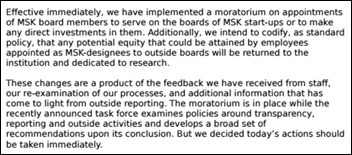
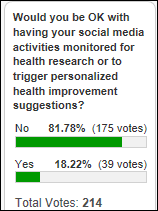
I have to guess that most healthcare provider organizations and related EHR vendors still are not aware that in 2008, PDF became an international, OPEN standard (ISO 32000-1, Document Management – Portable Document Format – PDF 1.7). As such, PDF has been recognized worldwide as the most reliable, flexible, and feature-rich document format for information exchange because it supports and manages any type of file format, including structured data, text, graphics, x-rays, and video that are used in the healthcare industry. However, what saddens me is that for the past 10 years, healthcare provider organizations and related EHR vendors still are not familiar with the attributes of the DYNAMIC format of the PDF document (NOT the static format, with which all users are familiar, including the above user and EHR vendor). This is probably one reason why PDF Healthcare, a 2010 Best Practices Guide (BPG) supplemented by an Implementation Guide (IG) (i.e., PDF-H was never a proposed standard) was never accepted by the healthcare information technology industry. (Woodstock Generation)

I applaud your comment of “doing as doctors often do in shooting the EHR vendor messenger without realizing that it wasn’t them who made the workflow decisions” because this is the primary reason that most EHRs are not as “intuitive” or “usable” as we would like. I have frequently seen that the decision of one person or group has deleterious effect on others using the system. I’ve also seen situations where the vendor will speak up and tell the decision-makers that this would not be a good workflow and the decision remains unchanged. (Paulette Fraser)

This MSK-Paige.AI deal seems to be a case of the a total absence of governance and due process. How such a sweet deal for founders, board, and MSK to profit from slides can pass regulators is unfathomable. (AI-Bot)

The AI/ML companies need someone clinical to provide them their training cases, and the executives mistakenly think the data isn’t worth anything since it’s just “sitting there.” Lots of AI/ML companies are getting away with a treasure trove of valuable data very inexpensively. (DrM)


Watercooler Talk Tidbits

SNAGHTML1ced1923 image

Readers funded the DonorsChoose teacher grant request of Ms. B in Mississippi, who asked for telescopes, microscopes, and science experiment kits for her fifth grade Super Scientist project, in which a weekly “Scientist of the Week” takes home resources to complete a project with their family and then reports back to the class. She says, “It has truly been a blessing to teach fifth grade science, and with your help, they can learn so much more at the convenience of their own home. It allows them to share education with their siblings and parents. You can actually see the importance of it and the responsibility they have had with the items from this project. I couldn’t thank you enough and promise you this will bless a child for many years to come.”

An MIT researcher observes that connected home intelligence devices — such as Amazon Echo and Google Home – seem to be offsetting social isolation that is especially problematic among older adults. He notes that half of people 65 and over surveyed in the UK said their main form of company is the TV, concluding,

In the absence of a warm-blooded alternative, even a brief interaction with a “voice” that serves, interacts, and responds every time, all the time, may someday transform our collective perception of AI from that of a simple tool that “does stuff” around the house to a presence that is a real part of our social self.

Spotify adds a custom playlist generator based on DNA test results from Ancestry, making the dubious claim that ethnic heritage drives musical preferences.

Rural hospital operator LifePoint Health proposes that four of its executives divvy up $120 million in golden parachute money upon completion of its $5.9 billion acquisition by RCCH HealthCare Partners.

image

In the latest “marketing gone mad” example, Weight Watchers renames itself WW, claiming itself to be a “true partner in wellness” that will embrace wellness-related apps, online communities, and integration with Amazon Alexa and Google Assistant. It should come as no surprise that the announcement was made by the company’s “chief brand officer,” who babbled on about the “new articulation of the WW brand” and a new brand identity that  will “come to life across all brand touchpoints and member experiences” as the company emphasizes its expertise in behavioral science . My alternate interpretation is that Americans don’t want to pay a company to remind them they’re fat, so WW will distance itself from that unforgiving metric and instead lay claim to less objectively punitive “health.” Above is the amazingly creative and daring new logo around which all this hubbub orbits. It should be noted that when asked, the company’s president could not explain what WW stands for, and Adweek panned the new “marque” in saying WW is chasing trends from fear of being disrupted.

image

Renaissance man Patrick Soon-Shiong’s NantEnergy (which I hadn’t heard of among all the health-related Nants) says it has developed a low-cost alternative to lithium-ion batteries that has been deployed to several villages and cell tower sites around the world. An expert says “if this is true, it would be great,” but wants to see evidence and a test of how long the batteries will last.

image

In Russia, the father of a deceased 25-year-old woman erects a five-foot tall tombstone that resembles her IPhone, crafted by a company that offers” death accessories.”


In Case You Missed It


Get Involved


125x125_2nd_Circle

Text Ads


RECENT COMMENTS

  1. Re: Deliberately Faked Academic Papers in Nature See, this doesn't surprise me at all. Of course AI quotes these bogus…

  2. Challenger exploded on lift-off when the O-rings failed. Columbia disintegrated on reentry after one of the heat shield tiles were…

Founding Sponsors


Platinum Sponsors


Gold Sponsors


RSS Webinars

  • An error has occurred, which probably means the feed is down. Try again later.