Recent Articles:

Monday Morning Update 3/24/08

March 22, 2008 News 6 Comments

From Fresh Prince: “Re: P4P. There are several patient satisfaction measures in P4P that makes it a horse of a very different color. Medicare will hold back 5% of total Medicare payments, then you have to ‘earn’ it back through quality measures, like patient satisfaction surveys. I think it’s inevitable that it will turn hospitals upside down more so than DRGs in 1983. Think about this: you can give the patient the best medical care on the planet, but if he/she has to wait four weeks for an appointment, gets bumped due to ER cases, or has to sit outside X-ray for an hour, do you think they’ll say they are satisfied? Oh yeah, and what about that hospital food? There isn’t an HIS system out there ready to deal with it.”

From Artie Lange: “Re: eClinicalWorks. eCW may have implemented their systems in MA, but looks like they aren’t working. I wish you would have asked their CEO a question on this.” Link. Reported here earlier – Mass BCBS says EMRs aren’t worth the cost to doctors. But, that has nothing to do with eCW or any other EMR not working. In fact, it says the opposite – that EMRs provide value to everybody except the physician who’s expected to foot the bill. I agree that I should have asked Girish about this – it’s a conundrum that isn’t going away soon and I bet he has an interesting take on it. Maybe he’ll respond.

From LaToya Jackson: “Re: Walnut Creek. I’ve heard that there is a big Epic implementation going on in Walnut Creek, CA. I think this would have to be Kaiser or John Muir. Kaiser is a known Epic site but, I thought that JM was a McKesson shop. Anyone know who is doing the project?”  

Intercepted e-mail snips about Misys/Allscripts: “Misys has a huge client base running the old +Medic/Tiger product. In the new environment this old COBOL based system cannot survive for long. Just think of the product mix/mess these guys are in. +Medic/Tiger, Misys Vision PM, Misys EMR, Healthmatics PM, Healthmatics EMR, Touchworks EMR (and all the jumbled pieces that make up Touchworks), Imedica. What the heck will they be selling, and what will they sunset? [A Misys rep who lost a deal] had offered a 60% discount!!! … The two ugliest people in town just got married, and it’s scary to think of what the kids are going to look like.” A bit exuberant, perhaps, but I tend to agree in general. Few will buy until the dust settles, which will take at least a year. Neither company was exactly tearing it up on sales, so now competitors have another weapon to create FUD in the minds of those hospital CIOs and big practice administrators who tend to buy stuff like theirs. Does having Misys involved make Allscripts more attractive to prospects or vice versa? It wouldn’t to me.

To put the Allscripts dilemma into perspective, here’s how the shares of some publicly traded HIT companies did over the past year, sorted from best to worst.

Eclipsys – up 2%
Dow Jones Industrial Average – no change
McKesson – down 3%
Nasdaq Composite – down 8%
Quality Systems (NextGen) – down 18%
Cerner – down 31%
QuadraMed – down 36%
Misys – down 41%
Allscripts – down 66%

The two worst-performing companies will hold a shotgun wedding, with the one that’s burned through 2/3 of its shareholder value in the past few weeks providing all the management talent under the board oversight of former competitor that’s down 41%. I’m not seeing the magic, especially looking at the science fair of products soon to be under one roof. People keep talking about “footprint” and “combined sales”, but what would make you like the two companies combined that you didn’t like about them separately? Or, what synergies will help them boost sales against the same formidable competitors like eClinicalWorks, e-MDs, athenahealth, and NextGen? Sure, the Misys customer base has low EMR penetration, but so does the entire industry – that doesn’t mean they’re going to buy an EMR from Allscripts or anybody else, especially at high prices. Allscripts keeps trying to sell vision instead of results, while Misys just wants to protect its big but steadily eroding maintenance revenue from old sales. And the kicker is that fickle investors who were quick to bail out on Allscripts will now have even higher expectations for the MDRX/newco shares after all the flowery talk about synergies.

So, here are my predictions. Odds that the Misys/Allscripts merger will get shareholder approval (especially with John McConnell as a major MDRX shareholder): 60%. Odds that the proposed management team will survive a year intact: 40%. Odds that the market cap of MDRX will increase in one year after the deal closes: 20%. But, I’ve been wrong before.

Jobs: Business Intelligence Analyst Developer, Senior Network Analyst, Senior PR Account Executive, Sales Executive – Healthcare IT. Sign up for weekly job alerts.

I messed up a couple of Inga’s links in the last issue, so those are fixed now. It wasn’t a devious ploy to get more readers for Scott Shreeve’s blog since that’s where the links mistakenly pointed.

Great idea: the Michael J. Fox Foundation offers up to $1 million in grants for the development of web-based clinical assessment tools for patients with Parkinson’s disease, which will allow clinical research to be performed without the burden of patient travel. Proposals are due May 14 and funding will be available in October. Thanks for that tip from the guys at Healthcare IT Transition Group, who also report that their cartoon announcing the HISsies winners has been viewed more than 2,000 times (the connection being, of course, that they portrayed Jonathan Bush as Marty McFly from Back to the Future in the cartoon because he kind of looks like MJF).

UCLA’s psych hospital, fresh off the Britney Spears debacle and a new incident where patient photos were published on a social networking site, bans cell phones and laptops.

Guess HIMSS gave up on the idea of blogging live from the conference. Its HIMSS Live! site now brings up a “page not found” error, although HIMSS still owns the domain. And speaking of fun domain name facts to know and tell, who knew that Cerner has pre-emptively registered CERNERSUCKS.COM?

Speaking of HIMSS, I checked the hotel site for HIMSS09. The cheapest Chicago hotel is $225 a night. I may Priceline it since that’s worked before.

A couple of folks expressed interest in producing something about medical device connectivity. I’m thinking we could put together an informal white paper for CIOs from multiple viewpoints. If you’re interested in helping, e-mail me. I’m curious to see if we can harness the collective knowledge of HIStalk’s readers to create something useful for the industry.

Inga wants me to brag on how well she and I are doing (for now) in the unnamed vendor’s NCAA basketball pool. We may have peaked Friday night, when a lucky Siena pick over Vandy (time for McKesson to buy the team?) propelled me to #1, with Inga right on my heels at #3. She was quick to conclude, “You and I are clearly geniuses.” Some bad luck since sent us to #2 and #8, respectively, and I’ve got some early losers going deep that will hurt me. I’m thinking of handicapping the pool by choosing schools that aren’t on the Most Wired Hospitals list.

Speaking of Inga, she’s in touch with HIStalk’s sponsors regularly and reminded me of something important. Some sponsors are interested only in page views and ad clicks like with any other advertisement (which is fine), but many/most of them support HIStalk because they believe in what we do. I can’t explain how gratifying that is. Magazines and other online sources would kill to have our loyal sponsors and readers. Just in case I haven’t said it lately, I sure do appreciate it. Thank you.

Deborah Peel renders an opinion on the data mining agreement signed by genetic medicine vendor Perlegen and an unnamed EMR vendor, calling it The New Tuskegee.  I want to know who that EMR vendor is. Everybody seems to be beaming about their data deal, so let’s name names. If you know (and especially if you have documentation to prove it), use the confidential Rumor Report to your right to tell me about it. It’s ironic that the EMR vendor is demanding privacy about its deal to sell patient information.

British researchers are working on an enhancement to the Da Vinci robotic surgeon that will allow it to be controlled by the surgeon’s eye movements.

Rural hospitals in Tanzania are using the Internet, scanners, and digital cameras to connect with a referral hospital for telemedicine services, important in a country where transportation to the hospital can cost several months’ of the average wage.

It took a TV station’s intervention, but a Sentara Norfolk ED patient finally gets his medical record corrected to show that he had not, in fact, delivered twins there.

SafeMed, a San Diego decision support engine vendor, will provide Google Health’s drug interaction and treatment recommendation capabilities. Former Amicore CEO and Microsoft manager Richard Noffsinger is CEO. For those who say nobody ever sells anything at the HIMSS conference, Google execs happened to pass SafeMed’s HIMSS06 booth in San Diego and asked for a demo, which was followed by a deal.

Harris Corporation gets an HHS contract to plug federal healthcare agencies into the Nationwide Health Information Network.

I’m sure it will offend someone, but I’m still wishing you a Happy Easter in a non-denominational, rabbits-and-eggs sort of way.

E-mail me.

News 3/21/08

March 20, 2008 News 2 Comments

From Gail Kafka: "Re: P4P. Do you or your readers have any data on the Patient Reported Outcomes market and the IT providers in it? I rarely see articles on this topic unless they are from academia or IHI/IOM. If P4P comes to be, which seems inevitable with consumer cost and awareness increasing, then why isn’t there more chatter about measuring performance from the patient’s perspective?"

From Larry Lezure: "Re: Misys/Allscripts. It’s a reshuffle of the deck with two players holding bad cards. All they have in common is overpriced products and getting their asses kicked by eCW, which will benefit even more as they try to retire products. The most interest part of the story is currency arbitrage — a UK company getting a big discount because of the low value of the dollar against the pound." New poll to your right: is the merger a good idea? So far, 76% say no.

From Stan Zloty: "Re: Medcomsoft. I know eCW doesnt like athena’s EMR, but looks like Medcomsoft sure does." Link. The Canadian EMR vendor gives up on direct sales and seeks partners to create an athenahealth-like business model.

From Nicholas Birdcage: "Re: medical devices. With today’s mention of device connectivity as well as Isarona, any thoughts at doing a piece on the players in these market?" I like the idea, but would need some help since I haven’t followed it all that closely.

Intellect Resources will host a webinar on becoming an independent consultant on March 25 at 8:00 Eastern. They’re also starting e-mail newsletters for job seekers and employers, with sample issues coming soon.

I hope everybody made the transition off the old Blog City HIStalk site. Put your e-mail in the "Subscribe to Updates" box to your right if you aren’t getting an e-mail blast when I write something new. You can sign up for the Brev+IT newsletter over to your right, too. And in looking over there, I just realized that HIStalk’s fifth birthday is coming in June.

My editorial this week in Inside Healthcare Computing: "In a Capitalist Society, Somebody Will Always Sell a Fat Man a Speedo or an Unprepared Hospital a Clinical System." A CIO e-mailed me to say he liked it, so I’m relieved (I bet the free mags don’t work a Speedo reference into many headlines, at least unless it’s one of those lame puns they love).

The New England chapter of HIMSS will host a killer HIT forum (warning: PDF) in Norwood, MA on April 9. Speakers: Senator Richard Moore, Blackford Middleton, Karen Bell, Francois de Brantes, Girish Kumar, and Jonathan Bush (there are other big names, including CEOs). Frankly, I like the lineup better than HIMSS, plus it’s one big day for $80. I should have had an HIStalk bash there.

Maine Medical’s CEO, Vince Conti, quits for unnamed reasons.

More on Misys/Allscripts. Most of the UK analysts think Misys is paying too much, while most US analysts think Allscripts sold out too cheap. Since the deal has to be approved by shareholders, that could come up in the voting. And, it’s subject to Allscripts getting a better offer, which has happened with similar companies (iSoft, for instance). I doubt John McConnell would make a run of his own on MDRX, but I wouldn’t rule it out. I just have this vague feeling that it isn’t over yet, especially since the response from all camps has been underwhelming.

Stock and HIT expert Sonomaca had some good thoughts on the Allscripts stock message board. He says it will help Allscripts because the company can focus on long-term strategy and not quarterly results. Also, since the market seems unimpressed from the current share price, ValueAct Capital could buy up more of the company. From his calculations, Allscripts shareholders get a Misys Healthcare for four cents per share, based on the one-time dividend (or, looking at the other side of the coin, the market is valuing the combined company at just $4.40 per share, or 10x earnings). Maybe that’s why the Brits were howling.

And in more Allscripts news, former star customer Tennessee Oncology is suing them.

Orion’s Rhapsody integration engine will be used to integrate systems in Saudi Arabia.

A Minnesota hospital admits that a chart error caused surgeons to remove the wrong kidney from a cancer patient, leaving the patient with only its still-cancerous twin.

E-mail me.


Art Vandelay on Cerner

As Mr. HIStalk noted, Cerner is diversifying its revenue streams in a coming bear market. Cerner’s medical device and drug-development are long lead-time investments with major barriers to entry. The barriers include human capital, systems, and process & procedure knowledge to navigate regulations. They also have to handle new competitors. I see this strategy being copied by all the major clinical systems vendors.

The approach we will likely see from vendors will evolve to full venture capital investments. There is power in using some of the de-identified data that should be captured with the vendors’ systems to find potential investments. The vendors can then use the data to prove the value of further investment independent of the necessary FDA regulations (ex: 21 CFR 11). This could keep investors interested. To make this real for everyone, only organizations with "Stage 6" EMR deployment can reliably make this happen.

For Medical Devices, expect copycats to mimic Cerner’s CareAware or Cisco’s Cisco Compatible Extensions (CCX) strategies. Vendors will likely certify and partner as opposed to developing medical devices.

Is this a distraction from their core business? You bet it is. The vendors will view it as a necessary strategy to preserve their publicly traded prospects in a bear market.

What does this mean? Three things. First, R&D will be negatively impacted. The enhancements you expect from your vendors will be slower in coming. Expect the vendors to ask you to share the burden of investment for new functionality saying it is beyond standard maintenance arrangements. In other words, "great idea, you want the function, help us develop it (with your human AND financial resources)." Second, the privately-held companies will be even better positioned to weather the storm. Third, companies that are already diversified (ex: McKesson, Cardinal) have a chance to catch-up or pass their competitors if they focus their investments.

Inga’s Update

For the parsimonious (like Mr. H) here is a great list of free or cheap software products, with substitutes for such programs as Word and Adobe Photoshop plus anti-virus tools.

Time Magazine also published a recent article, Is shrink-wrapped software dead? which included a handy side-by-side comparison of the free solution versus the commercial option. The article’s title reminds me of the bright yellow tee shirt Jonathan Bush was seen wearing at HIMSS which said "Software Is Dead" – to the 4th power. Apparently Jonathan tried to convince his PR handlers to let him to wear the shirt for his CNBC interview conducted during the conference, but eventually was persuaded to wear a more Street-pleasing coat and tie.

I guess I didn’t sound pathetic enough when asking for advice on the NCAA basketball brackets. I had to fly solo on my selections and ended up picking Duke to take it all. I actually hope I am wrong because I have a favorite team I’d rather see crowned, but I wasn’t willing to risk my $10 bet on them.

From Nasty Parts: “I was one of the early guys calling the Misys/Allscripts merger. I’ve been talking to guys from both sides of that divide. Here’s the scary part: both of them think they are in charge. Could be a slow motion train wreck. Wait until the long knives come out and folks start fighting for their areas of authority -  it won’t be pretty. Plus, we are not even yet talking about product go-forward strategies.” If Nasty is right, maybe John McConnell was the smart one to get out of the way now.

From Poo Flinging Monkeys: “Most Allscripts folks feel like they are getting the short end of the stick, as the big M is generally seen as a dead carp around someone’s neck. There are a LOT of folks who migrated from Misys to Allscripts who groaned out loud at the announcement. The Misys folks are a bit relieved as the last few months and years really have been obviously leading up to SOMETHING, but nobody knew what. All knew Vern was coming in, stripping it down, and selling it off. Most think that Misys EMR should have died a while back. The Allscripts product will be the flagship EMR and there will be an obvious push to get the Tiger folks introduced to it. Big open market there. The Allscripts PM is okay, but generally not as shiny and end user intuitive as Tiger, so there will probably be a push to interface those 2 products while sun-downing the Misys EMR product.” Heard that Misys had a town hall meeting for employees today. I doubt that Vern has answers to all the questions, particularly the one that employees are asking most: how does this affect me?

And if you haven’t heard enough on the topic, check out Scott Shreve’s posting at Crossover Health entitled The Lawrie Dowry: Misys Acquires Allscripts in Rushed Marriage. Lots of interesting points out the new “Allscripts-Misys-I-am-NOT-giving-up-my-name Health Care Systems” company.

Minnesota law will require all healthcare providers to use an EMR by 2015. It provides six-year, no-interest loans to help providers get there. The first two loan recipients are Swift County-Benson Hospital and Mille Lacs Health System, which are borrowing a combined $2.3 million.

I haven’t heard if Dr. Peel is gnashing her teeth on this one or not, but genetic research company Perlegen Sciences announces a collaboration with an unnamed EMR vendor for access to the clinical treatment and outcomes data on about four million patients. The information will be supplied from the EMR vendor’s information warehouse. Perlegen will use highly specific inclusion and exclusion criteria to identify and develop genetic markets for predicting patients’ likely response to specific medication treatments. What I find curious is that the EMR vendor remains anonymous. If this particular EMR company believes providing the data is ethical and not in violation of any customer agreements, why not allow themselves to be named?

Duke University will implement Premise’s PatientFlow Platform to facilitate patient flow across its three hospitals.

Big controversy brewing in Texas over who owns the ankle. Seems like podiatrists and medical doctors are both claiming it’s theirs to treat and are going to court to let a judge decide. Lawyers for the podiatrists claim “you don’t have an ankle” because is really part of the foot…no foot, no ankle. Of course the orthopedic surgeons say that if ankles don’t exist then why do podiatrists want to operate on them. Quite the conundrum obviously. I have been told I have nice ankles and I don’t think my feet are nearly as attractive, so I’m thinking I will go with the MDs on this. If the podiatrists win then I’ll have one less appealing asset.

E-mail Inga.
Let Patients Control Their Healthcare Data: Give Them an Al Gore Lockbox

March 19, 2008 News 2 Comments

Inside Healthcare Computing has graciously agreed to make previous Mr. HIStalk editorials available from its newsletter as a weekly "Best Of" series for HIStalk. This editorial originally appeared in the newsletter in February 2006. Inside Healthcare Computing subscribers receive a new editorial every week in their Electronic Update.

I’ll confess that I’m paying minimal attention to the RHIO craze. Everybody’s starting one, conferences are showcasing speakers who’ve done nothing more than announce theirs, and tiny grants are getting the whole industry atwitter. It’s like living the dot-com frenzy all over again, irrational exuberance and all.

I’m not against RHIOs, but they’re as annoying as CPOE was awhile back, taking resources away from projects that could provide more benefits to patients without the minefields.

I recently interviewed Denni McColm, an award-winning CIO of a 74-bed rural hospital no different than 80% of those out there. Oh, except that they’re 100% paperless and 100% CPOE, something virtually none of the celebrity CIOs and Taj Mahospitals have been able to accomplish. I’ll listen to her, thanks.

First, Denni believes that organizations should be banned from using the word “interoperability” until they can bring their own electronic information to the table. If your IT house isn’t in order, RHIOs don’t need you. Anything short of everyone’s contributing information equally will cause the whole concept to collapse like an imploded 1960s Las Vegas hotel, so paper jockeys need not apply. Work instead on projects that will help your patients more than the begrudging swapping of routine lab reports with your cross-town competitor. Or, integrate all those systems you already have. Your admission ticket should be a checklist of what data elements you can supply electronically right now.

Second, Denni advocates a patient-centric RHIO model instead of the common payor-centric one. Do you like insurance companies enough to let them control patient information?

By patient-centered, I don’t mean personal health records. People are too irresponsible to reliably collect and store data with life and death importance. On the other hand, they could be given control over the trusted information generated by hospitals, physician practices, and other providers.

Suppose everything resided in an Al Gore-type lockbox that contains everything from discrete electronic data to scanned documents fed over the Internet. Either the patient controls the key (similar to a password) or only they can initiate data delivery to a provider. If they don’t want you to see it, you won’t.

This model makes most privacy concerns go away. It avoids the largely unsolved problem of how you assign some sort of universally mandated patient identifier (aka “political suicide”) to sort out the throngs of people sharing the same name. The patient simply says, “send my data to Dr. Jones” and it’s done. They keep control and there’s no arbitrary “regional” service area beyond which lies a medical no-man’s land.

Maybe some RHIOs work this way. Like I said, I don’t follow them. And, if I can’t see a quick and obvious patient payoff, I probably won’t start following them any time soon. I’ve got plenty of challenges working on clinical system projects that will hopefully save lives right now.

This editorial is copyright-protected by Algonquin Professional Publishing, LLC., publishers of Inside Healthcare Computing. Please do not copy, forward, or reproduce this material without prior permission.  To obtain permission or for more information about Inside Healthcare Computing’s reprint policy, please contact the Customer Service Department at 877-690-1871 or go to http://insidehealth.com/ihcwebsite/reprints.html.

Mr. HIStalk’s editorials appear each Thursday morning in the subscribers-only version of Inside Healthcare Computing’s E-News Update.  To subscribe, please go to:  https://insidehealth.com/ihcwebsite/subscribe.html or call 877-690-1871.

News 3/19/08

March 18, 2008 News 8 Comments

From Joe Bob: “Re: consultants working on percentage of savings. I find it not only deplorable, but outright thievery and total ignorance. Children’s Hospital National Medical Center is an example. They were a top pediatrics hospital, then a new CEO hired consultants based on percentage of savings. The hospital is out of top 20. P.S. Hasn’t everyone had enough of HIMSS and their organization, or is it just me?”

From The PACS Designer: “Re: One Portal. TPD mentioned the concept of looking at personal health information in the same light as a personal online banking account. Now it comes to light that Denmark has had an online health portal for recording your health history called One Portal since 2003. It could be used as a model for other countries to emulate and get the PHR/EMR process started as an online solution.” Link.

From Niven David: “Re: economic concerns. I would have to imagine many vendors and hospitals are seeing an impact from current economic concerns, with sales slowing and hospitals tightening the purse strings. Any comments or perspectives?”

From Reggie: “Re: Allscripts. There is a rumor that McConnell quit the Allscripts board in disgust at what he felt was a low-ball offer.” It must sting. Allscripts, Glen Tullman, and John McConnell were on top of the world and McConnell’s former company Misys was on the ropes. Suddenly, one bad earnings report sends MDRX stock reeling from the high 20s to below $10, allowing Misys to gain control on the cheap. What could be lower on the HIT totem pole than having Misys as your new daddy? I bet Glen Tullman won’t like reporting to the board-controlling Brits very much. Can two struggling companies combine to make one good one while maintaining their traditionally high prices, complex technologies, and indifferent customer bases, not to mention keeping their antsy shareholders happy as the inevitable product and people consolidations occur? In this market, with nimble competitors nipping at their heels, and with the current economy, let’s just say they’ve got plenty of work to do. I expected a much better outcome for Allscripts. Mothers, don’t let your children grow up to be publicly traded.

Update: John McConnell did resign in protest from the Allscripts board Monday night. See the comment I posted at the end of this article.

From Reggie: “Re: Allscripts. There is a meeting in New York tomorrow where both Misys and Allscripts management teams will answer analyst questions. I am not clear on whether this was an emergency meeting designed to convince obviously skeptical Allscripts shareholders that this is a good deal. On paper, this is a $13 deal, which is why Tullman described it as a ‘big premium.’  Since the stock closed at $9.75, the market has priced in $3.25 worth of doubt about the combined entity’s prospects. Clearly what Allscripts needed was the help of a big operator like GE, Perot, CERN, or EDS. Were any of these companies interested?” Surely others peeked up their skirt and passed before Misys got a turn, although the overused prospect of synergy has led to many a troubled marriage.

From the conference call announcing Allscripts-Misys Healthcare Solutions, Inc. (boy, talk about an uninspiring first decision – that name reeks, at least when it’s not screaming “YOU give up your name – we’re not budging on ours.”) Sounds like some products will not be developed further (the first step to sunsetting, of course). Synergies are predicted. They like the idea of selling into the minimally EMR’ed Misys customer base (which Inga suspects means that Misys EMR and A4’s EMR are goners – they can’t walk in the prospect’s door waving competing systems). They talked about merging a year ago, but Allscripts was too expensive (the stock market took care of that little problem). I heard the two companies huddled hard for days right before HIMSS, which I assume means they desperately wanted to make the announcement there.

Someone sent me the communication sent from Misys to customers. Other than the sudden love between two formerly bitter competitors, the most interesting point was the standard boilerplate, “connect all stakeholders through the continuum of care.” Wasn’t the utterly failed Connect strategy of Misys supposed to do that? And do stakeholders, in the form of customers anyway, really care about connecting to the rest of the continuum of care? Only if you’re trying to sell to hospitals and their affiliated practices, which the new, badly named company will try to do.

Lost in the shuffle: Misys PayerPath and Home Care. They probably should deal off the latter to Sunquest or somebody, but PayerPath has promise with a bigger sales footprint (unless they sell it off for cash to QuadraMed or McKesson, which wouldn’t surprise me since it isn’t even being mentioned in all the pleasantries).

HIStalk ran plenty of speculation from readers that the Misys-Allscripts deal would happen. I admit that I was skeptical, but I said all along that bringing in ValueAct Capital was a sign that Misys wanted to shed its healthcare lines. All of you who called the shot early – nice going. Nobody else was even talking about it until it ran here. Even the high-powered analysts at the HIStalk HIMSS event were buzzing a little because I’d mentioned it the night before, plus HIStalk readers had just voted Allscripts “most likely to be acquired.” Smart readers. I didn’t mention it, but the Allscripts PR person tried to get me to kill the HISsies because Allscripts didn’t want to be named as an acquisition target. For good reason, as it turns out.

Connectologist (you know him) posted a very nice writeup in HIStalk Discussion about medical device connectivity. This stood out: “A perfect day for an IT person is to fix every problem that comes up from their desk, monitoring systems, rebooting servers, documenting support, etc. A perfect day for a biomed is to go to the point of care and work one on one with clinicians solving problems with training, problem diagnosis, and repairs. This is part of the ‘great divide’ between biomeds and IT.” Worth a read.  

Thanks to the 134 of you who responded to my consultant survey. Great information. I’ve e-mailed out the results to those who participated and supplied an e-mail address. A reader already contacted me and said the results were helpful in making a career decision, so he or she appreciates it. Also, thanks if you completed my reader survey, which I’ve now closed. I saw some very nice comments there, so I’ll have more about that once I’ve digested your thoughts.

Fair Warning did a webcast last week on EMR privacy and compliance challenges, including HIPAA enforcement. John Wade was one of the presenters and over 400 folks tuned in. It’s archived for playback.

Jobs: Manager of Lab and Pharmacy IT, Clinical Information Systems Analyst, Manager of Clinical Support Systems. That first listing had an ingenious leadoff: “If you attended the HISTALK party at HIMSS, you know that the ‘most significant IT sale of 2007’ was the Epic contract with Cedars Sinai. I guess that would make these the ‘most significant HCIT job opportunities of 2008’. Read on.”

Medical device data integrator iSirona gets a $1 million private placement. Joining its board are industry long-timers Carl Witonsky and Jim Hall.

Ohio State and Wake Forest Baptist choose the ClairVia staffing system from AtStaff.

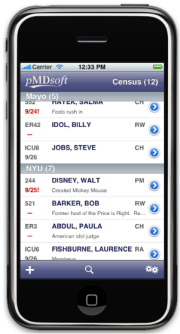
Little doubt about it: the iPhone will be big in healthcare.

Thailand medical tourism hospital Bumrungrad International, birthplace of what’s now called Microsoft Amalga, installs the first robotic drug management system in Asia, going with Swisslog. The hospital’s CEO, Mack Banner, appears to be an American from his educational background, which I didn’t realize.

The Australian Medical Council will move its Visual Basic systems to the web-based Ruby on Rails platform.

Merge Healthcare delays yet another SEC filing, this time its annual report. I swear its accountant must be a moonlighting shoe salesman from the local H&R Block.

Holy Cross Hospital (FL) chooses the E/Point ED charging application from LYNX Medical Systems (aka Picis).

Two doctors who were sued for $67 million by John Ritter’s family are acquitted. The family already received $14 million in settlements from other clinicians and a hospital. I don’t mean to speak ill of the dead, but I never found his mugging, camera-aware style anything more than annoying, but to each his own. It’s still a shame, of course. Maybe he really would have made another $67 million in future earnings like the suit claimed. Your Honor, I call Adam Sandler to the stand.

What else could they mess up? Haywood Regional Medical Center (NC) fires a nurse and former Army lieutenant colonel for giving state inspectors information about hospital medical errors committed there, saying the Army taught her to discuss and fix problems, not hide them. She’s suing. So is another former hospital employee turned whistleblower who was canned for giving CMS information about medication errors (CMS agreed and stopped reimbursement to the hospital). The loss of 68% of the hospital’s revenue led to the resignation of the hospital’s CEO, board chair, HR director, and nursing VP. Now the hospital is fighting the press to keep the former CEO’s compensation private despite its being public record. The board is thinking about selling the facility. Good idea.

E-mail me.


Inga’s Update

DR Systems announces nine new contracts for Unity RIS/PACS worth more than $3.8 million.

Thomson Healthcare releases its 15th annual 100 Top Hospitals. To come up with the winners, Thomson analyzes data from Medicare Provider Analysis and Review data for 2005 and 2006 and Medicare cost reports for 2006 and evaluates hospitals on eight measures of clinical quality, operating efficiency and financial performance.

Does anyone care to explain this MedCom Soft press release for me? Is there: 1) no real message at all; 2) an announcement they want to increase US marketing efforts; or 3) a well-hidden announcement about “right-sizing” the organization?

Walgreens announces its new Health and Wellness division that will manage its health centers and pharmacies located at large-company work sites. They are also buying a couple of companies providing work site health centers, raising their total number of work site and retail health clinics to 500. Walgreens estimates the potential for onsite work site clinics will grow to 7,600 corporate campuses with at least 1,000 employees each.

One of our fun sponsors asked Mr. H and me to participate in a NCAA basketball pool (I am not naming them in case the IRS reads this blog, even though they claim winnings go to charity). I was hum-ho on the whole thing until I read this section of the memo sent to all employees: “This year, we have added a Group Message Board option, which is a convenient outlet for those of you who may want to elaborate on their respective bracket picking strategies, defend seemingly half-witted picks, talk smack, or just have daily alternative to your Mr. HISTalk addiction.” I may have to participate to ensure folks don’t inappropriately make basketball more important than HIT gossip. Since I like winning and don’t really consider asking for advice equates to cheating, feel free to send me your best picks.

From Insider Outsider: “In regards to your note about Bill Gates appearing before the US House Committee on Science and Technology, and his predictions, my only response is …yawn. Bill G. has never been one to have very good or accurate predictions. He is usually very general – ‘technology will get smaller and faster’ (duh) or he is very wrong ‘within 5 years, all computers will use voice commands and the mouse will disappear’. Billy G. predicted that spam would be solved in 2 years (still waiting), that OS/2 would be the most important operating system of all time, that no one would ever need more than 640k of memory, etc. Yeah, he’s gotten some right, but even a broken clock is right twice a day. He made his fortune by buying someone else’s technology and reselling it. He’s the used car dealer of technology. As for the future, his best picture of the future is to look at what Steve Jobs is doing and to copy that.” Yeah, but he’s rich. Doesn’t that count for something?

My favorite part of the interview with eClinicalWorks Girish Kumar Navani was is brief commentary on various vendors. You have to be pretty confident to swagger the way he did.

Thanks for all the Linked-in invitations. (Do people like Linked-in and other network sites because it makes them believe they are popular – or at least have friends?) Regardless, it helps me with my swagger.

E-mail Inga.

Allscripts, Misys Healthcare to Merge

March 18, 2008 News 24 Comments

Misys announced this morning in London that it will spin off its US-based Misys Healthcare Systems and merge it with Allscripts, paying $330 million in cash for a 54.5% stake in the combined entity through a complex financing arrangement that also involves hedge fund ValueAct Capital, which will underwrite a new share placement to finance the transaction.

Glen Tullman of Allscripts will remain CEO, while Misys CEO Mike Lawrie will become chairman of the board. Misys will appoint six board members, with four from Allscripts. Allscripts shares will continue to trade under the MDRX ticker and the new company’s headquarters will be in Chicago.

The announced name of the new company is Allscripts-Misys Healthcare Solutions Inc.

Misys shares are up 20% on the London Stock Exchange.

HIStalk Interviews Girish Kumar Navani, President of eClinicalWorks

March 17, 2008 Interviews 25 Comments

girish  

I
interviewed Girish Kumar Navani of eClinicalWorks nearly two years ago and wanted to find out what’s changed since (you might want to read that interview first for perspective). You’ll notice from his industry assessment and predictions that he’s an extremely sharp businessman and modest leader. What the company is doing would be big news in any industry, but shaking up healthcare IT like eClinicalWorks has done is unheard of (well, maybe other than Epic and Meditech, which he happily acknowledges).

His major point is that smart businesspeople can run a highly profitable company while keeping customers happy and focusing on the long term instead of next quarter’s profits. When he says the company will be doing $500 million a year in ten years, I don’t even question it.

Don’t skip reading just because you aren’t involved in PM/EMR systems. I’m not either, but there’s plenty to learn no matter where in healthcare IT you work.

Thanks for talking to me again after our interview two years ago.

It’s great to read your blog. I promised you at that time that I was going to start reading your blog and I did. You’ve grown in popularity faster than anything that I know of. People are reading your blog everywhere. I had a large customer talk to me last night and he says, “So, you’re talking to HIStalk tomorrow,” and I said, “How do you know that?”

I think you should take tremendous pride. I can’t name the customer yet, but this is a group that has got hundreds of hospitals in the country and they read your blog regularly. They think it keeps them up to date on health IT and they find value in it. I do too. It’s great.

What did you think of HIMSS?

I have general opinions about conferences. I think we attend them because if you don’t, people spread rumors otherwise. I personally don’t care too much about conferences. Conferences used to be great to go and get customers that you wanted talk to. Now conferences are becoming more for networking. But with the advent of the Internet, you really don’t have to be in a location to network.

I think HIMSS was busy. I think a lot of hospital guys liked it because they felt it was worthwhile for them to be there and meet either with their existing customers or potential customers. I had dinner with Wal-Mart one evening and a few others, so I found the conference useful. It’s changing for sure and not just HIMSS. Almost every conference is changing with more and more people gathering information online versus waiting for a show.

I agree, but the attendance numbers keep going up. Did it seem bigger to you than last year?

It was a great location. Orlando always attracts people. Location has a direct correlation to how people get attracted to conferences. I think Orlando helps tremendously because you have families coming there and it’s a great time of the year. I don’t know if I noticed it was bigger, but Orlando is such a big convention center that sometimes you get lost. I like the location a lot.

eClinicalWorks has really taken off since we talked two years ago. Tell me what’s changed.

We have about 625 employees now and Westborough, Massachusetts continues to be a strong place. At our headquarters, we have over 425 people. We opened an office last year in New York City for the New York project. That’s going well and we have about 30 people there. We have an office in Atlanta and we have support and sales people that work out of their homes.

Revenues last year — we did $60 million and actually pushed a contract out into this year because I didn’t want to sign that $3 million contract in December. That’s the difference between being a private company vs. a public company. Imagine my customer saying, “I’ll sign by December 31 if you can give me something” and their surprise when I said, “I really don’t mind, actually, if we sign it on the 6th of January.” $60 million was our target and we did that, so I was content.

Our profitability continues to be good, with net profit margins around 30 to 32%. We have zero debt, zero liabilities, zero investors. All our payables our current and we pay them off in 15 days. In a way, the business has grown very big, but I still run it like a cash business. That makes it really easy to run the company. We don’t play the games of writing off R&D to depreciate just to make the books look good. We write it off and pay it off as we can.

The financial strength of the company, or at least the balance sheet and income statement, has become a bigger asset now over three years ago. Three years ago, we were about an $18 million company. Then we went to $25 or $26 million, then $40 million. Those were good years where we could show growth, but you always have to answer to customers and your $18 million is still a bit smaller than maybe you’d like for a large customer base. At $60 million, and $75 million minimum this year, we feel we’re able to handle and convince even larger customers about the strength of our company and our balance sheet.

Customer growth has been phenomenal. We have not slowed down in that regard and I don’t want to, either. [laughs] We are managing the growth, but as I have said to you before, we’re managing it by not slowing down. Very, very good numbers on training and implementation and support, which still makes up a very high part of our company. Over 68% of our expenses are from those departments and rightfully so. Rather than spending on sales, I spend in the areas that matter the most, which is to take care of our customers. That strategy has worked out well for us in both the short and the long term.

They key now is that Starbucks experience, as they say. It doesn’t matter how many stores they open, it’s the cup of coffee for every small customer that walks in. To grow very large, we’ll need to do all the little things right. To grow big, we need to grow small or stay small. That holds true not just in customer size, but in how we take care of every customer who puts their trust in us.

Did you ever think it would get this big?

[Laughs] I think it’s a journey. We don’t want to look back because if we did, most of us would be surprised that we’ve come this far. We were surprised in a positive way, but at the same time, none of us underestimates that we could have done this.

It’s both the feeling of being very confident that it could be done, but at the same time, gratitude and satisfaction and all the things that go with achieving success in the old fashioned way – organic growth, no acquisition growth, building the product that you sell, taking care of your own customers and not trying to grow them from another customer base. There’s a lot of pride you get from doing those things. From that perspective, there’s a lot of pride within the company and all the individuals that have been here and that continue to do work every day. That’s very, very obvious. I think we’ll say the same thing ten years down the road when we’re a $500 million company.

You’ve said that your supply chain background has made a difference.

I would say so. If you look at supply chain in retail, the success of that business may be because of how well it runs from a sale to replenishment and distribution. I think in the world of the Internet, the same thing applies, because pricing pressure is there and will always be there with the increased availability of price.

We know we’ve caused that. eClinicalWorks has been a great instrument for making price differentiation in ambulatory. You can actually dictate that if eClinicalWorks is at that price point, I can’t pay five times that amount, nor three times. Price will continue to be a pressure in terms of ambulatory solutions and a company that is going to do well and still have high profitability, which means you can take that and invest it in your future growth years, you need a company that is very well run, both in terms of process and also an organization in teams.

I believe that the background of looking at in that way, as an ongoing continuous improvement cycle, is one big reason why eCW continues to do as well as we do. We take a small one-doctor, two-doctor, or five-doctor group and make them go through a process. Then, we take a big project like New York or Massachusetts, where we are 185, and we break that down into a supply chain. Or if I go take a 120-doctor group, I break them down into a process and we implement them as well. So, there is definitely the learning that we’ve had in following a protocol of handoffs that are seamless, to go from sales to project management to training to support to getting feedback and replenishing your entire core process, is a big differentiation, no question.

We aren’t hierarchical at all. We are more laid out to be like an assembly line in how we work. We work in teams, we have team leaders. At any one time, I see that as a solar system. I see the team leader being the nucleus of that solar system, around which the team members revolve,  but nowhere would you ever find a team leader trying to say “I’m better than the people underneath me.” He or she coordinates a lot of what happens, but at the end of the day, we see ourselves as very different and that’s one of the reasons we’re so successful.

What’s the scope of the New York project?

For the first eight years of eCW, we always focused on speed. Make it faster. Take away clicks here, make it more intuitive, make the learning cycle shorter for your end users. We did that very well with our product.

It’s not that we don’t focus on that aspect of our company or that we don’t need to still improve, but what New York taught eCW, by working with the Department of Health, the focus was not about just speed and adoption, it was around quality improvement.

I recall an incident sitting with the assistant commissioner of New York City at a dinner table, with five eCW folks and him and his team, literally right after the contract was signed and we were going to plan out the deployment. The commissioner asked us a question: "Tell me what you would consider to be the success and failure of this project?" I said, "I think if physicians don’t adopt the EMR and use it every day, I’d classify that as a failure." We went around the table and everyone said the same thing in different words.

He said, "I disagree. If at the end of this project we cannot demonstrate that we improved the quality of care, i.e. we did not improve hypertension or control blood pressure and get diabetes under control and look a those 10 different values that the city measures themselves on, we will have a failure."

That statement was an eye-opener to me and to many in that room. The vision of that project was not just get it implemented. It was, "After the implementation, prove to me it’s going to improve quality." They worked with us for a year because it was part of our contract with the city. We’ve been doing joint development with them. Whatever we develop we will make part of our commercial release and every customer will get it.

Their leadership in understanding quality measures, decision support, and how that whole thing works and making that part of our product cycle will be part of our version 8.0, which will be launched in the next four weeks. It’s going to be revolutionary in its concept and adoption. In a year, I’ll want to see what the measures of improvement were.

We’re looking at it differently and maybe that’s the right way to look at it. New York is not just about implementing an EHR, it’s about demonstrating that you can improve quality of care. Then, it’s all about expanding that to connect into the local RHIOs. There’s another level and degree of integration that’s big in the city – connecting with their school health program, with their immunization registries. You’re now talking about a truly digital healthcare system.

The Piper Jaffray stock analyst said he’d heard about implementation backlogs and support problems.

Investment analysts have agendas that sometimes go beyond the obvious. I spoke to him at the show and disagreed with him because he’d never bothered to speak to any eCW employee or customer, so it’s very coincidental that something is written without due diligence.

The facts are the facts. We took Massachusetts and finished in 13 months when we were asked to finish it in 18 months. We started New York and are finishing that at least on schedule. In January of 2007, we took 14 to 16 weeks to implement. We ideally wanted it to be 12 weeks because that’s the template we like. Today we are at 12 weeks and we can actually do it in eight weeks if the customer really wants to do it and they have some sense of urgency to get their hardware in place.

In reality, we are in real-time mode. You sign a contract with us today, we start your implementation 24 hours from today. We follow a template and we implement it. We expanded our support system to 24 hours the middle of last year and it was so well received that everyone in our user group commented about it. We introduced real-time chat at the beginning of Q4, which was very well received.

I think there was a clarification posted by the analyst afterward, where he clarified that after speaking to me and some of the sources, that he felt that the information that he had reported was not complete. I think we’ll leave it that — there’s no validity to that statement.

Last time, you were amused that customers always wanted a server under their desk instead of an ASP. Has that changed?

It’s changing, but it’s not changing overnight. What I’m finding that centralized hosting is becoming more common. Maybe we’ll host it, maybe a data center, maybe a hospital. So the hosting is becoming more acceptable.

Software as a service, which we’ve been doing since 2003, continues to grow for eCW and is growing rather well. I still think, though, at the end of the day, physicians still believe that the data they have, as long as it’s the same system, they will be more comfortable with it. We have other solutions that we offer, like remote disaster recovery, so we’ll actually back up their data in their data centers in case they every need to use that service. Both the client-server model and the SaaS model are growing well. On the other hand, things like patient portals seem to be mostly hosted by eCW. Rarely will a customer ask to host a portal themselves.

What’s the overall status of EMR adoption after Stark relaxation?

We are still seeing growth in a big way. I’ll give you some numbers. We did $60 million last year. We did $11 million in the month of January. February was not slow either. We’re seeing real growth in terms of numbers, in terms of physicians, and implementations are good.

I think you’re seeing a slightly different curve. Youv’e got the early adopters and are moving into the mass adoption market, with more questions and more due diligence. That’s good for the market. It won’t get adopted overnight. Nobody expected it. It’s moving along at a steady clip.

Some vendors are getting more business than the others. There seems to be the delineation between the ones that can implement and have very satisfied customers and the gap continues to widen. We at eCW think that Q1 is going to be significantly higher than Q1 of 2007. The same held true for us in Q1 2007 over Q1 2006.

When Stark laws were relaxed, there was definitely the apprehension that it might help the inpatient vendors more than the outpatient vendors. As we see our traction, it’s becoming increasingly obvious that CIOs of health systems and hospitals do delineate legacy inpatient vendors and modern, web-based systems for Stark relaxation for outpatient. You have seen a continuous momentum about leading hospitals following that trend. You will see us make some significant announcements in the next quarter in the same regard.

How much of your business is replacement business?

We continue to see a very high replacement for practice management for our unified product. One product, one client, one web-based system, one application server. We’re seeing a very significant demand for private physician groups wanting to go with unified products. There seems to be a tremendous replacement of legacy PM systems in that market, so that trend is almost universal. It would be very rare for a private physician group to buy just one and not both pieces.

On the other hand, when you’re going to the hospital-employed group, interfacing to existing systems like IDX or Meditech or Siemens and Cerner like we do, replacement is not common in terms of practice management. They tend to keep the PM system or the system that they’ve used in the past for patient registration and patient accounting.

On the outpatient side, there is a significant demand for the unified product. For EMR, we saw when Amicore went away, PenChart, we got some customers out of it. We actually have a full-blown program that can migrate Amicore into eClinicalWorks. We’ve had some traction in doing conversions of Amicore customers or PenChart into eCW, but in terms of EMR to EMR, it’s not very common still. I think we’ll hear about it here and there and see some opportunities, but it’s not as rampant. There’s still momentum in the market for new implementations.

Will ad-supported free systems have an impact?

It doesn’t sit by my business model to try and do that type of solution for building an advertisement-based EMR. It doesn’t sit by my principles of how we run a business. At the end of the day, you need to be able to have predictable growth revenue so you can staff up accordingly. It can’t be seasonal. You need to be able to predict your SMS and your ASP revenues and continue to grow the company.

It’s tough to grow it the way the advertisement model might dictate. Somebody might question me since Google does it. I think it would be tough, especially considering that you have a product of the caliber of eCW available at the price point it is. You’re not making a significant investment, especially if you’re using an ASP. The pain you’re avoiding is software costs, and at eCW, an EMR for 250 bucks a month or EMR plus PM for 400 bucks a month really doesn’t make too much of a difference whether you do advertisement revenues or you don’t. I don’t believe in the model.

You mentioned Google. What did you think of the Google and Microsoft PHR announcements at HIMSS?

There is definitely a big buzz in the industry that something needs to be done regarding personal health records and employer health records. We definitely have a perspective. As it’s been written, although we haven’t written a press release, Wal-Mart has selected eClinicalWorks. We will be integrating with employer-based records there as well. In the coming months and years, PHRs will have a purpose. What mode they take or which company operates them is anybody’s guess right now.

You’ve got EMR companies that are doing patient portals and there’s a value proposition there for the EMR companies and the physician to do it and their patients can have access to their personal health records. Then, the portal can deposit that health record in any PHR system of their liking to share it with the proper entity. I think there will be intermediaries that will help – it could be Google it could be Microsoft,  it could be Dossia, it could be any of the ones that will eventually interoperate around a personal health records system.

But I also think that the big traction within that market, the patient portals, will continue to accelerate. Physicians want to have a way to communicate with their patients and that value proposition is strong. We’re seeing that with our patient portal product. I see the patient portal of eClinicalWorks plugging into not just one PHR, but multiple PHRs.

When we talked two years ago, you said the end of the line was near for the old-school EMRs. Were you right?

I think definitely so. You’re seeing that. The legacy ones have hardly any market traction. Some of them have tried to morph themselves into other companies. Many of them are essentially figureheads with no real market traction.

I predict that, over the next year, you will find desperation among public companies in ambulatory EHRs whose stock value is not doing well, in terms of pricing, giving way anything and everything. That’s going to be fascinating, because as I’ve always mentioned to you, we’re here for the long term. I see eCW and its current management being around for at least 10-15 years before we hand it over to the next generation.

I see this market being tremendously appealing. You’ll see even successful companies desperate over the next four quarters. Will it weaken their companies in the long run? I think so. We’ll keep investing what we need to in R&D this year because we have the cash, we have the profitability, and we don’t have Wall Street expectations to meet. We’ll keep plowing money back into where we need to, which is to develop newer products. 

Those we compete with will struggle in terms of being able to make that commitment because earnings per share is now at a premium. You’re trying to focus on just one single fact, which is shareholders instead of customers. We’ll see that and I think we’ll both keep watching that trend over the next 12 months.

Last time, I named some companies and asked you to give me some adjectives. Can we do that again?

[Laughs] I don’t mind doing it, but it was tough last time.

Let’s start with Allscripts.

Desperate. Company that has grown via acquisitions struggling to develop new products.

Misys.

Non-factor.

Even with iMedica?

No. Misys, non-factor.

Sage.

The only business they’ll have is where their practice management is existing. Open market traction, open market competition, usually won’t compete. Non-competitive. We don’t see Sage as much at all. Very, very small places.

GE.

Diminishing. Less of a factor in 2008 than they were in 2006.

PracticePartner.

With the acquisition by McKesson, they’ll show up in the McKesson accounts. How well they’ll do is still open. You’ll never see them in the non-McKesson accounts.

athenahealth.

Billing service. No competing EMR.

Nextgen.

Complicated, same as last time.

Epic. You admired them last time.

Respect twice. As I said to you before, if over the next 15 years we can do what they did, we’ll be thrilled.

Epic may be the only company that’s been a game-changer in an established market. eClinicalWorks would be right up there in that category. What do you think the lessons are for ambulatory or inpatient vendors?

I’ll give you two parts to the answer. It is increasingly known that to be a big player in healthcare, you have to be a long-term player. There are two companies that have proven that – Meditech and Epic. Both successful and with a large customer base. They proved that you need to be around for 20 to 30 years and be able to make decisions that are in the long-term interests of the customer vs. the short-term interests of Wall Street.

In the capitalist market on the Street, it’s ruthless for software companies. You’re running every 12 weeks trying to close the quarter. I’ve lived on that side. I used to be at Fidelity Investments and I started a subsidiary of a publicly traded software company. I learned my lessons as to what we should and what we shouldn’t do. It’s increasingly obvious that you need long-term relationships in healthcare. You also need to be able to plan a strategy of development which is years out.

I’ll give you an example about the patient portal. When people thought it was not going to be a big part of any our product roadmap, we kept investing in it, we kept developing, we kept putting money into it. While people were trying to find a partner or a third party to bolt on to sell just so they could be competitive, we kept innovating and building our own product line. Today, the tight integration that exists between the portal and the eCW EMR has become one of our big strengths. It took us two years, maybe even three plus years, to get there.

I don’t know if you would have made that decision in a publicly traded company. You would try to partner just to get some deals done. Way down the road, you might never realize that decision was made with such short-term goals and focus that you essentially sacrificed your long-term sustenance because of it.

I think the same thing holds true for some other products we will announce in this year alone. Last year for eCW, we built a foundation for our services side, where we have 24-hour support, more trainers, more project managers, more people on the interface teams so we could do everything we needed to in terms of services. 2008, for me, is the year for product innovation.

We’ll start off with Version 8 right off the bat in the next four to six weeks. We’ll come out with the next version of the portal and you’ll see eCW on smartphones and voice integration before the year is out. I don’t see too much revenue coming out of those products this year, but we still continue to invest in them because we think that’s the right strategy for us as a company because I’m looking 15 years out.

Ask the CEO of a public company if he or she is thinking 15 years out today. The answer is no. You’ve got that dilemma and I think it’s increasingly true in healthcare that the product is used for such a long period of time that product innovation is fundamental to success. So is growing a thriving company, investor-free, debt-free so you don’t have to make decisions with external entities involved.

I might go so far as to say that as a company, I have the luxury of never having to go to an external board meeting. I never get questions from people outside on why eCW made this decision vs. making that decision. The board is the five principals in the business and that’s it. We discuss and challenge each other on what we need to do. It’s a whole different paradigm to running a business when you have that much flexibility and agility.

It is increasingly difficult for publicly traded companies to meet expectations and still continue to invest in their future in terms of product innovation. It will be one of the reasons you’ll find that in our industry, Epic and Meditech and eCW will do better over the next five to 10 years than others.

And then there’s a perspective as a company CEO. I’ll use a sports analogy. I love sports. If I told you that a 21-year-old golfer showed up at Augusta National in 1997 and was asked what his odds were for winning that Master’s and he said, "I’ll do my best and we’ll see at the end of four days." And he goes on to winning it by 12 strokes and scores 18 under par. I don’t think you and I would still remember him for one bit unless the guy actually proved that he could win 13 other majors after that and 65 other tournaments. You remember Tiger Woods today for who he is. He’s been consistently able to do what he did in 1997.

That’s the spirit of a privately traded company. You focus on how you’re going to leave a legacy behind, both of a positive reputation and change, and execute for the next 10 or 15 years, year in and year out. You just make very different decisions when you think of the corporate world that way vs. what am I going to do at the end of June and the end of October and the end of December in terms of my earnings.

I see the world increasingly different for the two sides and that’s the reason you’re seeing poorly performing publicly traded companies being bought by private equity firms. That trend is not actually common in healthcare yet, but it is very common in other places. The only challenge we face in software is private equity firms like to buy companies with guaranteed revenue streams and they like to turn it around. In healthcare, companies tried to take the position of all the license fees upfront, without much focus on ongoing, recurring revenues. That hurts that model of private equity.

eCW has always focused on recurring revenues being a driver for its bottom line. The situation today is that my recurring revenue stream from existing customers balances my fixed operating expenses. You just keep moving on and innovating and coming up with newer products. I just think we’ll make it very difficult this year to compete, both in terms of functionality, product spread, pricing, and reputation with all the large customers that pot their trust, but more importantly, all the small customers that put their trust in eCW.

You’ve reached a point where you could do anything you wanted financially. Is there anything else you plan to do?

eCW is my hobby. Other than my family, that gets a lot of my time. the only other thing I do is spend my time thinking and working at the company.

My goal is in 15 years to leave a legacy behind of a very successful software company that did it in different ways than were discussed. I don’t think I’ll do anything else, at least in the short term. I’m 41 years old, so I’ve got a long way ahead. 15 years from now, I might have other hobbies and interests, but right now it’s eCW and I think it will stay that way for a long time.

Anything else?

Watch for some news to come out over the next three months. It’s going to be spectacular, both in terms of product and customer traction ongoing. You’ll definitely say,"Here’s the changing of the guard."

We’re looking forward and 2008 started us very well. We had a company event that we do once a year for all employees. The message I left them with was that we’ve talked about growth since 1999 – can you manage the growth, how much can you grow. What I told them was that the G word is out. It’s A and F, but not for Abercrombie & Fitch, but for accountability and focus. Have the responsibility for your own actions, that’s accountability, and have the focus to execute what you do every day. If you do it, the company will continue to grow. The market is very large and the product is very well received. We’ll just keep doing what we’ve done for the last nine-plus years.

CIO Unplugged – 3/15/08

March 15, 2008 Ed Marx Comments Off on CIO Unplugged – 3/15/08

The views and opinions expressed in this blog are mine personally, and are not necessarily representative of Texas Health Resources or its subsidiaries.

CIO reDefined: Chief Interpretation Officer
By Ed Marx

The roles of a CIO are as varied as the companies and sectors they serve. Even within these roles are multiple combinations and permutations that are expressed according to circumstance. The moniker “CIO” itself is not limited to “Chief Information Officer.” No, to be effective in our calling we must stretch the traditional definition beyond this commonly accepted interpretation. This post continues a series on how the “CIO 2.0” will push the boundaries of conventional thinking surrounding the role. We continue with the “Chief Interpretation Officer.”

3:15. Shanghais. After taking the ferry from Kowloon to Hong Kong, we take the bus across the border into China. It is our honeymoon, but we separate as we head into customs. If one of us is caught we don’t want to put the other in jeopardy. Plus, because we were just recently married, my wife’s passport has her maiden name and we don’t want to bring any more attention upon ourselves than is wise. We are both carrying contraband.

We both are stopped and our bags inspected. They don’t find our contraband but we can’t find each other on the China side of the massive and busy custom center. As I sit on a bench praying and contemplating the next move, a smiling customs officer walks quickly towards me and with gestures informs me that there is another young person from America traveling alone and than he introduces us. Little did he know the beautiful young woman was my wife. We play along, lose the helpful official and head to a taxi stand. Our Chinese is straight out of Berlitz and the drivers English is wanting but we are able to traverse the right directions. Our 4 hour journey begins to Shanghais where we will transfer our 120 bibles to the underground church.

All we have is an address to a hotel where we will stay for several days and honeymoon. We expect a call on our first night with more information for the drop. The call comes in. Per the instructions, we go to the downtown bus station and walk around, toting our bags full of treasure. After a few minutes of walking the length of the station, two old Chinese ladies walk along side of us, put their hands over ours, we release our grip, move to the side and they walk off into the night. Our hearts were racing but we were overcome with a sense of relief. Despite language and cultural barriers, we completed our mission.

Sometimes in healthcare, it can feel as if we are speaking different languages surrounded by a multiplicity of cultures all trying to complete a common mission. And it is true. Healthcare is a melting plot of clinical, business, academia and technical languages all coming together in service of patient care. You mix these languages together in a pot with an equal number of varying cultures and its no wonder that the father of modern business, the late Peter Drucker, called healthcare, academic specifically, the most complex organization in the world.

We have seen a dramatic shift taking place with the emergence of CIO 2.0. No longer a technophile, the new CIO can speak and understand multiple languages interpreting and synthesizing the messages amongst related complex cultures. This CIO often has a varied background with a healthy mix of clinical, business and technology skills along with the requisite leadership talents. When with clinicians the CIO speaks clinically, when with business persons they speak business speak and when with technologists can communicate equally well. In each case, the CIO must interpret what they hear in the language of the speaker and translate that amongst all the stakeholders. Conversely, if the CIO cannot communicate technical innovations or challenges to the clinician or business person, outcomes will be substandard.

CIO’s can learn and sharpen these skills. There are multiple ways to do this and I have found the following personally helpful.

Mentors. My formal mentors have purposefully included administrators and clinicians. I have mentored with CEO’s, COO’s, CFO’s and CMO’s. I asked questions, listened and transformed myself.
Rounding. I have rounded routinely with physicians and nurses. Despite my time as an Army combat medic and in the OR, I still have so much more to learn. Every time I round I deepen my customer understanding.
Reading. I read journals for administrators and clinicians while staying current in technology. I learn their languages and culture and apply them when possible.
Hire it. I try and surround myself and embed my department with individuals who have business and clinical backgrounds. By introducing their languages and cultures, I hope to create an environment where there is no longer a need for interpretation but we have a common language everyone understands.
Listen. When I am with administrators and clinicians I do a tremendous amount of deep listening. As I gain greater insights into their challenges and opportunities, I am able to respond with technology enabled solutions but in a language they can understand.
Conferences. At conferences, I always try to attend sessions outside of the technical domain. I want to know the top issues facing administrators and clinicians alike and see if there are answers that leverage technology.

Sometimes it can seem like we are all from different cultures and languages and everyone is speaking but no one is understanding. It is imperative for the CIO to be multi-cultural and proficient at multiple languages. Even if you only begin with modest understanding, these are skills that can be learned and mastered. You may not find yourself on the other side of the globe interpreting languages and signals to complete your mission, but you may feel like it at times as you gain mastery. This is no longer optional, but required to be a successful Chief Interpretation Officer.


Ed Marx is senior vice president and CIO at Texas Health Resources in Dallas-Fort Worth, TX. Ed encourages your interaction through this blog. (Use the “add a comment” function at the bottom of each post.) You can also connect with him directly through his profile pages on social networking sites LinkedIn and Facebook, and you can follow him via Twitter – User Name “marxists.”

Comments Off on CIO Unplugged – 3/15/08

Monday Morning Update 3/17/08

March 15, 2008 News 8 Comments

From Irwin M. Fletcher: "Re: Interactive Care. Do you or your readers have any knowledge and/or opinion of Interactive Care? They are a newer entrant to the telemedicine arena." I don’t think I’ve heard of them. Website here.  

From Terry Tate: "Re: consultants. I can’t believe I am saying this, since I have never been a fan of them. However, over the years I have learned that few hospitals have the people and skills needed to make the process improvements needed to optimize their HIS systems, and MUST turn to consultants. Since most will work on a percentage of the savings, this can be a win for everyone." I didn’t realize that most would work for a percentage. If so, I can still see some hospital folks still balking because they aren’t comfortable placing a value on even those improvements that involve critical success measures (maybe because they’ll be unable to actually capitalize on them or because reimbursement quirks mean they really can’t). Example: a hospital says its #1 priority is to reduce medical errors. I’m selling systems and services that I claim can help you do that to the tune of a 50% reduction and I want $500,000 or $1 million or whatever. What’s it worth to you? How many hospitals would happily write the check even when benefits exceed that amount? It’s as shortsighted as a vendor that thinks paying sales commissions is bad.

From Scot Silverstein: "Re: CMIO war stories book. I am one of those CMIOs. Expect stories a bit more PC than at my website on health IT difficulties, but with more analytics. I kept detailed analytics out of my web site, because 1) the lessons are obvious to all but the most obtuse; and 2) the best techniques for avoiding project failures cannot be learned from a book or website. You have to live it. But first, you have to accept that clinical computing projects are complex sociotechnical endeavors in unforgiving medical environments that happen to involve computers, not IT projects that happen to involve doctors. The book will be a good step in giving ‘gut understanding’ to those words to a wider audience."

From The Shelton Shadow: "Re: NPfIT. The NPfIT has started to prove that the effort to computerize healthcare in the UK is providing savings that will be significant in the years to come and attract attention from all over the world." Link.

Robert Miller, a director of QuadraMed, is named to the new board of Grady Memorial Hospital (GA), along with the CEO of Waffle House (if you’ve ever eaten in one, and I’m certainly not suggesting you do, you might be surprised to find that a corporate structure exists behind the equally tattooed short order cook and waitress who run the entire place.)

Physician, health thyself: a Westborough, MA psychiatrist loses her medical license for good after assaulting hospital police officers and hospital staff. She was taking psych call for UMass and refused to leave a party when paged. The medical director relieved her but she came in later and refused to leave when security guards told her. She was arrested screaming and kicking the officers involved. She was committed but released after two days.

E-mail me.


Blogger Boy on Exhibiting at HIMSS

Blogger Boy, a vendor person who thinks I know his identity even though I don’t, took a three-year hiatus since last describing his HIMSS conference experience. Here’s his account from Orlando.

Another HIMSS has come and gone. Here are some musings from a small vendor on the main aisle.

Thanks to all of you who came into our booth. Although most of you were there searching for items to take home to your kids (or to prove where you were) instead of a new Hospital Information System, we still appreciate it. All of you who registered at our booth either for the drawing you failed to attend on Thursday morning or because you felt bad just taking our giveaways (yes, all both of you), we still appreciate it. We love meeting new people who may one day remember when the need arises that we have a marvelous, function-rich system written entirely in the newer languages (even IF Mr. HIStalk is not impressed by that!). Silly me, I always thought mumps was a virus.

Traffic was light for us this year. We are always trying to find that combination it takes to get you into the booth for something other than a free pen. Again, we love having the opportunity to show our products even if you are not in a buying mode. This is such a small market that one day we figure you’ll give us a shot after the big guys make you mad with their ridiculous license fees, drawn out and overpriced implementations, and poor customer service.

On another subject, any one who thinks contracts are signed at HIMSS is misinformed. Oh, I am certain that decisions are set based on expensive gifts, dinners, and more exposure than most potential clients will see at any time in the future of their relationship with that vendor. But no one, and I mean NO ONE, comes to HIMSS to select a system. It continues to be our belief that most of you come to spend a few days away from home (and/or the family) at the hospital’s expense having a good time. Yes I know YOU actually come for the sessions and to see all the new stuff at the exhibit hall. I am talking about everyone else.

That is why there is not a single vendor who will complain about the show being in Chicago next April. Hell, we’d like them to have it there in February! Then instead of chasing Mickey or Shamu, maybe you guys would come into the exhibit hall and buy something from us. Oh wait, that’s right — you don’t do that either! But seriously, we do figure the number of people we’ll lose to golf during exhibit hall hours will decrease next year. While you can play in the snow, it takes an awful lot of mercurochrome to coat the balls so you can find them for 18 holes (related from drunken experience). Our biggest fear is that we will get snowed in and not be able to get home for Good Friday, the real reason HIMSS was moved to a Sunday start date for Chicago.

For just a second, place yourself into our shoes. Even the smallest of vendors is spending several hundred thousand dollars to exhibit at this show. So we come there and spend a pile of money, all the while hoping against hope that we’ll get some good leads. Then we spend the time and money over the next 18 months cultivating those leads, doing demos, meeting with the 15 different selection committees at each location, only to find that a salesman from one of the big vendors came in, planted some scary thoughts with key decision makers (AKA lies) and they wind up going with the big overpriced vendor because it is "safe". I guess it depends on how you define safe!

I see more and more often, high-profile CIOs are losing their jobs because of implementations that either never happened or never seemed to have an end in sight. Maybe next year we’ll get that one lead that we close before the end of the year! If I sound cynical, I apologize, but you guys are tough!

We did enjoy searching out all of the HIStalk ribbons. Many in our booth had at least four. I was only able to get three for my badge. It generated a lot of conversation. I hope HIStalk will do something similar for the next show. Sorry we missed your shindig. Let me know if it needs a sponsor next year. Do you give HIMSS points?

And to wrap up, trust me, we vendors know how you feel about being bugged. I swore I would move out of the country if one more offshore development person came by our booth to speak with me. I am now fielding no less than 10 calls a day from other vendors to whom I was simply cordial at the show. It is funny to hear them describe to me how enamored I was with their products. I simply don’t remember it that way in most cases! So when you get the letter from me thanking you for visiting our booth, just indulge me a little. Read it, then toss it. Who knows? One day you may want a vendor who has a great product, gives terrific service and does this because they love what they do.

Inga’s Update

You knew it was only a matter of time. UCLA Medical Center will fire 13 employees and suspend another six others for checking out Britney Spears’ medical records. Six physicians also apparently took a peek and face discipline as well. I can’t decide if I would have done the same thing in their shoes since I’m the nosy type. I might have just waited to read all about it in the juicy rags at the grocery checkout stand.

Mike Leavitt was in Pittsburgh this week stumping for the expansion of EHR systems in physician offices. An interesting number I hadn’t heard before was that the Medicare P4P project he promotes could provide physicians up to $58K over five years if they meet certain benchmarks of quality care. It’s not a ton of money, but for a primary care provider making $150K a year, that equates to a bonus of about 7.5%.

Bill Gates appears before the US House Committee on Science and Technology and makes some interesting technology predictions. The future includes tablet devices in place of textbooks in schools, natural user interfaces with sophisticated voice recognition software, and computers with the ability to recognize objects and people. Additionally, data centers will need less human intervention and software development will require less code.

HHS and AHRQ hand out $5 million of your money to Brigham and Women’s Hospital and Yale University School of Medicine to help develop and implement best practices using clinical decision support.

Mdical transcription and workflow software provider MedQuist supposedly had a nationwide system failure this week. For about a day, system issues prevented received transcription to be properly routed internally. Will vendors promoting in-house systems use this anecdote as a reason to avoid ASP software providers?

Investor’s Business Daily interviews Allscript’s Glen Tullman, who claims Allscripts’ stock price drop (almost 50% since the first of the year) is a result of not properly managing the Street’s expectations. He also indicates analysts are still predicting more than 40% earnings growth.

By adding MedBasics Family Health Centers to its network, CIGNA gives a thumbs up to retail health clinics. Other carriers will likely follow CIGNA’s lead, despite opposition from some medical organizations that believe the retail clinics should have more restrictions.

Coincidentally, Las Vegas-based Medical Marts just closed a dozen clinics last month after losing VC backing. Unlike most of the other retail clinic models, Medical Marts were staffed with physicians rather than nurse practitioners.

The 300-physician Carle Clinic Association selects D2 Sales’ new My Patient Passport ExpressT kiosk system for patient check-in and payment.

Not to have Mr. H outdo me at everything, I wanted to point out that I also have a profile on Linked In. Not surprisingly, his profile is far more witty and well-thought out than mine, but connect with me anyway. It makes me believe you care.

E-mail Inga.
News 3/14/08

March 13, 2008 News Comments Off on News 3/14/08

From Gesundheit: "Re: CHW. Ben Williams, CIO at CHW, is changing the IT outsourcing model. They will insource part of the operations from Perot and eventually bring 40-50% of the functions in-house. With 800-900 Perot people on the account, major changes are coming."

From No Name in PA: "Re: UB. Any truth to the rumor that University of Buffalo has just signed with Epic as an EMR?" If it’s Epic and a rumored sale involving a hospital of over 400 beds, it’s usually true, but maybe someone will confirm. In fact, a second reader asked the same question, so there’s your smoke. Fire, anyone?

From Former High Level Exec: "Re: Eclipsys. I just heard that ECLP is going to outsource to India their Sales and Marketing responses to RFIs and RFPs. Can this even be possible for a sane executive to consider?"

From Mikey Likes It: "Re: consultant survey. Poorly worded question: does your company typically lay off or bench people when there is a gap in business? It should be multiple choice, not yes/no. Some companies will lay off immediately, some after a month, etc. Some will keep consultants on the bench for quite a while, maybe send them to training during that time. Whether and how long you’ll be on the bench is a BIG indicator of the company’s loyalty to their employees and their overall corporate culture. Good question when evaluating firms: ‘What’s the longest any consultant has been on the bench in the past 12 months?’ The longer the time compared to other firms, the better the attitudes, mutual loyalty, and likely the happier and more productive the consultants. Would you fire a bunch of nurses if the inpatient census dropped for a couple weeks?"

From The Real Deal: "Re: consultant survey. What every consultant should want to know is what percentage of the hourly rate goes to the company. It appears to be between 30 and 50%, which seems like a lot for job placement. Consultants eventually make their way to independent consulting to get a larger slice of the pie. You start out at more than you made at a facility or vendor, but over time, after you’ve developed knowledge, spent years on planes, and disconnected with family and friends, you start to question how much your time should be worth. The company values you at a high price when selling you to the hospital, but doesn’t place that same value on you as their employee."

Listening: The Concretes, Swedish pop. Mazzy Star meets The Supremes.

Unrelated: one of the funniest phony news stories I’ve read.

Great Red Hat Summit speaker lineup: BIDMC CIO John Halamka and a writer for The Simpsons.

McFarland Clinic (IA) picks Epic. Does anybody else ever win a deal any more? Of course, it’s kind of like taking candy from a baby when most of your competitors voluntarily carry the smothering baggage of being publicly traded.

Sounds interesting: NVivo qualitative research analysis software, which now handles media files. Free trial download. Costs a few hundred dollars. There are lots of cool, cheap data discovery tools coming out that can read just about any data source.

Big numbers for QuadraMed, but with an asterisk: revenue up 31%, EPS $0.68 vs. $0.05. Without a one-time tax treatment, earnings were flat. The company projects a revenue increase of 6-10% for 2008. The stock is down 4% after hours, a little above its 52-week low.

CDC issues $38 million in NHIN trial grants: Indiana University School of Medicine, SAIC, and Health Research, Inc.

Allscripts signs a deal to distribute its product to 1,000 physicians in Hawaii. Shares are still down 4% on the day.

Odd lawsuit: a fired hospital employee is suing her former employer, claiming she was fired because she was shipping out to Iraq with the National Guard. Her job: chaplain. Go ahead and make out the check.

E-mail me.


Art Vandelay on IT and Process Change

Mr. HIStalk has a great editorial in the latest Inside Healthcare Computing electronic update. The tagline is, "Everybody Hates Their IT Department: Where Alignment, Control, and Honesty Collide." The two-line summary is that IT is in the position to execute leadership’s vision, within a set timeframe and budget and usually with imperfect technologies. IT’s typical approach lacks the finesse to deliver in the middleman role between the users and leadership.

In the current Information Week, there is a short article about Jeanne Ross’ current thinking on IT. She is part of the IT Governance study team. If you haven’t read that book, I highly recommend it. She comments that systems will never deliver full-value without process change. CIOs are uniquely positioned be strategic execution officers responsible for delivering the change. The article stops short of providing advice about how to get the job done.

Two thoughts. To Mr. HISTalk’s point, IT organizations with expertise in process change that can effectively influence the users can get the job done. Those who don’t or can’t always have an uphill battle. The only means of getting through this challenge is highly involved and influential senior leadership; drafting cross-silo thinking users into the project; supporting them with process analysis staff who back recommended changes with hard data (i.e., turn-around time is "x" hours); and lastly, with incentives.

Second, the problem is intensified in this time of enterprise clinical systems, where change is required across business silos. The most difficult changes involve cross-silo handoffs, communication, and accountability. Implementing a department-based system is always easier.

How will organizations who are in the middle of implementing enterprise systems handle the current economic challenges? Will they back-pedal and focus on departmental systems? Will they try and eat the elephant faster to just get ‘er done? Will they try to eat the elephant slower, focusing on high-value processes? That still requires bigger bites when the system changes business processes.

Another option: focus on revenue cycle through the small systems that improve their aging systems. Somehow they have to cover the recurring costs of the enterprise clinical system they bought.


Inga’s Update

The University of Michigan selects McKesson’s Horizon Medical Imaging PACS for its three-hospital, nine-clinic health system. Expected go-live is early summer 2008.

Mark D. Barner is named Ascension Health’s new CIO after serving almost a year as interim CIO. He has had several leadership roles within Ascension and spent 19 years with EDS.

The Ohio State Medical Society releases the terms for its Standards of Excellence Program, plus the list of participating vendors. Allscripts, e-MDs, Greenway, iMedica, Misys, and Sage have all agreed to include OSMS’s "physician-friendly" terms and provide OSMS members with preferred pricing. Some of the special terms: the inclusion of upgrades in service agreements, a cap on maintenance fee equal to the CPI index plus 3%, stepped payment plans, and compliance with OSMS’s e-Rx requirements.

The U.S. Chamber of Commerce hosts an HIT forum bringing together stakeholders from government and private industry. The focus was on how businesses could improve healthcare quality and value for their employees with investment in healthcare IT.

I have been skiing for the last few days (with a very cute boy, I might add) and thus have been blissfully out of touch with much of the news of the world, much less the HIT world. Fortunately I had no need for direct contact with any healthcare facilities, though I do have plenty of aches and pains. Back to reality next week…

E-mail Inga.
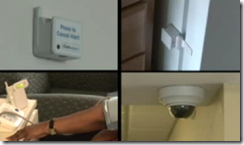
Comments Off on News 3/14/08

Don’t Look Now, Your Loop is Open

March 12, 2008 News Comments Off on Don’t Look Now, Your Loop is Open

Inside Healthcare Computing has graciously agreed to make previous Mr. HIStalk editorials available from its newsletter as a weekly “Best Of” series for HIStalk. This editorial originally appeared in the newsletter in September 2006. Inside Healthcare Computing subscribers receive a new editorial every week in their Electronic Update.

Three babies dead in Indiana, overdosed with the wrong heparin product in a hospital not using bedside barcode verification of meds. Technology failed them, plain and simple.

Ten years ago, nursing and pharmacy systems didn’t talk to each other (pharmacists and nurses didn’t either, but that’s another story.) Finally, everyone agreed that was pretty stupid, so vendors did a little bit of integration to make systems look like they did. The electronic Medication Administration Record (eMAR) was born, although most hospitals stuck with once-a-day printed versions for a several reasons, most of them illogical.

Along came CPOE, usually hung awkwardly off of those same nursing and pharmacy systems. It was (and is) expensive, rarely used, and inefficiently designed for physicians, but it caught the eye of well-intentioned hospital executives who were blissfully unaware that all those CPOE-preventable errors weren’t the ones harming patients anyway. I like to think of it as the Job Security Act for Chief Medical Informatics Officers, who, like the painters assigned to the Golden Gate Bridge, have job security because their work will never be finished.

Even if you buy the ubiquitous vendor buzzword “closed loop,” don’t kid yourself. The dent in harmful medication errors has been slight. It may have even gone up. Why? Because nurses still walk a tightrope without a net, armed only with limited drug knowledge, paper records updated with pens, and a wide-open candy machine of increasingly dangerous drugs … uhhh, I mean decentralized medication distribution cabinets.

We bought the technology least likely to be used, that addresses errors least likely to be harmful, and deployed it in patient care areas least likely to make serious errors in the first place. And while we’re still making payments on that stuff and trying to strong-arm clinicians to use it, we’re still harming patients.

But let’s look on the positive side. Technology is the only hope of improving the situation.

If you’re a vendor with an integrated bedside verification system, get those sales guys on the road because I guarantee you’ll sell a bunch of them in the next year if yours is any good. Guarantee, I said. The Indiana errors will be the pin that pops the CPOE bubble, making even the big-picture types understand that they’ve been chasing the wrong solution.

If you sell add-on tools for electronic MARs or have the expertise to consult in that or any other patient safety area, polish up your shingle. Plenty of organizations need your help.

If your company is one of few selling medication distribution cabinets, get some real informatics people designing improvements instead of those engineers more concerned with servo motors and drawer design instead of intelligent software.

And if you’re Cerner, congratulations! You bought Bridge Medical and their bedside technology just at the right time and announced plans for your own line of medication distribution cabinets. You’ve got a widely installed customer base who wanted closed loop meds. If you don’t mess it up, you could build a huge business on the other half of the loop, the one that isn’t closed. I guarantee that, too.

But for goodness sake, let’s all of us agree not to dawdle. There are already too many parents out there who won’t get to celebrate their baby’s first birthday.

This editorial is copyright-protected by Algonquin Professional Publishing, LLC., publishers of Inside Healthcare Computing. Please do not copy, forward, or reproduce this material without prior permission. To obtain permission or for more information about Inside Healthcare Computing’s reprint policy, please contact the Customer Service Department at 877-690-1871 or go to http://insidehealth.com/ihcwebsite/reprints.html.

Mr. HIStalk’s editorials appear each Thursday morning in the subscribers-only version of Inside Healthcare Computing’s E-News Update. To subscribe, please go to: https://insidehealth.com/ihcwebsite/subscribe.html or call 877-690-1871.

Comments Off on Don’t Look Now, Your Loop is Open

News 3/12/08

March 11, 2008 News 3 Comments

From Buffy V. Slayer: "Re: consultant survey. The items don’t really reflect what’s good and bad about being a consultant other than the hours. Performance expectations are really the killer with each manager trying to meet sales goal and people jockeying for credit on the same account. Those with the sharpest elbows get the credit and those who don’t make the goals are pushed out. The responsiveness of IT support and publications is remarkable and none of the firms I’ve worked for skimped on accommodations or per diem, which is important when you’re exhausted and need a quiet room and something decent to eat. What I liked best is the change to work with really, really smart people, but we had little or no time for education. Very Darwinian." The consultant survey has 73 responses, so jump on if you’d like to see the individual responses with company names (but not those of respondents, of course – add your e-mail address at the end and I’ll remove that and send it out blinded). Least liked aspect so far? New hire training. Sends consultants on engagements unprepared? 34%. Average salary, billable hours, and whether the consultant would recommend working for his or her employer? Fill out the survey and you’ll find out. Obviously the reader who asked me to do this (and who provided the questions) has struck a nerve. Some of the companies sound kind of suck-o to work for, but that’s life.

From Tupac Addae: "Re: MagicJack. Now that I’m working from home with only a cell phone, I dreamed to be able to plug in my old desk phone somewhere other than a money-wasting landline. I’m SO PLEASED to have been clued into MagicJack by Mr. HIStalk’s mention. It arrived a couple of days after purchase, the phone number goes with me wherever I go, it comes with voice mail and even 911 service, and it works with my desk and cordless phones. They’re working on richer features now, like the ability to change your phone number at will. Very, very cool and I appreciate your cluing me in. It’s hard to imagine how landline companies can compete with $20 a year."

From Andy: "Re: GPS. Considering that non-DoD GPS systems are accurate to one meter, I wonder what is actually going on in this article from China?" Link. It says a US surgeon will show visiting Chinese orthopods how he uses GPS to "precisely measure legs and make sure they are even." Either something got lost in translation or it’s our leg that’s being pulled. Why would you use an orbiting satellite to measure a leg instead of a tape measure?

From The PACS Designer: "Re: virtual appliance. What a nice article posted by Shahid Shah. In essence, a virtual appliance can be an ‘enterprise cloud’ that provides numerous services to clients while simplifying the IT maintenance issues. TPD has been posting about clouds as a way of improving service offerings at a lower total cost once implemented. While there may be some backlash from users, it can quickly disappear once the user gets accustomed to this new concept. The virtual appliance can be a win-win for provider and users with a well defined roll-out plan that is gradual in nature and allows users to adjust to a different operating platform."

I had played around and put a Mr. HIStalk entry on LinkedIn just for grins awhile back, which I promptly forgot about until a couple of readers recently found my profile and connected. I’m not sure how much value an anonymous contact with a guy using a profile picture of The Unknown Comic will have for your business or social prospects, but I’ll approve any invitations that come my way if you’re interested. Maybe I’ll need a job one of these days.

Speaking of surveys, please fill out my HIStalk reader survey. Thanks.

I’ll not be posting new entries to the old Blog City site going forward, so if you’re reading on the new one for the first time, make sure to put your e-mail address in the "Subscribe to Updates" box at your upper right so you’ll know when I write something new (and the Brev+IT one just below that if you’d like the weekly e-mail newsletter, which several folks on the survey have said they like).

Jobs: Sales Executive – Workflow Solutions, Systems Analyst – Clinical Applications, Senior PR Copywriter. Gwen will e-mail you openings each week if you sign up. This week’s had Gwen with a Photoshopped leprechaun hat and a caption of "Gwen Darling, Irish Lass."

This is fun: Spencer Hamons, CIO of SLV Regional Medical Center (CO), is doing a Weekly News sort of podcast about healthcare IT. He’s also a professional voice-over guy, so it sounds great. I told him I was really sprawling back and relaxing since his voice is so soothing and so is the piano music he uses in the background (say, you don’t suppose he’s actually playing and talking at the same time?)

Update on the HIMSS Stage 6 EMR hospitals: Meditech has two customers in the 11: Citizens Memorial Healthcare (MO, home of one of my favorite CIOs, Denni McColm) and St. Agnes Healthcare (MD). Now if the Meditech folks could just hook a brother up with a Neil Pappalardo interview …

Deborah Peel, an AARP lobbyist, and an ONCHIT person debate federal privacy legislation in this video.

Another sign that Cerner is scrambling for growth: now it’s in the drug development business, sponsoring research into a dry powder inhaler technology, for which it has an option to become the exclusive licensee. Sounds like they want to become Cardinal Health or McKesson with their med cabinets and life sciences stuff.

Nice award, but an odd quote about a FirstHealth (NC) nurse who an ED award: "His work with McKesson (a health care services company) is just one example. He also built a beautiful chart rack, and his ability to work with multiple people and personalities in the ED has made him a true leader in our department." First thing I thought of: it’s odd to mention his carpentry skills. Second: was Sybil in their ED?

Red Hat announces that Florida Hospital is running Linux, JBoss, and several other technologies.

Patient throughput systems vendor PeriOptimum will partner with Sonitor Technologies for marketing a combined RTLS, being installed at Women’s Hospital (LA).

Washington Post runs an article on PHRs. Nothing new, but mainstream.

This is a little freaky: a sensor necklace detects magnet-implanted pills as they traverse your esophagus, time-stamping the med you took and reminding you of those you missed.

Massachusetts hospitals line up against a privacy bill that would allow people to block access to their medical records, inspect access records, and block their use for marketing. Ostensible reason: nobody will buy EMRs if they can’t just sling PHI everywhere. We’re getting into a touchy area here: if experts say your health could be jeopardized by your not approving records access, is it still your right to opt out? I’m going with yes. That just smacks of what should be an obsolete concept: "we doctors and hospitals are way smarter than you, so we’ll decide no matter what your personal wishes are." Maybe that’s what all the fuss against privacy bills is about: trying not to cede control to patients.

Who knew that Meditech owns a historic horse farm?

An RN turned malpractice attorney describes the "positive force of litigation" by enumerating the huge judgments she’s won against providers. Now she’s advocating expanded training for pharmacy technicians, even though their work is checked by a pharmacist and training doesn’t prevent doctors, RNs, and pharmacists from making similar errors. Quote: "We would all agree that the technician should be be held accountable." In other words, pharmacy technicians make too little money to be worth suing, so with more training, maybe malpractice insurance will become standard and lawsuits against them will become more lucrative. She was a nurse only while working her way through law school, so I’m sure she never made a mistake even without the positive force of litigation.

Speaking of litigation, the patient whose heart was cooked by an overheated cardiac catheter with known problems is awarded $40.1 million. Oddly enough, Providence Everett Medical Center (WA) was awarded $310,000 in the suit, claiming the monitor company damaged their reputation. I always weigh these awards by thinking, "Would I suffer what the litigant did for the amount of the award, and if so, maybe it’s excessive?" In this case, no way.

Kudos to CSC staff in the UK, who donated money for a children’s hospital there.

E-mail me.


Inga’s Update

Parkland Health and Hospital Systems (Dallas) partners with Affiliated Computer Services for a seven-year, $41 million contract to outsource its IT services. ACS will supply infrastructure support including data center operations, network monitoring and management, asset tracking, and help desk support. ACS also won a contract renewal with the Missouri HealthNet Division to provide HER and pharmacy benefits management. That contract could be worth up to $57 million over 10 years.

Children’s Hospital Boston is implementing RFID for inventory management for high cost devices and supplies within the surgical department. The selected product is Mobile Aspects’s iRISupply.

iSoft becomes Sentillion’s first European healthcare channel partner to distribute its SSO, context management and user provisioning solutions.

MediNotes is named the Technology Association of Iowa’s Prometheus Award for top software company in the medium-size category. MediNotes’ CEO and President Donald G. Schoen received the organization’s CEO of the Year award.

Picis announces the availability of a podcast of “Forward-Thinking CIOs Debate Hot Issues Facing Hospitals in 2008.” Panelists include multiple Picis CIO’s including HISsie award winner Judy Middleton of Osler Health Center.

E-mail Inga.
Monday Morning Update 3/10/08

March 8, 2008 News 6 Comments

From Katie Jane: "Re: specialty hospitals. Congress wants to create a bill making insurers equalize physical and mental health benefits, which will in turn increase some government health programs. Since the bill will effectively ban specialty hospitals, they go ahead and assume those hospitals cause higher healthcare costs and the ‘savings’ of closing them will pay for the budget gap. Insanity." Link. Here’s a snip: "Big hospitals say specialty hospitals drive up costs because the doctors who own facilities have an incentive to over treat patients with expensive procedures. Specialty hospital proponents disagree. They counter that if smaller facilities were banned patients would be forced to go to big hospitals, which they say deliver lower-quality and thus costlier care."

From Lazlo Hollyfeld: "Re: EMR. This was reported today in regards to the pending Medicare physician payments cuts (10.6% as of July 1, another 5.4% on of January 1). ‘MGMA members reported that they will suffer further operational damage as a result of payment instability and the projected double-digit reductions to Medicare physician payments … More than two-thirds of respondents described how they will sacrifice or postpone information technology (IT) and equipment investments.’ While it is highly unlikely that these cuts will actually be enacted, even a portion of these cuts could pose a huge problem for the ambulatory HIT market in ’09 and beyond. Arguably the most important thing looming over the market right now." 

From Bignurse: "Re: EMR. I took my family member to a new specialist, where he was handed six sheets of paper and asked to hand-write his demographics, medical conditions, allergies, and medications. Funny, he had just written all of the same information on paper earlier this week in the previous doctor’s office who referred him! Imagine my surprise when I learned that the specialist has one of the top-name, expensive EMRs (overkill in a single-physician office?), but after three years, the patient history is still on paper. In fact, the entire time I was there, the doctor never turned the EMR monitor on. What’s wrong with this picture? It will never get better until patients like my relative walk into a doctor’s office and refuse to fill out another paper form!" Want to bet that it was a hospital that provided that expensive and unused EMR? That Mass BCBS article that Inga quoted says it all: doctors don’t get much EMR benefit, so requiring EMR use for bonus programs doesn’t make sense. You can’t make a small business buy software that doesn’t pay its way no matter how much society might benefit. It would be great if paint stores recorded your custom colors on an electronic personal profile that was shared among them all, allowing you to stroll into any Home Depot or Sherwin Williams and have your records immediately available, but that’s not happening for exactly the same reasons. Unless enough customers demand it, of course.

From TenaciousD: "Re: Stanford and Legacy. I heard that the Epic Stanford project is running at $180M for total costs. I also heard that Epic is telling potential clients (specifically an academic in the northeast) that Stanford is their beta for anesthesia. I will be curious how the implementation delays will affect Epic delivering anesthesia. Regarding Legacy, the article said that they expect Epic to cost about $10M over the next 3-4 years. That is the biggest Bull SH**. I know for a fact they told the CIO straight up it would cost $200M to replace Cerner and implement across all facilities." I wondered if Epic would bother with a $10 million deal. Wouldn’t it be great, knowing that software has zero incremental cost for a new customer,to still turn your nose up at a customer who only has $10 million to spend?

From Janie Lane: "Re: Midland Memorial’s EMR Stage 6. Somebody needs to talk about this when talking about the Epics of the world, where customers drop $10 to $50 million when OpenVista could do the job at a fraction of the price. If there were enough folks who lined up behind VistA to move it forward as a true open source project, it would be the default system of choice." Note the list of 11 Stage 6 hospitals and the conspicuous absence of nearly all of those big-spending hospitals. All the poster children academic medical centers haven’t made the cut, but 74-bed Citizens Memorial Hospital and Denni McColm have. We’re worshiping the wrong HIT role models. It’s kind of like translational medicine — choose a vendor for results achieved, not far-reaching vision. If you’re a CIO, you’ll be long fired before that vision ever ships.

From Bodie: "Re: Park Nicollet. They’re going from GE to Epic. It will take place over a couple of years, but it’s a done deal. They are running LastWord. Perhaps they figured they might as well take the pain once rather than moving to Centricity."

From Inside Outsider: "Did you catch any of the news following Apple’s announcement of their Software Development Kit for the iPhone yesterday? Looks like they’re going to release a really slick SDK that is easy to use and allows for rapid development. One of the companies that received the SDK early was Epocrates, which created a drug lookup app using the SDK and SQLite. They created it in less than 2 weeks. It will be  interesting to see if the medical industry jumps on this new platform." I’m betting yes. Never underestimate Apple’s ability to create an entirely new market by doing the opposite of what most tech companies do: giving geeky stuff mass appeal and style while hiding the nuts and bolts. I wish they’d build clinical systems. Mark it down: iPhone apps will be everywhere at HIMSS09. Here’s a link to the Epocrates story.

From Jack Ripper: "Re: your 2/18 mention of MagicJack. Perhaps you should refrain from endorsing products. I purchased it and still haven’t seen it and there is no support information." I wouldn’t say I endorsed the VoIP phone gadget (since I haven’t used it)  but I did say it looked cool. I’d give it a little more time, then contact your credit card company and dispute the charge. I’ve gotten my money back every time I’ve done that. And if you ever receive it, it just won a PC Magazine Editor’s Choice award, so I wasn’t the only one that liked it. 

From Steve-O: "Re: Brailer. Believe me, he’s smug every single day."

From CPR CIA: "Re: QuadraMed. Signed Quadramed as a sponsor, huh? I hope that you stay as open / honest about the state of CPR going forward as you were before taking their cash." No problem there. I liked CPR the last time I saw it years ago, but it was a train wreck even before Misys got its fumbling fingers on it. The years of neglect haven’t been kind, so let’s hope QD is up to the challenge. It does have superb user design and strong physician support. QuadraMed at least got it off its oddball database and onto Cache’. The offshoring decision is a gamble, but QuadraMed has some urgency in getting the job done and throwing low-cost Indians into the fray may provide the troop surge needed to make CPR sellable. Upgrading Affinity users is important, but if CPR’s big academic medical center users feel neglected, they’ll bail, so QuadraMed will need to develop an ivory tower worship competency to mollify them. As everyone knows, the biggest pain-in-the-ass IT customers are (1) academic medical centers, followed by (2) children’s hospitals, both for the same reason: they are irrationally convinced that their bizarrely inefficient and sometimes safety-endangering practices are better than everyone else’s. So, you have to hack your application to shut them up even though every other customer uses it just fine.

From Kate Bradley: "Re: consultants. Quite a few consultants read HIStalk. Would you consider running a survey of them to see what it’s like working for their current or previous employers? It’s sometimes tough to find out the nitty gritty from people already working there." I’m a sucker for taking on more work when it sounds fun. If you’re a consultant, please take my two-minute survey about your current and previous employers and I’ll e-mail you the survey results.

We spring forward tonight. Good luck to you IT folks on call.

Kleiner Perkins Caulfield & Byers creates the $100 million iFund to invest in companies developing high-impact ideas for Apple’s iPhone and iPod touch. Apple will be involved as well.

Cerner says KLAS has ranked Millennium as #1 in overall value proposition scores for CPOE and #1 in "deep" physician CPOE usage. Also from KLAS: 100% of Cerner’s remote hosting clients recommend that option.

Jobs: Senior PR Account Executive, Siemens Soarian Consultant, Network Analyst, Senior Business Analyst.

Privacy warrior Deborah Peel has an opinion letter in the Atlanta newspaper. Excerpts: "Most Americans think HIPAA protects their health data. Wrong. Those Americans should read the fine print issued earlier in this decade by rule makers who, reversing the intent of Congress, eliminated the right of patient consent over how their data is used for treatment, payment or health care operations … The foremost beneficiaries of widespread availability of health data will not be patients. It will be employers who will use that data in helping to determine hiring. It may be credit firms. It will be the data-mining firms that will use that data to push their wares on consumers." What I would do if I were her: hire a researcher to reference the source of every claim she makes. She’s a doc appealing to a medical and technical audience, so it would be nice to see the same factual rigor that you might expect in a journal article. The ‘can you prove that?’ questions are distracting from her message.

Article tidbit: MD Anderson used iRise visualization software to design its homegrown EMR, claiming it cut development time by half.

E-mail me.

Inga’s Update

Go-live for Cerner Millennium at Barts and the London NHS Trust is rumored to be pushed back again due to supposedly outstanding issues with the software. The trust has been testing the product since August 2007.

The Greater Rochester RHIO launches online sharing services enabling medical offices to access patients’ lab reports, radiology results, and medication history. Patients can’t view their own information (yet?) but can request an audit to see who has accessed their record.

From Political Pundit: "Re: Beacon Survey. I like it. Execs are torn over whether to vote for the person who will subsidize their field of industry or the person who will exchange fewer personal liberties for the soup kitchen of the welfare state. Maybe the question should have been: which candidate do you think will bully for the most taxpayer dollars to be thrown at HIT projects?"

Check out Neil Versel’s podcast interview with Jonathan Bush. I found it both informative and fun. I love how Jonathan rambles back and forth between the serious and the insane. He also mentions Mr. H and me at the start, which of course made me smile.

E-mail Inga.

Shahid Shah on Using Virtual Machines for Easy Open Source Deployment

Shahid Shad is the CEO of Netspective and writes The Healthcare IT Guy.

The open source movement in healthcare technology is growing by leaps and bounds from where it was only five years ago. However, open source software is often difficult to install and get up running, so "trying it out" is not so trivial. I know many CIOs and senior executives who would love to try out open source, but the knowledge required causes IT staff to push back. Most open source software today needs web servers, application servers, database servers, etc. all working in tandem, just to conduct a trial. On the commercial side, things are a little better, but still complicated.

Given how hard it is to install open source solutions, I strongly suggest that the use of virtual machine software like VMware, which is now free for many licensing options, would make it significantly easier for customers to try out software. Other options like Microsoft’s Virtual PC 2007, which is also free, might also be beneficial.

A virtual machine (VM) engine is a piece of software technology that dates back from the mainframe era. It basically allows multiple logical operating systems (a "virtual machine") to operate on a single physical machine. Assuming you have enough memory and processor power, you could have a Linux or Windows "host computer" that would allow multiple Windows 95, 98, NT, XP, Linux, etc "client virtual machines" to run as separate windows at the same time. On my workstation, I often run several virtual machines at the same time. The technology is stable, almost ubiquitous, and very slick.

For almost a decade, I’ve been advising my clients, most of which develop software for a living, to use virtual machines to help improve quality, test multiple operating systems on a single machine, produce "snapshots" of an operating environment for installations and training, and many other uses. I also started suggesting as early as a few years ago that software vendors should create a "virtual machine image" of a system that has their software, database, network, etc. all pre-installed and pre-configured.

VMware has a free version that can take a machine image and launch it on any modern computer. This bundling of an operating system with a pre-configured, special-purpose application is called a "virtual appliance". Cute name, but virtual appliances take literally minutes to run (it usually takes longer to download them than to actually run them). In a virtual appliance, there’s no installation step. You just turn it on and you’re ready to run the software immediately.

For Windows-based offerings, there might be licensing issues from Microsoft (a vendor can’t just create a virtual machine client image with Windows without licensing it appropriately). However, for any software that runs on Linux, that’s not a problem – just bundle the operating system fully configured to run your software along with whatever else is needed and give your customer a "single click" launch and test capability.

The folks from Medsphere, VISTA, ClearHealth, and other open source groups should take this advice. The virtual machine client model forgiving a trial version would change the trial deployment model dramatically and give you leg up on your competition. You could offer a "five minute" install regardless of how complex your software is.

There are already hundreds of other virtual appliances out there in the broad non-healthcare market. It’s time for the healthcare IT sector to create its own virtual appliances to ease the management and maintenance burden on already tired staff.

News 3/7/08

March 6, 2008 News 5 Comments

From Caryoutsider: "Re: Allscripts. What’s going on? Stock keeps going down, down, down." Shares closed at $9.82 today, dropping the market cap to $553 million. You voted Allscripts Most Likely to Be Acquired in the HISsies, maybe showing some psychic ability if the trend continues (although I’d bet they would go private first). The PE’s still at 31, so it’s not necessarily cheap even at that low price. It was well over $25 a share in November. The old-line PM/EMR companies are getting pounded by eClinicalWorks and others like them (cheap and fast to implement) and Stark hasn’t had the impact everyone expected (because free isn’t cheap enough if a doctor doesn’t want an EMR), so despite lots of interesting ideas and technologies and great leadership, they’re playing on someone else’s home field.

From Nasty Parts: "Re: Allscripts. I’m hearing a lot of news from a variety of sources regarding a potential acquisition of the Misys Ambulatory division by Allscripts. I’ve heard it from different high level sources which leads me to believe there is something afoot. Of course, with Allscripts stock under $10/share, I’d think *they* would me an attractive target right now." I heard that before, but it hasn’t panned out yet. Allscripts needs to get its own house in order before buying the fixer-upper next door. Misys seems happy to sell relabeled iMedica, so I’m not sure they’re looking for new worlds to conquer either. I can’t what to hear what eCW’s Girish Kumar has to say when I talk to him next week given how accurate his predictions two years ago were.

From Greg Tourniquet: "Re: CIS failures. AMIA keeps talking about the value of publishing CIS failures and lessons learned. There is a formal initiative that we can look forward to: A group of battle-scarred CMIOs is writing a book; they recently put out a request on their listserv for ‘tales from the trenches.’ This was the request: ‘We are going to share our multidisciplinary IT stories in a book called ‘Gain Wisdom From Failure – Lessons from HIT Projects that Missed their Marks’. I will ask the CMIO leading this effort if he wants input from our peeps." That’s what the industry needs. That plus an assessment tool that I’ve advocated previously: a readiness checklist that would tell a hospital how high it should set its sights, i.e. if the culture and change management capability is primitive, don’t run off and buy a $50 million clinical system – stick with ancillary department task automation, data analysis, and integration and call it a job well done. The money wasted by the hospital industry on ineffective IT implementations is embarrassing. It’s not the vendors’ fault – nobody made them buy – but they consistently underestimate the challenge despite ample available evidence. I’d buy that book.

From Mr. Underhill: "Re: discussion comments. I truly enjoy HIStalk. I don’t think there’s anything like in healthcare IT and your numbers and popularity just seem to keep climbing. One interesting observation, and you might agree, is that for all the site traffic, news, and rumours, it is predominantly you keeping us informed. What I’m saying is that with all that traffic there seem to be very few comments made in the discussion area.  It seems that so many people use it as a one-way communication tool. I’m as guilty as anybody, as I can’t wait to read the latest edition when it arrives." That used to bug me, but I realize I’m the same way. Most of the time, I wouldn’t want to interact either. I’d just want a quick read, summarized by someone who knows what’s important, with a little humor and rumor to keep it interesting. I’m happy to get comments, but I don’t count on them. Inga and I are flabbergasted at the number and quality of readers we have and we take our responsibility seriously. It’s a lot harder than it looks, but a lot more fun, too. And yes, the visits are off the charts after HIMSS, I’m happy to say (thank you, Fake Ingas and sponsors).

From Mrs. Peele: "Re: ROI. I noticed the student looking for help with an ROI on an EMR. The HIMSS book, Medical Informatics: An executive primer, has a good intro to the technique for an ambulatory EHR in chapter 6." Thanks for that.

From The PACS Designer: "Re: Jott. TPD has found another new web-based tool that may be of value to mobile and other system users. It’s called Jott and allows users to record voice messages that can be converted to text much like HIStalk sponsor Dragon Naturally Speaking. Jott converts your voice into e-mails, text messages, reminders, lists, and appointments." Link.

My annual reader survey is here if you’d care to opine.

I’m a huge fan of Snag-It, which captures screen shots but does about a zillion other things for next to nothing. Their newsletter has an article on its use in radiology at Cincinnati Children’s, where the rads use it to capture PACS images for PowerPoint and teaching files. I’ve only run across a handful of life-changing computer applications and Snag-It is definitely one of them (non-profits get a discount, by the way, and I’m not a compensated endorser since I bought my copy like everyone else).

The Healthcare IT Transition guys report that the HISsies cartoon has been downloaded over 1,400 times. Maybe next time we’ll do a reality film a la Blair Witch Project, featuring some hospital people hopelessly lost in the HIMSS exhibit hall and stalked by a salesperson.

Speaking of the HITTGers, they videoed a Webinar they put on last fall that addressed "surprise" ROI that came about when implementing systems for patient safety. Per Marty, "We did a study of the literature and found scads of examples of HIT systems that paid for themselves. We only looked at provider-reported stories. If it even smelled like a vendor PR fish was hiding under the paper, we pitched it." Marty’s offering our grad student Jerry Rivers a peek, so Jerry, e-mail Marty while he’s feeling educationally benevolent.

Shares in athenahealth nosedive after the company announces Q4 numbers: revenue up 35%, EPS $0.06 vs. -$0.58,  beating analysts’ estimates but not their expectations. The stock finished down 22.2% today. Ouch.

I always like the objective analysis of Vince Kuraitis, so I recommend his comparison between Google Health and HealthVault.

Joe Conn of Modern Healthcare writes about the Cerner HIMSS pullout, confirming from HIMSS that Cerner wanted to run what HIMSS CEO Steve Lieber admits would have been an "innovative" education program, but one he denied nonetheless because HIMSS policy doesn’t allow vendors to hold events unless they exhibit. I know what Cerner was planning and it’s a darned shame that HIMSS is so terrified of losing its boat show cash cow that it won’t allow education as an alternative (check the schedule: you can go all day long, yet still only attend five hours or so of actual education because that interferes with forced trinket-harvesting and tire-kicking). HIMSS locks down the entire Convention Center ground zero – every meeting room in every hotel – using its Exhibitor Point system (warning: PDF) to ensure that financial homage is paid. It’s entirely non-coincidental that there are 30 education sessions going at once, then suddenly a big block of empty time that compels you to Neon Gulch. At least it keeps the dues cheap.

Speaking of bad HIMSS decisions, how about that "Chicago next April" idea? I checked weather records for April 4, the opening day of the conference next year, at the 8 a.m. opening session time: 2007, 31 degrees and snow; 2006, 39 degrees and snow; 2005, 30 degrees and no snow; 2004, 23 degrees and no snow. I’m not sure who loves Chicago enough to look forward to that, but I suspect they already live in Wisconsin or Minnesota (or work in the Chicago headquarters of HIMSS). Coat check girls can’t wait and neither can exhibitors, who hate to see a sunny, warm day because people don’t hang around those mission-critical booths for hours at a time (say, you don’t suppose that HIMSS would intentionally … no, surely not).

I’m with Cerner on this one, but I still like the potshot Todd Cozzens of Picis took in Joe’s article, speculating the same as I did earlier: "To me, it’s a sign that their growth in the U.S. market has tapped out; they don’t see a lot of green-field hospitals in the U.S. The fact that Neal is not being there and being in Europe means he’s run out of runway here." I think that’s most likely true, still another reason to avoid selling your soul to Wall Street. It’s tough to run an R&D intensive business that sells mostly to non-profits and still keep the money guys salivating.

Cerner will distribute cancer care guidelines from the National Comprehensive Cancer Network.

RemoteScan offers TWAIN-redirection software that allows scanning into a Citrix or WTS application.

David Brailer’s private equity has quietly invested $100 million in healthcare companies, but says he’s smarter than everyone else and won’t share details. He’s bringing in more state pension funds as investors. He’s sounding kind of smug these days.

A New Zealand health board gives up trying to recover vital SAN backup data lost in an unspecified incident last year.

Larry Stofko, CIO of St. Joseph Health System (CA), whose wife is fighting cancer, provides a WSJ opinion on PHRs.

That made me think of something someone told me once: why don’t patient care systems store PHI in a database that requires an encrypted patient ID key to access? In other words, nothing in the database identifies the patient except a gibberish key that can be unlocked only by the application’s front end. If you don’t store identified data, you can’t lose it. Today’s systems were designed for access and not security, of course, but it doesn’t seem that hard.

Midland Memorial Hospital (TX) hits HIMSS Analytics EHR Stage 6 on Medsphere OpenVista, one of only nine in the US. Like I’ve always said, it’s not what you have, but how you use it. Dozens of millions vs. free – which is the bigger risk?

A private equity firm will buy Tunstall, a UK telehealth provider that’s a member of the Continua Health Alliance, for just over $1 billion.

CompuGroup buys Fliegel Data, a German HIS vendor.

Axellis acquires three medical software vendors in oncology and cardiology: Innocure, Bluescope Medical Technologies, and Mailling Wright Products. Strangely enough, Axellis doesn’t even have a web site yet.

Bizarre: the family of a 20-year-old model who died of a drug overdose in the apartment of her 40-year-old psychologist and lover is suing him. He’s already been charged with manslaughter in her death, which was caused by her taking 100 times the normal dose of oxycodone. The psychologist, who specializes in treating drug abusers, was also charged with oxycodone trafficking and using other doctors’ prescription pads to obtain drugs since psychologists can’t usually prescribe.

E-mail me


Housekeeping and Sponsor Updates

Bon Secours Health Systems (MD) attributes EnovateIT’s mobile solutions for helping improve patient safety across several of its hospitals.

Jobs: Sales Executive – GE Healthcare, Healthcare Technology Senior Specialist – American College of Cardiology, System Director of IS – Manatee Memorial Hospital, Epic Consultants – Vitalize Consulting Solutions. Those who sign up for weekly job alerts hear from the ab-fab Gwen, who writes a fun letter with each one.

Thanks to the companies that sponsor HIStalk. Please click their ads, consider them if you’re in a buying mood, and tell them you appreciate it. I know some of them have a real challenge getting their corporate bean-counters to loosen the financial chastity belt to send money off to some anonymous guy’s PayPal account, so give them credit for being cool enough to try. Some are large, some are small, all choose to support HIStalk because of you.


Inga’s Update

Prior to HIMSS, I mentioned Beacon Partners was conducting a poll at HIMSS to determine which presidential candidate healthcare execs thought would best represent healthcare. Over 600 people participated in the survey and the majority indicated Hillary Clinton would be the biggest advocate for healthcare IT and would have the most impact on empowering providers to deliver the best possible healthcare through the use of healthcare IT. However, Clinton came in third after McCain and Obama when these same participants were asked which candidate they would vote for. While the Beacon folks said they found the results “fascinating,” my take is that even healthcare execs see the presidential race to be about more than just healthcare. (Kind of reminds me of the recent McKesson/Quadramed conversations over how you can lose even if you have a better product.)

I registered for all sorts of exciting prizes last week at HIMSS (iPods, Wii, etc.) and am now getting a bunch of e-mails back from those vendors. Unfortunately I didn’t win anything yet, but have learned a few things NOT to do when sending emails. For example, I got this email today: “We met at the HIMSS event in Orlando last week. You had stopped by [company’s] booth and we spoke. We were discussing your current IT environment and any current or planned applications development initiatives coming up in 2008.” Well, let it suffice to say that I didn’t mention HIStalk’s (or anyone else’s) current IT environment to this guy. Why send out a spamming e-mail that makes you and your company look amateurish? A simple, “thanks for stopping by” would be more appropriate.

BC/BS of Massachusetts announces physicians won’t be required to install EMRs in order to participate in its bonus programs, though health systems will be required to install CPOE by 2012. The insurer has determined that the financial benefits of an office-based EMR are not worth the costs, which usually take five to six years to recoup. CPOE has been shown to provide payback in about 26 months. Additionally, a recent study found that CPOE could prevent 55,000 medication errors in Massachusetts and provide annual savings of $170 million ($2.7 million per hospital.) It will be interesting to see if other insurers follow their lead. The study results also suggest physicians will continue to look for outside funding for EMR purchases since the ROI provides them with limited financial benefit.

E-mail Inga.
If Clinical Systems Were The Space Shuttle, Would We Keep Launching Despite Frequent Crashes?

March 5, 2008 News Comments Off on If Clinical Systems Were The Space Shuttle, Would We Keep Launching Despite Frequent Crashes?

Inside Healthcare Computing has graciously agreed to make previous Mr. HIStalk editorials available from its newsletter as a weekly “Best Of” series for HIStalk. This editorial originally appeared in the newsletter in March 2006. Inside Healthcare Computing subscribers receive a new editorial every week in their Electronic Update.

Michigan’s Trinity Health has put their seemingly successful $315 million clinical system implementation on hold. Their announced reason: they are fine-tuning their plan to drive clinical improvements and implement evidence-based medicine.

The industry has been hard-selling “clinical transformation” for years. Hospitals repeat the mantra dutifully (although none ever seem to declare themselves transformed – like vendors’ claims of integration, it’s always just around the corner.) Post-implementation hospitals aren’t necessarily improved clinically or financially. The only predictable transformation is that hospital dollars unfailingly get transformed into vendor dollars.

Who do you blame? Surely not all vendors and hospitals are incompetent. Is clinical transformation (assuming such a thing exists) simply impossible to manage successfully? Maybe the best analogy is the space shuttle.

The space shuttle orbiter is supposedly the most complex machine ever built despite its now-antiquated technology (there’s a parallel right there). It’s not just a flying machine – it’s an industry of pork barrel politics, fat cat contractors, jobs, and national pride. Somewhere in the mix might be a smidgen of science that bears little resemblance to the original promise of an inexpensive fleet self-funded through technology commercialization (Tang, anyone?) We walked on the moon but settled for a scientifically irrelevant low-orbit taxi.

Like the space shuttle, clinical system projects rarely unfold as optimistically planned. They require painstaking planning, unerring execution, outstanding change management, and unwavering focus. None of these are the long suit of the typical healthcare organization. Instead of a handful of astronauts, thousands of busy employees have to be convinced to change their comfortable routine. When the going gets tough, the formerly committed VPs disappear and leave the battle to the IT techies.

Sometimes the project explodes while you watch, like Challenger or Columbia. Even when it doesn’t, interest wanes once the flashy launch is over.

If the shuttle crashed 90% of the time it took off, would we keep launching and irrationally hoping for success? We’d send the engineers back to the drawing board, or maybe even get some new engineers, or ground the program. Or, perhaps we’d just declare the whole thing undoable and settle instead for a high-value subset of the grand plan more within the scope of our capabilities.

Where hospitals are different from the space program is that we don’t learn from the industry’s widespread failures. Hospitals quietly shell out precious millions and unreasonably hope that they’ll find the success that has eluded a long string of predecessors buying the same short list of products. Reality eventually sets in, expectations are lowered, and attention moves on to something else.

Sometimes imaginary victory is declared at HIMSS, proclaimed by ventriloquist vendors whose lips barely move when their customer speaks. One thing’s certain: you’ll seldom hear a discouraging word from consultants, member groups, or rah-rah magazines. They make money from the illusion of mass success.

We need success stories that go beyond a glitzy lift-off. We need someone to actually be transformed, not just implemented, and for those who weren’t to tell us what went wrong. The path to clinical transformation is lined with the smoking debris of earlier missions, each of them offering lessons for those willing to listen.

This editorial is copyright-protected by Algonquin Professional Publishing, LLC., publishers of Inside Healthcare Computing. Please do not copy, forward, or reproduce this material without prior permission. To obtain permission or for more information about Inside Healthcare Computing’s reprint policy, please contact the Customer Service Department at 877-690-1871 or go to http://insidehealth.com/ihcwebsite/reprints.html.

Mr. HIStalk’s editorials appear each Thursday morning in the subscribers-only version of Inside Healthcare Computing’s E-News Update. To subscribe, please go to: https://insidehealth.com/ihcwebsite/subscribe.html or call 877-690-1871.

Comments Off on If Clinical Systems Were The Space Shuttle, Would We Keep Launching Despite Frequent Crashes?

News 3/5/08

March 4, 2008 News 8 Comments

From Bill Shatner’s Ham: "Kaiser said it added 13,000 total members in 2007, which includes an unpublished addition of 20,000 new ‘Charitable Coverage’ members added during the year (the biggest annual increase in that program’s history). Had it not been for the new 20,000 unpaid members, Kaiser would have posted its first annual member loss since 2003. Giving coverage to poor, uninsured people is a noble thing. Using that coverage to hide true membership losses is a new level of dirty." Link.

From Paul Pott: "Re: Stanford. I heard they’ve delayed their Epic go-live over two months and sacked Perot Consulting despite a long-term agreement. Accenture won the job and it will be interesting to see how they handle it. Stanford continues to cut parts of the project out (surgery, barcoding, ED) to see if they can get something live." Unverified, updates welcome.

From Jerry Rivers: "Re: ROI. I’m a grad student and hadn’t heard of you prior to the Ingas thing at HIMSS. I’m hoping you can point me in the right direction. I’m interested in learning about models of ROI for adoption of EMR. Ohio State University Health System posted a paper about their own ROI, but I can’t find anything else like it. Thanks for your beautiful Ingas at the conference." Can anyone help with some citations? I haven’t seen much. Glad you liked the Fake Ingas, although you missed the best one of all (Real Inga).

Listening: The Red Thread. Sadly defunct, but "Wax Museum" makes them immortal in my book.

Vista is a failure in terms of both technology and sales, so does that mean that Windows XP was Microsoft’s last decent OS? I liked Computerworld‘s arguments until they got into that Steve Ballmer "wave your hands over the coffee table" thingie from last year’s HIMSS as the next generation. Still, Microsoft can’t lower the Vista price enough to unload copies because of driver problems, resource hogging, and lack of benefits. Looks like another Windows ME dog.

Palomar Pomerado has a video about its Second Life hospital project.

Legacy Health (OR) bails out of its five-hospital Cerner implementation and goes with Epic. I’m beginning to feel uneasy about Cerner’s prospects. The stock is doing poorly, they’ve laid off staff, projections have been reduced, and the HIMSS booth thing may have had more of a back story (I’ve heard rumblings that they had planned to pull completely out this year). Hospital finances aren’t good, the clinical systems market is surely near saturation, and Cerner’s desperate search for growth in other markets and overseas won’t feed the Wall Street wolves in the near term. Cerner is the industry’s bellwether, so if they have problems, so does everyone else (although being publicly traded makes theirs much worse).I hope they do well, but the signs aren’t good.

Speaking of that, I weigh in tomorrow in Inside Healthcare Computing: Clinical Systems are Cooling Off: What Systems Will Drive the Market Now?

My reader survey is here if you’d like to set HIStalk’s direction. Thanks. Speaking of voting, Cerner’s HIMSS pullout is running 73% "Good Idea" in the reader poll to your right.

A couple of vendors who exhibited at HIMSS say they’ll write something up to describe the experience (cost, traffic, problems, etc.) Your thoughts are welcome, especially if you run the company and can assess value received (I’ll use only de-identified info, of course).

MUSC picks Oacis for its data warehouse.

The New York Times runs a piece (This Blood Test Is Brought to You by …) on the ad-sponsored Practice Fusion EMR, with a screen shot showing an ad. The company selling ads for them says they can get ten cents per view or more, making it possible to keep giving the app away. Trivia: the product is written in Adobe Flex, which sounds interesting. It doesn’t seem to exactly be selling (or not selling) like wildfire with only a couple of hundred docs using it to some unknown degree.

Optical imaging vendor Optio Software will be acquired by financial transaction solutions vendor Bottomline Technologies. You probably saw Optio at HIMSS since they have a big healthcare customer base. Or did.

Meditech will open its Fall River building next month, spending at least $40 million the new home to 500 employees. They’ll stick with the plan of open seating, but the water view is nice.

A nurse violates hospital policy and avoids using her hospital employer’s medication barcoding system, killing a patient with another patient’s medication, this time at Marion General Hospital (IN). I think they’re a Meditech shop and a Most Wired hospital in the rural category.

The president of the Massachusetts Senate is pushing a bill that would set aside $25 million for a statewide medical records system and would make it illegal for drug reps to offer gifts or for physicians to accept them.

Sponsor Updates and Housekeeping

Welcome to surprise new HIStalk Platinum Sponsor QuadraMed. I say "surprise" because it came out of the blue after they did an HIStech Report about their Care-Based Revenue Cycle. I nearly turned them down because not all of the conversation about them here has been positive after their recent offshoring decision (or any other broad vendor, but they’re the first to sponsor) and I wanted to be aboveboard about that with them. I give them credit for signing the standard sponsor agreement that spells out that we’ll keep saying whatever we think and believe, sponsor or not.(Disclaimer: I’ve been an Affinity customer and have nothing bad to say about that experience, but I should disclose that bit of history). Anyway, welcome to QuadraMed. I appreciate their support. I interviewed CEO Keith Hagen two years ago. I also saw him in the breakfast line at the Peabody Orlando last week, but that’s hardly newsworthy since half the industry’s leadership seemed to be waiting for a Beeline Diner table and a $13 omelet that doesn’t come with toast.

Speaking of HIStech Reports, a couple of folks have asked if we’re still doing them post-HIMSS because those fancy reprints we did were the first collateral to run out as attendees grabbed them up. Yes, we will continue to do them. They’re a lot of work, but fun.

To your right: you can sign up for updates when I write something new here or for the weekly Brev+IT e-mail newsletter. You can also Google all five years’ worth of HIStalk for people or company names. And, send me secure rumors via the Rumor Report button.

AT&T is handling a voice and mobile broadband in-building wireless network for Thomas Jefferson University and Hospital (PA).

Those sly dogs at EnovateIT snapped a pic of our little autographed signs we made for the HIMSS booths of sponsors (earning Tammi from AT&T an Inga hug for delivering them all over the hall). Notice the crafty way they worked their own logo and cool cart in the picture. I can’t figure out how everyone and their brother was blatantly shooting video and flash pictures all week and I got busted for taking one non-flash Fake Inga picture. Seems like HIMSS should just drop that policy. It’s not like there are nuclear secrets in there.

HISTalk1

E-mail me.


Inga’s Update

I am in my post-HIMSS frenzy (which is different from my pre-HIMSS/during-HIMSS frenzies). I am in definitely catch-up mode. The swelling in my feet has finally gone away after too much walking in beautiful shoes and too few places to sit down!

Anyway, I have noticed a few comments on some other blogs about HIMSS in general as well as HIStalk and the HISsies. Here are a few of my favorites. Amy Gleason (of Bond Medical, I guess now Medi-Bond) brought a crew to the HIStalk party (wish I had met them because they sound like a fun bunch) and shares some insights on speakers and the convention in general. The handsome Scott Shreeve provided a great summary of Jonathan Bush’s HISsie acceptance speech. He also says the best part of that evening was chatting with Mr. H and me, which is an incredibly nice thing to say given all the interesting folks there.For a very comprehensive overview, check out John Moore’s Chilmark Research site. He touches on booths and vendors and the overall buzz.

In reading the posts the last few days (here and other places) I have determined I must be the only person who kind of liked McKesson’s Vegas-light inspired booth. Yeah, the booth was huge and flashy but, I found it kind of cool. My biggest complaint about it was that it always seemed congested. Either the setup was not conducive to the number of people and demo stations, or, there were too many people like me who walked through it like a short cut to get on the other side of the hall.

The McKesson talk reminds me of a clever nametag I saw the HIStalk party. A lovely lady had on her nametag that she worked for, “Frequently bashed vendor”. She admitted to me she works for McKesson.

There have been some recent posts about one vendor possibly outselling another, with the loser being the one that actually had a better product. Dog of war said he/she thought it was sad situation and that perhaps vendors should invest more in influence peddling. I think the conversation misses the point. My opinion is that most purchases (other than simple commodity items) should include considerations that go beyond determining what product is “best”. Equally if not more important are factors such as company stability, future product plans, integration capabilities, implementation record, management, etc. If functionality were the only consideration, all we would ever need is a demo CD from each company. There are hundreds of examples of companies in this space that have had slick products but have disappeared because of problems in other areas of the company. Organizations need quality salespeople make sure prospects understand the big picture of the company’s offerings. And, that all being said, of course some salespeople are better than others.

From iphone dude: "It was a good show for us. Going through our leads this morning, we had two booths and we didn’t have a lot of repeat visitors between them. The second booth was a last minute strategy placement which worked out – so yes, the second booth definitely was beneficial. [One of our featured products] got a lot of attention. [Competitor] stopped by at least four times, [another competitor] two or three, and I caught [competitor #3] once. The third competitor rep resorted to subterfuge by switching badges, which I figured out the next day when I stopped by their booth and the same person had a different name. Kinda silly. It was really weird, so we started taking pictures of competitors in our booth." One fun aspect of HIMSS is seeing what the competition is doing and comparing their products to yours. Too bad Mr. H and I didn’t have any cool anonymous blogger cocktail parties to crash.

Two cardiologists plead guilty to embezzling about $840K total from the University of Medicine and Dentistry in New Jersey. The pair admitted to taking the money and providing no meaningful services in return except for referring cardiac patients. Both face 10 years in prison and $250K in fines.

From I’m Not Inga: "I was one of the vendors in the Siemens booth STALKER section. You know, back behind the control room, at the end of the aisle, near the private meeting rooms, and in front of the restrooms. We had NUMEROUS Histalk readers that found us for the ‘I’m Not Inga’ buttons. And they really had to work to find us. So thanks for playing along and making this a fun HIMSS deal for us. This was our first time exhibiting and it seemed that when we were discouraged by lack of booth traffic, someone would come up looking for a button." Thanks to the fun Active Data Services folks for making me feel like some sort of superstar. I actually wore the button for awhile until a friend saw it and decided he had to have it.

iMedica announces a new program to equip physicians with a tablet PC loaded with iMedica’s EMR/PM software to test for one week. I think that is a great move. I am sure that other vendors offer try and buys, though perhaps begrudgingly. The fact iMedica is promoting their program is smart. Apparently the sales rep will “train” the doctor how to use the program and then the doctor is on his or her own. If a product is easy to use, then the doctor should be able to figure out how to navigate the application – that is, if the physician actually takes the time and effort to try it out and doesn’t just let it sit around on a back desk. I bet car dealers would say that people who take a car home for a weekend test drive are more likely to buy and I suspect iMedica will find similar results.

E-mail Inga.
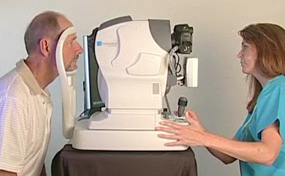
Roper Industries To Acquire CBORD

March 3, 2008 News 1 Comment

 
CBORD Group, a smart card vendor best known in hospitals for its dietary information systems, announced this morning that it will be acquired by industrial products vender Roper Industries, Inc. for $367 million. The company’s healthcare offerings include solutions for nutrition service, food service, room service, kiosk-based ordering, catering, and cashless point-of-sale.

CIO Unplugged – 3/1/08

March 1, 2008 Ed Marx Comments Off on CIO Unplugged – 3/1/08

The views and opinions expressed in this blog are mine personally, and are not necessarily representative of Texas Health Resources or its subsidiaries.

Chief Ironman Officer Update: Leadership Lessons Learned from Champions
By Ed Marx

At the time of this post, I am 30 days out from my Ironman. I am a mix of nerves, enthusiasm and fear. Am I fit enough? Have I trained enough? What if I get injured before race day? What if I miss the swim cutoff time? (I’m a snail swimmer.) What if I flat more than twice? What if…

…And why am I doing this?

Ah yes, now I remember. It’s not about me. This Ironman race is about something much bigger than myself. See 01/02/2008 post.

To facilitate my training and to familiarize myself with the racecourse, I recently attended a “multisport” camp. The camp was run by former professional athletes who have organized many Ironman events. One of them, Paula Newby-Fraser, had won 26 Ironman titles including eight world championships. To this day, Paula has recorded the fastest finish among women. My first day at camp, I ran a warm-up 5K with her and gleaned all the wisdom possible regarding the course, the Ironman and running in general.

After an initial day of a short run, a short bike, and a long swim, we settled down for a hearty dinner. Camp leaders announced the cycling ride groups for the next day, which were formed based upon predicted finish times. I was selected to be in the fastest group led by the #1 ranked woman Ironman in the world. Fear struck me like a bolt of lightning, and I considered putting myself in a slower group. Michellie Jones, Miss #1 Ironman (my assigned group leader), happened to be sitting across from me at dinner. I promptly confessed, “I can probably hold my own at 20mph for five hours, but that’s my max.”

She no doubt heard the fear in my voice, yet still replied, “You’ll be fine with that.”

I didn’t believe her.

She added, “I like to start off slow and finish fast.”

God save me!

Apprehensive about the ride, I woke up three times that night. I wanted to drop to a slower group, and yet I couldn’t shrink from the challenge. Finally, I decided if I got dropped I’d just slow down and wait for the other ride groups to catch up.

That sounded like a reasonable backup plan until my ride group gathered that morning. Of the 10 riders, five were professionals; of the other five — mortals like myself — I was the only virgin Ironman. Talk about a clay blob among marble statues. Their bikes and aerodynamic outfits were three times as costly as mine was, and I was the only soft body amongst hard bodies. This was going to be a long day.

We set off at a blistering 26mph pace. Despite a fitful sleep, I had fairly fresh legs and was able to stay steady for the first 40 miles. In search of hills, we headed off the Ironman course and found some rollers with lengthy inclines. We had already lost two mortals; I was determined not to be the third. I was sixth in the draft line, and I noticed the cyclist in front of me falling off the pace, which meant I was falling off the peloton as well. At first, it was just a couple yards, but that stretched to ten yards, and I knew we were in trouble. We wouldn’t be able to push back up to the pack.

Lesson number one: Be sure the person you are following has the vision and stamina to keep you on the straight and narrow. “Followership” is a critical talent for survival.

The turnaround point for our hill excursion was coming up, and I managed to get back in the line. I understood clearly that the key to my survival was drafting closely, if not right behind the leader, in this case Michellie, Miss #1. I stayed slightly to her left with my front wheel overlapping her rear wheel by an inch or two. I drafted well, and during this stretch, at about 28mph, I was smiling, having the ride of my life. I was drafting behind the world’s best! My legs felt fresh again, and my confidence reawakened. About mile 80, we started to hit a gradual incline. As the last surviving mortal, I slipped to third position, then fourth, and was soon passed by the peloton. Heading up the incline, they stayed steady at 25mph, but I was too far off to draft. I ended up facing the wind resistance alone. Despite increased physical effort and motivation, my speed dropped to 18mph. I was alone in the desert. I could do nothing in my own power to reach them.

Lesson number two: Riding in a pack you can gain 40 percent efficiencies over riding alone. Teams can accomplish more. Pushing and pulling together, a team outperforms the loner every time.

A few miles down the road, I was saved by the refueling vehicle that carried extra drinks and food. As we resumed, I took 2nd position behind Michellie and did not let go. I was smiling again. No more inclines, all flat terrain. The closer together we rode in the peloton, the greater the “eddie” we produced, which helped propel Michellie forward. A truly symbiotic endeavor. As we reached the 90th mile, however, I was riding on empty, and Michellie razzed me for the umpteenth time about inadequate hydration. She made me a concoction out of two of her bottles, and we finished in a flourish. By the time we coasted into the finish lot, I was cracking up. I had just ridden over 100 miles with the Michellie Jones. And this woman led no patsy ride!

Lesson number three: Sometimes it takes sheer grit and hunger, but you can push yourself to do amazing things. Test your boundaries, then break through and grow to the next level. Just do it!

Throughout the camp, someone kept saying, “It’s about performance, baby!” One definition of performance: the efficiency with which something fulfills its intended purpose.

Last year’s trophy looks nice on the shelf. I have a few of my own, including work-related awards. But their beauty is fleeting. Their intended purpose has stagnated. Sitting back and bragging about yesteryear’s accomplishments is fruitless, inefficient. At some point, the past no longer matters. It is about what you’re going to do in the next race. Sponsors aren’t seeking out racers because they were yesterday’s champ or because they’d been doing Ironman for 20 years. They’re searching for the continuous quality, or excellence, of a racer — the guy who keeps pushing himself to perform and improve. The same should hold true in our health care careers.

Lesson number 4: You can coast for only so long in the draft of a trophy, but when you cease pedaling, you will fall over.

I’ll wrap this up with bullets of wisdom gleaned from champions:

· Teamwork

· Followership

· Sheer grit

· Breakthrough

· Performance

· Even gifted leaders need a coach

See you at the finish line!


Ed Marx is senior vice president and CIO at Texas Health Resources in Dallas-Fort Worth, TX. Ed encourages your interaction through this blog. (Use the “add a comment” function at the bottom of each post.) You can also connect with him directly through his profile pages on social networking sites LinkedIn and Facebook, and you can follow him via Twitter – User Name “marxists.”

Comments Off on CIO Unplugged – 3/1/08

Text Ads


RECENT COMMENTS

  1. RE NEJM piece: He shouldn’t future-conditional with “they can retreat, which might mean abdicating medicine’s broad public role, perhaps in…

  2. The sentence was "most people just go to Epic UGM" - that's people going to Epic's annual user conference and…

  3. Merry Christmas and a Happy New Year to the HIStalk crowd. I wish you the joys of the season!

  4. "most people just go to Epic" that's a problem because then EPIC becomes a monopoly in healthcare, if it isn't…

Founding Sponsors


Platinum Sponsors


Gold Sponsors


RSS Webinars

  • An error has occurred, which probably means the feed is down. Try again later.