Recent Articles:

HIStalk Guest Writer: John P. Glaser and The Top 10 Cool Things About Being a CIO

July 19, 2008 News 10 Comments

When Mr. H started making his vacation plans, he determined only an elite group of HIT superstars could fill his shoes. Or, perhaps he concluded only a few people would want to contribute to an obscure blog. In any case, Mr. H asked but a handful of experts to provide guest columns in his absence. Partners HealthCare Systems VP and CIO John Glaser was definitely on his short list.

Mr. H and I were thrilled he agreed to participate because he is a funny guy. And, John’s credentials are certainly pretty stout as well. He is the former IS VP at Brigham and Women’s, was CHIME’s founding chair, and was a past HIMSS president. Additionally, he is a PhD, a HIMSS, CHIME, and American College of Medical Informatics fellow. Plus now a published HIStalk Guest Writer.  Enjoy!

– Inga


I have been a CIO for a really, really long time – over 20 years. And while I wasn’t sure about the role at first, after a while it kind of grew on me.

I was asked – what are the top 10 cool things about being a CIO? There are 10 things that I like but I could only remember 7 (this job does nothing for your memory or intelligence).

You get to go to lots of meetings. I realize that most meetings are pretty boring. But they can hardly be called hard work or dangerous work. All you have to do is be able to sit for long periods of time, avoid dozing off and be able to make up facts should a question come your way.

How hard can this be? You don’t have to actually do anything substantive like write code, support users or write documentation – you just have to show up at the right meeting at the right time and keep your eyes open.

You get to go to lots of conferences and events. In order to “stay on top of the industry,” “develop a valuable network of colleagues” and “engage in meaningful dialogue with vendors and consultants” you have to go to multiple conferences and events. Usually these are held in nice places, give you time to play golf, result in your being fed well and provide you the opportunity to wear a badge with colored ribbons.

Your staff are back at the ranch slaving away while it is snowing outside. You, on the other hand, are advancing the organization’s strategic IT agenda as you toss down a couple of cold ones with industry movers and shakers – pool side.

You get to give lots of presentations. The board wants to know the IT strategy. The organization’s leadership wants to understand that projects for next year. Your staff want to hear about efforts to improve the effectiveness of the IT department. As a result, you will need to give lots of presentations. Presentations give you opportunities to show really cool moving bullets, present graphs that build, play video clips, listen to audio clips and, if you’re really good, leverage a hologram or two.

Don’t worry about substance. That isn’t the point of presentations. Entertainment and high tech wizardry are the point.

You get free publications. To get free industry publications all you have to do is fill out the qualification card that says that you approve every IT decision in the organization and that you have installed every technology ever made and that your organization is going to be engaged in major buying decisions in the next year. You may not know what some of this equipment does. You may not know if you really have this hardware or that operating system installed. And you may not have a clue what the IT purchasing plans are in the year ahead.

This doesn’t matter. The publication doesn’t really care whether your responses are accurate or not. They just want to show advertisers that they have important readers so that they can charge top dollar for a full page ad. Once you get the publications you don’t have to read them other than to scan them to see if there is a picture of someone you know. You should however keep big stacks of these publications in your office. This helps to create the aura that you are well informed – see next section on pronouncements.

You get to issue official pronouncements. Every now and then you are expected to make important decisions. Which vendor should we choose? Should we participate in a RHIO or not? Where should we make budget cuts?

You might be worried about the pressure to make the right decision. Relax. All you have to do is decide. You don’t have to be right or wrong – you just have to decide, announce your decision and deliver that decision with a tone of voice and a body posture that indicates that this decision is well considered.

If you want help in deciding you can use the Magic Eight Ball or Rock-Scissors-Paper. Don’t let the rest of the organization see you do this – it has a way of diminishing the appearance of the decision being well considered.

And if someone points out “That decision you made last year didn’t work out so well. What happened?” All you have to say is, “Overcome by events.”

You get a nice office. Being a CIO generally means that the organization gives you an office in the same area as the other muckety-mucks. This office is usually large, has plush carpeting, is appointed with a big desk and a mini-conference table and has a really big screen to go with your ultra-fast computer. Plus there is free coffee nearby.

You may wonder – why do I need all of this space? And why do I need the space to be this luxurious? You need the luxury so that you can appear important. It is important that you appear important when you make official pronouncements. The key part of the space is to have enough room, on the carpet, to lie down and take a nap. Being a CIO can be tiring.

You get free doo-dads and trinkets. Conference exhibit halls (particularly HIMSS) have dozens of opportunities to stock up on pens, key chains, little flashlights, coffee mugs, note pads, bags and lots of other quality merchandise. Vendors, in an effort to grab your attention, will mail you golf balls, radio controlled cars without the radio controls, umbrellas, kaleidoscopes, back scratchers and shirts. And you get all of this because you are top of the IT heap (and you filled out your qualification card as I instructed above).

You have family presents for all of the major holidays and life events for the rest of your life. You can use the shelves in your spacious office to exhibit your loot. While you have meetings in your office you can invite the attendees to play with the doo-dad of their choice helping you to avoid a conversation that you’d rather not have.

These doo-dads and trinkets show you that, while the rest of the organization thinks you should be shot, your vendors and consultants care enough about you to send you presents.

My CHIME colleagues may not admit it. But the above reasons are the real reasons that we are all glad to be healthcare CIOs.

News 7/18/08

July 17, 2008 News 2 Comments

From Dr. Bob: "Re: The origin of Johns Hopkins name. Oh Inga, spelling Johns Hopkins without the ‘s’ is like spelling Wahington or Pittburgh. :-)) Wikipedia  explains the origin of Johns Hopkins’ name. ‘The peculiar first name of philanthropist Johns Hopkins is the surname of his great-grandmother, Margaret Johns, who married Gerard Hopkins. They named their son Johns Hopkins, and his name was passed on to his grandson, the university’s founder (1795-1873).’ Also, at the end of the Wikipedia entry there is a humorous piece about Mark Twain and John(s) Hopkins.” Ug. Mr. H. hadn’t even closed his suitcase yet and I committed a major sin! I’m blaming it on my post-vacation fuzzy head. I loved this history lesson, though, and Mr. H says the Mark Twain reference is a must read.

From Rosemary Thyme: “Re: Sage Software Restructuring Response. She’s right. Sage Healthcare is not a callous company. Her quote, on the other hand, was callous. More so now that she’s confirmed there wasn’t a misquote. In context or out of context, reporter or no reporter, sensitivity matters in situations like this. It matters to those that are leaving and to those that are left. Sage shouldn’t have sent the SVP of sales in to publicly represent management’s decision to be open about employee lay offs. They reported that the cuts to sales and other "customer facing jobs" were minimal. So why send sales and marketing in to comment on such a strategic corporate action?? We should’ve heard from someone closer to it. Sales should be selling. There are 1400 employees left that are counting on the revenue. Calling it a PR mistake and moving on.” Ms. Thyme is referring to the recent HIStalk comment from Sage sales VP Sharon Howard.
From Dyan Cannon: "King-Harbor Hospital in LA just can’t stay out of trouble. The hospital made headlines in 2007 when it left a dying patient on the ER floor for 45 minutes, going so far as to “mop around her.”  Shortly thereafter, the hospital lost huge amounts of funding and limited to outpatient care.  Now, after talks of trying to breathe new life into the hospital by UC, King-Harbor has fallen under public scrutiny yet again.  Following a company wide background check, 16 employees have been suspended for undisclosed criminal convictions, one of which includes rape.  This, coupled with reports earlier this month that 22 former employees connected with the closure of the hospital are still employed by the county as a result of a ‘computer glitch,’ simply adds mileage to the already lengthy rapsheet they’ve developed.  I’d be curious as to the burnout rate of their Human Resources and Public Relations departments."

From Who Knew: “Re: Medsphere. Medsphere is moving offices to Carlsbad. Downsizing? Upsizing? Better surfing further south?” I asked Medsphere COO Rick Jung and he said the company is indeed packing their bags (no mention of surfboards, however.) “I can confirm Medsphere is indeed moving as the rapid expansion of our Company has required we more than double our physical space. Our new offices are in Carlsbad, CA.”

Medsphere, by the way, also just announced a new partnership with WebReach, Inc. The agreement provides Medsphere with comprehensive support for WebReach’s healthcare messaging integration engine which facilitates interfaces and data exchange within the Open Vista EHR.

GE names John Dineen president and CEO of its $17 billion healthcare division. Dineen moves from GE Transportation where he held a similar role. Dineen is a 22-year GE employee, though this appears to be his first stint in healthcare. Will his healthcare deficiency help or hurt the division?

TeraMedica and Hyland Software team up to create faster physician access to medical images and other types of clinical digital content through healthcare organizations’ existing EMR systems.

PatientKeeper announces its MEDITECH customer base now includes over 200 hospitals.

Mr. H’s parting words to me included a request that readers send us updates on their summer vacations. Creating your own essay entitled “What I Did on My Summer Vacation” is sure to remind you of the first day of school, new clothes, and searching for your locker.

WiFiMed Holdings, the parent company for EncounterPRO Healthcare Resources and CyberMedx Medical Systems, is expanding into the European market. The company signed a Memorandum of Understanding to purchase UK-based Integrated Telecare and Position System Limited.

iMedica announces that Blue Cliff Partner will resell their Patient Relationship Manger and EMR products in Hawaii.

Now that Congress has approved the Medicare eRx incentives, will more physicians jump on the electronic bandwagon? The highest payment rate is 2% in fiscal 2009 and 2010, drops to 1% the next two years and then 0.5% in 2013. Beginning in 2012, payments to physicians will be reduced by 1%, then 1.5% in 2013 and 2% in subsequent years. Are the incentives/penalties adequate to affect change? eRx vendor Allscripts was quick to announce their pleasure over the act.

The 1105 Government Information Group is looking for bands for their third annual GIT Rockin’ Battle of the Bands. Participant bands must consist of at least two members of the government IT community (government and/or vendor executives.) Five bands will be selected to perform at an October 16th event in DC. I told Mr. H he should volunteer to be a judge but he thinks we need our own HIStalk Battle of the Bands with winners getting the chance to perform at HIMSS. Any takers?

McKesson adds another product to its portfolio with the acquisition of EN-Chart Scanning Program. EN-Chart provides computer-assisted facility coding and compliance solutions for the ED and McKesson has already been reselling the product for a couple of years. Though the product can be used stand-alone or integrated with other EDIS products, McKesson obviously favors connections with their own Horizon Emergency Care solution.

Healthvision expands northwards to Canada with the acquisition of MediSolution’s Healthcare Products & Service’s division. The $49 million purchase gives Healthvision a bigger installed base to sell its interoperability solutions, plus provides them an EHR and a variety of clinical solutions to market to new and existing customers. Given the soft RHIO market, a bit of product diversification is probably not a bad idea.

Medical Present Value’s purchase of TeraHealth sounds like a good fit. MPV specializes in providing financial tools for managing payor contracts and ensuring maximum re-imbursements. TeraHealth (which is changing its name to MPV) offers electronic insurance and benefit verification tools to ensure accurate reimbursement on the front end.

With its decision to offer LodgeNet Healthcare’s Interactive Patient Television System, will Brigham and Women’s Hospital feel more like a hotel? No mention of whether or not patients will have an option to use the TV to review their charges and check-out.

HHS slaps Providence Health & Services with a $100,000 fine for "potential" HIPAA violations related to Providence’s loss of electronic backup media and laptop computers with identifiable health information in 2005 and 2006.

Thanks to Dyan Cannon for keeping me up to date on a few odd lawsuits.  First, a woman is suing Lake Chelan Community Hospital in Chelan, WA, alleging that in June 2007, while in the hospital’s inpatient alcohol-treatment program, a nurse fondled her.  My favorite was the Virtua Memorial Hospital surgeon who is being sued by a patient for placing a temporary tattoo on her abdomen following back surgery.  He claims it was to lift her spirits, and that past “recipients” have only had positive responses.  She claims it was sexual misconduct and voyeurism.  I think it’s funny. Thoughts? 

If you are reading this it means that I figured out how to do the posting without crashing the HIStalk servers. Mr. H intends to ignore email for almost two weeks so if you use the green Rumor Report then chances are we won’t see it.  So, email me directly with any dirt, encouragement, love sonnets, etc.

Readers Write 7/17/08

July 16, 2008 Readers Write Comments Off on Readers Write 7/17/08

Samantha Brown on Most Wired

There are some of us who just aren’t filling out these ridiculous surveys anymore. They are nothing more than vanity plates for CIOs. There are a lot of better wired hospitals who are not on the rankings at all.


Spanky on Most Wired

After 10 years, only 556 organizations see any value in responding to the survey.


The PACS Designer’s Open Software Review – OpenMRS
By The PACS Designer

The ROW (rest of world) is starting to get the digital sense when it comes to record management systems for healthcare. Developers have come together to specifically respond to those actively building and managing health systems in the developing world, where AIDS, tuberculosis, and malaria afflict the lives of millions. They are using OpenMRS to achieve a  better outcome for patients. Most of the core developers are from the Regenstrief Institute and Partners in Health.

OpenMRS is an open source medical record system which is focused on developing countries. Open Medical Record System (OpenMRS®) was formed in 2004 as a open source medical record system framework for developing countries. OpenMRS is a multi-institution, nonprofit collaborative led by Regenstrief Institute, Inc. (http://regenstrief.org), a world-renowned leader in medical informatics research, and Partners In Health (http://pih.org), a Boston-based philanthropic organization with a focus on improving the lives of underprivileged people worldwide through health care service and advocacy. It is web-based, written in Java, and is under active development.

There are several layers to the system:

(1) The OpenMRS data model borrows heavily from the Regenstrief model, which has over a 30-year history of proven scalability and is also based on a concept dictionary.

(2) The API (application programming interface) provides a programmatic wrapper around the data model, allowing developers to program against more simplified method calls rather than having to understand the intricacies of the data model.

(3) The Web Application includes web front-ends and modules that extend the core functions — these are the user interfaces and applications themselves built upon the lower levels.

OpenMRS® is a community-developed, open-source, enterprise electronic medical record system framework. Their mission is to foster self-sustaining health information technology implementations in these environments through peer mentorship, proactive collaboration, and a code base that equals or surpasses proprietary equivalents.

As the ROW gains confidence in OpenMRS, you will see more countries joining this effort to digitize their medical records for patients to improve outcomes. OpenMRS has been implemented in several African countries, including South Africa, Kenya, Rwanda, Lesotho, Zimbabwe, Mozambique, Uganda, and Tanzania.

TPD Usefulness Rating:  8.

http://openmrs.org/wiki/OpenMRS


Art Vandelay on Enterprise Architecture

A number of organizations outside of healthcare have been developing "enterprise architectures" (EA) for some time. My first exposure to the concept was when Gartner introduced, "3 Documents for Healthcare IT Planning" in 1998. Outside of healthcare, there have been some success stories, but many more failures. The cases of failure seem to be due to a poor link to business value (ROI). With the growing complexity of our environments, some level of EA is needed. It is more than a passing fad.

In 1998, we looked at EA as basic standards and filling in the cells in the "Zachman Framework." While a great technique, this was fairly academic at the time. There was little guidance on looking at the present while projecting the future. There were also no formal linkages between the cells or a step-by-step process.

Knowing there was still value in this space, we evolved our concept to what we feel is a practical approach to enterprise architecture. To ensure that we keep true to providing business value, we trace the business value expressed in the form of the principles through all our decisions. We’ve defined a process that is iterative. It involves defining the current state and the path to migrate to the future state.

Whatever technique you use, it is important to set the goals and be sure your key stakeholders buy in to your approach. The proper level of input is important. This usually comes in the form of a steering or governance committee. We then start with reviewing our business and technology strategy. Next, we establish our principles for a defined period of time. Examples of our principles include looking an existing vendors for solutions to consolidate our spend to get preferential pricing and support. Another principle is to look to local vendors to help the economics of our area.

We then define standards maps for how we envision the layers in the architecture evolving over time. At its broadest level, think of the different layers involved in hardware, software and application integration. Within each layer, we also define another dimension for support processes, monitoring, change control, problem management, etc. For example, for integration, there is integration of healthcare applications – usually based on HL7. There is also non-healthcare application integration. We’ve chosen to use XML for the data standards layer.

The standards maps are supported by an approved buy list. We attempt to select the items in the buy list based on some no-nonsense requirements. For example, we use Altova’s XML Suite for working with XML. For servers, we’ve picked a major vendor but work with a local reseller to stimulate our local economy.

Most of the work goes into synchronizing the maps of various technology layers. We also establish reusable patterns to provide standardized solution templates across layers. For example, we have patterns for the various 9’s of availability (ex: 99.99%). Other patterns involve how we work with application service providers (ASPs).

With the advent of service-oriented architectures (SOA), the patterns have evolved to include application services. For example, we have defined an application authentication service that works with our single sign-on vendor and directory services. This is referenced by our web applications. Services have brought about the need for a new level of governance and coordinated planning. Fortunately, with the work we’ve done to define some of the EA, we seem to be adequately positioned to work through the challenge.

If you haven’t started to develop an EA, I encourage you to do so. From a purely IS point of view, as our vendors adopt SOA and virtualization and more integration is expected, the level of coordination increases exponentially. It will also start to evolve our support and project delivery models.

Comments Off on Readers Write 7/17/08

CIO Unplugged – 7/15/08

July 15, 2008 Ed Marx Comments Off on CIO Unplugged – 7/15/08

The views and opinions expressed in this blog are mine personally, and are not necessarily representative of Texas Health Resources or its subsidiaries.

Go to Grow
By Ed Marx

One year ago this month, I dropped off my oldest child at Biola University in LA. We arrived a few days early so Brandon and I could attend the student/parent orientations together. During our free time—and in the name of father/son tradition—we squeezed in some workouts and ate bad but tasty food. After we got his belongings organized in his dorm, we huddled for a final prayer and blessing, embraced and shed a man tear or two, and then I left. Sitting in my car in the parking lot, I watched him walk to the final student orientation. During his life at home I had planted seeds: I encouraged him to grow, encouraged his testing of personal boundaries, and discouraged signs of complacency. Brandon had officially begun his journey into the future and to independence, and the results of my optimistic seed planting were soon to blossom.

What happened next surprised me. As I drove down the Pacific Coast Highway, I began to wail. From the depths of my soul, I cried so hard my stomach convulsed. Wheezing in breaths, I mourned my treasured son’s rite of passage. Then my mourning turned to dancing, and I rejoiced for Brandon and his future. I can only imagine what the drivers in the cars next to me must have been thinking of my spectacle.

In the time that has passed, we have seen amazing growth in our son, growth that could not have occurred had he stayed home. Despite an enriching and loving environment, his potential would not be fully realized without a dramatic change and challenge. Part of us would have loved to have him stay, but we knew, and accepted the truth, that he needed to go to grow.

My career has been much the same. I can’t think of a single employer that I have ever wanted to leave. Yet with each one, I knew at some point I’d need to go to grow. Indisputably, my former employers offered ample career growth and challenges, but for exponential and accelerated growth, I had to enroll myself on a journey: break out of my comfort zones, push the envelope of security. Each successive move has pushed me out of my natural bent toward complacency. They’ve shaped and sharpened my abilities. The breadth and depth of divergent experiences have broadened by skill set in an extraordinary fashion. My talents have gained a sharper focus, and my leadership quotient has multiplied. I attribute my growth, personally and professionally, to pushing my boundaries and circumventing the traditional career path.

I believe it is a leader’s imperative to fight complacency in the workplace and encourage others to go to grow. If it benefits our children and ourselves, then we must be willing to encourage subordinates and peers to do the same. Sound inconceivable? Untraditional? Scary? Of course we need to create internal opportunities and have career ladders, something for every kind of employee. Yet, at some point, the best thing for some will be a new environment, a place that challenges them to accelerate to the next level. An exceptional leader is not afraid or insecure to give away their best.

I have helped some of my best go. I have brought them opportunities for external advancements and served as their reference. At each departure, I felt the loss of their friendship, skills, and talents, and I cried in secret; yet I never regretted a single endorsement. I’ve stayed in touch, and what a thrill it is to see how they’ve grown in ways far more enriching than the opportunities I or my employer could have given them. They had to go to grow, to reach their fullest potential.

Are there people in your life and work who need to go to grow? Does complacency have a hold on your organization? Are you selfishly clinging, or do you have a heart to see the best opportunities made available? (Picture the able-bodied forty-year-old still living at home.) If one of your staff has significant potential but circumstances are such that you can’t fully exploit that, do you give that person the freedom to advance elsewhere? Are there other staff members who need you to encourage them to leave for these same reasons but who won’t on their own out of fear?

We have four years left with our teenage daughter, and we will cherish every minute. But we’ll also do our best to prepare her mind to take on challenges and enriching opportunities. In love, we will push her to learn from the past and fail forward and to maximize the present in preparation for the future. Ultimately, the time will come when she will go to grow, just like her brother.

Now it’s your turn. Go to grow!

Ed Marx is senior vice president and CIO at Texas Health Resources in Dallas-Fort Worth, TX. Ed encourages your interaction through this blog. (Use the “add a comment” function at the bottom of each post.) You can also connect with him directly through his profile pages on social networking sites LinkedIn and Facebook, and you can follow him via Twitter – User Name “marxists.”

Comments Off on CIO Unplugged – 7/15/08

News 7/16/08

July 15, 2008 News 7 Comments

From JohnnyReb: "Re: Sparrow Health, Lansing, MI. They have selected Epic as VOC over McKesson Horizon (incumbent) and Cerner. Contracts are in negotiation and no announcement has been made."

From Rudy Russo: "Re: layoffs. A recruiter told me that Essence Health and Purkinje have cut staff in St. Louis."

From Liz Lemon: "Re: Agfa. Rumors about an Agfa acquisition keep pouring in. First, Siemens was said to be interested, then Philips should be the lucky husband-to-be. Let’s see who will end up with the Dutch leftover (Agfa’s shares dropped from >25 Euro to about 4 in three years)." Agfa denies overtures from Philips, although the company brought in an advisor to stop the bleeding after a 77% stock price drop in a year.

From The PACS Designer: "Re: cloud watching. TPD mentioned the cloud solutions of Amazon Web Services in a previous post. If you want to do some cloud watching, Hyperic, Inc. provides complete, easy-to-use monitoring and management software for all types of web applications, whether hosted in the cloud or on premise. They’ve created a website called CloudStatus which will be monitoring the cloud services of Amazon, and then others as they begin providing cloud solutions." Link

From augurPharmacist: "Re: robotics. Robotic dose compounders like IntelliFill from ForHealth Technologies do bring a new level of autoID safety checking to the aseptic compounding process in hospital pharmacies. (See also: Cytocare from Health Robotics. I do not work for or otherwise represent any healthcare IT vendors). However, a potentially even more beneficial development is an extrapolation of this kind of autoID technology to the workflows of the compounding pharmacy technician who spend their shifts working in our pharmacy IV hoods. These newer systems work by having the technician scan bar codes and take digital pictures of all the vials and bags used to compound a particular IV bag or injectable dose. There is now more than one vendor of such systems. Again, these kinds of systems fit with my safety bias for an intra-hospital pharmacy supply chain characterized by workflows where, ‘every time a product changes hands it gets scanned.’" I’m a fan of the Fedex model, too. Hospitals in general aren’t interested, unfortunately.

From Neal’s Pizza Guy: "Re: Doug Krebs. He left Cerner and was replaced by Bruno Slosse, former GM in France, and now the only foreign representative on Neal’s corporate cabinet. As reported months ago by ye olde pizza guy, Don Trigg took over the management of UK operations from wet-behind-the-ears-duck-walking David Sides, who now heads up CERN’s global consulting. Trigg, in his first UK town hall a few months ago, seemed oblivious to everything in the UK. And, good news for UK ASSociates that the wicked witch flew her broom back west to Kansas after mayhem, hapless leadership, and undermining everyone in sight. She won’t be missed and neither will Fujitsu. Word is two of the SHAs in the South want iSoft, while one wants CERN. This can’t bode well for future earnings and pizza deliveries." All unverified, of course, but he’s been right before. Guessed the CERN webmaster saw my mention that Doug’s bio was still on the site … all that’s left now is his name. He’s fading fast.

From Big John Cannon: "Re: Intel’s home health device. They lobbied ATT hard to market it for them and help them with networking, etc. Their roadmap is WiMaxx (Sprint – Intel).  No plans yet to go cellular. Additionally, they are not tied to an ecosystem in homecare, unlike  Philips. For instance, Philips has alliance partnership with Homecare Homebase (home care mobile app) and, in turn, HCHB is working with Philips to integrate equipment with their software apps to pull data across from monitoring equipment. Weave together solution with software app, devices/network, equipment, and GPS for mobile workers. Also – Philips is preferred vendor for VNA. I didn’t find them particularly savvy about market needs, reimbursement models, and other healthcare industry drivers."

Listening: The Alarm, Britpunk. They’re in KCMO Saturday night for you Ass-ociates looking for a release. Live video from 1985. Also: The Distillers.

Evanston Northwestern will acquire Rush North Shore (IL), with part of the deal being that Evanston will spend millions to install an EMR there.

Medsphere and WebReach will jointly offer their respective open source solutions, the OpenVista clinical system and the Mirth integration engine.  Both are highly regarded from what I’ve heard.

What does a 94-bed hospital do with a $540K federal taxpayer gift? Buy Misys Tiger and EMR for its physicians. Really.

It’s time for the vested interest cheerleaders to start making a shaky case that their Most Wired survey means anything. AHA’s CEO comes up with this imaginary figment: "The results of the Most Wired survey confirm that today’s patient also understands the benefits of IT in improving care and improving the overall hospital experience." Other highly object critics weigh in positively, including people from McKesson (which sells systems) and Accenture (which sells services for systems) in the magazine (which sells ads for systems) which did the survey in conjunction with CHIME (a membership organization sponsored by companies that sell systems). Conspicuously absent in the glowing writeup: anything to do with those patients who supposedly now understand the wonderfulness of HIT. They were apparently not surveyed, but some acrobatic statisticians came up with the alleged fact that high satisfaction hospitals use more IT by matching two unrelated surveys without any consideration of cause vs. effect. There’s plenty of good information about IT benefits without such an obvious stretch.

Speaking of Most Wired 2008, here are the wieners.

South Miami Hospital (FL) goes live with CliniComp Essentris Perinatal.

Richard Lang is promoted to VP/CIO of Doylestown Hospital (PA).

The folks at Inside Healthcare Computing have packaged up some of my editorials for them as The Best of Mr. HIStalk, Volume 2. Volume 1 is up there too. Each has a table of contents online, some of which amused me all over again because I hadn’t seen them for awhile: Lay Your Hands on the TV to Be Healed: The Emergence of the Superstar Remote Physician; If Nurse Shortages Require a 50 Percent Labor Reduction, What Technology Will You Install (or De-Install)?; I’ll Have What He’s Having – Why Hospital Software Selection Is More Lemming than Deming; and Surprise! Below-Average Doctors Use EMRs, Too. This isn’t a pitch for me since I’m not getting a cut, but I’m thinking that now that I’m a published author (ahem) I may attract literary groupies named Astrid or Marta with black-framed glasses, soulful eyes, and clingy dark clothes. Book tour!

The long-rumored Baylor IT rumblings finally hit the papers. Their IT manager was making $100K — pretty good, but a little light to own a Bentley (paid for in cash), a racing boat, and a $6,200 a month penthouse apartment. He’s accused of scamming Baylor out of $1.4 million by submitting phony invoices to his accomplice, who happened to be his mother. Neither they nor Baylor were too smart, according to accounts: the paid invoices came from an unregistered corporation that bore the mom’s Social Security number instead of an employer ID and included maintenance charges for non-existent IT assets. In addition, the checks were deposited into the IT guy’s Baylor Health Care Systems Credit Union and his desktop contained the invoice originals in Excel. Doh! West Coast Ron dropped hints here back in early 2006. I know executives there draw mammoth paychecks, so if the allegations turn out to be true, maybe they should work a little harder on the financial oversight thing.

Howard County General Hospital (MD) chooses SanDisk Cruzer Enterprise to manage the security of flash drives.

John Halamka not only is an e-mail whip-cracker, he’s also "effervescent." For the non-scientists, that means "gives off bubbles of gas." I’m sure he knows that and cringed a little, preferring its secondary meaning.

More hospitals, apparently, are dumping Microsoft Exchange for an open source e-mail package at half the cost, most often PostPath.

Good idea: Kaiser nurses wear "don’t interrupt" yellow sashes ("KP MedRite" since they apparently required a branded identity) when working with medications. I found this funny: "When first implemented, the flashy attire caused distractions rather than averted them, as curious staff and patients repeatedly interrupted nurses to ask why they were wearing the unusual apparel."

Bizarre: an Australian doctor loses his license and goes to jail for snapping upskirt photos of women to whom he was administering spinal injections after convincing them that their undergarments had to be removed first.

Hong Kong hospitals implement a new positive patient ID barcoding system, but no improvement in outcomes is expected.

A fun business: a nurse and his programmer business partner write a home care program, sell several copies, and quit their day jobs. Definitive Homecare Solutions, the company they formed to sell CPR+, now has 60 employees (most of them quite young, from the pictures) and $10 million in revenue.

"Here we go again" lawsuit: Tenet Healthcare pays $2 million to settle a lawsuit brought when its West Boca Medical Center ED called four neurosurgeons to treat a stroke patient and none of them would come in.

E-mail me.


Inga’s Update

I am back in action after my little get-away and am still catching up on all the HIT news over the last couple of weeks. It’s hard to absorb almost two weeks of information so forgive me if I repeat something Mr. H already mentioned. (Mr. H already accuses me of not reading his stuff – only my own – so I’ve tried to read the last few posts at least a couple of times.)

I was happy that the Joint Commission’s recent alert was overlooked so that I could make mention of my upcoming book. If you missed the alert, it seems that the Commission has concluded that rude language and hostile behavior among health care professionals threaten patient safety and quality of care. This should help sales of my publication, “Inga’s Guide to Making Nice in Healthcare.” I am also considering offering consulting services to help all those mean healthcare workers curb their condescending attitudes and angry outbursts.

Emageon appears to be hunting for a new owner, having hired investment firms Jefferies and Co. and SunTrust Robinson Humphrey as co-advisors to evaluate its strategic options, including a sale of the company.

UNC-Chapel Hill Campus Health Services has contracted with eClinicalWorks for their EMR/PM solution. UNC will also offer ECW’s patient portal, which I bet will be popular with that demographic.

U.S. News & World Report releases its annual Best Hospitals Honor Roll with John Hopkins, Mayo (Rochester), and UCLA Medical, Cleveland Clinic, and Massachusetts General taking top honors. The publication analyzed data on 5,453 medical centers with only 19 deemed of Honor Roll caliber with excellence in six or more specialties. The report also lists the top institutions in 16 different specialties.

Duke University Health System (#8 on the above list, by the way) is sued by 18 patients for fraud and negligence after the hospital mistakenly washed surgical instruments in elevator hydraulic fluid. Duke admits to the hydraulic fluid mishap and has already settled 60 claims, but denies the tools posed risks to patients.

QuadraMed announces a $10.6 million contract with the Saudi Arabia National Guard Health Affairs for a migration to the new QCPR Cache version, as well as additional licenses and services. The deal help boost first half sales 36% over last year, suggesting that the CPR acquisition was a good move.

Two board members of clinical documentation provider Spheris step down to ensure compliance with regulatory requirements. Joel Ackerman and Tenno Tsai are both with Warbug Pincus, which also has an interest in a potentially competing company. Warbug Pincus holds a 60% stake in Spheris.

The 20-physician Gonzaba Medical Group (TX) selects Sage Healthcare for its EHR/PM solution. The group is upgrading its legacy Intergy PM product.

USA Today reports on the growing “medical home” trend, which is really just a new version of an old model. The concept is based on a primary care physician overseeing a patient’s full medical care – and actually paying them extra for coordinating their care. Medicare is conducting an eight state test to determine if paying primary care physicians as much as $35,000 a year more to treat chronically ill patients will improve care and reduce costs. Patient care “teams” within a practice would be utilized to offset the additional time spent per patient. My guess is that if the government can figure out a fair payment system, it could be win/win for both the physician and patient.

Thomas Jefferson University Hospitals (PA) will implement Wellsoft Corporation’s Emergency Department Information System across its four locations.

Guess I am about to be on my own for a few days, so please drop me a note with any newsworthy items, great commentary, or juicy rumors. I’ll never again be given the keys to the kingdom if nobody reads the blog in Mr. H’s absence.

E-mail Inga.

Monday Morning Update 7/14/08

July 12, 2008 News 8 Comments

From medHead: "Re: databases. I am looking for feedback from those who have reviewed the Multum Lexicon or VantageRx databases. In particular I would like to hear from those who have chosen NOT to license the content. Any feedback as to your decision criteria would be helpful."

From Grizzled Veteran: "Re: athenahealth. Wal-Mart/Target are still rolling out sites with eClinicalWorks on a daily basis. Without seeing the analyst’s report, I can speculate that the relationship athenahealth has with CVS and MinuteClinic for revenue cycle management (announced in the spring) may be what is causing the confusion. CVS needed this because filing pharmacy claims gets a much quicker reimbursement than medical claims and they needed to employ a company to file, follow-up and collect A/R. Medical claims have a diagnosis and procedure code, pharmacy claims do not. All indications are that WM/Target are pleased with eCW."

From HIT consumer: "Re: Eclipsys. Do we know why Eclipsys has let its top two leaders of its Services group (Frank Stearns and Charles Wagner) go in the past few months? Who is exactly running the show now? What impact will this have on their customer service and their earnings?"

From Blue Hen Dave: "Re: DHIN. Delaware Health Information Network got wrapped up in a lot of state budget cutting, but not too badly. It won’t be a major blow, but it does reinforce the need for state-supported programs to constantly communicate value and accomplishments to government."

From augurPharmacist: "Re: heparin errors due to confusion between 10 units/ml and 10,000 units/ml concentrations of vials in routine use. These products are generally purchased as ready-to-use vials or pre-filled syringes. Hospital pharmacies are not preparing these heparin IV flush orders dose by dose. What’s happening is a supply chain breakdown – the wrong vials are getting from the hospital dock and through the pharmacy to the nurses’ stations. In my opinion, we need to expand our concept of bar coding in the intra-hospital pharmacy supply chain according to the idea, ‘each time the product changes hands it gets scanned,’ i.e., scanned into pharmacy inventory, scanned at pick from inventory, scanned at dispense to the unit, scanned upon delivery to the unit and scanned at the bedside. CPOE does reduce certain types of medication errors. but these heparin errors are from faults beyond CPOE in the intra-hospital drug supply chain."

From Kent Winkdale: "Re: Epic in Dubai. A reader comment said the Epic decision was based on TCO. While cost was important, even there, they won with a superior demo and site visit. Scripted demos took over two days for each vendor, with thousands of line items and many scorers. Epic stuck to the script, showed real software, and ran a great site visit with a difficult schedule. Cerner and Eclipsys had last-minute site visit changes, less client enthusiasm, and facilities that didn’t match the vision of University Hospital at DHCC. Epic just blew its competition away."

A Kansas City TV station joins Leapfrog Group in advocating irrelevant technology that wouldn’t have helped the heparin-overdosed babies in Corpus Christi one iota. Leapfrog, which should have known better given its self-proclaimed expertise in technology and patient safety, shrieked "Everybody should buy CPOE" in response, showing a dangerous naivete in confusing drug ordering with drug preparation. Now the Cerner-friendly local TV station chimes in that bedside barcoding like Cerner sells would have prevented the tragedy. Can we please stop publishing consumer-facing drivel from people who have their own agenda, but no clue what they’re talking about? The statement from CHRISTUS CMO Richard Davis clearly states that the pharmacy mixed the heparin incorrectly (yes, I know that pharmacies don’t typically prepare heparin flushes, but I assume the man knows the situation). To reiterate: CPOE would not have helped (the heparin was ordered correctly). Bedside barcoding would not have helped (those systems can’t check the contents of pharmacy-prepared products, only that the label matches). The only technology that could have prevented the error is something like what’s shown below, which I’ll almost guarantee you won’t find in your hospital pharmacy because all the money to pay for it was spent on CPOE instead.

intellifill 

(I should disclaim that I don’t have any connection with ForHealth, which makes one such robotic IV compounding system pictured above, but I am slightly familiar with their product). 

Allow me to editorialize: CPOE catches mistakes, but the vast majority of them would have been caught anyway (transcription errors rarely cause the wrong drug to reach a patient because someone double-checks, i.e. the Swiss cheese effect). Preventing errors is vastly different than preventing patient harm. Most serious patient harm is caused by IV drugs, so if you want to help patients, spend your money on technologies that address the "sharp end of the stick," such as pharmacy automation, bedside barcoding, and smart IV pumps. All of this was explained in Lucien Leape’s seminal work involving medication errors going back to the 1990s, which showed that only 2% of nurse administration mistakes are caught. Hospitals allowed vendors and consultants to convince them that CPOE would solve their problems, apparently missing the point that it has minimal potential to address the main sources of true patient harm, most of which rests with pharmacists and nurses, not doctors.

I like to think that the Wall Street Journal got this idea by reading HIStalk since it’s awfully darned close to what I wrote before their piece appeared, but I’ll never know, of course. Also lost in all the excitement: do we know for sure that CHRISTUS Spohn doesn’t have CPOE already? They’re a Meditech shop and a 2008 HealthGrades Distinguished Hospital for Patient Safety winner (warning: PDF), so they might. I would hope (but doubt) that Leapfrog asked that question before posting its self-serving and self-damaging press release.

I know it’s sophomoric, but the irony of a hospital named Saline is never lost on me. The piece on EHRs also included a quote from a doctor with a generation-jarring first name of Misty, reminding me of a line from a movie that itself is nearly a generation old now: "Real doctors aren’t named Megan."

I mentioned Medicity in my little RHIO comment last time. Someone involved in a Middle East project e-mailed me to say that he’s run into the company there, so I’m speculating that a deal is imminent. That usually means new jobs, which might interest some of the HIT folks being displaced.

I said before that I’d tried Second Life and wasn’t impressed for business purposes, but most of what I disliked has apparently been eliminated by the most-feared competitor you can have: Google. Google Lively has a small web applet, although it’s still in beta and prone to erratic behavior. If you like avatar-driven social networking or just want to keep tabs on what the Googlers are up to, it might be worth a look (I need to try it myself).

Jobs: Business Requirements Director, C++/Windows Software Engineer, Cerner SurgiNet Consultant, Implementation Project Manager.

Another hospital and its Senator want far-flung federal taxpayers to pay for its EMR, although it’s willing to match the money (pork for 50% off?)

I went by the Apple store Saturday afternoon. The line was around the block just to get in the door. I know the iPhone is cool and all, but it’s a PHONE, people. Then to the electronics store, which reported that you can’t buy a Nintendo Wii anywhere because the millions they’re making are grossly insufficient, even though it’s 1 1/2 years old. At  least some folks have discretionary income, apparently.

Healthcare provides several reader-contributed examples of "The Very Worst Uses of Windows." One: "I was in the Massachusetts General Hospital laying in an fMRI tube because I was participating in a psychology study (and getting compensated financially). After a few minutes of inactivity I wondered when things would start happening – they soon extricated me from the tube. Turns out the cause of the problem was that the Siemens machine running Embedded Windows (as proven by a prominently-affixed license sticker) had locked up while I was entubed, and they had to reboot."

Another crappy quarter from GE, but really not bad given the market and Q1 fears. The company turned in a 6% drop in earnings. GE Healthcare, however, had an 11% increase in revenue and profits were up 8%.

Here’s an Intel picture of its newly FDA-approved home health gadget. Pretty cool, I think.

intelhealthguide

Eric Morgan is named CEO of AdvancedMD Software of Salt Lake City, which sells web-based practice management systems. He used to be CEO of StatCom.

A brave customer signs on with Emageon for RadSuite.

New York state is considering accrediting the governance capabilities of RHIOs.

Lawson software’s Q4: revenue up 9%, EPS $0.02 vs. $0.04 after a one-time charge.

Merge Healthcare is excited that it regained Nasdaq compliance when shares rocketed above the $1 minimum, but the cork-popping didn’t last: shares are now at $0.82, down 17% and starting the 30-business-day delisting clock all over again.

E-mail me.

Sage Software Restructuring Response

A magazine article about last week’s layoffs at Sage Software included an odd quote from SVP Sharon Howard. An HIStalk reader’s comment said it seemed callous, while I agreed that it was at least questionable. I received this e-mail, which I’m running in its entirety since Sage employees (both the 235 affected and the remainder) should have the chance to hear her response, even if their feelings about the company aren’t necessarily so warm at the moment.

sharonhoward

Dear Tim and Inga:

Would you please share the following with your vast readership? I do not want my verbal missteps to reflect badly on our team, who sincerely value all our employees and who took great care to handle the restructuring with respect and compassion.

The Sage Software Healthcare executive management team made a conscious decision to be open and honest about the events of this week … both internally and with the media. By choosing to discuss this topic openly — rather than hiding our actions as some in the industry have done — we believe we are remaining faithful to the Sage Principles of Trust and Integrity. Both the executive management and human resources teams worked diligently to ensure that this painful process would be handled with as much dignity and respect as possible.

One of the pitfalls of being completely honest with the media about difficult situations is the chance that quotes will be misunderstood. That was the case with a recent article related to our necessary restructuring.

The writer was completely professional, and I won’t hide behind the usual, “I was misquoted” excuse. However, I do want to explain how a comment that appeared uncaring ended up in print.

In my effort to be completely open about the status of affected employees, I responded to a question without clarifying what the reporter was really asking. The resulting quote conveyed a tone that in no way reflects my personal feelings.

We all have been affected by this issue, and I hope you will accept my apologies for this out-of-context quote that makes us sound disrespectful of the contributions of our former and current employees.

I appreciate that you mentioned that Sage did not seem like a callous company, because we are not. I’d hate to have people think we are because of my misstep.

Kind Regards,
Sharon

News 7/11/08

July 10, 2008 News 14 Comments

From Pills: "Re: Doug Krebs. Tell ‘just asking’ that Doug Krebs left Cerner at the end of May. It was an amicable parting." I hadn’t heard that. His name is gone from the executive list, but his bio page is still up and I saw no announcement. Where did he go?

From Former Sage Employee: "Re: layoffs. My sympathies to the 235 Sage Healthcare employees who’ve lost their jobs this week. If the quote is any indication for how the reduction in force was executed, then it couldn’t have been with much compassion: ”They are all gone now,’ said Sharon Howard, senior vice president of sales and marketing with Sage Software Healthcare. ‘They are on severance. You give them two weeks’ notice, so they’re getting paid.’ As if ‘two weeks notice’ is a suitable exchange for the years of service that these people have given while this company continues to try to find itself through rebrand after rebrand. It’s true that, in this economic downturn, many companies are cutting back. It’s just too bad that these talented individuals weren’t worthy of a better farewell quote from the spokesperson member of the new management team. Best wishes to the 235 in finding a place to contribute elsewhere in our HIT market." Link. I have to admit that my reaction was exactly the same. I’d like to think it was a misquote, but Joe Conn wrote the piece, so I doubt that. I can only hope that something was missing without the context since it did indeed sound rather callous and I wasn’t picking that up from the company until that quote.

From Bill A. Bong: "Re: job change. Subodh Sheth, formerly sales VP of CareCentric, was named VP of Sales with AtStaff, Inc. a provider of patient demand and acuity-based staffing solutions. Not bad for him considering that staffing legislation is moving towards acuity-based staffing and away from ratio-based staffing (re: Illinois, Washington, and Ohio)."

From Buzz Lightyear: "Re: JJWild. As one of the affected JJWild/Perot consultants, I can confirm the layoffs last week. Cut employees got a phone call Monday morning with the bad news; in the afternoon an all-hands call was conducted in which the news was passed on to the remaining employees. Falling profits were blamed for the action. Severance packages were offered. It was specifically mentioned that there would be no press release regarding the layoffs." I can’t confirm, but not for lack of effort: Inga keeps trying, but they haven’t returned her calls. Unverified pending the company’s response, let’s call it.

From Interested HIT Investor: "Re: athenahealth. Interesting analyst report this morning on athena and their retail strategy. Do you know if WM/Target or their retail operators have since selected athena over eClinicalWorks? Figure you are the guy to ask." I haven’t heard, but I have readers who would know. Updates welcome.

From Mary Shelley: "Re: Epic. I heard that someone is using some kind of peer-to-peer alternative to RHIOs that Epic created. Any details?" I know they had developed some kind of information exchange add-on that a couple of hospitals were trying (it only works between Epic sites, I think), but I haven’t heard anything lately. It’s kind of interesting, but only in a town where big Epic customers dominate the market.

Jobs: Implementation Project Manager, Sales Executive – Wireless IT Solutions, Eclipsys Clinical Consultants, Consultant – Meditech Anatomic Pathology. Sign up for weekly job blasts.

Vermont Information Technology Leaders picks its EHR pilot systems: Allscripts HealthMatics, Allscripts TouchWorks, and GE Healthcare Centricity.

Nebraska Health Information Exchange will use Axolotl Elysium for its HIE.

NPfIT is losing its grip on impatient trusts wanting to move ahead with the way-behind project, to the point that trusts are given the green light (and possibly the greenbacks) to buy their own interim systems.

Health Partners (PA) will roll out a provider-health plan portal called AboveHealth. Healthation will do the heavy technology lifting.

Former Meriter Hospital CIO Peter Strombom editorializes about a proposed Wisconsin government interoperability project that just went to RFP for an architecture consultant. His gripe: the cost is estimated at $1.2 billion, it assumes that all hospitals will have EMRs to feed the 3-5 RHIOs it will spawn, and it’s planned as a centralized model with reposed data. He’s advocating a peer-to-peer model running on CCHIT standards, similar to a banking network with the Internet as the dial tone. $1.2 billion with no real funding model other than charging hospitals for access and hoping they’ll pay? I’m with him. My thoughts: the federated model may make more sense technically; a RHIO is a tough-to-run business, not a public good; everybody wants data, but nobody wants to provide theirs; and the high failure rate means proposed ones better do some serious and self-critical homework about financing, governance, and sustainability before spraying grant money over a roomful of panting consultants. And, it’s not likely that top-down mandates will get the job done better than the bubbling-up and eventual interconnectivity of local data exchanges.

So here’s a RHIO question for HIStalk’s readers: now that we’re in generation 2.x of RHIOs, what are the current best practices from a technology and sustainability standpoint? I like the work Medicity has done, I’ve heard good things about CareEntrust and the Indiana group, and I know the Bostoners were leading the charge with some interesting approaches. If you like the banking model, what would it look like in healthcare? Your thoughts are welcome.

Another heparin IV vs. flush error, this time at Christus Spohn Health System (TX), where 17 babies got the frighteningly common 1000x overdose. At least two of them have died, although of uncertain causes. Barcoding is an obvious answer that unfortunately isn’t nearly as effective as you’d think (you can still mix the IV wrong), but I’m beginning to wonder if maybe general care hospitals should dedicate a separate area, staff, and pharmacy for kids. It’s just too easy to miss errors when general staff (especially in pharmacy) are used to handling adult doses, meaning peds overdoses just don’t jump out like they would in a peds hospital. I might be wrong, but I don’t recall that any of these cases occurred in a children’s hospital.

Speaking of the Texas overdoses, here’s a really dumb comment that tries desperately to ride on the PR wave. Leapfrog Group rushes out a statement that quotes CEO Leah Binder as saying, "Incidents like this are the reason why computerized systems for ordering medication in hospitals has been The Leapfrog Group’s number one safety measure that it urges all hospitals to take … If this isn’t a wake up call, I don’t want to know what one really looks like." I’m guessing she doesn’t know what one looks like – according to reports, the heparin was mixed wrong in the pharmacy. None of the recent high-profile incidents had anything to do with physicians or ordering – it was all product delivery, preparation, or administration where what was ordered wasn’t what was administered. Trying to shoehorn in the tired old Leapfrog CPOE mantra is just absurd. And even if it wasn’t so wildly irrelevant, that’s a pretty obnoxious "we told you so" to blast out while the families and hospital employees are hurting. I’m not much of a Leapfrog fan, but this makes me even less so.

Here’s an odd thought I just had. The people at work have no idea that I’m Mr. HIStalk, so I always fight the urge to pipe up and say I know (electronically, anyway) the execs at some of our current or prospective vendors. What if I came out of the closet? Would vendor bigwigs come around to buy me lunch, thereby baffling my co-workers with my newfound popularity? I don’t think any of them read HIStalk, so they’d be like "what’s with him?"

Nancy McDonnell is named IT director at Illinois Valley Community Hospital (IL).

Cardinal Health completes its restructuring into two divisions and may sell its pharmacy management services.

I feel much better about paying big federal taxes knowing I’m helping buy a hot site for a New Hampshire hospital. No problem, it’s not like the country is in the financial toilet or anything.

Lourdes Hospital (KY) will deploy a portal/clinical system from Informatics Corporation of America.

Intel gets FDA approval for its Health Guide in-home chronic condition monitoring system that includes device connectivity, reminders, education content, and communication capabilities.

The European Commission announces interoperability plans that would cover the entire continent. I think they’re the folks behind the Euro.

E-mail me.

Readers Write 7/9/08

July 9, 2008 Readers Write 8 Comments

First-Hand KLAS Experience
By Jazzbo Depew

I work for a vendor. We crush everyone in our KLAS category, but we’re not happy with KLAS.

I firmly believe that they don’t cheat with their scores or comments. Some of their vendors might try really hard to get folks to fill out surveys, but KLAS tracks down every user they can and stops using them if they’ve milked that cow too much.

We are one of those "obscure" companies that gets the good scores. Why is ‘Spence Holmes’ surprised that agile, targeted companies will score better than the generic behemoths? Does it have to be a cheating conspiracy? Could it simply be that software written and supported for a specific speciality or service will make its users happier than those that aren’t? 

If the survey for KLAS is biased, the implication must be that my company has somehow cheated. As the KLAS contact, I assure you that I haven’t. We’re too small and have too little money, believe me.

But I do think KLAS is biased in another way – the opposite of what Holmes implies.

We got a call out of the blue one day saying, "Hey, we’re from KLAS and we’re going to start finding your clients whether you like it or not. You can help by giving us your client list." We waited the three months they told us it would take to get listed. Nothing. So, we called. "Well," they said, "when we see scores that are so out-of-line with the norm, we need more data." Huh? Good or bad? They wouldn’t tell us. 

So, we mentioned the survey to our clients. Eventually, after something like 12 months, we got listed. However, we had a BIG ASTERISK next to our name and were put among the other software vendors as "Component, Updated, or Replacement" software or something like that.

Why?  Because our scores were so good and we are a small specialty company. It’s that simple. They don’t want us listed next to our much larger competitors. Our specialist prospects will be misled to think the "Best in KLAS" folks are better for them than we are. I’ve been fighting with them about this for three years. We even see some well known vendors claiming to have the highest scores in more of the ~30 categories than anyone else – which is patently false – but because they are one of the big fish, they don’t have to pay attention to us.

So, some KLAS stories:

When our scores first came out, I was reading the comments section. One of our clients said something about us that isn’t true, but made us look better than we are ("they won’t hire anyone who hasn’t worked for three years already," when, in fact, we hire college kids every chance we get). I called them up to fix it and once the person on the phone said, "Wait, you’re the vendor?" she all but hung up on me. "We don’t talk to the vendors, period." Given that I wasn’t complaining about the bad comments, I was impressed.

We know our clients really well. When it’s a bad one (we have so few), I know EXACTLY who it is. And I can tell you that the comments are VERY real and are the GOLDMINE for KLAS users. We read them religiously and use them to direct our efforts. I could write you another five pages (I’ll spare you) about my efforts to get KLAS to understand their real value. My impression was that they are a nice little company with a family atmosphere and not the greatest sense of business.

We’ve had a number of clients tell us, "Oh, KLAS called me!" whose names we never provided and who hadn’t contacted KLAS. KLAS reads through web sites, checks out newsletters, and asks customers about other customers.

KLAS specifically reported to us more than once that our "degrees of confidence" were about to slip because they had been getting data from our same customers for almost too long. If some new customers didn’t report, we’d lose a checkmark or two.  Whether this is lip service or not, I’ll never know, but the information was delivered in a manner that I believed. We did what we always do: sent out a customer-wide e-mail saying, "Don’t forget to fill out your KLAS survey. P.S. Give us a good score or we cut off your support." [Kidding about that last part.]

KLAS made a BIG DEAL about needing a proper sample size. Ours represents a FAR greater section of our clients than from the big vendors. In fact, during the first discussion I had with them, it was clear that there was a BIG vendor bias, not the other way around. KLAS can’t have the little guys winning all the awards and driving the hospitals away from the GEs, etc. Plus, what kind of blackmail would I have to use to get KLAS to give us those scores? They hate me there – I call to complain all the time about our lack of recognition. They’d love nothing more than to have us be average.

There is probably a correlation between being publicly traded and scores. This is largely a service industry and being beholden to two masters (shareholders vs. customers) doesn’t work, as we know.


ED Software Seen First-Hand
By Lukas

[From Mr. HIStalk: I removed the vendor’s name from this writeup because I can’t verify the source or its accuracy, but it was claimed to be one of the biggest ones and it’s not Cerner, Epic, Eclipsys, or Siemens.]

During a busy couple of weeks taking parents and going myself to the local ER, I got very close to watching the ED system in action and had the opportunity to talk with my nursing and physician colleagues about what they thought of the [vendor] ED system.

The most common answer was that it was cumbersome and didn’t provide the level of documentation needed in the ED. All of the treatment rooms in the ED were equipped with wall mounted PCs, but in the four visits, no one even turned on the PCs in the treatment rooms.

What’s even more scary, when one of my parents was admitted and the information in the ED was supposedly sent to the inpatient system, the medication records were a mess. Doses were wrong, medications missing, assessments didn’t move to the inpatient system. The nurses were not happy since they are spending time on the floor updating the inpatient system with the correct information.

None of the nurses or physicians in the ED were involved in making the system selection. The nurses on the floor want to go back to manual charting.

This hospital invested heavily in COWs, but they are currently in storage. They are also cumbersome and not much help.

The PACS Designer’s Web Software Review – Adobe Acrobat.com
By The PACS Designer

Adobe has launched a new website called Acrobat.com to provide new collaborative features for Internet users. The features are:

(1) Adobe Buzzword® – online word processor
(2) Adobe® ConnectNow – web meeting platform
(3) Create PDF – convert up to five documents to PDFs for e-mailing
(4) Share – work online with others, sharing large files without  e-mailing
(5) MyFiles – ability to store up to 5 gigabytes of files for sharing with others

You can use Acrobat.com to create and share documents, communicate in real time, and simplify working with others.

The First Real Web-Based Word Processor, Adobe Buzzword®, is a key feature of the new Acrobat.com website. Adobe has promised to keep adding new features into the future as users get more experience using their new site.

Create PDF is something new that Adobe has decided to give us in an online format. Since TPD has been posting about the new PDF/H for healthcare it would be good for HIStalkers to try to record their medical information securely in a PHR on their hard drive or USB drive and then using Acrobat.com Share to e-mail their PHR as a PDF/H. Adobe is permitting up to five different PDFs for free.

Adobe Acrobat.com is a nice addition to the Adobe portfolio of products and should attract new users with its free online word processor, Create PDF capability, and its sharing function.

TPD Usefulness Rating:  9.

http://www.adobe.com/acom/

News 7/9/08

July 8, 2008 News 9 Comments

From Ben Kenobi: "Re: Eclipsys. Eclipsys announced today that their emergency department module is really taking off. Seems like damage control to me as I talk with a lot of sites that are losing their hair and their patience with it. From a clinician’s perspective, I’ve been told it’s unusable. Kudos for CPOE, but the ED is much, much more than that. Is the press release intended to direct attention away from the internal strife reported earlier (Frank Stearns)?" ECLP announced several go-lives, although shrouding them with some fuzzy numbers that sound great without being specific, like doubling the number of live sites and a 70% increase in patients served by the end of 2008. All of that’s truthful, so I don’t see any negatives there. They named Children’s Hospital of Eastern Ontario and Springhill Medical Center as newly live, so I’m sure someone from there could provide a first-person report (it makes sense to talk to those who made it work instead of those who didn’t). Besides, they announce earnings on July 30 and always start paving the road with some positive press right before (and, if history is any indication, they’re sitting on a couple of announcements that will go out along with the numbers). Seems to me that the company’s announcements have gotten a lot more substantive since the current management team came on board.

From Gigi: "Re: Siemens. Siemens reduces 12,600 jobs worldwide, including 1,550 in healthcare, mostly in the U.S. Imaging & IT and Workflow & Solutions Division." Link. An additional 4,150 restructured jobs hits the 17,000 total that was rumored and reported here last week. That’s what stinks about working for a company that a conglomerate buys – if they struggle in one area, they cut all over the place. Times are a little lean, so I don’t imagine this will be the last time a vendor cuts back.

From Murray Slaughter: "Re: TEPR+. They’re a private business, so they can do whatever they want. You did know that the Medical Records Institute is a for-profit company, right?" I did not, actually, and they certainly don’t seem to shout that fact loudly since I can find no mention of it on their site. They have a noble-sounding mission and Executive Director (doesn’t that sound non-profit?) Peter Waegemann is always involved in non-profit activities, so I never dreamed that MRI was just a private business. Admit it: who is surprised by that? HIMSS not only runs a far better conference, they’re a non-profit member organization, of course.

From The PACS Designer: "Re: future CIO role. TPD admires the accomplishments of C. Martin Harris, MD, MBA, CIO of The Cleveland Clinic Foundation who had an interesting mini-interview in the July issue of Health Management Technology magazine. He was asked about how the role of CIO will change and said, ‘I think we’re in a transition period from a physical integrated delivery system to a virtual integrated delivery system that’s capable of serving and meeting the needs of patients and physicians on a regional, national or international basis. The CIO has to develop a skill set that’s consumer/customer oriented versus being operations oriented. These are the new responsibilities that are going to be required of a successful CIO over the next five years.’ On the IT skills of a CIO, he commented, ‘although their IT skills will be very important, understanding the concepts and principals of operations in the current model of healthcare delivery inside the hospital and physician’s office is equally important, as well as learning what it means to a doctor to care for patients when they’re not physically present.’" Link.

From Jim Turnbull: "Re: $1,000 reward. Well, what can I say. You clearly know a lot more about HIS stuff than I do … but not very much about the world of petty thieves and their friends. Yes, Mr. Talk, with all due respect … $1,000 is more than enough for these people to turn in their ‘buddies’. I can’t say enough about the guidance we received from the local sheriff, the fraud folks at USPS, and the FBI. In addition, several of my good CIO friends in the industry were incredibly supportive in terms of sharing the lessons learned from their own experiences in similar situations." Jim’s the CIO at University of Utah Hospitals and Clinics, although I still think of him at Children’s Denver. Glad to hear it, but I still would have put a little more cash on the line just in case $1,000 wasn’t tempting enough to risk arrest. I still think the university should pay and drop charges since they promised "no questions asked" for the return of the tapes and no harm was done (other than the courier got fired and had his car window broken). The idiots could have just trashed the tape, in which case someone smarter might have found it, or they could have chucked it in a river, requiring the university to fret and apologize for years since its disposition would have been unknown.

From Spence Holmes: "Re: your most recent Inside Healthcare Computing editorial called Conduct a Survey, Game the Results: If the Results are Important, Somebody’s Cheating. The KLAS survey is anything but unbiased and statistical relevance is difficult to find. A vendor with a few survey responses has the scores weighted equally as one with many. That’s why it seems that obscure vendors win the Best in KLAS all the time. The other major shortcoming I found was the fact that significant figures were not utilized. When a survey response rating is based on a single whole number, the average results cannot be reported with two-decimal precision, yet, KLAS reports to two-decimal precision. It does, of course, help one sell reports to vendors if their competitor receives a score that is 0.25 higher than theirs. Since many hospital personnel rely on these reports to make multi-million dollar, once-in-a-career decisions, it is in their best interest to have the reports accurately reflect the differences between vendors for the same product."

Thanks to Michael Nissenbaum from iMedica for a fun interview. Also, thanks to the HIStalk readers who e-mailed me about a Google warning concerning an exploit it had detected on iMedica’s site (it’s pretty cool that Google can do that!) I e-mailed Michael first thing this morning to let him know and he appreciates the heads-up. The problem is resolved and Google will eventually update itself about the issue it found on July 4. Michael sent over the network engineer’s explanation and it’s interesting, but over my head (bottom line: make sure your anti-virus checks browser pages). Anyway, the site is fine and was never penetrated, so click away.

Lots of folks e-mailed to mention that Sage Healthcare had layoffs today, as several rumor reporters had (accurately) predicted last week. Our Sage contact promised to let us know if anything changed and did, sending over the announcement at 8:30 this morning with this note: "I’m sharing this with you before I share with the industry media, and I do hope you’ll honor the embargo [4:30 p.m. Eastern] so that individual employees can have the courtesy of hearing from their managers first." That’s fair and we appreciate it – it’s hard enough to lose a job without hearing impersonally without a chance to react privately. Bottom line: 235 folks were laid off and some restructuring done to improve the company’s competitive position. As I always say, it sucks for everyone involved (I’ve been on both ends of that situation) and nobody enjoys it. Condolences to those affected. if you want to use the Jobs Offered/Positions Wanted section of HIStalk Discussion to look for a new job or to recruit those impacted today, please feel free.

I don’t see that the Sage announcement is online yet, so here’s a snip: "To address these issues, the company in April implemented a new Account Management model, allying customers with a single Sage Software resource to service most of their needs. Today’s realignment continues the focus on addressing client priorities and service. As part of the restructuring, many cross-functional, internal electronic data interchange (EDI) positions – including support and clearinghouse development – will consolidate under a single business leader to spur innovation, increase speed to market and coordinate faster response in support. To ensure that meeting client needs remains the company’s top priority, all efforts have been made to minimize the impact of resource realignment on customer-facing groups. As part of the restructuring, the company has reduced its workforce by approximately 235 employees. Services and support are being offered to those employees affected by the restructuring."

Speaking of layoffs, Cardinal Health cuts 600 jobs.

Novo Innovations brings on Mark Hanna, formerly of Patient Care Technologies and Meditech, as VP of sales.

Some folks wanted to read the writeup I mentioned about Trinity Health’s SurgiNet implementation. Alex Scarlat, MD will send a PDF if you e-mail him

RTLS vendor CenTrak gets a patent for a dual IR/RF location technology that’s claimed to be more accurate than RF/WiFi systems.

Tokyo-based Mitsui pays $61 million for a 47% share of MED3000, which offers a variety of healthcare services and technologies. I believe I’ve predicted foreign investment in US HIT companies now that the dollar’s worth so little, so there you go.

I quoted a credible story from some wacky publication last week about Medicare fraud, and now the wacky publication is retracting most of it. The bottom line is that the author, while well-credentialed, didn’t have factual information to back some of his statements. From the wording of the retraction and the yanking of the original story, I’m guessing the consulting firm the author named howled since they settled without admitting guilt. I still think it was probably accurate, other than the parts about that company specifically.

Unrelated and Nerd Alert: if you need a PC benchmarking and diagnostic tool that’s free, I tried PC Wizard and it’s very cool.

Dr. Molly weighs in on e-MDs and hanging out in Austin for training. She likes both.

Industry long-timer Alan Portela is named COO of CliniComp, where he formerly worked.

Providence Health (OR) is cutting back on Internet radio streaming to conserve bandwidth after offsite transcriptionists couldn’t get in remotely. Usage dropped from 90% of capacity to 60%, although that means no one can listen to HIStalk Radio (the horrors!)

Cerner moves Rich Berner to VP/GM of its Middle East operation.

QuadraMed announces GA of QCPR on Cache’. CTO Jim Klein talked about that when I interviewed him in February.

Jobs: Epic Resolute Consultants, Sales Executive – Workflow Solutions, Implementation Consultant, Principal Pharmacy Systems Analyst.

A Milwaukee business blog sides with Judy: "Instead of deriding Epic and dismissing Faulkner as a meddling ‘computer lady,’ WMC and its members might do well to ask her for advice on creating jobs and attracting talent in a tough economic climate without the benefit of out-of-state tax shelters or hand-picked judges." The Madison newspaper doesn’t.

Misys MyWay (nee iMedica) earns CCHIT 2007 certification. It’s creepy to read Vern’s quote, in which it sounds like he really believes that Misys created it and didn’t just pay the company that did: "Both Misys and the Commission are committed to improving patient safety and enhancing operational efficiency through the use of EHRs. With CCHIT certification for Misys MyWay, we have taken another step to remove barriers to healthcare technology adoption." iMedica PRM was already certified under CCHIT Ambulatory EHR 2006.

The Athens, OH paper covers the new Appalachian Health Information Exchange, eliciting this concerning comment from one participant: "It’s a very expensive proposition. Most monies put toward it so far are grants. Multiple millions of dollars have already been spent." Red flag.

E-mail me.

Inga’s Update

Hi from Vacationville! As expected, my days are filled with lots of sightseeing. I saw a great 4th of July fireworks display and have seen a few great American landmarks. I’ve also eaten a lot of food – some of it really great! Hoping the extensive walking will help me maintain my girlish figure.

Anyway, if you missed Mr. H’s interview of iMedica’s Michael Nissenbaum, I would say it is a must-read for anyone in the ambulatory EMR space. I hear that the iMedica’s sales force in particular enjoyed the interview.

I have concluded (yet again) that between the iMedica interview and the recent Sage re-alignment announcements that I am so very happy to not be in that market. There are so many uncertainties in the EMR world today (so few doctors adopting, so many questions still about who will foot the bill, who will offer be able to offer the interconnectivity required, who will last long term, etc.) that I think it may be one of the hardest sales in HIT today.

I did a bit of checking into JJ Wild’s possible layoffs. So far, some “in the know” folks don’t know anything and the “official” folks won’t/haven’t yet replied. Anyone?

Now that my vacation is almost over, that means Mr. H is about to leave. If you are a brilliant author (named John or otherwise) then I am counting on you! Send in your posts to ensure Mr. H doesn’t come back to a reader-less blog!

I heard from a reader who suggested the “AC Awards are for sale.” We’ve repeated such comments before and I’m not certain of the truth, but here is my two cents. I know that the AC Group provides consulting to companies that want Mark Anderson to look under the hood. The more the AC Group knows of a particular product, the more likely the company will earn a five-star rating. A five-star rating, by the way, has more to do with how valid the AC Group thinks the findings are and less to do with the quality of the product itself. Anderson has denied the “for sale” accusations numerous times, and in personally talking to him, I believe him. From the vendor perspective, I hear his survey is outrageously cumbersome, but yet another hoop companies must jump through if they want to play the EMR game.

See ya guys next week!

E-mail Inga.

HIStalk Interviews Michael Nissenbaum, President and CEO, iMedica

July 7, 2008 Interviews 3 Comments

MikeNissenbaum 

Many folks probably heard of PM/EMR vendor iMedica when Misys announced that it had licensed iMedica’s product and would sell it under the Misys MyWay nameplate. That put the company on the map, but it seems go be gaining visibility on its own. CEO Michael Nissenbaum has the reputation for being able to deliver and for being a straight shooter, so when a reader suggested interviewing him, I asked and he agreed.


Let’s start with a little bit about yourself and about iMedica.

I’ve been in the industry for 10 years, going back to my days at Millbrook Corporation back in 1998. They had a great product, but it had been driven off the cliff financially. It took about three to six months to put it back together, and then we enjoyed five consecutive years of 85% compounded revenue growth, profitability, best-of-breed selection in the marketplace.

The end of that story was GE came in and offered my directors a price. They were interested in exiting. They made good money. It migrated the Millbrook team to GE. Most of us stayed there for a year, year and a half, and then started looking around. GE was not the entrepreneurial environment that we had at Millbrook. GE had a different culture than we had.

I was contacted by two investors who had a significant equity interest in the iMedica Corporation. iMedica, at that time in 2004, was already a six-year-old company. Charlie Koo, the founder, had, during his PhD dissertation, convinced 18 physicians at Stanford to, instead of building a template-driven EHR, to build a chief complaint-driven EHR. Those Stanford physicians compiled about 1,000 chief complaints and then associated 400,000 clinical terms with those complaints. That provided the unique speed into the application.

Charlie and his team built the product out for EHR. It was very fast. It had the replication features which are now the patient record to cache onto the tablet. Not only the single record, but you can determine every record for everyone I’ve seen in the last 90 days and will see in the next 30. You set the parameter. It gave the physician incredible mobility on the tablet PC.

Charlie’s target market, though, was the 50-doctor and larger groups. As you and I both know, two things are required to claim that market. The first is the capital to sustain yourself through the committees, the consultants, and the “we’re not sure if we want to do anything right now” decisions. The second is having another 50-doctor group so that you have a reference account.

Charlie was able to get one account up and running, a 62-doctor practice in California, but it was late in the game and he ran out of money as well. Good product, good technology – at least the investors saw that. They decided to look around for a different management team, which got to me.

I had some individuals take a look at it on my behalf. I’m not technologist; I’m a finance guy. They came back and said, “It’s Microsoft-based.” They thought it had a lot of potential. On June 13, 2004, I came over to iMedica and was followed over the ensuing months by some others who joined me from Millbrook and at GE: Neil Simon, Daniel Popp, Lonnie Cordell.

We were very fortunate that, in September 2004, literally on our doorstep, Sanofi Aventis wanted to get out of the practice management business. They had a team of developers right there in San Jose. We were in Mountain View, California at the time, which is just a stone’s throw away. They were willing to give us the code if we would just support their existing client base, which I think were eight practices. So it wasn’t any type of bonanza.

So, all of a sudden, we had an EHR team and a PM team and were able to begin the integration of those products into a single database application offering both PM and EHR in a .NET environment. As any other software development goes, the first 90% of the time, the last 10% took the other 90% of the time. We found ourselves about a year behind in getting the product to market from our original date.

We came to market and the company we took over, iMedica, had, I think, 12 clients. Today we have well over 300 practices ranging from single doc to over 62; from single sites to over 17 sites; multiple specialities. The only thing we really don’t do are oncology and ophthalmology, but everything else is in our portfolio. We’ve continue to grow over the last three years at over 100% per year.

So you joined iMedica and they had the existing EHR product?

They had an EHR engine. It was a great documentation engine, but there were other parts of the EHR product that weren’t in the product. It was an incomplete EHR, at least when you look backwards from today. At the time it was pretty complete, but as we are seeing with CCHIT and other requirements in the industry … things that we didn’t even think are required by the EHR and we now have in the application.

Why do you think Misys decided to license your product and how to you think that decision has worked out for them so far?

They represented to us that they decided to license our product because of the underlying technological architecture upon which our product is built. For Misys, they looked around in this marketplace and nobody had the structure that was as flexible and as strong as what our development team had built. They believed they could take that and continue to leverage it into their market. So, that was the differentiator up front.

Misys is many multiples the size of iMedica, so the obvious question would be why wouldn’t they build their own? Usually you buy someone else’s technology because the market won’t wait for you or you don’t have the capability.

Their EHR has some traction in the marketplace, but it’s not a single database application with either their Tiger or Vision application. So yes, they saw the time-to-market being a hurdle in front of them if they tried to build.

Second, they had purchased Amicore. They bought the remnants of that product, if I recall correctly, in 2005-6. They were supposed to come to market in late 2006 or 2007 with this single database application. They missed that date. Just anecdotally, from what I heard, it was going to take a significantly longer period that they anticipated to bring that product to market. Then they had the change of management and I’m sure the new management had different objectives and different strategies.

I  know there was some equity consideration as part of your licensing arrangement, but I think most people said, "Why didn’t Misys just buy the company outright?"

We weren’t for sale outright. We had no desire to sell the company at the time.
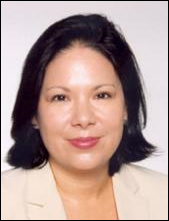
Everything is for sale at the right price and Misys certainly has the deep pockets.

They do. Again, we think our value will continue to accrete. Again, we’re growing at 100%+ per year. We will continue to grow 100%+ this year even without any Misys involvement. With the Misys involvement, the numbers go up considerably.

Why didn’t they buy us at the time? At Millbrook, we think we left money on the table by selling too early. And while we have no plans of selling presently, when the time is right, we want to make sure that we get full value for our investors. They’ve been very good to us.

Is there any agreement that gives them the right to purchase more of the company?

There’s absolutely no agreement which allows them to buy any more of the company in any preferred mode. If we went out to raise capital at any time, they would have the same rights as any other shareholder.

Is the version they sell under the MyWay nameplate the same product or did they fork it off?

It’s the same source code. The source code is ours. If you go to the About button on Misys MyWay, you’ll see iMedica.

Then what value is Misys adding, other than they’ve got a big footprint and a lot of sales people?

They claim they have 110,000 physicians. They claim 85% of those do not have an EMR. That’s a heck of a business right now, going back and getting your existing installed base captured with an EMR. I don’t think any of us in the business have 85,000 EHR sites and or EHR physicians today.

Wasn’t that the same argument for their hooking up with Allscripts? Now they’ve got products from two competitors confusing their own customer base. How do you think it will shake out?

I haven’t been privy to the conversations in Raleigh. They are having discussions between Misys and Allscripts. We’ve been talked to once or twice. The MyWay product has been exhibited at their analyst day in Raleigh and got a great reception. They continue to sell it aggressively and we think it’s part of the portfolio going forward.

How it plays into the Allscripts portfolio, I really don’t know. I heard that they were supposed to bring an application to market and that’s, anecdotally, in the fall on a single database. They still had their challenges with Version 11 on their TouchWorks, their HealthMatics product. It looks like a single database is really still two different products integrated together.

You’re fully competing with both companies and will continue to do so with the combined company?

Tooth and nail until somebody notifies me otherwise.

Why would prospects buy the product from Misys instead of the company that develops and supports it?

You’d probably have to ask the few that I know that have bought it from Misys. Usually it’s continuity. They have an existing Misys contract and maybe Misys is having special deals. When we go toe-to-toe with them, we’ve been very aggressive, they‘ve been very aggressive, and fortunately, knock on wood, we’ve prevailed and we plan to continue doing so, even in light of the Allscripts acquisition.

Surely Misys will have to make a bunch of sales to get back the millions of dollars they paid.

I think they are well on their way of reaching the numbers they need. From all reports we’ve seen and heard, they continue to do very well with Misys MyWay and the product in the marketplace. They had their fiscal year end. I read the press release. They talked nicely about the Misys traction which they received. I don’t have the figures or number of units and other distribution channels. It seems like they’re meeting their plans.

Were you the only company they approached, or are there others they would have struck a deal with?

We understand that they approached a great number prior to coming to see us. Whether they did as deep a dive as they did in our house, I’m not sure, but we had Misys people camped out for the better art of a week or week and a half.

I promise that’s the end of the Misys discussion. We had to get that out of the way.

It’s not an issue. I’m very comfortable speaking about it.

In the KLAS reports, the iMedica PRM product is not listed. Why is that and does it impact your marketing?

Sure, it impacts our marketing. Our PRM 2008 product went generally available in April. It’s the product we’ll come to KLAS with in December. We did not have it installed in enough locations in time to qualify for the June book. You need 14 sites for each different group in KLAS and we were just getting all those up and running and getting their interfaces tuned.

We wanted to have, not just 14 in each … I’d like to have enough in each that it gives us a representative sample, because you only get the first level of confidence at 14. By August 15, every one of our practices will be on the newest version. We’re migrating practices every night now.

It will be the first time since we took over that we’re going to have all practices singing off the same song sheet with regard to versions. That’s going to give us the ability to address issues more effectively; to bring featuring functions to market that will enhance their environments. Up until this point, there were practices still sitting on the PRM 2006, 2007, and 2008 release candidate. That was a really hard environment to bring to KLAS. So now we’re going to have one product in a universe that will be highly satisfied. We think we can be a very competitive in KLAS.

I meant to ask you about the number of employees.

We have just about 105 employees today. The bulk of them are in Carrollton, Texas, I would say 55 to 60. The rest are sales people and training personnel and they are scattered geographically around the United Sates. If anybody is looking to come to Carrollton, Texas in a support role or to become a trainer, we’re looking for them. That’s a plug. Can they send resumes to HIStalk?

Sure, why not? We’ll hook you up.

I think we actually found a trainer recently through you. You didn’t know you had that feature, did you?

I didn’t.

We continue to grow. We continue to be selective as to who we bring on board. Interestingly enough, about 40 ex-Millbrook people have joined us around the United States in development, implementation, and sales. Somebody actually said we’re putting the band back together, but this time we’re playing a different tune – EHR and PM.

This is slightly off topic but I can’t resist asking the question. You’re someone who was entrepreneurial and went to GE. Now you’re back out of that environment. For you and those 40 people who bailed, what made you not want to stick around?

You know, that has been raised to us a number of times. While GE is a phenomenal institution, many of us felt that we spent more time fighting internally than we did fighting our competitors. Whether it was resources, product direction, technologies, getting contracts done – the bars that were set internally by the different functions sometimes made it more difficult to do work internally than getting done internally than getting contracts done externally.

In an entrepreneurial environment, everybody is focused on “Let’s take this to the next level.” You have payroll to make; you have commitments. There’s just a nice, healthy tension in an entrepreneurial environment, whereas at GE, there would be people who could live in that house for an extremely long time not having to make a payroll; not having to make the commitments; and it made it very frustrating for those of us that came out of the entrepreneurial environment.

I always say that GE is the place where good products go to die. Would you say that, in general, your direction with the product would have been different from theirs?

You know, that’s five or six years of hindsight, so I really don’t know. We had been looking at a skunkworks on EHR. At the time that we sold Millbrook, we had over 50 partners and 18 of them were EHRs. It would have been very easy to reach out and embrace one of them to come to a point where we are today, but that’s speculative at best.

Even at GE, the product and the market continued to grow, so we had a very viable business. I think if you’re in a nice trajectory, don’t walk away from it. Again, it was more the board that did this than anyone on the management team.

So we’re enjoying it. The company comes to work each day with a passion of getting out a great product. We maintain our Millbrook mantras of never letting a physician office fail and hugging the physician — God knows they’re being beaten up by everybody else in the market — and to make sure at the end of the day they have an excellent experience.

I think everybody recognizes that the EHR part of iMedica is really strong. Would you say the practice management aspect of your system is equally competitive?

You know, that’s a question that’s been raised over the last 45 days. Up until our 2008 release, our 2007 product lagged, I would say, the same level performance of performance as our EHR. But with our 2008 product, we will go toe to toe with anybody in the industry on the PM side. In fact, we will bury most of them.

The product has a tremendous report portfolio. It has great claims processing. My PM is doing what the PM is supposed to you. It has front-end claims and demographic activity, scanner capability. There are a few features that we’re going to continue to add, but as we’ve always said about our product, it’s a work in progress. It’ll never be done. We will have an upgrade coming out during the third quarter of this year, a service pack, and we’re already working on the 2009 product as we speak, which will have additional features and functionality and meet the CCHIT 2008 requirements.

Who would you say your strongest competitors are?

I would say we probably are looking at three significant competitors out there, the first being the Allscripts portfolio. Mainly on the lower end, which I think is the HealthMatics product. We run into them regularly. We have eClinicalWorks, although over the last four months, we have not seen them quite as much as we had previously. And then we see e-MDs in certain geographies.

Sometimes I list competitors and ask for some adjectives. Would you be willing to do that?

I’m not going to sit here and diss someone, but I’ll be glad to give it my best shot.

One that you probably don’t run across too often – Epic.

We don’t run across Epic too often. We see them in some environments where physicians have been offered Epic by a hospital. The interesting thing is that they are perceived as being a bit kludgy for a small physician office — overkill. That’s not surprising, because when you try to bring a large practice application down to the small market, sometimes there’s too much in it and it’s very difficult to maneuver with that product.

One of the marketing initiatives we have going on right now is called “Take a Tablet.” It’s different from anything else in the market. When you take a demonstration of our product, we put a tablet in your hand for a week, load it with the application; load it with 200 patients in a demo database, and give you an hour and a half of training and say, “Go play and here’s a number you can call if you have questions.” The application is so intuitive and the physicians get it so fast that they can look at an Epic, which is rather cumbersome for them, and with the nimbleness and the ease of use of our application, they tend to migrate more to ours.

I want to ask you a question about that a little bit later. What about Sage?

I really haven’t worked against them. Sage is the old Medical Manager. They have a tremendous installed base. The one deal I remember losing against them was because the nurses like the colors on the vitals screen. I’m going to have a hard time fighting that, but I really don’t know too much about their features and functions and haven’t seen them go head to head against us.

This might be a tough one: GE.

GE, we don’t really see that much in the EHR any more. We have started to replace them on the PM. We’re thinking that there’s an opportunity there for us. I don’t think GE has taken care of their customers to the extent that we’re able to.

And next on my list was Misys, but let’s separate that out as the non-MyWay Misys.

Well, I’m not sure what the non-MyWay Misys is. I know they just announced a big deal where they had their EHR and their non-MyWay EHR accepted at a very large practice. But I haven’t seen anybody buying Vision and Tiger lately. They’re buying MyWay.

What about Allscripts?

Allscripts is tough. They have a nice portfolio of products and they do a great job of marketing it. We think, on a functional basis, we can compete with them, but they are tough in the sandbox.

e-MDs.

David Winn has done a great job of putting that company together over the last few years. They’re tough. They have a good product. I don’t think they have as big a footprint, although David is very imaginative and a good leader. We go toe-to-toe with them. Sometimes we win; sometimes we don’t.

What about eClinicalWorks?

They were tough early on. We’ve understood what they’re selling, how they’re selling it, to whom they’re selling it. They’re formidable, but I think when physicians drill down feature by feature; when they understand what they’re getting and what they’re going to be required to get, I think our total cost of ownership is equal to theirs and I think our product dynamic is better than theirs.

What about athenahealth?

We’ve only come up against athena once or twice. I’m an accountant by trade, a CPA. I find in a small practice with what they charge, it’s almost irrational to go with them. If you look at the total cost of ownership over five years, the physician could probably pay for his kids’ college education. If you look at the cost between our application and athena, obviously their business model is working well in some of the hospital environments, but I think long term, we will continue to grow our company and be able to go toe-to-toe with them.

NextGen.

We don’t see a whole lot of NextGen. We’re in the 1-to-10 market, primarily. NextGen, even though they play down there form time to time, really isn’t that big of a footprint and they’ve said that publicly. They do well in the larger practices and more sophisticated enterprise situations.

They’ve built a hell of a product and they’re a tough competitor. They are very expensive. If we can get to a practice to look at what we have versus what they’re looking at with NextGen, and you look at a total cost of ownership, the ability to modify our application on the fly versus requiring programming, help for templates and other items with the NextGens and the GEs of the world, I think we walk away looking very good.

Some of those that are very competitive on price. I’m thinking specifically of eClinicalWorks and e-MDs. Is it tough to compete with them on price?

I don’t think it’s tough. I mean, we’re all in the same ballpark. I can’t remember losing a deal because of price. You usually you lose a deal because of features and functions.

The market seems to be polarizing around two extremes, the doc buying a simple, functional system with his own money and hoping not to kill productivity, vs. the hospitals who will provide the systems, but who pick big, traditional applications. Will that continue?

I see a cycle that’s been in healthcare for years. Right now, it’s hospitals providing software to physicians under the Stark exemption. A year from now, when we have a new administration, God knows what the new rules are going to be. You and I both have seen it. We have seen centralization and de-centralization.

I think in our market, which is the 1-10 physician group, those physicians realize that owning their patient records, being able to touch that patient record on their server, is the biggest asset they have and that’s their livelihood. To stick it at or through a hospital is problematic. It could compromise their existence and, long term, bring their livelihood into jeopardy.

I think physicians are more independent than that. They’re seeing that. Hardware has come down so much and is so easy to use that you can stick a server in a closet, essentially. You don’t need an IT department when you’ve got five or six physicians. The only thing you probably need to do is change the tape once a day. So I don’t know whether that division continues, but I’d be surprised if we didn’t see something in the next 24 months to turn it around.

The New England Journal of Medicine article reinforced what everyone already knew, that physicians aren’t using EMRs. What will it take to get them to?

I can only attack this from two sides. Putting my CPA hat on, for a physician who wants it, it’s not an expense, it’s an investment. Yes, it’s disruptive. I like to tell physicians, “Go home tonight. Turn off the lights in your bathroom. Stand on one leg and brush your teeth with your left hand. That’s what it’s going to be like using EHR for the first 20 days. It’s doing something differently that you’ve done for the last 20 years, but you will come around to it.”
We have physicians older than 60 who have adopted and become the leaders in their practice on our applications. So it’s disruptive, but once you get through that disruption, it makes your life better. And there are really economic benefits to the practice, whether it’s PQRI or whether it’s higher average reimbursements because you’re getting higher E&M scores. At least in our system, we score out the E&M points. We do a recommendation of the level visit and all the physician has to do is concur and it’s supported. We’ve repeatedly seen throughout our installed base a significantly high single-digit increase in revenue per average visit.

You add PQRI to that, you add health and maintenance reminders that are established in the clinical environment, but then go to the front desk at the time of scheduling. If I’m calling in, I think I have a sore throat, and it comes up that I have not had my PSA in a year, it reminds me to schedule my PSA at the same time. That creates more revenue opportunities for the office.

You add those together, those are the hard dollars based on revenue streams. You suddenly aren’t looking for charts. I was at a practice in Baltimore who said 60 to 70% of one head count was utilized looking for charts in a five-doctor group. That’s insane. That goes away. So the economics very much are there.

People think of electronic medical records as something you just have or you don’t, but products obviously differ. What differentiates them today and what will that be five years from now?

This goes to the previous question: what is going to make life easier for a physician? It’s the ability to use an EHR to the extent they want. In that New England Journal article, it was interesting to see that some physician use it for documenting history; some use it for e-prescribing; some use it for orders.

One of the features we are bringing to market is, in fact, the ability to structure the EHR to the extent that the individual physician in a practice wants to use it. If I don’t want to do the histories or the physical exams on the EHRs but want to continue to do it by paper, I can do that, but I’ll do the labs, the health maintenance, the prescribing, the follow-up, all on the EHR system. I don’t think any of us to date have been terribly flexible to the requirements of the physician. I think we’re going to be taking a large step very shortly in that direction.

Could products could be improved to give physicians more information as opposed to capturing more information from them?

I think it’s very important. I don’t how familiar you are with our EHR, but it’s highly customizable, starting out with the one-page summary that the physician looks at before going into a room. There are many fields on it, but they set the hierarchy and they set what they want to see. It’s by physician, care team, or practice, depending on rights. That allows individual physicians to modify the entire knowledge base. It’s not template-driven.

This is what’s different. You can modify in four or five key strokes in about 8-10 seconds virtually anything in our system and therefore customize it to your needs. Up front, we put together common problem palettes. We have adaptive learning, so that once a physician sees a bronchitis patient; if they see them again it will say, “This is what you’ve done for bronchitis in the past.” The adaptive learning continues to grow and it becomes dynamic with the physicians’ use.

I think too many of the EHRs out there, as you said, are too rigidized in templates of, “This is what you have to do and this is how you have to do it.” And if a patient walks out the door and sticks there head back in and says, “By the way, I was playing softball this weekend I heard a pop in my elbow” after you’ve seen them for an upper respiratory infection, you suddenly have to scramble and start the examination all over again.

But when you’re chief complaint-driven, you just add the chief complaint and it will pull through all the pertinent items for a sore elbow. Again, we need to adapt the applications to the physician’s reality as opposed to expecting the physicians to stick themselves inside of the template. These guys are thinkers. They went to med school to become thinkers.

You emphasize in your marketing material that physicians don’t have to put a computer and monitor between themselves and the patient. What are your thoughts on that?

Our application was designed primarily for a tablet. There are no double clicks, there are no right clicks – it’s all tablet-driven. So our physicians do some of the work in the exam room and then, as any other physician, when it’s done, walk out and finish the note off to the side.

I know, from my personal experience, last time I saw my physician, she had three inches of paper sitting on her lap and while she’s talking to me. She’s leafing through 20 years’ of paper. How that is different from sitting down looking at a computer screen or a tablet? We may not like it because its not a personal and as warm as paper, but it’s the same thing.

That leads to an interesting question. Your physician doesn’t use electronic medical records, yet you still see that physician. How strongly should someone consider whether or not their own physician uses EMRs?

My physician’s practice purchased GE’s medical record before we had a product to show them. It has taken over three years for them to implement this application. When they implemented it, it lasted two weeks and then they were back on paper in her practice. So I didn’t have a chance to get into that one. I may have a chance, depending on GE’s future success or lack thereof.

Let’s talk about the Take a Tablet test drive program. What’s the response to that and how many folks make a decision based on that one-week trial?

It’s been phenomenal. It was predicated on the fact that we had about eight physicians in the last year that looked at us and said, ‘If I could try this, I could probably give you an answer.” Of the eight that tried it, seven of them bought it.

We were able to work a promotional deal with Fujitsu. Remember, our application is fully functional on a tablet because of the caching mechanism. This is not a partial; it’s not different application; it is the exact same application when you buy the program.

What we did is we put it out there with our demo database and we teach them how to chart. If they want to chart another 1,000 patients, we warn them not to do real patients because of HIPAA considerations. But if they just want to play and create patients, it can stand alone for the physician.

One of the beauties of that is our physicians are able to take their tablet with them — whether it’s to a nursing home, to the hospital, or anywhere else — and document the full patient encounter. Take a Tablet is nothing more than an extension of that. We’ve given them skeletal training, an hour and a half to two hours, and they get it in that time frame.

I’ve seen old physicians grab tablets out of our salespeople’s hands during demonstrations saying, “I can do this” and begin to document. It’s highly intuitive; it follows logic which they were taught in med school; it’s easily modifiable; and when they look at it and play with it, they adapt to it very quickly.

We have quite a few machines in the field. We have a waiting list for our machines and we expect it to continue to see success through this promotion.

What are your goals for the company for the next five years?

We just want to continue to grow this company and develop a world class product. We were able to do it at Millbrook with practice management. We were able to do it under the radar against 4,500 competitors. We continue to do it here. We have the resources. We’ve been able to attract great talent and we continue to attract talent. We think that we will evolve to be the market leader in the single database EMR space.

You go to work everyday, you do the best you can, and you hope somebody takes notice. We got some traction and as long as it keeps growing, I’m happy and so are my investors. They have a medical background. They’re not in this just for, “Let’s make a dollar.” I hate to use the words, but they don’t need it.

They’ve been very active since the 1970s in enhancing the quality of healthcare in the United States, so this is not something new for them. They see the ability to put a great EMR in the marketplace that enables the physician, empowers the physician, and allows then to practice better medicine. It’s their life’s work. It’s not just, “This is another investment we can make a dollar on.” Having that type of philosophy behind you allows you to do the right thing as opposed to the expedient thing.

Monday Morning Update 7/7/08

July 5, 2008 News 5 Comments

From rumorMILL: "Re: Eclipsys. Frank Stearns out as EVP of 7/1. You won’t see him surface for a year, per his 8K employment agreement. The in-vogue thing among vendors is to take out the Services guy for not being able to weave all the crap together." No announcement yet, but his picture’s gone from the site.

From J. Random Anyone: "Re: Sage Healthcare. I hear that Sage Healthcare is going to be laying off over 200 people. They already let go the Senior VP of HR and I hear technical support, marketing, etc. is next. I also hear that they are going to be outsourcing all of their technical support which might be the reason for these layoffs." Inga asked a Sage exec. She says the SVP got a job he was going after in St. Louis and there are no plans to outsource support. However, the company, like its ambulatory system competitors, is trying to offset a decrease in revenue. No layoffs for now. They promised to let us know if anything changes.

From Wireless Guru: "Re: Sonitor. Did they rig the RFID study?" Link. A blog reader pointed out that one author of the JAMA article that says RFID systems interfere with medical devices is the CTO of Sonitor Technologies, whose locating system uses ultrasound (i.e., non-interfering sound waves instead of radio waves). Sonitor’s US CEO responded (summary: both Sonitor and the R&D organization involved with the article are in Oslo and Sonitor’s CTO used to work there, but there’s no connection otherwise). A press release says Sonitor concluded 10 year ago that RFID wasn’t suitable for hospital use because of the possibility of interference. I’m pretty sure you haven’t heard the last of the RFID issue since there’s a lot of money on the line from both sides.

From Edith Piaf: "Re: Medicare delayed processing. Is anyone else extremely concerned about this? Round my way, in med/billing software land, there is a real tizzy going on over how to deal, react, etc."

Alex Scarlat, MD, the informatics doc at Trinity Health (MI), sent over a writeup on the Cerner SurgiNet and anesthesia go-live at Battle Creek Health System a few weeks ago. The anesthesia module is connected to medical devices via DataCaptor from Capsule Technologie.

I’ve received a couple of e-mails about layoffs at the former JJWild (now Perot) last week. I’ll ask Inga to confirm.

For my fellow Firefoxers, specifically those using Firefox 3, a reader mentioned very high CPU utilization when accessing HIStalk. I suggested disabling all plug-ins since I’d heard of various problems. Result: CPU utilization dropped from 98% to 0% (it was a Flash plug-in). Check Task Manager to see if you have the problem. Another reader mentioned a plug-in that will open IE-only pages in a Firefox tab, which I found here.

Orlando Health, the former Orlando Regional Healthcare, goes with warehousing systems from TECSYS for its self-distribution of hospital inventory.

A reader e-mailed about her positive experience in a new hospital since I’d written about how hospitals aren’t really designed for patient comfort or relaxing recovery. I just e-mailed her back, then figured I might as well post what I just dashed off: "I admit I’d want those rooms, too! Not only because of their amenities, but because getting into a new building often means employee morale goes up, policies are re-evaluated, efficiency is often increased since the facility was designed around modern processes, and the quality of staff recruited can improve since even employees want to work in shiny new buildings. Too bad about the wireless – it’s hard to believe that hospitals still struggle with technology that a $40-a-day Super 8 motel mastered long ago!"

I updated downloadable reprints of the PatientKeeper and RelayHealth interviews on HIStech Report, just in case you’re interested.

The CTO of NHS says standards bodies need to work together to allow interoperability and NHS itself will collapse its 15-20 standards into three: HL7 v3 (including its Clinical Document Architecture) and Snomed.

February’s TEPR has been renamed TEPR+, probably because plain old TEPR (or maybe TEPR-) was on a steep slide. Here’s what they say about it: "TEPR+ promises the innovative thinking, new technologies, and practical ideas that you’ve come to expect from TEPR, but with a wider focus on the range of healthcare IT solutions both currently available and developing. We’ll provide more programming on the difficulties that arise with the incorporation of IT and discuss the cutting-edge technologies that will change the way we understand health IT today. TEPR+ – the evolution of TEPR and the future of health IT." OK, it’s only seven months away – shouldn’t there be a few more details instead of a boring monologue about how great it will be? One problem, perhaps, is that the call for papers just opened up (and you can’t even read it without registering first). I want to like them, but everything about them is so serious (boring) and provincial. If they get a bunch of vendors as presenters again, I’d say put a fork in it.

A nice writeup on Sunnybrook Health Sciences and its Google Enterprise Search, which clinicians use to search its databases. Benefits: no training required, results are weighted by relevance and date, and people now post their material knowing it will be easy for others to find. The article included a screen shot of a typical search, which I’ve cropped and included below. Great idea. I always thought Google Search Appliance would be an easily justified hospital purchase.

sunnybrook

DoD and VA say they’ll be sharing data by the end of the year and then looking at how to make their EMR systems interoperable by September 2009.

UK newspapers seem to enjoy ripping into NHS and its IT projects, so I take such articles with a grain of salt. For those who don’t, unnamed insiders at a hospital say its Cerner implementation has been "10 days of chaos," claiming that clinician workload has tripled (because they refuse to give up paper, it appears), training was insufficient (not Cerner’s problem), and appointments aren’t getting scheduled. All of that aside, I liked this quote best: "… staff had been told this was the bee’s knees of computer systems." The unnamed insider must be a flapper girl.

Listening: HIStalk Radio, specifically, Happiness Factor and Beatsteaks

Sean McDonald, founder of the Pittsburgh-based pharmacy robotics vendor Automated Healthcare that McKesson bought in 1996, gets a regional E&Y Entrepreneur of the Year award for his current company, oncology test vendor Precision Therapeutics.

For anyone who cares about the Epic-WMC brouhaha, here’s an update: a WMC statement complains about a liberal agenda to suppress free speech, the local press speculates it was the entire Epic management team and not just Judy who decided to issue the statement (maybe underestimating the consequences of doing so along the way), and the Madison paper rips a UW professor who said Epic’s actions are "ethically dubious," putting Judy right up there with Gandhi (well, may that’s a little over the top).

Former hospital CFO Tim Hubbs, who founded tax software vendor Drake Software (NC), is named CEO of Angel Medical Center (NC).

Carol Somer, who has done marketing and PR for Care Fusion, Vianeta, Bridge Medical, and APACHE, has joined Axolotl as director of marketing. All those companies were acquired, so maybe Axolotl is next. Or not.

An interesting look at medicine on the USS Ronald Reagan from a family practitioner and reservist. Sailors can e-mail the sick bay to make an appointment and normal lab results are e-mailed back, all on a secure, ship-wide Intranet; there’s minimal paperwork, but not much continuity; and this comment about medical records: "We are using paper charts as well as an electronic medical record. We are the first in the fleet to use it at sea. I wish I could say it is robust and intuitive, but it is not. But it does the job it was designed to do, which is make the health record more portable."

Speaking of military medicine, here’s an article on the MC4 combat system being used in Iraq. Stats: $10 million a year in annual costs, 26,000 trained users, 24,000 pieces of hardware. It says MC4 runs on speech recognition, can be accessed anywhere, is faster than typing, and the army is working on single sign-on. Said a medic and patient: "You can imagine what it must have been like 20 years ago if a doctor had to rely on an injured patient to give their own medical history … What was key for me was that over a year later, I couldn’t possibly remember all the procedures I had gone through as an injured soldier, but I had the electronic database."

Kaiser is rolling out 94 self-service kiosks in its clinics, offering touch-screen patient check-in English, Spanish, Chinese, and Vietnamese. Most of the users, a Kaiser doc says, are under 35 years of age.

kiosk 

General Data launches a healthcare barcode site.

Pennsylvania senators slip in a bill that would give a local hospital $100,000 for an EMR system.

Not everybody’s unhappy with healthcare’s bureaucracy and confusing nature, as this article points out. A "healthcare advocacy" charged an rich businessman $92,000 for some basic EMR setup and arrangements, not including any actual medical services. The guy calls it "concierge medicine squared," while critics naturally say it’s one more example of how screwed up the system is. PinnacleCare charges $10,000 and up for membership and says that at least 20 families on the Forbes Richest list are members.

The death of an unattended patient in a New York hospital’s psych ED is drawing outrage that patients are routinely boarded there when beds aren’t available. Somehow the fact that acute care hospital EDs do exactly the same was not mentioned.

German HIT vendor CompuGroup, spurned in its attempts to buy iSoft a year ago, is snapping up vendors left and right.

This editorial exposes consulting companies that help hospitals cheat to quality for Medicare outlier payments. The most fascinating factoid: the whistleblowers who tipped off the DOJ about Tenet doing that got $133 million for reporting fraud, their share of its $900 million penalty for overbilling.

$1,000 was enough, despite my ridicule at the paltry reward offered, to get someone to cough up the University of Utah computer backup tapes stolen from a courier’s car last month. Sort of. The three geniuses who stole them, after hearing on TV what they were, sent a pal to try to collect the $1,000. Within three hours, police had the tapes back and the the perps, all of whom had long criminal records, of course, are in jail. Detectives believe the contents of the tapes escaped the forensic analysis of the thieves. "They definitely aren’t techies, there’s no question about that. I don’t think they could find their rear end with both hands."

Bizarre lawsuit: a 17-year-old girl’s family was hosting a going away dinner for a youth pastor. The girl, a child, and the youth pastor were jumping on her trampoline when she flipped and landed on her head, rendering her a quadriplegic. She’s suing the pastor and the archdiocese that employed him for $33.5 million, claiming he should have known his weight of 183 pounds would put the 115-pound girl in danger. Also named is the trampoline manufacturer (who should have provided netting and warnings about weight distribution, the suit says) and the hospital, which she says allowed her to fall backward on a sitting position and whose nurse called her a quitter (which they all do, of course, to motivate rehab patients).

E-mail me.

Readers Write 7/2/08

July 2, 2008 Readers Write Comments Off on Readers Write 7/2/08

Circadian Rhythm of the Organization
By Art Vandelay

All organizations seem to have times when they are and aren’t receptive to certain communications and changes. In order to convey this concept to my staff, I found an effective metaphor, the human circadian rhythm. This rhythm is the master clock for a human being (ex: when we sleep, when we are awake). This graphic explains it all.

When I use the rhythm to explain an organization, the clock applies to an entire calendar year, rather than a 24-hour period. The "clock" for the year is impacted by the overlay of the fiscal year and the seasonality of the business. For providers, the timing of the arrival of the new residents is another example of an impact. For payers, open enrollment is an example of an impact.

Many times in the information systems department, we are separated from the rhythms of the organization. We may have the best intentions, a great idea, and the perfect message tailored for the perfect audience, but introduce them at the wrong time. My organization is nearing its "fastest reaction" and "best coordination times" (see the graphic at 14:30). So this is when I look to introduce ideas where we are making broad changes. Examples include changes to our work request and project management processes. It is also the time when I start floating trial balloons on capital investments for the following year. In the same vein, I wait for the right time to celebrate the successes (see 21:00 – a "happy bed time story").

Finding your organization’s rhythm is an important part of a communication approach, as is tuning the message for the audience. Avoiding the bad times (ex: 2:00, 8:30), can be a key to success.


The PACS Designer’s Open Source Software Review – DBDesigner 4/MySQL Workbench
By The PACS Designer

DBDesigner 4 is a popular open source database that has been in existence for many years. It is now renamed MySQL Workbench 5.0.23 with the help of Sun Microsystems and the developers of DBDesigner 4.

DBDesigner 4 is a visual database design system that integrates database design, modeling, creation and maintenance into a single, seamless environment. It combines professional features and a clear and simple user interface to offer the most efficient way to handle your databases.

DBDesigner 4/MySQL Workbench can be compared to: 

(1) Oracle’s Designer
(2) IBM’s Rational Rose
(3) Computer Associates’s ERwin
(4) theKompany’s DataArchitect

DBDesigner 4/MySQL Workbench 5.0.23 is available for Microsoft Windows and Microsoft Vista only. With the release of the upcoming MySQL Workbench 5.1, support for Linux and OS X platforms will be added to enhance its usability. Additional MySQL Workbench 5.1 enhancements will provide live database querying functionality and should grow to a fully featured SQL IDE.

DBDesigner 4/MySQL Workbench 5.0.23 has reached the 400,000 download level, so it is a popular database choice of those who want an open source solution. Now that DBDesigner 4 has the support of Sun Microsystems in its merge into MySQL Workbench, users can feel confident that they will get support from a broad base of developers.

TPD Usefulness Rating:  9.

http://www.fabforce.net/dbdesigner4/screenshots.php
http://dev.mysql.com/workbench/


EMRs: Free May Not Be Cheap Enough for Physicians
By Mr. HIStalk

Inside Healthcare Computing has graciously agreed to make previous Mr. HIStalk editorials available from its newsletter for a "Best Of" series for HIStalk. This editorial originally appeared in the newsletter in March 2007. Inside Healthcare Computing subscribers receive a new editorial every week in their Electronic Update.

Now that Stark restrictions have been relaxed, hospitals are rushing headlong into the ambulatory EMR business. It makes sense. Hospitals have a lot of technology expertise and private physician offices usually have none. The government wants to increase the embarrassingly small number of EMR-capable practices, so throttling back Stark is a free solution that makes almost everyone happy.

Are EMRs the peace pipe that will suddenly bring the traditionally wary partners/competitors together in a long-awaited passionate embrace? Probably not.

Community-based physicians are often scornful of hospitals, seeing them as a hotbed of meddling management, questionable quality, and carefully hidden profits. Imagine what they’ll think when they first encounter hospital IT types, those grudging emissaries of a department built around rigid conformance to rules, perpetual understaffing, and a vision for the common good that squelches the individuality and self-determination that doctors thrive on.

Hospital CIOs like service-heavy, expensive vendors that won’t get them fired. They also like standardization and vendors that offer the theoretical possibility of integrating office-based EMRs with inpatient systems and RHIOs. For those reasons, I expect most CIOs will favor EMRs from big-iron, old-line ambulatory vendors like Misys, Epic, and Allscripts.

These are the vendors that small practices studiously avoid in many cases. They dislike them for the same reasons CIOs love them.

I spoke about this with Jonathan Bush, CEO of athenahealth, at the HIMSS conference. He has an interesting perspective, although not surprising considering that his company sells simple, easy to use systems that increase physician income through reduced claims denials.

Bush described the EMR offerings of the big, inpatient-oriented vendors as “elephant’s ass systems.” The little two-doc practice sees the hospital IT truck back up and out comes a complex application with loads of customization options, stacks of thick manuals, and no direct support except what the providing hospital has decided to offer. Free or not, there’s training to attend, configuration choices to make, and conversion from existing systems to plan. Oh, goody.

Doctors aren’t that thrilled with EMRs. Most of their benefit goes to insurance companies, studies have shown. Until pay-for-performance kicks in, there’s not much incentive. Plus, docs are always paranoid that hospitals will see how much money they make.

Benefits aside, EMRs take more of the doctor’s time to use. Something that’s free but consumes an hour or two more of the doctor’s day is hardly a welcome gift. All the doctor has to sell is time, and suddenly there’s less of it available.

Bush predicts what he calls a “hairballing up” of these feature-rich EMRs. The hospital may spend the money, staff a support center, and hand-hold the implementation, but there’s still a good chance the doc will throw up his or her hands and announce, “I’m not using this. I don’t have the time.” Then, they’ll either ditch the whole EMR idea or find an easier-to-use system that gives them a financial benefit.

Remember when insurance companies and hospitals gave away free PDAs with all kinds of supposedly doctor-friendly software on them? Docs lined up to get one. No one was smart enough to realize until afterward that asking for a free gadget was hardly a commitment to change practice patterns.

Perhaps hospitals have underestimated this hairball effect. They’re giving doctors systems that are mostly loved by hospitals: feature-rich, committee-designed for a large range of practice settings, and with extensive clinical capabilities that may or may not interest the physicians who are expected to use them enthusiastically.

It’s great that hospitals will help drive EMR adoption by private medical practices. Hopefully they’ll give the docs a voice in choosing systems that they’ll use before spending too much money on a monolithic system that may not fit all.

Mr. HIStalk’s editorials appear each Thursday morning in the subscribers-only version of Inside Healthcare Computing’s E-News Update.  To subscribe, please go to:  https://insidehealth.com/ihcwebsite/subscribe.html or call 877-690-1871.

Comments Off on Readers Write 7/2/08

CIO Unplugged – 7/1/08

July 1, 2008 Ed Marx Comments Off on CIO Unplugged – 7/1/08

The views and opinions expressed in this blog are mine personally, and are not necessarily representative of Texas Health Resources or its subsidiaries.

Glorious Mashup!
By Ed Marx

A common question I’m asked, and I suspect it is true of all leaders, is how do I come up with the constant flow of ideas on innovation, leadership, business and clinical strategy, creativity, application, etc.

(Short) Safe answer: I’m not sure.

(Long) Theoretical answer: The stuff I intake gets glomped by other intakes and existing information which generate fresh perspectives. My mind is a Mashup.

According to Wikipedia, a Mashup is “a web application that combines data from more than one source into a single integrated tool.” The example used is “the use of cartographic data from Google Maps to add location information to real-estate data, thereby creating a new and distinct web service that was not originally provided by either source.”

Mashup originally referred to the practice in pop music (notably hip-hop) of producing a new song by mixing two or more existing pieces together. Gwen Stefani is a good example of an artist who makes creative use of Mashup with songs such as “Rich Girl” and “Wind it Up.” Adam and the Ants did this decades earlier by combining African drum rhythms with punk to help define their sound. Perhaps we can credit Bach as the original orchestrator with “St. Anne” in E-flat Major where he mashed a triple fugue.

To enable a personal Mashup, you need to be well rounded and have multiple input sources. Lessons learned as a young Army officer studying engineering concepts continue to influence my present intakes. My experience working with clinicians prior to my technology baptism was foundational. Thanks to earlier mentors, I established a career long study of business. I’ve devoured hundreds of books to enrich my formal education. I feast weekly on a range of newspapers and magazines, most of them outside of healthcare and technology. I harvest inspiration from my external passions—family, faith, tango, music, and athletics—that each add uniquely to my portfolio of intake and experience. The breadth and depth of my Mashup is exponentially improved by engaging with individuals who possess a diverse set of experiences.

Mashup is rarely intentional. Most often it is happenstance. An excellent work example is the new training technique we developed and have since branded as CareTube. During a meeting with physicians, we discussed the challenge of training docs on CPOE. The only training that seemed effective was “at the elbow,” but that’s expensive to maintain, especially across numerous hospitals. Ideas started to pinball, and out of it came the Mashup: a training solution combining the requirement of brevity with the need for 24×7 access—and ideally, entertaining. We started creating application-linked short video vignettes supplying content and levity at the time and place needed most. Although not at the elbow, it is at the fingertip.

Thirty days later, we were Live with CareTube, a Mashup of Saturday Night Live, YouTube, training, and speed.

Imagine if all your staff were active individually and corporately as a Mashup. Think of the collective potential. One way we encourage this phenomenon is by investing heavily in training. We complement this training with voluntary in-office book studies. During the 6 months we’ve used these studies at THR, we have taught over 10 books, none of which were technical. Several were on leadership, a couple dipped into creativity, and the remaining explored service, business, and change. “Rick’s Library” is the brainchild of one of our analysts who has donated his office space for a library where anyone can check out tapes, CD’s and books of all sorts. The intent is to encourage creativity and increase the opportunity for exposure to ideas. More people are beginning to think outside of IT parameters and add experiences and wisdom to form their own Mashup. It’s fun! And perhaps it’s one of the reasons we just cracked the top 50 of Computerworld’s recent “Top 100 Companies to Work For.”

So don’t just read about this. Apply it personally. Start by making a list of things you want to accomplish before you die and stretch yourself, your mind. Climb Mt. Kilimanjaro. Personally feed the orphans in Guatemala. Swim the English channel. Learn a foreign language. Dance on top the Eifel Tower. Go hang gliding. Read the Bible. Hike the Napali coast. Glean wisdom from your grandmother. Become a Big Brother/Sister. Play games with your family. And for Pete’s sake, stop wasting hours in front of the TV!

Do you want a never-ending flow of new ideas? The more diverse your collection of experience and input and the more people involved in the same will determine the rate at which you create Mashup. As Nike put it, “Just Do It!”

Ed Marx is senior vice president and CIO at Texas Health Resources in Dallas-Fort Worth, TX. Ed encourages your interaction through this blog. (Use the “add a comment” function at the bottom of each post.) You can also connect with him directly through his profile pages on social networking sites LinkedIn and Facebook, and you can follow him via Twitter – User Name “marxists.”

Comments Off on CIO Unplugged – 7/1/08

News 7/2/08

July 1, 2008 News 3 Comments

From DelawareDoc : "Re: DHIN. The Delaware Health Information Network (DHIN) had its state funding cut from $2.5 million to $1.5 million. Also, Delaware State Legislature has authorized House Resolution #76 to create a task force to review DHIN."

From The PACS Designer: "Re: it’s getting cloudy. Some HIStalk readers are skeptical of this whole cloud computing thing that TPD has been posting about over the past few months. In spite of this skepticism, the software giants are moving forward with their cloud solutions. Just last week, InformationWeek featured an article titled ‘Guide To Cloud Computing’ and how the major software vendors are approaching this new business opportunity by focusing on the small- and medium-sized businesses. TPD recommends that everyone read this well-detailed article about vendor intentions for this area of computing." Link. TPD also noticed that Firefox 3 sometimes has problems with my Rumor Report form, so if you’re a Firefoxer like me, you might want to painfully and growlingly fire up the obnoxious IE long enough to send me goodies (or do like I do and download Opera as a backup).

From Someone: "Re: Epic-WMC. Possibly personal – see link. Basically, someone speaking for the WMC condescendingly referred to Judy as such and the organization refused to retract the comment. There also are no women on the board of the WMC despite several women in key positions within WI. That judge election happened months ago, this personal attack was last week. They may not be completely unrelated, but I think the timing is a bit more than coincidence. Politics and business aside, I am with Judy in standing up for herself." Link. The original story and several reader comments following it are here. As I mentioned, I’m mostly in Judy’s corner, not that she needs me there.

Palomar Pomerado Health (CA) will deploy agent-based software from Novo Innovations to exchange information with its physician practices.

The New York City Health and Hospitals corporation fires six employees after security video footage showed a patient falling out of her chair onto the psych unit floor and slowly dying as nobody paid the slightest attention, including three security guards who were shown looking but not reacting. An employee summoned by a visitor finally nudged her with a foot an hour later.

Electronic Health Records, 2nd Edition, by Jerome Carter, MD, FACP of NTM Informatics (Neck, Time, & Money – funny!) is now available.

Dann tells me the HIStalk fan club he started on LinkedIn has 150 members. That’s pretty cool! It’s fun to see who reads. If you want to shamelessly pad your connections, feel free to put Inga and me down – we approve all requests in our desperate search for validation.

Catholic Healthcare West signs up for Craneware’s Chargemaster Toolkit and Pharmacy ChargeLink.

RXHub and SureScripts will merge their e-prescribing networks as an 50-50 equity partnership. Guess what the new name will be? SureScripts-RxHub. Man, that sizzles! Looks to me like the eRX pieces are falling into place quickly, especially if the DEA follows through on allowing controlled drug e-prescribing.

Cerner’s Trace Devanny says the company is "transforming ourselves from an IT company to a healthcare company," with 635 employees now involved in medical device connectivity, benefit coordination, and life sciences data mining.

Mount Sinai Medical Center (NY) gets a newspaper writeup for its smart cards. Theirs hold 33 pages, although there’s always the challenge of updating them (I think most hospitals just make new ones on request). Sounds mildly interesting, although I’ve always called smart cards "a solution in search of a problem." They don’t hold much data, but they work OK when paired up with membership-type selective marketing programs, i.e. when used as a loyalty card (which usually means they’re given only to those with good insurance or cash since financially questionable loyalty is disdainfully referred to as being a "frequent flyer").

The final candidates for dean of a proposed medical school at Oakland University (MI) have informatics ties (not the kind that go around your neck, if there is such a thing). Charles Shanley is a surgeon and chair of the Michigan Electronic Medical Record Initiative. Robert Folberg is an ophthalmic pathologist who has developed electronic teaching systems and CD-based training programs.

HIMSS will work with a Spanish group to offer education there.

Adventist Health System contracts with TKG Healthcare Technologies (both of Orlando) for a registration system add-on for its 33 hospitals.

Not everybody in India is happy about getting US offshoring business, mostly because the folks there adopt  our bad health and lifestyle habits. "Working against the law of nature is bound to hit back, MNCs lure Indian mass with money, make them work like robotic machines and burden them with only stress. What they eat is Junk, and they live like a zombie." Yep, that’s today’s version of the American dream, only getting sweeter as the dollar goes down the toilet and we all live longer, meaning our zombie employment years will extend, too. The salad days, as it were.

A member of parliament in Australia wants a telecommunications company punished after it disabled a rival’s radio link to a local hospital for two days will installing its own 3G cell tower. The company says it thought the tower wasn’t being used.

Recent flooding forced Washington County Hospital and Clinics (IA) to forget PACS and go back to film. The hospital also lost Internet access, forcing inconsolable employees to actually work instead of reading Perez Hilton, ESPN, and eBAY.

The new Ronald Reagan UCLA Medical Center, built from the ground up to meet earthquake requirements, opens: 520 private rooms, one million square feet in a 10-story building, and built from three million pounds of Italian travertine marble (a gift from a grateful patient – nice).

Despite being a public hospital that falls under the Sunshine Law, Erlanger Medical Center (TN) refuses to release salary figures for its executives, saying that information would "unnecessarily invade the privacy of our employees." Still, the hospital released a list with positions and salaries only, which the newspaper helpfully paired up with names. I expected big bucks, but compared to a lot of Taj Mahospitals, money was modest: $550K for the CEO, $200 K and down for the veeps.

NHS fires a hospital manager for leaving an unencrypted laptop containing patient information in his car while on vacation. Someone broke a window and took the laptop, which at least had a password set.

UPMC will implement a policy of centralized drug sample management, requiring doctors to request samples via the Intranet using an application from MedManage Systems. of Bothell, WA.

E-mail me.

Inga’s Update

From Glad to be a FORMER Cernerite: "Re: Computerworld Top 100. As a huge fan of yours (I also have a love for HIT AND shoes!), I just wanted to set the record straight. You wrote about Computerworld’s 100 Best Places to Work in IT and how Cerner was ranked #92. E-mails went out to cherry-picked Cerner associates in very specific roles asking them to fill out the online survey. NO consultants were sent the e-mail. It was sent within weeks of a particularly nasty reorganization in January and no one affected received it.” Well, given that we see plenty of ballot box-stuffing with the HISsies, what should make this survey much different? Except, of course, Neal fared better in this Computerworld contest.

Glen Tullman is the Midwest regional winner of Ernst & Young’s Entrepreneur of the Year award in the technology category. He’s now eligible for the national title.

Allscripts also announces Jefferson General Hospital (LA) is its latest EHR client, deploying software for 138 employed and affiliated physicians.

The Southeast Alaska Regional Health Consortium contracts for Mediware’s WORx pharmacy solution for its eight facilities. The non-profit tribal consortium is also in the process of replacing systems for nine core functions, including admissions, billing, lab, radiology, and financials.

I understand that The AC Group has released its annual EHR/PM functionality rankings. I didn’t ask Mr. H to shell out the $50 for the summary report this year, although I’d love to hear about the results from readers. Any surprises? I did hear that McKesson’s Practice Partner received “top rankings,” but find that statement slightly vague (it isn’t exactly like saying “we are #1,” is it?)

The five public hospitals in Brussels, Belgium will use dbMotion’s platform to share integrated patient information across their 11 sites.

I’ve never heard of Avisena and probably wouldn’t have noticed its announcement about 61% year-on-year growth if they hadn’t specifically mentioned athenahealth as a peer. Like athenahealth, they offer an Internet-based revenue cycle management solution. They also note the software is “free,” which I assume means they collect a portion of collected money instead. Impressive: 21 consecutive quarters of growth over seven years.

The FDA discovers that many medical equipment malfunctions are not a result of poor design or manufacturing, but rather flaws in software coding.

At the same time the JAMA article warns that RFID may interfere with medical equipment, 3M and the Fort Hood army hospital  announce the completion of the RFID Smart Shelf System to track and manage 150,000 medical files. The $3.76 million project was a pilot for future military projects. Bummer.

NextGen signs one of its biggest deals ever. Current customer Banner Health, which has 20 hospitals in western states, is providing the EMR/EPM software for its ambulatory physicians.

I am heading out for a little R&R. Actually, it may end of being one of those vacations that requires another vacation in order to recover, but perhaps I’ll refrain from overeating/drinking/site-seeing (sounds boring). In any case, I hope to send a note or two along the way. Be assured my Friday night will include time for appreciating my independence and wowing over the fireworks display.

E-mail Inga.

Monday Morning Update 6/30/08

June 28, 2008 News 8 Comments

From Madison Reader: "Re: Epic. Big day for Epic news." First story: an interesting article on Verona’s "green sprawl," contrasting Epic’s eco-friendly campus to the urban sprawl it created by its commuting employees. The company’s track record of being a good community citizen is also mentioned. In a less-flattering news, Epic flexes its rarely used liberal political muscle in threatening to cease doing business with local companies that support a state business lobby. Wisconsin Manufacturers and Commerce, of which Epic is not a member, spent $1.8 million on campaign ads supporting a conservative judicial candidate and attacking the character of his incumbent liberal opponent. Epic’s statement says the election "was a travesty of ethics and many analyses pointed to WMC as a responsible party." And in a related event, Epic’s contractor (wouldn’t that be a great gig?) drops out of WMC and its president quits WMC’s board, claiming his company’s "corporate structuring and analysis" led him to that decision (riiiight).

A reader asked for my opinion on the Epic-WMC tiff, so here you go (you may be sorry you asked). Judge elections shouldn’t be knock-down, drag-out political slugfests. The thought that a pro-business organization should donate millions to an election campaign just because the candidate is supposedly business-friendly is repulsive, especially when that candidate seeks a non-partisan seat. Epic is a private company (and claims to be politically neutral — that also gets a riiiight), so it can do business with whatever companies it wants and for whatever reasons it chooses. On the other hand, it could have just done so quietly without making a public proclamation whose apparent goal is to coerce WMC members to quit or lose Epic’s favor. I was with them 100% until that last part; now I’m at about 75%. Bottom line: it’s a local issue that should not matter one iota unless you live or work in Wisconsin, and in that case, you’ll no doubt have a stronger and more well-informed opinion than the rest of us anyway.

The co-founder of 145-location retail clinic operator Take Care has some interesting comments on technology: "[Our] electronic medical record was not designed in a vacuum by our IT organization; it was designed with the aid of our nurse practitioners. We’ve created electronic check-in systems that are very similar to an e-ticket. If there are two people in front of you, the check-in screen will automatically give you the opportunity to go five minutes down the road to another Walgreens … We have an EMR (electronic medical record) system that’s capable of sending a record to any provider once the laws allow for that to take place … We created an industry based on integrating all the information and data and making it available to the traveler. We’ve brought that same thing to healthcare. A patient’s record is available in any Take Care center in the country. The next practitioner they see, whether it’s someone employed by Take Care or not, has access as well."

Cerner spent $180,000 for government lobbying in Q1, mostly aimed at DoD and the VA. Hmm … was it an eerie coincidence that VA decided to dump its own VistA LIS in favor of Millennium right about then?

NIH/NLM money is used to create the Appalachian Health Information Exchange in Ohio, which starts with 20 members and Ed Romito, CIO of Genesis Healthcare in Zanesville, as chair.

The usual housekeeping: you can sign up for e-mail updates or my Brev+IT weekly newsletter to your right. That Google search box sifts through the 5+ years of HIStalk for anything you want (hitting the old site where the previous articles live, too.) Click that hideous green Report a Rumor graphic that I unskillfully designed to send me news and rumors goodies. Wednesdays are Readers Write days, so e-mail me your master work (500 words or less) on relevant topics. And of course, thanks very much to the sponsors who sponsor and the readers who read.

Confluence Medical Systems, the consulting company started by former Misys-ers Tom Skelton and Rich Goldberg, will advise MedcomSoft on its marketing strategy. That’s the Canadian PM/EMR vendor that recently replaced its management to prepare for an attack on the US market.

Legislators on Friday voted down a measure that would have staved off a July 1 Medicare pay cut of 10.6% for physicians.

Identity management systems vendor Initiate Systems just pulled its IPO, but it also just got $26 million in sixth round funding, bringing its total funding to $62 million. One participant was data integration vendor Informatica, which bought identity matching systems vendor Identity Systems last month. Seems like they’ve got a lot of interest in Initiate, doesn’t it?

A research article coming out next week will provide interesting insight into workarounds with bedside barcoding systems, I’m told. In addition to pointing out human factors issues, it also documents intentional system bypassing that was observed: putting patient ID barcodes on clipboards or door jambs, commingling meds from multiple patients, and scanning doses after labels were removed. My conclusion: hospital leaders assumed that they bought a barcoding system and ordered nurses to use it, so medication errors should just go away. I know folks in a couple of hospitals who freely admit that their systems provide a false sense of security to the executives, but those in the trenches know of their inconsistent use. That’s no excuse for not using them, of course, but there’s work to be done beyond declaring a go-live victory, which we seem to do a lot in IT in our urgency to move on to the next scheduled crisis.

The husband of a Cerner employee who is accused of murdering her for a $250,000 life insurance payout by poisoning her with antifreeze did laptop searches for "antifreeze human death" weeks before she died, prosecutors say. His lawyer says the laptop wasn’t password protected, so anybody could have done that or maybe his client accidentally clicked a link somewhere. For a record third time this issue: riiiight.

The reverse split worked: QuadraMed gets Nasdaq’s listing permission, moving from Amex. The new ticker symbol QDHC kicks in July 9.

I’ve noticed that hospitals are getting free and easy with the "Chief" titles. In IT, there’s Chief Technology Officer, Chief Security Officer, and Chief Applications Officer (none of which are really "chiefs" in most cases since they report to the CIO). I’ve also seen Chief Pharmacy Officer, Chief Marketing Officer, and now Chief Technology Officer of the hospital lab. My thought: if you don’t report to the CEO, you’re not a chief, no matter what inflated title you were enticed with. If you’re a "real" Chief, it’s gotta peeve you a little to see Junior Chiefs flashing your title around.

Siemens, hammered by corruption and fresh off profit warnings, is rumored to be axing 17,000 jobs.

DEA is willing to allow e-prescribing of controlled substances if doctors use two-factor authentication and allow an annual audit. It’s accepting public comments on its chatty proposal (warning: PDF) released Friday.

I don’t watch TV much, but I was flipping channels the other night and ran across the debut episode of Hopkins, which caught my attention because I’d just interviewed Stephanie Reel (although I confess I alternated between it and Kathy Griffin: My Life on the D-List, which I’d never seen and found mildly amusing). It’s a pretty good real-life medical show, a little heavy on the human interest of the photogenic subjects, and not quite up to the dramatic standards of the old Lifeline (you may remember the cowboy surgeon "Red" Duke from that one, who’s now 80, shockingly). Thursdays at 10 Eastern, apparently, on ABC, and you can watch the first episode online.

E-mail me.

News 6/27/08

June 26, 2008 News 2 Comments

From Home Alone: "Re: Misys Homecare. What can anyone tell me about it? Will they run this into the ground much like the old Sunquest?"

From Jerry Rivers: "Re: job helper. I saw your ad that says 75% of HIStalk readers say it helps their job. I don’t believe it." The ad banner you mentioned is running on HealthcareITJobs.com and it refers to this exact question from the spring HIStalk Reader Survey: "Over the past year, HIStalk helped me perform my job better." 228 respondents answered, with 172 (75.4%) saying True and 56 (24.6%) said False. Hey, just because we make it entertaining doesn’t mean our information isn’t useful. Lots of folks are looking for competitive advantage out there and we try to give it.

From Tom Terrific: "Re: WellPoint. I’ve heard it mentioned in two separate areas that Wellpoint is rolling out EMRS to physicians. Do you know anything about this?" They did e-prescribing quite a while ago and were keeping some sort of PHR, but I hadn’t heard of new physician projects. If you know, tell me.

From Boba Fett: "Re: NextGen. Scott Decker to be named CEO of NextGen. Patrick Cline getting kick upstairs to head QSI." Unconfirmed and probably can’t be since QSII is publicly traded. But, Scott’s a reader (I interviewed him when he was with Healthvision) so you never know. Perhaps presciently, he mentioned Pat Cline then. Quality Systems CEO Lou Silverman announced Tuesday that he will resign effective August 16.

From E. Buzz Miller: "Re: Emageon. Perkins is out." An SEC document says COO and onetime heir apparent Chris Perkins has resigned, effective July 25, following all the proxy fight stuff with Oliver Press Partners.

A reader commented on my Odd Lawsuit from Tuesday that involved age discrimination, interpreting my remarks as defending the hospital where the 69-year-old employee with 42 years on the job was allegedly fired by her supervisor after a barrage of "old lady" comments. My usually full-bore sarcasm must have been masked since I’m all the way behind the lady who got canned, provided she’s telling the truth, of course. I’d much rather see the apparently obnoxious supervisor get nailed instead of the hospital, but that’s not how it works with age discrimination.

Listening: Beatnik Termites (reader recommendation). Infectiously fun summer, doo-woppyish surf-pop-punk. I was totally hooked in the first 15 seconds of Somebody Else’s Baby. Five stars. I’ve played everything on their MySpace page about a dozen times.

Royal United Hospital Bath delays its planned Millennium go-live in the UK, worried about Fujitsu’s interest in finishing the implementation now that the company is backing out of its NHS contracts.

New CIOs: Pardee Hospital (NC) names Harold Moore, formerly of Piedmont Healthcare Management Group. UPMC Magee-Women’s Hospital (PA) announces the promotion of Lou Baverso to CIO, replacing Bruce Haviland who has moved to UPMC Mercy. Antoine Agassi, chair of Tennessee’s eHealth Advisory Council, takes the CIO slot of hospitalist provider Cogent Healthcare of Nashville.

Jobs: Cerner Clinical Consultants, Epic Clarity Consultants, C++ Developer.

Sure to raise some eyebrows, including those of the FDA: an article in the new JAMA shows that RFID devices interfere significantly and sometimes hazardously with nearby ICU medical equipment. Especially prone devices: infusion pumps, with 8 of 9 models (five B. Braun and two Alaris) having problems ranging from false alarms to failure. Pacemakers were problematic, too, with erroneous pulsing, and ventilators also acted up. You will no doubt here conflicting interpretations, with RFID locating vendors claiming the study was a European lab experiment with minimal real-world applicability, while competitors whose systems use infrared and sonic waves (or maybe even barcodes) will point out that RFID was designed for warehouse pallets, not deploying to rooms full of life-sustaining medical equipment, and has the exact qualities you might expect to interfere with sensitive gear. Thanks to the reader who sent the full text article over. I’m open to comments from anyone who knows the topic and who has read the article.

CCHIT is looking for 13 new Commissioners to serve a two-year term. Senior execs are invited to apply in July for terms that begin in October. The current list is here and you can e-mail your resume to CCHIT to be considered.

Children’s Healthcare of Atlanta goes live on Epic CPOE. This may be the first time I’ve seen Epic mentioned in a significant press release, and even then only because it’s from the customer.

An Epocrates survey of medical students finds that only 20% of them believe widespread EMR adoption will happen in the next five years. Too bad they didn’t put a more reasonable timeline on there — in most cases, five years isn’t enough for a single hospital to bring up a full EMR. Still, they believe technology improves care and patient safety. When asked to rate the US healthcare system (such as it is), 40% gave it a D or F and 35% predicted healthcare reform in the next five years. It’s the Facebook generation: 6% spend more than 24 hours a month on the social networking site.

The local paper runs a story on MidState Medical Center’s (CT) implementation of Eclipsys Sunrise Knowledge-Based Charting.

West Virginia gets a nod for its EMR network covering 19 free clinics.

Politicians are knocking a healthcare IT bill around, but given how often this happens with no result, I’m not really paying attention yet.

Siemens Medical Solutions caves in to Acacia Research, which uses broad and questionable patents covering common technology to scare companies into paying licensing fees rather than court costs. This time, it was Acacia’s patent for PACS that got the company a Siemens check.

University Hospital (GA) gets a TV mention for its rollout of Horizon Enterprise Visibility, McKesson’s patient flow solution. We have good background in our February interview with McKesson’s Paul Gartman about the former Awarix product.

BIDMC CIO John Halamka tells a Red Hat Summit audience that healthcare can learn from open source initiatives. The Red Hat folks actually invited me to attend and report, which I appreciate, but the day job got in the way.

E-mail me.

Inga’s Update

A number of employers of HIStalk readers employers made Computerworld’s 100 Best Places to Work in IT, announced today. Included: Mount Carmel HS, VHA, Sutter Health, Palmetto Health, Partners, THR, NY Presbyterian, Intermountain HC, Englewood Hospital, Duke, and Cerner. (All the grief that Cerner gets and they still came in at #92 – and the only HIT-specific vendor to make the list.)

Picis is selected to provide high-acuity solutions to seven new Madrid hospitals. The applications will integrate with the hospitals’ Siemens systems.

Initiate Systems withdraws registration for a $75 million IPO, citing unfavorable market conditions.

Premiums were apparently not the only things that went up last year at several California health insurance companies. The California Medical Association reports that multiple CEOs earned $1 million+ salaries while their companies produced more than $4.3 billion in profits.

Connecting for Health announces that numerous companies and privacy groups have endorsed a set of practices to protect personal information and promote PHR adoption. The study also notes that the majority of the Americans see value in PHRs, though less than half were interested in using one. Only 2.7% of the public is using PHRs today and 57% of the non-adopters cited privacy issues as their biggest concern.

JAMA publishes a study that suggests RFID is potentially hazardous and, when implemented in the hospital environment, on-site EMI tests should be conducted. That could prove to be a boon for companies like Sonitor Technologies that use ultrasound for location and tracking devices instead.

KLAS announces an initial study of medical oncology vendors. IMPAC, IntrinsiQ, and Varian were the only three vendors with sufficient installations to provide statistically valid data. Varian got the overall highest rating, though all three were fairly close.

A record 24 million Americans, or 8% of the population, have diabetes, according a new CDC report (warning: PDF). That is a three million person increase between 2005 and 2007. Another 57 million have pre-diabetic conditions. There is no doubting that the disease and its complications continue to dramatically affect healthcare and the economy in general.

Former Misys Sales VP Scott Boyden is named senior VP of sales and marketing of Streamline Health Solutions.

Rex Healthcare (NC) announces that Novlet Mattis Bradshaw is the hospital’s new CIO. Bradshaw comes from The Seton Family of Hospitals (TX) where she was IT’s senior consultant and program director. We told you about this weeks ago, of course.

Catholic Health East will deploy Craneware’s Chargemaster Toolkit products for its headquarters and 16 acute-care facilities in eight states.

E-mail Inga.

Readers Write 6/25/08

June 25, 2008 Readers Write 3 Comments

Submit your article of up to 500 words in length, subject to editing for clarity and brevity. Use your real or phony name (your choice). Submissions are subject to approval and become the property of HIStalk. Thanks for your thoughts!

Providers Facing Identity Crisis as NPI Vexes Claims Processing
By Martin Jensen

Hospitals, labs, clinics and physician practices large and small are used to the "flaming hoop" cycle — slicing and dicing the data each government and private health plan wants to see in order to get paid. The regulations enacted under HIPAA to establish a single National Provider Identifier were designed to correct a small but critical component of that: replacing the various payer-controlled identification systems with a single, universal numbering system that all payers would have to adopt, discarding all the state-specific Medicaid numbers, the half-dozen or more Medicare numbering systems, and various governmental and payer-specific legacy IDs.

The rule was that individual providers (i.e. human beings — doctors, nurses, physician assistants and the like) could obtain only a single number which would identify them in all contexts.  Organizational providers could obtain one or more identifiers as they saw fit, based on identifiable differences like location and care setting (acute inpatient hospital vs. rehab unit vs. outpatient surgery) and their own self-determined business requirements. Payers were specifically enjoined from telling providers how to enumerate.

But when the May 23, 2007 deadline approached, it was clear that, as usual, the industry was "unprepared" for the cutover. Providers weren’t ready to walk on their NPI legs and payers weren’t ready to drop their legacy ID crutches. Regulators at the Centers for Medicare and Medicaid Services (CMS) announced a one-year contingency period and CMS’s own Medicare division quickly adopted a phased contingency plan. First they would require billers to submit their own NPIs in combination with legacy IDs, then gradually wean them off to the mandated "NPI only" transactions. The critical issue of how to represent all of the other providers on the claims (such as the referring provider on a radiology claim, or the ordering physician on a lab claim) was left for a last-minute, untested cutover for May 23, 2008.

CMS, as usual, blamed the perennially unprepared providers for the delay. But the true culprits may lie a bit closer to home. Medicare, in what observers saw as direct violation of the regulation, issued a thinly-veiled threat (warning: PDF) to its providers to obtain NPIs according to their existing suite of Medicare numbers.

This wasn’t just a fairness issue. It was tantamount to an admission that Medicare was not gearing to deal with the post-NPI world of provider-determined identification schema. They also set an unhealthy precedent for other payers, including a number of state Medicaid plans, who subsequently communicated their own "expectations."

"If Medicare can tell them how to enumerate, why can’t we?" 

Well, how about, because if providers use one numbering system for Medicare and another numbering system for you, the claims which list both organizations as payers (many millions per day) will break down for lack of a consistent identifier? One ID per claim sort of requires that everyone use a common number, does it not?

The initial spike in claim rejections was startling, even to those familiar with the reports that some early adopters had gone unpaid for months. According to one source, Medicare rejections spiked by a factor of four, while Medicaid denials went up six-fold and Blue Cross rejections doubled.

Many of the problems have certainly settled out as providers regrouped for the new line of flaming hoops. But just as things seemed calmer, CMS imposed a new requirement: Employer Identification Numbers and Legal Business Names on NPI records needed to match an unnamed IRS data source or the NPI would be de-activated. While there was no recognition that such a change might trigger a mismatch downstream, our analysis indicates that virtually all of Medicare’s crosswalk logic relies on EIN, and nearly half of the matching goes against all or part of LBN. What’s more, secondary changes required on the Medicare side could, again, leave those claims unpaid for months, thanks to well-documented bureaucratic delays.

Catch more of our ongoing NPI coverage at the HIT Transition weblog.

It’s Time to Wake Up …
By Recruit Guy

In the realm of HIT, healthcare is unique. Healthcare is not unique. We have become so engrained that healthcare is a totally “different animal” with its own idiosyncrasies that we have totally ignored the advances and expanded maturity levels that exists in other industries. Sure, the clinical process is specialized and requires experienced trained clinicians and healthcare professionals to design and support advanced clinicals that support the care process. However, there are two broad general areas critical to any health delivery organization where we have not leveraged the advances and maturity levels that have been achieved in other industries.

The first area is often referred to as ERP that cover areas such as Supply Chain (Materials/Purchasing), HR, EDI, Accounting/Budgeting, etc. We are experiencing a severe shortage of capable practitioners that have experience in specific HIS solutions. The critical distinction here is differentiating between specialized clinical and reimbursement or revenue cycle application areas of I.T. and the other areas dealing with ERP applications. The shortages are not so much anchored around the lack of process expertise. The shortage relates to training and certification specific to the solutions (i.e. Cerner, Epic, Meditech, etc). The only way to expand or grow these qualified resources are to receive the build and design training associated with a client contract and play a principle role in the implementation project. This creates a very closed and restrictive supply of experienced professionals that very quickly join the ranks of consultants and installers that leave the provider organizations and join consulting organizations and go from project to project. These exits create an even greater shortage overall so we constantly have one organization stealing from another with many going to the highest bidder. Why exacerbate this phenomenon with the non-clinical HIS modules and applications for which there is greater expertise and functionality outside the traditional HIS solution sets?

The second area deals with technology infrastructure. Technical infrastructure is comprised of areas such as network and system architecture and processes that support the best practice components of ITIL (Service Support and Service Delivery). This expertise more abundantly exists in other industries in areas that are truly generic between healthcare and other industry environments and are substantially more advanced than healthcare.

Recruiting experienced personnel out of these mature and established industries achieves a much greater value for our organizations. Granted, a redesign of the departmental I.T. structure may be needed to align in the manner outlined. This model pushes the clinical application expertise more into the user departments that relate to clinical and revenue cycle processes. I’ve always been a proponent of this model because it fosters greater ownership and responsibility within these user departments.

Wake up healthcare. Let’s quit thinking we’re so unique in areas where we’re not and let’s join the big league. This massive amount of in-breeding has caused greater costs for less quality and we’ve created a treadmill we can’t seem to dismount.


Girls’ vs. Boys’ Clubs
By Wompa1

Ms. DeBell’s post on women moving higher into the IT ranks brought to mind a recent conversation I had with a candidate with whom I am working. For those that are unfamiliar, I recruit in the HIS field (five years). I thought some of the points of the conversation would be worth sharing. It may also help the perpetually offended to wad their panties. I promise to not refer to myself in the third person (we love you, TPD).

I called this fellow while working for one of his company’s local competitors. He returned my call months after I placed someone. For several reasons, the time had come to move on, not the least of which was the recent promotion (over him) of someone with lesser skills, but a master’s degree. His goal now is to complete either a MS/MIS or MHA.

This fellow had been in a variety of roles, including management (hospital administration, not IT), and he felt that IT need not be his only option. He asked what I thought about widening his options. I began with the usual disclaimer: “My field of specialty is Healthcare IS.” This is true; my market knowledge is limited to HIS. However, I did note to him that healthcare administration is more of a girls’ club than is IT (which is ALWAYS referred to as the boys’ club).

My response? Women earn the majority of undergraduate and graduate degrees, AND they are vastly over-represented within healthcare administration, which means more competition for the higher level roles (manager and director level for the case in point). My thought was (and I am interested in reader opinions) that he would have an easier time finding management opportunities in IT, since there are likely to be more men (fewer degrees) than women. I see him having better growth with fewer women around. The other factor is that he has spent the last 10 years in IT, not in administration.

Anyone disturbed by my analysis may send complaints to Lawrence.Summers@harvard.edu. Larry offered to field them for me. Let me also state for the record: my specialty is strongly focused on clinical IS. Women make up the majority of my placements. The rest are very likely to fall into other “protected” classes. I am curious if my perceptions match the reality (real or perceived) that you experience.

A final point that I did not share with this fellow: I’m asked all the time about “how the market looks.” Since that is the most frequent question I hear, I figured I would share. Now is not a bad time to look for something new. I’m not selling here; as far as I know, only Mr. H. and Inga know me by other than my pseudonym. Given the general perception of the economy, many people are reluctant to explore right now (being low man on the totem pole, can’t sell the house, etc). Less people exploring means less competition, especially if you work in a higher level role.


Thoughts on HCSC’s Proposed Acquisition of MEDecision
By Lazlo Hollyfeld

I’m not surprised that MEDecision got bought by HCSC, but the price they paid was pretty baffling. They were on the block since last year, when everybody in the C-suite except St. Clair was ousted/left. The way I figure it, HCSC folks wanted to have more a direct say in things, including development, and saw this as a way to compete with the other big plans who have already made these types of strategic moves (e.g, Aetna with Active Health Management). 

But why the crazy price tag? If anything, HCSC could have driven a hard bargain and picked it up on the cheap, potentially. MEDecision does it as a way to clear off a ton of debt and keep development moving forward. Otherwise who knows? That’s just conjecture, though.

While they have a solution (Alineo) that is pretty good and better than some of their competitors (e.g, CareAdvance) their client base is primarily Blues plans. It is just too expensive, really, for any mid-market plan with less than 200-250k covered lives. Say that they are focusing on TPAs and government plans but TPAs don’t have money to spend on a solution this robust (and expensive). Same for government plans. 

That means they really are just making money on customers that are migrating and upgrading to the new Alineo platform off a stable but limited install base. The only way to really upgrade their revenues there to win a whale (say at least 750k covered lives) but they’re facing a bunch of competition from existing vendors (Trizetto, McKesson Health Solutions, Landacorp) and a cost of small upstarts using newer technology (ZeOmega, others).
    
NextAlign is interesting and the Patient Clinical Summary actually does deliver some valuable data to providers (even if it’s administrative data). It makes particular sense in emergency rooms if select physicians can just get over their bias that all administrative data is garbage (yes, problematic, but is it really better than nothing or relying solely upon a patient’s recall when they have multiple chronic diseases? Problem is, it is just way too expensive for providers to seriously consider purchasing this even if subsidized by a local payer. Will providers take it for free?  Sure, and they will use it some select cases, but they balk at paying for it and they have a bit of a point.
 
This is really not an issue just for MEDecison. Every payer is facing this same challenge of how and where it makes sense to touch/interact with providers. Every large payer is conducting pilots this year with select providers, but they are mum about the results, either because they have nothing yet or regard it as too important of a differentiator from competitors.  My bet is a bit of both, but mainly the former reason. 

One thing I would love to see is some actual decent survey stuff on what/how physicians view using administrative data for clinical reasons, including diagnosis and treatment. My bet is that older physicians and those with a heavy bias against insurers are also those most likely to never use anything the payer sends regardless of its actual utility or value. 

I’m curious to see where this goes and what is actually under the hood of the latest version of  MEDeWeaver (RHIO/HIE play). Is it similar to what Ingenix is doing for State of Wisconsin with their recently announced deal? I’m also interested to see where the whole NextAlign thing goes, too.


The PACS Designer’s Open Source Software Review – Endrov
By The PACS Designer

Endrov is both a library and an imaging program. The design has made strong emphasis on separating GUI code from data types, filters and other data processing plugins. The idea is that the program can be used for most daily use or prototyping, and for bigger batch processing or integration, the code is invoked as a library.

As a program, Endrov can do what you expect from normal image processing software. It is meant to be hackable; integrating new editing tools, windows and data types is meant to be simple. The main features that set it apart from other imaging software is that it can handle additional dimensions (XYZ, time, channel) which is needed for more serious microscopy. Filters can also be used without being directly applied, and can be composed into filter sequences. Data (for example, derived from analysis) is stored together with the images.

The native image format is OST(Open Spatio-Temporal) Imageset Specification, but most other formats are also supported.

Version 2.10.0 is out, with a big overhaul of 3D rendering. It supports multiple transparent objects better and has many internal improvements to simplify writing new plugins. Other than reacting faster to user input and making use of all your CPUs/cores it comes with the following:

(1) New voxel renderer, render modes and improvements to the old one
(2) Clipping planes
(3) Scale bar
(4) Partial OST3-support
(5) Reworked Matlab bindings
(6) New nuclei rendering options

This new version supports expanded multi-modality viewing.

Endrov is for the image analysis professional who wants an open source solution that can be customized to their liking when downloading image files for interpretation. The files can contain images and data so better analysis can be obtained from a single image view. Version updates have been frequent and come from the highly regarded Karolinska Institute, a medical university in Sweden.

TPD Usefulness Rating:  8.

Screenshots

Text Ads


RECENT COMMENTS

  1. "A valid concern..." Oh please. Everyone picks the software they like and the origin of that software is an afterthought.…

  2. I don't disagree with you completely, but to take the counterpoint: there is plenty of precedent for saying "this *entire…

  3. Teens will certainly find a way to use their social media apps of choice. I'm not in favor of the…

  4. I've been in this business a long time. Choosing the "right" technology product is fraught, especially when it comes to…

Founding Sponsors


Platinum Sponsors


Gold Sponsors


RSS Webinars

  • An error has occurred, which probably means the feed is down. Try again later.