


News 7/29/09
McKesson beats earnings estimates on flat revenue
Confirmed: VA puts Cerner LIS project on hold
Varian acquisition does not include Varian Medical Systems (correction below)
From The Alchemist: “Re: shocked, amazed, and totally blindsided.” IBM announces that it will acquire statistical and data mining software vendor SPSS for $1.2 billion in cash. Everyone who has taken Stats 101 in the last few years has almost certainly bought a copy of one of their products. IBM is paying 4x annual revenue and 33x annual net income, which seems way too much to a cheap seater like me.
From A Reader: “Re: Cedars-Sinai. Went live on schedule across the house with EpicRx (Epic pharmacy module) this weekend, after the activation of all Epic revenue cycle modules (Cadence, Prelude, Resolute, and Coding/Abstracting) in March. Next Epic clinical roll-out will be in the emergency dept (all disciplines) plus inpatient nursing and clerk order entry in the fall.”
From Captain Hook: “Re: Epic. I represent a hospital who recently selected Epic to replace Meditech after more than 20 years. Meditech let their product languish and chose to take money out of the business instead of investing in their product. The choices were clear — stay with Meditech and share in that stagnation or seek a solution that created a connected, integrated care environment, which Epic does. Does it cost more than Meditech? You bet. We are well on our way to creating that integrated care community (including patients) and would have been nowhere near it with Meditech.” 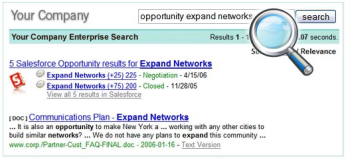
From Tony Romano: “Re: Google. A hospital where I used to work was looking for a CMS to run our intranet and to search documents. Proposals ran into the tens of thousands of dollars and required an IT learning curve. Enter Google Appliance for $3K – searchable documents from the storage servers already set up.” I love Google Search Appliance and it truly mystifies me why most hospitals don’t have it. Why work to set up a complicated folder structure, permissions, and document naming convention when you can just let Google crawl the darned things and offer a full-text search? Everybody has tons of policies, paper order sets, forms, meeting minutes, lists, etc., but nobody can ever find them easily. Google Mini handles 50,000 documents for $2,990 for two years.
I got both “like it/don’t like it” comments about putting the biggest news stories first, mostly because of appearance. One person said they didn’t want me picking the top stories and instead suggested tagging every item in some way, but that’s beyond the scope of this little makeover. So, here’s the compromise, as you’ve already seen. I’ll put the headlines of what I think are the main news items first, then go right into the usual format.
McKesson announces Q1 numbers: flat revenues, EPS $1.06 vs. $0.83, handily beating earnings estimates. The company raised its full-year outlook.
Meddius announces the launch of SecureTransport, an SSL-based connectivity platform that allows healthcare networks to exchange information over a public network without using site-to-site VPNs.
Stamford Hospital (CT) buys 100 licenses for eClinicalWorks. The hospital will use EHR, PM, the patient portal, the electronic health exchange, the Enterprise Business Optimizer, and eClinicalMobile.
I don’t even know where to begin with the spelling and grammar errors in this CIO job posting. Other than bizarre upper case and underlining, maybe the zero-for-two spelling of the two vendors mentioned: “Siemans” and “GE Contricity.” Or, maybe they’ve had a bad experience with GE and made up their own derogatory name.
Confirmed in a Modern Healthcare story by Joe Conn: one of the halted VA projects is the one that would have replaced VistA’s LIS with Cerner. That could be a bump in the road or it could be a second chance to reevaluate what a lot of people (me being one) thought was an ill-advised push toward commercial software.
Healthcare Growth Partners releases its Q2 HIT industry transaction report (warning: PDF).

St. Barnabas Hospital (NY) chooses Eclipsys Sunrise Acute Care, hoping for a quick implementation that will meet meaningful use requirements.
I Google “histalk” a couple of times a year just to see who’s saying what, so I was happy to find a PowerPoint PDF from John Lillie, interface supervisor at SISU Medical Systems (it’s a non-profit IT resource sharing organization in Duluth, MN). In his slide urging attendees to keep up with their HIT education, he mentioned, in order, the State of Minnesota, HIStalk, HIMSS, AMDIS, and HITSP. Thanks, John. I need to buy him a beer or something.
Inga did a great HIStalk Practice interview with Christoph Diasio, a pediatrician who likes technology, but not necessarily EHRs that take more of his time. “That’s just not enough money for it to be worth it for me to do this. This is just a major gift to the EMR industry and it’s the guy who’s head of the VA said, ‘We’ve basically had major market failure,’ and that’s why you’re having to pay people to adopt EMRs that slow them down. A one-time payment or a couple years’ payment is just not going to be enough to convince me that I should do something that doesn’t make sense to me.”
A New Zealand newspaper article says the growth of integration technology vendor Orion Health has slowed from the predicted 20-30%, much of that because of hospital conditions in the US. Says the CEO, “Even though there is going to be a huge investment over the next three years, in the last six months there have been hospitals that have been struggling.”
Speaking of Orion Health, estimates for an EHR for New Zealand are $32-$96 million US if you believe the government or $300 million if you believe Orion’s CEO. He mostly seems unhappy at the prospect of competing with US vendors for the business, saying the health boards seem “pretty keen on getting a big American product in here … If they are New Zealand-supplied solutions, we can take that intellectual property and can sell it to the rest of the world.”
Agfa’s Q2 numbers: revenue down 12.9%, earnings up 2.7%. Healthcare sales dropped because customers delayed their IT investments.
Inga and I have been working hard to bring you some interesting interviews, several of which are yet to come. Know someone we should talk to, preferably on the non-vendor side of the house so that nobody claims bias?
A proposed e-health plan for Australia recommends that the government steer clear of a “big procurement” free market approach and instead create standards and technology goals that developers can follow, with e-prescribing being the highest priority.
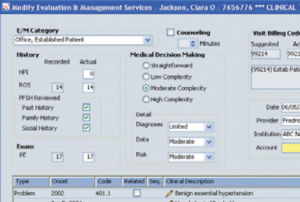
Agilent Technologies will acquire rival medical instrument maker Varian for $1.5 billion. It looks like most of the rags missed the HIT connection that we hospital types got immediately: that acquisition includes Varian’s widely used oncology EMR, ARIA (formerly OpTx, acquired by Varian in 2004). Agilent, you may recall, was a 1999 spinoff of Hewlett-Packard’s medical products business by then-CEO Carly Fiorina in her first year with the company. CORRECTION: some of the initial media reports were incorrect and have been updated — thanks to the reader who pointed out that Varian Medical Systems, spun off in 1999, is not part of the acquisition. Agilent is buying only Varian, Inc., which shares its headquarters with Varian Medical Systems. Oddly enough, Varian Medical uses the domain varian.com, which didn’t help my confusion. Also not involved in the deal is a third spinoff, Varian Semiconductor Equipment Associates. So, no change for ARIA customers.
IBM and Nuance announce an expansion of their joint agreement to accelerate the use of advanced speech recognition in several industries, one of them being healthcare and life sciences. IBM still has ViaVoice as far as I can tell (one of the last consumer-grade competitors to Dragon Naturally Speaking), but Nuance even sells that under some kind of exclusive distribution agreement.
HERtalk by Inga
From St. Pauli’s Girl: “Re: new Allscripts partner. I hear that Allscripts has signed on with another strategic partner, this time mPay Gateway.” Unconfirmed, but sounds like it would be a good fit. mPay Gateway offers a Web-based credit card payment system that helps practices calculate and collect patient monies at the time of service.
QuadraMed launches Quantim Coding Simulator, its ICD-10 compliant encoder training tool. The new tool is designed to enable coders to gain proficiency in using ICD-10-CD/ICD-10-PCS code sets. QuadraMed is showing it off at this week’s AHIMA Assembly on Education Symposium in Las Vegas.
Adena Health System (OH) selects Rhapsody Integration Engine to improve access to and facilitate messaging with the hospital’s Meditech system.
Orlando Health expands its use of MedeAnalytics software with the addition of Patient Access Services. The new tool will facilitate front-end patient workflow, including helping staff to estimate patient payment obligations.
RelayHealth signs a deal with VHA to supply its RevRunner financial clearance services. The agreement also establishes revenue management educational opportunities and preferential pricing for VHA’s members.
I mentioned in HIStalkPractice yesterday that obesity rates are rising rapidly and one in four Americans is considered obese. The medical costs for an obese person is $1,492 per year more than normal weight people and 9% of all medical spending is attributed to obesity care. Care for obesity-related conditions is costing us $147 billion a year. Since Congress seems interested in becoming involved in every other part of our life, how about they come up with a plan to give some money for everyone who is not obese and tax those that are? OK, I see all sorts of flaws in the plan, but really, when you consider how much we spend for healthcare compared to other countries and our 30th ranking for life expectancy, shouldn’t we be doing more to “fix” obesity?
Meanwhile, if you are considering bariatric surgery, refer to HealthGrades’ new report identifying the 88 best performing hospitals for the procedure. Patients treated at one of the top hospitals have, on average, a 67% lower chance of serious complications than those treated at poorly rated hospitals.
Speaking of HealthGrades, the company reported Q2 profits of $1.73 million, up from $1.21 million for the same quarter last year. HealthGrades is expecting full year revenues of $50 million, which is a 25% increase over 2008.
Arizona’s University Medical Center contracts with MEDSEEK to redesign its consumer-facing Web portal.
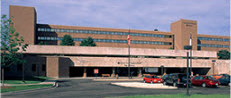
Advocate Health Care (IL) signs a three-year extension for its license to IntraNexus’ SAPPHIRE Patient Financial Management software suite. The extension covers all nine Advocate hospitals and continues a 16-year business relationship.
I love pop culture, but I am officially sick of hearing about Michael Jackson, his probable drug problems, and his likely negligent doctor(s). There. I feel better. OK, now back to pondering what it will take to get an invite to drink a beer at the White House.
In a report to the Board of Trustees for Phelps County Regional Medical Center (MO), CIO David Dowdy reports the hospital’s EMR has helped reduce mortality rates by 15%. Phelps has achieved Stage 6 EMR adoption with its Meditech product.
KLAS releases a new report that concludes hospitals are considering vendor-neutral solutions for archiving and accessing medical images in order to avoid being locked in to closed, proprietary software.
Another KLAS reports suggests that the release of Medtech 6.0 will provide an improved user interface and easier navigation, but many users may struggle to achieve full CPOE adoption. The biggest hurdle for most hospitals will be covering the costs associated with implementation and hardware and infrastructure upgrades.
And, Hilo Medical Center (HI) engages Healthcare Informatics Associates in a multi-year contract to implement MEDITECH 6.0 across its East Hawaii Region facilities.
































I wonder to what degree AI is going to directing/assisting Amazons One Medical providers. If its a text-based encounter, how…