Recent Articles:

Readers Write 4/1/09

April 1, 2009 Readers Write 12 Comments

Comments on Ricky Roma
By Cliff Dickerson

I’ve spent most of my career on The Dark Side, but I rarely have considered it to be that.  Maybe I’m going to always be naïve, but it’s where I’ve witnessed innovation and achievement.

  • I took pride in seeing the glee on the face of the DP director when transmission of the day’s billing was transferred in less than five minutes after removing the cartridge (yes, cartridge) from the Four Phase HIS and inserting it into the Four Phase front-end of a time shared financial system. It beat a day spent key punching by multiple employees.
  • I was ecstatic when the ER nurse (pre-ED days) most vocally opposed to the new system told me that she loved it.
  • I was pleased to know that in less than six months we had registration and ADT up, something that some major medical centers spent two to three years developing in-house or that the IT staff in the early days in a turnkey operation was a fraction of that where in-house development was occurring.

Trained as a biochemist and working in a hospital clinic lab, I fled early on to an HIT vendor. I knew that my happiness was not to be found being a bench tech. (Retention of medical technologists is a tricky act. The University of Illinois Circle Campus, in fact, eliminated its medical technology program upon realization that its graduates were not going to work for healthcare providers, but rather for biotech and pharma companies.)

The vendor life, while often paying more than on the provider side, has its disadvantages. Living out of a suitcase is not fun. Missing out on activities with friends and families is a real drag. 20+ hours of commuting is not so fun either. (When I first started, I left on Sunday afternoons and got home sometime Friday nights. It’s different now. People just don’t want to do that.) 

Oh, and pay? I’ve seen some delivery organizations pay almost as much for its employees as a vendor does. $10K or $15K just doesn’t make up for long commutes and long days.

Now, I could go down a different road. Healthcare organizations traditionally have not paid IT salaries competitive with other companies. (Nor do they spend the same amount of money on IT traditionally – maybe you do get what you pay for.) And, boy, are they surprised when their clinicians turned informatics specialists say that they won’t work more than 40 hours a week unless they get overtime. But, that’s a whole other discussion about something that’s not necessarily unique to American healthcare delivery systems, but pandemic in our culture. We talk about balance, but don’t play the game.

I don’t discount anyone for wanting to make a profit – even not-for-profit health delivery organizations like to do that – and many of their employees and associates profit very well in doing so. Perhaps I should be more cynical in viewing publicly traded healthcare software vendors, but can I fault them anymore than I could fault Chase or Oracle or Phillips? No, I just can’t. (I do think that the American system has some problems. I do think that our American companies often make decisions that are poor in the long-term. I do think that we need to rethink our executive compensation system.)

Value: if someone is willing to pay $3 for $1 of value, well, I figure that they must be getting $3 of value. Or at least feel that they do. Maybe I’m a bit biased because I spent a lot of time studying pricing while working for vendors.

I’m not sure where the 66% failure rate comes from, but it does point out the need for clearly defined, achievable return on investments before the ink is signed. So many people don’t want to do their homework in advance. Technology in and by itself is no balm. It’s the implementation. How you use it. How you promote it. How you plan to ensure success.

I had a CIO teaching a class at a university ask me for a paper or case study about how poor project management lead to the failure of a project. I couldn’t find one. No one really wants to write about or talk about their failures.

Next Generation Hospital Laboratories Become a Driving Force in the Future of Diagnostic IT
By Richard Atkin, President and CEO, Sunquest Information Systems
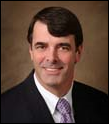
RichardAtkin When Sunquest became a private corporation approximately 18 months ago, no one predicted the tumultuous economic conditions and events that would be taking place in the U.S. and worldwide. And we now know how important the healthcare IT industry’s role will be in helping deliver increased access to care, with improved outcomes, at lower overall cost.

Back in October 2007, we saw a great opportunity for best of suite diagnostic IT solutions and publicly stated the strategic goals that we believed would best serve the current and future needs of our customers. We committed our focus and resources towards enhancing the automation capabilities and clinical workflow of Laboratory Information Solutions, improving patient safety, helping hospitals maintain profitability through outreach services, and to becoming a driving force and leader in the exciting area of predictive and personalized medicine. Now, with the dramatic changes over the past year, these same goals are even more relevant and delivering against them remains our top priority.

We must remember at all times that healthcare delivery is largely local and must be very patient centric. The role of the hospital laboratory in the continuum of care and the effectiveness of the Laboratory Information Solutions it uses are playing an increasingly important role in the successful delivery of clinical care inside the hospital and outside in the community. With approximately 70% of clinical decisions based on results generated in the clinical laboratory, the operational efficiency of the laboratory is critical to the effective delivery of safe, timely patient care. Laboratories are becoming information hubs for patient care, business operations, revenue growth, and the successful development of new technologies for predictive and preventative medicine.

The emergence of the hospital laboratory as a strategic, revenue generating service line, central to the goal of cost effective healthcare delivery is a development we are dedicated to supporting.

Automation & Workflow Efficiency
Laboratory services are central to healthcare delivery. Hundreds of care plan and treatment workflows are dependent on decisions that use lab results – admissions, discharges, medication decisions, follow-up testing and dietary orders to name a few. The shorter and more certain the lab result turnaround time, the faster patients and care providers can make diagnostic and care plan decisions, and the more effective those decisions will be.

Laboratory information systems must not only track, route and manage samples, but also interconnect with the overall Health Information Systems and EMRs being used within hospitals and with systems being used by external physicians and laboratories. By doing so, the transition from inpatient care to outpatient and vice versa is eased, vital resources are used more efficiently and the patient experience is enhanced.

Patient Safety
Patient safety is obviously a top priority for healthcare providers. At Sunquest we developed the concept of the Five Rights of Laboratory testing to champion the contributions the lab makes to the safe delivery of care.

Additionally, we have introduced several new products that support our customer’s goals for improving patient safety, including a closed-loop transfusion management solution. Our automated Specimen-Collection Management system integrates with the LIS and blood bank system, and utilizes wireless handheld devices and bar-coding to ensure positive patient ID at the bedside.

Closing the loop on the blood administration process, the Transfusion Manager solution is specifically designed to support patient safety processes at the bedside by automating nursing workflow and reducing preventable errors from occurring during the transfusion process.

These solutions in use at dozens of our customer sites have succeeded in reducing specimen collection errors to virtually zero at every site where deployed.

Expanding the Community Footprint
In challenging economic times, hospitals must leverage their laboratory as a strategic asset to their overall business operation and revenue generation. A single admitting community physician represents an average of $1.5MM in annual revenue to a hospital. An effective outreach program builds physician and patient relationships while enhancing the reputation of the hospital in the community.

The ability to effectively manage these community relationships is an important strategy for hospitals and the reason why we made two strategic acquisitions in Q4 of 2008.

First we acquired Anglia Healthcare in the UK for their complementary product portfolio of web based communications and messaging solutions. As a result, Sunquest now has the market-leading position in the UK with over 60% market share for laboratory orders and resulting solutions and the technologies to address the broader EU market with solutions that meet the region’s protocol standards and language needs.

We also acquired the Outreach Advantage portfolio from PAML, Spokane, WA. These solutions provide a strong complement to our existing offerings, adding courier, logistics, CRM, and business intelligence applications. The Outreach Advantage portfolio, together with our LIS and revenue cycle solution, results in the single most comprehensive outreach business management suite in the industry.

Predictive & Preventative Medicine
Patient diagnosis and treatments through molecular and genomic testing represent an area of explosive growth, great promise, and significant challenges.

Molecular diagnostics is generating more than 30 million tests annually in the U.S., with dozens of new procedures introduced every year. We are strategically committed to providing the solutions that will enable laboratories to be a leading force in the upcoming revolution with predictive and personalized medicine.

Nearly 85% of our customers already perform molecular testing and interface their instruments and systems with our LIS. One leading example of this is Nationwide Children’s Hospital, who has used its expertise in molecular diagnostics testing for infectious diseases to successfully grow its outreach testing services to support an international market.

Emerging technologies in genetic testing, digital analysis and whole slide imaging are creating a new paradigm for diagnostic medicine. Certainly the workflow inside the laboratory will dramatically shift, but even more significant is the impending transformation in healthcare delivery outside of the laboratory. Pathologists and lab professionals must become more active, visible members of the care team. To do so effectively will require collaboration, communication, and results interpretations that comprise actionable information, not just data.

Conclusion
This is both a very challenging and very exciting time to be in the healthcare industry. As vendors, we must develop and implement new solutions, in partnership with care providers, which make the industry more productive while also helping in the transformation of healthcare delivery. Connecting the laboratory to the continuum of care in the community and facilitating the transition to personalized, predictive and preventative medicines have the potential to revolutionalize patient care, improve wellness, reduce the cost of healthcare over lifetimes, and enhance quality of life for all of us. Sunquest understands its role and shared responsibility towards meeting the healthcare industry’s challenges and opportunities. We are dedicated to creating diagnostic information solutions that enable hospitals to fulfill their missions.

Will $20 billion Solve This Problem?
By Frank Poggio, The Kelzon Group

There was a poignant opinion editorial in the Chicago Tribune this Sunday that got my attention, written by Candy Schulman, entitled “There is a human in that bed”. It caught my eye and got my empathy because I lived that same experience about a year ago. There were however, two major differences. First it happened in a different hospital in a different state. Second, since I have worked in the hospital world as an administrator, systems supplier, and consultant for thirty-five years, I had a better understanding of the issues and therefore was able to force a faster resolution. As I read Candy Shulman’s article I kept asking myself, as I did a year ago, what is really wrong with this ‘system’ and what can be done about it? Also, I kept thinking will $20 billion solve this problem? Let me tell you a little about both stories before I give you my assessment and prognosis.

Candy’s Story – Dumped in the Driveway
Candy tells about her frustration in caring for her elderly mother while an inpatient at a local hospital. Two of her biggest problems came in simply getting her mother discharged at a reasonable time, and the lack of coordination with hospice care. The statement I most reacted to was, “After her month long hospitalization and three weeks in rehab, I tried all day to get her discharged, but ran into a hospital quagmire when I could not get anyone to sign the discharge papers. Finally, at 6 p.m., I left, believing I’d repeat the arduous process the next day”.

“Two hours later the rehab facility sent a bedridden, demented old woman home in an ambulance—alone. I wasn’t called to accompany her home, nor was her devoted live-in aide, Nellie (I was taking her out for a bite to eat after a long, tiring day). My poor confused mother was suddenly dumped into an ambulance. In the driveway of her apartment building, the driver seemed surprised that no one was there to take care of her.”

Candy Schulman’s complete article can be found at: http://www.chicagotribune.com/news/chi-oped0329humanmar29,0,552996.story

My Story – Who’s on First?
In February of last year, I lived through a similar experience. My 88-year-old mother, after years of struggling with CHF and COPD, was admitted to a Florida hospital. After a few days of hospitalization, we were told there was nothing that could be done and death was only a month or two away. My family decided the best course was to move her home and get the local hospice involved to supplement the efforts of me and my sister. I had spoken at length with her cardiologist, internist, and case worker and agreed this was the best course.

Needing a day to work things out with a local Hospice program, the hospital agreed she would be discharged in two days. I lined up the Hospice services to come to her home to set up the medical equipment, complete their assessment and explain to her their plan and what would transpire. Although my mother was severely physically impaired, she was of sound mind and fully cognizant of her surroundings to the day she died.

On the agreed-to day of discharge, I went to the facility to get her at 9 a.m., thinking that by 10 or 10:30 a.m. we’d be on our way. The day before, I told the Hospice staff we would be at her house by 12 noon and they then could commence their process.

To make a long story short, I did not leave that hospital until 1:30 p.m. that day, and then it was only because having worked in a hospital earlier in my career I knew how disjointed things can get. I personally tracked down the admitting doctor (not her cardiologist or internist) and brought him to the room to write the discharge orders and sign it. That was at 12:30 p.m. and still a number of other nursing and related tasks had to be completed. All the while I was running around the hospital, and in and out of her room, my mother kept asking, "Don’t these people know what they are doing and when can I go home?” I kept answering, “No they don’t, and if we’re not out by 2 p.m., we will leave AMA!”

What Went Wrong?
Everything involved with communication, coordination, and follow-up. No one knew who was on first, who had main responsibility, or what needed to be done next. As best I can tell, everyone involved was waiting for the next person to do his/her task, when in fact many of the tasks could have been done concurrently. Meanwhile this hospital has been using one of the leading HIS packages in the country for more than a decade.

So let’s spend $20 billion on new HIT/EMR systems like Cerner, or Epic, McKesson, GE, Siemens, or Meditech — whatever flavor you like. It won’t matter. Although they may help a little, in my opinion, none of them can solve this problem. Here’s why.

The problem Candy and I described is not a data storage (EMR) or transactional (HIS) problem. It is a communication, coordination, trans-departmental workflow and management problem. Yes, HIT vendor systems can do communication, but they do very little, if anything, for work flow coordination and communication and almost nothing outside of ancillary medical services. These systems are great at ordering an x-ray and making sure radiology does the prep work, then delivering the results to clinicians and placing an image in the EMR. But what if that patient needs a dietary consult and the dietician comes to the room while the patient is still sitting in x-ray, one hour late for a test that was to be done at 1 p.m.? They almost totally ignore non-medical support services such as social work consults, dietary reviews, transportation needs, patient location or education, timely discharge orders, and more. Such tasks typically fall to nursing to ‘manage’. Inevitably one or more falls through the cracks, and when one fails the whole process collapses and the patient suffers.

Unfortunately, this problem is pervasive across health institutions as identified by a recent report issued by the National Academy of Sciences – Institute of Medicine (IOM) entitled Computational Technology for Effective Health Care: Immediate Steps and Strategic Direction. The report states: “Health care decisions often require reasoning under high degrees of uncertainty about the patient’s medical state and the effectiveness of past and future treatments for the particular patient. In addition, medical workflows are often complex and non-transparent and are characterized by many interruptions, inadequately defined roles and responsibilities, poorly kept and managed schedules, and little documentation of steps, expectations, and outcomes.”

If you still do not believe it is pervasive, then answer these simple questions. Does your facility have a time of discharge policy? If yes, what percentage of the cases hit that time within 15 or 30 minutes? Of course if you can’t answer either, that’s proof enough.

During my years as a hospital CIO /CFO and as a system’s developer I believed that the ever-expanding HIS tools and developing EMRs would someday address this problem. Today, after many years of hands-on experience at all levels, I am convinced they cannot and will not. In a nutshell, I have come to the conclusion this in not an information technology problem. It is a work flow process problem, a communication problem, and lastly, a management problem. It is not a department problem, but an inter-department or enterprise problem. An HIS /EMR can help solve it, but using those tools alone you are doomed to fail.

What is Needed?
The seemingly simple goal of implementing a set discharge time and meeting it has many challenges such as poor inter-department coordination and poor integrated work flow. Inter-department resource coordination founded on solid work flow documentation and monitoring tools is critical to successful patient flow and meeting discharge targets. Fortunately there are many sophisticated work flow tools developed outside of health care that can be used to help achieve better patient flow and control. Private industry has used tools such as optimization, production coordination, queuing analysis, and sophisticated enterprise scheduling for decades. Some of these are finding their way into health care now, but very slowly.

These tools go beyond electronic bed boards and digitized paper forms, both of which are needed but only address the symptoms. Hospitals need to know real time where they stand for any given patient. In effect, a Gantt chart or patient critical path for all activities is needed to meet a specific goal or target discharge time. Remember, a delayed discharge costs the hospital money and it’s the primary reason for ED diversions, which typically lead to large ED capital expenditures.

Proper coordination of all services (ancillary and non-ancillary) can help hospitals get through these tough times. It’s not easy, but by better utilizing your current resources, (staff, equipment and technology), through better work flow coordination, you can significantly improve patient throughput to drive improved productivity, reduced costs, enhanced revenues, and most importantly, increased patient satisfaction.

While in the hospital my mom, and I would believe Candy’s mom, received excellent medical care from some very dedicated and overworked people. But what we remember most clearly was the bungled discharge process that colored their entire stay. Medicare starts this year to measure patient satisfaction, so bungled discharges will soon become a costly mistake.
News 4/1/09

March 31, 2009 News 10 Comments

From Tyrone C. Earl: "Re: Pyxis. 800 people laid off today. The regional manager came in today to tell us that one of the people was our PM for our go-live this week (nice timing). He said we had to wait two hours before we told anyone." The company just announced that it will eliminate 1,300 jobs when it spins off CareFusion. The announcement mentioned 800 layoffs, so maybe that’s not a coincidence.

From Eclipsys Layoffs, aka A Passage to India: "Re: Layoffs. Once again the ‘leadership’ at Eclipsys has cut 100 (give or take) positions. So what exactly have Eclipsys stockholders gotten from Andy’s multi-million dollar leadership team? Lower stock price, fewer sales, and an employee base that’s being slowly exported to India." Unverified, although someone I know got the axe and also gave the 100 number, mostly from development, and also said that development SVP Joe Petro resigned (but he’s still on the Web page, so I’m not sure about that). I would blame the economy more than the company.

From Alexander B. Fitzhugh: "Re: BearingPoint. Healthcare consulting (which consists of the Federal, Provider and Payor practices) is part of the Public Services business unit. The information in the link you provided is correct, Deloitte intends to buy PS. According to Kelvin Womack (VP and sector lead for Healthcare), almost all employees within Healthcare are going to move over to Deloitte."

From Anony: "Re: GE. Harrison Hospital (Bremerton, WA) selects GE Centricity for its 25 hospital physicians. Also purchased were 100 licenses for a community Stark offering and GE’s Health Information Exchange (HIE). Expect a press release in the next week."

From Kat & Mouse: "Re: McKesson layoffs. A good source states the layoff was around 600. The source was one of them, given severance and time to find new job. Source stated that McK had over-expanded last year – nothing to do with issues related to the stimulus." Unverified.

From Yancy Derringer: "Re: KPIT. Insiders say 400 more will be let go in June. The IBM announcement was rumored the day the new CIO came to KP because he did the same thing in his last two jobs (both outside healthcare) and the new VP he hired did the same." Props to Dr. Mark Craig, who rumor reported to me in October 2007, "The prevalent rumor is that the new CIO and his new hires are on an outsourcing train and the train is powered by IBM.”

slh 

From The Beeb: "Re: Second Life used to teach doctors." Link. Imperial College London’s interactive hospital simulation is used to teach third-year med students. The on-screen characters resemble faculty members, students review recordings of real-life patient breathing, and the game stops if students forget to wash their hands.

lorievans

From New York Cynic: "Re: move. Lori Evans, 39, rising Health IT star Deputy Commissioner 4 NY Office of Health Information Technology Transformation has left after only 2 years and is positioning herself for her next move. Although she was anticipated to be CEO of the National eHealth Collaborative, this has been put on hold as the role of NeHC is in question under the stimulus plans policy committee. Her connections to the previous administration (Brailer) precludes any position with the current administration or ONC but watch for some serious re-branding to occur."

From People Love to Gamble: "Re: prize. What prize will you be giving to the 2 millionth visitor to the site? ;-)" I like the idea, but there’s no way to identify who the visitor is. And, it looks like I’m out of time to think about it since the magic number will be reached sometime Wednesday or Thursday at the usual rate. It’s a good time for me to thank the people who read and sponsor HIStalk. I remember with total clarity when I was thrilled to look at the e-mail list and see 31 subscribers (now at 4,000) and to see that long-awaited first thousand page views (now at over 3 million). I’m just as thrilled and surprised now.

Listening: Crack The Skye, the new release from Mastodon, the Grammy-nominated, 70s-sounding (Sabbath meets Green Carnation) new wave heavy metal that covers Stephen Hawking, Czarist Russia, and astral travel. Diggin’ it.

If you RSVPed and are coming to the reception Monday, we’ll probably start our little program at around 7:45 or so (the event runs 7 until 9). We’re playing it by ear, but I was thinking that leaving some networking time afterward would be fun since we may recognize a few people from the podium that you’ll want to chat with. And if you have signed up, please make sure to respond the confirming e-mail from Ingenix since we’ve got waitlisted people who would be happy to take your spot if you can’t make it after all. I’m heading out to Chicago early, so I will report from there starting Saturday evening, enjoying the snow and freezing (not).

Speaking of HIMSS, here’s our list of who you should see in the exhibit hall, those sponsors who keep the presses pressing right here. These are the cool people. Want a nice, printer-ready copy perfectly formatted for taking along? Here you go. Tell them thanks for sponsoring HIStalk, will you?

Among those companies making the short list to provide a new national pathology system for Wales: Cerner and InterSystems.

Over on HIStalk Practice, we did an "HIT Moment with …" Michael Stearns, president and CEO of e-MDs.

A nice piece on Cleveland Clinic’s HealthVault pilot, highlighting one hypertensive patient’s experience. Says a doctor there: "We’ve not been connecting as well as we should have. I think this is where the future is."

Nicholas Casabona is promoted to CIO of Winthrop-University Hospital (NY).

metrics3d

Rich Temple, CIO at AristaCare Health Services (NJ), tells me he’s signed a contract to implement business intelligence tools from ABS System Consultants as the Canadian company’s first US LTC customer.

care360

Quest Diagnostics is quietly releasing a free iPhone application that will run the Care360 physician portal of its subsidiary, MedPlus.

E-mail me.


HERtalk by Inga

From Clueless: "Re: What to wear? Inga – can you advise re: dress code at the HIStalk/Ingenix soiree?" Good question. As Mr. H babbles on about recommends which education sessions to attend, I am glad that someone has the good sense to be asking the important questions. So, always start with the shoes. The weather on Monday is currently forecast for a high of 39 degrees and rainy, with snow and freezing weather by the evening. Clearly not conducive to high-heeled stilettos, which would be the preferred footwear for such a festive occasion. Unless you are staying at the Trump Hotel and simply taking an elevator to the party, such shoes will be a challenge. If you bring a large purse, you could always change out of your ugly shoes and into elegant footwear once you arrive at the hotel. But, gentle reader, I will let you figure that out those logistics. Once you settle on shoes, nothing else really matters. However, I will say that last year we had everything from lovely cocktail dresses and suits to those just-off-the-exhibit-floor khakis with tacky golf shirts that shout the name of one’s employer and are ill-fitting on 90% of all wearers. Don’t worry if you are appropriately dressed. We really just want you to have fun and say very loudly how much you love Mr. H and Inga. 

pants_thumb[4]   voalte_thumb[13]

From Confused: "Re: Pink pants at HIMSS….Is this going too overboard? We want to stand out, but I think this might be pushing it. Currently we plan on wearing black t-shirts with the following logo and khaki pants. Your feedback is greatly appreciated." After suggesting to Confused that only real men can wear pink, Confused said that was enough of a challenge to his team’s collective manhood that they decided the pants were a go. I’m hoping they’ll show off the fancy pants at our HIStalk/Ingenix gathering.

From Pacstech: "Re: RealAge Response. Thought this might interest you. I thought the same thing as New York Cynic after taking their ‘survey,’ carefully opting out of any offers (many) to have them send me health related info." Pacstech forwarded us a copy of a note he received from the RealAge people, who claim the information people provide "is never shared" with advertisers or anyone else, though if you opt for e-mail offers, you will get links from advertisers. I asked privacy rights advocate Dr. Deb Peel for her take on the note and here was her response: "The most important point is how can we trust them or any other health-related website? They all say they never do anything wrong, but where is there any objective evidence, proof of what they say, or certification by an independent outside consumer-led certification organization?  No trust without verification. Those who handle Americans’ sensitive personal data all promise great things but when it comes to our MOST sensitive personal information (health information) we need verification. (We are trying to launch our privacy certification later this year.)" All I can say is that I took the RealAge test a few months ago and was pleased how it so accurately shaved several years off of my not-real age.

The ever-humble Mr. H hasn’t mentioned this recently, but it looks like HIStalk will hit the 2,000,000 visitor milestone by the end of the week. Mr. H is the genius behind HIStalk, so if you are a fan, send him a congrats, kudos, felicitations, or a thatta  boy. And thanks for reading.

Eclipsys announces that Lahey Clinic will implement the Sunrise suite of clinical products for its two-hospital delivery system. Lahey will also add Eclipsys’ clinical and financial decision support solutions.

West Carroll Memorial Hospital (LA) implements Healthland’s EMR solution for its 33-bed hospital.

Motorola and Vocera sign a joint marketing deal to offer the Vocera system on Motorola’s VoWLAN smartphones.

We interviewed Linda Peitzman, MD, CMO of Wolters Kluwer Health Clinical Solutions, on HIStech Report.

British doctors find that using maggots to treat leg ulcers is just as effective as using gel. Both are similar in cost, but the maggot alternative is a viable option for remote areas without access to good medical care. Unfortunately, the maggot treatment is more painful. Ick.

Suburban Hospital Healthcare System (MD) selects McKesson’s Horizon Clinicals and revenue management solutions.

An engaged front-line team, supported by an electronic health record and a clinical care registry, is credited with reducing the deaths of patients with coronary health disease by 73 percent, according to the results of a Colorado program piloted by Kaiser Permanente. The pilot care program linked pharmacists, nurses, primary care physicians, and cardiologists and included such tactics as proactive patient outreach, education, lifestyle adjustments and effective medication management.

AT&T and Mednet Healthcare Technologies partner to help doctors and patients remotely monitor heart arrhythmia through personal mobile devices. Using Mednet’s HEARTRAK External Cardiac Ambulatory Telemetry solution, heart monitor data is transmitted via Bluetooth-enabled cell phones.

w maryland_thumb[2]

Western Maryland Health Systems (MD) plans to implement Agfa Healthcare’s IMPAX Cardiovascular imaging and information management solution when it opens its new Regional Medical Center later this year.

Streamline Health Solutions announces that a "leading West Coast university-affiliated surgery department" will implement its enterprise document management and workflow solutions. The "unnamed" university is easy to identify if you view the link to the press announcement. This is the second time we’ve noticed Streamline declining to name their client in the actual release, but revealing it in the link. Perhaps they are intentionally revealing the client’s identify in this subtle way so people like me can feel like a smarty-pants.

Blood Centers of America endorses Mediware’s blood center technology product strategy. Member blood banks will now have access to special Mediware pricing.

Kaiser fires 15 hospital workers and disciplines another eight for peaking at octomom Nadya Suleman’s medical records. Suleman’s attorney suspects the employees were trying to find information on the sperm donor.

After paying contractors billions to create the DoD’s AHLTA military EMR system, officials introduce a plan to re-shape the system. The new strategy seeks to improve provider satisfaction, improve reliability, and strengthen data sharing throughout the DOD and the VA.

Oakwood Healthcare System (MI) selects PatientKeeper to streamline physician access to its clinical information.

E-mail Inga.

Pam Pure Leaves McKesson

March 31, 2009 News 87 Comments

McKesson announced this morning that Pamela J. Pure, executive vice president and president of McKesson Technology Solutions, has left the company as of yesterday. No reason was given for her departure and no replacement was named.

Mr. HIStalk’s Must-See Vendors for HIMSS 2009

March 29, 2009 News Comments Off on Mr. HIStalk’s Must-See Vendors for HIMSS 2009


Allscriptsallscriptslogo

Booth 1303

Contact:
Todd Stein, Senior Manager/Public Relations
312-506-1216
todd.stein@allscripts.com

The new Allscripts is the clear leader in software, services, information and connectivity solutions that empower physicians and other healthcare providers to deliver best-in-class patient safety, clinical outcomes and financial results. Nationwide, more than 150,000 physicians, 700 hospitals and thousands of other healthcare providers in clinics, post-acute care facilities, and homecare agencies utilize Allscripts solutions to automate and connect their clinical and business operations. Together with our clients, Allscripts is transforming our disconnected ‘healthcare’ system into a connected system of ‘health.’

Allscripts Says: Do you know why The Time Is NOW to adopt electronic health records? Learn more about the Stimulus incentives at the Allscripts booth (1303) at HIMSS. We’ll be talking about why you should begin taking steps NOW toward implementation.


API api

Booth 2007

Contact:
Jim Klink, VP of Sales
262.670.2711
jim.klink@apihealthcare.com

API Healthcare is the leading provider of human capital management solutions to the healthcare industry including time and attendance, staffing and scheduling, patient classification, payroll, human resource, and business intelligence. Founded in 1982, API Healthcare has more than 600 installations in the North America, with clients ranging in size from 500 employees to more than 30,000 employees. The company’s Payrollmation® system has been rated by KLAS as the top time and attendance system for the last seven years.

API Says: As the experts in optimizing human capital management in the healthcare industry, we can help with some of your most pressing business concerns: minimizing labor costs, increasing employee satisfaction and improving patient outcomes.


ATTatt

Booth 612

Contact:
Tammi DeVore, Sr Healthcare Marketing Manager
206.422.2416
tammi.devore@att.com

www.att.com/healthcare

AT&T Mobility is the leader in healthcare communications, combining innovation and industry experience to use technology in new ways and in new places. We are committed to helping you transform healthcare delivery by wirelessly enabling clinician workflow. Using our ecosystem of alliance vendors, AT&T provides products and services that meet your goals of improved patient care and business productivity.

AT&T Says: Discover new ways to mobilize your clinicians, launch new telehealth solutions, and integrate devices within the Healthcare enterprise system. Interact with innovative technologies, speak with specialists and discuss unique solutions for your organization.

AT&T will demonstrate cellular and WiFi communication solutions for healthcare providers which enable delivery of real-time data via smartphones and other mobile devices. These solutions include Enterprise Paging, Results Reporting, Alerting, ePrescribing, Physician Portals, Homecare, Decision Support and Communications for healthcare professionals. All solutions serve to improve the quality of care and improve the efficiency of operations.


Caretechcaretech

Booth 7030

Contact:
Jody Meehan Director, Marketing & Communications
(248) 823-0900
www.caretechsolutions.com
jody.meehan@caretechsolutions.com

CareTech Solutions, Inc., an Information Technology and Web Products & Services provider for hospitals and health systems, is committed to creating value for clients through customized, flexible solutions that contribute to improving patient care while lowering healthcare costs. From implementing emerging technologies to supporting day-to-day operations, CareTech offers clients expert services across the entire patient data lifecycle.

CareTech Soluions Says: CareTech Solutions won a coveted 2008 Best in KLAS award for the IT Outsourcing (Extensive) market segment, as ranked by healthcare executives and professionals in the 2008 Top 20 Best in KLAS Awards report. CareTech’s Best in KLAS distinction follows the company’s achievement of market-leading overall performance scores in KLAS’ 2008 Extensive IT Outsourcing Study.


Cumberland Consulting Groupcumblerland

Booth 4475

Contact:
Jim Lewis
Managing Partner
(615) 373-4470
jim.lewis@cumberlandcg.com
www.cumberlandcg.com

Cumberland Consulting Group is a national technology implementation and project management firm serving ambulatory, acute, and post-acute healthcare providers. Through the implementation of new technologies, we help our clients advance the quality of care they deliver, and improve their business performance. Cumberland is also a great place to work, placing fifth on Consulting Magazine’s 2008 ranking of America’s Best Small Firms to Work For.

Cumberland Consulting Group Says: Learn about a new alternative. We are a relatively new company with an excellent delivery record and a lean operating model that allows us to deliver big company results at a very attractive price. Our clients appreciate our business approach and the small firm commitment and attention we provide. We love our work and we take the success of our clients very personally.


dbMotion

Booth 1673
Greg Morehouse
(866) 409-5723 x2252
ww.dbmotion.com

dbMotion’s SOA-based health interoperability and intelligence solution enables healthcare organizations and health information exchanges (HIEs) to meaningfully integrate and leverage their information assets, driving improvements in the quality, safety and efficiency of patient care. dbMotion transforms care through the creation of an integrated patient record that bridges gaps between inpatient/acute care and community care.

 db Motion Says: Consider this—eligible hospitals that achieve ‘meaningful use’ of patient information today will be positioned to benefit from bonus incentive payments under Medicare through The American Recovery and Reinvestment Act of 2009. Can your IT investment demonstrate significant clinical and financial impact while providing true interoperability? dbMotion can. Stop by to learn how.


Eclipsyseclipsys1

Booth 2603

Contact
Eclipsys Corporation
Three Ravinia Drive
Atlanta, GA 30346-2156
Toll-free: (800) 869-8300
PeakPractice Sales: 877-633-6683 x657

As The Outcomes Company®, Eclipsys offers advanced integrated clinical, revenue cycle and performance management software, clinical content and professional services that help healthcare organizations achieve improved clinical, financial and operational outcomes.

Eclipsys Says: Visit Eclipsys in Booth #2603, Hall A, during HIMSS09 to see how real organizations with real challenges are using our solutions to drive performance and improve outcomes. In addition to our Sunrise Enterprise ™ solution suite, we’ll showcase our Web-based Eclipsys Practice Solutions, the cost- and resource-efficient practice management and EMR solutions, along with our new Eclipsys Performance Management solutions—(Sunrise EPSi™, Sunrise Clinical Analytics™, Sunrise Patient Flow™) that create actionable information to guide the timely, enterprise-wide intervention critical to positive performance.


e-MDsemds

Booth 4459

Contact:
Andrea Lesh, VP of Sales & Marketing
512-257-5200
www.emds.com
sales@e-mds.com

e-MDs is a leading developer of healthcare software solutions, including clinical, financial and document management modules designed to automate medical practice processes and chart management. With e-MDs, medical practices can visit, code and bill with a single application. e-MDs – Charting The Future of Healthcare.

e-MDs Says: Come see the integrated EHR/PM solution Top Ranked by medical societies, including the AAFP and ACP, for its Functionality and Ease of Use. Get a hands on demonstration of the most flexible, scalable and user friendly solution on the market today, and ask about our “next generation” product line coming very soon.


Enterprise Software Developmententerprise software

Booth 7927

Contact:
Joseph Torti, President
5151 Monroe St. Suite 101
Toledo, Ohio 43623
www.enterprisesoftwaredevelopment.com
419-841-3179
jtorti@enterprisesoftwaredevelopment.com

Enterprise Software Development is a leading independent consulting firm dedicated to assisting healthcare organizations with their diversified business and Information Technology needs. Our services and solutions include IT management consulting, supplemental staff augmentations, clinical and system transformation, implementation and integration, as well as education and training in Cerner®, Siemens®, Epic®, Eclipsys®, MEDITECH, and McKesson systems.

Enterprise Software Development, LLC Says: Stop by and learn how our consultants allow your staff to focus on what they do best and help you make sure you have the tools you need to implement facility wide configuration, project planning, and training for executing your new or upgraded system. Our consultants can integrate with your staff at a professional level and compliment your team. We are a simple solution with a personal touch to your Clinical transformations.


GetWellNetworkgetwellnetwork

Booth 3413

Contact:
Michael Schram, VP, Sales
240.482.3200
mschram@getwellnetwork.com
www.getwellnetwork.com

GetWellNetwork works with leading hospitals to engage patients in their care. Transforming in-room televisions into an interactive resource, patients are invited to get involved in their education, safety, service, discharge preparation, and more. The result is first felt by patients, then measured in improved satisfaction, quality and operational performance.

GetWellNetwork Says: Stop by our booth at 11:15 am on Tuesday for a special presentation with Russ Branzell, Chief Information Officer at Poudre Valley Health System, and find out about the impact that Interactive Patient Care is having on their care process and IT operations.


Greenway greenway

Booth 3910

Contact:
Rebekah Green, Marketing Analyst
866.242.3805
info@greenwaymedical.com
www.greenwaymedical.com

Greenway Medical Technologies is a leading provider of an integrated, single-database electronic health record (EHR), practice management and interoperability solution for physician practices and hospital community EHR strategies. Greenway’s CCHIT Certified® 08 ambulatory EHR solution, PrimeSuite® 2008, streamlines a practice’s clinical, financial and administrative processes while increasing practice profitability.

Greenway Medical Technologies Says: With the recent passing of the American Recovery and Reinvestment Act of 2009 “the stimulus bill”, physicians and medical practices have more incentive now than ever before to adopt an EHR solution. Greenway Medical solutions are designed to maximize return on investment while enhancing the quality of care physicians can provide their patients.


healthcare growth partners

Healthcare Growth Partners

Booth 3081

Healthcare Growth Partners provides investment banking and strategic advisory services to small and mid-size, high-growth companies with an exclusive focus on healthcare information technology and technology-enabled services. With this focus, the firm leverages its experienced management team, strong execution capabilities, and deep network of contacts within the industry to provide efficient and high value processes for clients.


Informatics Corporation of America (ICA)ica

Booth 3476

Contact:
John Tempesco
Vice President, Client Services and Marketing
Main Office (615) 866-1465 – Cell (803) 351-8161
www.icainformatics.com
john.tempesco@icainformatics.com

Informatics Corporation of America (ICA) was created with nationally renowned Vanderbilt Medical Center to take innovative technology developed by Vanderbilt physicians to the broader healthcare market. Today ICA is unmatched in its ability to deliver a cost-effective, proven solution that leverages complete data across clinical settings to aid decision-making and improve patient outcomes.

ICA Says: Drop by the ICA booth and talk to Dr. Jonathan Anderson of the Health Information Exchange of Montana about how physicians use the ICA solution to improve care in northwest Montana.


Ingenix Consultingingenix

Booth 626

Contact:
800-765-6897
impact@ingenix.com
www.ingenix.com
www.ingenixconsulting.com

Ingenix is a leading technology company working to improve healthcare through the power of information. Ingenix helps to enhance efficiency, accuracy, and quality in thousands of payer, hospital, physician, employer, and public sector organizations. Ingenix Consulting is a premier, data-driven health and human services consulting organization.  We have over 1,000 consultants with experience working with hospitals, physician practices, health plans, employers, government agencies and pharmaceutical companies.  This scale and exclusive health and human services focus set us apart.

Ingenix Says: See for yourself how our combination of information, technology and expertise can help you improve quality while reducing administrative burdens, meet the challenge of ever-expanding regulations, and thrive in a down economy. Stop by booth #626 to watch a presentation by one of our industry experts or to chat about your challenges.


McKessonmckesson

Booth 1213

Contact:
Joey Nord
McKesson
5995 Windward Parkway
Alpharetta, GA 30005
404-338-2414
Joey.nord@mckesson.com
www.mckesson.com/mpt

McKesson is a leader in software, automation, services and consulting to hospitals, physician practices, imaging centers, homecare agencies and payors. We also provide interactive connectivity services that streamline clinical, financial and administrative communication for healthcare stakeholders. The result? Care that is safer, more efficient, and better connected.

McKesson Says: McKesson experts will be available to discuss: healthcare IT incentives included in the American Recovery and Reinvestment Act and possible implications for hospitals and health systems; how IT can help improve care quality and productivity; eligibility and coding solutions that can positively affect cash flow and financial performance now; services to leverage existing IT and enable you to prepare for the Recovery Audit Contractor (RAC) program, manage the audit process and mitigate future risk.


Medicitymedicity

Booth 4443

Contact:
Greg Miller, Sr. Vice President Sales & Marketing
(801) 322-4444
www.Medicity.com
Sales@medicity.com

Medicity is the market leader enabling clinicians to access, exchange, share and collaborate with patient-centric clinical information located in disparate systems across multiple care locations. By leveraging Medicity’s Care Collaboration Platform, physicians, hospitals and Health Information Exchanges (HIEs) optimize clinical workflow, enhance patient safety and deliver cost-effective, efficient healthcare to patients and communities.

Medicity says: Medicity’s unique single point of access to clinical data, aggregated from disparate systems across care locations, empowers hospitals, health systems and HIE’s to deliver superior quality, more cost-effective, highly efficient and better coordinated healthcare.


MEDSEEKmedseek

Booth 1238

Contact:
Rich Grehalva, SVP Marketing & Consulting Svcs.
www.medseek.com
rich.grehalva@medseek.com

MEDSEEK provides healthcare organizations with enterprise eHealth solutions to fully engage and strengthen relationships with key constituents – physicians, patients, employees, and consumers. By connecting information and communities to foster an enhanced experience with the organization, hospitals will improve community advocacy, revenue and patient acquisition/retention, physician relations, and clinical decision making.

MEDSEEK says: Enhancing the experience is an expectation of all users within the healthcare community. A key to improving revenue while decreasing expenses is through the effective use of enterprise eHealth solutions. Visit us at HIMSS in Chicago to learn how we are improving the overall experience of patients, consumers, clinicians, physicians and employees, and to hear details about our HIE/RHIO solution.


NextGennextgen

Booth 1242

Contact:
NextGen Healthcare Information Systems, Inc.
215-657-7010
http://www.nextgen.com/
sales@nextgen.com

Hospitals and practices use NextGen because we offer the market’s leading ambulatory EHR and practice management system, featuring interoperability with numerous inpatient systems, specialty content to ensure fast user adoption and standardized data capture, and enterprise architecture to support large, multi-specialty sites. Increase your operational efficiencies with a NextGen® system. Visit us at HIMSS booth #1242 and at the Interoperability Showcase.

NextGen Says: Learn from Next Healthcare how your hospital or practice can take advantage of reimbursements and grants that are available through the healthcare stimulus bill. Our government affairs department, and our grants and funding team are staying abreast of the latest developments. Grant money is now available for Indian Health Centers and for non-profit Community Health Centers. Find out how NextGen can help you.


Nuancenuance1

Booth 1448

Contact:
Elizabeth Swanson, Marketing Assistant
781-656-4300
elizabeth.swanson@nuance.com

The eScription platform from Nuance Healthcare is the leading software for computer aided medical transcription. With eScription, intelligent speech recognition software turns clinician dictations into formatted draft documents that medical transcriptionists-whether in-house or outsourced-quickly review and edit, often doubling productivity, reducing turnaround times, and cutting costs. Customers are continually satisfied with the eScription platform, resulting in a "Best in KLAS" award for the past five consecutive years!

Nuance Says: Come by the Nuance booth to see speech recognition solutions that can help your healthcare organization save costs and increase efficiencies such as the 5-time, Best in KLAS award winner, eScription.


PatientKeeperpatientkeeper

Booth 2917

Contact:
Lauren Tilelli, Marketing Programs Manager
617-987-0465
www.patientkeeper.com
ltilelli@patientkeeper.com

PatientKeeper software improves patient care with a single information environment for physicians—available anytime, anywhere. We make this possible with integration technology that unites patient information across hospitals, physician practices, and communities. With PatientKeeper, hospitals and their physician communities are better aligned—to improve clinical efficiency, achieve patient safety goals and a healthier financial bottom line.

PatientKeeper Says: PatientKeeper says to stop by their booth to learn how you can extend your existing IT investment with hospital and community-wide connectivity – to improve physician affinity and establish a foundation for HIE. Also learn how PatientKeeper’s revenue cycle applications are helping facilities improve cash flow and uncover missing charges.


premise

Premise Corporation   
(now part of Eclipsys)

Booth 2603 (Eclipsys)

Contact:eclipsys1
www.PremiseUSA.com
www.eclipsys.com

Premise Corporation, the nation’s leading provider of enterprise-wide, clinically focused patient flow solutions, is now part of Eclipsys – and Premise solutions are now Sunrise Patient FlowTM. Endorsed by the AHA and used by dozens of top-ranked and magnet facilities, Sunrise Patient Flow is the only patient flow solution that provides automated workflow and communications coupled with clinical visibility in a single system – a unique combination that drives key performance improvements while also ensuring the highest quality care. And, now with more resources and a comprehensive portfolio of products, we’ll not only help you drive efficient patient flow processes, we’ll also help you achieve real outcomes in operational performance.

About Eclipsys
Eclipsys is a leading provider of advanced integrated clinical, revenue cycle, and performance management software, clinical content and professional services that help healthcare organizations improve clinical, financial, operational and client satisfaction outcomes. For more information, visit www.eclipsys.com or email info@eclipsys.com. For details on the Sunrise Patient Flow solutions, see the current Premise web site at www.premiseusa.com


QuadraMed Booth 2023

Contact:
12110 Sunset Hills Road
Reston, VA 20190
703.709.2300
http://www.quadramed.com

QuadraMed develops IT solutions that enable healthcare organizations to simultaneously improve the documentation, quality, safety, and efficiency of patient care along with coding, billing, and collections functions – from initial patient contact through discharge. QuadraMed’s Care-Based Revenue Cycle solutions help hospitals grapple with the business realities of healthcare: the need to achieve financial strength year after year so they can fulfill their mission of providing quality care.

QuadraMed Says: Take our survey at http://www.quadramed.com/himss09/ and receive a free gift!


RelayHealthrelayhealth1

Booth 2051

Contact:
Janeen Cook
1145 Sanctuary Parkway, Suite 200
Alpharetta, GA 30004
770.237.7918
janeen.cook@relayhealth.com
www.relayhealth.com

RelayHealth provides you the ability to create a complete healthcare exchange connecting patients, providers, payors, pharmacies, financial institutions and pharmaceutical manufacturers. It offers interoperable, SaaS clinical, financial and pharmacy connectivity services which accelerate improvement in the quality of care, ensure financial health and create workflow efficiencies.

RelayHealth Says: Financially secure healthcare leader in search of providers looking to get connected. Should be open to long-term commitment to success and prepared to consider interactive solutions. Are you ready for a partner to rock your world? If so, visit RelayHealth at Booth #2051 and find out why you need to get Care Fully Connected.


Sage

Booth 4404

Contact:
2202 N. West Shore Blvd.
Tampa, FL 33607
813.202.5000
http://www.sagehealth.com

Sage Software provides solutions that allow practices to optimize the patient’s experience while enhancing the practice’s bottom line. Our industry-leading three-pronged approach includes products – including practice management, electronic health records and business intelligence software – thirty years of experience, and connectivity that enables electronic communication between practices and other providers, payers and facilities

Sage Software Says: Stop by to see how we connect practices to hospitals, laboratories, payers and patients. We’ll also show you how to make structured documentation look more natural and narrative.


Sentillionsentillion

Booth 743

Contact:
Jennifer Haas, Director, Communications
978-689-9095 ext. 262
www.sentillion.com
jhaas@sentillion.com

Sentillion has successfully combined patented technology with a deep understanding of the healthcare industry to deliver the most comprehensive set of solutions for single sign-on, identity management, clinical workstations and desktop virtualization. Sentillion is the only identity and access management company whose solutions are used daily by over 400,000 caregivers in leading healthcare organizations across North America and the United Kingdom.

Sentillion Says: We will be debuting several exciting new technology solutions and as part of this, guests will have an opportunity to win a Flip Video and other great prizes. Stop by and while you’re in our booth grab a drink (in-booth Happy Hours occurring Sunday-Tuesday, 4:30-6:00 p.m.) and pick up a Sentillion green fish plush toy.


Sentry Data Systemssentry

Booth 7263

Contact:
John Peebles, CIO
800.411.4566
www.sentryds.com

Sentry Data Systems saves you time and money. Sentry offers healthcare business intelligence technology solutions that address a variety of operational, workflow, compliance, and financial challenges found within hospitals and pharmacies. These products include the hospital pharmacy management application Sentinel RCM™ (Revenue Cycle Manager), retail pharmacy transaction processing platform Sentrex™, and the healthcare business intelligence application HealthBIT™ (Business Intelligence Technology). These products run on top of Sentry’s healthcare cloud computing platform, Datanex™, which is available to independent software developers and other healthcare entities.

Sentry Data Systems says: TURN YOUR DATA INTO REAL TIME INFORMATION. In order to succeed and remain viable and competitive, hospitals and other providers need information to make decisions, which result in hard-dollars savings and revenue creation.


Sunquestsunquest

Booth 7522

Contact:
800-748-0692
www.sunquestinfo.com
sales@sunquestinfo.com

Sunquest Information Systems, Inc. delivers the market leading LIS and outreach solutions designed and implemented to fulfill the business objectives of today’s healthcare leaders. Built on the reliable technology required for mission critical applications, Sunquest solutions provide the foundation to optimize the healthcare experience; deliver safe, effective, and timely patient care; expand community reach; and transform the delivery of healthcare with predictive and personalized medicine.

Sunquest says: Sunquest proudly sponsors healthcare leaders speaking on the Five Rights of Laboratory Testing; how successful organizations deliver on the promise of safe, effective care; and what the future of healthcare IT might look like. Visit http://www.sunquestinfo.com/PressEvents/Pages/HIMSS09.aspx for the booth speakers’ schedule and to register for our limited seating breakfast presentation on Monday April 6.


TeraMedica Healthcare Technologyteramedica

Booth 1248

Contact:
Katie Brahm-Barrett, Marketing Communications Manager
10400 Innovation Drive, Suite 200
Milwaukee, WI 53226
Toll-free phone: 866.290.8880
sales@teramedica.com
http://www.teramedica.com

TeraMedica Healthcare Technology’s Evercore ® – Clinical Enterprise Suite software solution connects images, documents, video, sound, or any other information to any EMR/EHR. Evercore provides vendor independence by connecting multiple PACS to any storage system, thus bringing an end to data migration. The solution also manages your data’s lifecycle with clinical-based policies.

TeraMedica Says: TeraMedica is Driven to Optimize – visit our booth #1248 to learn more!

– Driving increased referral revenue by enabling clinicians to work smarter and more efficiently

– Extending image content to the Personal Health Record and patient portals

– Enabling true control over clinical image content using clinically aware data retention policies


Vitalize Consulting Servicesvitalize

Booth 3055

Contact:
Cyndi Vely Cahill
Senior Vice President
610.444.1233 x103
www.getvitalized.com
ccahill@getvitalized.com

Vitalize Consulting Solutions, Inc. (VCS) provides a wide variety of clinical, business and IT solutions for healthcare enterprises across the United States and Canada. Our comprehensive range of programs and services includes system implementation, optimization, custom reporting, technology and integration, education and knowledge transfer in the Cerner®, Siemens®, Epic®, Eclipsys®, MEDITECH and McKesson solutions. Experience VCS. IT’s what differentiates us.

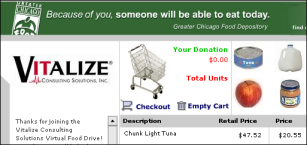
Vitalize Consulting Services Says: Be part of the solution at HIMSS. VCS recognizes that times are tough, so this year we are rallying our HIMSS audience to support one of Chicago’s overburdened food banks. Stop by booth #3055 to pick up a goodie and help erase hunger in the Chicago community.


Wolters Kluwerswolters kluwer

Booth 1045

Laura Gilbert
Director, Marketing Communications
Clinical Solutions
612-313-1506
laura.gilbert@wolterskluwer.com
www.pointofcareapplications.com

From diagnosis and treatment to documentation and coding, Wolters Kluwer Health Clinical Solutions provides end-to-end software solutions and clinical content encompassing the full continuum of care under such universally recognized brand names as UpToDate®, ProVation® Order Sets powered by UpToDate® Decision Support, Medi-Span®, Facts & Comparisons® and ProVation® Medical.

Wolters Kluwer Says: Come discover how our software solutions – designed for clinicians, by clinicians – will streamline workflow, improve quality and safety, reduce costs and increase revenues across your organization.

Comments Off on Mr. HIStalk’s Must-See Vendors for HIMSS 2009

Monday Morning Update 3/30/09

March 28, 2009 News 17 Comments

mptFrom Anon: "Re: McKesson. Layoffs Friday, specifically in Provider Technologies. About 120 employees." I heard that from a couple of people, one of whom put the number at 400-500, but saw no announcement.

From SpeedD: "Re: Meditech. I have heard a rumor that Meditech is allowing employees to buy stock this year." I e-mailed the press contact for confirmation, but haven’t received a response.

From The PACS Designer: "Re: Windows 7. InformationWeek has an excellent video on the key features of the upcoming release of Windows 7, which is expected to happen in late September. TPD likes the DirectAccess, AppLocker, and the  Branch Caching feature in this new enterprise software application. Another nice feature is when you are on the Internet, you are automatically connected to the enterprise server, so you have the same application look that you would have at your employer’s headquarters." Link.

From Bobby Orr: "Re: APACHE. Cerner did buy that and Project Impact and tried to combine them into a Web-based tool called Critical Outcomes (or something along those lines). Don’t know of anyone using the new tool but it seems like everyone still running some version of APACHE."

From Gene D’Machine: "Re: IBM’s healthcare practice. Half of them laid off, I hear." I heard that, too. IBM certainly seems to be doing all it can to alienate providers right as it tries to get business from them.

Chicago weather: 1-2 inches of snow Sunday (I’m writing this Saturday) and a high of 50 this weekend for HIMSS. Not exactly San Diego, is it? The coat check girls will make a fortune.

deparle

Speaking of Chicago, the Tribune covers the business affairs of new White House healthcare czar Nancy-Ann DeParle: she made at least $3.5 million over two years from fees and stock gains, the White House won’t allow her to be interviewed and wouldn’t answer questions about her business history, and neither she nor the White House have released any financial disclosures.

I’ve been to busy to make any kind of HIMSS plan, so I figured I would try the MyHIMSS09 Calendar. The idea is pretty cool: each session has a link to click to add it to your calendar. What I didn’t like: the calendar itself takes up a ton of Web page and there’s no print function, so it will be a bulky set of Web page prints (not a real calendar, just a list of sessions). You can send individual sessions to Outlook, but not the whole set (and not to Gmail). And, every time I tried to remove a session, it locked up my PC with a monstrous CPU utilization from Firefox Javascript, so I’ve got stuff on there to cross off. The session search/browse was also a bit clunky, not allowing searching by session number, by CEU offered, or by presenter (that I could find, anyway). I’m sure I will end up marking on the little pocket version that I hope they haven’t eliminated.

theory

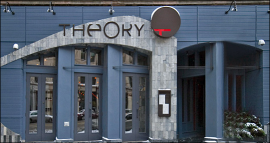
Trey Lauderdale of Voalte, Inc. has arranged an informal NCAA viewing party after the HIStalk HIMSS event Monday evening at Theory sports bar, 9 W. Hubbard St. (a couple of blocks from the Trump). If you’re still hungry, they serve upscale barbeque and Mexican and they’ve got $5 burgers on Monday, which beats the heck out of Sysco prisoner food at the convention center or the usual room service blandwiches that leave you stuffed but unsatisfied. I think Trey is buying the beer. If Theory fills up, he’s got some backup bars next door.

EHR Scope has a new spring edition ready for download. It has several articles on EHR selection and implementation.

ccg 

Thanks much to new HIStalk Platinum Sponsor Cumberland Consulting Group of Brentwood, TN, which has grown to over 50 employees in its six-year existence. It’s a 2008 Music City Future 50 winner and a Consulting Magazine 2008 Best Small Firm to Work For winner. I like this statement: "Reflecting on their Big 4 consulting background, Cumberland’s founding partners were struck by the waste of talent that occurred because of competing priorities and big company bureaucracy." What they do: IT planning, systems selection, implementation, PM, and IT improvement, and just about everything EMR related. I checked the HIMSS directory and it looks like managing partner Jim Lewis will be holding down the fort at Booth 4475, so please let stop by and them you that you appreciate their support of HIStalk like I do.

Speaking of HIMSS, our annual guide to what HIStalk’s sponsors are doing there will be ready for your online reading and downloading shortly. Please show those folks a little booth-visiting love in your exhibit hall travels. Their support of HIStalk and its readers is entirely voluntary and self-initiated: they e-mail for information, I e-mail it to them, and sometimes they e-mail back that they’re in (and many times, don’t). Inga and I don’t advertise, solicit, take calls, provide fancy statistics, reveal our identities or location, or otherwise hand-hold prospective sponsors (I just don’t have the time, working full time in a hospital, and I figure it’s pretty clear what we do here). You can see how cool they are by keeping an eye out for "We Power HIStalk" signs in the HIMSS exhibit hall and stopping by for a howdy. I’ll be doing that myself (incognito, of course).

Everybody likes to speculate who Oracle will buy next, apparently unfazed by the historical 99% rate of being wildly wrong. With a Red Hat rumor in the air, one research firm takes some swags that include Allscripts and Cerner in healthcare. At least the addition of Allscripts is new.

Olympus Medical Center (WA) gets approval for a $2 million GE Centricity practice EMR purchase. This board member must know hospital IT: "There are going to be changes. I just feel them. And I think all of them are going to cost money."

Hospital layoffs: Regional Medical Center at Memphis (TN), 86; Immanuel St. Joseph’s (MN), 100; Jackson Hughston memorial Hospital (AL), 70-80; Barton Healthcare(CA), 43.

Jobs: NextMD Template Designer/Developer, VP of Human Resources, Cerner CPOE Activation Support, Regional Sales Director.

The Orange County Business Journal profiles Sheldon Razin, founder and chairman of Quality Systems Inc. (the NextGen people), saying he took $2,000 of his own money and created a company now worth $1.4 billion. I should have bought shares: they’re up 2,000% since 2000 and even up 10% so far this year.

New on HIStech Report: our interview with Gary Zegiestowsky, CEO of Informatics Corporation of America, which has commercialized Vanderbilt-developed clinical technology that, in Gary’s words, "leverages data across clinical settings and aids decision-making and improved patient outcomes."

Interesting: WSJ covers "brain gyms," where members "work out" with mental fitness software. Scientific evidence is lacking, but previous research found that the brain can rewire itself with new neural connections in response to mental activity, such as cognitive training. Sounds like a good business to get in on early.

Emageon announces that the company has settled what it says is a meritless lawsuit against its acquisition by AMICAS. It also reports that revenue was down 34% in 2008, with net losses of over $42 million.

vantagepoint

I saw Dennis Quaid in a very confusing and awful movie called Vantage Point last week. He had a strange expression throughout, looking crinkle-nosed like he had just gotten a whiff of some foul odor (I think that was his effort to convey discipline and focus). Not even close to his excellent Right Stuff performance. Perhaps he’ll show clips at HIMSS.

Odd lawsuit: a teenager having her tonsils removed in 2006 falls as nurses tried to help her sit up on the OR table. She claims headaches and files suit (three years later) for $8,000 in medical expenses and $992,000 for suffering, future medical expenses, and disability. Who wants to be a millionaire?

E-mail me.

News 3/27/09

March 26, 2009 News 8 Comments

From Skippy Van Oakes: "Re: Keith Hagen. Was the personal reason that he thought that QuadraMed shouldn’t be put up for sale? Chatter on the Yahoo! Finance boards would indicate a distinct possibility." The press release quote from interim CEO Jim Peebles made me wonder: "I am eager to focus on the ways in which the Company can further unlock its potential and increase shareholder value." His additional comments suggested more R&D and positioning for HITECH money rather than a change in ownership, but I understand those who assume quotes referring to shareholder value mean that all options are on the table. I like the company, QCPR is an excellent product, and they are a franchise when it comes to HIM technologies. Their only disadvantage is size compared to the competition. Some of the Yahoo posters took Oracle’s announced acquisition of Relsys this week as a signal of more healthcare interest, but clinical trials software offers a vastly different vertical sales opportunity than the average mid-sized hospital.

From ILoveLA: "Re: Cedars. I heard a rumor that the clinical project at Cedars-Sinai has been halted." I didn’t hear that, but I did hear they got rid of a bunch of Perot people and replaced them with Deloitterers. That’s not verified, but the source who told me should know.

 realage

From New York Cynic: "Re: RealAge. They just set back PHRs and online health information technology about a year." No doubt. Over 27 million people have taken the 150-question RealAge test on the Internet, which purports to calculate your biological age based on personal characteristics rather than date of birth, but was actually collecting targets for drug company advertising, including specific quiz answers and e-mail addresses. RealAge says it discloses everything and doesn’t let the advertisers have the data. Scumbags or not? I’m leaning toward no (the communication came directly from them and users should have expected the worst given the vague privacy agreement), but I bet smoke is coming out of Deb Peel’s ears for their using patient information to kick off personalized marketing blitzes. If we’re ever going to control healthcare costs, can we afford to let wiley drug companies hard sell to often clueless consumers and their customer-friendly doctors willing to oblige? Also gone unnoticed by most: RealAge is owned by Hearst (which paid $100 million for it in 2007), which also owns First DataBank, Zynx Health, and Medscape. This guy saw it coming: "I would think that the 8 million submitters of private medical information would feel a little uncomfortable when their data got acquired by a major publisher, but I haven’t seen any real journalists exploring that angle yet. Oh well, at least it wasn’t a life insurance company."

From Victor Franko: "Re: Emergisoft. Joe DeSilva was probably the best thing to happen to Emergisoft in its history. The company’s bottom line was better, the product was significantly improved, employees were motivated, and customers were happier than before he started. I’m disappointed that the company didn’t have the class to recognize his contributions."

From Bobby Orr: "Re: Eclipsys SCM. Look for announcement of a major SCM win at prestigious teaching and research organization in the Northeast."

From Cleon Jones: "Re: Sutter. A major obstacle in its implementation was organizational and process (making decisions upfront, defining realistic charters, establishing governance, and managing user expectations). They are prime time for a Federalist champion or a good organizational management consultant looking for a challenge. Their IT budget is allocation to individual affiliates and there is not tight corporate governance, so there is little corporate funding available. Consider the first implementation a prototype evaluation."

From Home Provider: "Re: medical homes. A report says their savings will be less than or equal to the monthly fees paid since they will be serving too broad-based a population." Link.

I’m hearing that Orlando Portale, CTO of Palomar Pomerado Health, may be under consideration by House Speaker Pelosi as her appointee to the government’s new HIT advisory board.

A UK hospital chooses MEDITECH v6.0 EPR, a big win given the hospital’s huge project budget and planned scope.

I’m hearing a little buzz that economic pressures are causing some vendors to claim they can’t integrate with third-party systems or, when that doesn’t discourage the customer, charging them a high interface fee plus annual maintenance. Apparently they would rather not share the sandbox play-time, so they are taking their ball and going home. The government and customers want interoperability, but it’s not in the best interest of vendors to allow too much customer independence. That will be interesting to watch. 

Bankrupt Nortel Networks, praying desperately for stimulus crumbs, will demonstrate some new IVR applications at HIMSS.

A UK hospital is chastised for scrapping PCs still containing patient medical records.

Health Robotics announces the early release of its ivStation Profile at a Dubai conference, a biometrically secured IV dispensing system similar to profile-secured dispensing cabinets like Pyxis. Gaspar DeViedma, formerly of Eclipsys, works for them.

HIStalk odds that Rob Kolodner will cash in on his ONCHIT stint by taking a high-level, mostly ceremonial vendor or lobbying job instead of heading back to the VA: eight to one.

McKesson is testing the UK HIT waters for a return following its failure to win NPfIT contracts in 2003, but also after project stumbles opened the field back up again.

Part 4 of our HITECH vendor question series is up on HIStalk Practice.

It’s hard to believe this survey’s conclusion, even though it does appear in JAMA. Only 1.5% of US hospitals have comprehensive clinical systems running in all units, with the number increasing to only 7.6% if you count just one or more units. CPOE for meds is at an embarrassing 17%, with 45% of respondents saying they have no plans to implement it at all. The decision support survey elements are skewed, obviously allowing respondents to count them as implemented even if not for physicians (example: only 17% do meds in CPOE, but 46% say they have drug-allergy alerts, obviously in the pharmacy system). You might argue whether some of the requirements to be considered "comprehensive" are really practical the way vendors have designed them (physician notes, drug-lab interactions, and nursing assessments), but those are not unreasonable criteria. The EHR-less hospitals blamed upfront cost nearly 3/4 of the the time, while a third questioned ROI and the abilities of their IT shops. So, smug hospital types snarking on poor physician EMR adoption have little to brag on since penetration may be higher in practices even though the excuses are the same. So, assuming Santa Obama defuses the major argument by using our money to buy EMRs, where will hospitals get all the IT and informatics resources? (not to mention that the ROI gets better when someone else pays, but the overall benefit doesn’t change). And if you thought the 1.5% number was appalling, consider this: having it running doesn’t mean using it to improve care or reduce cost, it just means it’s available.

nyp

New York Presbyterian gets a CNBC mention for using CPOE to reduce adverse drug events by 80%. Watch closely and you’ll see Eclipsys SCM on the screen.

At least this data breach involves paper: a Mass General billing manager leaves a stack of charge slips on the Red Line T, including treatment information (for an HIV-positive patient, in the newspaper’s example). That patient’s anger is the opposite of what we IT people usually hear: "I was really angry at first because I thought everything in the hospital was supposed to be electronic and things wouldn’t get lost, and to find out someone took their work home, private information wasn’t supposed to be taken home, … to find out it was left on the subway, that wasn’t cool. It wasn’t secure. It wasn’t in a briefcase. It was secured in a rubber band."

CareTech Solutions, ranked #1 in KLAS for extensive IT outsourcing, announces the launch of its US-based technical and clinical information system support for hospitals, including proactive system monitoring. Continuum Health Partners (NY) has already signed up.

An interesting quote on Wal-Mart’s selling of eClinicalWorks: "I often state that Wal-Mart is not a store, it is an Information Technology company. Their servers in Arkansas have the capacity to store everything on the internet two times over. It is in the area of electronic health records where they may have the most impact, through EHR software sales and applying EHR standards to millions of future customers in their health clinics. If it were king of Wal-Mart, I’d go ahead and store a patient’s records on their Wal-Mart Money Card. Why not? Wal-Mart may also become the largest referrer of medical care in the nation, by sending patients in their clinics to physicians when those patients have more serious healthcare needs. Ask a doctor, referrals are the lifeblood of a medical practice."

The rumors were apparently correct: IBM will fire 5,000 Americans and ship most of their jobs off to India, increasing the number of foreign workers it employs to even more than the current 71%. I guess that’s where the "I" comes from, leaving just a lot of BM to save healthcare now that Uncle Sam’s money has made it worth their time. So buying a US-made Toyota is not buying American but hiring IBM and its mostly offshore workers is? Rumor is Big Blue is smelling the pheromones of Satyam, too.

I had a good personal EMR encounter today. My doctor’s clinic uses them (Centricity, I think) and has integrated them nicely into the practice. I checked out the screens and they were very logical and easy to use. All my info was in there, easy to find, and even though the monitor was badly placed (on the desk, meaning his back would be to the exam table), he didn’t really focus on it until we were nearly finished. He would have use eRX on my prescription except I had no idea where we get them filled (that’s a Mrs. HIStalk task) so he printed off a quite nicely formatted copy. I don’t know how much work he has to do after hours (forgot to ask), but as a patient, it was definitely no worse than a paper chart and probably better. The assistant was pretty comfortable logging my vitals in there, too. Best of all, I left there better than I went in, always a crapshoot in our expensive but inconsistent healthcare system.

An interesting NEJM editorial by new ONCHIT David Blumenthal states his opinion that CCHIT’s certification is fine for covering basic capabilities, but doesn’t address user-friendliness or their suitability to meet HITECH’s quality and cost goals. Also, an interesting disclosure: GE’s paying him.

Sheldon Razin, chair of Quality Systems, Inc. (parent of NextGen), is awarded the 2009 Excellence in Entrepreneurship award from the Orange County Business Journal.

St. Mary’s Medical Center (WV) is lauded by the local paper for its use of APACHE in managing ICU patients. They credited it with saving 21 patients. I’m too lazy to look it up, but I seem to remember that Cerner bought it awhile back.

E-mail me.

HERtalk by Inga

From LTC: "Re: Twitter.Take a look at my page. I’ll shamelessly admit that I thought of your sexy LinkedIn & Twitter pic when I posted mine!" LTC includes the following in her bio: Driven hospital software seller by day, pastry chef wannabe with a shoe fetish nights & weekends. Obviously she’s now my new BFF.

beth israel

Beth Israel Deaconess Medical Center (MA) reduces the number of planned layoffs from 600 to 150, following $350,000 worth of donations from department heads and various cost-cutting measures.The 13 medical department leaders pledged enough money to save about 10 jobs (very nice.) Beth Israel is also delaying raises, temporarily reducing benefits, and offer some employees early retirement.

Capario (the company whose name I still haven’t figured out, but I’m careful to include only one ‘R’) announces three new contracts with provider groups to help members reduce claims processing costs and improve RCM. In case you missed it, Capario was formerly know as MedAvant.

Mr. H just bought me some cool new software that improves my ability to post photos. I have it just in time for HIMSS, so please pack your camera and share your pics with us. We’d particularly love some shots from the HIStalk/Ingenix soiree, as well as any other parties you attend (since Mr. H and I haven’t been invited to many and we want to see what we are missing.) If the exhibit police don’t stop you, send us photos of your picks for best and worst booths. Of course, shots of fancy shoes are always exhilarating.

PinnacleHealth (PA) selects MobileMD to provide its HIE and Enterprise Access technologies and services.

Spectrum Health commits to a three-year contract with MEDSEEK to create an "interoperable eHealth ecoSystem." I think that is a fancy way of saying Spectrum is going to use MEDSEEK’s products to connect its hospitals, providers, consumers, and patients.

Grad student Valerie McCleary wins the 2009 Beacon Partners Scholarship, worth $7,000 and an all-expense-paid trip to HIMSS. She’s working on a Masters in Arts in Health Informatics and Information Management at the College of St. Scholastica.

The Louisville HIE picks 3M Health Information Systems to provide its EHR banking system and interoperability solution. InterComponentWare (ICW) will design and build the HIE network to provide free health record banking services to the greater Louisville area.

Faculty members from Wake Forest and Duke University collaborate on a commentary that stresses the need to clarify the legal ownership of patient records. In order to make use of potentially valuable clinical data for medical research or improving patient outcomes, regulators must create a new system of patient-initiated control of health records.

Pharmacy OneSource, a SAS solution-provider for pharmacy applications, announces two new hospital system clients. Lehigh Valley Health Network (PA) has implemented the Sentri7 and Quantifi systems and Bethesda Memorial Hospital (FL) is now using  ScheduleRx.

Allviant, a division of Medicity, joins the Arizona State University Center for Services Leadership. Allviant’s president Lilian Myers has also been named to the center’s advisory board.

The bankrupt BearingPoint consulting practice plans to sell substantially all of its businesses as part of a restructuring agreement with its senior creditors. No word on who’d like to buy the healthcare consulting segment.

phil fasano 

FusionCIO interviews Kaiser Permanente CIO Phil Fasano and asks him about KP’s decision to outsource IT services to IBM. Says Fasano, "We spent an awful lot of time and energy looking at our operations and looking at organizations around the world that had capabilities that could partner with us and help us to really accelerate the high performing IT function that we have at Kaiser." Does that mean KP believed they weren’t getting it done on its own?

A CDW survey of HIT professionals finds that hospitals that spend 40% or more of their IT budgets on infrastructure have more providers reporting "outstanding" performance from their clinical applications. Hospitals spending less money had only 29% of their providers report outstanding performance.The survey also found found that 67% of respondents described applications as "critical" to patient care compared to 50% who believed infrastructure was critical to patient care. CDW sells infrastructure, as you might have inferred.

A NEJM article  concludes that putting more money into existing HIT may be the wrong approach for delivering long-term benefits. Instead, the authors recommend that HHS mandate development of a new platform that will support a variety of individual applications, making the data "liquid" and providing an easy way for providers to change systems. Good authors: Kenneth Mandl and Isaac Kohane, both MD/PhDs from Children’s Hospital Boston’s informatics program.

AARP publishes a list of top hospitals, based on surveys of physicians and various hospital ratings.The magazine also created an interactive map that lists the top-ranked hospitals by geographic area.

E-mail Inga.

Being John Glaser 3/26/09

March 25, 2009 News 6 Comments

What Enables an IT Organization to be Agile?

Years ago, healthcare organizations would develop five-year strategies and have reasonable assurance that those strategies would be viable over that period of time. The pace of change makes such long term strategies less tenable (and possibly delusional). The pace of change does not eliminate the need for strategies, but it does place a premium on agility.

An agile IT organization has means to sense changes in the environment, triage important from spurious signals, alter strategies to respond to new opportunities, and redirect resources to carry out its new plans.

There are six major steps that can be taken to improve agility.

Application selection
The choice of new applications often centers on features and functions. However, those who are selecting a new application should pay equal attention to the capabilities the application has for desired changes. Is it easy to interface or integrate with other applications? Are there robust approaches that allow the organization to develop custom software that extends the application?

Project phases
Rather than waiting 18 months for the organization to see the first fruits of its application implementation labors, efforts should be made to deliver a sequence of smaller implementations. Pilots, staged rollouts, or the implementation of a portion of the application are not always doable. However they enable the organization to shift resources after a specific, smaller implementation phase rather than waiting until a lengthy implementation has been completed.

Staged release of capital and new IT positions
The capital and operating budget process can result in a form of “carved in stone” commitment of resources to specific projects. In contrast, the organization can make an overall IT budget commitment based on an expected set of initiatives. However, the leadership can release that commitment quarterly following an assessment of any needed changes in direction. In effect, there is an annual authorization of the budget, but a quarterly appropriation of the capital and operating budgets.

Cross trained IT staff
Some IT staff positions require deep expertise and it is not realistic to expect that those staff are interchangeable with other expertise-based IT staff. However, there are several IT positions that have characteristics that enable some degree of interchangeability. For example, good project managers can handle financial systems and clinical systems projects. These staff can be cross-trained or cross-exposed to different applications. This cross training can enable these staff to be applied to a reasonable range of projects.

Technology standards
On one hand, standards would appear to constrain agility. They narrow the field of choices for an organization. On the other hand, standards improve agility. In the absence of standards, organizations often make significant investments in attempting to integrate technologies that were never designed to be integrated. The result can be an increase in IT costs (which reduces agility since the financial resources available for other initiatives are smaller) and make applications and infrastructure difficult to change (which hinders agility) because of integration complexity.

IT alignment
IT agility requires that the IT leadership and organization understand the organization’s strategies, challenges, and priorities. With this understanding, the IT organization is in a position to effectively engage in discussions of IT alternatives and approaches.

Related to alignment are the processes the organization uses to make decisions. Governance structures that are fuzzy, opaque, and unsupported hinder agility. Decisions can take forever and run an unacceptable risk of being poorly embraced.

Achieving agility will require tradeoffs with other organizational properties and goals. It’s hard to be agile and efficient. However, agility may be more important than other properties such as efficiency, customer service oriented, or brilliance at project execution.

John Glaser is vice president and CIO at Partners HealthCare System. He describes himself as an "irregular regular contributor" to HIStalk.

News 3/25/09

March 24, 2009 News 5 Comments

From GoSox: "Re: ONCHIT. Glaser to take six-month post as Blumenthal’s operations guy." John had shared his plans with me earlier, so your rumor report was an excuse to pester him to say something on the record. He did: "I am planning to spend six months at ONC, beginning in early May, as a Special Advisor to ONC. I will retain my position as CIO at Partners and be on loan to ONC. I plan to work with ONC and the field to help develop the programs and plans needed to implement the healthcare IT portion of the Stimulus Bill. There are still some i’s to dot and t’s to cross so this is arrangement is not final. I look forward to the opportunity to work with the Federal Government and all of the healthcare stakeholders."

From Dwarf: "Re: rumors. A former employee says Medhost let 12 people go this week (unverified). Also, at a recent ENA conference, Emergisoft did not man their booth and sales people were allowed in to inquire about new jobs."

fugoo

From The PACS Designer: "Re: Fugoo. TPD loves digitally connected solutions and now there is another one called Fugoo. This new solution is for a Digitally Connected Appliance or DCA. So, if you want to access your coffee pot to brew java via a wireless network, you add a Fugoo box to a coffee maker that is Fugoo-enabled. Only problem is there are no Fugoo-enabled devices that will be available until the holiday season later this year!" Link.

From CYA: "Re: escrow agreements. CIOs need to review their software escrow agreements (and review the whole contract while you are at it). Worried about a vendor? Pull the contract right now. It is prudent to demand a statement of financial viability. If you cannot get such a statement from a vendor, you will at least have on file that you requested it and were thinking proactively. Your CFO may need proof of your request in the event of an issue arising. This is simple CYA work that one health system is requiring as a result of a recent failed vendor and the fallout that ensued. Remember the old adage ‘no one gets fired for choosing IBM’. There are bound to be a few mid-and small-tier vendors that do not survive in this economy. Ask your account manager if there have been layoffs at their firm. If the answer is yes, dig deeper. Build a contact list of other client facilities (CIOs) in the event you need to learn how other IDNs are handling the issue of a closed vendor. If you enforced an escrow agreement in your contract, build in contingency plans for execution of this escrow NOW for vendors that may be on the rocks. In most situations, the language for these escrow agreements is boilerplate fodder without much in the way of specific step-by-step procedures. Ask yourself if you truly have the staff to maintain a system if a vendor closes (even if you do have the escrow). Once a vendor starts cutting staff (intel), it is too late to make an escrow agreement have any value in terms of how you actually implement what has been escrowed … you only become ESCREWED. Additionally, make certain you obtain the PERSONAL contact information for key IT personnel at your vendors. The vendor will not provide this, so ask these personnel (those you know) for it directly. If personnel are let go from a vendor due to layoffs, those personnel become your assets during a product transition wait period. If there are any others that have experience (pro and con) with the escrow process when a vendor has closed its doors, please chime in. Hopefully you do not experience this, but given the economy you need to make this often overlooked CYA process a top priority in your IT department."

From Pat Patterson: "Re: Carilion losing money. Holy mismanagement, Batman! This the same company that was profiled in the Wall Street Journal recently as a near monopoly. In their profile, WSJ showed how the Roanoke region’s insurance costs went from lowest to highest during Carilion’s domination and subsequent raising of rates."

From HIT Insider: "Re: Sutter. It’s my understanding that many of the hospitals are not planning on switching to Epic due to the high costs, and will stick with the original vendor. I think Eclipsys has a few clients in the Sutter Health universe. Not sure who else."

From Dock of the Bay: "Re: Sutter. I am not at all surprised. As an outside M developer, I was amazed at the costs involved. Almost reminded me of the TARP bailouts. The money never seemed to stop. The second thing that made a big impression on me was Epic and their lack of interest in working with outside developers. I’m not sure if they wanted all the money for themselves, but it made for difficulties when trying to support the project. As a fan of open source software, I think I would have been inclined to go with VistA (VA) and develop it for user needs and requirements. The cost of the basic software is certainly not an issue. Free!"

Monitor 3 reported over the weekend that Joe DeSilva, CEO of EDIS vendor Emergisoft, had left the company. I e-mailed a contact there for a statement. Newly announced CEO Jordan Davis, a former regional sales VP who took the CEO job Monday, e-mailed me that same day. "Thank you for your inquiry and the opportunity to address recent events. Much has occurred in our industry, and Emergisoft is certainly not immune to the pressures that other healthcare software companies and providers are experiencing. We have recently realigned the company to meet the challenges of our clients, our investors, and the economy. The tough decisions have been made, but they are now behind us, and they were designed to grow the company, not shrink it. Our realignment has strengthened the chief executive position, bolstered our financial structure, and positioned Emergisoft to efficiently deliver our CCHIT-Certified ER solution to our clients and to the market. Our commitment to superior client satisfaction is the primary driver in all we do, and that will continue. I look forward to meeting you at the HIStalk reception. See you at HIMSS, booth #8051." I admire that, actually, jumping right in there with a personal and straightforward e-mail, pitching the booth number, and mentioning the reception. I’m sure he would be happy to say hello if you’re inclined to drop by the booth.

QuadraMed President and CEO Keith Hagen steps down for personal reasons, replaced in the interim by James Peebles, a company director and industry long-timer. His stated goals are to increase R&D, get QCPR certified by CCHIT, and to increase shareholder value. A national search is underway for a permanent CEO. Also announced: CFO/SVP David Piazza will take on additional responsibility as COO.

An OB-GYN sues a Utah hospital, claiming the CEO forced him out and that nurses falsified charts to make him look bad. He also claims he dictated a chart note that contradicted the nurse’s fraudulent changes, but the hospital deleted it from the EMR. The HIPAA audit trail should prove it one way or another, and surely the hospital won’t publicly claim that its systems don’t have one.

rosskoppel

Penn researcher Ross Koppel’s new JAMA article concludes that healthcare IT vendors enjoy contractual and legal protections that keep them out of trouble even when their products cause patient harm.  Anyone who has signed a vendor contract from either side of the table knows that vendors disclaim most responsibility, saying it’s the licensed user’s job to notice software or hardware errors and prevent them from harming patients (like when an allergy warning doesn’t display or a dose is calculated incorrectly). HIMSS unleashed a vindictive and wildly pro-vendor barrage against Ross in 2005 for daring to write an article describing patient harm that occurred with a hospital’s IT implementation, but I expect they’ve got bigger, multi-billion dollar fish to fry this time.

Listening: American Hi-Fi, excellent and refreshing pop-punk with highly melodic guitars, somewhere between the Pixies and Cheap Trick. My head’s tired from bobbing. Kind of like when Mrs. HIStalk sat me through the Mama Mia DVD last week, a truly horrible non-movie with no plot, no singers, and no problem keeping my attention because I really like ABBA music despite all the theatrical distractions (Slipping Through my Fingers and Waterloo were always my favorites, so now they are re-stuck in my head after decades because Bjorn and Benny are genius songwriters).

Ricky Roma’s piece drew some fun interest, as I expected. I hope his cheek is OK from having his tongue jammed in there for all that time. Agree with him or not, he’ll make you think.

sales

Irritated sent over an internal sales memo from his or her big vendor employer, part rah-rah and part carefully cushioned reorg news. I’ve never worked in sales, but every announcement I’ve read says the same thing, so the vendor here makes little difference: we’re doing great but we have to cross the goal at the end of the quarter, we have to get at every deal table and fight for market share, we need to be more agile and show more knowledge in the sales process, we will move to regional sales teams with specialty team backup, and we must reduce sales cost by cutting duplication. The same thing everyone else is doing, in other words. They should bring in Ricky Roma.

GetWellNetwork adds two pediatric content suites to its PatientLife System, some of the eventual 160 educational titles that KidsHealth (part of Nemours) will create for PatientLife.

The folks at Clinical Architecture, who do clinical content and decision support consulting for vendors, are offering a free 15-minute consulting session at HIMSS. 

You may have noticed the cool magazine-style layouts that we make available as part of HIStech Report (like this PDF). A freelancer does these for me and he’s looking for more print publication and layout work. If you’re interested, let me know and I’ll connect you with him.

UpToDate clarified their subscription options for patients seeking evidence-based health information. Some topics are available via free online access, but the full version is available at $19.95 for a week or $44.95 for a month.

E-mail me.

HERtalk by Inga

California’s attorney general files a civil lawsuit against seven private medical laboratories, claiming they defrauded Medi-Cal of at least $100 million by regularly overcharging the state for tests by up to 400%.

Shands HealthCare (FL) selects Micromedex CareNotes System from Thomson Reuters to improve patient education across its eight hospitals.

Demand for drug and alcohol rehab centers is on the rise as the global economic crisis grows, with current or former financial professionals making up a good bit of the volume.

st mary michigan

St. Mary’s Hospital of Michigan activates Eclipsys Sunrise Pharmacy in an on-time, under-budget project. 

Martin Memorial Health Systems (FL) adopts TractManager’s Conflict of Interest Disclosure Statement system to capture and track disclosures of board members, committee members, and physicians. Sounds like something our new administrator might want to look into.

Jackson Memorial Hospital (FL) notifies the public that a disk drive that contained the driver’s license information of 200,000 visits was stolen earlier this month. Authorities believe the theft target was the disk drive rather than the data (how do they know?)

PatientKeeper announces that its client base doubled in 2008 to over 30,000 users from new customers and expanded installations, triggering a 40% growth in head count and the hiring of two new executives. 

RSNA appoints Mark G. Watson to executive director, the position he has held on an interim basis since September. He’s been an assistant executive director for the last 15 years.

Fremont-Rideout Health Group (CA) selects QuadraMed for its revenue collection process. The three-hospital system is supposedly replacing applications from Allscripts-Misys and 3M Health Care with QuadraMed’s Revenue Cycle and Quantim Health Information Management solutions.

Nuance Communications summarizes the radiology workflow and productivity improvements at three different RadWhere installations.

Physicians Medical Group of Santa Cruz County (CA) implements Elysium Virtual Health Record from Axolotl.

A quick peek at the weather forecast has me convinced that spring has not yet made its way to Chicago. At least my version of spring.

One in five American workers are uninsured, according to a new study, a big jump from the one-in-seven number of the mid-1990s.

IV maker Hospira hopes to save about $150 million by eliminating 10% of its workforce over the next 24 months.

kiosk

A California HealthCare Foundation report concludes that patient kiosks improve satisfaction by reducing waiting times and offering greater privacy and convenience, but less than 10% of hospitals have implemented them.

HIT vendors are experiencing above-market stock performance since President Obama’s election. Investors believe that the government’s economic stimulus plan will benefit companies such as athenahealth, NextGen, Cerner, and Allscripts.

Cleveland Clinic selects Infolinx WEB by Infolinx System Solutions for the tracking of study-related patient files. The solution includes RFID capabilities to manage paper records.

E-mail Inga.

Being Ricky Roma, or Tales from the Dark Side, Episode V – The Empire Strikes Gold

March 23, 2009 News 19 Comments

Today’s posting is all about gold. After my last note, someone had posted a suggestion that all negotiations should follow The Golden Rule. I agree that “doing unto others” serves all people well, both professionally and personally. Yet this note will be about the other golden rule, the one which brings order to the Dark Side: he who has the gold makes the rules.

In our HIS universe, The Dark Side’s source of power is actually derived from HIS executives who control the allocation of countless bags of gold. As a hospital IS exec who has this gold, you bear a fiduciary duty to your organization to impose your rules when setting out on a process that ends with dispersing cash to deserving (or undeserving) vendors. After my last post, another reader astutely noted that this duty is shirked in “three out of every four projects,” lending much cred to my assertion that “you (collectively) don’t know the power of the Dark Side”. 
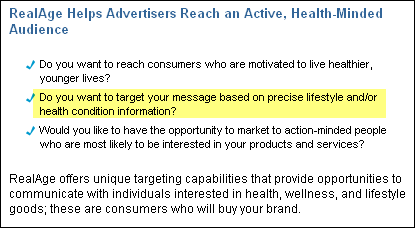
Most research on this topic concludes that today’s software project failure rate is around 66%. We on the Dark Side know this. We earn BILLIONS of dollars selling you $3 worth of software or services to deliver $1 worth of value. This 3:1 cycle powers the Dark Side. 

We pay good sales people hundreds of thousands of dollars. We employ armies of storm troopers who are better paid, better trained, and often better looking than their opposite number at the hospital in order to keep this so. We build illusionary demos that touch upon your deepest desires. We learn which ones of you can be taught, fought, or bought. Right before HIMSS, we do things like send Mephisto shoes to all the Ingas in our sales forecast. And occasionally, when we sense that one of your best staff have enough midichlorians, we purchase their soul and lure them away to join us. 

As compensation for all these efforts, you continue to pay us $3 for every $1 of delivered value. We sell you software that doesn’t work and you keep coming back for more. This is power!

Can you just image Jacques Cousteau narrating a documentary on this unique ecosystem? “‘ere we see zee energetic ZIO, bizily darting in en out among zee magnifizent coralz near zee ocean floor, building and rebuilding two of heez three nests, over and over again; blissfully unzaweare of zee predators stealing heez eggs right in front of heem… What vill become of zis endearing creature?”

In real life, you need look no further than the musings of this HIStalk post over the past several weeks for some outstanding examples of where HIS vendors are putting the golden rule into solid practice. HIStalk readers were more than a little upset to learn that Allscripts CEO Glen Tullman was whispering in the ear of our new president to “help” to determine where the billions of dollars of federal stimulus funds ought to be deposited (I wonder if he mentioned the 3:1 ratio? “um, Barack, Mr. President, Sir … we’re actually going to need more like $6B for this thing. $4B will be for projects that we already know aren’t going to work out…”).

Our new Healthcare Czar, Kathleen Sebelius, is/was on the Board of the very architects of the Death Star itself. And now, right after the passing of the stimulus bill and just before HIMSS, there is indignation that Wal-Mart is entering the EMR market with eClinicalWorks (did anyone really think Girish was sitting idly by while Glen had his feet up on the table in the Roosevelt Room?) I, for one, am anxiously awaiting Jonathan Bush’s raise in this particular hand!

As an industry, you have become adept at giving away your power. The gold starts with you, but you are not using it to make the rules. 

Don’t agree? A month from now, you are going to let an actor, Dennis Quaid, who recently suffered through the scare of all scares, tell you how to do a better job in delivering safer healthcare. I recall being at Mardi Gras one year when Mr. Quaid was King of the Bacchus Krewe, throwing beads to half-naked women. That seemed at the time to be a position of pretty high authority. He does have quite a lot of gold as well. These credentials obviously give him the power to start making some healthcare rules. I hope he says to buy more software …

What is the answer? Just like it was for the fictional Luke Skywalker, it is to look within. "Do, or do not; there is no try," Luke was told. Your Board, CEO, VP, and general public should be asking the same thing of you. Why is it acceptable to you that two out of every three of your projects fail?  Why is it OK that you give away 66% of your gold in exchange for something that did not achieve its goals? Why do you and your staff forego the diligence that you would invest in your own personal spending when buying HIS software based on a sales demo and a visit to a showcase site? Why do you keep paying for, and keep buying, s@#! that don’t work? 

Are we on the Dark Side that good?

Ricky Roma is a vendor sales guy who understands that only one thing counts in this world: get them to sign on the line which is dotted.

Monday Morning Update 3/23/09

March 22, 2009 News 8 Comments

millspeninsula

From Francisco Respighi: "Re: Sutter. Sutter is mothballing its $1 billion (and counting) Epic project, blaming the economy. After Mills Peninsula, no new hospital implementations are planned. In the announcement by CIO Jon Manis, Sutter does states that individual affiliates may press ahead if they come up with their own plans and funding – this allowing Sutter to avoid a headline grabbing announcement that explicitly states the obvious: the Epic project is gigantic bust." Kudos to the anonymous reader who tipped us off early this month that the project scope had changed. I don’t know that the project is necessarily a bust, but I do know that when John Hummel was CIO there, he was explicit in saying that Sutter’s clinicians would not use CPOE or other doctor-centric technologies in his lifetime (and he’s alive and well, albeit with Perot). Sutter was talking the project up two years ago. It’s odd that the corporate office won’t pay for the systems, but its individual hospitals are welcome to, which usually implies some kind of "corporate IT isn’t providing value" issue since it’s the same money regardless of which pocket it comes from. Capital funding seem to be the problem, so they must not have bought licenses and hardware up front.

Here’s the full text of Sutter’s internal announcement, provided by a reader: SUTTER HEALTH COMMITTED TO THE EHR; ROLL OUT TIMELINE CHANGES DUE TO ECONOMY. Given the current economic downturn, Sutter Health is revisiting its capital investment plans to make sure it is balancing the needs of our patients and communities, the uncertainties of the economy and the realities of a changing health care environment with our goal of remaining healthy, viable and successful over the long term. In addition to assessing timelines associated with facility construction and imaging projects, Sutter Health is adjusting the timeline for its integrated electronic health record (EHR).Our immediate focus continues to be our first hospital implementation at Mills-Peninsula Health Services in Burlingame, CA and our three remaining medical foundation implementations. We’ve already fully implemented the EHR in five medical foundations, which connects more than 2,000 physicians in the coordinated care of our patients across much of Northern CA. Our Sutter-wide EHR now encompasses information about the care of more than one million patients. We are committed to implementing the EHR at all of our acute care hospitals, however, we will not be able to install the EHR as quickly as we’d like. We do not have definitive plans for another acute care implementation in 2009 after Mills-Peninsula and we will not, at least in the near term, be issuing a definitive facility construction schedule or acute care implementation schedule. We continue to analyze all available data about the federal health information technology funding. However, the potential implications do not affect current decisions relative to the timing of our EHR roll out. Respectfully, Jon Manis, SVP, CIO, Sutter Health.

From Kiwi Pete: "Re: Kaiser. Kaiser Permanente is to be commended for making a very difficult decision in these uncertain times. I congratulate Phil Fasano for going out on a limb and facilitating this decision. Having the courage to make a strategic decision of this magnitude is the mark of a true leader. This strategic decision will ensure a strong platform for future years and solid employment and a foundation for managing costs and providing a high level of clinical care. Yes, some staff have been displaced and many will find employment with IBM. I strongly believe that healthcare providers need to begin to share facilities as one method of containing IT costs and Kaiser Permanente in their own way are making a strong statement." KP turns over data center management to IBM in a seven-year, $500 million deal that gives 700 KPers the pink slip, joining 160 others axed because of economic conditions in general. Even KP says the majority of those 700 won’t be joining IBM. KP had already made one difficult decision involving IBM that turned out to be spectacularly wrong and shockingly expensive, blowing through close to a billion dollars in having IBM develop an electronic medical record that was abandoned in favor of Epic in 2002. They made a strong statement with that deal, too, but not one that either organization cares to mention publicly.

Here are a few excerpts from Phil Fasano’s e-mail to staff about the IBM deal, courtesy of a reader: "Kaiser Permanente is announcing a strategic relationship with IBM that will enhance the technology that powers the services we provide to our members, patients, and caregivers. IBM will bring its globally recognized technology leadership to KP’s data center operations and some associated functions. As a result, about 700 people in KP’s data center operations will transition out of KP and become eligible for employment with IBM. Concurrent with the IBM announcement, we are also taking the difficult step of eliminating an additional 160 IT positions to enable us to operate as efficiently as possible during these extraordinary and challenging economic times … our strategic relationship with IBM will allow us to leap ahead in our technology capabilities and reach our goals faster than we could on our own. We also expect to see a net savings over the term of the contract which, along with today’s staff reductions, will help to support our goal of providing affordable health care for our members … While decisions that affect staff in this way are never easy, I assure you that KP is committed to providing assistance to affected employees, particularly in the current economic environment. Employees whose positions are eliminated will receive 60 days’ notice with full pay and benefits and a severance package, including continued KP health benefits. In addition, KP provides comprehensive employment, career, and personal counseling services to help employees in transition."

richhelppie 

From Rogue: "Re: Huntzinger. Did I hear right that former CEO Rich (‘I sold it all to ACS’) Helppie came out of retirement to form a company in CA with several former SUPC employees? Is retirement really that boring for these guys, or did they lose it all in the stock market? If I made that kind of $$$, I don’t think I’d be back at the grind so quickly, no matter how much fun HIT may be." Rich is back, this time at Santa Rosa Consulting. I’m guessing it’s an amalgamation of boredom, ego, and simply doing something you know you’re good at. Maybe money, but I don’t think Rich is starving. Money or not, nobody wants to feel washed up, especially when they aren’t.
From Garrnut: "Re: WSJ article. Talks about patients educating themselves about their own health issues and  use of patient information and mentions WebMD and UpToDate." Link. I didn’t realize UpToDate comes in a consumer version (both a free one and a $495-a-year version that’s the same reference doctors use).

From Monitor 3: "Re: Emergisoft. The board forced terminations of a number of good employees including CEO Joe DeSilva, who evidently had turned the company around and improved its image during his tenure. But now it looks like they are in serious skeleton crew mode." He’s no longer listed on their executive page, but I saw no announcement. I have an inquiry in with the company.

I’m back after a little break. Thanks to Inga for capably holding down the fort. Once I’ve plowed through several hundred e-mails, I’m sure that relaxed feeling will be a distant memory.

major

Jack Horner, former informatics pharmacist, CIO, and interim CEO of Major Hospital (IN) since July 2008, gets the permanent president and CEO job.

Community-based health center network HealthNet of Indianapolis gets a $2.5 million private grant to implement eClinicalWorks.

A hospital in Pakistan goes live with an electronic surveillance system for pneumonia. Clinics can read a child’s RFID bracelet using a Nokia cell phone to display patient information on a secure Web site.

A hard drive containing scanned ID information on 200,000 hospital visitors is stolen from the data center at Jackson Memorial Hospital (FL). Not only was the drive stolen from the data center, it wasn’t backed up, so the hospital has no way to notify those whose information it contained. The hospital speculates the drive was stolen for personal use by persons unknown, although it’s hard to believe someone would assume that kind of risk when you can buy a huge, new hard drive for less than $100 these days. But, thieves are stupid.

I had speculated that Rob Kolodner would be replaced as ONCHIT at the pleasure of the new HHS secretary, but was corrected by several folks that his position was civil service rather than a political appointment. None of that matters, as it turns out, since he’s being replaced by academic and Obama insider David Blumenthal (I had the big scoop if I hadn’t been vacating since a well-connected reader assured me it was going to happen the day before the announcement, but I wasn’t around to run it). IT geek or not? WSJ quoted from a NEJM article he co-wrote with John Glaser: "The idea of health IT transports some enthusiasts ‘to almost a dreamlike world of health care perfection in which the work of doctors and the care of patients proceed with barely imaginable quality and efficiency,’ they wrote. But for many doctors, especially those in solo or small practices, it ‘conjures a very different image — that of a waiting room full to bursting, a crashed computer, and a frantic clinician on hold with IT support in Bangalore.’" His January article for The Commonwealth Fund called The Federal Role in Promoting Health Information Technology didn’t stray much from the party line: the government should help fund EMR purchases, encourage interoperability, and push quality via EMR use. He did take a little dig at minimally useful clinical decision support. His opinion was pretty much the same in a 2006 article.

Want to bet that HIMSS is burning the midnight oil to (a) publicly applaud Blumenthal’s selection; (b) suck up to make sure he’s not some kind of anti-vendor rogue since he’s not a HIMSS member; and (c) beg him to speak at the conference so the keynote lineup doesn’t look so irrelevant (actor Quaid, KP big shot Halvorson, blundering former Fed economist Greenspan, and an astronaut).

David Shaeffer, formerly of Eclipsys, has joined IT solutions provider GTSI.

fooddrive

Vitalize Consulting Solutions takes its food drive online, letting donors buy groceries (at substantial discounts to retail) for the Greater Chicago Food Depository. You can also donate at their HIMSS booth.

Forum Health (OH) files Chapter 11, citing debt load, population decline, union contracts, and the economy.

IBM is rumored to be close to acquiring Sun Microsystems for $6.5 billion.

A new iPhone 3.0 software feature: tethering to Windows laptops, meaning users won’t need air cards.

Wisconsin hospitals are hiring teams of lobbyists to help them get a piece of the stimulus pie. 

Patients in England are being monitored via Web-based instruments and are sent text message or e-mail communication when something’s amiss.

kesler

Keesler Medical Center (MS) becomes the first Air Force facility to use EMRs, having gone live in January on T-System.

Hospital layoffs: New York’s Health and Hospitals (200), Nemours (DE).

A reader asks if anyone knows about an ARRA item that will make hospital bonds more attractive to lenders. It was supposedly mentioned in a CHIME presentation. If anyone knows about it, let me know and I’ll summarize here since it sounds relevant to HIT.

Big HIMSS goodies for CHIME members willing to sit through focus group meetings (sales pitches). " … you can receive an honorarium in the form of money, an iPod touch or Amazon Kindle 2." Nice to know that objective technology decisions for non-profits start off by having vendors bribe provider executives to listen to a spiel. Say, how much do you charge to actually sign a contract?

Jobs: Epic Consultants, Pre-Sales Engineer, Ambulatory Consulting Services Director. Weekly job blasts are yours for the asking.

McKesson Medication Management and a neurosurgeon are hit with a $38 million lawsuit award for a herniated disk repair that left a patient bedridden. The surgeon injected dye that was not appropriate for the type of surgery he was performing, with McKesson joining him on the expensive hook because its pharmacy people supposedly discarded the drug’s packaging before sending it over. The doctor had been sued nine times previously and hit with a state fine for bad medical practice. The surgeon carried no malpractice insurance and avoided a previous lawsuit’s judgment by declaring bankruptcy. McKesson says it will appeal its $5 million part of the payment. Given the award, however, it’s no wonder that you could easily die in a Florida ED because no neurosurgeons are willing to take your trauma case.

We’ve talked a lot about the heparin error involving the Quaid twins, but a reader sent over the California HHS’s report on the Cedars-Sinai incident. The findings: the twins were given heparin 10,000 units/ml as a line flush instead of the hospital’s approved 10 units/ml after pharmacy techs stocked 100 vials of the stronger product in the drug dispensing cabinet. Of those, 14 vials were believed to have been administered to three patients, so reversal drug protamine sulfate was given to two of those patients (the twins). The floor stock heparin had not been double checked despite being considered a high-alert, high-risk med; it was also missing the green labels reminding staff that it required a second check as hospital policy required. One pharmacy tech said he was not aware of the policy. Nurses could not recall what they administered, one said she couldn’t recall if she read the label first, and some doses were given without documenting on the MAR. Early reports said the heparin was prepared wrong in the pharmacy (that would be odd) and therefore I concluded that bedside barcode checking wouldn’t have mattered since the label would be correct but its contents wrong. In this case, the heparin was pulled from the drug dispensing cabinet (as it is 99% of the time) and barcoding would have caught the error. Pyxis machines are candy stores full of potential errors unless hospitals are extremely vigilant in how they’re stocked and monitored, of course, offering Cardinal an opportunity to sell the add-on that barcode checks the stocking function (surely Cedars has bought it by now).

Carilion Clinic (VA) loses a big chunk of its assets due to investment losses, is struggling to keep doctors, and says its Epic EMR system is the "single biggest factor" in its $20 million loss in FY08 (although that expense was planned).

CEOs, performers, and pro athletes seem to be escaping any damage from the recession, so this is no surprise: Oracle’s Larry Ellison, already worth $50 billion and making $85 million a year in salary, will add $230 million a year in much-needed income now that Oracle has approved a dividend.

A promotional documentary being filmed features the VA TeleHealth Clinic of Craig, CO.

The Social Security Administration goes live with the first piece of NHIN, using electronic records to process disability claims via the open source NHIN Connect Gateway from Harris Corporation.

Investigation of a UK hospital’s high death rate finds that receptionists were triaging patients, meds weren’t being given, and patients were left so long without food or water that they were drinking out of flower vases.

HIMSS says (again) that registrations are on track compared to last year, but a reader noticed that only 12 hotels out of 64 are showing as full on the housing site. Maybe that’s par, but it sounds low.

CCHIT will hold a HIMSS conference town hall session on certification of open source EMRs. It’s Monday, April 6 at 2:00, but CCHIT will provide remote access as well. For all those conspiracy theorists who think HIMSS and CCHIT are the puppets of proprietary EMR vendors, watch this session carefully. My prediction: the conclusion will be that anyone is welcome to have their EMR certified as long as the tests are passed and the money paid (which is true today). And to be honest, what else could they say? If you believe that CCHIT certification is vital to ensure interoperability and reduced risk for purchasers (plenty of folks don’t, but that’s another story), then they really have nothing to offer except to waive or reduce the certification fee for organizations that receive no income from licenses.

E-mail me.

News 3/20/08

March 20, 2009 News 6 Comments

HERtalk by Inga

From: Telephone Man. “Re: New iPhone OS. Yesterday Apple released iPhone OS 3.0. In the presentation at minute 43:35 Apple introduces J & J Life Scan, a Glucose monitoring device application. I would expect a flurry of healthcare iPhone applications (*cough,cough*) to come out over the next few months, now that iPhone 3.0 has been seeded.”  Agreed. In addition to the introduction of new applications, users like me will appreciate the little things such as the ability to cut and paste between applications, attach photos in text messages, and view email in landscape mode. Apple did not announce a release date.

From: John Boy. “I wanted to let you know how much I appreciate all the work you guys do in keeping us informed of all the happenings in healthcare. You’re like a reach arm for all of us out here and I can’t imagine how much time you put into it. I look at it every day to see what’s happening.”  Thanks. It does take some time, which is why I am not too surprised Mr. H (or perhaps Mrs. H) selected an Internet-less vacation destination.

Speaking of Mr. H, he’ll be back with the Monday Morning update sometime this weekend.

If you are interested in hearing what 12 of the leading EHR vendors are saying about the passage of HITECH, visit HIStalkPractice or click on one of the links to your right.  The two latest questions: “How is your company defining “meaningful use” of an EHR and how will ensure your customers can reach that level?” and “Providers will be required to implement ‘certified’ software to participate. Who should perform the certification and what criteria should they use?”

President Obama appoints David Blumenthal national coordinator of HIT.  Blumenthal is a Harvard medical professor and director of the Institute for Health Policy at MA General Hospital.

A Center for Connected Health study concludes that online diabetes management programs may improve the quality of care delivered.

Cumberland Valley Medical Services selects Advantedge Healthcare Solutions to provide medical billing and practice management services for its 23 employed anesthesiologists and CRNAs.

A study commissioned by the Pharmaceutical Care Management Association concludes that as e-prescribing rates rise, savings will more than pay for the $19 billion in economic stimulus adoption incentives. The report claims that if current e-prescribing rates were to double, it would result in a $22 billion reduction in drug and medical costs over the next 10 years.

Medsphere Systems invites 16 HIT consulting companies to participate in its new Medsphere University training and certification program. MaxIT is the Medsphere’s first “certified partner.”

Two studies by CSC conclude that financial incentives contribute to the overall HIT adoption rates. The analysis examined CPOE adoption rates among Massachusetts hospitals, the use of e-prescribing, and the use of EHR among ambulatory physicians. Adoption rates for these activities were significantly higher among Massachusetts providers than the rest of the country. The report attributes the success to the number of financial incentives available to providers.

Former Eclipsys sales executive Greg Lusch joins scanning technology vendor IBML as business development director for the healthcare market.

MedAptus raises $6 million in financing, led by Boston Millennia Partners. MedAptus intends to expand its Intelligent Charge Capture software offerings.

Google selects MIE’s WebChart Enterprise EHR for its two onsite employee health clinics.

Authentication and access management vendor Imprivata announces that Box Butte General Hospital (NE) has implemented the OneSign Platform.

The mayor of Monroe, LA is pleased by CPSI’s decision to open a new call center in his town. CPSI’s expansion is expected to create 100 new jobs over the next three years.

BCBS of South Carolina selects Med-Vantage’s HealthSmart Enhanced Provider Directory and Measures Exchange solutions to improve improve consumer transparency.

State lawmakers in Hawaii introduce a bill to build a statewide HIE that would be managed by a state coordinator.

Cardiovascular Specialty Services of North Texas (CSANT) contracts with Greenway Medical Technologies to deploy Greenway’s PrimeSuite and PrimeEnterprise EHR/PM solutions. CSANT is a 50 physician, 18-location specialty group.

MMR Information Systems partners with The Latino Coalition to offers MyMedicalRecords PHR in both English and Spanish. Felicitaciones!

McKesson Specialty Care Solutions introduces a fully integrated e-prescribing solution for oncologists and other specialty physicians to participate in Medicare’s E-RX incentive program. Using RelayHealth’s eScript, providers will be able to electronically file medication renewals and refills directly from McKesson’s Lynx Mobile solution.

Medical transcription service provider MxSecure successfully completes a document management software interface at Roanoke Neurological Associates (VA). The interface allows transcribed documents to be imported into the practice’s Allscripts document management system.

RCM vendor Medical Data Systems promotes Gene Schneider to chief operating officer.

Frost & Sullivan presents GE Healthcare the award for Growth Strategy Leadership of the Year, in recognition of the growth of its imaging informatics business since acquiring Dynamic Imaging.

Massachusetts General Hospital and North Shore Medical Center contract with BridgeForward Software to help with HL7/EMPI integration for a new ambulatory care center. Radiologists from both hospitals will use BridgeForward’s Viaduct platform to integrate reports from Massachusetts General’s RIS to North Shore’s PACS.

FQHC HealthNet in Indiana receives a $2.5 million grant to equip its 110 providers with the eClinicalworks PM/EMR solution.

Email Inga.

News 3/18/09

March 17, 2009 News 3 Comments

HERtalk by Inga

Kaiser Permanente plans to cut 860 workers at its data and IT centers as part of a $500 million outsourcing deal with IBM. Included in the seven-year deal, IBM will take over most of KP’s data operations, affecting about 700 employees.  Most of the affected staff is based in California, though KP also announces layoffs for 160 more employees across the country. KP CIO Phil Fasano says that about 40% of the displaced employees will find jobs within IBM. KP says that the average laid off employee will receive eight months worth of pay and benefits. Our condolences. fds

On HIStalkPractice, we just posted the first in a series of five questions posed to 12 vendor executives.  The topic centers on the HITECH stimulus package and its impact to electronic health record.  This first question:  What changes will your company or area make, both for the short and long term, in preparation for HITECH legislation?

As I was working on our Second Annual HIMSS Information Guide, I noticed that Vitalize Consulting Solutions is teaming up with the Greater Chicago Food Depository to raise food and funds for the Chicago needy. The Vitalize folks tell me they are taking monetary donations at the booth, as well as promoting a virtual food drive. They’ve also sent packages of soup mix to attendees around the country.  If you were a lucky soup mix recipient and bring it by Vitalize’s book (#3055), Vitalize will donate both the soup and one dollar. LOVE it.  Much better than all those trinkets that won’t fit into your suitcase. 

Johns Hopkins chooses the LiveData OR-Dashboard solution.

IBM announces a research project with Brigham and Women’s Hospital (MA) to create an online radiology theatre to allow teams of medical experts to simultaneously make rounds on a patient via a Web browser. Using live streaming audio/video, medical experts will be able to discuss and review patient data and post analysis.

The US DOD Military Health Systems commits to a $2.4 million deployment of VisualDX, a database created by Logical Images that includes 900 visually identifiable diseases and clinical information.


Virtua Health (NJ) selects Microsoft Amalga for its four-hospital system.

Blessing Hospital (IL) contracts with Eclipsys to deploy Sunrise Enterprise revenue cycle solutions and integrate them with Blessing’s existing Sunrise clinical solutions.

St. Joseph Medical Center (MD) brings in an outside “restructuring team” to manage the hospital, after the CEO, COO, and VP of operations take administrative leave. The executives took leave two weeks ago amid a federal investigation involving the hospital’s relationship with a physician group.

Heatlhcare management firm Beacon Partners hires former Poudre Valley Health System CIO Russell Branzell as a vice president.

A Deloitte Services survey finds that 56% of us want access to a online PRH connected to our doctor’s office and 55% want to communicate with our doctor via email. In addition, 68% of consumers are interested in home monitoring devices and 38% are very concerned about privacy and security.

HIE technology provider Accenx is now offering fully managed, remote hosting of Initiate Patient for its healthcare clients. OhioHealth is the first customer to use the combined solution.

Just exactly does this happen? A Shreveport, LA grocer finds stacks of medical records and MRIs in the dumpster at his store. The charts are as recent as 2006 and belong to a local doctor.

Email Inga.

Being John Glaser 3/16/09

March 16, 2009 News 6 Comments

Virtually all major technology innovations result in good changes in society and introduce new problems.

The automobile opened up the country and accelerated commerce. It also spurred global warming and people died on the highways.

The Internet enabled new ways to find information and forge communities. It also supported new forms of identity theft and eased access to unsavory material by children.

The television brought diverse entertainment and education into the living room and enabled the real-time participation in world events. It also contributed to sedentary lifestyles and the homogenization of culture.

Widely deployed interoperable electronic health records will bring good changes and introduce new problems. While the net impact of EHRs will be positive, we should acknowledge that their use also brings a downside. EHRs are no different in that regard than any other major technology innovation.

Individuals and organizations that point out these problems should not be discounted as Luddites, narrow thinkers, or resistant to change. While some of the con-EHR commentary can be discounted, we need to listen to it.

The point is not to pooh-pooh those that point out problems. The point is to understand the new problems and devise ways to mitigate or remove their impact. Seat belts and emission controls were steps taken to reduce the problems created by automobiles. Various applications have been developed to reduce Internet-based identity theft. The explosion of TV channels enables a wide range of cultures to express their voice.

Those who note that EHRs can hinder the connection between a provider and a patient, add too much time to simple tasks, and result in problematic privacy intrusions are right. EHRs will do these things.

We have to find better ways to make these problems less of a problem.

John Glaser is vice president and CIO at Partners HealthCare System. He describes himself as an "irregular regular contributor" to HIStalk.

CIO Unplugged 3/15/09

March 15, 2009 Ed Marx Comments Off on CIO Unplugged 3/15/09

The views and opinions expressed in this blog are mine personally, and are not necessarily representative of Texas Health Resources or its subsidiaries.

The Borderless Office
By Ed Marx

One year ago, I posted Culturally Relevant Leadership. Not a key performance indicator, but a lifestyle. I was so proud of my new office furniture that I posted pics on FaceBook and even bragged, “Look! No room for paper or pen.”

Now I believe even this is passé.

Then I smugly considered myself advanced as an executive who worked at home two days per week. Whoa, what a concept. Lately I’ve wondered why do I have an office in the first place?

I asked the same question of peers and staff and received many reasons why we couldn’t possibly liberate ourselves from the box. I have yet to hear one reason that I couldn’t logically counter. I’m all about forcing myself to learn new ways of operating and leading. I’m also into adopting and leveraging emerging technologies. But now I must commit to expanding self-imposed boundaries. Pushing the organizational culture. Releasing myself—and my staff—from unjustified fears.

A healthy leader spends little time boxed in an office. We’re out visiting our customers and our people. If you’re worried about losing contact with your staff, read Staying Tethered to a Disconnected World. At home or, anywhere outside the box, I get more done in less time. That leaves margin to network with staff, round more with customers, and focus.

Let’s ignore for a minute the actual cost of building out space and look at the operational budget impact. Average office space costs might range from $20-$40 per square foot per year. Assuming your office is 200 square feet, that is $4,000 – $8,000 per year. In the 24x7x365 world we live in, what is your percent occupancy time? It should be tiny, probably under 5%. Now expand this analysis for your staff and your entire office footprint. The amount of waste is self-evident.

On March 31, I’m turning my rhetoric to action and entering a month-long trial with my courageous Chief Medical Information Officer. We will shutter his office and share the space formerly known as the CIO Office. We’ve already eliminated office phones. For the times we do need physical space—or so we rationalize—we will have one. Otherwise, we’ll conduct our business from our “virtual offices.” Armed with mobile devices, we carry with us everything we need. Our office is us. Not some physical space with borders.

Presuming a successful trial, this will become our method of conducting business. I’ll expect my direct reports to follow, and we’ll go from 5 offices to 1. I envision a cascading effect throughout my division. We will save close to a half-million dollars for each floor we clear. Employee satisfaction, productivity, and retention will climb.

You can’t reach a specific benchmark, get the tattoo to prove it, and then stop evolving without losing relevance. If you don’t believe it, reread Tradition.


Ed Marx is senior vice president and CIO at Texas Health Resources in Dallas-Fort Worth, TX. Ed encourages your interaction through this blog. (Use the “add a comment” function at the bottom of each post.) You can also connect with him directly through his profile pages on social networking sites LinkedIn and Facebook, and you can follow him via Twitter – User Name “marxists.”

Comments Off on CIO Unplugged 3/15/09

Monday Morning Update 3/16/09

March 15, 2009 News 5 Comments

HERtalk by Inga

From: Sundance Kid. “Re: Anthony Rodgers joining the Office of the National Coordinator? Tony is a very HIT-savvy leader currently Director at Arizona Health Care Cost Containment System. One well placed call from Head of Homeland Security to Secretary of HHS and he is in!” Not sure if this means that Rodgers would want the DC gig.

From: Johnny B-good. “Re: Hospital CEO salaries. I hope that the same rules are applied to the Banking Execs who’s salaries I’m paying (unlike these Hosp execs.).”

USF Health and Allscripts initiate a pilot program called Paperfree Tampa Bay that aims to convert 100 percent of physicians in the Tampa Bay area to electronic prescribing. Program leaders view this as a first step toward the implementation of EHR in the region and is expected to create 100 jobs in the region. We chatted with Allscripts CEO Glen Tullman about the initiative, and have posted the interview on our HIStalkPractice site.

President Obama nominates NYC health chief Margaret Hamburg commission of the FDA.

HIMSS claims that total conference registration “parallels” last year’s record-breaking figures during the same time last year. The numbers suggest that those staying home to save money seem to be balanced by attendees making plans to learn more about how to get their share of the stimulus pie.

Here’s a study that many vendors may hope gets swept under the rug. Researchers from the University of Minnesota find that the use of HIT has little or no effect on patient safety. The AHQR-funded study also suggests it may be “too early” to judge HIT’s overall effectiveness.

Surgical Information Systems now integrates with Cardinal Health’s Pyxis Supply Technologies.

According to the local paper, Catholic Healthcare Partners (OH) is nearing a decision to invest $100 million over the next five years for an unnamed EMR. The organization includes 32 hospitals across the Midwest.

KLAS releases a report entitled “The Rise of eClinicalWorks: Separating Fact from Fiction.” KLAS examines why ECW is growing faster than any other EMR vendor and whether if it could sustain the grown and still provide effective support. While customers expressed strong satisfaction on functionality and cost, support was noted by many users as the worst aspect of their ECW relationship. Users also claim that integration with other clinical systems was a challenge.

MedAvant Healthcare Solutions changes its name to Capario to better reflect the company’s revenue cycle solutions and renewed focus on growth. OK, I give up. What does “capario” mean anyway?

Document indexing vendor InDxLogic names Susan Thomas to its board of directors. Thomas is the former Chief Medical Officer for GE Healthcare ITS.

Baton Rouge, LA implements a telemedicine program that allows ED doctors to begin testing patients as they are being transported by ambulance. Funds for the BR Med-Connect program came from the US Department of Homeland Security. Can someone explain the Homeland Security connection?

Ochsner Medical Center (LA) posts ER waiting times online, giving patients the chance to select which of Ochsner’s four hospitals can see them the soonest.

Current and former physician employees of Medical Edge Healthcare Group (TX) file a suit against the company, charging them of improper billing and practices that violate state laws prohibiting corporate control over physicians. The doctors say Medical Edge used “deceptive accounting practicing” and charged them unfairly for taxes, benefits and other expenses.

Fifty physicians are set to receive their first rewards for participating in New Jersey’s Bridges to Excellence Program, which is designed to recognize and reward providers that demonstrate safe, timely, effective, and patient-centered care.

Meridian Health (NJ) selects TeleHealth Services to provide television-based services in the patient rooms of three hospitals.

San Mateo County (CA) pays the federal government $6.8 million to settle charges that the county medical center intentionally inflated its numbers of acute care beds in order to receive bigger Medicare payouts. San Mateo claims that any overstatements were unintentional.

The American Hospital Association reports that 53% of all US hospitals reported overall losses in the fourth quarter of last year. The aggregated overall margin for the quarter was -8%, compared to a positive 5% for the same quarter in 2007.

Third-party benefits administrator First Service Administrators appoints CareMedic CEO Sheila Schweitzer to its board of directors. 

Mr. H is taking a few days off, so the posts this week may be short and sweet. Email me.

News 3/13/09

March 12, 2009 News 6 Comments

From Six Sigma: "Re: HIMSS keynote speakers. You failed to mention 2004 when HIMSS had hiker Aron Ralston, who cut off his own arm with a pocket knife to escape a fall in a rocky canyon. Now this was classic poor HIMSS programming. And let’s not forget co-keynoter, Tom Wolfe, the noted author and White House fellow for not going home again." I actually was trying to remember the arm-cutting guy but couldn’t think of his name, so I fell back to Dana Carvey as the "why is he keynoting?" example. But, HIMSS likes affordable C-list celebrities (Ben Vereen, for example) who seem hot until you think about when you saw them last in something important. Hold for Mr. Piscopo, please.

From The PACS Designer: "Re: Windows 7 beta. TPD has been watching for Microsoft to offer in its pending operating system Windows 7 Beta more solutions that will be usable by both Windows XP and Windows Vista users. With the addition of the system owner being able to shut off applications, the Windows 7 solution can win more advocates in the business world where having extra bandwidth available for business use is a valuable asset. Also being able to turn off Internet Explorer 7 can allow other Internet solutions to be employed." Link. I still hate using Office 2007 since I can never find Page Setup, Zoom, or Paste because of that damned ribbon, but Vista is OK.

From Andy: "Re: you said you liked weird stuff, right? What exactly is the procedure code for this?" A woman is airlifted to a Maryland hospital after being injured during a romantic escapade involving an electric saber saw. Hospital ED people can tell some bizarre stories (say, they would be great keynote speakers). At least this one’s not on YouTube yet.

From Kiwi Pete: "Re: movement. Or, is it more haste, less speed?" HHS is looking for people to serve on the HIT Standards Committee and HIT Policy Committee, with nominations for both due by March 16.

From Taxpayer: "Re: stimulus bill. Any thoughts on this? I’m a worker bee that sees so much squandering of good $ in HIT that I’m convinced the same thing will happen to stimulus $. Happy for never-ending employment, though." Link. The article by open source supporters says proprietary systems will turn into "poorly performing, opaque national Health IT at a high price." Maybe, but I don’t see that open source solutions are ready to step in as replacements (except maybe for VistA in specific circumstances), at least unless someone starts up the equivalent of a Red Hat to reduce the risk (real or perceived). On the ambulatory side, free/cheap EMRs exist, but are not dominating the market, which means upfront money isn’t the only problem. Hospitals waste a lot of capital on expensive applications that are woefully underused and fail to deliver ROI, but that’s usually the fault of the hospital and not the vendor (they bought it, superficially installed it, didn’t like it, and stopped using it, all without any serious effort or commitment). I doubt results will be any better now that the goal has changed to a quick selection, a subsidized purchase, and rapid go-live. I’m more in favor of getting the national infrastructure in place and then plugging in whatever appliance you want to exchange information with it. The value is in the network, not market-differentiating bells and whistles running on a local PC (I say that with great hopes for clinical decision support, but I’ve worked with it and it’s not really supporting many clinical decisions except to ignore the constant, unhelpful cookie cutter warnings). On the other hand, products and support aren’t fully commodotized, so as it stands today, there may be strong, valid reasons for choosing one commercial product or vendor over another. If there was a perfect system, we would need only one and that’s not the case.

Speaking of which, I like this quote by Mark Smith of CHCF on the stimulus bill: "It’s the land rush and the gold rush and the GI Bill of Rights all rolled into one."

Inga and I will be taking some possibly overlapping breaks over the next few days. We need to rest up for HIMSS, although I’m not sure that coming back to an inbox full of hundreds or thousands of messages will do it for me.

Riding on some Oprah quotes from Dennis Quaid (which were wrong, since he still thinks bedside barcoding will fix IV compounding errors like the one that affected his twins), Detroit Medical Center puts out a press release touting its own system. It’s actually Cerner’s, which would not have prevented the Quaid error either since it’s not used inside the pharmacy for IV prep, at least not as far as I know. There are hardly any systems that will detect mislabeled products when the barcode doesn’t match the contents of what it’s attached to. The hospital is awfully proud of the pro sports teams it takes care of, rattling them off at the end as though people who wield balls and pucks are more important that regular Joes.

Some folks who missed the HIStalk reception cutoff asked me to post that they’d like to meet similarly situated people at the Trump’s lobby bar during the same hours, a kind of Overflow Reception of the buy-your-own-drinks variety. I may swing by incognito just to see what’s happening there, so be rowdy.

FBI agents raid the offices of Washington, DC’s CTO (the previous job of Obama’s newly named US CIO), reportedly arresting an employee and a contract worker for bribery.

huntzinger

Just about everybody who’s been in the industry for more than a few years knows who George Huntzinger is, but here’s a refresher: he was president of CSC Healthcare for many years and also COO for the gone but not forgotten Superior Consultant, one of the class acts of HIT consulting. He’s now at The Huntzinger Management Group of Plains, PA, which in a remarkable non-coincidence, shares his name. A couple of HMG’s partners are also former SUPC folks who have decades of experience in running businesses, doing M&A work, etc. HMG offers consulting services to both providers and vendors, such as business assessments and planning, marketing strategy services, operations effectiveness, IT effectiveness, and full program management and PMO services. The Huntzinger Management Group is a new HIStalk Platinum Sponsor and I am delighted to have their support.

Listening: Pink Floyd’s Wish You Were Here, an incredible, moving tribute to LSD-fried (and now deceased) founder Syd Barrett. I rediscovered them after watching the Which One’s Pink documentary recently.

McKesson is the latest HIT vendor to pony up to make a patent troll go away. The troll’s strategy: find companies using technologies vaguely similar to a patent it bought with lawsuits in mind, sue everybody and his brother for infringement in a friendly court’s jurisdiction, then generously offer to settle if the target company agrees to buy a license that costs just a little bit less than mounting a legal defense. Everybody caves in every time except Epic, which happily offered to trade legal punches until the weaker fighter hit the canvas.

It’s nine years in jail for the New Zealand health district CIO accused of defrauding his employer of $11 million US by submitting phony IT maintenance invoices paid to himself.

esd

Enterprise Software Development is a new and appreciated HIStalk Platinum Sponsor. The company offers management consulting, supplemental staffing, software services, implementations, integration, and infrastructure support (among other services). Solutions expertise includes Cerner, Eclipsys, Epic, Siemens, MEDITECH, and McKesson. Some familiar client names are here. Thanks to the folks there for supporting HIStalk.

Massachusetts Senators Kennedy and Kerry bring home the pork, getting $143K of federal taxpayer dollars for the South Shore RHIO, among other spending items like sewer repairs and a bus. I guess that passes for cheap stimulus spending these days.

Perot Systems will spend up to $60 million on a new campus, stimulating India’s economy instead of ours. It’s also talking to five Indian hospital chains about implementing "hospital software that is available in the US and UK," which sounds like Cerner.

A report says Connecting for Health will lose its standards-setting role to a new group under the Department of Health, opening the door for more NHS organizations to choose their own systems as long as they can interoperate via a common infrastructure. Some have argued that stimulus money will encourage healthcare IT like the UK’s, which aren’t fairing so well, but it sounds like they are actually gravitating more toward our model, with certified commercial products being chosen locally but exchanging information on a common network.

E-mail me.

HERtalk by Inga

From Code Red: “EMRs, ROI, and physician adoption. I think if the market actually realized the savings and efficiencies, there would not be a need for government forced market demand to move these products. I think the reality is that the current generation products do not provide these things, or why would a doctor not adopt them? The current generation of products have low adoption and high abandonment because they force the wrong workflow into the clinic and the doctor. Many EMR products ignore the doctor’s need to enter original thoughts and observations which do not appear on a pull down list. My fear is that the HITECH spending is going to freeze spending and investment on next generation products that would be adopted, and create artificial market demand on old school products certified based on the rules from the old school vendors. So, no better mouse trap for the next few years, just ‘bridges to nowhere’ in HIT.” Hasn’t the industry spent the last 15 years or so trying to come up with the better mouse trap? Maybe it’s time to try something new. Plus doesn’t new business provide vendors increased revenues for product reinvestment?

Thank you for all that sent over the great footwear suggestions. Did I forget to mention that in addition to gorgeous and comfortable, they need to be affordable enough for someone on a blogger’s salary?

UTMB (TX) remains on life support after regents approve a proposal to keep the Galveston hospital and school open. Now the organization needs to find $1 billion from philanthropic and government sources to fund the rebuilding of the hospital, which was heavily damaged in Hurricane Ike.

The FDA clears Sunquest Information Systems’ latest Blood Bank software application.

The HHS creates a new Office of Recovery Act Coordinator to manage the distribution of the $137 billion in ARRA funds. HHS veteran Dennis Williams will lead the office and serve as Deputy Assistance Secretary for Recovery Act Coordinator. That really rolls off the tongue.

PatientKeeper is mentioned in this article about Caritas Christi Health Care (MA) and its $70 million technology project. At first glance, it sounds as if the Caritas IT staff actually created the PatientKeeper technology, which is not the case. I asked for clarification from Susan Worthy, PatientKeeper’s director of marketing. Her reply: “PT Barnum says any publicity is good publicity. Not sure that’s true. I sent a note to the editor regarding the inaccuracy.” I’m with PT.

Greenway Medical Technologies celebrates its 1,000th connection of PrimeExchange, Greenway’s interoperability engine.

Poor communication at US hospitals costs $12 billion per year, according to business school researchers at the University of Maryland. Communication failures result in unnecessarily long hospital stays and account for 54% of total losses. The $12 billion figure is equal to about 2% of hospital revenues nationwide and definitely cuts into the average hospital’s 3.6% margin. Leaders at the school’s Center for Health Information and Decision Systems believe that improved IT would streamline communication among caregivers and reduce inefficiencies.

OSU Pathology Services (OH) selects McKesson’s Revenue Management Solutions.

clip_image002

Some Congressmen take a closer look at the healthy salaries earned by many hospital CEOs. The IRS says the average CEO salary is almost $500,000, with a small group averaging $1.4 million. Republican Senator Charles Grassley would like to introduce legislation that puts more pressure on hospital boards to keep salaries in check.

Beth Israel Medical Center implements Meta’s Electronic Physician Query software to improve clinical documentation.

Availity promotes (warning: PDF) Russ Thomas to the role of President and COO. Thomas joined Availity in 2008 as an executive VP and COO and was previously president of Gold Standard.

PHR provider HealthTrio will leverage Dossia’s technology platform to advance the clinical data integration within HealthTrio’s PHR and EHR products and increase online record access.

The Rochester RHIO goes live with eHealthConnect Image Exchange, a service by eHealth Global Technologies to automate access to patient images. The service ingrates with Rochester’s Axolotl Elysium system and connects to the PACS imaging services at eight radiology providers.

As Mr. H mentions, I once again have the opportunity to take charge of the blog while he taking a break in some Internet-less location. Feel free to drop me a note. It makes me feel important.

E-mail Inga.

Sam’s Club to Sell eClinicalWorks EMR Bundle

March 11, 2009 News 65 Comments

A New York Times article reports that Wal-Mart will begin selling small-practice physician systems through its Sam’s Club division, pairing Dell hardware with software from eClinicalWorks in a complete package that include installation, ongoing maintenance, and training.

Marcus Osborne, Wal-Mart’s senior director of healthcare business development, was quoted as saying, "We’re a high-volume, low-cost company and I would argue that mentality is sorely lacking in the health care industry."

Sam’s Club will offer the package this spring starting at under $25,000 for the first physician in a practice and $10,000 for each additional doctor. Ongoing costs will be $4,000 to $6,500 per year.

The package will include a Dell desktop or tablet PC installed by Dell technicians and software-as-a-service applications from eClinicalWorks.

Wal-Mart says it got the idea from its own in-store clinics, which use the same technologies. It says it’s role is simply to bundle the products together into an affordable and accessible offering. "We’re the systems integrator, an aggregator," Osborne said.

David Brailer was quoted as saying, "If Wal-Mart is successful, this could be a game-changer."

I’ve asked Girish Kumar of eClinicalWorks for more information. Meanwhile, your comments are welcome.

UPDATE: notes from speaking with Girish Kumar Wednesday afternoon. Sorry that they are terse and a little raw, but I had 15 minutes between meetings at work and Girish was in the car on the way to the airport.

If a physician buys from Sam’s, will it be the same product, implementation services, and support that eCW offers directly?

Absolutely. We’re trying to make it simple. Everybody says EMRs are hard and implementing change is hard. We realize that. We’ve been doing SaaS since 2003 and have invested a ton on a data center. We wanted system that is ready out of the box, configured, with content, although it will still require on-site implementation and services. It’s the same in terms of product, services, training, but faster and easier to deploy.

Why would a customer buy from Sam’s? Do they save any money? Can they choose a no-services option?

Wal-Mart used its Sam’s Club division because it has a lot of small business customers as corporate members. They buy ongoing stuff every month, not just simple things like gloves and bandages, but have a corporate account and buy copiers, payroll software, etc. They don’t have to go into Sam’s. You call a corporate number, get an assigned representative, talk to them about what you need, and the item is shipped. eCW salespeople will still show the product and talk to the customer. There are packages we want to give them that are pre-configured. The customer will not pick blindly – they will still consult with an eCW person.

Will Wal-Mart do its own advertising and marketing?

There will definitely be a significant campaign. They have 200,000 healthcare professionals today as members, mostly as doctors.

Any projections on volumes?

I have to keep that confidential, but there was a lot of planning on the eCW side. Investments have increased, made the company even more ready. This can have a significant impact on how physicians look at, evaluate, and purchase EMRs. We would like to see taking it away from being a niche sales process, where sometimes we confuse the customer, to make it a very streamlined process so that a customer can make an educated decision. They know how many days to go live, how many days training, cost, etc. eCW does 30 Webinars every week that every customer has access to with a live attendant and all Sam’s members will be able to avail themselves of that.

We believe we are the largest SaaS EMR in the country with 4,000 physicians. If we include hospital customers hosting affiliated physicians and RHIOs, that’s another 4,000. That’s 8,000 today of our 25,000 physicians. We’re trying to leverage that scale to make it easier and cheaper to deploy.

Do you anticipate any product changes?

For primary care, we spent two years working with New York City. We put into the product all the content needed to run a primary care practice – templates, order sets, clinical decision support. That is years of content that we jointly developed. That is all pre-packaged with the product – it’s not just the software any more. On the specialty care, we have about 50 specialty databases. All of that will be available pre-configured when they sign up. When the trainer shows up, all the content will be there and if we want to change it, we can change it together. We will go live with a comprehensive data repository with clinical decision support at no extra cost for the content.

A primary care doctor can go live with the system as it is, with rich content.

What does this to do the competitive landscape?

We’ve always taken tremendous pride on our leadership on price and functionality. 97% of eCW customers surveyed said their total costs met their expectations when they bought and implemented eCW. 93% of physicians said the EMR met or exceeded expectations. I still have to worry about the 7% and I lose sleep about it more than I take advantage of the 93%, but if a package with those numbers is readily available, people will ask the question: if I’m able to get a comprehensive product that people are happy with at this price point with content and support, why should I spend more? Price visibility will be black and white. No longer will you see those quotes saying an EMR will cost $300,000. You will see more informed questions, pricing pressure, and frankly, higher expectations if content is provided. I don’t want to take six months to implement PM and another six months for an EMR. This is a unified product we’re offering, by the way, both EMR and PM. We’re offering five days of implementation on site with the Sam’s Club package and they can buy more for $750 a day plus travel, but our track record is that we can do it in five days.

What are the benefits to eClinicalWorks?

There are many benefits. We want to be a company with 100,000 physicians using our product and 100 million patients whose lives are positively affected by it. There’s a lot more work to be done, but this platform gives us more opportunity.

Text Ads


RECENT COMMENTS

  1. "...says Epic that is trying.." should read "....says that Epic is trying..."

  2. That startup mentality can be very positive or very negative based on the person. If they're someone who is great…

  3. I want it to triage incoming communication from multiple channels (works and personal email, SMS, Teams). If the message didn't…

Founding Sponsors


Platinum Sponsors


Gold Sponsors


RSS Webinars

  • An error has occurred, which probably means the feed is down. Try again later.